Flashback : Dallas

A Miscellany: History, Ads, Pop Culture

Category: 1930s

When Halloween In Dallas Was Mostly “Trick” and Very Little “Treat”

halloween-trick-or-treat

by Paula Bosse

Dallas used to have some pretty bad Halloweens. Way more “trick” than “treat.” The word “riot” was used frequently to describe the typical Halloween night goings-on, when thousands of people clustered downtown and did unsavory things (such as drinking, fighting, pick-pocketing, mugging, and being generally obnoxious), while out in the “suburbs” (meaning far-flung locales such as East Dallas and Oak Lawn), marauding bands of young “pranksters” were keeping themselves busy breaking things and setting things on fire. Like kids do. Each Halloween, every policeman was called in for duty — only those in their sickbeds were exempt.

The worst of these Halloweens seemed to happen in the 1930s. Elm, Main, and Commerce, between Lamar and Harwood, were cordoned off from traffic. This is where upwards of 25,000 revelers would slowly cruise up and down the streets, causing mayhem and inflicting occasional bodily injury (much like the notorious Texas-OU weekends of later years). Even though the area was off-limits to automobile traffic, the streetcars still ran, and the poor drivers must have dreaded that night each year and steeled themselves for the worst, as if heading into battle.

Apparently Dallas revelers had a signature tradition, and it was to carry large wooden paddles — sometimes as large as canoe oars — and to swat people in the crowd on their backsides, usually women. At some point women also began to carry paddles, and they did their fair share of swatting, too. It was a paddling free-for-all.

1935 was a particularly noteworthy year, as it was the first Halloween after the state of Texas had voted to repeal Prohibition. Yes, people were drinking. And paddling. Sounds like a bad combination.

Below is a list of just a few of the reported instances of vandalism and “high-spiritedness” which routinely plagued the city every Halloween:

  • Broken streetlights
  • Broken windshields
  • Broken everything
  • Flooded streets from opened fire hydrants
  • The throwing of rocks
  • The throwing of eggs and rotting fruit
  • The throwing of stink-bombs
  • The throwing of WASHTUBS (!)
  • The setting of fires, both large and small
  • The malicious uprooting of shrubbery
  • The driving of cars on sidewalks
  • The reporting of false alarms to fire stations
  • Random gunfire
  • Occasional mysterious explosions
  • Extremely loud noise
  • Smoke
  • The overturning of outhouses
  • The soaping of windows
  • The breaking of windows
  • The breaking of soaped windows
  • The soaping of streetcar tracks
  • And the unsuccessful attempt one year by a small band of aspiring shake-down artists to “extort” money (rather than candy) from their eye-rolling neighbors by foregoing the chant of “Trick or Treat!” and demanding “Dime or Damage!”

In 1939, an intoxicated man who was “playfully threatening people with a knife” was playfully arrested.

In 1935, there was a huge mud-fight in Oak Lawn at Newton and Throckmorton which involved over 100 boys. Like greased pigs, an adrenaline-fueled, mud-encased 10-year old running from beleaguered and hopelessly out-numbered policemen — who, quite frankly, had bigger fish to fry that night — were almost impossible to catch. Spectators and passersby did not escape unscathed. Except for the dry cleaners the next day, Oak Lawn was not amused.

And in 1936, during the Texas Centennial, a policeman was suspended and demoted after an incident of “horseplay” at Parry and Exposition in which he had been shocking passing pedestrians by poking them with the end of a walking stick that had been hooked up to the battery of a police motorcycle. He got into trouble because one of his victims was a young woman who had been standing on wet pavement when the electrified stick touched her, resulting in a more-powerful-than-expected shock. She lost consciousness, fell to the ground, and hit her head on the sidewalk. Luckily, she recovered quickly and even requested that the officer not be punished, but the police chief was not so forgiving. He was understandably livid, especially when he discovered that a number of motorcycle cops had been doing the same thing. One imagines there were several new orifices opened up amongst the force in the days that followed.

But the pièce de résistance was in 1920 when several boys “anchored a block and tackle around a two-story house in Cockrell Hill and hoisted a wagon and a team of terrified mules up in the air” (DMN, Oct. 27, 1963). That right there required impressive organizational planning and a certain amount of entry-level engineering skill.

Eventually things settled down. By 1949 officials had finally put an end to the swarming, surging masses downtown. People began to celebrate Halloween with candy and costumes and haunted houses and parties. In 1966, a policeman was asked if things had improved from those earlier dark days:

There’s been an extensive change for the better in recent years. Police almost never get a call to let a cow out of a school house anymore. (DMN, Oct. 27, 1966)

And Halloween became more “treat” than “trick.” Good news for the City of Dallas. And for its mules. Bad news for the makers of Ivory soap and thick wooden paddles.

***

Sources & Notes

Selected tidbits gleaned from the frenzied coverage in The Dallas Morning News archives:

  • 1935: “Much Damage Done By Hoodlums During Halloween Rioting” (DMN, Nov. 1, 1935)
  • 1936: “Young Woman Victim of Police Prank Asks Jones Pardon Men” (DMN, Nov. 3, 1936)
  • 1939: “Witches Stage Costly Carnival For Halloween; Roughness Breaks Out In Downtown Crowd; Police, Firemen Busy” (DMN, Nov. 1, 1939)

Other Flashback Dallas posts on Halloween can be found here and here.

Happy Halloween!

*

Copyright © 2014 Paula Bosse. All Rights Reserved.
 

The Century Room’s Retractable Dance Floor

ad-adolphus-hotel_century-room_sm(click for larger image)

by Paula Bosse

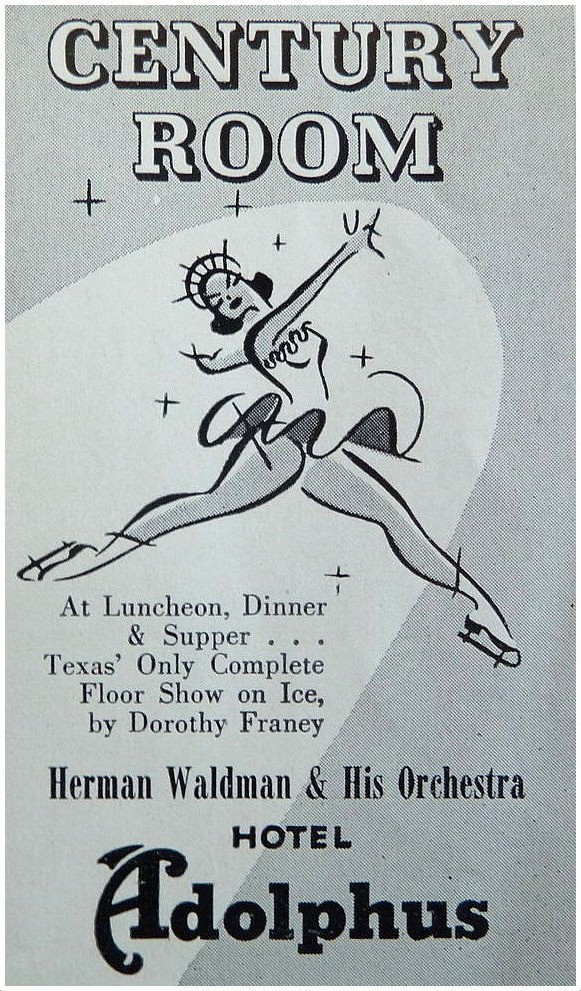
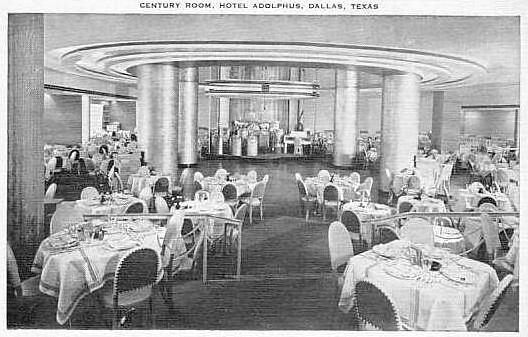
If you’re getting all dressed up for a night on the town, you want to make sure you get your money’s worth, entertainment-wise. That’s why you head to the tony Century Room at the swank Hotel Adolphus. Not only is there dining and dancing, there’s also an ice show. Yep, an ice show. When “Texas’ Only Complete Floor Show on Ice” has wrapped up, a dance floor magically covers the ice, and you and your honey can trip the light fantastic to the fabulous strains of Herman Waldman & His Orchestra. Skates optional.

adolphus_hotel_century-room

adolphus_century-room

*

Copyright © 2014 Paula Bosse. All Rights Reserved.

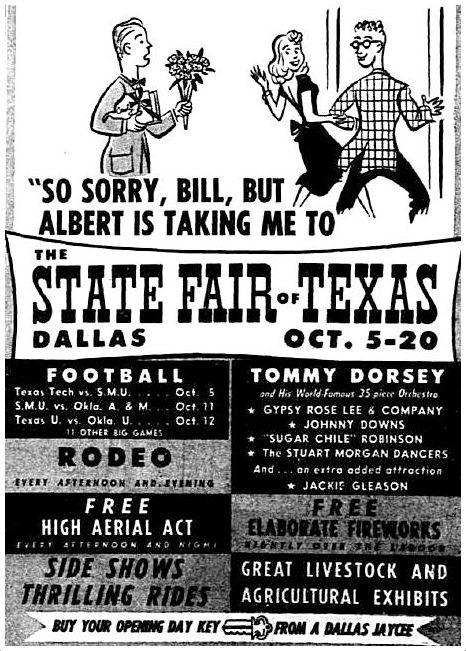
“So Sorry, Bill, But Albert is Taking Me to The State Fair of Texas”

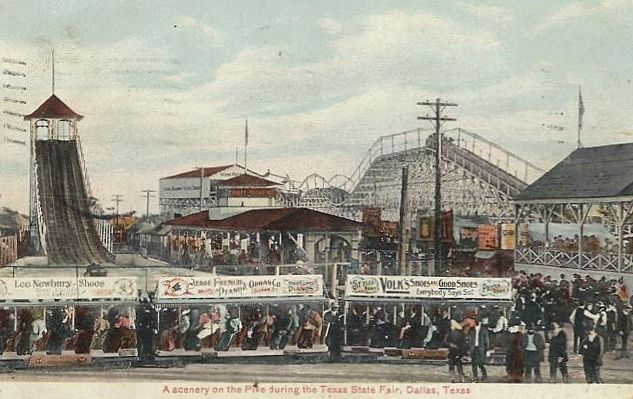
state-fair_1909_flickr“The Pike” — 1909

by Paula Bosse

Hey, y’all — guess what ends this weekend? Hurry!

One doesn’t really need an excuse to post a bunch of photos of the Great State Fair of Texas, but it IS the closing weekend, so why not enjoy a few images from the past few decades.

Above, a view of the Midway in 1909 (then called “The Pike”), with the Log Ride-like “Chute” and its ramp, a roller coaster, and a loaded tram festooned with shoe ads (including one for Volk’s).

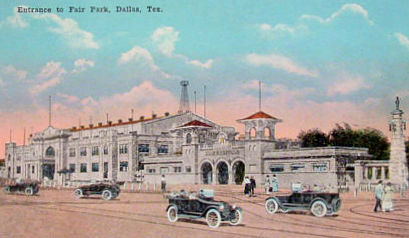
Below, the Fair Park entrance in 1919:

fair-park-entrance_1919

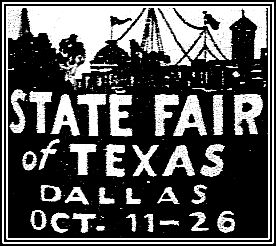
A nice little newspaper ad from 1924:

state-fair_092724

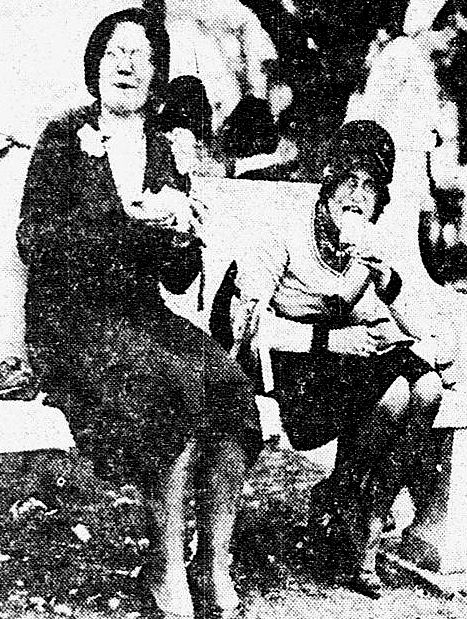
Two women enjoying ice cream in 1930 — State Fair food has always been one of the main joys of visiting the fair.

state-fair_dmn_101530

Ad from 1946: “So sorry, Bill, but Albert is taking me to the State Fair of Texas.” The grown-up entertainment that year was provided by Tommy Dorsey, Gypsy Rose Lee, and Jackie Gleason.

state-fair_dmn_092446

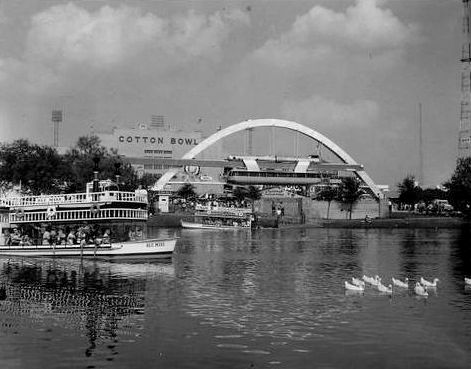
In 1958, Fair Park had a monorail (the only one then operating in the United States) and a paddle-wheeler in the lagoon:

state-fair_lagoon_squire-haskins_dmn-1958

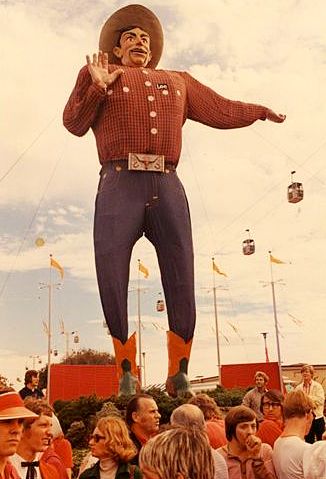
And then there’s this guy, who spans the decades:

big-tex_briscoe-center

***

Sources & Notes

1958 photo featuring the monorail by Squire Haskins, from a Dallas Morning News online article featuring TONS of cool photos of the fair over the years, here.

Big Tex photo (undated) from the Dolph Briscoe Center for American History.

Another post of random images of the SFOT through the decades — “The Fair Is In the Air — Let’s Go!” — is here.

*

Copyright © 2014 Paula Bosse. All Rights Reserved.
 

Preston Elms: Your Country Estate Awaits — 1935

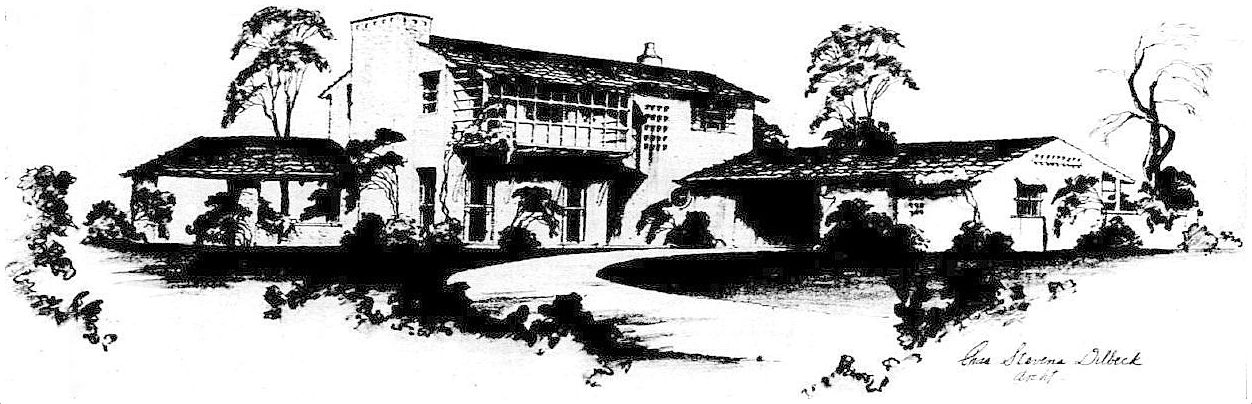
preston-elms_dilbeck_dmn_100135Preston Elms home designed by Charles Dilbeck, 1935

by Paula Bosse

This beautiful home, designed by the wonderful architect Charles Stevens Dilbeck, was featured in an ad touting an exclusive new “country estate” development called Preston Elms, located at Preston Road and Walnut Hill Lane. From the text of the ad:

The home pictured above will be erected immediately in a new tract set aside for a Demonstration Home. It will have three bedrooms, large dining room and living room. Terrace porch on south and east will be 32 feet long and can be reached from dining room, living room or hall. Two baths — most modern type! Extraordinary hardware! …

The backyard will be walled in assuring privacy to servants and parked automobiles. …

All the details of the house and location have been studied and planned for months. …

The Better Homes of America are gradually drifting away from the urban abode of restricted activity to the freedom, comfort, seclusion and the individuality of the COUNTRY ESTATE.

*

A later ad would include this grabber of a line: “In the heart of Preston Road District, All City Conveniences, Minus City Taxes.”

*

Tracts ranging from one-half to two acres would start at $1,700. The house pictured above would cost $12,500. (I would kill for that house, but I fear it has long since been torn down as being too teensy for the neighborhood.)

“Preston Elms” (along with Preston Downs, Preston Hollow, Preston Highlands, Preston Heights, Inwood Road Addition, Sunnybrook, and El Parado) were the subdivisions in the so-called “Preston Road District,” an area of some 1,200 acres north of Northwest Highway. When this area was being developed (by savvy speculator Ira P. DeLoache), it was not within the Dallas city limits. In 1939, after a failed attempt at some sort of merging with University Park, the residents voted to incorporate, and the somewhat sparsely-populated area became the “city” of Preston Hollow. With a mayor and everything.

But back to that house. God, I love that house. As I said, I bet that sucker was elbowed out long ago. If it’s still there, I’d love to know.

A photo of the man responsible for developing most of the Preston Road District, Ira P. DeLoache, namesake of one of the area’s streets.

deloache_legacies_fall-2002

***

Sources & Notes

The Dilbeck drawing at the top is from a half-page real estate ad, here.

Photo of Ira P. DeLoache from the Fall, 2002 issue of Legacies.

Examples of Dilbeck’s beautiful houses (several of which are in Preston Hollow) can be seen here.

Background on Preston Hollow and its road to incorporation can be read about in the Dallas Morning News article “Preston Road Incorporation Plan Climaxes Weeds to Orchids Development,” (DMN, Sept. 24, 1939).

For an aerial view of what would become Preston Hollow, check out a mostly empty 1930 vista (from SMU’s Edwin J. Foscue Library), here. Development, here we come!

*

Copyright © 2014 Paula Bosse. All Rights Reserved.
Snapshots of the Fair, 1936-1940

tx-centennial_strolling_fwplCentennial Exposition, 1936 — photo by Lewis D. Fox (click for larger image)

by Paula Bosse

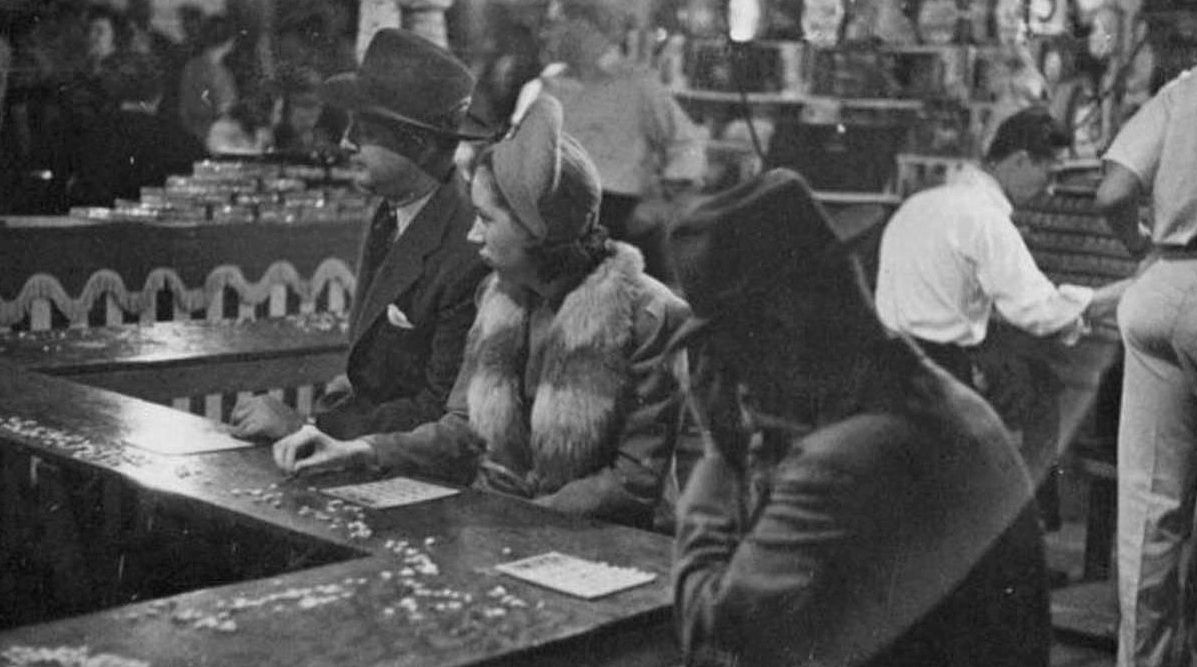
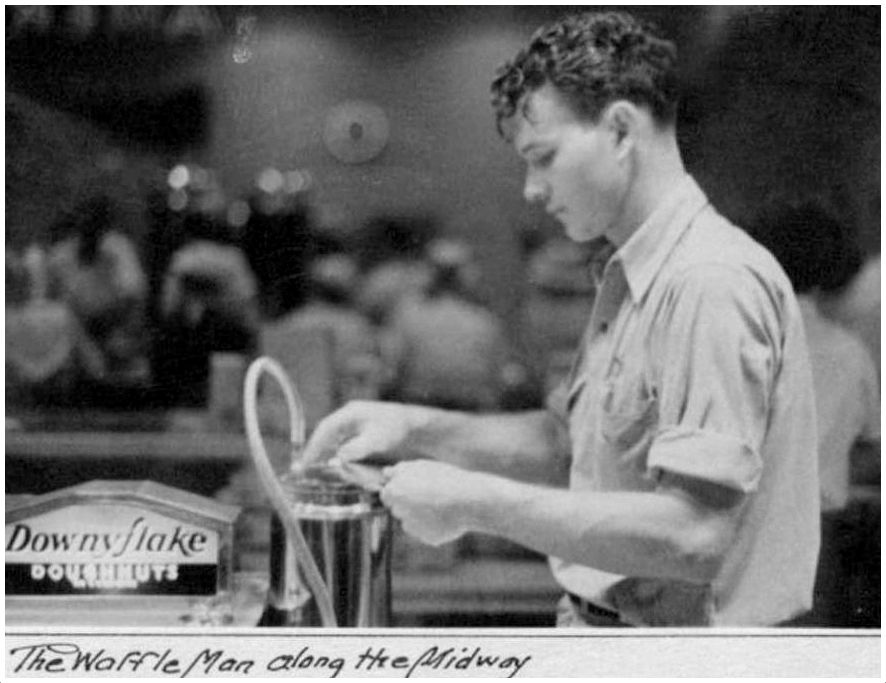
An amateur photographer named Lewis D. Fox took a lot of photos at the State Fair of Texas — from the Texas Centennial in 1936 through 1940. The Centennial photos are particularly interesting, because they show what the “Exposition” was like to the average visitor — there was more going on than just the spectacular extravaganza we usually see — there are also shots of people doing un-spectacular things like just walking around or enjoying a quiet, late-afternoon cup of coffee. There are also photos of the people who do the heavy-lifting at a state fair — the men and women who work the Midway shows and the concession stands (a link to a larger collection of Mr. Fox’s State Fair photos — almost a hundred snapshots — is below).

Enjoy this look at a time when going to the fair meant dressing up and, apparently, often leaving the children at home! (Click photos to see larger images.)

tx-centennial_spirit-of-centennial_fwpl

state-fair_texas-state-bldg_fwpl

state-fair_circus_c1939_fwpl

state-fair_grandstand_fwpl

tx-centennial_swing-revue_fwpl

state-fair_beanery_fwpl

state-fair-midway_fwpl

tx-centennial_cashier_fwpl

tx-centennial_side-view_fwpl

tx-centennial-midway_waffle-man_fwpl

***

Sources & Notes

All photos taken by Lewis D. Fox, from the Fox Photograph Collection in the Fort Worth Public Library Archives, courtesy of the Genealogy, History and Archives Unit, Fort Worth Public Library. Mr. Fox took a lot of snapshots at the fair — see  more here.

On a personal note, I’m mesmerized by “The Waffle Man.” He looks just like a young Lefty Frizzell! Lefty was from nearby Corsicana and he spent a lot of time in Dallas, but he wasn’t born until 1928, so it can’t be him — but check out this photo of Lefty as a teenager and see the remarkable resemblance! Not only did the (no doubt syrup-scented) young man above look like one of my favorite singers, but he also had ready access to waffles. What’s not to love? Oh, Waffle Man….

All images larger when clicked.

*

Copyright © 2014 Paula Bosse. All Rights Reserved.
 

“We Like to LIVE in Dallas!” — Chrysler Ad, 1939

ad-chrysler_1939sm

by Paula Bosse

Madison Avenue knows a thing or two about who we Dallasites are, what we want, and — more importantly — what we need.

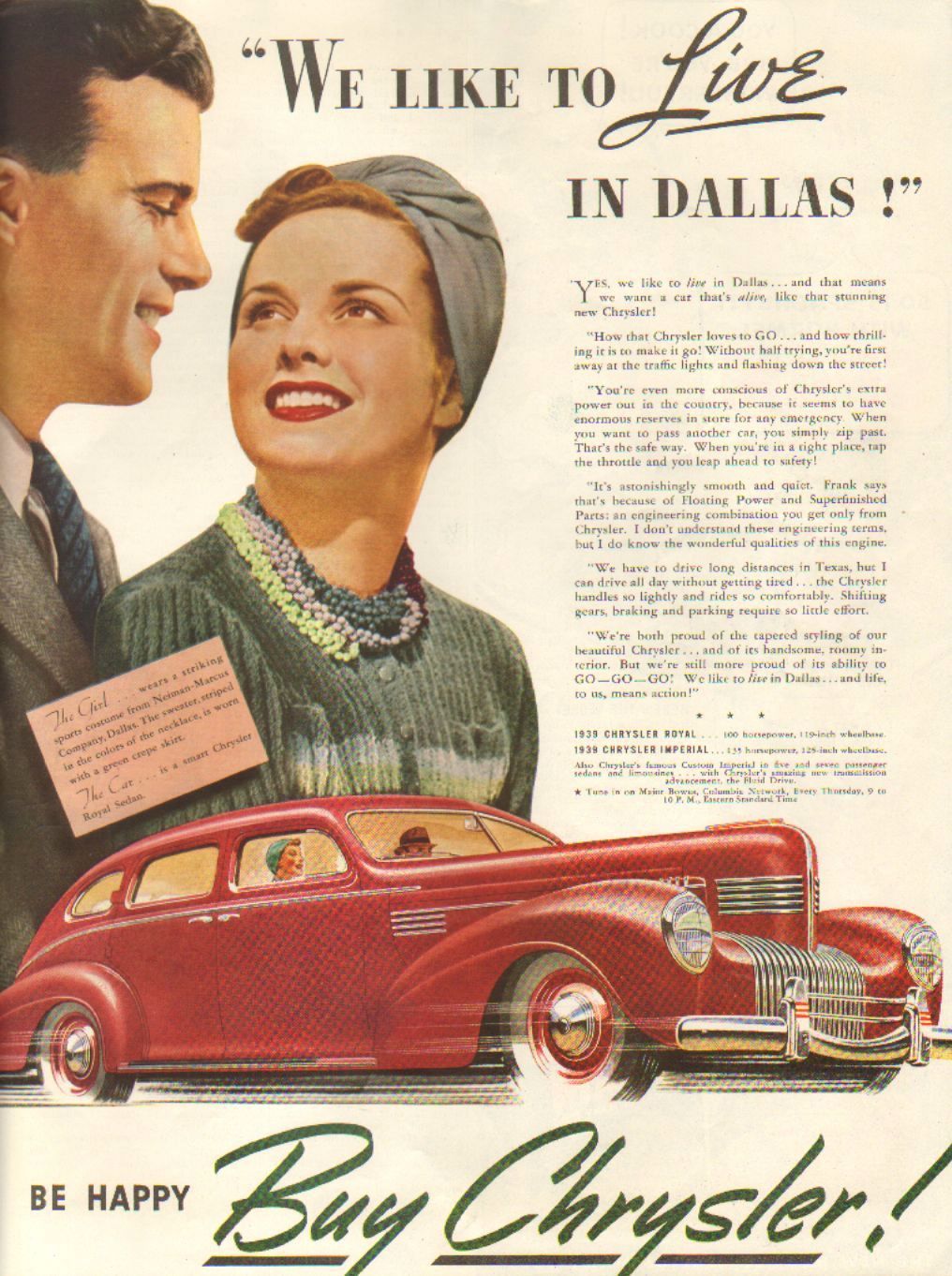
“We Like to LIVE in DALLAS!”

“Yes, we like to *live* in Dallas … and that means we want a car that’s *alive* like that stunning new Chrysler!

“How that Chrysler loves to GO … and how thrilling it is to make it go! Without half trying, you’re first away at the traffic lights and flashing down the street!

“You’re even more conscious of Chrysler’s extra power out in the country, because it seems to have enormous reserves in store for any emergency. When you want to pass another car, you simply zip past. That’s the safe way. When you’re in a tight place, tap the throttle and you leap ahead to safety!

“It’s astonishingly smooth and quiet. Frank says that’s because of Floating Power and Superfinished Parts; an engineering combination you get only from Chrysler. I don’t understand these engineering terms, but I do know the wonderful qualities of this engine.

“We have to drive long distances in Texas, but I can drive all day without getting tired … the Chrysler handles so lightly and rides so comfortably. Shifting gears, braking and parking require so little effort.

“We’re both proud of the tapered styling of our beautiful Chrysler … and of its handsome, roomy interior. But we’re still more proud of its ability to GO — GO — GO! We like to *live* in Dallas … and life, to us, means action!”

But wait … there’s more! The inset (the ad-within-the-ad):

THE GIRL … wears a striking sports costume from Neiman-Marcus Company, Dallas. The sweater, striped in the colors of the necklace, is worn with a green crepe skirt.

THE CAR … is a smart Chrysler Royal Sedan.

And now you know. (Unless you’re a woman, in which case you will need Frank to explain all of this to you. Ask him to speak slowly and use small words.)

“Be Happy, Buy Chrysler!”

***

Click ad for readable text and to get a closer look at that necklace and oddly hausfrau-ish turban.

*

Copyright © 2014 Paula Bosse. All Rights Reserved


“A Cavalcade of Texas” — Dallas, Filmed in Technicolor, 1938

“A Cavalcade of Texas”

by Paula Bosse

(SCROLL DOWN TO WATCH THE FILM CLIPS.)

Brought to my attention last night in a Dallas history group was the heretofore unknown-to-me full-length, Hollywood-slick travelogue called “A Cavalcade of Texas,” shot around the state in 1938 under the auspices of Karl Hoblitzelle in his capacity as chairman of the Texas World’s Fair Commission. (Hoblitzelle also built the Majestic Theater and founded the Interstate Theatre chain.)

“A Cavalcade of Texas” — a 49-minute full-color travelogue touting the beauty, history, natural resources, and industries of the state — was made to be shown at the New York World’s Fair, but because of a variety of production and logistical problems, the film was, instead released theatrically. John Rosenfield, the legendary “amusements” critic for The Dallas Morning News, was suitably impressed. After an early preview of the film, he wrote:

The picture should be a revelation to the outlanders who still think of Texas as the backwoods with a hillbilly civilization. (DMN, June 27, 1939)

Ha.

The film opened in Dallas in October of 1939 at, unsurprisingly, The Majestic, second on a bill with a Ginger Rogers film (which was fitting, as Ginger had begun her professional career at The Majestic as a teenager). The pertinent paragraph from Rosenfield’s official review is amusingly snippy:

“Cavalcade” shoots the Houston skyline as a bristling metropolitan acreage but hides the Dallas buildings behind the towering Magnolia Building. Maybe we are sensitive about it but we don’t feel that architectural justice has been done. The Fort Worth aspect is glorified more than it deserves. (DMN, Oct. 15, 1939)

(Sorry, Fort Worth!)

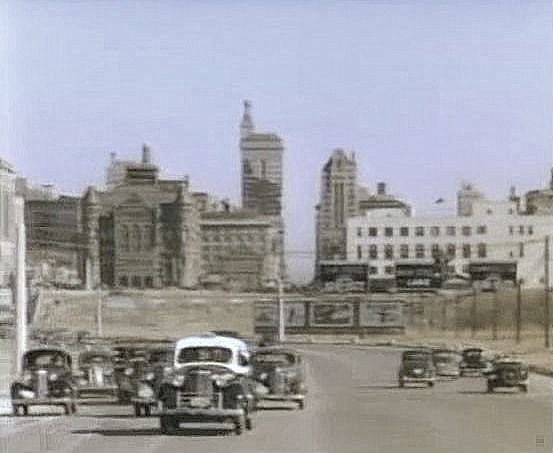
The Dallas scenes are only about 4 minutes’ worth of the whole film, but to see Dallas at this time in color — and moving — is kind of thrilling. The entire film is on YouTube, but I’ve bookmarked the two Dallas bits. First, after an interminable sequence on how fantastic things will be when we finally make that darn Trinity navigable, is a Dealey Plaza-less Triple Underpass, shots of Main Street (including the now partially obliterated 1600 block at the 17:52 mark, on the right), Fair Park (including a description of the Hall of State as “the Westminster Abbey of the New World” (!)), and a neon-lit Elm Street at night. (If you let it keep going, you’ll see “the Fort Worth aspect.”)

(I am having problems embedding this clip to begin at the 17:30 mark. If the above does not begin at the Dallas sequence, see it at YouTube, here.)

*

Twenty minutes later, the viewer is, for some reason, shown the Dallas Country Club with what I’m guessing are Neiman-Marcus models pretending to play golf.

(If the above does not begin at the Dallas Country Club sequence at 40:09, see it at YouTube, here.)

*

Those are just the Dallas bits — the whole film is an impressive undertaking, and it’s great to see documentary footage of this period in rich color, presented with incredibly high production values, in full Hollywood style.

cavalcade_101439_ad
Ad, Oct. 14, 1939 (click to see larger image)

***

Sources & Notes

“A Cavalcade of Texas” was directed, edited, and narrated by James A. Fitzpatrick and can be seen in full on YouTube, here.

Background on Karl Hoblitzelle can be read in information provided by the Handbook of Texas, here, and by the Dallas Public Library, here.

The wonderful and vibrant 1939 footage of downtown Dallas that was discovered on eBay a few months ago and “saved” by a group of preservation-minded Dallasites, which included Robert Wilonsky and Mark Doty, is one of my favorite Dallas-history-related stories of 2014. Watch that footage here.

*

Copyright © 2014 Paula Bosse. All Rights Reserved.
Highland Park High School — 1939

hphs_1939Highland Park High School

by Paula Bosse

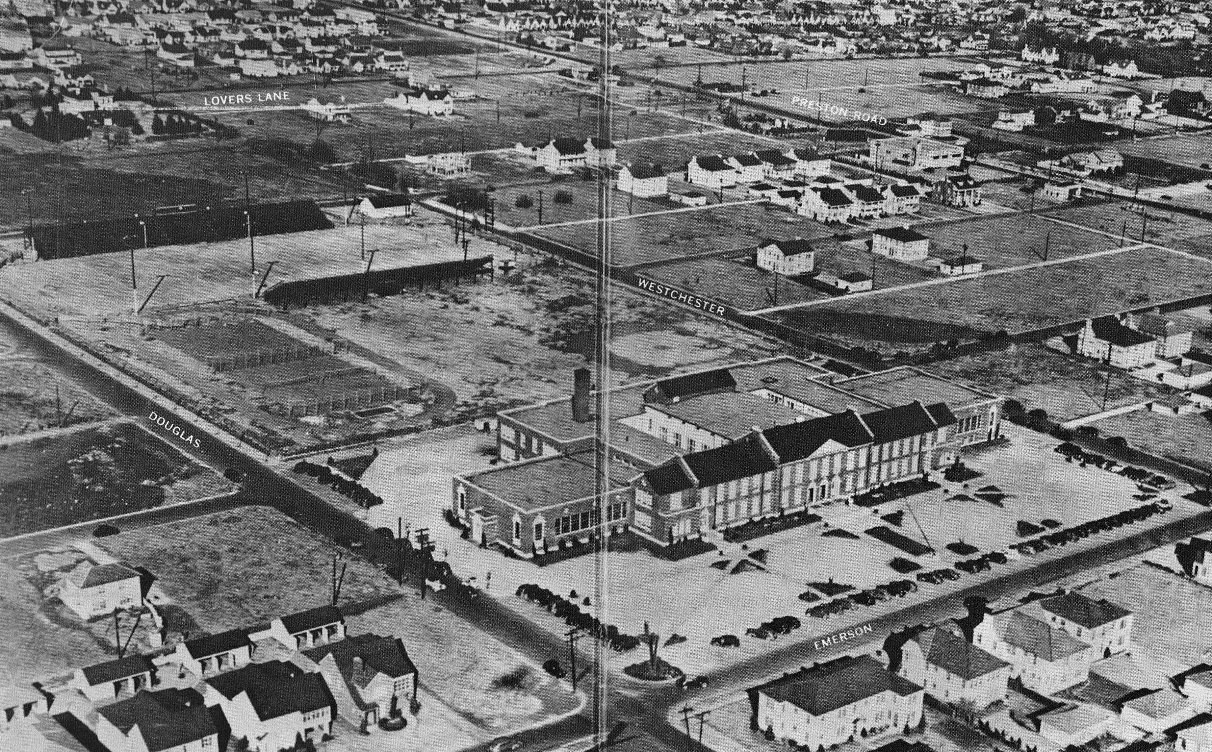
Great photo of the neighborhood around Highland Park High School (its second location — I had no idea), from the 1939 HPHS yearbook. I would have thought the Park Cities would have been built up more by then.

The description, from the back of the 1970s-era postcard this image appeared on:

In 1937, Highland Park High School moved to 4220 Emerson from its original home on Normandy. This aerial view — taken from a double-page spread in the 1939 Highlander — shows the entire physical plant of [the] High School. R. C. Dunlap was the President of the Highland Park District Board of Education that year.

Bounded by Emerson, Douglas, Lovers Lane and Westchester — covering five full city blocks — Highland Park High School looks, today, much as it did in 1939. Only the neighborhood has changed as it has continued to develop. Significant additions have been made to the educational facilities in order to keep teaching techniques right up to date.

Today, ninth, tenth, eleventh and twelfth graders from both Park Cities attend Highland Park High School — still recognized as one of the best educational institutions in the country.

***

Sources & Notes

Photo from the 1939 HPHS Highlander yearbook; later issued as a postcard as part of the Park Cities Bank “Heritage Series” in the 1970s. Thanks to the Lone Star Library Annex Facebook group for use of the image.

A very, VERY large scan of this image can be viewed here.

**

Here’s an awkwardly cropped photo of the first HPHS, from 1928 (click for larger image):

old-hphs_1928_crop

Another from the same series of postcards, issued in the 1970s. The description on the back:

Sunny days almost always found upperclassmen chatting on the front steps at High School. These photographs were taken from a 1928 copy of The Highlander — the Highland Park High School annual.

H. E. Gable was the superintendent that year. Ben Wiseman replaced E. S. Lawler as principal at the end of the school year.

The front steps at 3520 Normandy are still a gathering spot, but today’s students attend Highland Park Middle School — grades six, seven and eight. Senior High School moved to a new building at 4220 Emerson in 1937. Additions and remodeling have kept both of these educational facilities right up to the minute in technology and equipment.

*

Copyright © 2014 Paula Bosse. All Rights Reserved.
“Howdy, Y’all!”

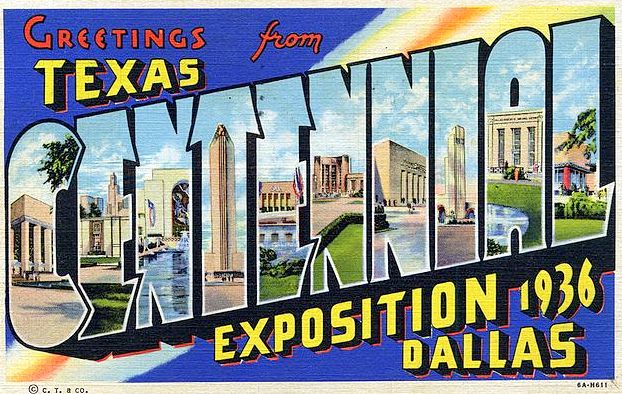
tx-centennial_postcard_1936

by Paula Bosse

Thanks so much to the fine folks at The State Fair of Texas for the Throwback Thursday social media love today! They graciously shared our Texas Centennial posts. Welcome, new visitors!

And don’t forget, Big Tex is counting down those days….

***

State Fair of Texas website is here. Get ready, y’all!

*

Copyright © 2014 Paula Bosse. All Rights Reserved.
Linz Bros. Glasses Ad — 1936

ad-linz-glasses_dmn_030836

by Paula Bosse

“Have your glasses made to order.”

Opticians should consider bringing back the surprisingly accurate elf-and-tape-measure method.

*

Copyright © 2014 Paula Bosse. All Rights Reserved.