Flashback : Dallas

A Miscellany: History, Ads, Pop Culture

Category: Art

Hunting Pecans in the Park
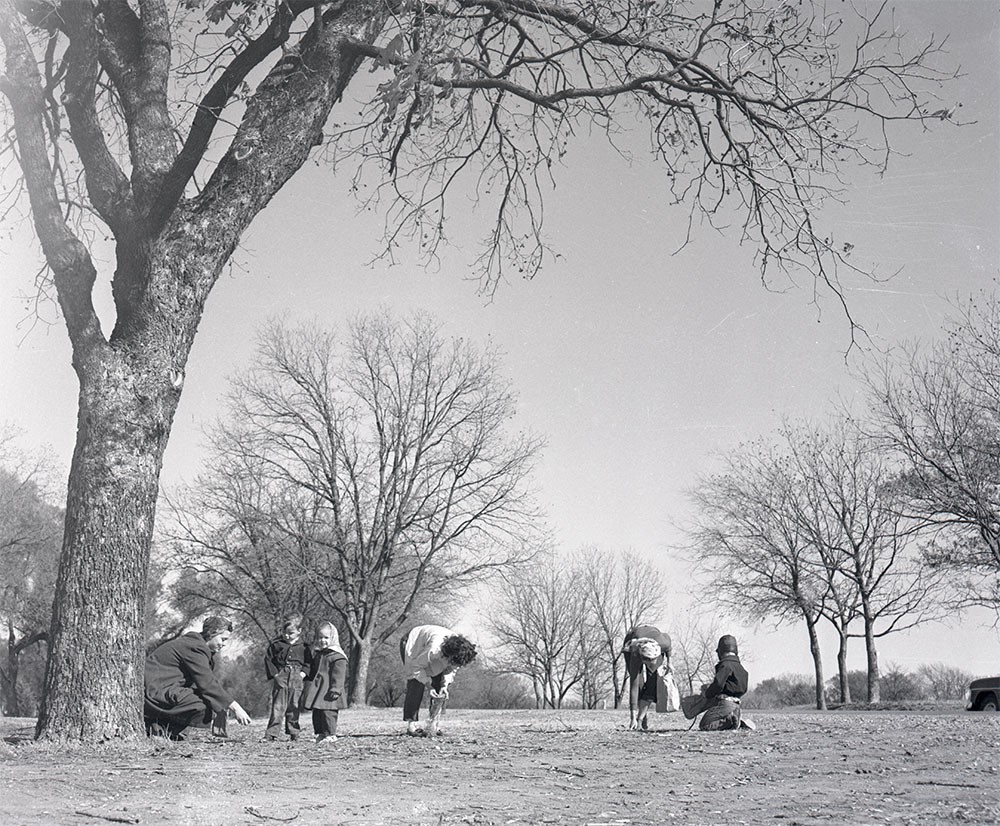
On a nut-meat mission, White Rock Lake Park, 1952

by Paula Bosse

A few days ago, the Dallas Public Library posted a version of the mural below on its social media accounts. The title of the mural is “Gathering Pecans” by Dallas artist Otis Dozier. It was painted in 1941 as a New Deal federally commissioned work to hang in the Arlington Post Office (it now hangs in the Amon Carter Museum in Fort Worth). I love this mural — not only because I’m a fan of Dozier’s work, but also because it captures something that was once a common practice for families: going to a public place like a park (or as seen in the mural, somewhere along the side of the road) and picking up pecans.

Amon Carter Museum of American Art

When I was a child, my mother used to take me and my brother to White Rock Lake Park (or occasionally to Reverchon Park) to gather pecans. It was fun. Like a really easy Easter egg hunt with really small eggs. The 1952 photo at the top predates my own time hunting for fallen pecans, but I swear, that could be me, bundled up in a coat and scarf, having fun with my family on a crisp, sunny day.

We’d pick up the nuts (so. many. pecans…) and drop them into a paper sack. Then we’d take them home and lay sheets of newspaper on the dining room table, and the whole family — including my father and aunt — would spend an afternoon cracking pecans and picking out the “meat” with special nutcracking instruments. Next stop: a delicious dessert. I absolutely loved all of this.

I asked my (much younger) co-workers if they ever did this — went to a park to gather pecans. There were a couple of vague “…maybe?…” responses, but most had never heard of such a thing. How sad!

If your family doesn’t do this, consider it. It’s one of my favorite fall memories. And you’ll get an almost-free pecan pie out of it!

Just remember: picking up fallen pecans from the ground in a public park is okay (I think), but shaking branches or disturbing trees to make pecans fall is NOT allowed (and might also lead to a fine). Here are some boys sitting next to a sign that says “Please! Threshing Prohibited.” See those long sticks they’ve got? When that photographer leaves, they’re going to be “threshing.”
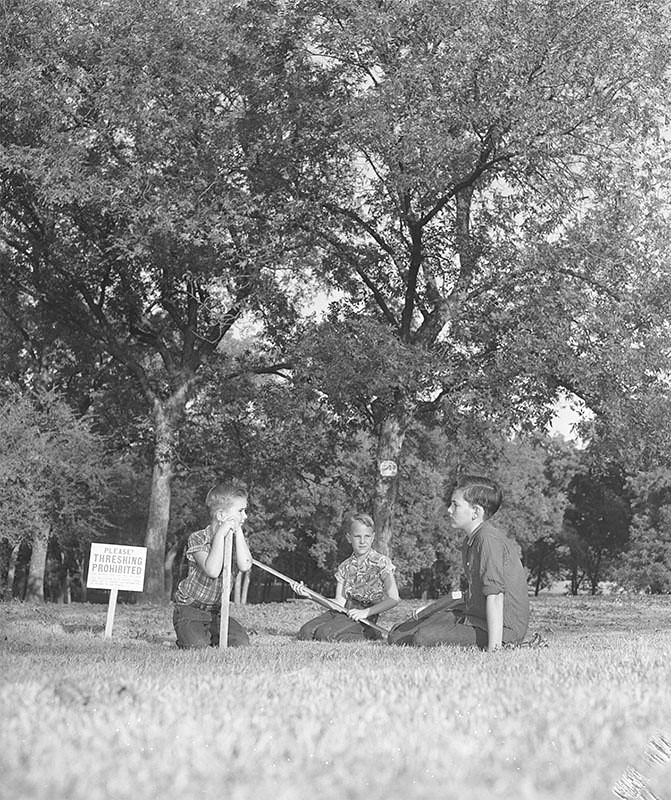
Don’t do it! Please! Hunt on the ground.
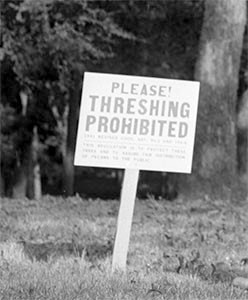
And don’t wander onto private property unless you have permission. Don’t be like Dinks McClain! He might have been acquitted, but he had to go through a lot of nut-based hassle to be a free man again!
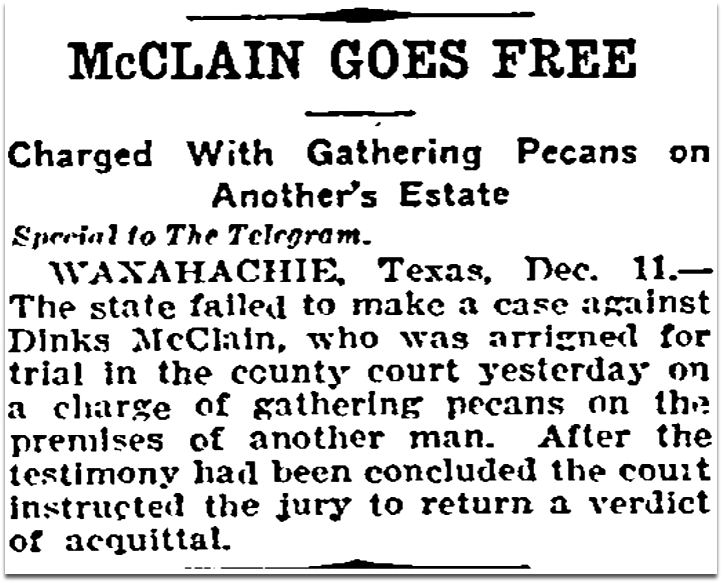
Fort Worth Star-Telegram, Dec. 11, 1907

*

Poaching nuts from private property is not the only thing to beware of. If you browse through the Dallas Morning News and Fort Worth Star-Telegram online archives using the search term “pecan gatherers” or “gathering pecans” or “hunting pecans,” etc., you will see an absolutely eye-popping number of articles about severe injuries and death (!) suffered by people just innocently out looking for some pecans. Lots of people fell out of trees (STAY ON THE GROUND!!), lots of people were shot (in a variety of scenarios), someone drowned, I think (…interesting), and snakes were everywhere. Avoid all these things. And don’t trespass. Don’t be a Dinks McClain. Stay on the ground, stay on public land, and stay away from errant bullets and snakes.

**

Lastly, here’s a 1926 newspaper article (all sub-headlines included!) all about this vanishing tradition:

GYPSY CALL OF THE FALL WOODS HEARD BY DALLAS MOTORISTS 

Autumn Leaves and Pecans on Dallas Roads Are Popular 

Autumn Tang Brings Forth Many Drivers 

Roads Near Dallas Are Crowded on Week-End Afternoons

Seek Fall Leaves 

Decorations and Pecans Are Gathered to Take Home 

Autumn has failed to chill the ardor of Dallas motorists. On the contrary, they are attracted by the briskness of a fall afternoon drive and by the flaming beauty of autumn leaves or the promise of pecans on and under wayside trees. 

Now that the early nights prevent the after-dinner twilight rides of the late summer, Dallasites are saving their drives for week-end and holiday afternoons. On Saturday and especially on Sunday afternoons thousands of local motorists are driving on country roads near Dallas or through the more woodsy of the parks and city addresses to view the beauty of the changing autumn. Others go with the practical motive of finding pecans, and many of these are rewarded.

Roads Are Near

On Saturday afternoon the more popular roads leading from Dallas are crowded with automobiles. No matter in what part of Dallas the motorist lives, he can find a thoroughfare near his home, leading to woods colored by the approach of winter. White Rock Lake, South Beckley avenue, the Holmes street road, Stevens Park, Reverchon Park, Oak Lawn Park, Turtle Creek Boulevard, the Maple avenue road and the Lemmon avenue road are some of the favored drives. On them the motorist will find autumn beauty in profusion.

Many Dallas hostesses are using the gorgeously colored fall leaves as decorations. Even when the motorists are not planning to entertain at home, many take back bunches of the leaves to bring some of the fall color into living and dining-rooms.

Perhaps the most popular fall tree is the sumac, whose scarlet stands out against the darker red and the brown of other leaves. Seen from the roadside, the brilliant leaves have provided an irresistible attraction to stop and gather some to many automobilists. Ash, oak and darker leaves also make their gypsy calls from the woods.

Find Pecans 

Pecans as well as decorative leaves are found in many directions from Dallas. Those motorists fortunate enough to have friends with a farm or estate along a water course are making the most of their friendships, while others are forced to rely upon finding trees on unposted land or by the roadside. Most of the pecan hunters are rewarded with enough of the nuts to crack and pick out on the ride back, though fee are able to get a supply sufficient to last through the late fall evenings by the fire.

The brisk coolness of the autumn week-end afternoon, made golden by a pleasant ineffectual sun, not only has not discouraged Dallas automobilists, but the tang of the fall has brought out many who took only short drives during the summer. (Dallas Morning News, Nov. 7, 1926)

***

Sources & Notes

The top photo was taken in November 1952 and is from the Hayes Collection, Dallas History & Archives, Dallas Public Library (PA76-1/11502.2). The description accompanying the photograph: “Hunting pecans at the north end of White Rock Lake are B. B. Rakestraw of Tyler, left, and J. T. White of 7322 Benning. The crisp Fall weather was bringing pecan meat lovers out throughout the city. High winds helped solve the problem of getting nuts.”

The second photograph was taken October 16, 1953 and is also from the Hayes Collection (PA76-1/16051.1). The description of this photo: “Tommy and Danny Wheeler waiting for pecans to fall.”

“Gathering Pecans” is a post-office mural by Otis Dozier (1941); the image reproduced here is from the collection of the Amon Carter Museum of American Art, Fort Worth, Texas — more info is here.

Watch this short film from the Amon Carter Museum on the mural’s relocation and restoration:

*

Pecan tree trivia: in an Oct. 15, 1950 DMN article (“Plenty of Pecans Await Searchers at Dallas Parks”), it is noted that, in 1950, there were approximately 20,000 pecan trees in Dallas parks — half of them were in White Rock Lake Park.

*

Copyright © 2025 Paula Bosse. All Rights Reserved.
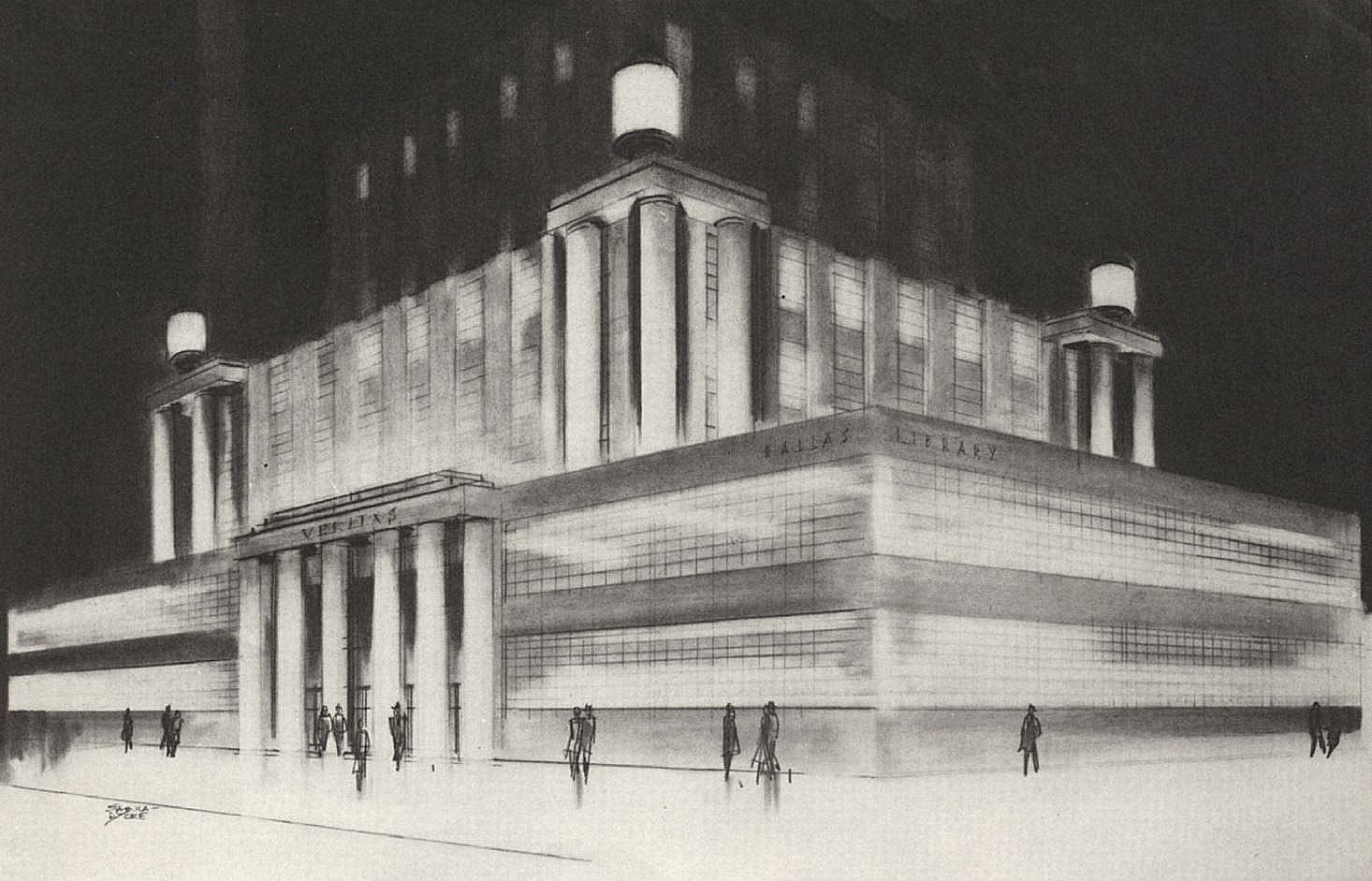
An Artist’s Conception of a Future Dallas

Vision of a new downtown library…

by Paula Bosse

I came across a collection of drawings recently that I think are just fantastic. They show what Dallas could be if we all just want it enough. The captions are giddy and exuberant, with the exhortation “Let’s build for the future.” It’s the sort of Chamber of Commerce boosterism which is a Dallas mainstay. Dallas dreams big and bold.

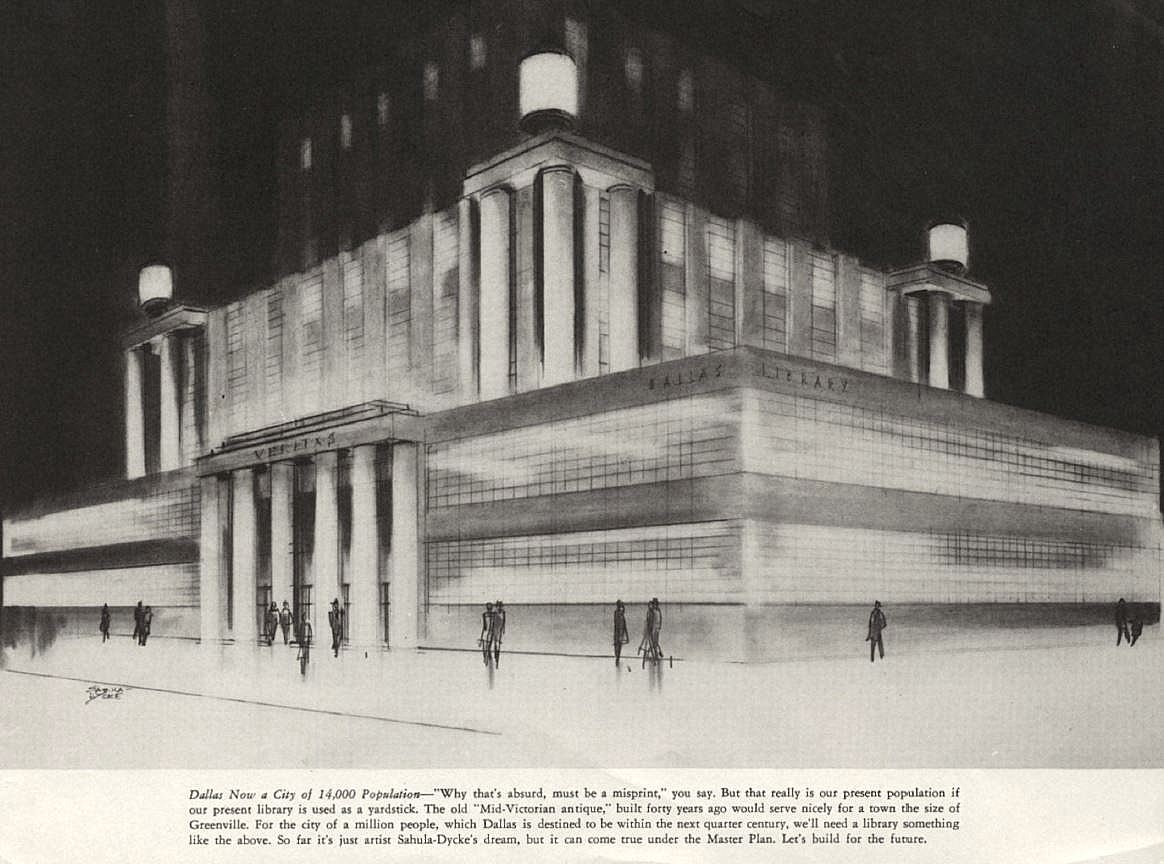
It’s not the ideas that I find so intriguing (although, they’re interesting), it’s the artwork. These drawings are great. The monumental, Deco-ish buildings exude a quiet power. Most of them are set against a dark sky, which adds extra awe-inspiring heft. I really, really love these drawings. It’s a shame most of these conceptions remained just that. I would have loved that library (above)! The artist is Ignatz Sahula-Dycke — more about him at the end of this post.

The drawings are not dated, but my guess is late 1930s or very early 1940s. Promotional captions accompany each picture. Click to see full-screen images. Enjoy!

**

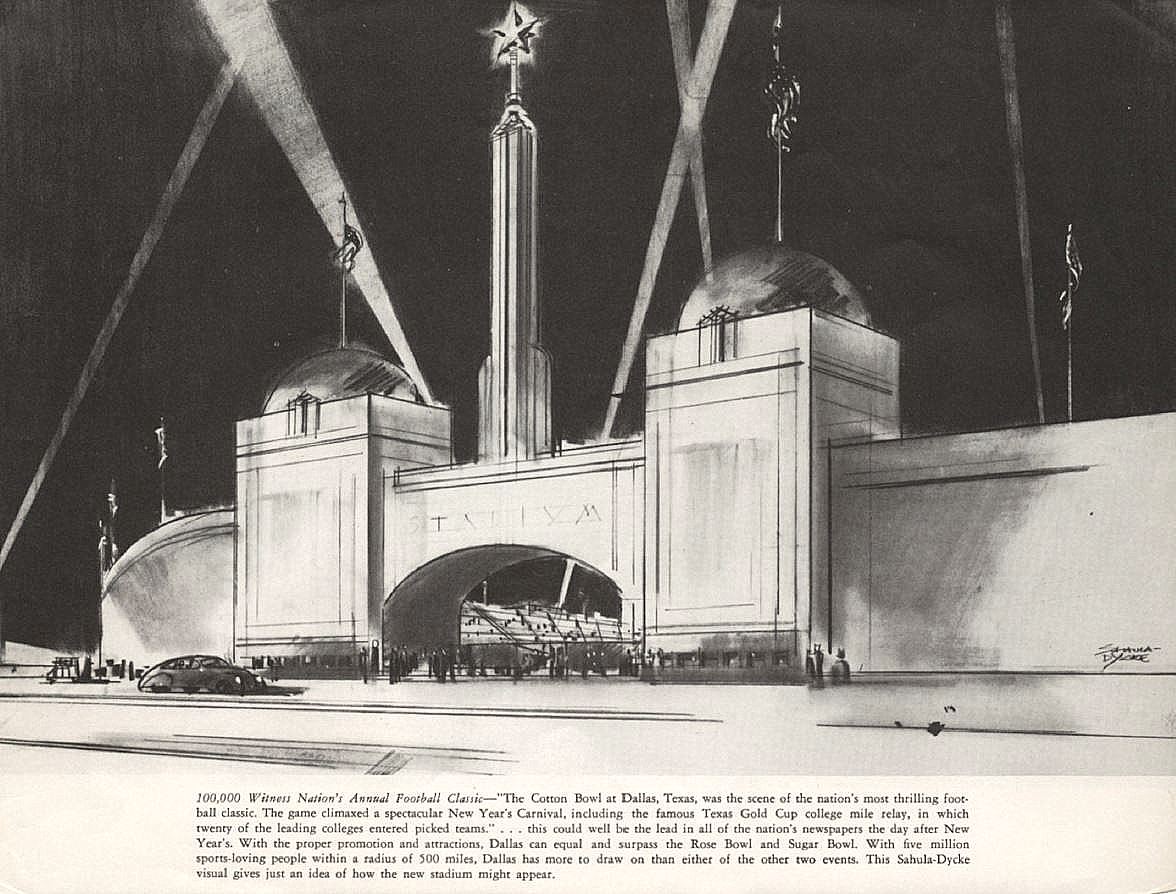
A NEW SPORTS STADIUM AT FAIR PARK

100,000 Witness Nation’s Annual Football Classic — “The Cotton Bowl at Dallas, Texas, was the scene of the nation’s most thrilling football classic. The game climaxed a spectacular New Year’s Carnival, including the famous Texas Gold Cup college mile relay, in which twenty of the leading colleges entered picked teams.” … This could well be the lead in all of the nation’s newspapers the day after New Year’s. With the proper promotion and attractions, Dallas can equal and surpass the Rose Bowl and Sugar Bowl. With five million sports-loving people within a radius of 500 miles, Dallas has more to draw on than either of the other two events. This Sahula-Dycke visual gives just an idea of how the new stadium might appear.

*

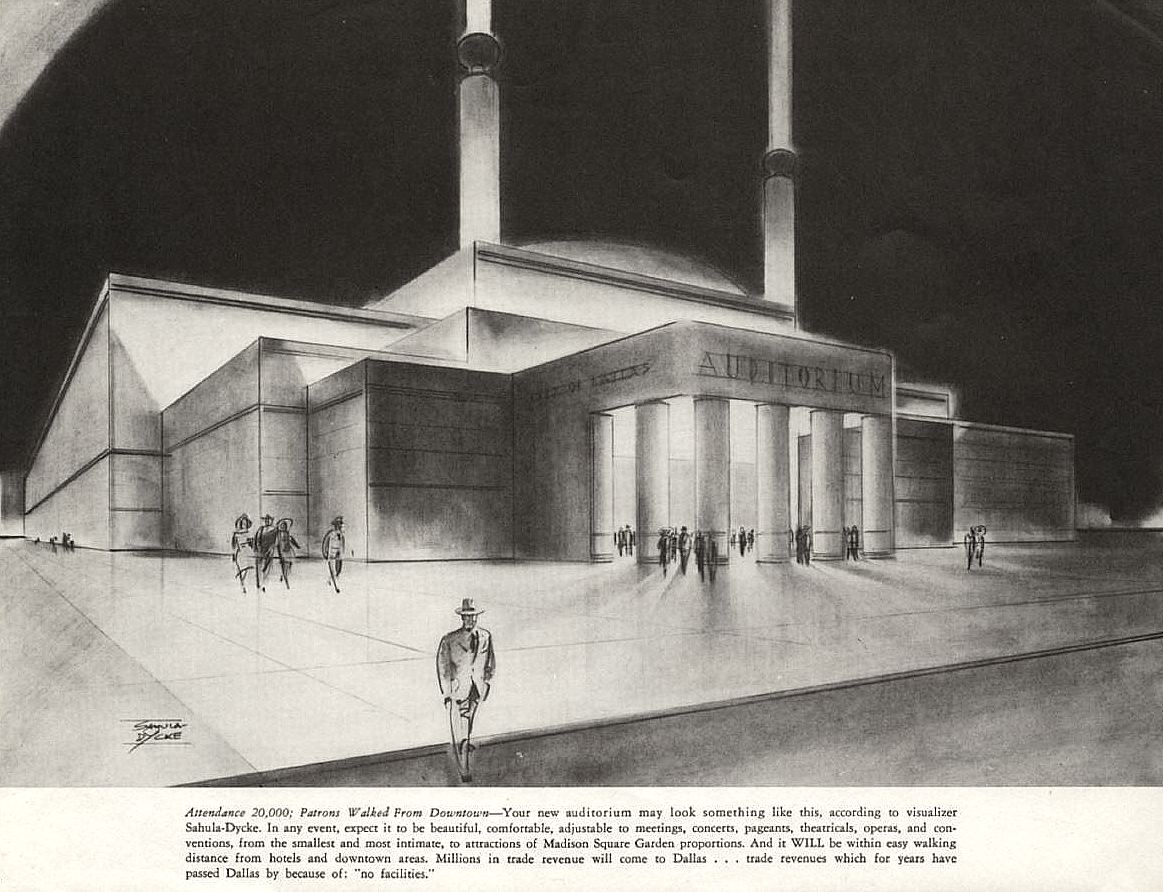
A CITY AUDITORIUM / CONVENTION CENTER

Attendance 20,000; Patrons Walked From Downton – Your new auditorium may look something like this, according to visualizer Sahula-Dycke. In any event, it’s expected to be beautiful, comfortable, adjustable to meetings, concerts, pageants, theatricals, operas, and conventions, from the smallest and most intimate, to attractions of Madison Square Garden proportions. And it WILL be within easy walking distance from hotels in downtown areas. Millions in trade revenue will come to Dallas… trade revenues which for years have passed Dallas by because of: “no facilities.”

*

AN EXPANDED LOVE FIELD

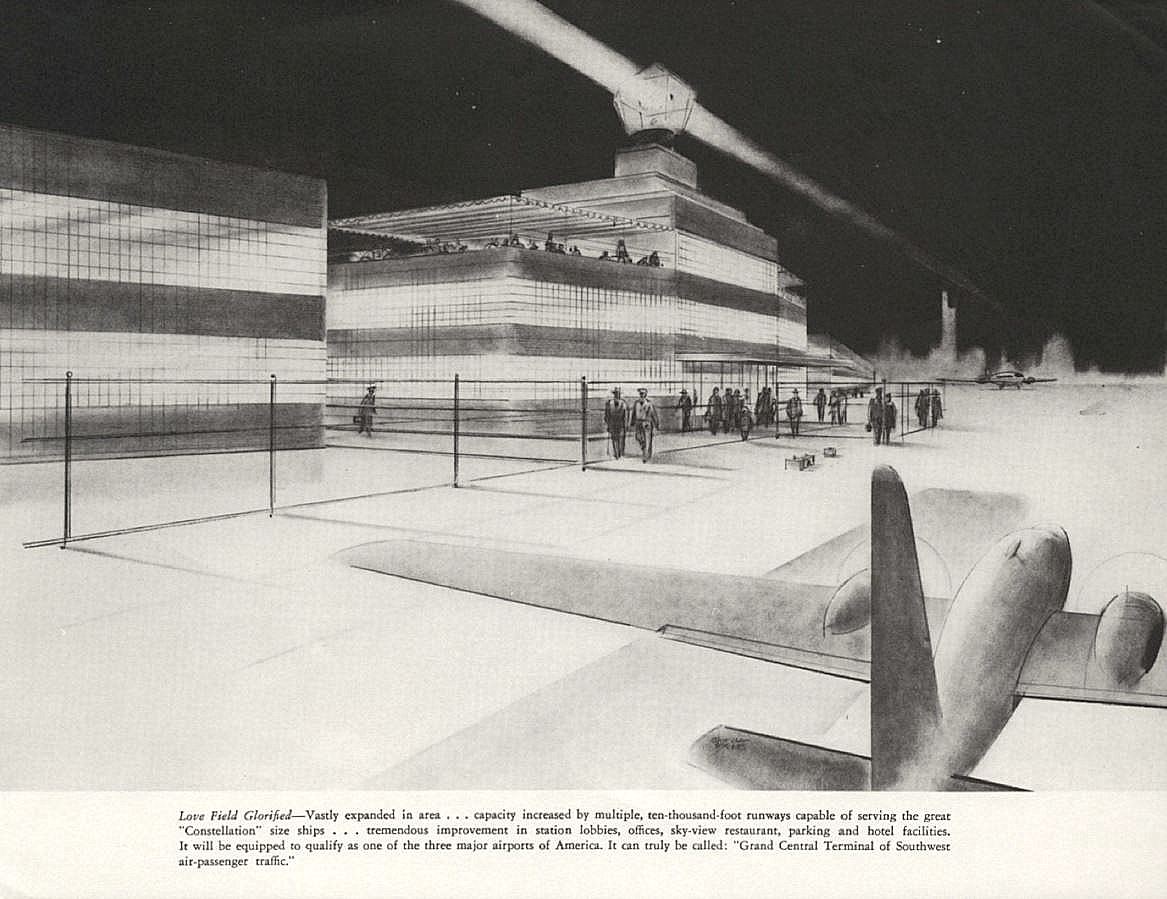
Love Field Glorified — Vastly expanded in area… capacity increased by multiple, ten-thousand-foot runways capable of serving the great “Constellation” size ships… tremendous improvement in station lobbies, offices, sky-view restaurant, parking and hotel facilities. It will be equipped to qualify as one of the three major airports of America. It can truly be called: “Grand Central Terminal of Southwest air-passenger traffic.”

*

HIGHWAYS

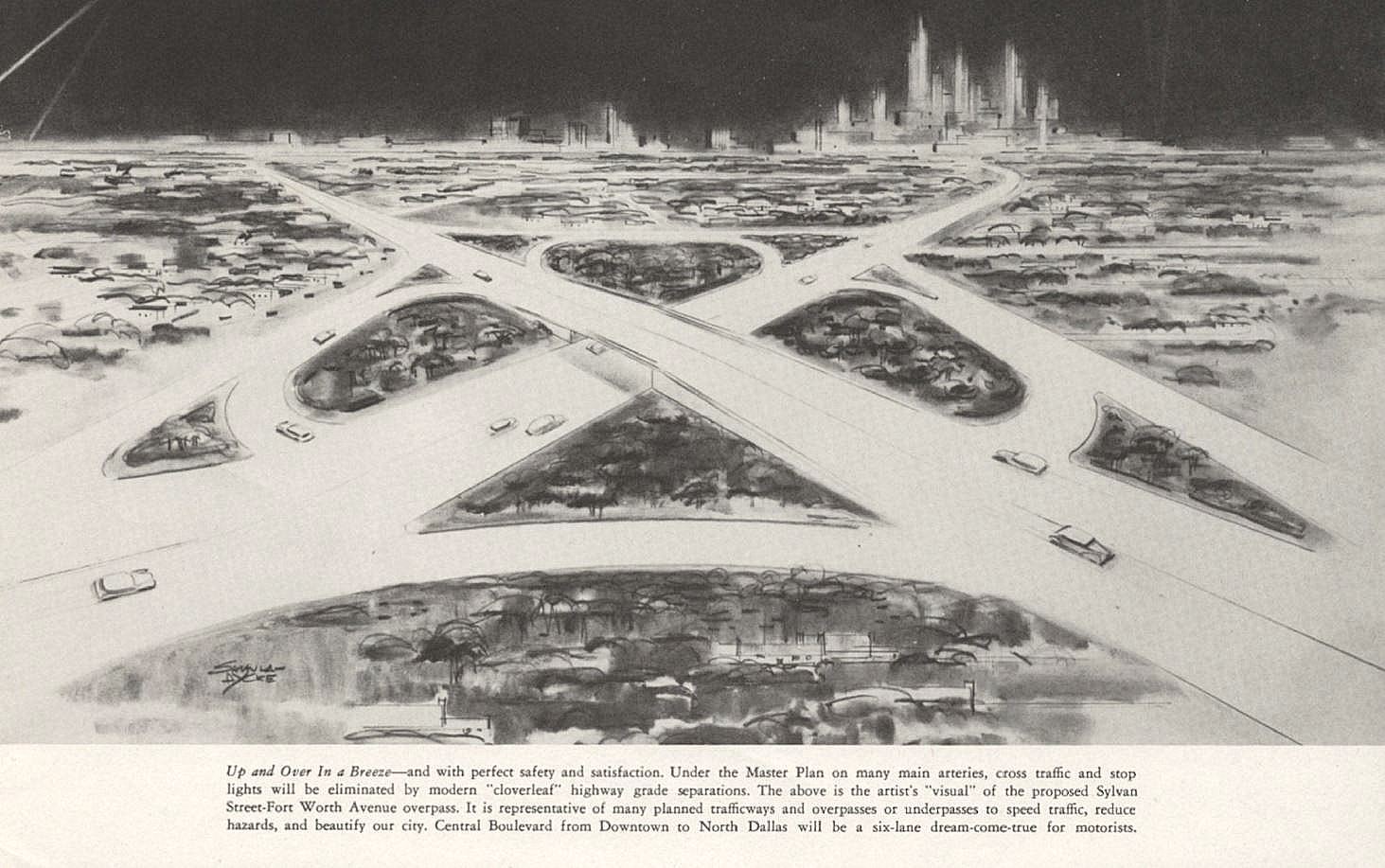
Up and Over In a Breeze — and with perfect safety and satisfaction. Under the Master Plan on many main arteries, cross traffic and stop lights will be eliminated by modern “cloverleaf” highway grade separations. The above is the artist’s “visual” of the proposed Sylvan Street-Fort Worth Avenue overpass. It is representative of many planned trafficways and overpasses or underpasses to speed traffic, reduce hazards, and beautify our city. Central Boulevard from Downtown to North Dallas will be a six-lane dream-come-true for motorists.

*

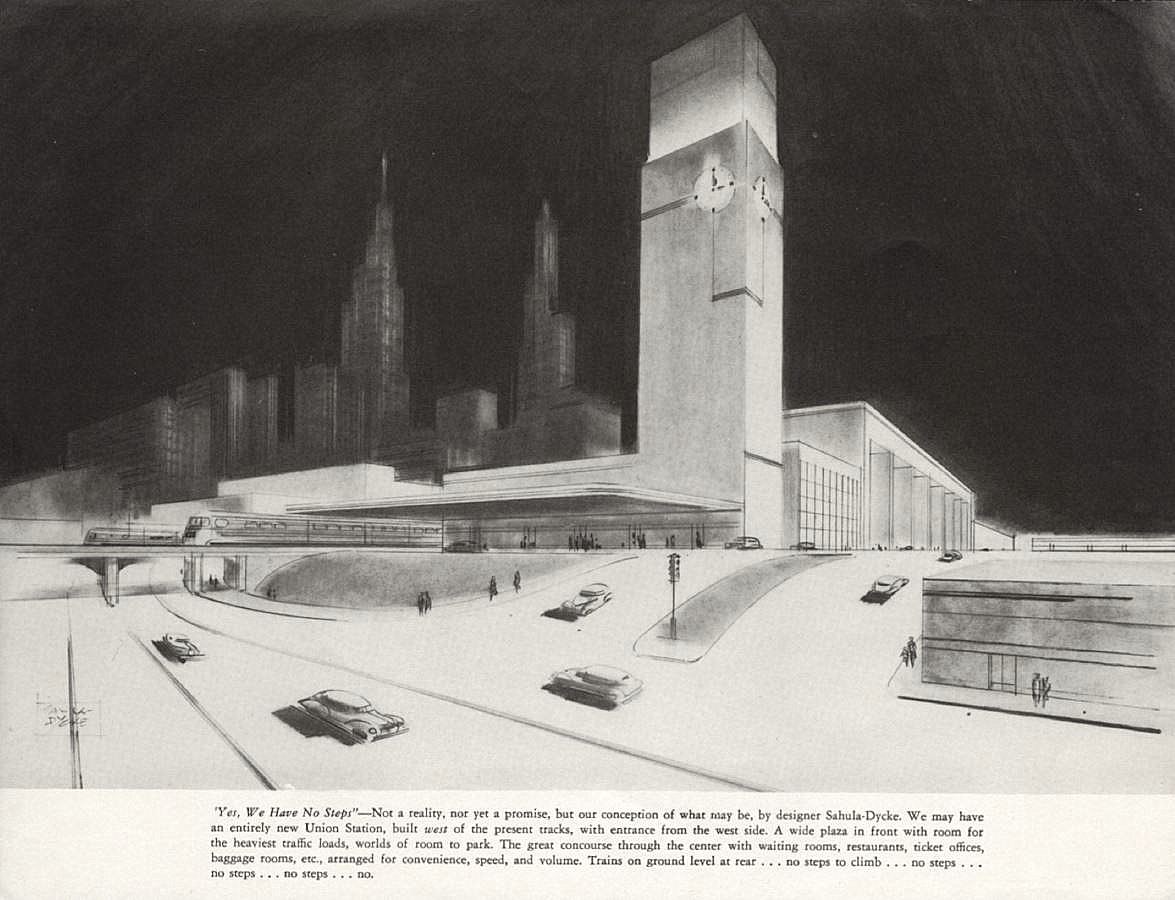
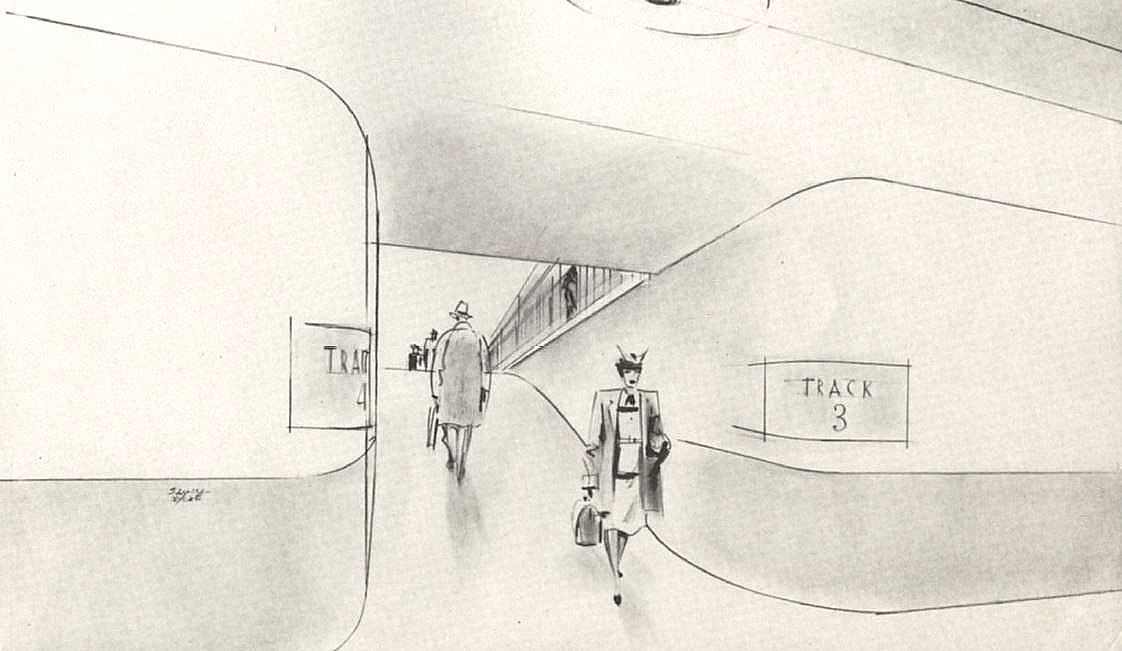
A NEW UNION STATION (…no steps!!!)

“Yes, We Have No Steps” — Not a reality, not yet a promise, but our conception of what may be, by designer Sahula-Dycke. We may have an entirely new Union Station, built WEST of the present tracks, with entrance from the west side. A wide plaza in front with room for the heaviest traffic loads, worlds of room to park. The great concourse through the center with waiting rooms, restaurants, ticket offices, baggage rooms, etc, arranged for convenience, speed, and volume. Trains on ground level at rear… No steps to climb… no steps… no steps… no steps… no.

*

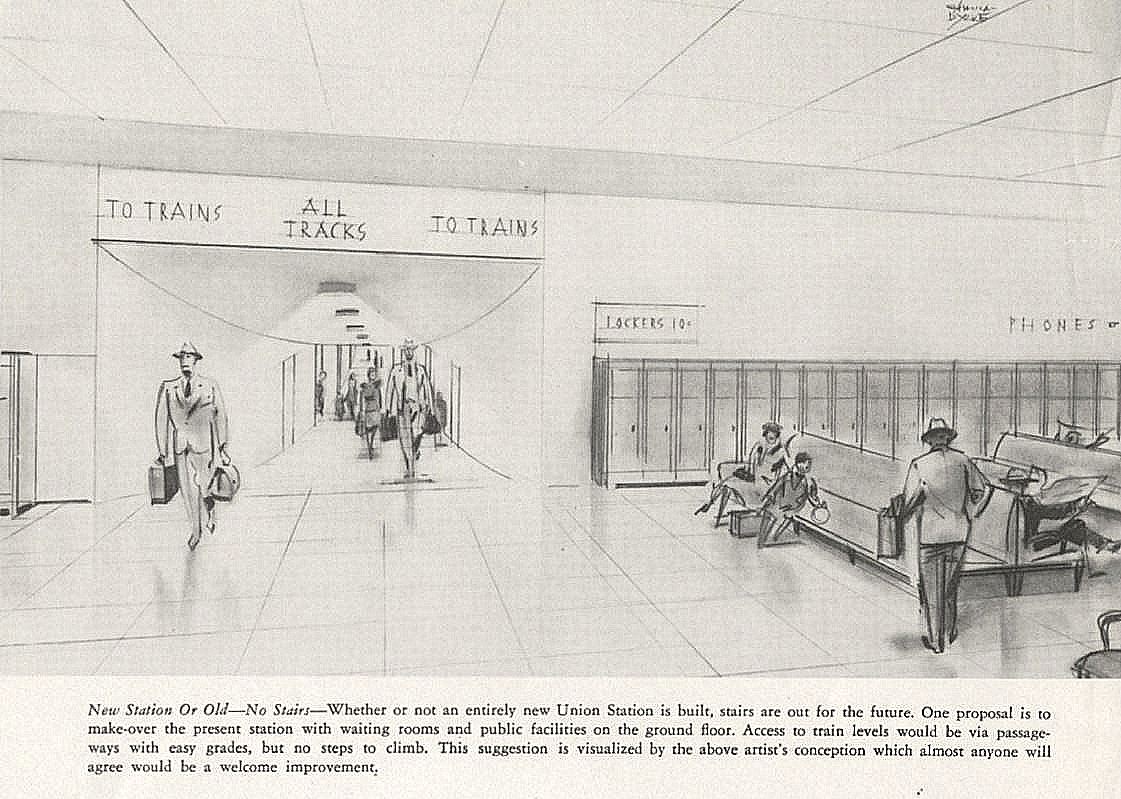
UNION STATION INTERIOR (…seriously, we mean it: NO STEPS!)

New Station Or Old — No Stairs — Whether or not an entirely new Union Station is built, stairs are out for the future. One proposal is to make over the present station with waiting rooms and public facilities on the ground floor. Access to train levels would be via passageways with easy grades, but no steps to climb. This suggestion is visualized by the above artist’s conception which almost anyone will agree would be a welcome improvement.

*

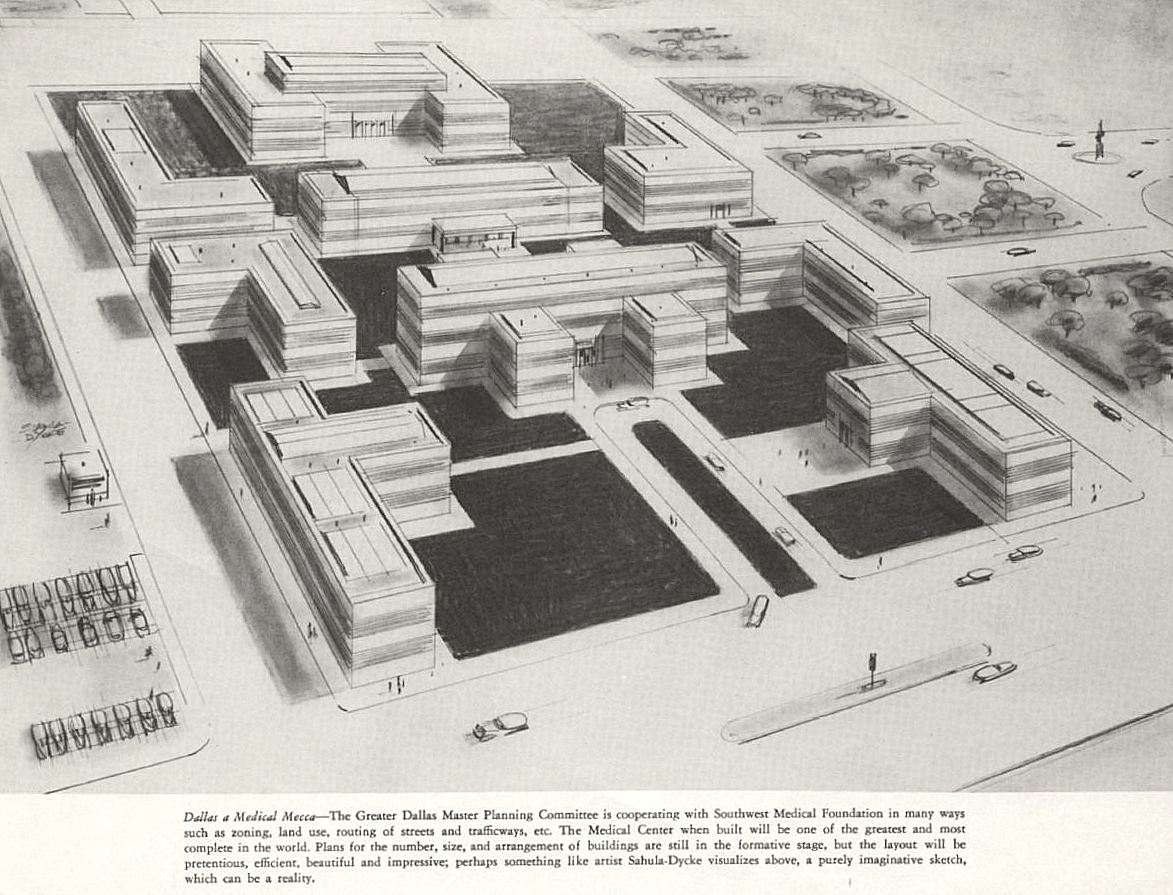
MEDICAL CENTER

Dallas a Medical Mecca — The Greater Dallas Master Planning Committee is cooperating with Southwest Medical Foundation in many ways such as zoning, land use, routing of streets and trafficways, etc. The Medical Center when built will be one of the greatest and most complete in the world. Plans for the number, size, and arrangement of buildings are still in the formative stage, but the layout will be pretentious, efficient, beautiful and impressive; perhaps something like artist Sahula-Dycke visualizes above, a purely imaginative sketch, which can be a reality.

*

CENTRAL LIBRARY

Dallas Now a City of 14,000 Population — “Why that’s absurd, must be a misprint,” you say. But that really is our present population if our present library is used as a yardstick. The old “Mid-Victorian antique,” built 40 years ago would serve nicely for a town the size of Greenville. For the city of a million people, which Dallas is destined to be within the next quarter century, we’ll need a library something like the above. So far it’s just artist Sahula-Dycke’s dream, but it can come true under the Master Plan. Let’s build for the future.

**

I don’t know the date of these drawings. My guess would be the late ’30s or very early ’40s. (The Union Station drawing shows a building that looks like the Mercantile Bank Building. Plans for the Mercantile were announced to the public in 1940.) In a Dallas Morning News article (“‘Greater Dallas’ Appeals Stir Chamber to Renewed Action,” DMN, Dec. 8, 1937), many of the things covered in the captions above were hot topics at the annual meeting of the Dallas Chamber of Commerce. A “Master Plan” was later developed by Harland Bartholomew in the early ’40s. After a break for the war, the plan was finally put before the voters in April 1945.

The plans changed some between 1937 and 1945, but the visions touted in the drawings above were similar to the plans accepted favorably by Dallas voters. (The one part of this Master Plan that failed — and which is not mentioned in the drawings — is the vote on whether to “unify” the City of Dallas by annexing the Park Cities and Preston Hollow. Everyone was all for it… except for Highland Park and University Park, who chose to remain unannexed.) See an ad that appeared in March 1945, a week before the election, listing all the things Big D was hoping to build and develop here

**

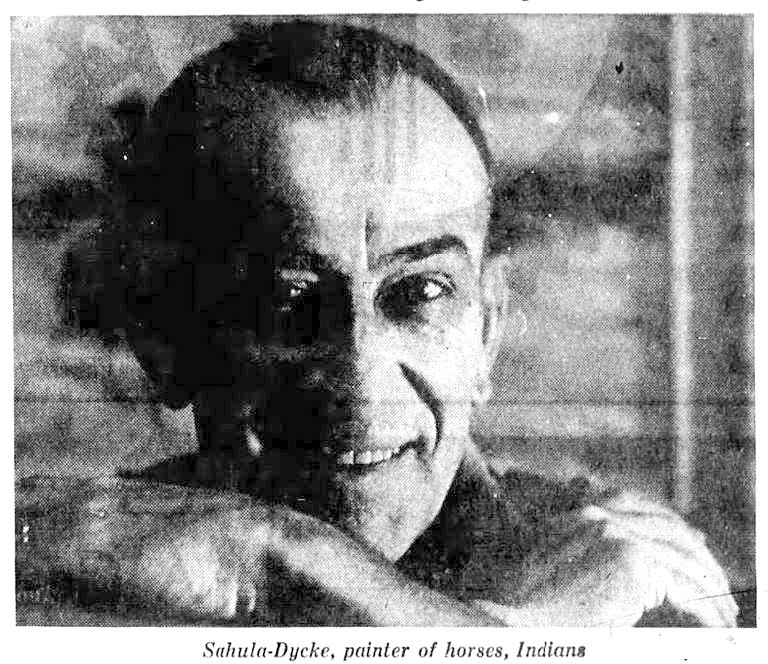
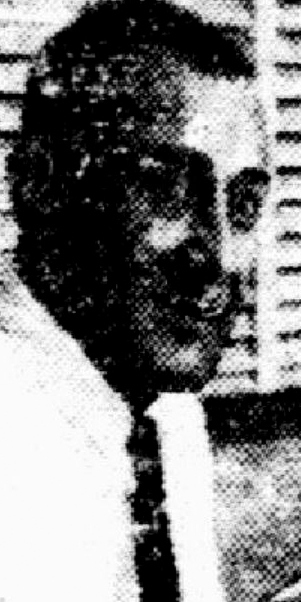
The artist of these conceptions was Ignatz Sahula-Dycke (1900-1982). Ignatz Sahula (known as “Iggie” to his friends) was born in Bohemia (Austria), near Prague, and immigrated with his family to the United States when he was a child. At some point he added his mother’s maiden name “Dycke” to his name — his mother was an artist and a descendant of 17th-century Flemish painter Anthony van Dyck. He studied art in Chicago and, after a stint in the U.S. Navy during World War I, worked for a variety of businesses as a commercial artist. He came to Dallas around 1937 and worked for many years at the Tracy-Locke advertising agency, eventually becoming Creative Art Director of the Dallas office. He actually left Dallas for a while to focus on his art but came back to Dallas a few years later and ended up working for Tracy-Locke for 14 years. His paintings and illustrations center around horses and Southwestern subjects such as desert landscapes and western themes. A good biography and photo of him can be found here, in an article from Western Art & Architecture.

Sahula-Dycke, 1950s

Santa Fe New Mexican, July 28, 1968

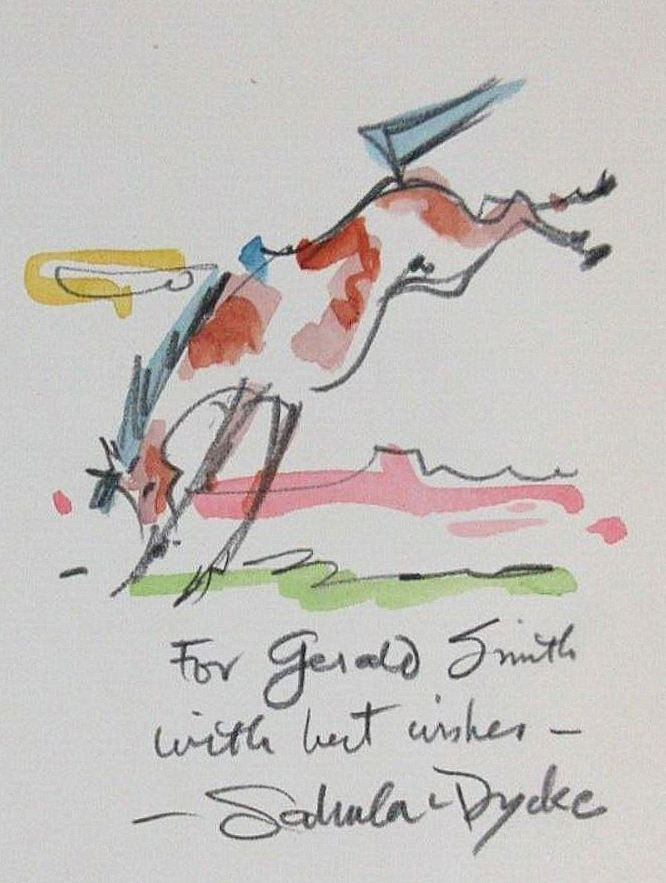
Iggie’s favorite subject was horses. Below is a little sketch he did when inscribing Alias Kinson, or The Ghost of Billy the Kid, a 1963 novel he wrote and illustrated, along with his author’s photo. (The back cover is here, complete with what may be a self-penned biography for this self-published book.)

***

Sources & Notes

All Dallas Master Plan images drawn by Ignatz Sahula-Dycke are from the Master Plan Vertical Files of the Dallas History and Archives, Dallas Public Library.

Inscription with watercolor-highlighted sketch and author photo are from an inscribed copy of Sahula-Dycke’s novel, Alias Kinson, currently listed on eBay.

A related Flashback Dallas post regarding Bartholomew’s Master Plan: “‘Your Dallas of Tomorrow’ — 1943.”

*

Copyright © 2025 Paula Bosse. All Rights Reserved.
Snow in Irwindell — 1940

Snow day in Irwindell…

by Paula Bosse

We have snow in Dallas! It’s always exciting for those of us who have grown up here and haven’t really experienced snow that many times in our lives. It’s pretty and magical and, unless you have to drive or walk in it, a welcome treat.

I came across this artwork back in 2018 and have been meaning to post it on a snow day. We’ve had snow since then, but I never got around to it until now. Better late than never.

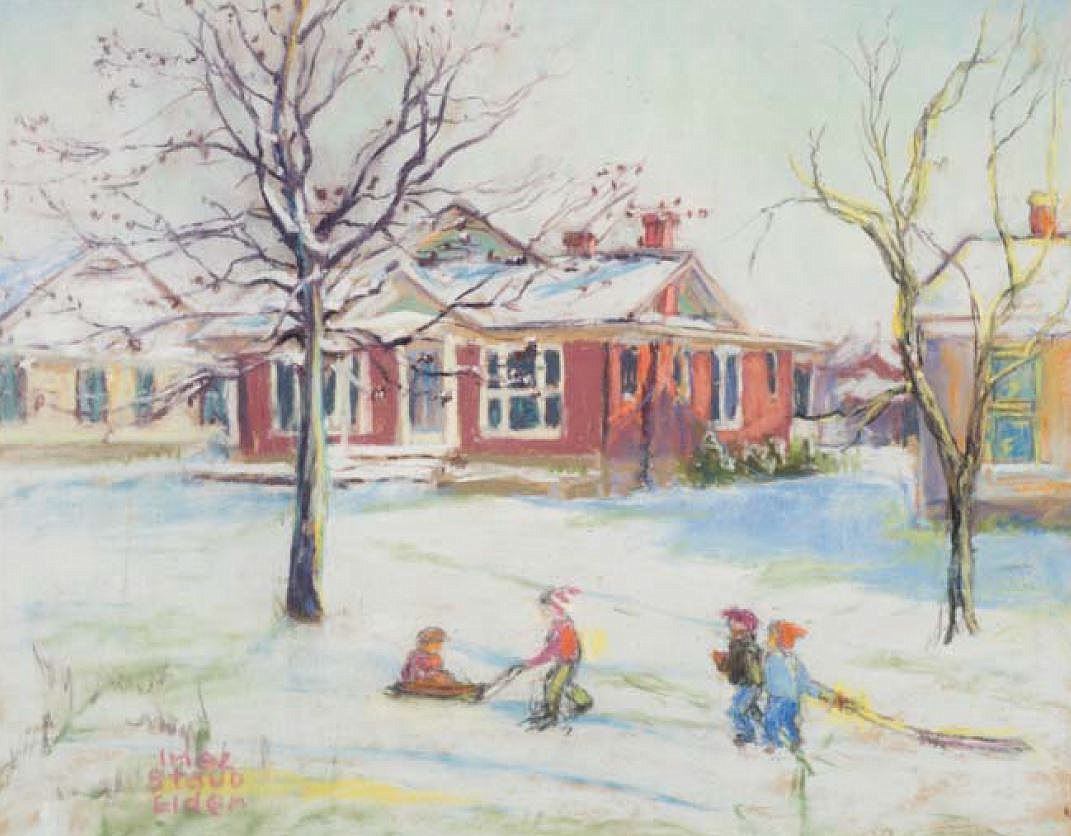
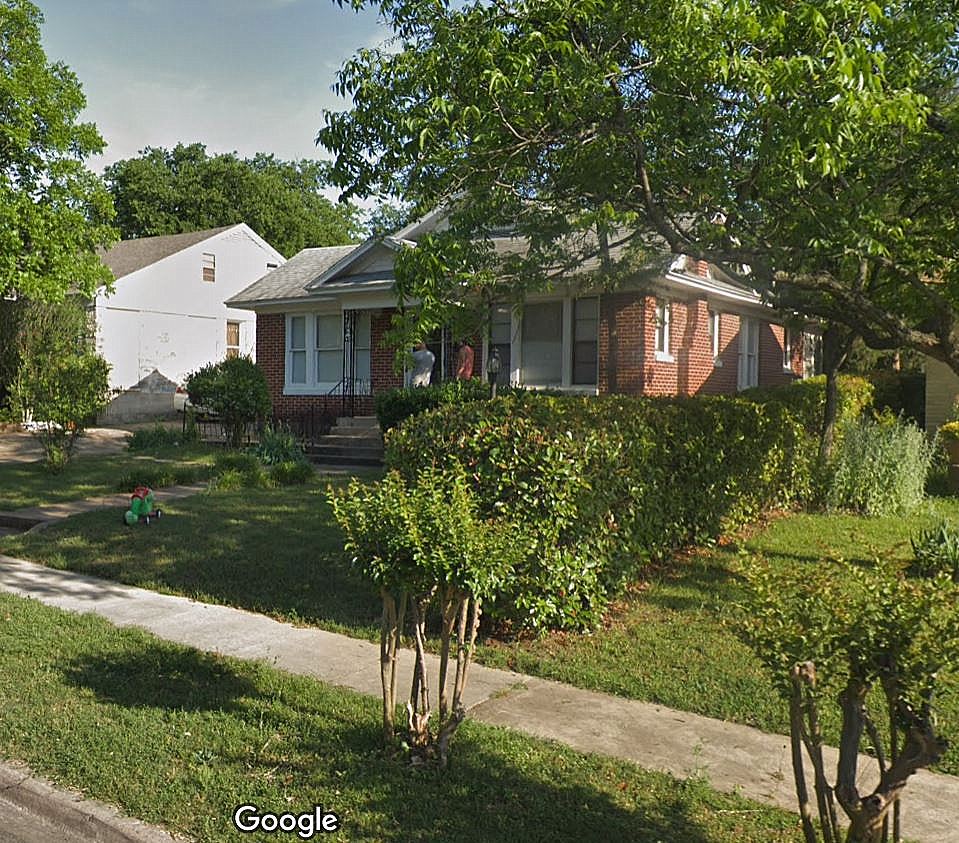
“My Dallas Home, 1940” (pastel on paper) is by Dallas artist Inez Staub Elder (1894-1991). It shows a snowy scene, with children playing, one of them on a sled. A house is in the background. One would assume from the title that the house was Inez’s house. Her address in 1940 — and for years before and after — was 3339 Gibsondell, in the Irwindell neighborhood of Oak Cliff. Looking at the house on Google Street View, it is apparent that 3339 is not the house seen in the drawing. I figured that if Inez was sketching a winter scene of her neighborhood, she might have done it inside, looking out a window. So I reversed the view from her home, and the house seen in the drawing is one across the street, at 3334 Gibsondell. The brick house has been painted gray, but the image below shows what it looked like when I was originally researching this, back in 2018 — still red brick.

The pictured house is here (Google Street View image from May 2018).

*

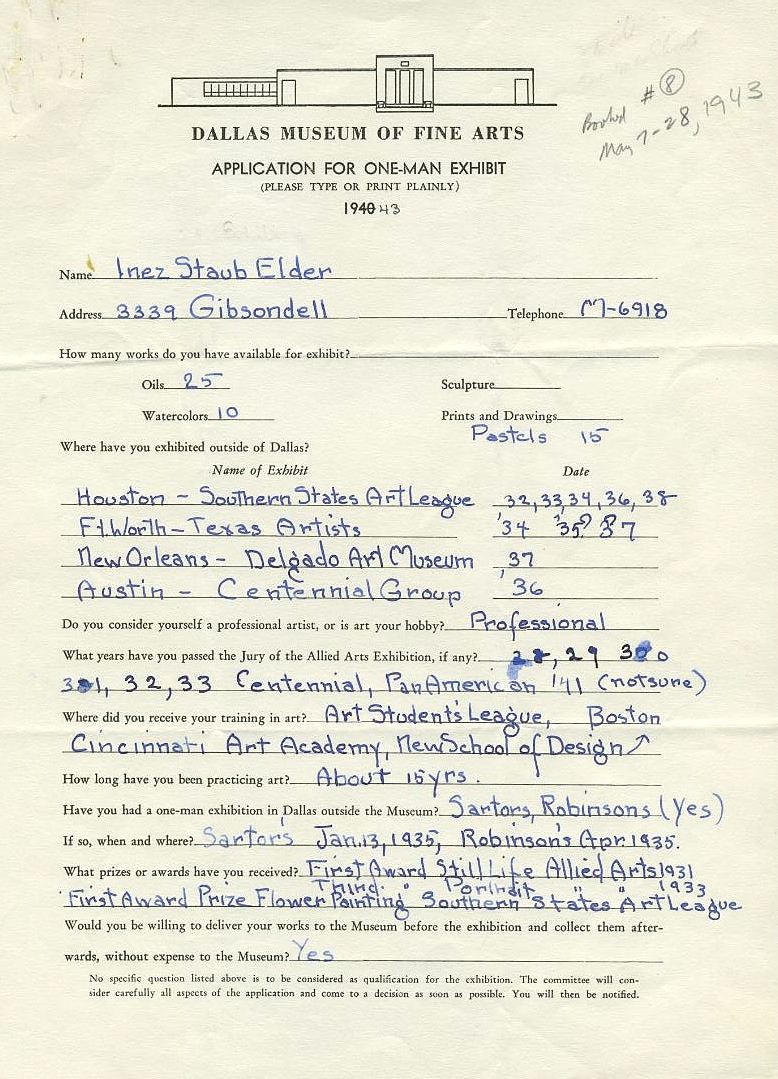
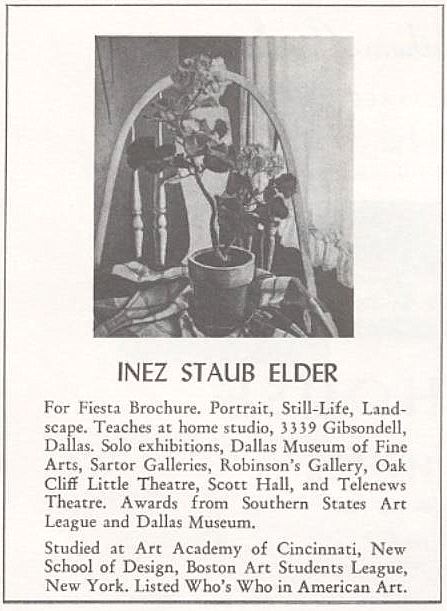
Inez Staub Elder, born in Ohio, lived in Dallas for decades. She regularly exhibited and also taught art. Below is an application she filled out for a show at the Dallas Museum of Fine Arts in 1943.

From a 1957 publication:

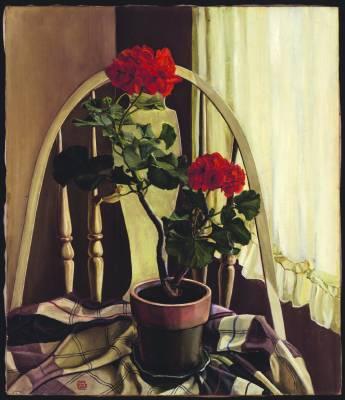
The geranium in color:

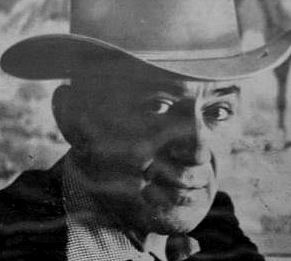
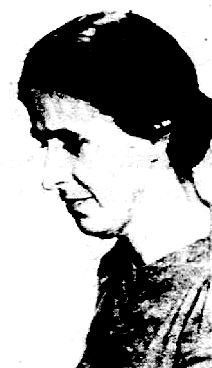
The only image I’ve been able to find of Inez Staub Elder, taken around the time of “My Dallas Home, 1940” is below.

***

Sources & Notes

Top image of painting by Inez Staub Elder titled “My Dallas Home, 1940” (pastel on paper) is from the David Dike Gallery catalog of the October 27, 2018 auction — this was lot 323.

The Dallas Museum of Fine Arts 1943 “Application for One-Man Exhibit” is from the Dallas Museum of Art Exhibition Records, Portal to Texas History, here.

The black-and-white image of the geranium is from the catalog “La Fiesta of Art, 1957,” Bill and Mary Cheek Collection, Portal to Texas History, here.

Color image of the geranium still life is from AskArt.

Read more about Irwindell/The Dells District at the Heritage Oak Cliff website.

*

Copyright © 2025 Paula Bosse. All Rights Reserved.
Merry Christmas from 1951

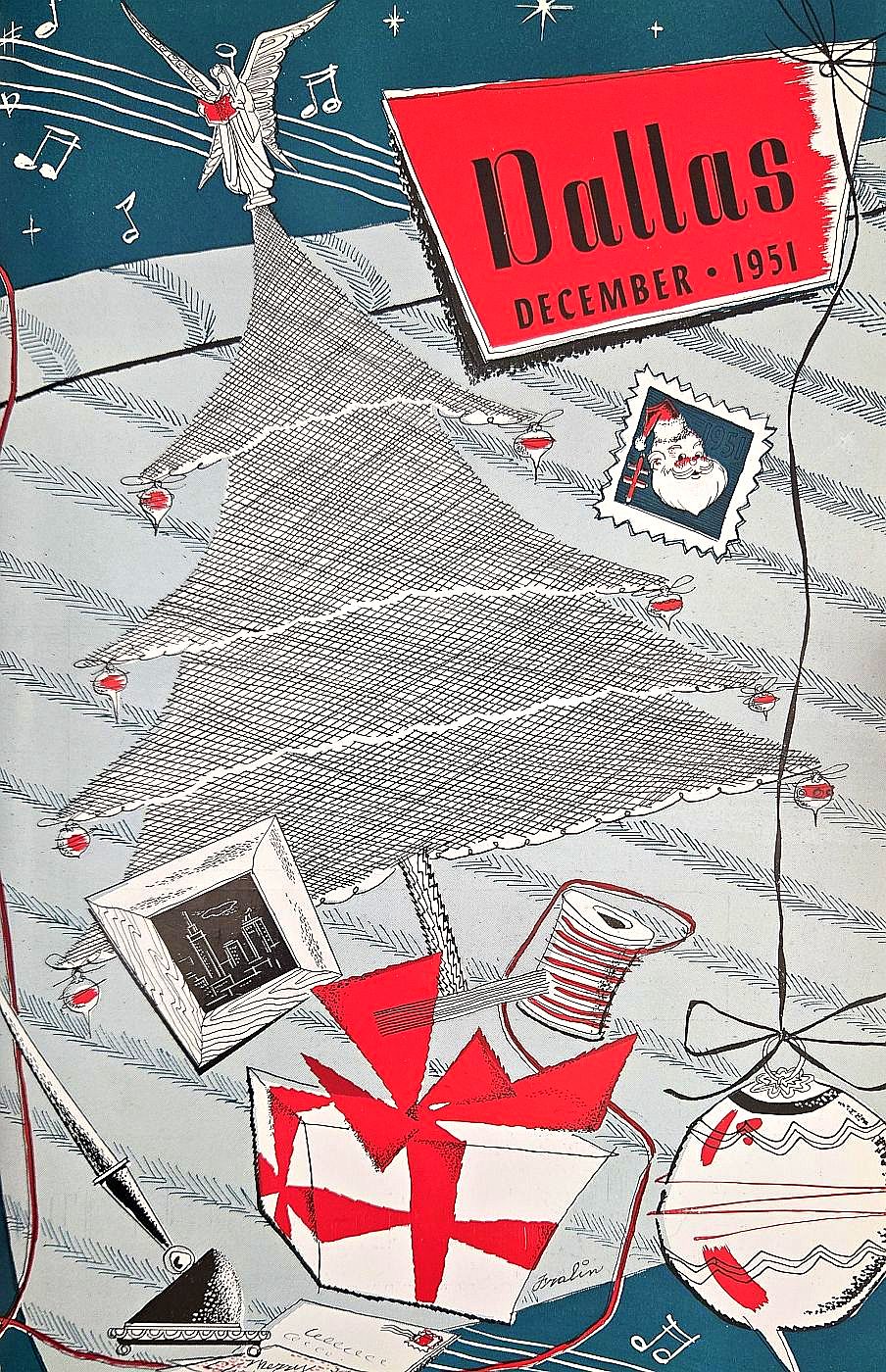
xmas_dallas-mag_cover_dec-1951

by Paula Bosse

The holidays are here again. Thank you so much for sticking with me this year — it’s been a rough one, and my posting schedule has suffered, but I want to wish all of you who continue to check in here regularly a very Merry Christmas, a Happy Hanukkah, and/or just a lovely day to spend with your favorite people, pets, and pies.

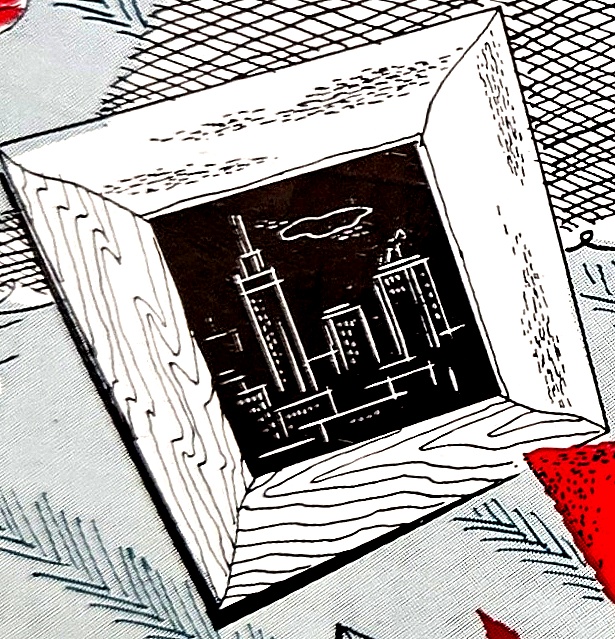
I really like this cover for the Christmas edition of Dallas magazine, a publication of the Dallas Chamber of Commerce. The cover is by Dallas commercial artist Virgil Fralin. He’s even included a little portrait of the skyline (with a rather gigantic Pegasus perched atop the Magnolia Building!).

xmas_dallas-mag_cover_dec-1951_det_fralin

***

Sources & Notes

Cover of the December 1951 issue of Dallas magazine by Virgil Fralin, from the Periodicals Collection, Dallas History and Archives, Dallas Public Library.

See previous Flashback Dallas Christmas posts here (there’s some good stuff there, if I do say so myself!).

xmas_dallas-mag_cover_dec-1951

*

Copyright © 2024 Paula Bosse. All Rights Reserved.
Oak Lawn Ave. — Keep on Truckin’ (1971)

iconoclast_oak-lawn-avenue_iconoclast_aug-1971

by Paula Bosse

This is a great little ad, which includes a bunch of notable Oak Lawn landmarks in the neighborhood’s hippie-fabulous days. I love this artwork — it’s almost as good as a photograph!

The 3500 block of Oak Lawn — between Lemmon and Bowser — is depicted in super-groovy, early-’70s, patchouli-scented artwork (inspired by R. Crumb). Starting at the left, here’s what we see:

  • A tiny portion of the sorely missed diner mainstay, LUCAS B & B, 3520 Oak Lawn
  • Next, NAME BRAND SHOES (men’s shoes), 3516 Oak Lawn
  • Next, R.F.D. No. 1 COUNTRY STORE (clothing), 3514 Oak Lawn, subject of the ad (formerly El Chico, which you can see in the second and third photos here)
  • Next, THE FOG (rock club), 3508 Oak Lawn
  • Next, SUPERIOR BAKERY, 3502 Oak Lawn
  • Next, NATIONAL AUTO SOUND OF DALLAS (car stereos), 3500 Oak Lawn (at Lemmon)

iconoclast_oak-lawn-avenue_aug-1971_1972-directory1972 city directory

*

Watch silent home movie footage shot in this block around this same time at the Portal to Texas History, here (unfortunately, there are only glancing images of The Fog, which I would have liked to have seen more of). The Oak Lawn footage begins at 10:34 and continues until the end, with scenes shot at Lee Park. (There’s a guy who looks like he should be someone important — he looks a bit like Harry Nilsson — at 10:59.)

*

The illustration is by Steve Brooks, a 1967 graduate of Sunset High School who has had quite the career in illustration, commercial art, and rock posters. He’s worked extensively with Willie Nelson and Buddy magazine, and… yes, if you saw that drawing above and thought “head shop,” he’s the guy (THE guy) behind all the artwork connected to The Gas Pipe (which deserves a post of its own as a truly iconic Dallas success story!). Read an interesting biography about Brooks here. See some of his work in the collection of his alma mater, UNT, here.

***

Sources & Notes

Ad from the August 1971 issue of the underground newspaper, The Iconoclast.

iconoclast_oak-lawn-avenue_iconoclast_aug-1971

*

Copyright © 2024 Paula Bosse. All Rights Reserved.
The Three Witches of Stemmons Tower

stemmons_three-witches_hooded-figures_pedro-coronelConvening…

by Paula Bosse

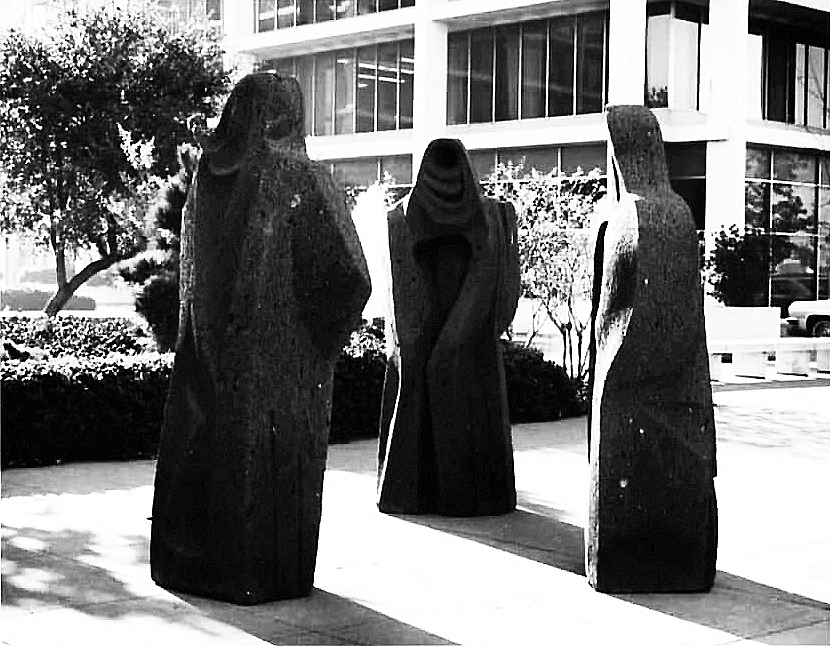
I have to admit, I had never heard of “the Stemmons witches” until a few years ago. They seem to have made quite the impression on teenagers of the ’60s and ’70s (and ’80s?), who would frequently take uninitiated fellow teens to visit the mysterious/sinister cloaked figures, after having told them elaborate scary stories about the figures that stood solemnly and forebodingly on the grounds of the 4-building Stemmons Towers complex.

I gather they could be seen from the freeway, and I can understand how they’d look pretty creepy, especially at night, from a distance (and up close). What a perfect teenage ritual for kids with cars: wait until dark, then take your friends to the Towers, pumping them full of spooky urban legends on the drive over, then watch their faces as you introduce them to witches 1-3. If there were night watchmen on overnight duty at Stemmons Towers, they must have had their hands full.

The reminiscences I’ve read all say the three figures disappeared at some point (late ’80s or early ’90s?) — and no one seems to know what happened to them. Do YOU know what happened to them? Where are they today?

*

The three figures are by artist Pedro Coronel, a Mexican sculptor and painter aligned with Rufino Tamayo — he was influenced by Diego Rivera and worked with Constantine Brancusi. He often used onyx and sandstone (from the photo, it looks like the “witches” were made of a black stone). The name of this work was “Hooded Figures.” From The Dallas Morning News:

These strange figures are permanent sidewalk superintendents at the new Stemmons Tower North, fourth and final building being erected in the complex on Stemmons Freeway. The three stone “Hooded Figures,” by sculptor Pedro Coronel, are among several works on the Towers’ landscaped plaza. (DMN, July 31, 1966)

(“Stemmons witches” has a much better ring to it than “sidewalk superintendents.”)

Read memories of teenage visits to these “witches” on the Dallas Historical Society “Phorum,” here.

Where have these “Figuras Encapuchadas” scurried off to?

***

Sources & Notes

Thank you SO MUCH to Fred Goodwin, who sent me this photo. He says he came across it years ago somewhere on the internet and does not know the original source. Thank you, Fred!

I’ve seen only one other photo of this work by Coronel — it accompanies the caption quoted above, in The Dallas Morning News (July 31, 1966, p. 1C). Sadly, it’s not a good scan.

A story by Steve Brown appeared in the DMN on Dec. 14, 2023, reporting that the four towers are to be converted to a residential community (“Dallas’ Landmark Stemmons Towers Sell for Conversion to Apartments”). Um, okay.

See a cool night-time photo of Stemmons Tower #1 in the 2018 Flashback Dallas post “Stemmons Tower, Downtown Skyline — 1963.”

stemmons_three-witches_hooded-figures_pedro-coronel_sm

*

Copyright © 2024 Paula Bosse. All Rights Reserved.
Jerry Bywaters: A Quick Trip to Farmers Branch

bywaters-jerry_untitled_farmers-branch-depot_bywaters-collection_smu_ndBywaters Special Collections, Hamon Arts Library, SMU

by Paula Bosse

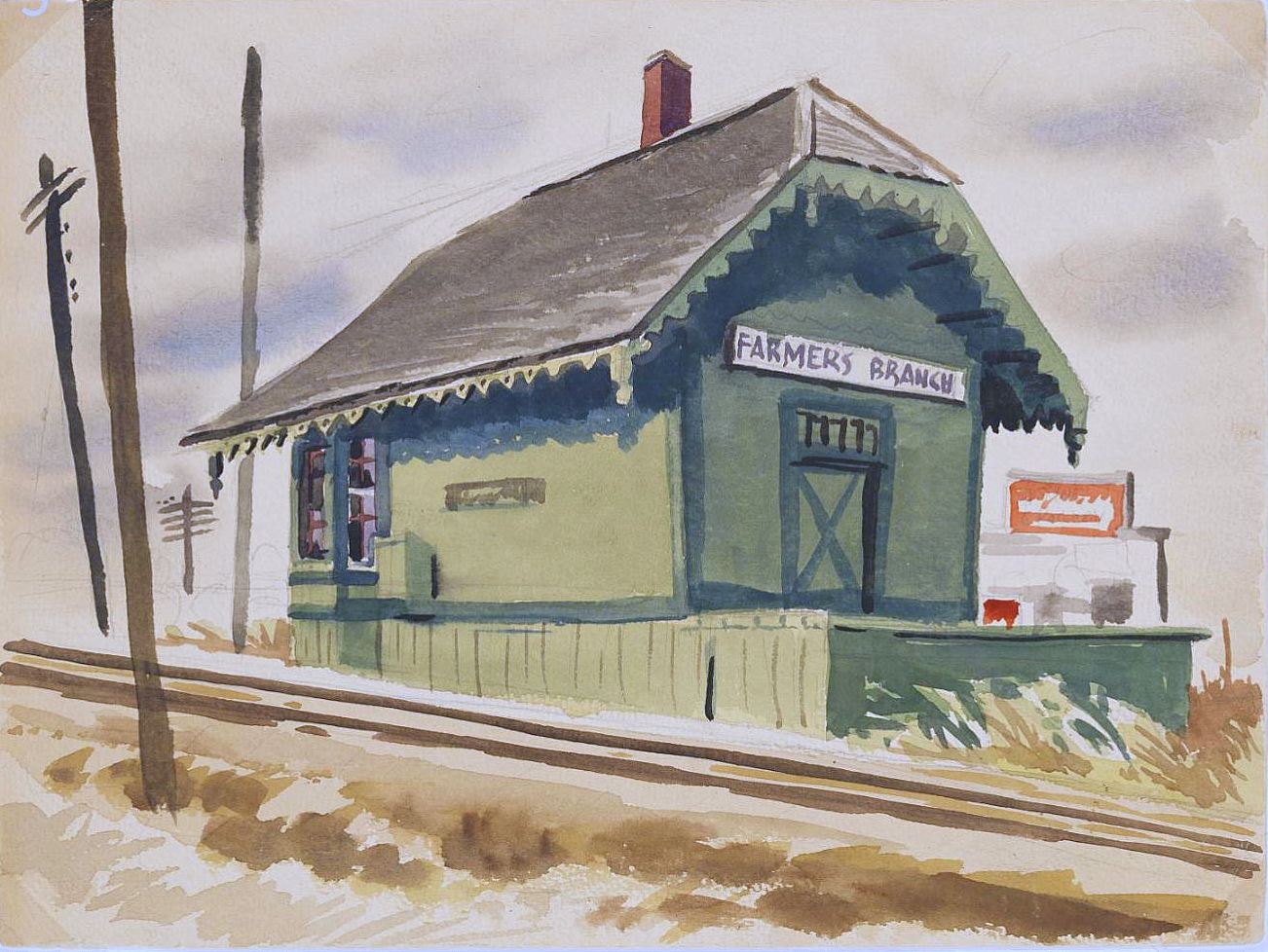
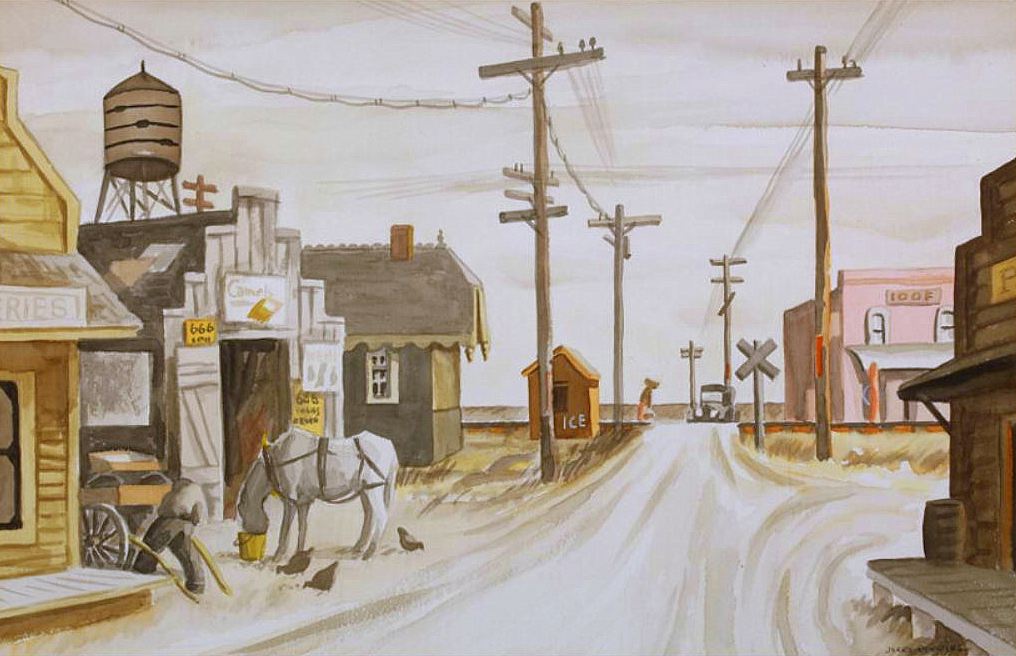
One of the joys of being a fan of an artist is discovering works you’ve never seen before. And here are two, both by a favorite of mine, Dallas artist Jerry Bywaters — and both are watercolors of the very nearby Farmers Branch. Bywaters must have been quite taken with the picturesque little depot there, because it snuck into at least two of his paintings. The one above is untitled, and the one below is “Farmers Branch In the Early Days.”

bywaters-jerry_farmers-branch-in-the-early-days_watercolor_ha-dot-com_sold-2010

I can’t find dates for either of these, but the top work appears to have debuted at an exhibition at the Lawrence Art Galleries in November 1937 (it is mentioned in a review of the show by Frances Folsom in The Dallas Morning News — “Exhibition of Art Works by Jerry Bywaters Opening,” DMN, Oct. 31, 1937).

The depot is still standing — it was restored and relocated to the Farmers Branch Historical Park in 1985. Read a great history of the depot here.

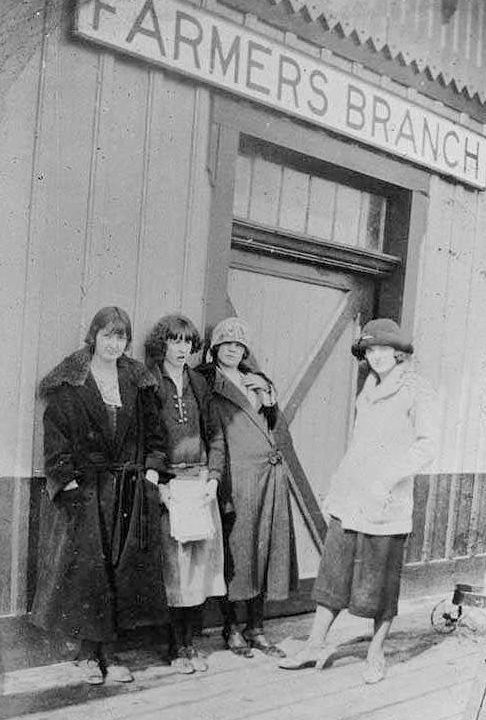
The photo below is from the City of Farmers Branch site. Who wouldn’t want to spend a day with those girls?

farmers-branch-depot_photo_fb-city-website

I think I need to explore Farmers Branch.

***

Sources & Notes

Top painting (“Untitled [Farmers Branch Train Depot]”) is an undated watercolor by Jerry Bywaters, from the Bywaters Special Collections, Hamon Arts Library, SMU Libraries — more info on this can be found at the SMU site here.

The second painting, “Farmers Branch In the Early Days,” is an undated watercolor by Jerry Bywaters; it was sold by Heritage Auctions in 2010. (A notation on the back of this framed piece indicates that it once belonged to the legendary Judge Sarah T. Hughes, or it was purchased by her to give to a very lucky friend.)

The photo of bobbed flappers loitering around the depot is from the City of Farmers Branch website, here.

Other Flashback Dallas posts with (very different) examples of Jerry Bywaters’ art:

A version of this post originally appeared on my Patreon page.

bywaters-jerry_untitled_farmers-branch-depot_bywaters-collection_smu_nd_sm

*

Copyright © 2023 Paula Bosse. All Rights Reserved.
Claes Oldenburg in Dallas — 1962

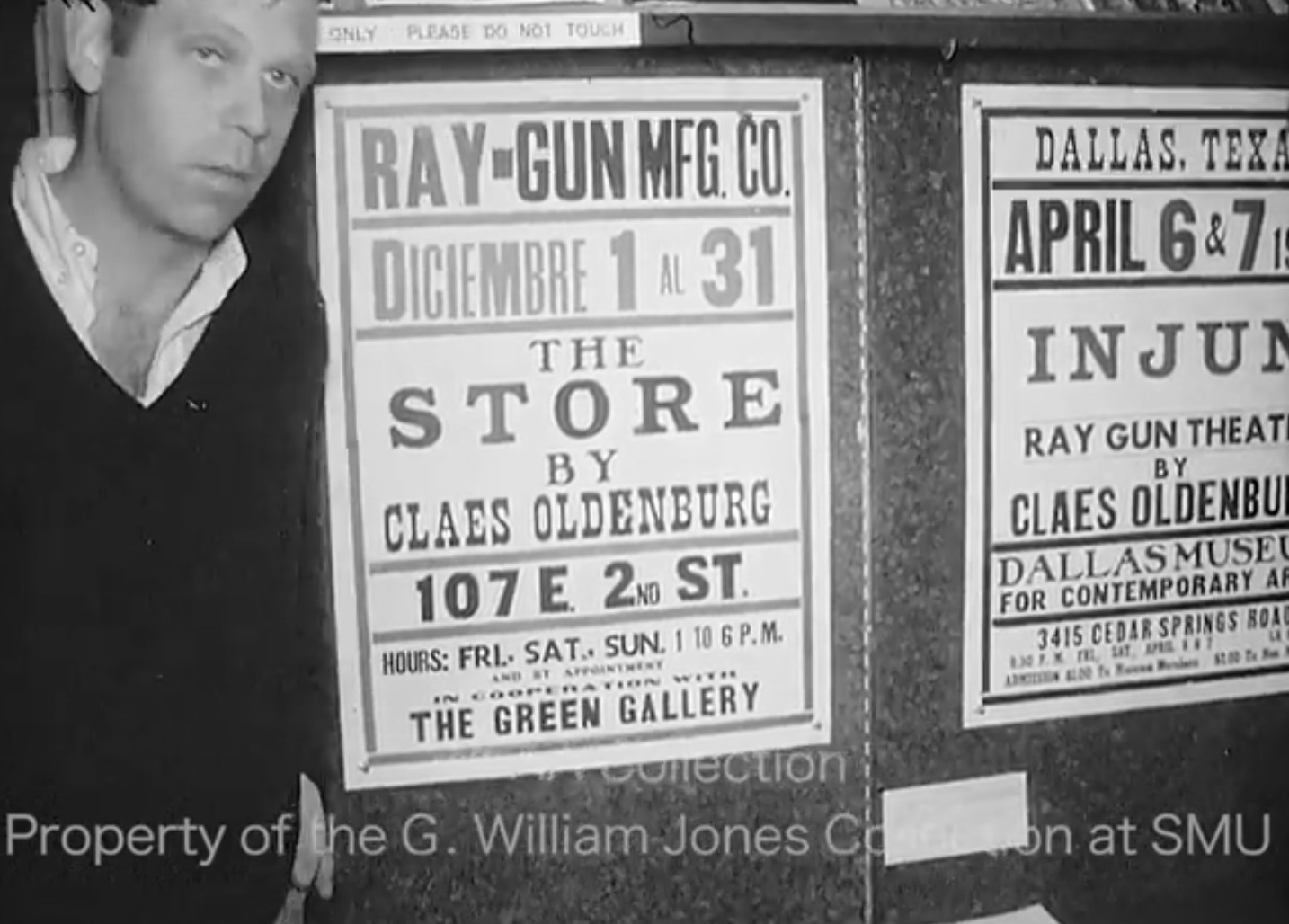
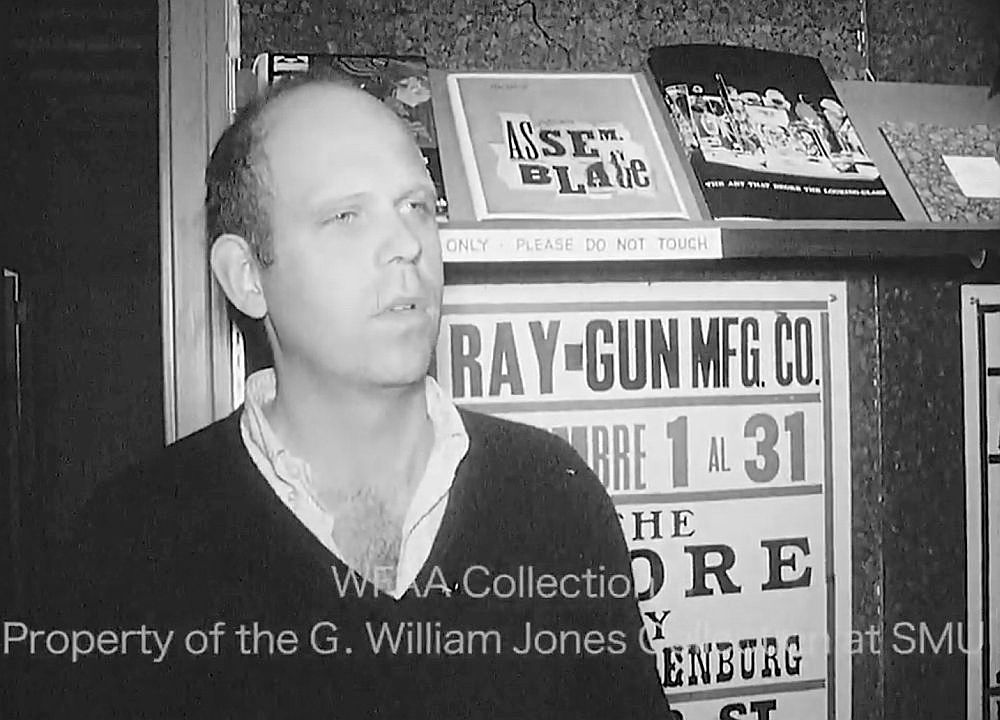
oldenburg-claes_dallas-museum-for-conteporary-arts_april-1962_WFAA_jones-film_SMU_postersClaes Oldenburg at the DMCA, April, 1962 (WFAA Collection, SMU)

by Paula Bosse

Claes Oldenburg, the Swedish-born American sculptor, died this week at the age of 93. Among his connections to Texas are two of my favorite Oldenburg pieces: the fabulous “Monument to the Last Horse,” a permanent fixture of Donald Judd’s Chinati Foundation in Marfa, which he created with his wife Coosje van Bruggen, and the much-missed “Stake Hitch,” a site-specific work commissioned by the Dallas Museum of Art (installed in the brand-new DMA in 1984, and, sadly, de-installed in 2002 after a nasty contretemps between Oldenburg and the museum).

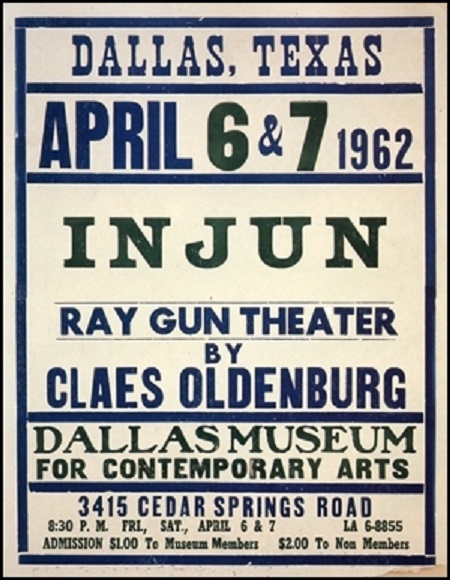
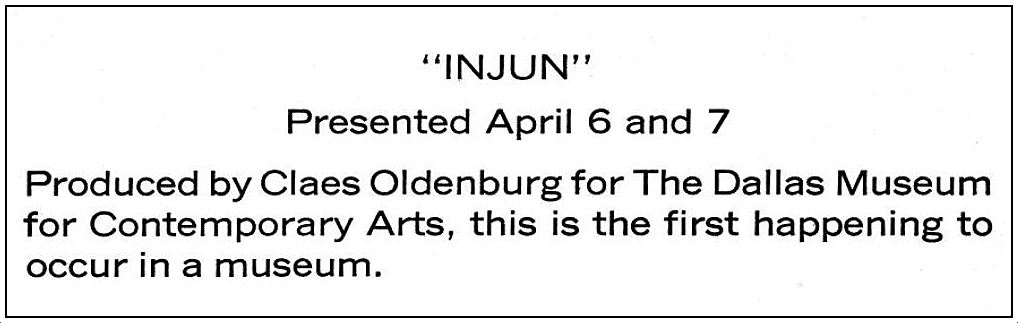
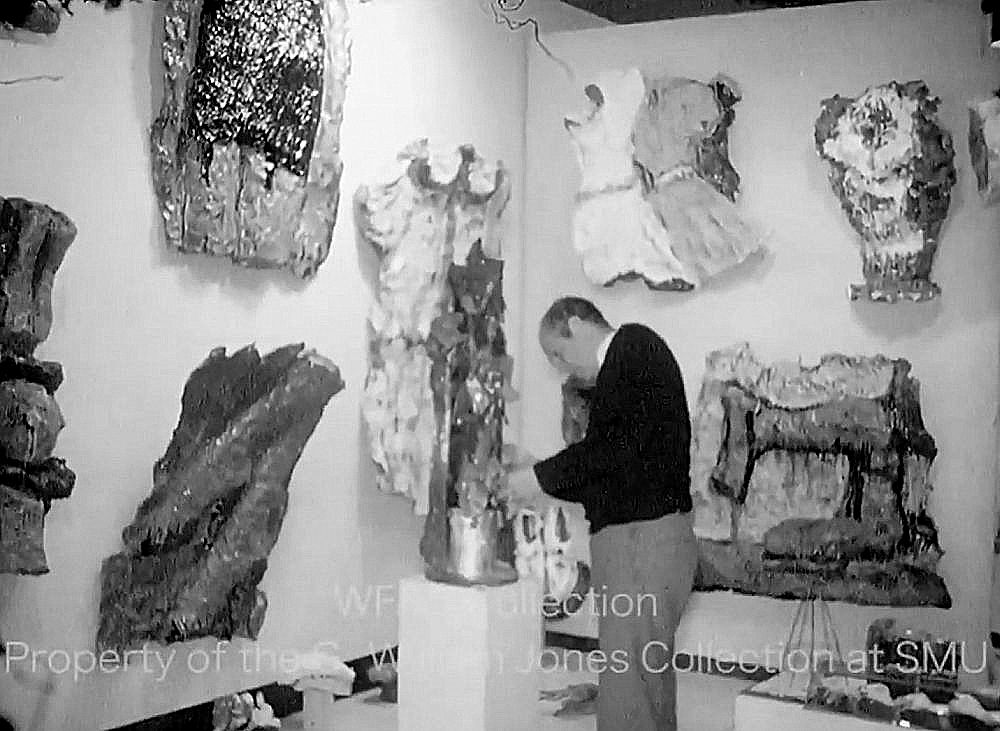
Oldenburg’s first visit to Dallas was in April, 1962, at a time when he was known mainly to NYC art-world hipsters — well before he had achieved anything approaching his later international acclaim. He came to Dallas to present “The Store,” a pop art installation which was part of the group show “1961” at the Dallas Museum for Contemporary Arts (the DMCA was merged with/absorbed by what is now the Dallas Museum of Art in 1963). While Oldenburg was in Dallas exhibiting “The Store” (comprised of 45 individual works, the placement of which he re-created from the original December, 1961 show in Manhattan), he also presented “Injun,” the first-ever “happening” held outside New York or Los Angeles and the first such interactive event commissioned by a museum (Oldenburg’s Ray Gun Theater performance-art “happenings” were much talked about and had gained a cult following in New York, and having him in Dallas to present a “happening” was a definite “get” for the DMCA).

“The Store” and “Injun” — and Claes Oldenburg himself — were very un-Dallas. The reception Oldenburg received from Dallas’ followers of edgier contemporary art appears to have been positive, but his work was handily dismissed by Dallas Morning News art critic Rual Askew, who, invoking the “royal we,” wrote this rather laborious sentence:

Claes Oldenburg’s ‘The Store,’ a painted-plaster waste of time in our view, has interest as assembled pattern with carnival colors at a considerable distance perhaps, but displaces space out of all proportion to aesthetic experience. (DMN, April 15, 1962)

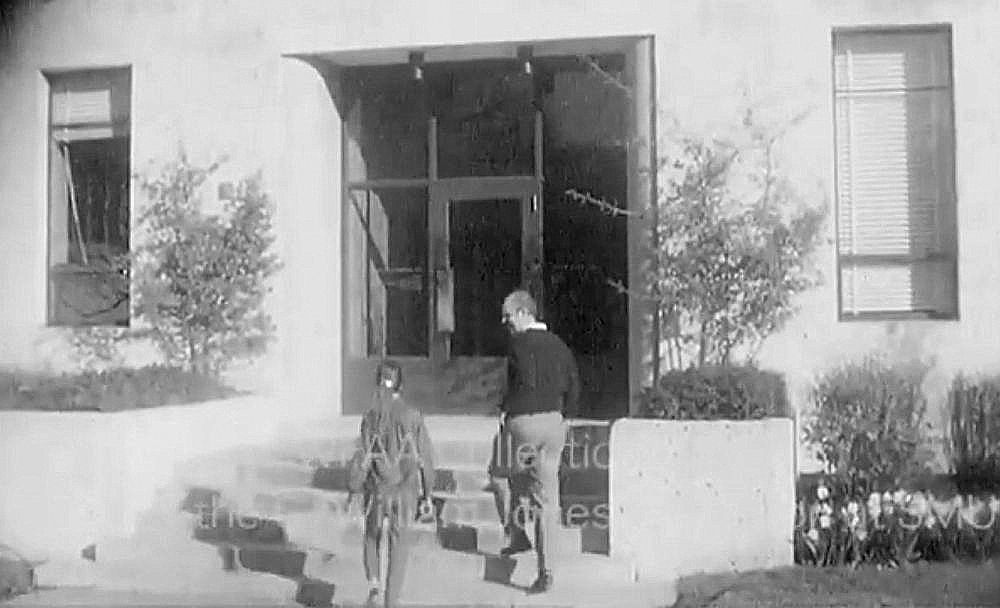
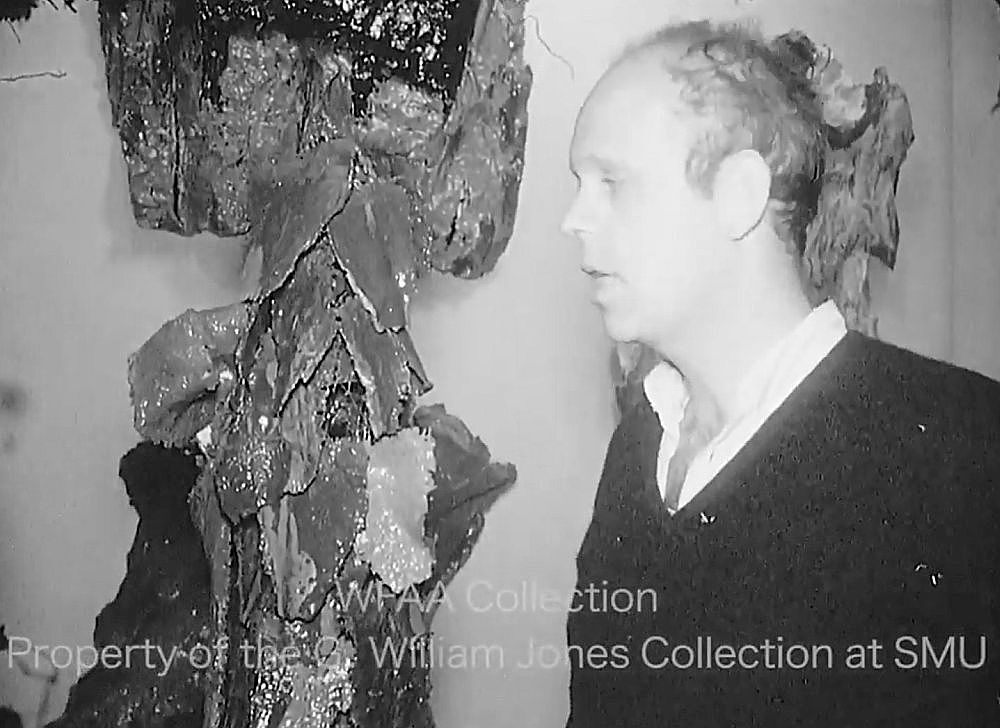
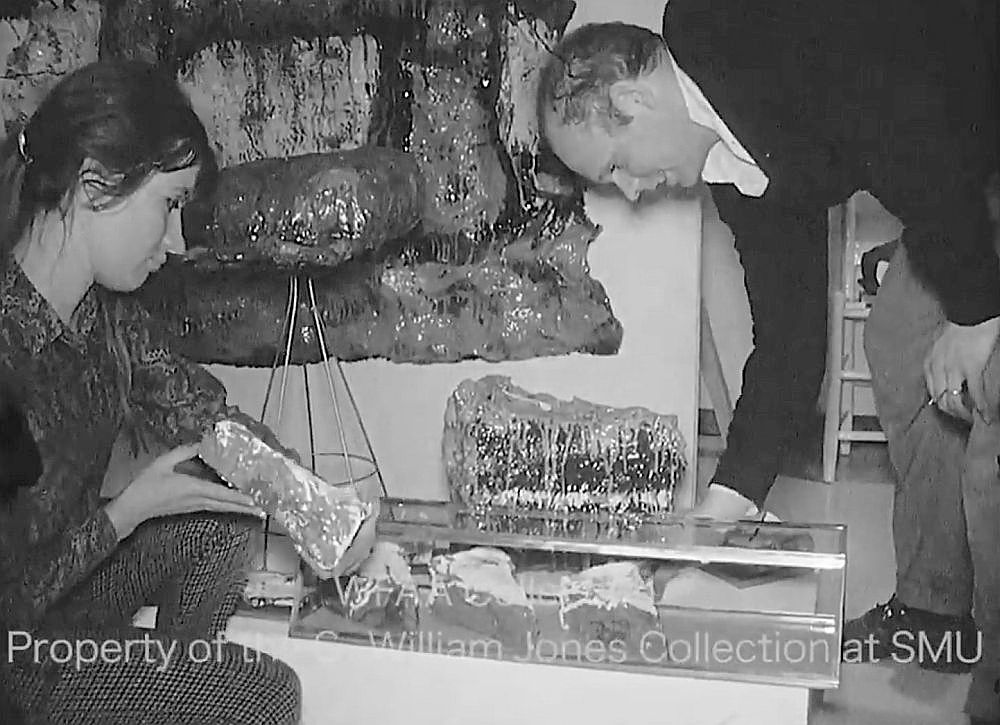
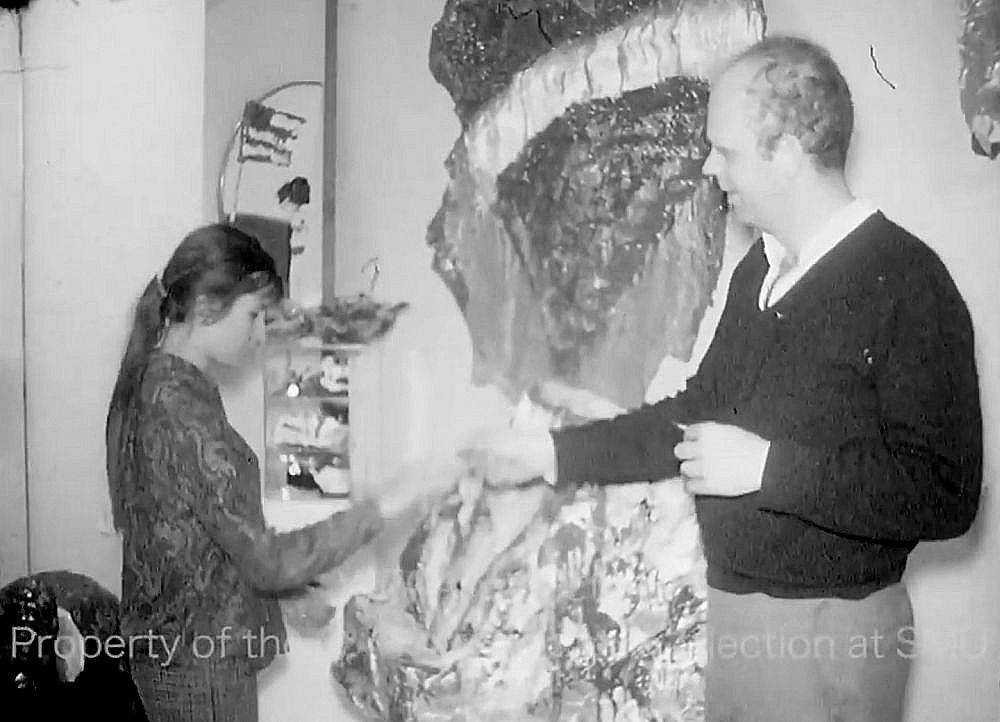
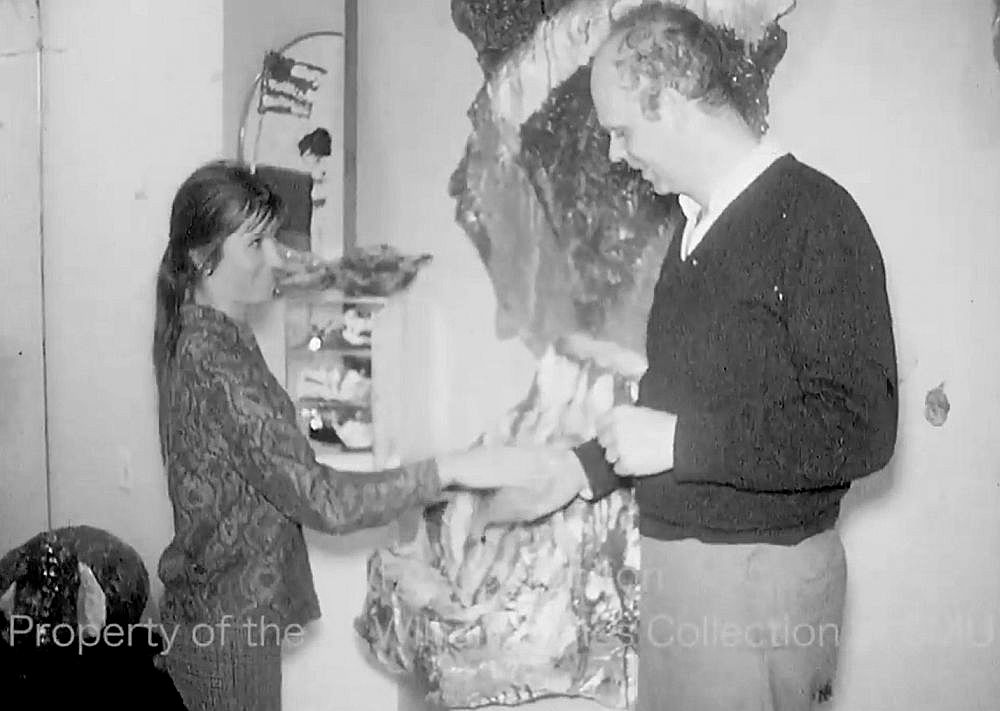
As I work with the WFAA Collection (held by the G. William Jones Collection at SMU’s Hamon Arts Library), I was pretty excited when film footage popped up showing Oldenburg and his first wife (and his collaborator), Patty Mucha, at the DMCA. I knew that the DMCA was somewhere in Oak Lawn (it was at 3415 Cedar Springs), but I had never seen an image of it until this footage. The Oldenburgs are seen walking into the DMCA, tinkering with the installation before the show opened, inspecting the store’s “foods” and other “merchandise,” and playfully “playing store” and exchanging imaginary cash at his “cash register.” Sadly, there is no sound for the one-minute-45-second film, but — being an art history major (that always sounds pretentious…) — I really, really love this. A young, happy Claes Oldenburg in a moth-eaten sweater, here in Dallas, in the early years of what would become an artistically important career is pretty cool to see.

I have been meaning to write this post since I first saw the WFAA footage two years ago. I’m sorry that it’s taken the death of the artist to finally get me to do it. RIP, Claes.

*

UPDATE: Morgan Gieringer, Head of UNT Special Collections, alerted me to a WBAP-Channel 5 news script they have in their collection which describes much the same sort of thing that is going on in the WFAA-Channel 8 film above. In the script, Oldenburg discusses some of the pieces — read the two pages here. (The Ch. 5 report was filmed on March 29, 1962, which could be the same date as the Ch. 8 footage.)

*

“The Store” at the Dallas Museum for Contemporary Arts, 1962 — in vivid color:

oldenburg-claes_the-store_DMCA_1962_DMAvia Dallas Museum of Art

via Dallas Museum of Art

1961_claes-oldenburg_catalog_DMCA_1962_injun“1961” catalogue, via DMA/Portal to Texas History

Screenshots from the WFAA footage, showing Oldenburg and his wife, Patty (who worked alongside her husband and was a frequent participant in the “happenings”) preparing “The Store” for its opening at the DMCA.

oldenburg-claes_dallas-museum-for-conteporary-arts_april-1962_WFAA_jones-film_SMU_ext

oldenburg-claes_dallas-museum-for-conteporary-arts_april-1962_WFAA_jones-film_SMU_1

oldenburg-claes_dallas-museum-for-conteporary-arts_april-1962_WFAA_jones-film_SMU_2

oldenburg-claes_dallas-museum-for-conteporary-arts_april-1962_WFAA_jones-film_SMU_3

oldenburg-claes_dallas-museum-for-conteporary-arts_april-1962_WFAA_jones-film_SMU_4

oldenburg-claes_dallas-museum-for-conteporary-arts_april-1962_WFAA_jones-film_SMU_5

oldenburg-claes_dallas-museum-for-conteporary-arts_april-1962_WFAA_jones-film_SMU_7

***

Sources & Notes

Top image (and all other black-and-white images) are screenshots from the WFAA Newsfilm Collection, G. William Jones Film and Video Collection, Hamon Arts Library, Southern Methodist University; the footage was filmed in early April 1962 (or possibly late March 1962); the clip may be viewed on YouTube, here.

The color photograph of “The Store” and the poster for “Injun” are both from a publication of the Dallas Museum of Art, here.

Other Oldenburg-related sources:

  • The “1961” exhibition catalogue — this group-show featured heavy-hitting up-and-comers such as Robert Rauschenberg, Roy Lichtenstein, Robert Motherwell, James Rosenquist, Joseph Albers, Morris Louis, Jasper Johns, Jim Dine, and Richard Diebenkorn — can be viewed in a fully scanned Dallas Museum for Contemporary Arts catalogue here, via the Dallas Museum of Art Exhibition Records, Portal to Texas History
  • Candid photos from the “Injun” performance can be seen here
  • See several great photos of Oldenburg taken during the installation of “Stake Hitch” in 1984, in a DMA Bulletin here, here, here, and here
  • Watch a short video about “The Store” when it was restaged at the Museum of Modern Art in 2013, with comments on the pieces by Oldenburg; see what the pieces shown in the 1962 black-and-white film made in Dallas looked like 51 years later, in color, in the MoMA video, here

On my blog High Shrink (non-Dallas stuff), you can read more about Oldenburg in a post I really enjoyed writing, “Claes Oldenburg’s ‘Slice of Bread; Tombstone for Ed Kienholz — 1974.”

oldenburg-claes_dallas-museum-for-conteporary-arts_april-1962_WFAA_jones-film_SMU_posters_sm

*

Copyright © 2022 Paula Bosse. All Rights Reserved.
Bud Biggs: 12 Watercolors of Dallas — ca. 1955

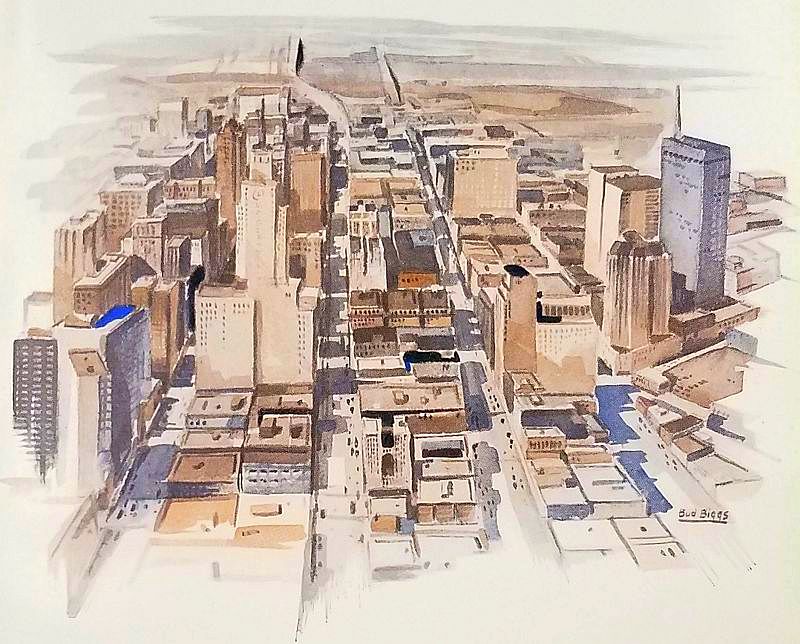
1-1956-january_dallas-mag_bud-biggs“Aerial View of Downtown Dallas” by Bud Biggs

by Paula Bosse

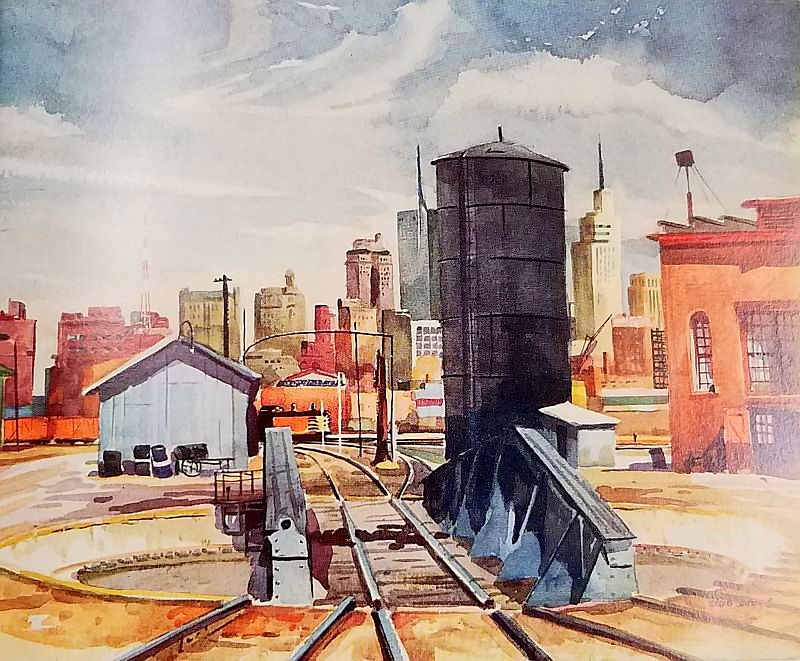
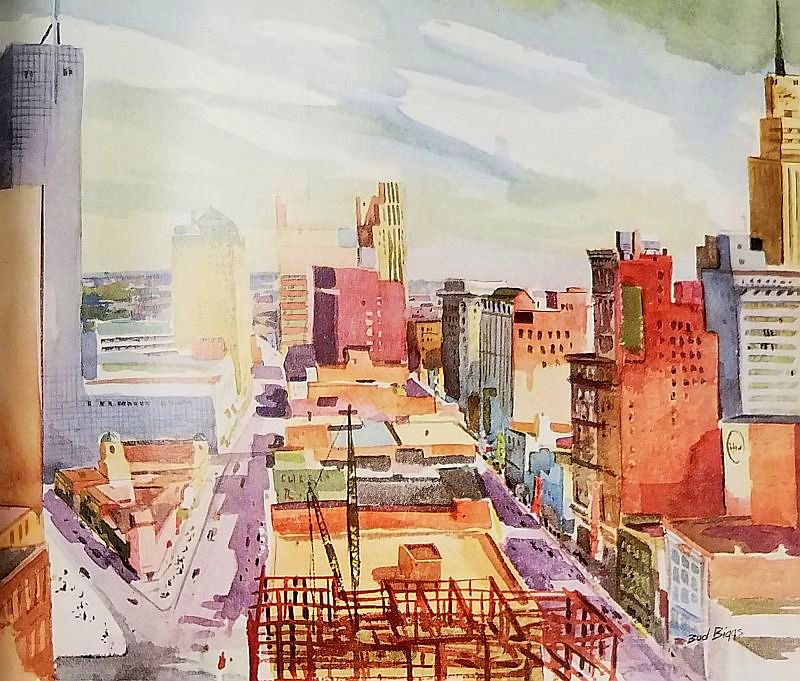
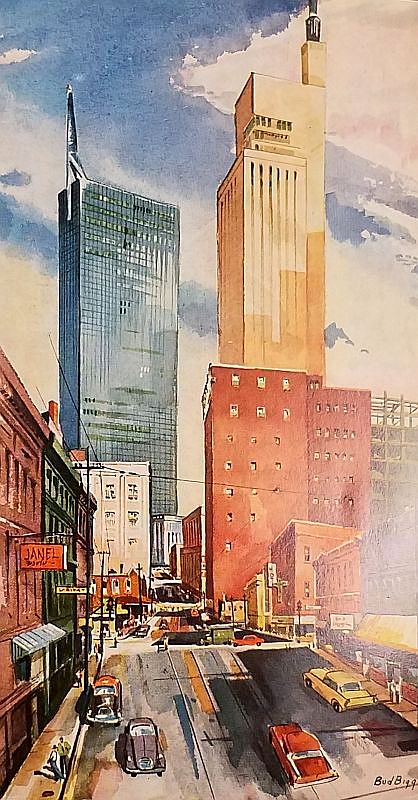
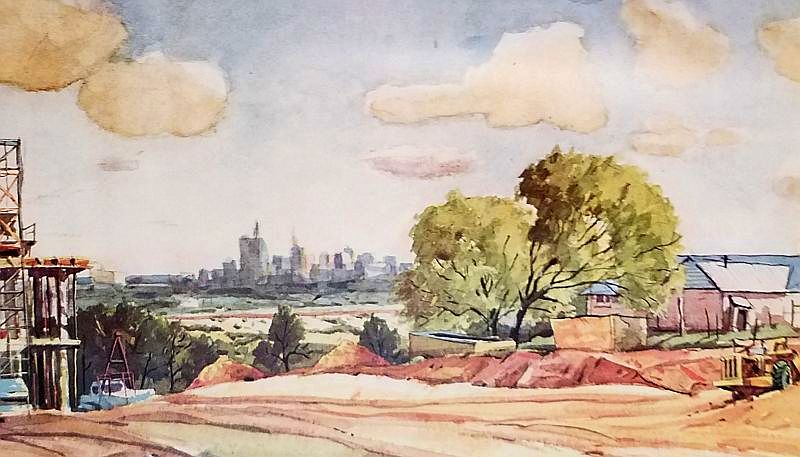
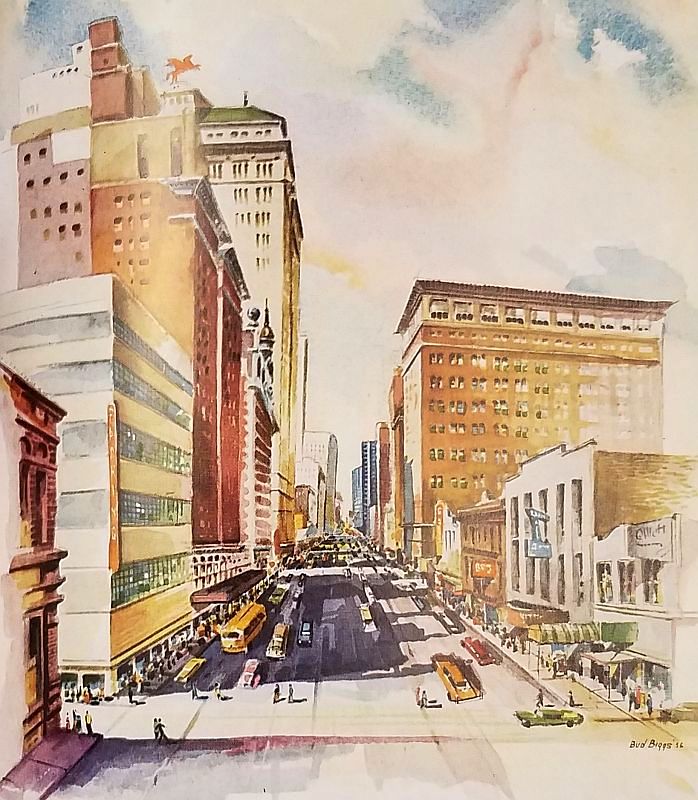
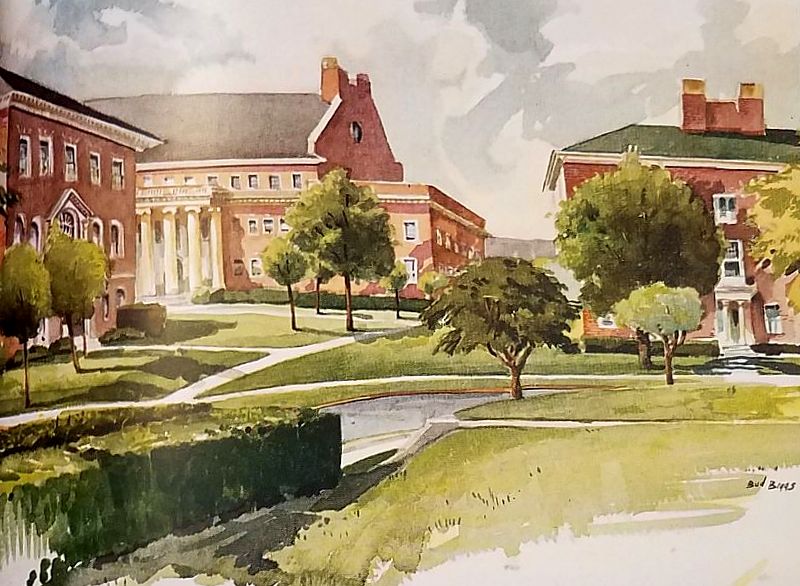
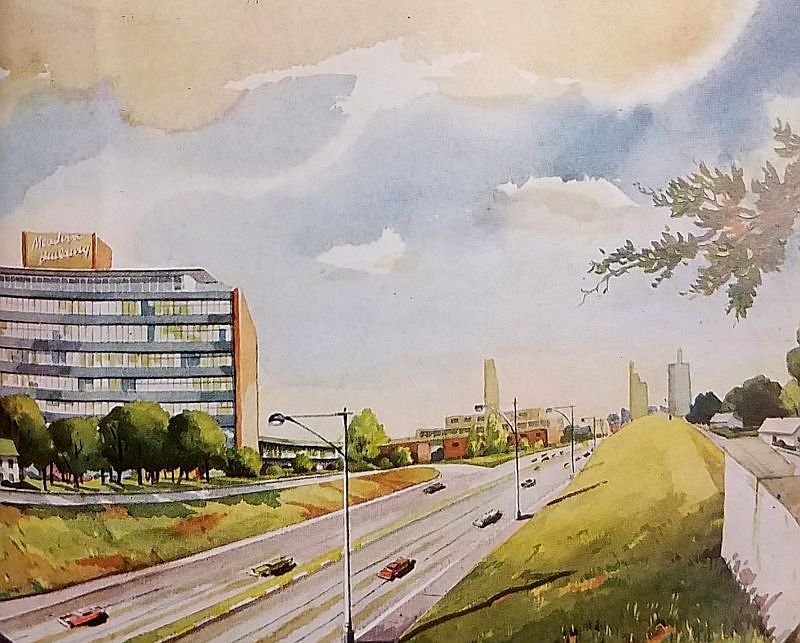
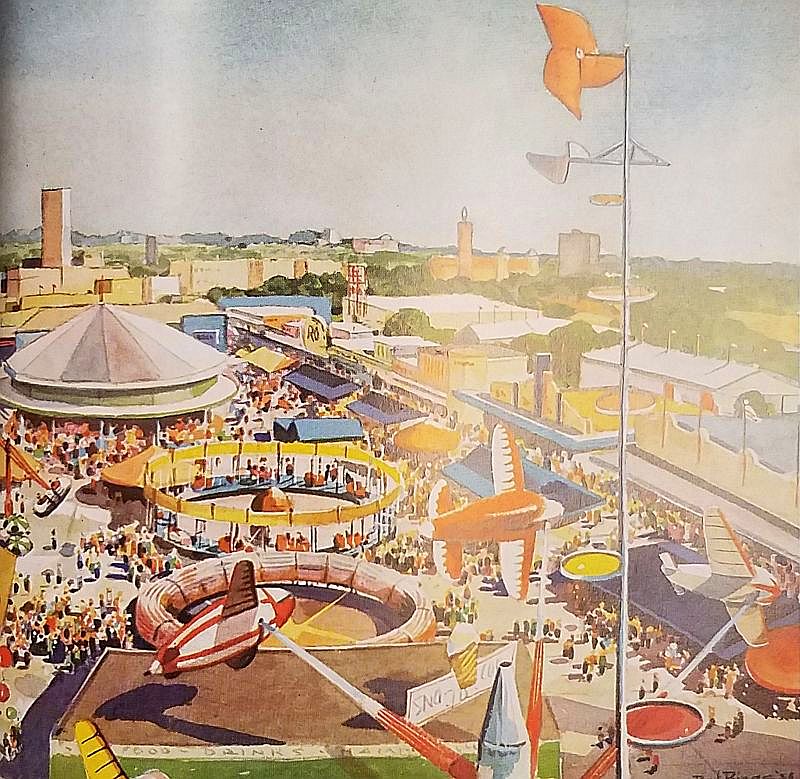
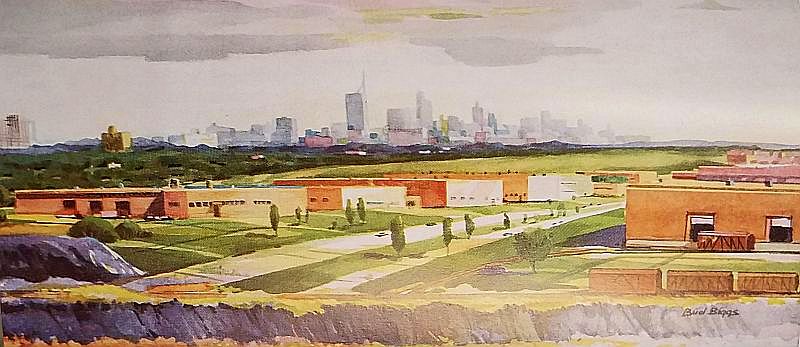
Back in 2018 I posted Christmas-themed magazine cover art by Dallas artist/illustrator Bud Biggs — it was one of my favorite images posted that year (see the post here). I knew that it had been one of the 12 monthly covers by Biggs used in 1956 for Dallas magazine, the Dallas Chamber of Commerce publication. Since then, I’ve managed to turn up all 12 watercolors. Some of them are going to look a little wonky with unfortunate glare patches — this is because I was unable to photograph them lying flat. I’ve done my best! I’ve paired them with the titles which were printed in the Dallas Morning News — I hope I’ve gotten the right titles with the right paintings. 

*

Above, “Aerial View of Downtown Dallas” by Bud Biggs (this painting appeared on the cover of the January, 1956 issue of Dallas magazine).

*

Below, “The Katy Round House” by Bud Biggs (February, 1956 cover)

2-1956-february_dallas-mag_bud-biggs

*

“Looking Up Pacific” by Bud Biggs (March, 1956 cover)

3-1956-march_dallas-mag_bud-biggs

*

“Ervay Street” by Bud Biggs (April, 1956 cover)

4-1956-april_dallas-mag_bud-biggs

*

“Ground-breaking, Dallas University” by Bud Biggs (May, 1956 cover)

5-1956-may_dallas-mag_bud-biggs

*

“Commerce Street” by Bud Biggs (June, 1956 cover) 

6-1956-june_dallas-mag_bud-biggs

*

“SMU Legal Center” by Bud Biggs (July, 1956 cover)

7-1956-july_dallas-mag_bud-biggs

*

“Central Expressway” by Bud Biggs (August, 1956 cover)

8-1956-august_dallas-mag_bud-biggs

*

Midway, State Fair of Texas” by Bud Biggs (September, 1956 cover)

9-1956-september_dallas-mag_bud-biggs

*

“Trinity Industrial District” by Bud Biggs (October, 1956 cover)

10-1956-october_dallas-mag_bud-biggs

*

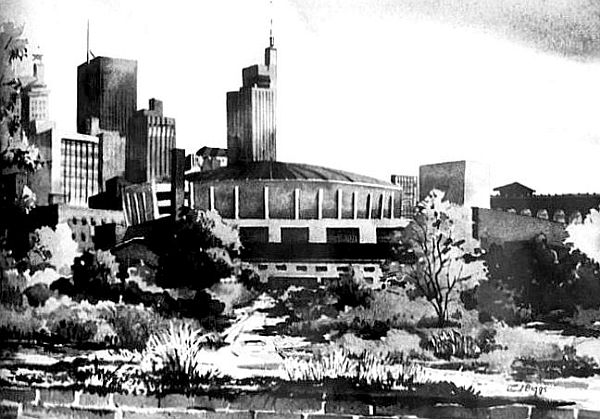
“City Auditorium” by Bud Biggs (November, 1956 cover) — sadly, I was unable to find this one in color.11-1956-november_dallas-mag_bud-biggs_BW

*

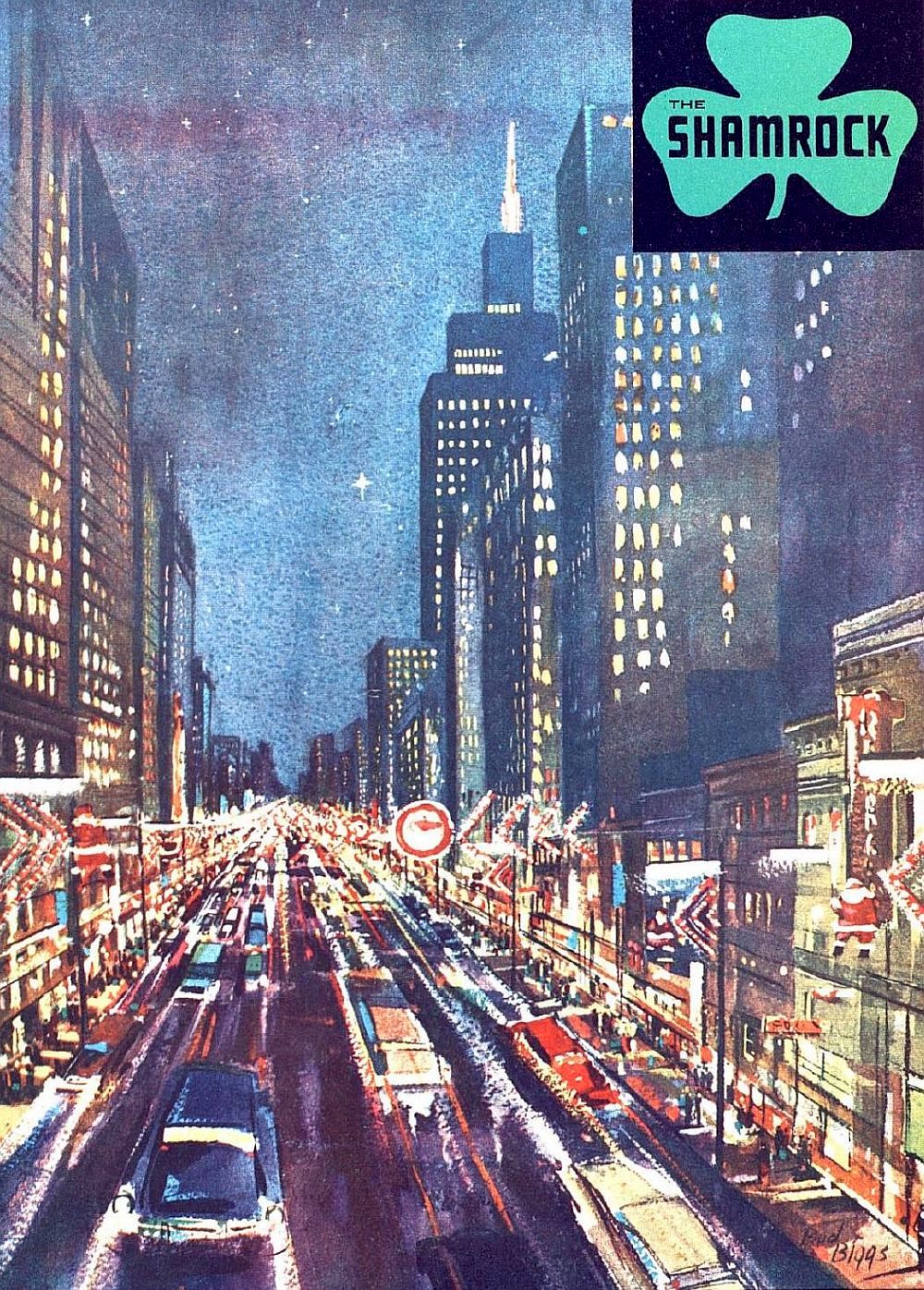
“Main Street, Christmas Night” by Bud Biggs (used for the cover of the December, 1956 issue of Dallas and for the cover of the Christmas, 1959 issue of the Shamrock Oil & Gas publication, The Shamrock)

xmas_bud-biggs_shamrock-mag_1959_texas-tech

**

This series of 12 paintings won the “Best Covers of 1956” award from the American Association of Commerce Publications, and in 1958 all 12 of the original watercolors were purchased by Southwest Airmotive Company to be displayed in their new Love Field terminal. I have no idea where these paintings are today. I love them. 

*

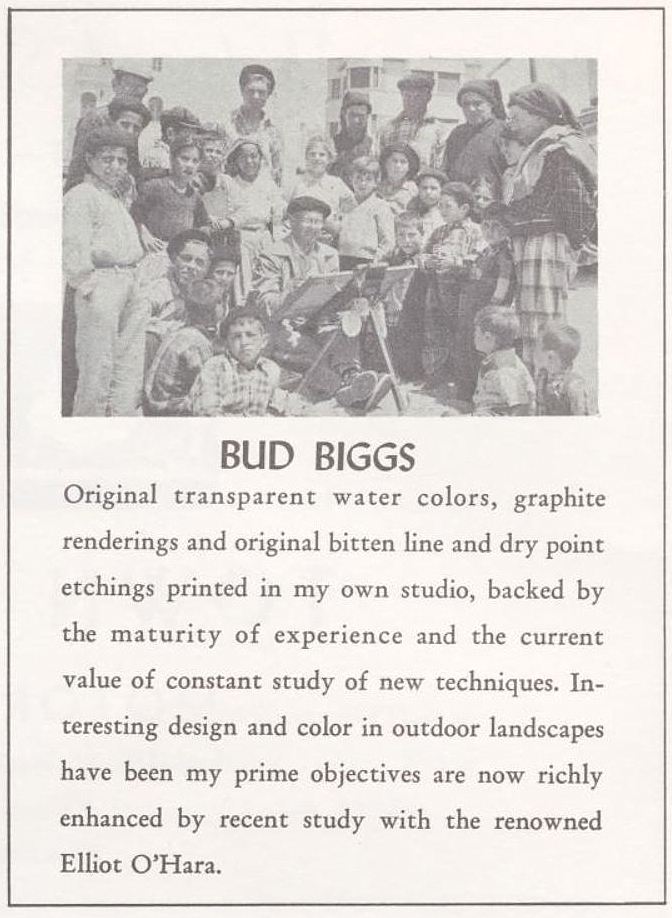
Dallas native Bancroft Putnam “Bud” Biggs (1906-1985) attended Forest Ave. High School, SMU, and the St. Louis School of Fine Arts. He was primarily a commercial artist, working for Dallas artist Guy Cahoon before opening his own advertising studio. He produced fine art as well, specializing in watercolors, and was a respected art instructor. Below is an ad placed in the publication La Fiesta of Art (1957) to coincide with an art show in Highland Park Village. He is seen sitting at an easel. I had never heard of Bud Biggs before that Christmas post in 2018 — someone needs to round up his works and publish them!

biggs-bud_la-fiesta-of-art_1957_portal

***

Sources & Notes

Information on the 12 paintings is from the Dallas Morning News article “Art & Artists: Biggs Series Bought by Firm” by Rual Askew, Feb. 20, 1958.

2-1956-february_dallas-mag_bud-biggs_sm

*

Copyright © 2022 Paula Bosse. All Rights Reserved.
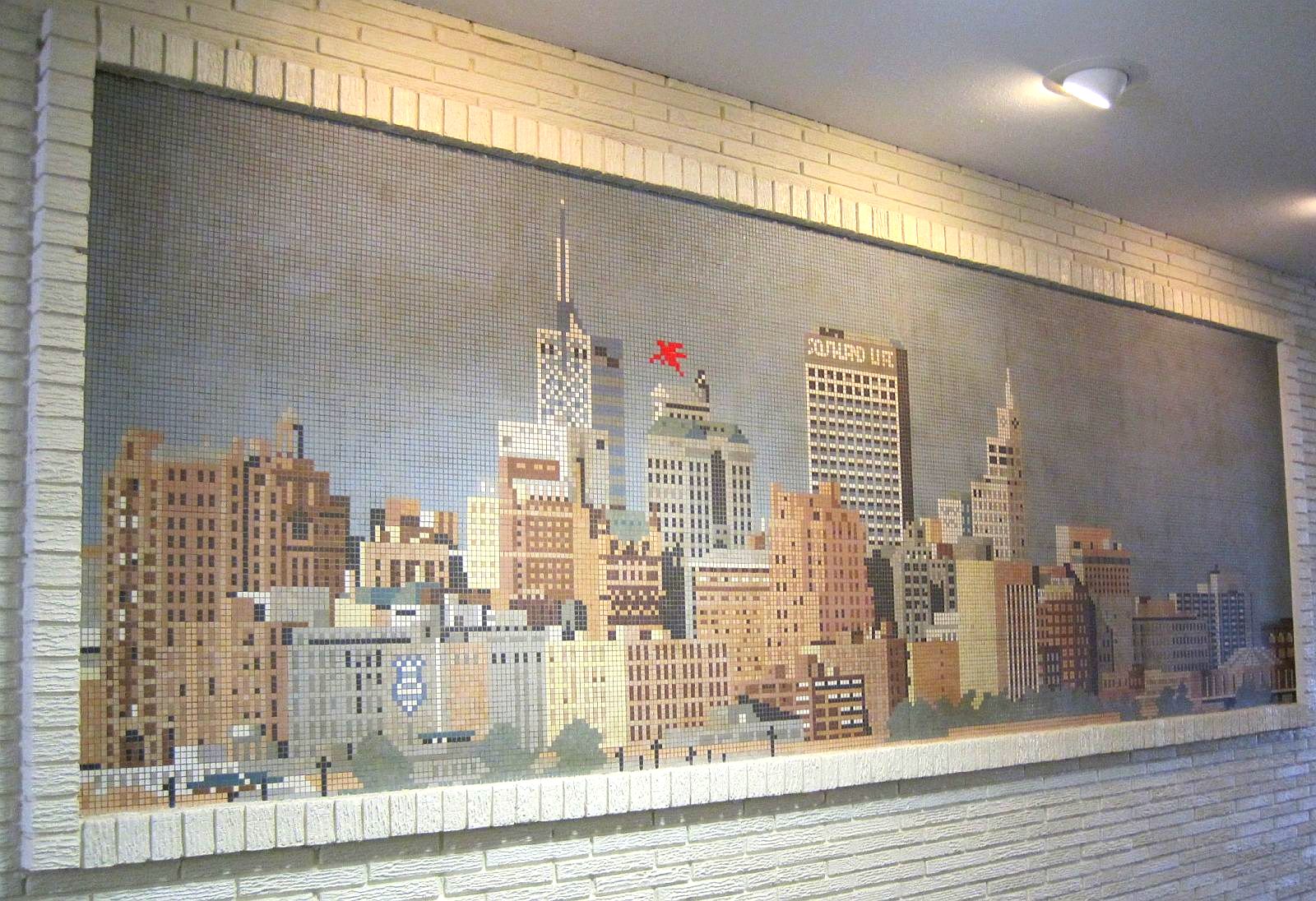
Dallas Skyline Mosaic Mural, Preston Forest Shopping Center — 1960

preston-forest-mosaic_1_wide_paula-bosse_june-2014A hidden gem at Preston and Forest…

by Paula Bosse

I was contacted by someone over the weekend about a photo I had posted to my personal Instagram back in 2014. And that reminded me that I’ve been meaning to post these photos for several years now! (Thanks, G.H.)

Back in June, 2014, I saw a Dallas Morning News blog post by Rudy Bush, saying that he had just seen a pretty amazing mural after having gone to get a haircut in the Preston Forest Shopping Center and that he was hoping to find more information about it. He posted a photo, and it was COOL! I’d never seen it, and started looking to see what I could find. Rudy included my info in a later DMN blog post, with a nice link to my brand new Flashback Dallas site.

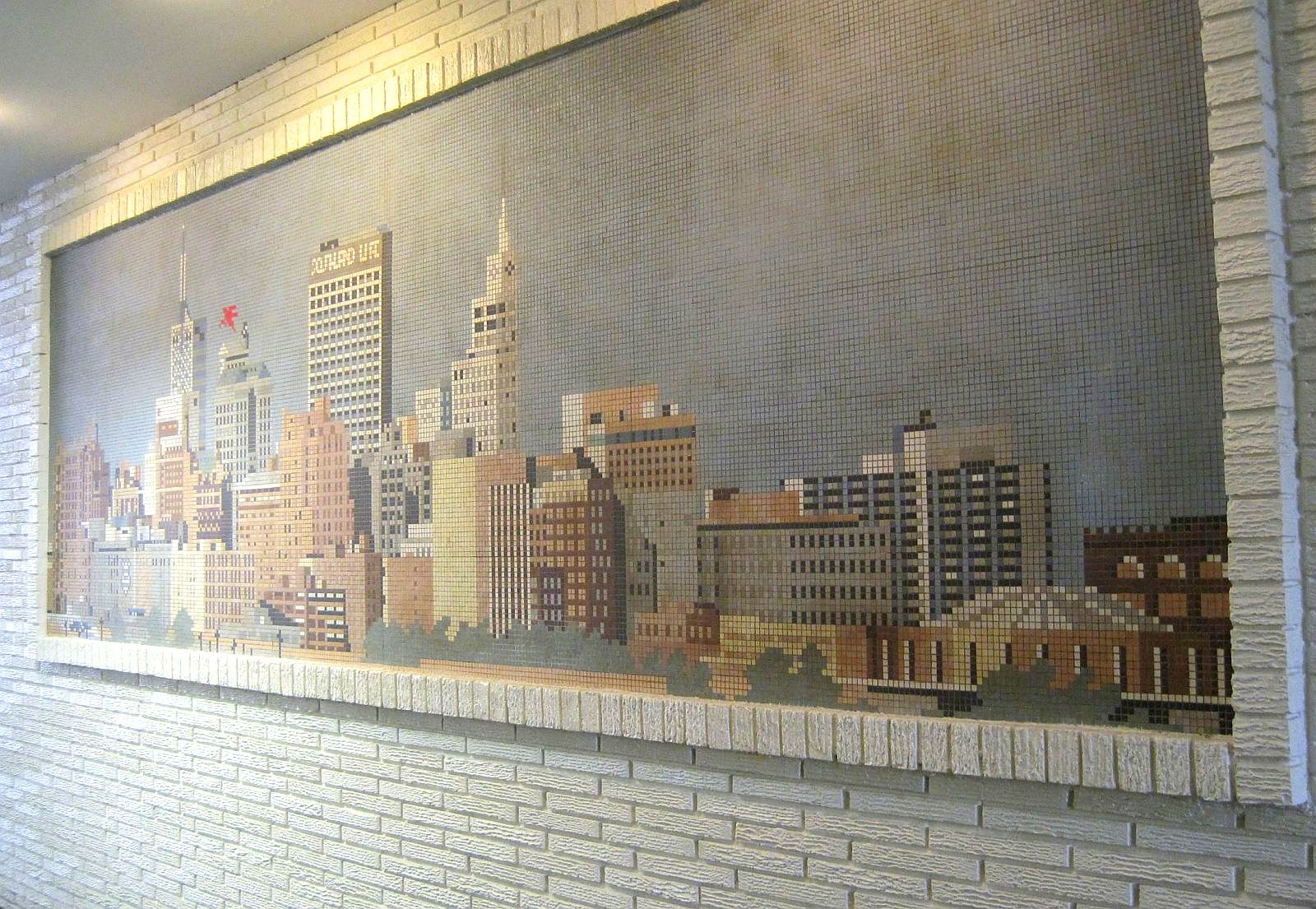
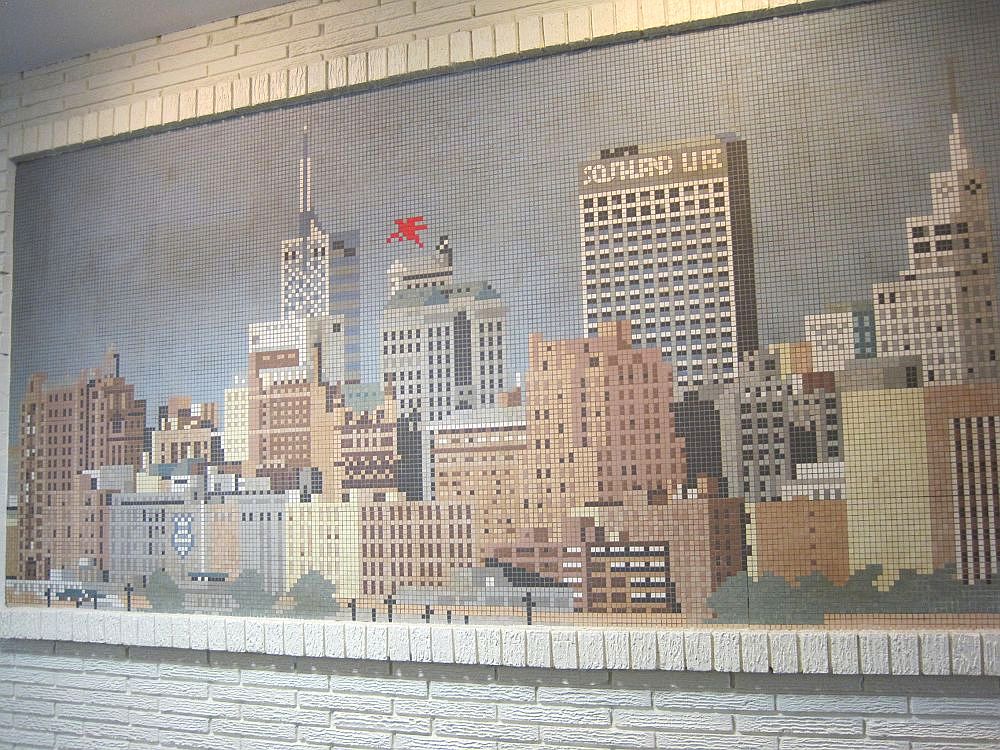
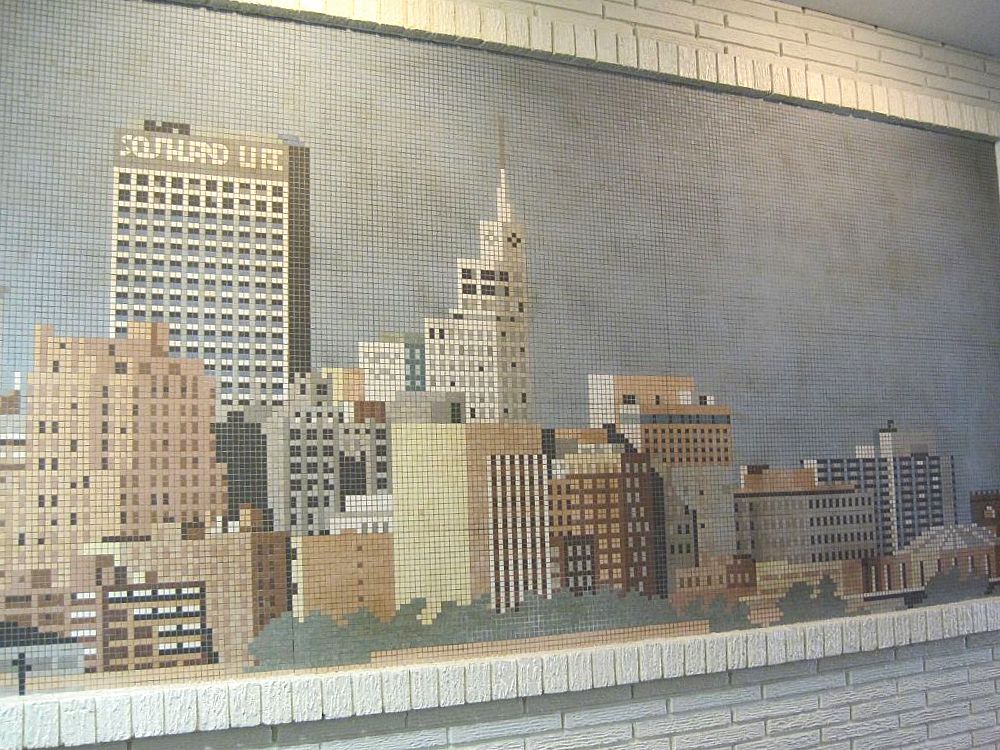
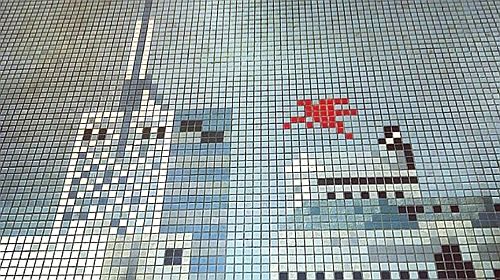
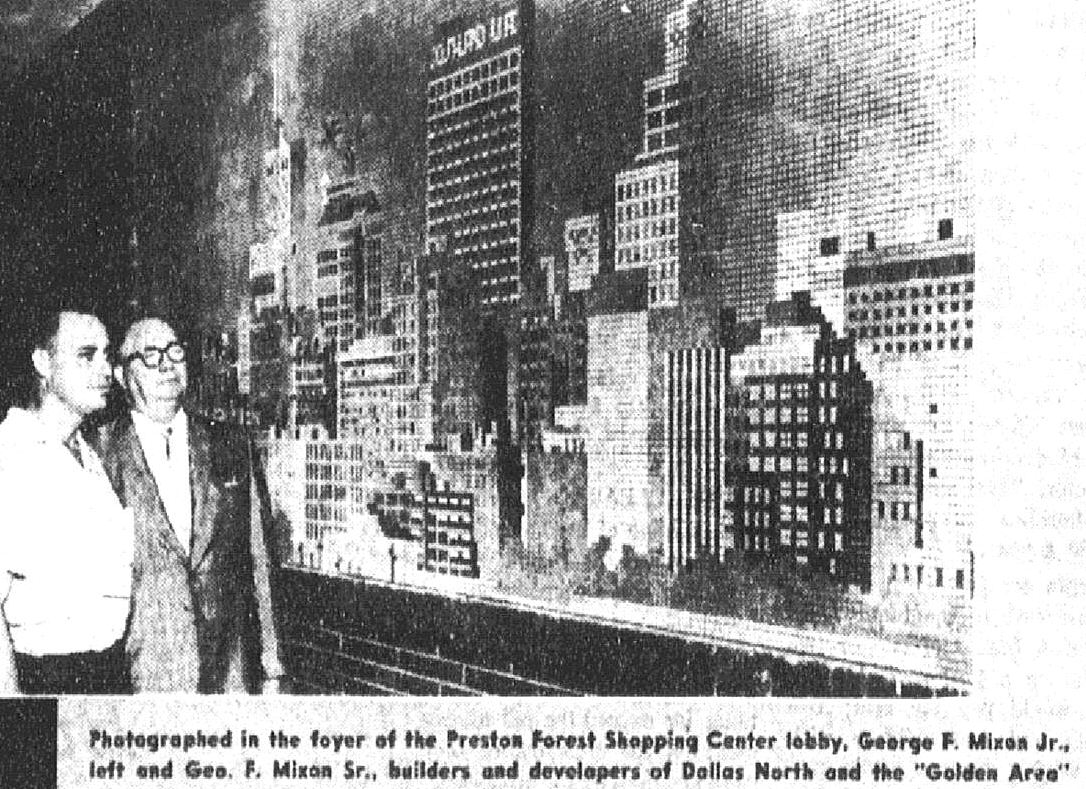
The 80-square-foot tile mosaic — made up of more than 46,000 ceramic tiles — shows the Dallas skyline of the late 1950s. It was created by Cambridge Tile Co. of Ohio (with a factory in the Trinity Industrial District) and installed by H. J. Palmer Tile Co. of Dallas. The mural was commissioned by George F. Mixon Sr. and George F. Mixon Jr., developers of several North Dallas shopping centers, including the Preston Forest Shopping Center (southeast corner of Preston and Forest). The mural was installed in the shopping center office.

I haven’t been over to see it since 2014, but I assume it’s still there. It’s about halfway between Staples and Whole Foods, next to a barber shop. It’s in the small lobby of office space you might never have even noticed. And it is wonderful. Unfortunately, it’s in a hallway, so there’s no way to take a photo of the whole thing straight on. Even when you’re standing looking at it, it’s like being on the front row of a movie theater — the only way to see the whole thing is to move your head from side to side as you feel yourself straining to lean back to take the whole thing in. 

I know it was commissioned especially for this building, but no one ever sees it! It would be great if it were installed somewhere else where more people could enjoy it. I love it. Go and see it! And have fun identifying all the landmark buildings. (UPDATE: I have been informed by several people who have made the pilgrimage to Preston-Forest to see this mural that it is no longer accessible to the general public. What a shame!)

*

Here are photos I took in June, 2014.

preston-forest-mosaic_5_wide_paula-bosse_june-2014

preston-forest-mosaic_6_paula-bosse_june-2014

preston-forest-mosaic_8_paula-bosse_june-2014

And, of course, my favorite detail — look what you can do with 29 red tiles:

preston-forest-mural_instagram_paula-bosse_june-2014

**

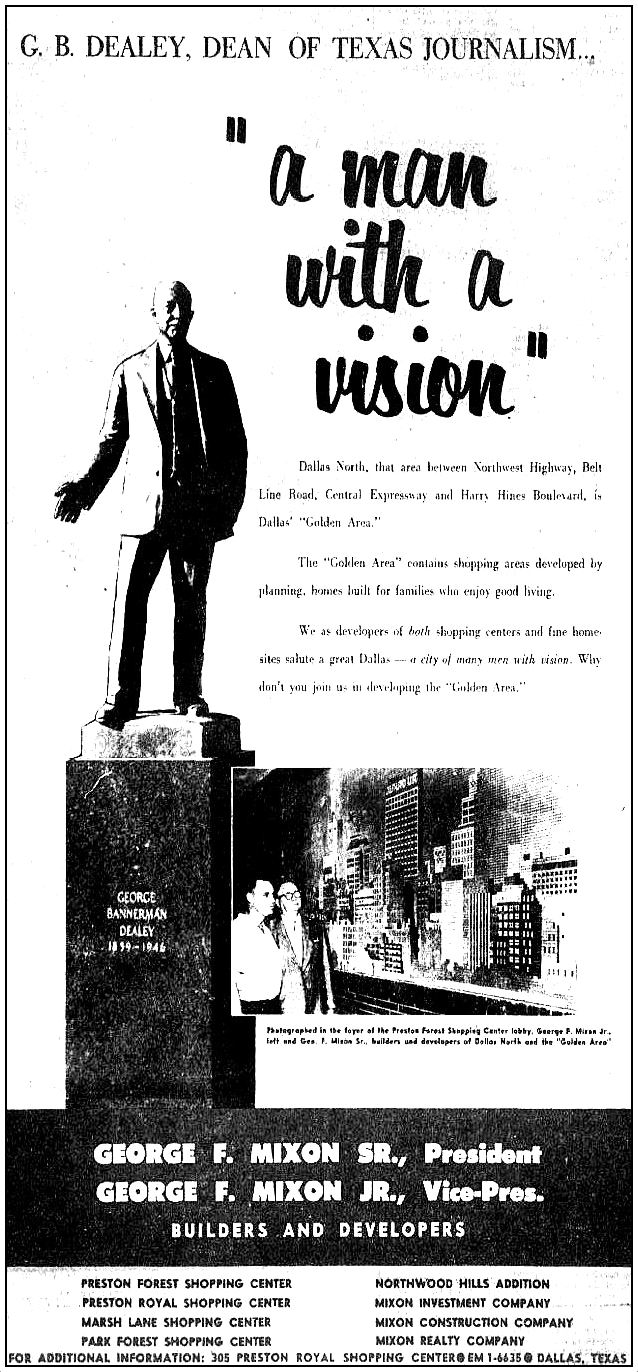
Below, a photo of the Mixons in front of their mural — from a 1960 ad. (See the full ad below.)

preston-forest_mosaic_100260_ad-det_mixon

preston-forest_mosaic_100260_ad_mixonAd, Oct. 1960 (click for larger image)

***

Sources & Notes

All photos by Paula Bosse, taken in June, 2014.

preston-forest-mosaic_1_wide_paula-bosse_june-2014_sm

*

Copyright © 2022 Paula Bosse. All Rights Reserved.