Flashback : Dallas

A Miscellany: History, Ads, Pop Culture

Category: Leisure

Dallas in Song: Chamber-of-Commerce-Approved vs. Hard Reality
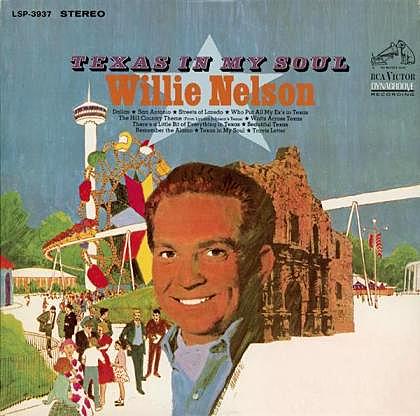
texas-in-my-soul_willie-nelson

by Paula Bosse

One of the best-known songs about Our Fair City is the dark and cynical “Dallas” by The Flatlanders (written by Panhandle-born Jimmie Dale Gilmore). It may be the best representation of the city ever written. I mean, how can you ever improve upon the immortal line, “Dallas is a rich man with a death wish in his eye”?

In August of 1967, right in the middle of The Summer of Love and several years before The Flatlanders recorded their song, Willie Nelson recorded a very different song which was also called “Dallas.” These two songs offer the yin and the yang of Dallas, a city people seem to love or hate.
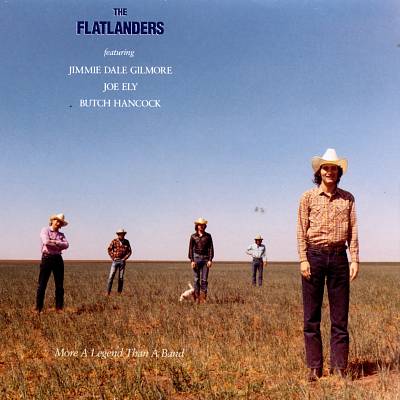
flatlanders-cover

Willie’s song, written by Stovall and Groom (the Groom being Dewey Groom, the country musician who owned Dallas’ Longhorn Ballroom), appeared as the lead track on Willie’s “Texas In My Soul,” a concept album of covers (!) produced by Chet Atkins and released in 1968. I love Willie, but that song is pretty awful. I’m not sure if Willie picked it or Chet picked it, but … oh dear. I love songs from Willie’s early recording years — when he was trying to branch out from a successful songwriting career to being a performer — and he sounds great on the song, and the production is Nashville-studio-impeccable, but … those lyrics. If the Dallas Chamber of Commerce had a stamp of approval for songs about Dallas, I’m sure they would have stamped the bejabbers out of this one. It’s a very positive, damn near chirpy song about the city — and it’s got to be one of the only songs out there to name-check Central Expressway, LBJ, Love Field, Highland Park, Neiman’s, and the Cotton Bowl in lyrics like this:

Take a ride on her Central Expressway — breeze down the LBJ.
Look her over good, you’ll have to say: she’s the best-dressed city in the USA.

Uh-huh. It does have one absolutely great line which is (unintentionally) pure Dallas: “She swings like a blonde with a millionaire” — and, if you’re familiar with Jimmie Dale Gilmore’s song, you probably immediately think of these lines from his later 1972 song:

Well, Dallas is a woman who will walk on you when you’re down,
But when you are up, she’s the kind you want to take around,
But Dallas ain’t a woman to help you get your feet on the ground.
Yes Dallas is a woman who will walk on you when you’re down.

But as Jimmie Dale says, Dallas will always look great from a DC-9 at night.

*

To hear the mercifully very short song Willie recorded but did not write, check it out:

*

To listen to the sublime Jimmie Dale Gilmore-penned “Dallas” by The Flatlanders (sung by Gilmore, with Joe Ely and Butch Hancock, accompanied by a musical saw), listen to this:

*

Two very different perspectives of Dallas, one written by a conservative middle-aged local businessman in the go-getting 1960s (Dewey Groom), the other by a young, long-haired outsider in the cynical, post-hippie 1970s (Gilmore). People who actually live in Dallas are either much more tolerant of (or oblivious to) the city’s shortcomings — or we’re just born self-promoters. I’m thinking it’s mostly the latter. #worldclasscity

***

Thanks to my friend Steve Ray of the Texas Music Office for bringing the Willie Nelson song to my attention!

For more on the “Texas In My Soul” album (which has what must be one of the worst album covers ever), see the review at AllMusic.com, here.

Willie’s Nelson’s website is here. (If anyone knows of a Dallas song written by Willie, please let me know!)

The Flatlanders site is here. (Incidentally, there is a very cool, previously unreleased 1972 version of “Dallas” on the new “Odessa Tapes” album.)

For my previous post on Dewey Groom, see here.

*

Copyright © 2014 Paula Bosse. All Rights Reserved.

Exline Park Swimming Pool — 1950s

exline-pool_hickman_1957_briscoe-ctr

by Paula Bosse

Summer’s running out, kids.

Plan your waning pool-time opportunities accordingly.

exline_hickman_1955

***

Photos by R. C. Hickman, taken at Exline Park swimming pool; top photo taken on Aug. 6, 1957, bottom photo on July 27, 1955. Both photos © R. C. Hickman/Dolph Briscoe Center for American History.

*

Copyright © 2014 Paula Bosse. All Rights Reserved.

Big Tex and His Dressers

big-tex_headless_1970s
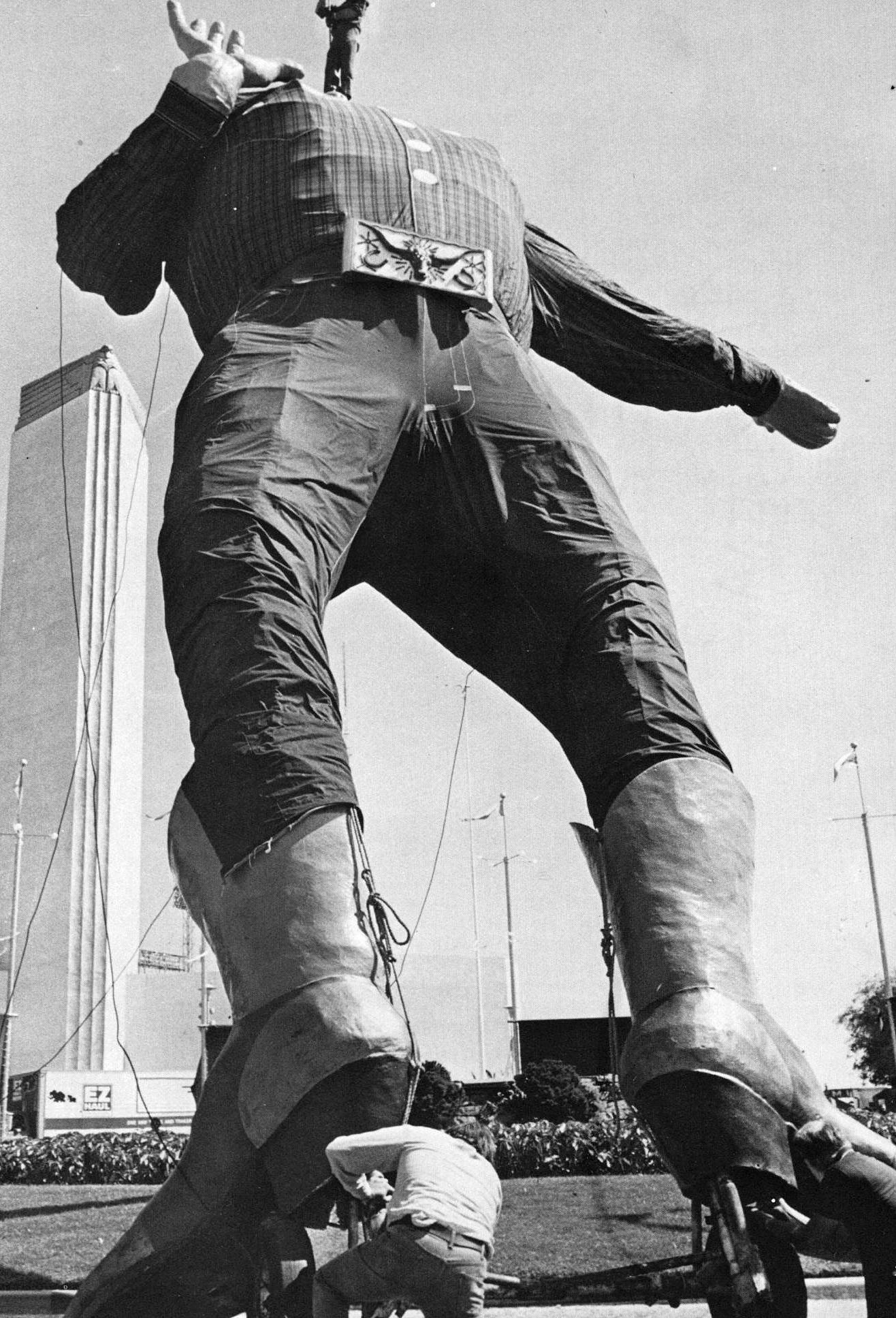
Headlessness and wardrobe malfunctions being attended to…

by Paula Bosse

It’ll probably all get straightened out in the end.

When I worked in a bookstore that had frequent visits by costumed characters for children’s events, we were told to make sure children never saw the characters without their costume heads because it might freak the kids out. If true, that photo above has the potential to scar some impressionable youngsters for life.

Above, Big Tex in dishabille.

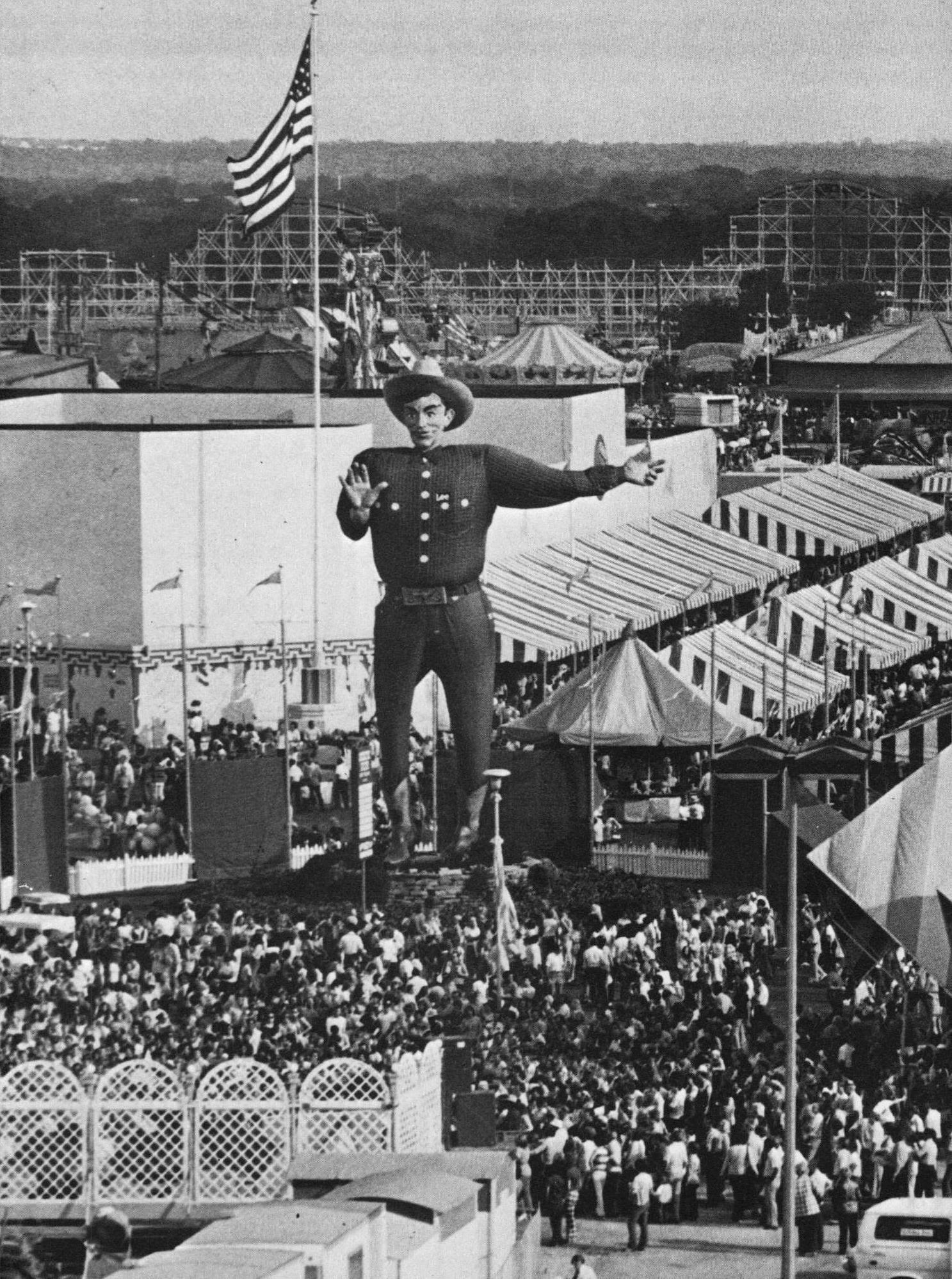
Below, all pulled together.

big-tex_tx-historian_sept1976-sm

***

Sources & Notes

Top photo of a headless Big Tex is from the Sept. 1976 issue of Texas Historian, a Texas State Historical Association publication of the Junior Historians of Texas.

Second photo, of a put-together Big Tex is a State Fair of Texas photo from the same issue of Texas Historian.

Click images to make Bit Tex REALLY big!

*

Copyright © 2014 Paula Bosse. All Rights Reserved.
Candy Stripers Moonlighting as Six Flags Map Sellers — ca. 1961

six-flags_map-sellers_c1961

by Paula Bosse

“Yes, sir, you absolutely must have a map!”

When going to an amusement park meant going in a suit and tie. …And hat.

I see maybe a couple of teenagers. Otherwise … rather ominously … no children.

***

Six Flags Over Texas, probably in its opening year, 1961.

Click for larger image.

*

Copyright © 2014 Paula Bosse. All Rights Reserved.
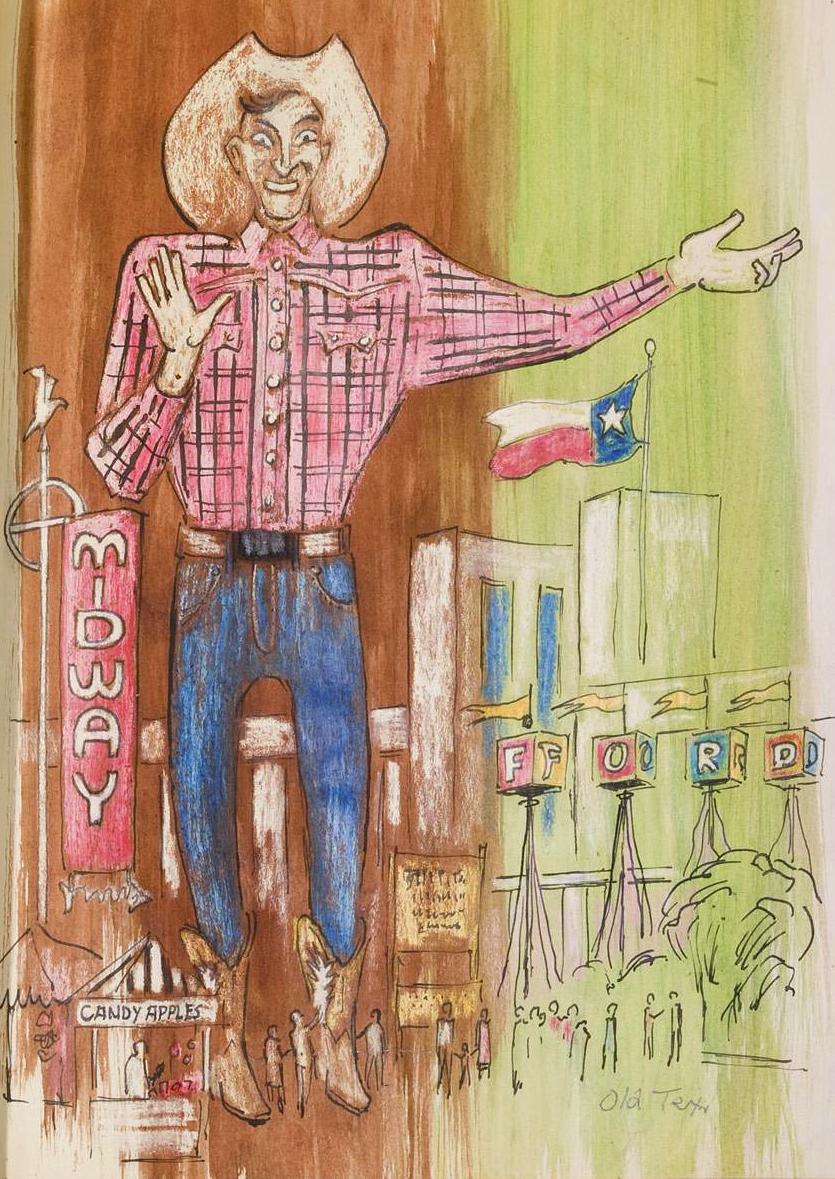
Big Tex, Old Tex, Big Ol’ Tex — Whatever You Call Him, Otis Dozier Wins (1954)

dozier_big-tex_sketchbook_1954_dma“Old Tex” sketch by Otis Dozier, 1954 — Dallas Museum of Art

© Marie Scott Miegel and Denni Davis Washburn

by Paula Bosse

Hey, y’all, guess what’s just around the corner. Whenever you start seeing pictures of Big Tex, you know that the State Fair of Texas can’t be too far away.

There have been a lot of artistic depictions of Big Tex over the years, but I think this sketch by Dallas artist Otis Dozier (1904-1987) may be my all-time favorite. And I’ve only just discovered it! (Thank you, DMA!)

***

This wonderful ink, watercolor, and crayon sketch of “Old Tex” is contained in one of Otis Dozier’s sketchbooks, now in the collection of the Dallas Museum of Art, a gift of the Dozier Foundation (© Marie Scott Miegel and Denni Davis Washburn). To see details on this work, see the page on the DMA’s website, here.

The Otis Dozier sketchbooks have been digitized in a joint project between the Dallas Museum of Art, SMU’s Bywaters Special Collections at the Hamon Arts Library, and SMU’s Norwick Center for Digital Services. To read about this fantastic collection, see the SMU Central University Libraries page, here.

*

This week, the Dallas Museum of Art launched a new digital database in which its entire collection is now accessible online! This is great news for many reasons, not least being that it allows the public to see works that are rarely — if ever — displayed in the museum. Such as this one. To read more about assembling this incredible database, read the DMA’s announcement, here.

To look up your favorite artist, check to see what the DMA has, here.

For the biography of the Forney-born Dozier (who was one of the members of the famed Dallas Nine group), see the Handbook of Texas entry here.

Click picture for larger image.

*

Copyright © 2014 Paula Bosse. All Rights Reserved.


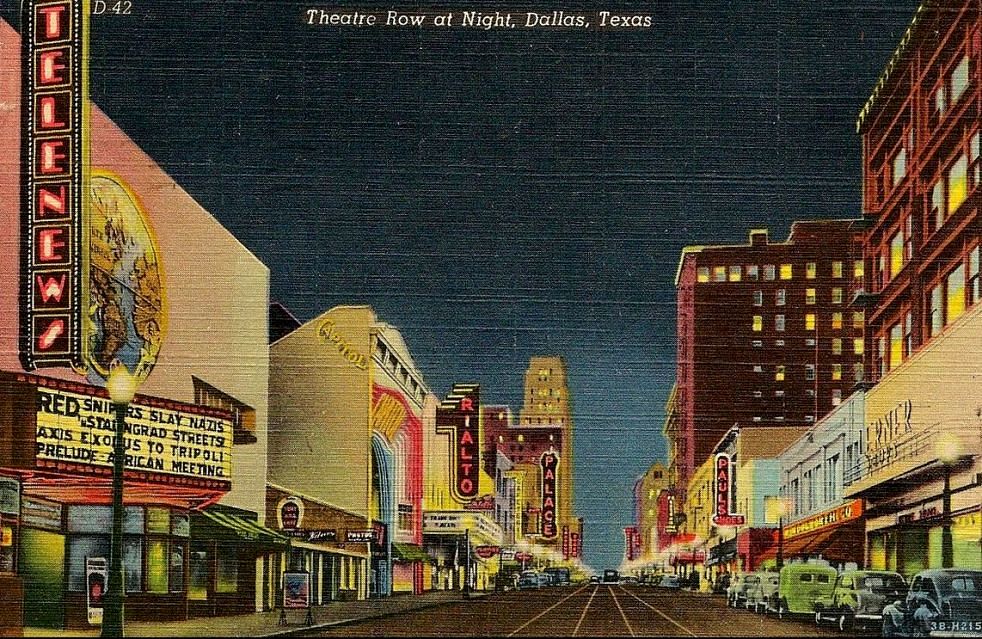
From Dull to Spectacular — How a Picture Postcard Evolves

theater-row_before_tsha

by Paula Bosse

You know how you look at some of those fantastic postcards from the ’40s that don’t look real and you wonder, “Is that from a photograph, or is that just an artistic interpretation?” Well, it’s both.

In the above “before” and the below “after,” it’s interesting to note what’s been kept in and what’s been taken out. And how a fairly ho-hum daytime view becomes a dazzling night-time scene. Either way, it’s an Elm Street I’ll — sadly — never experience.

theater-row_after

***

Sources & Notes

Black-and-white photograph of Elm Street’s “Theater Row” from the Texas State Historical Association.

Click pictures for larger images.

*

Copyright © 2014 Paula Bosse. All Rights Reserved.
 

“Jim Nasium” Can Teach You a Thing Or Two About Baseball Heckling — 1908

baseball-hecklers_dmn_050308Cartoon by “Jim Nasium” — 1908 (click for larger image, you sap-head)

by Paula Bosse

If you were a die-hard baseball fan in 1908, you were no doubt familiar with many of the jeers featured in the cartoon above by one Mr. “Jim Nasium,” a sportswriter and cartoonist who was given almost half a page of primo newsprint each Sunday in many newspapers around the country. Feel free to incorporate some of these exhortations into your next enthusiastic visit to the ballpark. ANY ballpark. Those kids can take it….

**

Below, a few images of the Dallas baseball scene from around the time that Mr. Nasium’s column on “roasting” appeared in the pages of The Dallas Morning News. (As always, click for large images.)

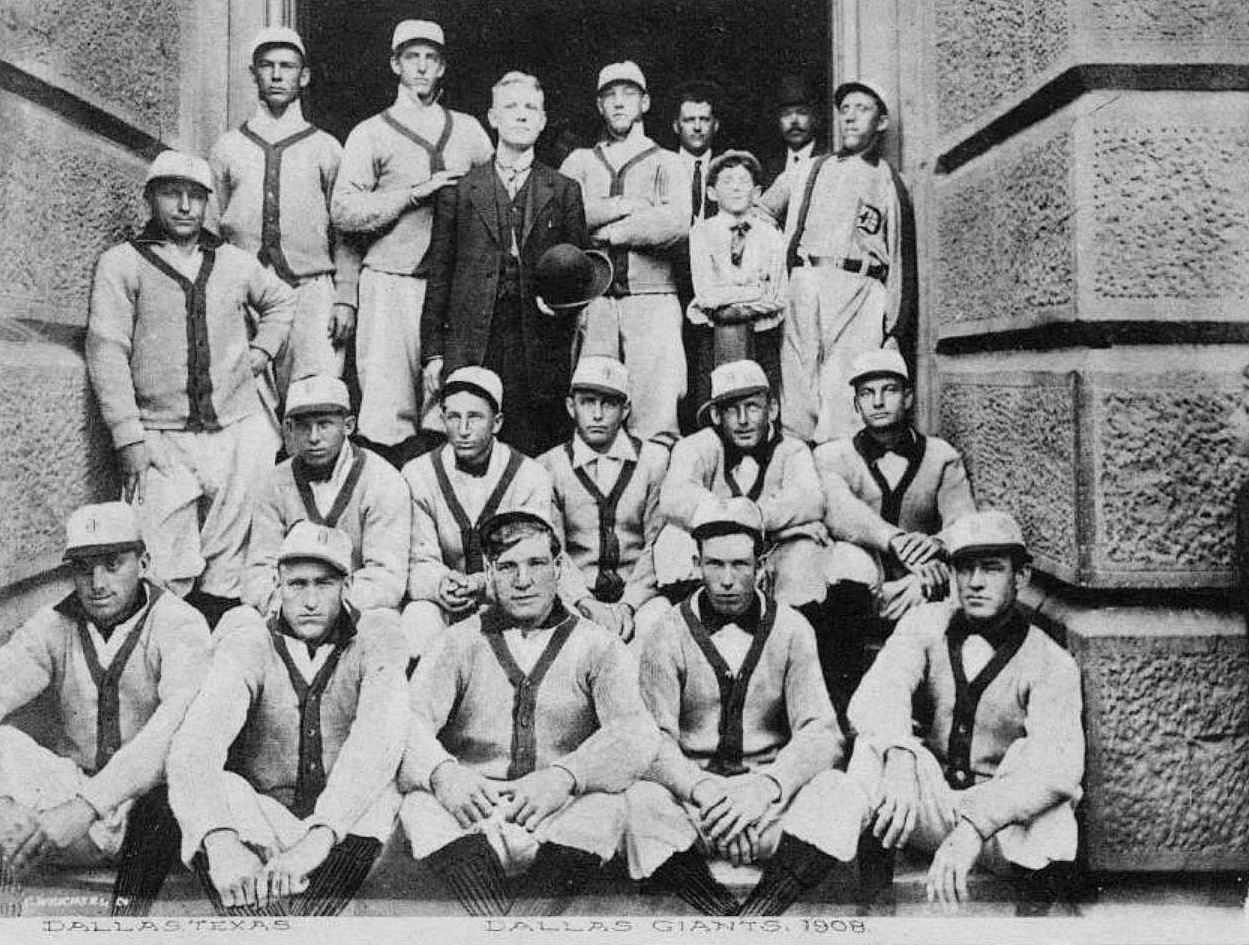
dallas-giants_cook-colln_degolyer_smu
The Dallas Giants, 1908

Above, the 1908 Dallas Giants team. Bottom row–Slattery, Fletcher, Kerns, Tullos, Maloney. Middle row–Maag, Hole, Moore, Whittaker, Cooper, Loudell. Top row–Burnett, Peters, Hay, Storch, Miller.

*

baseball_gaston-park_dmn_050508

Here’s where they played that week, Gaston Park. Mayor Hay threw out the first ball. Below, where the cat-calls would come from. “What’re you tryin’ to bunt for, you sap-head!”

baseball_gaston-park_grandstand_dmn_050508DMN, May 5, 1908

*

baseball-ad_dmn_050608DMN, May 6, 1908

***

Sources & Notes

The cartoons of “Jim Nasium” appeared in The Dallas Morning News alongside his weekly column, “Conversations With an Old Sport,” a humorous syndicated series by Edgar F. Wolfe, who would later go on to edit Sporting Life. Here is an excerpt from that week’s column about the bad sportsmanlike conduct of jeering spectators in grandstands, complete with wonderful slang you’ve probably never encountered before (click to read):

jim-nasium_dmn_050308-excerptDMN, May 3, 1908

This full “Conversations With an Old Sport” column can be read in a PDF here. (You’re going to have to click that “plus” symbol at the top many, many times in order to magnify the text enough to read it!)

Photo of the Dallas Giants from the George W. Cook Dallas/Texas Image Collection, DeGolyer Library, Southern Methodist University; it can be accessed here. It appeared in the pages of The Dallas Morning News on May 6, 1908, crediting photo to Clogenson.

A few more (grainy) photos of Gaston Park — site of the first Texas-OU game held in Dallas in 1912 — can be seen in another Flashback Dallas post, here.

*

Copyright © 2014 Paula Bosse. All Rights Reserved.

Giant Zeppelin Balloons, Straight Outta Big D

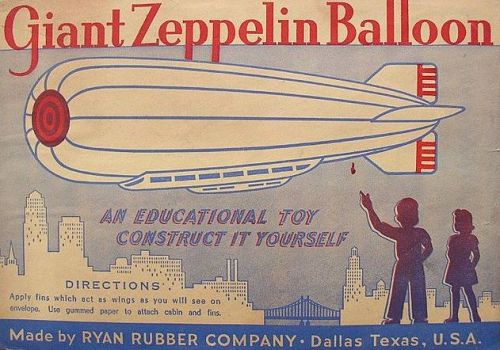
ryan-rubber-co-zeppelin

by Paula Bosse

Bet you didn’t know that giant Zeppelin balloons were made in Dallas (or maybe Forney…). They were. The Ryan Rubber Company’s balloon factory opened in Forney in 1946, managed by Lester G. Norris with the help of his wife, Gladys.

***

Sources & Notes

Source of Zeppelin ad unknown.

See a photo of the Norrises at work and read the accompanying article “Picture Blocks and Balloons Big Business for These Men” (Dallas Morning News, Nov. 28, 1949).

*

Copyright © 2014 Paula Bosse. All Rights Reserved.
Lucy, Desi, Dallas — 1956

lucy-desi_fw_bellaircraftLucille Ball and Desi Arnaz and their loaner ‘copter from Bell Aircraft

by Paula Bosse

Lucille Ball and Desi Arnaz came to Dallas and Fort Worth in 1956 to promote their new movie, “Forever Darling.” Their arrival times were heavily publicized, and throngs of fans showed up to welcome them — in Dallas at Love Field, and in Fort Worth at the Western Hills Hotel. For those who might have missed their arrivals, they still had a chance to see the couple at one of the personal appearances scheduled at the theaters showing their movie (in Dallas at the Majestic on February 10th, and in Fort Worth at the Hollywood on the 11th). Crowds were large and enthusiastic, and everyone appears to have had a genuinely fun time, possibly even Lucy and Desi, whose relationship in those days was frequently a bit shaky.

Best of all was the tidbit about how the famous couple traveled from Dallas to Fort Worth: by helicopter.

Two television stars will be sailing around above Dallas skyscrapers Saturday. …Lucille Ball and Desi Arnaz will catch a helicopter ride from atop the Statler Hilton for a trip to Fort Worth. City Council officially sanctioned the ride at its Monday meeting. (Dallas Morning News, Feb. 7, 1956)

They left from the helipad atop the Statler Hilton and touched down at the helipad at the Western Hills Hotel in Fort Worth (hotels are nothing without helipads). There was some sort of cordial relationship between the Arnazes and the people at Bell Aircraft, because they availed themselves of this brand new deluxe chopper in New York as well as in DFW. When their promotional duties were finished, Lucy and Desi left Cowtown for California as guests of the president of the Santa Fe Railway — in his private car. Because that’s how you travel if you’re Hollywood royalty.

*

lucy-desi_dmn_020856-detFeb 8, 1956
*

lucy-desi_dmn_021156-photolucy-desi_dmn_021156-captionDMN, Feb. 11, 1956

(Leon Craker, I bet you had a great story about this for years after this momentous meeting.) 

*

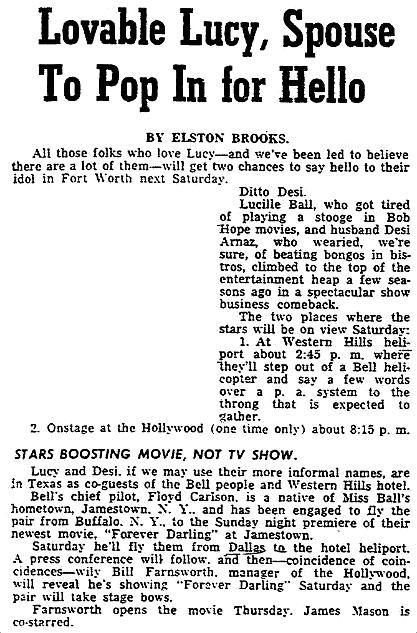
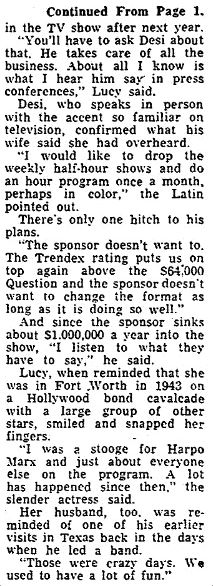
In Fort Worth, Elston Brooks (whose amusing articles I’ve really enjoyed discovering these past few months), seemed underwhelmed and a little annoyed at the prospect of  “lovable Lucy and spouse” invading the city (click articles to see larger images):

lucy-desi_FWST_020556Fort Worth Star-Telegram, Feb. 5, 1956
*

Elson Brooks may not have been very excited, but when Lucy and Desi stepped out of that helicopter, the Fort Worth crowd went wild (click text for larger image):

lucy-desi_FWST_021256-photo

lucy-desi_FWST_021256a

lucy-desi_FWST_021256bFWST, Feb. 12, 1956

*

And here they are back in Los Angeles, with Desi Jr., at the end of a busy promotional tour. Desi is proudly wearing the cowboy hat he’d been given in Fort Worth. And he looks damn good in it.

lucy-desi_dfw

***

Sources & Notes

Top photo of Lucy and Desi standing next to the 1956 Bell 47H-1 (“one of the world’s first executive helicopters”) is from the August 2012 issue of Vintage Aircraft Magazine; photo from Bell Aircraft. The article concerning this helicopter model is contained in a PDF here.

The bottom photo is from a Pinterest page, here.

UPDATE: I had originally identified the photo of Lucy and Desi with the train as having probably been taken in Fort Worth as they were about to depart for Hollywood, mainly because they’re wearing similar clothing from the FW appearance, but a rail historian noted that this photo was actually taken in California at the Los Angeles Union Passenger Terminal — he could tell because he recognized the part of the platform structure over their heads! (“I can name that song in TWO notes!”) The photo he directed me which shows the LAUPT platform (and, in fact, the same engine, two years earlier!), is here. They probably took the final photo for the Santa Fe company as thanks for providing them with transportation back home in the president’s private car. (Thanks, Skip!)

*

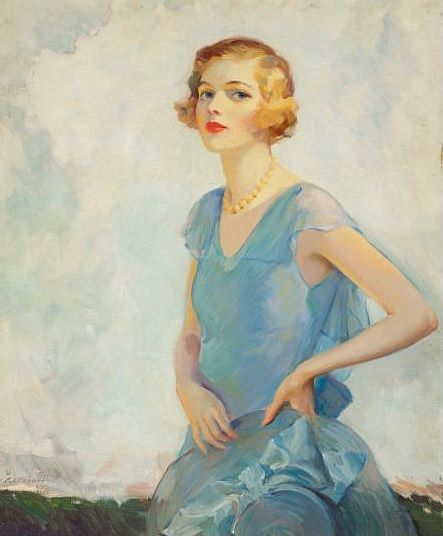
And because today is Lucille Ball’s birthday (which I know only because she shares a birthday with my aunt — happy birthday, Bettye Jo!), it seems like a good time to wheel out this strikingly beautiful portrait of Lucy, along with a wonderful photograph of her from about the same time (probably between 1928 and 1930).

lucilleballportrait

lucilleball-ca1930

*

Copyright © 2014 Paula Bosse. All Rights Reserved.


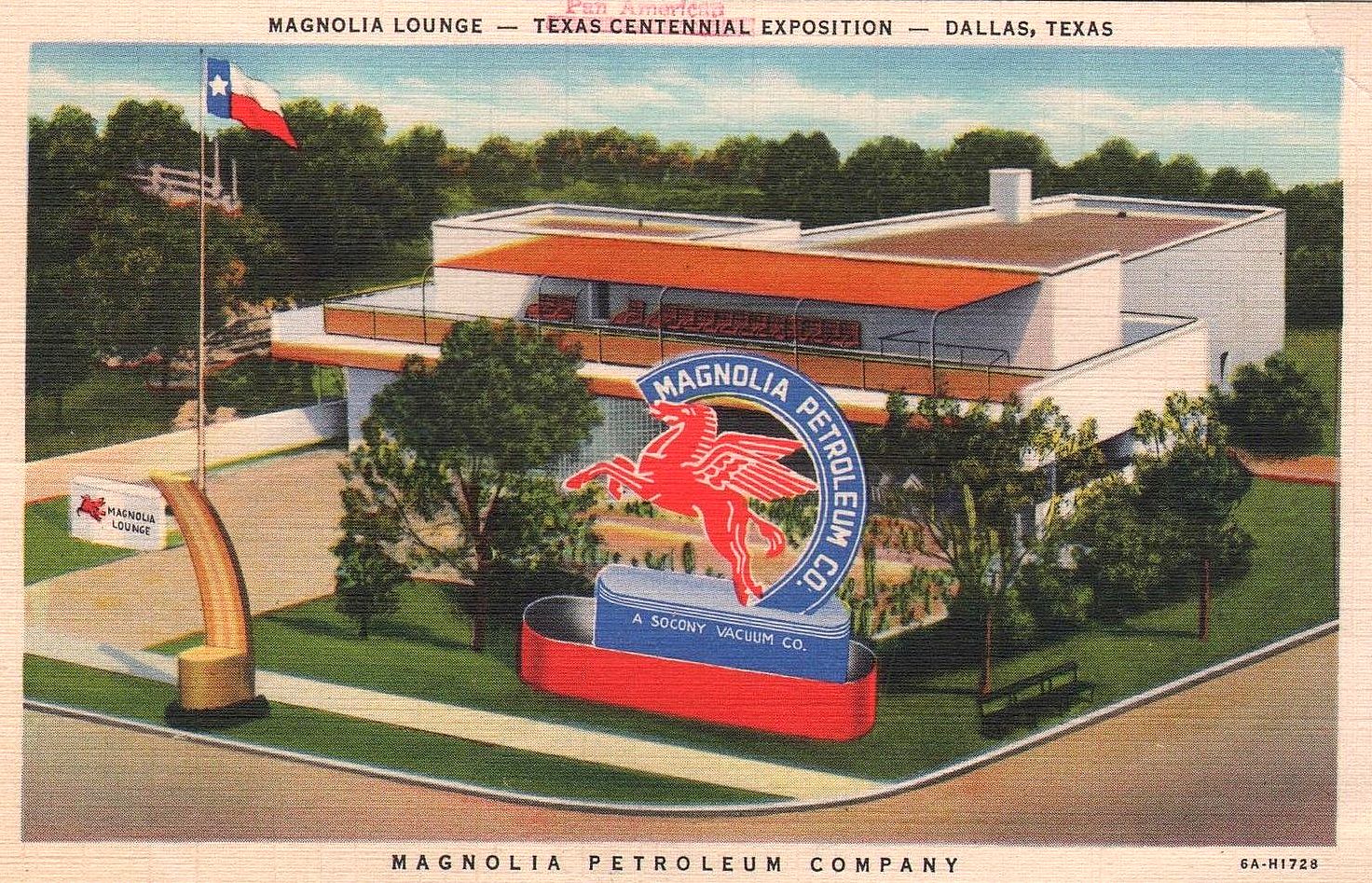
William Lescaze’s Ultramodern Magnolia Lounge — 1936

magnolia-lounge_tx-centennial

by Paula Bosse

The sleekly cool Magnolia Lounge, designed by Swiss-born American architect William Lescaze for the Texas Centennial, is considered the first International-style building built in Texas, and though it feels perfectly at home in Art Deco Fair Park, it looks completely different and much more modern that the buildings around it. It was built by the Magnolia Petroleum Company as a place for visitors to the Centennial Exposition to relax and cool off (it boasted a 20-ton refrigeration plant). The Magnolia Company’s slogan for their building was “Be Our Guest and Rest at the Magnolia Lounge.” In other words, this was the most insistently fabulous rest stop ever built!

How did we GET this cool building? Two words: Stanley Marcus.

“Young retailer Stanley Marcus was dispatched to New York City by Dallas-based Magnolia Petroleum to find the most up-to-date architect of the United States for their Centennial pavilion. Marcus chose William Lescaze, who had just designed the first International-style skyscraper in the United States [the PSFS Building in Philadelphia, which opened in 1932].” (– Virginia Savage McAlester)

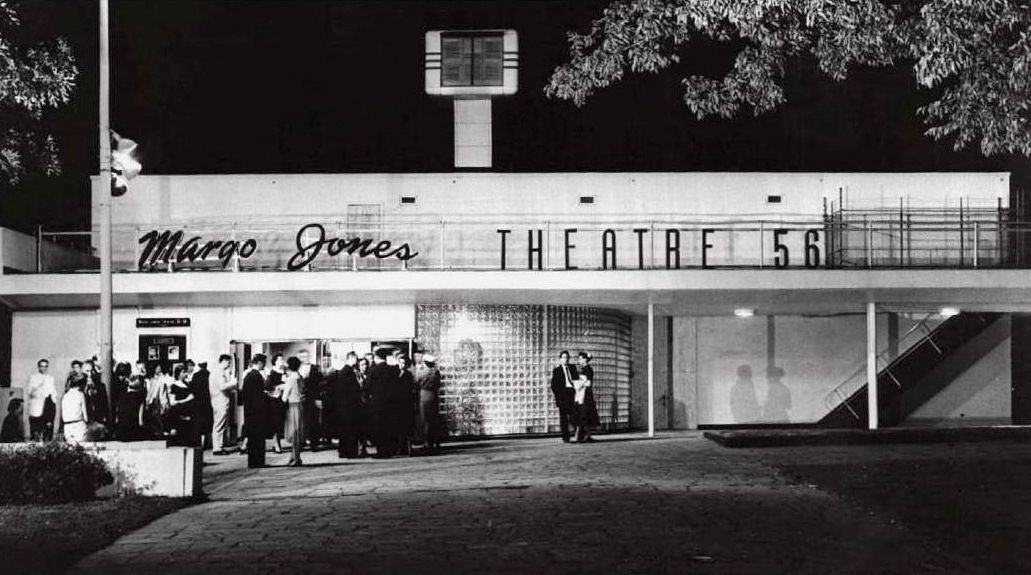
It was a popular oil company-branded “comfort station” for fair visitors until 1942 when the Magnolia Petroleum Co. (who had owned the building), gave title of the Magnolia Lounge to the State Fair, which used it for many years to house its general offices. In 1947, the space became Theatre ’47, Margo Jones’ legendary regional theater where, among other achievements, she produced plays of a young Tennessee Williams and introduced the innovation of theater-in-the-round. After Jones’ death in 1955, the theater carried on for a few years but eventually closed in 1959. After some difficult lean years for the building (during which demolition was considered!), it has been home to organizations such as the Friends of Fair Park, and it is now an active performance space again. And all is well with the world.

margo-jones_theatre-56_dpl

***

Sources & Notes

Postcard of the Magnolia Lounge from the vast wilds of the internet. Click it. It’s huge.

The Virginia McAlester quote is from a Friends of Fair Park advertising section in the Oct. 1989 issue of Texas Monthly.

Photograph of Theatre ’56 from Historic Dallas Theatres by D. Troy Sherrod, from the collection of the Dallas Public Library. (The theater struggled to continue after the sudden death of Margo Jones in 1955, which I wrote about here.)

For more on the history of the Magnolia Lounge, see the official Fair Park home page here; also, check out the the City of Dallas page devoted to this building, here.

And for more on this cool building, particularly in connection with Margo Jones, see the page on the always informative Watermelon Kid site, here.

A lengthy description of the building can be found in the article “Daylight Movies of Texas Scenes To Reward Visitors to Magnolia’s Cool Lounge” (The Dallas Morning News, April 26, 1936).

The Wikipedia page on architect William Lescaze is here.

*

Copyright © 2014 Paula Bosse. All Rights Reserved.