Flashback : Dallas

A Miscellany: History, Ads, Pop Culture

Category: Manufacturing

The John E. Mitchell Company’s WWII Munitions Work (Part 1)
mitchell_5

by Paula Bosse

The John E. Mitchell Company arrived in Dallas in 1928 to join the other nearby manufacturers of cotton gins and other agricultural equipment. They built their factory at 3800 Commerce, between Benson and Willow Streets, in the area now commonly referred to as Exposition Park, a few blocks from Fair Park. (The building still stands and has been converted into lofts. More on the building itself in Part 3.)

In 1942, during World War II, the large cotton machinery factory gradually transformed itself into one wholly concerned with war production, primarily manufacturing munitions for the Navy, but also producing ordnance parts for the Army.

Below are a series of postcards, produced by the Mitchell Company, touting their contribution to the war effort and acknowledging their workers. The second half of these cards will be contained in the next post. (Most of the cards are larger when clicked.)

*

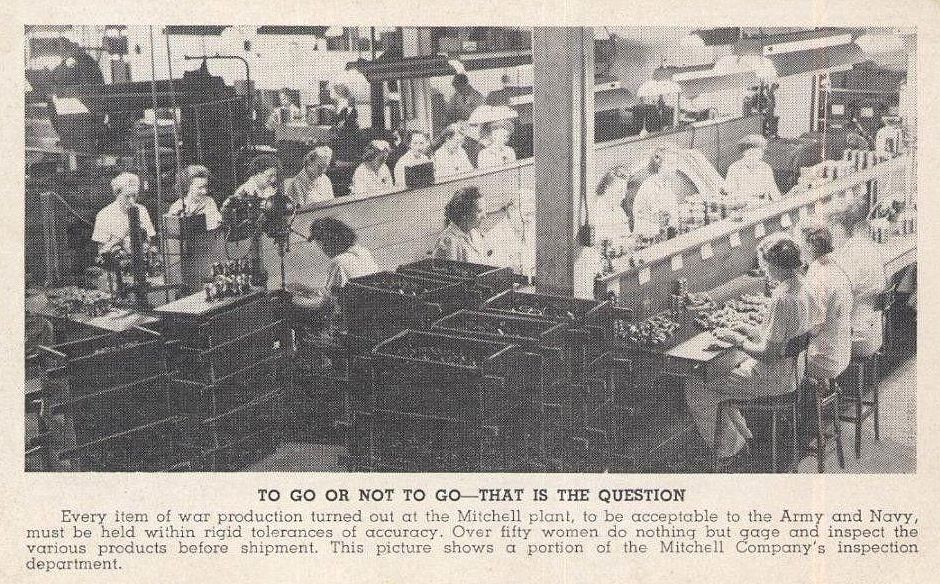
The top card shows part of the plant’s inspection department:

TO GO OR NOT TO GO — THAT IS THE QUESTION

Every item of war production turned out at the Mitchell plant, to be acceptable to the Army and Navy, must be held within rigid tolerance of accuracy. Over fifty women do nothing but gage and inspect the various products before shipment. This picture shows a portion of the Mitchell Company’s inspection department.

*
mitchell_1

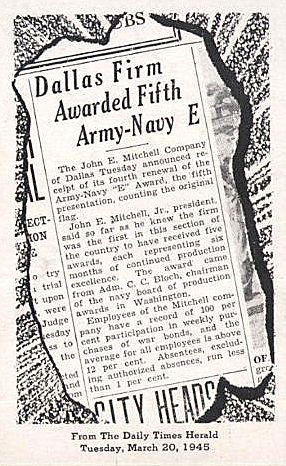
DALLAS FIRM AWARDED FIFTH ARMY-NAVY “E”

The John E Mitchell Company of Dallas Texas announced receipt of its fourth renewal of the Army-Navy E award, the fifth presentation, counting the original flag.

John E Mitchell, Jr., president, said so far as he knew the firm was the first in this section of the country to have received five awards, each representing six months of continued production excellence. The award came from Adm. C. C. Bloch, chairman of the navy board of production awards in Washington.

Employees of the Mitchell company have a record of 100 per cent participation in weekly purchases of war bonds, and the average for all employees is above 12 per cent. Absentees, excluding authorized absences, run less than 1 per cent.

From the Daily Times Herald, Tuesday, March 20, 1945

*
mitchell_2

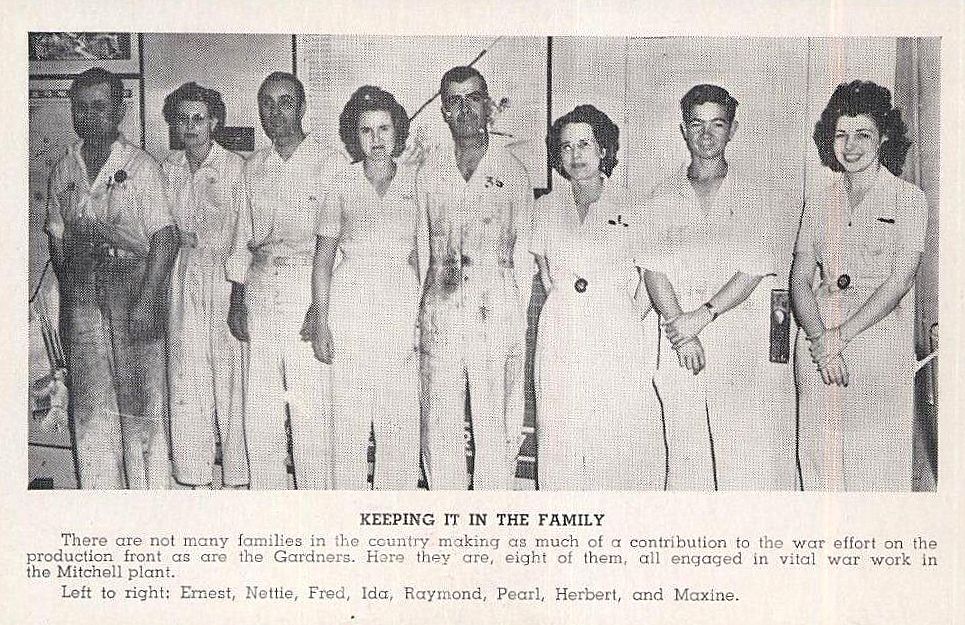
KEEPING IT IN THE FAMILY

There are not many families in the country making as much of a contribution to the war effort on the production front as are the Gardners. Here they are, eight of them, all engaged in vital war work in the Mitchell plant.

Left to right: Ernest, Nettie, Fred, Ida, Raymond, Pearl, Herbert, and Maxine.

*
mitchell_4

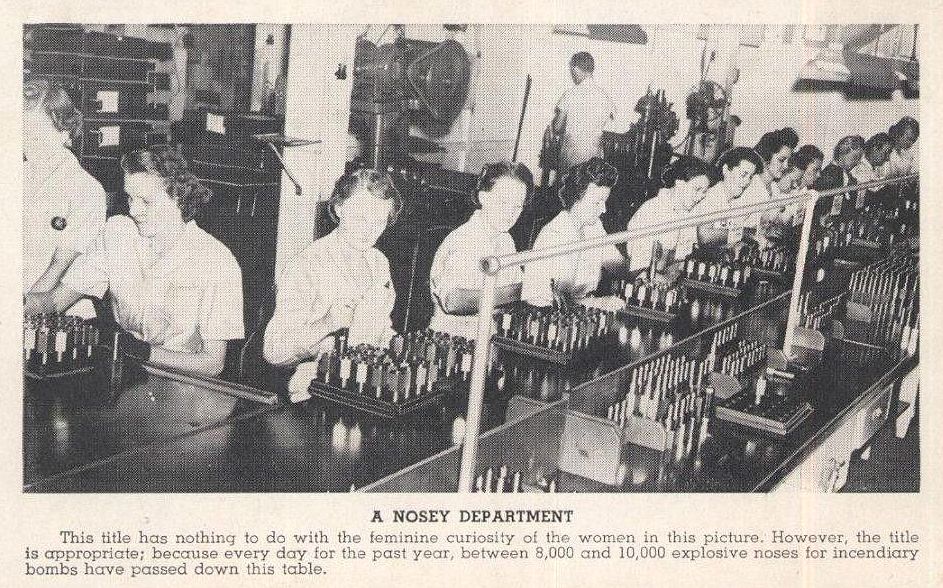
A NOSEY DEPARTMENT

This title has nothing to do with the feminine curiosity of the women in this picture. However, the title is appropriate; because every day for the past year, between 8,000 and 10,000 explosive noses for incendiary bombs have passed down this table.

*
mitchell_6

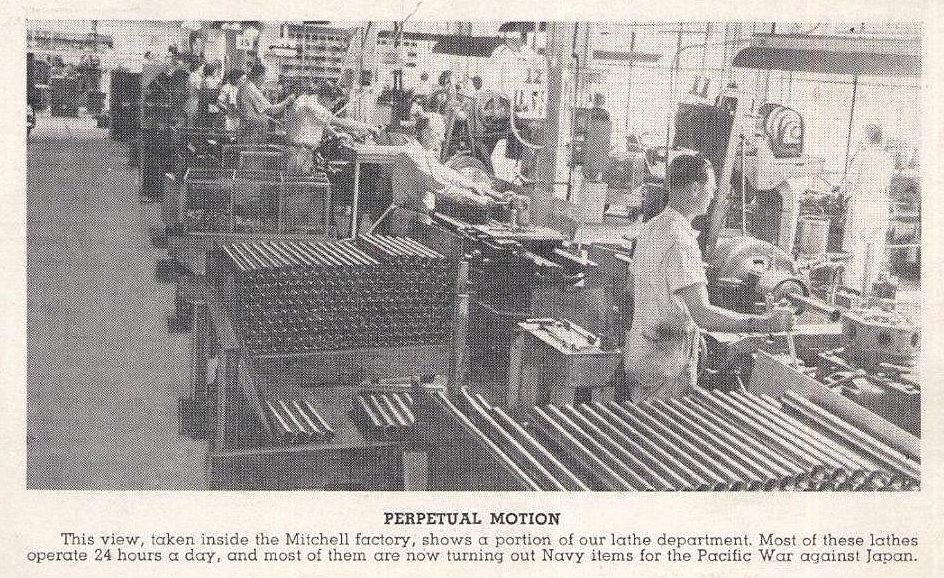
PERPETUAL MOTION

This view, taken inside the Mitchell factory, shows a portion of our lathe department. Most of these lathes operate 24 hours a day, and most of them are now turning out Navy items for the Pacific War against Japan.

*

mitchell_7

BIG JOKE

When this picture was taken, our president, John Mitchell, had evidently pulled off some sort of wisecrack which everyone seemed to enjoy, especially Mr. Mitchell himself.

The scene: one of the Mitchell Company’s regular Monday assembly meetings. The honored guests: Barney Kidd and Raleigh Smith, former Mitchell employees, now representing their company in both branches of the armed services.

*

mitchell_9

MEET OUR INDUSTRIAL CHAPLAIN

Let us introduce you to Art Isbell, the Mitchell Company’s industrial chaplain, shown here consulting with receptionist Doris Aday.

One of the first concerns in the nation to retain a full time industrial chaplain, the Mitchell Company has already discovered how important his services can be. Handling funeral arrangements, visiting the sick, helping with personnel problems, rendering spiritual guidance, Art Isbell has made himself invaluable to Mitchell men and women and has already endeared himself to the hearts of many through his patient understanding and never-failing cooperation.

*
mitchell_10

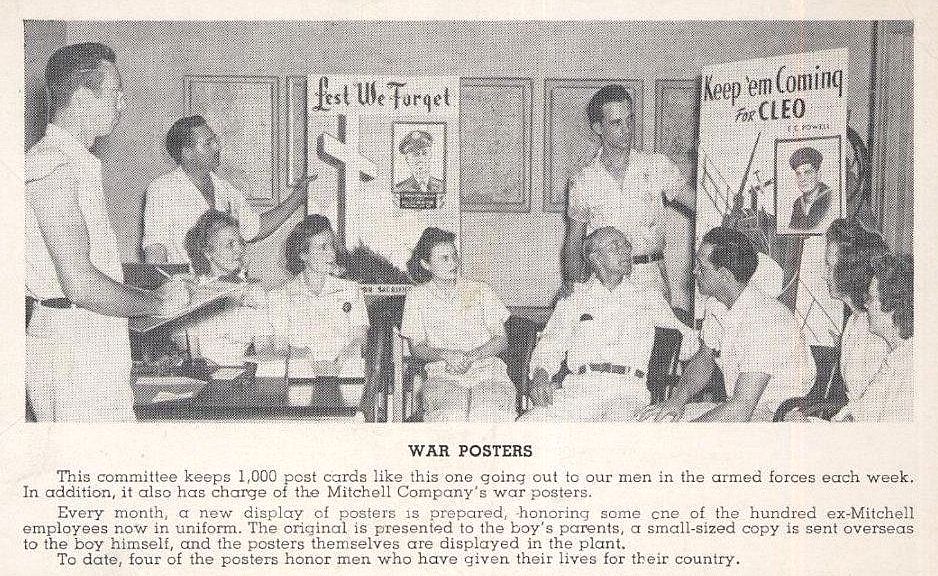
WAR POSTERS

This committee keeps 1,000 post cards like this one going out to our men in the armed forces each week. In addition, it also has charge of the Mitchell Company’s war posters.

Every month, a new display of posters is prepared, honoring some one of the hundred ex-Mitchell employees now in uniform. The original is presented to the boy’s parents, a small-sized copy is sent overseas to the boy himself, and the posters themselves are displayed in the plant.

To date, four of the posters honor men who have given their lives for their country.

***

Sources & Notes

Postcards found on eBay last year. I was a little surprised to find that most of them are still available for purchase, here.

For more on the Mitchell Company’s early days as a munitions plant, see the Dallas Morning News article “E Award Given Plant Doing Munitions Job” (DMN, Dec. 29, 1942).

The Mitchell Lofts building is a long way from being war-time production plant. Here is what it looks like today.

mitchell-building_google
Google Maps (click for larger image)

Another Flashback Dallas post on a local munitions plant (this one downtown) —  “2222 Ross Avenue: From Packard Dealership to ‘War School’ to Landmark Skyscraper” — is here.

Part 2 features more of these postcards of the Mitchell Company’s war work, here.

Part 3 will focus on the building itself.

Check back!

*

Copyright © 2016 Paula Bosse. All Rights Reserved.
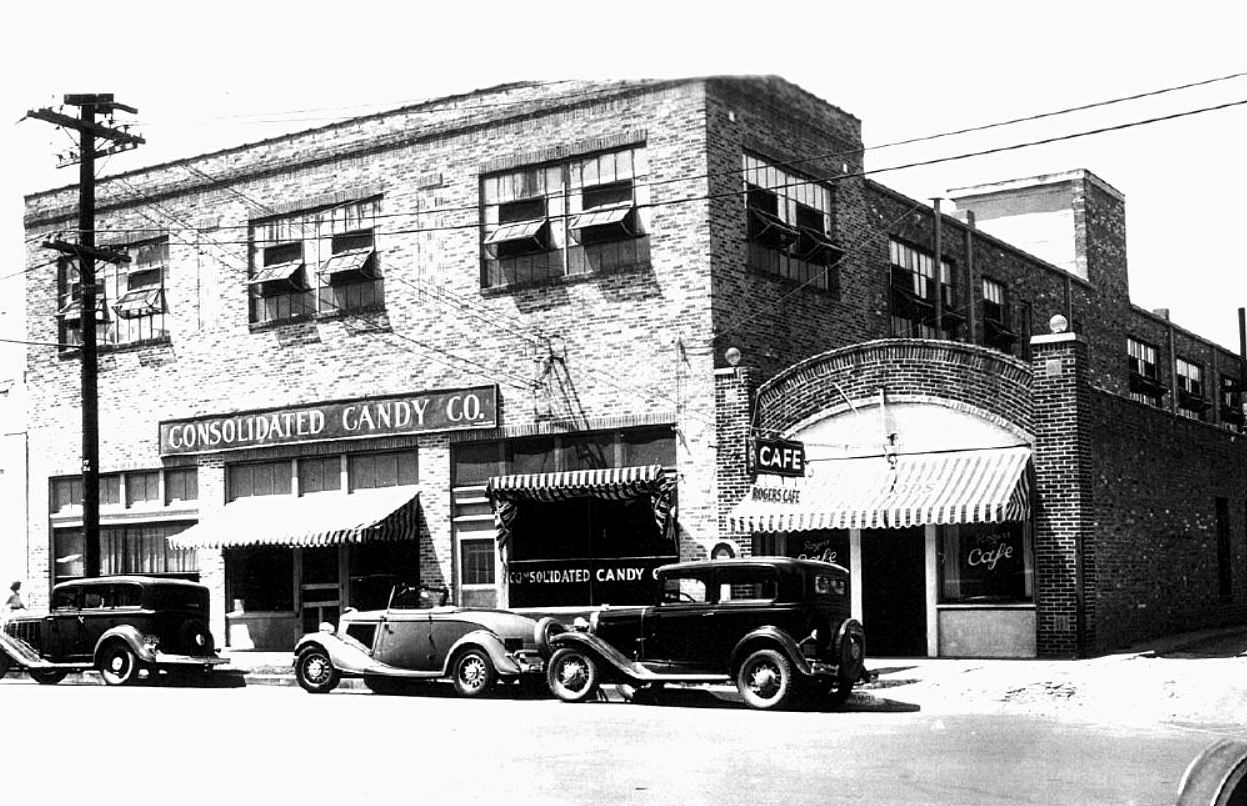
 

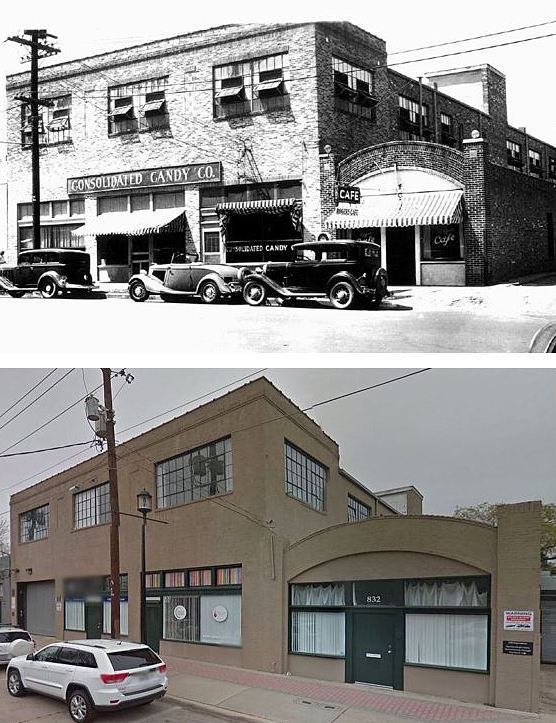
Consolidated Candy Co., 826-830 Exposition — ca. 1936

consolidated-candy-co_826-830-exposition-st_jim-wheatCandy manufacturing in Expo Park (click for larger image)

by Paula Bosse

A photo of Exposition Park about the time of the huge Texas Centennial celebration held in 1936 at Fair Park, one block away. The Consolidated Candy Co. at 826-830 Exposition Avenue was liquidated in 1939, and the Rogers Cafe next door at 832 Exposition was around only a couple of years, about 1935 to 1937, so 1936 seems a good guess.

Here’s a list of businesses that were operating along hopping Exposition Avenue in 1936, between Ash and Parry (click for larger image):

expostion_1936-directory
1936 Dallas directory

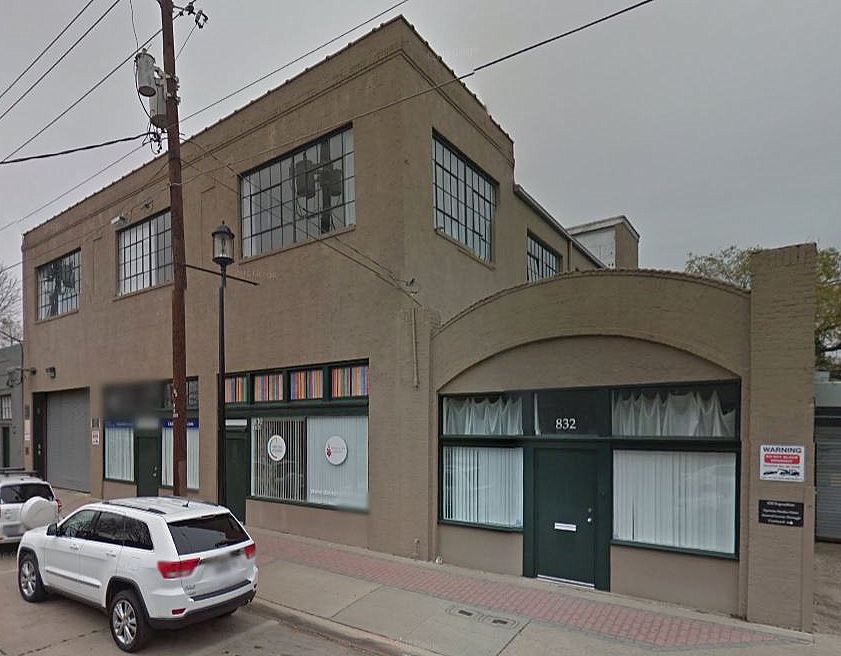
Most of the buildings from that period along Parry and Exposition are still standing, including the buildings seen in the photo above. Here is a current view.

826-830-exposition_google_jan-2016
Google Street View, Jan. 2016

I’m happy to see these two buildings still holding down that spot after all this time, but they both appear to have lost some character in the intervening 80 years. It’s like someone’s sanded all the interesting bits off and made it as bland-looking as possible. You know what I think needs to make a comeback? Awnings.

***

Top photo from Jim Wheat’s Dallas County Texas Archives site.

A Google Street View showing this block looking toward Fair Park, with these buildings on the left, is here.

exposition_google-maps
Google Maps

expo-then-now

Images larger when clicked.

*

Copyright © 2016 Paula Bosse. All Rights Reserved.
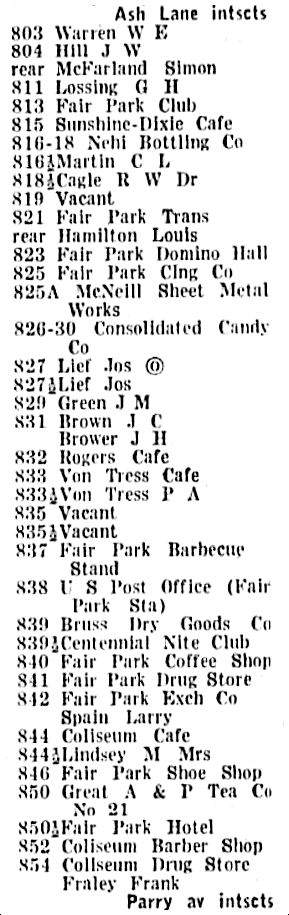
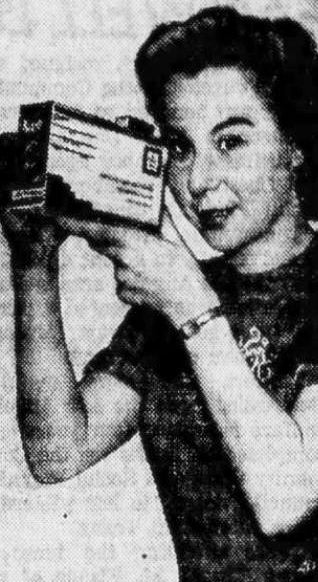
Photo-Pac: The First Disposable Camera — 1948

weir_mechanix-illus_1949_smA. D. Weir and his invention, 1949

by Paula Bosse

Alfred D. Weir (1909-1996) was the son of A. F. Weir, the successful retail furniture merchant who founded Weir Furniture in 1922. The younger Weir graduated from SMU in 1933 with a degree in mechanical engineering and started his career, fresh out of college, at Dallas’ Ford assembly plant. During World War II, he was the chief industrial engineer at North American Aviation and was later employed by Fairchild Engine and Aircraft, Ford’s aircraft division in Kansas City, Texas Instruments, and Bell Helicopter.

After the war and before his time in Kansas City, Weir took time out from his engineering career to try his hand as an entrepreneur: he invented, patented, and manufactured the Photo-Pac, a single-use camera made of inexpensive fiber board and pre-loaded with 35mm film (loaded by blind employees in total darkness). The user would buy one of these cameras at a drug store, department store, or gas station for $1.29, take eight photographs, and then write his or her name on the side of the camera and drop the whole thing — with the film still inside the camera — in a mail box. Photos would be processed in Dallas, and prints and negatives would be returned to the customer in a couple of days. The camera would not be returned.

photo-pac_san-bernardino-county-sun_040250-photoSan Bernardino County Sun, April 2, 1950

photo-pac_arlington-heights-illinois-herald_122349-photoArlington Heights (Illinois) Herald, Dec. 23, 1949

It appears to have made its debut at the 1948 State Fair of Texas at an introductory price of only 98¢ (click for larger image).

photo-pac_billboard_100948Billboard, Oct. 9, 1948

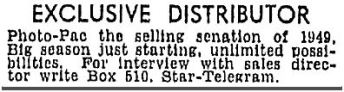
Manufacture and distribution of the camera began in earnest in May, 1949. And then … ads for the camera were everywhere! (The home-grown invention appeared in a hometown newspaper advertorial on May 1, here.) Weir and his small team managed to get the camera in retail locations all over the country. He was also worked hard to line up distributors. Ads such as this one were placed in several U.S. newspapers:

photo-pac_FWST_061649Fort Worth Star-Telegram, June 16, 1949

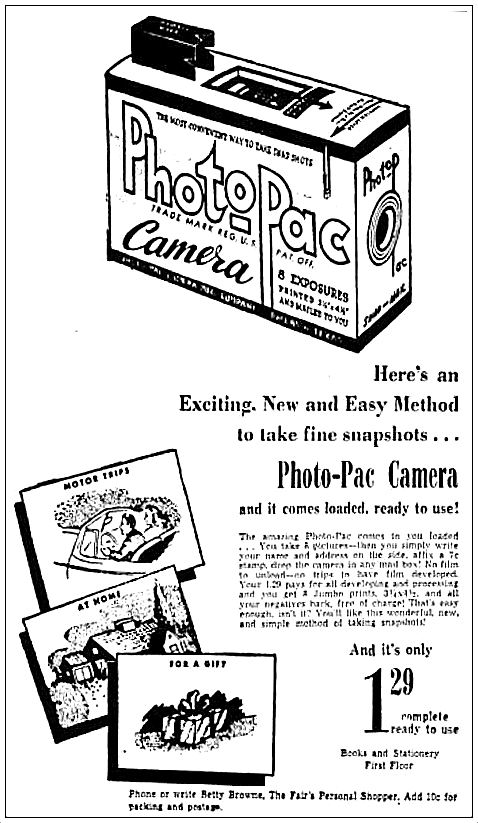
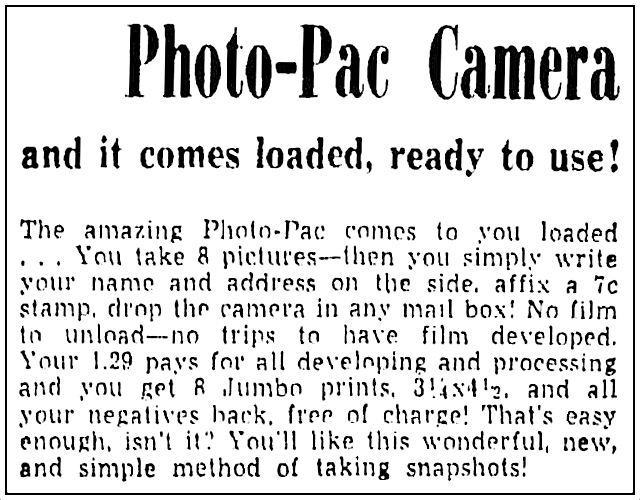
It seems to have been very popular — both as a novelty impulse buy and as a useful product for people who either did not own cameras or who did not want to take their family cameras on trips. Here’s a typical ad (see text below):

photo-pac_FWST_111649_fair-dept-store-ad

photo-pac_FWST_111649_fair-dept-store-ad_detFWST, Nov. 16, 1949 — from ad for Fort Worth’s Fair Department Store

The camera won a “prize gadget” award from Mechanix Illustrated (click to see very large image).

photo-pac_mechanix-illus_sept-1949Mechanix Illustrated, Sept. 1949

By the summer of 1950, the number of exposures went from eight to twelve, and the price increased to $1.49. It seemed that the business was growing, but by the fall of 1950, Photo-Pac seems to have reached the end of the road. Court dockets showed a couple of lawsuits filed against the company. Newspaper ads showed stock of the cameras being deep-discounted to as low as 50¢ apiece. The next year, 1951, saw Weir returning to his engineering career — he accepted a position with Ford in Kansas City and apparently left his business dreams behind. It was a great idea, but, for whatever reason, it never fully caught on.

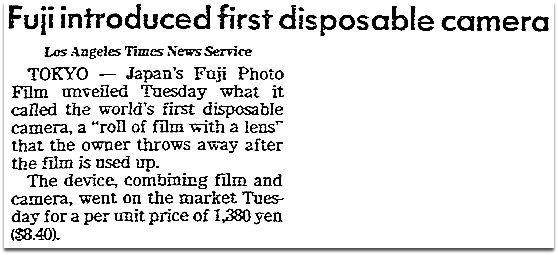
36 long years after A. D. Weir’s Dallas company folded, Fuji introduced their very popular disposable camera; Kodak followed with theirs in 1987. Those things were everywhere — everyone’s had one of them at one time or another. I bet A. D. Weir was miffed.

fuji_FWST_070286FWST, July 2, 1986

*

weir_smu_rotunda_1930A. D. Weir, SMU Rotunda, 1930

weir_smu_rotunda_1933Weir, SMU Rotunda, 1933

weir_dmn_032253-photo1953

***

Sources & Notes

Top photo is an inset from the Mechanix Illustrated “prize gadget” page, from the blog Modern Mechanix, here.

Weir’s patent can be found on Google here. To view Google Patent Image separately (and really big), click image below.

weir_patent

There seems to be some debate about whether Weir’s Photo-Pac was actually the first single-use disposable camera — if it isn’t strictly the first, it seems to have been the one that made the most headway into the American marketplace. A great article on the topic can be found on the Disposable America website here.

Wikipedia’s “disposable camera” page is here.

A. D. Weir’s father, Alfred Folsom (A. F.) Weir opened Weir Furniture at 2550 Elm Street in 1922; in 1934 the company was incorporated to include his wife and son. A. F. Weir sold the Dallas company to his brother Earl (who had owned furniture stores in Fort Worth and Arlington) in the 1940s — that business closed sometime between 1945 and 1948. In 1948, Earl’s son John Ray Weir opened Weir’s Furniture Village on Knox Street, a business still going strong today.

Most images are magically larger when clicked!

*

Copyright © 2016 Paula Bosse. All Rights Reserved.
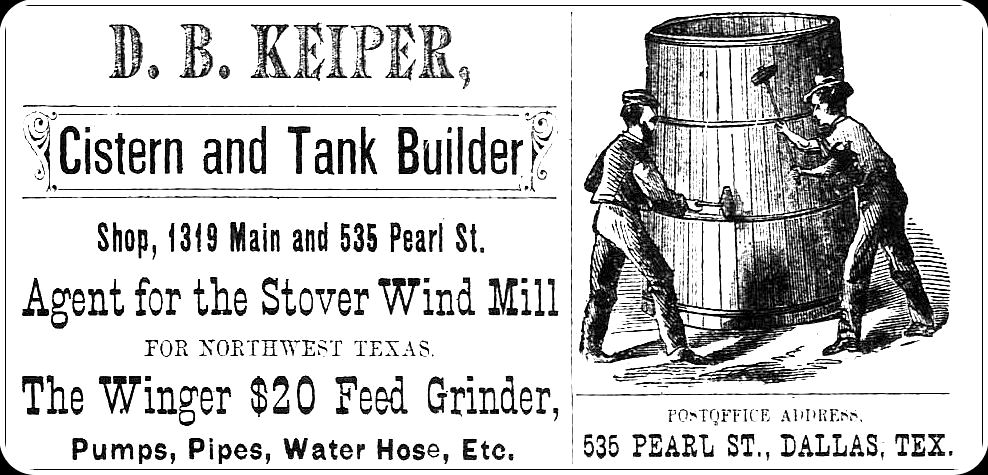
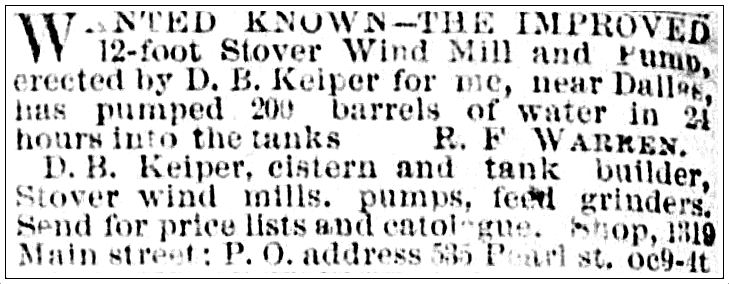
D. B. Keiper, Cistern and Tank Builder

ad-keiper_cisterns_directory_1884Ad from the 1884 Dallas directory

by Paula Bosse

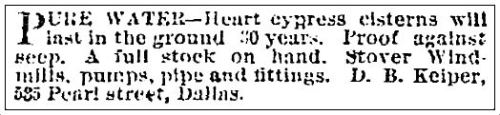
For all your cistern and tank needs, D. B. Keiper’s your man.

keiper_dallas-herald_061881Dallas Herald, June 18, 1881

keiper_dallas-herald_101384Dallas Herald, Oct. 13, 1884

keiper_dallas-herald_120484Dallas Herald, Dec. 4, 1884

keiper_dmn_091586Dallas Morning News, Sept. 15, 1886

keiper_dmn_093088DMN, Sept. 30, 1888

keiper_dmn-121391DMN, Dec. 13, 1891

***

Top ad from the 1884 Dallas directory.

I didn’t find out much about the Pennsylvania-born David Butz Keiper (1827-1895), except that he bought a lot of lumber, sold a lot of cisterns and tanks, and took out a huge number of newspaper ads over the years.

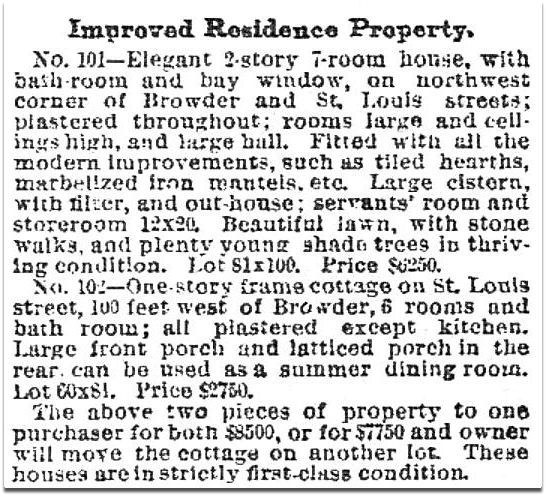
One wonders if he might have built and installed the underground cistern of the Rosenfield house I wrote about in “The Blue House of Browder,” which was built around 1885 — this “for sale” ad appeared in 1887, when Keiper seemed to be Dallas’ king of cisterns:

1887_browder_dmn_050887-FOR-SALEDMN, May 8, 1887

Keiper specialized in underground wooden cisterns (made from cypress lumber) to hold collected rainwater, but there were many different types of cisterns in use around Texas in the nineteenth century. Mark H. Denton wrote an interesting article, “Cisterns in Texas,” for Current Archeology in Texas (April 2011), with illustrations but with little on wooden cisterns; read Denton’s article here (scroll to bottom of p. 4 of the PDF).

Image too small? Click it!

*

Copyright © 2016 Paula Bosse. All Rights Reserved.

Brown Cracker Co. Cracker Wrappers

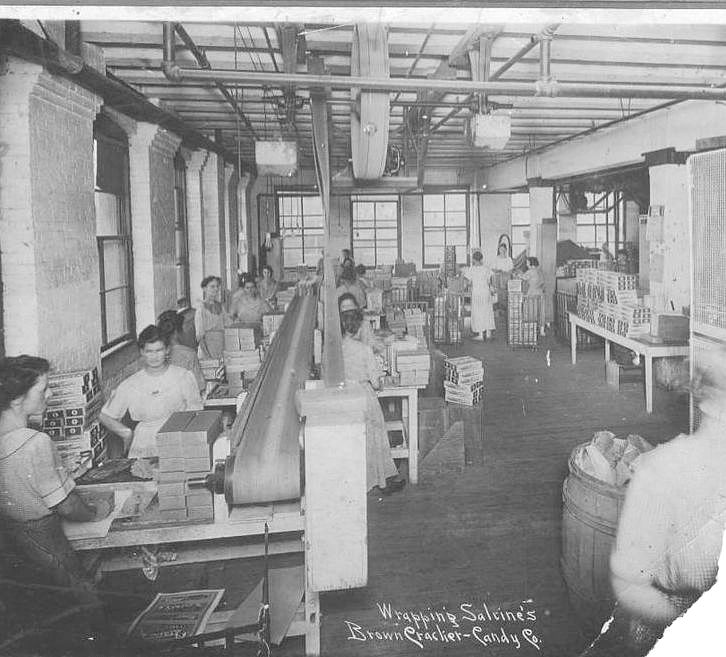
brown-cracker_ca1918_cook_degolyerThe saltine-wrapping room

by Paula Bosse

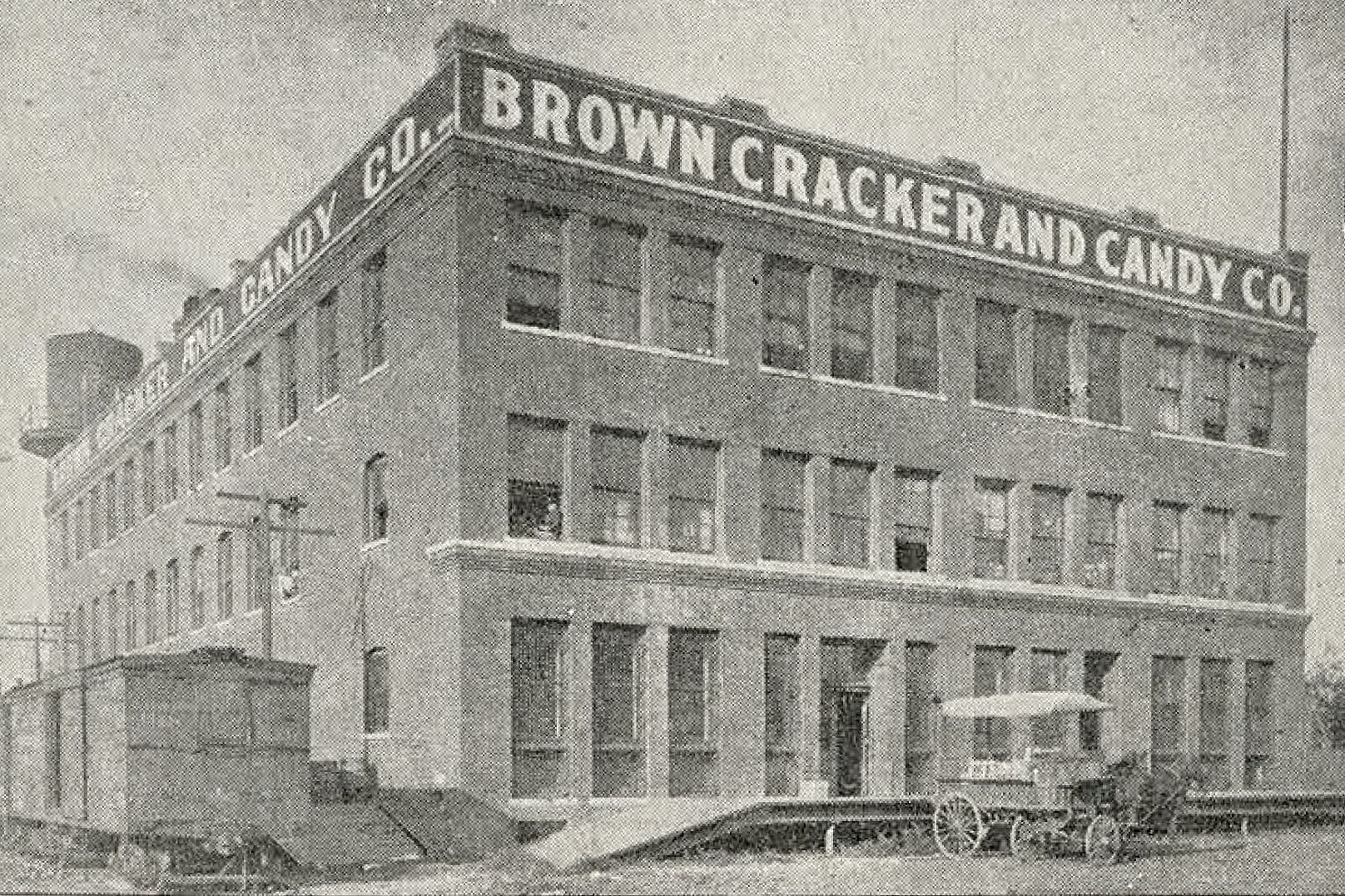
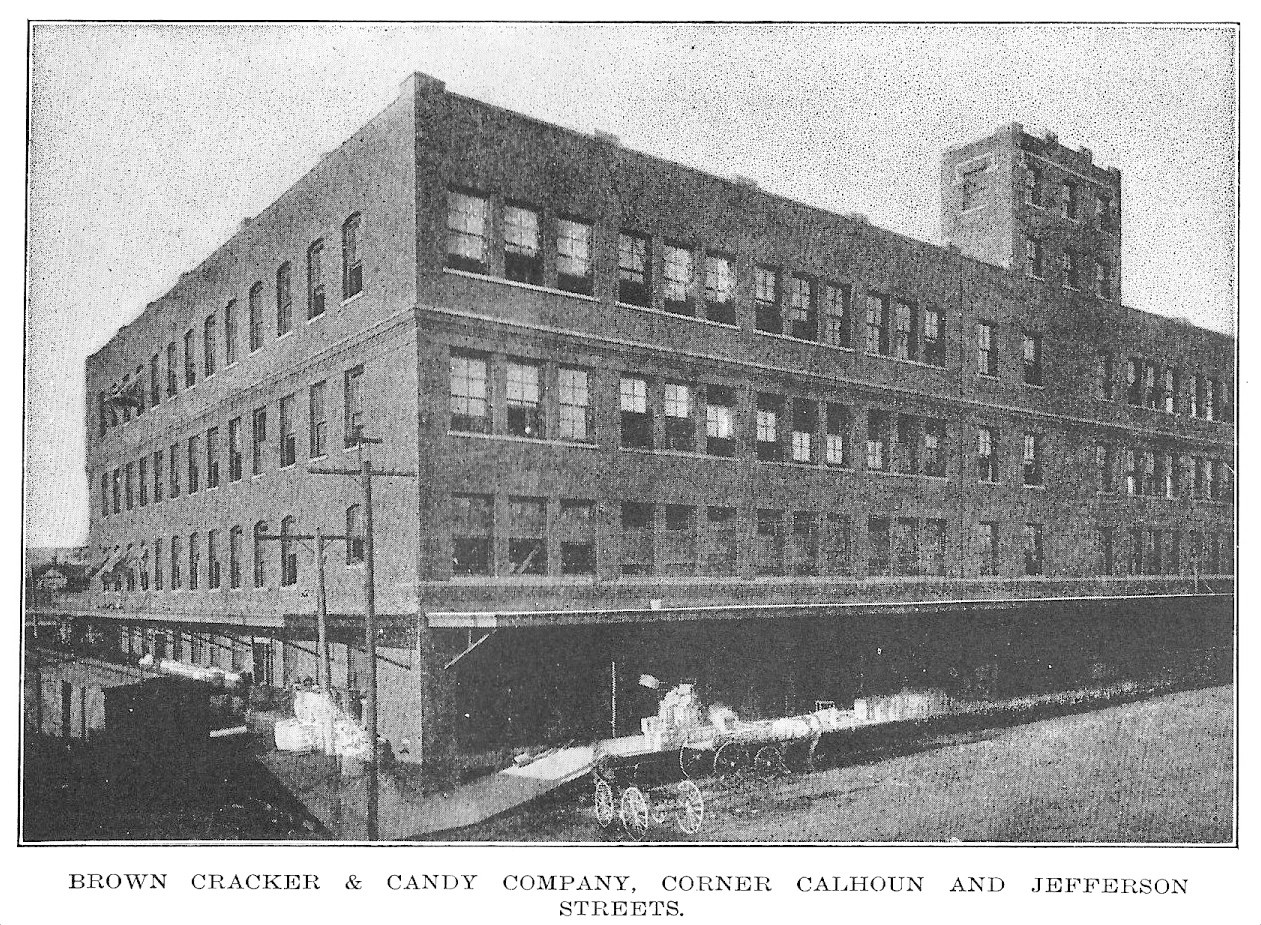
I will stop and look at great length at any photograph containing a conveyor belt. The conveyor belt in this photo belonged to the Brown Cracker and Candy Company, a large and important Dallas manufacturer and employer. The cracker, cake, and candy factory opened in 1903 in a brand new building in the industrial area just south of McKinney Avenue (the part of town that borders downtown, now known as the West End). Best known these days as the West End Marketplace building, the structure still stands and, in fact, has just been purchased and is about to undergo renovation.

brown-cracker_postcard_cook-degolyerDeGolyer Library, SMU

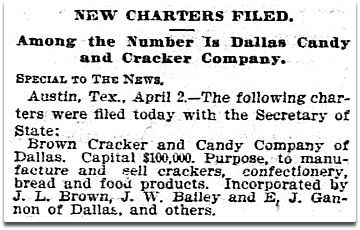
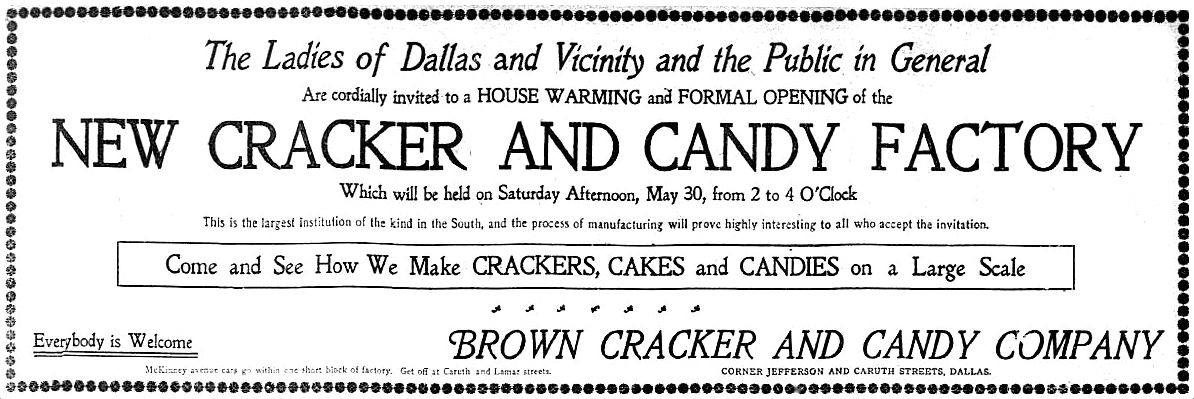
As the new building was nearing completion, the company charter was filed in April 1903, and just a few short weeks later, the factory opened itself up for inspection by the community.

brown-charter_dmn_040303Dallas Morning News, April 3, 1903

brown_opening_dmn_052903
DMN, May 29, 1903 (click for larger image)

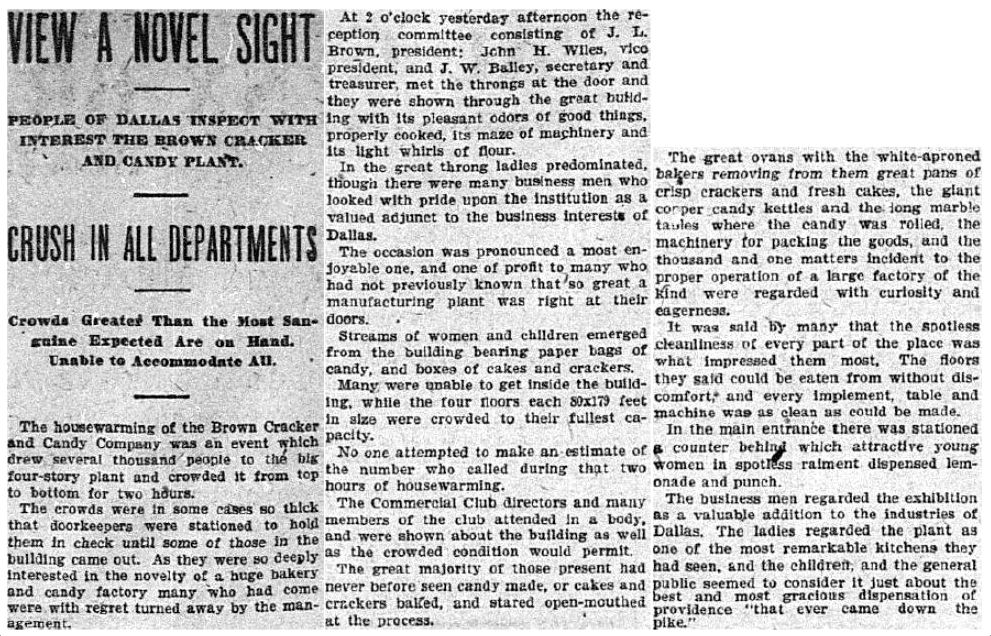
The open house was packed — several thousand people (mostly women) showed up to tour the plant, fascinated by the inner workings of the city’s newest business, a manufacturer of crackers and sweet treats. Of particular interest must have been the two giant brick ovens on the the second floor, which used more than one ton of coal daily, and the huge copper kettles used in candy making on the top floor. There were also things like chocolate dipping machines, starch machines (?), and marshmallow heaters (I don’t know what that is, but I want to see one in action — could it have been a “marshmallow beater,” like the one seen here?).

brown-cracker_dmn-053103DMN, May 31, 1903

The main reason to open the factory to the public for inspection — other than as a PR-managed meet-and-greet — was to let the people see for themselves just how CLEAN the place was. This was at a time when unsanitary food handling and manufacturing practices were much in the news (see here) — concerns which ultimately led to the enactment of the Pure Food and Drug Act of 1906 — and the above article stresses that visitors were impressed by the factory’s “spotless cleanliness” (“The floors they said could be eaten from without discomfort…”). In regard to the “cracker wrappers” pictured at the top, the company wanted to make sure everyone knew that their products were wrapped and boxed — gone were the days of shoppers dipping their (probably unclean) hands into the old “cracker barrel” full of loose, stale crackers.

crackers_dmn_040603DMN, April 6, 1903

Let’s take a closer look at the top photo, probably taken around 1920 (click pictures for larger images).

brown-cracker_ca1918_cook_degolyer_det2

brown-cracker_ca1918_cook_degolyer_det1

ad-brown_dmn_122003DMN, Dec. 20, 1903

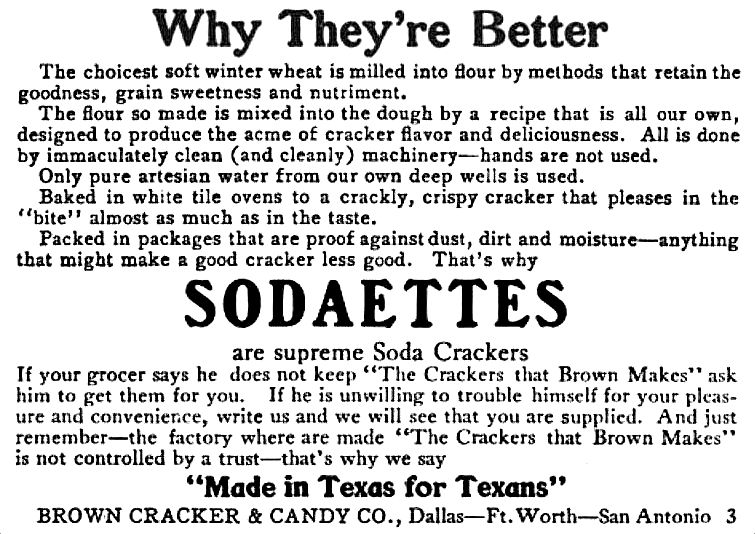
sodaette-crackers(click to read text)

brown-cracker_1922-directory1922 city directory

brown-cracker_come-to-dallas_degolyer_SMU_ca1905ca. 1905

brown-cracker-greater-dallas-illustrated_ca1908ca. 1908

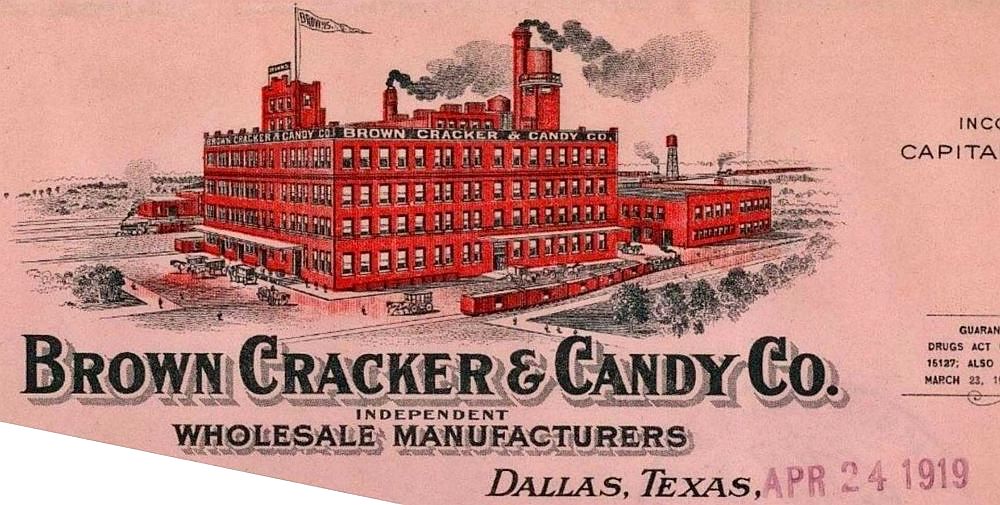
brown-cracker-co-lettrhead_1919_ebay1919 (eBay)

***

Sources & Notes

Top photo, titled “Wrapping Saltines at Brown Cracker and Candy Co.,” is from the George W. Cook Dallas/Texas image collection, DeGolyer Library, Central University Libraries, Southern Methodist University; it can be accessed here.

Written on the back of the photo: “Miss Bessie Manning, 2724 Roadwood [sic] avenue, Dallas, Texas.” Bessie Manning (born Bena Manina in 1899 to Italian immigrants), began working at the Brown Cracker Co. (with a brother and a sister) around 1917 but wasn’t living on Rosewood (later North Harwood) until 1919; she left Brown in 1921 or 1922. She isn’t identified in the photo, but she is, presumably, one of the women on the left; she would have been about 20.

bessie-manning_1920-censusBessie Manning’s occupation, 1920 census

The color postcard showing the Brown Cracker Co. is also from the Cook collection at SMU; it is here.

The Sodaette ad is from Library of Advertising by A. P. Johnson (Chicago: Cree Publishing Co., 1911).

The photo from about 1905 is from the promotional brochure titled “Come To Dallas” (Dallas: Dorsey Printing Co., about 1905), in the collection of the DeGolyer Library, Southern Methodist University; more info is here.

The photo at the bottom is from Greater Dallas Illustrated, The Most Progressive Metropolis in the Southwest (Dallas: The American Illustrating Company, 1908; reprinted by Friends of the Dallas Public Library, 1992). The informative company profile that accompanied the photo can be read in a PDF, here.

All other ads and clippings as noted.

Another very informative article which details the specifics of the building and its machinery — “New Dallas Industry, Brown Cracker and Candy Company About to Begin Operations” (DMN, Apr. 6, 1903) — can be read in a PDF, here.

To see the Brown Cracker Company’s specs on a Sanborn map from 1905, see here; to see where it is on a modern map, see here.

For current info on what’s about to happen to the building (much expanded over the years), see Steve Brown’s Dallas Morning News article, here.

And, yes, a teenaged Clyde Barrow apparently worked there briefly, for a dollar a day.

*

Copyright © 2015 Paula Bosse. All Rights Reserved.

“A Perfect Auto Tent” — 1921

ad-dallas-tent-awning_dmn_061221-smRemember to turn off engine before retiring for the night…

by Paula Bosse

Personally, I don’t understand why anyone would want to be outside when it’s 157 degrees, but for those of you who are insistent campers who might be heading out for a sweaty and bug-filled weekend in the wilderness, might I direct your attention to the “automobile tent,” ready for purchase in 1921 at the Dallas Tent and Awning Co. at 2620 Main Street, in the heart of Deep Ellum. Adjusted for inflation, the cost of this admittedly charming-looking “car tent” would be the equivalent of about $200.

My weekend? I will be camped out in a blissfully air-conditioned house — shades drawn, blinds closed — with an iced tea in hand, moving slowly, and not smelling like insect repellent.

*

Copyright © 2015 Paula Bosse. All Rights Reserved.
Neon Refreshment: The Giant Dr Pepper Sign

hotel-jefferson_neon-dr-pepper_cook_degolyer_SMU_ca1945

by Paula Bosse

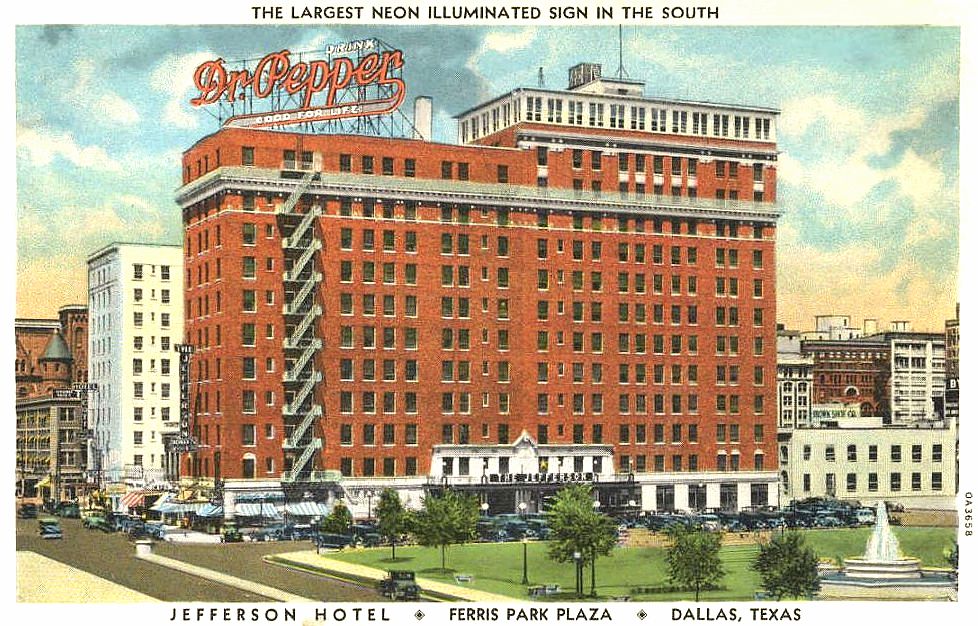
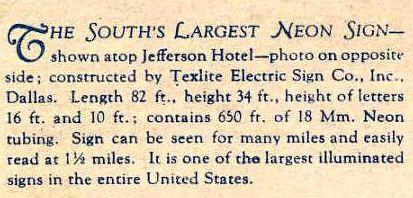
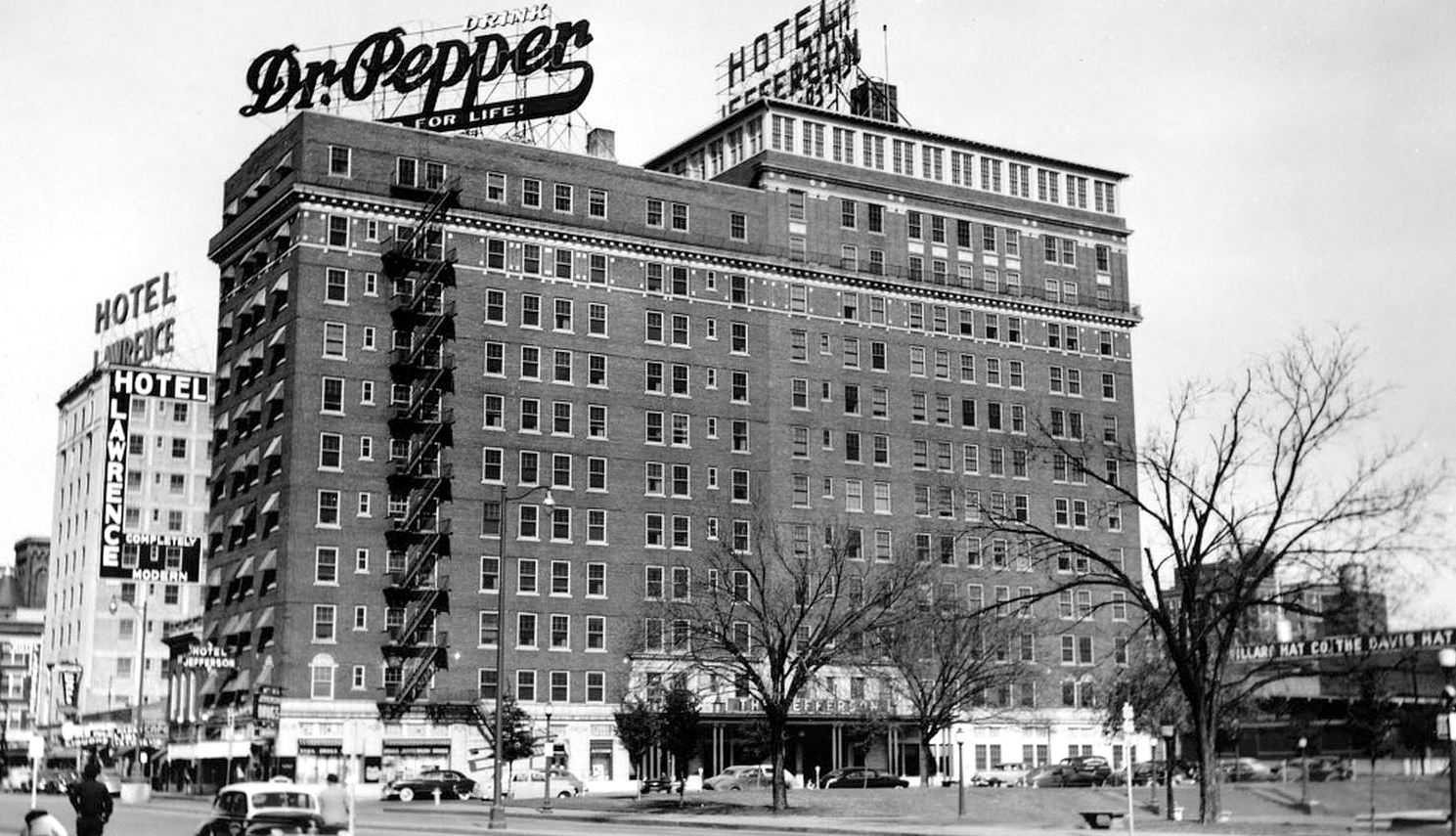
The Jefferson Hotel probably made some serious money leasing out rooftop acreage to the Dr Pepper people who erected a huge neon sign there. The hotel was located across from Union Station and a couple of blocks from the Old Red Courthouse. For people approaching the city from the southwest, there was absolutely nothing between them and that refreshing beacon rising tantalizingly above S. Houston and Wood streets.

hotel-jefferson_neon-dr-pepper_cook_degolyer_ca1945-verso

jefferson-hotel_hotel-lawrence_dr-pepper-sign_dmn-tumblr

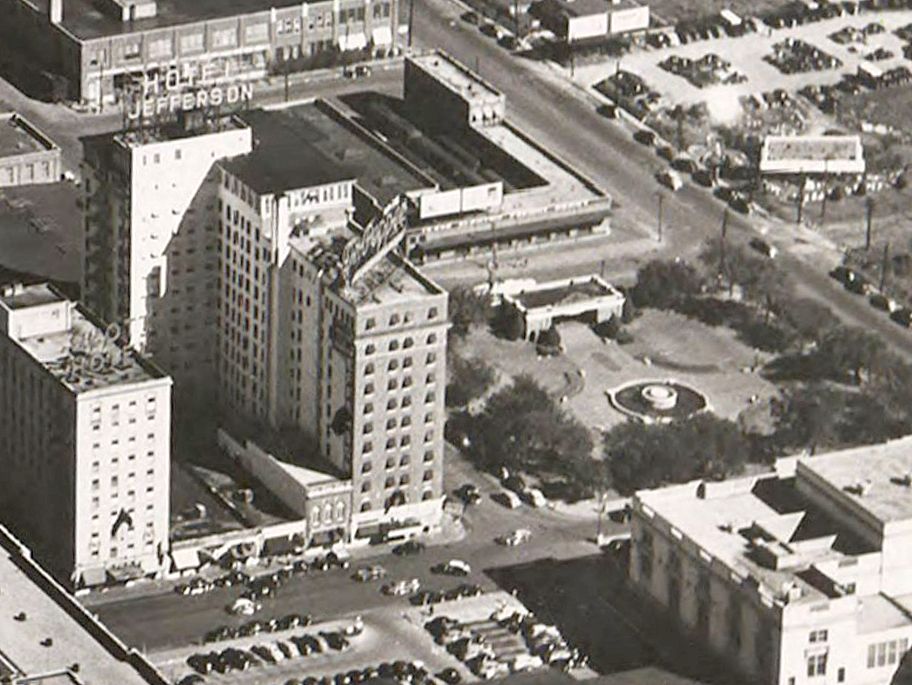
Texlite — the Dallas company that made the sign — was the first company in the Southwest to build and sell neon signs. Their first neon in Dallas advertised a shoe store in 1926 or 1927. (Texlite is best known as the company that built the red neon Pegasus and installed him on top of the Magnolia Petroleum Building in 1934.) My guess is that this Dr Pepper sign went up sometime between 1927 and 1934. It was up there for quite some time. Below is a detail from a photo taken sometime after 1943, and that DP sign was still there, continuing to make people subliminally thirsty

hotel-jefferson_dp_foscue-det(click for larger image)

It’s surprising Dallas didn’t have more neon back then. With a pioneering hometown neon company, the Dallas skyline should have been lit up like a Christmas tree 24 hours a day!

***

Sources & Notes

Postcard is from the George W. Cook Dallas/Texas Image Collection, Central University Libraries, Southern Methodist University; it can be viewed here.

First black-and-white photo was purchased at an antique mall or flea market, origin unknown; found here.

The 1940s-era aerial photo is a detail of a larger photo, “Downtown Dallas looking east (unlabeled)” by Lloyd M. Long, from the Edwin J. Foscue Map Library, Central University Libraries, SMU; the full photo can be viewed here.

A great photo of the hotel and sign can be seen in Sam Childers’ Historic Dallas Hotels, here. Childers writes that the Dr Pepper sign came down when the Jefferson was sold and became the Hotel Dallas in 1953. 20-some-odd years for a sign like that to remain in one place is a pretty good run.

The Jefferson Hotel (or as it’s sometimes identified, “Hotel Jefferson”) was at 312 S. Houston St. The building was demolished in 1975. It is now a hotel-shaped parking lot.

See what other clever thing once occupied the roof of the Jefferson Hotel in the Flashback Dallas post “The Jefferson Hotel and Its ‘Wireless Telegraph’ Rooftop Tower — 1921.”

*

Copyright © 2015 Paula Bosse. All Rights Reserved.


Nardis Sign-Painters: “Everything In Sportswear” — 1948

nardis_sign-painters_ebay_1948You don’t see this much anymore (click for larger image)

by Paula Bosse

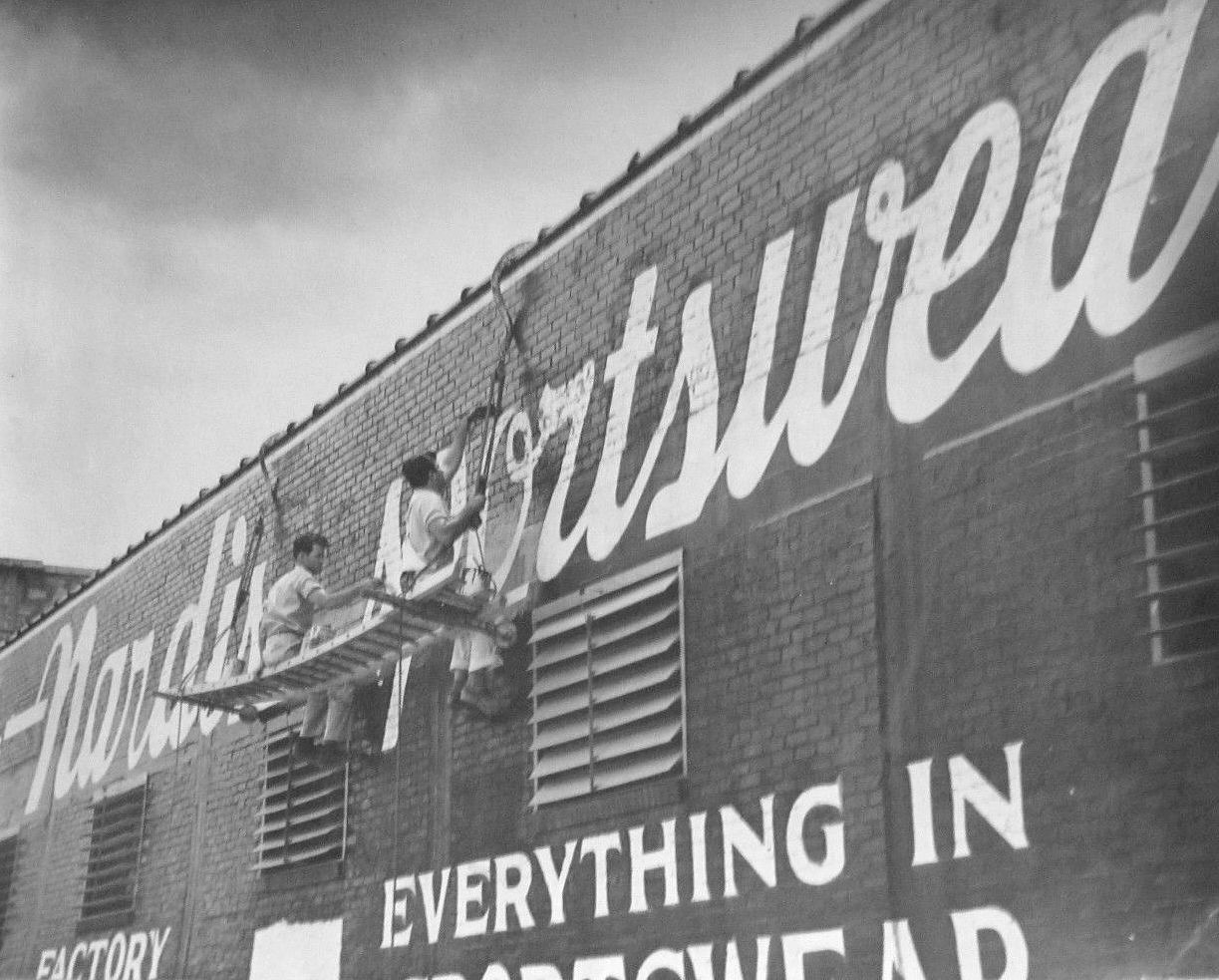
I’m sure there were people in the past who thought that advertising painted directly onto buildings was as tacky as billboards are today, but I love it, and, sadly this type of sign-painting has become something of a lost art. Here we see men painting a sign for the successful apparel manufacturer Nardis Sportswear (later, Nardis of Dallas). The company’s corporate headquarters appears to have been on Browder street, with manufacturing factories on N. Austin and S. Poydras streets. The sign in the photo would seem to have been painted on the side of one of the factory buildings.

nardis_1948-directory1948 city directory

nardis_1952-mapsco1952 Mapsco

I think all these Nardis buildings are gone, so we don’t even get any faded ghost signs to remind us that Dallas was once a large-ish garment manufacturing center.

***

Sources & Notes

Photo — dated 1948 on reverse, with stamp of the Hank Tenny Studio at 1420 Wood Street — found on eBay.

My previous post on the Nardis company — “Nardis of Dallas: The Fashion Connection Between ‘The Dick Van Dyke Show’ and the Kennedy Assassination” — can be found here.

*

Copyright © 2015 Paula Bosse. All Rights Reserved.


“When ‘Big D’ Lights Up” — Phelps Dodge Ad (1969)

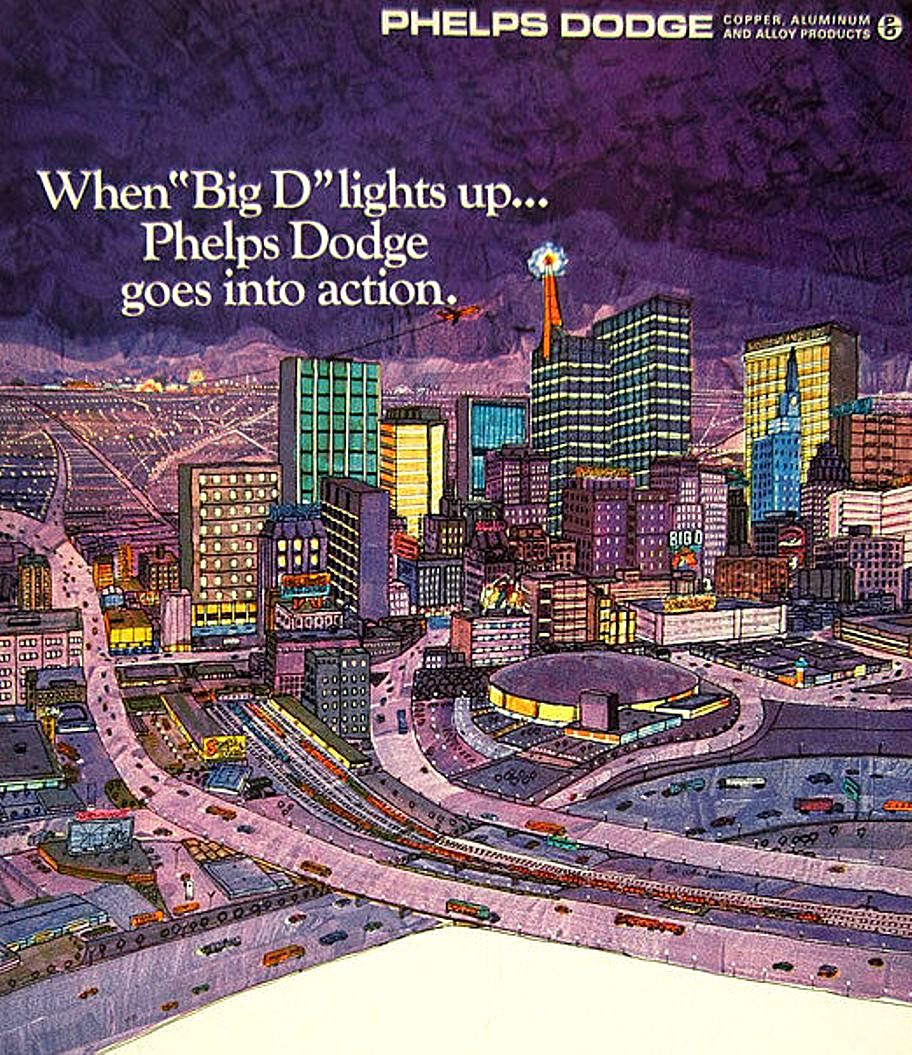
ad-phelps-dodge_1969_ebayCopper, aluminum, and alloys … EVERYWHERE!

by Paula Bosse

One doesn’t expect a cute, quirky drawing of Dallas to appear in an advertisement for an international mining company that excavates and manufactures “copper, aluminum, and alloy products.” But here you are, a 1969 Phelps Dodge ad featuring the Dallas skyline. It’s a bit reminiscent of both the delightful telephone book cover art of Karl Hoefle and the distinctive naive “matchstick men” art of L. S. Lowry. The ad copy is a lot less whimsical:

Dallas … a busy, prospering commercial center and Showplace of the Southwest. A bright, shining ever-changing city where the new is commonplace.

Look behind the splendor and the bright lights and you’ll see that Dallas is also a Phelps Dodge city. Our condenser tubes are used at the generating plants of the Dallas Power and Light Company. Our 135-kv transmission cables and other high-voltage power cables distribute power throughout the city … and the transformers, coils and motors wound with our magnet wire make things happen … from the flashing signs downtown, to factories along the river … to homes, stores, and offices everywhere.

Go north on Stemmons Freeway or west to Fort Worth on the Turnpike, or south on I-45 and Phelps Dodge buried lighting cables, telephone or coaxial CATV cables are following alongside. You’ll also find our building wire and aluminum conduit … our plumbing, gas and refrigeration copper tubing at work everywhere. Many new buildings, like the Statler Hilton Hotel, use PD building wire and copper tubing exclusively.

We specialize in conductors of electricity, liquids, gases and heat made of copper, aluminum and alloys. Look closely, and you’ll find Phelps Dodge products at work everywhere.

***

Sources & Notes

Ad found on eBay.

See the artwork from this same ad — only in black and white — here. Zoom in and look at the details. No Karl Hoefle, but still pretty cool.

ad-phelps-dodge_1969_bw_small

Interested in knowing more about Phelps Dodge? Wikipedia to the rescue, here.

The drawing is by commercial artist Lee Albertson, who, apparently, did a whole series of these ads, each featuring a different “copper, aluminum and alloy product”-enriched city, a few of which can be seen here.


*

Copyright © 2015 Paula Bosse. All Rights Reserved.
2222 Ross Avenue: From Packard Dealership to “War School” to Landmark Skyscraper

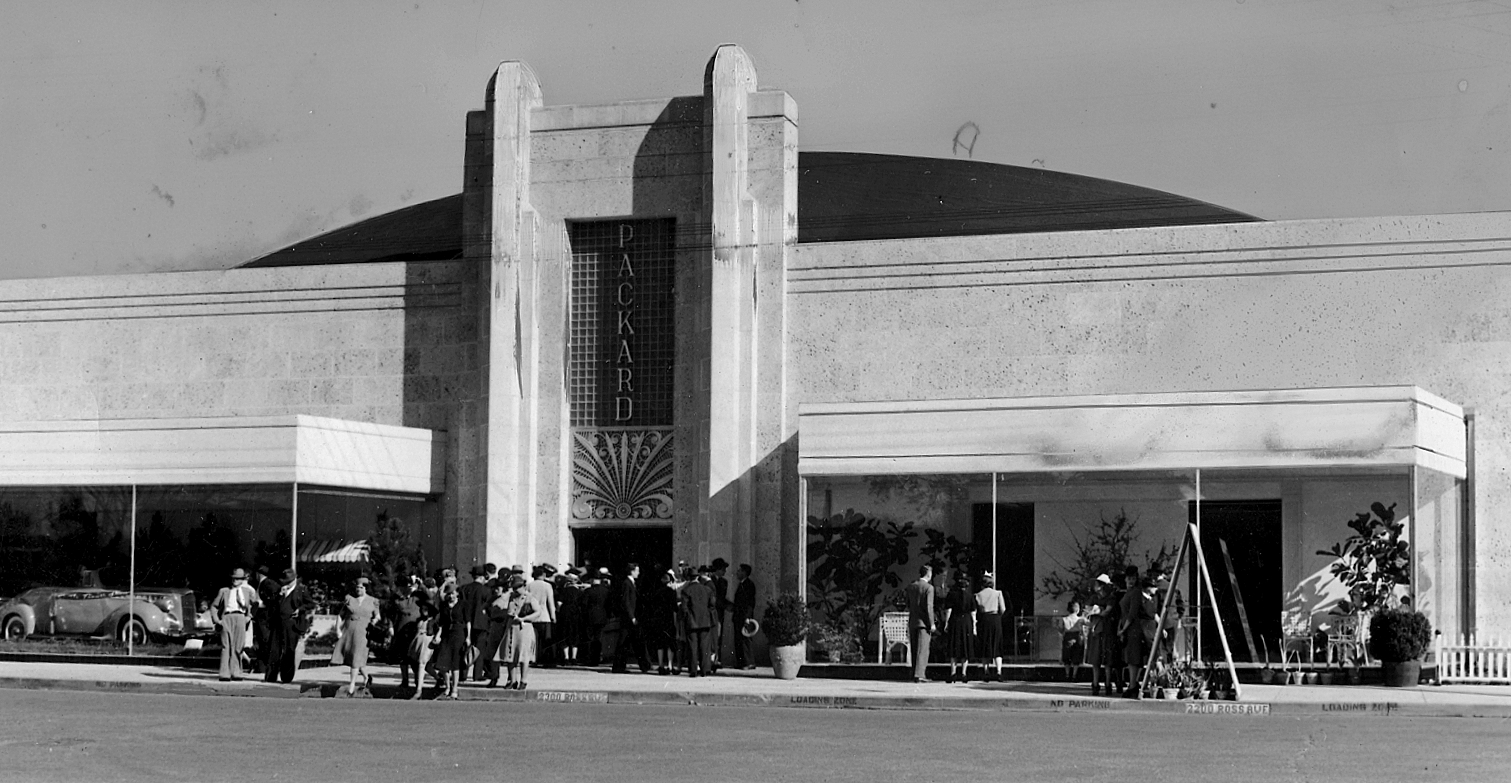
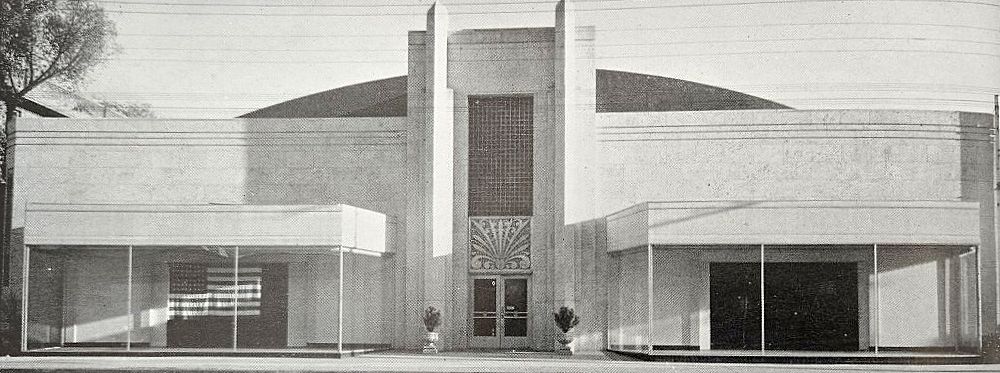
packard-dealership_2222-ross_detroit-pub-lib_1940Packard automobile showplace, 1940

by Paula Bosse

In late summer of 1939, a new 60,000-square-foot. $250,000 home for Packard-Dallas, Inc. featuring a “luxurious showroom” was announced. The first Packard automobile dealership had opened in 1933 at Pacific and Olive, and in the intervening six years, their growth had been tremendous, necessitating several moves and expansions.

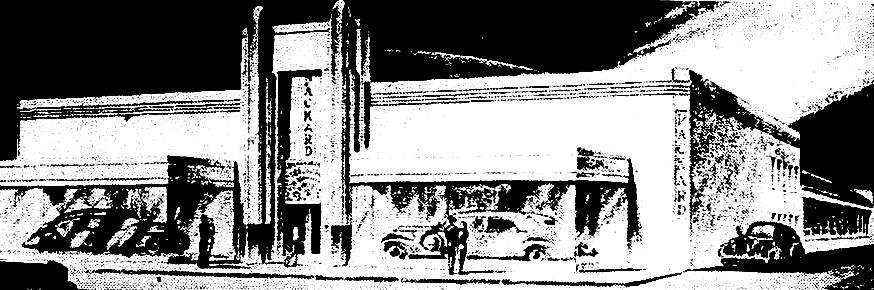
packard_ross_rendering_1939

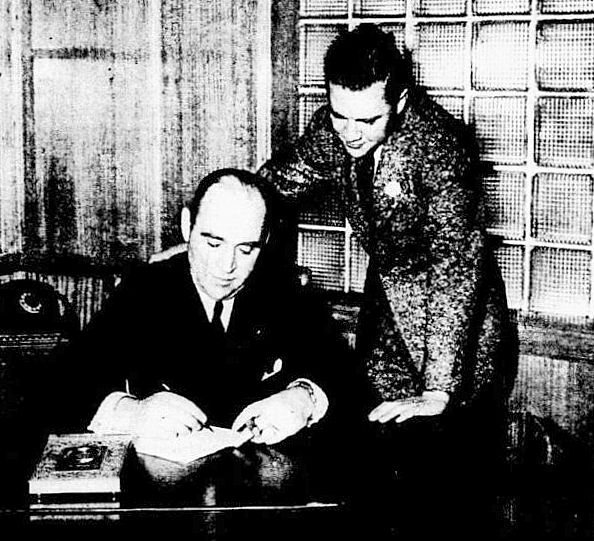
The attractive art deco building, faced with Cordova limestone and decorated with glass bricks, cast aluminum letters, and neon, was designed by J. A. Pitzinger and Roy E. Lane Associates, and was constructed at 2222 Ross Avenue in a mere three months. The large building was right across the street from the Cathedral of the Sacred Heart, in the block bounded by Ross, Crockett, San Jacinto, and N. Pearl. The president of Packard-Dallas was J. A. Eisele and the secretary-treasurer was his son, Horace. The grand opening on Dec. 16, 1939 was a big enough deal that the home-office Detroit honchos flew in, and there was even a 15-minute radio program devoted to it on KRLD.

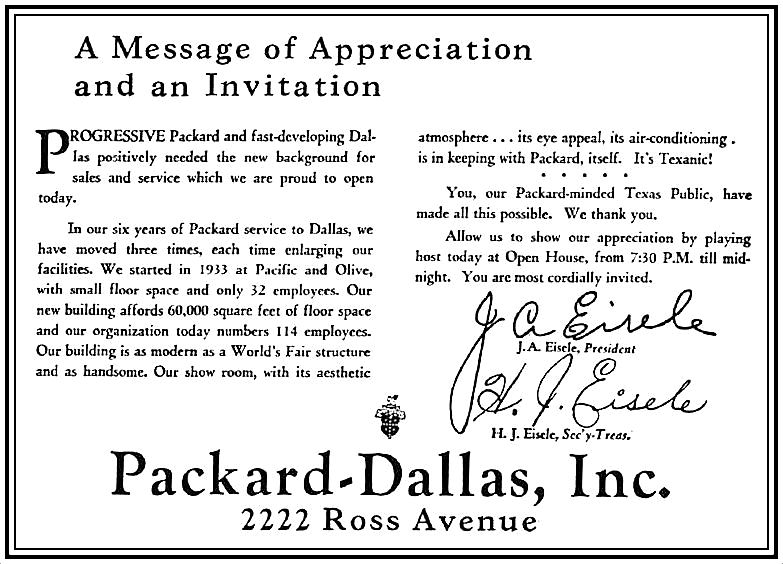
Under the headline “Growing With Dallas,” the opening-day ad featured a photograph of Joe and Horace Eisele and “A Message of Appreciation and an Invitation”:

packard_dmn_121639_ad1

packard_dmn_121639_ad2Ad, Dec. 16, 1939 (click for larger image)

“It’s Texanic!”

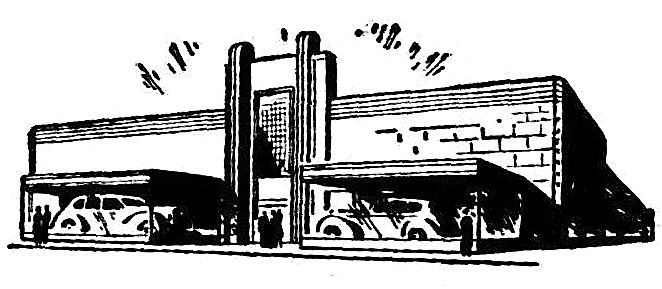
And another ad featured this nifty little line drawing of the cool building:

packard_dmn_121639-drawing-detDec. 16, 1939 (ad detail)

One of the stories about the opening of Dallas’ new auto showroom palace boasted that this big, beautiful, brash building was here to stay — Packard-Dallas had a 15-year lease on the place. …Which is why it was surprising to read that the building was sold less than two years later.

The U.S. was on the inevitable brink of involvement in the European war, and the National Defense School had begun operation in Dallas in July 1940. After a year of classes in which young men were taught “to do the technical and mechanical work necessary to warfare” (DMN, March 20, 1941), classrooms at the Technical high school and at Fair Park were bursting at the seams, and a larger facility was necessary. The Dallas Board of Education (which oversaw the program, often called “the War School”), was given the go-ahead to purchase the building (and, presumably, the property) for $125,000 in August 1941.

I’m not sure why J. A. Eisele sold the building (his name was listed as owner, rather than the Packard Company) — it wasn’t even two years old, and he got only half of what it cost to build. Patriotism? His son Horace had been drafted in April, so … maybe. Eisele seems to have left the auto sales business, which he had been in for decades, and had moved out of Texas by 1945.

After the U.S. officially entered the war and it became obvious that “defense schools” around the country would have to admit women in order to maintain manufacturing quotas, women began to work beside men at the Ross Avenue school in January 1942.

Eighty women Saturday pulled their fingers against the triggers of aircraft rivet guns as the Dallas National Defense School, 2222 Ross Avenue, started the state’s first major training course designed to place women side by side with men in Texas war materials plants. (DMN, Jan. 4, 1942)

packard_ross-avenue_war-school_young-america-in-dallas_1942_DPL
1942

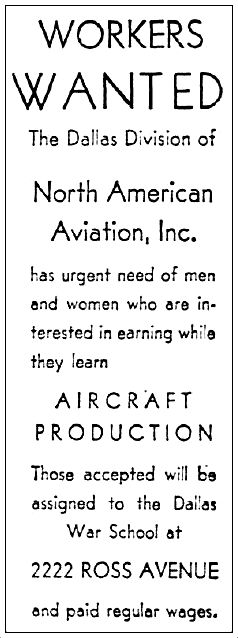
This “War School” was a training school for war-time jobs at places like North American Aviation.

defense-school_dmn_090643Sept. 1943

Thousands of men and women trained at the Ross Avenue facility until the war ended in 1945. The school continued, but no longer as a Defense School — it became Dallas Vocational School, and its first students were veterans.

In 1976, the school was designated as one of the Dallas Independent School District’s magnet schools — it became the Transportation Institute, where “students interested in owning their own dealership, becoming a technician-mechanic or an auto body specialist will receive on the spot training in a laboratory consisting of a new car showroom, a modernly equipped repair center and a complete auto rebuilding facility” (DMN, Aug. 22, 1976). Back to its roots! And it only took 37 years.

The school continued for a while but, inevitably, the property became more and more attractive to developers. In 1981, as the developers were circling, a City Landmark Designation Eligibility List was issued. It contained buildings which had “particular architectural, historical, cultural and/or other significance to the City of Dallas,” and, if approved, were eligible to receive historic landmark designation. I’m guessing 2222 Ross Avenue didn’t make the cut, because Trammell Crow bought the building in 1983 and tore it down the next year.

transportation-institute_lost-dallas_dotyvia Lost Dallas by Mark Doty

But … Crow sold the facade to real estate developer and investor Lou Reese, who said that he would reassemble the limestone facade and incorporate it into a restaurant he planned to build in Deep Ellum. That was an interesting plan. (Incidentally, in the same city council meeting in which the demolition/disassembling of the building’s facade was discussed, the council also considered “a request for more than $7 million in federal funds for a project to renovate the Adams Hat Co building into apartments” (DMN, Aug. 8, 1984). …Lou Reese owned the Adams Hat building. What a coincidence!)

The city council’s decision?

The council authorized developer Trammell Crow to disassemble the art deco facade of the former Transportation Institute Magnet High School on the condition that the facade be reconstructed in Deep Ellum…. The company [has] demolished all but the building’s limestone facade, which was determined to be eligible for designation as an historic landmark. (DMN, Aug. 9, 1984)

So? Where’s that facade? There was no mention of it for three years, until an article in the Morning News about another developer who had big plans for a major Deep Ellum complex called “Near Ellum,” which would be bounded by Commerce, Crowdus, Taylor, and Henry streets.

Highlighting Near Ellum will be a 40-foot art deco facade, formerly on the front of the Transportation Institute on Ross Avenue, in the main parking plaza. The plaza will also include an outdoor stage for concerts and special events. (“Developer Plans Deep Ellum Project,” DMN, June 25, 1987)

Aaaaaaaaaaaaaaaand … that never happened. I wonder if that 76-year-old disassembled limestone facade is still crated up somewhere around town. Somehow I doubt it.

So, 2222 Ross Avenue. What’s there now? None other than the 55-story skyscraper, Chase Tower, also known as “The Keyhole Building.”

You could get a lotta Packards in there.

***

Sources & Notes

Top photo from the Detroit Public Library’s Packard Collection in the National Automotive History Collection, viewable here; I’ve straightened and cropped it. The reverse has this notation: “Packard Motor Car Co., branches/dealerships/agencies, 2300 [sic] Ross Avenue Dallas, Texas, exterior, show windows left to right; 1940 Packard 110 or 120, eighteenth series, model 1800 or 1801, 6/8-cylinder, 100-120-horsepower, 122/127-inch wheelbase, convertible coupe (body type #1389/1399), special furniture display.”

1942 photo of the building is from a publication called “Young America in Dallas,” Dallas History and Archives, Dallas Public Library.

The developer who apparently came into possession of the facade after Lou Reese was Ed Sherrill. Perhaps someone associated with the Near Ellum project might know what became of the “saved” facade.

Chase Tower info on Wikipedia here; photo of it here. Imagine a teeny-tiny car dealership at its base.

Packard automobiles? Some of them were pretty cool. Check ’em out here.

A lengthy article on the notorious developer Lou Reese — “Hide and Seek” by Thomas Korosec (Dallas Observer, June 8, 2000) — is here.

*

Copyright © 2015 Paula Bosse. All Rights Reserved.