Flashback : Dallas

A Miscellany: History, Ads, Pop Culture

Category: Downtown

Dallas City Hall

by Paula Bosse

Our city hall has suddenly — and improbably — found itself in the headlines in recent weeks. As of this writing, its immediate fate is unknown. I don’t think I’ve written about this landmark building in the 12 years I’ve been writing about Dallas history. I guess I assumed I’d always have time.

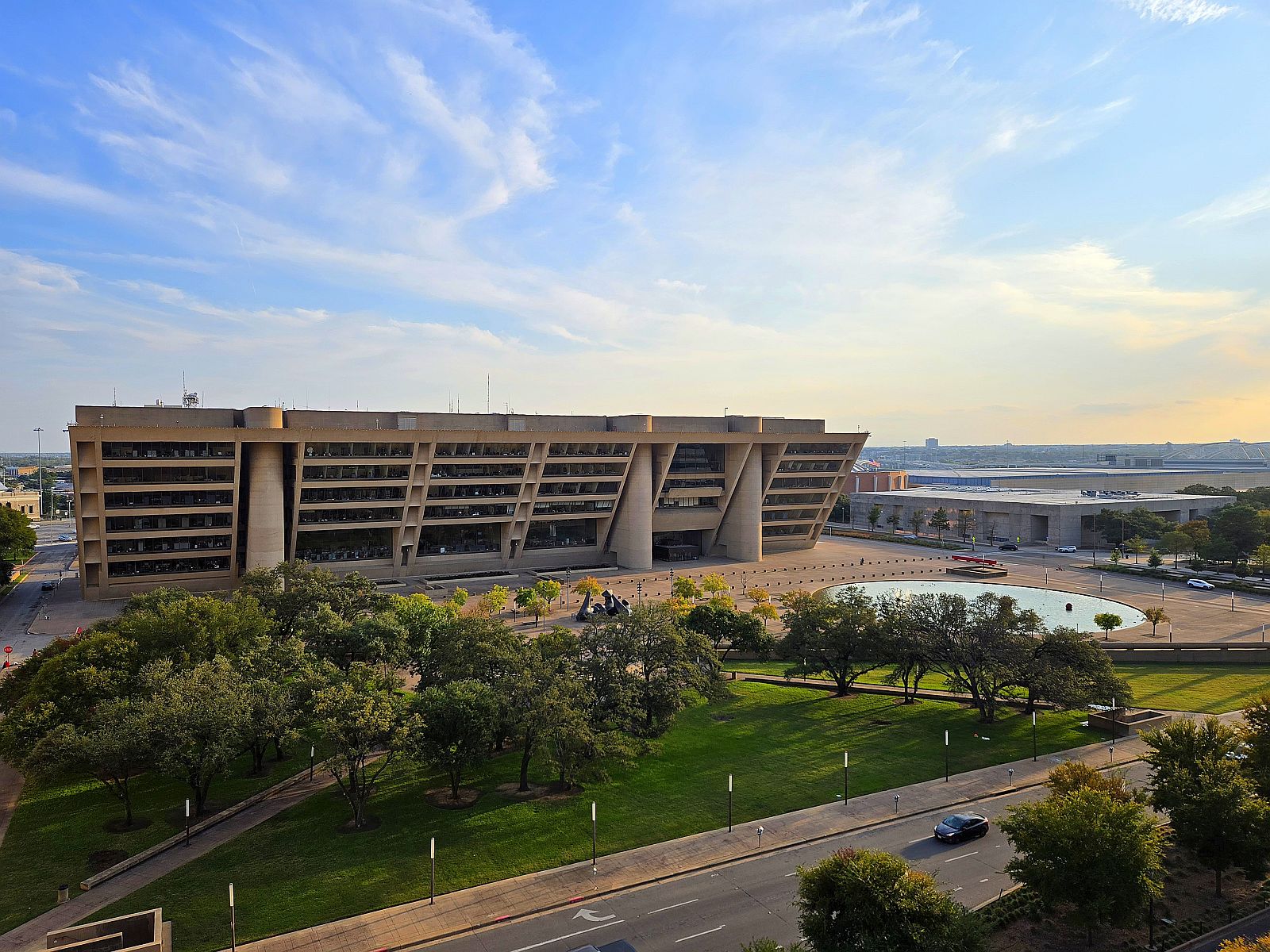
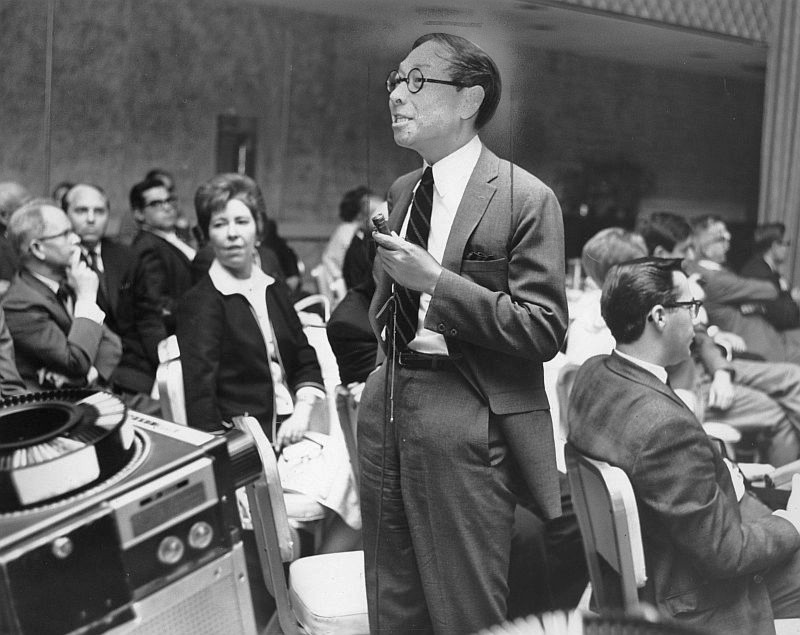
Dallas City Hall is the work of architect I. M. Pei (1917-2019), who, in 1966, was commissioned to design a new city hall by then-mayor J. Erik Jonsson. The very modern design was both acclaimed and derided, and its bumpy road to completion was long and arduous — it was dedicated on March 12, 1978, 12 years after Pei accepted the commission. It is an instantly recognizable building by an internationally respected architect, and it has quietly held the fort on the southern edge of downtown for almost 48 years.

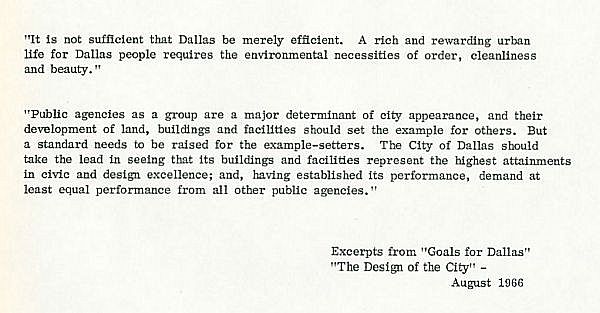
In the project plans presented to the City, I. M. Pei & Partners included these quotes from “Goals for Dallas,” the blueprint that Dallas leaders created for the city’s future:

In an oral history conducted by the Dallas Public Library in 2002, Pei discussed his City Hall project and was asked if he had visited the building in recent years (the link to the oral history and transcript are at the bottom of this post under “Sources & Notes”):

I’ve been back quite a few times. I always went up to the second floor to look at that public space. That public space — some people ask, “Why do you make that space so extravagant? People only come here and pay taxes or pay water bills.” I said, “Precisely. This is a People’s City Hall. You don’t build it for the mayor; you don’t build it for the Council; you build it for the people. They’re the ones who should enjoy it.” I remember that. I always go up to the second floor to look at that space. I think the public that comes to pay taxes should know that this is why. […] That was the original thought, and I still think it’s right — that this City Hall is designed for the people of Dallas. (I. M. Pei oral history, Aug. 1, 2002)

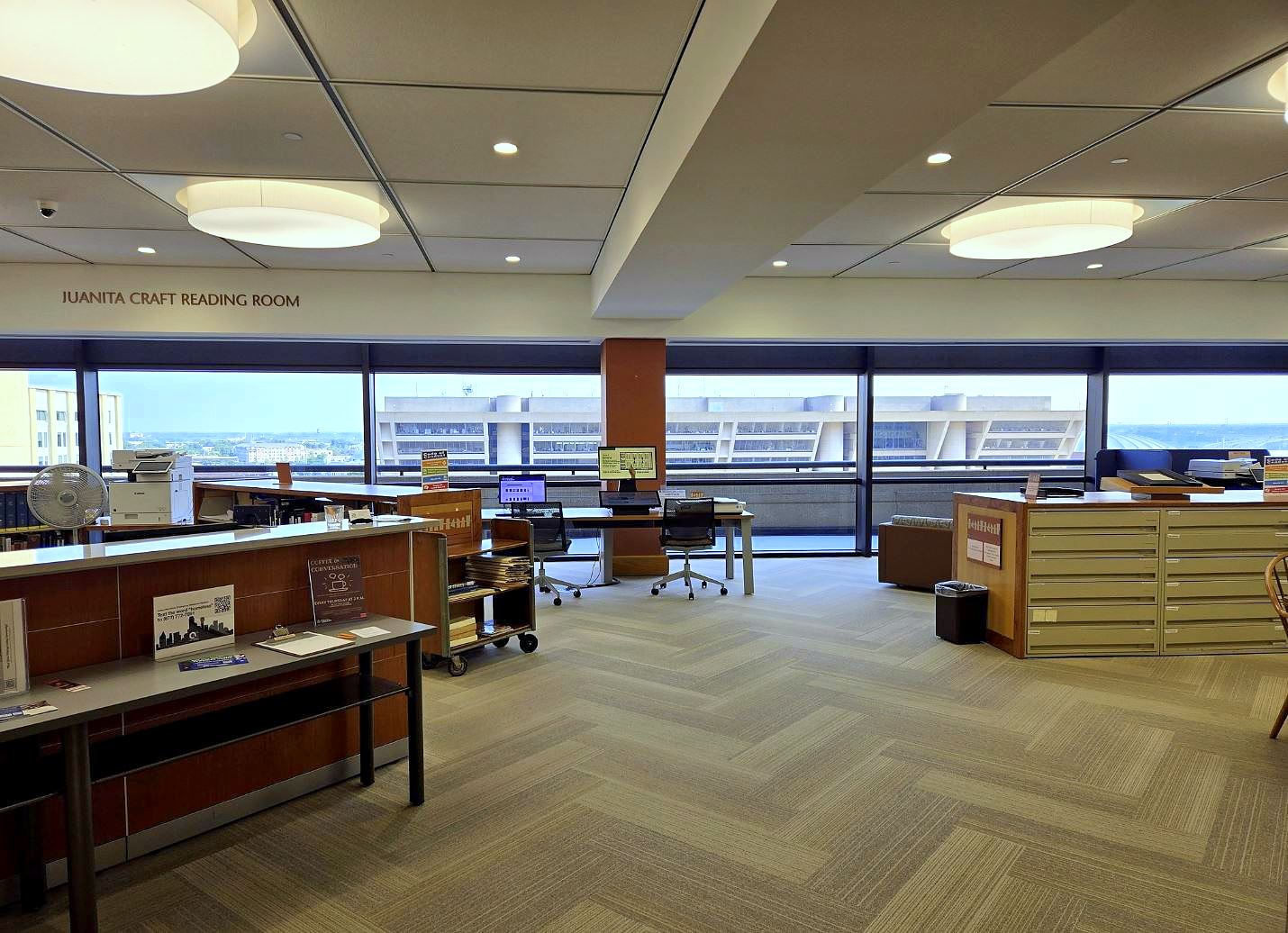
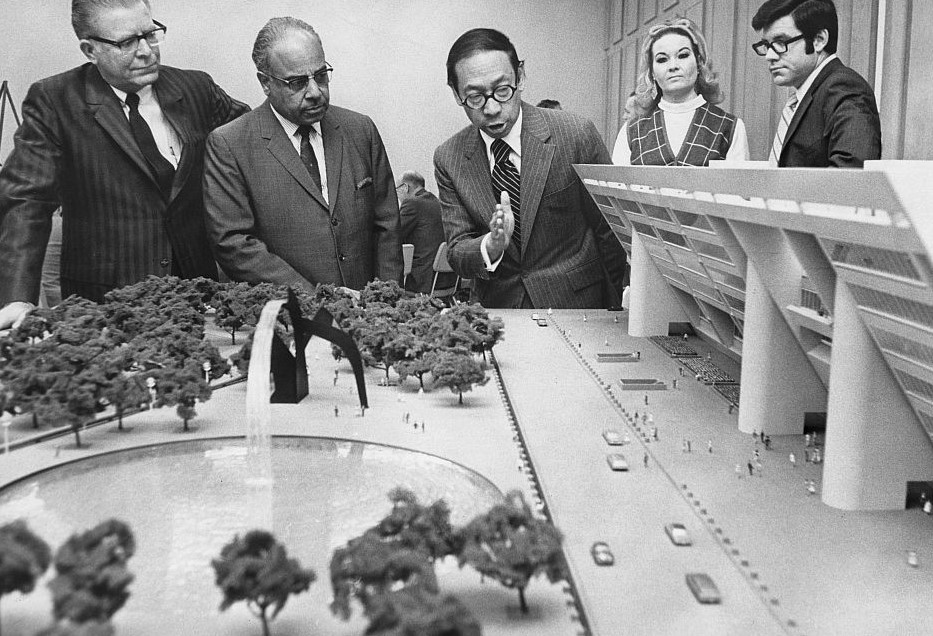
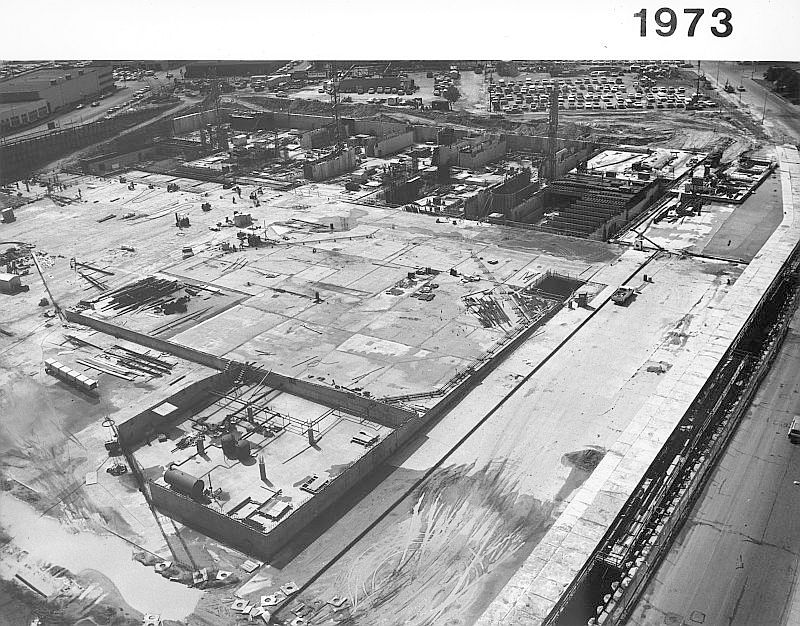
Below are a whole bunch of photos of I. M. Pei in Dallas, aerial views of the city before and during construction of the city hall, and two deceptively calm and quiet photos taken by me from the Central Library across the street only a couple of weeks ago, back when life seemed a little less precarious and before I thought it necessary to look up the dictionary definition of “beleaguered” to make sure I was using it appropriately. I was.

*

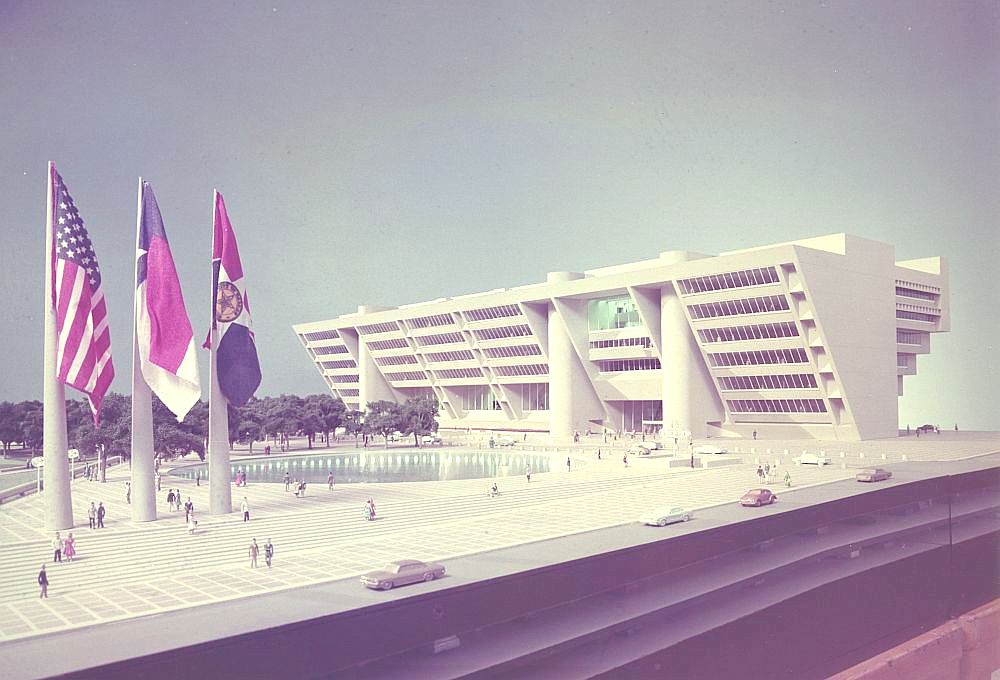
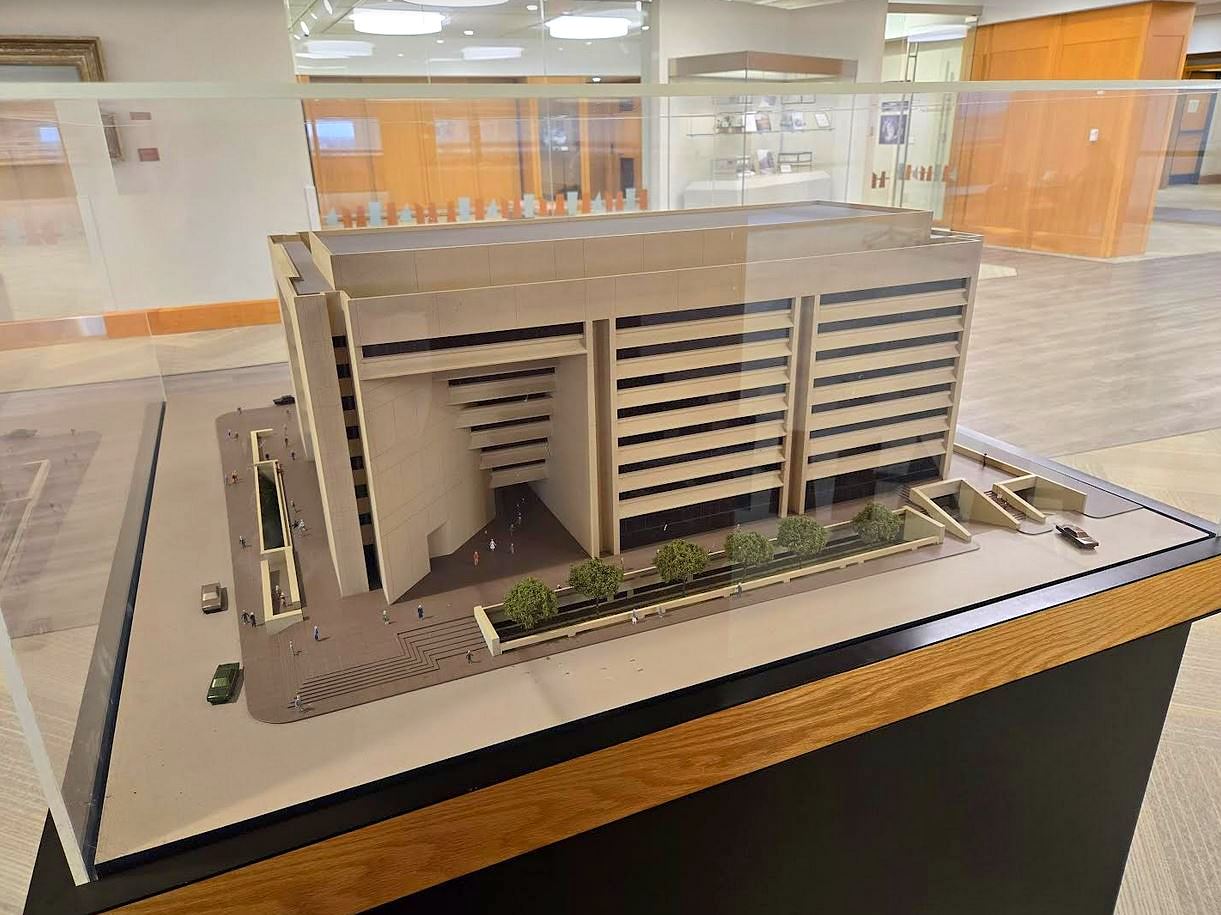
The model:

*

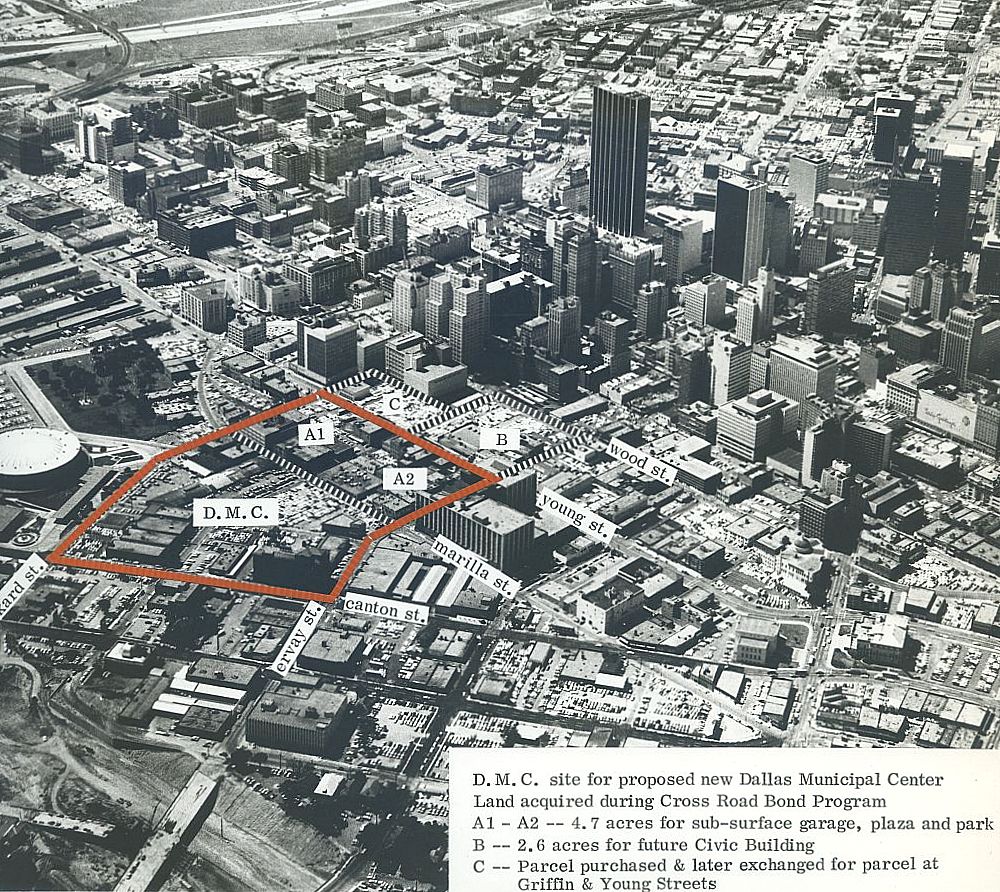
Aerial from 1967 (the original name of the project was the Dallas Municipal Center):

*

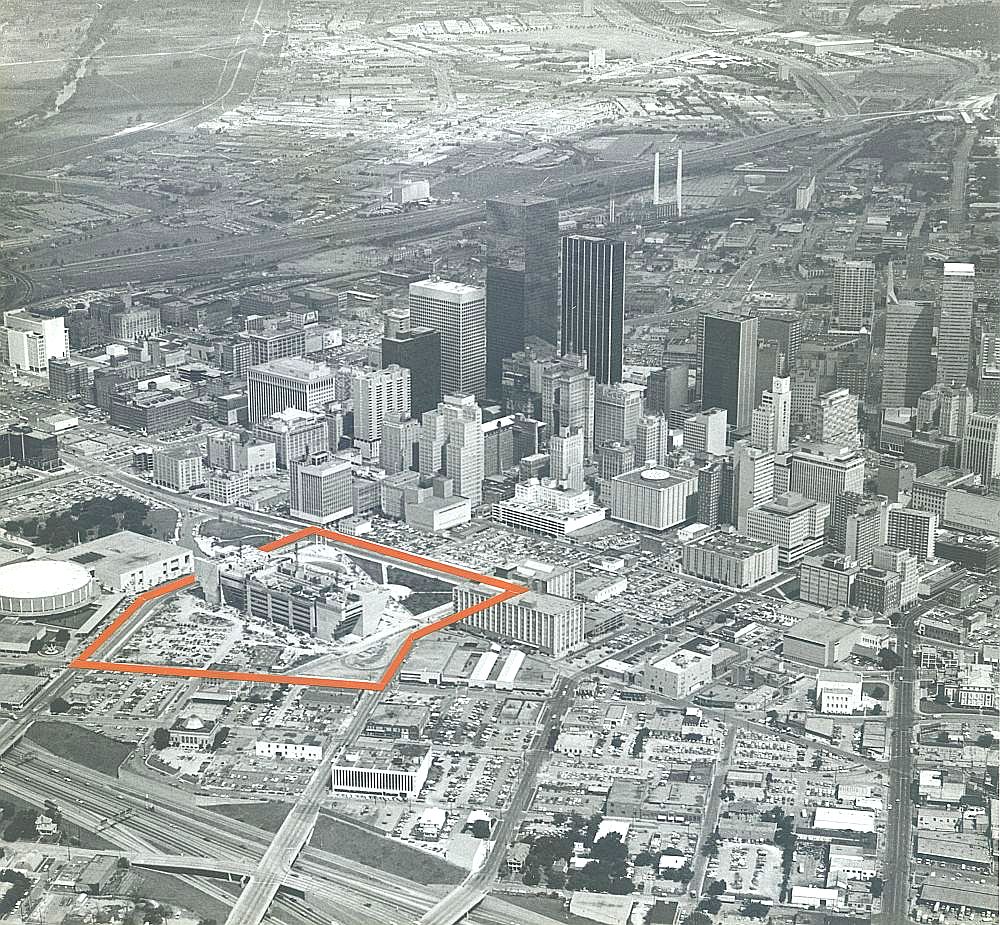
Aerial from 1976:

*

I. M. Pei giving a presentation in Dallas, in which he unveiled his vision for the new city hall (April 28, 1967, Dallas Times Herald photo by Ken Hardin):

*

Showing off the futuristic-looking model to no doubt startled members of the Dallas City Council and city administration workers (October 5, 1970, DTH photo by Joe Gordon).

*

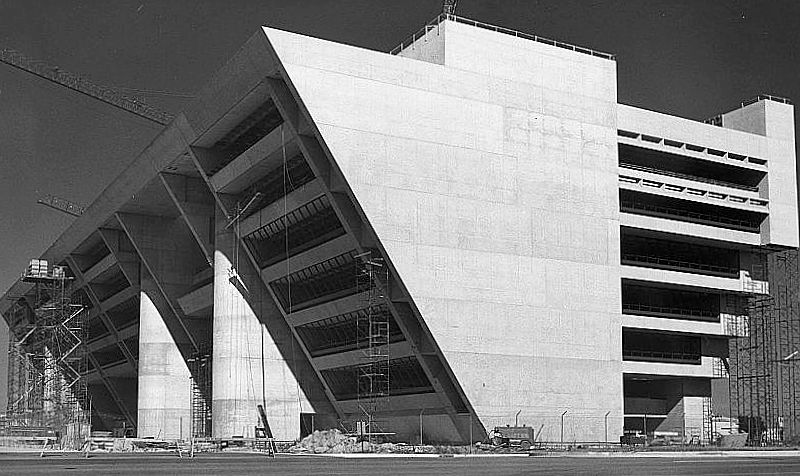
Construction, 1973:

*

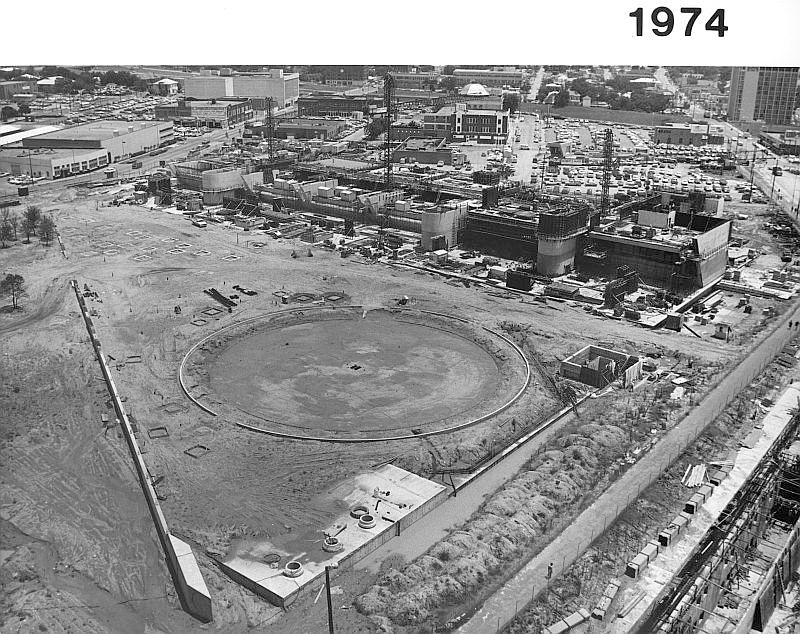
Construction, 1974:

*

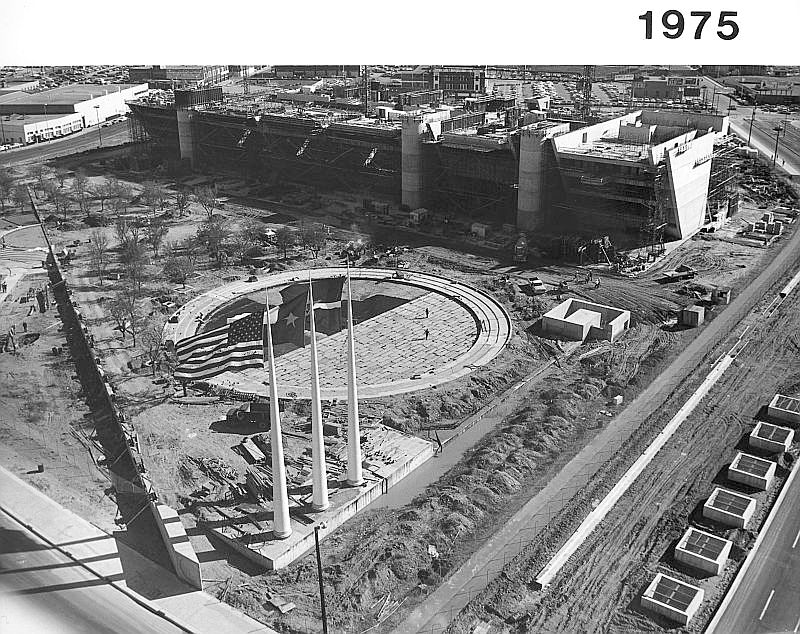
Construction, 1975:

*

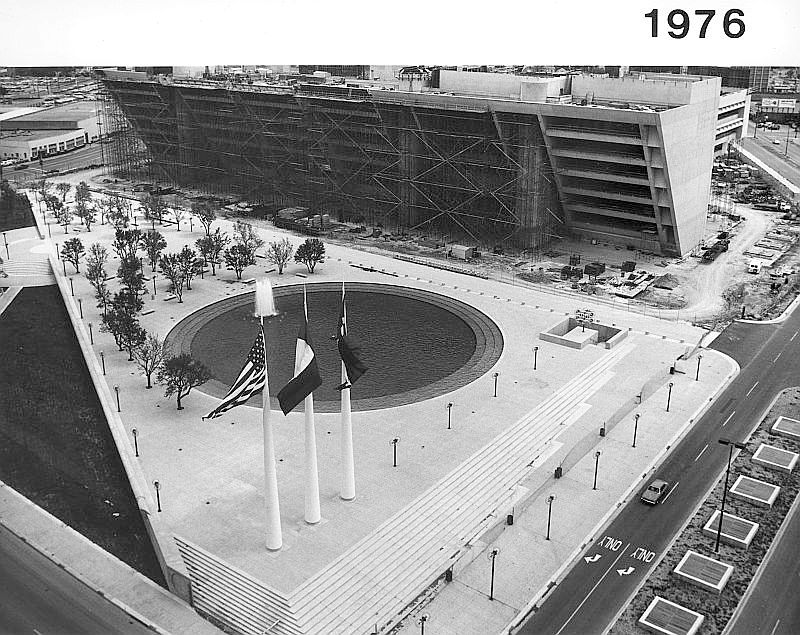
Construction, 1976:

*

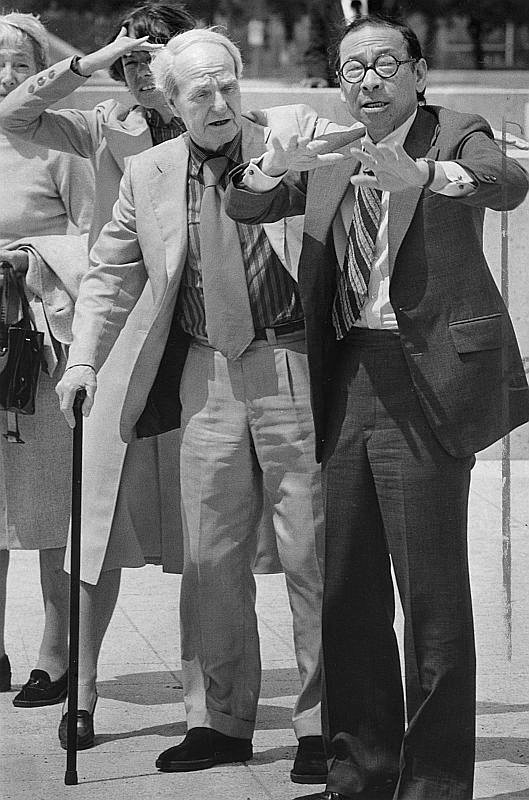
Pei shows British sculptor Henry Moore the site where his sculptural work The Dallas Piece will be placed on the City Hall plaza (April 14, 1976, DTH photo by Paul Iverson):

*

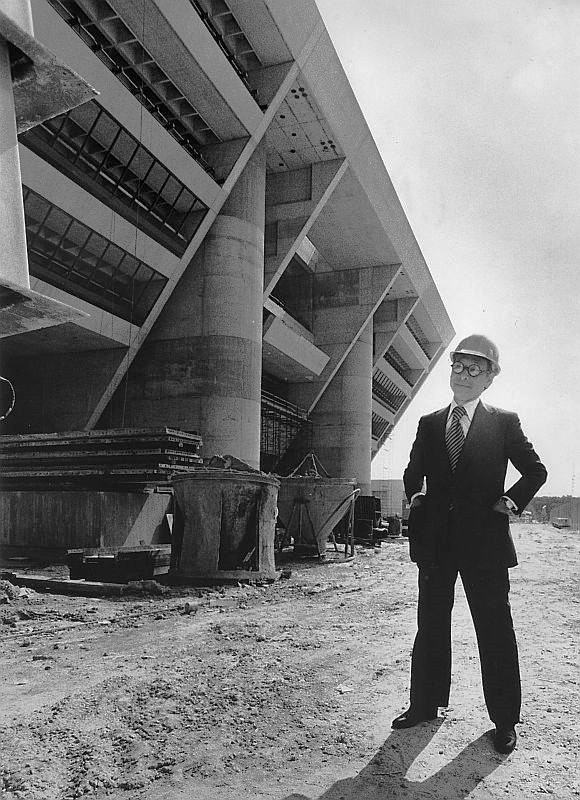
Pei in a hardhat, looking pleased (July 7, 1976, DTH photo by Jay Dickman):

*

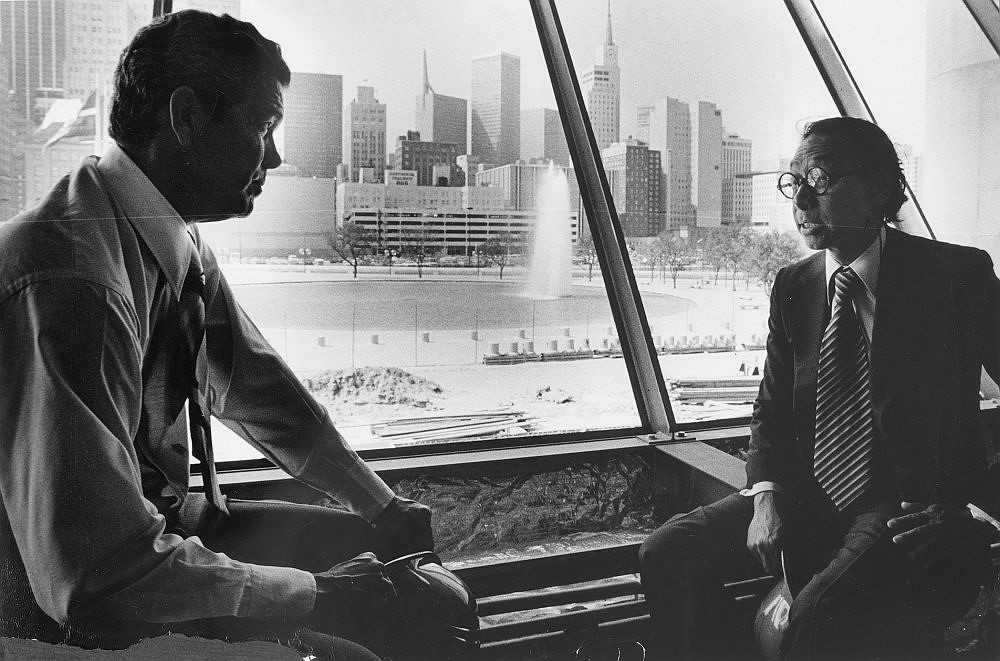
Pei with new mayor Robert Folsom, with a killer view of the Dallas skyline behind them (July 7, 1976, DTH photo by Jay Dickman):

*

Side view, from Marilla:

*

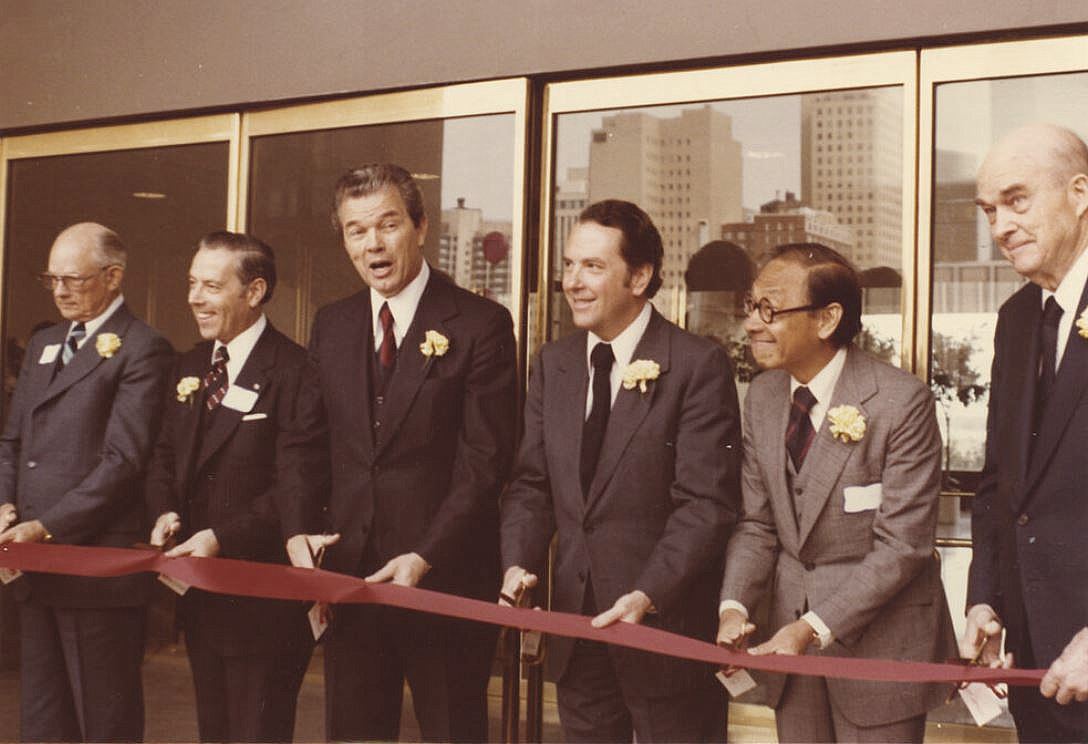
Finally, Dedication Day, March 12, 1978 — Pei is seen cutting the ribbon with (left to right) former City Manager Scott McDonald, current City Manager George Schrader, Mayor Robert Folsom, former mayor Wes Wise, and the man who started the whole thing rolling, former mayor J. Erik Jonsson (Pei said that his two greatest allies in the long slog to get the City Hall finished — and to continue with other projects in Dallas — were Schrader and Jonsson, both of whom he was quite fond of and considered friends):

*

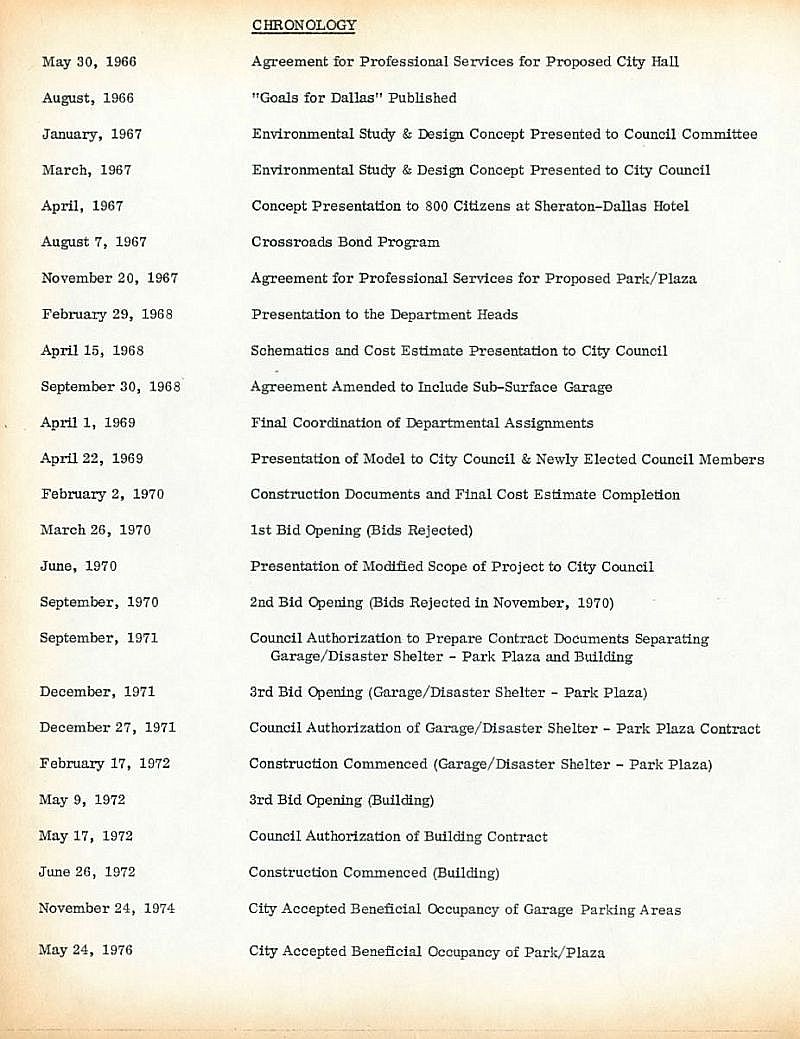
A chronology of the long, long trek to completion (at least up to 1976), prepared for the City by I. M. Pei & Partners:

*

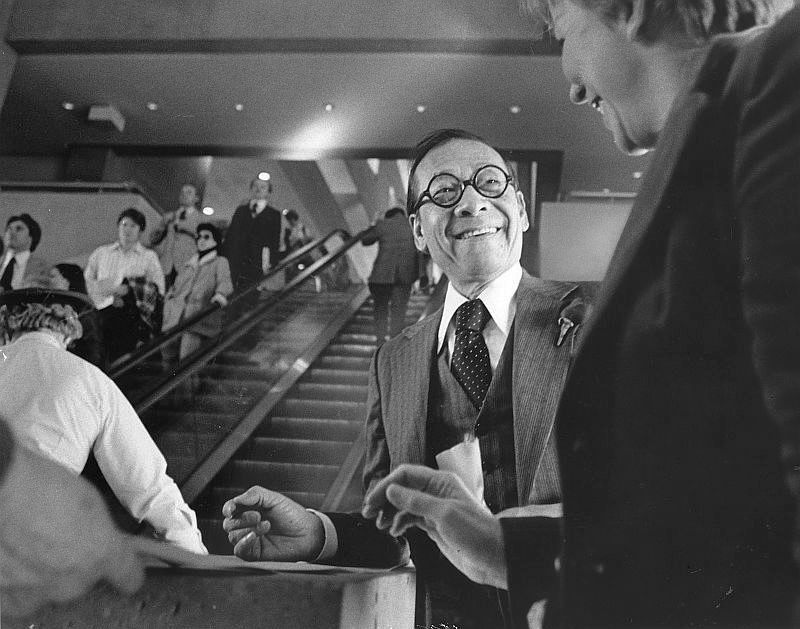
I. M. Pei in 1978, happy in Dallas (DTH photo by Phil Huber):

*

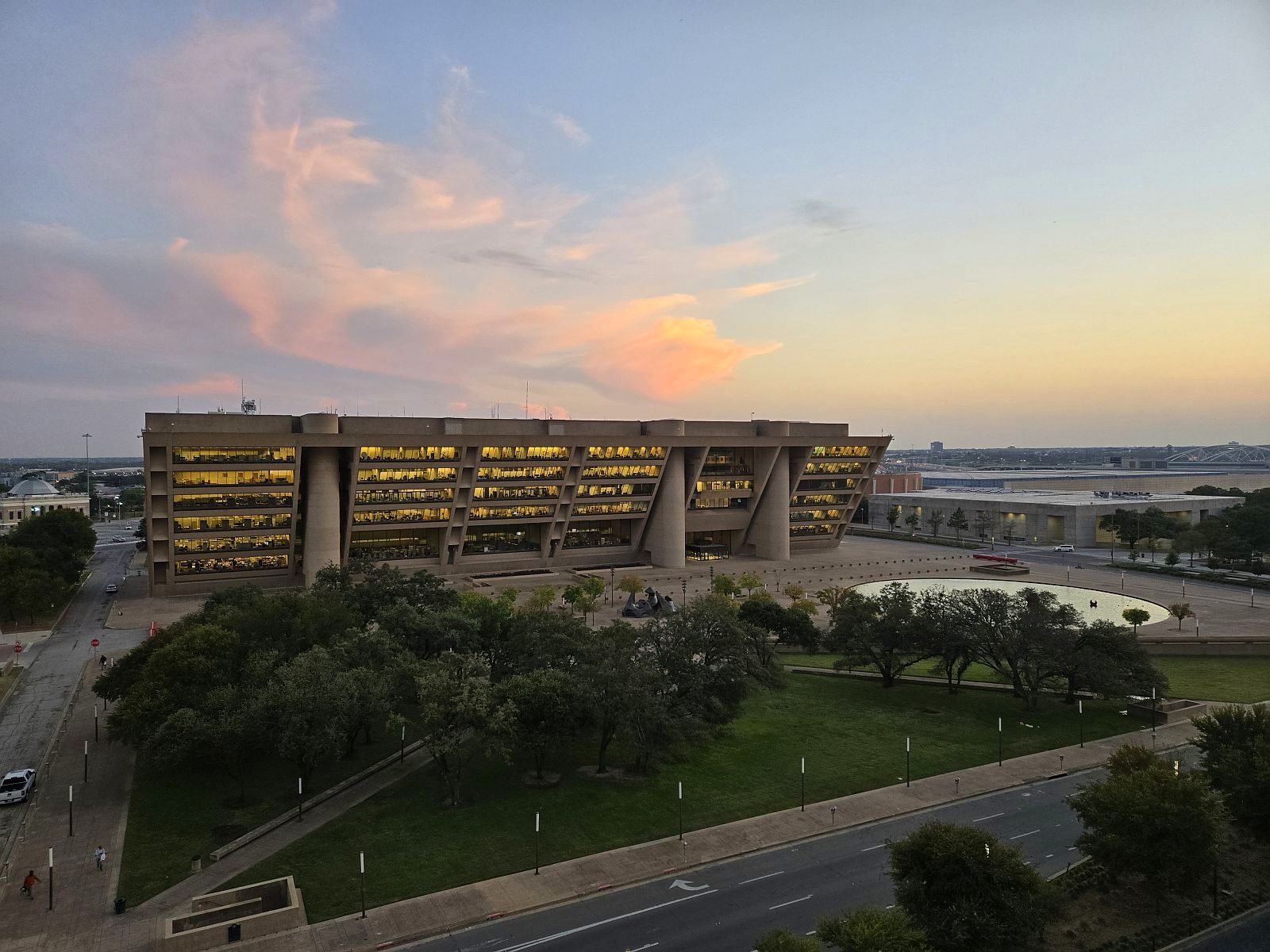
And in October 2025, our solemn City Hall at the end of another day, holding steady as downtown Dallas’ southern anchor.

***

Sources & Notes

Top and bottom color photos of City Hall taken by Paula Bosse on October 23, 2025 from the Central Library.

All other images are from various collections of the Dallas History & Archives division of the Dallas Public Library (including the Dallas Times Herald Collection and the Juanita Craft Collection). All images are used with permission.

Construction photos, “Goals for Dallas” quote, color model photo, and chronology are all from the presentation binder Dallas Municipal Center by associated architects I. M. Pei & Partners and Harper & Kemp (July 5, 1976) (Dallas History & Archives/Dallas Public Library call number R690.513 D145).

The 2002 quote from Pei about City Hall is from I. M. Pei: An Oral History Interview, conducted in New York City on August 1, 2002 by Bonnie A. Lovell for the Dallas Public Library. Ostensibly about Pei’s involvement in commissioning the Henry Moore sculpture, this is an entertaining read/listen, as Pei discusses the larger City Hall project and his affinity and admiration for the city of Dallas and its citizens (audio recording and 48-page transcript with index, Dallas History & Archives/Dallas Public Library call number 730.92 M822YP 2003) — you can listen to the recording and read the transcript on the Dallas Public Library Recollect Digital Collections page here.

*

Copyright © 2025 Paula Bosse. All Rights Reserved.
Time to Fall Back, Unless You’re Hanging from the Mercantile

“Fall back” at 2 AM…

by Paula Bosse

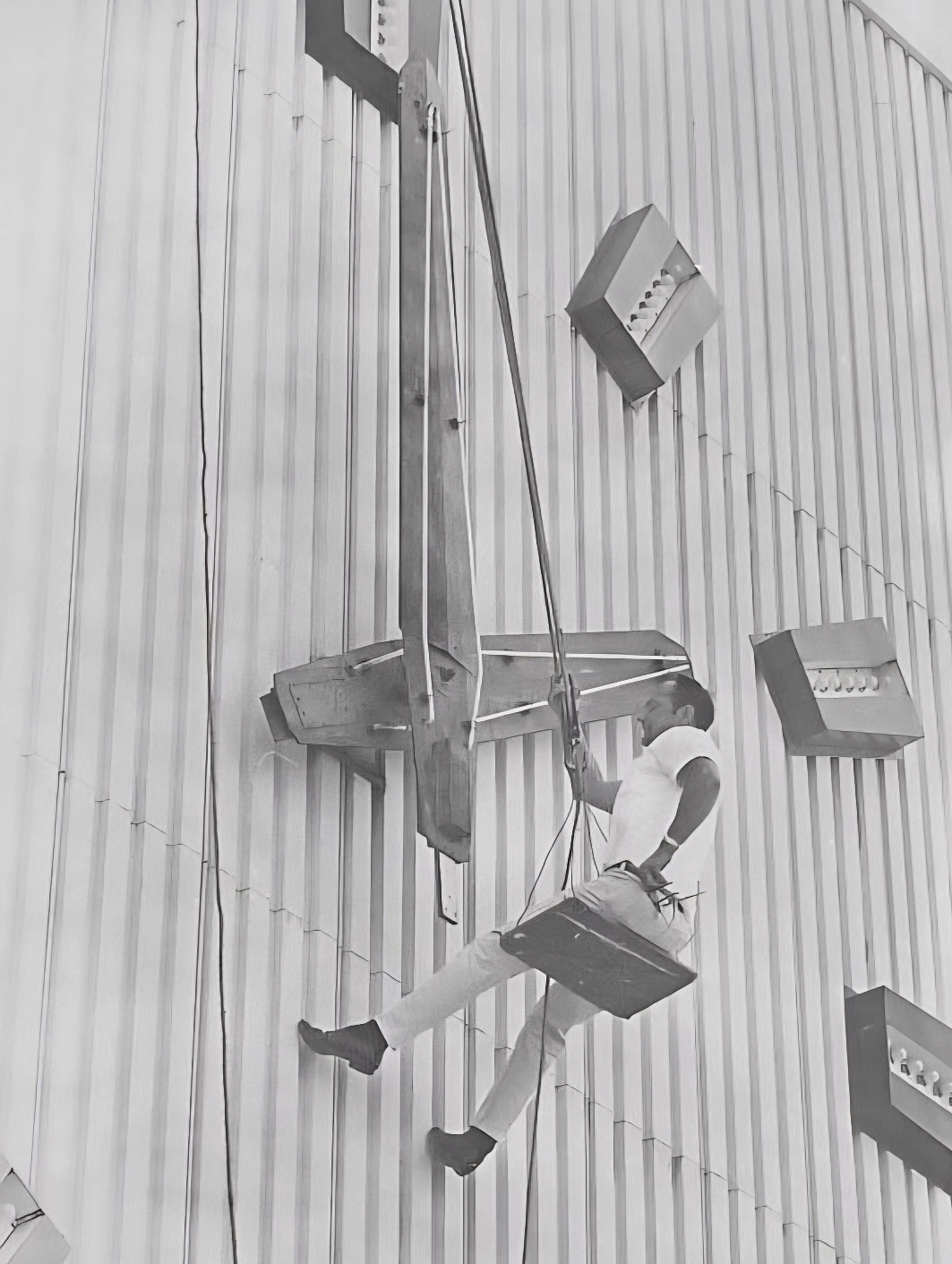
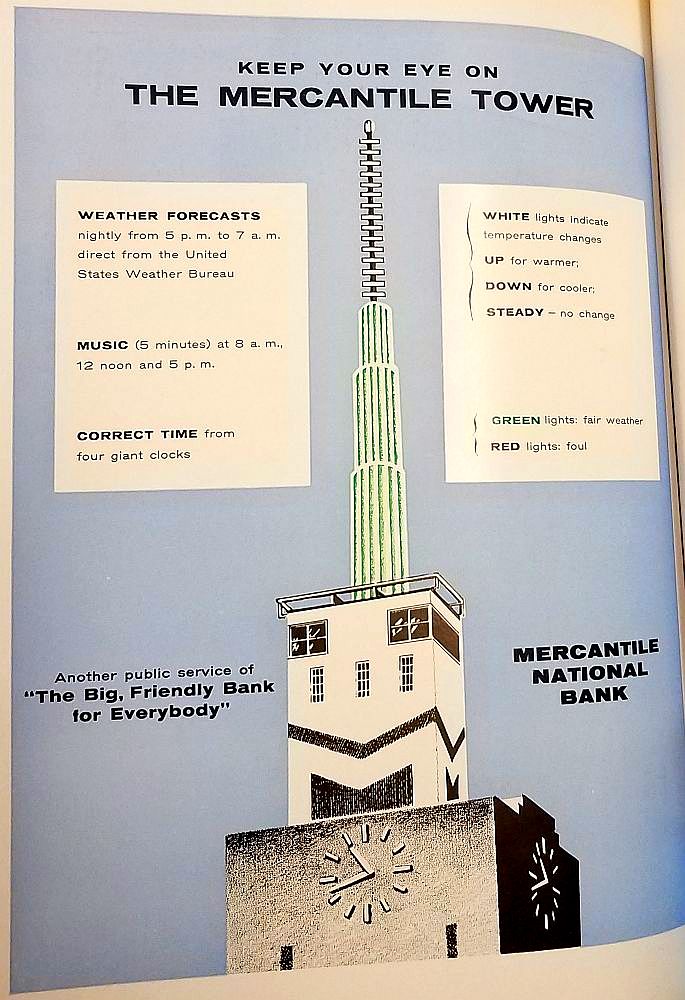
The poor Merc is having a rough time of it at the moment. Here’s a photo from happier days, when it was the Mercantile Bank Building, getting some sort of touch-up to one of its clock faces. Which, by the way, should remind you to turn your clocks back in the wee hours of Nov. 2!

That tower used to do a lot. And all four clock faces had the correct time — all at the same time!

***

Sources & Notes

Photo from the Richards Group Collection, Dallas History & Archives, Dallas Public Library (accession number PA83-3/40).

Mercantile National Bank ad from Dallas magazine, sometime in 1956:

See the Merc in all its early-days glory in these posts:

*

Copyright © 2025 Paula Bosse. All Rights Reserved.
Whimsy on Main Street — ca. 1906

by Paula Bosse

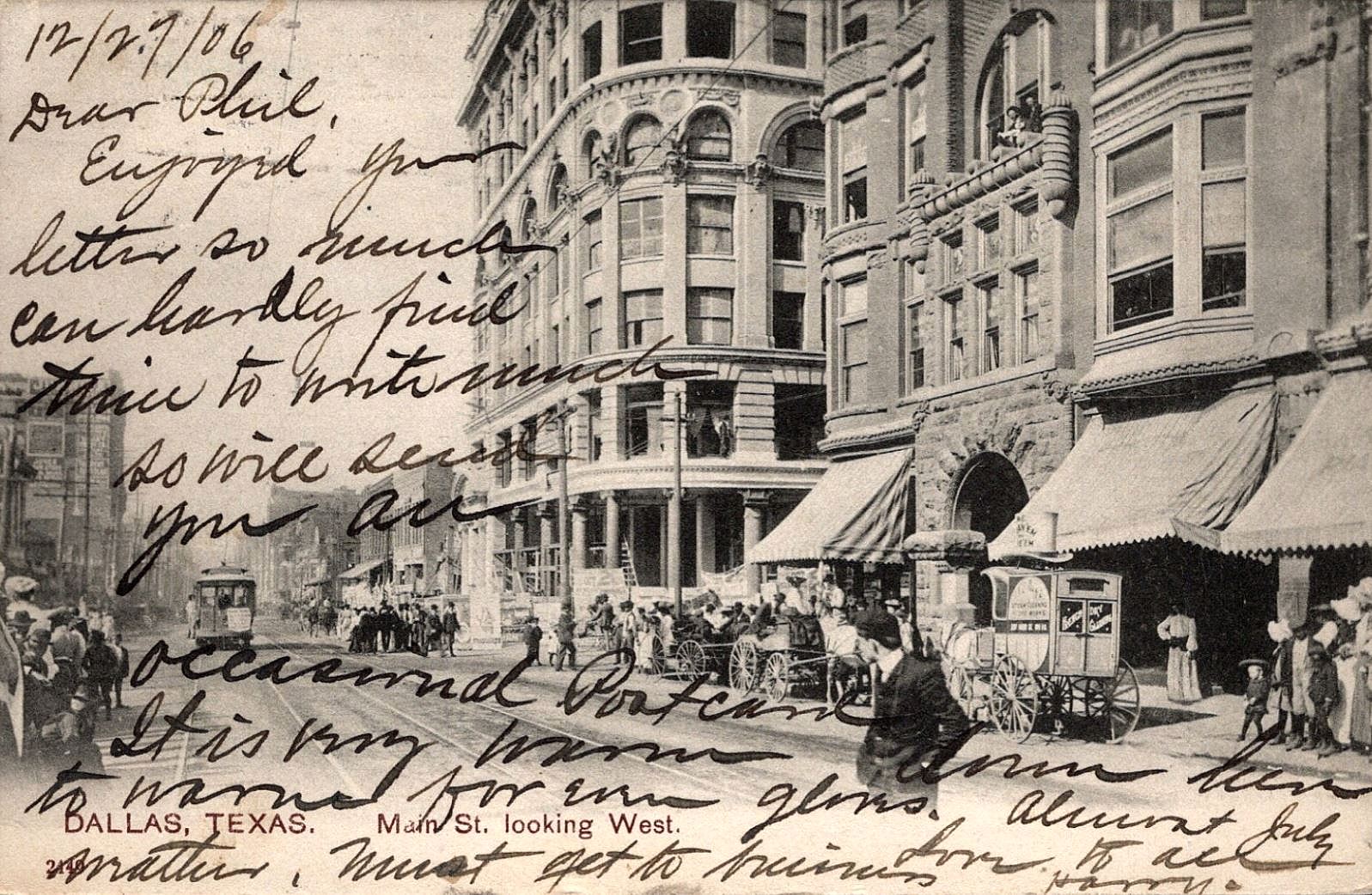
I’ve seen a lot of postcards with views of “Main St. looking West,” usually taken from about Ervay, with the Wilson Building as the architecturally impressive centerpiece. But I don’t think I’ve seen this one. I don’t know when the photo was taken, but it was mailed at the very end of 1906. It looks like the new Wilson Building (which opened in 1904) may still have construction work going on, at least on the ground floor.

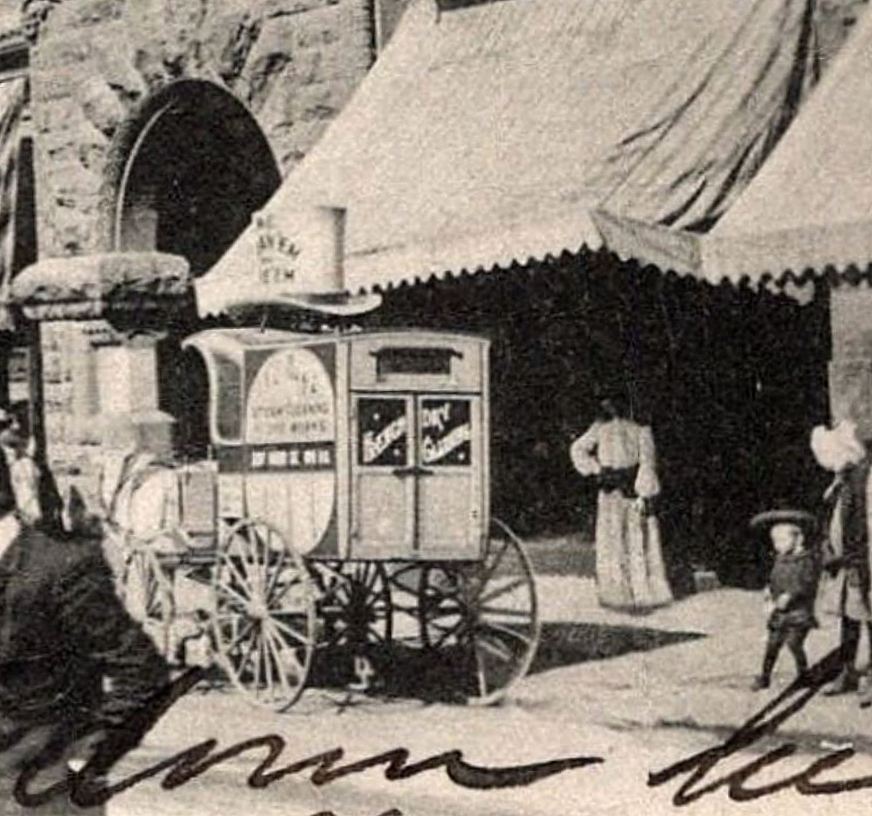
But “whimsical”? Take a look at the horse-drawn dry-cleaning-company delivery wagon on the lower right side of the card. It’s got a GREAT BIG TOP HAT on it! Maybe this sort of thing was popular in the early years of the 20th century, but I’ve never seen anything like this on the streets of Dallas in photographs or postcards of this period. Until now. I love it!

*

The postcard — written and mailed on December 27, 1906 — was addressed to “Master Phillip Wyman” in Yonkers, New York. The sender — identified only as “Harry” — sent this message to Phil, probably a young family member:

Dear Phil, Enjoyed your letter so much. Can hardly find time to write much so will send you an occasional postcard. It is very warm down here, to[o] warm for even gloves. About July weather. Must get to business. Love to all, Harry

Too warm for gloves — in December! Imagine! I bet Master Wyman — who was no doubt shivering up in Yonkers — had his young mind blown. (I wonder if he noticed the big top hat?)

***

Sources & Notes

Postcard from eBay.

*

Copyright © 2025 Paula Bosse. All Rights Reserved.
Commerce & Market, Where the Air Was Made Blue

Kinder, gentler times…

by Paula Bosse

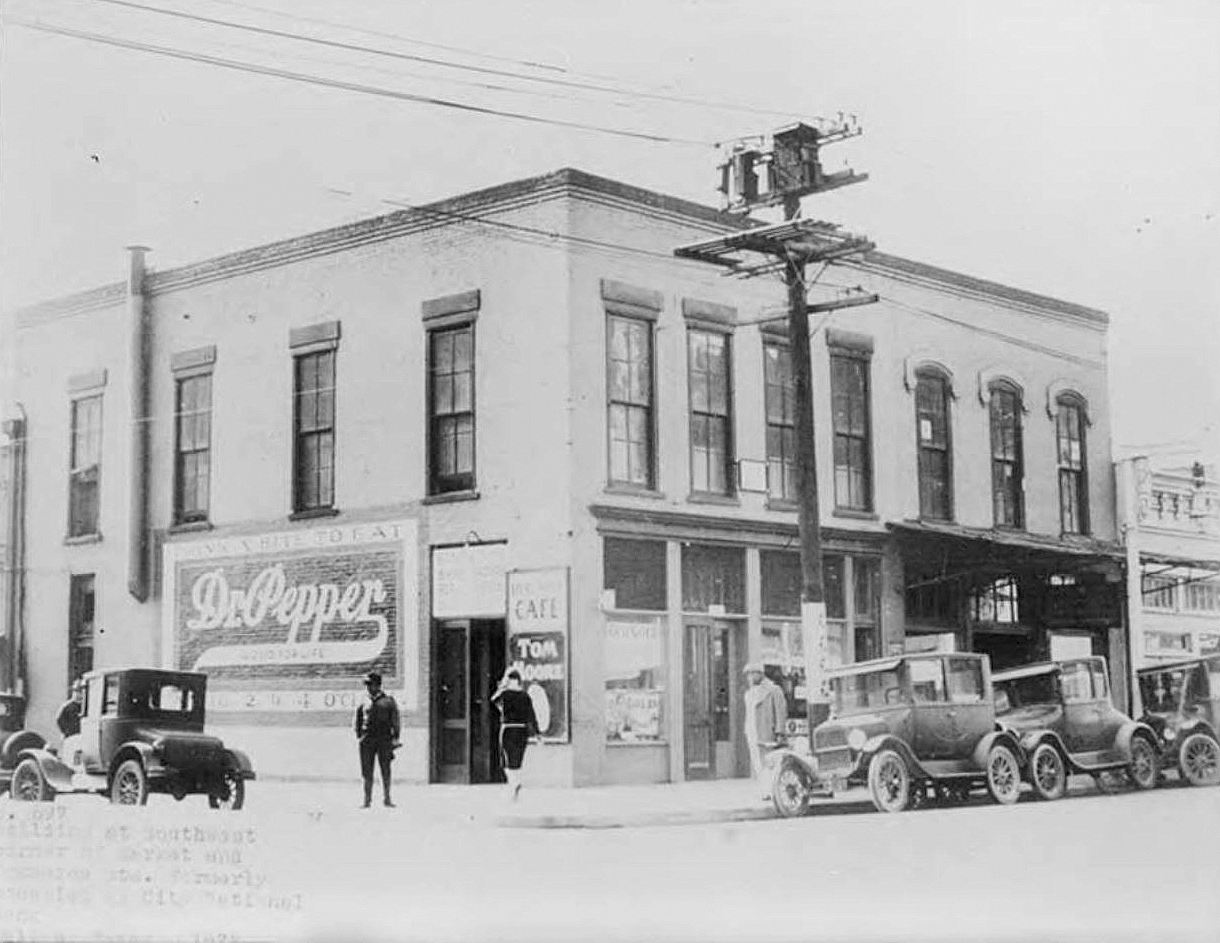
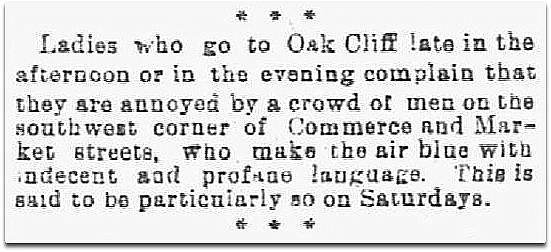
The photo above shows a small, fairly nondescript building at the southwest corner of Market and Commerce, with retail stores and a cafe at street level and, I think, a hotel on the second floor. My car-make-and-model knowledge is bad, but I’ll guess that this photo might be from the early ’20s (a 1921 Sanborn map of the area is here). If you go back even further — like to 1891 — this corner was a hangout for unsavory types, as reported below in The Dallas Morning News in 1891.

Dallas Morning News, Sept. 7, 1891

It’s no surprise there was “indecent and profane language” in the air in 1891 (“particularly on Saturdays”), seeing as that corner was a mere hop, skip, and a jump from Dallas’ premier red-light district.

This corner is currently occupied by the George Allen Courts Building.

***

Sources & Notes

Photo, titled “Building at SW corner of Market and Commerce Streets, formerly occupied by City National Bank Dallas, 1872,” is from the Collection of Dallas Morning News negatives and copy photographs, DeGolyer Library, Southern Methodist University; more information is here.

This post appeared in a slightly different version on the Flashback Dallas Patreon page.

*

Copyright © 2025 Paula Bosse. All Rights Reserved.
A Somber Armistice Day Observance — 1922

Veterans march in Dallas (Dallas Public Library)

by Paula Bosse

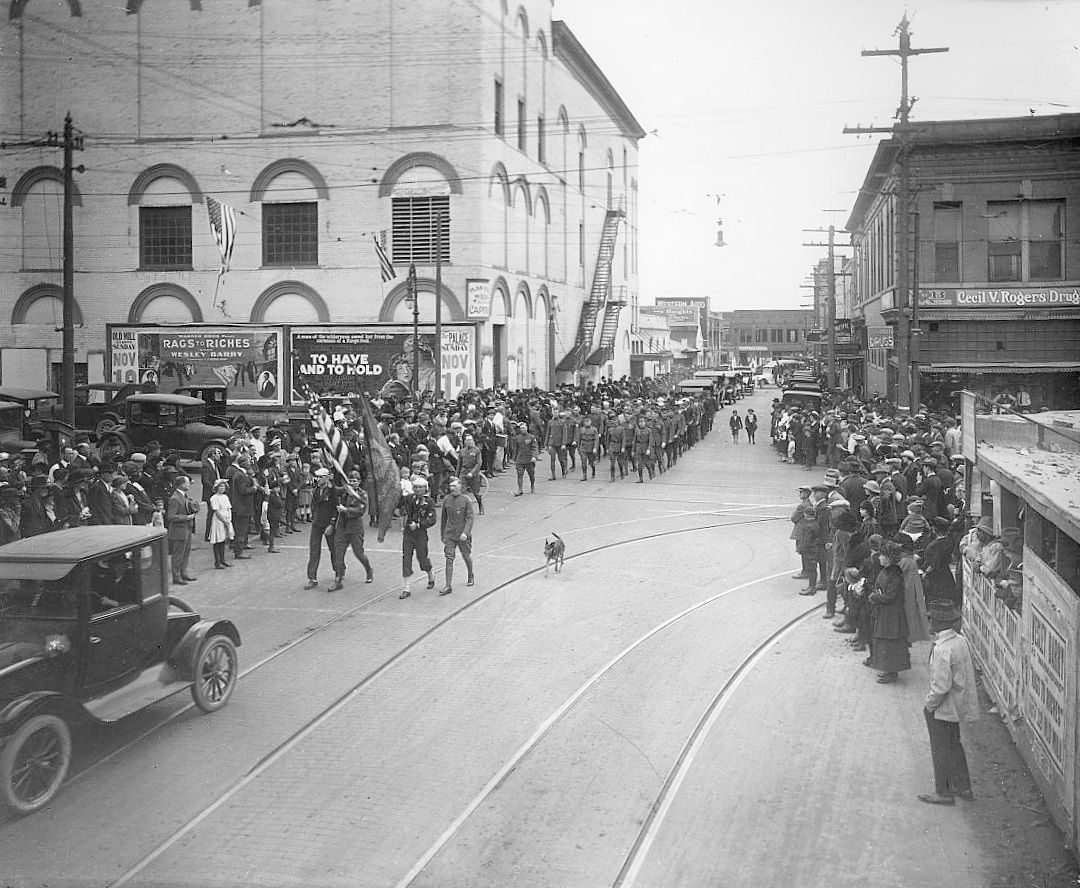
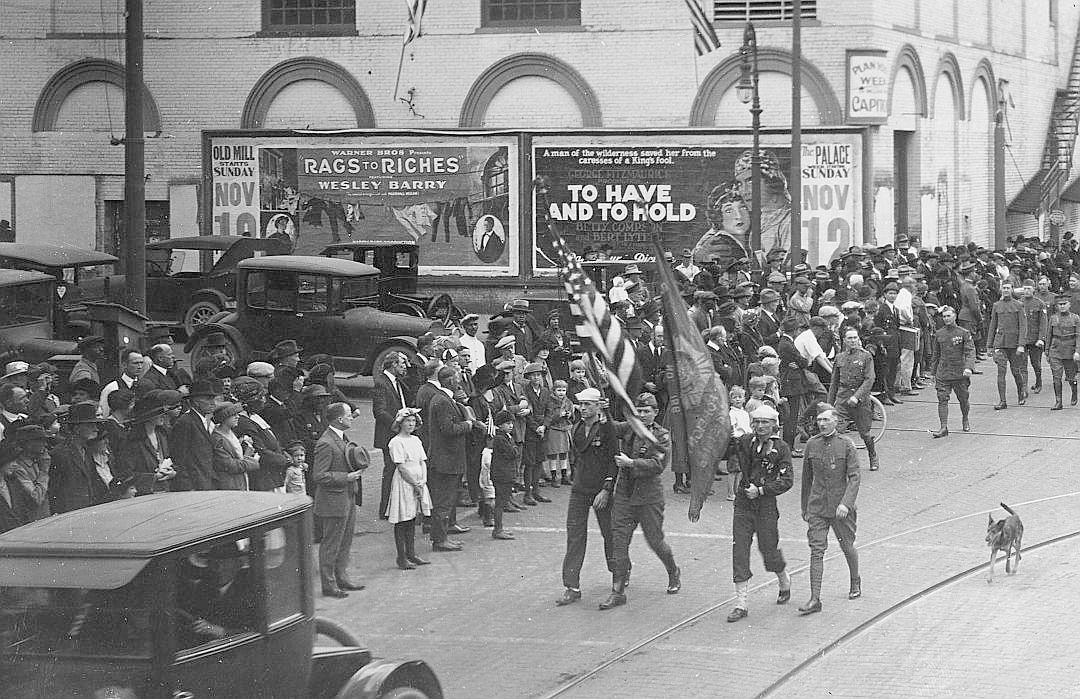
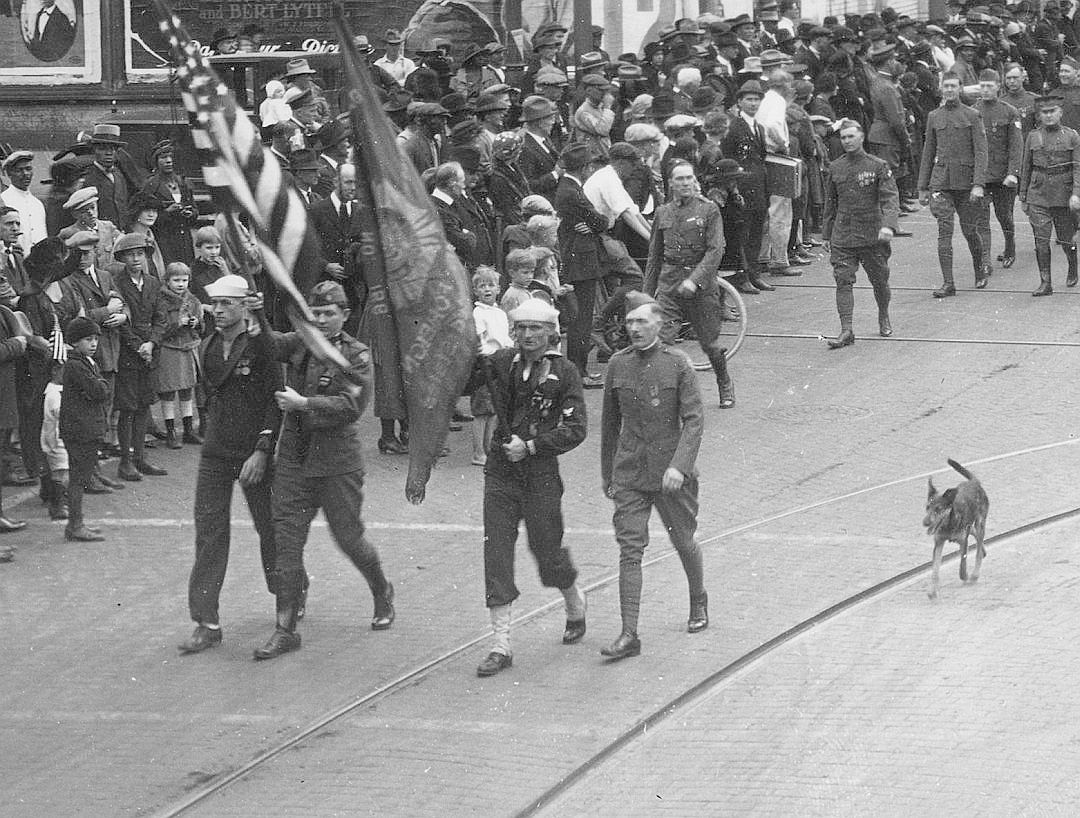
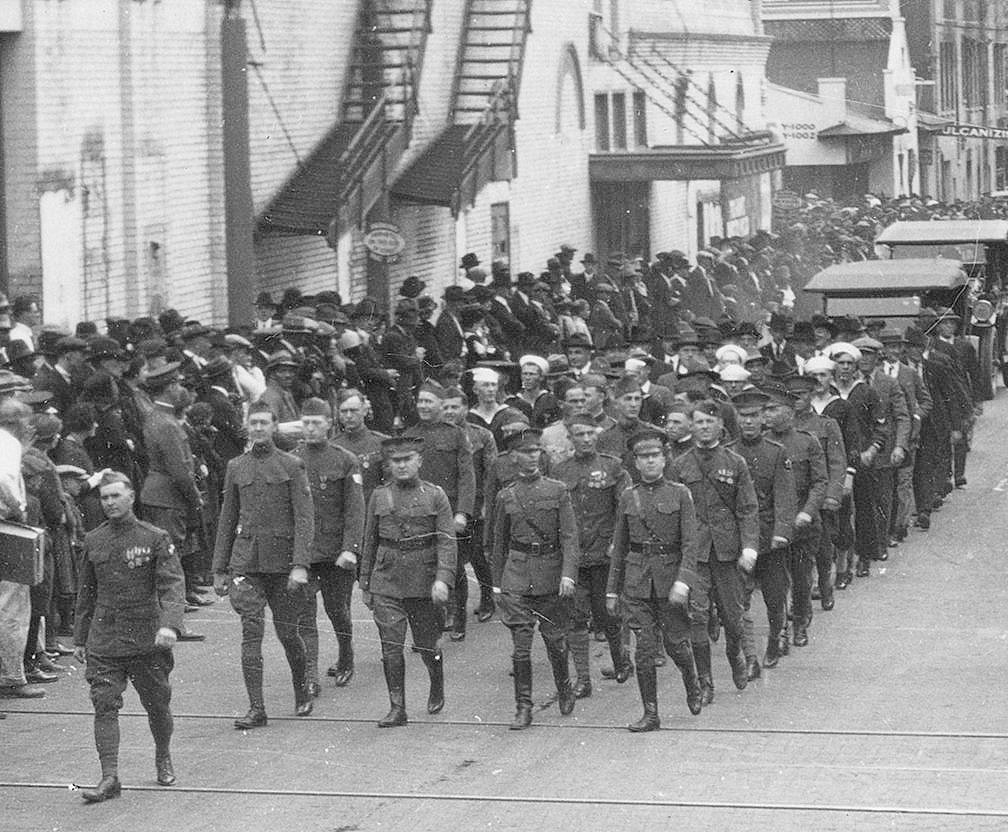
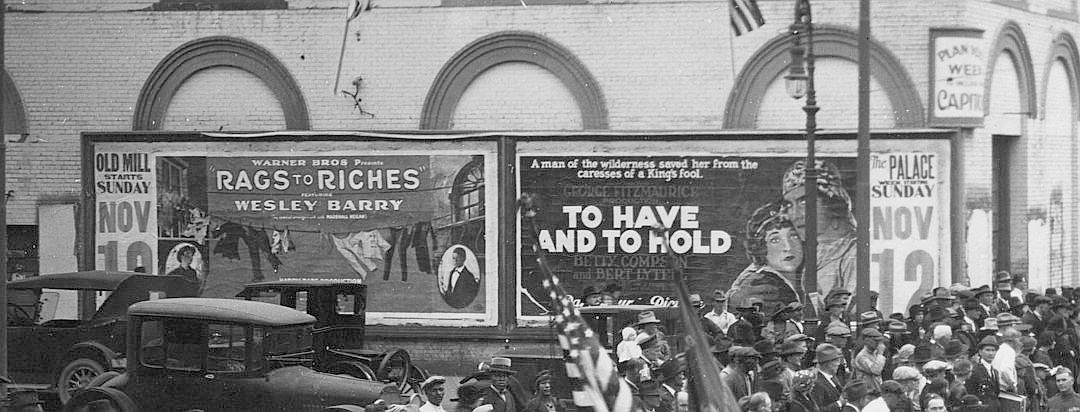
On November 11, 1922, Dallas observed the 4th anniversary of the end of World War I. The photo above, taken by Dallas photographer Frank Rogers, shows veterans of the devastating war marching north on Masten (N. St. Paul) from Main Street — they are headed to First Baptist Church for a special remembrance service.

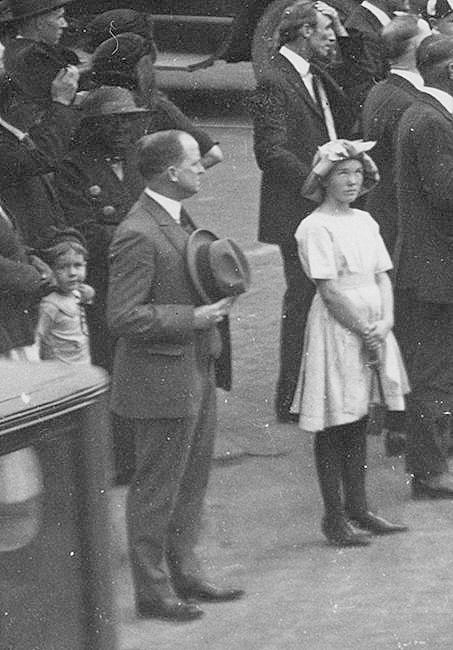
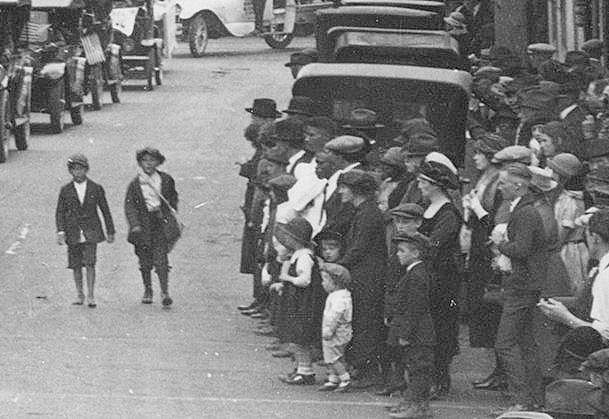
The crowd is somber, with the war still fresh in their memories. From The Dallas Morning News:

Soberly and without show of emotion Dallas celebrated Saturday, the fourth anniversary of the stilling of the guns of the World War. Their faces mirroring no more than idle curiosity, tens of thousands of men, women and children flowed lazily along the Main Street waiting for the parade of men who had been part of the glorious adventure, but there was no evidence of that high-racing blood that filled the hearts of Americans on Nov. 11, 1918. (Dallas Morning News, Nov. 12, 1922)

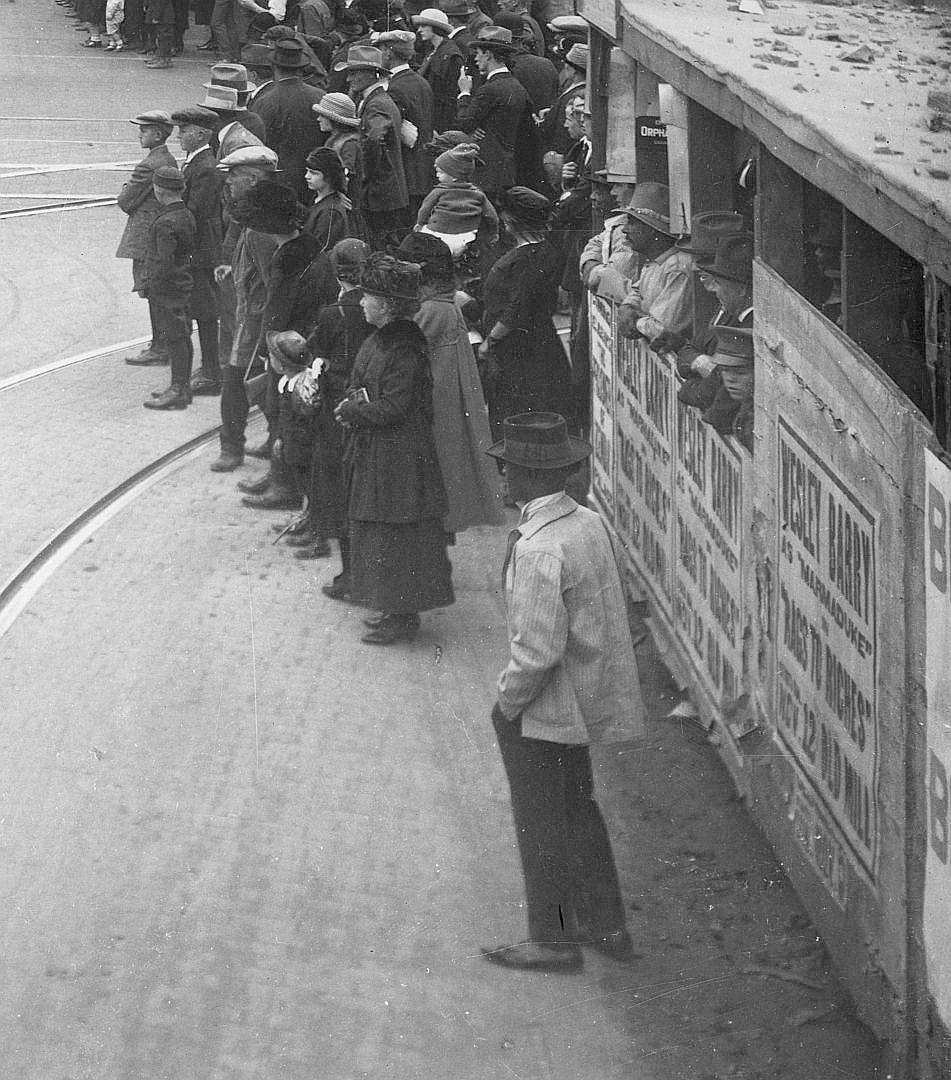
More details of the scene can be seen when zooming in on the photo and on the faces of the participants and the spectators (images are larger when clicked).

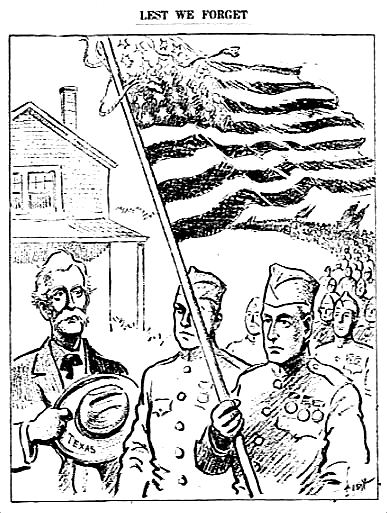
by John Knott, DMN, Nov. 11, 1922

***

Notes and Sources

Photo of the Nov. 11, 1922 Armistice Day parade is from the Frank Rogers Collection, Dallas History and Archives, Dallas Public Library (photo accession number is PA78-2-1003).

The address of the Cecil V. Rogers drug store was 1814 Elm Street. The movie posters for the silent films “Rags To Riches” (playing at the Old Mill) and “To Have and To Hold” (playing at the Palace) are posted on the back of the old Majestic Theatre (its second “temporary” location, which, I believe, had once been the old opera house — see the 1921 Sanborn map here). The cartoon is by Dallas Morning News cartoonist John Knott.

See other Flashback Dallas posts on Dallas and World War I here.

*

Copyright © 2024 Paula Bosse. All Rights Reserved.
The Bright Lights of Big D — 1951

…Forget all your worries, forget all your cares…

by Paula Bosse

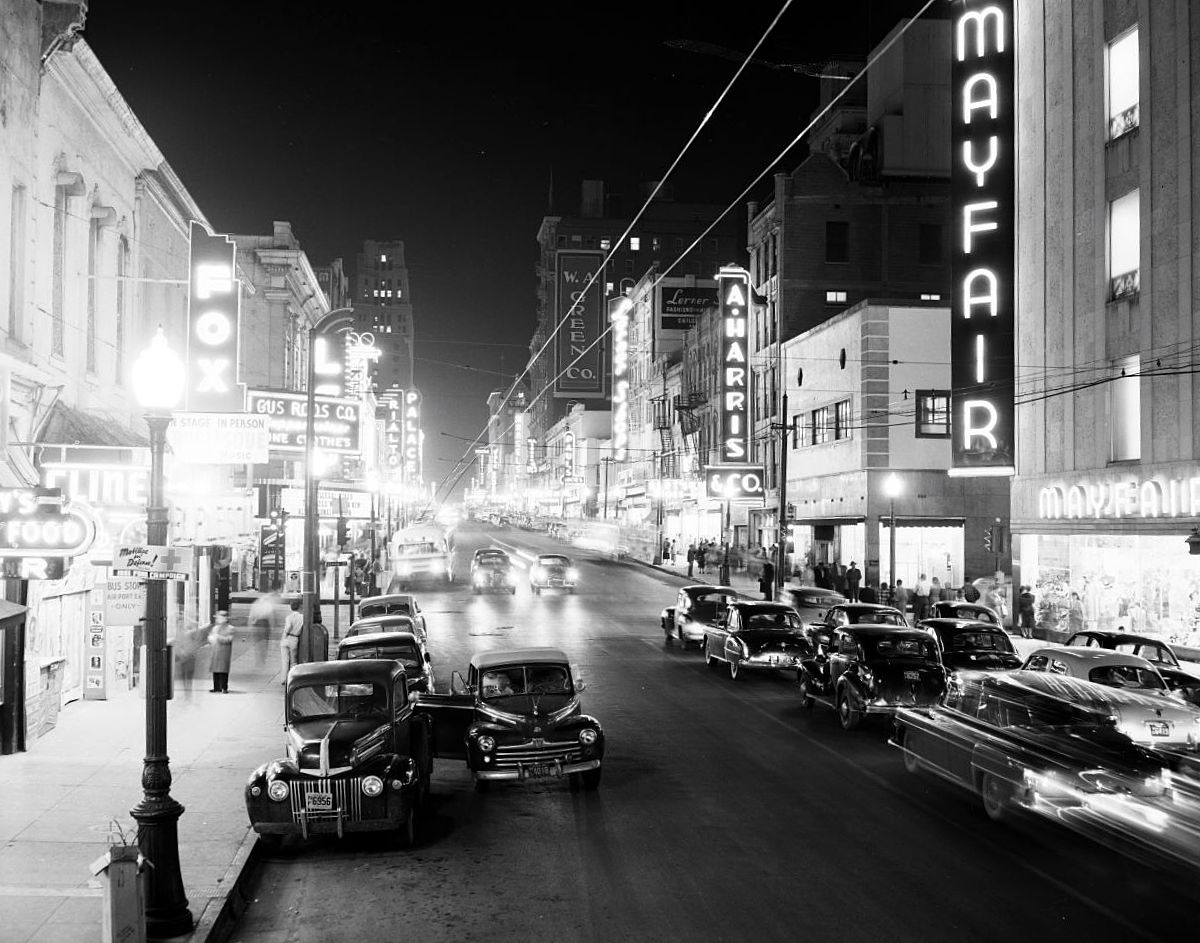
This is the downtown Dallas I’ve always wished I had seen.

Check out a clipping from the 1953 city directory for a list of the businesses in this immediate block, from about Akard to Ervay, here.

Then click over to the 2015 post “Dazzling Neon, Theater Row — 1929” to see how drastically Elm Street — and Movie Row — changed in just 22 years.

***

Sources & Notes

Photo by Denny Hayes, Hayes Collection, Dallas History and Archives, Dallas Public Library; Call Number PA76-1-576-2.

*

Copyright © 2024 Paula Bosse. All Rights Reserved.
Flashback Newsflash: Working at the Library

“Central Research Library”

by Paula Bosse

I have news: I am now working on the Dallas History and Archives floor at the downtown Dallas Public Library! I am surrounded by so many interesting things every day that it’s hard not to be distracted by all the photos, maps, books, manuscript collections, etc. Cool stuff everywhere. And great co-workers!

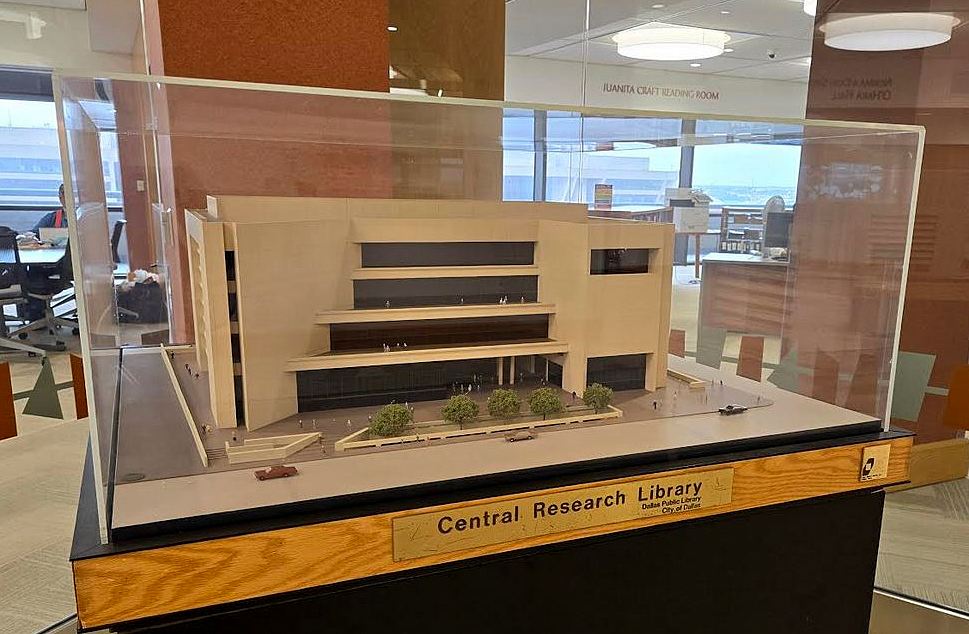
I might as well take this opportunity to share a few tidbits about the building (at 1515 Young Street, facing City Hall).

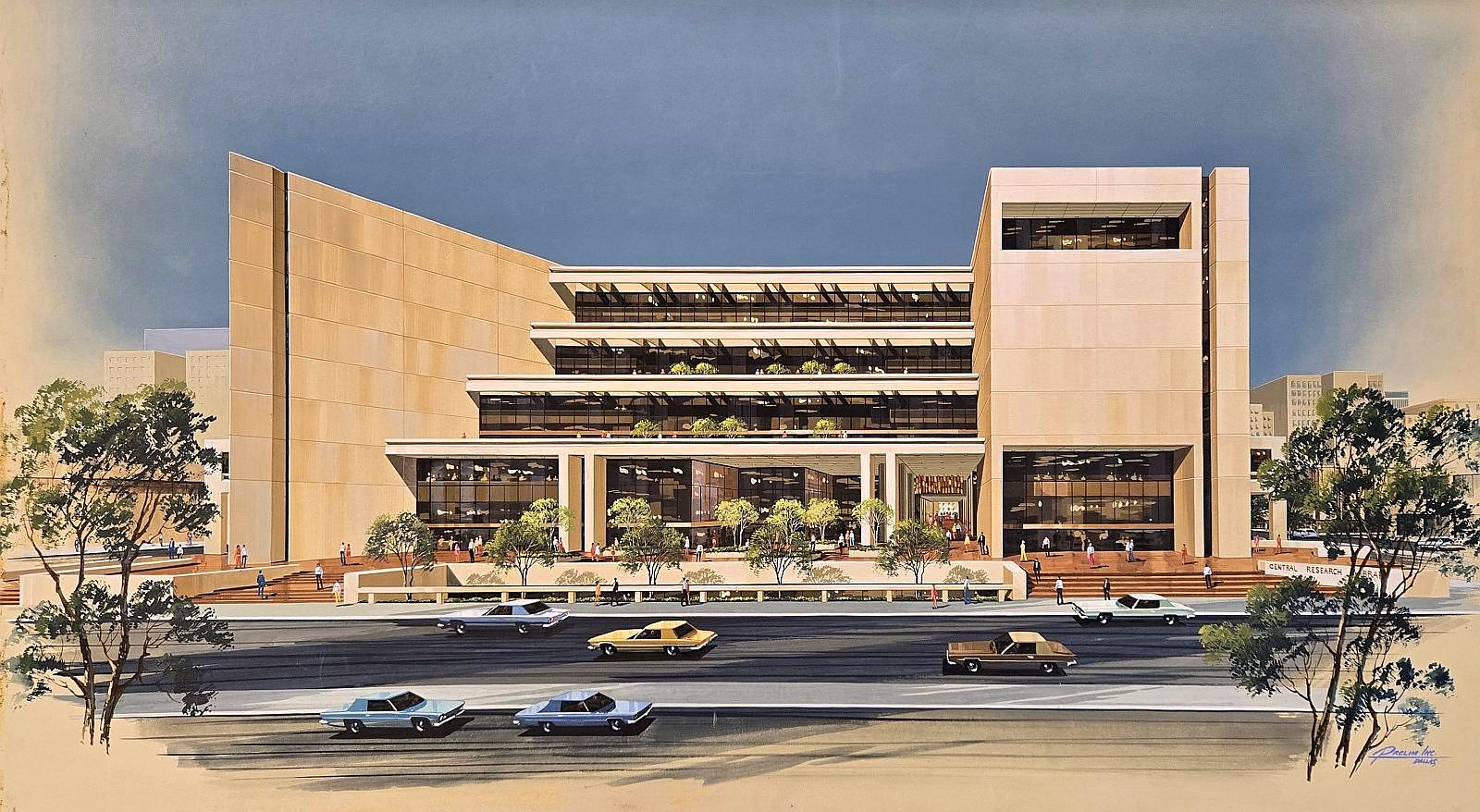
As you can see from the 3-D architectural model above (the model is on permanent display on the 7th floor), the library was originally referred to as “Central Research Library” when it opened in April 1982 (it was later renamed the J. Erik Jonsson Central Library, in honor of the former mayor). I’m not sure I knew that. Here’s another photo, showing the Wood Street side of the model:

When this library opened, it was the only major library (in the world, I think) that had its entire collection cataloged electronically. Bye-bye to card catalog files and their cute little drawers and hello to desktop computers, 50 of which were donated by Texas Instruments (Erik Jonsson was a founder of T.I.). These were for use by patrons, and, for many of them, these computers were their first experience with a personal computer.

Here is another interesting factoid from a Dallas Morning News article touting the new library’s innovations:

Special exhibits are housed in rooms protected by halon gas, an oxygen-consuming gas that will be released if a fire breaks out, removing all the oxygen and starving the fire. (DMN, April 18, 1982)

The architects were Fisher & Spillman, and they designed the building to be something of a stylistically sympathetic companion to I. M. Pei’s City Hall right across the street. This is the view of it I see every day (and, yes, I think of RoboCop every day):

I can’t believe this building — which I still think of being fairly “new” — is 42 years old. Time flies. Read about the journey of this library, from bond proposal to dedication, in a D Magazine article by my co-worker Brandon Murray, here (check out the slideshow).

DPL_architects-drawing_DPL-archives

*

I’m very excited about my new job, surrounded by Dallas and Texas history. Much of my childhood was spent in my local library (the Lakewood Branch), and the occasional trip to the downtown library on Commerce Street, which predated the one I now work in, was always something of a magical experience. And now I’m back, just on the other side of the desk.

If you’re ever in the neighborhood, stop by and say hi!

***

Sources & Notes

All photos by me, taken in the summer of 2024.

The architectural rendering by Fisher & Spillman is from the Dallas Public Library Archives.

A version of this post appeared on the Flashback Dallas Patreon page.

*

Copyright © 2024 Paula Bosse. All Rights Reserved.
Labor Day Weekend, 1952 (Redux)

labor-day_083152_denny-hayes_PA76-1-11420-002_webWaiting for the fun to start… (photo: Dallas Public Library)

by Paula Bosse

Happy Labor Day! Back in 2020 I wrote a post called “Labor Day Weekend, Union Bus Depot — 1952.” I really enjoyed writing that one, and I loved the main photo in it. It turns out that the photo I’m using in this post was taken only a couple of minutes before the one I used four years ago. I discovered this photo a few weeks ago and have been waiting for Labor Day to roll around. Which it has now done.

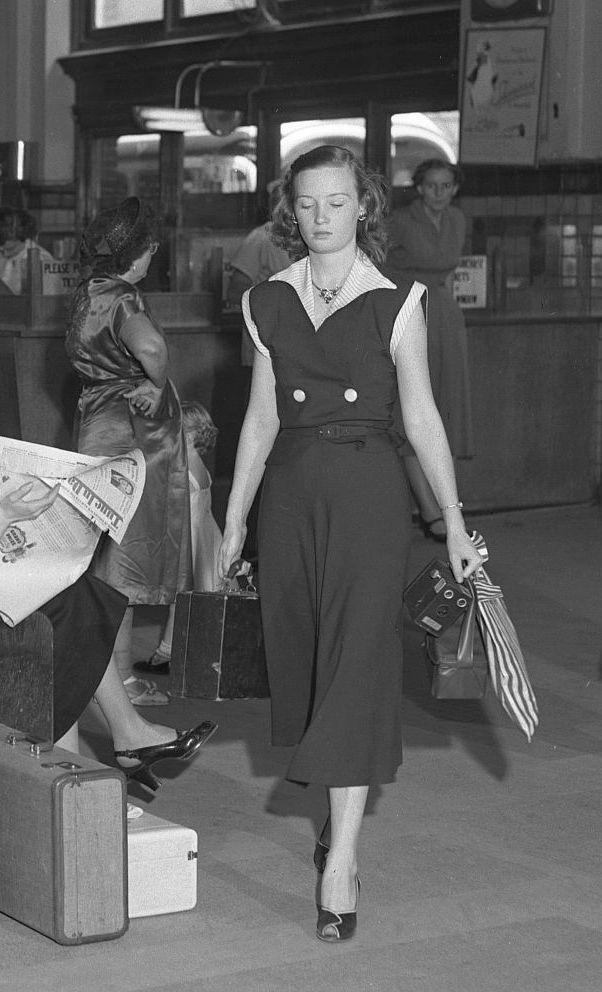
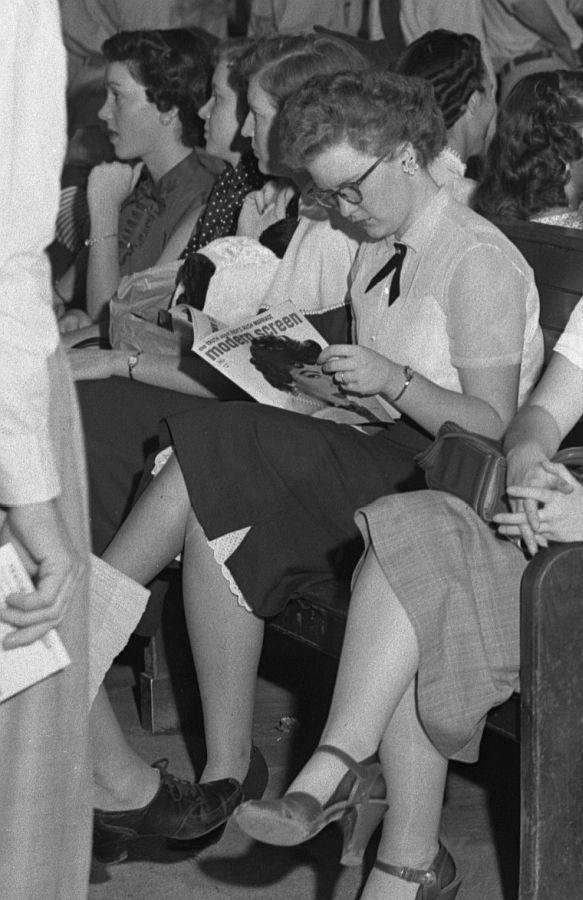
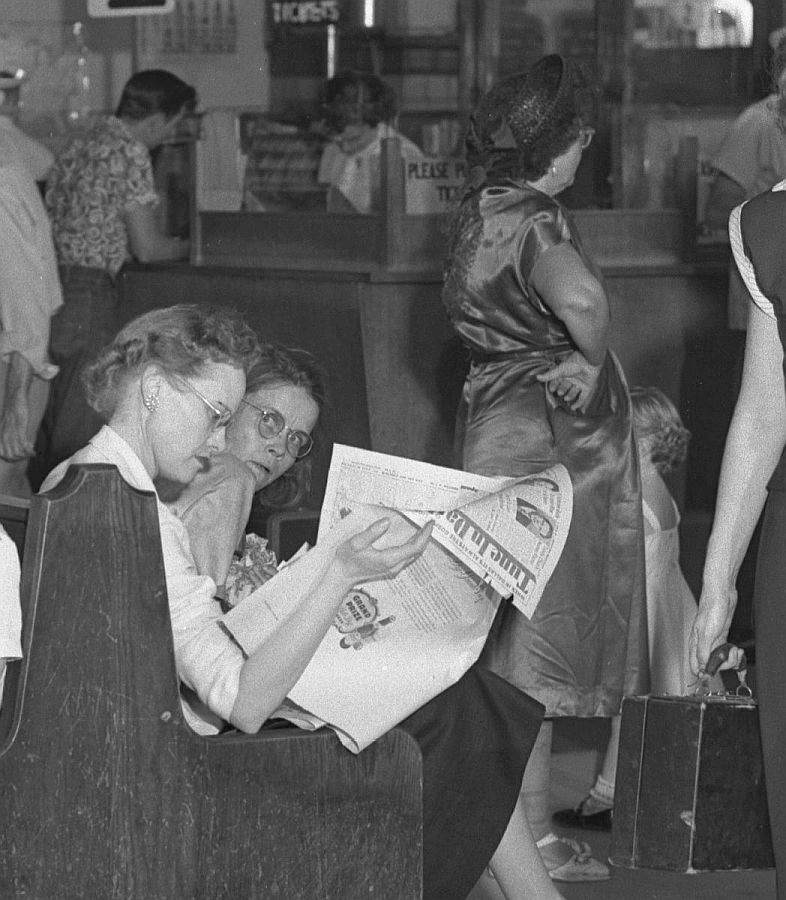
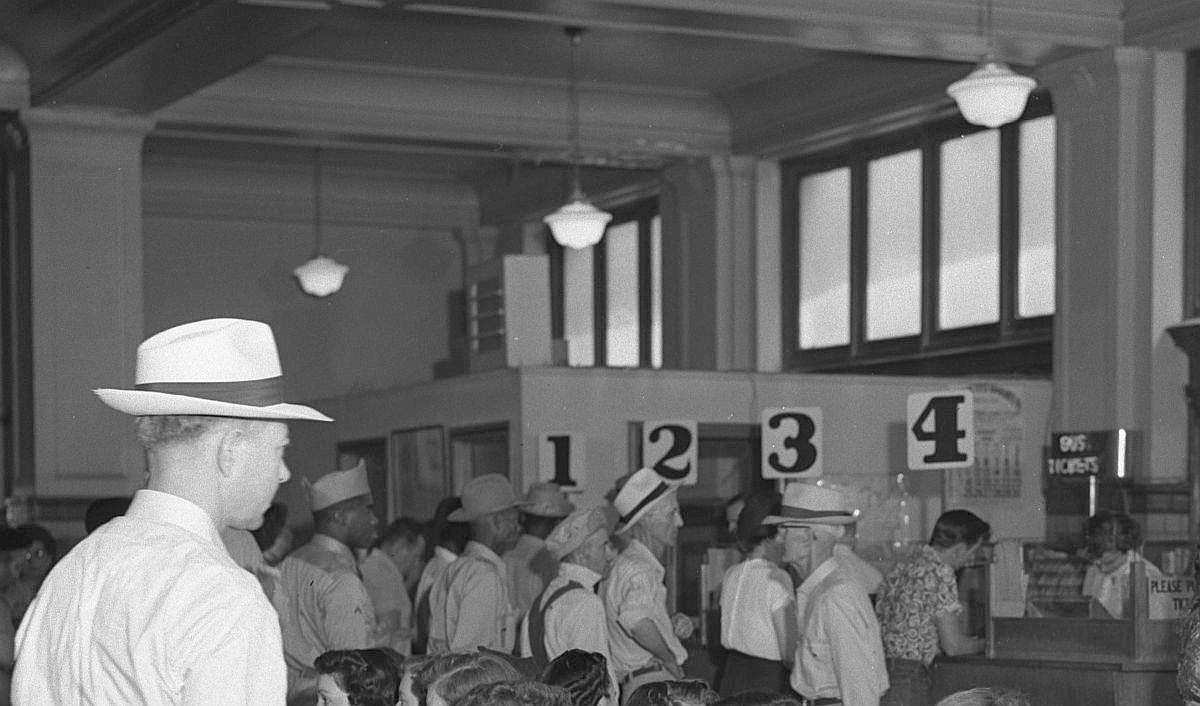
On August 31, 1952, Dallas photographer Denny Hayes took several photos of travelers waiting to be whisked away to someplace else. (With luck, someplace cooler.) These photos were taken at the Union Bus Depot in the Interurban Building. Let’s zoom in on this great people-packed photo.

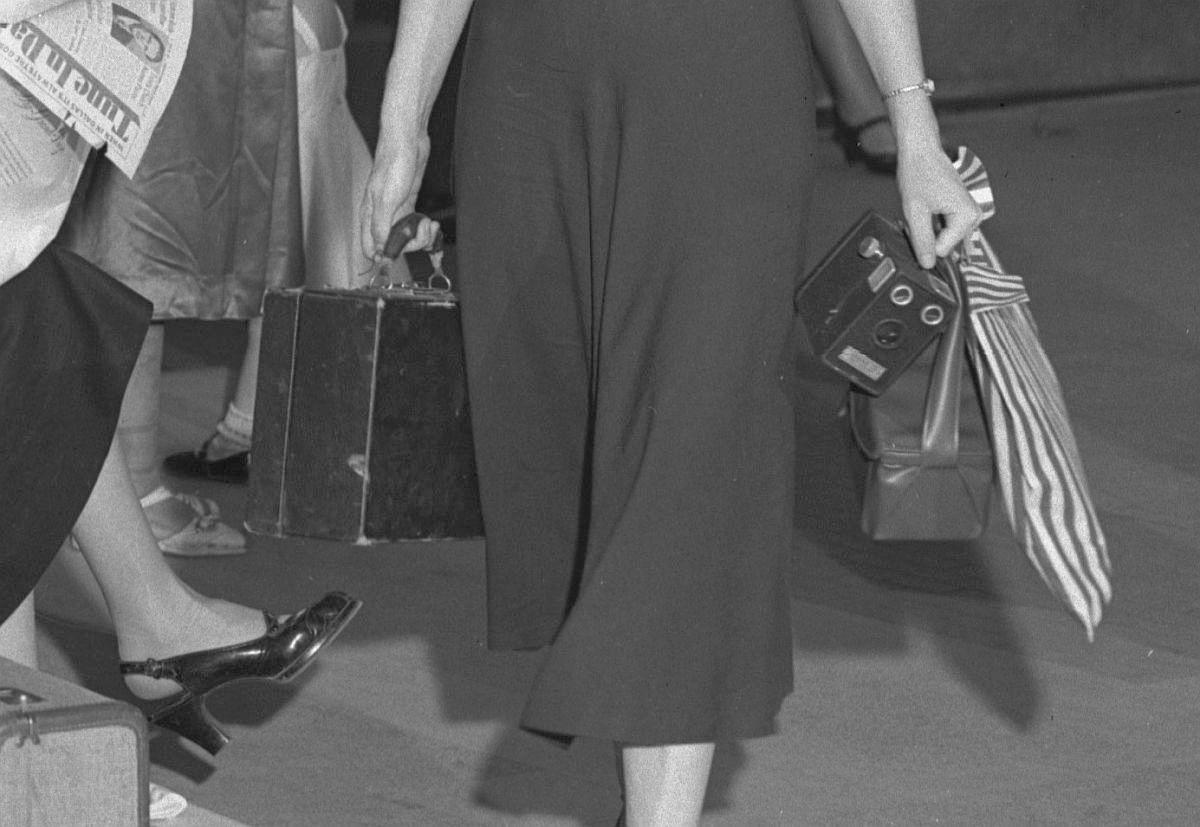
Everyone and everything pales in comparison to the young woman walking toward the camera. In her left hand she holds a box camera. She’s ready to take fun photos, if she ever gets out of that station.

labor-day_083152_denny-hayes_PA76-1-11420-002_woman

labor-day_083152_denny-hayes_PA76-1-11420-002_woman_camera

labor-day_083152_denny-hayes_PA76-1-11420-002_modern-screen

labor-day_083152_denny-hayes_PA76-1-11420-002_waiting

labor-day_083152_denny-hayes_PA76-1-11420-002_queue

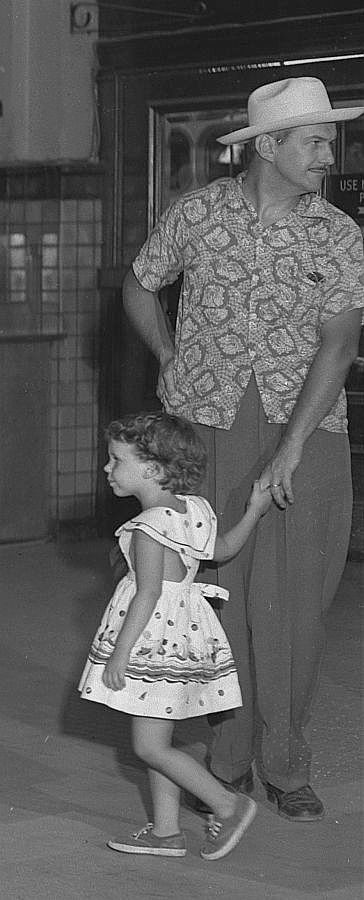
labor-day_083152_denny-hayes_PA76-1-11420-002_father-daughter

(If the man above looked any more like Harvey Korman, he’d be Harvey Korman.)

*

If you have the day off, I hope you enjoy it. And if you’re traveling somewhere, I hope you get there quickly!

***

Sources & Notes

Photo by Denny Hayes, from the Hayes Collection, Dallas Public Library, Dallas History and Archives; Call Number: PA76-1/11420-002.

See the companion post, “Labor Day Weekend, Union Bus Depot — 1952,” and see how many people made it into both photos.

labor-day_083152_denny-hayes_PA76-1-11420-002_web

*

Copyright © 2024 Paula Bosse. All Rights Reserved.
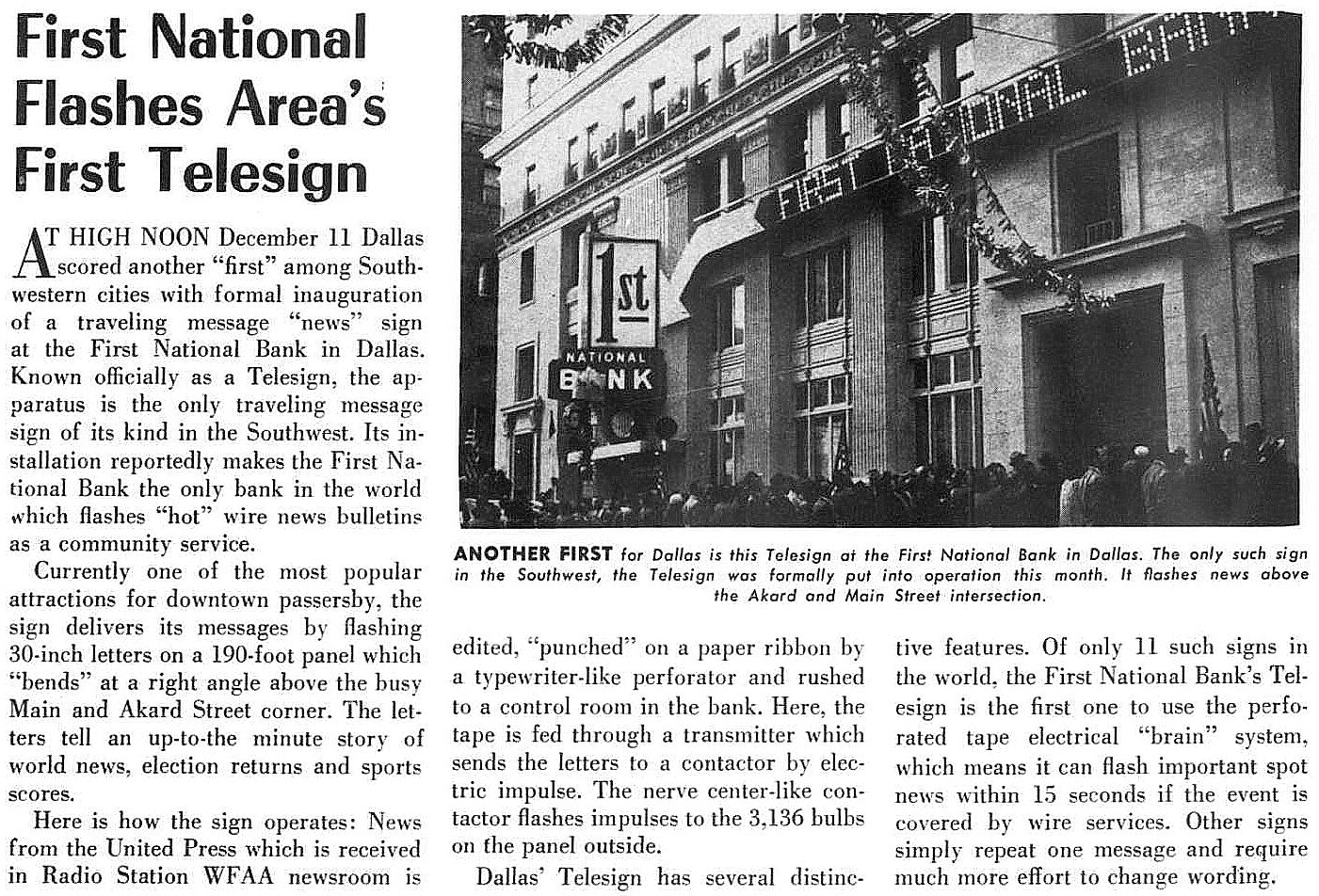
Telesign: Flashing News to Downtown Dallas — 1951

telesign_trusts-and-estates-mag_march-1953_photoAll the news that fits… on a moving sign

by Paula Bosse

Well, this is pretty interesting.

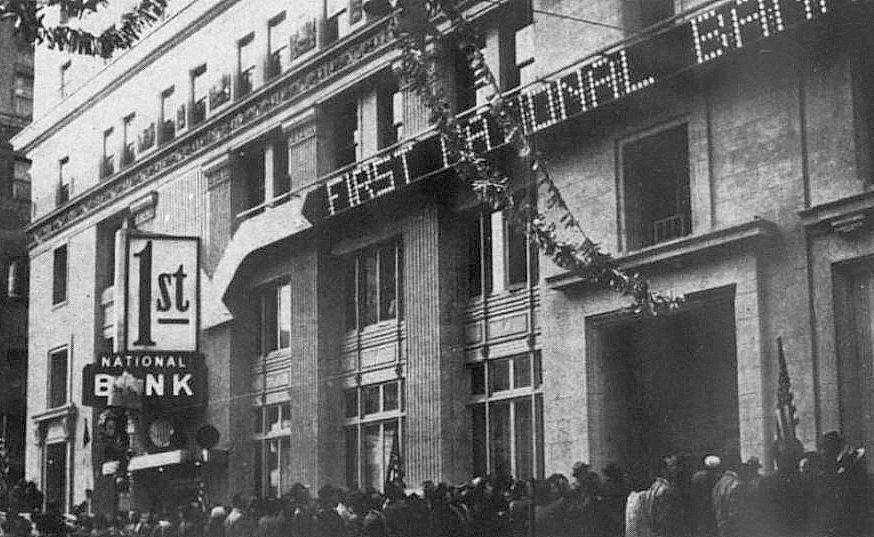
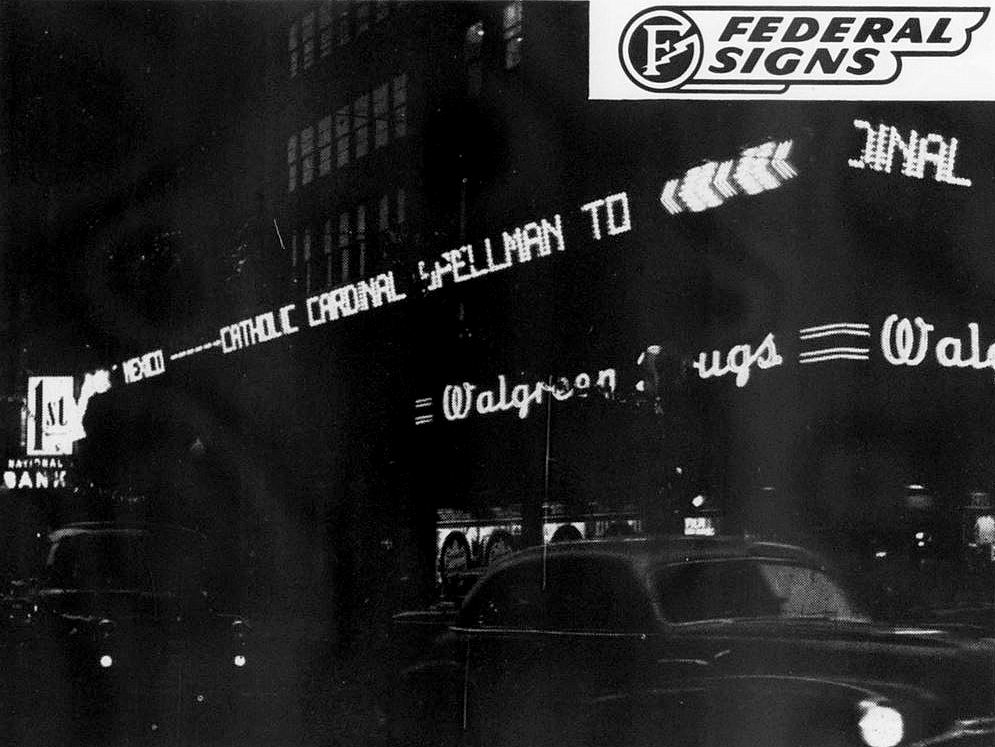
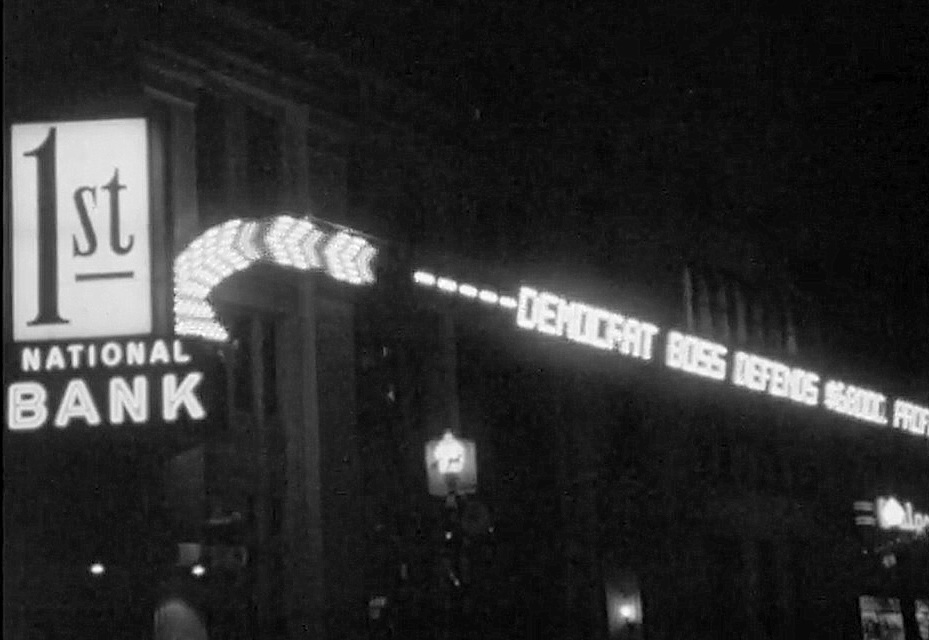
Once upon a time, downtown Dallas had one of those moving “tickertape” electronic news message signs. It debuted on the exterior of the First National Bank (and part of an adjacent building) at Main and Akard on December 11, 1951. It was Dallas’ version of the famous New York Times news-ticker-bulletin sign (“the Zipper”) in Times Square. The sign was comprised of 3,136 light bulbs; the crawling, flashing letters were 30 inches high, and the sign stretched 190 feet, with the moving message bending around the bank building. The “hot news” could be really “hot” — like only minutes old, unlike the NYT sign, which could take hours to get a constantly repeating message up and running. The sign flashed the news to downtown passersby from 7:30 AM until 10:30 PM.

This “traveling-message” sign was the creation of Irving Naxon, of the Naxon Telesign Corporation of Chicago. (Naxon, a prolific inventor, is perhaps best known as the man who introduced the Crock Pot slow cooker to the world.) See the 1929 patent application for his “traveling-message sign” here.

How did it work? Briefly, United Press wire copy received in the WFAA newsroom was punched onto a paper ribbon and then fed into a transmitter. Theoretically, a hot-off-the-wire newsflash could be racing across the Main Street sign in the amount of time it would take to type the message — seconds. (Read more about it the article at the bottom of this post.)

There is silent footage from December 1951 of the Telesign in action, with shots of inventor Irving Naxon demonstrating how his system works: see the WBAP-TV footage on the Portal to Texas History website here. (The accompanying news script is here.)

I don’t know how long this sign was operational, but I have a feeling it wasn’t very long — but at least through 1953. Imagine how frequently those 3,000 light bulbs burned out and had to be replaced! I had never heard of this sign — or seen photos of it — so this was a very interesting little discovery.

**

news-scroll_dallas-mag-dec-1951_photo-detDallas magazine, Dec. 1951

A 1953 ad for Federal Signs:

telesign_dallas-mag_jan-1953_advertDallas magazine, Jan. 1953

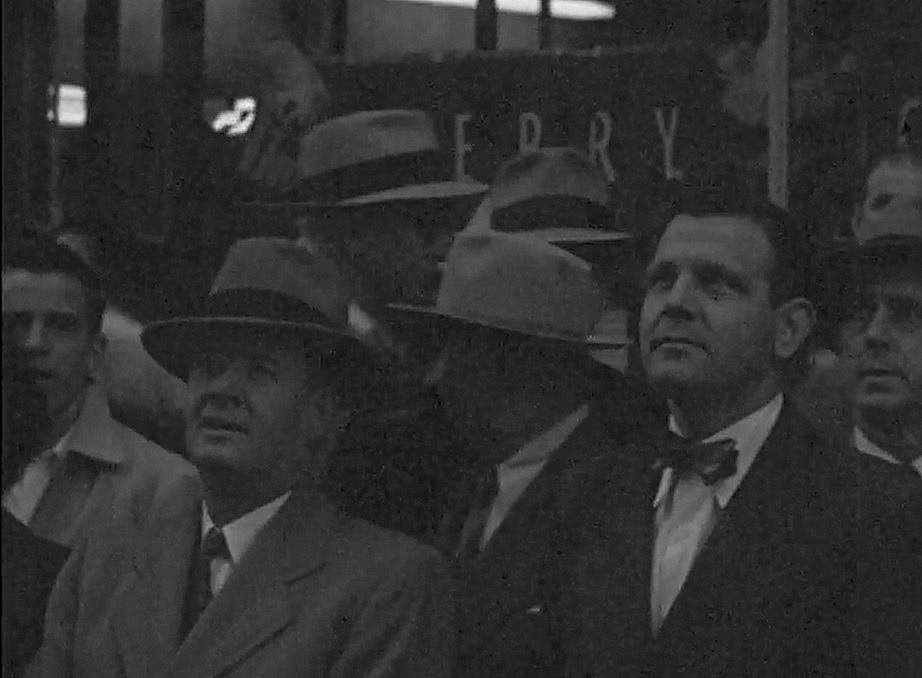
A couple of screenshots of the sign in action from a Channel 5 news clip (Dec. 12, 1951, Portal to Texas History). The first shows men in hats checking out the new sign as darkness falls:

telesign_screenshot_UNT_dec-12-1951-b

And here’s what they were looking at:

telesign_screenshot_UNT_dec-12-1951UNT Libraries Special Collections

How it worked (click for larger image):

news-scroll_dallas-mag_dec-1951_photoDallas magazine, Dec. 1951

**

Excerpts from a couple of trade magazine articles:

The First National Bank in Dallas, Dallas, Texas has recently installed this telesign containing 3,136 individually controlled bulbs which form letters corresponding to those punched on tape as it is fed through a cigar-box size transmitter. Following formal dedication ceremonies, the sign flashed its first message: “UNCENSORED NEWS IS THE BASIS OF FREEDOM.”

The Telesign is operated continuously from 7:30 A.M. to 10:30 P.M., bringing to the people of Dallas, as a public service, news bulletins highlighting the latest developments in the big stories of the day, local, national and international. (Bankers Monthly, Feb. 1952)

*

Bank Installs Telesign: The first fast-moving line of words — “UNCENSORED NEWS IS THE BASIS OF FREEDOM: — chasing each other across First National Bank of Dallas’ new sign, echoed the dedicatory statement of President Ben H. Wooten. The telesign is operated as a community service to give downtown crowds a constant flow of news reports. Second in length only to that of the New York Times, it is believed to be the first ever installed by a bank. (Trusts and Estates, March 1953)

***

Sources & Notes

Top photo is from Bankers Monthly, Feb. 1952.

More about this can be found in the following article from the Dallas Morning News archives: “Bank Unveils Its New Telesign, Latest Word in News-Flashing” (DMN, Dec. 12, 1951).

In a related vein — as far as giant outdoor news signs downtown — check out the 2016 Flashback Dallas post “How Dallas Used to Get Election Returns.”

telesign_trusts-and-estates-mag_march-1953_photo

*

Copyright © 2024 Paula Bosse. All Rights Reserved.
Rudolph Gunner: Dallas Bookseller and Emperor Maximilian’s “Best Friend”

books_rudolph-gunner_dallas-through-a-camera_1894_degolyer-lib_SMU238 Main, circa 1894

by Paula Bosse

For the past several years, I’ve been posting bookstore-related posts on the birthday of my late father, Dick Bosse, an antiquarian bookseller who began his career straight out of SMU at The Aldredge Book Store, a literary landmark to many, which he eventually ended up owning. This year’s offering goes back to 19th-century Dallas.
Above is a photo of the bookstore owned by Austrian immigrant Rudolph Gunner, located at 238 Main (later 1006 Main), between Poydras and Martin. Gunner (1833-1911) had, perhaps, one of the most impressive and colorful historical pedigrees of any Dallas resident. He served in the Austrian navy all over the world, but his most important service was as confidante and aide-de-camp to Emperor Maximilian and Empress Carlota of Mexico in the 1860s. That story is too big to tell here (Wikipedia is here to help), but it’s interesting that a man who was often referred to as “Maximilian’s best friend” eventually wound up in Dallas in 1885 and opened a bookstore, first on Elm Street, later on Main.

My father had a fascination with Mexico and used to talk about Maximilian quite a bit. I wonder if he knew Maximilian’s right-hand man lived out his days in Dallas, having spent several years as a bookseller?

books_rudolph-gunner_dallas-through-a-camera_1894_degolyer-lib_SMU_det_gunner

gunner-rudolph_photo

rudolph-gunner_1896-directory_adDallas city directory, 1896

*

In a sidenote, Gunner mentioned in several interviews that he had a LOT of historical documents and souvenirs from his military career serving in the Crimea, Egypt, Africa, and, especially, Mexico. I winced when I read this passage from an article by A. C. Greene in The Dallas Morning News (“Bookstore Owner Once Was Colorful General — He Headed Maximilian’s Mexico Palace Guard.” DMN, Apr. 18, 1993):

[A]t the time of his death in 1911 [his] home was at 1506 Fitzhugh. [His wife] was still living there, with a considerable collection of historic memorabilia, books, medals and military items, when the home burned, destroying everything but Gen. Gunner’s sword with the emperor’s crest.

Wow. All of that, gone. (And to answer my question above, I’m pretty sure my father would have known this, if only because he read A. C. Greene’s columns and probably even discussed this with him on a visit to the store.)

***

Sources & Notes

Top photo by Clifton Church, from his book Dallas, Texas, through a camera: a collection of half-tone engravings from original photographs (1894) — from the DeGolyer Library, SMU, here.

Read a first-hand account of Gunner’s time in Mexico in a Dallas Morning News article from Jan. 14, 1886 here; his DMN obituary (Aug. 25, 1911) is here.

Read previous Flashback Dallas articles on Dallas bookstores here.

I would love you to join me over on Patreon, where I upload Dallas history posts daily for subscribing members (as little as $5 a month!). If you would like to support what I do, check out Flashback Dallas on Patreon.

books_rudolph-gunner_dallas-through-a-camera_1894_degolyer-lib_SMU

*

Copyright © 2024 Paula Bosse. All Rights Reserved.