Flashback : Dallas

A Miscellany: History, Ads, Pop Culture

Category: Suburbs & Mid-Cities

White Rock Train Station (And a Helicopter Ride)

white-rock-station_portalWaiting on the Texas Chief…

by Paula Bosse

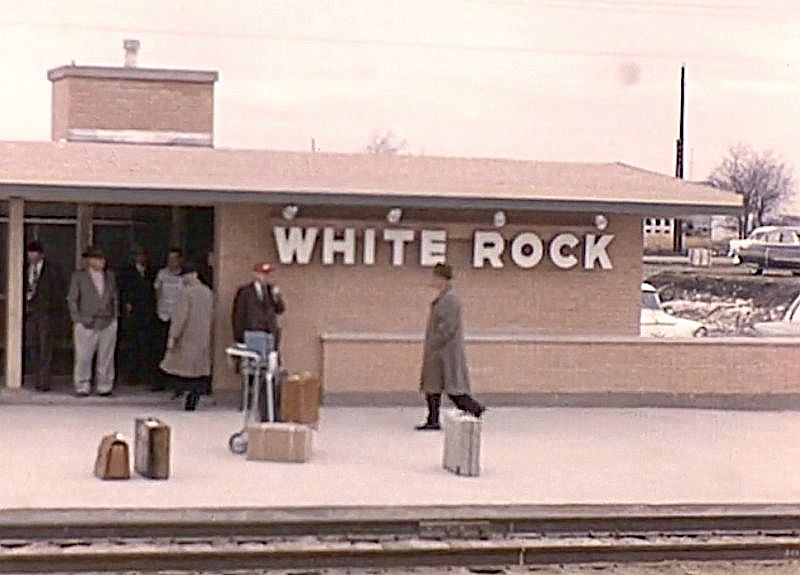
I was so happy to get word from UNT media librarian and film/video archivist Laura Treat this morning that she had come across film footage of White Rock Station, the first suburban train depot built in the Southwest by the Santa Fe Railway (in 1955). The footage is from the “Spotlight on North Texas” collection, a collaborative project between the University of North Texas Libraries and the Texas Archive of the Moving Image (TAMI) to preserve North Texas film history. This footage is from home movies donated by Mr. Peter Pauls Stewart.

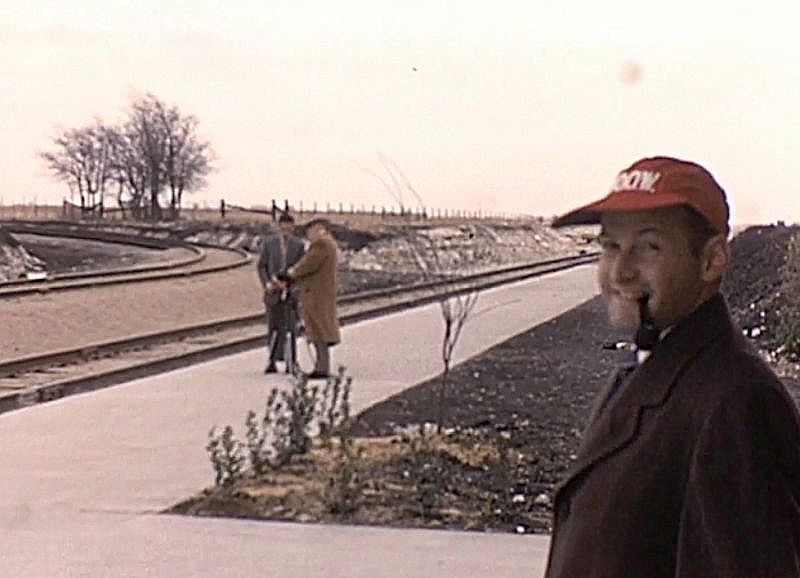
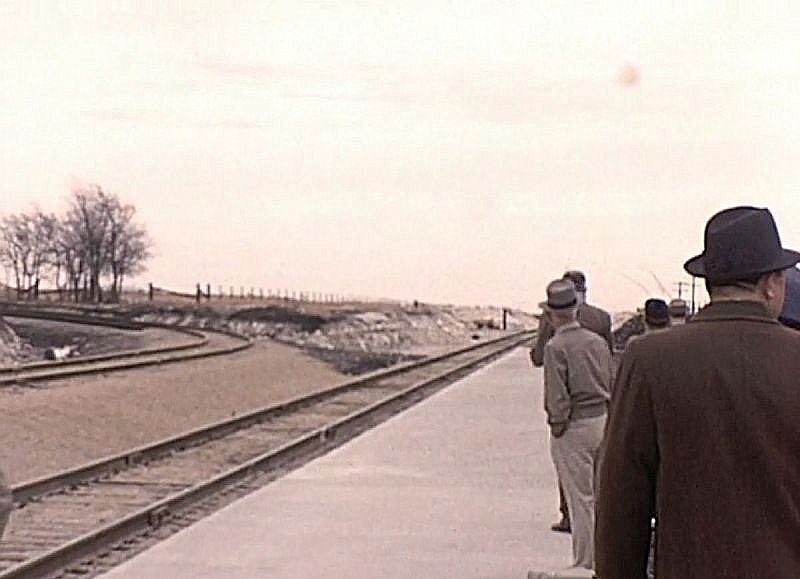
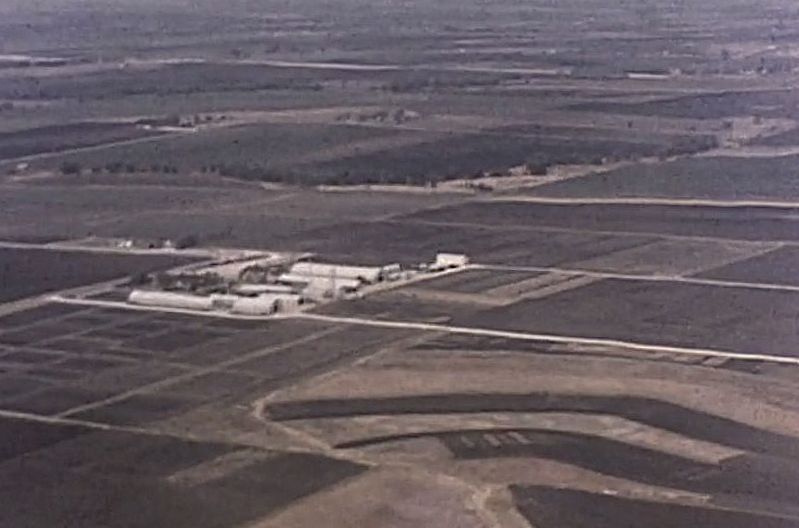
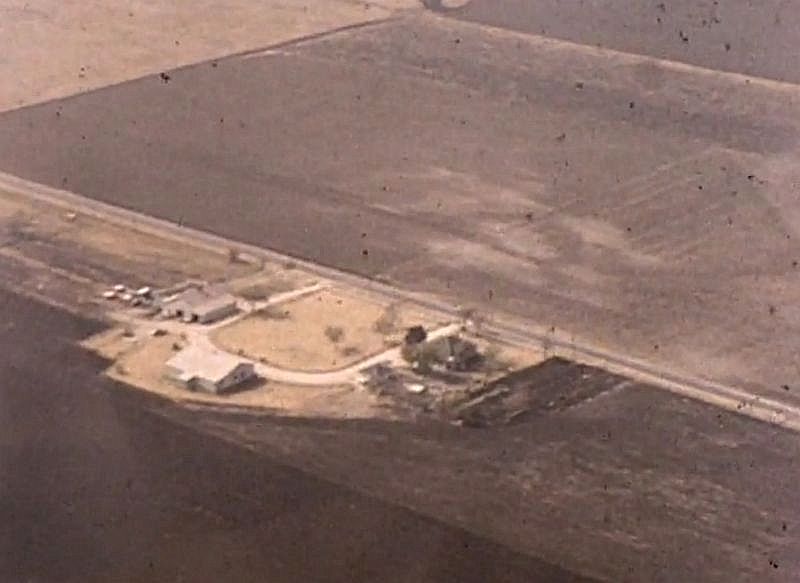
The 4-minute clip starts off with footage shot from a helicopter, showing brand new highways cutting through wide open land, followed by scenes of cute children and their cute dog, and then, beginning at the 3:00 mark, chilly-looking scenes of White Rock Station (which was located at about Jupiter and Kingsley on the edge of Garland, and which, today, looks disappointingly different) and a group of mostly men, some with cameras who appear to be train enthusiasts, waiting for the arrival of the Texas Chief. Doesn’t really look like Texas, does it? Below are some screenshots — watch the full clip on the Texas to Portal History site, here.

*
white-rock-station_parking_portal

white-rock-station_peter-pauls-stewart_portal

Above, two men set up a camera on a tripod as Mr. Stewart — the man who donated the footage — smiles at the camera and waits for the much-anticipated arrival of the train (which, be warned, is never actually seen in this film!).

white-rock-station_track_portal

Below a couple of aerial shots of the North Texas countryside.

helicopter_portal_1

helicopter_portal_2

UPDATE: In the comments below, Danny Linn writes about the aerial footage seen in the first minute or two of the clip: “… at the very beginning [of the clip is] a clear view of the old Highland Park Airport off Coit Road just north of Forest Lane. This portion of the clip also shows a fairly new Central Expressway near the future crossroad of LBJ Freeway.” Thank you, Danny! I assumed part of what we saw was in the LBJ-area, but wasn’t sure — another view of that area can be seen in a fairly startling photo of Preston and Valley View in 1958, here.

***

Sources & Notes

The main page of this clip (titled “The Peter Pauls Stewart Films, No. 5 — Helicopter and Railroad Rides”) can be found here, on the Portal to Texas History website; it is from the Spotlight on North Texas collection, UNT Media Library, University of North Texas. (Click picture to watch clip in a new window.)

I have to admit that I had never heard of White Rock Station until I wrote about it in 2015, a post which has been surprisingly popular. The post — “White Rock Station” — can be found here.

Click pictures to see larger images.

Thank you, Laura!

*

Copyright © 2017 Paula Bosse. All Rights Reserved.


Titche’s Discovers the Suburbs — 1961-1968

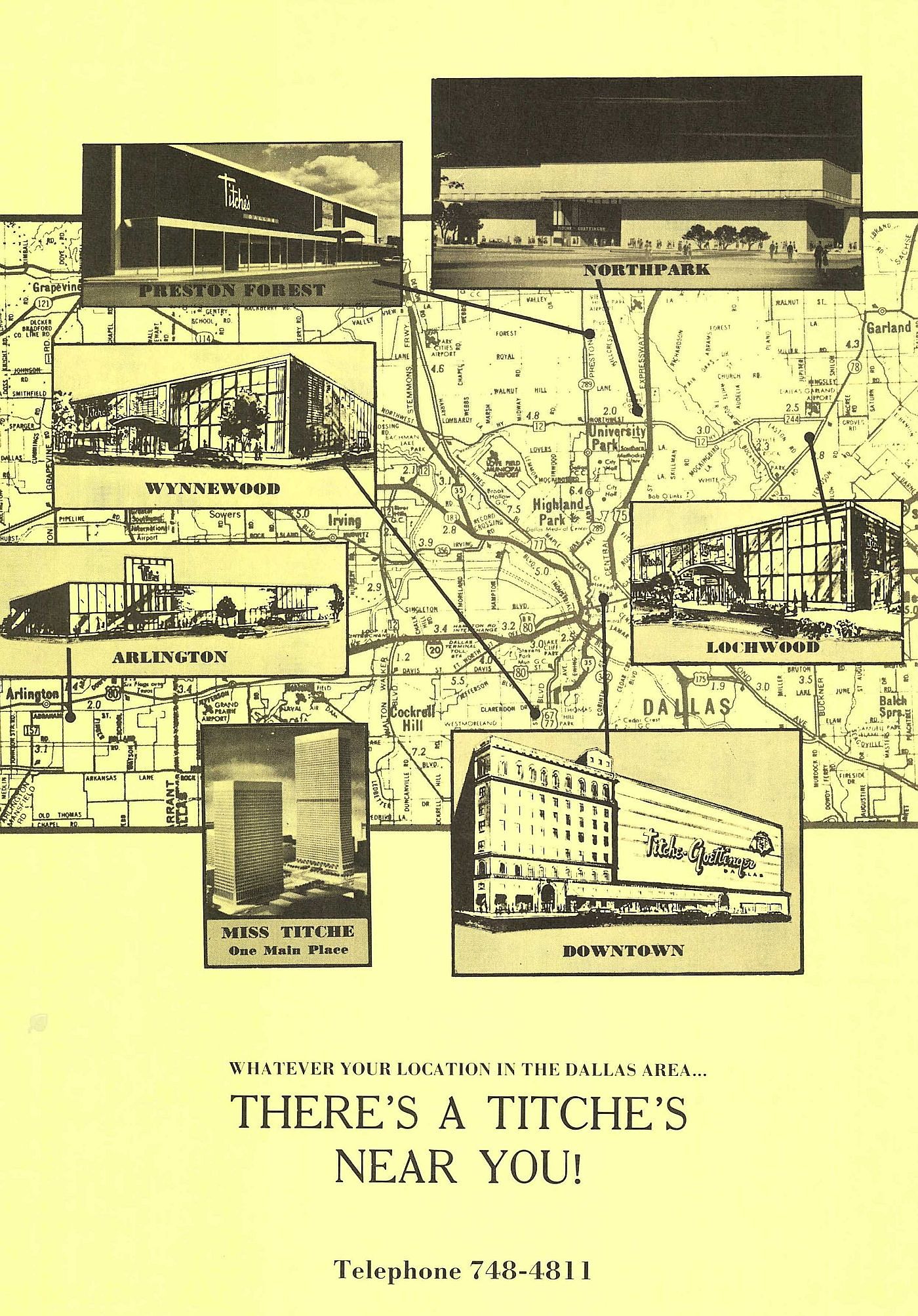
titches_dallas-stores_1969-directoryTitche’s has you covered… (click to see larger image)

by Paula Bosse

Edward Titche and Max Goettinger founded the Titche-Goettinger department store in Dallas in 1902, and in 1904 they moved into the new Wilson Building. In the late 1920s they built their own George Dahl-designed building at Main and St. Paul, which was greatly enlarged and expanded in 1955. The store was popular with downtown shoppers, and profits continued to rise. The next logical step was to open additional stores. It took a while (59 years), but in October, 1961 they opened three — three! — new suburban stores. How was that possible? Because Titche’s (or their then-parent company) purchased the Fort Worth department store chain The Fair of Texas, and several of its stores were re-christened as Titche’s stores (the others eventually became Monnig’s stores).

The ad above is from the 1969 Dallas city directory and shows that by 1969, there were seven Titche’s stores in the Dallas area. Titche’s bit the dust decades ago, and I have to admit that the only Titche’s store I actually remember ever being in was the one in NorthPark (and I might mostly be remembering Joske’s…). I had no idea about any of these other stores (other than the one at Main and St. Paul, which I wish I had been to!).

*

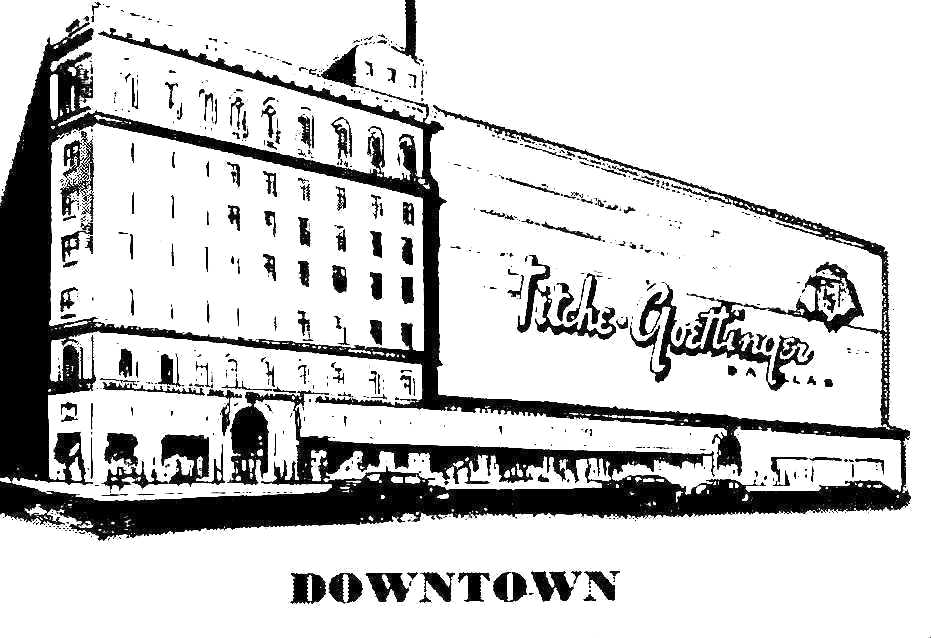
The oldest store in the ad above was the one on Main at St. Paul, still standing, still looking good (but, sadly, with that fab logo gone forever).

titches_1969-directory_downtown

*

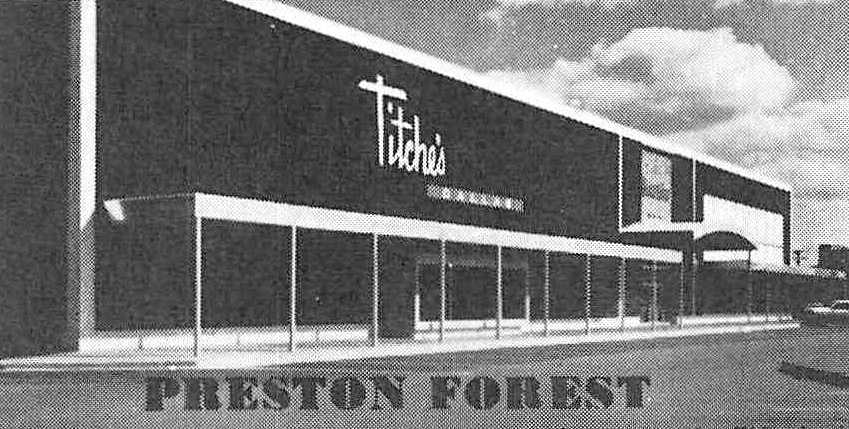
The second store was located in North Dallas in the Preston Forest Shopping Center, at the southeast corner of Preston Road and Forest Lane. When this opened as Titches’ first suburban store, the paint must still have been wet. It was originally built as a Fair of Texas store, with its opening scheduled for August, 1961. It was opened in October, 1961 as a Titche’s store — remodeled from the original Amos Parrish Associates of New York design (seen here, in a rendering). (The Fair version was much more interesting!)

titches_1969-directory_preston-forest

*

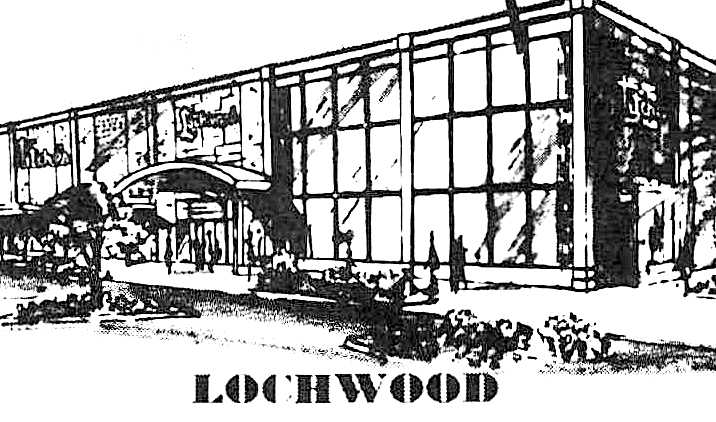
One week later (!), the next two stores opened on the same day: in the Wynnewood Shopping Village in Oak Cliff, and in the Lochwood Shopping Village on Garland Road in far East Dallas. These two stores had been Fair stores and had opened at the same time in August, 1960. The two drawings below look pretty much the same as the rendering of the pre-remodeled Preston Forest store (all designed by Amos Parrish Assoc.). (An interesting tidbit about the Lochwood location: when this store was built by The Fair of Texas — a department store with Fort Worth roots going back to the 1880s or 1890s — it was the first Fair store in Dallas. In honor of this hands-across-the-prairie moment of business expansion, a truckload of Fort Worth dirt was brought over and “mixed symbolically” with Dallas dirt at the 1959 Lochwood groundbreaking.)

titches_1969-directory_lochwood

titches_1969-directory_wynnewood

*

The Arlington store was also a former Fair store; it opened as Titche’s in July, 1963.

titches_1969-directory_arlington

*

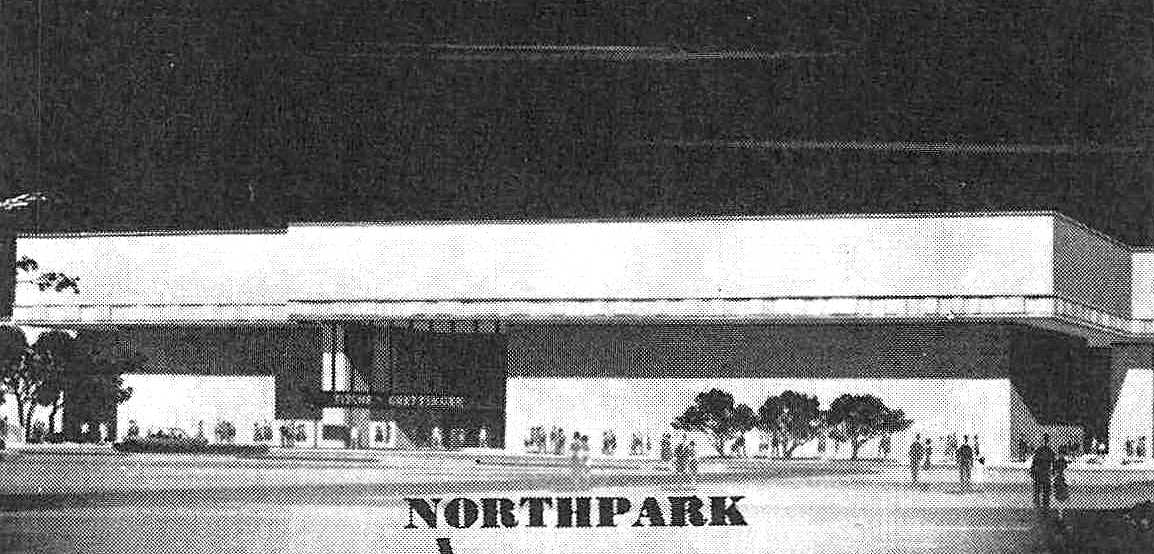
The NorthPark store — which occupied a quarter of a million square feet — was one of the first five stores to open in the brand new mall, in July 1965. NorthPark Center is known for its wonderfully sleek, clean, no-nonsense modern architecture (as seen below), but an early proposed Titche’s rendering from 1962 (seen here) looks a little fussy.

titches_1969-directory_northpark

*

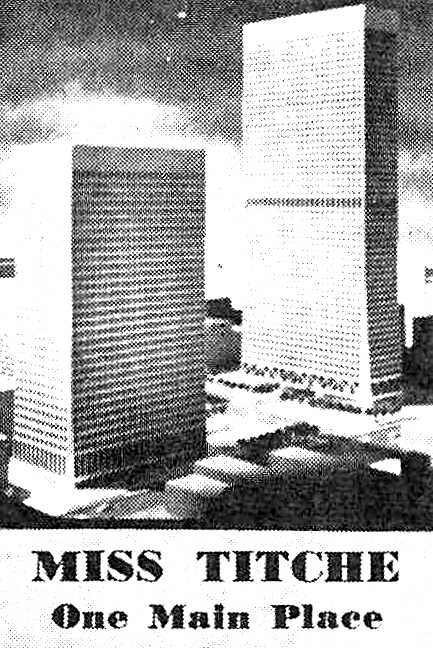
And, lastly, in this 1960s wave of expansion, a second downtown Dallas location was opened in the new One Main Place in December, 1968 in the form of “Miss Titche,” a concept-store created to appeal to “career girls” who worked downtown and enjoyed shopping during their lunch hours. It was located on the “plaza level” which sounds like it might have been part of the then-new underground tunnel system of shops. If newspaper ads are anything to go on, it looks like Miss Titche managed to hang on until at least 1975.

titches_1969-directory_one-main-place

*

Titche’s continued opening new stores into the 1970s, but in August, 1978, it was announced that Titches’ parent company, Allied Stores Corp., was changing the names of all Dallas-area Titche’s stores to “Joske’s.” The nine Titche’s stores operating until the changeover were the flagship store downtown, Preston Forest, Lochwood Village (which became The Treehouse in 1974), Wynnewood, Arlington, NorthPark, Town East, Irving, and Red Bird.

And, just like that, after 72 years, the name of one of Dallas’ oldest department stores vanished.

titches_logo_1963

***

Sources & Notes

Ad and details from the 1969 Polk’s Greater Dallas City Directory.

More on Titche-Goettinger can be found at the Department Store Museum, here.

Images larger when clicked.

*

Copyright © 2017 Paula Bosse. All Rights Reserved.


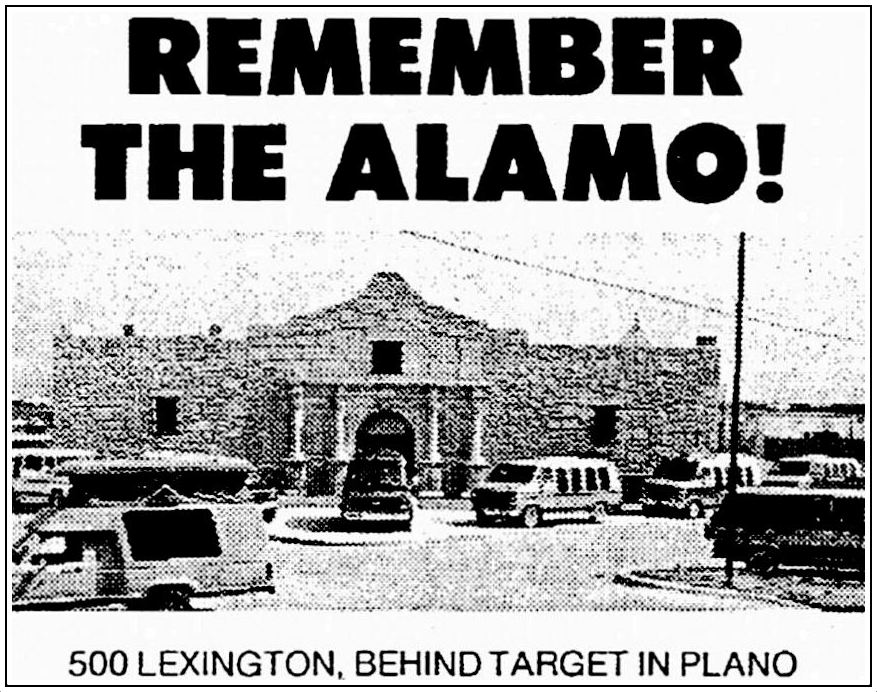
Remember the Alamo! — In Plano, Behind the Target

alamo-plano_dmn_051284-photoNever forget… (click for larger image)

by Paula Bosse

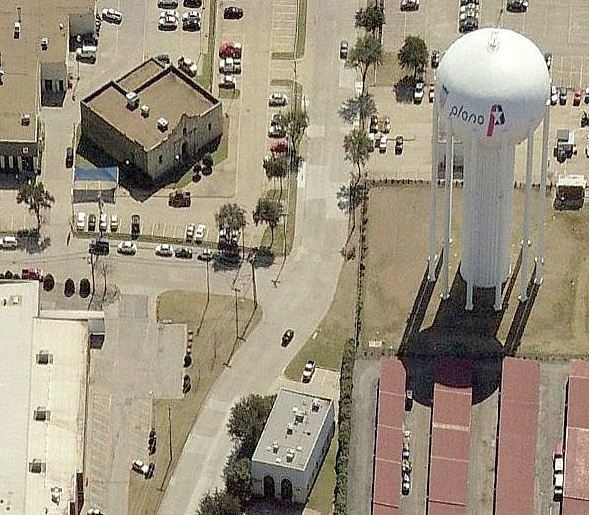
Today is Texas Independence Day. This time last year after posting a photo of the Alamo somewhere, I was informed that there was, in fact, an Alamo replica right here in DFW. I knew about the one(s) in Fair Park, but Plano? Yep, near 75 and Parker Road, at the corner of Lexington and Premier, just west of the highway. See a southward-looking aerial view on Google here; below is the same view, from Bing.

alamo-plano_birdseye-bingBing Maps

Here it is at street level:

alamo-plano_bingBing Streetside

So, um, why is that there?

Not being up on my Plano history, and never having been aware of this, it took me a long time to find anything about it. Which is pretty surprising, because you’d think there would be all SORTS of articles about a very large replica of one of the most famous structures in the world (yes, I’m going to say “in the world”), standing right here in the Metroplex. And it’s been standing here for at least 35 years! I managed to find a couple of ads and an article about the building — it had started out as an arcade called the Alamo Fun Center and later became part of a car dealership — but I could  never find out who built it or why. I thought I’d come back to it in a year — so I could post it on Texas Independence Day — and see if I could find more, looking with fresh eyes. So I tackled it again today, and, glory be, I’ve just discovered that Rick Saigling wrote a piece for Plano Magazine last November titled “Remember the Alamo Fun Center” which answered all of my questions (and had photos of the building when it was new).

The Plano Alamo was built in 1982 by brothers-in-law Nathan White and Gene Cason and other investors as a “fun center” to house a Texas-themed arcade featuring video games, miniature golf, etc. While popular with Plano kids, the Alamo Fun Center was not a successful venture, and it shut its ornately carved doors after only a relatively short time in business. There you have it. Thank you, Rick. I now have closure.

The earliest (only?) mention I found of the “Fun Center” was the ad below, which appeared in The Wylie News a short time before its grand opening in the summer of 1982. The ad seems to indicate that the name of this “western theme park” is Lone Star Recreation Park and Alamo Fun Center (click to see a larger image).

alamo-fun-center_wylie-news_072982
The Wylie News, July 29, 1982

A few months after the Alamo Fun Center opened, Larry Lange Cadillac moved to its new location on the adjacent property. I’m not sure exactly when it closed, but the Plano Alamo was taken by the advancing forces of Larry Lange Cadillac in 1983 or 1984. For whatever reason, the building remained (what Texan is going to demolish the Alamo?) and was incorporated into the Larry Lange business plan.

alamo-plano_dmn_062683-larry-lange-ad-det
June, 1983

In May, 1984, the ad below announced the grand opening of the Larry Lange Adventure Center — the Alamo had been emptied of its batting cages and pizza ovens and had been transformed into an “Indoor Van Showroom Which is ‘As Large as Texas’!” (That doesn’t seem to have lasted very long.)

alamo-plano_dmn_051284-ad
May, 1984

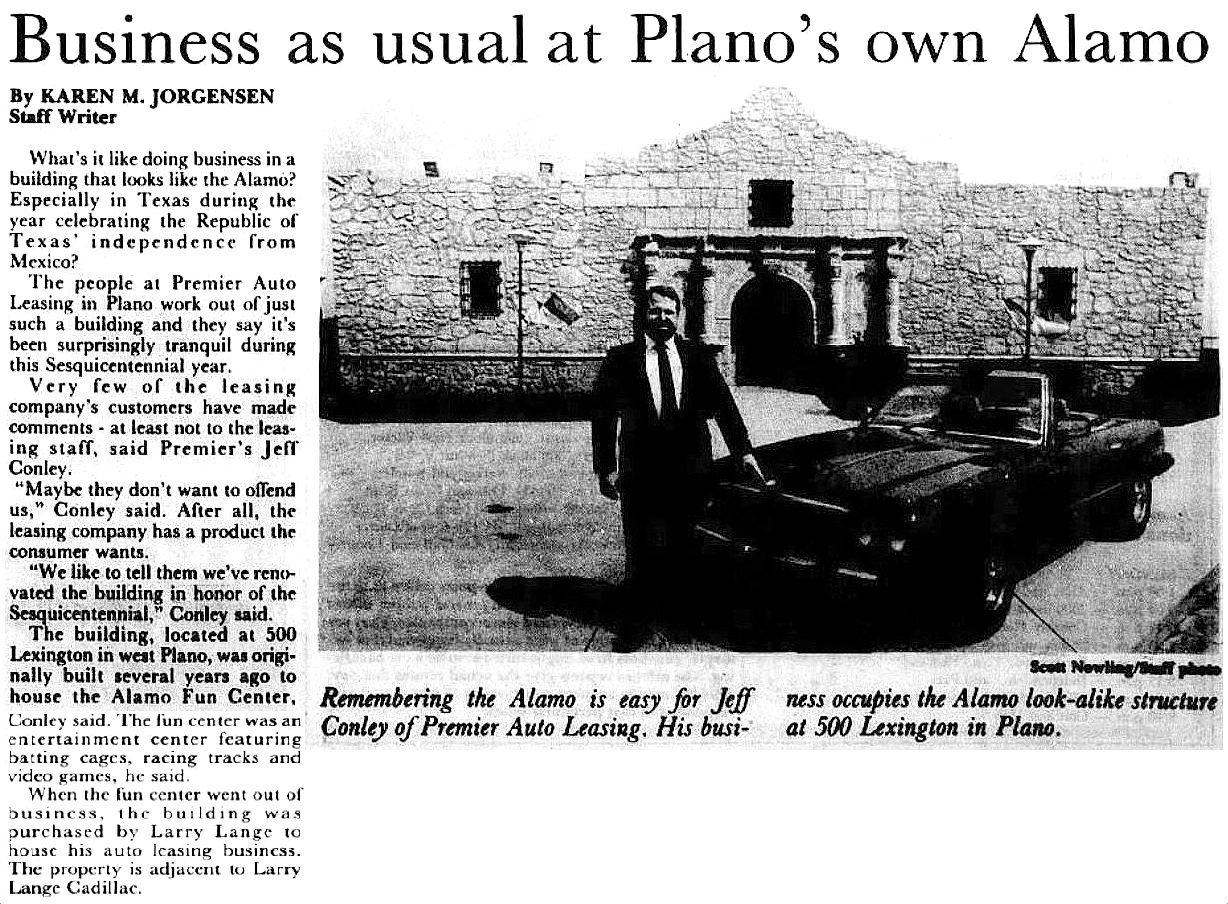
Two years later, in 1986 — the year of the Texas Sesquicentennial — The Plano Star Courier checked in with the then-current occupants of the hometown Alamo, Premier Auto Leasing, to see what it was like working in the Alamo. In Plano. An employee made the impossible-to-believe statement that very few people ever actually commented on the fact that they were leasing their vehicle from a company that occupied a building shaped like the Alamo.

alamo-plano_plano-star-courier_072286
Plano Star Courier, July 22, 1986

In 1999, Diane Jennings of The Dallas Morning News wrote a story on “mock Alamos” around the state. She checked in on the Plano location, then owned by Crest Cadillac, and found it was being used as a warehouse. The general manager, Michael Coston, was not a fan of the building for several reasons, not least of which was the replica’s design.

As a native Texan and history buff, he worries that the inaccurate construction may “deface the fame of the how-many-ever we say gave their lives there.” He is particularly irritated by the parapet, the rounded hump over the door, which most people associate with the Alamo facade, but which was actually added by the U.S. Army decades after the battle. (DMN, Feb. 28, 1999)

Today Crest Cadillac appears to have forsaken Plano for Frisco, but the property is still in the Crest auto family — it’s now occupied by Crest Volvo. But what of The Alamo? It’s now the home of Crest Collision, a body shop.

So there you  have it, the story of Plano’s Alamo.

Instead of rushing out to get a Mirabeau B. Lamar tattoo to show my Texan-ness in these waning hours of Texas Independence Day, I’ve decided instead to post a few photos of the real Alamo, which, strangely enough, was also a neighbor to a car dealership, the Clifton George Ford Motor Co. Remember the Model-T!

alamo_clifton-george-ford_san-antoniovia Texas Transportation Museum

alamo_clilfton-george-ford_e-o-goldbeck_ransom-center_ca-1918via Harry Ransom Center, University of Texas

alamo_herpel-gillespie-ford
via Texas Transportation Museum

***

Sources & Notes

Top ad from May, 1984.

Second-from-last photo by an unidentified photographer, circa 1918, from the  E. O. (Eugene Omar) Goldbeck Photography Collection, Harry Ransom Center, The University of Texas at Austin; more information and a larger image may be found here.

Rick Saigling’s Plano Magazine article “Remember the Alamo Fun Center” (November 21, 2016) is here. It includes several photos of the Alamo Fun Center in 1982/83 and interviews with a former owner and employee. See a (large!) close-up of the unexpectedly ornate stone façade of the Plano Alamo here. (If you’re interested in Plano history, Rick’s also written a nice nostalgic piece, “I Remember When Plano Was a Sleepy Town,” here.)

*

Copyright © 2017 Paula Bosse. All Rights Reserved.

“Enemy Aliens” and the WWII Internment Camp at Seagoville

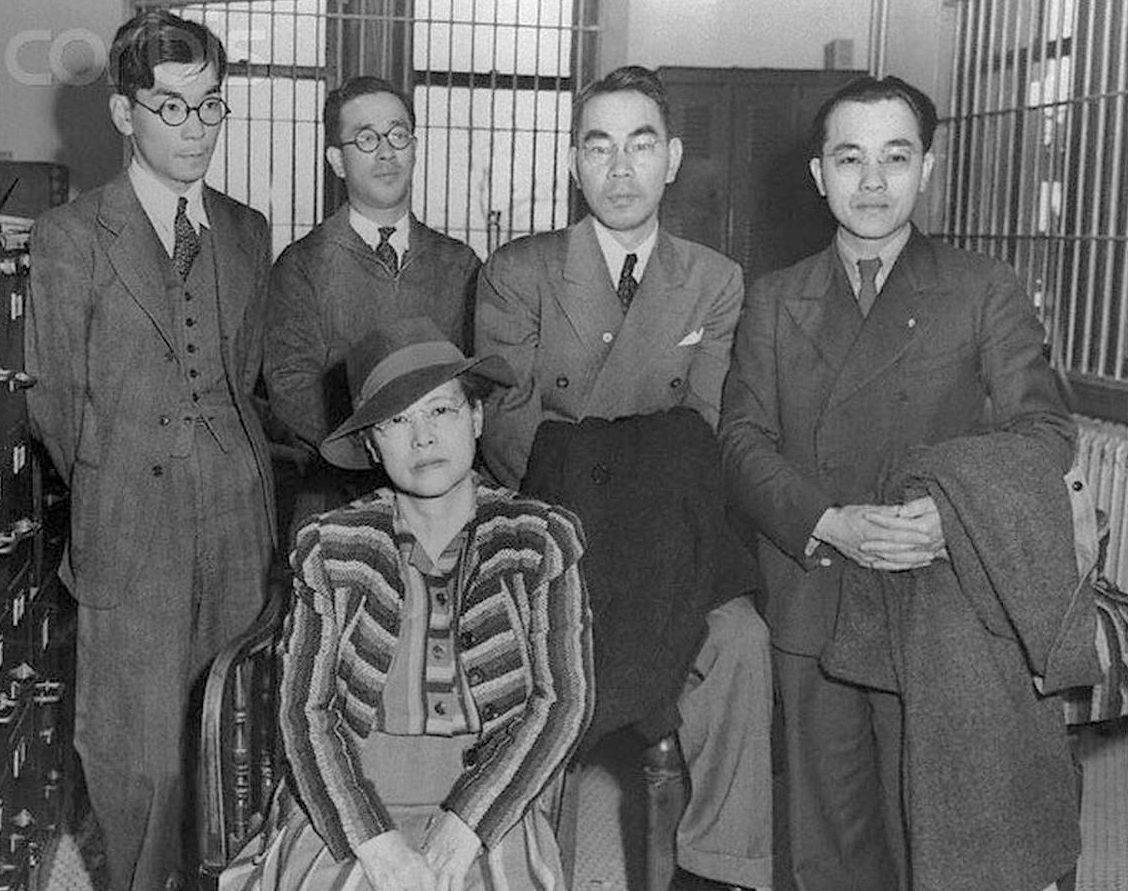
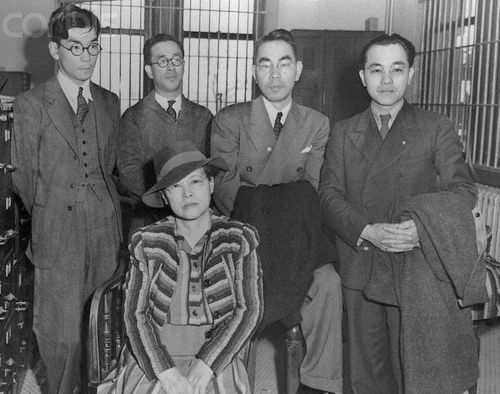
japanese_dallas_wwii_corbisDallasites rounded up the day after Pearl Harbor… (click for larger image)

by Paula Bosse

I think most of us know about the sad period in American history of Japanese internment camps when, following Japan’s bombing of Pearl Harbor, the United States “interned” men, women, and children of Japanese descent (often including whole families, some of whom were born in America or were naturalized American citizens). I’ve always thought of these camps as being in the western part of the country. I had no idea until just a couple of days ago that there were three “enemy alien” internment camps in Texas — and one of them was in Dallas County.

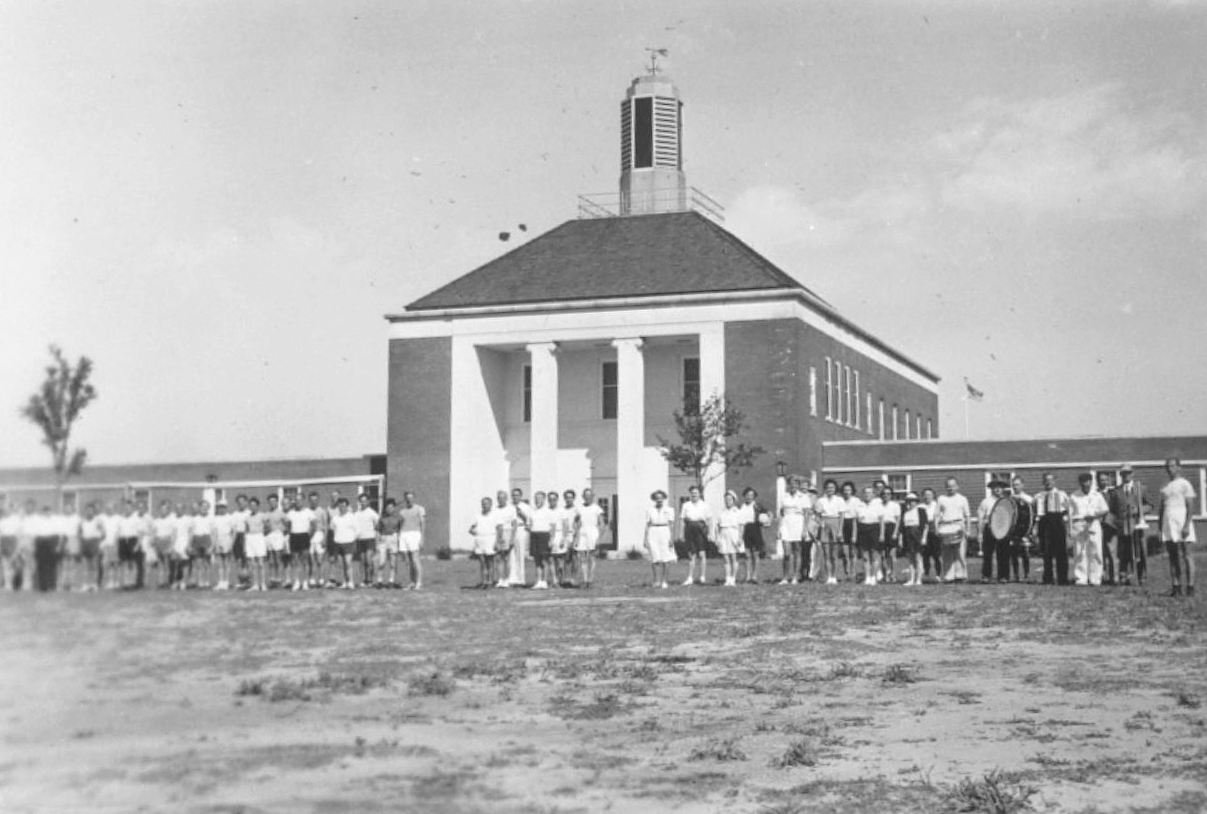
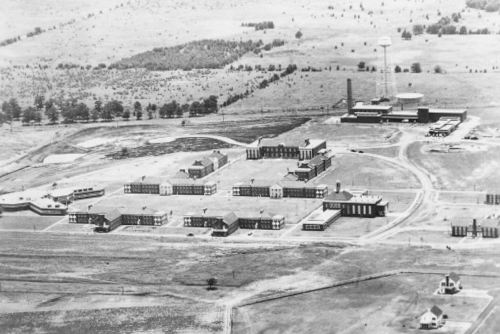
For a full history of the camp in Seagoville — which is a mere 20 miles southeast of Dallas — there are several links at the bottom of this post. But, briefly, the “camp” was originally built as a federal women’s prison in 1938 on 800 acres of farmland. The United States entered World War II as a result of Japan’s bombing of Pearl Harbor on Dec. 7, 1941, and, suddenly, authorities began scrambling to round up enemy aliens living in the U.S.: people born in countries we were now at war with — primarily those of Japanese, German, and Italian descent — were rounded up and questioned. Many were arrested, and some were interned in camps where they were basically kept prisoner for the duration of the war. Even though the bulk of the initial internees were, oddly enough, from Latin America (most of them Japanese, most sent from Peru), there were also several who, before the war, had been living in the United States for decades without any problems. (See a dizzying number of links at the bottom of this post for more on the Texas internment camps at Seagoville, Kenedy, and Crystal City.)

Below, the Seagoville camp.
seagoville_aerial_thc

seagoville-internment-camp_ut-inst-texan-cultures

In December, 1941, authorities in every city in the country were swooping down on foreign nationals (or sometimes just people who looked foreign or spoke with an accent), hauling them in for questioning, often arresting them for nothing more than the fact that they had been born in another country. Dallas was certainly no exception. Unsurprisingly, immediately following the bombing of Pearl Harbor, Dallas’ few Japanese residents were rounded up. All ten of them. The photo at the top shows five of the first detainees, at the Dallas jail.

Most of Dallas’ Japanese residents worked for the Japan Cotton Company, an important cotton broker which had occupied space in the Dallas Cotton Exchange building since the late 1920s. (For a bit of weird trivia, the father of famed gossip columnist Liz Smith was working as a cotton buyer for the company during the war, commuting to work from Fort Worth.) If they weren’t working for the Japan Cotton Company, they were probably members of two Japanese families with long ties to Dallas: the Muta and Sekiya families, owners of the respected Oriental Art Company since 1900.
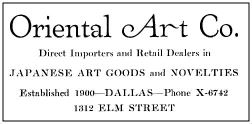
oriental-art-company_1921-ad1921 ad

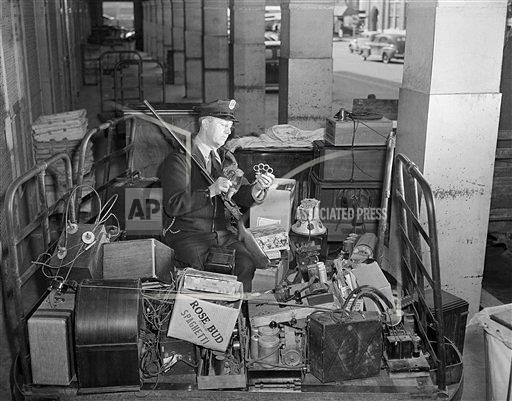
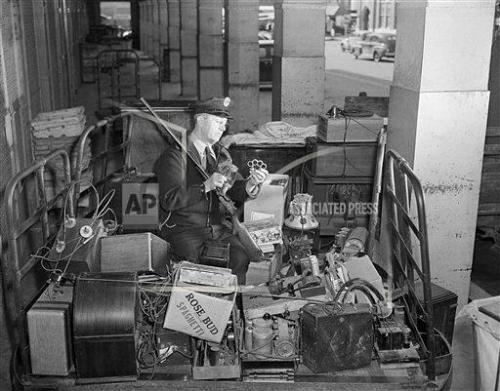
In February, 1942, the Associated Press photo below appeared in several newspapers, along with the following caption: “This is a portion of the contraband radios, cameras, guns, that were seized during all-night raids on residences of enemy aliens in Dallas County, Texas, by federal and local officers. Scores of aliens also were taken into custody.”
wwii_aliens_AP_1942

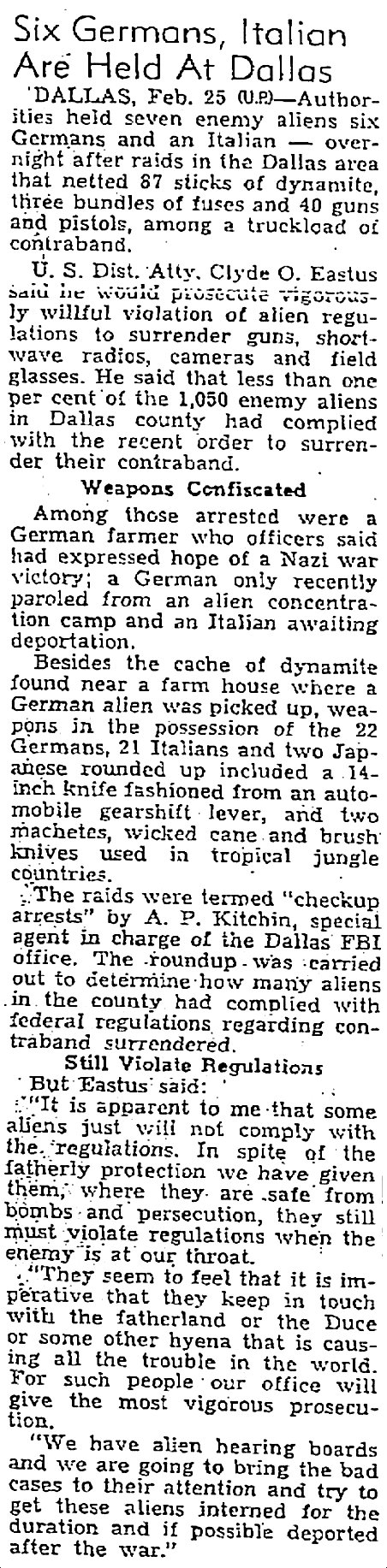
wwii-alien-roundup_lubbock-avalanche_022642
Lubbock Avalanche, Feb. 26, 1942 (click to read)

The first internees arrived in the Dallas area in April, 1942. The group was comprised of 250 women and children (“citizens of the Axis nations”) who had been arrested in Panama. They were interned in Seagoville, displacing the federal women prisoners who had previously been held there — they were transferred to a prison in West Virginia.

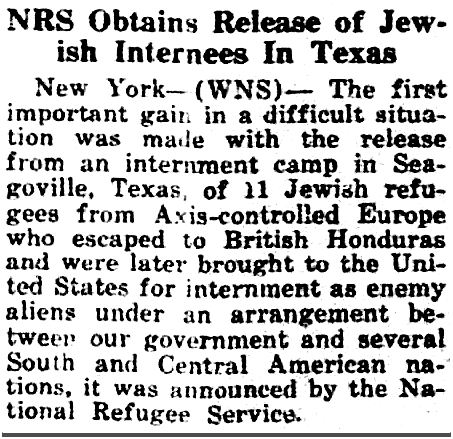
Jewish refugees sometimes found themselves tossed into enemy alien internment camps — simply because they had fled homelands which happened to be “Axis-controlled” countries with which the U.S. was at war (even though is seems highly unlikely that a German Jew would be an ardent Nazi sympathizer, gathering classified information to send the Führer’s way). Yes, Seagoville had detainees from all over the place. It was quite the melting pot. There was even a Bavarian princess in there. I wonder if a single person in that camp, held against his or her will for months and years, posed any actual threat to Allied forces.
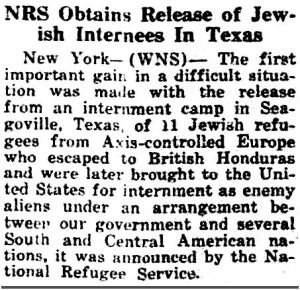
seagoville_wwii_wisconsin-jewish-chron_milwaukee_052843
Wisconsin Jewish Chronicle, May 28, 1943

Germans and Italians were able to “blend in” to American society, but Asian men and women had a harder time and were more often harassed. The person who seems to have most disliked and distrusted Japanese people was top Dallas police detective Will Fritz — in fact, The Dallas Morning News called Fritz “one of Dallas’ most enthusiastic Jap-haters” (DMN, Feb. 17, 1943). Let’s just say that Capt. Fritz wasn’t going to be sending the wartime Welcome Wagon to any prospective Dallas residents of Japanese descent.

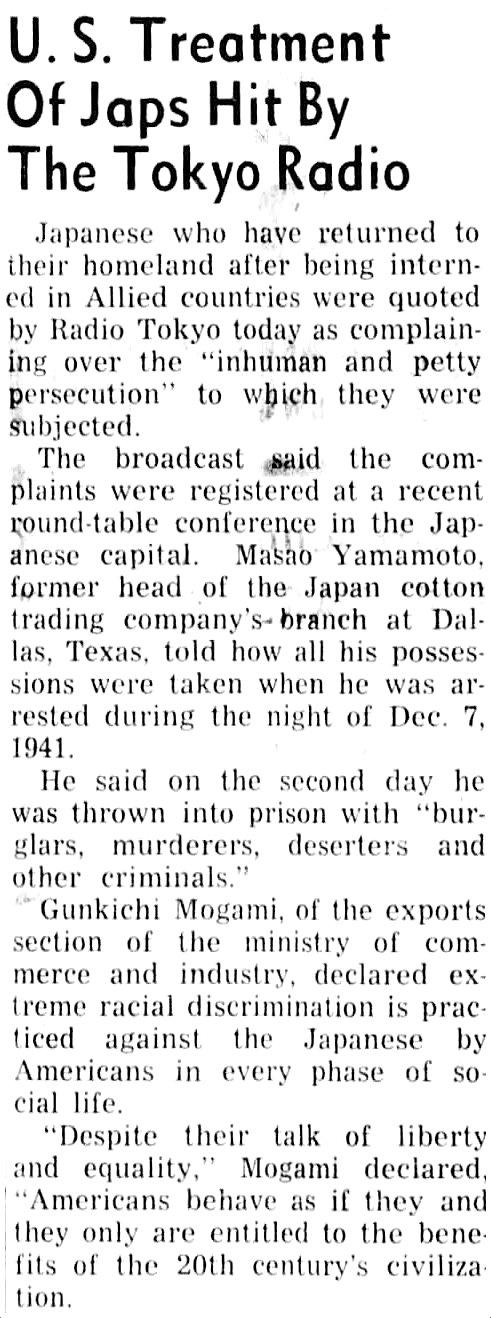
One Dallasite who was pretty angry and unhappy with the situation was Masao Yamamoto, an executive with the Japan Cotton Company who had lived in Dallas since 1928. He and his wife and two young sons (one of whom was born in Dallas) were living what appears to have been a nice life in the M-Streets when they were “detained.” Ultimately, the Yamamoto family was deported and sent to Tokyo, six months after the photo at the top of this post was taken (Mr. Yamamoto is the third from the left in the top photo) — they were part of a sort of prisoner swap.

After his deportation, Mr. Yamamoto complained to the Japanese press about his treatment in Dallas, where he said he was arrested, relieved of his possession, and thrown in jail with “burglars, murderers, deserters and other criminals.” (Click to see larger image.)
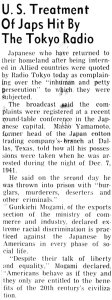
yamamoto_santa-cruz-sentinel_021843UPI wire story, Feb. 16, 1943

Will Fritz just about had a seizure when he heard of Yamamoto’s complaints, insisting that he was not mistreated and that he was a dangerous enemy agent: “Any apology that may be due should go to the murderers and burglars instead of Yamamoto. […] He was deported for we have absolute proof he was an agent of the Imperial Japanese Government and that his cotton-buying story was just another Jap blind. I consider him one of the most dangerous of enemy agents” (DMN, Feb. 17, 1943). (This is from the article which described Fritz as “one of Dallas’ most enthusiastic Jap-haters.”)

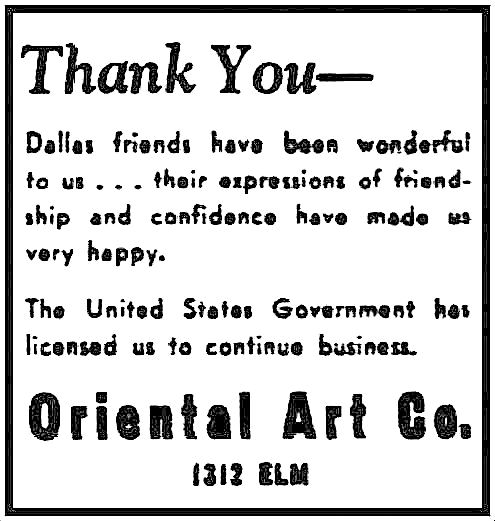
But even in the midst of all this paranoid nastiness, there were occasional heartwarming moments. After the attack on Pearl Harbor, the Oriental Art Company — the 40-year-old business owned by Hideo Muta (who came to Dallas in 1900) — was ordered closed. In a show of support, 200 of his friends, neighbors, and customers signed a petition vouching for his staunch American patriotism (which is plainly evident in his 1951 obituary in which he is described as a “patriot”). In the ad below, the 73-year-old Muta acknowledged the support of his Dallas friends and announced the reopening of his business in an ad taken out on Dec. 15, 1941: “Thank You — Dallas friends have been wonderful to us … their expressions of friendship and confidence have made us very happy. The United States Government has licensed us to continue business. Oriental Art Co., 1312 Elm.”
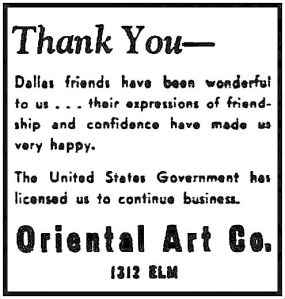
oriental-art-co_dmn_121541
Dec. 15, 1941

Mr. Muta was spared the “enemy alien” internment camp, but, along with other Asian men and women residing in the United States, he was barred from becoming a naturalized U.S. citizen because of the “Oriental Exclusion Act.” The inability of Mr. Muta to become a U.S. citizen did not dampen his enthusiasm for American democracy: he paid his poll tax every year, even though he was not allowed to vote, and he was a proud member of the Dallas Chamber of Commerce for over 25 years.

The Seagoville Enemy Alien Detention Station was closed in May, 1945, and the site was returned to the Bureau of Prisons.

***

Sources & Notes

Photos of the Seagoville camp are from the Institute of Texan Cultures (UTSA).

Articles of interest from The Dallas Morning News:

  • “Six Japanese Taken in Custody By Local Police” (DMN, Dec. 8, 1941)
  • “Dallas Japs Questioned” (DMN, Dec. 9, 1941)
  • “Six Suspected Germans Held in Dallas Roundup of Aliens; Total of Jap Prisoners Rises to 10” (DMN, Dec. 9, 1941)
  • “Enemy Aliens In Dallas, 776; Arrested, 30: But All Suspects Are Closely Watched By G-Men and Police” (DMN, Dec. 19, 1941)
  • “FBI Rounds Up 50 Enemy Aliens, Seizes Arms, Cameras, Radios” (with photos of Dallas residents of Japanese, German, and Italian descent as well as seized “contraband”) (DMN, Feb. 25, 1942)
  • “Women Aliens Are Interned At Seagoville; 250, Including Their Children, Arrive Here From Panama” (DMN, April 11, 1942)
  • “Chilly Welcome Given 15 Japs From Coast; O.K. to Come to Dallas, Were Told; Still More On Way, Inform Police (DMN, April 23, 1942)
  • “Japs Leave Dallas” and “Tokyo-Bound Jap Lad Takes Candy Six-Gun as Souvenir” (about the deportation of the Yamamoto family, with photo) (DMN, June 6, 1942)
  • “Fritz Sheds No Tears For Mr. Yamamoto” (DMN, Feb. 17, 1943)
  • “Japanese Woman Revisits Seagoville” by Roy Hamric (profile of Masayo Ogawa) (DMN, Sept. 8, 1970)
  • “American Gulag: When Seagoville Housed the Aliens” by Kent Biffle (DMN, July 23, 1978)

More articles on the Seagoville internment camp:

  • One of the best articles I’ve read on the camp was an interview with two men (Erich Schneider and Alfred Plaschke) who, as American-born children of German parents, were interned at Seagoville and were later deported to Nazi Germany (in a prisoner exchange) where they experienced the terrifying bombing of Dresden. Both families returned to the United States after the war. The article by Mark Smith — “German-Americans Recall Horror of Deportation — Hundreds of Detainees Sent to Nazi Germany in POW Trade” — appeared in the Houston Chronicle on Nov. 11, 1990, and can be read here.
  • “Seagoville Enemy Alien Detention Station” (Texas Historical Commission), here
  • “World War II Internment Camps” (Handbook of Texas), here
  • “Seagoville, South America, and War — A Historic Intersection” by Kathy Lovas (Legacies, Fall, 2000), here
  • “Seagoville Detention Facility” (Densho Encyclopedia), here (and for more on the Japanese-American experience overall, see the main page, here)
  • “The Japanese Texans” by John L. Davis (Institute of Texan Cultures), here (opens a PDF)

Thanks to friend Julia Barton for posting about (and suddenly making me aware of) the Seagoville camp.

All photos and clippings are larger when clicked.

*

Copyright © 2017 Paula Bosse. All Rights Reserved.

DFW Airport Under Construction — 1973

dfw_under-construction_ca-1973_UTAA bird’s-eye view of the old Harrington place (click for HUGE image)

by Paula Bosse

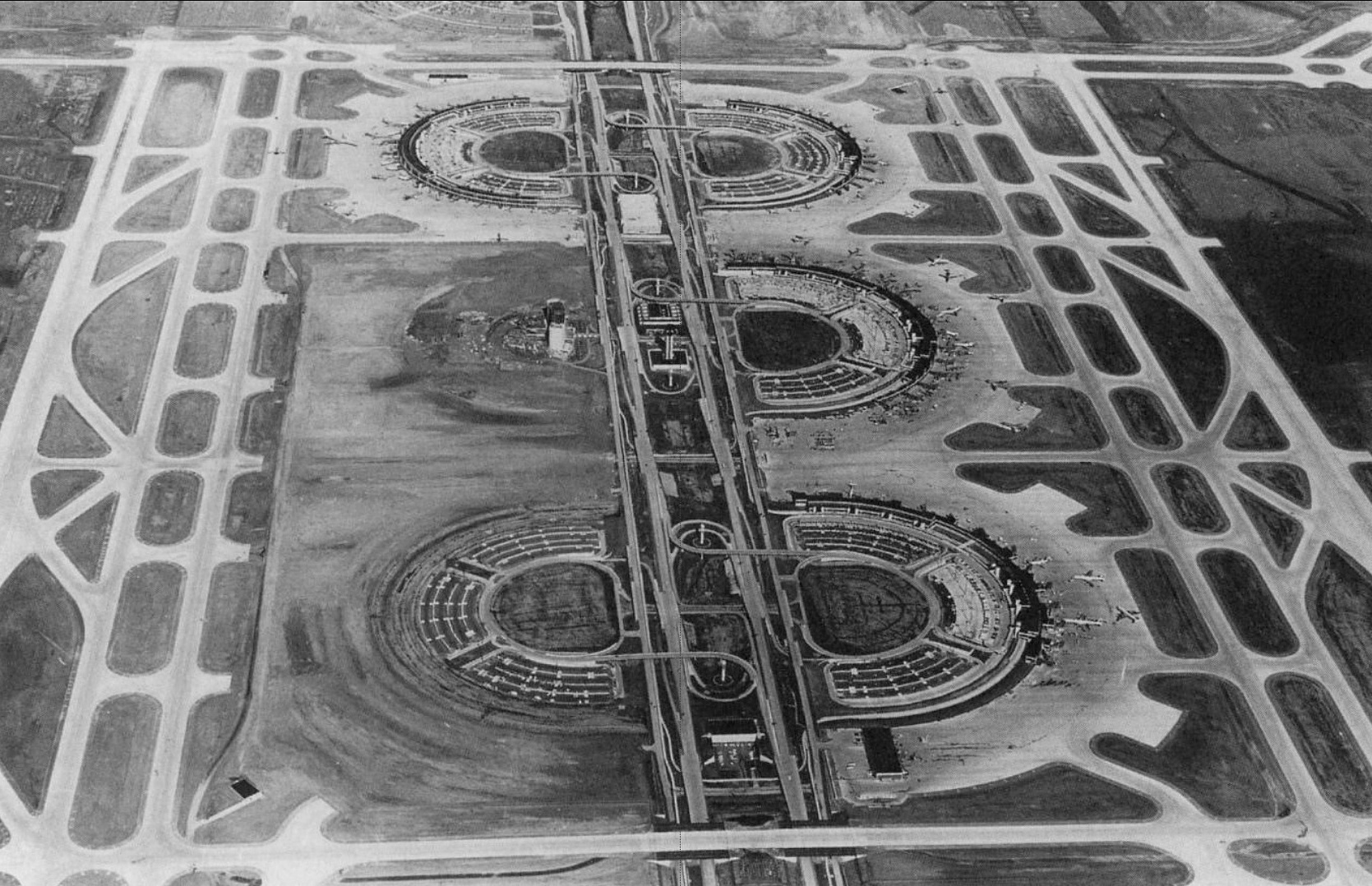
Dallas-Fort Worth Airport, during construction in 1973. DFW before it was DFW.

dfw-airport_1974-tsha

When DFW opened in January, 1974 — on 700 acres of land purchased from Irving rancher R. D. Harrington — it was served by only 8 airlines, had 3 runways and 56 gates. American Airlines Flight 341 from New York/Memphis/Little Rock was the first commercial flight to land at the airport, on Jan. 13, 1974. There was apparently an onboard battle to claim bragging rights to being the first passengers off the very first flight: a Fort Worth couple beat out a Dallas businessman for the honors — the Dallas man asserted, “I was the third person off the plane as the result of a shoulder block from the young lady who was the first person off” (Dallas Morning News, “First Flight A Scramble For History by Charlie Bates, Jan. 14, 1974).

***

Sources & Notes

Top photo titled “Airview of terminal buildings and highway through the airport at Dallas-Fort Worth Airport during construction, ca. 1973; from UTA Libraries, Special Collections — more info here.

Second photo is from the Texas State Historical Association 103rd Annual program (March, 1999), found on UNT’s Portal to Texas History site, here.

More on the history of DFW Airport can be found in the Fort Worth Star-Telegram article “40th Anniversary: DFW Ready to Soar Into the Future” by Andrea Ahles (Jan. 11, 2014), here.

DFW Wikipedia entry is here.

An aerial view of the airport today, from Google Maps, is here.

Photos are MUCH larger when clicked.

*

Copyright © 2016 Paula Bosse. All Rights Reserved.


Six Flags: The Mexican Section — 1961

six-flags_mexican-section-lights_1962_ebayBienvenidos!

by Paula Bosse

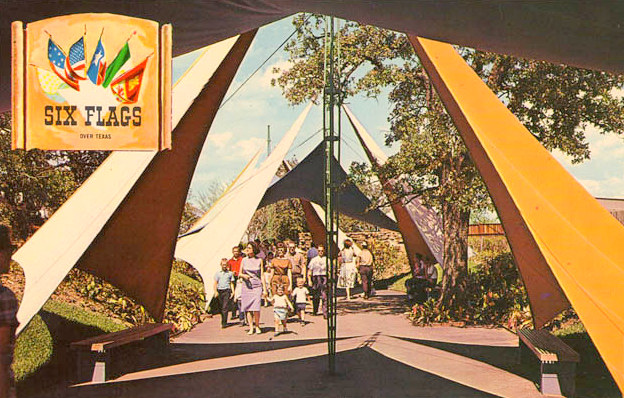
The image above is from a Six Flags Over Texas postcard. The description on the back reads:

Geometric Patterns — Mexican Section
Multi-colored lighting effects reveal a fascinating and beautiful picture of the Canopied Garden Walkway leading into the Mexican Section at this new 105-acre $10,000,000 family entertainment center.

Here it is in the daytime, still kind of attention-grabbing, but nowhere near as cool-looking:

six-flags_canopied-entrance_colliervia Ken Collier

I just wanted to post this Six Flags picture I’d never seen and move along, but why not add a few more postcards showing attractions in this part of the theme park: the “Mexican Section.”

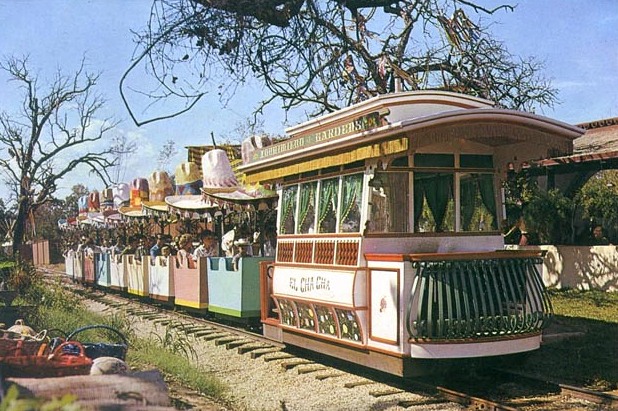
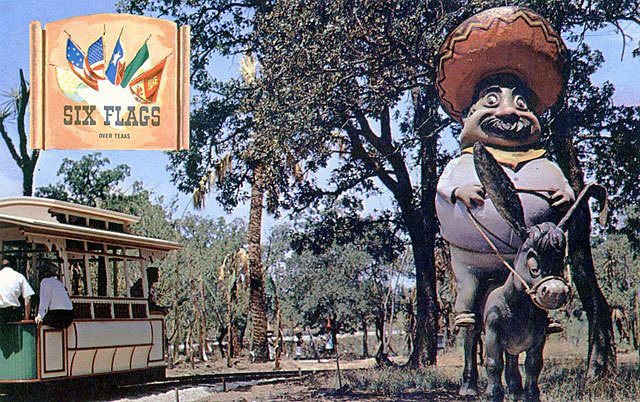
There was the Fiesta Train (which I was surprised to see was originally called Ferrocarril Fiesta), which was topped with colorful sombreros and chugged by all sorts of “festive” scenes which might seem a little culturally eyebrow-raising today.

six-flags_mexican-section-fiesta-train_colliervia Ken Collier

six-flags_mexican-section_burro-ridervia Ken Collier

There were animatronic bull fights. “Olé!”

six-flags_mexican-section_bull-fightvia Gorillas Don’t Blog

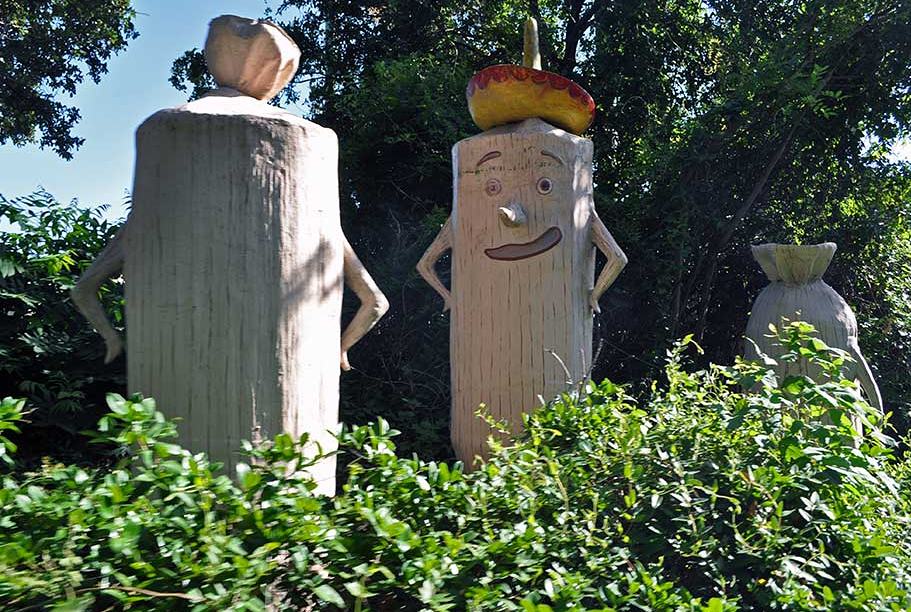
There were … dancing tamales. DANCING TAMALES! (Designed by Peter Wolf.)

Dancing Tamales — Mexican Section
One of the most popular of the many colorful and comical animations on the Fiesta Train ride, this group of Dancing Tamales perform to the gay strains of Mexican music that fills the air.

six-flags_dancing-tamales_flickrvia Flickr

And speaking of Mexican music, there were strolling mariachis.

six-flags_mexican-section_mariachis-flickrvia Flickr

And there was an even an El Chico restaurant.

el-chico_six-flags-gazette_091061Six Flags Gazette, Sept. 10, 1961

Here is an interesting article about what visitors to the brand new amusement park could expect to encounter on their visit to the Mexican Section, written by the Six Flags promotion department (click for larger image).

six-flags_mexican-section_six-flags-gazette_080661a   six-flags_mexican-section_six-flags-gazette_080661b
Six Flags Gazette, Aug. 6, 1961

And, no, I couldn’t find a 1961 photo of the sombrero ride!

UPDATE: Found one (from 1965)!

six-flags_el-sombrero_FWST-collection_1965_UTA

***

Sources & Notes

Sombrero ride photo is from the Fort Worth Star-Telegram Collection, University of Texas at Arlington Libraries, Special Collections — more on this photo is here.

Info about the Six Flags Railroad is here; more about the Ferrocarril Fiesta Train is here.

Apparently those tamales (with a face lift) are still around? I LOVE THESE GUYS!

six-flags_dancing-tamalesvia GuideToSFOT.com

Ken Collier is The Man for all things Six Flags. See his great site, here.

Other Flashback Dallas posts on Six Flags Over Texas can be found here.

*

Copyright © 2016 Paula Bosse. All Rights Reserved.

When a Ten-Spot Could Get a Family of Four Into Six Flags — 1962

ad-six-flags_dmn_042362

by Paula Bosse

Six Flags Over Texas is about to open up again. In 1962 — the theme park’s second year — the admission price for one adult was $2.75 (approximately $22.00 in today’s money), and the price for children under 12 was $2.25 (approximately $18.00 in today’s money). A family of two adults and two children would pay $10.00 for admission — that would be a little under $80.00 in 2016 money, which was still a lot back then, until you compare it to today’s Six Flags ticket prices: $250 for a family of four (as long as both of those children are under 48″ tall). (Pink Things not included.) And you probably won’t even see a dad wearing a suit and tie and a porkpie hat. And you certainly won’t get to see ANY of this! I think you got a lot more bang for your buck 50 years ago.

***

Never leave home without the Inflation Calculator.

*

Copyright © 2016 Paula Bosse. All Rights Reserved.


Six Flags’ Historical Press Bookshop — 1965

six-flags-bookshop

by Paula Bosse

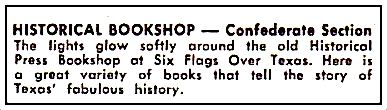
Six Flags Over Texas had a bookstore: the Historical Press Bookshop, located in the “Confederate Section.” Who knew? I was surprised when I ran across this postcard, but I figured it was a place to buy gum, film (remember film?), giant combs emblazoned with the Six Flags logo, and this very postcard. But no. It was a bookstore that sold rare Texana, including historic books, prints, and documents. At Six Flags. …Over Texas. …Land of Pink Things and Log Rides.

The description from the back of the postcard:

six-flags-bookshop_back

The store was ostensibly owned by Six Flags developer Angus Wynne, Jr., but the contents were owned by Ted W. Mayborn, wealthy petroleum trade journal publisher, writer, and Texas history aficionado. In a playful bow to having an antiquarian bookstore inside a theme park (!), he hired female family members to dress up in cowgirl outfits and brandish six-shooters in a bid to “protect” the (probably very expensive) merchandise.

I’m not really sure how this worked — or why anyone would think this was a good idea. Would one find oneself enjoying a day at Six Flags only to stumble across this unexpected cache of rare books and feel compelled to pick up a leather-bound first edition or a fragile broadside? Or would one go to Six Flags expressly to visit the bookstore and browse the stock — despite the fact that it was in an amusement park? Would one have one’s purchase shipped, or would one lug it around the park, through Casa Magnetica, past Skull Island, and into the Spelunker’s Cave?

There has to be a story behind this unusual business endeavor. Did Ted save Angus from choking one time? Did he win the franchise in a poker game?

I’m not sure how long the Historical Press Bookshop lasted. My guess? Longer than it should have.

Weirder than discovering that a bookshop was once part of the Six Flags experience was learning that Mr. Mayborn owned a real bookshop called the Red Barn Bookstore and that my father worked for him for a few months, a time my mother described as being brief but stressful. I think I can understand why.

Click pictures for larger images.

*

Copyright © 2015 Paula Bosse. All Rights Reserved.


Back at the Ranch with Yves Saint Laurent — 1958

YSL_longhorn_josey-ranch_1958_eric-sweckerYSL & friend… (photo: Eric Swecker)

by Paula Bosse

Even if you had no idea who the man with the glasses was, this would be an attention-grabber of a photo. But if you do happen to recognize the man as international fashion icon Yves Saint Laurent, then it’s even more of an attention-grabber. Yes, that is 22-year-old Yves Saint Laurent, head of the legendary House of Dior.

…In a pasture with a longhorn steer.

…Wearing a Stetson (or something Stetson-like).

..In Carrollton, Texas! What could be more unexpectedly perfect?

The UPI/Telephoto caption:

9/5/58-DALLAS: Yves-Mathieu Saint Laurent, 22-year-old master of the House of Dior, got a taste of Texas tradition on his first trip to the US. Saint Laurent, in Dallas to receive an award from Neiman-Marcus, stopped off at a cattle ranch near here before departing for France and was presented a Texas-style hat and introduced to a real “Texas Longhorn” steer.

YSL (who had not yet jettisoned the “Mathieu”) was the wunderkind fashion designer who — at the unbelievable age of 21 — had succeeded Christian Dior as Dior’s head designer. His first collection was a hit, and he was 1958’s fashion superstar.

That was the year that YSL was invited to Dallas by Stanley Marcus to receive the 21st Annual Neiman-Marcus Fashion Exposition Award — known throughout the industry as the “Fashion Oscar.”

He has had many offers to come to America to accept awards but the Dallas honor was the only one he accepted. He had a sentimental reason. His late master, Christian Dior, came to Dallas to accept the Neiman-Marcus award in 1947 after he had created the New Look in his second collection. (Dallas Morning News, Sept. 4, 1958)

While in Dallas, the young Saint Laurent — whom the fashion editor of The Dallas Morning News described as looking “like a serious young man who might be coming to enroll at SMU” — soaked up a little local color: he was taken to the Orleans Room downtown to see the Dixieland jazz band The Chain Gang, and — apparently at his request — he was taken to a Texas ranch.

Saint Laurent had been quite keen to see a real Texas ranch, so Stanley Marcus’ son Richard took him out to the nearby Josey Rancho — the large ranch owned by Dallas oilmen brothers Clint and Don Josey in then-rural Carrollton. The fashionably dressed, Cartier-watch-wearing dudes took a bumpy ride in a pickup truck across the large ranch, and there was much gawking of longhorn cattle and herds of buffalo. YSL seems to have enjoyed himself and must have found the whole thing very “Texan”: he got closer to a longhorn than I’d ever get (and he squatted like a real cowboy!), he watched some calf roping, and he ate some barbecue. And he was probably the most stylishly-dressed visitor the ranch ever had (there aren’t a lot of tailored suits and French cuffs out on the lone prairie).

He headed back to Paris later that afternoon with, I’m sure, plenty of exotic stories to share with those back at the atelier. He also had a new hat. And maybe some indigestion.

*

ysl_090458_stanley-marcus-papers_SMUvia Stanley Marcus Papers, SMU

josey-rancho-longhorns_lufkin-line-mag_1956Josey Rancho

josey-rancho-buffalo_1950sJosey Rancho

josey-rancho_aerial_pointer-bkJosey Rancho

***

Sources & Notes

Top photo by UPI/Telephoto. This wire photo is from the collection of my old friend Eric Swecker. Thank you for use of this fantastic photo, Eric!

Photo of longhorns at the Josey Rancho from a trade magazine called The Lufkin Line (Jan./Feb., 1956). Photo of Josey Rancho buffalo and the aerial photo are from the book Carrollton by Toyia Pointer, with photo credit given to Linda Sollinger; more on the book here. More information on the ranch from the book is here.

More on YSL’s visit can be found in the Dallas Morning News article “N-M Awardees Get Glimpse of Texas” by Gay Simpson (DMN, Sept. 6, 1958).

YSL wiki, here.

“When Coco Chanel Came To Dallas — 1957” — my post about Mlle. Chanel’s visit to Dallas to accept the previous year’s Neiman-Marcus award — is here. (Let’s hope Saint Laurent liked the BBQ more than Coco did.)

*

Copyright © 2015 Paula Bosse. All Rights Reserved.

Candy Stripers Moonlighting as Six Flags Map Sellers — ca. 1961

six-flags_map-sellers_c1961

by Paula Bosse

“Yes, sir, you absolutely must have a map!”

When going to an amusement park meant going in a suit and tie. …And hat.

I see maybe a couple of teenagers. Otherwise … rather ominously … no children.

***

Six Flags Over Texas, probably in its opening year, 1961.

Click for larger image.

*

Copyright © 2014 Paula Bosse. All Rights Reserved.