Flashback : Dallas

A Miscellany: History, Ads, Pop Culture

Category: Photographs

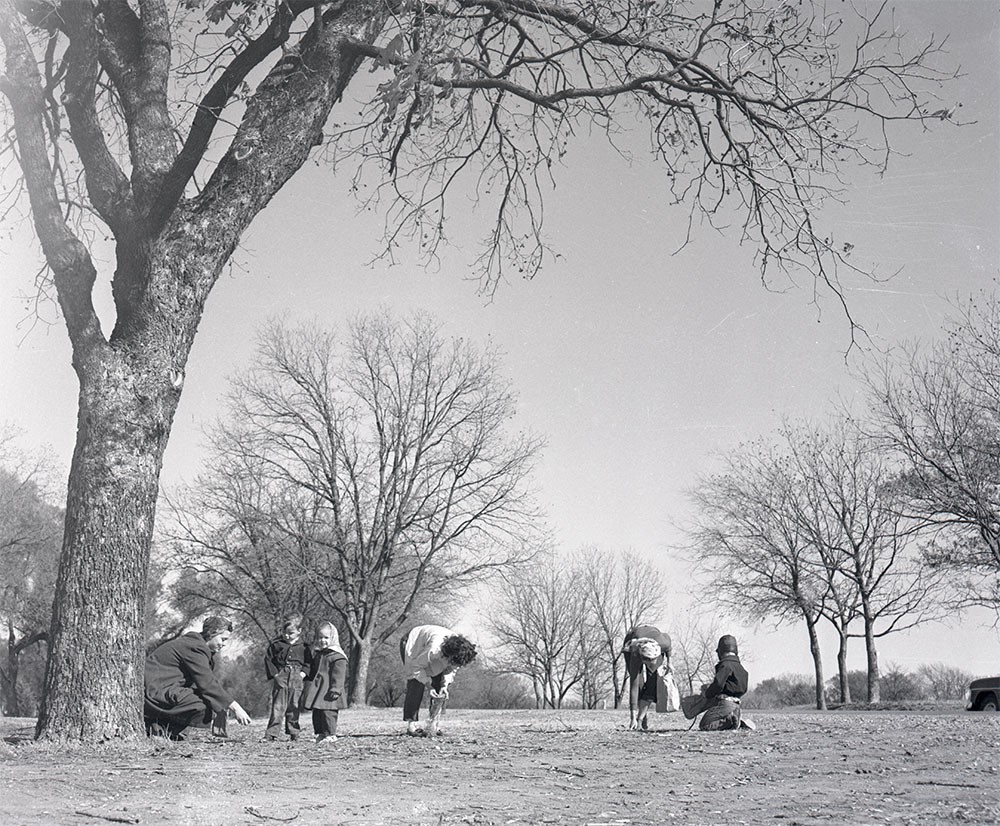
Hunting Pecans in the Park

On a nut-meat mission, White Rock Lake Park, 1952

by Paula Bosse

A few days ago, the Dallas Public Library posted a version of the mural below on its social media accounts. The title of the mural is “Gathering Pecans” by Dallas artist Otis Dozier. It was painted in 1941 as a New Deal federally commissioned work to hang in the Arlington Post Office (it now hangs in the Amon Carter Museum in Fort Worth). I love this mural — not only because I’m a fan of Dozier’s work, but also because it captures something that was once a common practice for families: going to a public place like a park (or as seen in the mural, somewhere along the side of the road) and picking up pecans.

Amon Carter Museum of American Art

When I was a child, my mother used to take me and my brother to White Rock Lake Park (or occasionally to Reverchon Park) to gather pecans. It was fun. Like a really easy Easter egg hunt with really small eggs. The 1952 photo at the top predates my own time hunting for fallen pecans, but I swear, that could be me, bundled up in a coat and scarf, having fun with my family on a crisp, sunny day.

We’d pick up the nuts (so. many. pecans…) and drop them into a paper sack. Then we’d take them home and lay sheets of newspaper on the dining room table, and the whole family — including my father and aunt — would spend an afternoon cracking pecans and picking out the “meat” with special nutcracking instruments. Next stop: a delicious dessert. I absolutely loved all of this.

I asked my (much younger) co-workers if they ever did this — went to a park to gather pecans. There were a couple of vague “…maybe?…” responses, but most had never heard of such a thing. How sad!

If your family doesn’t do this, consider it. It’s one of my favorite fall memories. And you’ll get an almost-free pecan pie out of it!

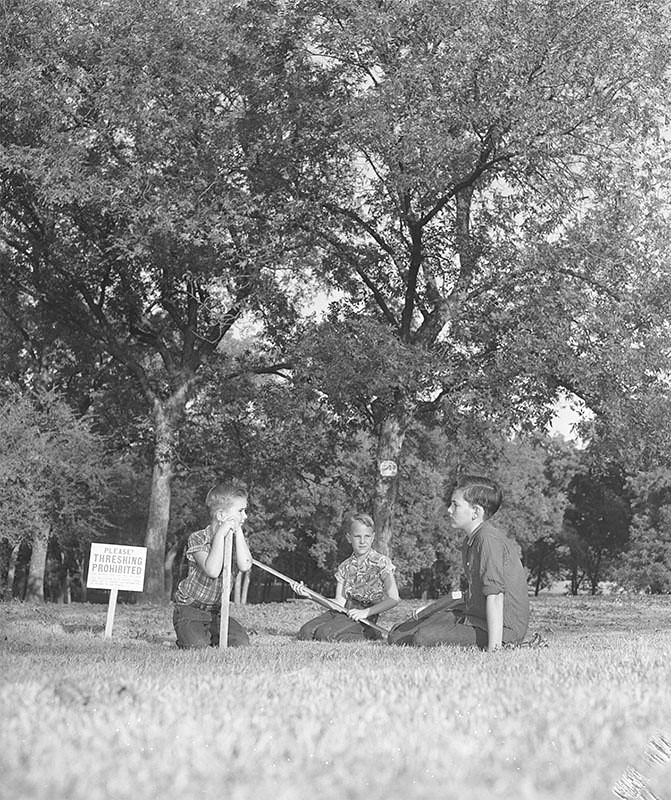
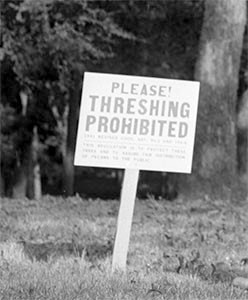
Just remember: picking up fallen pecans from the ground in a public park is okay (I think), but shaking branches or disturbing trees to make pecans fall is NOT allowed (and might also lead to a fine). Here are some boys sitting next to a sign that says “Please! Threshing Prohibited.” See those long sticks they’ve got? When that photographer leaves, they’re going to be “threshing.”

Don’t do it! Please! Hunt on the ground.

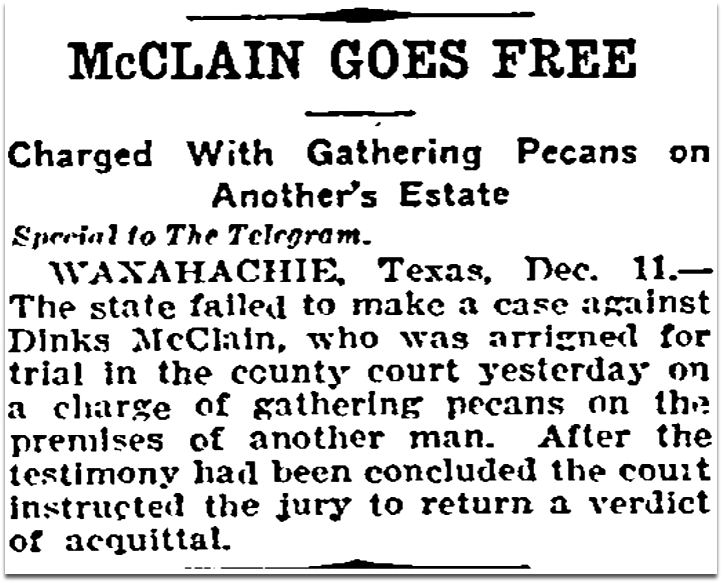
And don’t wander onto private property unless you have permission. Don’t be like Dinks McClain! He might have been acquitted, but he had to go through a lot of nut-based hassle to be a free man again!

Fort Worth Star-Telegram, Dec. 11, 1907

*

Poaching nuts from private property is not the only thing to beware of. If you browse through the Dallas Morning News and Fort Worth Star-Telegram online archives using the search term “pecan gatherers” or “gathering pecans” or “hunting pecans,” etc., you will see an absolutely eye-popping number of articles about severe injuries and death (!) suffered by people just innocently out looking for some pecans. Lots of people fell out of trees (STAY ON THE GROUND!!), lots of people were shot (in a variety of scenarios), someone drowned, I think (…interesting), and snakes were everywhere. Avoid all these things. And don’t trespass. Don’t be a Dinks McClain. Stay on the ground, stay on public land, and stay away from errant bullets and snakes.

**

Lastly, here’s a 1926 newspaper article (all sub-headlines included!) all about this vanishing tradition:

GYPSY CALL OF THE FALL WOODS HEARD BY DALLAS MOTORISTS 

Autumn Leaves and Pecans on Dallas Roads Are Popular 

Autumn Tang Brings Forth Many Drivers 

Roads Near Dallas Are Crowded on Week-End Afternoons

Seek Fall Leaves 

Decorations and Pecans Are Gathered to Take Home 

Autumn has failed to chill the ardor of Dallas motorists. On the contrary, they are attracted by the briskness of a fall afternoon drive and by the flaming beauty of autumn leaves or the promise of pecans on and under wayside trees. 

Now that the early nights prevent the after-dinner twilight rides of the late summer, Dallasites are saving their drives for week-end and holiday afternoons. On Saturday and especially on Sunday afternoons thousands of local motorists are driving on country roads near Dallas or through the more woodsy of the parks and city addresses to view the beauty of the changing autumn. Others go with the practical motive of finding pecans, and many of these are rewarded.

Roads Are Near

On Saturday afternoon the more popular roads leading from Dallas are crowded with automobiles. No matter in what part of Dallas the motorist lives, he can find a thoroughfare near his home, leading to woods colored by the approach of winter. White Rock Lake, South Beckley avenue, the Holmes street road, Stevens Park, Reverchon Park, Oak Lawn Park, Turtle Creek Boulevard, the Maple avenue road and the Lemmon avenue road are some of the favored drives. On them the motorist will find autumn beauty in profusion.

Many Dallas hostesses are using the gorgeously colored fall leaves as decorations. Even when the motorists are not planning to entertain at home, many take back bunches of the leaves to bring some of the fall color into living and dining-rooms.

Perhaps the most popular fall tree is the sumac, whose scarlet stands out against the darker red and the brown of other leaves. Seen from the roadside, the brilliant leaves have provided an irresistible attraction to stop and gather some to many automobilists. Ash, oak and darker leaves also make their gypsy calls from the woods.

Find Pecans 

Pecans as well as decorative leaves are found in many directions from Dallas. Those motorists fortunate enough to have friends with a farm or estate along a water course are making the most of their friendships, while others are forced to rely upon finding trees on unposted land or by the roadside. Most of the pecan hunters are rewarded with enough of the nuts to crack and pick out on the ride back, though fee are able to get a supply sufficient to last through the late fall evenings by the fire.

The brisk coolness of the autumn week-end afternoon, made golden by a pleasant ineffectual sun, not only has not discouraged Dallas automobilists, but the tang of the fall has brought out many who took only short drives during the summer. (Dallas Morning News, Nov. 7, 1926)

***

Sources & Notes

The top photo was taken in November 1952 and is from the Hayes Collection, Dallas History & Archives, Dallas Public Library (PA76-1/11502.2). The description accompanying the photograph: “Hunting pecans at the north end of White Rock Lake are B. B. Rakestraw of Tyler, left, and J. T. White of 7322 Benning. The crisp Fall weather was bringing pecan meat lovers out throughout the city. High winds helped solve the problem of getting nuts.”

The second photograph was taken October 16, 1953 and is also from the Hayes Collection (PA76-1/16051.1). The description of this photo: “Tommy and Danny Wheeler waiting for pecans to fall.”

“Gathering Pecans” is a post-office mural by Otis Dozier (1941); the image reproduced here is from the collection of the Amon Carter Museum of American Art, Fort Worth, Texas — more info is here.

Watch this short film from the Amon Carter Museum on the mural’s relocation and restoration:

*

Pecan tree trivia: in an Oct. 15, 1950 DMN article (“Plenty of Pecans Await Searchers at Dallas Parks”), it is noted that, in 1950, there were approximately 20,000 pecan trees in Dallas parks — half of them were in White Rock Lake Park.

*

Copyright © 2025 Paula Bosse. All Rights Reserved.
Martinez Brothers, Eagle Ford — 1939

Eladio, Henry, and Feliberto

by Paula Bosse

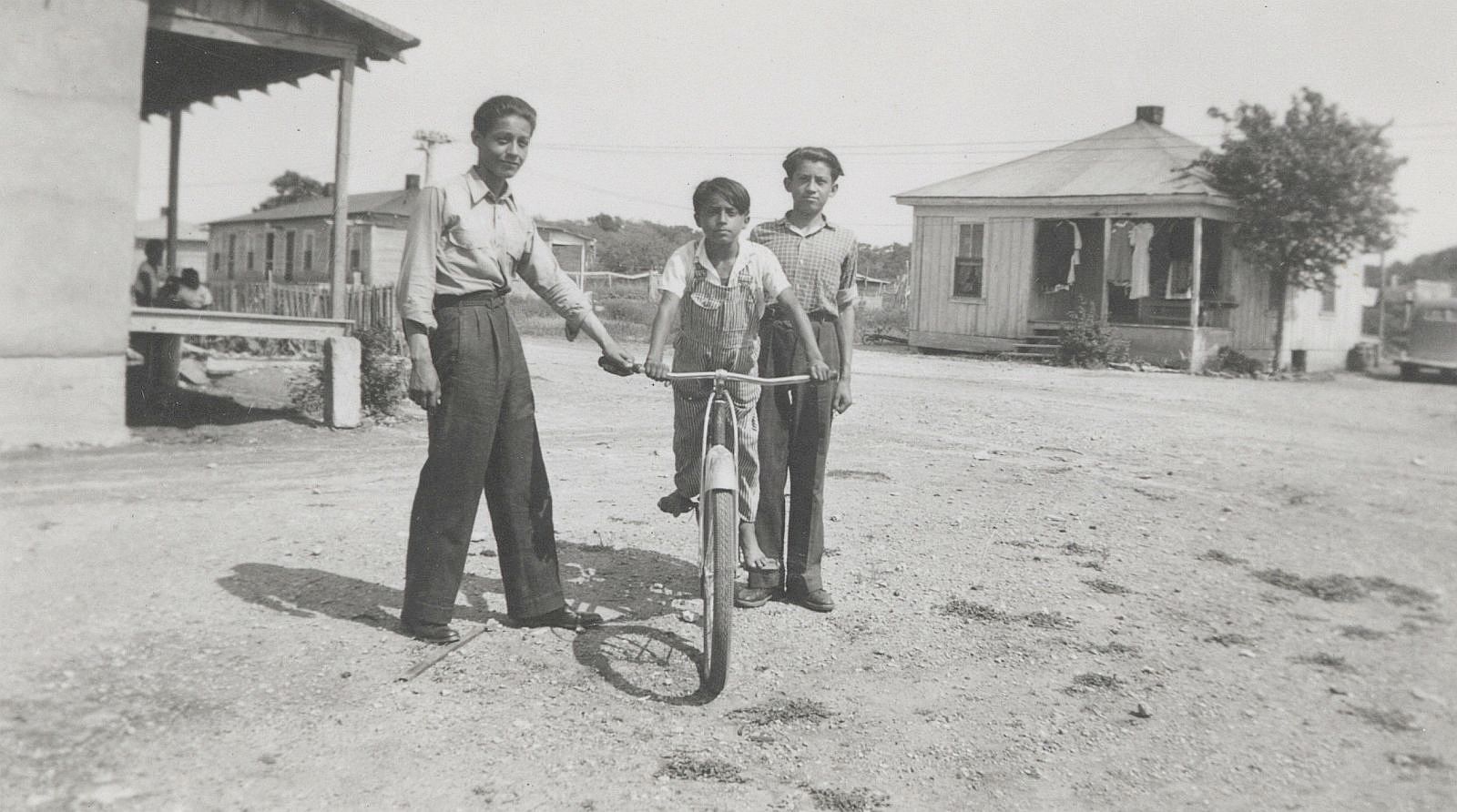
There are pictures I come across sometimes that affect me in a way I can’t really explain. Like this one. This shows three brothers posing for a photo in West Dallas in 1939. The boys are, left to right, Eladio Martinez, Henry Martinez, and Feliberto Martinez. Their father worked for the nearby Trinity Portland Cement Company. During the Depression, the boys helped support the family by cleaning railroad boxcars for a nickel each.

Eladio was killed in action during World War II — the Eladio R. Martinez Learning Center in West Dallas is named after him. His brothers Henry (Enrique) and Feliberto were active in the community and in preserving the history of Ledbetter/Eagle Ford.

Read more about Eladio Martinez here.

***

Sources & Notes

Photo — “Eladio Martinez, Henry Martinez on a bicycle, and Feliberto Martinez” — is from the Dallas Neighborhood Stories Grant Collection, Dallas History and Archives, Dallas Public Library; the accession number of this photograph is MA19.4/BDW-Martinez-H.6. More info on this is on the DPL Digital Collections page, here.

*

Copyright © 2025 Paula Bosse. All Rights Reserved.

A Somber Armistice Day Observance — 1922

Veterans march in Dallas (Dallas Public Library)

by Paula Bosse

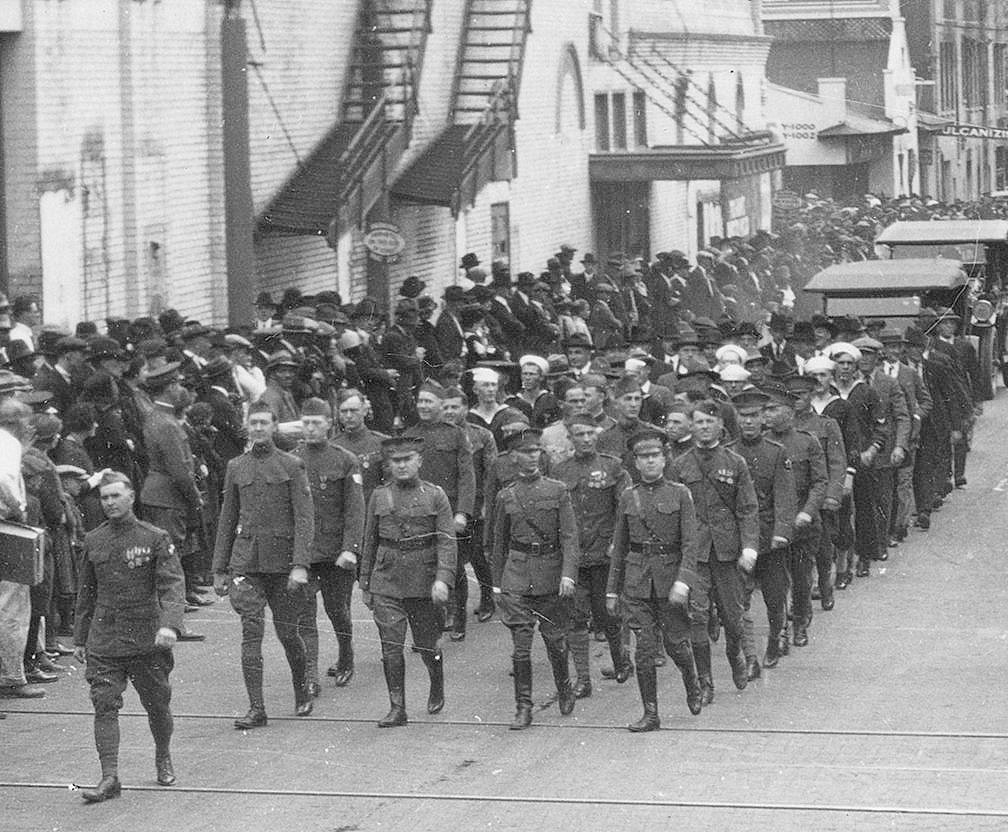
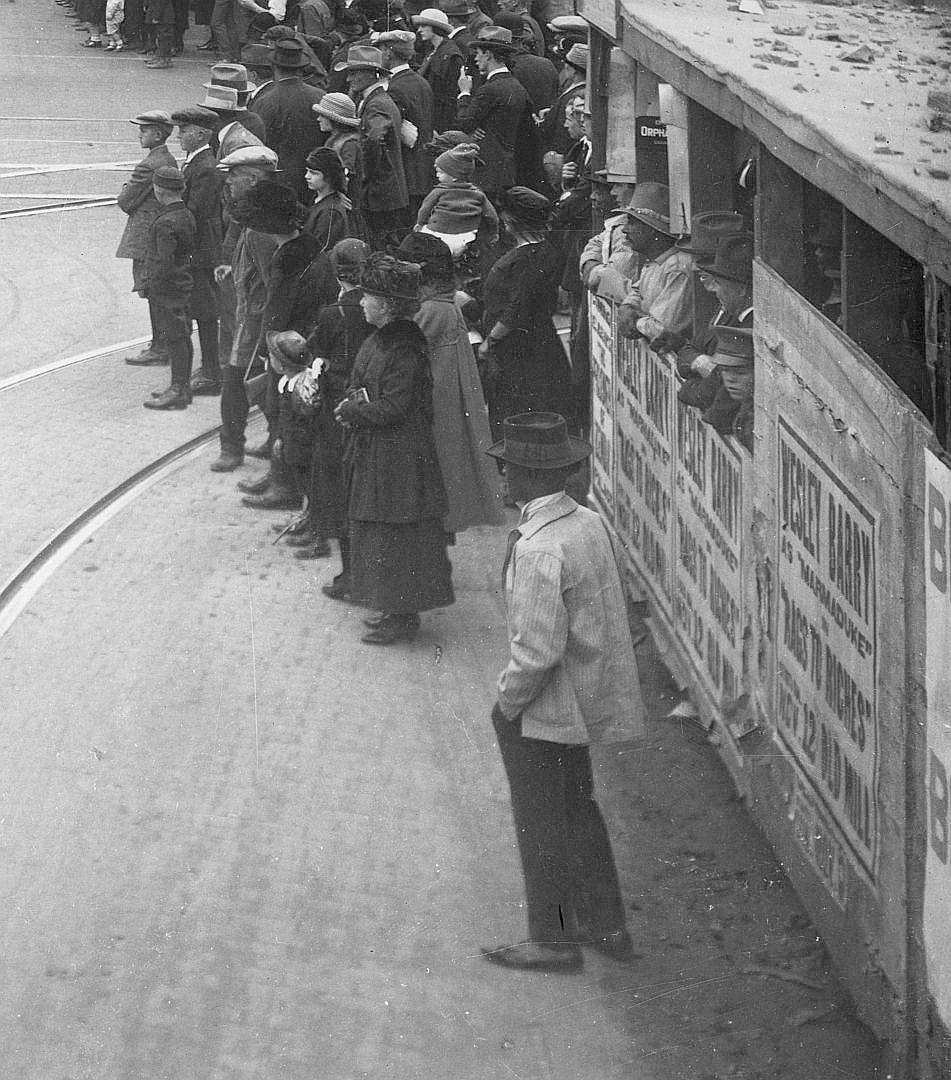
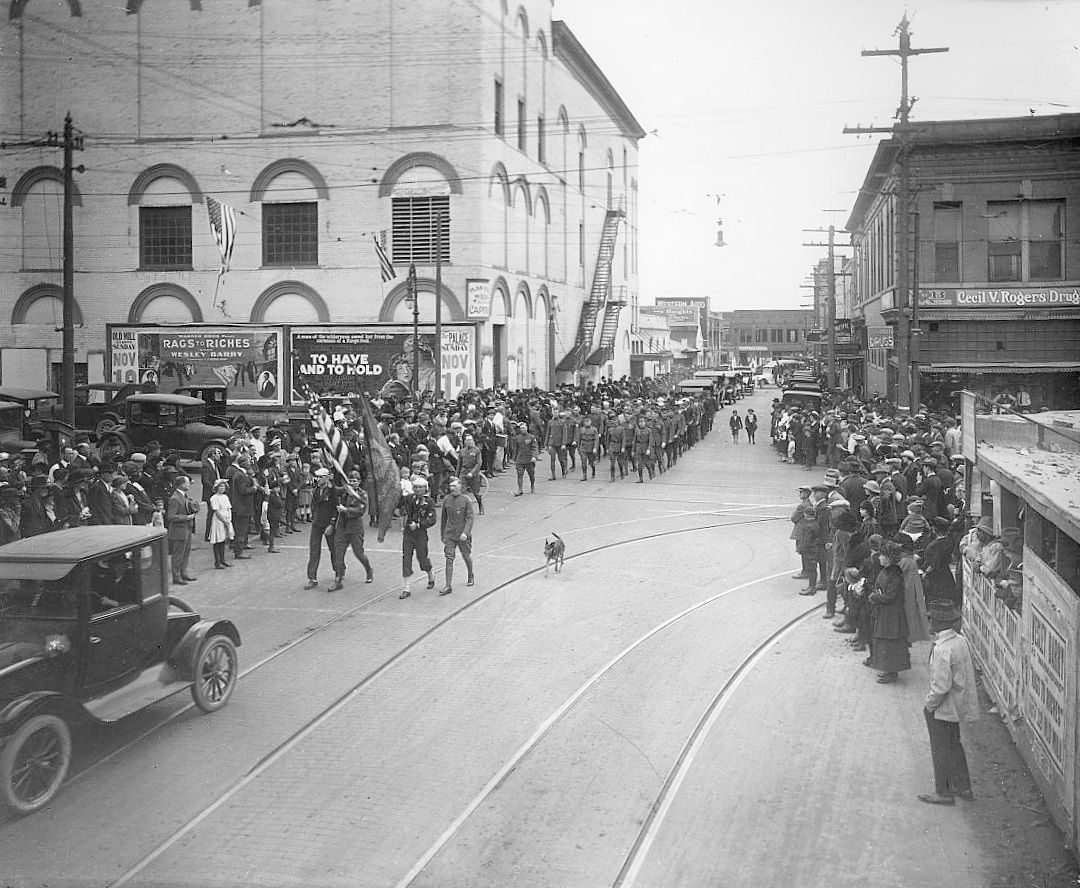
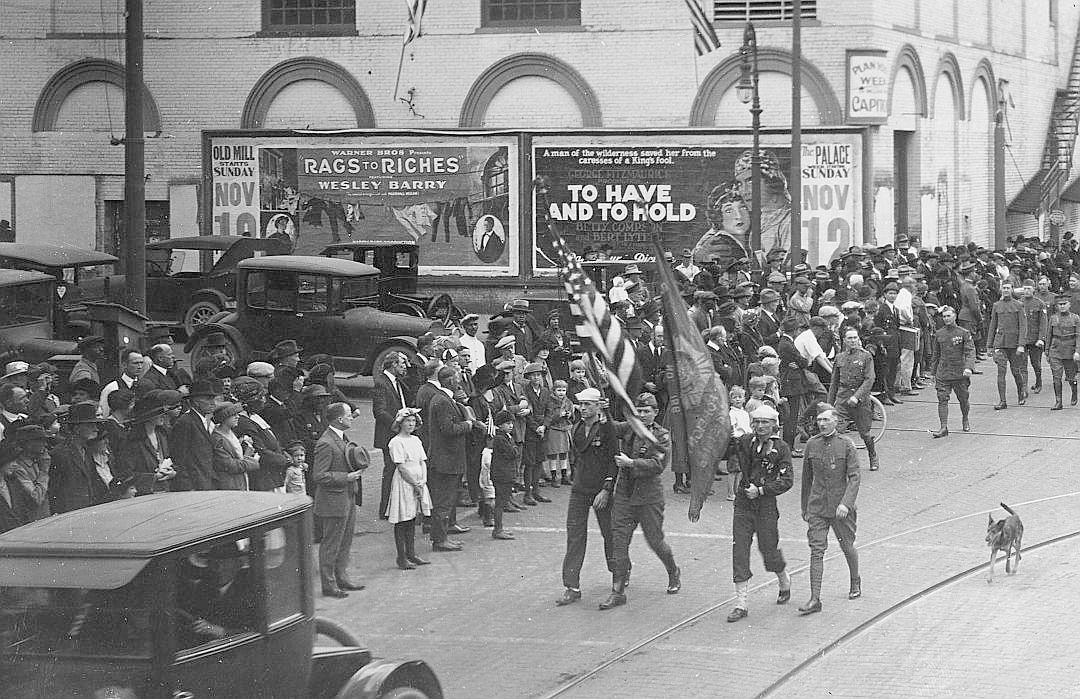
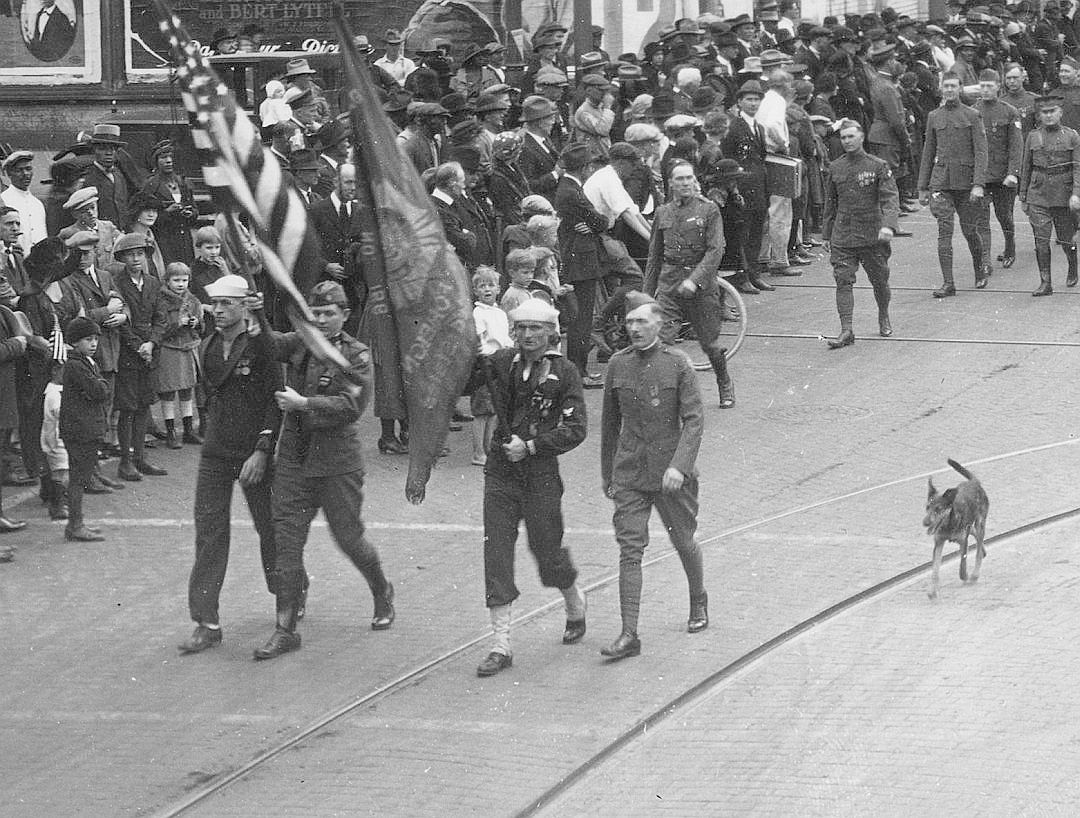
On November 11, 1922, Dallas observed the 4th anniversary of the end of World War I. The photo above, taken by Dallas photographer Frank Rogers, shows veterans of the devastating war marching north on Masten (N. St. Paul) from Main Street — they are headed to First Baptist Church for a special remembrance service.

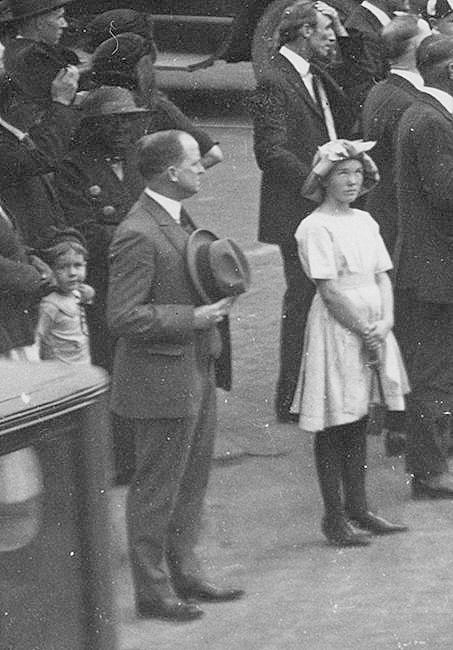
The crowd is somber, with the war still fresh in their memories. From The Dallas Morning News:

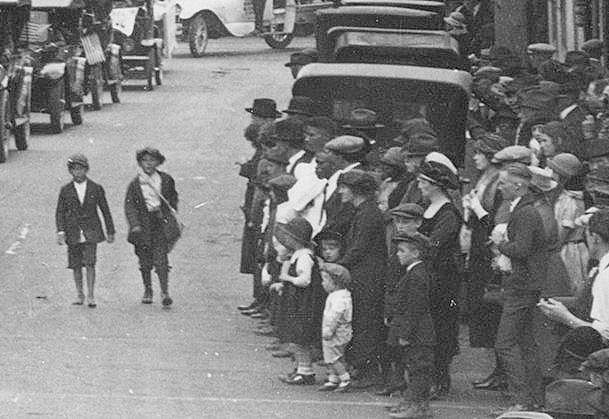
Soberly and without show of emotion Dallas celebrated Saturday, the fourth anniversary of the stilling of the guns of the World War. Their faces mirroring no more than idle curiosity, tens of thousands of men, women and children flowed lazily along the Main Street waiting for the parade of men who had been part of the glorious adventure, but there was no evidence of that high-racing blood that filled the hearts of Americans on Nov. 11, 1918. (Dallas Morning News, Nov. 12, 1922)

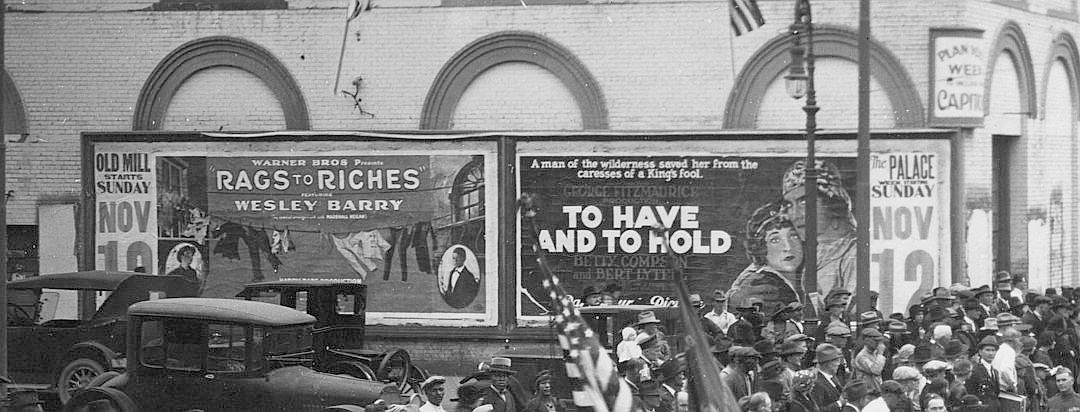
More details of the scene can be seen when zooming in on the photo and on the faces of the participants and the spectators (images are larger when clicked).

by John Knott, DMN, Nov. 11, 1922

***

Notes and Sources

Photo of the Nov. 11, 1922 Armistice Day parade is from the Frank Rogers Collection, Dallas History and Archives, Dallas Public Library (photo accession number is PA78-2-1003).

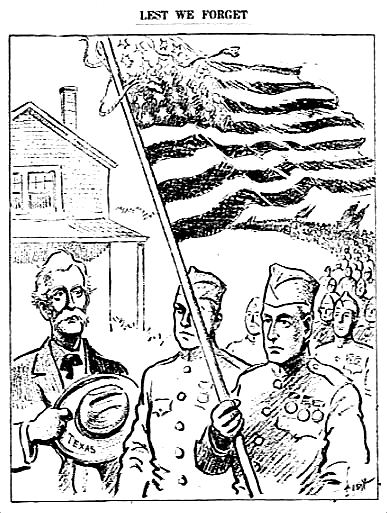
The address of the Cecil V. Rogers drug store was 1814 Elm Street. The movie posters for the silent films “Rags To Riches” (playing at the Old Mill) and “To Have and To Hold” (playing at the Palace) are posted on the back of the old Majestic Theatre (its second “temporary” location, which, I believe, had once been the old opera house — see the 1921 Sanborn map here). The cartoon is by Dallas Morning News cartoonist John Knott.

See other Flashback Dallas posts on Dallas and World War I here.

*

Copyright © 2024 Paula Bosse. All Rights Reserved.

Tooling Around Munger Place — ca. 1913

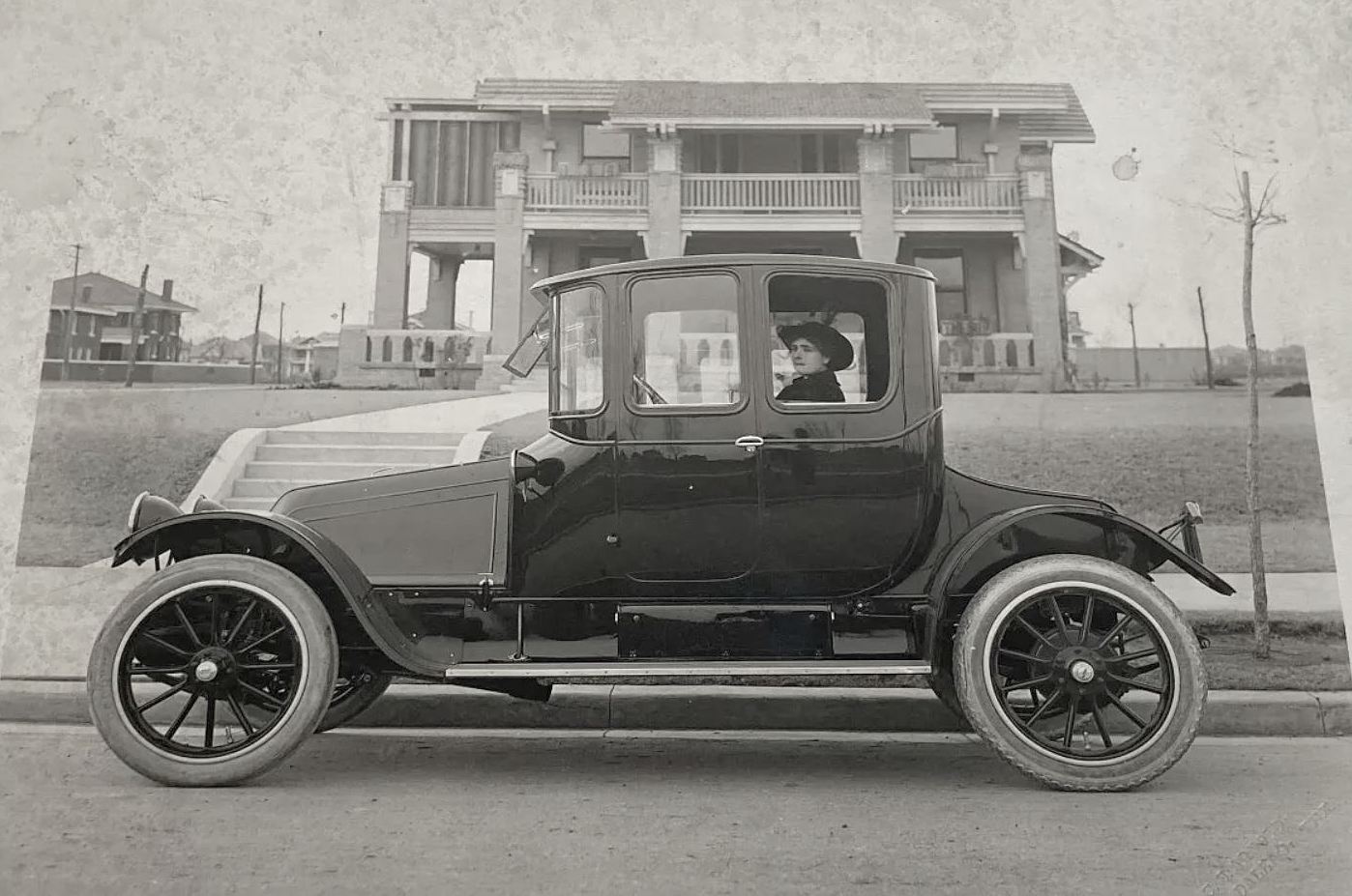
Snazzy motor car parked in front of 5109 Swiss Avenue

by Paula Bosse

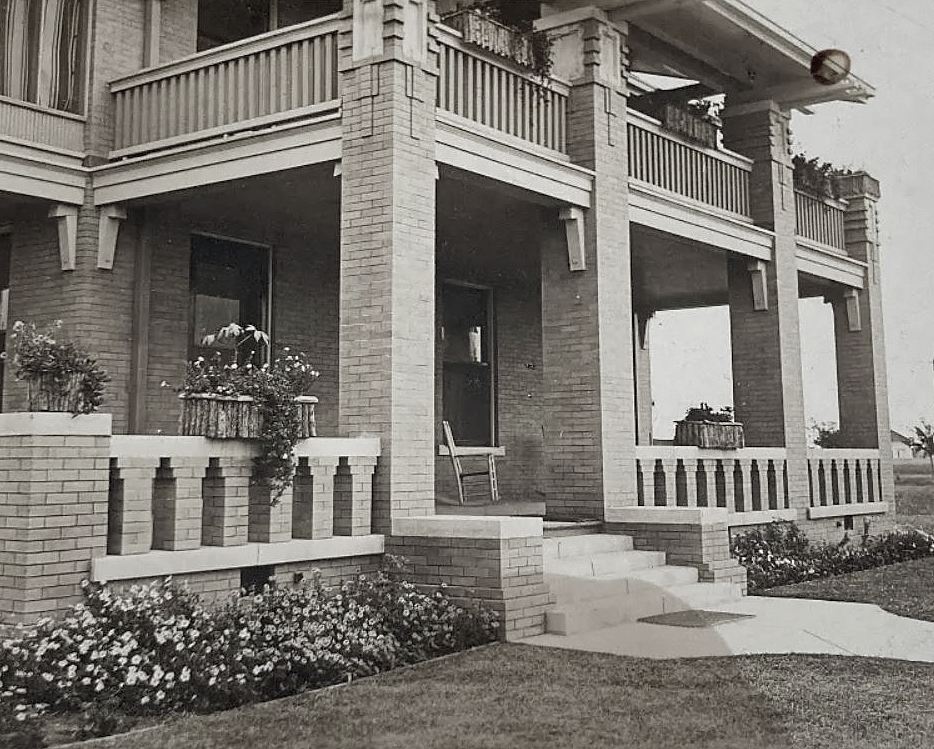
This arresting photo shows a woman in the driver’s seat of what appears to be a “ladies'” electric car (possibly a Detroit Electric, although I can find no models that look like this one…), parked in front of an unusual-looking Swiss Avenue home, complete with a second-story sleeping porch and virtually no landscaping. The photo — taken by notable Dallas photographer Charles Erwin Arnold — is currently offered on eBay.

Here’s a view of the entrance to the house which, as noted on the reverse, is at 5109 Swiss Avenue.

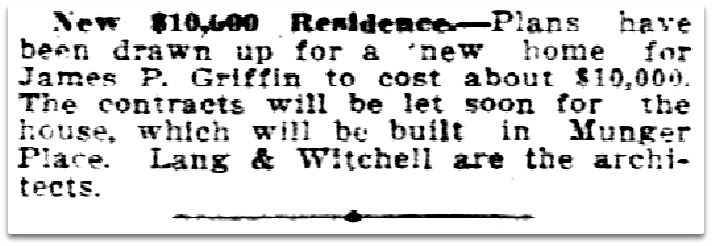
The house was built in 1911/12 and was designed by Lang & Witchell (architects to the rich and richer), who were busy drawing up house plans for people up and down Swiss (they were so prolific that it seems like most of the buildings built in Dallas at the time came from their drafting tables!). This house was commissioned by James P. Griffin (president of the Texas Electric Railway Co.) and his new wife, May Burford Griffin (daughter of Dallas pioneer Judge Nat Burford).

Dallas Morning News, Sept. 13, 1911

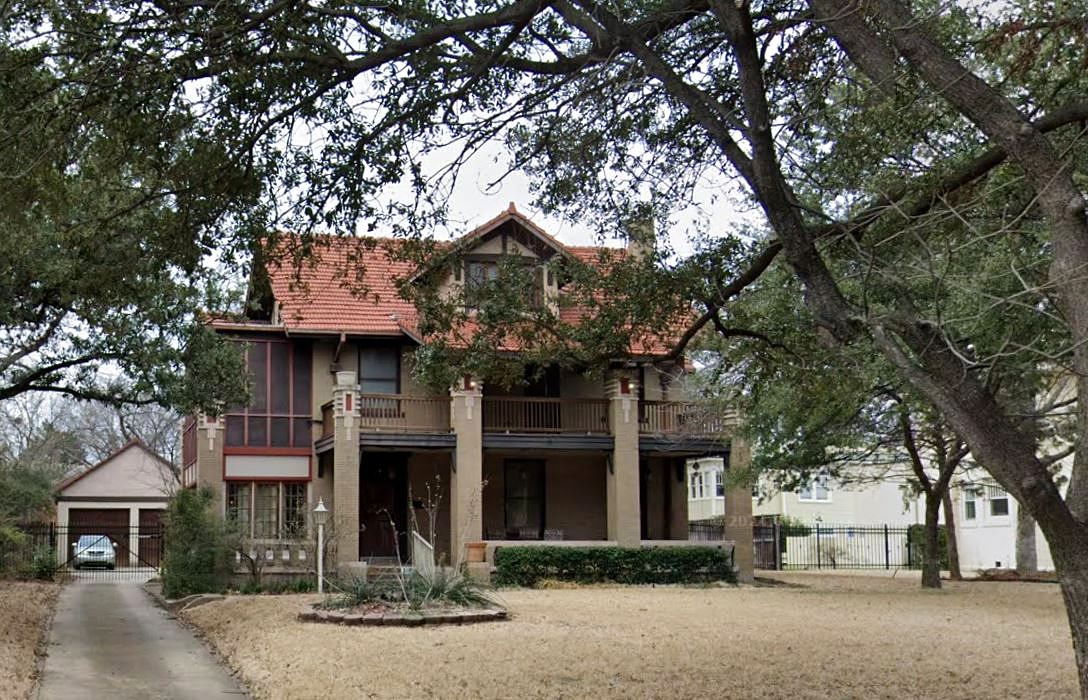
The house is still standing but has been remodeled, as is mentioned in various real estate ads over the years. (At one point, there was a reference to a kitchen with marble floors, which… I’m not sure I’ve ever seen marble floors in a kitchen. I don’t know if they were original to the house — or are still there — but, whatever the case, that is très élégant.)

The house can be seen in recent years in an Ebby Halliday listing from 1982, in an undated photo on Douglas Newby’s Architecturally Significant Homes website, and on the Swiss Avenue Historic District website. The image below is a Google Street View from Feb. 2023.

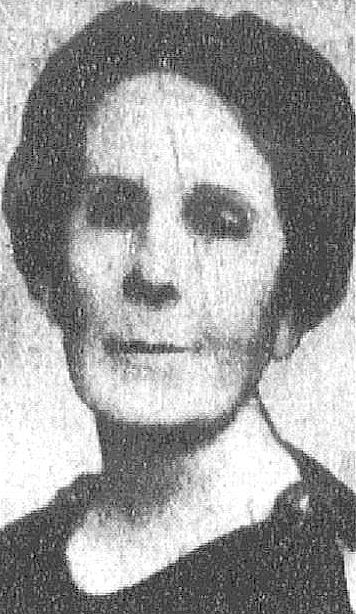
I assume that the woman in the car is Mrs. Griffin, seen below in later years. In the photo, she would have been about 32.

I love that car. And I love that house, which looked very modern 112 years ago!

***

Sources & Notes

The circa-1913 photos are from a current listing on eBay. I posted the top photo on my Patreon page less than a week ago, and reader Tom R. identified the house. I think the second photo has been added in the past couple of days, because I’m pretty sure it wasn’t there when I wrote that post! Someone might have contacted the seller to ask if it might be a house on Swiss Avenue, and they realized they had another photo of the house, which they added to the listing. …And increased the price significantly! These are such cool photos. If I were the current owners of this Swiss Ave. house, I would be all over this!

Thanks to Tom and William for their helpful comments on my original Patreon post (“Super-Cool Car, Super-Cool House”).

*

Copyright © 2024 Paula Bosse. All Rights Reserved.
Dome, No Dome, Dome

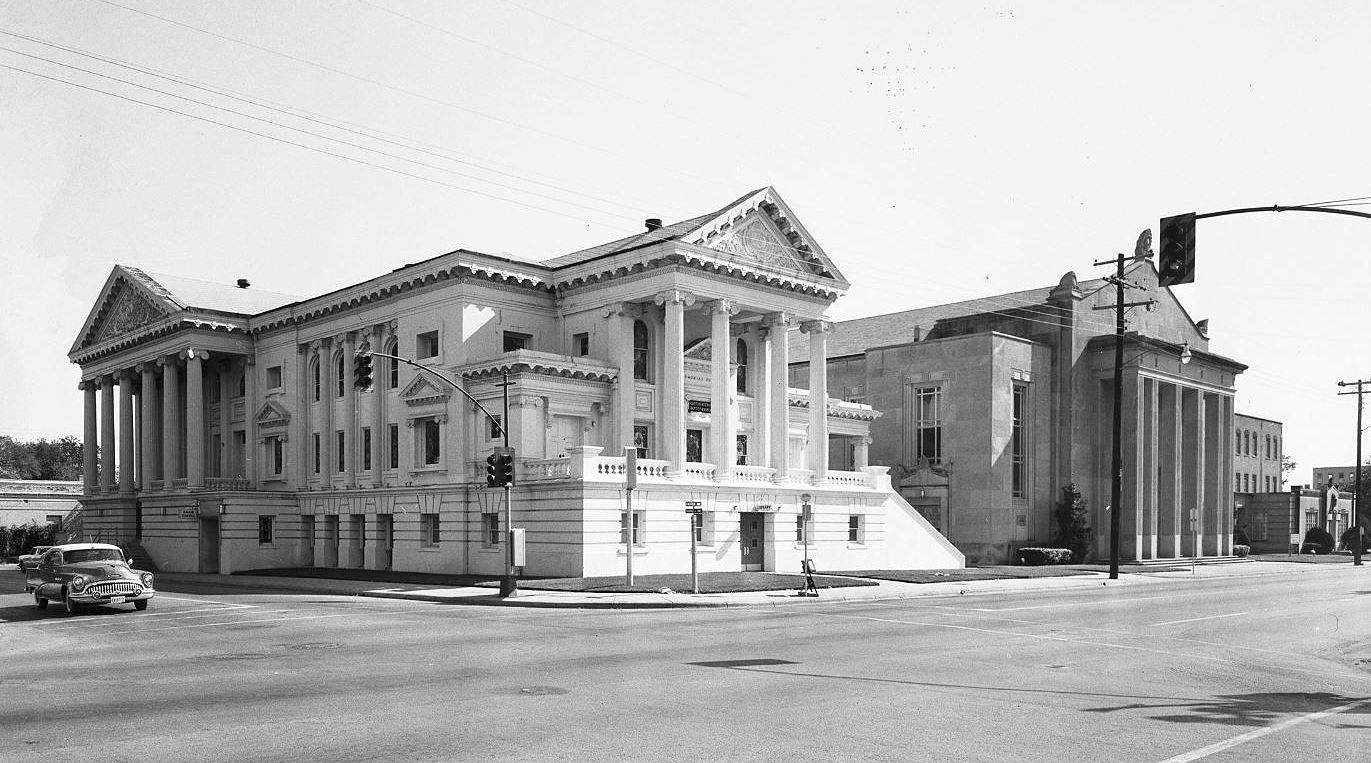
Gaston Ave. Baptist Church, ca. 1961, domeless

by Paula Bosse

Gaston Avenue Baptist Church, at Gaston and Haskell, opened to its congregation in 1904. (The photo above is from about 1961.) The church was designed by architect C. W. Bulger, whose most important Dallas building was almost certainly the Praetorian Building downtown. Bulger was a prominent architect and a prominent Baptist — he designed several Baptist churches, and, conveniently, he lived on Junius Street, not far from the Gaston Avenue church.

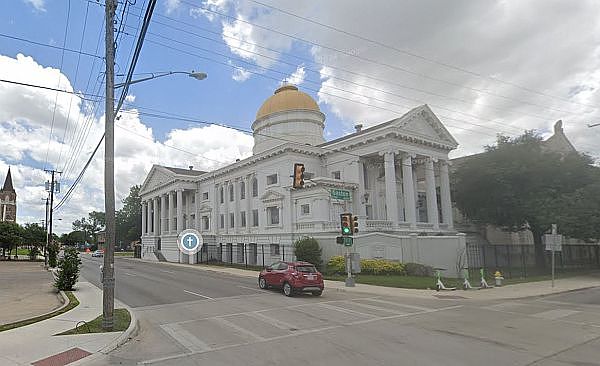
This building is imposing and impressive, but every time I drive past it, something just feels “off.” (See it on Google Street View here.) It’s that canary-yellow “gold” dome. Otherwise, it’s a beautiful building.

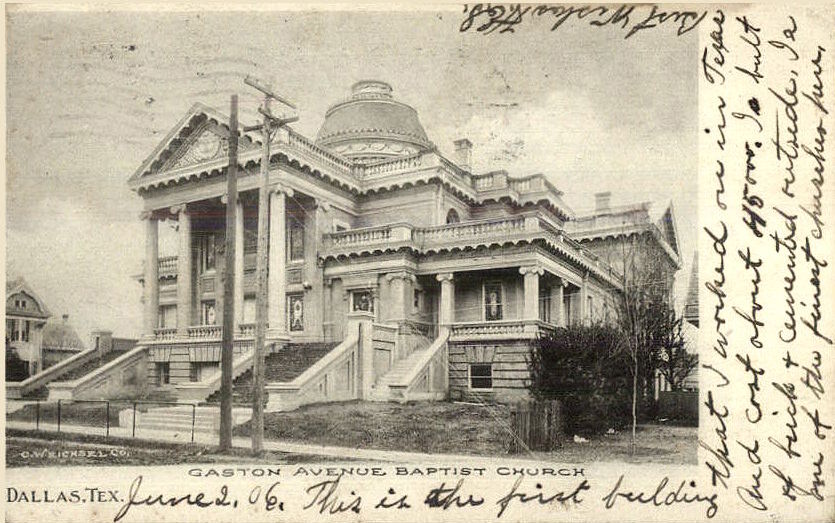
Here’s what it looked like in its earliest days:

This postcard was postmarked June 2, 1906 — the message reads:

June 2, 06. This is the first building that I worked on in Texas and cost about 45,000. Is built of brick and cemented outside. Is one of the finest churches here. Best wishes, H.E.S.

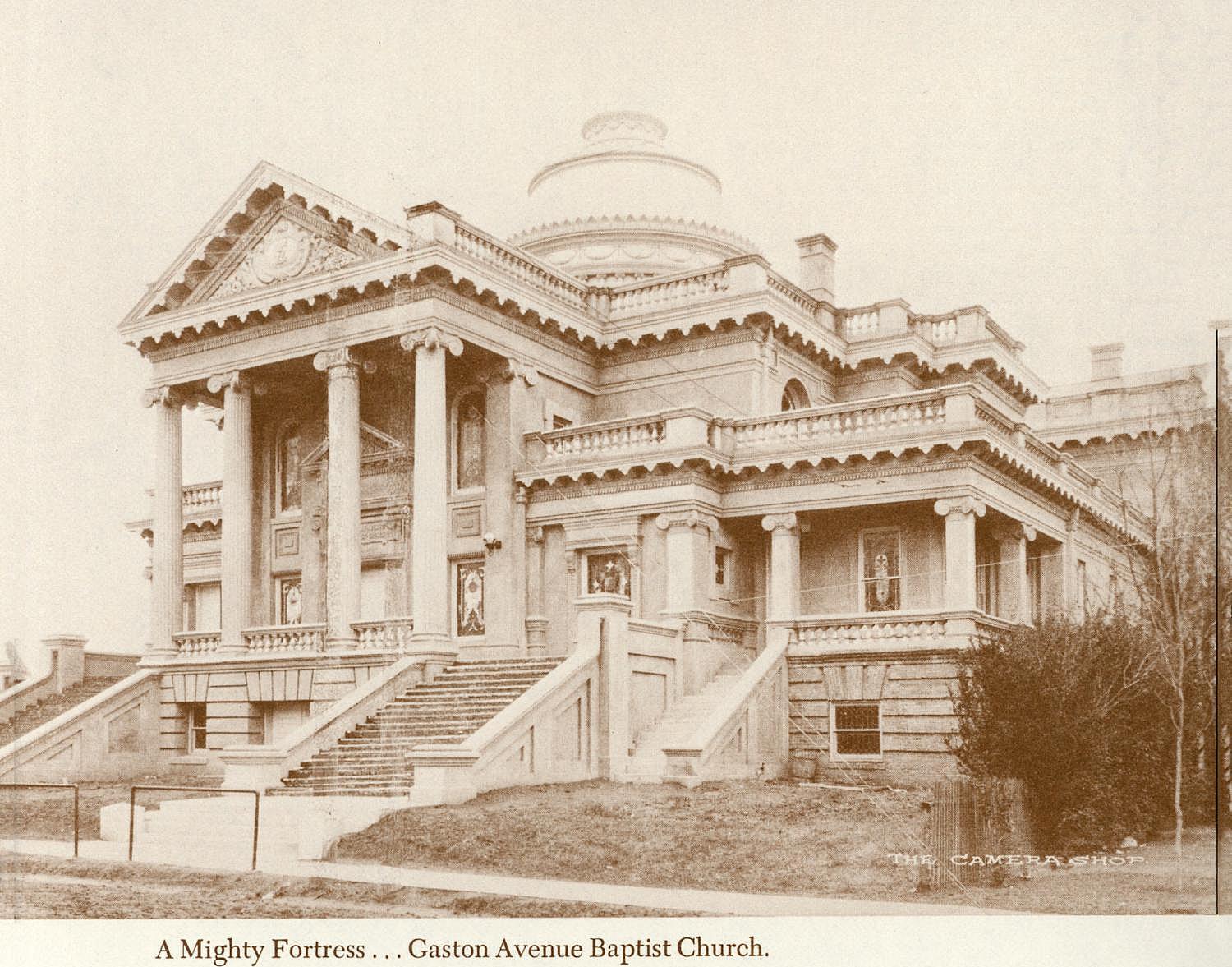
And another:

When you compare the early photos with the one from 1961, there are a few differences. Namely… the dome (…or lack thereof). It was built with a dome. But by 1961, the dome was gone. Why?

Here is what the building looks like these days (it is now the home of Criswell College):

Google Street View, June 2024

Dome.

What’s the deal here? I hate to be a negative Nellie, but every time I drive past that dome (which is often), I wince. It looks like sun-faded matte gold paint. It’s a beautiful building. It deserves a better dome!

After searching a bit, here’s what I found. In response to a reader’s question in 1991 asking what the “golden dome” was made of, The News responded:

MFG Molded Fiberglass in Union City, Pa. fabricated it of 1/2-inch molded fiberglass impregnated with gold-flecked paint… Both the dome and the bay section — the white collar that protrudes from the roof line — are composed of 12 separate pieces… The dome’s cap is composed of four pieces… and the spire that tops the structure is a single unit… [T]he structure stands approximately 35 feet above the roof of the library and weighs about 6,000 lbs. (Dallas Morning News, June 6, 1991)

Fiberglass, impregnated with gold-flecked paint. I don’t know when this happened, but more than 33 years ago. The gold-flecked paint has seen better days, beaten into submission by the relentless Texas sun. I’m sure it would probably cost a small fortune to spruce it up, but it would be nice to see it gold and shiny.

***

Sources & Notes

Top photo by Squire Haskins, from the Squire Haskins Photography, Inc. Collection, University of Texas at Arlington Libraries, Special Collections; more info on this photo is here (see interior photos taken by Haskins at the same time here and here).

Postcard was found on eBay.

The photo captioned “A Mighty Fortress” is from a TSHA Annual Meeting 1977 publication, via the Portal to Texas History.

*

Copyright © 2024 Paula Bosse. All Rights Reserved.

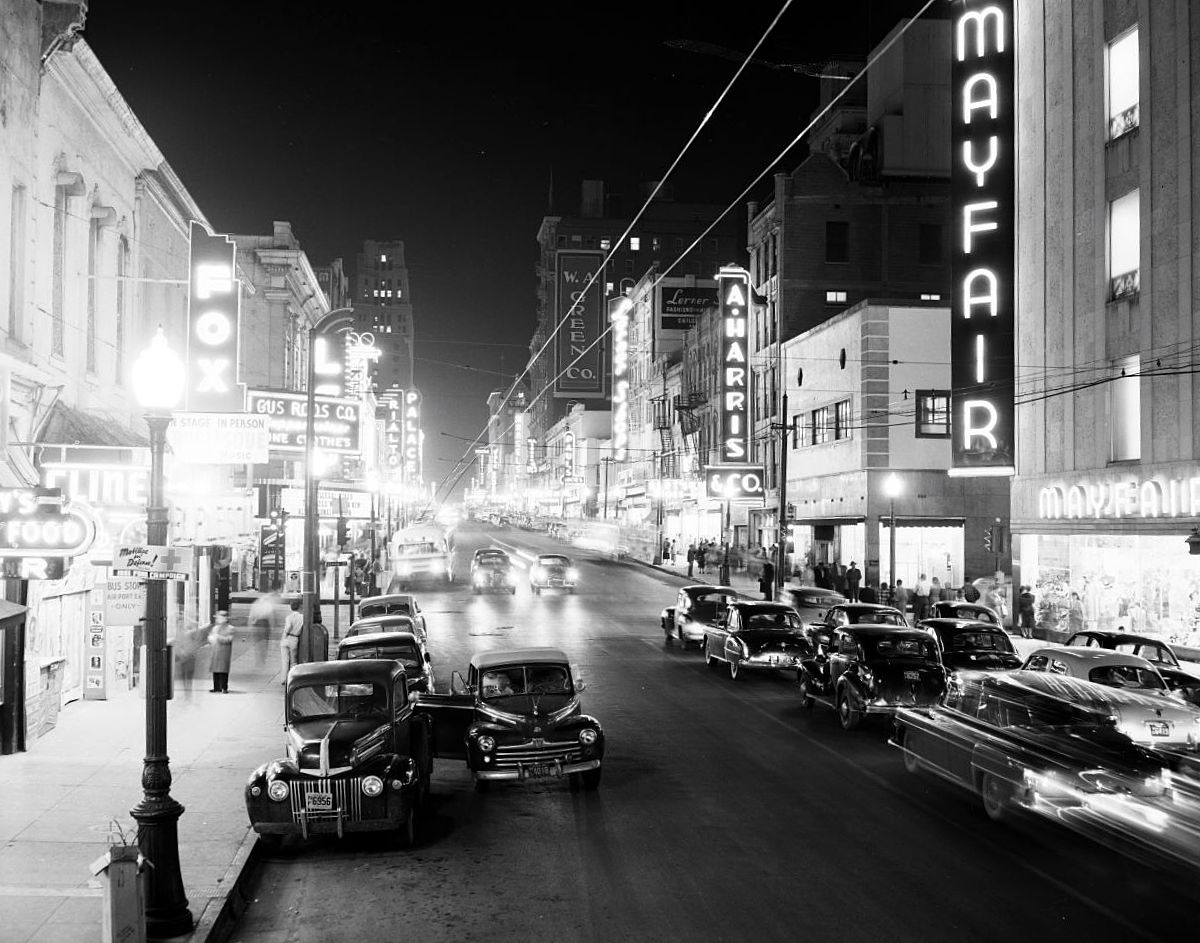
The Bright Lights of Big D — 1951

…Forget all your worries, forget all your cares…

by Paula Bosse

This is the downtown Dallas I’ve always wished I had seen.

Check out a clipping from the 1953 city directory for a list of the businesses in this immediate block, from about Akard to Ervay, here.

Then click over to the 2015 post “Dazzling Neon, Theater Row — 1929” to see how drastically Elm Street — and Movie Row — changed in just 22 years.

***

Sources & Notes

Photo by Denny Hayes, Hayes Collection, Dallas History and Archives, Dallas Public Library; Call Number PA76-1-576-2.

*

Copyright © 2024 Paula Bosse. All Rights Reserved.
Labor Day Weekend, 1952 (Redux)

labor-day_083152_denny-hayes_PA76-1-11420-002_webWaiting for the fun to start… (photo: Dallas Public Library)

by Paula Bosse

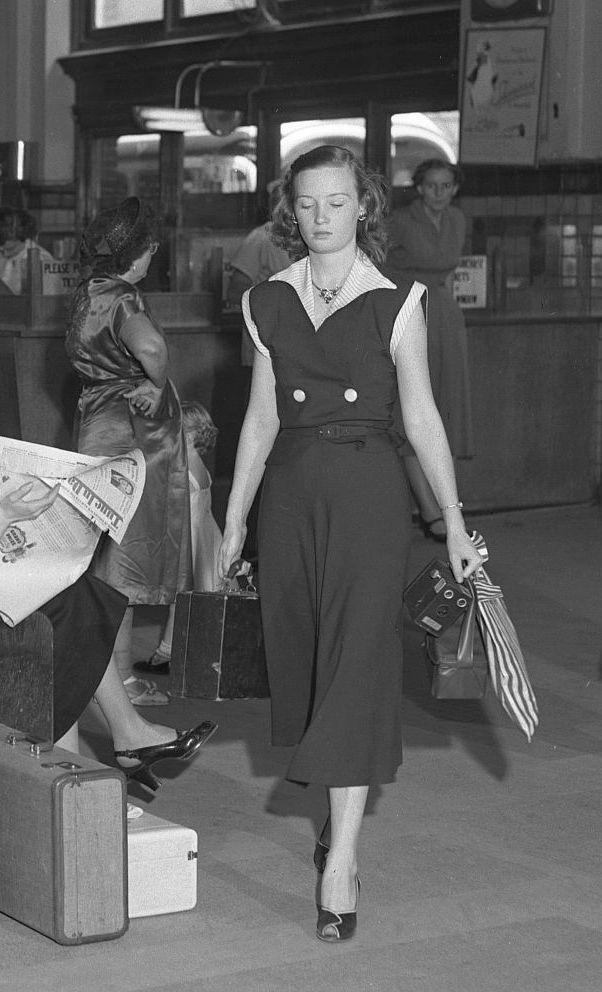
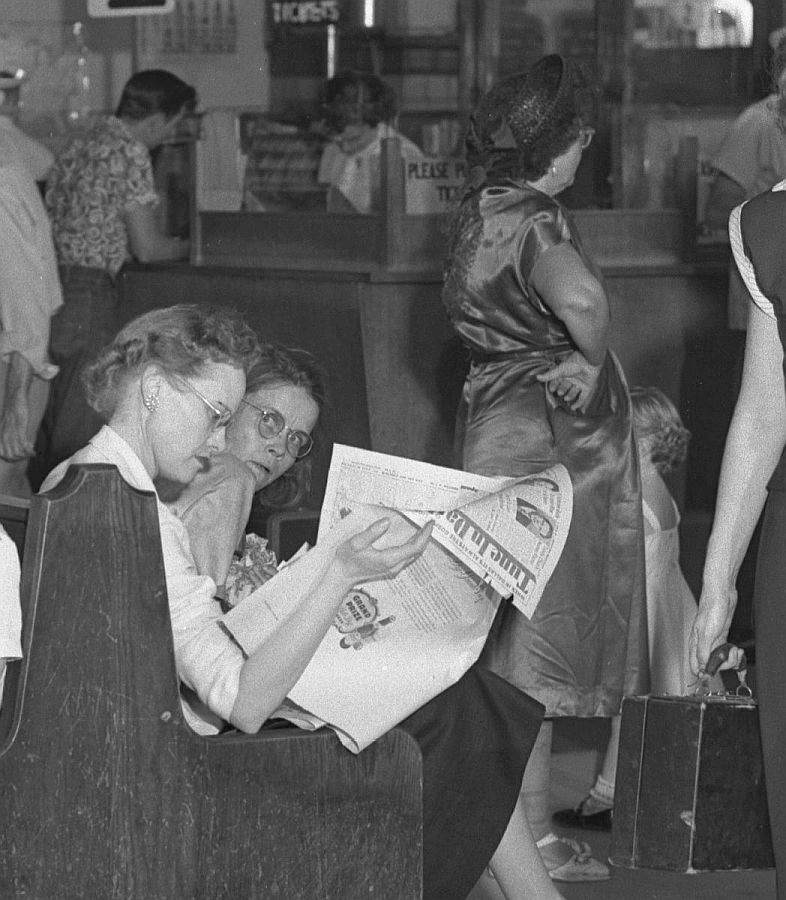
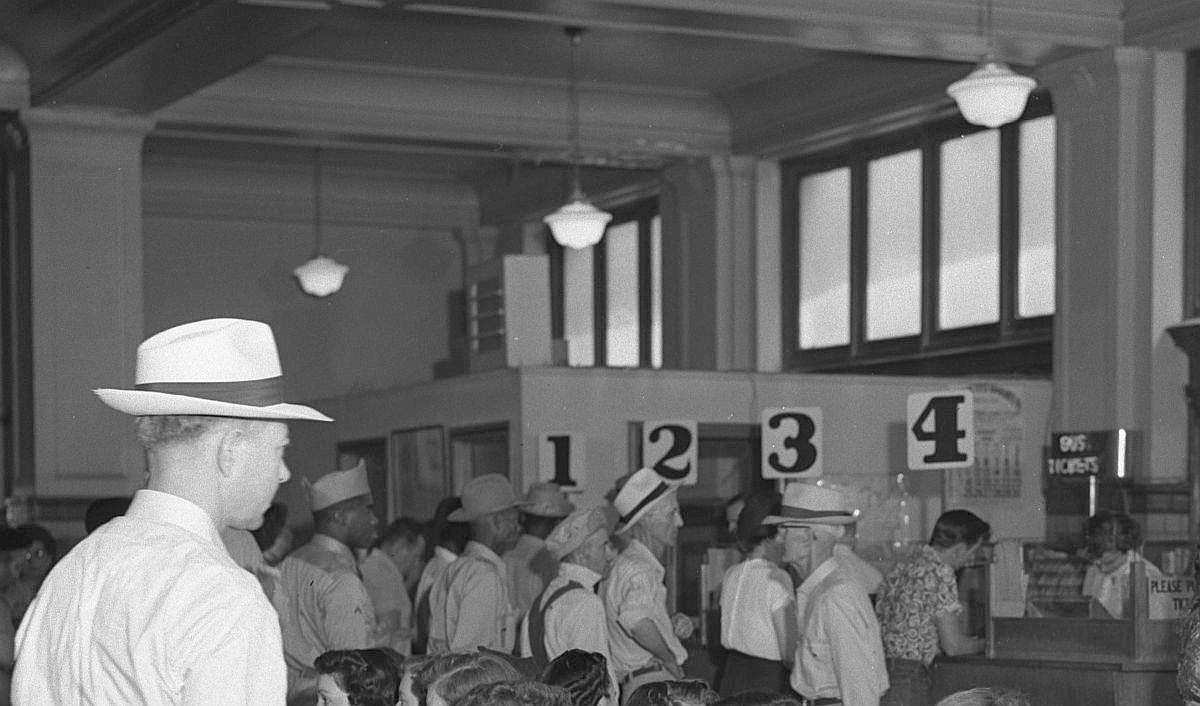
Happy Labor Day! Back in 2020 I wrote a post called “Labor Day Weekend, Union Bus Depot — 1952.” I really enjoyed writing that one, and I loved the main photo in it. It turns out that the photo I’m using in this post was taken only a couple of minutes before the one I used four years ago. I discovered this photo a few weeks ago and have been waiting for Labor Day to roll around. Which it has now done.

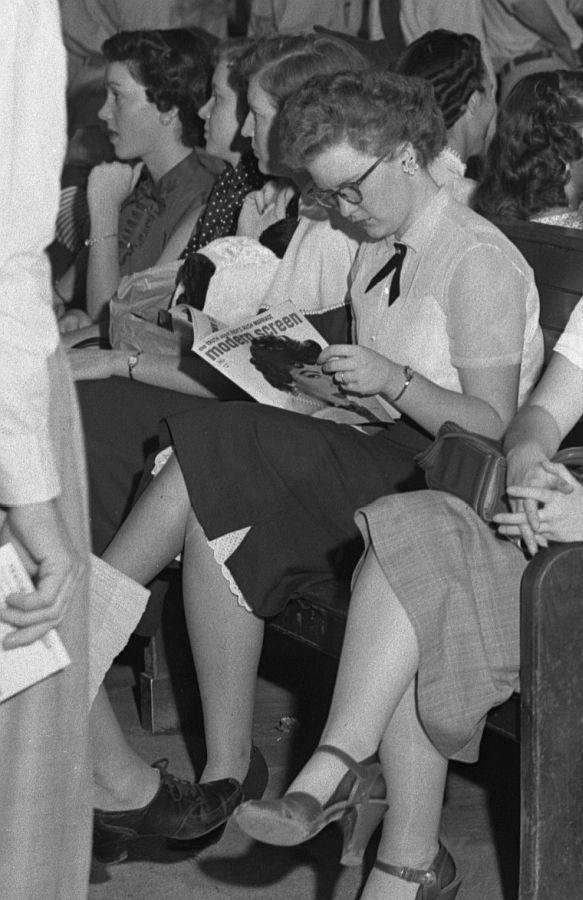
On August 31, 1952, Dallas photographer Denny Hayes took several photos of travelers waiting to be whisked away to someplace else. (With luck, someplace cooler.) These photos were taken at the Union Bus Depot in the Interurban Building. Let’s zoom in on this great people-packed photo.

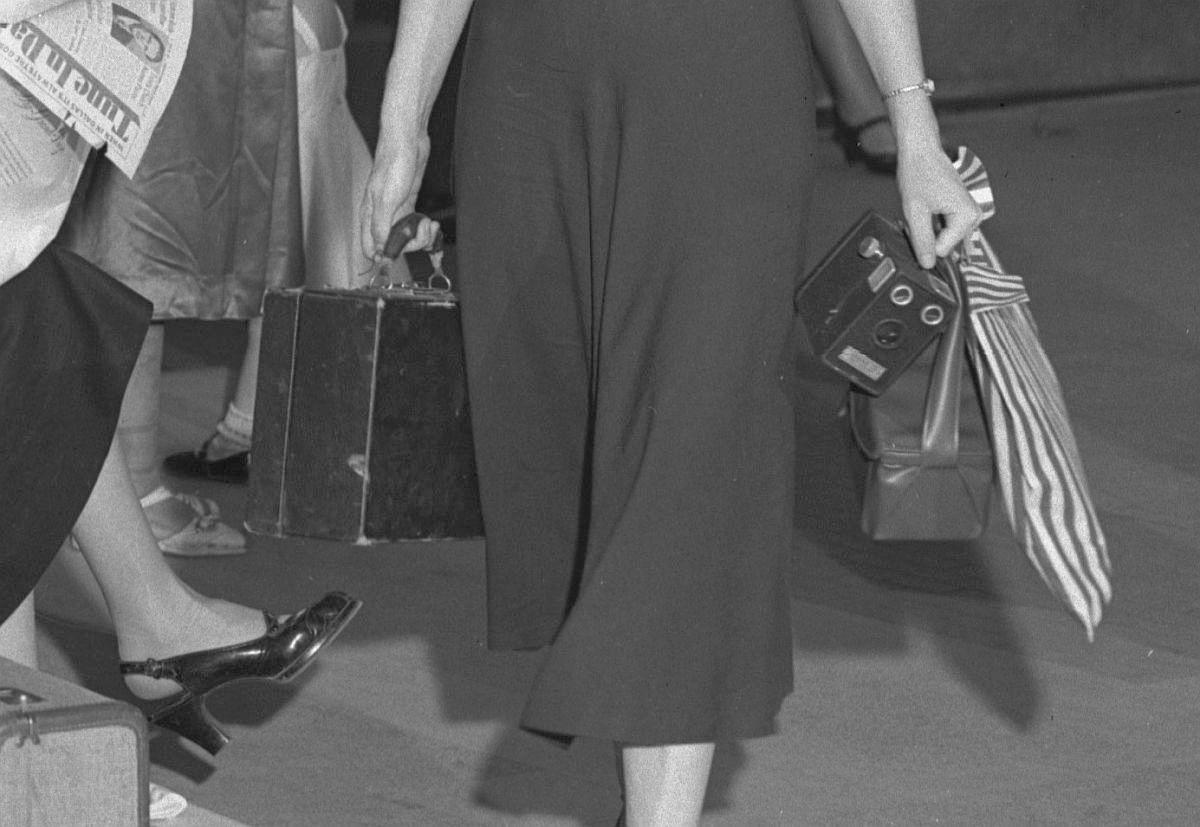
Everyone and everything pales in comparison to the young woman walking toward the camera. In her left hand she holds a box camera. She’s ready to take fun photos, if she ever gets out of that station.

labor-day_083152_denny-hayes_PA76-1-11420-002_woman

labor-day_083152_denny-hayes_PA76-1-11420-002_woman_camera

labor-day_083152_denny-hayes_PA76-1-11420-002_modern-screen

labor-day_083152_denny-hayes_PA76-1-11420-002_waiting

labor-day_083152_denny-hayes_PA76-1-11420-002_queue

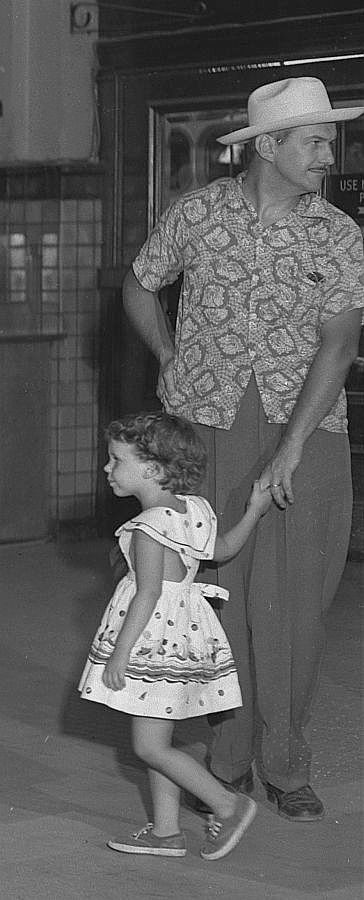
labor-day_083152_denny-hayes_PA76-1-11420-002_father-daughter

(If the man above looked any more like Harvey Korman, he’d be Harvey Korman.)

*

If you have the day off, I hope you enjoy it. And if you’re traveling somewhere, I hope you get there quickly!

***

Sources & Notes

Photo by Denny Hayes, from the Hayes Collection, Dallas Public Library, Dallas History and Archives; Call Number: PA76-1/11420-002.

See the companion post, “Labor Day Weekend, Union Bus Depot — 1952,” and see how many people made it into both photos.

labor-day_083152_denny-hayes_PA76-1-11420-002_web

*

Copyright © 2024 Paula Bosse. All Rights Reserved.
Zephyr, Meet Ox Cart — 1936

zephyr_sam-houston-zephyr_oxcart_ebay_front…Ox cart, meet Zephyr

by Paula Bosse

On Oct. 4, 1936, the Sam Houston Zephyr — the very first streamlined passenger train in Texas — made one of it very first public appearances, at the Texas Centennial in Dallas. This beautiful train (check out a photo of its interior here) was operated by the Burlington-Rock Island railroad between Fort Worth and Houston, with stops in Dallas, Waxahachie, Corsicana, and Teague. (See footage of it arriving it what might be Dallas in what might be 1936 in cool home movie footage here — then go to the beginning to see great Centennial footage — some of it in color! — and other footage shot in Kidd Springs.)

Back to the Zephyr. At its Centennial stop, a photo-op presented itself: the super-new (Zephyr) alongside the super-old (an ox cart). This photo ran in newspapers around the world, accompanied by variations of the following captions:

PROGRESS! Just a zephyr in the breeze is the Burlington Zephyr, particularly when compared to an ancient ox cart. The two were shown together at the Texas centennial fair at Dallas. The speedy streamliner runs from Dallas to Houston, Texas.

*

MARCH OF PROGRESS. An excellent contrast in the modes of transportation of today and yesterday is presented here as the Sam Houston Zephyr, streamlined train running between Dallas, Tex., and Houston, enters the grounds of the Texas Centennial exposition with an ox cart plodding along beside it. The presentation is part of the Cavalcade of Texas given at the exposition in Dallas. The girls are LaNeyl Brown and Peggy Humphreys.

*

From a Dallas Morning News article on the Centennial exhibit at Fair Park:

The streamlined Sam Houston Zephyr, operated between Dallas, Fort Worth and Houston by the Burlington-Rock Island, will be displayed on the siding in the grounds east of the Hall of Transportation. One of the powerful Opp Mogul freight engines of the Texas & Pacific also will be shown. To furnish a contrast with modern and ancient transportation the ox cart and stagecoach used in Cavalcade will be rolled out. (DMN, Oct. 4, 1936)

zephyr_sam-houston-zephyr_oxcart_DMN_100436_events

*

An interesting sidelight regarding the older modes of transportation is this blurb about the difficulty Centennial personnel had in finding authentic stagecoaches, covered wagons, and ox carts to use in various Fair Park productions celebrating the history of Texas, forcing them to resort to building reproductions (seems hard to believe that there were only two authentic stagecoaches to be found in the entire state!):

zephyr_centennial_AP-wire-story_may-1936
AP wire story, May 1936

The article is referring to props needed for the giant Cavalcade of Texas historical pageant, but check out the nice little novelty “prairie schooner” below, which served as a quirky, casual Centennial restaurant (“Smacking of the old West is the Chuck Wagon, a dining place for 250, with an overgrown chuck wagon serving as the kitchen and service counter” — Dallas Morning News, June 7, 1936):

patreon_tx-centennial_chuckwagon-restaurantDallas Historical Society

patreon_tx-centennial_chuck-wagon-restaurant_worthpointvia Worthpoint

***

Sources & Notes

Top photo was found on eBay (German wire photo).

Photo of the Chuck Wagon restaurant is from the Texas Centennial Exposition Collection, Dallas Historical Society, Object ID V.38.3.245 — more info on this photo is here.

Consider becoming a member of my Flashback Dallas Patreon page for as little as $5 a month — I post there daily. No strings attached. Cancel at any time!

zephyr_sam-houston-zephyr_oxcart_ebay_front

*

Copyright © 2024 Paula Bosse. All Rights Reserved.
The Cloverleaf

patreon_cloverleaf_south_txdot_slotboom_ca-mid-1950s_colorBehold... (via TxDOT)

by Paula Bosse

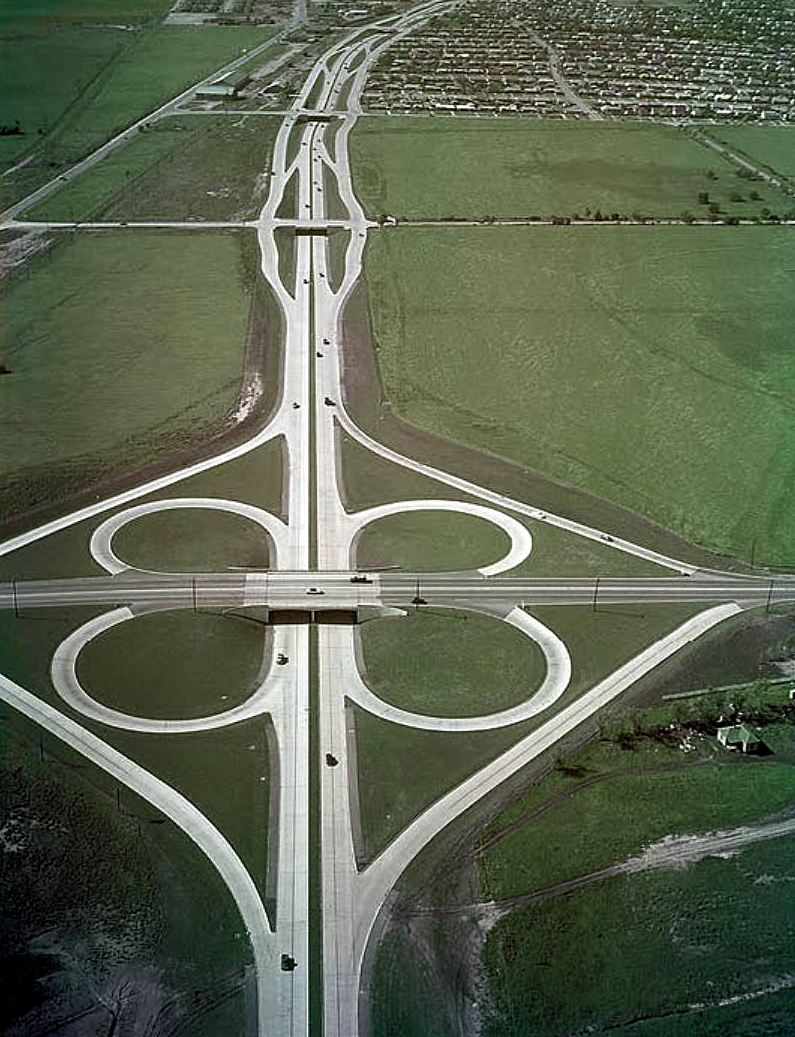
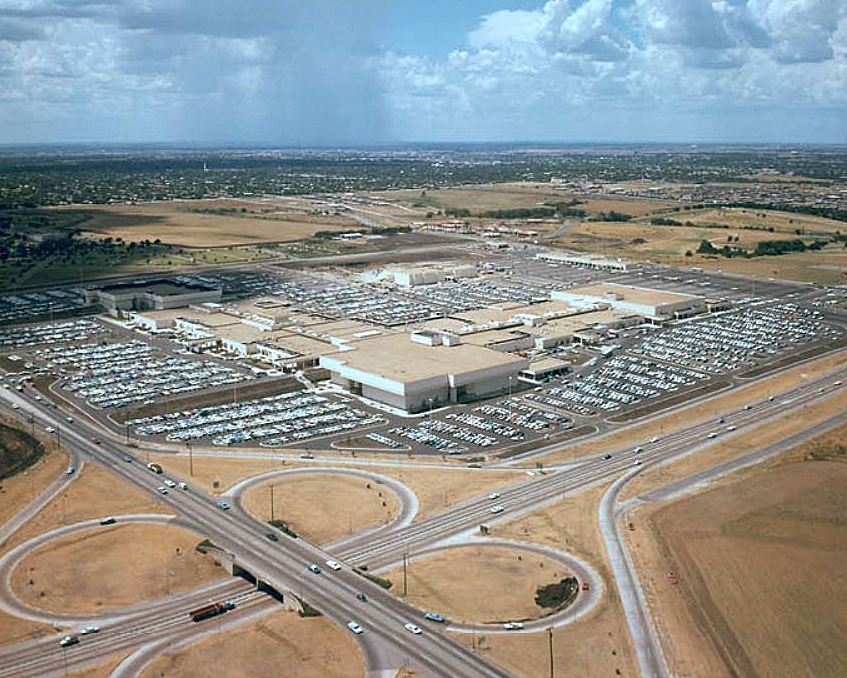
I have such a weird fondness for the old Central Expressway/Northwest Highway cloverleaf interchange, at NorthPark. In fact, I kind of forget it’s not there anymore. I have fairly scary memories of my mother driving like a bat out of hell on it. I’m pretty sure the car was tipped at an angle on two tires as we rounded those curves. And I remember being behind the wheel myself when I was a new driver, white-knuckling it until I hit the straight-away. Strange that I have such fond memories of it, because a lot of those memories were kind of terrifying! I guess it has to be the design. It was cool. COOL! The photo above is just great. The view is to the south from Northwest Highway, across open Caruth farmland. Mid-’50s. Pre-NorthPark. Pre-people. Pre-traffic.

Below, after NorthPark’s arrival (photo from Oct. 1967):

patreon_cloverleaf_northpark_oct-1967_UTA_slotboom_color

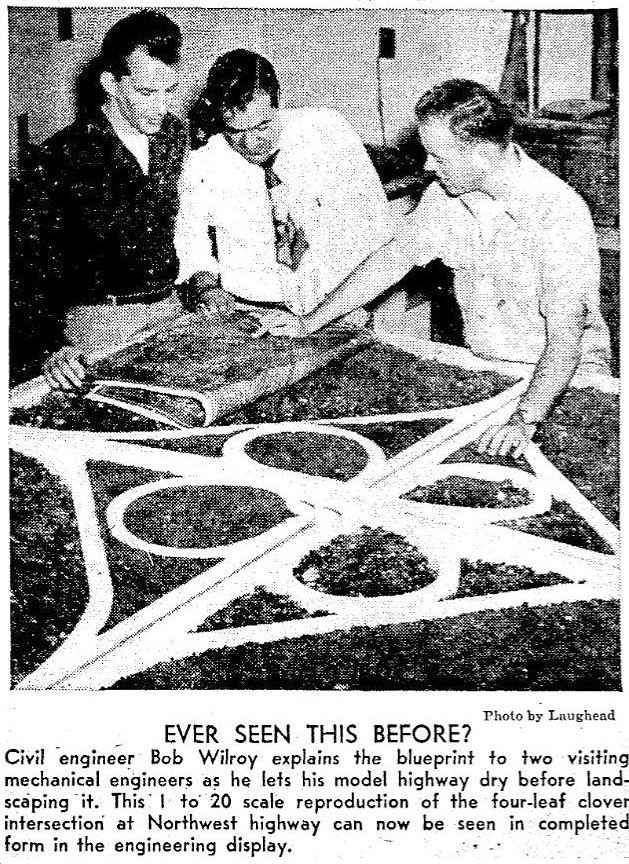
Here’s an interesting photo I stumbled across in an issue of SMU’s Daily Campus newspaper from 1951 — a personal-size cloverleaf:

patreon_cloverleaf_SMU-daily-campus_050551SMU Daily Campus, May 5, 1951

I really miss the Northwest Highway cloverleaf. I think about it almost every time I drive past NorthPark on Central. Shoulda kept it, Dallas.

***

Sources & Notes

The top two photos are from the book Dallas-Fort Worth Freeways by Oscar Slotboom (top photo from TxDOT, second photo from UTA Libraries, Special Collections).

This post appeared in a slightly different form on the Flashback Dallas Patreon page.

patreon_cloverleaf_south_txdot_slotboom_ca-mid-1950s_color

*

Copyright © 2024 Paula Bosse. All Rights Reserved.
On the Line at Coca-Cola — 1964

patreon_coca-cola-bottling-plant_john-rogers_portal_ca-circa-1964Gleaming!

by Paula Bosse

The photo above shows the sunniest factory floor I’ve ever seen. You don’t think of factories filled with sunlight, but this is what it looked like inside the new Coca-Cola bottling works at Lemmon and Mockingbird in 1964. It’s gone now (as is that UNBELIEVABLY FANTASTIC ANIMATED NEON SIGN that made me look forward to nighttime drives to Love Field). All that remains is the small syrup plant (from 1948?). (…I think it’s a syrup plant. Or a warehouse. Or something syrup-related.)

The new plant opened in June 1964. The building had floor-to-ceiling glass — I’ve read reminiscences of people who remember driving by and seeing the work going on through those huge windows. I don’t know if there was bottling work going on after dark, but here’s a grainy photo from a Dallas Power & Light ad that shows the building at night, lit up like a stage.

patreon_coca-cola_opening_060964_dpl_night_det-1Dallas Power & Light ad (det), June 1964

Speaking of which, The Dallas Morning News wrote this:

The bottling room, which fronts on Lemmon, has a glass front 254 feet long and 26 feet high to provide a view of the bottling process to the passing public. (DMN, June 9, 1964)

Free show!

The woman featured in an Employers National Life Group Insurance Company ad (below), might be the same woman seen in the photo at the top. Manning her station.

patreon_coca-cola_opening_060964_ad-det_employers-natl-life-group-insuranceEmployers National Life ad (det), June 1964

And what was rolling off the automated line? Coke, Sprite, and Tab. And something called Mission (grape and orange drinks). 1,860 bottles a minute (!).

Back to the sign for a second. I haven’t invested a LOT of time in a search (but *kind of* a lot…), but I have been unable to find footage of that truly wonderful, mesmerizing neon Coca-Cola sign. Living in an age of Instagram and YouTube, we just expect to find this sort of thing quickly, without having to set aside large chunks of time to devote to searching. If YOU know where film/video of that sign might be hiding… SPEAK UP!

A couple of shots of the exterior:

patreon_coca-cola-bottling-plant_john-rogers_portal_ext_ca-circa-1964

patreon_coca-cola-bottling-plant_john-rogers_portal_exterior_ca-circa-1964

*

coca-cola-plant_mockingbird_dallas-power-light-ad_dallas-mag_april-1964_full
April 1964

***

Sources & Notes

Top photo and last two photos are all by John Rogers and were probably taken around the time the plant began operation in mid-1964; all are from the John Rogers and Georgette de Bruchard Collection, UNT Libraries Special Collections, via the Portal to Texas History, here, here, and here.

A shorter version of this post previously appeared on the Flashback Dallas Patreon page in November 2023.

patreon_coca-cola-bottling-plant_john-rogers_portal_ca-circa-1964

*

Copyright © 2024 Paula Bosse. All Rights Reserved.