Flashback : Dallas

A Miscellany: History, Ads, Pop Culture

Category: Postcards

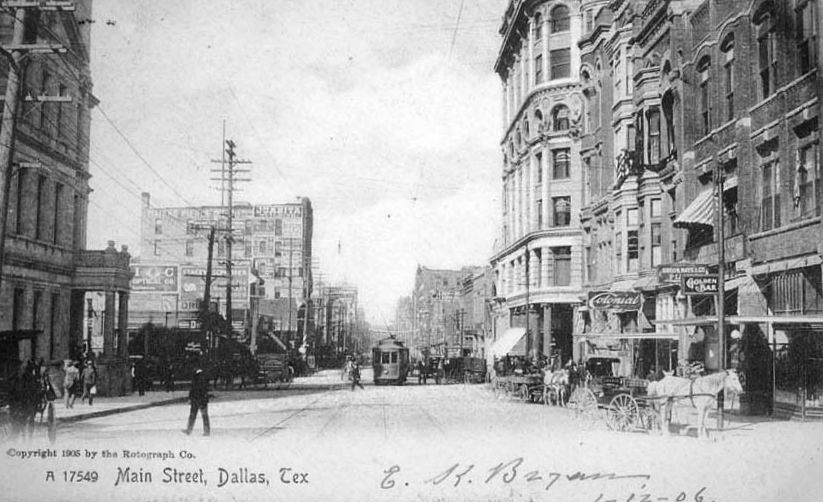
Main Street — 1905

main-st_1905A wide Main Street (click for larger image)

by Paula Bosse

Just another day on Main, here looking west from the middle of the block between Ervay and St. Paul. The Wilson Building is on the right, the Juanita Building is at the top left.

***

Postcard from eBay.

*

Copyright © 2014 Paula Bosse. All Rights Reserved.

The Texas Bookbindery, Arcadia Park

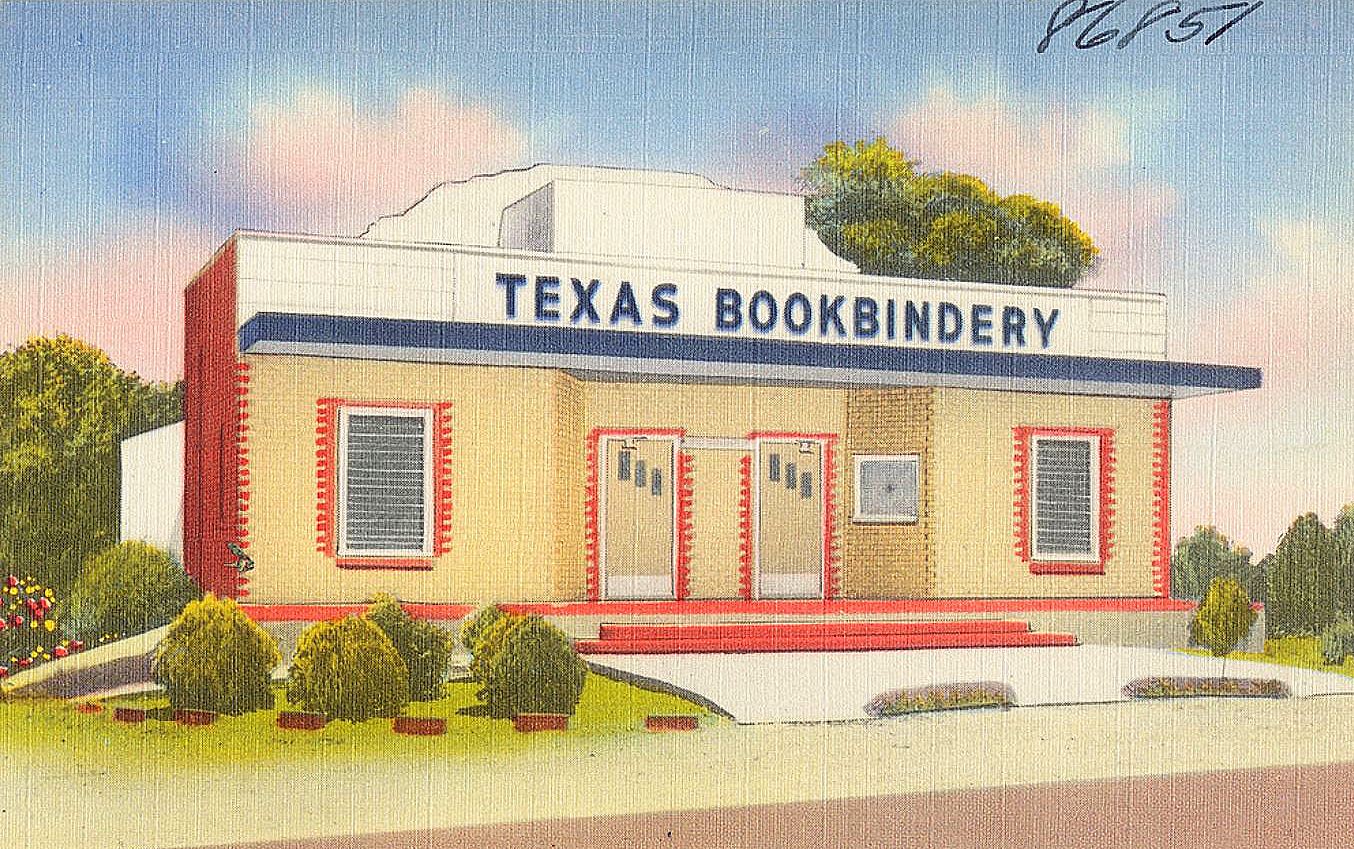
texas-bookbindery_oak-cliff_tichnorThe Texas Bookbindery, be-shrubbed and gleaming in Oak Cliff’s Arcadia Park

by Paula Bosse

Old postcards, such as the one above, are perfect little fictional jewels. One knows instinctively when looking at them that they show a highly idealized version of reality. I almost didn’t want to find out too much about the Texas Bookbindery, because I love this image so much, and I was pretty sure that if the simple-but-charming building still stood, it wouldn’t really look like a happy little place atop a slight hill, with lovely landscaping, where butterflies flitted among the flowers and bluebirds sang in the nearby trees.

I didn’t find out much about the Texas Bookbindery, except that it seems to have been in business from at least the late 1940s until the late ’60s or early ’70s. It was managed by a man named T. Bernard White, who was featured in a 1948 Dallas Morning News article about the horrible things people do to library books (the Dallas Public Library sent the bindery what sounds like an unending stream of not-quite-destroyed books which were still repairable).

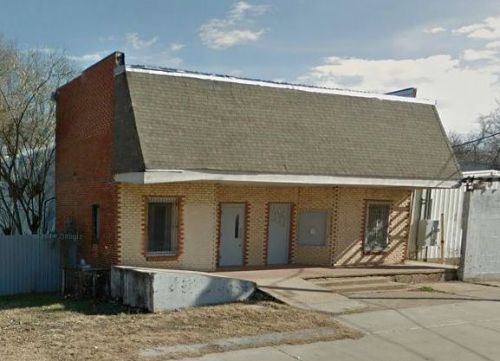
Apparently bookbinderies keep a pretty low profile, because the only other mention I found in the newspaper about this one was in 1962 when a large number of the 37 employees (“mostly women”) were overcome by fumes from poorly-vented gas heaters in the “one-story sheet-metal plant” (yes, a large sheet-metal structure extends behind the deceptively cheery street view). That story listed the address as 714 N. Justin, in the Arcadia Park area of Oak Cliff. I was almost afraid to plug that address into Google. As well I should have been. Here’s what that sweet little building looks like now (but …the shrubs! …the flowers! …the BLUEBIRDS!!):

tx-bookbindery-nowToday, via Google Street View

Poor little bookbindery.

UPDATE: A month after I wrote this post in November, 2014 the Google car drove down N. Justin and snapped a new Google Street View of the poor little bindery — it looked even sadder: it had a big hole in its roof. In March of 2017, that hole-in-the-roof image from December, 2014 has yet to be updated. See it here.

***

Sources & Notes

Postcard from the fantastic Boston Public Library Tichnor Brothers Postcard Collection on Flickr, here.

Click top pictures for larger image.

*

Copyright © 2014 Paula Bosse. All Rights Reserved.


“Dear Folks: Dallas’ New Filtration Plant Is Simply Glorious! Weather Great! Wish You Were Here!”

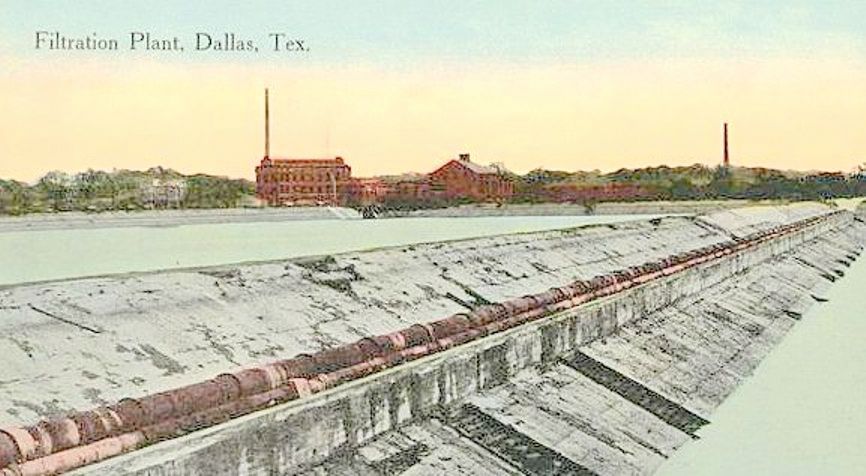
filtration-plant_c1916_lgA famed Dallas beauty spot, circa 1916

by Paula Bosse

Above, a postcard from a lady visiting Dallas in 1916, sent to her “dear friend” back home in Wilmette, Illinois. The card has a short, chirpy “hello, hope everyone’s well, be home in a couple of weeks” type of message on it. But there is no mention of the fact that the picture on the other side shows a water filtration plant. …A water filtration plant. Dallas was a big and impressive city in 1916, and there were a lot of beautiful postcards to choose from, so one wonders why she chose THIS one. I’m not even sure why there would be a picture postcard of a water filtration plant in the first place. Maybe to make municipal workers in other cities jealous. “Dallas has a magnificent state-of-of-the-art sedimentation basin, and you don’t!” But, actually, it’s kind of a cool postcard.

This water filtration plant and pumping station was located along the Trinity (before the river’s course was changed), at what is now Oak Lawn and Harry Hines (now home to the Sammons Center for the Arts, a designated historic landmark which contains part of the old Turtle Creek Pump Station).

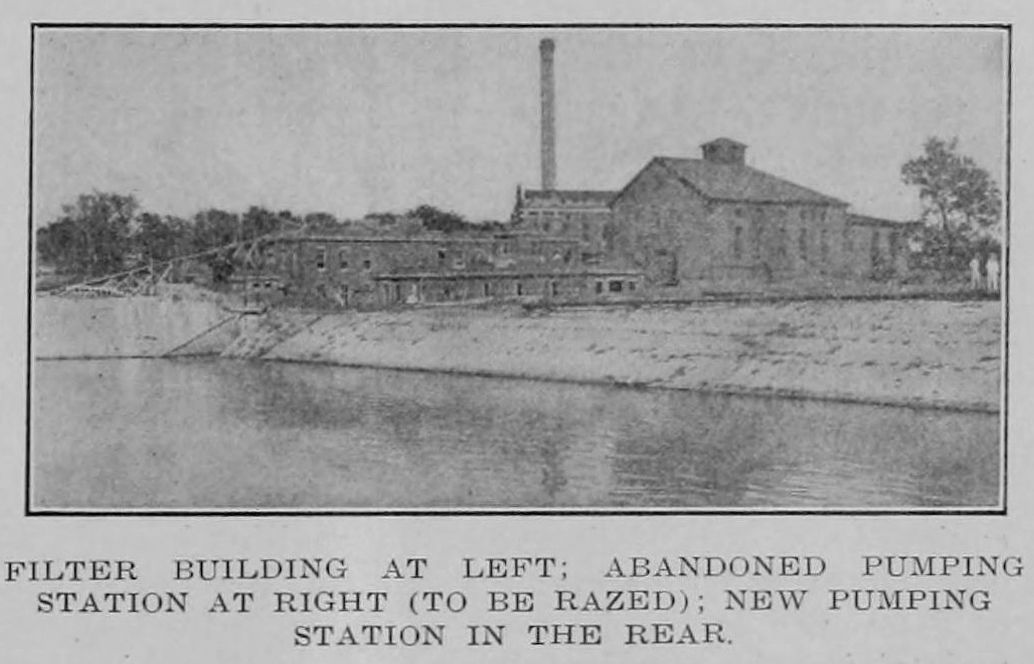
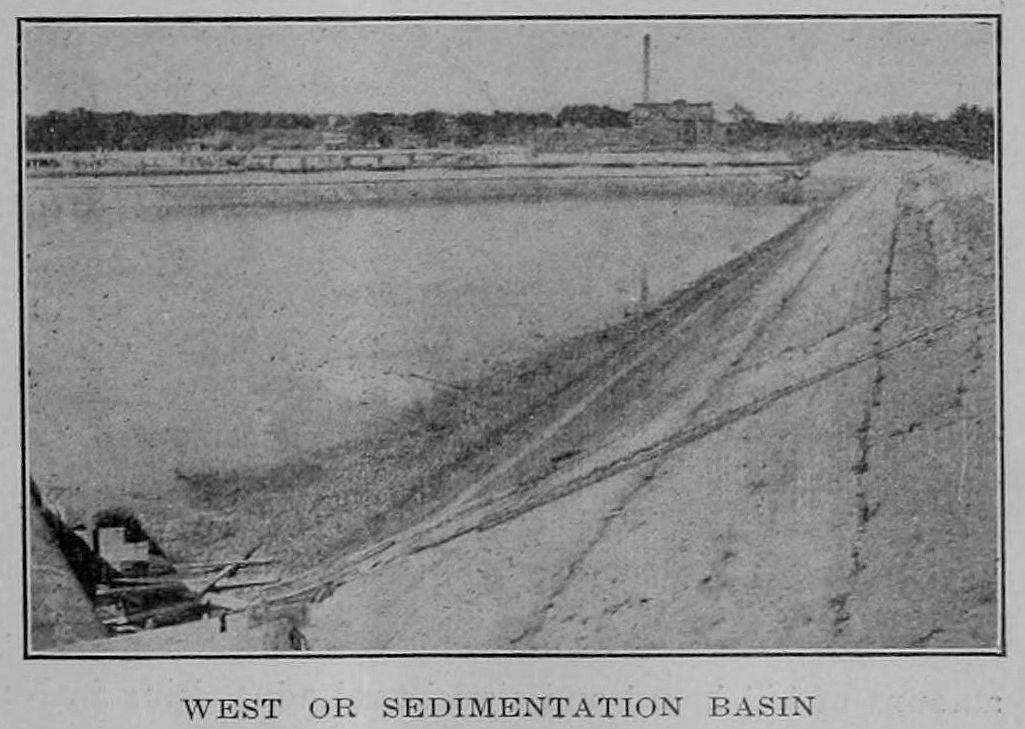
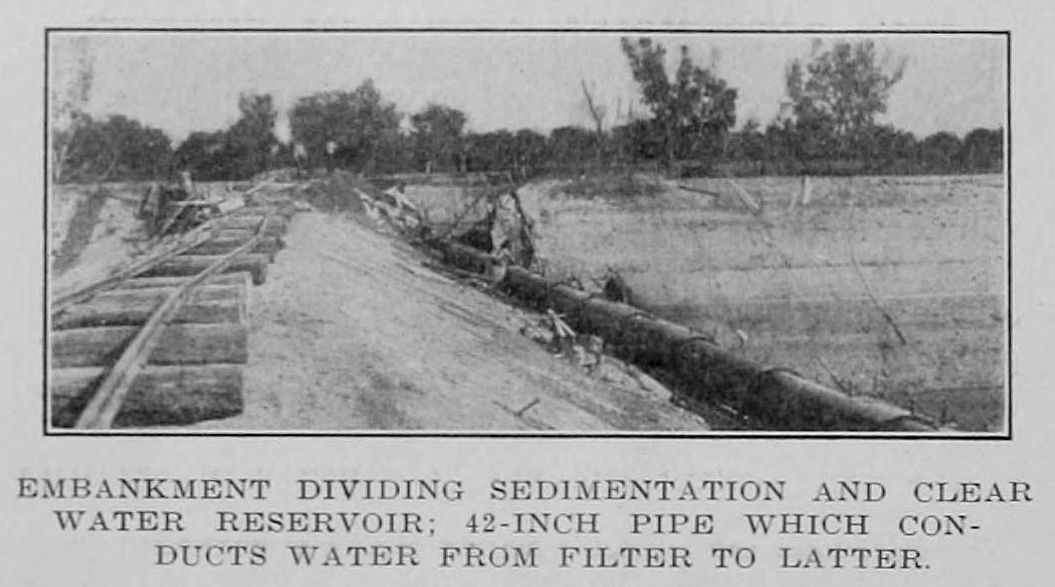
The filtration plant was built in 1913. Here are a few photos of its construction (click to see larger images):

water-filtration_photo1_102313

water-filtration_photo2_102313

water-filtration_photo3_102313

A large-capacity water filtration plant is a necessary thing for the city to have, certainly, but it still doesn’t explain why Mrs. [Illegible] was sending a postcard of it to her friend in Illinois.

***

Sources & Notes

Postcard of the filtration plant (wow, I’ve typed that a LOT today) from a site that sells postcards. It shows the reverse of the card with the hard-to-read message, here.

Photos of the filtration plant (…there it is again…) from the Oct. 23, 1913 issue of Municipal Journal, here. The entire article should be of interest to people who are interested in … this sort of thing.

Even MORE about this plant, along with diagrams, photos, and an in-depth analysis on its operation, can be found in the July 16, 1914 issue of Engineering News, here.

History page for the Sammons Center is here.

A couple of other early photos of the Turtle Creek Pump Station (from 1894 and 1908) can be seen in a previous post — “City Hospital, a Pump Station, and the County Jail — 1894” — here.

*

Copyright © 2014 Paula Bosse. All Rights Reserved.

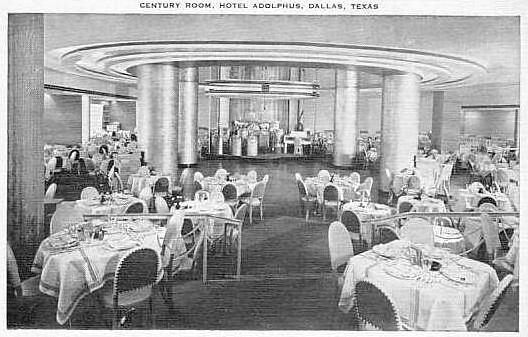
The Century Room’s Retractable Dance Floor

ad-adolphus-hotel_century-room_sm(click for larger image)

by Paula Bosse

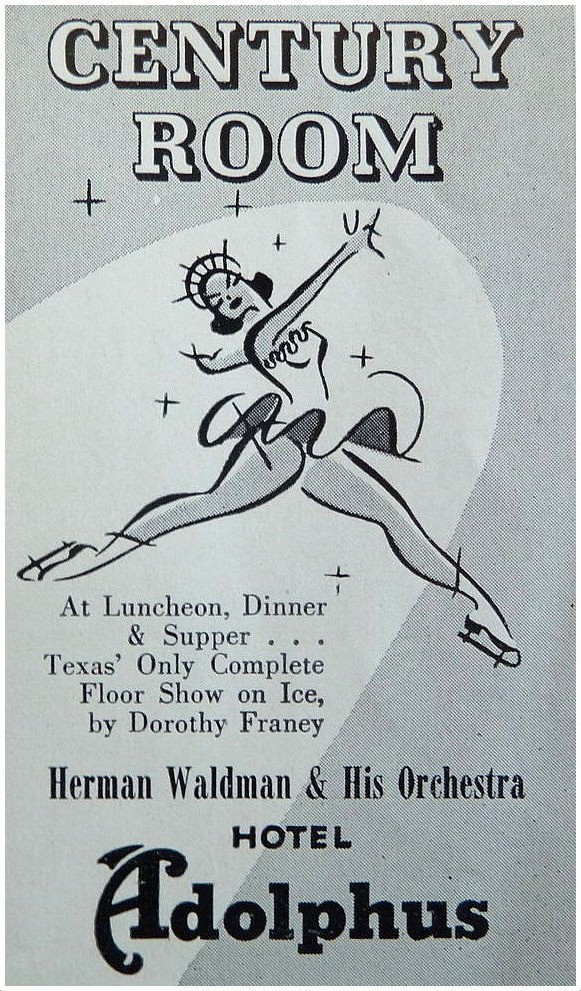
If you’re getting all dressed up for a night on the town, you want to make sure you get your money’s worth, entertainment-wise. That’s why you head to the tony Century Room at the swank Hotel Adolphus. Not only is there dining and dancing, there’s also an ice show. Yep, an ice show. When “Texas’ Only Complete Floor Show on Ice” has wrapped up, a dance floor magically covers the ice, and you and your honey can trip the light fantastic to the fabulous strains of Herman Waldman & His Orchestra. Skates optional.

adolphus_hotel_century-room

adolphus_century-room

*

Copyright © 2014 Paula Bosse. All Rights Reserved.

Please Don’t Pull the Daisies

city-park_no-one-allowed-to-pull-flowersCity Park, 1909-ish

by Paula Bosse

Back when Old City Park was merely “City Park.” The sign at the bottom right reads: “WARNING: NO-ONE ALLOWED TO PULL FLOWERS.” Seems a bit brusque. Not even a “please.” Still, one best not.

***

Sources & Notes

Hand-colored postcard with an odd color palette, probably by Weichsel, around 1909.

*

Copyright © 2014 Paula Bosse. All Rights Reserved.

“So Sorry, Bill, But Albert is Taking Me to The State Fair of Texas”

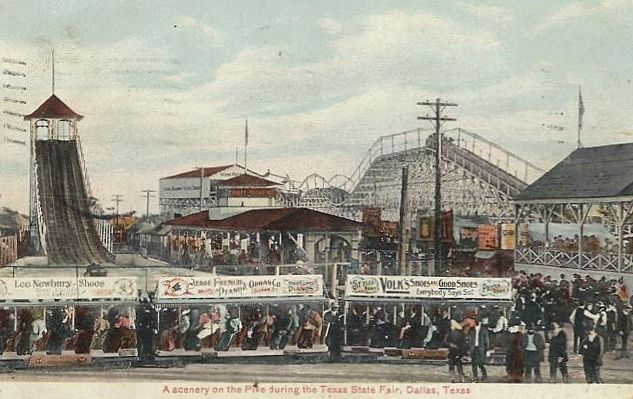
state-fair_1909_flickr“The Pike” — 1909

by Paula Bosse

Hey, y’all — guess what ends this weekend? Hurry!

One doesn’t really need an excuse to post a bunch of photos of the Great State Fair of Texas, but it IS the closing weekend, so why not enjoy a few images from the past few decades.

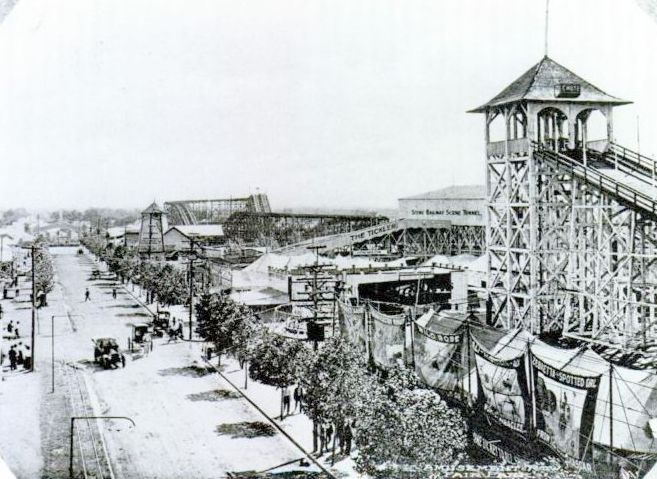
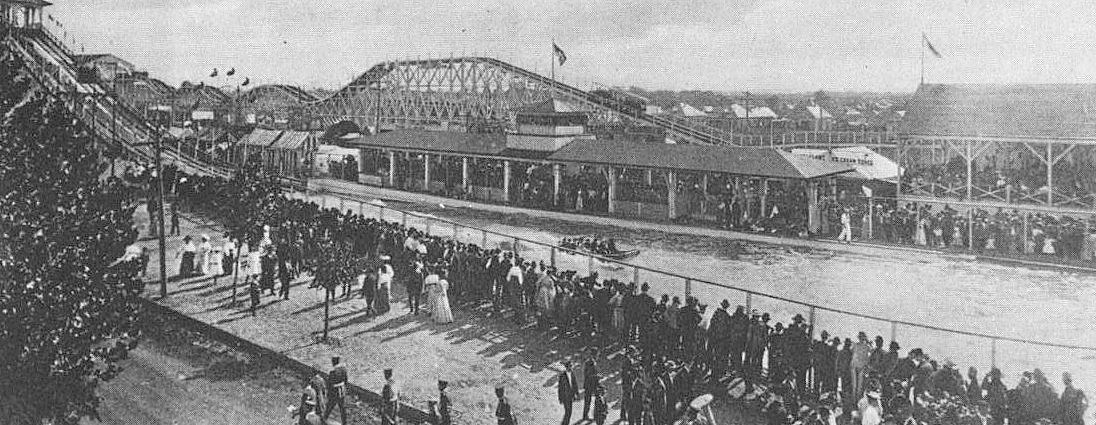
Above, a view of the Midway in 1909 (then called “The Pike”), with the Log Ride-like “Chute” and its ramp, a roller coaster, and a loaded tram festooned with shoe ads (including one for Volk’s).

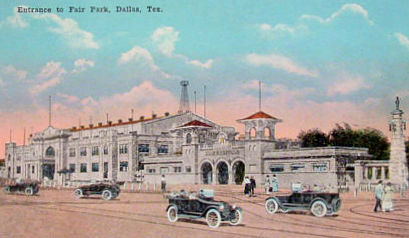
Below, the Fair Park entrance in 1919:

fair-park-entrance_1919

A nice little newspaper ad from 1924:

state-fair_092724

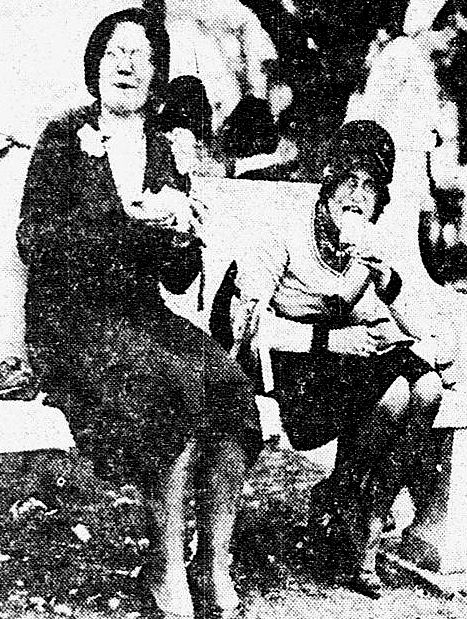
Two women enjoying ice cream in 1930 — State Fair food has always been one of the main joys of visiting the fair.

state-fair_dmn_101530

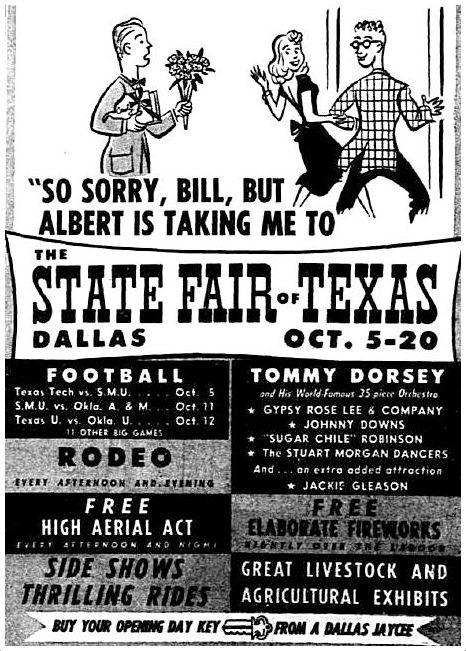
Ad from 1946: “So sorry, Bill, but Albert is taking me to the State Fair of Texas.” The grown-up entertainment that year was provided by Tommy Dorsey, Gypsy Rose Lee, and Jackie Gleason.

state-fair_dmn_092446

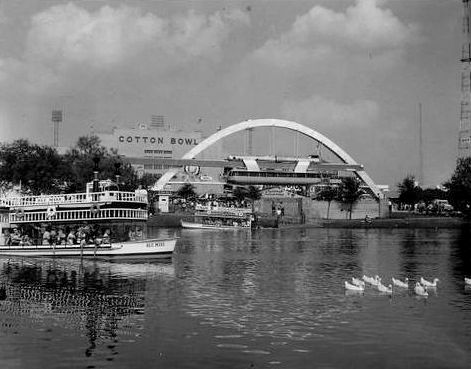
In 1958, Fair Park had a monorail (the only one then operating in the United States) and a paddle-wheeler in the lagoon:

state-fair_lagoon_squire-haskins_dmn-1958

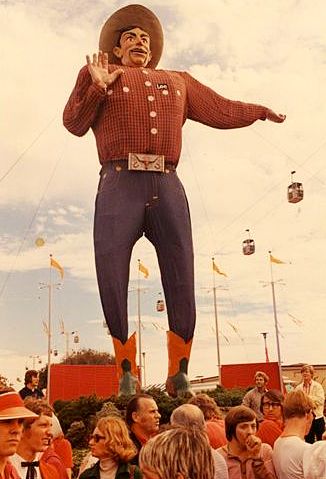
And then there’s this guy, who spans the decades:

big-tex_briscoe-center

***

Sources & Notes

1958 photo featuring the monorail by Squire Haskins, from a Dallas Morning News online article featuring TONS of cool photos of the fair over the years, here.

Big Tex photo (undated) from the Dolph Briscoe Center for American History.

Another post of random images of the SFOT through the decades — “The Fair Is In the Air — Let’s Go!” — is here.

*

Copyright © 2014 Paula Bosse. All Rights Reserved.


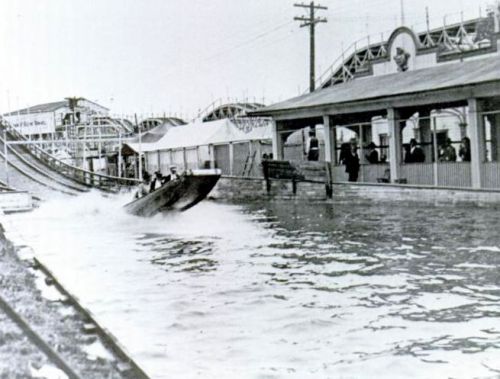
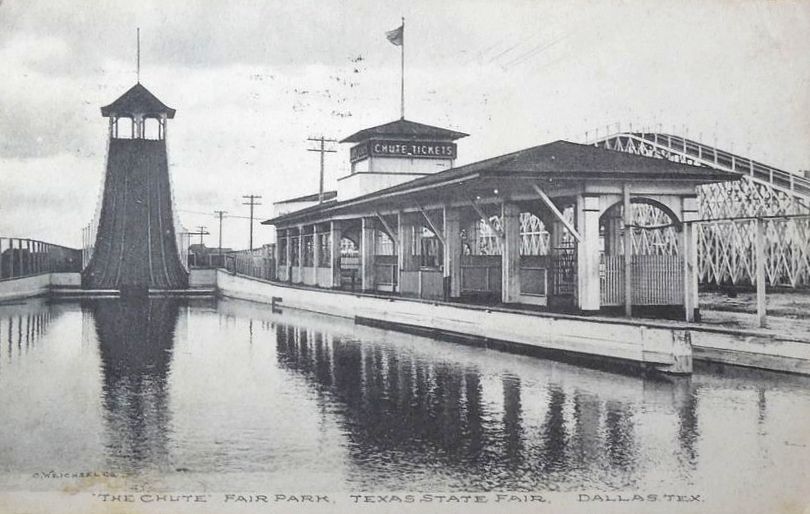
“The Chute”

chute-roller-coaster_c1908_tsha_2The Chute and The Tickler, Texas State Fair, 1908

by Paula Bosse

Construction began in 1906 on a new entertainment area at Fair Park called The Pike.

“What is known as ‘Smokey Row’ has been set back against the fence on the south side of the grounds, and the space between it and the race track, all the way to the grandstand, will be occupied by exhibits. Two streets through this part of the grounds lead to the grandstand and the Pike. The Pike will be located beyond the grandstand, occupying a space 250×1125 feet. Here are being constructed the scenic railway and the shoot the chute, which will represent an investment of $75,000. The State Fair has agents in the East booking the remaining attractions for this department. These agents have instructions to pay the money and get the newest and best things to be had.” (Dallas Times Herald, June 24, 1906)

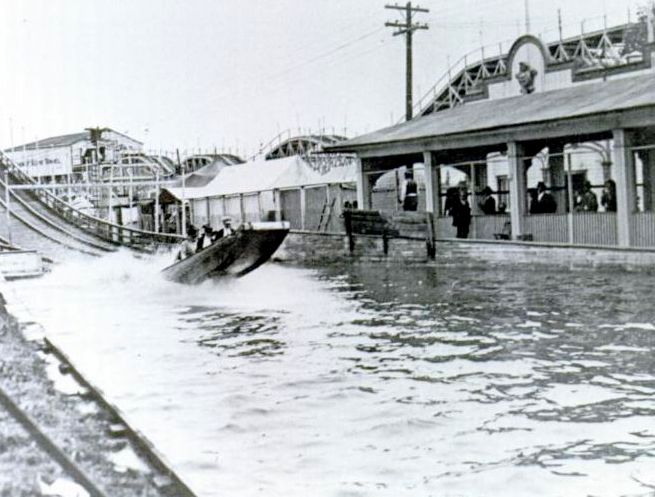
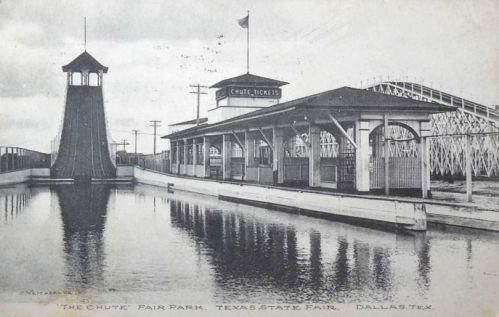
The new Pike meant that visitors to the State Fair of Texas would be able to ride “The Chute,” an amusement park attraction that had been popular in other parts of the country (and which automatically brings to mind the log ride at Six Flags Over Texas). In 1908, a roller coaster with the delightful name of “The Tickler” joined the rides in the area that was referred to as the “Pleasure Plaza” in at least one newspaper account. The Chute/Shoot the Chute/Chute the Chutes lasted a relatively short time — only until 1914 when it was torn down to “make room for the new shows known as the ‘World at Home,’ to be open to the public at the State Fair next fall” (DTH, Aug. 18, 1914).

Rides such as The Chute and The Tickler were enormously popular, and one wonders how all those hats managed to stay on all those heads of all those pleasure-seekers.

*

The Chute, head-on:
chute_postcard_1908

A view of The Pike, with The Chute to the right, above the sideshow banners.

chute_willis_dpl

In action:

chute_willis_sfot

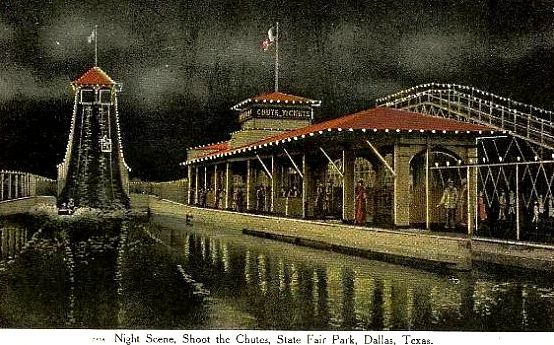
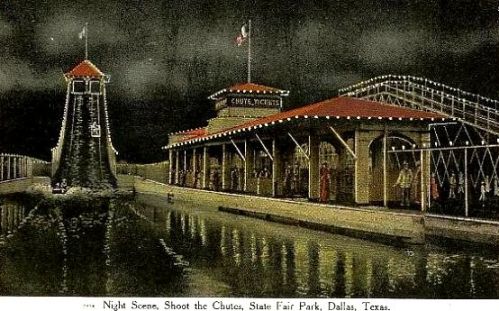
At “night” (the second photo above, glamorized, with postcard magic applied):
chute-night_observer

***

Sources & Notes

Top photo from the collection of the Texas State Historical Association.

Second photo, a 1908 postcard, from eBay.

Third and fourth photos from the book Fair Park by Willis Cecil Winters (Charleston: Arcadia Publishing, 2010). Photo of The Pike from the Dallas Public Library; photo of the boat from the State Fair of Texas Archives.

Night scene from a story by Robert Wilonsky on Winters’ book in the Dallas Observer, here.

Dallas Times Herald quotes from the indispensable Dallas County Archives pages compiled by Jim Wheat; these two articles can be found here.

Yes, Wikipedia does have an entry on the history of Shoot the Chute rides, here.

 As always, most pictures are larger when clicked.

*

Copyright © 2014 Paula Bosse. All Rights Reserved.

Highland Park High School — 1939

hphs_1939Highland Park High School

by Paula Bosse

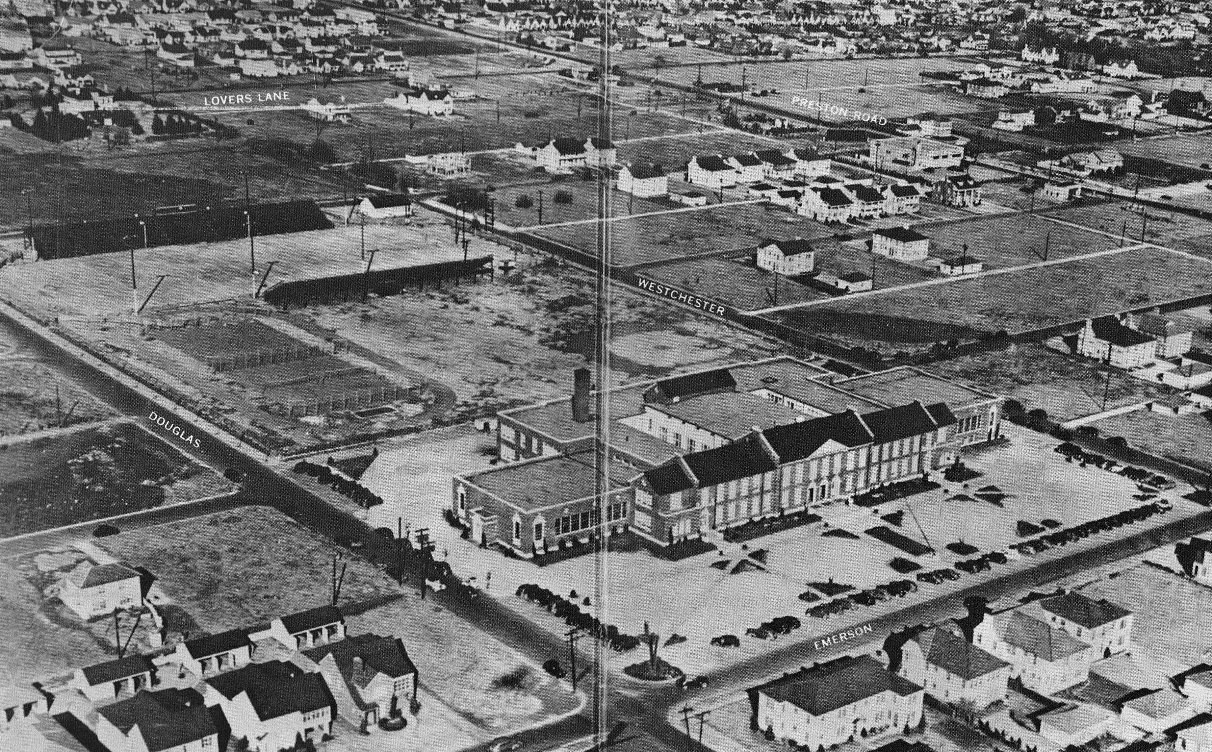
Great photo of the neighborhood around Highland Park High School (its second location — I had no idea), from the 1939 HPHS yearbook. I would have thought the Park Cities would have been built up more by then.

The description, from the back of the 1970s-era postcard this image appeared on:

In 1937, Highland Park High School moved to 4220 Emerson from its original home on Normandy. This aerial view — taken from a double-page spread in the 1939 Highlander — shows the entire physical plant of [the] High School. R. C. Dunlap was the President of the Highland Park District Board of Education that year.

Bounded by Emerson, Douglas, Lovers Lane and Westchester — covering five full city blocks — Highland Park High School looks, today, much as it did in 1939. Only the neighborhood has changed as it has continued to develop. Significant additions have been made to the educational facilities in order to keep teaching techniques right up to date.

Today, ninth, tenth, eleventh and twelfth graders from both Park Cities attend Highland Park High School — still recognized as one of the best educational institutions in the country.

***

Sources & Notes

Photo from the 1939 HPHS Highlander yearbook; later issued as a postcard as part of the Park Cities Bank “Heritage Series” in the 1970s. Thanks to the Lone Star Library Annex Facebook group for use of the image.

A very, VERY large scan of this image can be viewed here.

**

Here’s an awkwardly cropped photo of the first HPHS, from 1928 (click for larger image):

old-hphs_1928_crop

Another from the same series of postcards, issued in the 1970s. The description on the back:

Sunny days almost always found upperclassmen chatting on the front steps at High School. These photographs were taken from a 1928 copy of The Highlander — the Highland Park High School annual.

H. E. Gable was the superintendent that year. Ben Wiseman replaced E. S. Lawler as principal at the end of the school year.

The front steps at 3520 Normandy are still a gathering spot, but today’s students attend Highland Park Middle School — grades six, seven and eight. Senior High School moved to a new building at 4220 Emerson in 1937. Additions and remodeling have kept both of these educational facilities right up to the minute in technology and equipment.

*

Copyright © 2014 Paula Bosse. All Rights Reserved.
“Howdy, Y’all!”

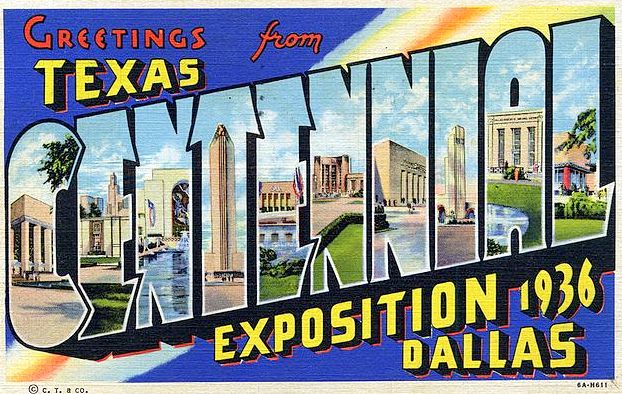
tx-centennial_postcard_1936

by Paula Bosse

Thanks so much to the fine folks at The State Fair of Texas for the Throwback Thursday social media love today! They graciously shared our Texas Centennial posts. Welcome, new visitors!

And don’t forget, Big Tex is counting down those days….

***

State Fair of Texas website is here. Get ready, y’all!

*

Copyright © 2014 Paula Bosse. All Rights Reserved.

Highland Park Methodist Church — 1927

hp-methodist-church_1927-degolyerHighland Park Methodist Church, 1927 (click for larger image)

by Paula Bosse

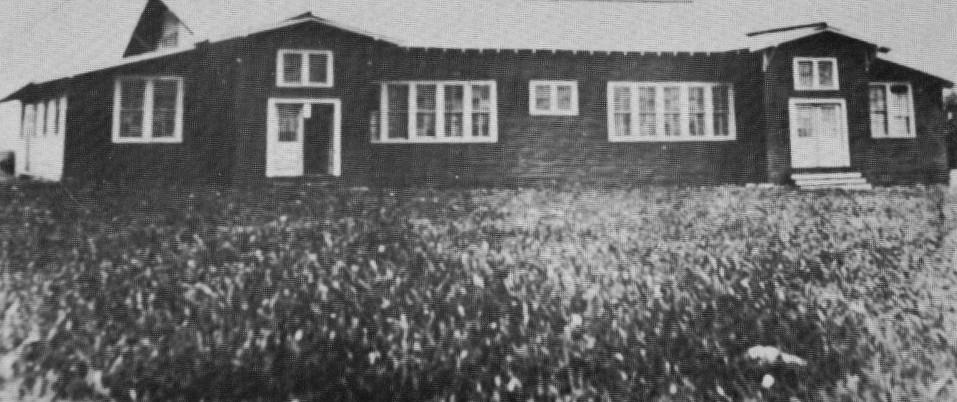
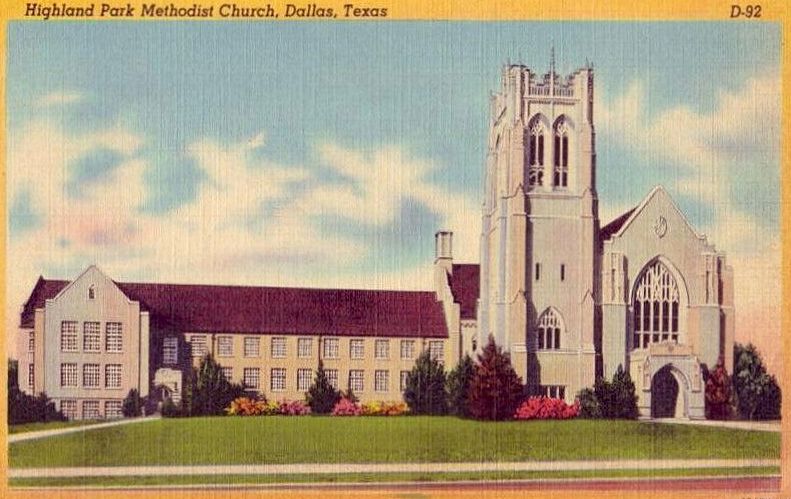
The beautiful Highland Park Methodist Church (now Highland Park United Methodist Church) was designed by architects Mark Lemmon and Roscoe DeWitt (who also designed several of the buildings on the adjacent SMU campus, as well as Woodrow Wilson and Sunset high schools, to name only a few of their projects). According to the HPUMC website, the first church — a temporary building which was referred to as “The Little Brown Church” — was built at Mockingbird and Hillcrest in 1917. It wasn’t until 1927 that the beautiful French Gothic-inspired building we know today was built on that same site. (At one time, Highland Park Methodist Church was the largest Methodist church in the world.)

(Incidentally, Mark Lemmon built his lovely cottage-like home on Mockingbird, across the street from both the church and the SMU campus, where at any time of the day or night, he could look out his front window and gaze with satisfaction upon his beautiful church and the ever-growing university campus dotted with buildings he had designed.)

hp_methodist-church_post-card-series“The Little Brown Church” — built 1917

hpmc_postcard_color

hpmc_golden-prologue-backChurch and SMU campus, Hillcrest and Mockingbird, 1960s

Highland Park Methodist Church Dallas, TX

***

Top photo by Joseph Neland Hester, taken in 1927. From the DeGolyer Library, Central University Libraries, Southern Methodist University; photo can be seen here. (UPDATE: I erroneously labeled the direction of this photo previously. It actually shows the back of the church, looking toward Mockingbird. It would have been taken from about where the Meadows Museum is now. If this is incorrect, please let me know!)

Photo of “The Little Brown Church” from the Park Cities Bank Heritage Series, used courtesy Lone Star Library Annex Facebook Group.

Aerial view from the back cover of Golden Prologue to the Future: A History of Highland Park Methodist Church by Doris Miller Johnson (Parthenon Press, 1966).

Other images from postcards.

For more on the history of Highland Park United Methodist Church check out the Wikipedia page here; check out the church’s history page here.

All photos larger when clicked.

*

Copyright © 2014 Paula Bosse. All Rights Reserved.