Flashback : Dallas

A Miscellany: History, Ads, Pop Culture

Category: Retail

Neiman-Marcus Expands — 1927

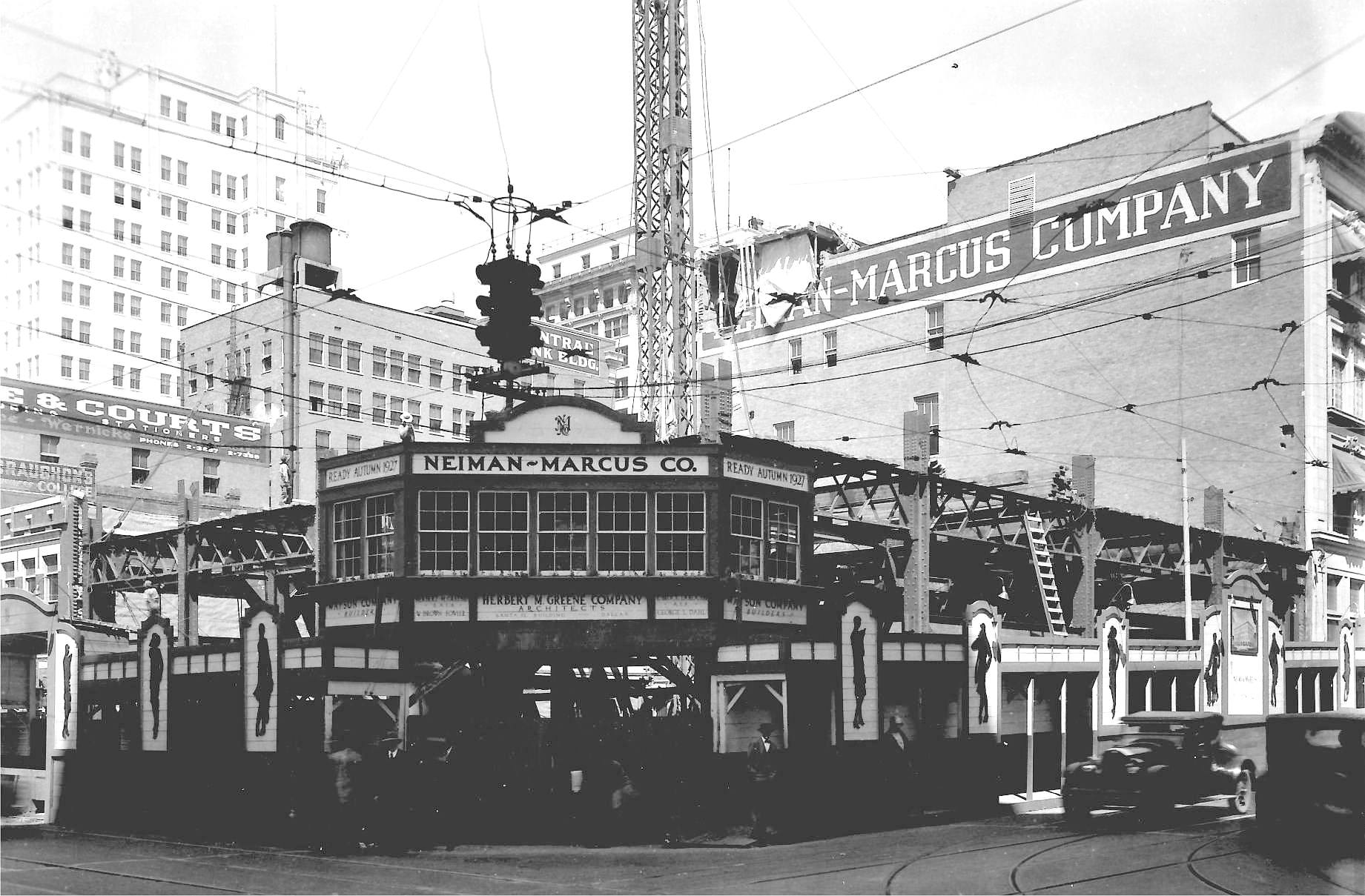
n-m_construction_1927_pioneers-of-dallas-co-FB-page_coll-frances-james_2The first addition under construction, 1927…

by Paula Bosse

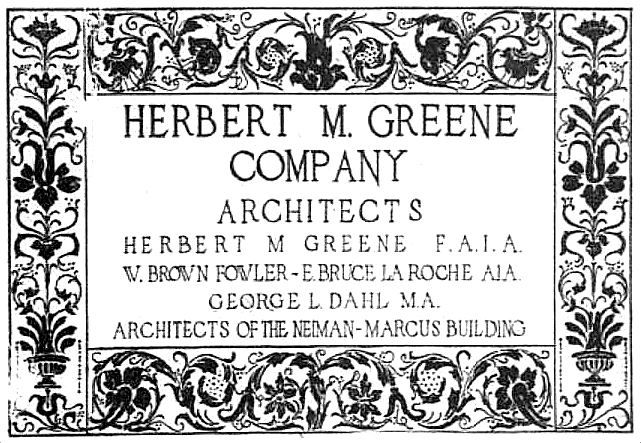
In 1927, construction began on Neiman-Marcus’ first expansion. The addition was adjacent to the famed department store, which had occupied its spot at Main and Ervay since its construction in 1914. (This was the company’s second location – their original store, which opened in 1907 at Elm and Murphy, was destroyed by fire in 1913.) The store had outgrown its old building, and expansion was deemed necessary. The new addition was designed by the Herbert M. Greene architectural firm, led by George L. Dahl. While the new building was going up, the old building was being renovated and updated. 

The photo above shows the construction of the addition, which extended the store’s footprint from Main all the way to Commerce. One of the interesting features of this construction was the look of the site itself.

One of the features of the Neiman-Marcus project is the ornamental barricade, containing window boxes and fashionable silhouettes, which has been put up around the new construction. (Dallas Morning News, May 8, 1927)

It’s the nicest-looking hard-hat area I’ve ever seen!

The new building (which was four floors, but was designed so that sixteen additional stories could be added if needed) opened in October, 1927. Less than a month after the formal opening of this new building, another addition was announced — it opened the following year. With that “third unit” opening in 1928, Neiman-Marcus had increased its size by 50% (there would be further expansions over the years), and its sales were the highest in the company’s history. Also, notable at this time was the fact that a full 40% of the store’s sales were to people who lived “in other cities of the Southwest.”

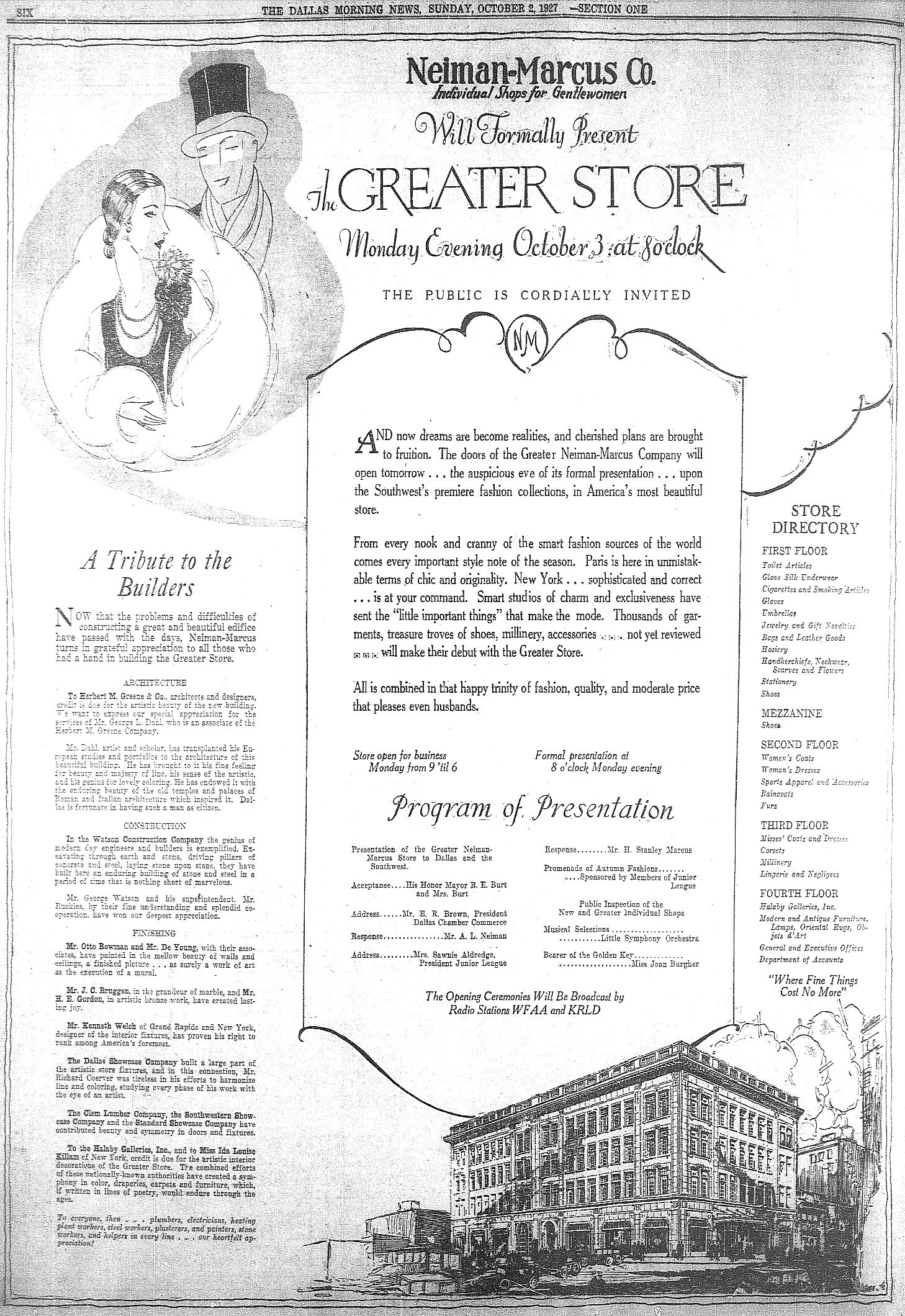
The formal opening on Oct. 3, 1927 attracted a crowd estimated at more than 25,000 people. Invited guests wore gowns and tuxedoes.

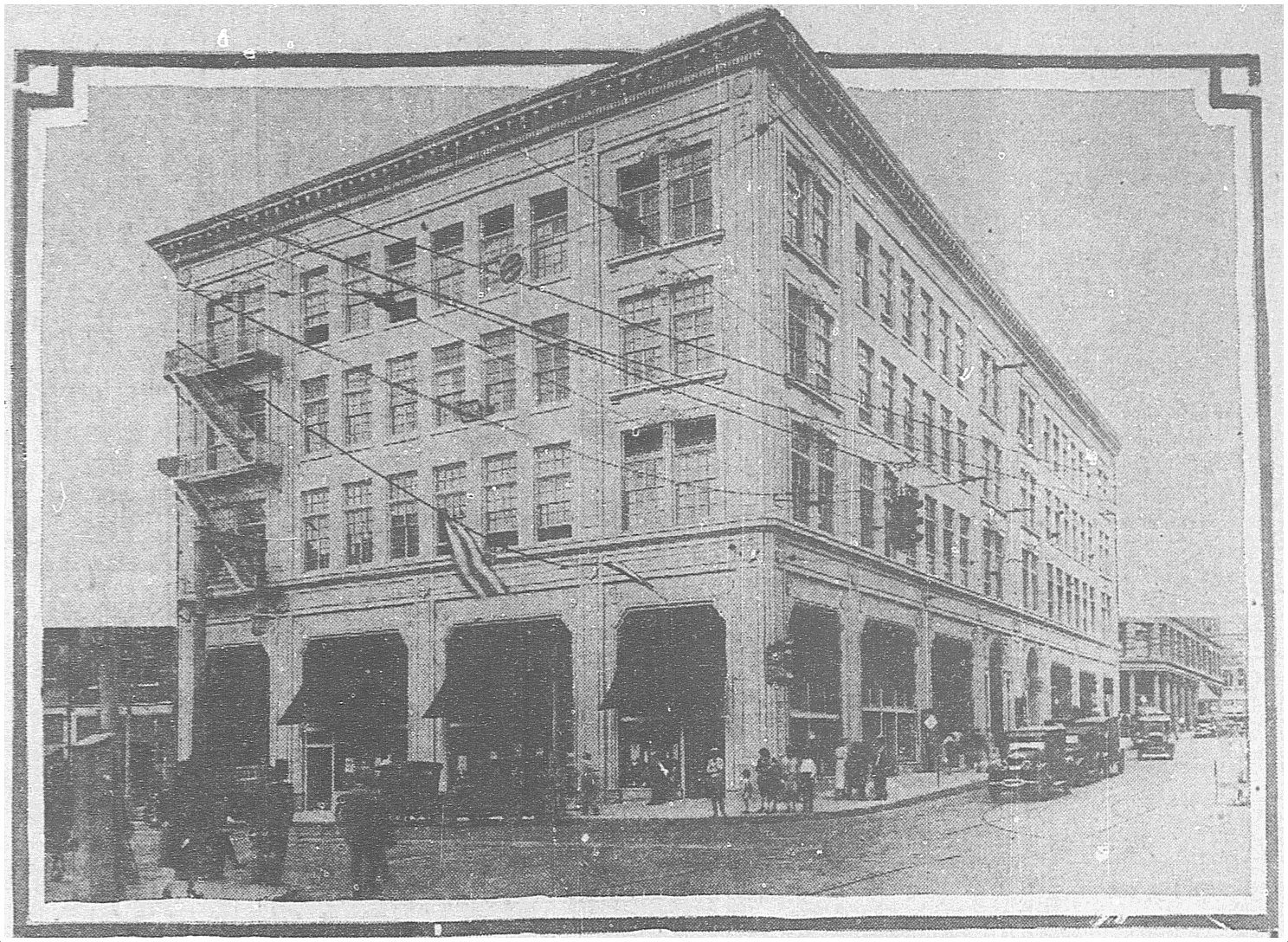
n-m_new-addition_dmn_100227
Expansion completed.

*

n-m_construction_dmn_100227_full-page-ad
Oct. 2, 1927 (full-page ad — click to see larger image)

n-m_addition_dmn_100227_architects
Oct., 1927

***

Sources & Notes

Top photo was posted in the Facebook group Pioneers of Dallas County; it is from the collection of Dallas historian Frances James.

A special section of The Dallas Morning News which coincided with the opening of the expanded store appeared in the October 2, 1927 edition of the paper; in it are several photos and articles.

Read more about the history of the Neiman Marcus building on Wikipedia, here.

*

Copyright © 2016 Paula Bosse. All Rights Reserved

“Melons on Ice” — 1890s

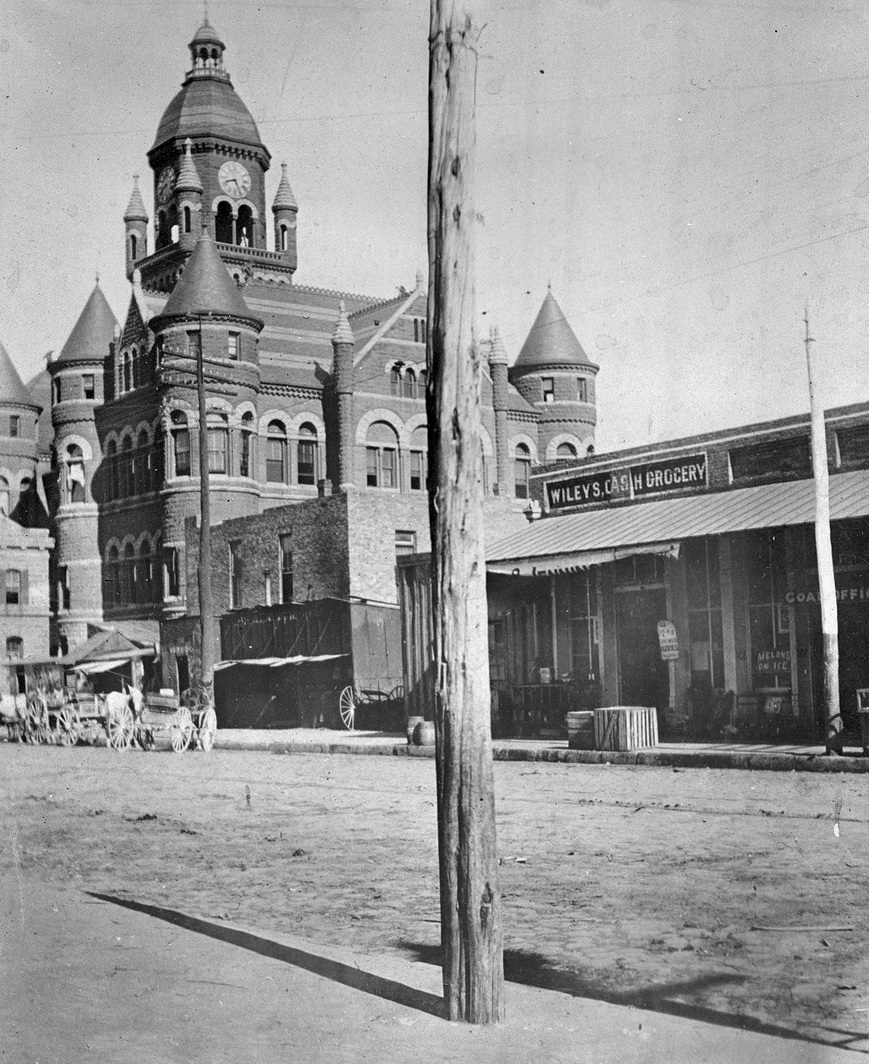
wiley-grocery_1890s_haskins-coll_utaA sleepy little town…

by Paula Bosse

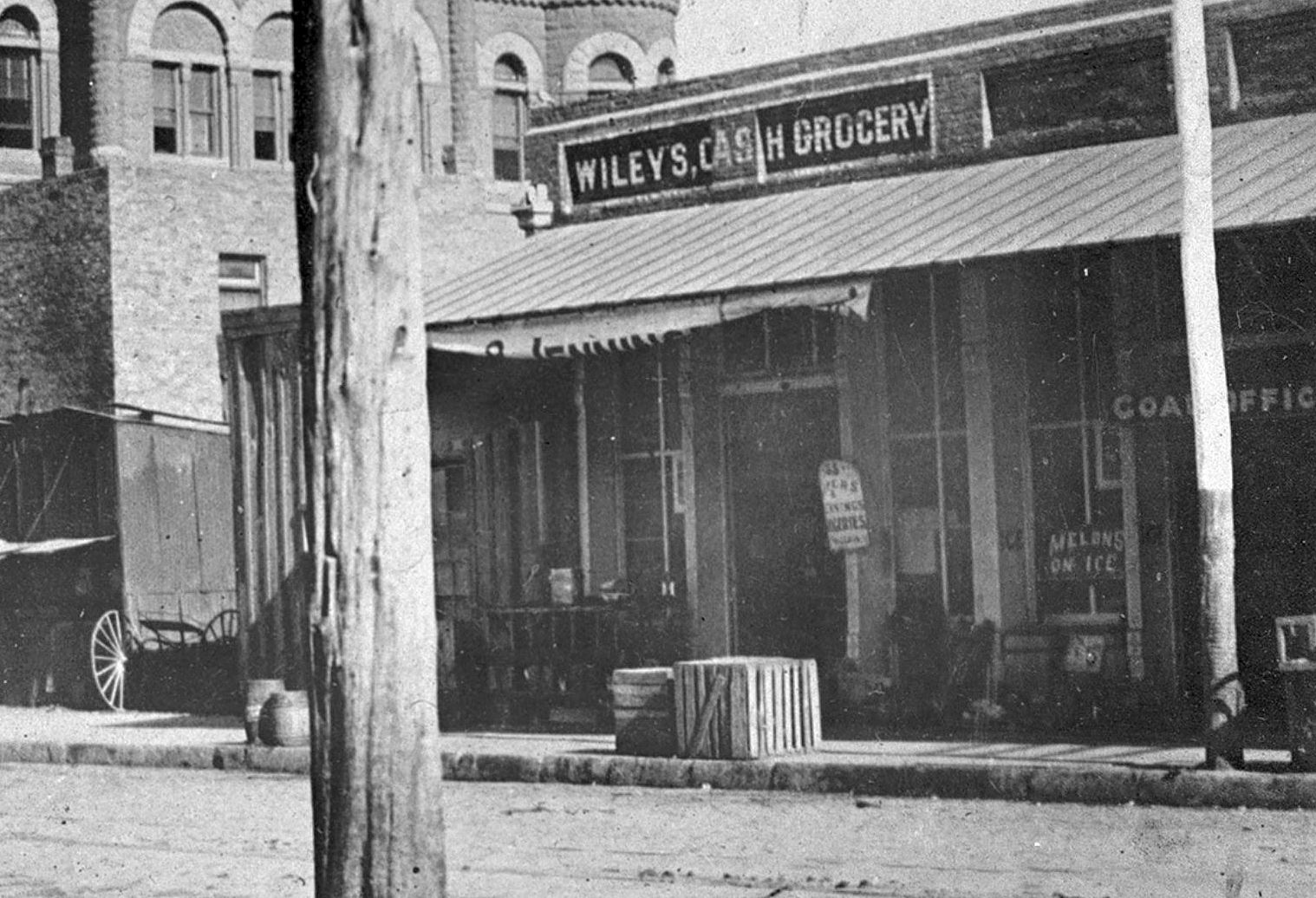
It looks hot in this photo from the 1890s. I bet those “Melons On Ice” in front of Wiley’s grocery store really hit the spot.

wiley-grocery_melons_det-1

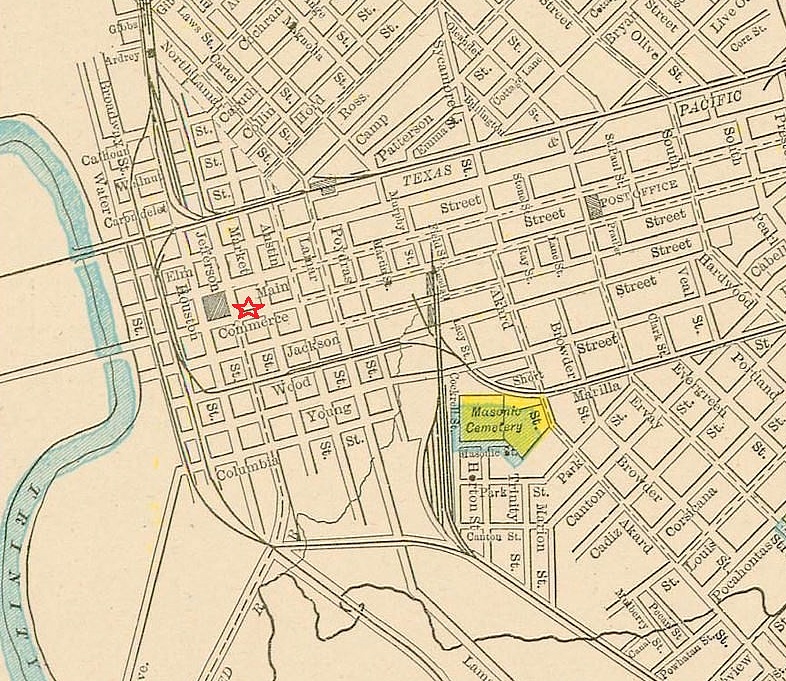
I love this photo. The Wiley Cash Grocery was in business for only a few years — from about 1892 to 1896. It was located at 153 Commerce, one block east of the brand-new county courthouse.

wiley-grocery_1893-directory1893 Dallas directory

wiley-grocery-1893-map
1893 map of Dallas, det.

The business was owned by Anna E. Wiley (~1862-1930) and her husband Jesse P. Wiley (~1863-1942). When they arrived in Dallas around 1887 their address in the city directory was simply “¾ mile w of river.”

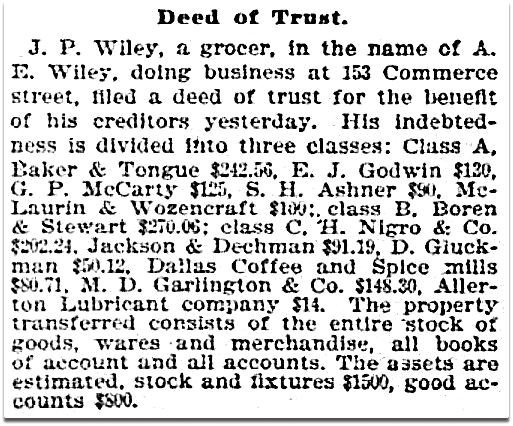
Even though the store seems to have been in Anna’s name, Jesse was forced to file a deed of trust in 1896 when the store was faced with crippling debt. The Wileys owed approximately $1,545 to creditors (about $45,000 in today’s money), but their assets were only about $1,500, plus $800 of “good accounts.” Unsurprisingly, the store was gone by 1897. (Click article below to see a larger image.)

1896-wiley-grocery_dmn_021596
Dallas Morning News, Feb. 15, 1896

This photo captures such an odd view of downtown Dallas — it’s hard to believe that the site once occupied by the Wiley store is now the site of the John F. Kennedy Memorial. A present-day view can be seen here.

***

Sources & Notes

This photo is from the Squire Haskins Photography, Inc. Collection, University of Texas at Arlington Libraries; additional info is here. See this great photo REALLY big here.

The map is a detail from an 1893 map of Dallas from the collection of the Texas State Library and Archives Commission.

*

Copyright © 2016 Paula Bosse. All Rights Reserved.

Cold Smut: Henry Miller’s “Tropic of Cancer” Banned in Dallas — 1961

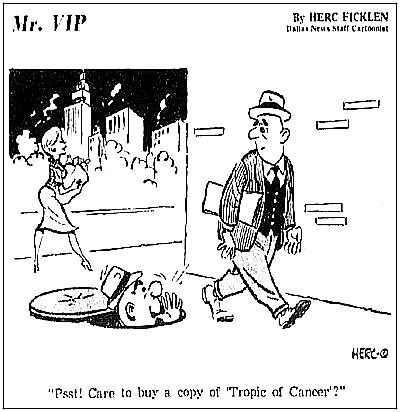
cartoon_topic-of-cancer_dmn_083061_small

by Paula Bosse

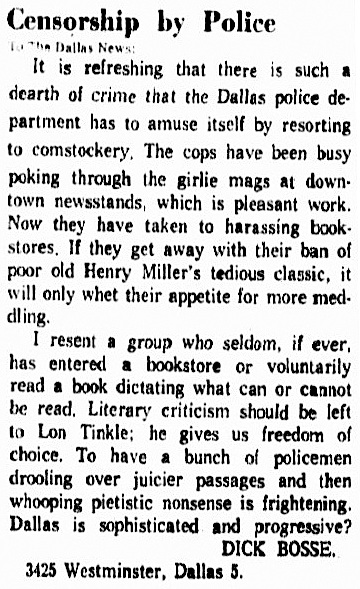
Today is my late father’s birthday. He was a Dallas bookseller, and when searching on his name in the Dallas Morning News archives, I found this pithy letter to the editor he had written in the summer of 1961 (click for larger image; transcribed below).

tropic-of-cancer_prb_dmn_082461
Aug. 24, 1961

*

It is refreshing that there is such a dearth of crime that the Dallas police department has to amuse itself by resorting to comstockery. The cops have been busy poking through the girlie mags at downtown newsstands, which is pleasant work. Now they have taken to harassing bookstores. If they get away with their ban of poor old Henry Miller’s tedious classic, it will only whet their appetite for more meddling.

I resent a group who seldom, if ever, has entered a bookstore or voluntarily read a book dictating what can or cannot be read. Literary criticism should be left to Lon Tinkle: he gives us freedom of choice. To have a bunch of policemen drooling over juicier passages and then whooping pietistic nonsense is frightening. Dallas is sophisticated and progressive?

Dick Bosse

*

After I looked up the word “Comstockery,” I was spurred to find out what he was writing about.

Henry Miller’s “tedious classic,” Tropic of Cancer, was originally published in Paris in 1934. It was considered too vulgar to be published in the United States. In fact, it was considered “obscene” by the U.S. Customs Department, and its very presence in one’s suitcase after returning home from a holiday in France was illegal. The only booksellers in the U.S. that sold the book did so at the risk of being jailed. That’s not to say there wasn’t a lot of piracy, bootlegging, and hush-hush selling of this much talked-about book going on, because there was — especially in New York.

In 1961, the book was finally published in the U.S. by Grove Press, and it was an immediate hit. (Grove priced it at an unbelievably steep $7.50, the equivalent today to about $60.00! The typical new hardcover fiction title in 1961 was around $3.95.) Unsurprisingly, the book was immediately banned in Boston, because Boston’s “thing” was banning stuff. But then … it was unexpectedly banned in Dallas, even though it was the #1 bestseller at the respected McMurray’s Bookshop downtown.

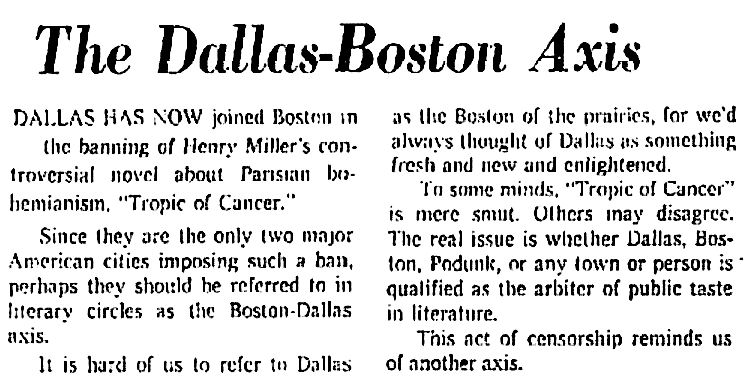
Dallas Police Department officials had decided the book violated a new Texas “anti-smut” law, and, on August 15th, policemen visited all the large bookstores in the city and informed them that if any copies of the book continued to be offered for sale, criminal charges would most likely be brought against the booksellers and the stores. (The state law called for fines up to $1,000 and one year in county jail for selling lewd and obscene material.) Dallas joined Boston as the only major American city banning the book. And then the whole thing became a cause célèbre — a “Dallas-Boston axis”!

tropic_long-beach-independent_081861The Long Beach (California) Independent, Aug. 18 1961

The move was roundly deplored by most of the Dallas public. The “Letters to the Editor” section of the historically very conservative Dallas Morning News contained many, many letters to the editor from outraged Dallasites, speaking out against the police department’s action. Sure, there were a few who were happy that objectionable material was being removed from Dallas bookstores, but they seemed to be in the minority. Even those who vehemently disliked the book were steadfastly opposed to its being banned, including the editors of The News.

As with many other non-issues like this that tend to cause near-obsession by the media, this story would not go away. The summer of ’61 was, for Dallas, the Summer of Smut. Best headline throughout all of this? One which appeared on a Morning News editorial: “COLD SMUT.”

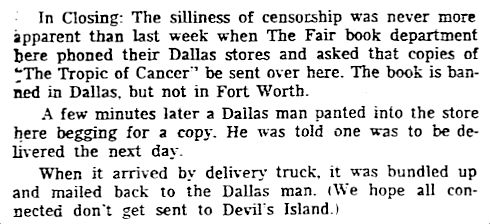
Booksellers pulled the book, but, as the editorial says above, there were almost certainly sales continuing to interested clientele. Also, it should be noted that only Dallas was banning the book at this point (by 1962 other cities around the country had become embroiled in threatened legal action, resulting in books being pulled from shelves). You couldn’t buy the book in Dallas, but you could buy it in Fort Worth.

tropic-of-cancer_elston-brooks_FWST_082261
Elston Brooks, Fort Worth Star-Telegram, Aug. 22, 1961

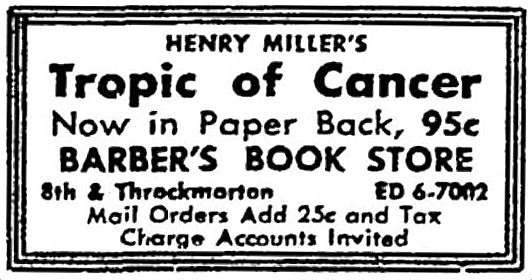
One assumes bookstores in Cowtown were cashing in on Tropic of Cancer sales — Barber’s Book Store must have been doing land-office mail order business.

tropic-of-cancer_FWST_110861_ad
FWST, Nov. 8, 1961

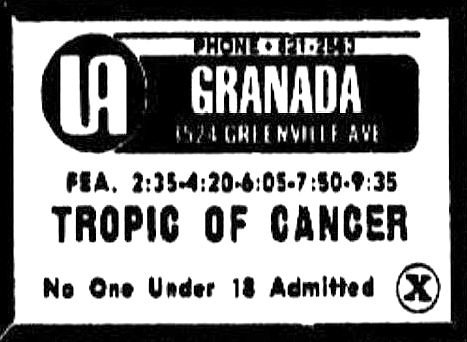
I thought this was a silly flare-up that lasted only a few weeks, but letters to the editor continued to show, at least through the winter of 1963, that it was still impossible to find the book in a Dallas bookstore. It probably wasn’t until 1964, when the United States Supreme Court ruled that the book was not obscene, that Dallas booksellers were finally free to openly sell a book which was published in 1934. No one seemed to care much when the X-rated film version (starring Texan Rip Torn) played at the Granada in 1970.

movie_dmn_090970
Sept., 1970

***

Sources & Notes

Cartoon by Herc Ficklen, from Aug. 30, 1961.

More on Tropic of Cancer at Wikipedia, here. This article contains my favorite line of any I read from the people who really, REALLY hated the book. It came from a Pennsylvania judge:

“[It is] not a book. It is a cesspool, an open sewer, a pit of putrefaction, a slimy gathering of all that is rotten in the debris of human depravity.”

Tons of articles on this appeared in The Dallas Morning News.in just ONE WEEK. Here are just a few (seriously, it’s the tip of the iceberg):

  • “Sales Banned: Police Label Book Obscene” by James Ewell (DMN, Aug. 16, 1961)
  • “Stores Stop Selling Book Called Obscene” by James Ewell (DMN, Aug. 17, 1961)
  • “Censorship of ‘Tropic’ Looses Opinion Barrage” by Scott Buchanan (Aug. 17, 1961)
  • “What Is Obscenity?” — editorial (DMN, Aug. 19, 1961)
  • “Book Fight Takes On Circus Air” (DMN, Aug. 19, 1961)
  • “Citizens Group Lauds Police Move On Book; Some Less Costly Smut Considered Main Problem” by Frank Hildebrand (Aug. 20, 1961)
  • “Cold Smut” — editorial (DMN, Aug. 20, 1961)
  • “Wade Orders Study On Smut Literature” by Carlos Conde (DMN, Aug. 21, 1961)
  • “Police Lectured On Book Action” by Jimmy Thornton (DMN, Aug. 22, 1961)
  • “Primer for Censors: A Few Basic Ideas”  by Lon Tinkle, Book Critic of The News (DMN, Sept. 3, 1961)

Every time I came across the word “smut” mentioned in connection with this topic — and it was mentioned a LOT — I couldn’t help but think of Vera Carp and the other Smut Snatchers of the New Order from Greater Tuna.

If it looks too dang small to read, click it!

*

Copyright © 2016 Paula Bosse. All Rights Reserved.


Ads for Businesses Serving the North Dallas High School Area — Early 1960s

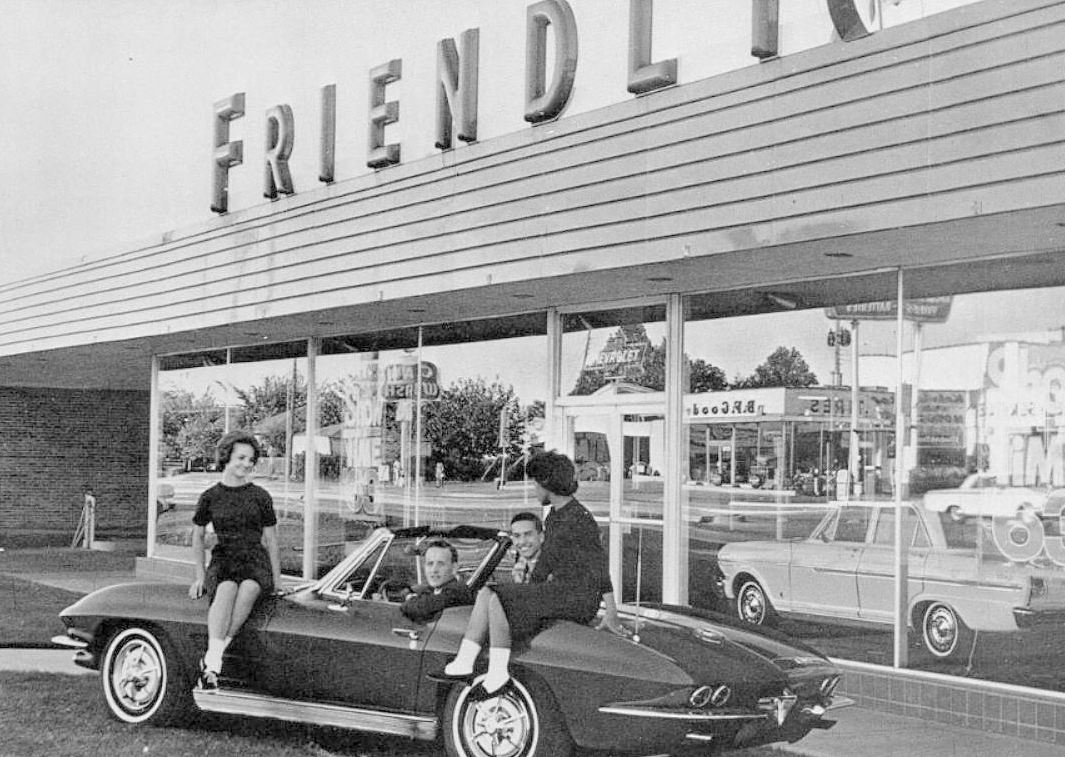
friendly-chevrolet_ndhs_1963-yrbk-photoFriendly Chevrolet, 1963

by Paula Bosse

One of the things I like best about looking through old high school and college yearbooks is seeing the ads in the back — especially the ads that feature students. Here are a whole bunch of ads from the 1960, 1962, and 1963 North Dallas High School annuals, with most of the ads placed by businesses in the Oak Lawn, McKinney Avenue, and Little Mexico areas surrounding the school. Let’s take a walk down memory lane, shall we? (Ads and photos are larger when clicked.)

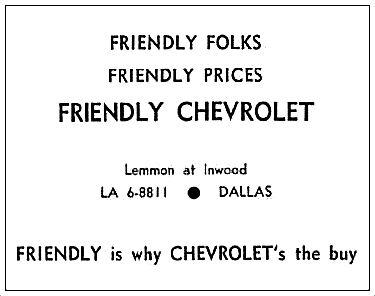
Above, Friendly Chevrolet at Lemmon and Inwood. I bet the owner was grimacing as he saw those girls perched — gingerly or not — on that brand new Corvette convertible!

friendly-chevrolet_ndhs_1963-yrbk1963

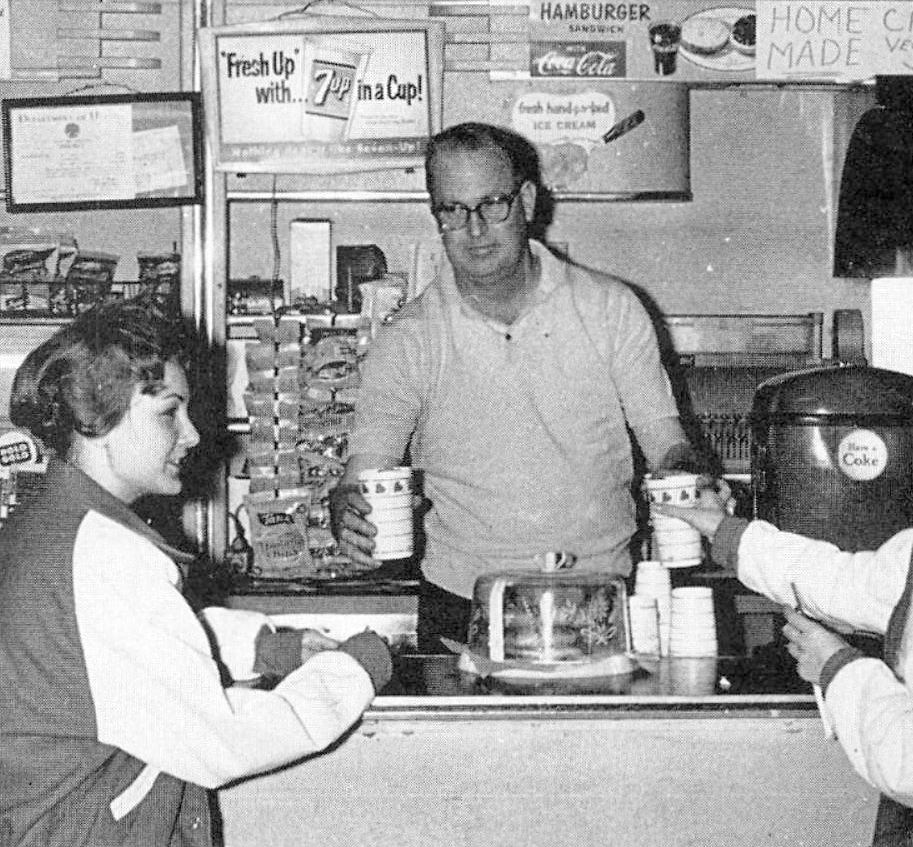
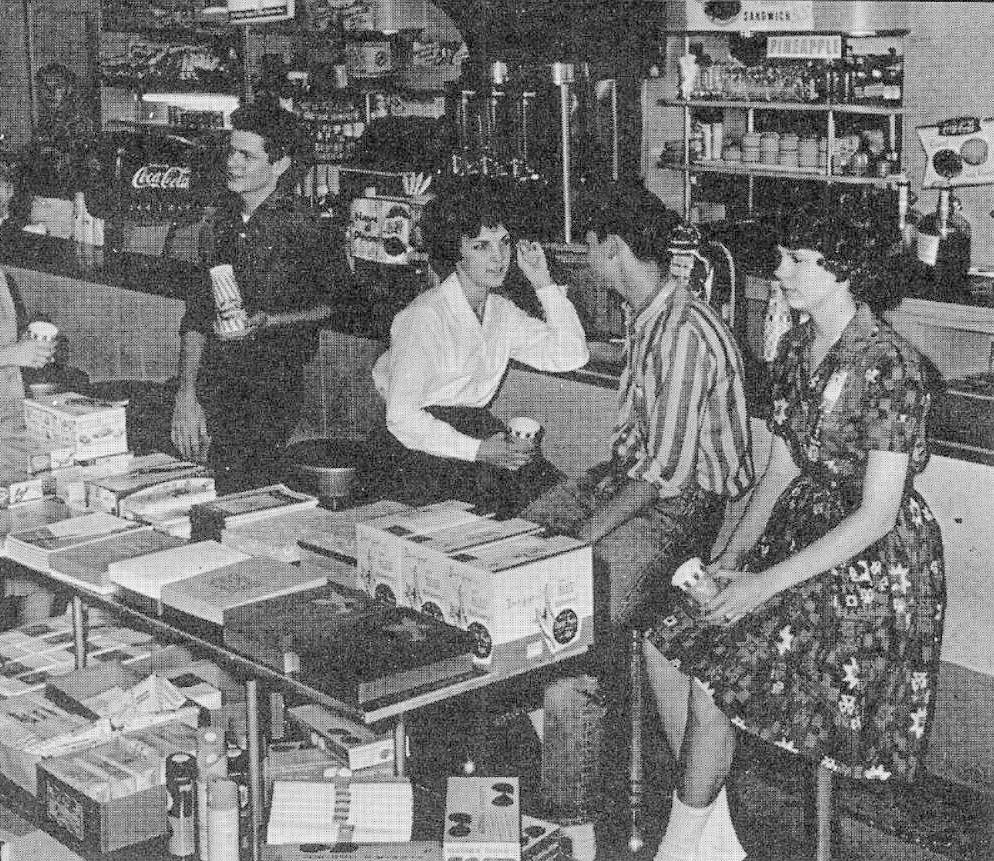
The Cole and Haskell Drug Store, at 3121 N. Haskell — right across the street from the NDHS campus — was no doubt thrilled to be so close to its major source of income, the teenager.

1962_cole-haskell-drugs_ndhs_1962-yrbk1962

cole-haskell-drug-store_ndhs_1963-yrbk-photo
1963

cole-haskell-drugs_ndhs_1963-yrbk
1963

*

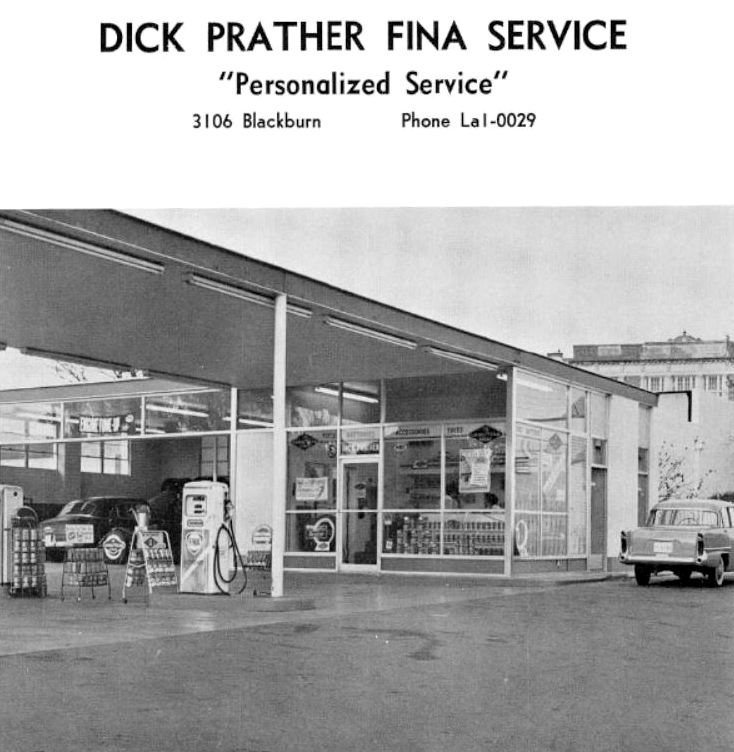
Lots of gas and service stations were nearby. Like Dick Prather Fina Service, at 3106 Blackburn, with the school peeking over the roof.

1960_prather-fina_ndhs_1960-yrbk
1960

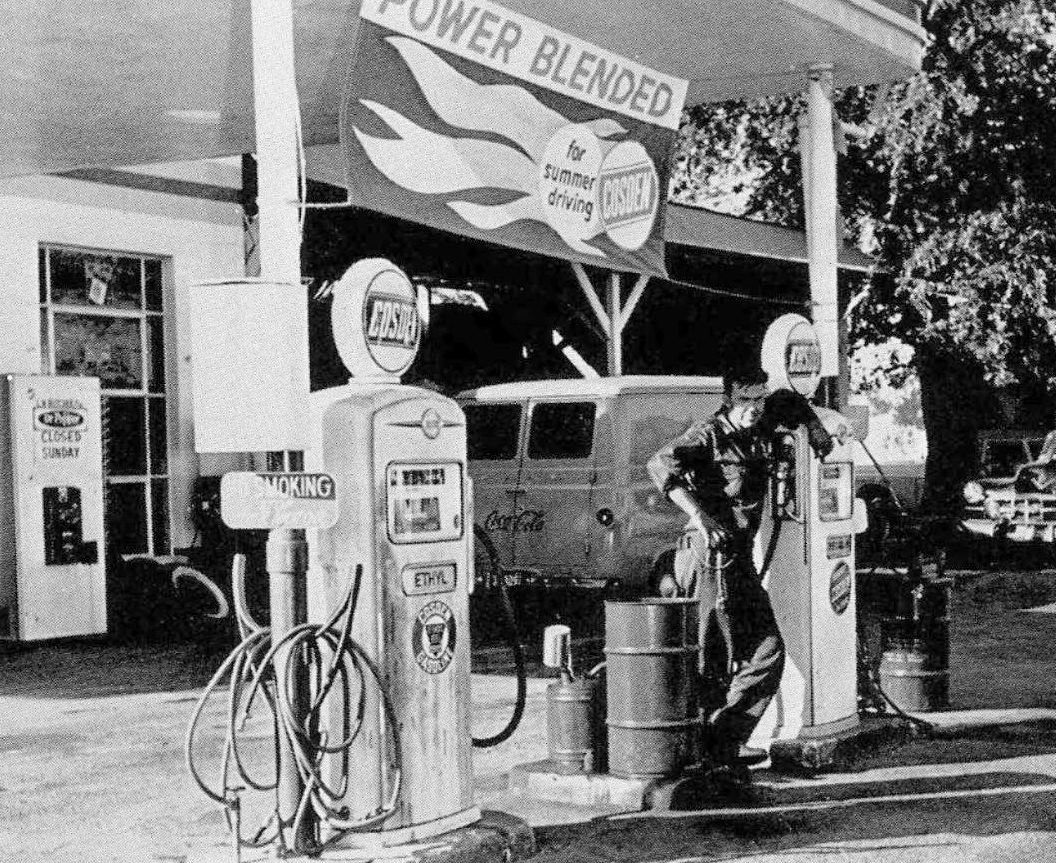
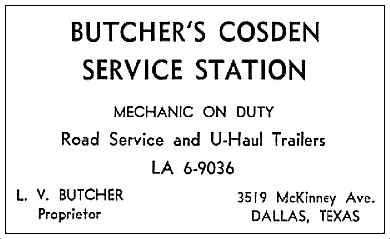
And L. V. Butcher’s Cosden Service Station, at 3519 McKinney. (I love the slouch of the mechanic.)

butchers-cosden-service-stn_ndhs_1963-yrbk-photo

butchers-cosden-service-stn_ndhs_1963-yrbk
1963

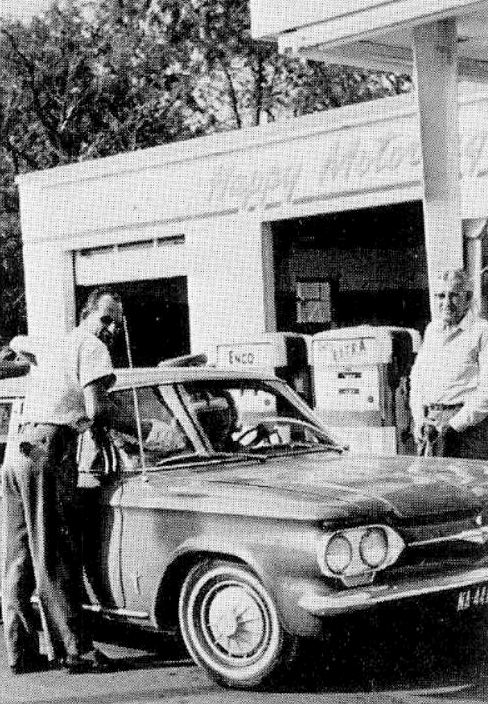
And the Ragan Service Station, at 4201 McKinney.

ragan-servie-stn_ndhs_1963-yrbk-photo

ragan-servie-stn_ndhs_1963-yrbk
1963

*

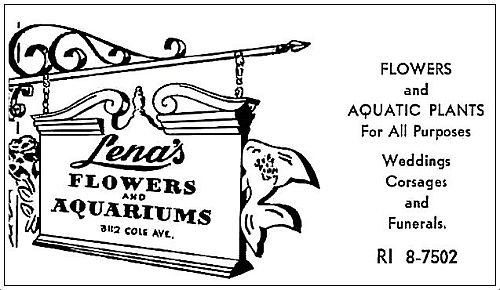
Plant and flower enthusiasts were invited to stop by Lena’s Flowers and Aquariums, at 3112 Cole. …For flowers. And aquariums.

lenas-flowers_ndhs_1963-yrbk
1963

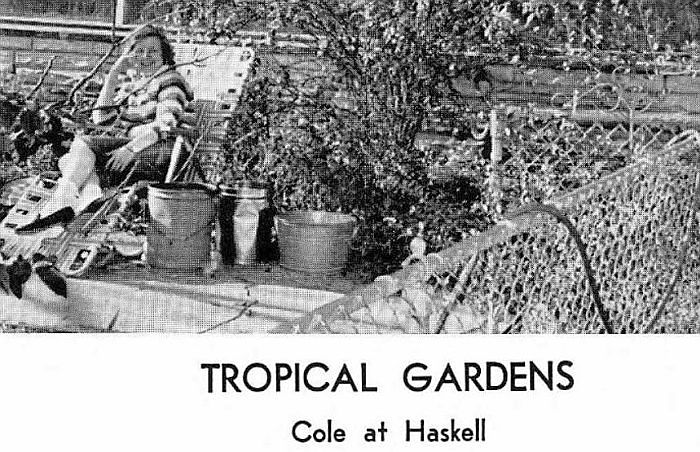
What Tropical Gardens at Cole and Haskell lacked in the way of aquariums, it all but made up for in tropicalness. (Might as well grab a coke at the drug store since you’re right there.)

tropical-gardens_ndhs_1963-yrbk
1963

*

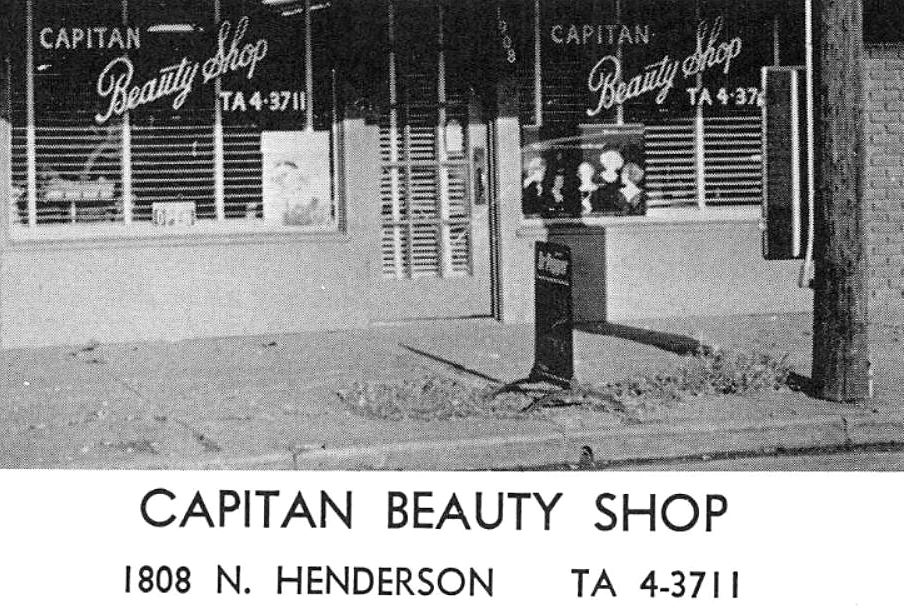
Those who needed their hair extra poufy for the spring formal might have found themselves at the Capitan Beauty Shop, 1808 N. Henderson (now that’s a photo!).

capitan-beauty-shop_ndhs_1963-yrbk1963

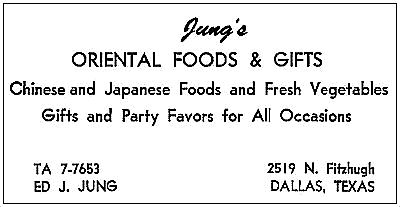
Seekers of Asian foods and/or “party favors for all occasions” could head over to Jung’s Oriental Foods & Gifts at 2519 N. Fitzhugh. (This is the most unexpected ad I came across.)

jungs_ndhs_1963-yrbk
1963

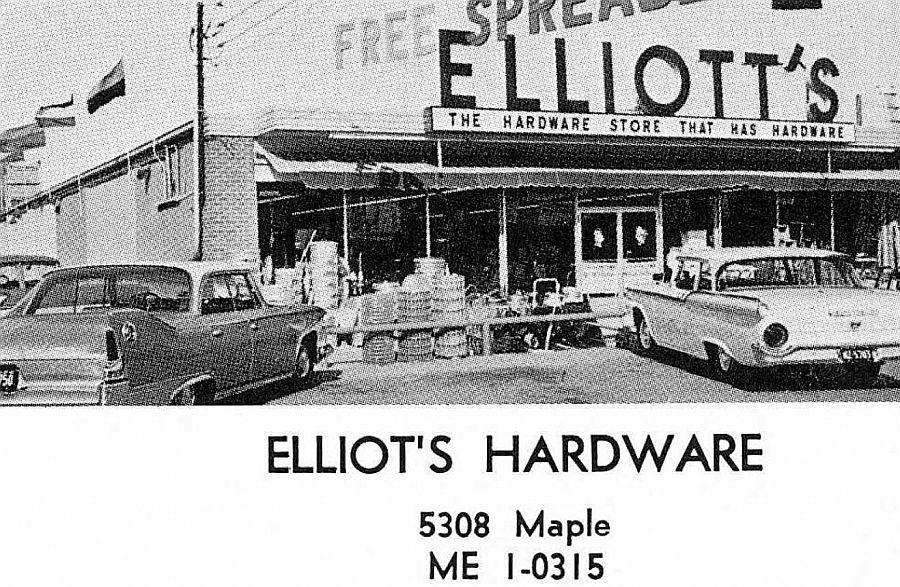
Maybe you just needed a hammer. Where else would you go but Elliott’s Hardware, at its original location at 5308 Maple.

elliotts-hardware_ndhs_1963-yrbk
1963

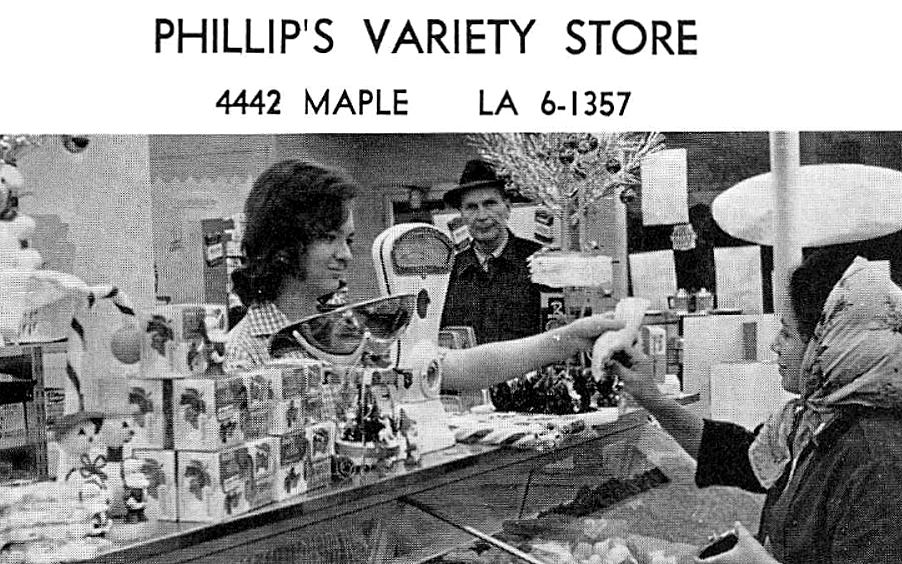
Phillips’ Variety Store at 4442 Maple was probably a good place to get scented talcum powder, a bouncy ball, a bag of peppermints, or a new charm for the charm bracelet.

phillips-variety-store_ndhs_1963-yrbk
1963

*

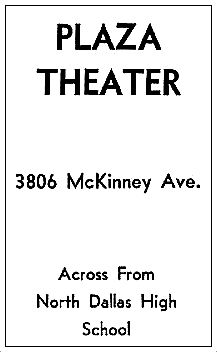
What do high school kids love more than bowling and going to the movies? Apparently there was a movie theater on McKinney Avenue that I’m only just learning about — The Plaza, at 3806 McKinney.

1962_plaza-theater
1962

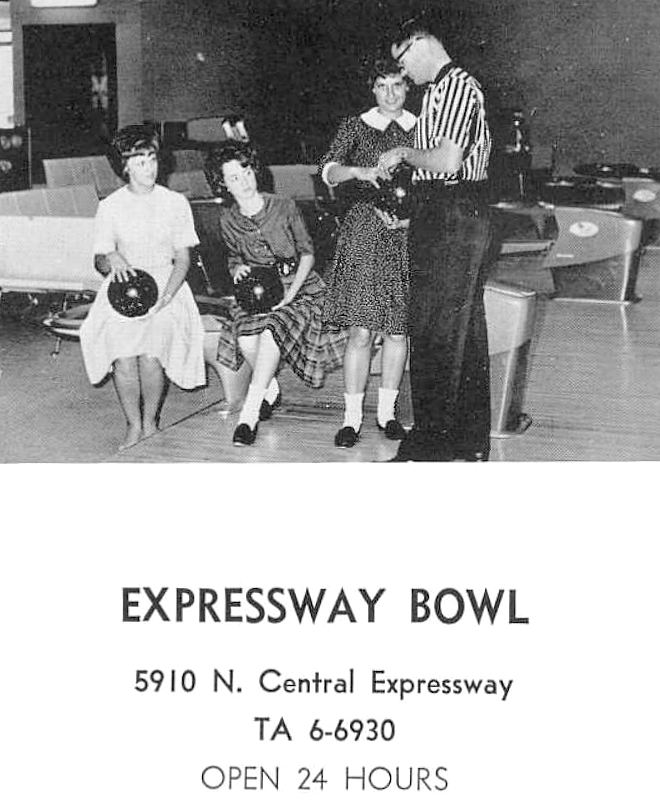
The 24-hour Expressway Bowl was at 5910 N. Central Expressway. (I’m not sure those girls have on the proper footwear.)

expressway-bowl_ndhs_1963-yrbk1963

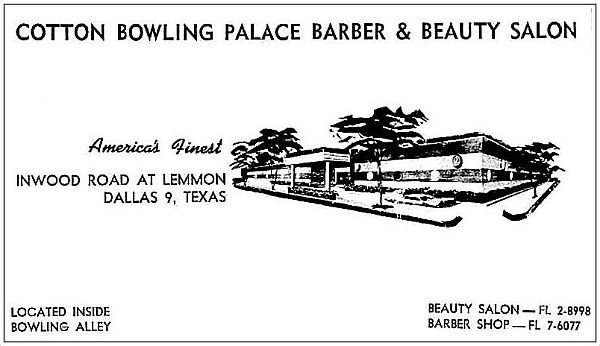
But the place you really wanted to go was the Cotton Bowling Palace on Inwood at Lemmon. When it opened in 1959 (complete with a heavily promoted personal appearance by Dallas gal Jayne Mansfield), it was breathlessly described as “a mixture of the Copacabana, the Taj Mahal and the  MGM Grand.” Imagine bowling in the Taj Mahal! Heck, you could even get a haircut between frames.

1962_cotton-bowling-palace1962

*

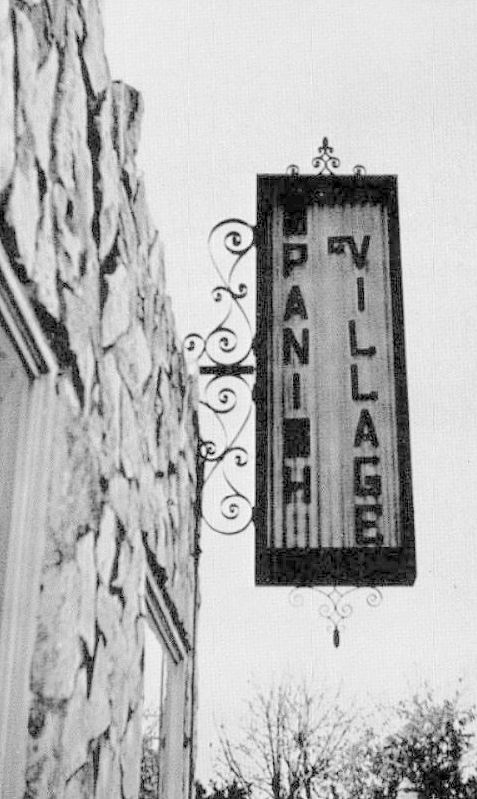
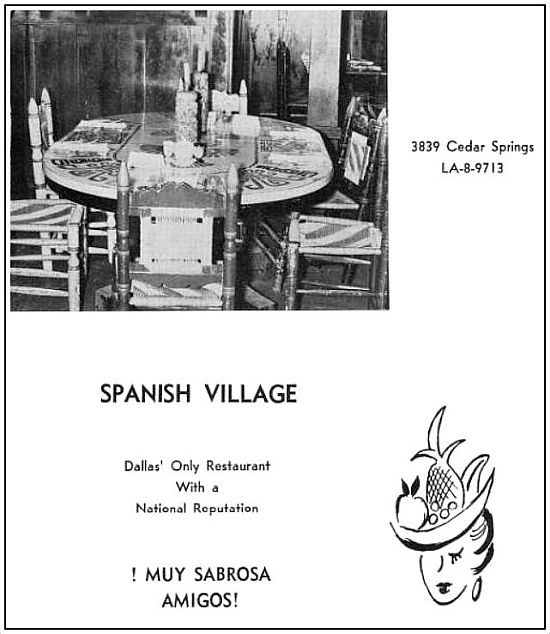
The biggest bang for the buck, nostalgia-wise, is almost always going to be places related to food. Here are a few restaurants and burger places which were probably frequent destinations for North Dallas students and their families. Like Spanish Village at 3839 Cedar Springs.

spanish-village_ndhs_1963-yrbk
1963

1960_spanish-village_ndhs_1960-yrbk
1960

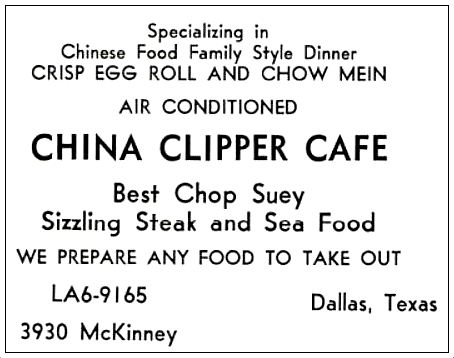
The fondly remembered China Clipper, at 3930 McKinney.

1960_china-clipper_ndhs_1960-yrbk1960

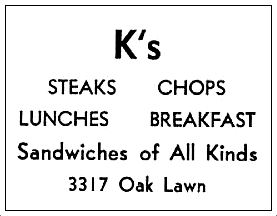
K’s — where you could get “sandwiches of all kinds” — at 3317 Oak Lawn.

1960_ks-sandwiches_ndhs_1960-yrbk
1960

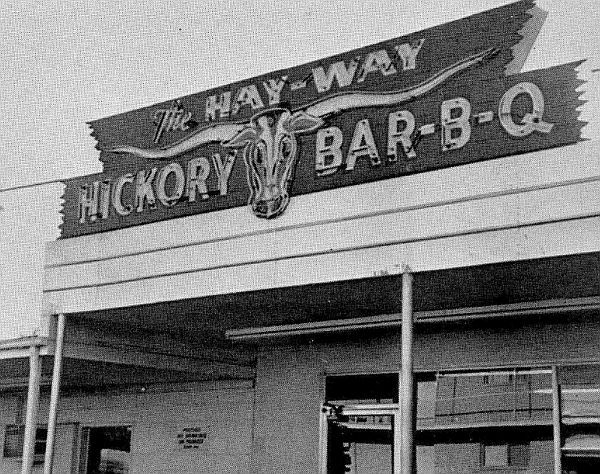
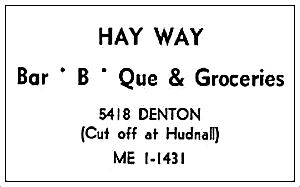
Hay-Way Bar-B-Q & Groceries, at 5418 Denton Drive.

hay-way-bar-b-q_ndhs_1963-yrbk-photo

hay-way-bar-b-q_ndhs_1963-yrbk
1963

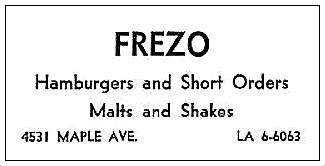
A burger and malt joint with the wonderful name of Frezo, at 4531 Maple. (I WOULD GO TO SOMEPLACE CALLED “FREZO.”)

1962_frezo_ndhs_1962-yrbk
1962

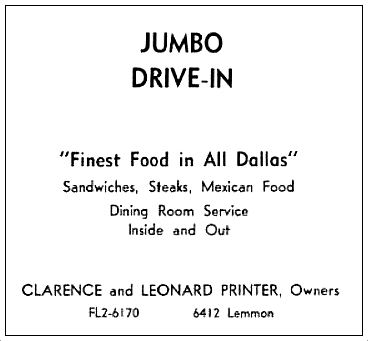
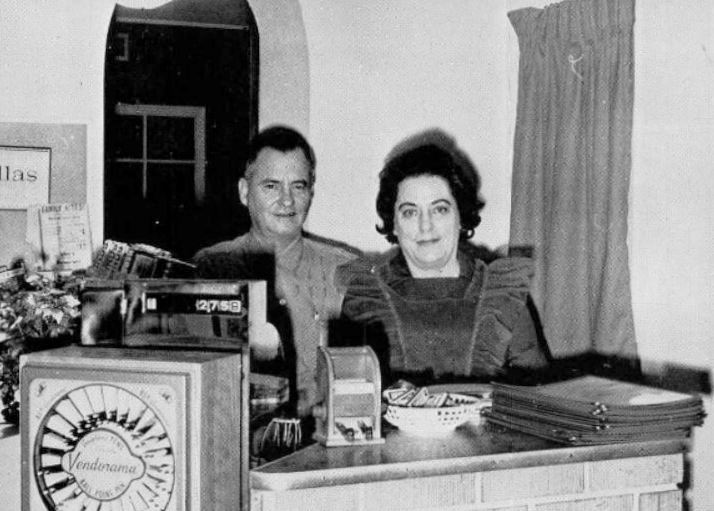
The famed elephant-on-top Jumbo Drive-In, owned by Clarence and Leonard Printer. The location in this ad was at 6412 Lemmon. See what the Haskell location looked like, here.

1960_jumbo-drive-in_ndhs_1960-yrbk
1960

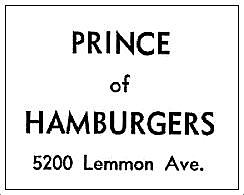
The legendary Prince of Hamburgers at 5200 Lemmon.

prince-of-hamburgers_ndhs_1960-yrbk
1960

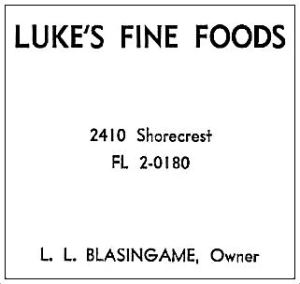
The not-quite-as-legendary Luke’s Fine Foods at 2410 Shorecrest, owned by L. L. Blasingame.

lukes-fine-foods_ndhs_1963-yrbk

lukes-fine-foods_ndhs_1963-yrbk-ad
1963

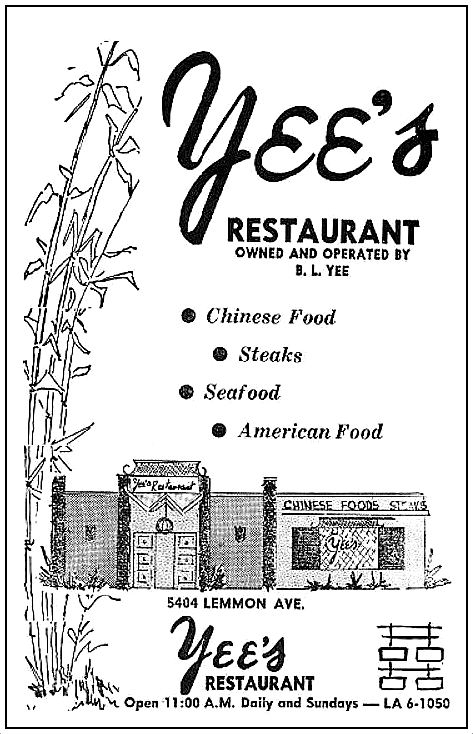
Yee’s Restaurant at 5404 Lemmon, owned by B. L. Yee.

yees-chinese_ndhs_1963-yrbk
1963

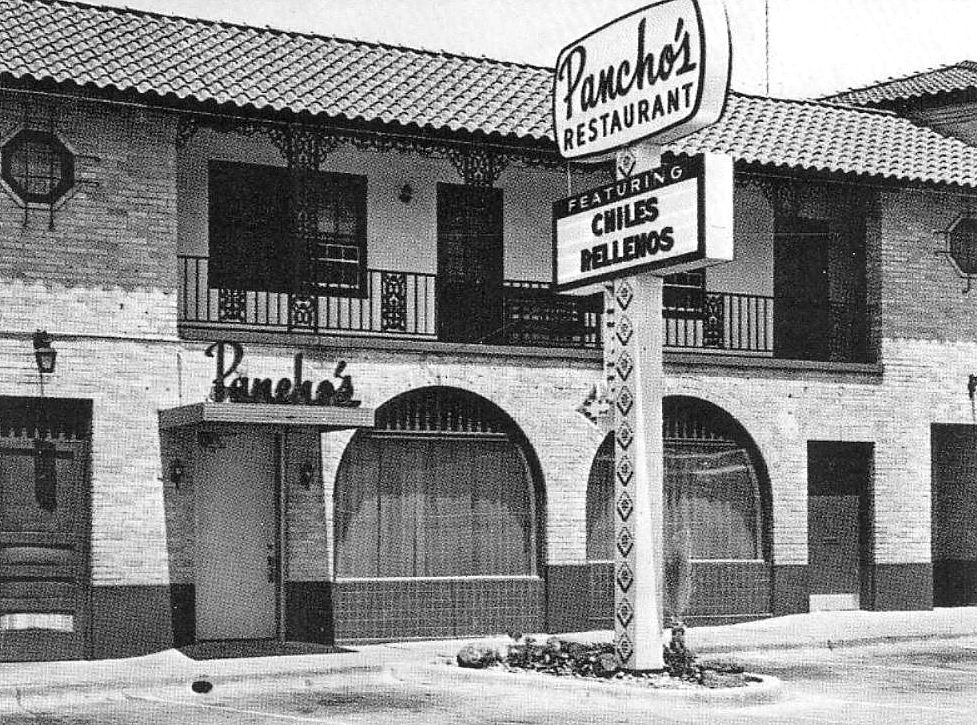
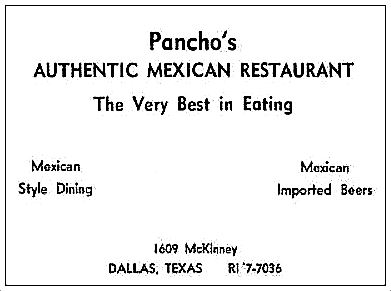
And, of course, Pancho’s — this location at 1609 McKinney. Almost all of the buildings that housed the businesses listed above are long gone, but this building is still hanging in there. It’s next to the downtown El Fenix and is now the home of Meso Maya. I have to admit, I got a happy little jolt to see this building today, still looking pretty much the same as it did in this 1963 ad.

panchos_ndhs_1963-yrbk-photo

panchos_ndhs_1963-yrbk
1963

***

Sources & Notes

All ads from the 1960, 1962, and 1963 editions of the North Dallas High School yearbook, The Viking.

See photos of students and high school activities from these same yearbooks in the post “North Dallas High School, The Pre-Beatles Era,” here.

*

Copyright © 2016 Paula Bosse. All Rights Reserved.

Highland Park Village — The Original Model

hp-village_model_gallowayDallas’ most exclusive shopping destination

by Paula Bosse

The model of the Highland Park Shopping Village (“9 Acres of Property”) was, for many years, on display in the sales office of the Flippen-Prather Realty Co., the company that developed Highland Park and this beautiful shopping “village.” (I’m not sure where this photo was taken — it looks like a Flippen-Prather promotional table set up in an exhibition space of some sort.) Construction began on the shopping area in early 1930 and took several years to complete. The architects were Dallas’ Fooshee & Cheek.

Below, a slightly closer look at this cool model, complete with little cars (but no little people…).

hp-village-model_galloway-det

***

Sources & Notes

The photo (credited to the collection of Hugh Prather, Jr.) is from the really wonderful book The Park Cities, A Photohistory by Diane Galloway (Dallas: Diane Galloway, 1989). (This is an essential book for anyone interested in historic photos of Dallas and the Park Cities. If you come across a copy priced under $30.00, snap it up!)

More on the Highland Park Village of today can be found here.

*

Copyright © 2016 Paula Bosse. All Rights Reserved.

NorthPark — 1965

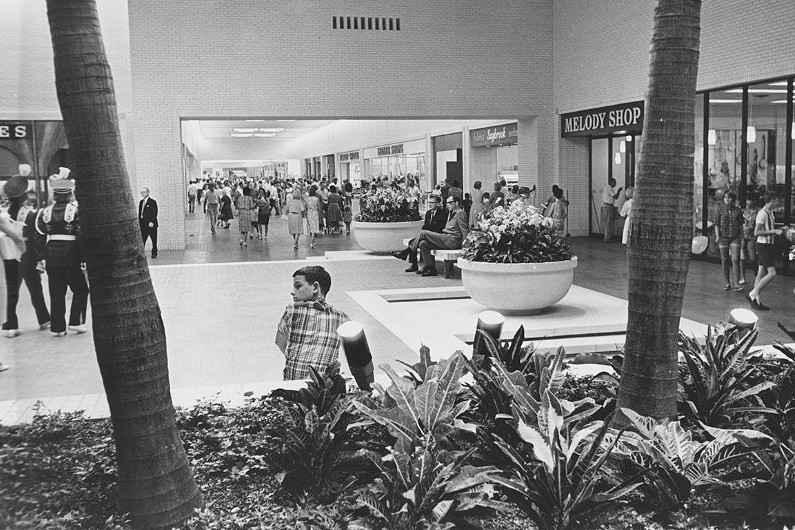
northpark_melody-shop_1965_northpark-websiteMarching band members, foliage, Melody Shop

by Paula Bosse

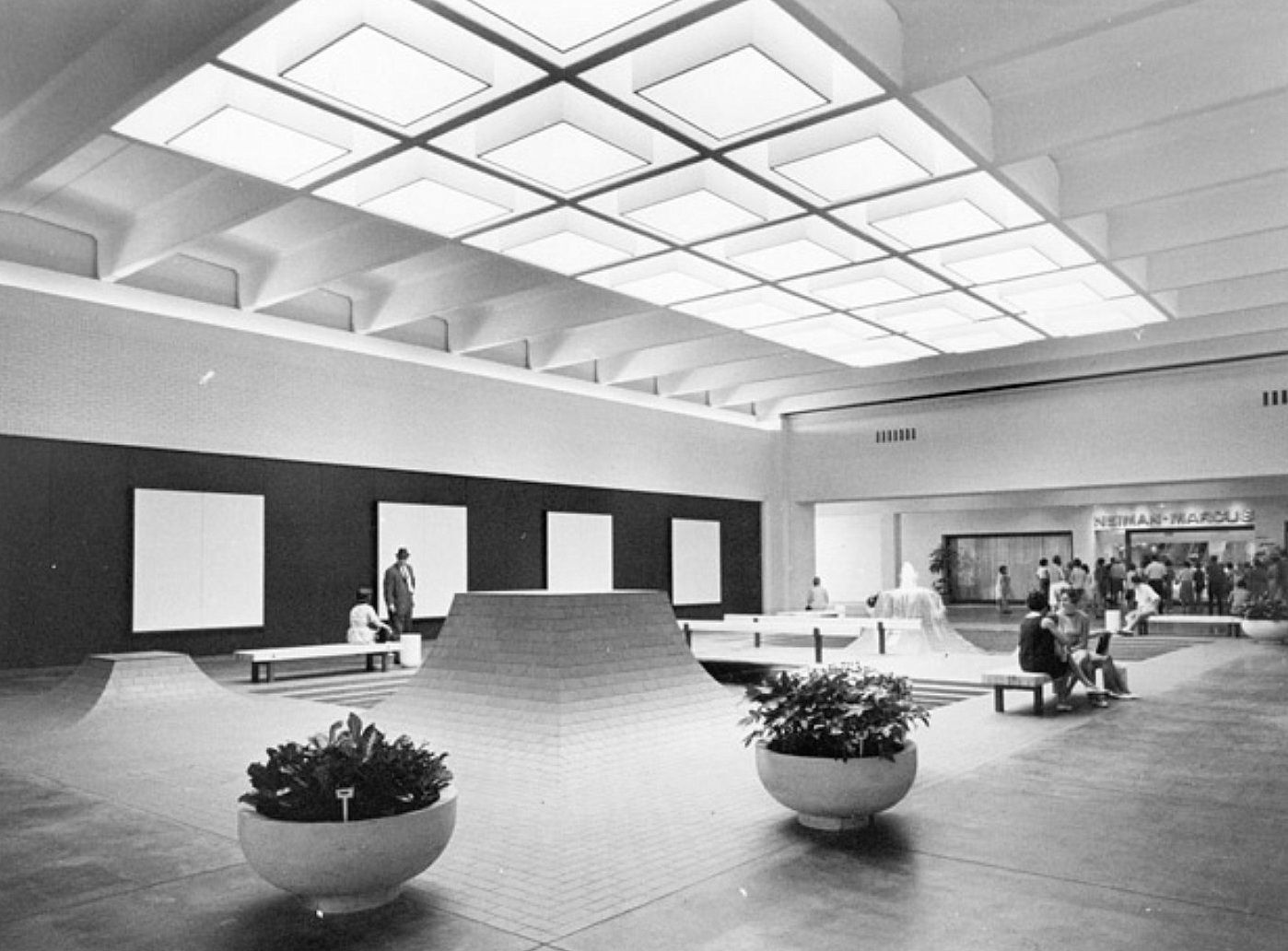
NorthPark Center — the only mall I’ve ever enjoyed being in — turned 50 last year. Developed by the legendary Raymond Nasher, it opened in August of 1965 on 90-something acres of old Caruth farmland. Sleek, cool, uncluttered. There was art! There were ducks! There were naughty playing cards and black light posters in Spencer’s! There was even a dime store! I spent a lot of time there as a kid in the ’70s, which is probably why I feel completely lost in the expanded, ultra-upscale version of today. I used to know where EVERYTHING was. Now? Since its recent “augmentation,” it doesn’t feel like “my” mall anymore. Now, for me, it’s just another upscale Dallas mall (albeit in an unusually appealing building and in still-sleek, aesthetically pleasing surroundings). But then I’m a person who is generally not a fan of shopping and feels anxious in shopping malls, so I’m clearly in the minority amongst Dallas women. Today’s NorthPark is still going strong and is as popular as ever (if not moreso), but I will always prefer the NorthPark of my childhood — it’s the only shopping mall I’ve ever felt completely at home in.

*

At the top, the Melody Shop — where I bought my first records. People were always in there playing the organs.

Neiman’s was there, too, of course — at the swankier end of the mall. N-M was intimidating. There weren’t a lot of black light posters and Keds in there.

northpark_neimans-northpark-center-colln

Which is why I spent most of my time in the stretch between the Melody Shop and Penney’s.

northpark_penneys_northpark-website_1965

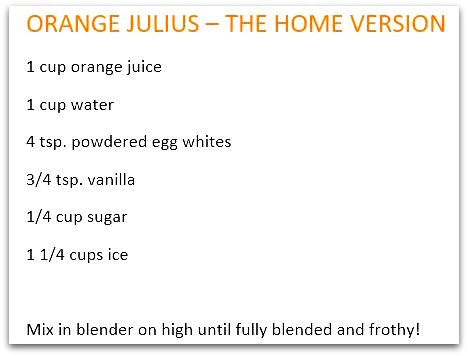
This was the part of the mall I might have liked the best, if only because of … Orange Julius!! (See recipe below.)

northpark_orange-julius_northpark-website_1965

(Am I crazy, or hadn’t Orange Julius moved to the space next to where it is in this 1965 photo? I swear in the ’70s it was facing Penney’s.)

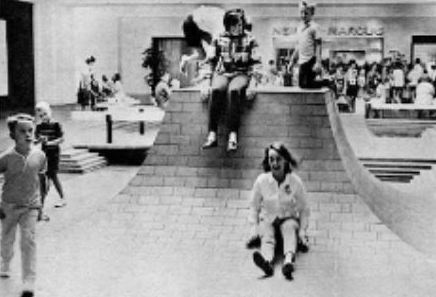
But the one thing that absolutely everyone who ever spent any time there as a kid remembers most?

northpark_slides_dth_np-websiteDallas Times Herald photo

Come to think of it, what I remember most about the NorthPark of my very early childhood is how smooth and cool-to-the-touch everything was — especially for children like me who were climbing all over everything: the tiles of those “slides,” the concrete of the fountains and planters, the floors, and those white bricks, inside and out. Everything was so smooooth. Happy belated birthday, NorthPark!

***

Sources & Notes

Most of these photos are from 1965, and most are from the history page of the NorthPark Center website, here. Their entertaining NorthPark50 blog is here.

More on the history of NorthPark at Wikipedia, here.

A 15-minute 50th anniversary video by The Dallas Morning News is on YouTube, here.

One of the first mentions of the future super-mall (and its 99-year lease) was in the March 5, 1961 edition of The Dallas Morning News in the article “Big Shop Center Slated in Dallas” by Rudy Rochelle.

See a cool color photo of the brand new mall here.

Want to make your own Orange Julius? Here’s a good recipe. The secret ingredient is powdered egg whites, available at Whole Foods and most larger grocery stores. The added sugar is important, but you might not want to use a whole quarter-cup.

UPDATE: The powdered egg whites I used to buy at my local Tom Thumb — “Just Whites” by Deb El — is no longer available. I tried several grocery stores today and couldn’t find powdered egg whites anywhere. They may be available in health food or vitamin/supplement stores. I just ordered some online. If you don’t mind using egg whites out of the shell, substitute 2 egg whites for the powdered in the recipe below.

orange-julius-recipe

Enjoy!

*

Copyright © 2016 Paula Bosse. All Rights Reserved.

Life in The Grove: Pleasant Grove — 1954-1956

pghs_1956-dairy-queenDairy Queen, 1238 S. Buckner — 1956 (click for larger image)

by Paula Bosse

The community of Pleasant Grove was first settled in the 1840s but didn’t officially become part of Dallas until it was annexed in 1954 after a huge postwar surge in population. Upon annexation, the schools that made up the Pleasant Grove Independent School District became part of the DISD, including Pleasant Grove High School, which was located on Lake June Road, between Conner and Pleasant Drive. PGHS closed when the brand new W. W. Samuell High School opened on January 28, 1957, halfway through the 1956-1957 school year. The photos here are from the yearbooks of the last three years that Pleasant Grove High School was open — most of the ads feature students inside or in front of the business establishments. And they’re great! (Click photos for larger images.)

*

Photos of overcrowded Pleasant Grove High School and its numerous out-buildings, 1955.

pghs_1955a

pghs_1955b

Pleasant Grove Pharmacy, Grady’s Clover Farm Grocery, and Grove Shoe Store:

pghs_1954-yrbk_a1954

Worthington Service Station:

pghs_1954-yrbk-worthington1954

Schepps Dairy:

pghs_1954-yrbk-schepps1954

The Eatmore Hamburger System (greatest name EVER!!):

pghs_1954-yrbk-eatmore1954

Dasch Cleaners:

pghs_1955-yrbk-dasch1955

Harvey Hayes, “The Insurance Man”:

pghs_1955-yrbk_a1955

Cassidy’s Conoco Station, Tee-Pee Drive-In Grocery, and Gay and Jones Motor Co.:

pghs_1956-yrbk_b1956

Worthington’s Magnolia Service Station (again) and Barrett’s Used Cars:

pghs_1956-yrbk_a1956

W. W. Hughes Magnolia Service Station, E & L Service Shop (bicycle and lawnmower service), and, again, Pleasant Grove Pharmacy:

pghs_1956-yrbk_d1956

Billie Price Real Estate and Maridell’s:

pghs_1956-yrbk_c1956

Martin’s Sinclair Service Station (with a DQ photobomb):

pghs_1956-martins1956

The Kaufman Pike Drive-In, “The Theater With a Heart”:

pghs_1956-yrbk-kaufman-pike-drive-in1956

And lastly, a very dark photo of Pleasant Grove High School from the 1948 yearbook:

pleasant-grove-high-school_1948-yrbk1948

***

Sources & Notes

All photos and ads are from the 1954, 1955, and 1956 editions of The Bobcat, the Pleasant Grove High School yearbook.

More on the history of Pleasant Grove in southeast Dallas, here. More on the history of Pleasant Grove High School here and here. The confusing school changes revolving around the the PGISD/DISD switchover were a bit like musical chairs and affected attendance of numerous high schools (including Forest High School, Crozier Tech, and Woodrow Wilson), junior high schools, and elementary schools. Read about the details in the Dallas Morning News article “Mid-Term Switch Set for Students” (DMN, Jan. 6, 1957).

Google map showing Pleasant Grove and approximate location of PGHS, here.

As always, click pictures for larger images.

*

Copyright © 2016 Paula Bosse. All Rights Reserved.

The Volunteer Fire Department’s Early Days

sanger-bros_fire-department_dmn_030836aPumping water from an underground cistern (click for larger image)

by Paula Bosse

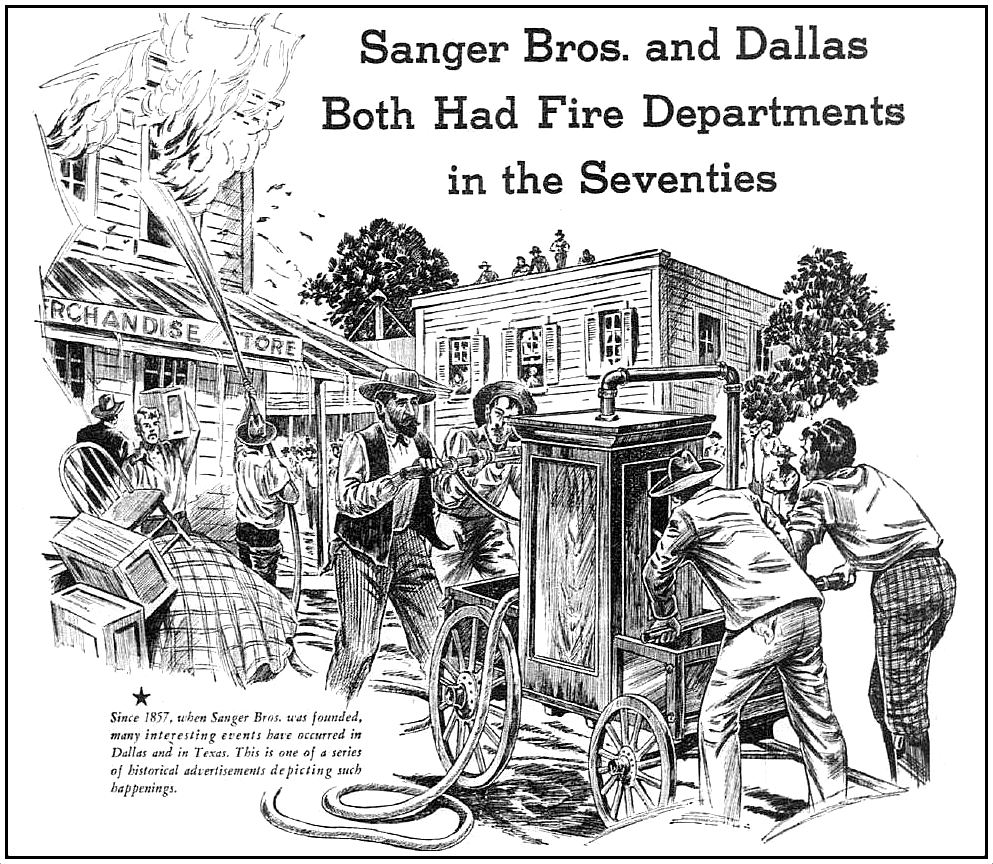
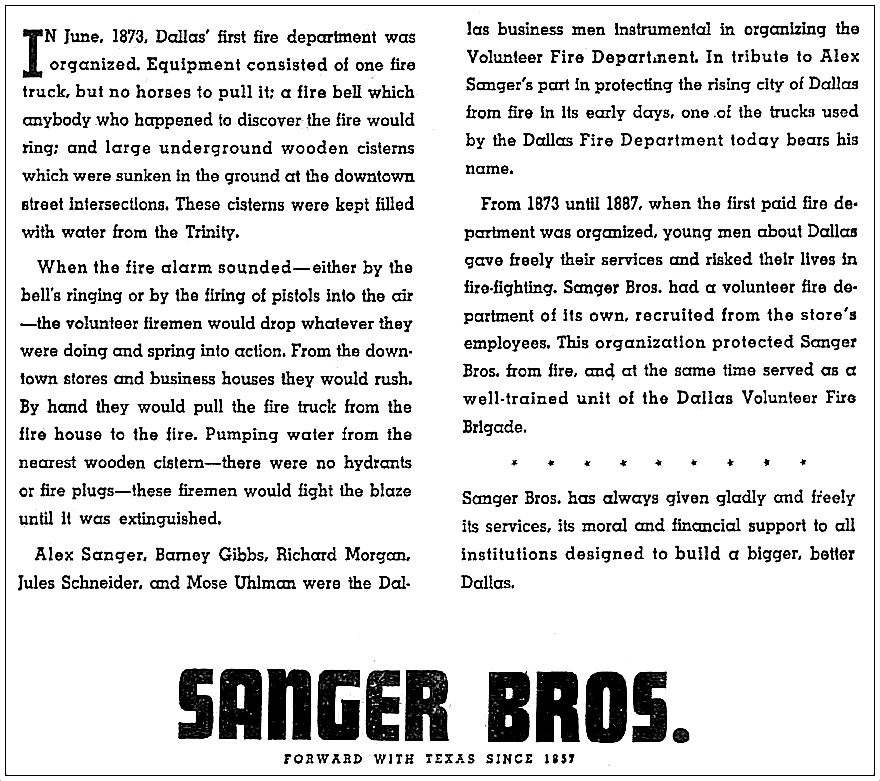
Dallas was constantly catching on fire in its early days. According to this very informative advertisement, Alex Sanger was one of the Dallas businessmen responsible for organizing the city’s first volunteer fire department. Interestingly, the Sanger Bros. department store also had a volunteer fire department which not only protected the store, but also served as a special unit of the Dallas Volunteer Fire Brigade.

The drawing above and the text below are from a 1936 Sanger Bros. advertisement. (Click to see larger images.)

sanger-bros_fire-department_dmn_030836b1936

*

Copyright © 2016 Paula Bosse. All Rights Reserved.


Main Street — ca. 1942

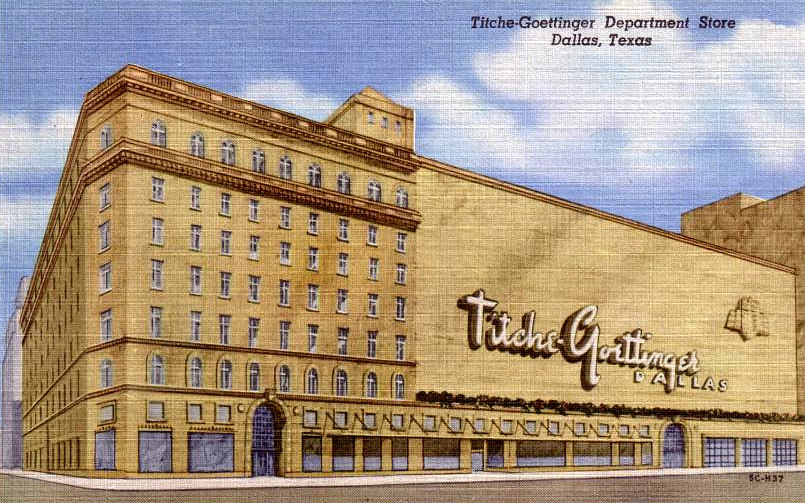
main-street-canyon_ebay_smallThe Merc, Titche’s, the White Plaza (click for much larger image)

by Paula Bosse

I love postcards like this. All signs of people, automobiles, and streetcars have been magically erased. Poof! This lunchtime scene of empty streets and sidewalks — looking west down Main from Harwood at 12:30 PM — was definitely a view never seen by a human being!

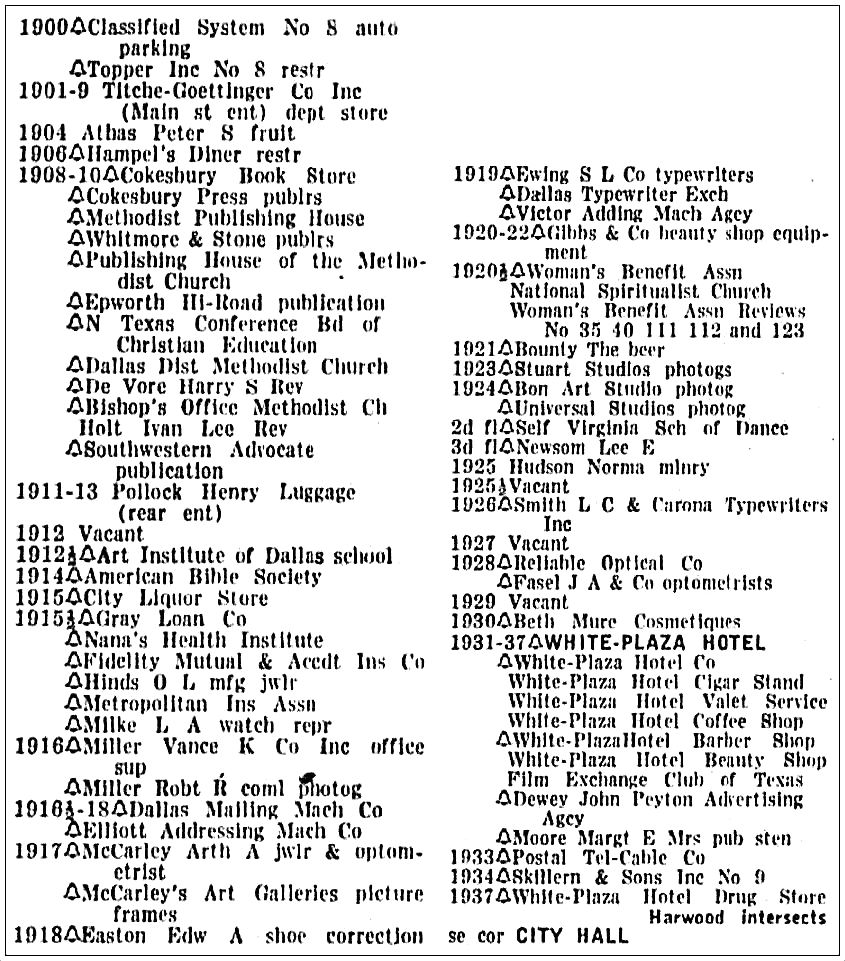
In trying to figure out the year of this image, I narrowed it down to about 1942 — that was the year the Mercantile Building was completed, and that was also about the time that Henry Pollock’s luggage store packed up (…as it were…) and vacated 1911-13 Main (the store was no longer listed at this address by the time the 1943 directory was issued). That’s not to say that the sign painted on the side of the building didn’t remain after Pollock had left, but later occupants would most likely have painted over it as soon as they moved in.

Speaking of directories, here’s a look at the businesses in the 1900 block of Main — between St. Paul and Harwood — in 1941. (Click for larger image.)

main-st_19411941 Dallas directory

For me, the interesting thing about this postcard is seeing the Titche’s building (at the corner of St. Paul) before it was expanded. The small buildings between Titche’s and the White Plaza Hotel (a hotel which was originally Dallas’ first Hilton — Conrad’s first-ever hotel to bear his name) were demolished sometime around 1952, and the expansion began that year, its 50th in business in Dallas.

The original building was built in 1929, designed by George Dahl (whose office was, a few years later, right across the street); the architectural firm responsible for the expansion was Thomas, Jameson & Merrill.

Here’s what the building looked like before the expansion (with another magic erasure — this time, the hotel at the end of the block has been removed to make way for an unobstructed view of the moon):

titches_night.jpg

And here’s the building after its expansion:

titches

***

Sources & Notes

More on the Titche’s expansion in the Dallas Morning News article “Titche’s Reports Plans to Double Present Size” by Edd Routt (Sept. 7, 1952).

Present-day photo of the Titche’s building, from Wikipedia, is here.

Present-day street view showing roughly the same vantage point as the postcard at top, can be seen on Google Street View, here.

A previous Flashback Dallas post — “George Dahl’s Titche-Goettinger Building” — is here.

All images larger when clicked.

*

Copyright © 2015 Paula Bosse. All Rights Reserved.


Antique Row: The 3300 Block of McKinney Avenue — 1963

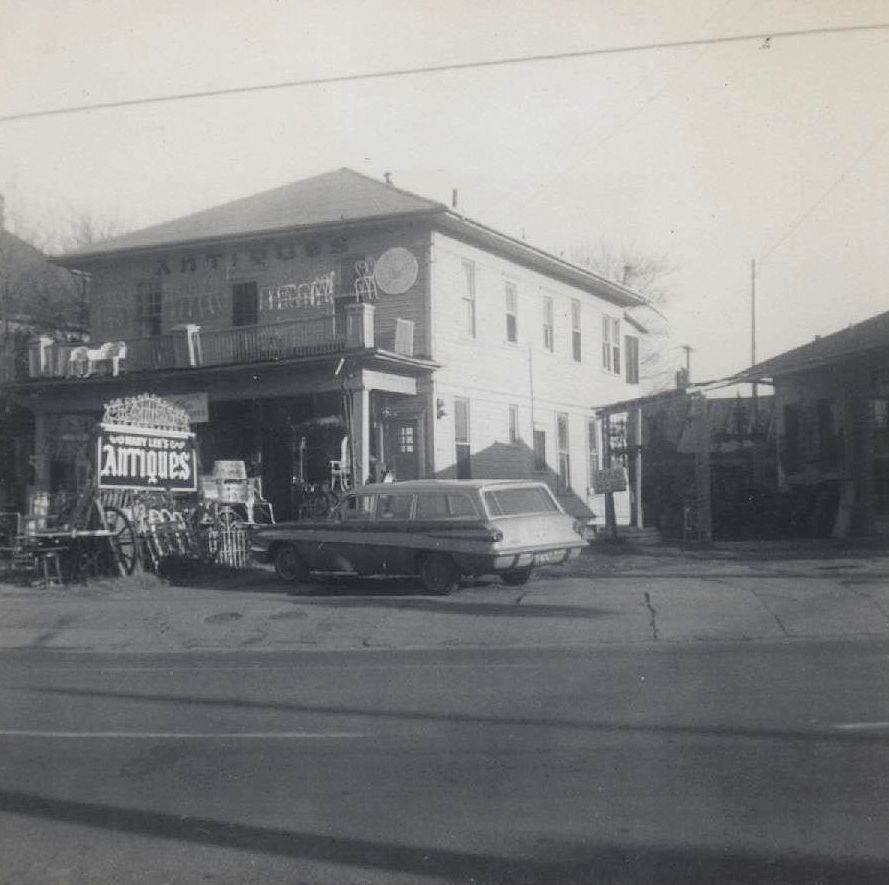
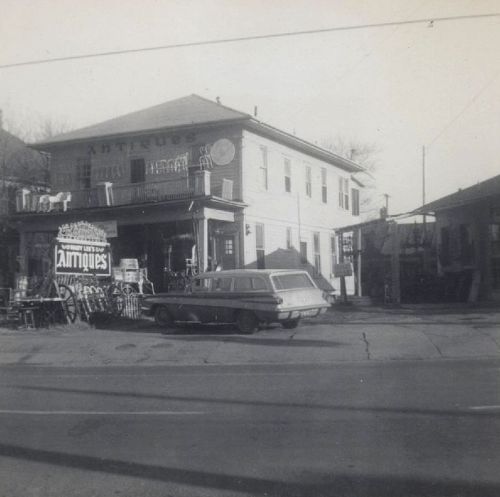
mary-lees-antiques_1963_ebayMary Lee’s Antiques, McKinney & Hall, 1963 (click for larger image)

by Paula Bosse

When I read a Facebook post from Big D History about an eBay collection of 75-or-so photos taken around Dallas in the 1950s and ’60s (links-a-plenty at the bottom of this post), I spent a substantial amount of time browsing though them. They’re just amateur snapshots, oddly framed sometimes and a little muddy, but the person who took them focused on what might seem to most of us as being fairly ordinary (sometimes downright mundane) buildings — and that’s great, because people always take photos of the big, important downtown skyscrapers, but hardly anyone takes a photo of an East Dallas apartment building or a suburban bank.

The two photos I was most excited to see showed buildings I recognized instantly, having seen them practically every day of my childhood, passing them on drives to and from my father’s bookstore. The one at the top of this post is my favorite. I  knew immediately that it was the old antique store at McKinney & Hall — I never knew its name, but I knew that it had been around before I was born and that my mother had bought one of our family’s nicest pieces of furniture there and paid for it in ten-dollar installments.

I now know that the name of the crazy-looking antique shop my  mother bought our hutch from was called Mary Lee’s Antique Center, at 3306 McKinney. It was in business at that location from 1956-ish to the end of 1971. A succession of antique shops moved in when Mary Lee moved out — I never knew the names of any of the businesses in this building, only that they all looked dauntingly FULL (how I managed to never actually go in any of them, I have no idea).

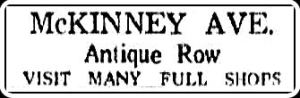
For many years, McKinney Avenue was lined with antique shops, many of which were in very old wood-frame houses which had been converted from homes into businesses.
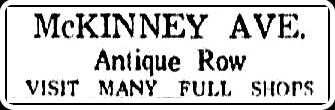
mckinney-avenue_antique-row_dmn_0901611961

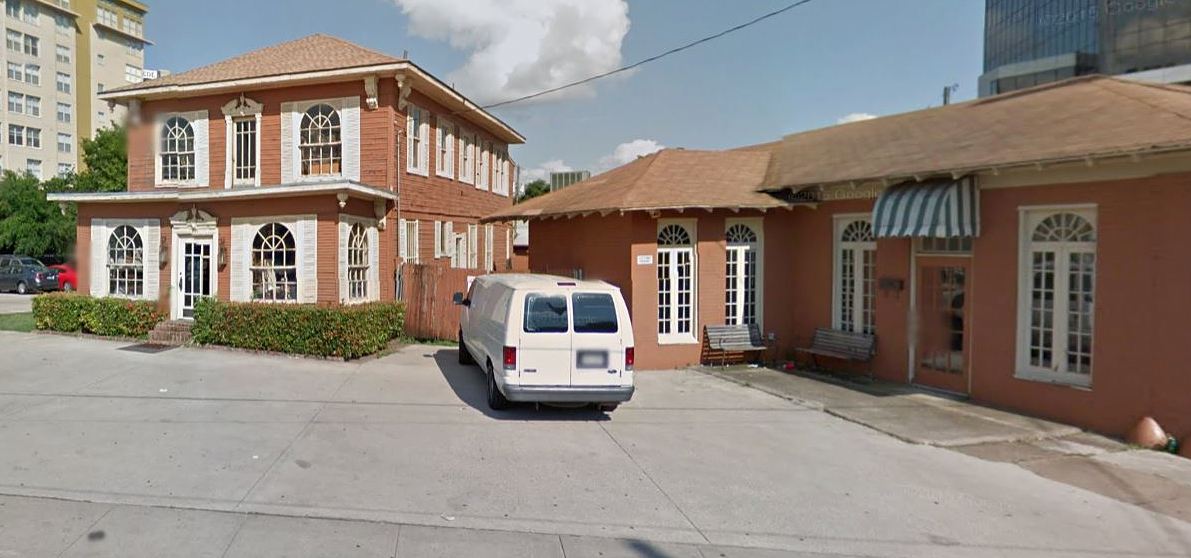
The old two-story house that Mary Lee was in was one of the largest. The house was built sometime before 1909, and, happily, this little remnant of the past is still standing (though with a weirdly updated exterior), next to its smaller companion building. Oddly situated on its lot, it’s been sitting for over a hundred years at the corner of McKinney and North Hall. Today it is the home of a leasing company; it faces Bread Winners and an eclectic-looking block of bars and restaurants.
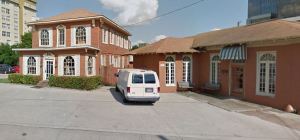
mckinney-and-hall_google-street-view-2015Google Street View, 2015

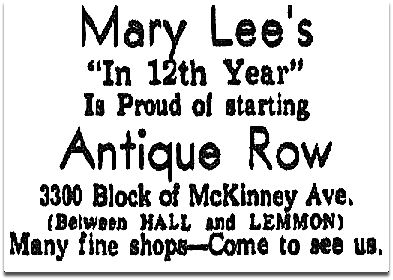
Whether or not it’s true, Mary Lee claimed to have started “Antique Row,” which, in this case, meant the 3300 block of McKinney.
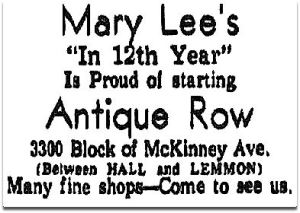
3300-block_dmn_0327681968

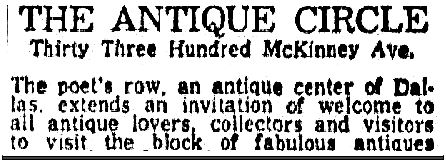
Back in 1959, these dealers were calling themselves “The Antique Circle” and were describing their antique-packed block as “the poet’s row.”
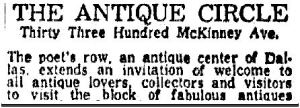
3300-block_dmn_1105591959

Mary Lee’s — which pretty much sat by itself on the south side of the street — was directly across from a block containing a strip of antique shops. I was glad to see in the same eBay collection a photograph of that north side of the block (probably taken at the same time as the photo at the top of this post).
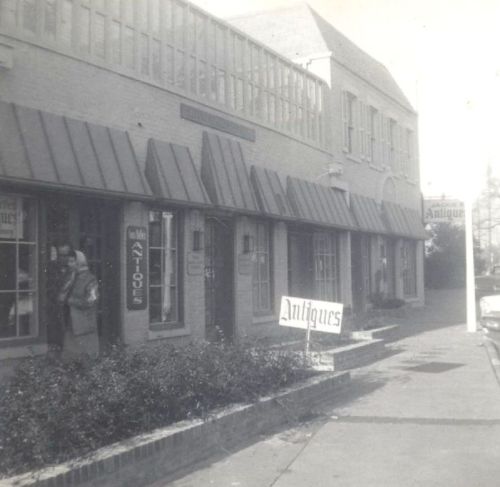
antique-shops_1963_ebay3300 block of McKinney, north side, 1963 (click for larger image)

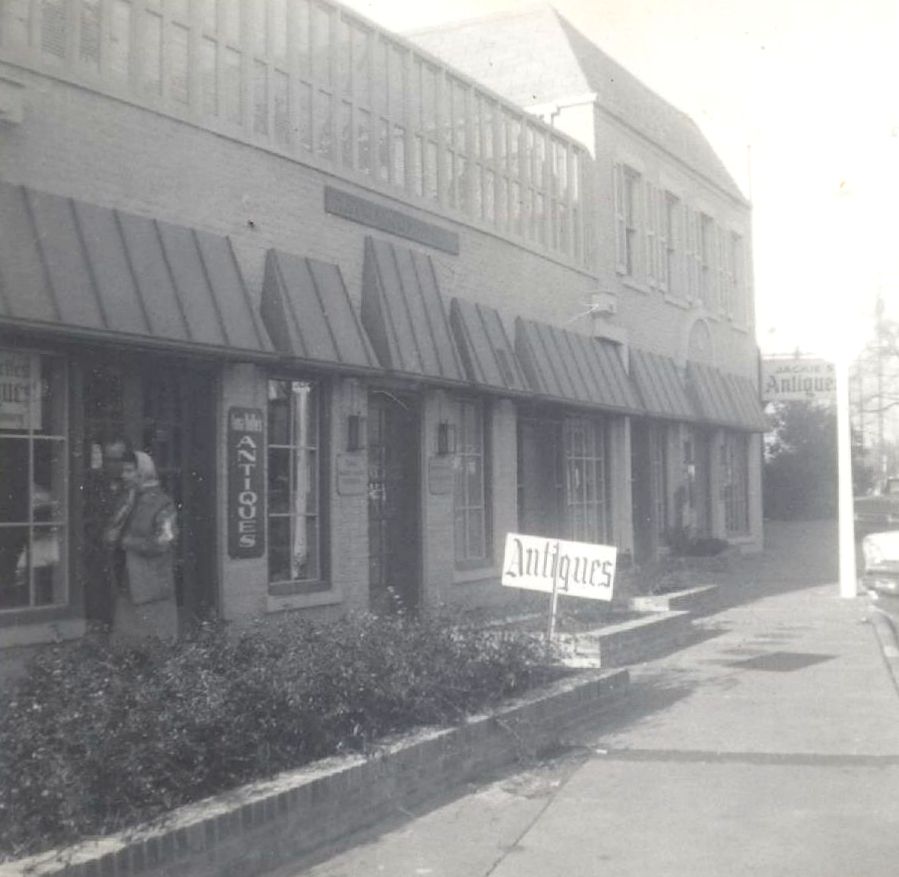
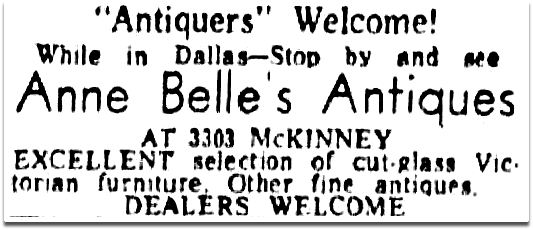
Seen above is part of that block, with Anna Belle’s Antiques (misspelled in the ad below) and Jackie’s Antiques (which was owned by Jackie Woods, a family acquaintance — her father had a clock shop, and my mother thinks that Jackie’s store may have been adjacent to it).
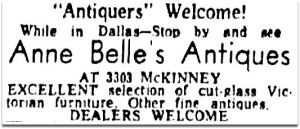
anne-belle_dmn_0401621962

jackies-antiques_dmn_0313611961

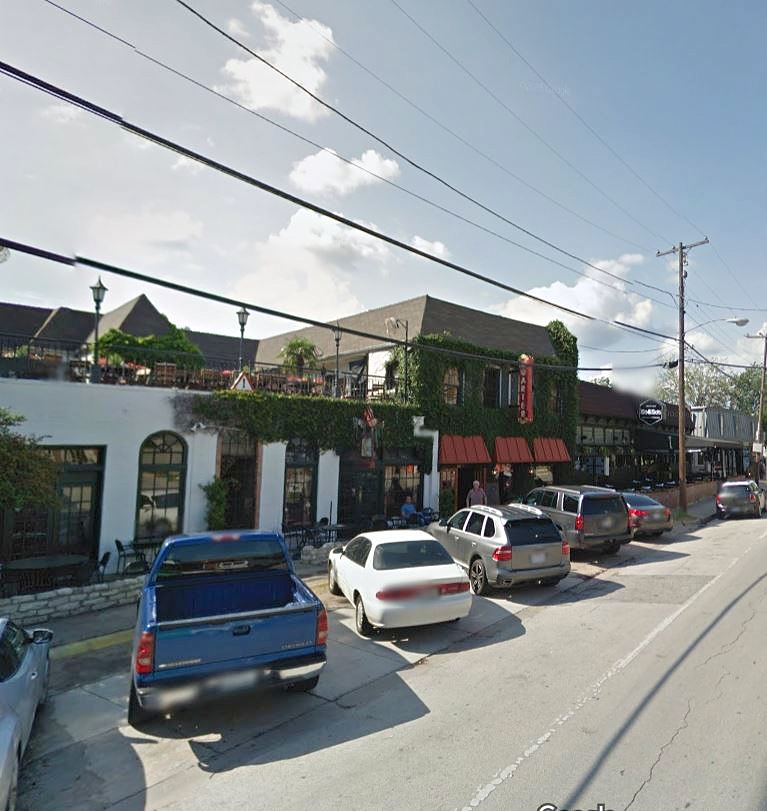
The buildings in that block are also still there — they’re  nowhere near as old as the house across the street, but it’s still nice to see some old and quirky structures still standing (and staying occupied) along a rapidly changing McKinney Avenue.
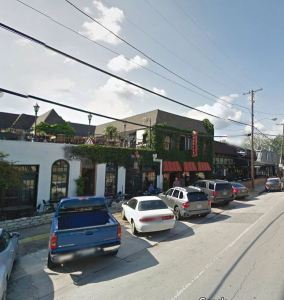
3300-mckinney_googleGoogle Street View, 2015

In the 1980s, the cute little houses which, for decades, had been occupied by a variety of businesses — antique shops, boutiques, clothing stores, salons, etc. — began to disappear from McKinney Avenue. Granted, some had seen better days and were in various states of disrepair, but, personally, I thought they were all charming, and I was sad to see them replaced by buildings conspicuously lacking in character. I had grown up seeing those houses and was especially fascinated by the cigar store Indians that seemed to stand in every yard and on every porch. (It’s pretty weird remembering that there were a LOT of wooden Indians along McKinney Avenue — almost as weird as remembering that there were once yards and porches along McKinney Avenue!)

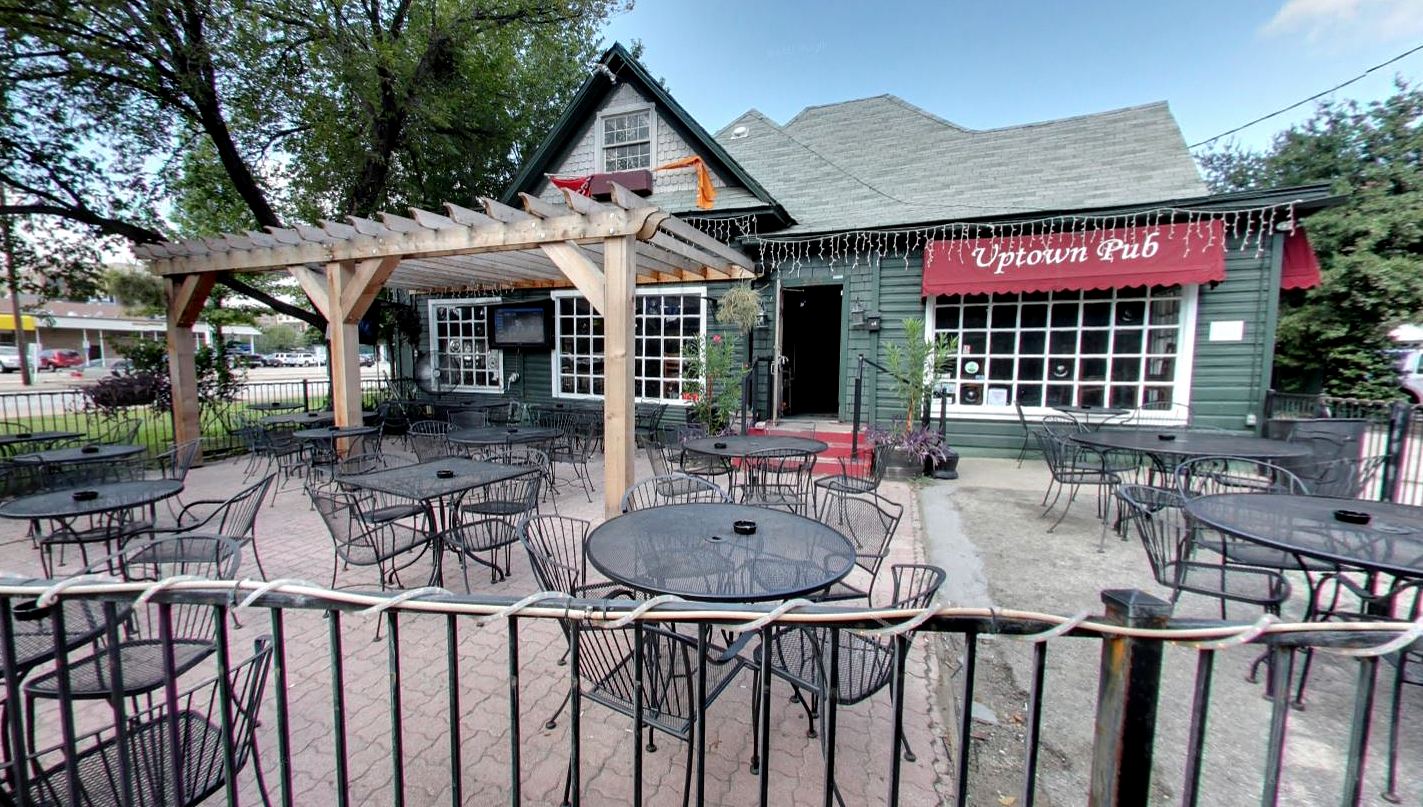
Now, most of those houses are long gone. A handful survive. The one most people might know is the one at 3605 McKinney, at Lemmon Ave. East — I first began lusting after it when it was Jennivine, and it’s nice to see that it’s still around, now as Uptown Pub. From a quick-ish look at its history, it appears to have been built before 1902. I know there are a lot people who love the severely densely-packed 21st-century version of “Uptown,” but wouldn’t that area be a million times nicer if there were still a street full of places like this?

uptown-pub_google-street-view3605 McKinney (Google Street View)

There are also a couple of 100-plus-year-old houses in the 3400 block. Seen below, the one on the left (3403 McKinney, currently occupied by Cliff’s Bar & Grill) appears to have been built in 1897; the very cute house to the right was built before 1909.

3400-block-mckinney_googleGoogle Street View, 2015

Imagine McKinney Avenue lined with these houses — first as homes, later as funky little shops. It wasn’t that long ago, really….

***

Sources & Notes

Both 1963 photos are from eBay, in auctions ending Monday night (Nov. 16, 2015). The top photo showing Mary Lee’s Antiques is here; the one showing Anna Belle’s and Jackie’s antique shops is here. See what the north side of this block looks like today on Google Street View, here; rotate it south and see what Mary Lee’s place looks like these days, and then head one block east to see the two old houses in the 3400  block. Look at what surrounds the wonderful house at McKinney & Lemmon (the old Jennivine), here — rotate the view at your own risk.

The entire eBay collection of Dallas snapshots — being offered in individual auctions which all end over the next couple of days — is here. The descriptions of these photos are written by an eBay seller in Ohio, and now that I’ve seen Big Tex described as “Big Tex Cowboy Man,” I’m all for an official name change. Consider it, SFOT!

I learned about these photos when I saw them mentioned in a Facebook post by the great BigDHistory. Like him on Facebook here, and/or follow him on Twitter @BigDHistory. Thanks, Miles!

For more on McKinney Avenue during this period, read the Dallas Morning News article titled “Poverty, Luxury, Art, Jazz — Changing Scene: The Many Faces of McKinney Ave.” by the always entertaining Helen Bullock (DMN, May 7, 1961).

Click pictures for larger images.

*

Copyright © 2015 Paula Bosse. All Rights Reserved.