
Telesign: Flashing News to Downtown Dallas — 1951
 All the news that fits… on a moving sign
by Paula Bosse
Well, this is pretty interesting.
Once upon a time, downtown Dallas had one of those moving “tickertape” electronic news message signs. It debuted on the exterior of the First National Bank (and part of an adjacent building) at Main and Akard on December 11, 1951. It was Dallas’ version of the famous New York Times news-ticker-bulletin sign (“the Zipper”) in Times Square. The sign was comprised of 3,136 light bulbs; the crawling, flashing letters were 30 inches high, and the sign stretched 190 feet, with the moving message bending around the bank building. The “hot news” could be really “hot” — like only minutes old, unlike the NYT sign, which could take hours to get a constantly repeating message up and running. The sign flashed the news to downtown passersby from 7:30 AM until 10:30 PM.
This “traveling-message” sign was the creation of Irving Naxon, of the Naxon Telesign Corporation of Chicago. (Naxon, a prolific inventor, is perhaps best known as the man who introduced the Crock Pot slow cooker to the world.) See the 1929 patent application for his “traveling-message sign” here.
How did it work? Briefly, United Press wire copy received in the WFAA newsroom was punched onto a paper ribbon and then fed into a transmitter. Theoretically, a hot-off-the-wire newsflash could be racing across the Main Street sign in the amount of time it would take to type the message — seconds. (Read more about it the article at the bottom of this post.)
There is silent footage from December 1951 of the Telesign in action, with shots of inventor Irving Naxon demonstrating how his system works: see the WBAP-TV footage on the Portal to Texas History website here. (The accompanying news script is here.)
I don’t know how long this sign was operational, but I have a feeling it wasn’t very long — but at least through 1953. Imagine how frequently those 3,000 light bulbs burned out and had to be replaced! I had never heard of this sign — or seen photos of it — so this was a very interesting little discovery.
**
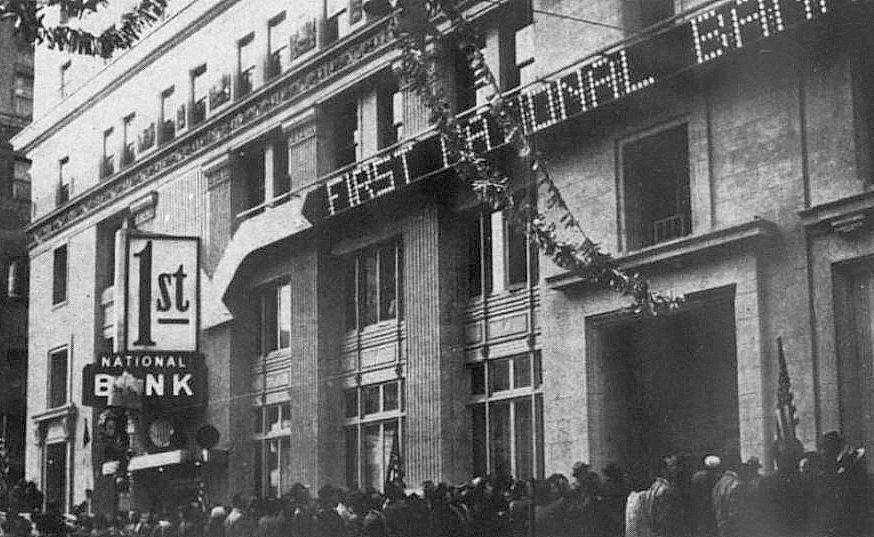 Dallas magazine, Dec. 1951
A 1953 ad for Federal Signs:
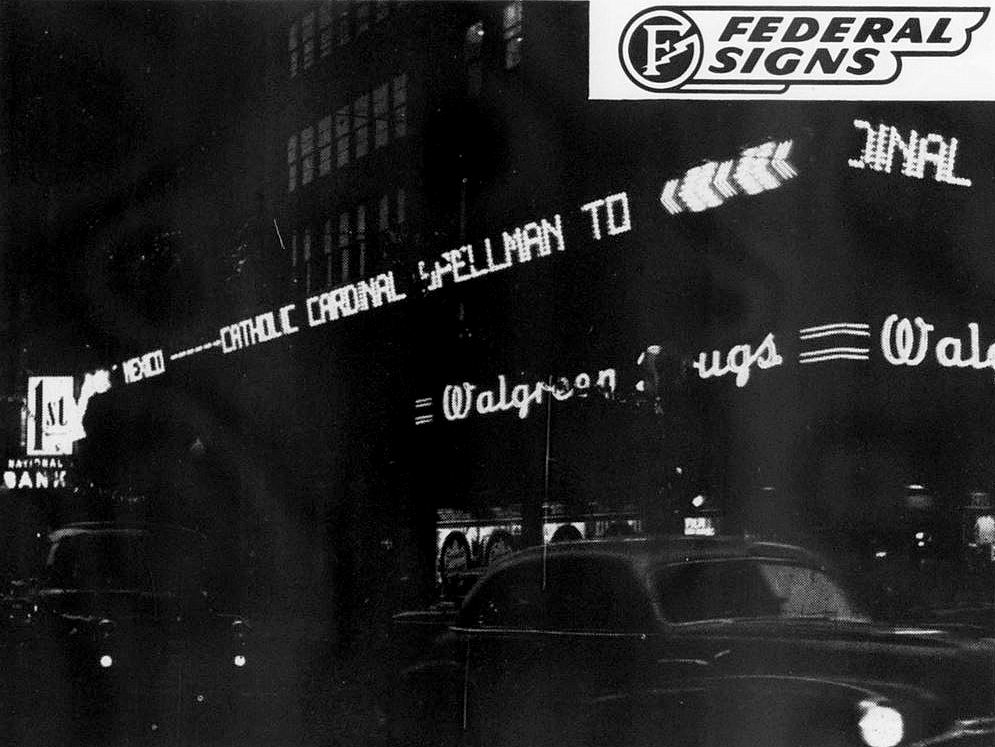 Dallas magazine, Jan. 1953
A couple of screenshots of the sign in action from a Channel 5 news clip (Dec. 12, 1951, Portal to Texas History). The first shows men in hats checking out the new sign as darkness falls:
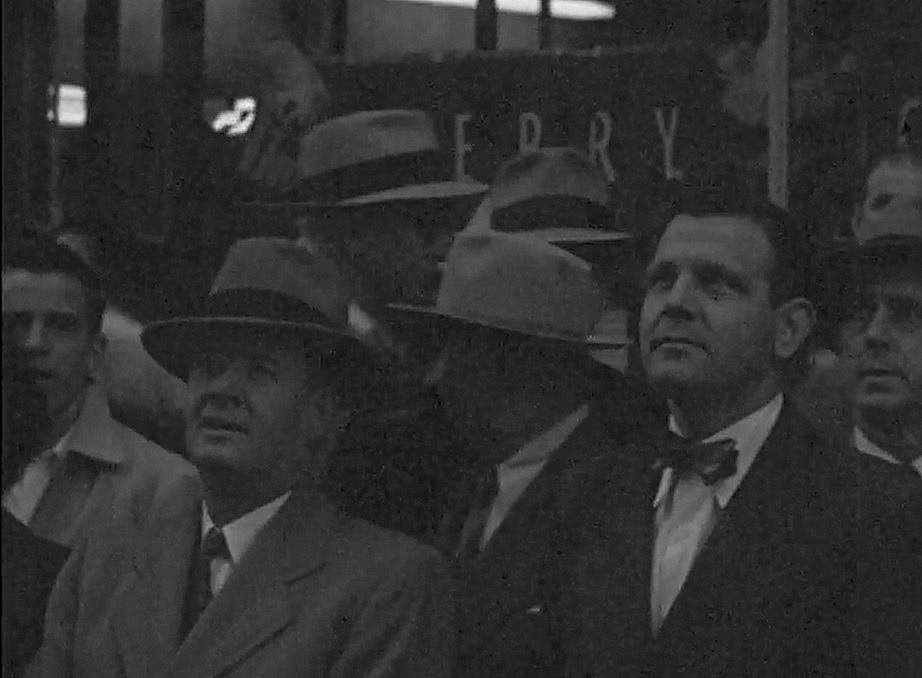
And here’s what they were looking at:
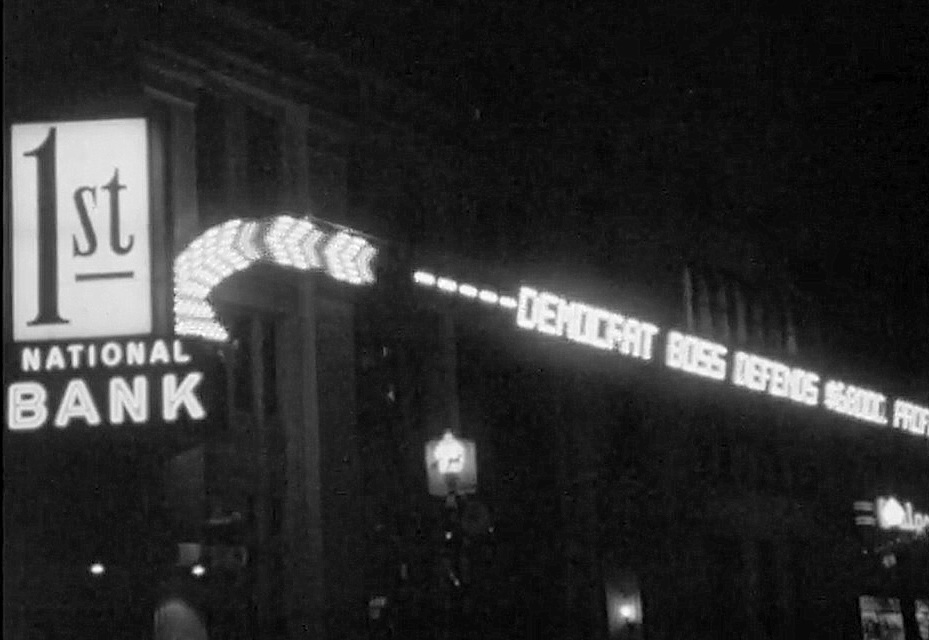 UNT Libraries Special Collections
How it worked (click for larger image):
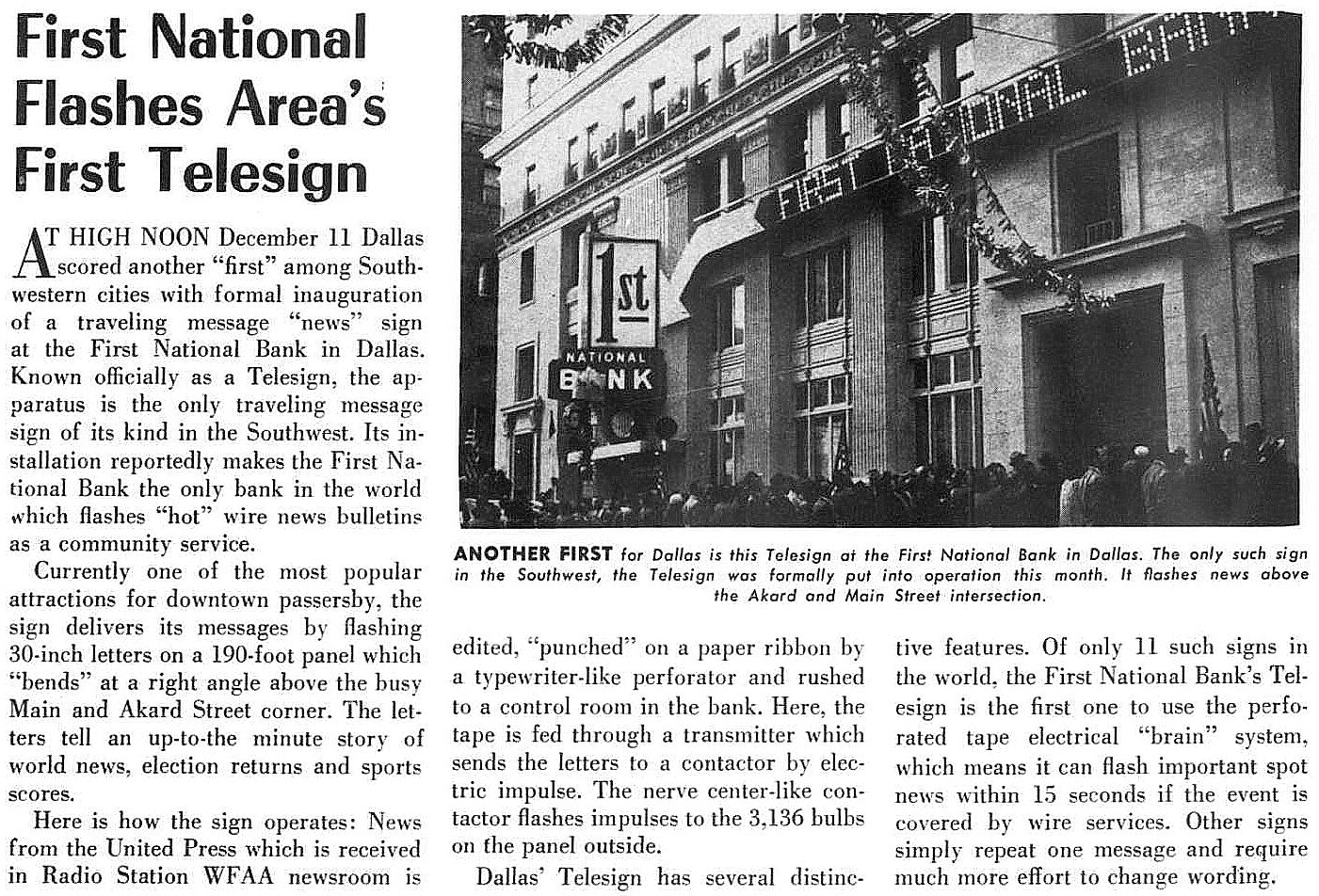 Dallas magazine, Dec. 1951
**
Excerpts from a couple of trade magazine articles:
The First National Bank in Dallas, Dallas, Texas has recently installed this telesign containing 3,136 individually controlled bulbs which form letters corresponding to those punched on tape as it is fed through a cigar-box size transmitter. Following formal dedication ceremonies, the sign flashed its first message: “UNCENSORED NEWS IS THE BASIS OF FREEDOM.”
The Telesign is operated continuously from 7:30 A.M. to 10:30 P.M., bringing to the people of Dallas, as a public service, news bulletins highlighting the latest developments in the big stories of the day, local, national and international. (Bankers Monthly, Feb. 1952)
*
Bank Installs Telesign: The first fast-moving line of words — “UNCENSORED NEWS IS THE BASIS OF FREEDOM: — chasing each other across First National Bank of Dallas’ new sign, echoed the dedicatory statement of President Ben H. Wooten. The telesign is operated as a community service to give downtown crowds a constant flow of news reports. Second in length only to that of the New York Times, it is believed to be the first ever installed by a bank. (Trusts and Estates, March 1953)
***
Sources & Notes
Top photo is from Bankers Monthly, Feb. 1952.
More about this can be found in the following article from the Dallas Morning News archives: “Bank Unveils Its New Telesign, Latest Word in News-Flashing” (DMN, Dec. 12, 1951).
In a related vein — as far as giant outdoor news signs downtown — check out the 2016 Flashback Dallas post “How Dallas Used to Get Election Returns.”
*
Copyright © 2024 Paula Bosse. All Rights Reserved.







 Fort Worth Star-Telegram, June 16, 1949






 Flashback : Dallas