Flashback : Dallas

A Miscellany: History, Ads, Pop Culture

Category: State Fair of Texas

The Over-the-Top University Park Christmas Display Featuring Big Tex and a Six Flags Spee-lunker
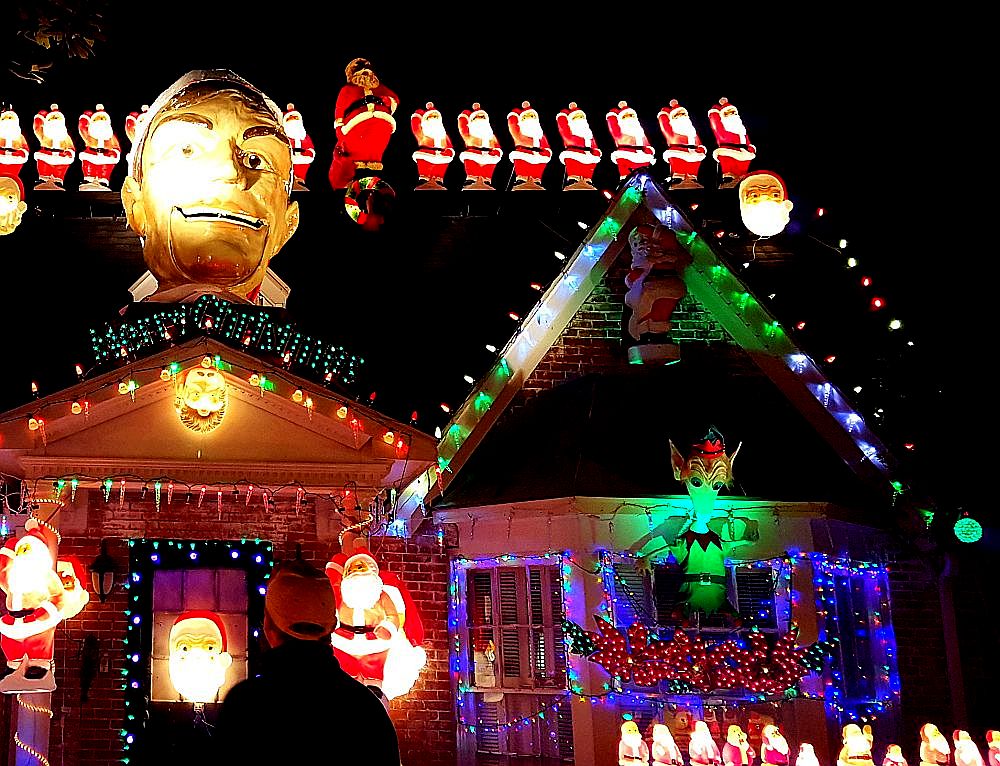
xmas-wayne-smith_university-park_2015_big-tex_speelunkerBig Tex on the roof, a “Spee” to the right (click for larger image)

by Paula Bosse

You may have heard about Wayne Smith’s annual spectacular Christmas display in the 3600 block of Southwestern in University Park — the one with a cast of thousands, including a previous head of Big Tex, what seems like hundreds of illuminated Santas, Dracula, Moe Howard, and a former denizen of Six Flags Over Texas’ “Cave”/Spee-lunker ride. Before I get back to the “Spees” (the name the creatures have been given by their surprisingly enthusiastic fan-following), here’s a wider shot of a photo I took during last year’s holiday season. (Click it!)
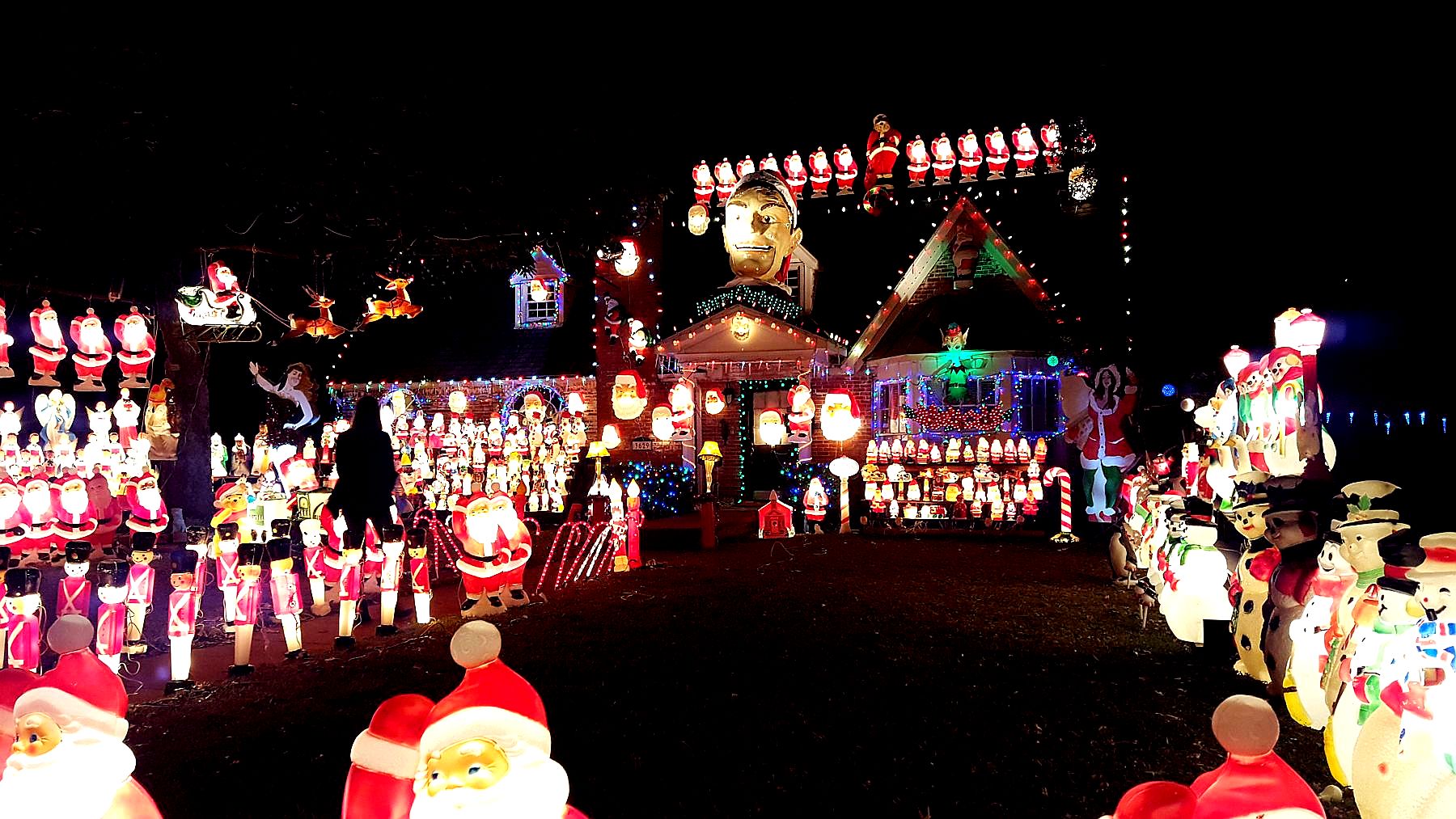
xmas_wayne-smith_university-park_2015_full

(And this gives you only an inkling of what’s actually there. I LOVED it! I waited until after Christmas — in fact, after New Year’s — to wander around — I can only imagine how backed up with looky-loos the street gets closer to Christmas.)

*

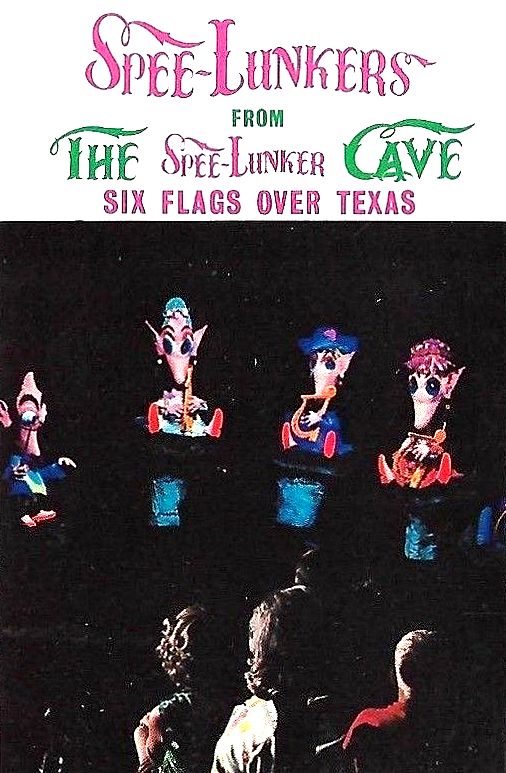
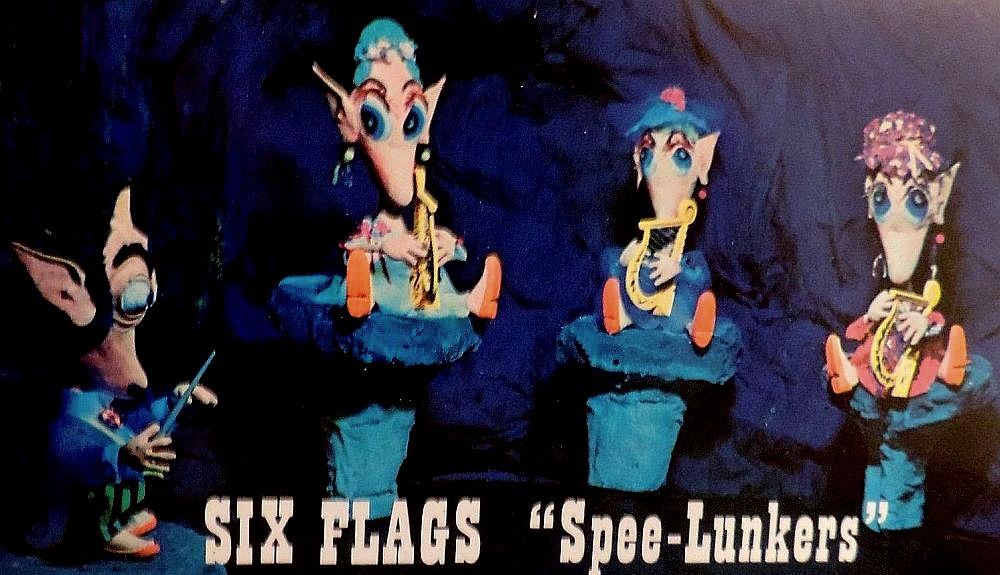
Back to the Spees. The Cave water ride debuted in 1964 and was an immediate hit. When it opened, there were 28 of these creatures who, according to the original marketing, “came from innerspace.”

They are 30 inches high and they play harps, do the Twist, play cards, hammer cave crystals into rock candy and engage in a shell game — turtle racing.

This ride was always one of my favorites (probably because it provided a brief, cool respite from the glaring sun and the blasting heat that plagued my annual summer visits to Six Flags).

The Spee-lunkers left Six Flags a long time ago, so it’s nice to see that one of them is still entertaining local crowds, right next to another beloved DFW icon, Big Tex … along with a phalanx of festive Santas!
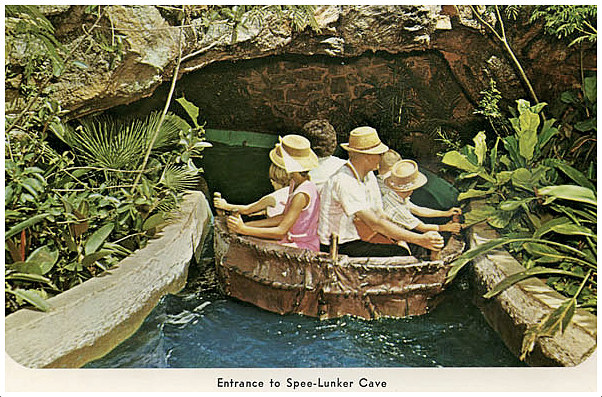
spee-lunker-cave_postcar

six-flags_speelunkers_ebay

six-flags_speelunkers_postcard_ebay

Lest you think the publicity mill wasn’t working all angles of this new attraction, we see below that one of the Spees got a visit from, of all people, TV-darling Donna Douglas who played Elly May Clampett on The Beverly Hillbillies.
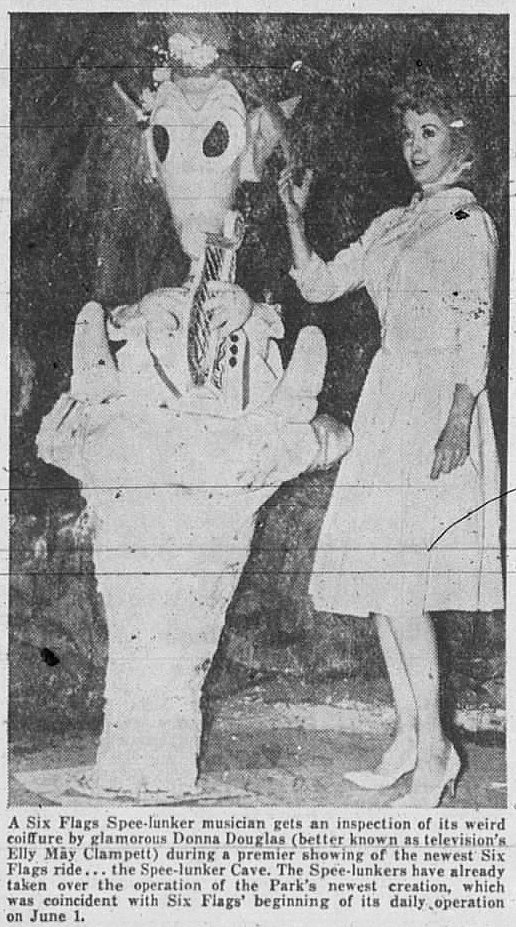
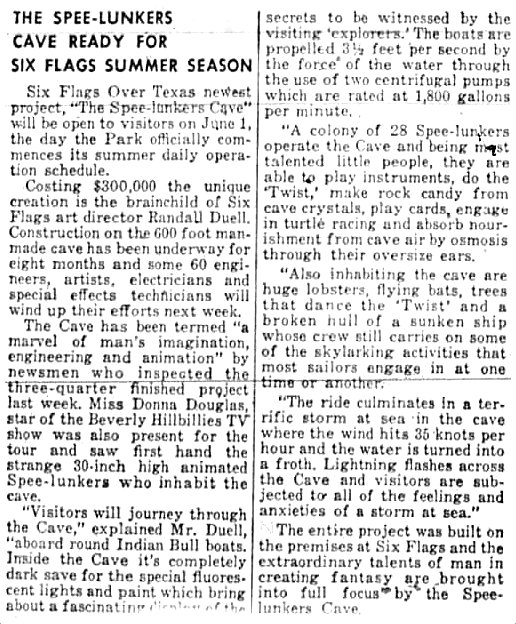
cave_hood-county-news-tablet_060464

cave_hood-county-news-tablet_060464-text
photo and article, Hood County News Tablet, June 4, 1964
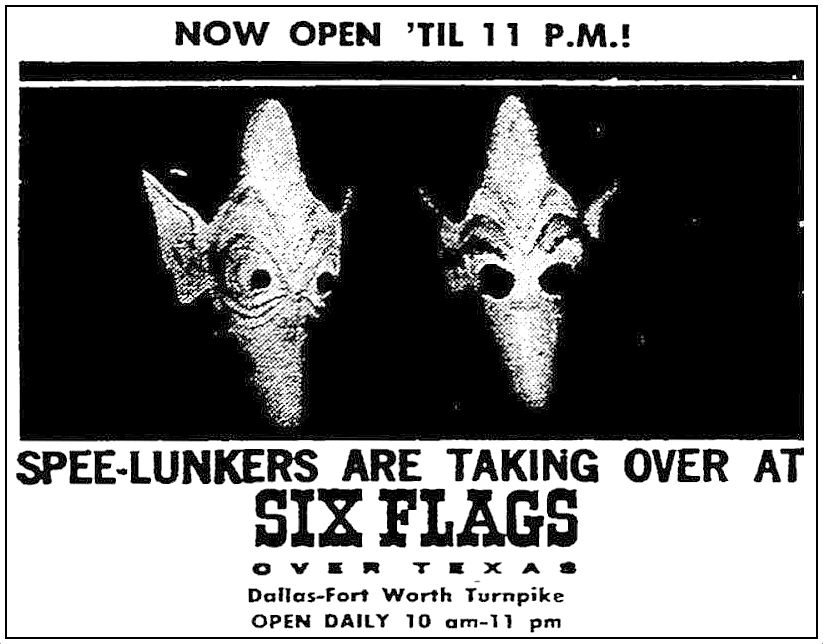
cave_fwst_082264
August, 1964

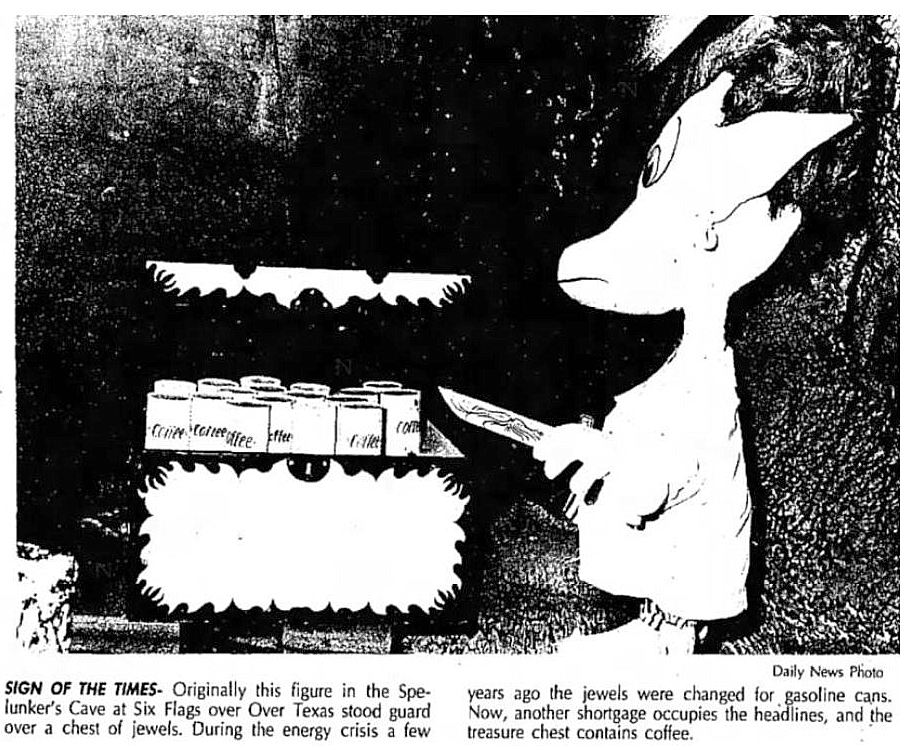
cave_grand-prairie-daily-news_052577
Grand Prairie Daily News, May 25, 1977

***

Sources & Notes

Photo of Wayne Smith’s Christmas display taken by me on January 2, 2016. The house is in the 3600 block of Southwestern, between Baltimore and Thackery. Since the display is probably visible from space, there’s no way you can miss it.

Postcards found on eBay and Google.

Every year TV crews descend on Smith’s house to do a story. Watch one from this year — from CW33 News — here.

For those who might like more info on the Spee-lunker attraction/ride (which, by the way, is classified as a “dark ride” in amusement park lingo) at Six Flags Over Texas, here’s a bunch of links:

  • Weird video and music (and history!) by a superfan, here
  • Article by the same guy who put the above video together, here
  • Spee-lunker vignettes described here
  • Google images aplenty, here

More on the new ride can be found in the Dallas Morning News archives in the article “$300,000 Hole: Six Flags To Open Cave Ride” (DMN, May 24, 1964) — accompanying the article is an amusing photo captioned “Gail Powers yelps in mock fear as lobster seizes her hand.”

A shout-out to Wendy Cook who, when I posted the top picture to the Flashback Dallas Instagram feed in January, pointed out to me that the Spee-lunker was even in there. She recognized him right away, but with so much visual overload, I hadn’t even noticed him! Thanks, Wendy!

See stuff bigger — when in doubt, click it!

*

Copyright © 2016 Paula Bosse. All Rights Reserved.
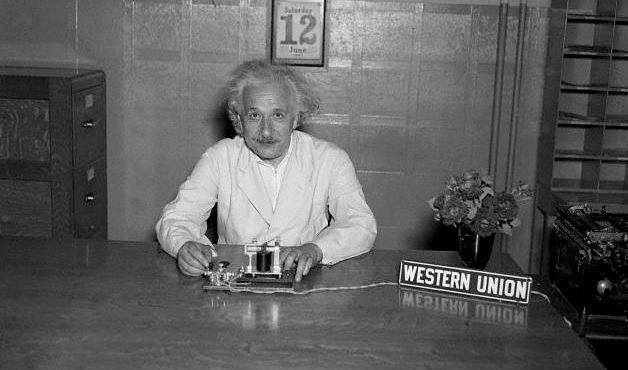
 

Albert Einstein “Threw the Switch” in New Jersey to Open the Pan-American Exposition in Dallas — 1937

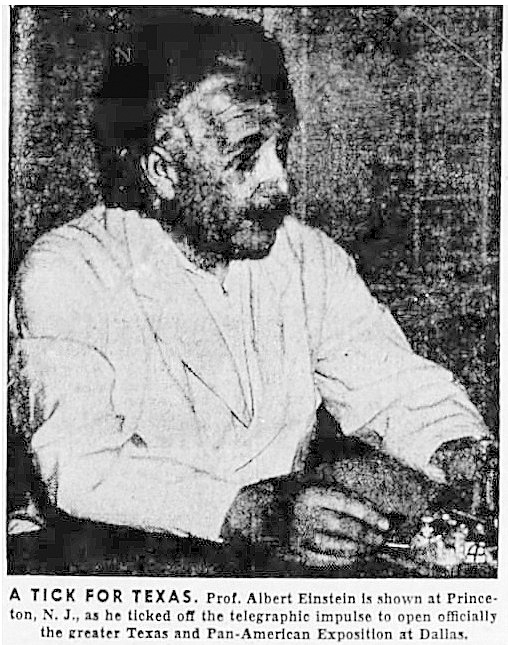
pan-american-expo_einstein_061237Einstein at the switch, June 12, 1937…

by Paula Bosse

Who knew? Albert Einstein, the world’s most famous physicist, helped open the Greater Texas and Pan-American Exposition. The exposition was held at Fair Park for 20 weeks, from June 12, 1937 to October 31, 1937, as a follow-up of sorts to the Texas Centennial (the city had built all those new buildings — might as well get their money’s worth!). I’m not quite sure how Einstein got roped into this, but looking at the photo above, he seemed pretty happy about what was, basically, a long-distance ribbon-cutting. Via telegraph.

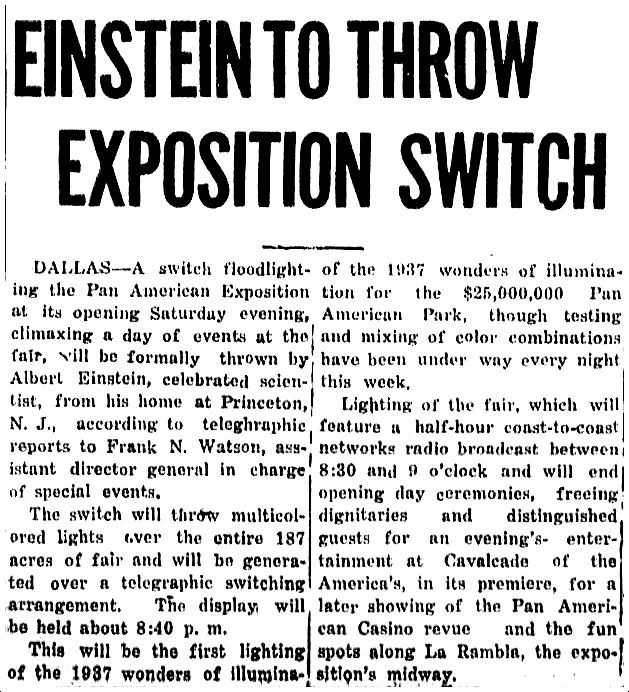
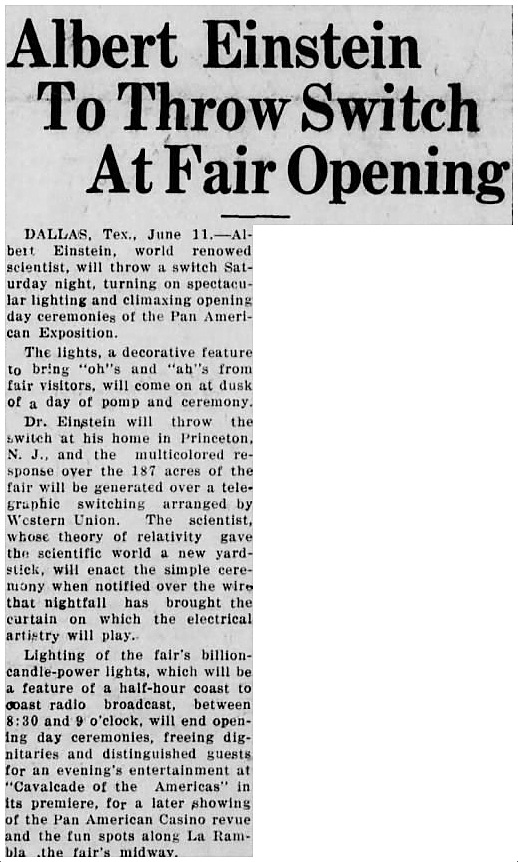
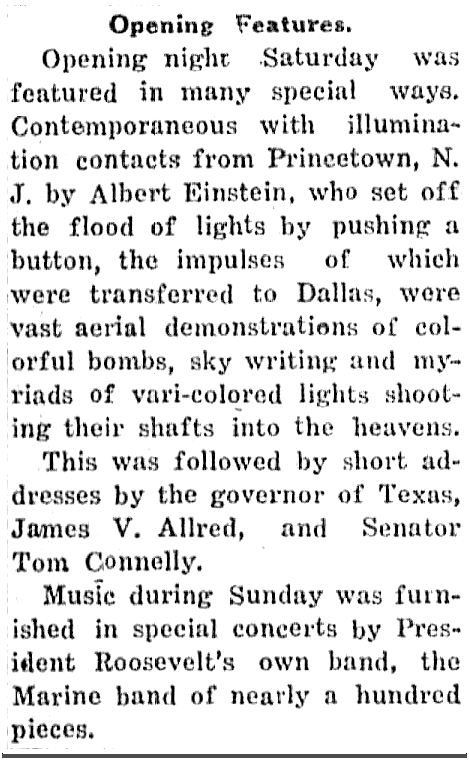
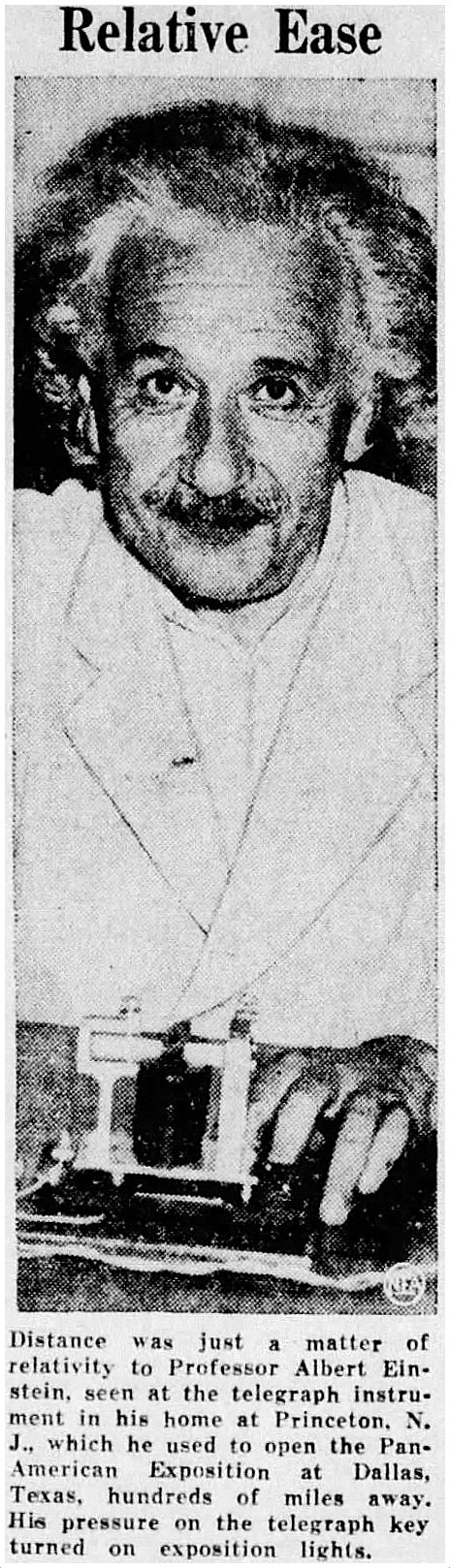
The plan was for Professor Einstein to officially open the Pan-American Exposition by “throwing the switch” which would turn on massive displays of lights around Fair Park. He would do this from Princeton, New Jersey, where he lived, by closing a telegraph circuit which would put the whole thing in motion. Newspaper reports varied on where exactly Herr Einstein was tapping his telegraph key — it was either the study in his home, in his office, in a Princeton University administration building, or in the Princeton offices of Western Union (the latter of which was mentioned in only one report I found, but it seems most likely).

Einstein was a bona fide celebrity, and this was national news — newspapers around the country ran stories about it, and the ceremony was carried live on coast-to-coast radio. Almost every report suggested that Einstein’s pressing of the key in New Jersey would be the trigger that lit up the park in Texas, 1,500 miles away — which was partly correct. According to The Dallas Morning News:

Lights on the grounds will be turned on officially at 8:40 p.m. when Dr. Albert Einstein, exponent of the theory of relativity, presses a key in his Princeton home to fire an army field gun. With the detonation of the shell, switches will be thrown to release the flood of colored lights throughout the grounds. (DMN, June 10, 1937)

So on June 12, 1937 he pressed a telegraph key somewhere in Princeton, NJ, an alert was instantly wired to Dallas, an army field gun (in some reports a “cannon”) was fired, and that blast was the cue for electricians positioned around the park to throw switches to illuminate the spectacular displays of colored lights.

The Western Union tie-in gimmick was a success. Newspaper reports might have been a little purple in their descriptions, but from all accounts, those lights going on all at once was a pretty spectacular sight.

Dr. Albert Einstein, celebrated scientist, threw a switch that flashed a million lights over the 187-acre exposition park. The flash came at 8:40 o’clock and instantly the huge park became a city of a million wonders. Flags from a thousand staffs proclaimed their nationality [and] bands played the national airs of the nations of the Western Hemisphere as lusty cheers roared with thunderous approval. The Greater Texas and Pan-American Exposition was formally opened. It is on its way. (Abilene (TX) Reporter News, June 13, 1937)

The Dallas News describes the crowd as stunned into silence:

The waiting participants in the ceremonies at Dallas heard the results [of Einstein’s telegraph signal] when a cannon boomed. Electricians at switches around the grounds swung the blades into their niches and the flood of light awoke the colors of the rainbow to dance over the 187-acre park. Its breath taken by the spectacle, the crowd stood silent for a moment, and then broke into a cheer. (“Pan-American Fair Gets Off to Gay Start” by Robert Lunsford, DMN, June 13, 1937)

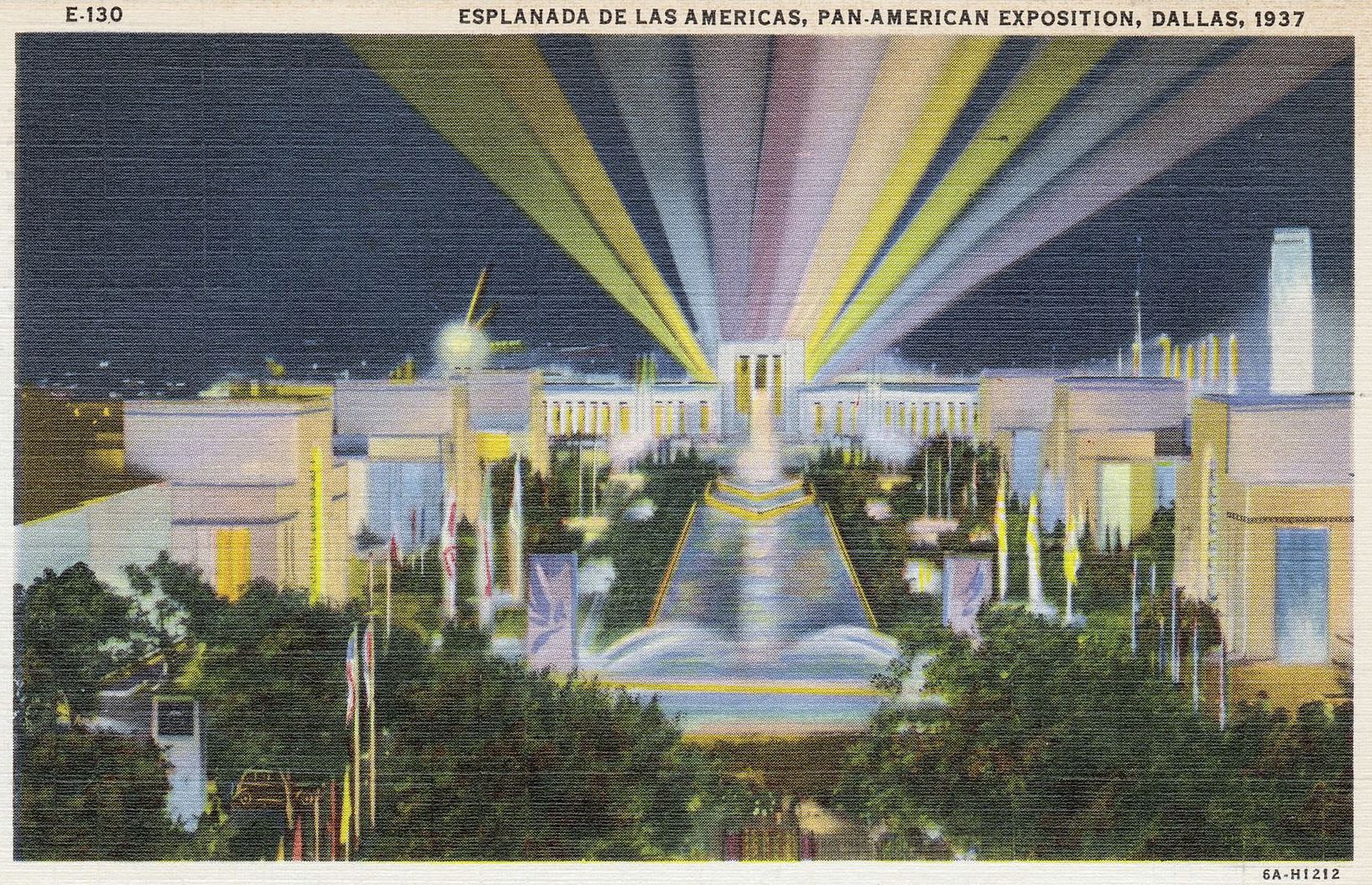
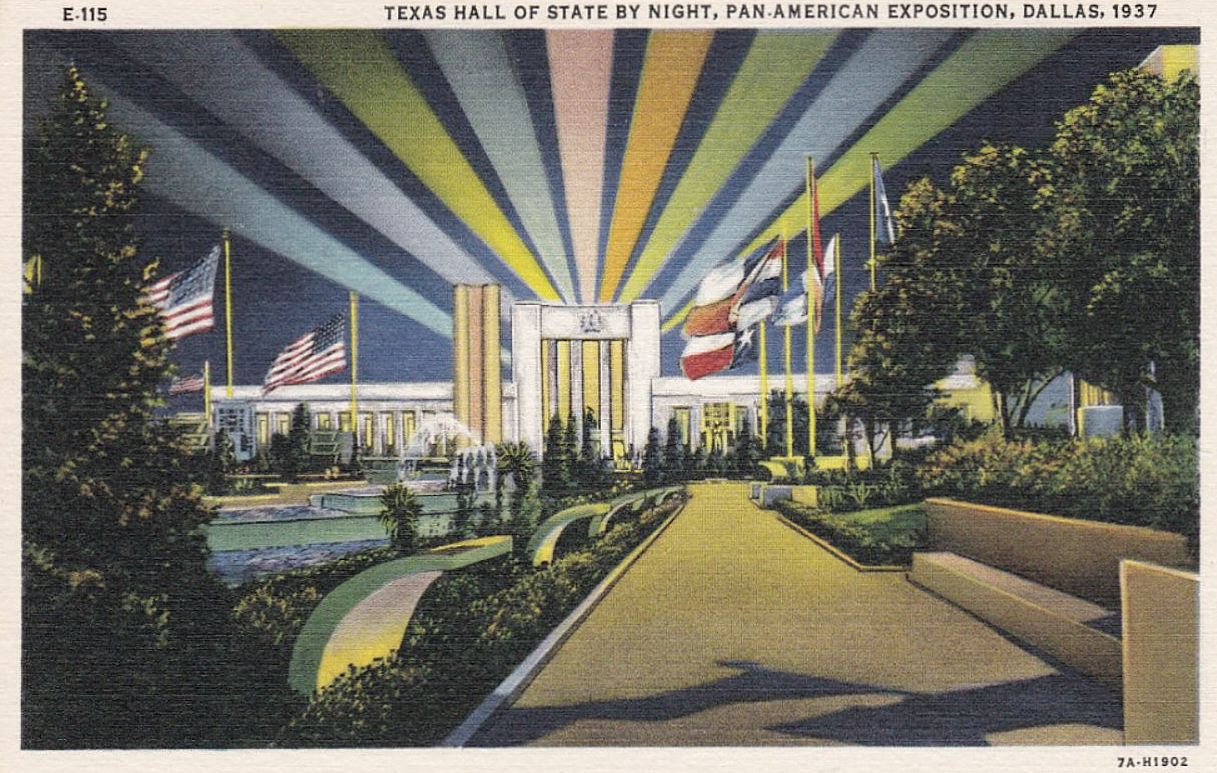
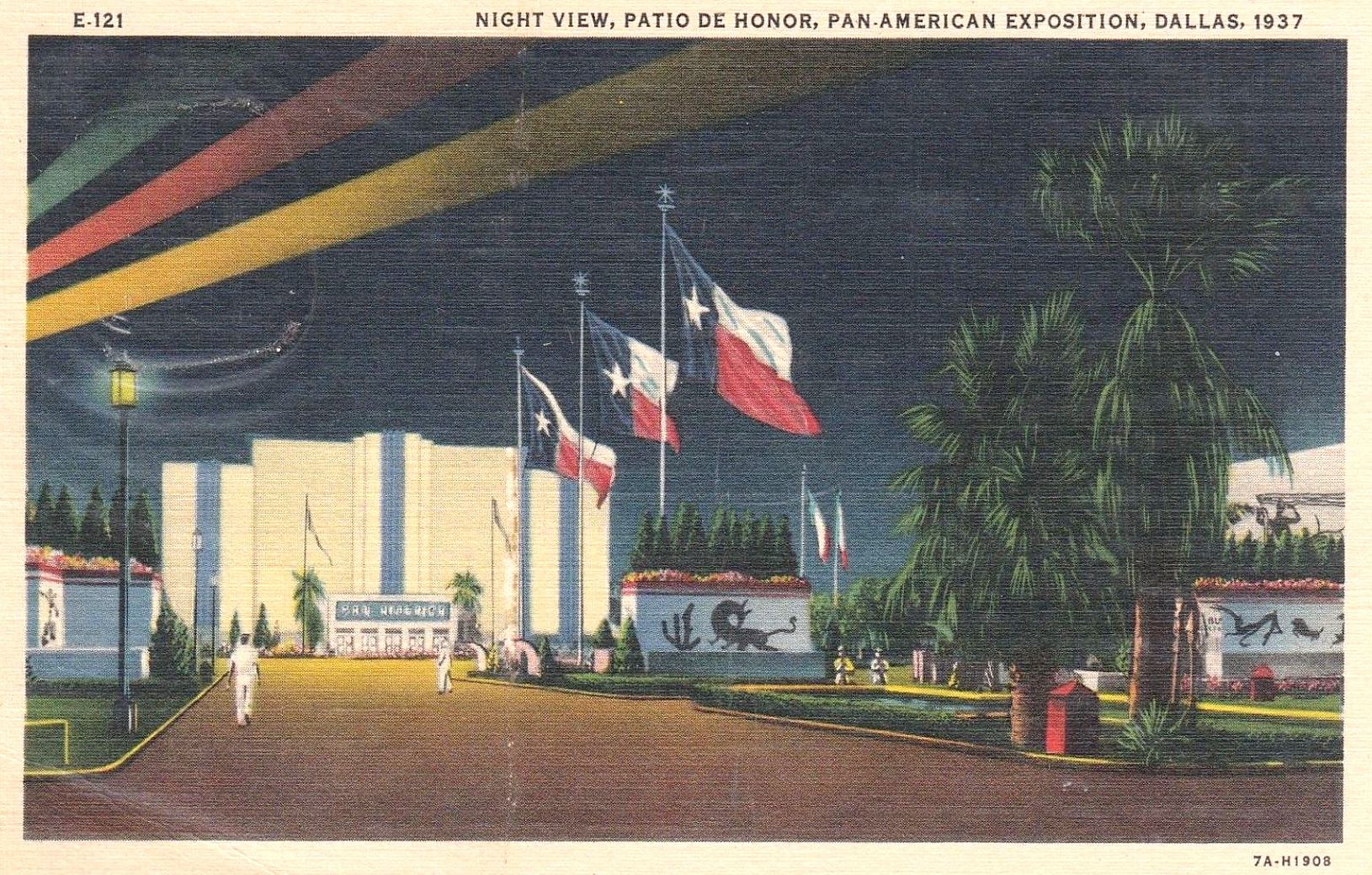
Many of the lighting designs and displays had been used the previous year during the Centennial, but, as with much of the attractions and appointments throughout the park, they were improved and spectacularized for the Pan-American Expo. And people loved what they saw.

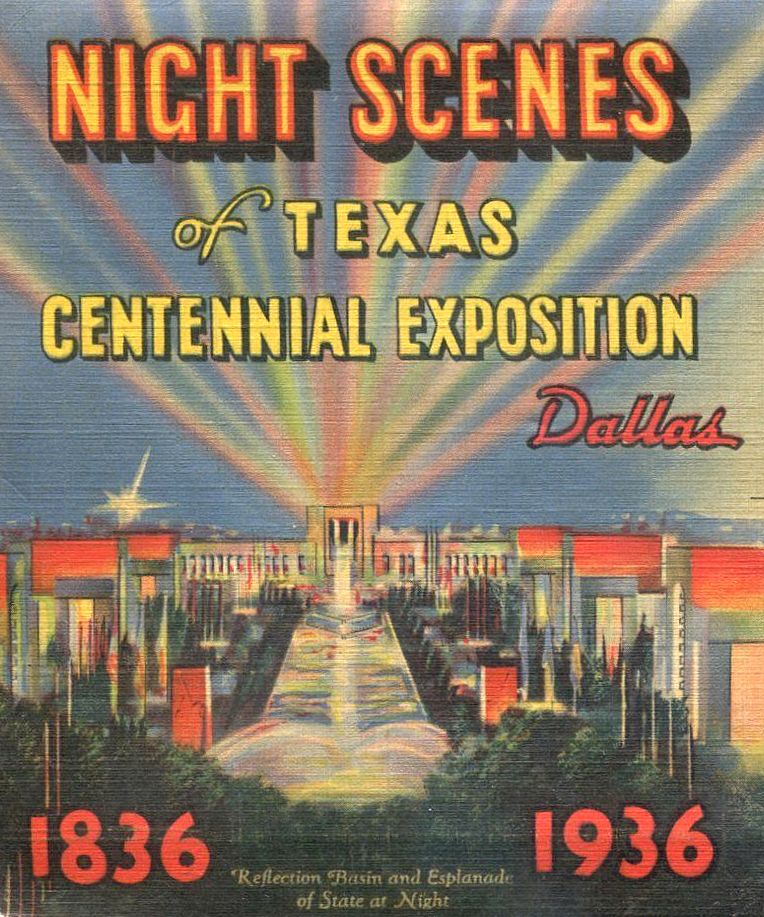
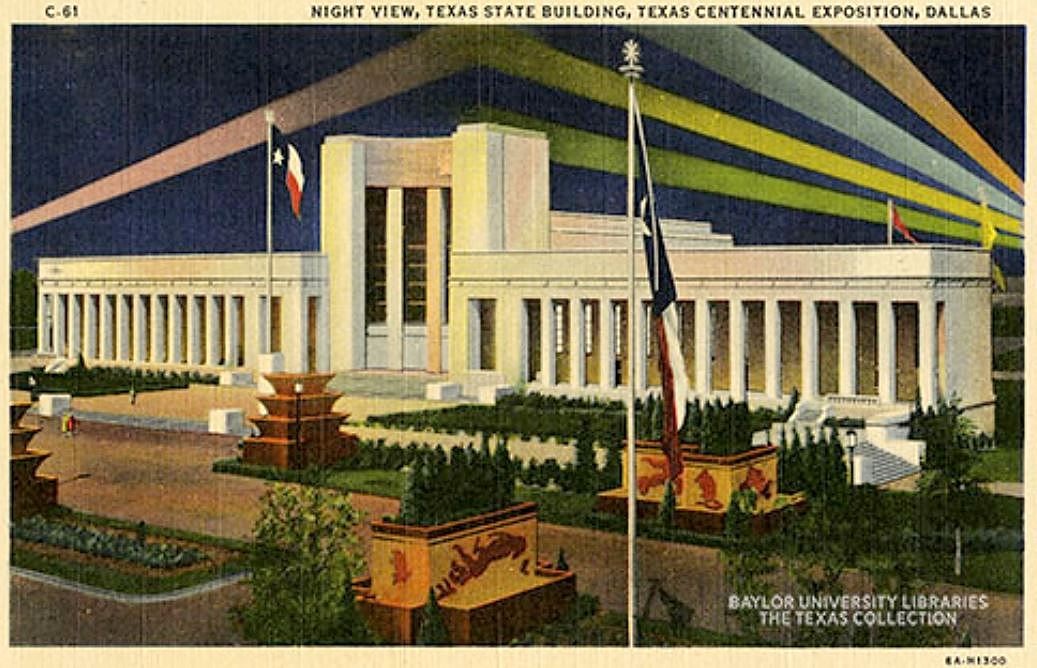
Despite the multi-million dollar structures, air conditioning demos, works of art and other newfangled additions to the space, when people left the Centennial Exposition one thing was on everyone’s tongues, according to historical pollsters: the lights.

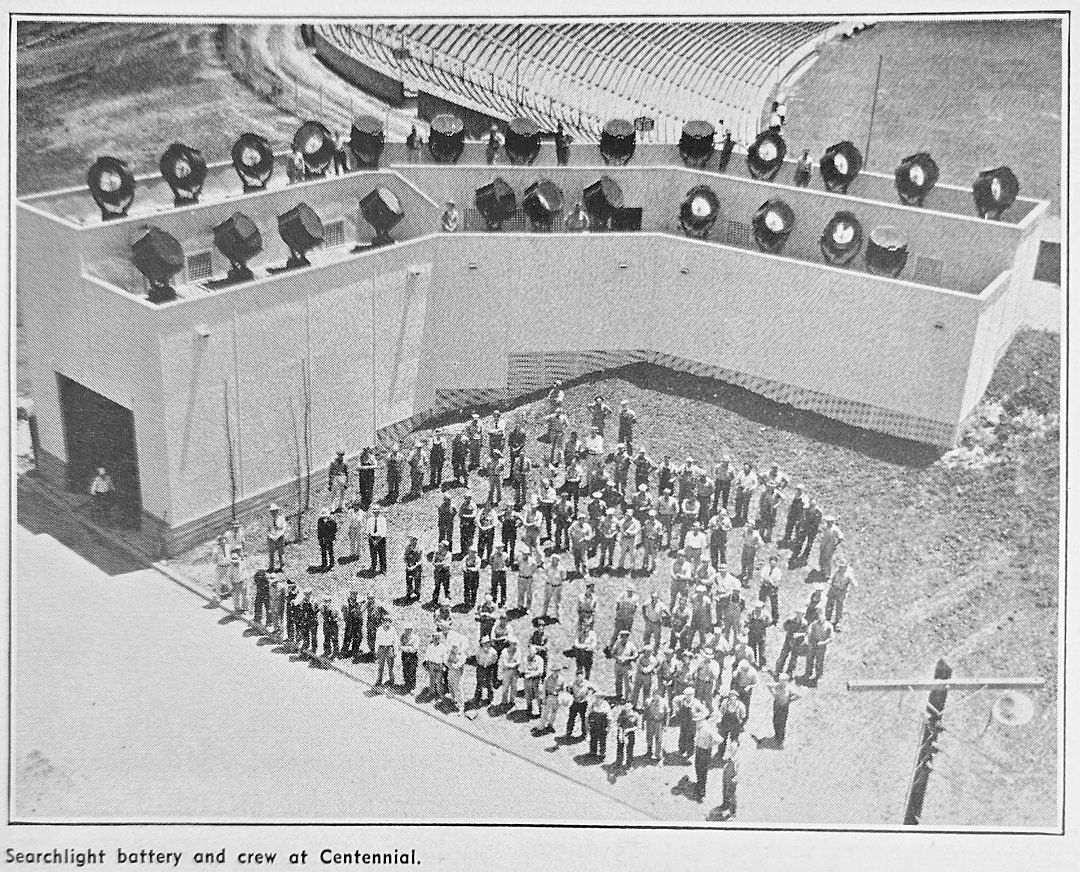
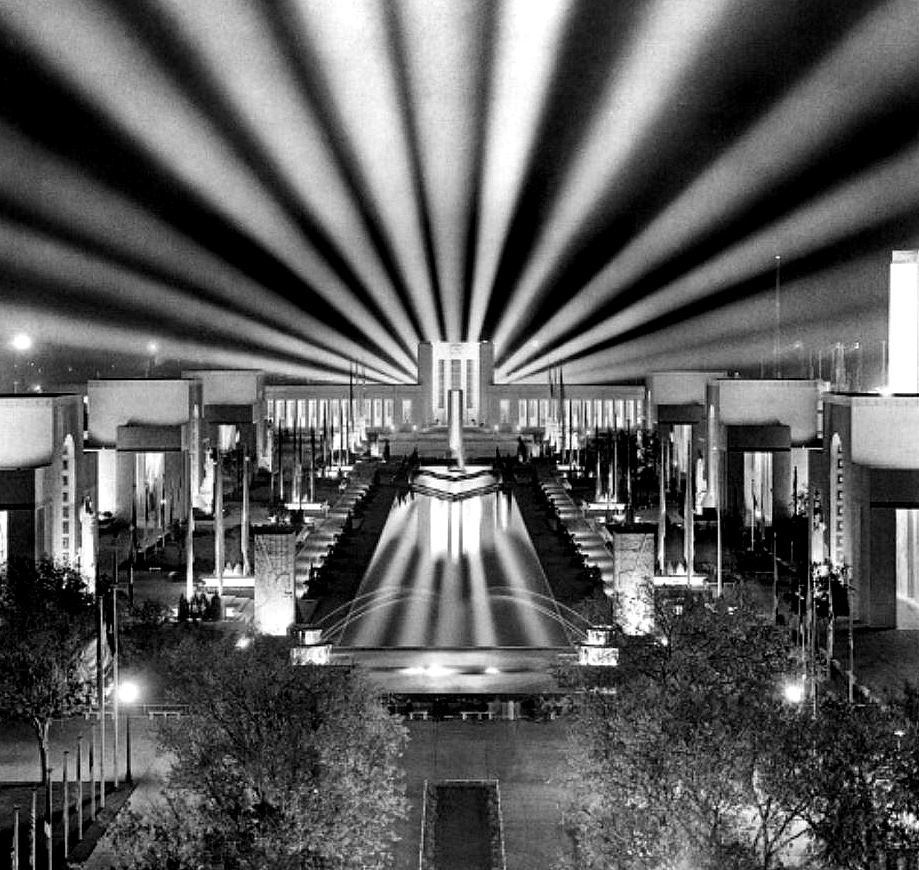
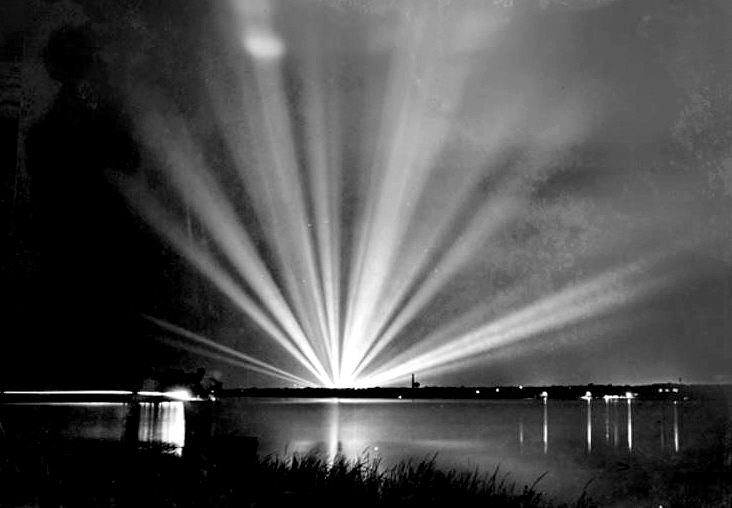
Positioned behind the Hall of State were 24 searchlights scaffolding into a crowned fan shape. “They all moved and were different colors,” says [Jim] Parsons [co-author of the book Fair Park Deco]. “It sounds gaudy, but people loved it.” The lights, he goes on to tell, were visible up to 20 miles away.

Considering most of the people who were visiting the fairgrounds were coming from rural farming communities with no electricity, the inspiring nature of those far-reaching beams makes a lot of sense. (Dallas Observer, Nov. 7, 2012)

Thanks for doing your part for Dallas history, Prof. Einstein!

pan-american-expo_esplanade_postcard

pan-american-expo_hall-of-state_postcard

pan-american-expo_patio-de-honor_ebay

Below, photos from the Texas Centennial, 1936. The multicolored lights could be seen from miles away — here’s what they looked like from downtown and from White Rock Lake.

centennial_pan-american_lights

skyline_downtown-to-fair-park_1936_GE-colln_museum-of-innovation-and-science

fair-park-lights_white-rock-lake

tx-centennial_night-scene_espalanade_hall-of-state_lights_ebay

tx-centennial_night_hall-of-state_lights_flickr_baylorvia Baylor University Flickr stream

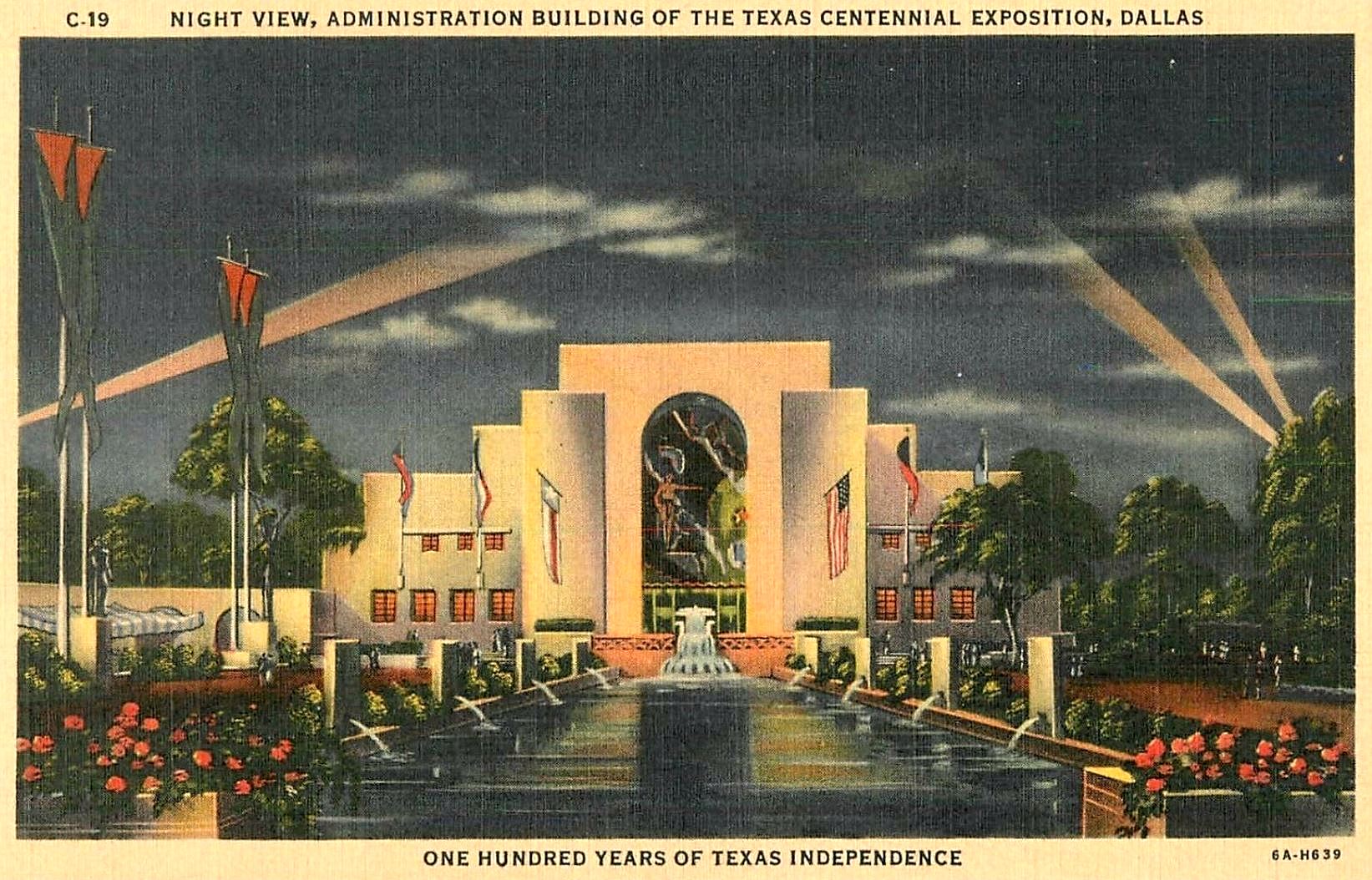
tx-centennial_night_administration-bldg_lights_ebay

*

A look behind the scenes: “The general lighting effect is a battery of twenty-four 36-inch searchlights as powerful as the giants that flash from the dreadnoughts of Uncle Sam’s navy. Each searchlight will produce 60 million candlepower. Combined, the battery has a total candlepower of 1.5 billion. A 350,000-watt power generator will produce this colossal quantity of ‘juice.’” And the accompanying photo of the searchlight battery crew manning the candlepower:

tx-centennial_lights_southwest-business-mag_june-1936_photoSouthwest Business, June 1936

**

(All pictures and clippings are larger when clicked.)

einstein_pan-am-expo_denison-press_060937
Denison Press, June 9, 1937

*

einstein_pan-am-expo_waxahachie-daily-light_061137
Waxahachie Daily Light, June 11, 1937

*

einstein_pan-am-expo_denison-press_061437
Denison Press, June 14, 1937

*

einstein_pan-am-expo_medford-oregon-mail-tribune_062337
Medford (Oregon) Mail Tribune, June 23, 1937

*

einstein_pan-am-expo_vernon-daily-record_062437
Vernon Daily Record, June 24, 1937

*

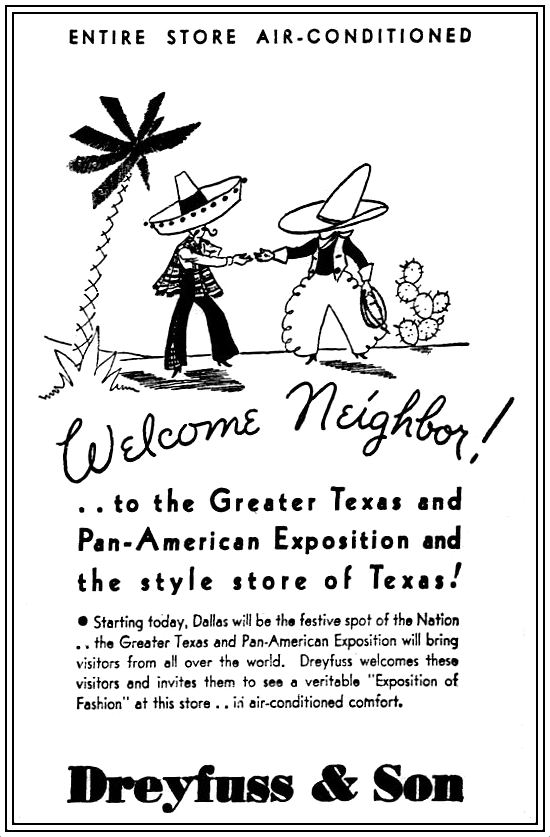
pan-american-expo_drefuss-ad_dmn_061237
1937

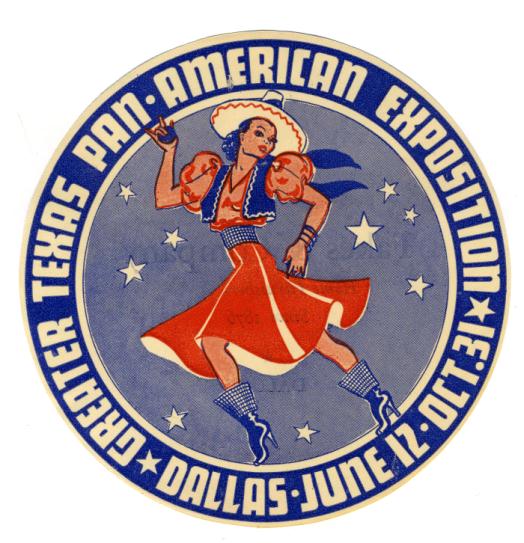
pan-american-expo_sticker_1937_cowgirl

***

Sources & Notes

Top photo from the old Corbis site.

Black-and-white photos from the Centennial seen from Fair Park and White Rock Lake are from the Texas/Dallas History and Archives Division of the Dallas Public Library; the photo of the lights seen from downtown Dallas (titled “New skyline at night from Dallas, Texas”) is from the GE Photo Collection, Museum of Innovation and Science (more info on that photo is here).

Sources of other images and clippings cited, if known.

More on the Pan-American Exposition from Wikipedia, here, and from the fantastic Watermelon Kid site of all-things-Fair-Park, here.

*

Copyright © 2016 Paula Bosse. All Rights Reserved.
“Dallas Midway, Night Illumination” — 1936

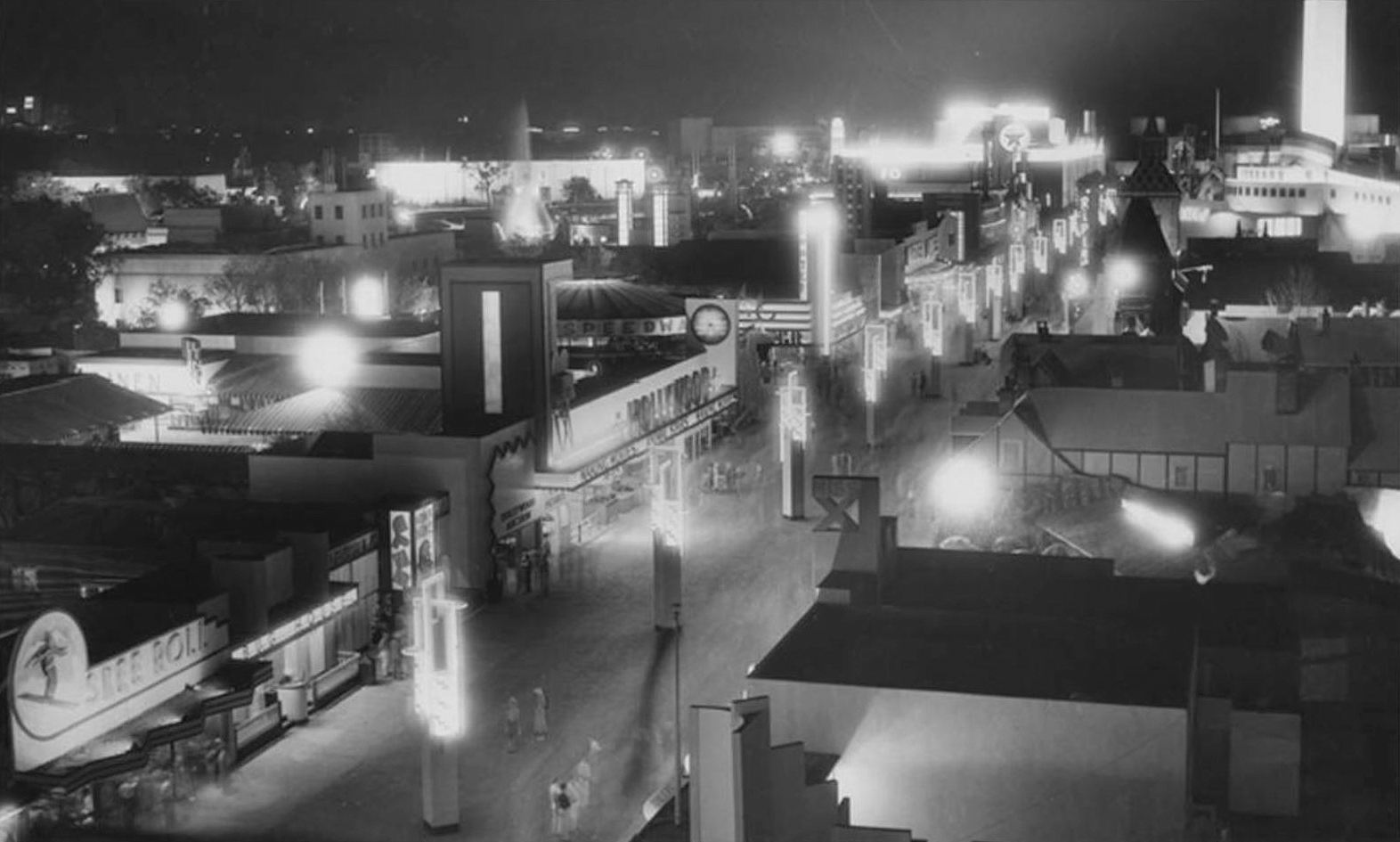
tx-centennial_midway_night_cook-coll_smuAll calm in Fair Park along the Centennial Midway (click for larger image)

by Paula Bosse

Above, a nighttime shot of an almost empty Midway during the Texas Centennial. All this scene needs in order to boost the moody atmosphere is a little fog. Go a little further and add some zither music, Joseph Cotten, and Orson Welles running past the Texaco Building and you’d have a pretty cool setting for a Texas version of The Third Man.

***

Photo titled “Dallas Midway, Night Illumination, Centennial Exposition, State Fair of Texas” (taken by an unknown photographer on Oct. 16, 1936) is from the George W. Cook Dallas/Texas Image Collection, DeGolyer Library, Central University Libraries, Southern Methodist University; more info here.

*

Copyright © 2016 Paula Bosse. All Rights Reserved.
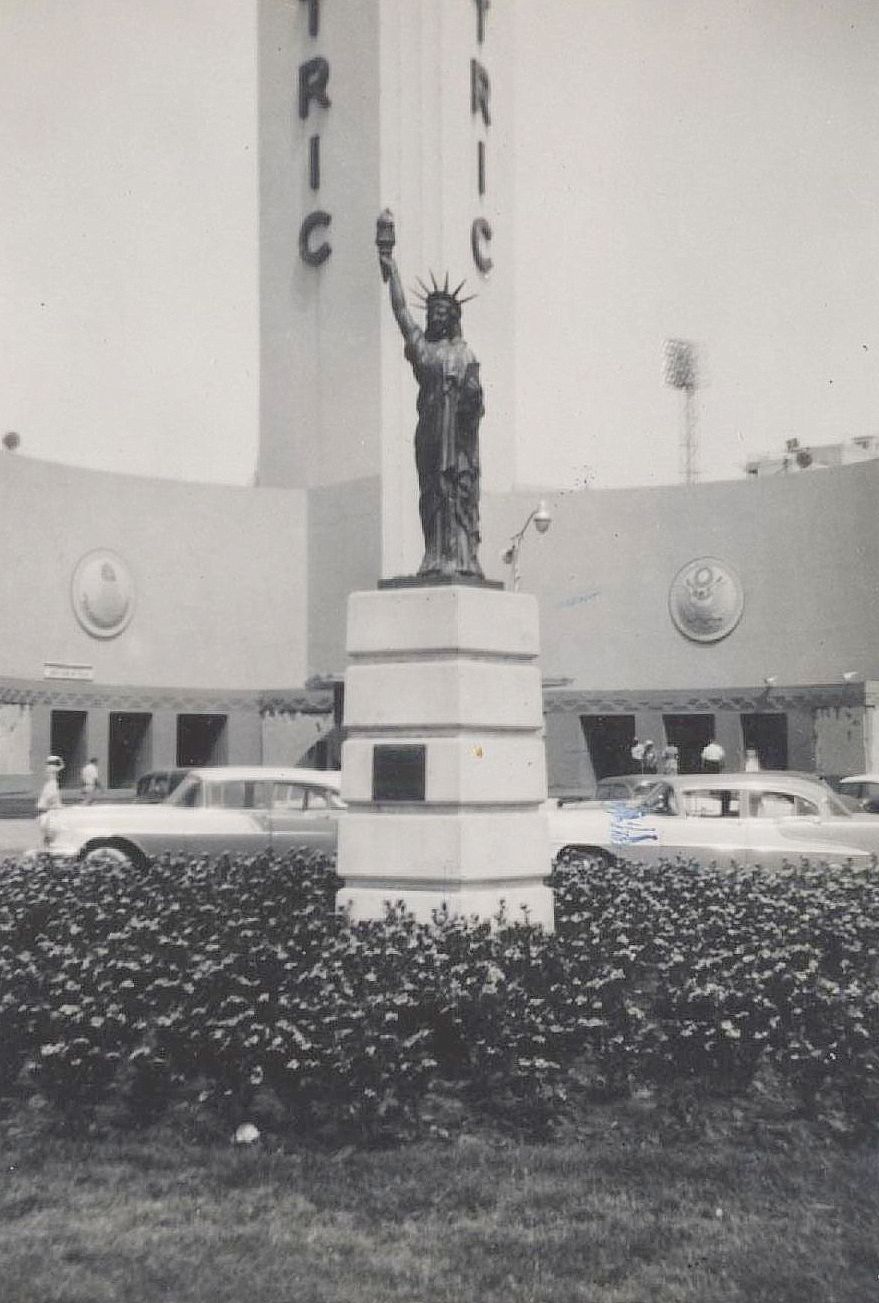
Fair Park’s Statue of Liberty

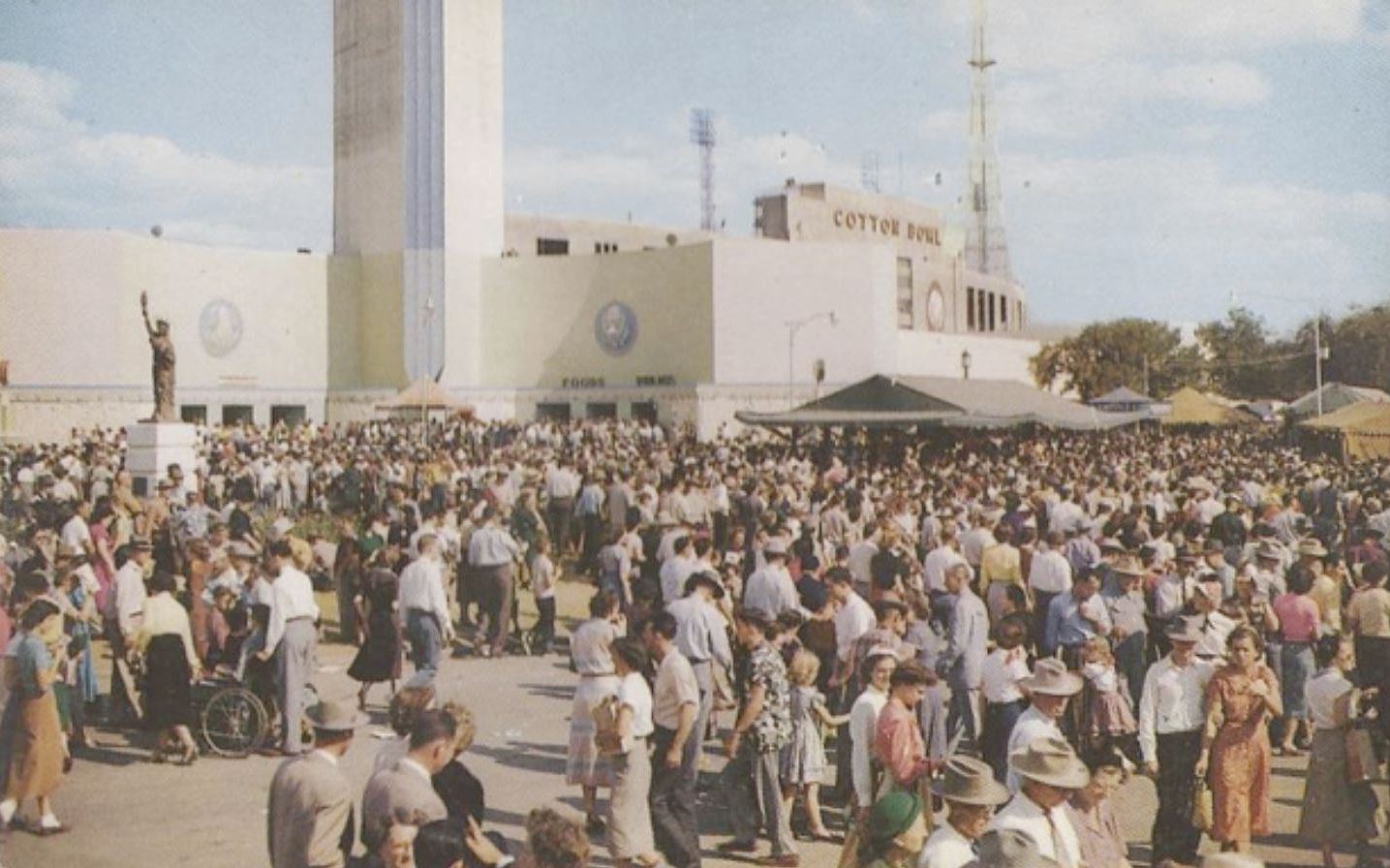
statue-of-liberty_fair-park_flickr_colteraGetting a bit lost in the crowd…

by Paula Bosse

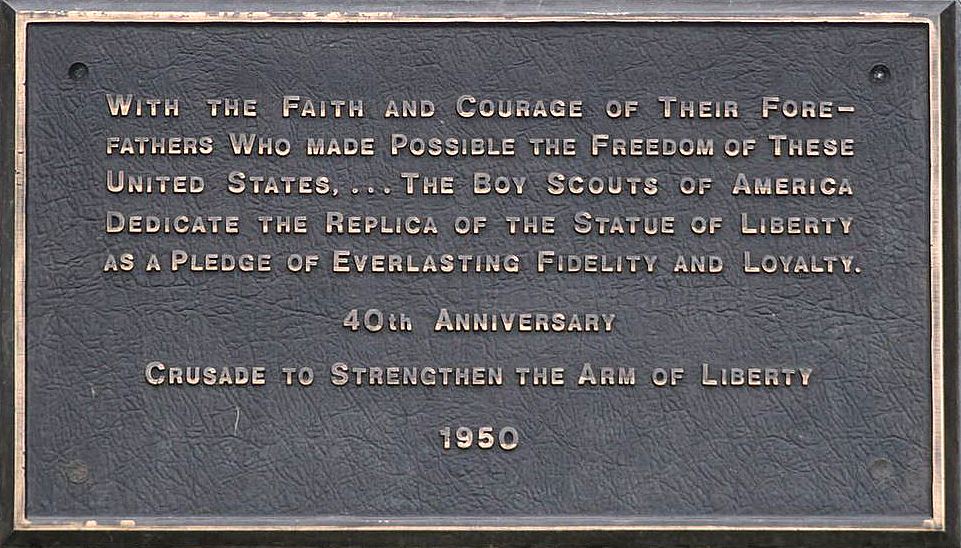
Somehow I missed the fact that October 28th was the 130th anniversary of the dedication of the Statue of Liberty in New York Harbor. And somehow I also forgot that there is a replica of the Statue of Liberty here in Dallas, at Fair Park. It was a gift from the State Fair of Texas to the Boy Scouts and the people of Texas and was dedicated by the Boy Scouts of Circle Ten Council on July 4, 1950. (These miniature replicas of the Statue of Liberty were placed all over the United States in 1950 to commemorate the 40th anniversary of the Boy Scouts of America.)

Below, the plaque at the base of the statue which stands near the Hall of State in Fair Park. (Click pictures to see larger images.)

statue-of-liberty_fair-park_plaque_flickr_aringo

Were they sentient, I’m sure Lady Liberty’s numerous miniature offspring would join me in sending belated birthday greetings to their full-size non-replica progenitor.

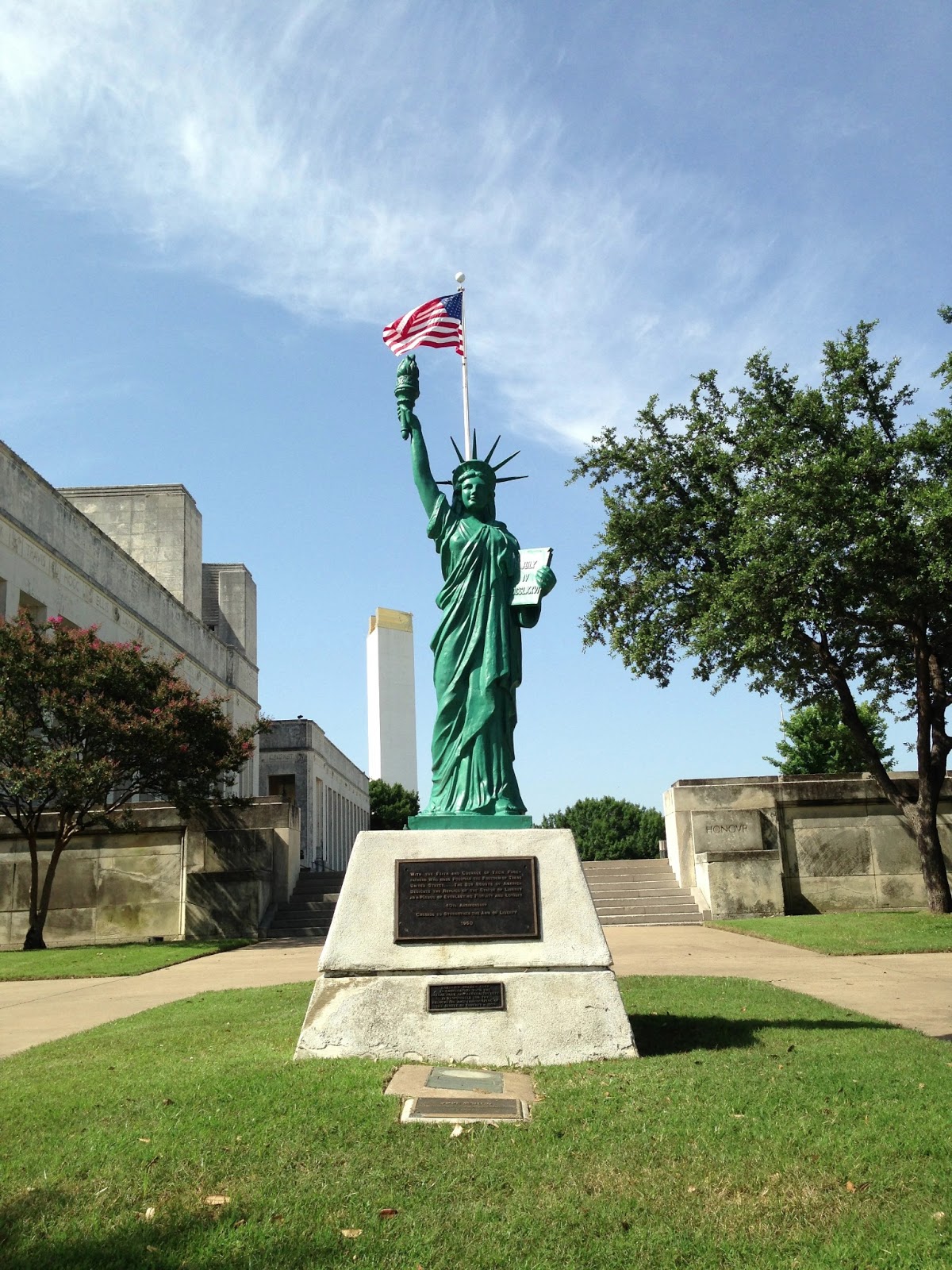
statue-of-liberty_fair-park_roaming-itinerant-blog
Photo: Adam Cruz/Roaming Itinerant

Here’s another view of Mini Lady Liberty welcoming the huddled masses to the State Fair of Texas in 1956:

fair-park_statue-of-liberty_ebay_stamped-1956

***

Sources & Notes

Photo of the Statue of Liberty replica amidst the crowd outside the Cotton Bowl is from Flickr user Coltera, here.

Photo of the plaque is from Flickr user Aringo, here.

Photo of the replica with the Hall of State in the background is by Adam Cruz, from his blog, The Roaming Itinerant.

1956 photo is from eBay.

A list of the Statue of Liberty replicas in Texas is here.

Perhaps we should send NYC a replica of Big Tex to keep Lady Liberty company. (The Statue of Liberty is kind of like a New York version of Big Tex, right?)

*

Copyright © 2016 Paula Bosse. All Rights Reserved.
Three Flags Over Texas at the Entrance to Fair Park — 1936

tx-centennial_flags_entrance_nyplMexico, France, and Texas welcome visitors…

by Paula Bosse

Another State Fair of Texas is winding down. Here’s what the entrance to Fair Park looked like when the Texas Centennial opened in June 1936. This Associated Press photo was accompanied by the following caption when it ran in newspapers:

FLAGS  WAVE  AT  TEXAS  CENTENNIAL
Dallas, June 6 — Three of six flags which have flown over the Lone Star State, waved over the main entrance to the Texas Centennial celebration at its opening here today. Buildings throughout the grounds of the exposition are ultra modern in design.

This view — taken at about Parry and Exposition — hasn’t changed all that much. See it on Google Street View here.

***

Sources & Notes

Associated Press photo from the New York Public Library’s digital collections, here.

*

Copyright © 2016 Paula Bosse. All Rights Reserved.
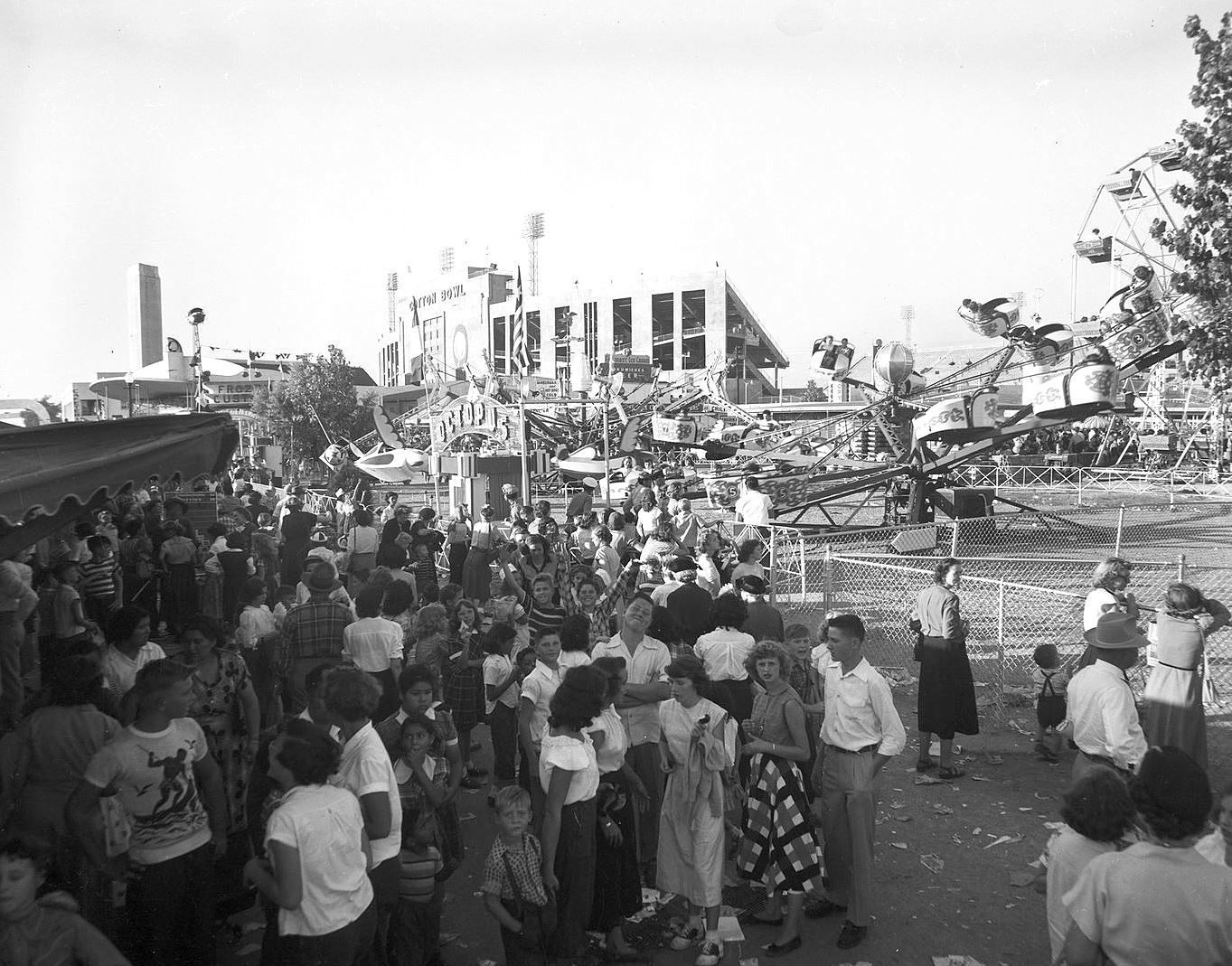
Zooming In on the State Fair: The Midway, the Cotton Bowl, and the Octopus — ca. 1950

state-fair_midway-cotton-bowl_squire-haskins_ca_1950_utaAnother visit to the fair… (click for larger image)

by Paula Bosse

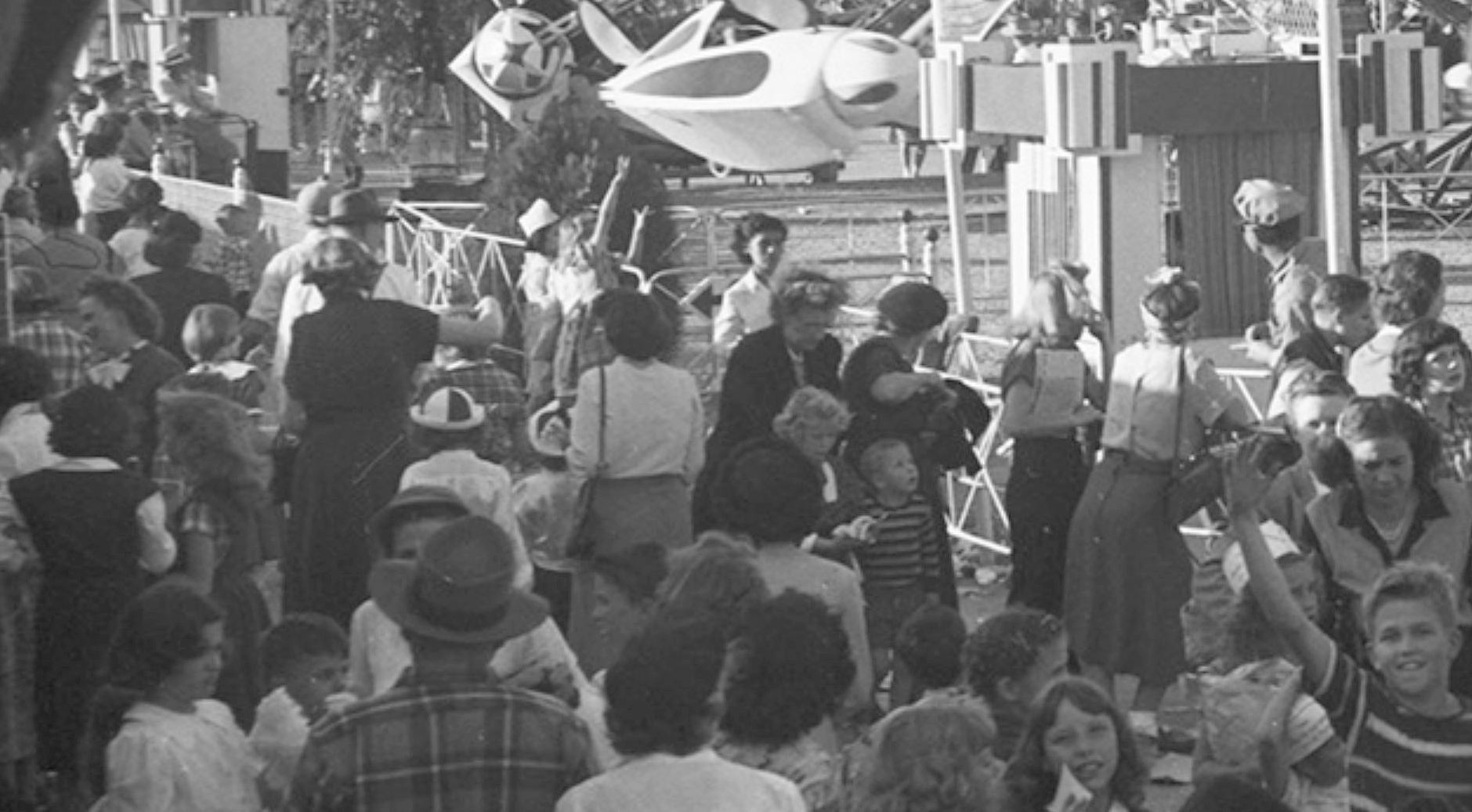
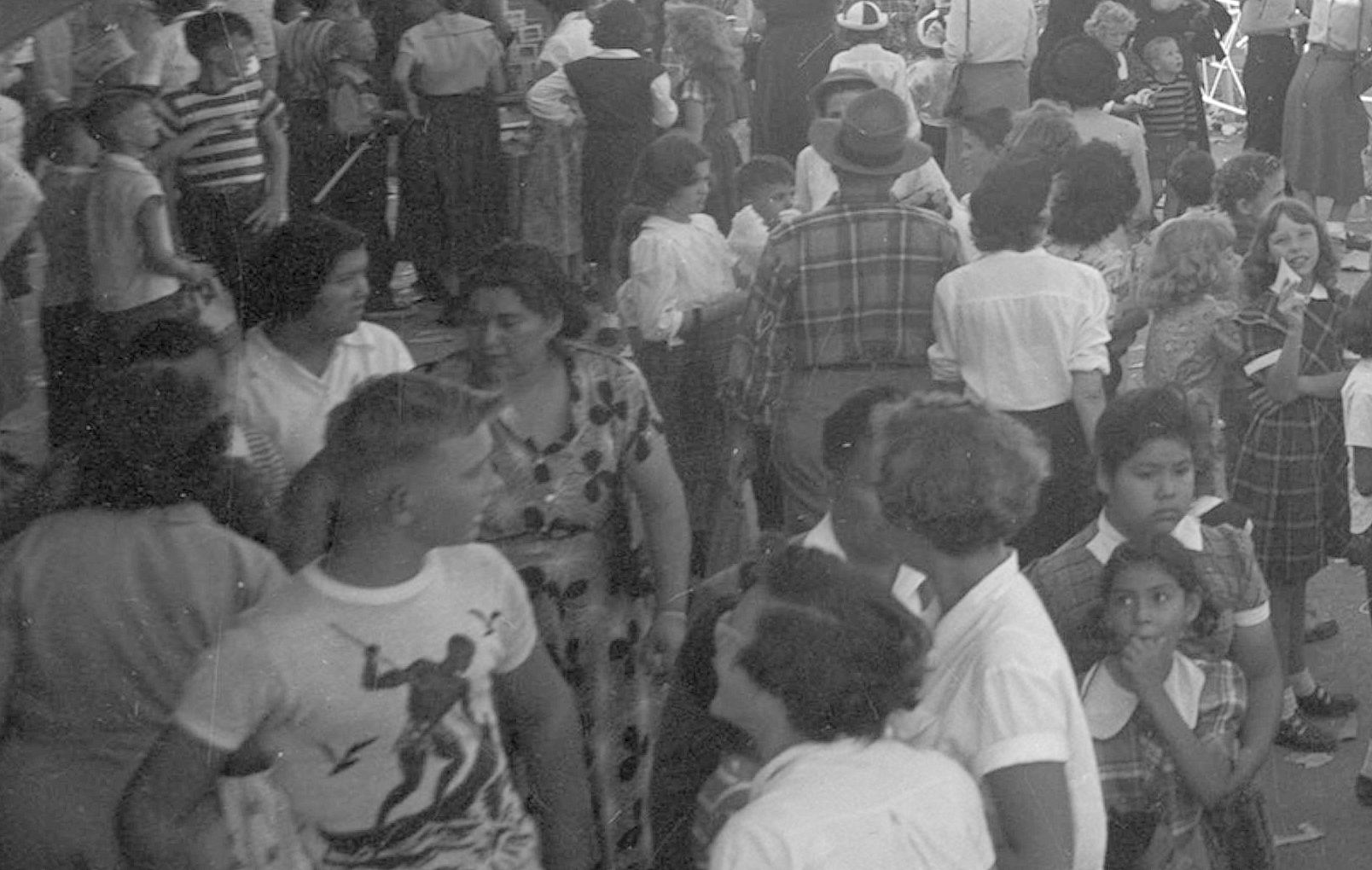
When I see old photos of the State Fair, I always look at the people. Let’s take a closer look at this great photo by Squire Haskins, taken around 1950. (See a BIG scan of this photo at the UTA website, here.)

Here are a few magnified details from Haskins’ photo (all are much larger when clicked):

midway-zoom_1

midway-zoom_2

midway-zoom_3

midway-zoom_5

midway-zoom-4

midway-zoom_6

***

Top photo by Squire Haskins, from the Squire Haskins Photography, Inc. Collection, Special Collections, University of Texas at Arlington Libraries; more information can be accessed here. (Other photos from this collection which were taken around the State Fair Midway at about this time were taken in October, 1950 — this one is not dated, but it seems likely it was taken at the same time.)

See other photos I’ve zoomed in on here.

Click pictures for larger images!

*

Copyright © 2016 Paula Bosse. All Rights Reserved.

NOW HEAR THIS: THE BELL TELEPHONE “LOUD SPEAKER” IS AT THE FAIR! — 1921

telephone_sw-bell_dmn_100821_photoYou might want to step back a few thousand feet… (click for larger image)

by Paula Bosse

When was the last time you wondered about the history of the public address system? If you’re like me, the answer to that is probably “never.”

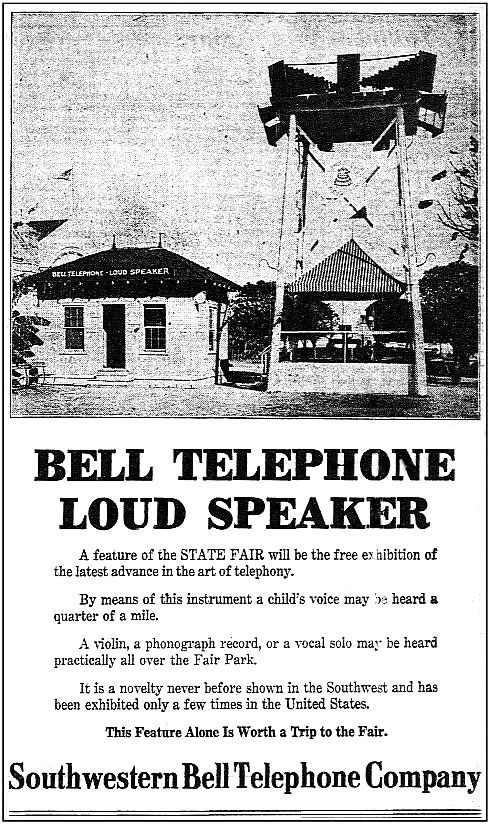
The photo above shows the new technical innovation from the army of Bell Systems engineers that was going to be demonstrated at the 1921 State Fair of Texas: the “Loud Speaker.” The ad (always click images and clippings for larger images):

telephone_sw-bell_dmn_100821
Dallas Morning News, Oct. 8, 1921

*

BELL TELEPHONE LOUD SPEAKER
A feature of the STATE FAIR will be the free exhibition of the latest advance in the art of telephony.
By means of this instrument a child’s voice may be heard a quarter of a mile.
A violin, a phonograph record, or a vocal solo may be heard practically all over the Fair Park.
It is a novelty never before shown in the Southwest and has been exhibited only a few times in the United States.
This Feature Alone Is Worth a Trip to the Fair.
Southwestern Bell Telephone Company

*

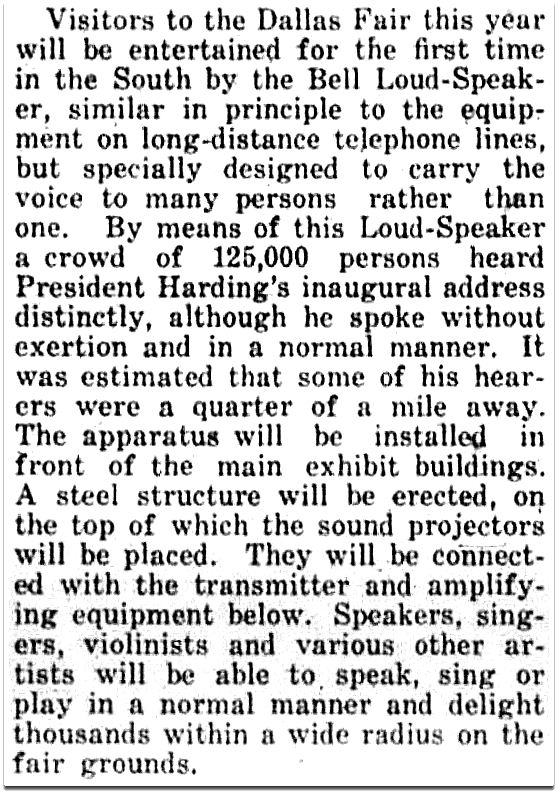
My technical expertise is pretty much non-existent, but, basically, this was the introduction of the public address system as developed by Bell Telephone, using their cutting-edge transmitters and amplifying equipment (the articles below contain more information).

An earlier version of this particular set-up had debuted the previous year at the Republican National Convention in Chicago. (Imagine attending a large, noisy political convention with speakers whose voices weren’t amplified.) It had also been used for President Harding’s inauguration speech at the beginning of 1921, a first.

state-fair_loud-speaker_coleman-tx-democrat-voice_100721Coleman Democrat Voice, Oct. 7, 1921

This was before the days of mainstream radio — Dallas’ first commercial broadcasting station, WFAA, didn’t go on the air until June, 1922. The loudspeaker system used at the fair in 1921 allowed entertainment acts and World Series play-by-play to be played loudly overhead, for most of the fairgoers to hear (which sounds a little annoying to me, but it was newfangled novelty and people were quite taken with it).

state-fair_loud-speaker_dmn_101121
DMN, Oct. 11, 1921

state-fair_loud-speaker_dmn_101221
DMN, Oct. 12, 1921

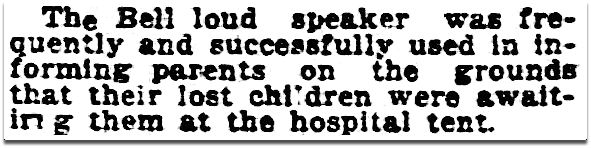
It also came in handy to make announcements and to page parents of lost children.

state-fair_loud-speaker_dmn_101521
DMN, Oct. 15, 1921

The amplification at public events was enthusiastically received and much appreciated, but the real end Bell was working toward was the ability to transmit and broadcast live events happening long distances away (and also to transmit recorded music without any substantial loss of sonic quality — radio, here we come!).

state-fair_loud-speaker_dmn_101621bDMN, Oct. 16, 1921

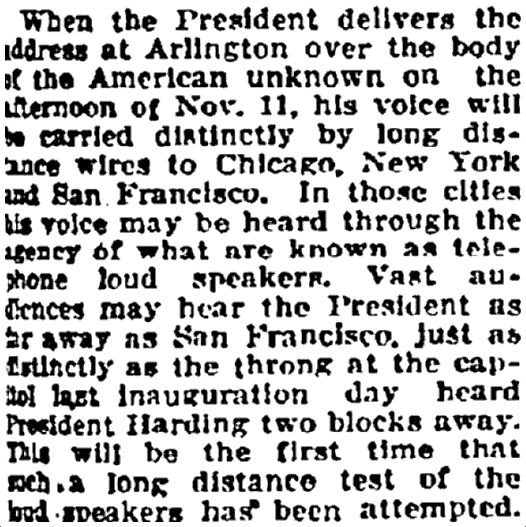
In fact, the equipment exhibited at the fair was the same equipment used less than a month later when President Harding presented his Armistice Day address to the nation. Not only was his voice amplified to the large crowd listening to him at Arlington National Cemetery, it was also transmitted and then broadcast through “loud speakers” to crowds in New York and San Francisco — another first.

state-fair_loud-speaker_harding_tulsa-daily-world_121121
Tulsa Daily World, Dec. 11, 1921

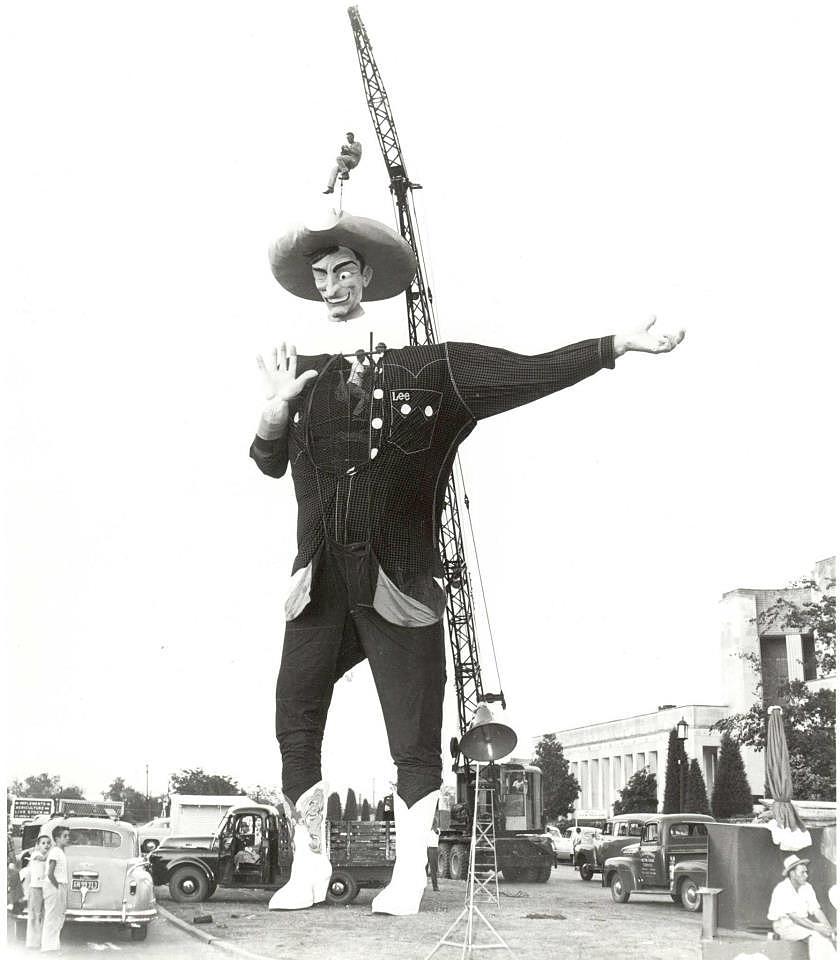
And Texas got to experience this new technology earlier than most others in the country. Little did those Bell engineers realize in 1921 that 30-some-odd years later the booming voice of a gigantic cowboy could be heard greeting visitors all over Fair Park.

**

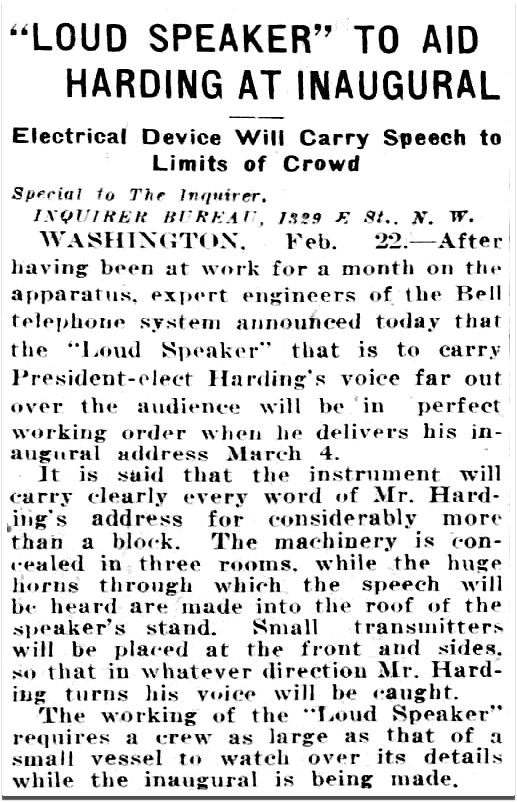
A few clippings about the vaunted “loud speaker” before it made its way to the State Fair:

harding_loud-speaker_philadelphia-inquirer_022321
Philadelphia Inquirer, Feb. 23, 1921

harding_loud-speaker_winnipeg-tribune_030821
Winnipeg Tribune, March 8, 1921

harding_loud-speaker_dmn_100521_wire
DMN (from wire reports), Oct. 5, 1921

And an article on the exciting prospects of what lay ahead:

loud-speaker_tulsa-daily-world_121121
Tulsa Daily World, Dec. 11, 1921

***

Sources of clippings as noted.

Click for larger images!

*

Copyright © 2016 Paula Bosse. All Rights Reserved.
The State Fair of Texas: “A Son-of-a-Gun in ’51” — 1951

state-fair-poster_1951_pinterest

by Paula Bosse

In honor of opening day of the 2016 State Fair of Texas, a poster from the 1951 fair. Proto-Big Tex imagery was being used well before the giant cowboy’s debut the following year (see, that hand thing is going on even back then…).

Welcome back, SFOT!

***

Poster found on Pinterest.

*

Copyright © 2016 Paula Bosse. All Rights Reserved.
Big Tex’s Hands

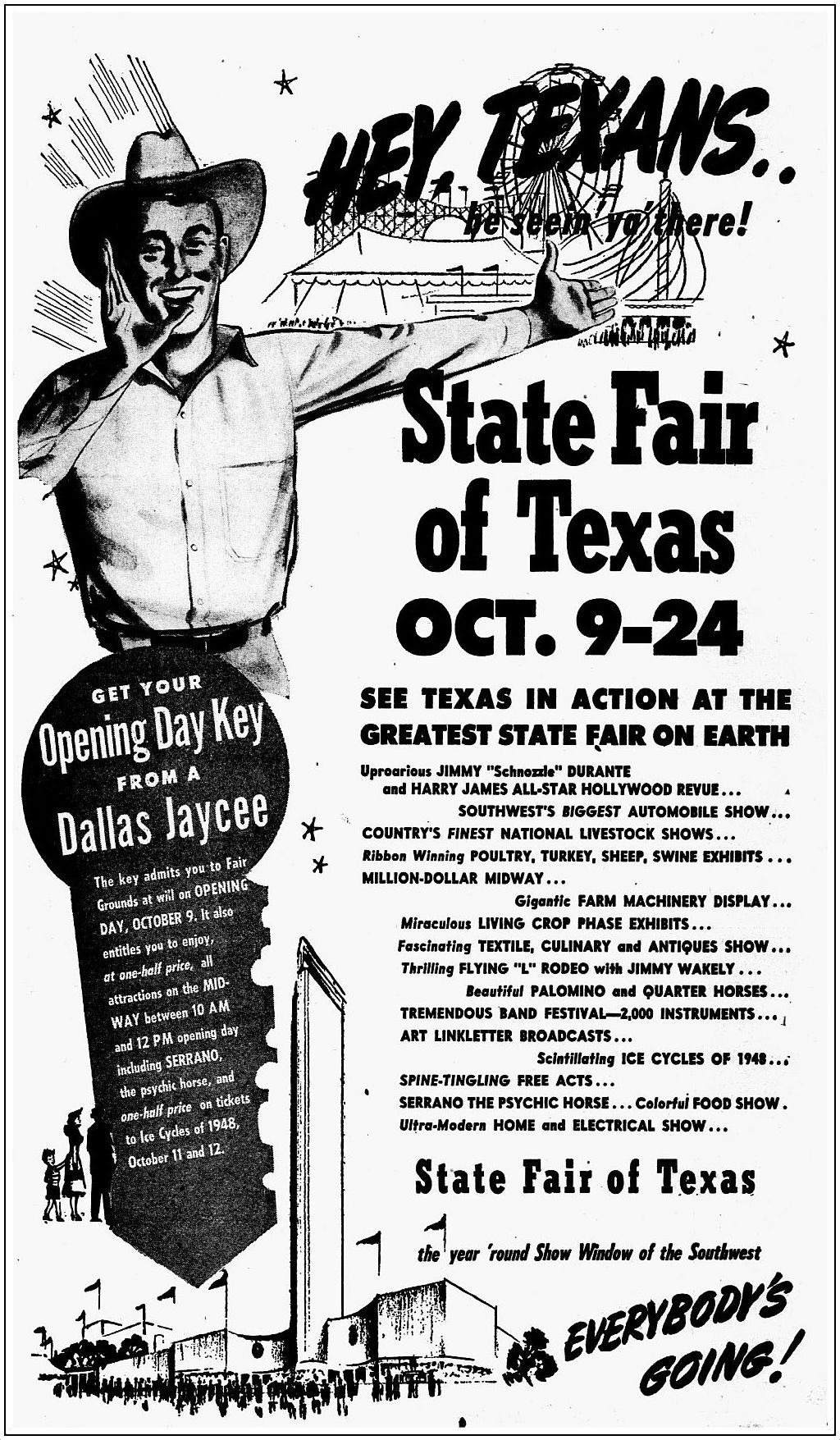
big-tex_dmn_091248_det1948 State Fair ad: “Hey, Texans!”

by Paula Bosse

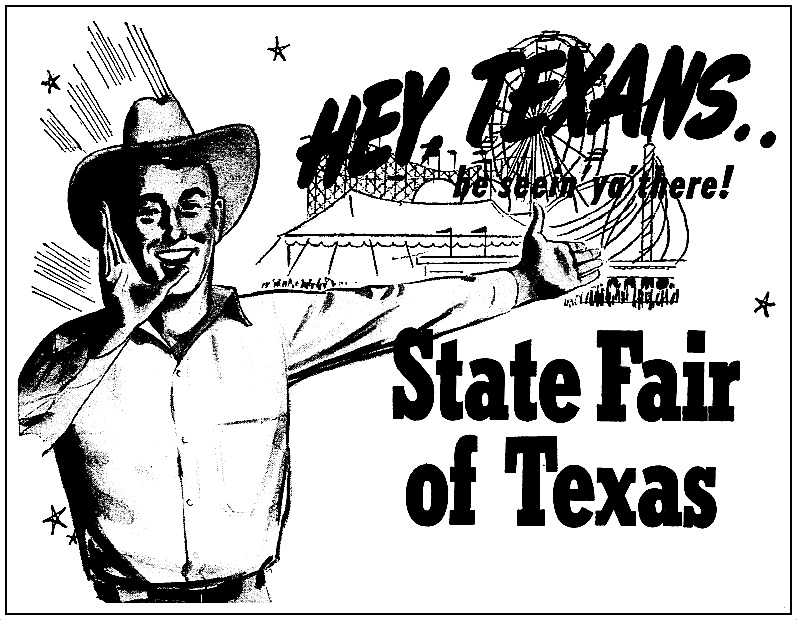
I stumbled across a State Fair of Texas ad a couple of days ago — a detail of which is above — and it made me wonder if it contained the precursor to our beloved Big Tex (whose annual hoisting-up occurred today). The ad is from 1948, four years before Big Tex’s debut at the 1952 State Fair. When I saw it I was immediately reminded of Big Tex and exclaimed to myself, “THAT’S what he should have been doing with his hands!”

I’ve always wondered exactly what Big Tex is supposed to be doing with his hands. It’s a sort of vague “welcoming” gesture, I guess, but I can remember when I had to draw Big Tex in school that I was confused by that right hand. Was he waving? Was it an Indian “How!” greeting sign? It didn’t really look like either of those, and it really irked me (I was an easily-irked child). And, actually, it has continued to bother me all these years! (I am an easily-irked adult.)

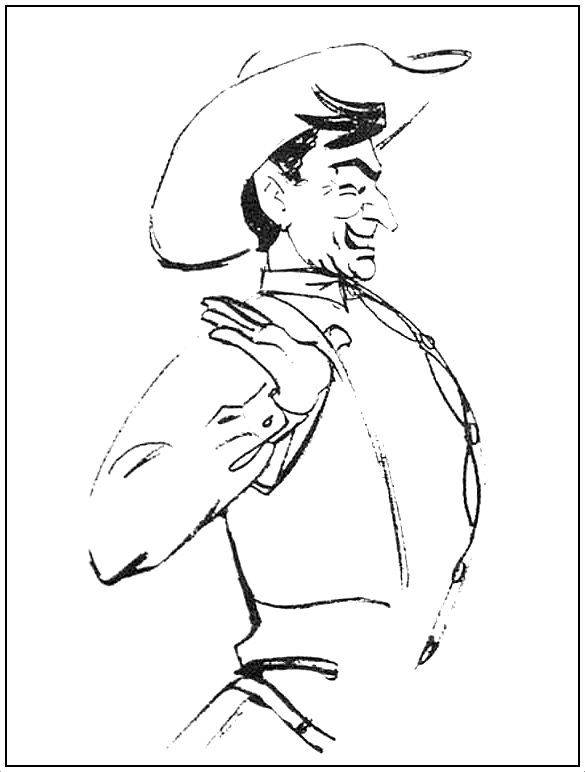
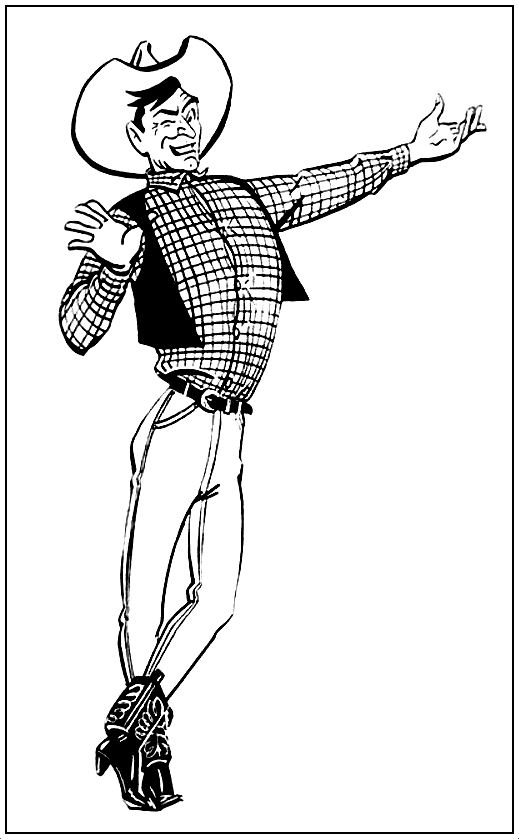
From early sketches, it seems that the right hand was intended to have the thumb hooked through a vest. Jack Bridges, Big Tex’s creator, wanted Tex to symbolize the larger-than-life Texan who wasn’t above indulging in good-humored bragging and tall-tale-telling, and that personality comes through in the sketch and the Big Tex illustration used in the 1952 ads, below.

big-tex-drawing_legend-of-big-tex

big-tex-ink_legend-of-big-tex
via The Legend of Big Tex

By the time Tex debuted, however, the vest seemed to have been discarded (as best I can tell from old photos), but the position of the right hand remained in that weird position (probably just to torment me as a child having to draw him in school).

big-tex_1952_installation_kera
A hovering, winking head, via KERA

Speaking of that very first version of Big Tex, in 1952 he had one eye shut, in the middle of a wink. He also had a long nose and wore a huge hat referred to in newspaper articles as a “sombrero.” In a 1983 interview, Jack Bridges said that in later years SFOT officials “made us open his eyes to make a ‘pretty boy’ outta him.” The wink was gone, the brim of the hat was made smaller, and his ears were moved forward. Even though Tex began to “talk” the next year, Bridges said, “I liked him better myself like he was — rugged and more or less caricature.”

The drawing of the man in the ad at the top probably has nothing to do with Big Tex, but dang if it ain’t pretty close! And the position of both hands makes sense! 

Here’s the full 1948 ad from the top:

big-tex_dmn_091248
1948

***

Sources & Notes

You can listen to a short (13-minute) interview done with Jack Bridges in 1983 as part of a Dallas Public Library oral history project, here. One of my favorite tidbits is Bridges remembering that vandals once painted a “big brown moustache” on the resting, disembodied head of Tex one year. He said that the head and the hat were kept in the Centennial Building when the fair wasn’t in progress, and the rest of Tex was kept in storage in various places around Fair Park. He said it was like making sure the president and vice-president never traveled together — if something happened to part of Big Tex, at least the whole of Big Tex wasn’t affected. (91-year-old Jack Bridges died in 2001; thankfully he didn’t have to witness the fiery … “incident” … of 2012.)

*

Copyright © 2016 Paula Bosse. All Rights Reserved.
Dallas’ Texas Centennial Exposition vs. Fort Worth’s Frontier Exposition — 1936

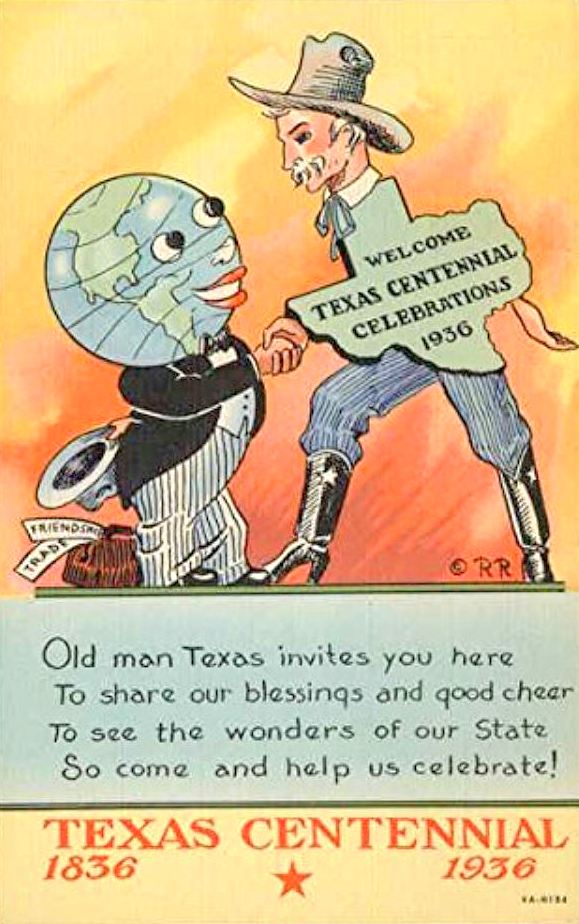
tx-centennial-postcard_old-man-texas_smWelcome to Dallas (and/or Fort Worth)!

by Paula Bosse

The Texas Centennial Exposition opened in Dallas at Fair Park in June, 1936 — 80 years ago this week. It was described in newsreels as “A New City, A Great City, A City of a Thousand Sights and a Thousand Wonders.” Which I guess it kind of was. I’ve written about the Centennial before, but I don’t think I’ve mentioned that my favorite part of the Centennial’s taking place in Dallas is that it seriously rubbed “Mr. Fort Worth,” Amon Carter, the wrong way. Carter’s distaste of Dallas was well-known, so it was no surprise, really, that this caused him to blow his top and, damn it, he created his OWN competing celebration: the Fort Worth Frontier Centennial Exposition. The Dallas-Fort Worth rivalry had already been going strong for years, but the Centennial pushed it into Hatfield-and-McCoy feud territory (although one gets the feeling that most of it was an act that generated a lot of great publicity for both sides).

Watch film footage of ol’ Amon’s blood pressure spike into the danger zone here, in a moment from a March of Time newsreel as he proclaims that Fort Worth will teach “those dudes over there” (in Dallas) a thing or two by outdoing Big D in sheer gigantic spectacle. …And sex. Or, “whoopee.” Nudity was on display absolutely everywhere at both Centennial expositions. Dallas had always planned on having the titillation before Amon Carter got into the act, but the involvement of Billy Rose on the Fort Worth side probably encouraged Dallas to, um … augment the fleshy offerings on display in Fair Park.

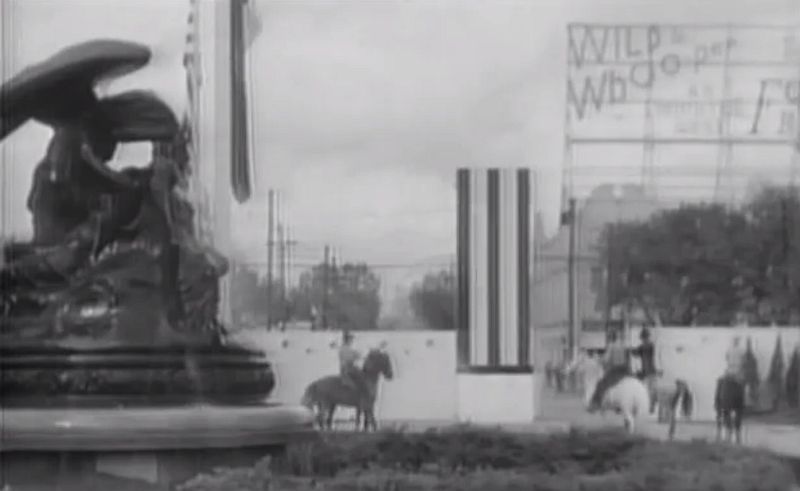
Broadway impresario Billy Rose was hired by Amon Carter to sex-up the Fort Worth expo and to do everything he could to draw more visitors to Fort Worth than to Dallas. Rose went so far as to have a HUGE electric sign (supposedly the second largest electric sign in the world) placed on top of a building on Parry directly opposite the entrance to Fair Park which read:

“Fort Worth Frontier — Wild & Whoo-pee — 45 Minutes West.”

Which is pretty hilarious. (Same view today?)

tx-centennial_FW-sign_billy-rose-presents_book_1936

(See a giant image of this photo in the UTA digital collection, here.)

I’m not sure whether the Dallas Centennial organizers were miffed or amused, but one can only imagine that Amon Carter was thrilled to bits when he saw his sign appear (fleetingly) in the Gene Autry movie The Big Show which had been shot in Fair Park during the Centennial.

billy-rose-billboard_big-show-movie_gene-autry

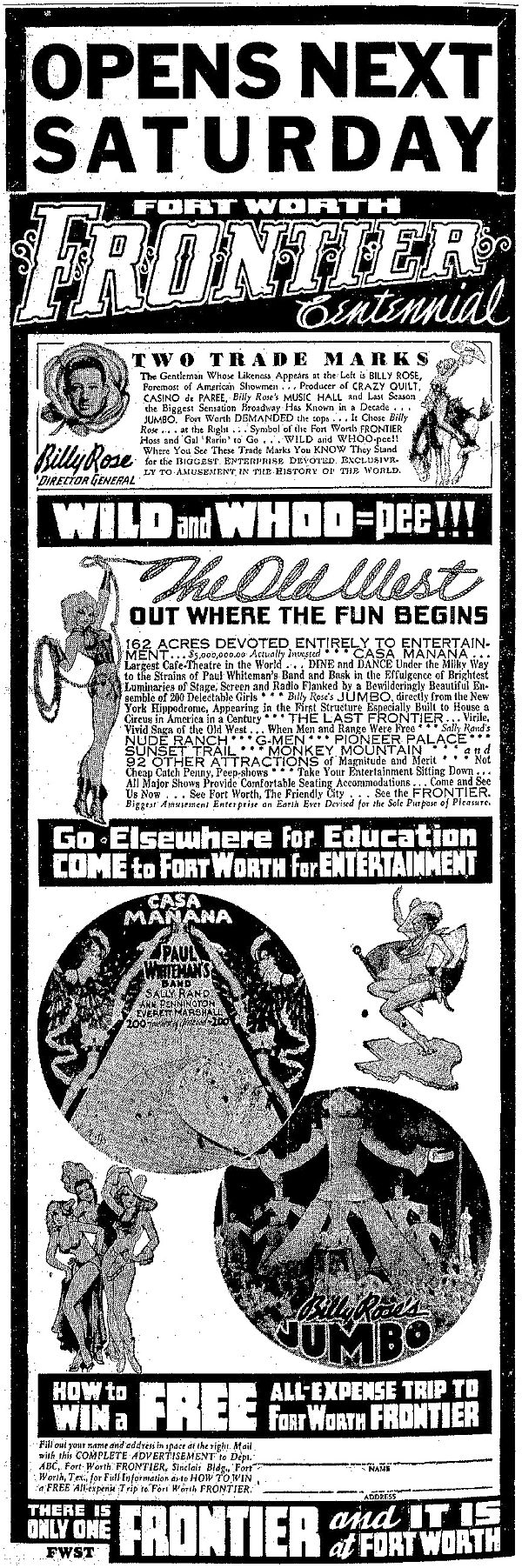
Fort Worth was all about the “whoo-pee,” and the tag-line to their show was “Come to Fort Worth for Entertainment, Go Elsewhere for Education.”

frontier_FWST_071436-detFort Worth Star-Telegram, July 14, 1936

The “feud” (i.e. the publicity machine) really cranked up when the producers of the March of Time newsreel sent their people to film in Dallas and Fort Worth. The result — a splashy look at the inter-city rivalry titled “Battle of a Centennial” — was shown in DFW-area theaters, and boisterous audiences either applauded for Dallas and hissed at Fort Worth (or vice-versa), depending on their allegiance.  (Click ad below for larger image.)

march-of-time_dmn_061736
June, 1936

In the end, the celebrations in both Dallas and Fort Worth were successful (although Dallas was the clear winner!), but the rivalry and competitive showmanship from the two cities probably made the shows much more entertaining than they might otherwise have been. So, thanks, Amon!

frontier_pinterest
via Pinterest

frontier_dmn_073036
July, 1936

frontier-centennial_FWST_071236
July, 1936

tx-centennial_variety-via-decatur-illinois-herald_060336
Variety article reprinted in Decatur (Illinois) Herald, June 3, 1936

billy-rose_casa-manana
via oldimprints.com

 ***

Sources & Notes

Source of postcard at top unknown.

Photo of the “whoo-pee” billboard is from the book Billy Rose Presents … Casa Mañana (Fort Worth: TCU Press, 1999) by Jan Jones. Jones writes that the billboard was on top of the building at Parry and First.

The shot of the billboard hovering over cowboys is a screengrab from the interesting-but-dull Gene Autry movie, The Big Show, shot mostly on the grounds of Fair Park during the Centennial. You can watch the full movie here.

The clip of Amon Carter shaking his fist at “those dudes” in Dallas is from the 1936 March of Times newsreel, “Battle of a Centennial.” I have been unable to find the entire film streaming online, but you can watch a whole bunch of clips (about 13) from Getty Images, here. The full thing appears to be available for purchase here, but only if you are affiliated with a school or institution. (If anyone has access to the full newsreel, let me know!)

Watch a different newsreel/film on the Centennial Exposition — the 11-minute Texas Centennial Highlights, shot and produced by Dallas’ Jamieson Film Co. — at the Texas Archive of the Moving Image site, here.

For more on Fort Worth’s horning-in-on Dallas’ Centennial, read the entertaining article “Makin’ Whoopee — Amon Carter Couldn’t Make Either the Depression or Dallas Go Away, But He Sure Tried” by Jerry Flemmons (D Magazine, April, 1978), here.

Unfortunately, I’m unable to embed the video I linked to above of Amon Carter sputtering about Dallas hosting the state’s Centennial, but I encourage everyone who’s ever been amused by the Dallas-Fort Worth “feud” to watch it here — it’s well worth 17 seconds of your time! As John Rosenfield wrote in the Dallas Morning News review of this March of Time newsreel, “The best actor from across the river is Amon Carter, long a leading man among Texas political Thespians” (DMN, “Centennial Fight in ‘Time’ Release,” June 21, 1936). Newspaperman Carter knew how to parlay outrageous remarks about exaggerated competition into sweet, sweet publicity for himself and his newspaper. Check out the photo of a smiling Carter with his arm around “bitter rival,” G. B. Dealey of The Dallas Morning News, here. Amon knew a thing or two about a thing or two….

Pictures and clippings are larger when clicked.
*

Copyright © 2016 Paula Bosse. All Rights Reserved.