Flashback : Dallas

A Miscellany: History, Ads, Pop Culture

Katy Comin’ ‘Round the Bend — 1908

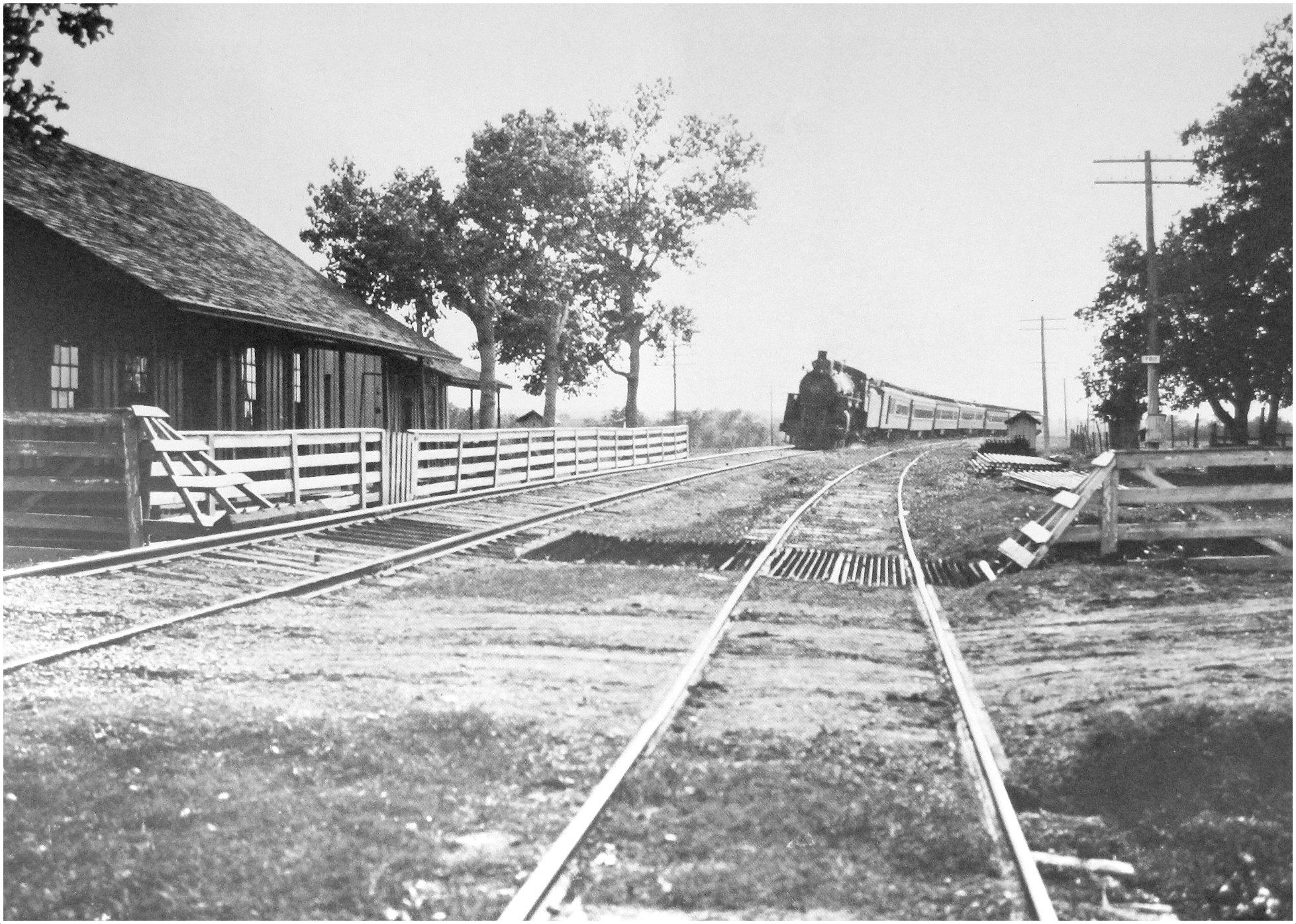
katy-train_mockingbird-greenville_c1908M-K-T approaching…

by Paula Bosse

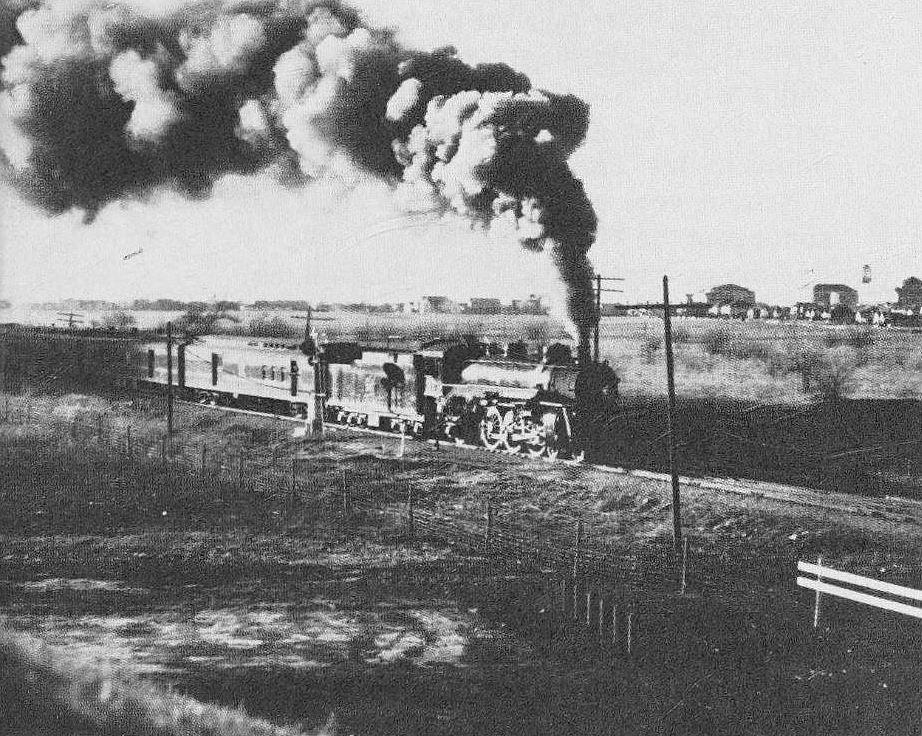
I love this photo — taken not far from where I grew up — showing an MKT train waaaaaaaaaaaaaaay out in the country. A. C. Greene’s caption, from his book Dallas, The Deciding Years:

The Katy approaches Dallas. This spot would be near Mockingbird Lane and Greenville today. It was taken about 1908.

*

Here’s another photo, circa 1940s — SMU buildings can be seen in the distance.

smu_katy-train_park-cities-walkers-gd_diane-galloway_photo

And the caption to this photo, from the book The Park Cities: A Walker’s Guide and History by Diane Galloway and Kathy Matthews:

SMU as it was in the early forties can be seen in the distance as the Missouri-Kansas-Texas #379 Train No. 2 “Texas Special” speeds by northbound, approaching Greenville Avenue overpass. This particular day the train has a “pusher” because it was over ten cars long.

*

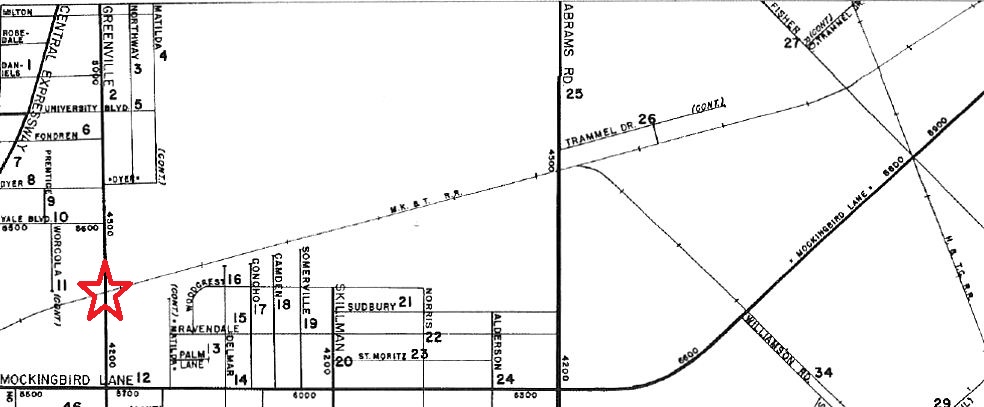
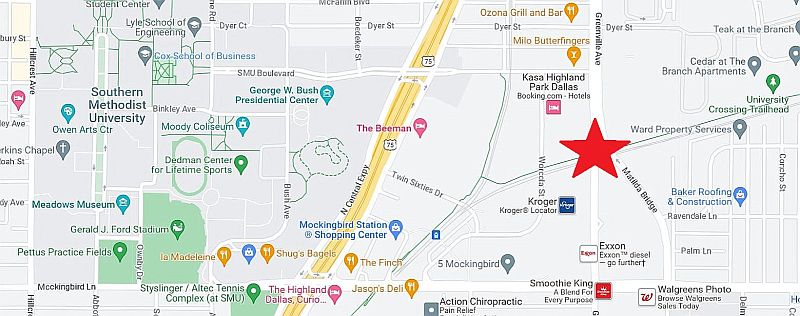
Below, a couple of helpful maps showing the general area (click to see larger images).

katy_greenville_mapsco-19521952 Mapsco

katy-crossing_greenville-ave_googleGoogle Maps

**

I’m just going to imagine the dearly departed Dr Pepper plant in the background. I grew up very close to here, and I would lie awake in bed as a child and hear train whistles a few blocks away. Even though the railroad tracks across Mockingbird, just east of Central, were removed several years ago, I automatically slow down when I drive across where they had been, still expecting to drive over the raised rails.

I sound old. (Am I old?) No, I’m not old! (…Am I?) Hmm. Maybe it’s time to start handing out ribbon candy to the neighborhood children who fetch my hat pins, lye soap, and a bolt of gingham from the sundries counter of the dry goods store in town.

***

Sources & Notes

First photo and caption from Dallas, The Deciding Years by A. C. Greene (Austin: Encino Press, 1973).

Second photo (from the DeGolyer Library, SMU) and caption appeared in the book The Park Cities: A Walker’s Guide and History by Diane Galloway and Kathy Matthews.

*

Copyright © 2014 Paula Bosse. All Rights Reserved.

Industrial Blvd. Congestion — 1952

industrial-blvd_kimball-1954

by Paula Bosse

This photo of Industrial Boulevard is from Our City — Dallas by Justin F. Kimball. Below, a few of his paragraphs on Leslie Stemmons’ vision of what we now know as Industrial Boulevard. (Mr. Stemmons most likely did not foresee the tackiness and bail bonds emporia which now line this “boulevard.”)

Starting at the south end of the levee district, running north the whole length of the district with branches opening to Irving, to Wichita Falls, and to Denton and Gainesville, Industrial Boulevard, 130 feet wide, was dedicated for future traffic use at a time when there was no traffic at all.

One of those present at this stage of the district tells this story: “While the levees were being built and plans being made for the development of the properties, Mr. Stemmons took a group of railroad officials, including Mr. Upthegrove of St. Louis — a Dallas boy, then president of the Cotton Belt Lines — on an inspection tour through the area. There was then no such thing as Industrial Boulevard; Commerce Street west of the river was a narrow road which overflowed whenever the river reached flood stage. The surrounding land was covered with cockleburs, blood weeds and willows. On reaching the site of the present intersection of the Triple Underpass and Industrial Boulevard, Mr. Stemmons remarked, ‘Gentlemen, in twenty years this will be the busiest intersection in Dallas.’ Mr. Upthegrove, an old friend, looked up and said, “Les, you don’t mean that?’ ‘I was never more serious in my life,’ was the reply. Mr. Upthegrove looked around him and shook his head, ‘Gosh,’ he remarked, ‘from cockleburs to congestion.'”

Such is progress! In less than twenty years this intersection was reported to be the busiest intersection of vehicle traffic in the state. Planning, hard work, and faith bring wonders to pass.

***

Photo and text from Justin A. Kimball’s Our City –Dallas; Yesterday and Tomorrow (Dallas: Dallas Independent School District, 1954 — 2nd edition).

More on Leslie A. Stemmons here.

And an article from the months preceding the name-change from Industrial to Riverfront, here.

And if you, like I, wondered if “Mr. Upthegrove” was some sort of contrived Pythonesque name a la “Mr. Smoketoomuch,” it is, apparently, an actual surname. Good to know.

Click photo for larger image.

Liquor Doctors Prescribe “Beer by the Case — All You Want”

liquor-doctors_neon-sign_dmn-video_1939

by Paula Bosse

If you have an interest in the Dallas of yesterday, you’ve probably seen the great color film footage shot in downtown in 1939, presented to us by Robert Wilonsky of The Dallas Morning News (link below). One of my favorite things from that wonderful footage is a neon sign for a business called Liquor Doctors, with “Good & Bad Liquors” below it. That would be good enough on its own, but it’s even better as seen in the film, because the “Good” and the “Bad” flash back and forth. Great.

Liquor Doctors (what a great name) seems to have started in late 1937 and eventually had at least three locations: 509 Jackson St., Commerce & Houston, and Cedar Springs & Harwood. Info is limited on these stores — I found a classified ad looking for “salesladies” for the Jackson St. store (“must be over 21”) and a report of a hold-up at the Commerce St. location (the manager was forced, at gun point, to turn over $41.86 from the cash register). Not that interesting. Until I found this tidbit from the great-granddaughter of the owner, describing the utterly ridiculous (and thoroughly entertaining) operating procedure of the Cedar Springs location in the June 2010 issue of Texas Monthly (see link at bottom of post):

Later he opened another Liquor Doctors on Cedar Springs that offered curbside service. The employees, dressed as doctors and nurses, would stroll out to the cars and dispense “medicine” six days a week.

Depending on your threshold for silliness, this is either clever or hokey. (I vote “clever.”)

For some reason the owner changed the name of the business (but why?!), and the next incarnation was simply his name, “Bob Ablin” (where, thankfully, you could still get “good and bad liquors”). I think he might have sold the liquor businesses and opened a soda fountain on Cedar Springs, a venture that lasted until January of 1948.

Below is an ad placed during a WWII whiskey shortage. There was a strict limit of one bottle per person. But beer? Until the cows came home. Bob sounds like a fun guy.

liquor-doctors_dmn_011244

***

Sources & Notes

Screen capture of the Liquor Doctors flashing neon sign from the really wonderful 1939 film footage purchased from Ebay by Robert Wilonsky (of The Dallas Morning News) and several others who joined together to share a cool slice of the city’s history with us. Watch the video and read Wilonsky’s Dallas Morning News article from April 23, 2014, here.

Quote about the Cedar Springs costumed curb service from the essay “Old Testament” — about growing up Jewish in Dallas — by Megan Giller-Dupe, Bob’s great-granddaughter. You can find the essay in Texas Monthly (June 2010), here. It includes a nice photo of Bob.

*

Copyright © 2014 Paula Bosse. All Rights Reserved.
Need a Studebaker? We Got You Covered

ad_studebaker_1912

by Paula Bosse

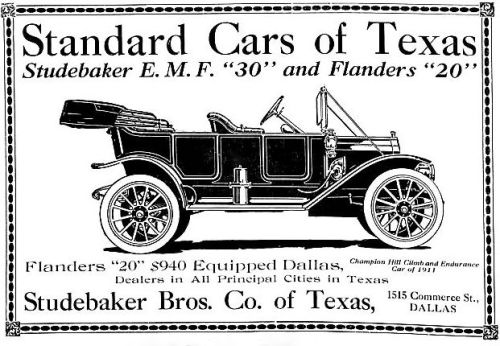
Studebaker Bros. have got you covered!

ad_studebaker_souv-gd_1894

Whatever you need, Studebaker has it: horseless carriage or … just … well … carriage.  “A complete line of vehicles.”

***

Top ad from 1912; lower ad from 1894.

Studebaker info here.

*

Copyright © 2014 Paula Bosse. All Rights Reserved.

Lazy Weekends, Cruising White Rock Lake — 1972

white-rock_city-folk_1972_EPACruisin’ ’70s-style…

by Paula Bosse

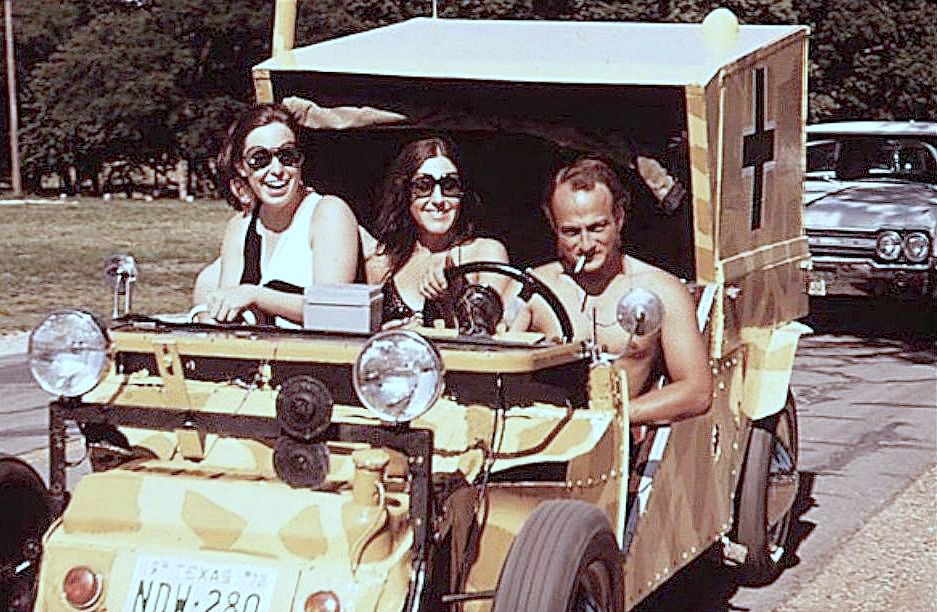
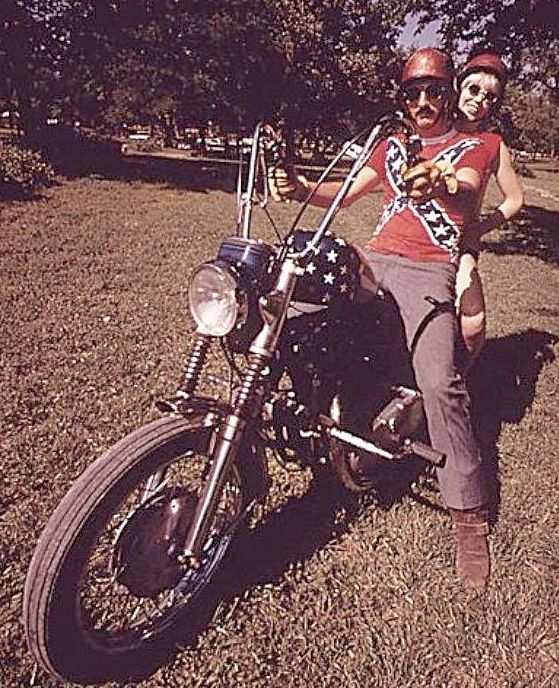
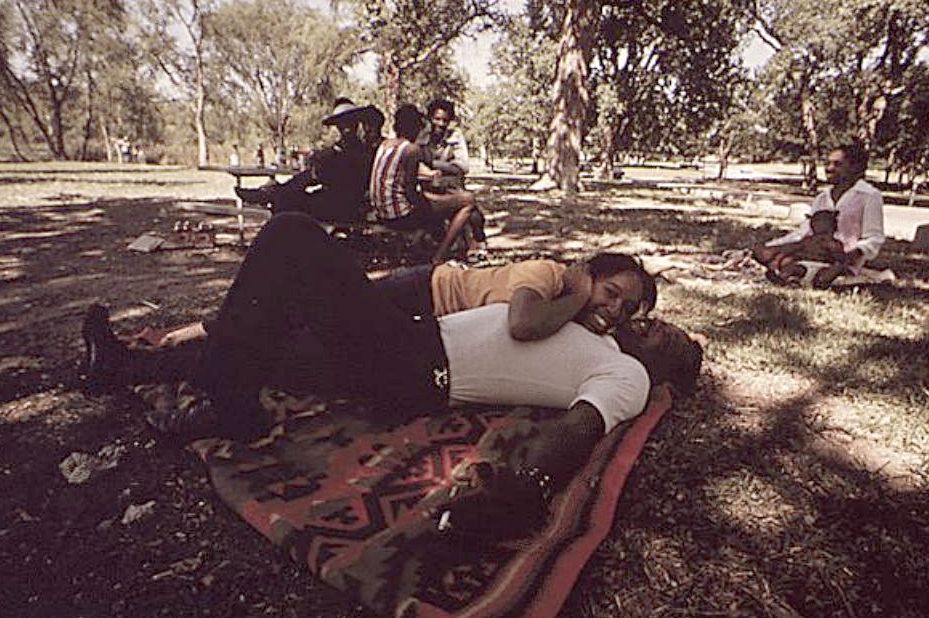
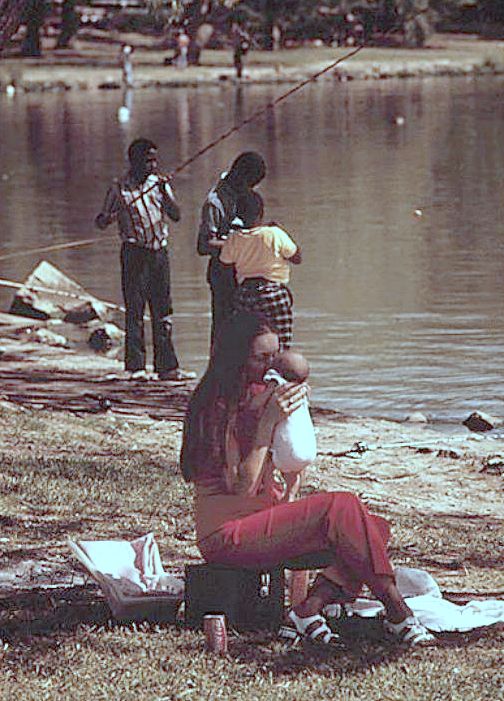
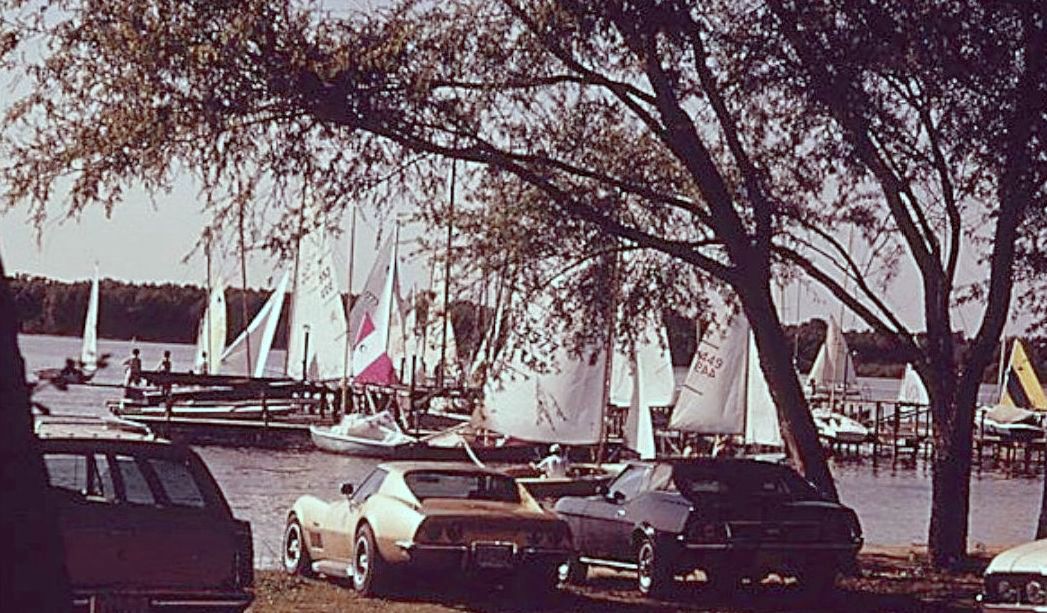
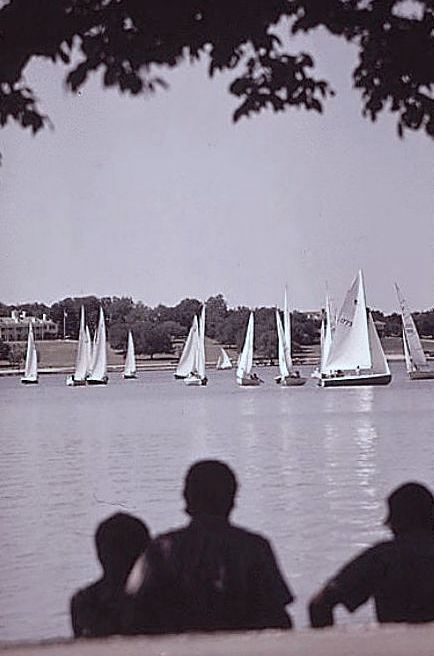
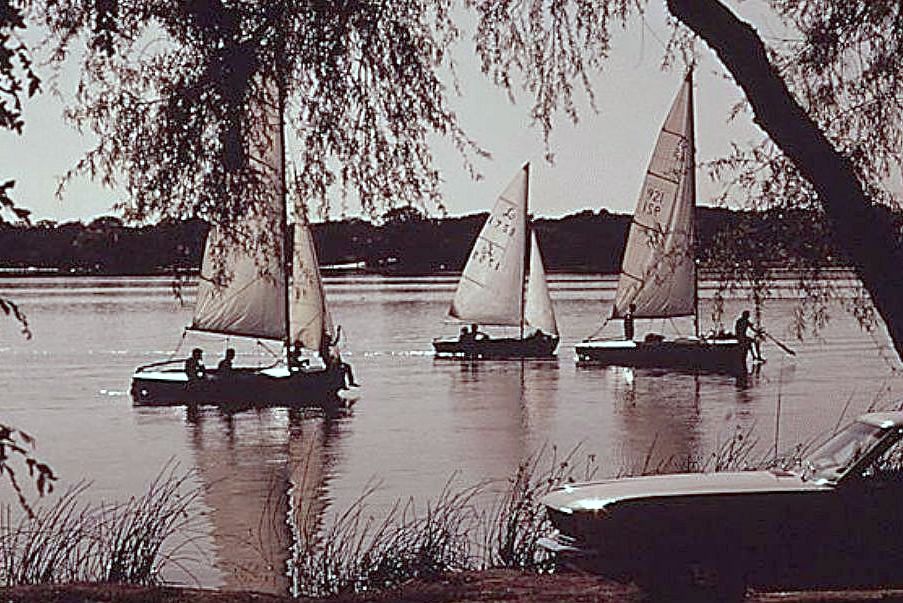
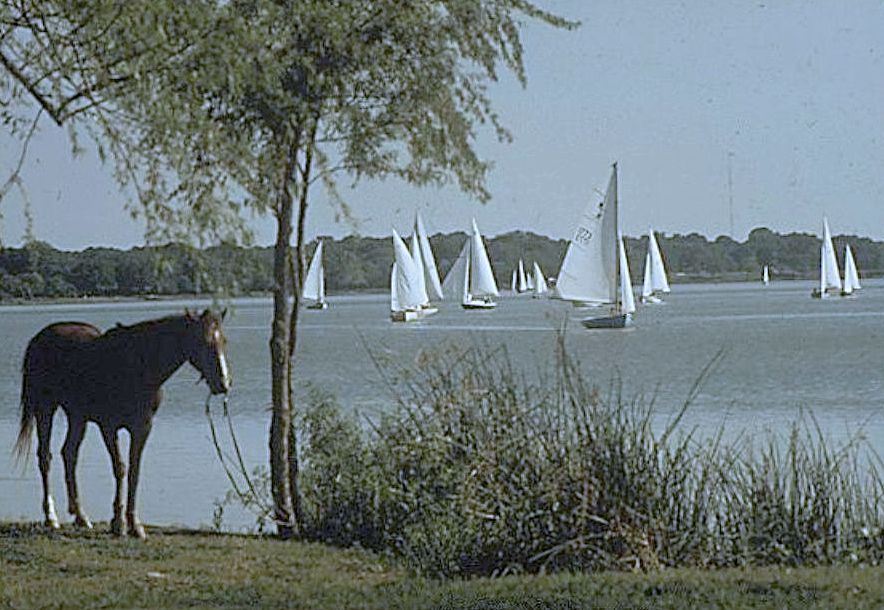
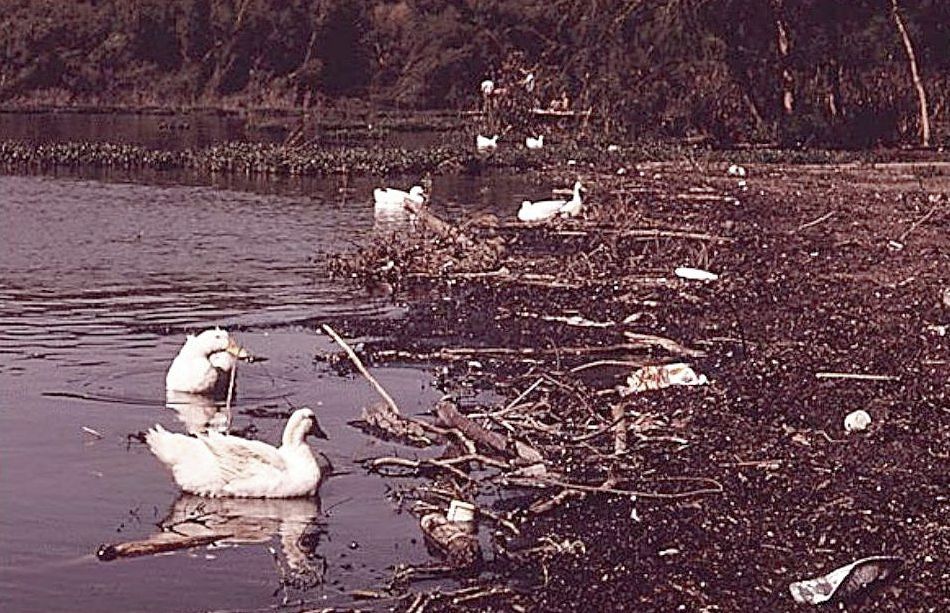
Back before the days of joggers and bikers, one used to be able to drive around White Rock Lake. All the way around. No dead ends, no detours. People used to cruise it on the weekends — the road would be packed solid. I assume the homeowners grew weary of this and put an end to things by having the road chopped up to prevent continuous cruising. Figures. Here’s a look at one weekend in April of 1972, from a series of photos taken by the Environmental Protection Agency as part of their Documerica project which documented areas of environmental concern. Things all look pretty good here, except for the final photo showing ducks paddling alongside trash at the water’s edge — a scene that might make the Keep America Beautiful Indian shed another tear.

A description of these photos (provided, I think, by the EPA):

City folk come in droves each weekend to once-isolated White Rock Lake. Some come to picnic, sail or fish. Some just want to be where the action is [man].

Another caption:

Once-unspoiled and rather isolated, White Rock has become a city dweller’s weekend mecca, attracting people looking for ‘action’ as much as those seeking relief from urban pressures.

*

white-rock_motorcycle_1972_EPA

white-rock_sunday_1972_EPA

white-rock_weekend_1972_EPA

white-rock_boats-cars_epa_1972

white-rock_sailing_1_1972_EPA

white-rock_sailing_2-1972_EPA

white-rock-lake_1972_EPA

white-rock_ducks_1972_EPA

***

Sources & Notes

These photos — from the EPA’s Documerica project (“to photographically document subjects of environmental concern”) — can be found at the National Archives site, here.

Like outtakes from Dazed and Confused, man…. You can practically hear “Brandy, You’re a Fine Girl” wafting through the air.

Copyright © 2014 Paula Bosse. All Rights Reserved.

The San Jacinto School — Frittering Away the Gay Nineties, Stuck in a Classroom

san-jacinto-school_1893_shorpy1893 class photo, Ross Avenue

by Paula Bosse

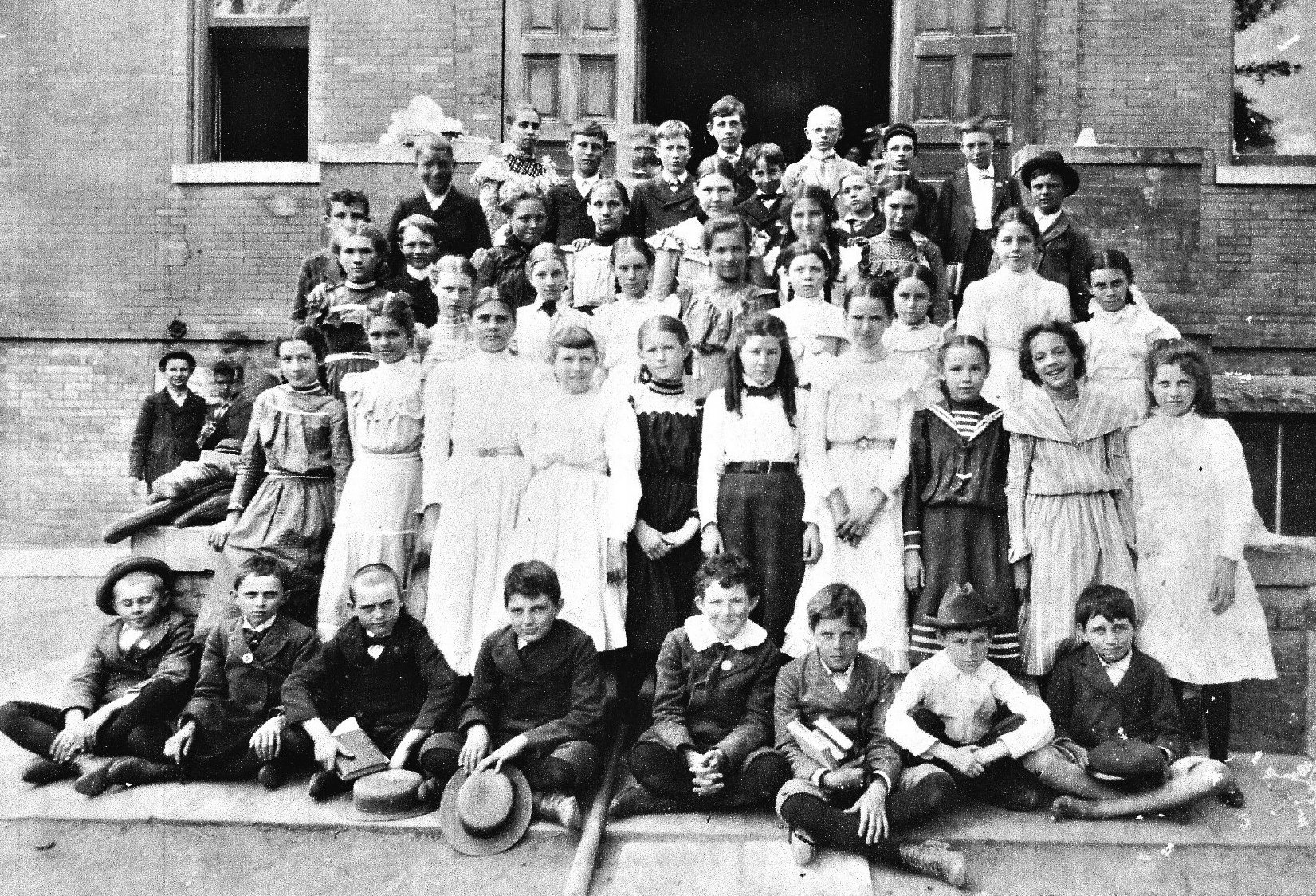
Above, fourth graders lined up in 1893 on the steps of the San Jacinto School, once located at Ross and Washington (now the site of the DISD Administration Building). All seem fairly glum. (At least they’re not toiling in factories like many other children of this period.)

Below, the sixth-grade class of 1899 seems slightly less bummed-out, perhaps because they’re on the brink of the much-anticipated 20th century. Those boys (and sadly probably only the boys) might well have been among the city’s business and political leaders during Dallas’ most explosive period of growth just a few short years later.

san-jacinto-school_6th-grade_1899-1900

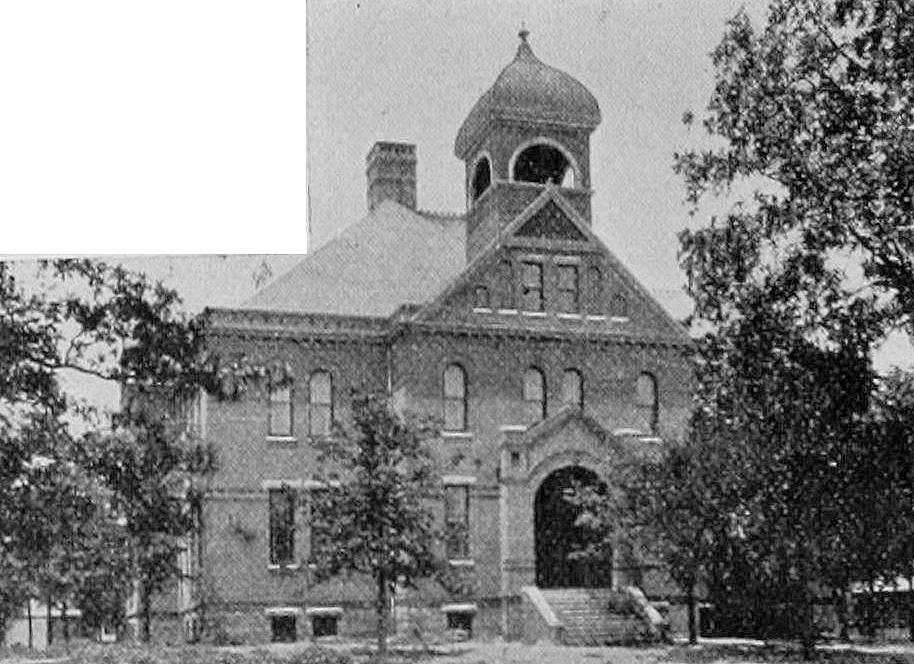
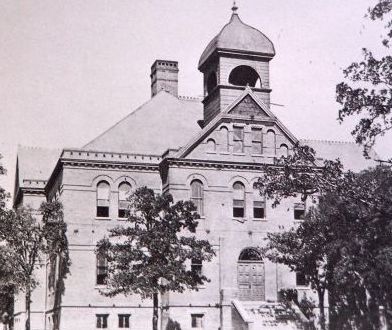
The San Jacinto School was designed by James E. Flanders and built in 1891 on two acres at the corner of Ross Avenue and Washington. It was demolished in 1948 to make way for the somewhat more severe (and perhaps a bit more interesting) DISD Administration Building.

san-jacinto-school_tx-and-pac-rr_1898

san-jacinto-school_dhs

***

Sources & Notes

Top photo is from the wonderful historical photo blog Shorpy, and can be found here.

First photo of the school building is from Texas: Along the Line of the Texas & Pacific Ry. (Dallas: Texas & Pacific Railway, n.d. [1898]).

Last photo is from a website devoted to “Dallas’ First Architect,” James Edward Flanders.

*

Copyright © 2014 Paula Bosse. All Rights Reserved.

The Republic National Bank Building: Miles of Aluminum, Gold Leaf, and a Rocket

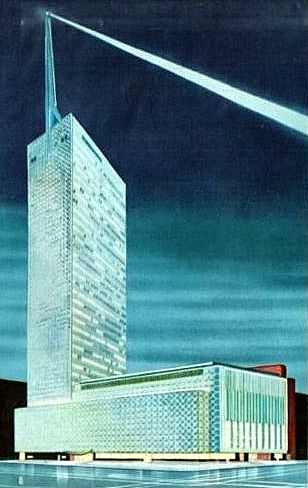
republic-national-bank_beacon_front

by Paula Bosse

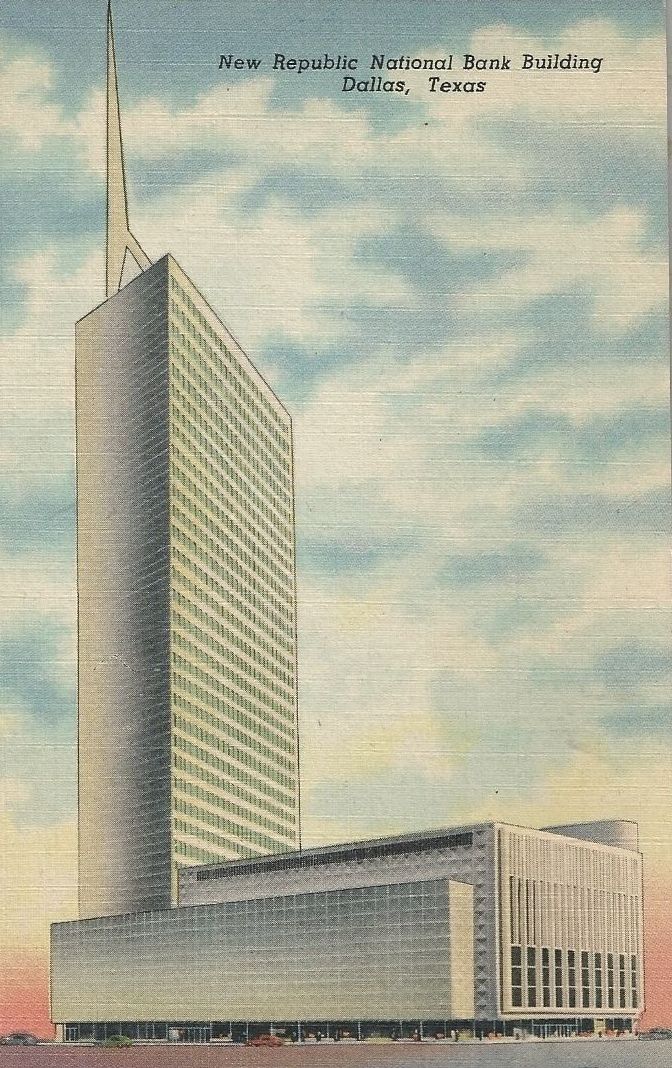
THIS is another great idealized image of a great building, The Republic National Bank Building, built in 1954. The blurb on the back of this postcard reads:

40 stories, cost 25 million dollars, the world’s tallest building faced in aluminum and glass.The mighty half-billion candle-power beacon atop the 150-foot spire is visible up to 120 miles.

This building was built to be the tallest building in Dallas — to dwarf the rival Mercantile (by a whole 53 feet!). Which it did for a while — it boasted of being the tallest building west of the Mississippi. Until … the Southland Life building came along a few short years later and knocked it off its pedestal (although, dammit, it was the “WORLD’S TALLEST BUILDING FACED IN ALUMINUM AND GLASS”!). For years, the powers-that-be seemed overly concerned with the “tallest” building thing and engaged in architectural pissing contests for years.

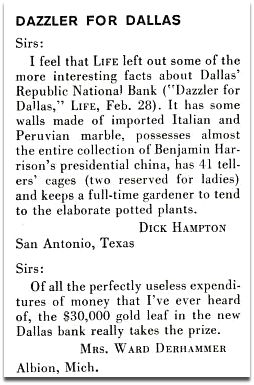
But forget the exterior. INSIDE. Lordy. Legendary bank president Fred Florence went all out, with Life magazine saying the lavish interior reflected Florence’s belief that a bank’s design and appointments should be “an outward showing of solvency.” This included generous helpings of gold leaf, inlaid teak, and endless marble imported from Italy and Peru (“nearly as long as a football field”). One wonders if Florence muttered something about “Rosebud” on his deathbed. Of its forty-one teller’s cages, two were — for some reason — reserved exclusively for women. There was a full-time gardener on staff. And, of course, there were “gold curtains in the executive washrooms.” There was “all-season air-conditioning.” There was a motor bank in the basement. And, if they couldn’t have the tallest building in town, they were damn sure going to have the fastest elevators in the elevator-using world. And they did.

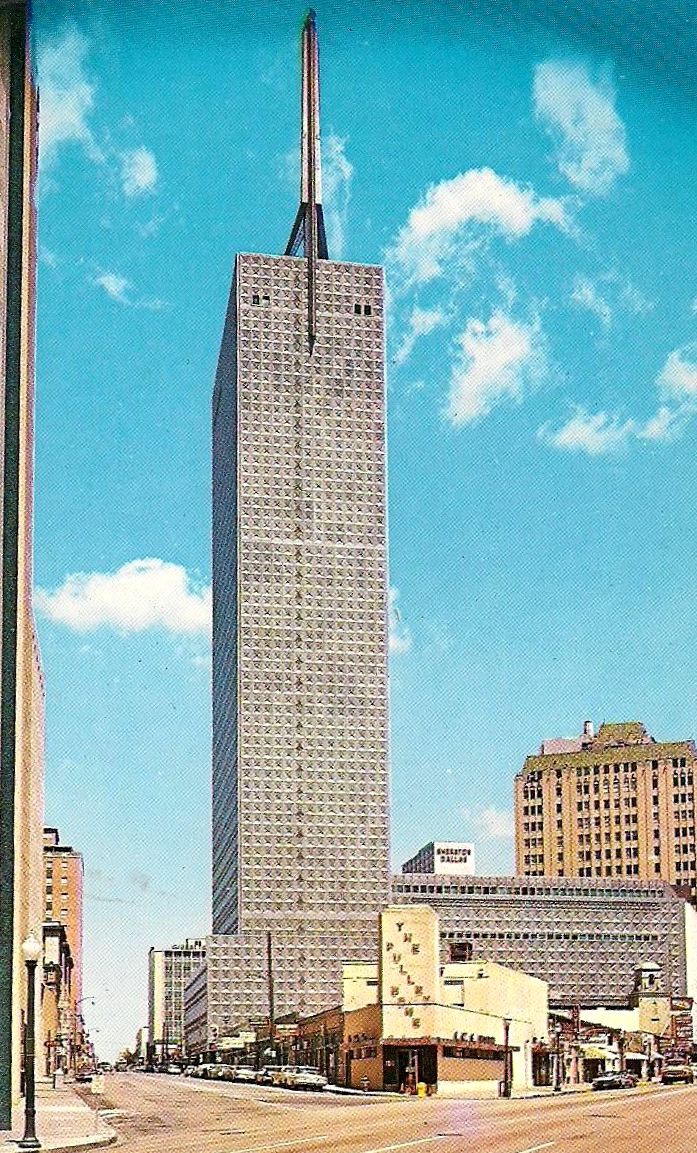
And then there was that rocket. I love that rocket. Sixty years later, it’s still one of the most recognizable buildings on the skyline.

republic-national-bank_S

republic-national-bank_postcard-sm

The missed-by-my-mother’s-generation Pulley Bone diner is in the foreground (click for larger image).

republic-national-bank_photo-post-sm

***

An absolutely fantastic collection of photographs apparently shot by Life magazine to accompany the article from their Feb. 28, 1955 article (linked below) but not used (and, seriously, check them out) are on an unassuming message board. Scroll down a little ways and you’ll see 13 large images of the interior and exterior — see them here. (UPDATE: These photos seem to have disappeared. I’ll keep the link in hopes that user “Dallas boi” will repost!)

Scroll through the 4-page spread “Dazzler for Dallas: Its New Bank is Huge, Handsome and Full of Gold” in Life magazine (Feb. 28, 1955) here.

And here are a couple of readers’ responses to the story, which appeared in a later issue (Mrs. Ward Derhammer is not amused):

republic-national-bank_life_032155

Republic National Bank Building info from the Republic Center website can be found here, from Wikipedia here, and from the Dallas Public Library here.

All postcard images (except the first one) are larger when clicked.

*

Copyright © 2014 Paula Bosse. All Rights Reserved.

Linz Bros. and “The Vogue of Bracelets” — 1923

ad-linz-bros_dmn_031123

by Paula Bosse

What a beautiful art nouveau-inspired ad, echoing Beardsley’s pen and ink drawings and Whistler’s Peacock Room. This is wonderful. And it’s unsigned! Ah, the lot of the commercial artist.

***

Ad from The Dallas Morning News, March 11, 1923.

More on Linz Brothers, premier Dallas jewelers, here.

*

Copyright © 2014 Paula Bosse. All Rights Reserved.

Girl Doctors? No Way! — 1946

southwestern-med-coll_female_1946Photo from the UT Southwestern Library (click for larger image)

by Paula Bosse

Female medical students were fairly uncommon back in the 1940s, and, as this photo is described in the UT Southwestern archives, they were “so rare that they merited this photo captioned ‘Freshman Girl Students’ in the 1946-47 Southwestern Medical College yearbook, Caduceus.” I love this photo.

***

Photo is from the UT Southwestern Medical Center Library and can be accessed here.

Click photo for larger image.

*

Copyright © 2014 Paula Bosse. All Rights Reserved.

One of the Earliest Homes Belonging to Original La Reunion Settlers Is Razed — 1925

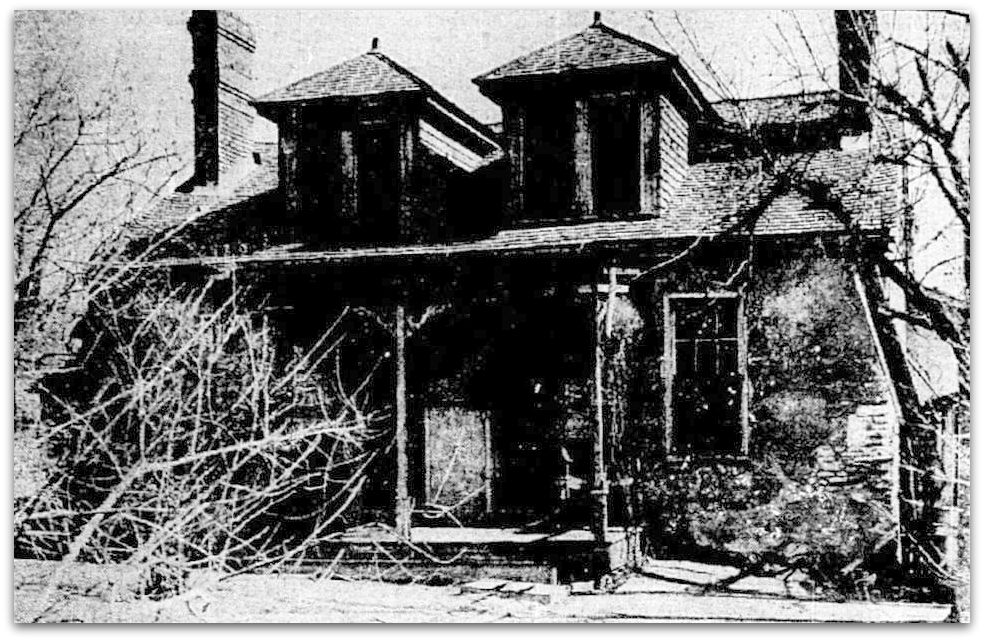
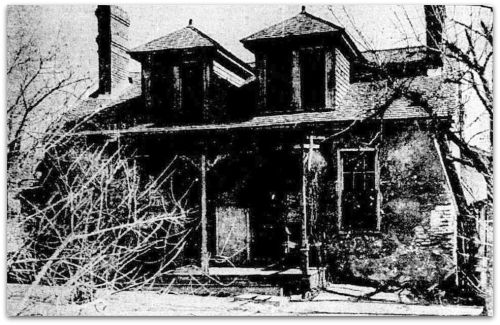
frichon_house-dmn_030525aBryan & Harwood

by Paula Bosse

ONE OF EARLIEST DALLAS HOMES WILL BE RAZED TO MAKE WAY FOR NEW HOME OF KNIGHTS OF PYTHIAS
(Dallas Morning News, March 5, 1925)

An ancient Dallas landmark that obviously is entitled to the name, a modest little plaster cottage that serves as the sole surviving relic of the old French colony that figured in the early history of Dallas, is to be torn away in a few weeks to make room for a new home of the Knights of Pythias. The house now is numbered 2012 on Bryan street, near the corner of Harwood, but when it was built in 1874 by A. Frichot there was no need of street numbers to distinguish it from its neighbors. “About a mile and a half east of the courthouse” was the official designation of the house in those post-bellum days.

John Priot on May 4, 1874, sold the lot for $200 to A. Frichot and described it in the deed as beginning at “the west corner of a piece of land sold on Dec. 8, 1860, by P. P. Frichot to Mrs. Barbar[a] Frick, being a part of the original John Grigsby League.” This deed was recorded by A. Harwood, then County Clerk. There is a legend that the two Frichot brothers built homes near each other of the same type, one of which was torn down years ago to make room for a brick building on the southwest corner of Harwood and Bryan streets. The other is the modest dwelling that is to be razed to make room for the new Pythian building.

In 1876, after the house was built, A. Frichot deeded it to Mary L Frichot, his daughter, in consideration of the sum of $1,000, the records show. The next change made in the ownership of the place, according to the records, was in 1908 when deeds were signed conveying the property from “Mary L. J. Prine and J. A. Prine” to Colonel John M. McCoy for the sum of $4,600.

The Knights of Pythias bought the property from the estate of Colonel McCoy recently. This deal was made for the estate by Judge Wendel Spence, executor for the McCoy estate. For the last seventeen years the house has been occupied by Mrs. Pearl Miller as a residence.

A week or two ago a Dallas woman approached the agent of the Knights of Pythias with an offer to lease the place and transform it into an antique tea room. The offer was refused, as the building must come down shortly to make way for the new structure.

**

THE STORY OF OLD FRENCHTOWN (excerpt)
(Dallas Morning News, Nov. 23, 1919)

Jean Priot was a tailor. He was born in Nevers, Oct. 26, 1832, came to La Reunion in 1855, died in Dallas in 1908. He came to New Orleans with a tailor who held out false inducements, and from New Orleans joined this colony. M. Priot married Leontine Frichot, who came with her father, Philip Pierre Frichot, and his brother, Christophe Desire Frichot. From this union were born three daughters – now Mesdames, Beilharz and Petermann.

Philip Frichot was a contractor, and, upon disintegration of the colony, established a brickyard, from which he, with his son Achilles and M. Emil Remond built all the brick houses and concrete structures of that day in Dallas.

***

Sources & Notes

As cited in the articles above, the Frichot family was one of the original settlers of the French La Reunion utopian colony of Dallas in 1855, and the land — and later the house — stayed in the family from before 1860 until 1908, when the property was sold to John M. McCoy (who was, perhaps, appropriately, the son of one of the very first settlers of Dallas who arrived in the 1840s). Info about La Reunion is here and here.

The Knights of Pythias building referenced above is not to be confused with the substantially more “famous” one — the then-already standing and now-historic structure in Deep Ellum at 2551 Elm Street — less than a half a mile away. The building going in at Bryan and Harwood was, for want of more delicate language, the “white” one, and the one on Elm Street was the “black” one. Both were fraternal organizations dedicated to philanthropy and civic involvement, but apparently “fraternity” went only so far as race was concerned.

More Flashback Dallas posts on La Reunion can be found here.

Click photo for larger image.

*

Copyright © 2014 Paula Bosse. All Rights Reserved.