Flashback : Dallas

A Miscellany: History, Ads, Pop Culture

Neiman-Marcus Toy Department — 1965

n-m_toys-northpark_1965_marcus-papers_degolyerThat kangaroo is fab… (click to see it bigger!)

by Paula Bosse

This photo shows the world’s least-cluttered toy department at the then-new Neiman’s store at the then-new NorthPark mall. What were the well-heeled tots of 1965 playing with? Model castles, stuffed tigers, dolls, robots, and kangaroo-shaped slides.

***

This photo — “Toy Department, Neiman Marcus, NorthPark”– is from the Stanley Marcus Papers, DeGolyer Library, Central University Libraries, Southern Methodist University; more info on the photo can be found here.

*

Copyright © 2017 Paula Bosse. All Rights Reserved.

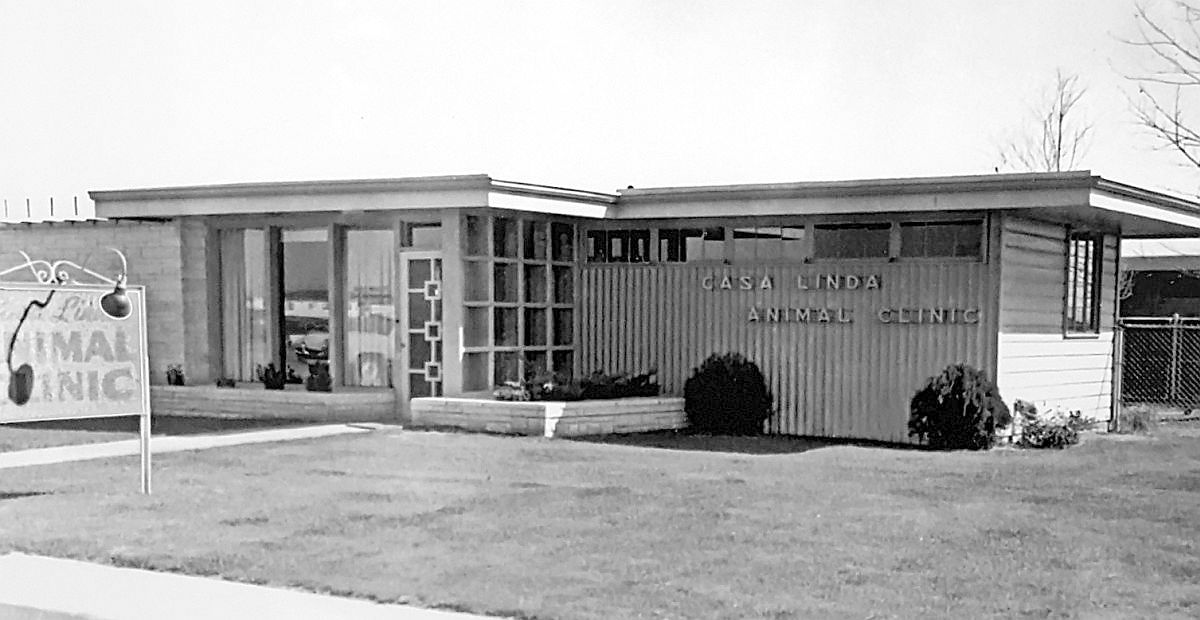
Casa Linda Animal Clinic, Est. 1948

casa-linda-animal-clinic_bwIf only Garland Rd. & Jupiter still looked like this…

by Paula Bosse

Sometimes you can find interesting historical photos in the most unexpected places — like my mother’s veterinarian’s office. The photo above shows the cool mid-century design of the Casa Linda Animal Clinic, at 11434 Garland Road, just past the intersection with Jupiter.

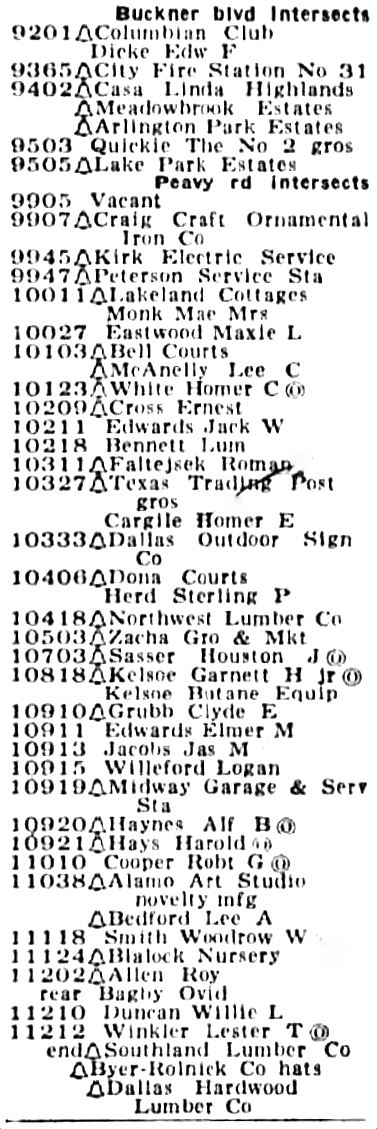
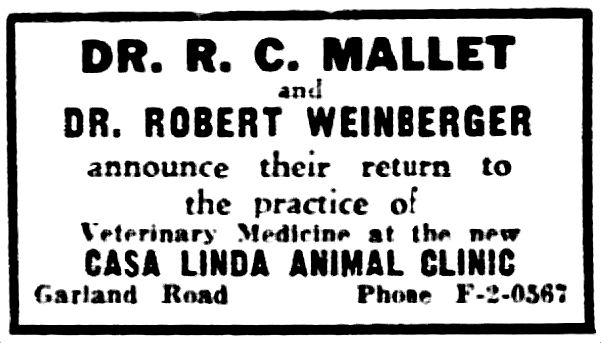
Two young veterinarians — Robert Weinberger and Roland Mallett — opened the animal clinic/hospital/boarding kennel in June, 1948, out in the boonies. I’m not actually sure that that stretch of Garland Road was even technically in Dallas in 1948. The 1948 city directory shows Garland Road ending at the 11200 block (with no cross-streets after Peavy). (Click to see a larger image.)

garland-road_1948-directory
1948 Dallas directory

When Weinberger and Mallett (whose name is often seen spelled as “Mallet”) opened their veterinary practice, theirs was the very last business (or residence) between the Dallas and Garland boundary. (To see how empty things were around there, check out a couple of pages from the 1952 Mapsco, here; the first one shows a developed area around White Rock Lake, Forest Hills, and Casa Linda, and the second one shows a much less developed area once you’ve passed Jupiter Road — and anything east of Shiloh is either a bleak no-man’s land or … Garland.) (I’ve never heard of Hudson Airport, seen on the second map — north of Northwest Highway, between Jupiter and Garland Road — so that’s cool to see.)

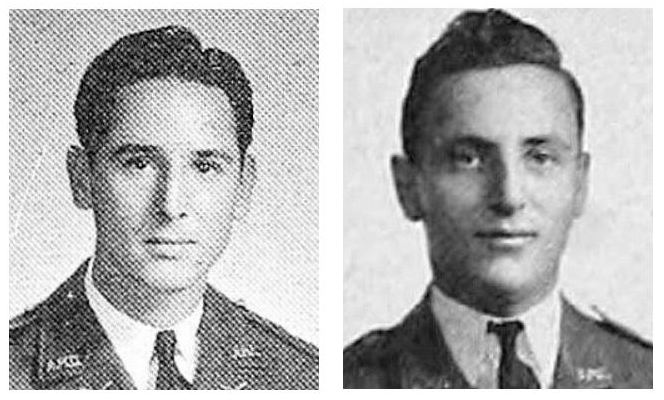
But back to the Casa Linda Animal Clinic (and it’s not really in Casa Linda, but I’m not sure what that area is). Being so far out in the sticks in 1948 probably explains how a couple of fairly recent Texas A&M veterinary school grads (and former WWII servicemen) who were still in their 20s were able to buy land for their first practice. The money they saved on real estate was apparently put into building a well-appointed clinic (according to Dr. Weinberger’s obituary, the clinic itself was “designed in collaboration with Texas A&M as sort of a showpiece of a modern, small-animal veterinary clinic”). Below, photos of Mallett, on the left, and Weinberger, from their vet school days at A&M — both were Class of ’44.

mallett-1943_weinberger-1942_texas-a-m-yearbooks

casa-linda-animal-clinic_dmn_060848
June 1948

The building today (seen here on Google Street View) looks nothing like it did in the photo at the top. It has been almost 70 years, but the building has either been drastically remodeled or is a new building. (Perhaps exterior work was done on it all the way back in 1951 when a car ran through the front wall.)

The clinic has gone through several partners and owners over the past 69 years, but it’s nice that it’s kept the same name all this time. I would assume that it has become something of a neighborhood fixture and has probably treated the pets of several generations of Casa Linda, Casa View, and Lochwood residents. …Maybe even some from Garland.

And now I know more about my mother’s veterinary clinic than she does!

***

Sources & Notes

Top photo is on the wall of the Casa Linda Animal Clinic. I wish more businesses would post old photos like this. If the (very nice) staff saw me taking this photo of a photo this morning, they probably wondered what I was doing. I’m afraid I didn’t ask permission to reproduce it, so it seems only right that I direct you to their website if you live in the area and are looking for a veterinarian.

Photo of Roland C. Mallett (1920-2010) is from the 1943 Texas A&M yearbook; photo of Robert Weinberger (1922-2009) is from the 1942 yearbook. Both graduated in 1944.

Read more at the Dallas Morning News archives:

  • “Dallas Veterinarians Open Casa Linda Animal Hospital” (DMN, June 20, 1948) — with photo of newly constructed building
  • “And the Wall Came Tumbling Down” (DMN, July 28, 1951) — photo shows Dr. Mallett looking at a car that had crashed into the animal hospital (no people — or animals — were injured)

Current boundary map of Garland can be found here.

*

Copyright © 2017 Paula Bosse. All Rights Reserved.

Mimi Payne Aldredge McKnight

ABS_mimi_bookcaseMimi, with books… (click for larger image)

by Paula Bosse

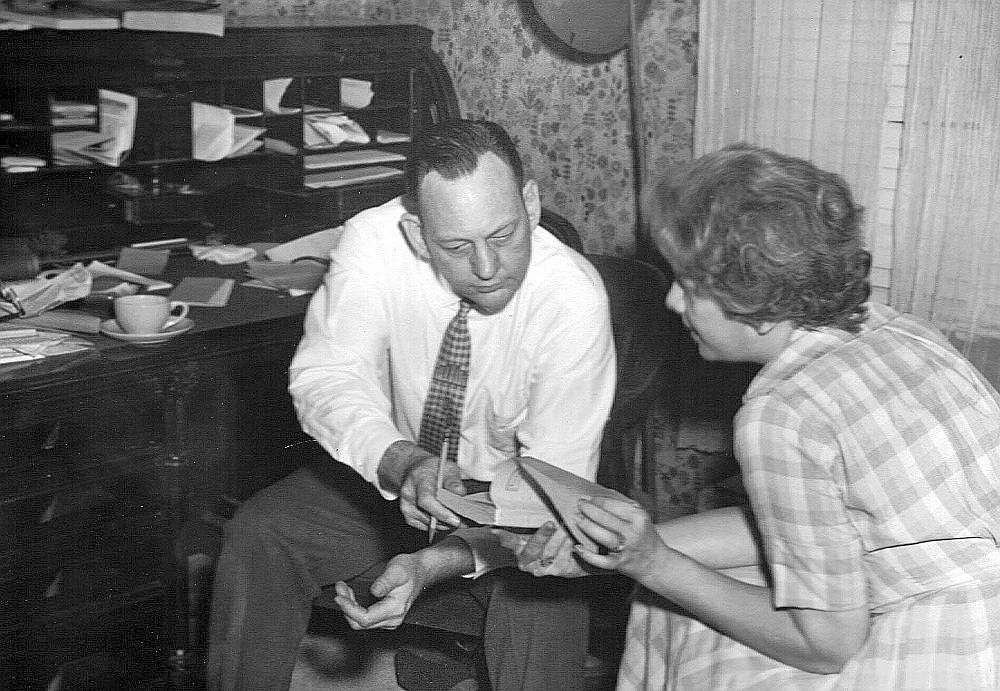
Mimi Aldredge McKnight (née Mildred Payne) died this week. She was an important person in the story of my family — she and her then-husband, Sawnie Aldredge, Jr. owned The Aldredge Book Store on McKinney Avenue, where my parents met and worked for many years and which, for my brother and me, became pretty much a second home. When Sawnie died, Mimi continued to run the store and kept my father, Dick Bosse, on as manager. My father ended up owning the store, and when he died, he had worked at The Aldredge Book Store for almost 45 years. Even when Mimi’s involvement with the store was minimal, she still kept in touch, and she and my father were always on very friendly terms.

I knew Mimi mostly when I was a child, and my memories of her are happy ones. I remember her laugh and her voice most of all. She always seemed like a lovely, friendly woman, and my parents were both very fond of her.

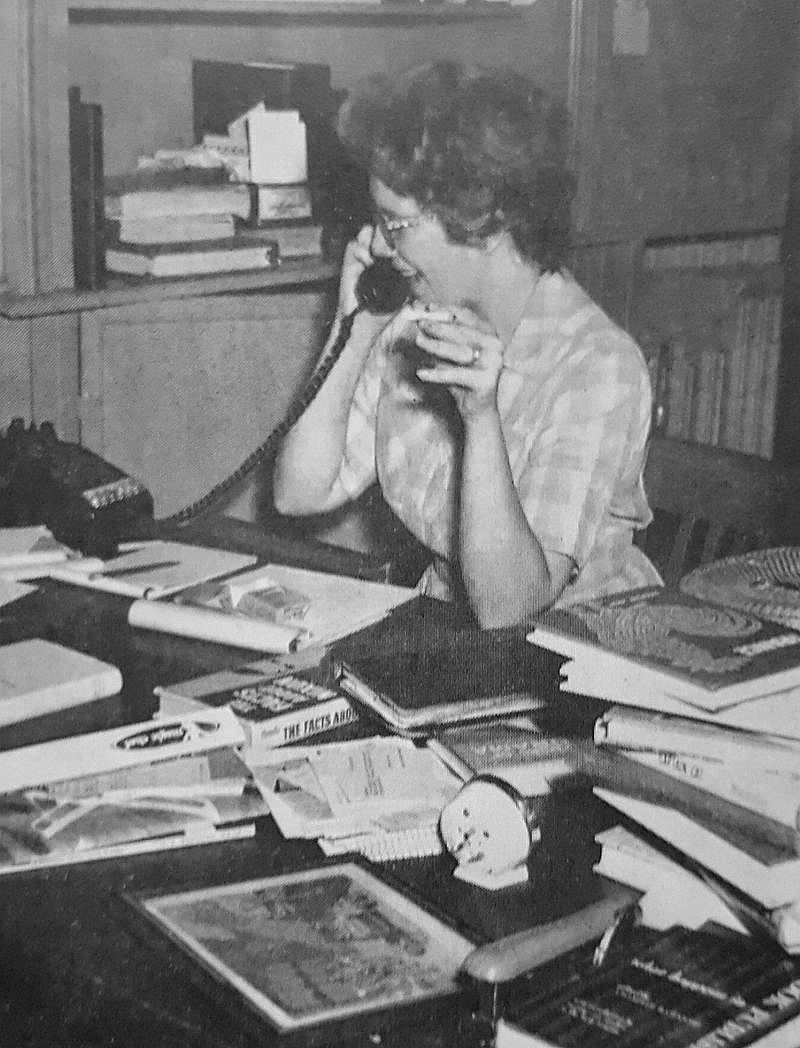
The photo below is how I remember her — talking animatedly on the phone (she and my mother, Margaret, were champion telephone talkers, and I remember them both working at that desk, and talking and talking and talking on that phone).

mimi_phone_texas-parade_feb-1961

I ran into Mimi a few times as an adult. We’d usually just exchange quick pleasantries and ask how various family members were — but I always hoped I’d have the chance to sit down and have a long conversation with her someday. Sadly, that didn’t happen, but I’m so happy that my brother, Erik, and I have reconnected with her children, Amy and Trip Aldredge, and that we’re all friends. The four of us share nostalgic childhood memories of each other’s parents and of that old creaking house on McKinney — a house so crammed with books that the medical section had to be shelved in the bathroom. I can’t imagine a better childhood that one spent growing up in a bookstore.

Goodbye, Mimi — I’m so glad you were a part of my family’s life.

**

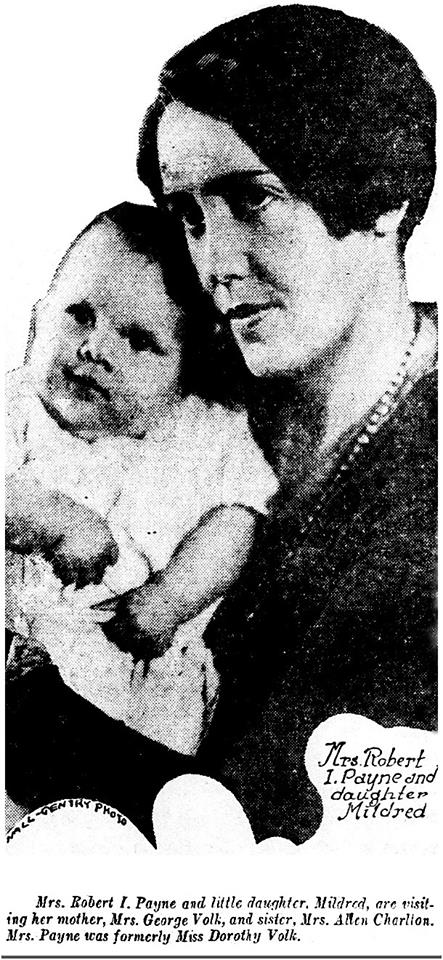
In one of those wonderful unexpected discoveries I’ve made while looking for something completely unrelated, I stumbled across this photo of little Mildred Payne as a baby and was happier about it than I might have expected. (Click photo to see a larger image.)

1929_mimi_dmn_061429
1929

It wasn’t until I was an adult that I realized Mimi had been a real-life, honest-to-god debutante (probably the only debutante I’ve ever met) and that her mother was a member of Dallas’ famed Volk retail family. She grew up in a very nice house, built by her father, Robert I. Payne, in the Perry Heights area of Oak Lawn. If you’re famiiar with Oak Lawn, you’ve probably seen the plantation-like house at 4524 Rawlins (at Hawthorne), designed by architect Ralph Bryan in 1936. (See the house today on Google Street View, here.)

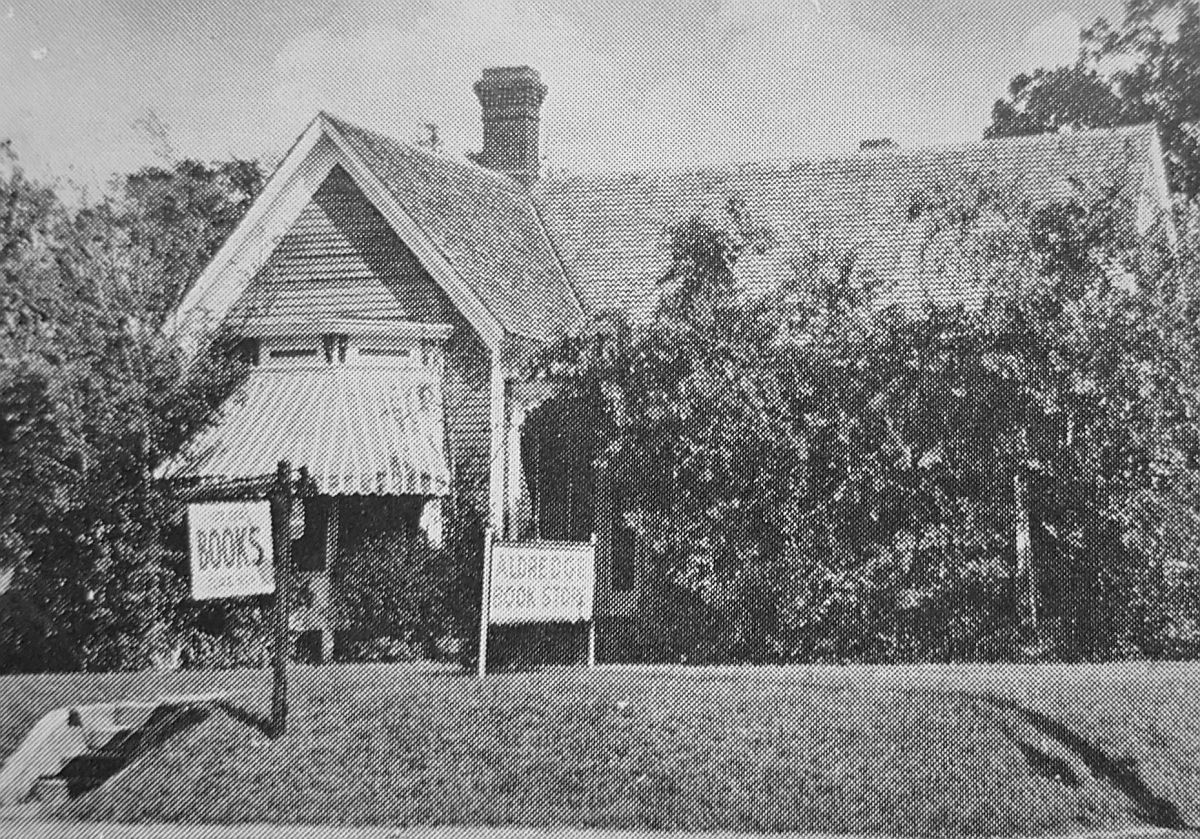
Sawnie Aldredge, Jr. (son of a Dallas mayor) opened The Aldredge Book Store in 1947 at 2800 McKinney Avenue (at Worthington) in an old house built in the 1880s or 1890s (this was several years before Sawnie and Mimi married). The picture below is from around 1960. This was before my time, but I seem to remember it looking less overgrown and less … shabby! It was much larger than it appears in this photo. Below the photo, the store’s early logo. (I’m not sure when the house was torn down — maybe in the ’80s? The lot was vacant for quite some time, as I reall. The block is painfully unrecognizable today. Today it looks like this.)

aldredge-book-store_texas-parade_feb-19611960-ish

ABS_logo_1947

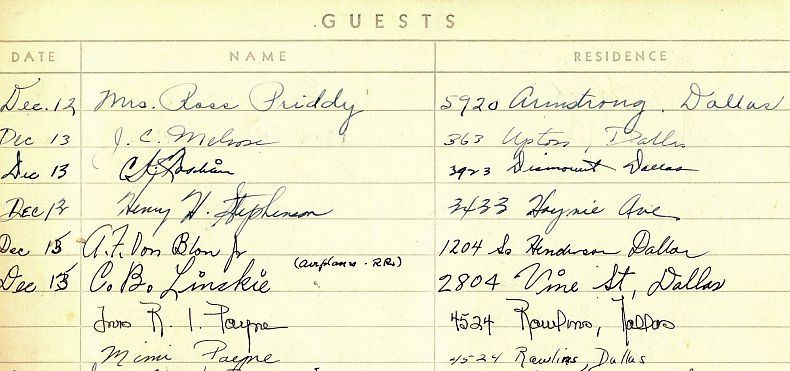
A few years ago, when my brother and I were closing the store, I came across a guestbook from the first year of business and was happy to see that on Dec. 15, 1947, a 19-year-old Mimi Payne visited the store with her mother, Mrs. R. I. Payne. Little did she know that seven years later she’d be married to the proprietor of the store and — for a while — living in that house, battling for personal space amongst all those damn books!

aldredge-book-store-guestbook_1215471947

sawnie_mimi_desk_1961Sawnie and Mimi, 1961

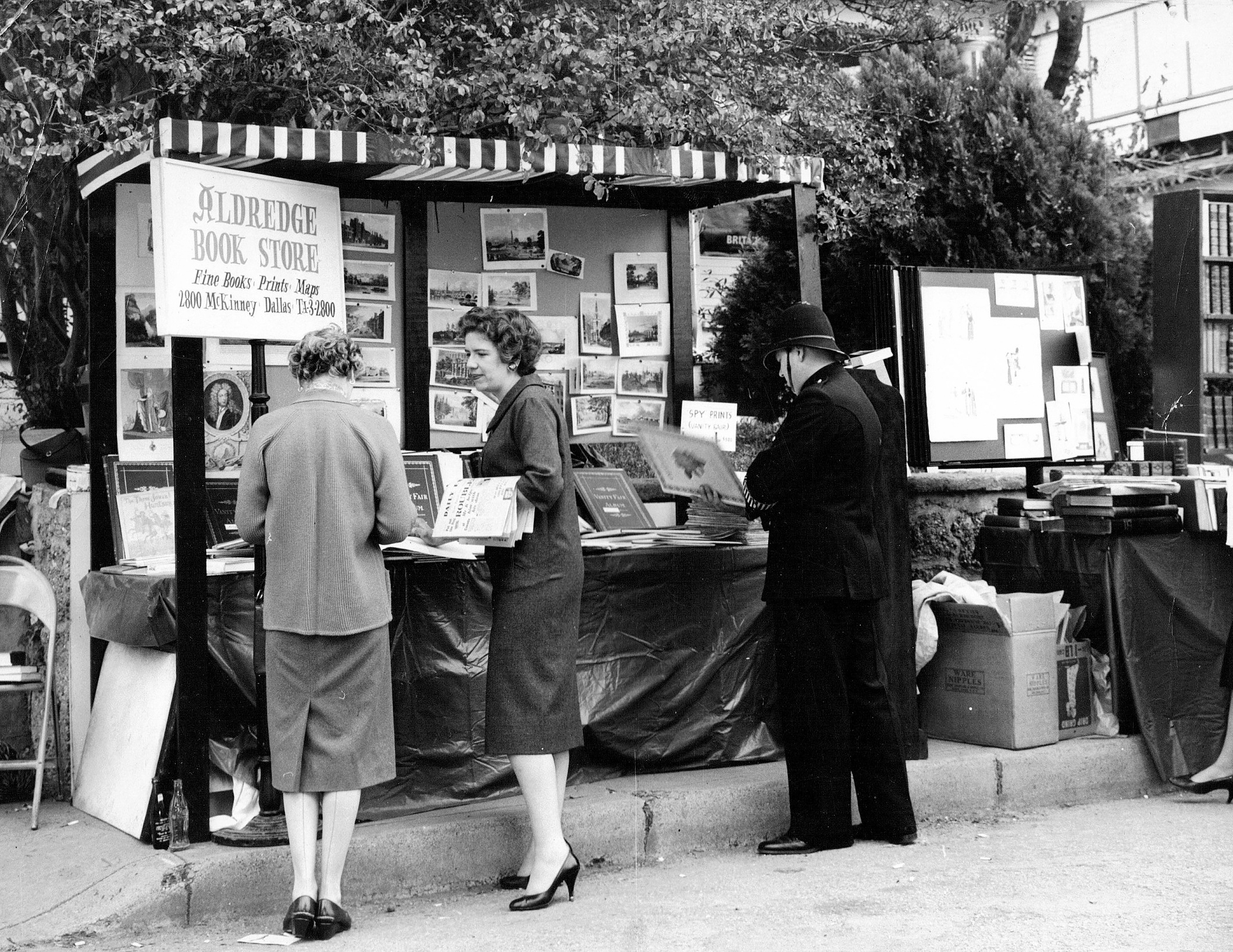
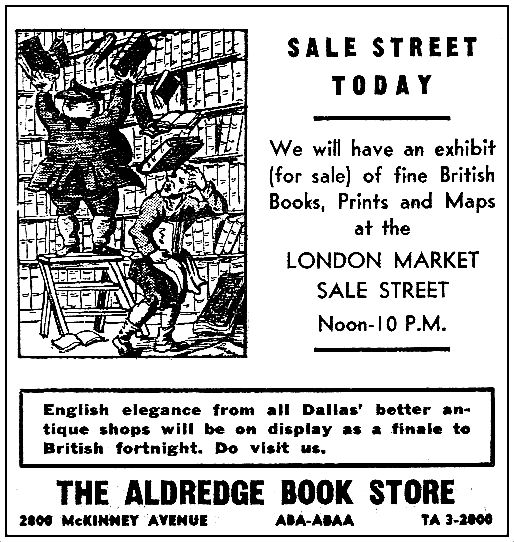
The photo below is one I really love — it was taken in 1958 at the Sale Street Fair, an annual antique street market which ran at the same time as the Neiman-Marcus Fortnight (in 1958 Neiman’s was celebrating Britain). This shows Mimi manning the bookstore booth. My mother told me that she and Mimi (and probably everyone else there) passed the time sitting on the curb, sipping cocktails supplied by friendly neighborhood antique dealers. Sounds great!

ABS_mimi_sale-street-fair_1958Sale Street Fair, Mimi and a browsing London bobby, 1958

ABS_sale-street-fair_1958
Oct., 1958

In 1975, another chapter of Mimi’s life opened when she married esteemed SMU law professor Joe McKnight, to whom she had been married for 40 years at the time of his death in 2015. One interesting highlight was that Joe and Mimi — through their friendship with international bestselling author Alexander McCall Smith (The No. 1 Ladies Detective Agency, etc.) — were featured as characters in his Sunday Philosophy Club/Isabel Dalhousie series. He talked about putting them in one of his novels in a 2006 interview:

Isabel’s mother was American, and she has a cousin of her mother in Dallas, [who is based on] a real person… I was a visiting professor at Southern Methodist University and I’ve got very good friends there, a wonderful couple called Joe and Mimi McKnight, who I’ve made the cousin of Isabel in this book. I have Joe and Mimi coming to Edinburgh, and Mimi plays a large part in the story. So, I’m writing a real person into the story, which is great fun.

A woman who spent a number of years in the early part of her life selling books certainly deserved to be transformed into an entertaining character in a bestselling book in the later part of her life!

***

Sources & Notes

Photos and clippings from the Aldredge Book Store archives and the Aldredge family, unless otherwise noted.

A couple of the photos above come from a profile of The Aldredge Book Store in a magazine called Texas Parade (Feb. 1961): “100,000 Books … Old and New” by Joe Swan. See the full article and photos in a PDF, here

aldredge-book-store_texas-parade_feb-1961_spread_sm

Mimi McKnight died April 3, 2017; her obituary is here.

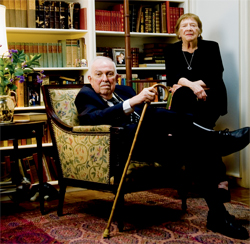
D Magazine wrote about Joe and Mimi McKnight and their connection to Scottish author Alexander McCall Smith in the June 2007 article “Muse, Thy Name is McKnight,” here. The photo below (by Elizabeth Lavin) is from that article.

mcknights_joe-and-mimi_d-mag_june-2007
2007 (D Magazine)

Other Flashback Dallas posts concerning The Aldredge Book Store can be found here.

*

mimi_wedding_announcement_101054_det
1954

Most photos larger when clicked.

*

Copyright © 2017 Paula Bosse. All Rights Reserved.

Update on Accessing Dallas City Directories For Free

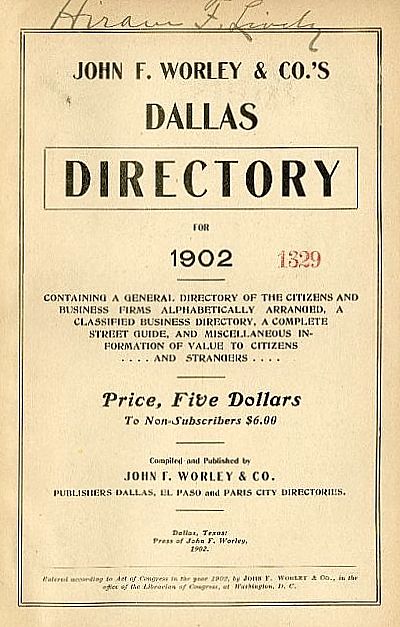
worley_1902-directory_title-page_portal

by Paula Bosse

A couple of months ago I wrote the post “How to Access Historical Dallas City Directories Online,” which was, mainly, to give instructions on how to view, for free, scanned city directories from the years 1875 to 1979 online, via the Dallas Public Library website — all that is needed is a current library card issued in the city of Dallas.

Last night, I stumbled across twenty of these Dallas directories on the Portal to Texas History site, issued in various years between 1902 and 1961, scanned in their entirety by the Dallas Public Library. Ironically, several of these scans are far superior to the ones viewable on the Dallas Public Library website (scans which come from HeritageQuest, a database offered to libraries nationally). Many of those scans are, frustratingly, only partial — especially concerning the years 1936-1943;  the scans on the Portal site come from directories in the collection of the Dallas Public Library, and they are complete. I’m know I see these things from a nerdy perspective, but this is very exciting!

I’ve updated my post linked above, but to see the 20 Dallas directories (complete with residential and business listings, street directories, and ads), you can find them here.

Thank you, Dallas Public Library for the full scans, and thank you, University of North Texas for providing them to the public for free on your becoming-more-indispensable-by-the-day Portal to Texas History website and database!

***

Sources & Notes

Image from the 1902 Worley’s Dallas Directory, found on the Portal to Texas History site, here. (Hiram F. Lively was a lawyer and county judge.)

*

Copyright © 2017 Paula Bosse. All Rights Reserved.


A Century of Growth: From Log Cabin to Skyscrapers

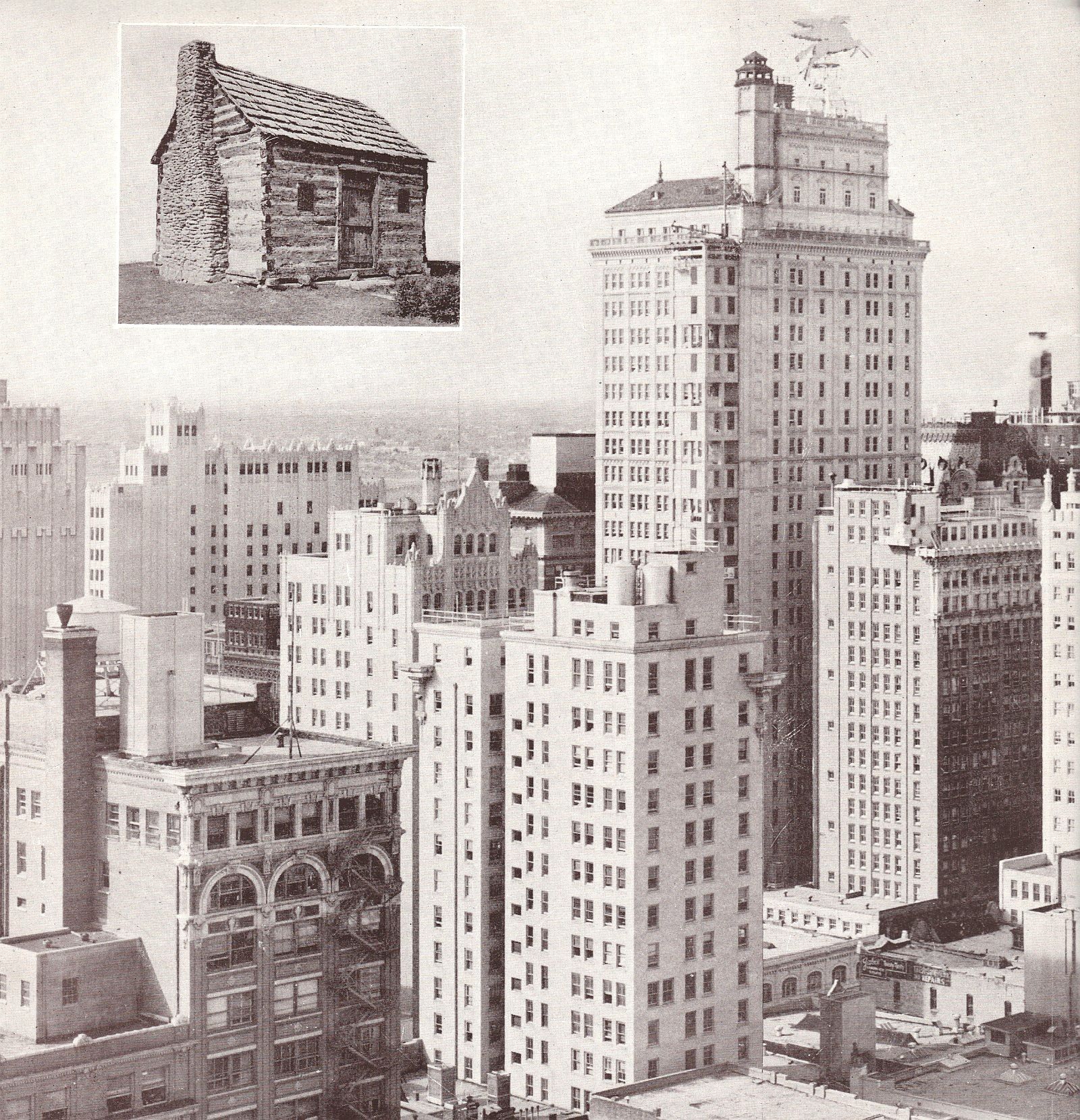
cityscape_cabin_so-this-is-dallas_ca-1943Ol’ JNB wouldn’t recognize the place… (click for larger image)

by Paula Bosse

To think it all began with John Neely Bryan’s little log cabin on the banks of the Trinity…. 

***

Photo from the booklet So This Is Dallas (Dallas: The Welcome Wagon, circa 1943); courtesy of the Lone Star Library Annex Facebook page.

*

Copyright © 2017 Paula Bosse. All Rights Reserved.

The Praetorian Building and Its 19th-Century Neighbors

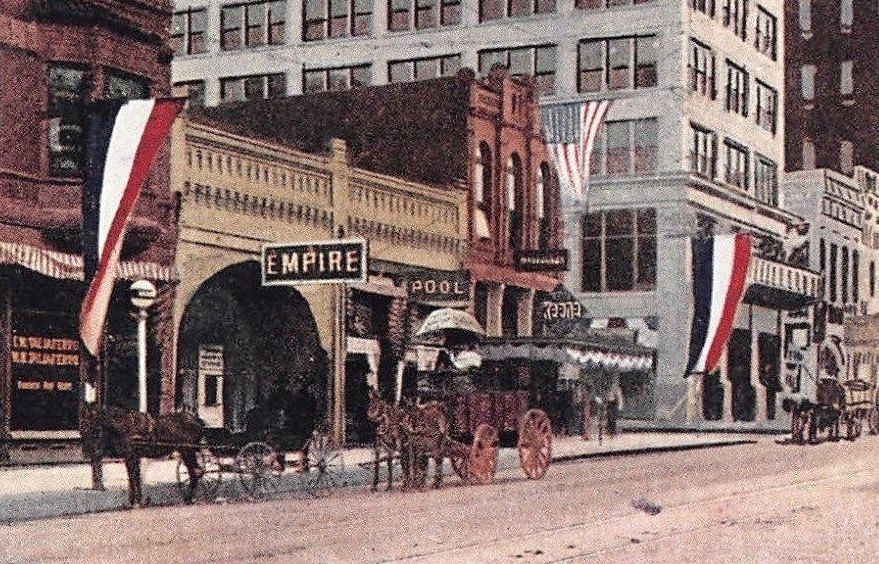
praetorian_empire_main-street_postcard_ebay_detIn the shadow of the Praetorian —  Main Street, 1907

by Paula Bosse

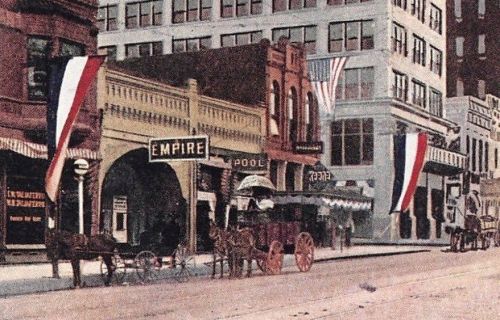
The photo below is a detail of a larger photo from the George W. Cook Collection treasure trove at SMU’s DeGolyer Library, which shows the Praetorian Building under construction. It appeared on a real-photo postcard which shows a postmark of July 25, 1907. What I found most interesting about this photo are the two buildings standing in its shadow, just west of Stone Street (now Stone Place). Here’s a close-up (click to see a larger image):

empire-imperial-praetorian_1907_cook-collection_SMU_det

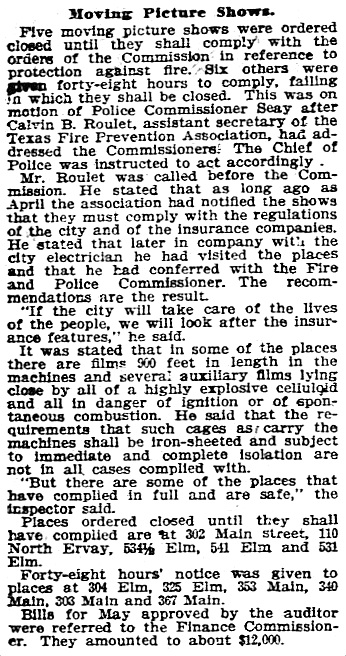
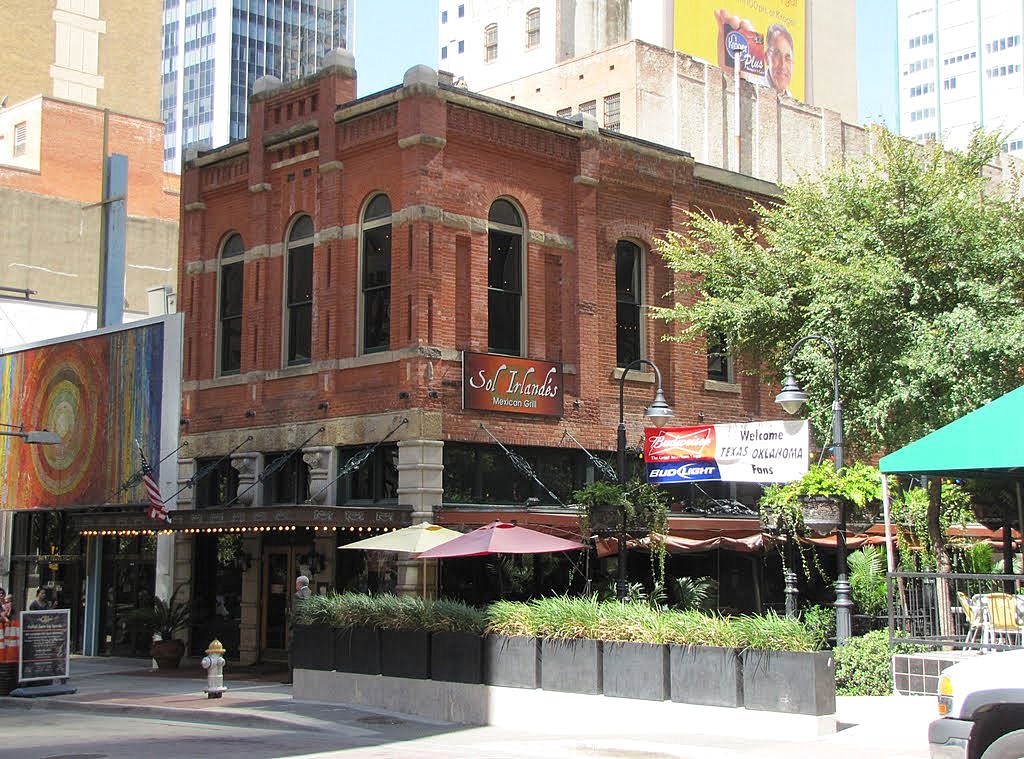
I knew that the building with “Imperial Bar” on the side is still standing (the Sol Irlandes restaurant at 1525 Main has been its occupant for several years), but I wondered about the one with the “Empire” sign. It took a bit of digging, but I’m happy to report that it was a very early movie theater. I had determined that the address of the building with the Empire sign was 353 Main Street (in what is today the 1500 block of Main) and found this article from 1907 about officials closing down “moving picture shows” which had not complied with fire precautions in the storing and projection of highly flammable celluloid film — one of these movie houses was at 353 Main (clippings and photos are larger when clicked):

fire-code-violations_moving-pictures_dmn_062507
Dallas Morning News, June 25, 1907

Below is a clipping from the Dallas city directory issued in 1907 — the first year a special “Moving Pictures” category was included in the directory.

1907-directory_harris-empire
1907 Dallas directory

These “picture shows” were listed not by theater name (if they had one), but by owner or manager. (This was the era of nickelodeons, which were not so much “theaters” as “viewing rooms” — a great article from 1908 about the sudden surge in popularity of the nickelodeon — what they were and what they were like — can be read here.) The theater at 353 Main was owned by Charles B. Harris (usually referred to as C. B. Harris, who had previously worked as a wholesaler for the Edison Phonograph Co. a couple of doors down the block). When the picture above was taken, the Empire was showing movies at 353 Main, men were playing pool for 45¢ an hour at the New Brunswick Billiard Hall next door at 355 Main, and Bartholomew Lynch was running the Imperial Bar on the corner, at 357 Main.

pool-hall_355_dmn_041307
DMN, April 13, 1907

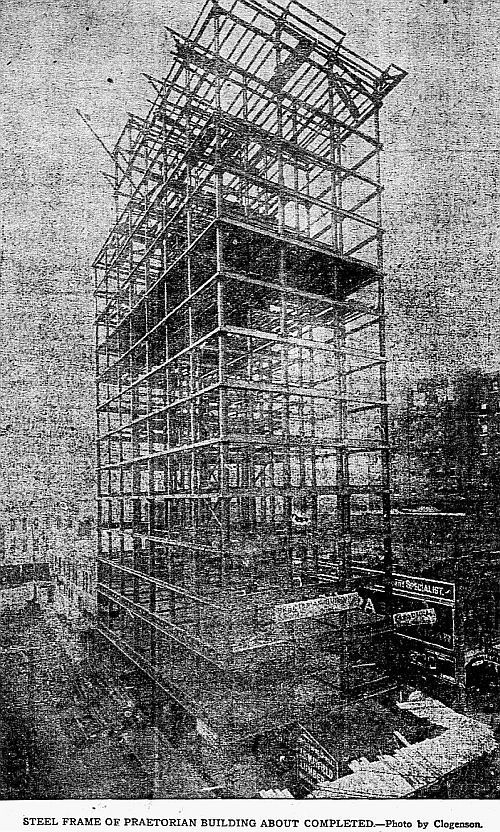
Construction of the C. W. Bulger-designed Praetorian Building — Dallas’ first skyscraper (14 stories!) — had begun in September, 1906. Here’s what it looked like in March, 1907:

praetorian_construction_dmn_031707
DMN, March 17, 1907

And here it is shortly after completion:
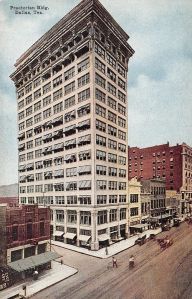
praetorian-building_main-street_postcard_ebay

In January, 1909, C. B. Harris decided to expand up and into the space next door. The Empire Theater stopped showing movies, and in March, 1909, it became a venue for live stage productions.
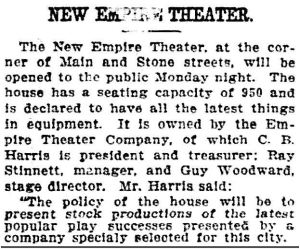
empire_dmn_032109_opening
DMN, March 21, 1909

Here are a few photos showing the Empire and the finished Praetorian Building, around 1909. The first one may be one of the few to show the short-lived Colonial Theater (352 Main), a vaudeville house, across the street.
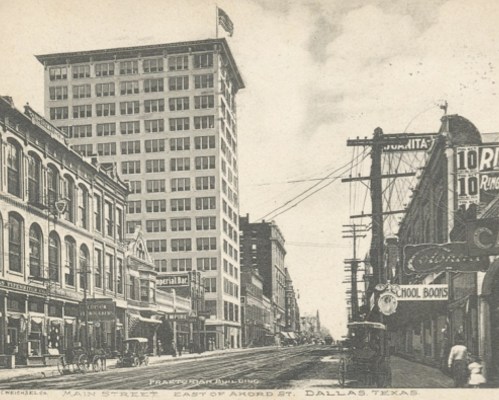
empire-imperial-praetorian_flickr_colteravia Flickr

Here is another postcard view, showing the Empire (the detail of this image is at the top of this post).
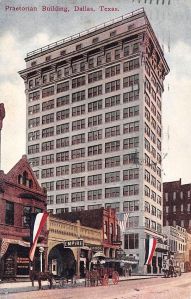
praetorian_empire__main-street_postcard_ebay

Below, a detail of a larger photo, also from around 1909.
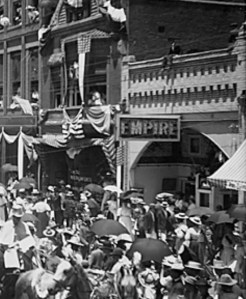
empire_ca-1908_parade_flickr

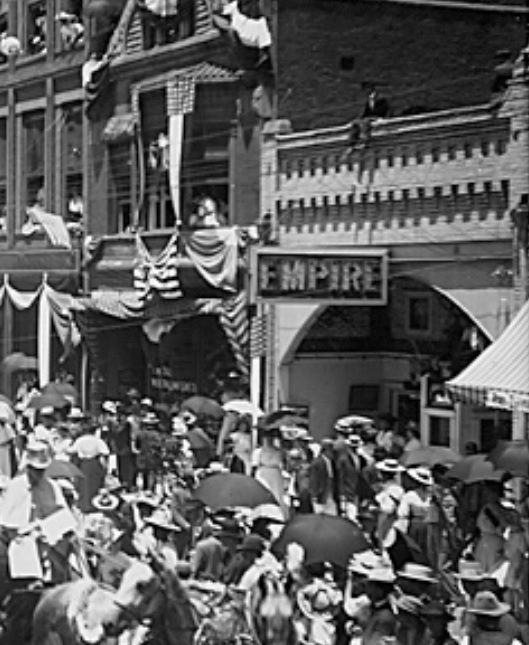
And below, a detail from a larger photo, with spectators watching a parade in August, 1909, showing the Empire with its new construction.
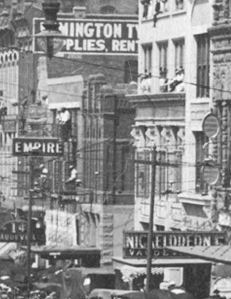
empire_parade-day_1909_degolyer_SMU_close-up

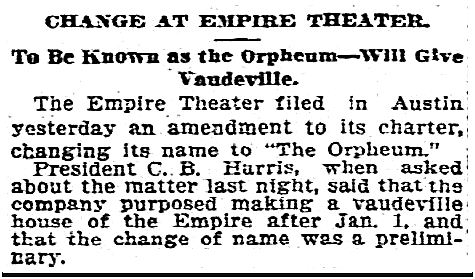
In December, 1909, Harris changed the name of the theater to the Orpheum — it became a vaudeville house.
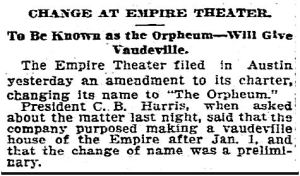
empire-orpheum_dmn_121409
DMN, Dec. 14, 1909

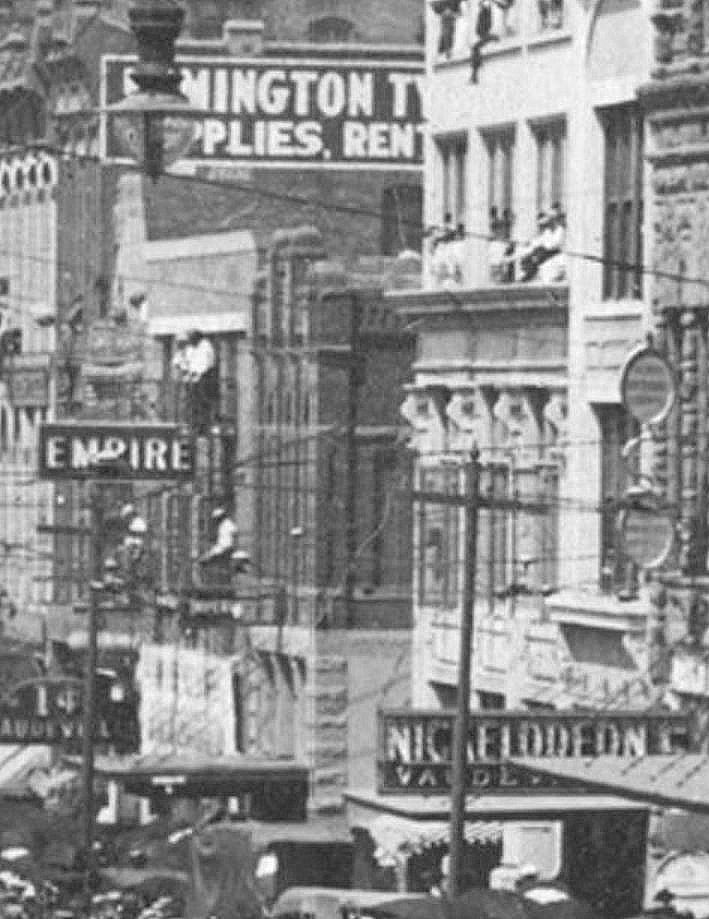
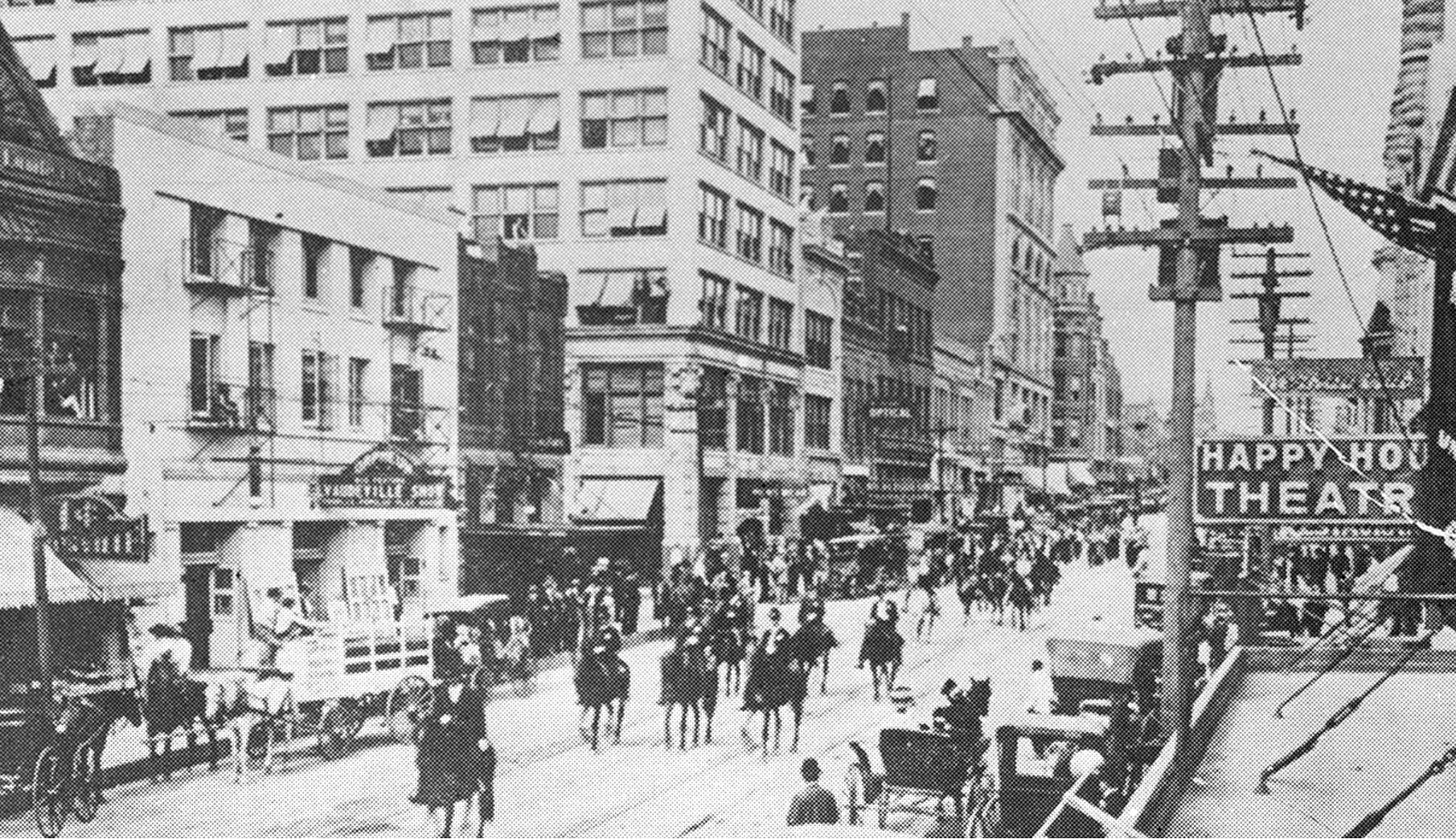
You can see the Orpheum Theater sign in this detail of a larger photo (click thumbnail on page to see full image). (Note that the Happy Hour Theater has taken over the Colonial’s space.)
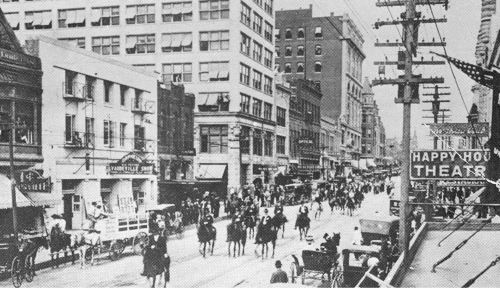
orpheum_happy-hour_praetorian_uta_det

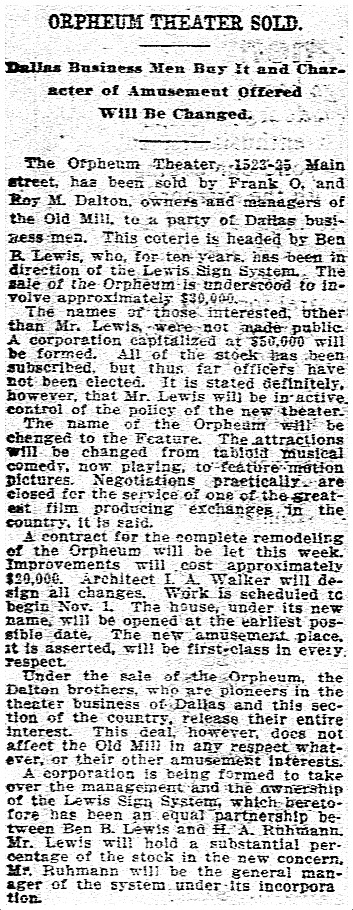
By 1914, the building’s address was 1521 Main (or, more specifically, 1521-23 Main), and ownership of the theater (which was now featuring “tabloid musical comedy”) had changed hands (to the Dalton brothers, who owned the Old Mill Theater). In October, 1914, the Daltons sold the theater. It was extensively remodeled and became the Feature Theater, a motion picture house (once again!).

orpheum_dmn_101814_sold
DMN, Oct. 18, 1914

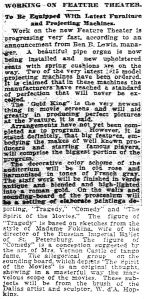
feature-theater_dmn_111514
DMN, Nov. 15, 1914

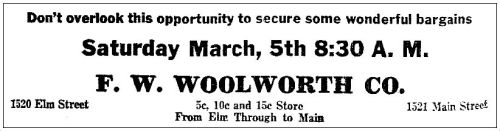
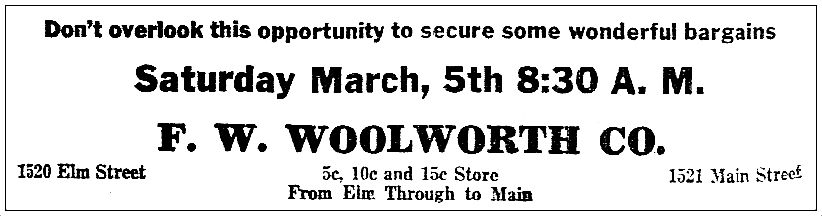
The Feature hung on through the Great War, but finally sputtered out in 1919. In 1920, Woolworth’s expanded into the space (they were already located on Elm Street, and the expansion afforded them entrances on both Elm and Main — and, I think, Stone. Woolworth’s had already been occupying the old Imperial Bar building on the corner when they took over the old Empire space (1525 Main). That was a big Woolworth’s store.

feature-theater_dmn_122420_woolworths
DMN, Dec. 24, 1920

woolworth_dmn_030421_grand-openingDMN, March 4, 1921

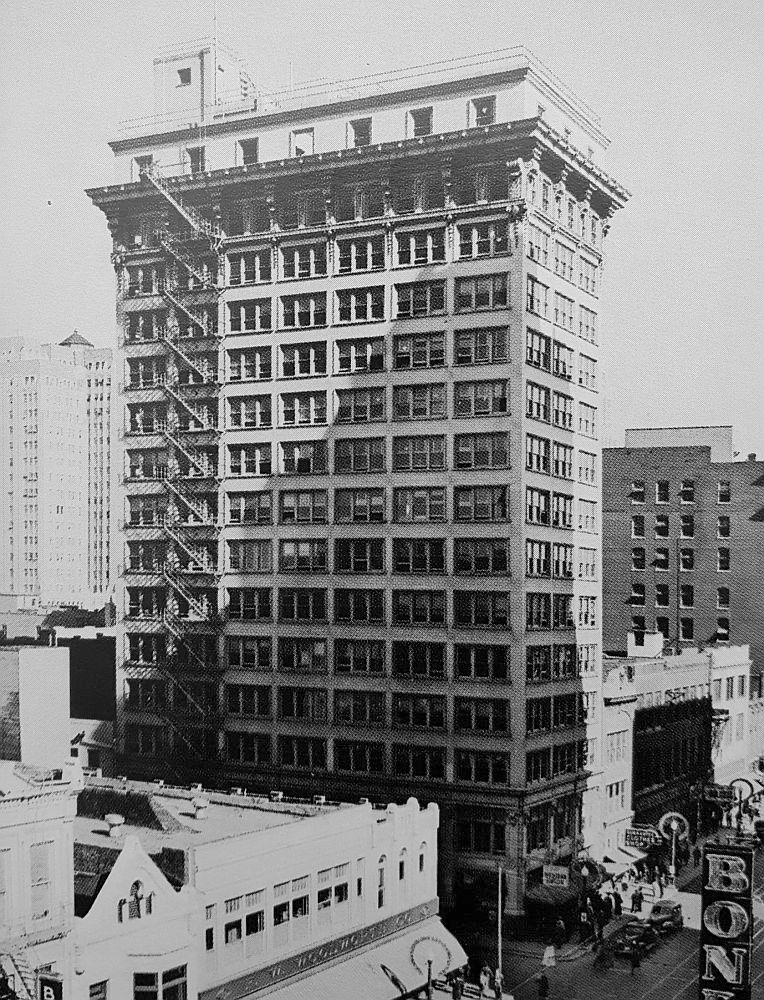
Here’s what our old pal, The Praetorian, and NKOTB, Woolworth’s, looked like around 1930.

praetorian_ca-1930_dallas-rediscovered-cushman-and-wakefield-inc

Here’s Woolworth’s closer up — you can see how the two buildings (the old Empire and the old Imperial Bar) have been joined together a little oddly.

praetorian_ca-1930_dallas-rediscovered_cushman-and-wakefield-inc

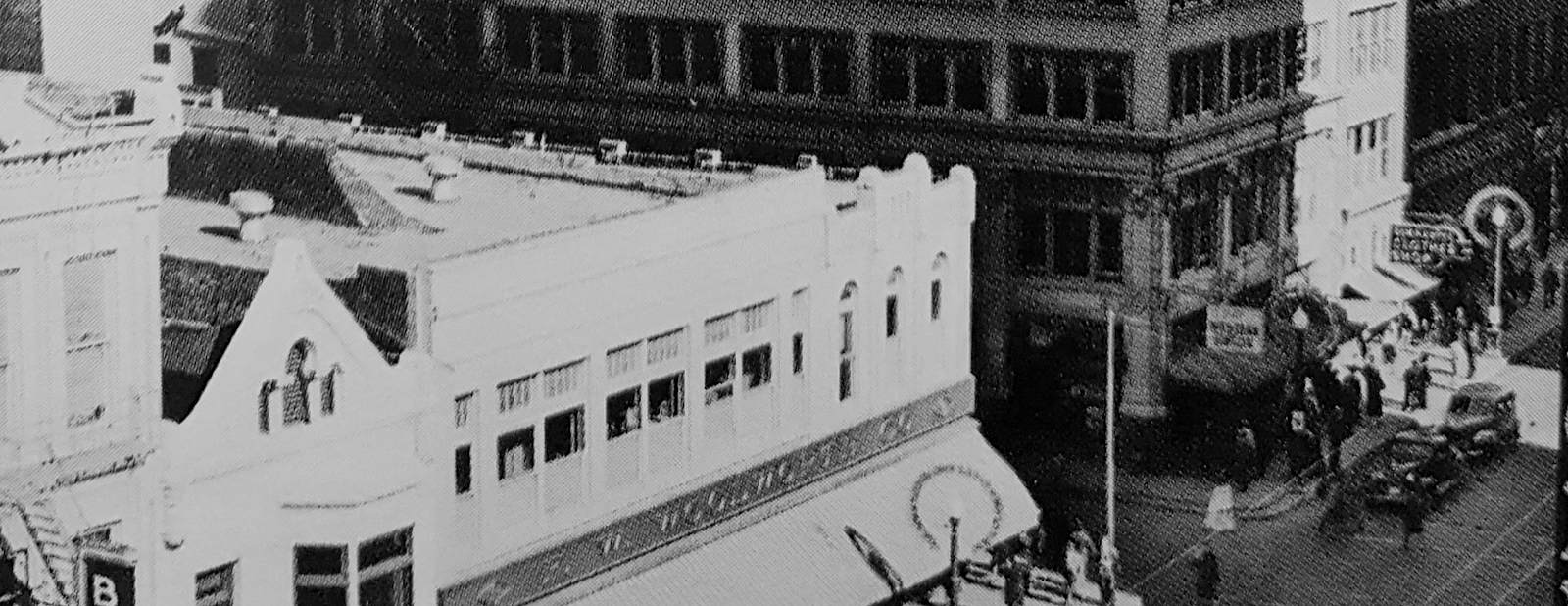
Here’s a street-level view from the 1940s.
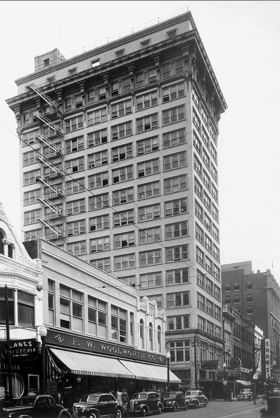
praetorian_william-langley_DPL_ca-1940
via Dallas Public Library

Fast-forward to 1953: the Shaw Jewelry Company moved into the old Empire Theater space at 1521 Main.

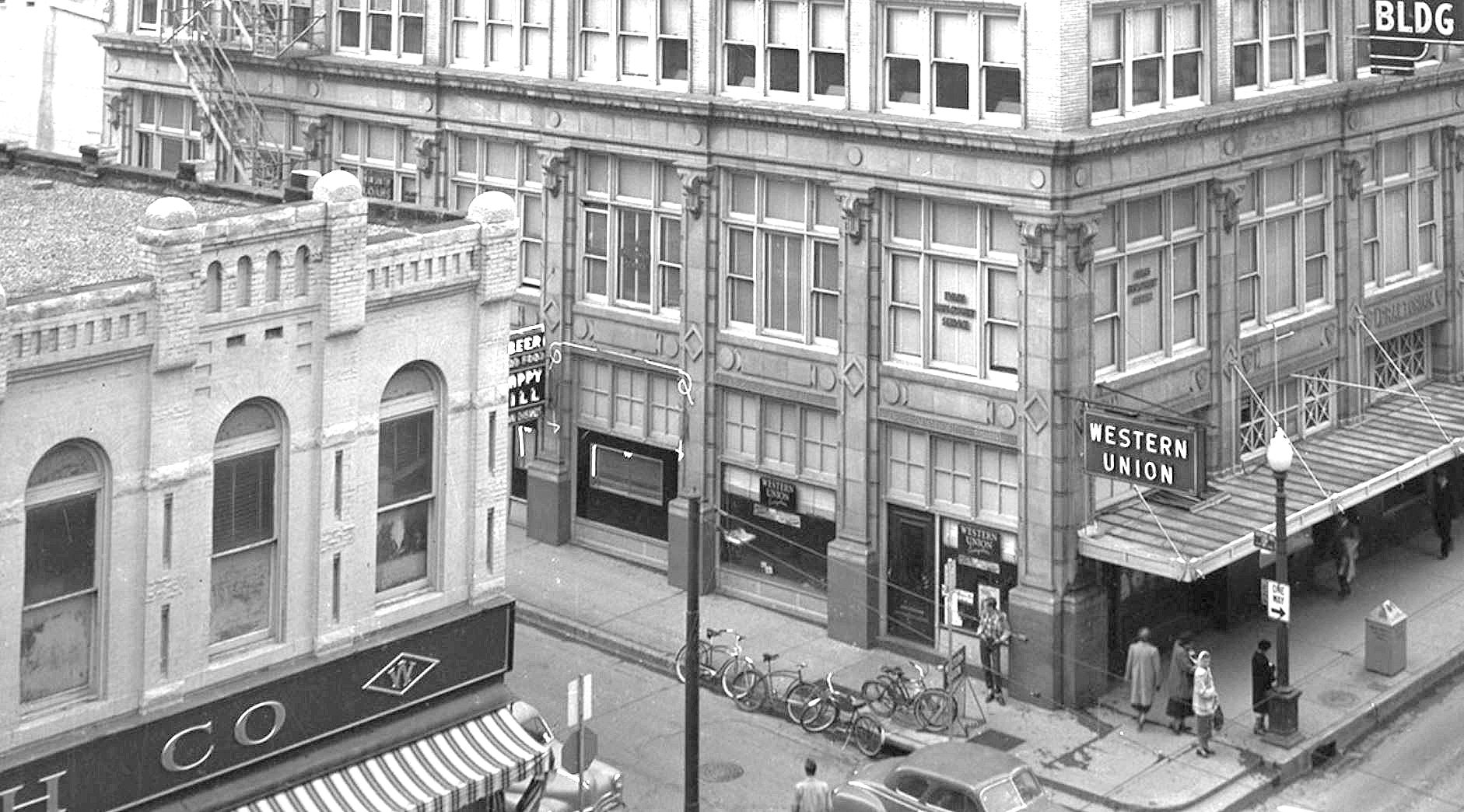
Meanwhile, next door, the old Imperial Bar space had become Texas State Optical. Sadly, someone thought it would be a good idea to wrap the original brick building (which has been estimated as having been built around 1895) in, I don’t know … aluminum siding? Here are before-and-after photos of that corner (Imperial Bar) building. It looked pretty good before TSO took over. (The detail below is from a Squire Haskins photo, via UTA — full photo is here — click thumbnail on UTA page to see a larger image). (I love the delivery boys’ bicycles parked at the curb outside the Western Union office.)

main-and-stone_praetorian_haskins_UTA_det

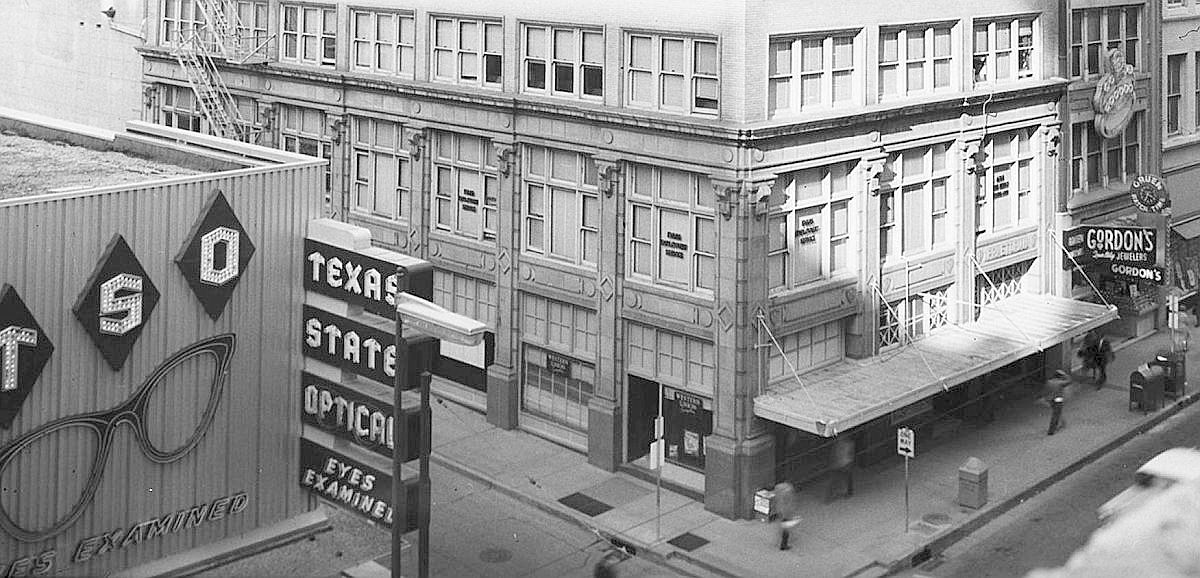
And here’s the same corner after “improvements” (this is another detail from another of Squire Haskins’ fab photos from the UTA collection — see the full photo here — click on thumbnail), circa 1950s.

tso_praetorian_squire-haskins_UTA_1950s

Oh dear. There should be a law….

tso_1525-main_dmn_102055_texas-state-optical
1955 (ad detail)

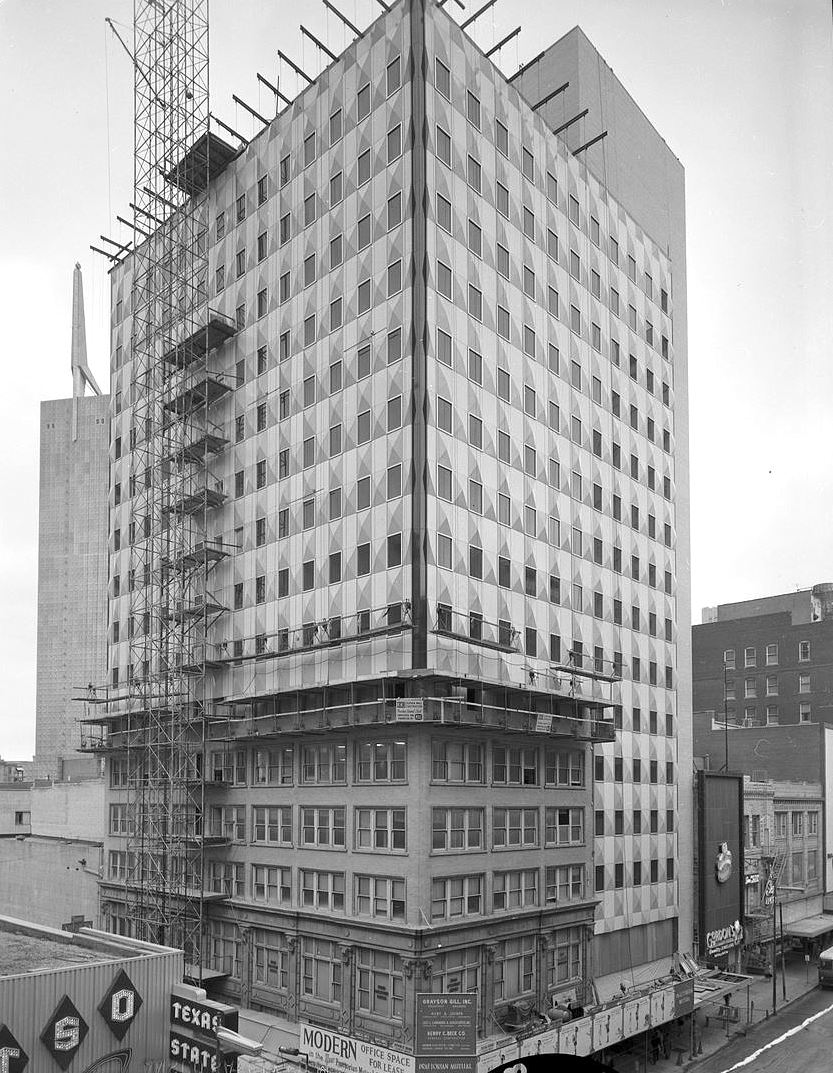
Speaking of “oh dear,” a few short years after this, the Praetorian Building expanded and was … argh … “re-clad.” Here’s a shot of it, mid-cladding, about 1961 (Squire Haskins photo info from UTA here).

praetorian_recladding_ca-1961

I believe it was … yellow.

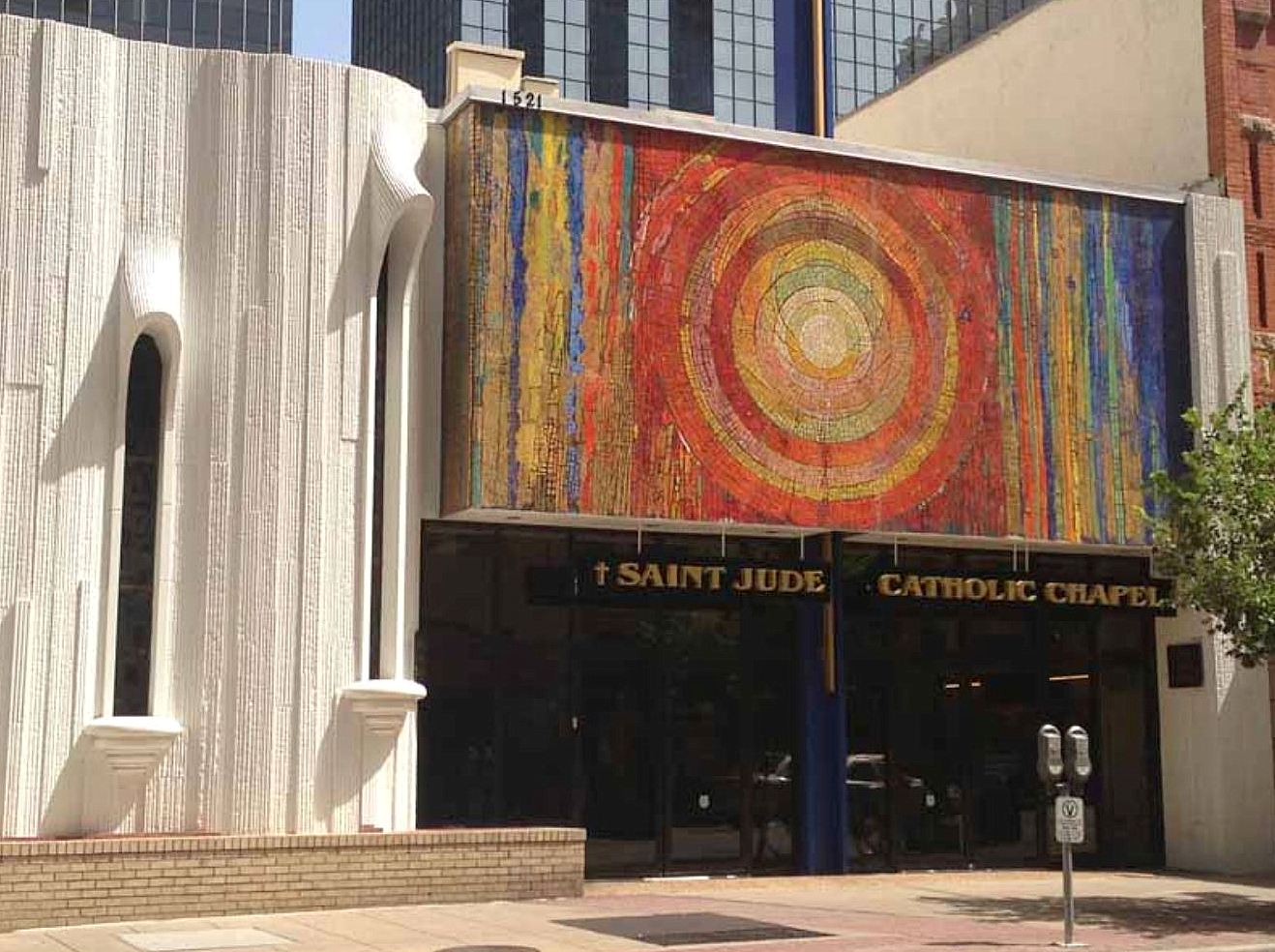
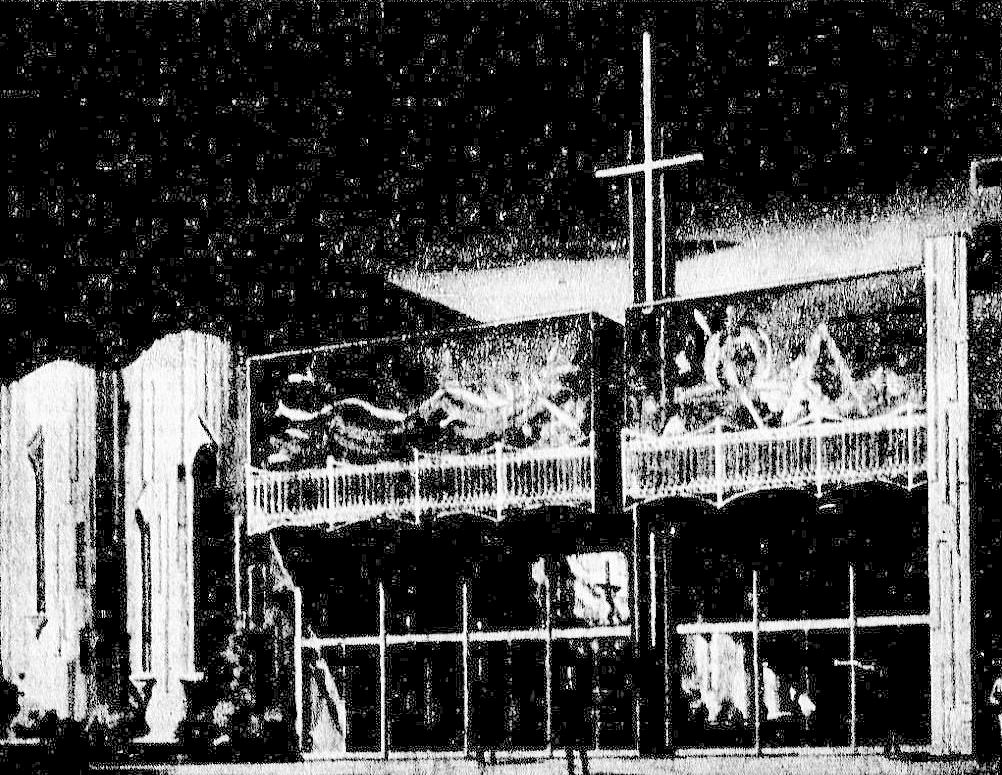
In 1968, the Saint Jude Catholic Chapel moved into 1521 Main — the old Empire Theater space. The front was adorned with a vivid mosaic by Gyorgy Kepes (I wrote about the mosaic here).
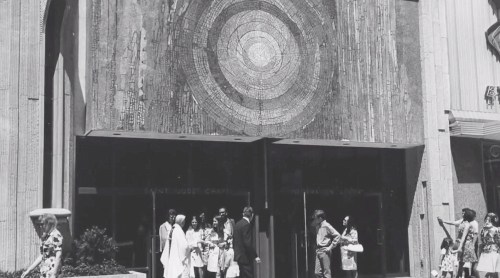
gyorgy-kepes_mosaic_st-jude-chapel_website_videovia St. Jude Chapel website

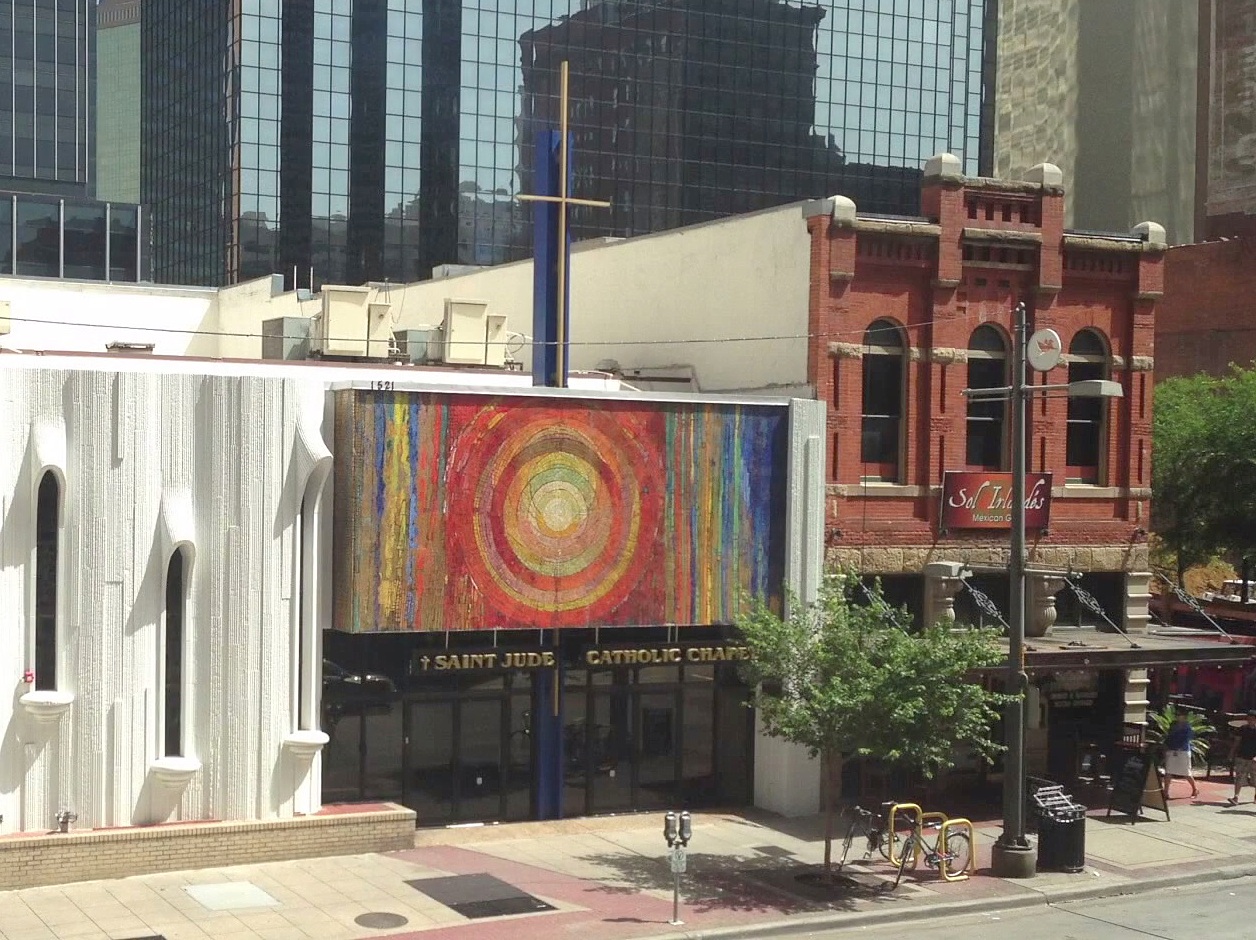
The chapel is still there.

TSO — and later Pearle Vision — lasted at 1525 Main for years. In 2001, renovation and restoration efforts to develop Stone Place began. 1525 Main was restored as closely as possible to its original design and became home to a succession of restaurants (it has been occupied by Sol Irlandes for several years). ArchiTexas did a GREAT job with the building’s restoration!! (Read a 2001 Dallas Morning News article about this project — and about the historic 1525 building: “Historic Downtown Buildings To Be Restored — Shops, Restaurants Will Breathe New Life Into Stone Place,” DMN, Feb. 21, 2001.)
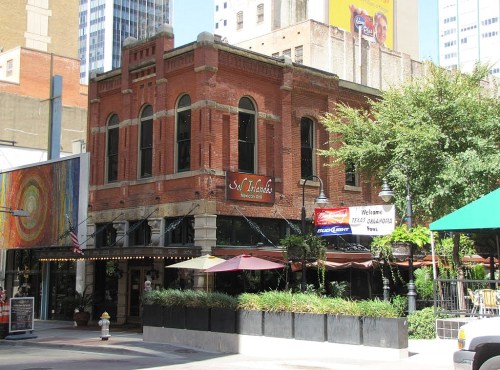
sol-irlandes_panoramio

So. Back to the top photo. There’s good news and bad news. Empire Theater building: still there. Imperial Bar building: still there. But the Praetorian Building — the most historically important of the three? The fabulous “skyscraper” was demolished in 2013 and replaced by a giant eyeball. Here’s a 2012 Dallas Morning News photo of it in mid death spiral, being slowly dismantled.
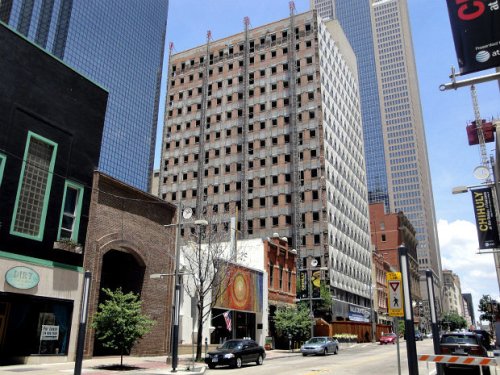
praetorian-pre-demo_dmn-photo_2012

See what this view looks like in the most recently updated Google Street View, here.

**

Interested in seeing the development of this block, as chronicled in Sanborn maps? Of particular interest is the northwest corner of Main and Stone — before 1911 the addresses of these two building were 353-355 Main and 357 Main; after 1911 the addresses changed to 1521-23 Main and 1525 Main. It appears that both buildings were built between 1892 and 1899.

  • 1885 — not a lot in this block yet — but there is a well
  • 1888 — a building has appeared one lot off Stone
  • 1892 — that building from 1888 is now nothing but “ruins” — likely the result of a fire
  • 1899 — the buildings we’ve been looking at in this post have appeared
  • 1905 — C. B. Harris’ Empire would occupy 353 Main by 1907 — possibly by 1906 (in 1905, Harris was working three doors down, at 347 Main, as an agent for the Edison Phonograph Co.)
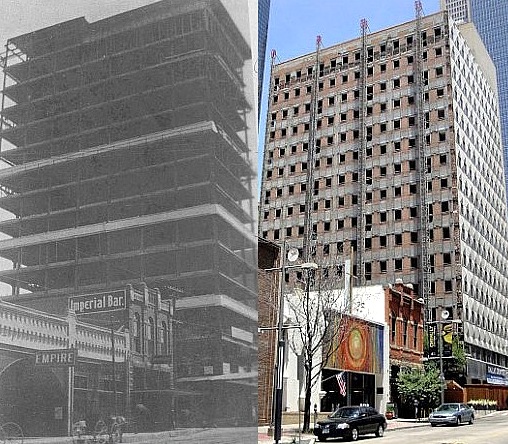
  • 1921 — This map indicates that the 1521-23 building is two stories. Pictures going back to 1909 (see a couple above) seem to show three stories, but pictures of the building as part of Woolworth’s appear to show two floors (for comparison, the building on the corner at 1525 was two stories). So … what looks like a third floor on 1521-23 Main might be … architectural trompe l’oeil? Either that, or there was demolition and construction and demolition of the two-story building currently occupied by the St. Jude Chapel. This is confusing. Whatever the case, the renovation/restoration of these two buildings in 2001 shows them to look pretty much as they did in the top 1907 photo — once again, that original roofline is present. Below, the 1907 photo is on the left, a 2012 photo is on the right.
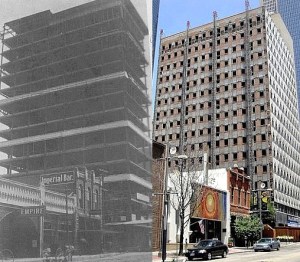
praetorian_main-stone_1906-1912

And here the buildings are today, minus the dearly departed Praetorian (RIP).
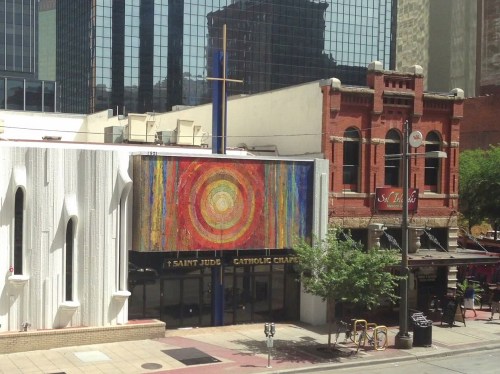
st-jude-chapel_website_present-day

Pretty cool.

***

Sources & Notes

Top photo from the George W. Cook Dallas/Texas Image Collection, DeGolyer Library, Central University Libraries, Southern Methodist University; more info is here. (I have edited the image slightly — and rather poorly — please see link for original image.)

The photo and detail showing Woolworth’s, circa 1930, is from William L. McDonald’s book Dallas Rediscovered; photo credit cites Cushman & Wakefield, Inc.

Sources of all other images noted, if known.

For an entertaining history of the construction of the Praetorian Building (which had MANY detractors and doubters), read check the archives of The Dallas Morning News for the article by Kenneth Foree, “First Skyscraper Had Its Skeptics” (Oct. 27, 1948).

More on the Praetorian Building on Wikipedia, here.

*

Copyright © 2017 Paula Bosse. All Rights Reserved.

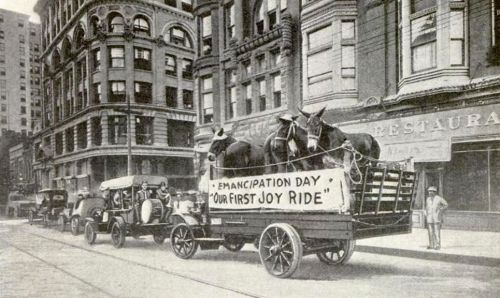
From the Vault: Joy-Riding Mules on Main Street — 1911

mule-joyride_pop-mechanics_jan-1912“Emancipation Day!”

by Paula Bosse

Mules on a “joy ride” down Main Street — something you (probably) don’t see every day. So what exactly was going on here? Find out in the original post from 2015, here.

*

Copyright © 2017 Paula Bosse. All Rights Reserved.

The Saint Jude Chapel Mosaic by Gyorgy Kepes — 1968

gyorgy-kepes_mosaic_st-jude-chapel_websiteMain Street mosaic…

by Paula Bosse

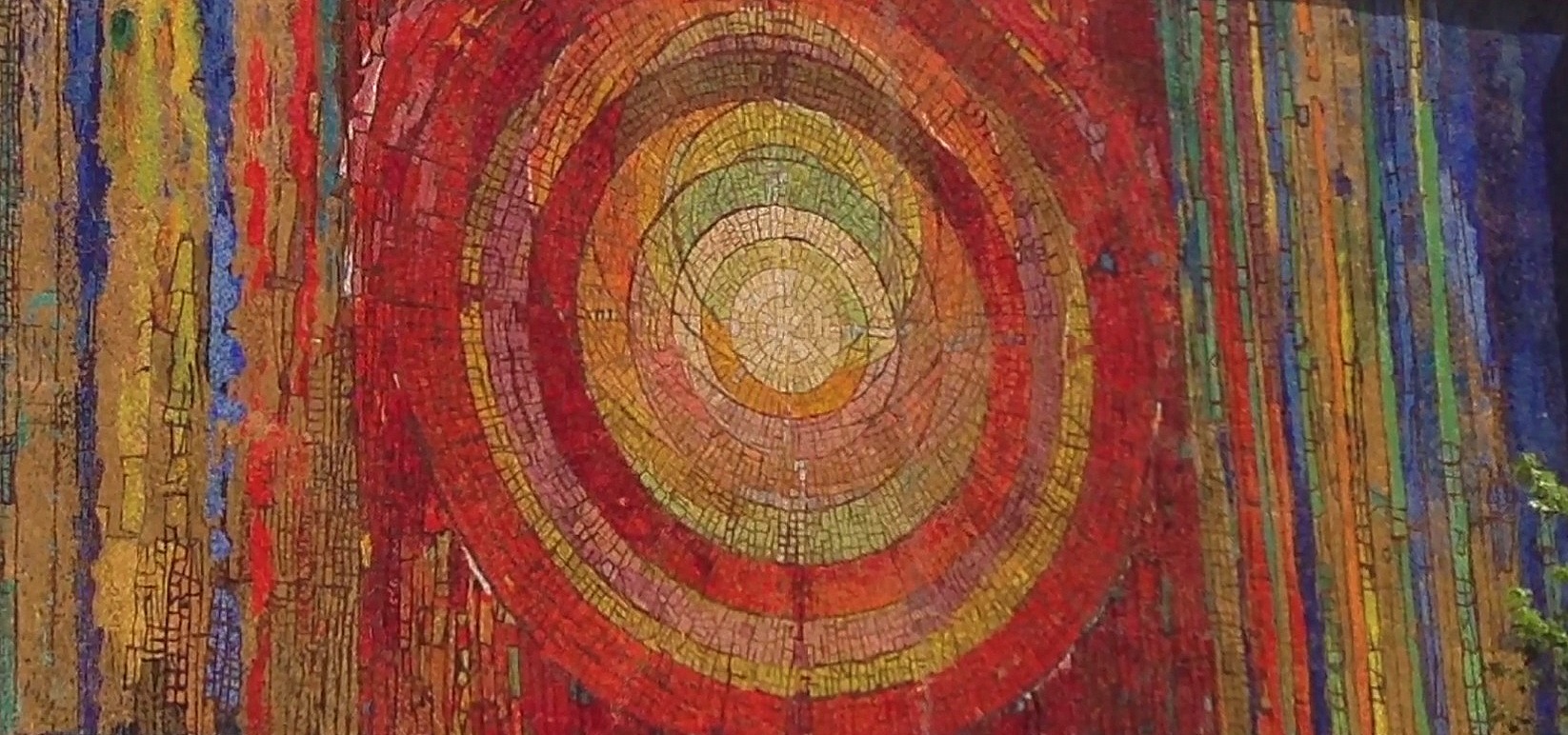
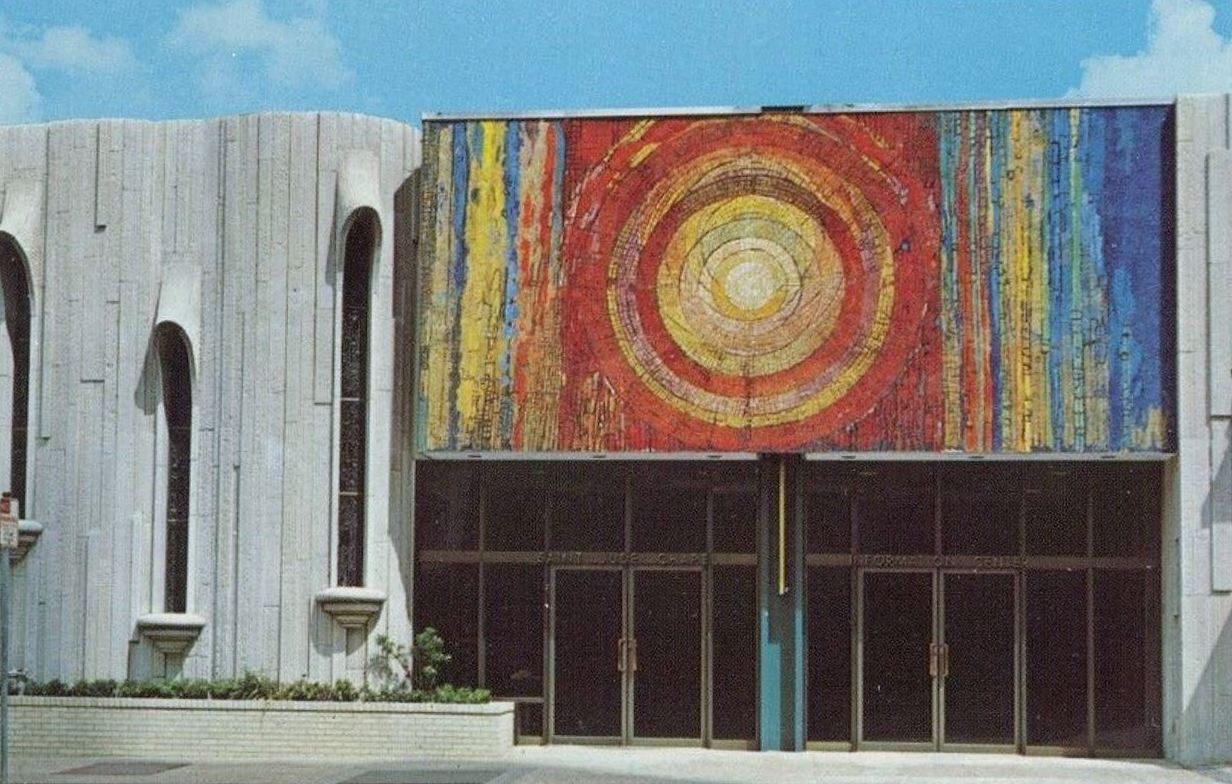
Perhaps you’ve noticed the intensely colorful sunburst-like mosaic that adorns the Saint Jude Catholic Chapel at 1521 Main Street, near Stone Place. It’s hard to miss. The artist is Gyorgy Kepes (1906-2001), an important Hungarian-born avant-garde painter, photographer, and educator who immigrated to the United States in 1937. He taught for a short time at North Texas State University (now the University of North Texas) in the mid 1940s, and may be known best in Dallas for his work as artistic director for Temple Emanu-El in the late 1950s, a project which artfully brought together contemporary art, architecture, and design into a sacred space.

At the time Kepes was commissioned to create the mosaic for the new Saint Jude Chapel (which opened in 1968), he was immersed in founding the Center for Advanced Visual Studies at the Massachusetts Institute of Technology (MIT). One wonders how he found the time!

This mosaic — which as far as I know is untitled — is probably a familiar sight to people who work and live downtown, but most who pass it are completely unaware of the name of the artist. I hope I’ve helped correct that a bit. Thank you, Gyorgy Kepes — and thank you, Saint Jude Chapel — for this nice little addition to Dallas’ public art.

gyorgy-kepes_mosaic_st-jude-chapel_website_video_closeup

gyorgy-kepes_mosaic_st-jude-chapel_website_video

gyorgy-kepes_mosaic_st-jude-chapel_website_video_bw

st-jude-chapel_kepes_postcard_ebay

st-jude-chapel_kepes_postcard_ebay-captionPostcard and info, eBay

Below, an early rendering of the proposed building (1966), designed by architect Eugene F. Boerder. The vague mosaic design in this drawing suggests that Kepes might not have been attached to the project at this point, or that his design had not yet been determined.

st-jude_architects-rendering_1966_eugene-f-boerderArchitect’s rendering, Sept. 1966

***

Sources & Notes

Unless otherwise noted, photos from the Saint Jude Catholic Chapel website, here. The undated black-and-white photos are from a video history of the chapel, here.

Read about Gyorgy Kepes in overviews of his life and career from MIT, from the James Hyman Gallery, and from Wikipedia.

I have been unable to find any information about this mosaic. Had I not stumbled across Kepes’ name in a Sept. 14, 1968 Dallas Morning News article about the new chapel (which I was reading while researching the very interesting history of the building the St. Jude Chapel is in — and the building next to it) (that post is here), I’m not sure I’d be able to track down the identity of the artist. It’s surprising how little is out there about such a prominently displayed work of art!

UPDATE: Rather bizarrely, a few weeks after I wrote this, I learned that this mosaic was being restored — so I went downtown, met the restoration team, took some photos, and wrote the post “Mosaic Restoration at Downtown’s St. Jude Chapel.”

*

Copyright © 2017 Paula Bosse. All Rights Reserved.

From the Vault: The Texas Bookbindery, Arcadia Park

texas-bookbindery_oak-cliff_tichnor

by Paula Bosse

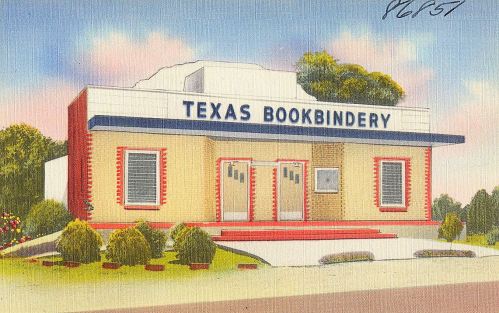
Look at this charming little Oak Cliff building. Isn’t it cute? Wanna see what it looks like today? Click on over to my original post from 2014, here, and see it.

(This is about as close to “clickbait” as I’m likely to get….)

*

Copyright © 2017 Paula Bosse. All Rights Reserved.

“Dallas Skyline: Late Afternoon From Stemmons Freeway” by Ed Bearden — 1959

bearden_dallas-skyline-late-afternoon-from-stemmons-freeway_litho_1959Skyline and power plant… (click for larger image)

by Paula Bosse

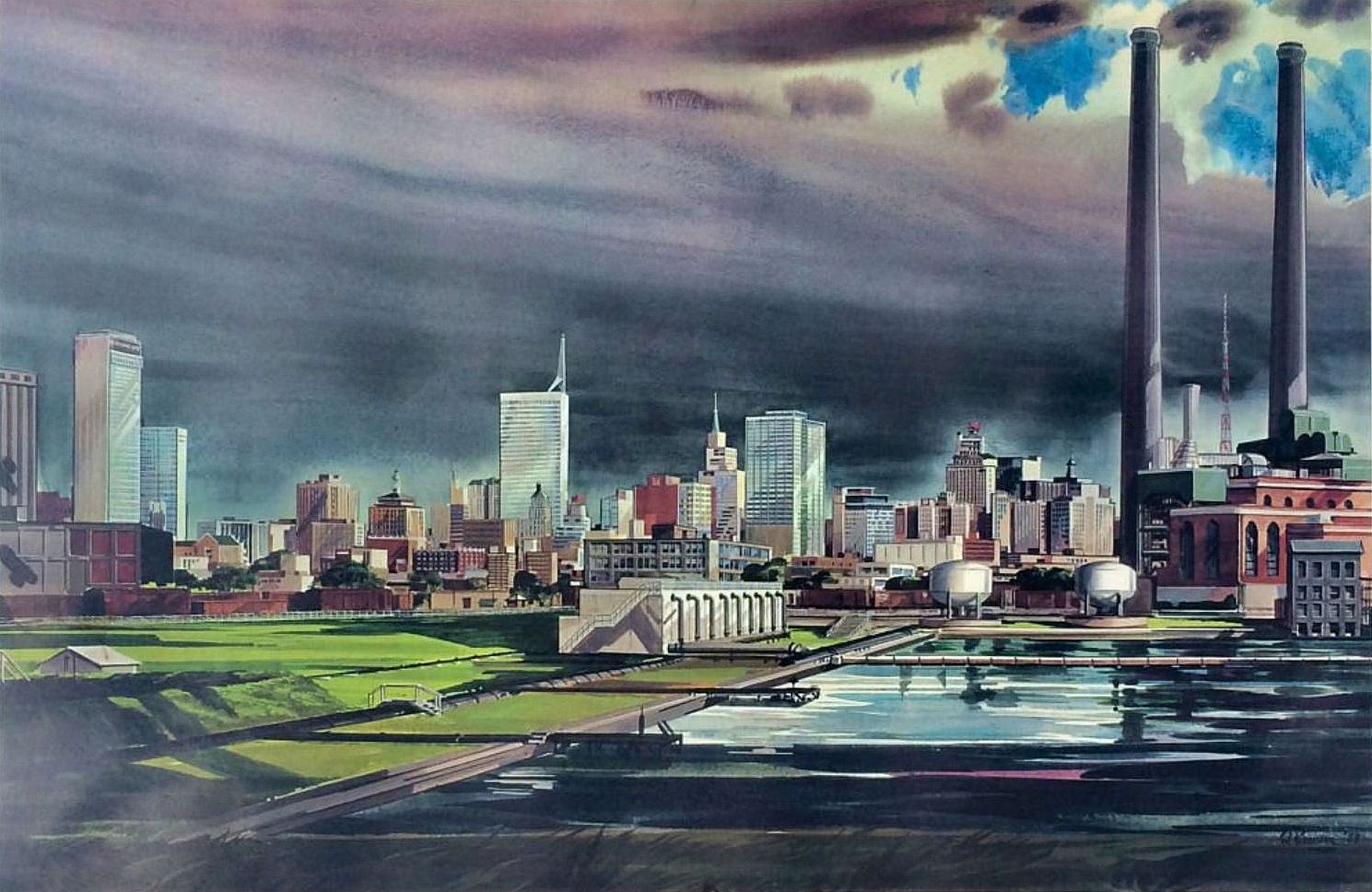
I think the 1950s Dallas skyline is my favorite Dallas skyline. This lithograph by Dallas artist Ed Bearden shows all the usual superstars — the Southland Life Building, the Medical Arts Building, the Republic Bank Building, the Mercantile, the Magnolia — but it also shows a building that doesn’t often find its way into artistic renderings of the city’s skyline: the Dallas Power & Light plant (which was demolished several years ago and is now the site of the American Airlines Center). It looks really great here, with its familiar twin steamstacks and its oasis-like “spray pond” shimmering in the foreground. In fact, the presence of the DP&L plant is my favorite element of this artwork. The beauty of that workhorse industrial plant gives those fancy skyscrapers a run for their money!

This same view from the Stemmons of today looks like — brace yourself — this.

***

Sources & Notes

Lithograph by Ed Bearden; image from an auction listing on the Live Auctioneers site, here. (Thanks, “Not Bob,” for alerting me to this great artwork!)

See another Bearden skyline seen from a similar vantage point, here.

More on the cool-looking DP&L plant and its twin smokestacks can be found in these Flashback Dallas posts:

  • “DP&L’s Twin Smokestacks,” here
  • “A New Turbine Power Station for Big D — 1907,” here

*

Copyright © 2017 Paula Bosse. All Rights Reserved