Flashback : Dallas

A Miscellany: History, Ads, Pop Culture

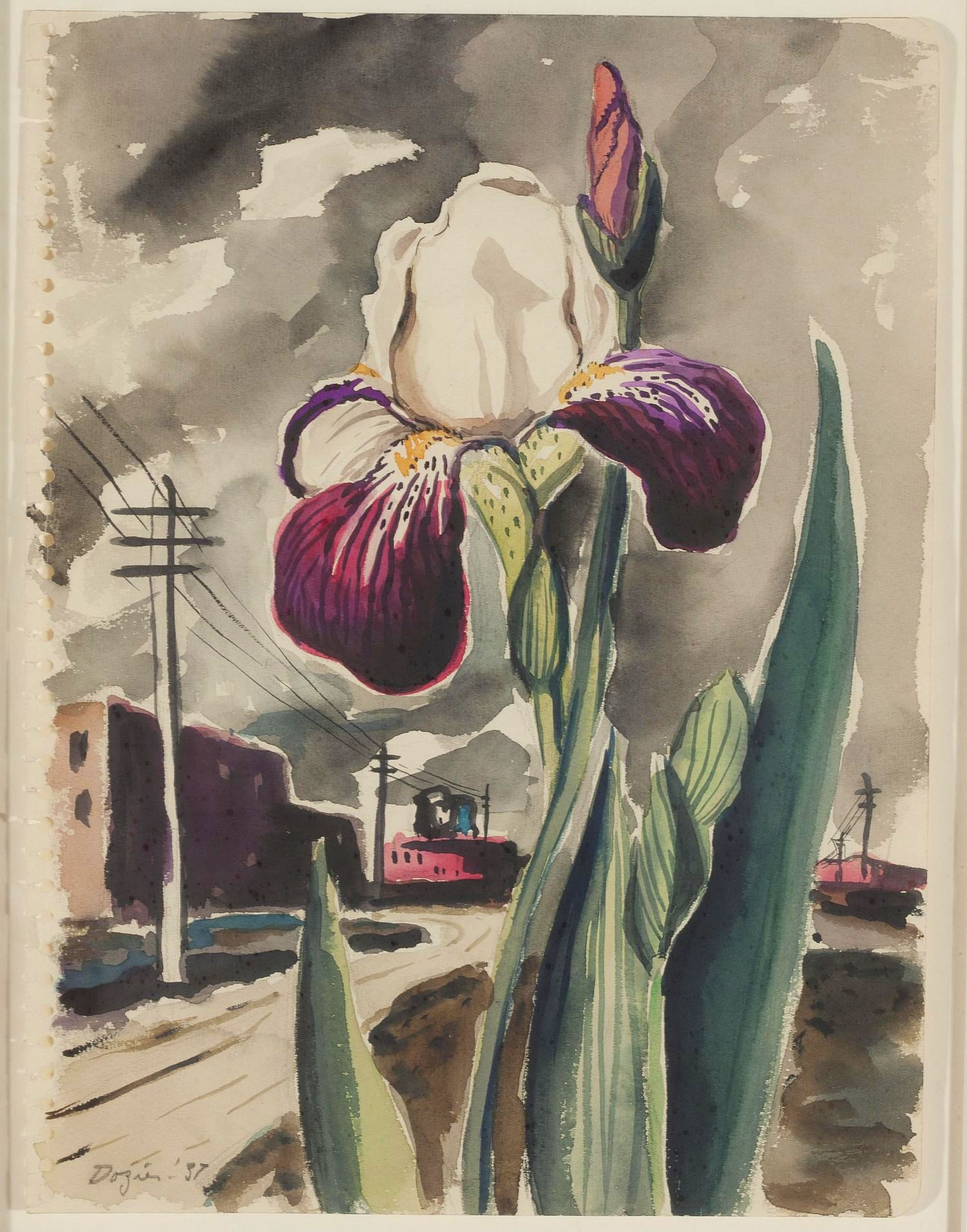
Spring, According to Otis Dozier — 1937

dozier_iris-purple_1937_dmaOtis Dozier’s purple iris (click for much larger image)

by Paula Bosse

My birthday is in March, and I always associate this time of year with irises, because the irises around our house would start to bloom in time for my birthday. There’s no better way to celebrate a (belated) start to Spring than by sharing this beautiful watercolor from Otis Dozier: “Iris (purple) April,” 1937.

***

This watercolor is in the collection of the Dallas Museum of Art, a gift of The Dozier Foundation; ©Denni Davis Washburn, William Robert Miegel, Jr., and Elizabeth Marie Miegel. More information is here.

More on the Forney-born Dallas Nine artist Otis Dozier (1904-1987), here.

Did you know there is an Iris Society of Dallas? There is!

Click picture for very large image.

*

Copyright © 2016 Paula Bosse. All Rights Reserved.

Highland Park Village — The Original Model

hp-village_model_gallowayDallas’ most exclusive shopping destination

by Paula Bosse

The model of the Highland Park Shopping Village (“9 Acres of Property”) was, for many years, on display in the sales office of the Flippen-Prather Realty Co., the company that developed Highland Park and this beautiful shopping “village.” (I’m not sure where this photo was taken — it looks like a Flippen-Prather promotional table set up in an exhibition space of some sort.) Construction began on the shopping area in early 1930 and took several years to complete. The architects were Dallas’ Fooshee & Cheek.

Below, a slightly closer look at this cool model, complete with little cars (but no little people…).

hp-village-model_galloway-det

***

Sources & Notes

The photo (credited to the collection of Hugh Prather, Jr.) is from the really wonderful book The Park Cities, A Photohistory by Diane Galloway (Dallas: Diane Galloway, 1989). (This is an essential book for anyone interested in historic photos of Dallas and the Park Cities. If you come across a copy priced under $30.00, snap it up!)

More on the Highland Park Village of today can be found here.

*

Copyright © 2016 Paula Bosse. All Rights Reserved.

From the Vault: The Waiting Station at Ferris Plaza

railway-info-bldg_1926

by Paula Bosse

This forgotten building on the east side of Ferris Plaza used to face Union Station. It was the first thing travelers saw as they emerged from the terminal: an attractive information bureau and a covered place to wait for streetcars and interurbans, which many of these travelers took as they continued their journeys. One could also buy snacks inside and avail oneself of its public “comfort stations.” Almost no one remembers this little brick building, and, I have to say, I really enjoyed researching it! Read the post from 2014 — “Ferris Plaza Waiting Station: 1925-1950” — and see some interesting photos, here.

*

Copyright © 2016 Paula Bosse. All Rights Reserved.

The Official Government Reenactment of the Kennedy Assassination — Nov. 27, 1963

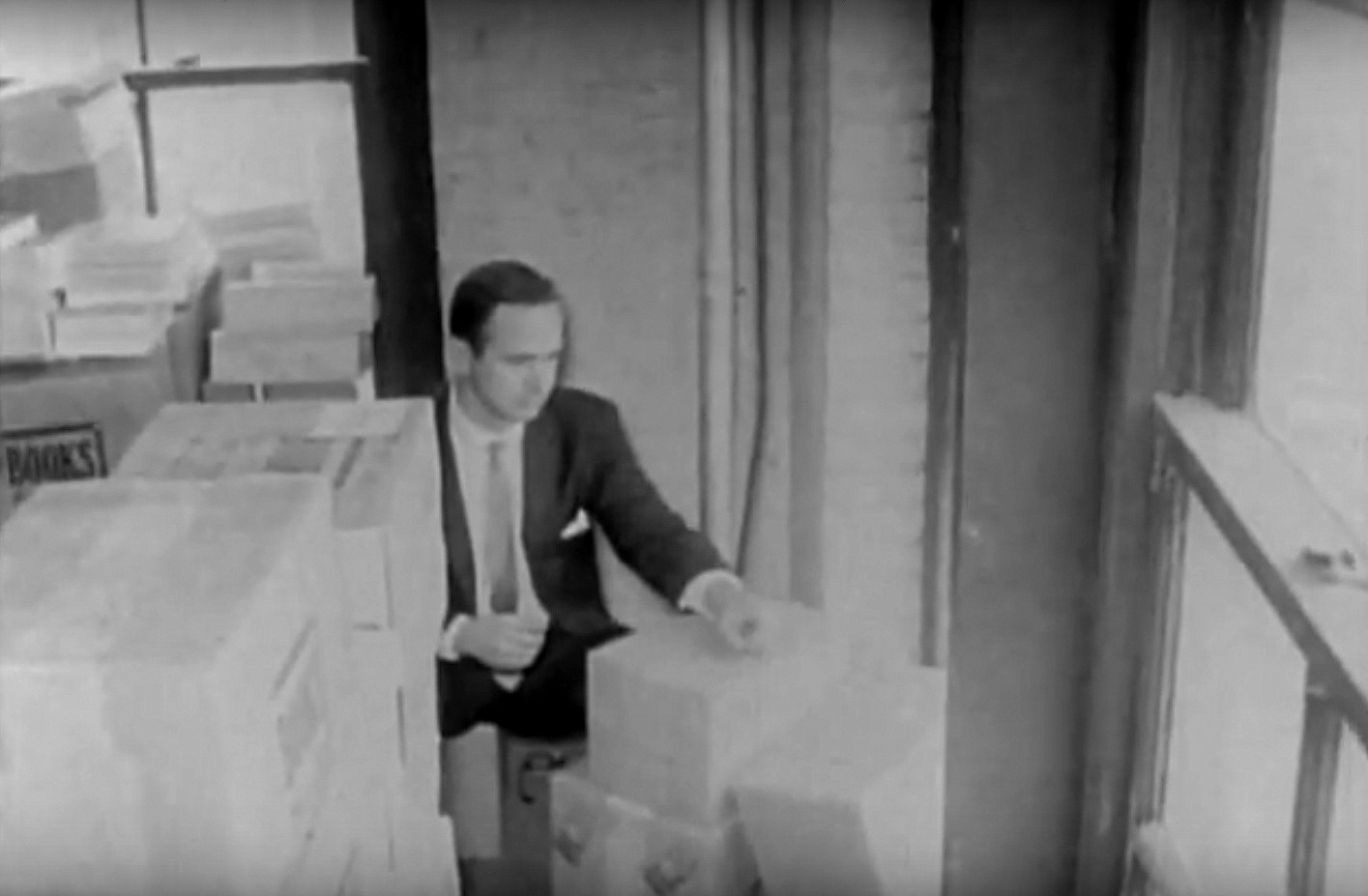
reenactment_agent-at-windowAgent Howlett at window with “rifle”

by Paula Bosse

Yesterday I received a comment on a previous post I wrote about the first official reenactment of the Kennedy assassination, and that got me to wondering if that film was online anywhere. The film was made as part of the Secret Service investigation and was filmed in Dealey Plaza and in the Texas School Book Depository; the motorcade sequence was filmed on November 27, 1963, just five days after the assassination. Even though my knowledge of the events of November 22 is fairly limited (and what I do know is mostly due to osmosis), just growing up here you kind of feel you’ve seen everything connected with the assassination. But I’d never seen this film or the one made a few months later with the production assistance of local TV station KRLD, which included much of the same footage. Apparently, the original film had not been made public until fairly recently.

It’s very interesting to watch, and the fact that there is no sound makes it appropriately eerie. I have to admit that I was most interested in seeing the footage of downtown streets. And the interior of the Texas School Book Depository beyond just the “sniper’s nest” we always see. (I can now say I’ve sneaked a peek inside the depository’s employee lunchroom.)

So here are the two films. The first one was made by the Secret Service, with the Dealey Plaza reenactment filmed on Nov. 27, 1963. It has no sound. I thought it was interesting, but a lot of people might find it a little dull and repetitive. Below this video is one which uses this footage to lay out the government’s findings, with lots of details and no-nonsense narration by KRLD’s Jim Underwood. (I’m not sure why — or for whom — this educational film was made. It doesn’t seem to have been screened for the public.) The silent film has more footage, but the narrated film is easier to follow. And below that are screenshots from the government’s “reconstruction.” (UPDATE, Jan. 2024: The two videos I had originally linked have been removed from YouTube. I’m linking a video I found recently below.)

*

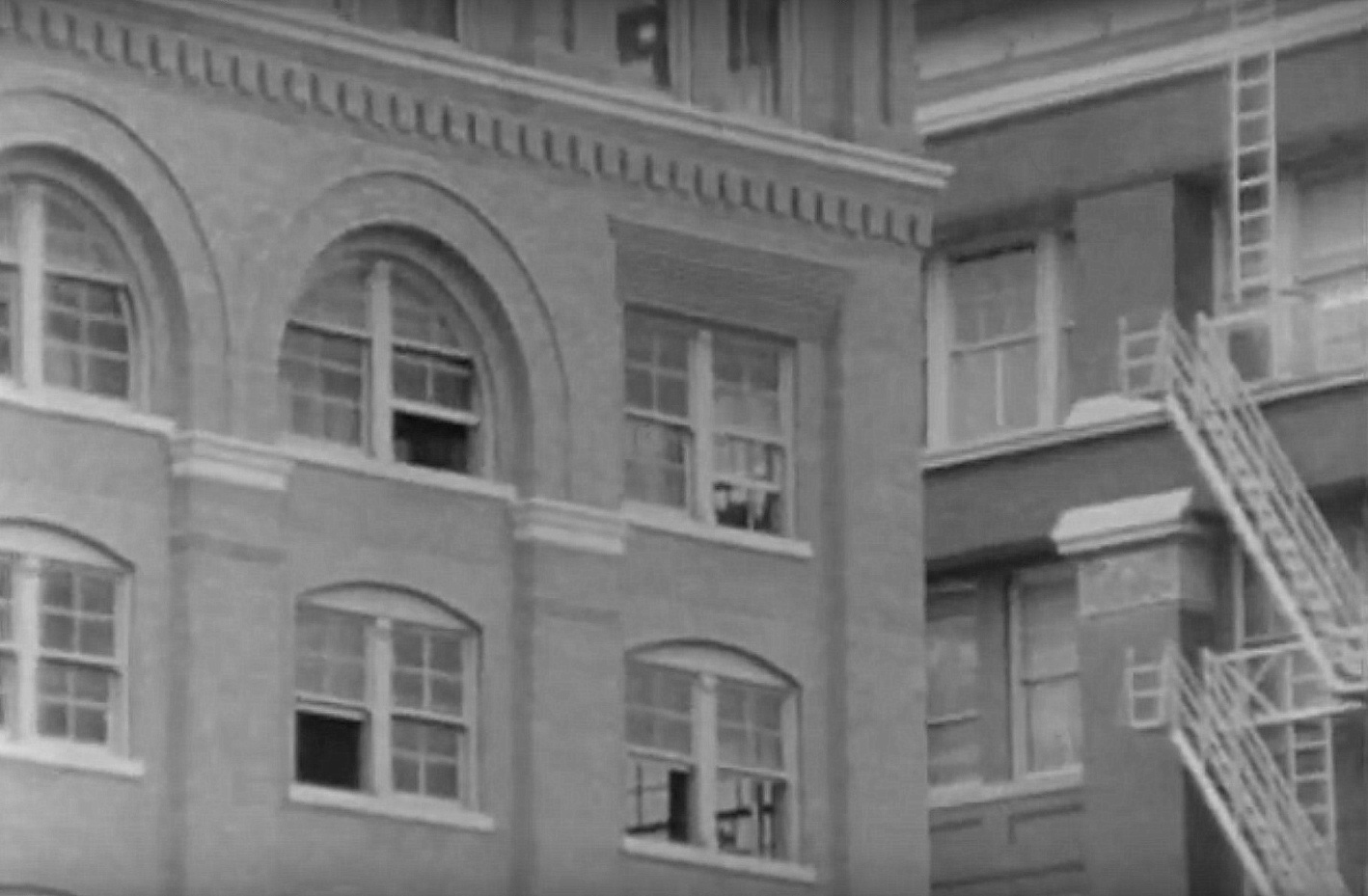
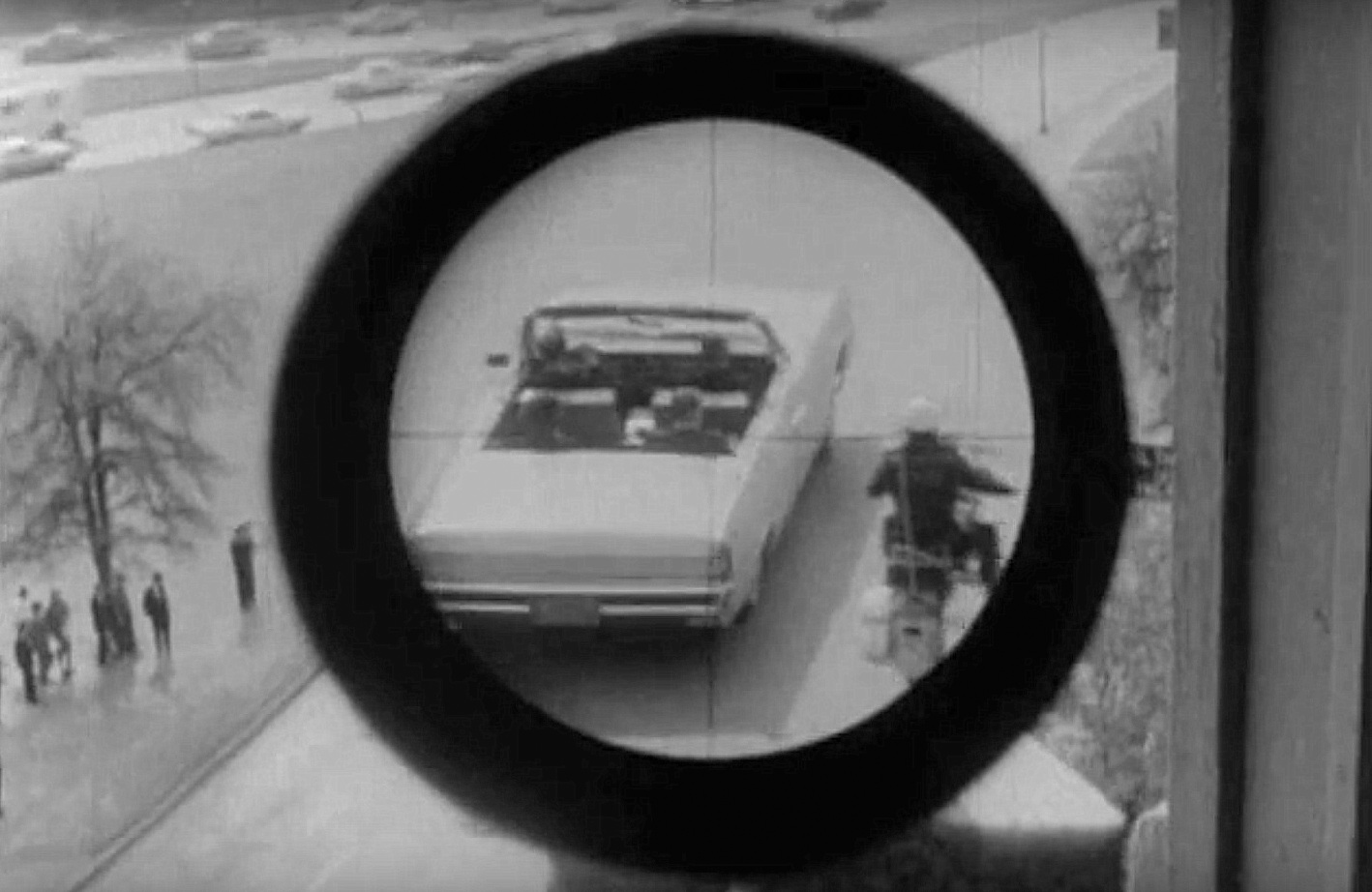
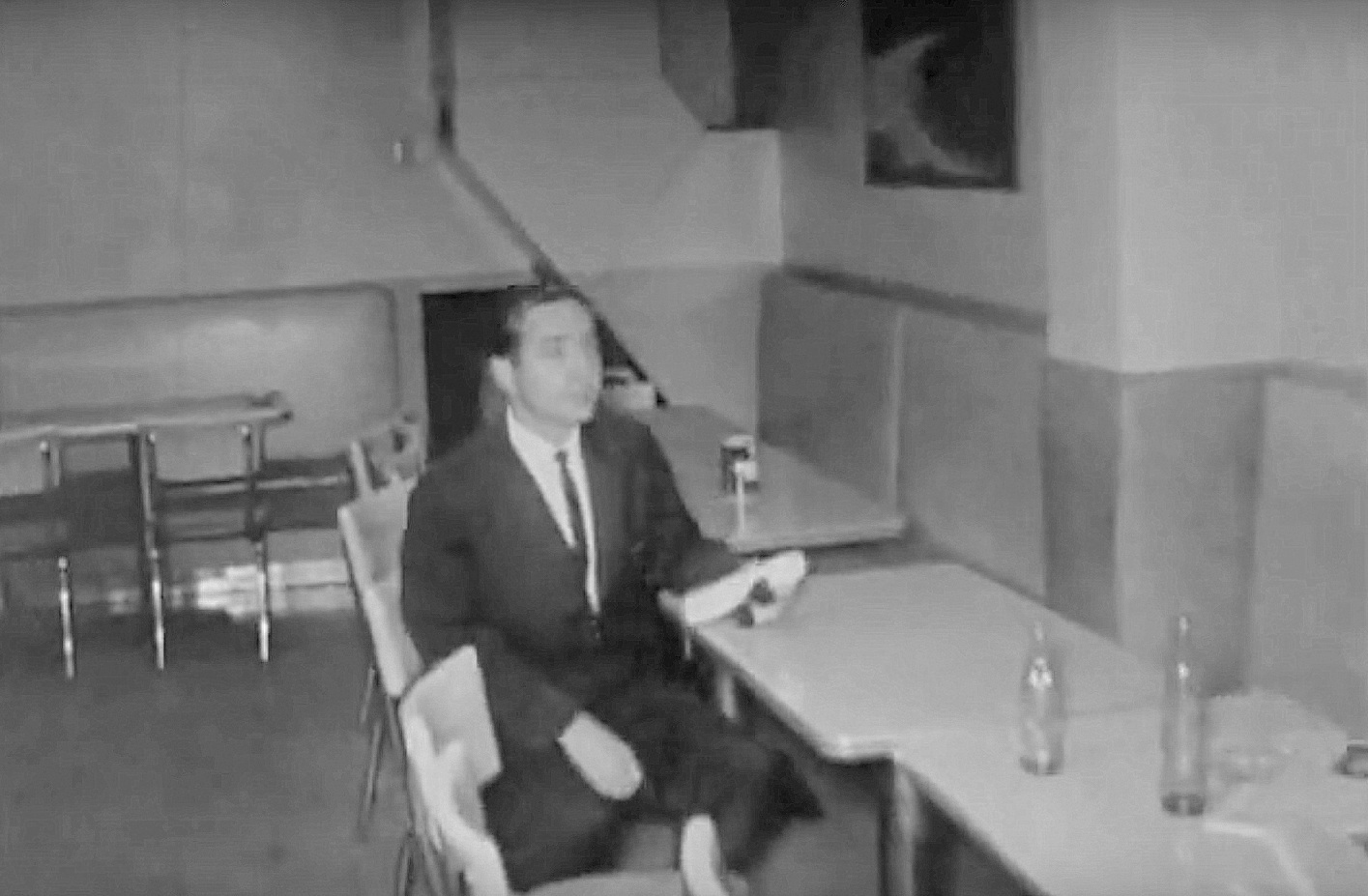
Below, a few screenshots from the government footage. The one at the top of this post shows Special Agent John Joe Howlett sitting at the sixth-floor window, as if holding a rifle.

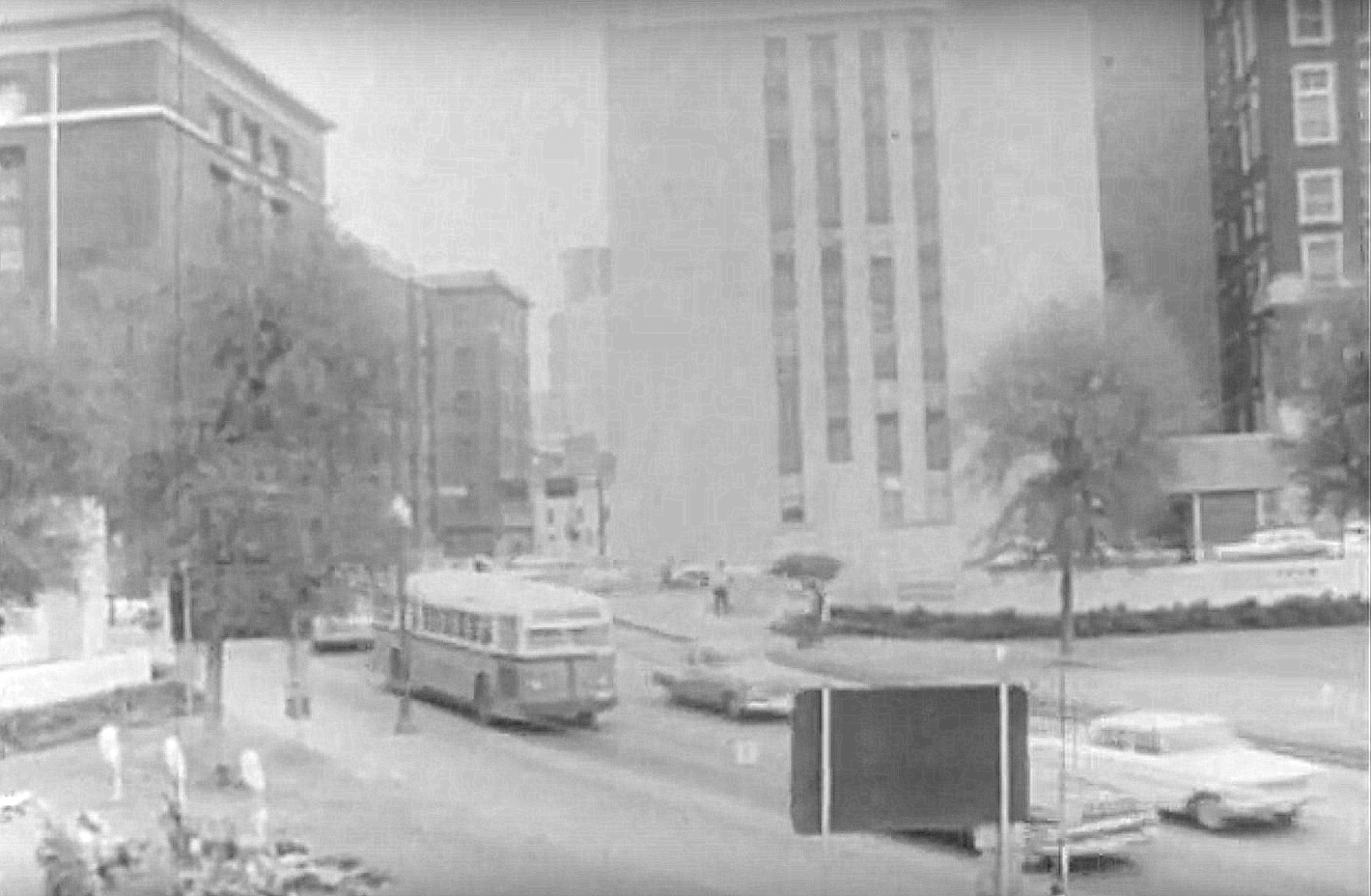
Below, Elm St. looking east from Dealey Plaza, with the white Records Building at center right.

reenactment_elm*

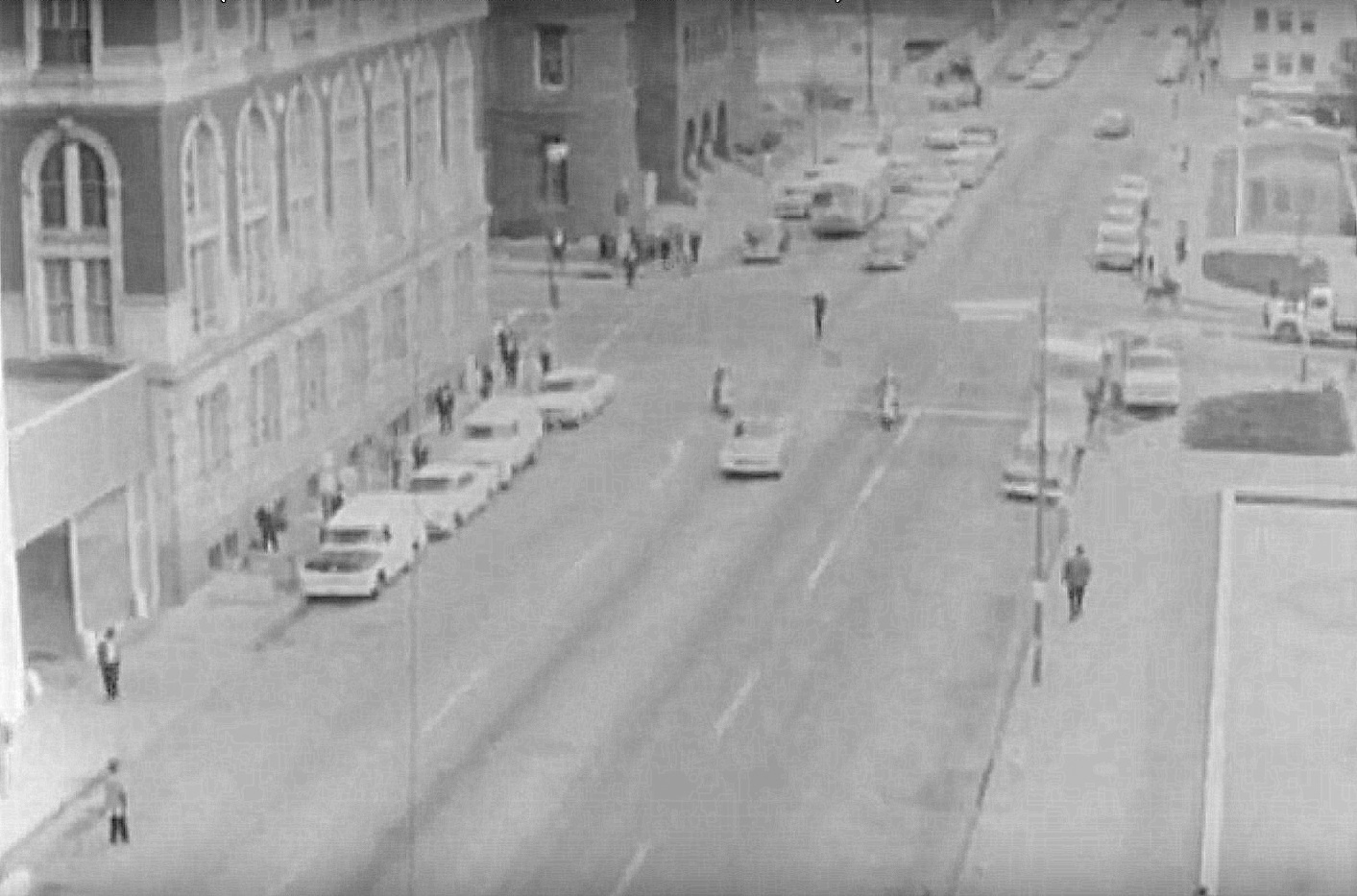
The one-car-two-motorcycle motorcade turning from Main onto Houston St. Looking south from … you know where.

reenactment_houston-st*

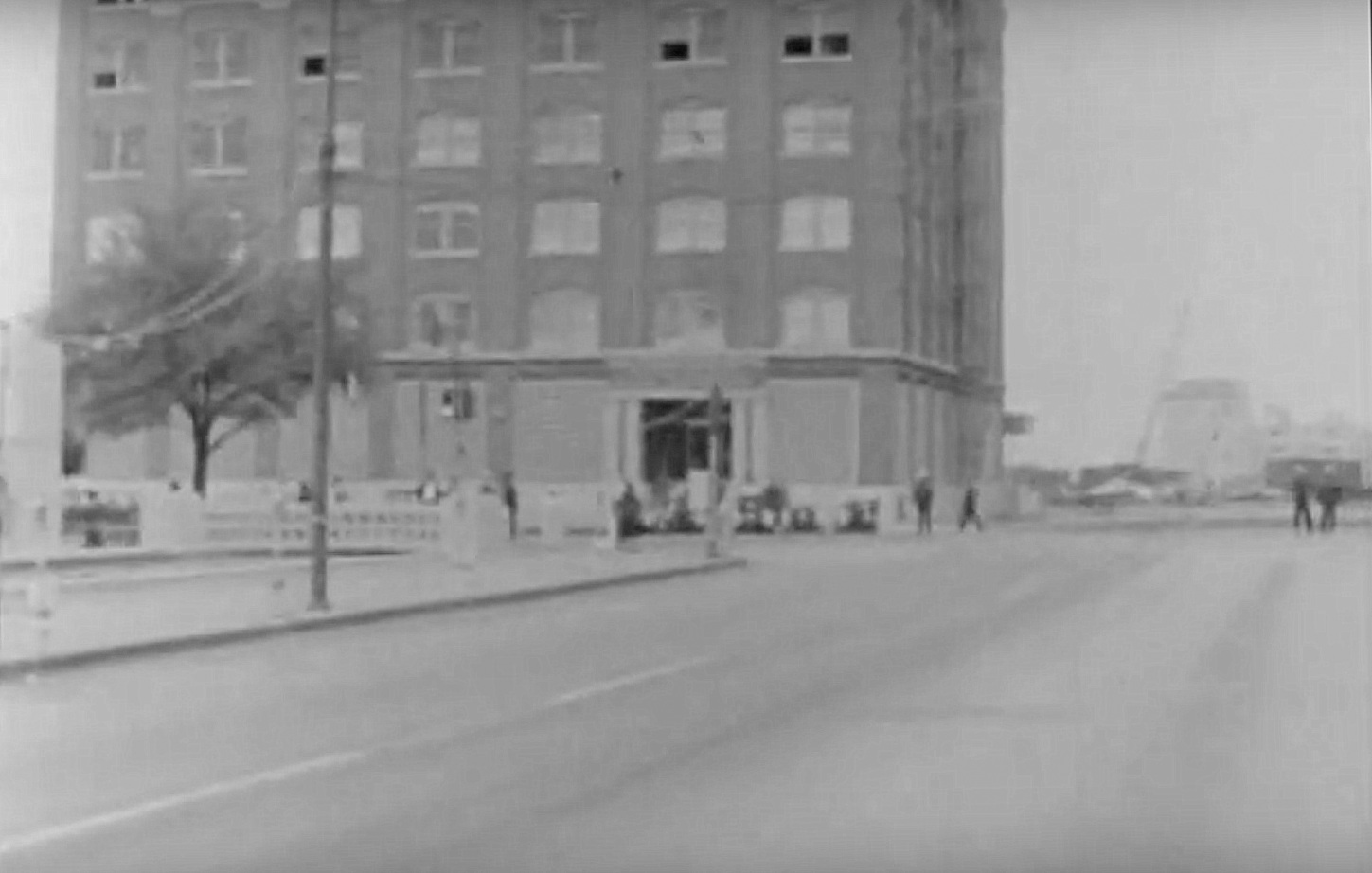
Houston St. looking north, with the School Book Depository on the left and a disconcertingly empty space straight ahead.

reenactment_houston-st-north*

A nice artsy shot of the book depository and the old John Deere Building.

reenactment_tsbd-ext*

Camera with “scope” attachment.

reenactment_scope*

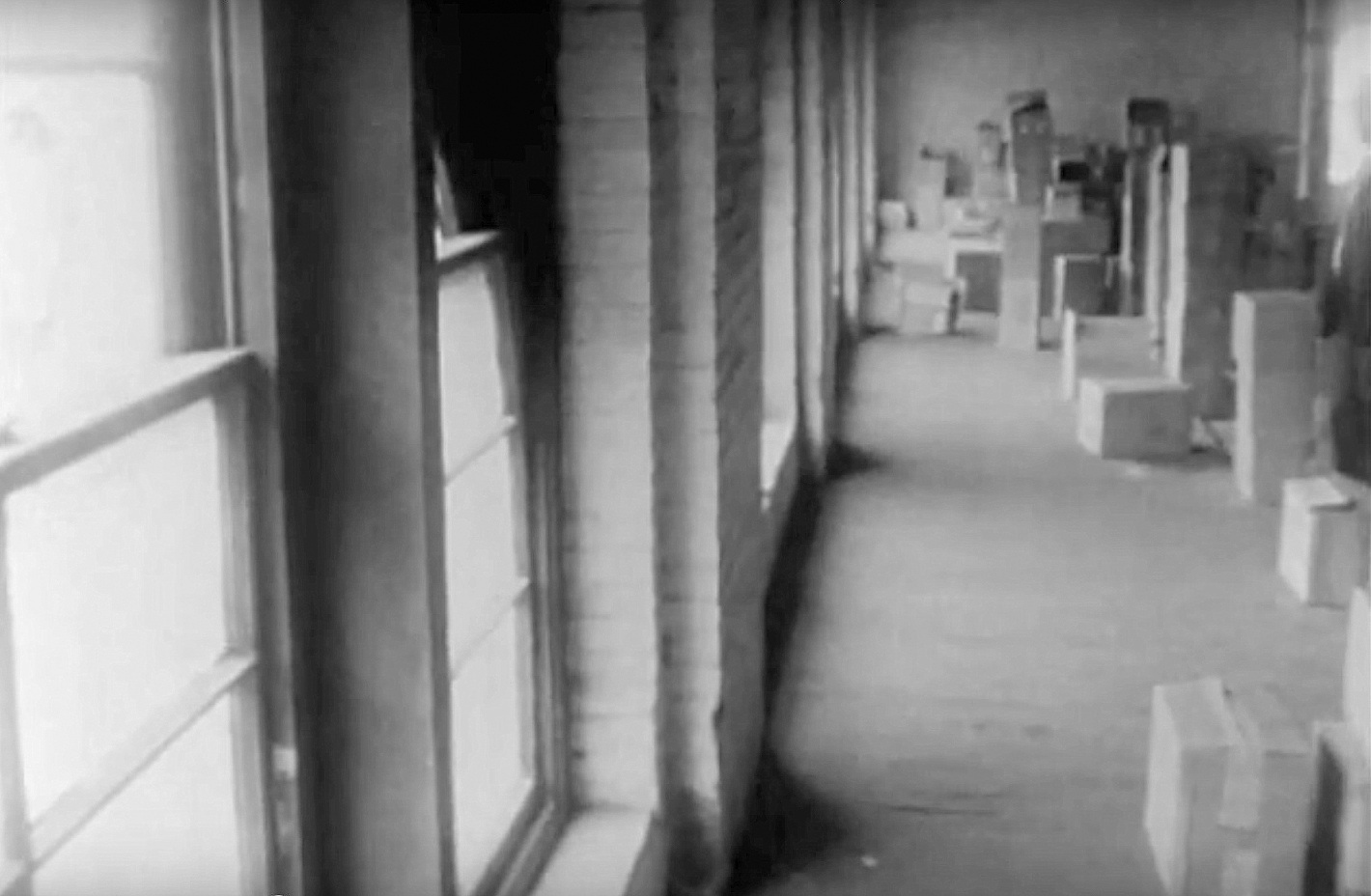
Windows, boxes, looking toward the west end of the building from the “nest” end of the sixth floor.

reenactment_tsbd-int*

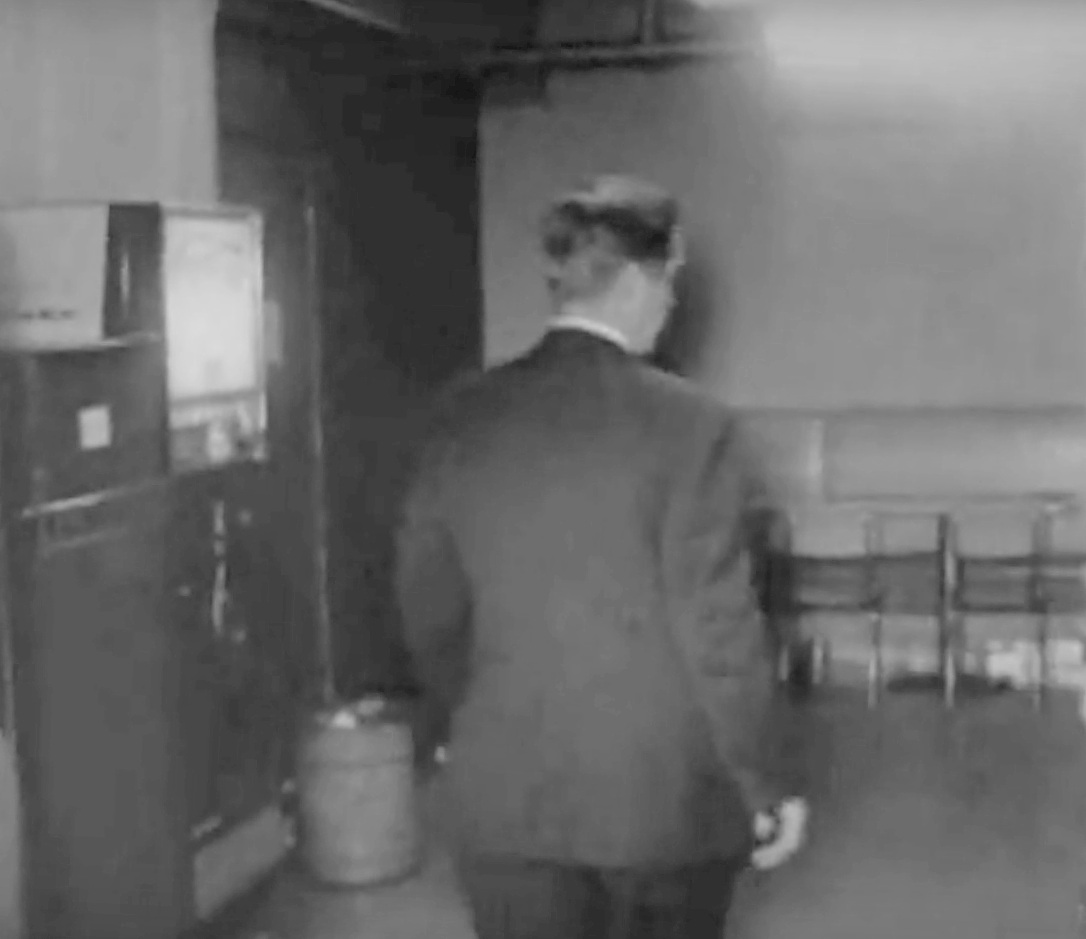
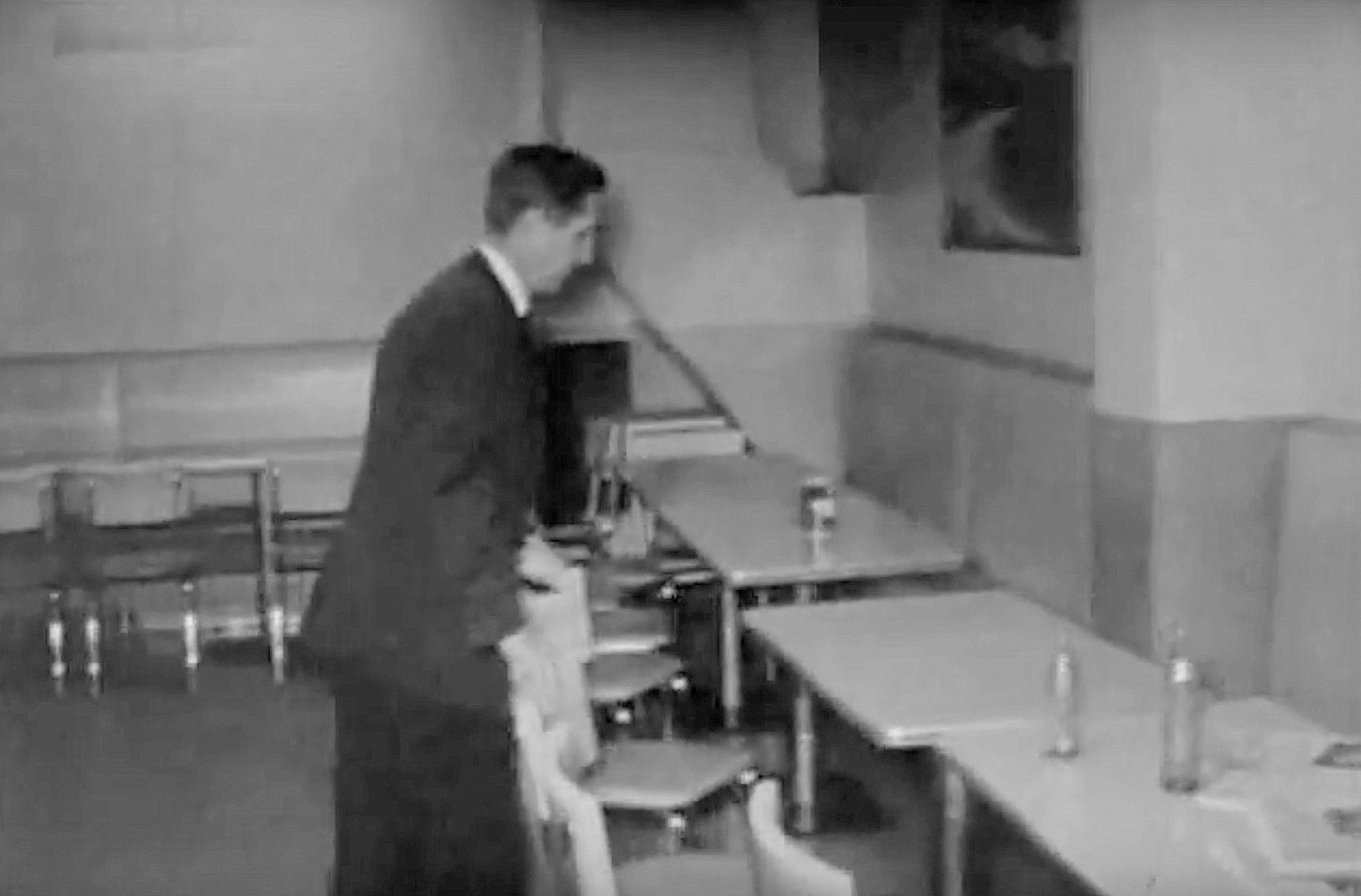
A trip to the second-floor lunchroom, with its vending machines which are, apparently, important in Lee Harvey Oswald’s alibi. These images show Special Agent Talmadge Bailey walking past the vending machines and sitting at a table.

reenactment_tsbd-bldg-lunchroom1

reenactment_tsbd-bldg-lunchroom2

reenactment_tsbd-bldg-lunchroom3

***

Sources & Notes

See Dallas Times Herald photographs that were shot while the Dealey Plaza “reenacting” was going on in my previous post, “The First JFK Assassination Reenactment — 1963,” here. (As for the comment that started me off on this, I’m still not sure whether the cameramen in the car are KRLD employees or not.)

*

Copyright © 2016 Paula Bosse. All Rights Reserved.

Commerce & Record Streets — 1946

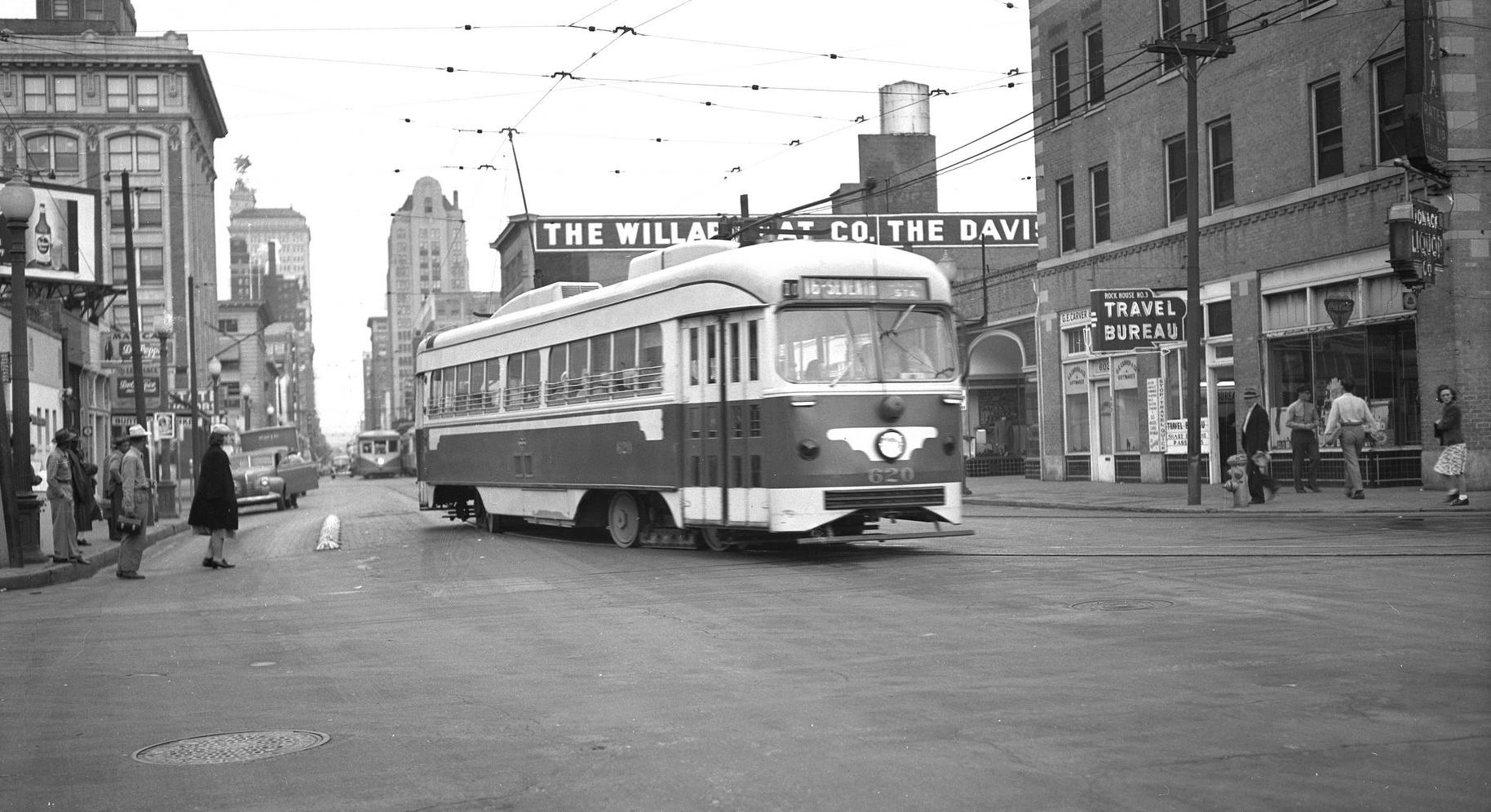
streetcar_commerce-record_051046_ceraCommerce St. looking east from Record (click for huge image)

by Paula Bosse

If it’s a photo of downtown in the ’40s, with people on the streets, retail storefronts, and streetcars, I’m going to love looking at it. Like this one. A lot of people might be hard-pressed to identify the location of this photograph, even if they were standing in the exact spot the photographer stood in. If you look at today’s view from the same vantage point (here), just about everything in the immediate foreground (west of the Pegasus-topped Magnolia Building) is gone — except for, most notably, the beautiful MKT Building at Commerce and Market, one of my favorite downtown buildings.

This is the intersection of Commerce and Record streets, when Record still extended from Elm to Jackson; the Old Red Courthouse was behind the photographer, to the left. Today, the Kennedy Memorial is at the left where the people are waiting for a streetcar; the George Allen Courts Building is across the street — at the right, in the block with the travel bureau; and the block containing the Willard and Davis Hat building — across Commerce from the Katy Building — is now a parking lot.

As with every photograph like this I see, I wish I could step into it and walk around the downtown Dallas of 1946. Maybe pop into Ma’s Cafe for a Dr Pepper before I hop on a streetcar and just ride around on it all day until someone kicks me off.

*

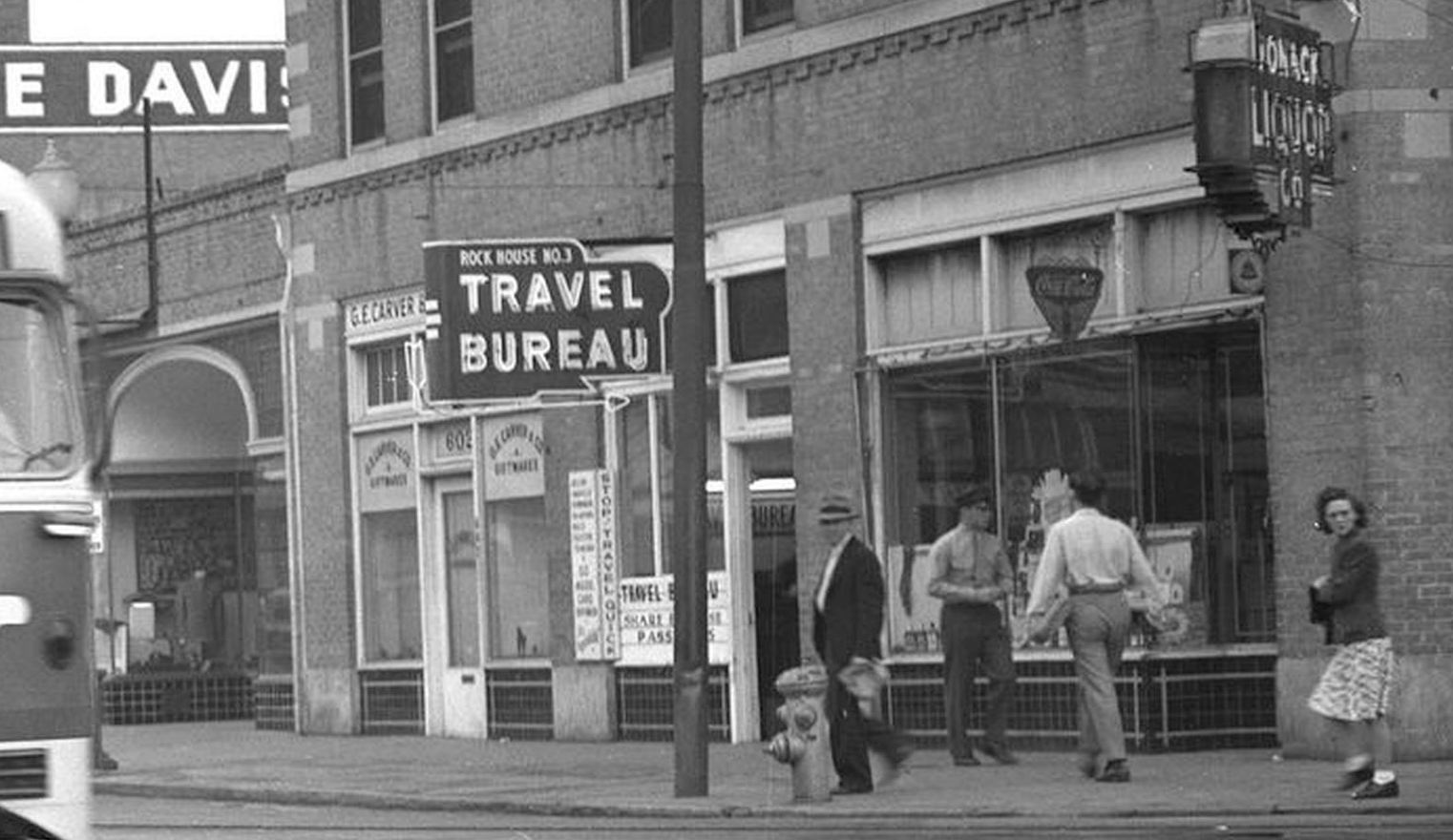
Below are a couple of magnified details (both are much larger when clicked).

streetcar_commerce-record_051046_cera-det1

streetcar_commerce-record_051046_cera-det2

Below is a listing of the businesses in this 600 block of Commerce, between Record Street and the MKT Building.

600-block-commerce_1945-directory1945 Dallas directory

(The tall building on the right with the travel bureau on the ground floor is the Plaza Hotel at 202-204 Record Street. The Yonack Liquor Store on the corner is at 200 Record, with entrances on both Commerce and Record.) 

Here’s a detail of a photo taken about the same time, showing an aerial view of Commerce Street.

aerial_commerce-st_1940s_foscue-lib_smuFoscue Map Library/SMU

***

Top photograph was taken on May 10, 1946 by Richard H. Young; it can be viewed on the CERA (Central Electric Railfans’ Association) website, here. (If you’re interested in Dallas streetcars, this page has some GREAT photographs!)

The caption of the photo from the above website: “May 10, 1946 — New Dallas Railway & Terminal Co. double-end PCC car 620, at speed, southbound, turning into Record St. from Commerce St. (Ervay-7th Line).”

The aerial photo was taken by Lloyd M. Long in the 1940s and is titled “Downtown Dallas looking east (unlabeled); it is from the Edwin J. Foscue Map Library, Central University Libraries, Southern Methodist University. This is only a small portion of the full photograph — the full photo is here.

Since there is an exact date for this photo, here is a large Skillern’s ad from that day’s newspaper. Coincidentally, there was a  Skillern drugstore on the northeast corner of Commerce and Record — it is in this photo, behind the lamppost at the bottom left. Let’s see what was on sale May 10, 1946. (I would kill for a set of those Pyrex bowls!)

skillerns-ad_dmn_051046

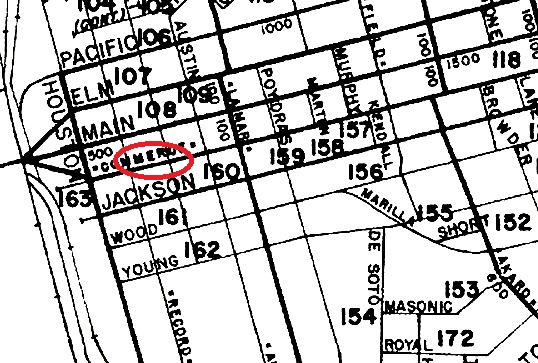
And, lastly, who doesn’t love a map?

map_commerce-and-record_1952-mapsco 1952 Mapsco

Everything is bigger when clicked!

*

Copyright © 2016 Paula Bosse. All Rights Reserved.


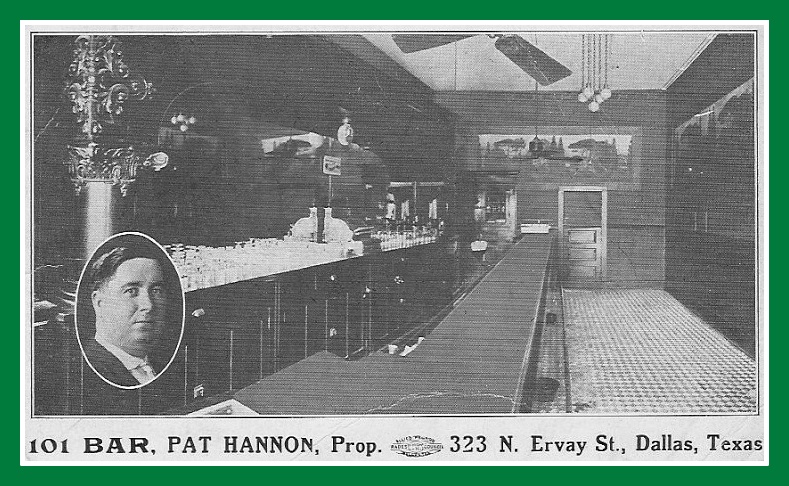
The 101 Bar: Patrick Hannon, Prop. — ca. 1917

101-bar_ca-1917
Pat Hannon’s dreams are about to be dashed…

by Paula Bosse

The 101 Bar was located at 323 North Ervay, on the southwest corner of Ervay and Bryan — it is now the site of Thanksgiving Square. The owner was Patrick Hannon who had worked in saloons in Dallas from at least 1908. The bar pictured above opened around 1917 but lasted only a few months — by the time the 1918 directories were printed, 323 N. Ervay was listed as “vacant.” Pat had worked his way up the competitive saloon trade in Dallas, from bartender to owner, only to be cut down by Prohibition. Had Prohibition not gone into effect in 1918 (with Dallas County voting to start even earlier, in October, 1917), this fine-looking  bar might have had a long, boozy life. Pat disappeared from the directory completely in 1918, but he was back in 1919, with a new occupation: butcher. Meat-cutting is all well and good and certainly pays the bills, but I bet in his idle moments, Pat’s thoughts turned to daydreams of his old Ervay St. bar.

The 1917 Dallas directory showed 183 bars operating in Dallas; the next year, zero.

Bad timing, Pat.

***

Sources & Notes

I’m not sure where the photo came from — some random web page, I think.

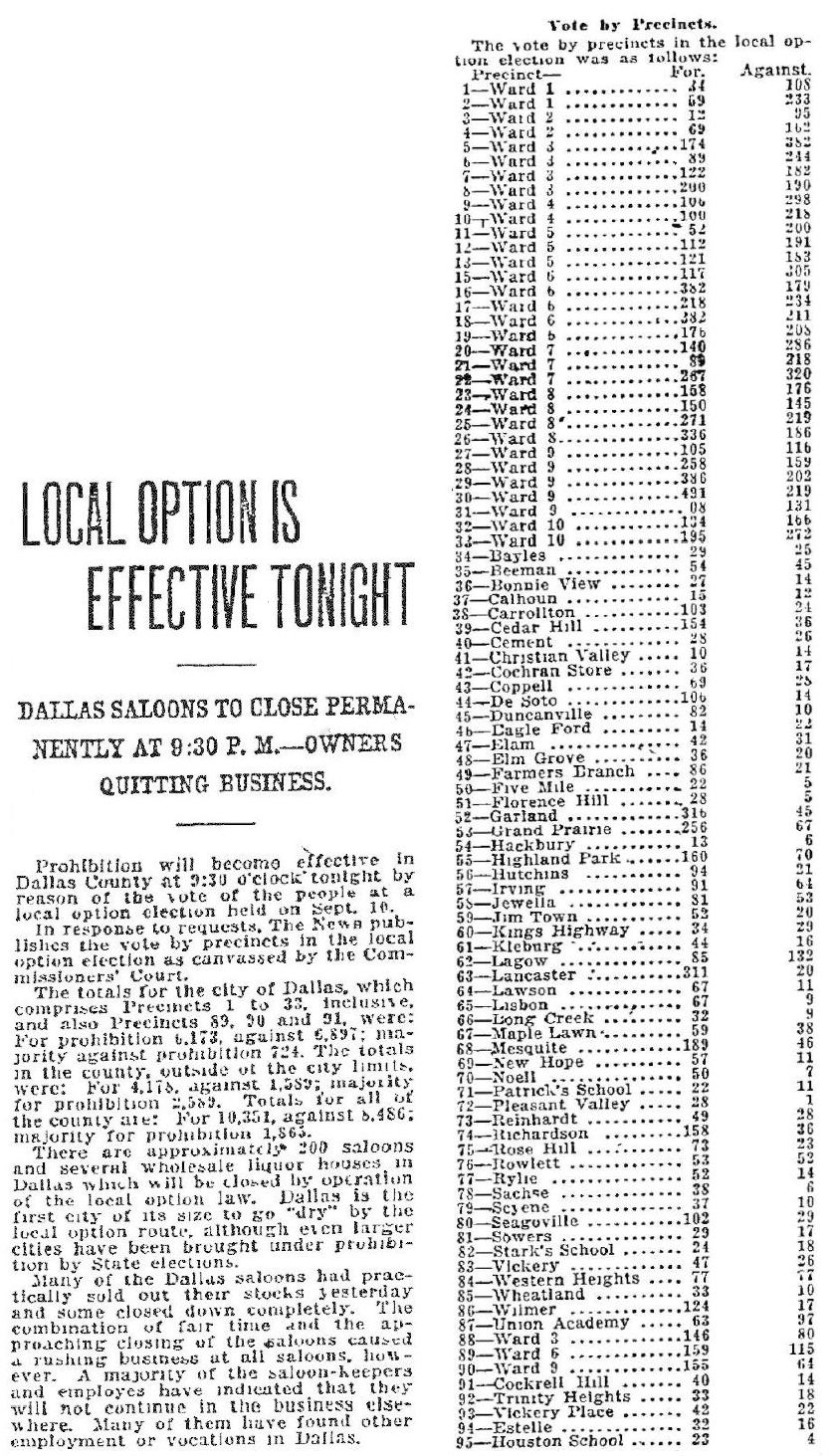
Why did Dallas County go dry so early? Because of a “local option” vote in September 1917. The city of Dallas voted against it, but the surrounding communities voted overwhelmingly FOR it. (You could still drive over to Fort Worth for legal beer and hooch, though.) Election results below (click for larger image). 

prohibition_local-option_dmn_102017Dallas Morning News, Oct. 20, 1917

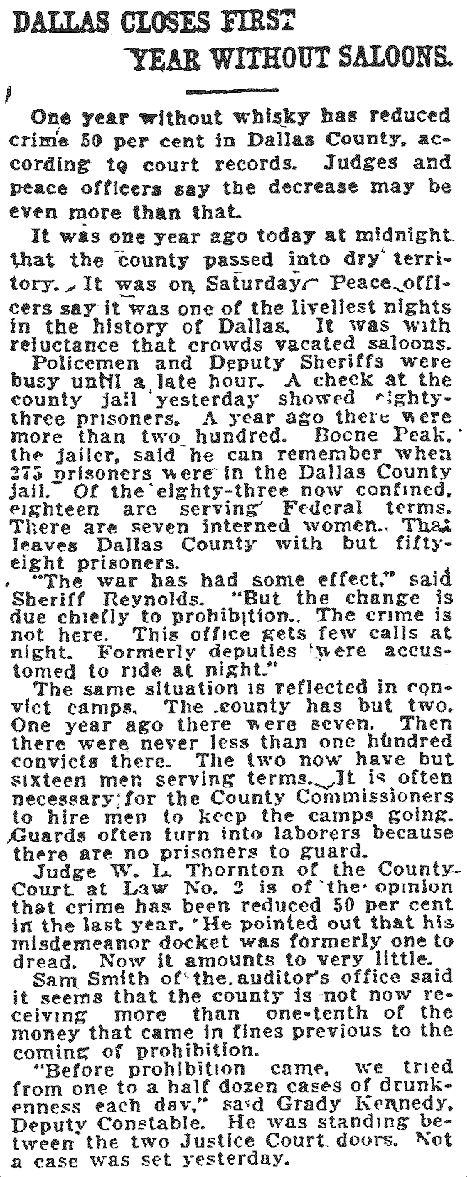
How were things faring a year later?

probibition_dallas-co_dmn_102018DMN, Oct. 20, 1918

This has been a rather tenuously-associated St. Patrick’s Day post (Irish name, bar, green border), but … Happy St. Patrick’s Day!

*

Copyright © 2016 Paula Bosse. All Rights Reserved.

From the Vault: An Early Radio Stunt — 1922

radio-wedding_corbis_062922
Inez and John, pre-wedded bliss

by Paula Bosse

Radio was new in 1922. …REALLY new. WFAA had been on the air less than one week when its first big promotion took place: a wedding ceremony in which the bride, the groom, and the minister were each in a different radio station. Read the particulars in the post from 2014, “Getting Married on the Radio — 1922,” here.

*

Copyright © 2016 Paula Bosse. All Rights Reserved.

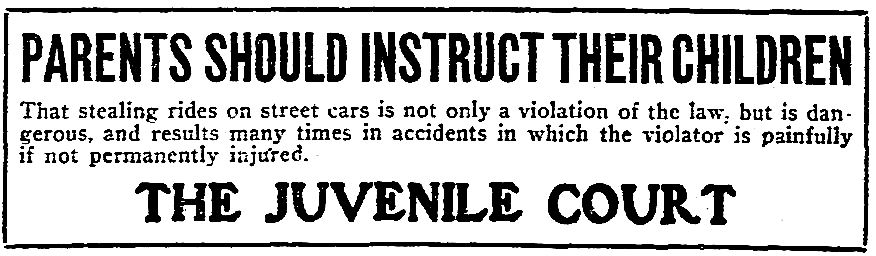
A Word From the Juvenile Court on Stealing Rides on Streetcars…

akard-car_cook-coll_degolyerThe Akard St. trolley, car #249 (click for larger image)

by Paula Bosse

…DON’T DO IT!

streetcar-ride-stealing_dmn_071309Dallas Morning News, July 13, 1909

***

Photo titled “Two Streetcar Employees with Dallas Streetcar No. 249,” is from the George W. Cook Dallas/Texas Image Collection, DeGolyer Library, Central University Libraries, Southern Methodist University; is can be accessed here.

Both images larger when clicked.

*

Copyright © 2016 Paula Bosse. All Rights Reserved.

The Filling Station on Greenville Avenue: From Bonnie & Clyde to Legendary Burger Place

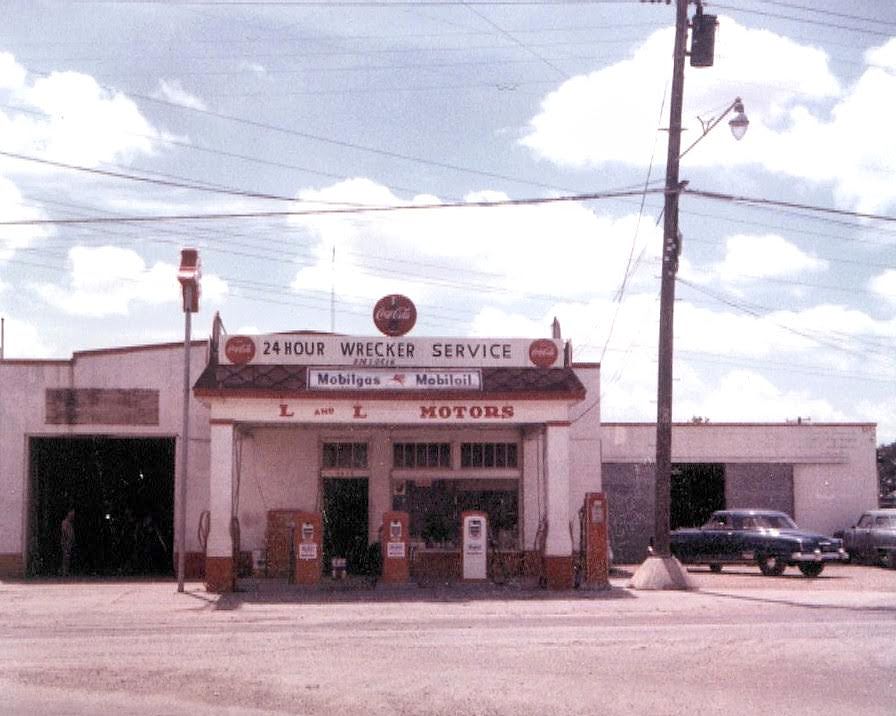
loveless-station_extThe Loveless filling station, Vickery, TX… (click for larger image)

by Paula Bosse

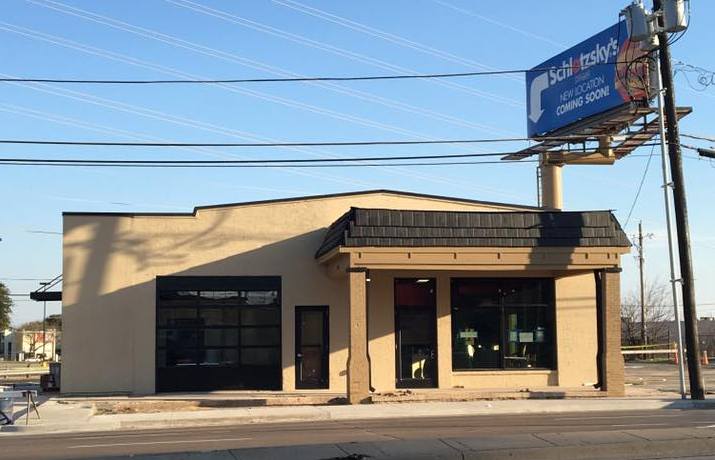
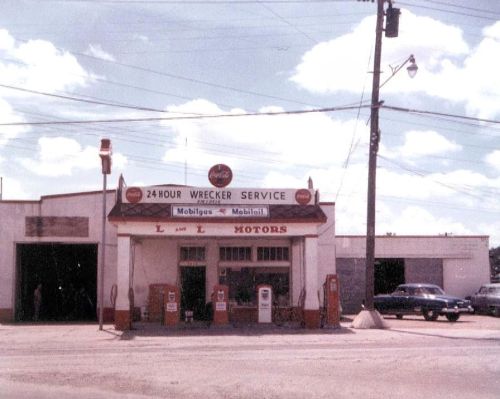
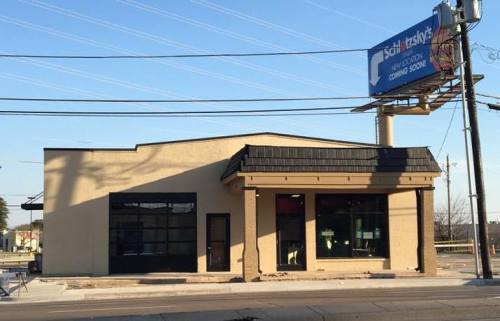
Perhaps you’ve driven past the site of the much-loved former burger place The Filling Station at Greenville Avenue and Park Lane recently and saw that the old building was undergoing renovation. Construction has ended, and a new Schlotzsky’s (the sandwich shop founded in Austin in 1971) has opened at 6862 Greenville Avenue. And it’s pretty cool that they’ve preserved this old 1930s building, a landmark to many Dallasites.

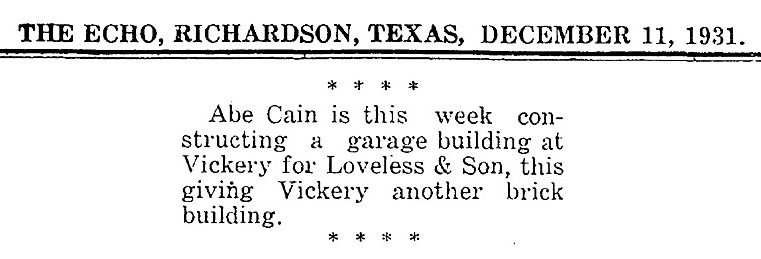
The original filling station and garage was built, according to family members, about 1931 — it was one of the first brick  buildings in the small community of Vickery (which was annexed by Dallas in 1945). The construction even made the columns of the Richardson Echo (Dec. 11, 1931):
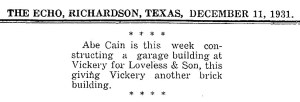
loveless-garage_richardson-echo_121131

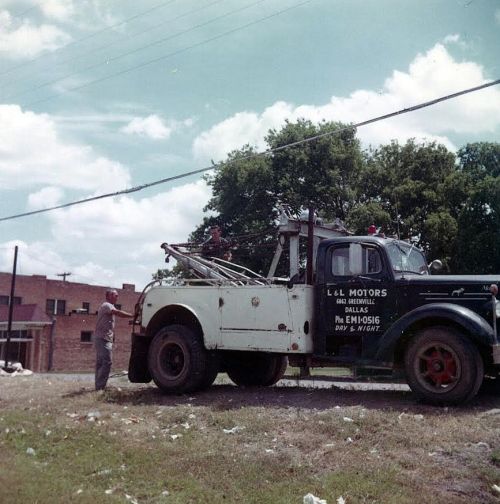
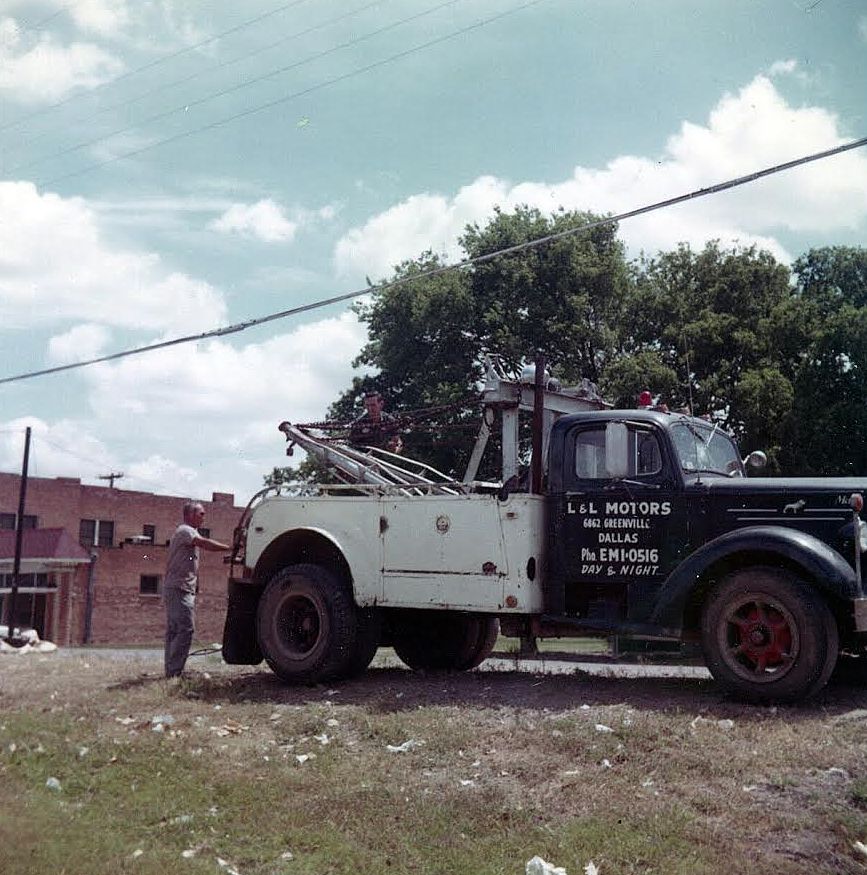
The business had begun in the early ’20s in another building across the street, but things were definitely looking up for the garage and its owners, William Homer Loveless and his son J. W. Loveless, when the new building went up. L & L Motors lasted 50 or so years until the early 1970s, when the once-sleepy Vickery area had exploded into part of “Upper Greenville,” an entertainment mecca lined with bars, restaurants, discos, and strip joints.

The Filling Station, a theme restaurant and bar decorated with gas station memorabilia, opened in 1975 and lasted a remarkable 29 years, closing in 2004. Filling Station super-fans still have fond memories of both the building and its menu of “theme” foods and drinks with names like “sedanwiches,” the Ethyl burger, the Tail Pipe, and the Ring Job.

Beyond being a nostalgic favorite from the go-go days of Upper Greenville, the real reason this place has always had historic appeal to Dallasites is because it is one of the still-standing Dallas-area locations with a tie to Bonnie and Clyde. According to Loveless family lore, the pair bought gas at the station at least once, sometime back in the ’30s. According to Sonya Muncy, whose father, J. W. Loveless, took over the station after her grandfather passed away:

“That was my daddy’s station and his dad’s before. When he got hurt in an auto accident and couldn’t work anymore, he sold it, and it became the first Filling Station restaurant. I think my mom still has pics of Daddy in front of it when he came out of the Army. Gas was 9 cents a gallon with 3 cents tax, for a total of 11 cents a gallon. He had the coldest Cokes around! Across the street where Park and Ride is was my grandmother’s house. I remember playing at the station as a kid and helping Daddy work on cars. When I got my first car, he made me change the oil and rotate the tires! Lol. It was called L & L Motors with Mobil gas. […] Bonnie & Clyde also got gas there and Daddy said they were always nice to him.”

Kevin Wood remembered when his grandparents happened to be at the station when Bonnie and Clyde stopped in:

“The day Bonnie and Clyde came in to fuel, Clyde shook my Pops’ hand.”

And in a later comment:

“My grandmother and grandfather were in the store the day B & C came in … always said they were very nice.”

*

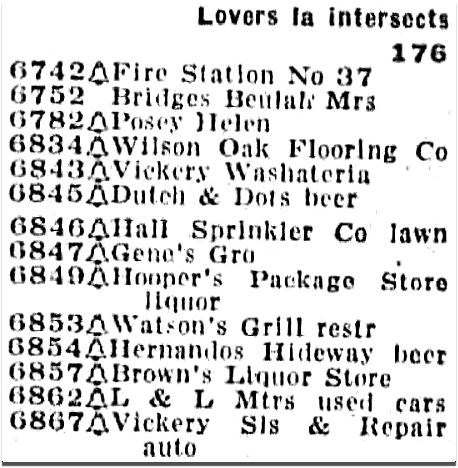
FUN FACT: Jack Ruby apparently ran a short-lived tavern called Hernando’s Hideaway right next door, at 6854 Greenville in the early or mid ’50s (he seems to have owned it and later sold it). It appears the building was torn down at some point. So … Bonnie and Clyde and Jack Ruby, together at last, cheek by jowl.
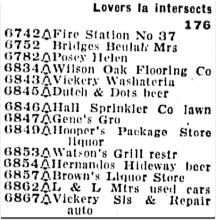
hernandos-hideaway_jack-ruby_1956-directory
Greenville Ave., 1956 directory

*

For as long as I can remember, I’ve checked out this old building every time I drive by it, marveling that it has managed to remain standing all these years, and always afraid it won’t be there the next time I pass it. So thank you, Steve Cole, owner of this Schlotzsky’s, for bringing it back to life and appreciating it as much as a lot of the rest of us do.

**

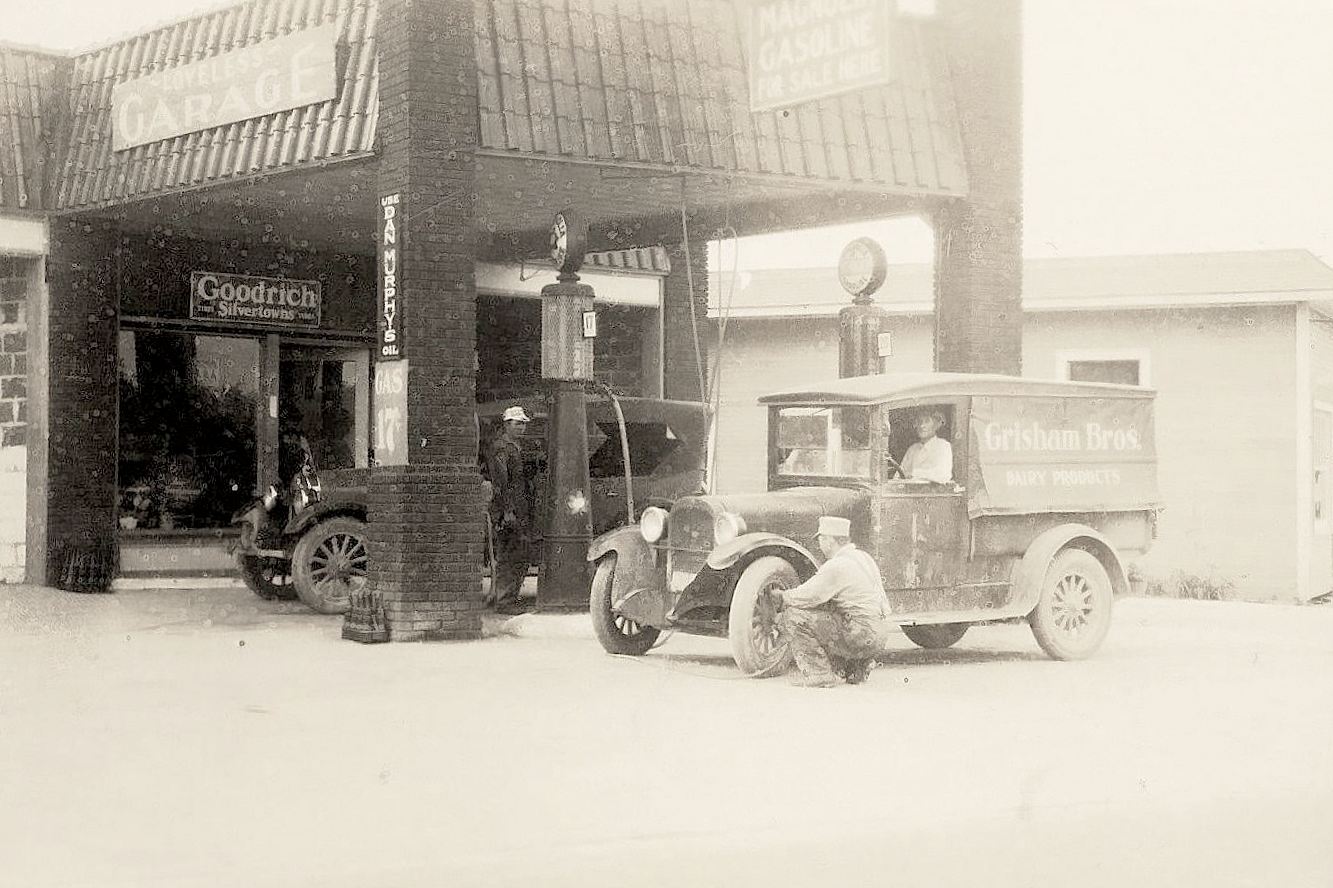
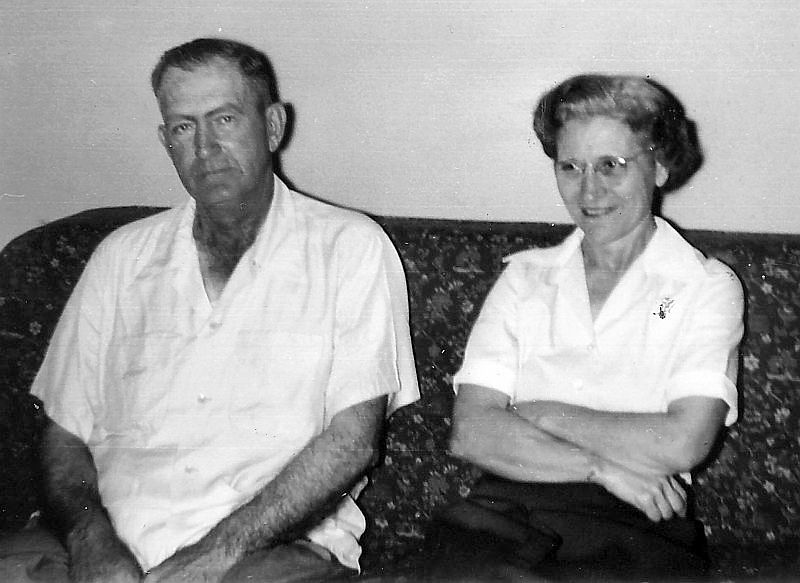
The photos in this post were kindly sent to me by Jeb Loveless, grandson of Homer Loveless, the original owner. Below, perhaps the oldest photo of the building, in the Bonnie and Clyde era.
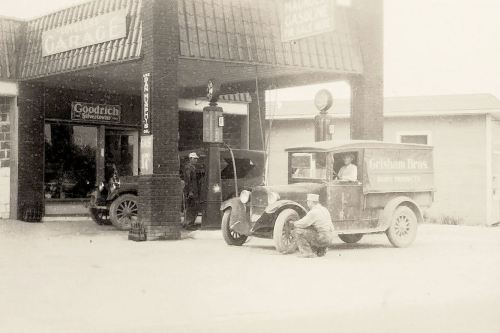
loveless-station_collection-of-jeb-lovelessphoto: collection of Jeb Loveless

Below, Homer Loveless and his wife Jewel in 1956.
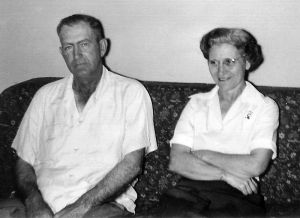
loveless_homer-and-jewel_april-1956

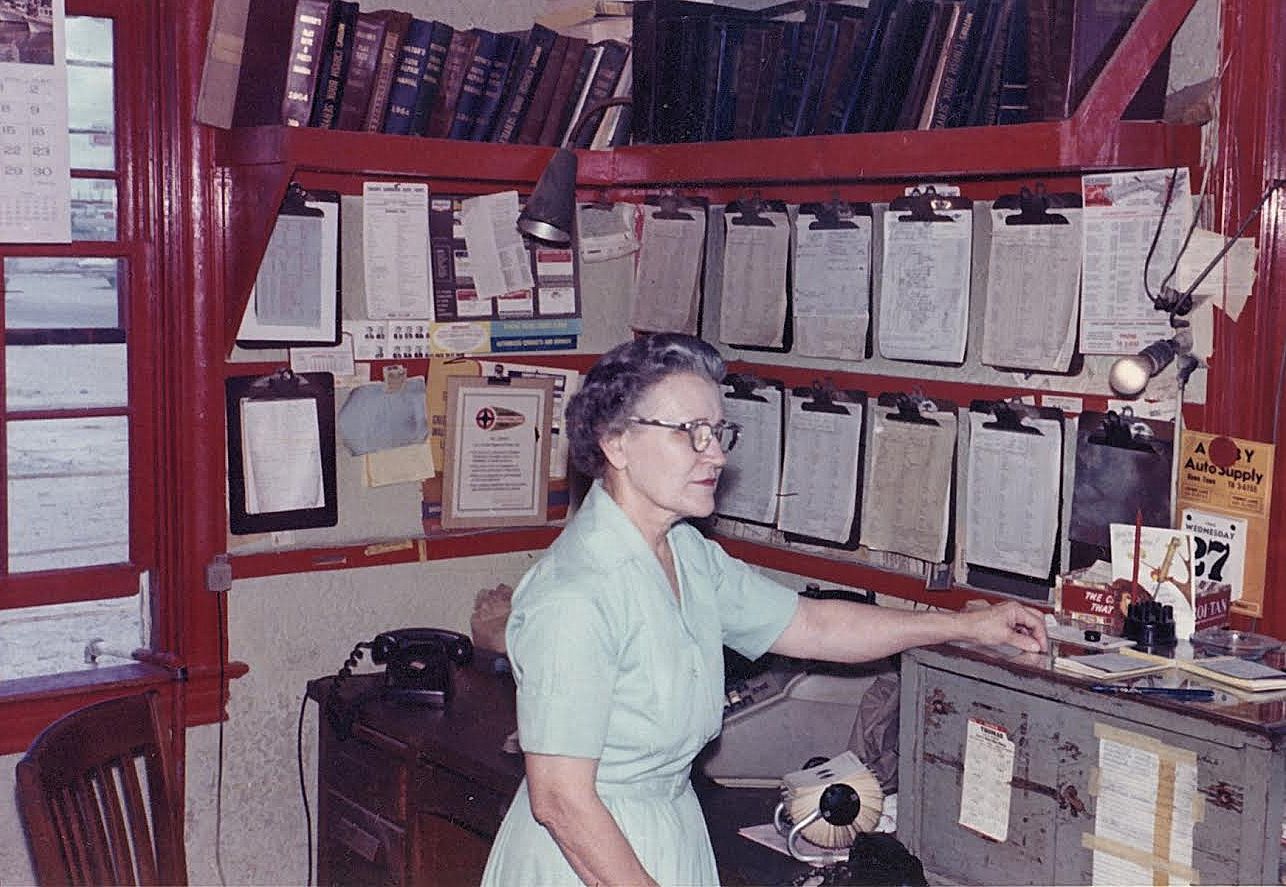
Jewel at work.

loveless-station_jewel-loveless

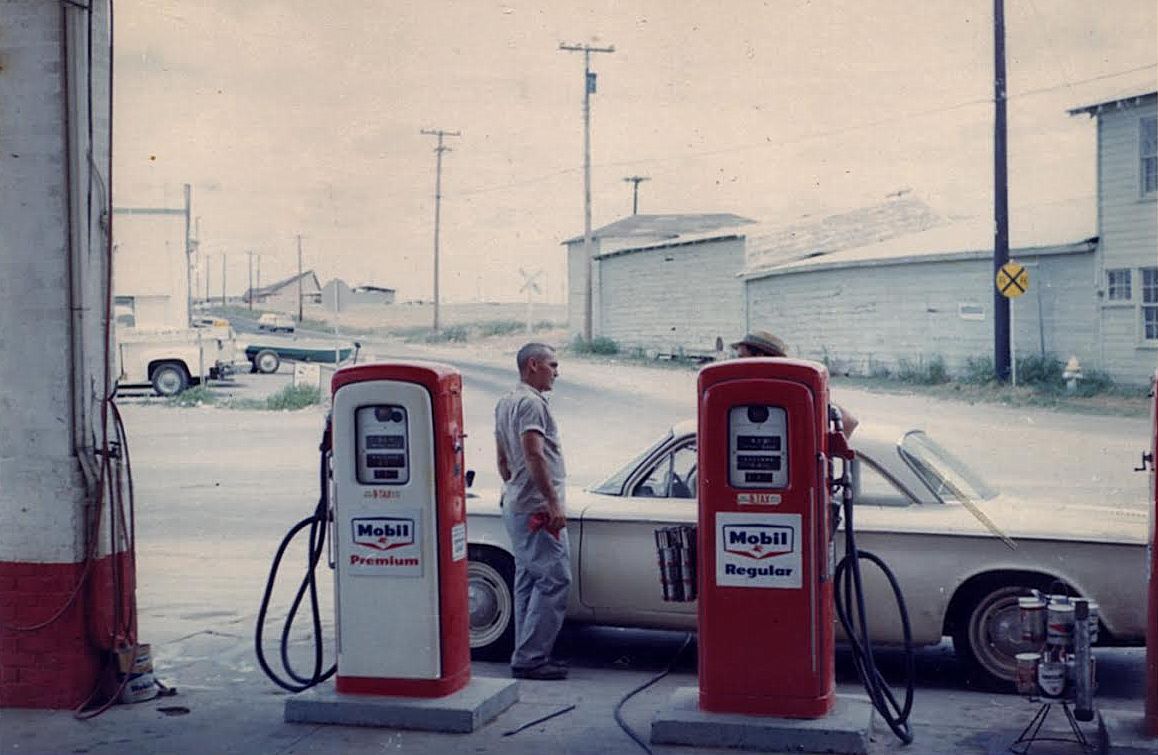
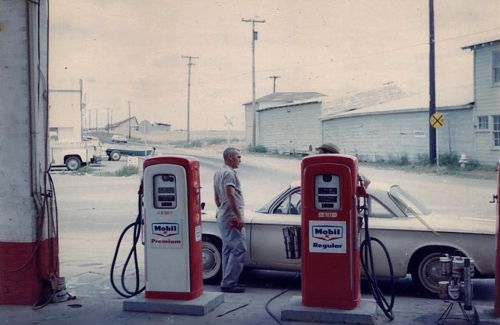
Homer and Jewel’s son (and co-owner) J. W., at the pumps.
loveless-station_jw-loveless

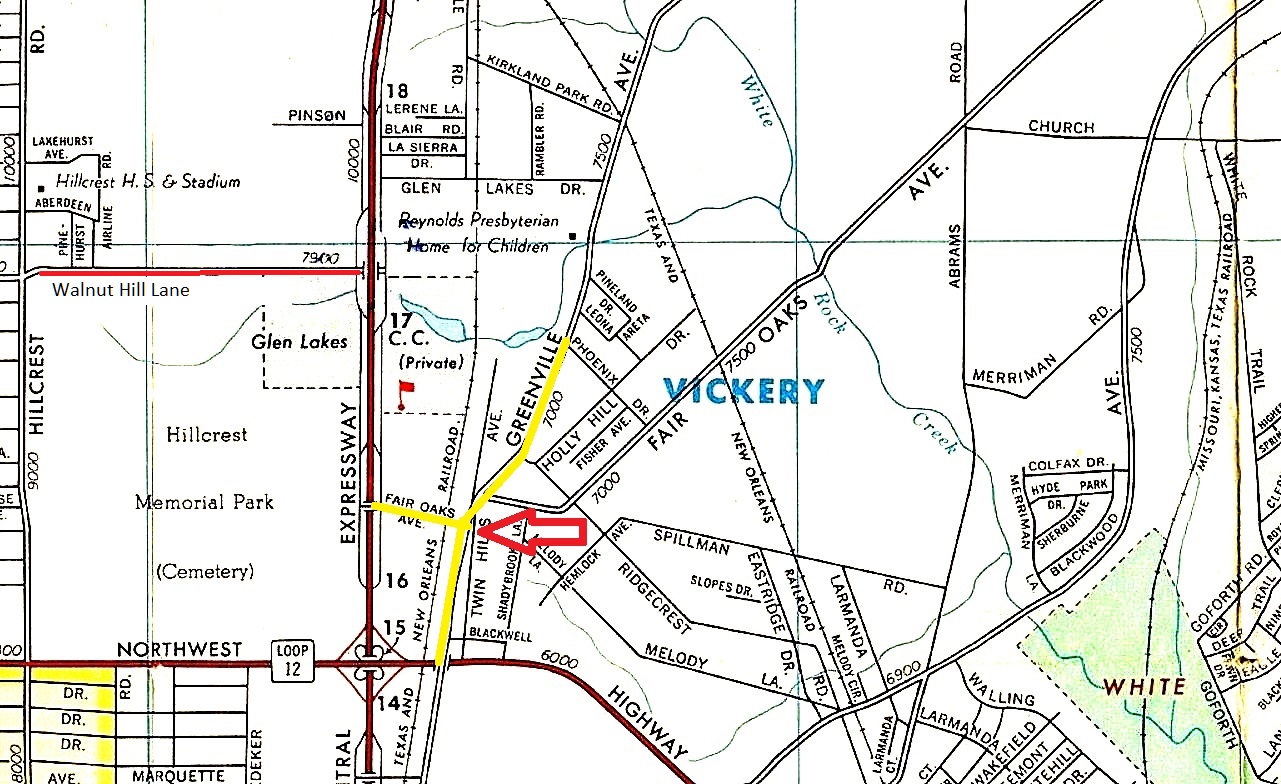
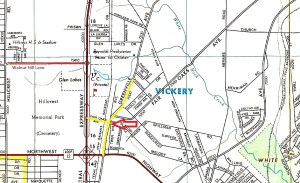
UPDATE: I couldn’t for the life of me figure out what roads I was looking at here. Thanks to Danny Linn, I now know that the road straight ahead is what shows on 1962 maps as being the tail end/very beginning of Fair Oaks (this little bit still exists between Greenville and Central but is restricted to buses) — the view is looking west toward Central Expressway; the Corvair at the pumps is headed south on Greenville. A detail of this area from a 1962 map is below  — note that Park Lane did not yet exist. (The full 1962 Enco map is here.)
filling-station_vickery_1962-map(click me!)

J. W. with the tow truck.

loveless-station_towtruck_1964

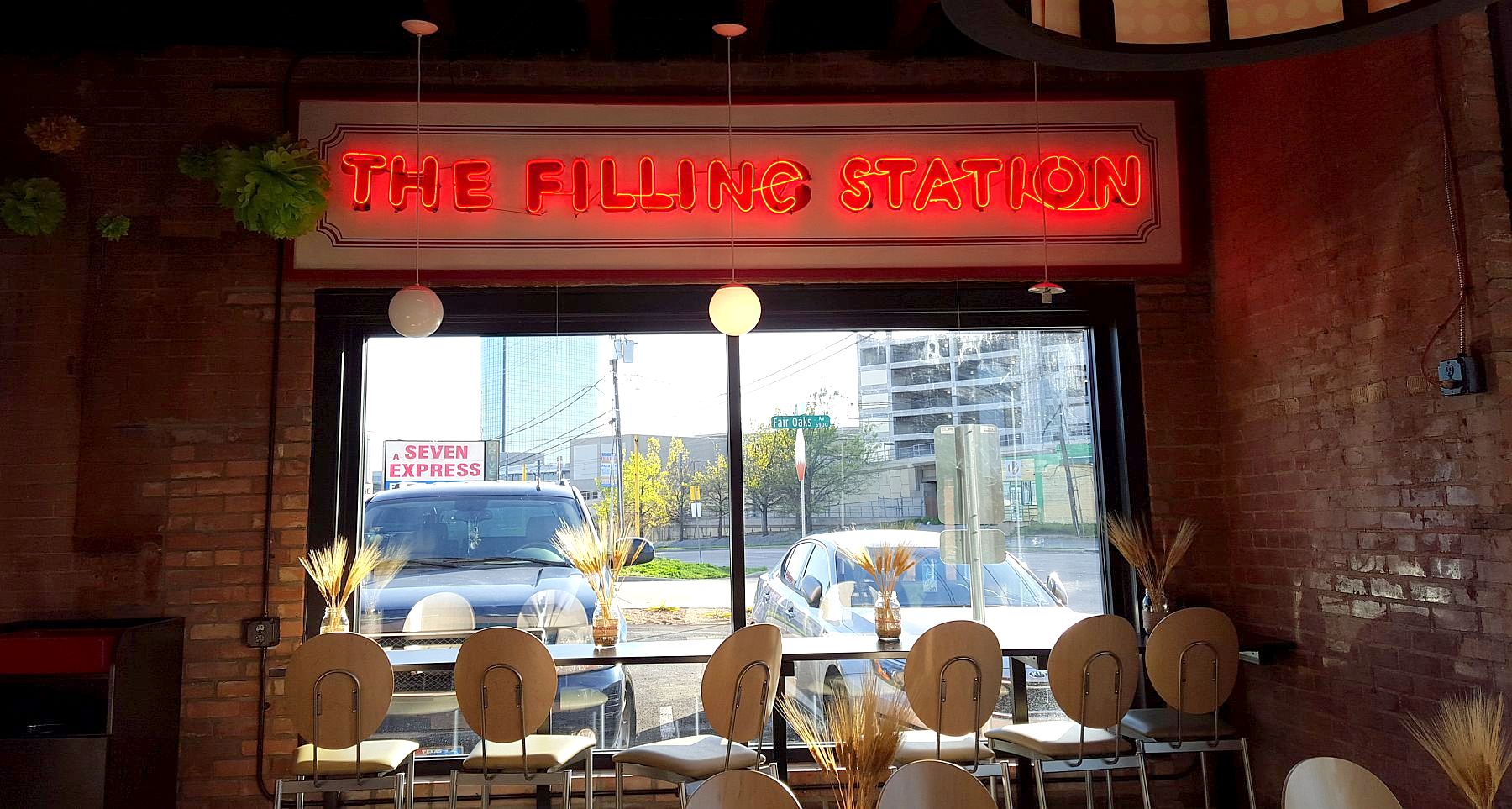
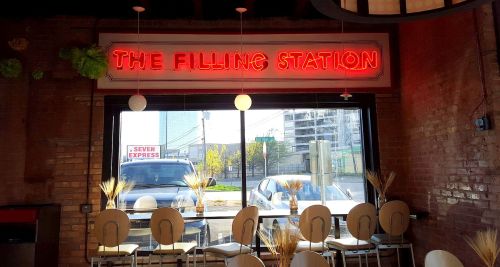
And here is what the old Loveless garage looks like today, as a Schlotzsky’s, decorated with the original neon sign from its days as The Filling Station restaurant as well as with several of the photos reproduced in this post.
filling-station_neon-sign_2016photo: Paula Bosse

**

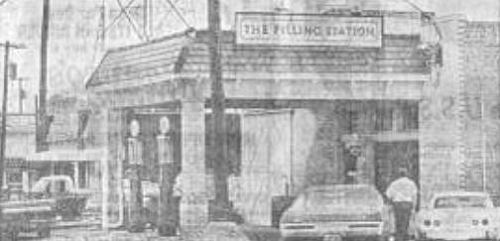
Aside from the Bonnie and Clyde connection, this little building (which has managed to stay standing for over 80 years — a feat in Dallas!) is known by most as the home of still-missed Filling Station restaurant.
filling-station_dth

Below, an interesting 1976 quote from Filling Station co-owner Bob Joplin about the “cutthroat” competition between ’70s-era Upper Greenville bars and restaurants (numbering at the time more than 50), wondering how long his place might stay alive:

“The average life of a new place on Greenville is probably about 18 months. If that. Hell, around the corner here — the Yellow Rose of Texas — how long was it open? Three months? Maybe less? […] We’re going great right now, but we’ve only been open a little more than a year. Check back with me later — we may be here, we may not.” (DMN, Nov. 14, 1976)

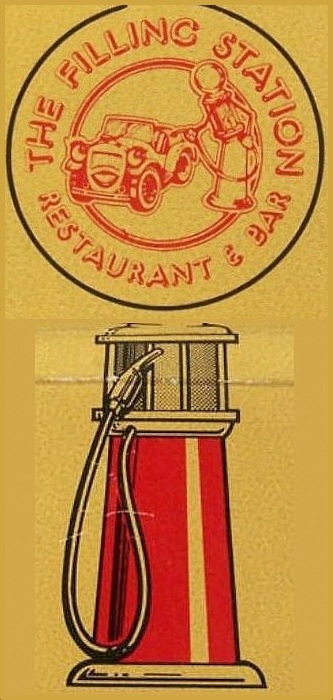
The surprising longevity of The Filling Station — 29 years in business! — is why the strangely unceremonious and surprisingly brief announcement of the Filling Station’s demise (which appeared in the pages of The Dallas Morning News on July 2, 2004) is so odd — its closure merited only ten words: “The Filling Station on Upper Greenville Avenue has also closed.” 29 years! That’s an eternity in the Dallas restaurant world.
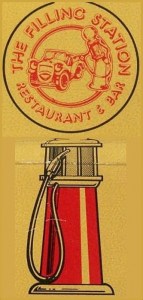
filling-station_matchbook_ebay
eBay

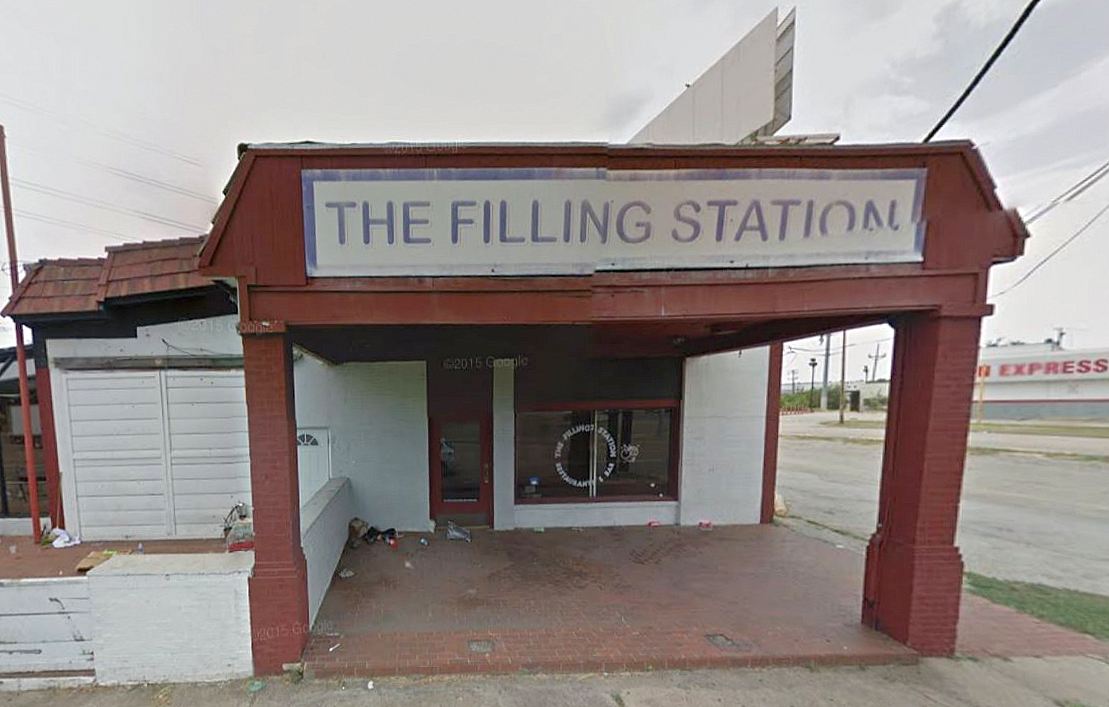
A few other businesses occupied the building, but none managed to stay open very  long. The building was vacant for several years, and it was definitely looking bedraggled when the Schlotzsky’s people came knocking.
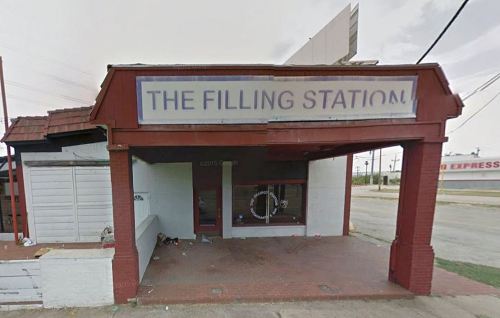
filling-station_google_aug-2015Long-vacant — Google Street View, Aug. 2015

And here it is, after renovation, preparing for its opening day as a Schlotzsky’s — the building now actually looks more like its original design, seen in the photo at the top of this post.
schlotzskys_facebook-pageSchlotzsky’s Facebook page

***

Sources & Notes

The photos of the L & L Motors garage and filling station in Vickery — and the Richardson Echo clipping — were sent to my by Jeb Loveless, grandson of Homer and Jewel Loveless and nephew of J. W. Loveless. He has graciously allowed me to use the photographs in this post. Thanks, Jeb! (Several of these photos were given to the owner of the new Schlotzsky’s and can be seen on the walls inside.)

Quotes from family members whose relatives met Bonnie and Clyde when they stopped in at the gas station are from comments on the Dallas History and Retro Dallas Facebook pages (used with permission).

A Lakewood Advocate interview with the owner of this Schlotzsky’s, Steve Cole, is here. He talks about his dedication to saving as much of the structure as possible, keeping the original brick walls and the wood floors.

To take a photographic tour through what remained of the old Filling Station, see the real estate listing on Zillow here (click on the first picture and a slideshow of large photos will open).

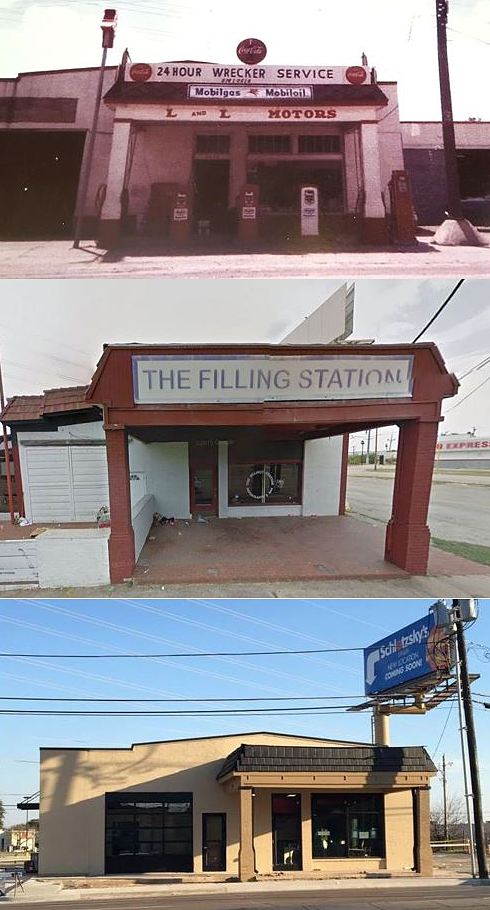
Here’s a then-and-now look at the building over the years:

filling-station_then-now

Related articles in The Dallas Morning News:

  • “William Loveless Dies After Illness” (DMN, June 12, 1960), obituary of the original owner, W. H. Loveless
  • “A Filling Station Which Pumps Beer” by Patty Moore (DMN, Aug. 8, 1975), the first review of the new restaurant, The Filling Station

Click photos and clippings for larger images.

*

Copyright © 2016 Paula Bosse. All Rights Reserved.


Photo-Pac: The First Disposable Camera — 1948

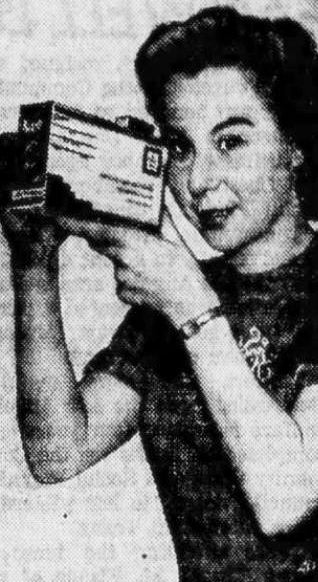
weir_mechanix-illus_1949_smA. D. Weir and his invention, 1949

by Paula Bosse

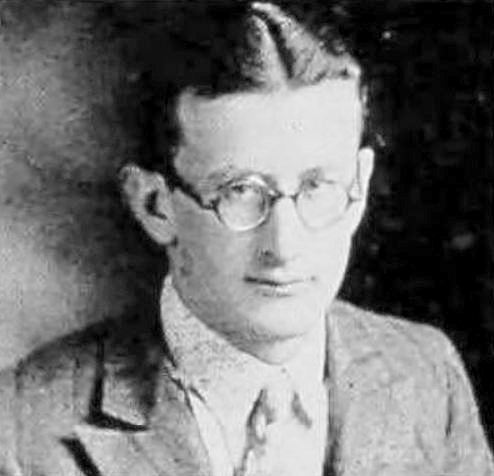
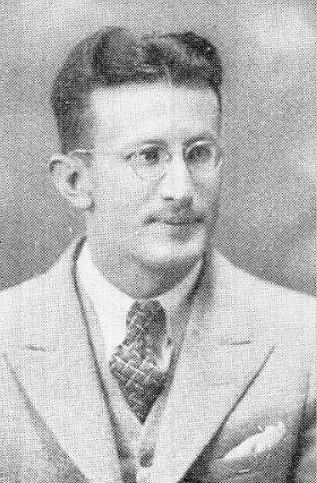
Alfred D. Weir (1909-1996) was the son of A. F. Weir, the successful retail furniture merchant who founded Weir Furniture in 1922. The younger Weir graduated from SMU in 1933 with a degree in mechanical engineering and started his career, fresh out of college, at Dallas’ Ford assembly plant. During World War II, he was the chief industrial engineer at North American Aviation and was later employed by Fairchild Engine and Aircraft, Ford’s aircraft division in Kansas City, Texas Instruments, and Bell Helicopter.
After the war and before his time in Kansas City, Weir took time out from his engineering career to try his hand as an entrepreneur: he invented, patented, and manufactured the Photo-Pac, a single-use camera made of inexpensive fiber board and pre-loaded with 35mm film (loaded by blind employees in total darkness). The user would buy one of these cameras at a drug store, department store, or gas station for $1.29, take eight photographs, and then write his or her name on the side of the camera and drop the whole thing — with the film still inside the camera — in a mail box. Photos would be processed in Dallas, and prints and negatives would be returned to the customer in a couple of days. The camera would not be returned.

photo-pac_san-bernardino-county-sun_040250-photoSan Bernardino County Sun, April 2, 1950

photo-pac_arlington-heights-illinois-herald_122349-photoArlington Heights (Illinois) Herald, Dec. 23, 1949

It appears to have made its debut at the 1948 State Fair of Texas at an introductory price of only 98¢ (click for larger image).

photo-pac_billboard_100948Billboard, Oct. 9, 1948

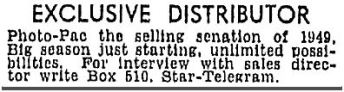
Manufacture and distribution of the camera began in earnest in May, 1949. And then … ads for the camera were everywhere! (The home-grown invention appeared in a hometown newspaper advertorial on May 1, here.) Weir and his small team managed to get the camera in retail locations all over the country. He was also worked hard to line up distributors. Ads such as this one were placed in several U.S. newspapers:

photo-pac_FWST_061649Fort Worth Star-Telegram, June 16, 1949
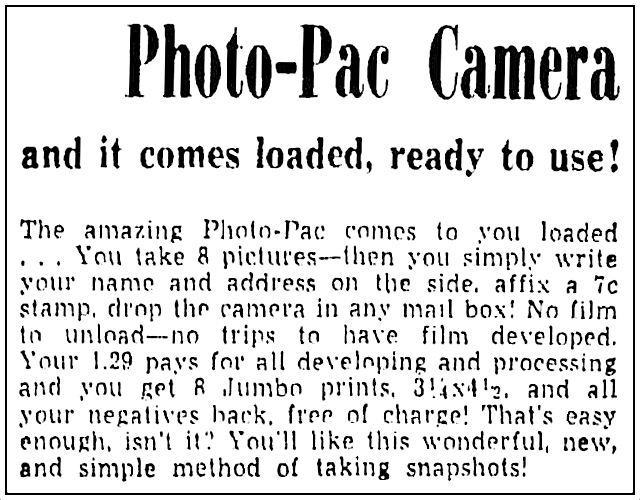
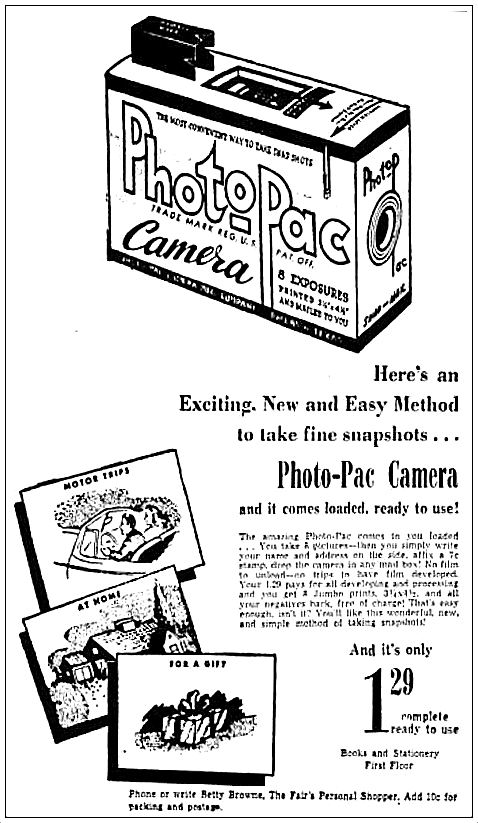
It seems to have been very popular — both as a novelty impulse buy and as a useful product for people who either did not own cameras or who did not want to take their family cameras on trips. Here’s a typical ad (see text below):

photo-pac_FWST_111649_fair-dept-store-ad

photo-pac_FWST_111649_fair-dept-store-ad_detFWST, Nov. 16, 1949 — from ad for Fort Worth’s Fair Department Store

The camera won a “prize gadget” award from Mechanix Illustrated (click to see very large image).

photo-pac_mechanix-illus_sept-1949Mechanix Illustrated, Sept. 1949

By the summer of 1950, the number of exposures went from eight to twelve, and the price increased to $1.49. It seemed that the business was growing, but by the fall of 1950, Photo-Pac seems to have reached the end of the road. Court dockets showed a couple of lawsuits filed against the company. Newspaper ads showed stock of the cameras being deep-discounted to as low as 50¢ apiece. The next year, 1951, saw Weir returning to his engineering career — he accepted a position with Ford in Kansas City and apparently left his business dreams behind. It was a great idea, but, for whatever reason, it never fully caught on.

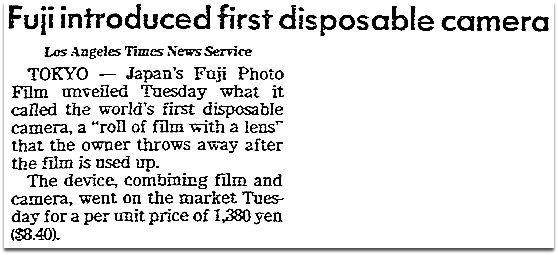
36 long years after A. D. Weir’s Dallas company folded, Fuji introduced their very popular disposable camera; Kodak followed with theirs in 1987. Those things were everywhere — everyone’s had one of them at one time or another. I bet A. D. Weir was miffed.

fuji_FWST_070286FWST, July 2, 1986

*

weir_smu_rotunda_1930A. D. Weir, SMU Rotunda, 1930

weir_smu_rotunda_1933Weir, SMU Rotunda, 1933

weir_dmn_032253-photo1953

***

Sources & Notes

Top photo is an inset from the Mechanix Illustrated “prize gadget” page, from the blog Modern Mechanix, here.

Weir’s patent can be found on Google here. To view Google Patent Image separately (and really big), click image below.

weir_patent

There seems to be some debate about whether Weir’s Photo-Pac was actually the first single-use disposable camera — if it isn’t strictly the first, it seems to have been the one that made the most headway into the American marketplace. A great article on the topic can be found on the Disposable America website here.

Wikipedia’s “disposable camera” page is here.

A. D. Weir’s father, Alfred Folsom (A. F.) Weir opened Weir Furniture at 2550 Elm Street in 1922; in 1934 the company was incorporated to include his wife and son. A. F. Weir sold the Dallas company to his brother Earl (who had owned furniture stores in Fort Worth and Arlington) in the 1940s — that business closed sometime between 1945 and 1948. In 1948, Earl’s son John Ray Weir opened Weir’s Furniture Village on Knox Street, a business still going strong today.

Most images are magically larger when clicked!

*

Copyright © 2016 Paula Bosse. All Rights Reserved.