Flashback : Dallas

A Miscellany: History, Ads, Pop Culture

The Terrill School — 1914

terrill-school_tx-almanac_1914-detThe Terrill School, 4217 Swiss Avenue

by Paula Bosse

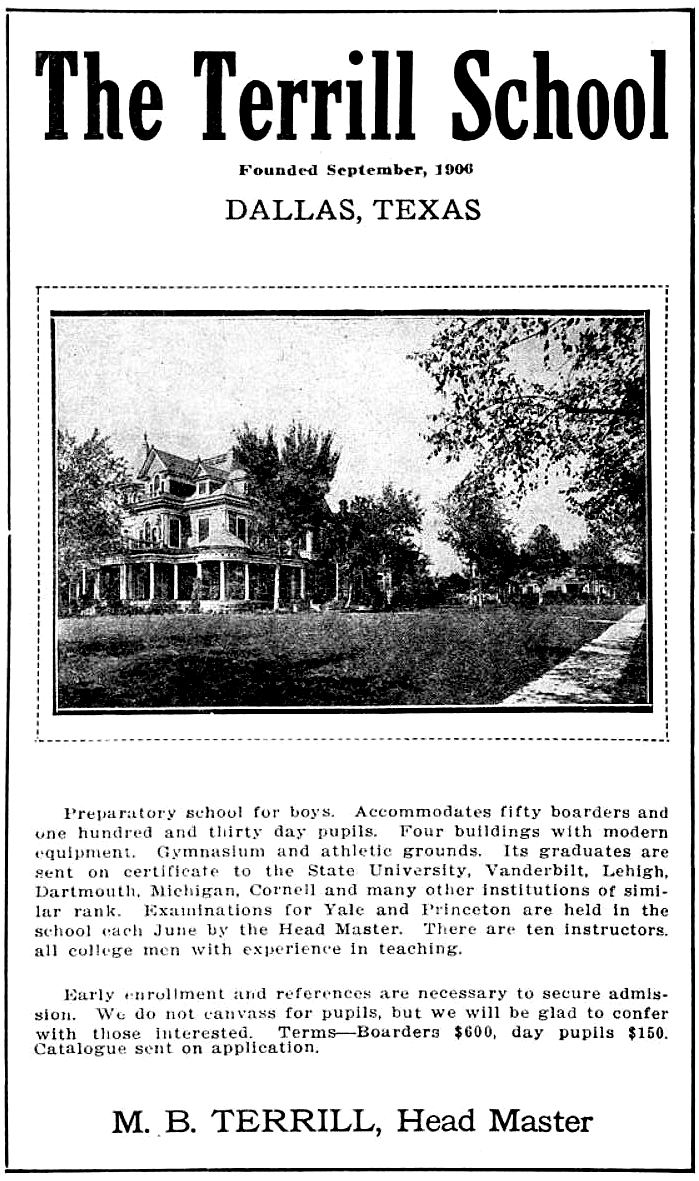
The Terrill School was for many years THE top prep school for boys in Dallas. Founded in 1906, it was located at the corner of Swiss and Peak in Old East Dallas until a move to Ross Avenue in the early ’30s. After a series of mergers over a span of years, it eventually became St. Mark’s School of Texas. Below, an ad that appeared in the 1914 edition of The Texas Almanac. (Click for larger image.)

terrill-school_tx-almanac_1914

I’m never sure how accurate The Inflation Calculator is, but when those numbers are run through it, in today’s money, parents would be forking over $14,000 a year if their sons lived on the campus, or $3,500 a year if they were students who lived at home.

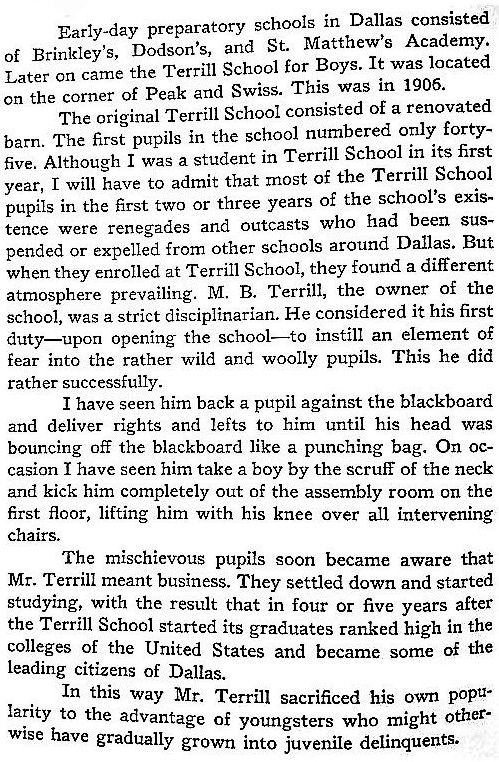
Hundreds, if not thousands, of successful businessmen and civic leaders spent time at the Terrill School. According to an eyebrow-raising account of life at Terrill — written by Dallas Morning News publisher Ted Dealey — those early days sounded more like a reform school than a prestigious prep school. One can only hope the practices he describes below did not last very long.

terrill_dealey_p28from “Diaper Days of Dallas” by Ted Dealey (1966)

Seems to have turned Ted Dealey around!

***

Sources & Notes

Ad from the 1914 edition of The Texas Almanac.

The passage by Ted Dealey is from his (highly recommended!) book, Diaper Days of Dallas (Nashville: Abingdon Press, 1966), p. 28.

More photos and background on The Terrill School can be found in the post “George Cacas, The Terrill School’s Ice Cream Man — 1916,” here.

*

Copyright © 2015 Paula Bosse. All Rights Reserved.

From the Vault: The Britling Cafeteria

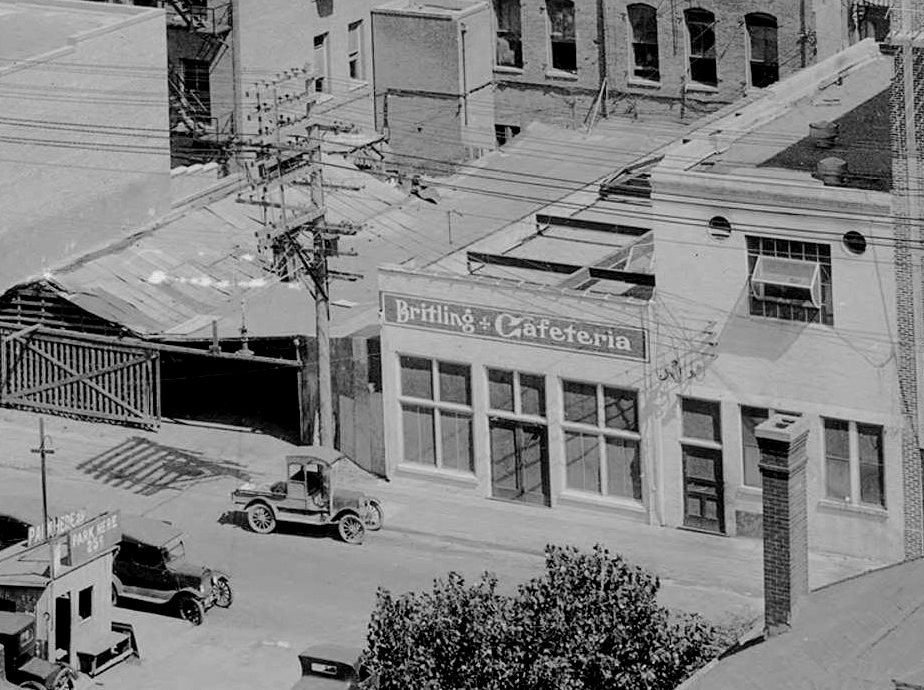
britling-cafeteria_rear-entrance_degolyerThe 1300 block of Jackson Street

by Paula Bosse

Last year I wrote about the Britling Cafeteria, an apparently well-known Southern restaurant chain, founded about a hundred years ago. Its first restaurant outside the Deep South was in Dallas, where it opened at 1316 Commerce Street at the end of 1922 (the rear entrance on Jackson Street is seen above). I’m a sucker for nostalgic restaurant articles, so I wrote one myself! Check out the post “The Britling Cafeteria Serves Those Who Serve Themselves,” here.

I would never have known about that swanky cafeteria had I not seen a fantastic George McAfee photo from the collection of SMU’s DeGolyer Library — the image above is a magnified detail of the original, much larger photograph. See that original photo, along with five zoomed-in details, in the post “Downtown Dallas, ca. 1923 — Zooming in on the Details,” here.

A “from the vault” two-fer.

*

Copyright © 2015 Paula Bosse. All Rights Reserved.


The Republic Bank Building’s Death-Ray Beacon

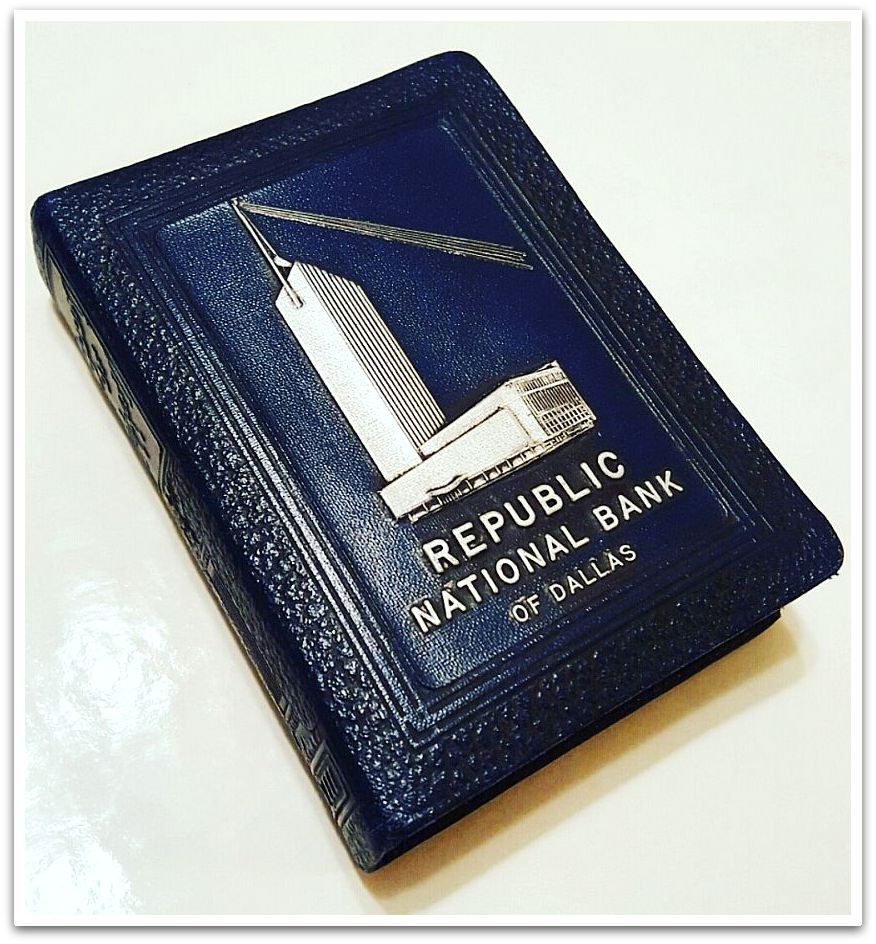
repub-natl-bank_book-bankThis novelty bank is WAY cooler than a toaster! (photo: Paula Bosse)

by Paula Bosse

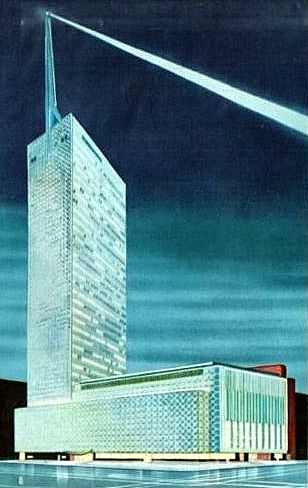
I’m not a big collector of things, but when I saw this little book-shaped bank, probably a promotional item given away by the Republic National Bank in, I would guess, the 1950s, I really wanted it. I love that building, and I especially love images showing that powerful sci-fi-looking beacon on top of it.

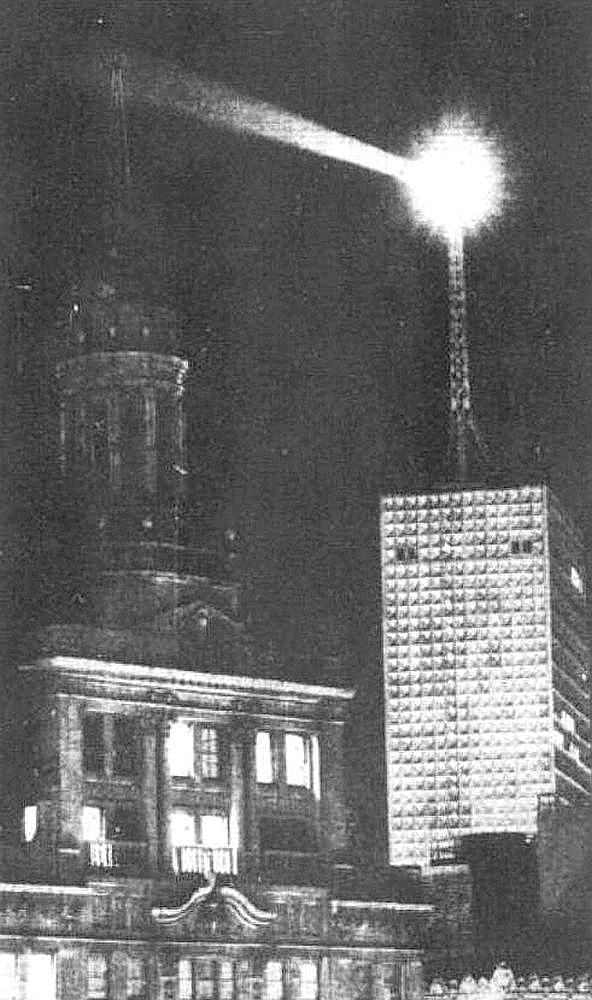
About that beacon. I’ve never actually seen a photograph of that thing in action … until today. Here is a great photo (I’d love to see the original…) during a test-run of the blinding searchlight. (The Davis Building — previous home of Republic National Bank — is seen at the left.) (Click to see larger image.)

beacon_mid-50s

When the Republic Bank Building opened in December, 1954, it was Dallas’ tallest building — helped out by the added oomph of that rocket on top. In an article detailing the specifics of the building, was this:

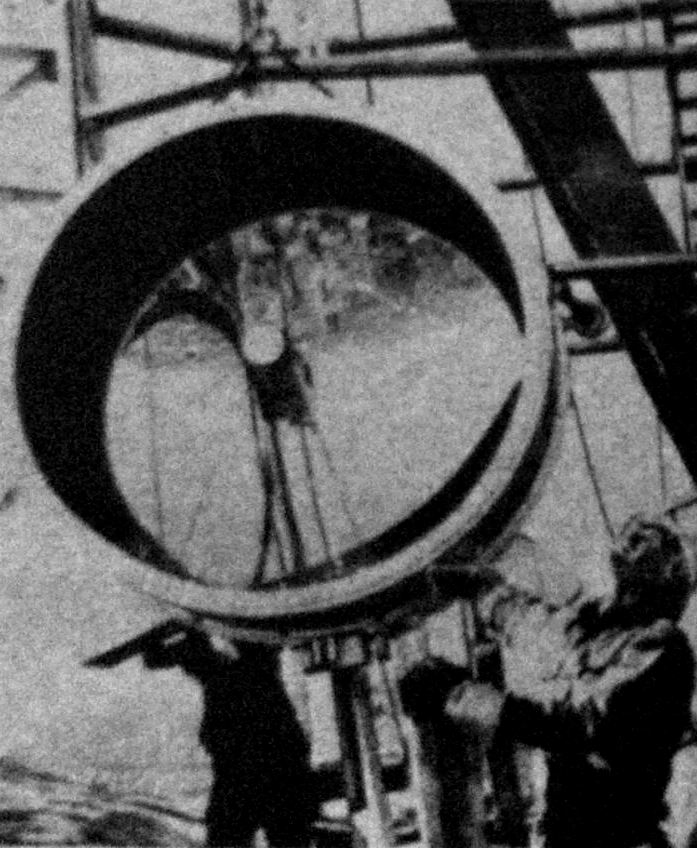
The 150-foot ornamental tower […] supports a beacon light with a lens five feet in diameter. The rotating light of almost a half-billion candlepower was designed for visibility of 120 miles. (DMN, Nov. 28, 1954)

Wow. I don’t even know what “half-billion candlepower” IS, but I bet it cut through the night sky like a hot knife through butter. And visible for 120 miles? …ONE HUNDRED AND TWENTY MILES?! I can’t even imagine what that death-ray must have looked like, rotating and pulsing and stabbing through the night sky probably hundreds of times every night. (I  just checked on this. The light rotated twelve times a minute, or once every five seconds. 720 times an hour! If this pace actually kept up over the years, that’s thousands of times every night!) At some point, the beacon was turned off, most likely from complaints from pilots trying to fly in and out of Love Field (possibly from Atoka, Oklahoma, which is … 120 miles from Dallas).

beacon_repub-natl-bankFive feet in diameter…

I have searched and searched to find out when the beacon/searchlight was finally turned off for good. My assumption was that it was fairly early on, because I’m sure it was a major problem for aircraft and was probably shut down at the emphatic insistence of the FAA, but when I asked around on a history group, people told me they remembered seeing it in the ’60s (a couple of people even said they thought they remembered it in the ’70s). If anyone can tell me when this beam finally stopped beaming, I would love to know.

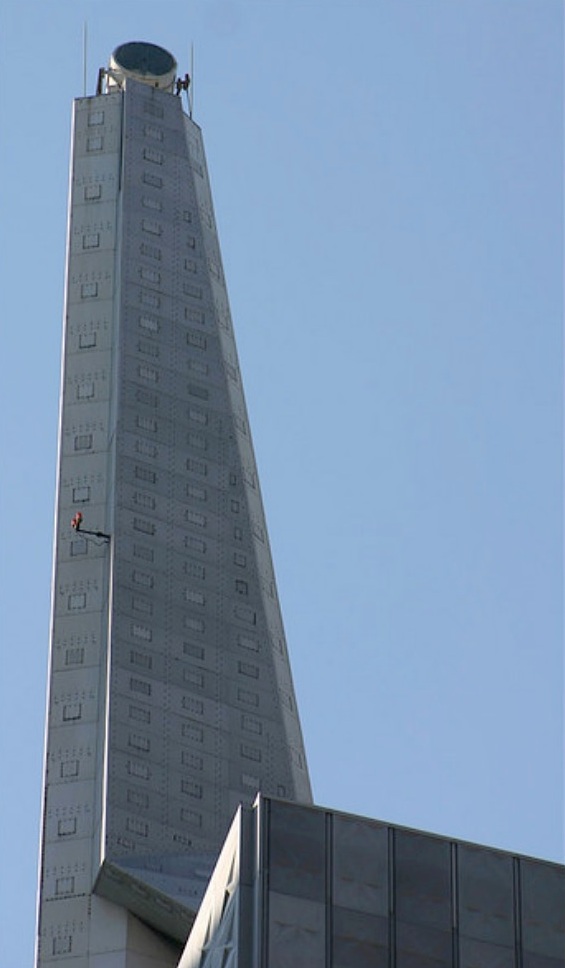
The rocket’s original red, white, and blue lights — made not of neon but of “Lumenarc” tubing (“a newly-developed, super-brilliant luminous tube” — DMN, Dec. 1, 1954) — were turned off in the 1980s, but lighting returned in the early 2000s when the building was being remodeled for residential living, and it continues to stand out as an important part of the Dallas skyline.

rocket_repub-center-websiteToday (via RepublicCenter.com)

That giant lens is still up there, and it might even still function, but the building is no longer the city’s tallest, and were it to be turned on today, that light would pierce right through neighboring buildings — not over them, but into them. If it hit you, it would be like an old cartoon where you would be able to momentarily see an x-ray image of your skeleton. Here’s a photo from 2006 in which you can see the light at the top of the rocket. (Click it!)

republic-bank-bldg_rocket_beacon_scott-dorn_2006_flickrPhoto by Scott Dorn/Flickr

There’s also a great photo of this which I included in one of my favorite Flashback Dallas posts, showing the rocket and searchlight from above, taken in 1968 from Republic Tower 2, here.

republic-national-bank_beacon_front

***

Sources & Notes

That “book bank” is mine! It’s very small — about 3.5″ x 4.5″, covered in blue cloth to mimic a book (it even has a title — “Book of Thrift” — embossed on the spine); it was manufactured by Bankers Utilities Co., which made similar novelty banks for companies all over the country. It has no key — I found one comment online that suggested that they were never issued with keys because the banking institution wanted the young owners of the banks to have to go into the bank in order to retrieve their savings — just like Mom and Dad had to. It’s a cool little bank — much better than a toaster!

Scott Dorn’s photograph can be viewed on Flickr, here.

Not sure what “candlepower” is? I read the Wikipedia article, here, but I’m still not exactly sure. Imagine the light from half a billion candles, I guess. In other words, BRIGHT. Super-cool bright. Retina-damaging bright.

The building is now Gables Republic Tower (website here), a ritzy apartment building.

And, again, if you have information about when the plug was pulled on the painfully powerful revolving spotlight, let me know!

*

Copyright © 2015 Paula Bosse. All Rights Reserved.


The Republic Bank Building and Spain’s “Casa de Los Picos”

flour-city-ad_dmn_120154-panelFlour City Ornamental Iron Co. employees hard at work (click for larger image)

by Paula Bosse

Did a 15th-century building in Spain inspire one of Dallas’ most distinctive and recognizable skyscrapers?

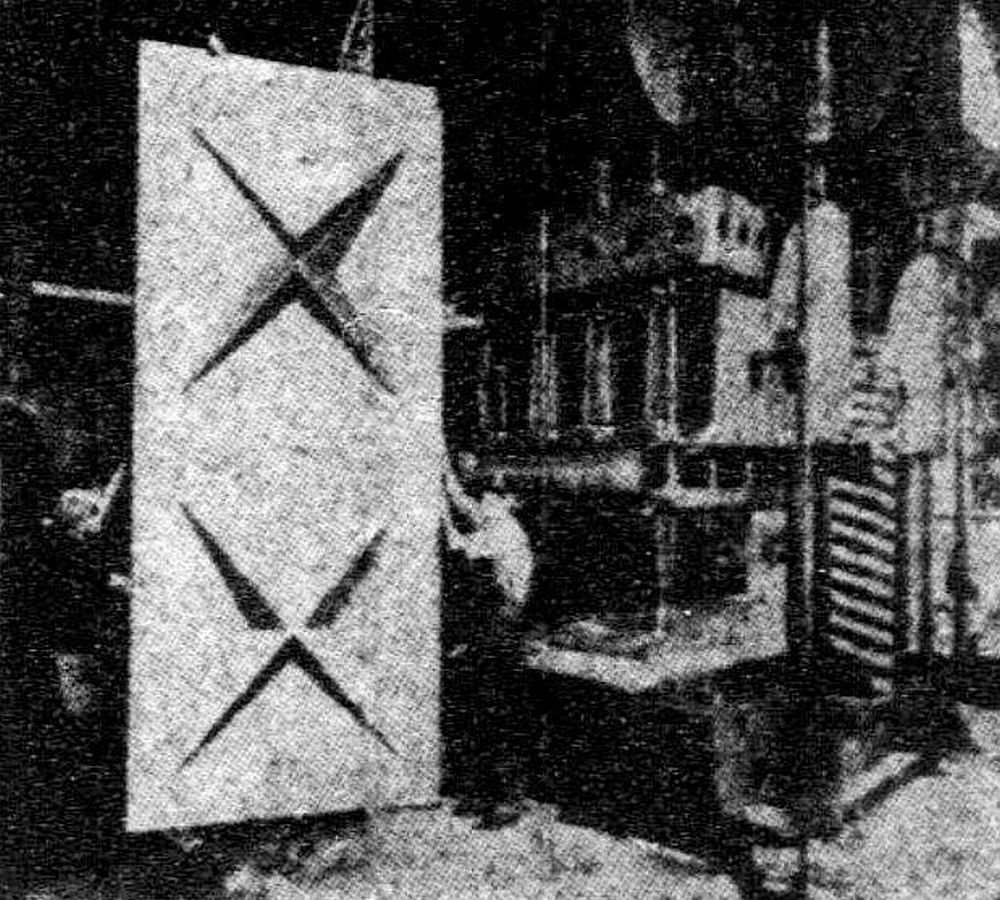
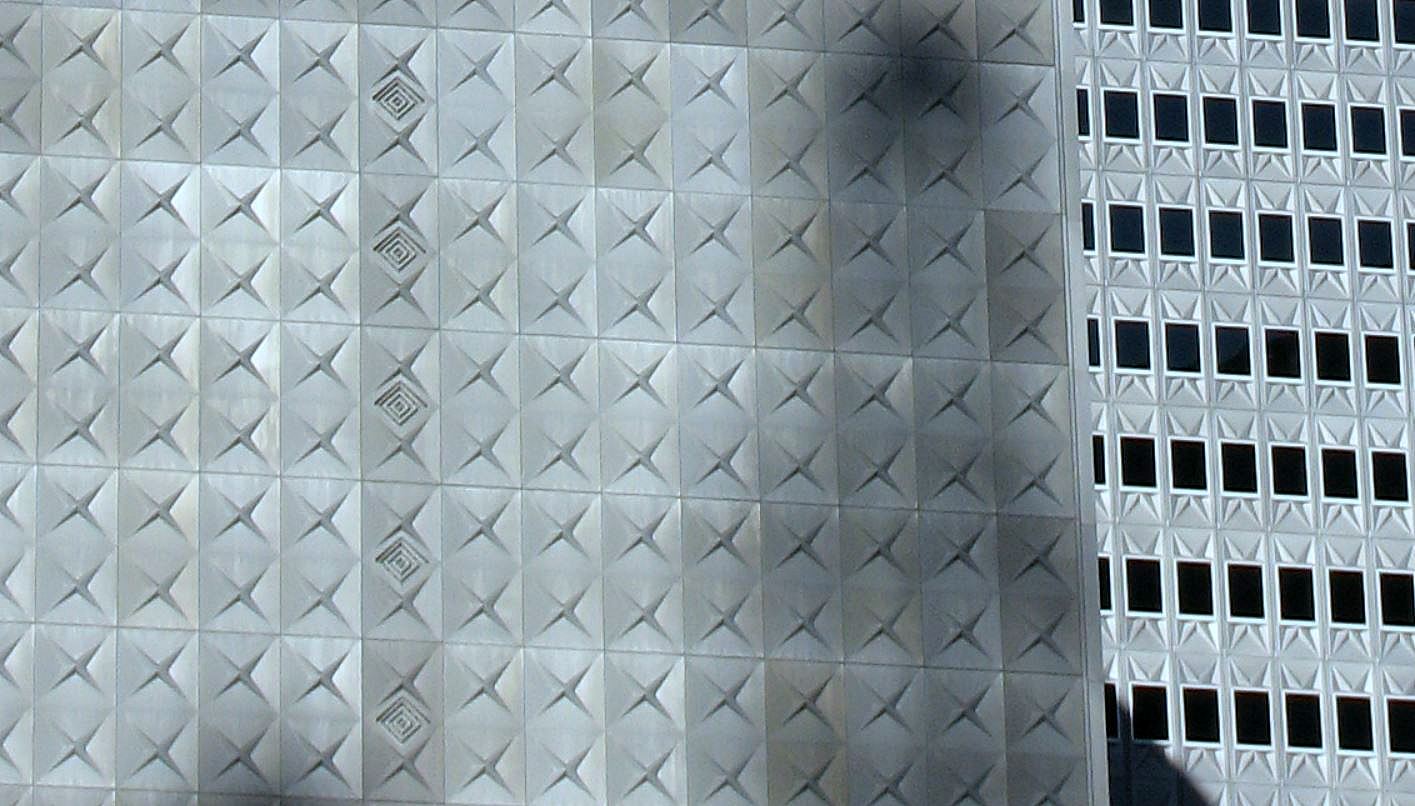
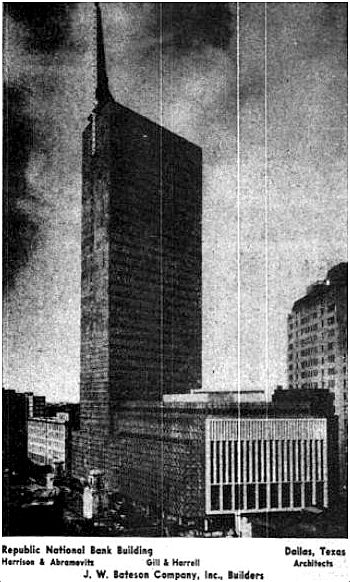
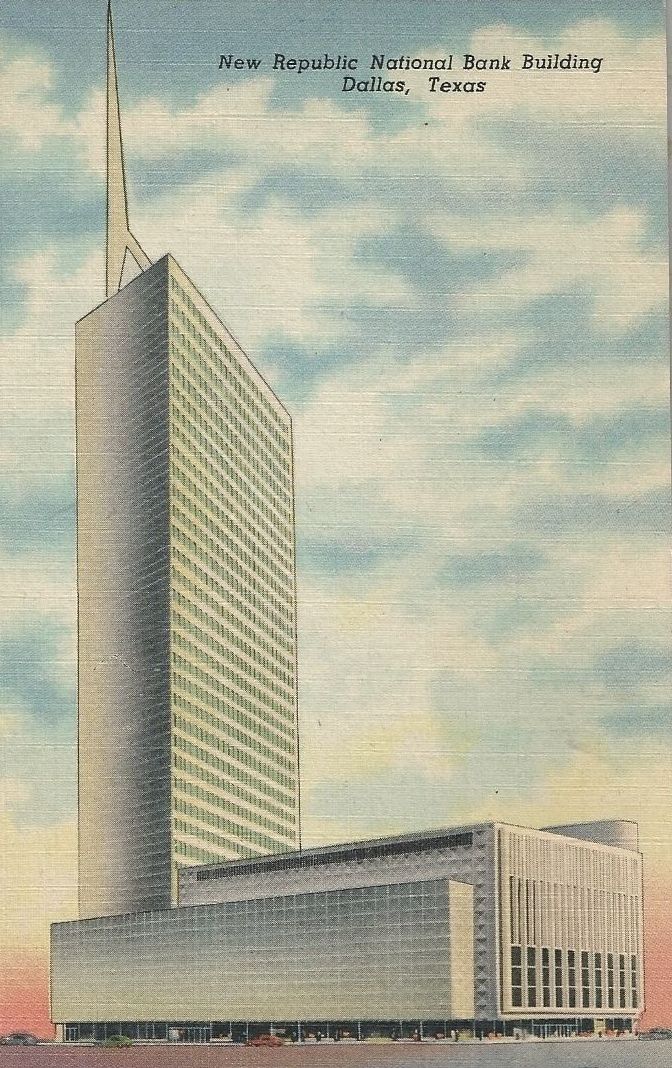
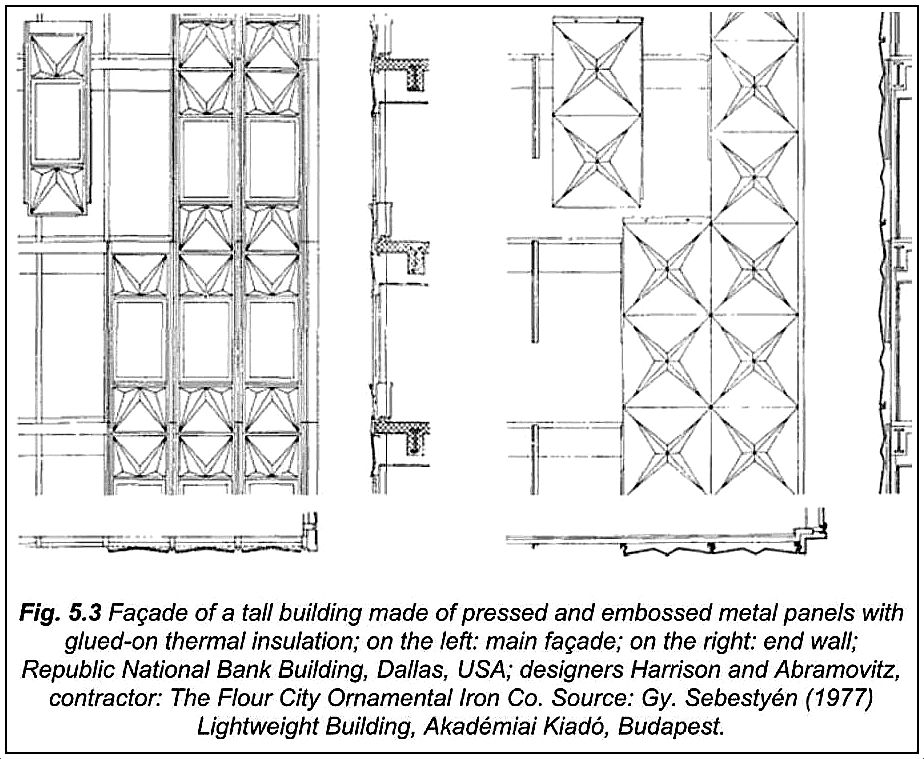
While reading about the construction of the Republic Bank Building, I came across the great, GREAT photo above which was part of an ad which ran about the time of the grand opening of the just-completed big, splashy Republic Bank Building in December, 1954. The ad this photo appeared in was for the Flour City Ornamental Iron Co. in Minnesota — the company that manufactured the thousands of pressed and embossed aluminum panels that covered the building’s exterior. These star-embossed panels — along with the distinctive and forever-cool “rocket” on the top of the building — gave the Dallas skyline a new super-modern look and an instantly recognizable landmark.

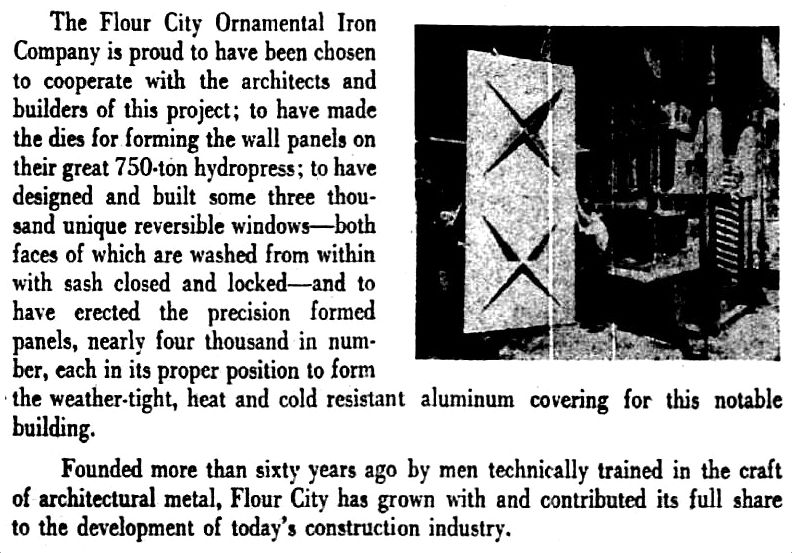
But back to that photo. It’s pretty cool. I had never really thought about those panels, but now I know that these iconic architectural adornments were manufactured in Minneapolis (…”New York CITY?!”) at the Flour City Ornamental Iron Co. Almost four thousand of these aluminum panels, a mere 1/8th of an inch thick (!), along with three thousand windows (which were reversible, so that the exterior sides could be washed from inside the building) were made in Flour City’s Minneapolis factory and transported to Dallas. From the ad:

The Flour City Ornamental Iron Company is proud to have been chosen to cooperate with the architects and builders of this project; to have made the dies for forming the wall panels on their great 750-ton hydropress; to have designed and built some three thousand unique reversible windows — both faces of which are washed from within with sash closed and locked — and to have erected the precision-formed panels, nearly four thousand in number, each in its proper position to form the weather-tight, heat and cold resistant aluminum covering for this notable building.

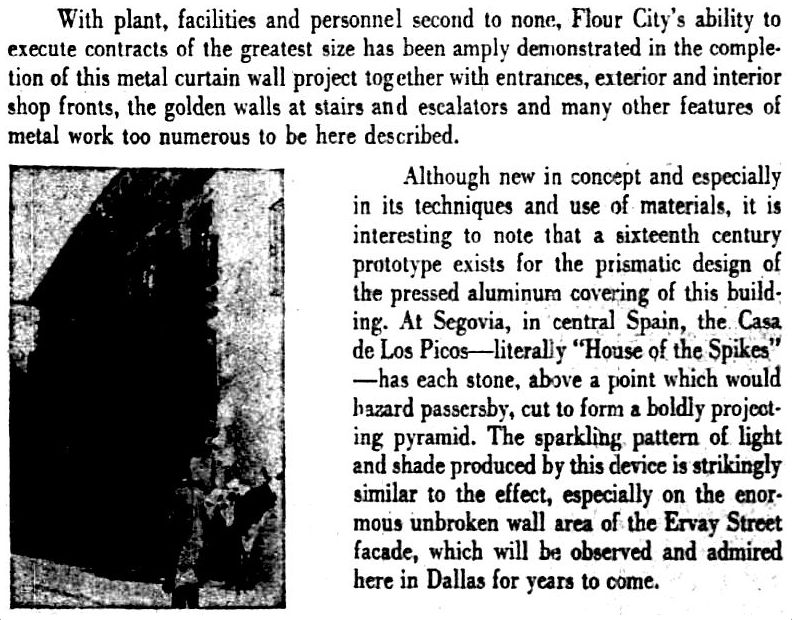
So, discovering that was interesting. But maybe even more interesting was this paragraph:

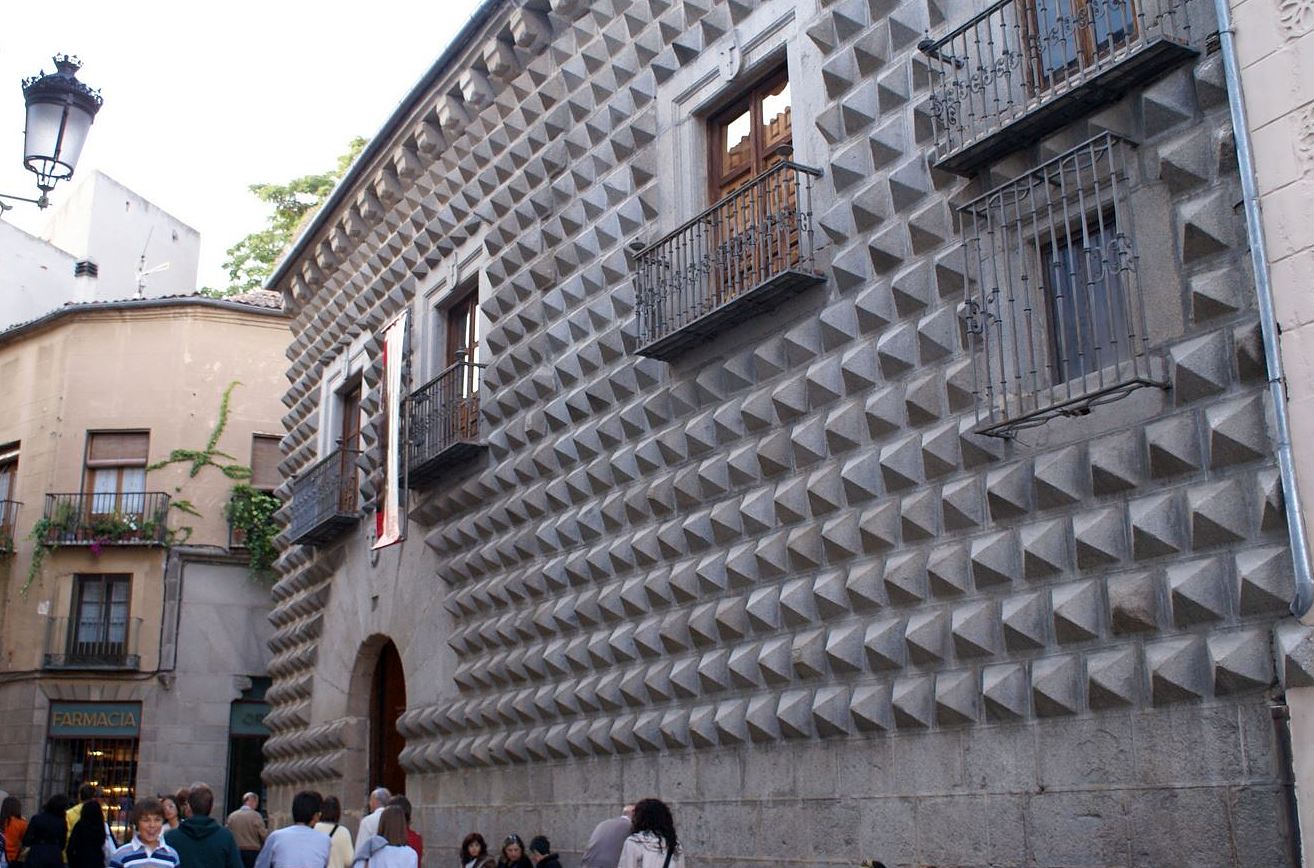
Although new in concept and especially in its techniques and use of materials, it is interesting to note that a sixteenth century [sic — it’s actually fifteenth century] prototype exists for this prismatic design of the pressed aluminum covering of this building. At Segovia, in central Spain, the Casa de Los Picos — literally ‘House of the Spikes’ — has each stone, above a point which would hazard passersby, cut to form a boldly projecting pyramid. The sparkling pattern of light and shade produced by this device is strikingly similar to the effect, especially on the enormous unbroken wall area of the Ervay Street side, which will be observed and admired here in Dallas for years to come.

I looked up Casa de Los Picos. It’s fantastic.

casa-de-los-picos_trover-websiteCasa de Los Picos, Segovia, Spain / via Trover.com

Was this design an homage of sorts to the Spanish building, conceived by the building’s main architects, Wallace K. Harrison and Max Abramovitz of the New York firm Harrison & Abramovitz? Or was it just Flour City exaggerating their work’s architectural significance? Whichever — I’m excited to have discovered Casa de Los Picos … because of an advertisement! I love this building — here it is again.

casa-de-los-picos_wikimediaWikimedia (click for gigantic image here)

And here’s an extreme close-up of the hometown favorite.

panels_wikimedia-detWikimedia (see a fuller image image here)

You learn something new every day.

Here’s the original 1954 Flour City advertisement, broken into readable sections (click for larger images).

ad-flour-city_dmn_120154a

ad-flour-city_dmn_120154b

ad-flour-city_dmn_120154c

ad-flour-city_dmn_120154d

ad-flour-city_dmn_120154e

republic-national-bank

***

Sources & Notes

Wikipedia round-up:

  • Flour City Ornamental Iron Works Company, here
  • Casa de Los Picos (en Español), aqui
  • Harrison & Abramovitz, architects, here
  • Republic Bank Building, here

See a whole passel of photos of the exterior of Case de Los Picos, here.

Here’s something I stumbled across in the middle of stumbling across other things — a schematic of the aluminum panels — I don’t know if they are original architectural drawings or not. They are contained in the book Construction, Craft to Industry by Gyula Sebestyen (London: E & FN Spon, 1998); you can find it here.

panel-details_construction-craft-to-industry_

I found surprisingly little information on Flour City’s contribution to the Republic Bank Building on the internet. Anyway, thanks, Minnesota, for playing such an important role in the construction of — and look of — one of my favorite Dallas buildings!

My previous post on this great building — “The Republic National Bank Building: Miles of Aluminum, Gold Leaf, and a Rocket” — is here.

When in doubt, click pictures for larger images.

*

Copyright © 2015 Paula Bosse. All Rights Reserved.


Dallas Consolidated Electric Street Railway Co. Ad — 1902

streetcar_dce_worleys_1902-det

by Paula Bosse

Why bother with a horse and buggy when you can take the streetcar?

streetcar_dce_worleys_1902-det1

streetcar_dce_worleys_1902(click me!)

streetcar_dce_worleys_1902-det2

***

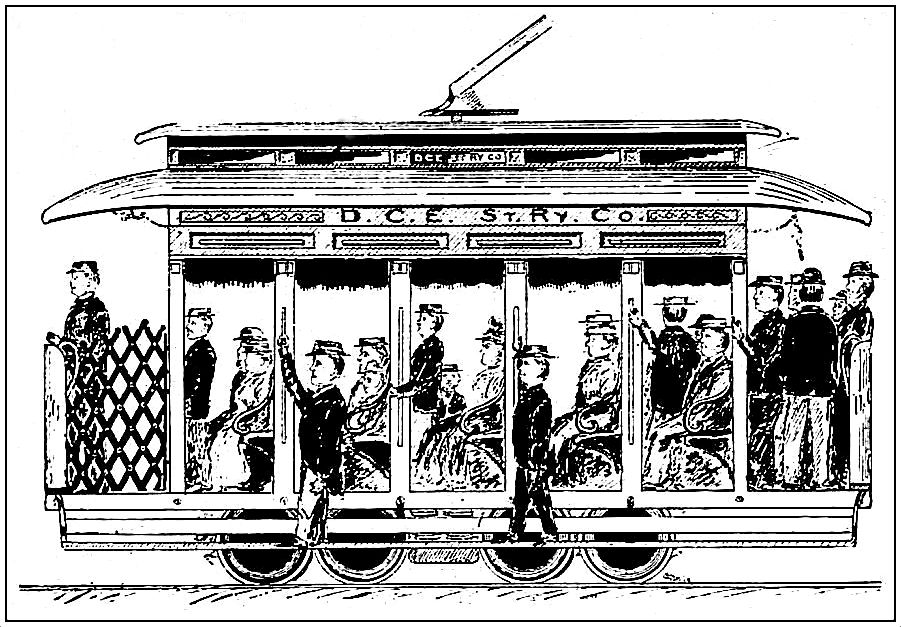
D.C.E. St. Ry. Co. ad from the 1902 city directory.

Click for larger images.

*

Copyright © 2015 Paula Bosse. All Rights Reserved.

Elm Street at Night, Coming & Going — 1950s

elm-st-night_ebayHave a sudden hankering for a fistful of roasted peanuts?

by Paula Bosse

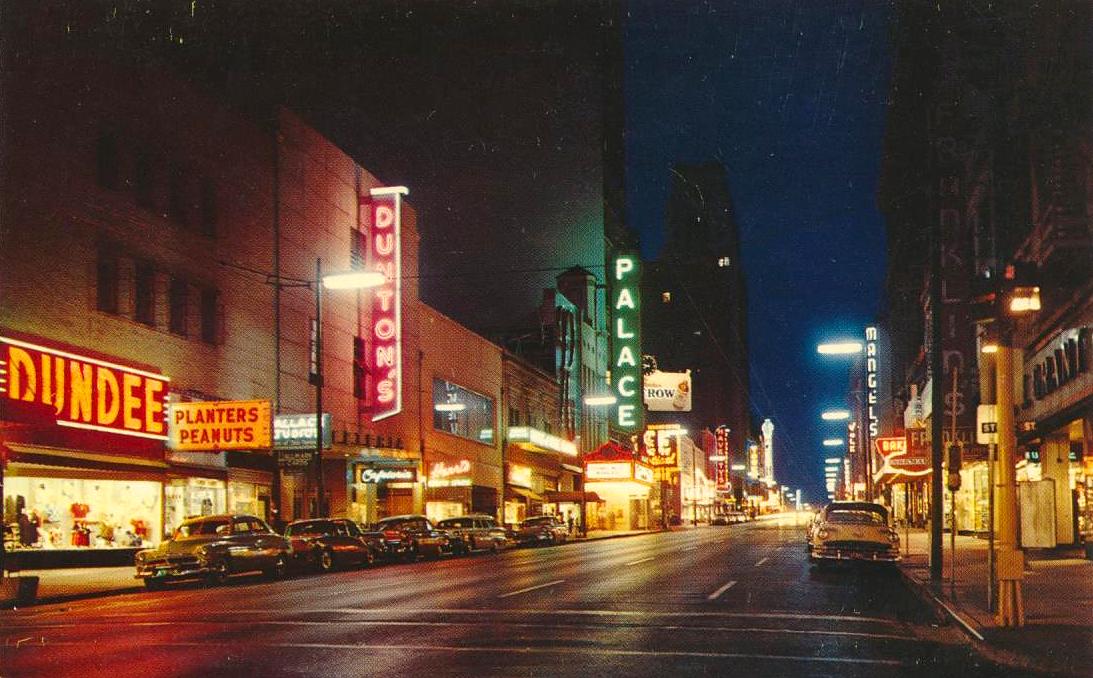
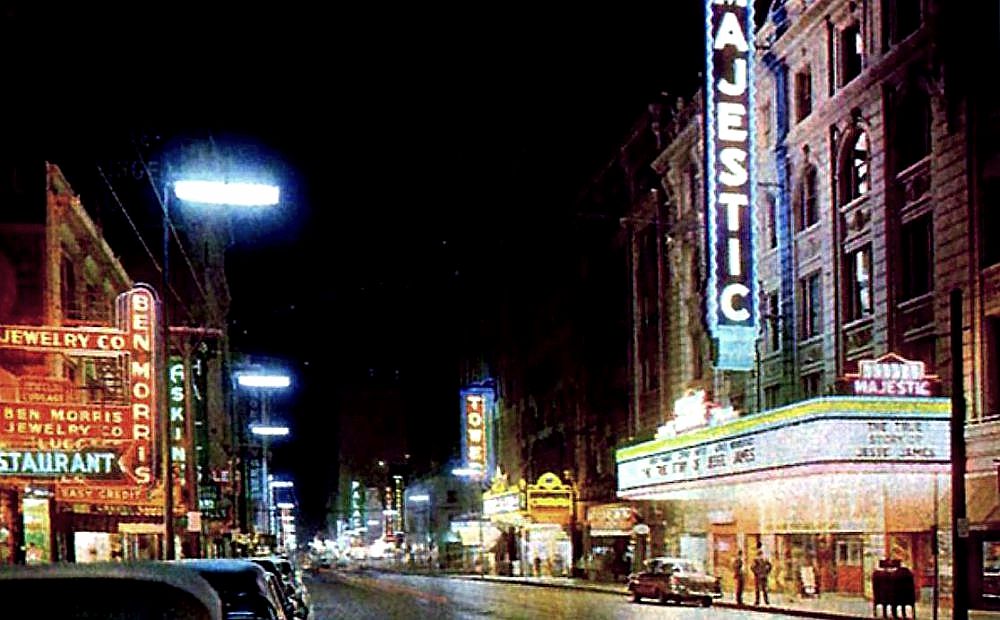
Two postcards from the Fabulous Fifties showing Dallas’ Theater Row, lit up at night — one looking east (above), and one looking west (below).

The top view — taken from about Stone — was probably taken in the early- to mid-’50s. (See the same view today, here.) The following Elm Street businesses — all of which can be seen in this postcard — were listed in the 1953 city directory:

1602 Elm — W. T. Grant (dept. store)
1605 — Dundee Smart Clothes
1607 — Planters Peanuts (This place fascinates me!)
1607a — Wallace Studios (photography studio)
1609 — Dunton’s Cafeteria
1610 — Franklin’s (women’s clothing)
1613 — Henri’s Hollywood Beauty Studio
1614 — Baker’s Shoes
1623 — Palace Theatre

ERVAY crosses
1700 — Mangel’s (women’s clothing)
1705 — Lee Optical
1713 — Haverty’s (furniture)
1806 — Volk Bros. (dept. store)

ST. PAUL crosses
1907 — Tower Theatre
1911 — Melba Theatre (barely visible)
1921 — Majestic Theatre

Here’s Elm looking west, taken at about North Harwood. (See the same view today, here.) The movie playing at the Majestic, “The True Story of Jesse James,” was released in February, 1957.

elm-street-night_ca1957

The businesses seen here, on the south side of the street:

1918 Elm — Hall’s Credit Clothiers
1922 — Askin’s Credit Clothing Store
1924 — Ben Morris Jewelry
1926 — Majestic Cafe (*possibly* — I’m not sure if it was there in 1958)

In all my wanderings through photos of old Dallas, my biggest regret is that I never experienced downtown-Dallas movie-going in the 1930s, 1940s, and 1950s. Mr. Peanut, we hardly knew ye (or in my case, I never knew ye).

***

Sources & Notes

Top postcard from eBay.

Second postcard from the Billy Holcomb Collection, found on Cinema Treasures here. (If anyone has a better image of this, let me know!)

The thought of buying warm, just-roasted nuts on the sidewalk of a busy downtown street makes me feel all nostalgic for something I’ve never actually experienced. It looks like the Planters Peanut shop was in a couple of different locations before it moved to the one seen above at 1607 Elm — first at 1519 Main (in about 1929), and then the 1500 block of Elm, next to Cullum & Boren (from 1931). Read a few memories of this Elm Street shop here; and see photos of a shop still operating in Memphis, here.

*

Copyright © 2015 Paula Bosse. All Rights Reserved.

Waking Up Every Day To an Unimpeded View of Lake Cliff Park

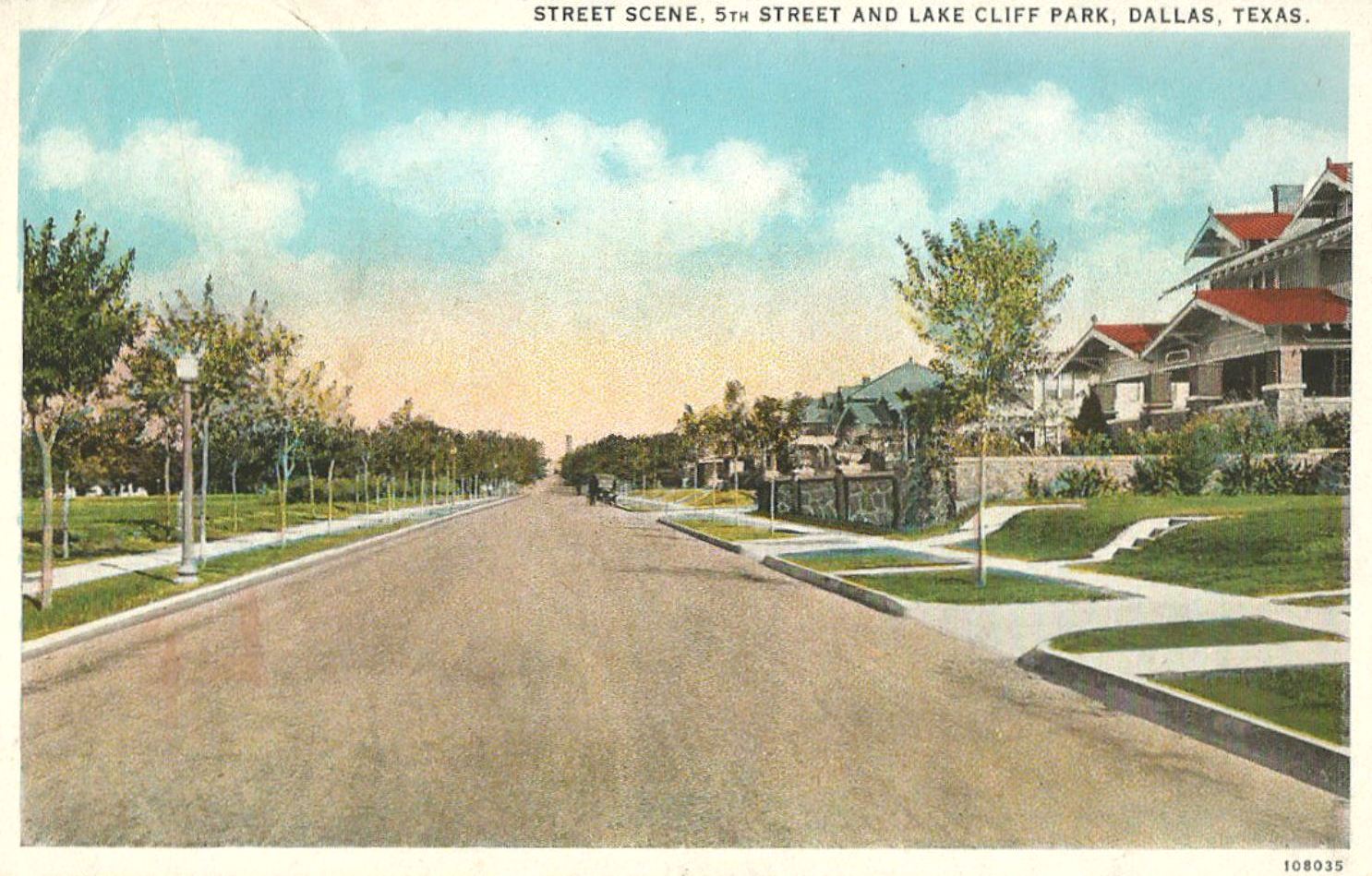
oak-cliff_5th-street_lake-cliff-park_ebayThe red-roofed Frank Rogers house, E. Fifth & N. Denver, Oak Cliff

by Paula Bosse

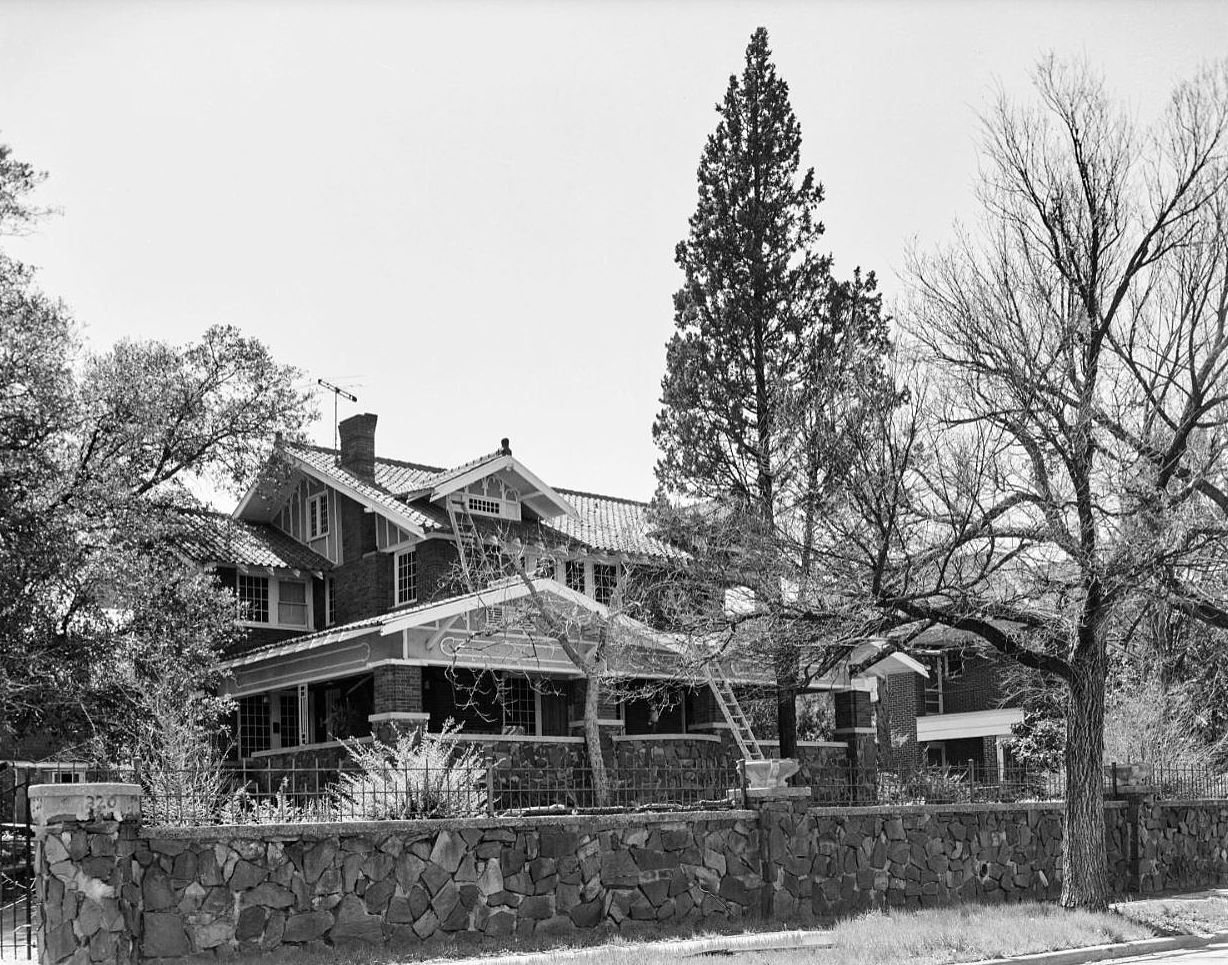
I saw this postcard of a row of houses on East Fifth Street in Oak Cliff and wondered if the house with the red roof and the low stone wall was still standing. Happily, it is. With a little digging, I discovered that the house at 320 E. Fifth Street was built in 1922 or very, very early 1923 for Frank Rogers, one of Dallas’ top photographers. A photographer would want to live with a beautiful view, and he certainly had it there — Lake Cliff Park was right across the street. (The artist Frank Reaugh also lived on East Fifth, a block or two to the west.) Frank Rogers (1878-1961) lived in the house he built at the corner of East Fifth and North Denver until his death at the age of 82.

It appears that Rogers bought the property in the survey area known as Robinson’s Park Place in December of 1920 for $8,000. The address does not exist until his house is built — it shows up for the first time in the 1923 city directory. The 1922 Sanborn map (see it here) shows the corner lot empty — as well as most of the rest of the lots along East Fifth between North Crawford and North Denver.

Here are a few bits and pieces of random information from a search on the address. In 1933, Rogers’ German Shepherd got loose. That park would have been an absolute paradise for a dog on the lam.

roger_dmn_090233Sept. 2, 1933

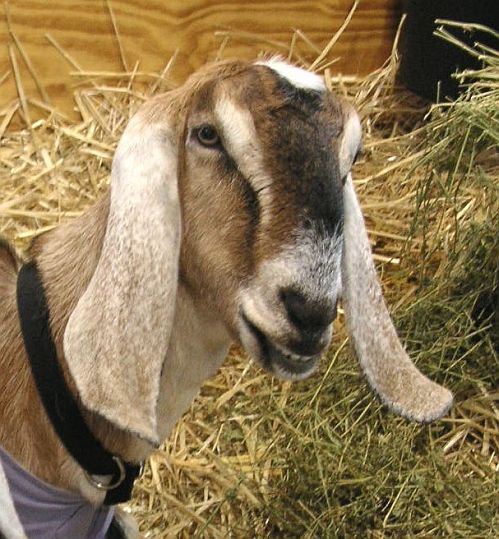
And in 1936, for some reason Rogers was selling a “Nubian milch goat,” a friendly source of milk which was, presumably, kept on the property. Was it being sold at the behest of neighbors? The publication Milch Goat Dairy (1917) informs us that “no member of the goat family is more peaceful or gentle than the Nubian, and while the bucks of this breed have the same odor that all goat bucks have, the odor is far less in this breed.” Still. The other well-heeled neighbors might have had a few goat-related issues.

320_dmn_111736-goatNov. 17, 1936

Nubian goat! (Wikipedia)

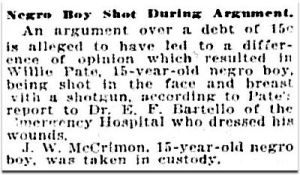
There was a room or small apartment at the rear of the house, and directories show that (at least through the ’20s) there was an ever-changing roster of lodgers who lived there — every year a different name was listed. They were most likely employees. In 1929, the occupant was J. W. McCrimon/McCrimmon, who may have been the same person who, as a minor in 1922, was accused of wounding another minor with a shotgun.

mccrimon_dmn_082922Dallas Morning News, Aug. 29, 1922

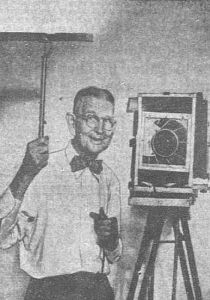
Frank Rogers began his career as a newspaper photographer who later ran his own photography studio with his son, Norman. He preferred commercial jobs to bread-and-butter studio portraiture, though he did both. Whatever kind of job he was doing, he preferred to use flash powder when he could, a practice which caused several injuries (and even fires!) over the years.

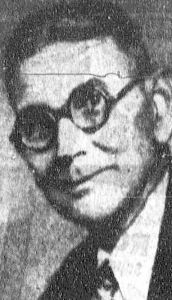
A news article in 1945 described one such incident: during a commissioned job in which he was taking hundreds of employee photographs for a large company, his flash-powder gun exploded and he was “seriously burned on the hands and face. His spectacles, physicians told him, probably saved his eyesight” (DMN, Feb. 10, 1945).

And here he is in those spectacles:

rogers-frank_portrait

Here’s another photo of the happy-looking photographer, posing with his camera and the potentially incendiary accoutrement.

rogers-frank_at-work_ca-1950s

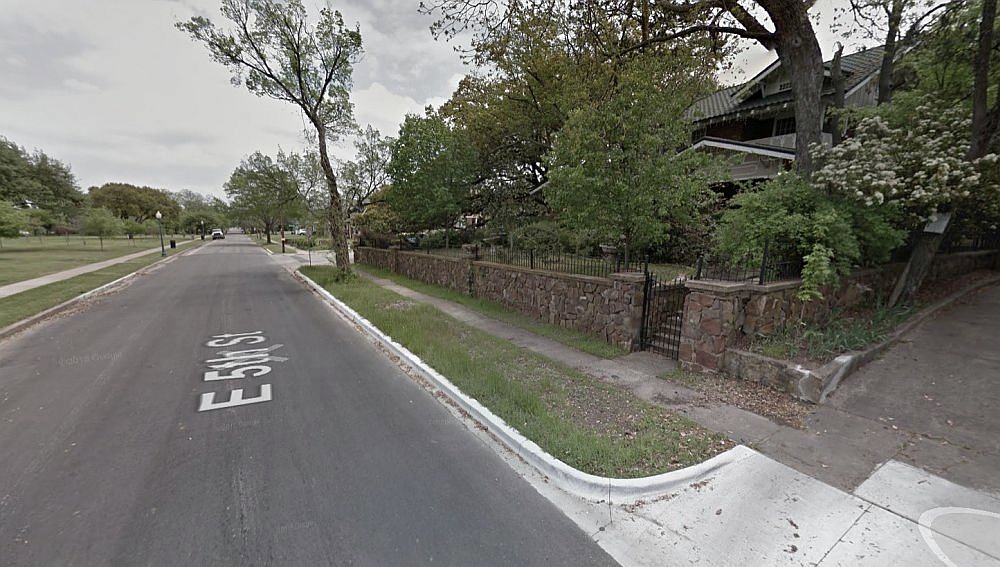
But back to the house. Here it is today.

rogers-house_googleGoogle Street View

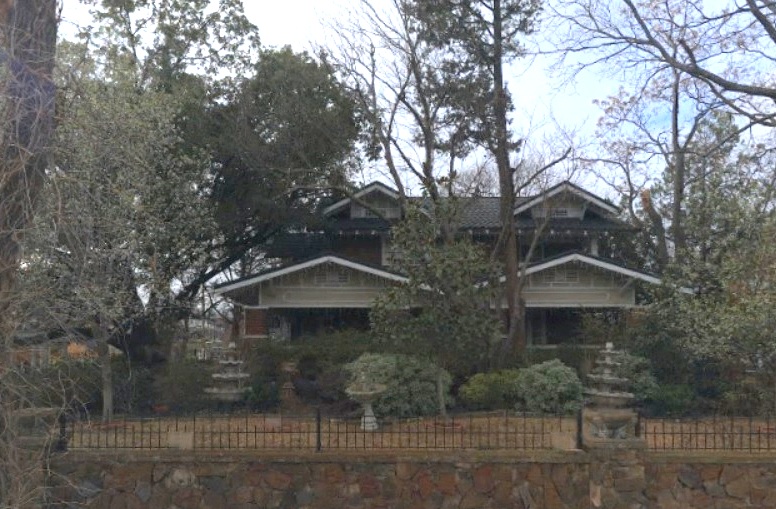
And another view, this time with the front of the house visible.

rogers-house_bingBing StreetSide

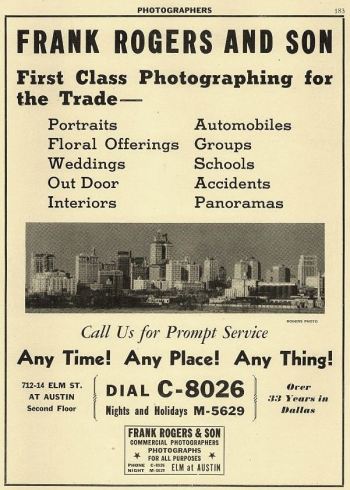
If I had access to flash powder, I’d go out today and take an extremely well-lit photo of an old Dallas building (and hope I’d survive the experience) — as a nod to Frank Rogers, his cool house, and all the wonderful photos of Dallas he took in the first half of the 20th century. Thanks, Frank!

rogers-frank_ad_dallas-directory_1944-45
Frank Rogers and Son ad, 1944-45 Dallas directory

rogers-frank_1936-directory1936 Dallas directory

***

Sources & Notes

Postcard is from eBay.

Frank Rogers was a busy man. If you’re interested in Dallas history (and I’m guessing you are if you’re reading a Dallas history blog), you’ve probably seen dozens and dozens (and dozens) of his photos without even knowing it. The Frank Rogers Collection is housed at the Dallas Public Library. I’ve used a few of his photos in previous posts — one of my favorites is his view of the Akard Street Canyon, here.

Another photo of the house can be seen in the 1980 photo below, from the Texas Historical Commission Historical Resources Survey, via the Portal to Texas History, here.

rogers-frank_home_320-east-fifth_oak-cliff_portal_1980

Take a tour of the Lake Cliff Park area via Google Street View, here.

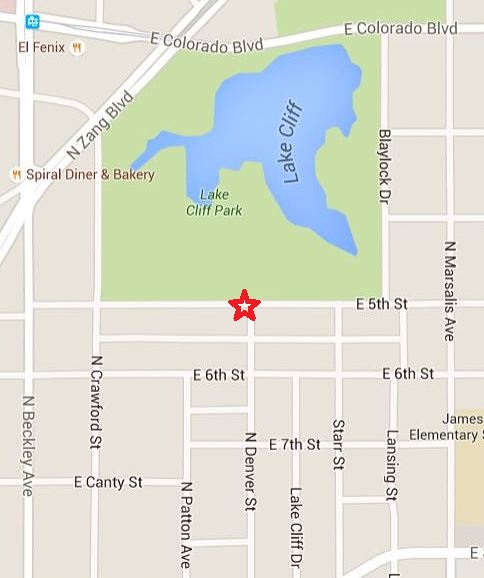
And finally, here’s where Frank’s house is, marked in red.

rogers-house_googleGoogle Maps

*

Copyright © 2015 Paula Bosse. All Rights Reserved.

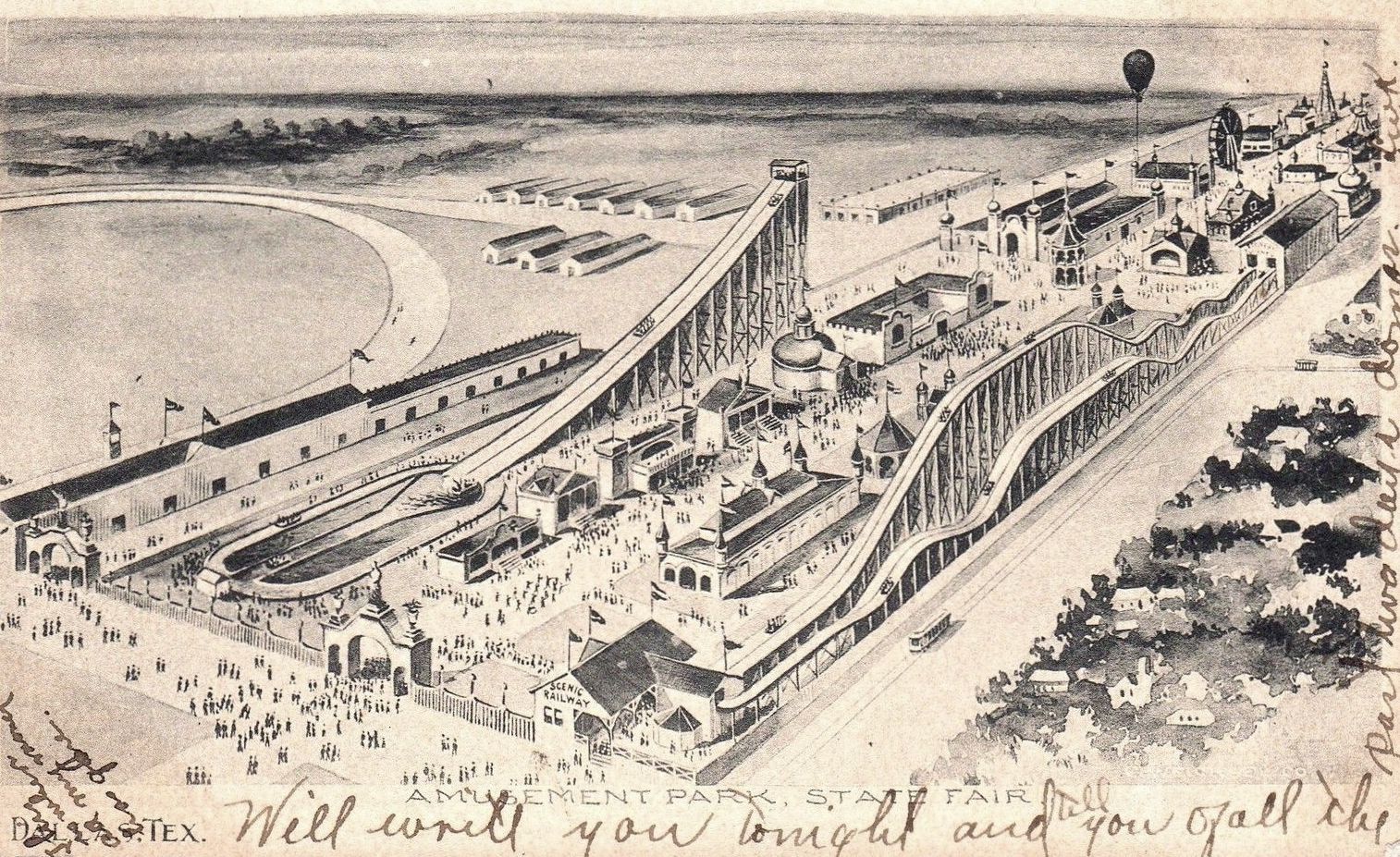
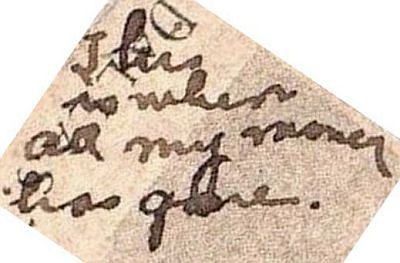
The State Fair of Texas: “This Is Where All My Money Has Gone”

state-fair_ebay

by Paula Bosse

Today is the last day of the fair. If you haven’t been yet, you should go! Have fun — and watch your moolah drain from your wallet at an alarming rate. It’s a tradition!

state-fair_money

***

Postcard from eBay. Click it to see a REALLY  BIG image!

*

Copyright © 2015 Paula Bosse. All Rights Reserved.

From the Vault: Gusher at Old Red! — 1890

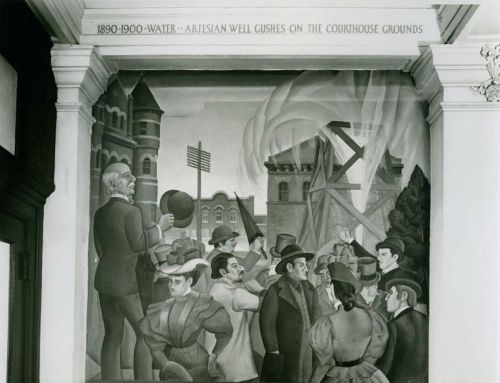
artesian_bywaters-hogue_bw-smu“Artesian Well Gushes on the Courthouse Grounds”
Mural by Jerry Bywaters & Alexandre Hogue (1934)

by Paula Bosse

I had meant to post this look back at a previous Flashback Dallas post last week! On October 9, 1890 — 125 years ago — a desperately-needed water source was discovered beneath the then-under-construction Dallas County Court House. Read how an artesian well came to be sunk on the grounds of the Old Red courthouse, the incredible gusher it produced, and the jubilant celebration that followed. This discovery was a hugely important moment in Dallas’ history — for one thing, it assured the city’s very survival — but I found almost nothing about it except in contemporary reports from the newspapers of the day. So I wrote about it, and it’s one of my favorite posts. You can read it here.

Happy belated 125th anniversary, old capped and forgotten well!

I never did receive any feedback on whether this odd structure on the courthouse lawn is, in fact, what remains of that well. It seems like it should be — it’s on the exact spot where the gusher gushed. …Is it?

Photo: Paula Bosse

***

Photo of mural by Harry Bennett from The Bywaters Special Collections, Hamon Arts Library, Central University Libraries, Southern Methodist University; more information is here.

*

Copyright © 2015 Paula Bosse. All Rights Reserved.

An Afternoon Outing with SMU Frat Boys & Their Dates — 1917

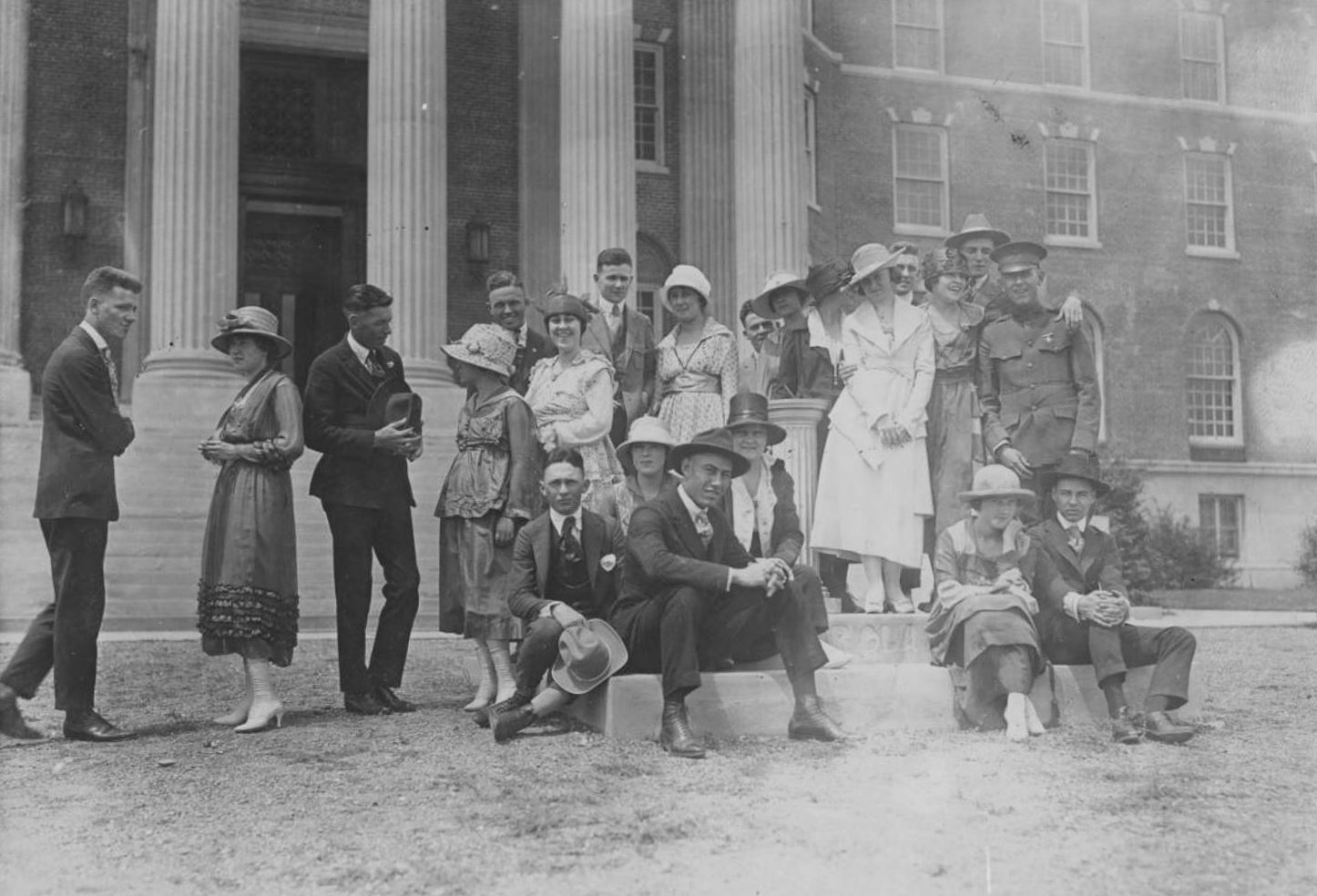
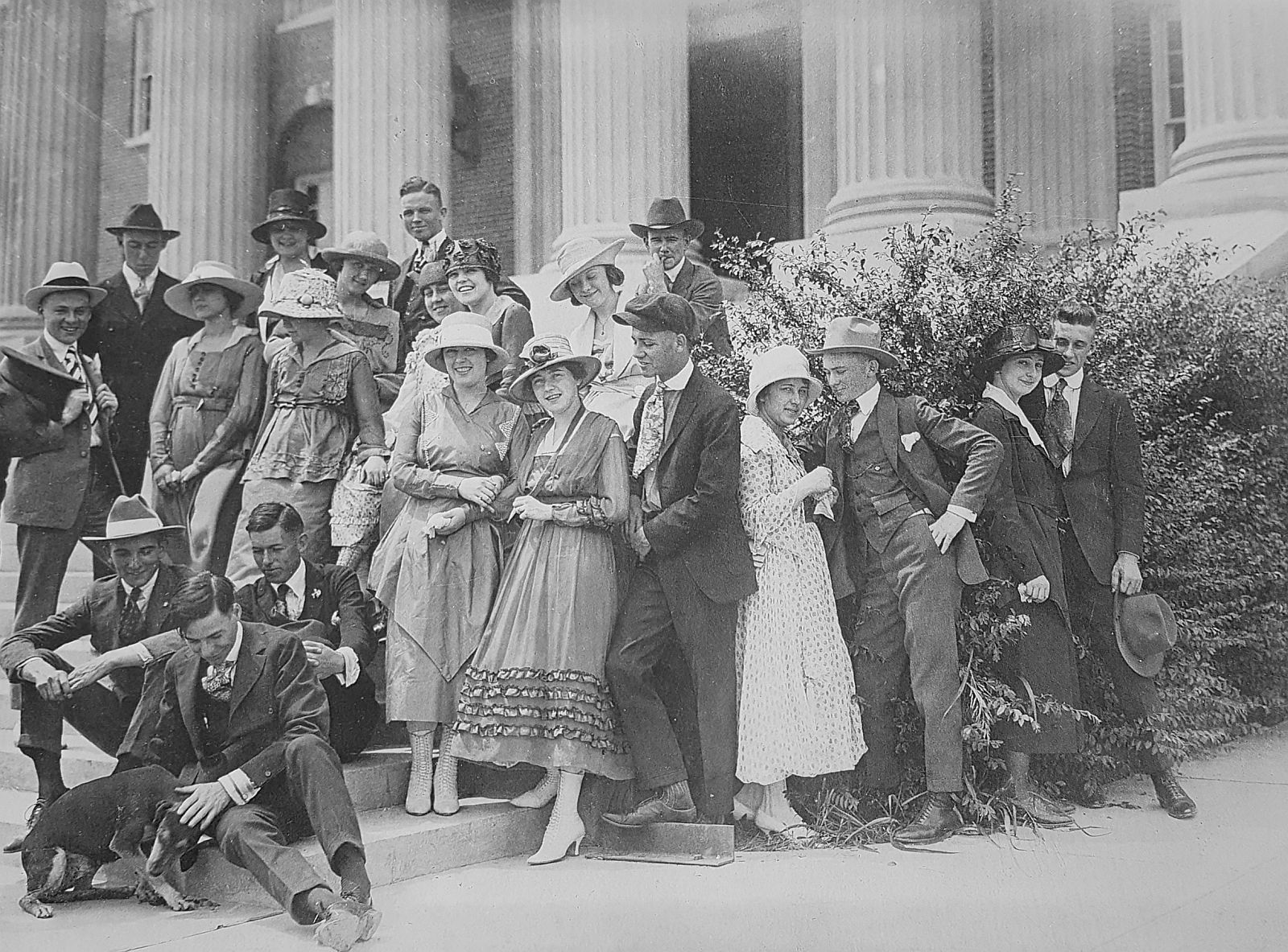
smu_omega-phi_dallas-hall_1917_degolyerCampus couples, 1917

by Paula Bosse

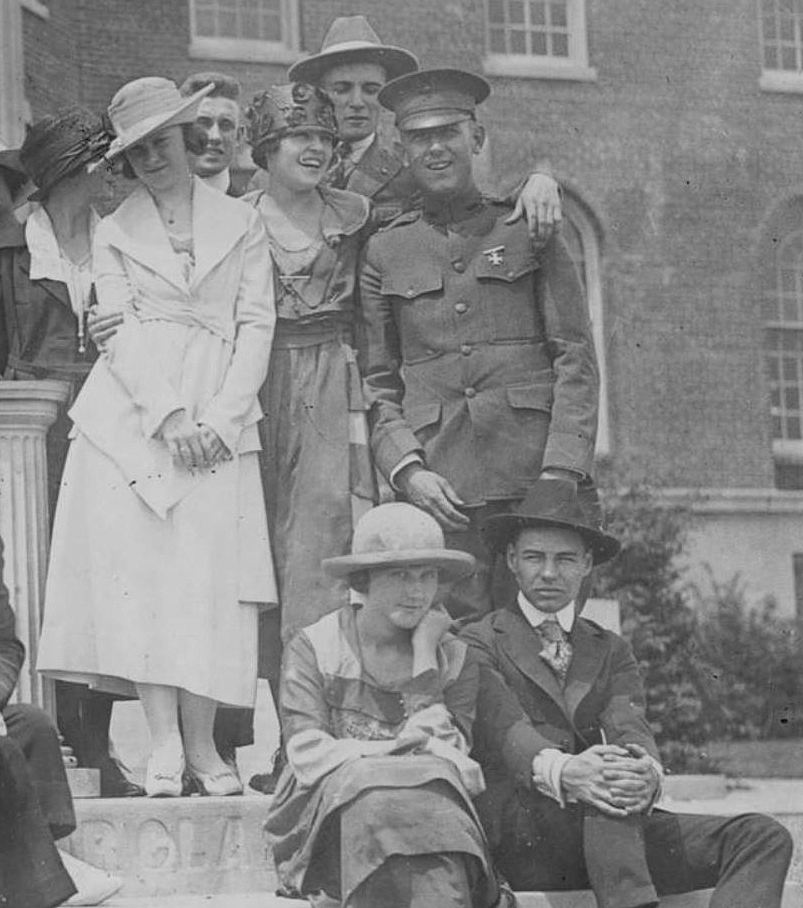
I came across three wonderful World War One-era photos in the SMU archives while I was looking for something else. You know how you can become enthralled by the charm of old photos and sit for long stretches of time staring at every little detail and wondering about the lives of the unidentified people who populate them? That happened to me with these. There is one particular young woman who stands out more than anyone else. Not only is she the best-dressed person in the photos, she also seems calm, collected, and serene. She looks friendly. She was probably very pleasant to have around.

These three photographs show a group of ten young couples and a pair of chaperones spending a beautiful sunny day together, with the highlight of the day being a trip to Highland Park’s Exall Lake. The men are SMU students, identified only as members of the Omega Phi fraternity. The women are identified merely as “dates,” but I’m sure that some of them were also SMU students. The photograph above shows the crowd gathered on campus in front of Dallas Hall. The woman in white looks like she’s on a pedestal, glowing in a spotlight. Below, a closer look at her stylish outfit (as well as a look at the young be-medaled WWI soldier next to her).
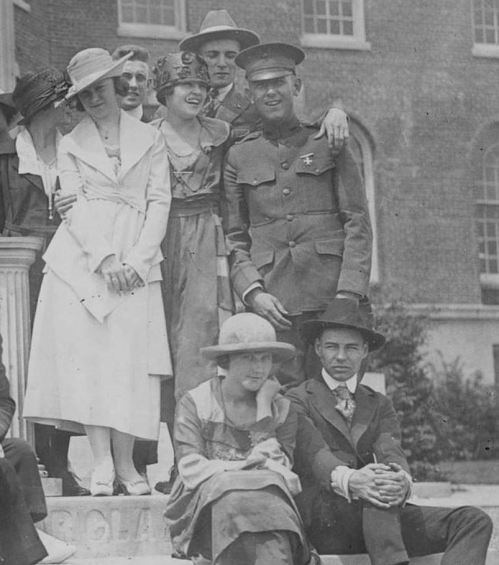
smu_omega-phi_dallas-hall_1917_degolyer-det1

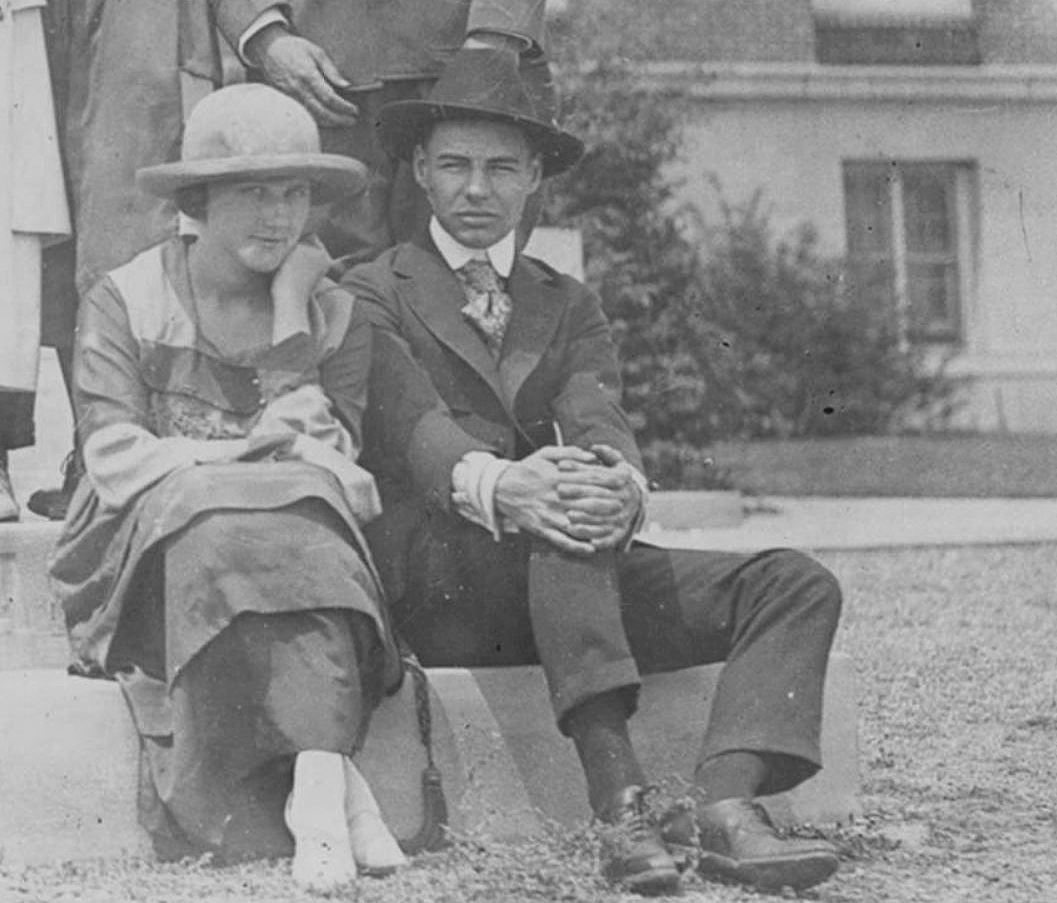
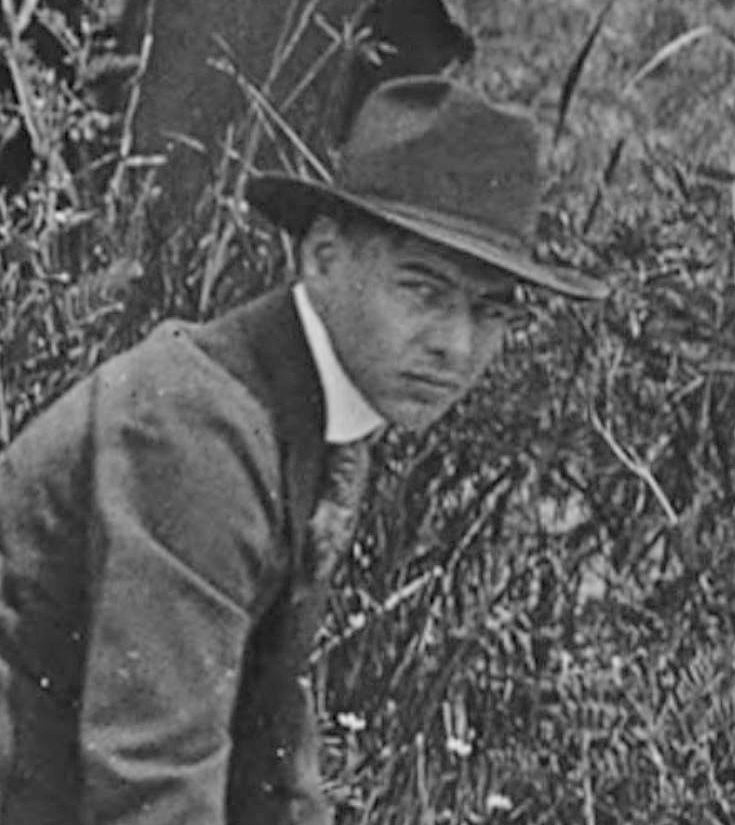
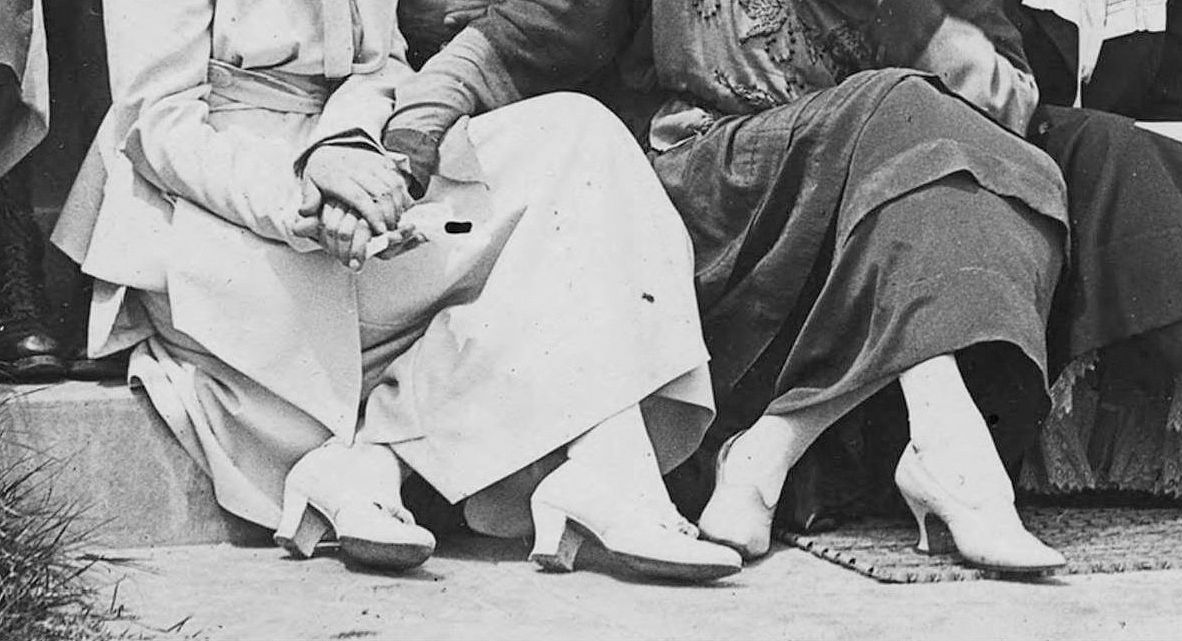
And, below, a similar detail, but this one showing the daintily crossed ankles of another pretty girl, seated beside a sour-looking companion.
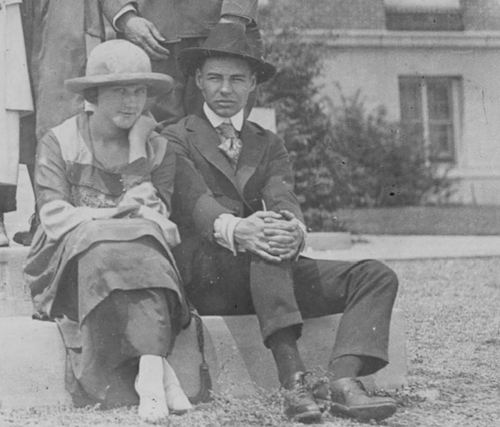
smu_omega-phi_dallas-hall_1917_degolyer-det2

And here’s the gang on the idyllic banks of Exall Lake. Diane Galloway included this photograph in her book The Park Cities, A Photohistory with this caption:

At one time a bridge crossed Exall Lake near the Cary house, shown in the distance. The photographer was standing on the bridge to capture this picture of well-dressed SMU students going boating on the lake. A trip to Lakeside Drive was one of the few off-campus excursions permitted in 1917.

I love this photo. If I didn’t know what the Turtle Creek area looked like, I’d be hard-pressed to identify this as Dallas!
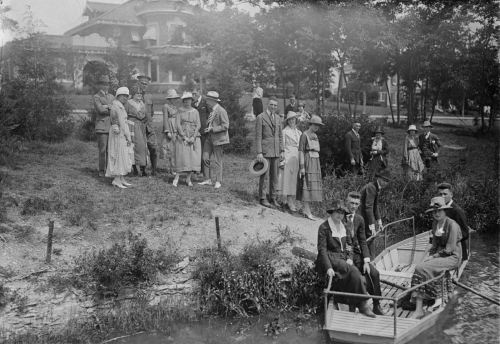
smu_omega-phi_exall-lake_1917_degolyer

Here’s a close-up of the beatific, smiling woman in white. I like the kid lurking in the background.
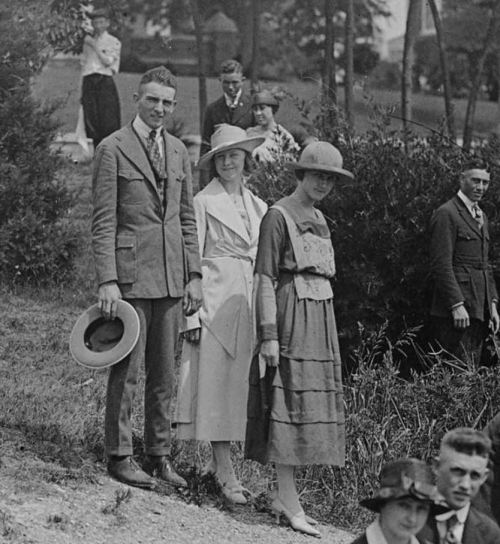
smu_omega-phi_exall-lake_1917_degolyer-det1

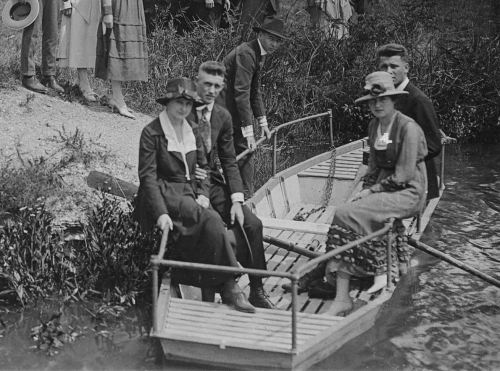
And the boat.

smu_omega-phi_exall-lake_1917_degolyer-det2

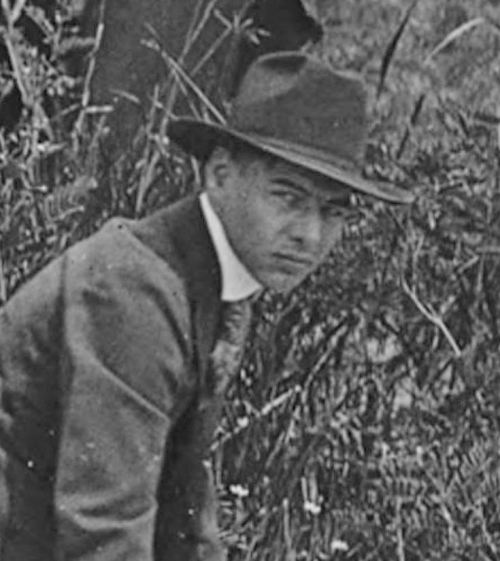
And the sour-looking guy again, looking even more annoyed than before.
smu_omega-phi_exall-lake_1917_degolyer-det3

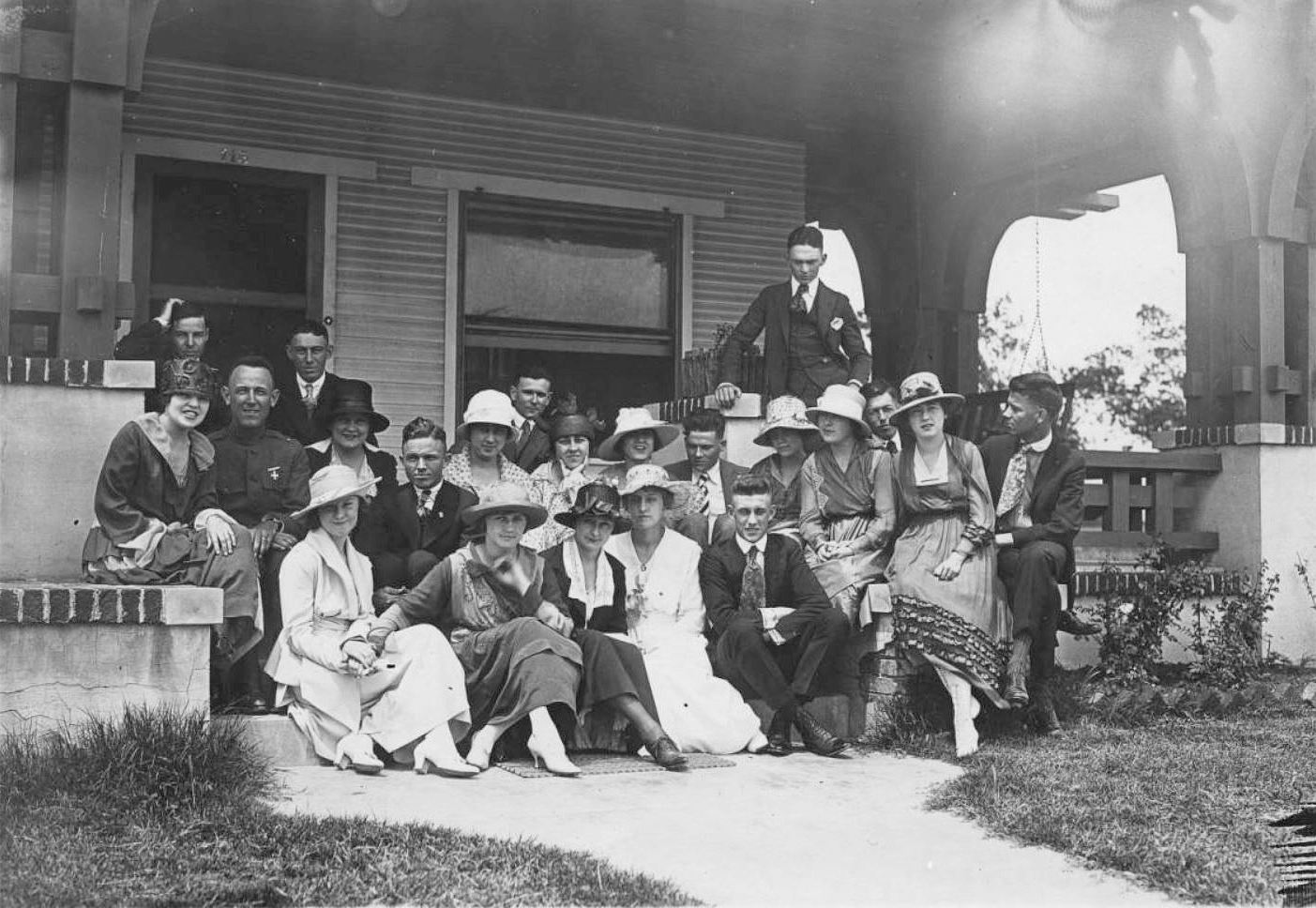
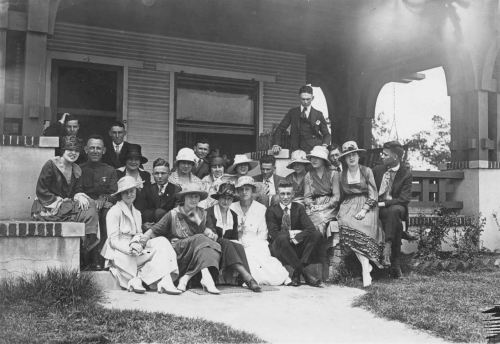
And here’s the crowd sitting on the steps of the frat house (which was located at Haynie and Hillcrest). The personnel has changed a little bit (they gained a woman and lost a man), but (almost) everyone seems pretty happy.
smu_omega-phi_porch_1917_degolyer

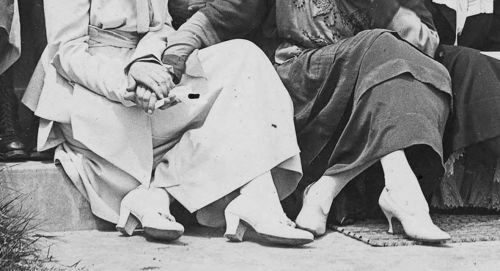
And, below, my very favorite detail from these three photos.
smu_omega-phi_porch_1917_degolyer-det1

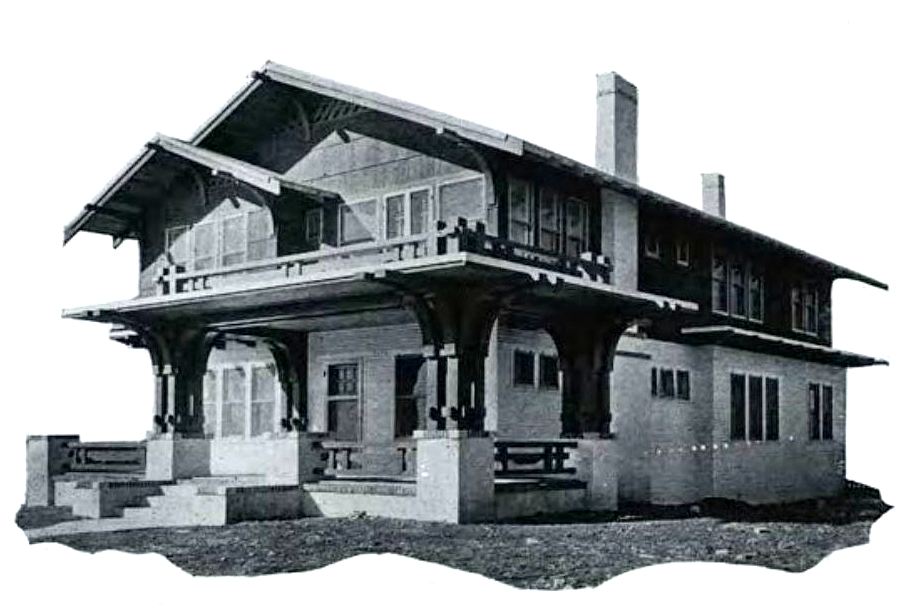
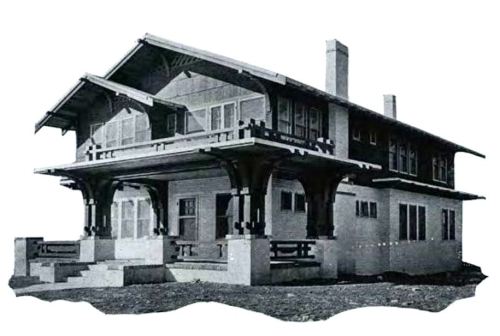
After a bit of sleuthing, I found a picture of the house at the time these photos were taken. It was actually a residence which was, I think, being rented out to the small group of Omega Phis. They had a proper fraternity house built several years later.
omega-phi-house_rotunda_1917

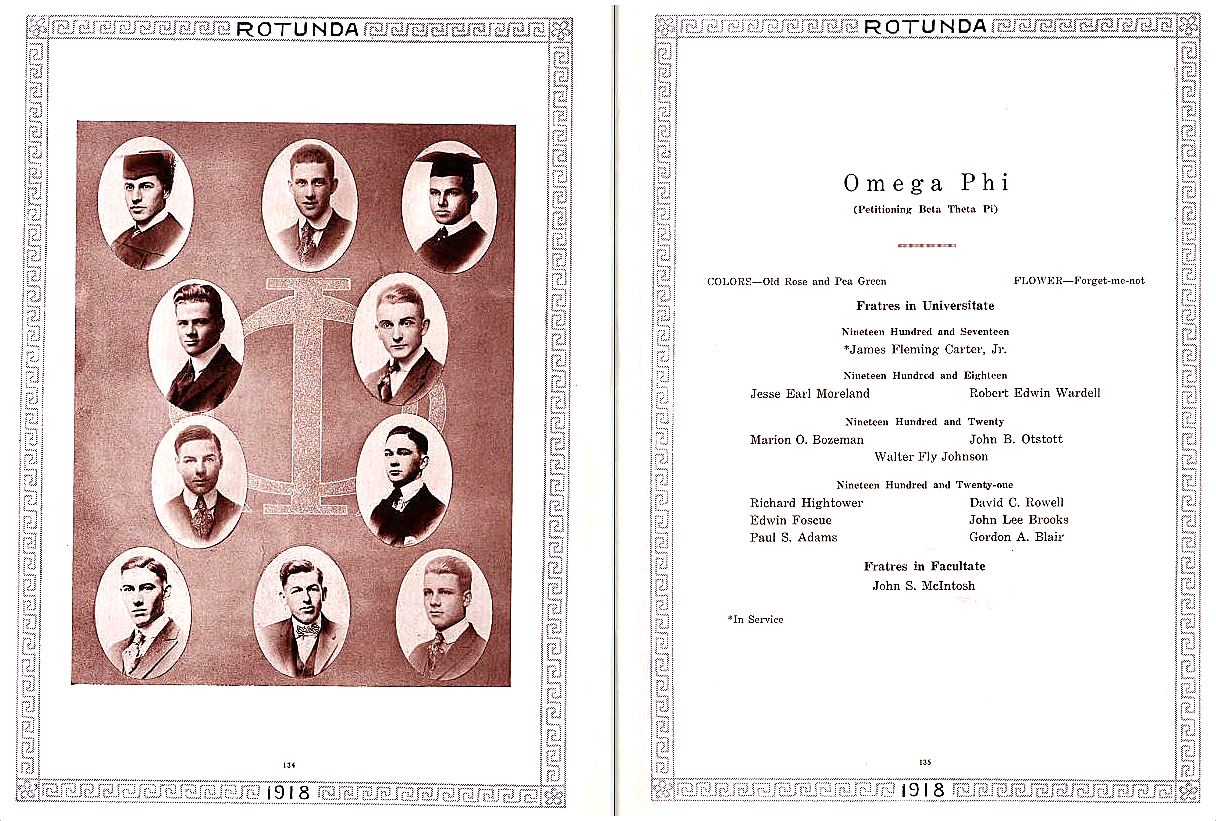
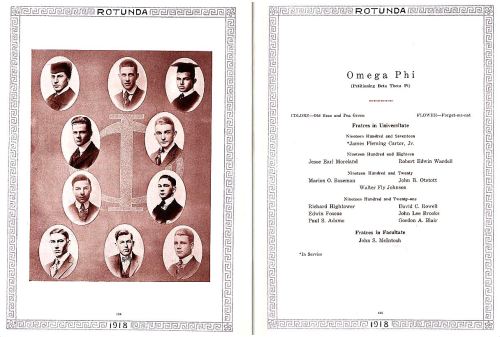
The top photo had “1917” written on the back, so I checked SMU’s Rotunda yearbooks from around that time. Here’s a look at the men who were members of Omega Phi in 1918. Several of these faces match the ones in the photos of the afternoon outing.
omega-phi_rotunda-1918

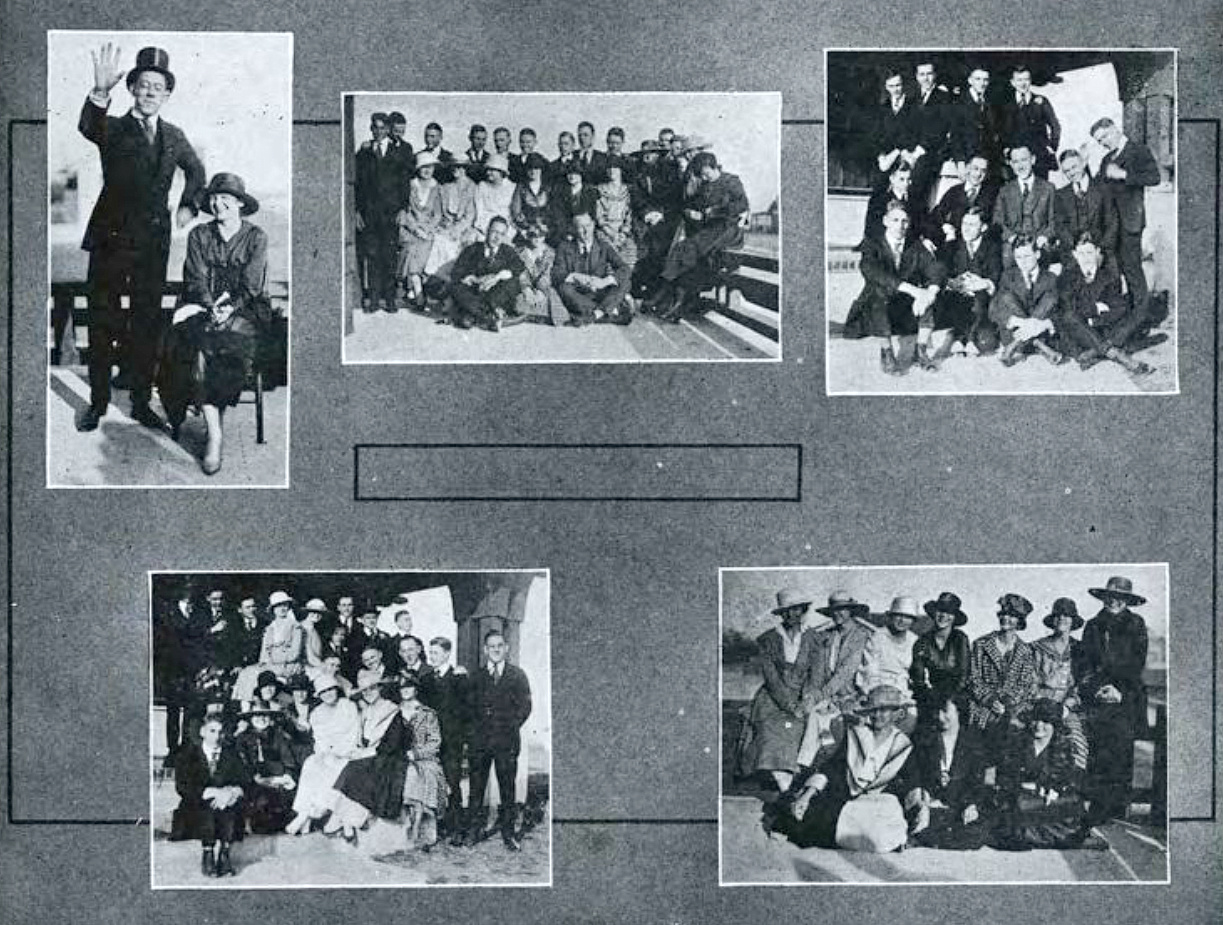
And, below, a photo collage from the Omega Phi page of the 1917 Rotunda. Several of the women look familiar. I see the Woman in White in at least one of these snapshots.
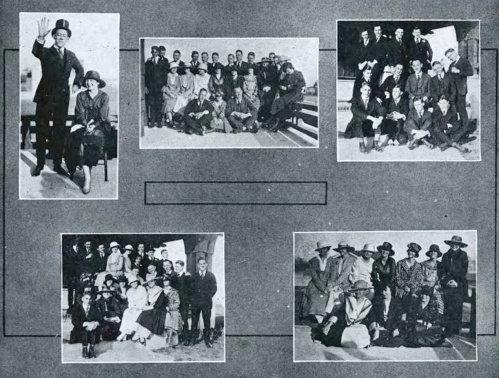
omega-phi_photos_rotunda_1917

And here she is, close up. I hope she was as happy, intelligent, and confident in her real life as she appears to be in these photos.
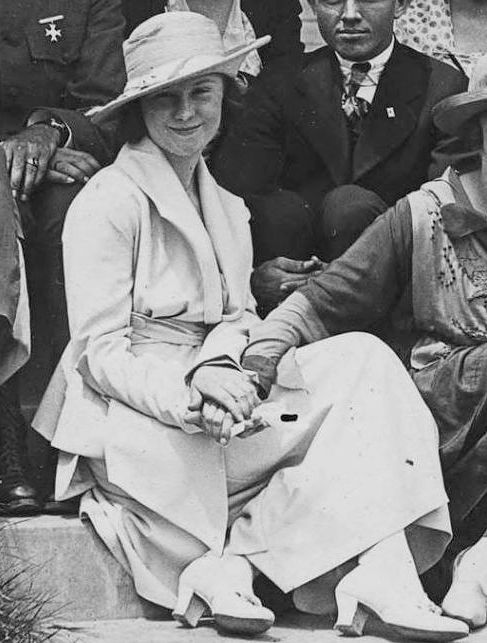
smu_omega-phi_porch_1917_degolyer-det2

***

Sources & Notes

The three photos of the afternoon outing all come from the collection of the DeGolyer Library, Central University Libraries, Southern Methodist University:

  • “Omega Phi Fraternity members and their dates in front of Dallas Hall” is here.
  • “Omega Phi Fraternity member outing to Exall Lake” is here.
  • “Omega Phi Fraternity members and their dates on porch” is here.

The quote from Diane Galloway comes from her FANTASTIC book, The Park Cities, A Photohistory (Dallas: Diane Galloway, 1989), p. 24.

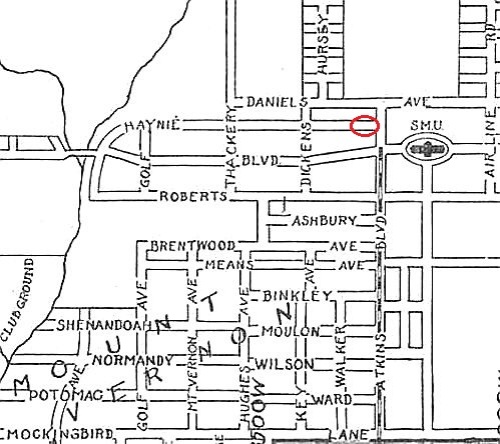
The ersatz Omega Phi fraternity house was located at 115 Haynie Avenue, just west of Atkins (now Hillcrest). (The photo of the exterior of the house is from the 1917 SMU Rotunda yearbook.)
omega-phi_map_19191919 map (detail), Portal to Texas History

I have absolutely no idea how college fraternities work, but it seems that when they formed on the SMU campus in 1915, the Omega Phi group was not actually affiliated with a national fraternity. They “petitioned” to be chartered by national groups, but they finally stopped trying after 11 years of, I guess, being repeatedly turned down — in 1926 they declared themselves to be an “independent society.” But one year later, they were granted a charter by the national Kappa Sigma fraternity. In the Dallas Morning News article announcing the news, this sentence was included: “The local chapter will be known as Delta Pi chapter.” I have no idea what any of that means, but if you’re really into these things, read the DMN article “Kappa Sigmas Grant Charter” (Sept. 26, 1927), here.

As for the identities of the women in the photos, it’s a mystery. I would assume, though, that at least some of them were the women mentioned in this little article about a cozy winter get-together at the Haynie Ave. house:
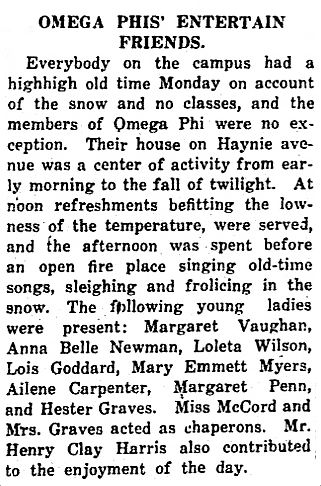
omega-phi_smu-campus_011917DMN, Jan. 19, 1917

If you’re not familiar with beautiful Exall Lake, you can watch a short, minute-long video of the lake’s history, produced to celebrate the 100th anniversary of Highland Park, here.

For other posts featuring photos I’ve zoomed in on to reveal interesting little vignettes, click here.

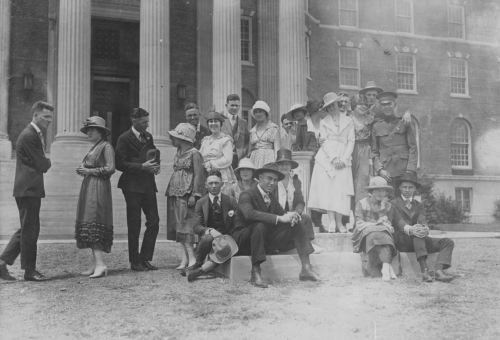
UPDATE: I stumbled across another photo of this group, from Diane Galloway’s book The Park Cities, A Photohistory:
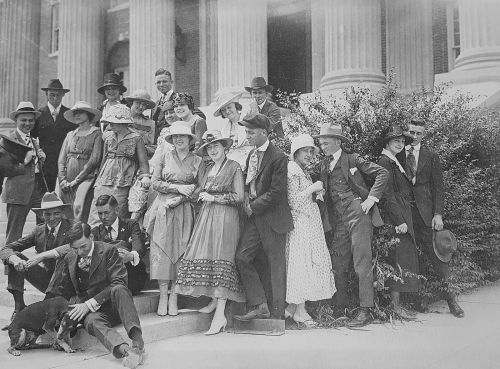
smu_group-date_park-cities-photohistory_galloway

*

Copyright © 2015 Paula Bosse. All Rights Reserved.