Flashback : Dallas

A Miscellany: History, Ads, Pop Culture

Tag: Historic Dallas

Dallas in the ’20s

Pennsylvania Ave. & Meyers St.

by Paula Bosse

It’s taking so long for me to post these days!

Here is a collection of a few random places from Dallas in the 1920s.

*

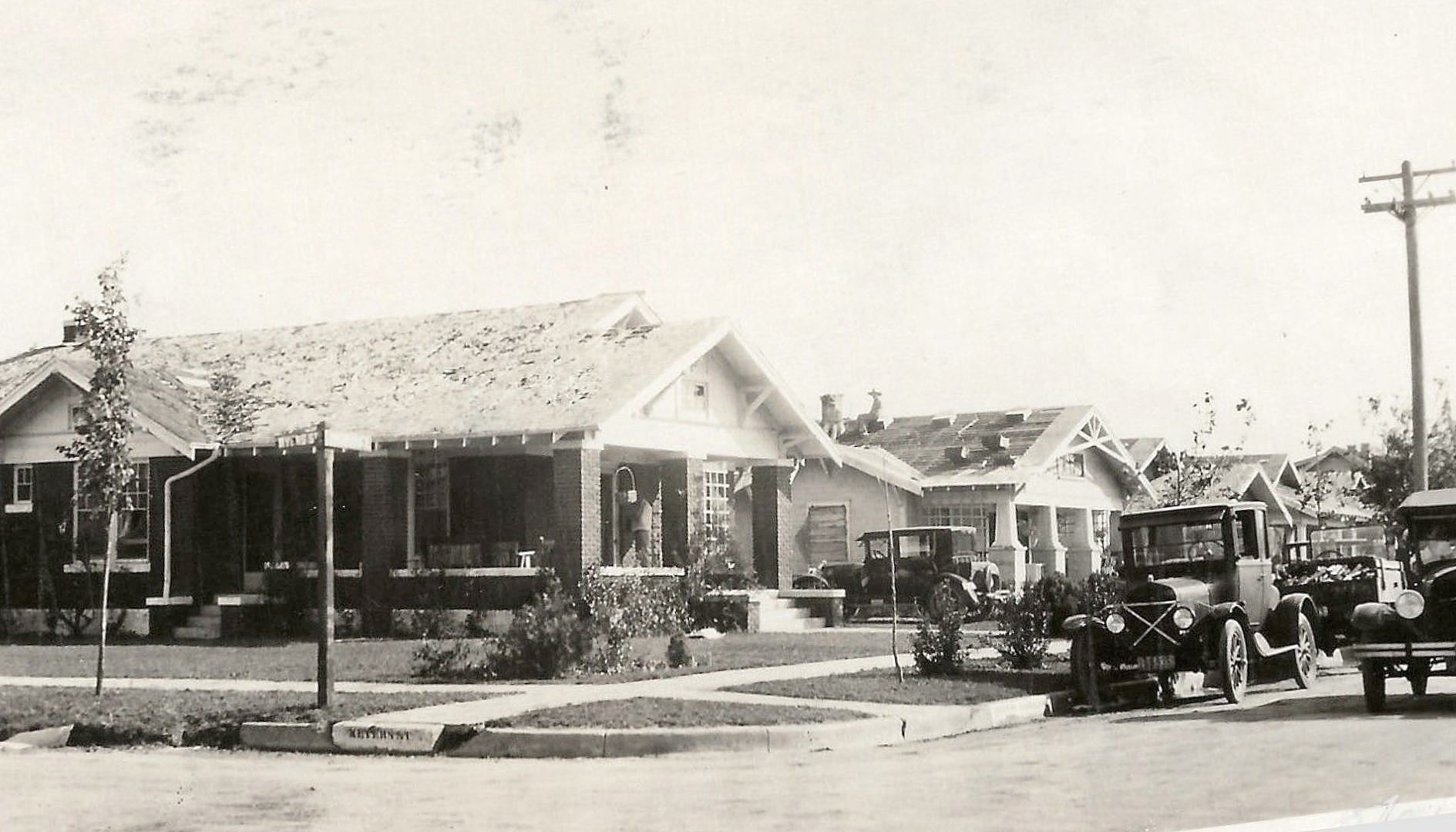
Above, South Dallas, circa 1926. This photo shows the 2900 block of Pennsylvania Avenue at Meyers Street. I love houses of this period, and I love this photo. This may just be poor resolution of the photograph, but it looks like the roof of the house in the foreground is damaged — the roof next door is being repaired.

The house on the corner is no longer there, but the second house — the one with the guys on the roof — is still there, minus some of its aesthetically pleasing design elements. See what this corner looks like in a recent Google Street View, here.

*

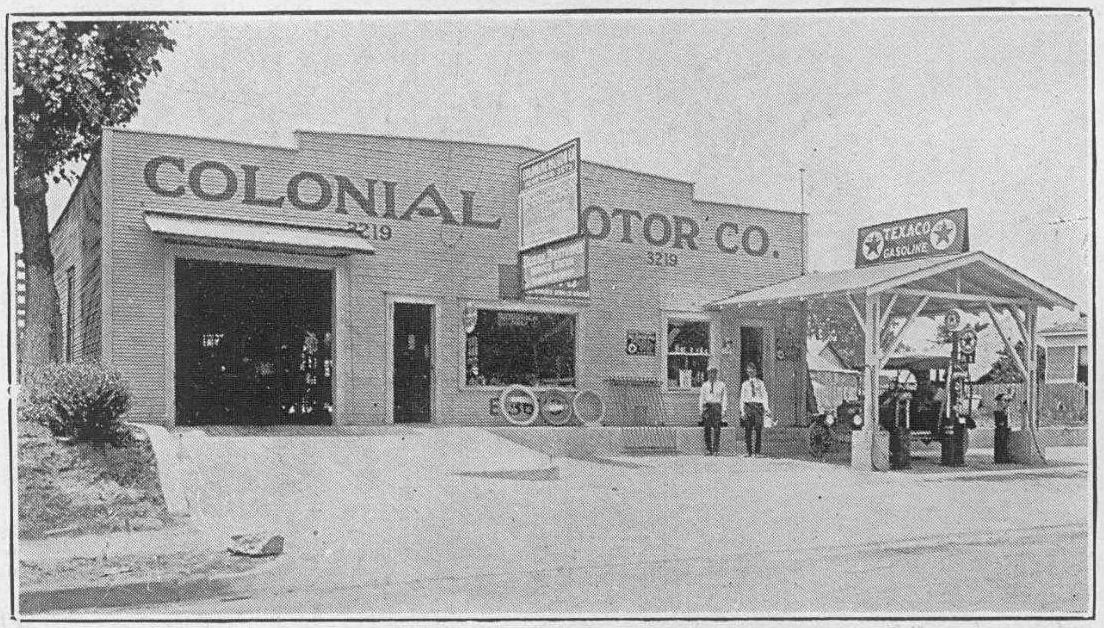
The Colonial Motor Co., 3219 Holmes Street, South Dallas.

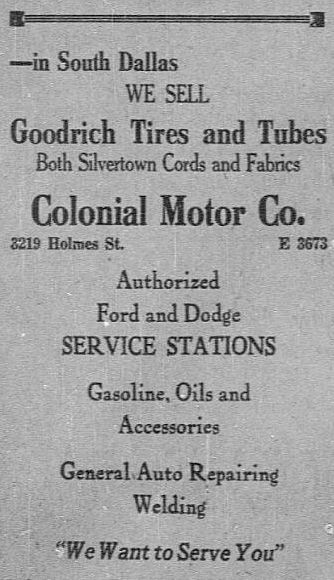
I can’t explain it, but I really love photos of old service stations and garages. The Colonial Motor Co. was in business as early as 1914. Around 1920, it moved to South Dallas, where owner R. F. Mitchell opened a garage at 3219 Holmes Street, just off Pennsylvania in the area known as Colonial Hill. According to the obituary of Mitchell’s son, the business lasted until 1988. That’s quite a run.

An interesting side note about the owner is that he was a motorboat enthusiast and participated in and organized boat races at White Rock Lake. The garage you see above did all the things that service stations do, but it was also the official retailer of Evinrude outboard motors in North Texas.

*

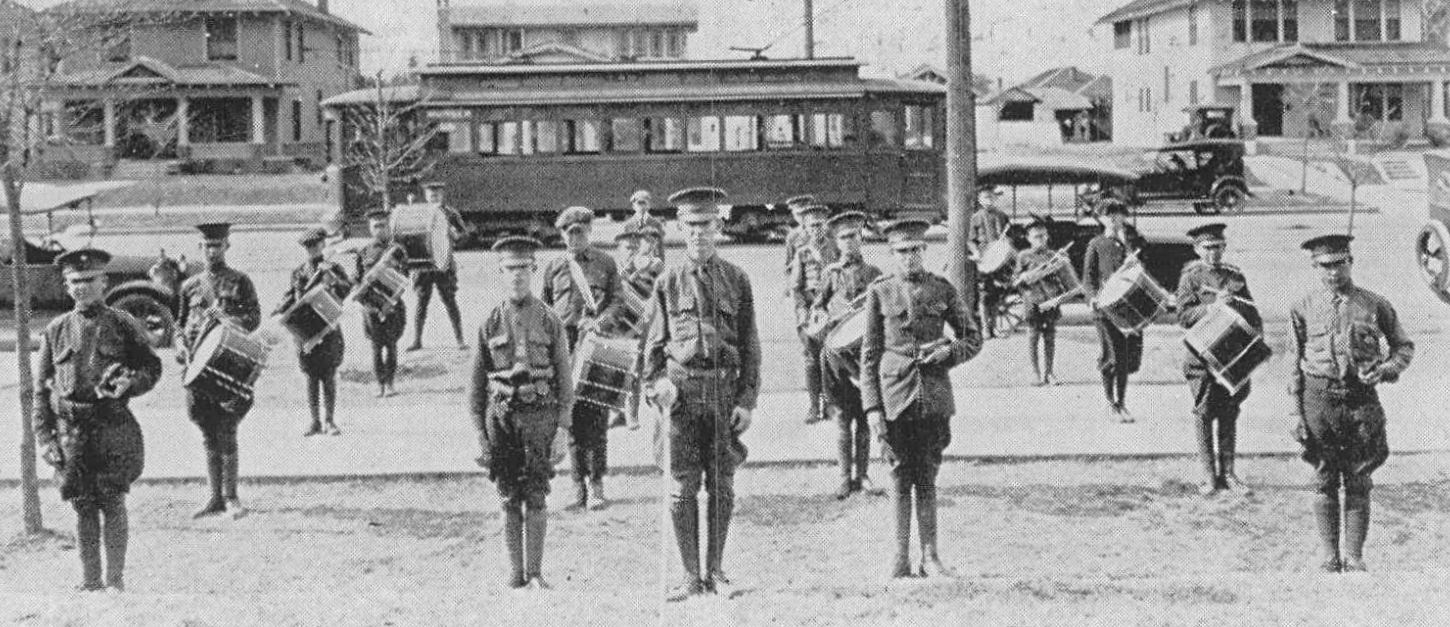
Still in South Dallas, this 1921 photo shows the Forest Avenue High School Drum & Bugle Corps. It’s not that exciting as a photo of a drum and bugle corps, but what is exciting is seeing the view of Forest Avenue behind them. This is now the 3000 block of Martin Luther King Jr. Boulevard, and nothing is this photo still exists. Not the houses, not the streetcar, not the people. It now, rather distressingly, looks like this.

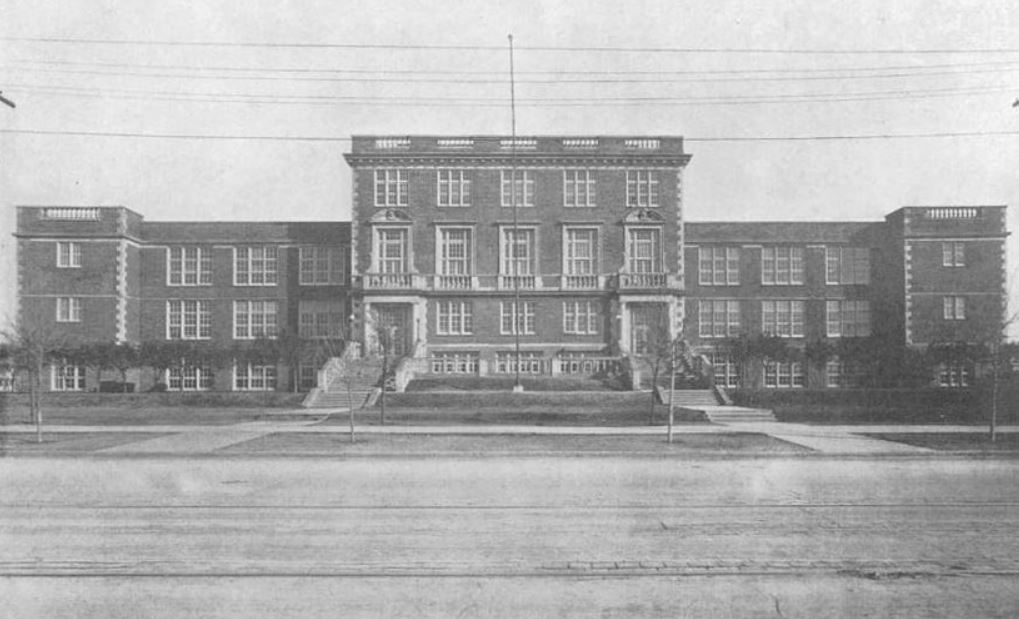
The drum and bugle corps is facing the school, seen here, in a photo from 1924:

The school still stands. It’s now James Madison High School — and it still looks pretty good!

*

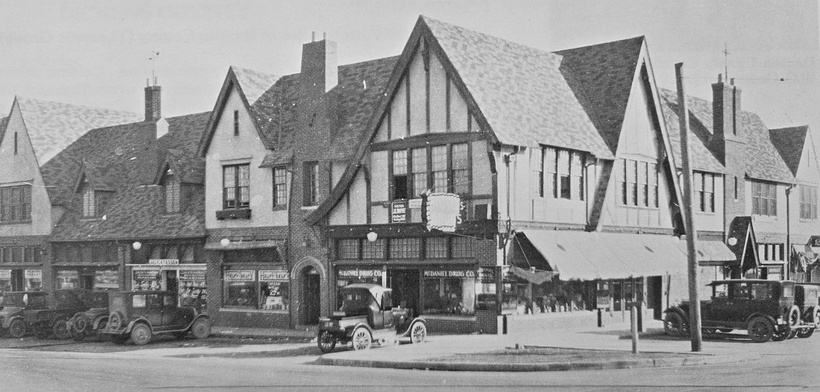
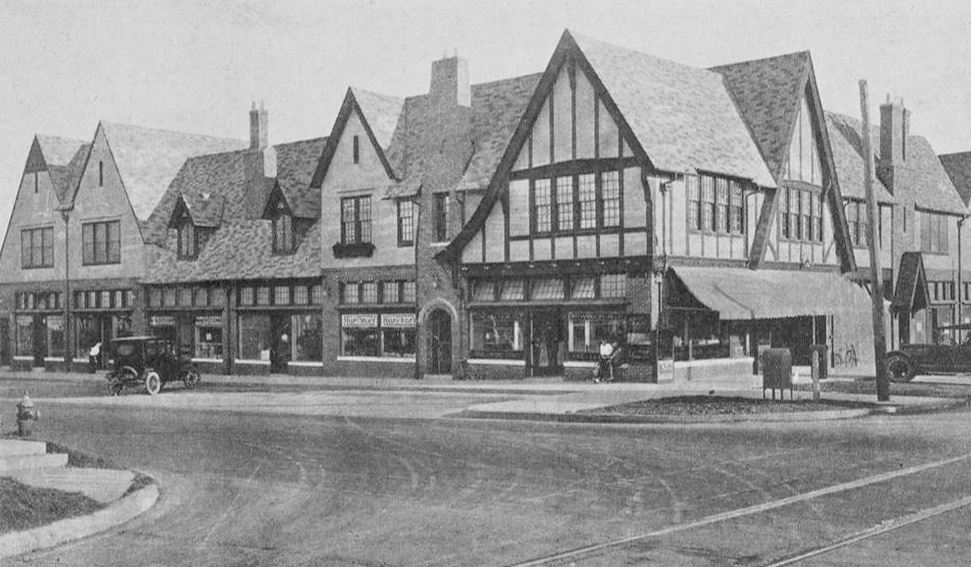
Over to Oak Cliff, to Cannon’s Village, West Davis & Edgefield, an Elizabethan-esque shopping strip built in 1922. Its history is in an Oak Cliff Advocate article here. See what it looks like today, on Google Street View, here. The photo above is from 1925. Another photo is below.

*

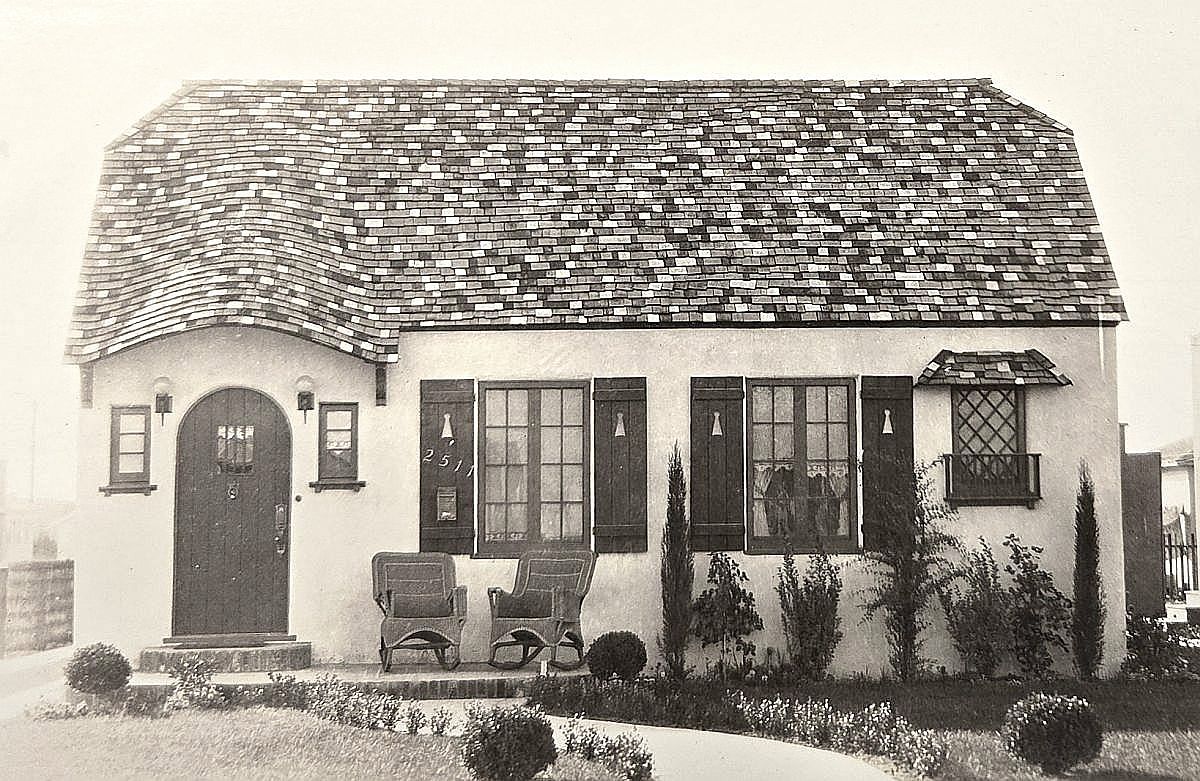
And finally, my dream house!

This house may (or may not) have been in Dallas. I choose to believe that it was here somewhere. All that’s known is the address: 2511. It’s almost too cute. Like something out of a fairy tale. That roof is incredible! And the little awning over the little window on the right! The chairs on the little porch. The weird, scrubby landscaping. Just everything! All it needs is some shade trees. I would live there in a heartbeat!

This is one of hundreds of photos of houses from the ‘teens-’30s which were used to sell house plans (and lumber). It is part of the R. M. Williamson Collection in the Dallas History and Archives. The locations of most of the houses are unknown — a lot are (were) probably in Dallas (East Dallas, Vickery Place, Belmont Addition, Oak Cliff, etc.), but a lot just don’t look Dallas-y to me at all (one is fully surrounded by a forest of very, very tall pine trees). But they’re all amazing. If the city of Dallas were filled with all the houses photographed in that collection, it would be a much more aesthetically pleasing city.

Read about this collection here — and read how these photos were used, here.

***

Sources & Notes

Top photo showing Pennsylvania and Meyers is from eBay.

Colonial Motor Co. photo is from the 1924 Forest Avenue High School yearbook; ad ran in newspapers in October 1920.

Drum and bugle corps photo and photo of Forest Avenue High School are from the 1921 and 1924 school yearbooks.

First Cannon Village photo is from a book I can’t remember the title of that I was browsing through in the Dallas History and Archives collection at the Dallas Public Library; second photo is from the Sidewalks of Dallas Instagram account.

Cute house photo is from the R. M. Williamson Collection, Dallas History and Archives, Dallas Public Library.

This post was drawn from several different posts which previously appeared on the Flashback Dallas Patreon page.

*

Copyright © 2025 Paula Bosse. All Rights Reserved.
Martinez Brothers, Eagle Ford — 1939

Eladio, Henry, and Feliberto

by Paula Bosse

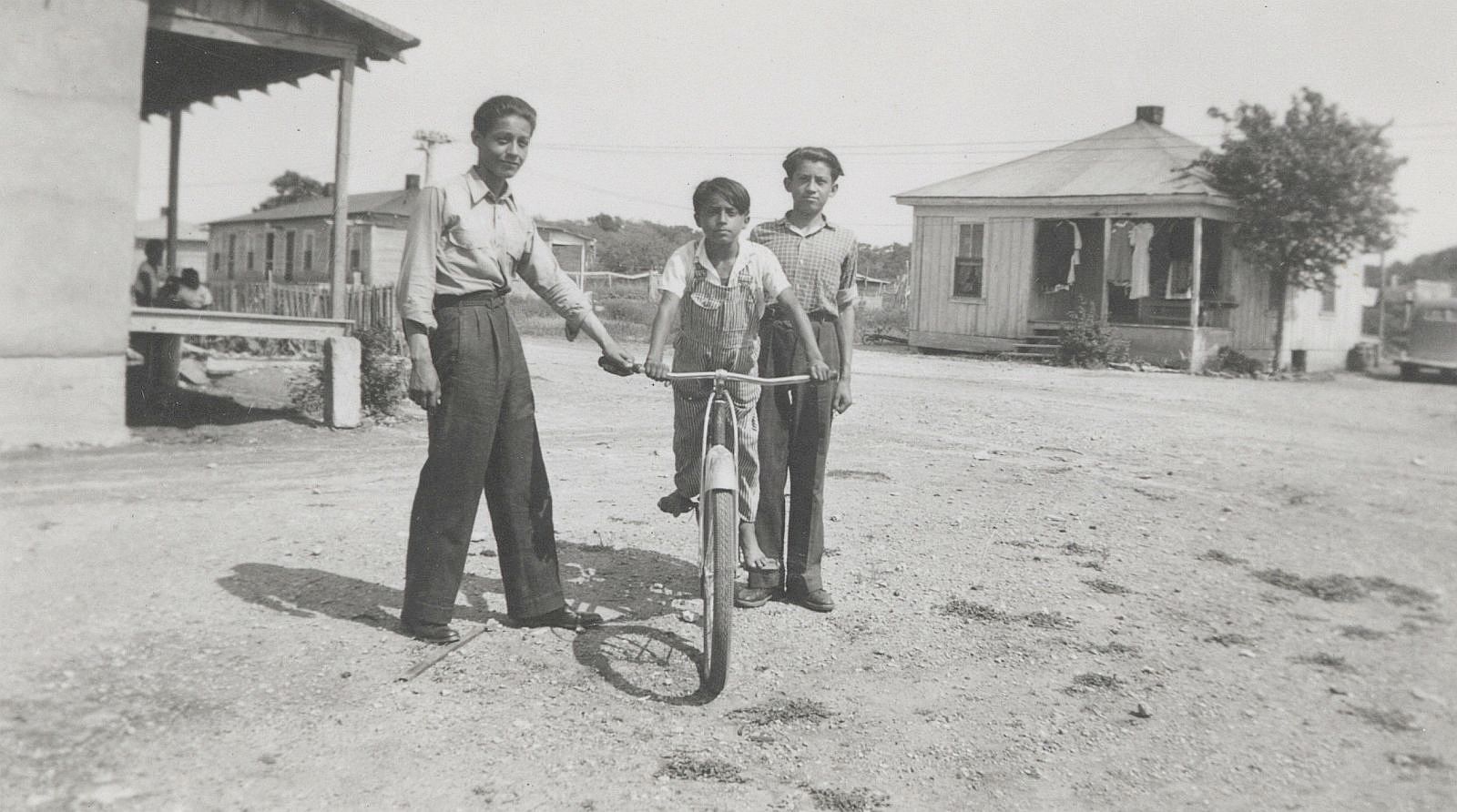
There are pictures I come across sometimes that affect me in a way I can’t really explain. Like this one. This shows three brothers posing for a photo in West Dallas in 1939. The boys are, left to right, Eladio Martinez, Henry Martinez, and Feliberto Martinez. Their father worked for the nearby Trinity Portland Cement Company. During the Depression, the boys helped support the family by cleaning railroad boxcars for a nickel each.

Eladio was killed in action during World War II — the Eladio R. Martinez Learning Center in West Dallas is named after him. His brothers Henry (Enrique) and Feliberto were active in the community and in preserving the history of Ledbetter/Eagle Ford.

Read more about Eladio Martinez here.

***

Sources & Notes

Photo — “Eladio Martinez, Henry Martinez on a bicycle, and Feliberto Martinez” — is from the Dallas Neighborhood Stories Grant Collection, Dallas History and Archives, Dallas Public Library; the accession number of this photograph is MA19.4/BDW-Martinez-H.6. More info on this is on the DPL Digital Collections page, here.

*

Copyright © 2025 Paula Bosse. All Rights Reserved.
Fisher’s Addition, West Dallas

Fisher’s, Near Dallas, Texas

by Paula Bosse

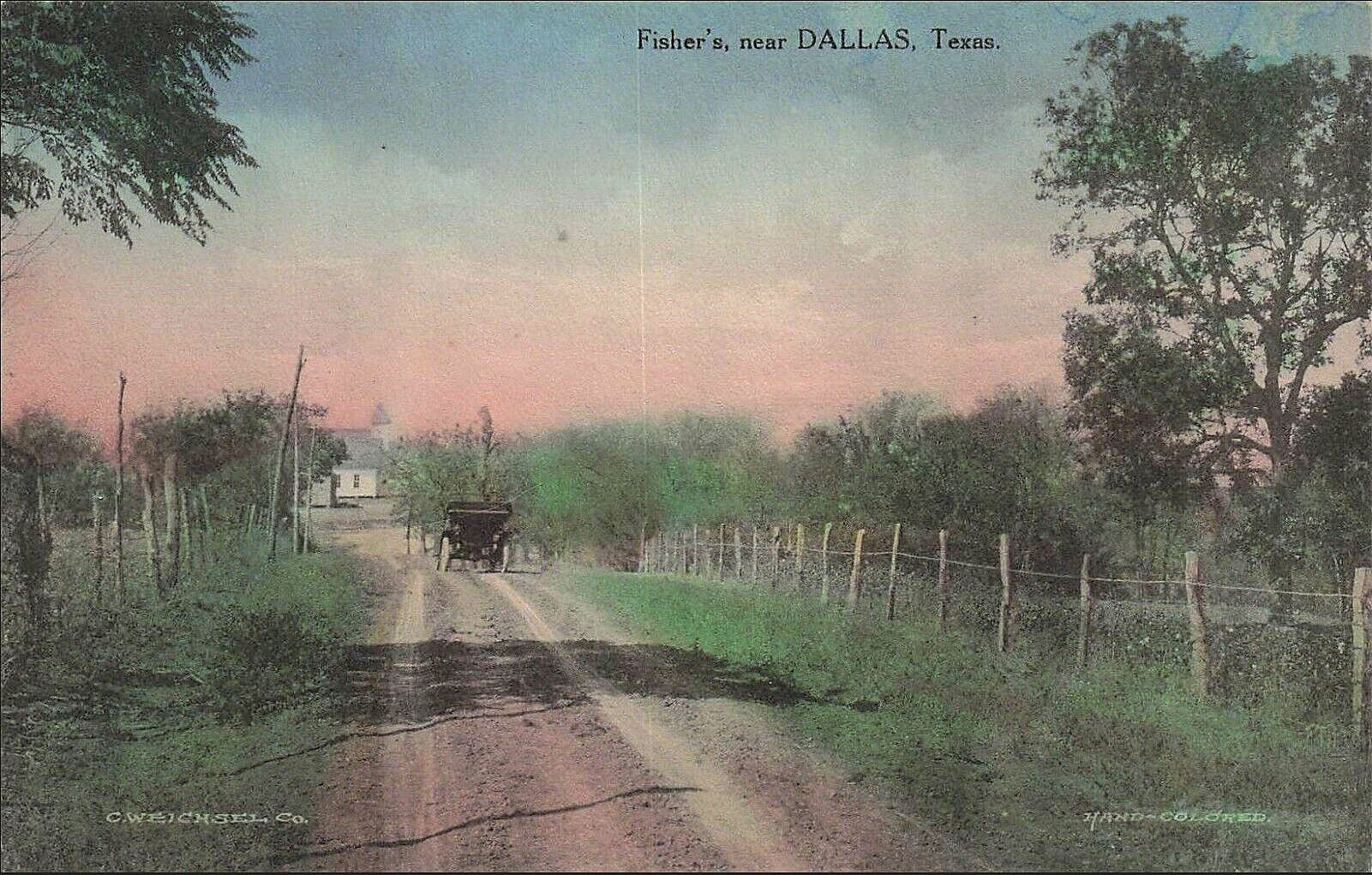
I’ve never seen this postcard before, and I’d never heard of Fisher’s (“near Dallas”).

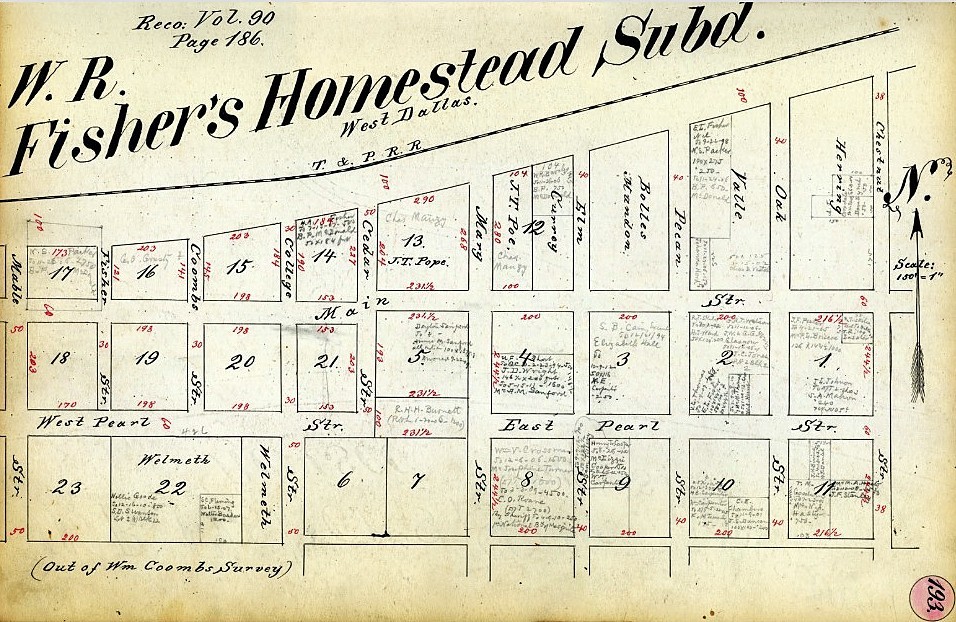
W. R. Fisher’s Addition was in West Dallas, possibly bordered by what is now N. Edgefield, Fort Worth Avenue, Sylvan, and West Commerce (just below the old T & P railroad tracks). …I think. Lots of real estate transactions were going on in “Fisher’s” in the 1880s and ’90s, when West Dallas was its own community and before the area became part of Dallas.

*

This is a very pretty postcard. I just picked a random intersection on Google to see what the general area looks like now. It’s mostly built-up, of course, but here’s a very attractive view, at Seale and Obenchain here (Jan. 2024).

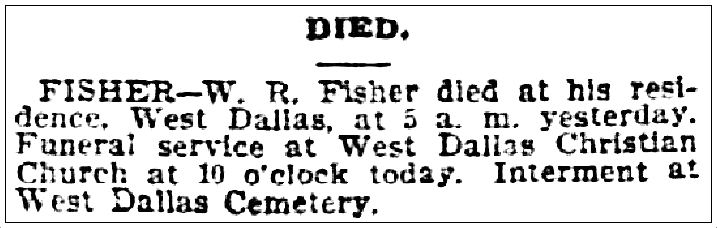
As far as what looks like a church in the distance — it might be the West Dallas Christian Church (later the Western Heights Church of Christ), which was affiliated with West Dallas Cemetery (later Western Heights Cemetery), where William R. Fisher is buried, along with many members of the family of his first wife, Mary Coombes/Coombs, a familiar name in the settlement of the area.

Dallas Morning News, Oct. 19, 1900

*

UPDATE: Thanks to reader Linda Donnelly for sending a link that shows this same view these days — with the same church in it! See the Google Street View here. Here’s the church up close (see it on Google Street View here). (1900 block of N. Winnetka, just off Stafford.)

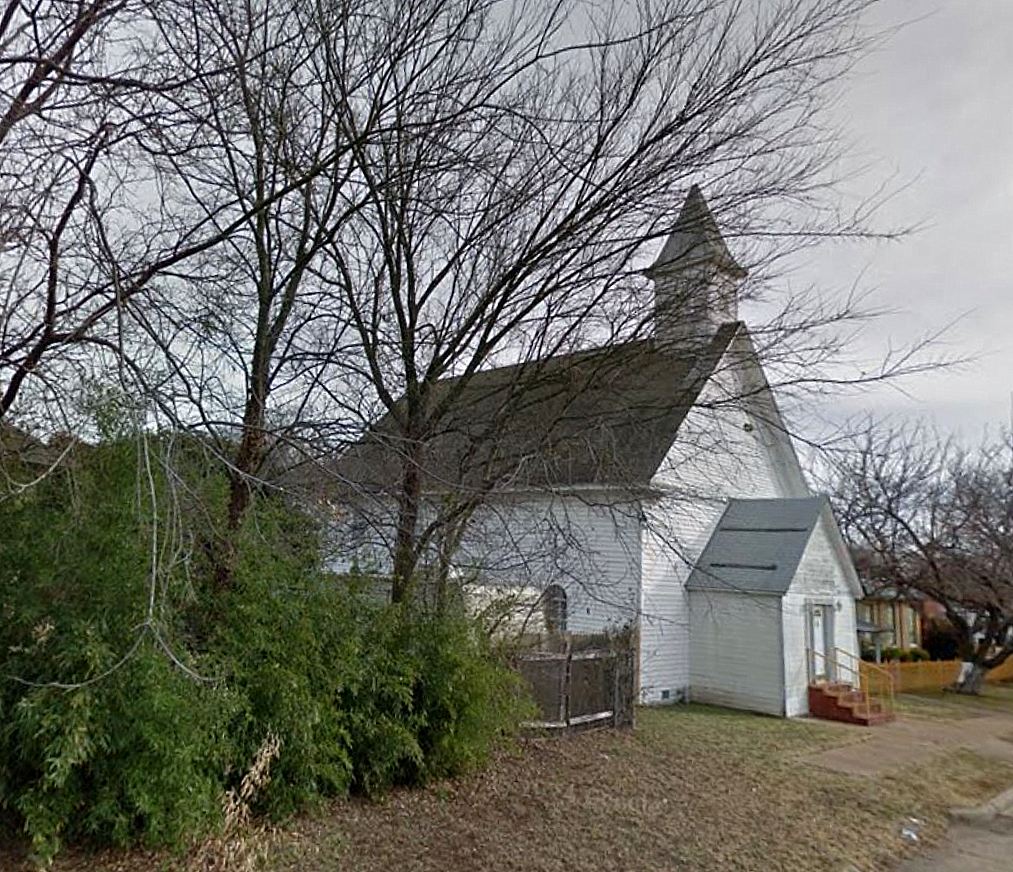
The former West Dallas Christian Church was built around 1890 and has a historical marker, which was placed at the site in 1972, when it was the Western Heights Church of Christ.

***

Sources & Notes

Early-20th-century postcard by Weichsel found on eBay.

Image showing William R. Fisher’s Homestead Subd. (out of the Wm. Coombs’ Survey) is from the Murphy and Bolanz block book scanned by the Dallas Public Library and available online, here.

Read about W. R. Fisher in the History of Dallas County, here.

This post appeared in an earlier version on the Flashback Dallas Patreon page.

*

Copyright © 2025 Paula Bosse. All Rights Reserved.
Waiting for the Bus at Gilpin and Mt. Royal — 1955

Waiting for the #54…

by Paula Bosse

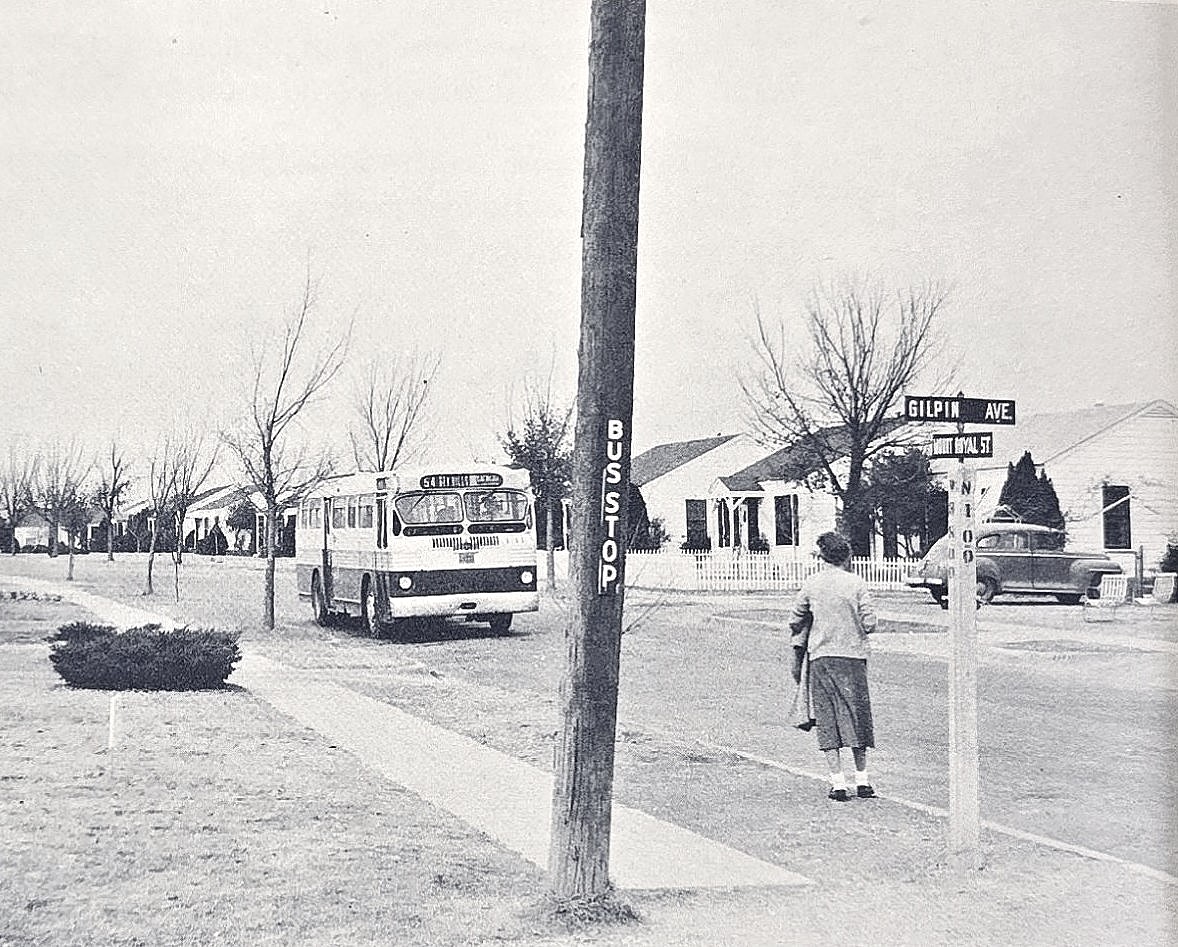
I saw this photo in a 1955 booklet called Public Transportation in Dallas and loved the neat-as-a-pin Oak Cliff street, its manicured, chilly starkness accentuated by the leafless trees. It’s also a needed reminder — as we’re dragged into August — that someday we’ll (probably) have autumn and winter again.

See what this view looks like today, on Google Street View, here.

***

Sources & Notes

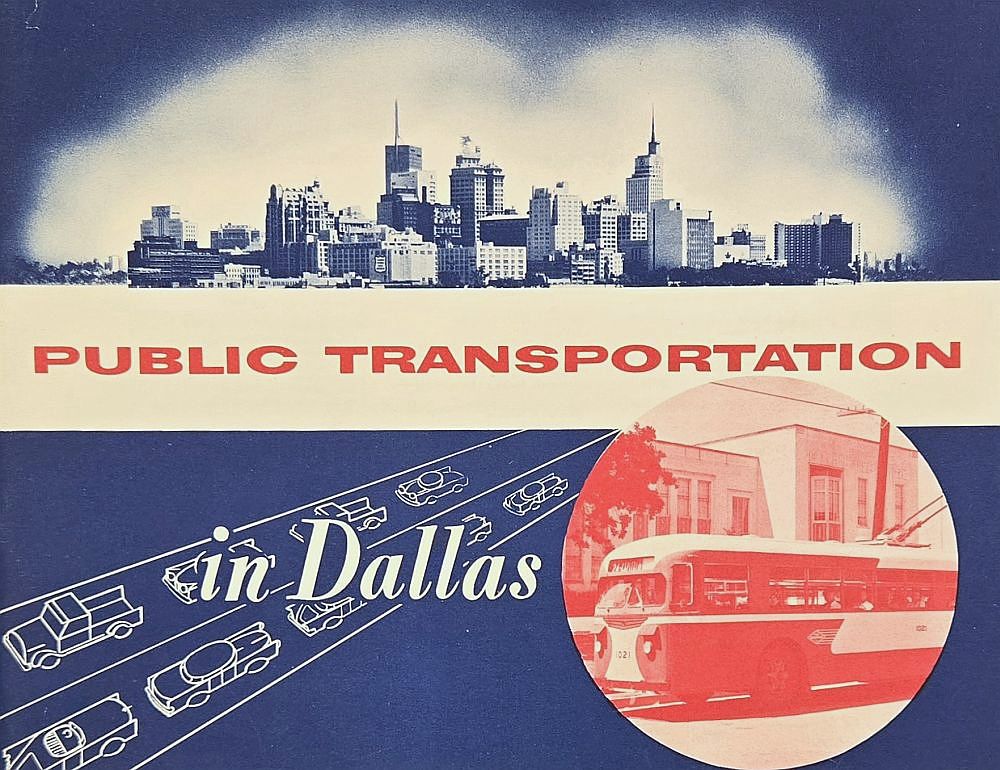
Photo from and cover of the slim booklet Public Transportation in Dallas (1955), Dallas History and Archives, Dallas Public Library.

*

Copyright © 2025 Paula Bosse. All Rights Reserved.
Looking for the Historical Dallas Morning News Archive at the New Dallas Public Library Website?

By Paula Bosse

You’re not alone!

The Dallas Public Library has unveiled an updated and redesigned website this week, and it’s taking a while for the dust to settle. I work in the Dallas History archives (7th floor of the downtown DPL), and even I am having a hard time finding things! But it’s only been a couple of days — the kinks will be worked out, and it’ll get easier.

We’ve had several calls and emails about the inability to access/find the 1885-1984 Historical DMN Database, via NewsBank. Let me see if I can help. I’ll try to simplify this as much as possible. (See the last paragraph of this post to find out about the POST-1984 database.)

First, there is a new website URL: it is now DALLASLIBRARY.ORG — go here.

In order to access the DMN archives, you have to log into your account (you must have a DPL library card to do this — library cards are free to residents of the city of Dallas).

  • Click on “MY ACCOUNT” at the top right of the home page.
  • Enter your username or library card number; enter your password.
  • You’ve landed on a page with your account information. At the top of that page, click on “DATABASES.”
  • Scroll down. Click on “MAGAZINES, NEWSPAPERS & JOURNALS.”
  • Click on whichever of the options you’d like — the most popular are The Dallas Morning News and The Fort Worth Star-Telegram (also available are Austin and El Paso papers).
  • For our purposes, click on “NEWSBANK – HISTORICAL DMN AND STAR-TELEGRAM.”
  • Click on “AMERICA’S HISTORICAL NEWSPAPERS.”

And now you can begin your searches. I tend to use the search option that includes both papers, but you can narrow your preference by choosing DMN (1885-1984) or FWST (1897-1990). [There is an ongoing glitch which requires logging in a second time for access. Don’t know what’s going on, but it happens to me about 50% of the time.]

*

Or, more concisely:

  • MY ACCOUNT–>
  • DATABASES–>
  • MAGAZINES, NEWSPAPERS & JOURNALS–>
  • NEWSBANK – HISTORICAL DMN AND STAR-TELEGRAM –>
  • AMERICA’S HISTORICAL NEWSPAPERS –>
  • database of your choice

*

You can also access stripped-down Texas-only versions of Newspapers.com and NewspaperArchive.com (I’m not sure why they’re not all in the same place), by doing this after logging into your account:

  • DATABASES–> GENEALOGY–> choose database and proceed as above

(The Dallas Morning News is not available through Newspapers.com or NewspaperArchive.com, but the Fort Worth Star-Telegram and many other Texas newspapers are.)

*

And that’s it. If you are having trouble with any database on the website, keep checking back because there’s still a lot of tinkering going on.

**

But WHAT HAPPENED TO THE POST-1984 DALLAS MORNING NEWS DATABASE? As I understand it, this very useful part of NewsBank is currently unavailable during contract negotiations. The hope is that it will be back soon. Keep checking back!

***

Sources & Notes

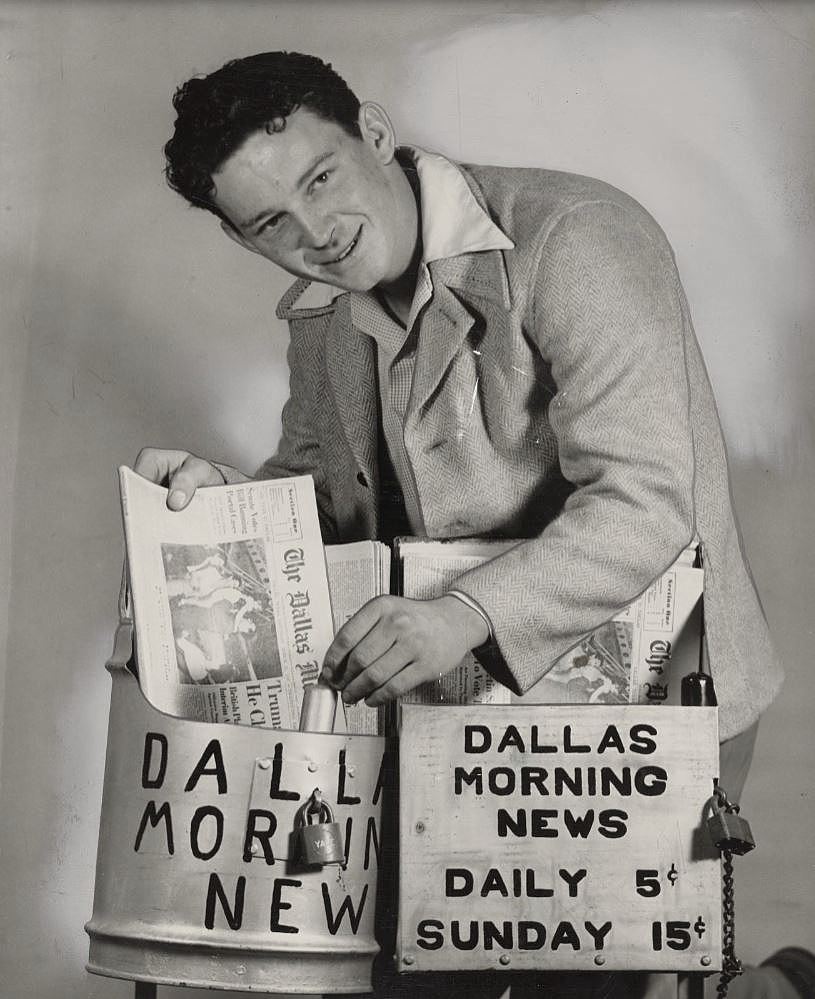
Photo from a post featured on the Flashback Dallas Patreon page: “Bill Fife, News Carrier — 1947; photo is from the Portal to Texas History, here.

*

Copyright © 2025 Paula Bosse. All Rights Reserved.
McKell Street’s Golden Age

Veranda-life, Old East Dallas

by Paula Bosse

This does not look like Dallas. But it is. I had never heard of McKell Street, but it’s in Old East Dallas and is only two blocks long (it’s actually one long block), between Bryan and San Jacinto. This house stood until 2021 or 2022 at the corner of McKell and San Jacinto (see it in a 2021 Google Street View image here, when it was the very last remaining house on the street).

The address was 1520 McKell (the address written on the card looks like “1620,” but there was never a 1600 block of the street). When the house was built, sometime before 1903, its address was 136 McKell — you can see it and its curved wraparound porch on a 1905 Sanborn map here and on a 1922 Sanborn map here. And the sad empty lot in 2022 is here.

I love stumbling across unexpected photos like this. This was such a lovely little street. I can absolutely imagine Andy and Barney and Aunt Bee on that porch, rocking and chatting on a hot Sunday afternoon, enjoying a bowl of homemade peach ice cream and waving to neighbors as they walk by.

And now it’s nothing but an ugly stretch of parking lots and the powerfully unattractive AT&T building.

***

Sources and Notes

Real photo postcard found on eBay in 2024.

This post appeared in a slightly different version on the Flashback Dallas Patreon page (subscribe for as little as $5 a month!).

*

Copyright © 2025 Paula Bosse. All Rights Reserved.
“The Miracle Mile” and the Utterly Confusing Lovers Lane(s) — 1954

4500 block and/or 5800 block of Lovers and/or W. Lovers Lane

by Paula Bosse

The photo above is a detail from an ad for some of the businesses along the Miracle Mile (Lovers Lane, between about Douglas and what is now the toll road). The caption is: “The fabulous Miracle Mile looking west toward Douglas Ave.” (Surely this is a view to the east?) The same view today can be seen on Google Street View here. The ad appeared in a March 1954 magazine. At that time, the photographer would have been standing in front of Roscoe White’s Easy Way restaurant (5806 W. Lovers Lane). Here’s the ad (click to see a larger image):

*

Shop on the MIRACLE MILE! 
On Lovers Lane from Douglas Ave. to Cotton Belt Railroad tracks
PLENTY OF PARKING!!!
The following merchants invite you to shop with them: 

Beef ‘N Bun No. 1, 4500 Lovers Lane 
Bernard’s Carpets, 4445 Lovers Lane 
The Book Shelf, 4354 Lovers Lane 
Choice Cleaners, 4530 Lovers Lane 
Ernstrom’s Record Shop, 4356 Lovers Lane 
Florentine Shop, 4437 Lovers Lane 
Guildcraft Furniture Studio, 4433 Lovers Lane 
Hodges Photographer, 4514 Lovers Lane 
House of Carpets, 4408 Lovers Lane 
House of Lamps, 5812 W. Lovers Lane 
Jean & Morry’s, 4437 Lovers Lane 
Margie’s Dress Shop, 4508 Lovers Lane 
Miracle Mile Pharmacy, 4400 Lovers Lane 
Miracle Mile Stationers, 4506 Lovers Lane 
New York Bakery & Delicatessen, 4412 Lovers Lane 
Park Cities Hardware & Paint Co., 4338 Lovers Lane
Party Bazaar & Gift Shop, 4439 Lovers Lane 
Peek’s Auto and Appliance Store, 4365 Lovers Lane
Rae Ann Shop, 4417 Lovers Lane 
Seidel’s Boys’ and Girls’ Apparel, 4504 Lovers Lane
Squire — The Man’s Shop, 4441 Lovers Lane 
Stone’s Buster Brown Shoe Store, 4449 Lovers Lane

Every day is shopping day on the Miracle Mile
Open Thursday night — open Thursday night — open Thursday night

**

So. Lovers Lane. What’s the deal, Lovers? Your numbering system is insane. For instance, in the photo above, Choice Cleaners (second business on the left) is at 4530 Lovers Lane. It is directly opposite House of Lamps, which is, inexplicably, at 5812 West Lovers Lane. Not only are the block numbers nowhere near the same, the numbers of addresses on both sides of the street are even. There are businesses on both sides of the street, but that block has no odd-numbered addresses. …But only until you pass Beck’s Fried Chicken at 5820 West Lovers (you can see it on the photo at the far right, next door to AAA Liquor at 5814 W. Lovers Lane). Once you cross Lomo Alto, heading east, the numbering suddenly starts at 4455 Lovers Lane (Brady’s Texaco Service Station). West Lovers Lane is no more. You’ve just lost West Lovers Lane and 14 blocks. You might be in the Twilight Zone. I’m pretty sure the whole University Park-thing is the reason, but, oh my god. My brain melts down every time I try to make sense of this! Imagine not knowing your way around this part of town and seeing this confusing collection of signs after getting off the toll road:

For future reference, here is some even more confusing guidance, from the 1953 city directory. “WEST LOVERS LANE”:

PLAIN OL’ “LOVERS LANE”:

EAST LOVERS LANE”:

Good luck keeping track of that. There will be a quiz. You might need a slide rule, a compass, and a bottle of aspirin.

***

Sources & Notes

Ad is from the March 1954 issue of Town North magazine, a publication by and for super-boosters of the Park-Cities-and-Preston-Hollow area, which they were trying to get people to call “Town North.” It makes about as much sense as Lovers Lane’s numbering system, but it’s a cool magazine that lasted a few years and can be found in the Periodicals Collection of the Dallas History and Archives at the Dallas Public Library.

More on The Miracle Mile (with a handy map, if you’ve ever wondered what its “official” boundaries are) can be found in this Flashback Dallas post: “Stacy’s Lounge on The Miracle Mile — 1950.”

And, heck, here’s a post on Lovers Lane: “Dallas Is For Lovers.”

*

Copyright © 2025 Paula Bosse. All Rights Reserved.
Vaudeville at the Sportatorium? — 1936

Original Sportatorium, in all its octagonal glory

by Paula Bosse

I saw this ticket recently on eBay:

SPORTATORIUM, Cadiz and Industrial Blvd.
Harley Sadler In Person
And His Company of 100 Stage Players Present
UNCLE TOM’S CABIN
And Vaudeville, Musical Floor Show, Refreshments

…What?!

The ticket is undated, but “vaudeville” had mostly faded by the 1930s. The original (octagonal!) Sportatorium was built in 1935 and opened as a premiere sporting venue for wrestling (and boxing) in December 1935.

The new sports bowl, under construction at Cadiz and Industrial, will have its official opening Monday night, December 9, when Promoter Bert Willoughby will offer the biggest wrestling program ever staged in Texas, if present plans go through as outlined. This 10,000-seating capacity structure, built as the home of wrestling, will also entertain many other events, such as boxing, basketball, indoor circuses, style shows [!], conventions and gatherings of all kinds. (Dallas Morning News, Dec. 1, 1935)

Sounds huge. But it’s really hard to keep those seats full — especially on nights when wrestling is not scheduled. By the end of April, there were already plans to do something about one of their biggest problems.

“We feel,” declared [manager W. T.] Cox, “that this concern is too big and that there is too much money already invested to have five or six dark nights a week, so we are going to make it possible for everyone, with anything to show, to bring it to our place, whether it be a political gathering, religious services or merchants’ and manufacturers’ exhibits. The policy of the house will be to encourage and promote sports, but it will be available to all.” (DMN, Apr. 20, 1936)

Sportatorium management came up with the idea of presenting a massive show on non-wrestling nights. They gave Harley Sadler — a longtime traveling Texas showman (and later a politician) — a long-term engagement in which he basically crammed as much “show” into one evening as was humanly possible. A stage was built, and many of those 10,000 seats were removed in order that patrons could sit at tables to enjoy the relentless, non-stop entertainment. Sadler’s company consisted of 100 players. 100!

So what could a Sportatorium visitor expect on one of these Harley Sadler nights? Brace yourself:

The Sadler players will offer two complete plays each evening — an original four-act [play], “The Siege of the Alamo” — and a three-act modern comedy farce, “This Thing Called Love.” In addition to those two complete plays, he will offer vaudeville acts, a band, novelty numbers, and 32 singing waitresses […]. The show will start at 8:30 and run for 8 hours, for those who care to stay that long. (DMN, July 8, 1936)

EIGHT HOURS! And, there were 3 different shows produced weekly. That’s a lot of entertainment. Perhaps too much entertainment. But ladies got in free.

July 12, 1936

I’m not sure how long this “residency” lasted, but however long it was, I assume all involved — performers and spectators alike — were exhausted afterward.

***

Sources & Notes

Source of the top photo of the Sportatorium is unknown, but I came across it on the wrestling website World Class Memories. (this Sportatorium page is a great read). (If you know the source of this photo, please let me know.)

Sportatorium ticket was found on eBay (still there, as I write this).

More on the history of the Sportatorium here.

More on empresario Harley Sadler can be found at the Handbook of Texas, here.

Previous Flashback Dallas posts on the Sportatorium can be found here.

*

Copyright © 2025 Paula Bosse. All Rights Reserved.
Roger Staubach, HVAC Spokesman — 1970s

Rog and Fran, comparing their Carrier systems

by Paula Bosse

Dallas Cowboys star quarterback Roger Staubach appeared in a series of ads — and did personal appearances around the country — for the Carrier air conditioning company. Many of the ads featured Staubach’s family — and what a stroke of luck, because, as the ad below proclaims, “Everyone in my family loves air conditioning.” Sing it, Roger!

1979

I came across an interesting piece of trivia about Roger Staubach’s time as a Carrier spokesman: if he was unable to appear in person, he could still be at your local trade show, in his Cowboys uniform, telling you how much his family loved air conditioning. In January 1978, the Cowboys were fresh off a Super Bowl win, and it would have been expected that world champions might have other things to do, but a week or two after the Cowboys defeated the Broncos in Super Bowl XII, Roger was at the National Association of Home Builders convention in Dallas hawking A/C. …Sort of.

The Carrier Air Conditioning exhibit featured a “telequin” of Roger Staubach, a mannequin with Staubach’s face projected onto the face, giving the general effect that the Cowboy quarterback was standing there in uniform, giving the Carrier sales pitch. Staubach is Carrier’s national spokesman. Steve Millheiser, a Carrier salesman, said response to the exhibit had been excellent. “The Roger thing has been great,” he added. (Dallas Morning News, Jan. 26, 1978)

I couldn’t find much about “telequins,” except that there were apparently other celebrities who had a model of themselves made by Telequin-A.V.M., Inc., a company that specialized in “animated, talking mannequins.” I’m sure it was odd watching a mannequin with Roger Staubach’s animated face professing its love for A/C. …The ’70s, man. Weird times.

*

1979

1978

Roger Staubach and Fran Tarkenton, 1977

***

Sources & Notes

All ads from eBay.

Roger Staubach did a ton of TV commercials — a lot are on YouTube. He declined to do ads for underwear, beer or sugary cereals

*

Copyright © 2025 Paula Bosse. All Rights Reserved.
Good News! New Newspaper Access via the Dallas Public Library!

by Paula Bosse

Good news! The Dallas Public Library now offers to those with DPL library cards free access to the “Texas Edition” of Newspapers.com! You can browse/search a large variety of Texas newspapers that the site has in its database — I think it’s over 200. I’ve only just started playing with this “Texas Edition” to see how it differs from the full Newspapers.com site, and I’ve found that it does not offer all the newspapers that the full site does (for instance, it does not offer the very useful “Evening Edition” of The Fort Worth Star-Telegram), but there are a LOT of papers there. (For access to the full site, which contains US (beyond Texas) and select international newspapers — you must purchase your own subscription.) This is very exciting!
This joins the continuing DPL access to NewspaperArchive.com (provided by the Dallas Genealogical Society — thank you, DGS!). Newspapers.com and NewspaperArchive have some overlap in their content, but they also each have exclusives. Both are great resources.

*

So how do you get to them on the DPL website? You must have your library card number (or login info). Dallas Public Library cards are free, but they are available only to residents of the City of Dallas. (More specific info on that — including some exceptions — is at the DPL website, here.) (You are always welcome to visit the library in person to access these databases without needing a library card.)

Log in to the DPL website here. Click on “MY ACCOUNT” at the top.

Enter your login info.

Click on “DATABASES” (at top of page).

Click on “GENEALOGY.”

Click on (for instance) “NEWSPAPER ARCHIVE” or “NEWSPAPERS.COM (TEXAS EDITION)” or whatever else you want to explore.

And you’re there.

*

These databases complement the essential Dallas Morning News and Fort Worth Star-Telegram archives, which have been available for years on the library website, via NewsBank. They can be accessed on the same “Genealogy” tab, or, you can get to the DMN and FWST (and other publications not found on the “Genealogy” tab) by navigating this way:

LOG IN → DATABASES → MAGAZINES, NEWSPAPERS & JOURNALS → and then whatever publication you want to access.

*

These are all incredible resources for everyone interested in historical and genealogical research. Thank you, Dallas Public Library! (And don’t forget the huge scanned newspaper collection at the Portal to Texas History!)

***

Sources & Notes

The three images in this post are screenshots from the Dallas Public Library website.

*

Copyright © 2025 Paula Bosse. All Rights Reserved.