
Sofia & Woody
 Sofia and Woody, June 1962
by Paula Bosse
Earlier this summer, I received an email from a man named Elwood Hain, who wrote to tell me that he had read a post I wrote a few years ago about a peaceful lunch-counter sit-in by SMU students protesting a University Park drug store that refused to serve non-white customers. Elwood (“Woody”) was one of the protesters. He wrote me a series of emails recalling the early days of his involvement in civil rights work in Dallas. The memories included the recollection of the first time he met Sofia, a sociology student at TWU, who would become his wife. I asked Woody if he would put his memories into a post. He graciously agreed, and I am happy to share his memories here.
**
SMU Sit-ins Revisited
by Elwood (Woody) Hain
My brother recently sent me a link to a 2022 article in Flashback Dallas, “When SMU Theology Students Were Sprayed with Insecticide at a University Park Lunch-Counter Sit-In – 1961.” I especially enjoyed it as I was one of the protesters. I believe most of us were members of campus religious organizations, though theology students seemed to be in the lead. I was the only law student there. My brother was the only engineering student. We belonged to the Presbyterian student group. You can see our backs in the picture of the students picketing in front of the drug store. I am the last person in the line walking away from the photographer. The insecticide Mr. Bright had sprayed on us ruined the tan faux suede jacket I was wearing.
 Woody, with his back to the camera
I heard about the plan for the sit-in at the drugstore only a day or two before the event. Aware that “sit-inners” were often arrested, I told two of my law professors I planned to participate and might miss some classes if arrested. One acknowledged the information, looked awkward, and turned away. The other, Alan Bromberg, an expert in corporate law, gave me his card and told me to call him if I needed to be bailed out. Fortunately, I did not need to call him. After the sit-in, I took some ribbing from law school friends, but it was in good fun. After sharing classes and brown bag lunches for two and a half years, they all knew my views and were not surprised. I had even turned down an opportunity to be managing editor of SMU’s law journal so I could spend the summer of 1960 with Operation Crossroads Africa, doing pick-and-shovel work and building relationships with local students in Guinea, West Africa.
I had returned from Africa in time to plunge into John Kennedy’s presidential campaign. I organized a small group of SMU students to help get out the vote in West Dallas. The area was poor. It had a large Mexican American population, most of whom were Catholic and Democratic, the ideal demographic for Kennedy. Voter turnout was usually light, leaving lots of room for improvement. When Kennedy carried Texas, we claimed it was in part because we helped keep the loss in Dallas County down to two to one. Maybe having Senator Lyndon Johnson on the ticket helped too.
The sit-ins started two months after the election. In the interim there were final exams and then the Christmas break. The sit-in at Bright’s drugstore was the first but not the last of the SMU student sit-ins. We had a well-organized sit-in at a quick-service hamburger restaurant on the strip and stand-ins at the ticket booths of at least two movie theaters, among other places. One of the student leaders, George Edwards, was the son of the Detroit police commissioner, a lawyer whose main goal when appointed was to stop the beating of prisoners on the way to jail. He asked his father how the students could make their point without being beaten or arrested. The answer was to (1) tell the local police before we acted so they could be present and (2) obey when the police told us to leave. We took the advice and were glad of it when a short-order cook at the hamburger place started waving a butcher knife under the throats of students at the counter. A policeman outside the door stepped inside. He told the cook to back off and the students to leave. Everyone obeyed. Students returned at lunchtime the next day. The cook stayed in the kitchen. I was not present, but the story spread quickly.
In addition to physically participating in sit-ins, I made one unique contribution to the effort – and arguably to Texas law. Some of the students reasonably feared they would be arrested for trespassing. As the only law student involved, I did some fast research on the subject soon after the first sit-in. I was surprised to find that there was no state trespass law. Checking municipal ordinances was harder, but I also established that neither University Park nor Dallas had a trespass ordinance. The students were heartened by the news. The next legislature passed Texas’ first trespass statute.
The sit-ins had unexpected and very happy consequences for me. The chaplain of the Methodist student organization at Texas Woman’s University in Denton was also a student at SMU’s Perkins School of Theology. He wanted a speaker from the protest group to talk to the Methodist students at TWU about the sit-ins and the civil rights movement. He contacted another theology student and, through a route I never knew, his request came to me. I suspect it was because someone thought I knew something about law.
I agreed to go, and in March 1960 I drove the 45 miles to Denton with three other guys I had not seen at the sit-ins. I think two were theology students. All three were clear that meeting girls was at least one of the reasons they were going. I thought they were nuts, but the girls at TWU seemed to have the same idea. Forty girls turned up at a meeting that usually had only ten. (I know “girls” is not politically correct, but it was the standard terminology of the day.)
The chair of the group, a slender Mexican American girl in sensible shoes, a shapeless bulky sweater and an ankle-length skirt who had come straight from a swim class, ran a good meeting. After a few preliminaries, she discussed a task the group had undertaken to help the children of migrant farm workers. She reminded them that the toiletry kits they were making were probably going to hold the only personal items the children would own. She mentioned that she had seen how treasured such kits were during her two summers working in the Midwest with the Migrant Ministry of the United Churches of Christ. She checked on the progress of students who had agreed to work on the project. Then she asked the chaplain to introduce the guests, all of whom were impressed with her commitment to her ministry and her pleasant but businesslike manner.
I was the primary guest speaker. I started with a brief history of slavery, segregation and the civil rights movement. Then I explained the logic of sit-ins, both as an appeal to people’s better angels and as an effort to counteract the economic pressures of segregationists. I also explained why peaceful protest was a Christian response to a cruel system. One of the theology students said a few words. After a few questions about sit-ins, the chair reminded the attendees of the next meeting and the project they were working on. As people began to mill about, she disappeared. She, at any rate, was not there to meet men.
All four visitors wanted to chat with her. As we were about to give up, she came downstairs from talking with the chaplain’s wife and two small children. She was their babysitter and housekeeper in addition to having two other jobs. The visitors clustered around her. We asked her to help us find a hamburger joint – in a small town with two big universities! We didn’t fool her for a minute. She agreed but only if another girl went too. No problem! After a pleasant meal, during which she filched two of my French fries, we took the girls to their dorm. I was completely charmed.

The next day I called the chaplain for her phone number. Laughing, he gave it to me and confirmed that her name was Sofia. She turned me down the first two tries, convincingly pleading other engagements, but gave me enough encouragement that I called again. She agreed to a date, sounding pleased but cautious. While I waited for Sofia in the waiting room of her dorm the following Friday, surrounded by other guys waiting for dates, the room suddenly hushed as twenty guys caught their breath. I turned and saw a stunning brunette in a form-fitting black wool dress at the top of a set of low steps. It took me a moment to realize that she was my date, the sweet girl who was busy caring for other people and preparing to be a missionary. We had a delightful evening.
Things moved fast after that. Long-distance phone calls were expensive, so we used them primarily to coordinate dates. I drove to Denton for our dates two or three times a weekend. TWU was about 45 miles from Dallas. Freeways had not yet been built. When we went to events in Dallas I made two round trips a day. It was an easy trip when Sofia was in the car. We talked about everything in the world and sang as many songs as we knew. Most were hymns. Sofia was my date to the annual law school awards banquet, where she met my parents, who had driven from Baton Rouge for the occasion. She also met my band of law school friends who sat around us with their wives and dates. She said little but observed everything and, as we drove back to Denton, discussed each of my friends. I was convinced she had more insight into them after an evening than I did after three years.
We both had jobs in Dallas that summer and saw each other daily. I worked for a law firm. Sofia was a social worker. I was supposed to study for the bar exam but couldn’t find time. I passed the bar anyway. We went to church together on Sundays, usually at the Spanish-speaking Presbyterian church in West Dallas where I had taught Sunday School and organized a Boy Scout troop my first year of law school. We spent one magical day at the Dallas Zoo.
Civil rights work was part of our summer. We spent a good many evenings walking door to door in a Black neighborhood of small, neat houses near Love Field. I had volunteered to help the NAACP find incoming first graders to desegregate the public schools. An openly segregationist federal judge had been forced to order the Dallas schools to desegregate but did so with a long list of conditions. Only one grade would be desegregated each year, starting with the first grade. Only Black children would be reassigned. To be reassigned to a white school, a child would have to live closer to the white school than to a Black one (in one of the most residentially segregated cities in America), have no older siblings in elementary school, have the approval of the principals of both the sending and the receiving school, and be declared emotionally sound by a psychologist. There were twenty-eight criteria in all. The school district was not required to help identify or find children who met the criteria. That burden was entirely on the plaintiffs.
Sofia and I caused a lot of excitement among the neighborhood kids. It was not every day they saw a beautiful Chicana and a skinny white guy, both dressed for office work, walking through the neighborhood during prime play hours. The adults who answered the doors were kind and helpful, even before we stated our business. Sofia’s grace and charm put everyone at ease. In the end, we found a third of the twenty-one children who were reassigned to white schools that fall.
We were formally engaged at the end of the summer. I spent the next nine months working on a doctorate in political science at Harvard while Sofia worked in Dallas as a social worker to earn enough money for her last semester of college. After a joyful Christmas together, we lived on letters and short phone calls till late May. The first week of June we were married by the chaplain who had given me Sofia’s phone number. We celebrated our sixty-fourth anniversary in early June this year.
Sofia died in her sleep in mid-July.
Elwood (Woody) Hain
B.A. 1958, LL.B. 1961, Southern Methodist University

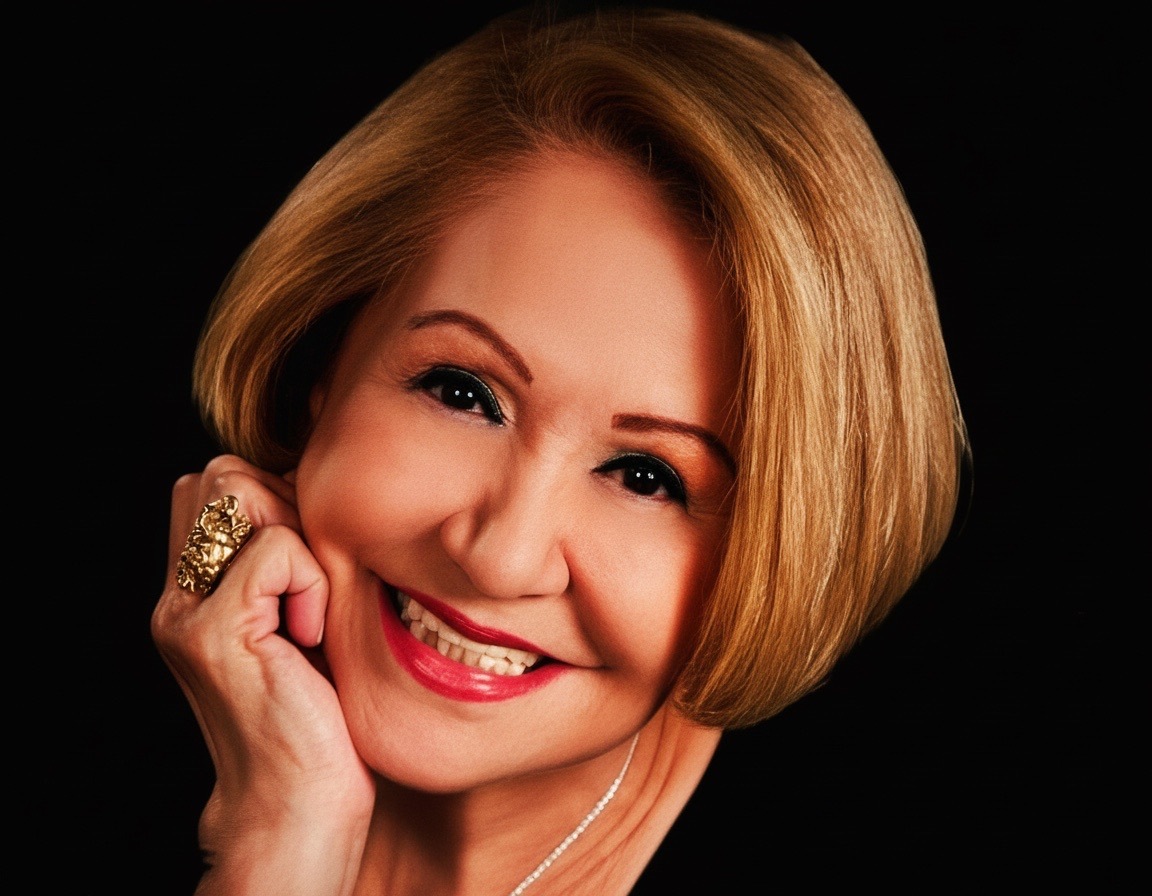
Elwood Hain, Jr. (a/k/a Woody Hain) is a retired law professor who lives in Altadena, California. He earned a B.A. and an LL.B. from SMU and an LL.M. from Harvard Law School. For a dozen years, while primarily a professor and dean, he worked with school desegregation litigation as a scholar, a litigator, a peacekeeper, and an advisor to school boards and judges. He served thirty years in the Air Force reserve as a judge advocate, retiring as a colonel. For sixty-four years he had the joy of being married to Sofia Loera Hain, who died in July 2026.
**
I send my deepest condolences to Sofia’s family and friends, and to Woody, whose further memories about his life with Sofia that he has shared with me will stay with me for a long time. –Paula

***
Sources & Notes
Black-and-white photo of the SMU student protest is from the Dallas History & Archives, Dallas Public Library.
All other photos are from the family collection of Mr. Hain.

*
Copyright © 2026 Paula Bosse. All Rights Reserved.