Flashback : Dallas

A Miscellany: History, Ads, Pop Culture

Category: 1920s

Dallas in the ’20s

Pennsylvania Ave. & Meyers St.

by Paula Bosse

It’s taking so long for me to post these days!

Here is a collection of a few random places from Dallas in the 1920s.

*

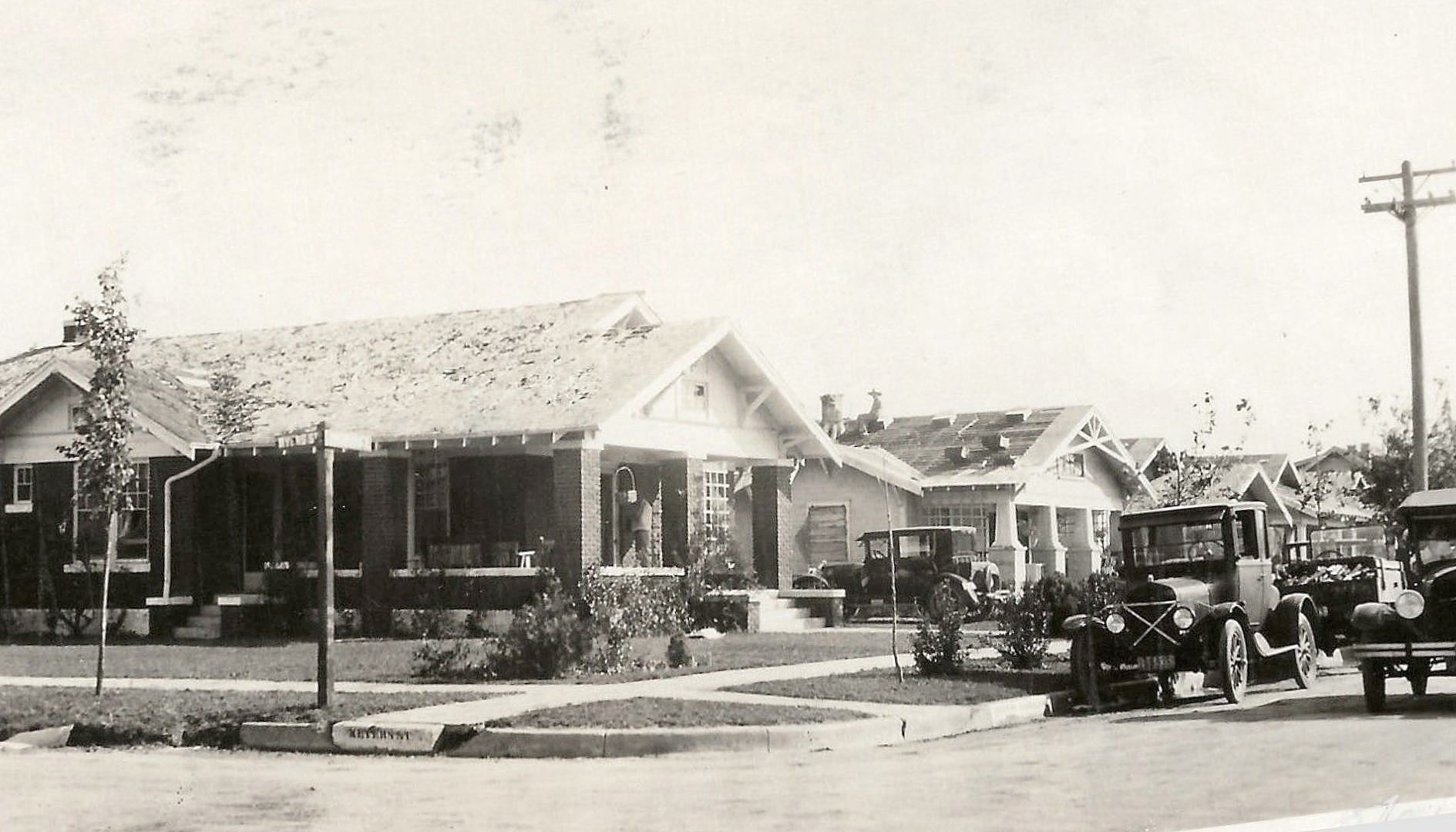
Above, South Dallas, circa 1926. This photo shows the 2900 block of Pennsylvania Avenue at Meyers Street. I love houses of this period, and I love this photo. This may just be poor resolution of the photograph, but it looks like the roof of the house in the foreground is damaged — the roof next door is being repaired.

The house on the corner is no longer there, but the second house — the one with the guys on the roof — is still there, minus some of its aesthetically pleasing design elements. See what this corner looks like in a recent Google Street View, here.

*
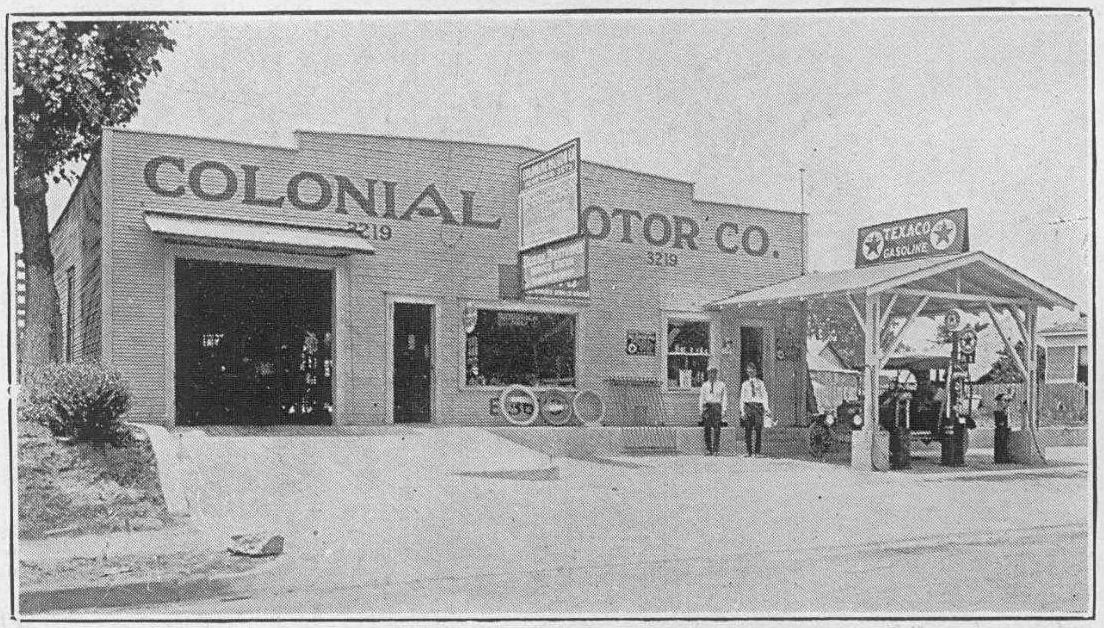
The Colonial Motor Co., 3219 Holmes Street, South Dallas.

I can’t explain it, but I really love photos of old service stations and garages. The Colonial Motor Co. was in business as early as 1914. Around 1920, it moved to South Dallas, where owner R. F. Mitchell opened a garage at 3219 Holmes Street, just off Pennsylvania in the area known as Colonial Hill. According to the obituary of Mitchell’s son, the business lasted until 1988. That’s quite a run.
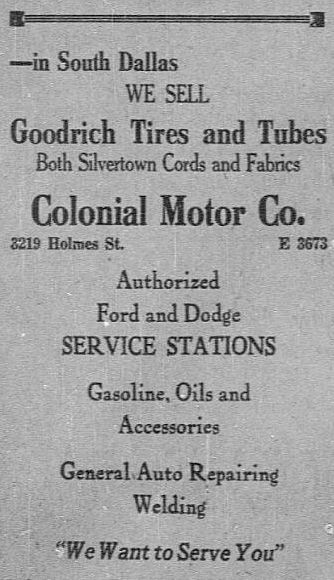
An interesting side note about the owner is that he was a motorboat enthusiast and participated in and organized boat races at White Rock Lake. The garage you see above did all the things that service stations do, but it was also the official retailer of Evinrude outboard motors in North Texas.

*
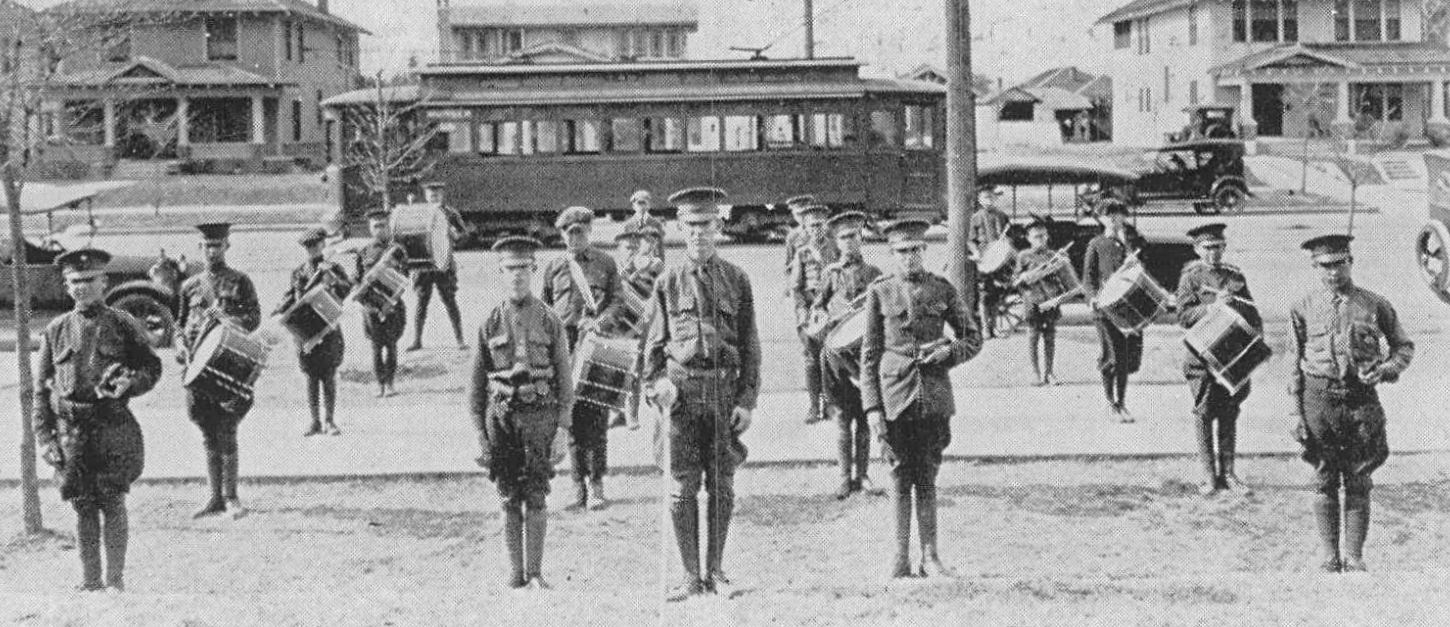
Still in South Dallas, this 1921 photo shows the Forest Avenue High School Drum & Bugle Corps. It’s not that exciting as a photo of a drum and bugle corps, but what is exciting is seeing the view of Forest Avenue behind them. This is now the 3000 block of Martin Luther King Jr. Boulevard, and nothing is this photo still exists. Not the houses, not the streetcar, not the people. It now, rather distressingly, looks like this.

The drum and bugle corps is facing the school, seen here, in a photo from 1924:
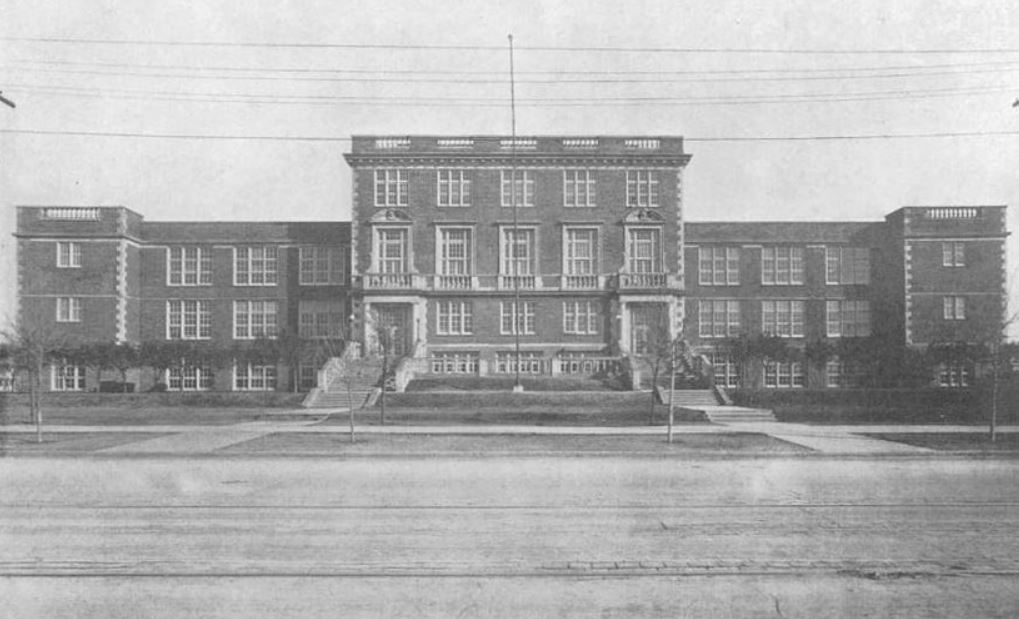
The school still stands. It’s now James Madison High School — and it still looks pretty good!

*
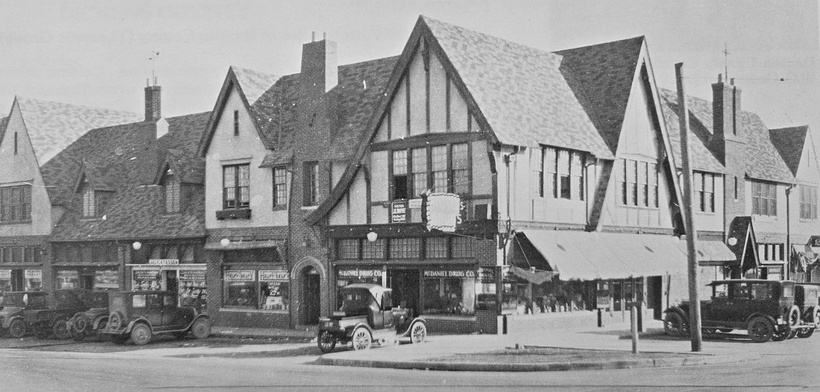
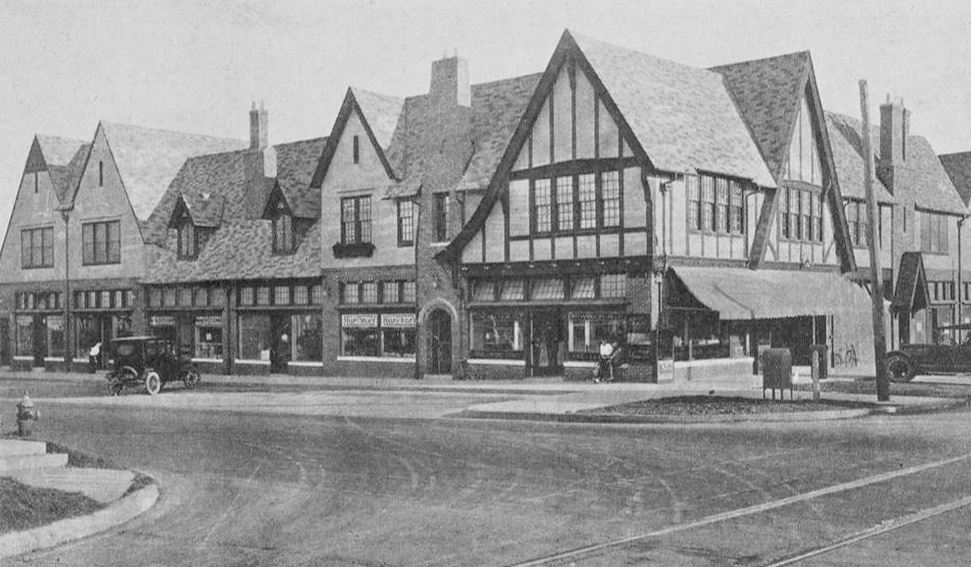
Over to Oak Cliff, to Cannon’s Village, West Davis & Edgefield, an Elizabethan-esque shopping strip built in 1922. Its history is in an Oak Cliff Advocate article here. See what it looks like today, on Google Street View, here. The photo above is from 1925. Another photo is below.
*
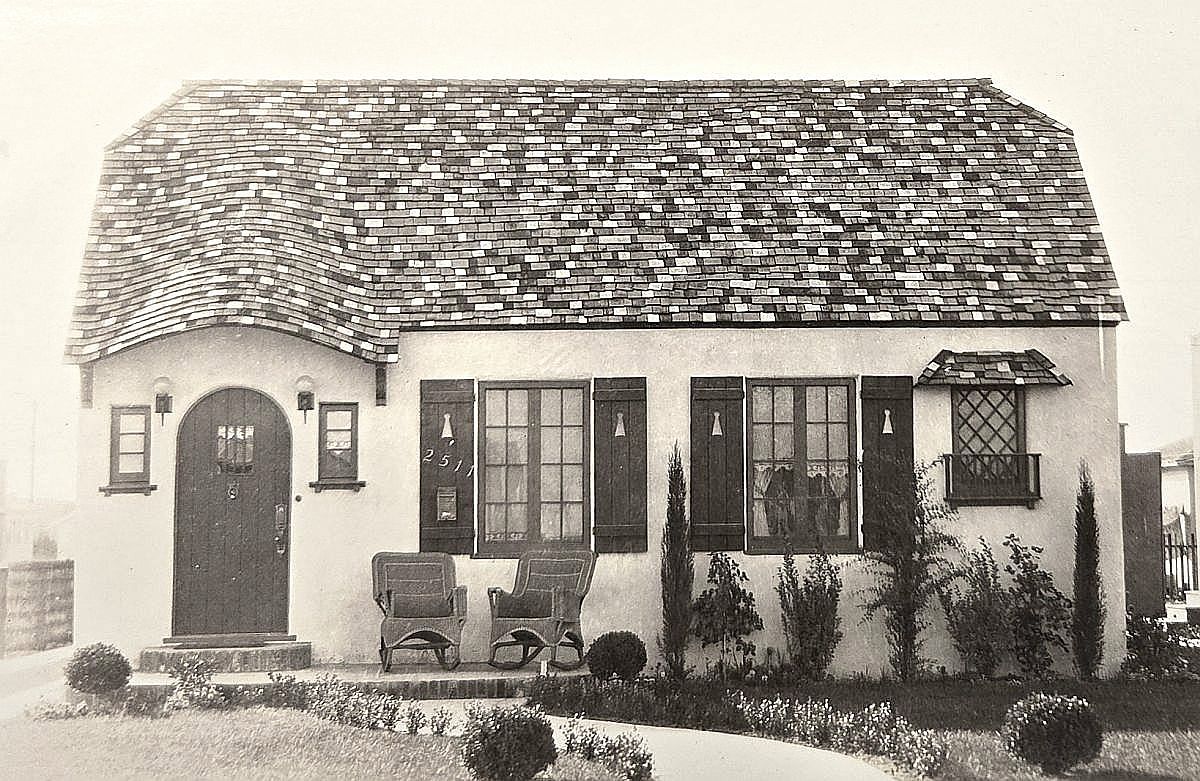
And finally, my dream house!

This house may (or may not) have been in Dallas. I choose to believe that it was here somewhere. All that’s known is the address: 2511. It’s almost too cute. Like something out of a fairy tale. That roof is incredible! And the little awning over the little window on the right! The chairs on the little porch. The weird, scrubby landscaping. Just everything! All it needs is some shade trees. I would live there in a heartbeat!

This is one of hundreds of photos of houses from the ‘teens-’30s which were used to sell house plans (and lumber). It is part of the R. M. Williamson Collection in the Dallas History and Archives. The locations of most of the houses are unknown — a lot are (were) probably in Dallas (East Dallas, Vickery Place, Belmont Addition, Oak Cliff, etc.), but a lot just don’t look Dallas-y to me at all (one is fully surrounded by a forest of very, very tall pine trees). But they’re all amazing. If the city of Dallas were filled with all the houses photographed in that collection, it would be a much more aesthetically pleasing city.

Read about this collection here — and read how these photos were used, here.

***

Sources & Notes

Top photo showing Pennsylvania and Meyers is from eBay.

Colonial Motor Co. photo is from the 1924 Forest Avenue High School yearbook; ad ran in newspapers in October 1920.

Drum and bugle corps photo and photo of Forest Avenue High School are from the 1921 and 1924 school yearbooks.

First Cannon Village photo is from a book I can’t remember the title of that I was browsing through in the Dallas History and Archives collection at the Dallas Public Library; second photo is from the Sidewalks of Dallas Instagram account.

Cute house photo is from the R. M. Williamson Collection, Dallas History and Archives, Dallas Public Library.

This post was drawn from several different posts which previously appeared on the Flashback Dallas Patreon page.

*

Copyright © 2025 Paula Bosse. All Rights Reserved.
McKell Street’s Golden Age

Veranda-life, Old East Dallas

by Paula Bosse

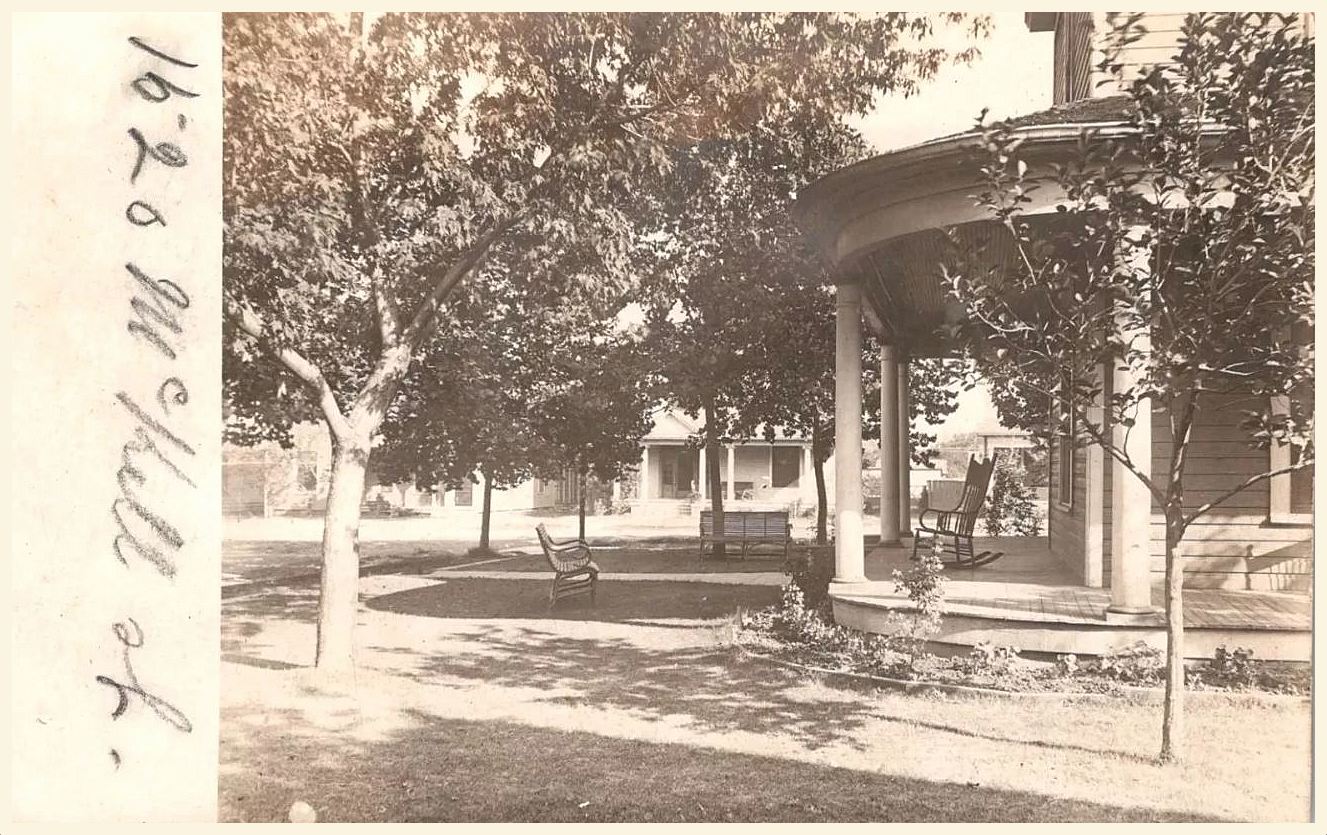
This does not look like Dallas. But it is. I had never heard of McKell Street, but it’s in Old East Dallas and is only two blocks long (it’s actually one long block), between Bryan and San Jacinto. This house stood until 2021 or 2022 at the corner of McKell and San Jacinto (see it in a 2021 Google Street View image here, when it was the very last remaining house on the street).

The address was 1520 McKell (the address written on the card looks like “1620,” but there was never a 1600 block of the street). When the house was built, sometime before 1903, its address was 136 McKell — you can see it and its curved wraparound porch on a 1905 Sanborn map here and on a 1922 Sanborn map here. And the sad empty lot in 2022 is here.

I love stumbling across unexpected photos like this. This was such a lovely little street. I can absolutely imagine Andy and Barney and Aunt Bee on that porch, rocking and chatting on a hot Sunday afternoon, enjoying a bowl of homemade peach ice cream and waving to neighbors as they walk by.

And now it’s nothing but an ugly stretch of parking lots and the powerfully unattractive AT&T building.

***

Sources and Notes

Real photo postcard found on eBay in 2024.

This post appeared in a slightly different version on the Flashback Dallas Patreon page (subscribe for as little as $5 a month!).

*

Copyright © 2025 Paula Bosse. All Rights Reserved.

Commerce & Market, Where the Air Was Made Blue

Kinder, gentler times…

by Paula Bosse

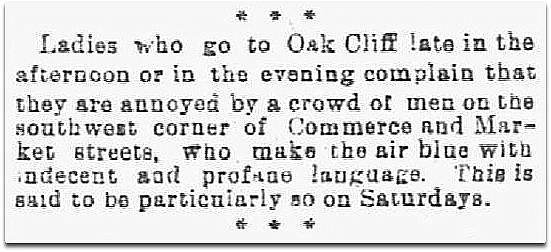
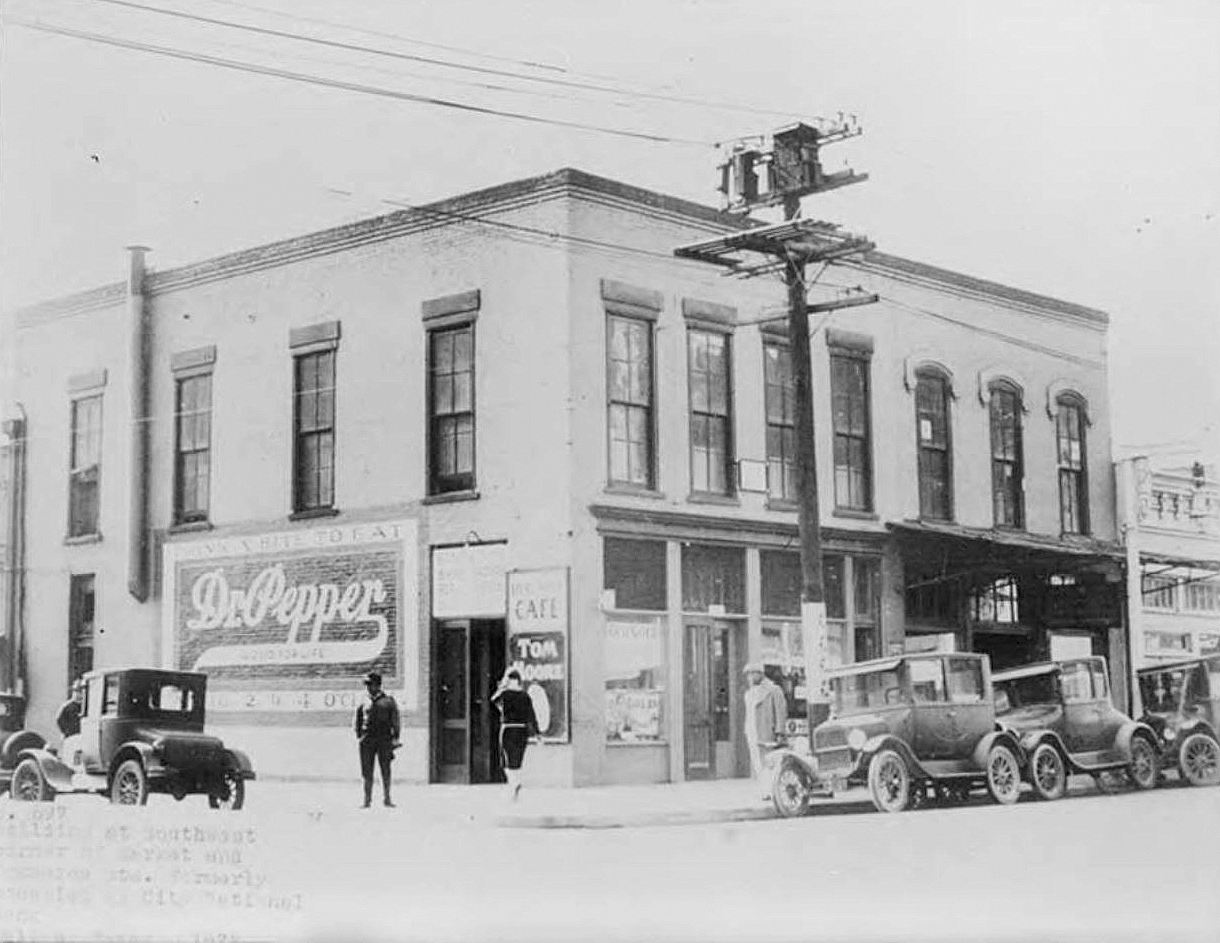
The photo above shows a small, fairly nondescript building at the southwest corner of Market and Commerce, with retail stores and a cafe at street level and, I think, a hotel on the second floor. My car-make-and-model knowledge is bad, but I’ll guess that this photo might be from the early ’20s (a 1921 Sanborn map of the area is here). If you go back even further — like to 1891 — this corner was a hangout for unsavory types, as reported below in The Dallas Morning News in 1891.

Dallas Morning News, Sept. 7, 1891

It’s no surprise there was “indecent and profane language” in the air in 1891 (“particularly on Saturdays”), seeing as that corner was a mere hop, skip, and a jump from Dallas’ premier red-light district.

This corner is currently occupied by the George Allen Courts Building.

***

Sources & Notes

Photo, titled “Building at SW corner of Market and Commerce Streets, formerly occupied by City National Bank Dallas, 1872,” is from the Collection of Dallas Morning News negatives and copy photographs, DeGolyer Library, Southern Methodist University; more information is here.

This post appeared in a slightly different version on the Flashback Dallas Patreon page.

*

Copyright © 2025 Paula Bosse. All Rights Reserved.
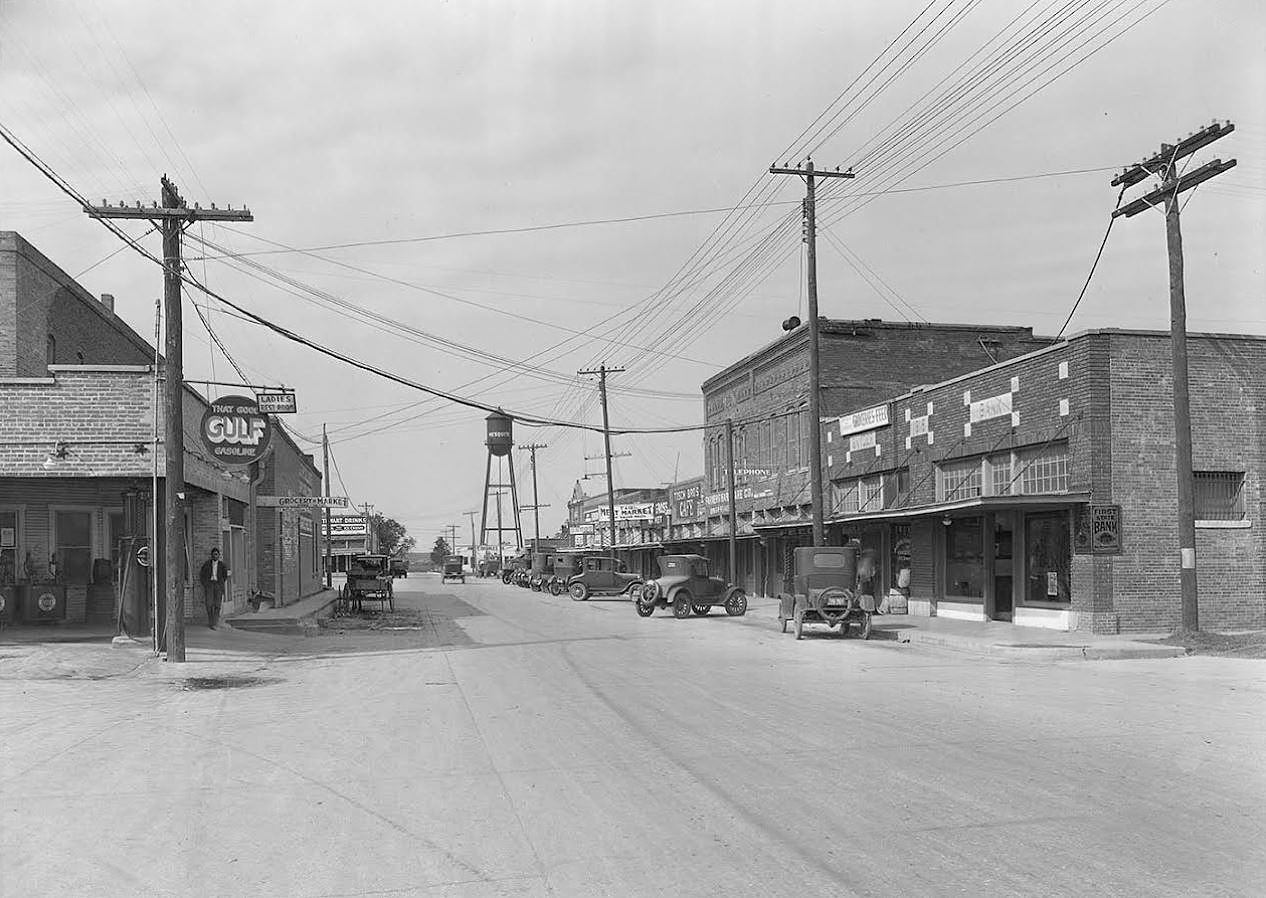
Downtown Mesquite — 1925

Meet you under the water tower… (photo: Dallas Public Library)

by Paula Bosse

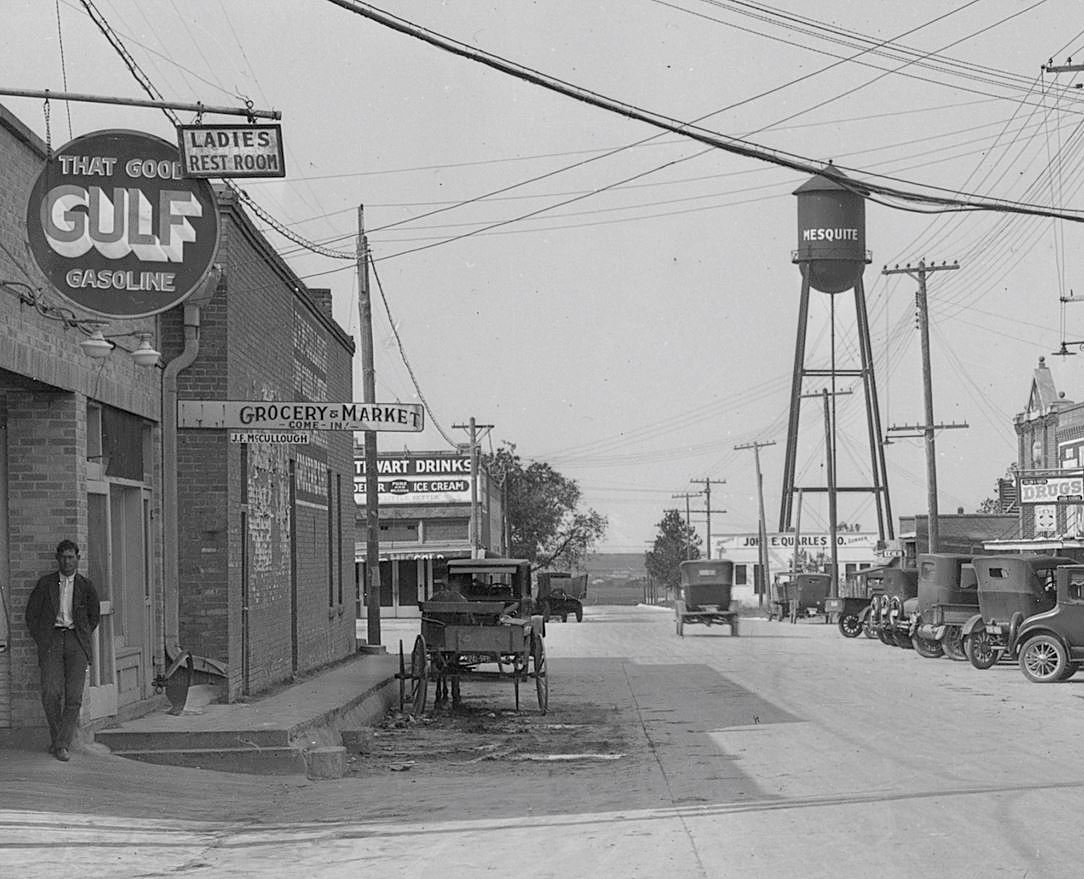
How about a little love for Mesquite, our neighbor friend to the east. I came across this great photo of Mesquite’s old downtown area in the library archives the other day. The full photo from 1925 — by Dallas photographer Frank Rogers — is below. A detail of the photo (which looks a perfect little photo all on its own) is above.

The building on the right side of the photo is the Snyder Bank Building (1915). It still stands at 201 West Main — see it today on Google Street View here.

Too bad that water tower is gone. But thanks for keeping the Snyder building, Mesquite!

***

Sources & Notes

This photo, “[Downtown Mesquite, Texas],” was taken by Frank Rogers in 1925. It is from the Frank Rogers Collection, Dallas History and Archives, Dallas Public Library; its call number is PA78-2/334.

*

Copyright © 2024 Paula Bosse. All Rights Reserved.
A Somber Armistice Day Observance — 1922

Veterans march in Dallas (Dallas Public Library)

by Paula Bosse

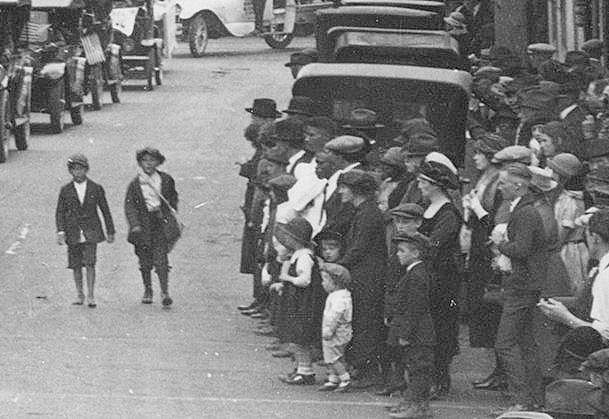
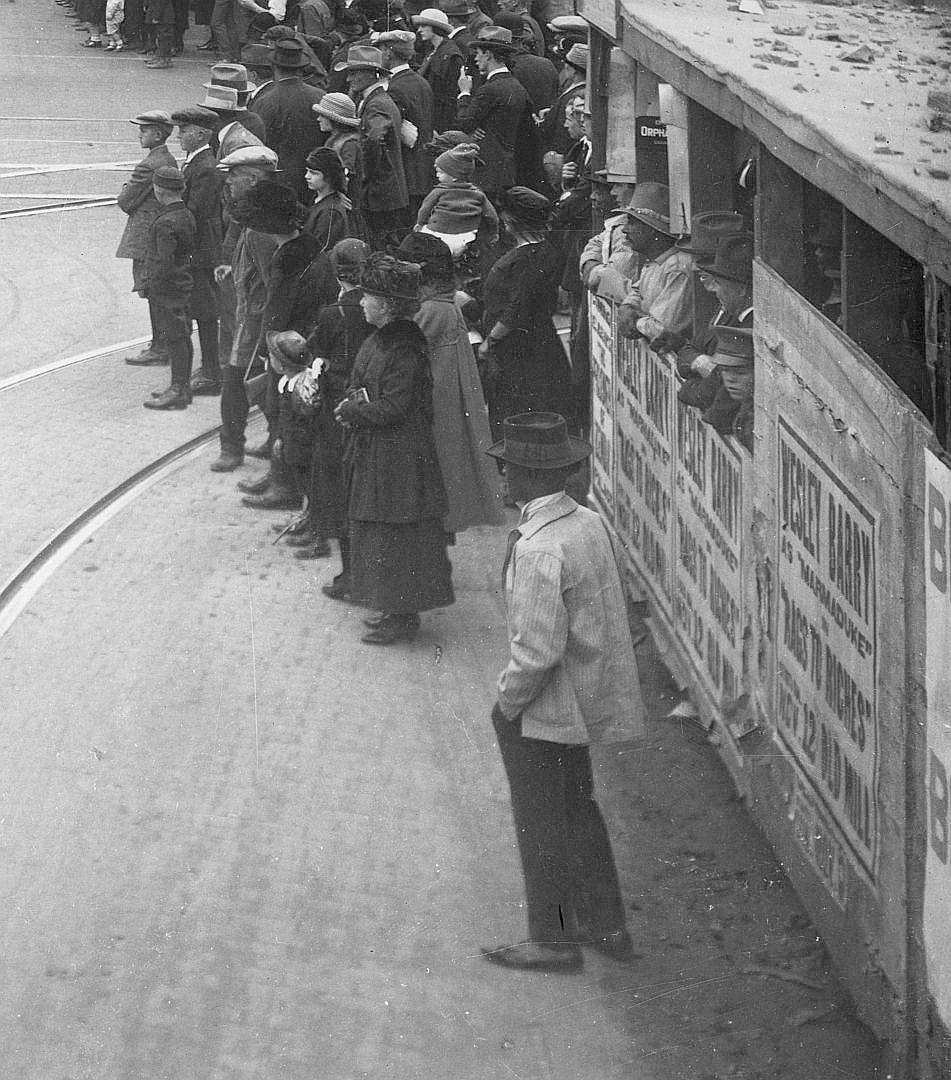
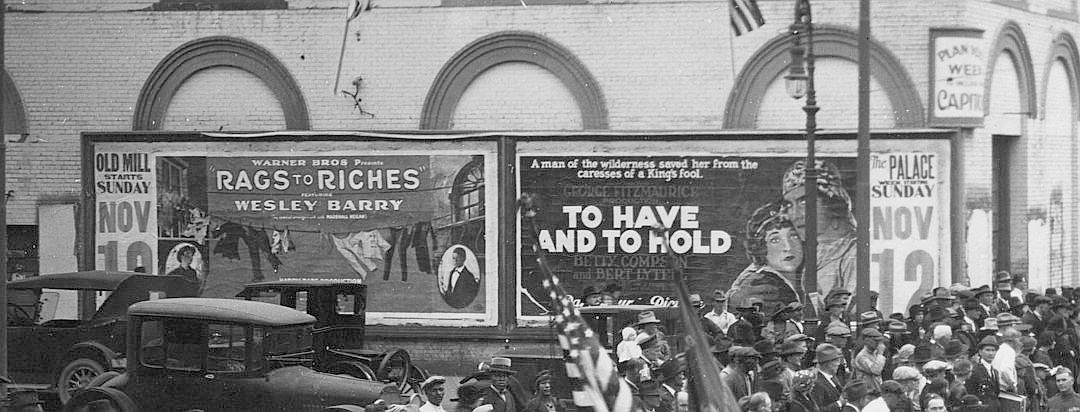
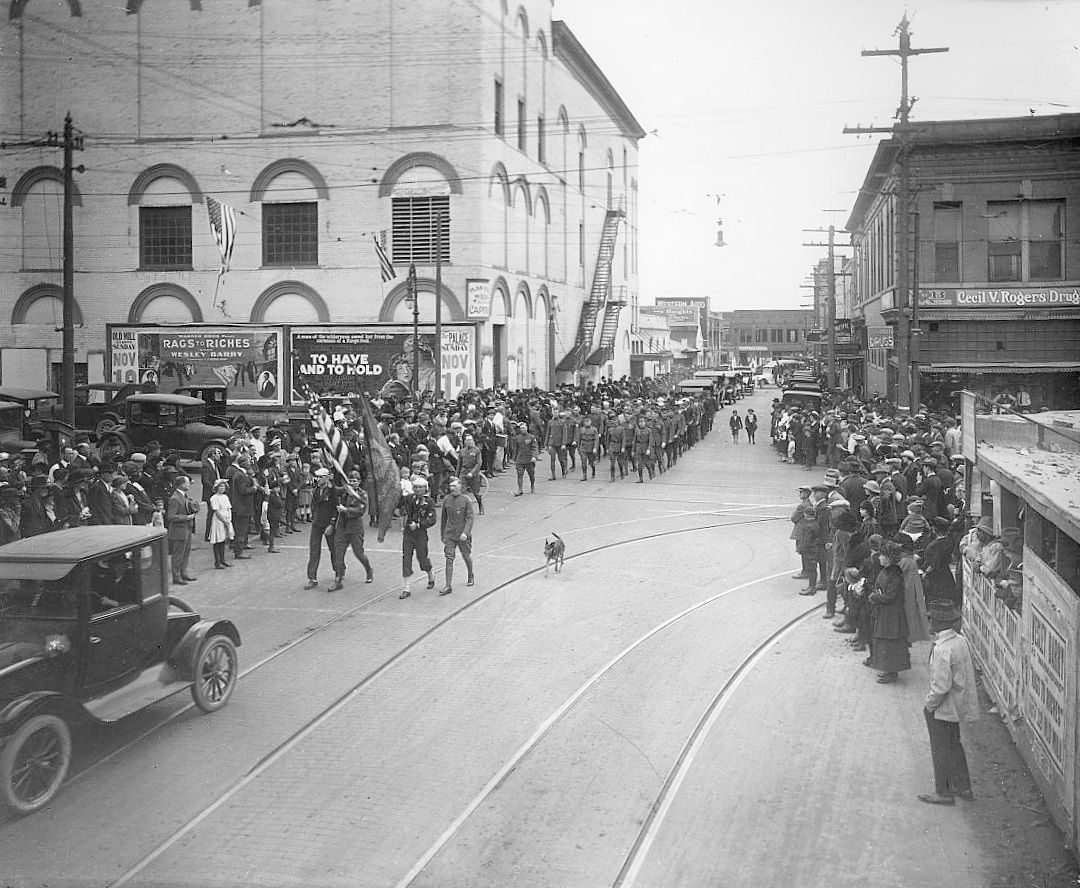
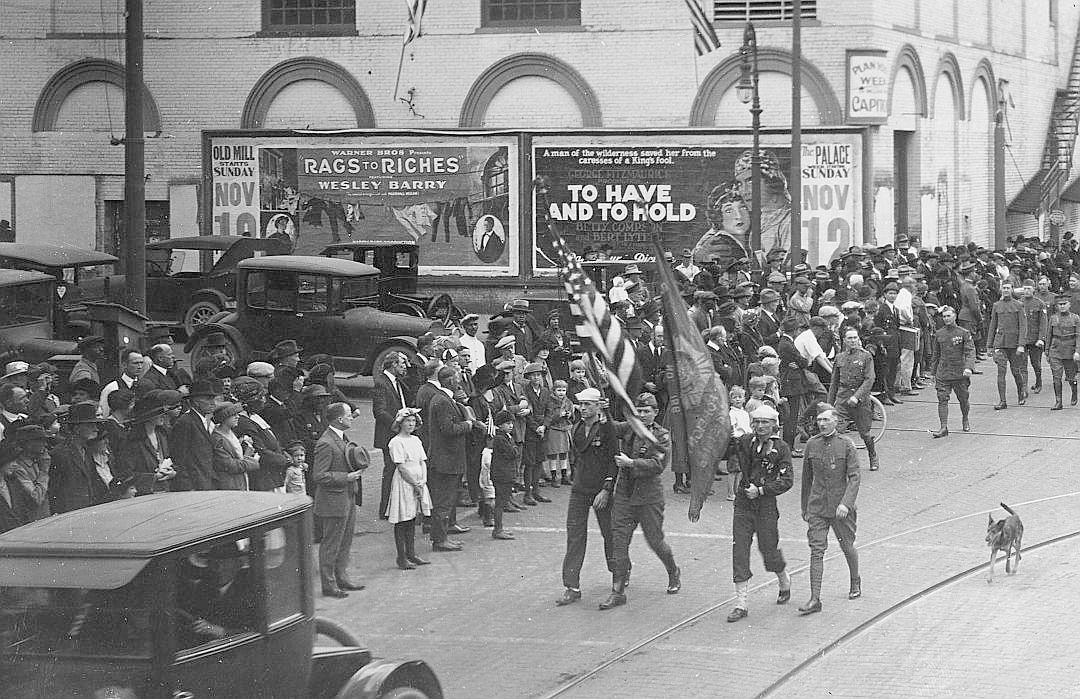
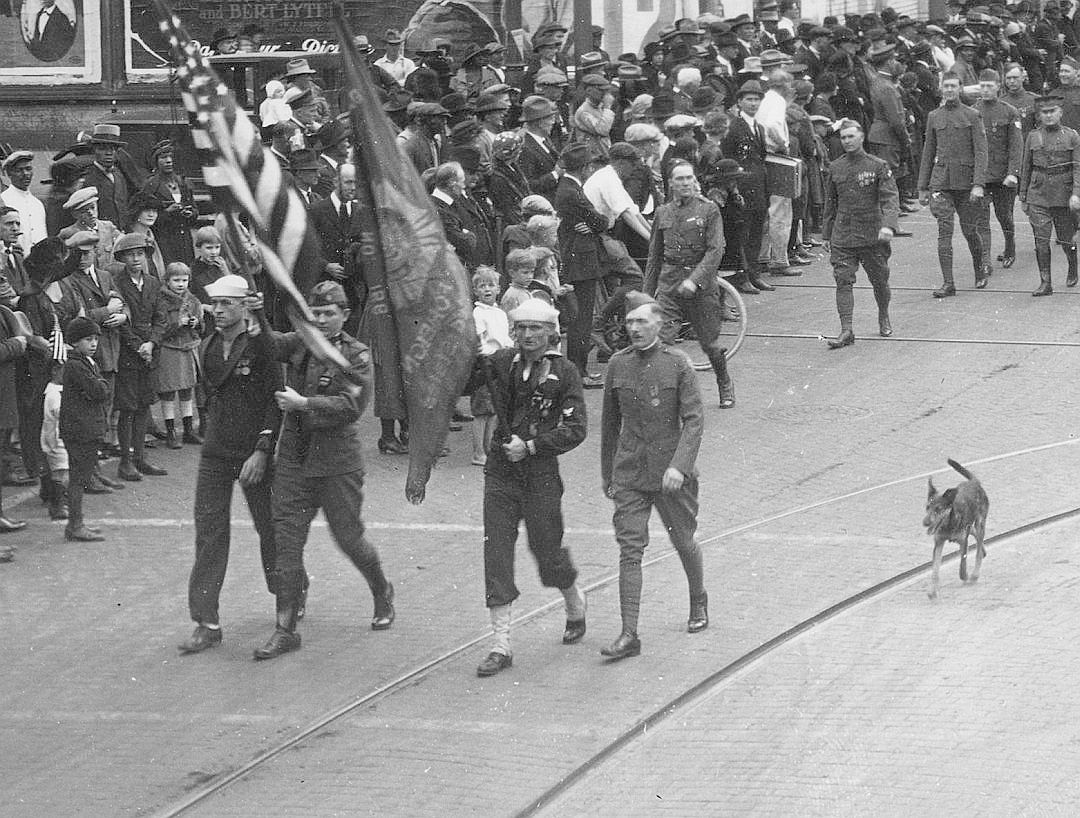
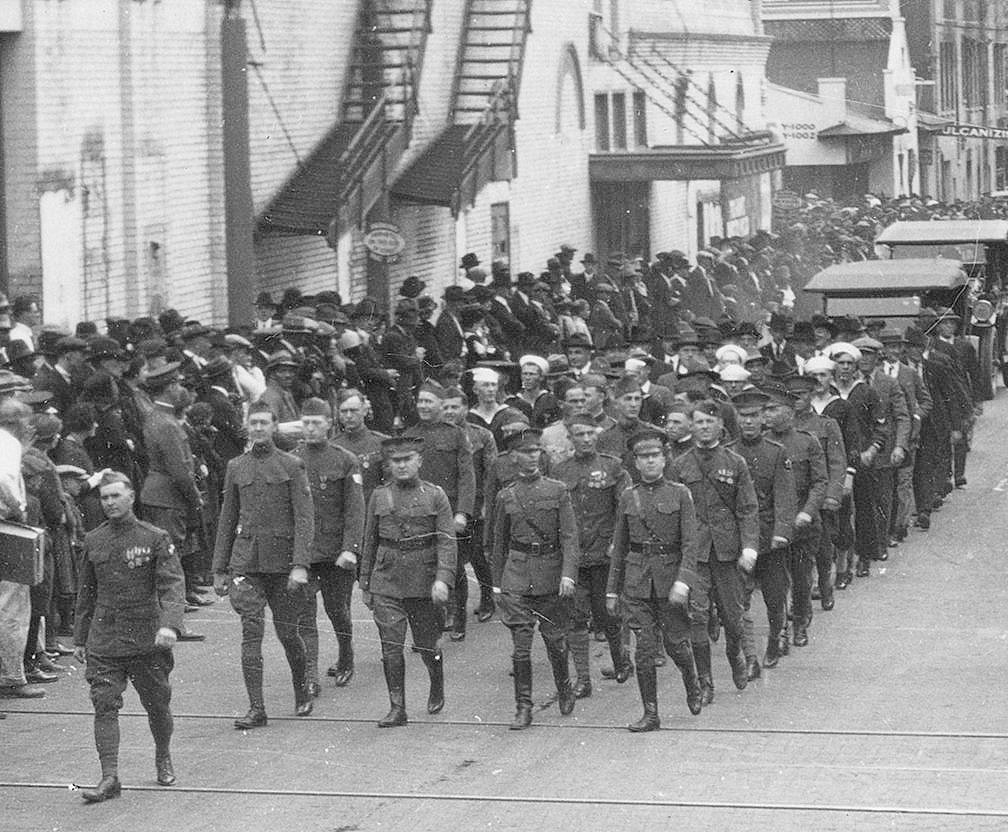
On November 11, 1922, Dallas observed the 4th anniversary of the end of World War I. The photo above, taken by Dallas photographer Frank Rogers, shows veterans of the devastating war marching north on Masten (N. St. Paul) from Main Street — they are headed to First Baptist Church for a special remembrance service.

The crowd is somber, with the war still fresh in their memories. From The Dallas Morning News:

Soberly and without show of emotion Dallas celebrated Saturday, the fourth anniversary of the stilling of the guns of the World War. Their faces mirroring no more than idle curiosity, tens of thousands of men, women and children flowed lazily along the Main Street waiting for the parade of men who had been part of the glorious adventure, but there was no evidence of that high-racing blood that filled the hearts of Americans on Nov. 11, 1918. (Dallas Morning News, Nov. 12, 1922)

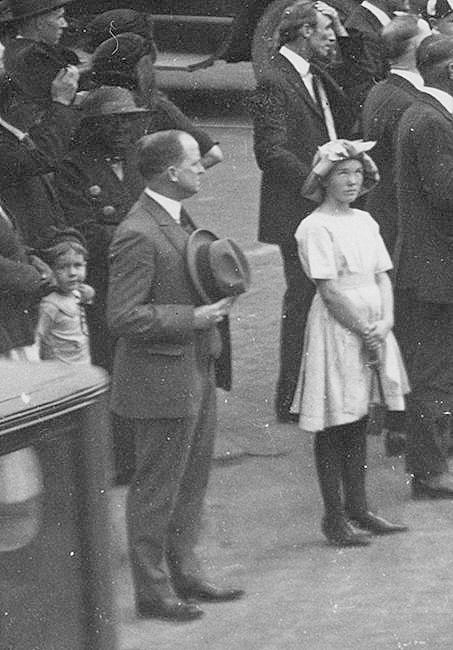
More details of the scene can be seen when zooming in on the photo and on the faces of the participants and the spectators (images are larger when clicked).

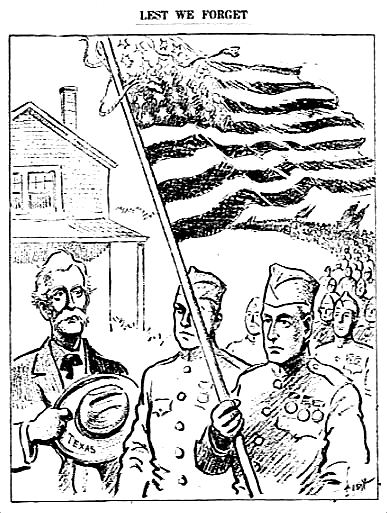
by John Knott, DMN, Nov. 11, 1922

***

Notes and Sources

Photo of the Nov. 11, 1922 Armistice Day parade is from the Frank Rogers Collection, Dallas History and Archives, Dallas Public Library (photo accession number is PA78-2-1003).

The address of the Cecil V. Rogers drug store was 1814 Elm Street. The movie posters for the silent films “Rags To Riches” (playing at the Old Mill) and “To Have and To Hold” (playing at the Palace) are posted on the back of the old Majestic Theatre (its second “temporary” location, which, I believe, had once been the old opera house — see the 1921 Sanborn map here). The cartoon is by Dallas Morning News cartoonist John Knott.

See other Flashback Dallas posts on Dallas and World War I here.

*

Copyright © 2024 Paula Bosse. All Rights Reserved.
Halloween Looked a Lot Different in Highland Park in 1924

Trick or treat!

by Paula Bosse

It’s Halloween! Let’s see how kids dressed up for the occasion 100 years ago.

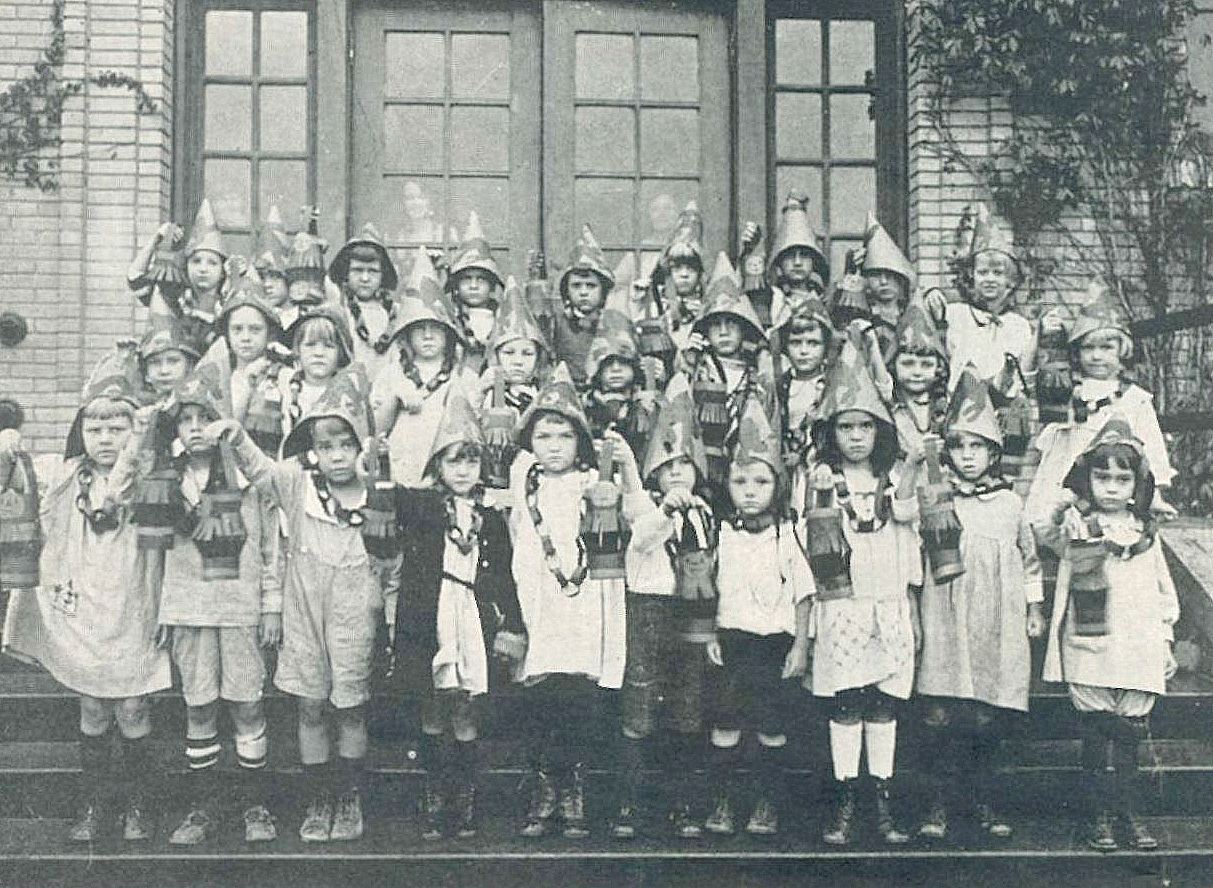
The caption for the above photo:

A group of the little folks of John S. Armstrong School who will enjoy the Hallowe’en Celebration at Davis Park on Friday evening, October 31.

Yeah, some of those children are scary. I wouldn’t want to meet a couple of them in a dark alley.

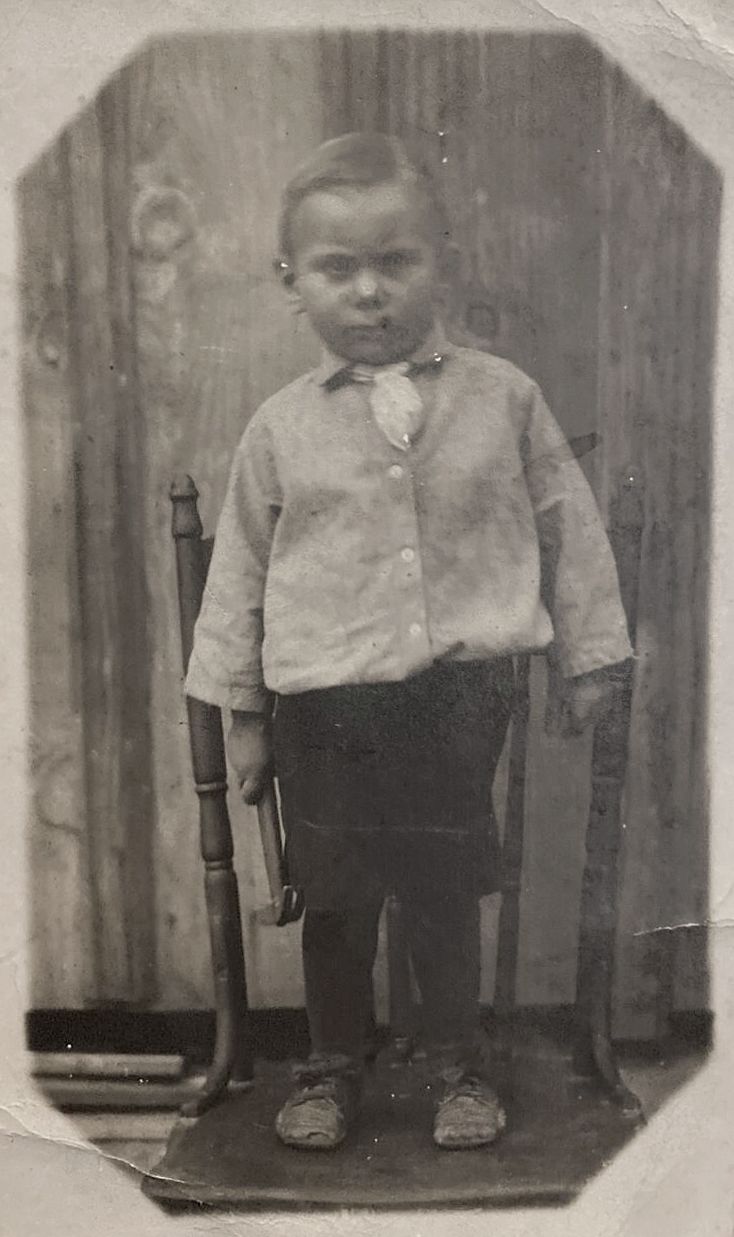
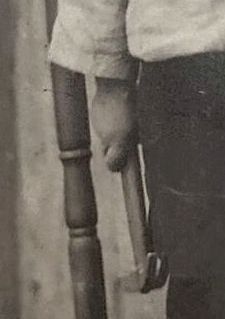
But none of them can hold a candle to this kid, who, for some reason, is holding a hammer. Did the studio provide it as a prop? (If so, why?) Maybe he brought it with him, (Again… why?) It appears that this was taken in Dallas — just to keep things local. I’m not frivolously posting non-Dallas content here! So, rest assured, this is a scary local kid. …With a hammer. And he does not look happy. Avoid!

I’m just going to believe this photo was taken to memorialize a unique Halloween costume and is not simply a portrait of a future serial killer.

Happy Halloween!

***

Sources & Notes

Top photo appeared in the pages of an interesting little magazine called Highland Park, which was published by developers Flippen-Prather from about 1923 to at least 1928; this photo is from the October 1924 issue; from the Periodicals Collection, Dallas History and Archives, Dallas Public Library.

The photo of the boy with the hammer is a Real Photo Post Card (RPPC), found on eBay in 2021; details on the back of the card indicate it might have been taken in Dallas.

I came across a couple of other creepy photos of children, which I posted on another (non-Dallas) blog (these contain frivolous non-local content):

See previous Flashback Dallas posts with a spooky Halloween theme here.

*

Copyright © 2024 Paula Bosse. All Rights Reserved.
The Higginbotham-Pearlstone Building

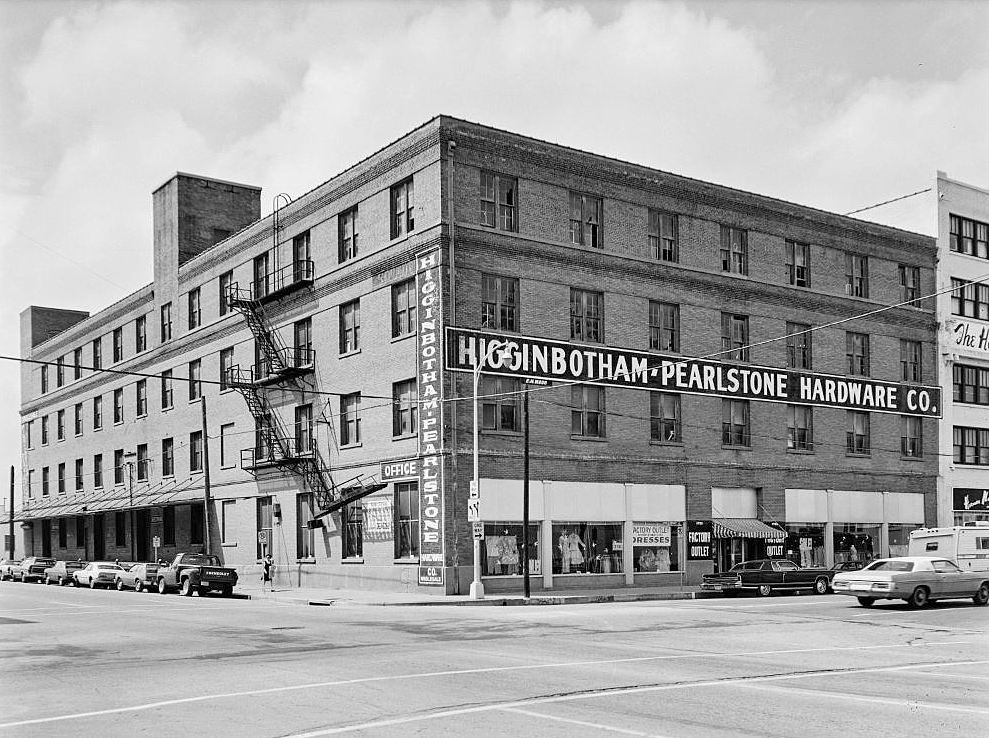
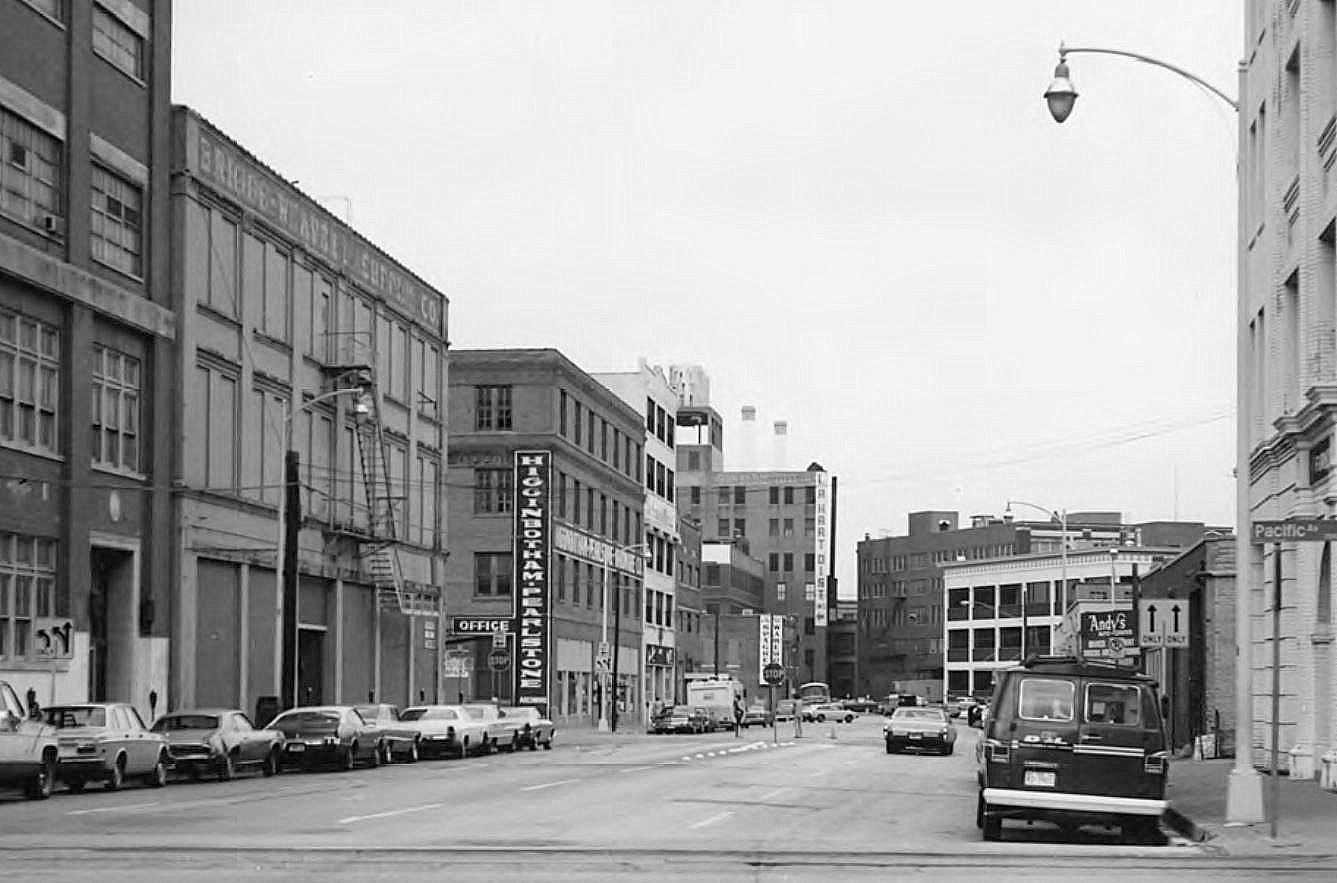
higginbotham-pearlstone_1978_portalHigginbotham-Pearlstone Building, 1978

by Paula Bosse

In a previous post, “The South End ‘Reservation’ Red-Light District — ca. 1907” (which, amazingly, has generated so much traffic, that, in one month, it has gotten almost 4 times as many views as the most popular post of last year got all YEAR…), I mentioned that the reason I stumbled across the main photo from that post was because I was searching for a photo of the Hobson Electric Co. in the West End (the photo was originally described as showing the West End, but it actually showed the other side of downtown). So why was I looking for something which, let’s be honest, doesn’t sound all that exciting? The Hobson Electric Co.? Because an anonymous reader asked recently in comments of a post from 2019 — “Caterpillars On the Job at Ross and Market — 1922” — what businesses had been in the building at 1701 N. Market in the West End, known as the Higginbotham-Pearlstone Building. And here, anonymous question-asker, is what I found.

But before any building at all was there, what was there? (See the “Sources & Notes” section at the bottom of the page to see this location on six Sanborn maps from 1885 to 1921.) Before any building sat on the northwest corner of N. Market and Ross Avenue (originally Carondelet), it was a wagon yard/camp yard — a place where people coming to the city could stable their horses and stay the night. As seen on the 1899 Sanborn map, it was near the MKT freight and passenger depots. By 1905, that block was the site of a lumber yard.

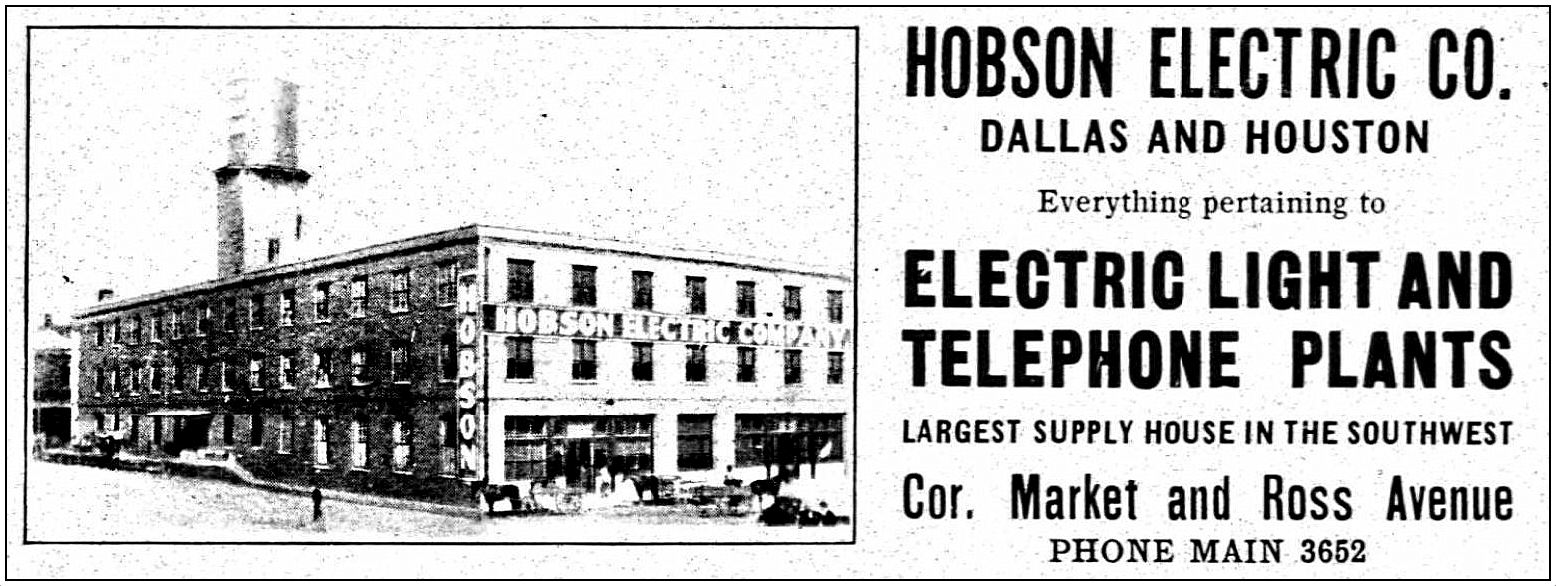
In 1910, the Hobson Electric Co. (“for everything pertaining to electric light and telephone plants, largest supply house in the Southwest”) opened their new building at the northwest corner of Market and Ross (they were formerly in what is now the 700 block of Commerce). The new building was described thusly:

The above new building of the Hobson Electric Company, located near Market street and Ross avenue, Dallas, is an example of modern construction which secures a low insurance rate. The front is 100 feet, depth 200 feet. There are three stories with a total floor space of 60,000 square feet. The foundation is of concrete, the walls of light colored brick 18 inches thick; the interior is of mill construction of unusually heavy and special type, the floorboards being five inches in thickness. The general construction is of the best available at this date. The building is heated by the hot water system, electrically lighted and equipped with the automatic sprinkler system for fire protection. (Dallas Morning News, April 16, 1910)

hobson-electric_1911-directory1911 city directory

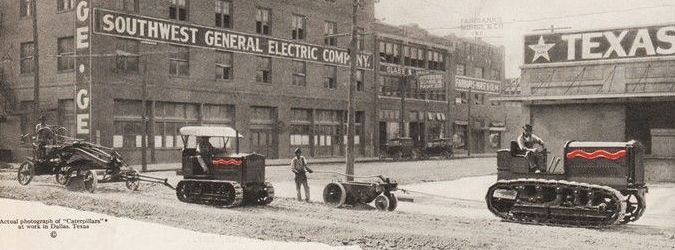
In January 1913, Charles W. Hobson changed the name of his company to the Southwest General Electric Co., (Hobson was the Southwest manager of General Electric/G.E.), as can be seen in this photo of the building from 1922:

caterpillar-ad_1922_photoDetail of a 1922 ad for Caterpillar tractors

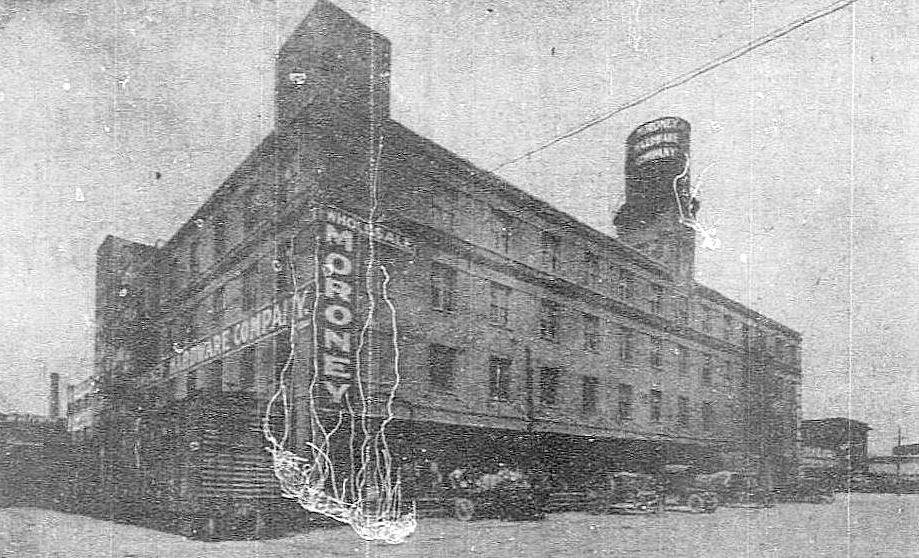
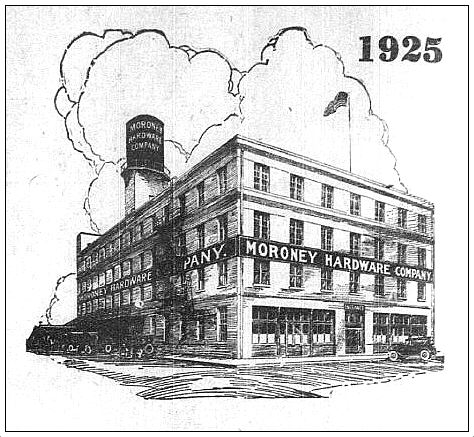
In October 1923, the Moroney Hardware Co. (est. 1875) moved in. “You will find everything here that a modern, progressive wholesale hardware house should carry. Shipping everywhere in the large Dallas trade territory” (ad, Sept. 23, 1923).

moroney-hardware_1701-n-market-at-ross_DMN_101423_photoDMN, Oct. 14, 1923

moroney-hardware_1701-n-market-at-ross_DMN_112325DMN, Nov. 23, 1925

moroney_ad_112325_det50th anniversary ad detail, Nov. 23, 1925

In February 1926, the Moroney company (having just celebrated its 50th anniversary) announced the sale of the pioneering Dallas business (as well as its building) to R. W. Higginbotham and Hyman Pearlstone — the new wholesale company would be called the Higginbotham-Pearlstone Hardware Co.

higginbotham-pearlstone_hardware-catalog_1954_ebayca. 1954

Higginbotham-Pearlstone lasted until about 1977, when they vacated the building (but their name remained on it). The photo at the top of this post shows the building in 1978, as does the photo below — at that time, it (or part of it) became home to a factory-outlet clothing store. Below, a slightly different view, looking north on Market from Pacific.

higginbotham-pearlstone_tx-hist-comm_danny-hardy_mar-1978_det_n-on-market-from-pacific1978

It continues to be an important landmark in the Historic West End, and it still looks great — see the building on Google Street View, here.

***

Sources & Notes

The top photo, from 1978, is from the collection of the Texas Historical Commission, via the Portal to Texas History.

The 1954 Higginbotham-Pearlstone photo is from eBay.

The second photo (which I have cropped slightly), from 1978, is also from the Texas Historical Commission — it was taken in March 1978 by Danny Hardy. It is part of a nomination form for “National Register of Historic Places” designation — the whole 90-page application can be viewed as a PDF, here (this photo is on p. 50). There are lots of great photos of West End buildings from 1978 in this!

Other sources as noted.

See Sanborn maps which include this block (northwest corner of N. Market and Carondolet) in 1885, 1888, 1892, 1899, 1905, and — the “modern” block which, finally, is home to our building — in 1921.

higginbotham-pearlstone_1978_portal_sm

*

Copyright © 2024 Paula Bosse. All Rights Reserved.
1500 Block of Elm — 1920s

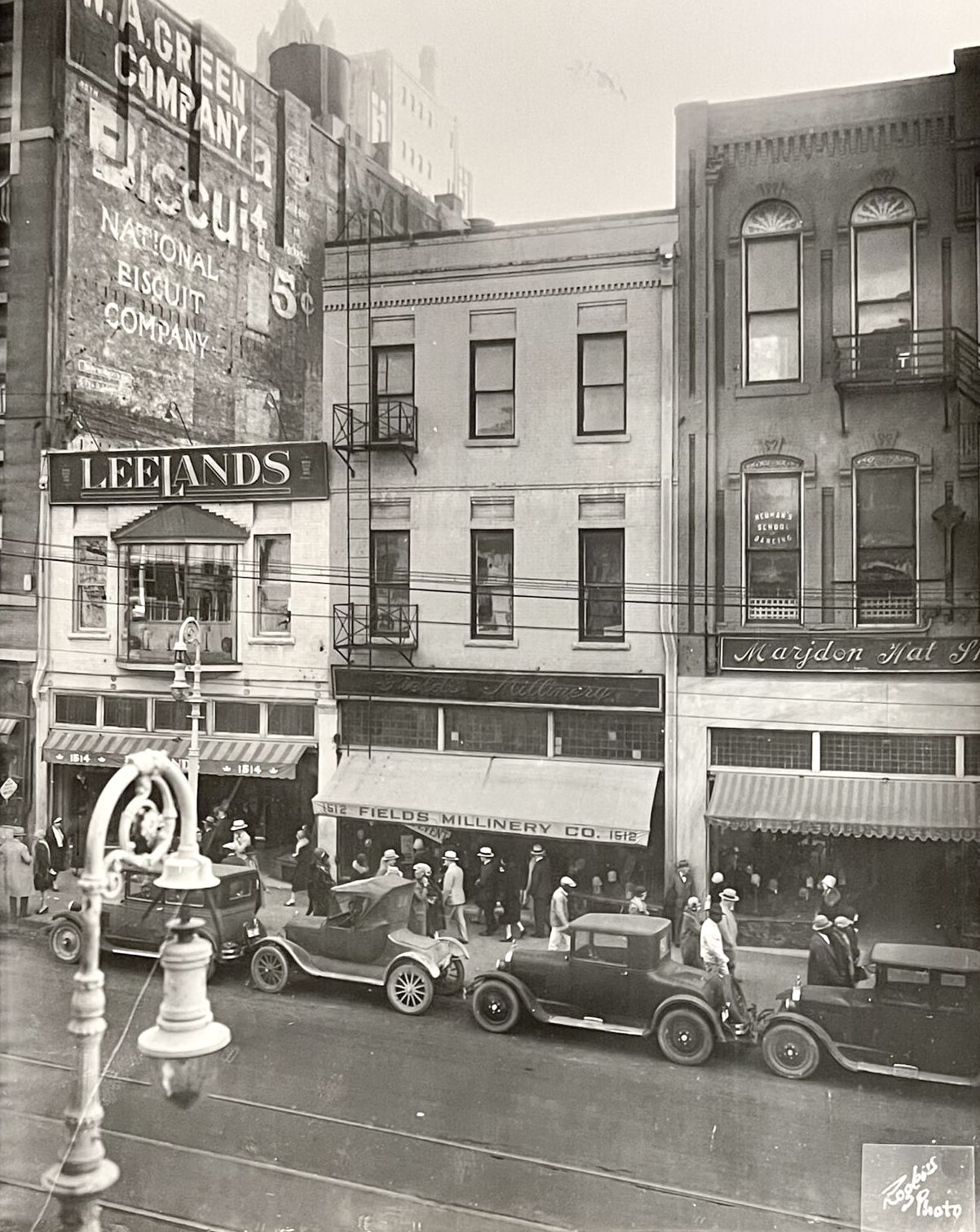
fields-millinery_1512-elm_frank-rogers-ebay1500 block of Elm Street, south side…

by Paula Bosse

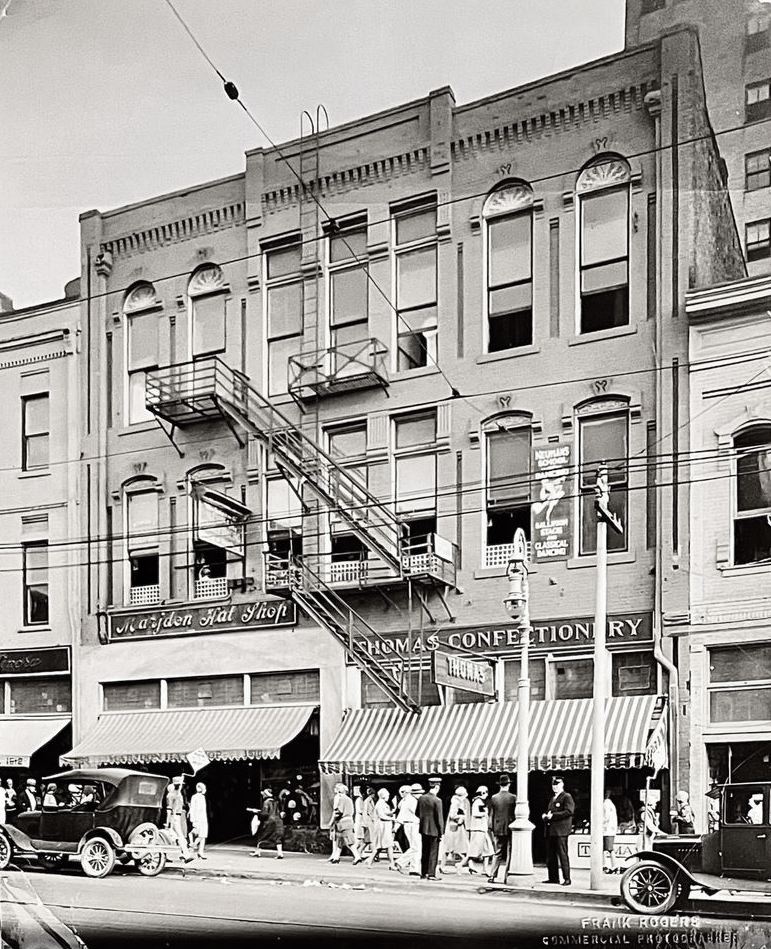
This is a great photo by Frank Rogers showing businesses on the south side of the 1500 block of Elm Street, between Stone and Akard (see it today on Google Street View here — some of these buildings are still standing). Mid-1920s? Back when Elm ran two ways, and you could park your rumble-seated roadster at the curb.

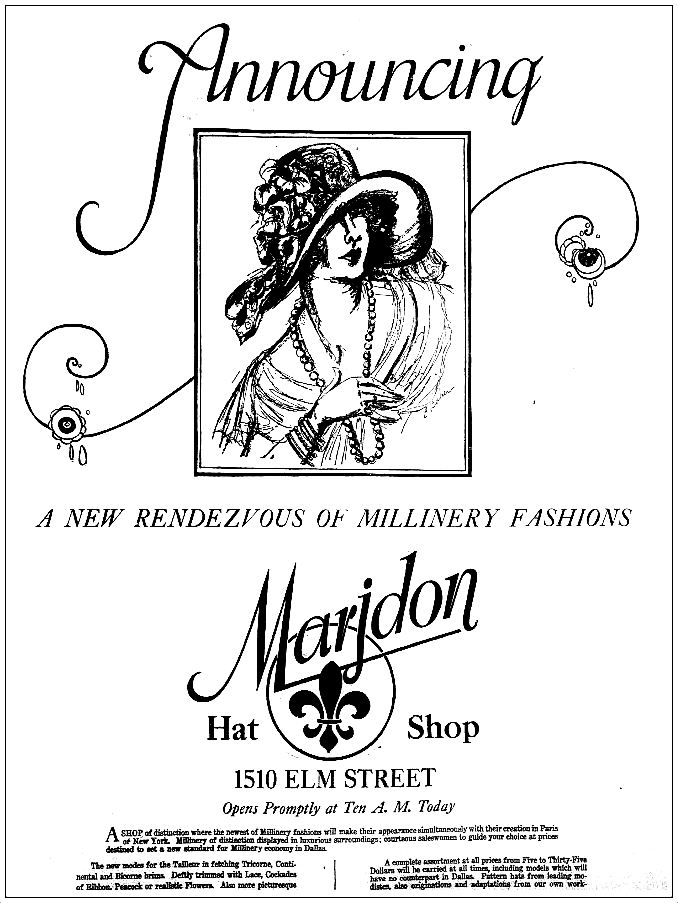
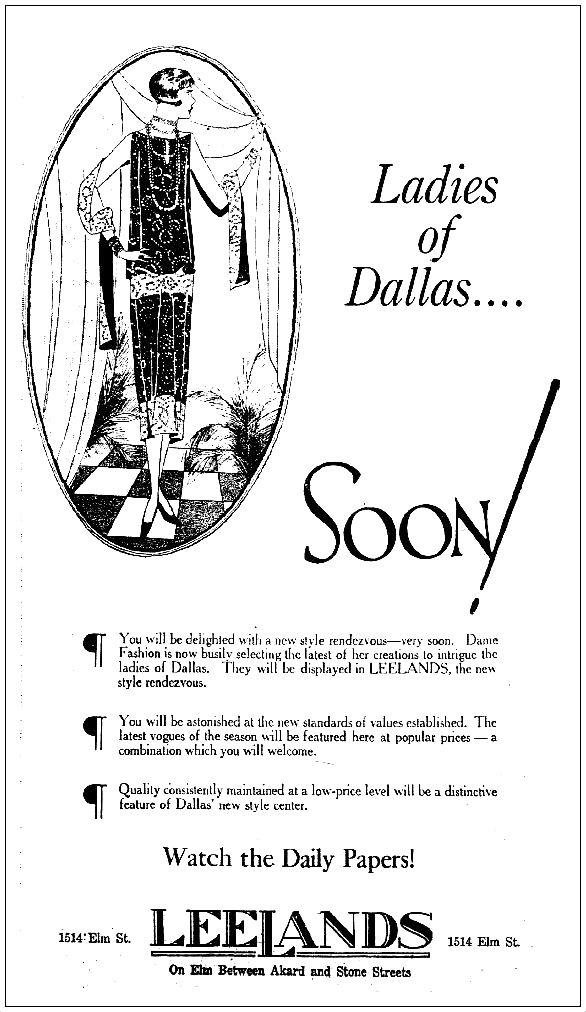
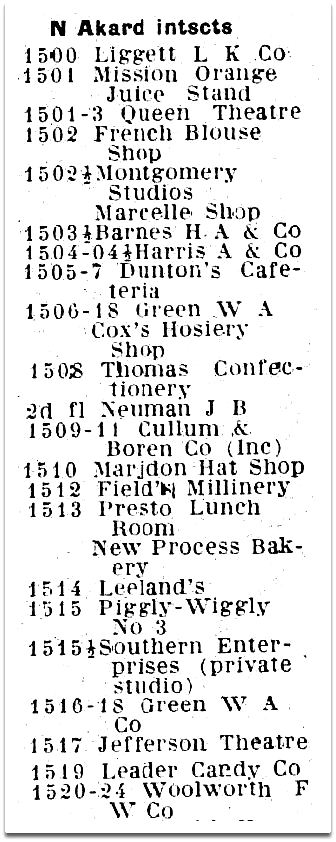
Mostly out of frame at the left is the W. A. Green department store (1516-18 Elm), then, moving east to west, Leelands women’s fashions (1514 Elm), Fields Millinery Co. (1512 Elm), part of the Marjdon Hat Shop (1510 Elm), and, above the hat shop, Neuman’s School of Dancing. (“Marjdon” must be one of the most annoying and hard-to-say business names I’ve come across.)

The block continues in the photo below, in another photo by Rogers (this building has been replaced and is now a parking garage).

thomas-confectionary_1508-10-elm-st_frank-rogers-ebay

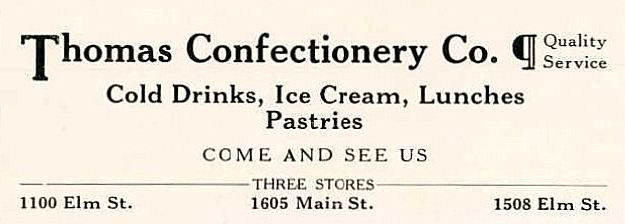
We see a full shot of Marjdon (that name…). Previously (1916-1924), that street-level space was occupied by the Rex Theater. Next door is Thomas Confectionery (1508 Elm, one of the company’s several downtown locations), which, according to the promotional postcard below was the “largest confectionery in the state.”

thomas-confectionary_postcard_1911_sam-rayburn-house-museum-via-portalvia Portal to Texas History

*

thomas-confectionary_main-high-school-yrbk_1916Dallas High School yearbook, 1916

*

marjdon_1510_opening_030124March 1, 1924

*

fields-millinery_1512-elm_dmn_opening_042122_adApril 21, 1922

*

leelands_030125March 1, 1925

*

elm-street_dallas-directory-1925_1500-blockElm Street, 1925 Dallas street directory

*

Check out this block in the 1921 Sanborn map here.

***

Sources & Notes

The two photographs were taken by Dallas photographer Frank Rogers for real estate developers McNeny & McNeny; they were found on eBay.

fields-millinery_1512-elm_frank-rogers-ebay_sm

*

Copyright © 2023 Paula Bosse. All Rights Reserved.
Schulte Cigars, Elm & Akard — ca. 1923

schulte-cigars_elm-akard_frank-rogers_ebay_frank-rogers_bw
Life at Elm & Akard…

by Paula Bosse

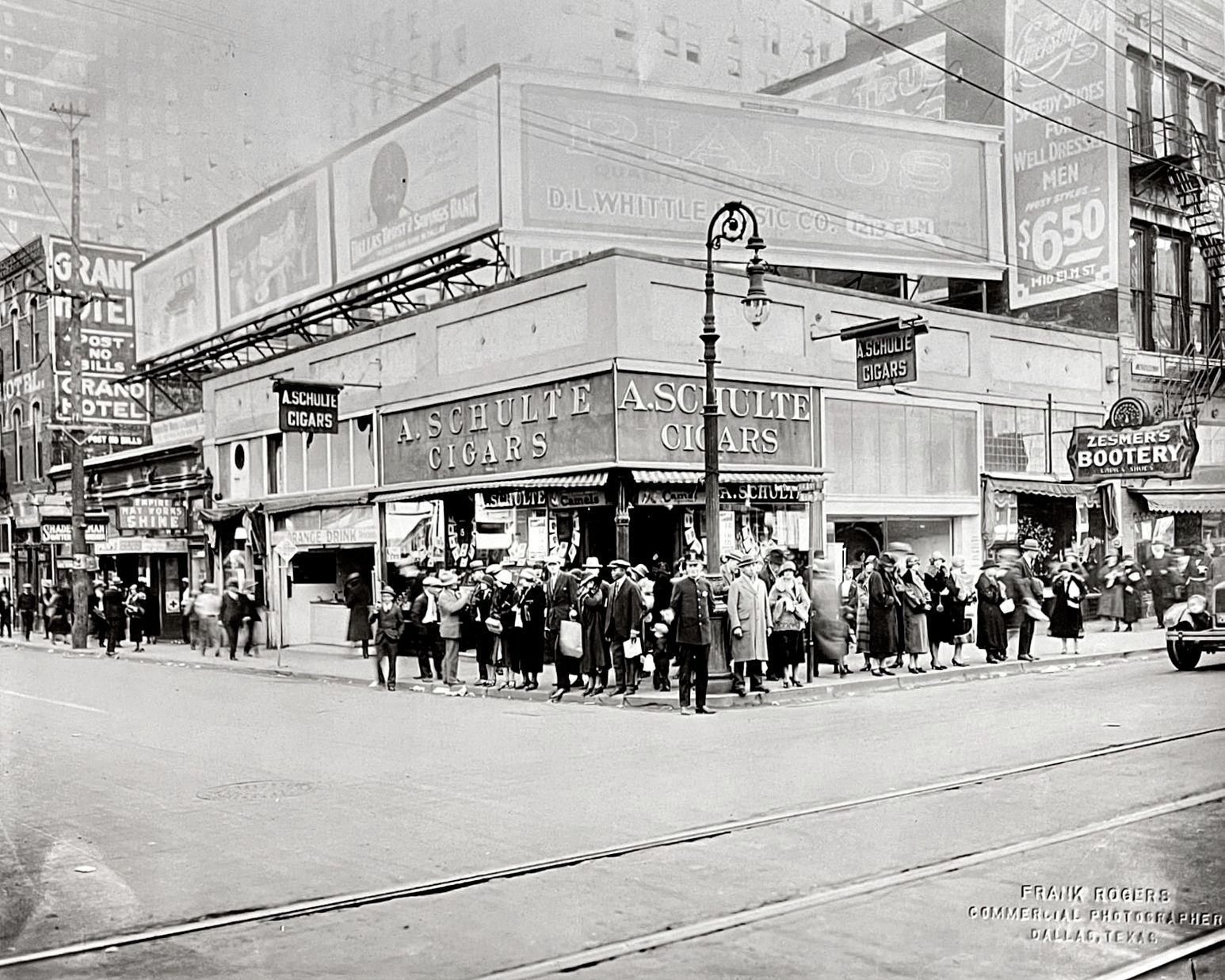
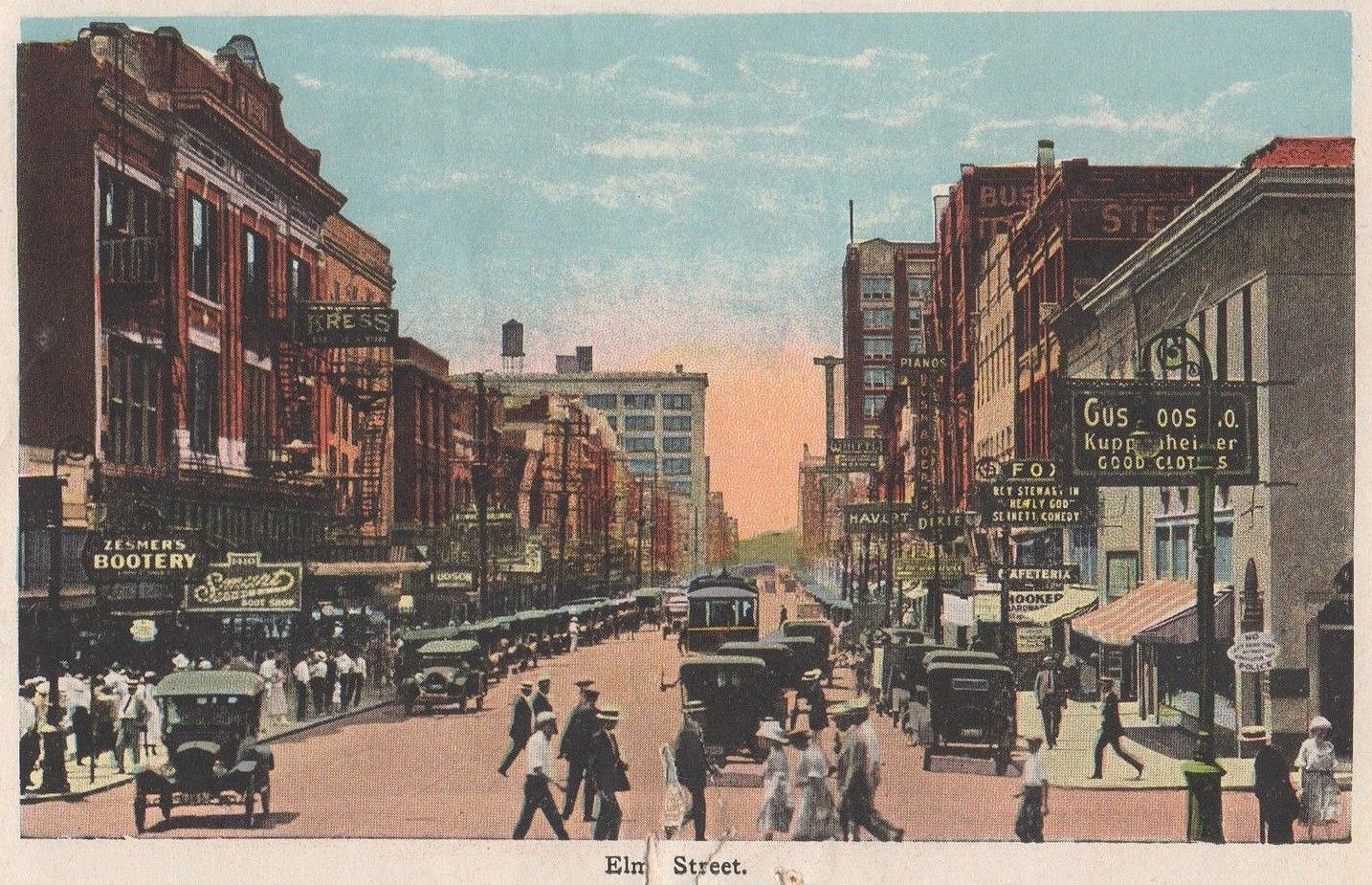
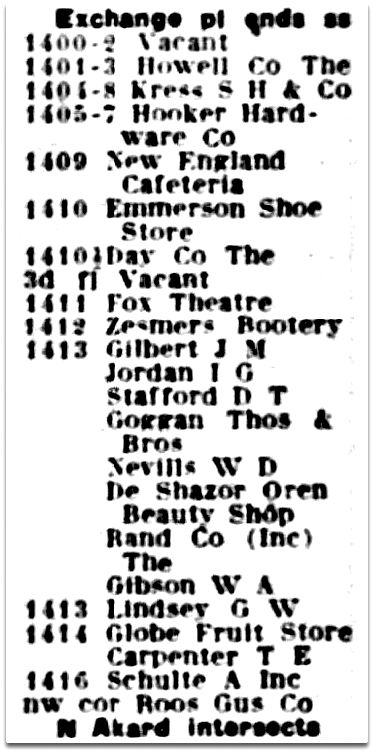
A. Schulte Cigars — at 1416 Elm — held down the southwest corner of Elm and Akard streets (Elm is in the foreground, with the streetcar tracks). The winsomely named Zesmer’s Bootery was at 1412 Elm. Around the corner on Akard was an orange-drink stand. Above the building was a surprising array of billboards. (There is a lot of advertising in this photo.) Here’s another view of the same block, looking west:

elm-st-color_1920s

Every time I see those curlicue lamp posts, they seem to be in photos of Elm Street.

zesmer_schulte_1400-block-elm_1923-directory1400 block of Elm, 1923 city directory

***

Sources & Notes

Top photo by Frank Rogers; found on eBay.

Color postcard from the Flashback Dallas post “Views of Elm Street, With Cameo Appearances by the Fox Theater — 1920s-1960s.”

A previous Schulte location was at 201 S. Ervay, which you can see in the amazing photo in the post “‘There Are Eight Million Stories in the Naked City…’ — ca. 1920.”

Please consider supporting me on Patreon for as little as $5 a month. I post exclusive content there daily!

schulte-cigars_elm-akard_frank-rogers_ebay_frank-rogers_sm

*

Copyright © 2023 Paula Bosse. All Rights Reserved.
Black Women’s Equestrian Company K (American Woodmen) — 1920s

black-womens-equestrian-contingent_cook-coll_degolyer-lib_SMUGeorge W. Cook Collection, DeGolyer Library, SMU
by Paula Bosse

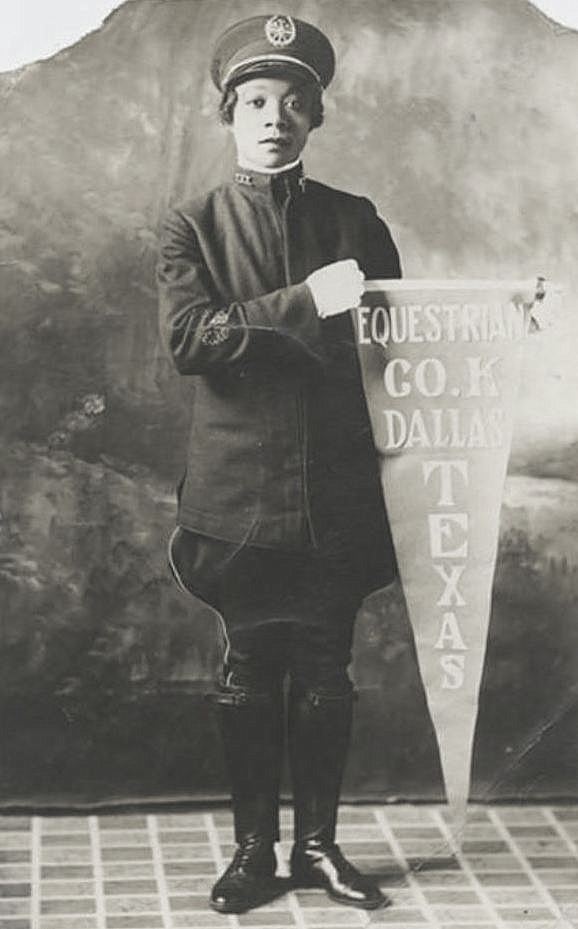
Above, a photograph of an African American woman holding a pennant which reads “Co. K — Dallas, Texas.” Company K was a women’s equestrian unit of Dallas Camp No. 86, consisting of at least 30 members — it was one of the various “uniformed ranks” of the American Woodmen, a Black fraternal organization. These groups competed in drills and marched in parades, and, from what I gather, they were meant to be seen as something of a symbol of strength, purpose, and resolve. Company K won many drilling contests and was active, from what I can tell, from at least 1922 to at least 1930.

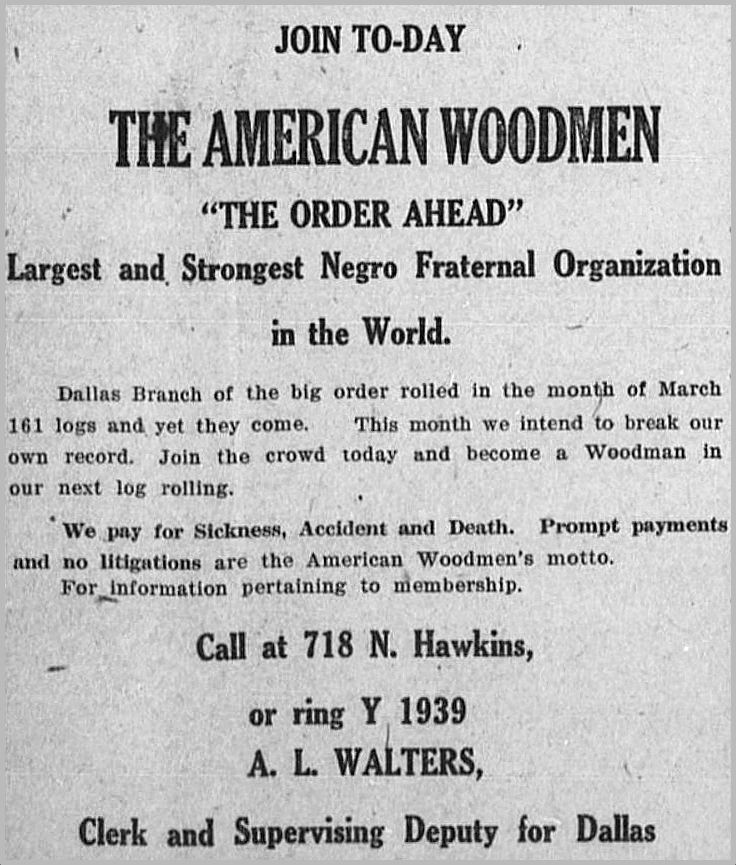
The American Woodmen (not to be confused with the Woodmen of the World, an exclusively white organization) was a national fraternal benefit association which provided loans and insurance coverage to members. It was open to Black men and women. During the 1920s, the Woodmen offices were located at 714 N. Hawkins, at Central (the address was originally 718 N. Hawkins, as seen in the ad below). Members could join various extracurricular “uniform ranks” if they so chose.

american-woodmen_dallas-express_041720Dallas Express, Apr. 17, 1920

The American Woodmen Uniform Ranks were overseen by the national “Commander,” Maj. Gen. John L. Jones (many fraternal organizations borrowed liberally from the military, as seen in their fondness for uniforms, “officer” ranks, precision drilling, etc.). While in Dallas for the Woodmen’s District Encampment in August 1922, Jones told a reporter:

“The American Woodmen in establishing their uniform rank department intended to instill in those who joined it a higher appreciation for the value of the Negro soldier and hero. No other fraternity has thus established that branch of their organization.” (Dallas Express, Aug. 12, 1922)

When uniformed members of these various divisions drilled and paraded — hundreds at a time — it was an impressive, powerful sight. It was good PR, not only for the group selling insurance, but also for Black Americans who rarely had the opportunity to participate in this type of uniformed display of earnest, pillar-of-the-community solidarity. (See a typical group of the “Uniform Ranks” — which also included marching bands and nurses — in a 1924 photo showing the Louisville, Kentucky Camp, here.)

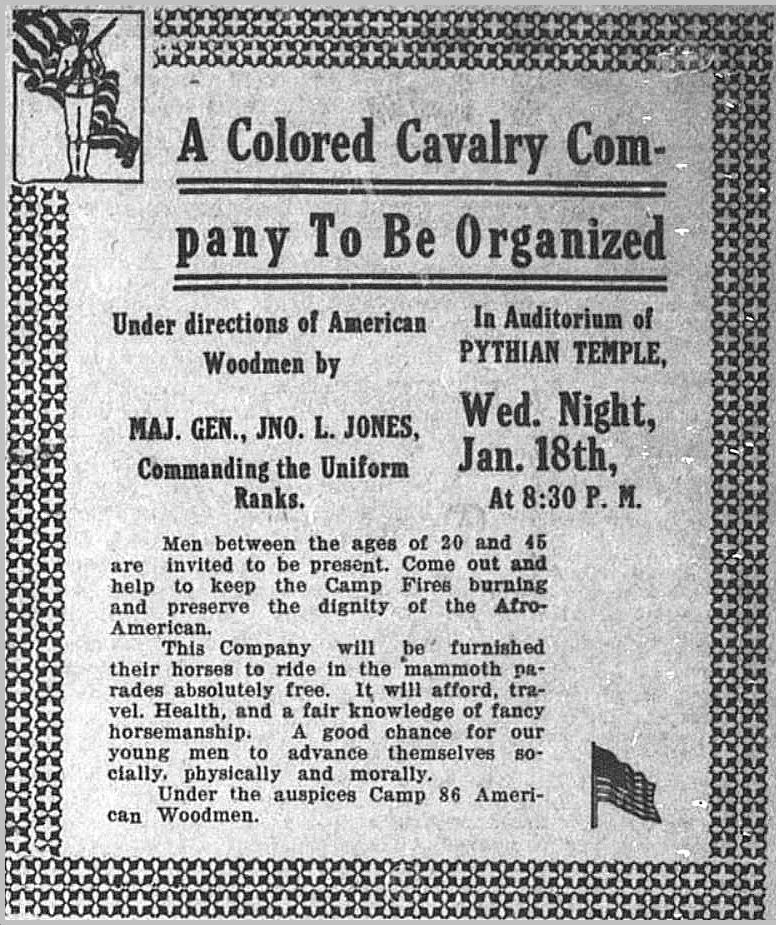
But back to Company K. I haven’t found any photos of them with horses, but I assume they really did ride horses. Below is an ad from January 1922, recruiting men for a Woodmen “cavalry.” I assume there was a similar version of this ad seeking female recruits.

woodmen_american-woodmen_cavalry_dallas-express_011422Dallas Express, Jan. 14, 1922

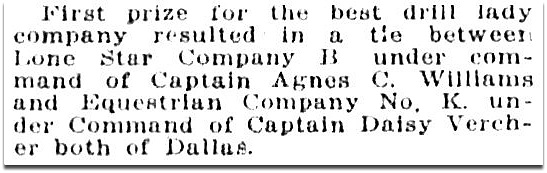
In an early competition at an “encampment” (a meeting of various American Woodmen companies, or “camps”), Company K tied for first place with another Dallas unit, Lone Star Company B. (Read coverage of this huge days-long encampment in the pages of the Black newspaper, The Dallas Express, hereThe Dallas Morning News did not mention the event.) The Dallas Encampment was at Riverside Park, a large open space where visitors set up military-style barracks/tents and competed in various military-like precision drills over the course of a few days. Riverside Park was the former Negro Play Park, at what is now Sabine and Denley in Oak Cliff, near the Trinity (it is now, I believe, Eloise Lundy Park). Not only was Riverside Park the site for several encampments and a place where Black families picnicked and gathered for special occasions, it was also the home of Negro League baseball games (these games were so popular among both Black and white Dallasites that a special section for white fans had to be installed during the Jim Crow era, when racial segregation was enforced by law). But back to Company K.

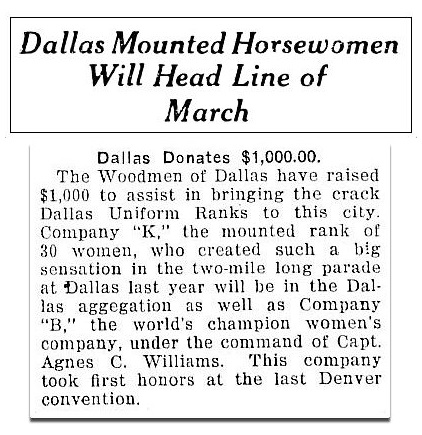
equestrian-co-k_dallas-express_081922_portal_detDallas Express, Aug. 19, 1922

The parade mentioned in the article below is described in the Express article “Woodmen Stage Big Parade” (Aug. 19, 1922). It sounds like it was a pretty big deal.

equestrian-co-k_black-dispatch_OKC_031523_headline_excerptBlack Dispatch (Oklahoma City, OK), Mar. 15, 1923

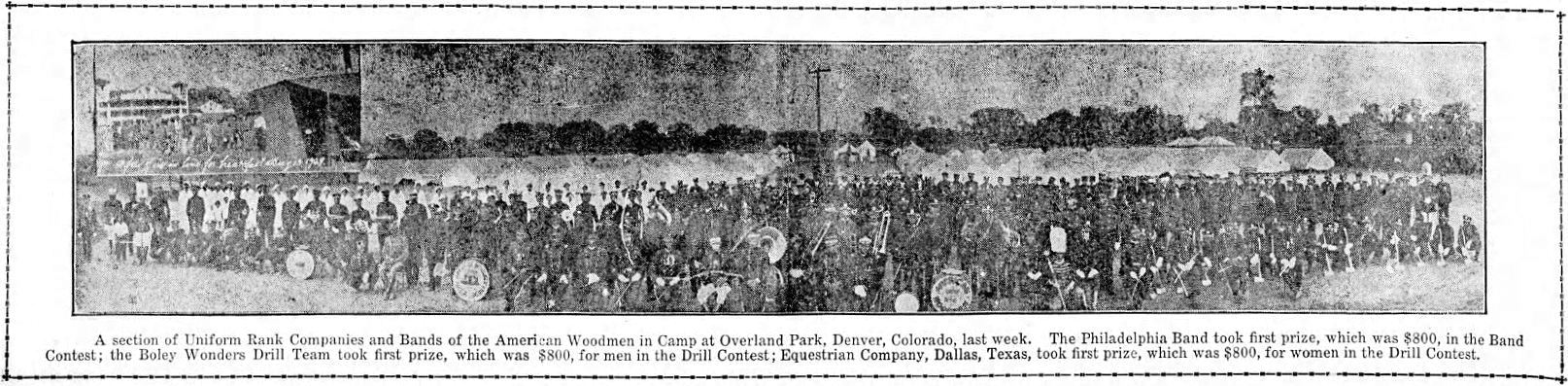
The incredibly low-resolution photo below was taken at the 1929 Encampment in Denver — it shows the scale of an encampment, with tents visible behind the posed participants. The caption says that Dallas’ Equestrian Co. K won the first prize for women in the drill contest — the prize (which, amazingly, was the same as the first prize for men) was $800, which, in today’s inflation-adjusted money would be about $15,000! 

equestrian-co-k_black-dispatch_OKC_090529_photoBlack Dispatch (OKC), Sept. 5, 1929

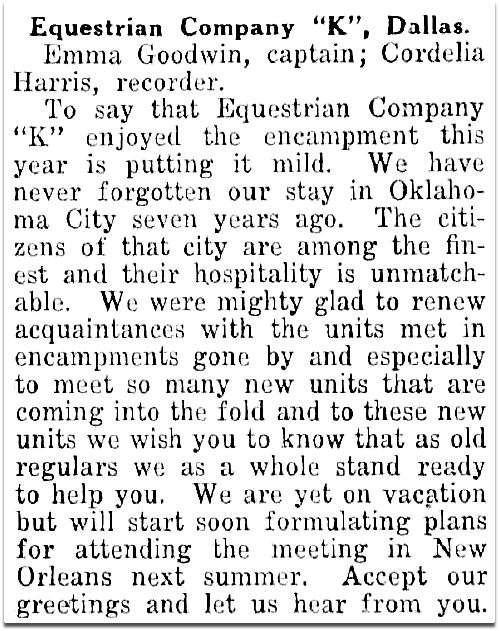
In an excerpt from a chatty overview of the women’s drilling groups, Company K spokeswomen say how happy they are to be back in Oklahoma City.

black-dispatch_OKC_071030_detBlack Dispatch (Oklahoma City), July 10, 1930

Most fraternal organizations are, as the name would imply, men-only. Yeah, they may have their female “auxiliary” organizations to give the women something to do, but the American Woodmen (Woodpeople?) included women in important roles. And it certainly paid off — the women of Equestrian Company K regularly won competitions and regularly brought the bacon home. 

*

100% of what is contained in this post is information I didn’t know until I set out to discover what “Equestrian Co. K, Dallas, Texas” referred to. As always, it’s exciting to learn about something I had never known about.

***

Sources & Notes

Top photo — “[Member of African American Women’s Equestrian Contingent, Company K, of Dallas, Texas]” — is from the George W. Cook Dallas/Texas Image Collection, DeGolyer Library, Southern Methodist University; more information on this photo can be found on the SMU Libraries site, here.

There is very little information on the internet about these American Woodmen women’s companies, so I’ve collected the article “Echoes from the Forest — Uniform Rank Department, American Woodmen” (The Black Dispatch, Oklahoma City, July 10, 1930), which lists female personnel for several Dallas companies, including the equestrian company, drill companies, a hospital company, and a nurse company — read the PDF here.

Read about the American Woodmen Benevolent Society (not to be confused with the (white) Woodmen of the World organization) in two very informative and interesting blog posts, here and here.

Read about Black soldiers during World War I in the sort-of related Flashback Dallas post “Black Troops from Dallas, Off to the Great War,” here.

black-womens-equestrian-contingent_cook-coll_degolyer-lib_SMU_sm

*

Copyright © 2023 Paula Bosse. All Rights Reserved.