Flashback : Dallas

A Miscellany: History, Ads, Pop Culture

Category: 1930s

Booker T. Washington Marching Band — 1937

booker-t-washington_marching-band_1937_dhs

by Paula Bosse

Marching band. Everyone’s favorite class in high school. Band director A. S. Jackson is at the right.

***

Sources & Notes

From the J. L. Patton Collection, Dallas Historical Society.

*

Copyright © 2014 Paula Bosse. All Rights Reserved.

Remember the Alamo! …In Fair Park?

alamo_replica_fair-park_seewatermelonkidpage

by Paula Bosse

Today, on the anniversary of the fall of the Alamo, I bring you news that Dallas has outdone San Antonio by having hosted two Alamos. TWO! Both in Fair Park. The first one was a gift to the city by G. B. Dealey and the Dallas Morning News — it stood stoically at the entrance to the fairgrounds from 1909 until 1935 — and the second one was a rebuilding of the first which was torn down to make way for the the splendor of the Art Deco Centennial extravaganza and lasted from 1936 until 1951. And here I’d never heard mention of Dallas having had ANY Alamos.

The idea came from Dallas Morning News executive George Bannerman Dealey. He sent architect J. P. Hubbell (of Hubbell & Greene) to San Antonio to meticulously photograph, sketch, and measure the original structure — this included making note of every stain, every crack, every instance of broken plaster, etc. — in order to reproduce an exact replica of the historical landmark (at half the size of the original). The Morning News offered to pay for and build the replica (the cost was estimated at $5,000) and asked only that it be placed in a primo location (at the entrance!), that it be open to the public during the day but be available to the DMN people to use for private/company functions after hours, and that the Park Board maintain the building and its landscaping. The Park Board jumped at the gift, and the news of our very own “little Alamo” was met with giddy anticipation. Even the rival Dallas Times Herald was swept up in the excitement and suggested a “Meet Me at the Alamo at the Dallas State Fair” slogan in an editorial.

San Antonio and the Daughters of the Republic of Texas (who managed and maintained the historic shrine) were not terribly amused by this, but The News (in the expected torrent of its own self-congratulatory publicity about its magnanimous gift “not to Dallas, but to the State”) humbly insisted that the much, much, MUCH smaller Alamo would only drum up steady tourism of people who wanted to see the real thing. San Antonio and the Daughters seemed to get over it eventually. Dealey had made a good point, though, when he said that only a very small percentage of Texans had been able to see the Alamo in person, and this was an excellent way to bring history alive for North Texans.
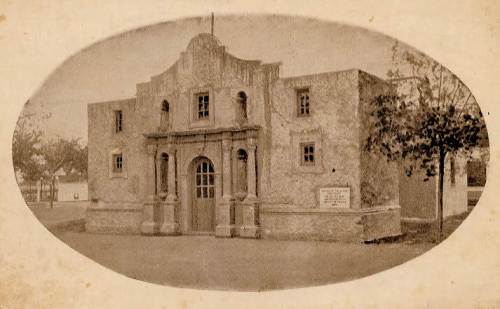
The replica was dedicated on the opening day of the fair in 1909, and curious crowds lined up to see the startlingly realistic reproduction of the building which Mayor S. J. Hay described as being “sacred to every patriotic citizen of the State.” The brand new Alamo (made to look old and worn and battle-scarred) was a hit. In fact, it seems to  have been a very popular exhibit for the length of its stay — a total of 42 years. Other than being visited by thousands and thousands of fair-goers and families and schoolchildren, it was also used to house soldiers briefly during both World War I and World War II. It was visited by numerous people who claimed to be related to Alamo heroes like Crockett, Bowie, and Travis, and there were even a couple of instances of visits by 100-year-old men who said they had known Crockett and Bowie when they were children.

And, oddly, even Comanche Chief Quanah Parker stopped by to check the place out. I’ll end with his salient observations upon seeing the Alamo replica when visiting Dallas as a guest of the State Fair in 1909:

White men talk a great deal about their history. They don’t all play brave in making it. They don’t all care as much for getting it right as for getting it like they want it. Alamo fight was brave like Indians fight, don’t care for safety and for life. This Alamo house brings back to me thought of the ‘Dobe Walls’ fight a long time ago. It must make Texas people feel good to look at this and think of what it stands for. It was a fine thing for The News to put it here. (DMN, Oct. 27, 1909)

*

Above, opening day crowds. “Scene in front of the Replica of the Alamo Chapel During the Ceremony of Presentation.” Photo by Henry Clogenson. (DMN, Oct. 17, 1909)
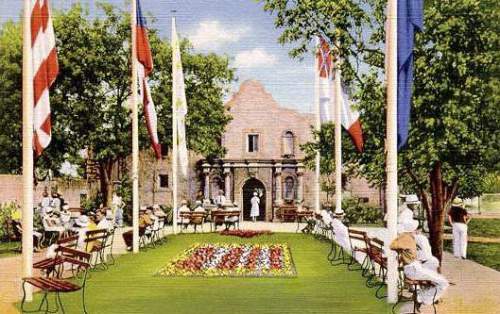
Dallas’ second Alamo (which made its debut at the Texas Centennial in 1936) no longer had its primo location at the entrance to Fair Park, but it at least had a bit of room to breathe. As with the first replica, an architect was sent to San Antonio to bring back exact measurements — this time it was the incomparable George Dahl (if you’re not familiar with his work, you need to look him up). And this time, San Antonio and the Daughters of the Republic of Texas were not happy at ALL: there was a sternly worded petition from San Antonio to the governor and threats to legally force a halt to the construction. Guess they got over it. Again.
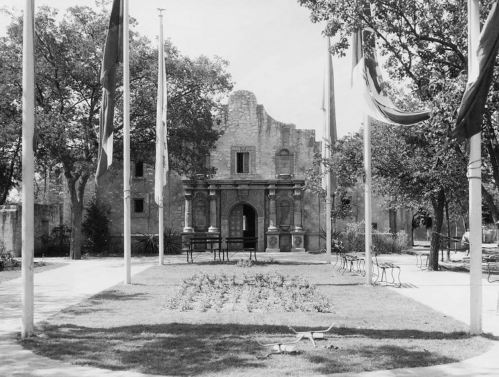
alamo_art-institute-of-chicago_1936

But eventually, the Alamo fell. It was razed in August of 1951, after years of neglect. Stalwart Texas demolition workers must have blanched a bit at being informed that their job was to destroy the very symbol of Texas heroism and independence.

***

Top postcard from a page on the Watermelon Kid’s great Dallas history site, here.

Photo of the “brand new” Alamo in 1936 from the Ryerson & Burnham Archives, Art Institute of Chicago, here.

*

Copyright © 2014 Paula Bosse. All Rights Reserved.


A Robot Visits the Texas Centennial — 1936

by Paula Bosse

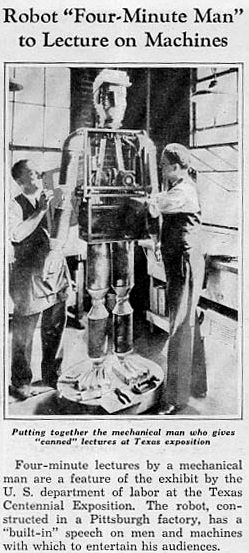
This “mechanical man, built by human hands” was quite the attraction at the 1936 Texas Centennial.

Four-minute lectures by a mechanical man are a feature of the exhibit by the U.S. department of labor at the Texas Centennial Exposition. The robot constructed in a Pittsburgh factory, has a ‘built-in’ speech on men and machines with which to entertain his audiences.

***

Lower image from Popular Mechanics (Sept. 1936).

*

Copyright © 2014 Paula Bosse. All Rights Reserved.

Speaking of the Arcadia and Its “Rustic Simplicity”…

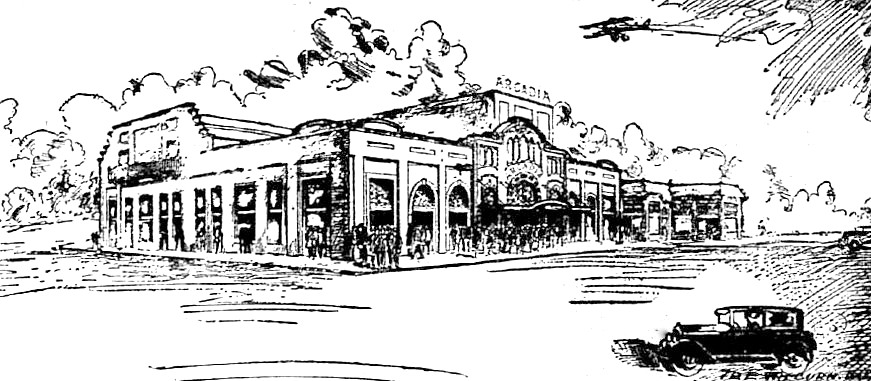
arcadia_architectural-renderingArcadia Theater, 1927…

by Paula Bosse

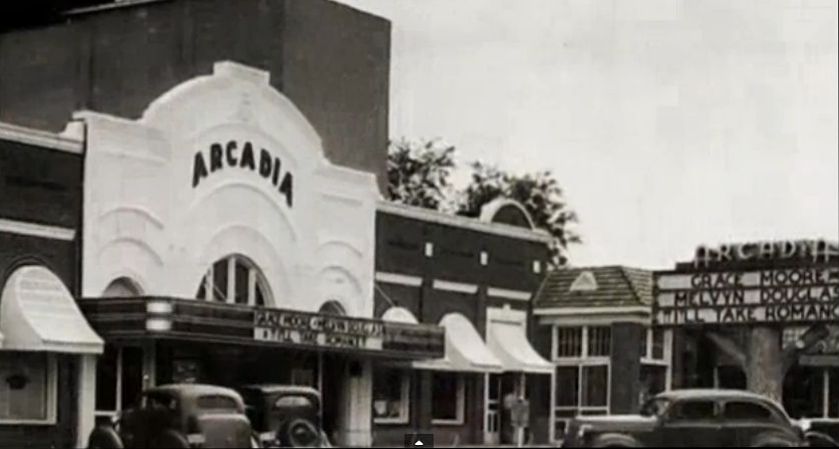
Above is a rendering of architect W. Scott  Dunne’s design for the Arcadia Theater on Greenville Avenue, at Sears Street, between Ross Avenue and Belmont. (The low-flying bi-plane is a nice touch.) Among the many Dallas theaters designed by Dunne were the Esquire in Oak Lawn and the Texas Theatre in Oak Cliff (as well as another entertainment mecca, the Fair Park Band Shell).

The Dallas Morning News had this to say about Dunne’s concept for the new “suburban theater” in 1927:

W. Scott Dunne, architect of Arcadia, is working out an interior design that should prove in harmony with the theater’s name — an atmospheric design of as near rustic simplicity as is possible in a theater.

“Rustic”!

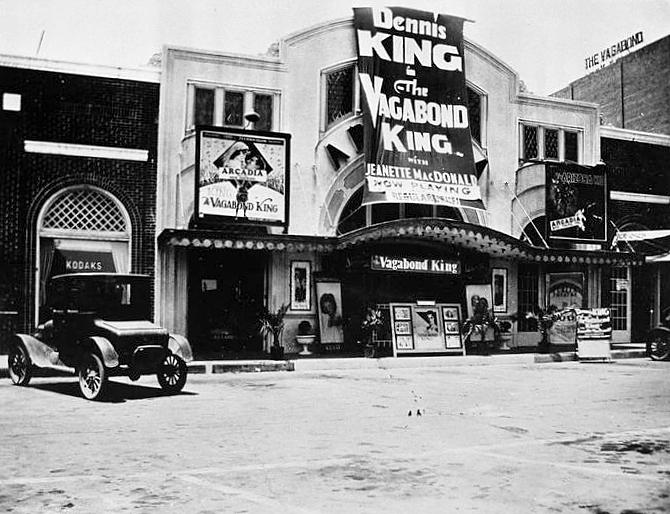
A photo of the not-particularly-rustic exterior in 1930:

arcadia-theater_1930_portal1930

The fabulous giant tree marquee, posted previously (link to post below), from about this time can be seen here.

All went well for many years until 1940 or ’41 when the original 1927 building was badly damaged in a fire; it had to be gutted and completely overhauled by architects Pettigrew & Worley. John A. Worley wrote an article for Box Office magazine about the rebuilding process (link below), including the hard-to-believe tidbit that the firm had been “vigorously instructed to studiously avoid any pretense of ‘super-colossal’ — or, more thoroughly defined, we were told to steer clear of that ‘regal’ air, which had been known to impel theater patrons to take off their shoes before daring to walk across the foyer.

The article even has a photo of the lopped-off, now-sadly diminished tree sign. (The author — in something of a reach — explains that the “stump” was there as a symbol of the “Arcadian” nature of the theater.) (You just know that both Pettigrew and Worley were praying for the go-ahead to just get rid of it already.)

1941

There was another bad fire in 1958, which led to further renovation. By then, that tree was loooooong gone and but a dim memory.

There sure were a lot of fires at the ol’ Arcadia. Including the final, fatal one, in 2006. R.I.P. And from the ashes sprang the present-day Trader Joe’s.

***

Sources & Notes

Photo showing “The Vagabond King” (1930), from the Hardin-Simmons University Library via the Portal to Texas History, here.

Photo showing “stump” is from the June 21, 1941 issue of Boxoffice.

An interesting article on the Arcadia — and life along Lowest Greenville — can be found in a Lakewood Advocate article “The Rise and Fall of the Arcadia,” here.

The original post that spurred a further look into the early days of the Arcadia — and the one with the crazy huge electric tree marquee — can be found in the Flashback Dallas post “The Arcadia Theater Sign You’ve Never Seen,” here.

*

Copyright © 2014 Paula Bosse. All Rights Reserved.
 

The Arcadia Theater Sign You’ve Never Seen

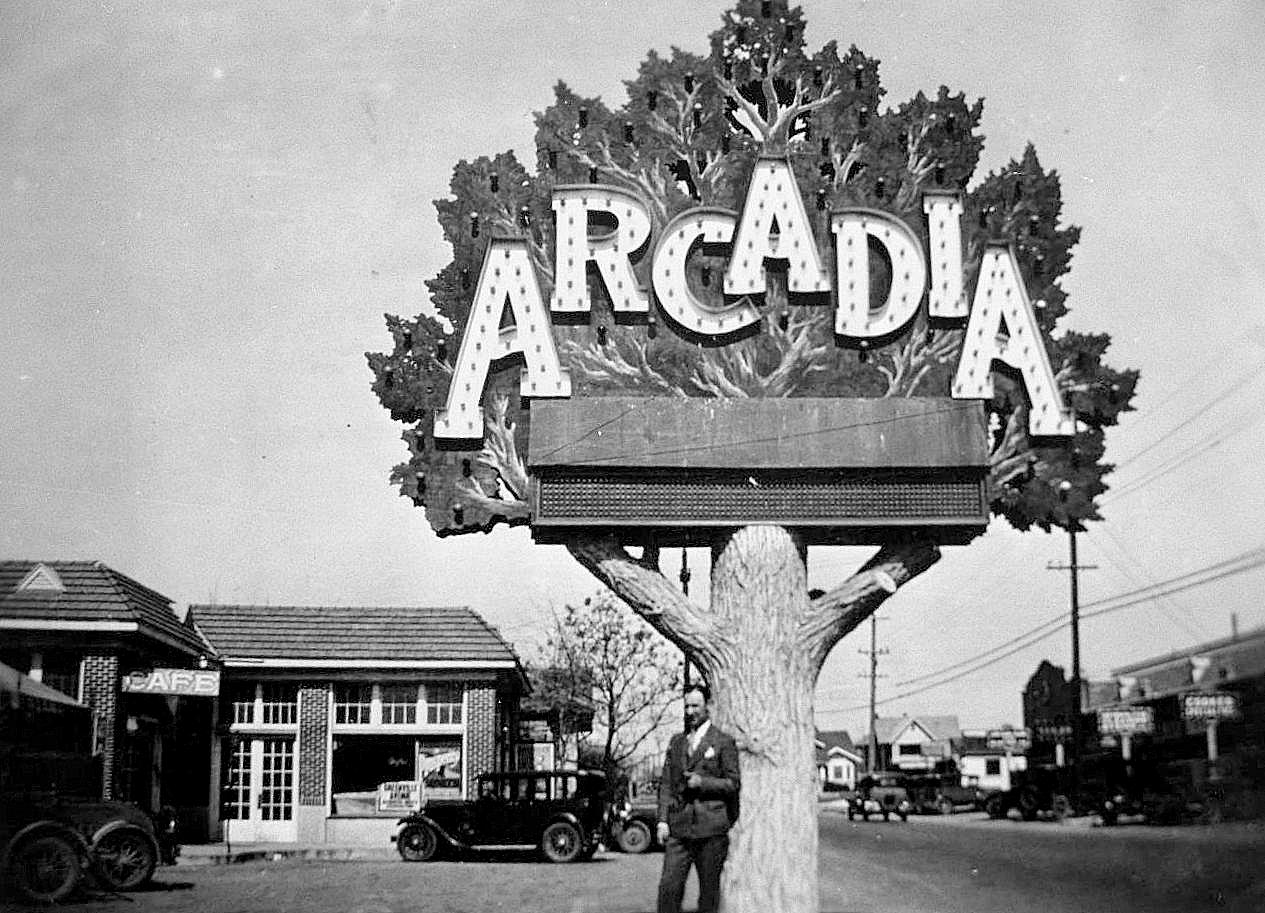
Best theater marquee EVER! Lower Greenville, late ’20s (click for larger image)

by Paula Bosse

I LOVE this photo! Forget the sign for a moment (difficult though that may be…) — take a look at Greenville Avenue in the late-1920s! That building at the top right, across the street from the (late, lamented) Arcadia, is still there. The car heading north is just about to pass where the 7-Eleven is now (at Richmond). As for that tree-shaped sign … wow. I’ve never seen anything like that. The photo was used in a promotional campaign for a new sort of electric marquee technology.


Here’s what Arcadia manager Wally Akin (pictured above) had to say about this new-fangled Vendope Changeable ‘Lectric Letter thing:


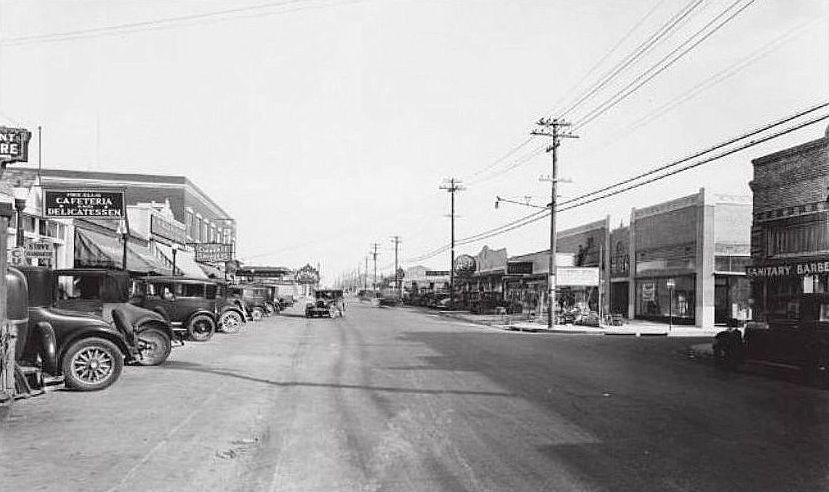
I’m not sure the Vendope Service System took off, but, damn, that sign is cool. Here’s a another view, from 1930, looking up Greenville from about Alta — you can see how close to the curb the sign was. Imagine driving up the street and seeing that lit up in front of you.

greenville-avenue_1930

It was a little less cool, though, by 1937 when the “tree” had been pruned and tampered with almost beyond recognition, but, still, that is one weird eye-catcher of a marquee.

*

UPDATE: The following information comes from a comment to me from the estimable Angus Wynne, who took over the Arcadia in the 1980s (and 1990s?) and booked some great live shows there (several of which I paid to see): “The tree sign evolved from a lesser marquee that was installed in a real tree which grew in the original parkway formerly located adjacent to the street. A very unusual attraction, it remained there for many years until the tree died, upon which the owner had it concreted over and had the electric branches added, pictured here. It was torn down when the theater’s facade and interior were renovated during the 1940’s.”

What a shame that something so wonderful didn’t survive. All those lights! I’d have loved to have seen it lit up at night, back when this lowest stretch of Greenville Avenue was called a “northern” and “remote” part of the city.

***

Sources & Notes

First three images, including top photo, from the Hardin-Simmons University Library, via the Portal to Texas History — these and other Arcadia Theatre images from this collection can be viewed here. The main photo (MUCH larger when clicked) is undated, but it’s sometime between the Arcadia’s opening in 1927 and the Publix theater chain’s plummet into receivership around 1931. UPDATE: When I posted this photo back in February, 2014, I was excited to think I had stumbled across something that had been unseen for years. At almost the exact time I posted this, Troy Sherrod’s great book Historic Dallas Theatres was published … and this photo was in it. Troy beat me to it!

If you’re into patent-perusing, just google “Vendope” and you’ll see oodles — an example of one them is here. I’m not sure if this is part of the same system described above, but this patent is dated 1931. The inventor (apparently of Fort Worth) had the unlikely name of Vendope L. Pistocco. Or maybe Van Lawrence Vendope. …There’s a Vendope in there somewhere.

1930 view of Lowest Greenville, looking north from Alta, is from the archives of the Dallas Public Library.

For further exploration of the Arcadia (and another photo of the barely recognizable tree), see my follow-up post here.

*

Copyright © 2014 Paula Bosse. All Rights Reserved.


Dallas Power & Light Building, Night and Day

by Paula Bosse

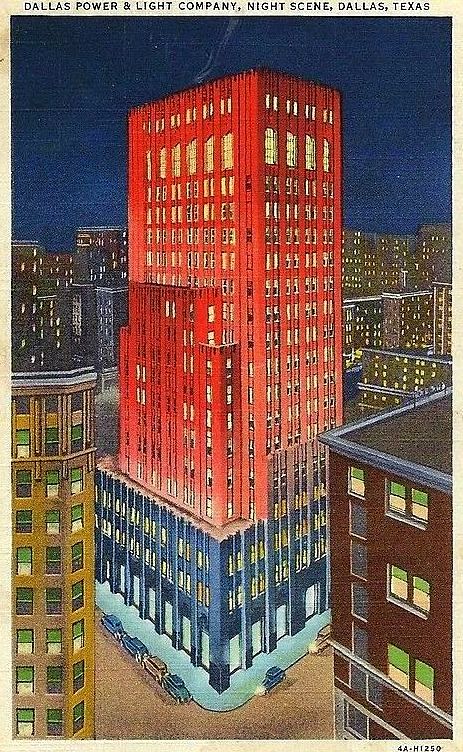
Such an incredible building, designed by architects Lang & Witchell in the zig-zag moderne/Art Deco style and built in 1931 to house the corporate offices of the Dallas Power & Light company. I wondered from that night scene whether the building was illuminated at night, and it was. From the city’s application to the National Register of Historic Places: “The building was spotlighted with revolving colors at night, emphasizing it as a downtown landmark; this was discontinued during the energy crisis in 1975.” Argh!

This is a building that is beautiful by night and beautiful by day.

***

Sources & Notes

A detailed description of the architectural elements of the DP&L building is in a PDF containing the city’s application of several buildings to be considered for the National Register of Historic Places. The section on the DP&L building begins at page 68 and can be found here.

A photo of one of the portrait busts on the facade of the building is a nod to Thomas A. Edison, King of Electricity, and it can be seen here in an almost Hitchcockian cameo.

*

Copyright © 2014 Paula Bosse. All Rights Reserved.

Jerry Scoggins, From WFAA Staff Musician to Pop Culture Icon

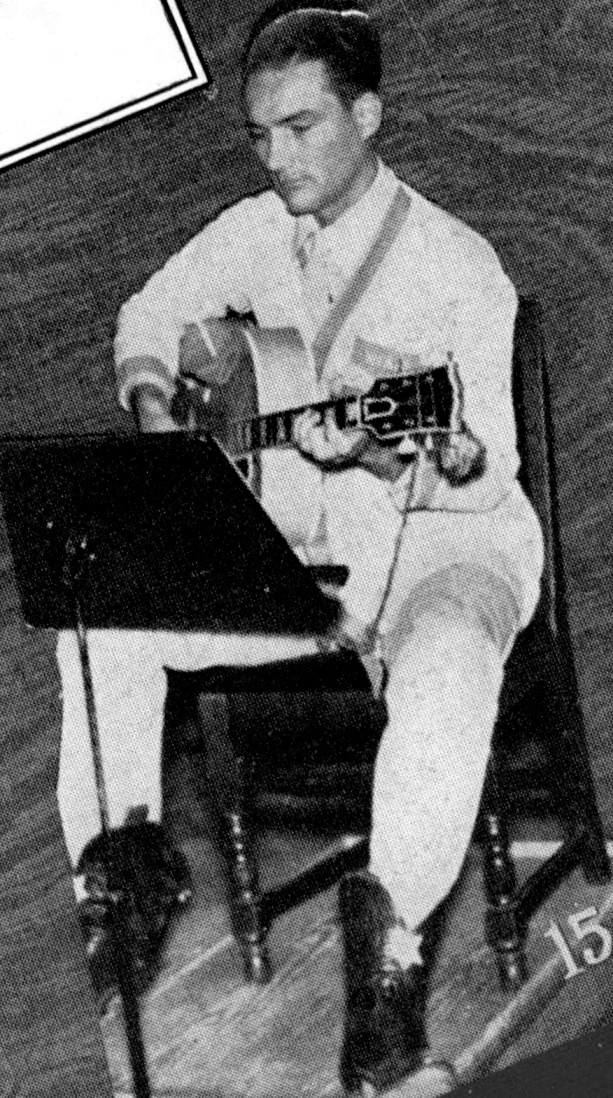
jerry-scoggins_wfaa-1941
Jerry Scoggins in the WFAA studios, 1941

by Paula Bosse

You know Jerry Scoggins. You DO. You can sing along with his most famous recording. But you might not know his name — even if you do know it, you’re not sure why you know it. And you’ve almost certainly never seen a picture of him. But there he is in the photo above, in 1941, at the studios of WFAA radio where he was a staff musician and occasional on-air personality. The caption reads: “Guitarist Jerry Scoggins arrives for a rehearsal in shiny cowboy boots.”

During his time at WFAA (he was there almost a decade — he started when the station still had studios in the Baker Hotel), Jerry was in countless bands — in fact, he often had several going at the same time. Some of his bands were: The Bumblebees, the Tune Tumblers (with a then-unknown Dale Evans as the group’s “girl singer”), Three Cats & a Canary, The Baboleers, and The Cowhands.

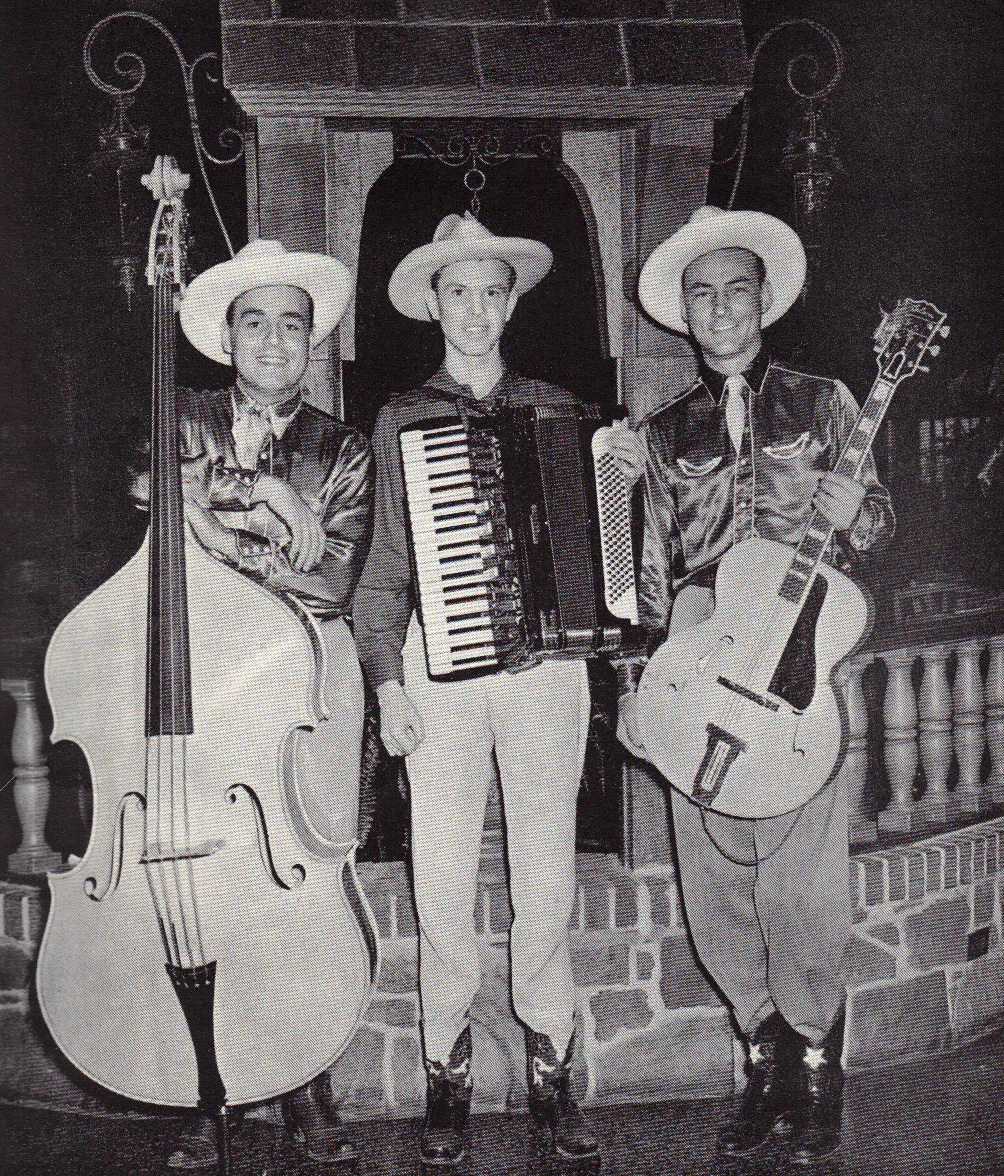
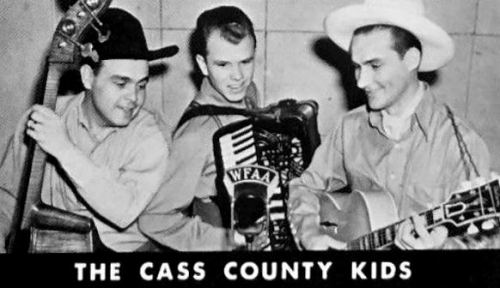
His main group, though, was the Cass County Kids, a popular trio that performed western music and who claimed to have a repertoire of over 500 songs (!).

cass-co_kids_wfaa1_1941_caption

In 1945, after years of working as mostly anonymous radio musicians, the Kids finally hit the big time. Gene Autry asked them to join him, and they left Dallas for Hollywood, changing their name in the process — at Autry’s request — to the (slightly) more age-appropriate Cass County Boys. They appeared in movies, on television, and on record with Autry for several years, and from all accounts, the Cass County Boys had a long and happy career.

cass-county-kids_wfaa-postcard_det_ebay

By 1962, Jerry was still in California, but at that point he was working as a stockbroker, singing only on weekends. I’m not exactly sure how it happened, but — seemingly out of the blue — he was asked by TV producers to sing the theme song for a new CBS television show called The Beverly Hillbillies. Backed by the great Flatt & Scruggs, Jerry sang “The Ballad of Jed Clampett,” and his voice became known to millions of people, overnight. And here it is more than fifty years later, and I bet you know all the words to the song. It has become a permanent fixture in American pop culture.

And that’s why you know Jerry Scoggins.


*

jerry-scoggins_bevhill_end-credits

*

ADDED, Sept. 2023: A reader just sent me this clip showing Scoggins (with Earl Scruggs, Roy Clark, and others) performing the song in 1993 as Buddy Ebsen dances along. This is so great!!

scoggins-jerry_1993_youtubeJerry Scoggins, 1993 (from YouTube video)

*

And here’s Jerry with the Cass County Boys, singing a novelty song called “Which Way’d They Go?” (Jerry’s the good-looking one on the right):

***

Sources & Notes

The top photo of Jerry Scoggins and the large photo of the Cass County Kids are from the WFAA-KGKO-WBAP Combined Family Album (Dallas, 1941). The small photo of the Cass County Kids is from eBay.

Jerry Scoggins was born in 1911 in Mount Pleasant, Texas (in Titus County, right next door to Cass County). He died in 2004 at the age of 93. His obituary in the Los Angeles Times is here. More on Jerry from Wikipedia, here.

A nice overview of the Cass County Kids/Boys is here.

*

Copyright © 2014 Paula Bosse. All Rights Reserved.

Red Bryan’s Smokehouse — BBQ, Oak Cliff-Style

red-bryans-smokehouse_bbq_postcard_ebay_ca-1950

by Paula Bosse

Everybody in Dallas knows about Sonny Bryan, and some remember Red Bryan, but I didn’t know there was another Bryan forebear, who started the family barbecue dynasty: Elias Bryan. Elias and his wife, Sadie, arrived in Oak Cliff from Cincinnati in 1910 and opened a barbecue stand. Elias begat Red, and Red begat Sonny. And there was much trans-generational smoking of meat. The Bryans have been a BBQ fixture in Dallas for over 100 years.

Fun facts about William Jennings “Red” Bryan:

  • Red studied botany at SMU, which might explain his initial career as a florist until he was inevitably pulled back into the family business. He opened his first place in the early 1930s in a retired Interurban car, known affectionately as “The Tin Shack.”
  • In the late ’40s, now well established and wanting swankier digs, he commissioned the respected architect Charles Dilbeck to design the new restaurant. (Dilbeck designed some of the most beautiful homes in Dallas, several of which are in Lakewood, but this was probably his first — and only — barbecue joint.)

And the rest is, as they say, barbecue — and Oak Cliff — history.

*

red_bryan_bbq_dth_0205561

*

Red, 1951

*

red-bryans-bbq_matchbook_ebay

***

Sources & Notes

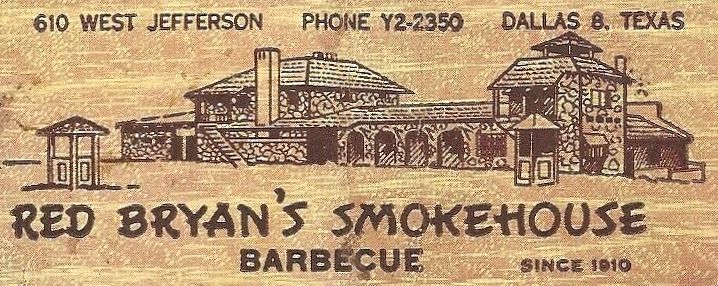
Postcard (circa 1950) at top from eBay. This is printed on the back:


red-bryans-smokehouse_bbq_postcard_caption_ebay

Ad from 1956.

Much more on Red Bryan’s Smokehouse, with lots of photos of its construction, can be found in the Oak Cliff Advocate article “The King of Oak Cliff Barbecue” by Gayla Brooks, here.

Even more cool stuff, including early photos of the family business, can be found in the Texas Monthly article “Bryan Family Artifacts and Mementos” by Daniel Vaughn, here.

Sonny Bryan’s website is here.

*

Copyright © 2014 Paula Bosse. All Rights Reserved.

KRLD’s Beautiful New Transmitter — 1939

krld_transmitter_1939

by Paula Bosse

RADIO STATION KRLD
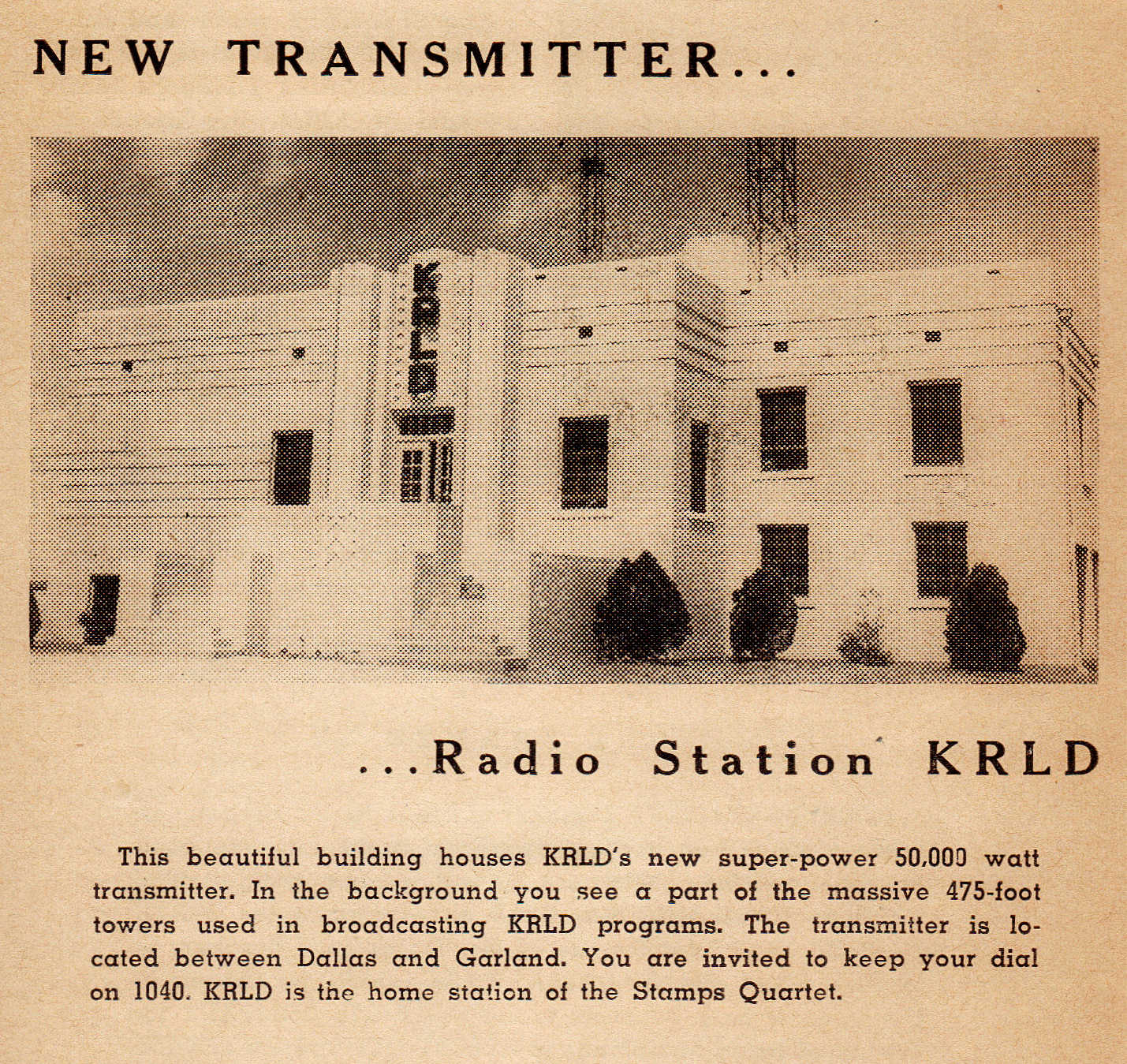
This beautiful building houses KRLD’s new super-power 50,000 watt transmitter. In the background you see a part of the massive 475-foot towers used in broadcasting KRLD programs. The transmitter is located between Dallas and Garland. You are invited to keep your dial on 1040. KRLD is the home station of the Stamps Quartet.

Such a beautiful art deco building! And, I believe, it’s still in use. My favorite aside about the early days of KRLD was that when it began broadcasting — from a small room in the Adolphus Hotel in 1926 — the station was on the air for only six hours a day, “except on Wednesdays when the station closed down to make repairs and recharge the batteries.” Also, according to the KRLD website, the station was “the first radio station in the world to sell commercials.” Of course it was — leave it to Dallas to invent the radio ad.

***

For a history of KRLD and a photo of what the transmitter looks like today, see here.

For an aerial view of the transmitter in 1949, see here (from the Edwin J. Foscue Map Library, Central University Libraries, Southern Methodist University).

Photo from Souvenir Album, 2nd Annual All-Night Broadcast, KRLD–Dallas: July 1-2, 1939 (Dallas, Stamps-Baxter Music & Ptg. Co., Dallas, 1939). This was a souvenir program of a gospel extravaganza held at the Cotton Bowl, with the Stamps Quartet as headliners, broadcast live on KRLD. The frenzied text describes the sudden downpour that threatened the show and the ensuing mad scramble to figure out what to do, with repeated, panicky refrains of “THE SHOW MUST GO ON!” (…The show went on.) (Click picture for much larger image.)

*

Copyright © 2014 Paula Bosse. All Rights Reserved.
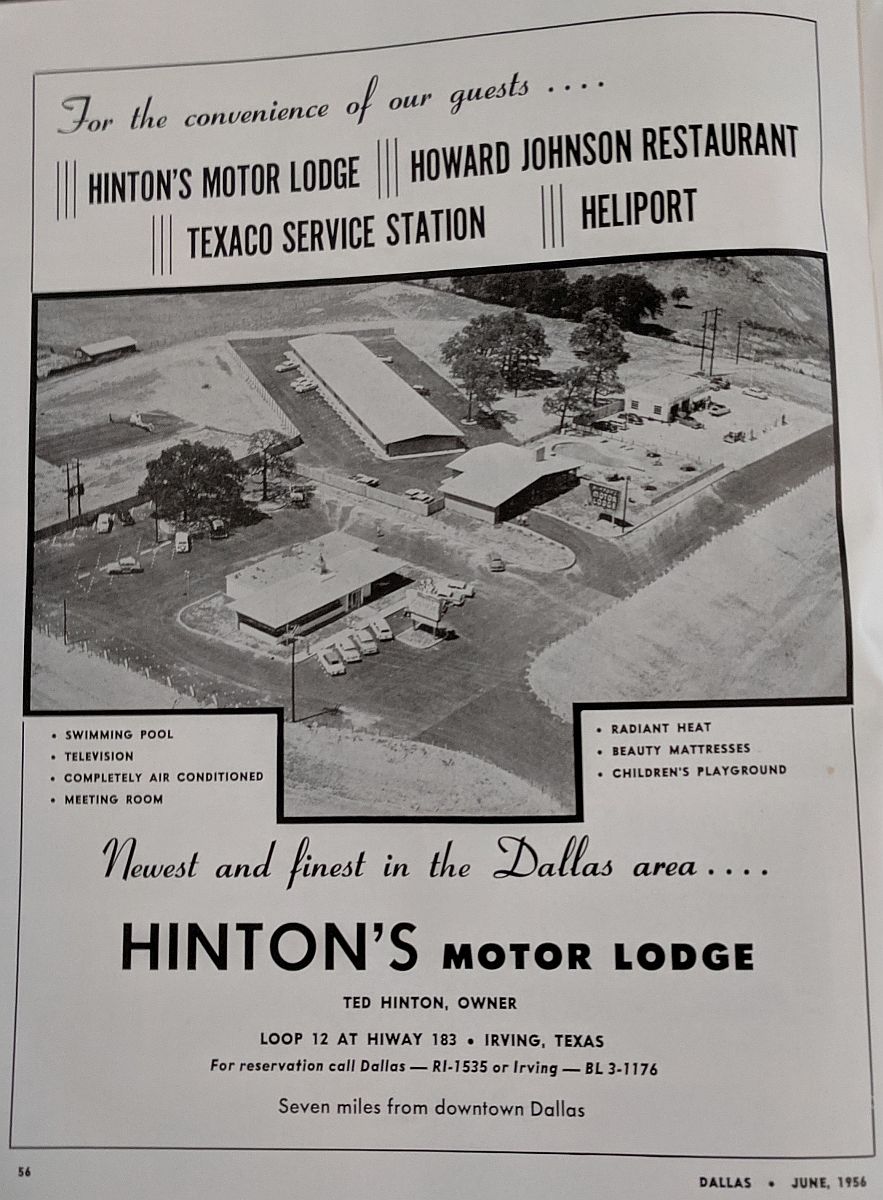
Ted Hinton’s Motor Lodge — From Bonnie & Clyde to Motel Heliport

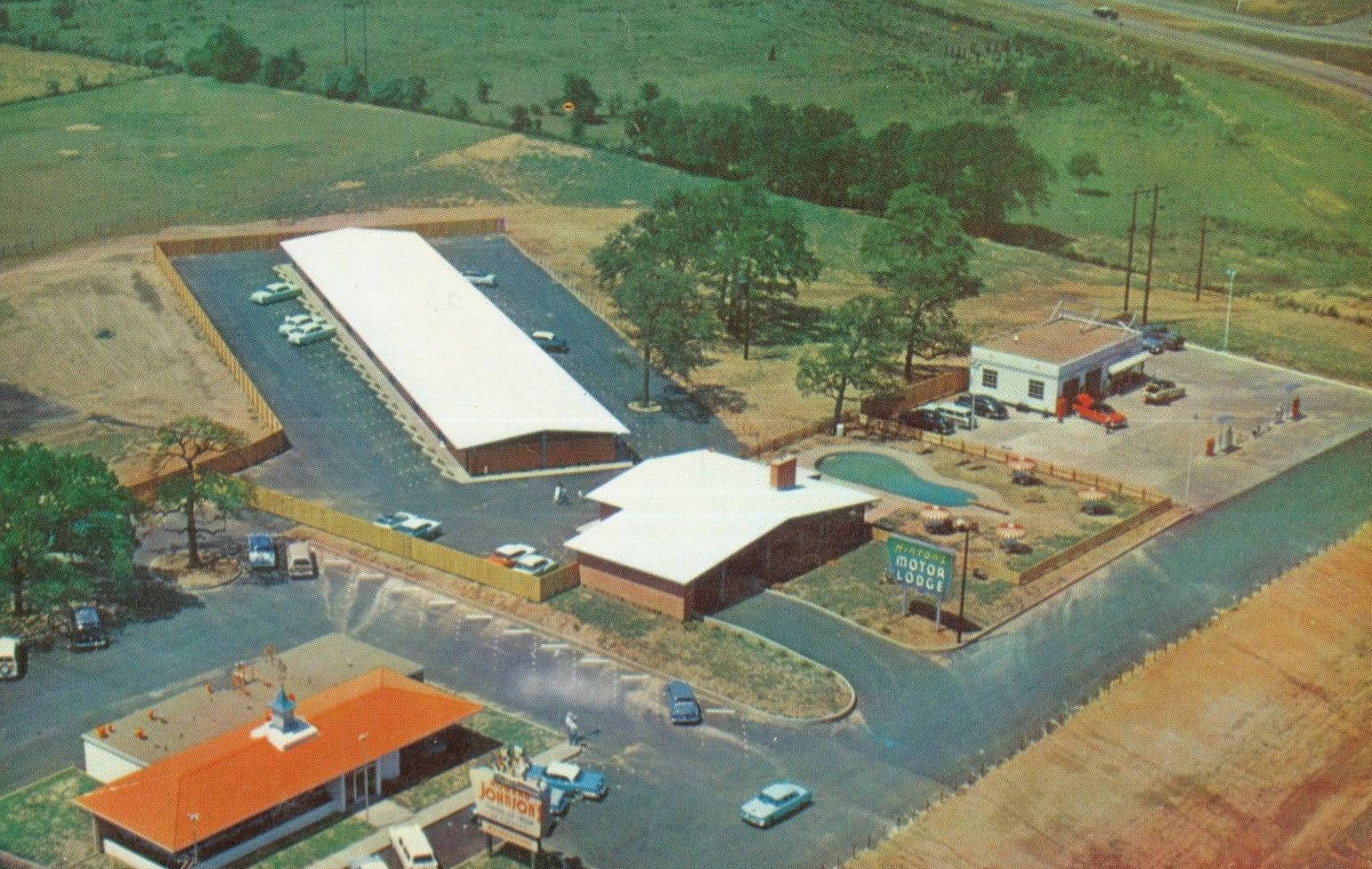
hintons-motor-lodge_front“7 miles from Downtown Dallas” — choppers welcome

by Paula Bosse

What does a man who ambushed and killed Bonnie and Clyde do once he’s retired from law enforcement? He opens a motor lodge, of course!

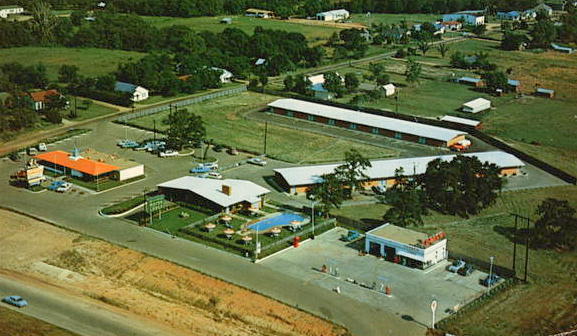
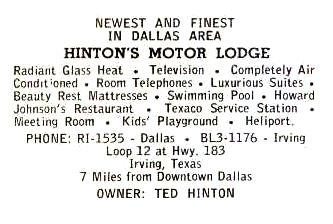
I was initially drawn to this image because of an unexplained lifelong fascination with Howard Johnson’s restaurants (I think I was only ever in one — the one on Mockingbird at Central, where my father introduced me to the inexplicable root beer float). But the interesting thing about this postcard is not the HoJo’s, it’s the motel next door, Hinton’s Motor Lodge, an establishment that was in business from 1955 to 1970, in Irving, very near to where Texas Stadium would be built in 1971 (Loop 12 at Hwy. 183). Why would a motor lodge be interesting? Because the owner was Ted Hinton (1904-1977), the former Dallas County Deputy Sheriff who was one of the six men who tracked down, ambushed, and killed Bonnie and Clyde in 1934. (Hinton was recruited for the posse because he would be able to identify both of them: he had known Clyde Barrow growing up, and he had apparently had a crush on Bonnie Parker in the days when she was working as a waitress and he was working for the post office.)

After killing two of the most notorious celebrity outlaws of all-time, it must have been hard to know where to turn next. He retired from the Dallas County Sheriff’s Department in 1941 and, as he was a pilot, he trained flyers for the US Army Air Corps during WWII. The fact that Hinton was a pilot MUST explain the inclusion of a “heliport” (!) in the list of motel amenities, alongside Beauty Rest mattresses, a swimming pool, and a playground for the kids.

I’m sure that, on occasion, Hinton ate next door at Howard Johnson’s. But I bet none of the other patrons had any idea that the guy sipping coffee in the next booth was one of the men who gunned down Bonnie and Clyde in a hail of gunfire that even Sam Peckinpah might have considered “a bit much.”

Aerial View of Hinton's Motor Lodge Dallas

hintons-motor-lodge_back

ad-hinton-motor-lodge_dallas-mag-june-1956_reddit“Dallas” magazine, June 1954 (via Reddit)

***

Sources & Notes

An interesting short video about Ted Hinton’s connections to Bonnie and Clyde in his youth is recounted here by Hinton’s son “Boots.”

And a newsreel featuring film footage of the aftermath of the ambush — and apparently shot by Hinton himself with a 16mm movie camera loaned to him by a Dallas Times Herald photographer — can be seen here.

*

Copyright © 2014 Paula Bosse. All Rights Reserved.