Flashback : Dallas

A Miscellany: History, Ads, Pop Culture

Category: 1930s

Dallas’ Population, Per the 1940 Census

census-1940_dmn_063040
Those numbers seem so quaint… (click for larger image)

by Paula Bosse

For those who get excited reading census figures, I give you the results of the 1940 census as it pertains to Dallas County.

According to the Dallas Morning News article “12 Per Cent Gain Shown in City” (DMN, June 30, 1940), the population of Dallas County in 1940 was 398,049 in an area of 859 square miles; the density was 463 people per square mile. For some perspective, in 2010 the population of Dallas County was just under 2.4 million, with an area of 909 square miles — giving us a recent density of something like 2,700 people per square mile (and it’s only getting more cramped every day).

Dallas County was big, but it wasn’t the biggest in the state in 1940 — that honor went to Harris County, with a population of 529,479; Bexar County came in third with 337,557.

So which communities were the biggest winner and the biggest loser as far as population change since the 1930 census? They were the incorporated areas of University Park and Cement City. University Park had a whopping 243% gain in population since the 1930 census, and poor Cement City had a 200% plunge.

Another interesting statistic (from the Census of Agriculture) showed that in 1940 Dallas County had 3,522 farms; in 1930 the county had 5,106. In 2012, the Census of Agriculture (in a PDF here) showed 839 farms (which is actually more than I would have guessed).

The Dallas area was growing rapidly — even with a bit of a slow-down during the Great Depression — but the population growth following WWII was quite a bit more: the population in 1950 jumped to around 615,000 — an increase of more than 54%. After that, there was no looking back.

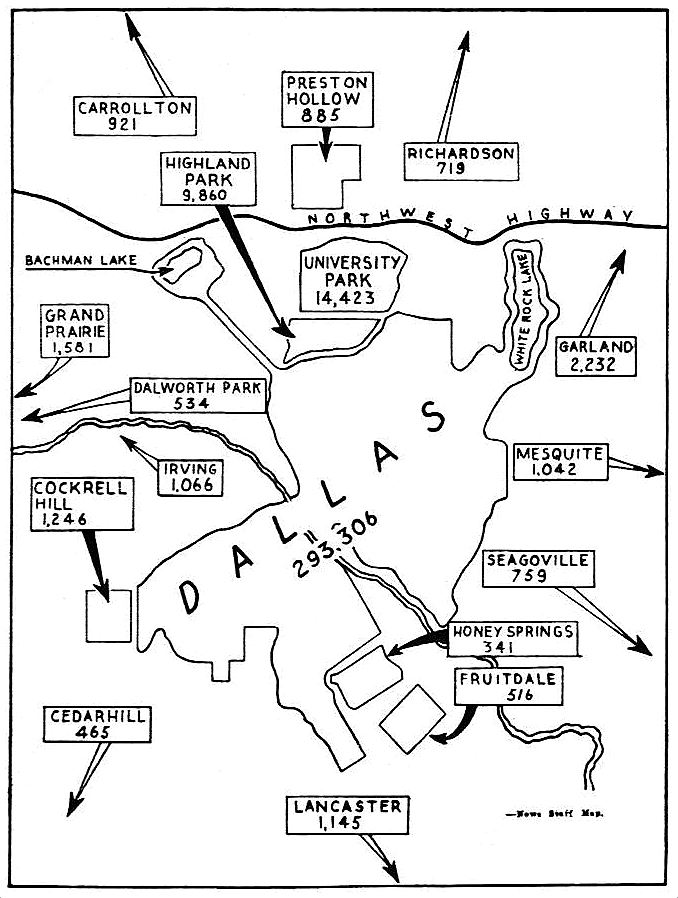
The map at the top is interesting. I love the fact that in 1940 Richardson was a teensy little town of 719 — smaller than the beyond-the-city-limits Preston Hollow which boasted a healthy 885 people. (And … Honey Springs? I’d never heard of it. But now I know the facts, from the Handbook of Texas, and I know the color, from the Dallas Trinity Trails blog.)

For those who want to go the extra mile, the full breakdown of the census numbers can be found in the Dallas Morning News archives in the article cited above.

***

Sources & Notes

It looks like the official numbers might have been changed a bit after the article cited above was printed. The very informative chart of Dallas County’s population through the decades (seen here) has the population a bit higher, at 398,564.

More Dallas County stats — stats-a-plenty — at Wikipedia.

*

Copyright © 2017 Paula Bosse. All Rights Reserved.


“Classified System” Parking Stations — 1930s

classified-system_colteraIs that a ship? And an iceberg? (click for larger image)

by Paula Bosse

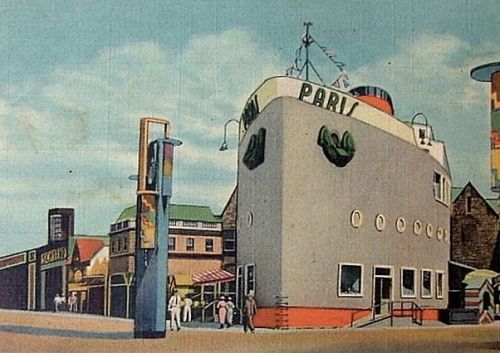
Here’s a cool little ad for what was basically a parking garage that also sold gas and tires (and which seems to have had a ship on top of its building … a building which might be shaped like … an iceberg?). This snazzy-looking garage was at 501 N. Akard (at Patterson) — it was one of several “Classified System” garages that dotted downtown from the early 1930s until at least the early ’70s. The Akard location was station No. 1.

Below, an ad from 1935 informing patrons that they could drive in, have tires installed, and pay for them sometime in the future — for as little as 50 cents a week (which would come out to about $35 a month in today’s money). “YOU DON’T NEED CASH.” (Click ad to see a larger image.)

classified-parking_dmn_061535
1935 ad

classified-parking_dmn_061535_det

I love the kooky design of the building, but that ship is just … odd. I like it, I just don’t get it. Maybe that’s the “classified” part.

***

Sources & Notes

Color image is a matchbook cover found on Flickr, here.

*

Copyright © 2017 Paula Bosse. All Rights Reserved.


Albert Einstein “Threw the Switch” in New Jersey to Open the Pan-American Exposition in Dallas — 1937

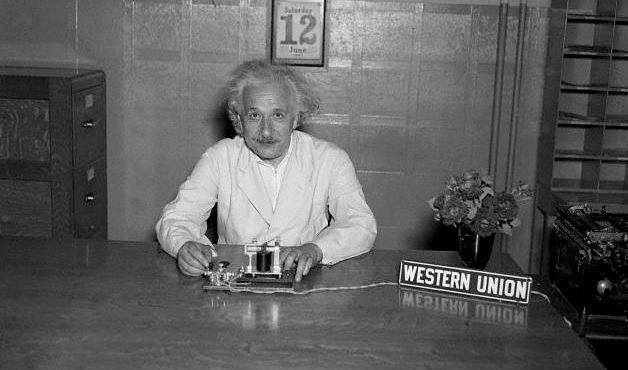
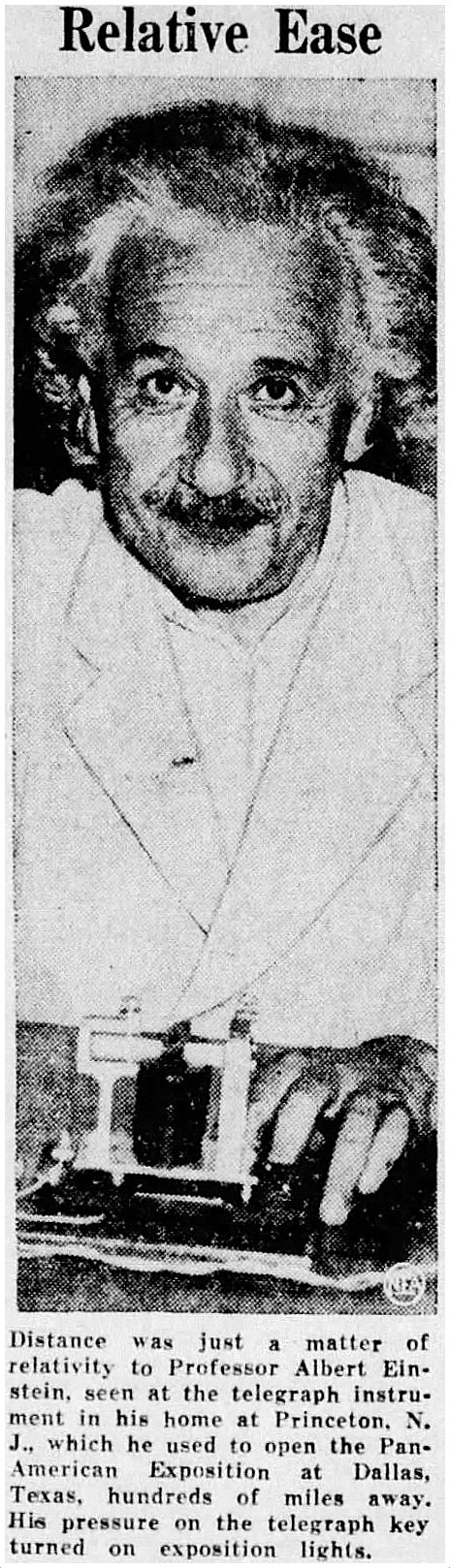
pan-american-expo_einstein_061237Einstein at the switch, June 12, 1937…

by Paula Bosse

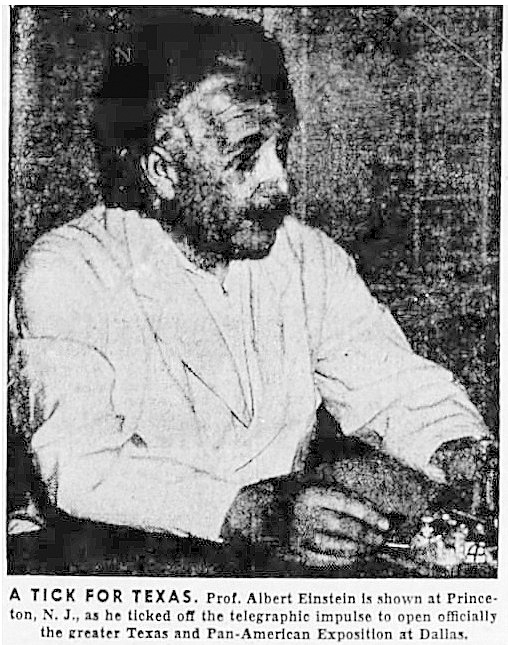
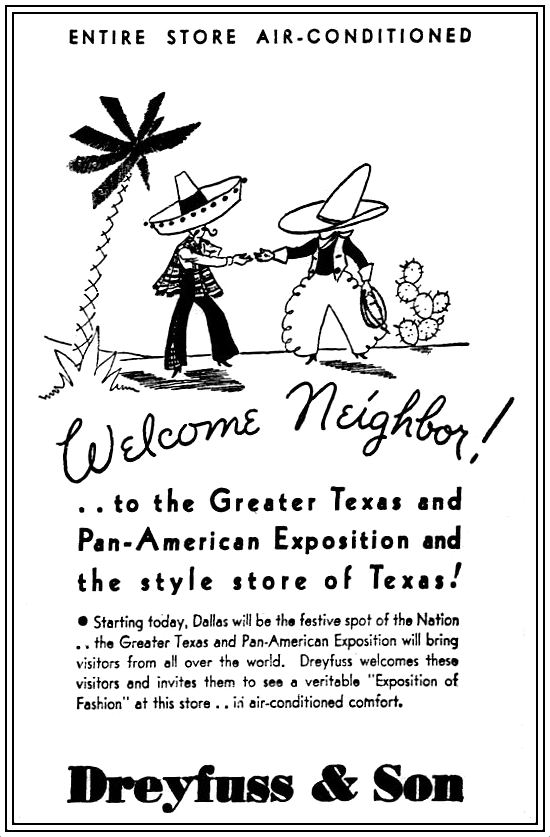
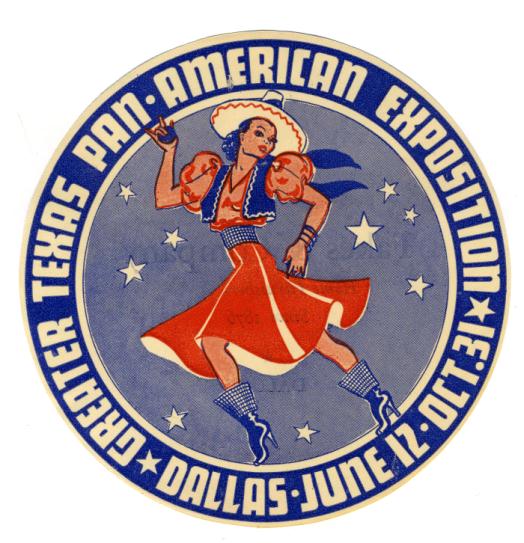
Who knew? Albert Einstein, the world’s most famous physicist, helped open the Greater Texas and Pan-American Exposition. The exposition was held at Fair Park for 20 weeks, from June 12, 1937 to October 31, 1937, as a follow-up of sorts to the Texas Centennial (the city had built all those new buildings — might as well get their money’s worth!). I’m not quite sure how Einstein got roped into this, but looking at the photo above, he seemed pretty happy about what was, basically, a long-distance ribbon-cutting. Via telegraph.

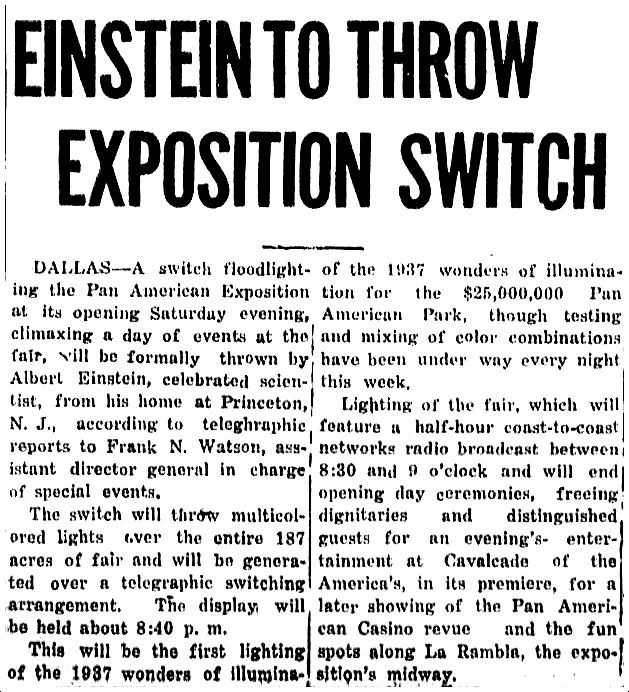
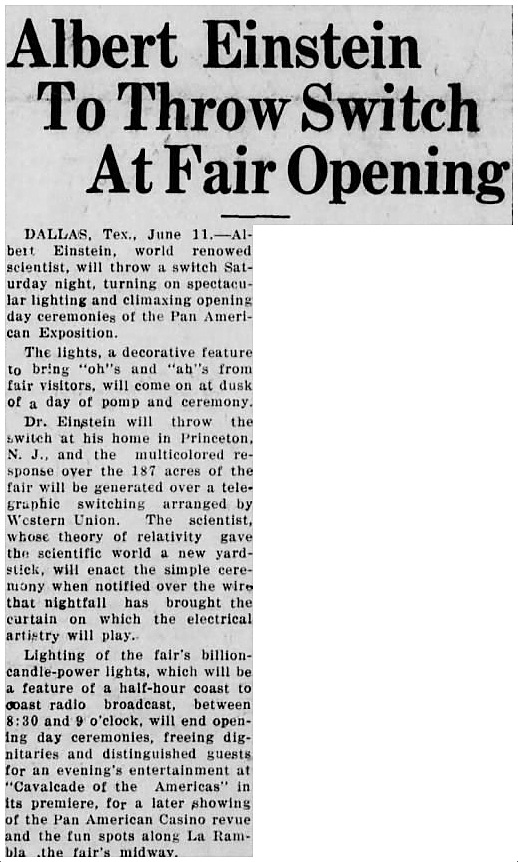
The plan was for Professor Einstein to officially open the Pan-American Exposition by “throwing the switch” which would turn on massive displays of lights around Fair Park. He would do this from Princeton, New Jersey, where he lived, by closing a telegraph circuit which would put the whole thing in motion. Newspaper reports varied on where exactly Herr Einstein was tapping his telegraph key — it was either the study in his home, in his office, in a Princeton University administration building, or in the Princeton offices of Western Union (the latter of which was mentioned in only one report I found, but it seems most likely).

Einstein was a bona fide celebrity, and this was national news — newspapers around the country ran stories about it, and the ceremony was carried live on coast-to-coast radio. Almost every report suggested that Einstein’s pressing of the key in New Jersey would be the trigger that lit up the park in Texas, 1,500 miles away — which was partly correct. According to The Dallas Morning News:

Lights on the grounds will be turned on officially at 8:40 p.m. when Dr. Albert Einstein, exponent of the theory of relativity, presses a key in his Princeton home to fire an army field gun. With the detonation of the shell, switches will be thrown to release the flood of colored lights throughout the grounds. (DMN, June 10, 1937)

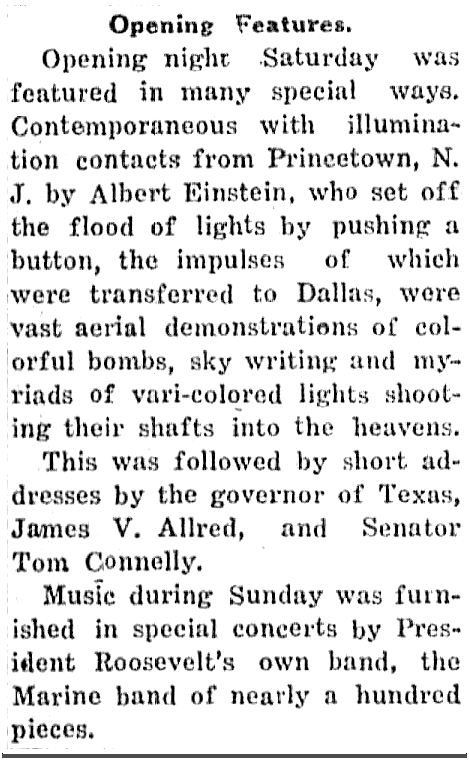
So on June 12, 1937 he pressed a telegraph key somewhere in Princeton, NJ, an alert was instantly wired to Dallas, an army field gun (in some reports a “cannon”) was fired, and that blast was the cue for electricians positioned around the park to throw switches to illuminate the spectacular displays of colored lights.

The Western Union tie-in gimmick was a success. Newspaper reports might have been a little purple in their descriptions, but from all accounts, those lights going on all at once was a pretty spectacular sight.

Dr. Albert Einstein, celebrated scientist, threw a switch that flashed a million lights over the 187-acre exposition park. The flash came at 8:40 o’clock and instantly the huge park became a city of a million wonders. Flags from a thousand staffs proclaimed their nationality [and] bands played the national airs of the nations of the Western Hemisphere as lusty cheers roared with thunderous approval. The Greater Texas and Pan-American Exposition was formally opened. It is on its way. (Abilene (TX) Reporter News, June 13, 1937)

The Dallas News describes the crowd as stunned into silence:

The waiting participants in the ceremonies at Dallas heard the results [of Einstein’s telegraph signal] when a cannon boomed. Electricians at switches around the grounds swung the blades into their niches and the flood of light awoke the colors of the rainbow to dance over the 187-acre park. Its breath taken by the spectacle, the crowd stood silent for a moment, and then broke into a cheer. (“Pan-American Fair Gets Off to Gay Start” by Robert Lunsford, DMN, June 13, 1937)

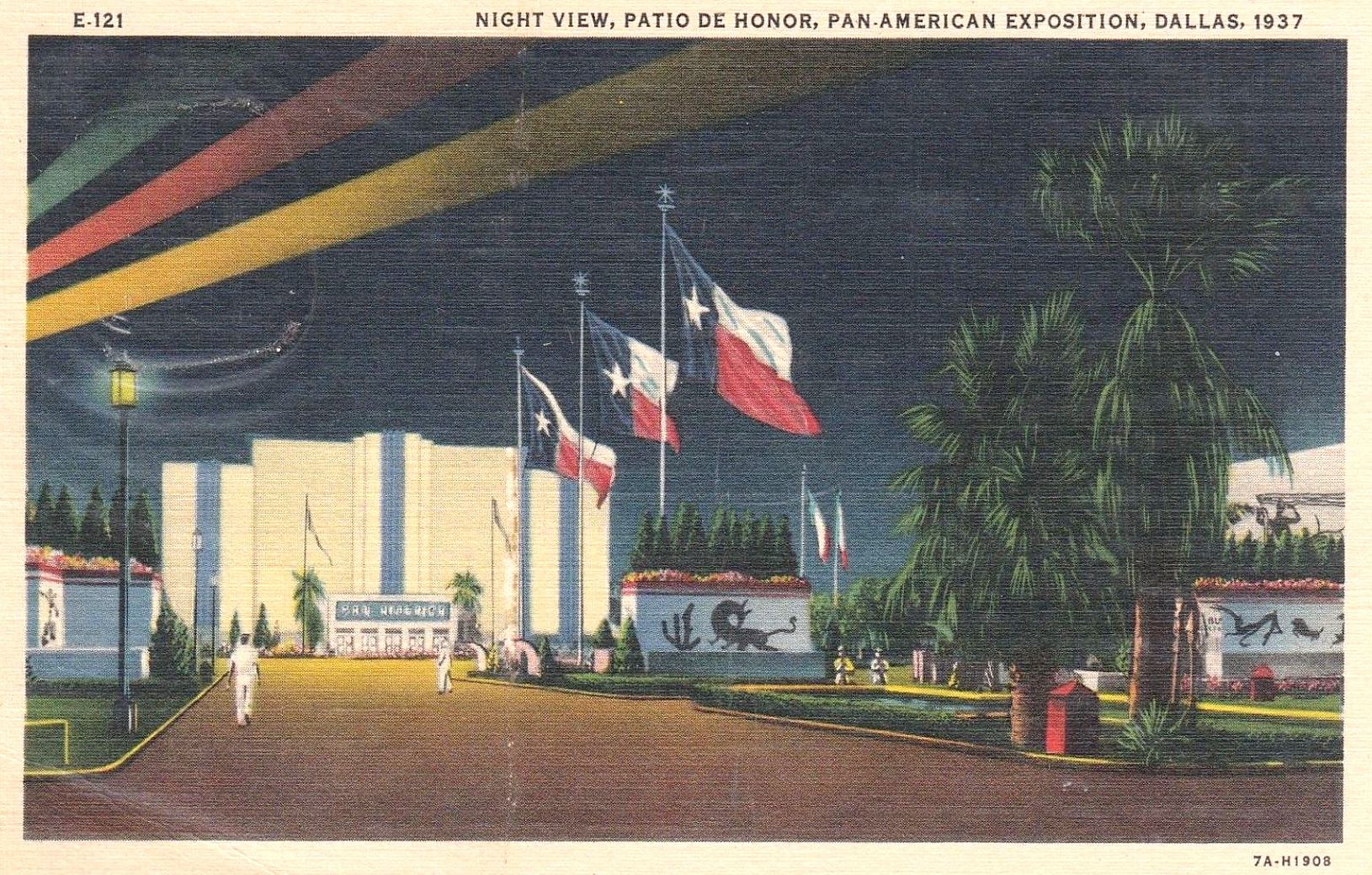
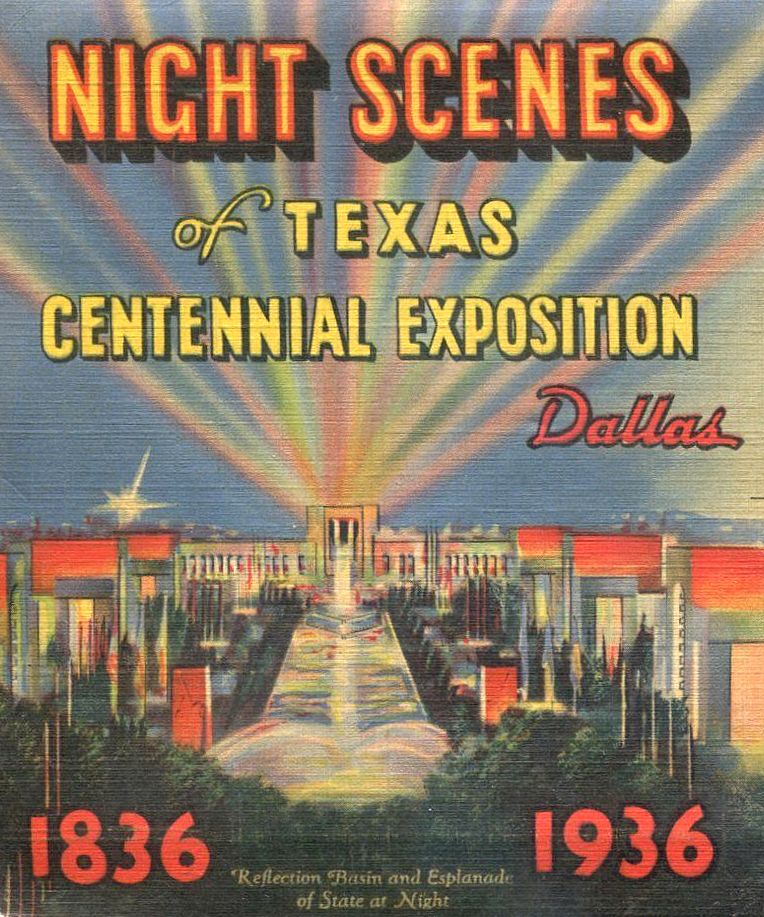
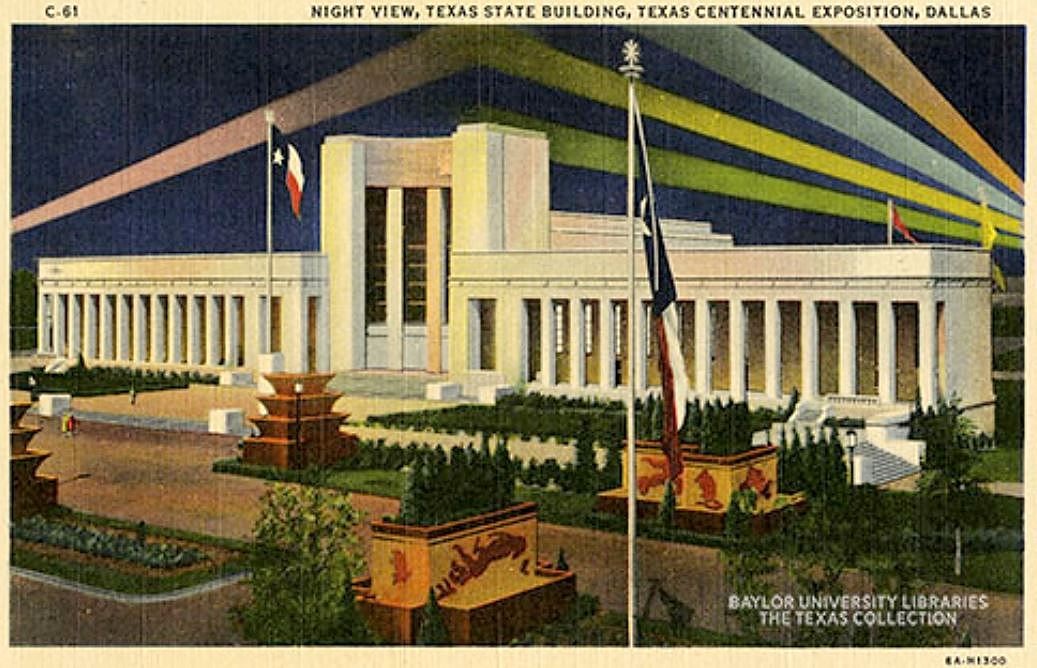
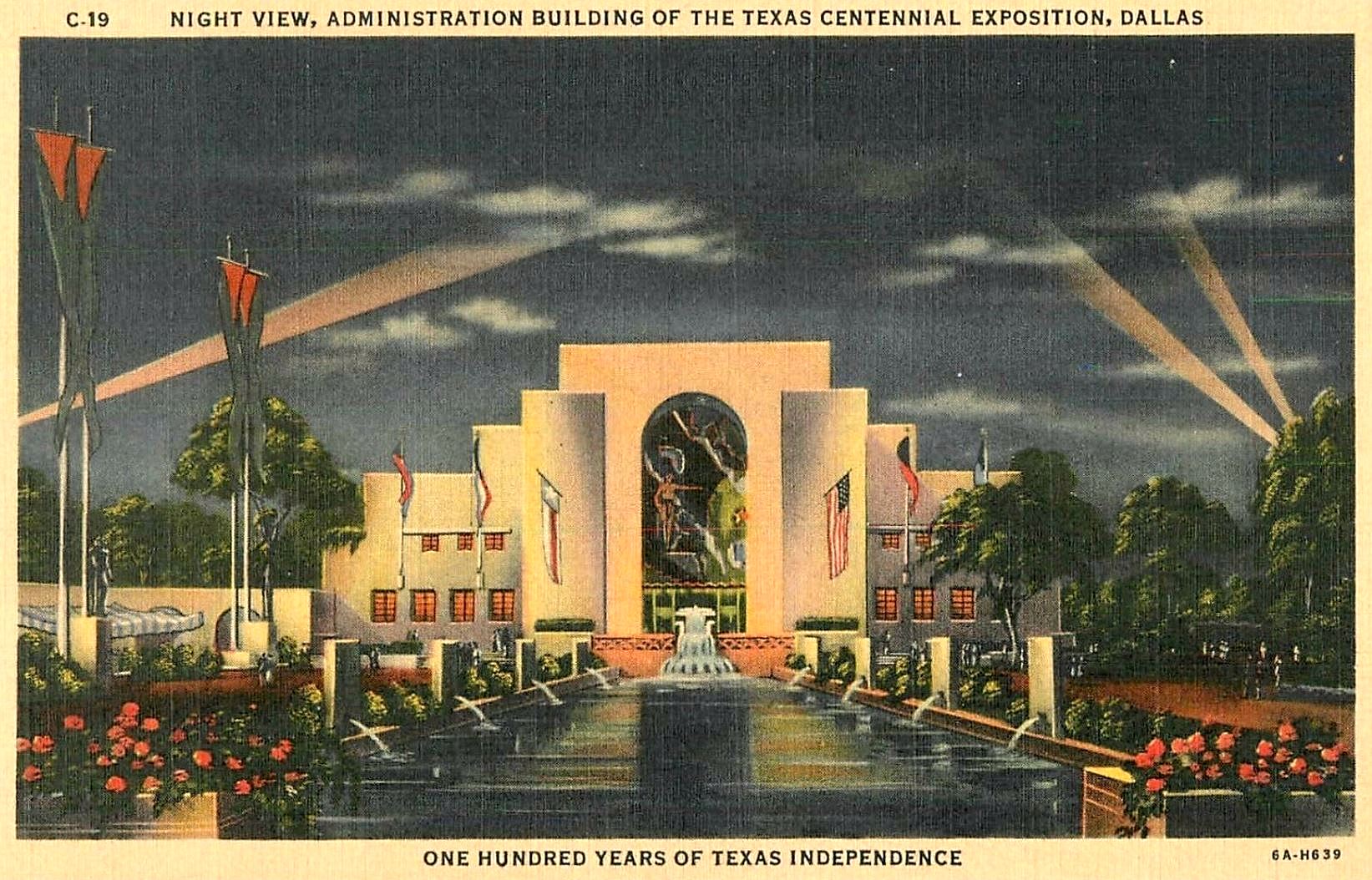
Many of the lighting designs and displays had been used the previous year during the Centennial, but, as with much of the attractions and appointments throughout the park, they were improved and spectacularized for the Pan-American Expo. And people loved what they saw.

Despite the multi-million dollar structures, air conditioning demos, works of art and other newfangled additions to the space, when people left the Centennial Exposition one thing was on everyone’s tongues, according to historical pollsters: the lights.

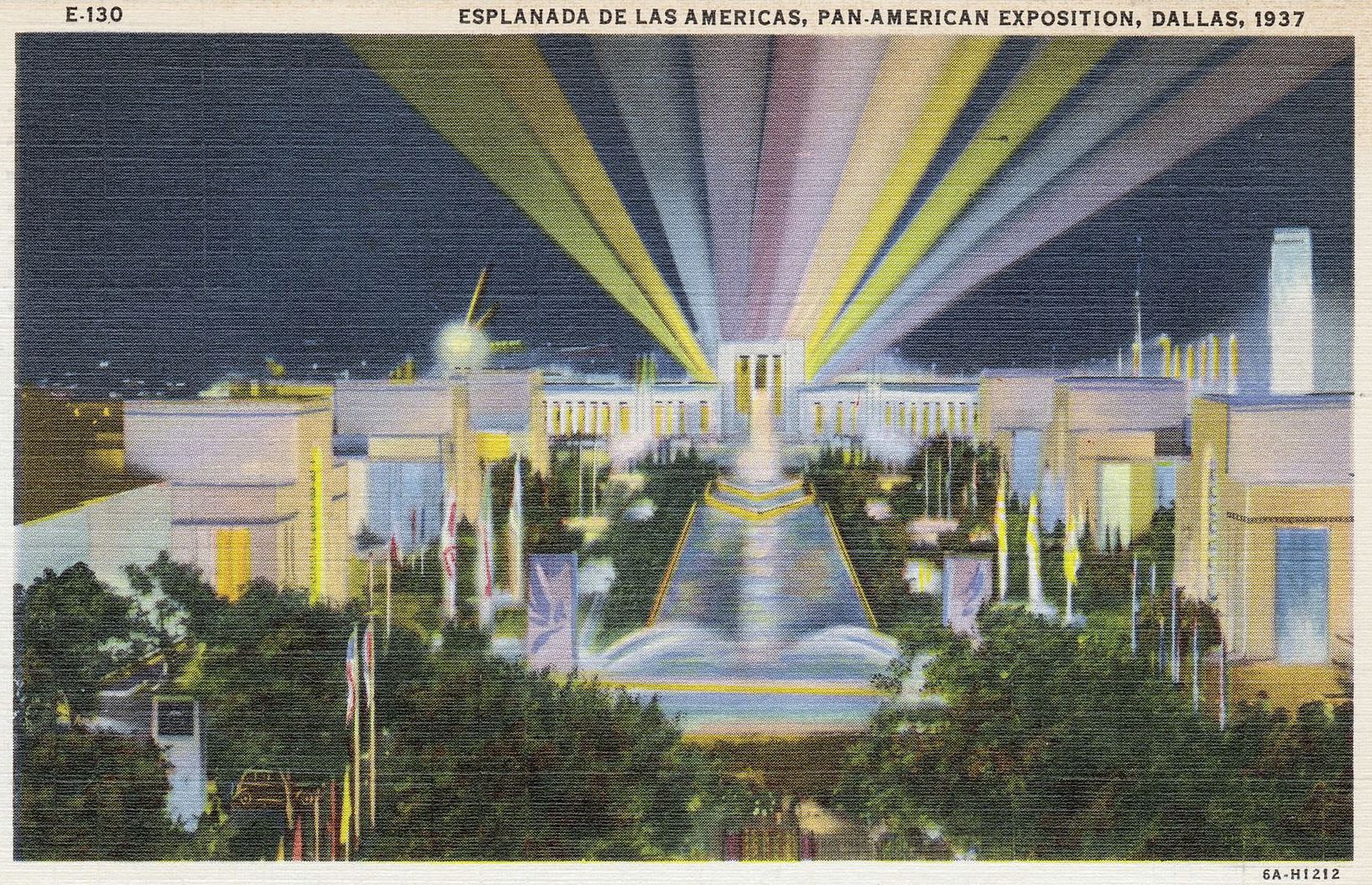
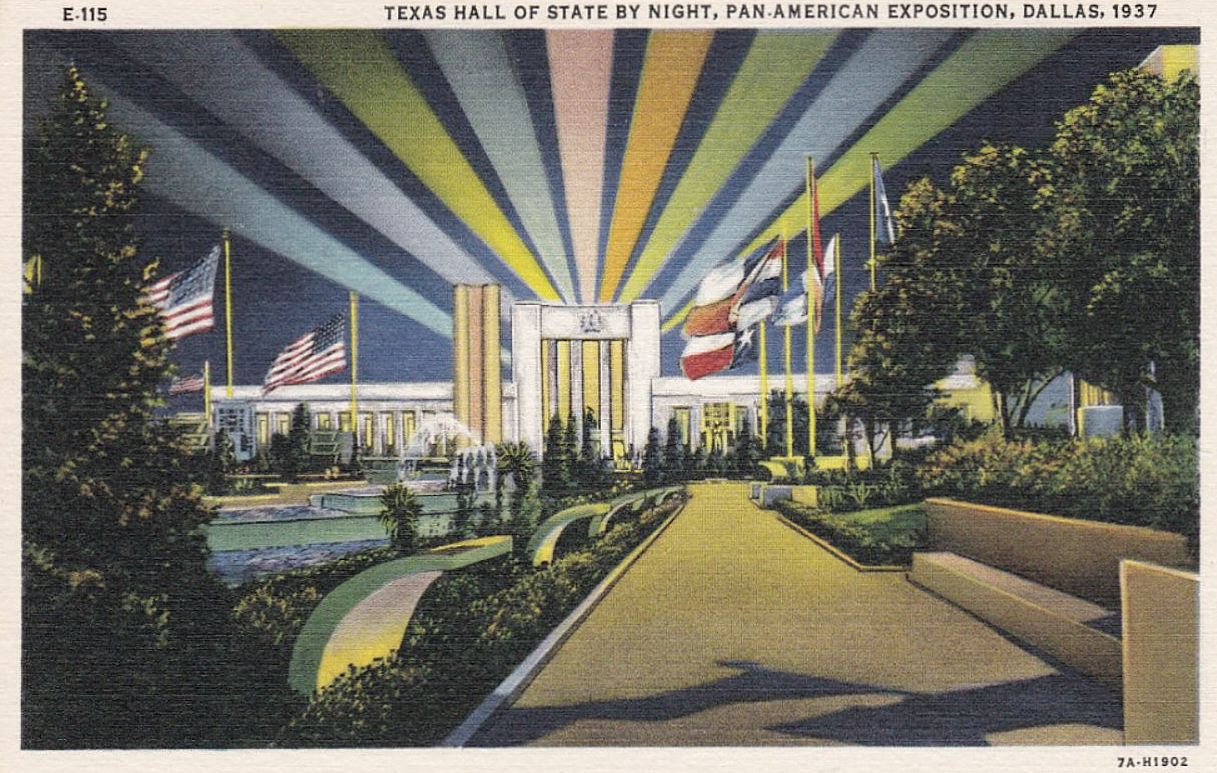
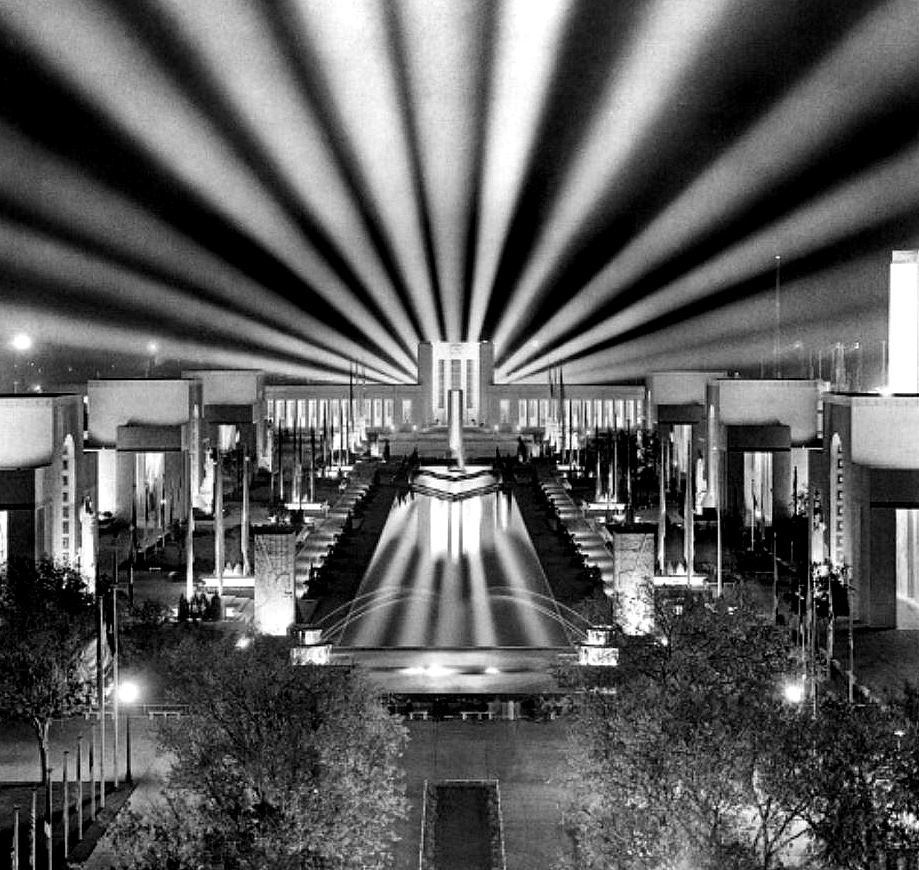
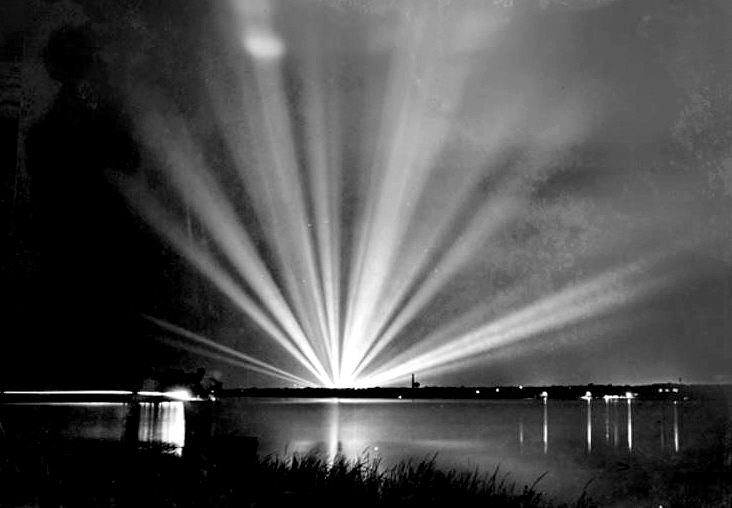
Positioned behind the Hall of State were 24 searchlights scaffolding into a crowned fan shape. “They all moved and were different colors,” says [Jim] Parsons [co-author of the book Fair Park Deco]. “It sounds gaudy, but people loved it.” The lights, he goes on to tell, were visible up to 20 miles away.

Considering most of the people who were visiting the fairgrounds were coming from rural farming communities with no electricity, the inspiring nature of those far-reaching beams makes a lot of sense. (Dallas Observer, Nov. 7, 2012)

Thanks for doing your part for Dallas history, Prof. Einstein!

pan-american-expo_esplanade_postcard

pan-american-expo_hall-of-state_postcard

pan-american-expo_patio-de-honor_ebay

Below, photos from the Texas Centennial, 1936. The multicolored lights could be seen from miles away — here’s what they looked like from downtown and from White Rock Lake.

centennial_pan-american_lights

skyline_downtown-to-fair-park_1936_GE-colln_museum-of-innovation-and-science

fair-park-lights_white-rock-lake

tx-centennial_night-scene_espalanade_hall-of-state_lights_ebay

tx-centennial_night_hall-of-state_lights_flickr_baylorvia Baylor University Flickr stream

tx-centennial_night_administration-bldg_lights_ebay

*

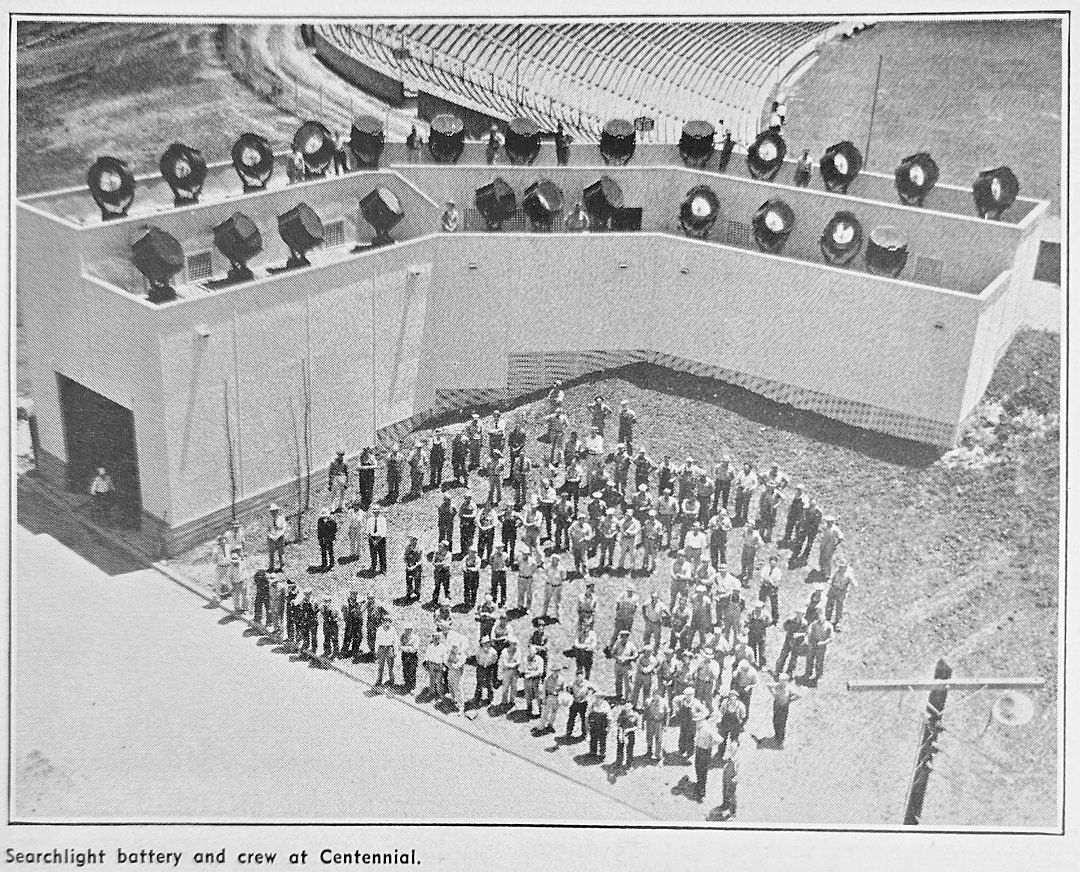
A look behind the scenes: “The general lighting effect is a battery of twenty-four 36-inch searchlights as powerful as the giants that flash from the dreadnoughts of Uncle Sam’s navy. Each searchlight will produce 60 million candlepower. Combined, the battery has a total candlepower of 1.5 billion. A 350,000-watt power generator will produce this colossal quantity of ‘juice.’” And the accompanying photo of the searchlight battery crew manning the candlepower:

tx-centennial_lights_southwest-business-mag_june-1936_photoSouthwest Business, June 1936

**

(All pictures and clippings are larger when clicked.)

einstein_pan-am-expo_denison-press_060937
Denison Press, June 9, 1937

*

einstein_pan-am-expo_waxahachie-daily-light_061137
Waxahachie Daily Light, June 11, 1937

*

einstein_pan-am-expo_denison-press_061437
Denison Press, June 14, 1937

*

einstein_pan-am-expo_medford-oregon-mail-tribune_062337
Medford (Oregon) Mail Tribune, June 23, 1937

*

einstein_pan-am-expo_vernon-daily-record_062437
Vernon Daily Record, June 24, 1937

*

pan-american-expo_drefuss-ad_dmn_061237
1937

pan-american-expo_sticker_1937_cowgirl

***

Sources & Notes

Top photo from the old Corbis site.

Black-and-white photos from the Centennial seen from Fair Park and White Rock Lake are from the Texas/Dallas History and Archives Division of the Dallas Public Library; the photo of the lights seen from downtown Dallas (titled “New skyline at night from Dallas, Texas”) is from the GE Photo Collection, Museum of Innovation and Science (more info on that photo is here).

Sources of other images and clippings cited, if known.

More on the Pan-American Exposition from Wikipedia, here, and from the fantastic Watermelon Kid site of all-things-Fair-Park, here.

*

Copyright © 2016 Paula Bosse. All Rights Reserved.

A Rainy Day at Main and Akard — 1932

main-akard_frank-rogers_011632_legacies_fall-2013Fedoras, cloches, umbrellas…

by Paula Bosse

A nice photo of a rainy day downtown, almost 85 years ago. The photo — taken on January 16, 1932 by Dallas photographer Frank Rogers — shows the intersection of Main and Akard (the people with umbrellas are crossing Akard Street, heading east). Marvin’s Drug Store (which occupied the ground floor of what was later known as the Gulf States Building) was on the northwest corner, and the A. Harris department store occupied the first five floors of the Kirby Building (originally the Busch Building) on the northeast corner — both buildings are still standing. See the view today, via Bing, here.

***

Sources & Notes

Photo from the Fall, 2013 issue of Legacies, viewable at the Portal to Texas History, here.

*

Copyright © 2016 Paula Bosse. All Rights Reserved.

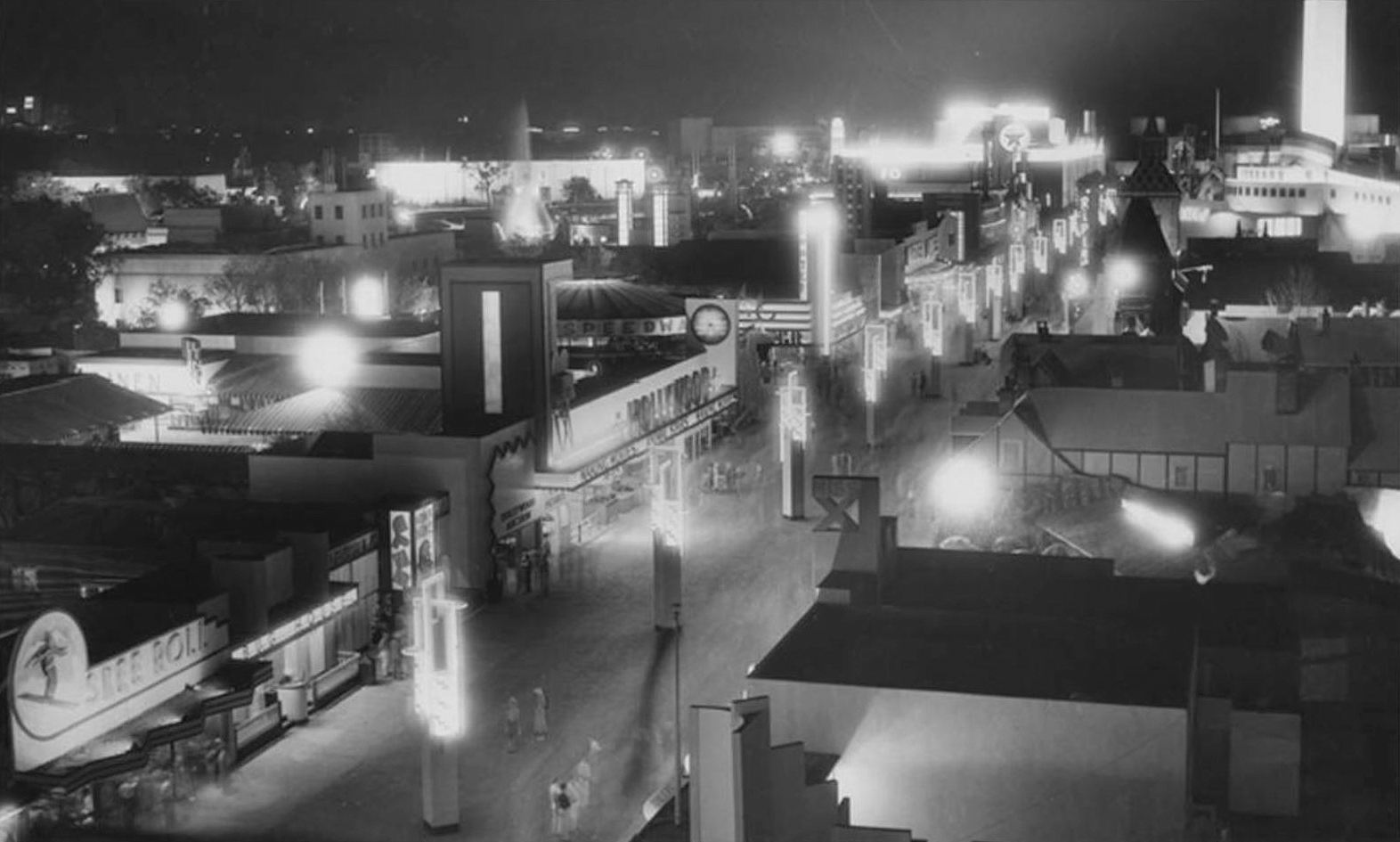
“Dallas Midway, Night Illumination” — 1936

tx-centennial_midway_night_cook-coll_smuAll calm in Fair Park along the Centennial Midway (click for larger image)

by Paula Bosse

Above, a nighttime shot of an almost empty Midway during the Texas Centennial. All this scene needs in order to boost the moody atmosphere is a little fog. Go a little further and add some zither music, Joseph Cotten, and Orson Welles running past the Texaco Building and you’d have a pretty cool setting for a Texas version of The Third Man.

***

Photo titled “Dallas Midway, Night Illumination, Centennial Exposition, State Fair of Texas” (taken by an unknown photographer on Oct. 16, 1936) is from the George W. Cook Dallas/Texas Image Collection, DeGolyer Library, Central University Libraries, Southern Methodist University; more info here.

*

Copyright © 2016 Paula Bosse. All Rights Reserved.

The M-K-T Pulling Out of Dallas

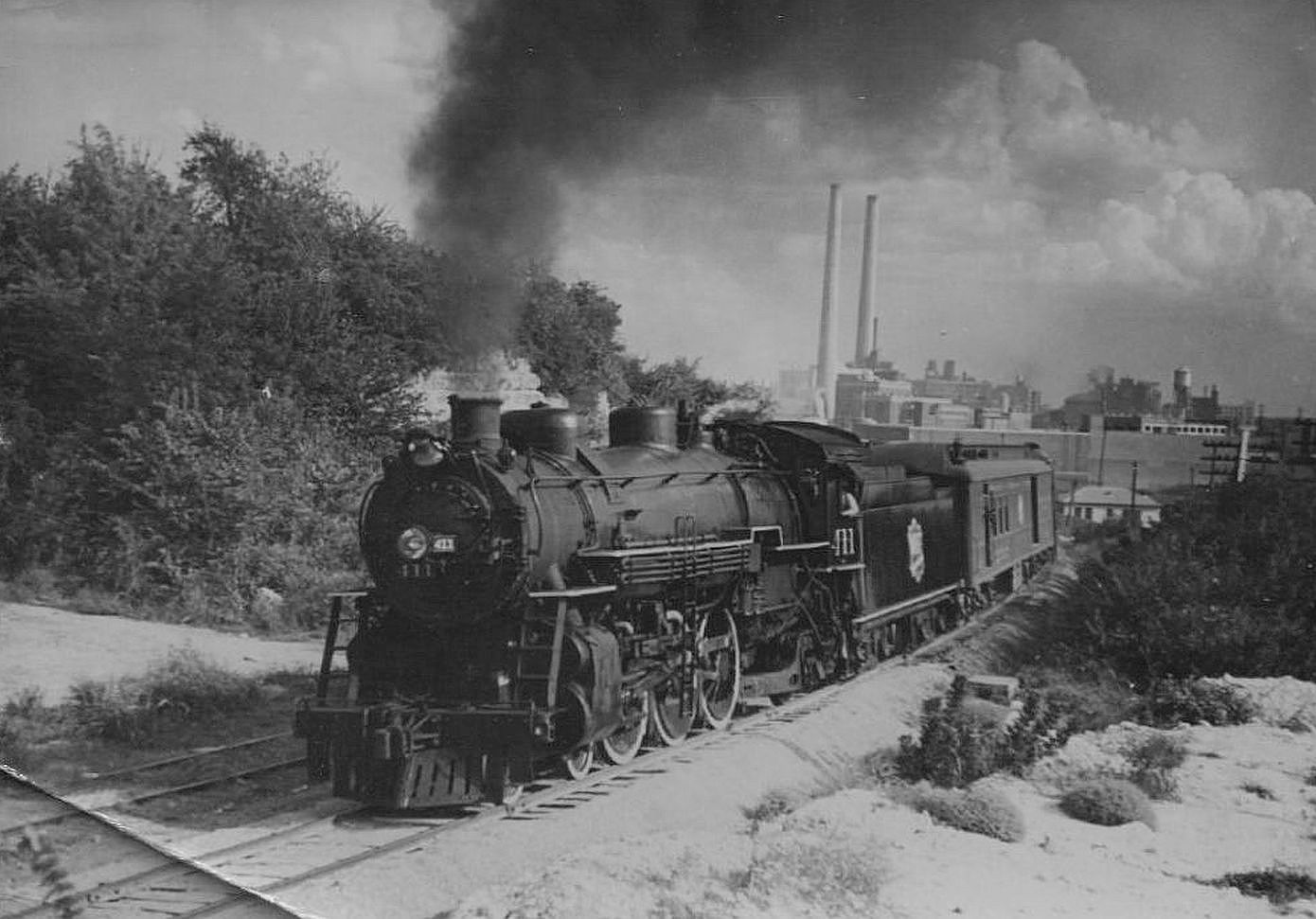
mkt-leaving-dallas_peter-stewart_austin_ebayTrain whistles don’t sound so lonesome in the daytime…

by Paula Bosse

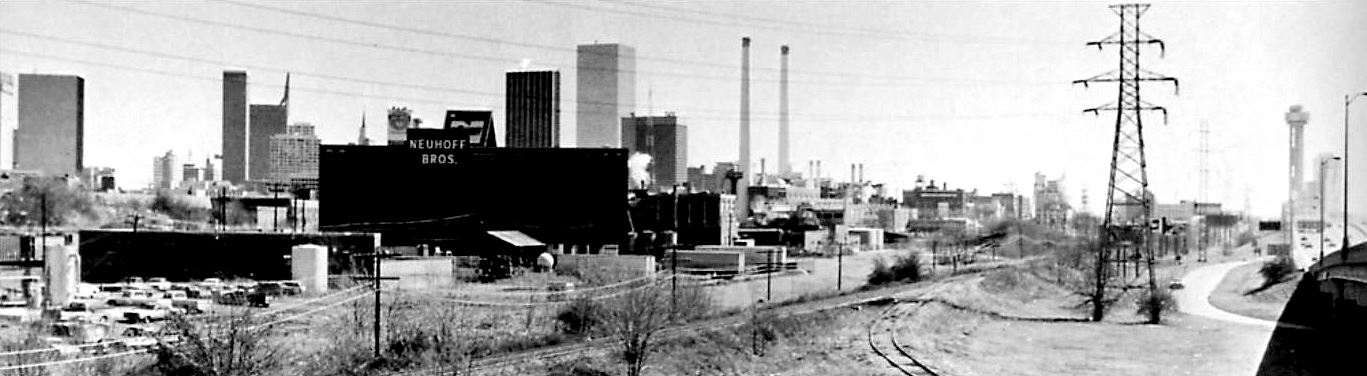
Above, an undated photo I came across on eBay a couple of months ago, showing a Missouri-Kansas-Texas train heading north from the Katy yard at the northwest corner of downtown. In the background are the twin DP&L smokestacks which were iconic landmarks until they were demolished in order to build the American Airlines Center and Victory Park. Below, a later photo taken from about the same location.

neuhoff_dpl_reunion-tower

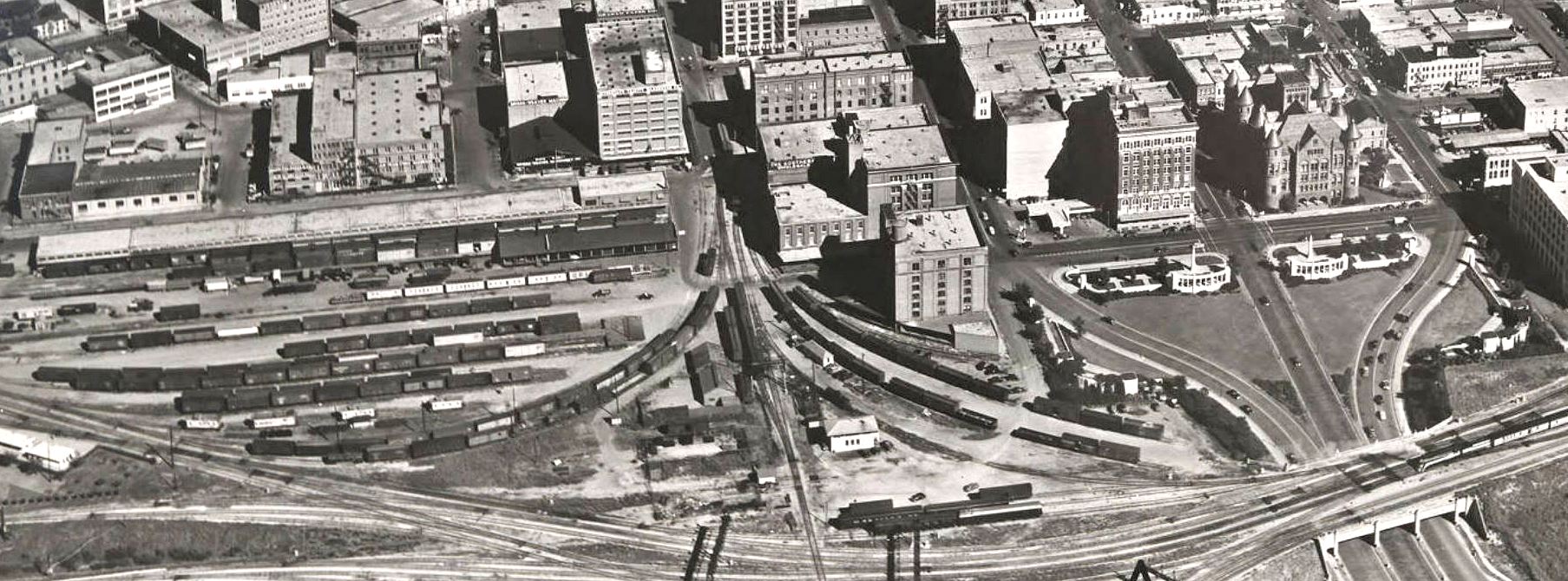
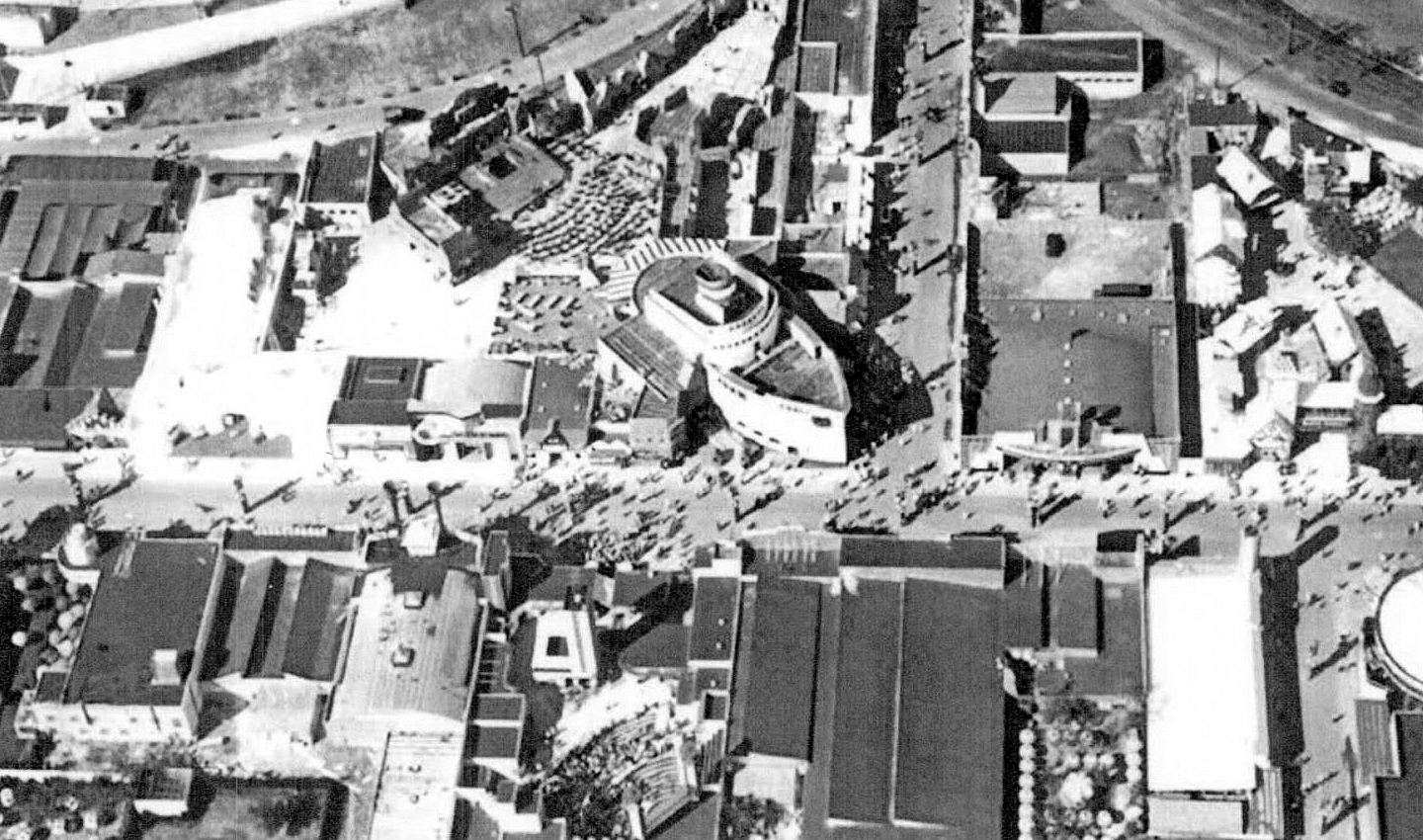
The area between Dealey Plaza and the Neuhoff meat packing plant was crammed with tracks; below is a detail from a mid-1940s aerial photo (click to see a larger image).

aerial_long_foscue-lib_smu_1940s_det

The M-K-T split about where the photo at the top was taken, as can be seen in the Sanborn map below (from 1927) between Turtle Creek and McKinney Avenue. One track headed north, the other cut through Oak Lawn and Highland Park (now the Katy Trail), crossing Mockingbird at the Dr Pepper plant near Central Expressway.

sanborn_vol-2_key_1927

mkt-logo

***

Sources & Notes

Top photo from eBay, with the photographer of this “vintage snapshot” credited as “Peter Stewart, Austin, Texas.” (There is a crease to the lower left corner.) It is undated, but when posted to the Texas Railroad History group on Facebook, commenters suggested mid-to-late-1930s to early ’50s. It’s a bit grainy, but the number on the engine appears to be 411.

The second photo, showing the Neuhoff plant and Reunion Tower, is from the collection of the Dallas Public Library.

The aerial shot is a detail from this photo by Lloyd M. Long, from the Edwin J. Foscue Map Library, Central University Libraries, Southern Methodist University.

The map detail is from the “key” page of the 1927 Sanborn Fire Insurance Map, here. Speaking of Sanborn maps, this one from 1921 shows M-K-T tracks galore behind the DP&L plant.

Click pictures to see larger images.

*

Copyright © 2016 Paula Bosse. All Rights Reserved.


Three Flags Over Texas at the Entrance to Fair Park — 1936

tx-centennial_flags_entrance_nyplMexico, France, and Texas welcome visitors…

by Paula Bosse

Another State Fair of Texas is winding down. Here’s what the entrance to Fair Park looked like when the Texas Centennial opened in June 1936. This Associated Press photo was accompanied by the following caption when it ran in newspapers:

FLAGS  WAVE  AT  TEXAS  CENTENNIAL
Dallas, June 6 — Three of six flags which have flown over the Lone Star State, waved over the main entrance to the Texas Centennial celebration at its opening here today. Buildings throughout the grounds of the exposition are ultra modern in design.

This view — taken at about Parry and Exposition — hasn’t changed all that much. See it on Google Street View here.

***

Sources & Notes

Associated Press photo from the New York Public Library’s digital collections, here.

*

Copyright © 2016 Paula Bosse. All Rights Reserved.

Lady Godiva and the “Flesh Shows” of the Texas Centennial — 1936

tx-centennial_streets-of-paris_ticket_cook-coll_smuGeorge W. Cook Collection/SMU

by Paula Bosse

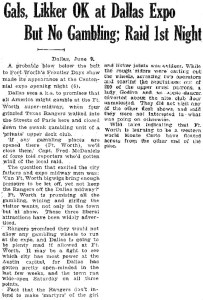
When one thinks of the Texas Centennial Exposition, the splashy 6-month extravaganza held at Fair Park to celebrate the 100th anniversary of Texas independence, one might not immediately think of the three things associated with the big show that were making headlines around the country (and were undoubtedly responsible for healthy ticket sales): according to Variety, the Centennial had “all the gambling, wining and girling the visitor wants” (June 10, 1936).

The Dallas exposition (and the coattail-riding Frontier Exposition, which was held at the same time in Fort Worth) was “wide open” in 1936: there was gambling, liquor, and nudity everywhere. The Texas Rangers cracked down on some of the gaming in the early days, but alcohol and girlie shows continued throughout the expo’s run.

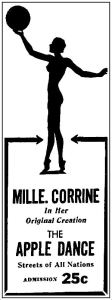
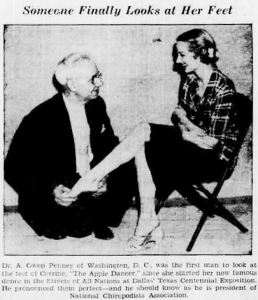
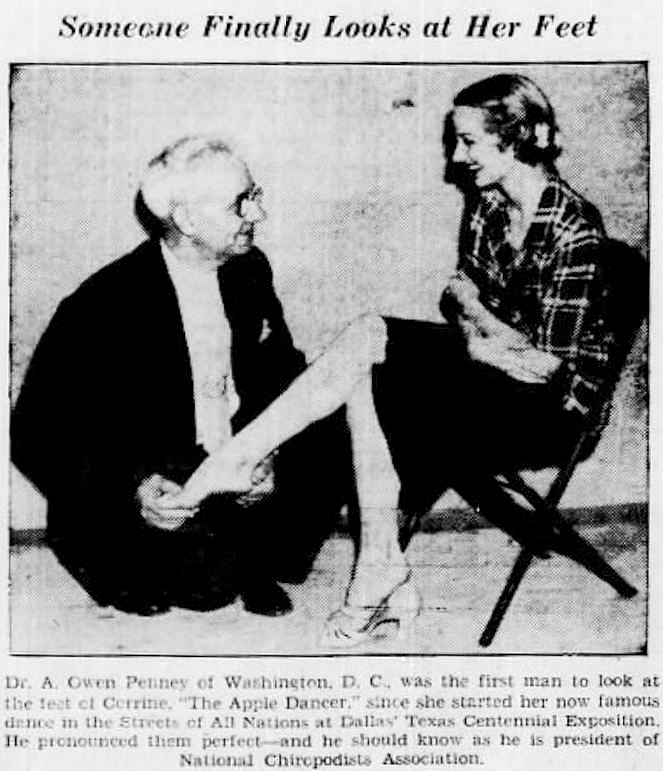
As far as the nudity, it really was everywhere. It’s a little shocking to think that this sort of thing was so widely accepted in very conservative Dallas — 80 years ago! — but it was (despite some local pastors disdainfully referring to the big party as the Texas Sintennial). Many of the acts — and much of the personnel — had appeared in a version of the same revue in Chicago in 1933 and 1934. Some of the offerings for the Centennial visitor: peep shows a-plenty, the clad-only-in-body-paint “Diving Venus” named Mona Lleslie (not a typo), a naked “apple dancer” named Mlle. Corinne who twirled with a “basketball-sized ‘apple'” held in front of her frontal nether regions, and the somewhat obligatory nude chorus girls. There was also an “exhibit” in which nude women were on display as “artists’ models,” posing for crowds of what one can only assume were life-drawing aficionados who were encouraged to render the scene before them artistically (…had they planned ahead and brought a pencil and sketchpad); those who lacked artistic skill and/or temperament were welcome to just stand there and gawk. (Click photos and ads to see larger images.)

corinne_apple-dancer_cook-collection_smu

tx-centennial_apple-dancer_dmn_070536

tx-centennial_apple-dancer_franklin-ind-evening-star_071136Franklin, Indiana Evening Star, July 11, 1936

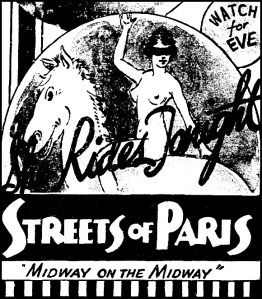
Another attraction was Lady Godiva, who, naked, rode a horse through the Streets of Paris crowds. Her bare-breastedness even made it into ads appearing in the pages of staid Texas newspapers. (Click to see larger images.)

tx-centennial_lady-godiva_dmn_060436_sm
June, 1936

There were two areas along the Midway where crowds could find these saucy attraction: Streets of Paris (which Time magazine described as appealing to “lovers of the nude”) and Streets of All Nations (“for lovers of the semi-nude”). Lady Godiva was part of the Streets of Paris, and she rode, Godiva-esque, nightly. The gimmick (beyond the gimmick of a naked woman riding a horse in Fair Park) was that she was supposed to  be a Dallas debutante who rode masked in order to conceal her identity. The text below is from the ad above.

MASKED…but unclothed in all her Glory…Riding a milk-white steed. […] Miss Debutante was introduced to Dallas society in 1930. She was later starred in Ziegfeld’s Follies, in “False Dreams, Farewell,” “Furnished Rooms,” and other Broadway successes. She appeared in motion pictures, being starred in “Gold Diggers of 1935,” “Redheads on Parade” (yes, she is a redhead) and other picture successes.

SHE WILL STARTLE DALLAS SOCIETY! JUST AS THE STREETS OF PARIS WILL BE THE SENSATION OF THE CENTENNIAL SEASON .. WHO IS SHE?

And, of course, none of that was true (including the fact that this “Lady Godiva” rode a white horse — apparently one could not always be found), but I’m sure it got local pulses racing. My guess is that there were several Ladies Godiva (none of whom were members of Dallas society). One woman was actually named as the Centennial’s exhibitionist horsewoman. I haven’t been able to find mention of a “Paulette Renet” anywhere other than the caption of this photo, but here she is:
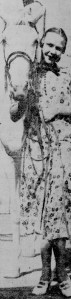
godiva_madera-tribune_082936

godiva_madera-tribune_082936-caption
Madera (California) Tribune, Aug. 29, 1936

Another photo featuring what appears to be the same woman, with this caption: “No white horse for Lady Godiva, at the Texas Centennial Exposition in Dallas. A feature of the ‘Streets of Paris,’ a midway show, Godiva rode a ‘paint pony,’ first week because no white one was available.”

godiva_altoona_penn-tribune_062336
Altoona (Pennsylvania) Tribune, June 23, 1936

I think this is still the same woman, but on a rare white steed:
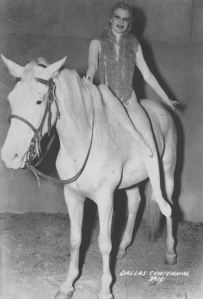
lady-godiva_cook-collection_smu

The Godiva who appeared in the March of Times newsreel “Battle of a Centennial” appears to be a different woman. (Watch a 45-second snippet of the newsreel which features both a glimpse of Lady Godiva and a head-shaking son of Sam Houston wondering what the deal is with the younger generation — here.)

godiva_march-of-time_1936

Imagine seeing performers and attractions like this along the Fair Park midway today!

*
godiva_dmn_070536-detJuly, 1936 (ad detail)

tx-centennial_lady-godiva_dmn_060436-det
June, 1936 (ad detail)

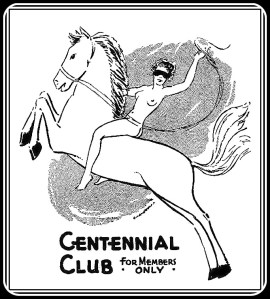
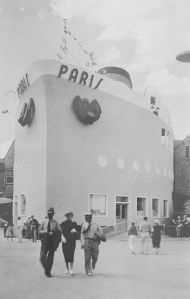
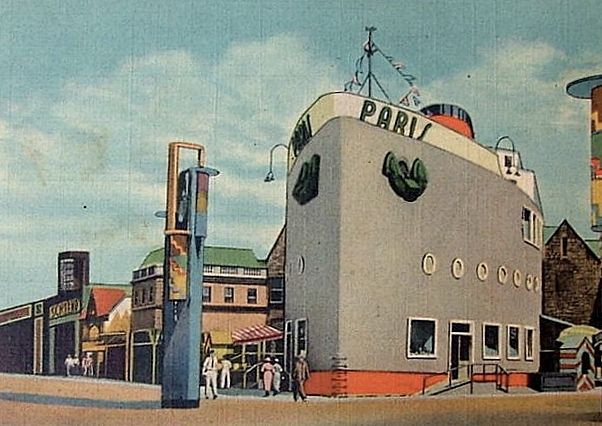
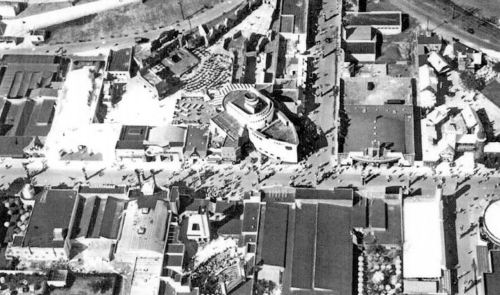
What was the Centennial Club? It was an exclusive, invitation-only private club located within the very large George Dahl-designed building which housed the Streets of Paris (and which was shaped like the famed S. S. Normandie ocean liner). It had three levels (“decks”) and housed a lounge, dining rooms, a main clubroom, and a “dance pavilion” — all air conditioned. From various decks, well-heeled patrons could look down at the action going on below: the milling throngs of the hoi polloi, the Streets of Paris shows, and the Midway.

centennial-club_dmn_061636
June, 1936

tx-centennial_streets-of-paris_art-institute-chicago

tx-centennial_streets-of-paris_ebay_rppc

tx-centennial_streets-of-paris

Can’t miss the ridiculously large land-locked ocean liner in the center of the photo below. Mais oui!
normandie_winters_dhs

**

The articles below on “gals, likker, and gambling” are GREAT. They are from the show biz trade publication Variety, which really latched onto the rampant nudity on view at the Texas Centennial. Remember: 80 years ago! (The abbreviation of “S. A.” in the headline of the second article stands for “sex appeal.”) (As always, click to see larger images.)
sex_variety_061036
Variety, June 10, 1936

sex_variety_062436
Variety, June 24, 1936

nudity_variety_070136
Variety, July 1, 1936

***

Sources & Notes

Top photo shows an admission ticket to the Streets of Paris, from the George W. Cook Dallas/Texas Image Collection, Central University Libraries, Southern Methodist University; more information is here. Another interesting item from this collection is a brochure (here) which describes Streets of Paris as “the smartest, most sophisticated night club in America. Here you will find the gay night life of Paris in a setting of exotic splendor.”

Photo of “Mlle. Corrine” also from the Cook Collection at SMU; more info on that photo here.

Photo of Lady Godiva on a white horse (with the words “Dallas Centennial” near the bottom … um, bottom of the image … is also from the Cook Collection at SMU, here.

The photo showing the night-time crowd outside the Streets of Paris Normandie is from the Ryerson & Burnham Archives, Art Institute of Chicago; more info here.

The aerial photograph showing the S. S. Normandie is from Willis Cecil Winters’ book Fair Park (Arcadia Publishing, 2010); photo from the collection of the Dallas Historical Society.

All other sources noted, if known.

See quick shots of the Streets of Paris and the Streets of All Nations in the locally-made short film “Texas Centennial Highlights,” here (Streets of Paris is at about the 7:00 mark and the more risqué bits showing the parasol chorus girls followed by Mlle. Corinne and her apple dance (I mean, it’s not really shocking, but … it still kind of is…) at the 8:45 mark. (Incidentally, there appears to be a new book on Corinne and her husband — Two Lives, Many Dances — written by their daughter.)

A very entertaining history of the State Fair of Texas and the Texas Centennial Exposition can be found in the article “State Fair!” by Tom Peeler (D Magazine, October, 1982), here.

A Flashback Dallas post on the feuding Dallas and Fort Worth Centennial celebrations can be found here.

More Flashback Dallas posts on the Texas Centennial can be found here.

Click pictures and clippings to see larger images.

*

Copyright © 2016 Paula Bosse. All Rights Reserved.

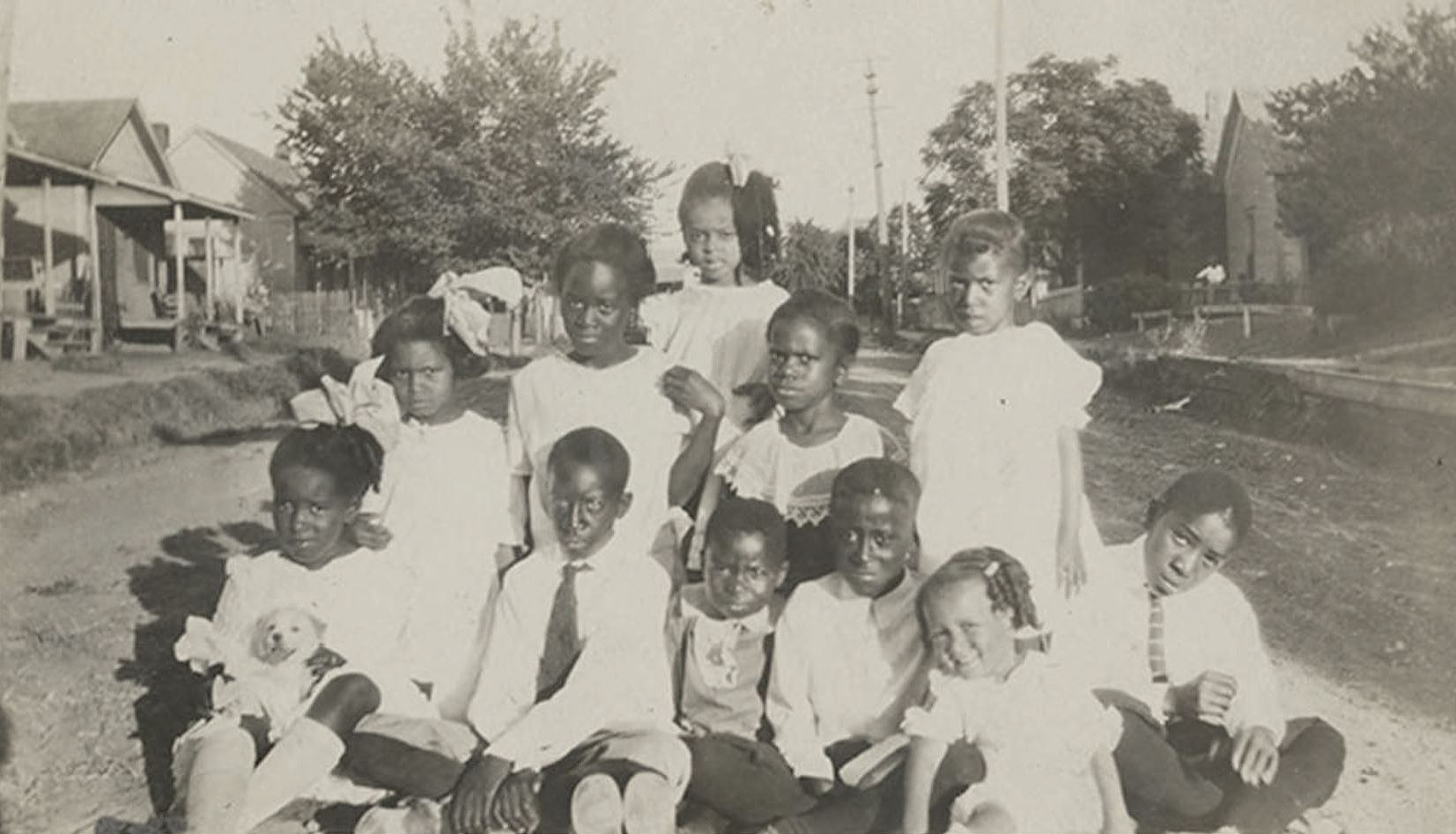
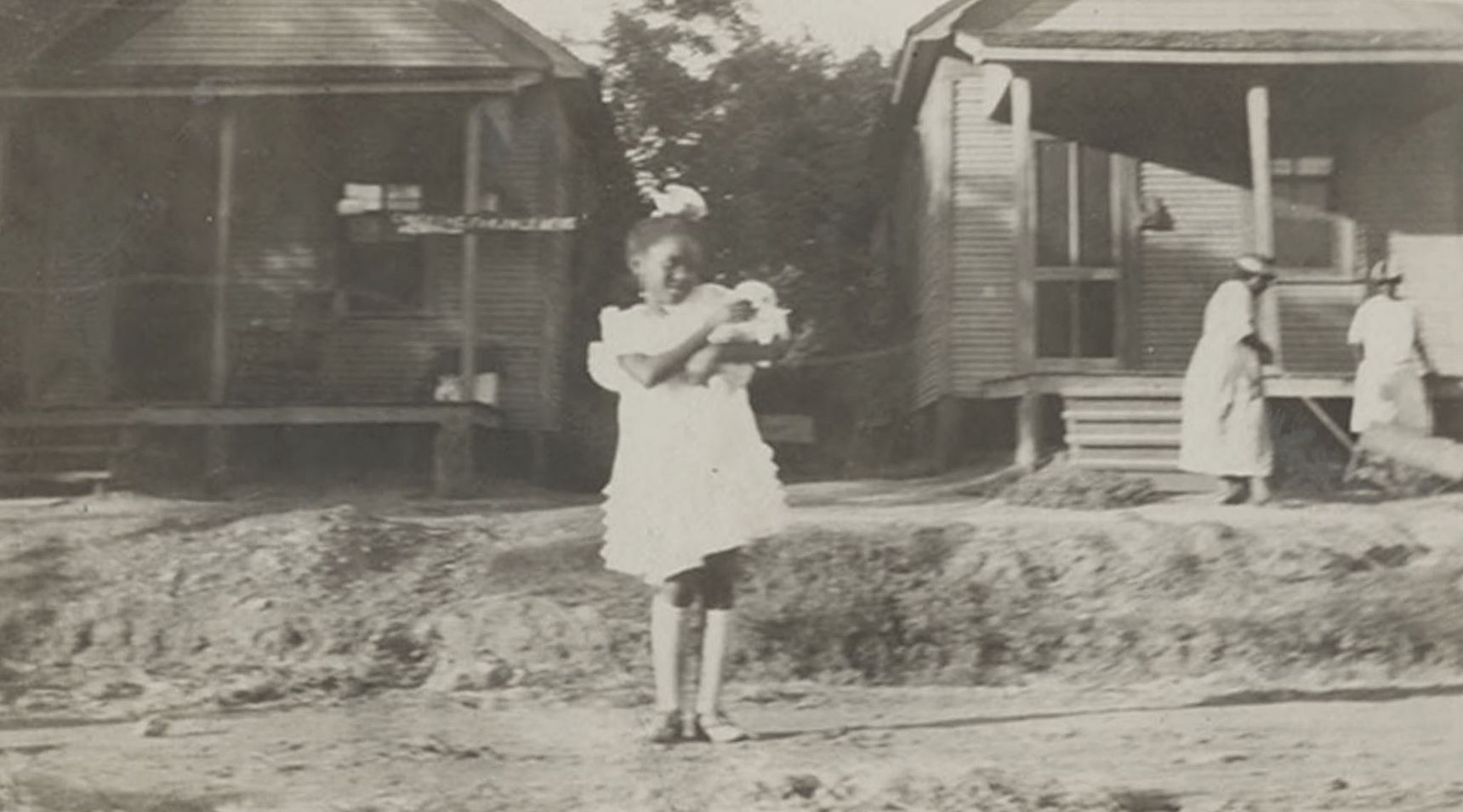
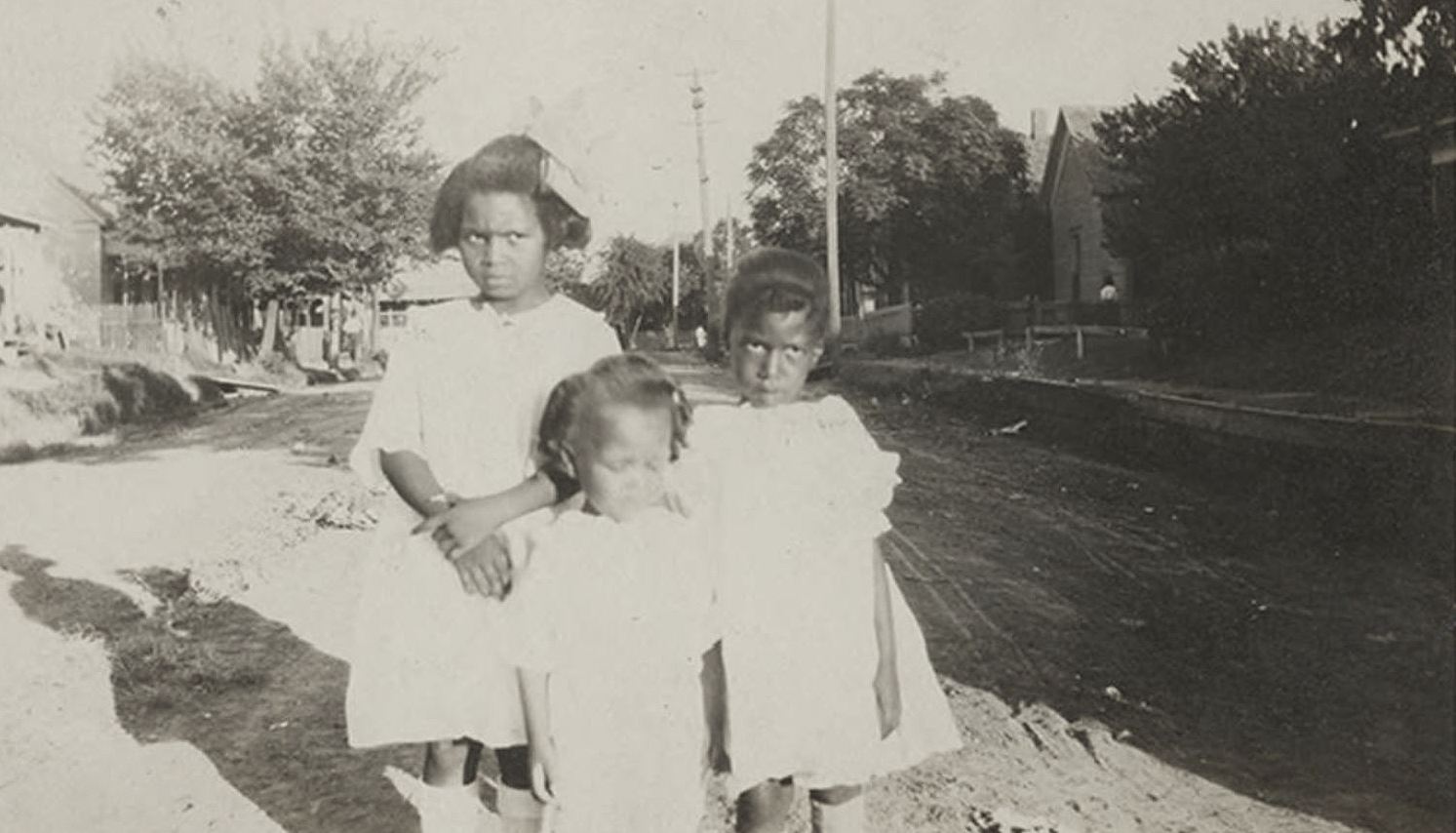
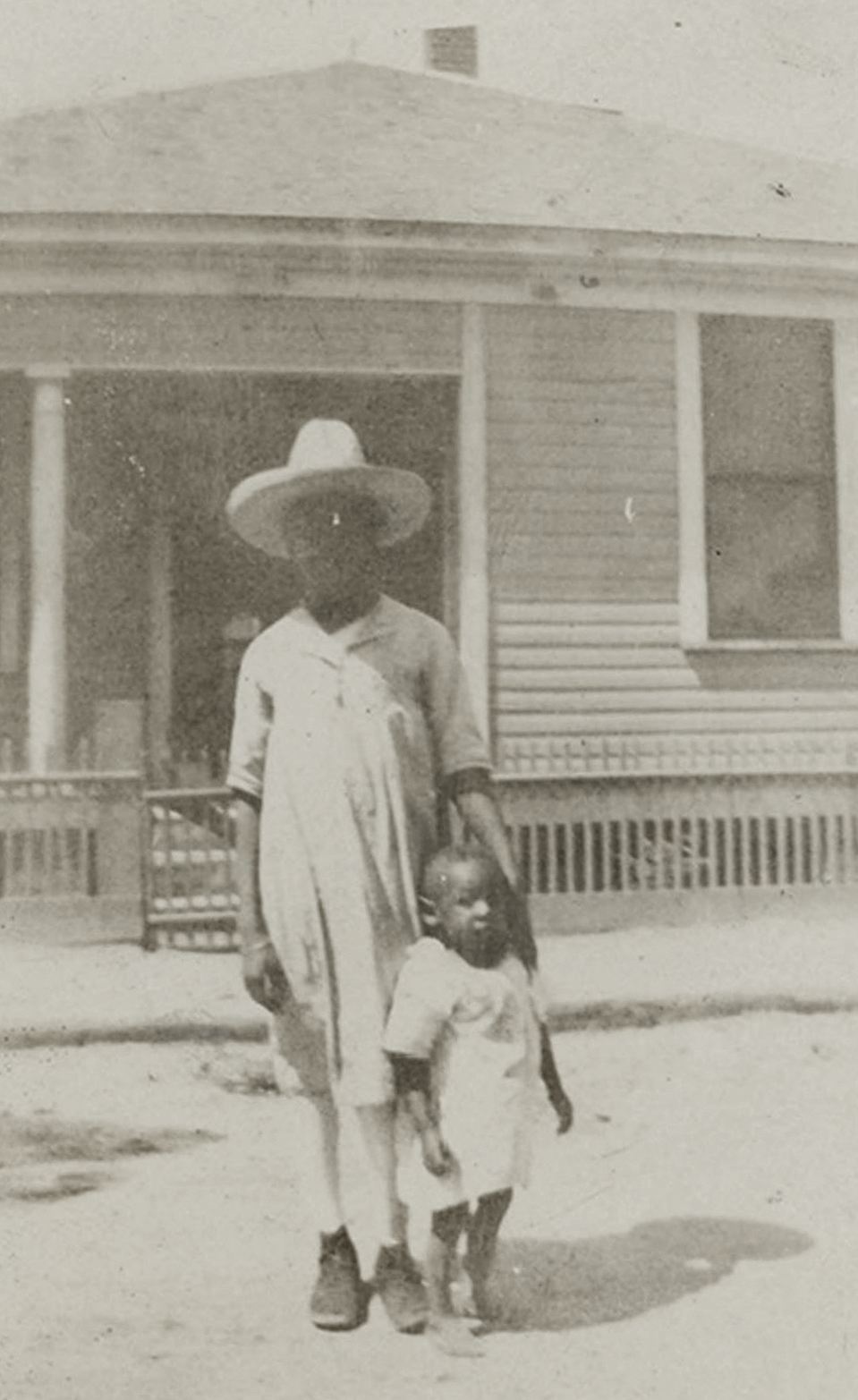
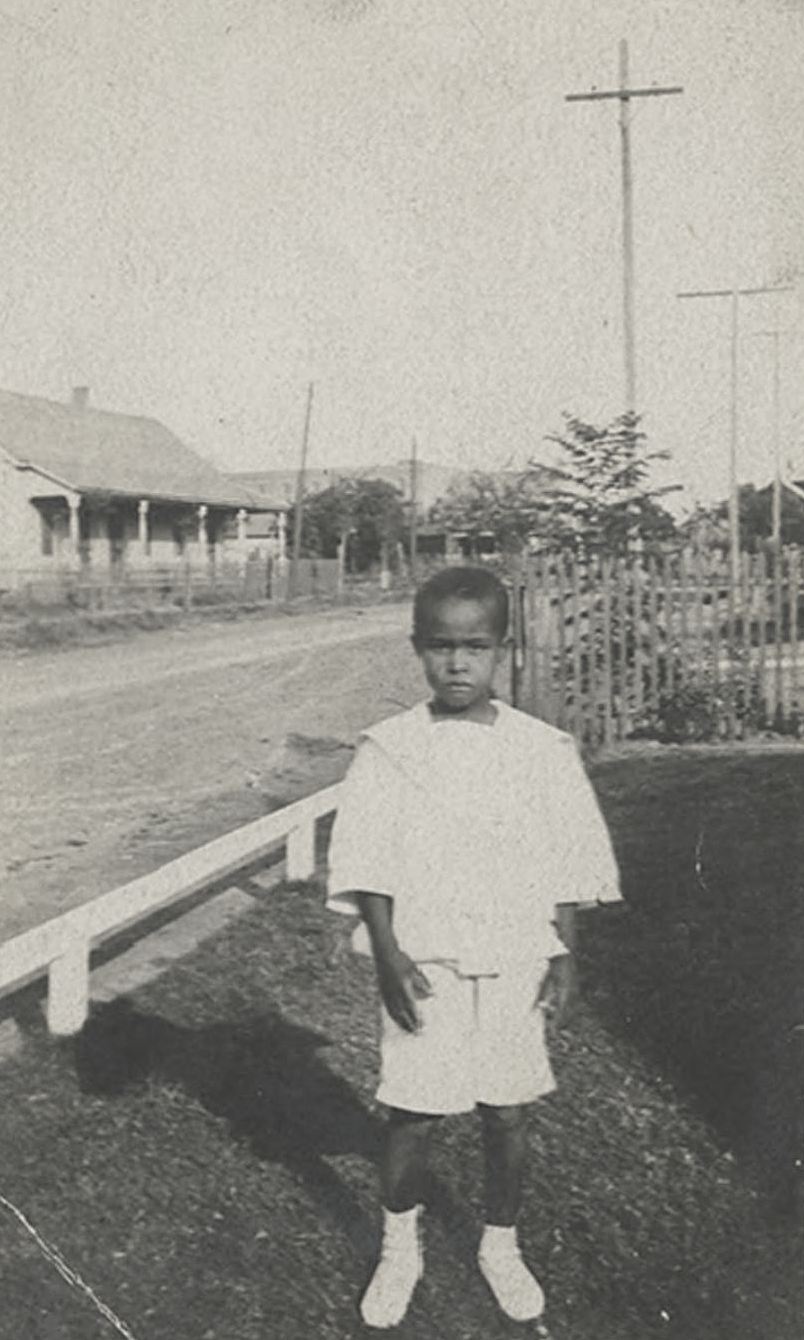
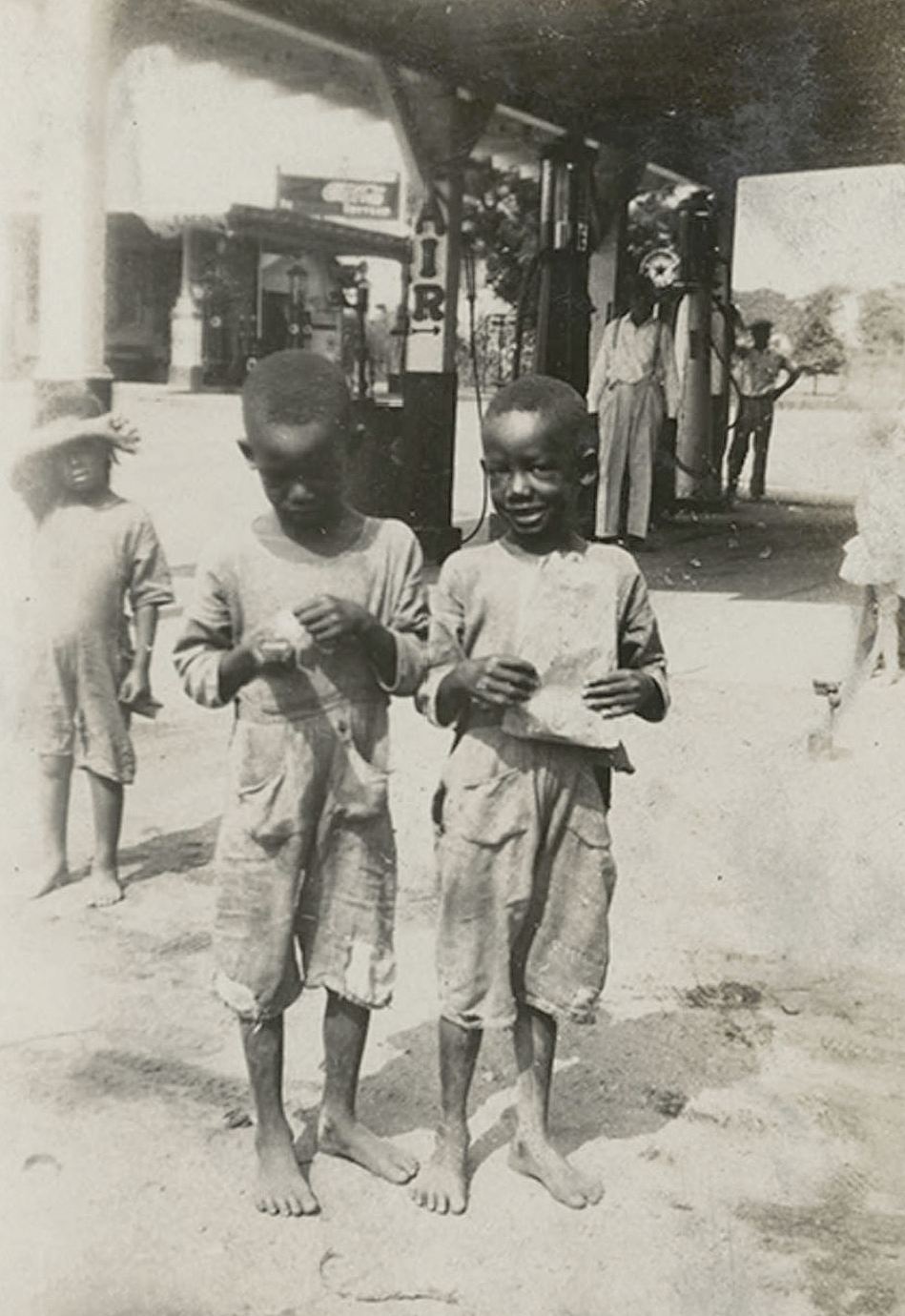
The Kids of State-Thomas

african-american-children_cook-coll_smu_1George W. Cook Collection, SMU

by Paula Bosse

More great photos from the George W. Cook Collection at SMU’s DeGolyer Library! Click photos to see larger images.

african-american-children_cook-coll_smu_2

african-american-children_cook-coll_smu_3

african-american-children_cook-coll_smu_4

african-american-children_cook-coll_smu_5

african-american-children_cook-coll_smu_6

***

Sources & Notes

All photos from the George W. Cook Dallas/Texas Image Collection, DeGolyer Library, Central University Libraries, Southern Methodist University. Additional information for each photo can be found for photo 1 here; photo 2 here; photo 3 here; photo 4 here; photo 5 here; and photo 6 here.

The State-Thomas area (also known in the past as Freedman’s Town and North Dallas) was once a vibrant African-American neighborhood which has now become swallowed up by “Uptown.” A short history can be found here (scroll down to “Freedman’s Town”).

Other State-Thomas-related photos can be found in these Flashback Dallas posts:

  • “The Allen Street Taxi Company,” here
  • “The Dunbar Branch: Dallas’ First Library for the African-American Community, 1931-1959,” here

Photos are big. Click them!

*

Copyright © 2016 Paula Bosse. All Rights Reserved.
 

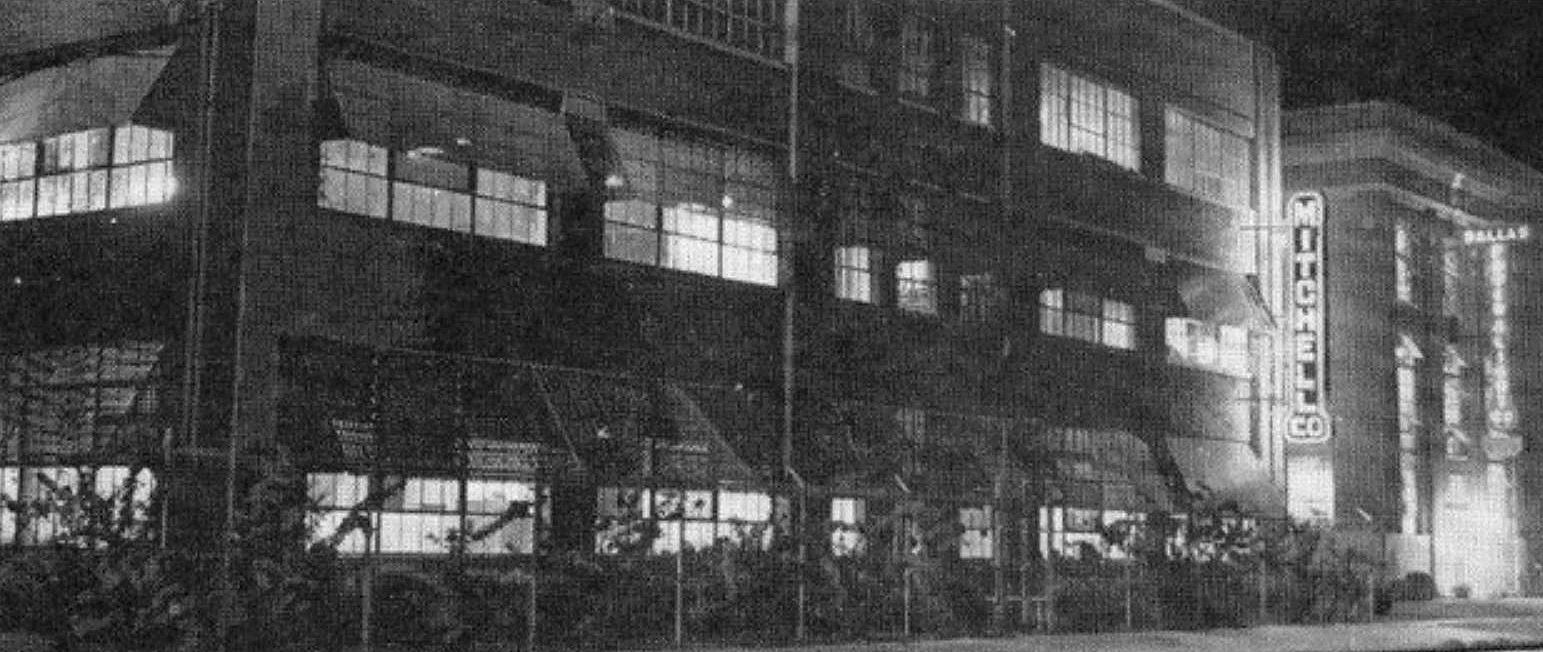
The Mitchell Building: Home to Cotton Gins, Rockets, Frozen Beverages, A/C Units, Slackers, Squatters, Hipsters, and Urban Loft-Dwellers

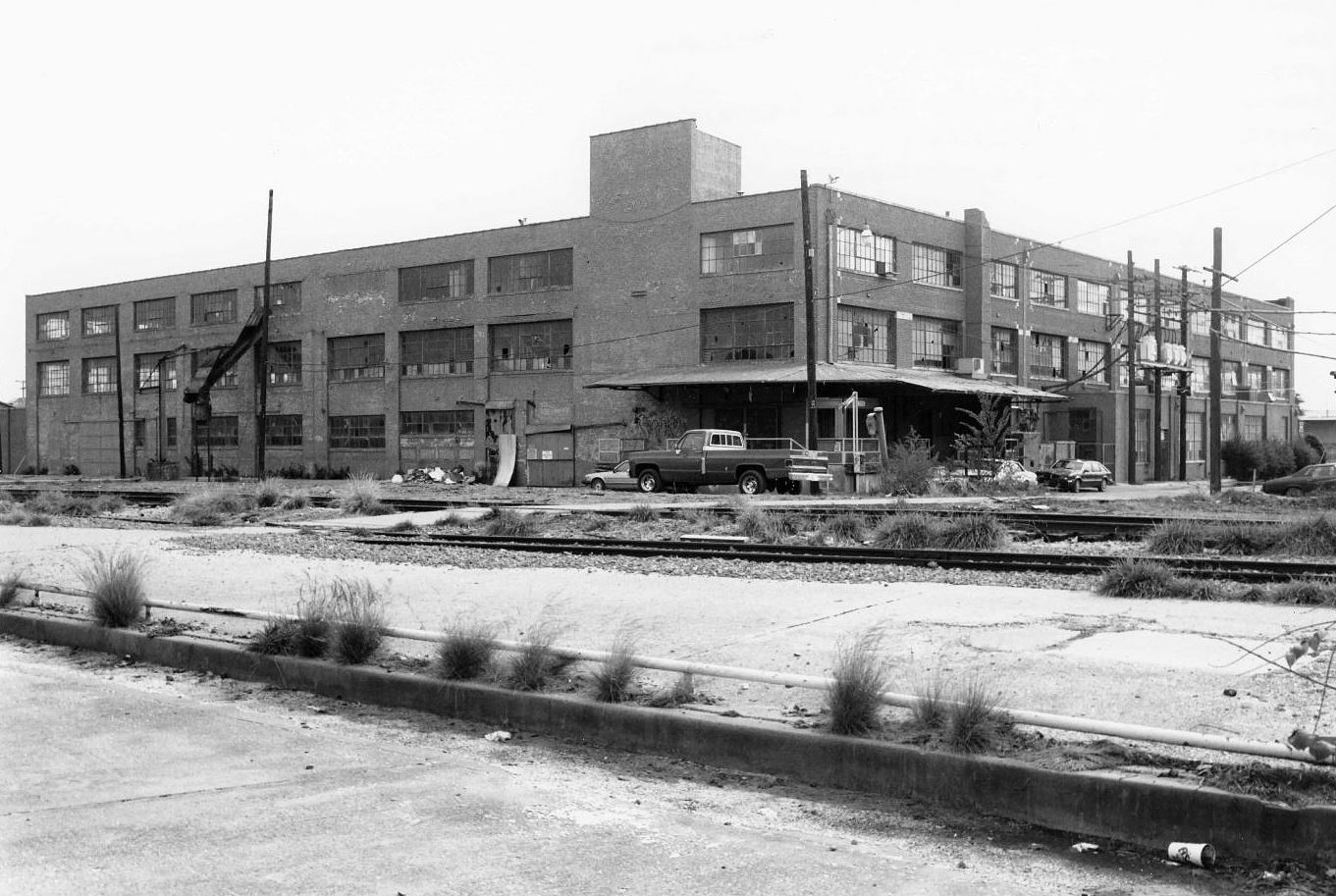
mitchell-bldg_oct-1988_appl-natl-register-hist-placesIn 1988, the building had seen better days… (click for larger image)

by Paula Bosse

In 1928, the John E. Mitchell Company (discussed previously here, here, and here) arrived in Dallas from St. Louis and built their J. A. Pitzinger-designed 2-story factory at 3800 Commerce Street (a wing was added the next year, and a third story was added the year after that). It produced cotton gins and farm implements. As strange as it seems today, Dallas was once the largest producer of cotton gin machinery in the United States. The Mitchell Company was located in a mostly industrial area very close to several other cotton gin manufacturers (such as the nearby  Continental Gin Company and Murray Company). At the height of their production, these Dallas factories were  responsible for half of the world’s cotton gins.

When World War II hit, the company became an important defense contractor and produced munitions for the U.S. Navy and U.S. Army, making things such as “anti-submarine projectiles,” anti-aircraft shells, rocket nozzles, and “adapters for incendiary bomb clusters.”

After the war, the Mitchell Company continued to manufacture agricultural implements but diversified by turning out other types of machinery, like automobile air conditioners and and cleaning systems. As the 1960s dawned, they developed the machine that made ICEE frozen slushy drinks (forever immortalized by 7-Eleven as The Slurpee).

After the death of company president John E. Mitchell, Jr. in 1972, the business began a slow slide downward. The company appears to have gone out of business in the early 1980s. In the fall of 1982, the company’s equipment was sold at public auction, and, in 1984, the building became the temporary home of the Junior Black Academy of Arts and Letters.

In the 1980s, Deep Ellum and Exposition Park began to explode with new bars, clubs, and galleries. If it was cool, it was in Deep Ellum and Expo Park; if it was in Deep Ellum and Expo Park, it was cool. Artists and musicians began to move into many of the neighborhood’s old warehouses. These usually run-down buildings — in which bohemian types lived (not always legally) and used as studio spaces — were huge and (in the beginning) cheap. The Mitchell Building became something of a ground zero for wild parties and was described in a fantastic 1995 newspaper article by Shermakaye Bass (linked below) as both a “flophouse” and “an artists commune and downtown slacker den.” The building was closed and boarded up by its owners in early 1995 in order to avoid code-violation citations, but by 1999 the building had been purchased, cleaned up, modernized, and converted into 79 loft apartments. Today, the Mitchell Lofts have been a part of the Expo Park scene for almost 20 years.

*

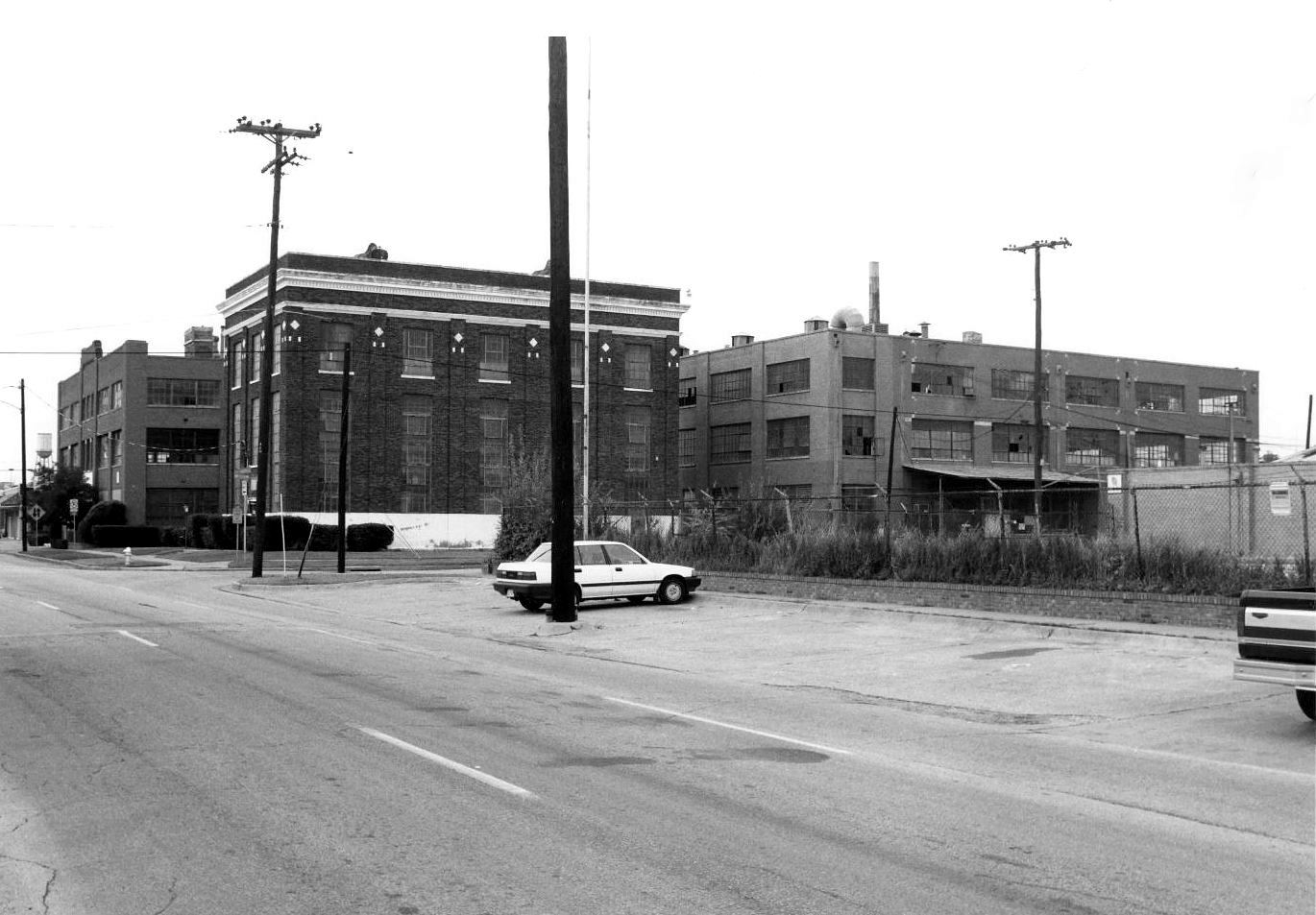
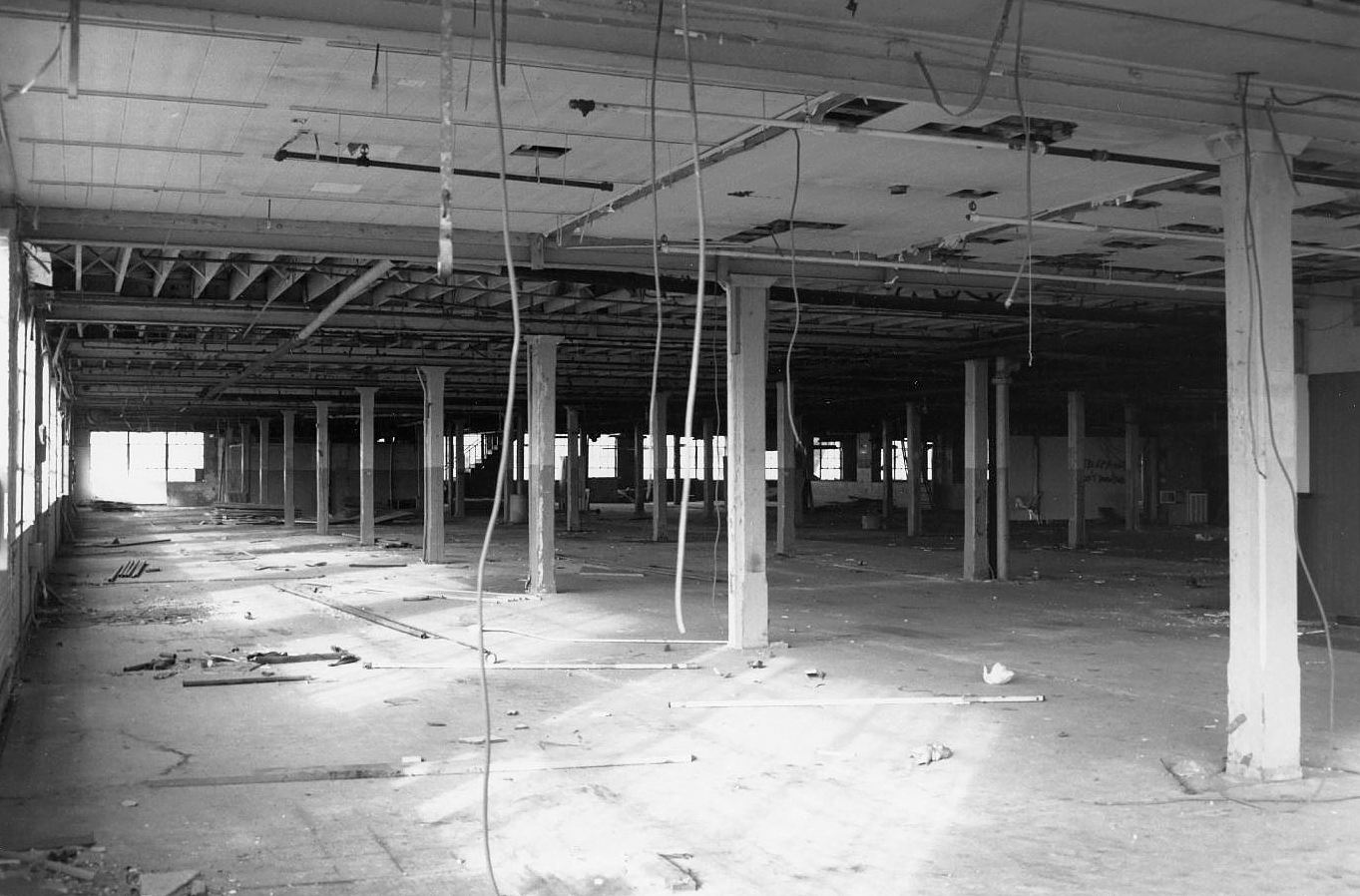
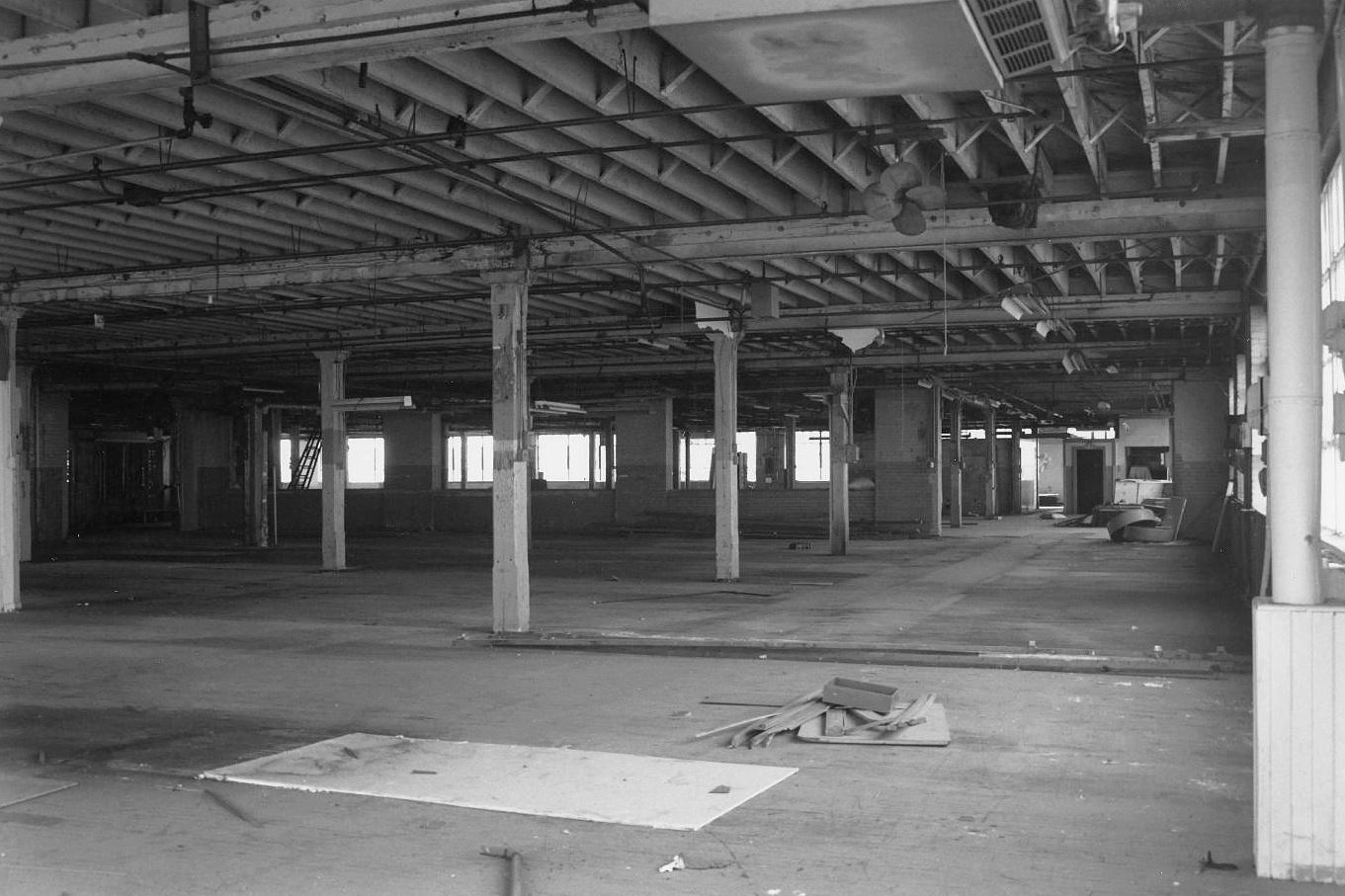
In 1991, the Mitchell Building was listed on the National Register of Historic Places. The photographs below (and the one at the top) were included in the application form. They were taken by Daniel Hardy of Hardy-Heck-Moore in October, 1988. Things weren’t looking great for the building in 1988. It must have been quite an undertaking to convert this large L-shaped building (which had certainly seen better days) into hip, sleek lofts.

Below, looking northwest on Commerce. The Mitchell Building is in an L-shape — the smaller building in the foreground is an old Dallas Power and Light substation, built around 1925. (Click photos to see larger images.)

mitchell-bldg_oct-1988_2

*

The back, from the old T&P/Missouri-Pacific railroad tracks.

mitchell-bldg_oct-1988_3

*

And two interior views of the second floor.

mitchell-bldg_oct-1988_4

mitchell-bldg_oct-1988_5

*

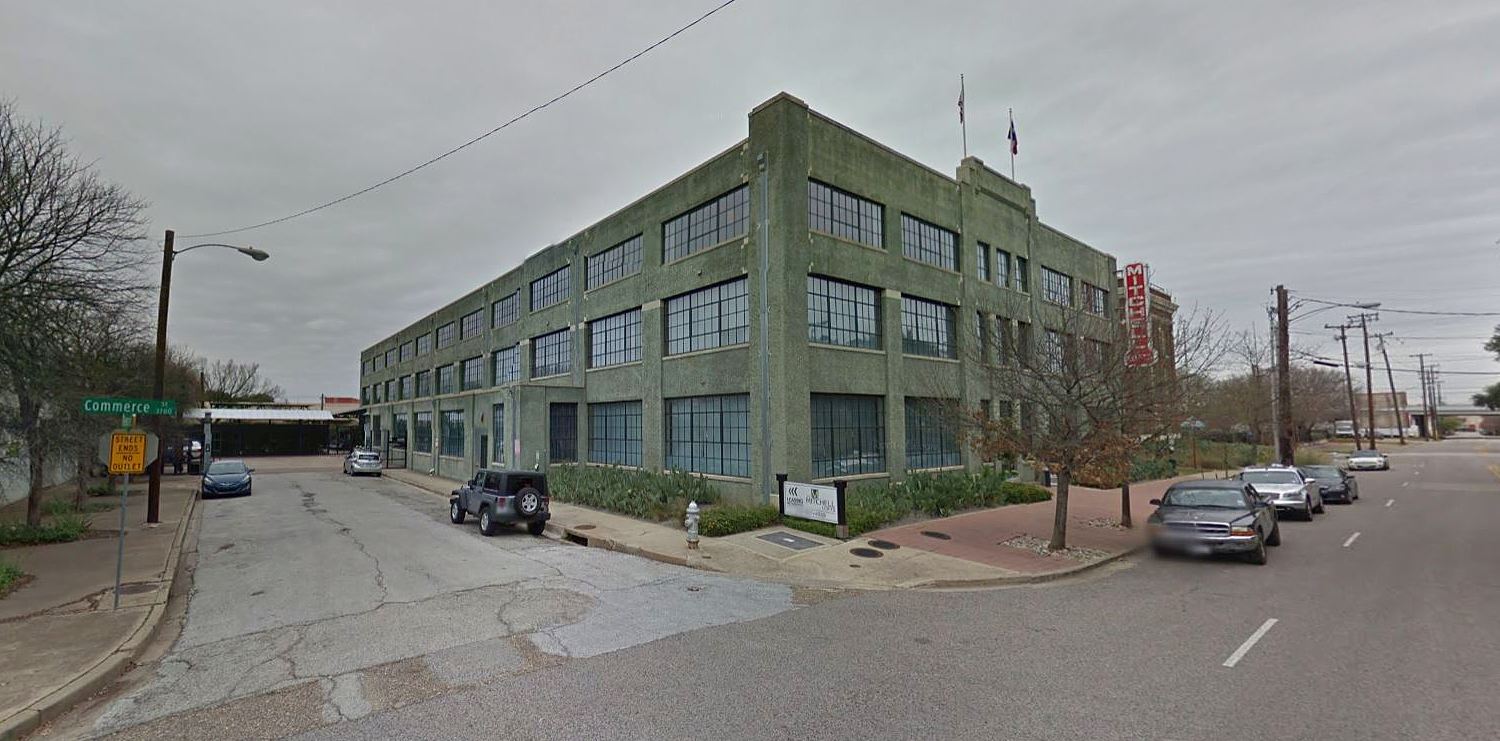
Here’s what the exterior looks like today, spiffified. (Explore it on Google Street view here.)

mitchell-lofts_google_jan-2016Google Street View (Jan. 2016)

mitchell-building_google
Google Maps

**

mitchell_sign_war-bk
Mitchell War Book, ca. 1945

mitchell-building_flickr_colteraFlickr

***

Sources & Notes

Photos are from the application to the National Register of Historic Places; in addition to the photos, there is a thorough history of both the building and the John E. Mitchell Company, written by David Moore of Hardy-Heck-Moore. The 28-page form can be found in a PDF, here. (3/14/17 UPDATE: The link no longer works for me, and I am unable to find the document. Here’s the full URL: ftp://ftp.dallascityhall.com/Historic/National%20Register/John_E_Mitchell_Plant.pdf.)

More info on the Mitchell Company and its building through the years can be found in the following Dallas Morning News articles:

  • “Dallas Gets Gin Factory” (DMN, March 17, 1928) — the announcement that a permit has been granted for the construction of a two-story brick factory and warehouse
  • “John E. Mitchell Exemplifies Faith as Secret to Success,” by Helen Bullock (DMN, July 17, 1949) — an entertaining profile of John E. Mitchell, Jr.
  • “Demise of a Dream Factory — Deep Ellum’s Historic Mitchell Building Leaves a Legacy of Artistic and Industrial Vision,” by Shermakaye Bass (DMN, Feb. 5, 1995) — for those who grew up when Deep Ellum was experiencing its (first) renaissance, the article is a great snapshot of what things were like in Deep Ellum and Exposition Park back in the ’80s and early ’90s

See what the Mitchell Lofts look like now in this Candy’s Dirt article from 2014; more photos are here. Pretty hard to believe people used to manufacture things like cotton gins and anti-aircraft missiles there.

The Mitchell Lofts website is here.

Click pictures and clipping to see larger images.

*

Copyright © 2016 Paula Bosse. All Rights Reserved.