Flashback : Dallas

A Miscellany: History, Ads, Pop Culture

Category: 1940s

Dallas’ First Two Drive-In Theaters — 1941
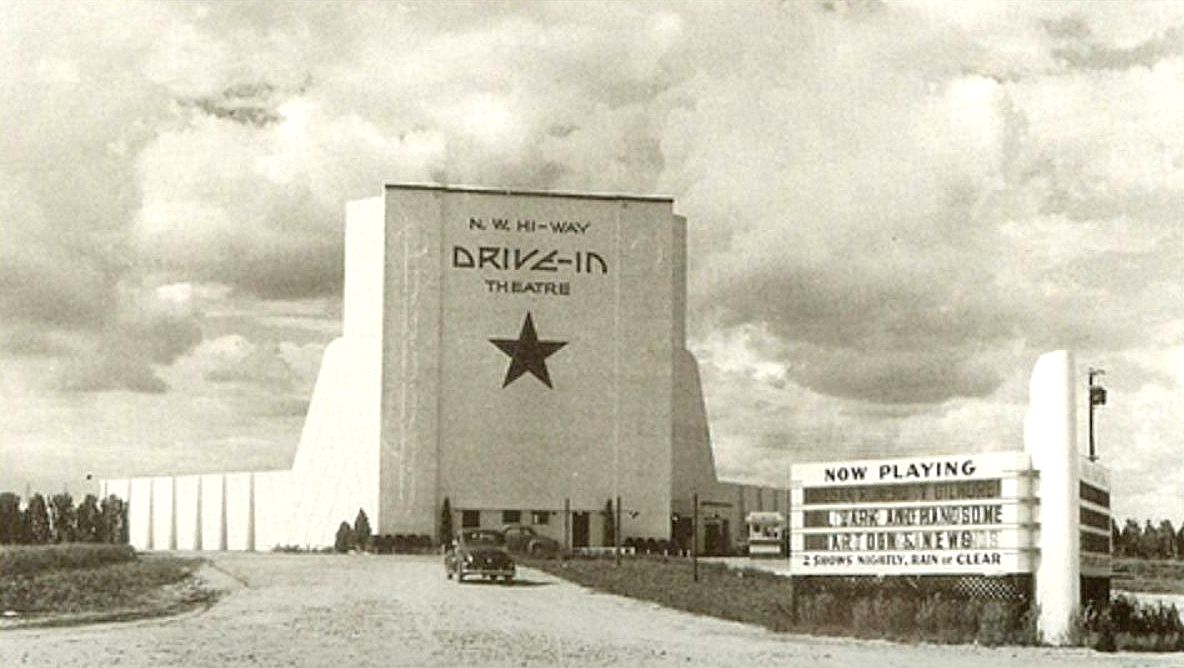
nwhwy-drive-in_july-1941Northwest Hi-Way Drive-In, July 1941

by Paula Bosse

The drive-in theater arrived in Dallas on June 20, 1941, the night that “Give Us Wings,” starring the Dead End Kids, played as the first feature of the Northwest Hi-Way Drive-In, located at the northwest corner of Northwest Highway and Hillcrest. It stood on twelve-and-a-half acres and had a 450-car capacity. The drive-in was opened by W. G. Underwood and Claude Ezell, who had opened similar outdoor movie theaters in San Antonio and Houston.

The Hi-Way (which appears to have usually been spelled “Highway”) featured something I had never seen in drive-in design: cars parked on terraced ramps, where the car behind was always slightly higher than the one in front of it so as to offer an unobstructed view, and speakers were on stands embedded in cement and were placed between cars (no in-car speakers).

Rain was apparently not a problem in this brave new world of outdoor entertainment — if it rained the show would go on (even though the opening was delayed by a few days because of rainy weather) — but fog was a problem, and in case of such weather, movie-goers would be issued a “fog-check” to come back another (fog-free) night.

A newspaper article appeared a few days before the theater’s opening, explaining what a drive-in was and how it worked. Here is the last paragraph:

According to Mr. Underwood 80 per cent of the people who attend drive-in theaters are non-theatergoers. These include people with children and no one to leave them with, semi-invalids, cripples and corpulent individuals who find it embarrassing to attend the regulation theaters. At the Drive-In there is no necessity for getting out of the car, an attendant meets you at the gate, takes your money and buys your tickets, while another wipes your windshield. A third pilots the car to a space on one of the ramps. These are widely spaced enough that any car may leave at any time. (Dallas Morning News, “Northwest Highway Drive-In To Open Tuesday, Rain Or Stars,” by Fairfax Nisbet, June 14, 1941)

Okay then.

The the weather eventually behaved, and the opening on June 20, 1941 was a success, with an almost-capacity audience. The drive-in had arrived in Big D.

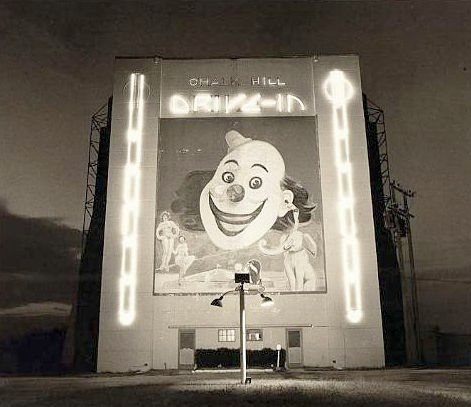
Two weeks later — on July 4, 1941 — Underwood and Ezell opened the Chalk Hill Drive-In in Oak Cliff, at about West Davis and Cockrell Hill Road. It looked almost exactly like the Northwest Highway drive-in, down to the great big star on the outside of it (to be replaced with a clown mural years later). The very first feature was “The Invisible Woman” with Virginia Bruce and John Barrymore.
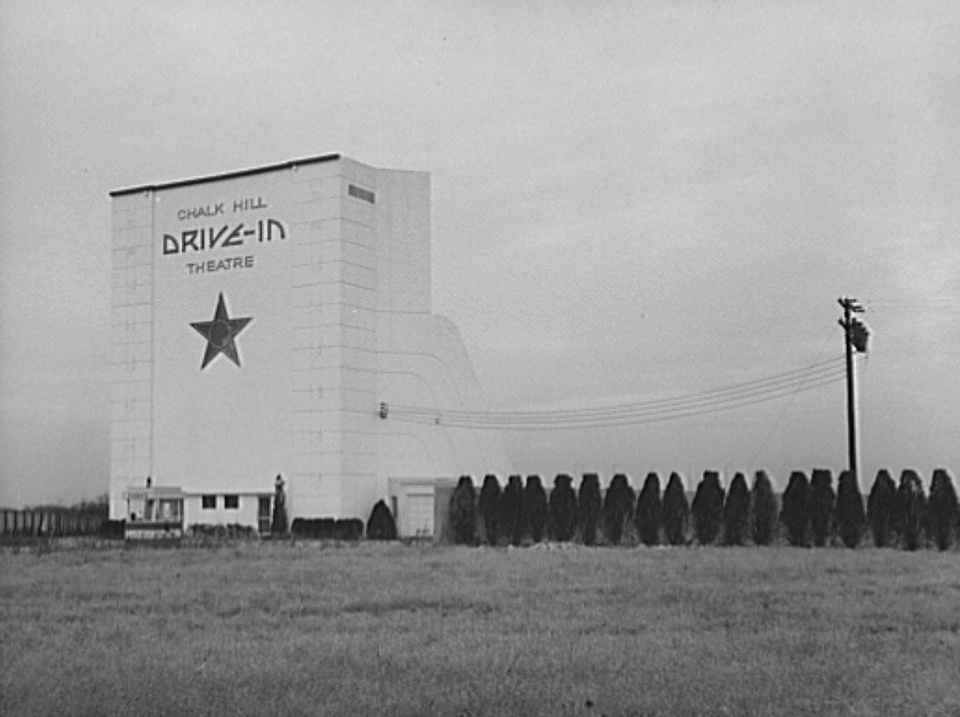
chalk-hill-drive-in_1942_LOC1942, out on the Fort Worth pike (Library of Congress)

Both theaters had successful and relatively long lives. The Northwest Highway drive-in closed in 1963 when the land was purchased for development (the most notable occupant of the new businesses that occupied that corner was probably the fondly remembered Kip’s restaurant).

The Chalk Hill Drive-In closed in the late 1970s, and from what I can tell, it spent a couple of decades abandoned and decaying.

*

A few random tidbits.

Here’s a 1945 aerial shot over SMU looking north — the drive-in is in the middle of all that wide-open Caruth farmland, seen just left of Hillcrest (the Hillcrest Mausoleum, built in 1936, can be seen to the right of Hillcrest; the Caruth Homestead is at the far right edge of the photo).
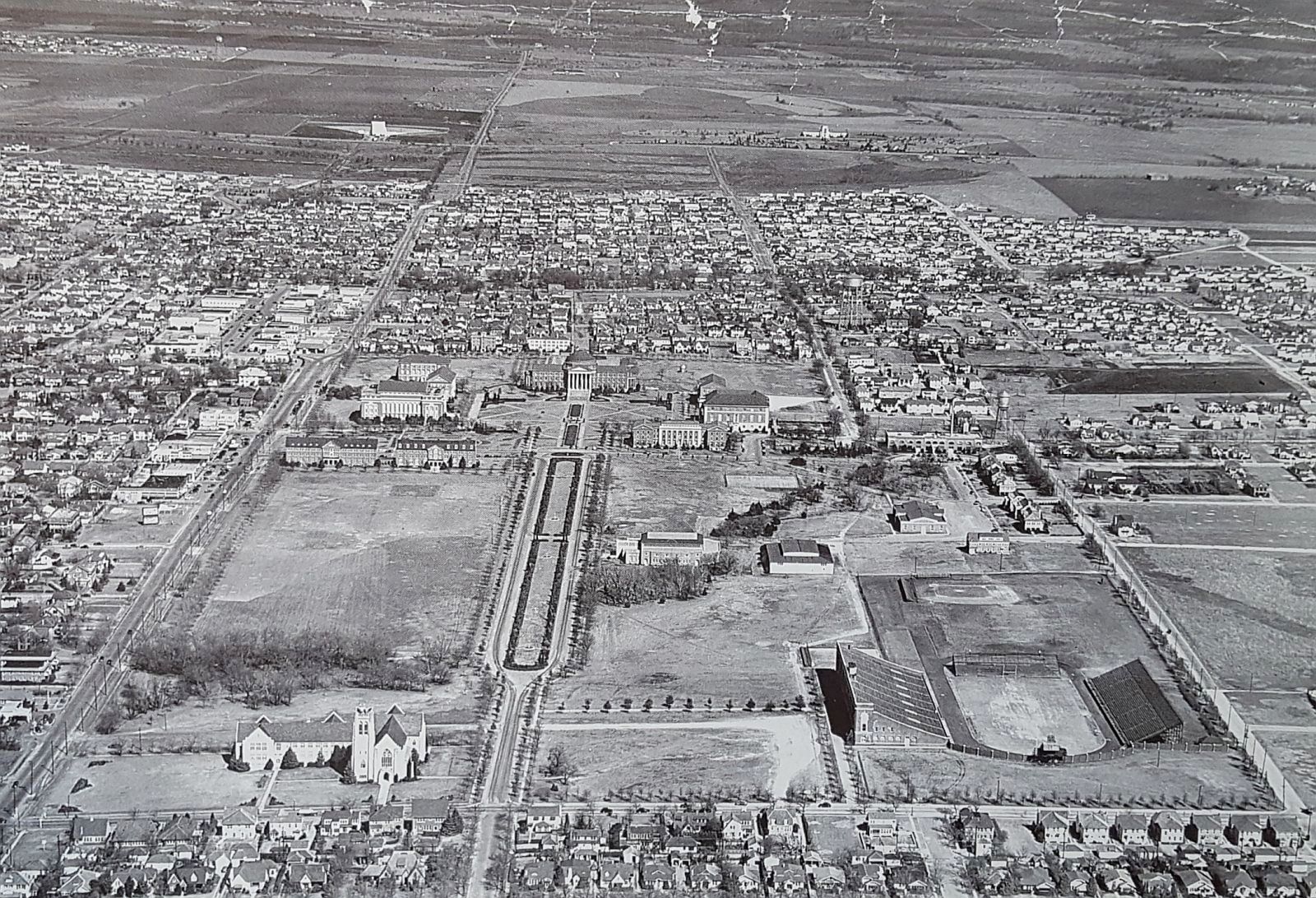
nw-hway-drive-in_1945_galloway_park-cities-photohistory

Here’s a detail, showing it up-close:
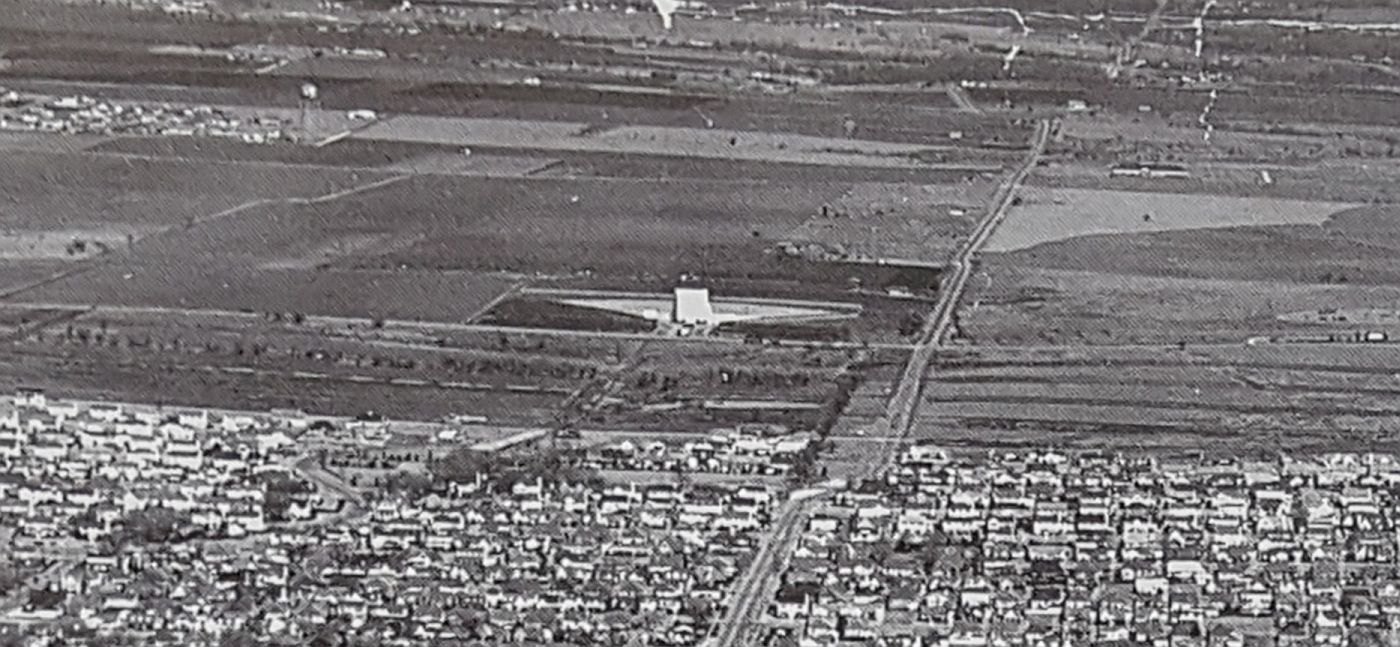
nw-hway-drive-in_1945_galloway_park-cities-photohistory_det

Two aerial shots by the United States Army Air Forces, taken for a USDA survey in 1945. First, the Northwest Highway Drive-In, with Northwest Highway running horizontally in the photo and Hillcrest running vertically.

nwhwy-hillcrest_usaaf_fosucue_smu_1945SMU

This aerial photo from 1947 shows a view to the northwest, with Hillcrest running from lower left corner to top right — it appears the photo was taken to show the new apartment complex just north of the parking area of the drive-in.
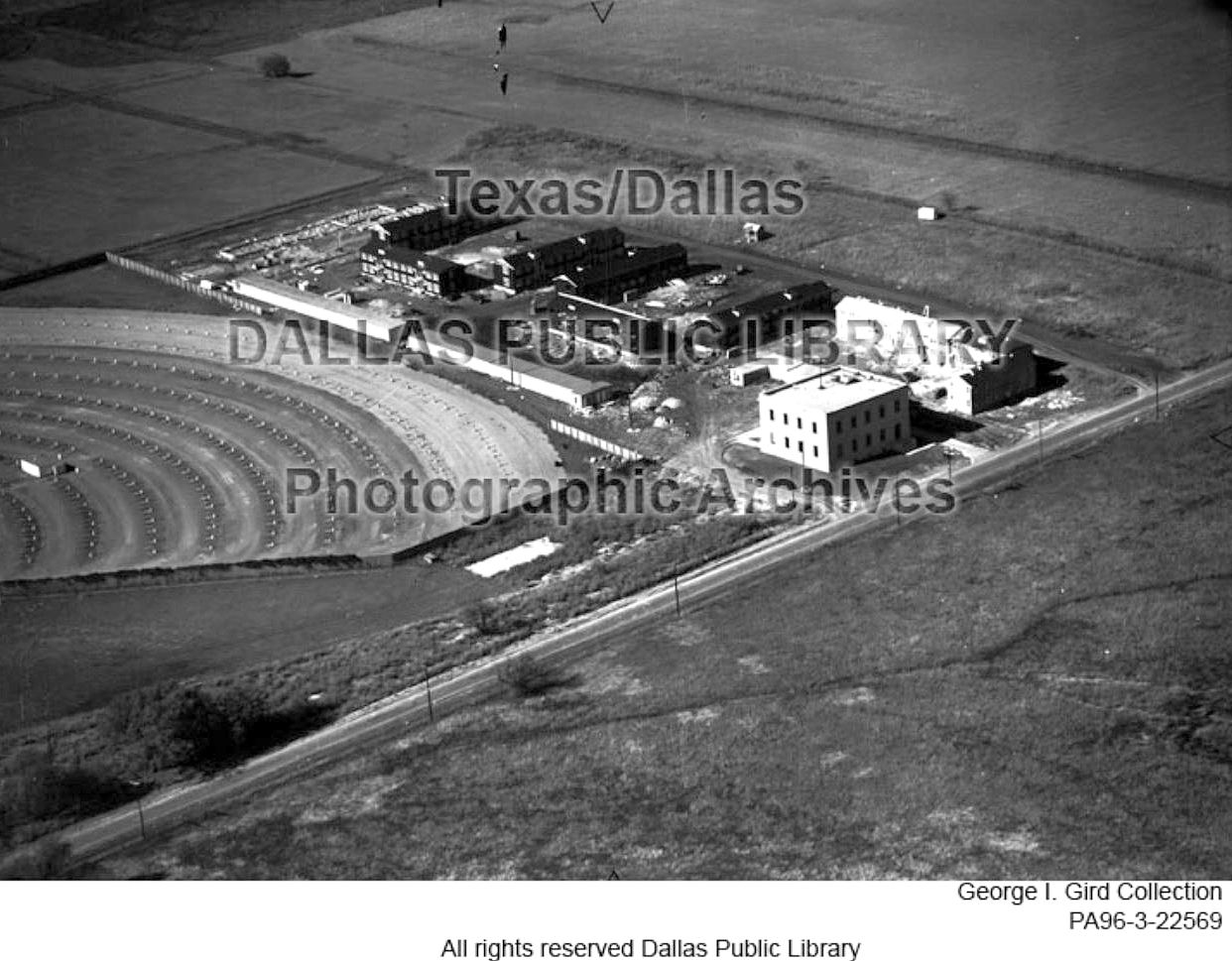
northwest-hi-way_drive-in_DPL_1947
Dallas Public Library

And Chalk Hill, with Highway 80 running horizontally:
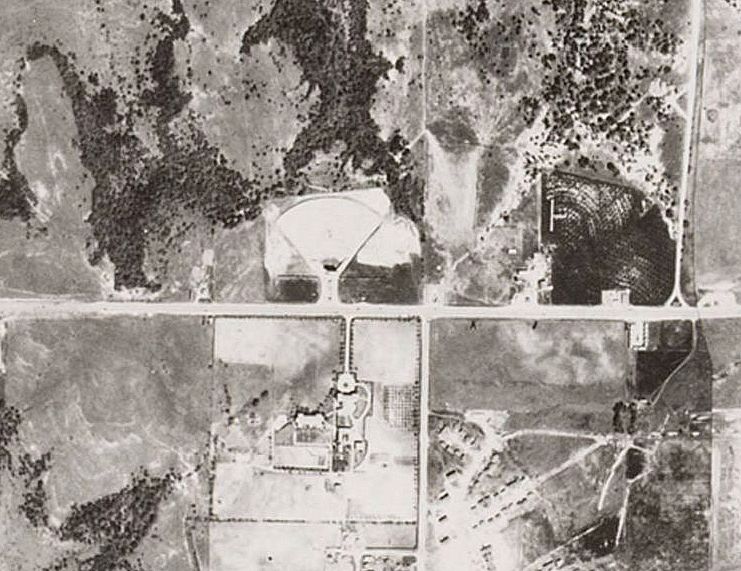
chalk-hill_usaaf_smu_1945SMU

Chalk Hill again, this photo from 1973, with the clown face and circus theme that many remember:
chalk-hill-drive-in_1973_smithsonian
Photo by Steve Fitch, Smithsonian American Art Museum

A couple of amusing livestock-oriented drive-in-related human-interest blurbs appeared in the pages of The Dallas Morning News:

Some cattle going from Waco to Wisconsin stampeded through University Park when their truck caught fire on Greenville. Police herded most of the steers into a Northwest Highway drive-in theater. Five were found nuzzling zinnias at a home on Southwestern. (Lorrie Brooks, DMN, Sept. 18, 1952)

Cattle in 1952, donkeys in 1955:

University Park police early Wednesday captured two pet donkeys who escaped their pen at the Northwest Highway Drive-In Theater during the night. A startled passerby spotted the two donkeys grazing contentedly on a lawn at Centenary and Hillcrest, about four blocks from the theater…. Bill Duckett, manager of the theater, reported the loss of the two pets, which he keeps for the entertainment of the theater’s small-fry patrons. (DMN, May 26, 1955)

***

Sources & Notes

I’m not sure of the source of the top photo, but I’m pretty sure of when it was taken: the marquee shows that the movie “Tall, Dark and Handsome,” starring Cesar Romero, was playing; that movie ran at the Northwest Hi-Way Drive-In July 12-14, 1941.

The aerial photo (by Capt. Lloyd N. Young) showing SMU and the land that lay north of it is from the Highland Park United Methodist Church Archives; I found it in Diane Galloway’s fantastic book The Park Cities, A Photohistory.

The two aerial photos are details of larger photographs from the collection of Dallas Aerial Photographs, 1945 USDA Survey, Edwin J. Foscue Map Library, Central University Libraries, Southern Methodist University. The full (labeled) Northwest Highway photo is here; the Chalk Hill photo is here.

Two other aerial photos (from 1958) are interesting because they are a bit closer and because you can see the terraced ramps — they can be seen here (apologies for the watermarks — photos from HistoricAerials.com).

The Wikipedia entry for the Drive-In Theater is here.

The patent (with illustrations) for the drive-in theater, filed by Richard M. Hollingshead, Jr. in 1932 is here (it’s a very interesting read). I had no idea a drive-in movie theater could be patented. This cool drawing is part of it (click it to see it larger):

drive-in-patent_1

A great history of drive-ins in the Dallas-Fort Worth area can be found in the article “Starlit Skies and Memories” by Susan and Don Sanders; it appeared in the Spring, 1999 issue of Legacies, and can be read here. Great photos! (Who knew there was a drive-in on South Lamar — the Starlite — which catered exclusively to the black community?)

*

Copyright © 2015 Paula Bosse. All Rights Reserved.
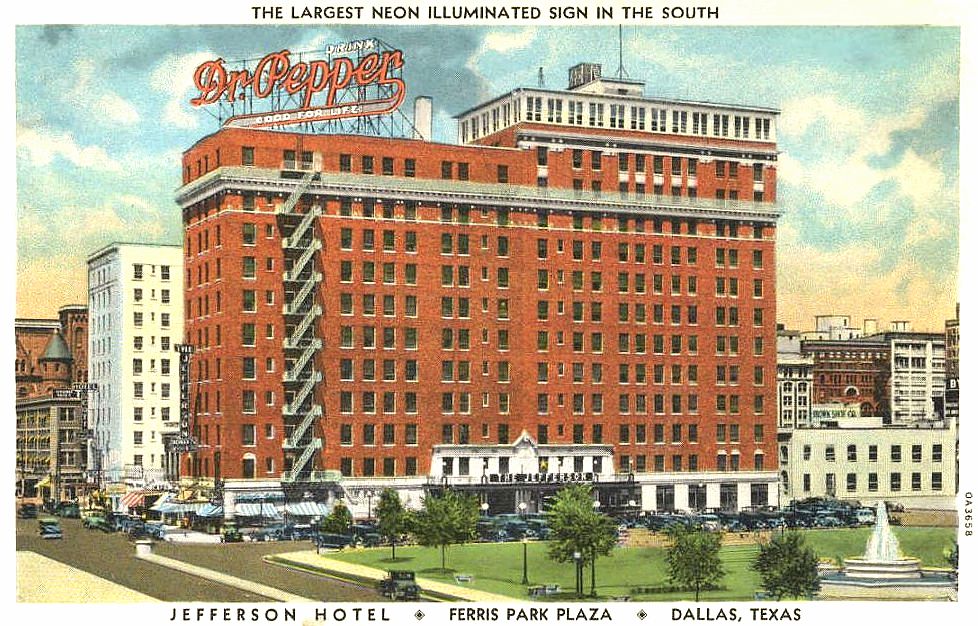
Neon Refreshment: The Giant Dr Pepper Sign

hotel-jefferson_neon-dr-pepper_cook_degolyer_SMU_ca1945

by Paula Bosse

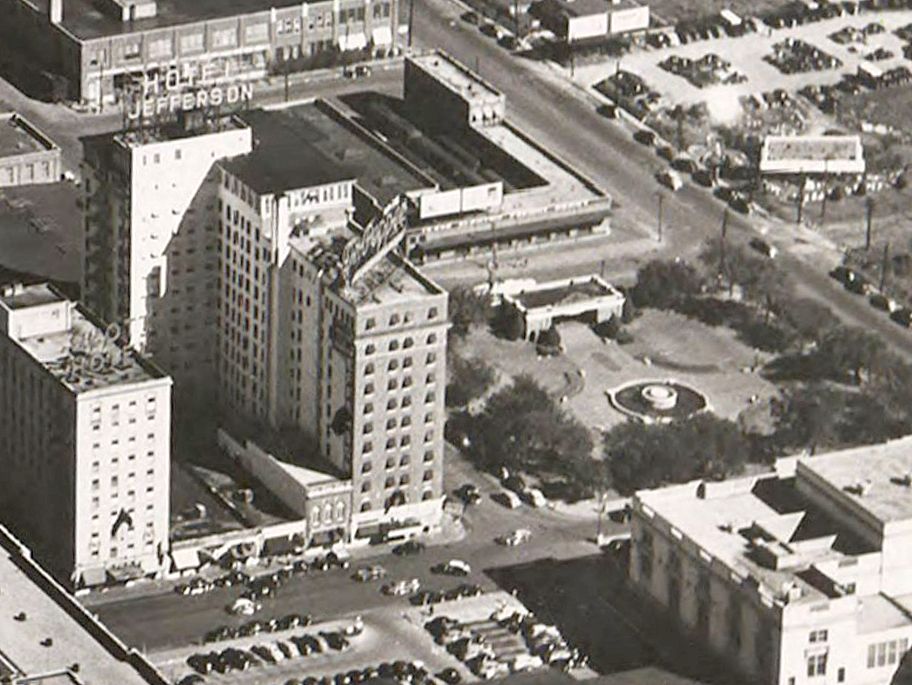
The Jefferson Hotel probably made some serious money leasing out rooftop acreage to the Dr Pepper people who erected a huge neon sign there. The hotel was located across from Union Station and a couple of blocks from the Old Red Courthouse. For people approaching the city from the southwest, there was absolutely nothing between them and that refreshing beacon rising tantalizingly above S. Houston and Wood streets.

hotel-jefferson_neon-dr-pepper_cook_degolyer_ca1945-verso

jefferson-hotel_hotel-lawrence_dr-pepper-sign_dmn-tumblr

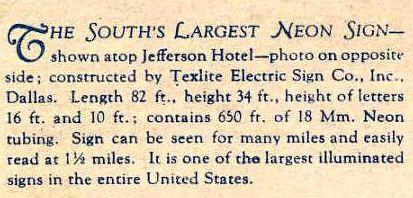
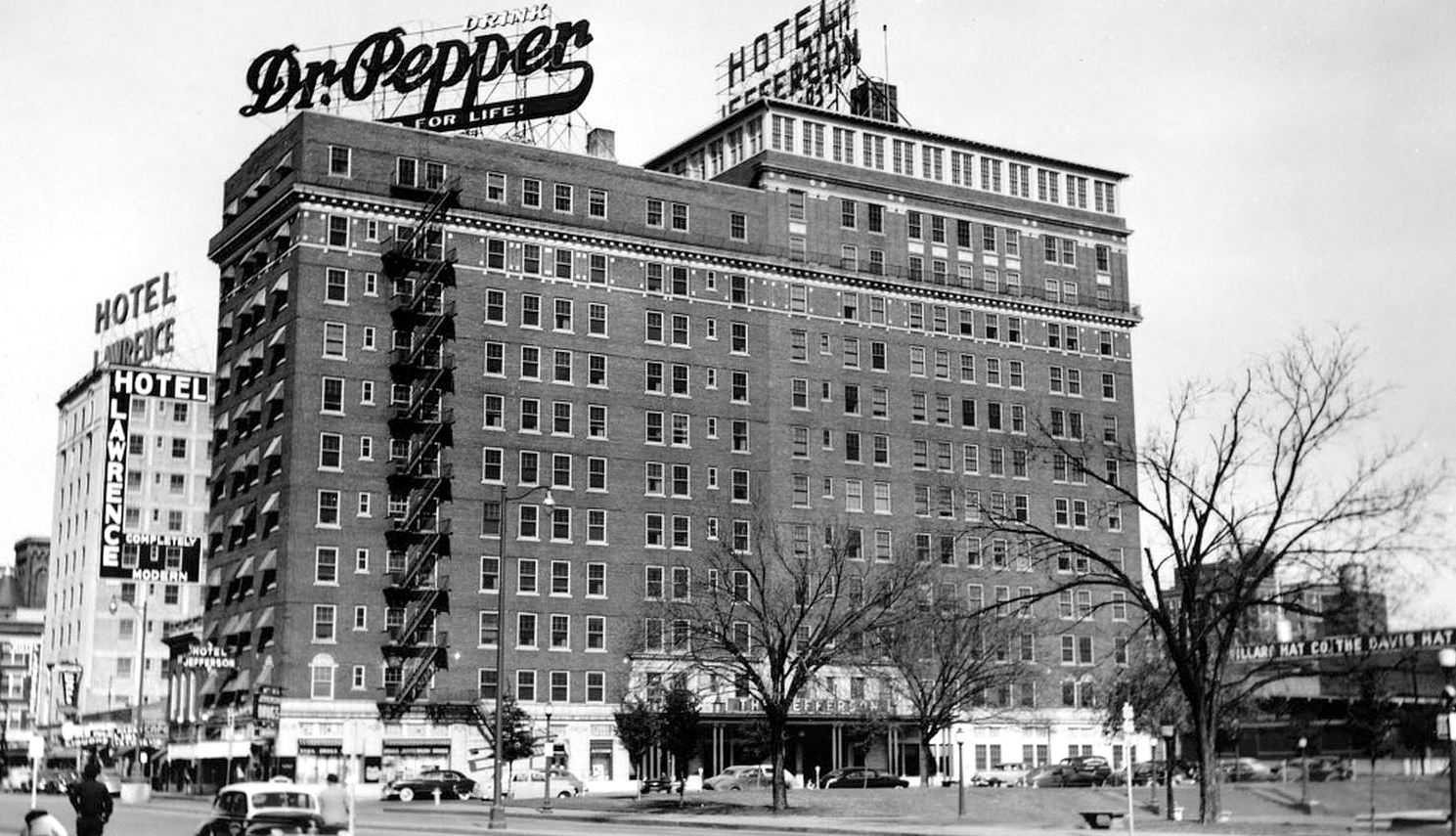
Texlite — the Dallas company that made the sign — was the first company in the Southwest to build and sell neon signs. Their first neon in Dallas advertised a shoe store in 1926 or 1927. (Texlite is best known as the company that built the red neon Pegasus and installed him on top of the Magnolia Petroleum Building in 1934.) My guess is that this Dr Pepper sign went up sometime between 1927 and 1934. It was up there for quite some time. Below is a detail from a photo taken sometime after 1943, and that DP sign was still there, continuing to make people subliminally thirsty

hotel-jefferson_dp_foscue-det(click for larger image)

It’s surprising Dallas didn’t have more neon back then. With a pioneering hometown neon company, the Dallas skyline should have been lit up like a Christmas tree 24 hours a day!

***

Sources & Notes

Postcard is from the George W. Cook Dallas/Texas Image Collection, Central University Libraries, Southern Methodist University; it can be viewed here.

First black-and-white photo was purchased at an antique mall or flea market, origin unknown; found here.

The 1940s-era aerial photo is a detail of a larger photo, “Downtown Dallas looking east (unlabeled)” by Lloyd M. Long, from the Edwin J. Foscue Map Library, Central University Libraries, SMU; the full photo can be viewed here.

A great photo of the hotel and sign can be seen in Sam Childers’ Historic Dallas Hotels, here. Childers writes that the Dr Pepper sign came down when the Jefferson was sold and became the Hotel Dallas in 1953. 20-some-odd years for a sign like that to remain in one place is a pretty good run.

The Jefferson Hotel (or as it’s sometimes identified, “Hotel Jefferson”) was at 312 S. Houston St. The building was demolished in 1975. It is now a hotel-shaped parking lot.

See what other clever thing once occupied the roof of the Jefferson Hotel in the Flashback Dallas post “The Jefferson Hotel and Its ‘Wireless Telegraph’ Rooftop Tower — 1921.”

*

Copyright © 2015 Paula Bosse. All Rights Reserved.
 

Nardis Sign-Painters: “Everything In Sportswear” — 1948

nardis_sign-painters_ebay_1948You don’t see this much anymore (click for larger image)

by Paula Bosse

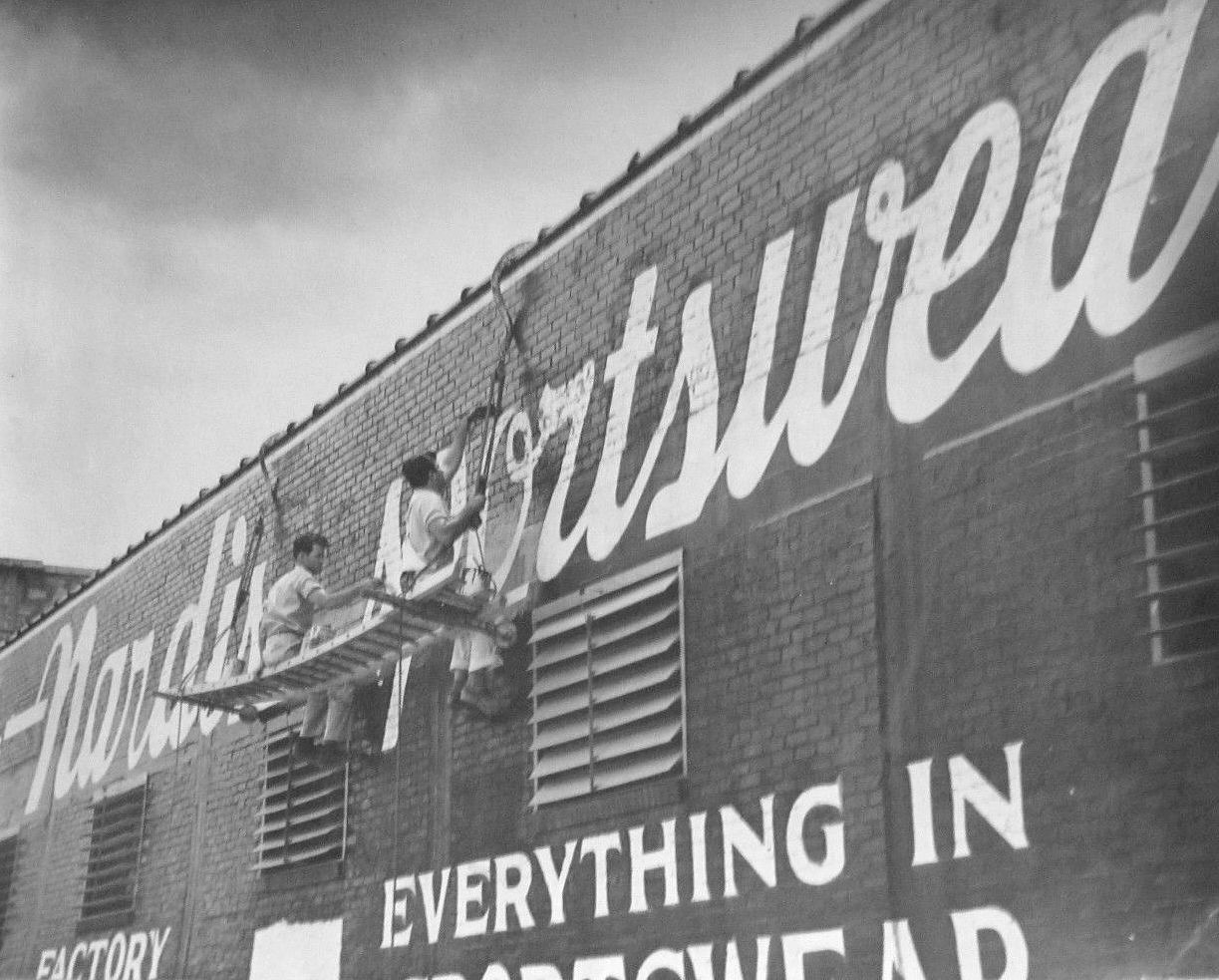
I’m sure there were people in the past who thought that advertising painted directly onto buildings was as tacky as billboards are today, but I love it, and, sadly this type of sign-painting has become something of a lost art. Here we see men painting a sign for the successful apparel manufacturer Nardis Sportswear (later, Nardis of Dallas). The company’s corporate headquarters appears to have been on Browder street, with manufacturing factories on N. Austin and S. Poydras streets. The sign in the photo would seem to have been painted on the side of one of the factory buildings.

nardis_1948-directory1948 city directory

nardis_1952-mapsco1952 Mapsco

I think all these Nardis buildings are gone, so we don’t even get any faded ghost signs to remind us that Dallas was once a large-ish garment manufacturing center.

***

Sources & Notes

Photo — dated 1948 on reverse, with stamp of the Hank Tenny Studio at 1420 Wood Street — found on eBay.

My previous post on the Nardis company — “Nardis of Dallas: The Fashion Connection Between ‘The Dick Van Dyke Show’ and the Kennedy Assassination” — can be found here.

*

Copyright © 2015 Paula Bosse. All Rights Reserved.
 

Commerce Street — 1942-ish

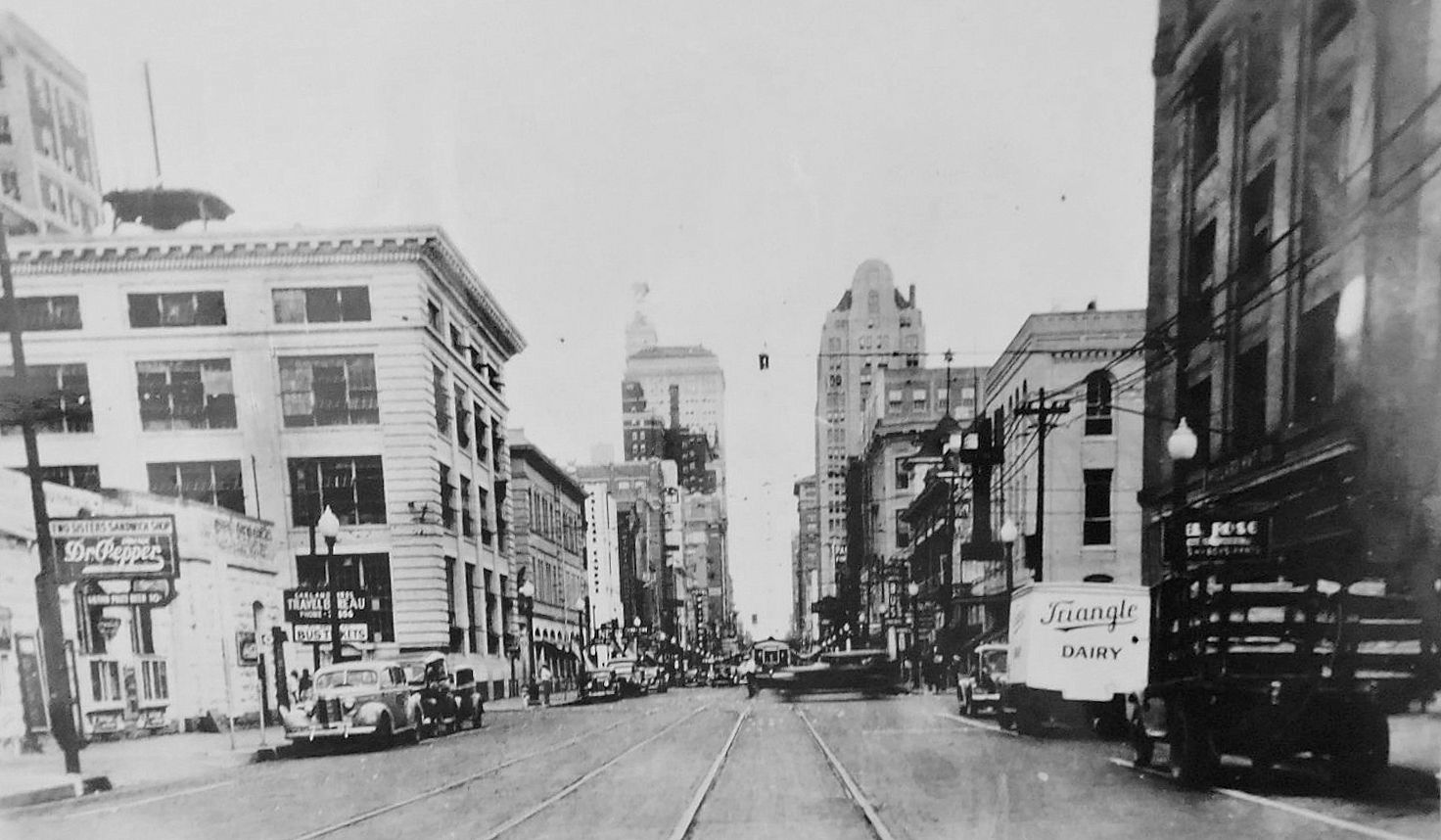
commerce-st_RPPC-1942_ebayCommerce St. (click for larger image)

by Paula Bosse

Today, a somewhat random shot of Commerce Street from the early 1940s.

…And now I have a hankering for a Dr Pepper.

***

Cropped shot of an item currently being offered on eBay, here.

*

Copyright © 2015 Paula Bosse. All Rights Reserved.
WWII-Era Elm Street … In COLOR — 1945

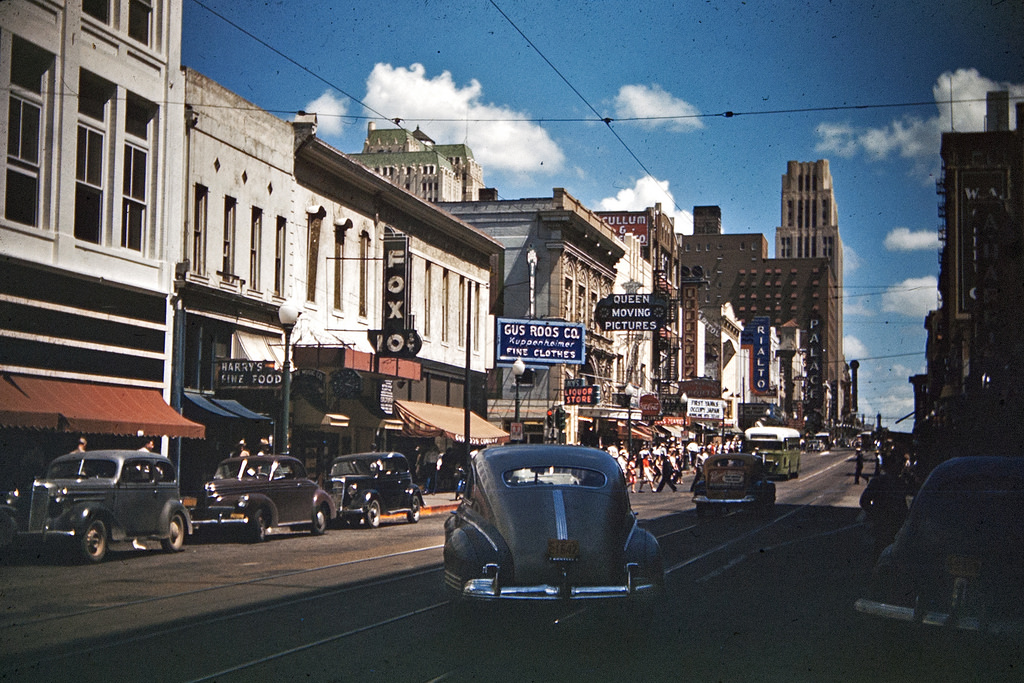
elm-street-color_1940s_jeppson-flickr(Click to see a larger image of this wonderful color photo!)

by Paula Bosse

This is one of my favorite photos of Dallas — mainly because it’s in COLOR! This absolutely fantastic photograph is from Noah Jeppson’s great website, Unvisited Dallas. Here we see Elm Street, looking east along Theater Row, taken from about the middle of the 1400 block of Elm. (To get your bearings, Gus Roos was at the northwest corner of Elm & Akard.) I LOVE this!

***

Sources & Notes

Photo from Noah Jeppson’s Unvisited Dallas post, “Elm Street 1945” — see the original post and read Noah’s description of the buildings seen in the photograph here. I don’t know where this photo came from, but I hope there are more color photos from this era out there. I would love to see them!

Other photos of this block (sadly, none in color) are in an earlier Flashback Dallas post, “Building Collapse on Elm Street — 1955,” here.

See several other fantastic COLOR photos in the Flashback Dallas post “Downtown Dallas in Color — 1940s and 1950s.”

*

Copyright © 2015 Paula Bosse. All Rights Reserved.
Jack Wilkie’s Texaco Station, Beacon & East Grand

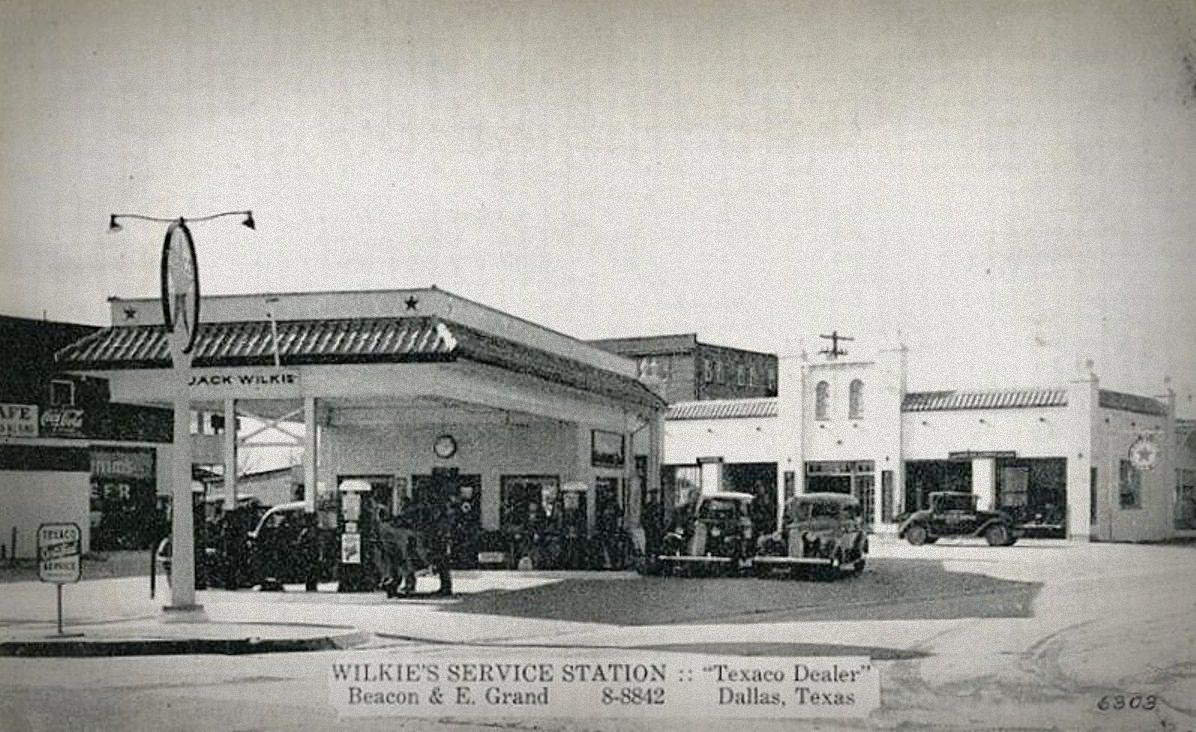
wilkie-texacoA man with a bow-tie will be with you presently….

by Paula Bosse

Above, Jack Wilkie’s Texaco service station at 5523 East Grand. It’s a shame gas stations are rarely this interesting anymore. The station opened in 1937 and was at this location well into the 1940s. Below, the same view today, with that tall brick building in the background of both photos. (I’m not sure what that building is, but while I was waiting for a friend in the Kalachandji’s parking lot a few months ago, I remember thinking what a strange building it was — especially when seen from the side. It’s had some weird additions made to the original building.) This part of East Dallas still has pockets of charm, but it’s never again going to be as cool as it was when Jack Wilkie’s service station was holding down the fort at the corner of Beacon and E. Grand.

wilkie-google

***

Sources & Notes

Top image from Flickr, here.

Second image from Google Street View.

*

Copyright © 2015 Paula Bosse. All Rights Reserved.

World War II: The Homefront — 1944

WWII-mother_dmn_051444Mrs. A. H. Curry

by Paula Bosse

This touching photo appeared in The Dallas Morning News on Mother’s Day, 1944. The caption:

HER DAY — Sons are scattered all over the world in a fight for a deep cause. Mother’s Day, 1944, isn’t the brightest we have ever had, but it is the most hopeful for the future. And it serves to call attention again to the fact that Mothers are still the greatest heroes of all. In Dallas, Mrs. A. H. Curry, 3719 Miramar, a Mother with six sons in the service — one of them missing in action — looks over the pictures of the men she reared who now fight for her safety at home.

(More about the Curry boys can be read in the full Mother’s Day article that accompanied this photo — an article written in the purplest of patriotic prose by Dallas Morning News editor Felix R. McKnight; read it here.)

curry_dmn_012465
Ethel Walz Curry (1883-1965)

Below, a photo of the Curry sons with their father, A. H. Curry (whose early career was spent with the Edison Company, working personally with Thomas Edison).

curry-brothers_dmn_091242DMN, Sept, 12, 1942

***

Sources & Notes

Photo and text appeared in The Dallas Morning News on May 14, 1944, Mother’s Day. Photo by E. W. Odom.

Mrs. Curry also had two daughters, Catherine and Carolyn. In one of those “everything is connected” discoveries, Catherine married Robert E. Grinnan who grew up in the Connor house I wrote about here.

*

Copyright © 2015 Paula Bosse. All Rights Reserved.

Streetcar #728, Main Street — 1954

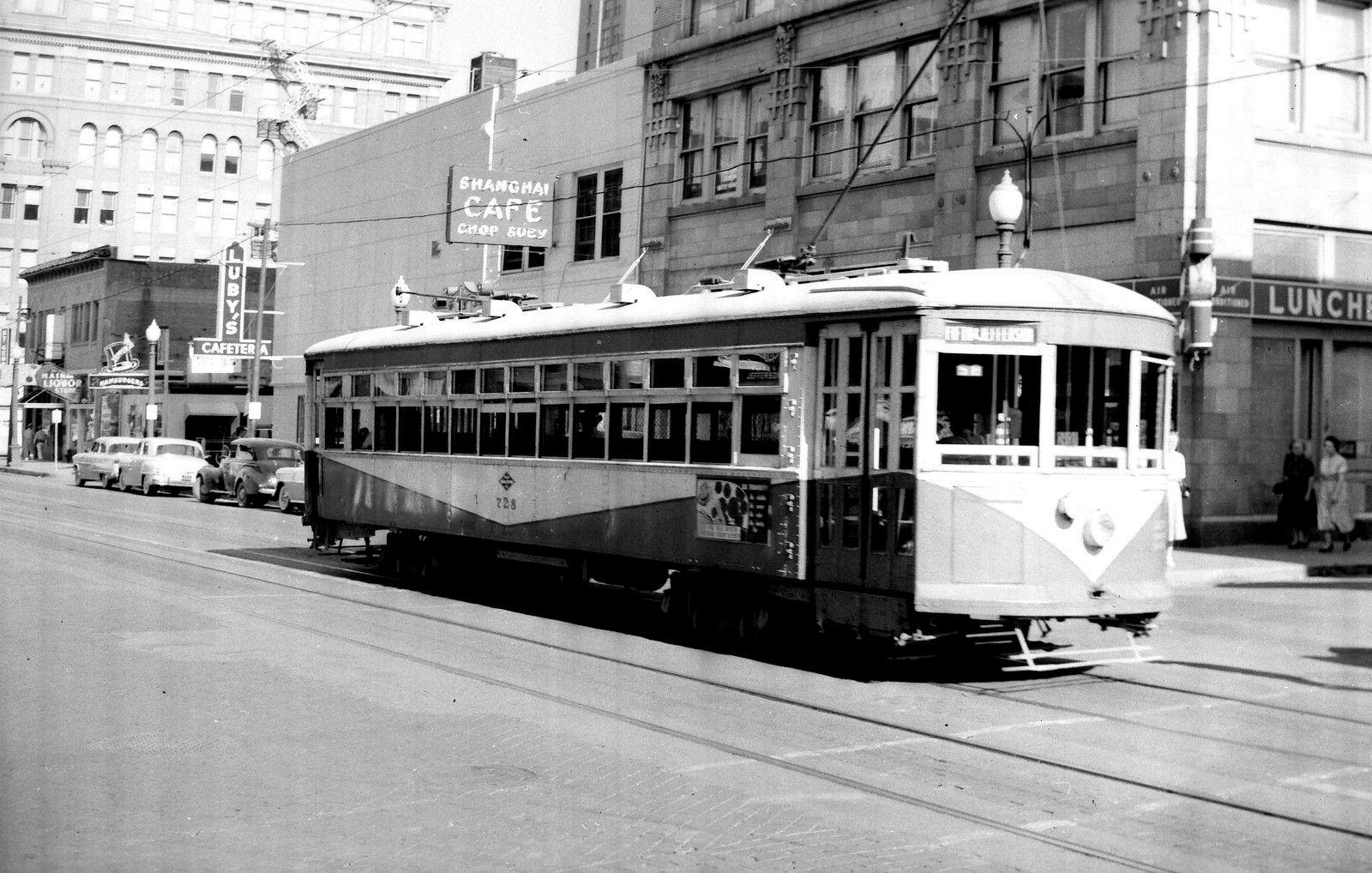
streetcar_1000-block-main_090254_ebay1000 block of Main Street, Sept. 2, 1954

By Paula Bosse

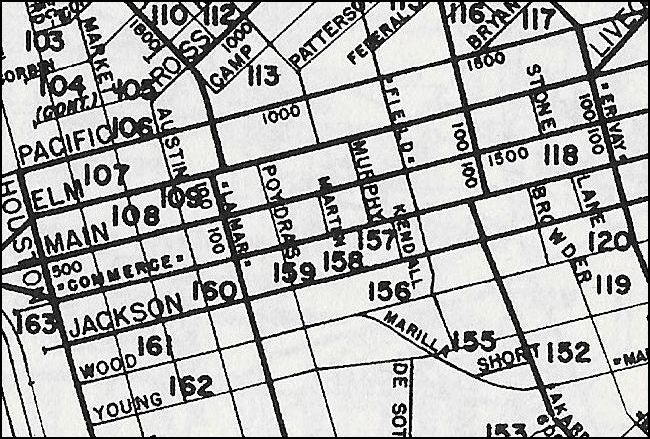
Oh, streetcars. In the photo above, we see car #728 heading east on Main Street on September 2, 1954, having come from, I believe, Oak Cliff (the placard reads “Jefferson”). This photo shows Main Street looking east from, I think, Poydras.

The Shanghai Cafe was at 1004 Main, Luby’s Cafeteria (the second one in Dallas) was at 1006 Main, the Topper restaurant was at 1012 Main, the Main & Martin Liquor Store was at 1016 Main (at Martin Street), and the St. George Hotel was at 1018 Main, all of which can be seen in this photo.

main-st_mapsco-1952-det1952 Mapsco

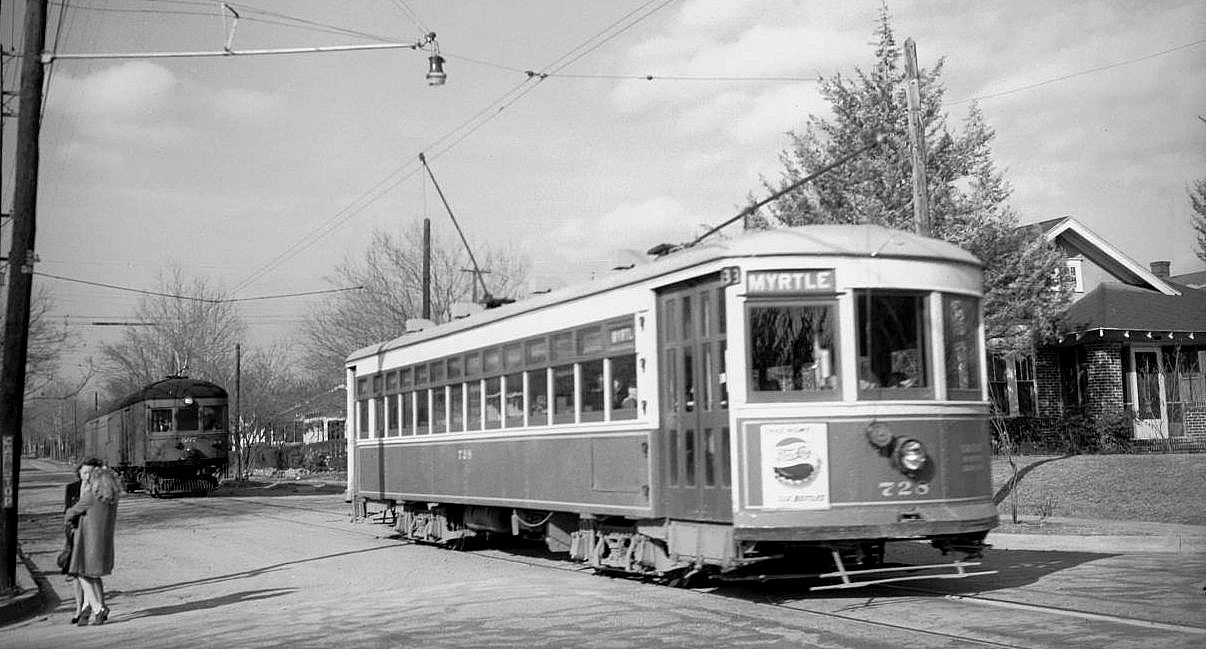
Car 728 wasn’t always “Jefferson,” whiling away its days crossing back and forth across the Trinity. Back in 1945 it was “Myrtle” and was spending a large part of its time in South Dallas.

myrtle_728_1945_denver-pub-lib

I’m not sure where Myrtle/Jefferson ended up, but, sadly, the Golden Age of streetcars ended in Dallas in 1956.

***

Sources & Notes

Top photo from an old eBay listing.

Bottom photo by Robert W. Richardson; from the Western History/Genealogy Dept., Denver Public Library.

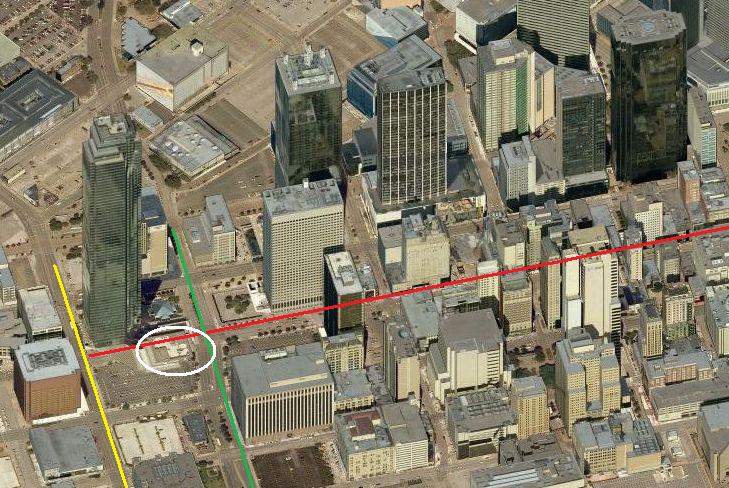
Today, the block seen in the top photo looks completely different. Across the street is where the Bank of America Plaza is now. In the map below, the red line is Main, the yellow is Lamar, and the green is Griffin. The 1000 block of Main Street is circled in white. (Click for larger image.)

1000-block-main_bingBing Maps

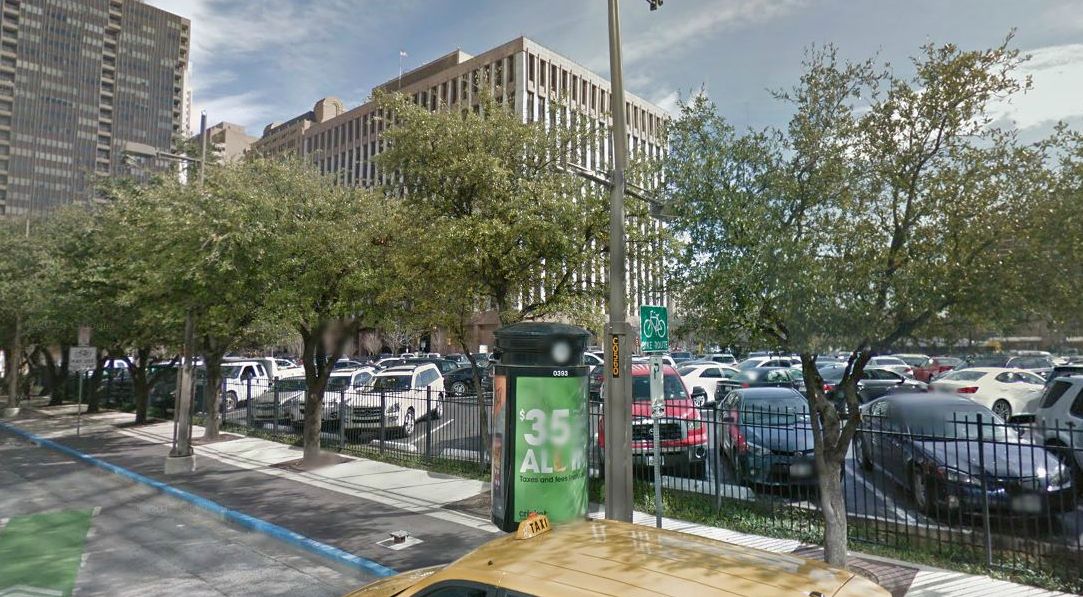
So what’s there now? A parking lot!

1000-block-main_googleGoogle Street View

To read “The Last Day the Streetcars Ran in Oak Cliff” by Ron Cawthon, click here.

*

Copyright © 2015 Paula Bosse. All Rights Reserved.

Orson Welles In Dallas — 1934-1940

orson-welles_cornell-tour_1934
Orson at 18 — publicity photo used for the Cornell tour, 1934

by Paula Bosse

Today is the 100th anniversary of the birth of Orson Welles. Welles was one of the truly great, innovative theater and film directors, an actor with a commanding presence, and a delightfully entertaining raconteur. His frenetically creative work on the New York stage, on radio, and in film (he wrote, produced, directed, and acted in his first film, Citizen Kane, when he was only 25) earned him/saddled him with the hard-to-deny sobriquet “Boy Genius.” His rise up the show-biz ladder was a quick one.

Orson’s first professional acting gig was as an unknown 18-year old repertory player in the touring company of famed actress Katharine Cornell who, along with British actor Basil Rathbone, starred in the three plays performed on the tour, which stopped in Dallas for a two-night engagement at the Melba theater, in February, 1934. The three plays performed in Dallas on February 19 and 20 (one a matinee) were “Romeo and Juliet” (Orson played Mercutio), “The Barretts of Wimpole Street” (he played Octavius Moulton-Barrett), and “Candida” (he played Marchbanks). Cornell was a huge draw, and there was a rush for tickets. The Melba begged her to extend her stay and add performances, but she declined.

The young Welles had gotten reviews on the tour which ranged from a dismissive mention in Variety that he was unable to speak Shakespeare’s lines properly and audibly (!), to raves from Charles Collins of The Chicago Tribune:

The cast is brilliant, and many of the secondary characters are acted with consummate skill. This is particularly true of Orson Welles’ Mercutio, which is an astonishing achievement for a youth still new on the stage. In his duel with Tybalt and his death scene, this Mercutio is a complete realization of Shakespeare’s bravest blade.

The star of the show was the then-very-famous Katharine Cornell, around whom most of the articles and reviews centered (she was, for instance, breathlessly reported to be staying at the Melrose during her Dallas stay) (I wonder if the lowly company players — i.e. Orson Welles — stayed there as well?). The Dallas Morning News theater critic, John Rosenfield — who mentioned this 1934 Dallas appearance in almost every succeeding article he ever wrote about Orson Welles over the next several decades — wrote the following before he saw Orson’s performances in any of the three plays:

Orson Welles, 18-year-old actor, who is apparently bulky enough to hold his own with adults, will be Mercutio. (DMN, Feb. 19, 1934)

After he saw his Mercutio:

Orson Welles’ Mercutio was up to the best standards known for this role. (DMN, Feb. 20, 1934)

When the tour finished, Welles quickly became a presence in the New York theater world. One of his early successes as a producer and director was his production of the so-called “Black Macbeth”/”Negro Macbeth”/”Voodoo Macbeth” — a hugely popular staging of Shakespeare’s “Macbeth” with an all-black cast, done under the auspices of the Federal Theatre Project in 1936. In August of that year — just two and a half years after his appearance as an unknown at the Melba — he took the production to Dallas where it made a splash at the Texas Centennial in the brand new bandshell.

macbeth_texas-centennial_dmn_081336Aug., 1936

macbeth_playbill_dallas_LOC(click for larger image)

Rosenfield was impressed by the lush design and the electric and inventive spectacle, but he was not a fan of the performances. A few years later, on the eve of the release of Citizen Kane, he wrote the following (which was much harsher than his original 1936 review):

We saw this production in Dallas during the Texas Centennial and could marvel at the artistic futility of such ingenuity. The Negro Macbeth, however, was something to be seen if only to be despised. (DMN, Oct. 29, 1941)

Oh dear.

In 1940, Welles was working on his first film, the legendary Citizen Kane. As filming began to wind down, he decided to go out on a short lecture tour because he was in desperate need of money (an all-too-common circumstance he found himself in throughout the entirety of his career). His topic was a vague “anecdotes of the stage and theories on the drama” — and it sounds like his “performances” were largely unscripted and unrehearsed. 

On October 29, 1940 — only a week or two after wrapping production on Citizen Kane — 25-year old Orson Welles spoke at McFarlin Auditorium on the SMU campus as part of the Community Course series of lectures. His topic: The Actor’s Place in the Theater. It was another packed house of adoring and/or curious Dallasites. Rosenfield was both entertained and annoyed by the rambling “lecture,” but Orson was undoubtedly delighted to talk for two hours before an adoring crowd, answer their questions about his craft, and collect a $1,200 check.

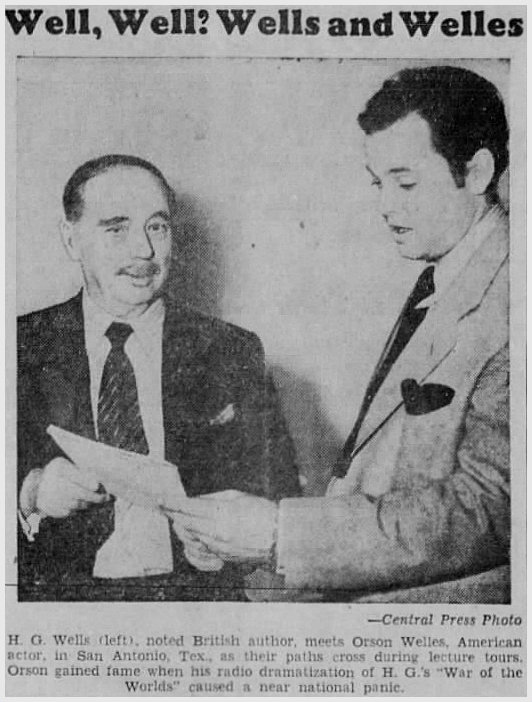
Orson’s appearance in Dallas was particularly noteworthy for the fact that the speaker scheduled to appear on the McFarlin stage just three days later was … H. G. Wells! At the time of this lecture tour, Orson was best known for his infamous 1938 radio adaption of H. G. Wells’ The War of the Worlds, the frighteningly realistic production that panicked the nation and led thousands to believe that the earth was being attacked by Martians. Rather surprisingly, Welles and Wells had never met.

According to a blurb in a Phoenix newspaper, Orson had cancelled a previously-scheduled meeting in Tucson in order to fly into Dallas earlier than planned. My guess is that he saw that H. G. Wells was also lecturing in Texas and realized that H. G.’s lecture in San Antonio the night before Orson’s own appearance in Dallas on the 29th was the only chance he had to meet the man who had provided the source-material for his (to-date) greatest career triumph.

A quick timeline:

  • Sun. Oct. 27, 1940: Orson arrives in Dallas, staying at the Baker Hotel.
  • Mon. Oct. 28: In the morning, Orson flies down to San Antonio to meet H. G. Wells and attend his lecture. The two meet, get along famously, have their photos taken, and give a short joint interview to San Antonio radio station KTSA (see below for link to recording). That evening, both fly to Dallas. Later that night, Orson (well known as an amateur magician) pops into The Mural Room in the Baker Hotel to catch the floor show featuring popular magician Russell Swann.
  • Tues. Oct. 29: H. G. Wells leaves Dallas for Denver, continuing his lecture tour. That morning Orson drives to Fort Worth to present a lecture and attend a luncheon at the River Crest Country Club. That night, he presents his lecture at McFarlin Auditorium at Southern Methodist University. After his lecture, he catches Russell Swann’s magic show for a second time. At 3:00 a.m. he flies to San Antonio for his lecture there.
  • Wed. Oct. 30: Orson lectures in San Antonio. It is the second anniversary of the broadcast of “The War of the Worlds.” Conveniently, newspapers around the country begin to run the photos of Welles and Wells taken on the 28th.
  • Thurs. Oct. 31: A Martian-free Halloween.
  • Fri. Nov. 1: H. G. Wells is back in Dallas for his lecture that night at McFarlin Auditorium.

welles-wells_san-antonio_102840

welles-wells_pottstown-pa-mercury_103140Pottsdown (PA) Mercury, Oct. 31, 1940

h-g-wells_dmn_102940DMN, Oct. 29, 1940

Whew.

Happy 100th, Orson! And thanks for everything.

***

Sources & Notes

Dates and sources of newspaper clippings as noted.

“Macbeth” playbill from the Library of Congress, here.

The timeline for the Welles-Wells meeting and their Dallas-related activities were gleaned from a report in the Oct. 30, 1940 edition of The Dallas Morning News.

And now, links galore.

  • Watch an entertaining short clip in which Orson talks about mind-reading and fortune-telling — which he says he indulged in on the Cornell tour — here.
  • Read the profile of the 18-year-old phenom which appeared in newspapers during the run of the Katharine Cornell tour, here.
  • Read about the “Voodoo Macbeth” here (scroll to the bottom to see fantastic photos).
  • Listen to the interview with Orson Welles and H. G. Wells that aired on San Antonio station KTSA, the day they met for the first time, on Oct. 28, 1940 — here.
  • Read about that still-chilling Mercury Theatre radio broadcast of The War of the Worlds, here.

Finally, my favorite Orson Welles-related quote from the erudite and not-without-humor arts critic of The Dallas Morning News, John Rosenfield. He wrote the following in his review of the set-in-Haiti “Macbeth” — about the aesthetic viability of future Shakespeare productions tailored for specific audiences:

…Mr. Welles hasn’t started a movement. His Negro “Macbeth” does not inspire us to corroborate a fabled Texas lawyer and make Antonio “The Merchant of Ennis.” (DMN, Aug. 16, 1936)

“THE MERCHANT OF ENNIS”! Someone! Make this happen!

*

Copyright © 2015 Paula Bosse. All Rights Reserved.

City Park Construction Work — 1941

city-park-construction_1941_david-roberts-photo“City Park, 1941” / Collection of David Roberts

by Paula Bosse

This great family photo was sent in by reader David Roberts. It shows his grandfather, David Crockett (D.C.) McKay working on a construction crew. The reverse of the photo reads “City Park, 1941.” David has identified his grandfather as the man standing on the makeshift wooden bridge, just to the right of the cement mixer. I love this photograph!

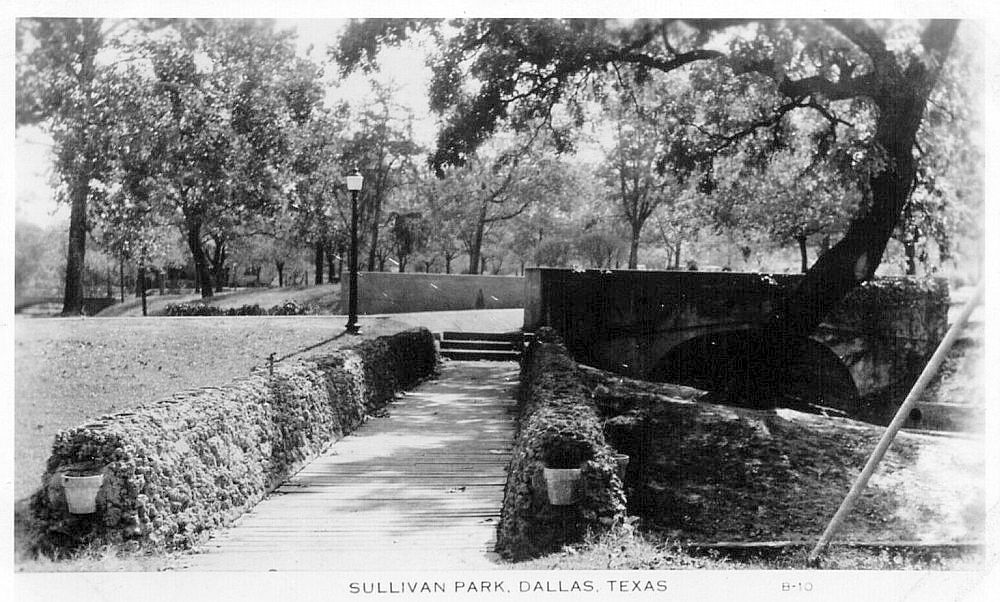
City Park (now “Old” City Park), was Dallas’ first park, acquired in 1876. It became a popular (and beautiful) recreation area, and the adjacent Browder Springs was home to the city’s first waterworks. In 1936, City Park was briefly re-named “Sullivan Park” in honor of Dan F. Sullivan, the city’s first highly accomplished Water Commissioner. But it was officially UN-re-named (or RE-re-named) and went back to being “City Park” again in May 1941, because after 60 years of being known as City Park, the “Sullivan” thing just never caught on, and the two names were causing confusion. So the name was changed back.

So what construction was going on around City Park at the time this photo was taken? In 1941, there were major improvements going on throughout the city’s park system, and City Park was one of the beneficiaries of an $800,000 city-wide improvements package. ALSO happening in 1941 was some Mill Creek storm sewer work — Mill Creek ran through the park and there had been ongoing work to its sewers since the ’30s. In January 1941, The Dallas Morning News reported that a large construction contract was pending on a Mill Creek storm sewer “from Browder to Beaumont” — this may have been a bit beyond the actual park, though. I mention this only because the photo above appears to show construction of a large sewer in the City Park area.

On April 16, 1941 a short article ran in The Dallas Morning News about a fatal accident at a City Park construction site, perhaps the same site that DC McKay was working on — a construction worker named Henry Pilgrim was crushed when a bridge collapsed on him: “The accident was blamed on the weakened condition of the bridge due to rains and the weight of the workmen on it.”

Construction work is hard, sweaty, and dangerous. Mr. Roberts says his grandfather worked for the J. W. Slaughter Construction company, often on concrete culvert and drain projects.

“Some of my earliest memories of visiting his house in the evenings (early ’60s) was that you had to be quiet during the weather, because that forecast was how he knew if he had to work the next day.”

Mr. McKay, who was born in 1903, would have been in his 60s then! But hard construction work must have agreed with him, because DC McKay lived until the ripe age of 84.

Thank you so much for sharing your photo, David! It’s great to see Dallas infrastructure in the making!

sullivan-park_ebay

***

Sources & Notes

Photograph from the personal collection of David Roberts, used with permission.

Sullivan Park postcard found on eBay.

A photo of D. C. McKay (1903-1987) and his wife, Opal McKay, is here.

Two pertinent articles from the Handbook of Texas: the history of Old City Park is here; the history of Browder Springs is here.

*

Copyright © 2015 Paula Bosse. All Rights Reserved.