Flashback : Dallas

A Miscellany: History, Ads, Pop Culture

Category: 1950s

Empire Central and Its Fabulous Empire Club

empire-central_1958_ebay_det“Northwest Dallas” in 1959 — how quaint… (click for larger image)

by Paula Bosse

“Empire Central.”

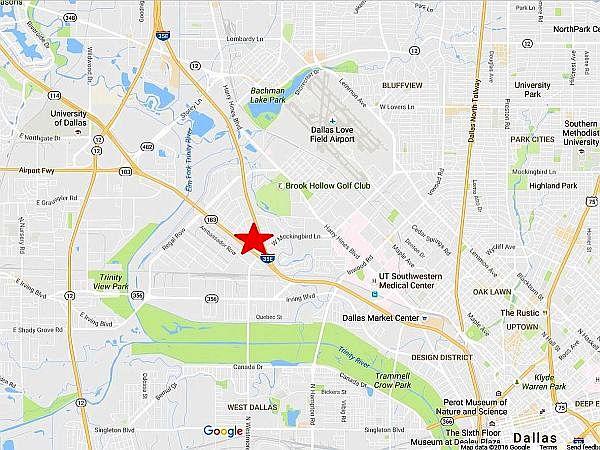
I have to admit that I’d never heard of anyplace in Dallas called Empire Central, but because I wanted to post the picture above (which I love) (and which is  from a 1959 ad), I felt I should at least look into finding out what and where it was and broaden my horizons a bit. So I did. It was (is?) an “office community” built in 1958 on 90 acres of land (later expanded), located in the “V” between Hwy. 77 (soon to be Stemmons Freeway) and Hwy. 183 (aka Empire Freeway, soon to be John W. Carpenter Freeway), with W. Mockingbird on the south and Dividend Drive on the north(-ish). It was developed as an office park as part of the already existing 1,200-acre Brook Hollow Industrial District (which, when its development began in 1953, was beyond the city limits) — both areas were developed by Windsor Properties. Empire Central was announced in 1957.

Unsurprisingly, almost every early newspaper story about plans for the new district mentioned what was considered to be its sexiest, most novel attraction: the Empire Club, an on-site dining and recreation club for employees — executives and underlings alike — who worked in the “community’s” office buildings. It was a round, 45,000-square-foot structure that sat on 9 acres and featured a distinctive roof which utilized 24 tamarack logs “more than 100 feet long, imported here especially for the club from the virgin forests of Washington” (DMN, Nov. 24, 1957). Its amenities included a sunken garden, a terraced dining room, lounge, swimming pool, putting green, and shuffleboard court, all nestled in a “garden-like atmosphere.” What a great perk!

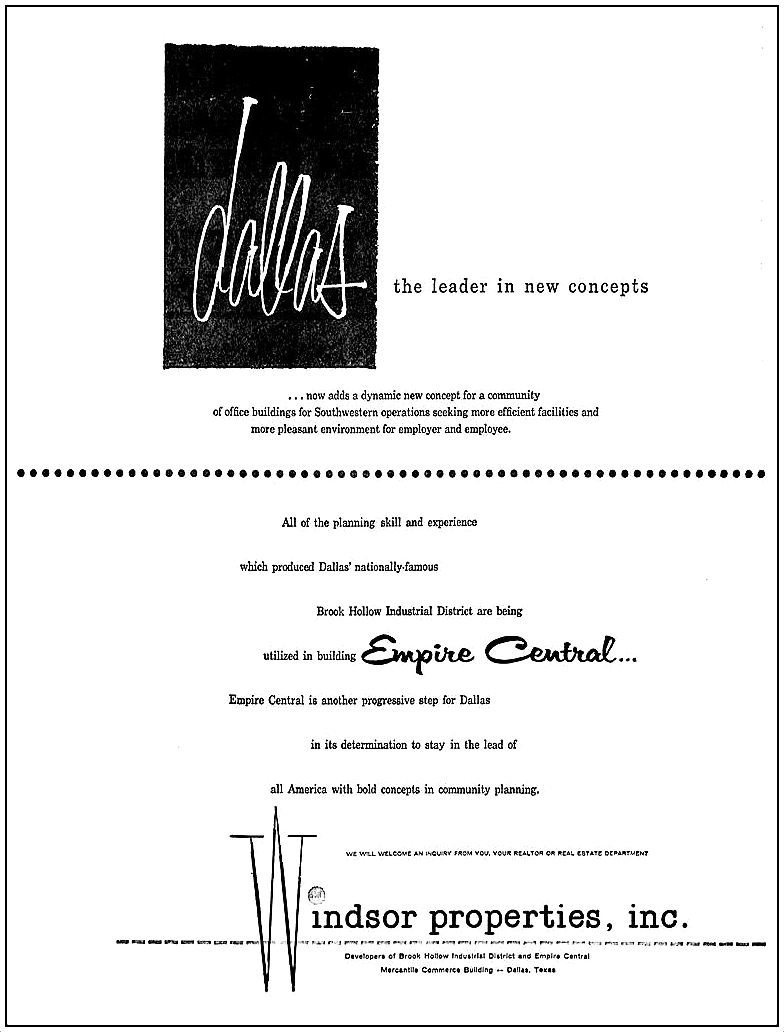
The club was important in the conceptualization of the office park, as the developers insisted that a happy employee was a productive employee, as can be seen in the text from a 1959 advertisement which ran the week the club opened:

Two fundamental concepts were taken into consideration by Windsor Properties, Inc., in designing Empire Central.

First was the realization that the company able to attract the most capable employees at a given wage would be most successful. Second, the urbanization of our population has created the need for a measure of community life.

The Empire Club, as the heart of Empire Central, is designed to accomplish both objectives for management.

And that club looked cool. It was a cutting-edge design from the always impressive George Dahl, one of Dallas’ top architects. (Dahl worked on several other projects with W. C. Windsor — Sr. and Jr. — including a prison (?!) and several other buildings in the Empire Central District.) Dahl’s previous big round building — Memorial Auditorium/Dallas Convention Center — had opened in 1957, just months before construction began on this unusual and sophisticated clubhouse, something one would certainly not expect to find plonked down in the middle of such prosaic surroundings.

empire-central_dmn_101859_empire-club_det

empire-central_dmn_101859_empire-club_pool_det

empire-central_dmn_101859_map_det

Below, the full ad, which appeared the week the new Empire Club opened in October, 1959 (click to see larger image):

empire-central_dmn_101859_empire-club
Oct., 1959

At some point (or maybe always) the club began to be used by outside groups. In the ’60s, it was the site of a lot of Junior League and debutante activities and dances. In 1966 the Empire Club became The Round House restaurant (in which could be found the Fatted Calf club). The last listing I could find of a restaurant or club at that address (which was, originally, 100 Empire Central Drive and, later, 1100 Empire Central Place) was in 1971. Sadly, that cool-looking building was torn down somewhere along the way. What a shame! I just discover a George Dahl-designed building I’d never seen — in a part of town I’d never heard of — and *poof*! … it’s gone. …At least I didn’t have time to get too attached.

**

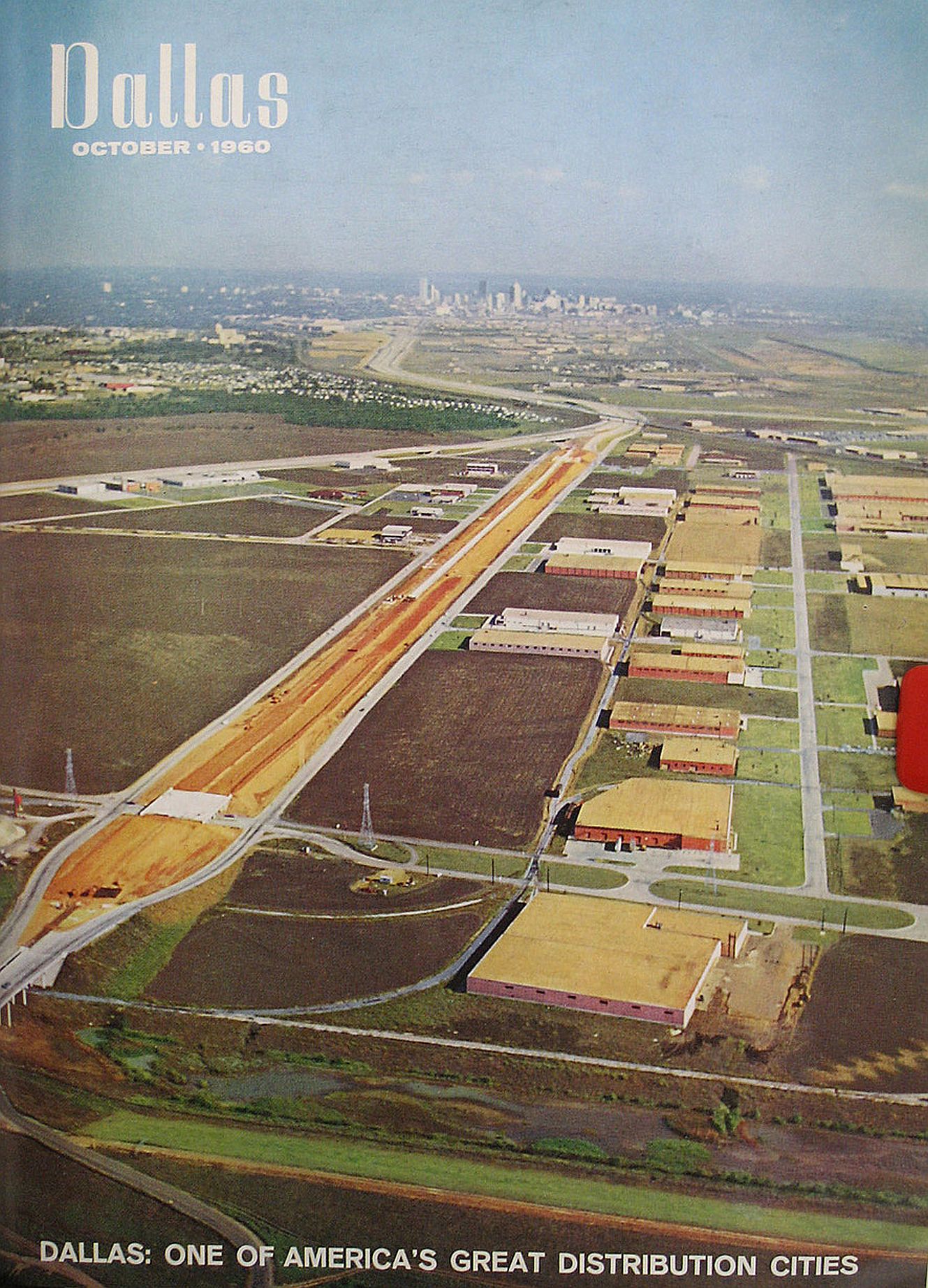
Here’s a great photo from 1960 (click it — it’s really big) looking southeast toward downtown from about Regal Row (bridge in foreground), with the new and improved Carpenter Freeway/Hwy. 183 in the center, and Stemmons — coming in from the left — meeting it in the distance; the Mockingbird bridge is just beyond it, just above the point. The Empire Central district — in between Stemmons and Carpenter — looks kind of puny here. You  might have to squint, but you can see the brown, round Empire Club building in the center of the triangle. If you listen closely, you might be able to hear a Southwestern Drug Company secretary splashing happily in the heated pool.
empire-central_183-construction_1960_dallas-freeways-site

*

empire-central_1958_ebay
1958 ad

empire-central_dmn_011958_ad
Jan., 1958

empire-central_google
Google Maps

***

Sources & Notes

Top image is from a full-page magazine ad from 1958, found on eBay.

The 1960 photo appeared on the cover of Dallas magazine (October, 1960); I found it on the unbelievably thorough Dallas-Fort Worth Freeways site (main page is here, this photo is linked from here).

This area — what is it called? The consensus seems to be “Brook Hollow.” Or maybe “Stemmons Corridor” (the Wikipedia entry for the latter is here).

The Flashback Dallas post on the area’s 1920s-era namesake golf club — “Brook Hollow Country Club — 1940s” — is here.

(Thank you, Dallas History Facebook group for the helpful tidbits!)

Think it should be bigger? Click it!

*

Copyright © 2016 Paula Bosse. All Rights Reserved.
 

Wilson & Co., Their Clydesdales, and the Dallas Jaycees’ Safety Committee — 1951

wilson-and-co_clydesdales_ebay_1951Giant horses at the ready… (click for larger image)

by Paula Bosse

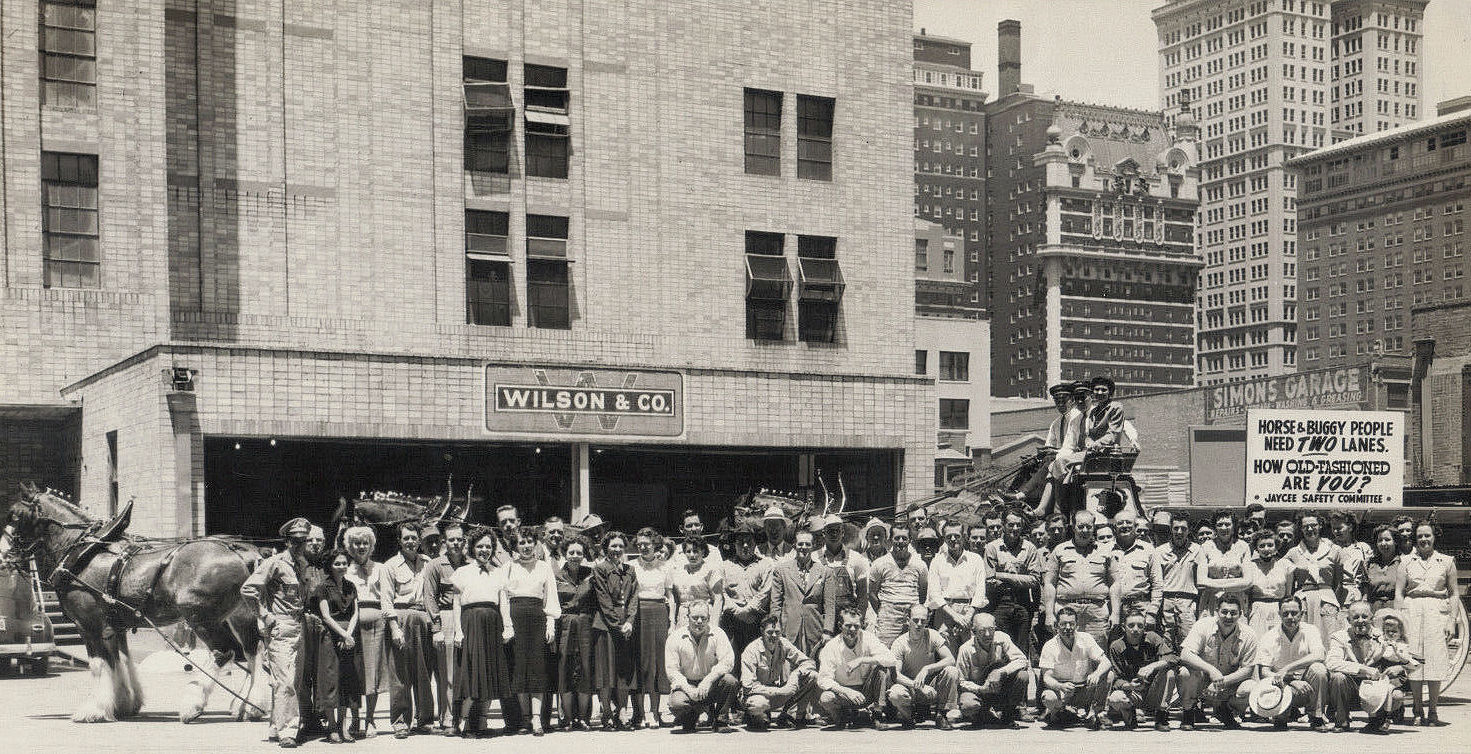
I came across this undated photo a couple of years ago on eBay, and it took a little bit of digging to come up with just what was going on here.

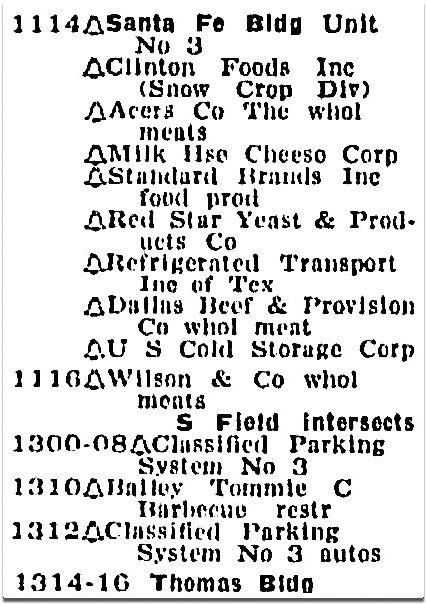
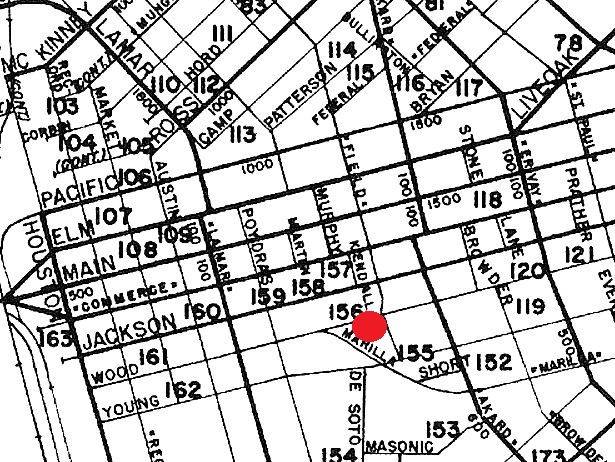
The Wilson & Co. meat packing and processing business began in Chicago in 1916 and quickly became one of the nation’s largest meatpackers, right up there with Armour and Swift. It expanded across the country, and one of its plants was in Dallas — in Unit 3 of the Santa Fe complex of buildings, located on Wood Street, between Field and what is now Griffin. (This building was later known as the Ingram Freezer Building and was demolished in 1988.) The Wilson company was acquired by Dallas-based LTV in 1967, and was later “spun off” from LTV in 1981

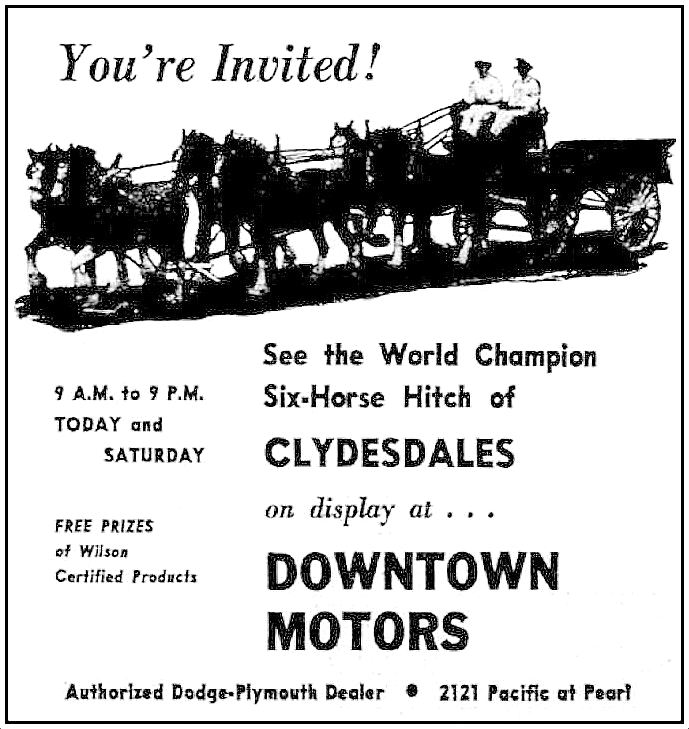
The Wilson company had owned a prize-winning “six-horse hitch” of Clydesdale horses since 1917, and they were sent around the country to promote the company and its line of processed meats. Not only were the horses prize-winners at livestock shows, they were also incredibly popular with the public. (They had made a huge splash at the Chicago World’s Fair in 1933, and it seems Budweiser took note of the promotional possibilities of the impressive animals, as the Anheuser-Busch Co. ended up buying the original team from Wilson that same year. So there were at least two competing Clydesdale teams clomping along the downtown streets of America, through at least the late ’60s.)

The photo above was taken when Wilson & Co.’s horse celebs visited Dallas in May, 1951. During their time in Big D they paraded through downtown at noontime and entertained workers on lunch breaks; at night they bunked in temporary stables in the service department of a Pacific Avenue car dealership. The photo at the top shows a public service event in which the Dallas Junior Chamber of Commerce promoted traffic safety in conjunction with the visiting horses. In the photo, the Wilson company employees (who have somehow managed to block the view of several thousand pounds of horseflesh and the huge 1890s wagon behind them) look happy during their little photo-op break from work. And in the background, we see the Adolphus Hotel (…built by the man behind Budweiser beer…), the Magnolia Building, and the Baker Hotel.

All this kind of makes me want a ham sandwich and a bottle of beer…. 

wilson_clydesdales_amazon
via Amazon

wilson-clydesdales_dmn_051151
May, 1951

wilson_1953-directory
Wood Street, Dallas city directory, 1953

wilson-and-co_1952-mapsco
1952 Mapsco

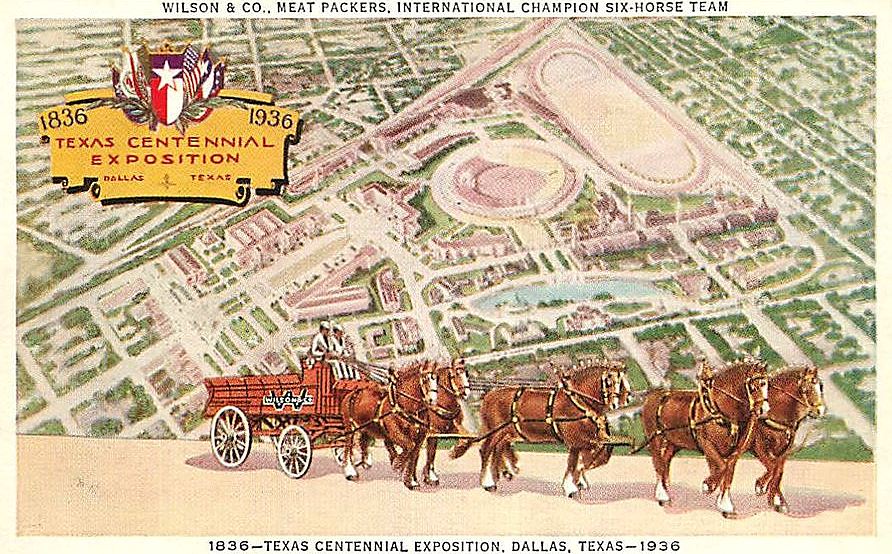
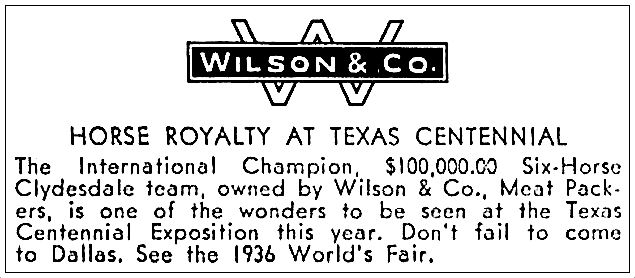
Below, a postcard advertising the appearance of the Wilson “Champion Six-Horse Team” at the 1936 Texas Centennial:

wilson-co_clydesdales_1936_ebay

wilson-co_clydesdales_1936_ebay_back

***

Sources & Notes

Photo found on eBay in 2014; on the back is the stamp of photographer Denny Hayes.

Texas Centennial postcard from eBay.

See an unimpeded view of the famous six-horse team of Clydesdales (each of which weighed, on average, two thousand pounds) in a 1954 Cedar Rapids Gazette photo, here.

A couple of interesting tidbits about the Wilson company and about the horses:

  1. Thomas E. Wilson, the founder of the meatpacking company also founded Wilson Sporting Goods
  2. As a celebratory nod to the end of Prohibition, the famed Budweiser Clydesdales were purchased from Wilson in 1933 — this was Wilson’s original team from 1917. (Clydesdale horses generally live for 20-25 years.)

Pictures and clippings are larger when clicked.

*

Copyright © 2016 Paula Bosse. All Rights Reserved.

“Teen-Age Downbeat”

teen-age-downbeat_broadcasting-mag_051859_detWBAP’s “Teen-Age Downbeat,” 1959 (click for larger image)

by Paula Bosse

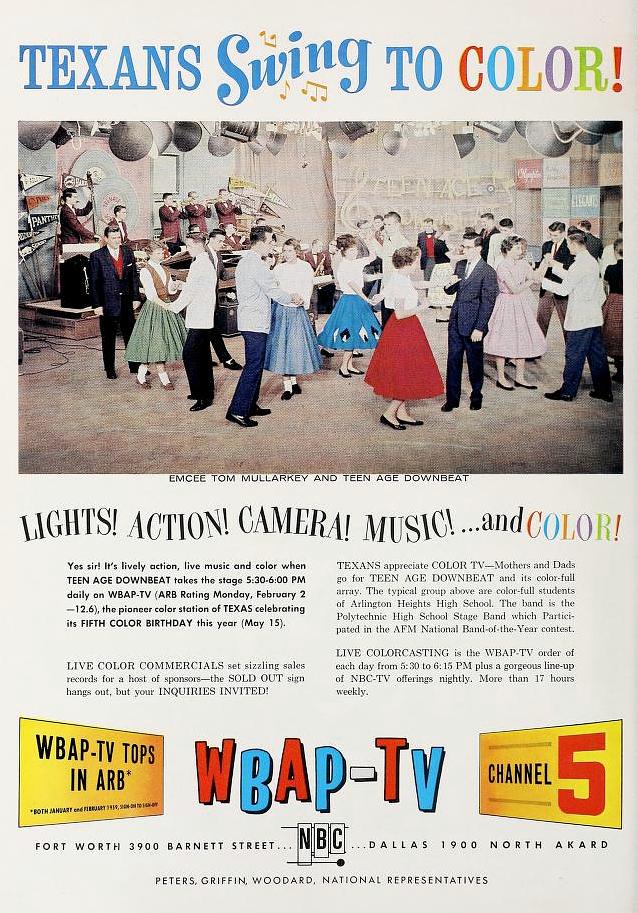
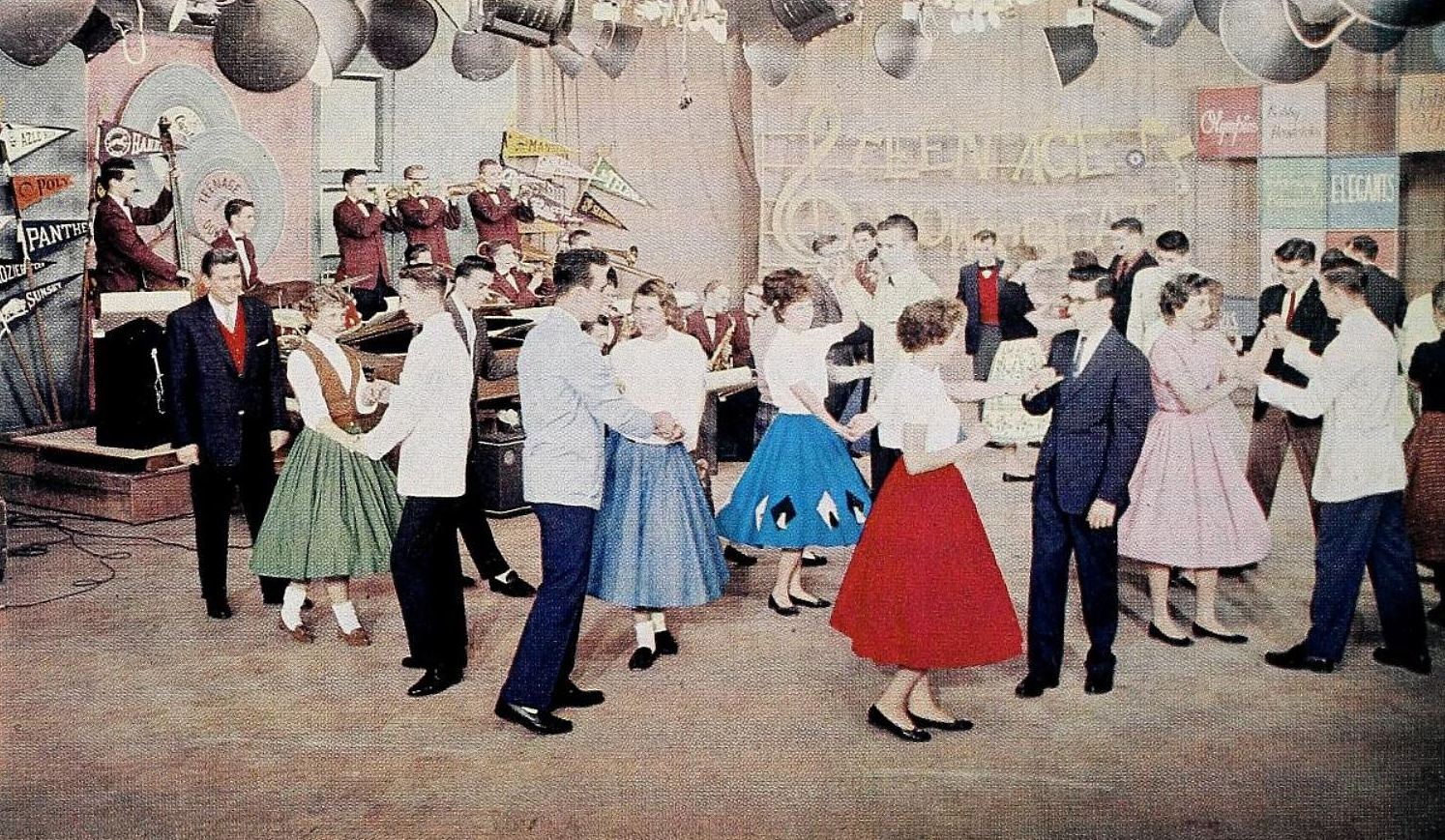
“Teen-Age Downbeat” — Fort Worth’s answer to “American Bandstand” — debuted on WBAP-TV in January, 1958 — in COLOR. It featured teens from the Dallas-Fort Worth area (…or maybe I should say from the Fort Worth-Dallas area…) who would play and dance to their favorite records. The host was WBAP broadcaster Tom Mullarkey (seen above at the left, wearing the red vest). The show was quite popular and lasted as best I can tell, from January, 1958 until July, 1961 (the last mention in The Fort Worth Star-Telegram was July 1, 1961). I’m guessing those kids danced to a lot of Fabian.

teenage-downbeat_fwst_010558FWST, Jan. 5, 1958

teen-age-downbeat_sponsor-mag_080860“Sponsor” trade magazine, Aug. 8, 1960

teen-age-downbeat_unt-lab-bandNorth Texas State College’s Lab Band with director Gene Hall

teenage-downbeat_fwst_022661
FWST, Feb. 26, 1961

teen-age-downbeat_broadcasting-mag_051859
“Broadcasting” trade magazine, May 18, 1959

teen-age-downbeat_xmas_1958_fortworthhistorical-IG“Toys For Tots” campaign, Christmas 1958

***

Sources & Notes

The color photo (which appeared in a full-page WBAP ad in the trade magazine Broadcasting) shows non-teen Tom Mullarkey watching over the dancers from Arlington Heights High School, as the Polytechnic High School Stage Band plays some happenin’ tunes. (I do see two Dallas high school pennants in the photo: Crozier Tech and Sunset.)

The photo showing director Gene Hall with the North Texas State College (now the University of North Texas) Laboratory Band was found at UNT’s Portal to Texas History site, here. The photo is not dated, but a blurb in The Fort Worth Star-Telegram mentioned that Hall and the band were to appear on “Teen-Age Downbeat” on Feb. 5, 1959.

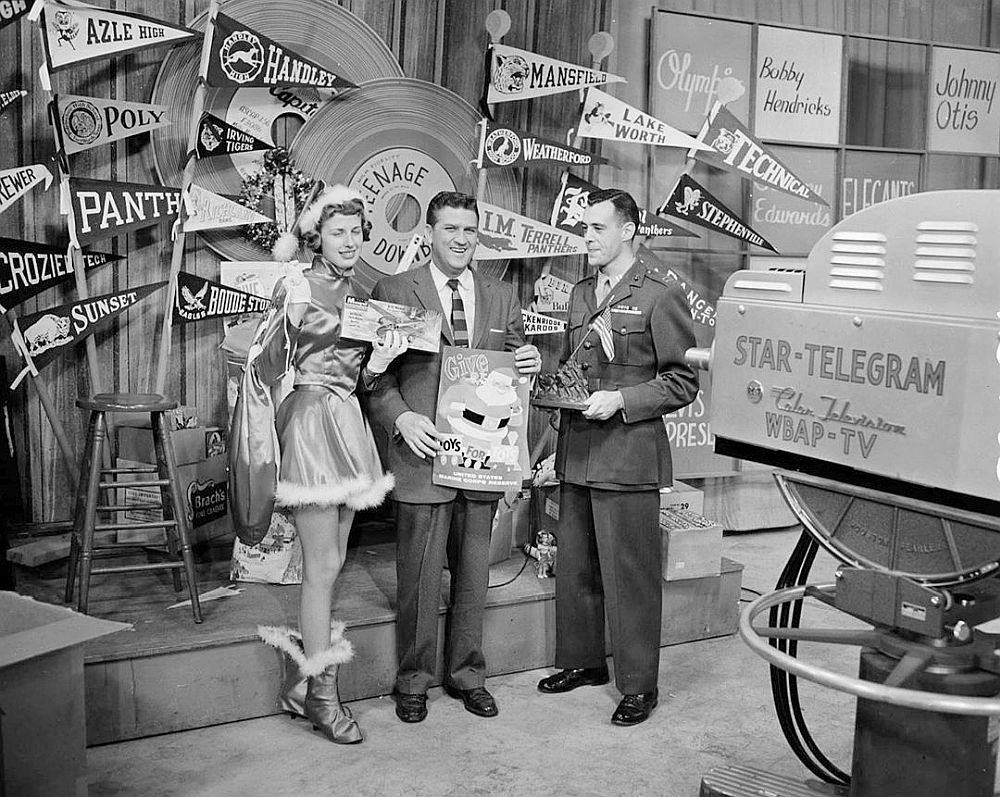
Photo of the “Toys For Tots” campaign, featuring a sexy Santa’s helper, Tom Mularkey, and a Marine Corps (Reserve?) officer was found on the Instagram feed of @fortworthhistorical.

*

Copyright © 2016 Paula Bosse. All Rights Reserved.
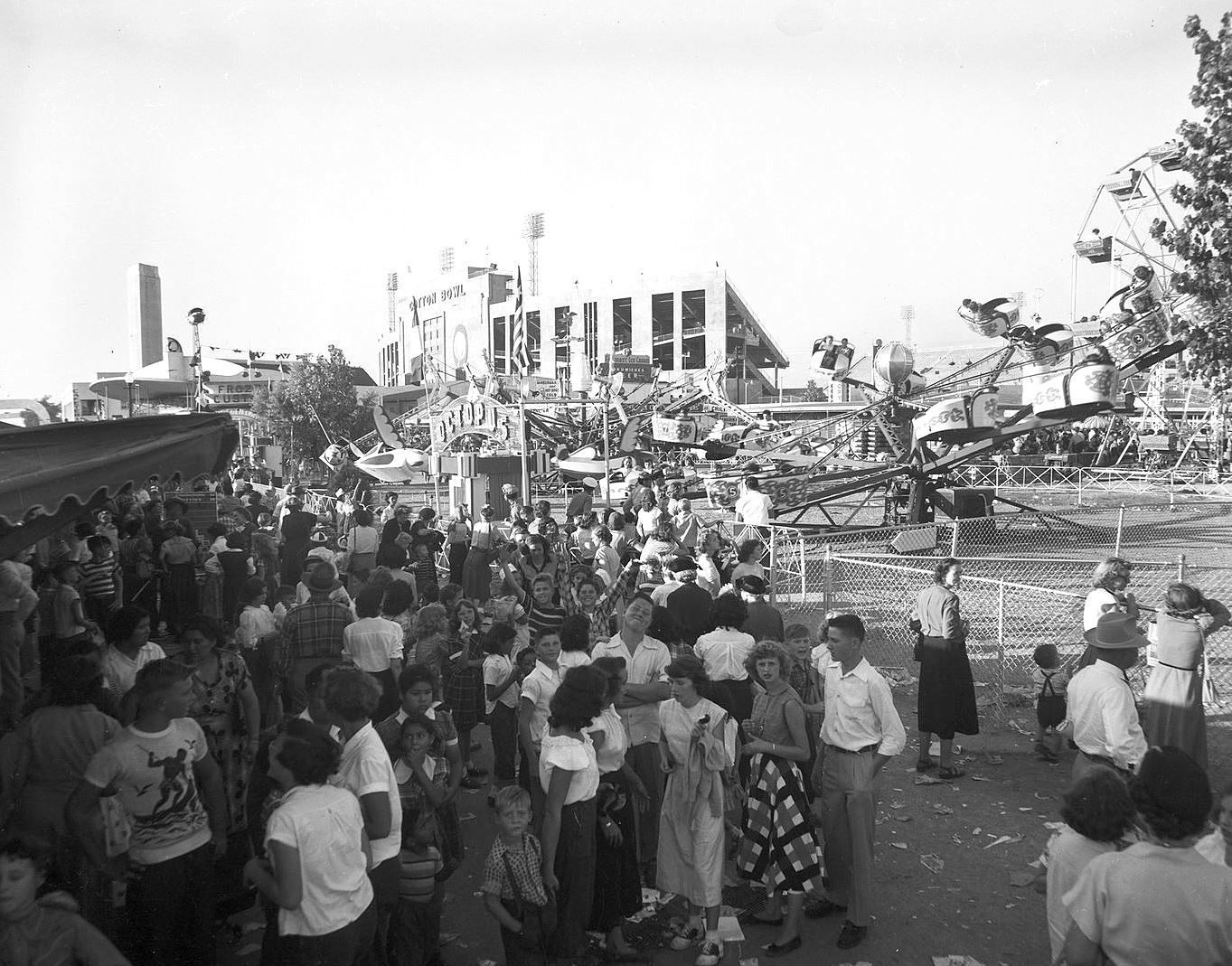
Zooming In on the State Fair: The Midway, the Cotton Bowl, and the Octopus — ca. 1950

state-fair_midway-cotton-bowl_squire-haskins_ca_1950_utaAnother visit to the fair… (click for larger image)

by Paula Bosse

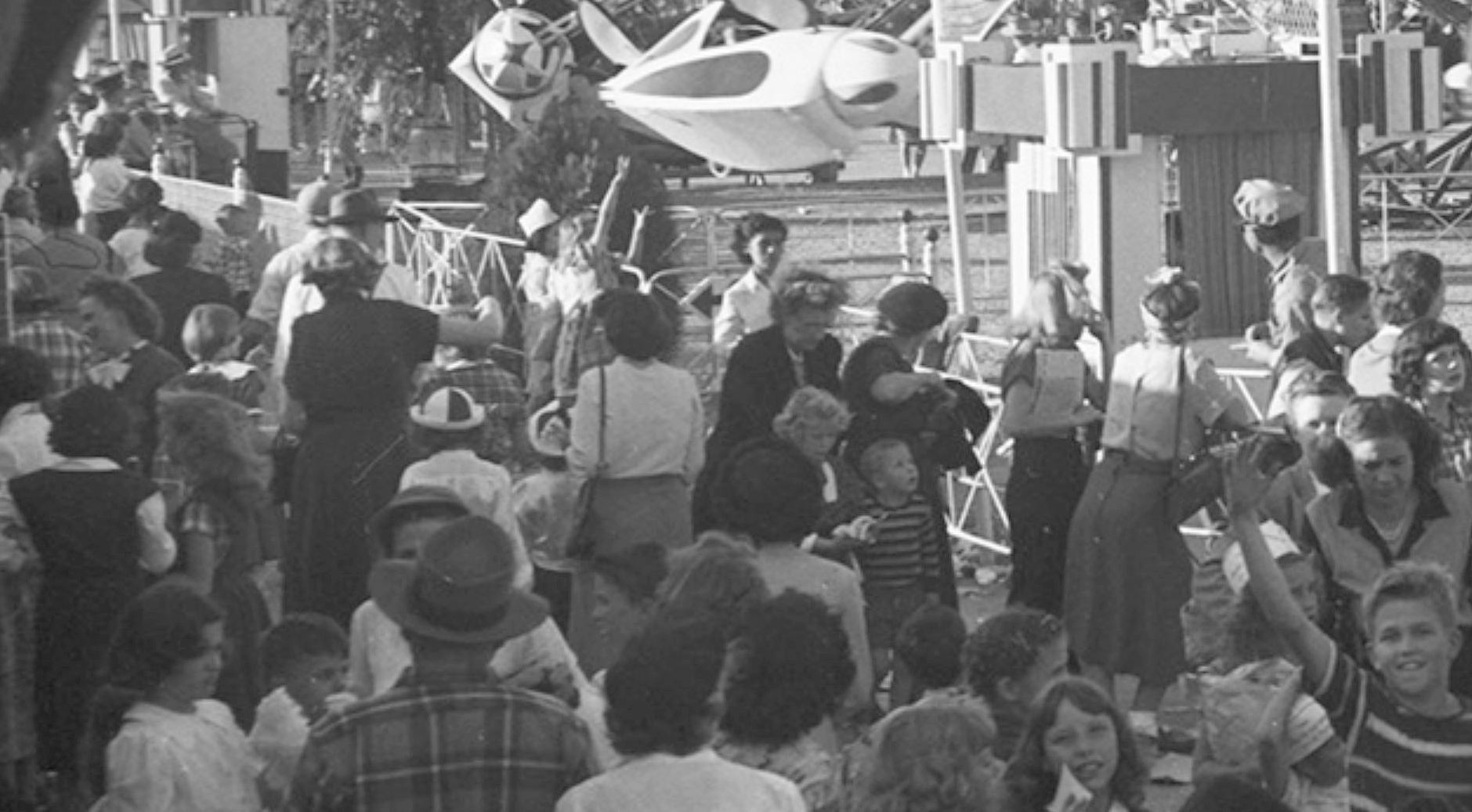
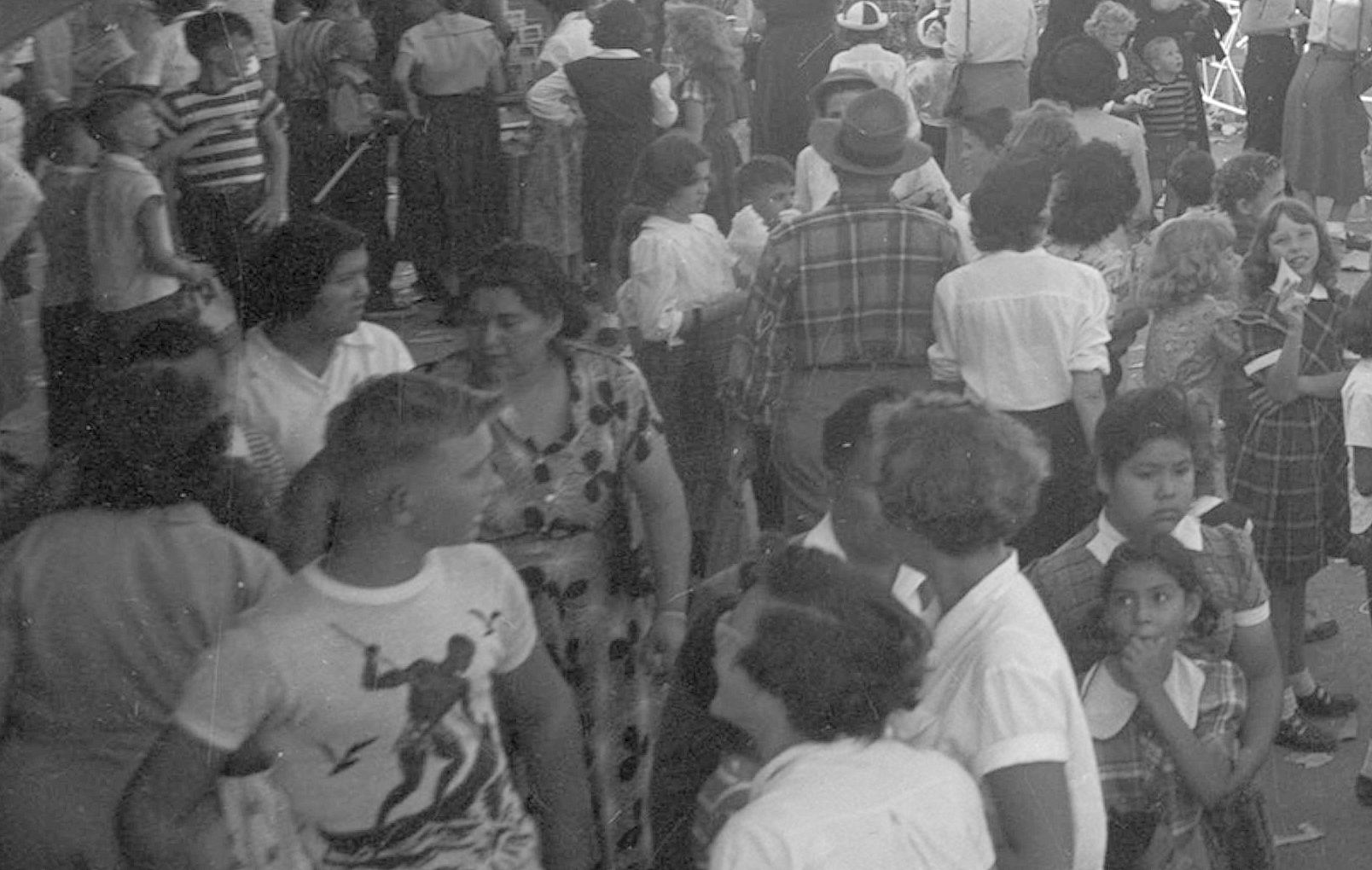
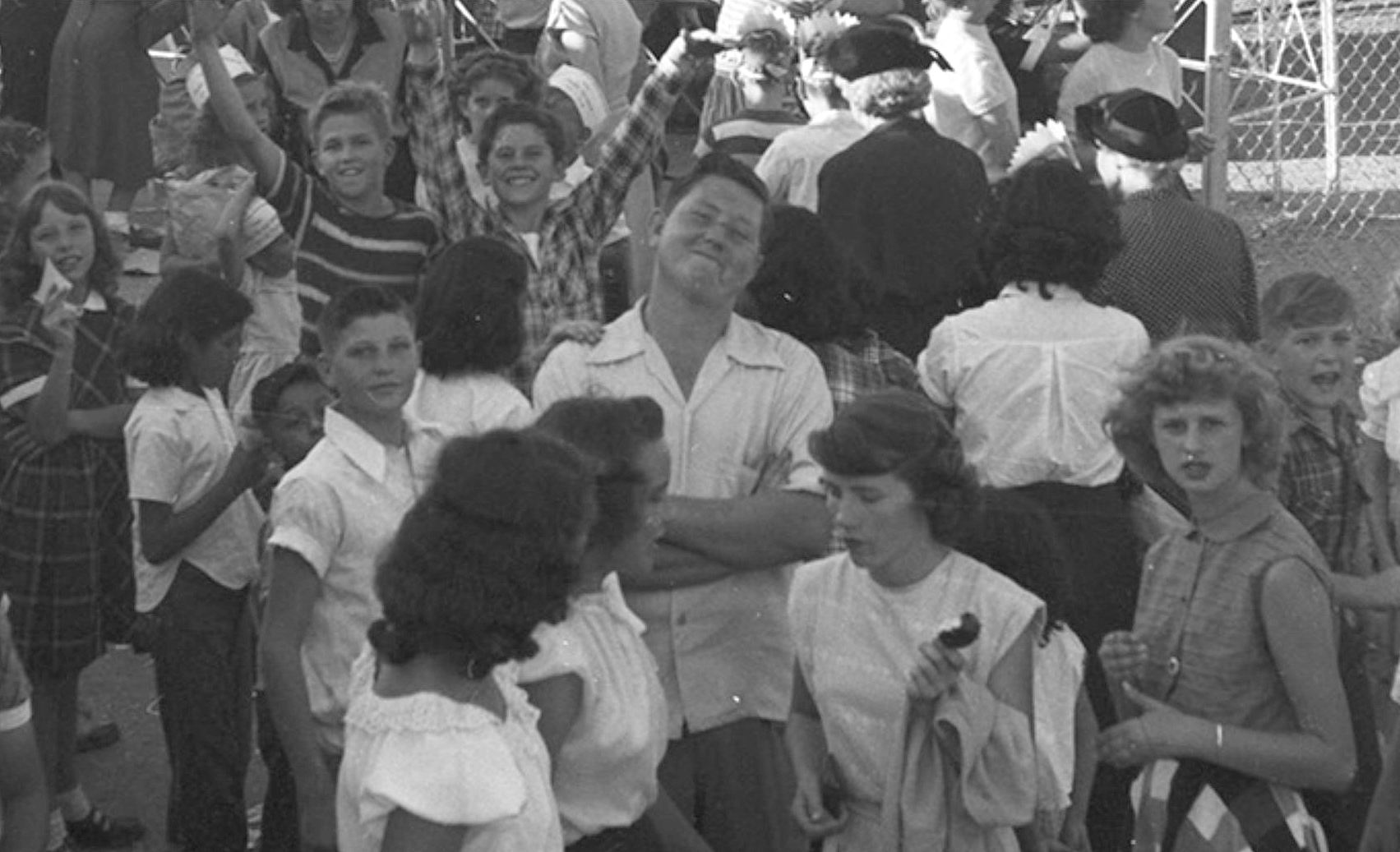
When I see old photos of the State Fair, I always look at the people. Let’s take a closer look at this great photo by Squire Haskins, taken around 1950. (See a BIG scan of this photo at the UTA website, here.)

Here are a few magnified details from Haskins’ photo (all are much larger when clicked):

midway-zoom_1

midway-zoom_2

midway-zoom_3

midway-zoom_5

midway-zoom-4

midway-zoom_6

***

Top photo by Squire Haskins, from the Squire Haskins Photography, Inc. Collection, Special Collections, University of Texas at Arlington Libraries; more information can be accessed here. (Other photos from this collection which were taken around the State Fair Midway at about this time were taken in October, 1950 — this one is not dated, but it seems likely it was taken at the same time.)

See other photos I’ve zoomed in on here.

Click pictures for larger images!

*

Copyright © 2016 Paula Bosse. All Rights Reserved.
The State Fair of Texas: “A Son-of-a-Gun in ’51” — 1951

state-fair-poster_1951_pinterest

by Paula Bosse

In honor of opening day of the 2016 State Fair of Texas, a poster from the 1951 fair. Proto-Big Tex imagery was being used well before the giant cowboy’s debut the following year (see, that hand thing is going on even back then…).

Welcome back, SFOT!

***

Poster found on Pinterest.

*

Copyright © 2016 Paula Bosse. All Rights Reserved.
Big Tex’s Hands

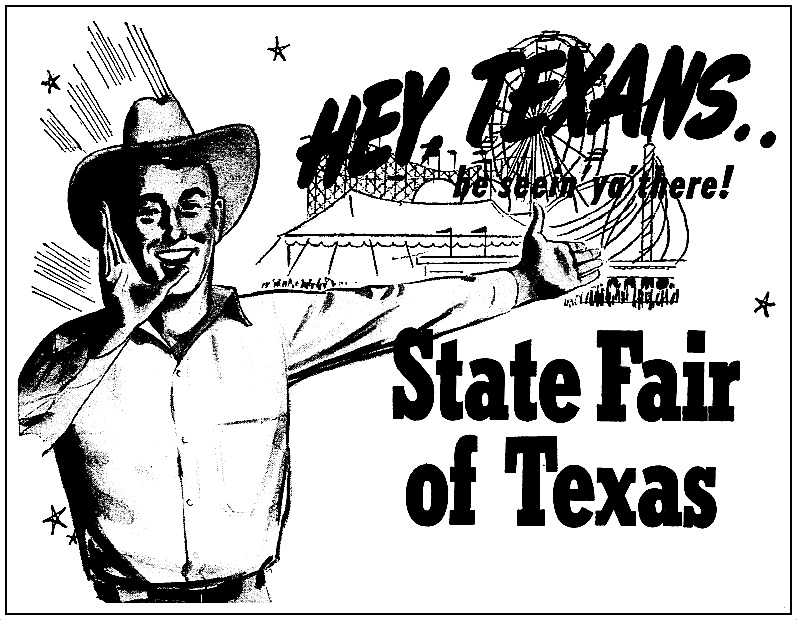
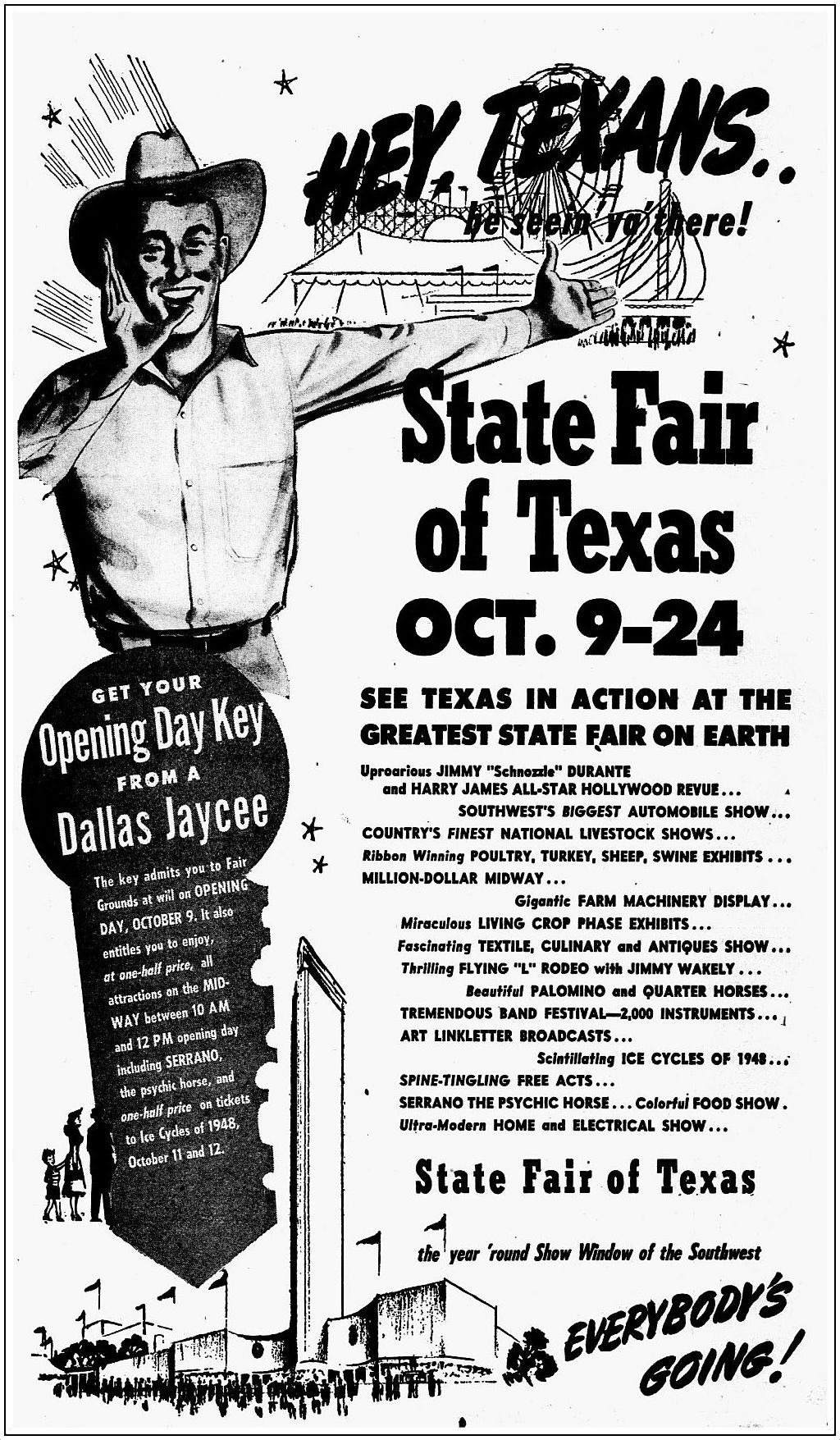
big-tex_dmn_091248_det1948 State Fair ad: “Hey, Texans!”

by Paula Bosse

I stumbled across a State Fair of Texas ad a couple of days ago — a detail of which is above — and it made me wonder if it contained the precursor to our beloved Big Tex (whose annual hoisting-up occurred today). The ad is from 1948, four years before Big Tex’s debut at the 1952 State Fair. When I saw it I was immediately reminded of Big Tex and exclaimed to myself, “THAT’S what he should have been doing with his hands!”

I’ve always wondered exactly what Big Tex is supposed to be doing with his hands. It’s a sort of vague “welcoming” gesture, I guess, but I can remember when I had to draw Big Tex in school that I was confused by that right hand. Was he waving? Was it an Indian “How!” greeting sign? It didn’t really look like either of those, and it really irked me (I was an easily-irked child). And, actually, it has continued to bother me all these years! (I am an easily-irked adult.)

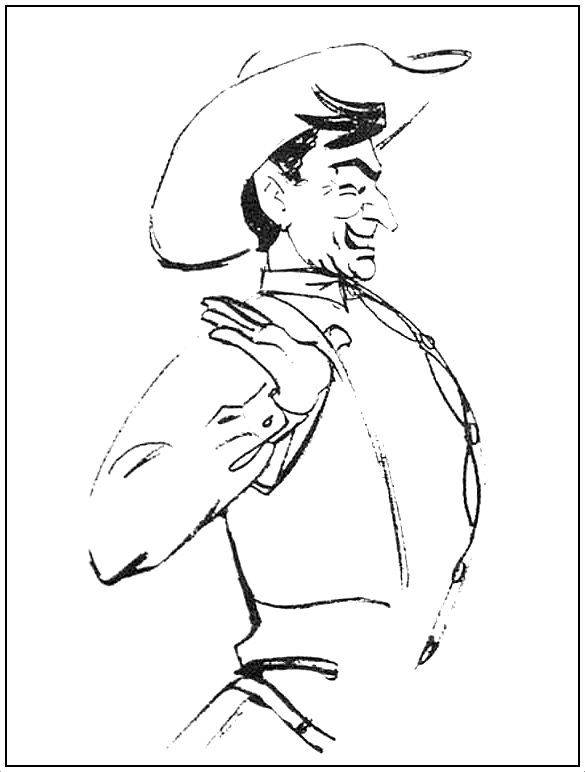
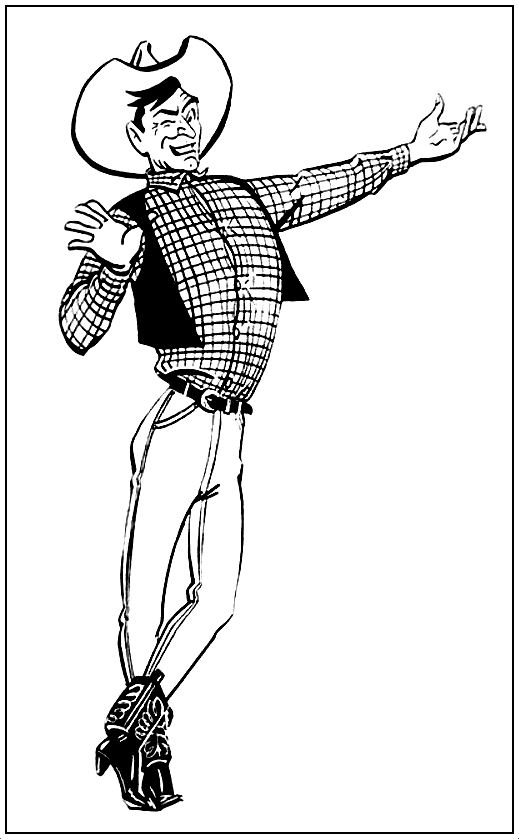
From early sketches, it seems that the right hand was intended to have the thumb hooked through a vest. Jack Bridges, Big Tex’s creator, wanted Tex to symbolize the larger-than-life Texan who wasn’t above indulging in good-humored bragging and tall-tale-telling, and that personality comes through in the sketch and the Big Tex illustration used in the 1952 ads, below.

big-tex-drawing_legend-of-big-tex

big-tex-ink_legend-of-big-tex
via The Legend of Big Tex

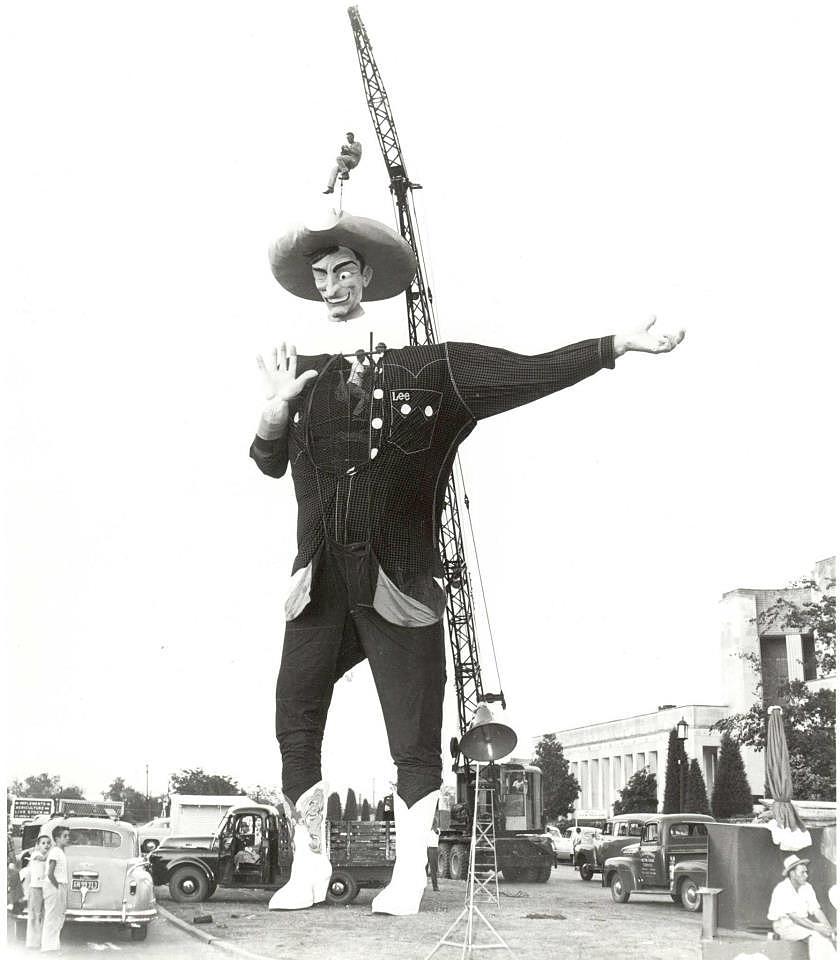
By the time Tex debuted, however, the vest seemed to have been discarded (as best I can tell from old photos), but the position of the right hand remained in that weird position (probably just to torment me as a child having to draw him in school).

big-tex_1952_installation_kera
A hovering, winking head, via KERA

Speaking of that very first version of Big Tex, in 1952 he had one eye shut, in the middle of a wink. He also had a long nose and wore a huge hat referred to in newspaper articles as a “sombrero.” In a 1983 interview, Jack Bridges said that in later years SFOT officials “made us open his eyes to make a ‘pretty boy’ outta him.” The wink was gone, the brim of the hat was made smaller, and his ears were moved forward. Even though Tex began to “talk” the next year, Bridges said, “I liked him better myself like he was — rugged and more or less caricature.”

The drawing of the man in the ad at the top probably has nothing to do with Big Tex, but dang if it ain’t pretty close! And the position of both hands makes sense! 

Here’s the full 1948 ad from the top:

big-tex_dmn_091248
1948

***

Sources & Notes

You can listen to a short (13-minute) interview done with Jack Bridges in 1983 as part of a Dallas Public Library oral history project, here. One of my favorite tidbits is Bridges remembering that vandals once painted a “big brown moustache” on the resting, disembodied head of Tex one year. He said that the head and the hat were kept in the Centennial Building when the fair wasn’t in progress, and the rest of Tex was kept in storage in various places around Fair Park. He said it was like making sure the president and vice-president never traveled together — if something happened to part of Big Tex, at least the whole of Big Tex wasn’t affected. (91-year-old Jack Bridges died in 2001; thankfully he didn’t have to witness the fiery … “incident” … of 2012.)

*

Copyright © 2016 Paula Bosse. All Rights Reserved.
The Skyline Beyond — 1950

skyline-from-tenement-housing_haskins-coll_uta-120450

by Paula Bosse

The view over there; the view over here.

***

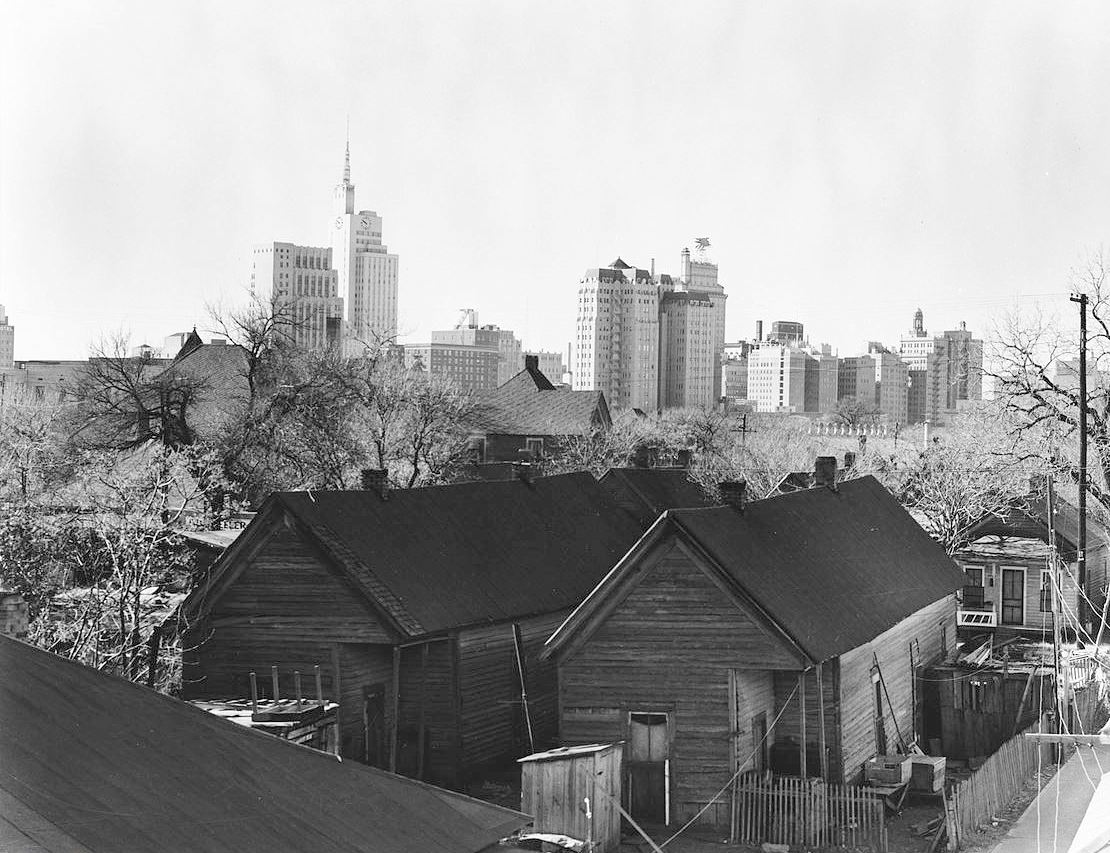
“Skyline of Dallas from backyards of tenement houses, 12/04/1950” — photograph by Squire Haskins, from the Squire Haskins Photography, Inc. Collection, UTA Libraries. Info is here. Super-gigantic image is here.

The view is looking south toward downtown.

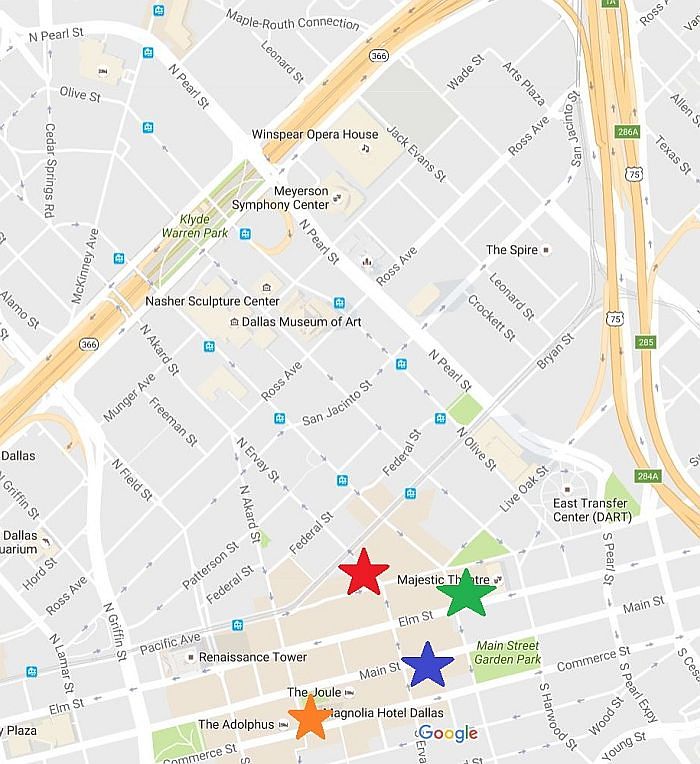
A map below, showing:

  • the Medical Arts Building at the center right (Pacific & Ervay, red star)
  • the Magnolia Oil Building (with Pegasus, at Commerce and Akard, orange star)
  • the Tower Petroleum Building (Elm and St. Paul, green star)
  • the Mercantile Bank Building (Main and Ervay, blue star)

skyline_1950_google
Google Maps

*

Copyright © 2016 Paula Bosse. All Rights Reserved.
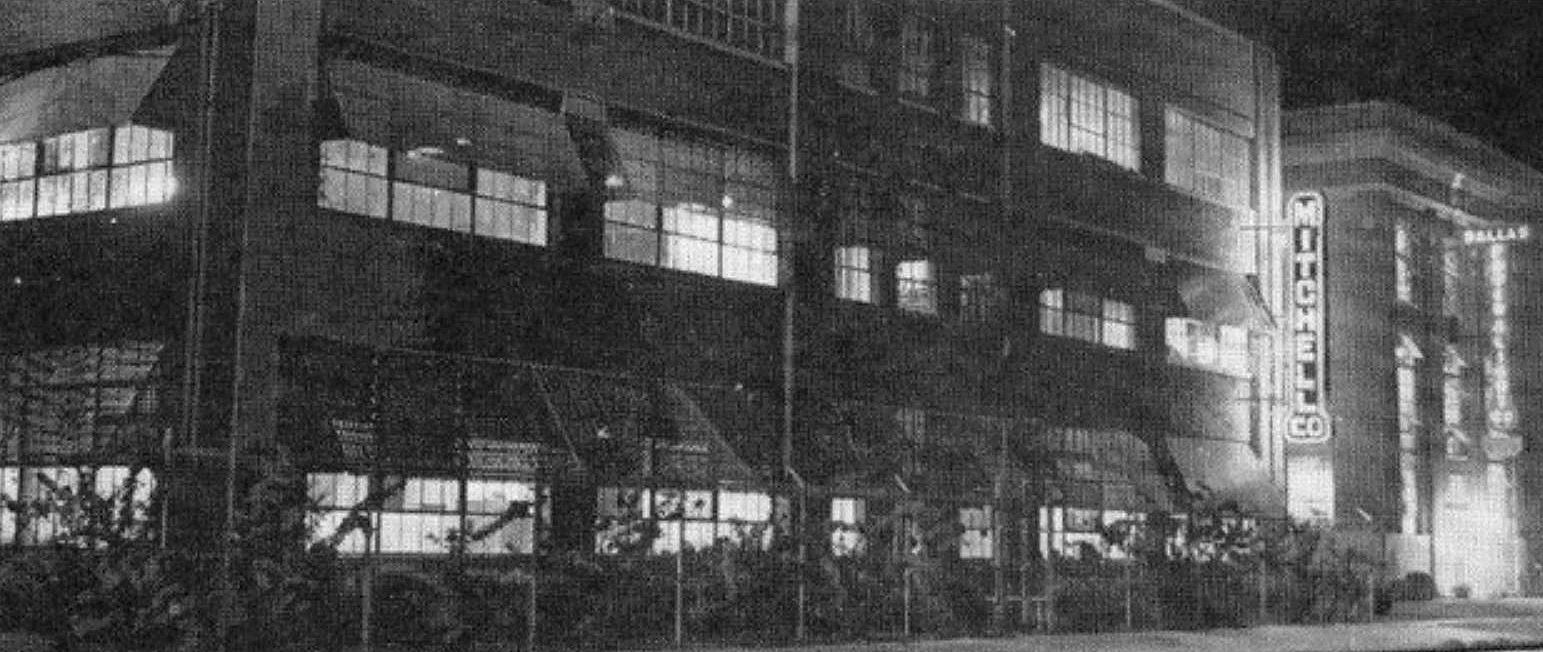
The Mitchell Building: Home to Cotton Gins, Rockets, Frozen Beverages, A/C Units, Slackers, Squatters, Hipsters, and Urban Loft-Dwellers

mitchell-bldg_oct-1988_appl-natl-register-hist-placesIn 1988, the building had seen better days… (click for larger image)

by Paula Bosse

In 1928, the John E. Mitchell Company (discussed previously here, here, and here) arrived in Dallas from St. Louis and built their J. A. Pitzinger-designed 2-story factory at 3800 Commerce Street (a wing was added the next year, and a third story was added the year after that). It produced cotton gins and farm implements. As strange as it seems today, Dallas was once the largest producer of cotton gin machinery in the United States. The Mitchell Company was located in a mostly industrial area very close to several other cotton gin manufacturers (such as the nearby  Continental Gin Company and Murray Company). At the height of their production, these Dallas factories were  responsible for half of the world’s cotton gins.

When World War II hit, the company became an important defense contractor and produced munitions for the U.S. Navy and U.S. Army, making things such as “anti-submarine projectiles,” anti-aircraft shells, rocket nozzles, and “adapters for incendiary bomb clusters.”

After the war, the Mitchell Company continued to manufacture agricultural implements but diversified by turning out other types of machinery, like automobile air conditioners and and cleaning systems. As the 1960s dawned, they developed the machine that made ICEE frozen slushy drinks (forever immortalized by 7-Eleven as The Slurpee).

After the death of company president John E. Mitchell, Jr. in 1972, the business began a slow slide downward. The company appears to have gone out of business in the early 1980s. In the fall of 1982, the company’s equipment was sold at public auction, and, in 1984, the building became the temporary home of the Junior Black Academy of Arts and Letters.

In the 1980s, Deep Ellum and Exposition Park began to explode with new bars, clubs, and galleries. If it was cool, it was in Deep Ellum and Expo Park; if it was in Deep Ellum and Expo Park, it was cool. Artists and musicians began to move into many of the neighborhood’s old warehouses. These usually run-down buildings — in which bohemian types lived (not always legally) and used as studio spaces — were huge and (in the beginning) cheap. The Mitchell Building became something of a ground zero for wild parties and was described in a fantastic 1995 newspaper article by Shermakaye Bass (linked below) as both a “flophouse” and “an artists commune and downtown slacker den.” The building was closed and boarded up by its owners in early 1995 in order to avoid code-violation citations, but by 1999 the building had been purchased, cleaned up, modernized, and converted into 79 loft apartments. Today, the Mitchell Lofts have been a part of the Expo Park scene for almost 20 years.

*

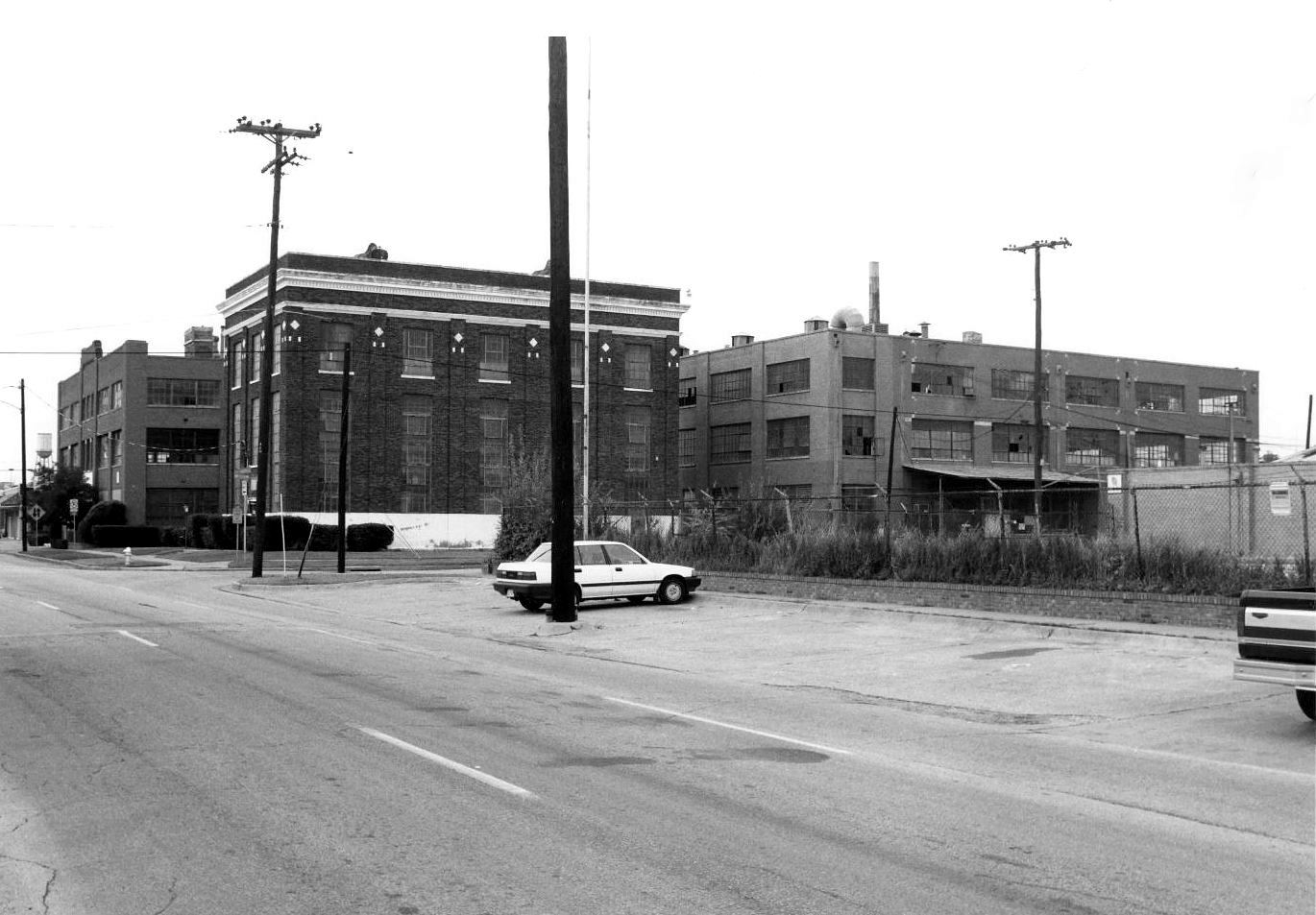
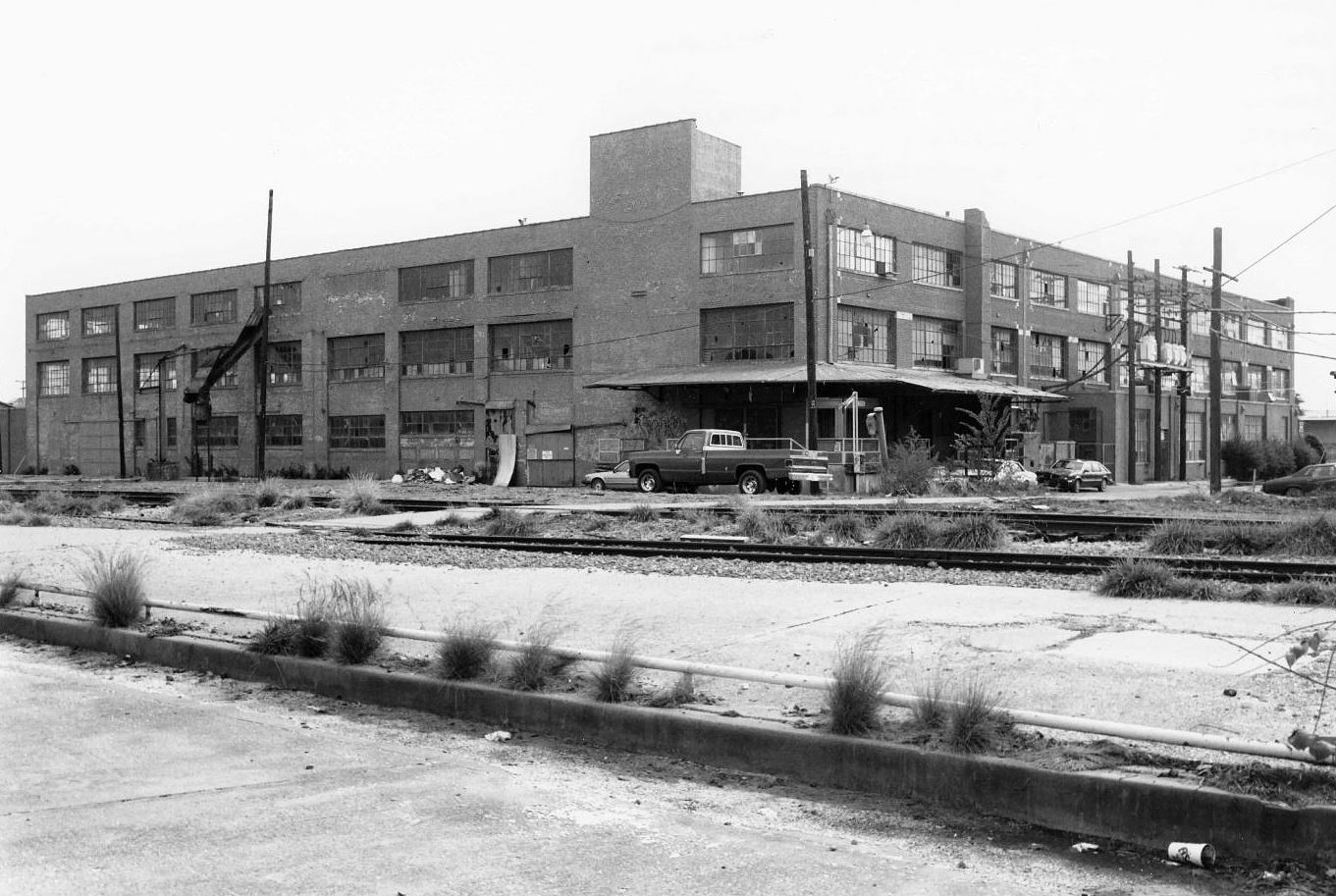
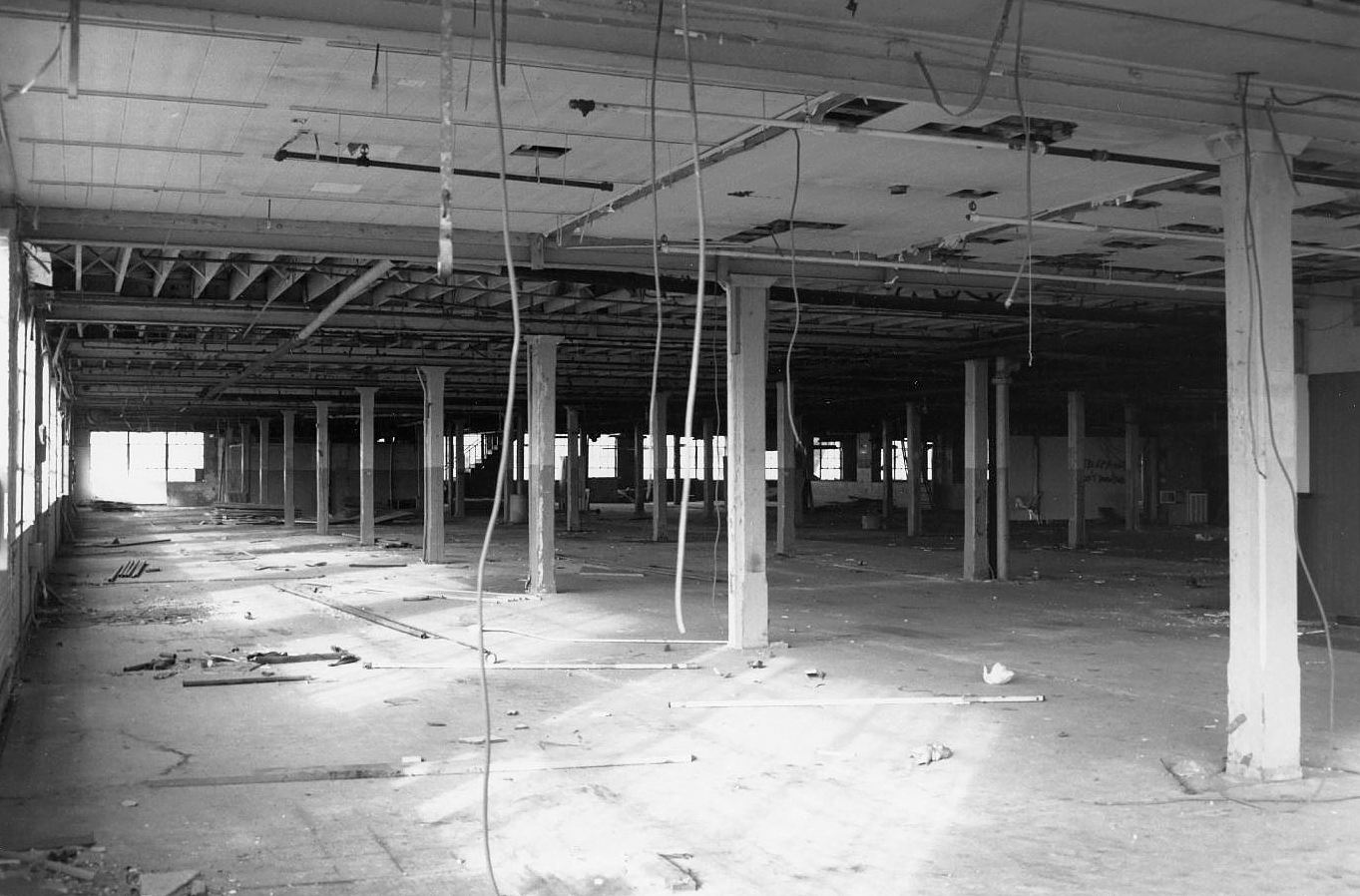
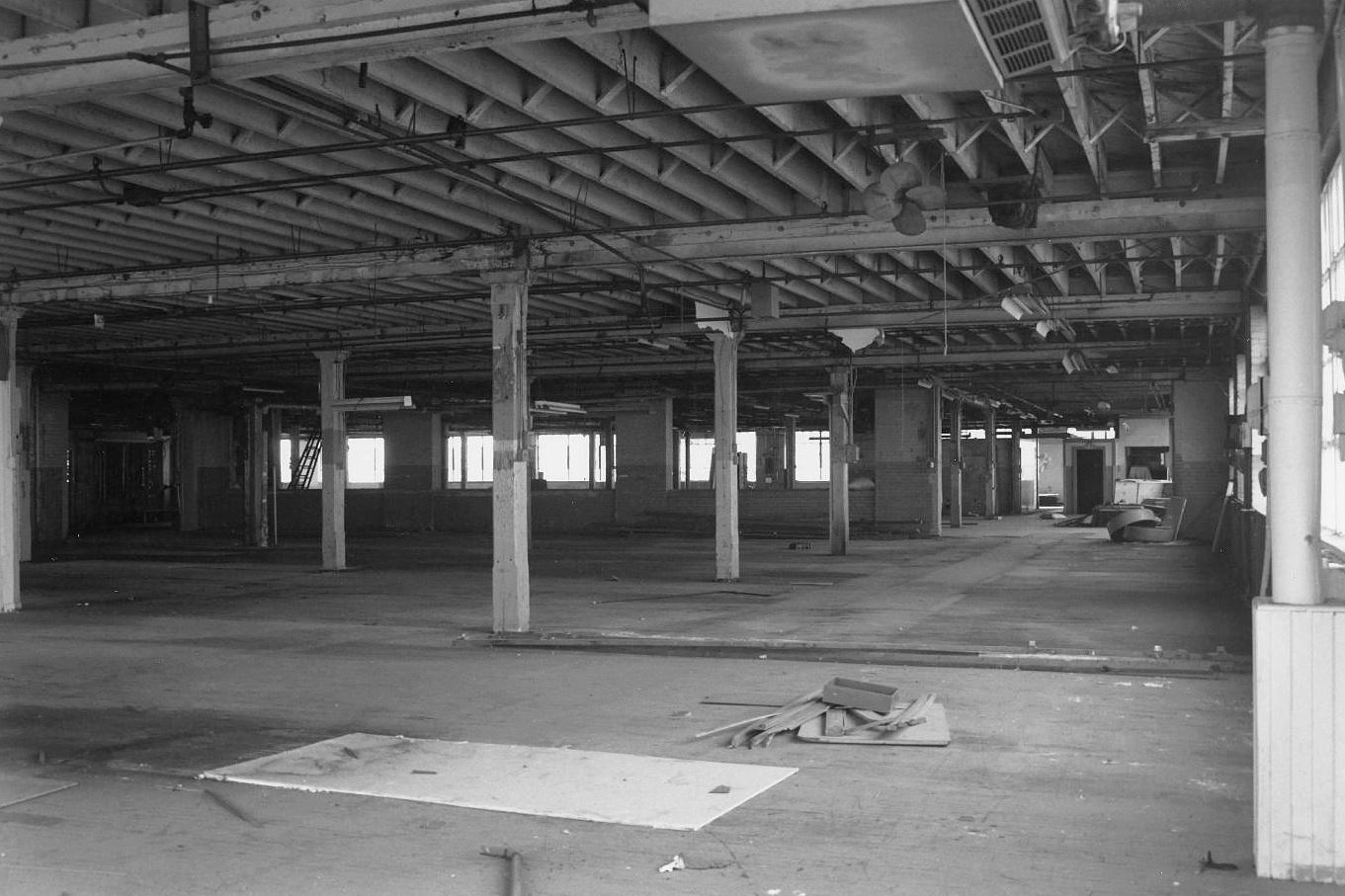
In 1991, the Mitchell Building was listed on the National Register of Historic Places. The photographs below (and the one at the top) were included in the application form. They were taken by Daniel Hardy of Hardy-Heck-Moore in October, 1988. Things weren’t looking great for the building in 1988. It must have been quite an undertaking to convert this large L-shaped building (which had certainly seen better days) into hip, sleek lofts.

Below, looking northwest on Commerce. The Mitchell Building is in an L-shape — the smaller building in the foreground is an old Dallas Power and Light substation, built around 1925. (Click photos to see larger images.)

mitchell-bldg_oct-1988_2

*

The back, from the old T&P/Missouri-Pacific railroad tracks.

mitchell-bldg_oct-1988_3

*

And two interior views of the second floor.

mitchell-bldg_oct-1988_4

mitchell-bldg_oct-1988_5

*

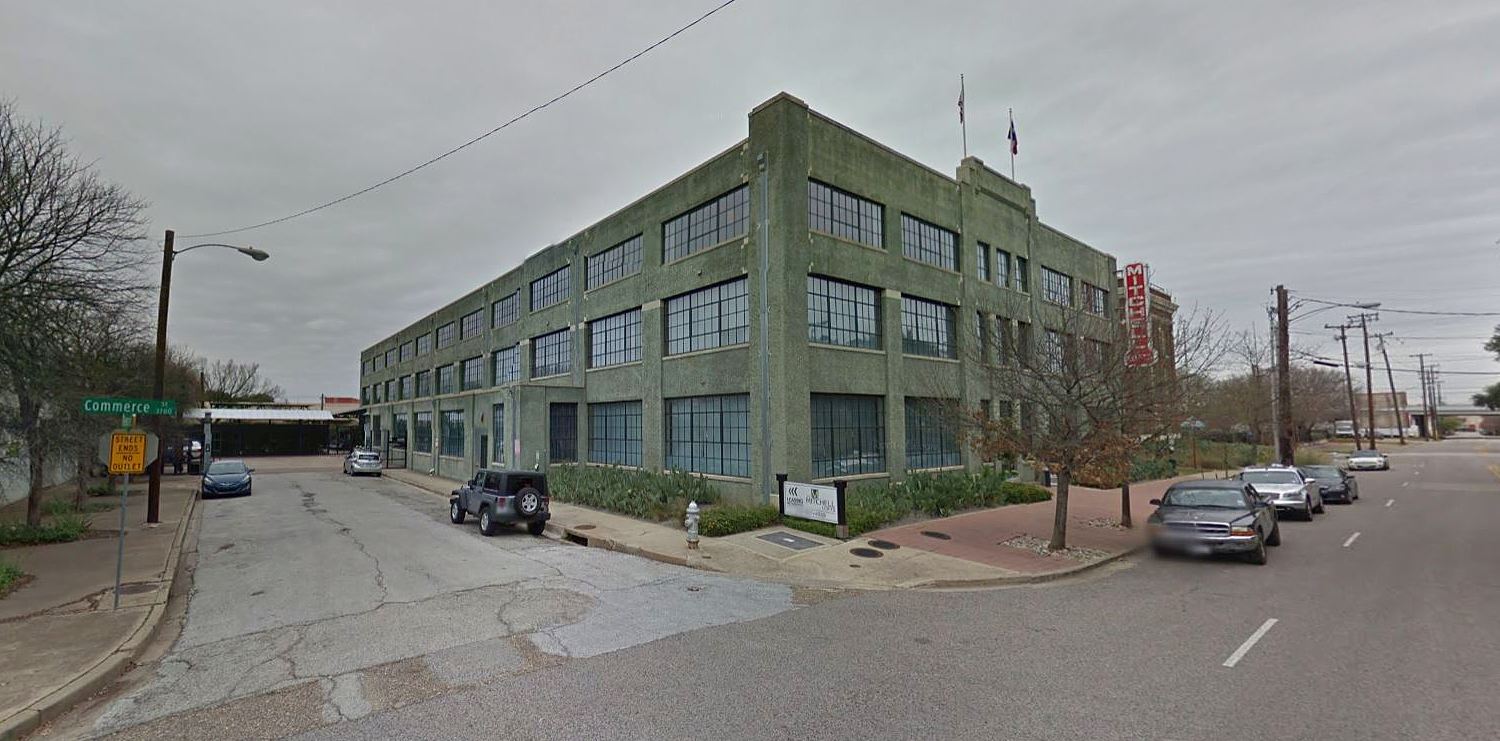
Here’s what the exterior looks like today, spiffified. (Explore it on Google Street view here.)

mitchell-lofts_google_jan-2016Google Street View (Jan. 2016)

mitchell-building_google
Google Maps

**

mitchell_sign_war-bk
Mitchell War Book, ca. 1945

mitchell-building_flickr_colteraFlickr

***

Sources & Notes

Photos are from the application to the National Register of Historic Places; in addition to the photos, there is a thorough history of both the building and the John E. Mitchell Company, written by David Moore of Hardy-Heck-Moore. The 28-page form can be found in a PDF, here. (3/14/17 UPDATE: The link no longer works for me, and I am unable to find the document. Here’s the full URL: ftp://ftp.dallascityhall.com/Historic/National%20Register/John_E_Mitchell_Plant.pdf.)

More info on the Mitchell Company and its building through the years can be found in the following Dallas Morning News articles:

  • “Dallas Gets Gin Factory” (DMN, March 17, 1928) — the announcement that a permit has been granted for the construction of a two-story brick factory and warehouse
  • “John E. Mitchell Exemplifies Faith as Secret to Success,” by Helen Bullock (DMN, July 17, 1949) — an entertaining profile of John E. Mitchell, Jr.
  • “Demise of a Dream Factory — Deep Ellum’s Historic Mitchell Building Leaves a Legacy of Artistic and Industrial Vision,” by Shermakaye Bass (DMN, Feb. 5, 1995) — for those who grew up when Deep Ellum was experiencing its (first) renaissance, the article is a great snapshot of what things were like in Deep Ellum and Exposition Park back in the ’80s and early ’90s

See what the Mitchell Lofts look like now in this Candy’s Dirt article from 2014; more photos are here. Pretty hard to believe people used to manufacture things like cotton gins and anti-aircraft missiles there.

The Mitchell Lofts website is here.

Click pictures and clipping to see larger images.

*

Copyright © 2016 Paula Bosse. All Rights Reserved.
 

Preston and Valley View: The Calm Before the Storm — 1958

preston-lbj_122158_squire-haskins_utaLBJ Freeway, T-minus 6 years….

by Paula Bosse

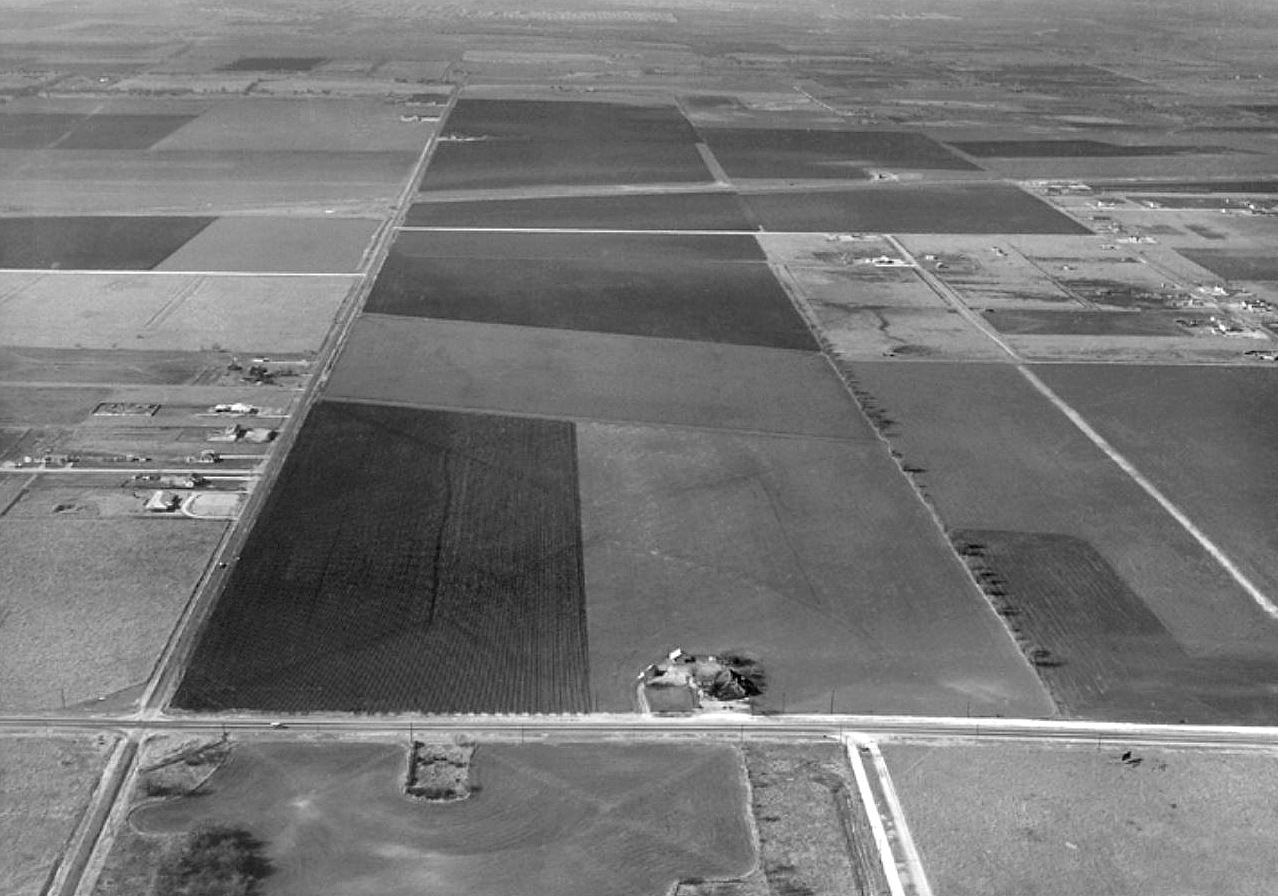
This photo makes my head hurt. The road crossing horizontally at the bottom is Preston. The vertical road at the left is Valley View Lane (the view is to the west). What we’re looking at is land soon to be eaten up by LBJ Freeway, which was built along Valley View.

This fantastic photo by aerial photographer Squire Haskins (which can be seen REALLY big at the UTA website here) is included in Oscar Slotboom’s book Dallas-Fort Worth Freeways. This is his caption to the above photo:

Preston at LBJ, 1958. This December 1958 view looks west along Valley View Lane with the Preston Road intersection at the lower left. LBJ Freeway was built along Valley View Lane with work underway in 1964. A Sears store opened in the foreground in 1965 and Valley View Mall opened in 1973. The corridor was fully urbanized by the 1980s.

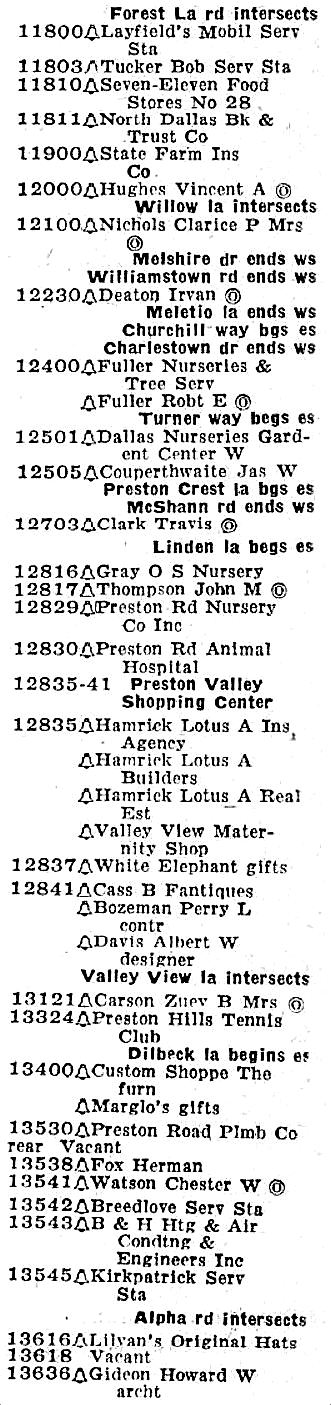
The only street directory I could find fairly close to the date of this photo was the one from 1961 — which already shows development not seen in the photograph. By this time, people knew the freeway was coming, but it was still fairly sparsely developed.

Here is the listing of addresses along Valley View Lane, stretching from Inwood, east past Central Expressway. (Click for larger image.)

valley-view_1961-directory
Valley View Lane, 1961 Dallas directory

And, below, addresses along Preston Road, moving north from Forest Lane. The thing that makes me lightheaded about this, is one particular business, way, WAY up north — out in the middle of nothing back in 1961: Lilyan’s Original Hats, at Preston and Alpha. That was my great-aunt’s hat shop. She owned that land. Imagine! She sold it, I think, in the ’70s. I can only hope she made a pretty penny!

preston-road_1961-directory
Preston Road, 1961 Dallas directory

**

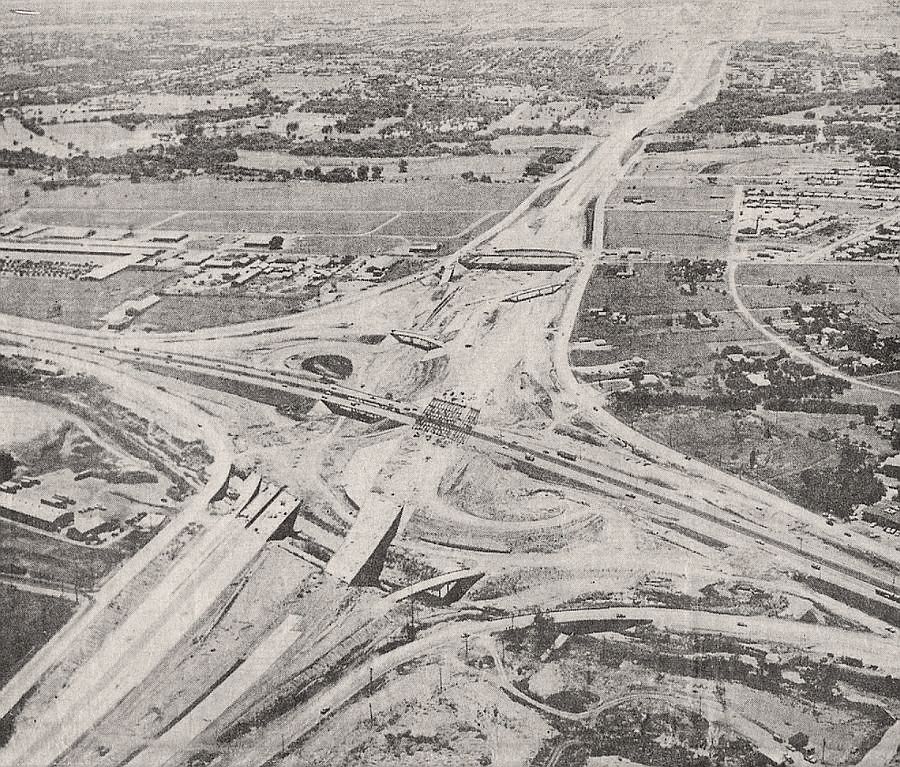
Here’s what construction of LBJ looked like in 1967 — the photo shows the intersection of Central Expressway and LBJ, with a view to the southwest).

lbj-looking-west_at-75_flickr_red-oak-kidFlickr, Red Oak Kid

***

Sources & Notes

Photo from the Squire Haskins Photography, Inc. Collection, UTA Libraries; more info here.

More on the construction of LBJ can be found in the chapter “Interstate 635, Lyndon B. Johnson Freeway” (from Oscar Slotboom’s amazingly researched book Dallas-Fort Worth Highways), here.

The 1957 map linked above is one of many scanned road maps which can be found on Slotboom’s site — the page “Old Highway Maps of Texas, 1917-1973) is here.

*

Copyright © 2016 Paula Bosse. All Rights Reserved.

The Dallas Skyline: Spot the Landmarks

skyline_from-swMid-Century Big D… 

by Paula Bosse

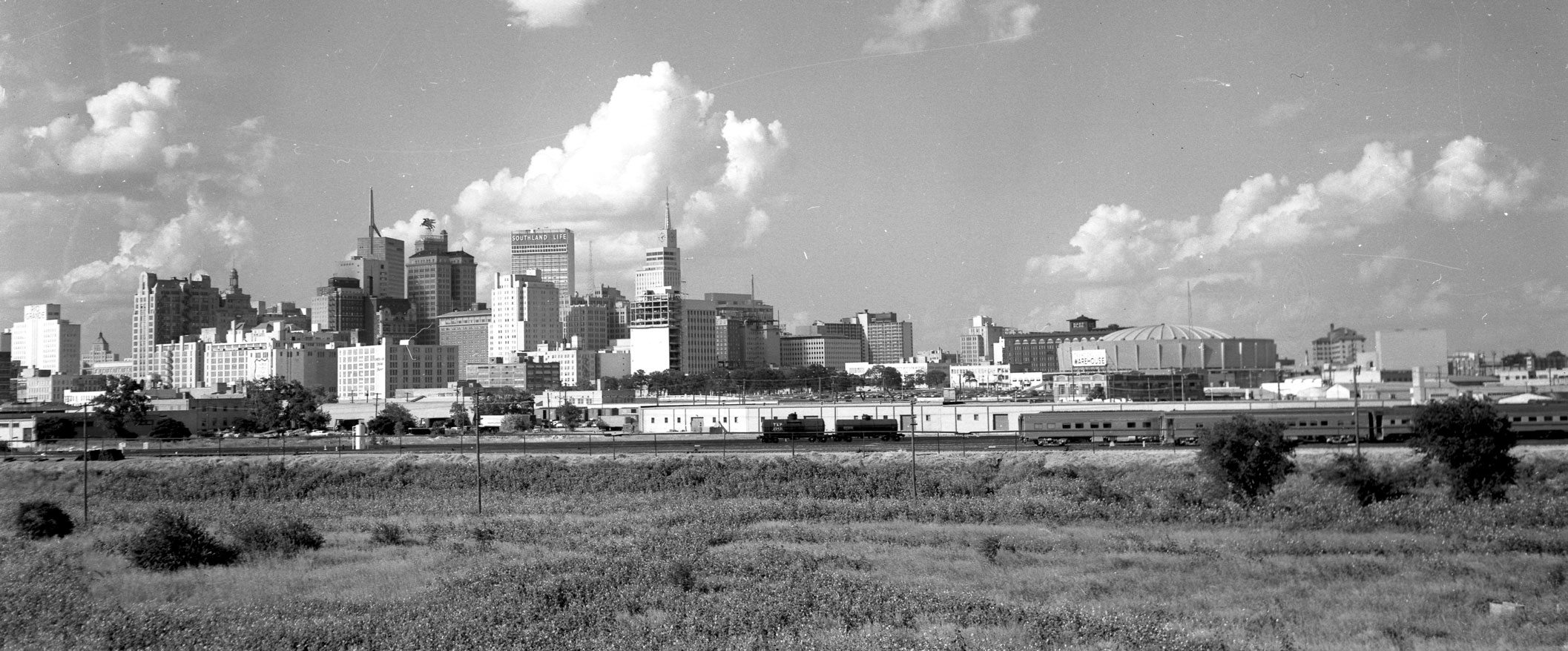
The Dallas skyline is always changing, and it’s always been impressive. The late-’50s/early-’60s version above looks quaint by today’s standards, but it’s one of my favorite skyline periods. I’ve never been a huge fan of the Convention Center, but the rest of it? Pretty great.

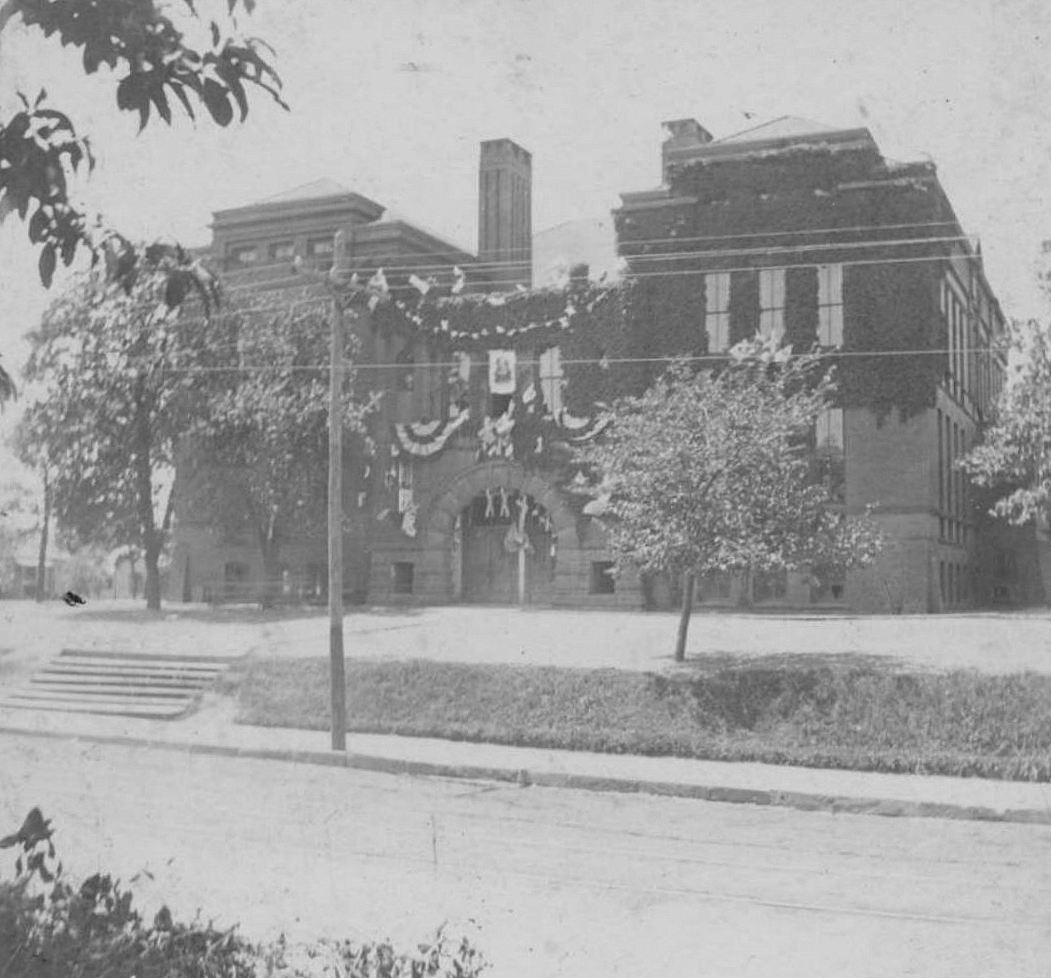
In order to make way for the George Dahl-designed Dallas Memorial Auditorium/Dallas Convention Center (which opened in 1957), the old Columbian School/Royal Street School (built in 1893) was demolished. At the time of its razing, it had most recently served as the city’s school administration building and as a book warehouse. Here are a couple of photos of the school, long before the bulldozers arrived.

columbian-school_flanders-site
via James Edwards Flanders site

columbian-school_cook-collection
Cook Collection, SMU

Also interesting was that this land — which the city had been buying up for many years (some as a result of condemnation/eminent domain) also included four pioneer cemeteries. Read more about what happened to those cemeteries here.

dallas-convention-center_flickr-coltera

***

Sources & Notes

Top photo is from a site containing several photos relating to early KRLD radio and TV, with the occasional shot of Dallas streets and buildings, here.

Other sources, if known, are noted.

*

Copyright © 2016 Paula Bosse. All Rights Reserved.