Flashback : Dallas

A Miscellany: History, Ads, Pop Culture

Category: 1950s

When Every Skyscraper Was a Distinctive Landmark

skyline_akard-royalSoak it in…

by Paula Bosse

I love this photo, taken from the southern edge of downtown, at S. Akard (running from left to right in the photo) and Royal, a street which once ran one block north of Canton (map below). Today, the convention center would be behind the photographer, and the I. M. Pei-designed City Hall would be pretty much straight ahead. I’m always going to prefer the grittier-looking downtown Dallas of days gone by to today’s shinier, glitzier version. I couldn’t get the exact angle, but today’s view from more or less the same vantage point looks like this, and it just isn’t as interesting. (I’ve never actually heard anyone broach the topic, but am I the only one who thinks that Pei’s City Hall now looks weirdly and hopelessly dated? Kind of tired and stuck in the ’70s? If nothing else, those yucky white flagpoles out front need to go!)

When this photo was taken, you could actually still see all those famous buildings — before they were dwarfed and engulfed by all those over-eager underclassmen!

***

Sources & Notes

Photo from a site managed by Andrew K. Dart, full of photos from negatives he rescued when they were thrown out by KDFW-TV, many from the archives of KRLD. This photo is from a page of Dallas skyline photos, here.

Here’s a map that shows S. Akard and Royal streets, which Mr. Dart identified as being the intersection seen in this photo by zooming in on the street sign (click for larger image):

map_akard-royal_1952-mapsco1952 Mapsco

*

Copyright © 2016 Paula Bosse. All Rights Reserved.

Sonny James: The “Shindig Heartbreaker”

shindig-cast_sonny-james-websiteSonny James, center, with fiddle (photo: SonnyJames.com)

by Paula Bosse

Sonny James — the much-loved Country Music Hall of Fame singer — died yesterday (Feb. 22, 2016). When I was a child, his version of “Runnin’ Bear” was my favorite song, and it was played endlessly throughout the ’70s on Dallas’ classic country stations like KBOX and WBAP. I was surprised to learn a few years ago, that the Alabama-born Sonny James lived in Dallas for several years, and that Dallas was where he was performing regularly when he exploded into the national consciousness with his first #1 hit, “Young Love.”

sonny-james_dmn_0609561952

Before he made his way to Dallas, Sonny James had been making a name for himself as a performer on Shreveport’s Louisiana Hayride. One of his first appearances in Dallas was during his Hayride Days: he was a guest on the Big D Jamboree in the summer of 1952.

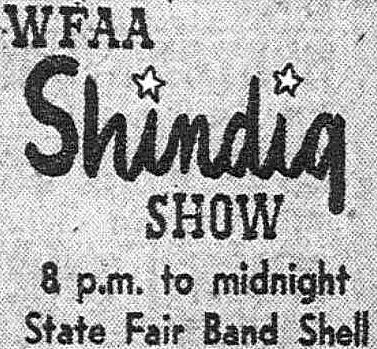
He must have made quite a splash, because only a month later, he had left the Hayride, moved to Dallas, and was signed to appear on the show “Saturday Nite Shindig,” the WFAA-sponsored answer to the Big D Jamboree, which debuted on October 11, 1952. (As “Saturday Night Shindig,” the radio show had been a WFAA staple since it began in 1944; Sonny James was hired to be part of a new “Shindig,” which was revamped from a folksy half-hour show to a 4-hour live music show and was broadcast from Fair Park.)

“Yeoow! More Zip than a Singed Cat!” (Click for larger image.)

sonny-james_dmn_100852Oct. 8, 1952

sonny-james_dmn_101052Oct. 10, 1952

It was an immediate hit, and Sonny became the main draw and something of a teen heart-throb. Less than a month after the announcement of his permanent gig as a “Shindigger,” he also got his own radio show on WFAA, Tuesday and Thursday mornings from 11:00 to 11:15.

Pretty soon, the Shindig revue was being simulcast on TV and radio, live from Fair Park (from the bandshell when it was warm, and from various other buildings during cold and inclement weather).

sonny-james_dmn_041153April 11, 1953

The Shindig show seems to have died away in 1954 or 1955. Sonny James headed back to the Sportatorium and the Big D Jamboree (which was run by his manager, Ed McLemore). One show of note was this one in 1955, with his old Louisiana Hayride pal Elvis Presley. (McLemore made sure that even though Elvis was the headliner, Sonny’s name was actually bigger!)

big-d-jamboree_FWST_041555-elvis_sonny-jamesApril 15, 1955

Sonny James had been recording for Capitol for several years, with some success, but it wasn’t until the end of 1956 that he had his mammoth #1 crossover hit, “Young Love,” which made him a national star. Apparently, he kept a residence in Dallas for a while (the last address I see for him in Dallas was in 1955 at 4718 Capitol, between N. Carroll and Fitzhugh). While living in Dallas, he was a steadfast member of the Church of Christ at East Side and Peak, and he frequently participated in area fishing contests (in fact, there might have been more mentions of his extracurricular fishing exploits in the local papers than there were mentions of his show-biz exploits — his fishing activities were often covered using his real name, Jimmie Loden). One person who lived in the same neighborhood Sonny did recalled on a Dallas-history message board that Sonny worked on Saturday mornings bagging groceries at a store on the corner of Capitol and Fitzhugh.

Sonny James went on to be a much-loved country performer who racked up a number of hits and was, apparently, one of the nicest guys around. He was most definitely a Southern Gentleman. Thanks, Sonny.

sonny-james_shindig_ebay

*

sonny-james_dmn_110852-shindig-ad
Nov. 8, 1952

sonny-james_promo-photo_1953
1953

shindig_dmn_091253
Sept. 12, 1953

shindig_billboard_100353
Billboard, Oct. 3, 1953

sonny-james_dmn_082154
Aug. 21, 1954

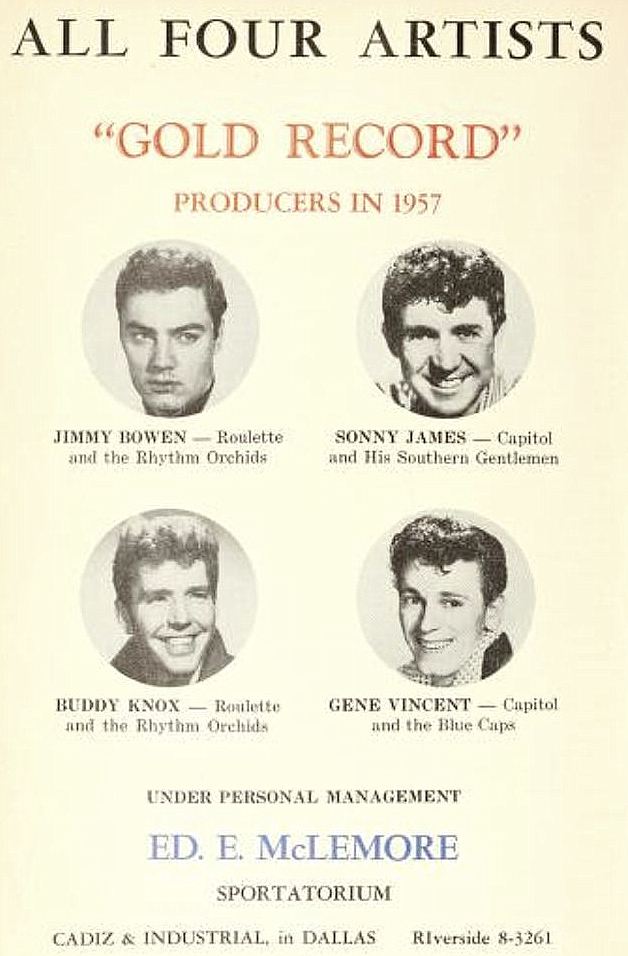
james-sonny_1957_promo-photoRadio Annual and Television Yearbook, 1957

james-sonny_mclemore_1958Radio Annual and Television Yearbook, 1958

***

Sources & Notes

Sonny James’ obituary form the Hollywood Reporter is here. His Wikipedia page is here.

The official Sonny James website is here.

To get an idea of the absolutely HOT hillbilly and rockabilly music that was being performed in Dallas in the years that Sonny James was here, check out this fantastic sampling of recordings from the Big D Jamboree:

*

See a few photos of Sonny James in Dallas at SonnyJames.com here (click thumbnails for larger images — the photo of Sonny sitting in the wings watching Elvis on stage at the Big D Jamboree is pretty great!).

A couple of good articles about Sonny James’ time in Dallas (written while he still considered himself a resident of the city) can be found in the Dallas Morning News archives:

  • “Success Won’t Spoil Mr. James” by Tony Zoppi in his “Dallas After Dark” column (DMN, Feb. 10, 1957)
  • “Sonny Snubs That Las Vegas ‘Loot'” by, of all people, Frank X. Tolbert in his “Tolbert’s Texas” column (May 13, 1957), in which Sonny — fresh off his 2.5-million-selling “Young Love” hit — talked about having a clause in contracts saying he would not perform in places with drinking, “clinch dancing,” and gambling, mostly because he did not want to exclude his teenage fans from being able to see him perform.

A good interview with Sonny James — packed with photos — appeared in the January, 1958 issue of TV Radio Mirror, a full scan of which you can find here. Even after he had hit the mega-big-time, Sonny said he continued to keep an apartment in Dallas. In the story there is a photo of his Dallas girlfriend, Doris Farmer (née Shrode) — she and Sonny took out a marriage license in July, 1957 (seen here) — I’m not sure when they married, but Sonny and Doris were happily married until Sonny’s death, almost 60 years.

Another performer who lived in the DFW area at the same time as Sonny James and who was also on the cusp of national stardom was Pat Boone, who had his own show on WBAP while attending college in Denton. Sonny and Pat were friends and even appeared on a few bills together. They were both also members of the Church of Christ, which both no doubt felt was an important bond. I wrote about Pat Boone’s time in DFW in the Flashback Dallas post “Pat Boone, Host of Channel 5’s ‘Teen Times’ — 1954,” here.

*

Copyright © 2016 Paula Bosse. All Rights Reserved.

Lakewood Post Office — 1946-1976

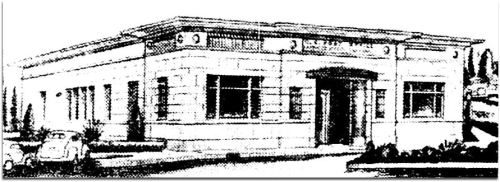
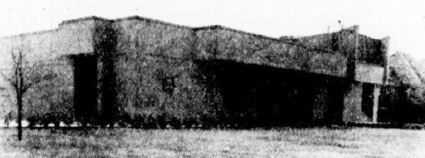
lakewood_post-office_dmn-123045Lakewood Post Office, 6324 Prospect

by Paula Bosse

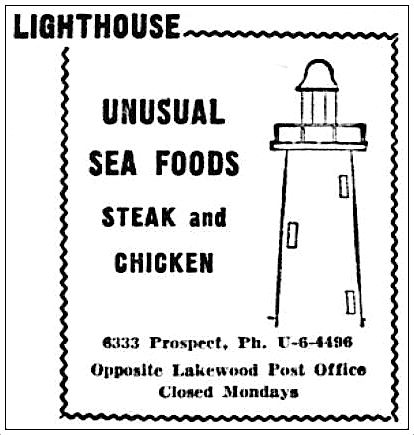
I’m often surprised to discover things about the part of Dallas I grew up in which I somehow never knew — in this case: Lakewood’s first post office, which was apparently in operation when I was a living, breathing, sentient human being but which I’d never known about until today. (I actually grew up in the nearby Lower Greenville neighborhood, but even though I went to Long and Woodrow, I don’t remember being all that aware of Lakewood proper until I was able to drive myself around it as a teenager.) Somehow I had never known that there was a post office in Lakewood before the one at Swiss and La Vista. Or, rather, I’d never even thought about it. Until I saw this ad earlier today:

lakewood_lighthouse_dmn_0425471947

“The Lighthouse — Unusual Sea Foods, Steak and Chicken — Opposite Lakewood Post Office.”

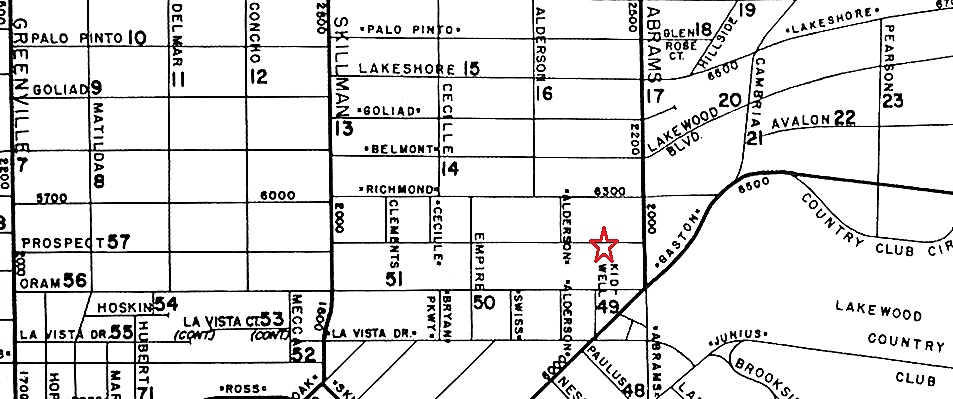
Post office? New to me. I looked it up. It was just west of Abrams, on Prospect at Kidwell, positioned diagonally across the lot. It was the 13th post office substation in Dallas, and it opened on December 2, 1946, over two years after its approval had been announced, during the war, in August, 1944.

A 1945 Dallas Morning News article had this interesting bit of information:

The contractor is Bascomb E. McClesky [sic]. The building will have 4,000 square feet of floor space. Parking space will be provided on the lot. [McCleskey] will retain title to the property and will lease it to the government, Payne said. (“Lakewood To Get Branch Post Office,” DMN, Nov. 18, 1945)

(I’m not sure I was aware developers leased property to the federal government. B. E.  McCleskey lived in the Pasadena area of Lakewood and seems to have spent his 30-year career as a general contractor who also bought, sold, and developed both commercial and residential properties in and around this part of East Dallas. When he began his career, he had an office on Gaston in the new Lakewood Shopping Center; at the time of his death in 1956, his office was right next door to the post office on land which, presumably, he still owned.)

This post office lasted for 30 years until the newer, hulkier, and far less aesthetically appealing station opened at Swiss and La Vista on May 10, 1976.

lakewood-post-office_dmn_112576_swiss.-photo
1976

Some factoids which will come in handy should you ever find yourself in a U.S. Post Office Trivial Pursuit (Lakewood Edition) competition:

  • When the first Lakewood post office opened in 1946, it employed 3 clerks, 1 supervisor, and 16 carriers.
  • When the second post office opened 30 years later, it employed 13 clerks, 2 supervisors, and 47 carriers.

*

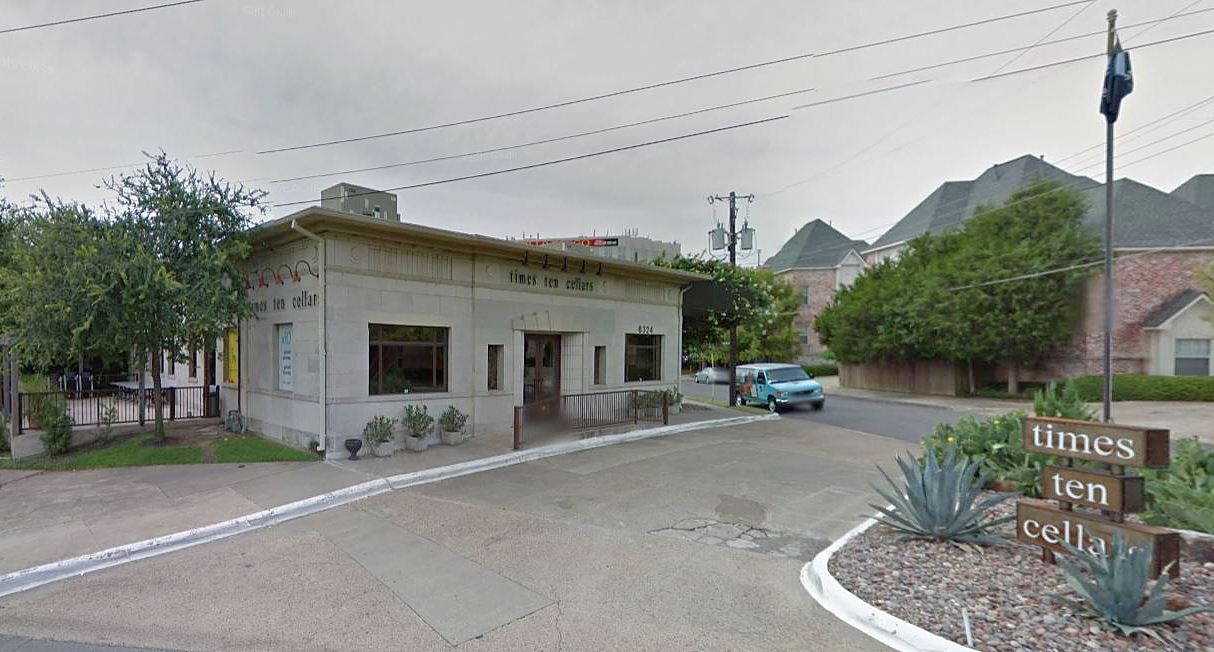
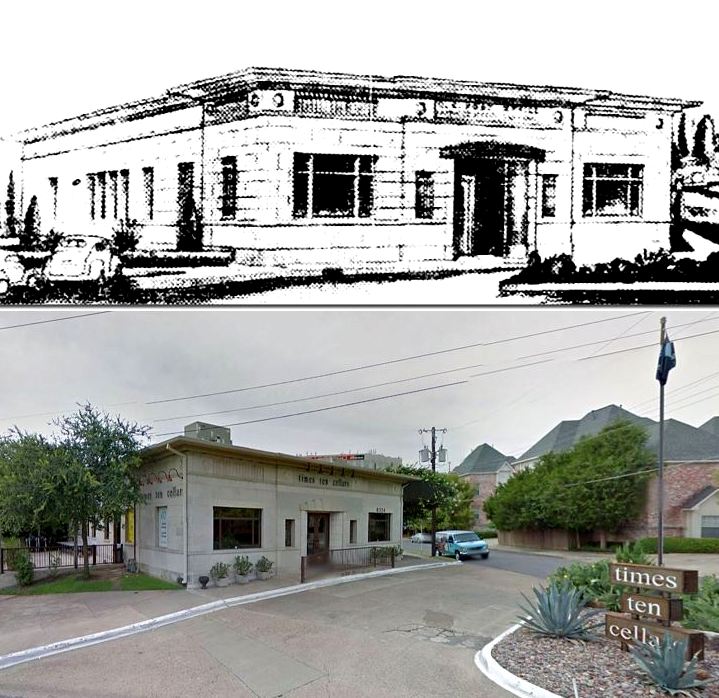
But back to the first post office — the building is still standing and houses the Times Ten Cellars wine bar! I’ve passed that building a lot over the years, but I guess I never paid much attention to it. I don’t know why, because it’s a great little  building. It would never occur to me that it might ever have been a post office. I wish more businesses in Dallas would consider repurposing older buildings rather than building characterless boxes that look like every other characterless box. Thank you, Times Ten Cellars!

times-ten-cellar_google_2015Google Street View (2015)

*

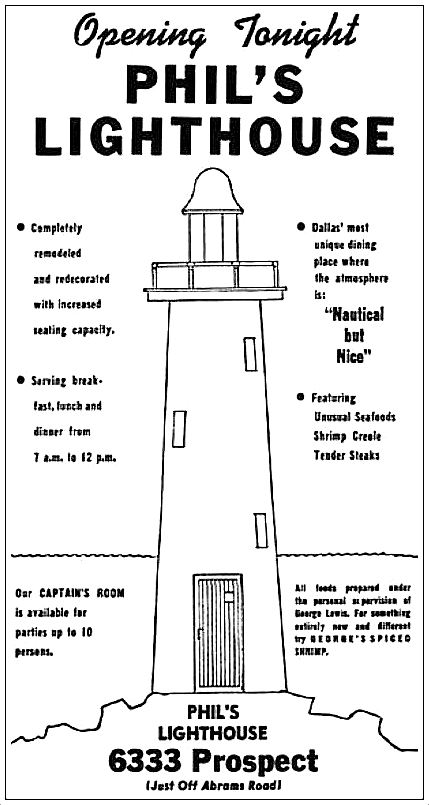
That Lighthouse “unusual sea foods” restaurant? It doesn’t seem to have lasted very long. It changed hands a few times before closing as the Lighthouse Cafe at the end of 1950. At one point it was known as Phil’s Lighthouse — “Dallas’ most unique dining place where the atmosphere is: ‘Nautical But Nice.'”

phils-lighthouse_dmn_121649DMN, Dec. 16, 1949

That’s right … “NAUTICAL BUT NICE”!

***

Sources & Notes

If anyone remembers the Lighthouse restaurant: was it actually shaped like a lighthouse?

Detail of a page from the 1952 Mapsco showing the location of the old post office (click for larger image):

lakewood-post office_1952-mapsco

lakewood-post-office_then-now

Click pictures for larger images.

*

Copyright © 2016 Paula Bosse. All Rights Reserved.


Life in The Grove: Pleasant Grove — 1954-1956

pghs_1956-dairy-queenDairy Queen, 1238 S. Buckner — 1956 (click for larger image)

by Paula Bosse

The community of Pleasant Grove was first settled in the 1840s but didn’t officially become part of Dallas until it was annexed in 1954 after a huge postwar surge in population. Upon annexation, the schools that made up the Pleasant Grove Independent School District became part of the DISD, including Pleasant Grove High School, which was located on Lake June Road, between Conner and Pleasant Drive. PGHS closed when the brand new W. W. Samuell High School opened on January 28, 1957, halfway through the 1956-1957 school year. The photos here are from the yearbooks of the last three years that Pleasant Grove High School was open — most of the ads feature students inside or in front of the business establishments. And they’re great! (Click photos for larger images.)

*

Photos of overcrowded Pleasant Grove High School and its numerous out-buildings, 1955.

pghs_1955a

pghs_1955b

Pleasant Grove Pharmacy, Grady’s Clover Farm Grocery, and Grove Shoe Store:

pghs_1954-yrbk_a1954

Worthington Service Station:

pghs_1954-yrbk-worthington1954

Schepps Dairy:

pghs_1954-yrbk-schepps1954

The Eatmore Hamburger System (greatest name EVER!!):

pghs_1954-yrbk-eatmore1954

Dasch Cleaners:

pghs_1955-yrbk-dasch1955

Harvey Hayes, “The Insurance Man”:

pghs_1955-yrbk_a1955

Cassidy’s Conoco Station, Tee-Pee Drive-In Grocery, and Gay and Jones Motor Co.:

pghs_1956-yrbk_b1956

Worthington’s Magnolia Service Station (again) and Barrett’s Used Cars:

pghs_1956-yrbk_a1956

W. W. Hughes Magnolia Service Station, E & L Service Shop (bicycle and lawnmower service), and, again, Pleasant Grove Pharmacy:

pghs_1956-yrbk_d1956

Billie Price Real Estate and Maridell’s:

pghs_1956-yrbk_c1956

Martin’s Sinclair Service Station (with a DQ photobomb):

pghs_1956-martins1956

The Kaufman Pike Drive-In, “The Theater With a Heart”:

pghs_1956-yrbk-kaufman-pike-drive-in1956

And lastly, a very dark photo of Pleasant Grove High School from the 1948 yearbook:

pleasant-grove-high-school_1948-yrbk1948

***

Sources & Notes

All photos and ads are from the 1954, 1955, and 1956 editions of The Bobcat, the Pleasant Grove High School yearbook.

More on the history of Pleasant Grove in southeast Dallas, here. More on the history of Pleasant Grove High School here and here. The confusing school changes revolving around the the PGISD/DISD switchover were a bit like musical chairs and affected attendance of numerous high schools (including Forest High School, Crozier Tech, and Woodrow Wilson), junior high schools, and elementary schools. Read about the details in the Dallas Morning News article “Mid-Term Switch Set for Students” (DMN, Jan. 6, 1957).

Google map showing Pleasant Grove and approximate location of PGHS, here.

As always, click pictures for larger images.

*

Copyright © 2016 Paula Bosse. All Rights Reserved.

Dallas’ Mid-Century Skyline

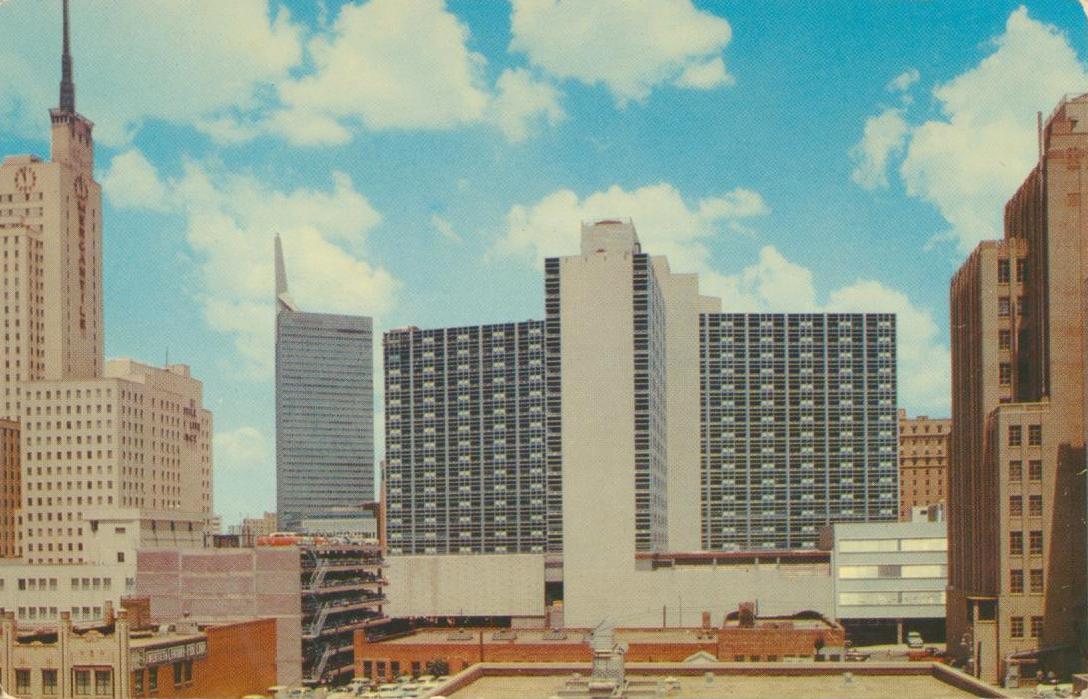
skyline_statler_mercantile_republic_ebayBack then: more sky, fewer parking lots (click for larger image)

by Paula Bosse

Dallas architecture at mid-century: the Mercantile Bank Building, the Republic Bank Building, the Statler-Hilton (from behind!), and … a multi-level parking garage. Dallas is nothing if not a city full of banks, banks (and more banks), flashy hotels, and parking lots. Then and now.

***

Slightly fuzzy postcard from eBay. The Statler-Hilton (which this postcard identifies as the “Hilton-Statler”) isn’t often seen from behind like this in photos (not really its best side). Other than the three main buildings (and the old library, which is as architecturally cool as the other three), I think that just about everything else in this photo is gone. There are now parking lots (…yay…) where the buildings at the right and at the bottom left are seen — there’s even a parking lot where the parking garage once stood! (Dallas really loves its parking lots.) At least we managed not to tear down the most architecturally significant buildings seen here. (Even though the number of downtown parking spaces could be exponentially increased if we pulled those suckers down and replaced them with multi-multi-story garages!)

*

Copyright © 2016 Paula Bosse. All Rights Reserved.

The 1952 Dallas Texans: Definitely NOT America’s Team

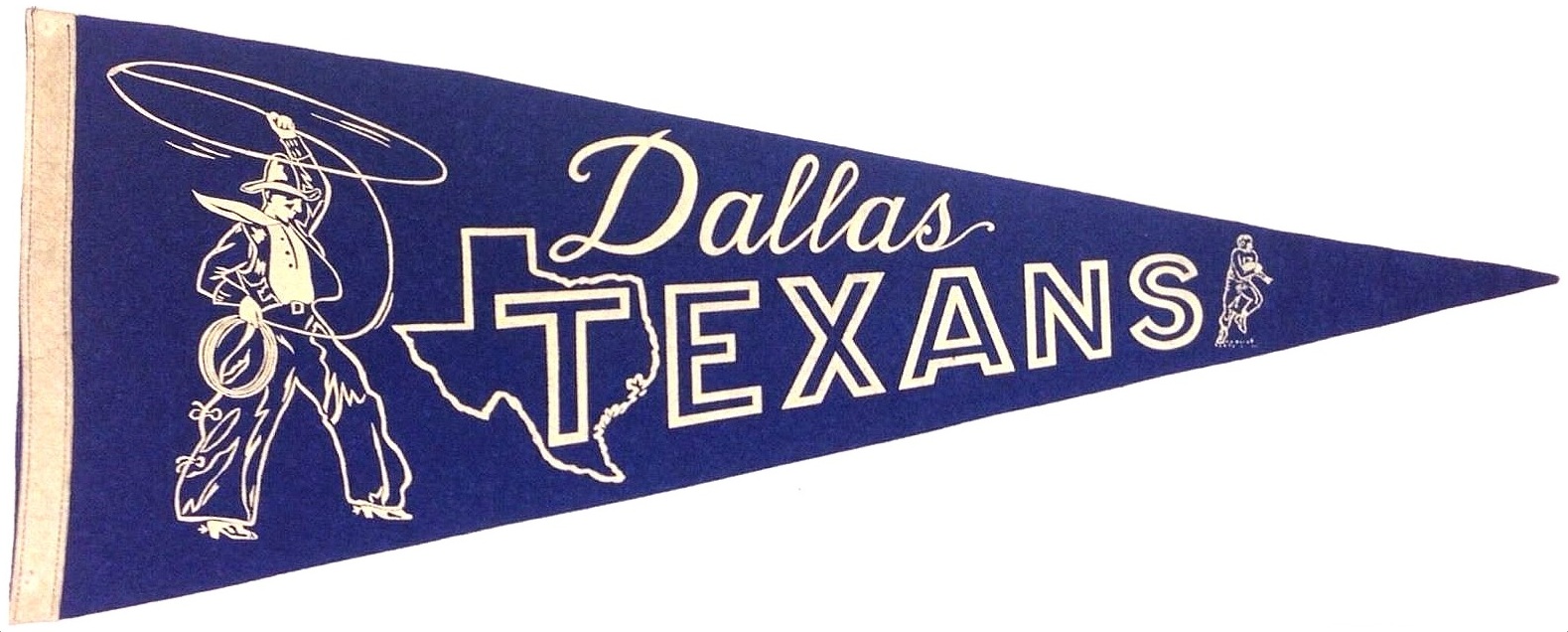
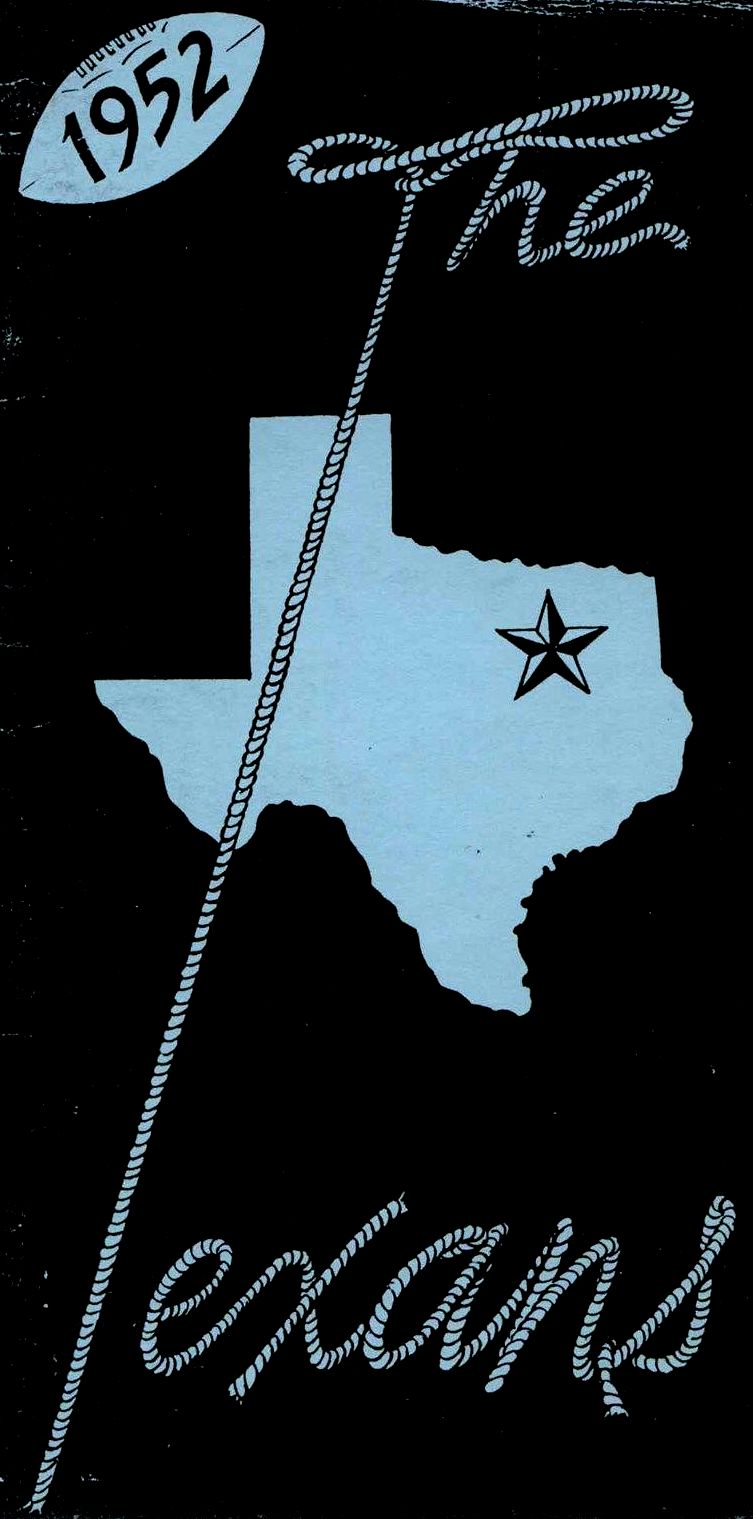
dallas-texans_pennant_ebay

by Paula Bosse

The “Dallas Texans” was the name of two different short-lived professional football teams representing doesn’t-like-to-lose Dallas, Texas. One played in the NFL (1952), the other played in the AFL (1960-1962). The ’60s team won the AFC championship. The ’50s team … oh dear.

That 1950s team already had a checkered past before it got to Dallas in 1952. In 1944, the team was founded as the Boston Yanks. It moved to New York in 1949, becoming the New York Bulldogs. In 1950 the name was changed to the New York Yanks. By 1951, the franchise was in financial trouble and was put up for sale.

Young Dallas “textile tycoon” Giles Miller — a native Dallasite who was “the great-grandson of a pioneer Texan who was wagon-master for Sam Houston at the Battle of San Jacinto” (Dallas Morning News, Jan. 21, 1952) — bought the franchise (and took on a heavy debt incurred by the original owner to repay the New York Yankees for rental of their stadium — see below) for $300,000 (three million dollars in today’s money).

giles-miller_connell-miller_dmn_012152Giles Miller, 1952

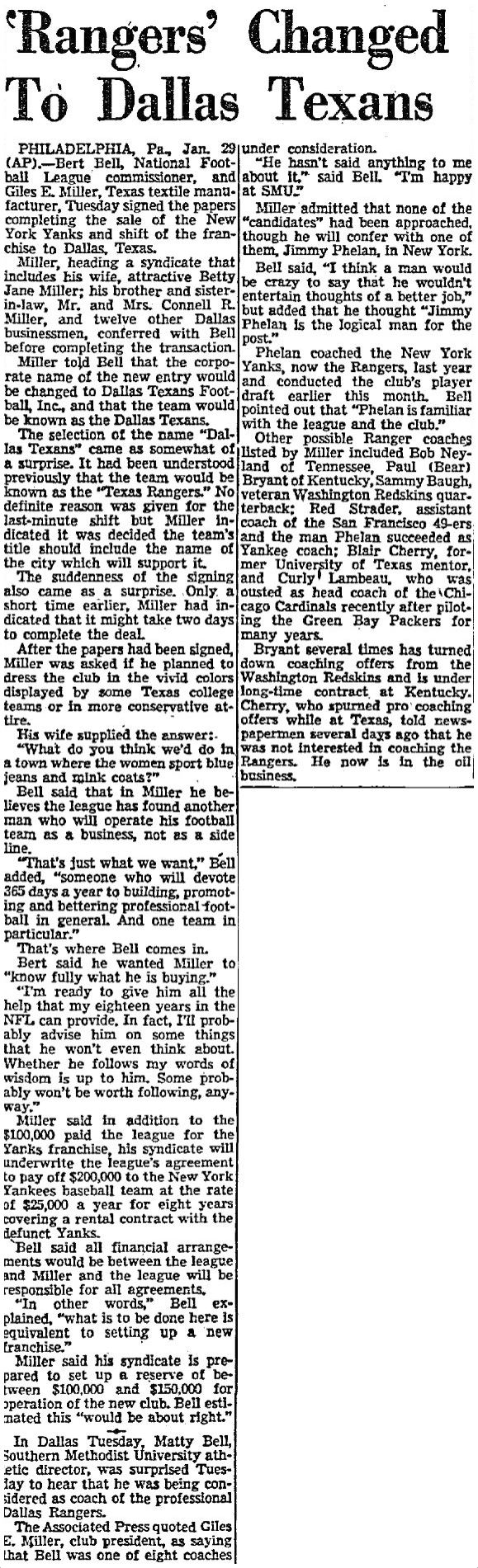
People went crazy. The team (which was initially going to be called the Texas Rangers) was the first professional football team in Texas. I think it was the first professional SPORTS team in Texas. There was much rejoicing.

dallas-texans_dmn_013052AP wire story, Jan. 30, 1952 (click for larger image)

The team would play in the Cotton Bowl. Their colors would  be royal blue, silver, and white (…hmm, sounds familiar…).

dallas-texans-uniforms

Their “traveling clothing” would be, for some reason, western wear. “When the team goes on the road, it will be decked out in typical western dress — cowboy boots, 10-gallon hats and other gear typical of the cow country. At least that’s the aim of the stockholders at this time” (DMN, Jan. 31, 1952). (See the shirts here.)

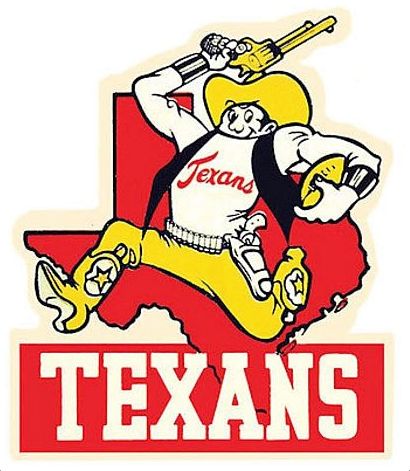
And they had a flashy logo.

dallas-texans_logo_ebay

Unfortunately, there doesn’t seem to have been as much attention directed to the players.  Even though there were a few new players brought in (including local boy Jack Adkisson, better known later by his wrestling name, Fritz von Erich), the team was basically the same one inherited from the failed New York team (including three black players, which caused a lot of questions about whether they would be retained by Dallas — they were).

So how’d that first season go? They played 12 games. They won one. Attendance started out sparse, and it only got sparser. The team quickly went bankrupt. Giles Miller tried to get financial help from the city and from fellow wealthy businessmen, but after the seventh game, Miller “returned” the team to the NFL. I didn’t know you could do that — like a dog owner who had happily adopted a German Shepherd without having researched how much it would cost for its upkeep, then after realizing he couldn’t afford it and being unable to find anyone else who would be able to take him in, he had to return him to the shelter. The remainder of the season had a homeless team (still called the “Dallas Texans”) traveling to various cities until the season mercifully ended. The Dallas Texans were, somewhat ignominiously, the last NFL team to fold.

The team eventually became the Baltimore Colts. Sort of. From the Wikipedia entry:

The NFL was unable to find a buyer for the Texans, and folded the team after the season. A few months later, the NFL granted a new franchise to a Baltimore-based group headed by Carroll Rosenbloom, and awarded it the remaining assets (including the players) of the failed Texans operation. Rosenbloom named his new team the Baltimore Colts. For all intents and purposes, Rosenbloom bought the Texans and moved them to Baltimore. However, the Colts (now based in Indianapolis) do not claim the history of the Yanks/Bulldogs/Yanks/Texans as their own, in spite of the fact that the Colts 1953 roster included many of the 1952 Texans. Likewise, the NFL reckons the Colts as a 1953 expansion team.

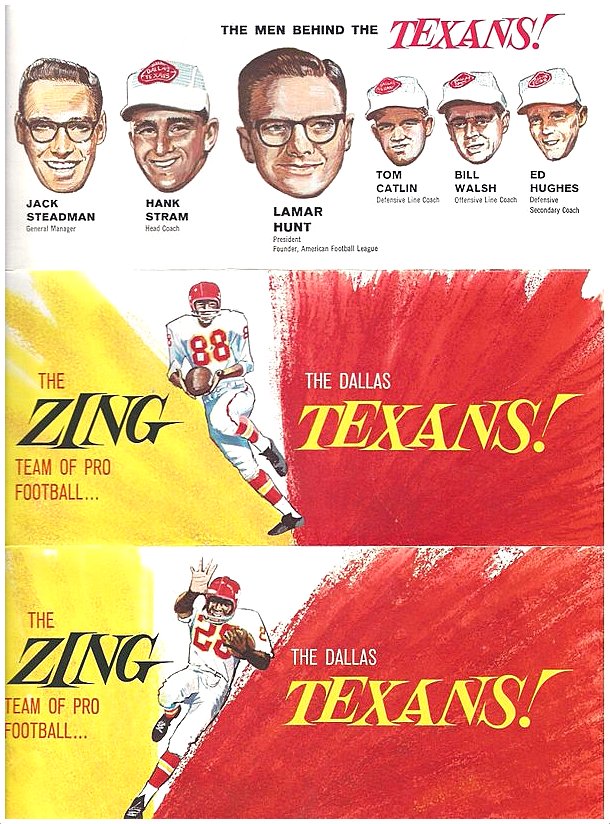
Dallas didn’t have a professional football team again until 1960. And then it got TWO. Clint Murchison gave us the Dallas Cowboys (my sports knowledge is obviously pretty paltry, because I’d never heard how Murchison got the NFL franchise until I read the story about his pretty amusing feud with the Washington Redskins owner), and Lamar Hunt created the AFL and gave us … the Dallas Texans. Mach Two. They wore red, white, and yellow and actually won a few games. Someone even created a weird little nickname for them: “The Zing Team of Pro Football.” The Zing Team lasted for three seasons before becoming the Kansas City Chiefs.

dallas-texans_1960s_ebay

dallas-texans_AFL_1962-uniform

dallas-texans_zing-team

***

Sources & Notes

1952 pennant and 1960s sticker from eBay.

Illustration of 1952 uniforms from AmericanFootballWikia.com, here. 1960s uniform from BlackReign.net, here.

“Zing” image from Twitter user @ToddRadom.

Stats? 1952 Texans (read ’em and weep), here; 1960s Texans, here.

A couple of interesting articles from The Dallas Morning News archives:

  • “The Sports Scene” by Bill Rives” (DMN, Jan. 31, 1952). Rives shared with his readers several instances of Texas stereotypes showing up in national stories about the city’s new acquisition.
  • “The Inside Story” by Charles Burton (DMN, Jan. 18, 1953). A bitter article on the 1952 team going to Baltimore. Columnist Charles Burton felt that Dallas was “railroaded” and that there were some suspicious backroom dealings going on having to do with the big Yankee Stadium debt Giles Miller took on when he bought the team.

Click pictures and clippings for larger images.

*

Copyright © 2016 Paula Bosse. All Rights Reserved.


A-Bomb in Akard Street! — 1950

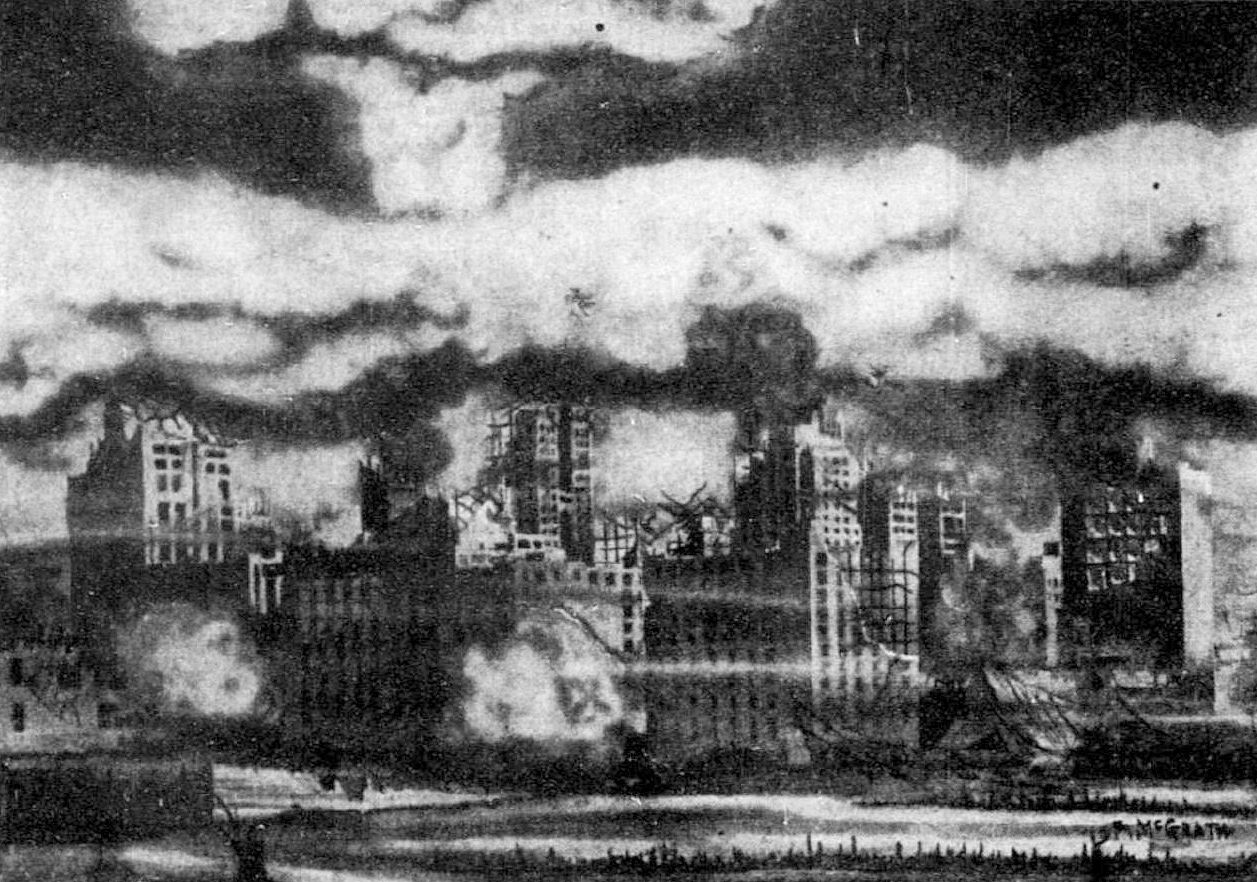
mcgrath-frank_atomic-aftermath-downtown-dallas_1950See Pegaus up there in the cloud of smoke and debris? (click for larger image)

by Paula Bosse

The image above, from 1950, is a depiction of what downtown Dallas might look like if an atomic bomb were dropped at the corner of Main and Akard (which is weirdly specific).

In 1950 Russia detonated a nuclear bomb during atomic tests and President Truman announced that the United States would increase and intensify research and production of thermonuclear weapons. It was a scary time for the world. The atomic bombings of Hiroshima and Nagasaki were still fresh in everyone’s minds, and news of the even more frightening hydrogen bomb was everywhere in 1950.

The drawing above is by Dallas artist Frank McGrath. It isn’t terribly realistic — Big D probably wouldn’t survive a nuclear blast —  but it’s nice that Frank spared Pegasus from annihilation.

***

Sources & Notes

There were bomb shelters all over the Dallas area. There was a (surprisingly) large shelter on the grounds of Fair Park. Watch a video tour here. And read the Flashback Dallas post “‘Dallas Is a Major Target Area!’ Know Where Your Nearest Fallout Shelter Is.”

Read about the tenor of the times in the article “Hydrogen Bomb — 1950,” here.

The title of this post is a direct reference to a great song by one of my favorite bands, The Jam. Listen to “A-Bomb in Wardour Street,” here. This time it’s nuclear apocalypse in London, but change the accent and, sure, it could be Dallas. (I knew I’d work The Jam in here one day!)

*

Copyright © 2016 Paula Bosse. All Rights Reserved.

Collision on the Streetcar Viaduct — 1929

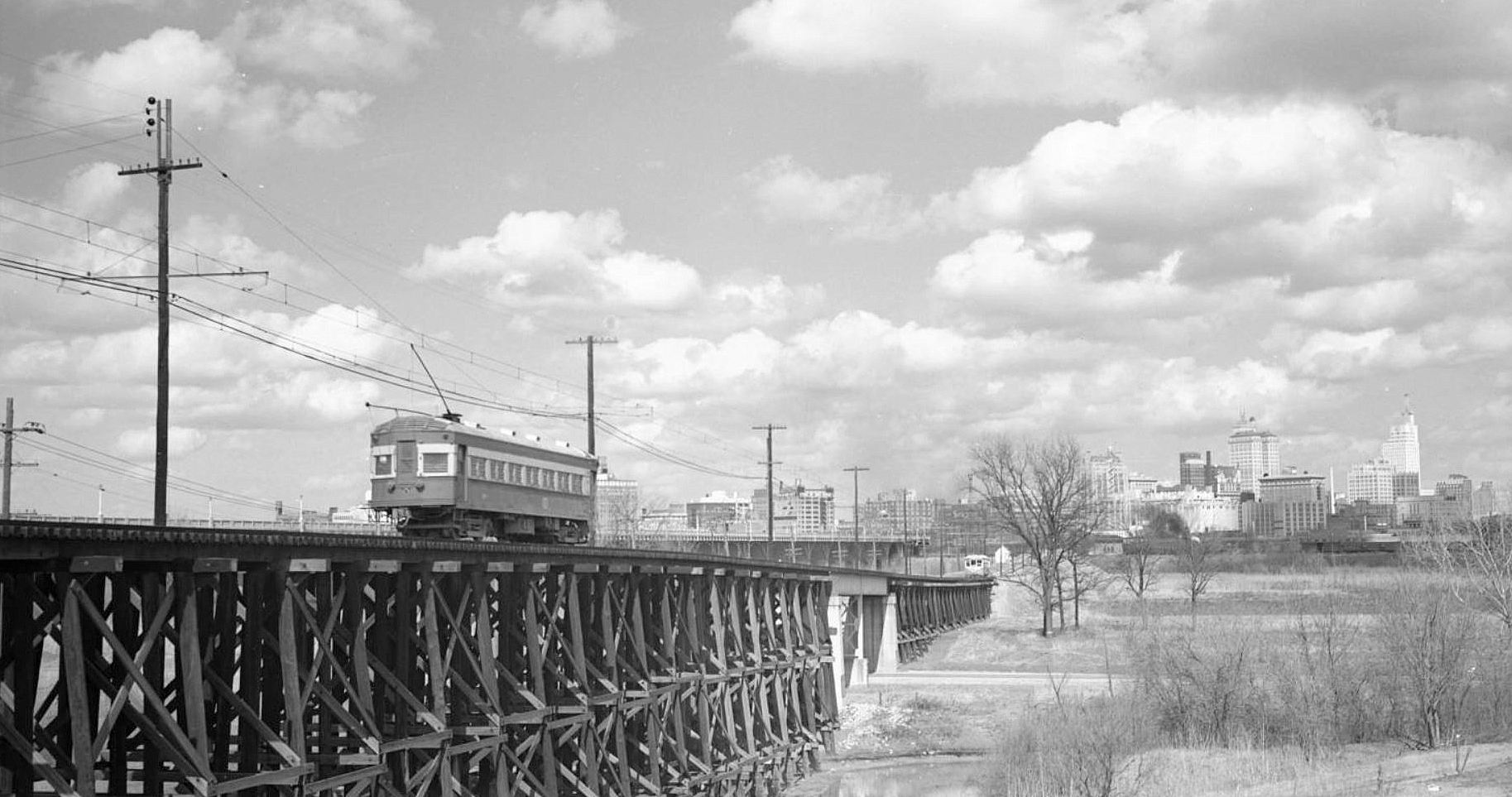
interurban_trestle_1946_denver-pub-lib_lgThe new streetcar viaduct, 1946

by Paula Bosse

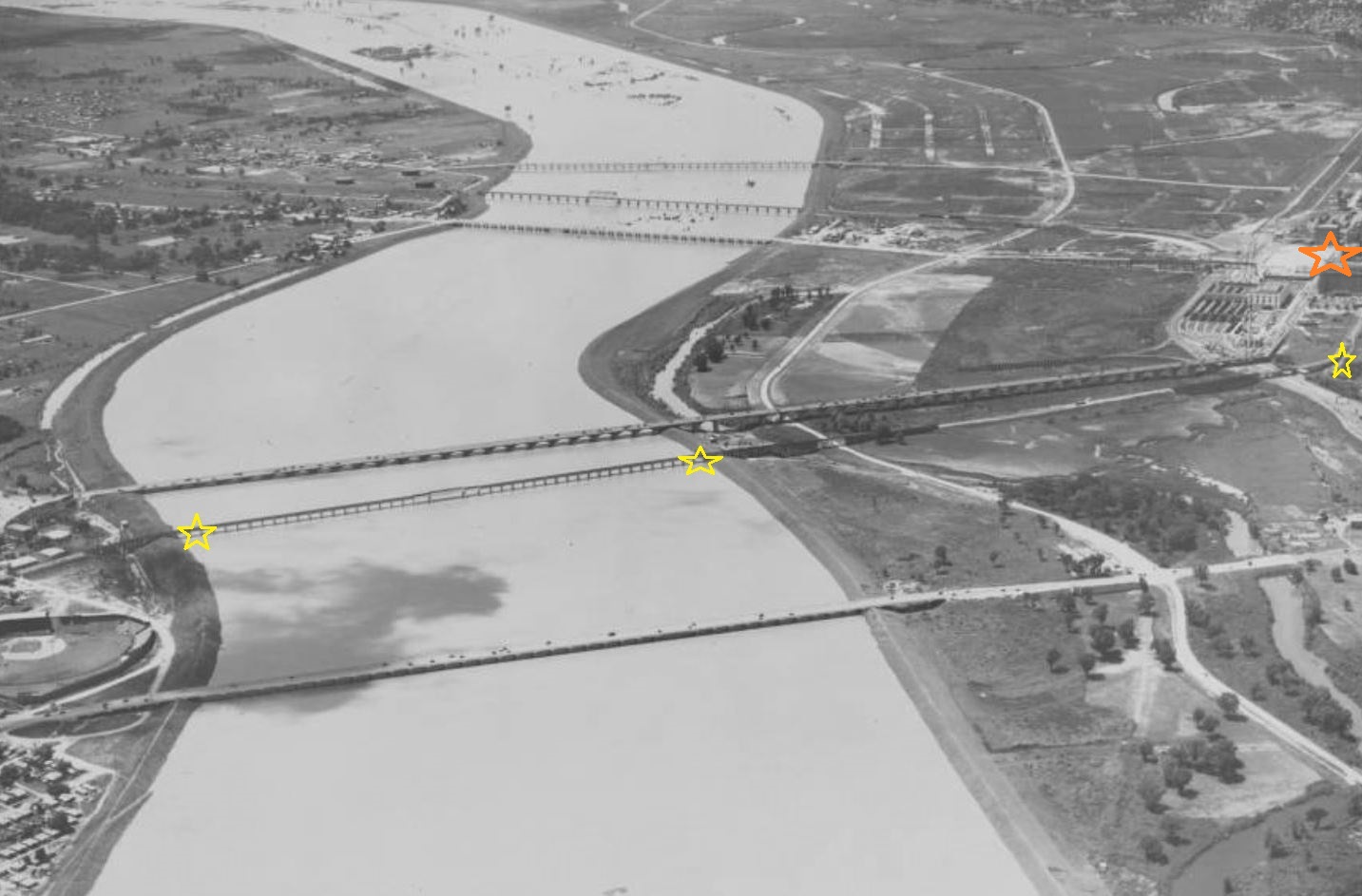
For many, many years there was a special trestle that spanned the Trinity River which was for the exclusive use of streetcars and Interurbans. There were also trestles and viaducts for the exclusive use of trains and automobiles. Below is a photo showing the  viaductal activity in 1935, with the streetcar trestle — sometimes called the “Street Car Viaduct” or the “Trinity River Viaduct” marked in yellow and the Old Red Courthouse and Dealey Plaza (then under construction) marked in orange.
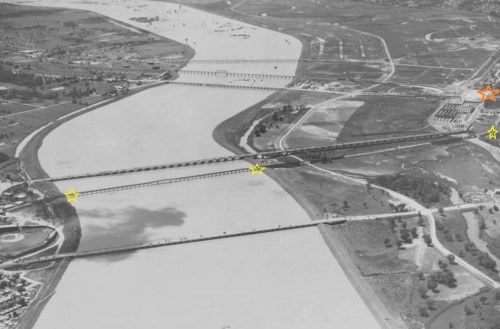
viaducts_1935_foscue_smu

The viaduct immediately above it was the Houston Street viaduct, for automobiles.

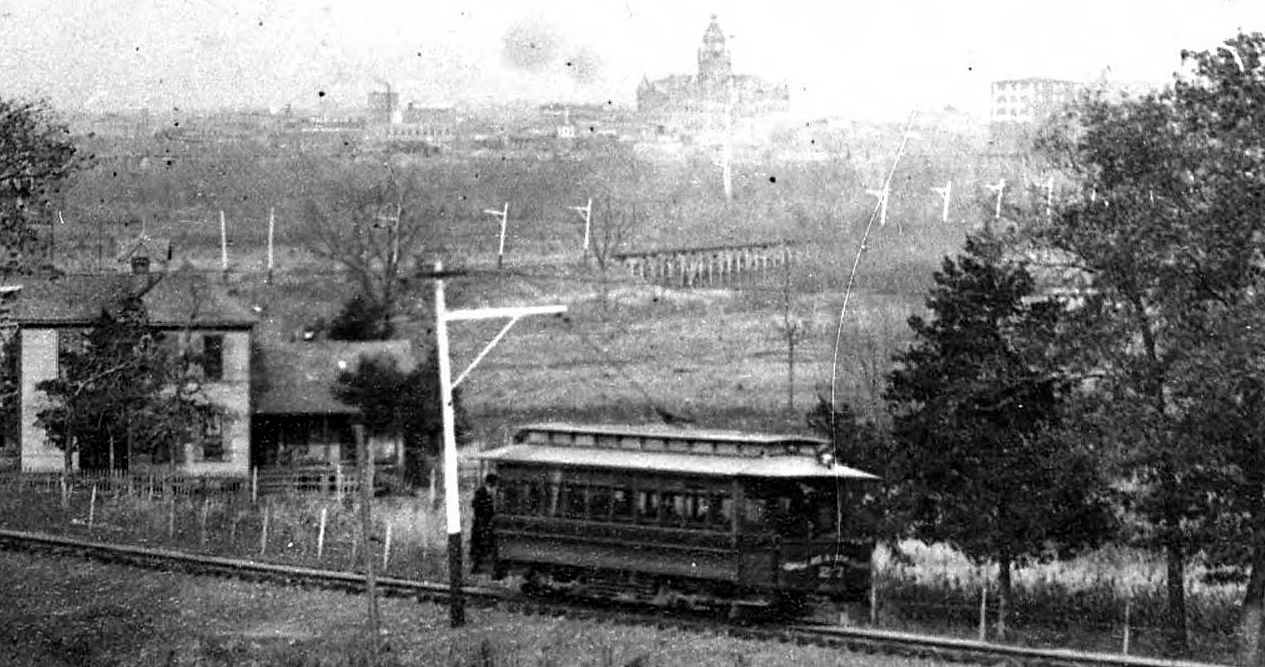
For many, a streetcar ride across the viaduct seems to have been a little on the harrowing side. There were no guardrails to prevent a car from going over the side, and even when the original wooden trestle had been bolstered with stronger materials, it was still described by commuters as being rickety. I like this quote of a man remembering a typical ride in the 1950s:

I always enjoyed the slight tingle of fear I experienced on the trestle over the river, as one could not see the trestle itself from the car window. One had the feeling of being suspended with no support when looking out the window.

And these two memories:

The streetcar trestle ran parallel to the Houston St. Viaduct where the current newer bridge is to downtown. No railings and just depended on gravity to hold the cars on the rails. The cars would buck and sway as they crossed the river bottoms as the motormen made up time on their schedules. Seemed like they were really going fast to me at the time, but probably not in today’s terms.

*

The [newer streetcars] used to scare me to death rocketing across the Trinity River high in the air with no sidewalls except just over the river itself! You were able to look straight down from high above ground… those newer cars had softer springs and the faster they went, the more they rocked side to side over the less than flat tracks!

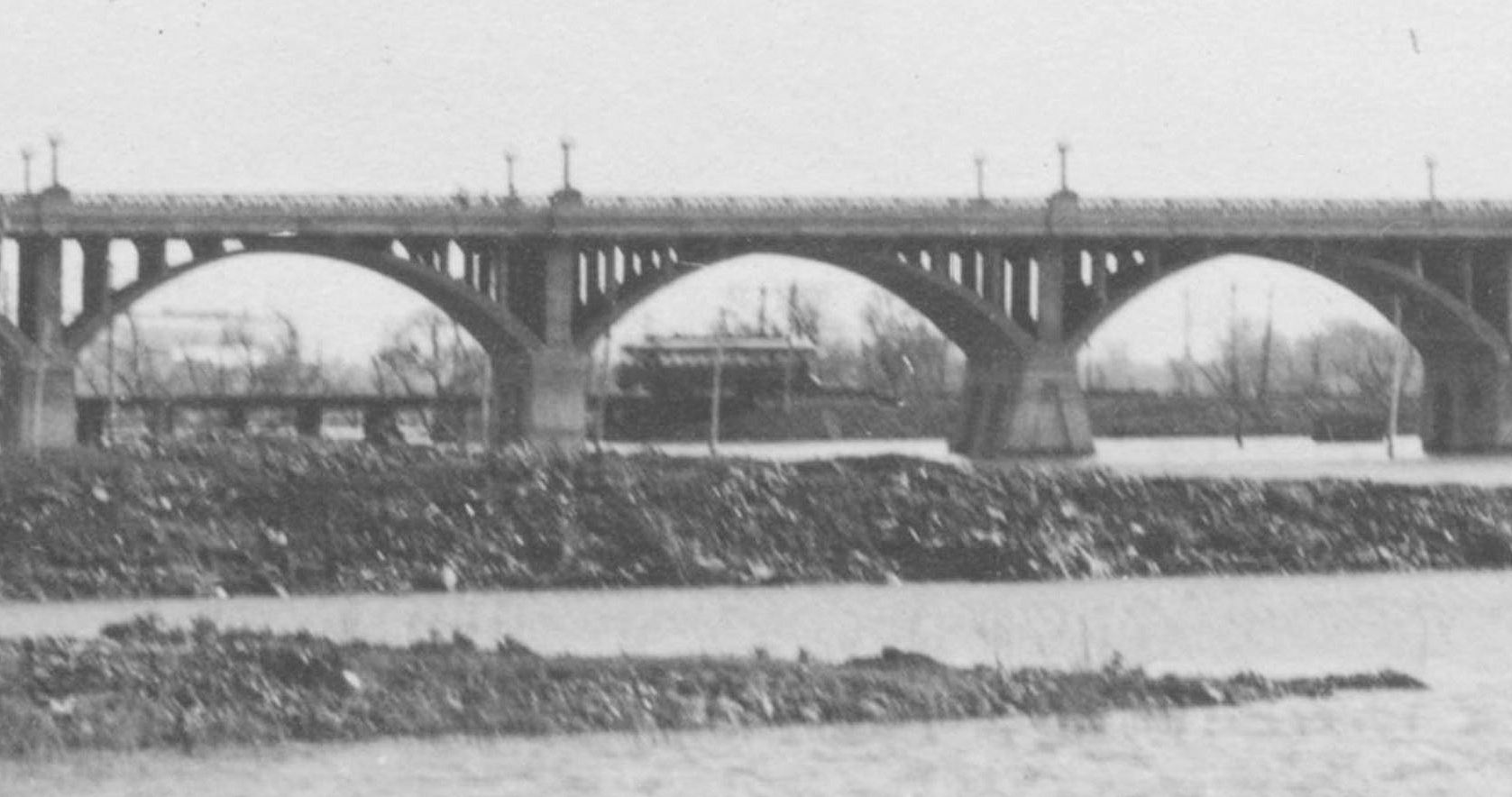
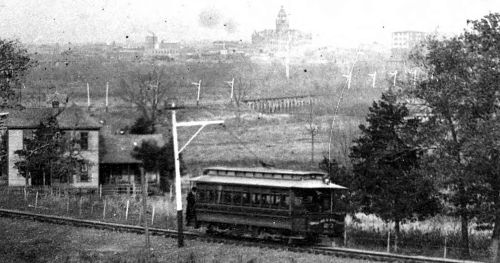
Here’s a photo when it was in its original rickety state, back in 1895 (this is a detail of a larger photo, taken on the Oak Cliff side of the river, with the trestle — and the not-yet-old Old Red Courthouse — visible in the background).
trolley_oak-cliff_det1

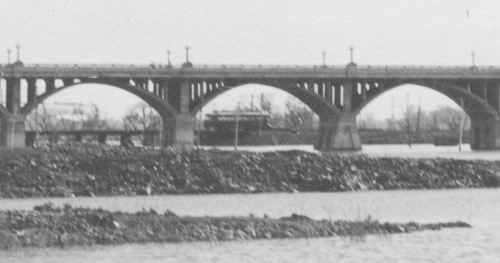
Here it is in 1914 at river-bottom level, with a happy little trolley chugging along with the Oak Cliff/Houston Street viaduct looming over and in front of it. (This is a detail of a larger photo in the George W. Cook Collection, DeGolyer Library, SMU — here).
streetcar-trestle-cook-coll_smu_det_1914

And here’s a sturdier version of the viaduct, in 1946.

streetcar-crossing-trinity_1946-denverpublib

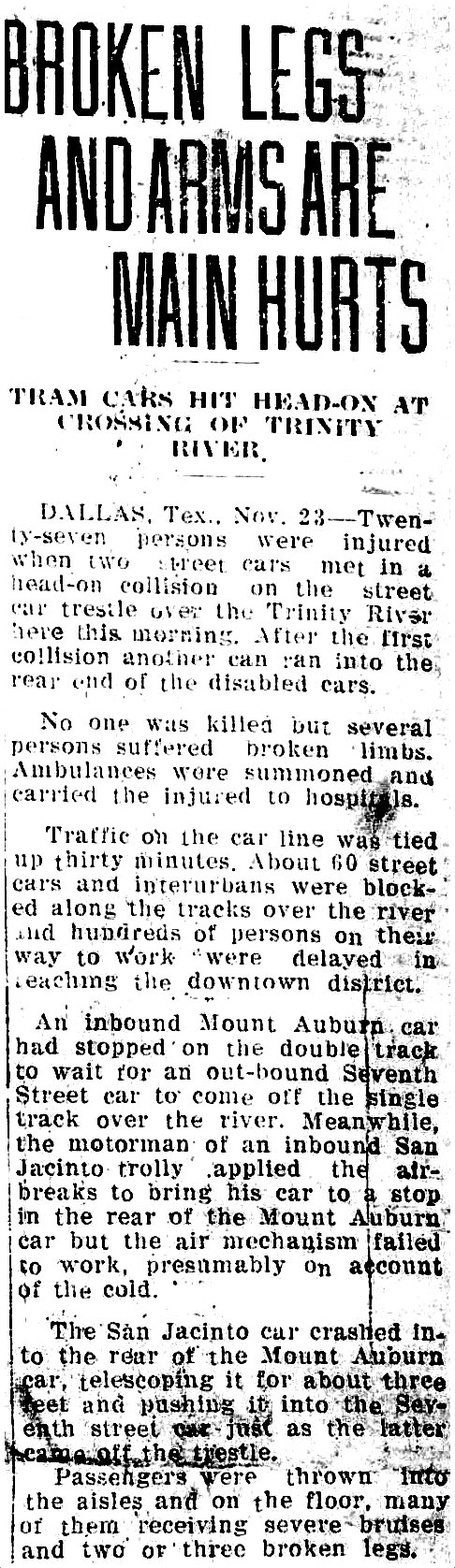
But now to the collision on the viaduct, which happened on the morning of November 23, 1929. Back then — at that iteration of the viaduct — the trestle had only a single track. While one streetcar or Interurban car crossed the bridge toward Oak Cliff, a car wanting to cross over from Oak Cliff had to wait until the westbound car had made its mile-long trip. That must have made for a lot of impatient riders. Even though the so-called “block signal” system worked well for the most part, there were the occasional accidents, including the one involving three cars on Nov. 23, 1929. Below, a front-page report of the collision(s) from The Waxahachie Daily Light (click for larger image).
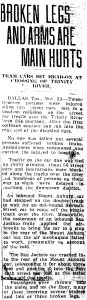
streetcar-trestle-collision_waxahachie-daily-light_112329Waxahachie Daily Light, Nov. 23, 1929

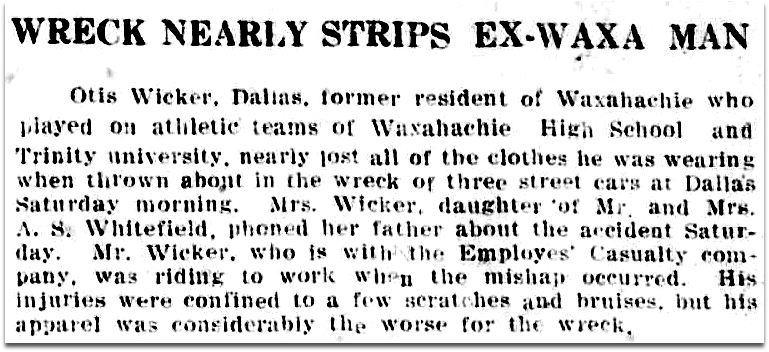
The Waxahachie paper even had a local angle (although it’s unclear just how this man “nearly lost all of the clothes he was wearing”).
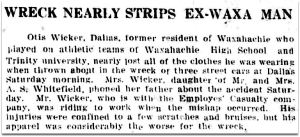
streetcar-trestle-collision_waxahachie-daily-light_112329-sidebarWaxahachie Daily Light, Nov. 23, 1929

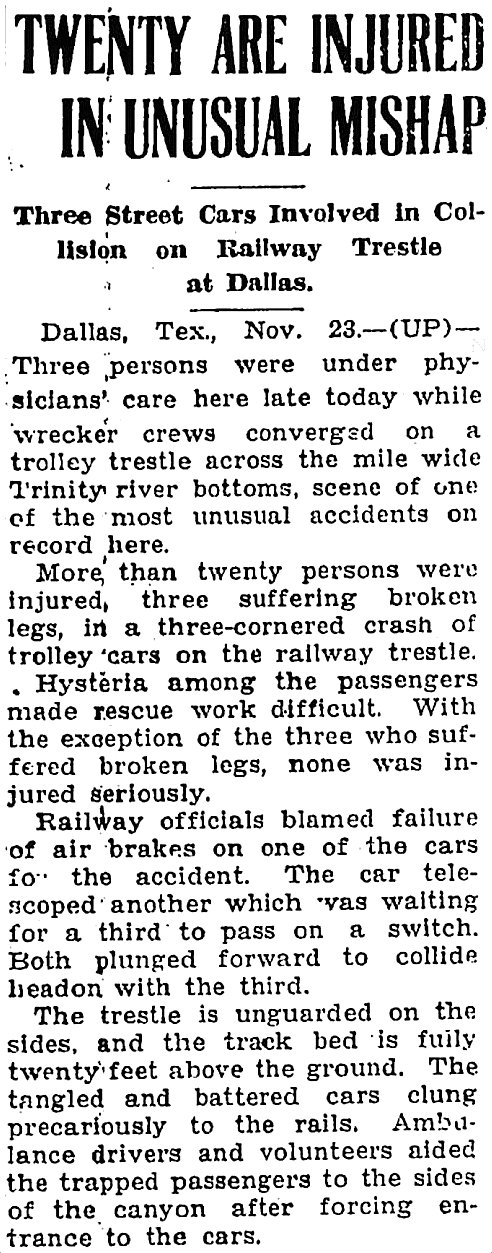
Since it happened during the morning rush hour, just about every other newspaper in Texas scooped The Dallas Morning News, which wasn’t able to run its story until the next day (and its report was surprisingly dull).

The UP wire story that ran in the Joplin, Missouri paper was far more exciting.

streetcar-trestle-collision_joplin-MO-globe_112429Joplin Globe, Nov. 24, 1929

Thankfully none of the streetcars fell off the trestle, but I’m sure that possibility was probably the daily fear/resigned expectation of generations of nervous travelers.

**

The most interesting thing in the DMN article is the last paragraph:

Plans in the making for the new street car crossing of the Trinity River call for a double track over the channel, eliminating the necessity of waiting on block signals.

In February 1931, that new double-track streetcar viaduct opened for business, and I’m sure there was a citywide sigh of relief.

 **

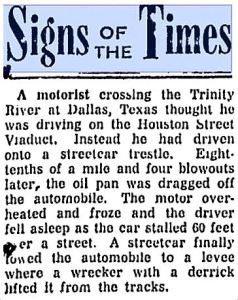
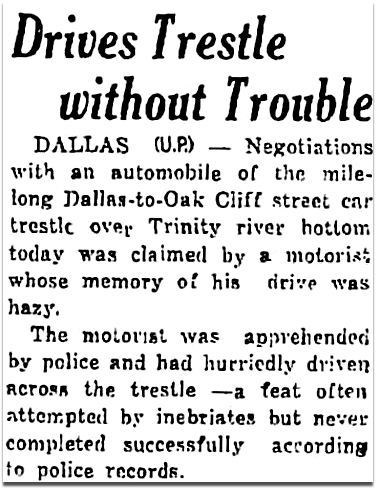
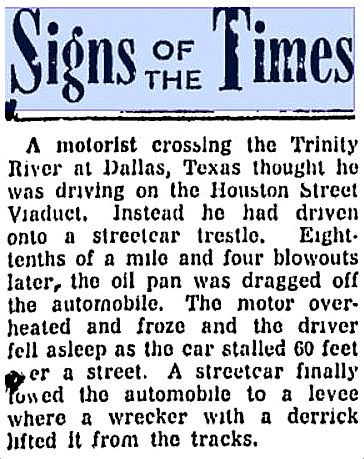
One last little amusing tidbit about this viaduct: it was not unheard of for those having indulged in excessive amounts of alcohol to try to drive their automobiles (either on purpose or by accident) over this already-kind-of-scary trestle intended for electric-powered railway use only.
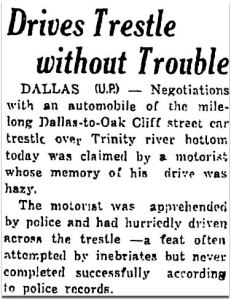
streetcar-trestle-mexia-weekly-herald_011333_drunk-motoristMexia Weekly Herald, Jan. 13, 1933

trestle_beaver-valley-PA-times_120852
Beaver Valley (Pennsylvania) Times, Dec. 8, 1952

***

Sources & Notes

Top photo titled “T. E. clouds, sky, city, from east levee close to wooden trestle 320 just passed, at rear, car 320 on Trinity River Bridge, Dallas, Tex.,” taken on Feb. 16, 1946 by Robert W. Richardson, is from the Western History/Genealogy Dept., Denver Public Library.

Photo showing the viaducts across the Trinity is titled “Central Levee District,” taken on May 20, 1935 by Lloyd M. Long, from the Edwin J. Foscue Map Library, Southern Methodist University; the labeled photo is here, the unlabeled photo is here.

Don’t know what “block signaling” is? Wikipedia to the recue.

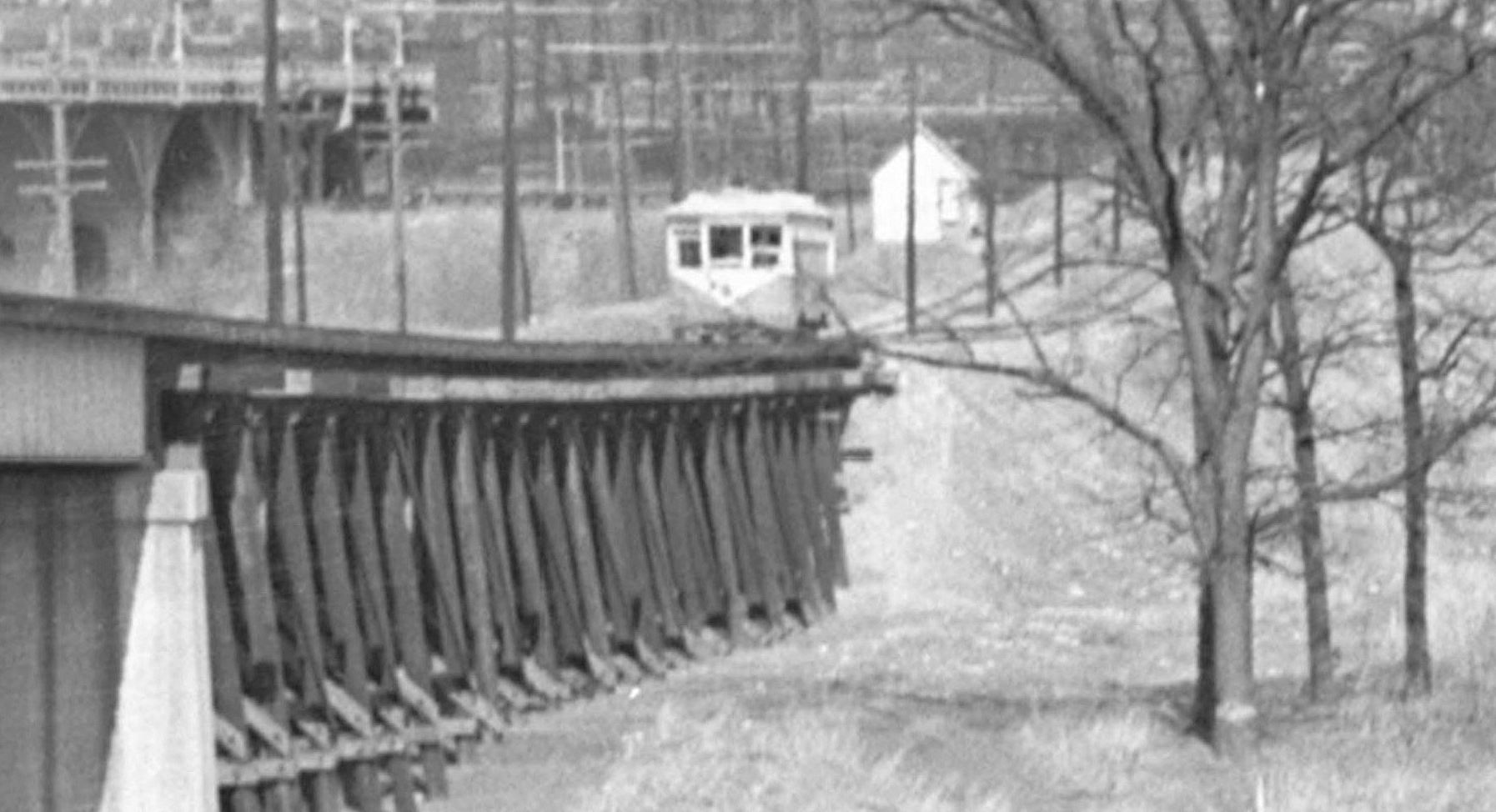
 Lastly, just because I like it, a magnified detail from the top 1946 photo, showing a streetcar at the downtown end of the viaduct.
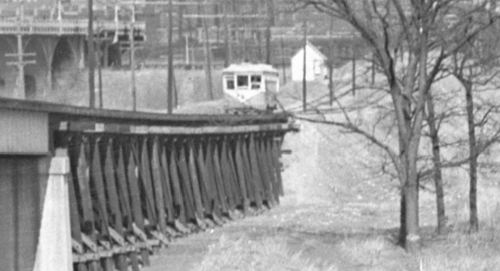
interurban_trestle_1946_det-streetcar

*

Copyright © 2016 Paula Bosse. All Rights Reserved.

Tomorrow’s Weather at Live Oak & Elm — 1955-ish

weather-forecast_elm-live-oak_printed-feb-1956_ebayThe weather, brought to you by Coke…

by Paula Bosse

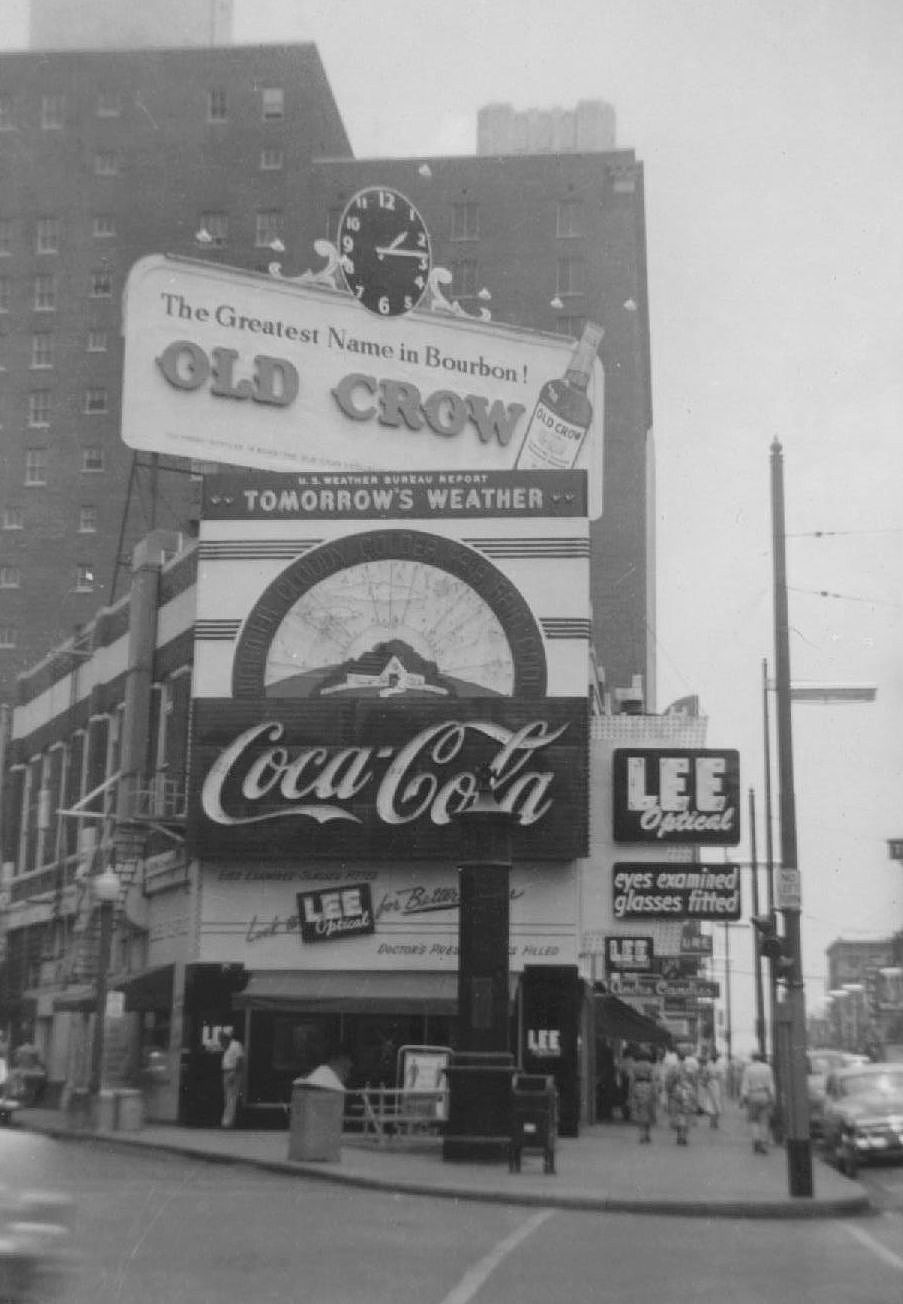
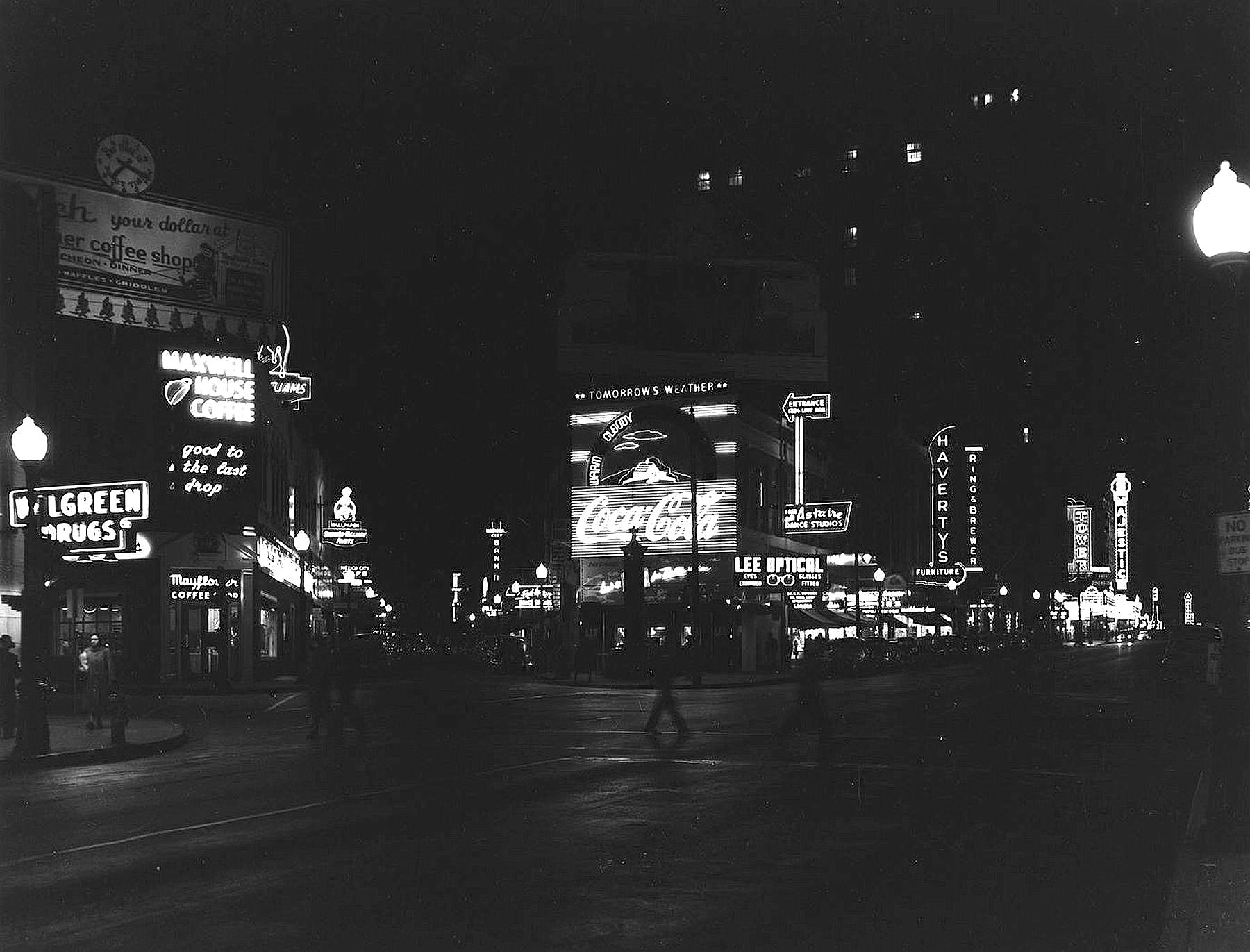
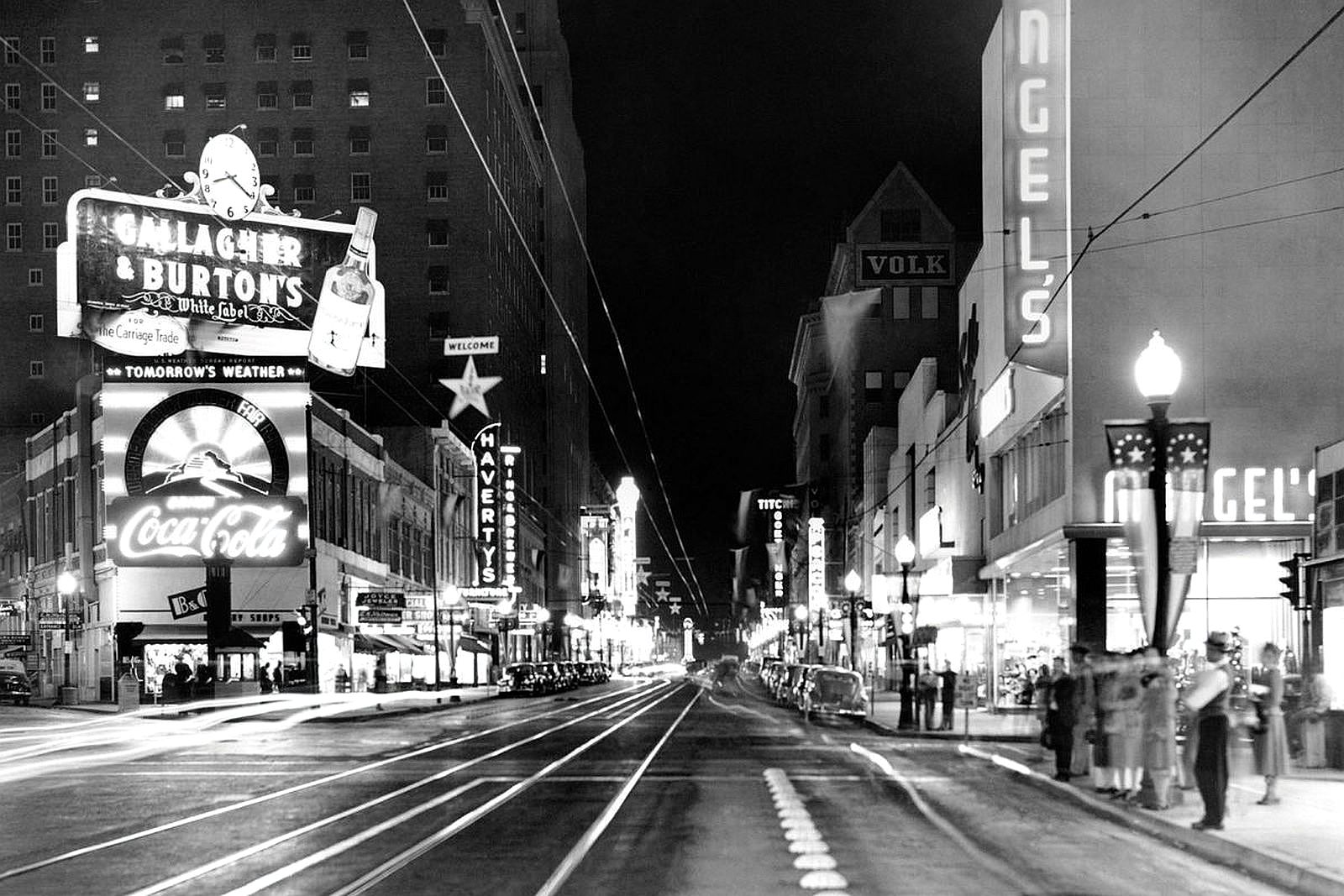
This photo (which is a little blurry, but the blurriness gives it a kind of dreamy softness) shows the one-time five-point intersection of Ervay, Live Oak (seen above at the left), and Elm (on the right, looking east). On the corner of this busy and confusing intersection, a large sign provided a public service by showing tomorrow’s weather forecast (…whilst subtly encouraging onlookers to hie themselves to the closest Coca-Cola-dispensary). During the day, the sign looked mildly interesting, but at NIGHT…! At night, this sign transformed downtown’s entertainment district into our very own mini Times Square. Here’s what it looked like at night (it’s a giant image — click it!).

ervay-live-oak-elm_haskins_uta_0107531953, Squire Haskins, UTA

And here it is from another angle, about 1948:

elm-ervay-live-oak_weather-sign_ca-1948

And, hold on to yourself: from 1939, in color! (Screenshot of a 1939 film, shot in Dallas, in color. Watch the sign’s flashing, dancing neon in action on YouTube here.)

coca-cola-sign_downtown_1939-film_youtube_screenshot
1939

***

Sources & Notes

I found the top photo on eBay a few months ago. The amateur photo was stamped “Feb. 1956” when the photo was developed, but looking at the clothes people are wearing, one would assume it was taken earlier — probably the previous year.

The first nighttime photo is by Squire Haskins, taken in January, 1953. See my original post — “Ervay, Live Oak, and Elm: Just Another Wednesday Night — 1953” — here. This post includes a map showing Live Oak when it used to intersect with Elm and Ervay.

The second nighttime photo is ca. 1948, probably from the Dallas Public Library. See the notes in this post.

All pictures larger when clicked.

*

Copyright © 2016 Paula Bosse. All Rights Reserved.

Ramon Adams: Violinist, Candy Manufacturer, Old West Expert

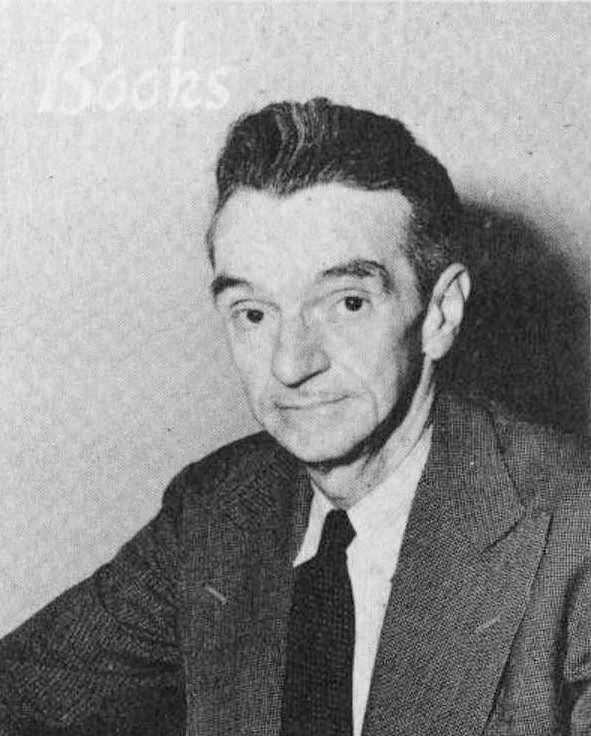
adams-ramon_texas-week-mag_090746_portal-photo_bwRamon F. Adams, 1946

by Paula Bosse

I’ve spent a fair amount of my adult life cataloging Texana books and ending descriptions with the bibliographic citations “Adams, HERD” or “Adams, SIX-GUNS.”* “Adams” was Ramon F. Adams, a respected and prolific writer and bibliographer specializing in the Old West and cowboy life. If you collect books on Texas and The West — or on cowboys and the cattle industry — you have Ramon Adams’ books on your shelves. And he lived in Dallas.

Ramon Adams was born in Moscow, Texas in 1889, near Houston, but left there as a young man to study and teach music. He was a professional violinist who played not only an occasional symphony gig, but after his years of teaching, he made a steady living playing in movie theater orchestras, accompanying silent films. While playing in the orchestra at the Rialto in Fort Worth, he even wore white tie and tails. When the Rialto musicians went on strike in 1923, he and his wife, Allie, moved to Dallas, and he played in the orchestras up and down theater row until the fateful day when he was cranking a stalled Model T Ford in an attempt to start it and broke his wrist. It never healed properly, and his days as a professional violinist came to an abrupt end.

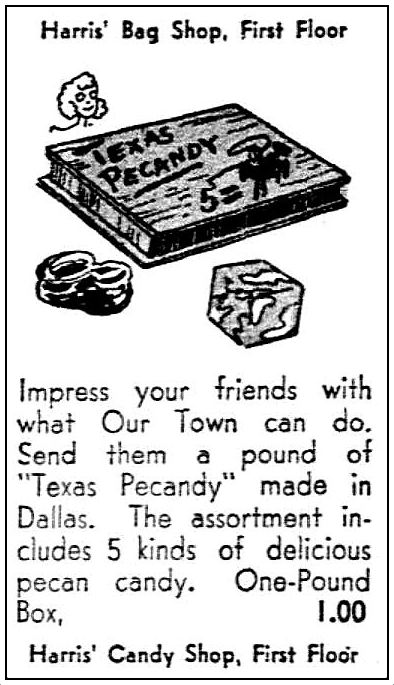
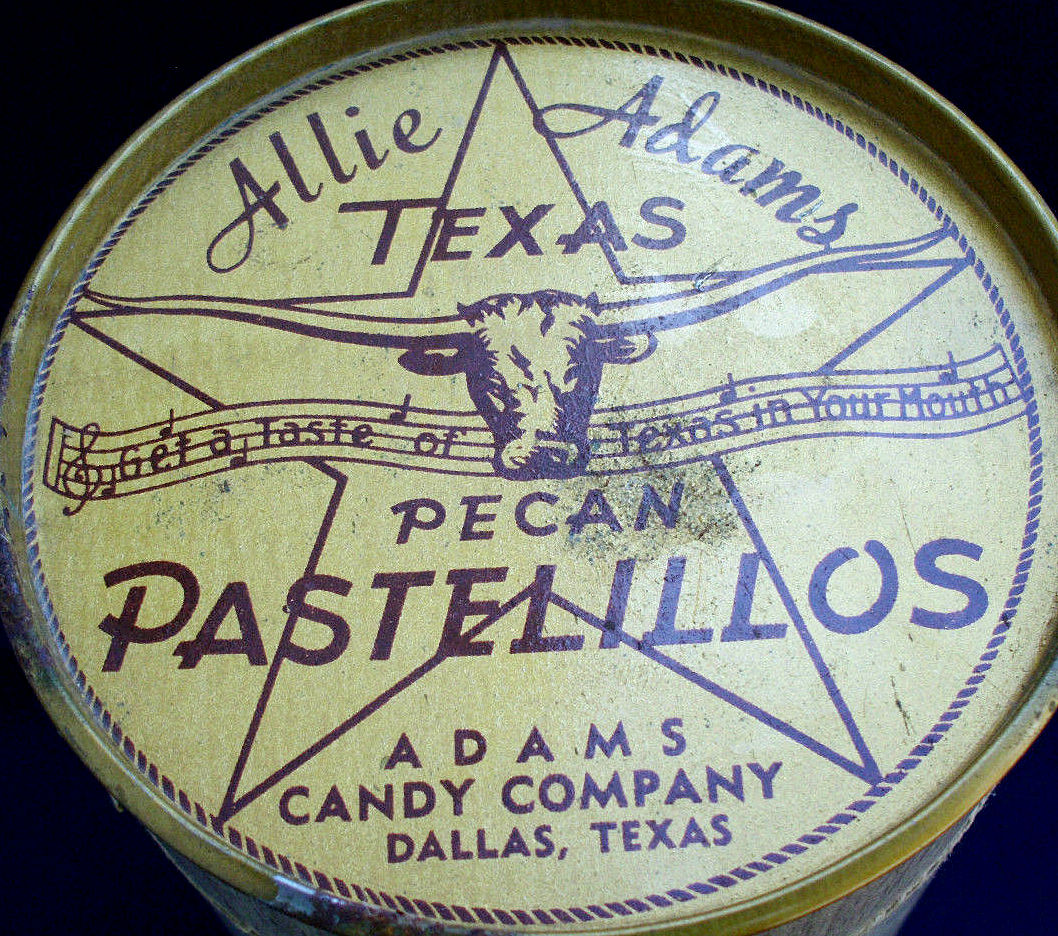
I never knew about his first career as a musician, and I never knew about his second career as a candy merchant! The Candy Years began when he and his wife bought a little candy store on Elm Street between the Melba and the Majestic, and it did such good business that, a few years later, he went into manufacturing and wholesaling candy. The Adams Candy Co. began its successful life in the 1930s, known for its widely available candies such as “Texas Pecandy” and for its “Burnt Offering” (“burnt almonds in chewy caramel and rich chocolate”), which was made specially for Neiman-Marcus.

pecandy_dmn_090940Sept. 1940

The runaway success of his candy business meant that when the Adamses sold the business in the mid-’50s (making, one assumes, a hefty profit) Ramon was able to devote his full attention to researching and writing about cowboy life and culture. He had been writing all along, in his spare time, but only in short bursts, usually at night, at the kitchen table. He had written several very long pieces for The Dallas Morning News in 1927 and 1928, but his first book, Cowboy Lingo, wasn’t published until 1936 — when he was 46 years old. And then the floodgates opened. When he died in 1976, his obituary noted that he had written 24 books — in addition to numerous articles for magazines and journals. He was the expert other experts consulted. And he lived in Dallas. And he made “Pecandy.”

**

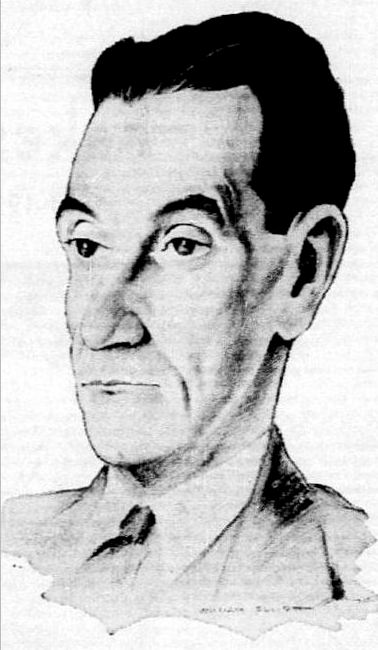
I love this 1936 caricature of Adams. (He looks an awful lot like Dr. Smith of Lost In Space here….)

adams-ramon_caricature_1936

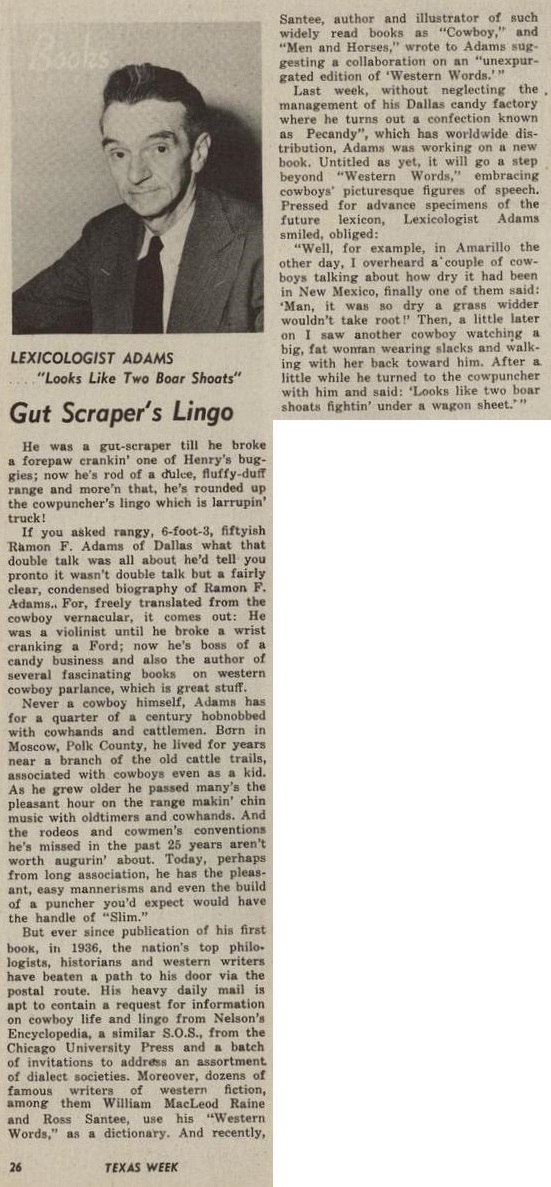
A pleasant little article on Adams, no doubt written by one of his many journalist friends, from 1946 (click for larger image):

adams-ramon_texas-week-mag_090746_portalTexas Week magazine, Sept. 7, 1946

And…

ad-adams-candy-co“Get a taste of Texas in your mouth!”

***

Sources & Notes

The Handbook of Texas entry on Ramon F. Adams is here.

A more comprehensive Biographical Note is on the page devoted to the Ramon Adams Collection, Texas/Dallas History & Archives, Dallas Public Library, here.

* “Adams, HERD” and “Adams, SIX-GUNS” is short-hand used by catalogers of books on Western Americana when noting that the book being cataloged is referenced in Ramon F. Adams’ book The Rampaging Herd: A Bibliography of Books and Pamphlets on Men and Events in the Cattle Industry (Norman: Univ. Oklahoma, 1959) or his book Six-Guns and Saddle Leather, A Bibliography of Books and Pamphlets on Western Outlaws and Gunmen (Norman: Univ. of Oklahoma, 1954).

*

Copyright © 2016 Paula Bosse. All Rights Reserved.