Flashback : Dallas

A Miscellany: History, Ads, Pop Culture

Category: 1950s

Tex-Mex in a Can (with Bonus Chili-Burger Recipe) — 1953/1954
cuellar-recipe-bk_ebay_det

by Paula Bosse

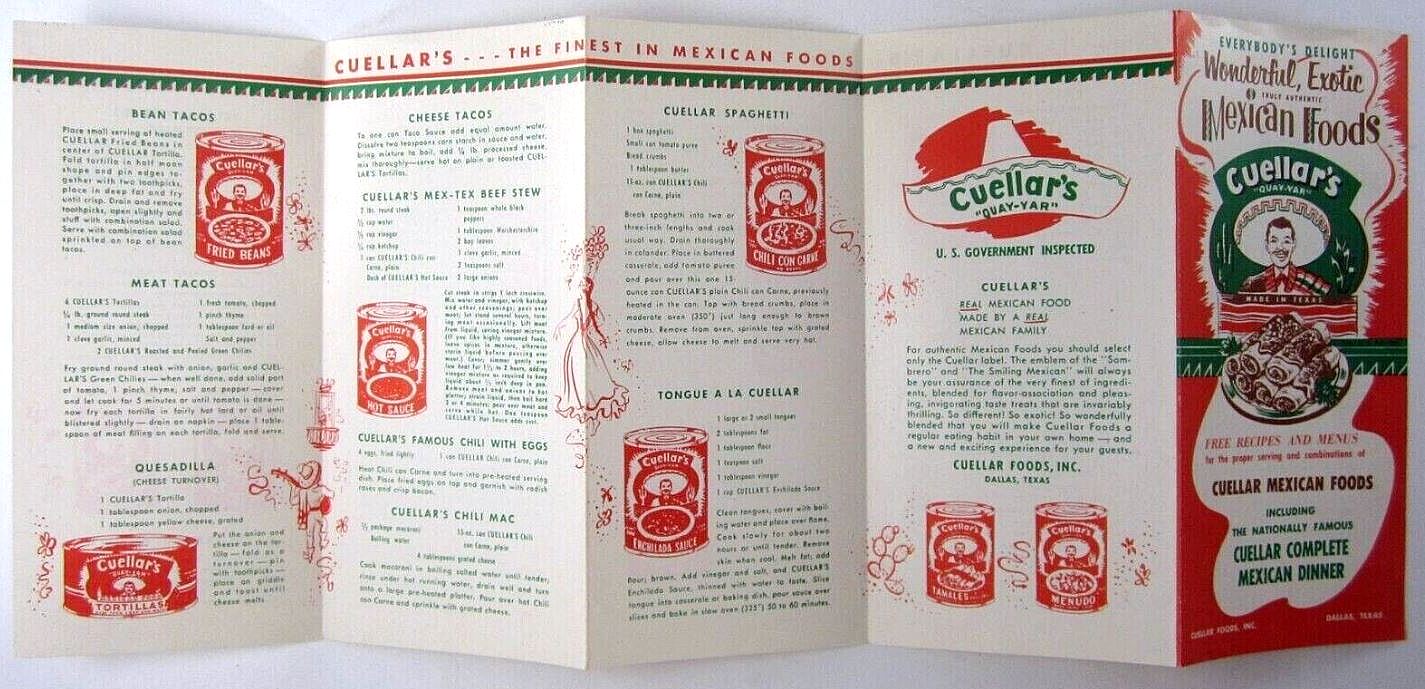
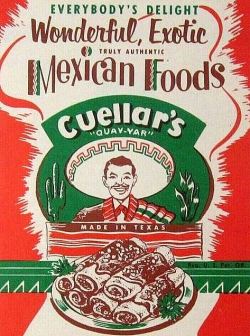
So the other day I was browsing through eBay, hoping to find something Dallas-related that I’d never seen before. And a Cuellar’s (“QUAY-YAR”) recipe pamphlet popped up. And it is fantástico! I remember El Chico frozen dinners, but I don’t remember El Chico canned foods, and that appears to be what the Cuellar family of Dallas started off with when they decided to branch off from their expanding Tex-Mex restaurant dynasty. The canned foods first appeared in late 1949 or early 1950 under the “El Chico” brand, and just as it was really starting to take off nationally, the company was forced to rename the line “Cuellar’s” in 1953 because of a copyright lawsuit; in 1954, after a year of court appeals, they were allowed to go back to using “El Chico.” (Read more about this manufacturing business in my previous post, “El Chico Foods/Cuellar Foods.”) Initially, the company produced only canned goods. Including, yes, tortillas in a can. TORTILLAS. IN. A. CAN. It appears this circular tin originally came with a dreaded key to open it, like Spam and canned hams. So if you wanted some tortillas, you really had to put the work in (and make sure you were current with your tetanus shots).

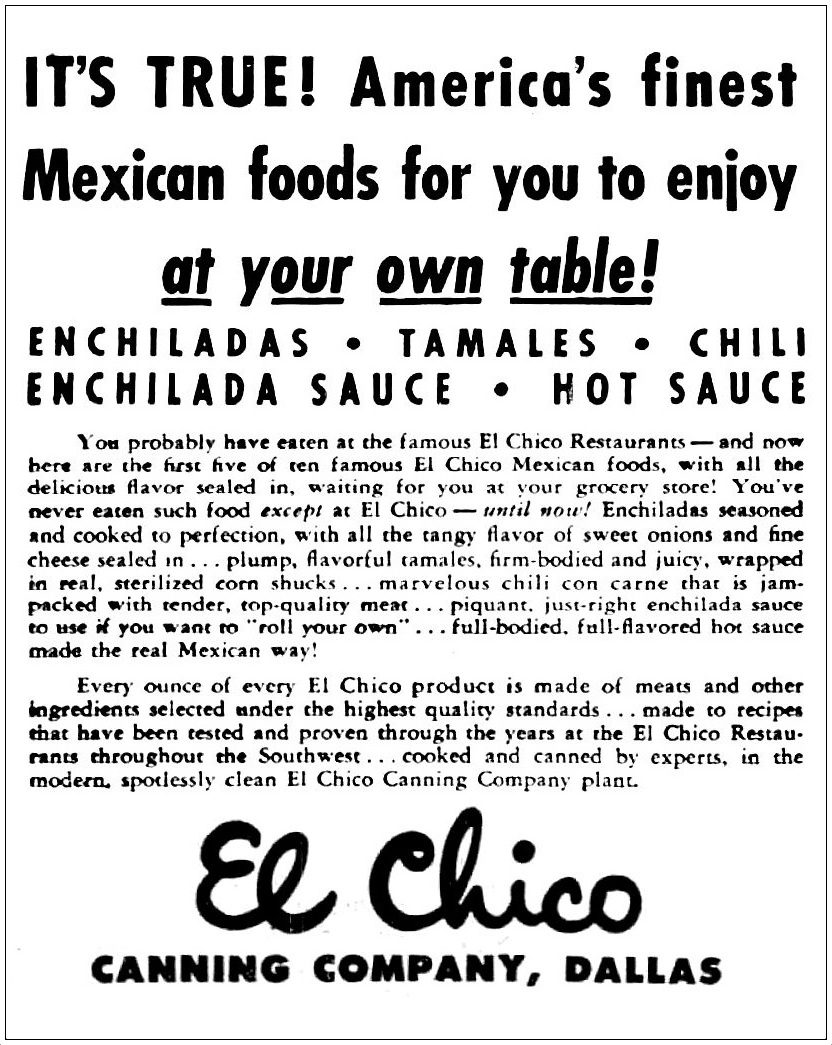
In addition to the tortillas (which I assume were flour tortillas, but I’m not entirely sure about this), the line of El Chico canned Tex-Mex foods included staples such as chili con carne (with beans and without), tamales (wrapped in corn shucks), enchiladas, beans (fried and not), enchilada sauce, tamale sauce, hot sauce, green chiles, jalapeños, menudo, “taco filler,” taco sauce, Mexican-style spaghetti (!), something called enchimales, and Mexican-style rice (I have never heard of cooked rice in a can). And, I’m sure, many more products. One newspaper ad touted the fact that you could concoct a full meal for a family of 6 using only 5 El Chico canned foods for $1.85 (which, somewhat shockingly, is the equivalent today of about $22.00).
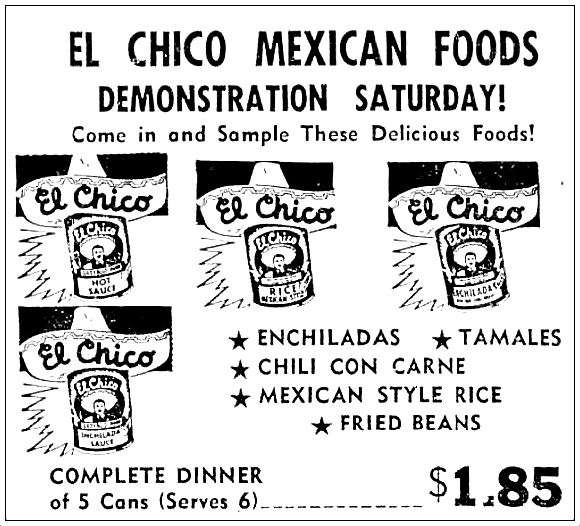
el-chico_norman-OK-transcript_041251El Chico canned food ad, April 1951

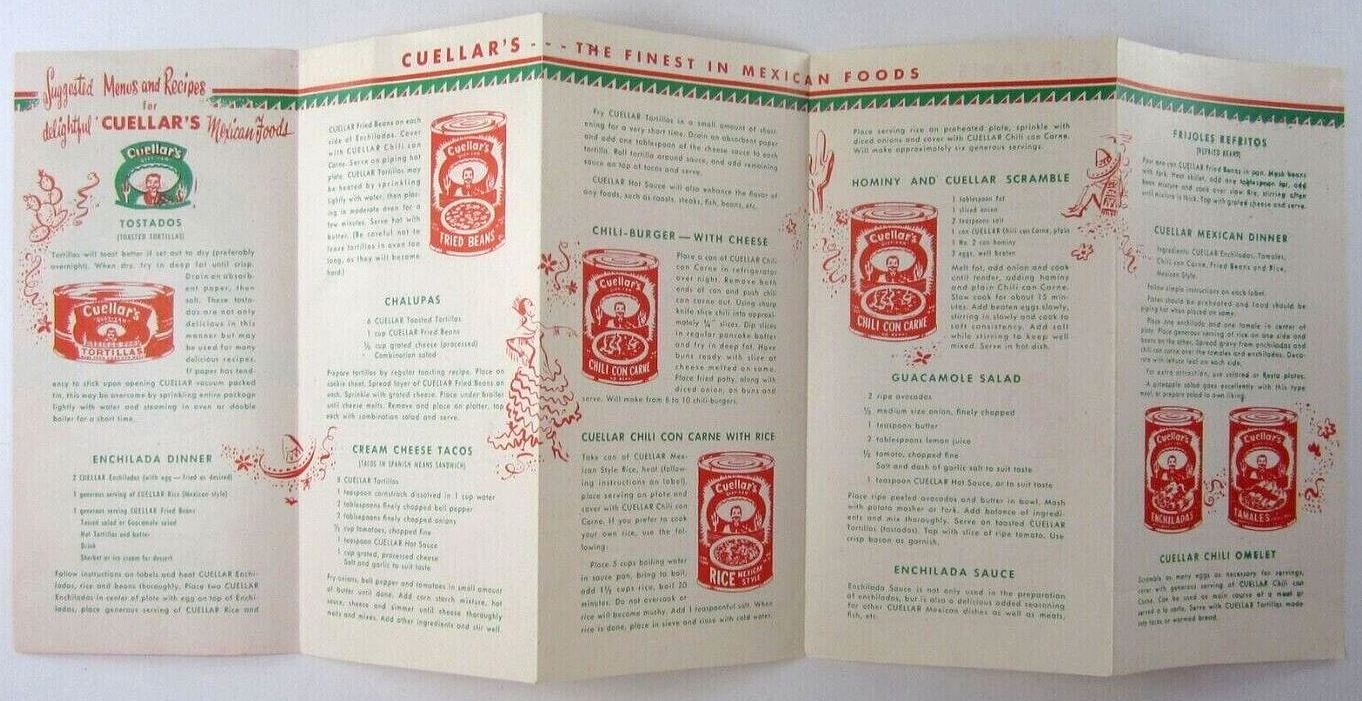
But back to that recipe pamphlet I stumbled across on eBay, which would be from 1953/1954, the period when El Chico was forced to use the “Cuellar’s” name for their canned foods. The recipes are interesting — not only were these dishes unfamiliar and “exotic” to most people in the U.S. at the time (meaning that El Chico felt the need to inform readers that “‘tacos’ in Spanish means ‘sandwiches'” and that quesadillas were “cheese turnovers”), but the recipes also have occasional odd little flourishes which seem unusual and may indicate restaurant hacks or traditional preparation tips I am unaware of (guacamole salad calling for a teaspoon of butter, for example). You’ve got recipes for alarming dishes such as “Tongue a la Cuellar” (first ingredient: “one large or two small tongues”). not-alarming-but-unusual dishes such as scrambled eggs made with a can of chili and hominy, as well as the more mundane dishes like tacos (in which the cook is instructed to use toothpicks to keep the tortilla “closed” during deep frying).

But my very favorite recipe is something so spectacular that I can’t believe this hasn’t made its way to the State Fair of Texas food tents. Seriously, if any of you SFOT food vendors or maverick entrepreneurs decide to develop this dish, please remember you learned about it from me as you rake in the cash!

Okay. Take a deep breath, because this is just GREAT.

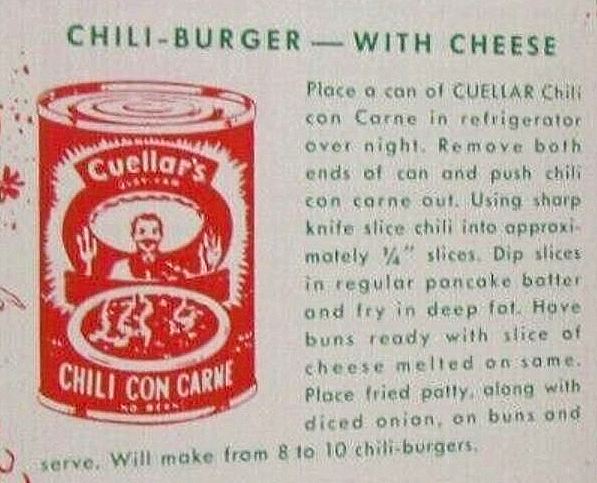
“CUELLAR CHILI-BURGER — WITH CHEESE”

  • Place a can of Cuellar Chili con Carne in refrigerator overnight.
  • Remove both ends of can and push chili con carne out
  • Using sharp knife slice chili into approximately 1/4” slices
  • Dip slices in regular pancake batter and fry in deep fat
  • Have buns ready with slices of cheese melted on same
  • Place fried patty, along with diced onion, on buns and serve — will make from 8 to 10 chili-burgers

Wow! It’s a chili-burger without a burger. How does this even work? Granted, this was back in the day when canned chili was very, very fatty — I remember opening cans of (delicious) Wolf Brand chili as a kid and marveling at the orange congealed grease (come to think of it, I’m pretty sure I probably used the open-can-at-both-ends-to-push-it-out technique, a la jellied cranberry sauce, and it retained its can-shape in a saucepan until heated). But wouldn’t these slices just disintegrate while deep frying, even if they were really cold (frozen even) and really congealed? My brother has suggested it might work along the lines of a Baked Alaska, in which the ice cream inside the dessert doesn’t melt as it bakes. Regardless. The joy I’ve gotten from reading this recipe and envisioning a bizarro dish made from deep-fried slices of canned chili dipped in pancake batter makes up for the fact that I will never attempt to make it (molten, melting “chili patties” on a hamburger bun would not only be unbelievably messy to eat but perhaps physically painful as well). But I fully endorse and applaud the concept of the Cuellar Chili-Burger — it’s brilliant! “Fair food” ahead of its time. Thank you, Cuellar test kitchen! (Dear readers: PLEASE MAKE THIS AND SEND ME PHOTOS!)
cuellar-recipe-bk__ebay_chili-burger

**

cuellar-recipe-bk_ebay

cuellar-recipe-bk_2

cuellar-recipe-bk_1

cuellar-recipe-bk_ebay_info

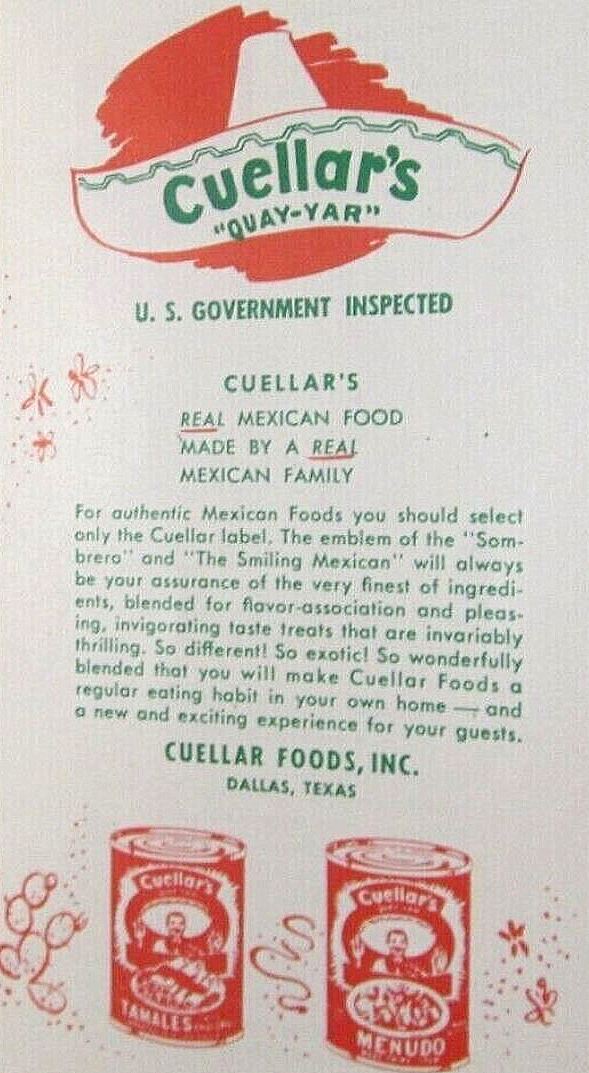
CUELLAR’S
REAL MEXICAN FOOD MADE BY A REAL MEXICAN FAMILY

For authentic Mexican Foods you should select only the Cuellar label. The emblem of the “Sombrero” and the “Smiling Mexican” will always be your assurance of the very finest of ingredients, blended for flavor-association and pleasing, invigorating taste treats that are invariably thrilling. So different! So exotic! So wonderfully blended that you will make Cuellar Foods a regular eating habit in your own home — and a new and exciting experience for your guests.

Cuellar Foods, Inc.
Dallas, Texas

*
el-chico-canning-co_tx-jewish-post_1220511951

el-chico_logo

***

Sources & Notes

Most images in this post are from the recently ended eBay sale, here (scroll down).

This pamphlet inspired my previous post, “El Chico Foods/Cuellar Foods,” which contains a history of El Chico’s food manufacturing business.
cuellar-recipe-bk_ebay_det_sm

*

Copyright © 2023 Paula Bosse. All Rights Reserved.
El Chico Foods/Cuellar Foods

enchimales_canned_introduced-1968_portal_detEl Chico’s Enchimales with Gravy, ca. 1968
by Paula Bosse

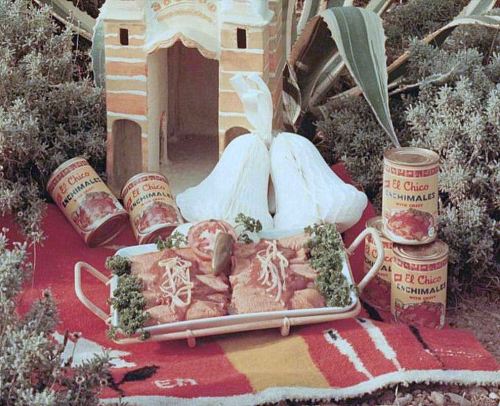
I give you the “Enchimale,” a product introduced under the El Chico label in 1968. A news release described the delicacy thusly: “Wedding bells are ringing at El Chico for the marriage of the enchilada and the tamale, and the new product is called the Enchimale. […] This food is in the shape of a tamale, filled with fresh meat, with a mild enchilada sauce over it” (Dallas Morning News, Oct. 31, 1968). (So… a tamale?) I gather this was a short-lived product. (See the “Sources & Notes” section at the bottom of this page for an unusual and unrelated — I hope — recipe for enchimales which appeared in a newspaper in Spokane, Washington in 1950.)

This photo caught my eye while I was looking into the history of El Chico’s manufactured foods. Especially their canned foods, which I was unaware of. I’m not surprised they existed — I remember their frozen food line — I just have no memories of canned foods from El Chico.

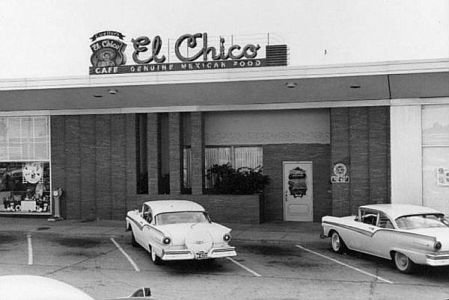
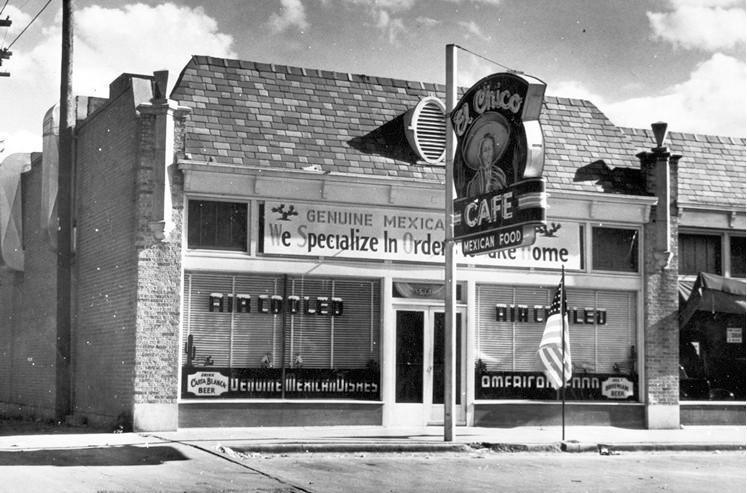
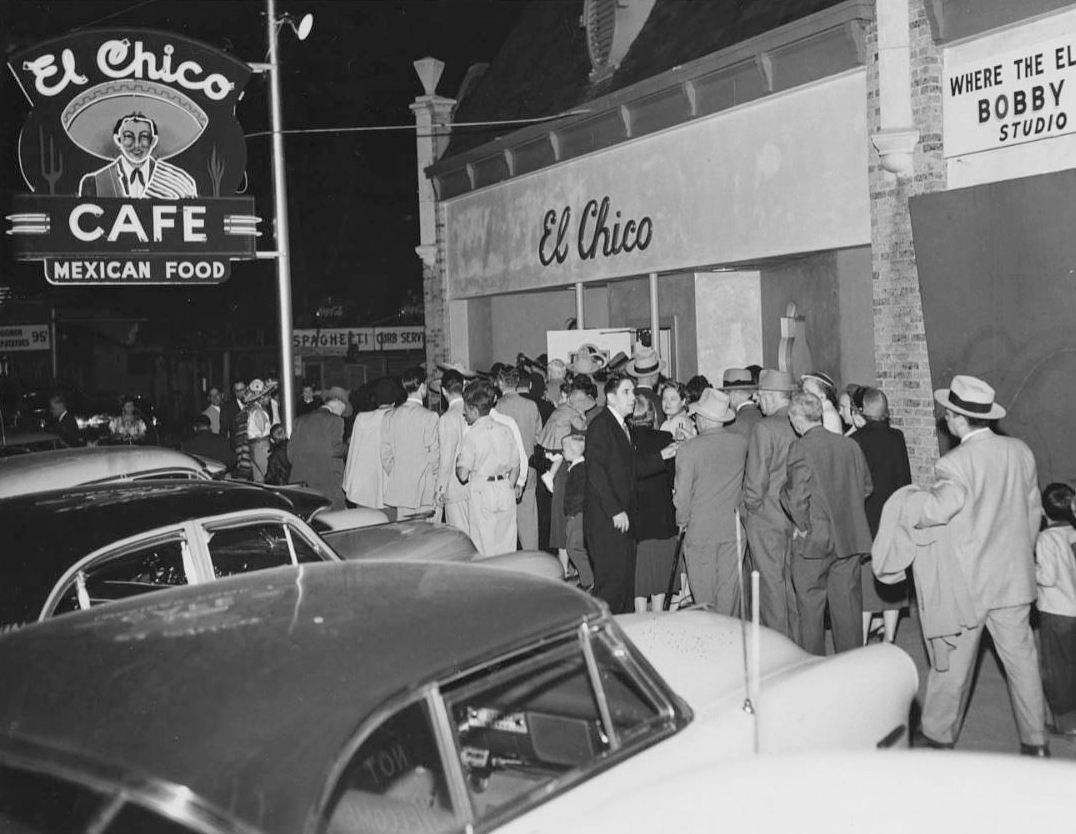
But I’m getting ahead of myself. You’ve probably heard the story of Mama Cuellar and the Cuellar brothers and their El Chico empire (if not, a good article is here). As far as their Dallas restaurants, the Cuellar brothers opened their first El Chico restaurant in 1940 at 3514 Oak Lawn (next door-ish to Lucas B & B, which opened in Oak Lawn in 1953). This location closed in either 1954 or 1955.

el-chico_oak-lawn_d-mag_nov-2013El Chico No. 1, Oak Lawn, via D Magazine

el-chico_oak-lawn_no-1_portalEl Chico No. 1, Oak Lawn, via Portal to Texas History

Six years later, they opened their second location in Lakewood at 2031 Abrams.

photo_el-chico-no-2_lakewood_portalEl Chico No. 2, Lakewood, via Portal to Texas History

Their third Dallas location opened near the Inwood Theater in 1949 at 5526 Lovers Lane.

el-chico_inwood-village_1953_inwood-village-websiteEl Chico No. 5, via Inwood Village website

When that location opened, the family was operating 11 restaurants in Texas, Oklahoma, Louisiana, and Kansas. Things were good in Cuellar-land.

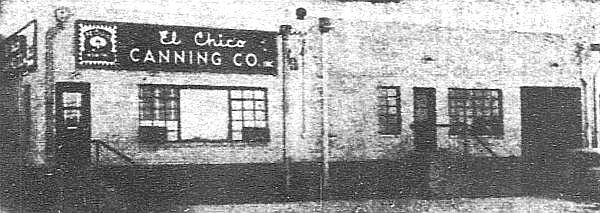
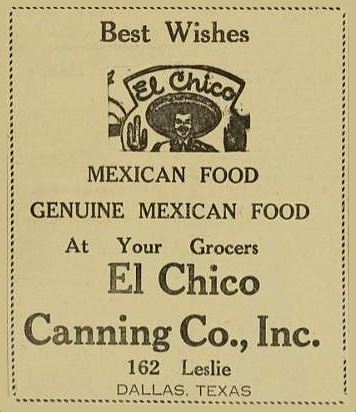
At the end of 1949, the Cuellars decided to begin manufacturing canned food products, with the aim to sell Tex-Mex staples nationally under the label “El Chico Foods.” The new factory was located at 162 Leslie St., in the then-pretty-new Trinity Industrial District. (They later moved waaaaaaaaaaay up north, to 1925 Valley View Lane.)

el-chico-canning-coEl Chico Canning Co., 162 Leslie St., Dallas

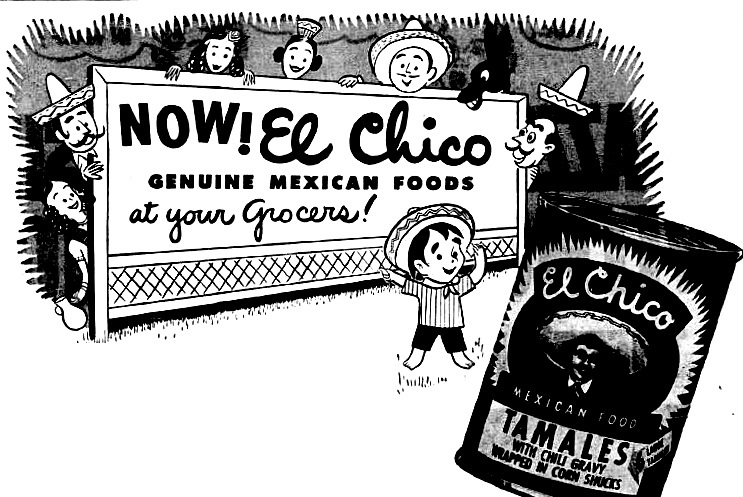
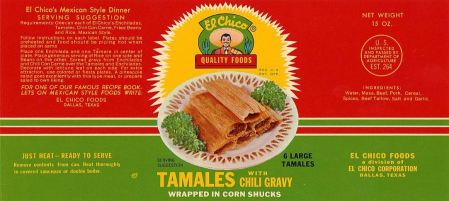
El Chico canned foods began to show up in DFW grocery stores in March 1950. Make way for canned chili, enchiladas, tamales (in corn husks), enchilada sauce, and hot sauce.

1950_canning-co_FWST_031750_det-1

1950_canning-co_FWST_031750-det-2Fort Worth Star-Telegram, Mar. 17, 1950

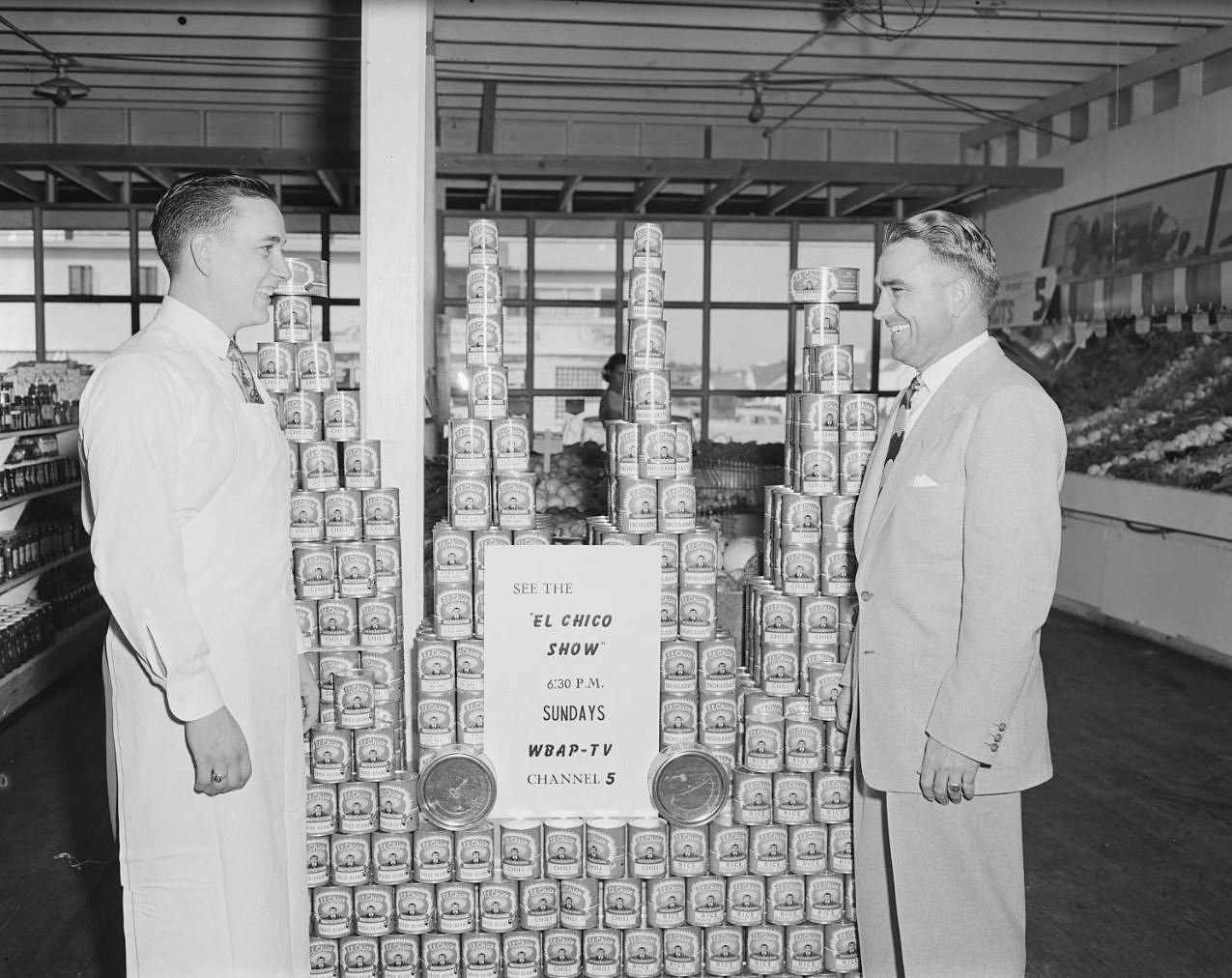
Soon to follow were other foods, including the mystifying canned tortillas — thanks to the photo below, I now know that it was possible to buy tortillas in a can, which was opened with a key. Just like Spam, or a canned ham. (Not sure what the “El Chico Show” was, but apparently it was broadcast on Channel 5 — at least in October 1950.)

el-chico_canned-products_KXAS-NBC-5-collection_102450_portalOctober 1950, via Portal to Texas History

Business boomed! After only 9 months, production tripled. After 2 years El Chico canned foods were in more than 30 states.

But in March 1953, the Cuellar family was sued in federal court for copyright infringement by a man named Benito Collada who owned a well-known nightclub in Greenwich Village called “El Chico,” a name he copyrighted in 1931. He demanded that the Cuellars change the name of their restaurants and their canned foods. The judge handed down an unusual verdict in which both sides were able to claim partial victory (or partial loss): the Cuellars were allowed to keep “El Chico” as the name of their restaurants, but they had to bid adios to the name on their canned foods.

The company regrouped and rebranded. The name of their Tex-Mex products became “Cuellar’s,” and the label even came with a pronunciation guide: “QUAY-YAR.”

cuellar-chili

Apparently, sales dropped. Steeply. The Cuellars fought their way through the appeals process, determined to retain the “El Chico” name on their manufactured foods, and, in September 1954 they won the right to once again sell canned foods under the El Chico brand.

el-chico_canned-tamales_label_smithsonian

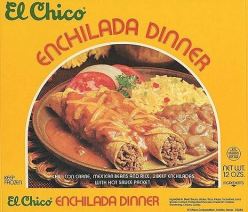
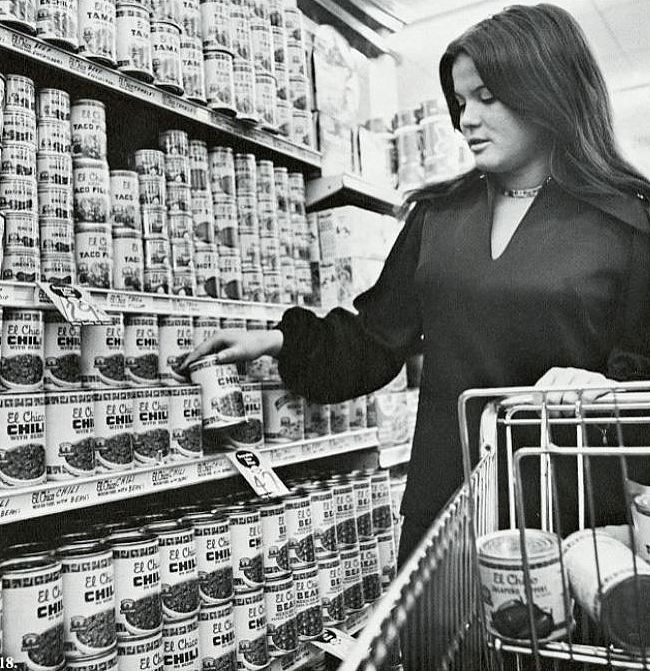
Sales really increased when they added frozen dinners to their line — their factory on Leslie Street installed a huge freezing system — they were able to freeze 6,000 frozen dinners at a time in 90 minutes.

el-chico_frozen_smithsonianvia Smithsonian Institution

el-chico_shopper_shelves_smithsonianvia Smithsonian Institution

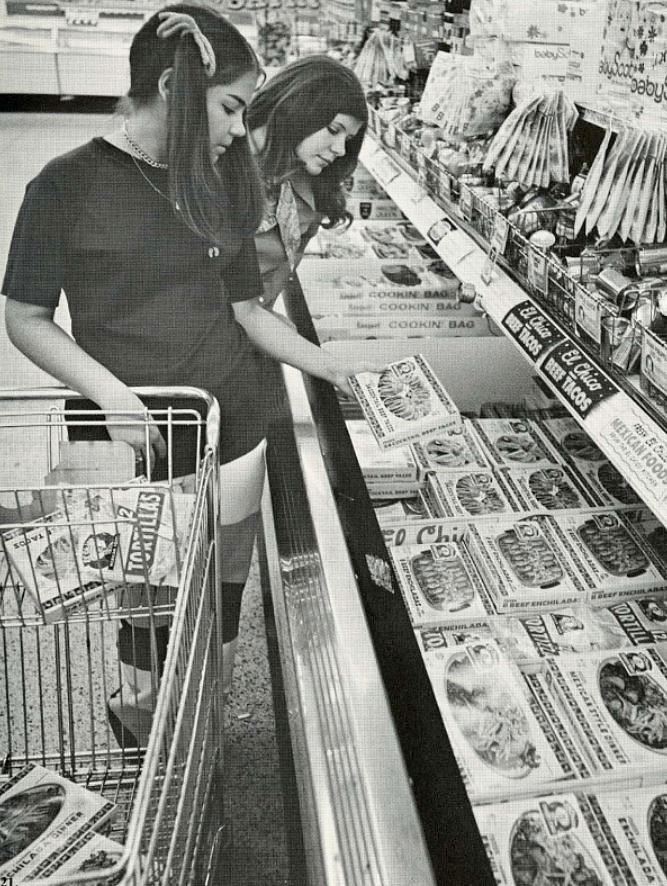
el-chico_shoppers_frozen_smithsonianvia Smithsonian Institution

Along with the typical frozen dinners you’d expect, El Chico also sold frozen tortillas. In the photo above, there is a box of frozen tortillas in the shopping cart and in the freezer case. As I recall, I think I liked the frozen Mexican dinners as a kid, but frozen tortillas and tortillas in a can sound equally unappealing.

The frozen dinners ultimately took over the manufacturing side of Cuellar foods, and at some point, the canned products eventually faded away. As I said, I remember the frozen dinners, but I don’t remember the canned foods at all. But I find them so interesting that that they are going to get their very own post — check out that post here.

***

Sources & Notes

Top (cropped) image is from the Frank Cuellar Sr. Collection, University of North Texas Special Libraries Collection, Portal of Texas History, and can be found here (the full collection may be browsed here).

Several images in this post are from the Smithsonian Institution’s “Guide to the El Chico Restaurants Collection.”

Read a good history of the Cuellar empire in “The Family Who Sold Tex-Mex to America” by Nancy Nichols, D Magazine (Nov. 2013).

So. “enchimales.” I did a quick search on the word and found mentions back to 1934 for a cafe selling something with this name in Shreveport. For all I know, this is a traditional Mexican dish which I’ve just never heard of. BUT, I wonder whether any actual Mexican-related dish would bear any resemblance to the enchimales recipe devised by Mrs. Vincent Katzenberger of Garfield, Washington which appeared in Spokane’s Spokesman-Review newspaper? It was the 14th-place (!) winner in the “Meltin’ Pot” international cooking competition. Here’s a short synopsis of Mrs. Katzenberger’s dish, which is made like enchiladas: in a tortilla, place a filling of onions, cheddar cheese, and a can of olives (all of which has been passed through a meat grinder) — on top of that filling, plop one canned tamale; roll up this filled tortilla and place it in a baking dish; repeat a dozen or so times; cover everything with tamale sauce; bake; when done, serve on a lettuce leaf and top with sprinkles of Parmesan cheese. The recipe is here. If you make this, please let me know how it came out.

enchimales_canned_introduced-1968_portal_det_sm

*

Copyright © 2023 Paula Bosse. All Rights Reserved.

Stuart Margolin, 1940-2022

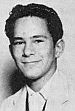
margolin-stuart_hillcrest-high-school_1955Hillcrest High School, 1955

by Paula Bosse

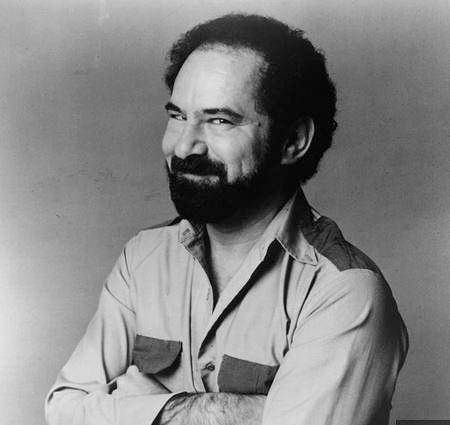
Everyone’s favorite character actor, Stuart Margolin, has died. He grew up in Dallas (Preston Hollow) and went to Hillcrest High School — until he was sent to what sounds like a reform school in another state. A brief look through the Dallas Morning News archives shows that he appeared in local theater productions as a child — he trod the boards in a production of A Midsummer Night’s Dream when he was 10. As a teenager, he was active in the Courtyard Theater in Oak Lawn, a school and theater led by Robert Glenn, who had also mentored other young Dallas actors such as Jayne Mansfield, Brenda Vaccaro, Ann Wedgeworth, and… Candy Barr). When he wasn’t acting — and apparently causing enough mayhem to get sent to reform school — he was a very good, avid junior golfer who competed in many tournaments (he is shown in one very grainy photo as a 13-year-old member of the DAC Country Club team, wearing a jaunty golf cap). There is no further mention of the young Margolin after 1955, when, one assumes, the teenager was shipped off to someplace not as cushy as Preston Hollow. He starts popping up again in newspaper stories in 1967, in the early days of his long and successful career in Hollywood when he was making regular appearances on TV shows such as Love American Style

His most-remembered role is Angel, sidekick to James Garner, in The Rockford Files. People loved this character. HE loved this character. He has said, with great affection, that he based Angel on streetwise guys he grew up with in Dallas. 

In 1979, though an established working actor and director in Hollywood, he moved back to Dallas for a couple of years, working on writing projects and establishing the production company River Entertainment.

margolin-stuart_dmn_022481_river-entertainmentFeb. 1981 (Dallas Morning News)

He tried for several years to establish a theater in the city, saying, “I don’t think there’s a professional theater here that is of a quality that this city deserves, a city that likes to view itself as Dallas does” (“Margolin’s Life Has Many Stages” by Joe Leydon, DMN, Apr. 20, 1980). (He was not a huge fan of the Dallas Theater Center and was especially unhappy that, in 1980, the DTC hadn’t had an Actors Equity contract in 20 years.)

At this time he also recorded a country/blues album, And the Angel Sings, of which he said:

I’m from [Dallas], and my musical influences are from this area. When I grew up in Dallas, I listened to a lot of blues — Muddy Waters, B.B. King, This record was made for the kind of people I grew up with. (The Daily Oklahoman, Apr. 22, 1980)

I just watched him in an old episode of The Mary Tyler Moore Show a couple of days ago and said to myself, “I love this guy.” I was always a fan of Stuart Margolin. RIP.

margolin-stuart

***

Sources & Notes

Top photo from the 1955 Hillcrest High School yearbook, The Panther.

margolin-stuart_hillcrest-high-school_1955_sm

*

Copyright © 2022 Paula Bosse. All Rights Reserved.

New Wheels for Margo Jones — 1955

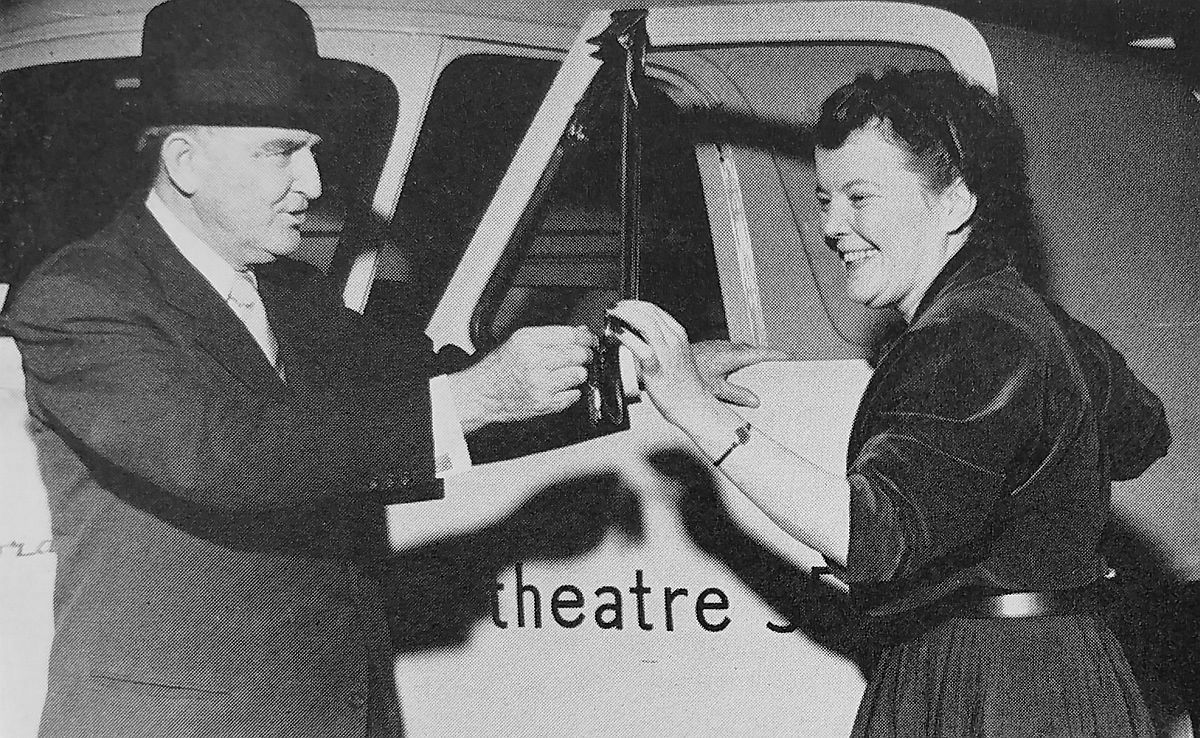
jones-margo_theatre-55_dallas-magazine_apr-1955DeWitt Ray and Margo Jones

by Paula Bosse

The photo above shows Dallas theater legend Margo Jones accepting the keys to a new Ford truck in March 1955. Below, the caption that appeared in the April 1955 issue of Dallas magazine:

GIFT FOR THEATRE ’55: Margo Jones, director of Theatre ’55, is shown as she accepts the keys to a new 1955 panel truck from DeWitt T. Ray, Dallas banker and member of Dallas Theatre ’55 board of trustees. The truck, gift of a group of 18 Dallas businessmen and civic leaders, will be used for transporting set furniture, props and other necessities for the theatre’s productions.

She looks very, very happy!

margo-jones_theatre-56_dpl

jones-margo_theatre-56_this-month-in-dallas_dec-1956_ad

***

Sources & Notes

Photo is from the April 1955 issue of Dallas, a periodical published by the Dallas Chamber of Commerce.

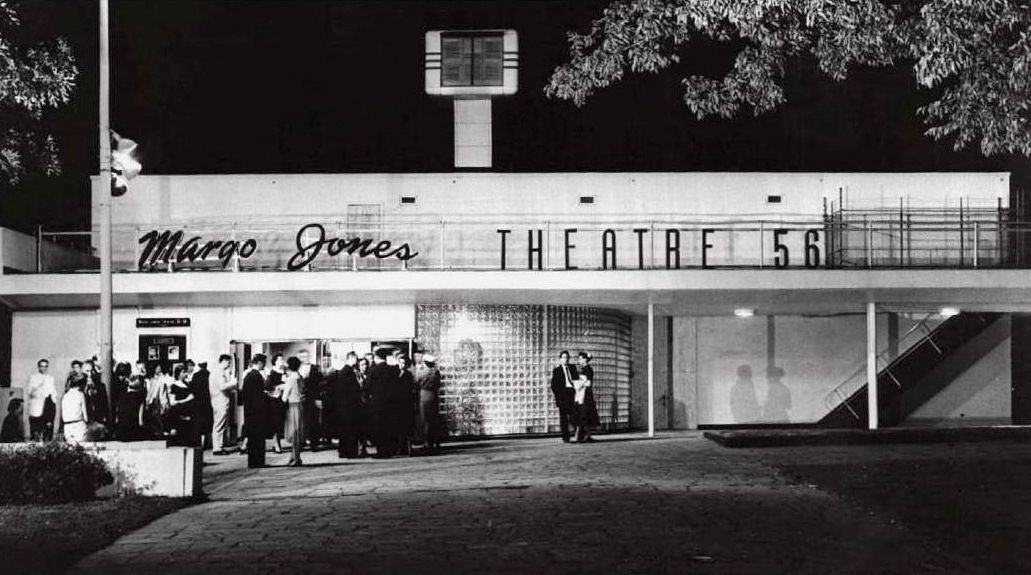
Photo of the exterior of the theater from the collection of the Dallas Public Library.

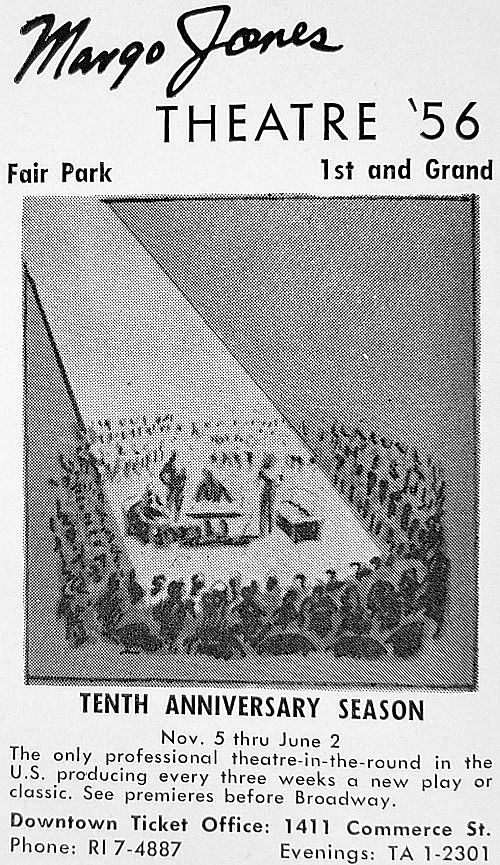
Ad from the Dec. 1956 issue of This Month in Dallas.

More on Margo Jones can be found in the following Flashback Dallas posts:

Watch “Sweet Tornado: Margo Jones and the American Theater,” the full documentary on Margo Jones produced by KERA-Channel 13, here.

jones-margo_theatre-55_dallas-magazine_apr-1955_sm

*

Copyright © 2022 Paula Bosse. All Rights Reserved.

Old Lake Highlands

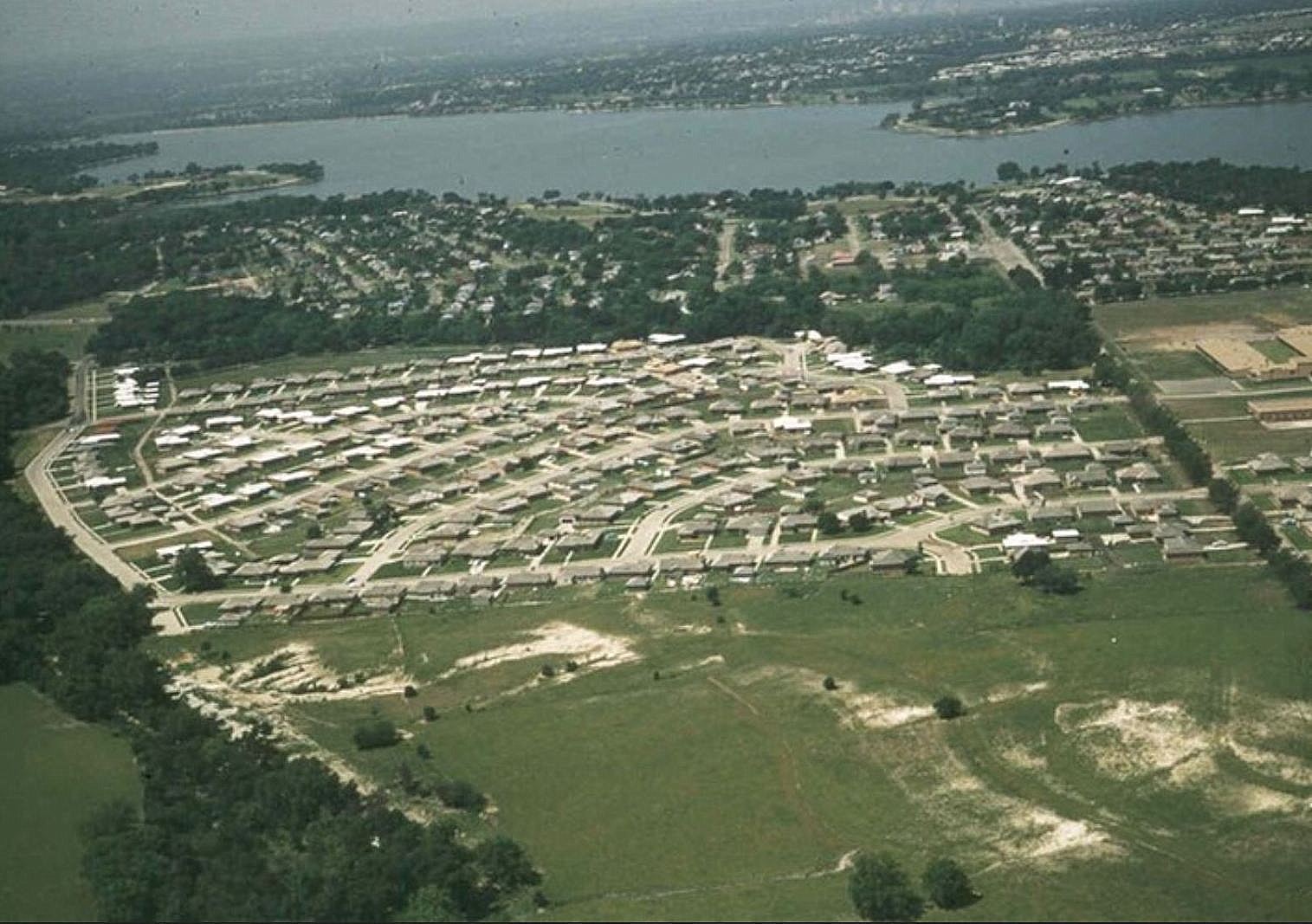
white-rock-lake_old-lake-highlands_1956_don-jones1956, Room to spread out…

by Paula Bosse

The photo above — taken in 1956 — shows an aerial view of Old Lake Highlands, looking southwesterly toward White Rock Lake. The street in the foreground is Kirkwood Drive.

But for even older Old Lake Highlands, we need to cast our minds back to 1927, when W. H. Brouse began to advertise for one of his many East Dallas developments. One of the ads from the Lake Highlands Co. (W. McCarty Moore, President and H. W. Brouse, Director of Sales) read:

IN THE MAKING — LAKE HIGHLANDS, “THE INCOMPARABLE”

Another High-Class Residence  Section For Dallas on White Rock Lake

Believing in Dallas — believing in the continued rapid absorption of territory to the north and east for homes — and especially that beautiful terrain surrounding White Rock Lake, Lake Highlands was conceived and made possible by the owning company.

The tract — some 117 acres — is especially advantageously located in that it is right on the lake itself — just a short drive from the dam, and is bounded by water on three sides. A peninsular piece of ground, in fact.

The ad also noted that “lots will be large — prices low”: $1,100 and $1,200 (about $18,000-$19,500 in today’s money).

lake-highlands-co_dmn_100927_det1927

*

And, in a Dallas Morning News real estate advertorial were these additional deets:

Lake Highlands is situated just beyond Dixon’s Branch, on the east shore of the lake, and is accessible directly from the downtown section by Swiss and Gaston avenues and the old Garland road, leading into the lake road. This, in turn, gives access to the 100-foot boulevard, which will circle the whole development, and from which lead streets seventy feet in width, reaching every lot in the development. Roadways and streets will be surfaced with white gravel, while curbs and sidewalks will be installed in advance of building development, as will all utilities, lights, water, gas and sewer facilities….

Construction will be restricted to homes to cost $5,500 to $7,500 minimums [$90,000-$122,000 today], depending on the location of the lots on which they are built. Materials will be limited to brick, hollow tile and stucco, so as automatically to eliminate the fire hazard and also to assure permanence.

I’m sure life on the lake in 1927 was worth every penny.

kirkwood_white-rock-lake_googleGoogle Maps

***

Sources & Notes

I came across the photo at the top of this post several years ago in a photo blog hosted by The Dallas Morning News, but the blog doesn’t seem to exist any longer. The caption noted that the photo had been shared by Lynn Jones who had come across it when going through a collection of color slides inherited by her husband when Don Jones died in 2010.

Quotes from the real estate advertorial, “Plan Homes at White Rock” (Dallas Morning News, Oct. 9, 1927).

white-rock-lake_old-lake-highlands_1956_don-jones_sm

*

Copyright © 2022 Paula Bosse. All Rights Reserved.

Bud Biggs: 12 Watercolors of Dallas — ca. 1955

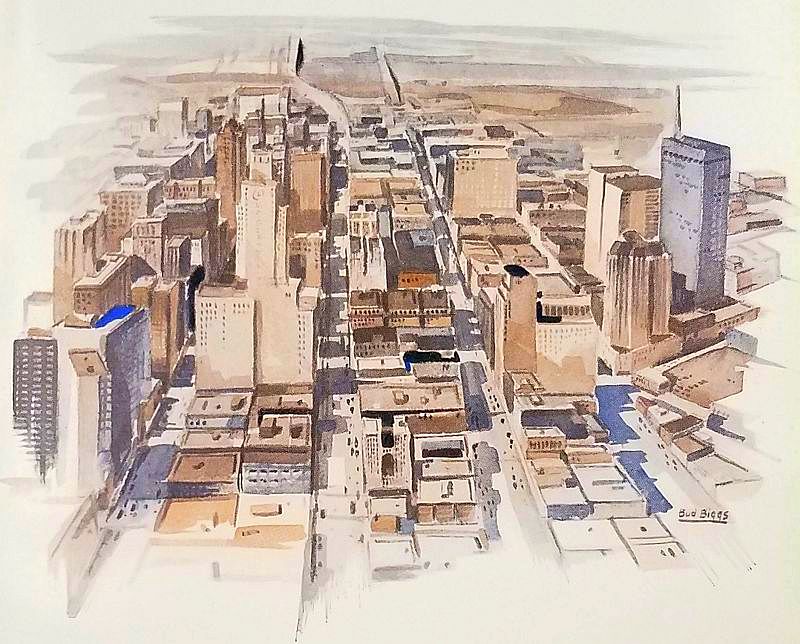
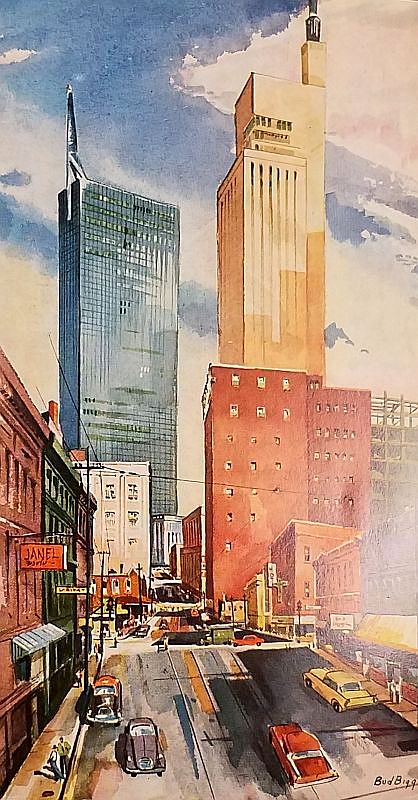
1-1956-january_dallas-mag_bud-biggs“Aerial View of Downtown Dallas” by Bud Biggs
by Paula Bosse

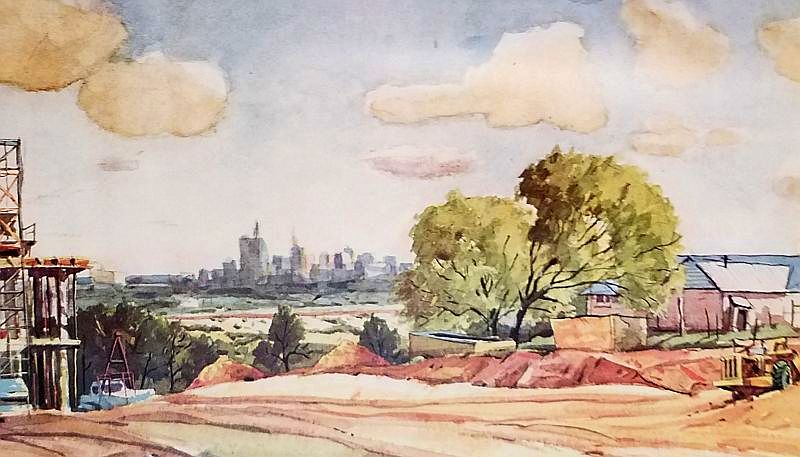
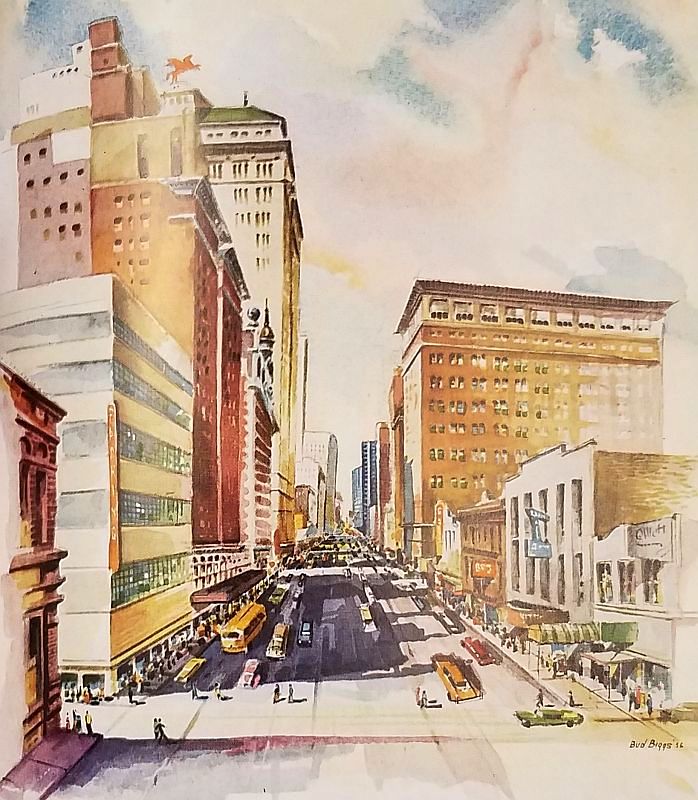
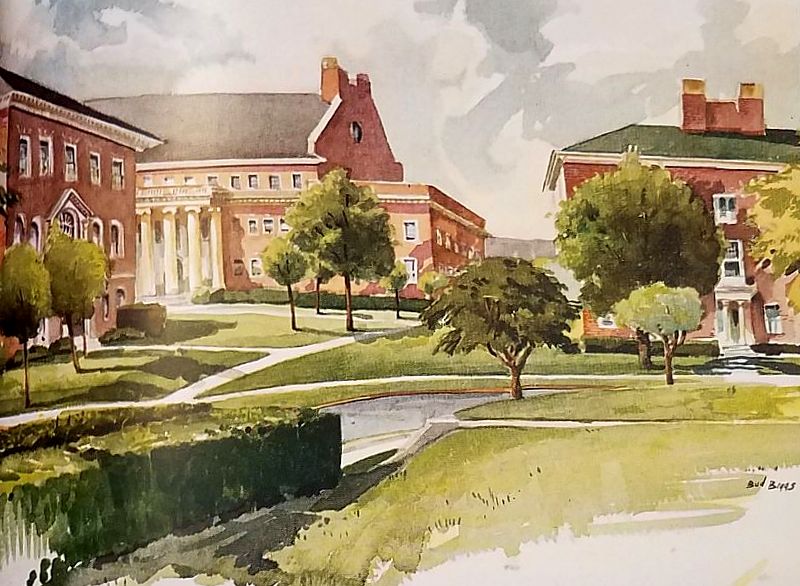
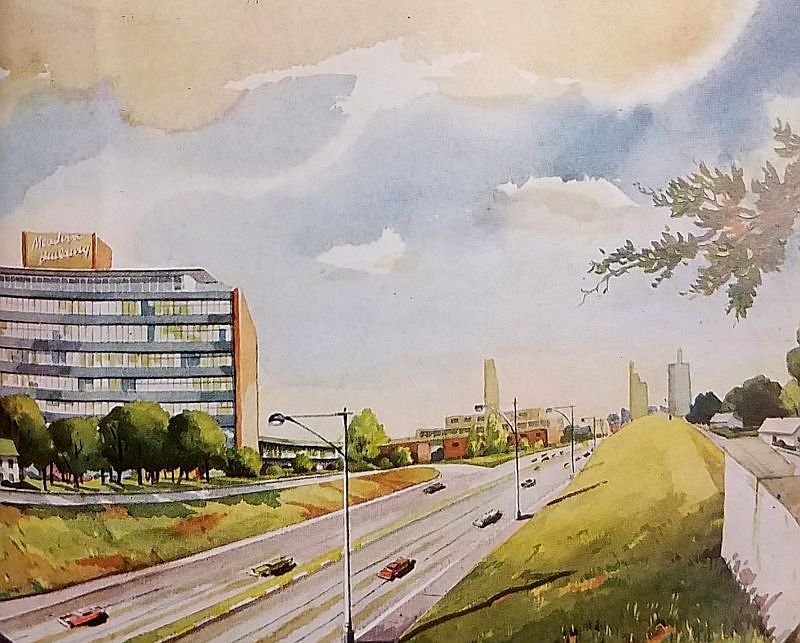
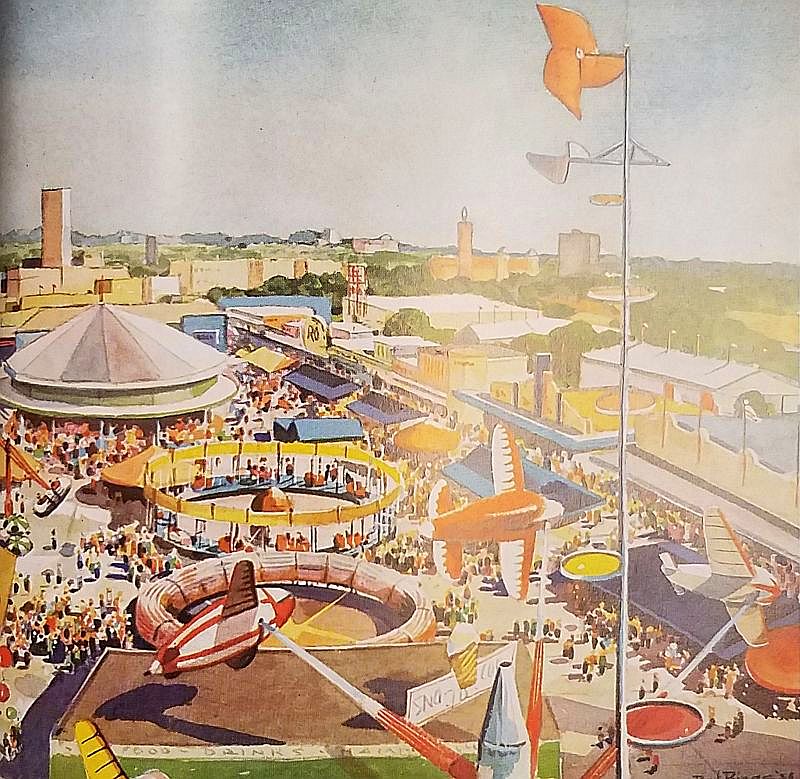
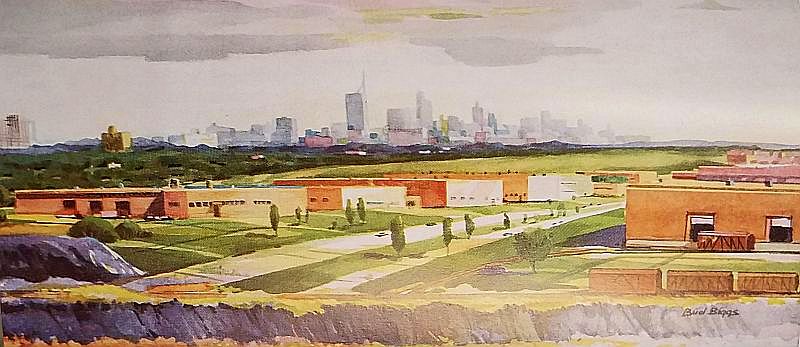
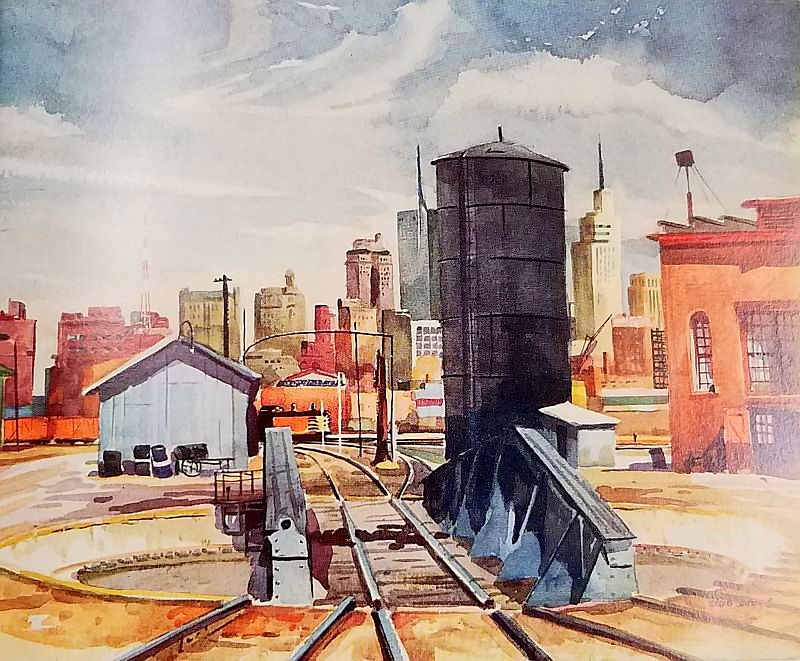
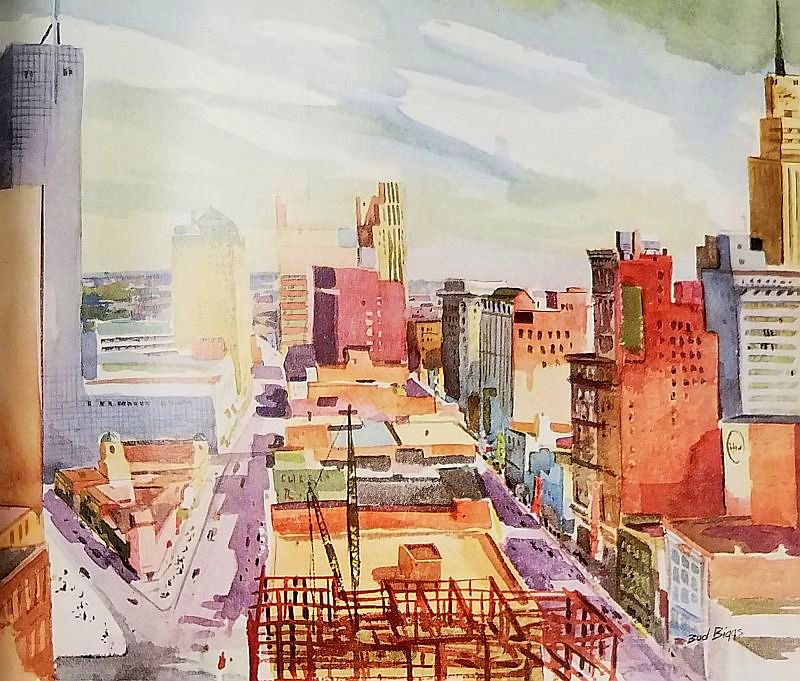
Back in 2018 I posted Christmas-themed magazine cover art by Dallas artist/illustrator Bud Biggs — it was one of my favorite images posted that year (see the post here). I knew that it had been one of the 12 monthly covers by Biggs used in 1956 for Dallas magazine, the Dallas Chamber of Commerce publication. Since then, I’ve managed to turn up all 12 watercolors. Some of them are going to look a little wonky with unfortunate glare patches — this is because I was unable to photograph them lying flat. I’ve done my best! I’ve paired them with the titles which were printed in the Dallas Morning News — I hope I’ve gotten the right titles with the right paintings. 

*

Above, “Aerial View of Downtown Dallas” by Bud Biggs (this painting appeared on the cover of the January, 1956 issue of Dallas magazine).
*

Below, “The Katy Round House” by Bud Biggs (February, 1956 cover)

2-1956-february_dallas-mag_bud-biggs

*

“Looking Up Pacific” by Bud Biggs (March, 1956 cover)

3-1956-march_dallas-mag_bud-biggs

*

“Ervay Street” by Bud Biggs (April, 1956 cover)

4-1956-april_dallas-mag_bud-biggs

*

“Ground-breaking, Dallas University” by Bud Biggs (May, 1956 cover)

5-1956-may_dallas-mag_bud-biggs

*

“Commerce Street” by Bud Biggs (June, 1956 cover) 

6-1956-june_dallas-mag_bud-biggs

*

“SMU Legal Center” by Bud Biggs (July, 1956 cover)

7-1956-july_dallas-mag_bud-biggs

*

“Central Expressway” by Bud Biggs (August, 1956 cover)

8-1956-august_dallas-mag_bud-biggs

*

Midway, State Fair of Texas” by Bud Biggs (September, 1956 cover)
9-1956-september_dallas-mag_bud-biggs

*

“Trinity Industrial District” by Bud Biggs (October, 1956 cover)
10-1956-october_dallas-mag_bud-biggs

*

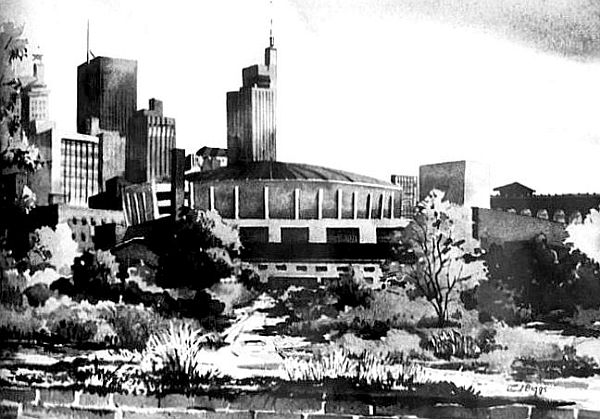
“City Auditorium” by Bud Biggs (November, 1956 cover) — sadly, I was unable to find this one in color.11-1956-november_dallas-mag_bud-biggs_BW
*

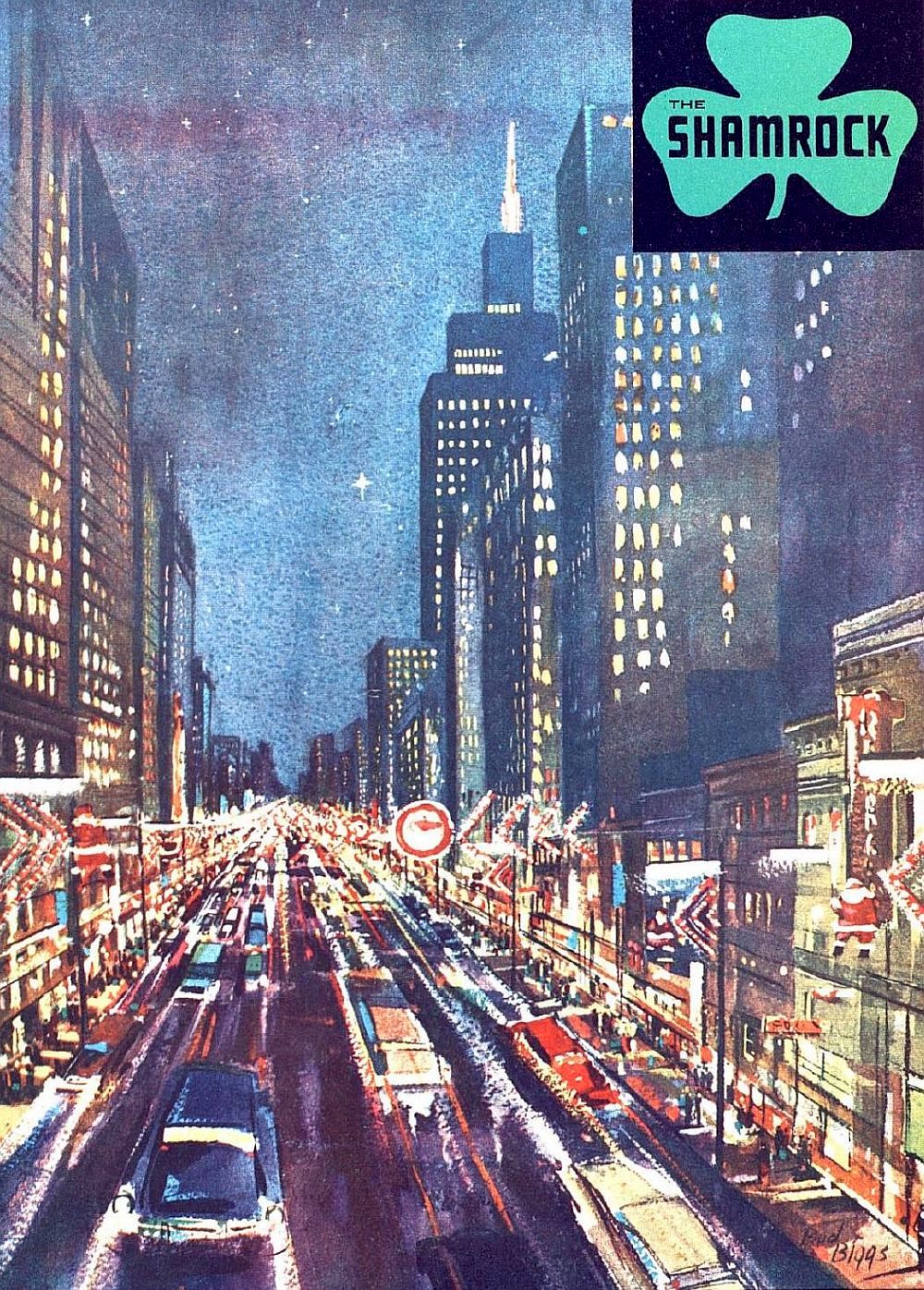
“Main Street, Christmas Night” by Bud Biggs (used for the cover of the December, 1956 issue of Dallas and for the cover of the Christmas, 1959 issue of the Shamrock Oil & Gas publication, The Shamrock)
xmas_bud-biggs_shamrock-mag_1959_texas-tech

**

This series of 12 paintings won the “Best Covers of 1956” award from the American Association of Commerce Publications, and in 1958 all 12 of the original watercolors were purchased by Southwest Airmotive Company to be displayed in their new Love Field terminal. I have no idea where these paintings are today. I love them. 

*

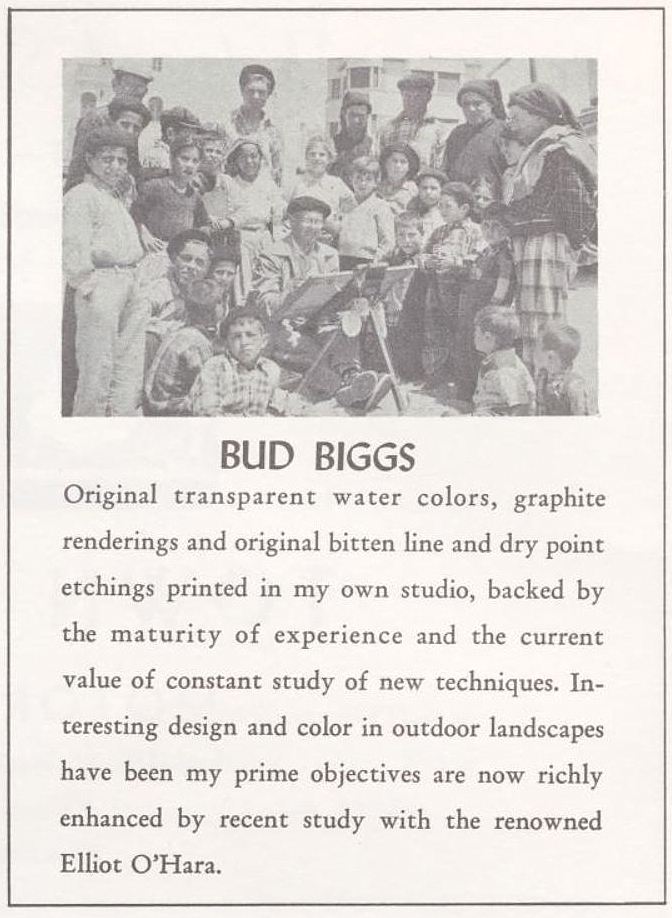
Dallas native Bancroft Putnam “Bud” Biggs (1906-1985) attended Forest Ave. High School, SMU, and the St. Louis School of Fine Arts. He was primarily a commercial artist, working for Dallas artist Guy Cahoon before opening his own advertising studio. He produced fine art as well, specializing in watercolors, and was a respected art instructor. Below is an ad placed in the publication La Fiesta of Art (1957) to coincide with an art show in Highland Park Village. He is seen sitting at an easel. I had never heard of Bud Biggs before that Christmas post in 2018 — someone needs to round up his works and publish them!

biggs-bud_la-fiesta-of-art_1957_portal

***

Sources & Notes

Information on the 12 paintings is from the Dallas Morning News article “Art & Artists: Biggs Series Bought by Firm” by Rual Askew, Feb. 20, 1958.
2-1956-february_dallas-mag_bud-biggs_sm

*

Copyright © 2022 Paula Bosse. All Rights Reserved.

State Fair of Texas, From Above — 1959

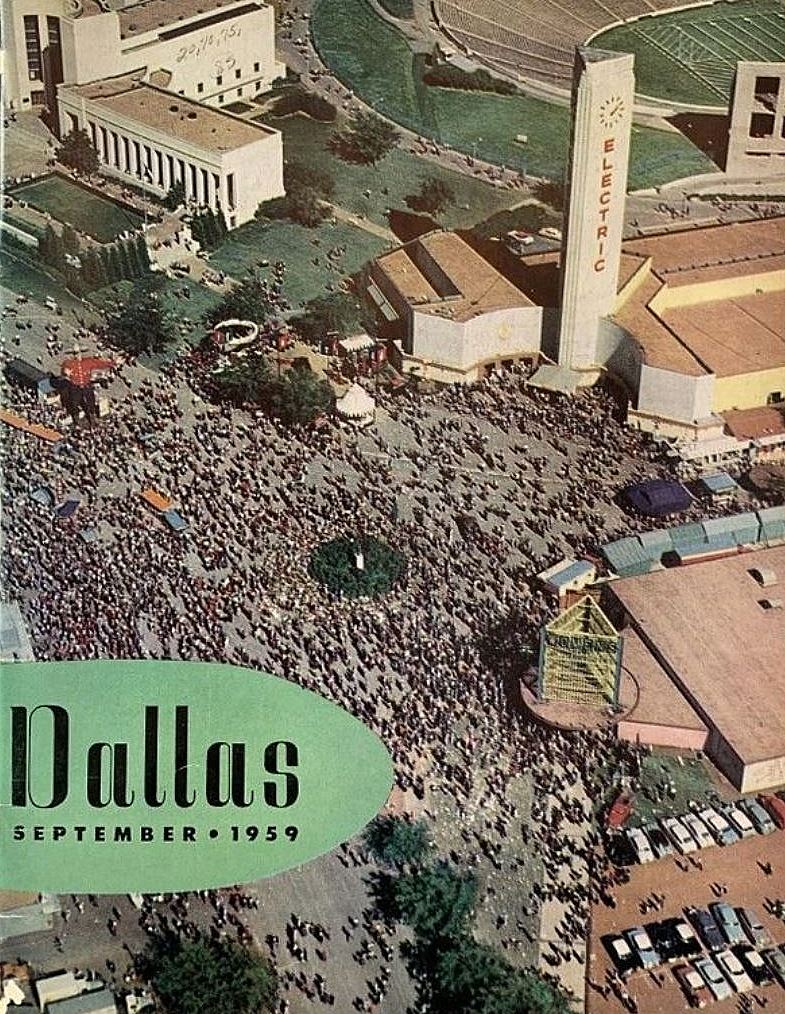
sfot_dallas-magazine_sept-1959A bird’s-eye view of the Great State Fair

by Paula Bosse

I think I see Waldo.

***

Sources & Notes

Front cover of Dallas magazine, Sept. 1959.

sfot_dallas-magazine_sept-1959_sm

*

Copyright © 2021 Paula Bosse. All Rights Reserved.

Casa View Hills/Casa View Village — 1955

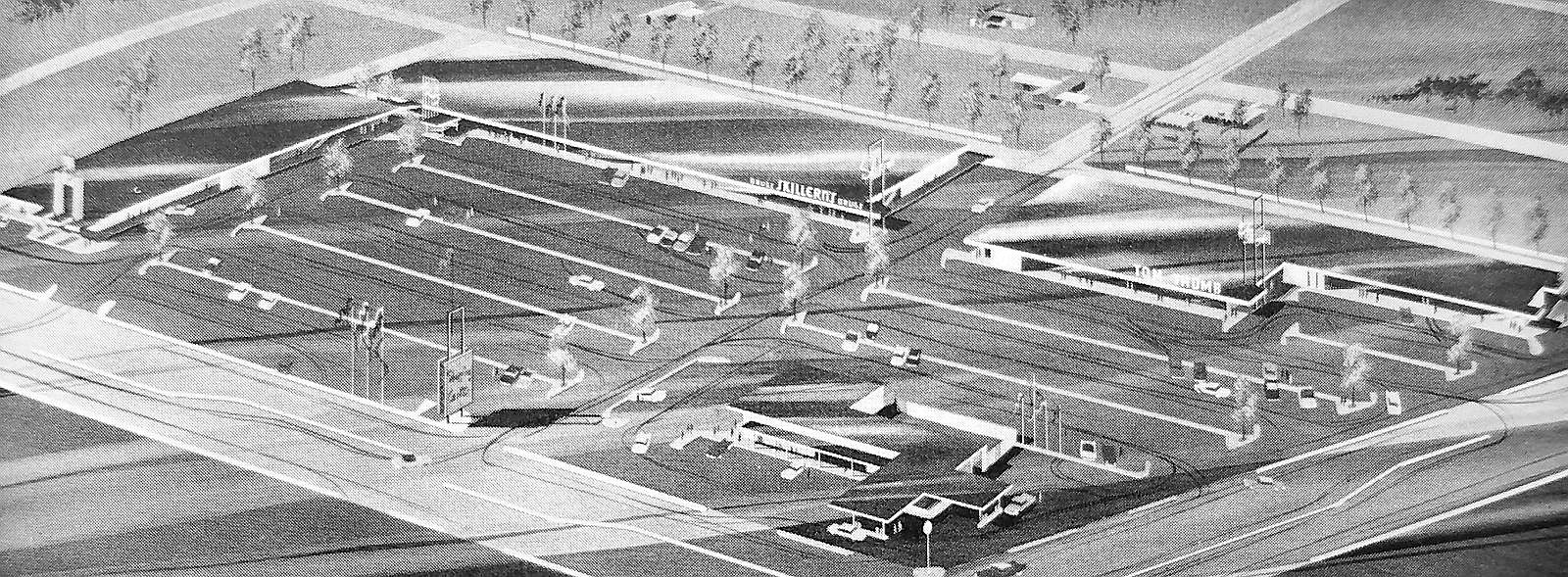
casa-view-village-shopping-center_dallas-mag_april-1955Casa View Village shopping area, April 1955

by Paula Bosse

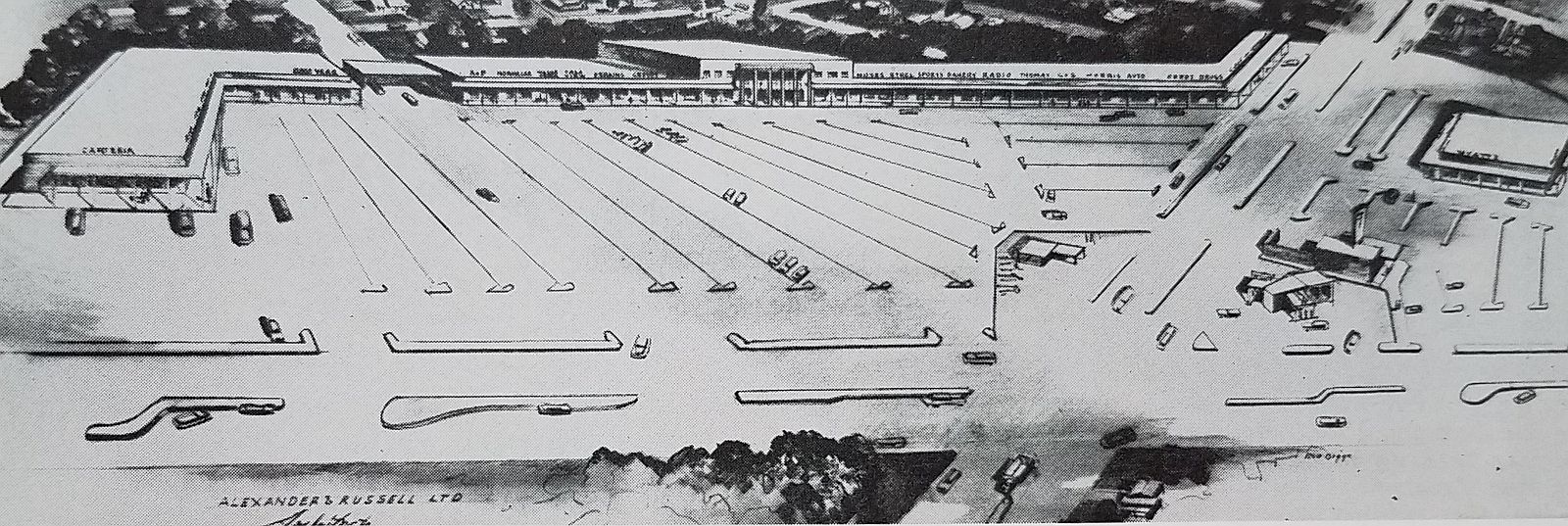
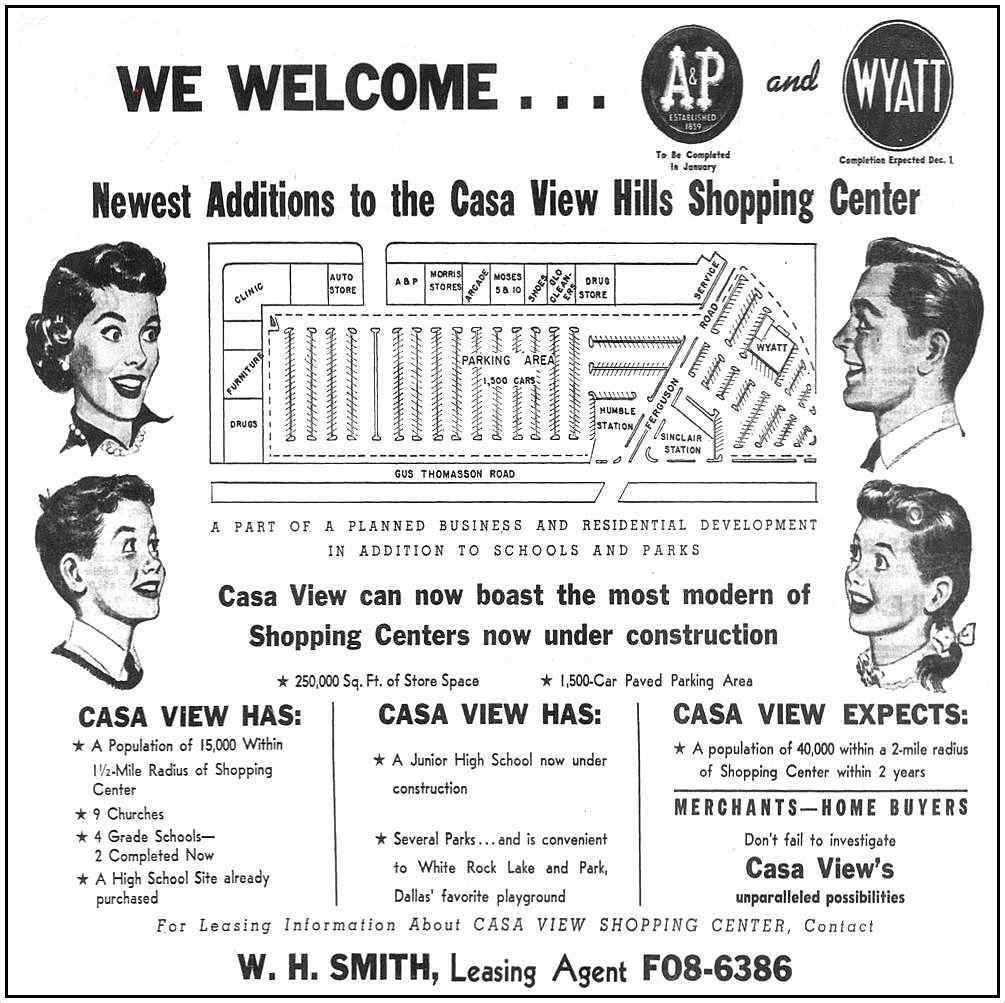
I wrote about the rather confusing history of the shopping center in Casa View at Gus Thomasson and Ferguson in the post “Shopping at Sears in Casa View” — so this is something of a companion, showing architectural drawings (mostly parking spaces, but, still…). The original shopping center was called, somewhat whimsically, Casa View Hills, which opened in 1953 (the drawing seen below). In 1955, the center was bought by new owners who changed the name to Casa View Village and immediately began the second phase of construction (seen above), which expanded the center across Gus Thomasson (…I think). 

casa-view-hills-shopping-center_dallas-mag_march-1955Built as Casa View Hills (1953), w/ new 2-story addition (1955)

Caption of the drawing immediately above:

INSURANCE COMPANY BUYS SHOPPING CENTER
The $2,500,000 Casa View Hills Shopping Center has been acquired by the Lone Star Life Insurance Company for its home office property and general headquarters. The center, located on Gus Thomasson and Ferguson Roads in the northeast section of Dallas, is virtually completed except for final finishing on the two-story office building which will house the insurance company. W. H. Smith, president of the company, said the property was purchased from Clark and Smith, General Contractors. [Alexander and Russell, architects.] (“Dallas” magazine, March, 1955)

casa-view-shopping-center_dmn_100453Oct. 4, 1953

The caption for the very top image, showing the planned expansion:

CONSTRUCTION OF NEW CENTER STARTS JUNE 1
Construction of Casa View Village, a new shopping center at the intersection of Gus Thomasson and Ferguson Roads east of White Rock Lake, is scheduled to begin June 1, it has been announced by Avery Mays, Dallas real estate developer. Valued at $1,500,000, the 9-acre tract includes a 100,000 square foot building area which will include a Tom Thumb Super Market, Skillerns Drug Store and other stores and offices. Harwood K. Smith and Joseph M. Mills are the architects; Phillips, Proctor and Bowers, the land planners; and H. W. Meador Company, the leasing agent. (“Dallas” magazine, April, 1955)

***

Sources & Notes

Architectural drawings and quoted text from Dallas magazine, March, 1955 and April, 1955.

casa-view-village-shopping-center_dallas-mag_april-1955_sm

*

Copyright © 2021 Paula Bosse. All Rights Reserved.

Downtown Dallas in Color — 1940s & 1950s

kodachrome_commerce-lamar_trolleydodger_twitterColorful Commerce St. (via trolleydodger.com)

by Paula Bosse

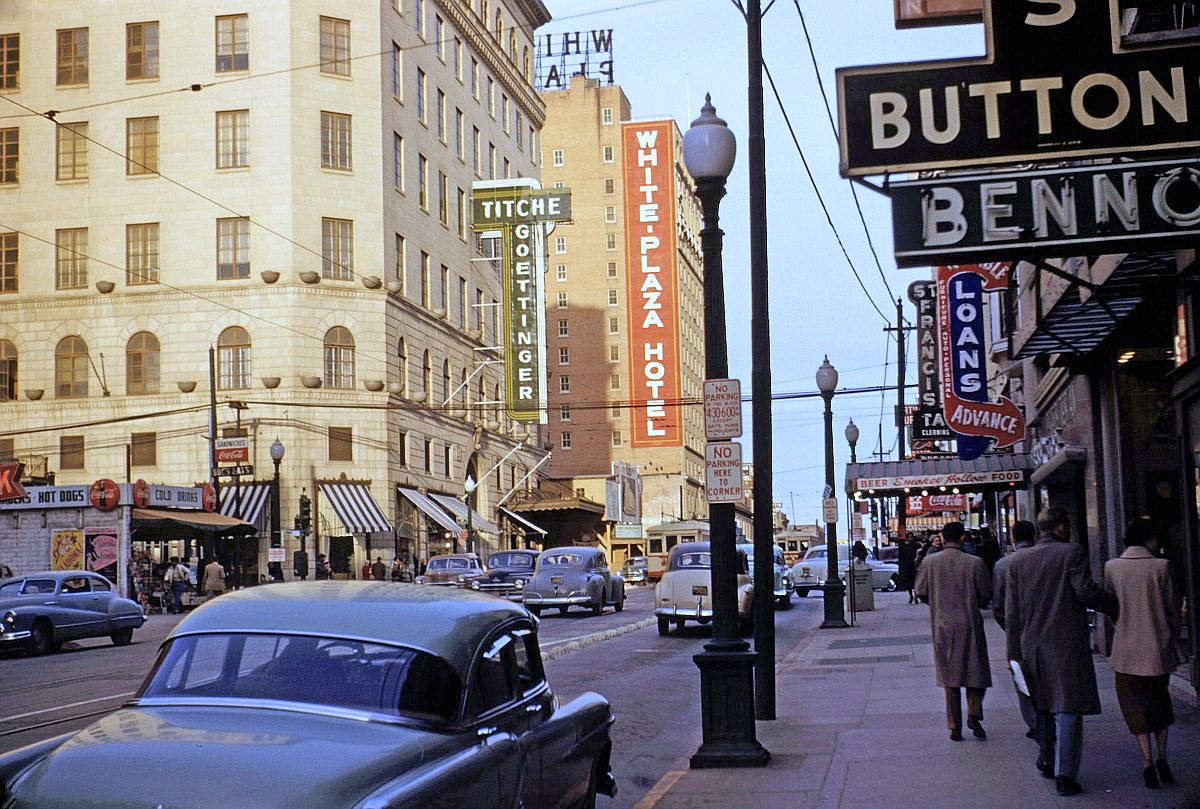
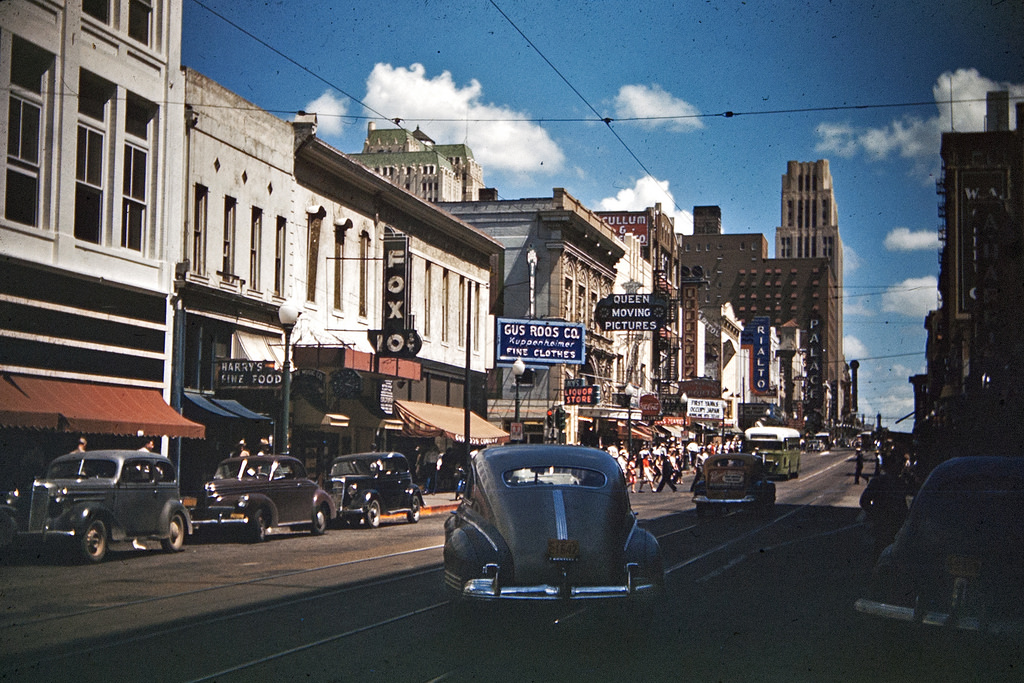
After seeing so many pictures of historic downtown Dallas in black and white, it’s pretty thrilling to see color photos — even better, super-saturated Kodachrome slides. Here are a few.

Above, a photo taken on July 31, 1950: a view of Commerce Street, taken from Lamar looking east. I LOVE this photo! Sadly, I really don’t love what this same block looks like today: brace yourselves — click here! (For reference, Padgitt Bros. was at 1018 Commerce.) 

*

Below, a photo from 1954: the 300 block of N. Ervay, taken from Bryan looking southeast toward Pacific. The Republic Bank Building (at the left) is still there, but those buildings on the right? Gone, gone, gone. That space is now taken up with Thanksgiving Square. I may be in the minority, but I would rather have those buildings back. That crazy-looking building housing businesses such as Arcadia Liquor (309 N. Ervay)? I have been all-but-obsessed with that weird building for years. Personally, I prefer its bizarro architecture to that of Philip Johnson. See what this block looks like now, here.

kodachrome_bryan-n-ervay_1954_shorpyvia Shorpy.com

*

Below, from 1950: Main Street, looking east toward St. Paul (and Titche’s). This is fantastic! The view now is here

kodachrome_main_1950_noah-jeppsonvia Noah Jeppson, Flickr

*

Another great photo from the collection of Noah Jeppson (seriously, check out his Flickr stream here!), this is one I’ve posted before — everyone posts this because it’s such an amazing photo, from 1945 (!): Elm Street, looking east from the 1400 block. See it today, here

elm-street-color_1940s_jeppson-flickrvia Noah Jeppson

*

Despite the watermark, this is a cool September, 1940 view of the gas station/service station which once held down the Preston Road entrance to Highland Park Village: looking northwesterly toward Mockingbird. The view today is here

kodachrome_highland-park-village_gas-stations_sept-1940_color-slide_ebay_watermarkvia eBay

*

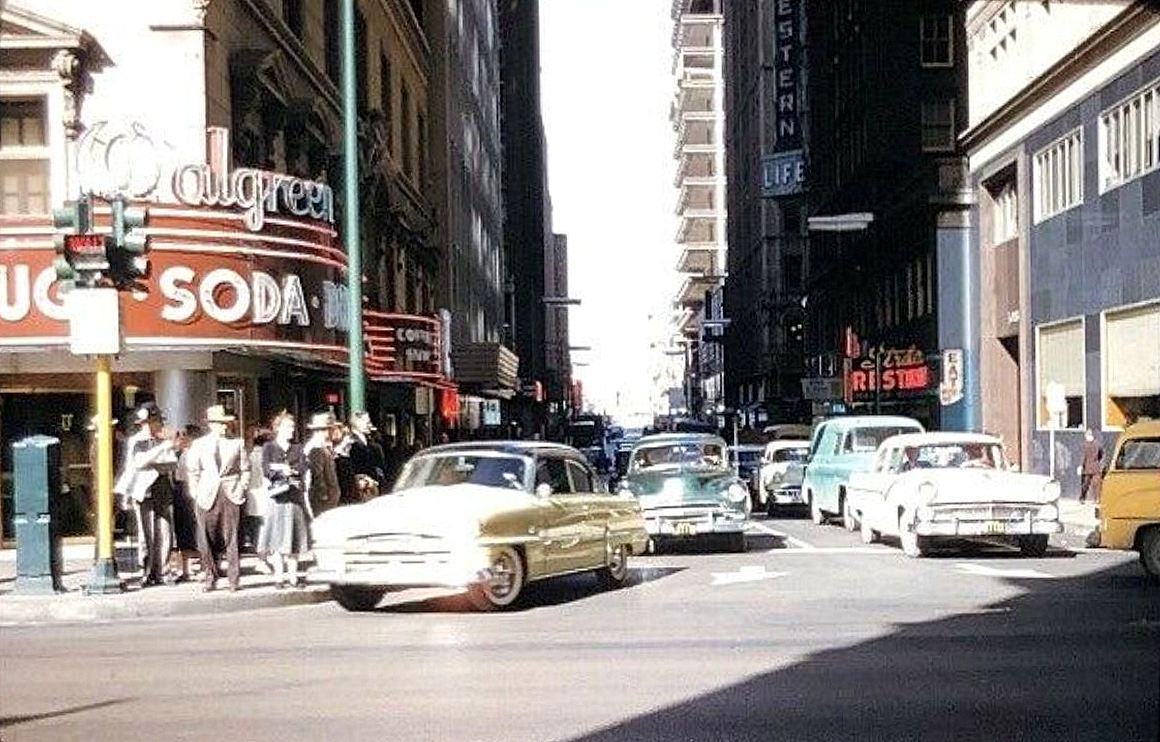
Another downtown view, this one showing the Walgreens at Commerce & Akard (at the Adolphus Hotel); the view is looking north up Akard (see it today here).

kodachrome_downtown_ebayvia eBay

*

If you’ve got color photos/slides from this era, I’d love to see them!

***

Sources & Notes

Links to all sources can be found beneath the photos.

Special shout-out to Michael T. Jackson (@memj83) for tagging me on Twitter to a post by @Kodakforever — a heart-stoppingly great collection of Kodachrome photos where I first saw a few of the photos posted above.

kodachrome_commerce-lamar_trolleydodger_twitter_sm

*

Copyright © 2021 Paula Bosse. All Rights Reserved.

Pleasant Grove Business Ads: 1959-1969 (Pt. 2)

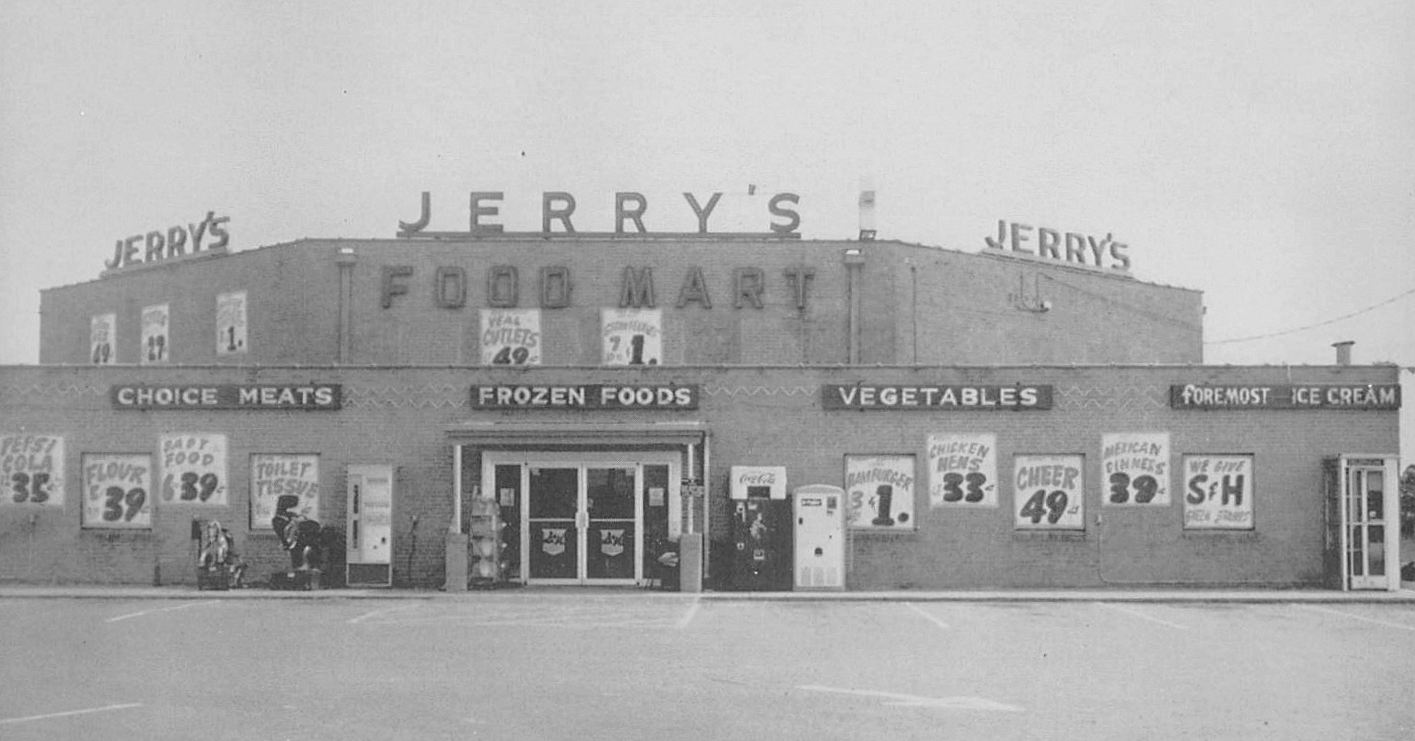
spruce-high-school_1965-yrbk_jerrys-food-mart_lake-june-rdJerry’s Food Mart, 6416 Lake June Rd., 1964-ish

by Paula Bosse

This final installment of 1960s ads for Pleasant Grove businesses has even more more ads from the yearbooks of H. Grady Spruce High School and W. W. Samuell High School (a link to the previous posts is at the bottom of this page). (Click ads to see larger images.)

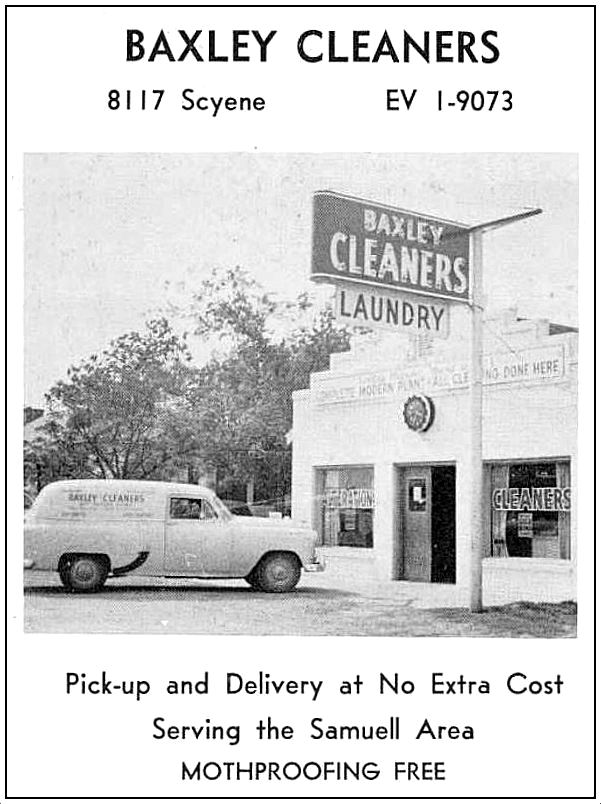
BAXLEY CLEANERS, 8117 Scyene — Murrill L. Baxley owner. This very cute little building still stands!

samuell-high-school_1960-yrbk_baxley-cleaners1960

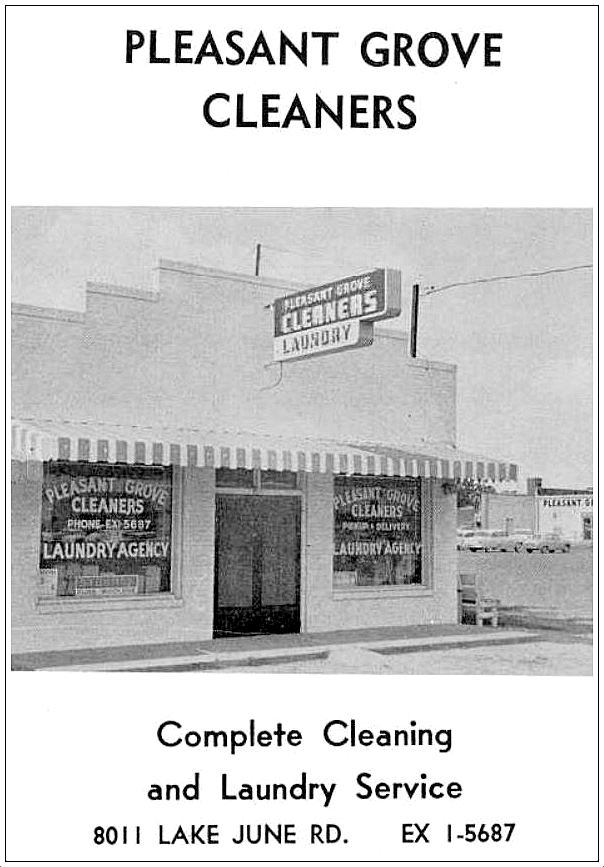
PLEASANT GROVE CLEANERS, 8011 Lake June Road.

samuell-high-school_1960-yrbk_pleasant-grove-cleaners1960

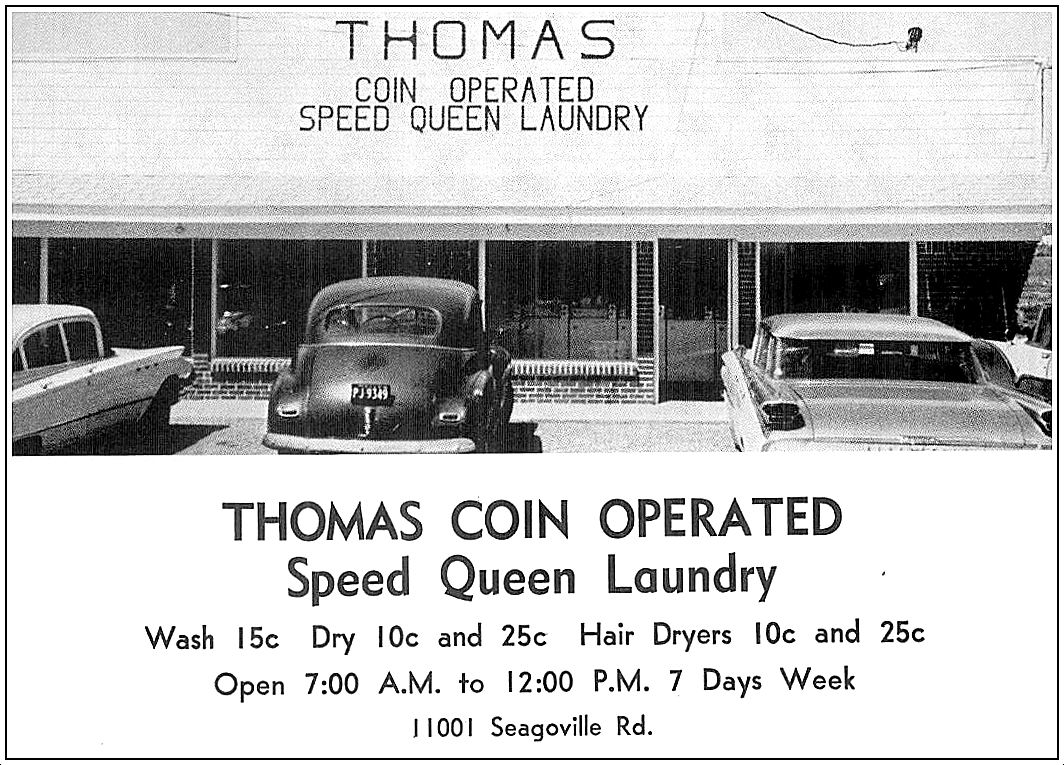
THOMAS COIN-OPERATED SPEED QUEEN LAUNDRY, 11001 Seagoville Road. (Laundromats once offered the use of hair dryers?)

spruce-high-school_1966-yrbk_thomas-laundromat1966

CAMPUS BARBER SHOP, 9614 Old Seagoville Road. (1966: owner Ike Robertson pictured with Jack Kelley and “Red.” 1968: owner Keith Gibson.)

spruce-high-school_1966-yrbk_campus-barber-shop1966

spruce-high-school_1968-yrbk_campus-barber-shop1968

NATALIE SCHOOL OF DANCE, 231 Pleasant Grove Center — Natalie Skelton owner. 

spruce-high-school_1966-yrbk_natalie-school-of-dance1966

SOUTHEAST YMCA, 2818 Prichard Lane. Still standing but now a church, I believe.

spruce-high-school_1964-yrbk_ymca1964

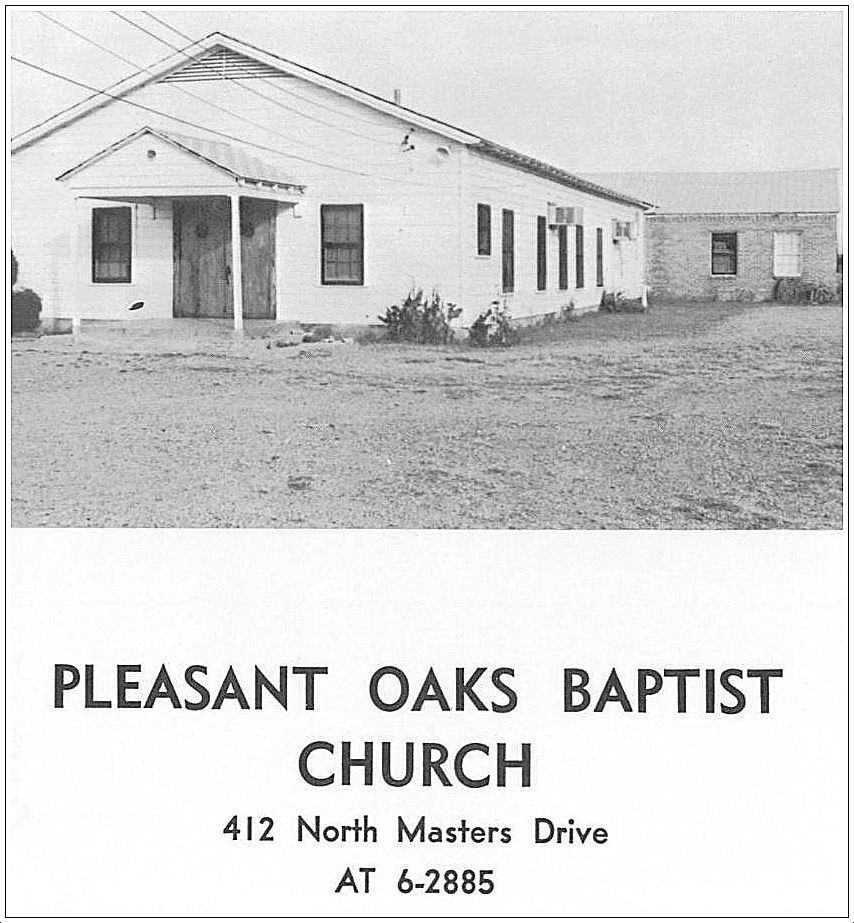
PLEASANT OAKS BAPTIST CHURCH, 412 North Masters Drive. Still standing in what looks to be a remodeled building. (The church has asked that I add a link to their website.)

spruce-high-school_1967-yrbk_pleasant-oaks-baptist-church1967

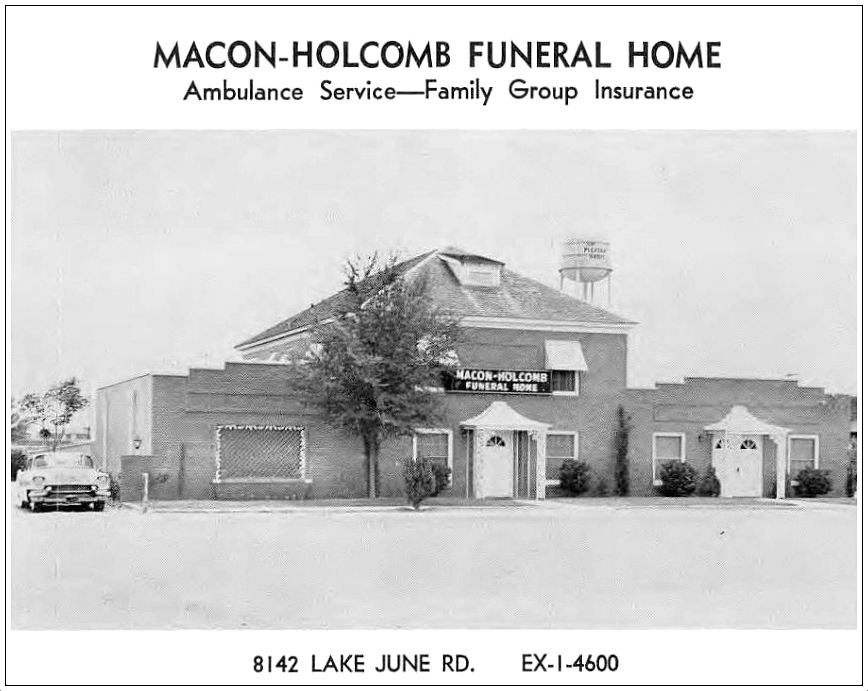
MACON-HOLCOMB FUNERAL HOME, 8142 Lake June Road. Still standing (as a different funeral home).

samuell-high-school_1959-yrbk_macon-holcomb-funeral-home1959

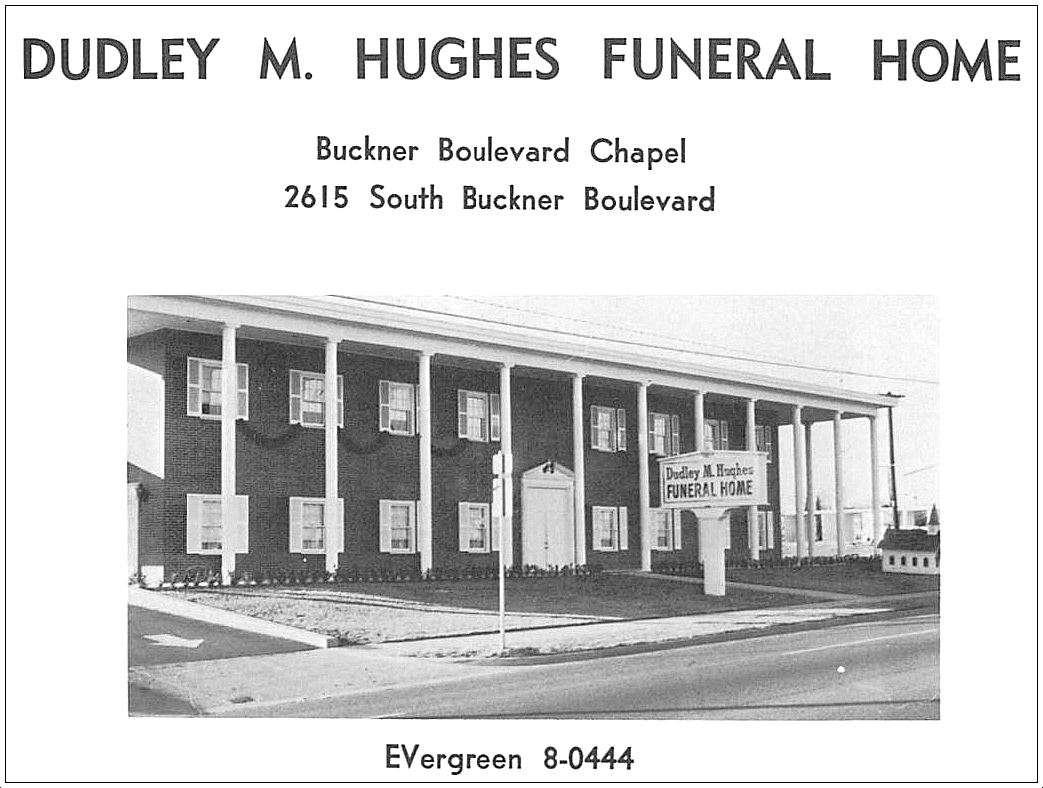
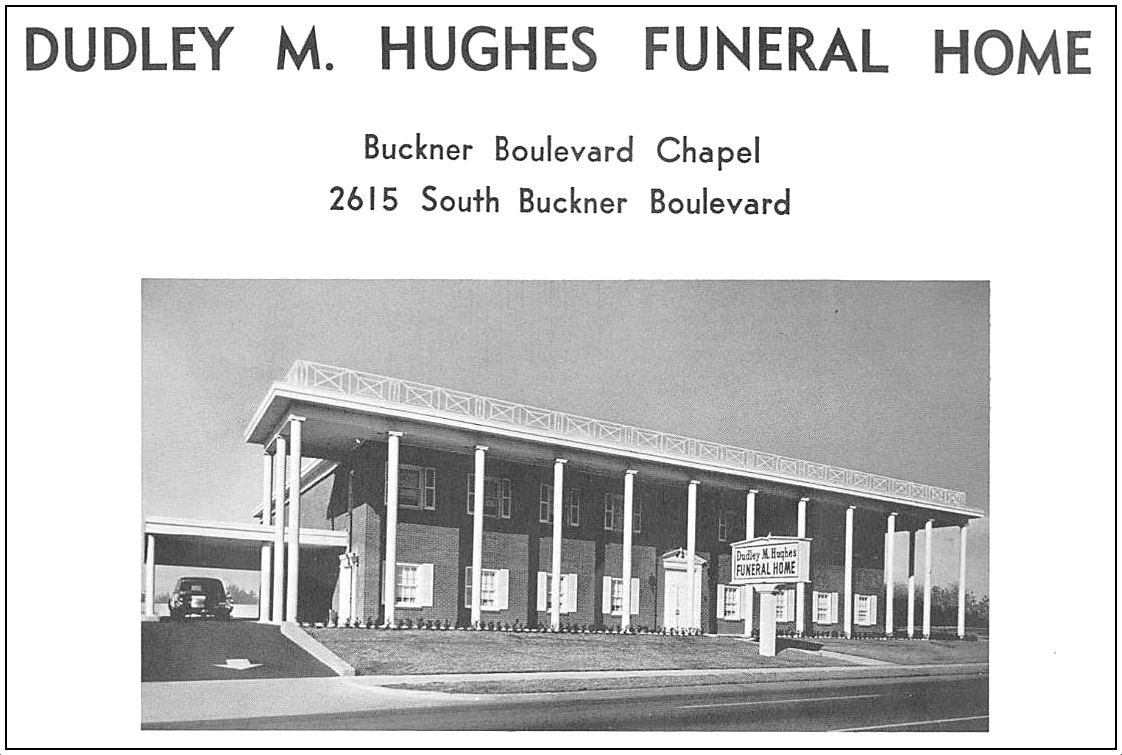
DUDLEY M. HUGHES FUNERAL HOME, 2615 S. Buckner Blvd. Still standing (as a different funeral home).

spruce-high-school_1967-yrbk_dudley-m-hughes-funeral-home1967

spruce-high-school_1968-yrbk_dudley-m-hughes-funeral-home1968

GROVE STATE BANK, 1520 S. Buckner Blvd. I’m kind of shocked to see that this once-cool mid-century building is actually still standing — as a Bank of America branch. Its exterior has been smoothed of most of its character, but the original building is still there.

spruce-high-school_1964-yrbk_grove-state-bank1964

TRINITY SAVINGS & LOAN ASSOCIATION, 1838 S. Buckner Blvd. I think this original building is also still standing — now as a Chase Bank branch. 

spruce-high-school_1966-yrbk_trinity-savings-and-loan1966

JERRY’S FOOD MART, 6416 Lake June Road and 10420 Second Ave. in Rylie — Jerry Smith owner.

spruce-high-school_1964-yrbk_jerrys1964

JERRY’S FOOD MART, 1328 Jim Miller Road.

spruce-high-school_1966-yrbk_jerrys-food-mart1966

BEST FOR LESS FOOD MART, 1042 Second Ave. — E.R. Smith owner. “Where Ma saves Pa’s money.”

spruce-high-school_1966-yrbk_best-for-less-food-mart1966

spruce-high-school_1968-yrbk_best-for-less1968

BARNARD’S DRIVE-IN GROCERY, 136 N. Masters — O. L. (Leon) Barnard and Thelma Barnard owners. I love this couple!

spruce-high-school_1968-yrbk_barnards1968

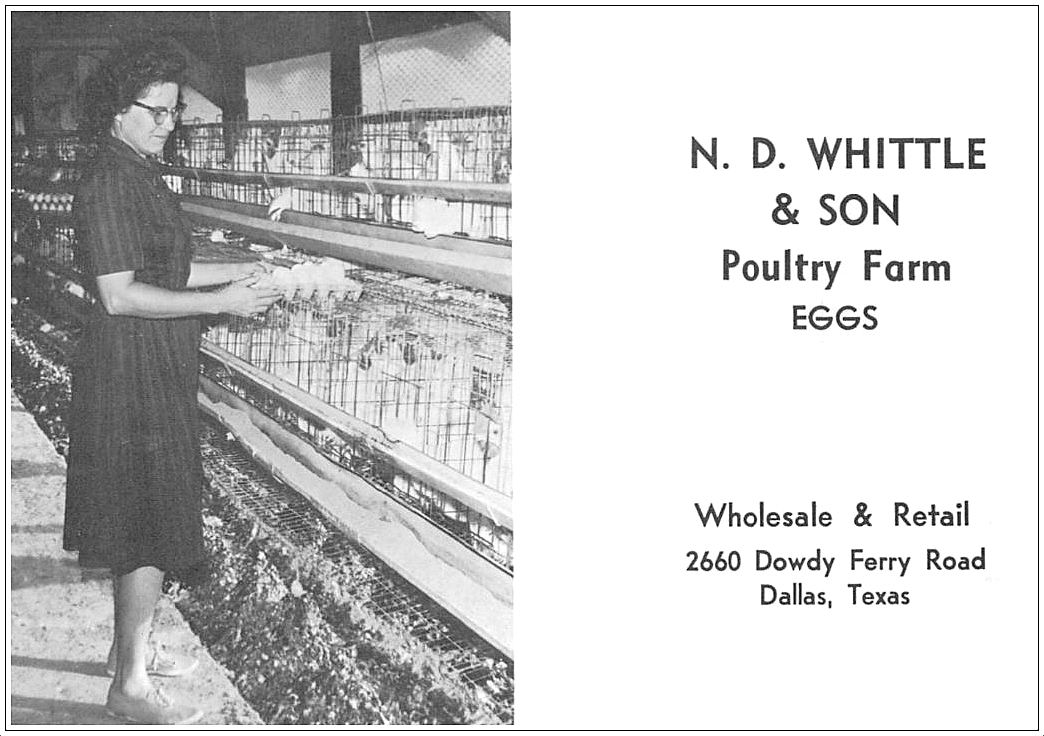
N. D. WHITTLE & SON POULTRY FARM, 2660 Dowdy Ferry Road. I’m happy to see this is an ongoing (and expanded) business!

spruce-high-school_1967-yrbk_whittle-and-son-poultry-farm1967

***

Sources & Notes

All ads are from the high school yearbooks of H. Grady Spruce and W. W. Samuell.

Other Pleasant Grove posts from Flashback Dallas can be found here.

spruce-high-school_1965-yrbk_jerrys-food-mart_sm

*

Copyright © 2021 Paula Bosse. All Rights Reserved.