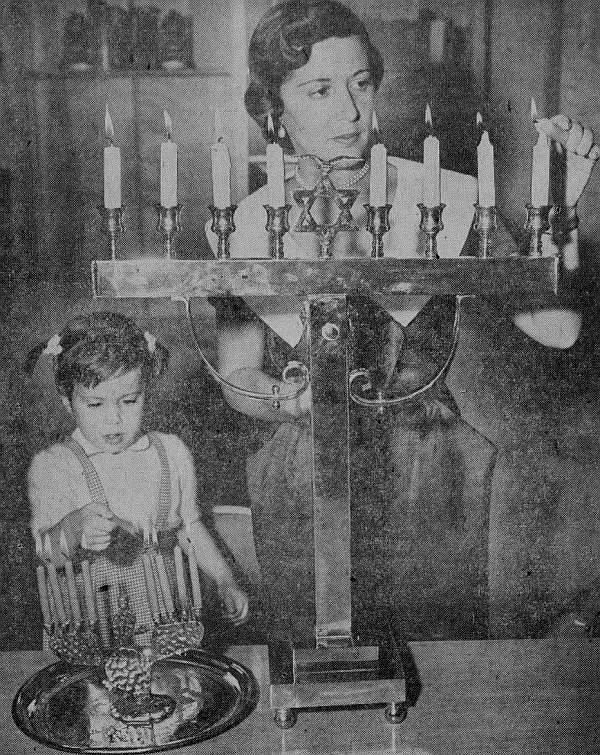
Above, a photo of Gilla Silverman and her mother, Devora Halaban Silverman, wife of Rabbi Hillel Silverman, lighting menorahs during Hanukkah, 1954.
Happy Hanukkah!
***
Sources & Notes
Photo from the Dallas-Fort Worth Texas Jewish Post, Dec. 23, 1954. The entire 52-page issue of this special “Chanukah Issue” has been scanned and may be viewed at UNT’s Portal to Texas History site, here. (Click “zoom” to enlarge the pages, click arrows at right and left to move through the issue.)
Rabbi Hillel Silverman arrived in Dallas as the new rabbi at Congregation Shearith Israel in 1954 and was a popular and influential member of Dallas’ Jewish community for the decade or so he served here. He may be best known beyond Dallas as “Jack Ruby’s rabbi.”
Read about a 2009 return to the city by Rabbi Silverman in the Texas Jewish Post article by Dave Sorter, “A Golden Opportunity to Reunite” (Oct. 8, 2009), here.
The Texas Jewish Post article introducing Rabbi Silverman to its readership — “Dr. H. E. Silverman Appointed to Head Israel Pulpit” (July 8, 1954) — can found here.
An article focusing on the Ruby family and Dallas (Rabbi Silverman is interviewed) can be found in “Remembering JFK” by Steve North (Jewish Telegraphic Agency, via the Texas Jewish Post, Nov. 21, 2013), here.
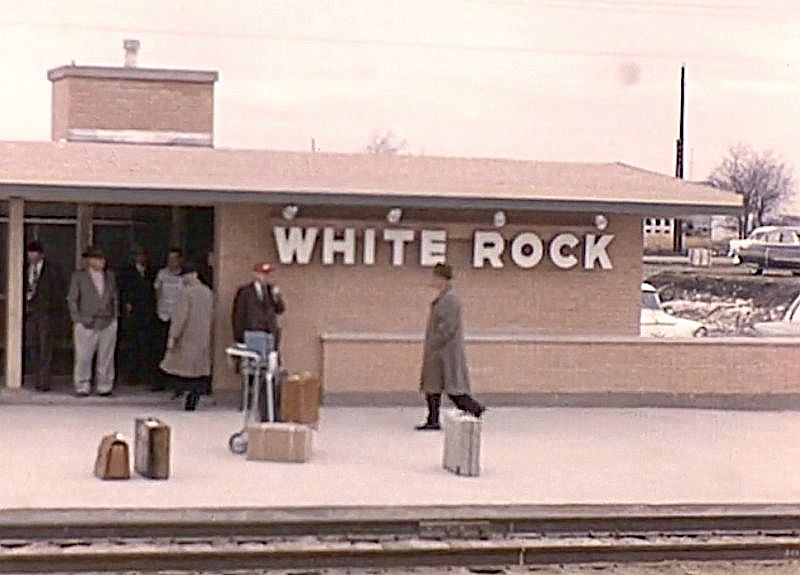
I was so happy to get word from UNT media librarian and film/video archivist Laura Treat this morning that she had come across film footage of White Rock Station, the first suburban train depot built in the Southwest by the Santa Fe Railway (in 1955). The footage is from the “Spotlight on North Texas” collection, a collaborative project between the University of North Texas Libraries and the Texas Archive of the Moving Image (TAMI) to preserve North Texas film history. This footage is from home movies donated by Mr. Peter Pauls Stewart.
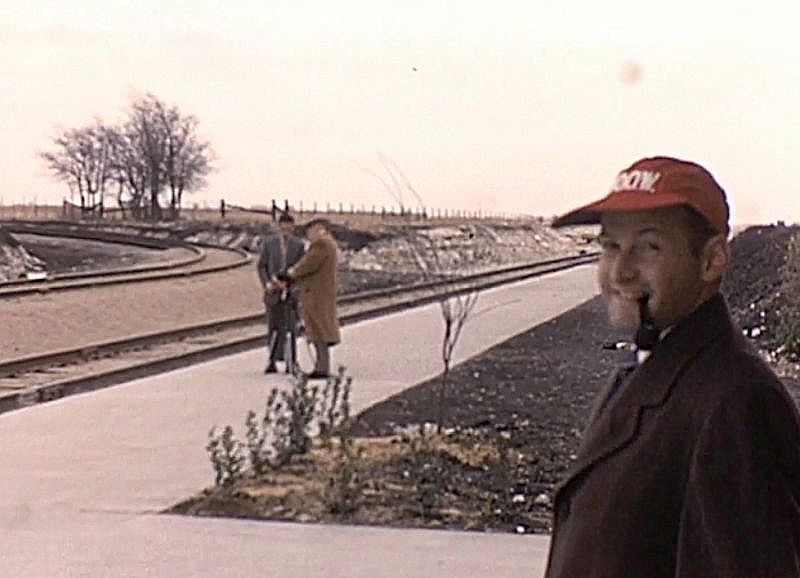
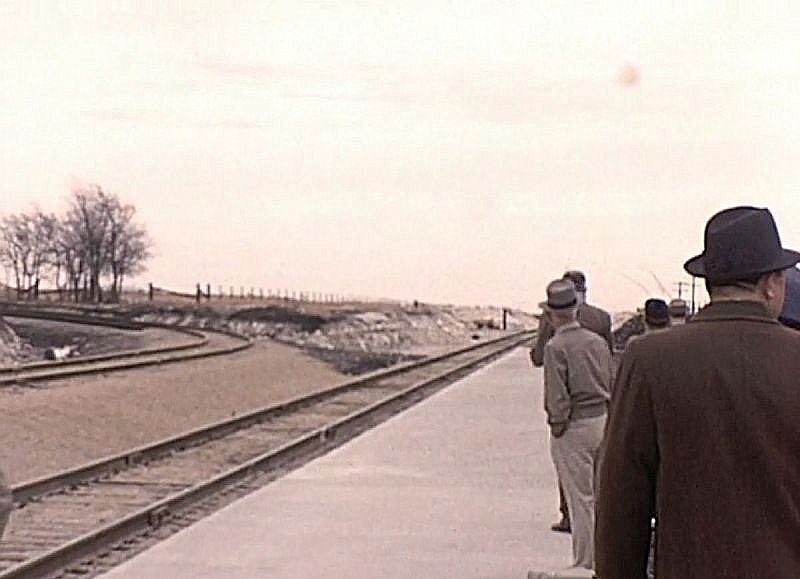
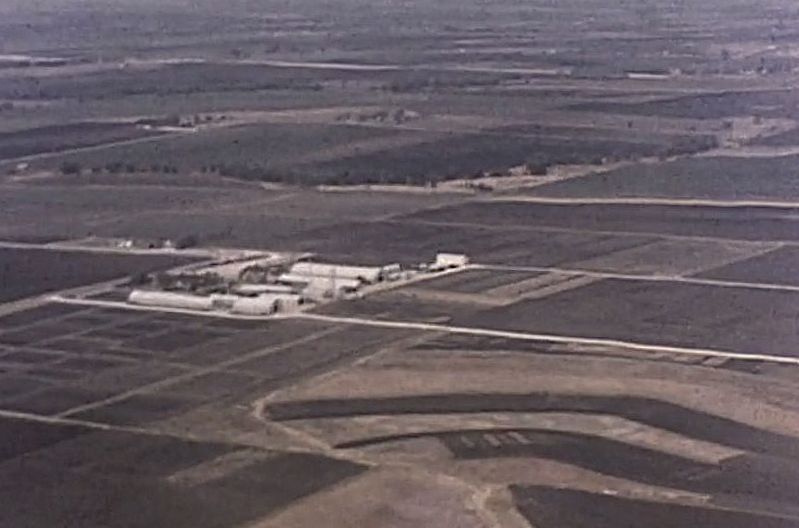
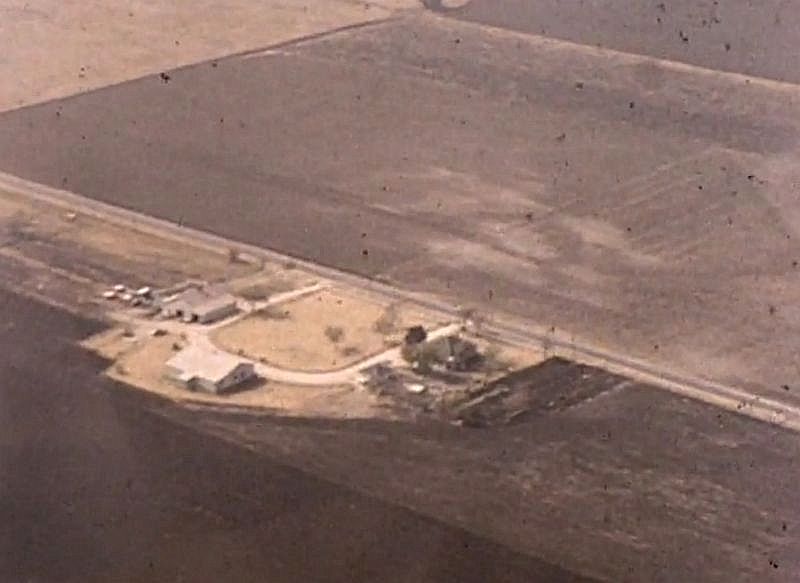
The 4-minute clip starts off with footage shot from a helicopter, showing brand new highways cutting through wide open land, followed by scenes of cute children and their cute dog, and then, beginning at the 3:00 mark, chilly-looking scenes of White Rock Station (which was located at about Jupiter and Kingsley on the edge of Garland, and which, today, looks disappointingly different) and a group of mostly men, some with cameras who appear to be train enthusiasts, waiting for the arrival of the Texas Chief. Doesn’t really look like Texas, does it? Below are some screenshots — watch the full clip on the Texas to Portal History site, here.
*
Above, two men set up a camera on a tripod as Mr. Stewart — the man who donated the footage — smiles at the camera and waits for the much-anticipated arrival of the train (which, be warned, is never actually seen in this film!).
Below a couple of aerial shots of the North Texas countryside.
UPDATE: In the comments below, Danny Linn writes about the aerial footage seen in the first minute or two of the clip: “… at the very beginning [of the clip is] a clear view of the old Highland Park Airport off Coit Road just north of Forest Lane. This portion of the clip also shows a fairly new Central Expressway near the future crossroad of LBJ Freeway.” Thank you, Danny! I assumed part of what we saw was in the LBJ-area, but wasn’t sure — another view of that area can be seen in a fairly startling photo of Preston and Valley View in 1958, here.
***
Sources & Notes
The main page of this clip (titled “The Peter Pauls Stewart Films, No. 5 — Helicopter and Railroad Rides”) can be found here, on the Portal to Texas History website; it is from the Spotlight on North Texas collection, UNT Media Library, University of North Texas. (Click picture to watch clip in a new window.)
I have to admit that I had never heard of White Rock Station until I wrote about it in 2015, a post which has been surprisingly popular. The post — “White Rock Station” — can be found here.
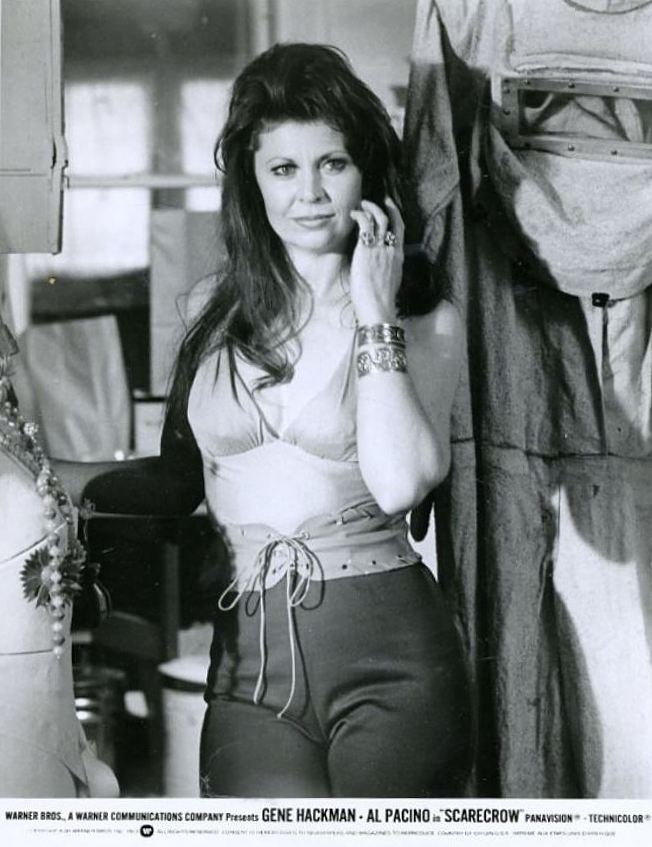
The actress Ann Wedgeworth has died. If you don’t know her by her name, you probably know her by her face, or, even more likely, by her voice. I’m always impressed when actors are able to retain their natural accents without having to homogenize them to meet Hollywood standards, and Wedgeworth’s Texas accent was pretty thick. I would bet hard cash she reminds you of someone you know or someone in your own family.
Even though she had worked as an actor since she was a teenager — in school productions, small regional theaters, off-Broadway, Broadway, TV, soap operas, and movies — it was probably her short-lived role as Lana on Three’s Company which brought her to the attention of the widest audience.
Elizabeth Ann Wedgeworth was born in 1934 in Taylor County and spent her early years in Snyder and Perryton, Texas, where her father had been the superintendent of schools (her mother died when she was 2); she arrived in Dallas around 1946 when she was about 12 years old. Her father worked in conjunction with SMU and the Veteran’s Administration for a time before becoming a longtime employee of the City of Dallas; her stepmother was a student counselor at Highland Park Junior High School.
She attended high school in Highland Park, graduating from HPHS in 1950 (the same year as her school friend, Jayne Mansfield). She began her acting career when she was a teenager, racking up quite a lot of experience in Dallas theater productions and in a Colorado stock company. She focused on acting during college, which included both SMU and the University of Texas — she probably met her future husband Rip Torn in Austin, where he was a fellow actor who had been active in the UT theater program (and who was, incidentally, the cousin of future actress Sissy Spacek). The couple was married in Dallas in 1955, at the First Methodist Church (which I wrote about here). They lived in Killeen briefly until Torn’s military stint at Ford Hood was up, then they headed to New York City, where the couple began to find acting work fairly quickly. The two had one daughter and divorced in 1961; she remarried and had another daughter. (More about Ann Wedgeworth can be read in the Wikipedia entry here.)
Ann worked a lot, and, as I said, I’m pretty sure you’ve seen her in something. Though known mostly for her work in TV and movies, she won a Tony Award in 1978 for her role in Neil Simon’s Broadway play Chapter Two. Her breathlessly exuberant (and charmingly ditzy) acceptance speech is amusing (I am such a sucker for that accent!):
* Ann Wedgeworth died on November 16, 2017; she was 83 years old.
*
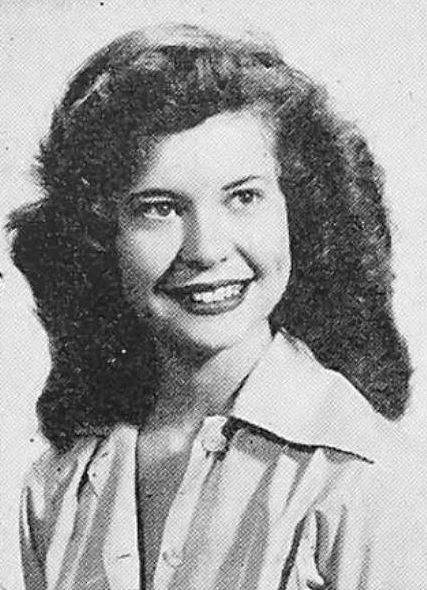
Highland Park High School sophomore, 1948
HPHS junior, 1949
HPHS senior, 1950
SMU freshman, 1951
SMU sophomore, 1952
Appearing on national radio with Hume Cronyn, 1952
Ann Wedgeworth’s obituary in The Washington Post can be found here.
School photos are from Highland Park High School and Southern Methodist University yearbooks.
The photo of 18-year-old Ann with Hume Cronyn appeared in the SMU Campus newspaper on March 5, 1952. (I believe Ann came in second in the competition.)
The wedding announcement of Ann and Rip Torn appeared in the Longview Daily News on Feb. 6, 1955. (Rip Torn was born Elmore Rual Torn, Jr. — as a kid he was actually known as “Skip” Torn. …Doesn’t have quite the same ring to it….)
Most photos and clippings are larger when clicked.
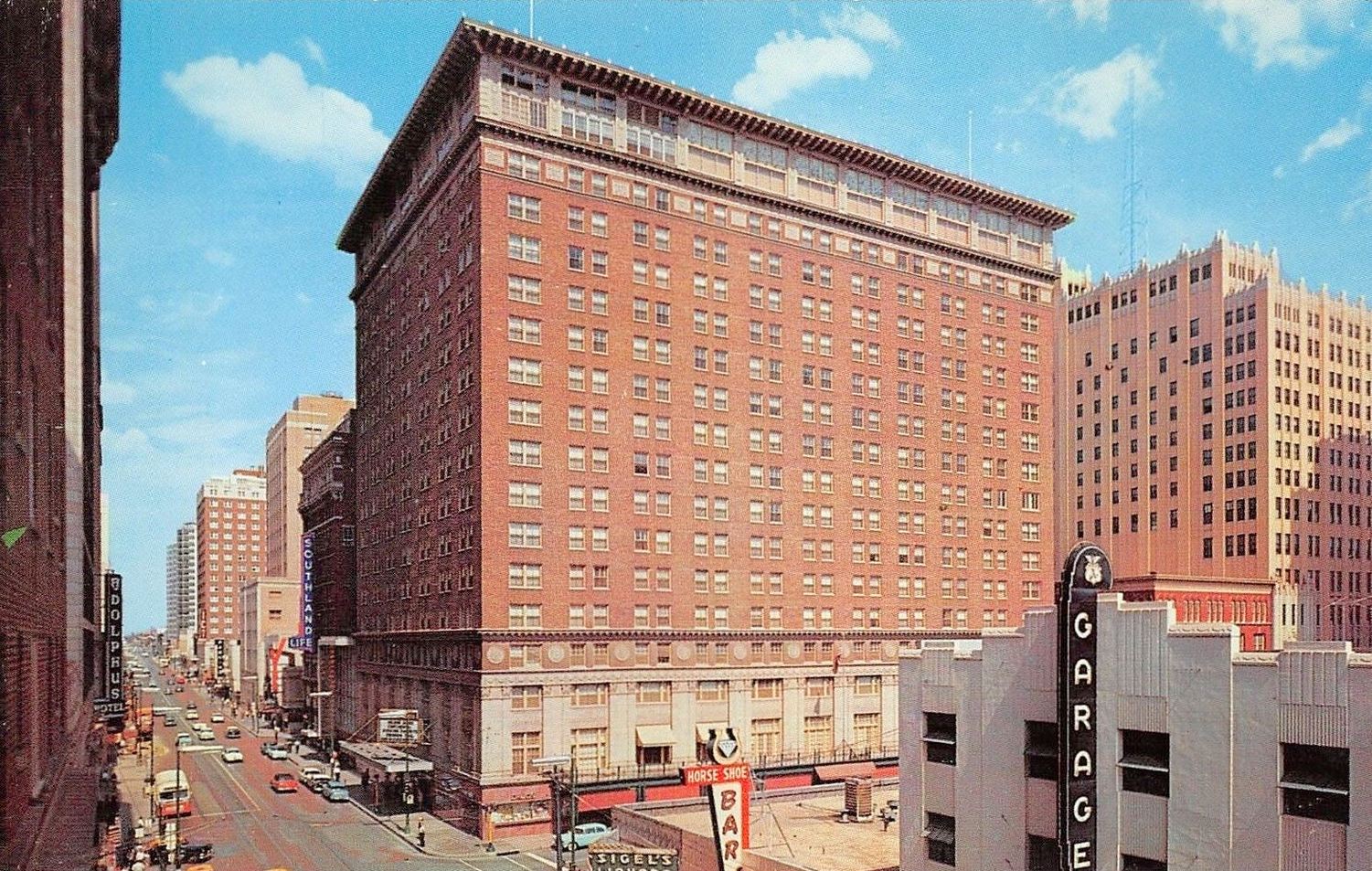
Above, a postcard view of the stately Baker Hotel, located catty-corner from the Adolphus, at the southeast corner of Commerce and Akard — the view here is to the east on Commerce. The parking garage at the lower right looks like the swanky Nichols Bros. Garage (yes, “swanky” — see the 1945 ad here).
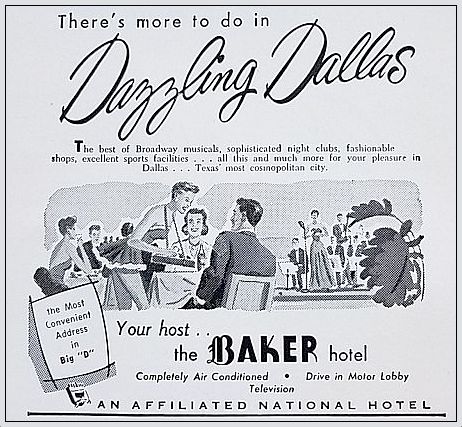
The Baker was not only home to well-heeled patrons and top-flight nightclub entertainment, it was also a home-away-from-home for celebrities passing through Dallas.
Cigarette girls in 1956
Built in 1925, the Baker Hotel was demolished in 1980. (Check out the photos by Frank Booth showing the Baker’s implosion in 1980, here.)
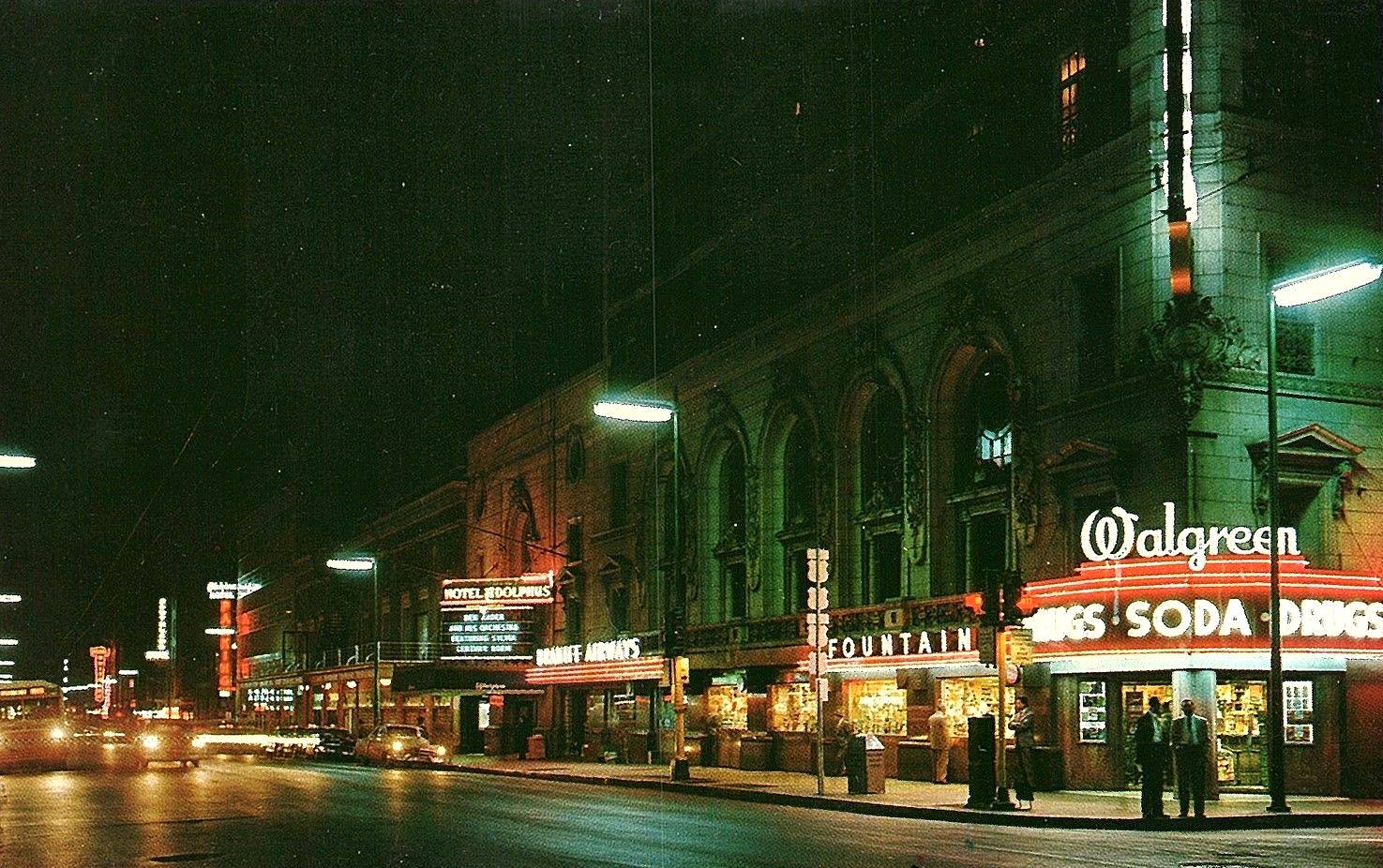
I love this photo showing Commerce Street, looking west from Akard — especially the green light on the walls of the Adolphus. And that heart-stoppingly beautiful deco “Walgreen” font and neon. Downtown Dallas in the ’40s and ’50s is a place I wish I had known, back when drug stores had soda fountains and hotels had “supper clubs.”
This photo was probably taken in March, 1957, when Ben Arden and His Orchestra “featuring Sylvia and her violin” were appearing at the Century Room in the Adolphus Hotel. Downtown Dallas looked pretty good in 1957.
***
Sources & Notes
Postcard photo — “Night view of Commerce Street in downtown Dallas, Texas” — by Leonard Raef; it is currently up for bids on eBay, here. (Thanks to Teresa Musgrove Gibson for posting this today in the Retro Dallas Facebook group!)
I don’t know if I’ve linked to this huge photo of the Adolphus on the Dallas City Hall website, but take a look at it here (then click again to make it really big). I have to say, I think I prefer that Commerce-and-Akard corner with the bright lights of the Walgreens to the more sedate, stripped-down look of the same corner today — it’s still a beautiful building, of course, but, man, that neon was just fantastic.
UPDATE: Some people who remember downtown at this time have thought this might show Main Street. As far as I know, Main has never been a one-way street (as seen in the photo above), but there was a Walgreen store at the northwest corner of Main and Akard, one block away. Seems counter-productive to have two drugs stores so close together, but there you are.
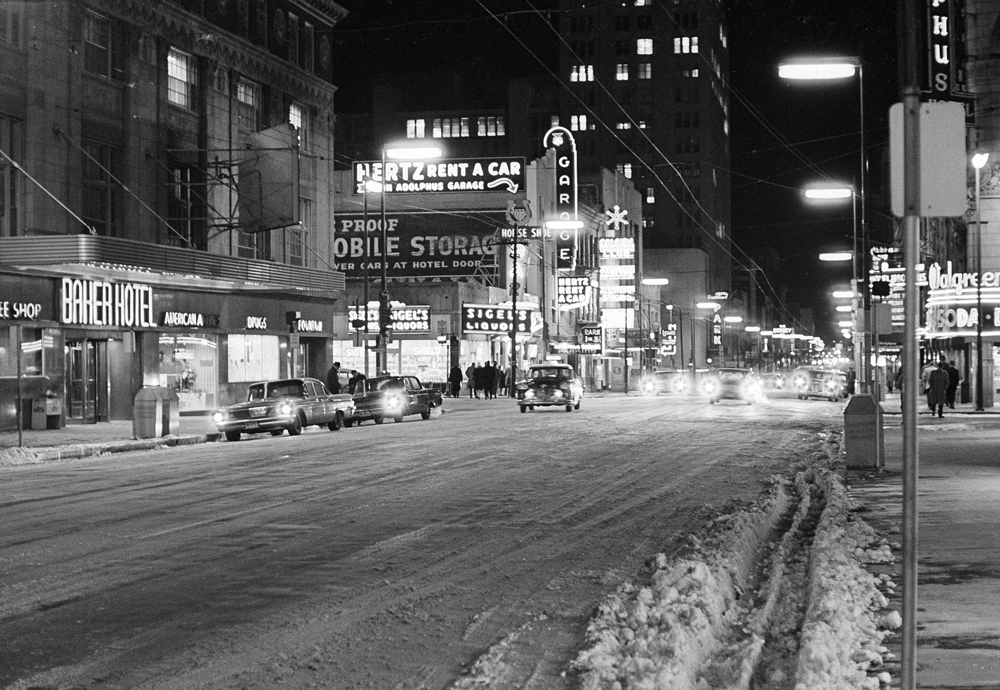
The color photo shows the northwest corner of Commerce and Akard, taken from the front of the Baker Hotel. The same corner can be seen at the right of this black-and-white photo from 1962:
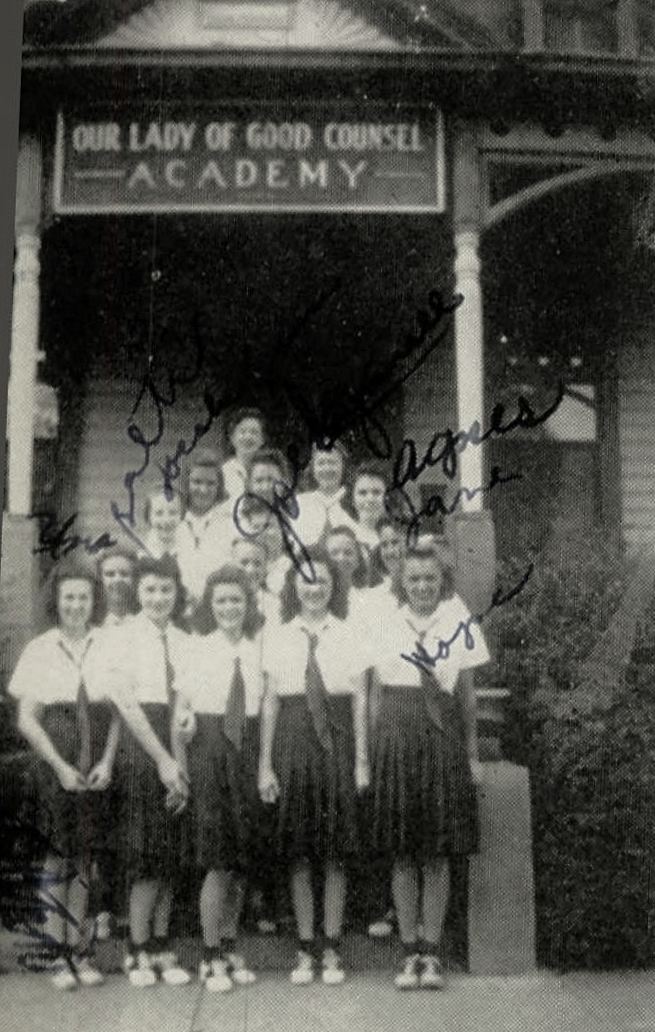
Our Lady of Good Counsel, 1944… (click for larger image)
by Paula Bosse
Talking to my aunt today reminded me that she briefly attended Our Lady of Good Counsel, the all-girls Catholic high school in Oak Cliff next to the Church of the Blessed Sacrament, at the northwest corner of North Marsalis (originally named Grand Avenue) and 9th Street. I’m still not sure why she went there (our family isn’t Catholic), but she seems to have enjoyed her time there for a year or two before she transferred to Crozier Tech.
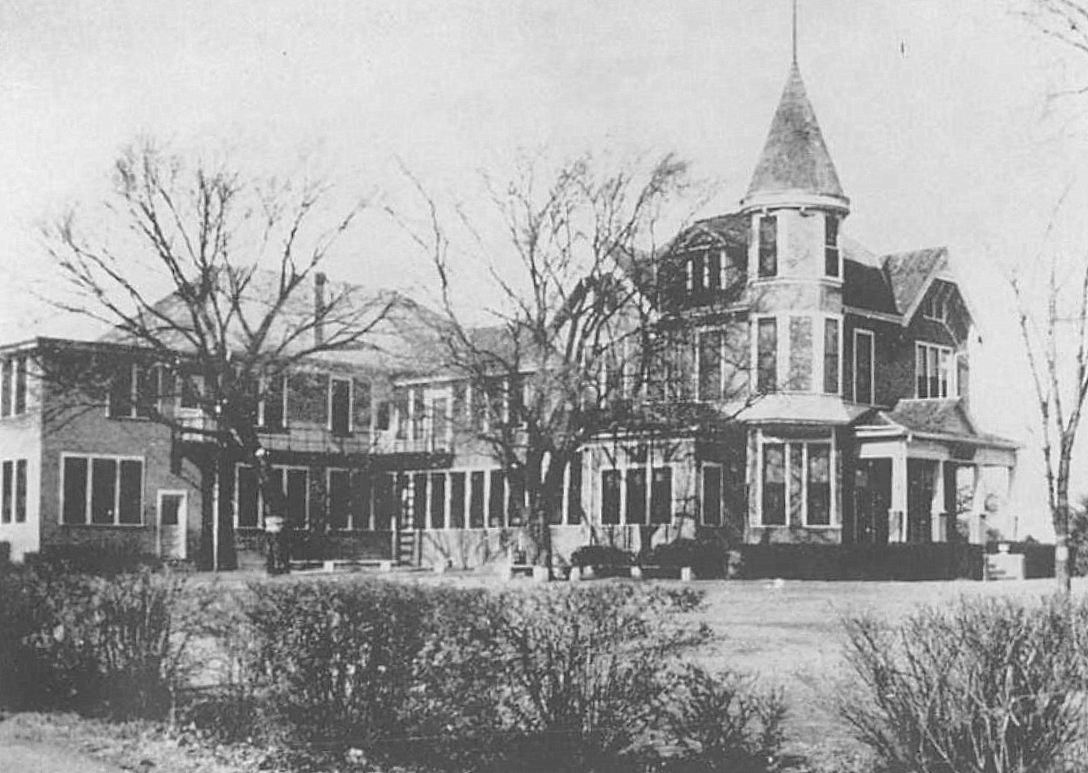
The school building was the former palatial home of wealthy businessman James T. Dargan, a one-time partner of Thomas L. Marsalis. The house was built about 1888, and according to Dallas Rediscovered author William L. McDonald, it was designed by the Dallas architectural firm of Stewart and Fuller.
1889 Dallas directory
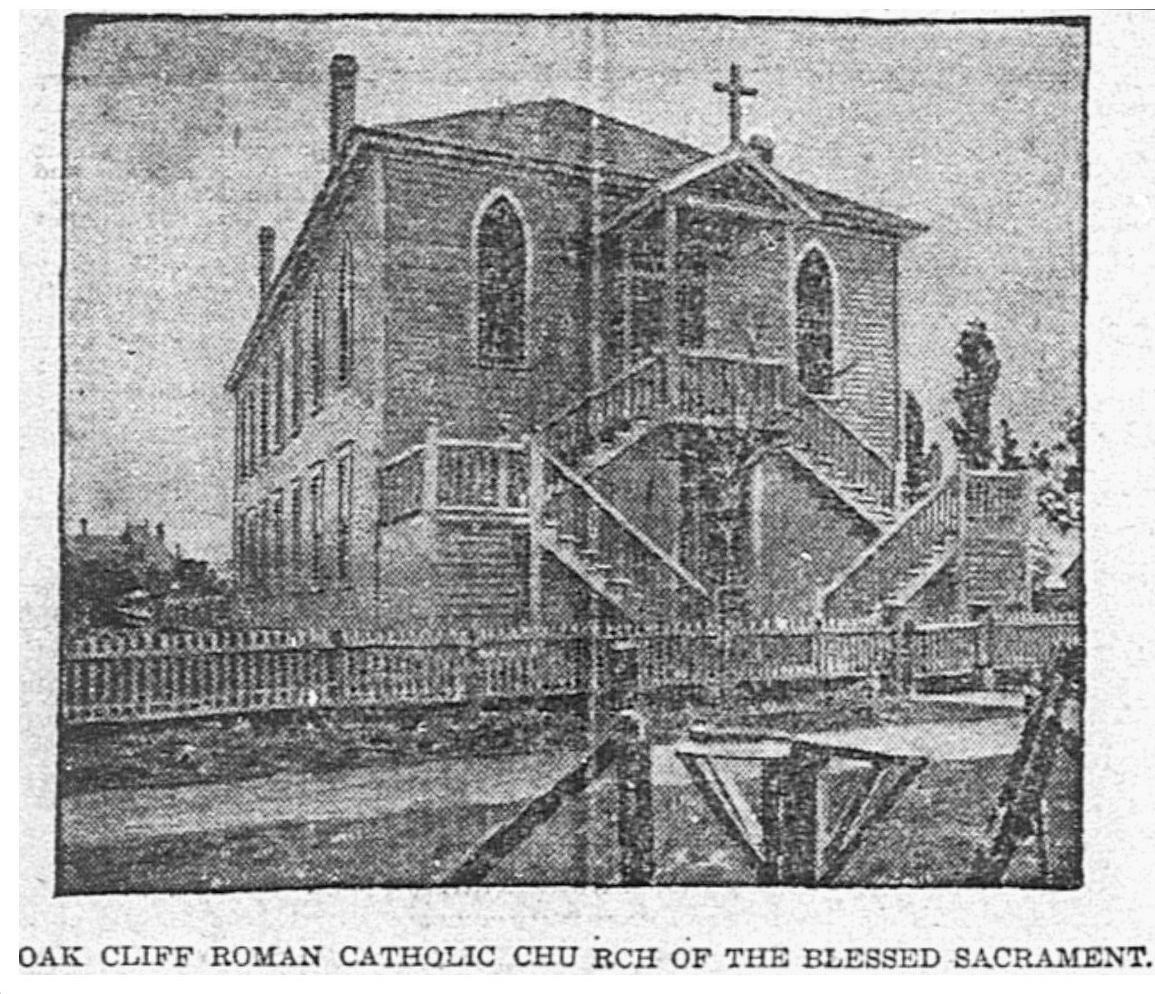
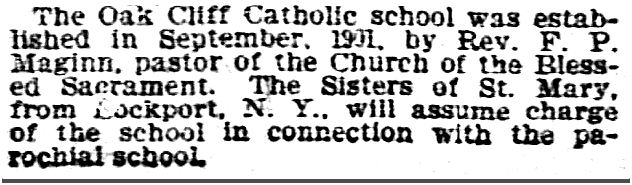
The church was holding services in Oak Cliff as early as 1901, and an affiliated school was established by Rev. Francis P. Maginn in September of that year. It appears that the Dargan house was acquired in 1902, the same year that the (new?) church building was dedicated in ceremonies officiated by Bishop E. J. Dunne.
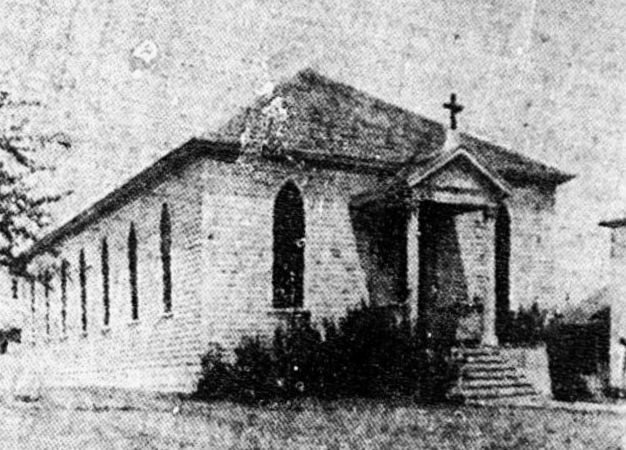
Below, the new church can be seen in a photo which appeared in The Dallas Morning News on the day of its dedication in June, 1902 (all images are larger when clicked):
DMN, June 15, 1902
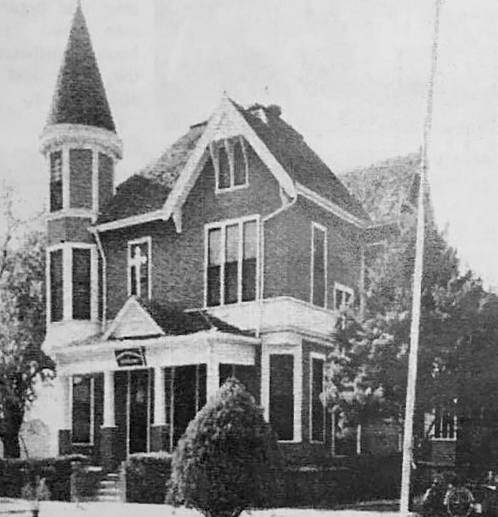
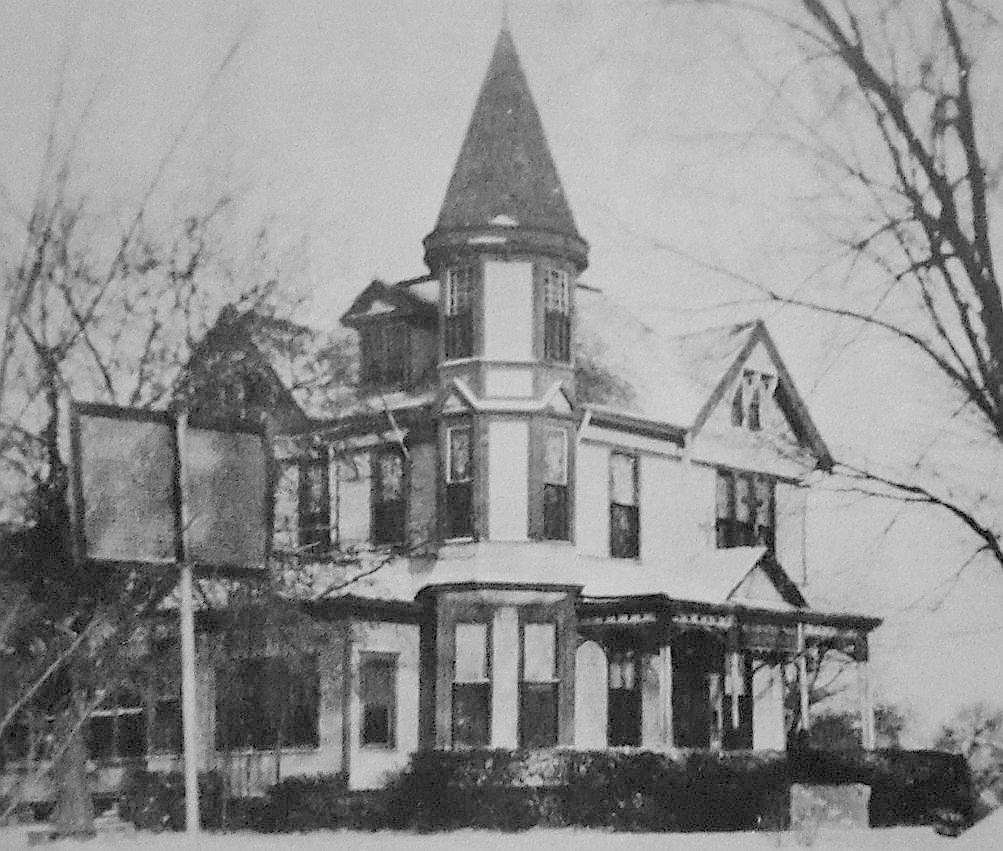
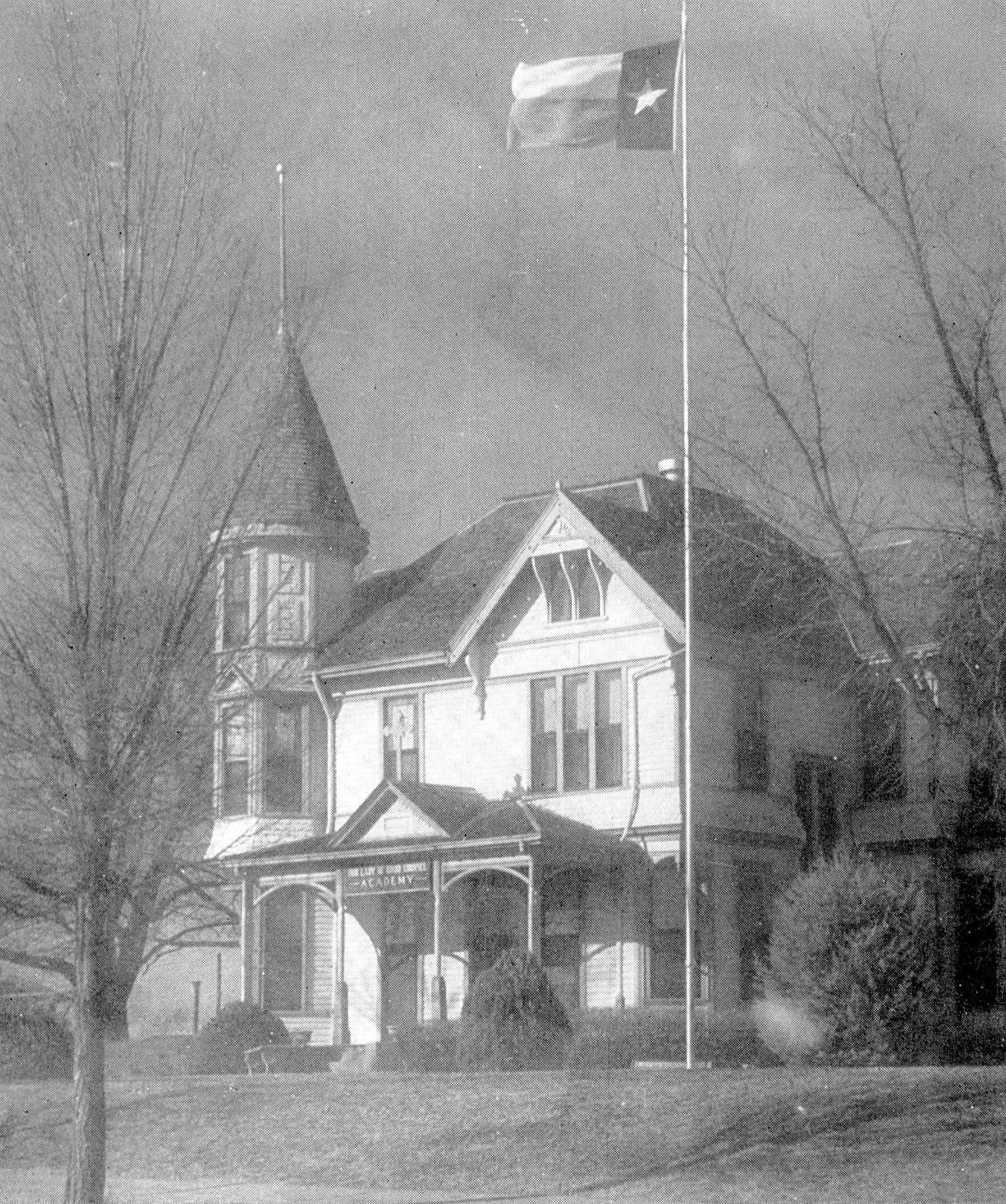
The neighboring school can be seen in these two early photos:
Our Lady of Good Counsel, ca. 1902
Our Lady of Good Counsel, ca. 1905
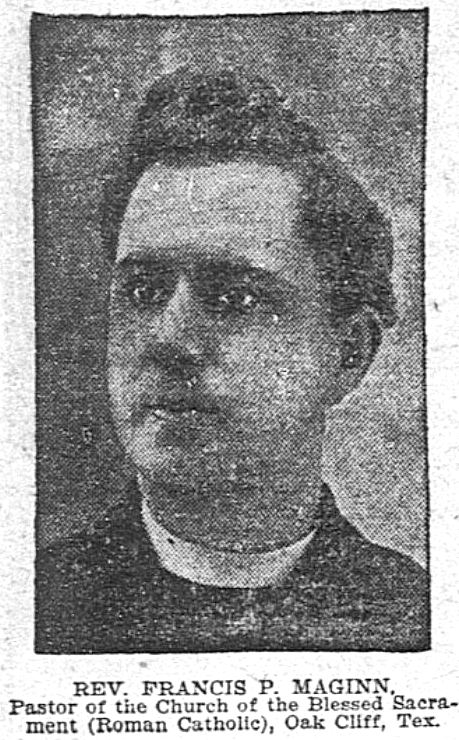
The school’s founder, Rev. F. P. Maginn:
DMN, June 15, 1902
DMN, April 23, 1902
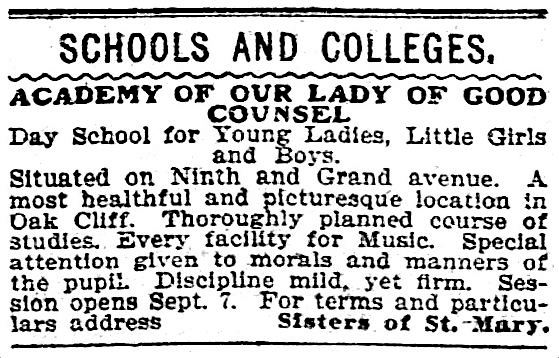
And an early ad for the school, from 1903 (“Discipline mild, yet firm”):
1903
Here it is in 1942:
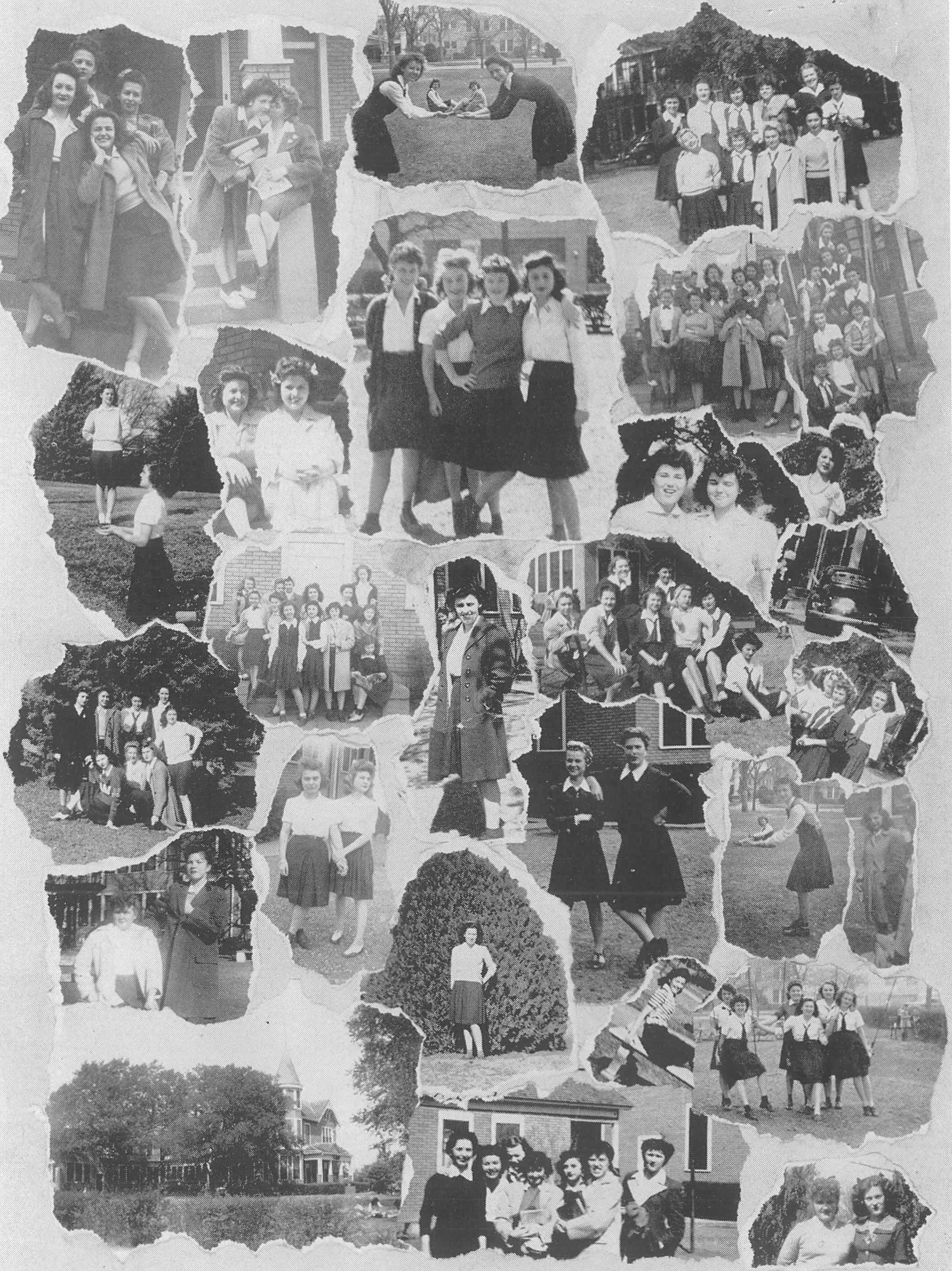
And here are some of the LGC high school students from 1944, looking bobby-soxer-y (with another view of the augmented house in the lower left corner):
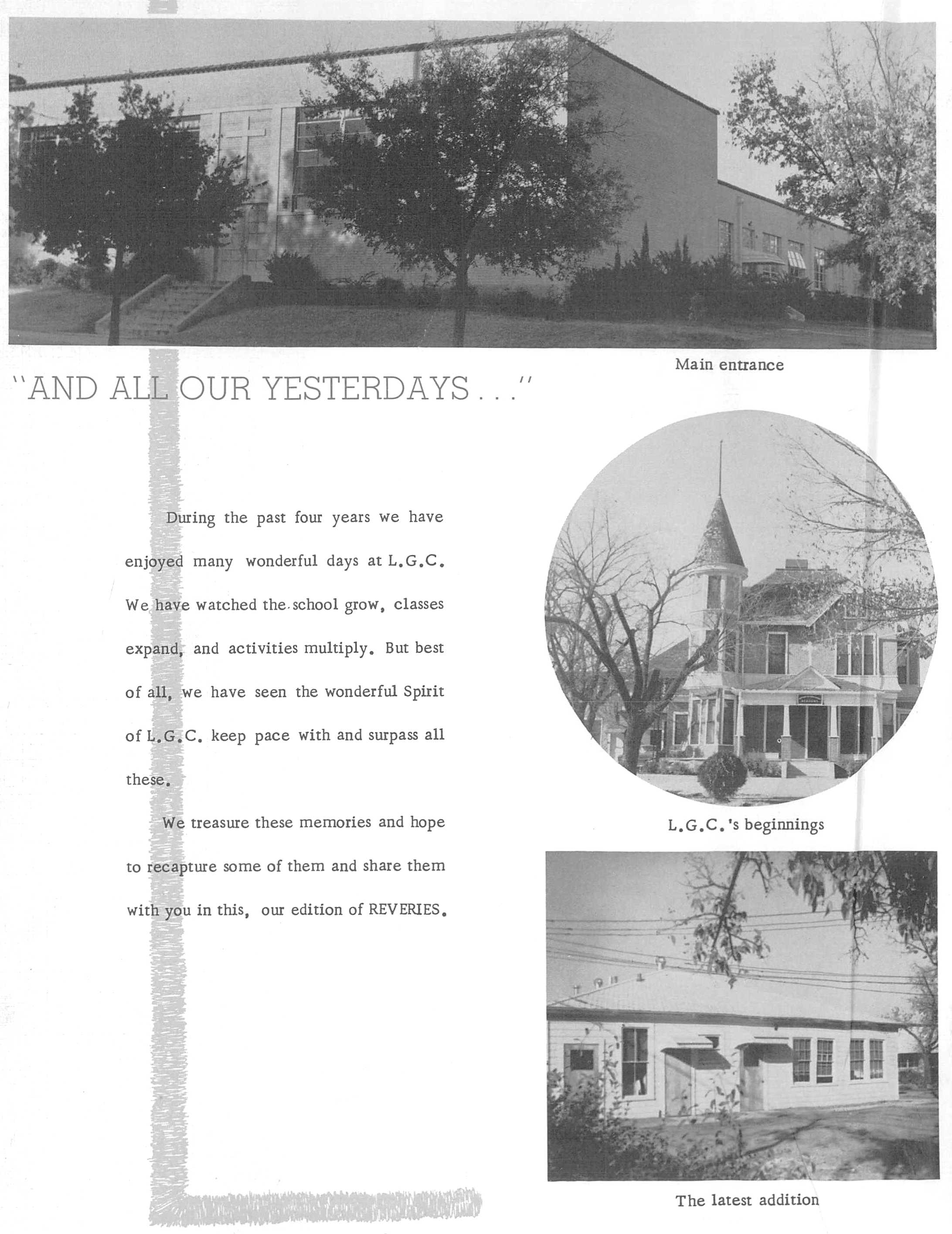
The newest additions to the building can be seen in the 1959 yearbook:
In 1961, Our Lady of Good Counsel was a fast-fading memory: a new 32-acre campus had been acquired and on it had been built the new (coed) Bishop Dunne High School. Mr. Dargan’s old house-turned-school-building was torn down a few years later, and the land became a parking lot for the Blessed Sacrament church next door (which had also seen many changes and a new building over the years). Today, the view of the land the Dargan house sat on 130 years ago looks like this. (The church looks like this.)
The church in 1930:
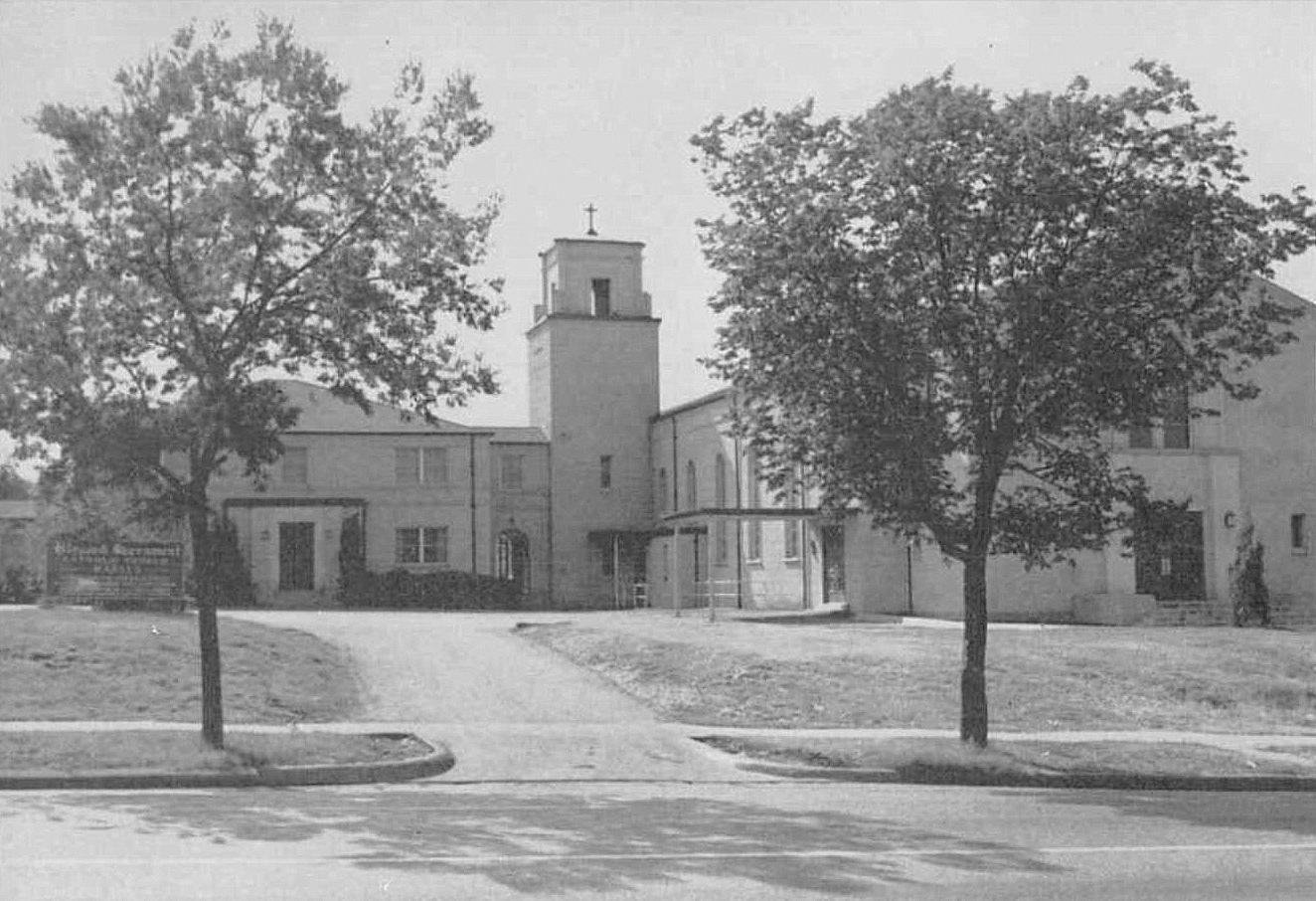
And in 1958 (from the LGC yearbook):
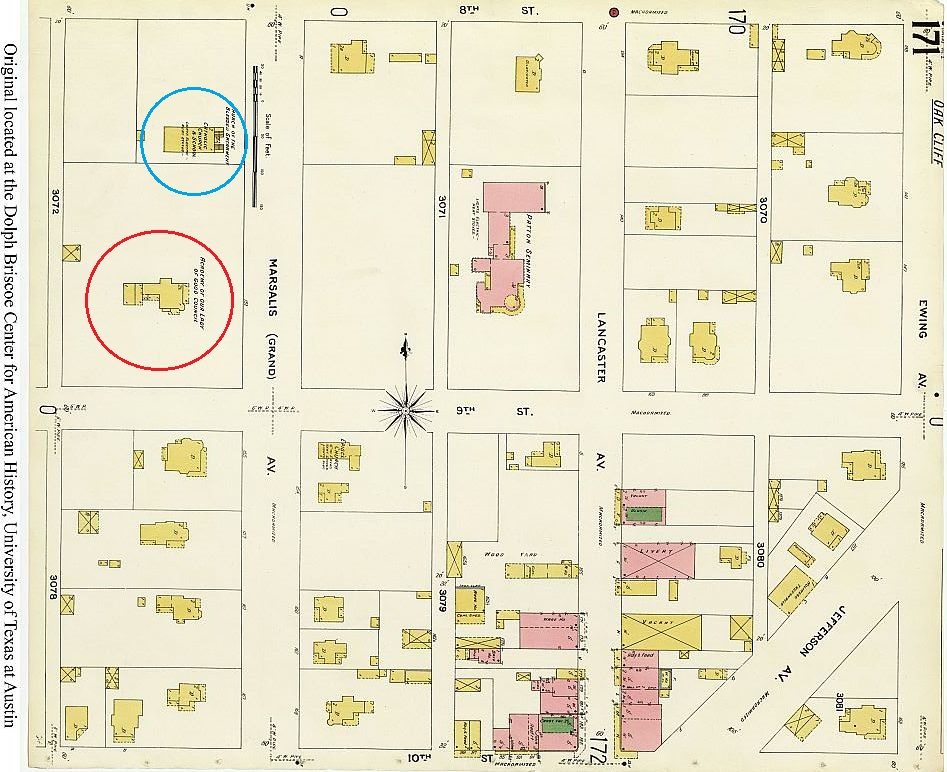
This visual aid will help give an idea of the acreage of both the school (circled in red) and the church (circled in blue), via the 1905 Sanborn map:
I’m still not sure why my aunt went there….
1958
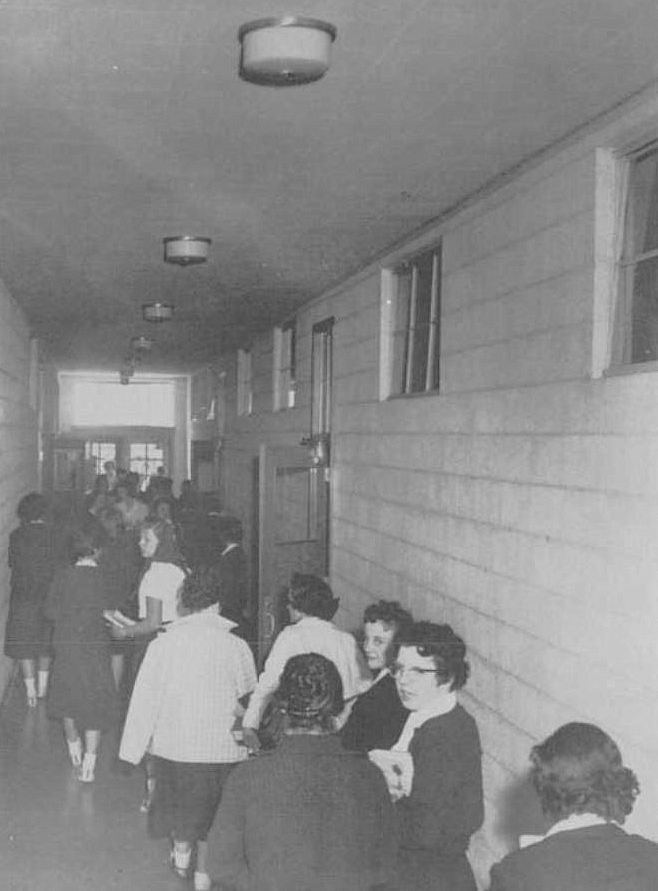
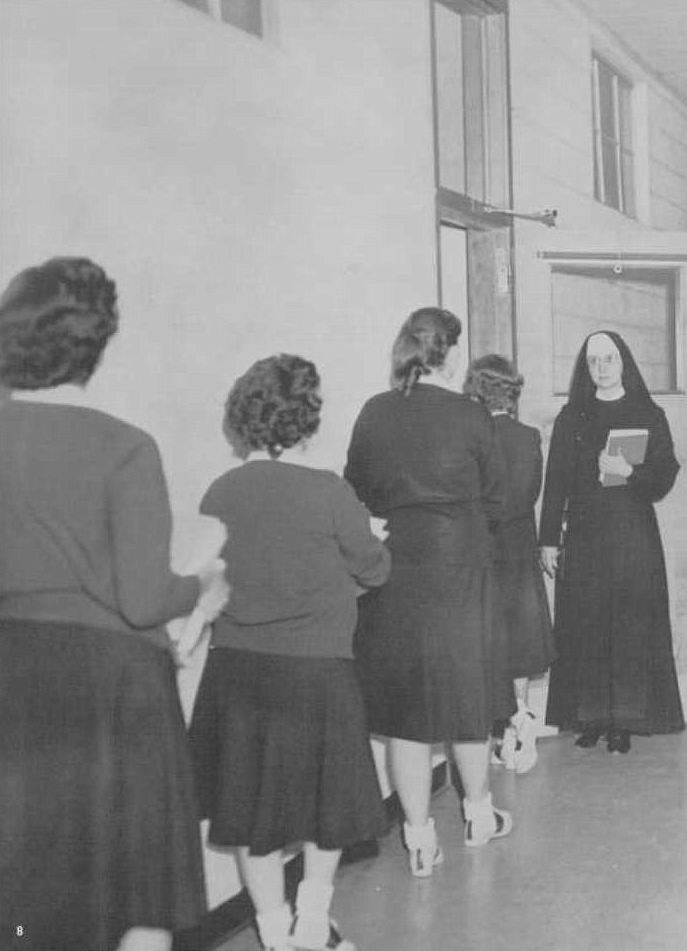
UPDATE: For those who might have wanted to see some interior photos, I didn’t find many, other than typical classroom shots, but here are some additional photos, a couple of which show the hallway.
Between classes, 1959:
Girls lining up to go into class, 1960:
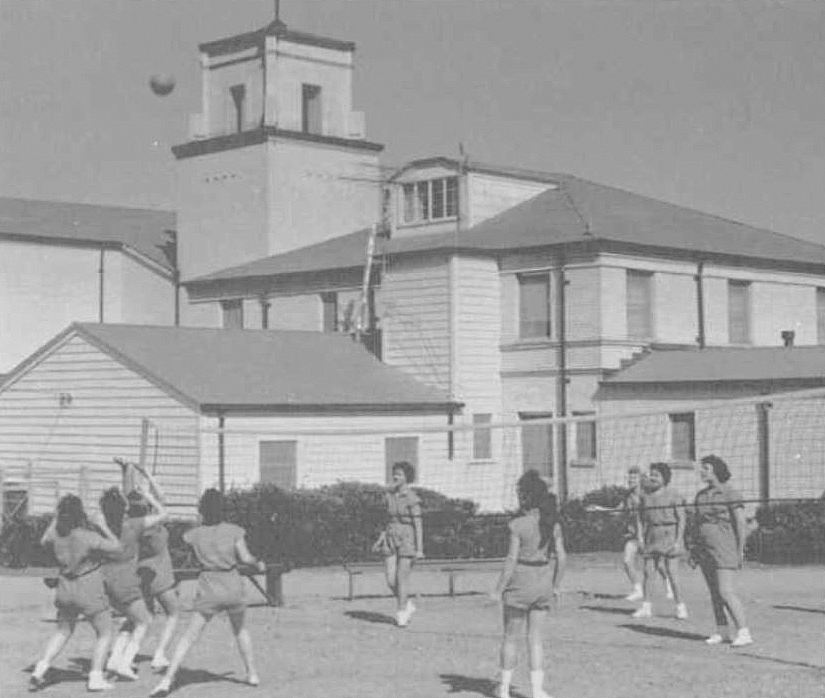
Girls outside playing volleyball, 1960:
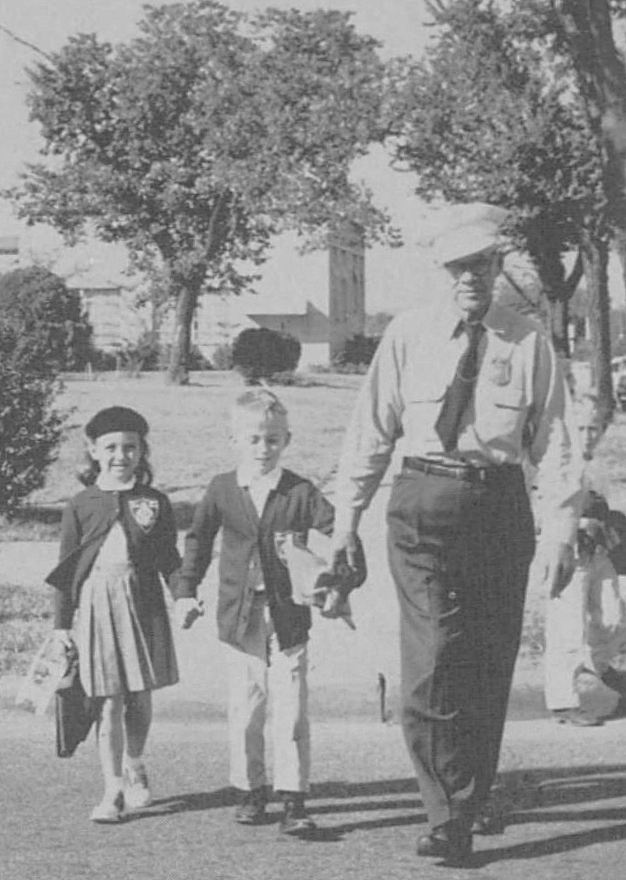
I had erroneously assumed that LGC was an all-girls 4-year high school; I believe it was a 12-year school, with boys and girls up to high school level, when it became girls-only. This photo appeared in the 1960 yearbook with the following caption: “The safety of all LGC students is the responsibility of the school as long as the students are on campus. For this reason, Officer H. A. Baxtley is available every day as a gracious escort for our little ‘Lions’ across the busy Ninth and Marsalis intersection.”
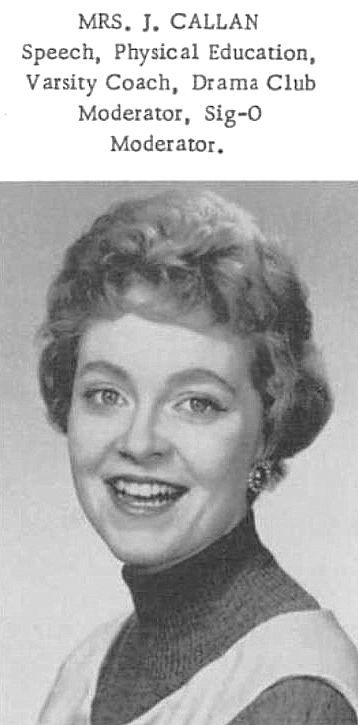
And finally, because I’m such a movie nerd who loves character actors, I was happily surprised to see that the actress K Callan was a 23-year-old drama teacher (etc.) at the school in 1959 before she entered the professional acting world of New York and Hollywood. (Callan was born in Dallas as Katherine “Kay” Borman and actually attended Our Lady of Good Counsel as a student before she taught there.) (UPDATE: Read K’s memories of her time at LGC in the comments, here.)
***
Sources & Notes
All photos of the school (except the one from 1905) are from various editions of Reveries, the yearbook for Our Lady of Good Counsel.
The 1902 photo was posted in the Dallas History Guild Facebook group.
The 1905 photo is from Dallas Rediscovered by William L. McDonald (p. 215), with the following credit: “Courtesy of Sister M. Adelaide Mars.”
The Blessed Sacrament Catholic Church still stands, at 231 N. Marsalis; their website is here.
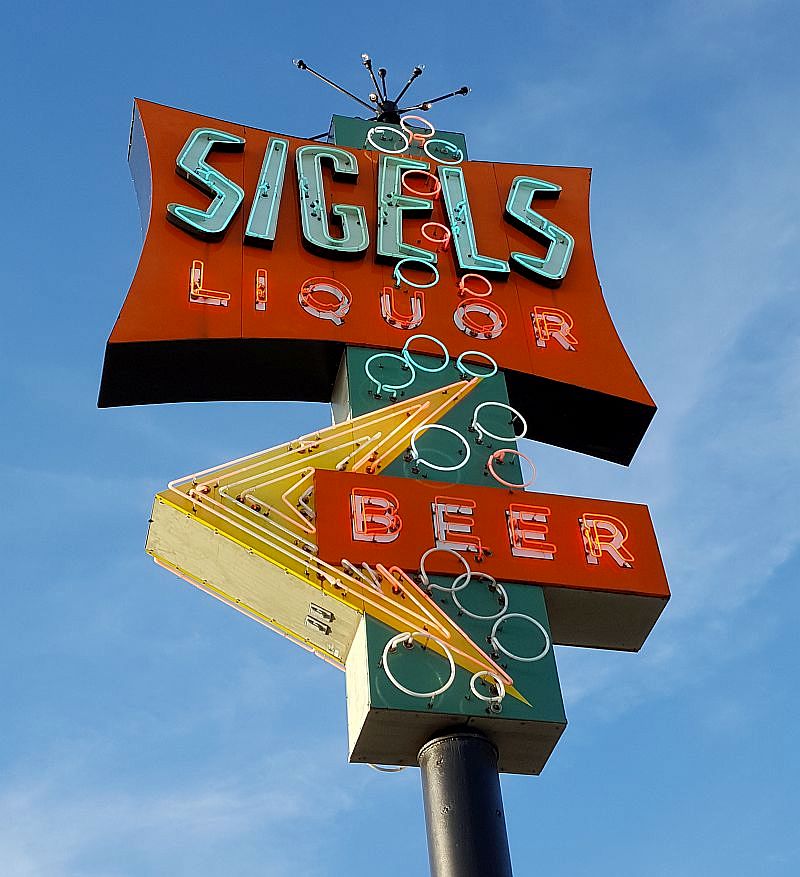
One of Dallas’ favorite neon signs… (photo: Paula Bosse)
by Paula Bosse
I stopped by Sigel’s liquor store the other day (as one does…) and saw this legendary Sigel’s sign, recently installed in its new home in the parking lot of the Sigel’s store on Greenville Avenue, between Lovers Lane and Southwestern Boulevard, across from the Old Town Shopping Center. I love this neon sign. (See a very large image of it here.)
The sign’s design can be traced back to Dallas artist Marvin M. Sigel (whose great-uncle Harry Sigel founded the business in 1905) — this Fabulous Fifties design was created around 1953 specifically for the then-new store at 5636 Lemmon Avenue (at Inwood). When that store closed in 2009, the sign was refurbished and moved up to the company’s Addison location until that store fell victim to the company’s bankruptcy and was closed. Here’s a video of the fabulous sign when it was in Addison, with close-ups of its flashing neon and dancing bubbles:
*
Marvin Meyer Sigel was born in Poland in 1932 and settled in Dallas in 1937 with his immigrant parents, both of whom had been doctors in Poland (his mother a dentist, his father an M.D.), although only his father continued to practice medicine in the United States. He lived in the vibrant Jewish enclave of South Dallas and went to Forest Avenue High School where he seems to have been a popular kid, interested in art, drumming, and ROTC. Below, a photo from the 1949 yearbook with the caption “Marvin ‘Hot Drums’ Sigel plays with the Swing Band.”
His Forest Avenue High School senior photo, from 1949:
And his 1953 senior photo from the University of Texas:
After studying art at both SMU (under Ed Bearden and DeForrest Judd) and the University of Texas and receiving his B.F.A. from UT in 1953, Sigel served a stint in the Eighth Army in Korea. Back in Dallas, he was remarkably active in the local art community — for decades — as both a fine artist and as an art instructor. He also worked for a while at Peter Wolf Associates, in advertising (on projects for companies like Braniff), and he even did a lot of the tedious paste-up work for Sigel’s ads (back when every picture of a bottle of wine or spirits had to be cut out individually and pasted into one of those huge ads!). But his passion was art, and at the same time he had those regular-paycheck gigs, he also managed to maintain a furious pace of painting new pieces to exhibit at a dizzying number of art shows. Below is an example of one of his watercolors, from 1957 (which was recently offered at auction by David Dike Fine Art). The title? “Cocktail Abstraction” — appropriate subject matter for a member of the Sigel family!
“Cocktail Abstraction” by Marvin Sigel (1957)
When the Sigel’s Liquor store No. 7 opened at Lemmon & Inwood, it was suggested by family members that, hey, we have an artist in the family, let’s get Marvin to design a sign for us. According to Marvin, his cousin Sidney Sigel, who ran the company, probably just wanted a “rectangular sign with block letters,” but other family members wanted something newer and more exciting — something modern that would jump out of a sea of boring rectangular signs with block letters and draw attention. And it certainly did just that. If, as reports have it, that dazzling neon sign was designed in 1953, Marvin Sigel was only 21 years old!
When news broke 56 years later, in 2009, that the Lemmon & Inwood store was closing, there was a concerned uproar from the public about what would happen to the sign. Mr. Sigel was a bit taken aback by how much the people of Dallas had grown to love that sign and considered it a city landmark. Marvin Sigel, then 77 years old, said in a 2009 Dallas Morning News interview, “It was clever, but I figured it would be replaced by something more clever in a half-dozen years.”
The sign was built by the venerable Dallas firm of J. F. Zimmerman & Sons (est. 1901) who for generations had installed decorative neon elements all around town and had built innumerable lighted signs for companies big and small — their work could be seen on the Mercantile Building’s wonderful tower, on the exterior of the downtown Titche’s store on Main Street, and in the instantly recognizable signs for places as varied as the Cotton Bowl, Big Town, and, presumably, various other Sigel’s stores around the city.
The sign which was moved from Store No. 7 at Lemmon & Inwood to Addison had on its pole a small plaque (seen here) which said:
This Non-Conforming Sign designed by Marvin Sigel was built in the early 1950s. It was moved from Dallas, TX at Lemmon Ave. & Inwood. After being granted a variance it was refurbished to Code and installed here in June of 2009. Sign refurbished and installed by Starlite Sign of Denton, TX.
Interestingly, the plaque on the new location of the sign has a slightly different text:
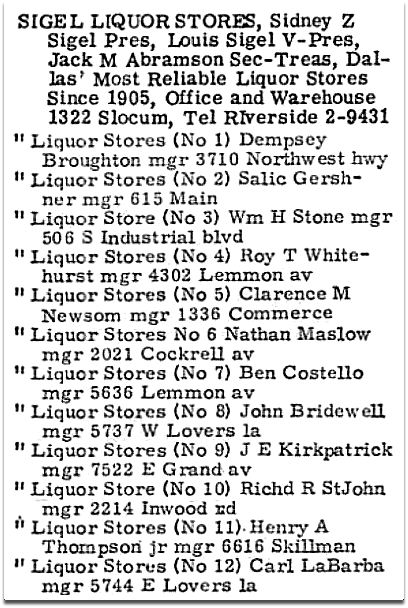
It appears that this is a different Sigel’s sign. In 1965, there were two Sigel’s stores on Lovers Lane: Store No. 8 was along the Miracle Mile on West Lovers Lane, near what is now the Dallas North Tollway, and Store No. 12 was on East Lovers Lane at Greenville (then near Louanns nightclub).
1965 Dallas directory
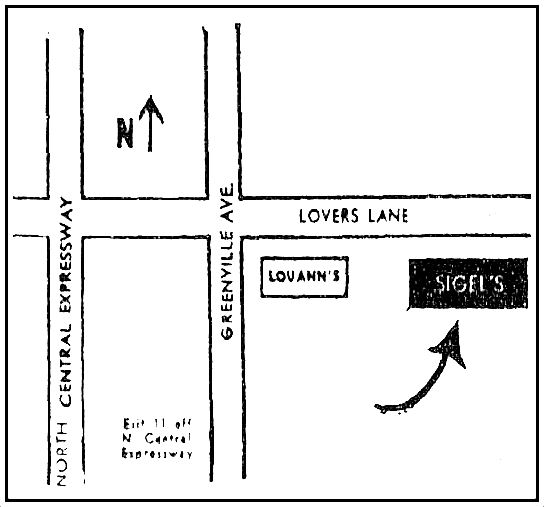
In an April 22, 2009 Dallas Morning News article by Jeffrey Weiss (“The Story Behind That Sigel’s Sign”), is this quote from Mr. Sigel’s son, David S. Z. Sigel, about the original sign at Lemmon & Inwood, with mention of another similar sign: “He created the designs for this sign, as well as a similar but smaller sign which stood outside the Lovers Lane store (where Central Market now stands) for many years.” Here’s a map from a November, 1964 grand opening ad for the new store at 5744 E. Lovers Lane:
Detail from a grand opening ad, Nov. 6, 1964
So is the sign currently standing in the parking lot of the Sigel’s Fine Wines & Great Spirits at 5757 Greenville Avenue the sign which originally stood only a short four-tenths of a mile away? I hope so! And if it is, welcome back to the neighborhood, cool sign!
Whichever sign this is, it is one of the greatest neon designs Dallas has ever had, and I’m so happy it’s survived for over a half-century, through phenomenal city growth, physical displacement, and even company bankruptcy.
Thanks, Marvin, for designing this wonderful sign! And thanks, Starlite Sign of Denton, for the beautiful refurbishing!
***
Sources & Notes *
Top photo and photo of blue plaque taken by me on July 27, 2017 at the Sigel’s store at 5757 Greenville Avenue.
YouTube video by Andrew F. Wood, shot in Addison in 2013.
Sources for other images as noted.
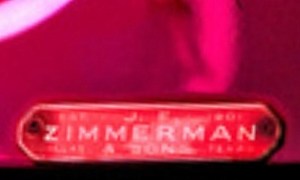
The Zimmerman & Sons nameplate can be seen on the original Lemmon & Inwood sign here (click to enlarge), posted on Flickr by Tim Anderson (a detail of his photo can be seen below) (there is another Zimmerman nameplate posted in the comments on that Flickr page); what appears to be a Zimmerman plate is on the side of the sign at the Greenville Avenue location facing the store’s entrance, not on the side seen in my photo at the top.
Please check out the Dallas Morning News article in theDMN archives titled “Sigel’s Sign Designer Surprised by Its Fame — Project for Family’s Liquor Store Wasn’t a Hit with Boss, He Recalls” by Jeffrey Weiss (April 28, 2009) in which Marvin Sigel discusses his famous sign.
Also, check out these related (online) DMN articles:
“Sigel’s Beverages, A 111-Year-Old Dallas Chain, Filed for Bankruptcy; Wants to Close 5 Stores” by Maria Halkias (Oct. 21, 2016), here
“Sigel’s Iconic Neon Sign Returning to Dallas After Years Wasting Away in Addison” by Robert Wilonsky (March 27, 2017), here
If anyone can verify that this sign is, in fact, the sign from Store No. 12 (Lovers & Greenville), please let me know!
UPDATE: Marvin Sigel died on Feb. 23, 2019 at the age of 87 (his obituary is on the Dallas Morning News website, here). After I wrote this post, Marvin’s son, David, contacted me to let me know his father had seen this and was delighted to know that people still appreciated his work. This was one of the most popular posts of the year. People absolutely still love your sign, Marvin! RIP.
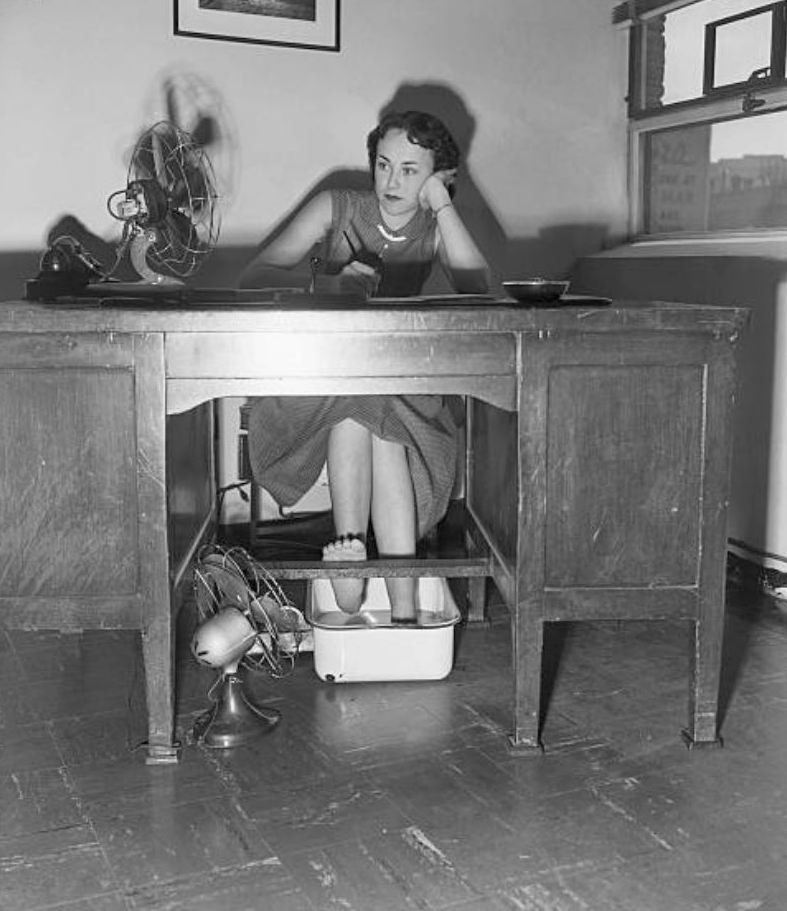
The photo above appeared in newspapers around the country in August 1951 above this caption:
What the well-dressed Texas gal will wear during the current heat wave might be something quite novel. Here, Dallas secretary Mildred Walston starts a new trend in her efforts to keep cool. She uses two fans and a cool pan in which to slosh her feet. Later in the afternoon, Aug. 14, when the temperature hit 103 degrees, Mildred’s boss broke down and sent her off to the nearest swimming pool.
Mildred Walston Fulenwider (1915-1962) worked for many years in the motion picture business in Dallas and was a founding member of WOMPI (Women of the Motion Picture Industry), organized in Dallas in 1952.
I’m going to have to remember that fan-pointed-at-feet-soaking-in-pan-of-cool-water trick.
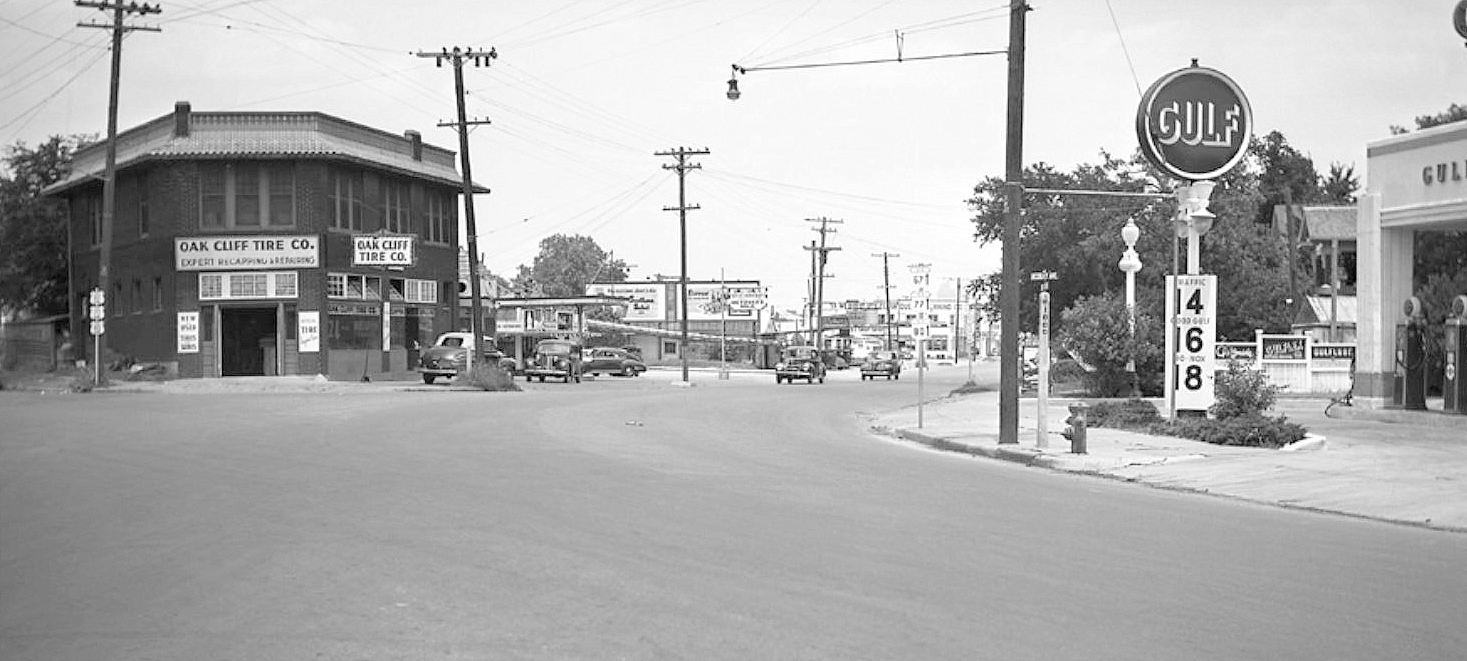
This photo shows the Oak Cliff intersection of N. Zang Blvd. and N. Beckley Ave. The 1953 Dallas directory shows L. B. Poche’s Oak Cliff Tire Co. at 1101 N. Zangs and K. R. Hollis’ Gulf service station at 1102 N. Zangs (this was before that “s” in the street name was eliminated).
The photo comes from the exhaustive tome Dallas-Fort Worth Highways, Texas-Sized Ambition by Oscar Slotboom. His caption for this photo (found on page 98 of the PDF here):
This undated view shows the predecessor of IH 35, US 67, aligned on Zang Boulevard through Oak Cliff just south of downtown at the intersection with Beckley Avenue. The three highway shields show that this alignment also served US 77 and US 80. The narrow streets leading into downtown were unable to handle increasing traffic after World War II, making freeway construction a top priority.
Zang Boulevard was originally called “Zang’s Boulevard” (later just “Zangs Boulevard”) after J. F. Zang. When it opened in 1900, it was the only direct road between Dallas and Oak Cliff.
Dallas Morning News, Oct. 26, 1900
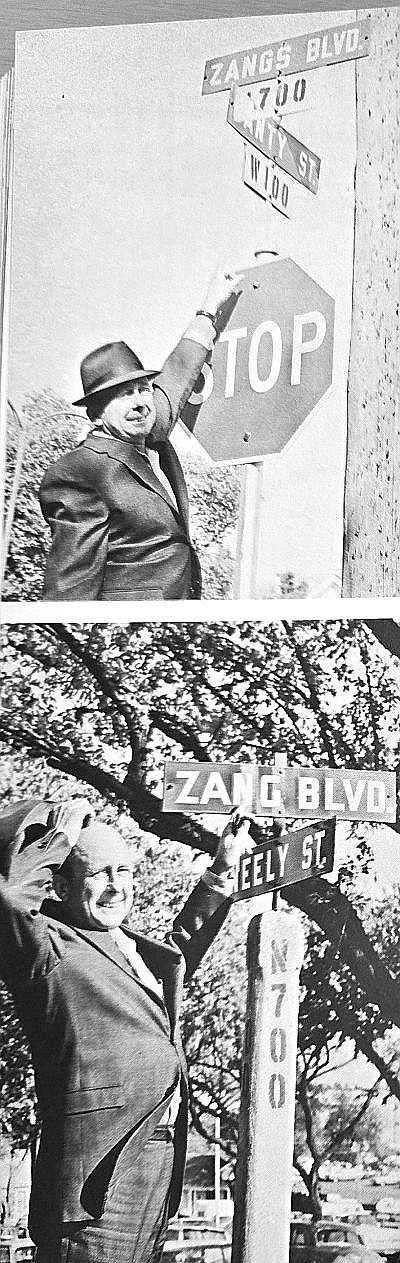
In 1967, it was beginning to be a problem, with mixed messages from the city on what the street was actually called, illustrated by the photos below, which ran with this caption: “Harry Gaston, Oak Cliff real estate and insurance man, points out the ZANGS street sign in the north 700 block of the boulevard at Canty Street. A look of bewilderment adorns his face, however, when he discovers the ZANG (no S) sign on the opposite end and other side of the same north 700 block. City records show ZANG as the correct spelling… a reorientation program for the public and some great big headaches for map makers.” (Oak Cliff magazine, Nov. 1967). In June 1968, the city officially dropped the “s,” and it became, simply, “Zang Boulevard.” (The full article about this is linked below in the Sources & Notes section.)
Nov. 1967
***
Sources & Notes
Top photo is from Oscar Slotboom’s Dallas-Fort Worth Freeways website, which is pretty amazing. If you’re interested in the evolution of Dallas’ highway system, you will be glued to this site which is full of incredibly detailed information.
Photos of the beleaguered Mr. Gaston wondering what the street was actually called is from Oak Cliff magazine, Nov. 1967, Periodicals Collection, Dallas History and Archives, Dallas Public Library. The article that ran with these photos — “Zang(s) Problem(s) Confuse(s) Chamber(s)” by Phyllis Dischman — ishere.





















 Flashback : Dallas