Flashback : Dallas

A Miscellany: History, Ads, Pop Culture

Category: 1960s

Dallas City Hall

by Paula Bosse

Our city hall has suddenly — and improbably — found itself in the headlines in recent weeks. As of this writing, its immediate fate is unknown. I don’t think I’ve written about this landmark building in the 12 years I’ve been writing about Dallas history. I guess I assumed I’d always have time.

Dallas City Hall is the work of architect I. M. Pei (1917-2019), who, in 1966, was commissioned to design a new city hall by then-mayor J. Erik Jonsson. The very modern design was both acclaimed and derided, and its bumpy road to completion was long and arduous — it was dedicated on March 12, 1978, 12 years after Pei accepted the commission. It is an instantly recognizable building by an internationally respected architect, and it has quietly held the fort on the southern edge of downtown for almost 48 years.

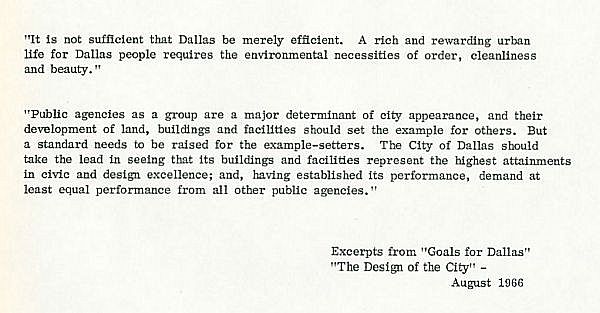
In the project plans presented to the City, I. M. Pei & Partners included these quotes from “Goals for Dallas,” the blueprint that Dallas leaders created for the city’s future:
In an oral history conducted by the Dallas Public Library in 2002, Pei discussed his City Hall project and was asked if he had visited the building in recent years (the link to the oral history and transcript are at the bottom of this post under “Sources & Notes”):

I’ve been back quite a few times. I always went up to the second floor to look at that public space. That public space — some people ask, “Why do you make that space so extravagant? People only come here and pay taxes or pay water bills.” I said, “Precisely. This is a People’s City Hall. You don’t build it for the mayor; you don’t build it for the Council; you build it for the people. They’re the ones who should enjoy it.” I remember that. I always go up to the second floor to look at that space. I think the public that comes to pay taxes should know that this is why. […] That was the original thought, and I still think it’s right — that this City Hall is designed for the people of Dallas. (I. M. Pei oral history, Aug. 1, 2002)

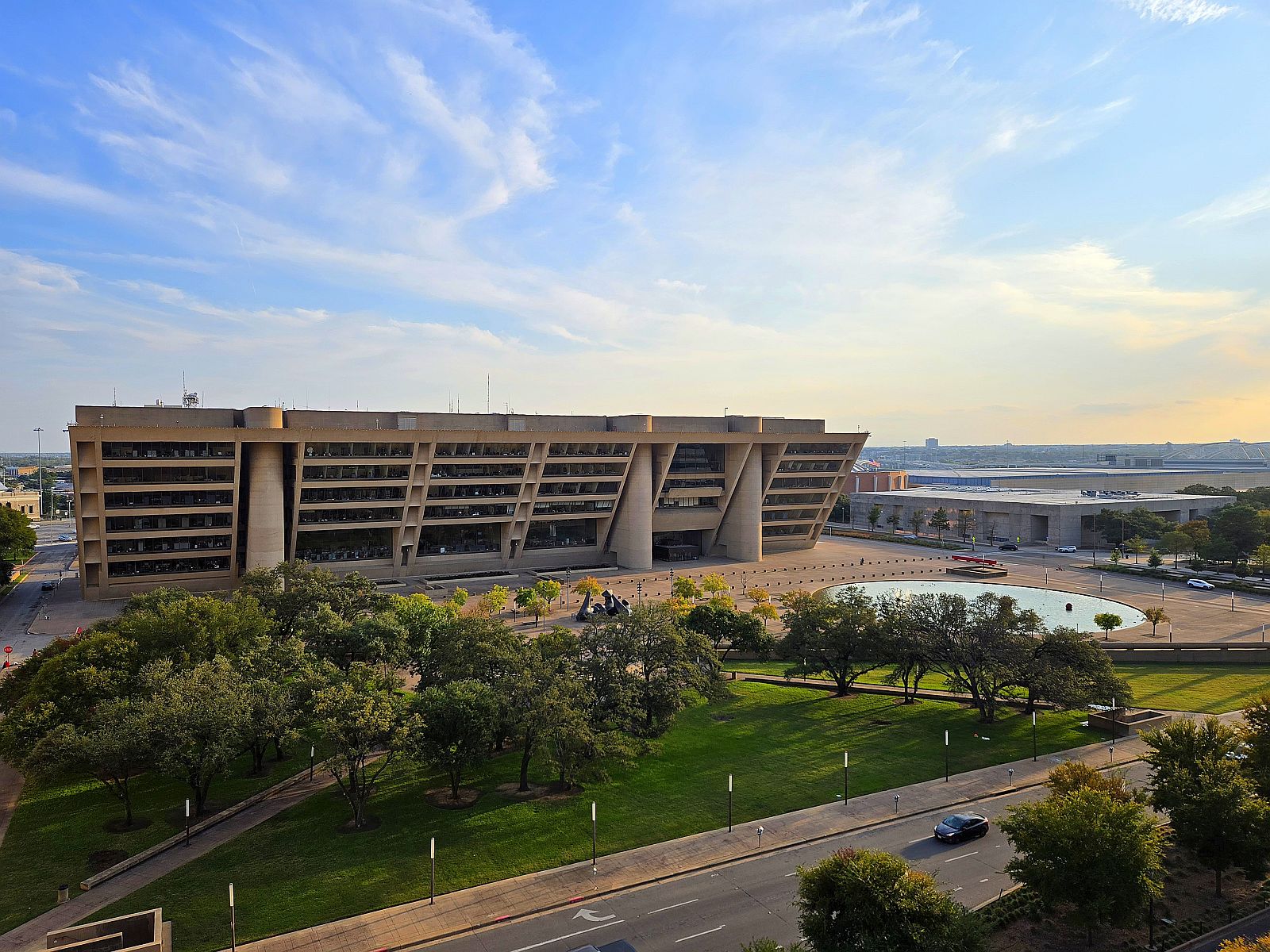
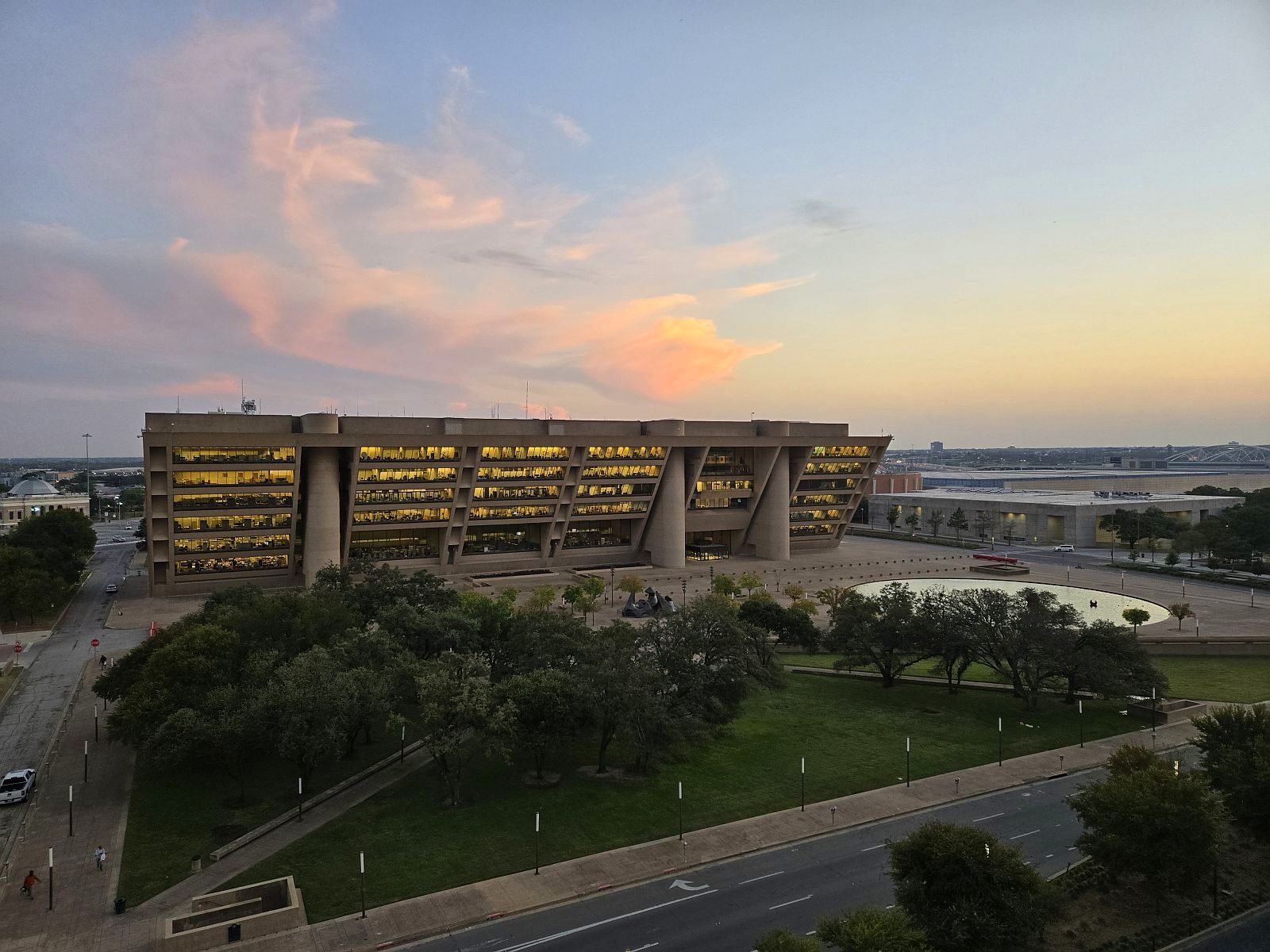
Below are a whole bunch of photos of I. M. Pei in Dallas, aerial views of the city before and during construction of the city hall, and two deceptively calm and quiet photos taken by me from the Central Library across the street only a couple of weeks ago, back when life seemed a little less precarious and before I thought it necessary to look up the dictionary definition of “beleaguered” to make sure I was using it appropriately. I was.

*

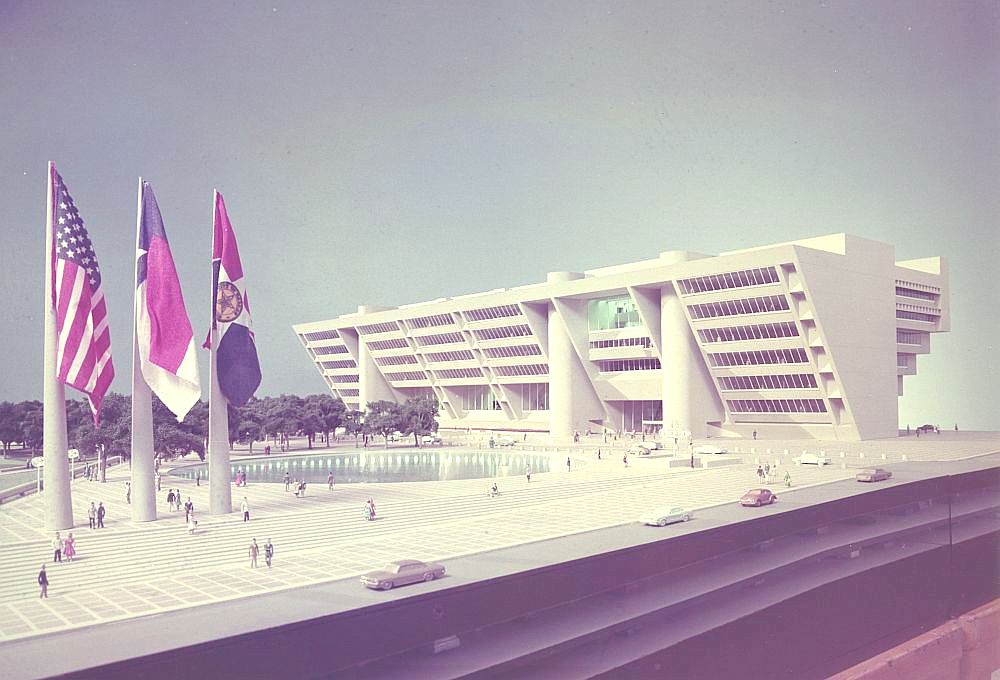
The model:
*

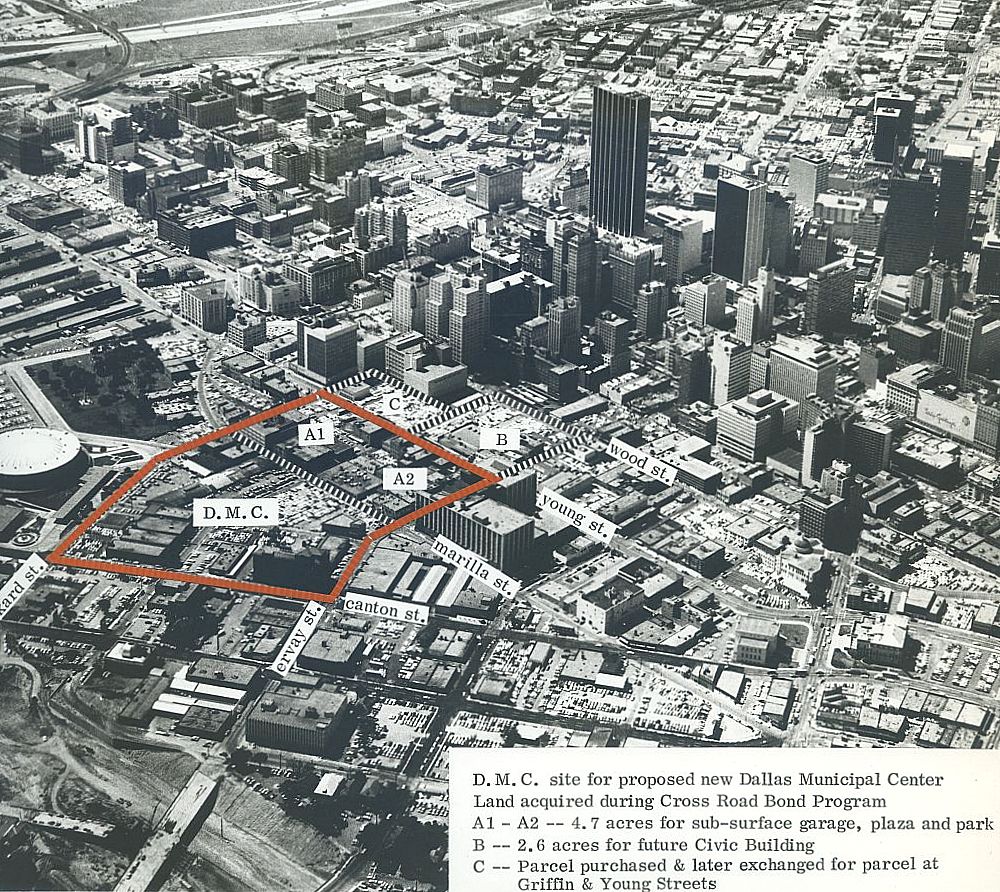
Aerial from 1967 (the original name of the project was the Dallas Municipal Center):
*

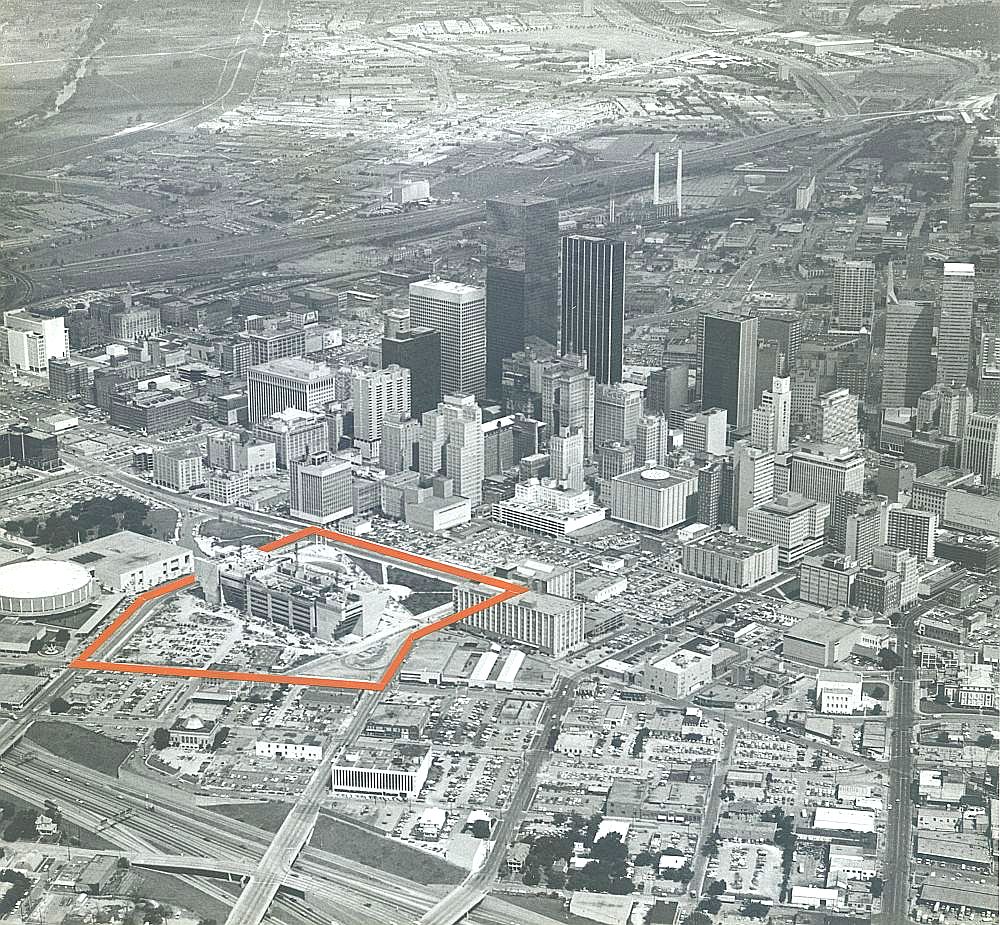
Aerial from 1976:
*

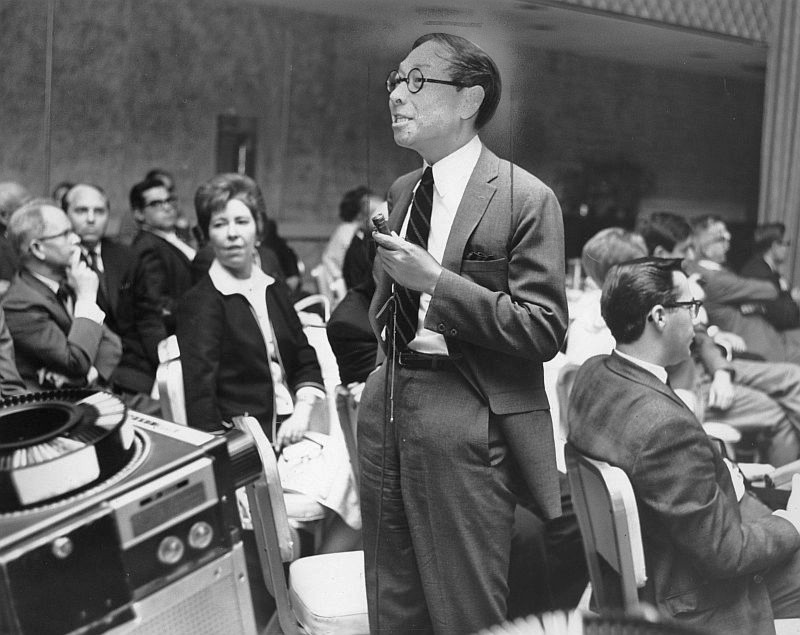
I. M. Pei giving a presentation in Dallas, in which he unveiled his vision for the new city hall (April 28, 1967, Dallas Times Herald photo by Ken Hardin):
*

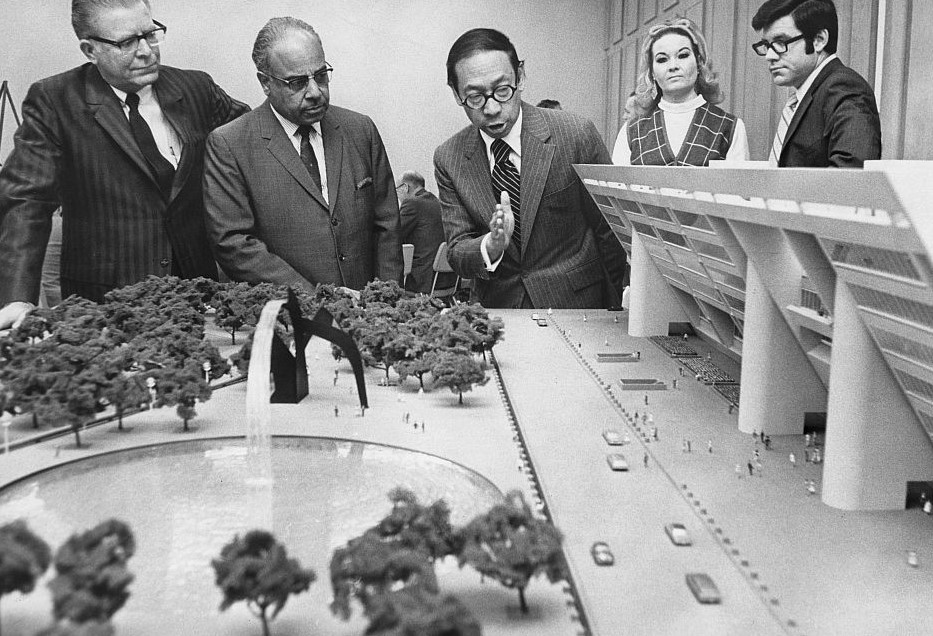
Showing off the futuristic-looking model to no doubt startled members of the Dallas City Council and city administration workers (October 5, 1970, DTH photo by Joe Gordon).
*

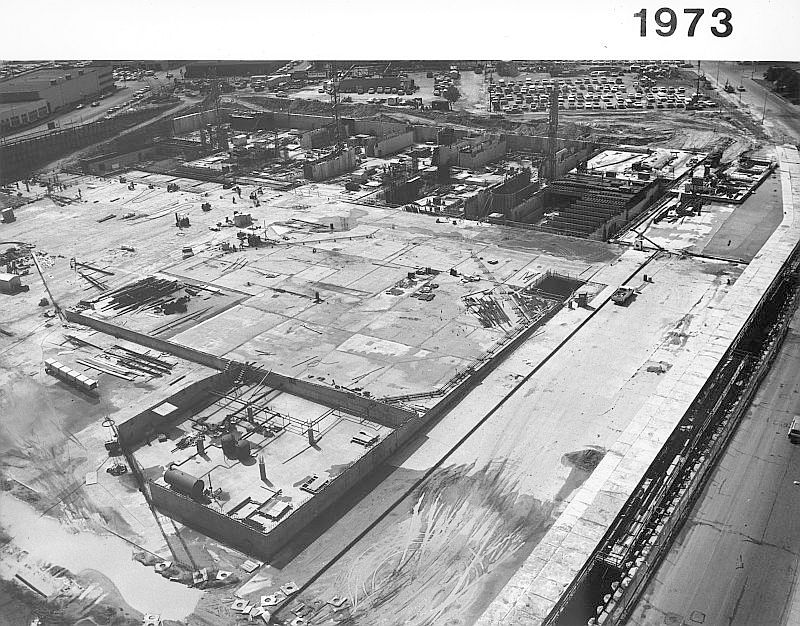
Construction, 1973:
*

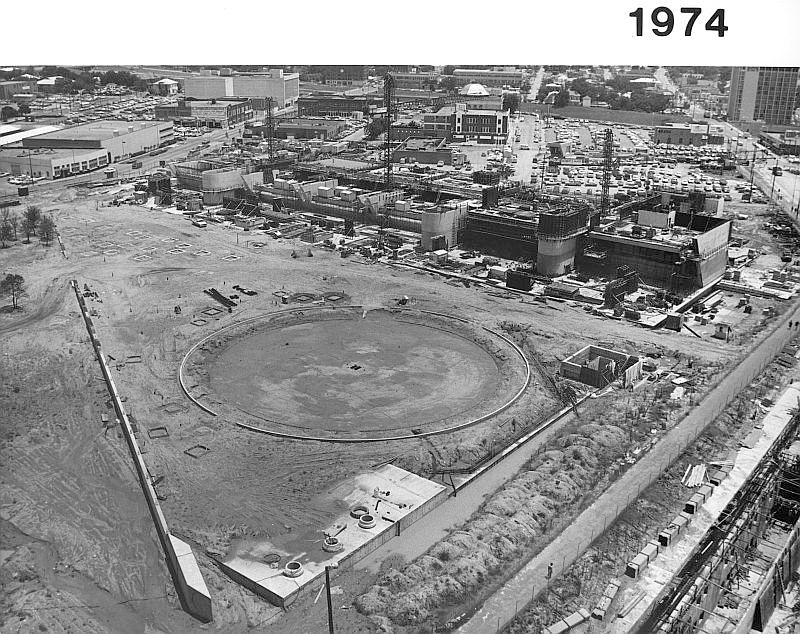
Construction, 1974:
*

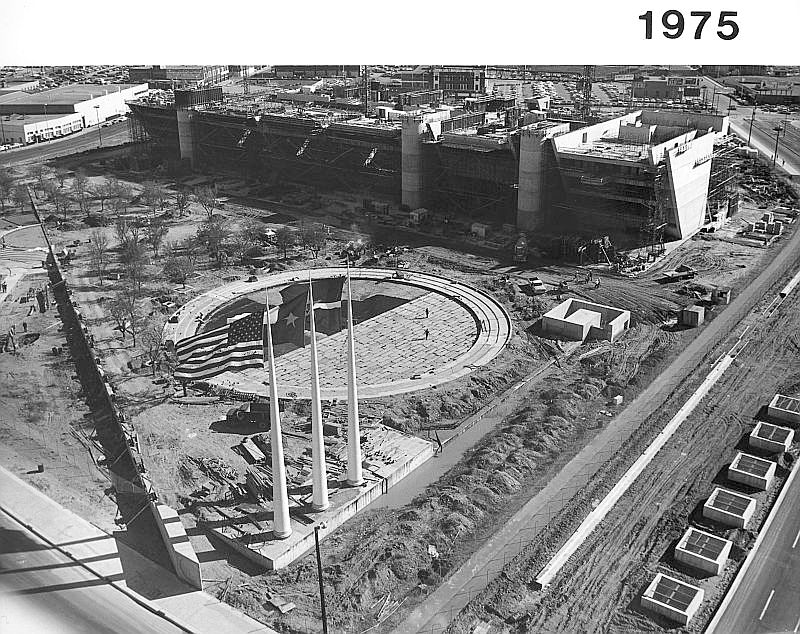
Construction, 1975:
*

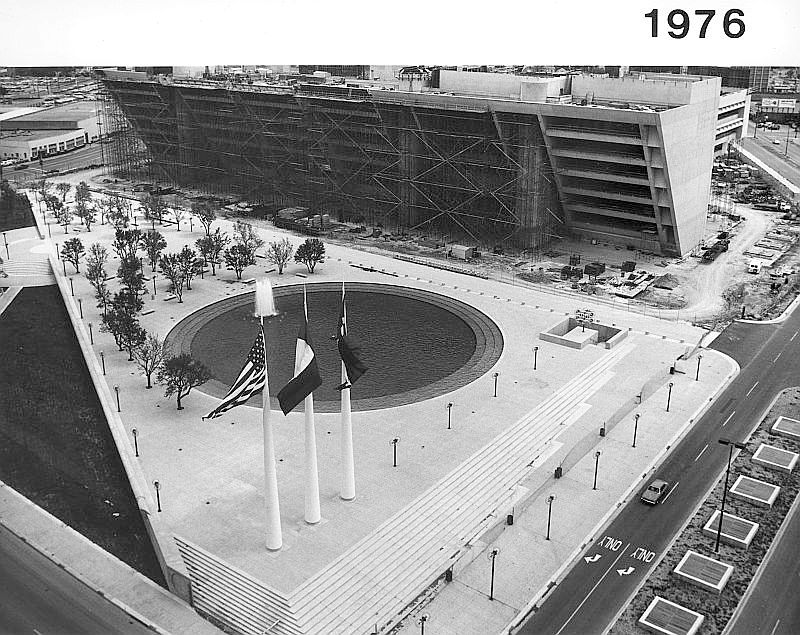
Construction, 1976:
*

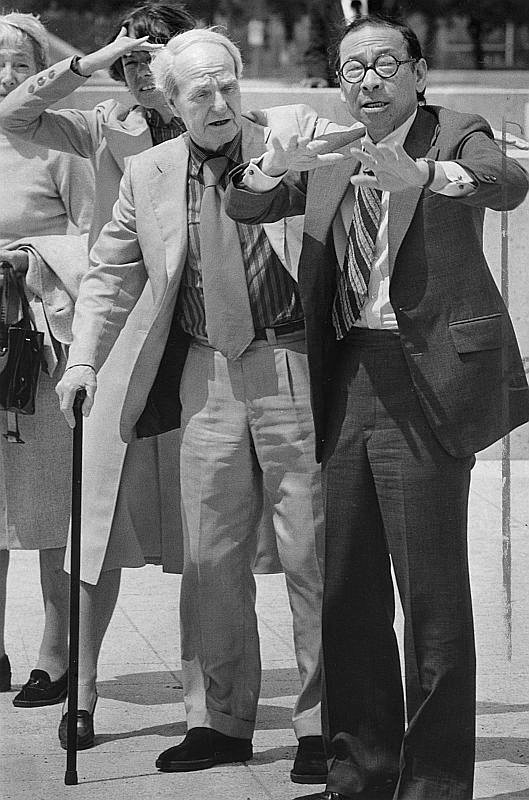
Pei shows British sculptor Henry Moore the site where his sculptural work The Dallas Piece will be placed on the City Hall plaza (April 14, 1976, DTH photo by Paul Iverson):
*

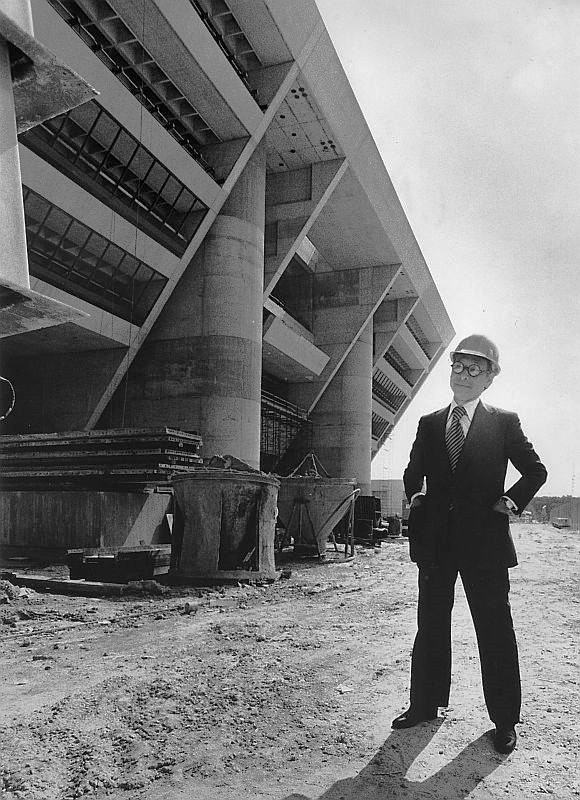
Pei in a hardhat, looking pleased (July 7, 1976, DTH photo by Jay Dickman):
*

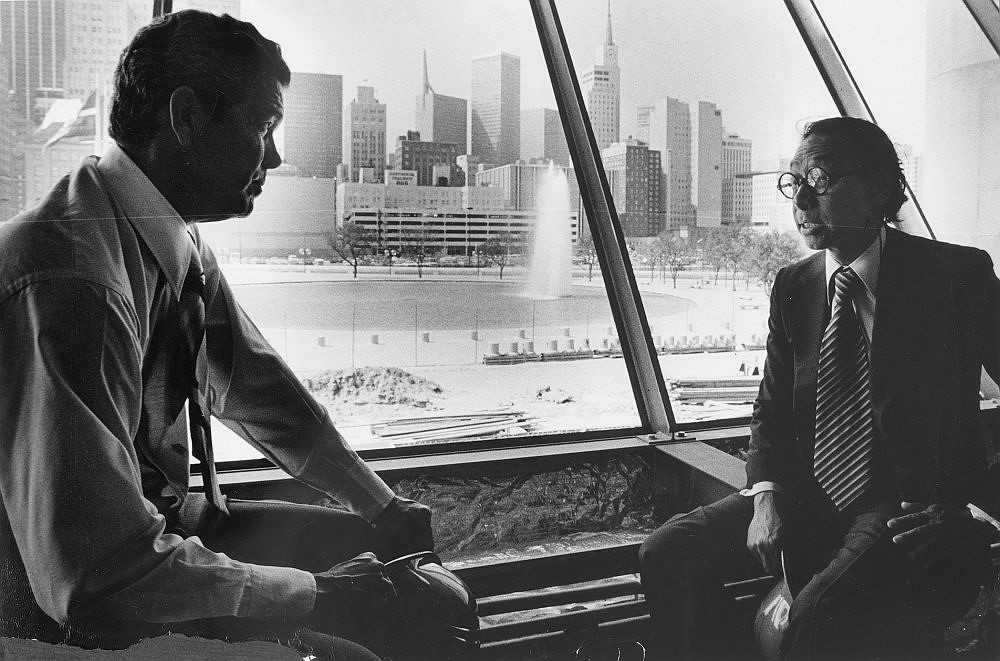
Pei with new mayor Robert Folsom, with a killer view of the Dallas skyline behind them (July 7, 1976, DTH photo by Jay Dickman):
*

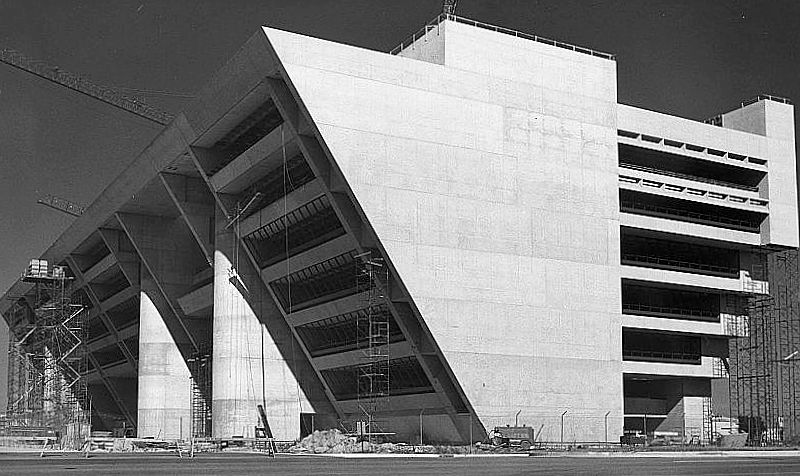
Side view, from Marilla:
*

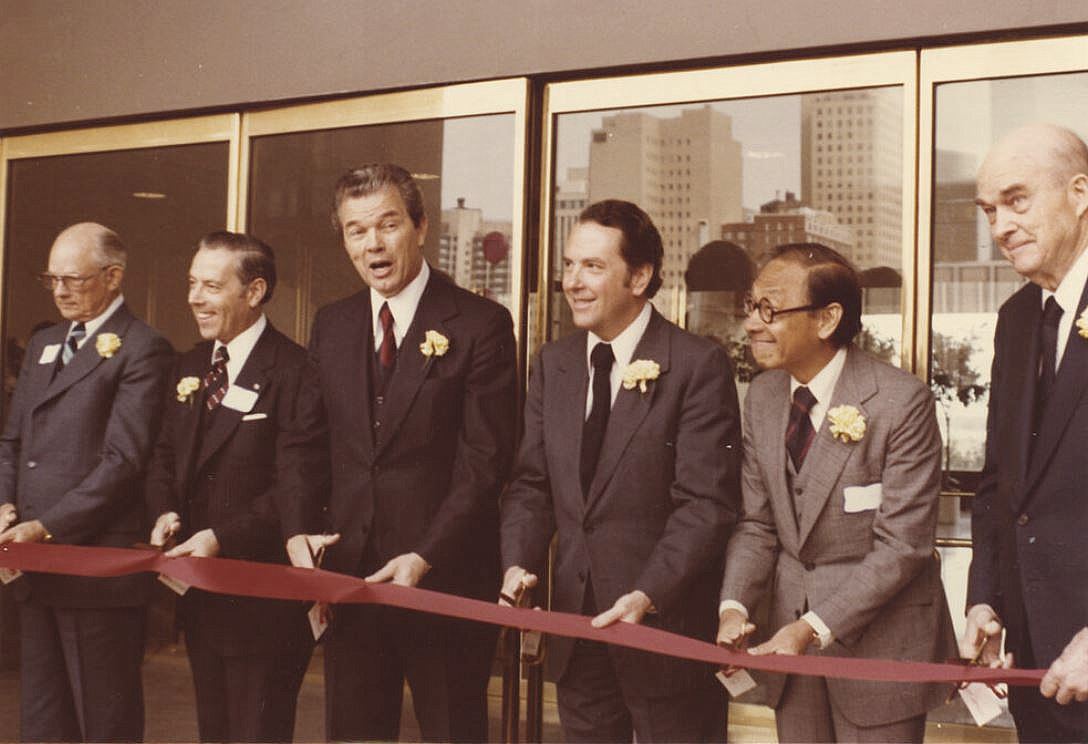
Finally, Dedication Day, March 12, 1978 — Pei is seen cutting the ribbon with (left to right) former City Manager Scott McDonald, current City Manager George Schrader, Mayor Robert Folsom, former mayor Wes Wise, and the man who started the whole thing rolling, former mayor J. Erik Jonsson (Pei said that his two greatest allies in the long slog to get the City Hall finished — and to continue with other projects in Dallas — were Schrader and Jonsson, both of whom he was quite fond of and considered friends):
*

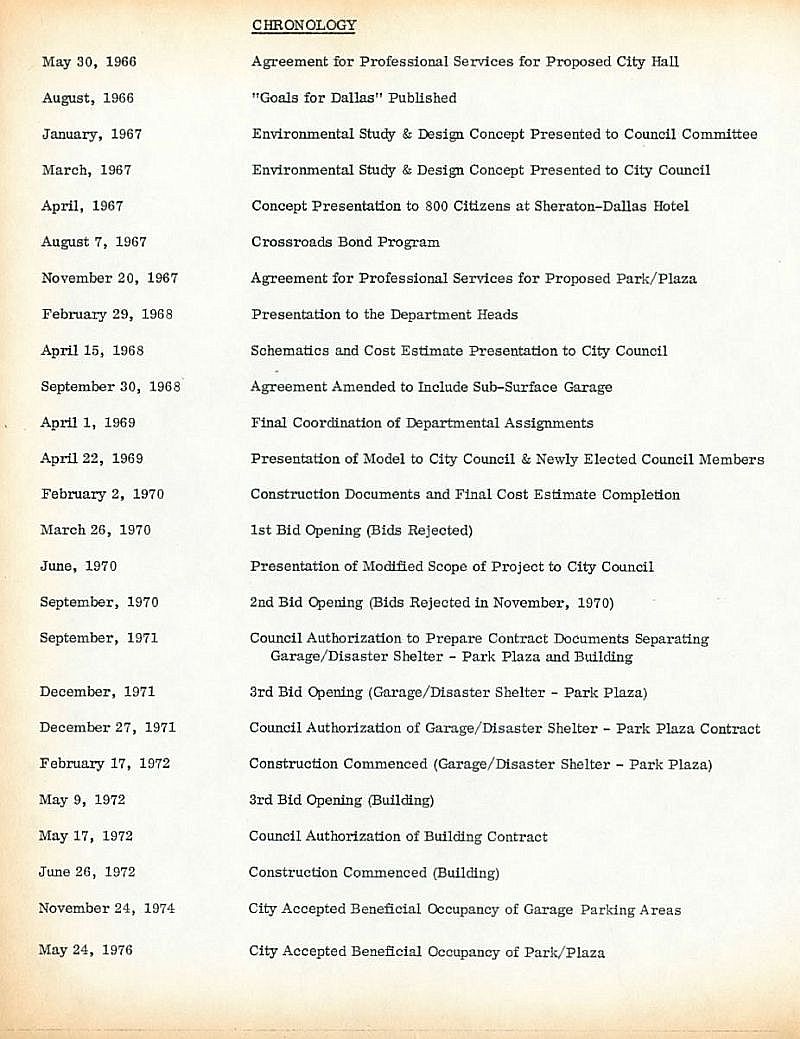
A chronology of the long, long trek to completion (at least up to 1976), prepared for the City by I. M. Pei & Partners:
*

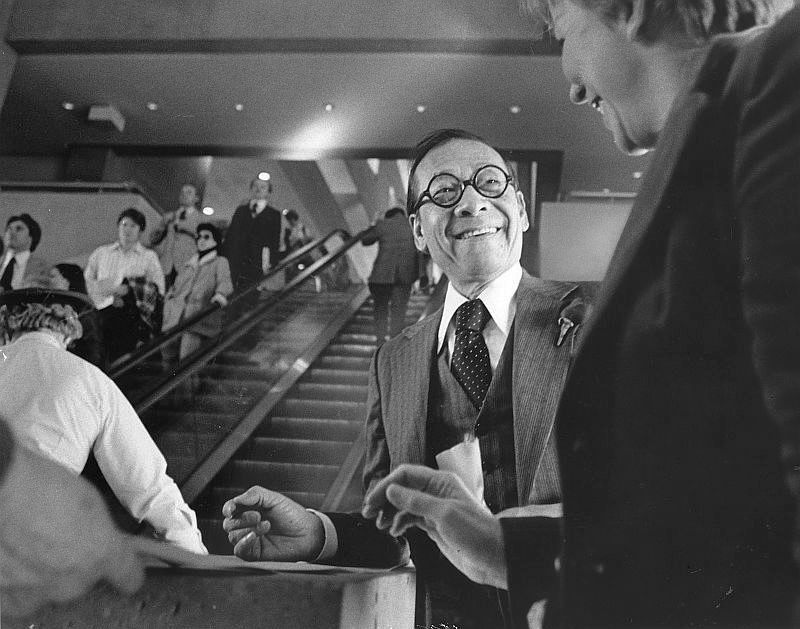
I. M. Pei in 1978, happy in Dallas (DTH photo by Phil Huber):
*

And in October 2025, our solemn City Hall at the end of another day, holding steady as downtown Dallas’ southern anchor.
***

Sources & Notes

Top and bottom color photos of City Hall taken by Paula Bosse on October 23, 2025 from the Central Library.

All other images are from various collections of the Dallas History & Archives division of the Dallas Public Library (including the Dallas Times Herald Collection and the Juanita Craft Collection). All images are used with permission.

Construction photos, “Goals for Dallas” quote, color model photo, and chronology are all from the presentation binder Dallas Municipal Center by associated architects I. M. Pei & Partners and Harper & Kemp (July 5, 1976) (Dallas History & Archives/Dallas Public Library call number R690.513 D145).

The 2002 quote from Pei about City Hall is from I. M. Pei: An Oral History Interview, conducted in New York City on August 1, 2002 by Bonnie A. Lovell for the Dallas Public Library. Ostensibly about Pei’s involvement in commissioning the Henry Moore sculpture, this is an entertaining read/listen, as Pei discusses the larger City Hall project and his affinity and admiration for the city of Dallas and its citizens (audio recording and 48-page transcript with index, Dallas History & Archives/Dallas Public Library call number 730.92 M822YP 2003) — you can listen to the recording and read the transcript on the Dallas Public Library Recollect Digital Collections page here.

*

Copyright © 2025 Paula Bosse. All Rights Reserved.
Dome, No Dome, Dome

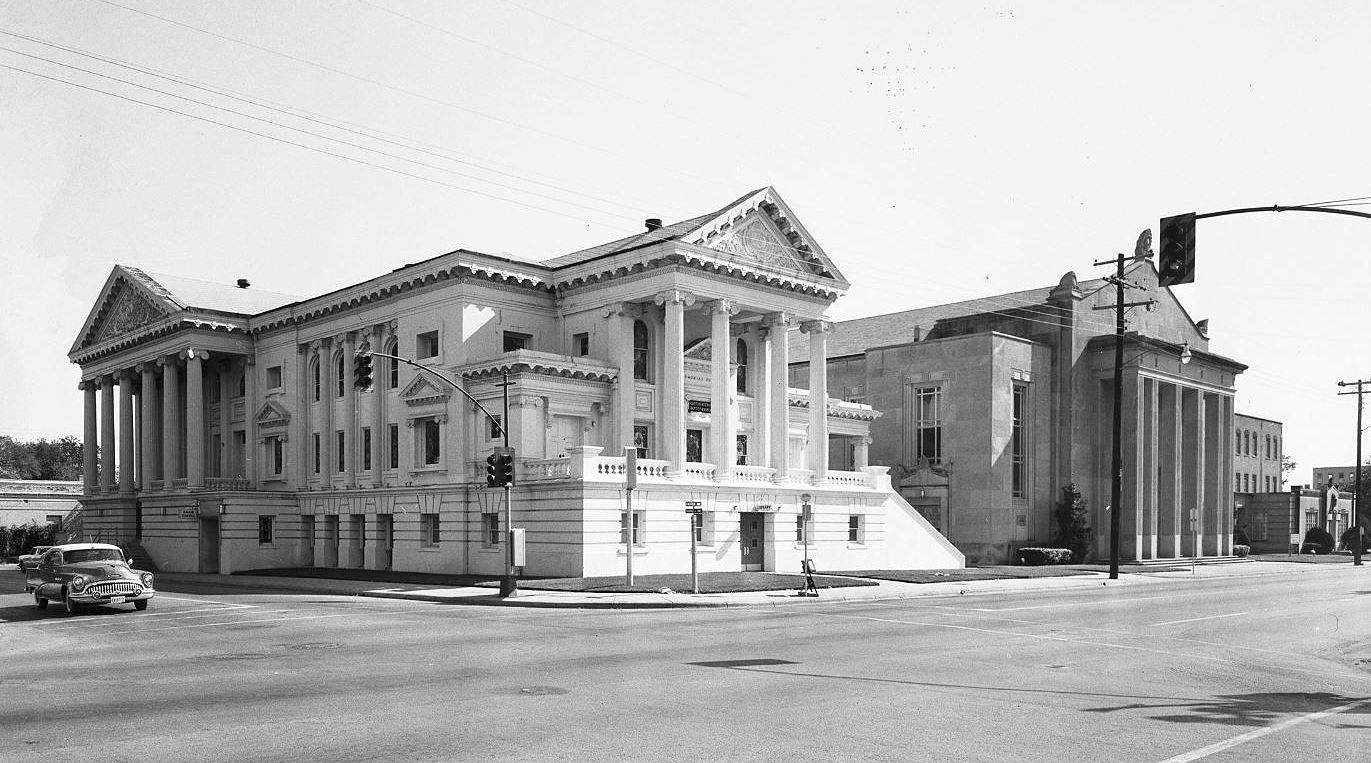
Gaston Ave. Baptist Church, ca. 1961, domeless

by Paula Bosse

Gaston Avenue Baptist Church, at Gaston and Haskell, opened to its congregation in 1904. (The photo above is from about 1961.) The church was designed by architect C. W. Bulger, whose most important Dallas building was almost certainly the Praetorian Building downtown. Bulger was a prominent architect and a prominent Baptist — he designed several Baptist churches, and, conveniently, he lived on Junius Street, not far from the Gaston Avenue church.

This building is imposing and impressive, but every time I drive past it, something just feels “off.” (See it on Google Street View here.) It’s that canary-yellow “gold” dome. Otherwise, it’s a beautiful building.

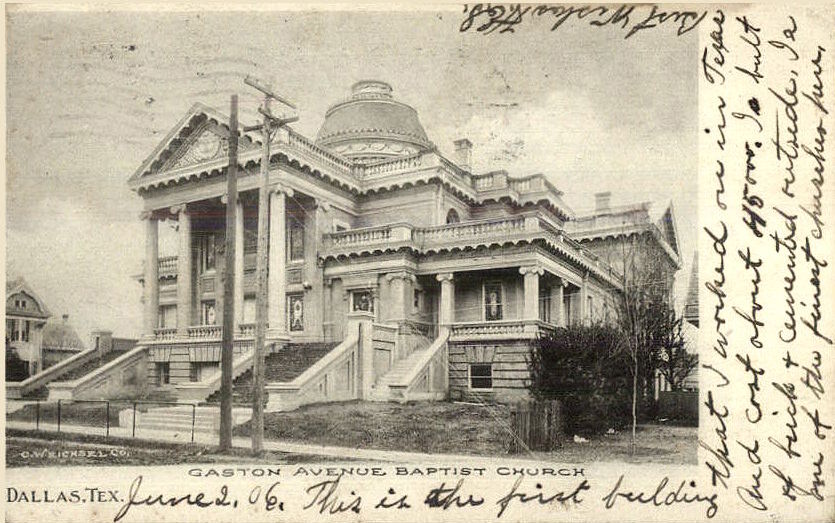
Here’s what it looked like in its earliest days:

This postcard was postmarked June 2, 1906 — the message reads:

June 2, 06. This is the first building that I worked on in Texas and cost about 45,000. Is built of brick and cemented outside. Is one of the finest churches here. Best wishes, H.E.S.

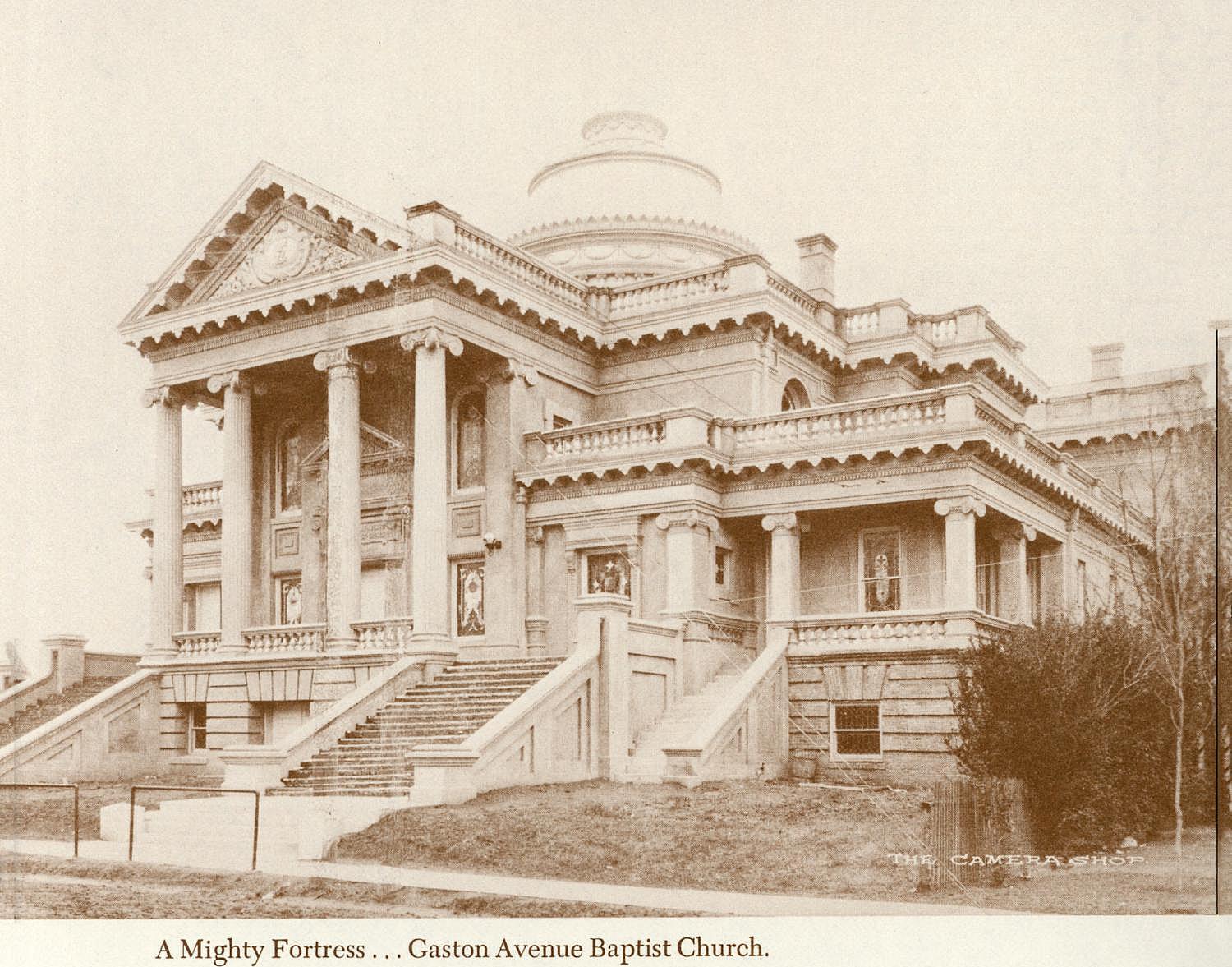
And another:

When you compare the early photos with the one from 1961, there are a few differences. Namely… the dome (…or lack thereof). It was built with a dome. But by 1961, the dome was gone. Why?

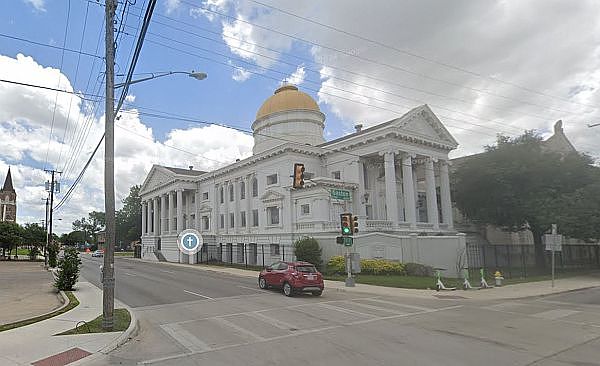
Here is what the building looks like these days (it is now the home of Criswell College):

Google Street View, June 2024

Dome.

What’s the deal here? I hate to be a negative Nellie, but every time I drive past that dome (which is often), I wince. It looks like sun-faded matte gold paint. It’s a beautiful building. It deserves a better dome!

After searching a bit, here’s what I found. In response to a reader’s question in 1991 asking what the “golden dome” was made of, The News responded:

MFG Molded Fiberglass in Union City, Pa. fabricated it of 1/2-inch molded fiberglass impregnated with gold-flecked paint… Both the dome and the bay section — the white collar that protrudes from the roof line — are composed of 12 separate pieces… The dome’s cap is composed of four pieces… and the spire that tops the structure is a single unit… [T]he structure stands approximately 35 feet above the roof of the library and weighs about 6,000 lbs. (Dallas Morning News, June 6, 1991)

Fiberglass, impregnated with gold-flecked paint. I don’t know when this happened, but more than 33 years ago. The gold-flecked paint has seen better days, beaten into submission by the relentless Texas sun. I’m sure it would probably cost a small fortune to spruce it up, but it would be nice to see it gold and shiny.

***

Sources & Notes

Top photo by Squire Haskins, from the Squire Haskins Photography, Inc. Collection, University of Texas at Arlington Libraries, Special Collections; more info on this photo is here (see interior photos taken by Haskins at the same time here and here).

Postcard was found on eBay.

The photo captioned “A Mighty Fortress” is from a TSHA Annual Meeting 1977 publication, via the Portal to Texas History.

*

Copyright © 2024 Paula Bosse. All Rights Reserved.
KVIL: The “VIL” Stands for Village

sewell-auto_KVIL_ebayNortheast corner of Preston & Mockingbird…

by Paula Bosse

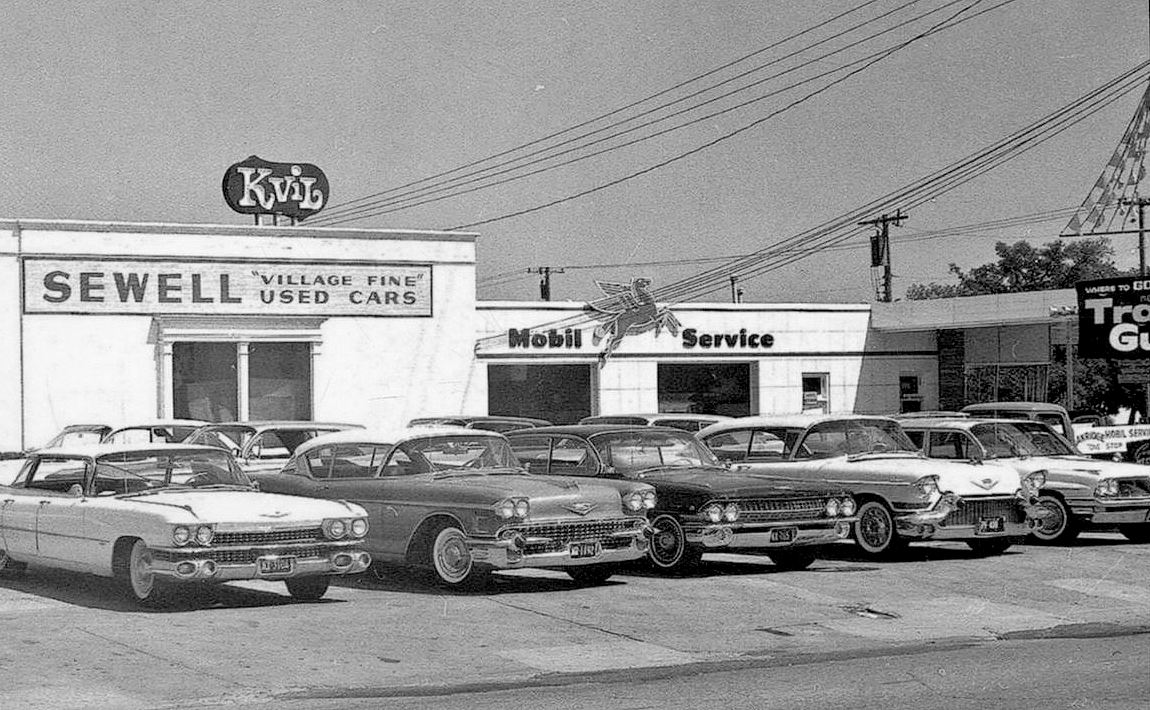
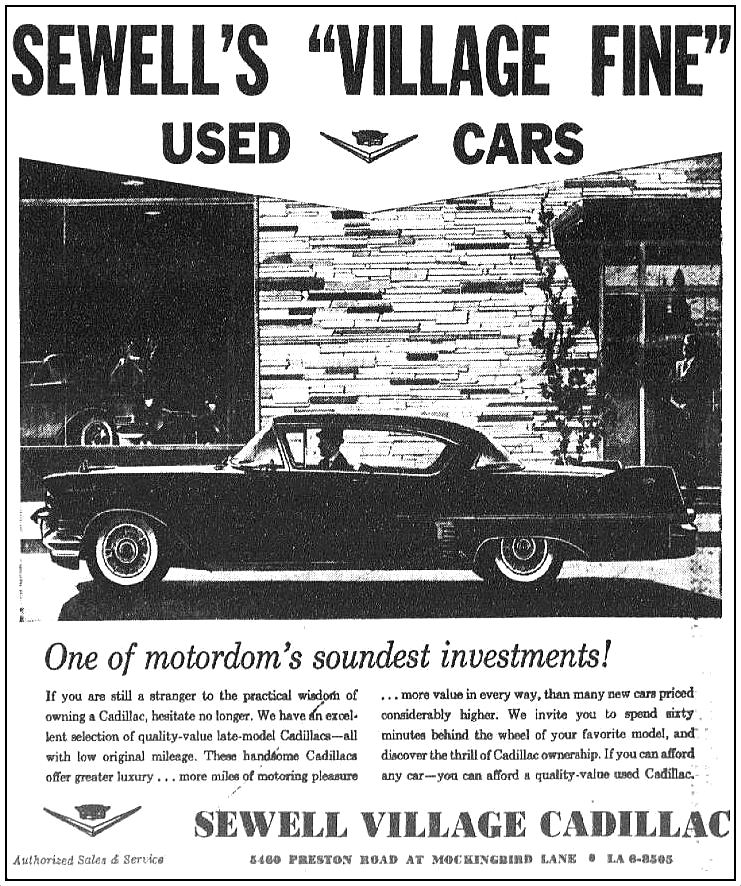
Sewell Village Used Cars and a Mobil station were at the northeast corner of Preston and Mockingbird (Sewell was at 5460 Preston Road), catty-corner from Highland Park Village. The KVIL studios were right around the corner, at 4152 Mockingbird Lane, across the street from the Dallas Country Club — you can see the jauntily-lettered sign in the background of this undated.photo. I am really bad at determining car-model years, but let’s say this is about 1960. What does this corner look like these days? It looks like this.

I just learned (from the KVIL Wikipedia page) that the “VIL” in the station’s call letters stood for “Village,” as in Highland Park Village. Who knew? The AM station began broadcasting on March 1, 1960, and the FM station hit the airwaves on Aug. 25, 1961. I believe both stations had a strict “no-rock-and-roll” policy. In the early days, a block of programming was aimed directly at housewives:

The program policy followed by the station is designed to fit the various hours of the day. For the driving hours when listeners drive to work (5:45 to 9 a.m.) and return (4:30 to 6:55 p.m.) the music is livelier. “Sing Along” is the order of the day from 9 a.m. to noon for the housewife’s work hours. (“KVIL Mark’s First Birthday Wednesday,” Dallas Morning News, March 1, 1961)

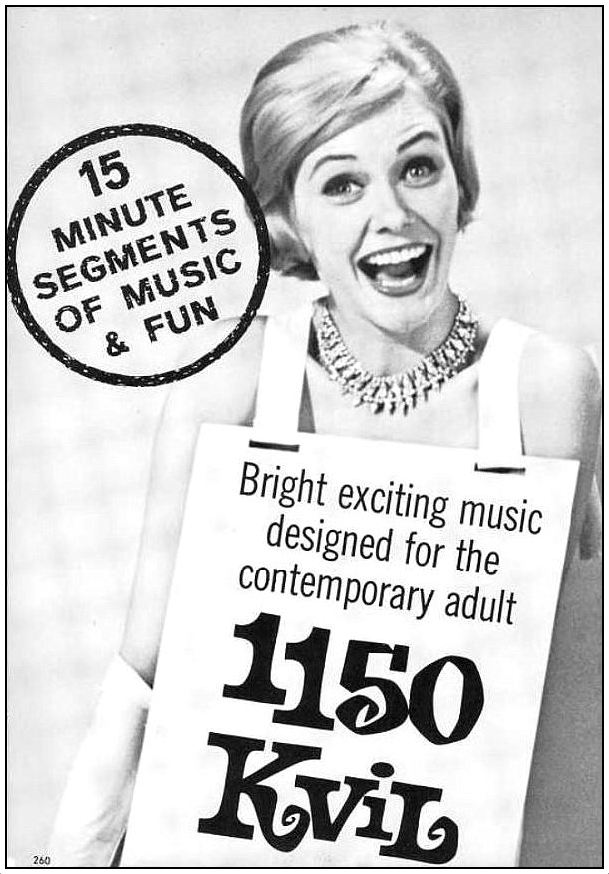
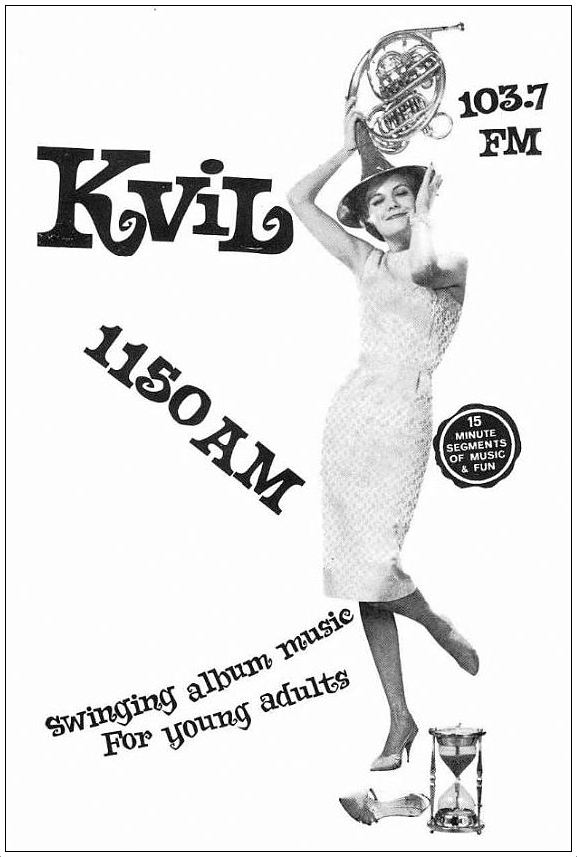
Here are a couple of hep, caffeinated KVIL ads from those early days:

patreon_KVIL_HPHS_1961-yrbk1961 ad

patreon_KVIL_HPHS_1962-yrbk1962 ad

kvil-logo_broadcasting-mag_122462_ad-det1962 logo

Most of my sort of generally vague awareness of KVIL was in the 1980s, when it was an absolute powerhouse in the ratings. But even its most stalwart fans would probably not describe its playlist as “bright,” “exciting,” or “swinging.” But look how much fun the promotions department imagined the effect on “young adults” was!

*

And what about Sewell Village Cadillac and its selection of “Village Fine” used cars? If circa-1960 Highland Park is going to have a used car lot, you better believe it’s going to be populated with Cadillacs. (UPDATE: Thanks to Peter K’s link in the comments, check out what appears to be the original photo by Squire Haskins, with a wider view, at the UTA Libraries website, here.)

sewell-village-cadillac_032158March 1958

***

Sources & Notes

Photo from eBay.

KVIL ads from the 1961 and 1962 Highland Park High School yearbooks.

KVIL logo is a detail from an ad that appeared in the Dec. 24, 1962 issue of Broadcasting magazine.

This post appeared in an abbreviated form on the Flashback Dallas Patreon page.

sewell-auto_KVIL_ebay

*

Copyright © 2024 Paula Bosse. All Rights Reserved.
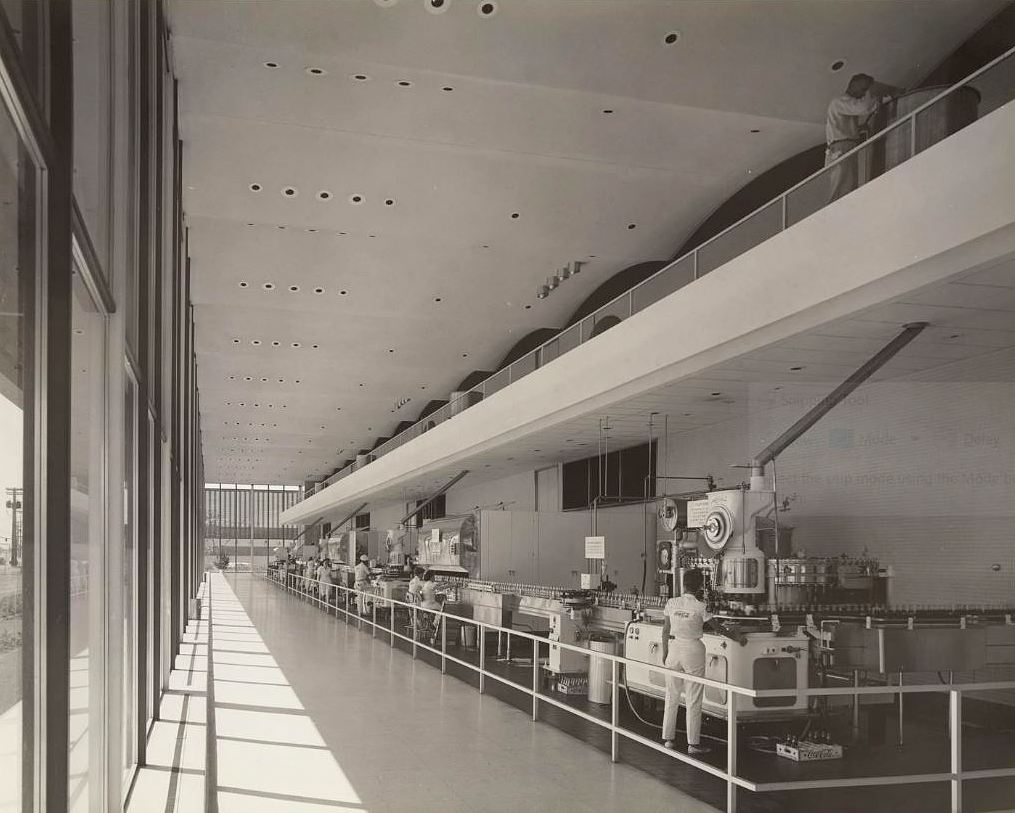
On the Line at Coca-Cola — 1964

patreon_coca-cola-bottling-plant_john-rogers_portal_ca-circa-1964Gleaming!

by Paula Bosse

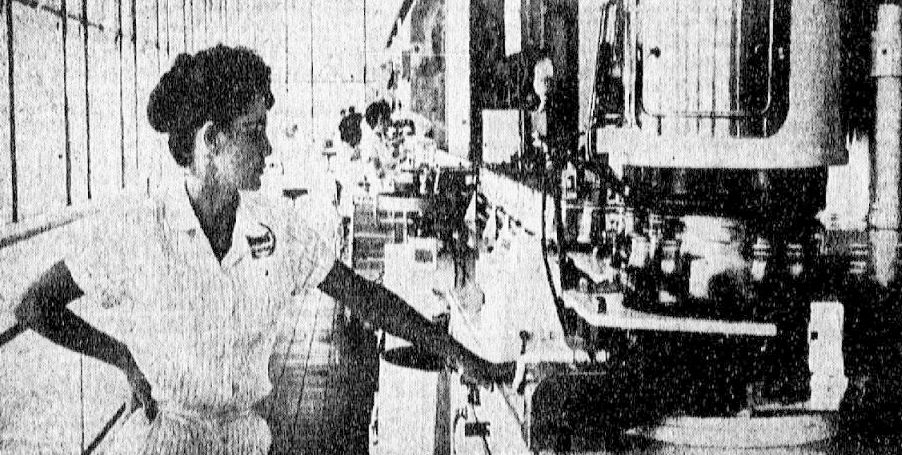
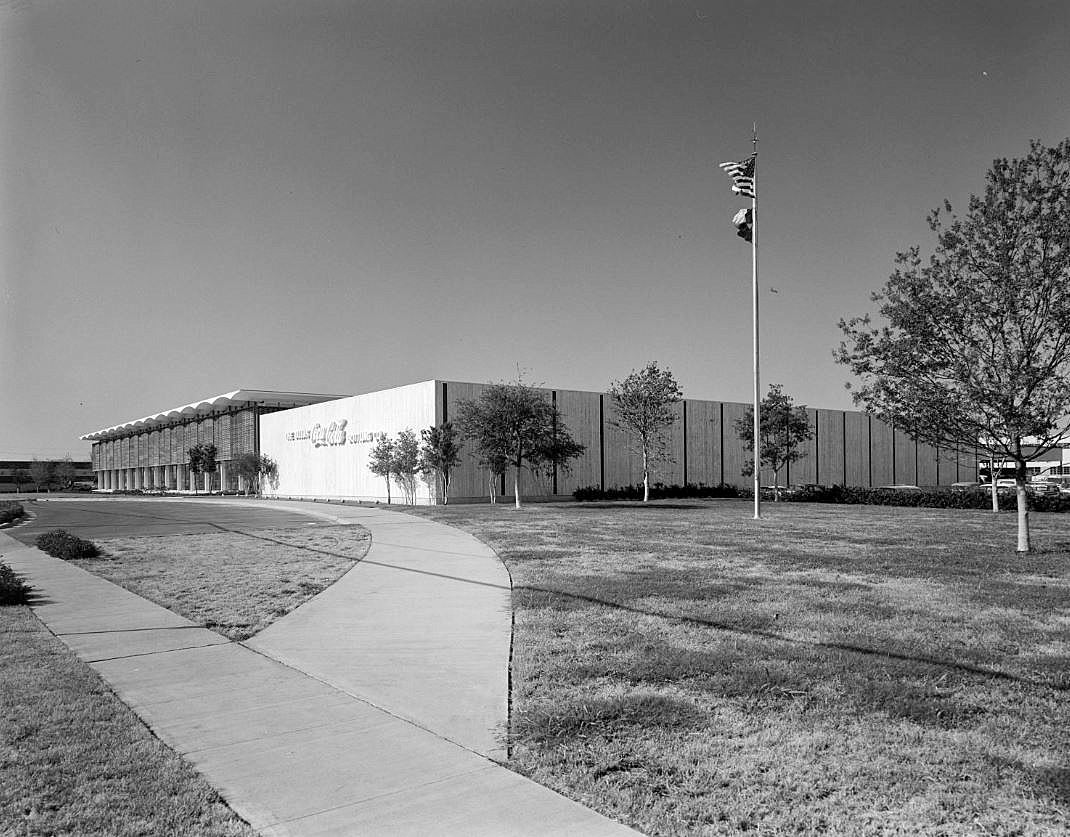
The photo above shows the sunniest factory floor I’ve ever seen. You don’t think of factories filled with sunlight, but this is what it looked like inside the new Coca-Cola bottling works at Lemmon and Mockingbird in 1964. It’s gone now (as is that UNBELIEVABLY FANTASTIC ANIMATED NEON SIGN that made me look forward to nighttime drives to Love Field). All that remains is the small syrup plant (from 1948?). (…I think it’s a syrup plant. Or a warehouse. Or something syrup-related.)

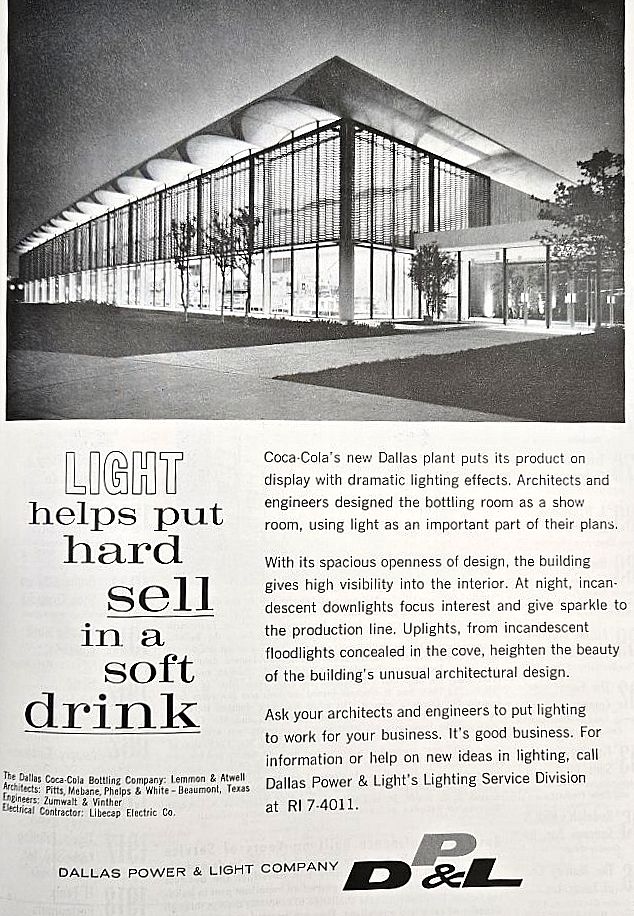
The new plant opened in June 1964. The building had floor-to-ceiling glass — I’ve read reminiscences of people who remember driving by and seeing the work going on through those huge windows. I don’t know if there was bottling work going on after dark, but here’s a grainy photo from a Dallas Power & Light ad that shows the building at night, lit up like a stage.

patreon_coca-cola_opening_060964_dpl_night_det-1Dallas Power & Light ad (det), June 1964

Speaking of which, The Dallas Morning News wrote this:

The bottling room, which fronts on Lemmon, has a glass front 254 feet long and 26 feet high to provide a view of the bottling process to the passing public. (DMN, June 9, 1964)

Free show!

The woman featured in an Employers National Life Group Insurance Company ad (below), might be the same woman seen in the photo at the top. Manning her station.

patreon_coca-cola_opening_060964_ad-det_employers-natl-life-group-insuranceEmployers National Life ad (det), June 1964

And what was rolling off the automated line? Coke, Sprite, and Tab. And something called Mission (grape and orange drinks). 1,860 bottles a minute (!).

Back to the sign for a second. I haven’t invested a LOT of time in a search (but *kind of* a lot…), but I have been unable to find footage of that truly wonderful, mesmerizing neon Coca-Cola sign. Living in an age of Instagram and YouTube, we just expect to find this sort of thing quickly, without having to set aside large chunks of time to devote to searching. If YOU know where film/video of that sign might be hiding… SPEAK UP!

A couple of shots of the exterior:

patreon_coca-cola-bottling-plant_john-rogers_portal_ext_ca-circa-1964

patreon_coca-cola-bottling-plant_john-rogers_portal_exterior_ca-circa-1964

*

coca-cola-plant_mockingbird_dallas-power-light-ad_dallas-mag_april-1964_full
April 1964

***

Sources & Notes

Top photo and last two photos are all by John Rogers and were probably taken around the time the plant began operation in mid-1964; all are from the John Rogers and Georgette de Bruchard Collection, UNT Libraries Special Collections, via the Portal to Texas History, here, here, and here.

A shorter version of this post previously appeared on the Flashback Dallas Patreon page in November 2023.

patreon_coca-cola-bottling-plant_john-rogers_portal_ca-circa-1964

*

Copyright © 2024 Paula Bosse. All Rights Reserved.
Jimi Hendrix in Dallas, 4/20/69

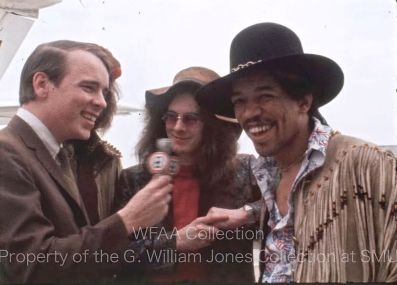
jimi_WFAA_042069_SMU_aDoug, Mitch, Noel, and Jimi

by Paula Bosse

Today is 4/20 Day. An alternate (or parallel) way to celebrate the already alternative “holiday” is to mark the anniversary of one of Jimi Hendrix’s best interviews, on the Love Field tarmac on April 20, 1969, given to Dallas reporter Doug Terry (still a college student when he was at WFAA-Channel 8). The band was in Dallas for a show at Memorial Auditorium. It’s just a fantastic, laid-back, cool interview.

I had tried contacting Doug several years ago to let him know this clip was racking up the hits on YouTube, in case he wasn’t aware it was there, but I didn’t hear back from him until this week! He had seen the post I had written about this interview and wrote a bit about that momentous occasion in the email. He also adds some interesting behind-the-scenes tidbits I always find interesting (the following is used with Doug’s permission):

I was still a college student most of the time I worked at WFAA. I handed in my resignation after covering the north Texas pop festival in that same year. [Watch one of Doug’s reports from the Texas International Pop Festival here.] Your comment about being in a large city and its advantages was something that I did not fully grasp until years later. The access was wonderful, I saw Hendrix at least three times, on one occasion being in the dressing room with a camera when he warmed up for a show (that footage is nowhere to be found).

There are two aspects to mention about that interview. First, I was a weekend reporter and late night news anchor at Ch. 8 and I assigned myself to go interview him. In those days, one could call up the airlines when a notable person was coming in and they would give the flight number and arrival time. Amazing. Most of the people at the station at that time probably had no idea who Jimi was and wouldn’t have cared if they did know.

The other interesting point is the work of the photographer. Ordinarily, we did over the shoulder interviews, the camera to the back and side of the reporter. The fact that this was shot from the side made all the difference. As a shooter, he was not otherwise outstanding but this interview would be much less interesting if it had been shot in the traditional line-up sort of way. The two bandmates goofing around was distracting but great.

Thank you so much for getting in touch, Doug!

My original 2017 post about this interview (with the film clip of Jimi, Mitch Mitchell, and Noel Redding at Love Field) — which includes additional info about Jimi’s other performances in Dallas — is here: “Jimi Hendrix, Glen Campbell, Tiny Tim — In Dallas (…Separately), 1969.”

jimi_WFAA_042069_SMU_b

***

Sources & Notes

Screenshots from the WFAA Collection, G. WIlliam Jones Film and Video Collection, Hamon Arts Library, SMU.

Excerpt from Doug Terry’s email to me (April 16, 2024), used with permission.

jimi_WFAA_042069_SMU_a

*

Copyright © 2024 Paula Bosse. All Rights Reserved.
Salih’s, Preston Center: 1953-1977

patreon_salihs_w-t-white_1968-yrbk_ext1968, Preston Center (W. T. White yearbook)

by Paula Bosse

If you’re reading this, chances are pretty good that you have fond memories of Salih’s Barbecue in Preston Center (or its later incarnation in Addison as “Solly’s”). I have to admit, I had never heard of Salih’s until I started this blog in 2014 (I completely forgot to note the landmark of 10 full years of Flashback Dallas a couple of weeks ago!). But, from what I’ve read, this was an incredibly popular place, and people still rhapsodize about the BBQ, the po’ boys, the fries, the cole slaw, and the potato salad.

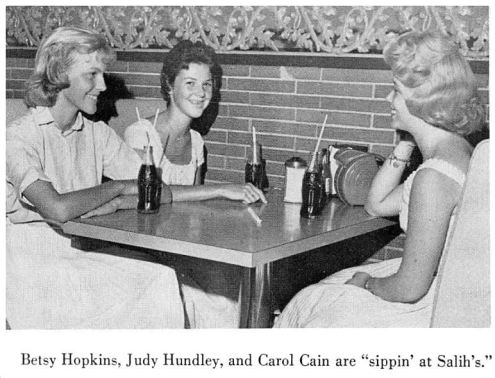
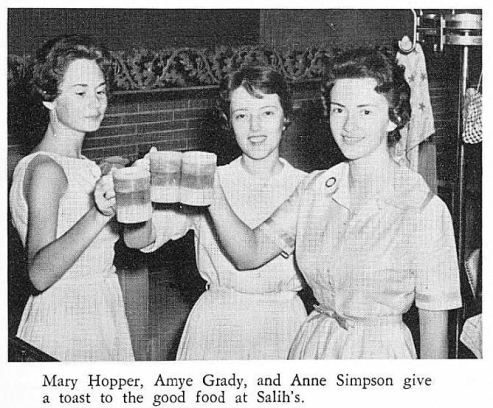
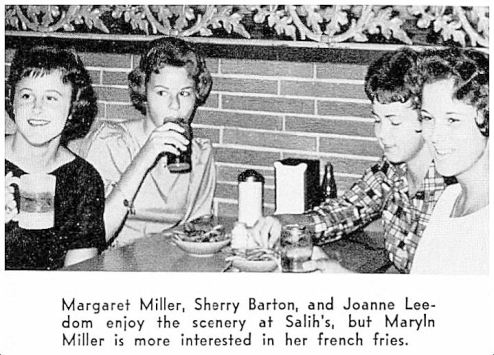
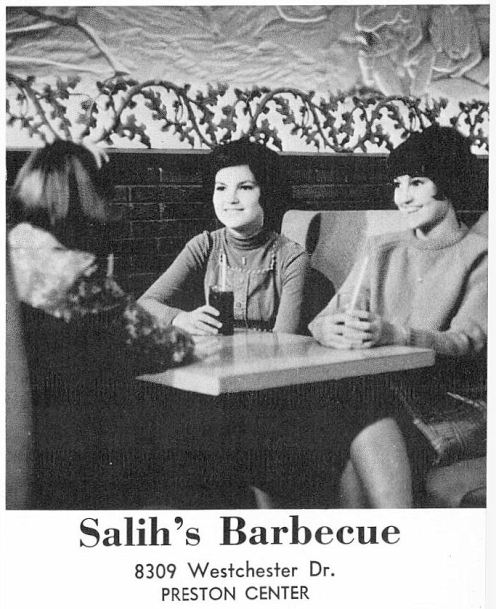
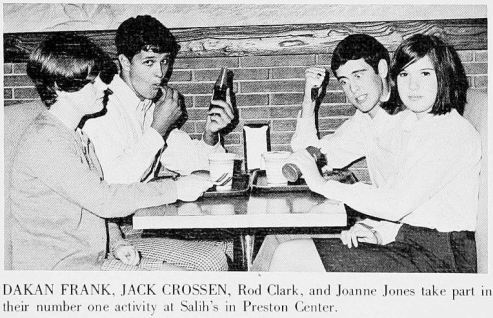
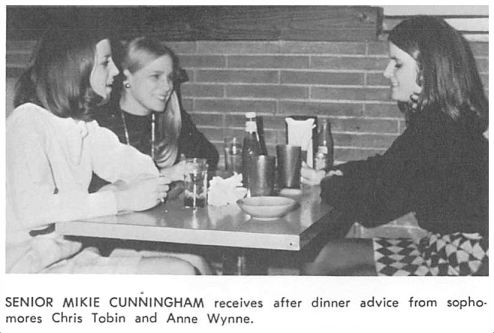
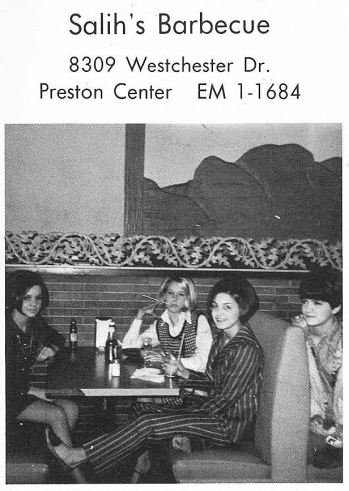
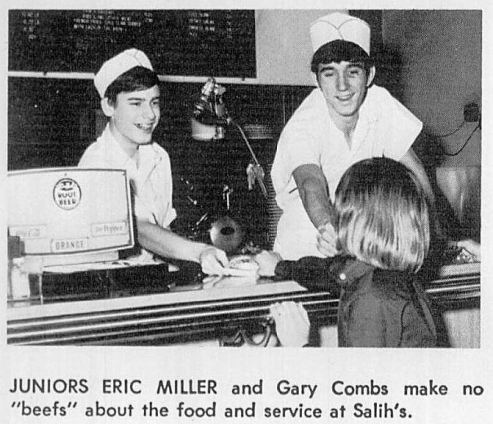
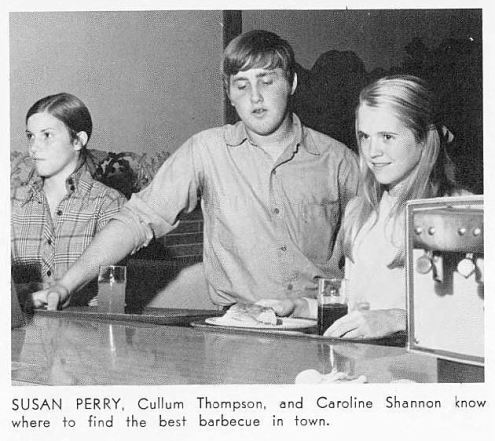
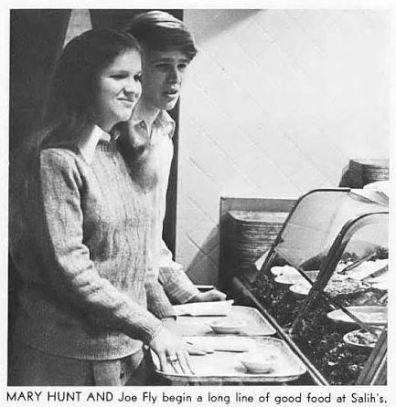
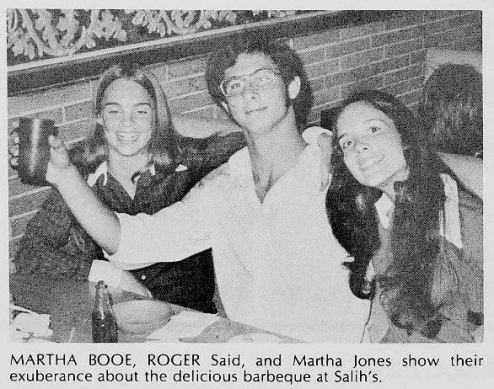
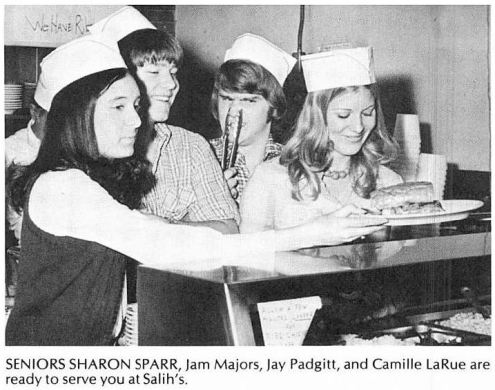
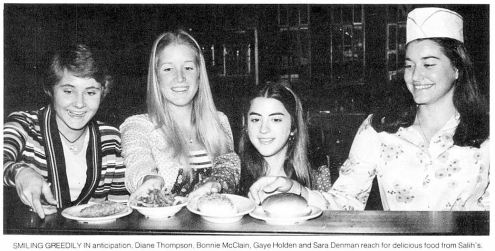
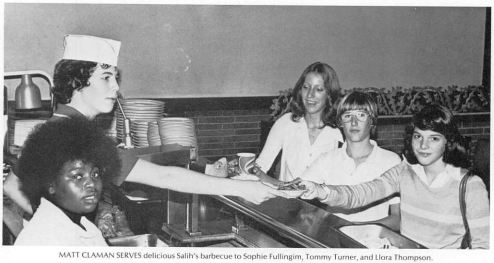
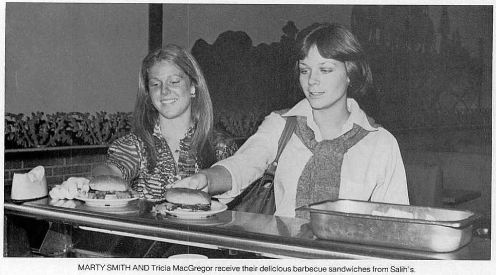
So, I’ve read all these memories… but I can find no good photos of the place! There’s the cropped shot of the exterior above and a lot of not-very-helpful shots which appeared in high school yearbooks over the years, taken inside — but they don’t actually show the restaurant! And I understand there was quite a mural in there. I’d love to see a photo of that! Do YOU have any photos of Salih’s in Preston Center? Exterior? Interior? Mural? Please send me whatever images you have. I really want to see them!

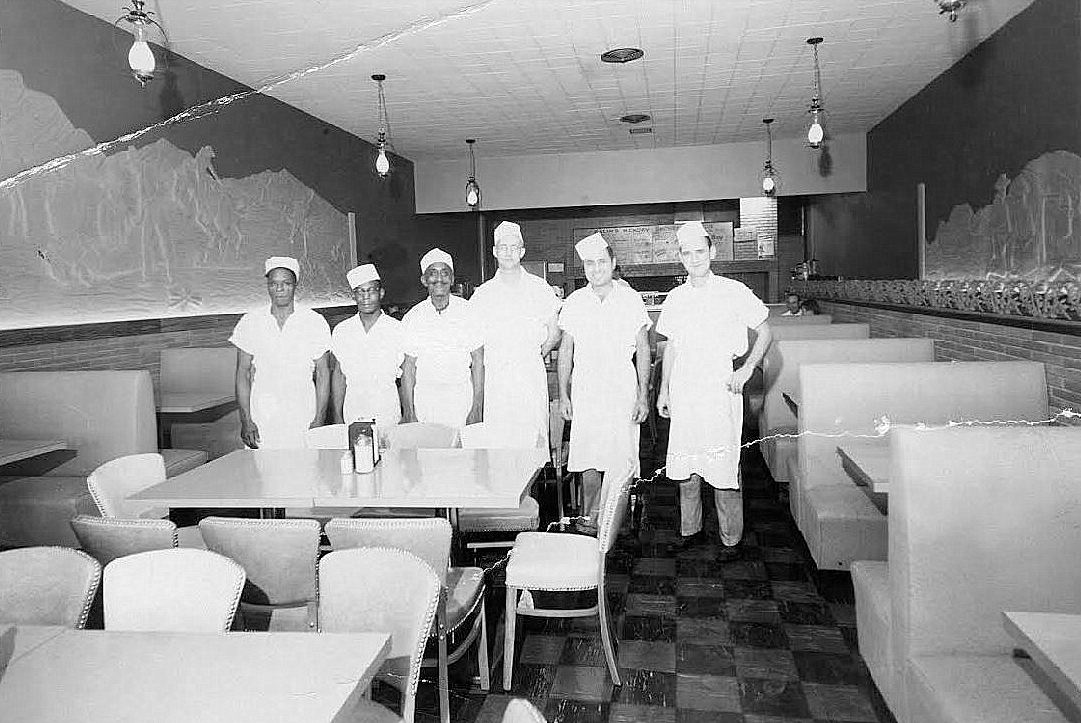
UPDATE: Thanks to Mark Salih, son of co-owner Jack Salih, I have a photo of the interior, with parts of the mural visible. George Salih is on the far right, and his brother Jack is next to him. (Thank you, Mark!)

salihs_mark-salihMark Salih photo, used with permission

*

Salih’s Barbecue was opened by George and Jack Salih on March 20, 1953. The brothers had previously owned a small drive-in and later worked in or managed locations of Lobello’s in Lakewood (2005 Abrams) and Casa Linda (328 Casa Linda Plaza) — either before, during, or after these locations became “Fred’s” BBQ stands (owned by Fred Bell, founder of Kip’s).

That first business, Salih’s Drive-In, was located across from Fair Park at 912 S. Haskell — it opened around 1945. Read George Salih’s memories of serving the “circus people” there in a Feb. 11, 1987 article from the Farmers Branch Times here.

salihs-drive-in_haskell_DMN_081849Aug. 18, 1949

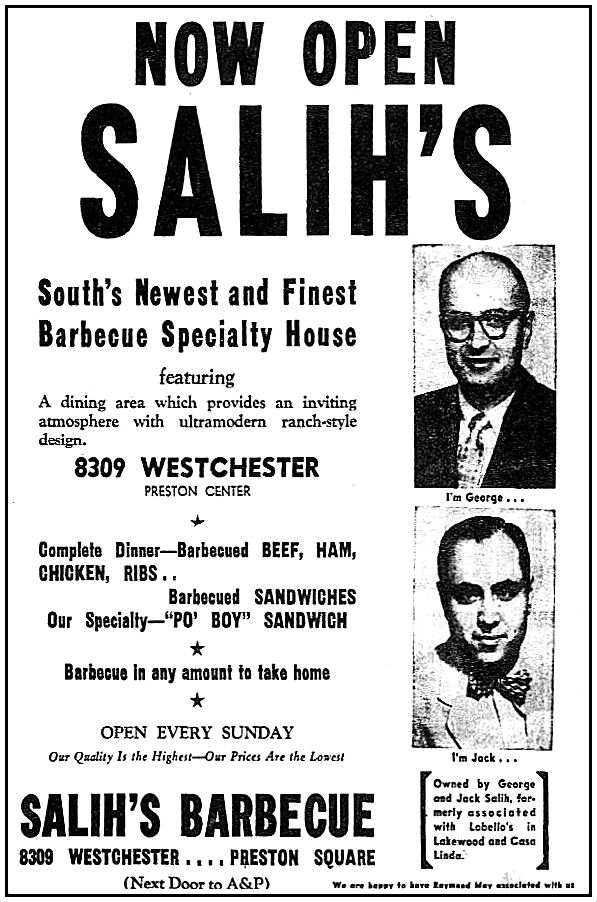
After a few years of working for the Lobello family, George and Jack opened their own place at 8309 Westchester, in Preston Center, not far from the original Lobello’s on Northwest Highway. Eventually, Jack moved to East Texas and opened another barbecue place (the Angus Inn in Longview), and George ran the Dallas restaurant. (Click ad to see a larger image.)

salihs_opening_032053_adMarch 20, 1953 — opening day

An article in the Dallas Morning News describes the new Dallas restaurant thusly:

The restaurant features unique styling in both interior and exterior design. Relief murals decorate the walls inside, while small wooden shutters afford a rustic flavor. The exterior incorporates Roman brick construction, with tall red columns decorated with glass paneling added as a decorative feature. (DMN, March 20, 1953)

It also notes that the Salih brothers were the restaurant’s chefs.

I mentioned this Park Cities landmark in a recent Patreon post, and a kind member described the mural (designed, I believe, by artist Frank J. Boerder):

It was a 3-dimensional cut-out depiction of a cowboy scene, back-lit by a set of red-orange lamps. It ran the length of the south wall of the interior. When you looked at it the scene was in black, back-lit by the lamps. Very striking for a BBQ place. (Plus, the food was very, very good.)

Salih’s is described in the ad above as “a dining area which provides an inviting atmosphere with ultramodern ranch-style design.” I would really like to see this!

Salih’s left Preston Center around 1977, leaving for the then-sparsely populated wilderness of Addison. The restaurant’s name was changed to “Solly’s” (which was either a new name for a new location, a guide for new customers on how to pronounce the Lebanese name, or a sad concession to deal with possible Middle Eastern biases). Solly’s closed in 2004.

*

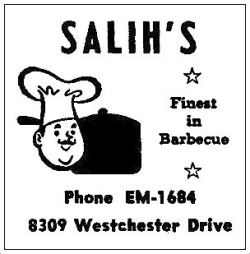
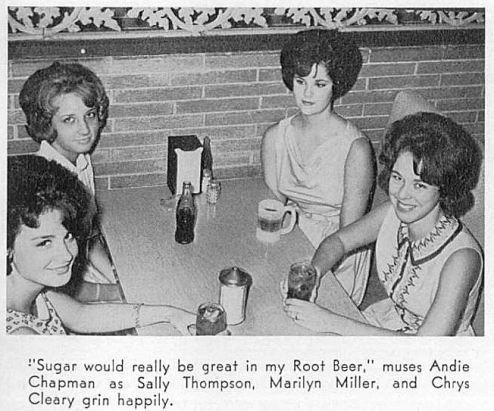
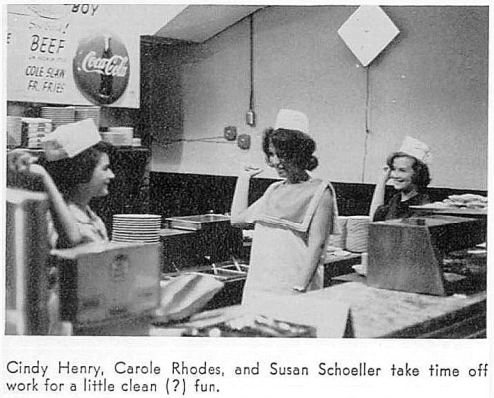
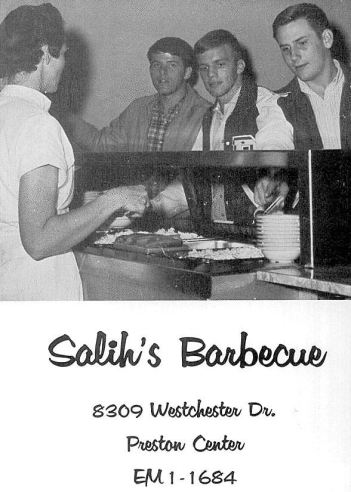
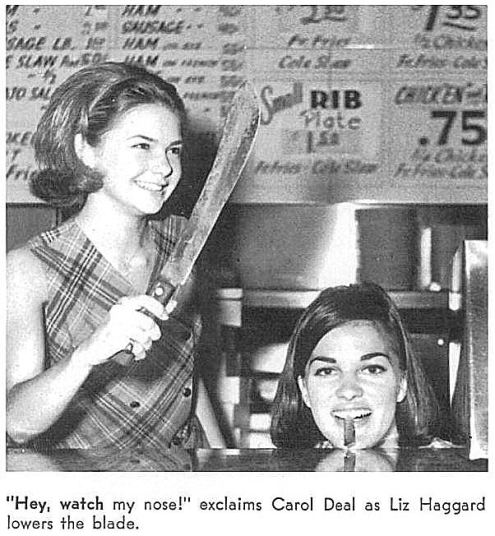
Below are a lot of ads that appeared in the yearbooks of Highland Park High School and W. T. White High School. I was hoping to see more of the interior but, instead, got lots of photos of kids in paper hats (which I still enjoy!). So here they are!

salihs_smu-campus_081656SMU Daily Campus, 1956
*

salihs_HPHS_1960-yrbkHPHS, 1960
*

salihs_HPHS_1961-yrbkHPHS, 1961
*

salihs_HPHS_1962-yrbkHPHS, 1962
*

salihs_HPHS_1963-yrbkHPHS, 1963
*

salihs_HPHS_1964-yearbookHPHS, 1964
*

salihs_w-t-white_1966-yearbookWTW, 1966
*

salihs_HPHS_1967-yrbkHPHS, 1967
*

Part of the mural over their heads?

salihs_w-t-white_1967-yrbkWTW, 1967
*

salihs_HPHS_1968-yearbookHPHS, 1968
*

salihs_HPHS_1969-yrbkHPHS, 1969
*

More of the carved mural?

salihs_w-t-white_1969-yrbkWTW, 1969
*

salihs_HPHS_1970-yrbkHPHS, 1970
*

salihs_HPHS_1971-yrbkHPHS, 1971
*

salihs_HPHS_1972-yrbkHPHS, 1972
*

salihs_HPHS_1973-yrbkHPHS, 1973
*

salihs_HPHS_1974-yrbkHPHS, 1974
*

salihs_HPHS_1975-yrbkHPHS, 1975
*

salihs_HPHS_1976-yrbkHPHS, 1976
*

And, the last one, from 1977 — could that be a another very, very dark part of the mural at the right?

salihs_HPHS_1977-yrbkHPHS, 1977

***

Sources and Notes

All sources as noted.

Read the obituary of George Salih here. Read a longer, more colorful obituary in the Dallas Morning News archives (“George Salih — Operated Barbecue Restaurant in Dallas” by Joe Simnacher, DMN, Aug. 14, 2009).

Jack Salih died in Gilmer in Jan. 1991.

patreon_salihs_w-t-white_1968-yrbk_ext_sm

*

Copyright © 2024 Paula Bosse. All Rights Reserved.
The Hilltop Is for Lovers — 1963

valentines-day_yellow-pages-cover_may-1963_HILLTOP IS FOR LOVERSLove is in the air…

by Paula Bosse

Happy Valentine’s Day!

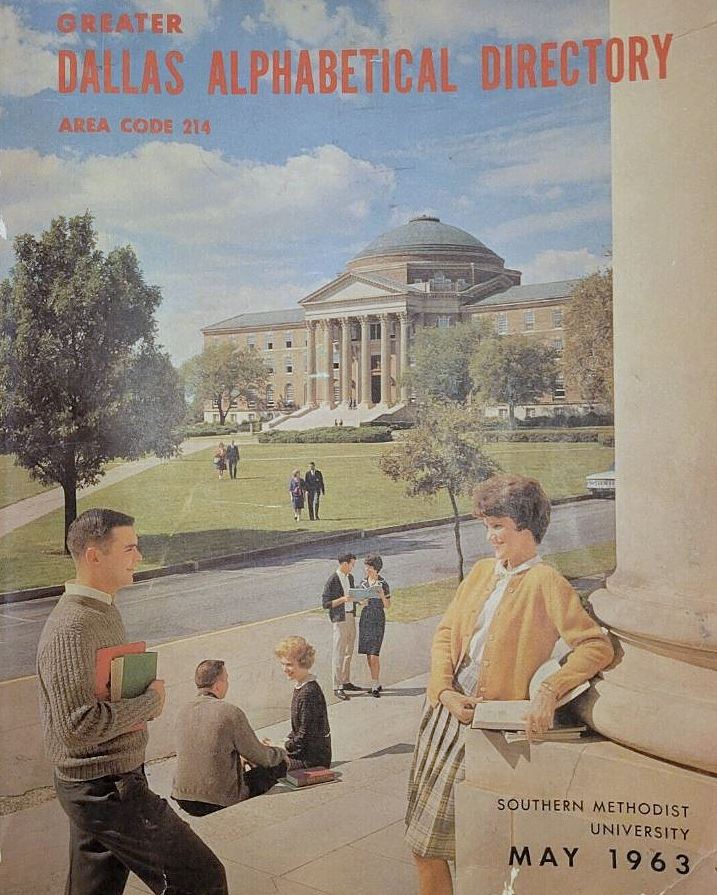
This seems like a timely image. Sort of a half-photo, half-illustration depiction of dreamy campus life, in which SMU appears to be populated entirely by smiling paired-off couples, as a soft-focus Dallas Hall rests serenely in the background.

***

Sources & Notes

Cover of the 1963 Greater Dallas Yellow Pages, which popped up sometime last year on eBay.

valentines-day_yellow-pages-cover_may-1963_HILLTOP IS FOR LOVERS_sm

*

Copyright © 2024 Paula Bosse. All Rights Reserved.

The Three Witches of Stemmons Tower

stemmons_three-witches_hooded-figures_pedro-coronelConvening…

by Paula Bosse

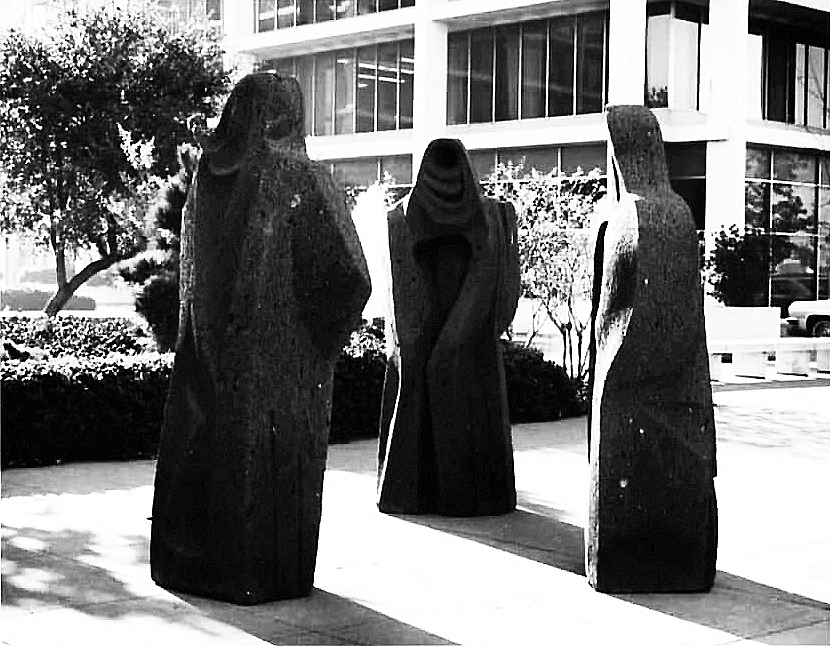
I have to admit, I had never heard of “the Stemmons witches” until a few years ago. They seem to have made quite the impression on teenagers of the ’60s and ’70s (and ’80s?), who would frequently take uninitiated fellow teens to visit the mysterious/sinister cloaked figures, after having told them elaborate scary stories about the figures that stood solemnly and forebodingly on the grounds of the 4-building Stemmons Towers complex.

I gather they could be seen from the freeway, and I can understand how they’d look pretty creepy, especially at night, from a distance (and up close). What a perfect teenage ritual for kids with cars: wait until dark, then take your friends to the Towers, pumping them full of spooky urban legends on the drive over, then watch their faces as you introduce them to witches 1-3. If there were night watchmen on overnight duty at Stemmons Towers, they must have had their hands full.

The reminiscences I’ve read all say the three figures disappeared at some point (late ’80s or early ’90s?) — and no one seems to know what happened to them. Do YOU know what happened to them? Where are they today?

*

The three figures are by artist Pedro Coronel, a Mexican sculptor and painter aligned with Rufino Tamayo — he was influenced by Diego Rivera and worked with Constantine Brancusi. He often used onyx and sandstone (from the photo, it looks like the “witches” were made of a black stone). The name of this work was “Hooded Figures.” From The Dallas Morning News:

These strange figures are permanent sidewalk superintendents at the new Stemmons Tower North, fourth and final building being erected in the complex on Stemmons Freeway. The three stone “Hooded Figures,” by sculptor Pedro Coronel, are among several works on the Towers’ landscaped plaza. (DMN, July 31, 1966)

(“Stemmons witches” has a much better ring to it than “sidewalk superintendents.”)

Read memories of teenage visits to these “witches” on the Dallas Historical Society “Phorum,” here.

Where have these “Figuras Encapuchadas” scurried off to?

***

Sources & Notes

Thank you SO MUCH to Fred Goodwin, who sent me this photo. He says he came across it years ago somewhere on the internet and does not know the original source. Thank you, Fred!

I’ve seen only one other photo of this work by Coronel — it accompanies the caption quoted above, in The Dallas Morning News (July 31, 1966, p. 1C). Sadly, it’s not a good scan.

A story by Steve Brown appeared in the DMN on Dec. 14, 2023, reporting that the four towers are to be converted to a residential community (“Dallas’ Landmark Stemmons Towers Sell for Conversion to Apartments”). Um, okay.

See a cool night-time photo of Stemmons Tower #1 in the 2018 Flashback Dallas post “Stemmons Tower, Downtown Skyline — 1963.”

stemmons_three-witches_hooded-figures_pedro-coronel_sm

*

Copyright © 2024 Paula Bosse. All Rights Reserved.
“This Month In Dallas” — Aug./Sept. 1962: The Clubs

club-dallas_this-month-in-dallas_aug-sept-1962_ebay_detClub Dallas, Browder Street

by Paula Bosse

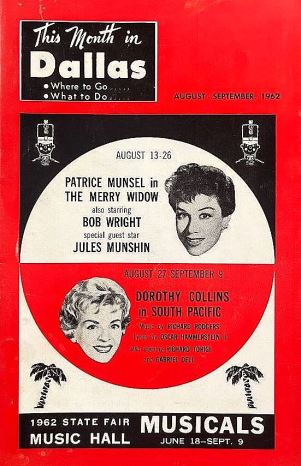
Downtown Dallas was a cool place for entertainment and dining in the early 1960s, from high-class clubs and lounges to famous and infamous strip joints (some of which were higher-class than others). A few months ago on eBay, someone scanned a bunch of pages of a magazine called This Month in Dallas (“Where to Go, What to Do”), which seems to have been aimed at the conventioneer or out-of-town visitor. (I’ve never heard of this publication, but I would LOVE to see more!)

this-month-in-dallas_aug-sept-1962_cover_ebay

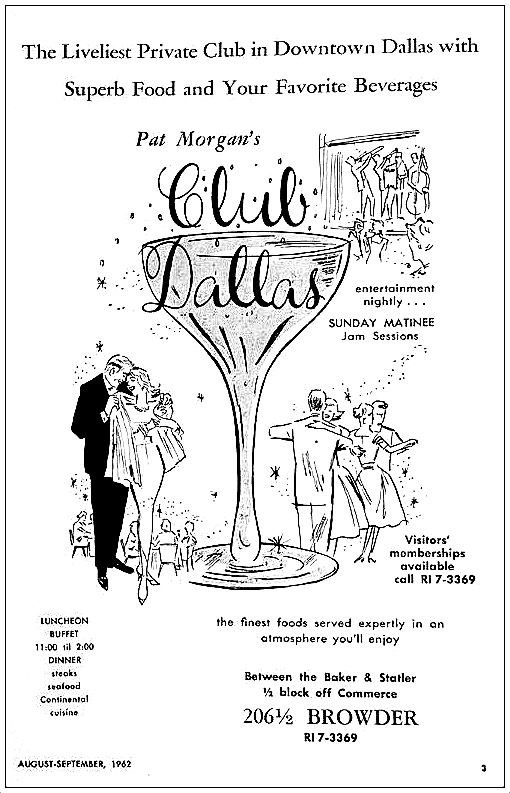
As far as image quality, I’m at the mercy of the person doing the scanning, but here are several of the ads featured in the eBay listing. All appeared in the Aug./Sept. 1962 issue of This Month in Dallas. (At the top, a detail from an ad for Club Dallas — the full ad is below.)

*

Let’s just do them alphabetically.

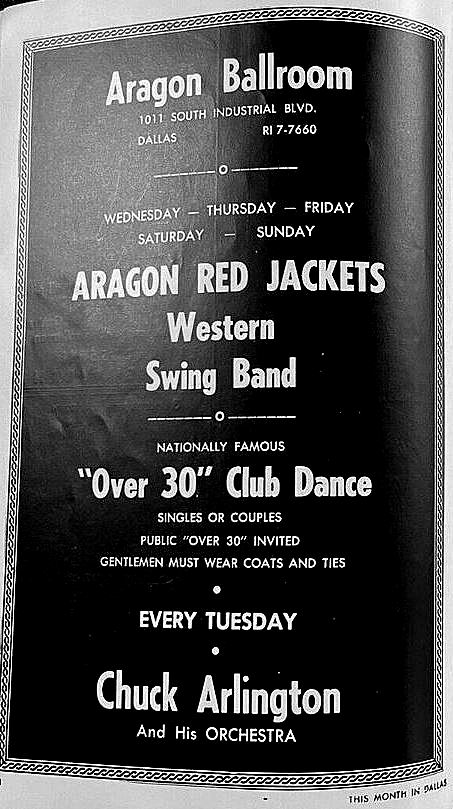
ARAGON BALLROOM, 1011 S. Industrial Blvd. (now S. Riverfront). Featuring the Aragon Red Jackets Western Swing Band, the “Over 30” Club Dance, and Chuck Arlington and His Orchestra.

aragon-ballroom_this-month-in-dallas_aug-sept-1962_ebay

*

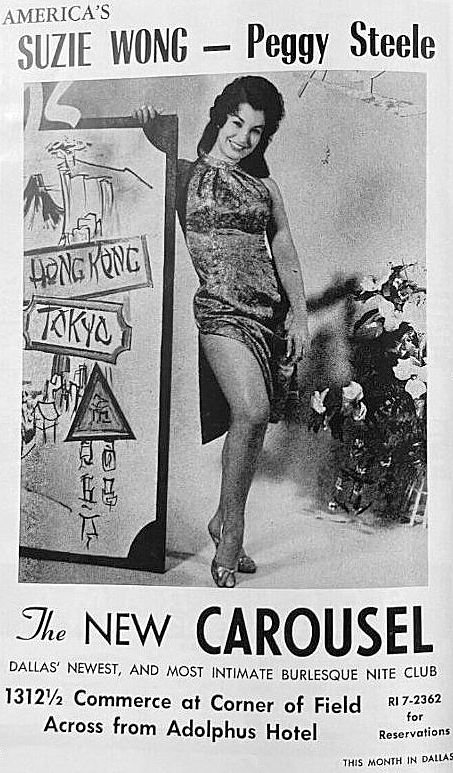
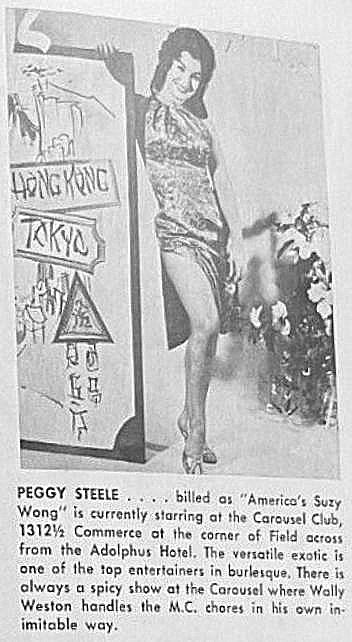
CAROUSEL CLUB (or “New” Carousel Club), 1312½ Commerce, at Field. Jack Ruby, proprietor. “Dallas’ Newest and Most Intimate Burlesque Nite Club.” This ad (the first of several) features stripper Peggy Steele, “America’s Suzie Wong.”

carousel_peggy-steel_this-month-in-dallas_aug-sept-1962_ebay

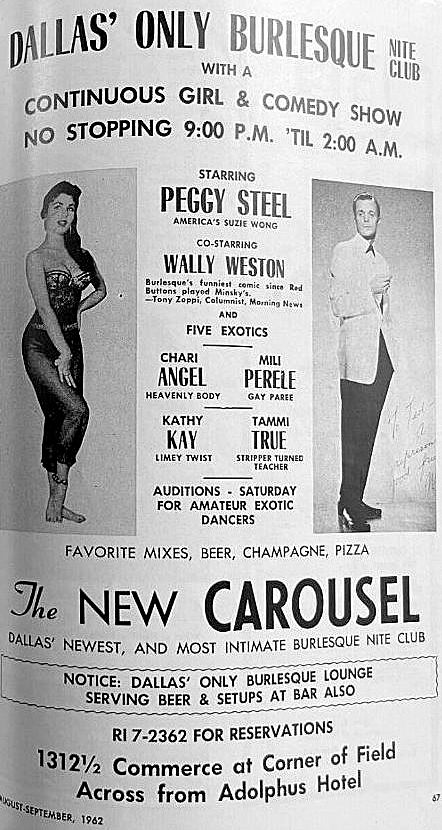
More CAROUSEL. “Dallas’ only burlesque nite club with a continuous girl and comedy show. No stopping, 9:00 PM ’til 2:00 AM.” America’s Suzie Wong” is back, now spelled Peggy Steel. MC’d by comic Wally Weston.

carousel_wally-weston_this-month-in-dallas_aug-sept-1962_ebay

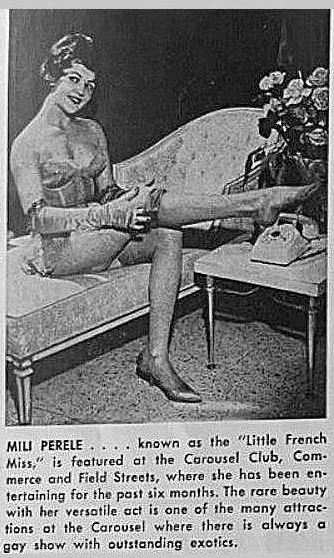
More CAROUSEL. Here’s Mili Perele, “the Little French Miss.”

carousel_mili-perele_this-month-in-dallas_aug-sept-1962_ebay

More CAROUSEL. Heck, let’s throw in another Peggy Steel/e mention.

carousel_steel-paggy_this-month-in-dallas_aug-sept-1962_ebay

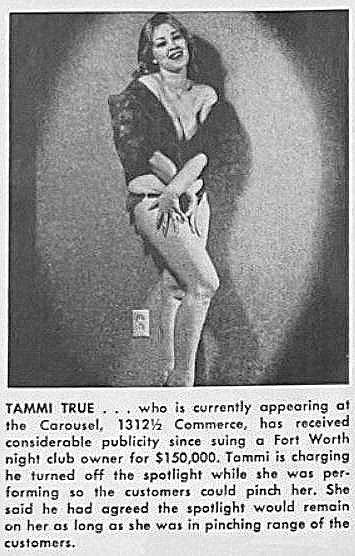
More CAROUSEL (Jack’s advertising budget was impressive). Tammi True, then in the midst of a pinching brouhaha.

carousel_tammi-true_this-month-in-dallas_aug-sept-1962_ebay

*

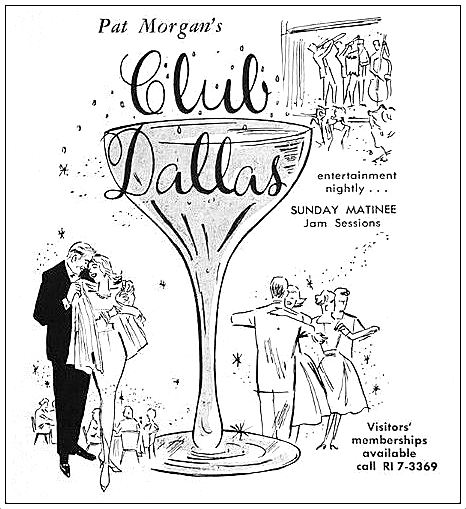
Pat Morgan’s CLUB DALLAS, 206½ Browder (just south of Commerce). I love this ad, but I’m not familiar with the establishment or Mr. Morgan. Looks like it opened in the summer of 1962 (“Owner Pat Morgan has eliminated the semi-nude waitresses and aims for the family trade” — Dallas Morning News, July 27, 1962), changed its name in September 1962 to simply “Pat Morgan’s,” and finally closed in February 1963. I bet he rued the day he dumped those semi-nude waitresses….

club-dallas_pat-morgan_this-month-in-dallas_aug-sept-1962_ebay

*

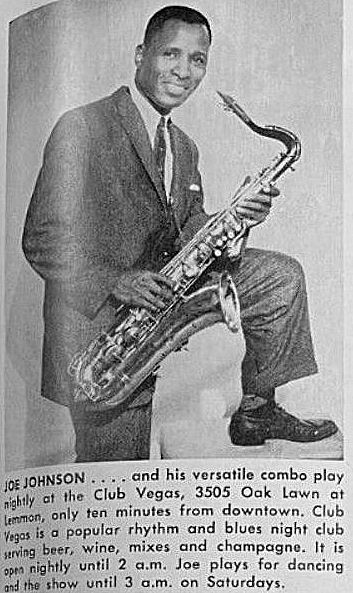
CLUB VEGAS, 3505 Oak Lawn. Yes, there was swinging nightlife beyond downtown. Club Vegas was famously owned by Jack Ruby’s sister, Eva Rubenstein. This club booked a lot of Black and Hispanic bands (for mixed audiences), including Joe Johnson and Trini Lopez. (I’ve been meaning to write about this place for the past 10 years!)

club-vegas_joh-johnson_this-month-in-dallas_aug-sept-1962_ebay

*

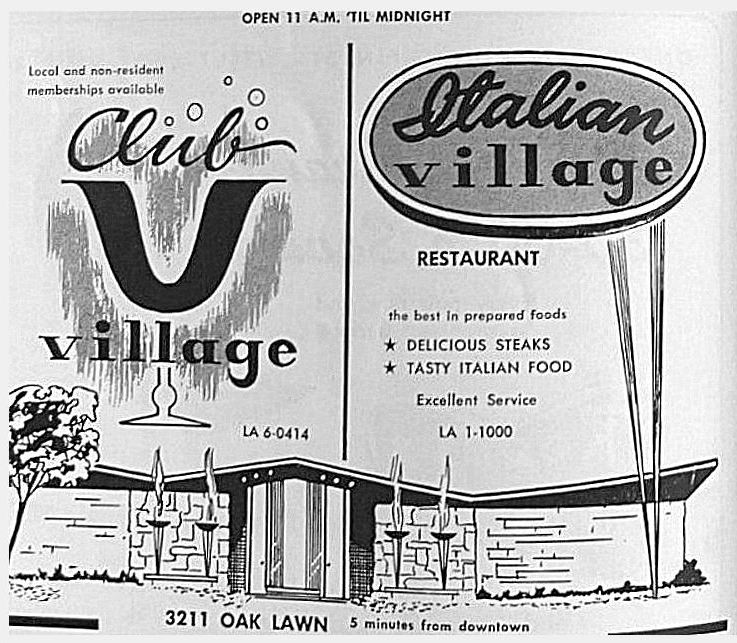
CLUB VILLAGE / ITALIAN VILLAGE RESTAURANT, 3211 Oak Lawn. Another happening place in Oak Lawn. I wrote and wrote and wrote about Sam Ventura’s Italian Village here.

club-village_italian-village_this-month-in-dallas_aug-sept-1962_ebay

*

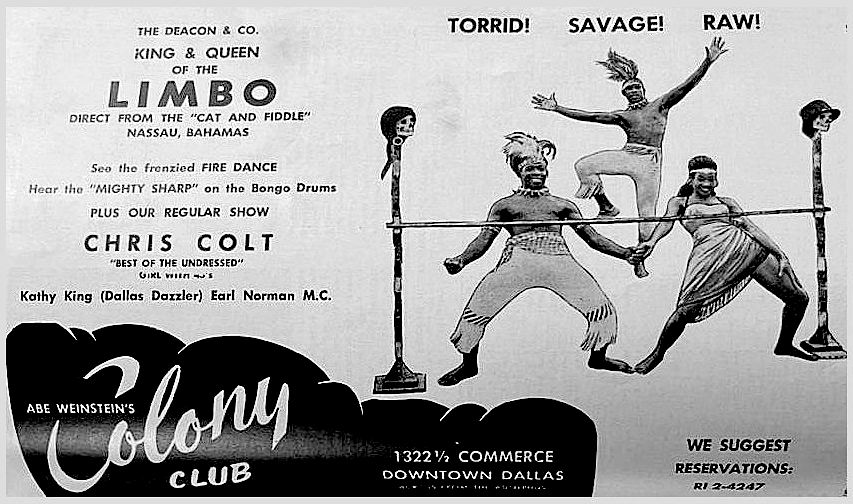
COLONY CLUB, 1322½ Commerce. Abe Weinstein, proprietor. The “high-class” strip joint. Also featured acts like Deacon & Co., King and Queen of the Limbo.

colony-club_limbo_this-month-in-dallas_aug-sept-1962_ebay

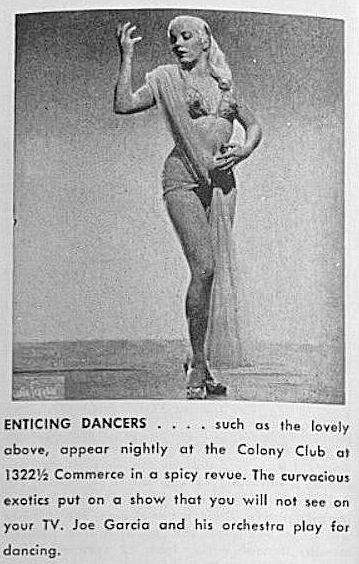
More COLONY CLUB. An unnamed exotic.

colony-club_this-month-in-dallas_aug-sept-1962_ebay

*

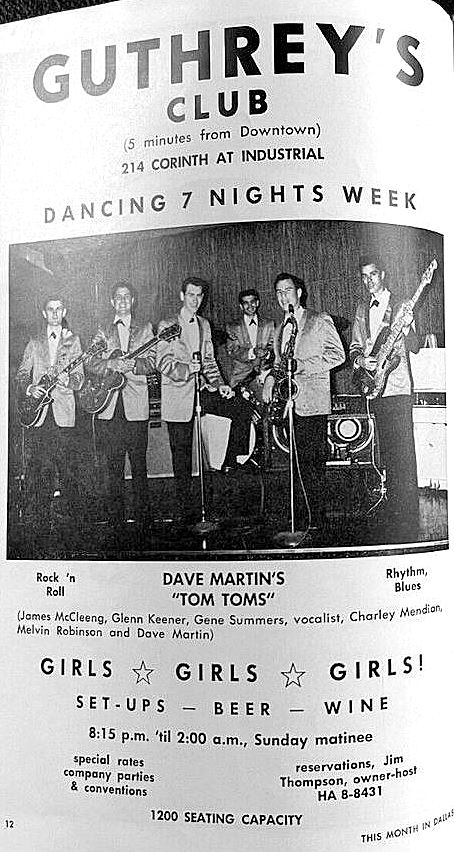
GUTHREY’S CLUB, 214 Corinth, at Industrial (now Riverfront). Very popular back in the day. “Girls! Girls! Girls! Set-ups, beer, wine.” This ad features Dave Martin’s Tom Toms (James McCleeng, Glenn Keener, Gene Summers — vocalist, Charlie Mendian, Melvin Robinson, and Dave Martin).

guthreys_dave-martins-tome-toms_this-month-in-dallas_aug-sept-1962_ebay

*

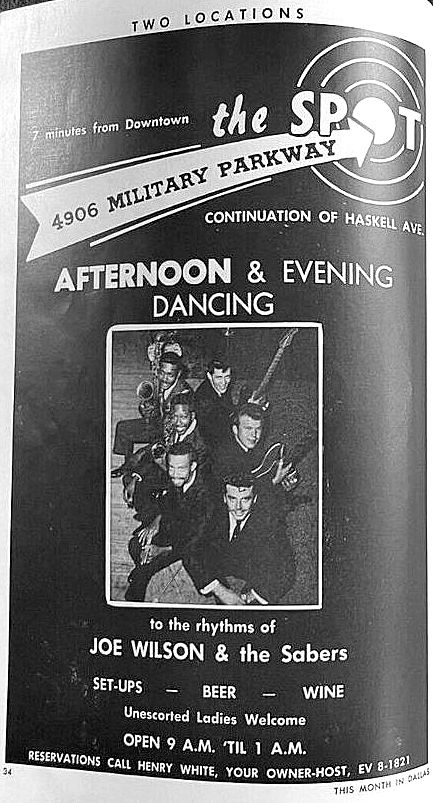
THE SPOT, 4906 Military Parkway. This ad features Joe Wilson & The Sabers.

spot_military-pkwy_this-month-in-dallas_aug-sept-1962_ebay

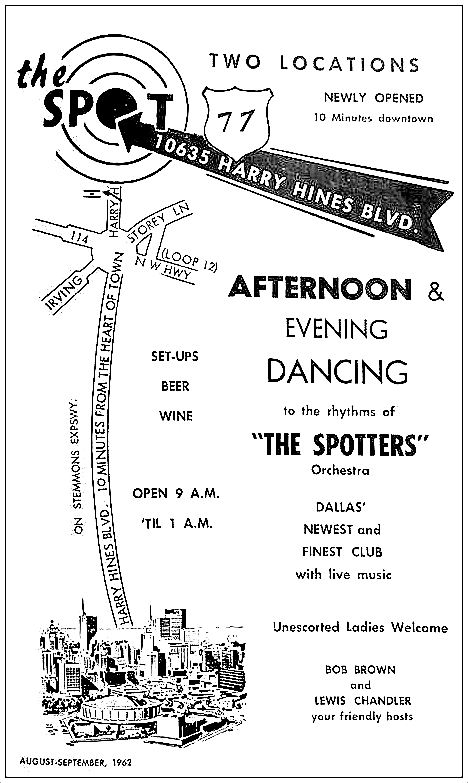
THE SPOT, the “other” location, 10635 Harry Hines. House band The Spotters.

spot_harry-hines_this-month-in-dallas_aug-sept-1962_ebay

*

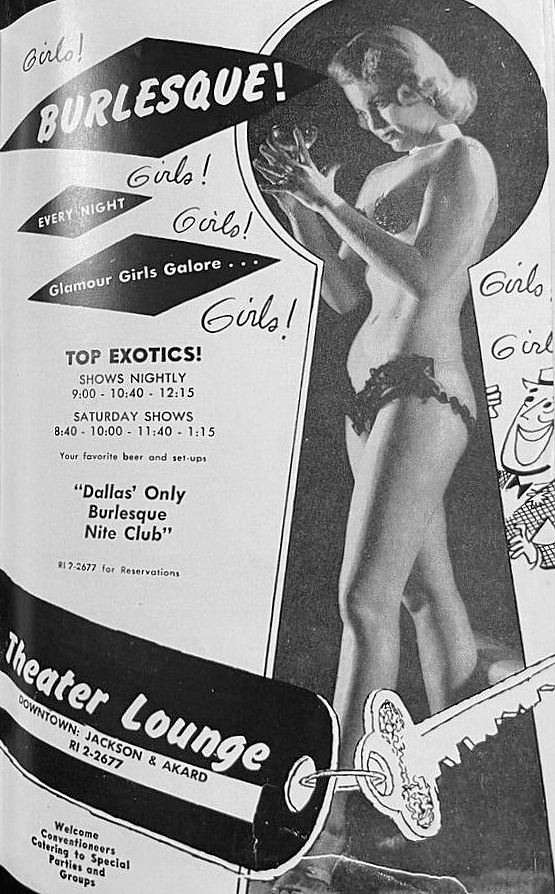
THEATER LOUNGE, 1326 Jackson, at Akard. Barney Weinstein, proprietor. “Glamour Girls Galore.”

theater-lounge_this-month-in-dallas_aug-sept-1962_ebay

*

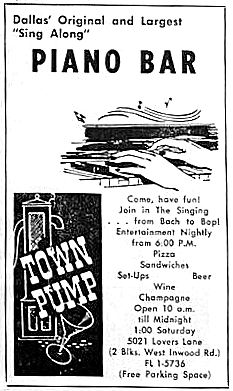
TOWN PUMP, 5021 Lovers Lane. “Dallas’ Original and Largest ‘Sing Along’ Piano Bar.” That is one scary sentence.

town-pump-piano-bar_this-month-in-dallas_aug-sept-1962_ebay

***

Sources & Notes

All ads from the Aug./Sept. 1962 issue of This Month in Dallas.

club-dallas_this-month-in-dallas_aug-sept-1962_ebay_det_sm

*

Copyright © 2023 Paula Bosse. All Rights Reserved.
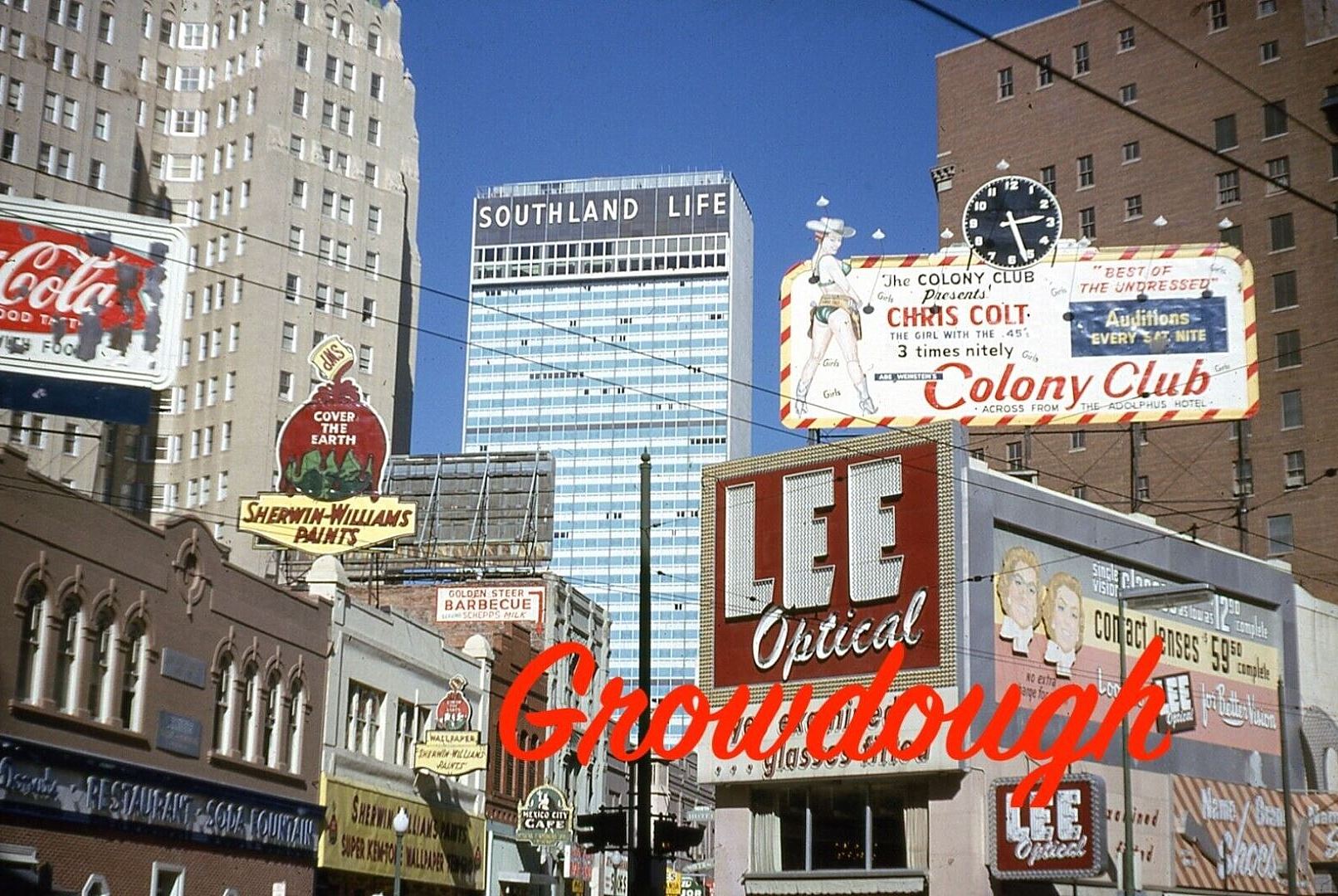
Colony Club Billboard in Beautiful Kodachrome — Early 1960s

kodachrome_elm-ervay-live-oak_chris-colt_colony-club-billboard_ebay_WATERMARKDowntown Dallas has it all…

by Paula Bosse

This. Is. A. Fantastic. Photo.

If only for the great, great, great Colony Club (“the best of the undressed”) billboard featuring Chris Colt (“the girl with the 45s”).

See this same view of the (one-time) intersection of Elm, Ervay, and Live Oak here and here. (The dazzling animated neon Coca-Cola sign was once where Chris Colt is showing off her 45s.)

I almost never post images with watermarks, but this photo is pretty spectacular. Look around the watermark!

I don’t know the seller of this color slide. I have no affiliation with the person. I get no cut in any sale. But I want someone reading this to BUY IT! Let’s keep this with someone who loves Dallas history! (And if you DO buy it and would like to send me a digital copy… well, I wouldn’t say no!) See this slide currently on eBay HERE. (HURRY!)

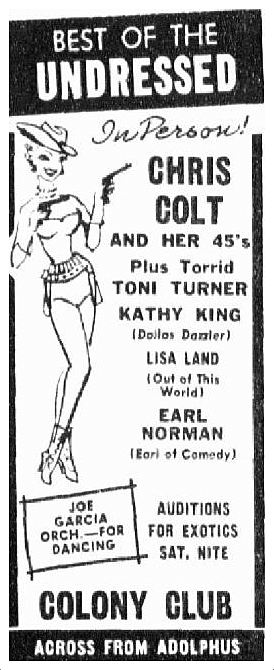
To see a naughty photo of Chris Colt, you can click on an antique collectors’ website here.

colony-club_ad_chris-colt_112262Colony Club ad, Nov. 22, 1962

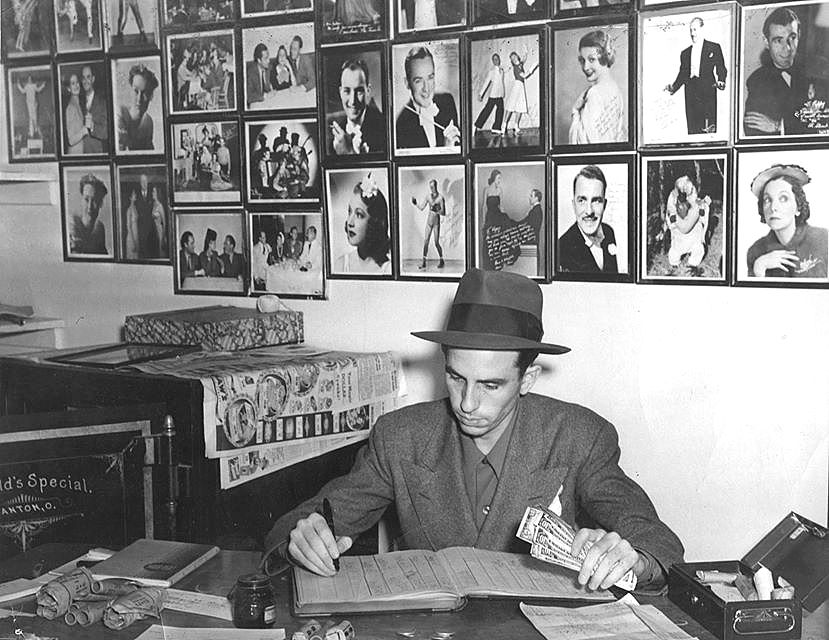
And below is a photo of Colony Club owner Abe Weinstein in his younger years counting his moolah.

abe-weinstein_abe-and-pappys_djhs-facebookphoto: Dallas Jewish Historical Society

***

Sources & Notes

Top image is from a color slide in a current eBay listing here. (Seller’s title: “Original Slide Dallas St Scene Colony Club Coca Cola Billboards Southland Life.”) There is no date, but Golden Steer Barbecue opened at 1713 Live Oak sometime in 1961.

Abe Weinstein photo — from his days as the co-owner of Abe’s and Pappy’s — is from the Facebook page of the Dallas Jewish Historical Society.

kodachrome_elm-ervay-live-oak_chris-colt_colony-club-billboard_ebay_WATERMARK_sm

*

Copyright © 2023 Paula Bosse. All Rights Reserved.