Flashback : Dallas

A Miscellany: History, Ads, Pop Culture

Category: 1960s

Blackie Sherrod: “The Most Plagiarized Man in Texas” — 1919-2016

blackie-sherrod_dmn-video

by Paula Bosse

Legendary sportswriter Blackie Sherrod died yesterday at the age of 96. My father was not a follower of sports, but I remember he read Blackie Sherrod’s columns because, along with other great, larger-than-life, and exceptionally talented DFW sportswriters such as Bud Shrake, Dan Jenkins, and Gary Cartwright, Blackie was — for want of a better word — a “literary” journalist whose style transcended his subject matter. His writing appealed to everyone who enjoyed and appreciated well-written and caustically funny forays into, around, over, and under the world of sports. Sports fans — and other sportswriters — loved the guy. And so did everyone else.

In the December 1975 issue of Texas Monthly, Larry L. King (forever known as the man who made more money from the best little whorehouse in Texas than any of the girls who plied their trade there) wrote a fantastic profile of Blackie (“The Best Sportswriter in Texas”), in which he described Blackie Sherrod as being “the most plagiarized man in Texas.” Sportswriters around the state routinely stole all of Blackie’s best lines and inserted them, unattributed, into their own columns. King himself admits he was one of the worst offenders. The lengthy profile is great. Great. Read it here.

*

UPDATE: Also, this is a great 9-minute film produced by KERA in the 1970s in which Blackie talks about his career, past and present.

***

Sources & Notes

Video is from the KERA Collection, G. William Jones Film & Video Collection, Hamon Arts Library, Southern Methodist University; the permanent link on YouTube is here.

Watch a Dallas Morning News-produced video tribute to Blackie Sherrod from 2013.

The Dallas Morning News obituary — “Legendary News Sportswriter Blackie Sherrod Dies at 96” — written by Kevin Sherrington, is here.

Several of Blackie’s Sherrod’s books can be purchased online, here.

Moments after I posted yesterday’s photo of the Dallas Times Herald lobby, I read that Blackie had died. He must have walked through that lobby thousands of times. That was an odd bit of synchronicity.

See an early photo of Blackie with his famed co-workers in the post “Legendary Sports Writers of the Fort Worth Press — ca, 1948.”

Thanks, Blackie.

*

Copyright © 2016 Paula Bosse. All Rights Reserved.

Six Flags: The Mexican Section — 1961

six-flags_mexican-section-lights_1962_ebayBienvenidos!

by Paula Bosse

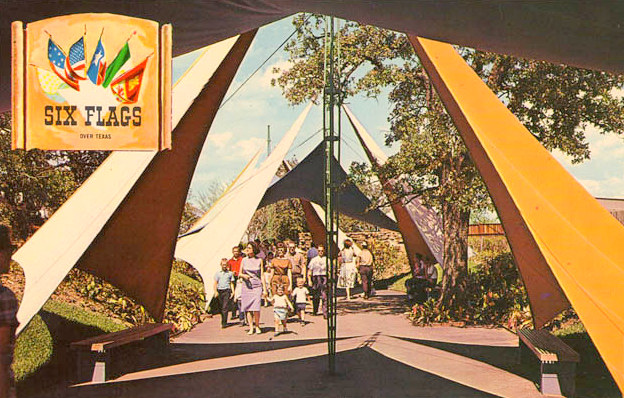
The image above is from a Six Flags Over Texas postcard. The description on the back reads:

Geometric Patterns — Mexican Section
Multi-colored lighting effects reveal a fascinating and beautiful picture of the Canopied Garden Walkway leading into the Mexican Section at this new 105-acre $10,000,000 family entertainment center.

Here it is in the daytime, still kind of attention-grabbing, but nowhere near as cool-looking:

six-flags_canopied-entrance_colliervia Ken Collier

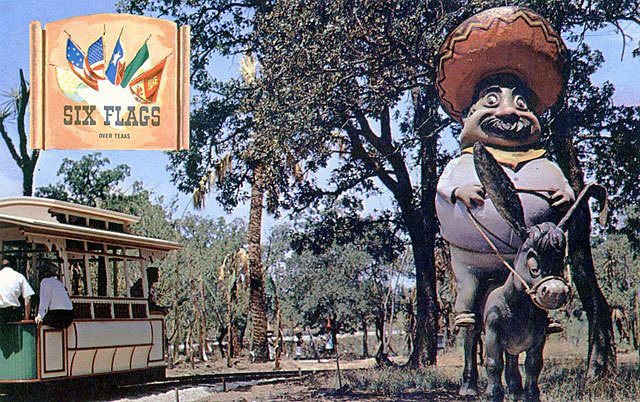
I just wanted to post this Six Flags picture I’d never seen and move along, but why not add a few more postcards showing attractions in this part of the theme park: the “Mexican Section.”

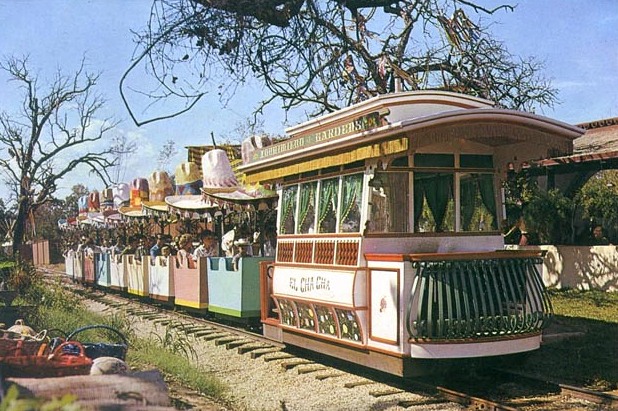
There was the Fiesta Train (which I was surprised to see was originally called Ferrocarril Fiesta), which was topped with colorful sombreros and chugged by all sorts of “festive” scenes which might seem a little culturally eyebrow-raising today.

six-flags_mexican-section-fiesta-train_colliervia Ken Collier

six-flags_mexican-section_burro-ridervia Ken Collier

There were animatronic bull fights. “Olé!”

six-flags_mexican-section_bull-fightvia Gorillas Don’t Blog

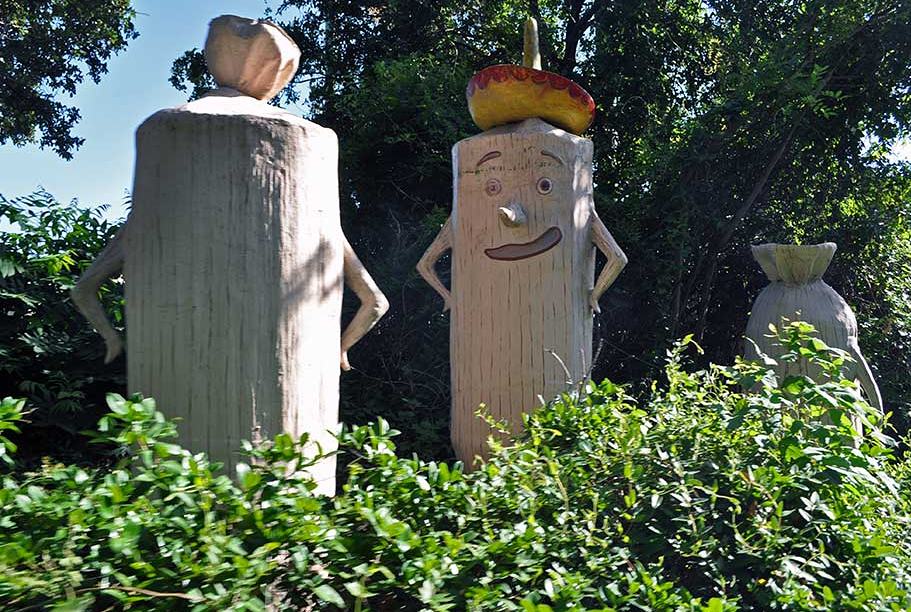
There were … dancing tamales. DANCING TAMALES! (Designed by Peter Wolf.)

Dancing Tamales — Mexican Section
One of the most popular of the many colorful and comical animations on the Fiesta Train ride, this group of Dancing Tamales perform to the gay strains of Mexican music that fills the air.

six-flags_dancing-tamales_flickrvia Flickr

And speaking of Mexican music, there were strolling mariachis.

six-flags_mexican-section_mariachis-flickrvia Flickr

And there was an even an El Chico restaurant.

el-chico_six-flags-gazette_091061Six Flags Gazette, Sept. 10, 1961

Here is an interesting article about what visitors to the brand new amusement park could expect to encounter on their visit to the Mexican Section, written by the Six Flags promotion department (click for larger image).

six-flags_mexican-section_six-flags-gazette_080661a   six-flags_mexican-section_six-flags-gazette_080661b
Six Flags Gazette, Aug. 6, 1961

And, no, I couldn’t find a 1961 photo of the sombrero ride!

UPDATE: Found one (from 1965)!

six-flags_el-sombrero_FWST-collection_1965_UTA

***

Sources & Notes

Sombrero ride photo is from the Fort Worth Star-Telegram Collection, University of Texas at Arlington Libraries, Special Collections — more on this photo is here.

Info about the Six Flags Railroad is here; more about the Ferrocarril Fiesta Train is here.

Apparently those tamales (with a face lift) are still around? I LOVE THESE GUYS!

six-flags_dancing-tamalesvia GuideToSFOT.com

Ken Collier is The Man for all things Six Flags. See his great site, here.

Other Flashback Dallas posts on Six Flags Over Texas can be found here.

*

Copyright © 2016 Paula Bosse. All Rights Reserved.

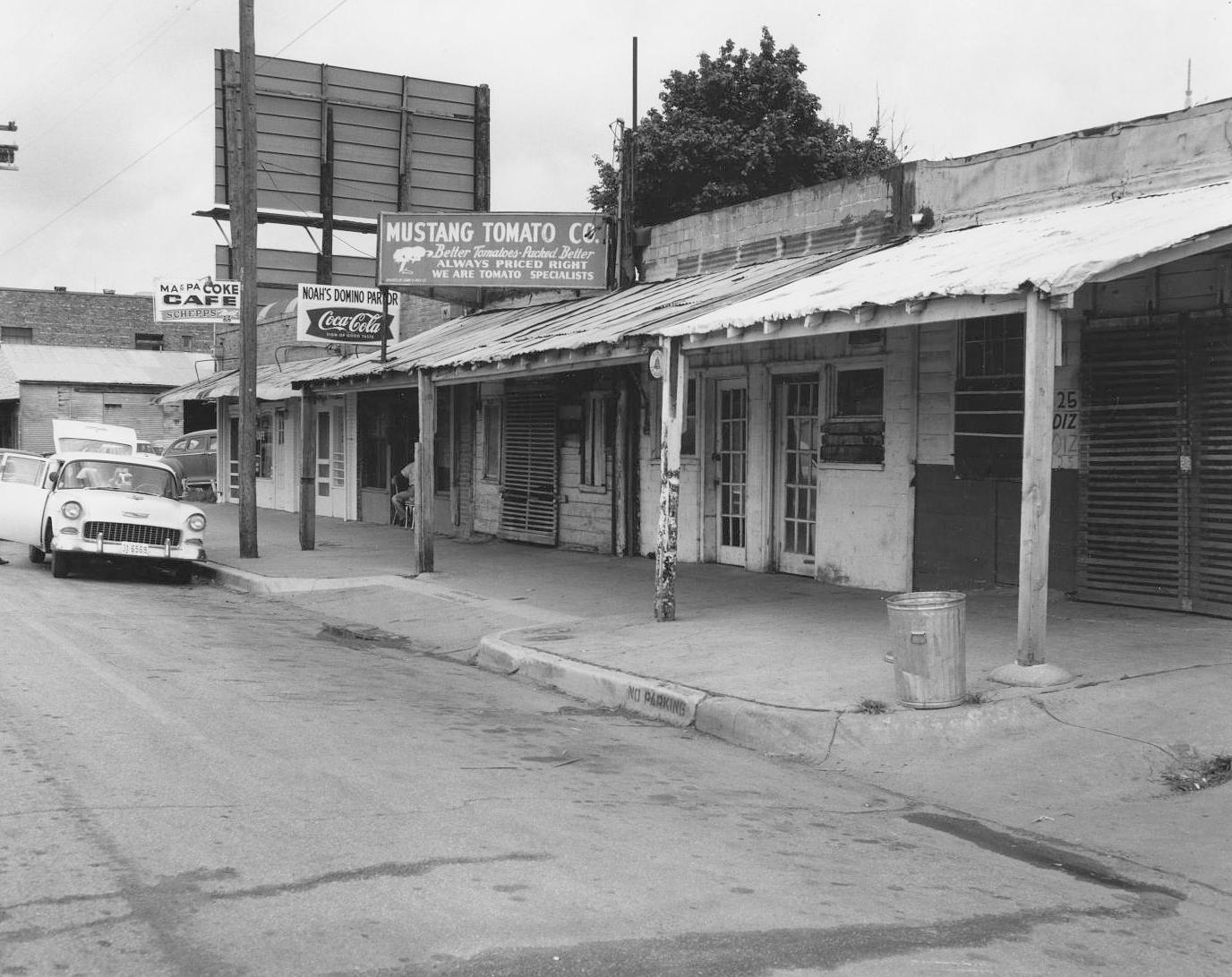
Tomatoes, Cokes, Dominoes: Cadiz Street — 1959

farmers-mkt-area_dominoes_portalThe farmers market area in 1959

by Paula Bosse

Above, a photo showing the block of Cadiz Street between what was then the S. Pearl Expressway and S. Central Expressway (now Cesar Chavez). The view is southwesterly, with the (oddly placed) billboards facing toward Pearl.

I’m sure most people considered such a view urban blight in 1959 when this photo was taken, but (I know I sound like a broken record…), I will always prefer this seedy and run-down version of the farmers market area to the current, relentlessly sterilized, pre-fab, insta-city which took its place. By 1961, this little stretch of businesses had been leveled for a parking lot, which, frankly, was probably more of an eyesore than a ramshackle domino parlor with peeling paint.

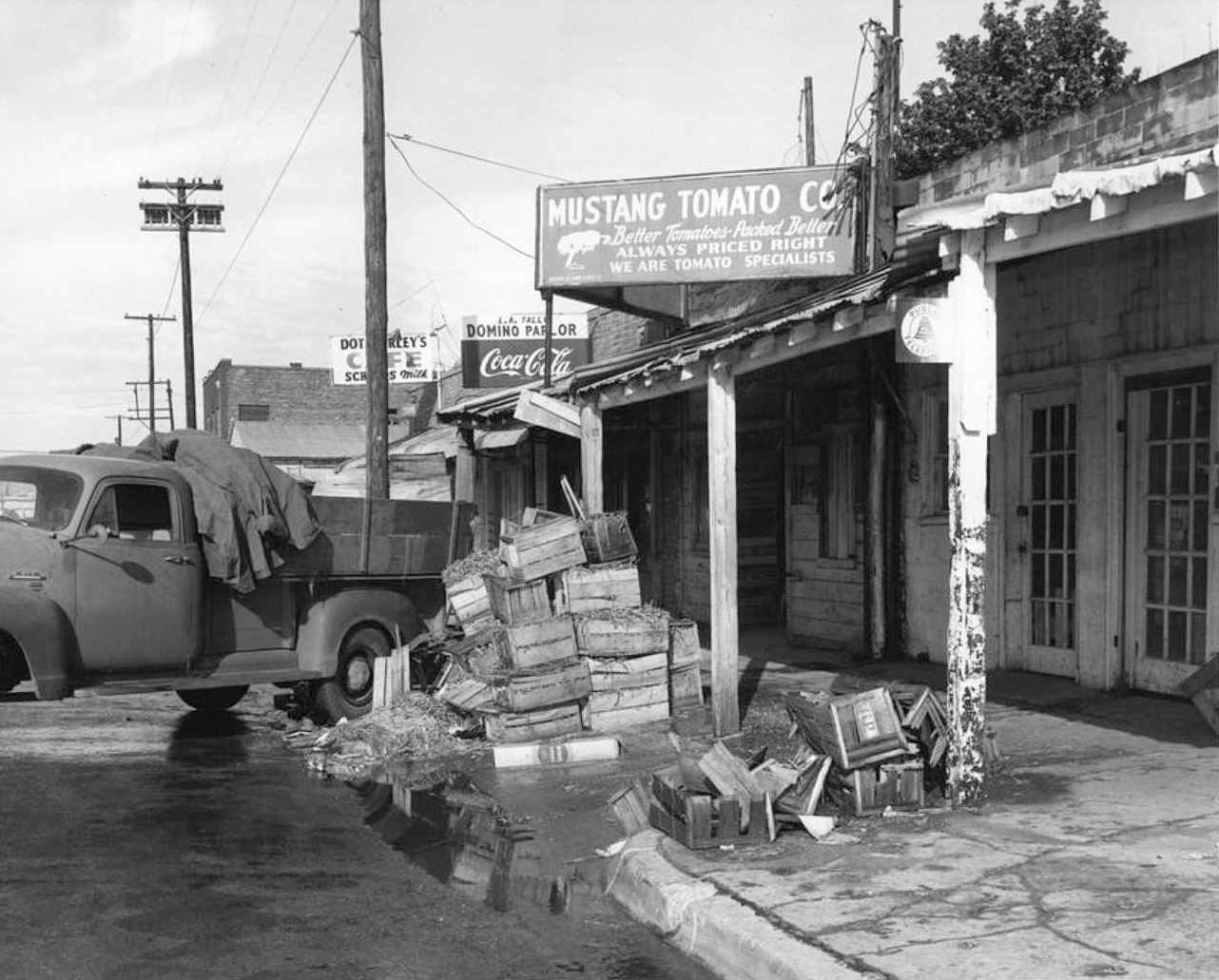
Below, a photo taken in the same block, about a year earlier. It’s not quite as interesting to look at as the top photo, but it does show that this was a working neighborhood, where vegetable crates frequently spilled into the streets as part of the day’s activities.

cadiz-businesses_1958_portal

*dot-curley-cafe_1958-directory1958 city directory

talley-domino_1957-directory
1957 directory

ma-and-pas-cafe_1960-directory
1960 directory

noahs-domino-parlor_1960-directory
1960 directory

This part of Cadiz doesn’t exist anymore. Here’s the view from S. Pearl these days, looking east (these businesses would have been on the left).

Here’s a map from 1962, when the area was a thriving wholesale and retail produce district.

cadiz_1962-map_det

***

Sources & Notes

Both photos are from the  Dallas Farmers Market/Henry Forschmidt Collection, Dallas Municipal Archives, via the Portal to Texas History; the top one can be found here, the bottom one, here.

See other Flashback Dallas posts about the Dallas Farmers Market here — every time I see these great old photos I just shake my head and wish I’d been around to see this part of the city when it was at its grittiest.

*

Copyright © 2016 Paula Bosse. All Rights Reserved.

Ads for Businesses Serving the North Dallas High School Area — Early 1960s

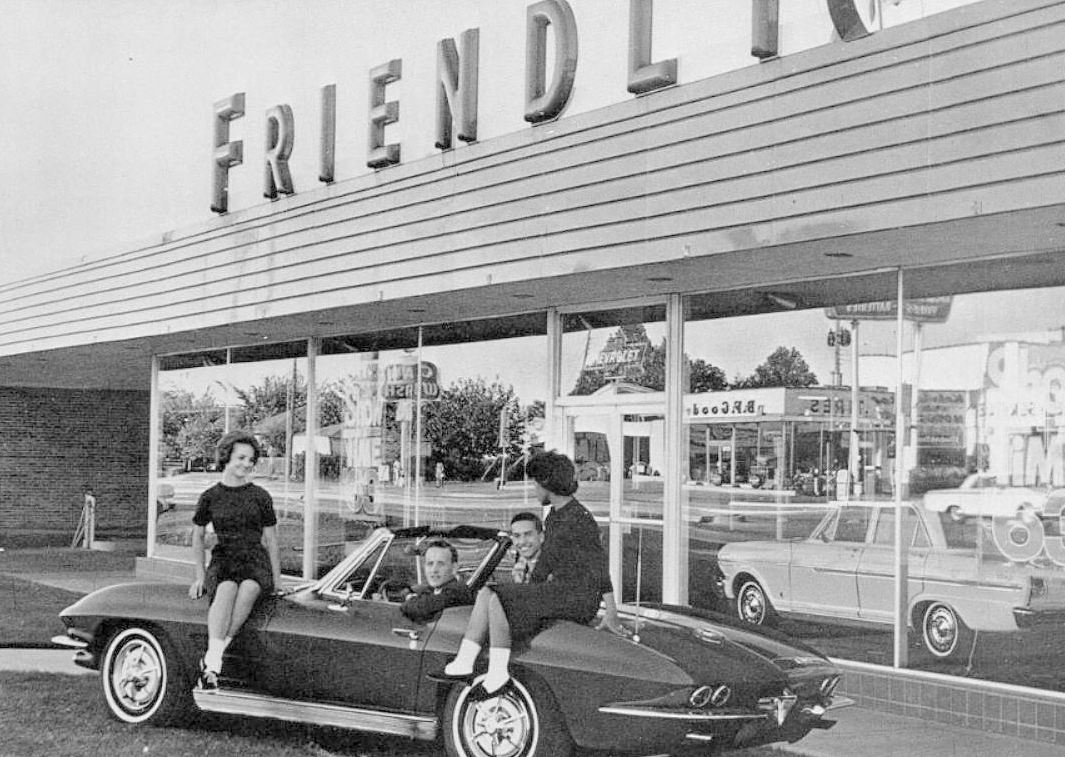
friendly-chevrolet_ndhs_1963-yrbk-photoFriendly Chevrolet, 1963

by Paula Bosse

One of the things I like best about looking through old high school and college yearbooks is seeing the ads in the back — especially the ads that feature students. Here are a whole bunch of ads from the 1960, 1962, and 1963 North Dallas High School annuals, with most of the ads placed by businesses in the Oak Lawn, McKinney Avenue, and Little Mexico areas surrounding the school. Let’s take a walk down memory lane, shall we? (Ads and photos are larger when clicked.)

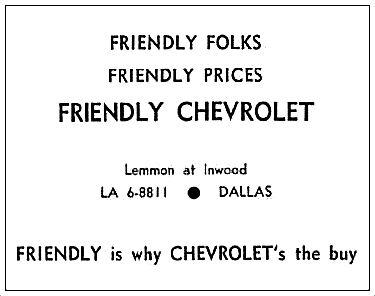
Above, Friendly Chevrolet at Lemmon and Inwood. I bet the owner was grimacing as he saw those girls perched — gingerly or not — on that brand new Corvette convertible!

friendly-chevrolet_ndhs_1963-yrbk1963

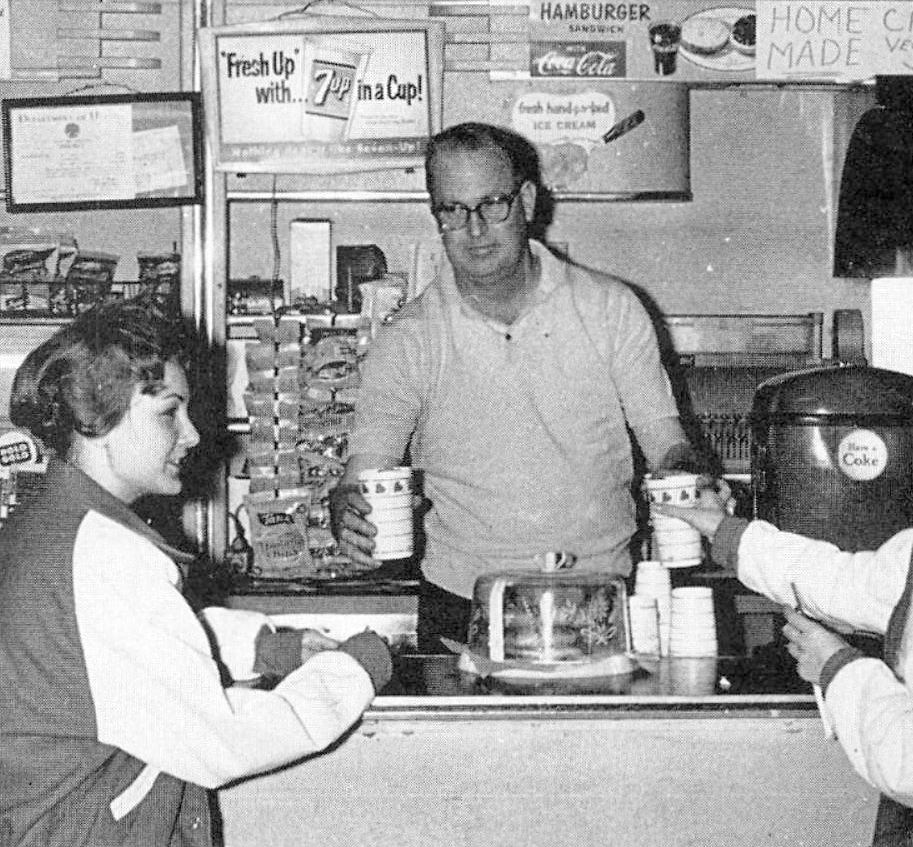
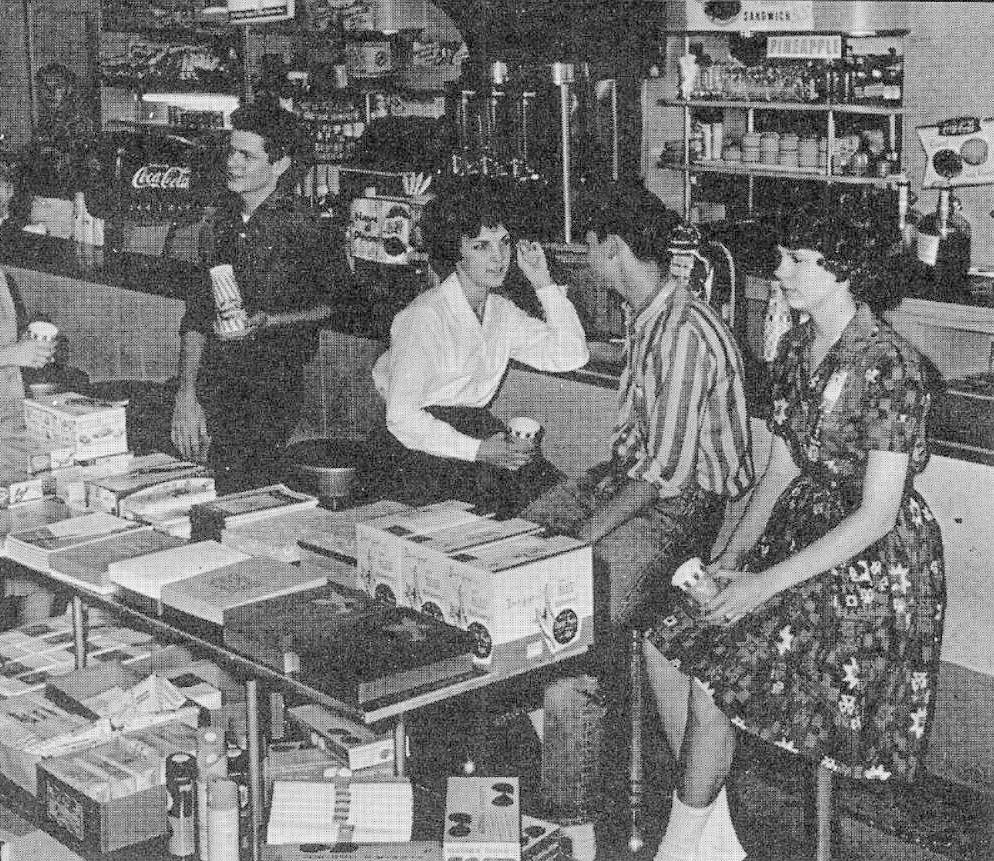
The Cole and Haskell Drug Store, at 3121 N. Haskell — right across the street from the NDHS campus — was no doubt thrilled to be so close to its major source of income, the teenager.

1962_cole-haskell-drugs_ndhs_1962-yrbk1962

cole-haskell-drug-store_ndhs_1963-yrbk-photo
1963

cole-haskell-drugs_ndhs_1963-yrbk
1963

*

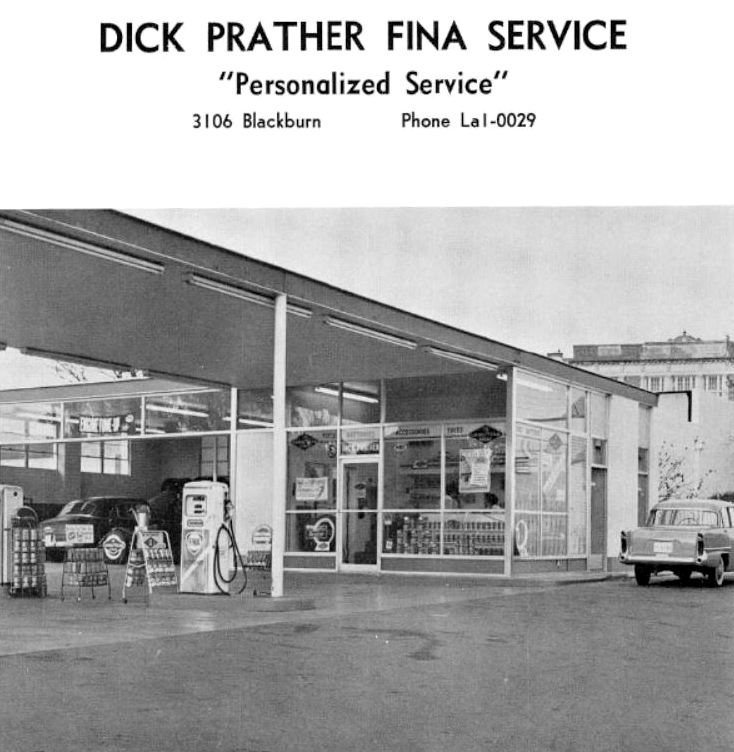
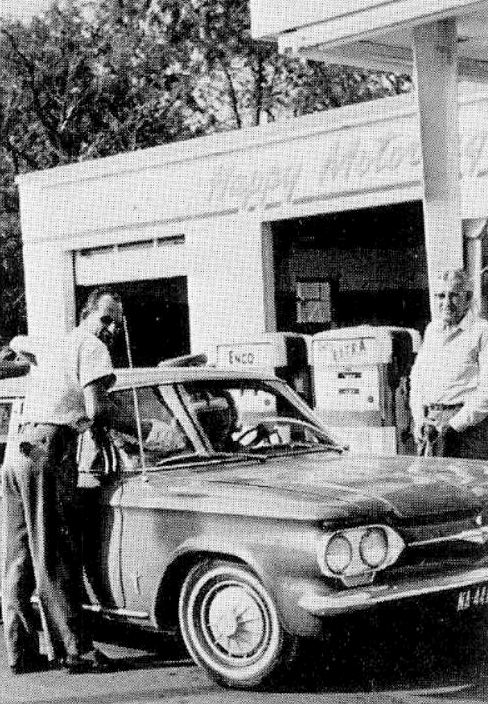
Lots of gas and service stations were nearby. Like Dick Prather Fina Service, at 3106 Blackburn, with the school peeking over the roof.

1960_prather-fina_ndhs_1960-yrbk
1960

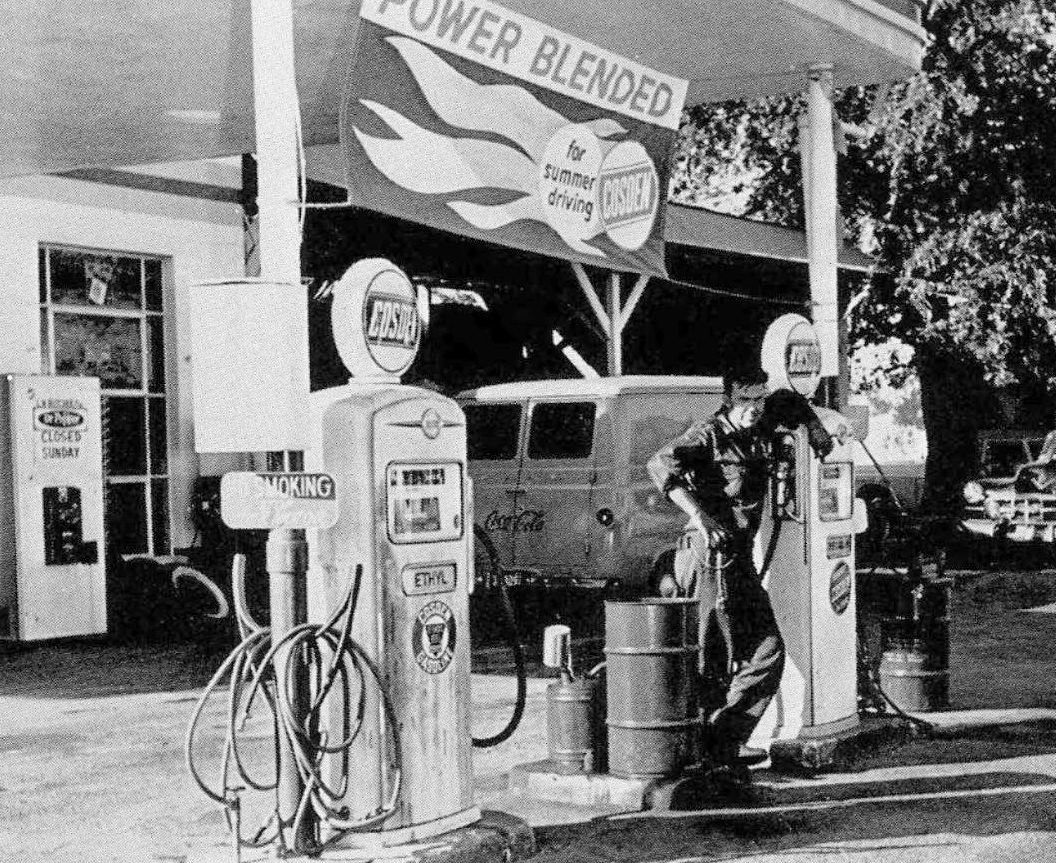
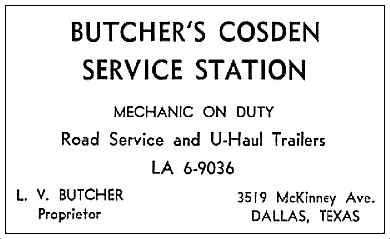
And L. V. Butcher’s Cosden Service Station, at 3519 McKinney. (I love the slouch of the mechanic.)

butchers-cosden-service-stn_ndhs_1963-yrbk-photo

butchers-cosden-service-stn_ndhs_1963-yrbk
1963

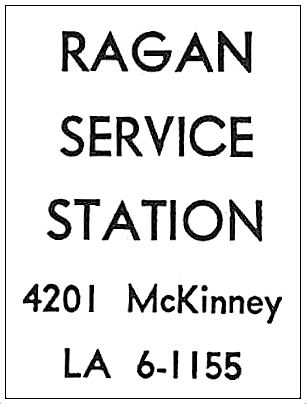
And the Ragan Service Station, at 4201 McKinney.

ragan-servie-stn_ndhs_1963-yrbk-photo

ragan-servie-stn_ndhs_1963-yrbk
1963

*

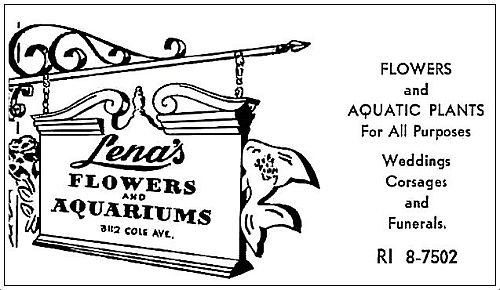
Plant and flower enthusiasts were invited to stop by Lena’s Flowers and Aquariums, at 3112 Cole. …For flowers. And aquariums.

lenas-flowers_ndhs_1963-yrbk
1963

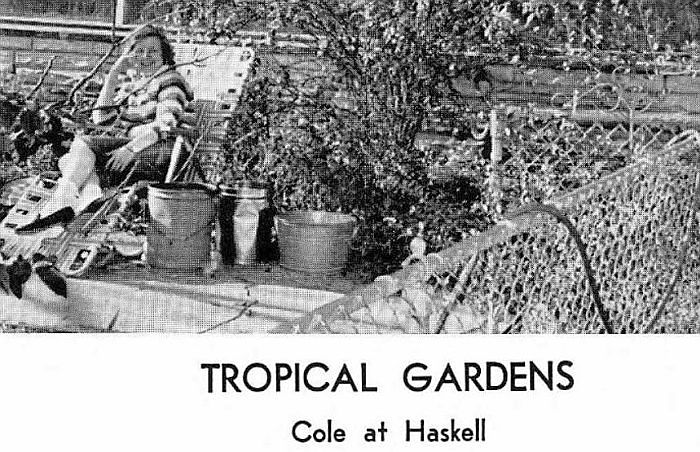
What Tropical Gardens at Cole and Haskell lacked in the way of aquariums, it all but made up for in tropicalness. (Might as well grab a coke at the drug store since you’re right there.)

tropical-gardens_ndhs_1963-yrbk
1963

*

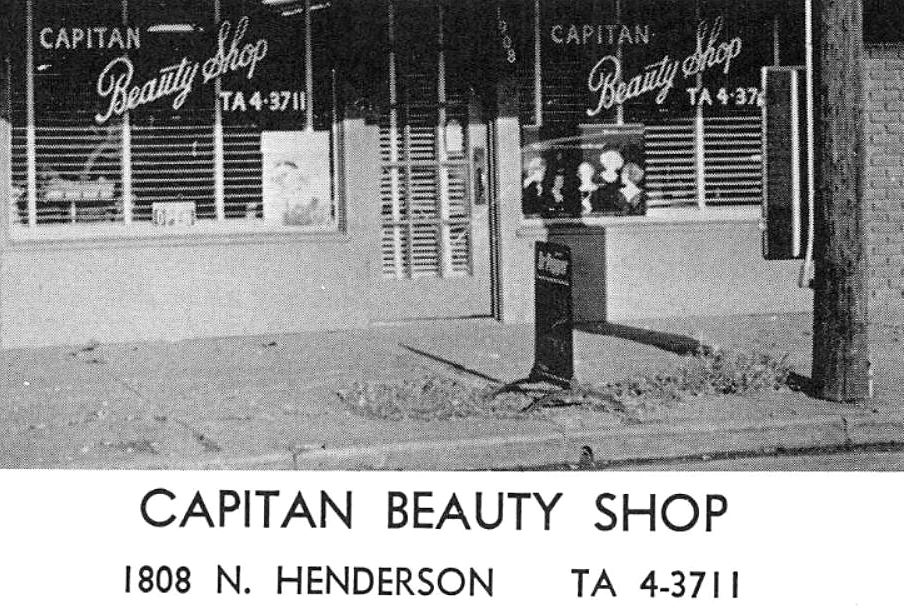
Those who needed their hair extra poufy for the spring formal might have found themselves at the Capitan Beauty Shop, 1808 N. Henderson (now that’s a photo!).

capitan-beauty-shop_ndhs_1963-yrbk1963

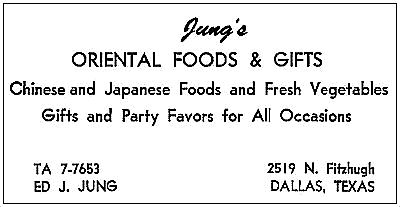
Seekers of Asian foods and/or “party favors for all occasions” could head over to Jung’s Oriental Foods & Gifts at 2519 N. Fitzhugh. (This is the most unexpected ad I came across.)

jungs_ndhs_1963-yrbk
1963

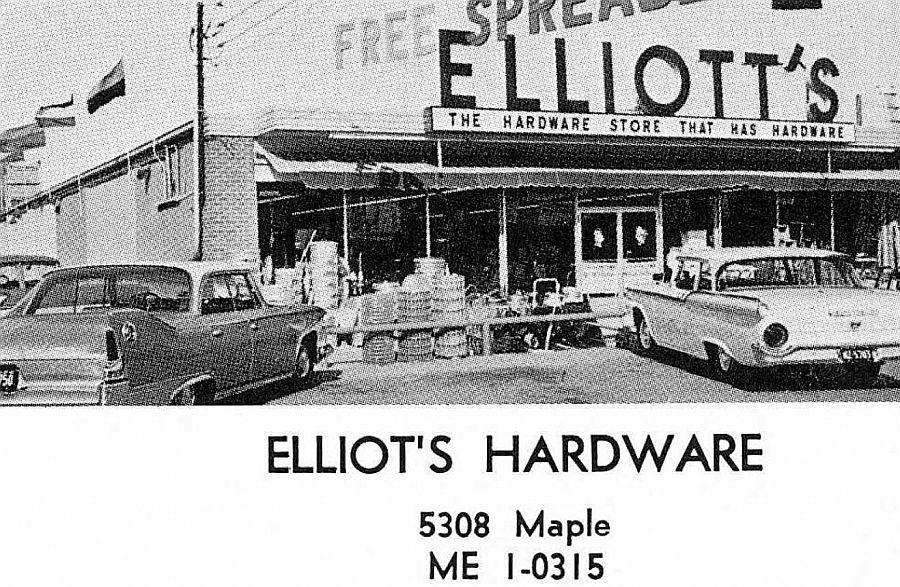
Maybe you just needed a hammer. Where else would you go but Elliott’s Hardware, at its original location at 5308 Maple.

elliotts-hardware_ndhs_1963-yrbk
1963

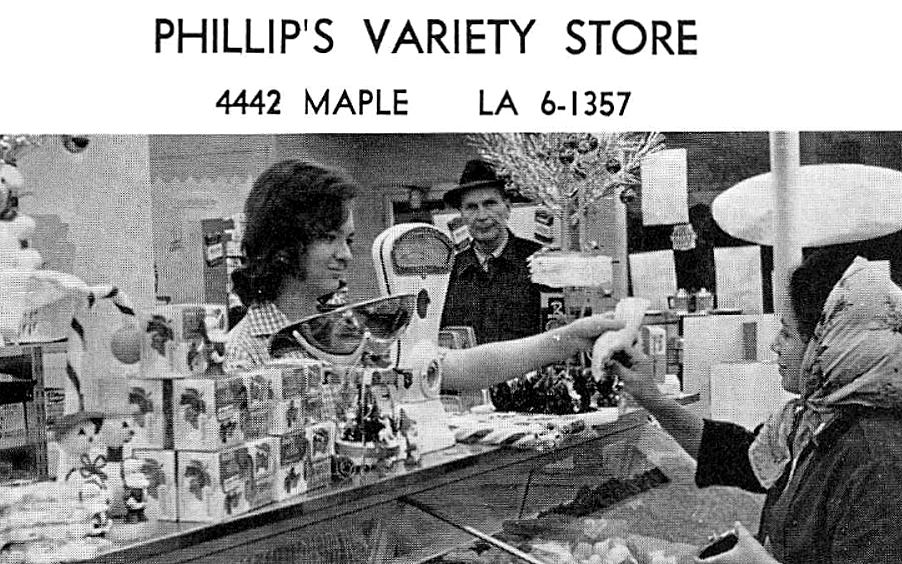
Phillips’ Variety Store at 4442 Maple was probably a good place to get scented talcum powder, a bouncy ball, a bag of peppermints, or a new charm for the charm bracelet.

phillips-variety-store_ndhs_1963-yrbk
1963

*

What do high school kids love more than bowling and going to the movies? Apparently there was a movie theater on McKinney Avenue that I’m only just learning about — The Plaza, at 3806 McKinney.

1962_plaza-theater
1962

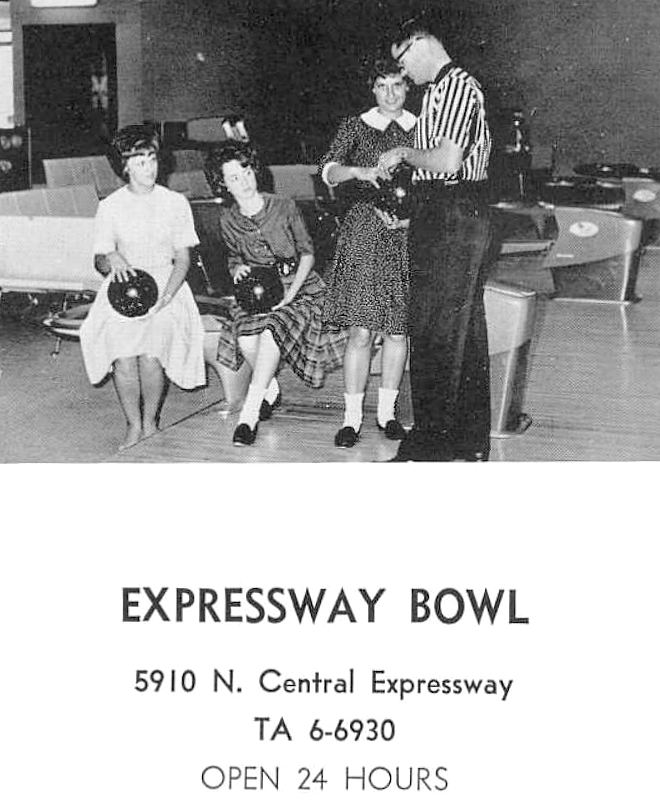
The 24-hour Expressway Bowl was at 5910 N. Central Expressway. (I’m not sure those girls have on the proper footwear.)

expressway-bowl_ndhs_1963-yrbk1963

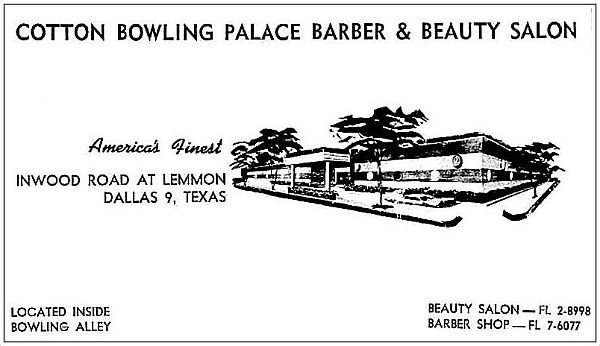
But the place you really wanted to go was the Cotton Bowling Palace on Inwood at Lemmon. When it opened in 1959 (complete with a heavily promoted personal appearance by Dallas gal Jayne Mansfield), it was breathlessly described as “a mixture of the Copacabana, the Taj Mahal and the  MGM Grand.” Imagine bowling in the Taj Mahal! Heck, you could even get a haircut between frames.

1962_cotton-bowling-palace1962

*

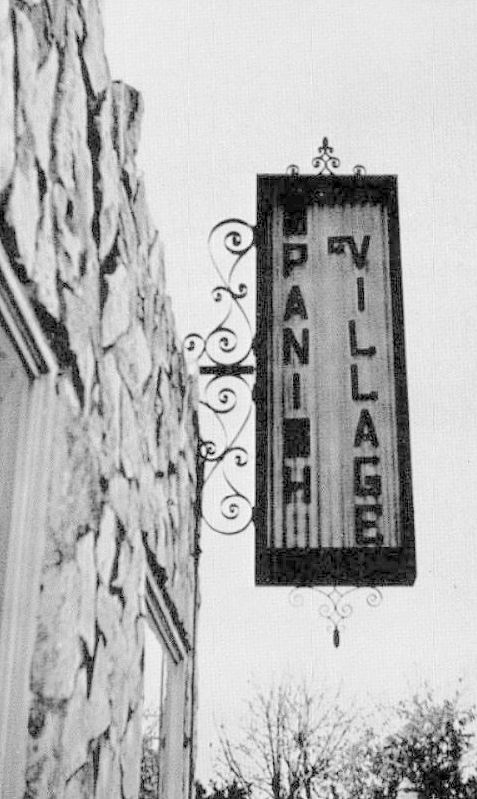
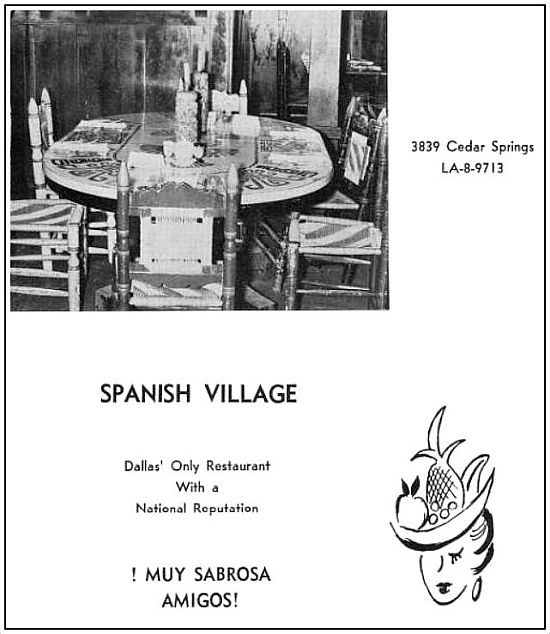
The biggest bang for the buck, nostalgia-wise, is almost always going to be places related to food. Here are a few restaurants and burger places which were probably frequent destinations for North Dallas students and their families. Like Spanish Village at 3839 Cedar Springs.

spanish-village_ndhs_1963-yrbk
1963

1960_spanish-village_ndhs_1960-yrbk
1960

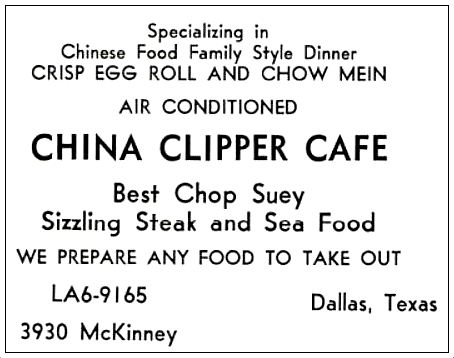
The fondly remembered China Clipper, at 3930 McKinney.

1960_china-clipper_ndhs_1960-yrbk1960

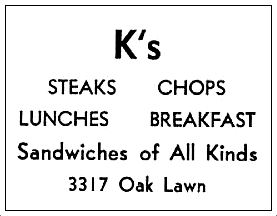
K’s — where you could get “sandwiches of all kinds” — at 3317 Oak Lawn.

1960_ks-sandwiches_ndhs_1960-yrbk
1960

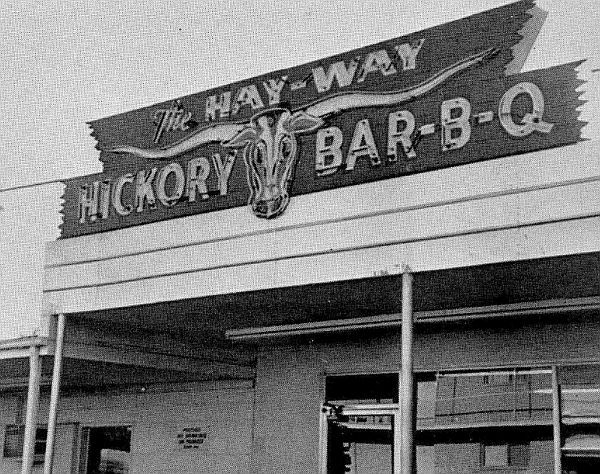
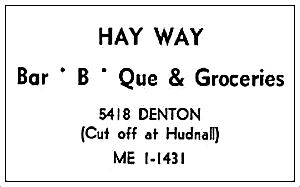
Hay-Way Bar-B-Q & Groceries, at 5418 Denton Drive.

hay-way-bar-b-q_ndhs_1963-yrbk-photo

hay-way-bar-b-q_ndhs_1963-yrbk
1963

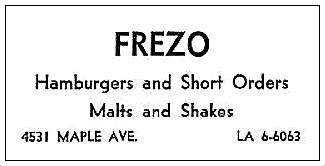
A burger and malt joint with the wonderful name of Frezo, at 4531 Maple. (I WOULD GO TO SOMEPLACE CALLED “FREZO.”)

1962_frezo_ndhs_1962-yrbk
1962

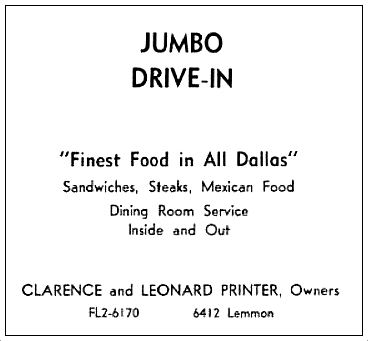
The famed elephant-on-top Jumbo Drive-In, owned by Clarence and Leonard Printer. The location in this ad was at 6412 Lemmon. See what the Haskell location looked like, here.

1960_jumbo-drive-in_ndhs_1960-yrbk
1960

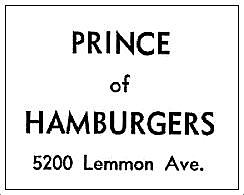
The legendary Prince of Hamburgers at 5200 Lemmon.

prince-of-hamburgers_ndhs_1960-yrbk
1960

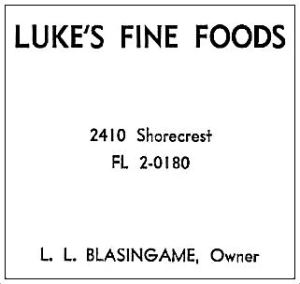
The not-quite-as-legendary Luke’s Fine Foods at 2410 Shorecrest, owned by L. L. Blasingame.

lukes-fine-foods_ndhs_1963-yrbk

lukes-fine-foods_ndhs_1963-yrbk-ad
1963

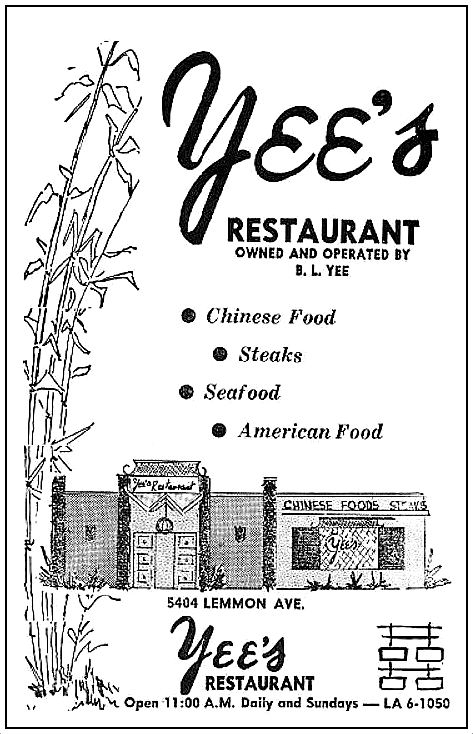
Yee’s Restaurant at 5404 Lemmon, owned by B. L. Yee.

yees-chinese_ndhs_1963-yrbk
1963

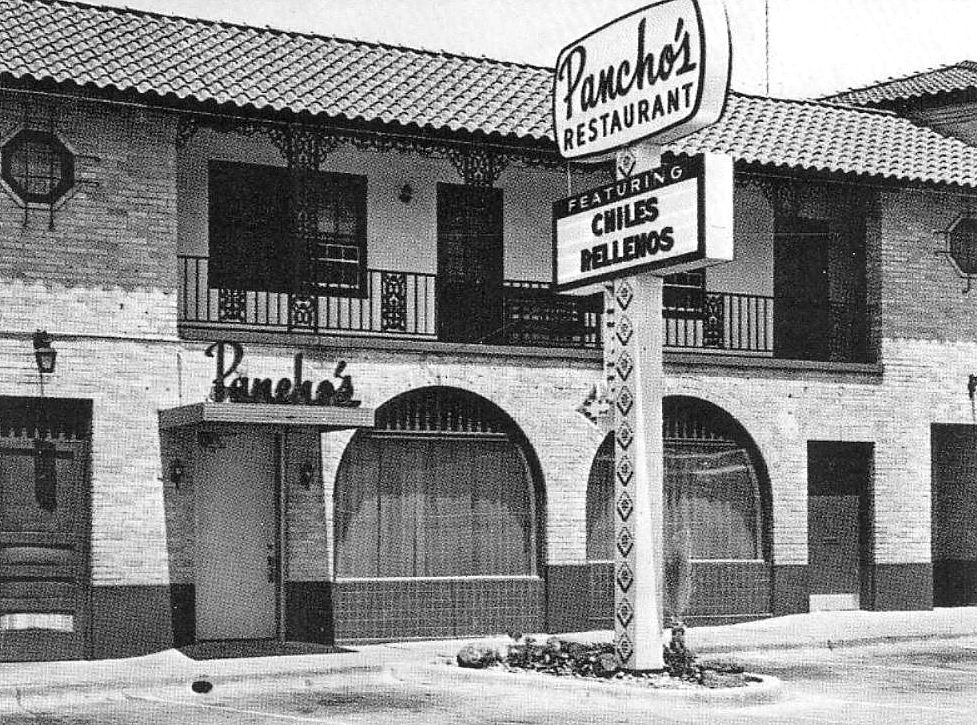
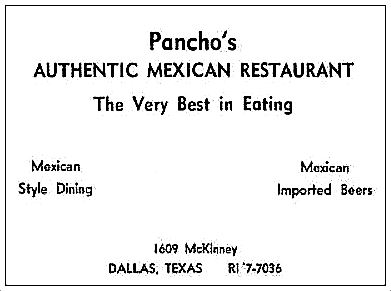
And, of course, Pancho’s — this location at 1609 McKinney. Almost all of the buildings that housed the businesses listed above are long gone, but this building is still hanging in there. It’s next to the downtown El Fenix and is now the home of Meso Maya. I have to admit, I got a happy little jolt to see this building today, still looking pretty much the same as it did in this 1963 ad.

panchos_ndhs_1963-yrbk-photo

panchos_ndhs_1963-yrbk
1963

***

Sources & Notes

All ads from the 1960, 1962, and 1963 editions of the North Dallas High School yearbook, The Viking.

See photos of students and high school activities from these same yearbooks in the post “North Dallas High School, The Pre-Beatles Era,” here.

*

Copyright © 2016 Paula Bosse. All Rights Reserved.

North Dallas High School, The Pre-Beatles Era

1962_before-school_ndhs_1962-yrbkBefore school, 1962 (click for larger image)

by Paula Bosse

Today, a few random photos from the 1960, 1962, and 1963 yearbooks of North Dallas High School.

The top photo (from 1962) is my favorite, because, had I not known what part of town this photo was taken in, I would never have guessed. I’m still not 100% sure, but I think this shows Cole Avenue running alongside NDHS. The Cole and Haskell Drug Store (Coke sign) was on the corner of … Cole and Haskell, but things have been so Uptown-ified that this area is now almost completely unrecognizable from even 20 years ago. At least the school and Cole Park remain (mostly) unchanged.

So, a few moments in the life of NDHS students in the days just before The Beatles and Vietnam. (All photos are larger when clicked.)

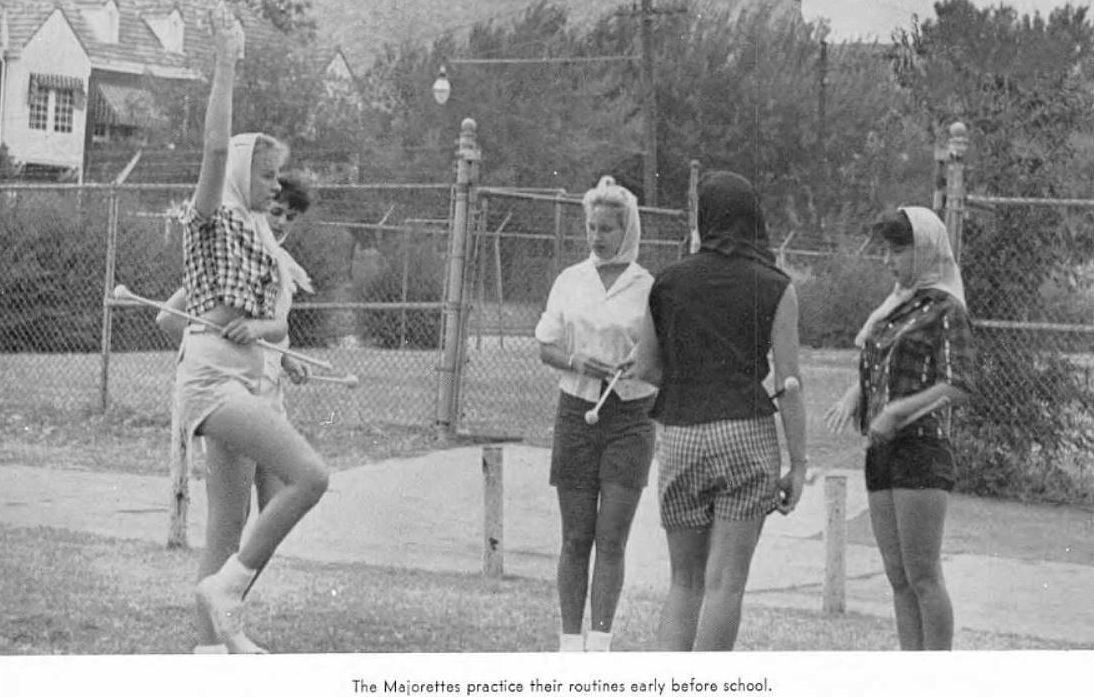
From 1960, majorettes practicing, with batons and headscarves — two things one doesn’t encounter often these days.

1960_majorettes_ndhs_1960-yrbk

*

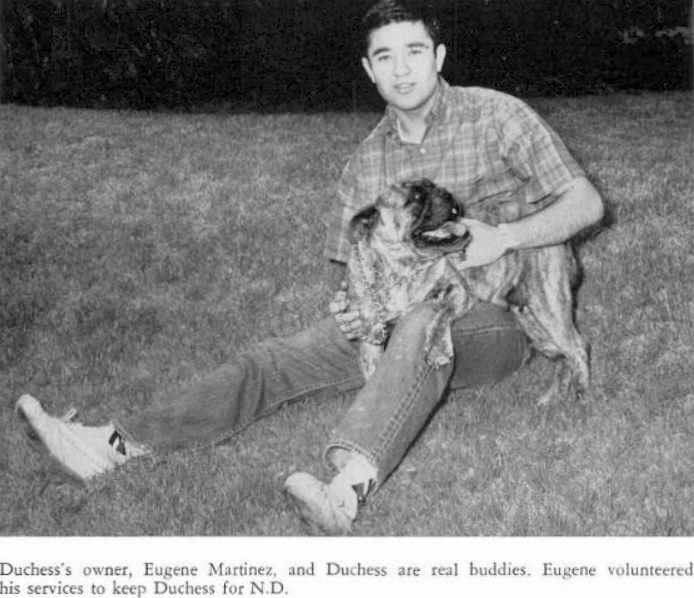
From 1962, cheerleader Gene Martinez with the school’s bulldog mascot, Duchess.

1962_duchess-the-mascot_ndhs_1962-yrbk-photo

*

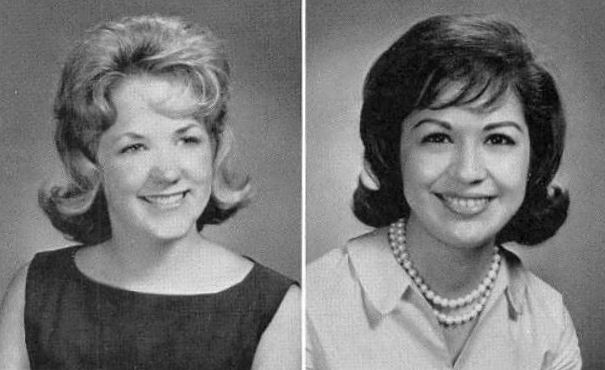
The rest of the photos are from 1963, when most of the girls had the Laura Petrie flip hairstyle. (Seen here are Suzy DeGaw and Olga Delgado.)

girls-hairdos_ndhs_1963-yrbk

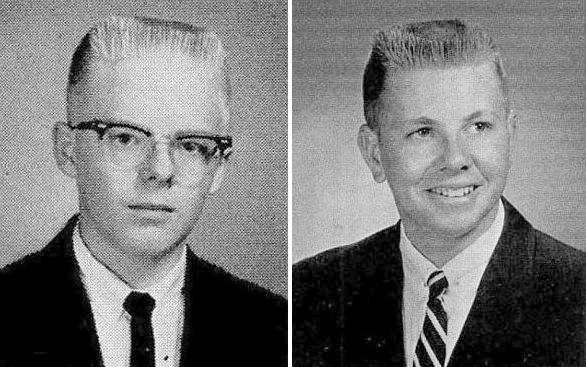
As far as the boys, an alarming number of them sported haircuts like the ones below (although these two seem to be a bit on the extreme side — most were shorter) — it’s a sort of early-’60s version of the ’80s’ Flock of Seagulls hair-do where you look back on it and shake your head in wonderment. I’m not exactly sure what “butch wax” is for, but I’m thinking it’s for this. (Pictured here are Jody Chenoweth and Robert Paul Reid.)

boys-hair_ndhs_1963-yrbk

Girls “gabbed.”

gab-session_ndhs_1963-yrbk

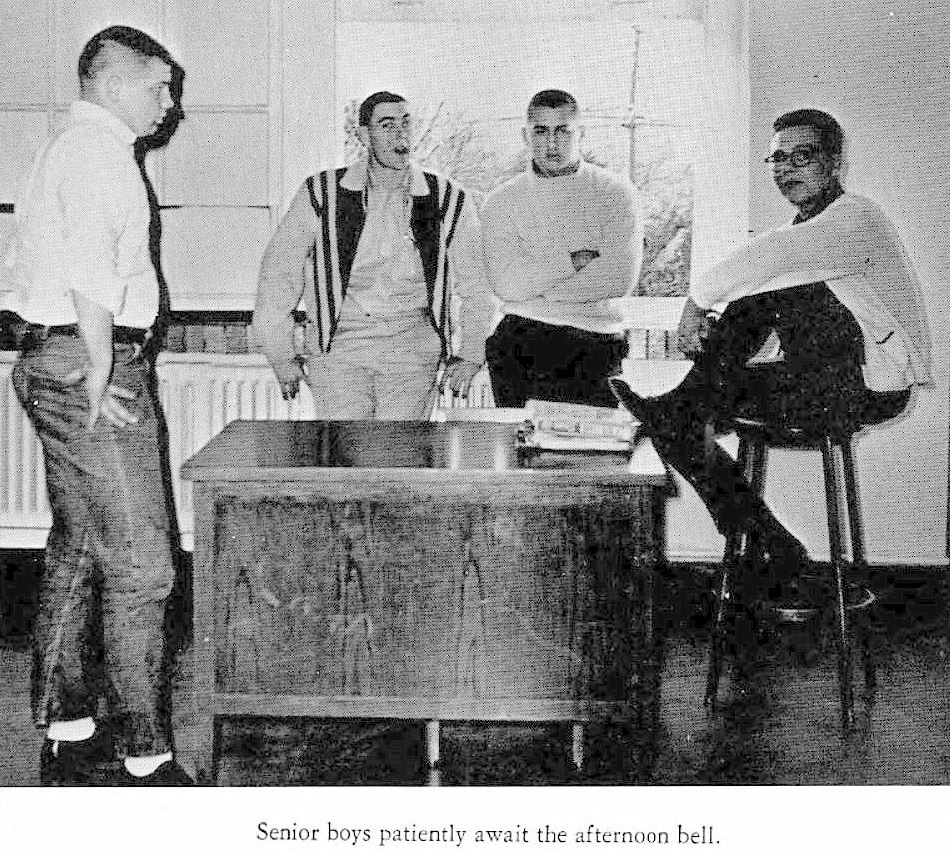
Boys loitered.

senior-boys_ndhs_1963-yrbk

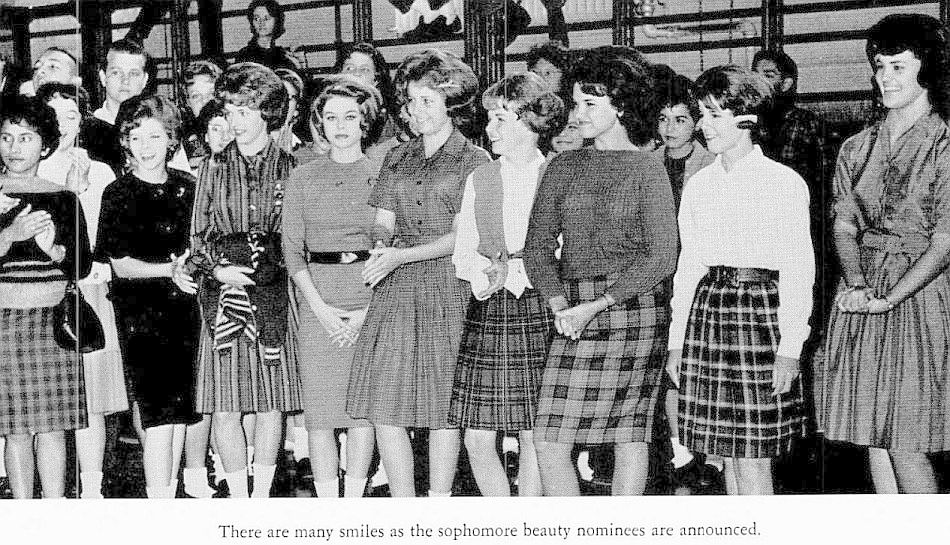
Girls had beauty pageants (and wore a lot of plaid).

sophomore-girls_ndhs_1963-yrbk

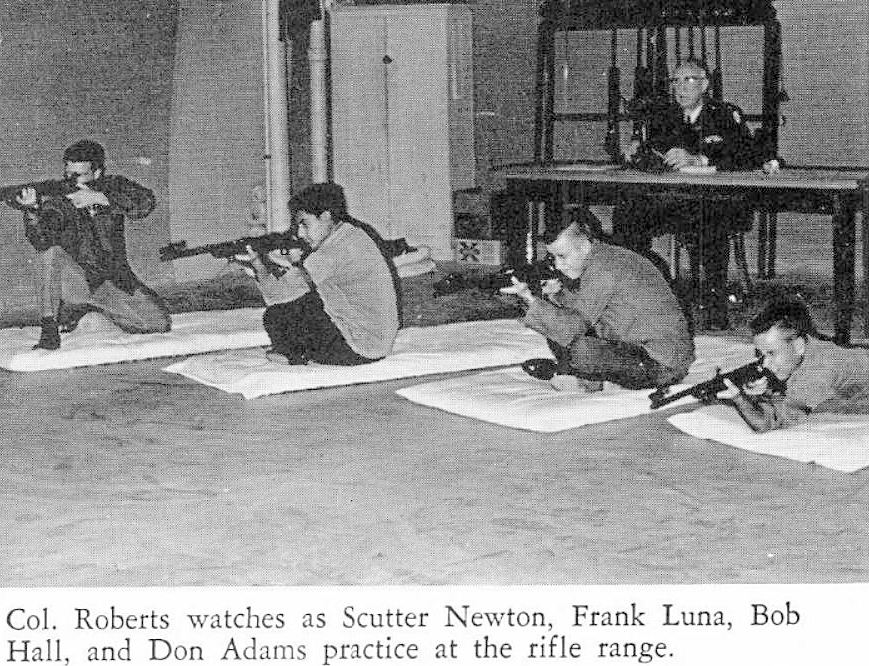
And boys practiced shooting.

rifle-range_ndhs_1963=yrbk

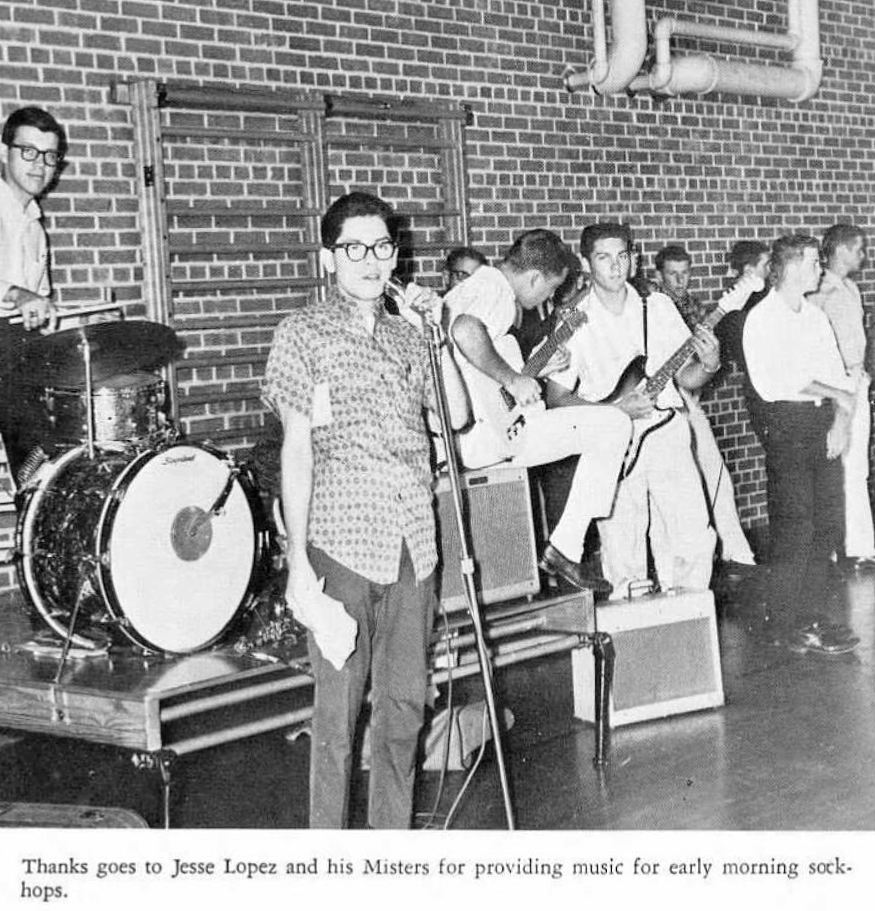
North Dallas had their very own rock and roll band — “The Misters,” headed by the enormously popular Jesse Lopez (younger brother of Trini Lopez, who went to Crozier Tech). (Morning sock hops?!)

jesse-lopez_ndhs_1963-yrbk

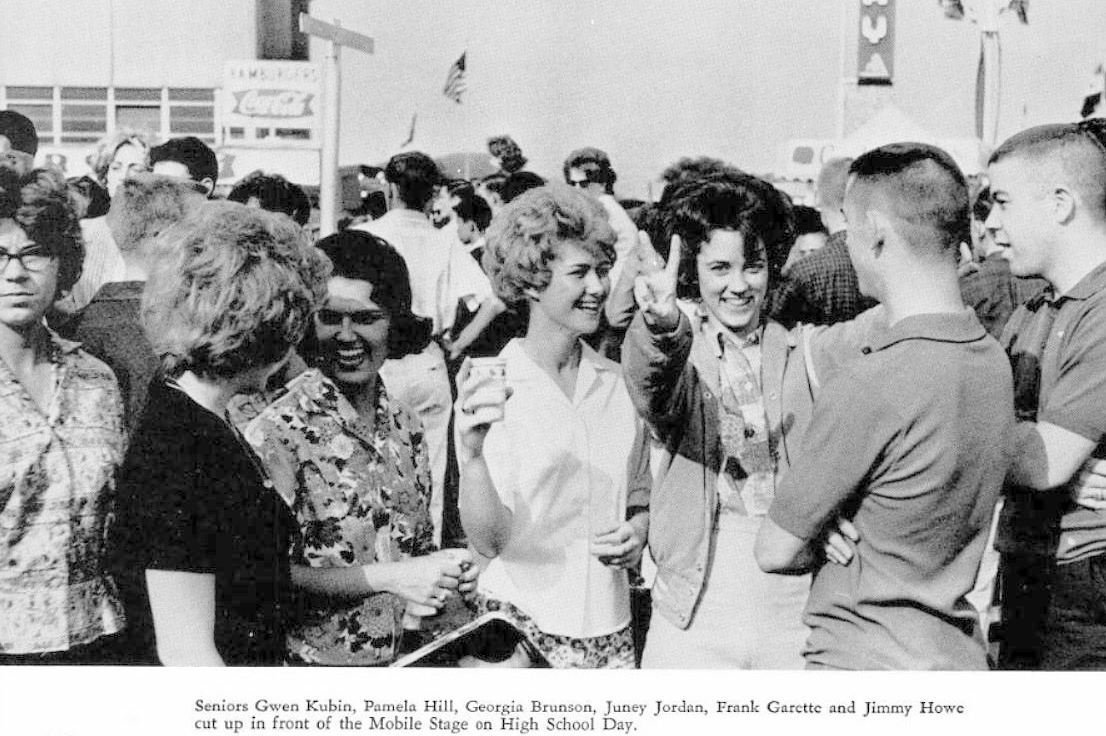
In fact, The Misters won the high school combo contest at the State Fair several times. And speaking of High School Day at the fair….

high-school-day_fair_ndhs_1963-yrbk

And back on campus, I don’t know who you are, Rufus Jara, but I nominate you as Coolest-Looking NDHS Student of 1963. (Caption from the yearbook: “Rufus Jara appears to be bothered by the light in the lunch room.”)

jara-rufus_ndhs_1963-yrbk

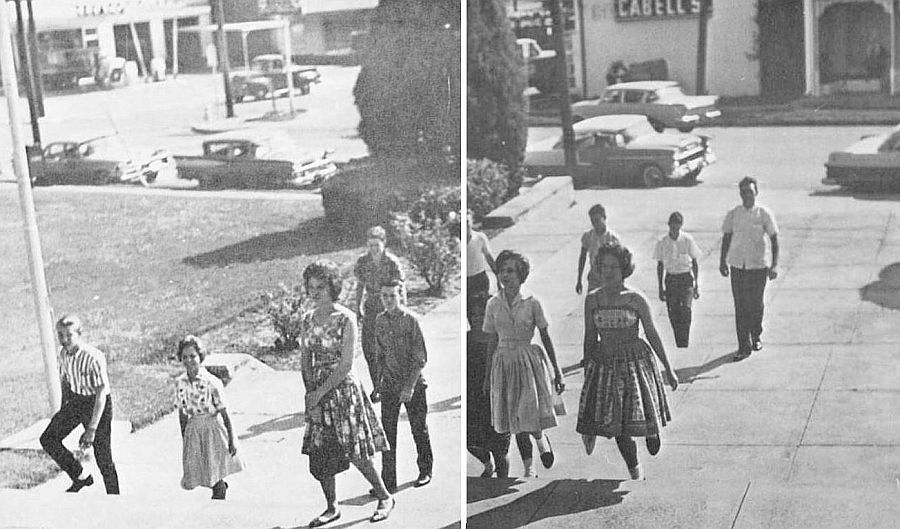
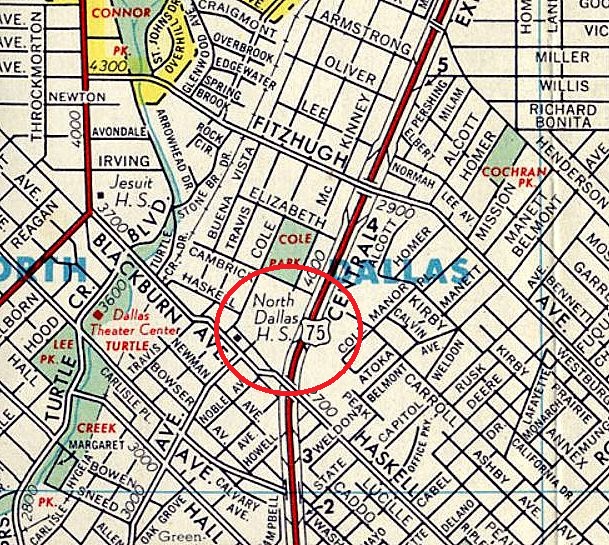
These last two photos leave a lot to be desired in quality (I did my best with yellowed paper and a broken book spine), but I think it’s interesting to see what the street looked like in front of the school, and on McKinney Avenue, to the left. Again, not recognizable today.

ndhs_steps_1963-yrbk

*

ndhs_map_1962Detail from a 1962 city map

***

All photos from The Viking, the North Dallas High School yearbooks from 1960, 1962, and 1963.

More from these yearbooks: see a LOT of ads in the post “Ads For Businesses Serving the  North Dallas High School Area — Early 1960s,” here. Several feature NDHS students.

All pictures larger when clicked!

*

Copyright © 2016 Paula Bosse. All Rights Reserved.

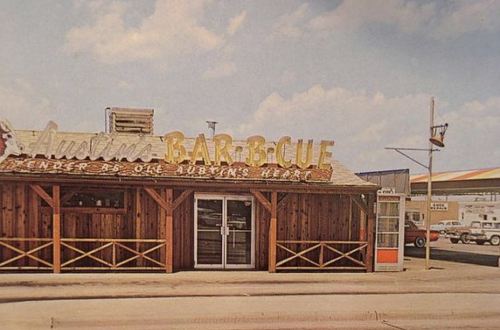
Bull Pen Barbecue/Austin’s Barbecue — 1949-2000

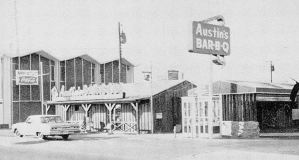
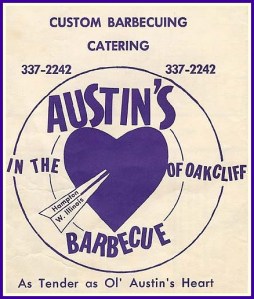
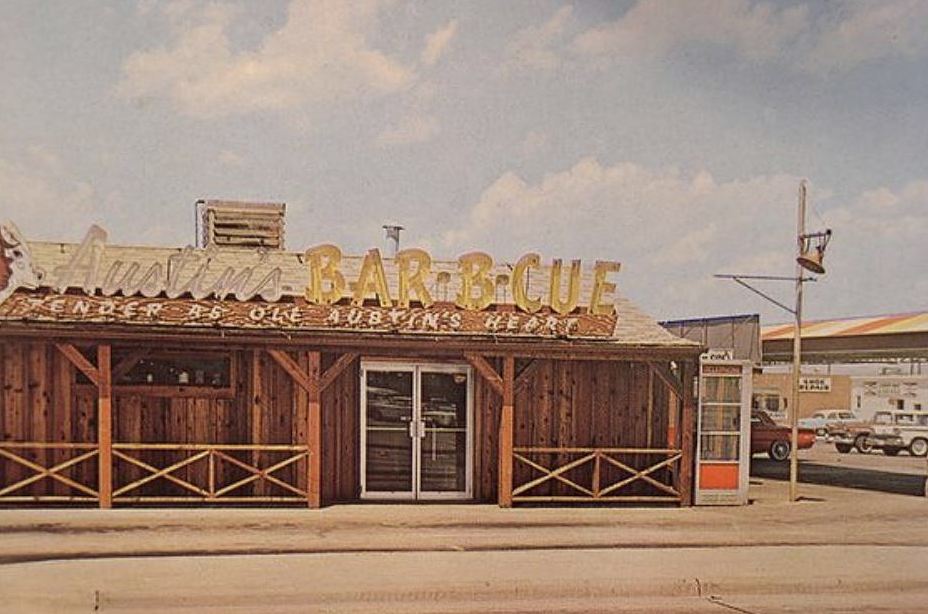
austins-barbecue_postcard_pinterest“As Tender as Ole Austin’s Heart…”

by Paula Bosse

One of my major failings as a Dallasite is that I don’t know Oak Cliff. Like at all. Every time I go over there, I get lost. I can’t remember my family ever going to Oak Cliff when I was a kid, except to visit the zoo. This explains why I had no idea how important a cultural landmark Austin’s Barbecue was when I posted a bunch of Oak Cliff ads the other day. That post has been shared hundreds and hundreds of times now and, inevitably, the only thing people mention — and rhapsodize about — is Austin’s Barbecue. …I had no idea!

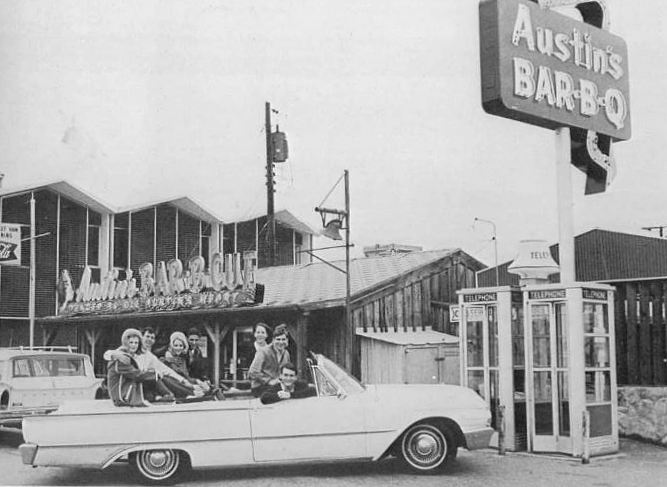
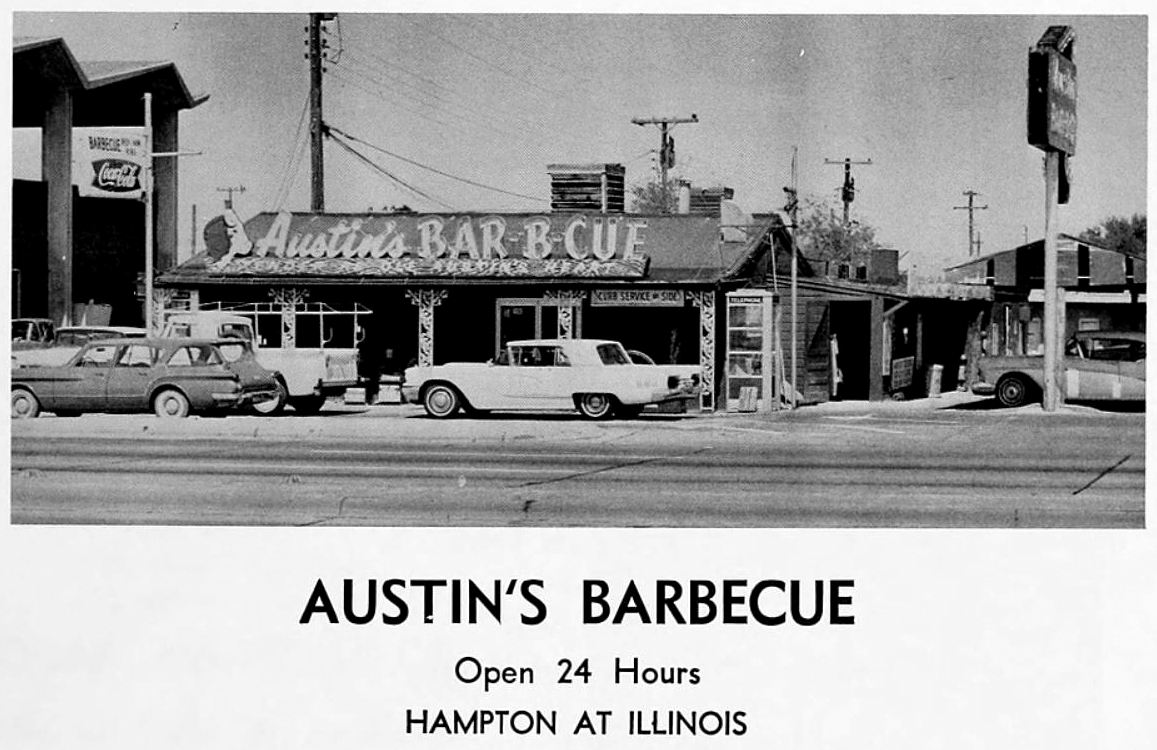
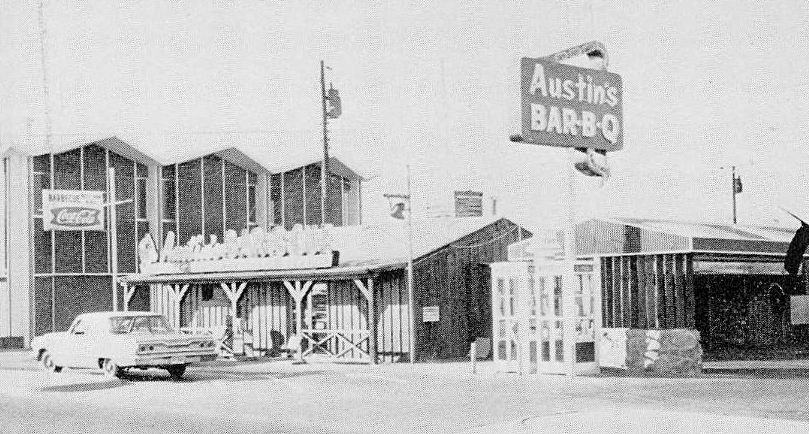
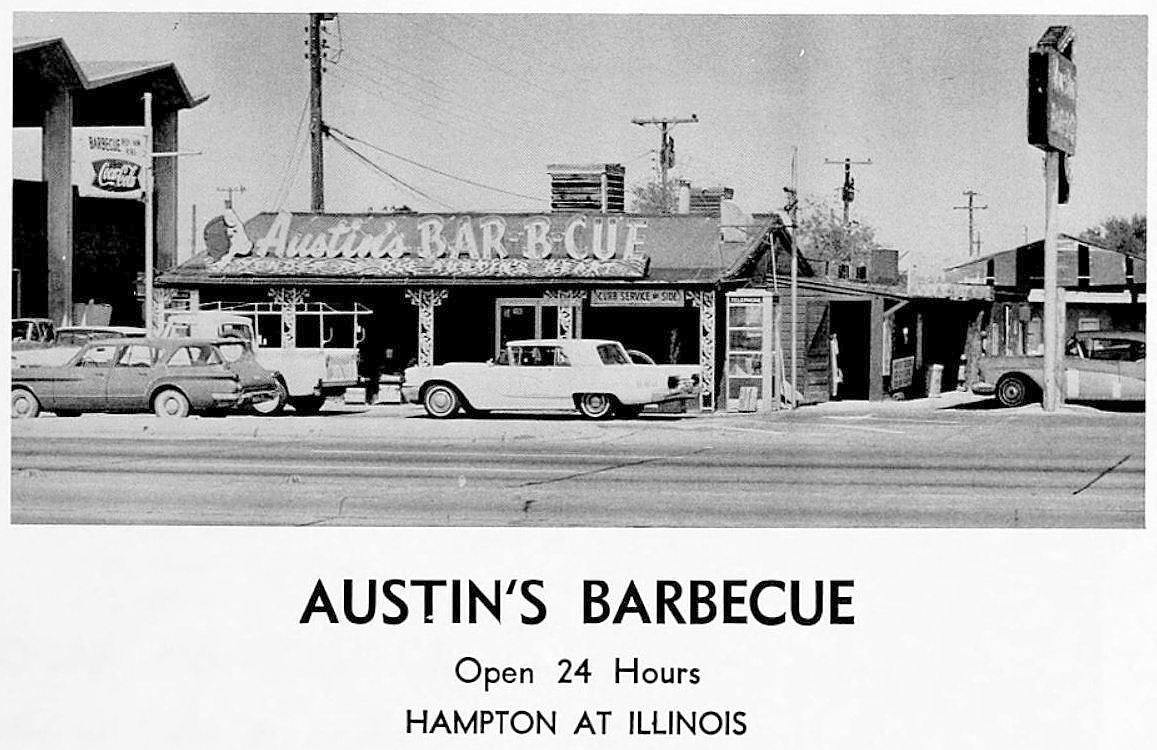
The famed BBQ joint at the northeast corner of Illinois Avenue and Hampton Road opened in 1949 as B & G Barbecue but soon became known as Bull Pen Barbecue, run jointly by owners Bert Bowman and Austin Cook. In 1956 or 1957, another Bull Pen opened in Arlington. After Oak Cliff went dry (a dark day for many Oak Cliffites), Bowman — who firmly believed that BBQ and beer were a match made in heaven — left for Arlington and Cook stayed in Oak Cliff and changed the restaurant’s name to Austin’s Barbecue. (“Bull Pen Barbecue” was still appearing in ads as late as Oct. 1957 — the official name changeover seems to have  happened in 1958.)
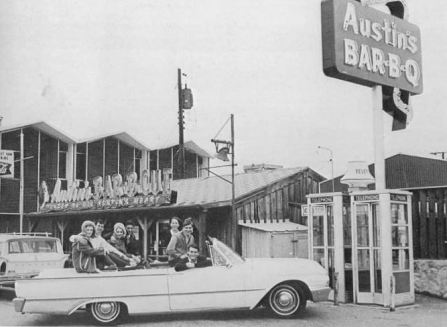
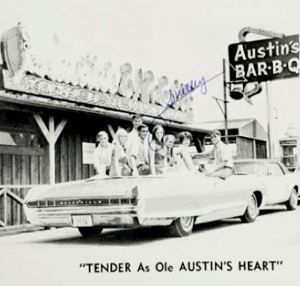
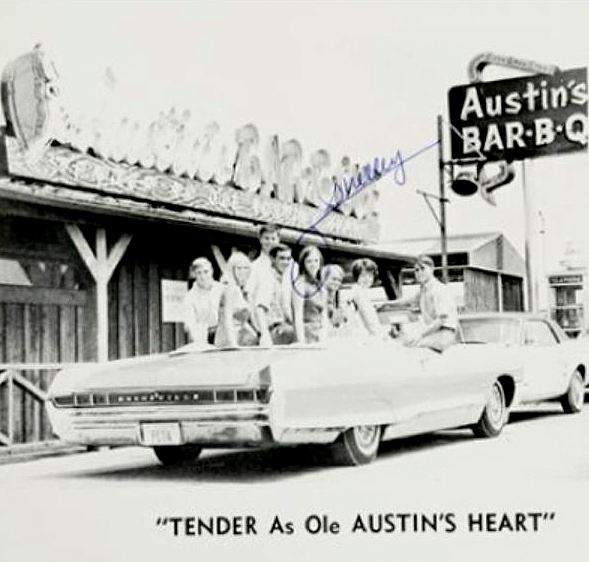
austins-bar-b-q_sunset-high-school_1967-yrbk1967 Sunset High School yearbook

*

The following memory of starting the business was apparently written by Austin Cook in 1990:

Dear Family & Friends,

I will try to tell you a little more about my being in the restaurant business. We borrowed $10,000 and bought out some one and it was B and G Barbecue. You see I always spell out Barbecue because when I went in business they hadn’t started abbreviating it like it is today.

After we had been there awhile we changed the name to The Bull Pen. Our slogan was “Come in and Shoot the Bull with Austin and Bert.” We used that name until they voted beer out of Oak Cliff. That really set us back, but maybe it was the best thing for us. We put another place in Arlington and that place was going pretty good. My partner wanted to get rid of the place in Oak Cliff. I traded him my part of the one in Arlington for his part in the one in Oak Cliff. Everyone said I was crazy.

When we bought that first place it was way out in the country, but they were building a bunch of houses not too far away. There was an airport across the street from the place. They kept talking about building a shopping center where the airport was. I remember the first day we ran a hundred dollars, and I thought we would never make it.

We started making money and we paid that ten thousand dollars back and we drew fifty dollars a week just like I was making in the grocery store. We started out with a barbecue sandwich and a hamburger. Then we started adding different things until we had a menu. We started getting those workers in the houses, and the business took off. We had beer also to go with the barbecue. My mother wasn’t too happy about that, but Dad said if that was the way I wanted to make my living it would be all right. In about a year or two we had a customer make us up a menu and we put in Barbecue plates for one dollar and twenty five cents. When I left they we were getting $4.99 for them. After I left I think they went to over seven dollars.

They always told me that you weren’t a success until you were in debt a hundred thousand dollars, and I went to the bank and borrowed all they would let me have. Then I went to my landlord and sold him the idea that I wanted to improve his property, and he loaned me the balance I needed to remodel, and I built a restaurant that held a hundred and twenty-five. Many times I was almost broke and didn’t know what I was going to do, but something always happened and I came out of it.

*

Both the Bull Pen in Arlington and Austin’s in Oak Cliff were successful and long-lived. Austin Cook retired at the end of 1993, and the business was taken over by his stepson, John Zito who had already been working at the restaurant for several years. Austin’s Barbecue closed in July, 2000, and the building was demolished soon after, replaced with an Eckerd drug store (now a CVS). Bert Bowman (born Glynbert Lee Bowman) died in 1989 at the age of 66; Austin O. Cook died at in 2006 at 86. And now I kind of feel like I know them, and I’m really sorry I never sampled their sandwiches.

*

Below, a Bowman and Cook timeline (most pictures and clippings are larger when clicked).
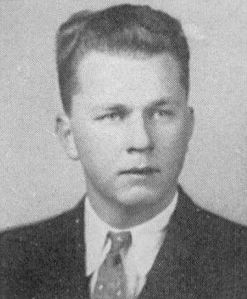
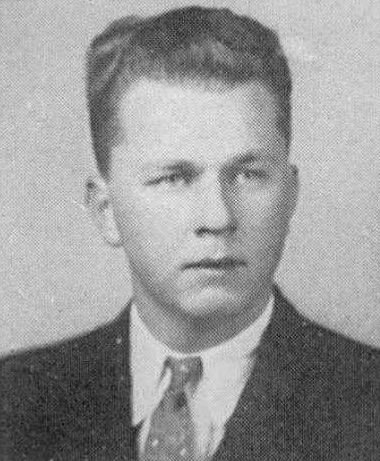
austin-cook_sunset-high-school_1937Austin Cook, Sunset High School, 1937

Before Cook and Bowmen met — probably around 1947 — each had been dabbling in different businesses. In early 1947, Cook leased a Clover Farm Store building at 203 N. Ewing and opened the Libby & Cook grocery with partner Lendal C. Libby.
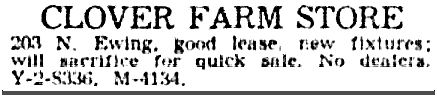
LIBBY-COOK_dmn_021047February, 1947

LIBBY-COOK_1947-directory1947 Dallas directory

Bert Bowman worked there as a meat-cutter.

bowman_1947-directory_GROCERY-w-AUSTIN1947 Dallas directory

The grocery store was in business at least into 1949, the year that Bowman and Cook decided to ditch the groceries and start their own business at 2321 W. Illinois, in a part of Oak Cliff which was just starting to be developed. Their BBQ place was originally called B & G Barbecue, which — according to Cook’s letter above — was the name of the restaurant he and Bowman bought out. I guess they felt it was easier to keep the name for awhile.

b-and-g-1951-directory1951 Dallas directory

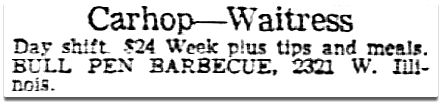
The name “Bull Pen Barbecue” didn’t come until later. In fact, the first appearance of the Bull Pen name associated with this address doesn’t show up in local newspaper archives until a want-ad placed in the summer of 1952.
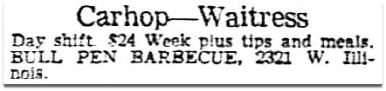
bull-pen_dmn_082652_FIRSTAugust, 1952

A probably related “Bull Pen No. 2” opened in South Dallas in 1953. It appears to have been very short-lived.
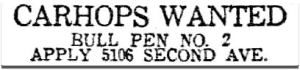
bull-pen-no-2_dmn_100853
October, 1953

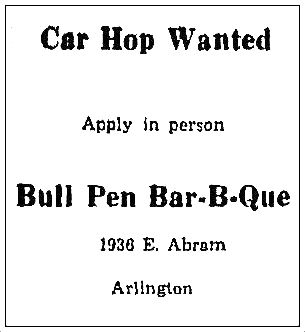
By the fall of 1957, Cook and Bowman had opened another Bull Pen — this one in Arlington, and this one a success.
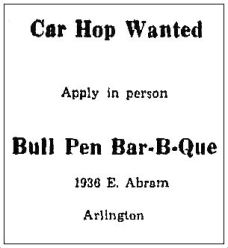
bull-pen_arlington_grand-prairie-daily-news_091557
September, 1957

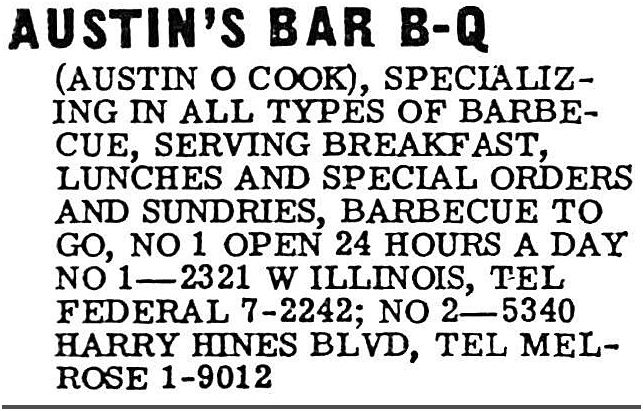
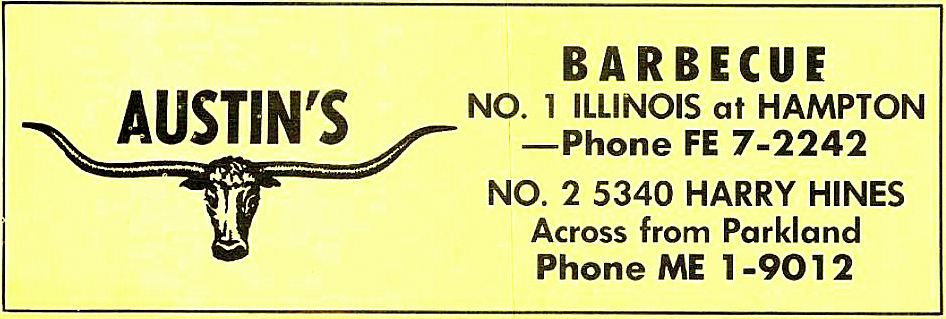
And then Oak Cliff went dry, the worst thing that could happen to a restaurant that sold a lot of beer. Similar businesses which relied heavily on beer sales began to desert Oak Cliff. Bowman did not think their original drive-in could survive, but Cook disagreed. Bowman sold his half-interest in the Oak Cliff location to Cook, and Cook sold his half-interest in the Arlington location to Bowman. Cook changed the name of his now solely-owned restaurant to Austin’s Barbecue, and his success continued, despite the fact that he could no longer sell beer. He was doing well enough that, in 1961, he opened a second location, on Harry Hines across from Parkland Hospital (a location which lasted through 1964).
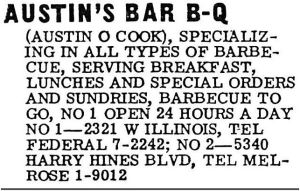
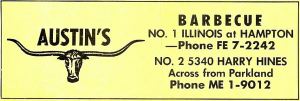
austins-barbecue_1962-directory_two-locations
1962 Dallas directory

austins-barbecue_1963-directory_two-locations_ad
1963 Dallas directory

By 1963, Austin’s was a well-established teen hang-out and wisely placed ads in Oak Cliff high school annuals. Apparently everyone went there!
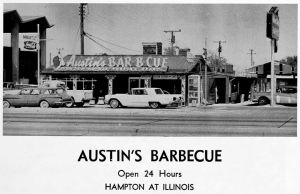
oak-cliff_austins_bar-b-cue_kimball-yrbk_19631963 Kimball High School yearbook

austins-bar-b-q_sunset-high-school_1964-yrbk.det1964 Sunset High School yearbook

austins_car-teens_flickr-coltera
Date and source unknown, via Flickr

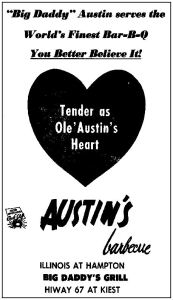
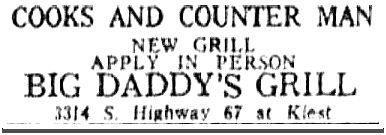
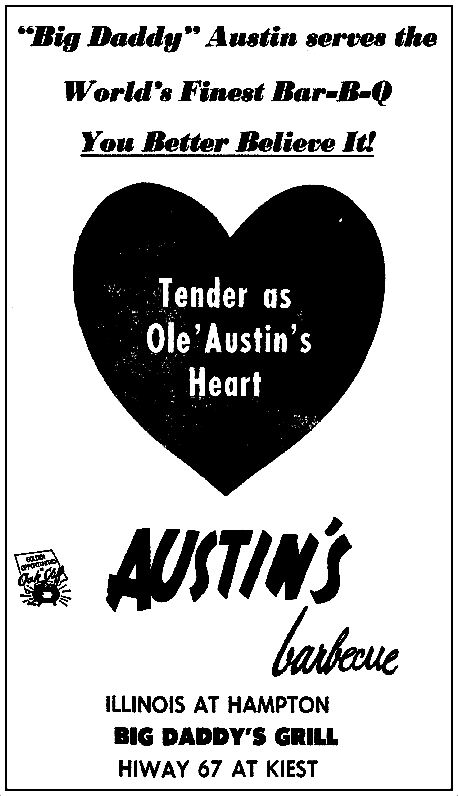
In 1964, Cook — known as “Big Daddy” — opened another restaurant, this one called Big Daddy’s Grill.
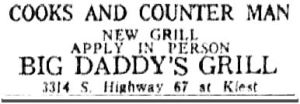
big-daddys_dmn_063064June, 1964

austins-barbecue_dmn_081466-adAugust, 1966

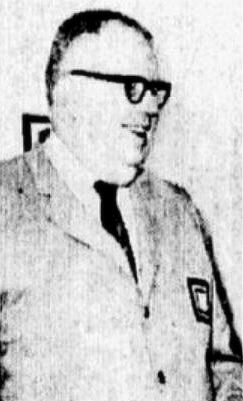
The restaurant was a bona fide Oak Cliff landmark, and Cook was an active participant in community business affairs. Below, a detail of a photo showing Cook as a member of the Oak Cliff Chamber of Commerce.
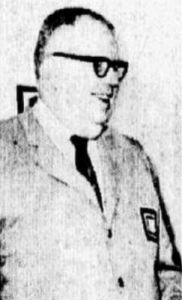
austin-cook_dmn_082568-photo-det
late 1960s

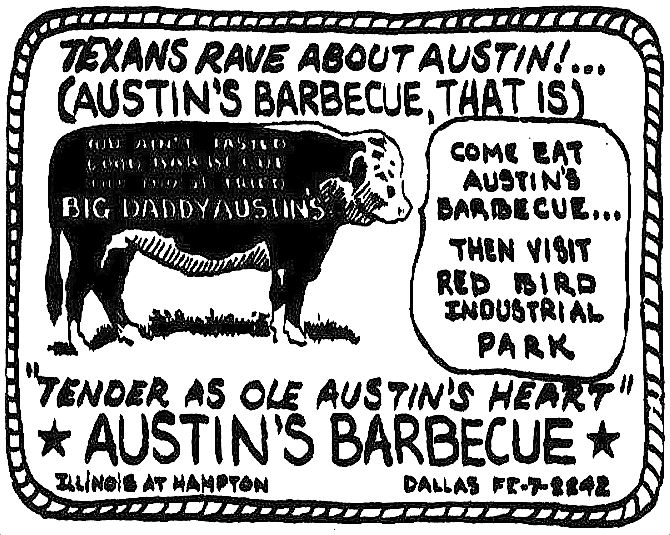
Cook participated in a series of Oak Cliff Chamber of Commerce campaigns and even included oddities like “Come eat Austin’s barbecue… and then visit Red Bird Industrial Park” in his ads. Make a day of it!

austins-barbecue_092968
September, 1968

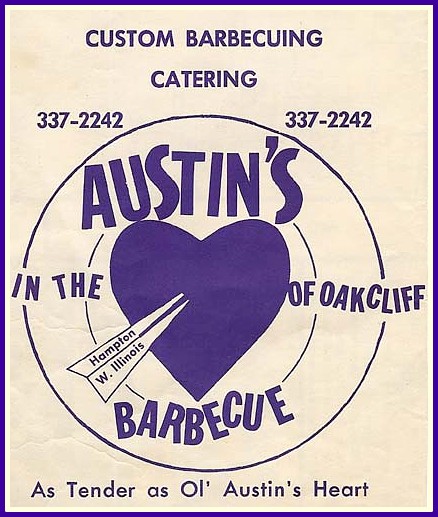
ad_austins-barbecue
via OakCliff.org

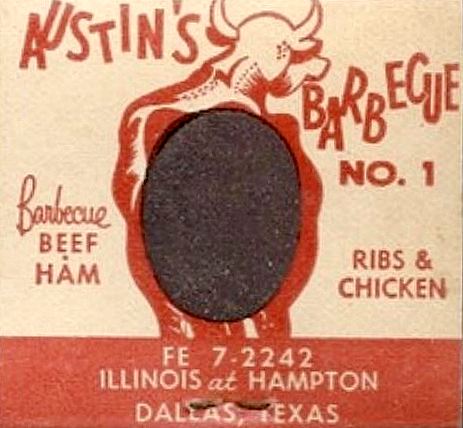
austins_matchbk_flickr_coltera
via Flickr

***

Sources & Notes

Color postcard at the top found on Pinterest, here.

The letter from Austin Cook was quoted on the DHS Phorum, here. More from the Phorum on The Bull Pen/Austin’s is here.

More can be found in the Dallas Morning News archives in the following stories:

  • “Austin’s Bar-B-Q Grows With Oak Cliff” (DMN, Aug. 14, 1966)
  • “Barbecue To Go — Staff, Customers Mourn Closing of Oak Cliff Institution” (DMN, July 13, 2000)
  • “Closed But Not Forgotten — Oak Cliff Eatery Marks Half-Century of Barbecue With Memorable Auction” (DMN, Aug. 27, 2000)
  • “John P. Zito — Operated Oak Cliff Landmark Austin’s Barbecue For 19 Years” by Joe Simnacher (DMN, Oct. 14, 2003)

Read the obituaries of Bert Bowman (1989) and Austin O. Cook (2006) here.

The Oak Cliff Advocate article “A Look Back at Austin’s Barbecue” by Gayla Brooks is here (with tons of memories from readers in the comments).

Not mentioned in this post is the connection of Officer J. D. Tippit (who moonlighted as a keeper of the peace at Austin’s) and other tangential/coincidental associations to the Kennedy assassination. It’s well documented elsewhere. Google is your friend.

*

Copyright © 2016 Paula Bosse. All Rights Reserved.

A Few Ads From the Pages of the 1963 and 1967 Kimball High School Yearbooks

oak-cliff_austins_bar-b-cue_kimball-yrbk_1963_a
BBQ in the OC, 1963

by Paula Bosse

A few random, nostalgic ads from the 1963 and 1967 Kimball High School yearbooks.

**

Above, Austin’s Barbecue.

*

Below, the Wynnewood Pharmacy:

oak-cliff_wynnewood-pharmacy_kimball-yrbk_1963_a1963

*

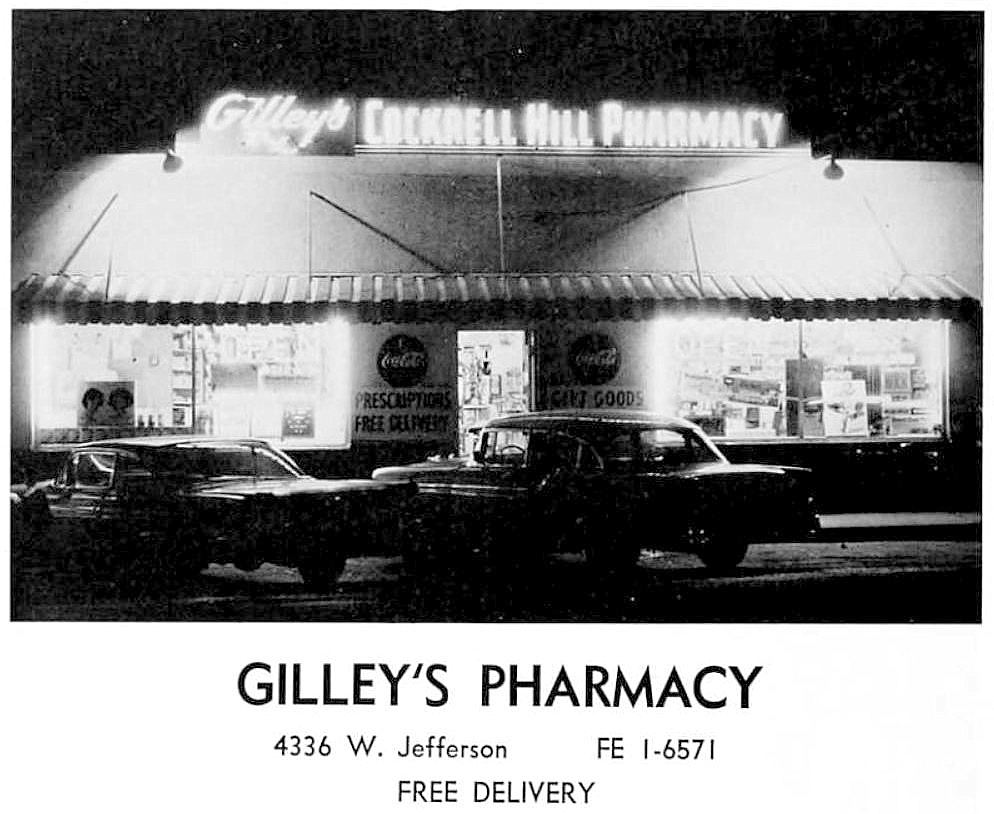
Gilley’s Cockrell Hill Pharmacy:

oak-clliff_gilleys-cockrell-hill-pharmacy_kimball-yrbk_1963_a1963

*

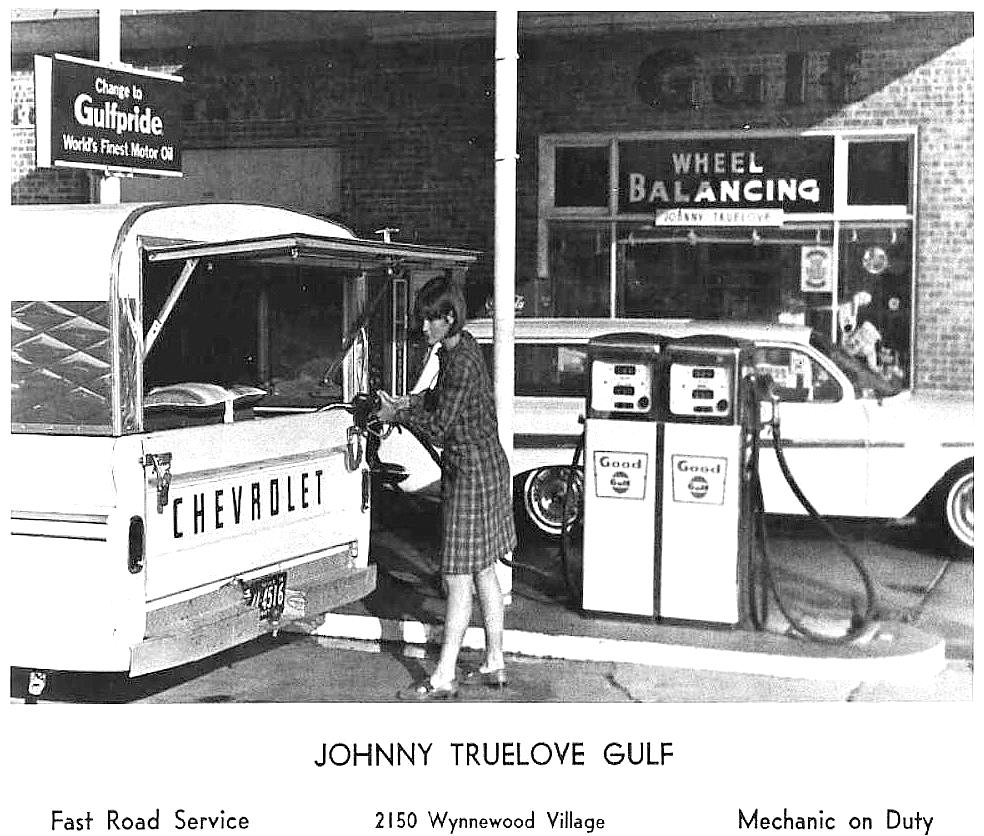
Johnny Truelove Gulf station:

truelove-gulf-station_kimball-yrbk_1963_a1963

truelove-gulf-station_kimball-yrbk_1967_a1967

*

Sammy’s Westcliff (a favorite of Marsha and her Aqua-Netted pals):

sammys_oak-cliff_1967-kimball-yrbk_a1967

*

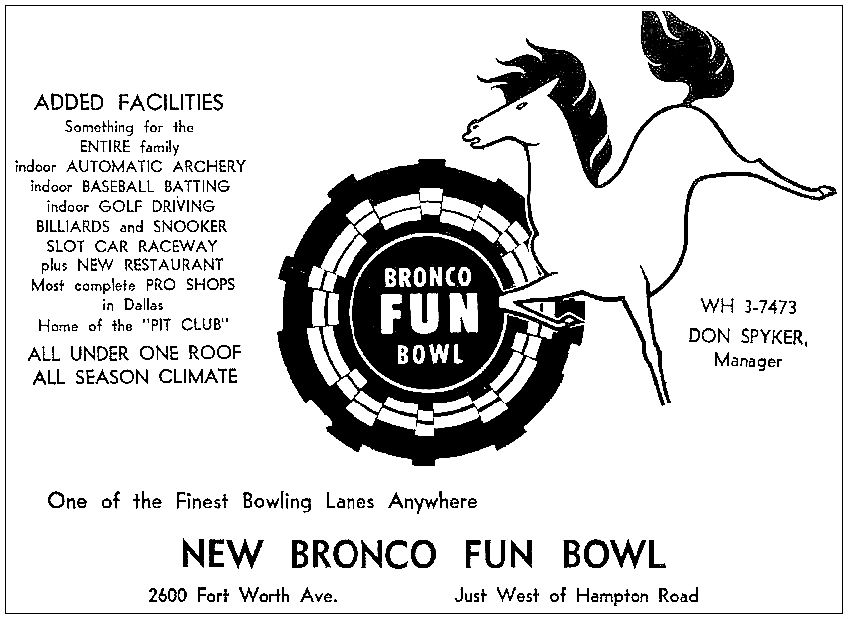
And the late, lamented Bronco Bowl:

ad-bronco-bowl_kimball-yrbk_1967_a1967

*

And for those who want to browse the retail offerings of Wynnewood Village in 1963, here is a handy list (click to see a larger image):

oak-cliff_wynnewood-village_kimball-yrbk_1963_a1963

***

Sources & Notes

All ads from the 1963 and 1967 Kimball High School yearbooks.

More than you’d ever want to know about The Bull Pen/Austin’s Barbecue in my follow-up post, here.

*

Copyright © 2016 Paula Bosse. All Rights Reserved.
The Official Government Reenactment of the Kennedy Assassination — Nov. 27, 1963

reenactment_agent-at-windowAgent Howlett at window with “rifle”

by Paula Bosse

Yesterday I received a comment on a previous post I wrote about the first official reenactment of the Kennedy assassination, and that got me to wondering if that film was online anywhere. The film was made as part of the Secret Service investigation and was filmed in Dealey Plaza and in the Texas School Book Depository; the motorcade sequence was filmed on November 27, 1963, just five days after the assassination. Even though my knowledge of the events of November 22 is fairly limited (and what I do know is mostly due to osmosis), just growing up here you kind of feel you’ve seen everything connected with the assassination. But I’d never seen this film or the one made a few months later with the production assistance of local TV station KRLD, which included much of the same footage. Apparently, the original film had not been made public until fairly recently.

It’s very interesting to watch, and the fact that there is no sound makes it appropriately eerie. I have to admit that I was most interested in seeing the footage of downtown streets. And the interior of the Texas School Book Depository beyond just the “sniper’s nest” we always see. (I can now say I’ve sneaked a peek inside the depository’s employee lunchroom.)

So here are the two films. The first one was made by the Secret Service, with the Dealey Plaza reenactment filmed on Nov. 27, 1963. It has no sound. I thought it was interesting, but a lot of people might find it a little dull and repetitive. Below this video is one which uses this footage to lay out the government’s findings, with lots of details and no-nonsense narration by KRLD’s Jim Underwood. (I’m not sure why — or for whom — this educational film was made. It doesn’t seem to have been screened for the public.) The silent film has more footage, but the narrated film is easier to follow. And below that are screenshots from the government’s “reconstruction.” (UPDATE, Jan. 2024: The two videos I had originally linked have been removed from YouTube. I’m linking a video I found recently below.)

*

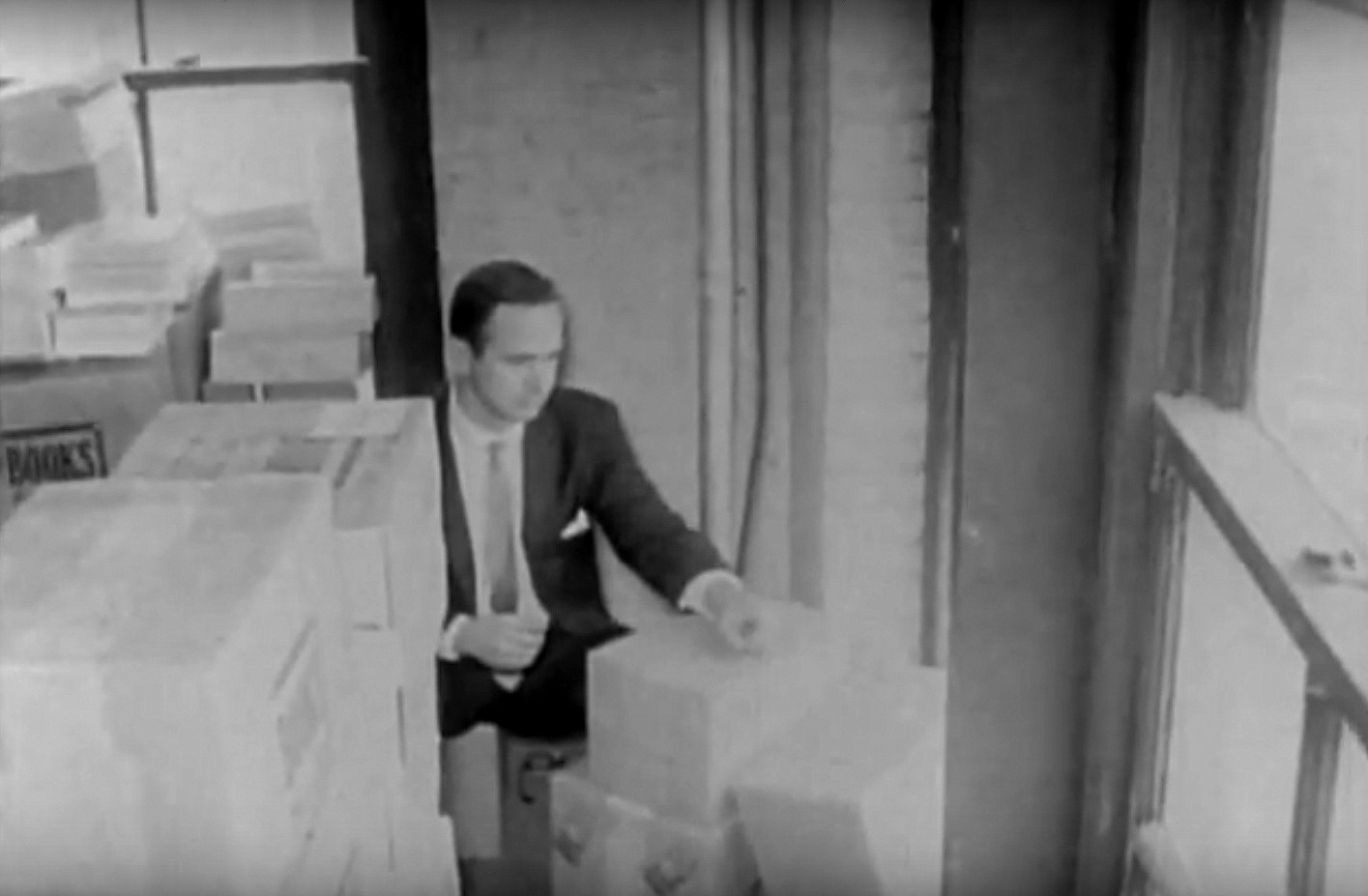
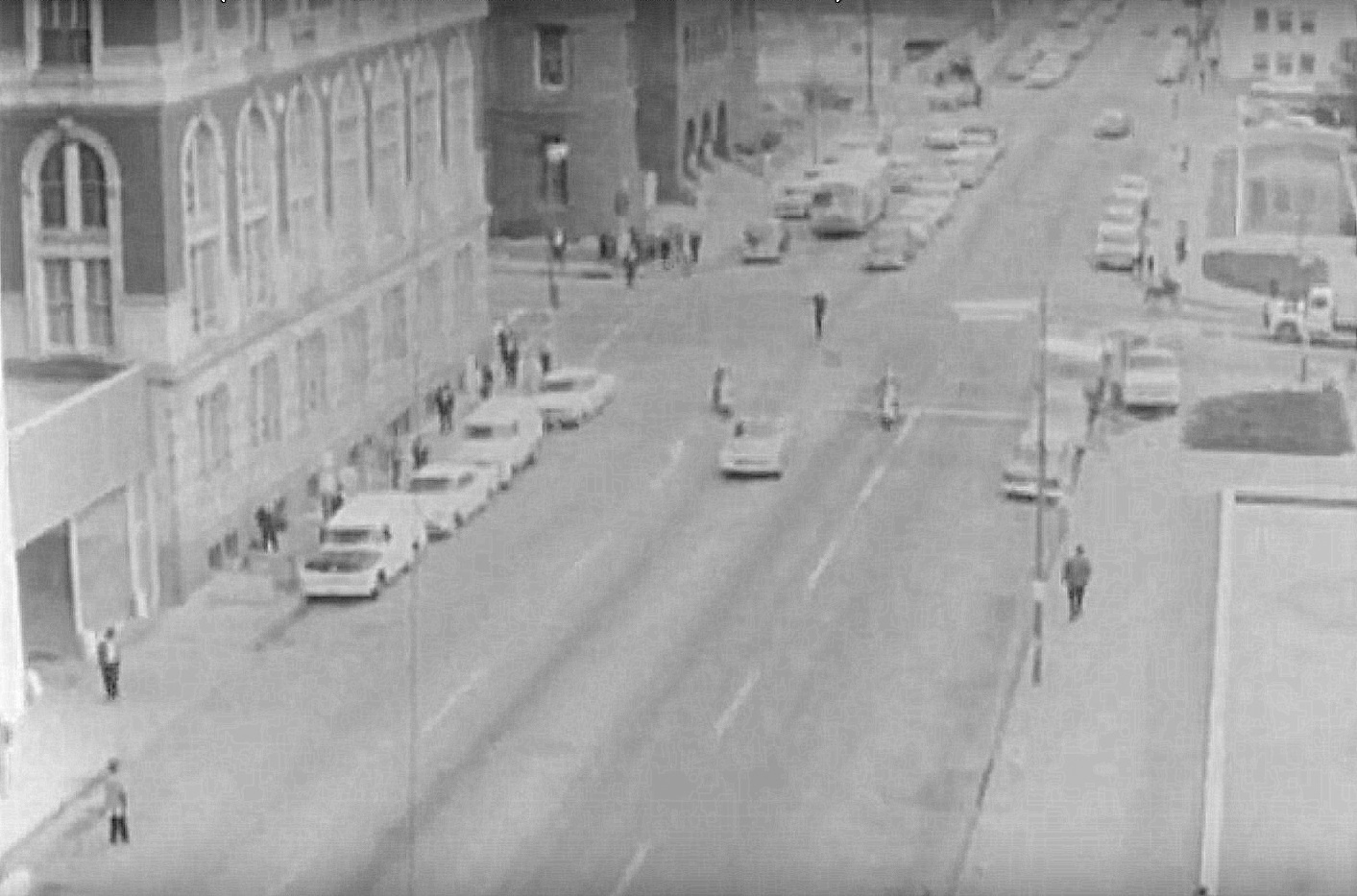
Below, a few screenshots from the government footage. The one at the top of this post shows Special Agent John Joe Howlett sitting at the sixth-floor window, as if holding a rifle.

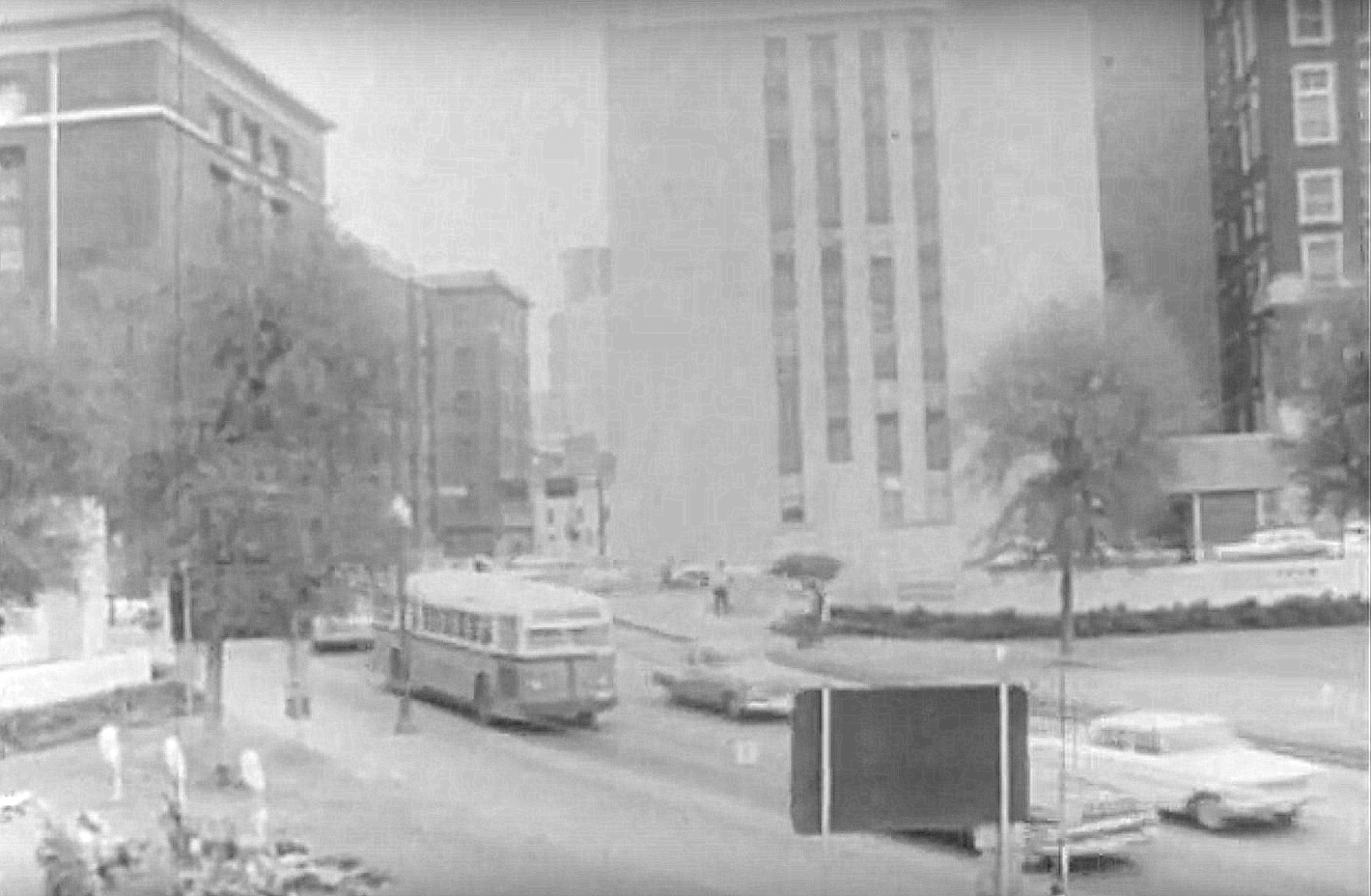
Below, Elm St. looking east from Dealey Plaza, with the white Records Building at center right.

reenactment_elm*

The one-car-two-motorcycle motorcade turning from Main onto Houston St. Looking south from … you know where.

reenactment_houston-st*

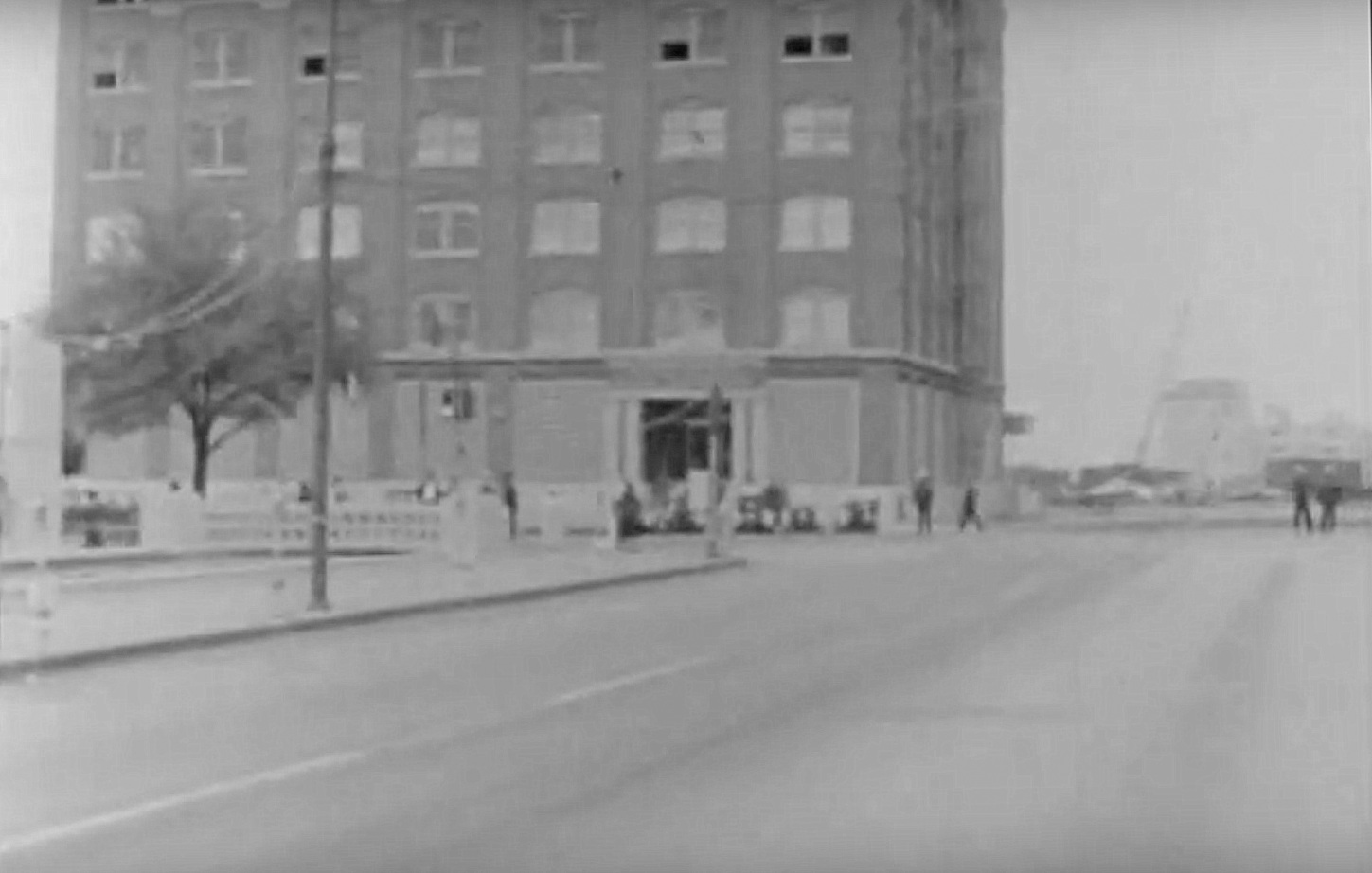
Houston St. looking north, with the School Book Depository on the left and a disconcertingly empty space straight ahead.

reenactment_houston-st-north*

A nice artsy shot of the book depository and the old John Deere Building.

reenactment_tsbd-ext*

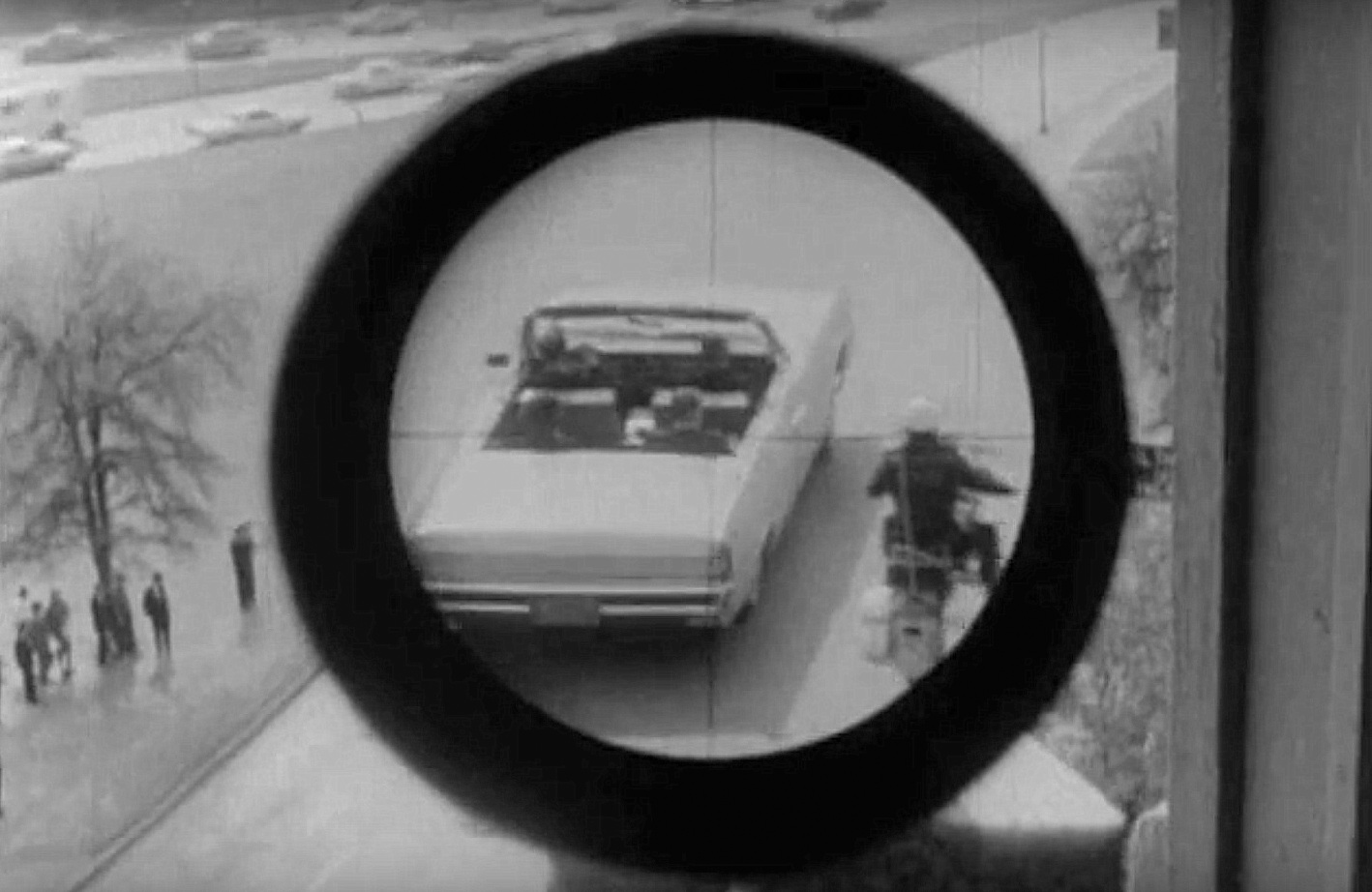
Camera with “scope” attachment.

reenactment_scope*

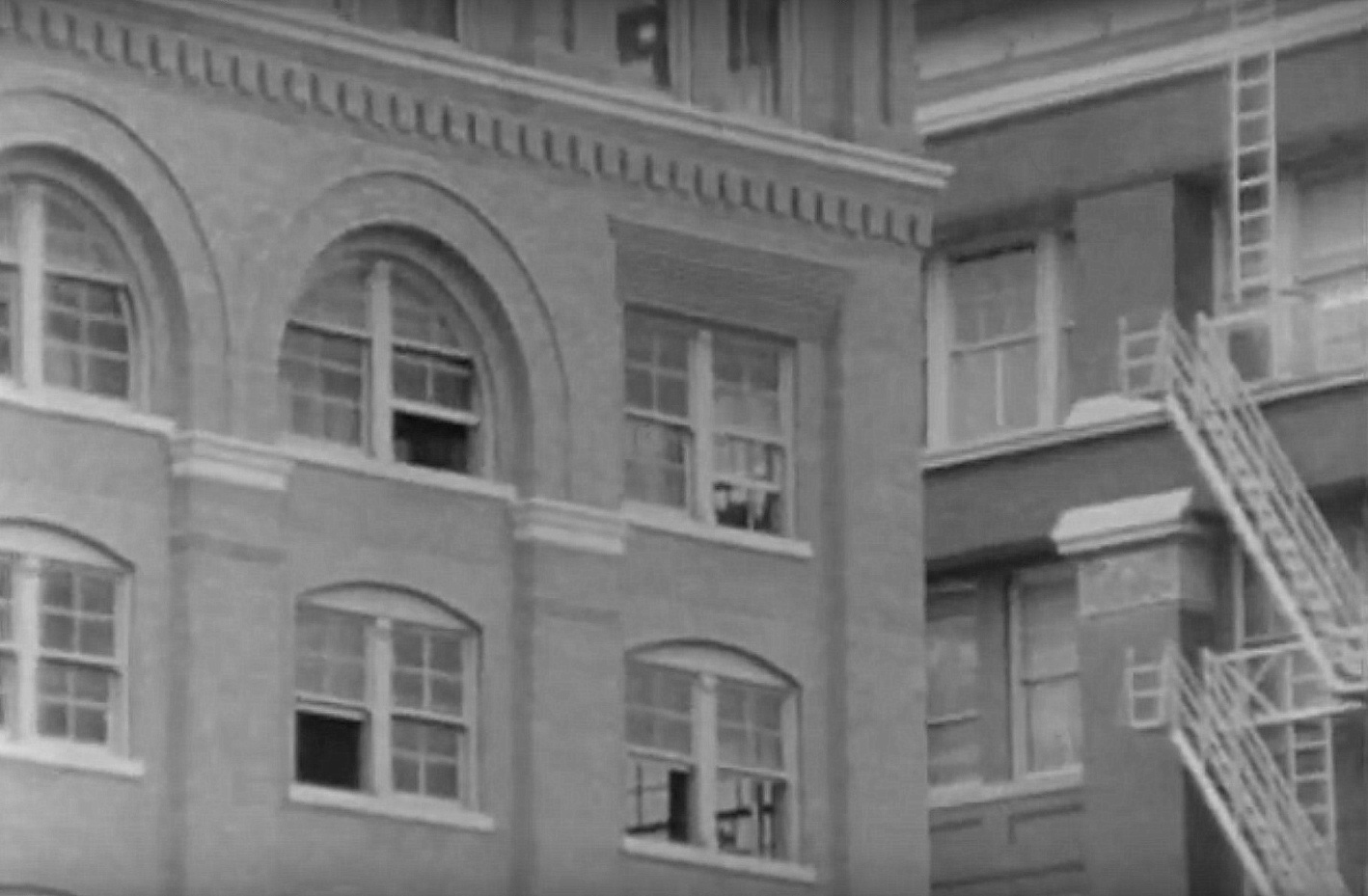
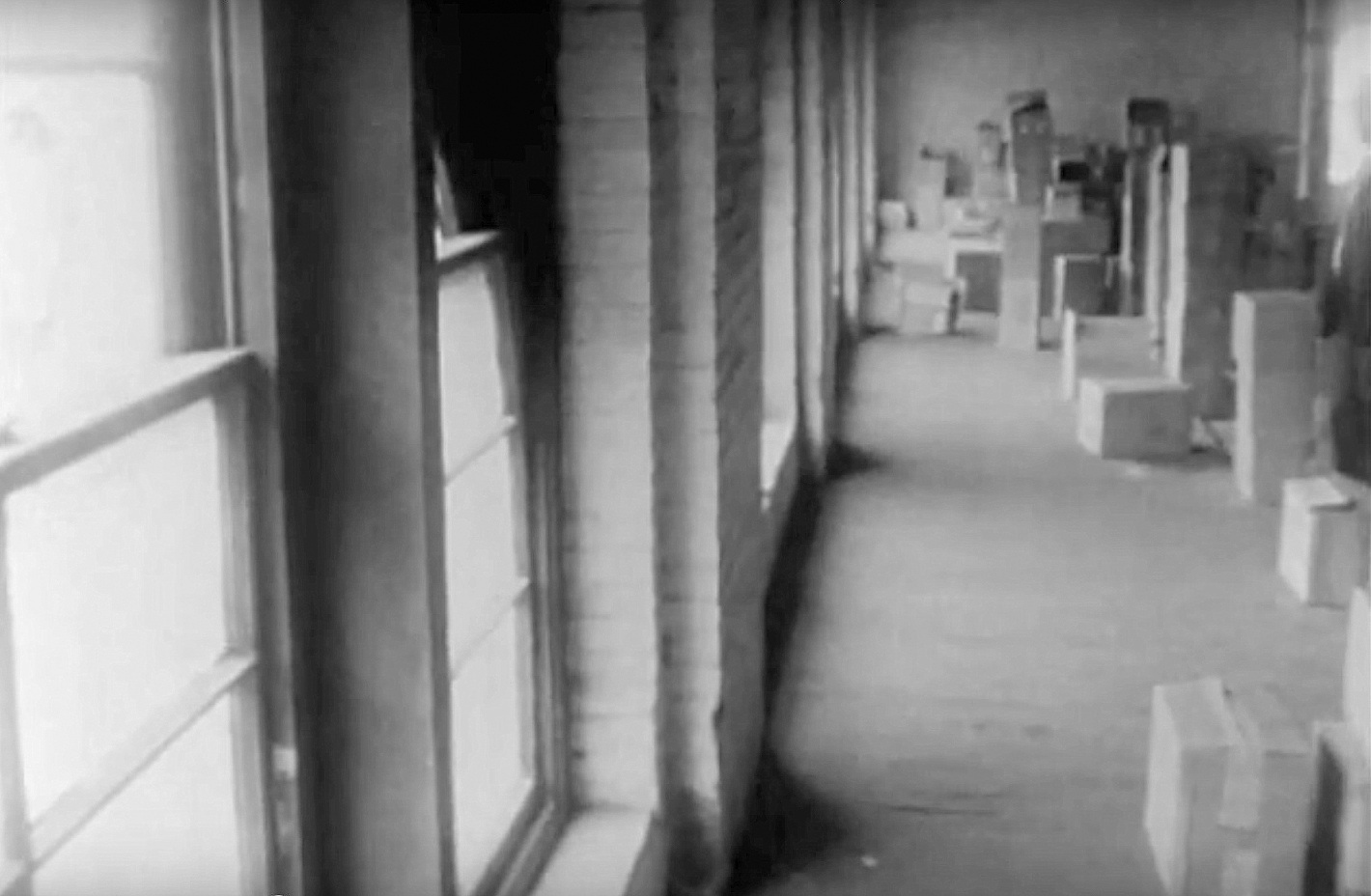
Windows, boxes, looking toward the west end of the building from the “nest” end of the sixth floor.

reenactment_tsbd-int*

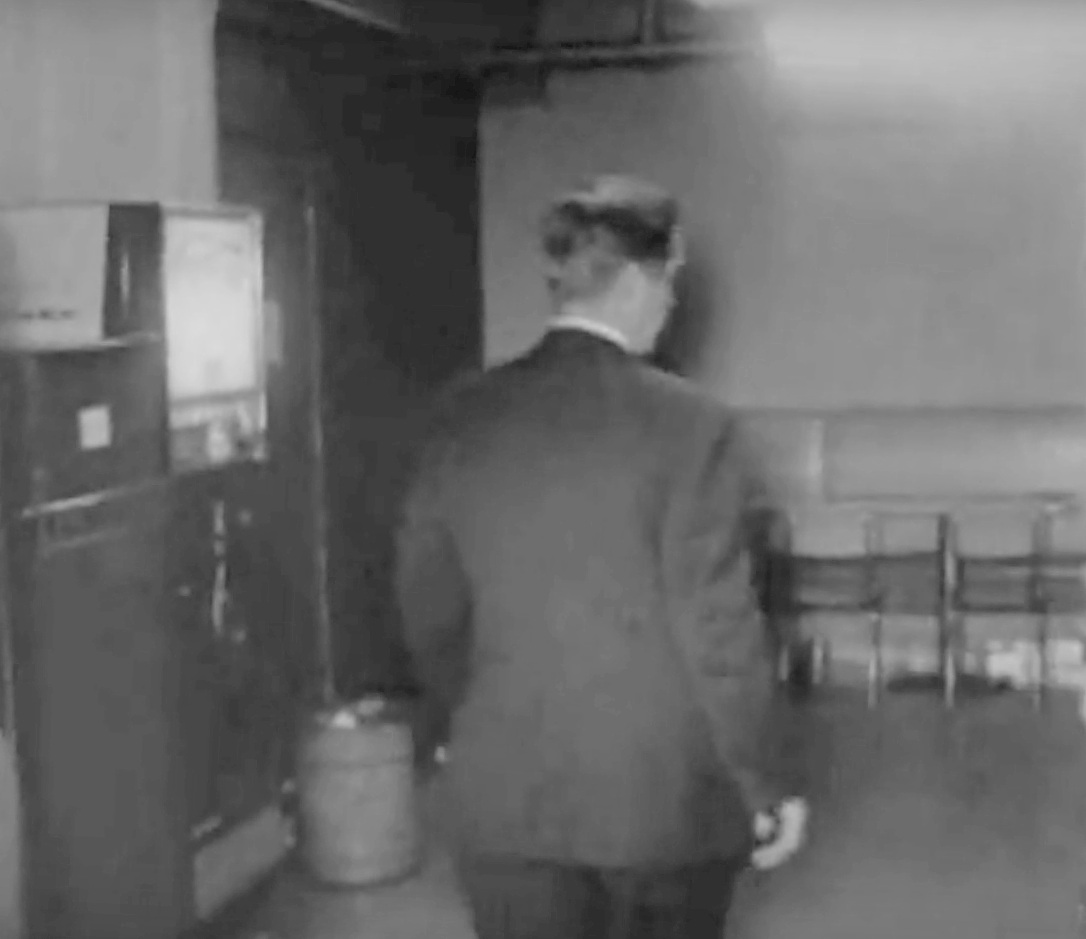
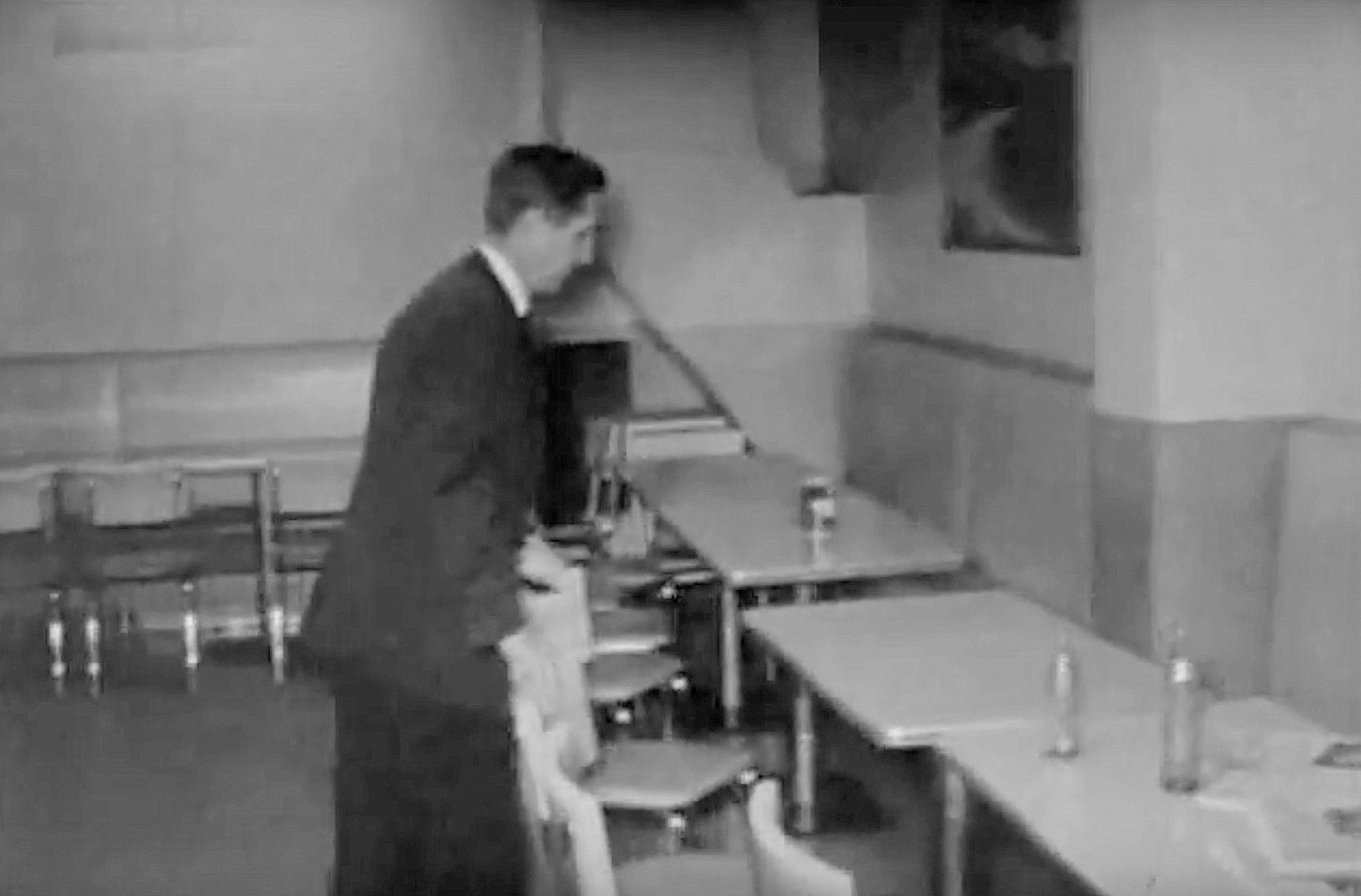
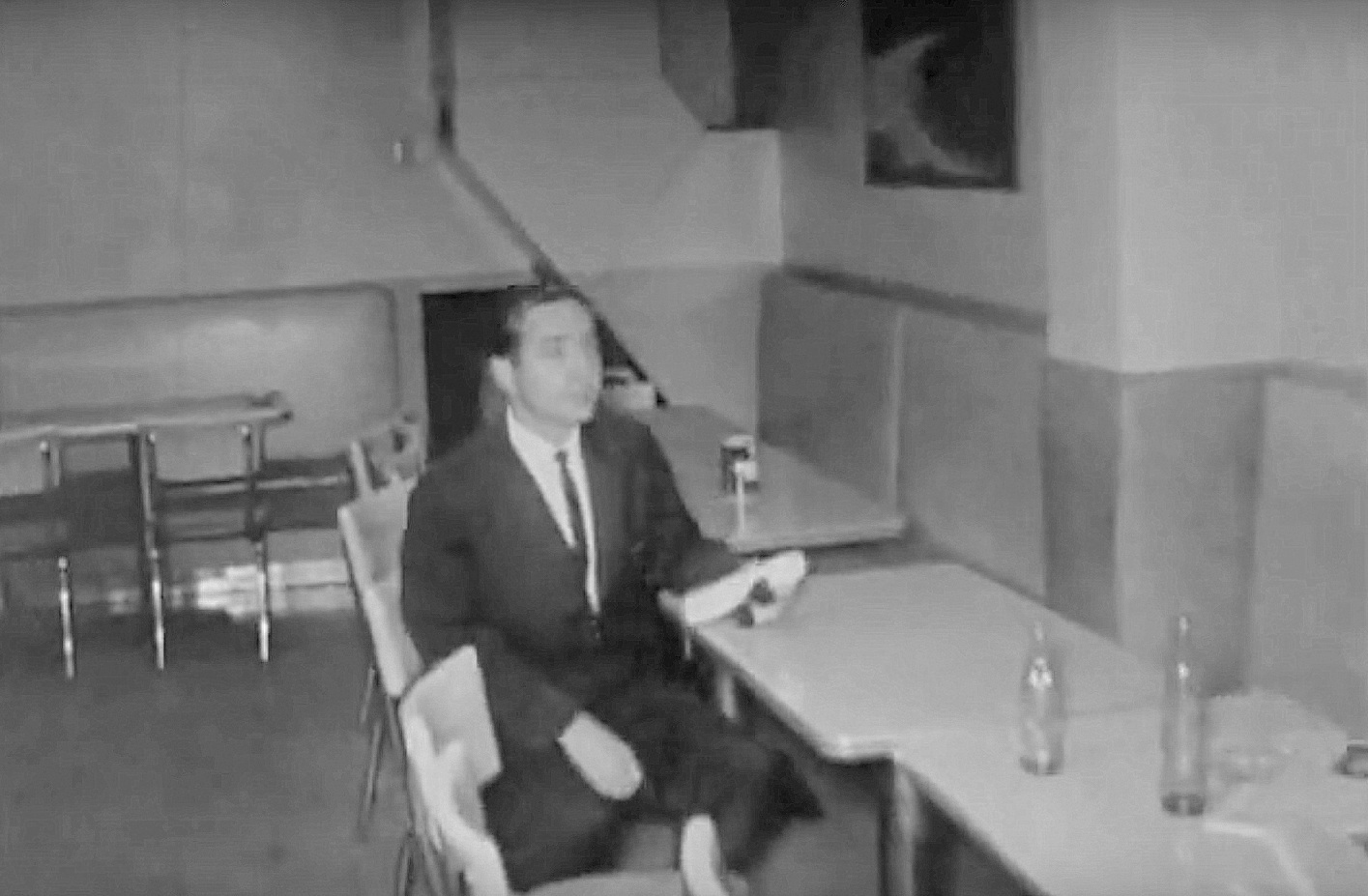
A trip to the second-floor lunchroom, with its vending machines which are, apparently, important in Lee Harvey Oswald’s alibi. These images show Special Agent Talmadge Bailey walking past the vending machines and sitting at a table.

reenactment_tsbd-bldg-lunchroom1

reenactment_tsbd-bldg-lunchroom2

reenactment_tsbd-bldg-lunchroom3

***

Sources & Notes

See Dallas Times Herald photographs that were shot while the Dealey Plaza “reenacting” was going on in my previous post, “The First JFK Assassination Reenactment — 1963,” here. (As for the comment that started me off on this, I’m still not sure whether the cameramen in the car are KRLD employees or not.)

*

Copyright © 2016 Paula Bosse. All Rights Reserved.

NorthPark — 1965

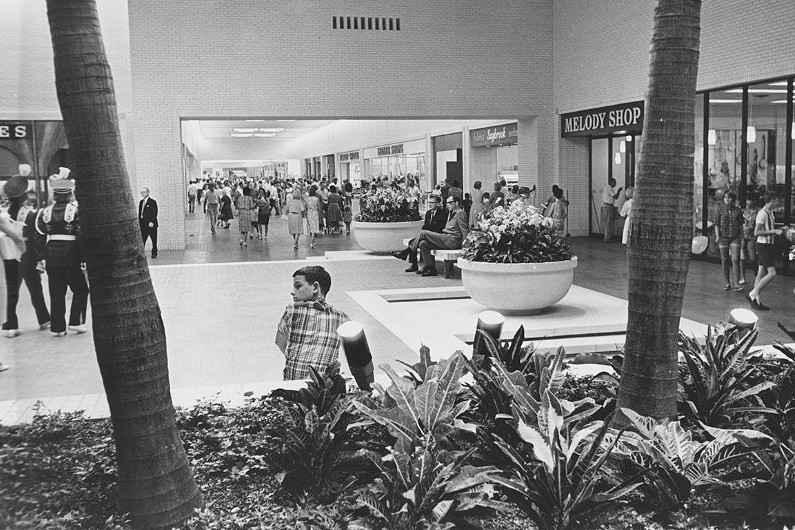
northpark_melody-shop_1965_northpark-websiteMarching band members, foliage, Melody Shop

by Paula Bosse

NorthPark Center — the only mall I’ve ever enjoyed being in — turned 50 last year. Developed by the legendary Raymond Nasher, it opened in August of 1965 on 90-something acres of old Caruth farmland. Sleek, cool, uncluttered. There was art! There were ducks! There were naughty playing cards and black light posters in Spencer’s! There was even a dime store! I spent a lot of time there as a kid in the ’70s, which is probably why I feel completely lost in the expanded, ultra-upscale version of today. I used to know where EVERYTHING was. Now? Since its recent “augmentation,” it doesn’t feel like “my” mall anymore. Now, for me, it’s just another upscale Dallas mall (albeit in an unusually appealing building and in still-sleek, aesthetically pleasing surroundings). But then I’m a person who is generally not a fan of shopping and feels anxious in shopping malls, so I’m clearly in the minority amongst Dallas women. Today’s NorthPark is still going strong and is as popular as ever (if not moreso), but I will always prefer the NorthPark of my childhood — it’s the only shopping mall I’ve ever felt completely at home in.

*

At the top, the Melody Shop — where I bought my first records. People were always in there playing the organs.

Neiman’s was there, too, of course — at the swankier end of the mall. N-M was intimidating. There weren’t a lot of black light posters and Keds in there.

northpark_neimans-northpark-center-colln

Which is why I spent most of my time in the stretch between the Melody Shop and Penney’s.

northpark_penneys_northpark-website_1965

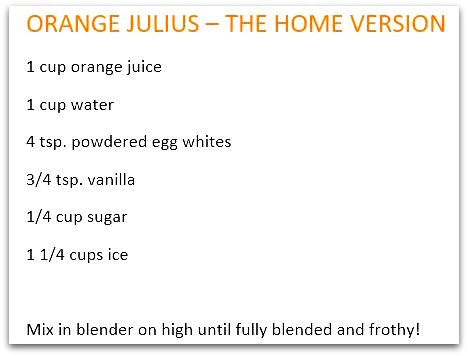
This was the part of the mall I might have liked the best, if only because of … Orange Julius!! (See recipe below.)

northpark_orange-julius_northpark-website_1965

(Am I crazy, or hadn’t Orange Julius moved to the space next to where it is in this 1965 photo? I swear in the ’70s it was facing Penney’s.)

But the one thing that absolutely everyone who ever spent any time there as a kid remembers most?

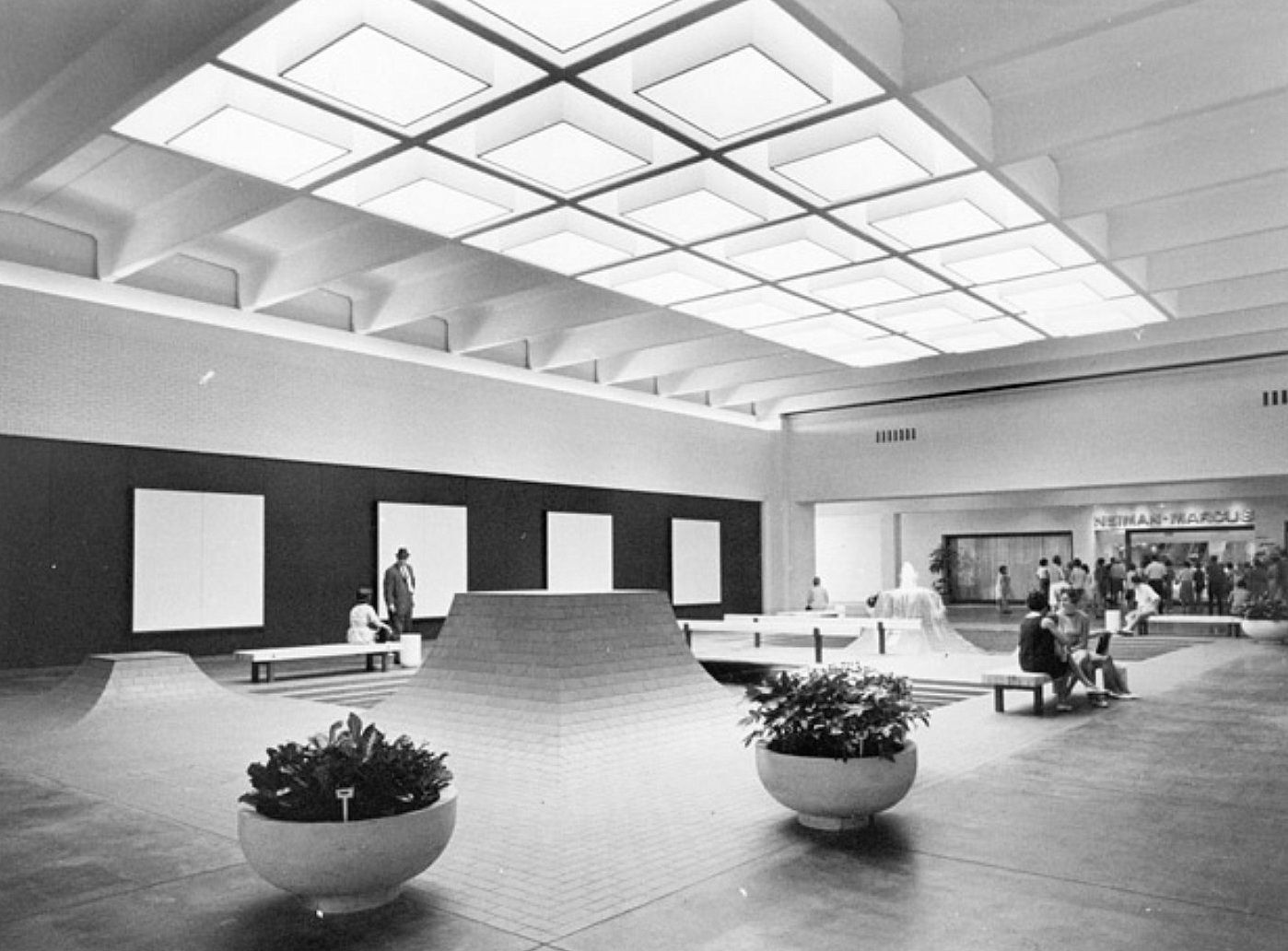
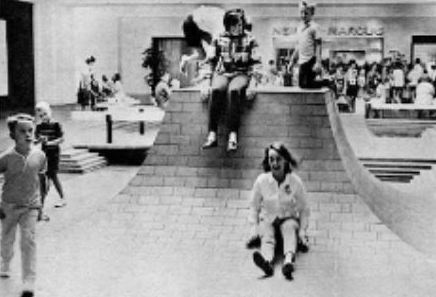
northpark_slides_dth_np-websiteDallas Times Herald photo

Come to think of it, what I remember most about the NorthPark of my very early childhood is how smooth and cool-to-the-touch everything was — especially for children like me who were climbing all over everything: the tiles of those “slides,” the concrete of the fountains and planters, the floors, and those white bricks, inside and out. Everything was so smooooth. Happy belated birthday, NorthPark!

***

Sources & Notes

Most of these photos are from 1965, and most are from the history page of the NorthPark Center website, here. Their entertaining NorthPark50 blog is here.

More on the history of NorthPark at Wikipedia, here.

A 15-minute 50th anniversary video by The Dallas Morning News is on YouTube, here.

One of the first mentions of the future super-mall (and its 99-year lease) was in the March 5, 1961 edition of The Dallas Morning News in the article “Big Shop Center Slated in Dallas” by Rudy Rochelle.

See a cool color photo of the brand new mall here.

Want to make your own Orange Julius? Here’s a good recipe. The secret ingredient is powdered egg whites, available at Whole Foods and most larger grocery stores. The added sugar is important, but you might not want to use a whole quarter-cup.

UPDATE: The powdered egg whites I used to buy at my local Tom Thumb — “Just Whites” by Deb El — is no longer available. I tried several grocery stores today and couldn’t find powdered egg whites anywhere. They may be available in health food or vitamin/supplement stores. I just ordered some online. If you don’t mind using egg whites out of the shell, substitute 2 egg whites for the powdered in the recipe below.

orange-julius-recipe

Enjoy!

*

Copyright © 2016 Paula Bosse. All Rights Reserved.
Woodall Rodgers Freeway Under Construction — 1966

woodall-rodgers_squire-haskins_uta_052466
Land cleared, May 1966 (click for gigantic image) (UTA Libraries)

by Paula Bosse

The photo above shows land partially cleared for the construction of Woodall Rodgers Freeway. The view is to the east, with Central Expressway at the top left and Stemmons Freeway at the bottom left. The land cleared was once part of what used to be called “North Dallas,” and before it was bulldozed away, it was a predominantly black residential neighborhood served by several African-American- and Hispanic-owned businesses. The photo above was taken on May 24, 1966. The photo below was taken on December 8, 1966. The freeway was already years behind schedule when these photos were taken, but nobody would ever have believed it would take until 1983 (!!) for Woodall Rodgers Freeway — a “cute” little highway, less than two miles long — to be completed. Oh, but it did.
woodall-rogers-squire-haskins-uta-120866Dec. 8, 1966 (photo by Squire Haskins; UTA Libraries)
In a Dallas Morning News article published on the May 27, 1983 opening of the freeway, Henry Tatum wrote the following:

Dwight Eisenhower was starting his second term as president of the United States. Elvis Presley had passed his physical examination and was headed for a stint in the Army. And Doris Day was singing up a storm on the screen in “Pajama Game.” The year was 1957 and Dallas city fathers decided it was time to build a downtown connection between Central Expressway and Stemmons Freeway. (“Freeway From the Past” by Henry Tatum, DMN, May 27, 1983)
1957!

When it was completed 26 years later — in 1983 — Ronald Reagan was president, Sally Ride was about to become the first woman to go into space, and Madonna was singing up a storm as her first album was being readied for release. That’s a looong time.

***

Sources & Notes

Both aerial photos by Squire Haskins, from the Squire Haskins Photography, Inc. Collection, UTA Libraries, University of Texas at Arlington. The photo from May can be accessed here, the one from December, here.

“Woodall Rodgers”? James Woodall Rodgers was mayor of Dallas from 1939 to 1947. It was announced that what would become a never-ending headache-of-a-highway-project bedeviled by funding squabbles and right-of-way issues would be named in his honor in 1960.

Those two photos are really, really big when you click them. …REALLY big.

*

Copyright © 2016 Paula Bosse. All Rights Reserved.