Flashback : Dallas

A Miscellany: History, Ads, Pop Culture

Category: 1960s

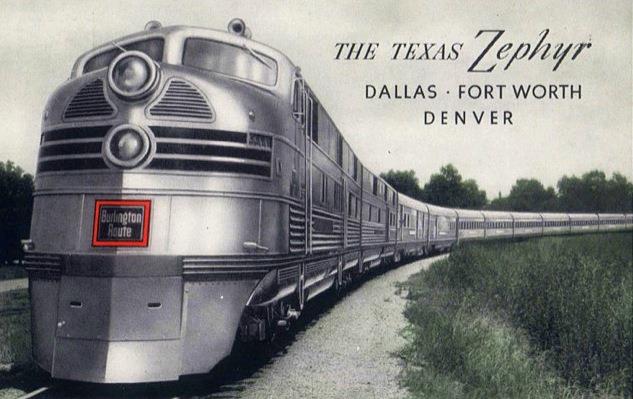
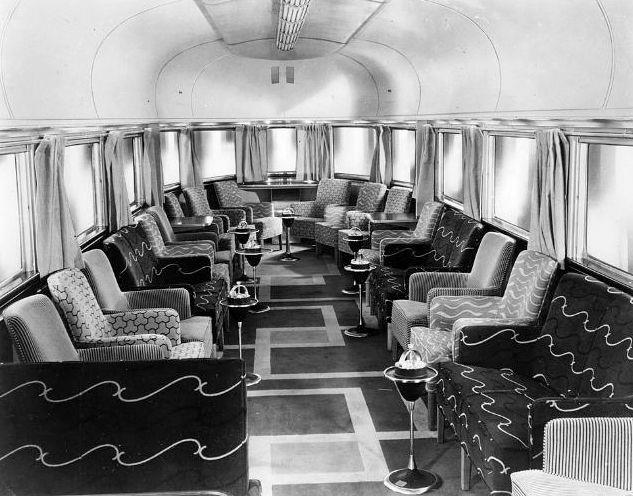
The Texas Zephyr — Streamlined Luxury Train Travel

Dallas — Fort Worth — Denver

by Paula Bosse

From the golden age of train travel. …I was born in the wrong era.

***

Sources & Notes

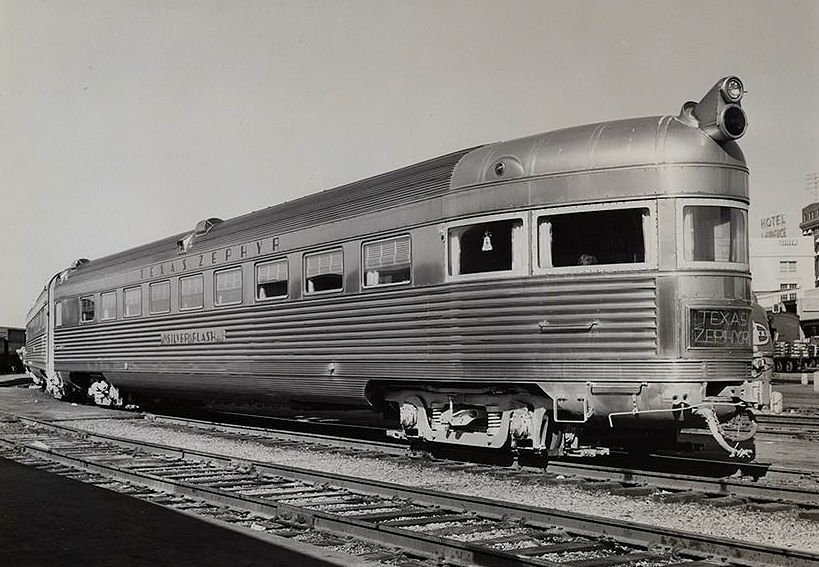
Second photo showing the exterior of the “Silver Flash” passenger car on the tracks at Union Station in Dallas is from the DeGolyer Library, Central University Libraries, Southern Methodist University; it was taken by Everett L. DeGolyer Jr. in 1960; more information on this photo is here.

Top and bottom images are from the wilds of the internet.

More on the Texas Zephyr here.

*

Copyright © 2014 Paula Bosse. All Rights Reserved.

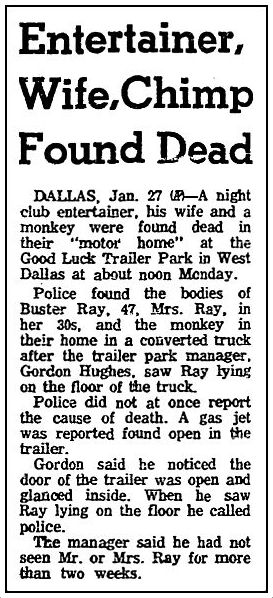
Not Every ‘Good Luck Trailer Park’ Story Has a Happy Ending — 1964

chimp_fwst_012864Fort Worth Star-Telegram, Jan. 28, 1964

by Paula Bosse

“Entertainer, Wife, Chimp Found Dead.” THAT is a headline.

Had I not known that the (ironically named) Good Luck Trailer Park on W. Commerce had been a favorite with visiting circus folk, I might have been a little more surprised by the weird circumstances reported in this article. As it was, I was only mildly surprised.

(I kind of think the chimp did it….)

***

Sources & Notes

Hats off to the Fort Worth Star-Telegram‘s headline writer. The story ran in the Star-Telegram on Jan. 28, 1964.

The victims — Harold Allen Ray and his wife Nadine (and unnamed monkey) — were later determined to have died of accidental carbon monoxide poisoning.

“Buster Raye” (stage name of Harold Ray) had been a comedian and master of ceremonies who seems to have played a lot of burlesque joints/strip clubs as the between-stripper entertainment. He was billed as “The Mighty Mite of Mirth.” In a Feb. 24, 1948 review of his act, The Bryan Eagle wrote:

Buster Raye, diminutive master of ceremonies, stole the show with a clever line of chatter punctuated with juggling, acrobatics, songs, imitations. His jokes were well handled with none of the vulgarity common to many floor shows.

I’m not sure where the monkey fits in.

buster-raye_corpus_042948Corpus Christi Caller-Times, April 29, 1948

*

Copyright © 2014 Paula Bosse. All Rights Reserved.


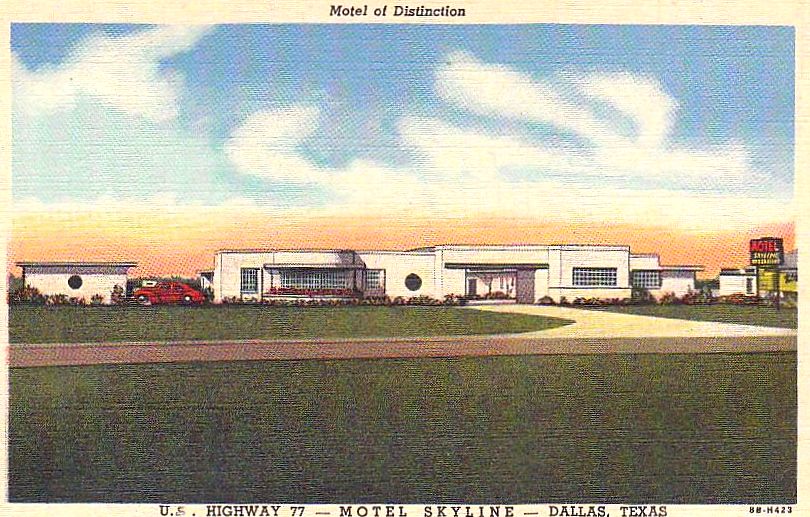
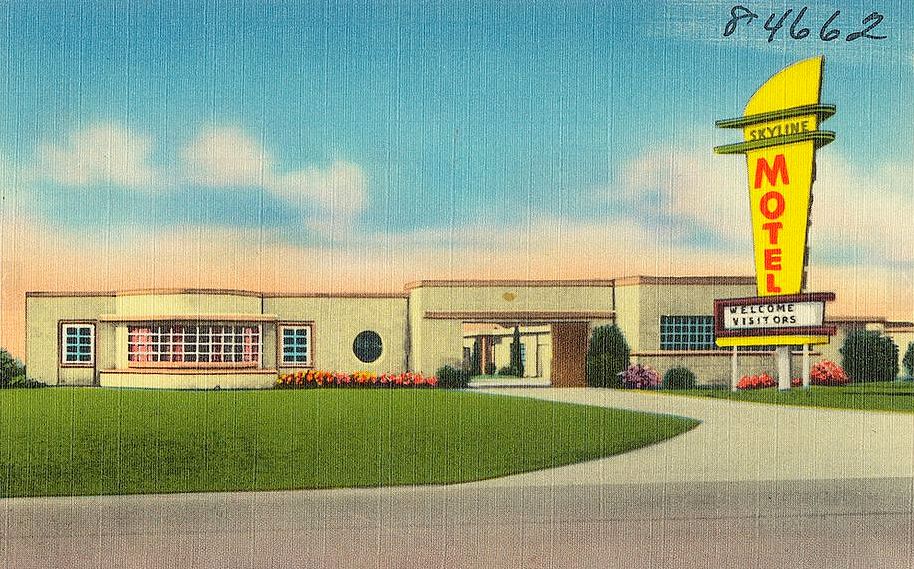
Motel Skyline / Skyline Motel — “The Motel of Distinction” (1947)

motel-skyline_postcard

by Paula Bosse

THIS is a great, great-looking motel. I only hope it looked half as sleek in real life. It was, rather surprisingly, designed in 1947 by the architect George Marble who was known for his large Tudor-revival homes in the pricier areas of Dallas (particularly Highland Park and Lakewood), so this is a major divergence in style. 1947 seems a little late for something this Deco-looking, but, no matter — this is just a fantastic building.

The “Motel Skyline” (or “Skyline Motel” as it was being referred to in ads not long after it opened in September, 1947) was located at 6833 Harry Hines, near West Mockingbird, just past Love Field. It’s not a great neighborhood these days, but perhaps it was better 60-some-odd years ago, when Harry Hines was the route that the old Hwy. 77 followed. The 30-unit “motor hotel” was built at a cost of $250,000 — it boasted year-round air conditioning and “mattresses of fiberglass.” 

I don’t know how long the place lasted — perhaps until the mid- or late-’60s, when advertising petered out and by which time the probably no-longer-so-sleek motel seems to have started catering to customers paying by the week and by the month. It might not have gotten as seedy as I fear it might have, as I saw only a couple of fairly run-of-the-mill appearances on the police blotter (cash stolen from a sleeping customer and a likely suicide in one of the rooms). Still, I shudder to think of that once-beautiful building ending its days cheek-by-jowl with modern-day Harry Hines.

It’s nice to know Dallas once had this wonderful building, if only for a little while. If anyone has photographs of the actual building, I’d love to see them, even though I know I would probably be disappointed.

*


1962 ad

***

Check out the kind of architectural design that George N. Marble is actually known for (residential, palatial), here.

Second postcard from the absolutely fantastic Boston Public Library Tichnor Brothers Postcard Collection on Flickr, here.

Matchbook from Flicker, here.

Click postcards for larger images. It’s worth it.

*

Copyright © 2014 Paula Bosse. All Rights Reserved.

Dear JFK: Welcome to Big “D” — Love, DP

Nov. 22, 1963

by Paula Bosse

Sorry, Dr Pepper, but this might be the most unfortunate, unintended instance of product placement ever.

***

Sources & Notes

AP photo, November 22, 1963.

*

Copyright © 2014 Paula Bosse. All Rights Reserved.

Jerry Scoggins, From WFAA Staff Musician to Pop Culture Icon

jerry-scoggins_wfaa-1941
Jerry Scoggins in the WFAA studios, 1941

by Paula Bosse

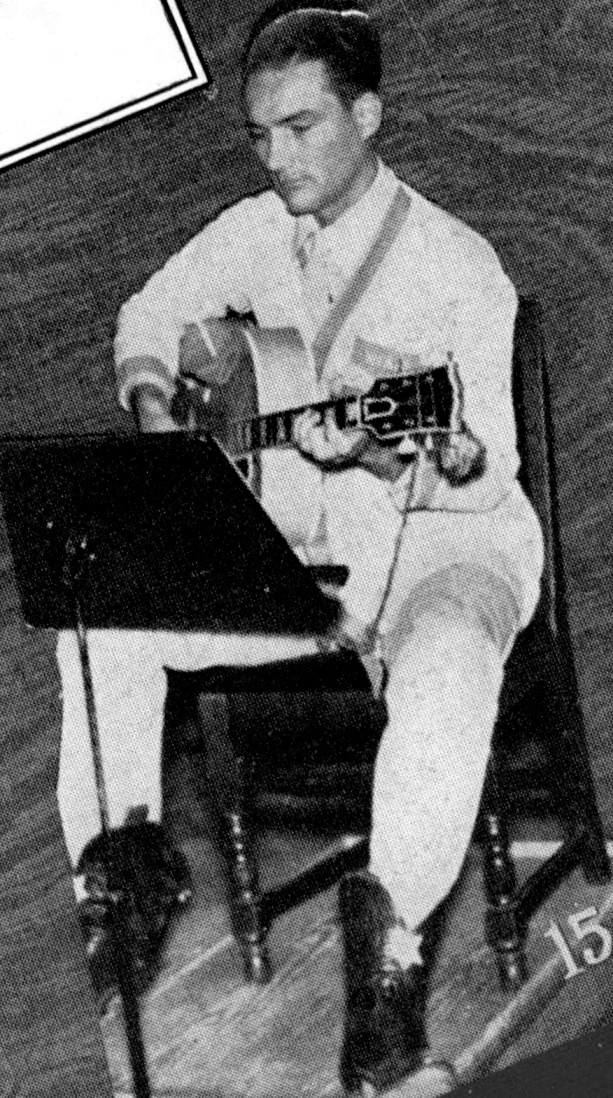
You know Jerry Scoggins. You DO. You can sing along with his most famous recording. But you might not know his name — even if you do know it, you’re not sure why you know it. And you’ve almost certainly never seen a picture of him. But there he is in the photo above, in 1941, at the studios of WFAA radio where he was a staff musician and occasional on-air personality. The caption reads: “Guitarist Jerry Scoggins arrives for a rehearsal in shiny cowboy boots.”

During his time at WFAA (he was there almost a decade — he started when the station still had studios in the Baker Hotel), Jerry was in countless bands — in fact, he often had several going at the same time. Some of his bands were: The Bumblebees, the Tune Tumblers (with a then-unknown Dale Evans as the group’s “girl singer”), Three Cats & a Canary, The Baboleers, and The Cowhands.

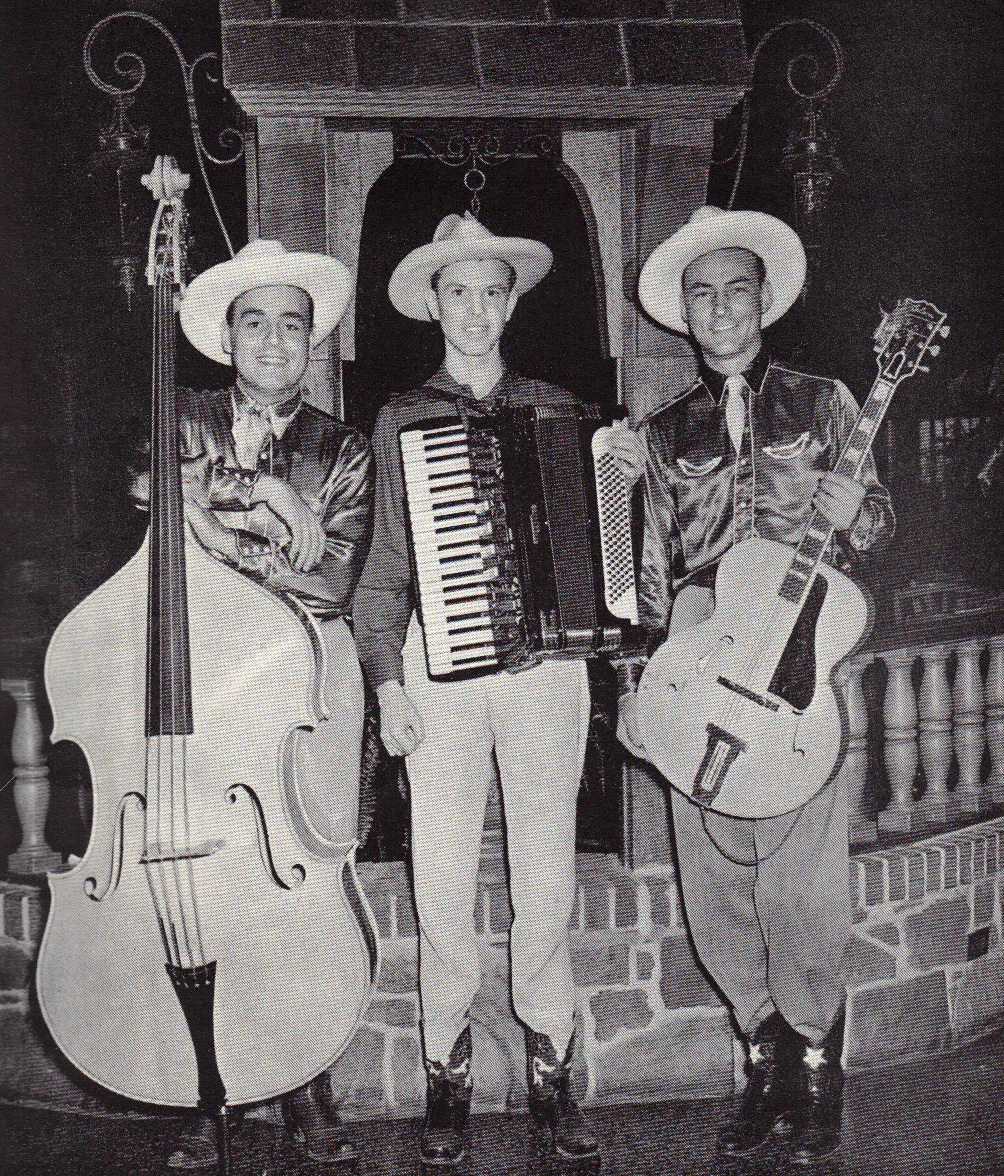
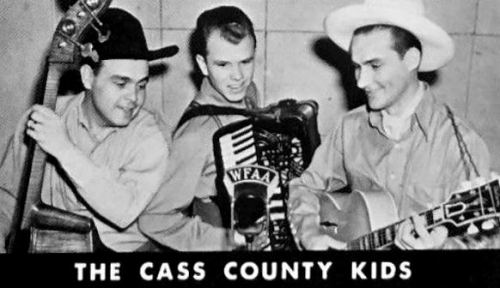
His main group, though, was the Cass County Kids, a popular trio that performed western music and who claimed to have a repertoire of over 500 songs (!).

cass-co_kids_wfaa1_1941_caption

In 1945, after years of working as mostly anonymous radio musicians, the Kids finally hit the big time. Gene Autry asked them to join him, and they left Dallas for Hollywood, changing their name in the process — at Autry’s request — to the (slightly) more age-appropriate Cass County Boys. They appeared in movies, on television, and on record with Autry for several years, and from all accounts, the Cass County Boys had a long and happy career.

cass-county-kids_wfaa-postcard_det_ebay

By 1962, Jerry was still in California, but at that point he was working as a stockbroker, singing only on weekends. I’m not exactly sure how it happened, but — seemingly out of the blue — he was asked by TV producers to sing the theme song for a new CBS television show called The Beverly Hillbillies. Backed by the great Flatt & Scruggs, Jerry sang “The Ballad of Jed Clampett,” and his voice became known to millions of people, overnight. And here it is more than fifty years later, and I bet you know all the words to the song. It has become a permanent fixture in American pop culture.

And that’s why you know Jerry Scoggins.


*

jerry-scoggins_bevhill_end-credits

*

ADDED, Sept. 2023: A reader just sent me this clip showing Scoggins (with Earl Scruggs, Roy Clark, and others) performing the song in 1993 as Buddy Ebsen dances along. This is so great!!

scoggins-jerry_1993_youtubeJerry Scoggins, 1993 (from YouTube video)

*

And here’s Jerry with the Cass County Boys, singing a novelty song called “Which Way’d They Go?” (Jerry’s the good-looking one on the right):

***

Sources & Notes

The top photo of Jerry Scoggins and the large photo of the Cass County Kids are from the WFAA-KGKO-WBAP Combined Family Album (Dallas, 1941). The small photo of the Cass County Kids is from eBay.

Jerry Scoggins was born in 1911 in Mount Pleasant, Texas (in Titus County, right next door to Cass County). He died in 2004 at the age of 93. His obituary in the Los Angeles Times is here. More on Jerry from Wikipedia, here.

A nice overview of the Cass County Kids/Boys is here.

*

Copyright © 2014 Paula Bosse. All Rights Reserved.

Where to Put That JFK Memorial? — 1964

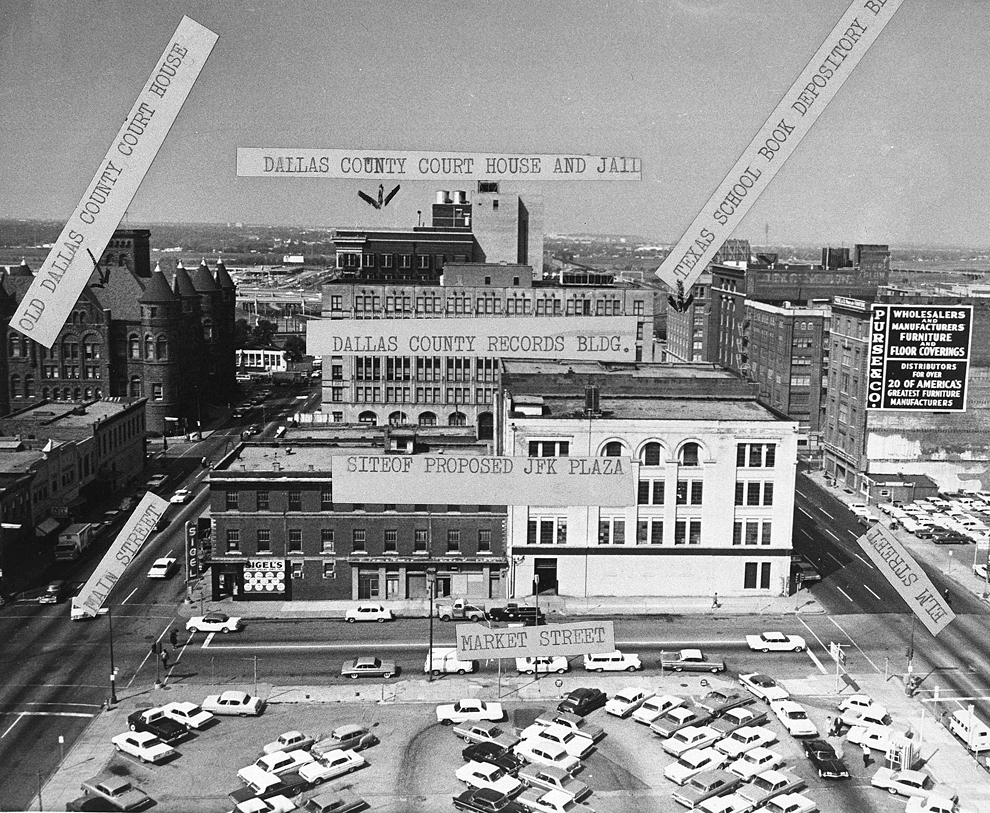
Looking west, 1964 (AP photo)

by Paula Bosse

I’m not really into the whole assassination thing, which may explain why I’ve never seen this 1964 Associated Press photo (with or without the labels). Despite the connections to “that dark day,” I think this is a really interesting view of the city, from an unusual vantage point.

Here’s another similar photo, from April 1964 — this one from United Press International. UPI’s caption:

DALLAS: Site of Memorial Park. The area outlined in white is the block where the John F. Kennedy Plaza will be created as a memorial to the late president. The outline traces buildings now on the site which will be removed on completion of the new county courthouse.

jfk-memorial_proposed_apr-1964_UPI_ebayApril 1964 (UPI Telephoto)

The original location for the memorial was in the block immediately to the east of the Records Building, not the Old Red Courthouse, where it eventually was placed. I’m not sure why the location changed, but by the time architect Philip Johnson, designer of the memorial, was on board, the site had moved one block south.

*

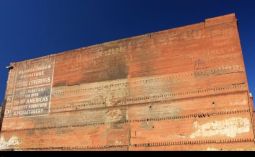
The Purse & Co. sign seen at the right side of the top photo is still visible today — it’s probably the largest and most familiar ghost sign downtown. Here’s a picture that was linked to Google maps. (I think I prefer it as a ghost sign.)

***

Sources & Notes

Top photo by Ferd Kaufman for the Associated Press, 1964.

Bottom UPI Telephoto found on eBay.

*

Copyright © 2014 Paula Bosse. All Rights Reserved.

Meet Me at the Kitten Lounge — 1968

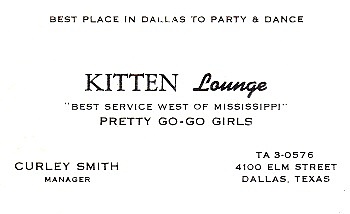
kitten-lounge_1968

by Paula Bosse

KITTEN LOUNGE
Best Place in Dallas to Party and Dance
“Best Service West of Mississippi”
Pretty Go-Go Girls
Curley Smith, Manager
TA 3-0576
4100 Elm Street
Dallas, Texas

From the manly, go-go-girl-loving pages of a 1968 issue of Texas Peace Officer magazine. No doubt a happening place, at Elm & Haskell. Peace officers welcome!

*

Copyright © 2014 Paula Bosse. All Rights Reserved.

Ned Riddle: Dallas Artist and Creator of “Mr. Tweedy”

ned_riddle_texan-in-nyc_joe-cooper-bk
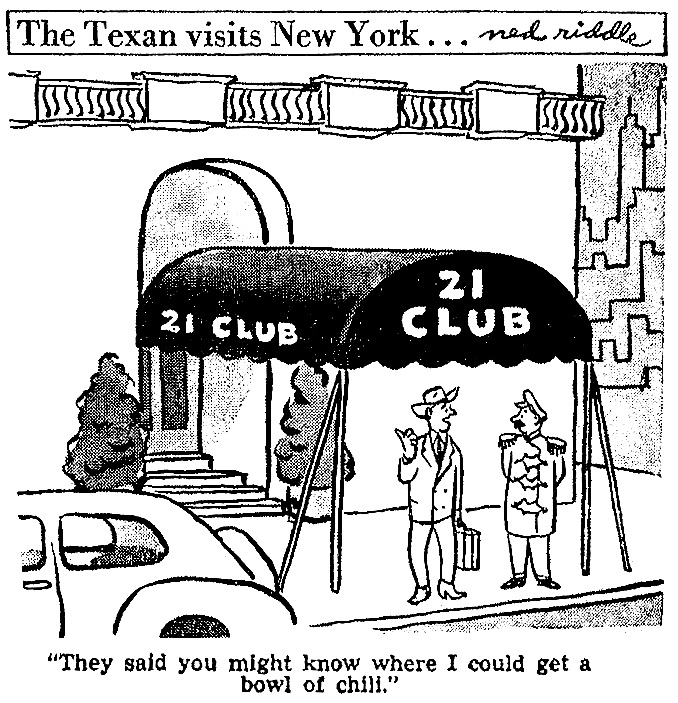
The Texan Visits New York City … “New York CITY?!”

by Paula Bosse

A few years ago, I came across the cartoon above in Joe E. Cooper’s chili bible, With or Without Beans, and I was delighted to see that the cartoonist was Ned Riddle, who, though having begun his career as a staff artist for the Dallas Morning News, is known primarily for his syndicated comic panel “Mr. Tweedy,” which I loved as a kid.

A couple of interesting tidbits about Mr. Riddle, who was a Dallas resident until his death in 2003: during WWII, he served on a submarine with the unspeakably perfect name, the USS Piranha, and — unlikely as it seems — while studying art at Washington University in St. Louis, he apparently studied under the great Expressionist artist Max Beckmann.

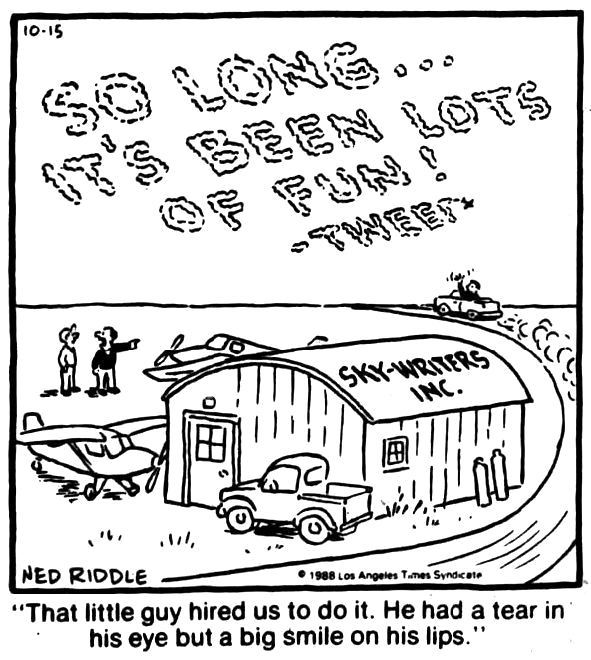
I loved “Mr. Tweedy” — the look of it, the simple one-panel jokes, and the fact that (as I recall) the somewhat optimistic-though-beleaguered Mr. Tweedy rarely actually spoke. Sort of Mr. Bean-like. I also knew that the cartoonist was from Dallas, and I was always trying to spot any sort of hidden homage to the city (as far as I know that never happened, but it SHOULD have!). “Mr. Tweedy” began in 1954 and ended in 1988. That’s a good run.

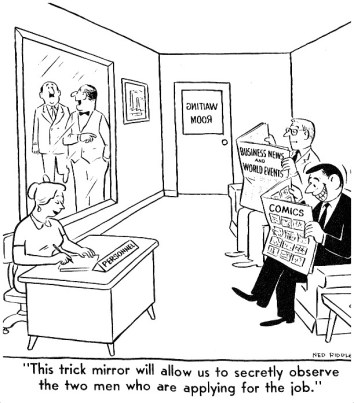
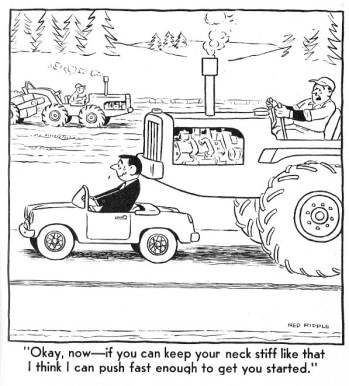
Here are a few Mr. Tweedy panels.

tweedy-21959

*

tweedy31959

*

tweedy_panel_1105691969

**

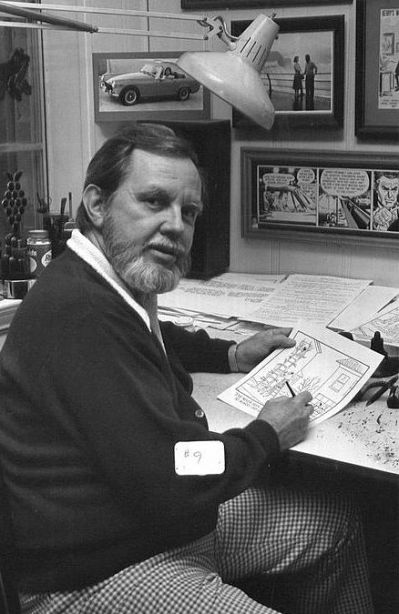
And some photos of Ned Riddle at his drawing board over the years.

tweedy1

*

ned_riddle_drawing_board_flickr

*

tweedy_last-panel_ned-riddle_101588Oct. 15, 1988, the final panel….

***

Sources & Notes

“The Texan Visits New York” cartoon appeared in With or Without Beans, An Informal Biography of Chili by Joe E. Cooper (Dallas: William S. Henson, Inc., 1952). Find (pricey) out-of-print copies for sale here.

First two “Mr. Tweedy” panels from Mr. Tweedy by Ned Riddle (NY: Fleet Publishing Corporation, 1960; reprinted in 1977). 

Later photo of Ned Riddle found on Flickr here.

*

Copyright © 2014 Paula Bosse. All Rights Reserved.

Roscoe-Land: Roscoe White’s Corral & Easy Way

roscoe-whites-corral_1951

by Paula Bosse

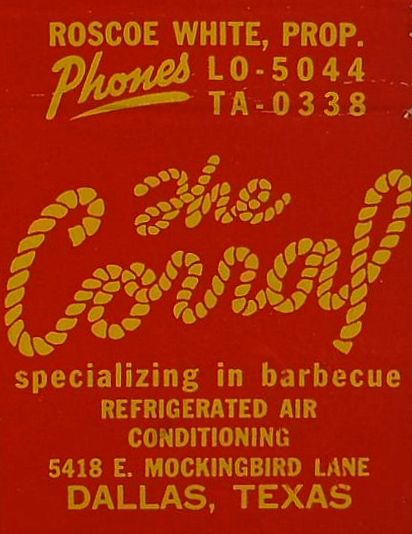
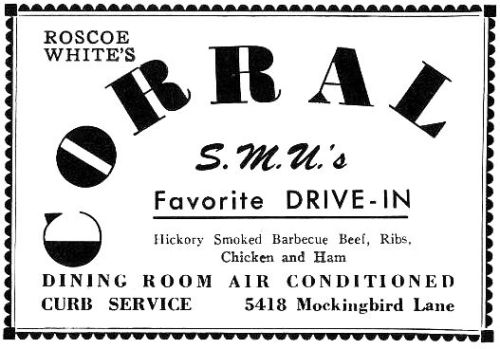
My family had two favorite neighborhood restaurants: Kirby’s Charcoal Steakhouse on Lower Greenville for birthdays and special occasions, and Roscoe White’s Corral on Mockingbird for every other occasion. Conveniently, both were only a short walk from our house. When I came across this ad, I was surprised to see that the Corral had started out as a drive-in, with car-hops. My memories of the place are from the 1970s after it had been rebuilt. in the same block, in a new-ish shopping strip (about where Premiere Video is now), facing the old Dr Pepper plant. It had a diner-like, fairly utilitarian decor, with a slightly fancier banquet room at the back. There was an attached (very dark) bar with a separate entrance. I remember the gleaming cigarette machine. Roscoe must have loved the place, because he was there all the time.

My mother and I always had the chicken-fried steak and a salad with blue cheese dressing. My father and brother tended to go for the still-bubbling cheese enchiladas on a hot metal dish, swimming in a healthy amount of grease (my father’s favorite part). I swear we always had the same waitress — I can’t remember her name, but it was one of those perfect names for a waitress. “Maxine” maybe? (I think my parents had both been customers since their days at SMU in the ’50s, and for all I know, she had been there back then and had been serving them for over twenty years.)

When the Corral closed in the late-’70s or early-’80s, my family was distraught. Loyal patrons that we were, we began making the trek through the Park Cities to Roscoe’s other restaurant, The Easy Way, over on Lovers Lane, by the toll road — the atmosphere was different (it was darker, for one thing), but the food was EXACTLY THE SAME! And, as I recall, even our regular waitress was there — she had also made the move across town. It was almost as if nothing had changed. …Almost.

I loved the Corral My family had so many nice times there. And I miss it. I especially miss that wonderful chicken-fried steak, the yardstick by which I continue to judge all others.

Roscoe White died in 1995 and was remembered in D Magazine:

He moved around, but Roscoe White always had a place for Dallas to eat. He opened his first restaurant in 1939, the Kings Way Grill on Knox and Travis streets. It had an upstairs casino, and the beer was stored in the icehouse next door. Later he opened the Corral on Mockingbird Lane, a drive-in that became a haven for SMU law students. White also owned the Easy Way Grill on Lovers Lane and then Roscoe’s Easy Way on Lemmon Avenue. He died of a stroke at 88.

Thanks for all the great meals, Roscoe!
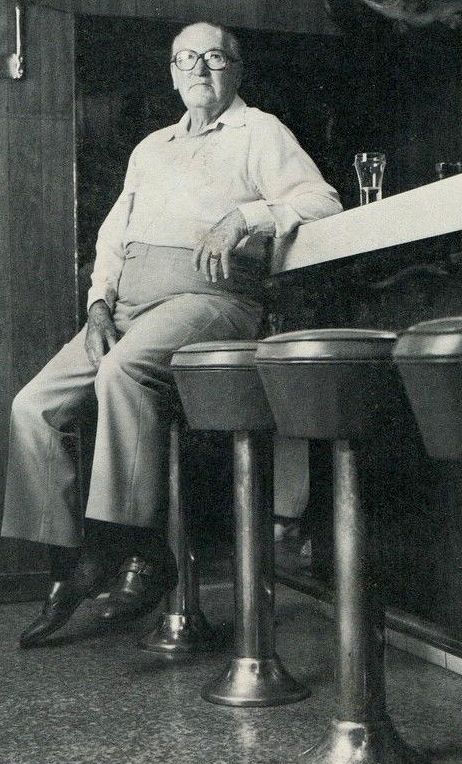
roscoe-white_d-mag_oct-1985Roscoe White at the Easy Way (D Magazine, Oct. 1985)

*
roscoe-whites-corral_matchbook_flickr

roscoe-whites-corral_dmn_120747

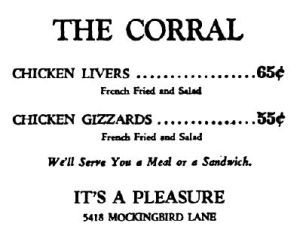
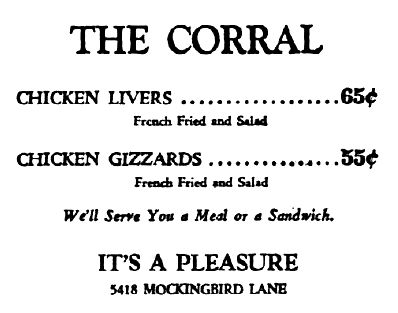
An early ad from 1947. Fried chicken gizzards, only 55 cents — “It’s a Pleasure”!

*
rosecoe-whites_corral_carhop_ad_dmn_091448

roscoe-whites-corral_lady-cashier_dmn_091948

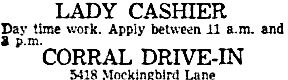
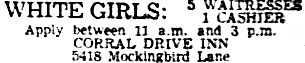
A couple of help-wanted ads for waitresses and a “lady cashier” (Dallas Morning News, 1948). I can only hope that Roscoe’s car-hops were referred to as “White Girls.”

*
roscoe-whites-corral_reopening_dmn_100850

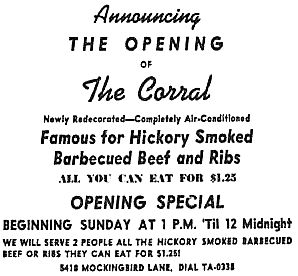
There had been a fire in the summer of 1950 that caused $4,500 worth of damage, the reason, I’m assuming, for the redecoration and re-opening. I’m not sure when the Corral moved into the location I was familiar with, but by mid-1969, ads were appearing with the new address of 5422 Mockingbird.

*
roscoe-whites-easy-way_matchbook_flickr

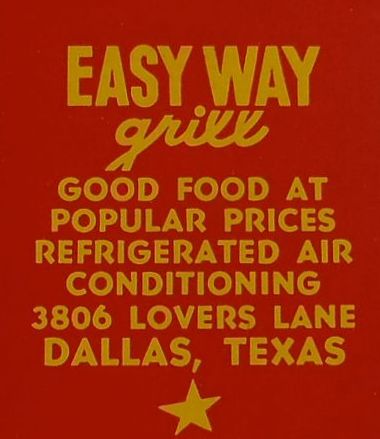
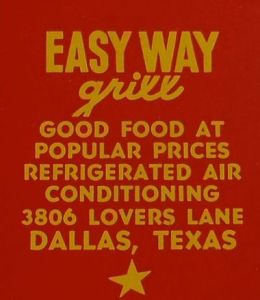
A matchbook from the Easy Way Grill, sadly, with the wrong address on it! The Easy Way was at 5806 Lovers Lane, part of the Miracle Mile, where Dr. Delphinium is now.

*
roscoe-whites-easyway_1951

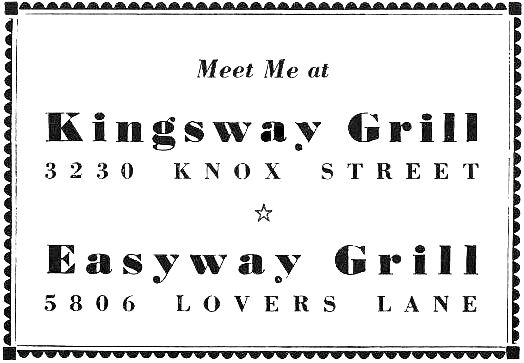
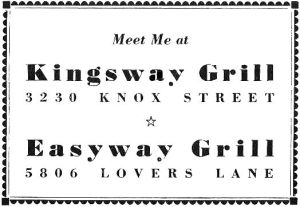
A 1951 ad for the Kings Way Grill and Easy Way Grill.

***

The top ad touting “SMU’s Favorite Drive-In” is from a 1951 SMU-Rice football game souvenir program.

A fond farewell to the Easy Way — “It’s Hard To Say Goodbye to The Easy Way Cafe” — from D Magazine is here. (Above photo of Roscoe accompanied the print article.)

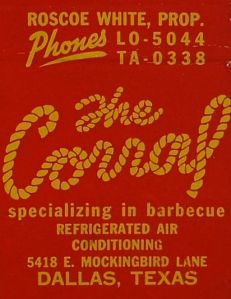
Red matchbook covers from Flickr.

*

Copyright © 2014 Paula Bosse. All Rights Reserved.

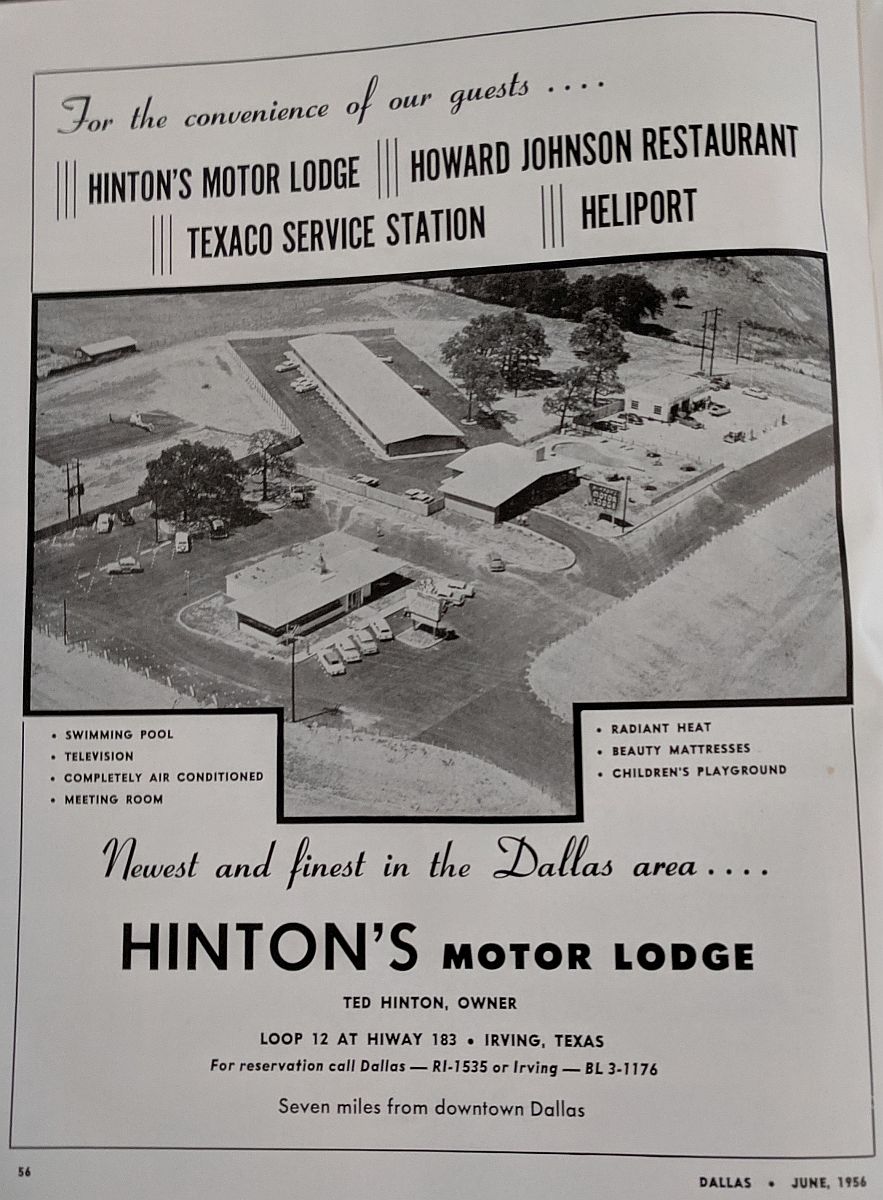
Ted Hinton’s Motor Lodge — From Bonnie & Clyde to Motel Heliport

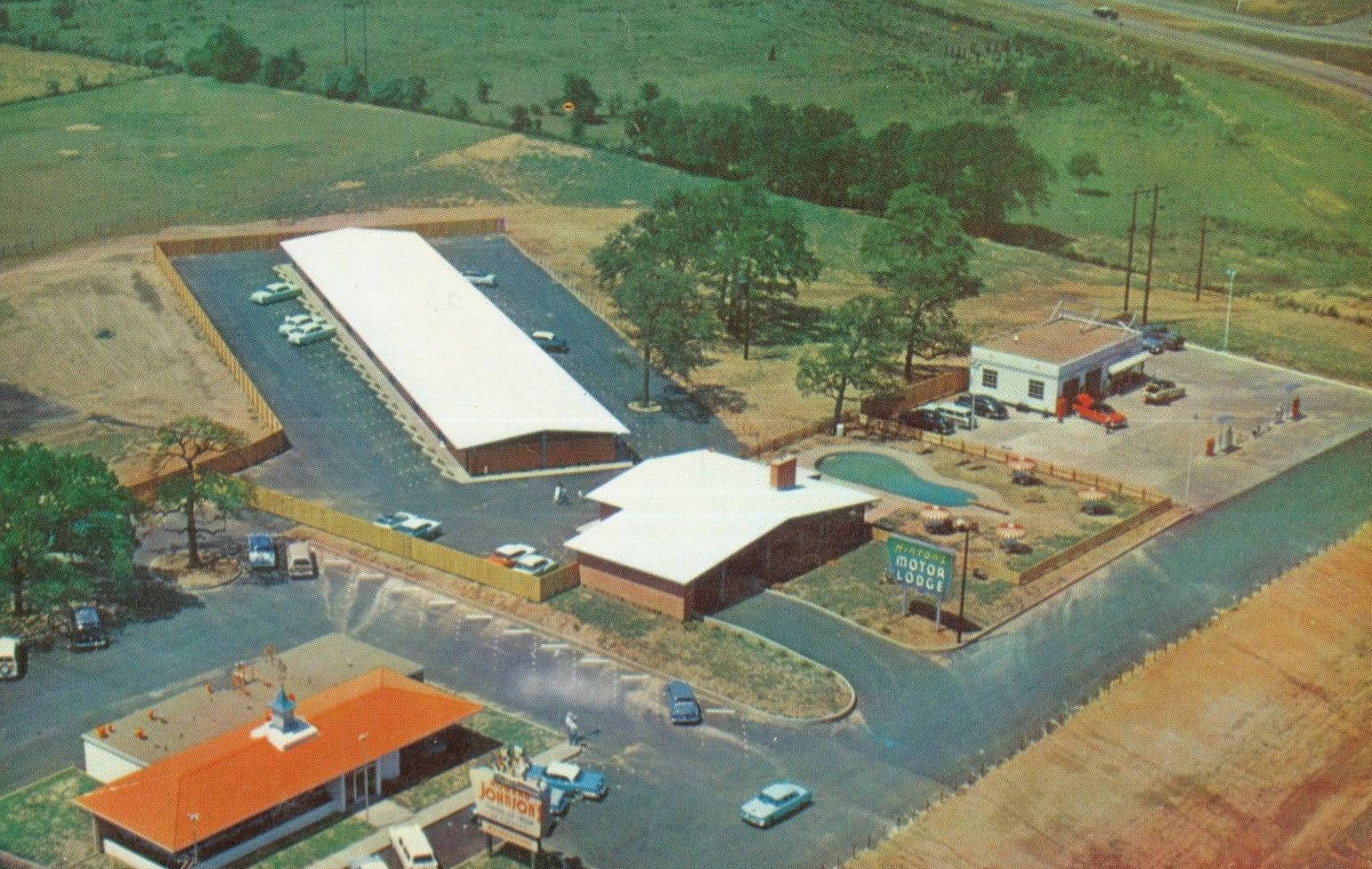
hintons-motor-lodge_front“7 miles from Downtown Dallas” — choppers welcome

by Paula Bosse

What does a man who ambushed and killed Bonnie and Clyde do once he’s retired from law enforcement? He opens a motor lodge, of course!

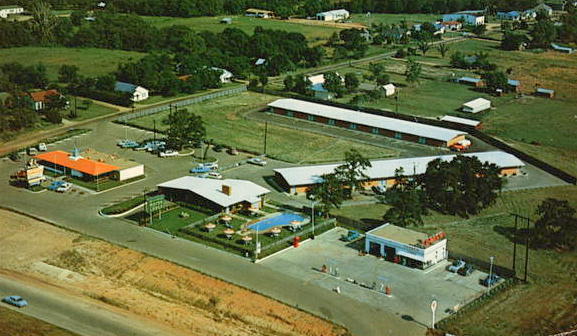
I was initially drawn to this image because of an unexplained lifelong fascination with Howard Johnson’s restaurants (I think I was only ever in one — the one on Mockingbird at Central, where my father introduced me to the inexplicable root beer float). But the interesting thing about this postcard is not the HoJo’s, it’s the motel next door, Hinton’s Motor Lodge, an establishment that was in business from 1955 to 1970, in Irving, very near to where Texas Stadium would be built in 1971 (Loop 12 at Hwy. 183). Why would a motor lodge be interesting? Because the owner was Ted Hinton (1904-1977), the former Dallas County Deputy Sheriff who was one of the six men who tracked down, ambushed, and killed Bonnie and Clyde in 1934. (Hinton was recruited for the posse because he would be able to identify both of them: he had known Clyde Barrow growing up, and he had apparently had a crush on Bonnie Parker in the days when she was working as a waitress and he was working for the post office.)

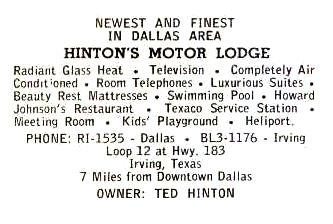
After killing two of the most notorious celebrity outlaws of all-time, it must have been hard to know where to turn next. He retired from the Dallas County Sheriff’s Department in 1941 and, as he was a pilot, he trained flyers for the US Army Air Corps during WWII. The fact that Hinton was a pilot MUST explain the inclusion of a “heliport” (!) in the list of motel amenities, alongside Beauty Rest mattresses, a swimming pool, and a playground for the kids.

I’m sure that, on occasion, Hinton ate next door at Howard Johnson’s. But I bet none of the other patrons had any idea that the guy sipping coffee in the next booth was one of the men who gunned down Bonnie and Clyde in a hail of gunfire that even Sam Peckinpah might have considered “a bit much.”

Aerial View of Hinton's Motor Lodge Dallas

hintons-motor-lodge_back

ad-hinton-motor-lodge_dallas-mag-june-1956_reddit“Dallas” magazine, June 1954 (via Reddit)

***

Sources & Notes

An interesting short video about Ted Hinton’s connections to Bonnie and Clyde in his youth is recounted here by Hinton’s son “Boots.”

And a newsreel featuring film footage of the aftermath of the ambush — and apparently shot by Hinton himself with a 16mm movie camera loaned to him by a Dallas Times Herald photographer — can be seen here.

*

Copyright © 2014 Paula Bosse. All Rights Reserved.