Flashback : Dallas

A Miscellany: History, Ads, Pop Culture

Category: 1970s

Santa Claus Visits Fair Park — 1969 and 1970

santa_4_WFAA_SMU_122069
The list is ready…

by Paula Bosse

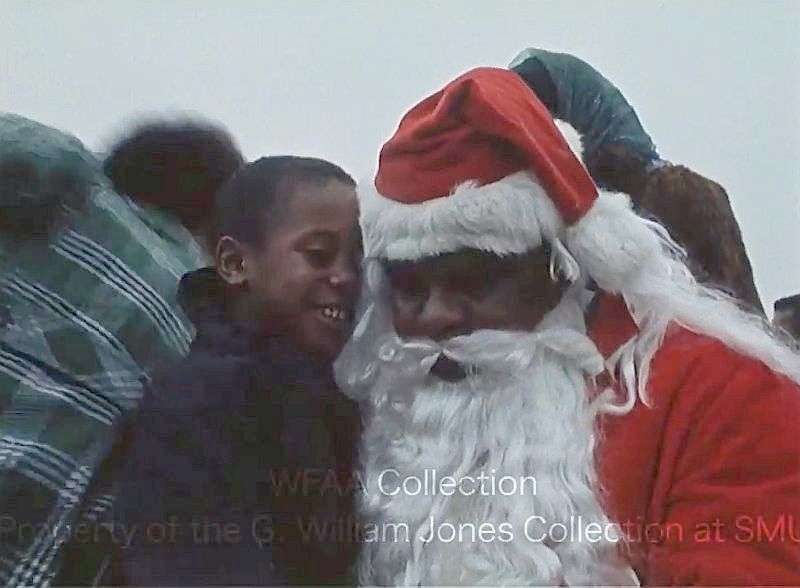
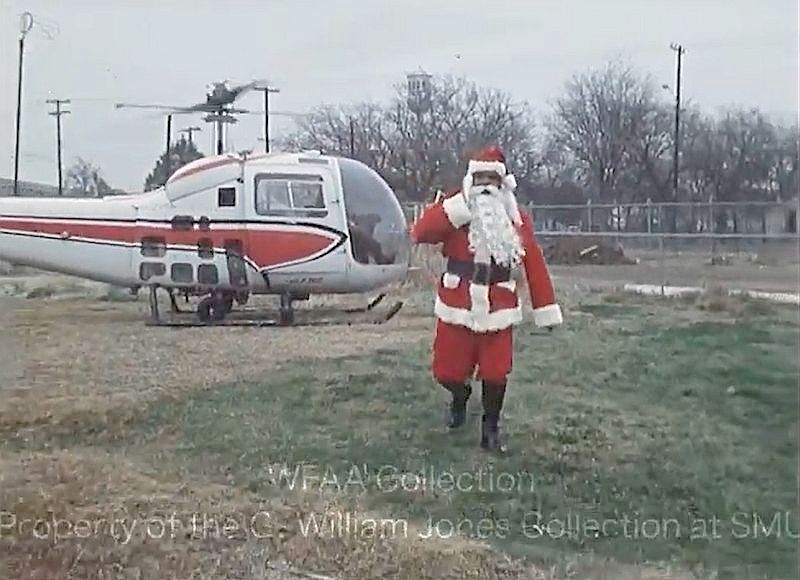
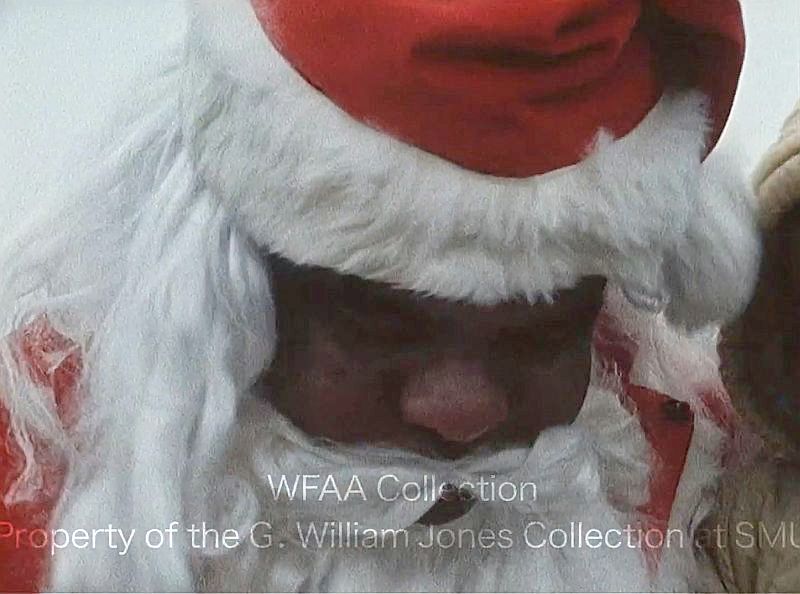
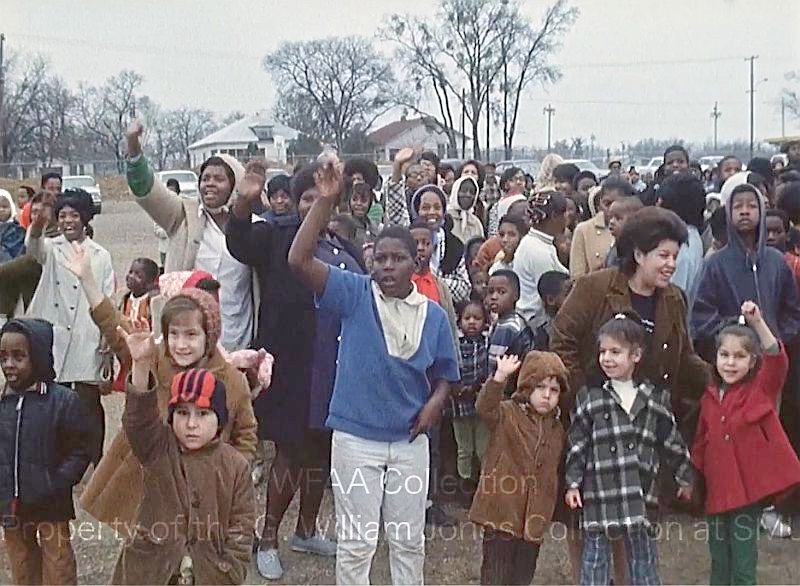
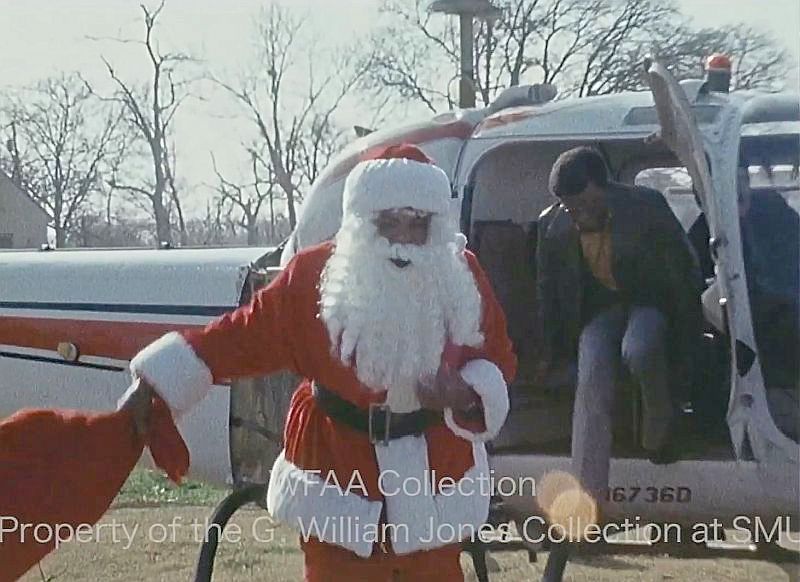
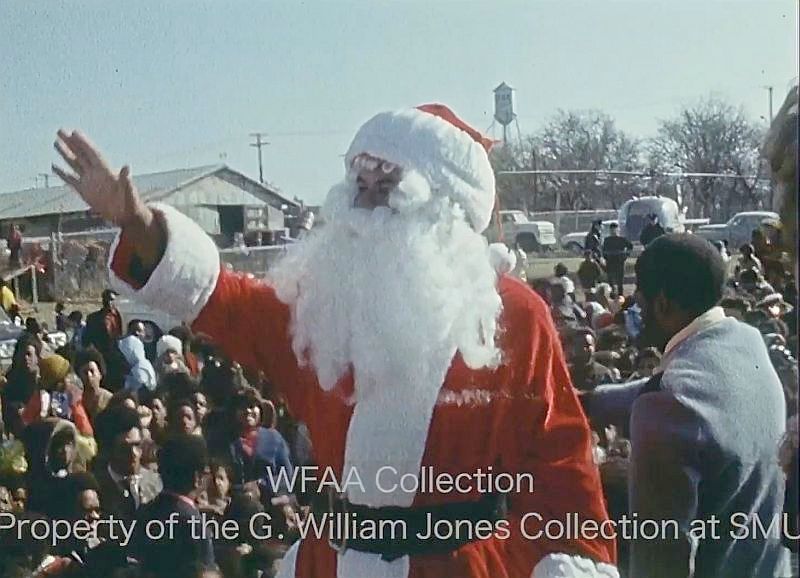
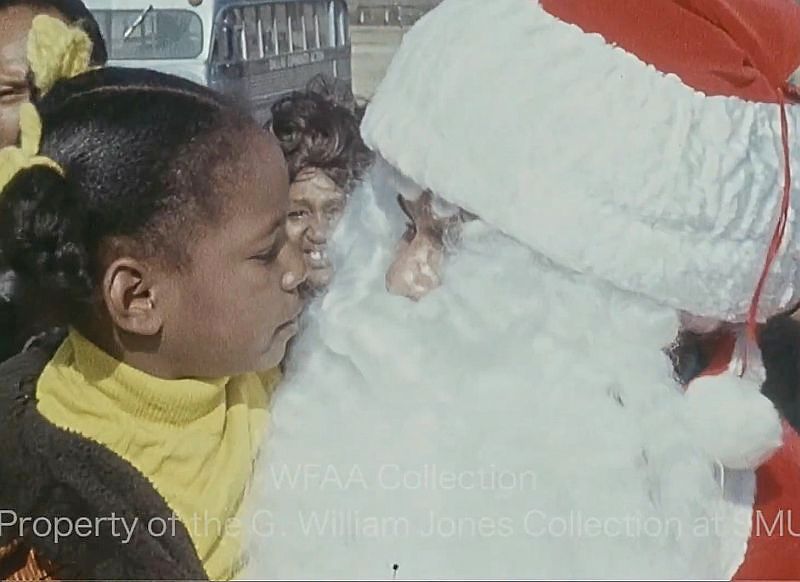
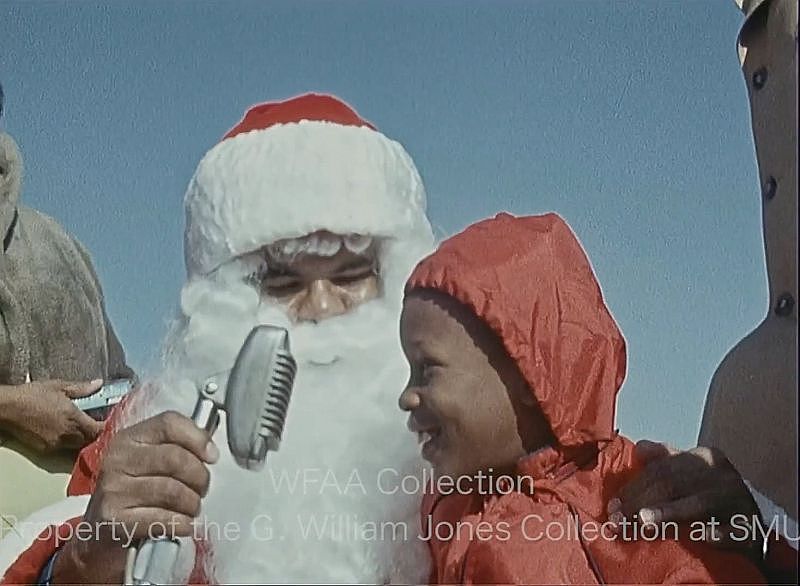
Check out two charming film clips of Santa visiting kids in Fair Park on Dec. 20, 1969 and Dec. 23, 1970 (the links to the clips are below). He arrives, of course, in a helicopter. These events were sponsored by the Negro Chamber of Commerce.

From this clip’s YouTube description:

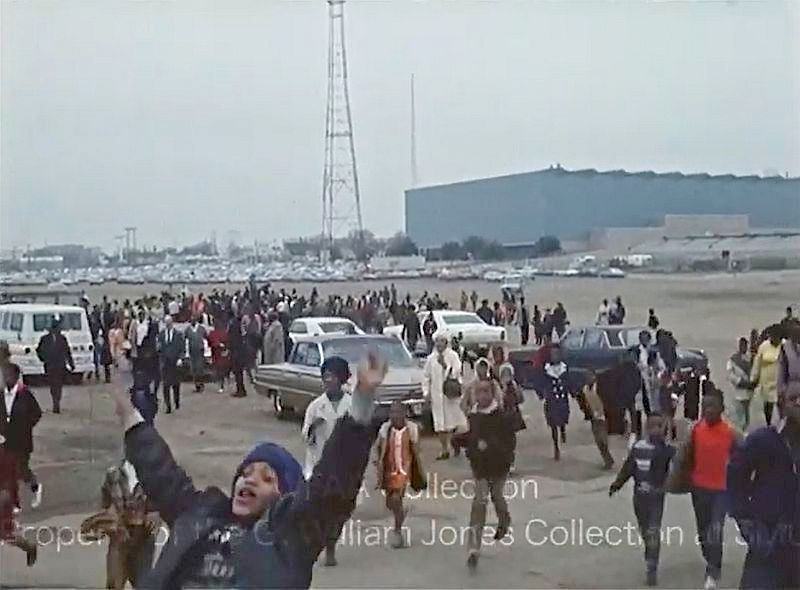
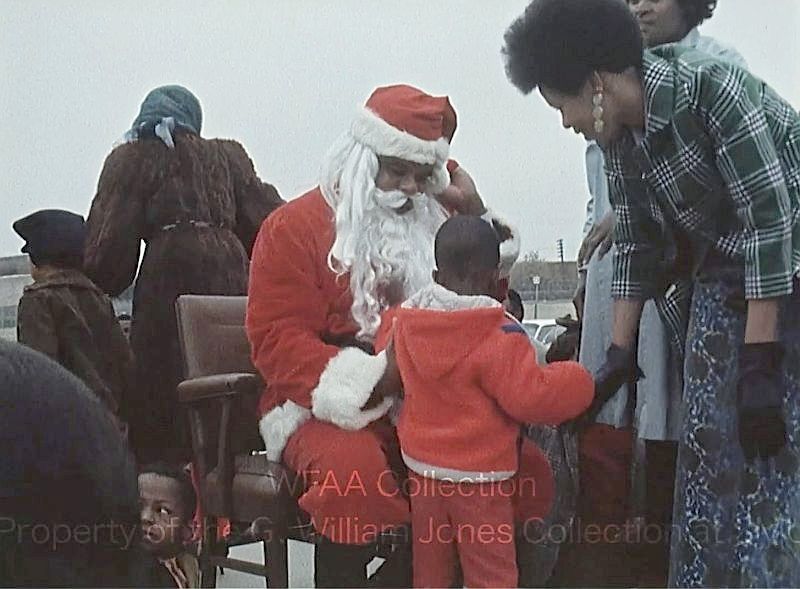
A Black Santa Claus lands via helicopter in Fair Park as a large crowd of predominantly African American children rush to meet him; children are seen on Santa’s lap as parents stand by; a box of wrapped apples is seen. (A “Black Santa” was an unusual sight in the 1960s, and the concept was much in the news in the 1969 Christmas season as the Southern Christian Leadership Conference (SCLC) had issued a demand that department stores in Cincinnati hire African American Santas or face a boycott, and the story was widely covered around the country.) (Silent)

Watch the full 38-second (silent) clip on YouTube here. Below are some screenshots.

santa_2_WFAA_SMU_122069

santa_3_WFAA_SMU_122069

santa_5_WFAA_SMU_122069

santa_6_WFAA_SMU_122069

santa_7_WFAA_SMU_122069

Santa made a return visit the next year — again via chopper — on Dec. 23, 1970. An article appeared in The Dallas Morning News revealing Santa’s helper to be Issac Debois who was quoted as saying with a chuckle, “I’m the only black Santa Claus from the South Pole.” Watch the full 38-second (silent) clip here.

santa-1970_122370_WFAA_SMU_1

santa-1970_122370_WFAA_SMU_2

santa-1970_122370_WFAA_SMU_3

santa-1970_122370_WFAA_SMU_4

Merry Christmas!!

***

Sources & Notes

All images are screenshots from WFAA-Channel 8 news stories — from the WFAA Newsfilm Collection, G. William Jones Collection, Southern Methodist University.

The first clip (from 1969) is contained in the larger video on YouTube here — the specific short clip is here.

The second clip (from 1970) is contained in the larger video on YouTube here — the specific clip is here.

Read the Dallas Morning News story about the second visit in the DMN archives: “Santa Enjoys Happy Visit, With Gifts” (DMN, Dec. 24, 1970).

Find more Flashback Dallas posts on Christmas here and Hanukkah here,

santa_4_WFAA_SMU_122069_sm

*

Copyright © 2022 Paula Bosse. All Rights Reserved.

Wes Wise, 1929-2022

wise-wes_apr-1971_WFAA_SMUWes Wise and family campaigning for Mayor, April 1971

by Paula Bosse

Wes Wise, former 3-term Dallas mayor (1971-1976), has died. He was 94. Read his obituary in The Dallas Morning News, here. Also, a tribute to Wise from the Dallas Municipal Archives is here.

In the piece linked above, the Dallas Municipal Archives mentions this: “Wise is noted for being the first mayor since the 1930s not endorsed by the Citizens Charter Association.” The CCA was a powerful political organization I’ve only become aware of recently. It wasn’t really until I began working in the WFAA-Channel 8 News archives that I saw Dallas political history up close, and it was full of all these powerful groups I had never heard of which, for decades, could make or break candidates simply by deeming them endorsable. If you were running for mayor or City Council, you really wanted the support of the Citizens Charter Association. And you absolutely wouldn’t have dared poke at them with sharp sticks. …Wes Wise poked at them with sharp sticks.

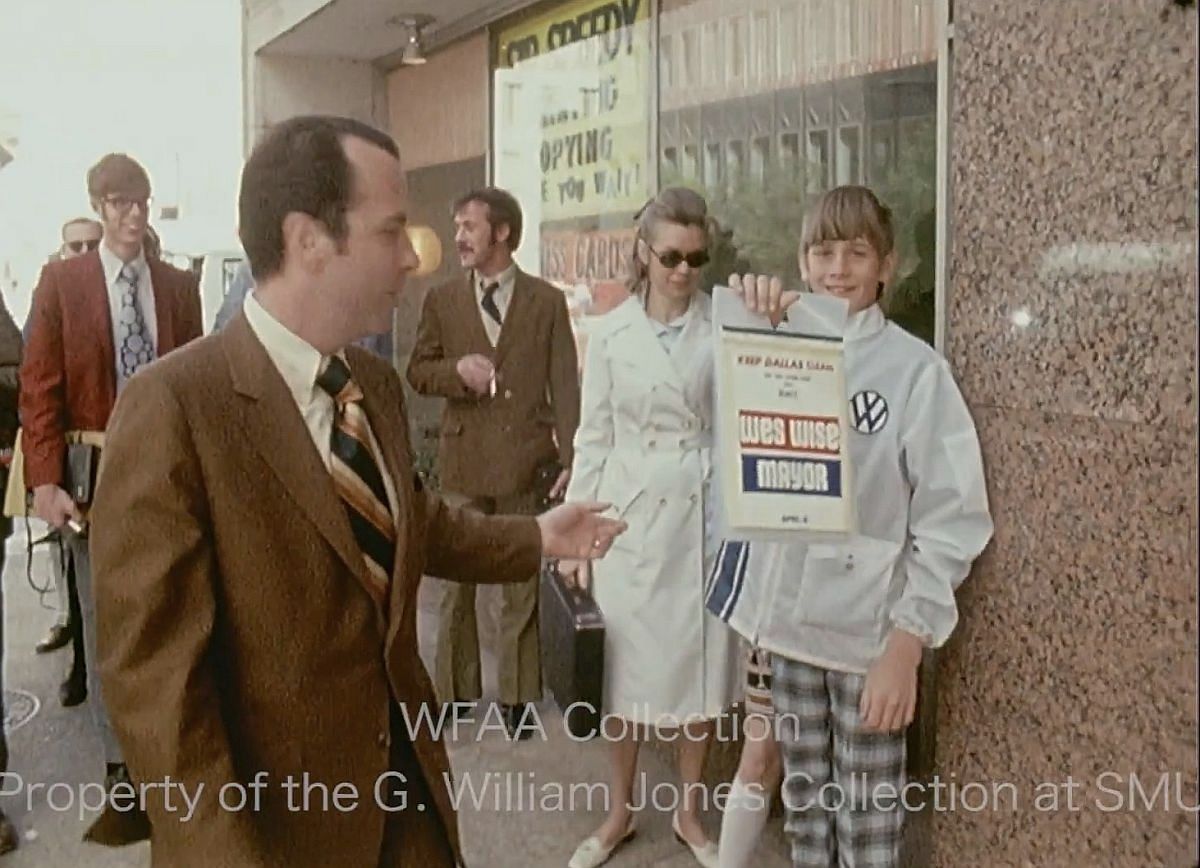
I’ve been going through old Channel 8 News footage, chronologically, for a while now. I am, at present, making my way through April 1971, when Wise and his opponent — the establishment-backed (i.e. CCA-backed) Avery Mays — were in the midst of a runoff for Dallas mayor. Mays, a businessman and civic leader, was the hand-picked candidate of the Citizens Charter Association and, as such, was expected to win. Wise, a City Councilman and former sportscaster, was the self-assured maverick who loudly proclaimed that he was an independent candidate who would not have accepted CCA backing had it been offered. He was young, good-looking, and — with a background in broadcasting — was comfortable and confident in the limelight.

mays_wise_apr-1971_WFAA_SMU

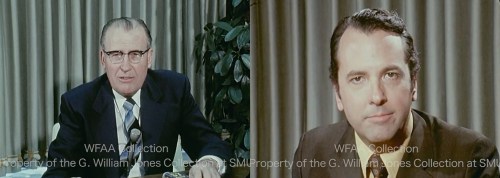
There was a “debate” of sorts between the two on Channel 8, with each man given a minute to make a statement. It’s not on the level of Nixon and JFK, but there is a stark, generational contrast in the two men. I don’t see perspiration on Mays’ upper lip, but I’m getting a rattled, sweaty vibe from him. Wise, on the other hand, is all casual bravado.

Two clips of the candidates during this runoff campaign show the difference in styles of the two men: it’s Old Dallas vs. New Dallas.

  • Watch Avery Mays accuse his opponent Wise of being all talk and no action and being nothing more than a professional “TV and radio talker” (even though Wise had just finished serving a 2-year term on the City Council) — the clip is here.
  • Watch Wes Wise deliver his stinging rebuttal here.

Old Guard vs. New Blood. New Blood won, and Wes Wise led Dallas through the 1970s, a decade of huge change for the city.

***

Sources & Notes

Top image is a screenshot showing Wes Wise campaigning for mayor during the runoff race against Avery Mays on April 8, 1971. Wise is seen with his wife, Sally, and his son, Wyn. The clip is from the WFAA Newsfilm Collection, G. William Jones Collection, Southern Methodist University — it can be viewed on YouTube here (Wise is seen in the segments at 14:20 and 17:21).

An informative mini-biography on Wes Wise can be found here. (It’s interesting to see that, while in the army, Wise was an instructor in psychological warfare, the perfect training for both a broadcaster and a politician!)

More on Wes Wise at Wikipedia, here.

See a shot of Wes Wise in his sports broadcasting days in the Flashback Dallas post “Wes Wise, Dallas Texans, WFAA — 1961.”

wise-wes_apr-1971_WFAA_SMU_sm

*

Copyright © 2022 Paula Bosse. All Rights Reserved.

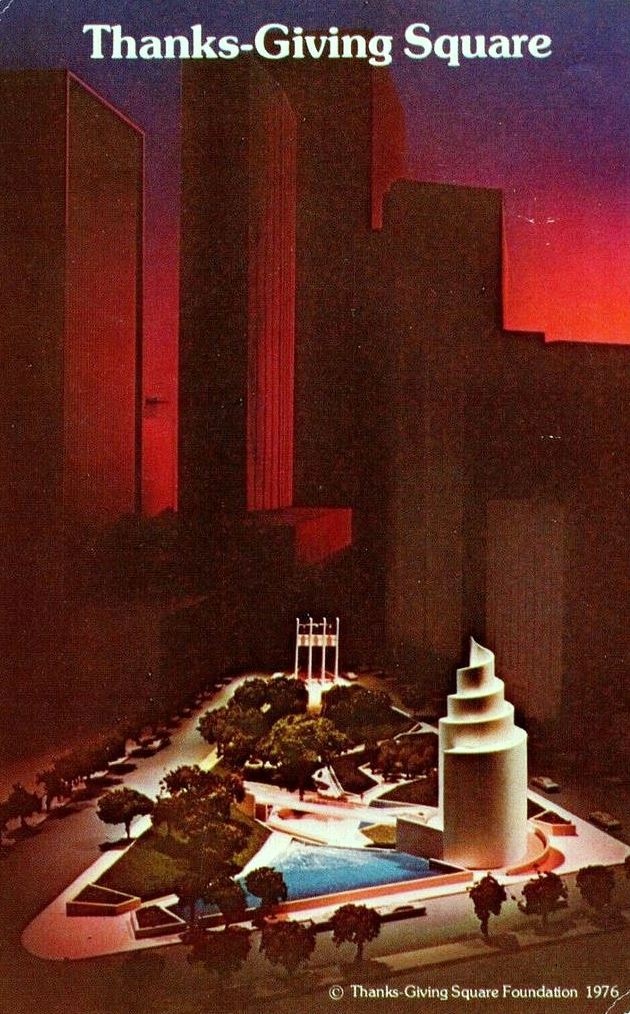
Thanks-Giving Square — 1976

thanks-giving-square_thanksgiving-square_1976_postcard_ebay

by Paula Bosse

Happy Thanksgiving! It seems like a good day to look back at Thanks-Giving Square, the triangular one-acre park in downtown Dallas bounded by Pacific, Bryan, and Ervay. It was originally envisioned in 1961 by Dallas businessman Peter Stewart as a needed quiet refuge and chapel in the middle of a busy city — a calm space set aside for “spiritual gratitude.” It took several years before architect Philip Johnson was brought on to the project in 1971. After more than 15 years from its original conception, its official public dedication was on Nov. 28, 1976, three days after Thanksgiving.

Check out some of the progress reports on the project which appeared over the years on WFAA-Channel 8 News:

Architect Philip Johnson (whose other Dallas projects include the Kennedy Memorial, The Crescent, and the Cathedral of Hope, etc.) talks briefly about Thanks-Giving Square and its underground component, and also shows off a 3-D model (from July 1971):

*

Business owners whose shops were in buildings on the land which was about to be leveled were forced to move out, and many were not happy (from April 1972):

*

Construction is underway (November 1976):

*

And, lastly, Channel 8 weatherman Troy Dungan checks out the progress as the dedication day approaches (November 1976):

*

For a bit of street-level context, here’s a photo showing some of the buildings that were razed (at the right, directly across from the Republic Bank Building) in order to make way for Thanks-Giving Square:

kodachrome_bryan-n-ervay_1954_shorpyvia Shorpy.com

*

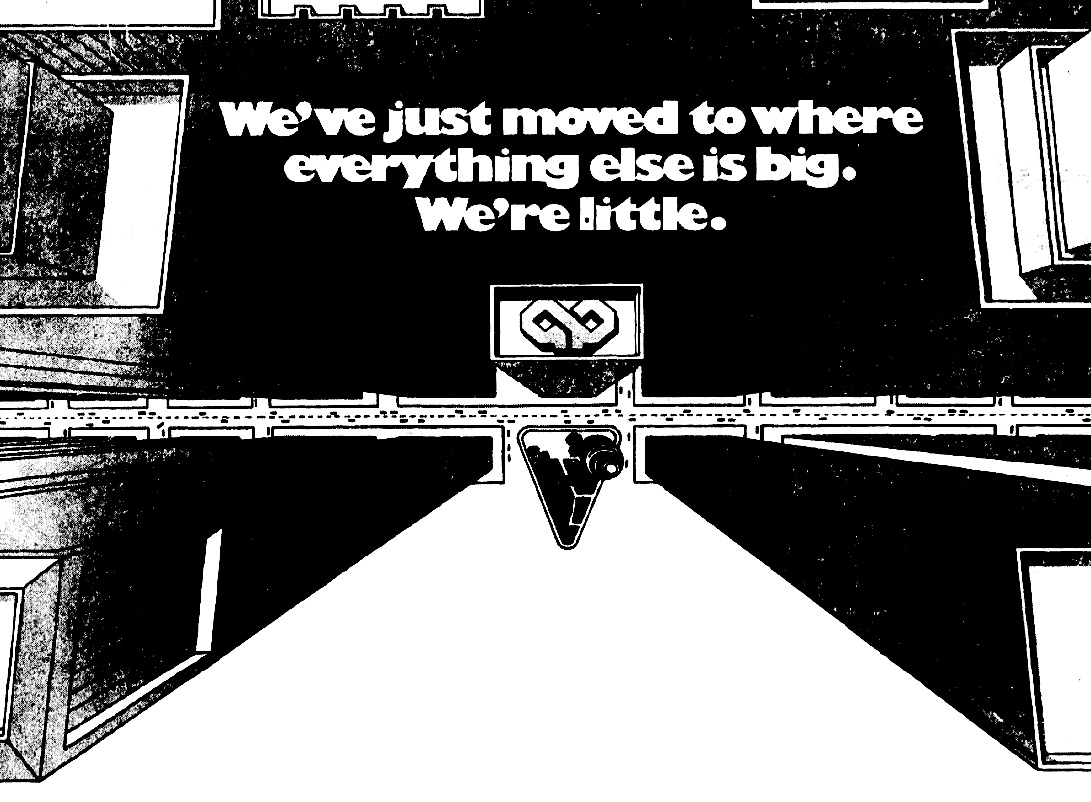
Below is a detail from a newspaper ad for MetroBank which appeared in August, 1976, with a nice little stylized illustration of the triangular TGS and its swirly chapel (click for larger image).

thanks-giving-square_metrobank-ad_det_080276

*

Speaking of the “swirly” design, in a 1982 article about TGS, Dallas Morning News architect deity David Dillon described this structure as “Philip Johnson’s Dairy Queen chapel,” which, presumably, might not have been met with amusement by internationally acclaimed architect Johnson, who probably wouldn’t have appreciated the comparison of his work to an ice cream cone. Interestingly, that description appeared in a 1982 article about Stewart’s dismay that the tall buildings which loomed over TGS (including Thanksgiving Tower) were, basically, blotting out the sun — little TGS was more often in shadow than in sunlight:

Stewart urged the city to pass a sun and shadow ordinance that would preserve the remaining downtown view corridors from high-rise development […] but the [preliminary] ordinance got such a cool reception from downtown developers that it was dropped quickly. (“Computer Study Sheds Light On Thanks-Giving Square Problem” by David Dillon, Dallas Morning News, July 4, 1982)

I bet it got a cool reception!

***

Sources & Notes

Postcard found on eBay.

Videos from SMU’s WFAA News Film Collection, which can be found on the SMU Jones Film Collection YouTube channel.

Thanks to Noah Jeppson for passing along a link to the huge Thanks-Giving Foundation Collection of photos and documents, viewable on the University of North Texas’ Portal to Texas History, here.

Read about the history of Thanks-Giving Square (or as it’s often written, Thanksgiving Square) on Wikipedia, here.

Read the D Magazine article “The Park That Peter Built” (which seems to end abruptly) about the history of Thanks-Giving Square by Jane Sumner from Nov. 1, 1977 here.

thanks-giving-square_thanksgiving-square_1976_postcard_ebay_sm

*

Copyright © 2022 Paula Bosse. All Rights Reserved.

Highland Park High School Rodeo Club — 1973

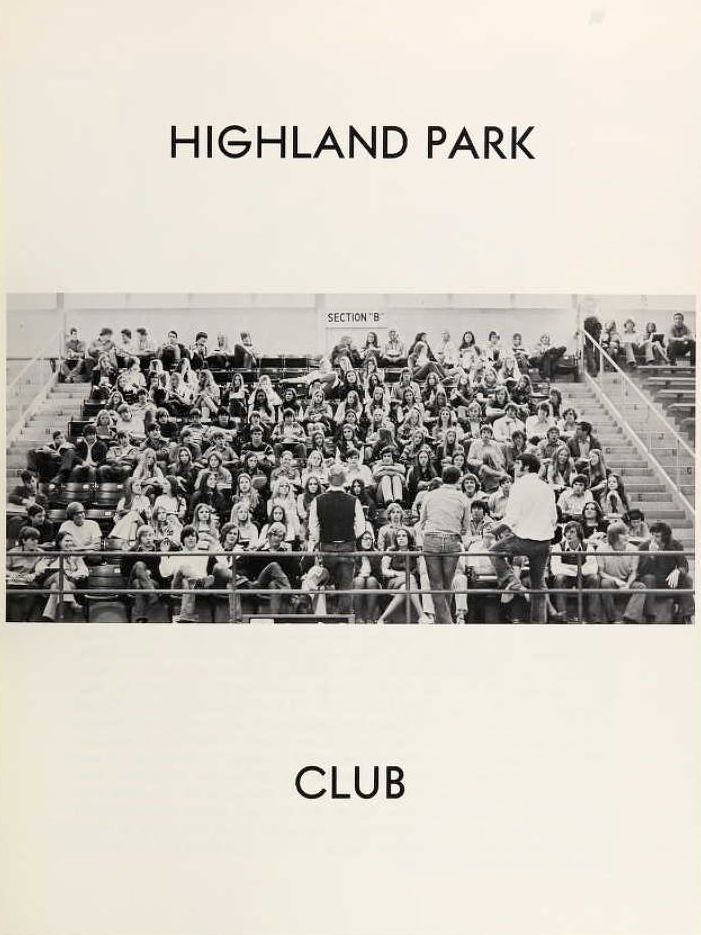
rodeo_HPHS-yrbk_1973

by Paula Bosse

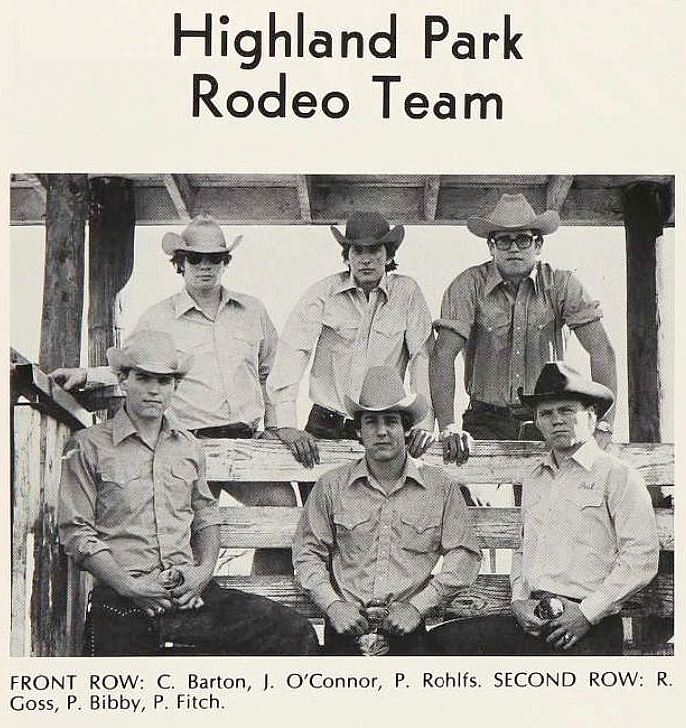
HPHS had a rodeo team? It was apparently a thing, at least in 1973 — they even participated in the Fat Stock Show in Fort Worth.

Seeing as these are Highland Park students, I can only imagine the guys seen above ultimately became partners in a law firm called Barton, O’Connor, Rohlfs, Goss, Bibby & Fitch.

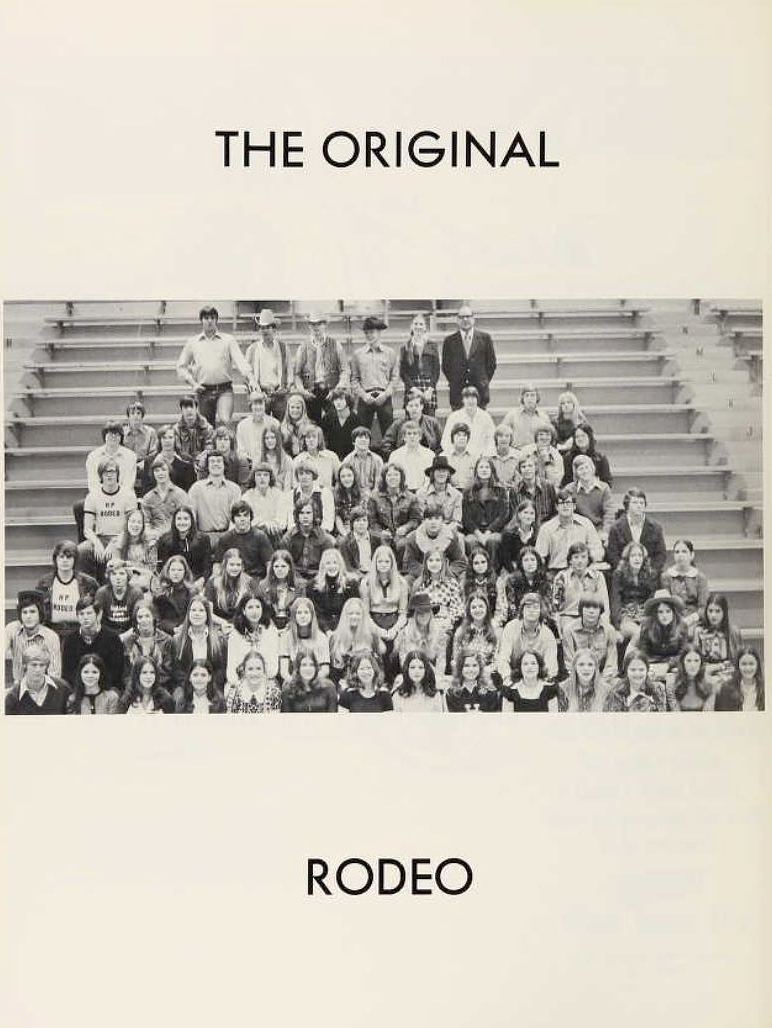
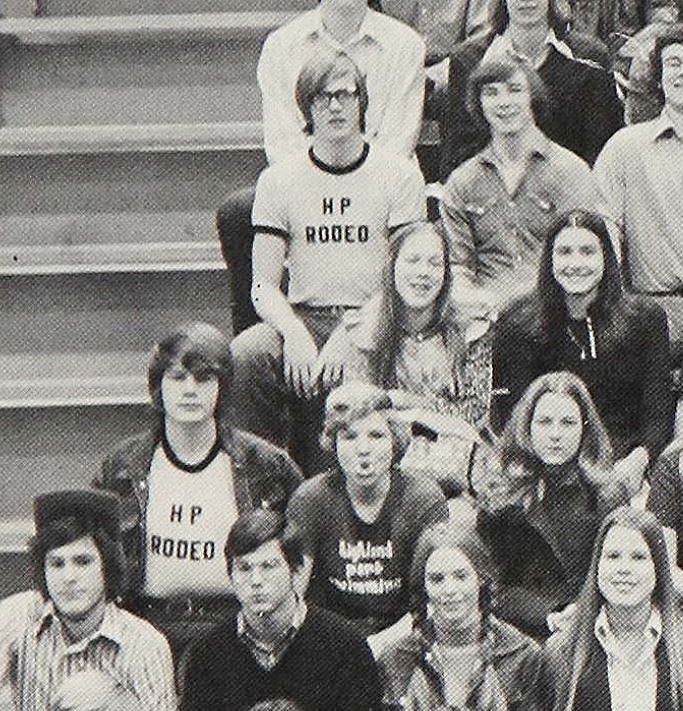
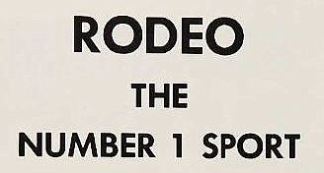
There were other “rodeo” mentions in the yearbook, including this double-page ad which read “The Original Highland Park Rodeo Club.” I mean, kids are wearing t-shirts. I don’t know whether this was an elaborate “ironic” put-on, or whether it was real, but, I have to say, either way, I’m a fan!

rodeo_original-roadeo_HPHS_1973_a

rodeo_original-roadeo_HPHS_1973_b

rodeo_HPHS_1973_det

rodeo_HPHS_1973

***

Sources & Notes

Photos from the 1973 Highland Park High School yearbook, The Highlander.

rodeo_HPHS-yrbk_1973_sm

*

Copyright © 2022 Paula Bosse. All Rights Reserved.

The DALLASOUND — 1971

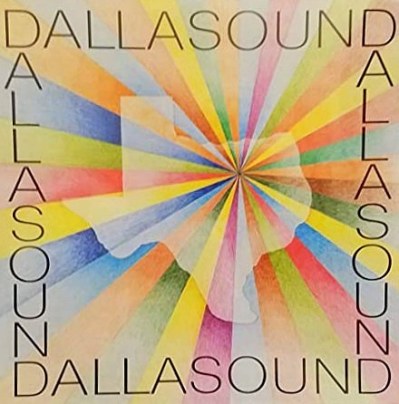
dallasound_1971_amazon
Staight outta Big D…

by Paula Bosse

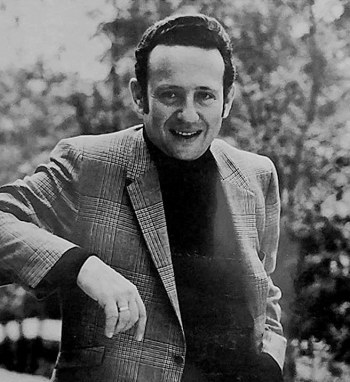
The Boston Symphony Orchestra had Arthur Fiedler and its popular-music offshoot, The Boston Pops. The Dallas Symphony Orchestra had Anshel Brusilow and The Dallasound. 

Brusilow, a Philadelphia native, came to Dallas in 1970 as the resident conductor of the Dallas Symphony Orchestra. The DSO was in financial straits at the time, so in a bid to increase the orchestra’s demographic reach, Brusilow borrowed Fiedler’s idea and formed his own “pops” orchestra, which played jazzy arrangements of pop songs and light classical music. He named this sideline project “The Dallasound.” It was very popular, but it didn’t improve the financial problems of the DSO, and Brusilow was gone after only 3 years. He then went on to accept a teaching a position at North Texas State University (now the University of North Texas). After 9 years at UNT, he began teaching at SMU’s Meadow School of the Arts in 1983. Brusilow died in 2018 — he spent the last 48 years of his life in Dallas.

*

Here are the liner notes for the Dallasound album (1971):

THE DALLAS SYMPHONY ORCHESTRA

One of America’s oldest orchestras, the Dallas Symphony Orchestra was founded in 1900. Through the years, it has served its community and the entire North Texas area with the finest in music from the greatest composers the world has known. From a modest beginning — with 35 members giving a handful of concerts a season — the Dallas Symphony Orchestra currently has 85 members and performs more than 160 concerts each season. Its membership would comprise a “Who’s Who” of some of the finest artists in the world.

With its reputation for the classics well-established, the Dallas Symphony Orchestra now adds another brilliant facet to its already illustrious history — the DALLASOUND — a new sound and a new concept in music making. A big band sound incorporating the latest and most exciting modern-day pop sounds – special arrangements of tunes by the Beatles, Simon and Garfunkel, Jim Webb and many others.

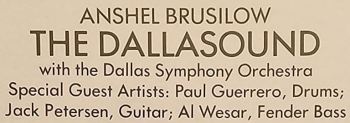
Featured as special guest artists on the first recording on the DALLASOUND Label are three outstanding jazz musicians from the Dallas area — Paul Guerrero on drums, Jack Petersen on guitar and Al “Little Al” Wesar on Fender bass. Arrangements are by one of the most gifted arrangers in the business — Wilfred Holcombe of Trenton, New Jersey. Not just stock orchestral arrangements, but the swingingest, rockingest big band arrangements around! Settle back and listen to some of the most exciting music you will ever hear made by a symphony orchestra!

ANSHEL BRUSILOW

Like many of the world’s great violinist/conductors, Anshel Brusilow laid aside his Stradivarius several years ago and took baton in hand in earnest. His extensive performing and conducting experience with three of the world’s greatest conductors — Eugene Ormandy, George Szell and Pierre Monteux — placed him in good stead on the podium. He came to Dallas after two extremely busy years and more than 300 concerts with the Chamber Symphony of Philadelphia, including five recordings with RCA Victor.

With him he brought the DALLASOUND and a new era for Dallas’s symphony orchestra. Completely at home with the standard symphonic fare, he is equally proficient when ” swinging” with the DALLASOUND. Thousands of Dallasites have been converted to the new sound a symphony orchestra can make, a fact which substantiates Anshel Brusilow’s theory that the Dallas Symphony Orchestra belongs to all the people of a community and must therefore serve them in as many ways as it can. Thanks to Anshel Brusilow, the Dallas Symphony embarks on a new direction in music — the DALLASOUND!

The album’s musical offerings included arrangements of George Harrison’s “Something” and “My Sweet Lord,” The Carpenters’ “We’ve Only Just Begun,” The Doors’ “Light My Fire,” Tom Jones’ “It’s Not Unusual” and “Delilah,” and everyone’s favorite ubiquitous weird song from the late ’60s, “MacArthur Park.”

dallasound_back-cover_amazon_brusilowAnshel Brusilow

dallasound_back-cover_amazon_det

dallasound_back-cover_amazon_logo

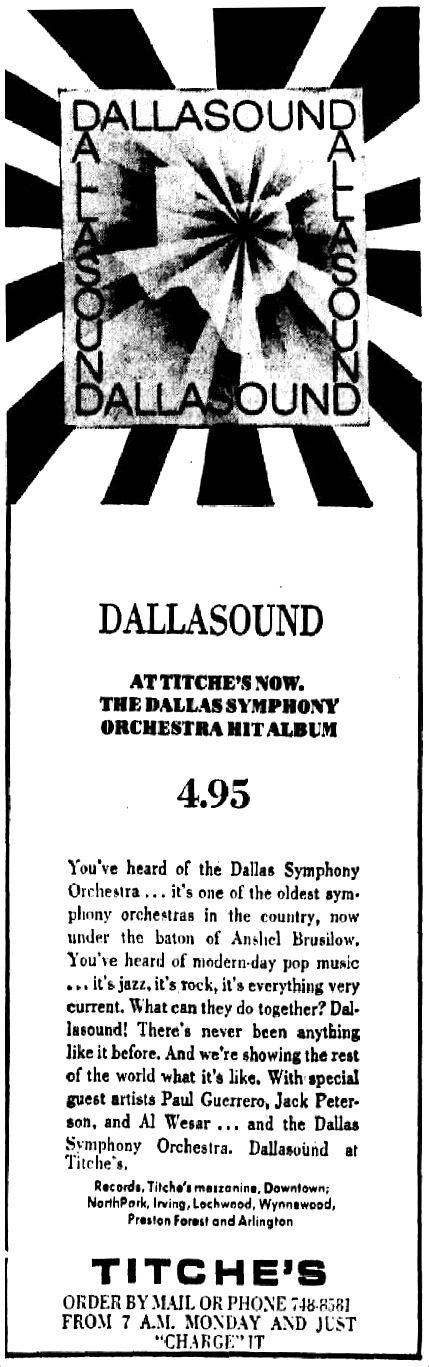
dallasound_030771_adTitche’s ad, March, 1971

***

Sources & Notes

Images from the front and back cover of the DALLASOUND album were found on Amazon, here.

A really good interview with Anshel Brusilow can be found in the “High Profile” article by Marty Primeau (Dallas Morning News, July 17, 1983).

dallasound_1971_amazon_sm

*

Copyright © 2022 Paula Bosse. All Rights Reserved.

Autos, Autos Everywhere, and Not a Place to Park — 1971

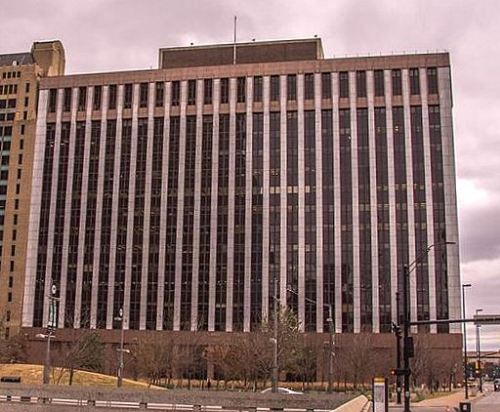
cabell-fed-bldg_flickr_wayne-hsieh
Earle Cabell Federal Bldg. / Wayne Hsieh, Flickr

by Paula Bosse

The other day I was looking for some information on the 1971 opening of the new 16-story Federal Center at 1100 Commerce Street (the name was changed to the Earle Cabell Federal Building in late 1973 to honor the former Dallas mayor and U.S. congressman). I came across the Dallas Morning News article “Center Augments Parking Woes” by Earl Golz (DMN, Jan. 12, 1971) which had a couple of surprising tidbits. The new federal building — which was expected to be occupied by more than 5,000 workers — had a grand total of 59 underground parking spaces. …Fifty-nine. FIVE-NINE. Let that sink in. This was a brand-new building. It’s not like they squeezed those pitifully few parking spaces under an existing building. This was in the plans. That’s a lot of car-pooling.

Three years earlier, in 1968, One Main Place opened at 1201 Main — it was more than twice as big as the Federal Building. When it opened, it was noted that there were 800 underground spaces (with a planned-but-never-realized massive underground parking garage for 4,000 cars, to go along with the never-realized Two Main Place and Three Main Place complex). But, somehow, by 1971, One Main Place’s parking had decreased to a mere 400 spaces, all of which were completely filled daily. I have images of panicky office workers constantly circling blocks in search of a place to park. Stories were rampant that parking-lot attendants were reserving weekly and monthly spaces in pay lots for exorbitant under-the-table cash transactions. 

How did this happen? Who would design such large modern buildings with such woefully inadequate parking? Were “interested parties” strong-arming architects or city planners to skimp on the parking? Is there such a thing as a big “parking-lot lobby”? (What am I saying? I’m sure there is.) Ever wonder why Dallas kept tearing buildings down in the early ’70s and replacing them with pay parking lots? I’m sure there were many reasons, but I saw more than one newspaper mention that parking lots (not garages, mind you — just lots) could be more profitable than aging buildings. It’s always seemed odd to me that there were (are) so many surface parking lots downtown, rather than multi-story garages. Imagine how much more money parking lot operators would be making with garages. Not that multi-story garages are in any way more desirable, aesthetically, but why didn’t land developers build garages which could accommodate so many more paying customers than these puny little lots? Some lot operators insisted that it benefitted everyone to have these lots — insisting that the buildings which once stood on the land were old and ugly eyesores which needed to be torn down, and that these lots were basically just placeholders until a fat-cat developer forked over multi-millions to build something tall and beautiful on it.

Was the lack of underground spaces in these two new buildings intentional? This would have been a weird way to force people to use public transportation. It might even have been a bit of strain on public transportation — the Dallas Transit System was already losing the fight against car-culture and downtown workers who lived in suburbia.

In the early ’70s, Dallas and Fort Worth were both experiencing a severe lack of downtown parking. In 1970 there had been a major excavation to build underground parking below the Old Red Courthouse — it was probably helpful, but it was just a band-aid on a much bigger problem.

A few of the city’s proposals to deal with these parking woes:

  • Dissuade people from bringing their cars downtown by significantly raising fees for parking lots and parking meters and to cut the time limit for parking (quickly approved by the City Council)
  • Build satellite lots outside the Central Business District where people could park and then bus into town (“Park and Ride” stations began, shakily, in 1973)
  • Investigate the use of “people-movers” in varying degrees of sci-fi futurism

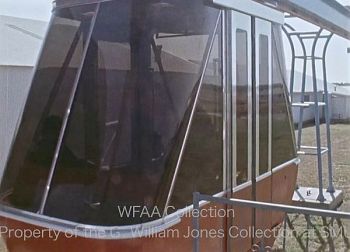
As far as “people-movers,” there were several automated transportation systems on drawing boards around the country at the time, a couple of which were being developed in the Dallas-Fort Worth area. There was the electrically powered monorail-like AirTrans — a joint project of Vought Aeronautics of Dallas and Varo Inc. of Garland — and there was the similar but less well-known Sky-Kar of Fort Worth. AirTrans was very successful and was first adopted by DFW Airport, but Sky-Kar seems to have fizzled out after the death of the company’s president in the early ’70s. 

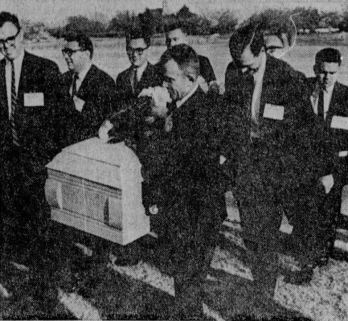
One of Sky-Kar’s salesmen was Paul Groody (he can be seen being interviewed in one of the kars in a WFAA clip from October 1970 here, with additional kar-footage here). Groody (who, in this interview, is a couple of months from full Asimov muttonchops) had, in the previous decade, gained some national notoriety as the funeral director who had been given the task of driving from Fort Worth to Dallas to pick up the body of Lee Harvey Oswald and “prepare” him for burial — because there were no pallbearers, he had to scrounge for volunteers among the reporters covering the interment. Because I may have no other opportunity to post this, below is the cute and compact Sky-Kar Transivator prototype from 1970. …Sky-Kar, we hardly knew ye.

sky-kar_wfaa_SMU_oct-1970WFAA Collection, Jones Collection, SMU

Below, Paul Groody, Sky-Kar rep (1970), and Paul Groody, funeral director for Lee Harvey Oswald’s burial (1963) (he is seen partially obscured, all the way at the back right, wearing glasses).

sky-kar_paul-groody_wfaa_SMU_oct-1970WFAA Collection, Jones Collection, SMU

oswald-funeral_FWST_1963
Fort Worth Star-Telegram

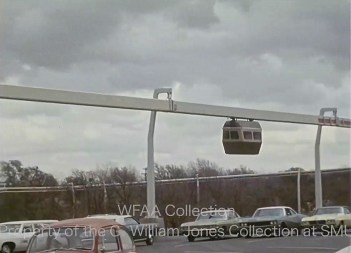
Equal time: see the Vought/Varo AirTrans prototype running on its test track in Garland in December 1970 here, along with interviews from company reps here.

airtrans-prototype_garland_wfaa_SMU_dec-1970WFAA Collection, Jones Collection, SMU

Hopes were that these people-mover systems would be used not only in airports but throughout the Central Business District and on sprawling college campuses, etc. Forget the flying cars. I’m waiting for my monorail. (And it’s probably still best to leave your automobile at home if you’re heading downtown.)

***

Sources & Notes

Top photo, “Earle Cabell Federal Building and Courthouse” (2019) by Wayne Hsieh — found on Flickr, here. (I have cropped it.)

Screenshots from Channel 8 news film posted on YouTube, from the WFAA Collection, G. William Jones Film and Video Collection, Hamon Arts Library, Southern Methodist University.

cabell-fed-bldg_flickr_wayne-hsieh_sm

*

Copyright © 2022 Paula Bosse. All Rights Reserved.

Response to “Leak” from the Dallas Attorney Who Took Roe v. Wade to the Supreme Court

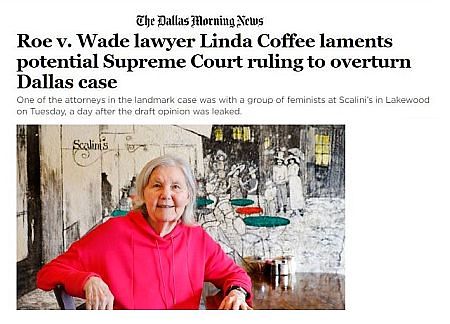
coffee-linda_dmn-headline_050422Dallas Morning News headline, May 4, 2022/photo: Tom Fox

by Paula Bosse

Great work by BeLynn Hollers of The Dallas Morning News for getting comments from Linda Coffee — the Dallas attorney who took her case, Roe v. Wade, to the U.S. Supreme Court (along with her co-counsel, Sarah Weddington) — on the leaked Supreme Court draft decision which appears to signal the overturning of her landmark court case. The story, “Roe v. Wade Lawyer Linda Coffee Laments Potential Supreme Court Ruling to Overturn Dallas Case” (Dallas Morning News, May 4, 2022) can be found here (paywall). Below is the video interview with Coffee, posted on YouTube, here.

The previous DMN interview of Linda Coffee by BeLynn Hollers — “Dallas Lawyer Linda Coffee Launched Landmark Roe vs. Wade Abortion Rights Case with a $15 Filing Fee” (Dallas Morning News, Dec. 16, 2021) — can be found here (paywall). The video interview from that article is posted on YouTube here.

And, from 1970, what may be Linda Coffee’s first-ever television interview about the Dallas case (which was just beginning its long trek to the Supreme Court) has recently been found in the WFAA Newsfilm Collection at SMU (G. William Jones Film & Video Collection, Hamon Arts Library, Southern Methodist University). She was, incredibly, only 27 years old. It is posted on YouTube here. (Read the YouTube notes for background info on this interview.)

*

I wrote about Linda Coffee’s Dallas days in the Flashback Dallas post “Linda Coffee, The Dallas Attorney Who Took Roe v. Wade to the U.S. Supreme Court.”

And, again, thank you, Linda.

*

Copyright © 2022 Paula Bosse. All Rights Reserved.

Christmas at NorthPark — 1970s

xmas_northpark_trees_1971_instagramA familiar scene to Dallas shoppers

by Paula Bosse

NorthPark was the mall of my childhood — in fact, I don’t recall my family going to any other mall. I loved going there at Christmastime — to see the decorations, to watch a puppet show, to slide down those pillars, and, of course, to visit Santa. These photos from the Instagram feed of NorthPark Center are very nostalgic. 

*

Above, 1971. How to get to Santa: take a right at the fountain, walk and walk (…and walk) — things start picking up the closer you get to Neiman’s — hang a right at N-M, and there he is!

*

Admiring a snowman, ca. 1970.

xmas_northpark_snowman_1970_instagram

*

Also admiring a “tree” suspended over one of the iconic NP fountains, ca. 1970.

xmas_northpark_fountain_1968_instagram

*

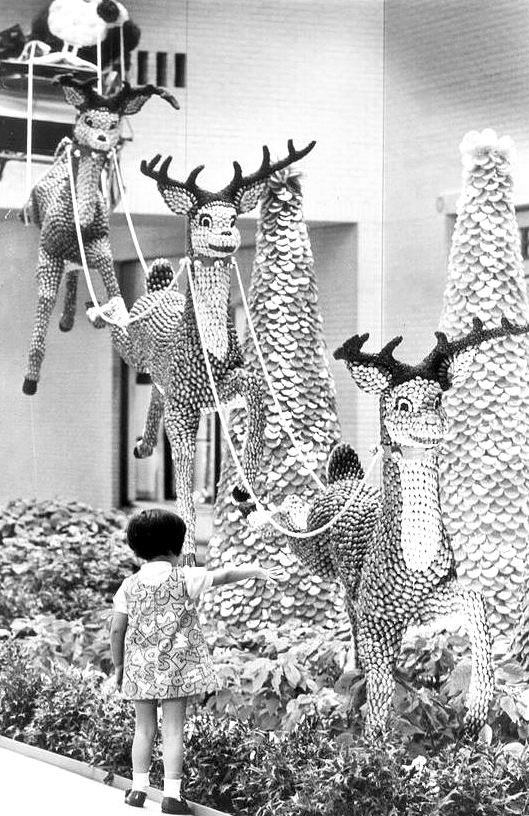
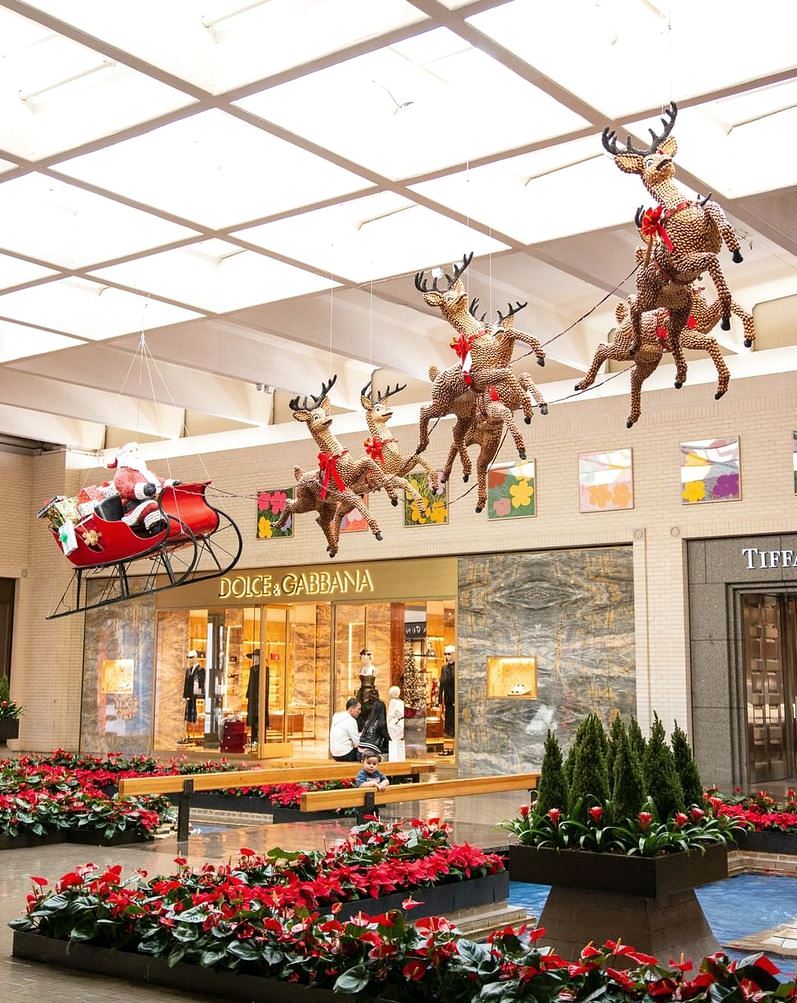
If you’ve been to NorthPark at Christmas you’ve seen the aerial display of Santa and his sleigh being whisked away by flying reindeer. This is NorthPark Center’s caption from Instagram: “Flying high over Neiman Marcus Fountain Court, the vintage Candy Santa and Pecan Reindeer installation has been a special part of NorthPark’s holiday tradition since 1965. The handcrafted display, consisting of real pecans, almonds, red and black licorice, marshmallows, sour cherries, raisins, and other candies, portrays Santa and his reindeer on their way to deliver presents to children all over the world.” Those pecan-studded reindeer really fascinated me as a kid. (The photo below is undated.)

xmas_northpark_santa-and-reindeer_instagram

1970:

xmas_northpark_girl-reindeer_pinterestvia NorthPark’s Pinterest page

1972:

xmas_northpark_santa_sleigh_1972_instagram

They’re still flying high, to the delight of 21st-century children:

xmas_northpark_santa-and-reindeer_color_present_instagram

*

And, lastly, what every child saw before and after a holiday visit to NorthPark. When your car pulled into a parking spot you were filled with excited anticipation, and when you left, you were over-stimulated and exhausted. But happy.

xmas_northpark-parking-lot_ca-1974_instagram

**

Merry Christmas and Happy Holidays to everyone!

***

Sources & Notes

Unless otherwise noted, all photos from the Instragram feed of @NorthParkCenter

See many, many more Flashback Dallas Christmas posts from years gone by here.

xmas_northpark_trees_1971_instagram_sm

*

Copyright © 2021 Paula Bosse. All Rights Reserved.

Black Dallas — 1973

royal-cafe_june-1973_kera-collection_jones-collection_SMURoyal Cafe, 2726 Forest Avenue (now MLK Blvd.)

by Paula Bosse

The G. William Jones Film and Video Collection at SMU is the gift that keeps on giving (see their YouTube channel here). In addition to their vast non-Dallas-history holdings, they are the repository of the WFAA news film archives, which is an incredible collection of local news segments from Channel 8. And now they’ve begun digitizing and uploading film from KERA-Channel 13. There are all sorts of clips posted on the YouTube channel so far — I really, really loved the Blackie Sherrod profile — and I’m not even a sports fan! My guess is that a lot of it comes from the legendary local news show Newsroom, including the one I’m writing about here.

This story from 1973 was about a recent increase in crime in the Black neighborhoods of South Dallas and State-Thomas/Hall Street. Crime stories are pretty much the same decade in and decade out, but this piece is great because of the almost 8 full minutes of footage showing parts of town that the media largely ignored (ignores). I haven’t seen most of these areas as they existed when this piece was shot — many of these buildings don’t exist at all anymore. A couple of these places are “famous,” most are not. But this is just great. (Scroll to the bottom of the post for places and addresses seen in the film.)

*

I was particularly excited to see the exterior of the Ascot Room, which I wrote about in the Flashback Dallas post “1710 Hall: The Rose Room/The Empire Room/The Ascot Room — 1942-1975” — it was an important music club, but I had been unable to find any images of its exterior. Until now! Granted, it’s looking a bit long in the tooth in 1973, but this was so cool to see!

ascot-room_june-1973_kera-collection_jones-collection_SMUAscot Room (1710 Hall, at Ross)
*

bill-and-bess-cafe_june-1973_kera-collection_jones-collection_SMUBill & Bess’ Cafe
*

black-gails-domino-parlor_june-1973_kera-collection_jones-collection_SMULucky Eight Recreation Center (1804 Hall); Black Gail’s Domino Parlor
*

man-1_june-1973_kera-collection_jones-collection_SMU

blue-lantern-cafe_june-1973_kera-collection_jones-collection_SMUBlue Lantern Cafe (1609 Hall)
*

congo-club_june-1973_kera-collection_jones-collection_SMUCongo Club (1801 Hall, at Roseland)
*

domino-game_june-1973_kera-collection_jones-collection_SMU

e-tx-bbq_june-1973_kera-collection_jones-collection_SMUEast Texas Bar-B-Q/East Texan Barbecue (2311 Hall)
*

man_june-1973_kera-collection_jones-collection_SMU

forest-ave_june-1973_kera-collection_jones-collection_SMU2700 block of Forest Avenue (now Martin Luther King Jr. Blvd.)
*

hall-st_june-1973_kera-collection_jones-collection_SMU1700 block of Hall Street, north from Ross
*

houses_june-1973_kera-collection_jones-collection_SMU

pussy-cat-lounge_june-1973_kera-collection_jones-collection_SMUPussy Cat Lounge (3410 Forest Ave. — now part of Fair Park)
*

men_june-1973_kera-collection_jones-collection_SMU

ross-avenue-motel_june-1973_kera-collection_jones-collection_SMURoss Avenue Motel (3629 Ross) — see what it looked like new here
*

south-blvd_june-1973_kera-collection_jones-collection_SMU2700 block of South Boulevard

Very cool! Thanks, SMU!

**

Here are some of the places seen in the film, with addresses (if I could find them), in the order they appear (several places make more than one appearance):

  • Pussy Cat Lounge:  3410 Forest Avenue (now MLK Blvd.)
  • Elite Theater (sign):  2720/2722 Forest Ave. (closed; originally the White Theater, which opened in 1934)
  • Blazer Inn:  2722 Forest (in the old theater)
  • A & H Barber Shop, Recreation, Pool:  2724 Forest
  • Royal Cafe:  2726 Forest
  • Royal Barber Shop:  1813 Hall
  • Soul Shop
  • Hall’s Hotel:  1809 1/2 Hall
  • Corner of Hall & Roseland
  • Busy Bee Cafe:  1612 Hall
  • Red Door
  • Black Gail’s Domino Parlor:  1802 Hall
  • Congo Club:  1801 Hall (at Roseland)
  • Ascot Room:  1710 Hall (at Ross)
  • East Texas Bar-B-Q (listed in directories as East Texan Barbecue):  2311 Hall
  • Mary’s Place
  • Bill & Bess’ Cafe
  • Watson’s Cafeteria:  1715 Hall
  • Jim’s Liquor:  1713 Hall
  • Alvacado Inn:  1726 Hall
  • Stewart Motors:  3509 Ross
  • Vacation Motors:  3623 Ross
  • Ross Avenue Motel:  3629 Ross
  • 1600 block of Hall, looking toward Ross
  • Your Thrift Shop:  1622 Hall (warehouse), 3302 Ross
  • Forest Avenue Store:  2716-A Forest
  • Hooper’s Jeweler:  2720 Forest
  • Front of old Elite Theater, then the Blazer Inn:  2722 Forest
  • 2700 block of South Blvd. shows homes at 2707 South Blvd. and 2711 South Blvd.
  • Liberty Bail Bond Service:  1611 Hall (Theodore Greer, bondsman)
  • Blue Lantern Cafe:  1609 Hall
  • Dallas Police Substation:  Bexar and Municipal streets

***

Sources & Notes

All images are screenshots from the YouTube video “KERA Report On Crime In Dallas — June 1973,” from the KERA Collection, G. William Jones Film and Video Collection, Hamon Arts Library, Southern Methodist University.

royal-cafe_june-1973_kera-collection_jones-collection_SMU_sm

*

Copyright © 2021 Paula Bosse. All Rights Reserved.

Gene de Jean Lifts a Curse on Dallas — 1970

gene-de-jean_WFAA_090470Curse lifted — all in a day’s work…

by Paula Bosse

On Sept. 4, 1970, at the corner of Commerce and Ervay, a “white-magic warlock” named Gene de Jean conducted a ceremony to lift a heinous curse placed on Dallas in 1963 by a somewhat vague “malevolent black-magic coven” — this curse, which, uncoincidentally, preceded the JFK assassination, had apparently hung over the city for 7 long years. Fortunately, the media had been alerted, and we have film footage of the historic occasion in which a mysterious warlock lifted a nasty curse which no one in Dallas knew had been cast in the first place.

Do-gooding warlock Gene de Jean arrived in a “velvetized Cadillac” (a Cadillac COVERED IN BLACK VELVET!) with a be-robed bell-ringing acolyte, and, with Neiman-Marcus in the background, he uttered a few incantations and proclaimed the curse lifted. He also “blessed” a few random people in the crowd for good measure before walking back to the waiting velvetized warlock-mobile, his job done. In his wake there was much rejoicing and/or confused looks exchanged on Commerce Street. Thank you Mr. de Jean!

*

In something of a kill-joy article, the Associated Press revealed that “Gene de Jean” was a warlock stage-name. In non-warlock life he was Gene McIntosh, mild-mannered Houston psychologist. When pressed by the reporter, Gene said that it was “pure coincidence” that the Texas Association of Magicians was wrapping up its 25th annual convention 2 blocks away at the Statler Hilton (which can be seen in the background of the footage). So, yes, Gene McIntosh and Lee Thompson (the bell-ringing “acolyte”) were well-known Houston magicians/illusionists in town for a magicians’ convention. And — why not? — a friendly curse-lifting.

**

Here’s the footage — at the 12:19 mark — captured by a WFAA-Channel 8 News cameraman for posterity.

*

And a few screenshots of the warlock in action.

gene-de-jean_WFAA_090470_1

gene-de-jean_WFAA_090470_2

gene-de-jean_WFAA_090470_3

gene-de-jean_dallas_090470-shutterstock_ferd-kaufmanAssociated Press photo by Ferd Kaufman

gene-de-jean_WFAA_090470_velvetized-caddySeriously — how do you cover a car with velvet?

Voilà! Curse lifted!

**

Doing a little research, I have to say, when I came across the photo below, I felt a twinge of betrayal. Or at least disappointment. It shows Gene de Jean on the streets of Milwaukee (Milwaukee?!!) in June, 1970. The guy in the sunglasses is also seen with him in Dallas. The caption of this photo: “A self-described warlock (male witch) in black flowing cape bestowed a blessing right here in Old Milwaukee Tuesday. Gene De Jean blessed the city and a number of passersby at N. 3rd St. and W. Wisconsin Ave. He was in town for a magician’s convention.” Was it all just a schtick, Gene? And I thought we had something special.

gene-de- jean_milwaukee_june-1970via Wisconsin Historical Society

***

Sources & Notes

Video and screenshots are from the WFAA NewsFilm Collection, G. William Jones Film Collection, Hamon Arts Library, Southern Methodist University; the footage is from Sept. 4, 1970 and can be found on YouTube here (clip begins as the 12:19 mark).

When I posted a version of this on my Facebook page a few weeks ago, David B. commented with a couple of informative links about Gene McIntosh (who died in 2006): this overview of his career as a magician, and this tale of a stunt he performed while driving from Houston to Dallas in 1959, blindfolded the whole way. RIP, Gene.

gene-de-jean_WFAA_090470 sm

*

Copyright © 2021 Paula Bosse. All Rights Reserved.