Flashback : Dallas

A Miscellany: History, Ads, Pop Culture

Category: Advertisements

Dallas’ Texas Centennial Exposition vs. Fort Worth’s Frontier Exposition — 1936
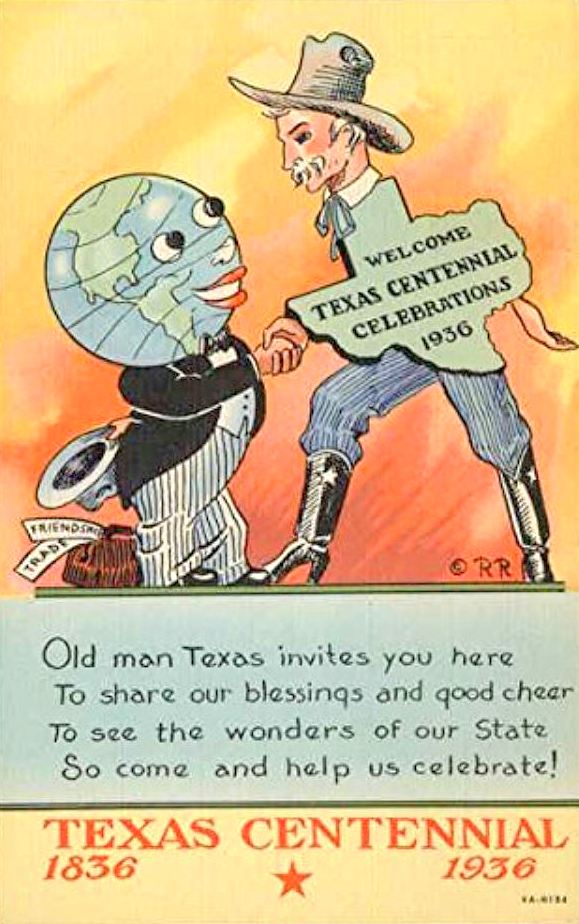
tx-centennial-postcard_old-man-texas_smWelcome to Dallas (and/or Fort Worth)!

by Paula Bosse

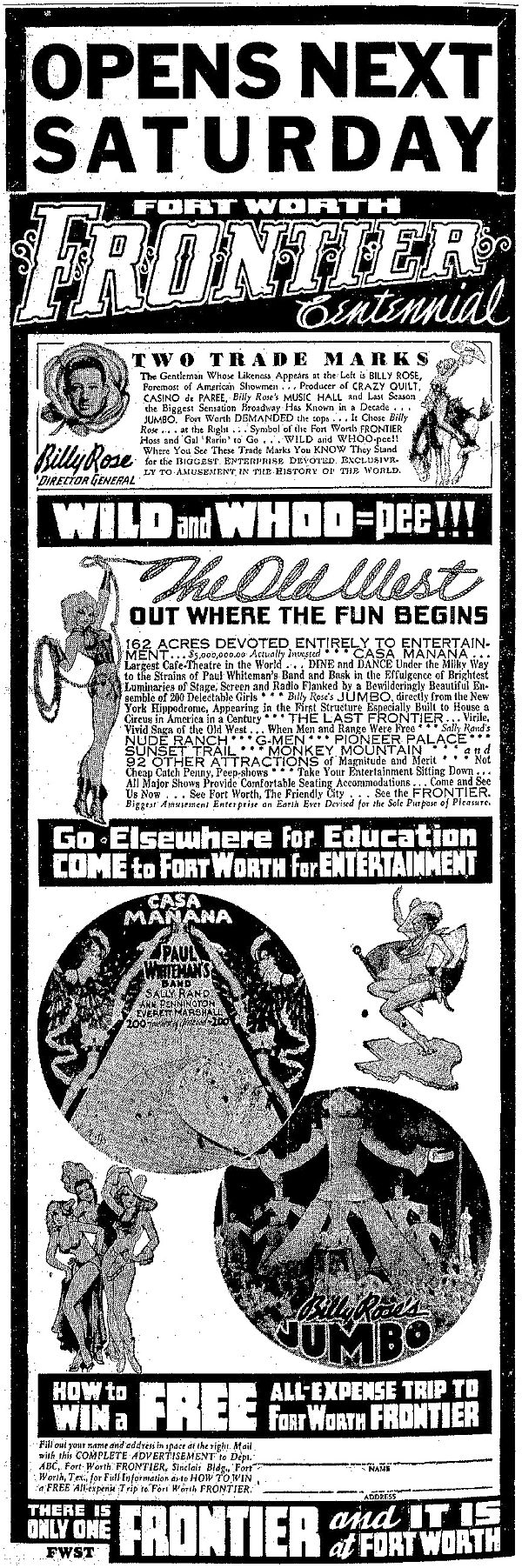
The Texas Centennial Exposition opened in Dallas at Fair Park in June, 1936 — 80 years ago this week. It was described in newsreels as “A New City, A Great City, A City of a Thousand Sights and a Thousand Wonders.” Which I guess it kind of was. I’ve written about the Centennial before, but I don’t think I’ve mentioned that my favorite part of the Centennial’s taking place in Dallas is that it seriously rubbed “Mr. Fort Worth,” Amon Carter, the wrong way. Carter’s distaste of Dallas was well-known, so it was no surprise, really, that this caused him to blow his top and, damn it, he created his OWN competing celebration: the Fort Worth Frontier Centennial Exposition. The Dallas-Fort Worth rivalry had already been going strong for years, but the Centennial pushed it into Hatfield-and-McCoy feud territory (although one gets the feeling that most of it was an act that generated a lot of great publicity for both sides).

Watch film footage of ol’ Amon’s blood pressure spike into the danger zone here, in a moment from a March of Time newsreel as he proclaims that Fort Worth will teach “those dudes over there” (in Dallas) a thing or two by outdoing Big D in sheer gigantic spectacle. …And sex. Or, “whoopee.” Nudity was on display absolutely everywhere at both Centennial expositions. Dallas had always planned on having the titillation before Amon Carter got into the act, but the involvement of Billy Rose on the Fort Worth side probably encouraged Dallas to, um … augment the fleshy offerings on display in Fair Park.

Broadway impresario Billy Rose was hired by Amon Carter to sex-up the Fort Worth expo and to do everything he could to draw more visitors to Fort Worth than to Dallas. Rose went so far as to have a HUGE electric sign (supposedly the second largest electric sign in the world) placed on top of a building on Parry directly opposite the entrance to Fair Park which read:

“Fort Worth Frontier — Wild & Whoo-pee — 45 Minutes West.”

Which is pretty hilarious. (Same view today?)

tx-centennial_FW-sign_billy-rose-presents_book_1936

(See a giant image of this photo in the UTA digital collection, here.)

I’m not sure whether the Dallas Centennial organizers were miffed or amused, but one can only imagine that Amon Carter was thrilled to bits when he saw his sign appear (fleetingly) in the Gene Autry movie The Big Show which had been shot in Fair Park during the Centennial.
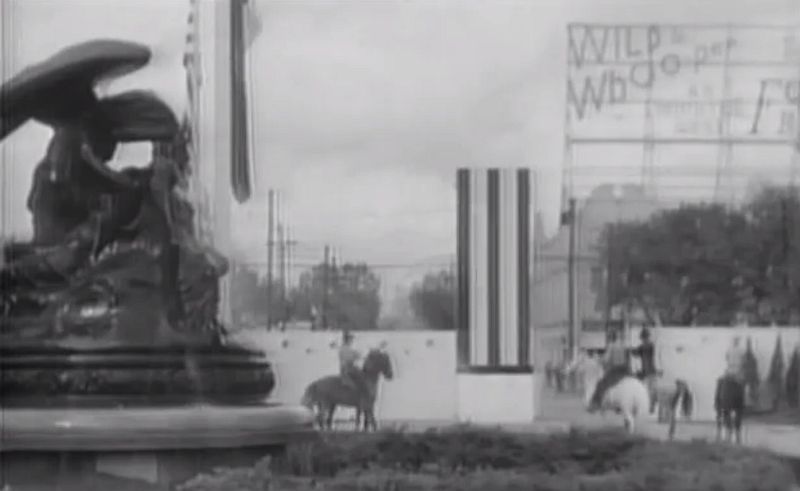
billy-rose-billboard_big-show-movie_gene-autry

Fort Worth was all about the “whoo-pee,” and the tag-line to their show was “Come to Fort Worth for Entertainment, Go Elsewhere for Education.”

frontier_FWST_071436-detFort Worth Star-Telegram, July 14, 1936

The “feud” (i.e. the publicity machine) really cranked up when the producers of the March of Time newsreel sent their people to film in Dallas and Fort Worth. The result — a splashy look at the inter-city rivalry titled “Battle of a Centennial” — was shown in DFW-area theaters, and boisterous audiences either applauded for Dallas and hissed at Fort Worth (or vice-versa), depending on their allegiance.  (Click ad below for larger image.)

march-of-time_dmn_061736
June, 1936

In the end, the celebrations in both Dallas and Fort Worth were successful (although Dallas was the clear winner!), but the rivalry and competitive showmanship from the two cities probably made the shows much more entertaining than they might otherwise have been. So, thanks, Amon!

frontier_pinterest
via Pinterest

frontier_dmn_073036
July, 1936

frontier-centennial_FWST_071236
July, 1936

tx-centennial_variety-via-decatur-illinois-herald_060336
Variety article reprinted in Decatur (Illinois) Herald, June 3, 1936

billy-rose_casa-manana
via oldimprints.com

 ***

Sources & Notes

Source of postcard at top unknown.

Photo of the “whoo-pee” billboard is from the book Billy Rose Presents … Casa Mañana (Fort Worth: TCU Press, 1999) by Jan Jones. Jones writes that the billboard was on top of the building at Parry and First.

The shot of the billboard hovering over cowboys is a screengrab from the interesting-but-dull Gene Autry movie, The Big Show, shot mostly on the grounds of Fair Park during the Centennial. You can watch the full movie here.

The clip of Amon Carter shaking his fist at “those dudes” in Dallas is from the 1936 March of Times newsreel, “Battle of a Centennial.” I have been unable to find the entire film streaming online, but you can watch a whole bunch of clips (about 13) from Getty Images, here. The full thing appears to be available for purchase here, but only if you are affiliated with a school or institution. (If anyone has access to the full newsreel, let me know!)

Watch a different newsreel/film on the Centennial Exposition — the 11-minute Texas Centennial Highlights, shot and produced by Dallas’ Jamieson Film Co. — at the Texas Archive of the Moving Image site, here.

For more on Fort Worth’s horning-in-on Dallas’ Centennial, read the entertaining article “Makin’ Whoopee — Amon Carter Couldn’t Make Either the Depression or Dallas Go Away, But He Sure Tried” by Jerry Flemmons (D Magazine, April, 1978), here.

Unfortunately, I’m unable to embed the video I linked to above of Amon Carter sputtering about Dallas hosting the state’s Centennial, but I encourage everyone who’s ever been amused by the Dallas-Fort Worth “feud” to watch it here — it’s well worth 17 seconds of your time! As John Rosenfield wrote in the Dallas Morning News review of this March of Time newsreel, “The best actor from across the river is Amon Carter, long a leading man among Texas political Thespians” (DMN, “Centennial Fight in ‘Time’ Release,” June 21, 1936). Newspaperman Carter knew how to parlay outrageous remarks about exaggerated competition into sweet, sweet publicity for himself and his newspaper. Check out the photo of a smiling Carter with his arm around “bitter rival,” G. B. Dealey of The Dallas Morning News, here. Amon knew a thing or two about a thing or two….

Pictures and clippings are larger when clicked.

*

Copyright © 2016 Paula Bosse. All Rights Reserved.

Highland Park: The Ideal Residence Subdivision — 1907

ad-highland-park_072107Ideal!

by Paula Bosse

HIGHLAND PARK
For natural charms it is in a class by itself.
Beautiful lakes, high altitudes, cool breezes.

And the fishing is great!

***

Sources & Notes

Ad from The Dallas Morning News, July 21, 1907.

*

Copyright © 2016 Paula Bosse. All Rights Reserved.
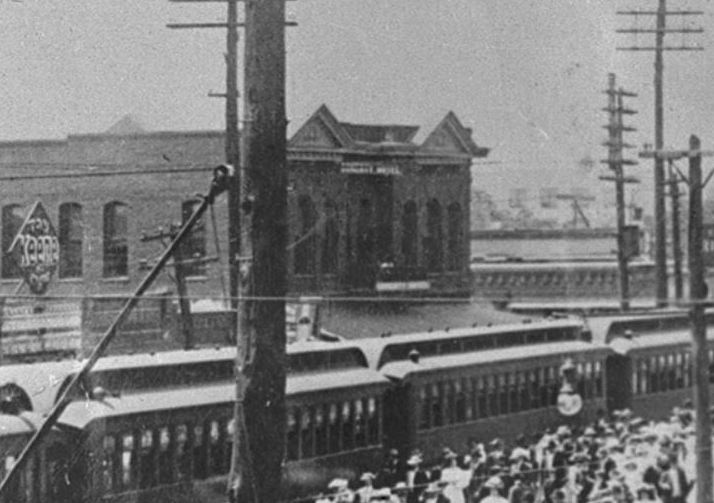
The Union Depot Hotel Building, Deep Ellum — 1898-1968

union-depot-hotel_1909_uta-detThe old Union Depot Hotel, about 1909 (click for larger image)

by Paula Bosse

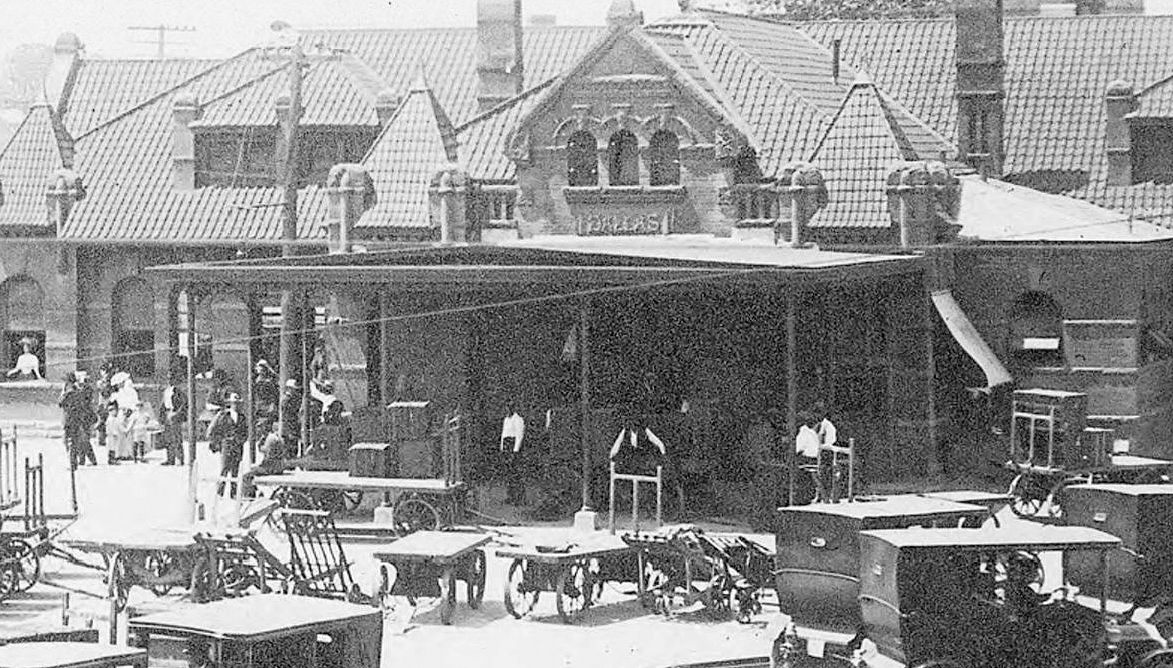
Above, we see the hotel known originally as the Union Depot Hotel, built in 1898 across from the very busy old Union Depot, at the intersection of two major rail lines: the Houston & Texas Central (the H&TC, which ran north-south) and the Texas & Pacific (the T&P, which ran east-west). The tracks crossed at the intersection of Central and Pacific — streets named after the two railroads — in the area east of downtown we now call Deep Ellum. The hotel was on the southwest corner of that intersection.

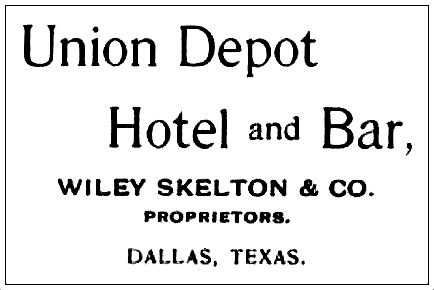
The large, two-story hotel (which also housed a popular cafe and bar) was built by William S. Skelton — more commonly known as Wiley Skelton — to cash in on the large number of travelers coming to Dallas via the bustling passenger depot right across the street. When it opened, it was charging a hefty two bucks a day (the equivalent of about $60.00 in today’s money) — a large-ish sum in 1899, but … location, location, location. This two-dollar-a-day rate to stay at Skelton’s hotel was the same as the base rate of Dallas’ ritziest, priciest hotels, The Windsor and The Oriental. How could Skelton’s “wrong side of the tracks” hotel charge similar rates as the city’s most elegant hotels? Convenience, convenience, convenience. The Union Depot Hotel could not have been more convenient to weary travelers unless it had been located inside the depot.

union-depot-hotel_houston-post_012599Houston Post, Jan. 25, 1899

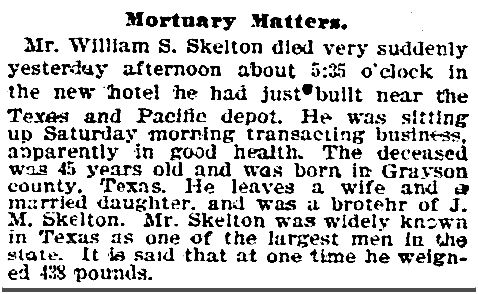
Skelton was a popular and successful businessman (and noted saloon pugilist) who was known far and wide for his substantial physical bulk. He was a founding member of the city’s “fat men’s club” and was reported to be the heaviest man in the city. When he died suddenly at the age of 45 (probably not a huge surprise, as his obituary mentioned that his weight had, at one time, reached 438 pounds), his new hotel had been open only weeks (perhaps only days).

skelton_dmn_011699Dallas Morning News, Jan. 16, 1899

His unexpected death threw the running of the hotel into confusion. His brother (another famed “fighting fat man”) took over the business side of its operations and occasionally placed ads in the paper seeking a hard-to-find buyer.

union-depot-hotel_1901_portal1901 ad

union-depot-hotel_dmn_111602DMN, Nov. 16, 1902

Eventually the hotel was sold, and it went through several owners and name changes over the years. Then, in 1916, a major catastrophe struck: brand new Union Station, which was waaaay on the other side of town, opened, consolidating passenger rail service to one depot, resulting in the shuttering of most of the city’s smaller depots. Location, location, location wasn’t such a great thing for the old Skelton hotel after this.

The hotel went through many changes over the years, but after the closing (and later razing) of the old Union Depot, it was on a general, inevitable, slide downward. By the time it was demolished in 1968 — when large swaths along Central Avenue were leveled to facilitate highway construction — the building was in disrepair and, apparently, long-vacant. It stood for 70 years.

*

Below is a photo taken from Elm Street in 1908 or 1909, when the hotel (seen at the top left) was owned by Charles S. Conerty and named the Conerty Hotel (you can see the name on two signs, but you have to really zoom in to make them out). Conerty, an Irishman who had previously run bars, owned the hotel very briefly. By May of 1909, plagued with legal troubles stemming from his being charged with selling liquor on a Sunday, Conerty sold the hotel (which he seems to have been running as a boarding house), stating in his classified ad that he was “leaving city.” (He did not leave the city.) In 1910, with a new owner, the hotel was once again known as the Union Depot Hotel.

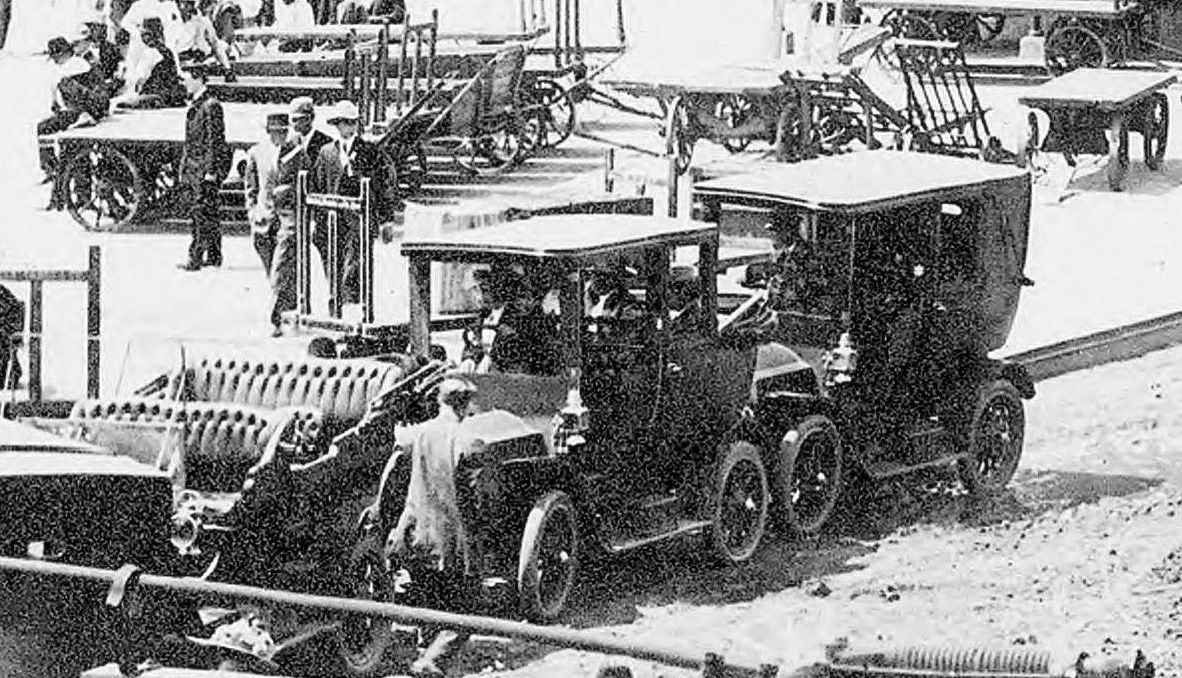
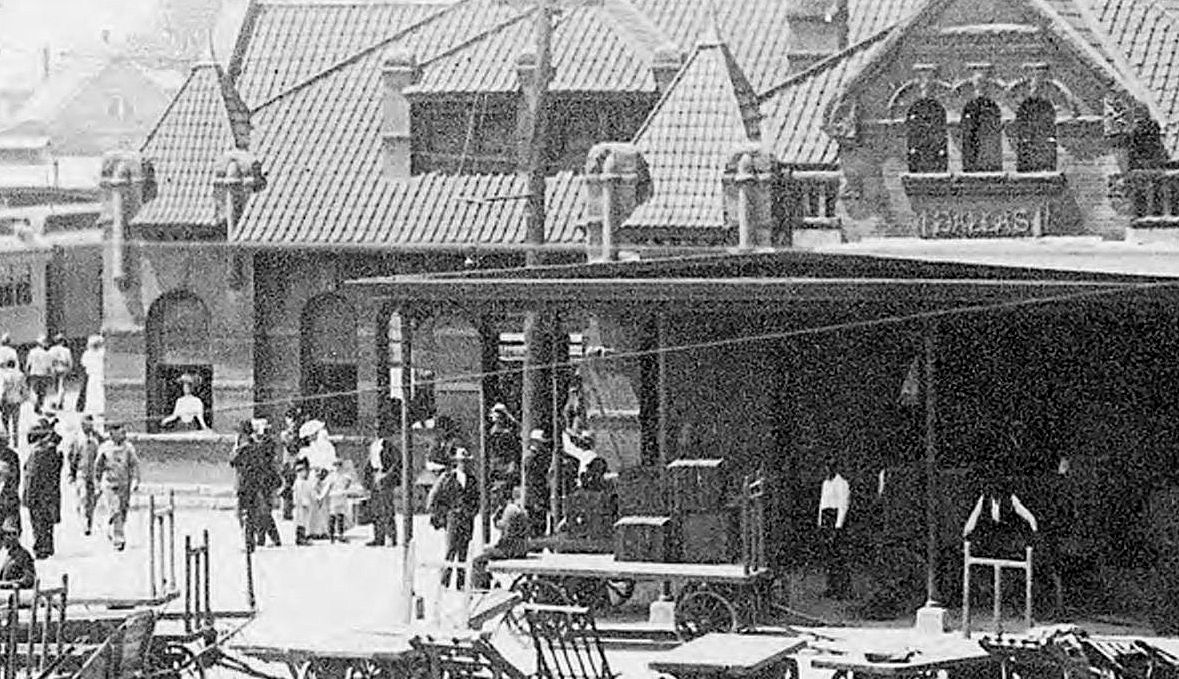
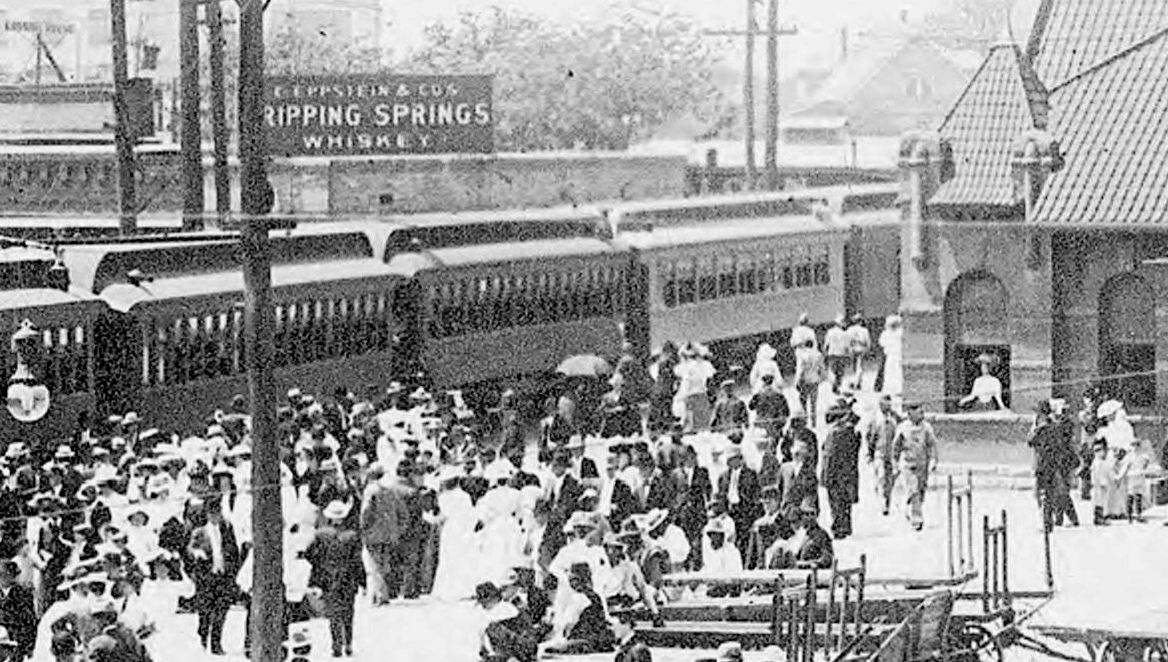
Back to the photo. Across Central Avenue from the hotel is the old Union Depot, where there was always a lot going on. Let’s look at the photo a little more closely. (Click photos to see larger images.)

old-union-depot_degolyer_ca1910

old-union-depot_degolyer_det1

old-union-depot_degolyer_det2

old-union-depot_degolyer-det3

old-union-depot_degolyer_det4

old-union-depot_degolyer_det5

old-union-depot_degolyer_det6

Just seven or eight years after this photo was taken, all that human traffic was gone.

In the fall of 1968, having been vacant for years and counting down its final hours, Dallas Morning News writer Doug Domeier wrote about the old run-down hotel which had long outlived the passenger depot it had been built to serve (see the article “Demolition Leveling Once-Noisy Deep Elm,” DMN, Oct. 19, 1968). Domeier’s entertaining article about those early days includes memories of Lizzie Mae Bass, who once worked in the hotel’s cafe as a waitress and remembers when “horses back[ed] away in fright when a locomotive pulled in at the lively intersection linking the Houston and Texas Central with the Texas & Pacific.”

And today? You’d never EVER suspect that that patch of empty land at the edge of Deep Ellum was ever occupied by one of the city’s busiest train depots.

*

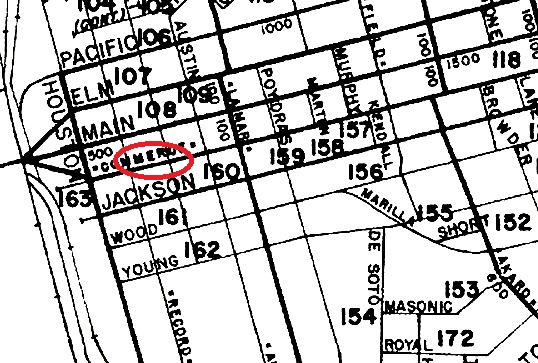
So where was it? Get a good visual idea of how things were laid out in the Sanborn map from 1905, here. Below is a street map that shows where the hotel was (red star) and where the train depot was (blue star). These days? Depressing. See it here (the view is looking north from Elm — the hotel would have been under the overpass, the train station straight ahead).

union-depot-hotel_1952-mapsco1952 Mapsco

It’s interesting to note that during the heyday of the Union Depot, the west side of the block of Central Ave. which ran between Elm and Pacific was the only block in this area not filled with black-owned businesses or residences. When the depot shut down and white-owned businesses moved out, the block began to fill with popular African-American establishments. It’s also interesting (to me, anyway!) to realize that the Gypsy Tea Room of the 1930s was just a few steps to the left of the hotel in the top photo. It took me forever to try to figure out where the Gypsy Tea Room had been — I wrote about it here.

***

Sources & Notes

Top photo is a detail of a larger photo, from the Squire Haskins Photography, Inc. Collection, University of Texas at Arlington Libraries; it is accessible here. The same photograph is shown in full farther down the post — this copy is from the DeGolyer Library, Central University Libraries, Southern Methodist University, and it is accessible here. The quality of both photos makes it difficult to zoom in on them with much clarity, but both sites offer very large images to view.

As mentioned above, an entertaining Dallas Morning News article full of historical info about the area around the depot is highly recommended: “Demolition Leveling Once-Noisy Deep Elm” by Doug Domeier (DMN, Oct. 19, 1968). (I’m not sure why the hotel is referred to as the “Grand Central Station Hotel” throughout — just substitute “Union Depot Hotel” whenever you come across that incorrect name.) The article also has a few paragraphs about the Harlem Theater which was also about to be torn down as part of what Domeier described as the “brutal change” then affecting Deep Ellum.

See a great early-’20s photo of the hotel building (the Tip-Top Tailors moved in around 1922) in the book Deep Ellum: The Other Side of Dallas by Alan Govenar and Jay Brakefield, here (the view is from Pacific to the southwest).

A related Flashback Dallas post — “The Old Union Depot in East Dallas: 1897-1935” — can be read here.

All images larger when clicked.

*

Copyright © 2016 Paula Bosse. All Rights Reserved.


Ads for Businesses Serving the North Dallas High School Area — Early 1960s

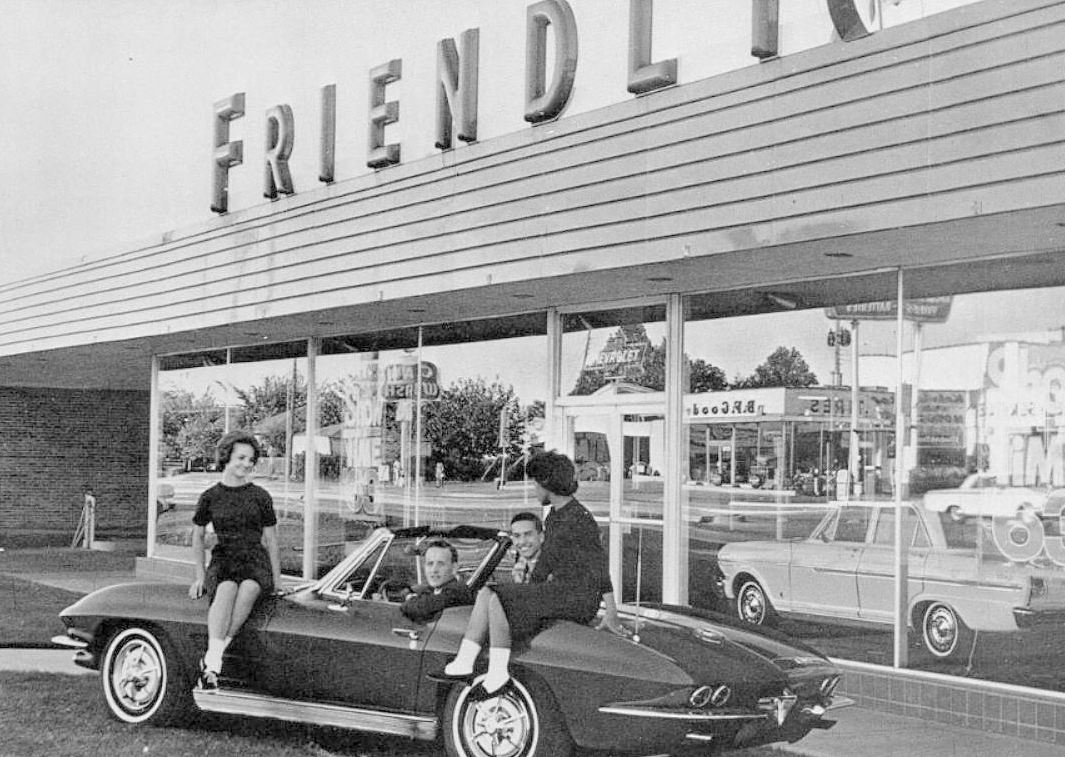
friendly-chevrolet_ndhs_1963-yrbk-photoFriendly Chevrolet, 1963

by Paula Bosse

One of the things I like best about looking through old high school and college yearbooks is seeing the ads in the back — especially the ads that feature students. Here are a whole bunch of ads from the 1960, 1962, and 1963 North Dallas High School annuals, with most of the ads placed by businesses in the Oak Lawn, McKinney Avenue, and Little Mexico areas surrounding the school. Let’s take a walk down memory lane, shall we? (Ads and photos are larger when clicked.)

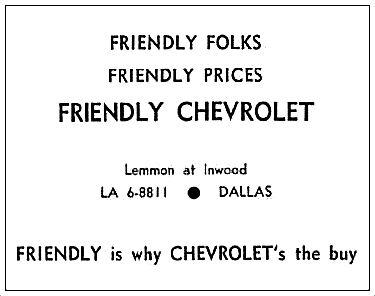
Above, Friendly Chevrolet at Lemmon and Inwood. I bet the owner was grimacing as he saw those girls perched — gingerly or not — on that brand new Corvette convertible!

friendly-chevrolet_ndhs_1963-yrbk1963

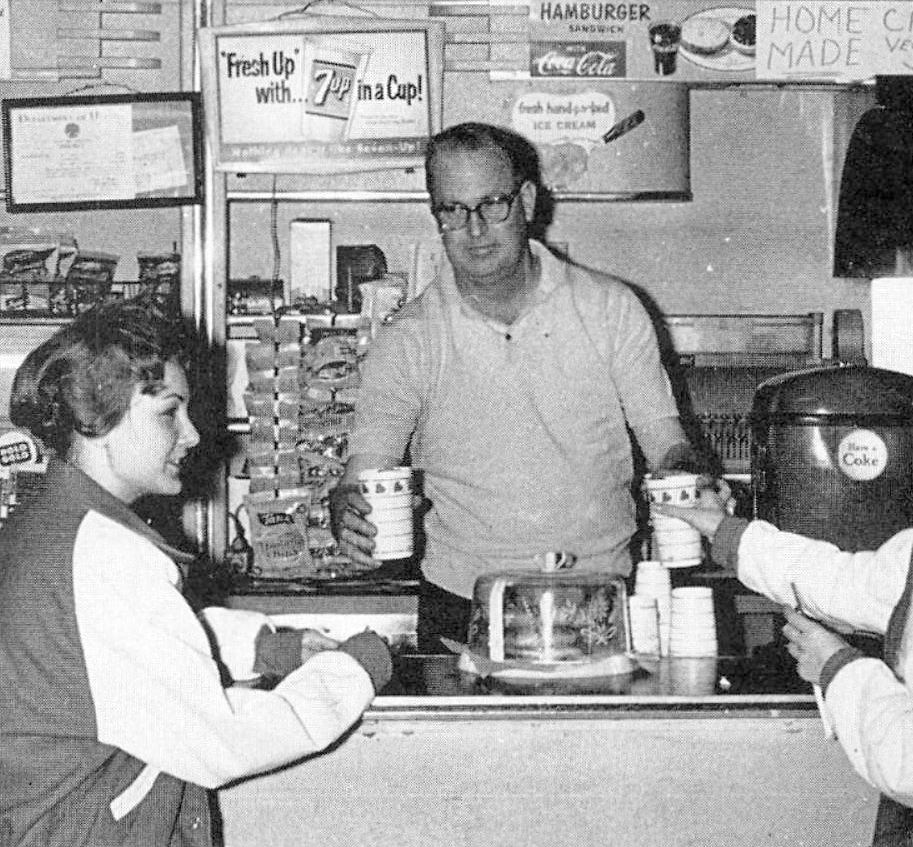
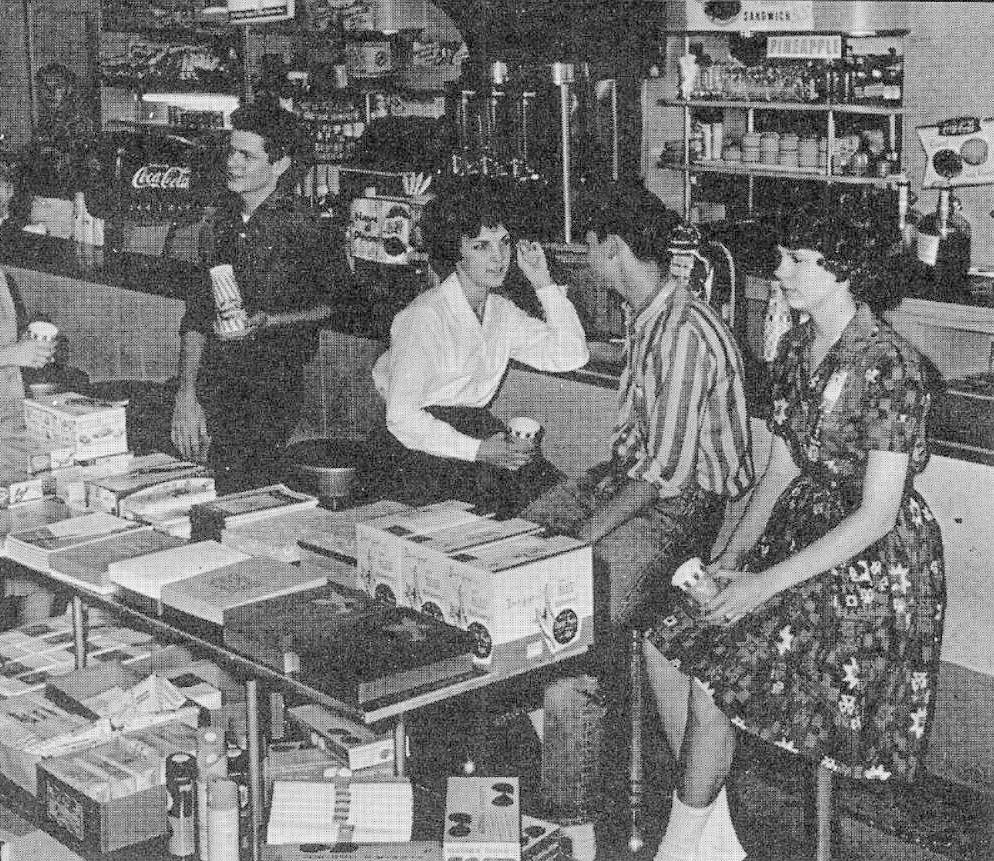
The Cole and Haskell Drug Store, at 3121 N. Haskell — right across the street from the NDHS campus — was no doubt thrilled to be so close to its major source of income, the teenager.

1962_cole-haskell-drugs_ndhs_1962-yrbk1962

cole-haskell-drug-store_ndhs_1963-yrbk-photo
1963

cole-haskell-drugs_ndhs_1963-yrbk
1963

*

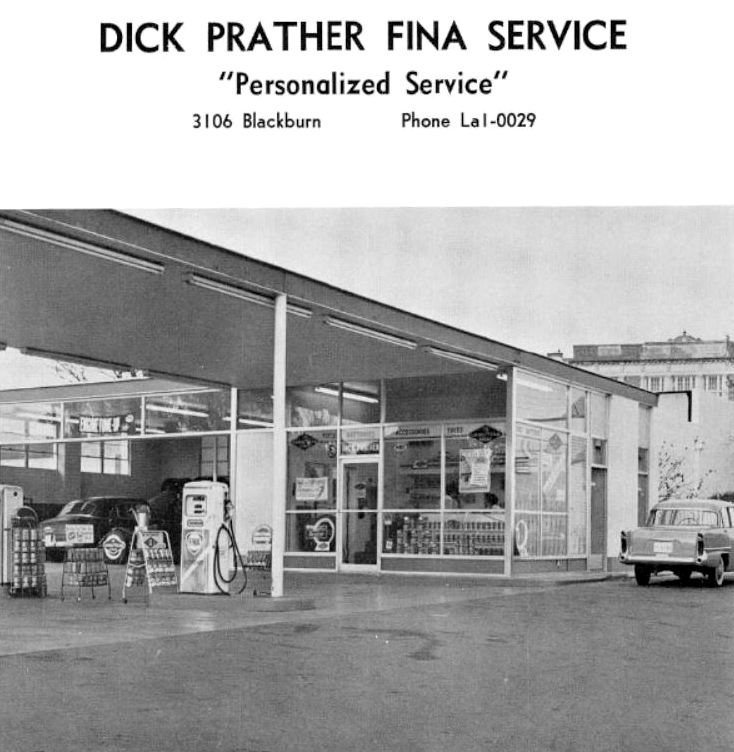
Lots of gas and service stations were nearby. Like Dick Prather Fina Service, at 3106 Blackburn, with the school peeking over the roof.

1960_prather-fina_ndhs_1960-yrbk
1960

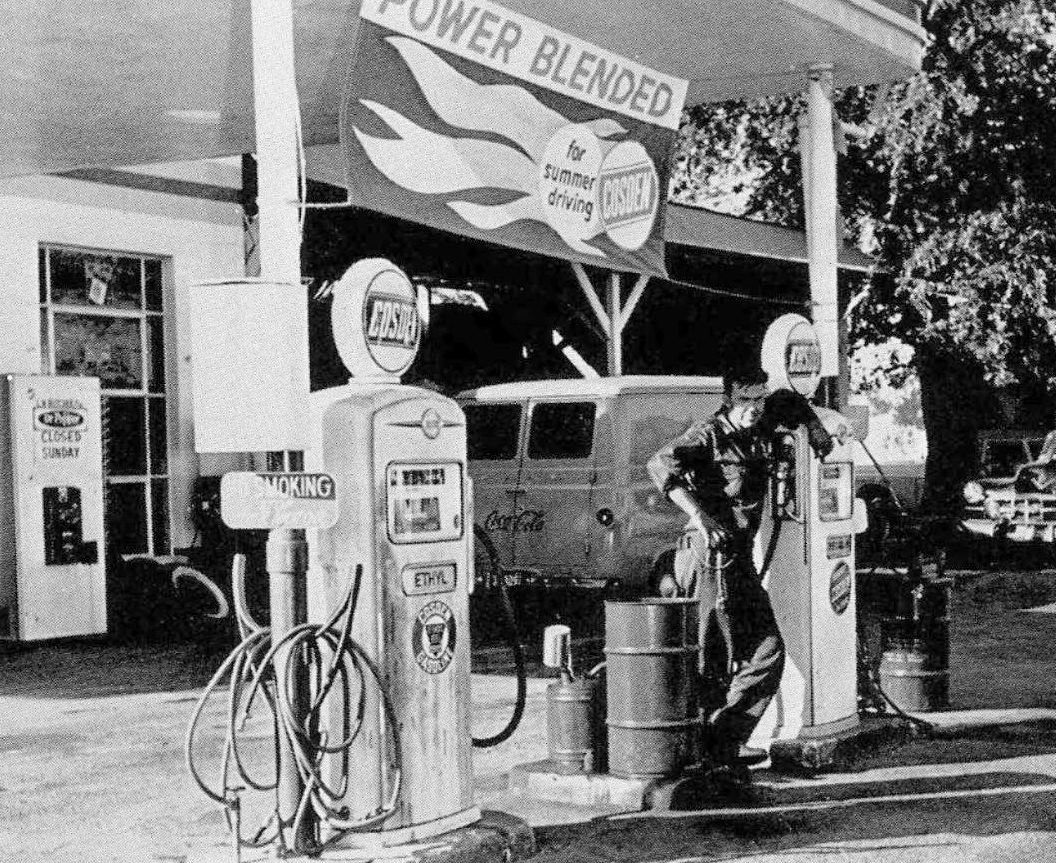
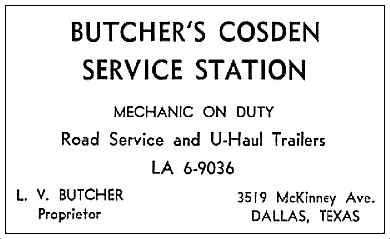
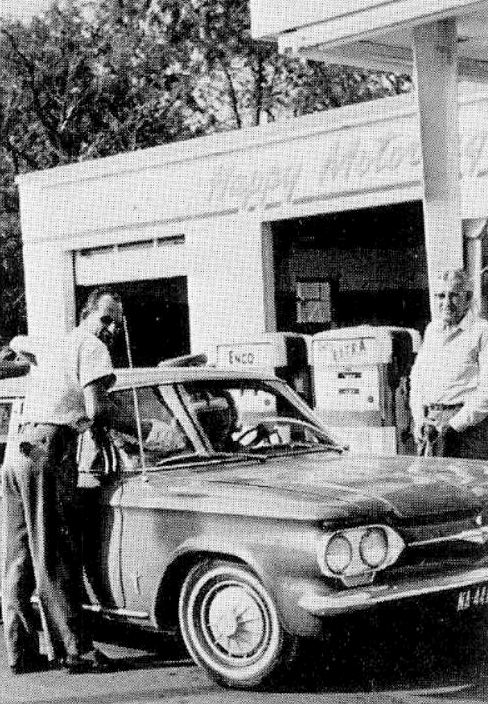
And L. V. Butcher’s Cosden Service Station, at 3519 McKinney. (I love the slouch of the mechanic.)

butchers-cosden-service-stn_ndhs_1963-yrbk-photo

butchers-cosden-service-stn_ndhs_1963-yrbk
1963

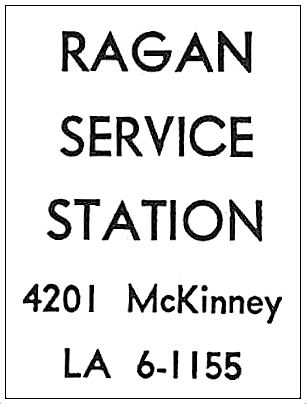
And the Ragan Service Station, at 4201 McKinney.

ragan-servie-stn_ndhs_1963-yrbk-photo

ragan-servie-stn_ndhs_1963-yrbk
1963

*

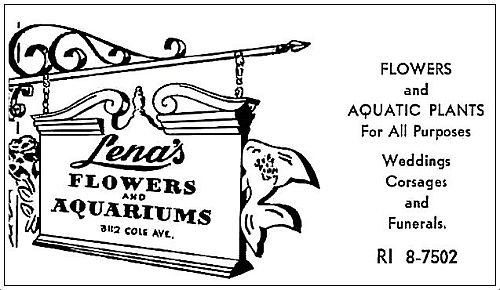
Plant and flower enthusiasts were invited to stop by Lena’s Flowers and Aquariums, at 3112 Cole. …For flowers. And aquariums.

lenas-flowers_ndhs_1963-yrbk
1963

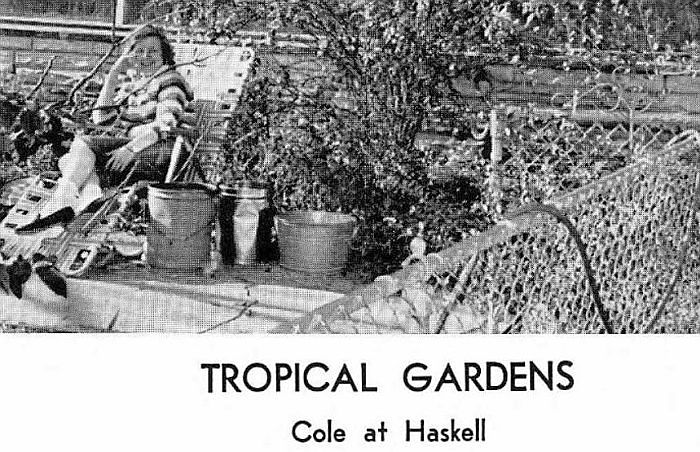
What Tropical Gardens at Cole and Haskell lacked in the way of aquariums, it all but made up for in tropicalness. (Might as well grab a coke at the drug store since you’re right there.)

tropical-gardens_ndhs_1963-yrbk
1963

*

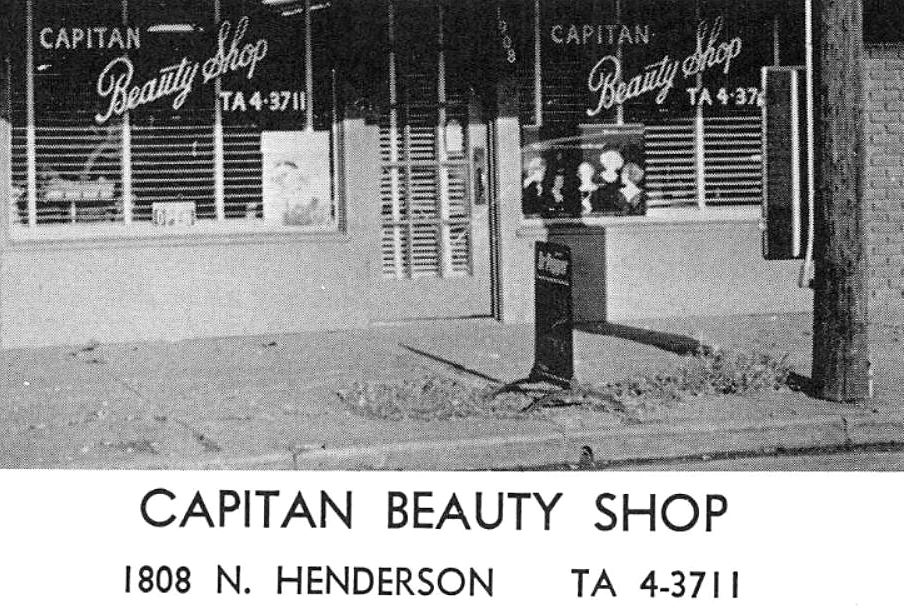
Those who needed their hair extra poufy for the spring formal might have found themselves at the Capitan Beauty Shop, 1808 N. Henderson (now that’s a photo!).

capitan-beauty-shop_ndhs_1963-yrbk1963

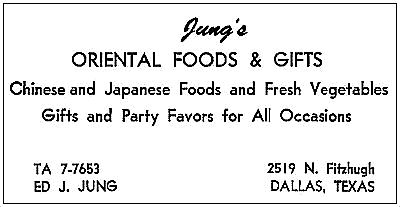
Seekers of Asian foods and/or “party favors for all occasions” could head over to Jung’s Oriental Foods & Gifts at 2519 N. Fitzhugh. (This is the most unexpected ad I came across.)

jungs_ndhs_1963-yrbk
1963

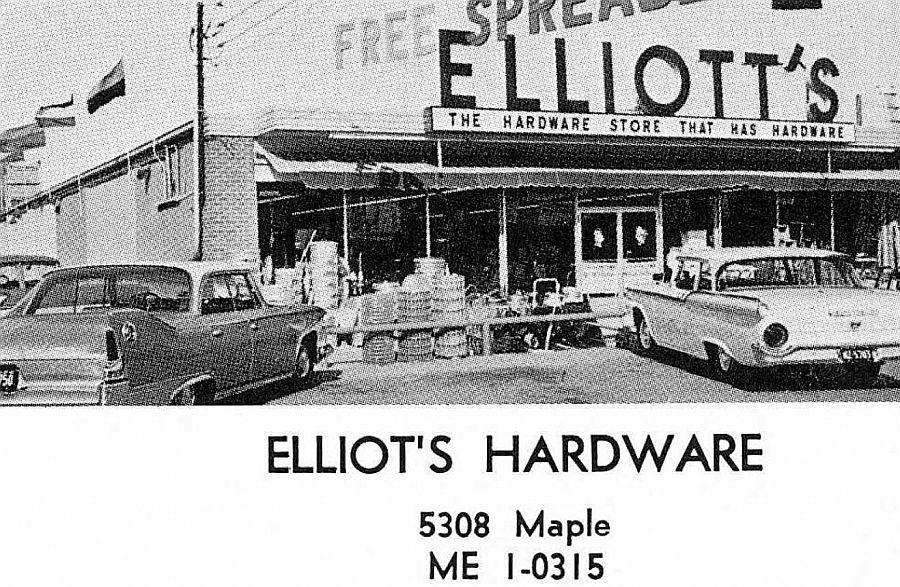
Maybe you just needed a hammer. Where else would you go but Elliott’s Hardware, at its original location at 5308 Maple.

elliotts-hardware_ndhs_1963-yrbk
1963

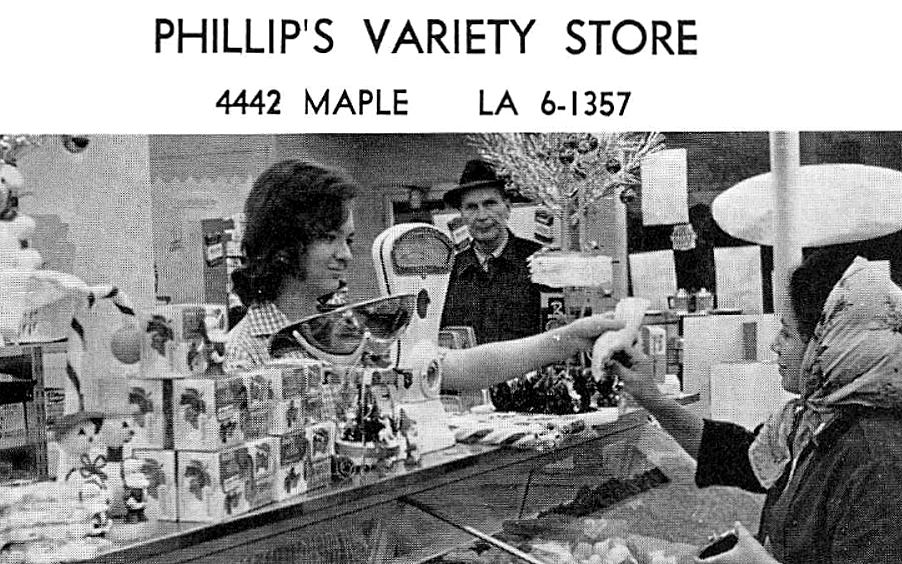
Phillips’ Variety Store at 4442 Maple was probably a good place to get scented talcum powder, a bouncy ball, a bag of peppermints, or a new charm for the charm bracelet.

phillips-variety-store_ndhs_1963-yrbk
1963

*

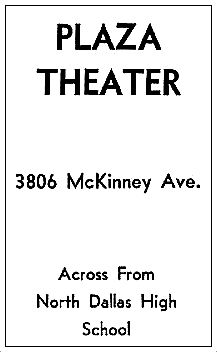
What do high school kids love more than bowling and going to the movies? Apparently there was a movie theater on McKinney Avenue that I’m only just learning about — The Plaza, at 3806 McKinney.

1962_plaza-theater
1962

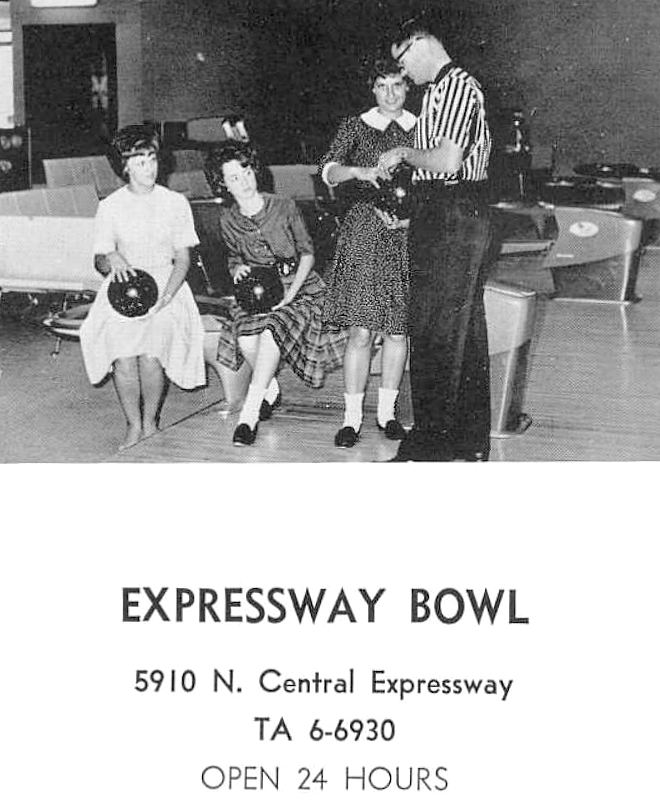
The 24-hour Expressway Bowl was at 5910 N. Central Expressway. (I’m not sure those girls have on the proper footwear.)

expressway-bowl_ndhs_1963-yrbk1963

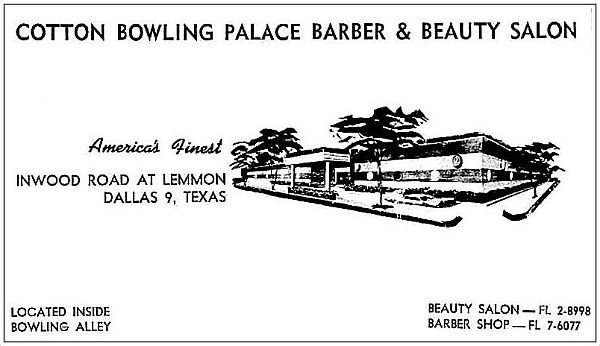
But the place you really wanted to go was the Cotton Bowling Palace on Inwood at Lemmon. When it opened in 1959 (complete with a heavily promoted personal appearance by Dallas gal Jayne Mansfield), it was breathlessly described as “a mixture of the Copacabana, the Taj Mahal and the  MGM Grand.” Imagine bowling in the Taj Mahal! Heck, you could even get a haircut between frames.

1962_cotton-bowling-palace1962

*

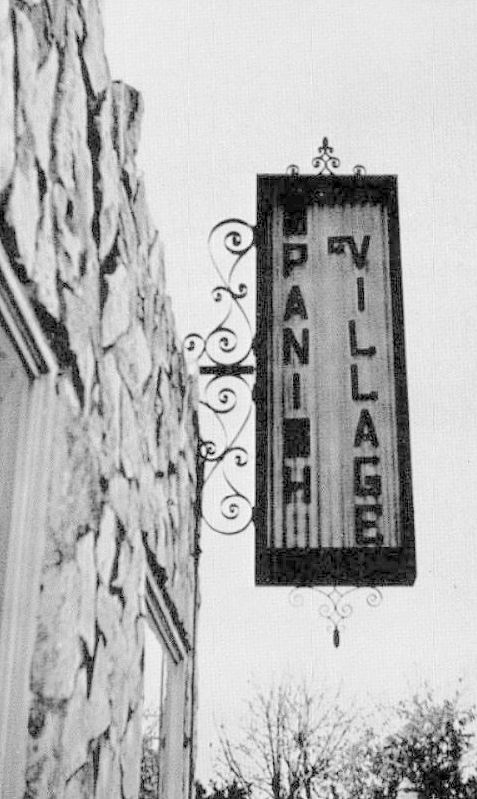
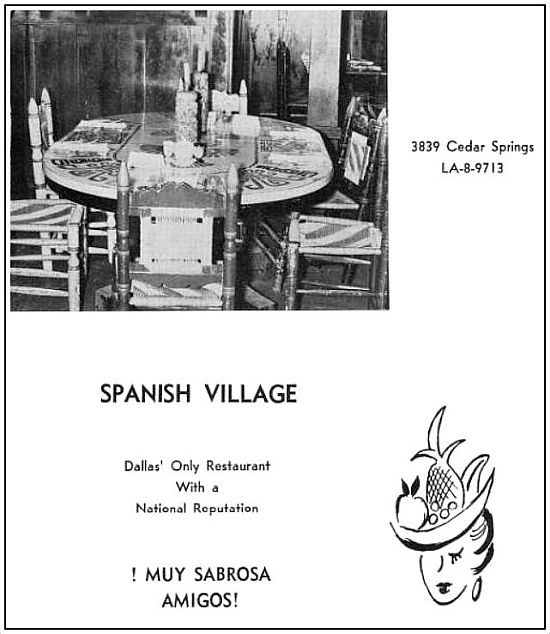
The biggest bang for the buck, nostalgia-wise, is almost always going to be places related to food. Here are a few restaurants and burger places which were probably frequent destinations for North Dallas students and their families. Like Spanish Village at 3839 Cedar Springs.

spanish-village_ndhs_1963-yrbk
1963

1960_spanish-village_ndhs_1960-yrbk
1960

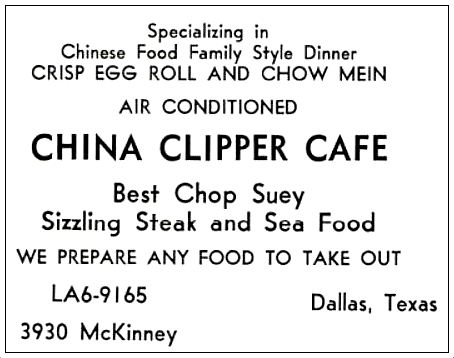
The fondly remembered China Clipper, at 3930 McKinney.

1960_china-clipper_ndhs_1960-yrbk1960

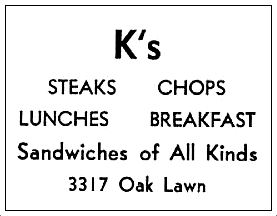
K’s — where you could get “sandwiches of all kinds” — at 3317 Oak Lawn.

1960_ks-sandwiches_ndhs_1960-yrbk
1960

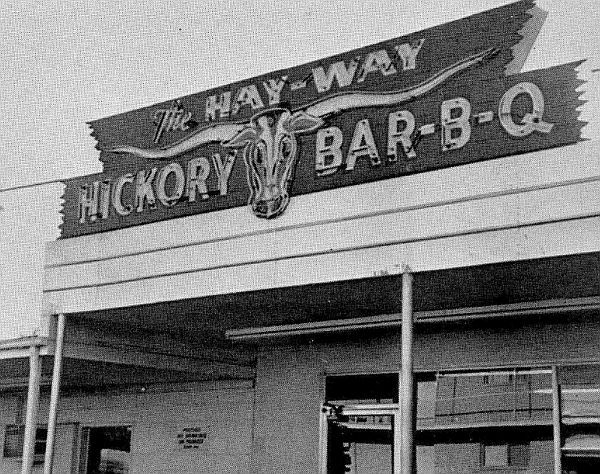
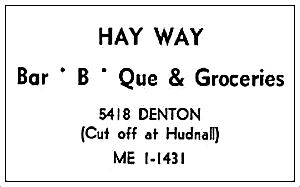
Hay-Way Bar-B-Q & Groceries, at 5418 Denton Drive.

hay-way-bar-b-q_ndhs_1963-yrbk-photo

hay-way-bar-b-q_ndhs_1963-yrbk
1963

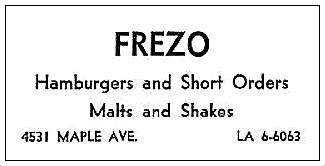
A burger and malt joint with the wonderful name of Frezo, at 4531 Maple. (I WOULD GO TO SOMEPLACE CALLED “FREZO.”)

1962_frezo_ndhs_1962-yrbk
1962

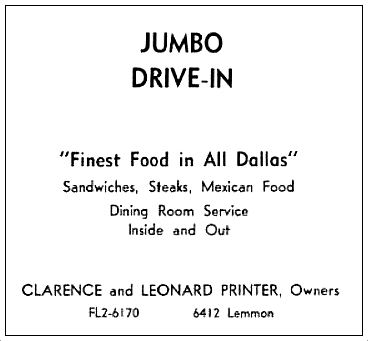
The famed elephant-on-top Jumbo Drive-In, owned by Clarence and Leonard Printer. The location in this ad was at 6412 Lemmon. See what the Haskell location looked like, here.

1960_jumbo-drive-in_ndhs_1960-yrbk
1960

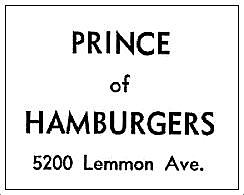
The legendary Prince of Hamburgers at 5200 Lemmon.

prince-of-hamburgers_ndhs_1960-yrbk
1960

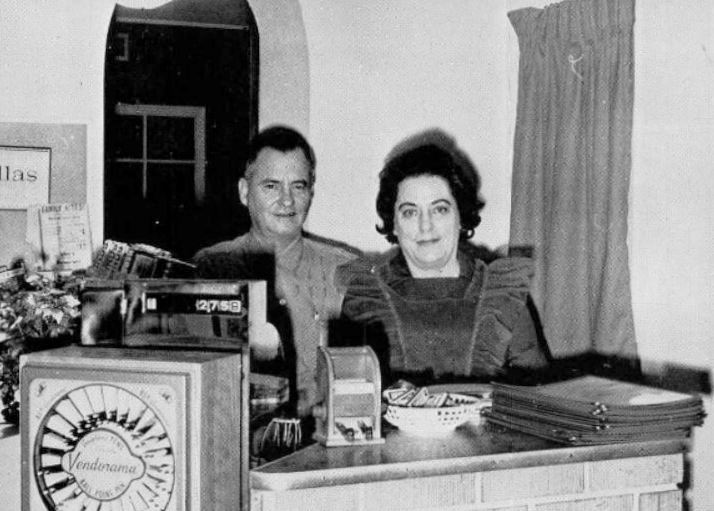
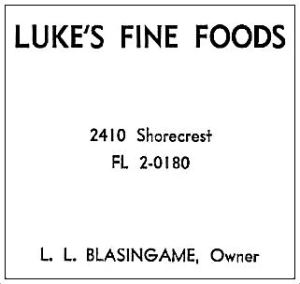
The not-quite-as-legendary Luke’s Fine Foods at 2410 Shorecrest, owned by L. L. Blasingame.

lukes-fine-foods_ndhs_1963-yrbk

lukes-fine-foods_ndhs_1963-yrbk-ad
1963

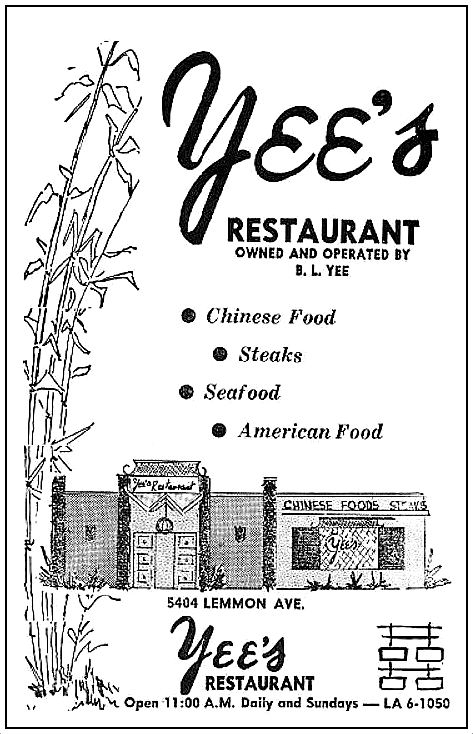
Yee’s Restaurant at 5404 Lemmon, owned by B. L. Yee.

yees-chinese_ndhs_1963-yrbk
1963

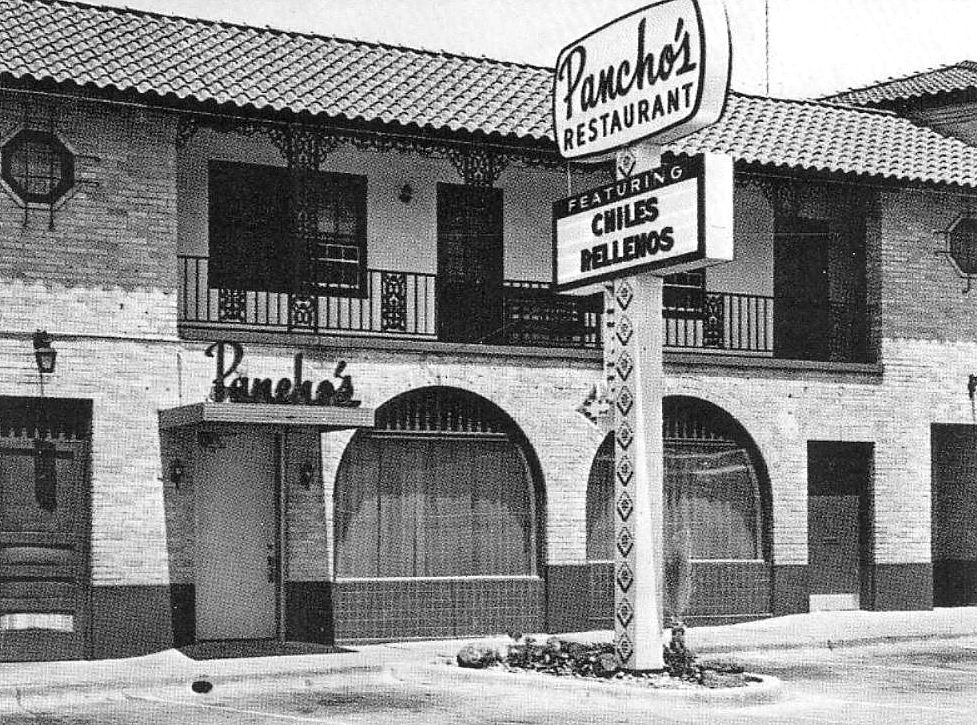
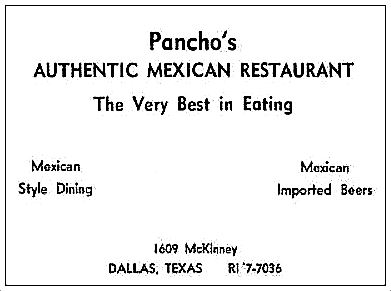
And, of course, Pancho’s — this location at 1609 McKinney. Almost all of the buildings that housed the businesses listed above are long gone, but this building is still hanging in there. It’s next to the downtown El Fenix and is now the home of Meso Maya. I have to admit, I got a happy little jolt to see this building today, still looking pretty much the same as it did in this 1963 ad.

panchos_ndhs_1963-yrbk-photo

panchos_ndhs_1963-yrbk
1963

***

Sources & Notes

All ads from the 1960, 1962, and 1963 editions of the North Dallas High School yearbook, The Viking.

See photos of students and high school activities from these same yearbooks in the post “North Dallas High School, The Pre-Beatles Era,” here.

*

Copyright © 2016 Paula Bosse. All Rights Reserved.
The House at Crescent & Byron, Highland Park

connor-home_cook-colln_degolyerWelcome…

by Paula Bosse

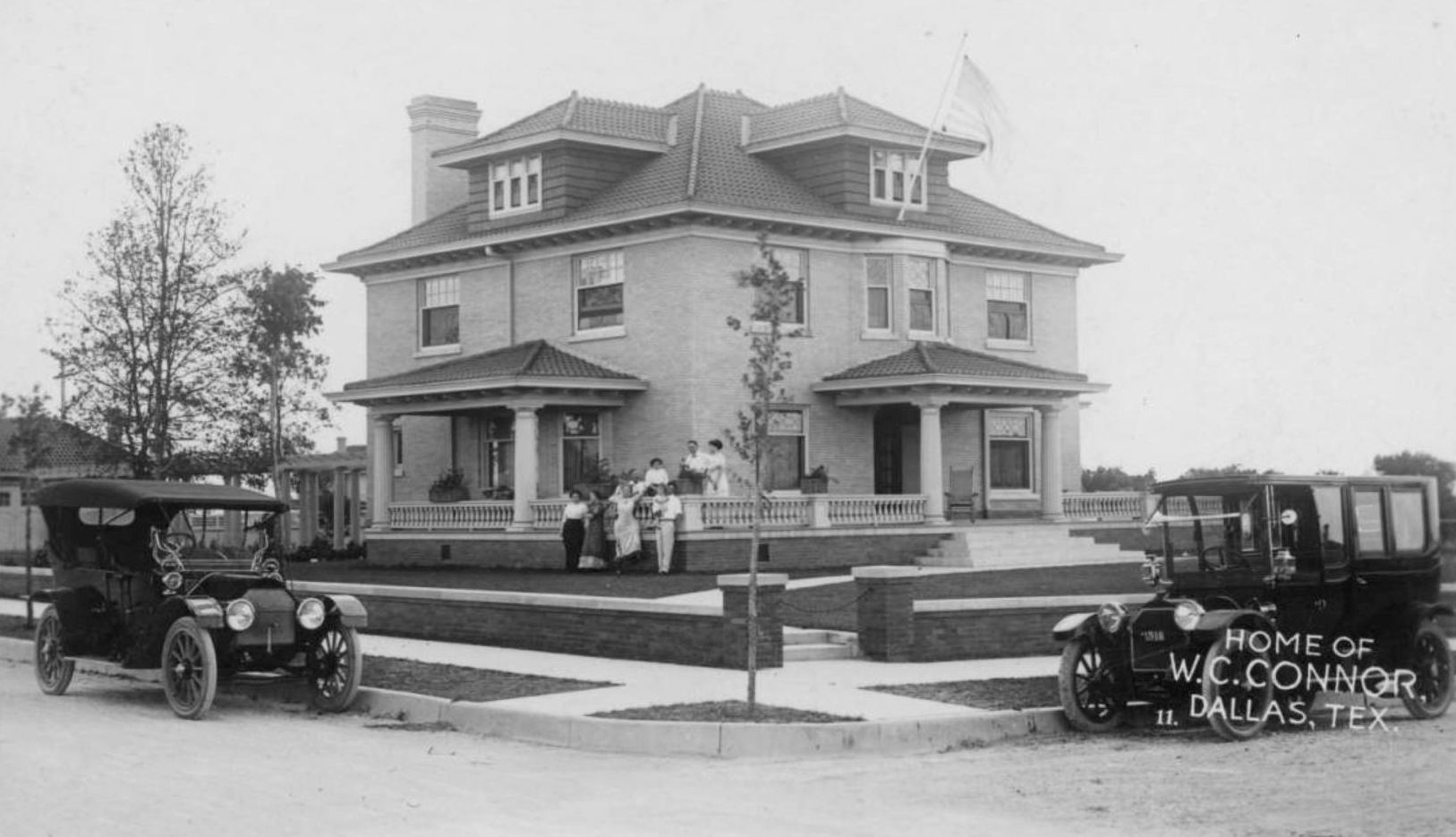
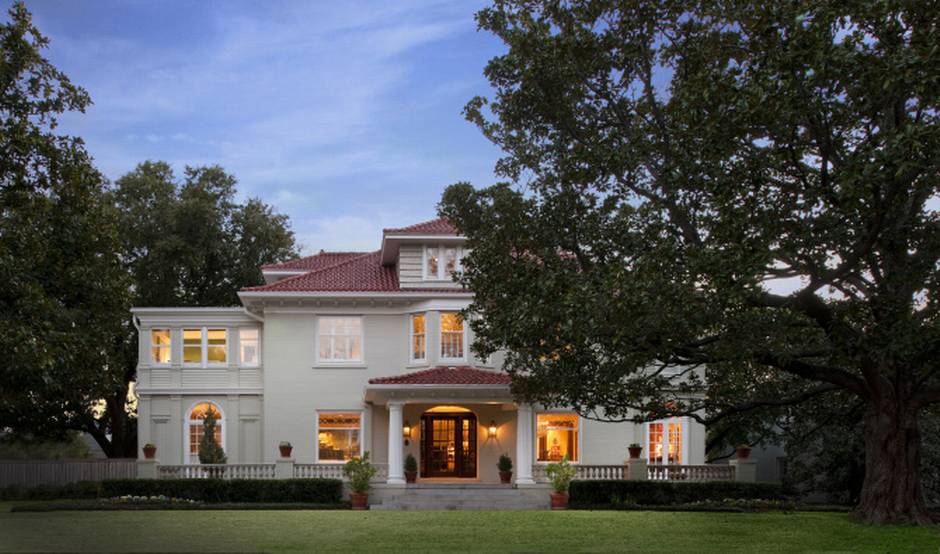
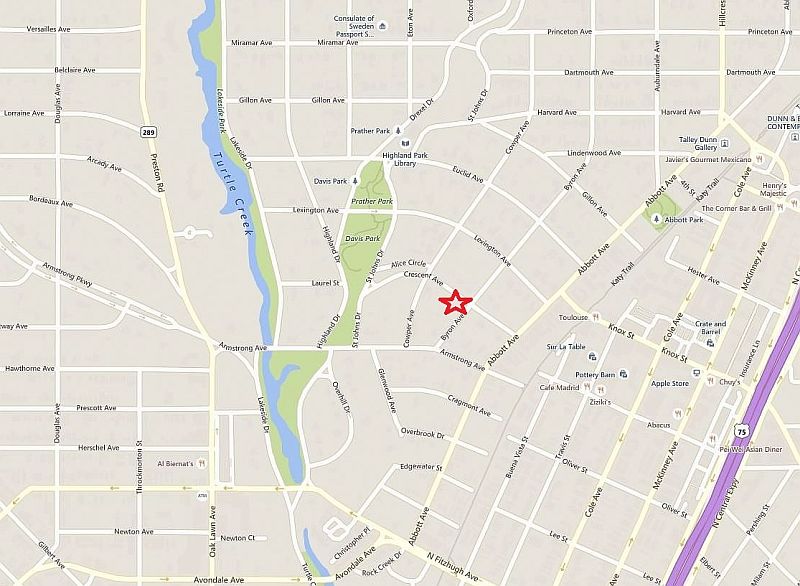
The photo of the house above caught my attention the other day. It’s exactly the sort of house I love, but I couldn’t get a good feel for the part of town it had been in. It took a while to track down, but when I did, I found that it was in Highland Park, at the southwest corner of Crescent and Byron, built about 1910. I had actually been leaning more in the direction of Old East Dallas, because when I think of Highland Park, I tend to imagine that it sprang fully landscaped and jam-packed with trees, even in its earliest days. But more surprising than learning that the house in this photograph was in Highland Park was discovering that it is STILL in Highland Park! It is still standing, and, more exciting, it is still recognizable and largely un-tampered-with! Take a look at it today, here.

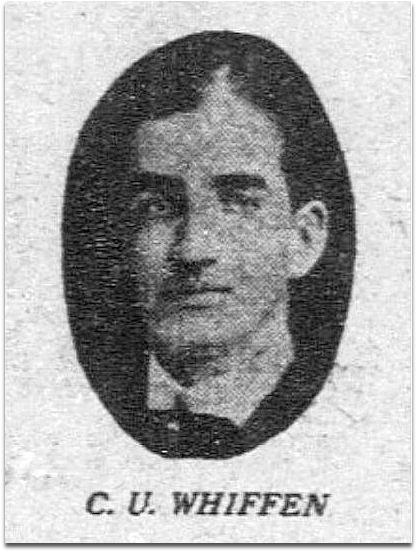
After rummaging around various online databases, I determined that this lovely house was built sometime in 1910 for its first occupants, the C. U. Whiffen family, whose name appeared under a picture of their photogenic house in ads placed by Hann & Kendall, the real estate agents in charge of selling lots for the developers of Highland Park. A photo of the house first showed up in an ad from September, 1910 and was used again in May, 1911. (See the full ads here.)

whiffen_dmn_051411-ad-det

The Whiffen family moved into the house in 1910 from their previous home on McKinney Avenue.

whiffen_dmn_010811-NCR-ad-detCalvin U. Whiffen, seen in an NCR ad, DMN, Jan. 8, 1911

whiffen_1911-directory1911 city directory

Whiffen had interests in a couple of different businesses but was primarily associated with NCR, the National Cash Register company. When Whiffen was transferred to Los Angeles by NCR, he sold the house to former Dallas mayor W. C. Connor for $18,000 (a little under $500,000 in today’s  money).

connor_whiffen_dmn_122211DMN, Dec. 21, 1911

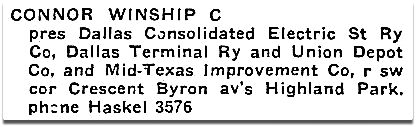
connor_1912-directory
1912 city directory

Winship C. Connor (also widely known as “Bud” Connor) was an interesting man whose contributions to the city were extremely important in its becoming a major metropolitan area. Not only did he serve multiple terms as mayor of Dallas (from 1887 to 1894), but, among other accomplishments, he also built the first waterworks system, the first streetcar line, and the first electric light plant. In later years, he presided over several companies, including the Consolidated Electric Street Railway Co.

connor_fuel-oil-journal_oct-1915Connor, pictured in the Fuel Oil journal, Oct. 1915

Connor moved from the house on Crescent Avenue to a house on Miramar in 1918 or 1919, and, in 1921, he died, at the age of 73. The top photo of the house was taken sometime between 1912 and 1919. He can be seen with his family, sitting on the porch, in this detail.

connor-home_cook-colln_degolyer-det1

The house has had very few owners throughout its 106 years. In one of those odd, happy coincidences, I’ve just discovered that one of those owners was Edward L. Wilson, Jr. (1920-2011). Ed Wilson was an engineer who had his office in a small building (now razed) on Maple Avenue, next door to the Stoneleigh Hotel. He leased out the ground floor to my father who ran The Aldredge Book Store there for over 20 years. Mr. Wilson was a man of few words, but very, very nice and an understanding landlord. I’m happy to learn that he and his family lived in this beautiful house for several years.

Here it is today.

crescent_dmn_032913DMN, Mar. 29, 2013

***

Sources & Notes

Top photo, titled “Home of W. C. Connor, Dallas, Tex.,” is from the George W. Cook Dallas/Texas Image Collection, DeGolyer Library, Central University Libraries, Southern Methodist University; it can be viewed here.

See inside this house in a Dallas Morning News video, here (for some reason, I am unable to view this video on my computer, but I can watch it on my phone). The house was a featured stop on a Highland Park Centennial celebration tour of homes in 2013. More photos of the house today can be seen on Douglas Newby’s Architecturally Significant Homes page, here.

Where is it?

crescent-byron_bing
Bing Maps

W. C. Connor was a man of great accomplishment — his Dallas Morning News obituary (Aug. 6, 1921) is here; his citation in A History of Greater Dallas and Vicinity is here; his Wikipedia page, here.

*

Copyright © 2016 Paula Bosse. All Rights Reserved.
“The Trend is Highland Parkward”– 1909-1911

lakeside_dmn_092510Lakeside Drive, 1910 (click for larger image)

by Paula Bosse

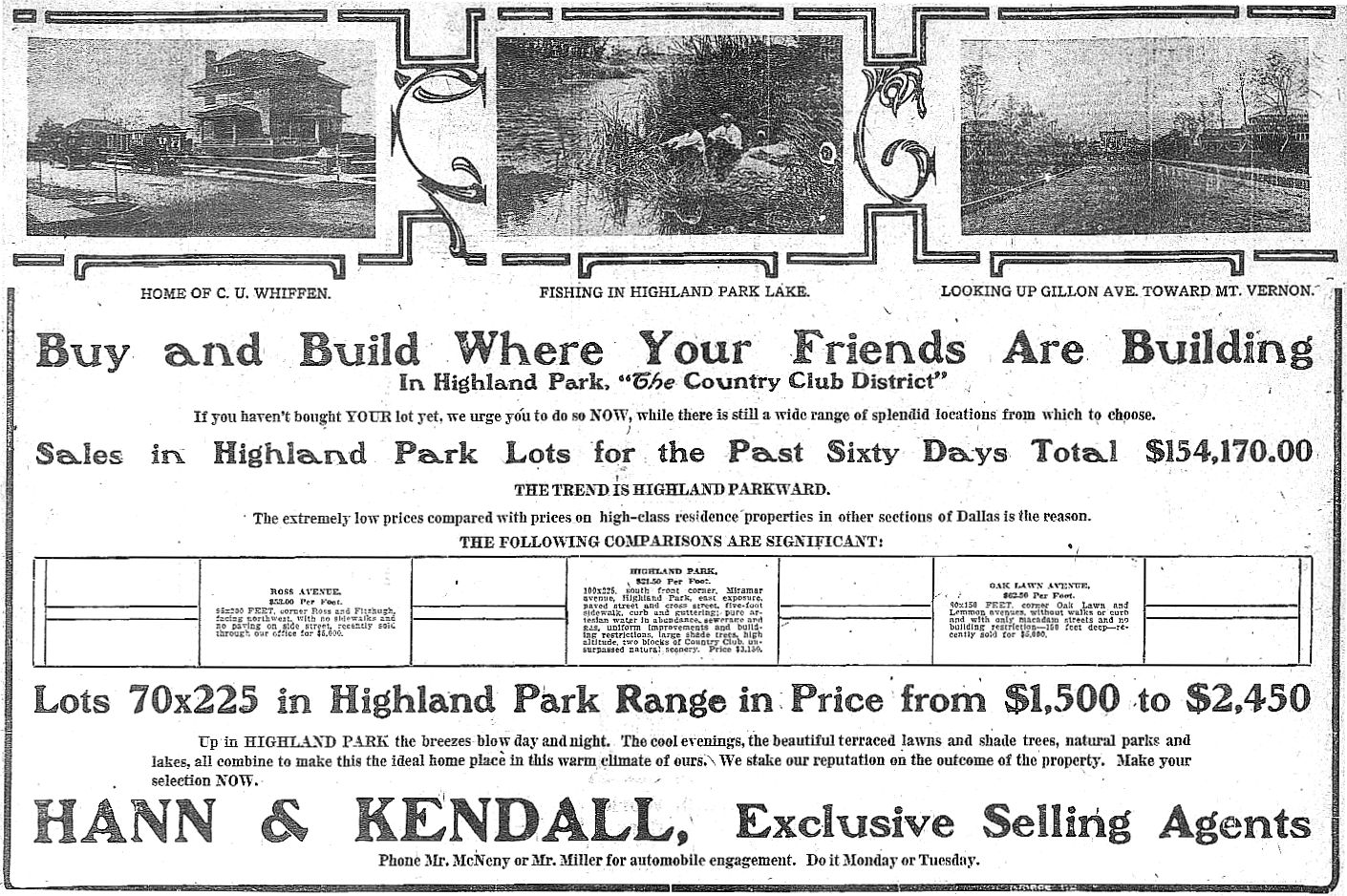
Three early Hann & Kimball Highland Park real estate ads urging people to “Buy and Build Where Your Friends Are Building, In Highland Park, ‘THE Country Club District’!” (Click to see larger images.)

highland-park_second-installment_dmn_070409Dallas Morning News, July 4, 1909

*

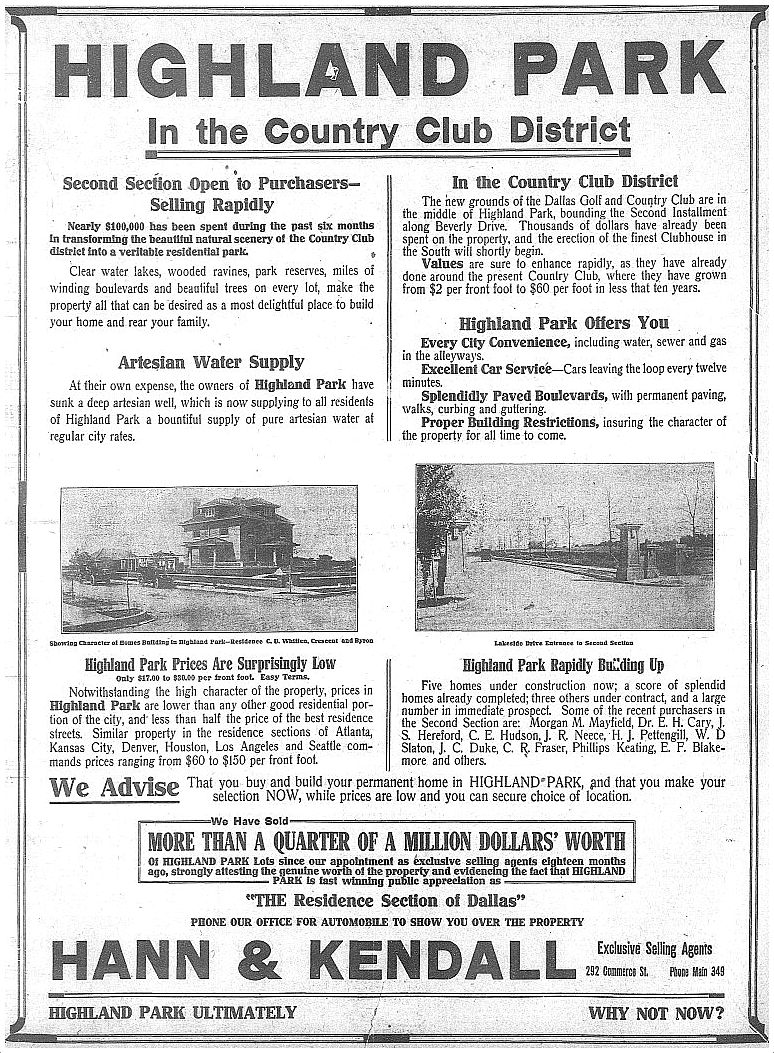
“Highland Park Ultimately. Why Not Now?”

ad-highland-park_dmn_092510
DMN, Sept. 25, 1910

*

“Up in Highland Park the breezes blow day and night. The cool evenings, the beautiful terraced lawns and shade trees, natural parks and lakes, all combine to make this the ideal home place in this warm climate of ours. We stake our reputation on the outcome of the property. Make your selection NOW.”

highland-park_dmn_051411_ad
DMN, May 14, 1911

The hard-to-read “significant comparison” text from the middle of the ad above:

ad-highland-park_dmn_051411-det1

ad-highland-park_dmn_051411-det

ad-highland-park_dmn_051411-det3

*

Is this the same view as seen in the top photo showing “Lakeside Drive Entrance to Second Section” (off Armstrong)?

lakeside_armstrong-google
Google Street View

Hope your forebears didn’t miss out! (Mine did!)

***

Sources & Notes

Read more about the C. U. Whiffen house featured in both the 1910 and 1911 ads here. I’m happy to report the lovely house at Crescent and Byron is still standing.

Click pictures for larger images!

*

Copyright © 2016 Paula Bosse. All Rights Reserved.


“Delusions of Affability” — Marijuana in 1930s Dallas

marihuana-film_poster
“The weed with roots in hell…”

by Paula Bosse

Today is April 20, also known as the cannabis-friendly “4/20 Day.” So why not take a look at the early days of marijuana awareness in Big D?

The “marijuana problem” in Dallas didn’t really start to be reported regularly in the pages of The Dallas Morning News until the 1930s, but there were a few stories that showed up in the early 1920s, such as this one about a raid on an opium-den-style house in Little Mexico in 1921 (click for larger image).

marijuana_dmn_041321DMN, April 13, 1921

Heading into the 1930s, the legality of the possessing and selling marijuana was fairly vague. After reading a bit about what was happening in Dallas in regard to “Mexican cigarettes,” I’m still not sure when the possession and selling of marijuana became illegal. The federal, state, and local laws all seemed to be different, and all were constantly in flux. There might even have been conflicting laws on the city and county books. Like I said, confusing. Nevertheless, here are a couple of interesting tidbits from the opening months of 1931 concerning the first charge in Dallas County against a person selling marijuana and the first conviction in Dallas County for a person selling marijuana. (According to the Inflation Calculator, today’s equivalent to the $25-to-$500 fine of 1931 would be, approximately, a $395-to-$7,900 fine.)

A Mexican was placed in the county jail Wednesday after a charge of selling marijuana had been filed against him in County Criminal Court, the first time in history of that body such a charge has been brought against a defendant. […] The Mexican was still ‘smoked up’ when arrested. (DMN, Jan. 29, 1931)

The penalty for selling “Mexican dope weed” was a fine of $25-$500 or a jail sentence of one month to one year.

The first conviction on record in County Criminal Court for selling marijuana, Mexican ‘loco weed,’ was given Thursday when Judge Noland G. Williams sent Manuel Garino to the county jail for thirty days. (DMN, Feb. 6, 1931)

Still, marijuana was considered only a minor annoyance locally — the Asst. D.A. even went so far as to say that there was “little use of the drug in Dallas.”

Actually, throughout the ’30s, a lot of policemen didn’t even know what marijuana plants looked like — one wonders how much marijuana-related activity was going on all around them in plain view? In these early days, when the police did stumble onto large quantities of “loco weed,” it was sometimes merely by accident while investigating something else.

And then, suddenly — around the mid ’30s — marijuana was everywhere. Just in time for the Texas Centennial, when thousands and thousands of potential new customers would be flooding into the city! Enterprising individuals were growing it all over the place — in their yards, in their fields with other crops, and even on a little island called Bois d’Arc Island in the middle of the Trinity River bottoms, a few miles south of Dallas (where 3,000 pounds was seized in July, 1938).

Even though the purchasing, the selling, the use, and the growing of marijuana was going on all over the city — in white, black, and Hispanic neighborhoods — the main areas of enforcement were, unsurprisingly, in Little Mexico and Deep Ellum, areas populated by minority citizens.

Police Sergt. O. P. Wright stopped a 22-year-old Negro languidly puffing a cigarette as he walked in the 400 block of North Central Tuesday.

“What kind of a cigarette is that, boy” inquired the Sergeant.

“Rough cut,” replied the languid one. (“Policeman Sniffs Air, Catches Marijuana Smoker,” DMN, June 22, 1938)

The federal government was attempting to deal with the marijuana problem — by taxing it so highly that it would discourage those participating in the loco weed trade: $100 tax on every ounce! At a time when you could buy a joint for anywhere from a dime to a quarter. Talk about your “sin tax”!

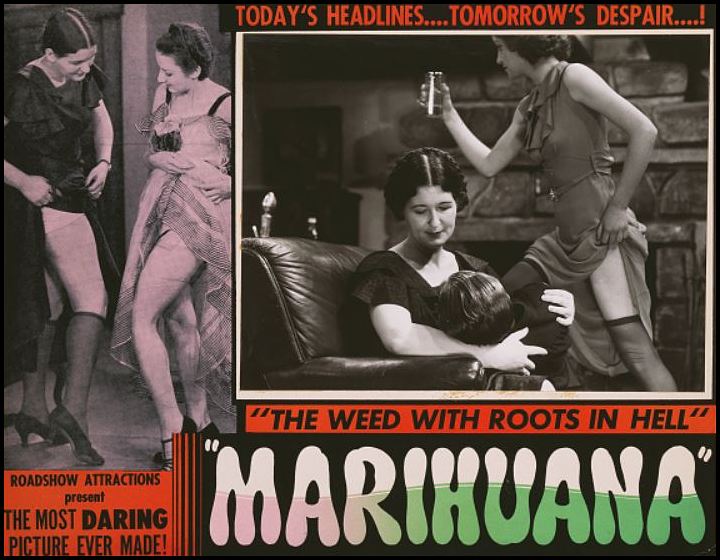
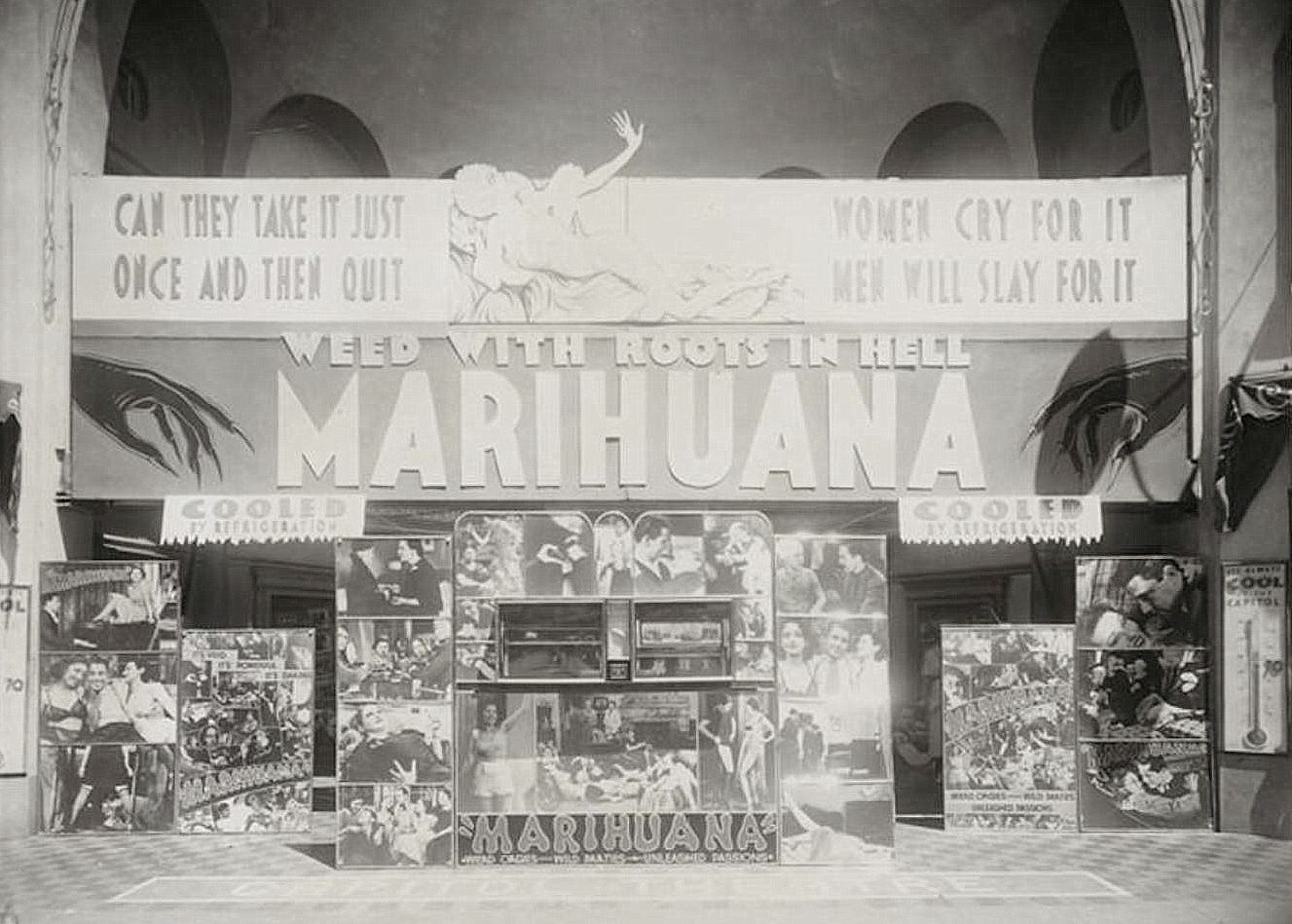
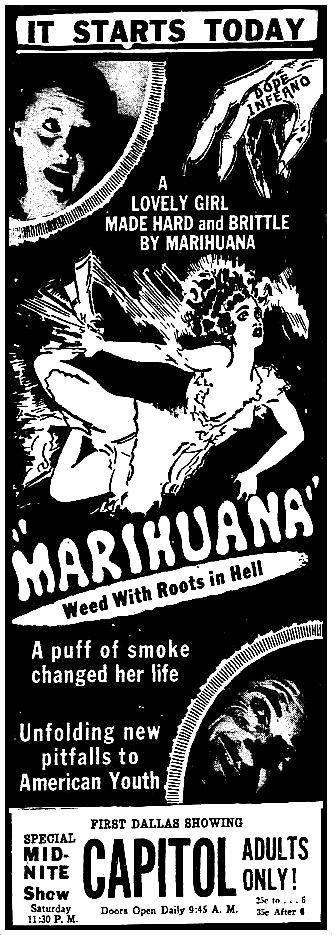
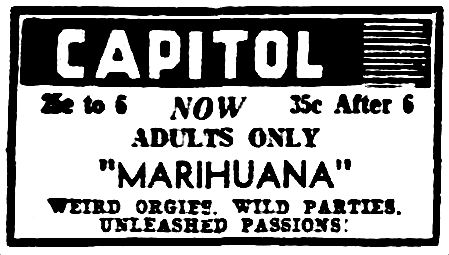
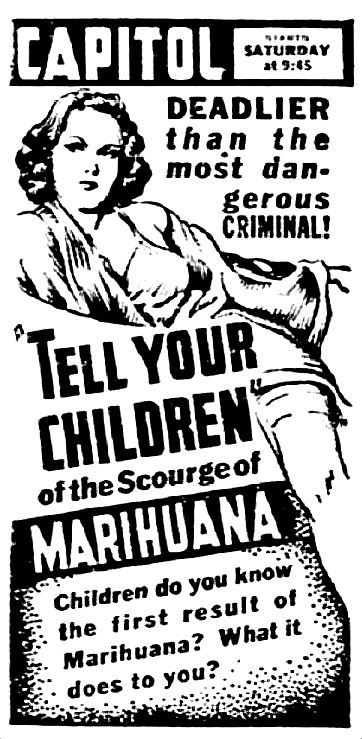
Marijuana/marihuana was generally demonized as a highly addictive drug which caused psychosis and led, inevitably, to all sorts of heinous acts and/or lewd behavior. …Or death. A lot of helpful, cautionary exploitation movies began to appear on Dallas screens, such as Marihuana from 1936 (which, incidentally, had an Oak Cliff child actor — Gloria Brown — in the cast). Below, the pomp and bug-eyed bally-hoo adorning the entrance to the lovely Capitol Theater, beckoning the Elm Street passerby to check out the film. …In order to be well-informed.

marihuana_capitol_1936_cook-collection_degolyer-library_SMU
George W. Cook Collection, DeGolyer Library, SMU

marihuana-film_dmn_080136
Aug., 1936

marihuana-film_dmn_080536
Aug. 1936

marihuana-film_dmn_061639June, 1939 (back by popular demand!)

(The full Marihuana film can be viewed free here, although it’s surprisingly dull.)

Even though most marijuana warnings were dire and filled with exclamation marks, I kind of like this more subdued one: “Smoking of the weed gives the subject delusions of riches, success and affability” (DMN, Dec. 21, 1936).

And there you have it, a little slice of unexpected Dallas historical trivia.

***

Sources & Notes

A few pertinent articles from the archives of The Dallas Morning News:

  • “Marijuana Smallest Worry of Dallas in Narcotic Violations” (DMN, March 6, 1931)
  • “Uncover Cache of Loco Weed, Lock Up Seven; Police Led to Mexican Dope Trailing Bogus Coin Milling” (DMN, March 30, 1932) — great story about cops who stumbled across marijuana when tracking down counterfeit half-dollar coins (counterfeit 50-cent pieces?!). My favorite part of this story is at the very end: “One of the Mexicans carried twenty-seven of the coins in one of his shoes.” Wow.
  • “Stalk of Marijuana Seven Feet Tall Is Found in Oak Cliff” (DMN, Aug. 7, 1934)
  • “3,000 Pounds of Marijuana Seized By Raiders on River Bottom Farm; Haul Valued at $25,000” (DMN, July 30, 1938)
  • “Marijuana Den With Open Air Resort Raided; 6 Arrested; $100 Worth of Cigarettes Found; Plants in Back Yard Destroyed by Officers” (DMN, June 25, 1936) — “This is the first open-air marijuana den I have ever encountered in all my years of service.”
  • “Policeman Sniffs Air, Catches Marijuana Smoker, Three Others” (DMN, June 22, 1938)

Related Flashback Dallas post: “3800 Main: Fritos Central — 1947,” here

*

Copyright © 2016 Paula Bosse. All Rights Reserved.

Bull Pen Barbecue/Austin’s Barbecue — 1949-2000

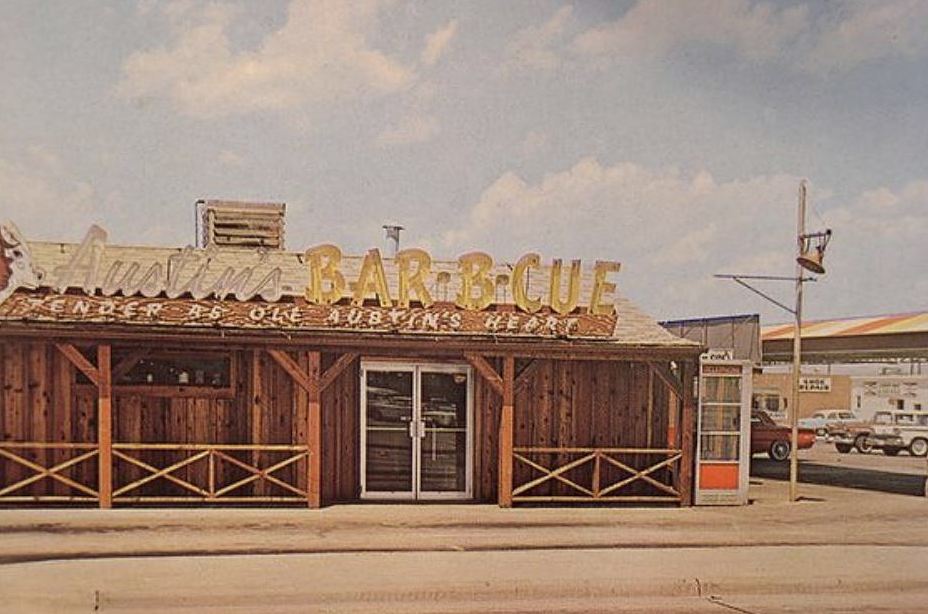
austins-barbecue_postcard_pinterest“As Tender as Ole Austin’s Heart…”

by Paula Bosse

One of my major failings as a Dallasite is that I don’t know Oak Cliff. Like at all. Every time I go over there, I get lost. I can’t remember my family ever going to Oak Cliff when I was a kid, except to visit the zoo. This explains why I had no idea how important a cultural landmark Austin’s Barbecue was when I posted a bunch of Oak Cliff ads the other day. That post has been shared hundreds and hundreds of times now and, inevitably, the only thing people mention — and rhapsodize about — is Austin’s Barbecue. …I had no idea!

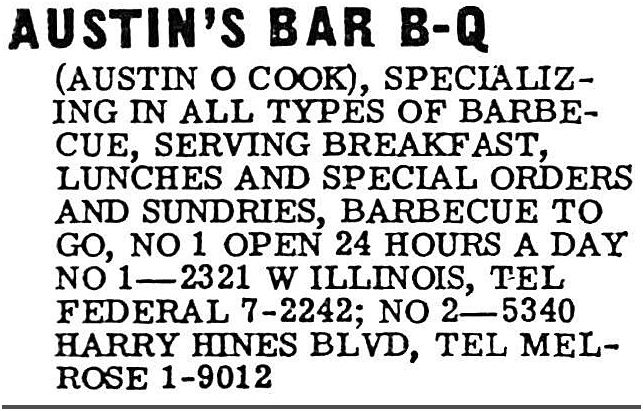
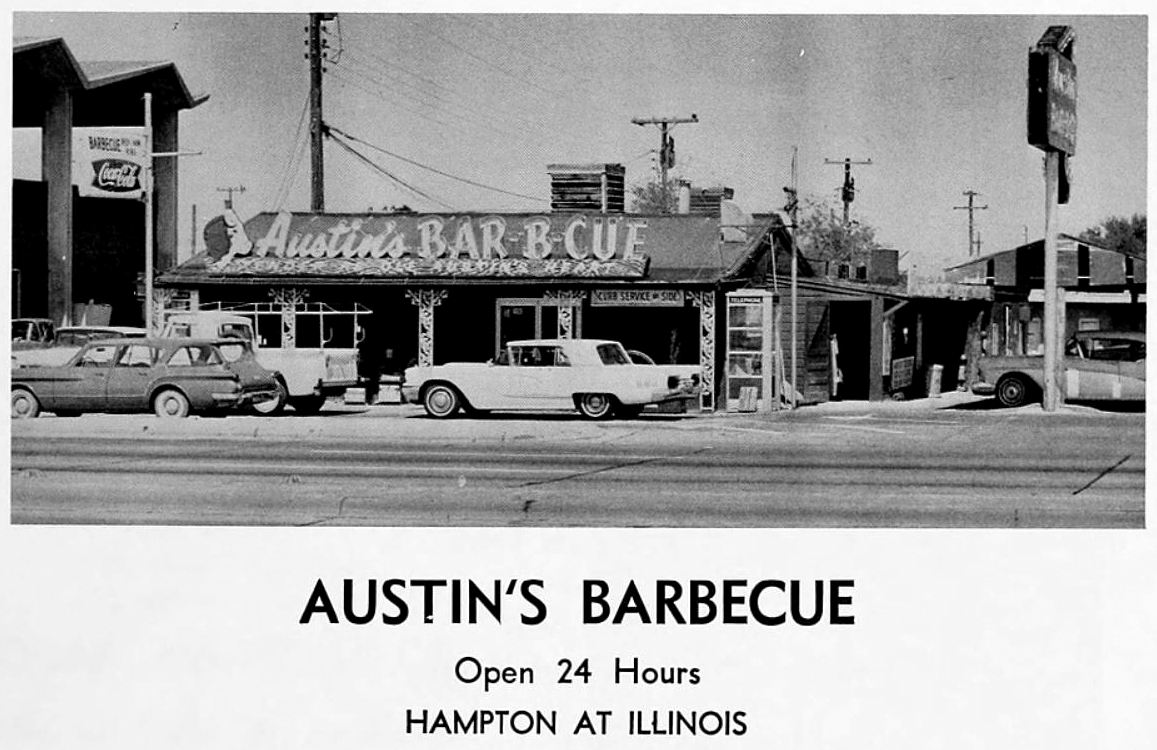
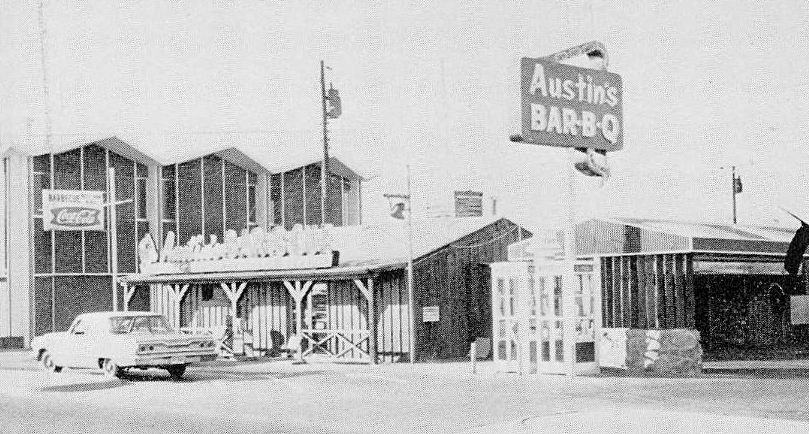
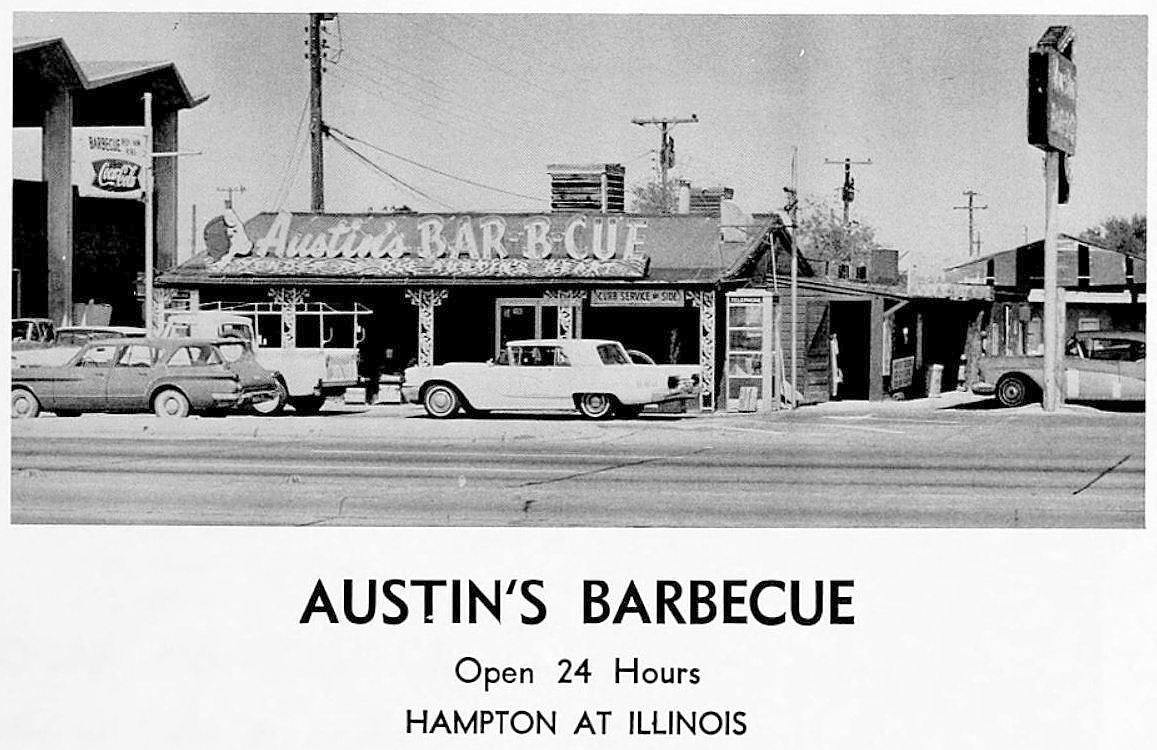
The famed BBQ joint at the northeast corner of Illinois Avenue and Hampton Road opened in 1949 as B & G Barbecue but soon became known as Bull Pen Barbecue, run jointly by owners Bert Bowman and Austin Cook. In 1956 or 1957, another Bull Pen opened in Arlington. After Oak Cliff went dry (a dark day for many Oak Cliffites), Bowman — who firmly believed that BBQ and beer were a match made in heaven — left for Arlington and Cook stayed in Oak Cliff and changed the restaurant’s name to Austin’s Barbecue. (“Bull Pen Barbecue” was still appearing in ads as late as Oct. 1957 — the official name changeover seems to have  happened in 1958.)

austins-bar-b-q_sunset-high-school_1967-yrbk1967 Sunset High School yearbook

*

The following memory of starting the business was apparently written by Austin Cook in 1990:

Dear Family & Friends,

I will try to tell you a little more about my being in the restaurant business. We borrowed $10,000 and bought out some one and it was B and G Barbecue. You see I always spell out Barbecue because when I went in business they hadn’t started abbreviating it like it is today.

After we had been there awhile we changed the name to The Bull Pen. Our slogan was “Come in and Shoot the Bull with Austin and Bert.” We used that name until they voted beer out of Oak Cliff. That really set us back, but maybe it was the best thing for us. We put another place in Arlington and that place was going pretty good. My partner wanted to get rid of the place in Oak Cliff. I traded him my part of the one in Arlington for his part in the one in Oak Cliff. Everyone said I was crazy.

When we bought that first place it was way out in the country, but they were building a bunch of houses not too far away. There was an airport across the street from the place. They kept talking about building a shopping center where the airport was. I remember the first day we ran a hundred dollars, and I thought we would never make it.

We started making money and we paid that ten thousand dollars back and we drew fifty dollars a week just like I was making in the grocery store. We started out with a barbecue sandwich and a hamburger. Then we started adding different things until we had a menu. We started getting those workers in the houses, and the business took off. We had beer also to go with the barbecue. My mother wasn’t too happy about that, but Dad said if that was the way I wanted to make my living it would be all right. In about a year or two we had a customer make us up a menu and we put in Barbecue plates for one dollar and twenty five cents. When I left they we were getting $4.99 for them. After I left I think they went to over seven dollars.

They always told me that you weren’t a success until you were in debt a hundred thousand dollars, and I went to the bank and borrowed all they would let me have. Then I went to my landlord and sold him the idea that I wanted to improve his property, and he loaned me the balance I needed to remodel, and I built a restaurant that held a hundred and twenty-five. Many times I was almost broke and didn’t know what I was going to do, but something always happened and I came out of it.

*

Both the Bull Pen in Arlington and Austin’s in Oak Cliff were successful and long-lived. Austin Cook retired at the end of 1993, and the business was taken over by his stepson, John Zito who had already been working at the restaurant for several years. Austin’s Barbecue closed in July, 2000, and the building was demolished soon after, replaced with an Eckerd drug store (now a CVS). Bert Bowman (born Glynbert Lee Bowman) died in 1989 at the age of 66; Austin O. Cook died at in 2006 at 86. And now I kind of feel like I know them, and I’m really sorry I never sampled their sandwiches.

*

Below, a Bowman and Cook timeline (most pictures and clippings are larger when clicked).

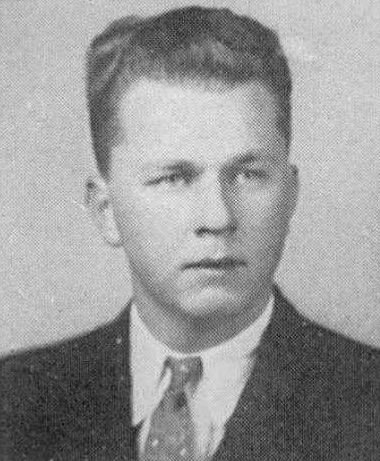
austin-cook_sunset-high-school_1937Austin Cook, Sunset High School, 1937

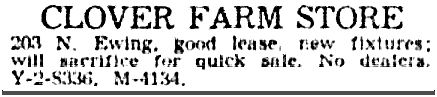
Before Cook and Bowmen met — probably around 1947 — each had been dabbling in different businesses. In early 1947, Cook leased a Clover Farm Store building at 203 N. Ewing and opened the Libby & Cook grocery with partner Lendal C. Libby.

LIBBY-COOK_dmn_021047February, 1947

LIBBY-COOK_1947-directory1947 Dallas directory

Bert Bowman worked there as a meat-cutter.

bowman_1947-directory_GROCERY-w-AUSTIN1947 Dallas directory

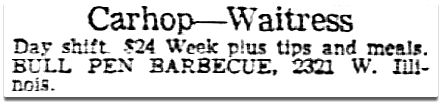
The grocery store was in business at least into 1949, the year that Bowman and Cook decided to ditch the groceries and start their own business at 2321 W. Illinois, in a part of Oak Cliff which was just starting to be developed. Their BBQ place was originally called B & G Barbecue, which — according to Cook’s letter above — was the name of the restaurant he and Bowman bought out. I guess they felt it was easier to keep the name for awhile.

b-and-g-1951-directory1951 Dallas directory

The name “Bull Pen Barbecue” didn’t come until later. In fact, the first appearance of the Bull Pen name associated with this address doesn’t show up in local newspaper archives until a want-ad placed in the summer of 1952.

bull-pen_dmn_082652_FIRSTAugust, 1952

A probably related “Bull Pen No. 2” opened in South Dallas in 1953. It appears to have been very short-lived.

bull-pen-no-2_dmn_100853
October, 1953

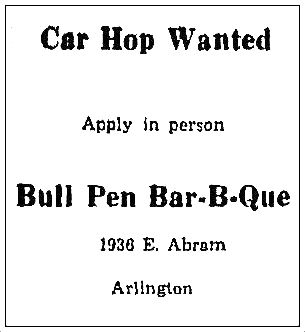
By the fall of 1957, Cook and Bowman had opened another Bull Pen — this one in Arlington, and this one a success.

bull-pen_arlington_grand-prairie-daily-news_091557
September, 1957

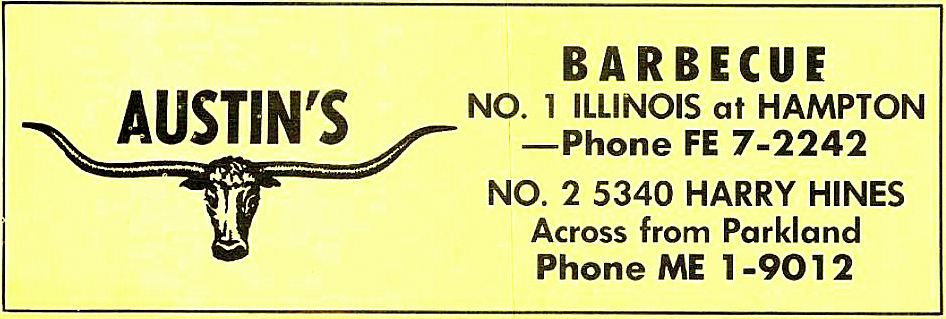
And then Oak Cliff went dry, the worst thing that could happen to a restaurant that sold a lot of beer. Similar businesses which relied heavily on beer sales began to desert Oak Cliff. Bowman did not think their original drive-in could survive, but Cook disagreed. Bowman sold his half-interest in the Oak Cliff location to Cook, and Cook sold his half-interest in the Arlington location to Bowman. Cook changed the name of his now solely-owned restaurant to Austin’s Barbecue, and his success continued, despite the fact that he could no longer sell beer. He was doing well enough that, in 1961, he opened a second location, on Harry Hines across from Parkland Hospital (a location which lasted through 1964).

austins-barbecue_1962-directory_two-locations
1962 Dallas directory

austins-barbecue_1963-directory_two-locations_ad
1963 Dallas directory

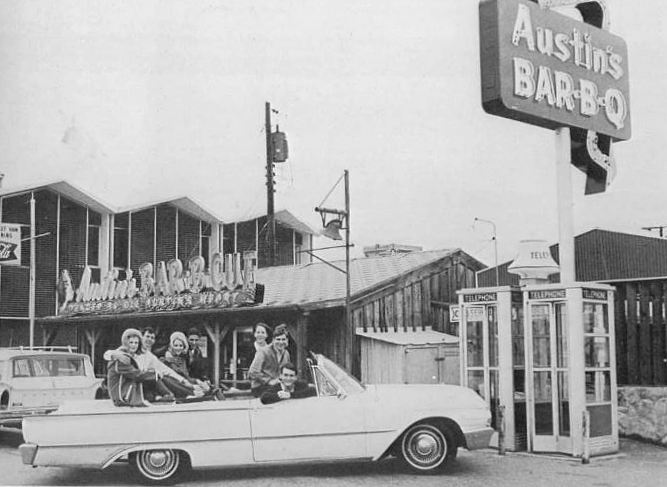
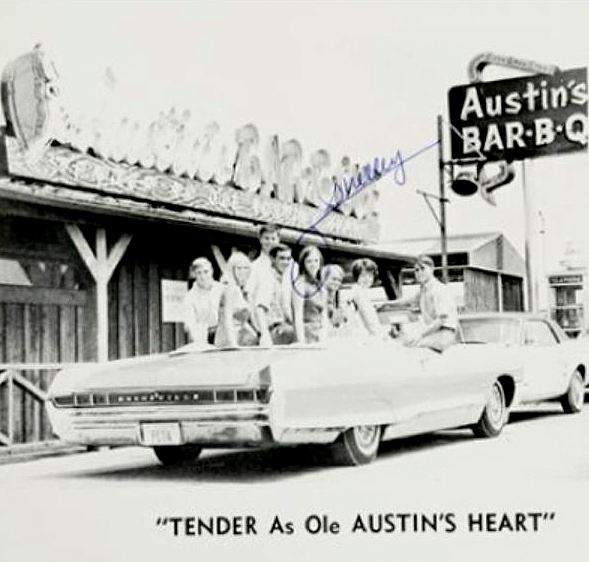
By 1963, Austin’s was a well-established teen hang-out and wisely placed ads in Oak Cliff high school annuals. Apparently everyone went there!

oak-cliff_austins_bar-b-cue_kimball-yrbk_19631963 Kimball High School yearbook

austins-bar-b-q_sunset-high-school_1964-yrbk.det1964 Sunset High School yearbook

austins_car-teens_flickr-coltera
Date and source unknown, via Flickr

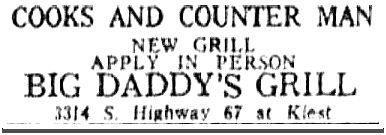
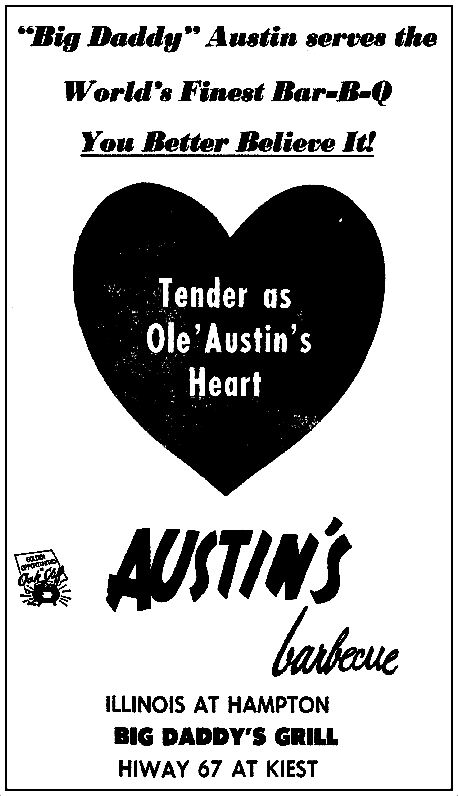
In 1964, Cook — known as “Big Daddy” — opened another restaurant, this one called Big Daddy’s Grill.

big-daddys_dmn_063064June, 1964

austins-barbecue_dmn_081466-adAugust, 1966

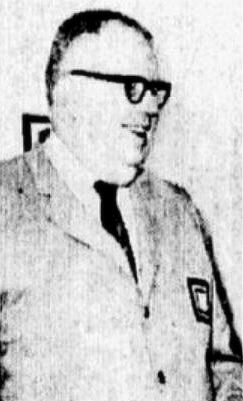
The restaurant was a bona fide Oak Cliff landmark, and Cook was an active participant in community business affairs. Below, a detail of a photo showing Cook as a member of the Oak Cliff Chamber of Commerce.

austin-cook_dmn_082568-photo-det
late 1960s

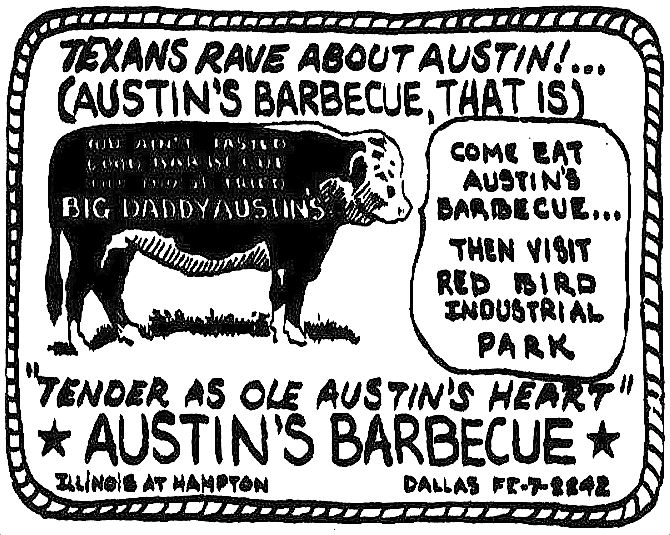
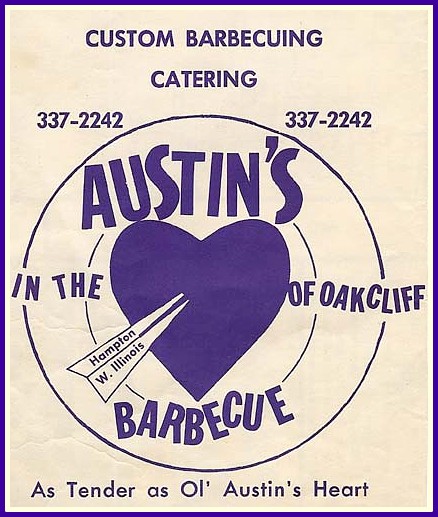
Cook participated in a series of Oak Cliff Chamber of Commerce campaigns and even included oddities like “Come eat Austin’s barbecue… and then visit Red Bird Industrial Park” in his ads. Make a day of it!

austins-barbecue_092968
September, 1968

ad_austins-barbecue
via OakCliff.org

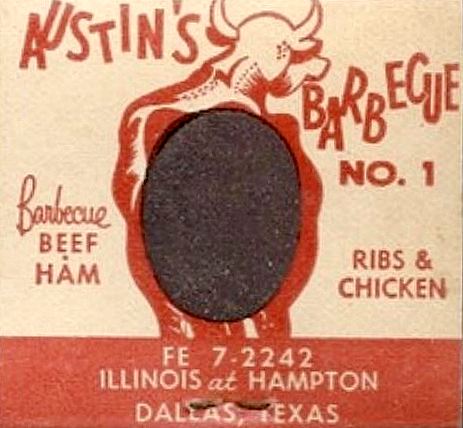
austins_matchbk_flickr_coltera
via Flickr

***

Sources & Notes

Color postcard at the top found on Pinterest, here.

The letter from Austin Cook was quoted on the DHS Phorum, here. More from the Phorum on The Bull Pen/Austin’s is here.

More can be found in the Dallas Morning News archives in the following stories:

  • “Austin’s Bar-B-Q Grows With Oak Cliff” (DMN, Aug. 14, 1966)
  • “Barbecue To Go — Staff, Customers Mourn Closing of Oak Cliff Institution” (DMN, July 13, 2000)
  • “Closed But Not Forgotten — Oak Cliff Eatery Marks Half-Century of Barbecue With Memorable Auction” (DMN, Aug. 27, 2000)
  • “John P. Zito — Operated Oak Cliff Landmark Austin’s Barbecue For 19 Years” by Joe Simnacher (DMN, Oct. 14, 2003)

Read the obituaries of Bert Bowman (1989) and Austin O. Cook (2006) here.

The Oak Cliff Advocate article “A Look Back at Austin’s Barbecue” by Gayla Brooks is here (with tons of memories from readers in the comments).

Not mentioned in this post is the connection of Officer J. D. Tippit (who moonlighted as a keeper of the peace at Austin’s) and other tangential/coincidental associations to the Kennedy assassination. It’s well documented elsewhere. Google is your friend.

*

Copyright © 2016 Paula Bosse. All Rights Reserved.

A Few Ads From the Pages of the 1963 and 1967 Kimball High School Yearbooks

oak-cliff_austins_bar-b-cue_kimball-yrbk_1963_a
BBQ in the OC, 1963

by Paula Bosse

A few random, nostalgic ads from the 1963 and 1967 Kimball High School yearbooks.

**

Above, Austin’s Barbecue.

*

Below, the Wynnewood Pharmacy:

oak-cliff_wynnewood-pharmacy_kimball-yrbk_1963_a1963

*

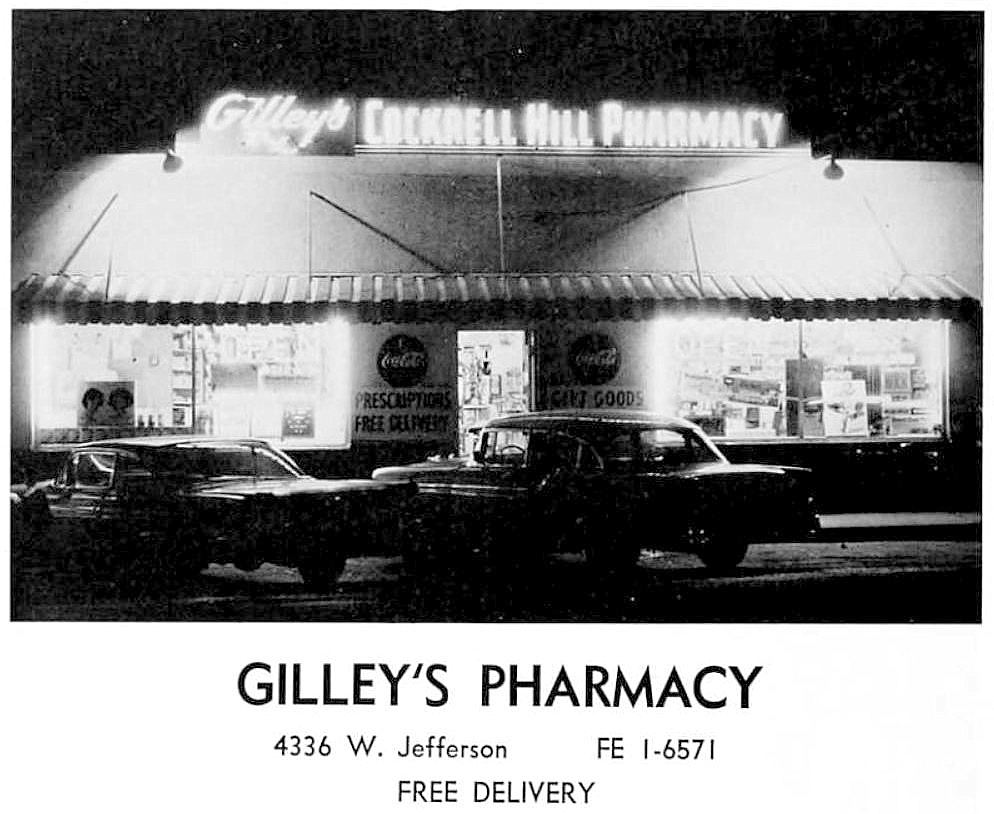
Gilley’s Cockrell Hill Pharmacy:

oak-clliff_gilleys-cockrell-hill-pharmacy_kimball-yrbk_1963_a1963

*

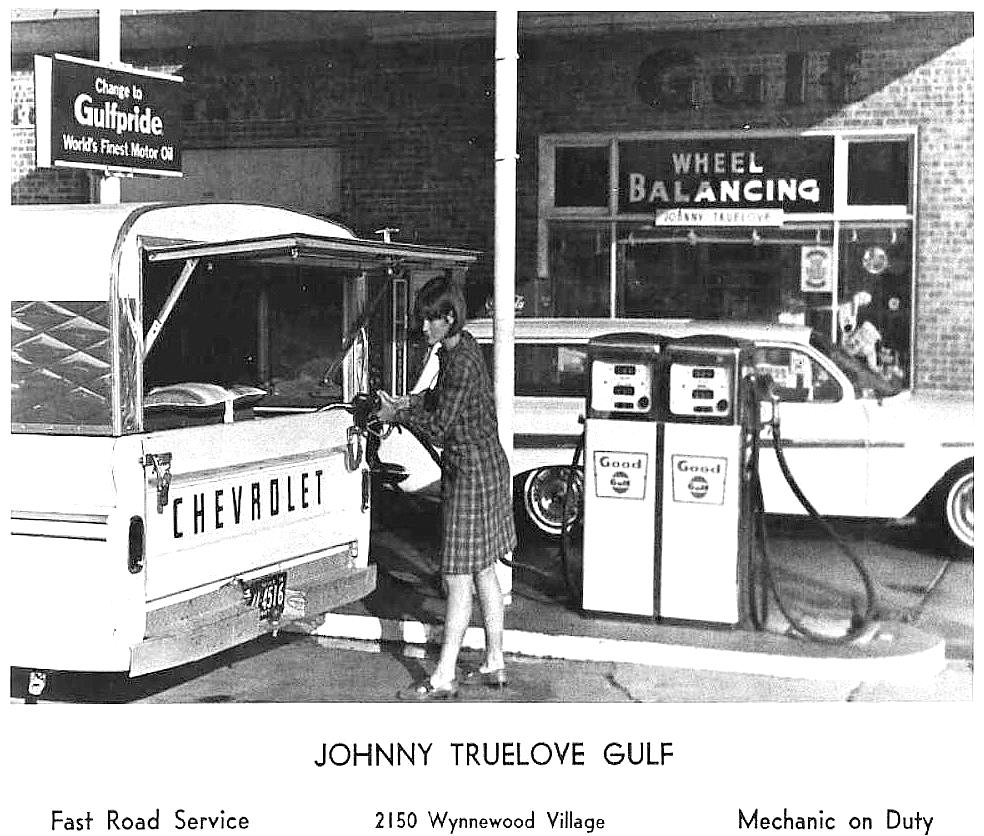
Johnny Truelove Gulf station:

truelove-gulf-station_kimball-yrbk_1963_a1963

truelove-gulf-station_kimball-yrbk_1967_a1967

*

Sammy’s Westcliff (a favorite of Marsha and her Aqua-Netted pals):

sammys_oak-cliff_1967-kimball-yrbk_a1967

*

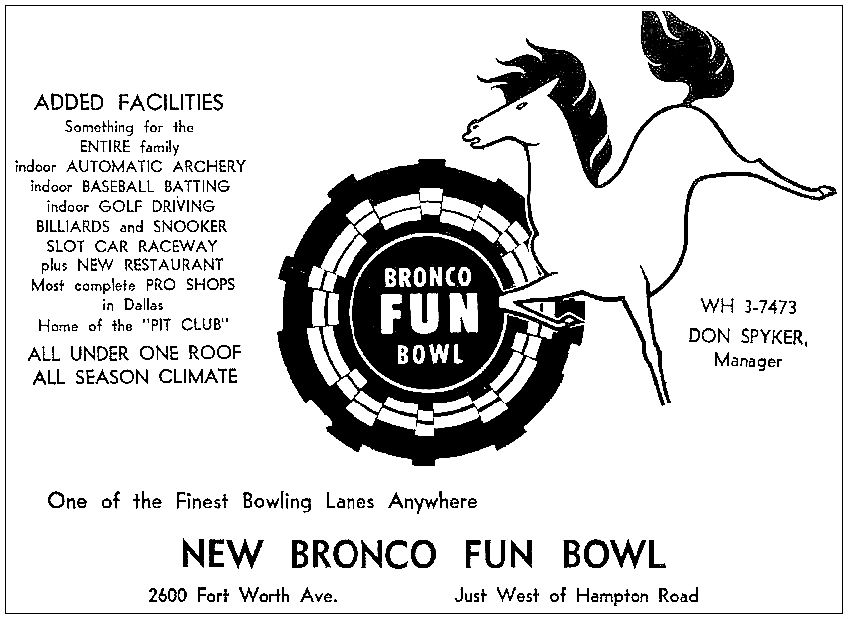
And the late, lamented Bronco Bowl:

ad-bronco-bowl_kimball-yrbk_1967_a1967

*

And for those who want to browse the retail offerings of Wynnewood Village in 1963, here is a handy list (click to see a larger image):

oak-cliff_wynnewood-village_kimball-yrbk_1963_a1963

***

Sources & Notes

All ads from the 1963 and 1967 Kimball High School yearbooks.

More than you’d ever want to know about The Bull Pen/Austin’s Barbecue in my follow-up post, here.

*

Copyright © 2016 Paula Bosse. All Rights Reserved.

Commerce & Record Streets — 1946

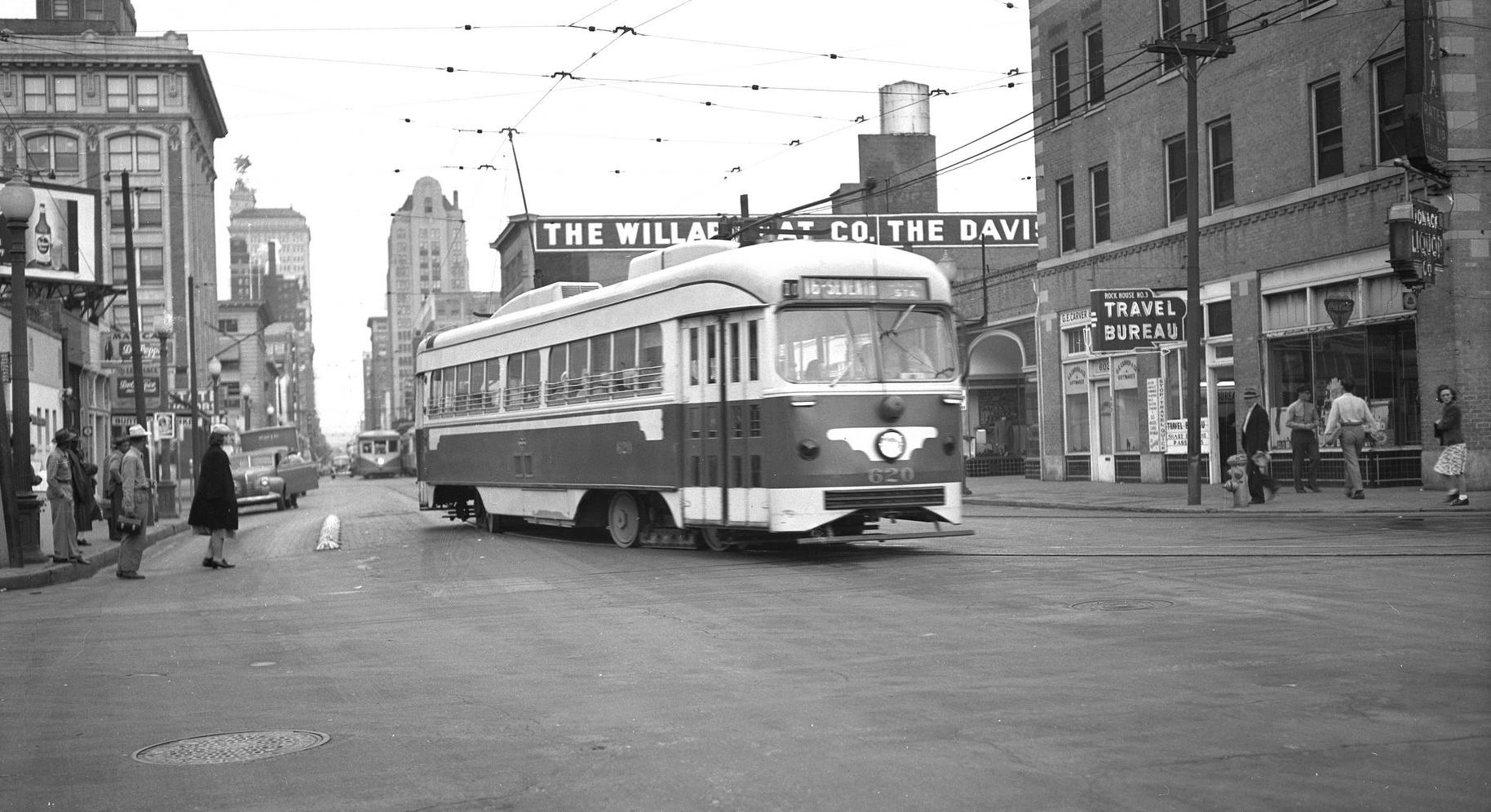
streetcar_commerce-record_051046_ceraCommerce St. looking east from Record (click for huge image)
by Paula Bosse

If it’s a photo of downtown in the ’40s, with people on the streets, retail storefronts, and streetcars, I’m going to love looking at it. Like this one. A lot of people might be hard-pressed to identify the location of this photograph, even if they were standing in the exact spot the photographer stood in. If you look at today’s view from the same vantage point (here), just about everything in the immediate foreground (west of the Pegasus-topped Magnolia Building) is gone — except for, most notably, the beautiful MKT Building at Commerce and Market, one of my favorite downtown buildings.
This is the intersection of Commerce and Record streets, when Record still extended from Elm to Jackson; the Old Red Courthouse was behind the photographer, to the left. Today, the Kennedy Memorial is at the left where the people are waiting for a streetcar; the George Allen Courts Building is across the street — at the right, in the block with the travel bureau; and the block containing the Willard and Davis Hat building — across Commerce from the Katy Building — is now a parking lot.

As with every photograph like this I see, I wish I could step into it and walk around the downtown Dallas of 1946. Maybe pop into Ma’s Cafe for a Dr Pepper before I hop on a streetcar and just ride around on it all day until someone kicks me off.

*

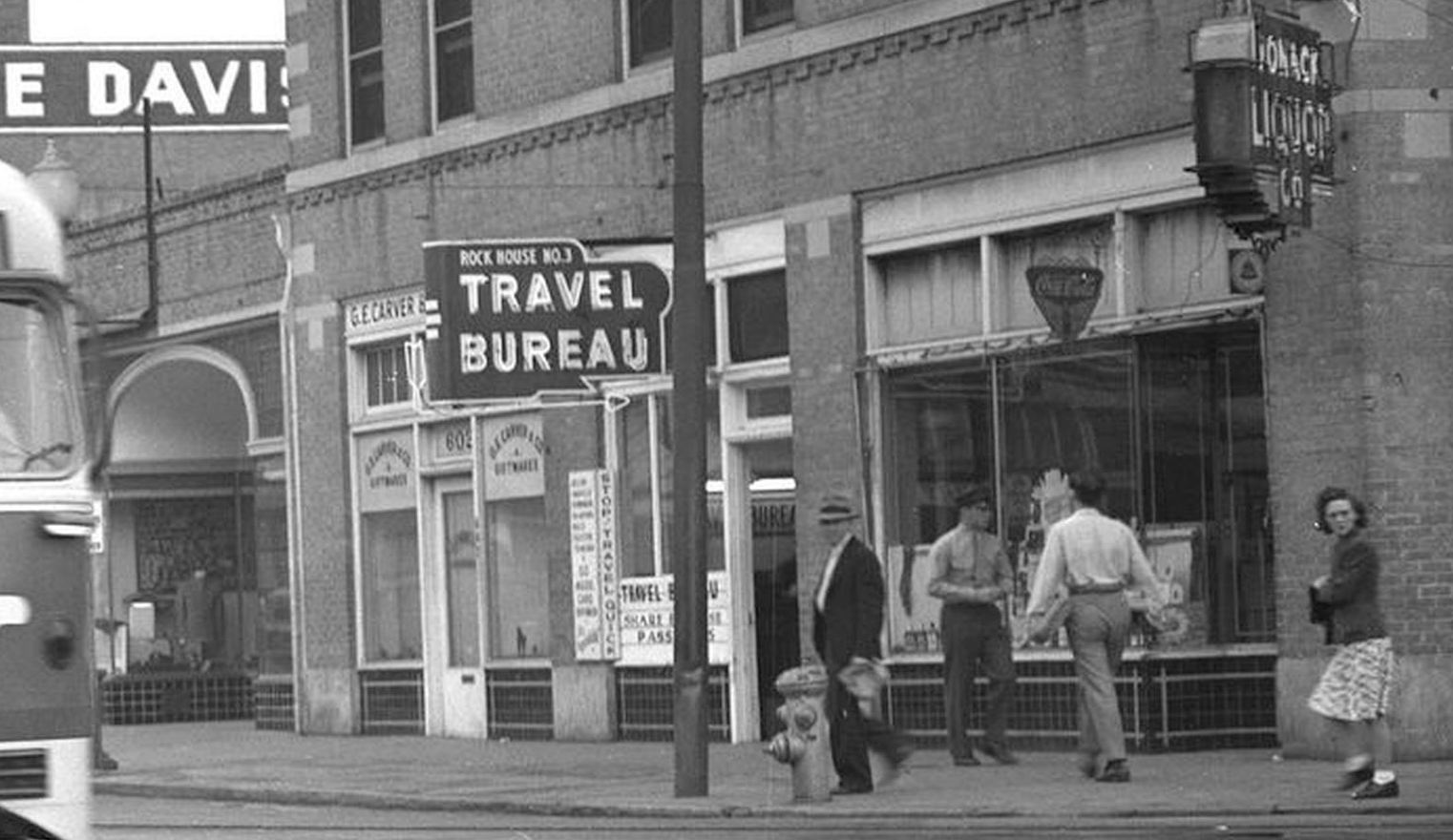
Below are a couple of magnified details (both are much larger when clicked).

streetcar_commerce-record_051046_cera-det1

streetcar_commerce-record_051046_cera-det2

Below is a listing of the businesses in this 600 block of Commerce, between Record Street and the MKT Building.

600-block-commerce_1945-directory1945 Dallas directory

(The tall building on the right with the travel bureau on the ground floor is the Plaza Hotel at 202-204 Record Street. The Yonack Liquor Store on the corner is at 200 Record, with entrances on both Commerce and Record.) 

Here’s a detail of a photo taken about the same time, showing an aerial view of Commerce Street.

aerial_commerce-st_1940s_foscue-lib_smuFoscue Map Library/SMU

***

Top photograph was taken on May 10, 1946 by Richard H. Young; it can be viewed on the CERA (Central Electric Railfans’ Association) website, here. (If you’re interested in Dallas streetcars, this page has some GREAT photographs!)

The caption of the photo from the above website: “May 10, 1946 — New Dallas Railway & Terminal Co. double-end PCC car 620, at speed, southbound, turning into Record St. from Commerce St. (Ervay-7th Line).”

The aerial photo was taken by Lloyd M. Long in the 1940s and is titled “Downtown Dallas looking east (unlabeled); it is from the Edwin J. Foscue Map Library, Central University Libraries, Southern Methodist University. This is only a small portion of the full photograph — the full photo is here.

Since there is an exact date for this photo, here is a large Skillern’s ad from that day’s newspaper. Coincidentally, there was a  Skillern drugstore on the northeast corner of Commerce and Record — it is in this photo, behind the lamppost at the bottom left. Let’s see what was on sale May 10, 1946. (I would kill for a set of those Pyrex bowls!)

skillerns-ad_dmn_051046

And, lastly, who doesn’t love a map?

map_commerce-and-record_1952-mapsco 1952 Mapsco

Everything is bigger when clicked!

*

Copyright © 2016 Paula Bosse. All Rights Reserved.