Flashback : Dallas

A Miscellany: History, Ads, Pop Culture

Category: Children

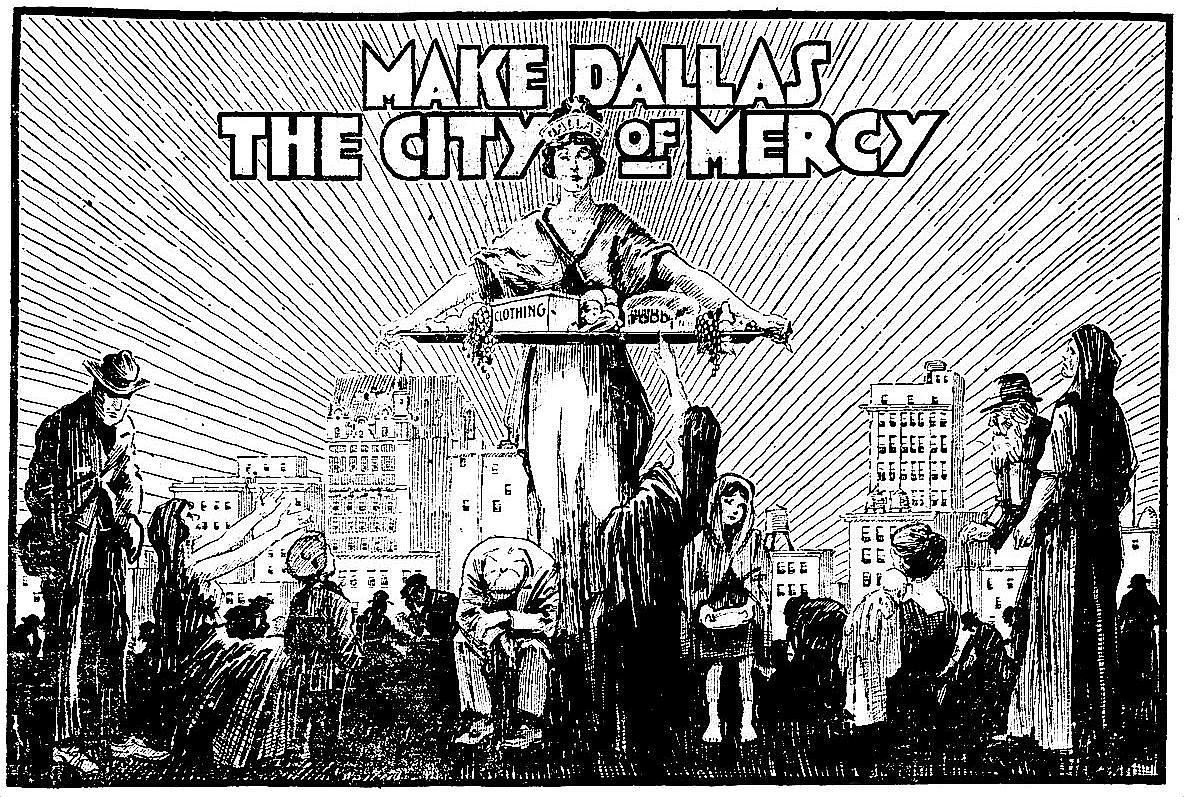
Make Dallas the City of Mercy — 1919
city-of-mercy_dmn_102019_ad_welfare-week_charity

by Paula Bosse

This seems to be a nice way to start the new year — by featuring a charitable appeal from a group called The Welfare Council of Dallas, which helped to raise funds annually for organizations in need of monetary assistance from the public.

Many are the appeals to our generosity today. Here, however, is our closest and deepest obligation. These represent the charity that begins at home. These are the forces that are driving misery and want from our city — building always a brighter and better future for Dallas.

**

The following nine groups — all of which aided needy children and families — were the ones chosen in 1919 as organizations which would be part of the city-wide “Welfare Week” appeal (the illustration above and the text below are from a large ad that appeared in Dallas newspapers in October, 1919):

THE UNITED CHARITIES during the last year have ministered to 12,226 individuals; 4,452 visits were made to homes to which their attention had been called; 734 cases for continued relief were opened; 152 such cases from the preceding year were given further aid; 562 destitute wanderers were furnished with homes, food and clothing, and suitable employment found for as many of them as possible; 834 cases of sickness or accident or taking care of, some for periods as long as six months; 116 persons were furnished transportation to their home or to places where their health could be restored ; 85 were aided in gaining admission to State institutions; 55 cases of tuberculosis were given extended relief; 82 wives, deserted by their husbands, and 37 widows with children were given food and shelter until proper arrangements for their care could be made by their relatives.

THE DALLAS GRADUATE NURSES’ BABY CAMP cared for and gave necessary medical and surgical attention to 178 babies during the last year. The mortality was 25, certainly a low figure, considering the uniformly serious nature of the cases treated. The Camp is under the direct charge of three doctors and seven nurses, and no baby is permitted to leave the Camp until permanently cured. The average stay of the little patients is five weeks. Besides the cases treated at the Camp over 100 formulae were furnished to outside cases. The Baby Camp is open to ALL Dallas babies who are in bad health. [Read a history of the Baby Camp here.]

THE DALLAS COUNTY HUMANE SOCIETY is the founder and conductor of “Hope Cottage,” a home for illegitimate and deserted babies, where an efficient staff of nurses devote their time to providing these little ones with an opportunity to begin honorable lives. Hope Cottage averages from ten to twenty inmates all the time, as they are kept only until suitable homes for adoption can be found. The placing of orphaned children in private homes is another branch of the work. This agency also investigated 1,390 cases of reported abuses of children; 389 of these investigations were followed by prompt action: 299 homes were visited; 16 children were sent to the Detention Home, and 18 cases of delinquents received attention; 3,246 cases of abuse to dumb animals were investigated. [A similar “shelter for unfortunate women and children” was the Salvation Army’s Neighborhood Home on McKinney Avenue.]

THE DALLAS KINDERGARTEN AND NURSERY ASSOCIATION has conducted four stations during the year – the Clara Chaison Kindergarten at the Neighborhood House on Cedar Springs Road, the South Dallas Kindergarten near Trinity Play Park, the Cora Street Nursery, formerly under the supervision of the City Federation of Women’s Clubs, and the Alamo Nursery at Hickory and Alamo streets. The average enrollment at all stations was 205. In connection with each station a day nursery is maintained where mothers with employment may leave their young children from 7 a.m. to 6 p.m. An average of fifty mothers take advantage of these nurseries each day, and a bath, wholesome dinner, nap and play constitute the day’s program. [A similar nursery, specifically for the black community, was the Dallas Day Nursery.]

THE INFANTS’ WELFARE AND MILK ASSOCIATION, striving for better health and cleaner living conditions for children, distributed 81,828 pints of milk; visited 7,885 homes; treated 3,489 children in medical and 469 in dental clinics. The nurses at the stations gave treatment to 1,160 cases. In addition to these, 202 prenatal cases were given attention, 31 obstetrical cases disposed of and 80 bacteriological examinations were made. Twenty babies were sent by the Association to the Baby Camp and 14 to the City Hospital, while co-operation was given to other organizations in 724 cases. [From another ad: “Sick babies of many races and creeds, but all future Dallasites, find new health in [these] clinics.” More on milk stations here.]

THE DALLAS STREET AND NEWSBOYS’ CLUB, “Big Brother Work” Headquarters, is the one bright spot in many a young Dallas urchin’s life. The club rooms, at 1907 Jackson street, half inexpensive, though adequate, equipment for sports and games, reading and like activities. There are dormitory rooms for boys temporarily “on their own,” which accommodations can be paid for according to the boy’s ability to pay. A few steps from the building is the back door at the Y.M.C.A., and three times each week the Club descends upon the swimming pool en masse. The directors of the Club do not confine their work to headquarters, however, but look to the welfare of its members at work, play, school and even in their homes. [The life of a newsboy — often an orphan under the age of 10 — was not an easy one.]

ST. MATTHEW’S HOME FOR CHILDREN, by placing its finances for the coming year in the hands of the Welfare Council, adds a valuable and deserving institution to the list of member agencies. Although the property is owned by the Episcopal Church, the managing board is non-sectarian, the Home is absolutely non–sectarian in its activities and no child is excluded on account of its faith or that of its parents. At present the capacity is limited to forty little ones, and any child between the ages of 4 and 12 years may be admitted.

THE DALLAS COUNCIL OF BOY SCOUTS is the other new member agency. The work done by this organization and developing manhood in boys of all classes of society entitles it to our fullest support. Its influence extends into every home, school, factory and business office in the city. Its nominal dues for membership permit any boy, no matter how poor, to join and take a full share in the activities and benefits of the organization.

THE EMPTY STOCKING CRUSADE is an organization whose year’s activities culminate in providing Christmas cheer – warm clothing, fruit, toys and other tokens of happiness for little ones. It carries cheer into homes of the city to whose children the season of universal good will would otherwise bring nothing, and into the orphanages. Last Christmas 6,902 children were provided for.
city-of-mercy_dmn_101719_ad_welfare-week_charity_det

***

Sources & Notes

More on Dallas’ early charitable movements can be found in the article “The Forgotten Frontier: Dallas Women and Social Caring, 1895-1920” by Elizabeth York Enstam (Legacies, Spring, 1989), here.

*

Copyright © 2019 Paula Bosse. All Rights Reserved.
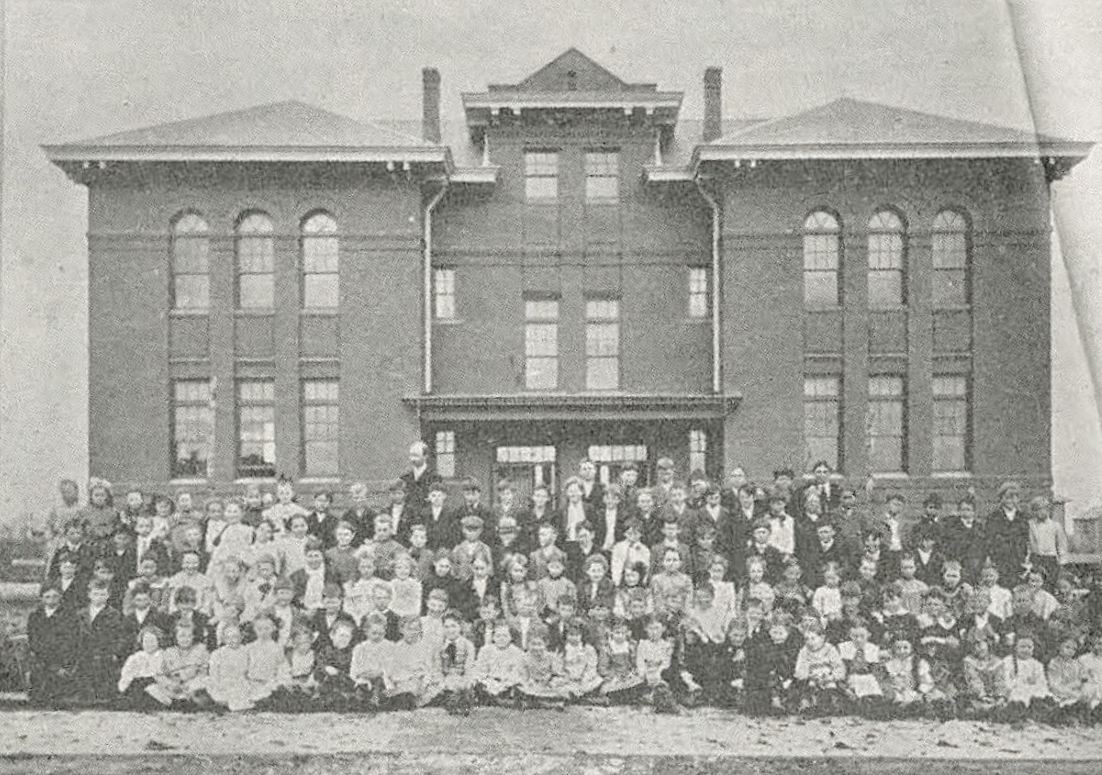
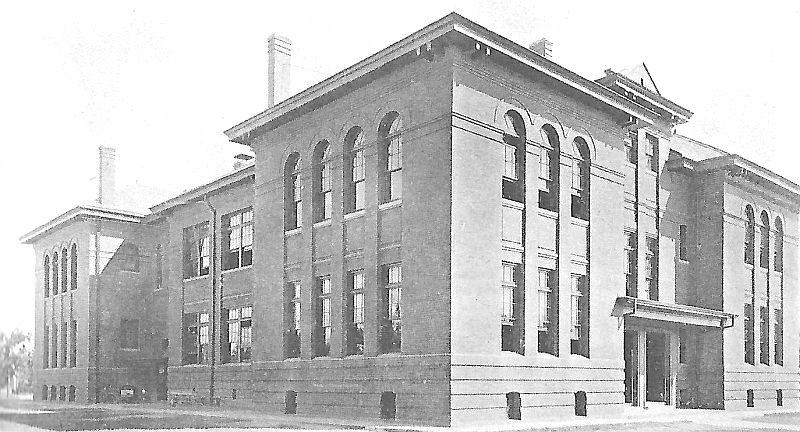
John H. Reagan Elementary, Oak Cliff’s “West End School” — 1905

west-end-school_come-to-dallas_degolyer_SMU_ca1905Class picture in front of the new school…

by Paula Bosse

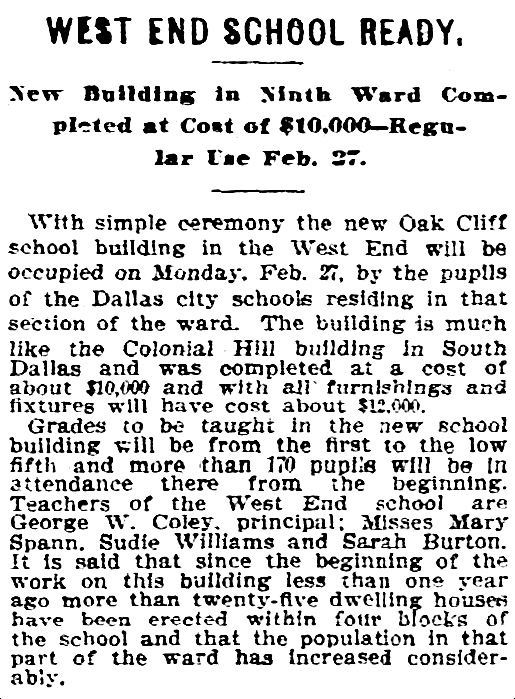
In 1904 things were getting really crowded in schools in recently-annexed Oak Cliff. The school board agreed that Dallas’ new Ninth Ward needed at least one new school, and they voted to build a four-room primary school — initially referred to as the “West End school” — at 9th and Llewellyn. After a delay in construction because of a shortage of bricks, the two-story schoolhouse opened in February, 1905. (Click photos and clippings to see larger images.)

west-end-school_reagan-elementary_dmn_021805
Dallas Morning News, Feb. 18, 1905

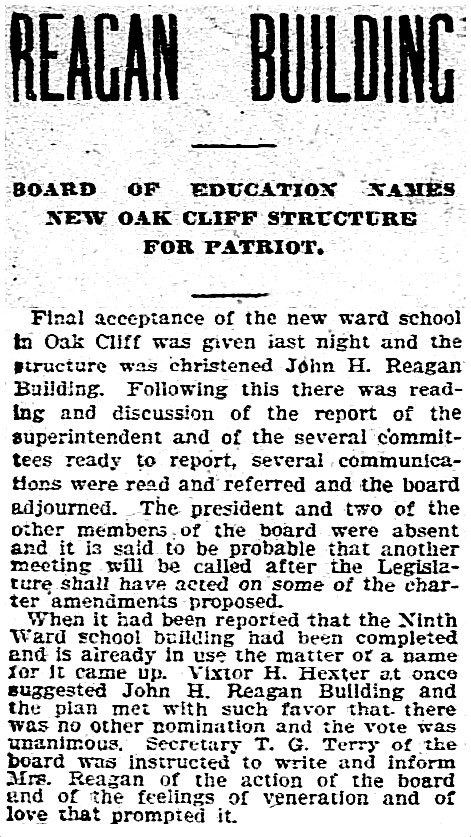
The following month the school was named for a Confederate hero of the Civil War, John H. Reagan.

reagan-school_dmn_031405
DMN, March 14, 1905

As the population of Oak Cliff grew over the years, so did the school, which expanded with additions beyond those original four rooms in order to accommodate the continual growth of the neighborhood. The building had a good run and stood for 76 years — until it was demolished at the end of 1981 (or the beginning of 1982) to make room for a new building at the same  location. The new school retained the Reagan name, which has become a point of controversy in recent years.

reagan-elementary_education-in-dallas

***

Sources & Notes

Top photo is from the promotional booklet “Come To Dallas,” from the collection of the DeGolyer Library, SMU Libraries, Southern Methodist University; more here.

Bottom photo is from the book Education In Dallas, 1874-1966, Ninety-Two Years of History by Walter J. E Schiebel.

More on the history of Reagan Elementary and the recent controversy over whether the school should be renamed can be found in the Dec. 27, 2017 Oak Cliff Advocate article “Backstory: One Low-Income School in Oak Cliff Bears the Name of a Confederate Leader” by Rachel Stone.

For more on the then-impending demolition of the original school building, check out the Dallas Morning News archives for the story “Graduates Come to Visit School On Its Deathbed” by Keith Anderson (DMN, Sept. 14, 1981).

*

Copyright © 2018 Paula Bosse. All Rights Reserved.
“Mr. Wiggly Worm Does Much More Than Wiggle”

mr-peppermint_sponsor-mag_112061-det

by Paula Bosse

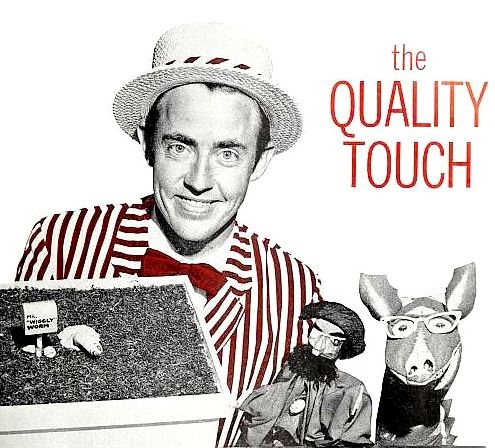
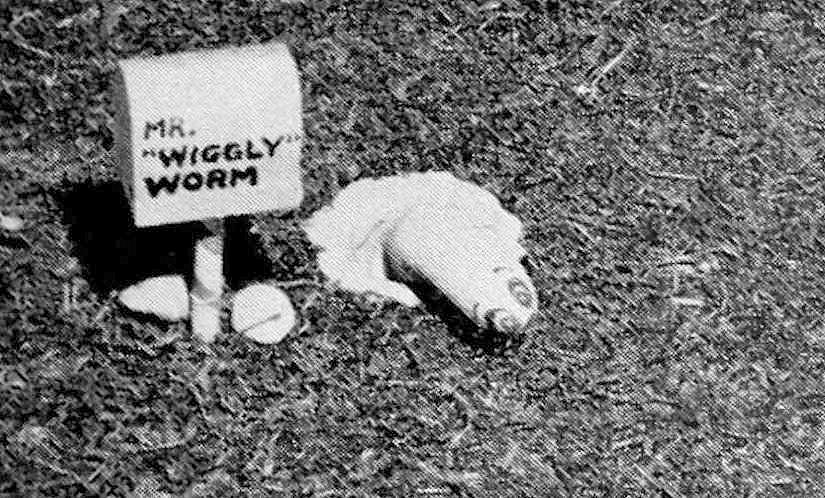
My first crush was on Mr. Peppermint, and I really, really, really loved Mr. Wiggly Worm.

This is a rather unfortunate depiction of my childhood TV pal, but how can you not love a smiling wiggly worm with a mailbox?

mr-peppermint_sponsor-mag_112061_mr-wiggly-worm_det

mr-peppermint_sponsor-mag_021163_text

WFAA understood the appeal of Mr. W. W. They even built a whole broadcasting-trade-magazine ad around him. (Click to see it larger.)

mr-peppermint_sponsor-mag_021163Sponsor, Feb. 11, 1963

Here he is again:

mr-peppermint_sponsor-mag_112061
Sponsor, Nov. 20, 1961

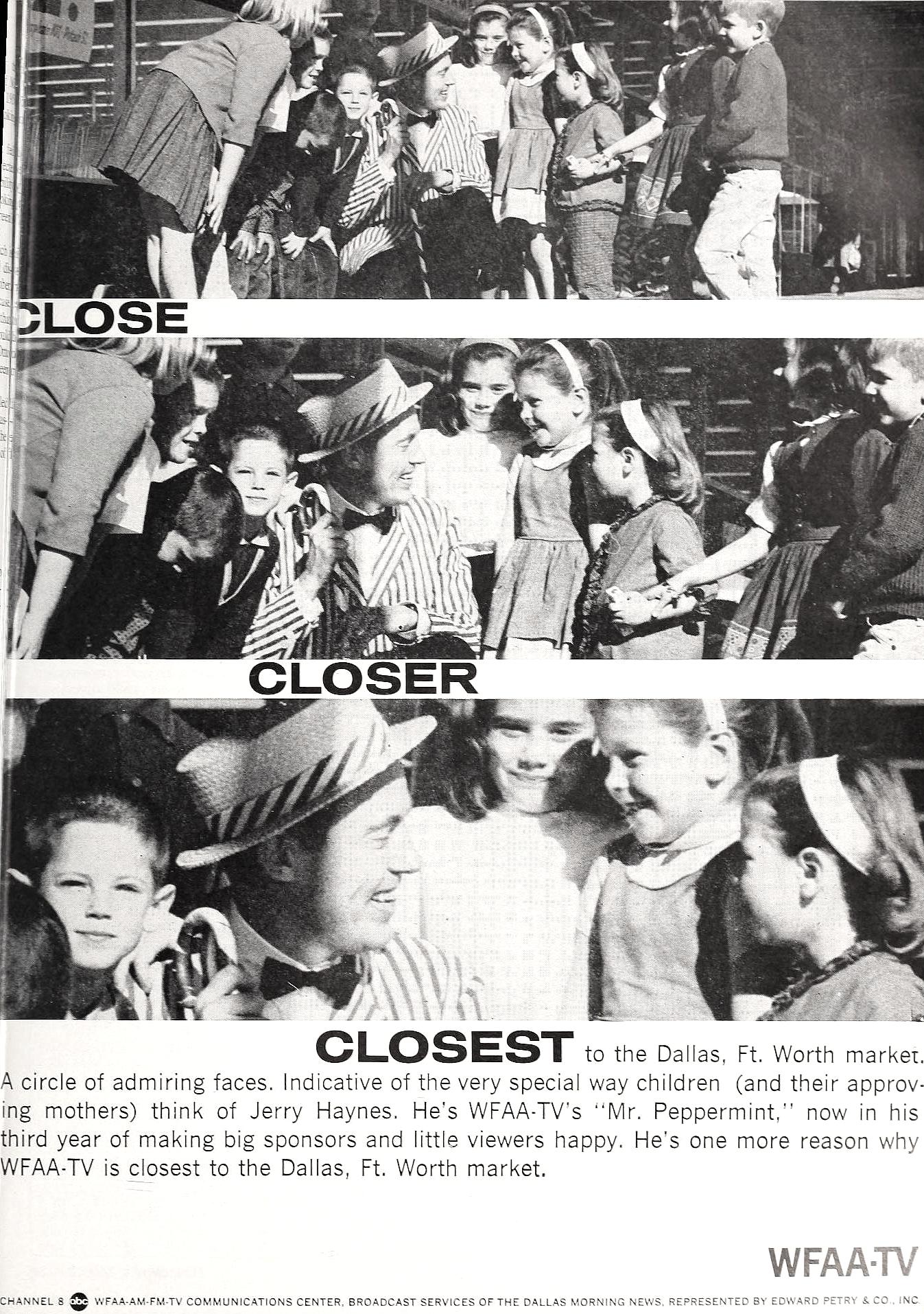
Mr. W. W. stayed at home for this one, but here we see Mr. Peppermint out mingling with his adoring public.

mr-peppermint_broadcasting-mag_061063
Broadcasting, June 10, 1963

And, look, “Communications Center” — bet you haven’t heard that in a while!

communications-center_sponsor-mag_112061_det1961

***

Sources & Notes

These Mr. Peppermint advertisements were part of a series of WFAA-Channel 8 ads which ran for several years in television trade magazines.

Click pictures to see larger images.

*

Copyright © 2017 Paula Bosse. All Rights Reserved.

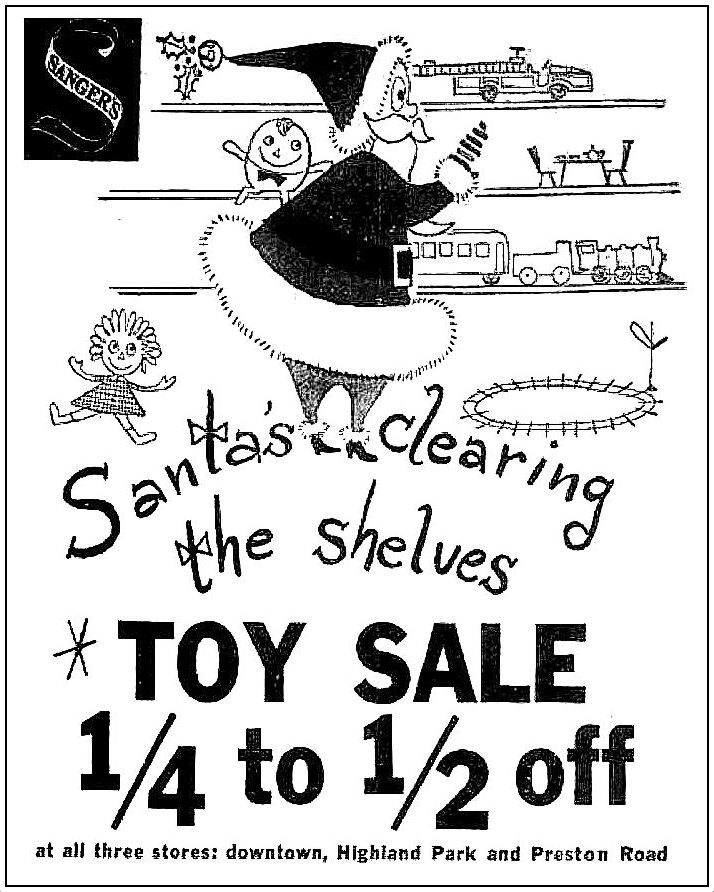
Christmas Toy Sale at Sanger’s! — 1955

xmas_sangers_dmn_122255aBargains ahead: Santa’s clearing the shelves…

by Paula Bosse

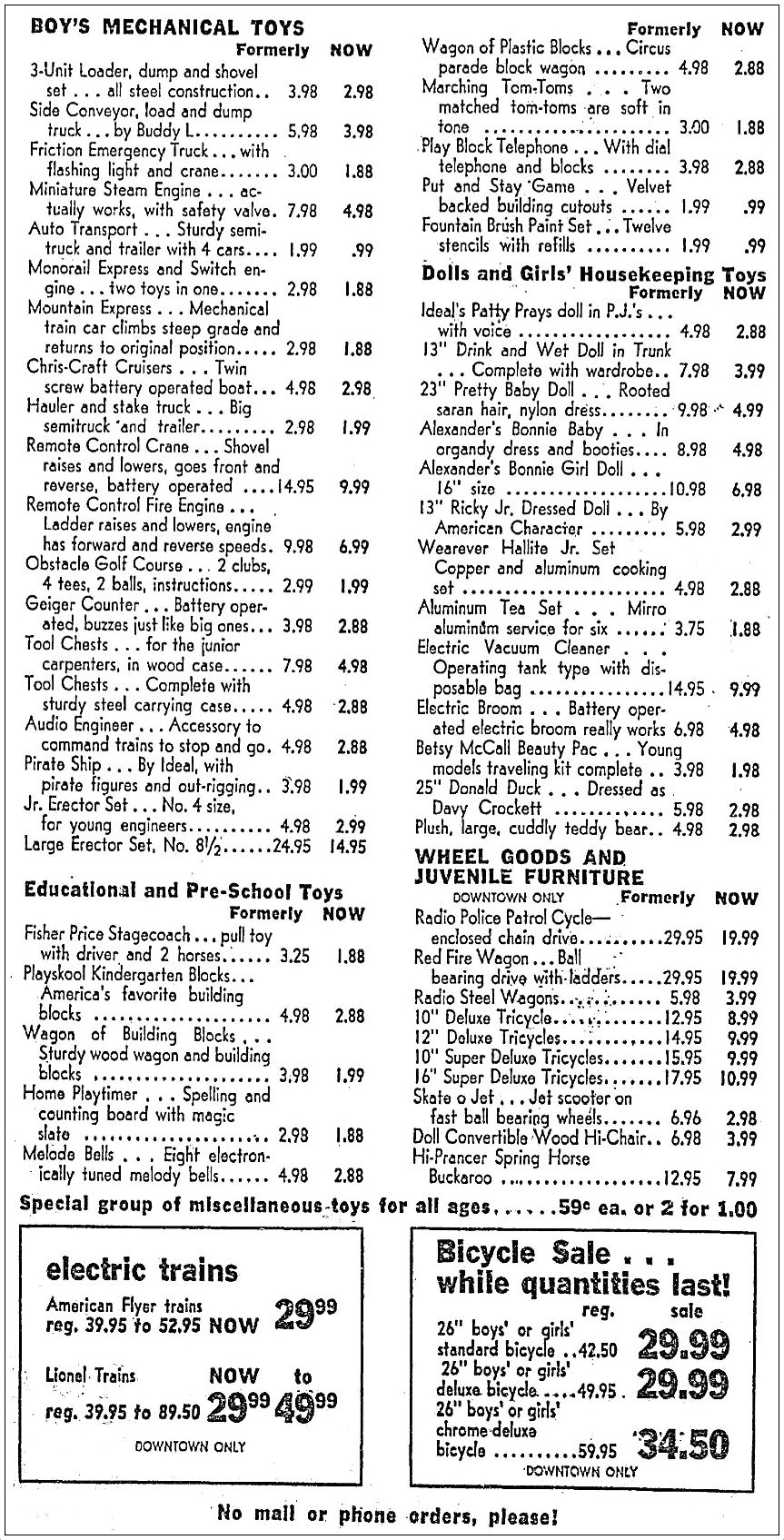
Look at all the toys that were on sale in the final days before Christmas — “at all three [Sanger’s] stores: downtown, Highland Park and Preston Road.” Need a “Ricky, Jr. doll”? A kiddie Geiger counter? A two-foot-tall Donald Duck toy dressed as Davy Crockett? Look no further — Sanger’s has it. (Click ad to see a larger image and take a walk down Childhood Toy Memory Lane.)

xmas_sangers_dmn_122255b

*

Copyright © 2016 Paula Bosse. All Rights Reserved.


Newsboy

newsboy_RPPC_ebay_sm“Nickel a copy, mister.”

by Paula Bosse

In 1912, The Dallas Morning News reported that there were over 700 newsboys in the city of Dallas, over 200 messenger boys, and “hundreds of other working boys between the ages of 6 and 17” (DMN, July 19, 1912). Some of these boys were working to help out their families, but many were homeless. Child labor was a major concern throughout the country, and most larger cities, such as Dallas, had “newsie homes” and associations to look after the interests of the boys.

***

Sources & Notes

Newsboy photo found on eBay.

To read “Story of a Street Waif” (DMN, Dec. 22, 1912) — a somewhat Dickensian fictionalized account of a resilient Dallas newsboy written by Mrs. M. L. Kauffman (Sam Houston’s granddaughter, the former Margaret Belle Houston) — click here.

Photographer Lewis Wickes Hine had perhaps the greatest impact on the reform of child labor laws. Hine traveled the country photographing and interviewing working children in order to put a human face to a growing problem. Some of his photos can be seen here; his Wikipedia entry is here.

Photos of newsboys from previous Flashback Dallas posts can be found here.

*

Copyright © 2015 Paula Bosse. All Rights Reserved.

Easter Egg Hunt at City Park — 1924

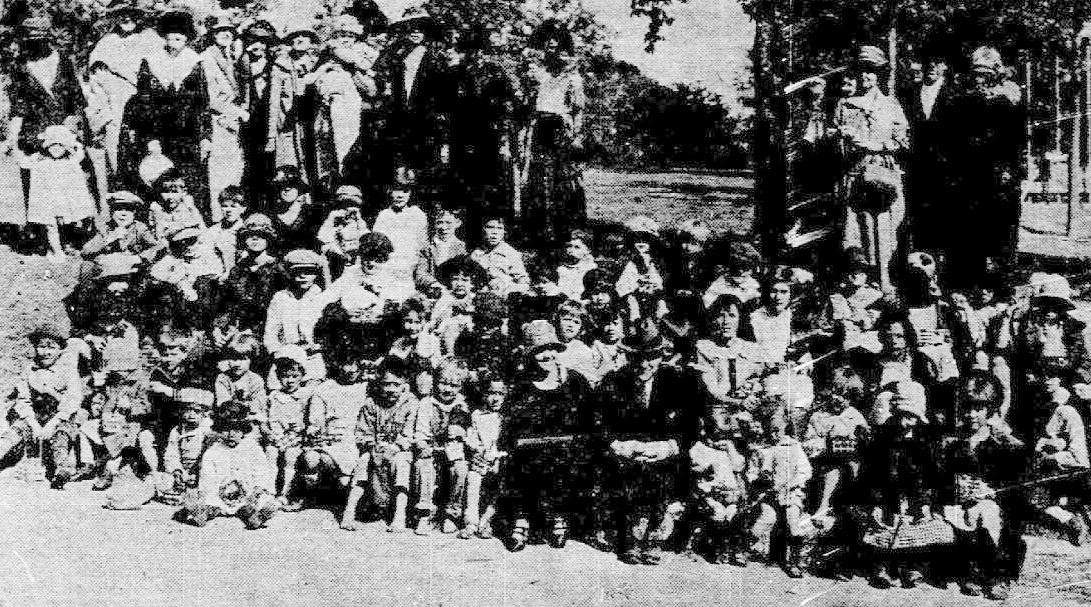
Hunters and their patrons, 1924…

by Paula Bosse

Happy Easter! Here’s what was going on at about this time, 91 years ago.

*

Osteopathic Clinic Fetes Children With Easter Egg Hunt

The church committee of the free osteopathic clinic at the First Unitarian Church, Ervay and St. Louis streets, entertained seventy-five children of the clinic at an Easter egg hunt in City Park Friday afternoon. Real Easter eggs were hidden by the ladies of the committee about the park, and where the close-cropped grass did not provide good hiding places about the tree trunks, nests were made in the sand.

After the youngsters had been released to hunt, they pursued the quest vigorously, to the accompaniment of shrill cries of delight, until all the eggs were found, the members of the committee distributed Easter baskets filled with candy eggs for the children to eat. Later they were taken to the church, where refreshments were served.

***

Sources & Notes

Photo and caption from The Dallas Morning News, April 19, 1924.

*

Copyright © 2015 Paula Bosse. All Rights Reserved.
“There Are Eight Million Stories in the Naked City…” — ca. 1920

1-ervay

by Paula Bosse

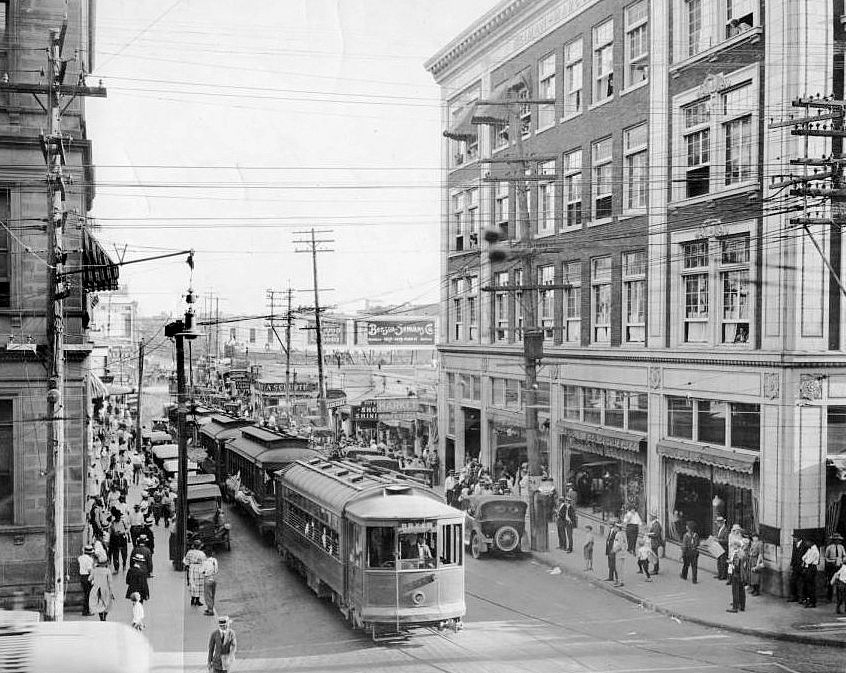
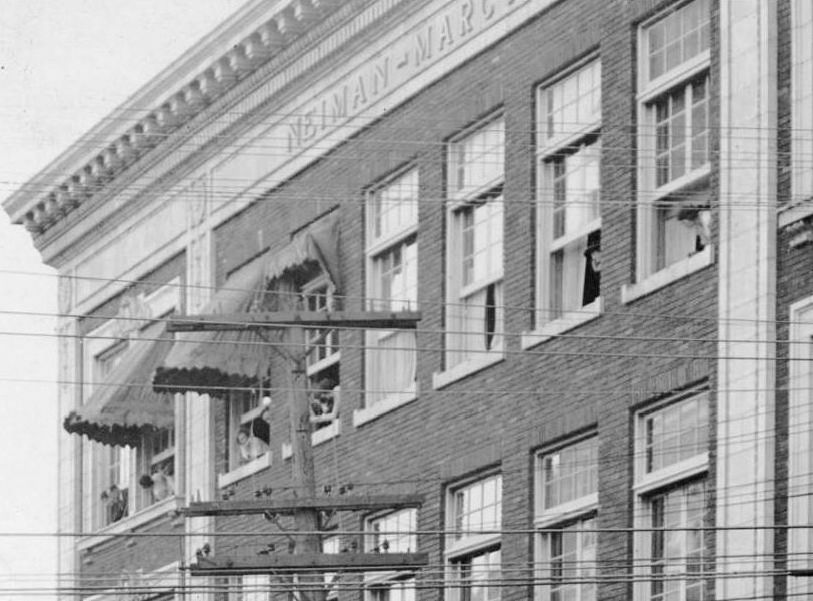
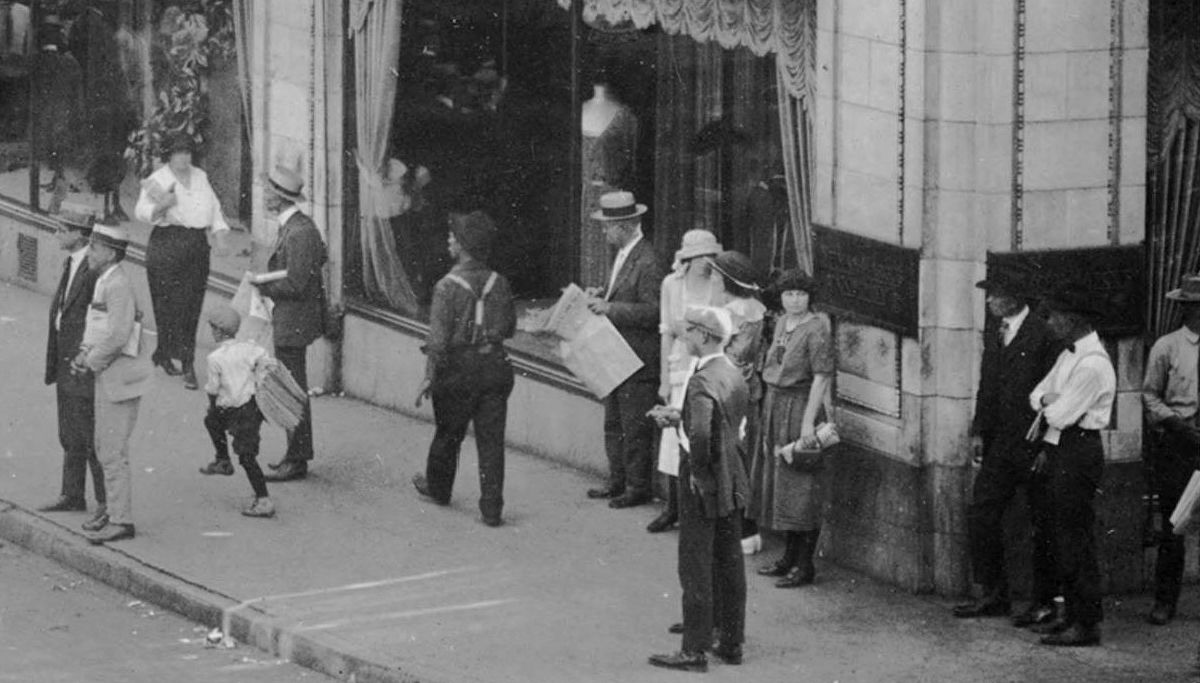
The photograph above, by George A. McAfee, shows Ervay Street, looking south from Main, in about 1920. Neiman’s is on the right. I’m not sure what the occasion was (I see special-event bunting….), but the two things that jump out right away are the number of people on the sidewalks and the amount of  congestion on the streets. In addition to private automobiles (driven by “automobilists” or “autoists,” as the papers of the day referred to them), the street is also packed with cars standing in the taxi rank (cab stand) at the left, and a long line of hulking streetcars. This busy intersection is jammed to capacity.

The city of Dallas was desperately trying to relieve its traffic problems around this time, and there were numerous articles in the papers addressing the concerns of how to manage the congestion of streets not originally designed to handle motor vehicle traffic. Dallas and Fort Worth were working on similar plans of re-routing traffic patterns and instituting something called “skip stop” wherein streetcars would stop every other block rather than every block. Streetcars, in fact, though convenient and necessary, seemed to cause the most headaches as far as backing up and slowing down traffic, as they were constantly stopping to take on and let off passengers. There was something called a “safety zone” that was being tried at the time. I’m not sure I completely understand it, but it allowed cars to pass streetcars in certain areas while they were stopped.

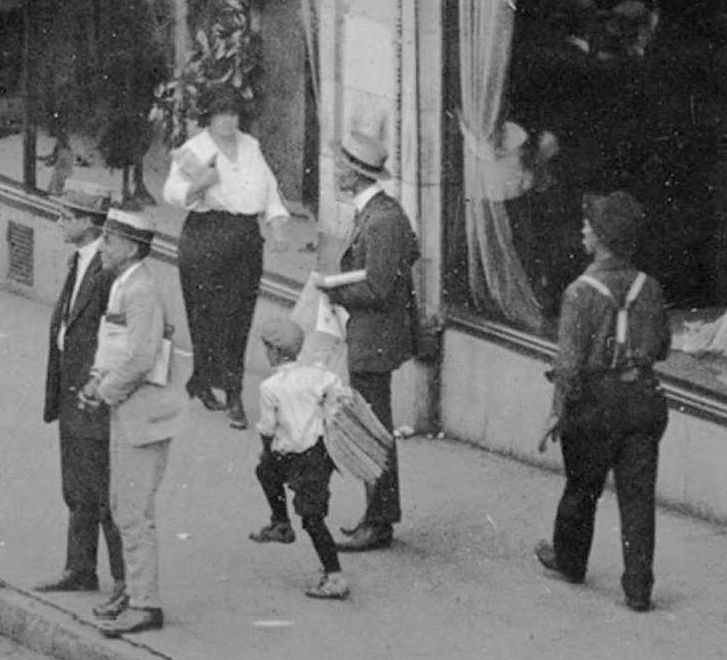
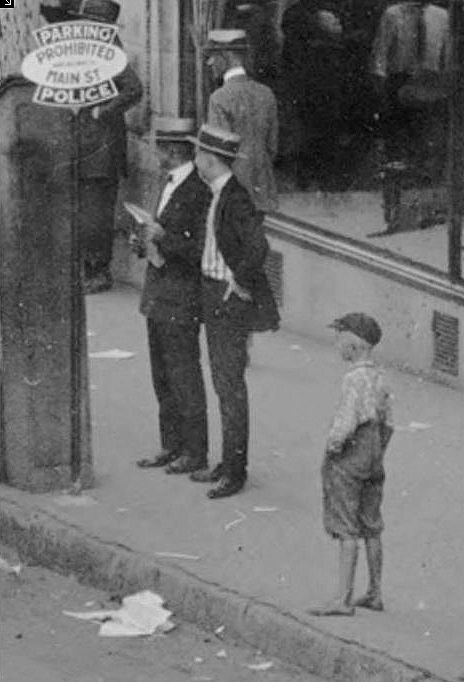
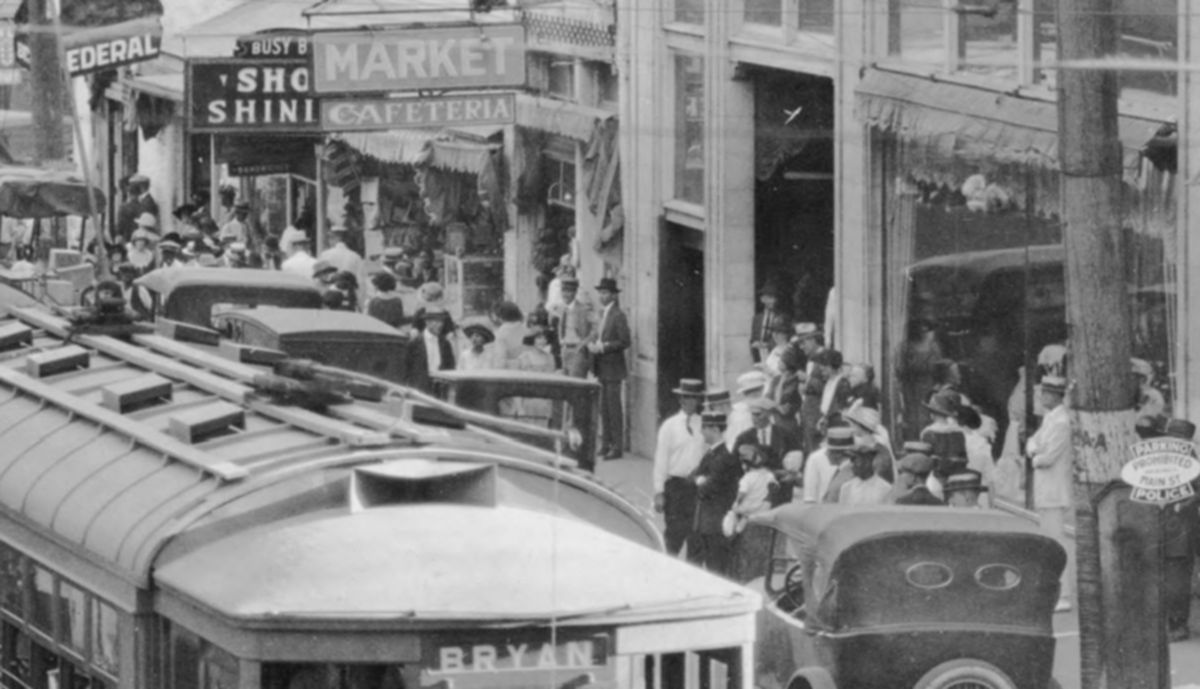
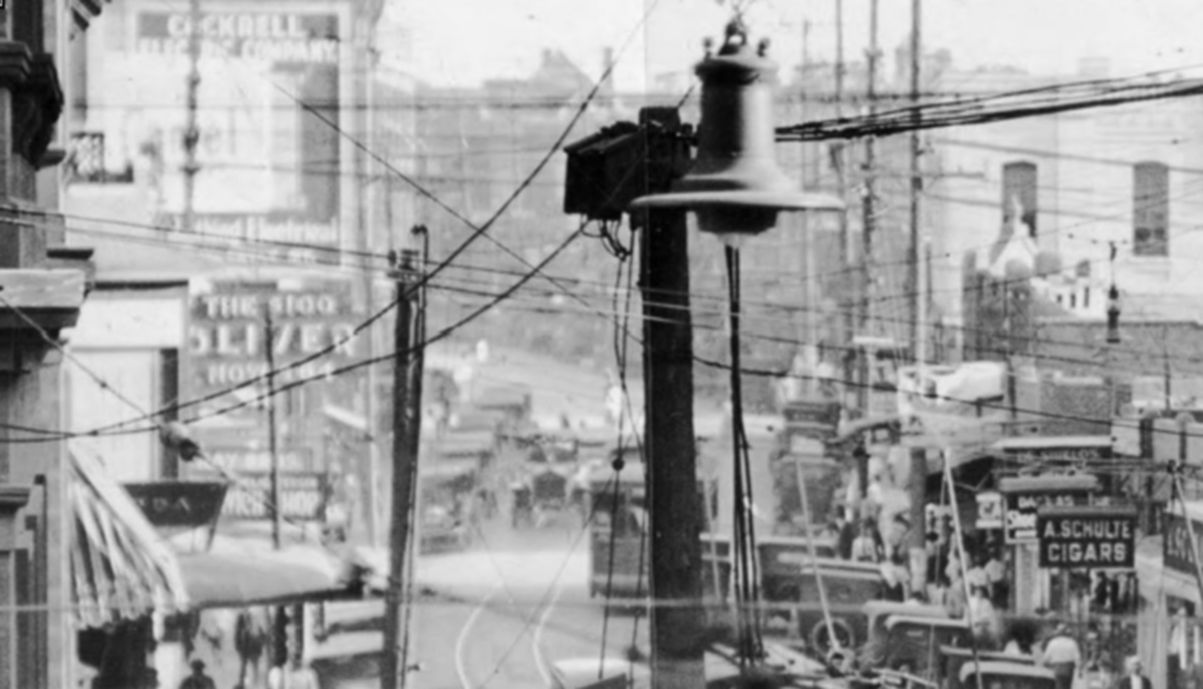
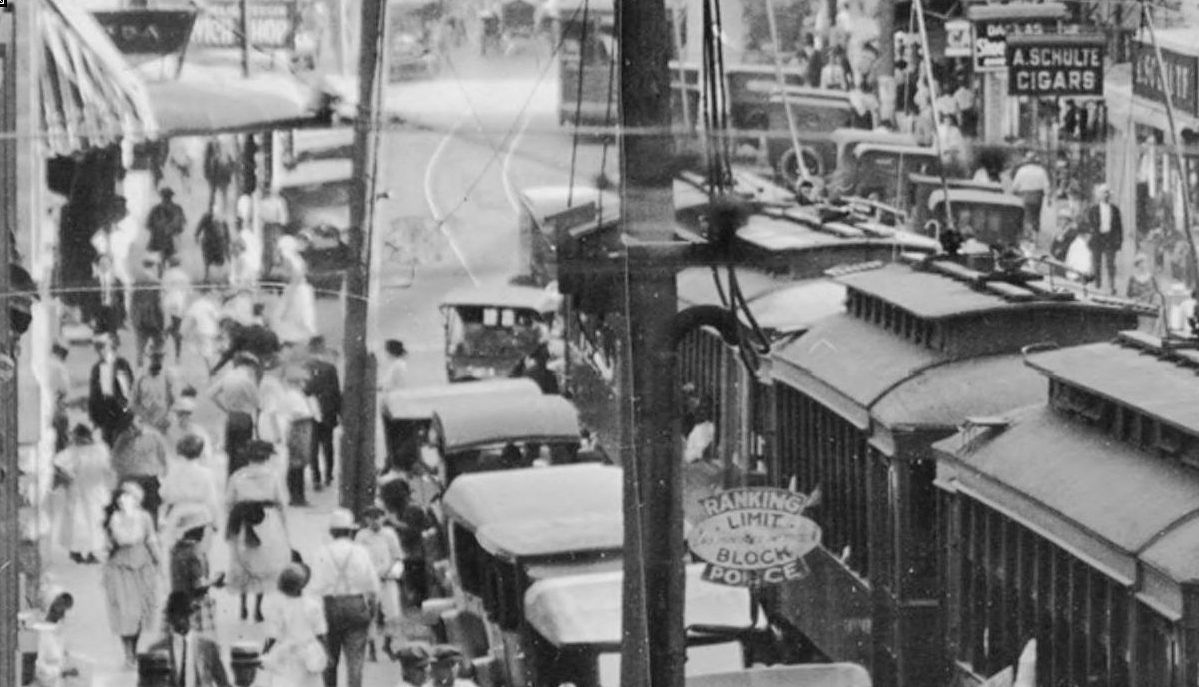
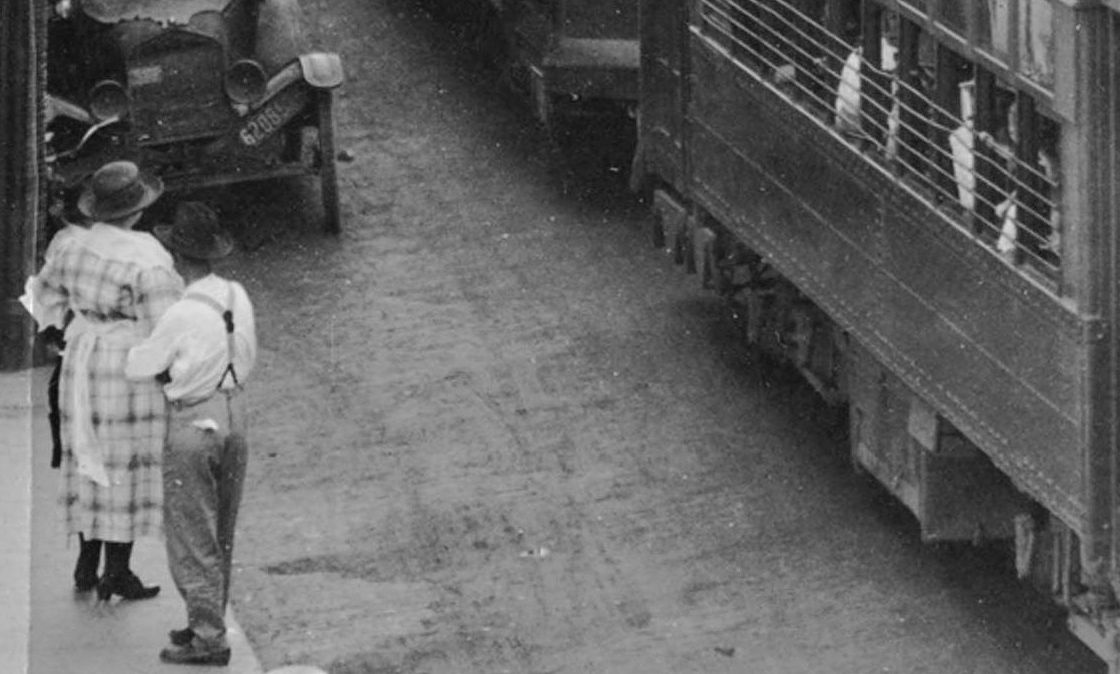
That traffic is crazy. But, to be perfectly honest, it’s far less interesting than all that human activity — hundreds of people just going about their daily business. It’s always fun to zoom in on these photos, and, below, I’ve broken the original photograph into several little vignettes. I love the people hanging out the Neiman-Marcus windows. And all those newsboys! Not quite as charming was all that overhead clutter of power lines and telephone lines; combined with the street traffic, it makes for a very claustrophobic — if vibrant — downtown street scene. (Click photos for larger images.)

2-ervay

3-ervay

4-ervay

5-ervayMy favorite “hidden” image in the larger photograph. The only moment of calm.

6-ervayI love this. The woman in front of the Neiman-Marcus plaque looking off into the distance, the display in the store window, the newsboy running down the street, the man in suspenders, the women’s fashions, and all those hats!

7-ervay

8-ervayA barefoot boy and litter everywhere.

9-ervay

10-ervay

11-ervayThe congestion is pretty bad above the streets, too.

12-ervay

13-ervayCabbies, newsboys, and working stiffs.

14-ervay

15-ervayI swear there was only one streetcar driver in Dallas, and he looked like this! Those motormen had a definite “look.”

***

Sources & Notes

Original photograph attributed to George A. McAfee, from the DeGolyer Library, Central University Libraries, Southern Methodist University, accessible here.

For other photos I’ve zoomed in on the details, see here.

*

Copyright © 2014 Paula Bosse. All Rights Reserved.

Mr. Peppermint!

by Paula Bosse

I have no idea where I came across this photo a couple of years ago, but it is without question my favorite photograph of my childhood pal and idol, Mr. Peppermint!

*

Copyright © 2014 Paula Bosse. All Rights Reserved.