Flashback : Dallas

A Miscellany: History, Ads, Pop Culture

Category: Dallas Radio/TV

“How the News Got Made” — SMU’s WFAA Newsfilm Collection Spotlighted at the Dallas VideoFest

wfaa-newsfilm_thumbnails_hamon_cul_smu(G. William Jones Film and Video Collection, SMU)

by Paula Bosse

The Dallas VideoFest is in full swing this weekend, and one of the events on the schedule is How the News Got Made: A Rare Look at SMU’s WFAA Newsfilm and a Conversation with the People who Created It.” This screening and panel discussion will include WFAA news clips and B-roll footage on 16mm film from the 1960s and ’70s, selected from the large WFAA Newsfilm Collection (part of the moving image holdings of the G. William Jones Film and Video Collection, Hamon Arts Library, Southern Methodist University).

A few months ago I saw a screening at SMU of some of these clips — which had been selected by the collection’s curator, Jeremy Spracklen, who has also, I believe, compiled the clips for the VideoFest presentation — and I really enjoyed it. Being able to watch 45- or 50-year-old news clips — of subjects both newsworthy and not-so-newsworthy — is an interesting way to study moments in the history of Dallas. It’s certainly more immediate and “flavorful” than reading old black and white newspaper clippings. I mean … you can listen to people actually talking. (With actual ACCENTS!) And see them move! SMU is in the process of identifying people and places seen in these clips and may soon request crowdsourced assistance from the public. It’s a large undertaking, further complicated by the fact that much of the footage was received by SMU randomly spliced together, some of it raw footage without sound. The hope is to identify subjects and subject matter in order to assist researchers, historians, and documentarians.

At present, almost two decades’ worth of these film reels are slowly being digitized; when the transfers are complete, they are uploaded to SMU’s Central University Libraries site and are free to be viewed by the public. Check what’s up now, here, and watch a few yourself.

There is a great Dallas Observer article by Jamie Laughlin on this collection. You must make sure to scroll down and watch the clip of fresh-faced Channel 8 newsboy Bill O’Reilly (yes, that Bill O’Reilly) interview the only slightly younger-looking future superstar ventriloquist (…two words I’ve never typed one right after the other before…) Jeff Dunham, who, at 14, seems really excited to be talking about his craft on TV.

And, if only a sliver of what I saw of the hilariously bizarre and wonderfully entertaining footage from about 1969 of mini-skirt-and-sideburn-hating Texas Land Commissioner Jerry Sadler — who was reported to have grabbed and choked a political critic in a dispute over Spanish galleon treasure recovered off the Texas coast (…yes, that’s what I said…) —  is shown at the VideoFest, it will be WELL worth your time!

***

Sources & Notes

The top image is a collection of thumbnail images of WFAA digital files which have been uploaded to the Central University Libraries’ site, here.

Read about this WFAA Newsfilm Collection in the Hamon Arts Library digital collection here.

For more information on the collection, contact filmarchive@smu.edu.

The Dallas VideoFest program, “How the News Got Made: A Rare Look at SMU’s WFAA Newsfilm and a Conversation with the People who Created It,” takes place this weekend, Saturday, Oct. 22, 2016, 5:15-6:45 PM at the Angelika Film Center. More information on the event and the panel participants is here.

*

Copyright © 2016 Paula Bosse. All Rights Reserved.
 

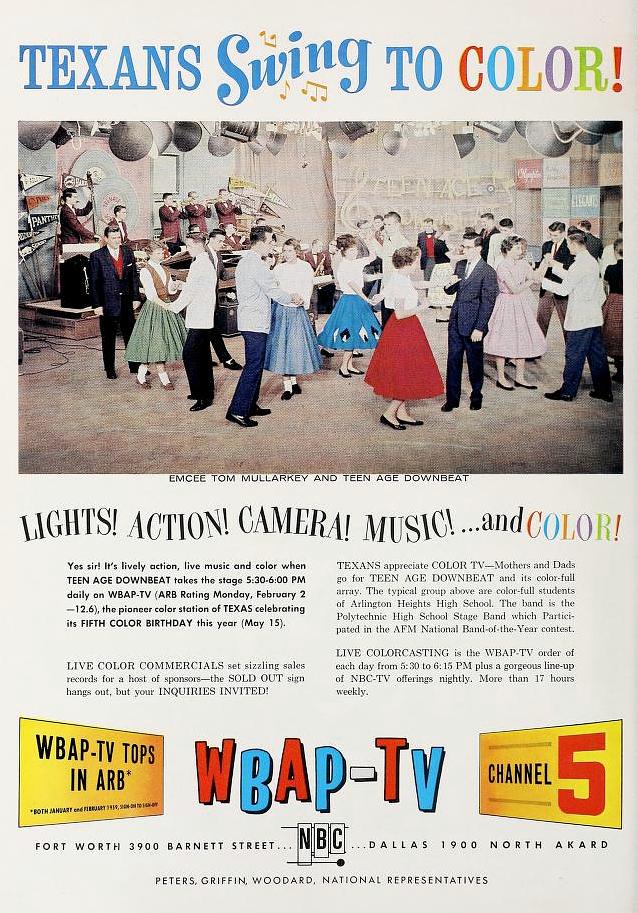
“Teen-Age Downbeat”

teen-age-downbeat_broadcasting-mag_051859_detWBAP’s “Teen-Age Downbeat,” 1959 (click for larger image)

by Paula Bosse

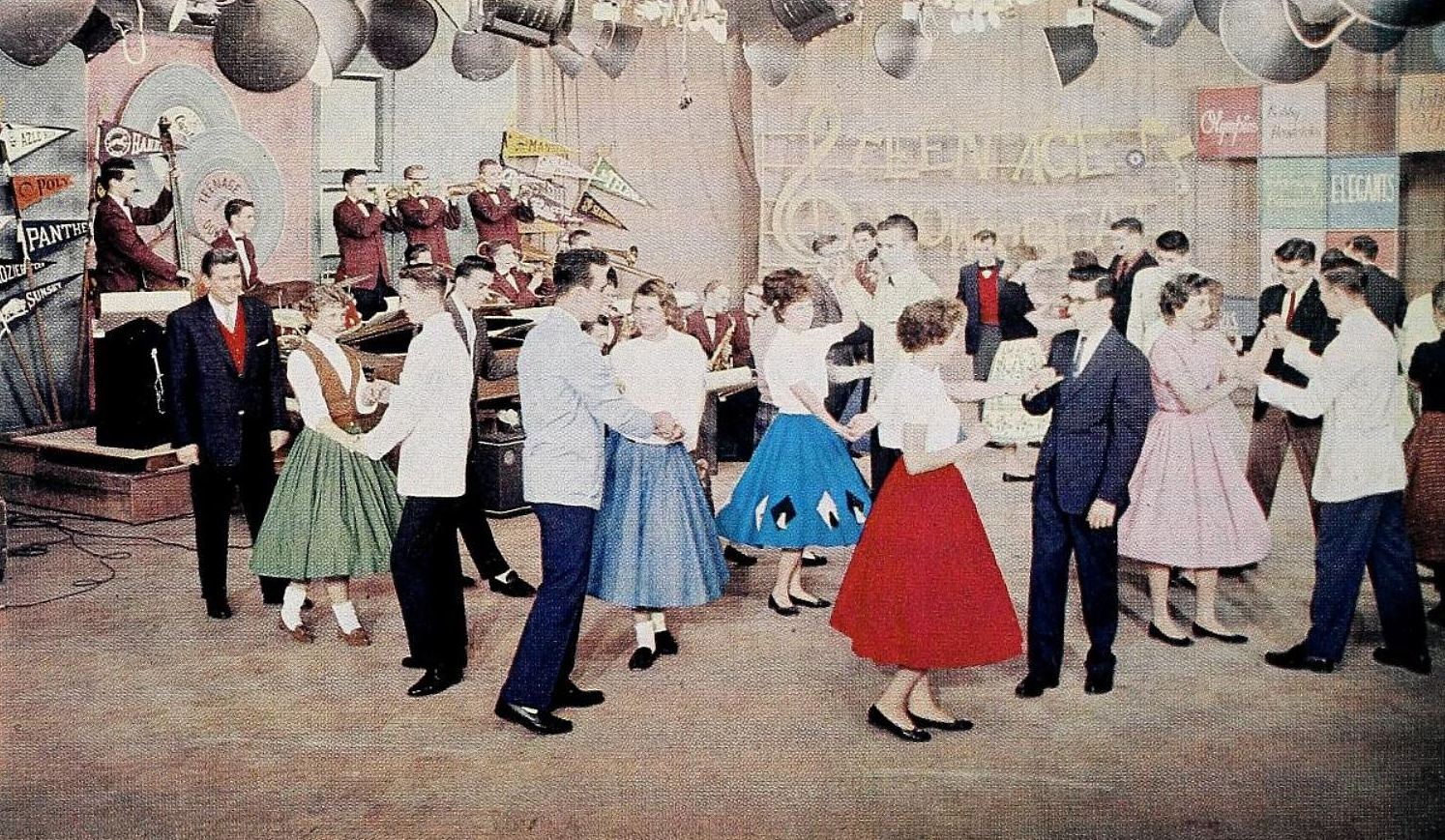
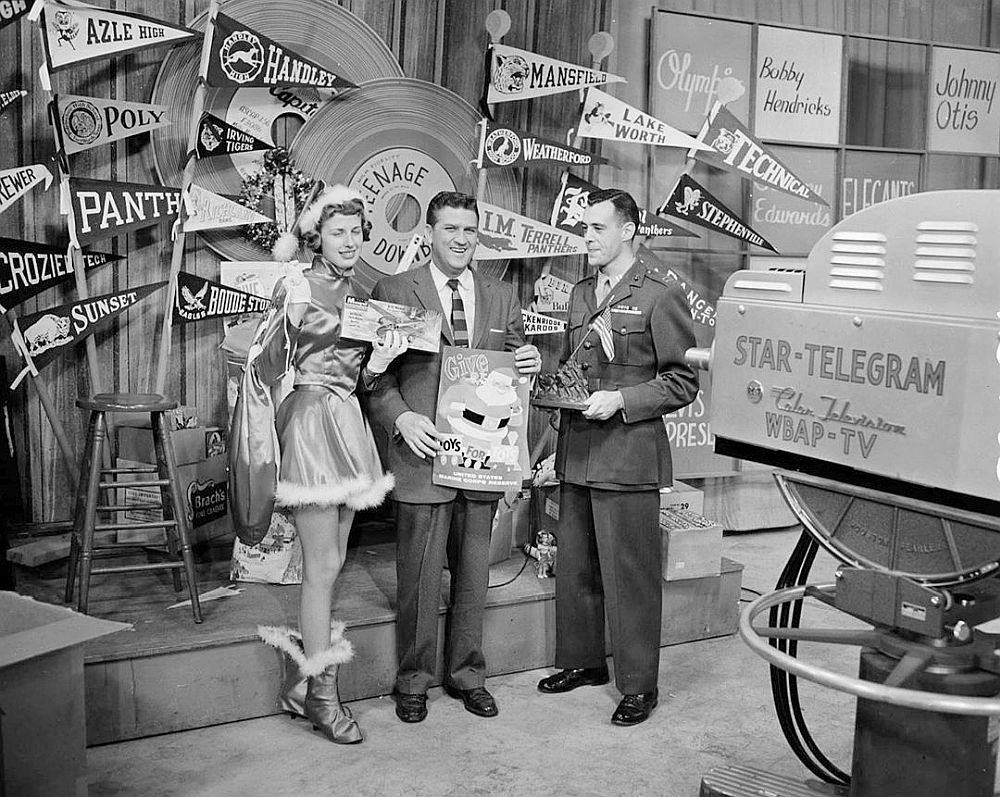
“Teen-Age Downbeat” — Fort Worth’s answer to “American Bandstand” — debuted on WBAP-TV in January, 1958 — in COLOR. It featured teens from the Dallas-Fort Worth area (…or maybe I should say from the Fort Worth-Dallas area…) who would play and dance to their favorite records. The host was WBAP broadcaster Tom Mullarkey (seen above at the left, wearing the red vest). The show was quite popular and lasted as best I can tell, from January, 1958 until July, 1961 (the last mention in The Fort Worth Star-Telegram was July 1, 1961). I’m guessing those kids danced to a lot of Fabian.

teenage-downbeat_fwst_010558FWST, Jan. 5, 1958

teen-age-downbeat_sponsor-mag_080860“Sponsor” trade magazine, Aug. 8, 1960

teen-age-downbeat_unt-lab-bandNorth Texas State College’s Lab Band with director Gene Hall

teenage-downbeat_fwst_022661
FWST, Feb. 26, 1961

teen-age-downbeat_broadcasting-mag_051859
“Broadcasting” trade magazine, May 18, 1959

teen-age-downbeat_xmas_1958_fortworthhistorical-IG“Toys For Tots” campaign, Christmas 1958

***

Sources & Notes

The color photo (which appeared in a full-page WBAP ad in the trade magazine Broadcasting) shows non-teen Tom Mullarkey watching over the dancers from Arlington Heights High School, as the Polytechnic High School Stage Band plays some happenin’ tunes. (I do see two Dallas high school pennants in the photo: Crozier Tech and Sunset.)

The photo showing director Gene Hall with the North Texas State College (now the University of North Texas) Laboratory Band was found at UNT’s Portal to Texas History site, here. The photo is not dated, but a blurb in The Fort Worth Star-Telegram mentioned that Hall and the band were to appear on “Teen-Age Downbeat” on Feb. 5, 1959.

Photo of the “Toys For Tots” campaign, featuring a sexy Santa’s helper, Tom Mularkey, and a Marine Corps (Reserve?) officer was found on the Instagram feed of @fortworthhistorical.

*

Copyright © 2016 Paula Bosse. All Rights Reserved.

Radio Mobile Units — ca. 1940

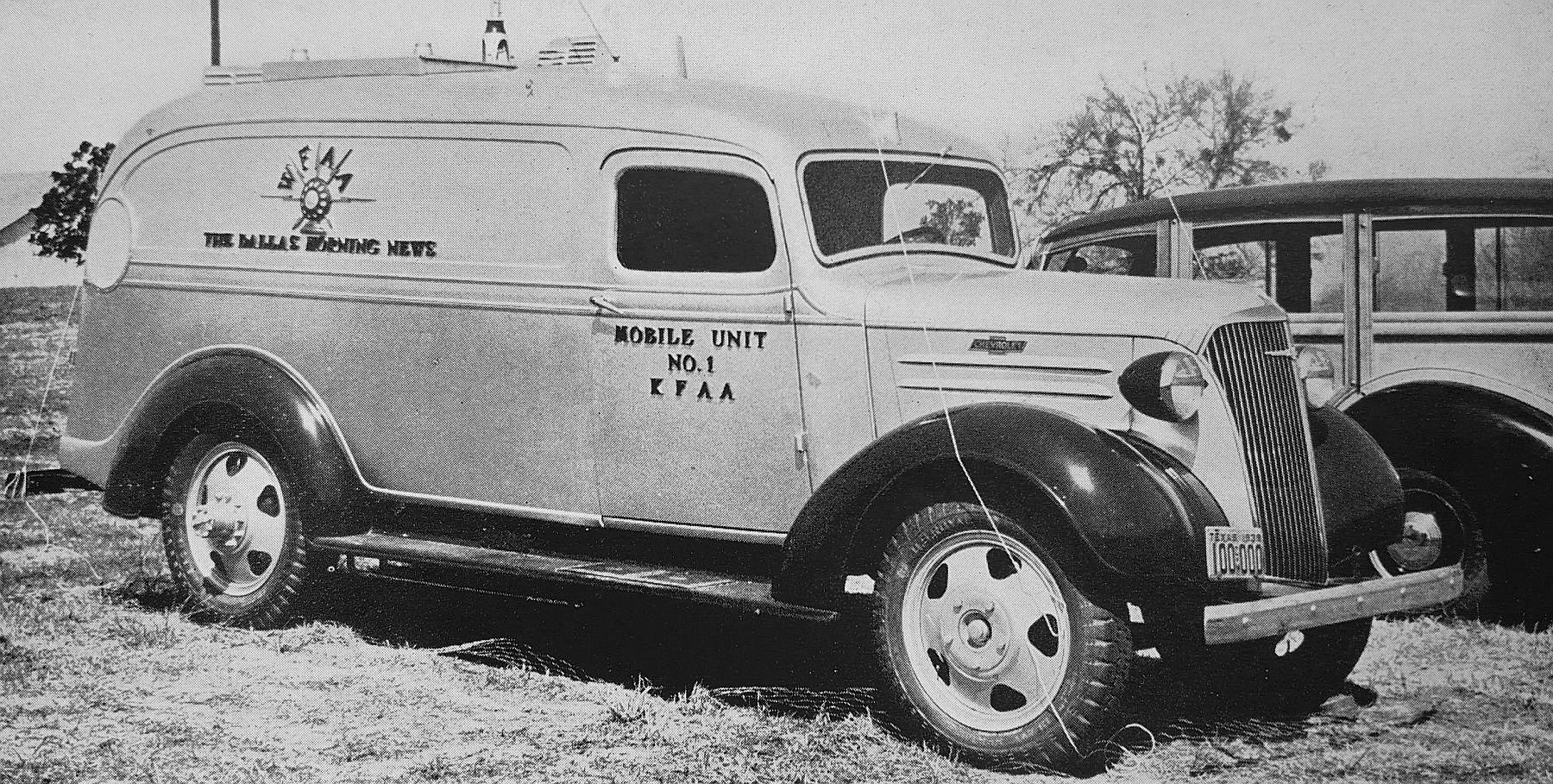
kfaa_mobile-unit_wfaa-fam-albumWhat? You’ve never heard of KFAA? (click for larger image)

by Paula Bosse

Check out these pre-war mobile units for radio stations WFAA and WBAP. The unit above actually had its own call letters — KFAA — and was licensed as a separate station. (That logo!) The caption, from a 1941 promotional booklet issued by stations WFAA (Dallas), WBAP (Fort Worth), and KGKO (Wichita Falls):

The WFAA Mobile Unit shown here is a complete short wave broadcasting station on wheels. The unit has its own call letters, KFAA, because it is a self-contained and separately licensed station. The amazing array of facilities contained in this one-and-one-half-ton truck includes a transmitter, generator, receiving equipment, public address system and pre–amplifiers. The transmitter tower on top of the truck can be raised to a height of 35 feet, making it possible to pick up the mobile unit’s signals for re-broadcast from a distance of 50 miles.

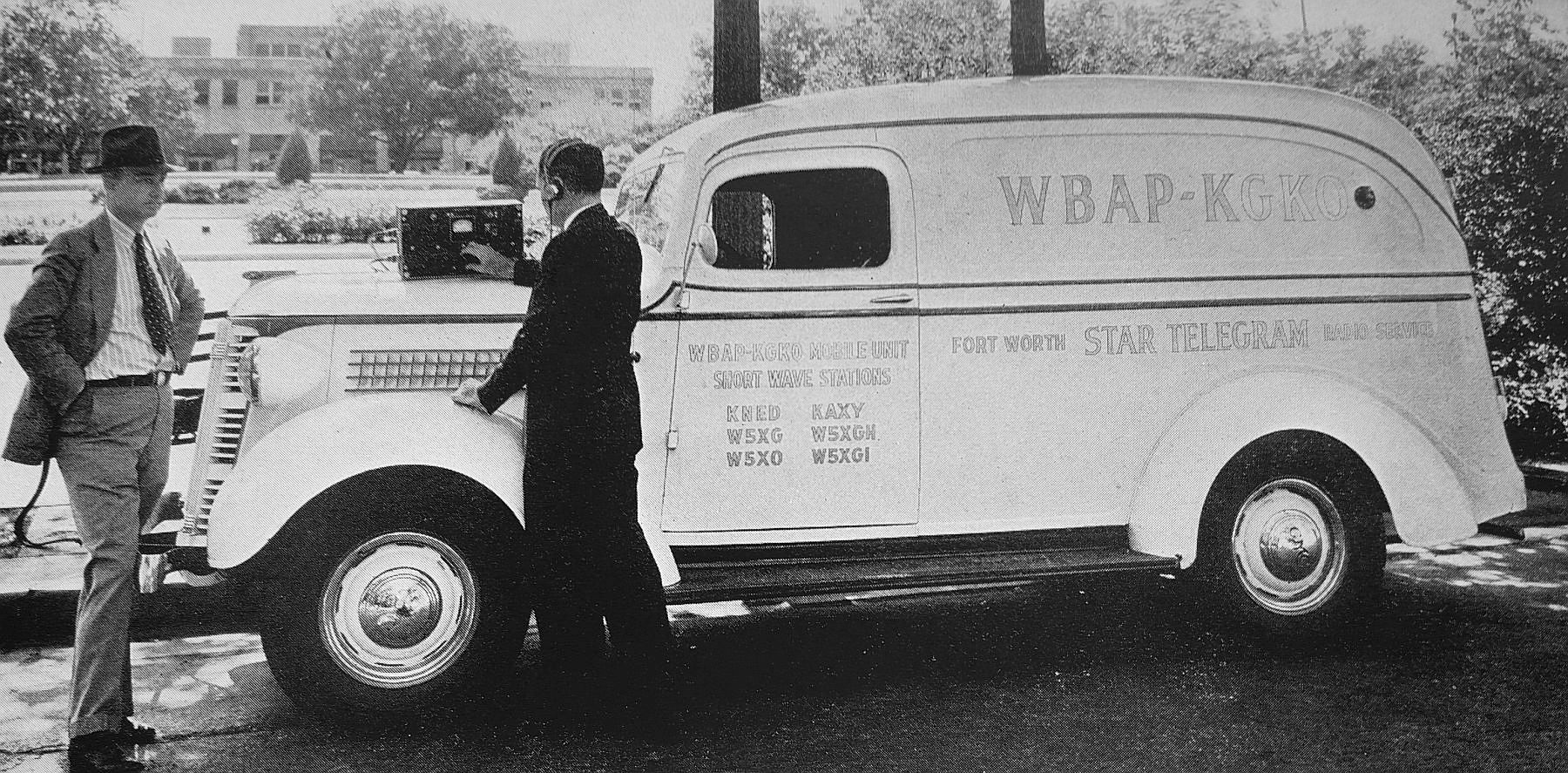
Here’s the WBAP/KGKO unit:

wbap-mobile-unit

Fort Worth Star-Telegram Mobile Radio Unit – with Chief Engineer R. C. “Super” Stinson, left, and A. M. Woodford, production man, handling a remote or “nemo” pickup from Burnett Park, Fort Worth. The WBAP-KGKO Mobile Unit carries six short wave transmitters and receivers besides a power plant capable of generating electricity for a small town of 500 people. This unit “swam” through a recent flood in Brady, Texas, established communication from the stricken area and received the congratulations of the Texas Highway Patrol. It also played a star role in the Amarillo storm.

***

Photos from the booklet WFAA, WBAP, KGKO Combined Family Album (Dallas-Fort Worth, 1941).

Why were arch-rivals WFAA (owned by The Dallas Morning News) and WBAP (owned by The Fort Worth Star-Telegram) co-publishing a promotional booklet? Because they shared the same transmitter and had an extremely odd broadcasting agreement. Read about it in my previous post “WFAA & WBAP’s Unusual Broadcasting Alliance,” here.

Click those photos!

*

Copyright © 2016 Paula Bosse. All Rights Reserved.

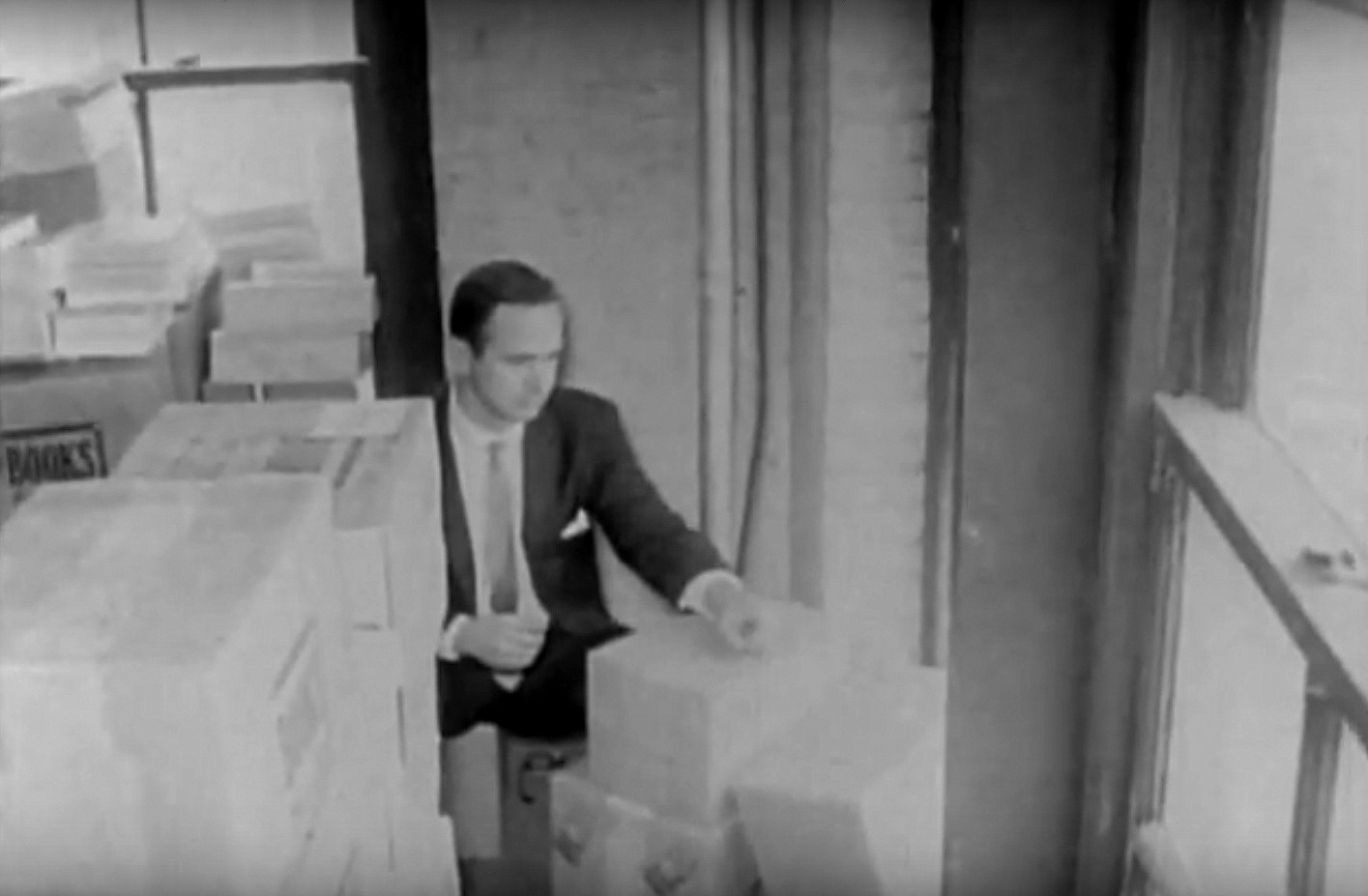
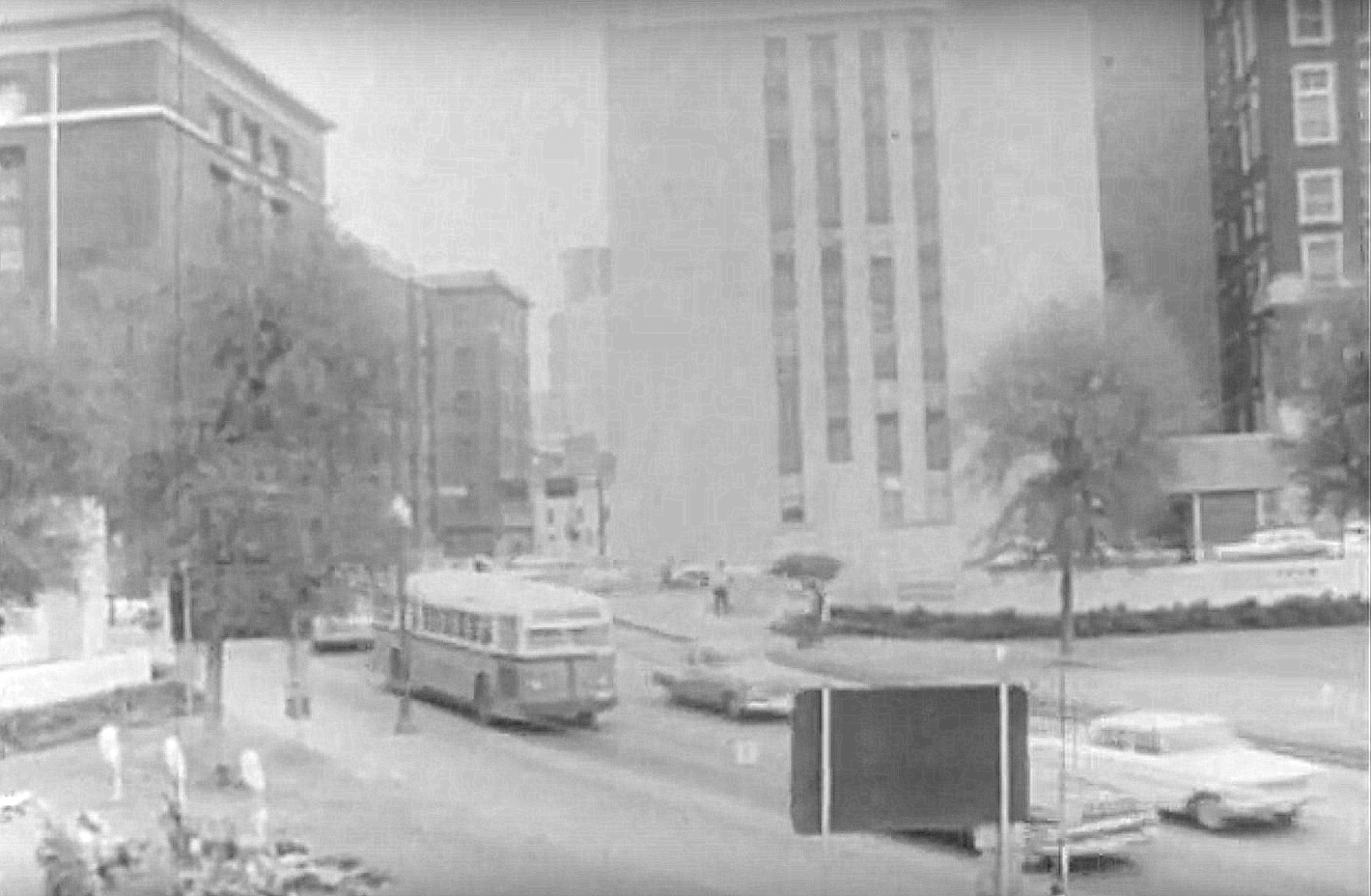
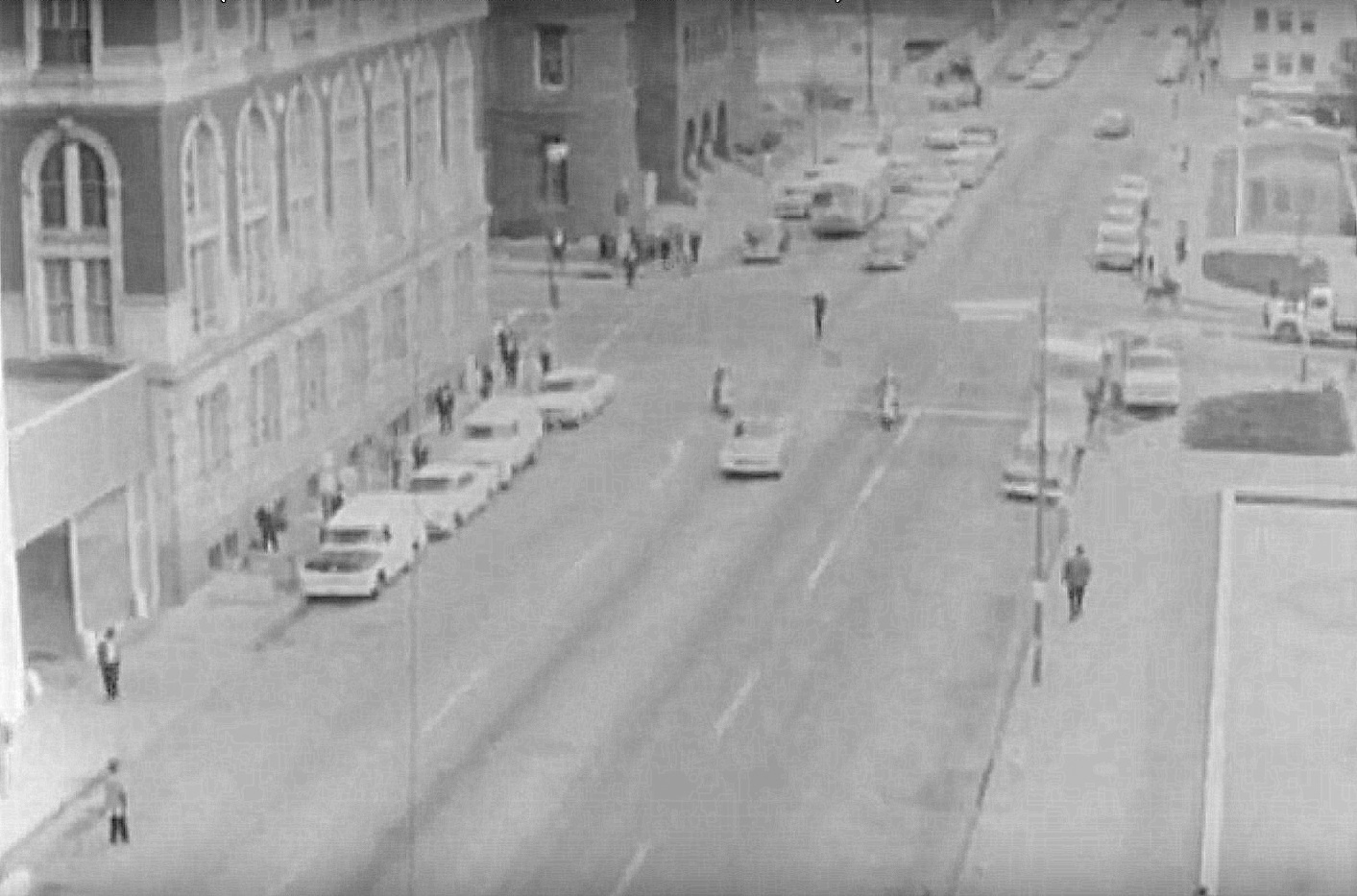
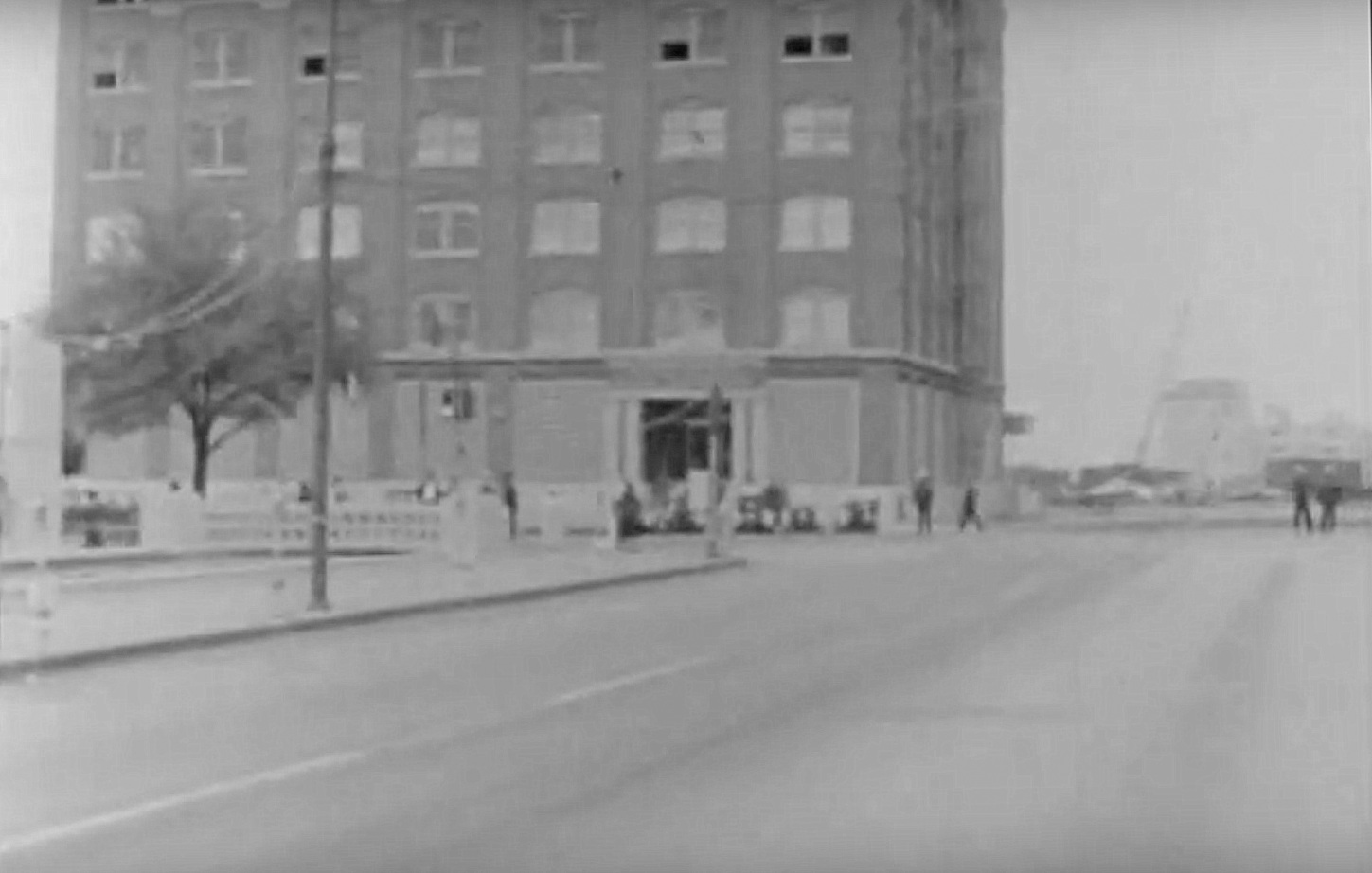
The Official Government Reenactment of the Kennedy Assassination — Nov. 27, 1963

reenactment_agent-at-windowAgent Howlett at window with “rifle”

by Paula Bosse

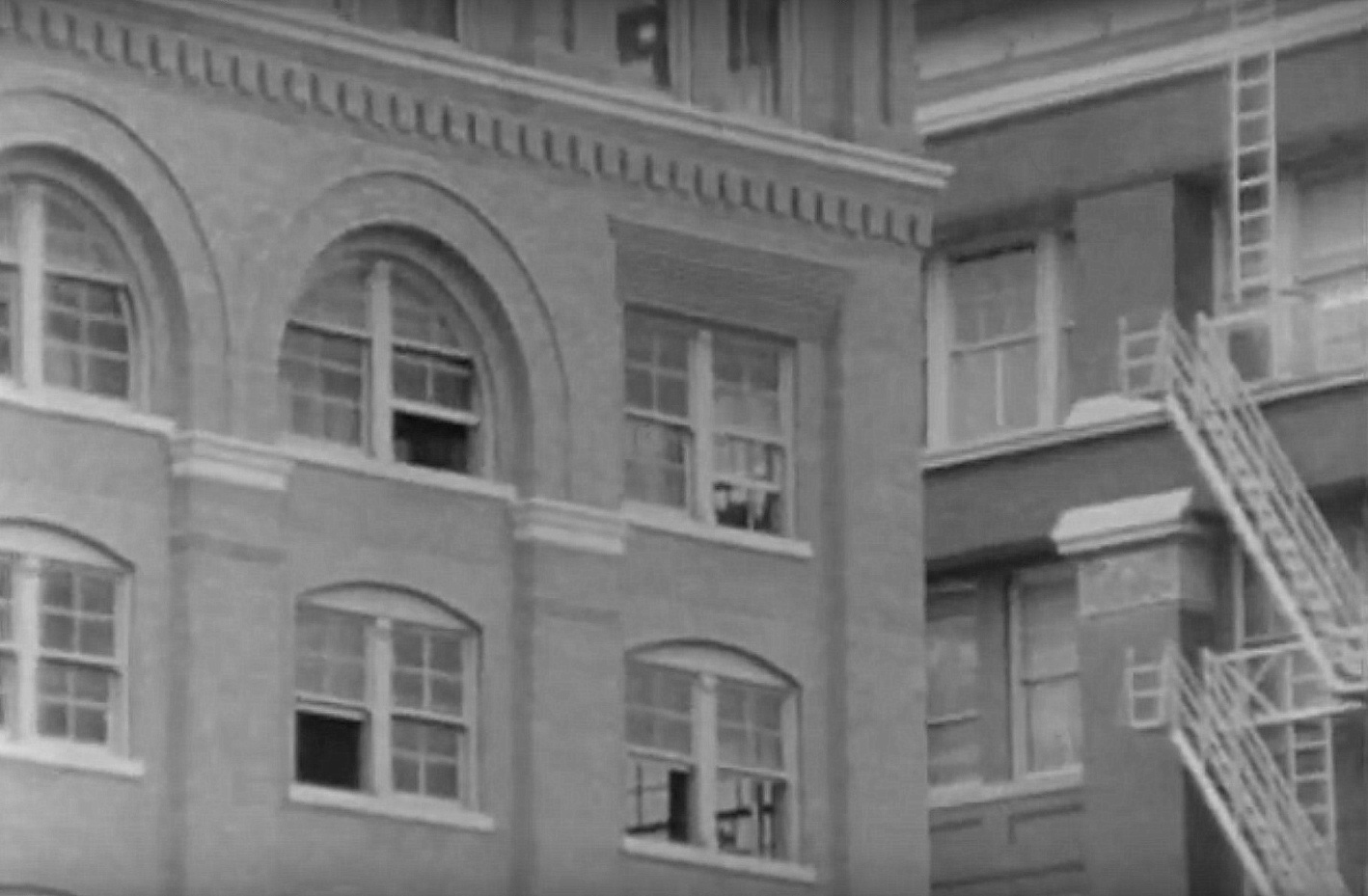
Yesterday I received a comment on a previous post I wrote about the first official reenactment of the Kennedy assassination, and that got me to wondering if that film was online anywhere. The film was made as part of the Secret Service investigation and was filmed in Dealey Plaza and in the Texas School Book Depository; the motorcade sequence was filmed on November 27, 1963, just five days after the assassination. Even though my knowledge of the events of November 22 is fairly limited (and what I do know is mostly due to osmosis), just growing up here you kind of feel you’ve seen everything connected with the assassination. But I’d never seen this film or the one made a few months later with the production assistance of local TV station KRLD, which included much of the same footage. Apparently, the original film had not been made public until fairly recently.

It’s very interesting to watch, and the fact that there is no sound makes it appropriately eerie. I have to admit that I was most interested in seeing the footage of downtown streets. And the interior of the Texas School Book Depository beyond just the “sniper’s nest” we always see. (I can now say I’ve sneaked a peek inside the depository’s employee lunchroom.)

So here are the two films. The first one was made by the Secret Service, with the Dealey Plaza reenactment filmed on Nov. 27, 1963. It has no sound. I thought it was interesting, but a lot of people might find it a little dull and repetitive. Below this video is one which uses this footage to lay out the government’s findings, with lots of details and no-nonsense narration by KRLD’s Jim Underwood. (I’m not sure why — or for whom — this educational film was made. It doesn’t seem to have been screened for the public.) The silent film has more footage, but the narrated film is easier to follow. And below that are screenshots from the government’s “reconstruction.” (UPDATE, Jan. 2024: The two videos I had originally linked have been removed from YouTube. I’m linking a video I found recently below.)

*

Below, a few screenshots from the government footage. The one at the top of this post shows Special Agent John Joe Howlett sitting at the sixth-floor window, as if holding a rifle.

Below, Elm St. looking east from Dealey Plaza, with the white Records Building at center right.

reenactment_elm*

The one-car-two-motorcycle motorcade turning from Main onto Houston St. Looking south from … you know where.

reenactment_houston-st*

Houston St. looking north, with the School Book Depository on the left and a disconcertingly empty space straight ahead.

reenactment_houston-st-north*

A nice artsy shot of the book depository and the old John Deere Building.

reenactment_tsbd-ext*

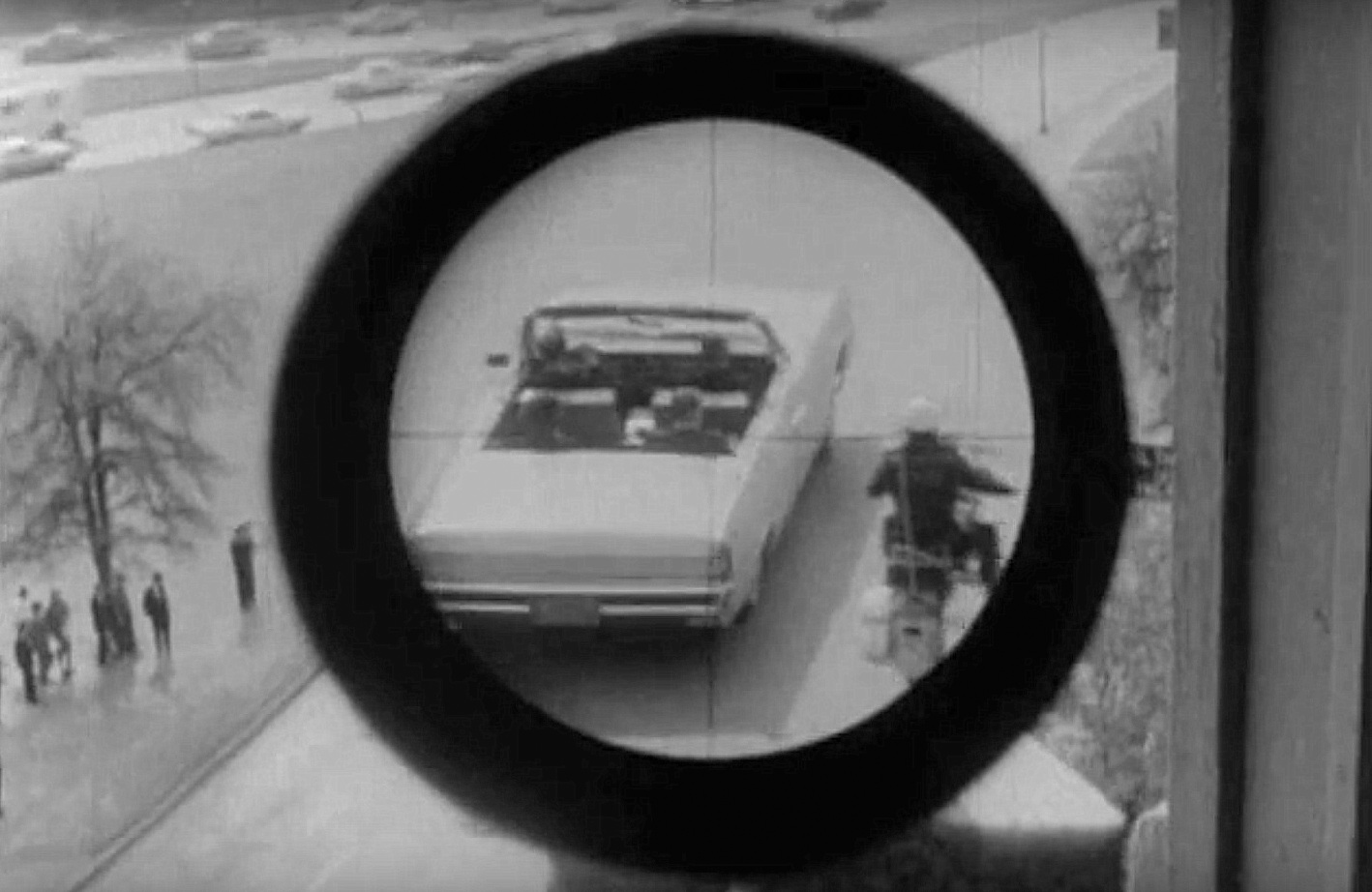
Camera with “scope” attachment.

reenactment_scope*

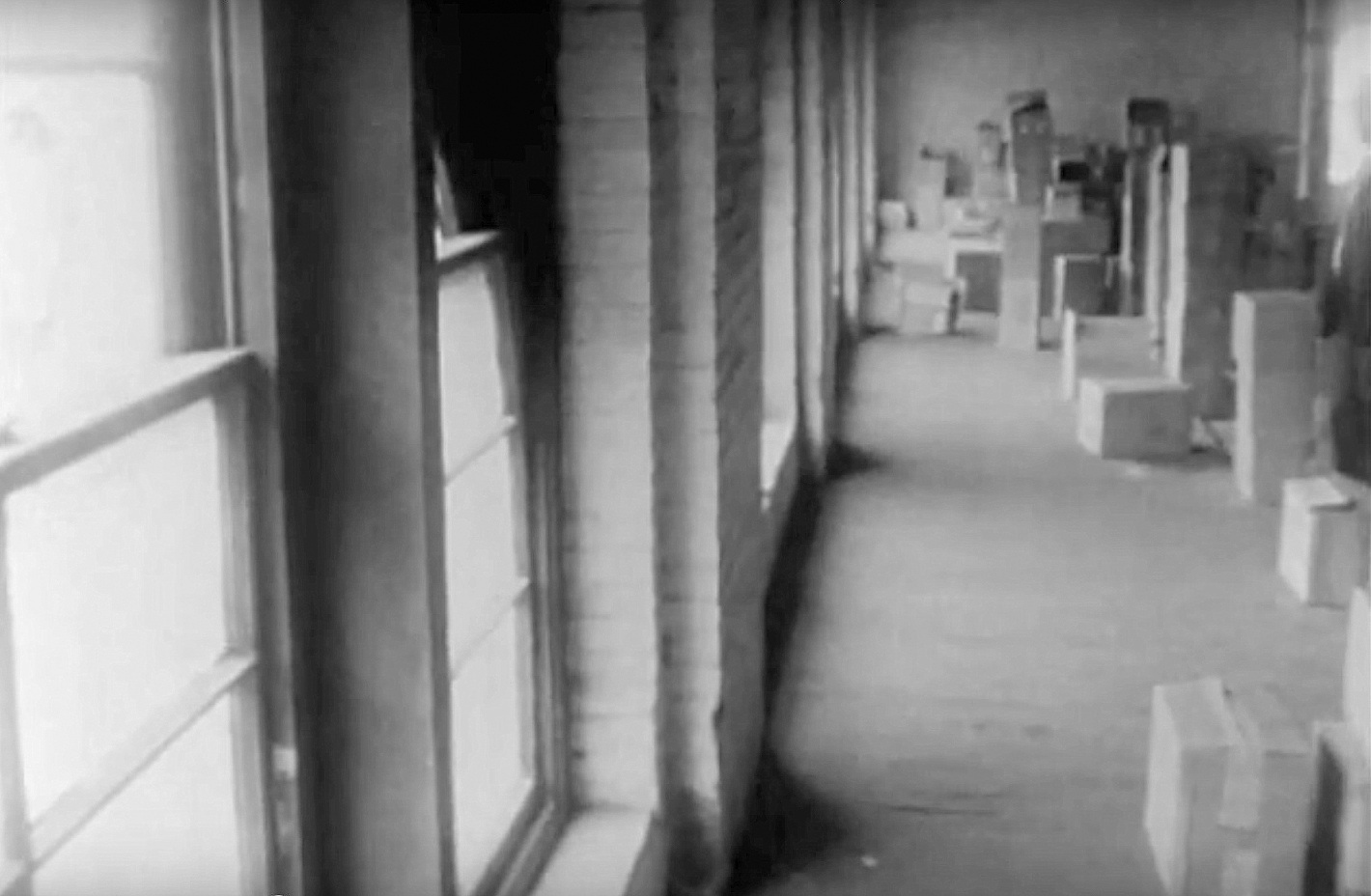
Windows, boxes, looking toward the west end of the building from the “nest” end of the sixth floor.

reenactment_tsbd-int*

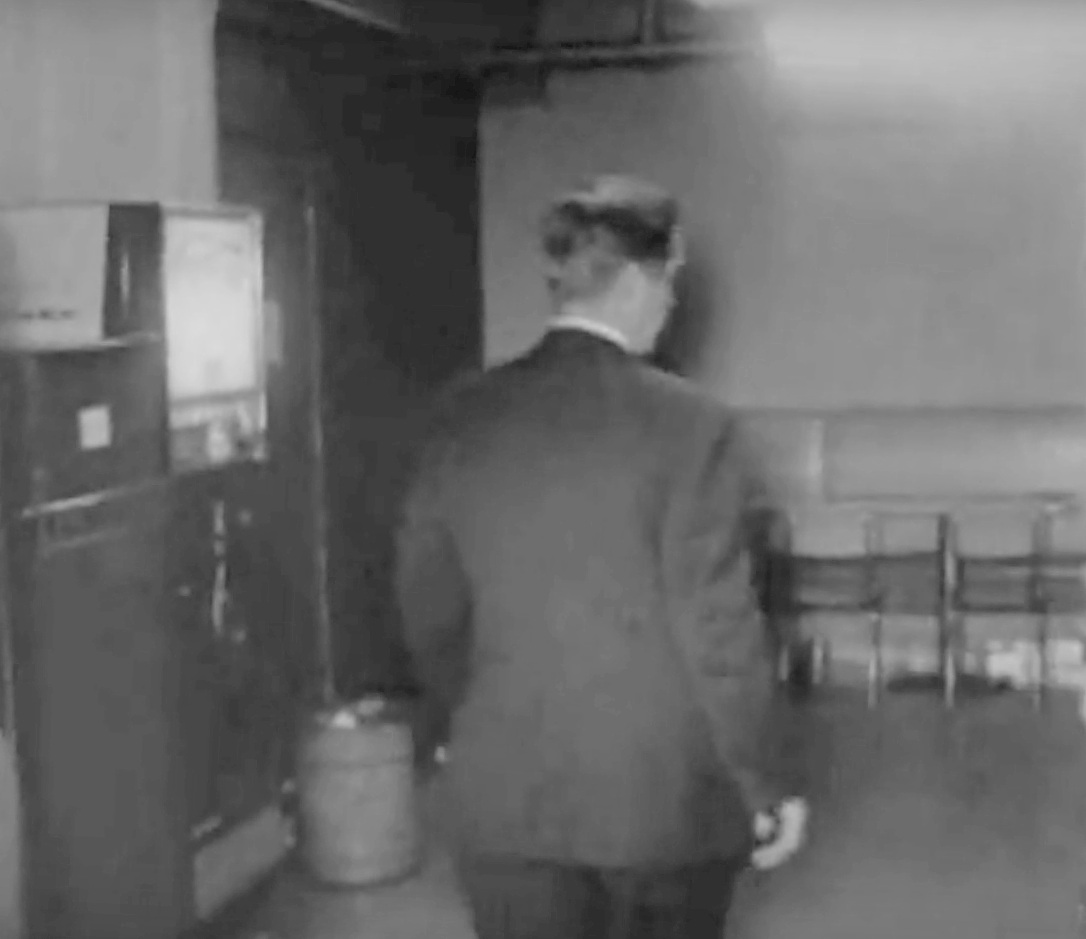
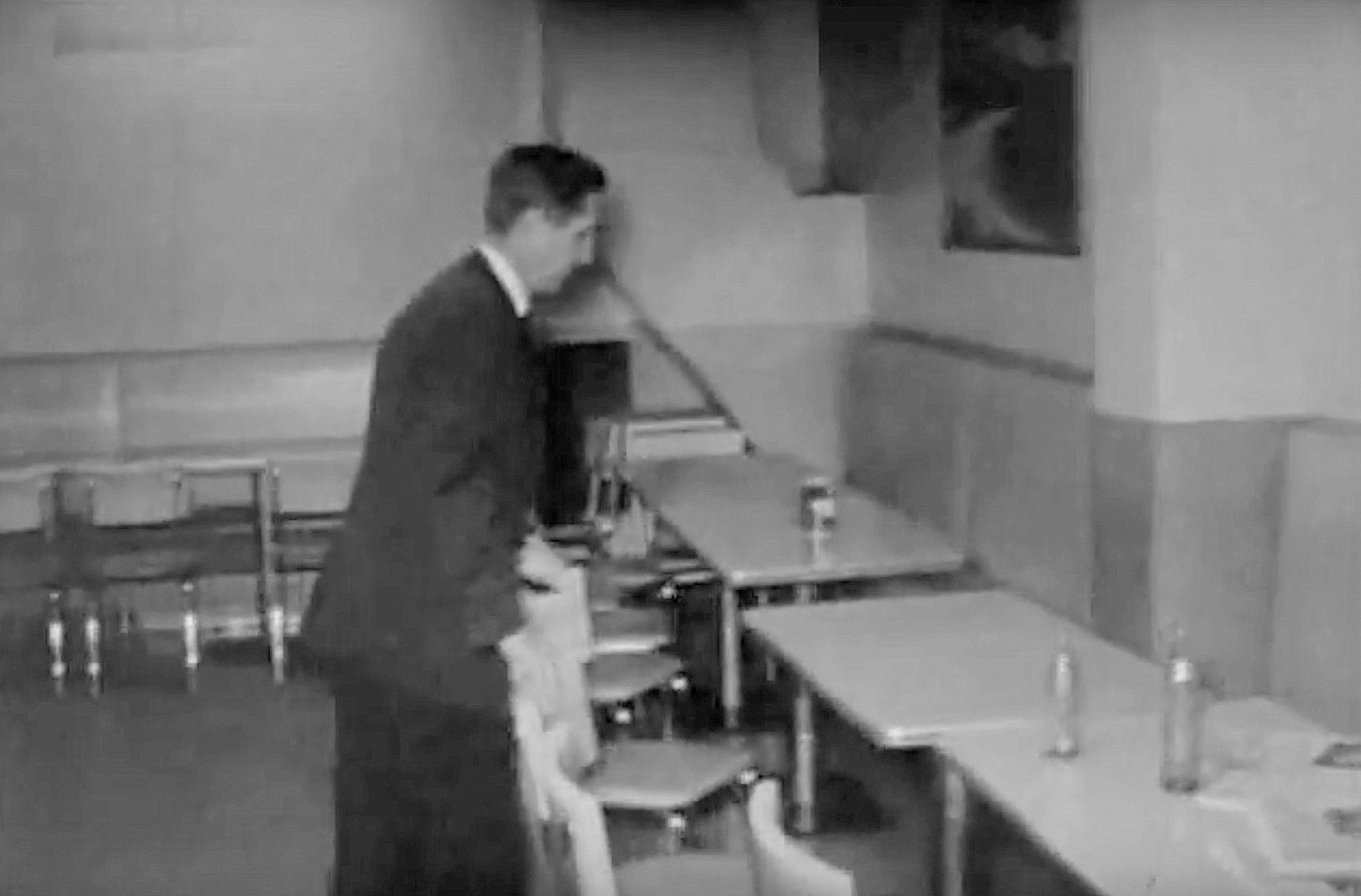
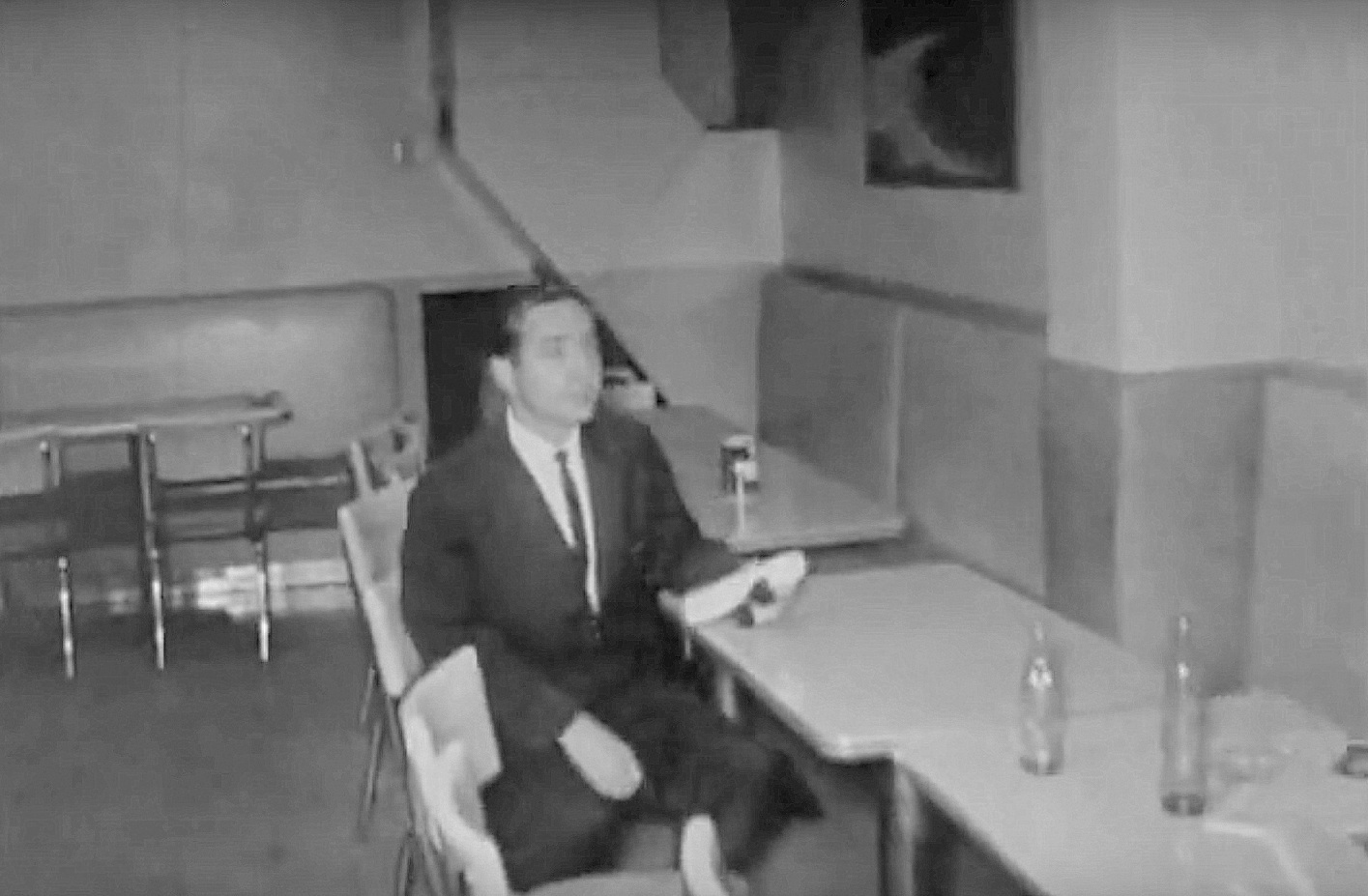
A trip to the second-floor lunchroom, with its vending machines which are, apparently, important in Lee Harvey Oswald’s alibi. These images show Special Agent Talmadge Bailey walking past the vending machines and sitting at a table.

reenactment_tsbd-bldg-lunchroom1

reenactment_tsbd-bldg-lunchroom2

reenactment_tsbd-bldg-lunchroom3

***

Sources & Notes

See Dallas Times Herald photographs that were shot while the Dealey Plaza “reenacting” was going on in my previous post, “The First JFK Assassination Reenactment — 1963,” here. (As for the comment that started me off on this, I’m still not sure whether the cameramen in the car are KRLD employees or not.)

*

Copyright © 2016 Paula Bosse. All Rights Reserved.

Sonny James: The “Shindig Heartbreaker”

shindig-cast_sonny-james-websiteSonny James, center, with fiddle (photo: SonnyJames.com)

by Paula Bosse

Sonny James — the much-loved Country Music Hall of Fame singer — died yesterday (Feb. 22, 2016). When I was a child, his version of “Runnin’ Bear” was my favorite song, and it was played endlessly throughout the ’70s on Dallas’ classic country stations like KBOX and WBAP. I was surprised to learn a few years ago, that the Alabama-born Sonny James lived in Dallas for several years, and that Dallas was where he was performing regularly when he exploded into the national consciousness with his first #1 hit, “Young Love.”

sonny-james_dmn_0609561952

Before he made his way to Dallas, Sonny James had been making a name for himself as a performer on Shreveport’s Louisiana Hayride. One of his first appearances in Dallas was during his Hayride Days: he was a guest on the Big D Jamboree in the summer of 1952.

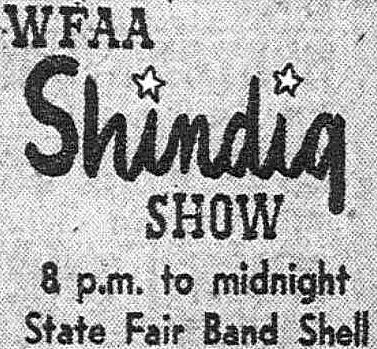
He must have made quite a splash, because only a month later, he had left the Hayride, moved to Dallas, and was signed to appear on the show “Saturday Nite Shindig,” the WFAA-sponsored answer to the Big D Jamboree, which debuted on October 11, 1952. (As “Saturday Night Shindig,” the radio show had been a WFAA staple since it began in 1944; Sonny James was hired to be part of a new “Shindig,” which was revamped from a folksy half-hour show to a 4-hour live music show and was broadcast from Fair Park.)

“Yeoow! More Zip than a Singed Cat!” (Click for larger image.)

sonny-james_dmn_100852Oct. 8, 1952

sonny-james_dmn_101052Oct. 10, 1952

It was an immediate hit, and Sonny became the main draw and something of a teen heart-throb. Less than a month after the announcement of his permanent gig as a “Shindigger,” he also got his own radio show on WFAA, Tuesday and Thursday mornings from 11:00 to 11:15.

Pretty soon, the Shindig revue was being simulcast on TV and radio, live from Fair Park (from the bandshell when it was warm, and from various other buildings during cold and inclement weather).

sonny-james_dmn_041153April 11, 1953

The Shindig show seems to have died away in 1954 or 1955. Sonny James headed back to the Sportatorium and the Big D Jamboree (which was run by his manager, Ed McLemore). One show of note was this one in 1955, with his old Louisiana Hayride pal Elvis Presley. (McLemore made sure that even though Elvis was the headliner, Sonny’s name was actually bigger!)

big-d-jamboree_FWST_041555-elvis_sonny-jamesApril 15, 1955

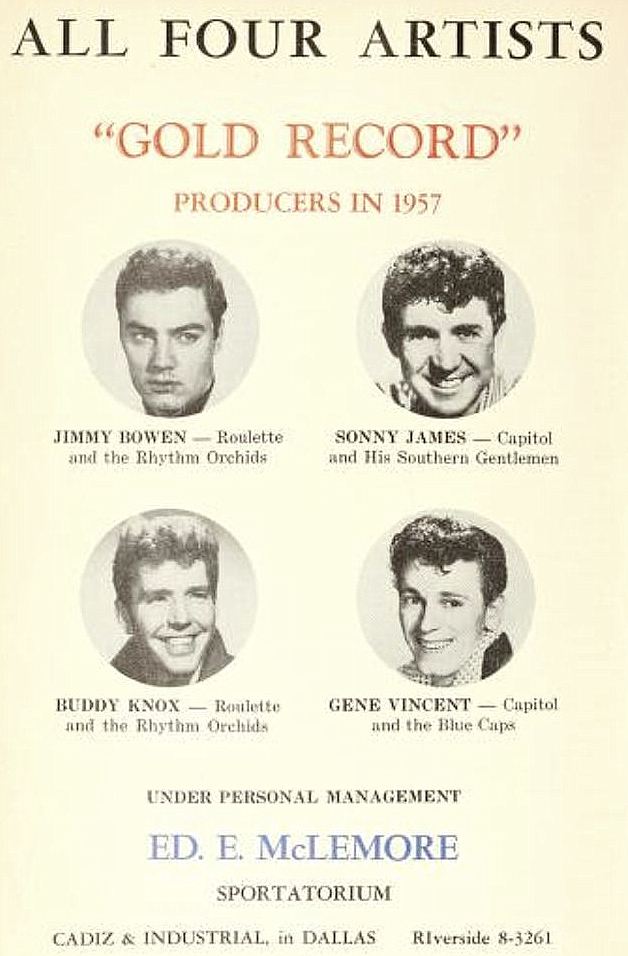
Sonny James had been recording for Capitol for several years, with some success, but it wasn’t until the end of 1956 that he had his mammoth #1 crossover hit, “Young Love,” which made him a national star. Apparently, he kept a residence in Dallas for a while (the last address I see for him in Dallas was in 1955 at 4718 Capitol, between N. Carroll and Fitzhugh). While living in Dallas, he was a steadfast member of the Church of Christ at East Side and Peak, and he frequently participated in area fishing contests (in fact, there might have been more mentions of his extracurricular fishing exploits in the local papers than there were mentions of his show-biz exploits — his fishing activities were often covered using his real name, Jimmie Loden). One person who lived in the same neighborhood Sonny did recalled on a Dallas-history message board that Sonny worked on Saturday mornings bagging groceries at a store on the corner of Capitol and Fitzhugh.

Sonny James went on to be a much-loved country performer who racked up a number of hits and was, apparently, one of the nicest guys around. He was most definitely a Southern Gentleman. Thanks, Sonny.

sonny-james_shindig_ebay

*

sonny-james_dmn_110852-shindig-ad
Nov. 8, 1952

sonny-james_promo-photo_1953
1953

shindig_dmn_091253
Sept. 12, 1953

shindig_billboard_100353
Billboard, Oct. 3, 1953

sonny-james_dmn_082154
Aug. 21, 1954

james-sonny_1957_promo-photoRadio Annual and Television Yearbook, 1957

james-sonny_mclemore_1958Radio Annual and Television Yearbook, 1958

***

Sources & Notes

Sonny James’ obituary form the Hollywood Reporter is here. His Wikipedia page is here.

The official Sonny James website is here.

To get an idea of the absolutely HOT hillbilly and rockabilly music that was being performed in Dallas in the years that Sonny James was here, check out this fantastic sampling of recordings from the Big D Jamboree:

*

See a few photos of Sonny James in Dallas at SonnyJames.com here (click thumbnails for larger images — the photo of Sonny sitting in the wings watching Elvis on stage at the Big D Jamboree is pretty great!).

A couple of good articles about Sonny James’ time in Dallas (written while he still considered himself a resident of the city) can be found in the Dallas Morning News archives:

  • “Success Won’t Spoil Mr. James” by Tony Zoppi in his “Dallas After Dark” column (DMN, Feb. 10, 1957)
  • “Sonny Snubs That Las Vegas ‘Loot'” by, of all people, Frank X. Tolbert in his “Tolbert’s Texas” column (May 13, 1957), in which Sonny — fresh off his 2.5-million-selling “Young Love” hit — talked about having a clause in contracts saying he would not perform in places with drinking, “clinch dancing,” and gambling, mostly because he did not want to exclude his teenage fans from being able to see him perform.

A good interview with Sonny James — packed with photos — appeared in the January, 1958 issue of TV Radio Mirror, a full scan of which you can find here. Even after he had hit the mega-big-time, Sonny said he continued to keep an apartment in Dallas. In the story there is a photo of his Dallas girlfriend, Doris Farmer (née Shrode) — she and Sonny took out a marriage license in July, 1957 (seen here) — I’m not sure when they married, but Sonny and Doris were happily married until Sonny’s death, almost 60 years.

Another performer who lived in the DFW area at the same time as Sonny James and who was also on the cusp of national stardom was Pat Boone, who had his own show on WBAP while attending college in Denton. Sonny and Pat were friends and even appeared on a few bills together. They were both also members of the Church of Christ, which both no doubt felt was an important bond. I wrote about Pat Boone’s time in DFW in the Flashback Dallas post “Pat Boone, Host of Channel 5’s ‘Teen Times’ — 1954,” here.

*

Copyright © 2016 Paula Bosse. All Rights Reserved.

Radio Broadcasting, 1922-Style

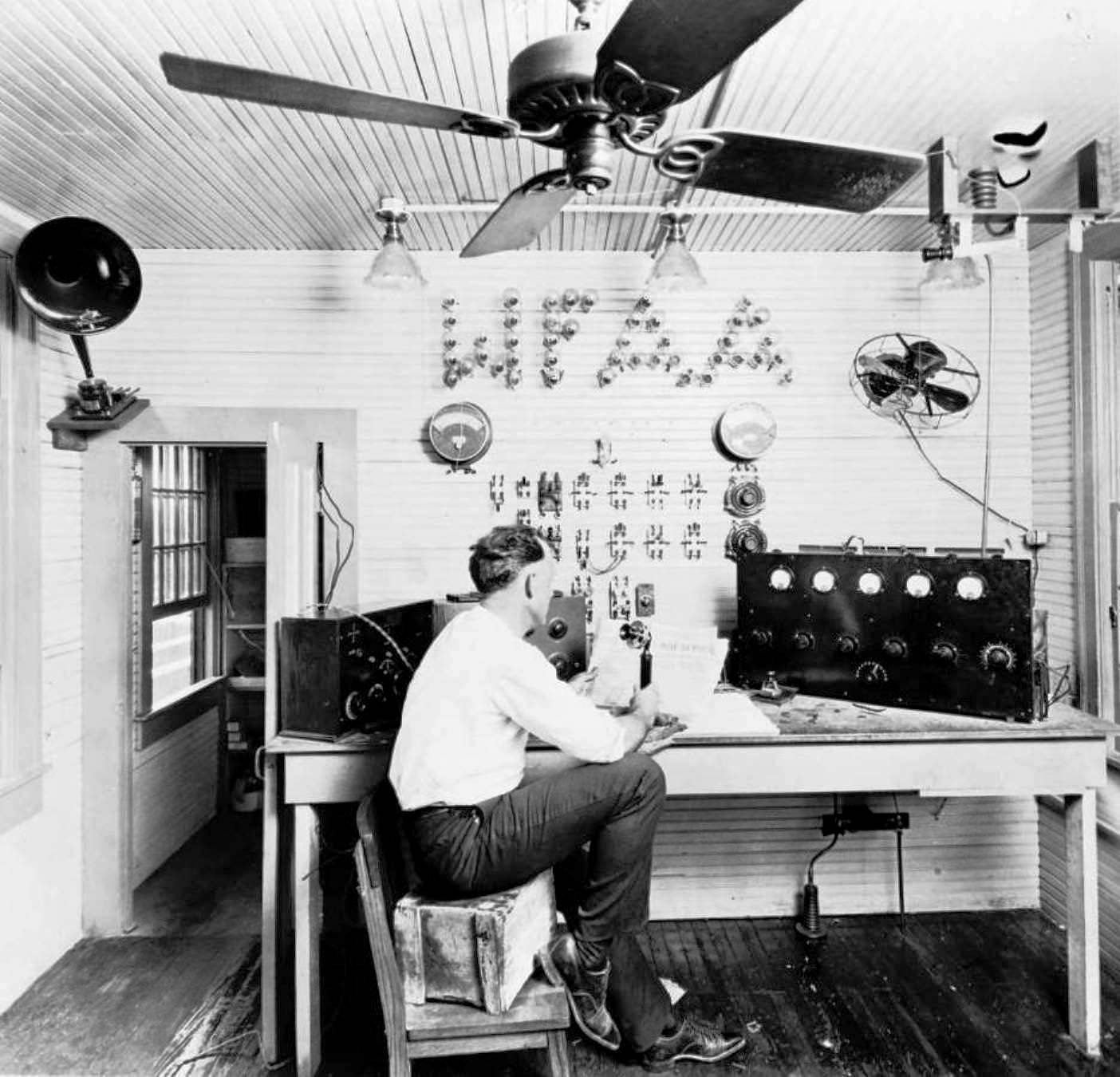
wfaa-control-room_belo_smu_1922WFAA “newsreader,” 1922 (click for larger image) Belo Collection, SMU

by Paula Bosse

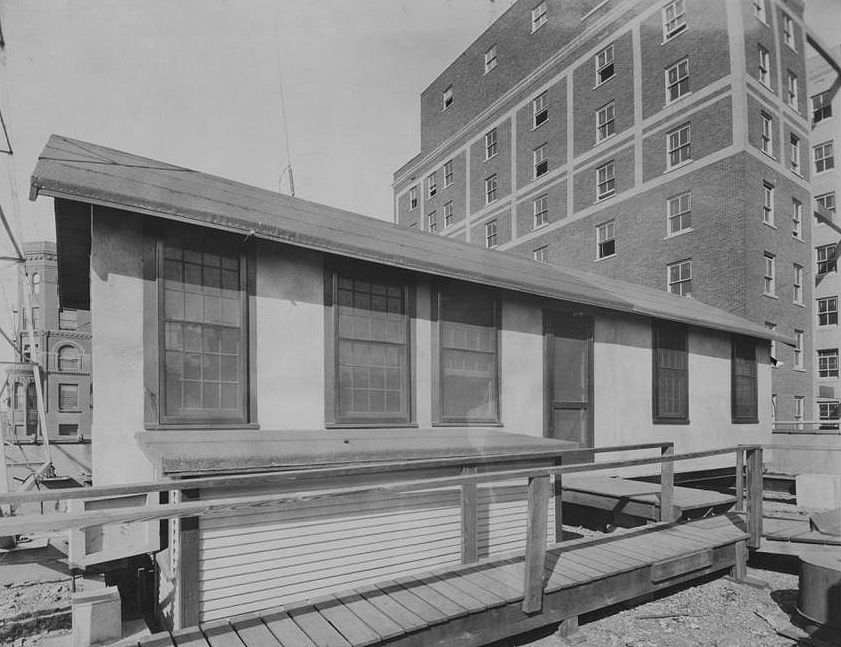
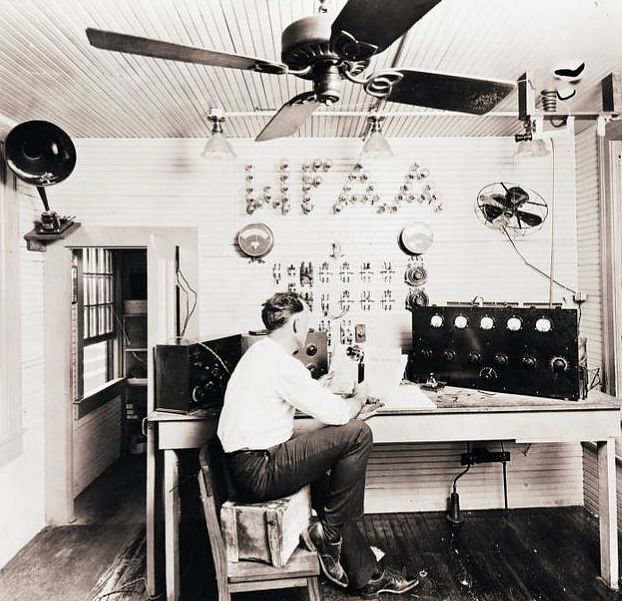
This fantastic photo shows the interior of a little shack-like building on top of the old Dallas Morning News building at Commerce & Lamar, soon after WFAA radio had begun broadcasting in the summer of 1922. There are so many things I love about this photo. Let’s explore the details. (All pictures are larger when clicked.)

*

The Magnavox speaker/monitor.

wfaa-control-room_belo_smu_det1

*

The booster seat and the shoes that need a shine.

wfaa-control-room_belo_smu_det2

*

The announcer at work. (I’m assuming this telephone was being used as an early microphone?) The newspaper is The Dallas Journal, sister publication of The Dallas Morning News which owned WFAA radio. The headlines appear to be about the nationwide railroad and coalminers’ strikes, both of which had been getting more and more violent throughout July of 1922 (violence surrounding the railroad strike led to Texas Governor Pat Neff declaring martial law in Denison that month).

wfaa-control-room_belo_smu_det3

*

The control panel (which has its own fan).

wfaa-control-room_belo_smu_det4

*

And an open window around the corner, in the supervisor’s office. Cross-ventilation and oscillating fans might not have been hugely effective in keeping operators and machinery cool in the summertime.

wfaa-control-room_belo_smu_det5

*

Here’s another view of the “Operating Room,” as published in the DMN on June 25, 1922, the day before WFAA began broadcasting.

wfaa_operating-room_dmn_062522DMN, June 25, 1922

***

Photo titled “WFAA Radio Original Control Panel” from the Belo Papers collection, DeGolyer Library, Central University Libraries, Southern Methodist University; it can be viewed here.

A companion post to this, “WFAA’s ‘Altitudinous Antenna System'” — which contains a background of WFAA’s debut and several photographs — is here.

Other Flashback Dallas posts on Dallas Radio and TV are here.

Click pictures for larger images.

*

Copyright © 2015 Paula Bosse. All Rights Reserved.
WFAA Radio’s “Altitudinous Antenna System”

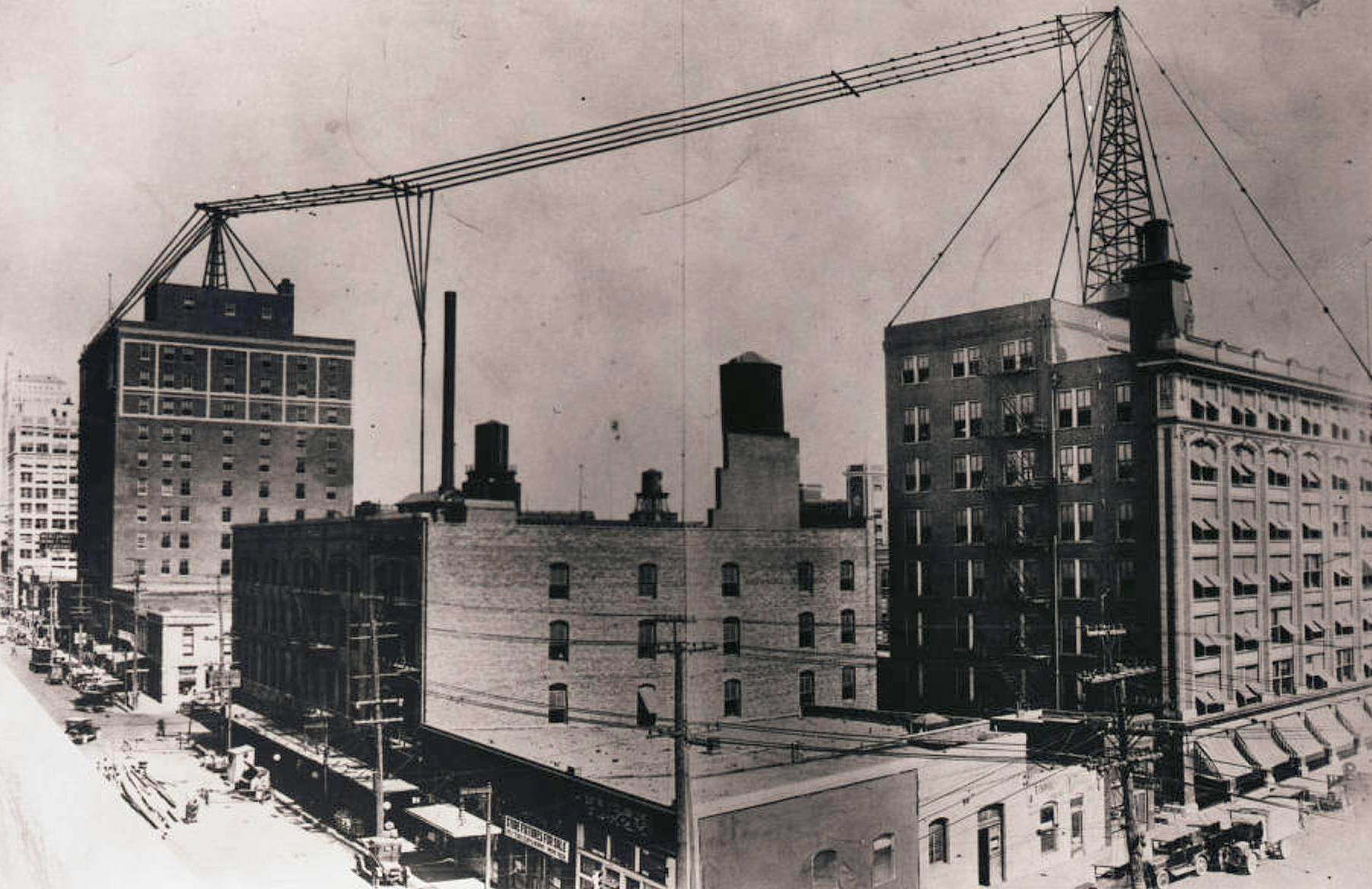
wfaa_towers_1920s_belo-coll_degolyerSeems … “busy” … (click for larger image) Belo Collection, SMU

by Paula Bosse

Broadcast radio was very, very, very new when WFAA radio went on the air in June, 1922; it was Dallas’ second radio station, but it was the city’s first commercial station, and its debut was a BIG deal. (WRR had preceded WFAA, but it was mainly used for city business.) Figuring out where to place towers and aerials and antennae (which may all be the same thing, for all I know) was a major problem, with not a lot of precedents. So why not just do what they did in the photo above?

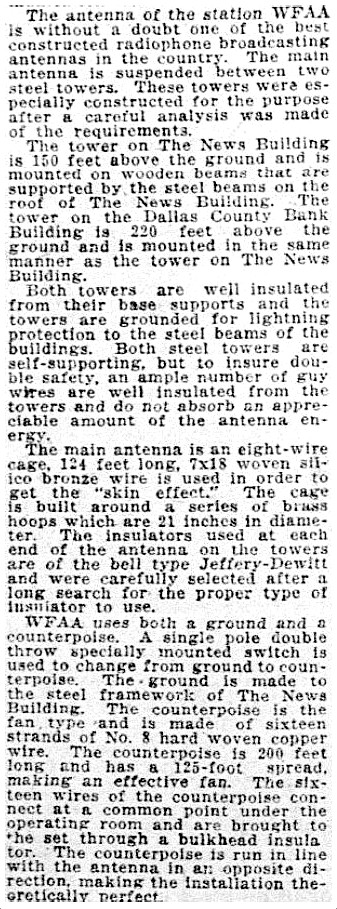
WFAA began broadcasting at 12:30 p.m. on June 26, 1922, and the day before that, a giddy and surprisingly technical article appeared in The Dallas Morning News (which owned WFAA). The full article is linked below, but this is the specific passage devoted to those towers/aerials/antennae:

wfaa-towers_dmn_062522DMN, June 25, 1922

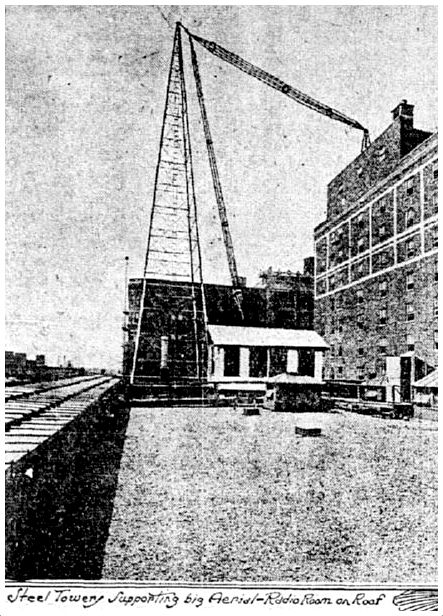
I’m not sure if the photo at the top was from these first days (it appeared, undated, in the DMN in 1927), but here is a photo that accompanied the above article from 1922:

wfaa_tower_dmn_062522

Is that a little building? Why, yes it is.

WFAA. It began as a 50-watt station. Its studios occupied all of a 9×9-foot shack on top of the old Dallas Morning News Building. Its antennae were strung from a water tank on the The New building to a 20-foot mast on top of the Texas Bank Building. (DMN, May 21, 1950)

When WFAA began, it broadcast from inside of and on top of the old Dallas Morning News building, which was located at Commerce and Lamar. By 1927, it had moved its studios to swankier digs in the Baker Hotel. Below, another description of how the rooftop aerial situation — the “altitudinous antenna system” seen at the photo at the top of this post — functioned at this time.

One of the big towers is on top of the lofty Dallas Mercantile Bank Building, while the other is atop the high Missouri-Kansas-Texas Railway Building. The wires are connected with the WFAA operating room on the roof of the Dallas Morning News Building between the two other structures. (DMN, Feb. 20, 1927)

But back to that little shack. Let’s see it a bit closer. Here’s the exterior.

wfaa_rooftop-broadcasting-room_belo-degolyerBelo Collection, SMU

And here’s the interior.

wfaa-studio_ca1922_belo-degolyerBelo Collection, SMU

The generator and battery room.

wfaa_generator-battery_dmn_062522DMN, June 25, 1922

And the supervisor’s office.

wfaa_supervisors-office_dmn_062522DMN, June 25, 1922

And Dallas broadcasting never looked back from its humble beginnings.

*

ad-white-electric-co-detail_dmn_062522Advertising detail, June 25, 1922

*

wfaa-logo_dmn_062522

***

Sources & Notes

Photographs from the Belo Records Collection, DeGolyer Library, Central University Libraries, Southern Methodist University. Top photo can be accessed here; rooftop “broadcasting room” (exterior) is here; “broadcasting room” (interior) is here. More photos here. (The interior and exterior shots of the studio seem to be from 1922. The announcer is reading from the DMN’s sister publication, The Dallas Journal, which contains an article about a subject hot in the news in July, 1922 — a strike by Kentucky coal miners.)

A Belo photo identified as showing the room containing the “Transmitter on top of The Dallas Morning News building, 1924” is here.

To read the article describing how WFAA (which, by the way, at some point stood for “Working For All Alike”) was put together — how it was literally put together — see the Dallas Morning News article “Most Complete Radio Station in the Southwest to Begin Broadcasting” (June 25, 1922), written by R. M. Lane, here, and the accompanying photos here.

See the companion Flashback Dallas post, “Radio Broadcasting, 1922-Style,” here.

Other Flashback Dallas posts on WFAA radio can be found here.

Other Flashback Dallas posts on Dallas Radio & TV can be found here.

*

Copyright © 2015 Paula Bosse. All Rights Reserved.
(Obscure) Country Music Radio Stations — 1969

KYAL-1600“Home of the Tall Texans” (click for larger image)

by Paula Bosse

Okay, maybe they’re not obscure to people who listened to country stations in Dallas in the 1960s, but to someone who grew up in the ’70s in a household in which country stalwarts KBOX and WBAP were always on, these three stations are unknown to me.

Of these, my favorite call letters are KYAL, as seen in the ad above — that’s right, “K-y’all.” Disc jockey “Johnny Dallas” was none other than local rockabilly fave, Groovey Joe Poovey.

KYAL_johnny-dallas_groovey-joe-poovey_ca1969

KBUY was out of Fort Worth and had quite the daytime signal.

KBUY-1540

There was also KCWM (for “Country & Western Music”). This one was an FM station. Legendary DJ Bill Mack was hired by the station to get its country format going, and he even suggested the call letters.

KCWM-99.5

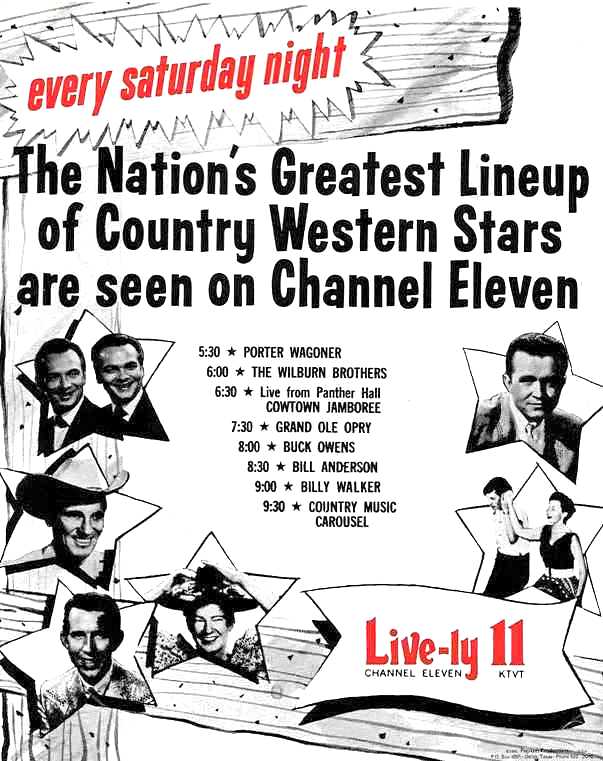
I came across these ads in some sort of local country music publication called “Country and Western — The Sound That Goes Around the World” (1969). Sprinkled amongst bios and photos of country stars are lots of local ads. One of the (non-radio) ads that caught my attention was one for the Saturday night lineup of country music television shows on KTVT Channel 11. Some of these shows were still on in the ’70s when I used to watch them with my father. (I’m not sure I knew there was ever a live television broadcast from Panther Hall in Fort Worth — “Cowtown Jamboree” — that would have been cool to see.)

country-music-saturday-night_ch-11-1969(click for larger image)

***

The best source for the history of Dallas-Fort Worth radio is, without question, Mike Shannon’s DFWRetroplex.com site.

KBOX was the station that really started it all for country music radio in Dallas; read about its history here.

Info on KYAL 1600 AM is on this page.

Info on KBUY 1540 AM and KCWM 99.5 FM is on this page.

Read about Groovey Joe Poovey here and here and here. See a slideshow of photos of him while listening to his GREAT version of “Deep Ellum Blues,” here.

Click pictures for larger images.

*

Copyright © 2015 Paula Bosse. All Rights Reserved.
 

Getting Married on the Radio — 1922

radio-wedding_corbis_062922Inez & John, exchanging vows on Dallas radio, 1922

by Paula Bosse

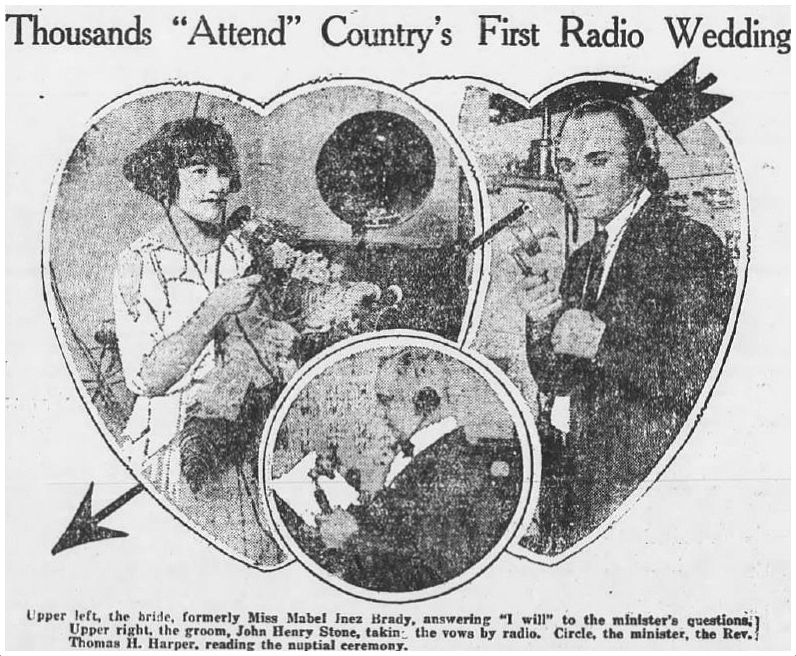
An early radio stunt happened in Dallas on the night of June 29, 1922 when a couple exchanged wedding vows over the air, with the bride, the groom, and the minister each broadcasting from the studios of different Dallas radio stations: WDAO, WRR, and WFAA. These were the very early days of radio, and when the wedding was broadcast, WDAO had been on the air for a little over a month, and WFAA for less than a week! (WRR, Dallas’ first radio station had been on the air for about a year, but most of that time it had been operating as a one-way radio dispatcher for the city’s fire and police departments). In June of 1922, these were the only three Dallas-based radio stations, and they all worked together in this “historic” broadcast. (This early media stunt was a full 47 years before Tiny Tim and Miss Vicki got hitched on the Tonight Show.)

DALLAS COUPLE TO WED BY RADIO THURSDAY NIGHT

DALLAS — The first wireless marriage ceremony ever performed in which neither the bride, the groom, nor the officiating minister will be at the same place is to be solemnized here Thursday night when Miss Inez Mabel Brady, Dallas society girl, becomes the bride of John H. Stone, operator at WRR, the municipal broadcasting station.

It is estimated that more than 25,000 radio fans will “witness” the tying of the radio nuptial knot.

Three Dallas broadcasting stations will be used in the ceremony. Rev. Thomas Harper, pastor of the Central Congregational Church, who has been asked to officiate, will repeat the marriage ritual into the transmitter of [WFAA,] the broadcasting station on the roof of [the Dallas Morning News] building. The bride and her attendants will be at the Automotive Electric Company’s radio station [WDAO, on South Ervay], while the groom will make his responses from WRR, the station of which he is in charge.

Operating staffs of the three stations are working out the details of the ceremony, which will include a broadcasted wedding march.

(– Fort Worth Star-Telegram, June 28, 1922)

Obviously new to the hustle of radio promotion, The Dallas Morning News (owner of WFAA) mentioned the event only a couple of times — fleetingly. They did note that “This probably will be audible to one of the largest audiences ever ‘hearing’ a wedding ceremony” (DMN, June 28, 1922). It’s not known just how many people tuned in to listen to the ceremony (probably a considerable number), but the story made news around the country, as can be seen in this article from The Durham Morning Herald in Durham, North Carolina:

radio-wedding_durham_071322a

radio-wedding_durham_071322-bDurham (NC) Morning Herald, July 13, 1922 (click for larger image)

The broadcast had only a tiny hiccup:

radio-wedding_winfield-daily-press_kansas_063022Winfield (Kansas) Daily Press, June 30, 1922

As successful as the radio wedding was, the marriage between Inez Brady and John H. Stone does not appear to have lasted very long. At the time of the wedding, Inez was just out of school and was only 16 or 17 years old (the descriptions of her as a “society girl” and “debutante” were, I think, a bit of an exaggeration). According to the news stories surrounding the wedding, she “fell in love” with Mr. Stone’s voice on the radio. None of that bodes well for a lasting marriage. The 1923 city directory had the newlyweds renting rooms on McMillan, off Lower Greenville, but the 1924 directory had John in Oak Cliff and Inez in Old East Dallas. She re-married in 1928 at the creaky old age of 22, and he seems to have left WRR to work in some capacity for RCA. The marriage might not have lasted, but they both had a “brush-with-celebrity” story to tell (and re-tell) for the rest of their lives.

***

Sources & Notes

Top photo from CorbisImages, ©Bettmann/CORBIS.

I’m not sure which ended first — Mr. and Mrs. Stone’s wedded bliss or the radio station WDAO, which ceased operation sometime in 1923. A good look at the history of early local radio can be found at DFW Radio Archives, here. (WRR and WFAA continue to march forward, just a few years shy of their 100th anniversaries!)

*

Copyright © 2014 Paula Bosse. All Rights Reserved.
David Wade, Gourmet: Have Ascot, Will Travel

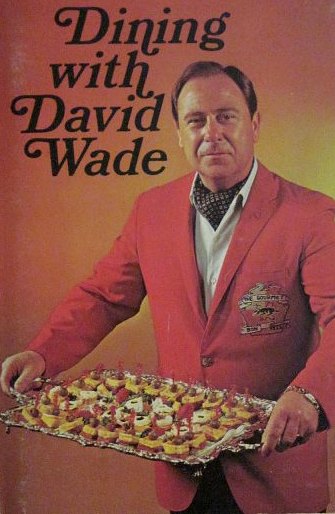
david-wade_dining-with_cover

by Paula Bosse

A few years ago, when I was a bookseller, I posted the following on a personal blog — it turned out to be the most commented-on and most clicked-on post I’d ever written. I wrote it a bit snarky, but I was amazed by the response it elicited: people (both in Texas and beyond) apparently have a strong affection for — and a seemingly deeply personal attachment to — local TV gourmand David Wade. Here’s what I wrote.

*

I just received an order for a David Wade cookbook I’ve had listed for four years:

DAVID WADE’S KITCHEN CLASSICS (Dallas: David Wade Industries, 1969). 300pp. Photographs, index. The ascot-clad TV gourmet presents recipes as well as photos of himself with celebrities such as Mickey Mantle (page 99, opposite the recipe for Crabmeat Tetrazzini). A couple of small splotches to fore-edge; one rubbed spot on cover. No dust jacket. Inscribed by Wade. $12.50

I don’t know if people outside of Texas (and maybe outside of Dallas) would be familiar with David Wade, described, tellingly, not as a “chef” but as a “food demonstrator.” He had a local TV show that must have started in the ’50s or ’60s, but I saw him in the ’70s and into the ’80s. And, yes, he DID wear an ascot, and a blazer, as seen above, from the front cover of another cookbook from the David Wade oeuvre.

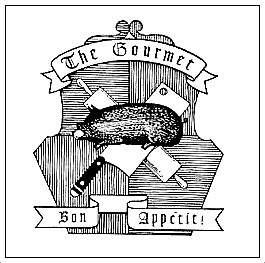
He had a catchy theme song (which compared him to Rembrandt and Edison) and he had his very own coat of arms, which I have vivid, rather frightening memories of from my childhood (I always imagined that poor pig being whacked over the head with the rolling pin and then hacked apart by the cleaver — Bon Appetit, little piggie!):

david-wade-show_logo

I was just a kid, but I remember cringing a bit at his deep-voiced cheesiness. I don’t actually remember much about the food or the actual program, but I can still hear that unnaturally calm, deep voice oozing around inside my head. But what did I know? He was an incredibly popular local TV personality. Yeah, he might have used an over-abundance of big words (…words like “over-abundance”), but, to be fair, he also had a folksy charm and was pleasantly inoffensive.

I’m not sure the same can be said for his food, however. Here are a few of the recipes which some lucky lady in South Carolina who bought the cookbook might be whipping up in a few days:

  • Squash Loaf
  • Citrus Surprise Steak
  • Liver Yucatan (featuring grated American cheese (can you actually grate American cheese?), macaroni, canned mushrooms, and sugar)
  • Baked Stuffed Fish with Pecan Grape Sauce
  • Deep Sea Loaf (made with canned tuna, gelatin, sweet pickle juice, avocado, and three tablespoons of sugar … among other equally distressing ingredients)
  • Salmon & Green Olive Casserole (with cream and “salmon liquid” straight from the can)
  • Apple & Banana Soup (these are the ingredients: chicken stock, apple, banana, potato, onion, cream, curry powder, chives)
  • Kidney Bean Tuna Salad
  • Meat Loaf Pizza
  • Pineapple Mint Cake
  • Quick Clove Jelly Cake
  • Sahib Eight Boy Chicken Curry (…I have no idea…)
  • Yam Peanut Puffs

Bon Appetit!

*

After I wrote that post, I was inundated by people looking for information on where to find all sorts of much-loved David Wade recipes (especially his famed “Turkey in a Sack”) and where they could find his apparently quite popular Worcestershire Powder. There were also many, many comments from people who just wanted to share personal memories of David Wade, invariably describing him as a warm and gracious, down-to-earth, gentle man. “Classy, but not pretentious.”

Wade began his TV career in Dallas at WFAA in 1949, hosting a 15-minute show about dogs (?!) called “Canine Comments” — it became so popular that it was syndicated around the country. He won awards for that show. It was VERY popular. In 1952, Wade was also appearing on WFAA radio as “The Hymn Singer,” singing religious songs and talking about each song’s history and composer. Along the line he made the switch to food.

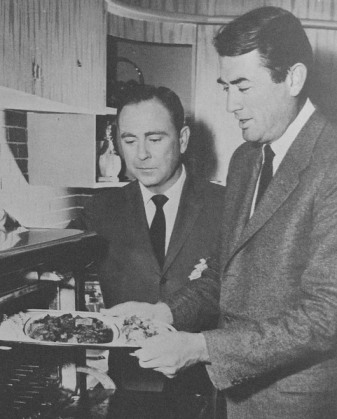
He was “demonstrating” food preparation at personal appearances and on local television by 1957, and in the early 1960s he became a nationally known figure when he commuted to New York from Dallas to tape regular spots for a show called “Flair” in which he frequently appeared with celebrities, guiding them through the preparation of a dish.

david-wade-gregory-peckWith Gregory Peck, 1960s

Eventually, his Dallas-based TV shows were syndicated all over the U.S., and he was so popular locally that he decided to run for mayor in 1971 (he lost to Wes Wise). He continued in his role as a cooking instructor and media figure until his retirement.

David Wade, a much-beloved man who lived and worked in Dallas for the bulk of his career — died in Tyler in March of 2001 at the age of 77. He had been a fixture on Texas television and had published numerous cookbooks. And in between rhapsodizing on good food and wine, he even taught untold thousands how to cook fish in the dishwasher and how to roast a turkey in a paper sack.

***

Sources & Notes

David Wade’s obituary is here.

A warm and fuzzy nostalgic look back at Wade can be read at CraveDFW, here; a super-snarky (and kind of amusing) LA Weekly post critiquing Wade’s recipes can be read here.

Regarding Wade’s run for Mayor of Dallas, check out the Dallas Morning News interview with him conducted by Carolyn Barta, in which he expounds on his vision for the future of Dallas, in the article “Wade Feels Need to Communicate” (March 21, 1971).

Next: The little-known devastating and traumatic childhood event that resulted in David Wade becoming an orphan at the age of 5. Read “David Wade: Overcoming Childhood Trauma” here.

*

Copyright © 2014 Paula Bosse. All Rights Reserved.