Flashback : Dallas

A Miscellany: History, Ads, Pop Culture

Category: HOF

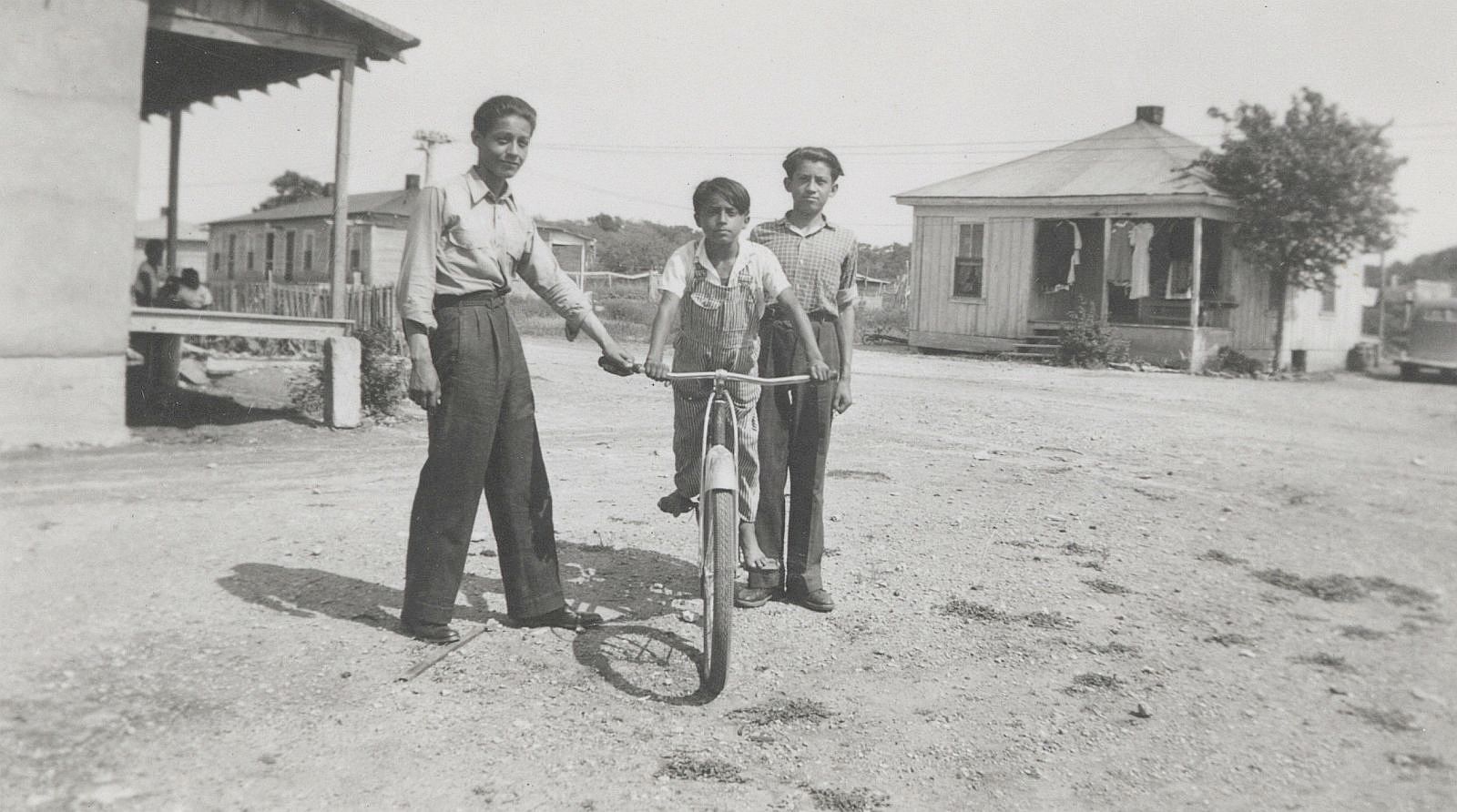
Martinez Brothers, Eagle Ford — 1939

Eladio, Henry, and Feliberto

by Paula Bosse

There are pictures I come across sometimes that affect me in a way I can’t really explain. Like this one. This shows three brothers posing for a photo in West Dallas in 1939. The boys are, left to right, Eladio Martinez, Henry Martinez, and Feliberto Martinez. Their father worked for the nearby Trinity Portland Cement Company. During the Depression, the boys helped support the family by cleaning railroad boxcars for a nickel each.

Eladio was killed in action during World War II — the Eladio R. Martinez Learning Center in West Dallas is named after him. His brothers Henry (Enrique) and Feliberto were active in the community and in preserving the history of Ledbetter/Eagle Ford.

Read more about Eladio Martinez here.

***

Sources & Notes

Photo — “Eladio Martinez, Henry Martinez on a bicycle, and Feliberto Martinez” — is from the Dallas Neighborhood Stories Grant Collection, Dallas History and Archives, Dallas Public Library; the accession number of this photograph is MA19.4/BDW-Martinez-H.6. More info on this is on the DPL Digital Collections page, here.

*

Copyright © 2025 Paula Bosse. All Rights Reserved.

Vaudeville at the Sportatorium? — 1936

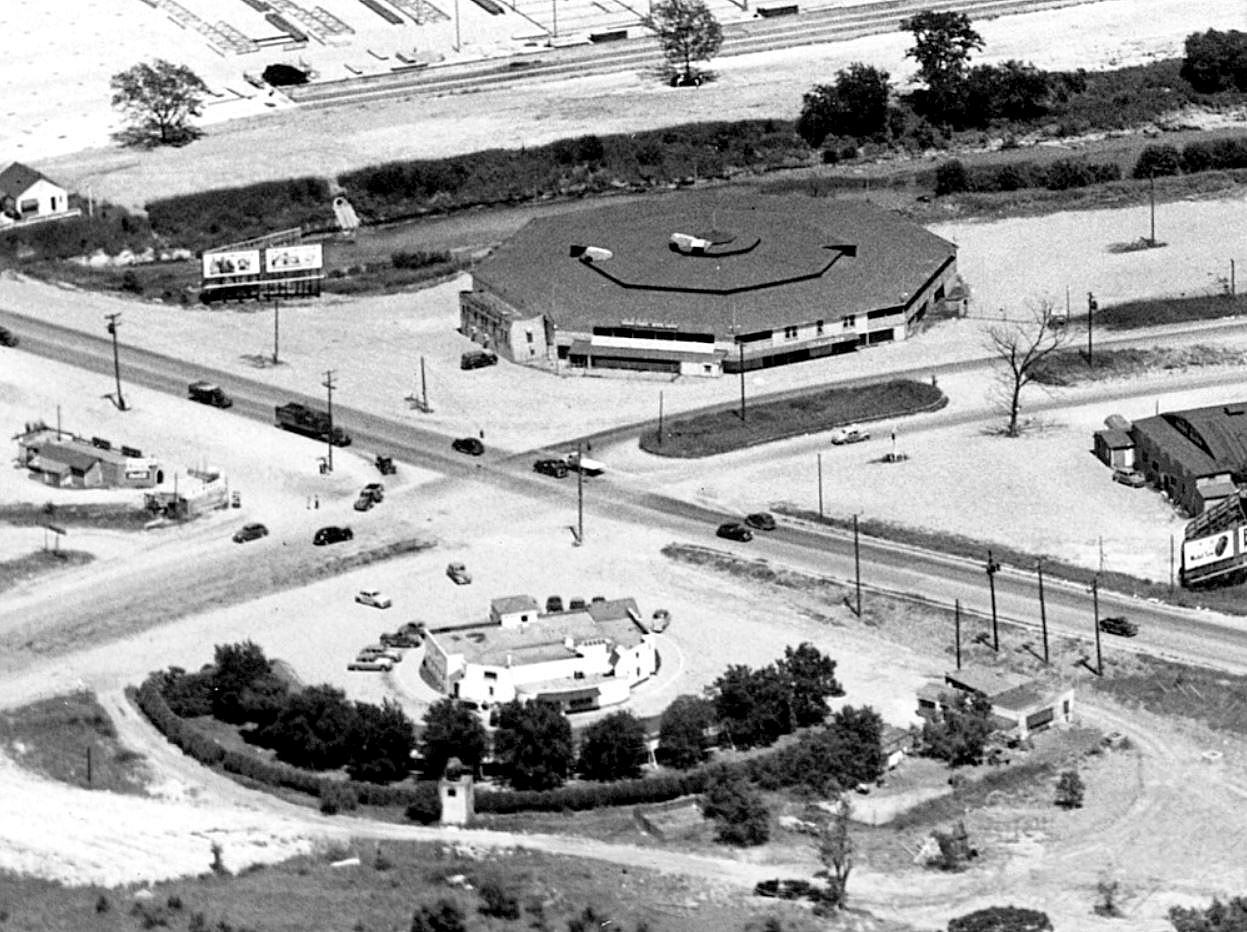
Original Sportatorium, in all its octagonal glory

by Paula Bosse

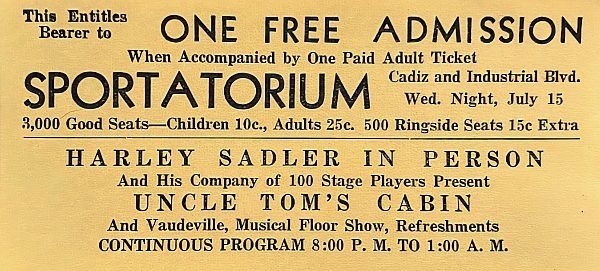
I saw this ticket recently on eBay:

SPORTATORIUM, Cadiz and Industrial Blvd.
Harley Sadler In Person
And His Company of 100 Stage Players Present
UNCLE TOM’S CABIN
And Vaudeville, Musical Floor Show, Refreshments

…What?!

The ticket is undated, but “vaudeville” had mostly faded by the 1930s. The original (octagonal!) Sportatorium was built in 1935 and opened as a premiere sporting venue for wrestling (and boxing) in December 1935.

The new sports bowl, under construction at Cadiz and Industrial, will have its official opening Monday night, December 9, when Promoter Bert Willoughby will offer the biggest wrestling program ever staged in Texas, if present plans go through as outlined. This 10,000-seating capacity structure, built as the home of wrestling, will also entertain many other events, such as boxing, basketball, indoor circuses, style shows [!], conventions and gatherings of all kinds. (Dallas Morning News, Dec. 1, 1935)

Sounds huge. But it’s really hard to keep those seats full — especially on nights when wrestling is not scheduled. By the end of April, there were already plans to do something about one of their biggest problems.

“We feel,” declared [manager W. T.] Cox, “that this concern is too big and that there is too much money already invested to have five or six dark nights a week, so we are going to make it possible for everyone, with anything to show, to bring it to our place, whether it be a political gathering, religious services or merchants’ and manufacturers’ exhibits. The policy of the house will be to encourage and promote sports, but it will be available to all.” (DMN, Apr. 20, 1936)

Sportatorium management came up with the idea of presenting a massive show on non-wrestling nights. They gave Harley Sadler — a longtime traveling Texas showman (and later a politician) — a long-term engagement in which he basically crammed as much “show” into one evening as was humanly possible. A stage was built, and many of those 10,000 seats were removed in order that patrons could sit at tables to enjoy the relentless, non-stop entertainment. Sadler’s company consisted of 100 players. 100!

So what could a Sportatorium visitor expect on one of these Harley Sadler nights? Brace yourself:

The Sadler players will offer two complete plays each evening — an original four-act [play], “The Siege of the Alamo” — and a three-act modern comedy farce, “This Thing Called Love.” In addition to those two complete plays, he will offer vaudeville acts, a band, novelty numbers, and 32 singing waitresses […]. The show will start at 8:30 and run for 8 hours, for those who care to stay that long. (DMN, July 8, 1936)

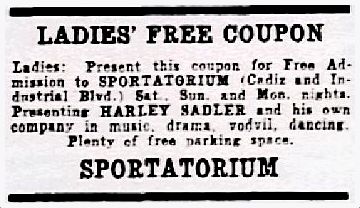
EIGHT HOURS! And, there were 3 different shows produced weekly. That’s a lot of entertainment. Perhaps too much entertainment. But ladies got in free.

July 12, 1936

I’m not sure how long this “residency” lasted, but however long it was, I assume all involved — performers and spectators alike — were exhausted afterward.

***

Sources & Notes

Source of the top photo of the Sportatorium is unknown, but I came across it on the wrestling website World Class Memories. (this Sportatorium page is a great read). (If you know the source of this photo, please let me know.)

Sportatorium ticket was found on eBay (still there, as I write this).

More on the history of the Sportatorium here.

More on empresario Harley Sadler can be found at the Handbook of Texas, here.

Previous Flashback Dallas posts on the Sportatorium can be found here.

*

Copyright © 2025 Paula Bosse. All Rights Reserved.

An Artist’s Conception of a Future Dallas

Vision of a new downtown library…

by Paula Bosse

I came across a collection of drawings recently that I think are just fantastic. They show what Dallas could be if we all just want it enough. The captions are giddy and exuberant, with the exhortation “Let’s build for the future.” It’s the sort of Chamber of Commerce boosterism which is a Dallas mainstay. Dallas dreams big and bold.

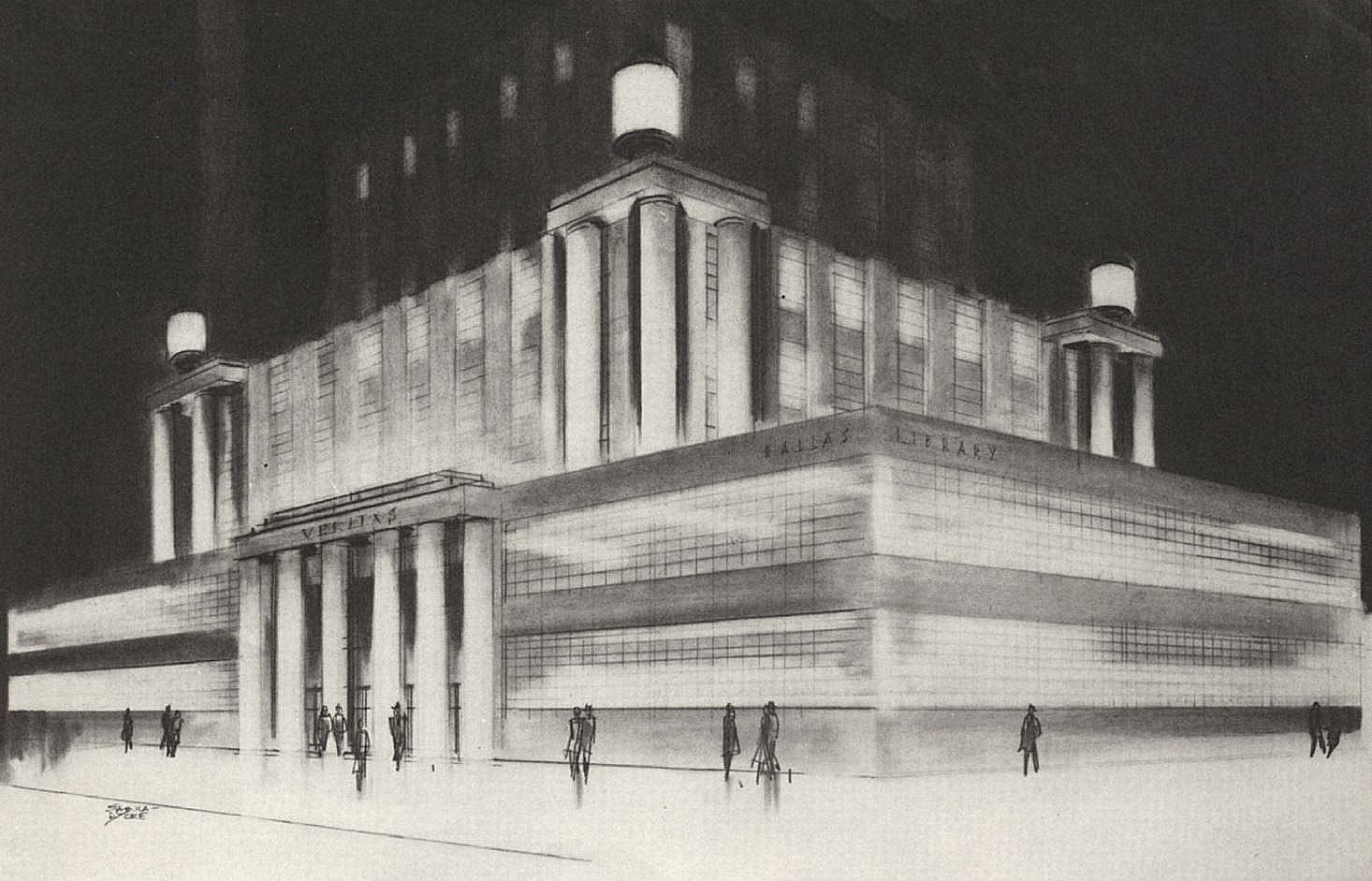
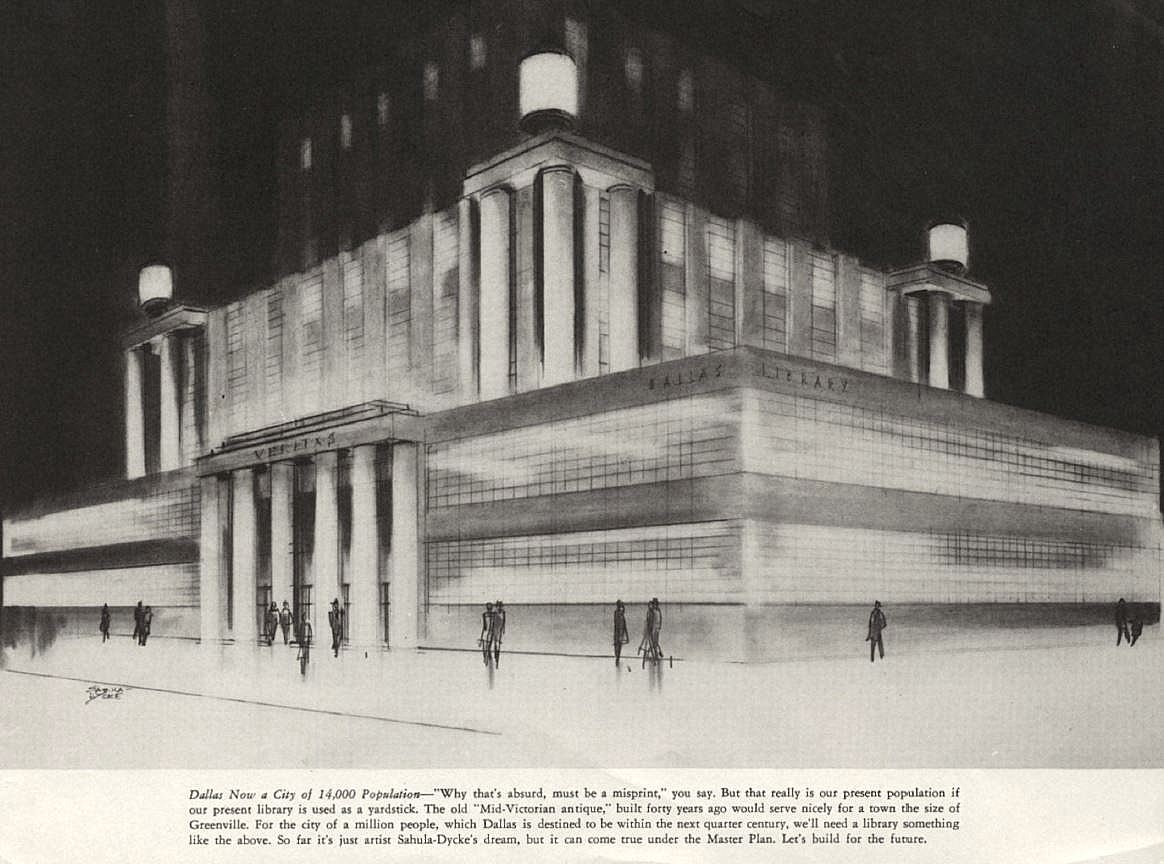
It’s not the ideas that I find so intriguing (although, they’re interesting), it’s the artwork. These drawings are great. The monumental, Deco-ish buildings exude a quiet power. Most of them are set against a dark sky, which adds extra awe-inspiring heft. I really, really love these drawings. It’s a shame most of these conceptions remained just that. I would have loved that library (above)! The artist is Ignatz Sahula-Dycke — more about him at the end of this post.

The drawings are not dated, but my guess is late 1930s or very early 1940s. Promotional captions accompany each picture. Click to see full-screen images. Enjoy!

**

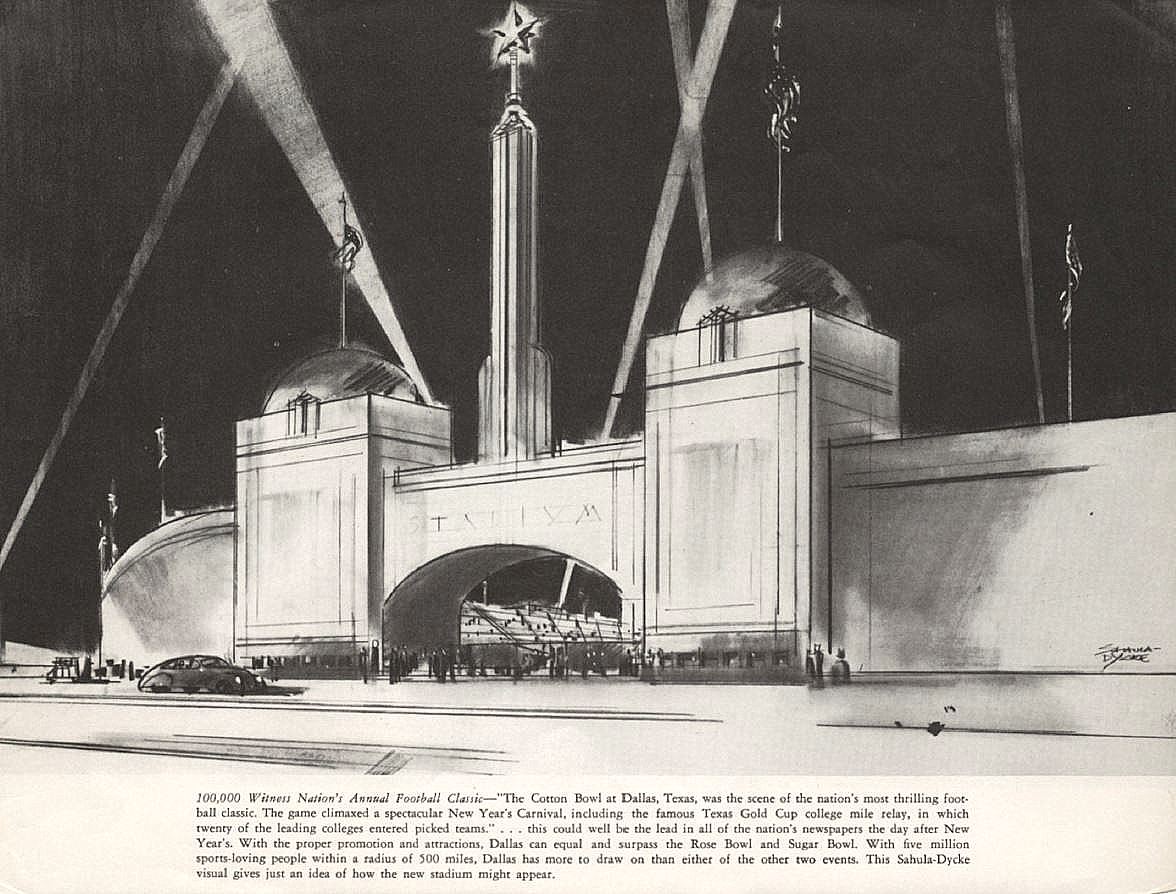
A NEW SPORTS STADIUM AT FAIR PARK

100,000 Witness Nation’s Annual Football Classic — “The Cotton Bowl at Dallas, Texas, was the scene of the nation’s most thrilling football classic. The game climaxed a spectacular New Year’s Carnival, including the famous Texas Gold Cup college mile relay, in which twenty of the leading colleges entered picked teams.” … This could well be the lead in all of the nation’s newspapers the day after New Year’s. With the proper promotion and attractions, Dallas can equal and surpass the Rose Bowl and Sugar Bowl. With five million sports-loving people within a radius of 500 miles, Dallas has more to draw on than either of the other two events. This Sahula-Dycke visual gives just an idea of how the new stadium might appear.

*

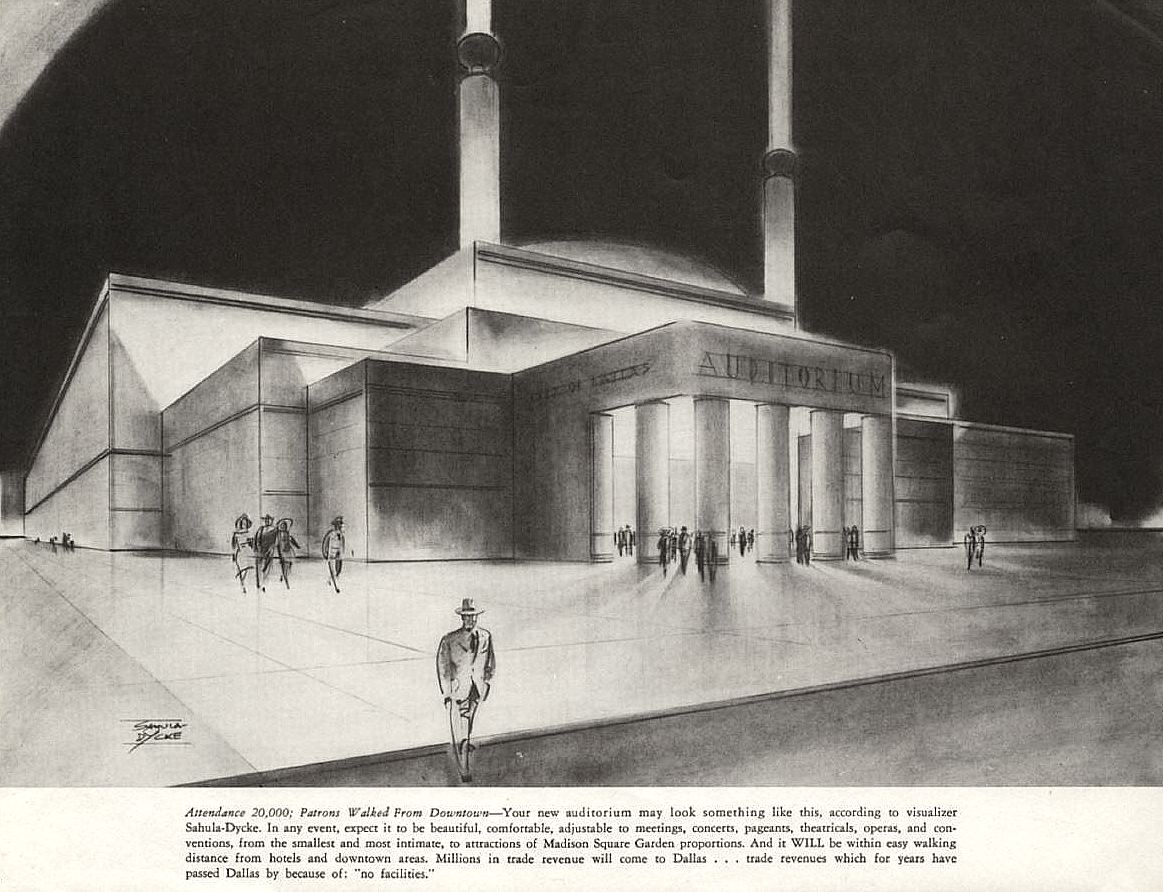
A CITY AUDITORIUM / CONVENTION CENTER

Attendance 20,000; Patrons Walked From Downton – Your new auditorium may look something like this, according to visualizer Sahula-Dycke. In any event, it’s expected to be beautiful, comfortable, adjustable to meetings, concerts, pageants, theatricals, operas, and conventions, from the smallest and most intimate, to attractions of Madison Square Garden proportions. And it WILL be within easy walking distance from hotels in downtown areas. Millions in trade revenue will come to Dallas… trade revenues which for years have passed Dallas by because of: “no facilities.”

*

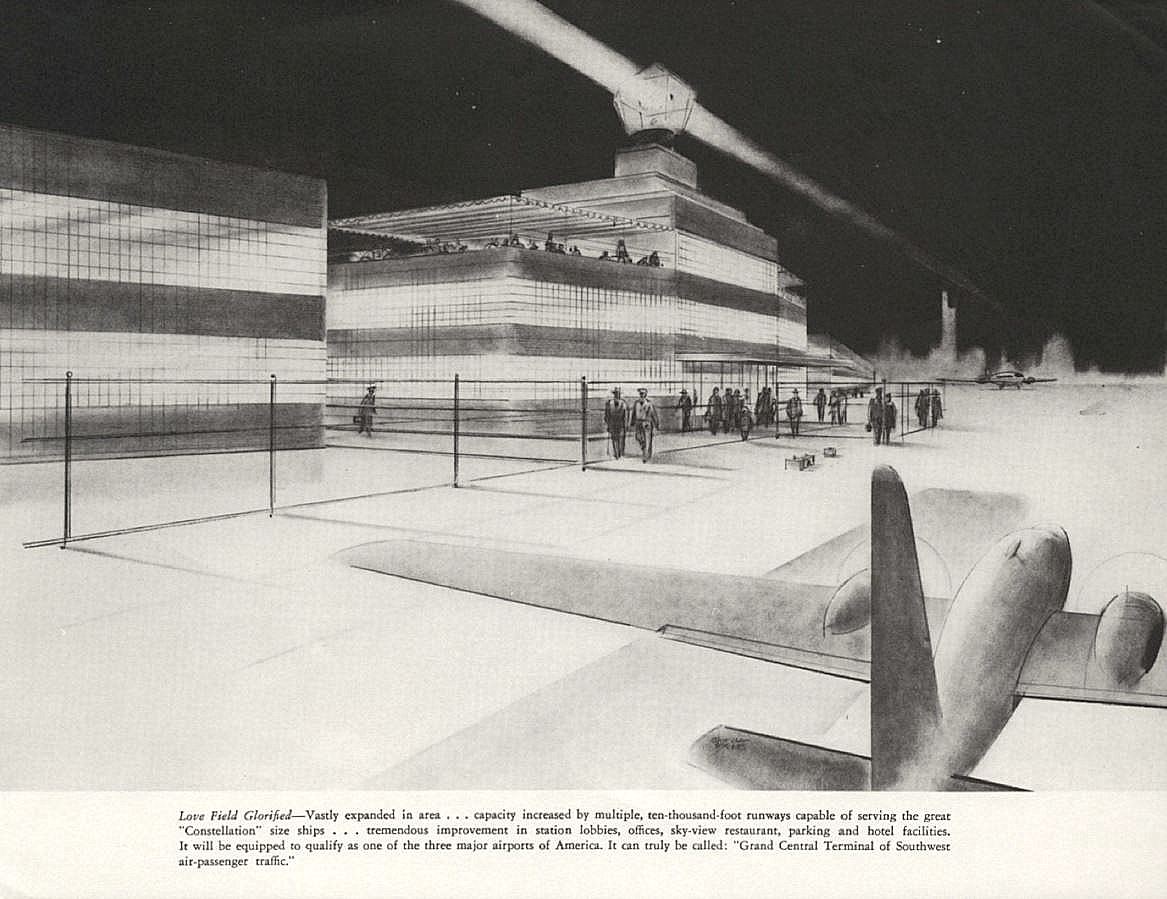
AN EXPANDED LOVE FIELD

Love Field Glorified — Vastly expanded in area… capacity increased by multiple, ten-thousand-foot runways capable of serving the great “Constellation” size ships… tremendous improvement in station lobbies, offices, sky-view restaurant, parking and hotel facilities. It will be equipped to qualify as one of the three major airports of America. It can truly be called: “Grand Central Terminal of Southwest air-passenger traffic.”

*

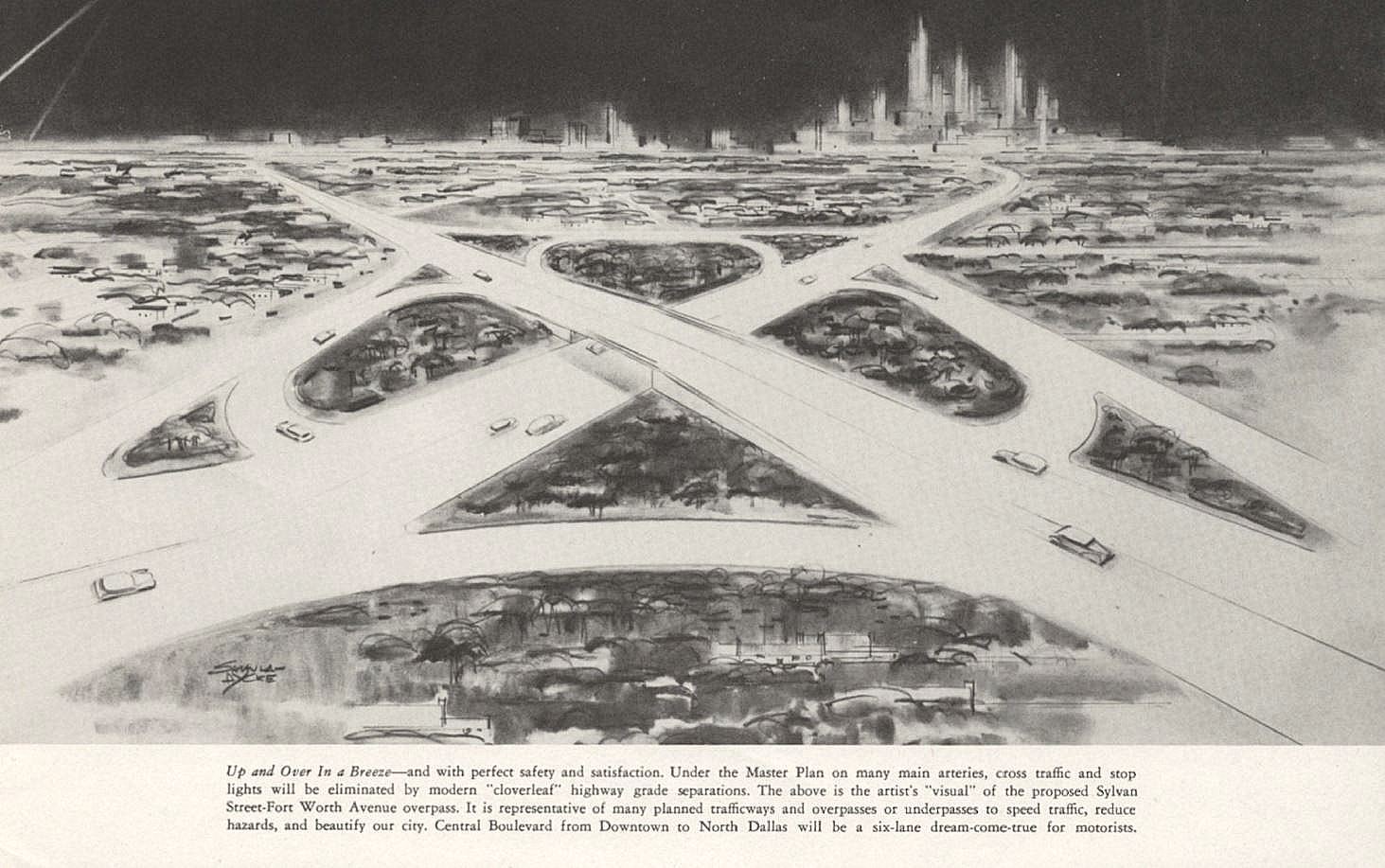
HIGHWAYS

Up and Over In a Breeze — and with perfect safety and satisfaction. Under the Master Plan on many main arteries, cross traffic and stop lights will be eliminated by modern “cloverleaf” highway grade separations. The above is the artist’s “visual” of the proposed Sylvan Street-Fort Worth Avenue overpass. It is representative of many planned trafficways and overpasses or underpasses to speed traffic, reduce hazards, and beautify our city. Central Boulevard from Downtown to North Dallas will be a six-lane dream-come-true for motorists.

*

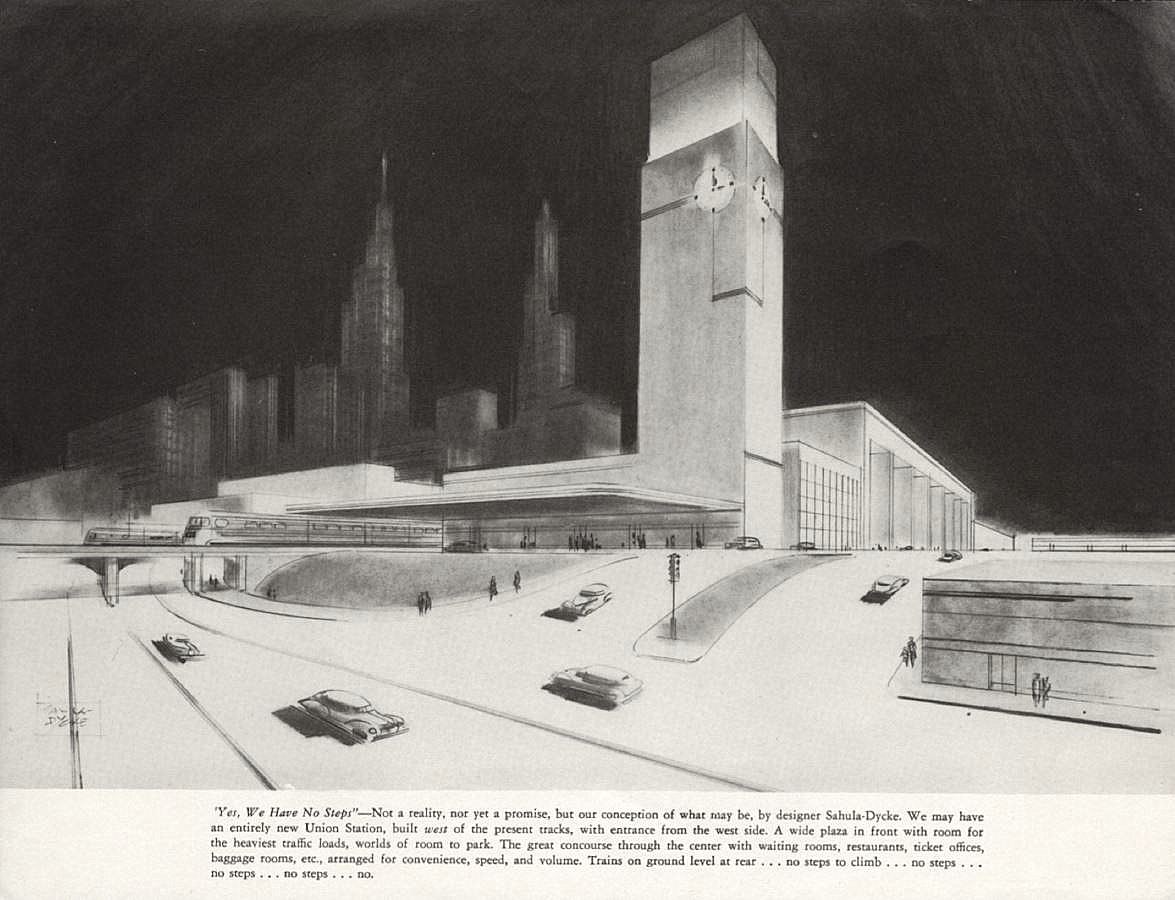
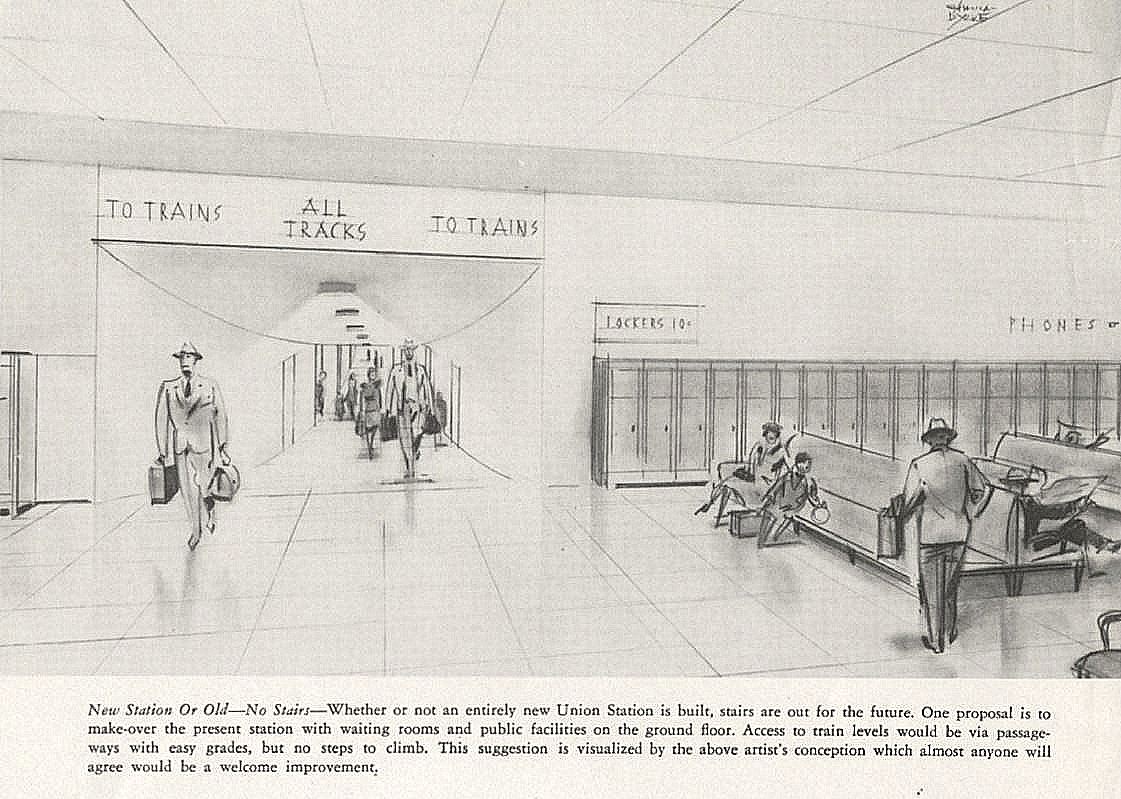
A NEW UNION STATION (…no steps!!!)

“Yes, We Have No Steps” — Not a reality, not yet a promise, but our conception of what may be, by designer Sahula-Dycke. We may have an entirely new Union Station, built WEST of the present tracks, with entrance from the west side. A wide plaza in front with room for the heaviest traffic loads, worlds of room to park. The great concourse through the center with waiting rooms, restaurants, ticket offices, baggage rooms, etc, arranged for convenience, speed, and volume. Trains on ground level at rear… No steps to climb… no steps… no steps… no steps… no.

*

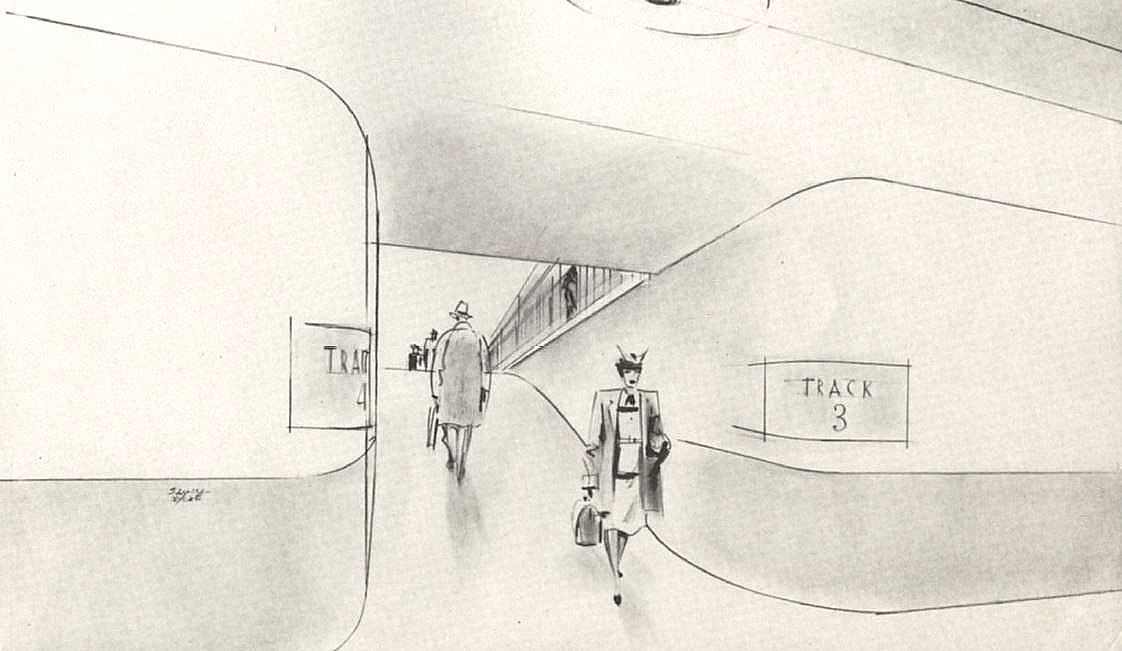
UNION STATION INTERIOR (…seriously, we mean it: NO STEPS!)

New Station Or Old — No Stairs — Whether or not an entirely new Union Station is built, stairs are out for the future. One proposal is to make over the present station with waiting rooms and public facilities on the ground floor. Access to train levels would be via passageways with easy grades, but no steps to climb. This suggestion is visualized by the above artist’s conception which almost anyone will agree would be a welcome improvement.

*

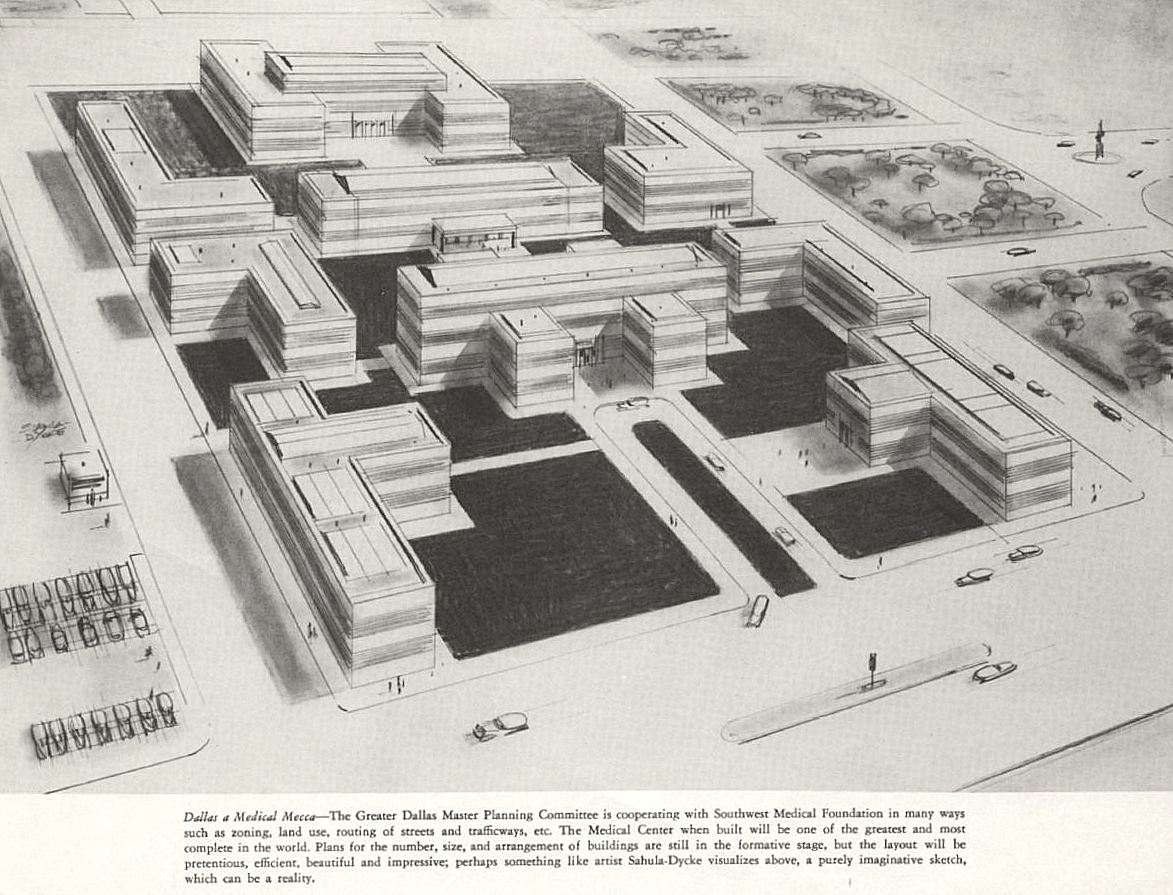
MEDICAL CENTER

Dallas a Medical Mecca — The Greater Dallas Master Planning Committee is cooperating with Southwest Medical Foundation in many ways such as zoning, land use, routing of streets and trafficways, etc. The Medical Center when built will be one of the greatest and most complete in the world. Plans for the number, size, and arrangement of buildings are still in the formative stage, but the layout will be pretentious, efficient, beautiful and impressive; perhaps something like artist Sahula-Dycke visualizes above, a purely imaginative sketch, which can be a reality.

*

CENTRAL LIBRARY

Dallas Now a City of 14,000 Population — “Why that’s absurd, must be a misprint,” you say. But that really is our present population if our present library is used as a yardstick. The old “Mid-Victorian antique,” built 40 years ago would serve nicely for a town the size of Greenville. For the city of a million people, which Dallas is destined to be within the next quarter century, we’ll need a library something like the above. So far it’s just artist Sahula-Dycke’s dream, but it can come true under the Master Plan. Let’s build for the future.

**

I don’t know the date of these drawings. My guess would be the late ’30s or very early ’40s. (The Union Station drawing shows a building that looks like the Mercantile Bank Building. Plans for the Mercantile were announced to the public in 1940.) In a Dallas Morning News article (“‘Greater Dallas’ Appeals Stir Chamber to Renewed Action,” DMN, Dec. 8, 1937), many of the things covered in the captions above were hot topics at the annual meeting of the Dallas Chamber of Commerce. A “Master Plan” was later developed by Harland Bartholomew in the early ’40s. After a break for the war, the plan was finally put before the voters in April 1945.

The plans changed some between 1937 and 1945, but the visions touted in the drawings above were similar to the plans accepted favorably by Dallas voters. (The one part of this Master Plan that failed — and which is not mentioned in the drawings — is the vote on whether to “unify” the City of Dallas by annexing the Park Cities and Preston Hollow. Everyone was all for it… except for Highland Park and University Park, who chose to remain unannexed.) See an ad that appeared in March 1945, a week before the election, listing all the things Big D was hoping to build and develop here

**

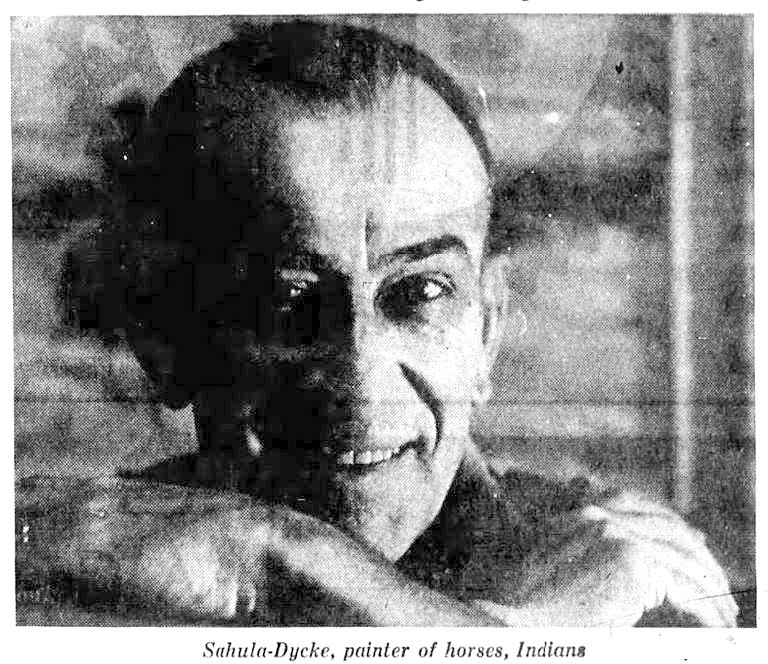
The artist of these conceptions was Ignatz Sahula-Dycke (1900-1982). Ignatz Sahula (known as “Iggie” to his friends) was born in Bohemia (Austria), near Prague, and immigrated with his family to the United States when he was a child. At some point he added his mother’s maiden name “Dycke” to his name — his mother was an artist and a descendant of 17th-century Flemish painter Anthony van Dyck. He studied art in Chicago and, after a stint in the U.S. Navy during World War I, worked for a variety of businesses as a commercial artist. He came to Dallas around 1937 and worked for many years at the Tracy-Locke advertising agency, eventually becoming Creative Art Director of the Dallas office. He actually left Dallas for a while to focus on his art but came back to Dallas a few years later and ended up working for Tracy-Locke for 14 years. His paintings and illustrations center around horses and Southwestern subjects such as desert landscapes and western themes. A good biography and photo of him can be found here, in an article from Western Art & Architecture.

Sahula-Dycke, 1950s

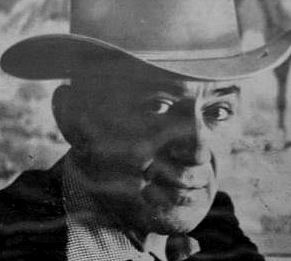
Santa Fe New Mexican, July 28, 1968

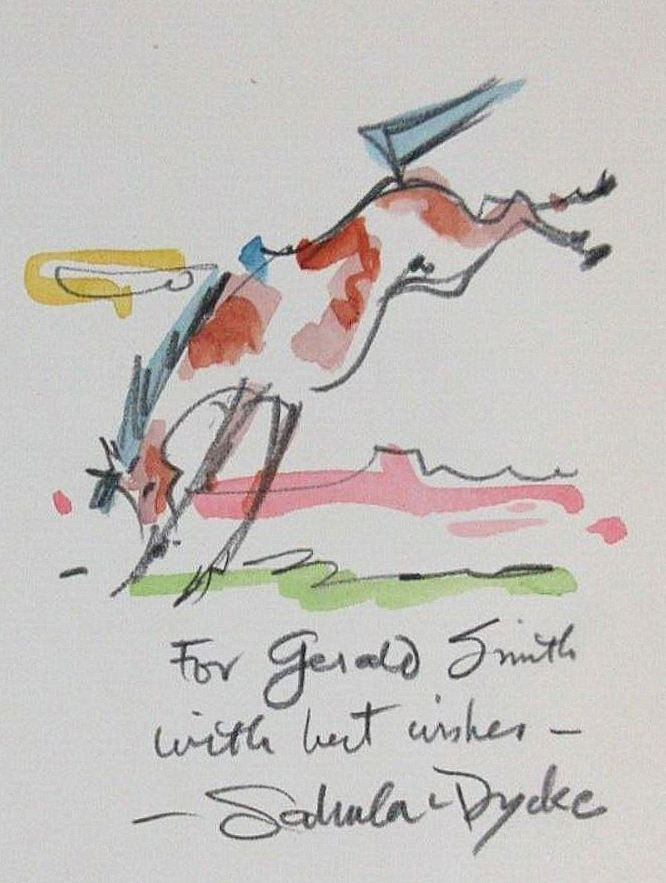
Iggie’s favorite subject was horses. Below is a little sketch he did when inscribing Alias Kinson, or The Ghost of Billy the Kid, a 1963 novel he wrote and illustrated, along with his author’s photo. (The back cover is here, complete with what may be a self-penned biography for this self-published book.)

***

Sources & Notes

All Dallas Master Plan images drawn by Ignatz Sahula-Dycke are from the Master Plan Vertical Files of the Dallas History and Archives, Dallas Public Library.

Inscription with watercolor-highlighted sketch and author photo are from an inscribed copy of Sahula-Dycke’s novel, Alias Kinson, currently listed on eBay.

A related Flashback Dallas post regarding Bartholomew’s Master Plan: “‘Your Dallas of Tomorrow’ — 1943.”

*

Copyright © 2025 Paula Bosse. All Rights Reserved.

Tooling Around Munger Place — ca. 1913

Snazzy motor car parked in front of 5109 Swiss Avenue

by Paula Bosse

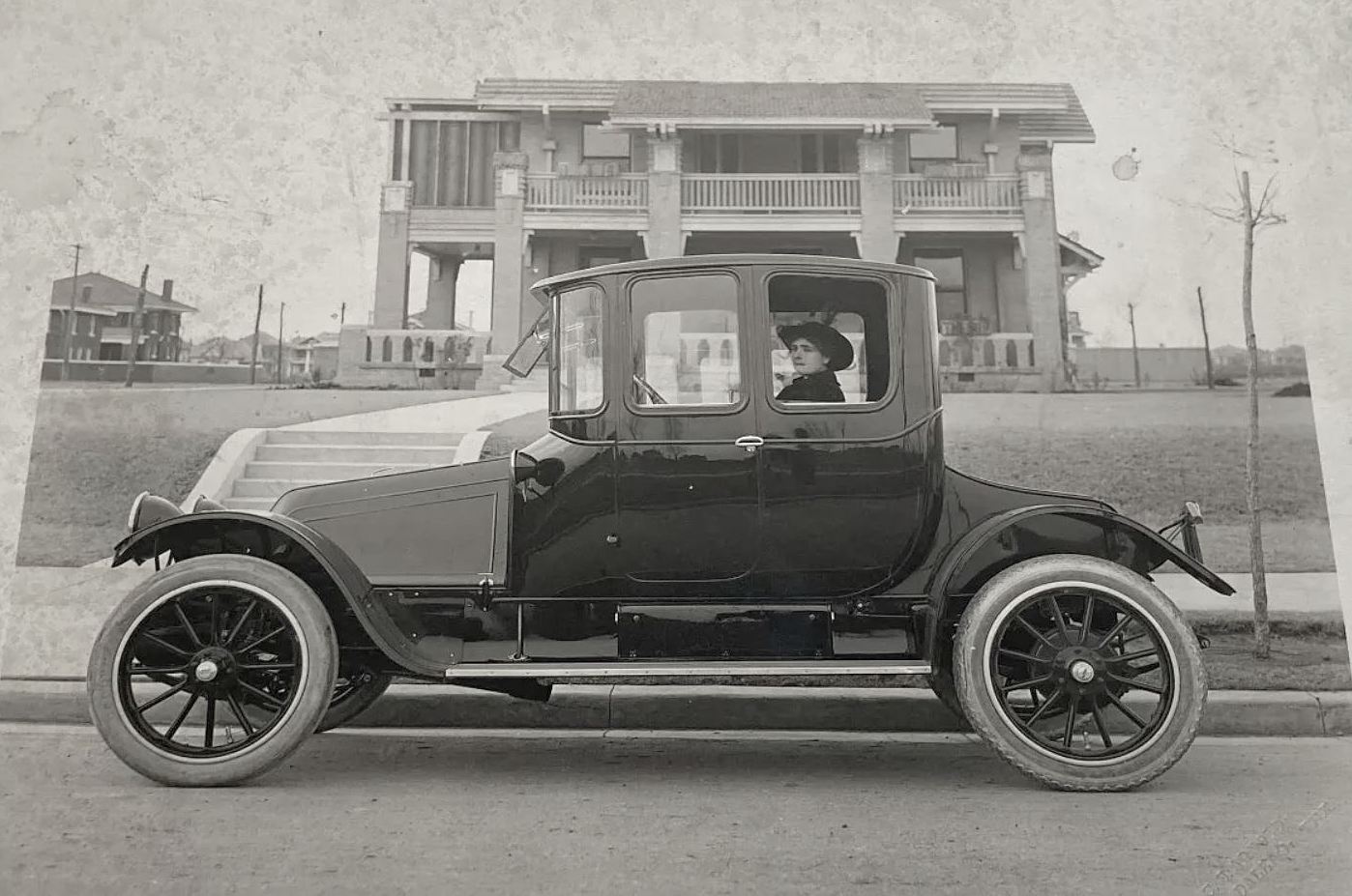
This arresting photo shows a woman in the driver’s seat of what appears to be a “ladies'” electric car (possibly a Detroit Electric, although I can find no models that look like this one…), parked in front of an unusual-looking Swiss Avenue home, complete with a second-story sleeping porch and virtually no landscaping. The photo — taken by notable Dallas photographer Charles Erwin Arnold — is currently offered on eBay.

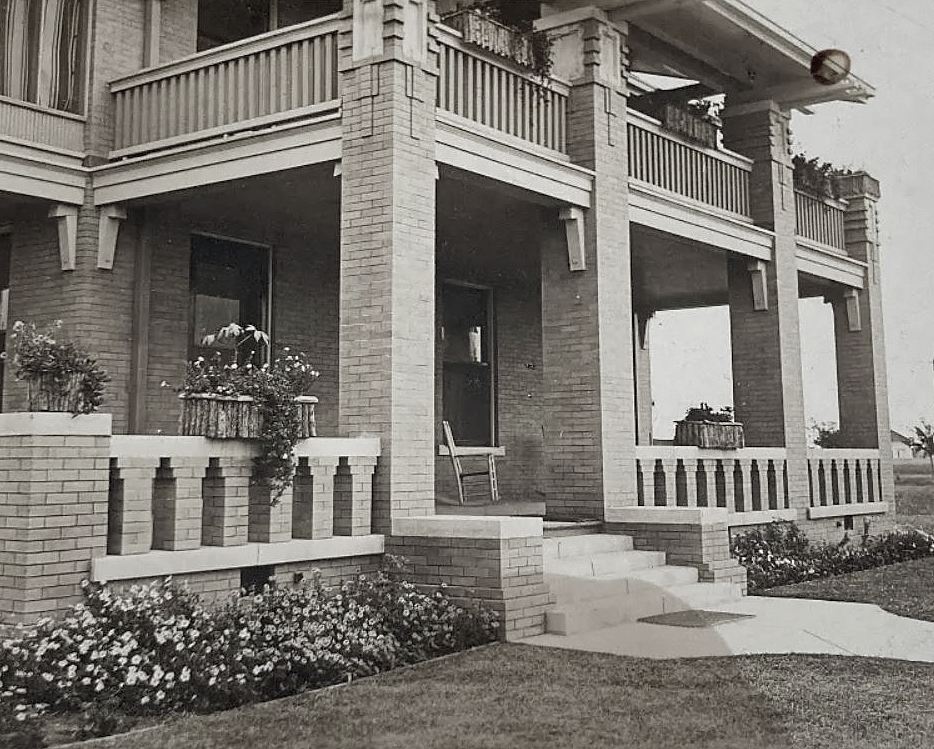
Here’s a view of the entrance to the house which, as noted on the reverse, is at 5109 Swiss Avenue.

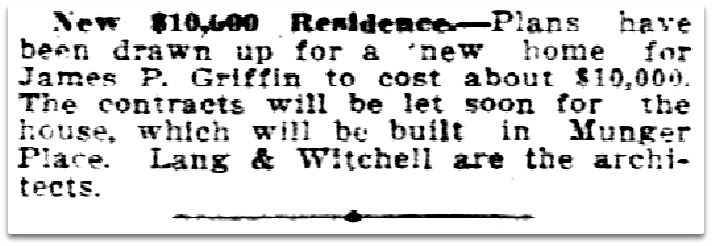
The house was built in 1911/12 and was designed by Lang & Witchell (architects to the rich and richer), who were busy drawing up house plans for people up and down Swiss (they were so prolific that it seems like most of the buildings built in Dallas at the time came from their drafting tables!). This house was commissioned by James P. Griffin (president of the Texas Electric Railway Co.) and his new wife, May Burford Griffin (daughter of Dallas pioneer Judge Nat Burford).

Dallas Morning News, Sept. 13, 1911

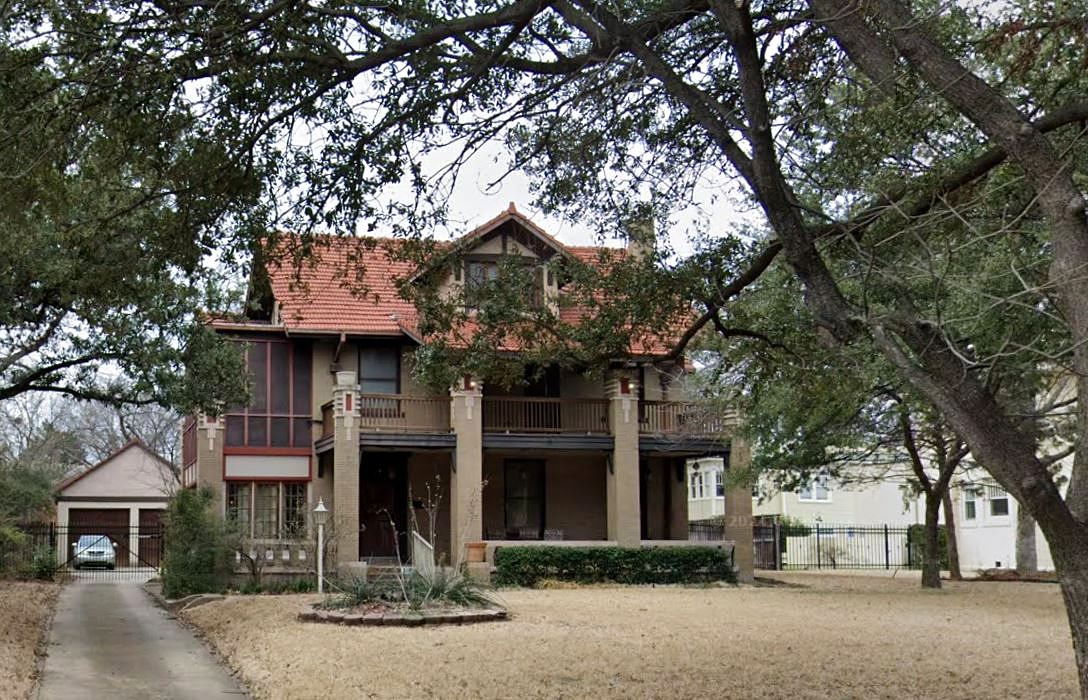
The house is still standing but has been remodeled, as is mentioned in various real estate ads over the years. (At one point, there was a reference to a kitchen with marble floors, which… I’m not sure I’ve ever seen marble floors in a kitchen. I don’t know if they were original to the house — or are still there — but, whatever the case, that is très élégant.)

The house can be seen in recent years in an Ebby Halliday listing from 1982, in an undated photo on Douglas Newby’s Architecturally Significant Homes website, and on the Swiss Avenue Historic District website. The image below is a Google Street View from Feb. 2023.

I assume that the woman in the car is Mrs. Griffin, seen below in later years. In the photo, she would have been about 32.

I love that car. And I love that house, which looked very modern 112 years ago!

***

Sources & Notes

The circa-1913 photos are from a current listing on eBay. I posted the top photo on my Patreon page less than a week ago, and reader Tom R. identified the house. I think the second photo has been added in the past couple of days, because I’m pretty sure it wasn’t there when I wrote that post! Someone might have contacted the seller to ask if it might be a house on Swiss Avenue, and they realized they had another photo of the house, which they added to the listing. …And increased the price significantly! These are such cool photos. If I were the current owners of this Swiss Ave. house, I would be all over this!

Thanks to Tom and William for their helpful comments on my original Patreon post (“Super-Cool Car, Super-Cool House”).

*

Copyright © 2024 Paula Bosse. All Rights Reserved.

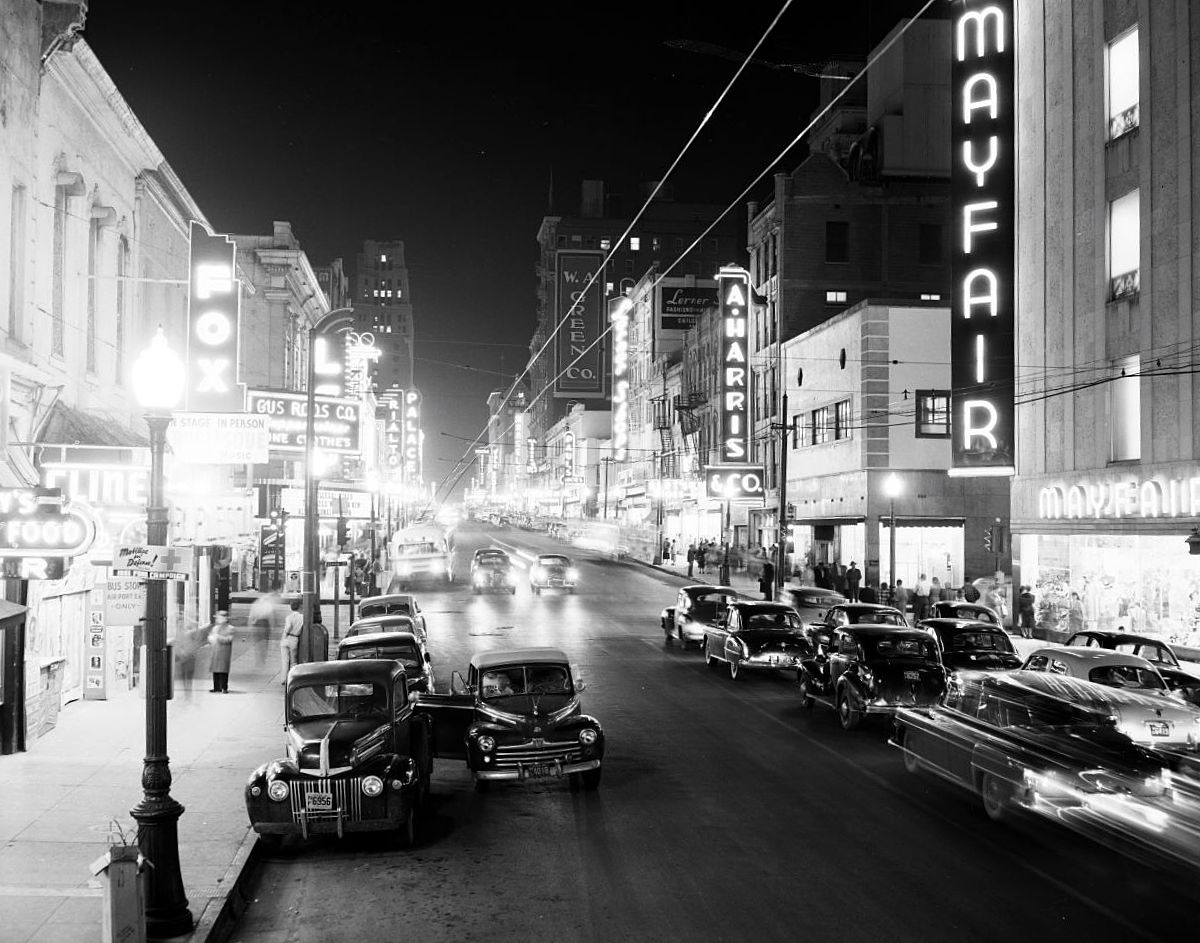
The Bright Lights of Big D — 1951

…Forget all your worries, forget all your cares…

by Paula Bosse

This is the downtown Dallas I’ve always wished I had seen.

Check out a clipping from the 1953 city directory for a list of the businesses in this immediate block, from about Akard to Ervay, here.

Then click over to the 2015 post “Dazzling Neon, Theater Row — 1929” to see how drastically Elm Street — and Movie Row — changed in just 22 years.

***

Sources & Notes

Photo by Denny Hayes, Hayes Collection, Dallas History and Archives, Dallas Public Library; Call Number PA76-1-576-2.

*

Copyright © 2024 Paula Bosse. All Rights Reserved.

Labor Day Weekend, 1952 (Redux)

labor-day_083152_denny-hayes_PA76-1-11420-002_webWaiting for the fun to start… (photo: Dallas Public Library)

by Paula Bosse

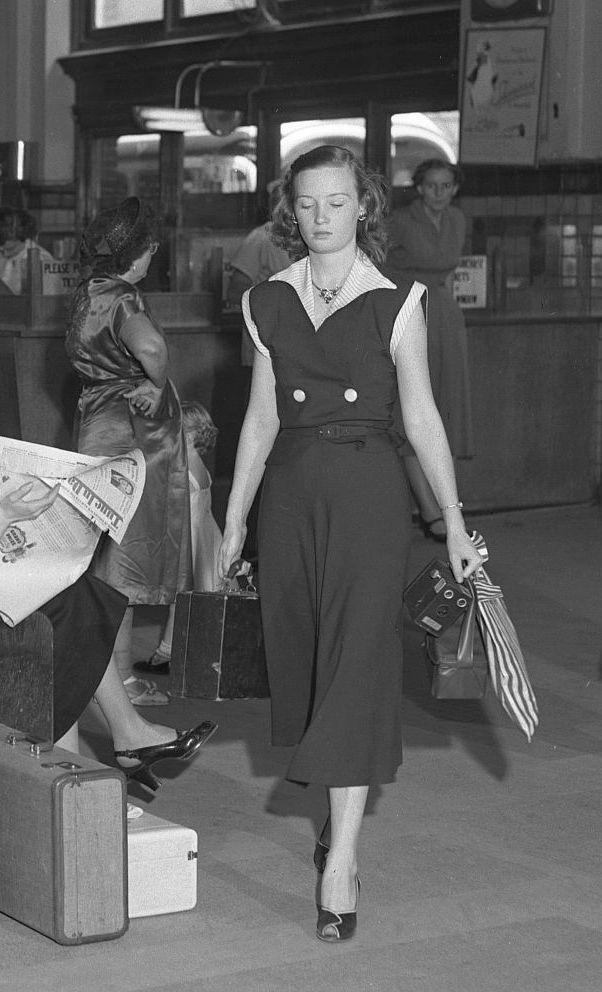
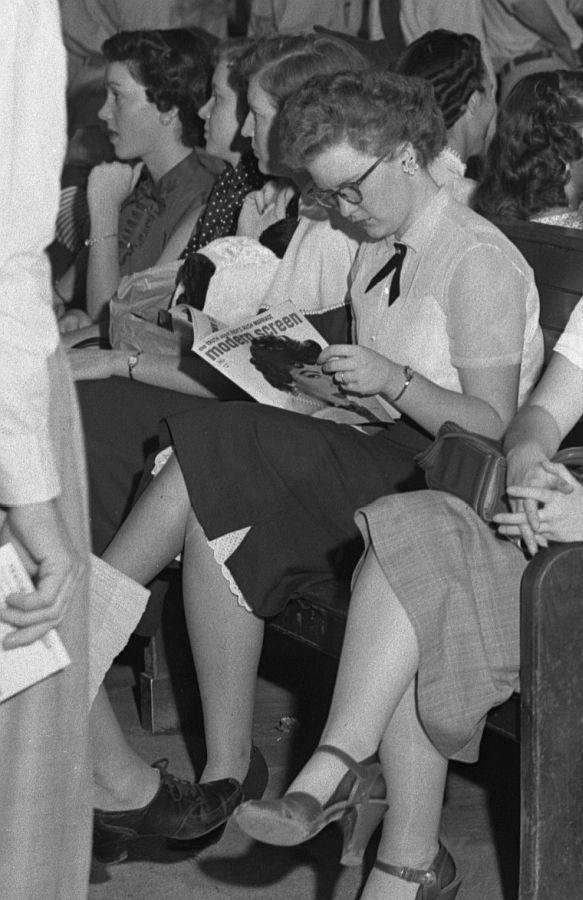
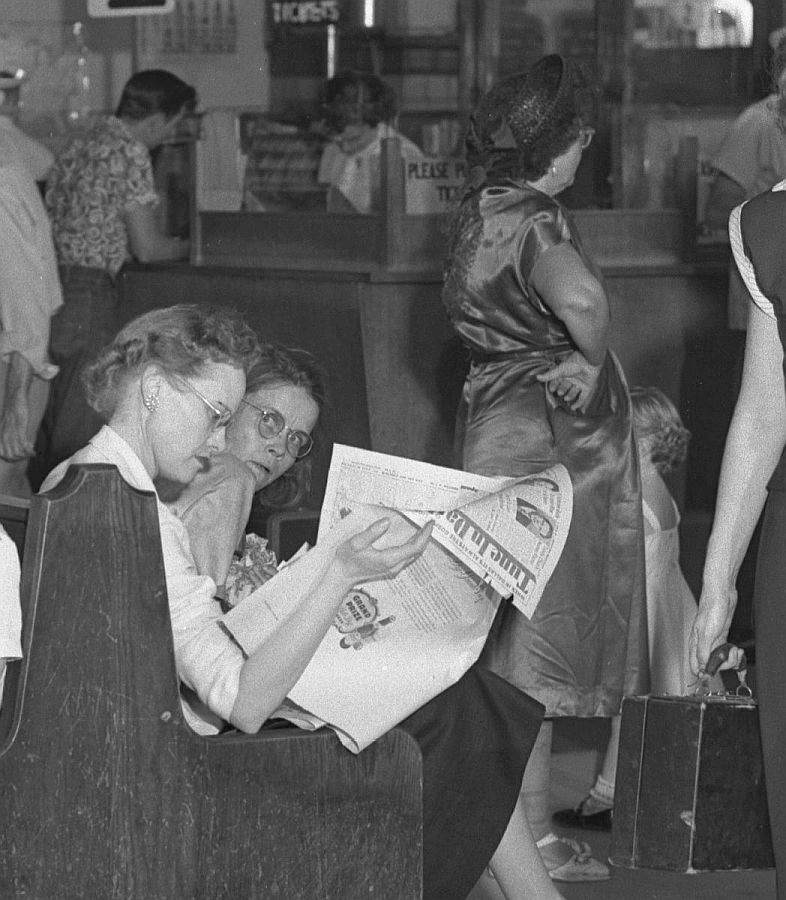
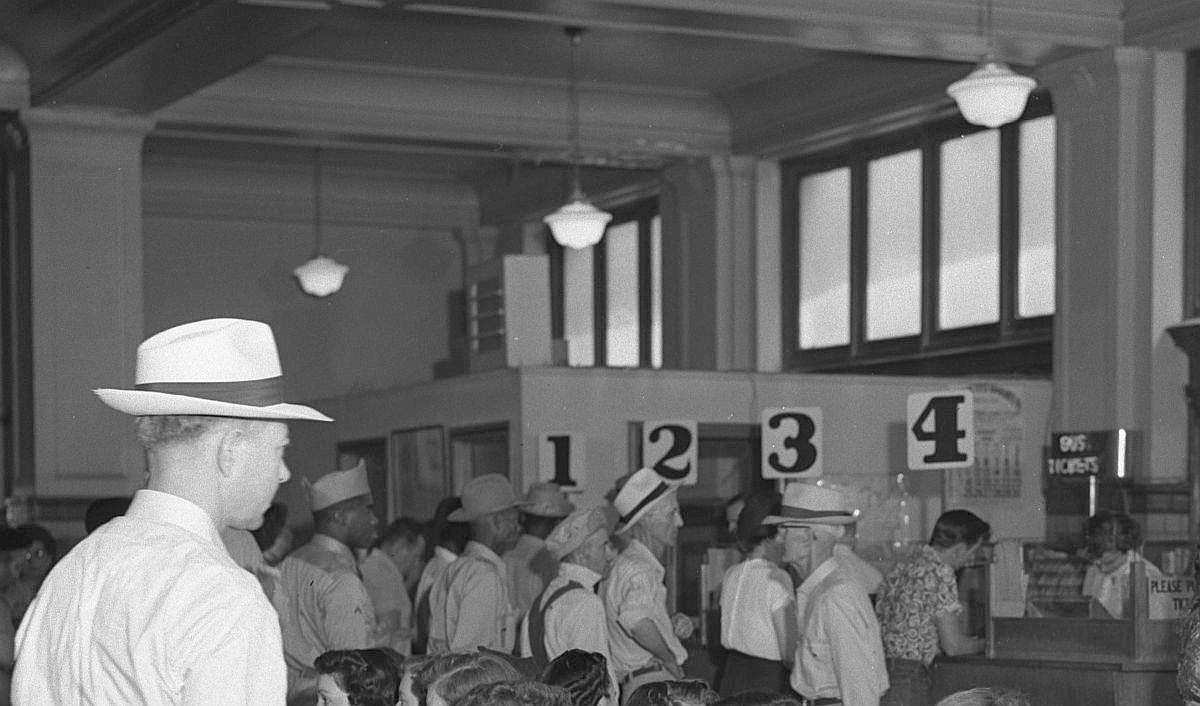
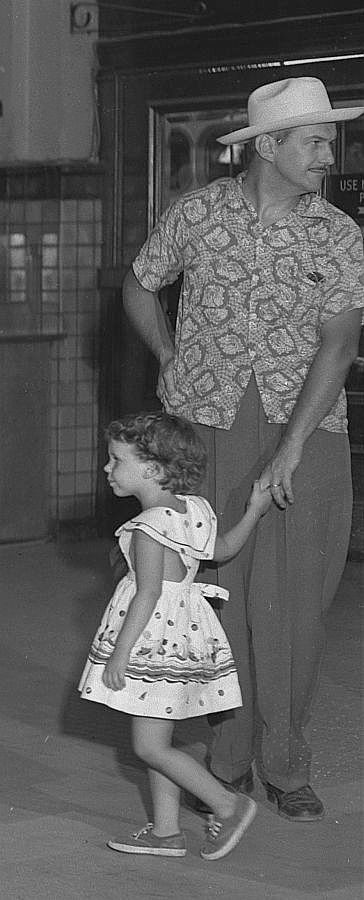
Happy Labor Day! Back in 2020 I wrote a post called “Labor Day Weekend, Union Bus Depot — 1952.” I really enjoyed writing that one, and I loved the main photo in it. It turns out that the photo I’m using in this post was taken only a couple of minutes before the one I used four years ago. I discovered this photo a few weeks ago and have been waiting for Labor Day to roll around. Which it has now done.

On August 31, 1952, Dallas photographer Denny Hayes took several photos of travelers waiting to be whisked away to someplace else. (With luck, someplace cooler.) These photos were taken at the Union Bus Depot in the Interurban Building. Let’s zoom in on this great people-packed photo.

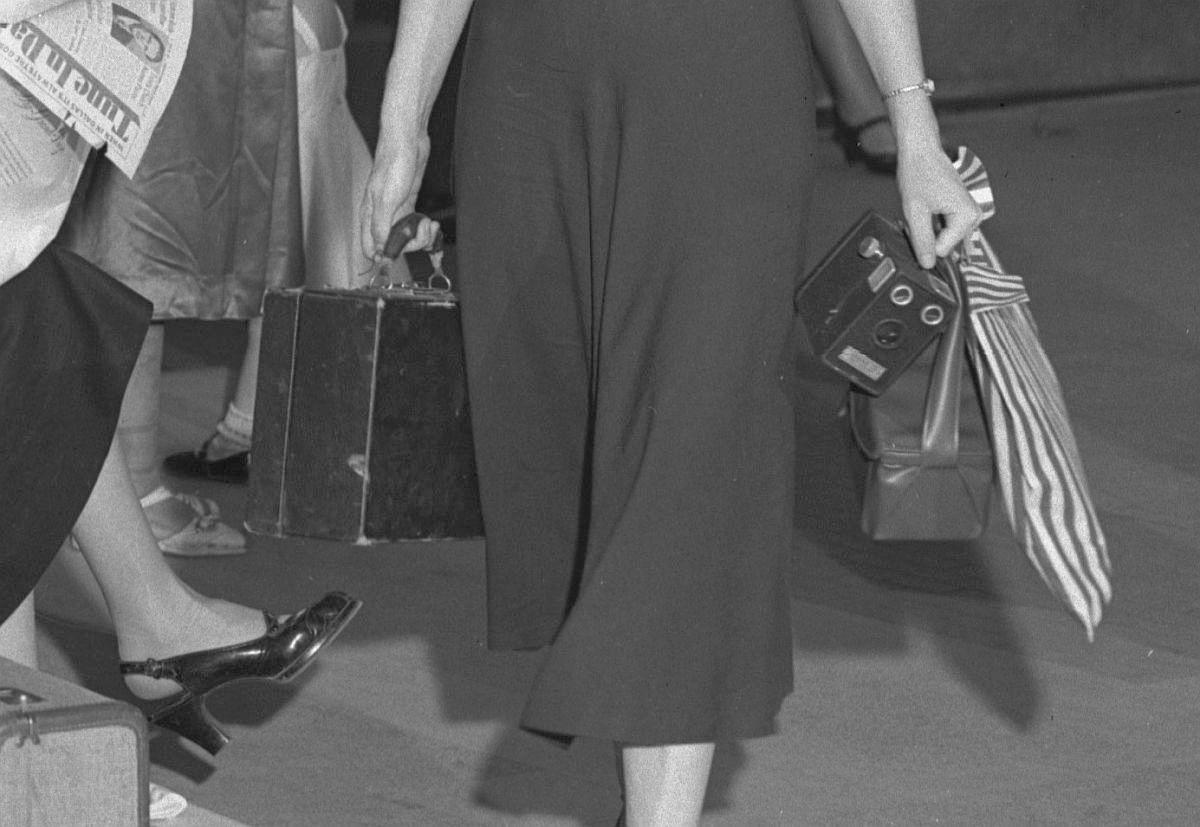
Everyone and everything pales in comparison to the young woman walking toward the camera. In her left hand she holds a box camera. She’s ready to take fun photos, if she ever gets out of that station.

labor-day_083152_denny-hayes_PA76-1-11420-002_woman

labor-day_083152_denny-hayes_PA76-1-11420-002_woman_camera

labor-day_083152_denny-hayes_PA76-1-11420-002_modern-screen

labor-day_083152_denny-hayes_PA76-1-11420-002_waiting

labor-day_083152_denny-hayes_PA76-1-11420-002_queue

labor-day_083152_denny-hayes_PA76-1-11420-002_father-daughter

(If the man above looked any more like Harvey Korman, he’d be Harvey Korman.)

*

If you have the day off, I hope you enjoy it. And if you’re traveling somewhere, I hope you get there quickly!

***

Sources & Notes

Photo by Denny Hayes, from the Hayes Collection, Dallas Public Library, Dallas History and Archives; Call Number: PA76-1/11420-002.

See the companion post, “Labor Day Weekend, Union Bus Depot — 1952,” and see how many people made it into both photos.

labor-day_083152_denny-hayes_PA76-1-11420-002_web

*

Copyright © 2024 Paula Bosse. All Rights Reserved.

Deep Ellum: Life Along Central Track

The heart of Deep Ellum… (Dallas Public Library photo)

by Paula Bosse

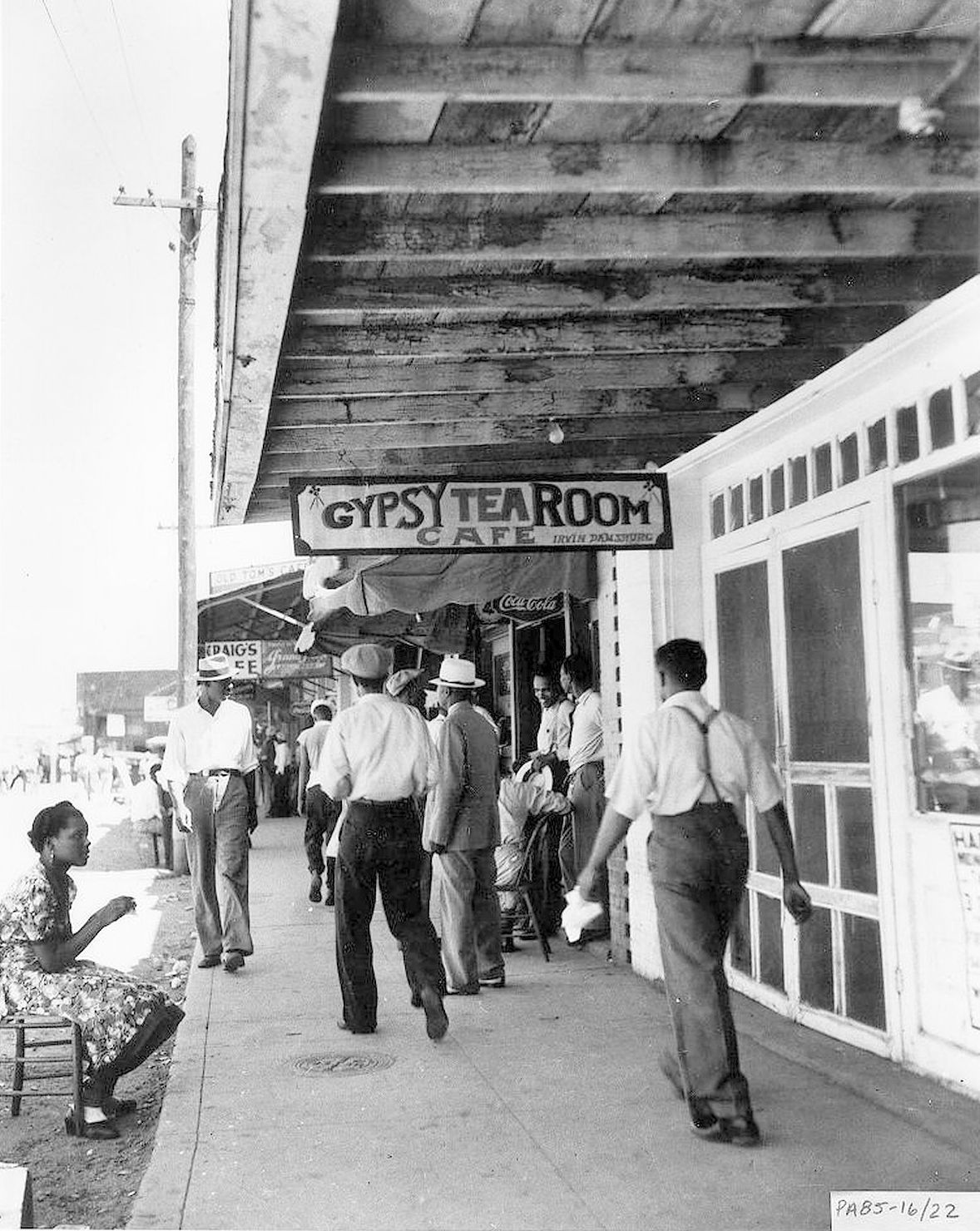
One of my happiest Flashback Dallas research deep-dives resulted in the post “The Gypsy Tea Room, Central Avenue, and The Darensbourg Brothers.” It was prompted by a photo I had seen for years but had never really known what it showed. I loved writing that, and I’m so happy that it is a perennially popular post. Here is that original photo, below, which shows people walking along the row of barber shops, cafes, pool rooms, domino parlors, taverns, and other businesses:

gypsy-tea-room_dallas-public-libraryDallas Public Library photo

The view is to the south — Elm Street is in the distance, where that building juts out to the left. The street about the same distance away to the north (behind the photographer) was Pacific. Someone walking out of the Gypsy Tea Room would have been facing the old train depot. Between the depot and the block of businesses were railroad tracks (not in frequent use in the 1930s, the time of these photos) — the unpaved road that ran alongside the tracks was Central Avenue (when North Central Expressway was built years later, it closely followed the path of these railroad tracks). This general area was considered the heart of Deep Ellum and was filled with Black-owned retail establishments and was a gathering place for social activities and entertainment.

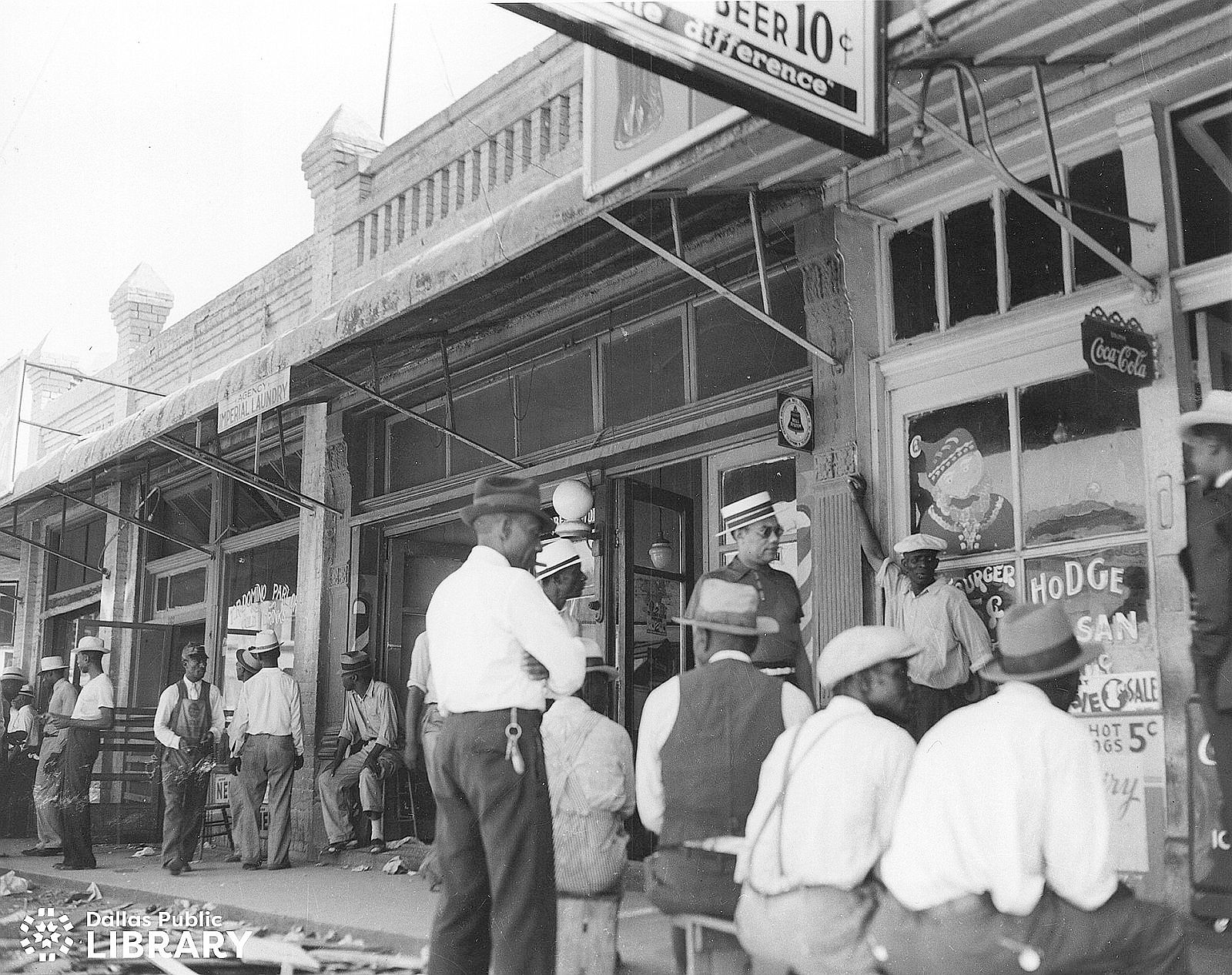
A while back, I came across two other photos, which I recognized as being “companion” photos to the “Gypsy Tea Room” one — the one at the very top of this post, and the one below.

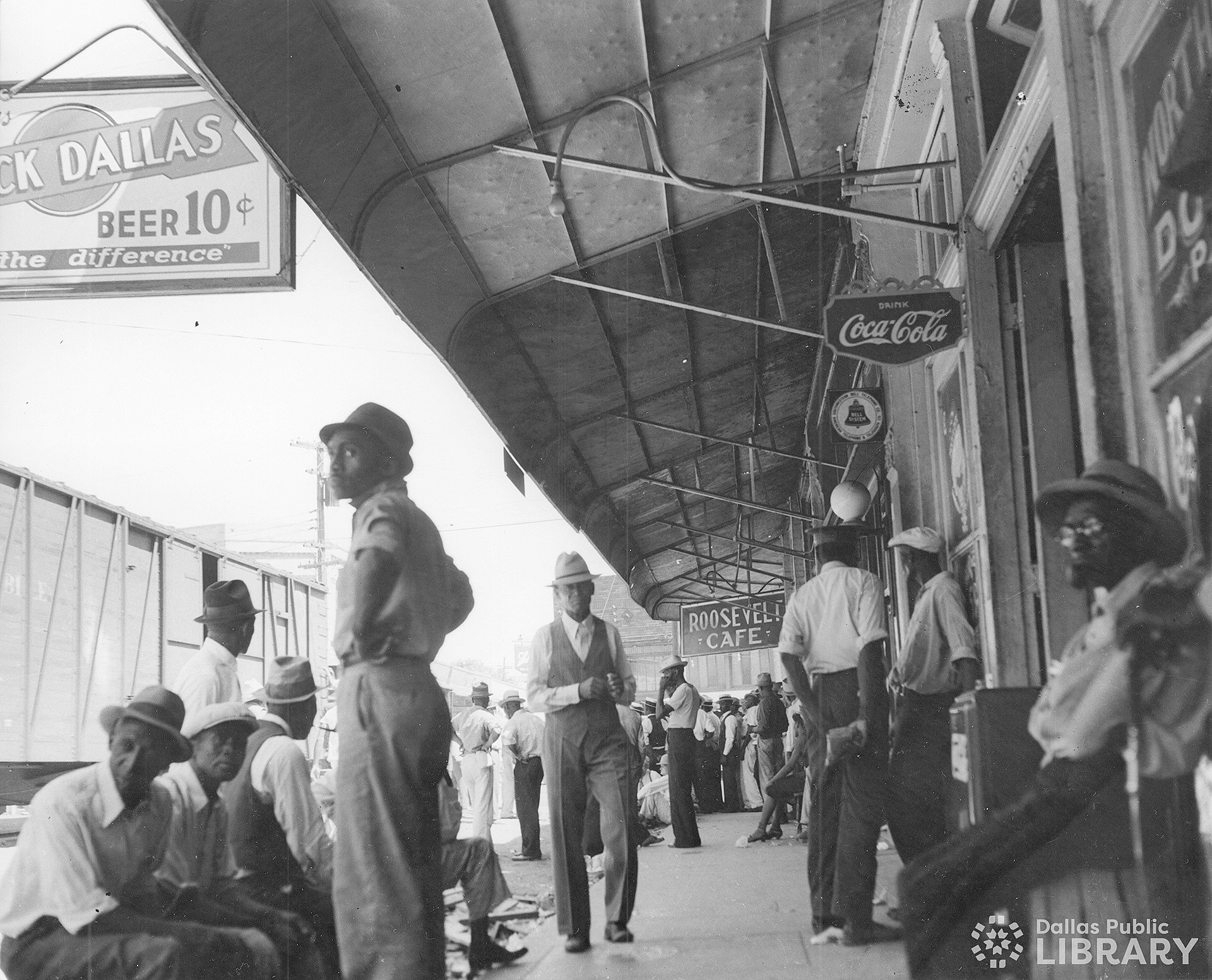
Dallas Public Library photo

The photo immediately above shows the Roosevelt Cafe, which was at 201 N. Central, and the North Pole Domino Parlor (a partial window sign is seen at the right), at 207 Central. A train is passing. This photo and the photo at the very top both show partial signs for Black Dallas beer. (All images are larger when clicked.)

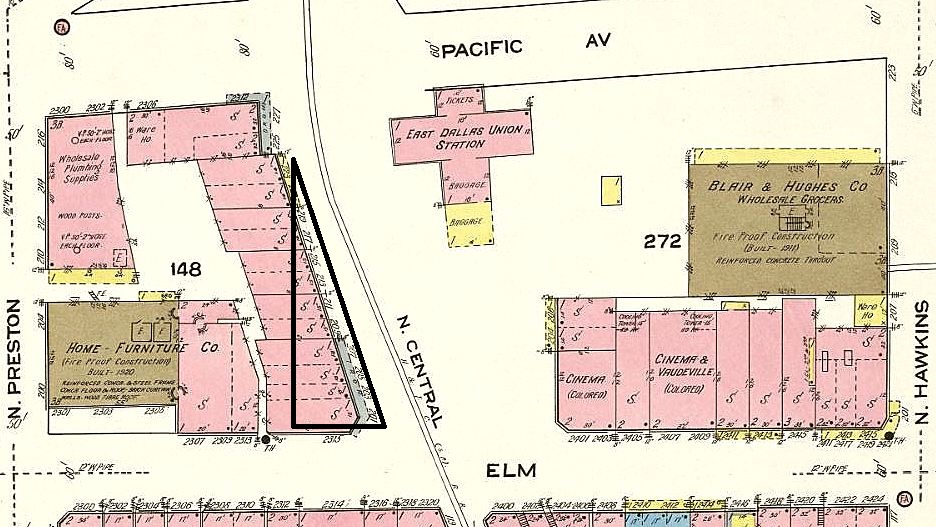
For a better idea of where these photos were taken, see the map below (it shows a detail from a 1921 map — about 15 years before these photos were taken). (See the larger, full Sanborn map here.)

central-ave_1921-sanborn_sheet-17_det1921 Sanborn map (det) showing where photos were taken

*

These are just great, great photos. There aren’t enough photographs like this which capture everyday life in Dallas’ minority communities. Deep Ellum was a thriving Black area at the time. Read a contemporary description of the good things and the bad things going on in this vibrant neighborhood in a (mostly uncondescending) chapter in the WPA Guide to Dallas, “Deep Ellum: Harlem in Miniature.”

**

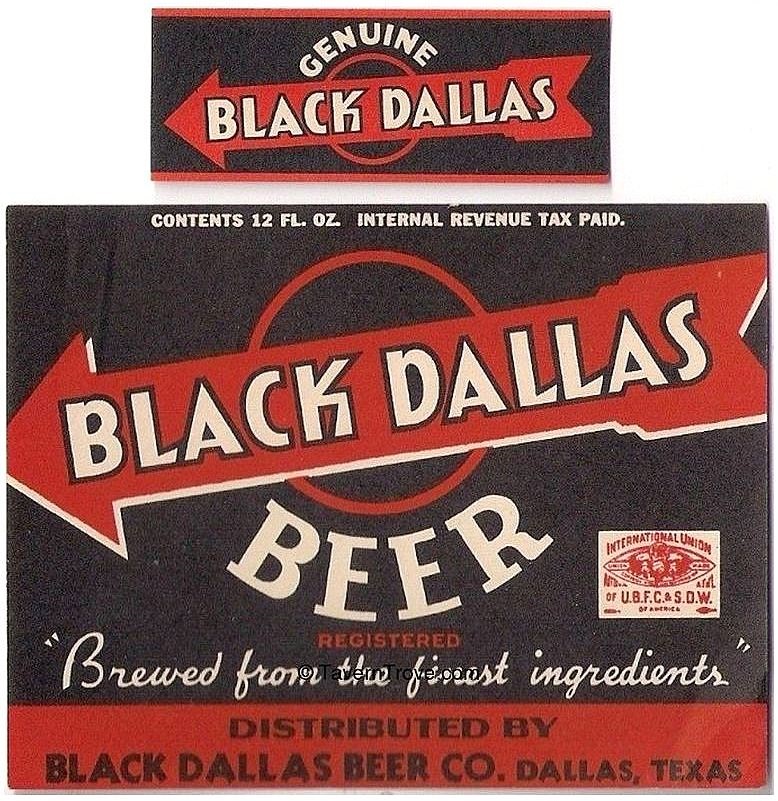
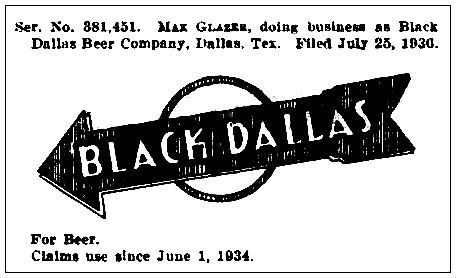
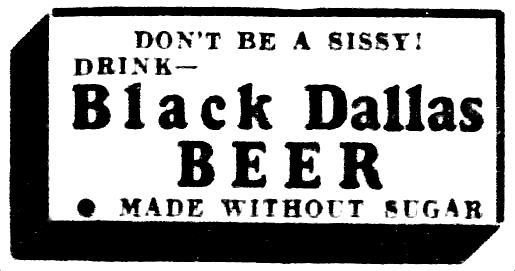
What about “Black Dallas Beer”? I haven’t found a lot about it, but it apparently began as a Dallas-brewed beer in the 1930s but was later brewed elsewhere. (A mention of its Schepps Beer affiliation is here.)

black-dallas-beer_taverntrove_label1937, via Taverntrove.com

black-dallas_beer_u-s-patent-office_090836U.S. Patent Office bulletin, Sept. 8, 1936

“Don’t be a sissy! Drink Black Dallas Beer — Made Without Sugar.”

black-dallas_beer_ad_waco-times-herald_052237Waco Times-Herald, May 22, 1937

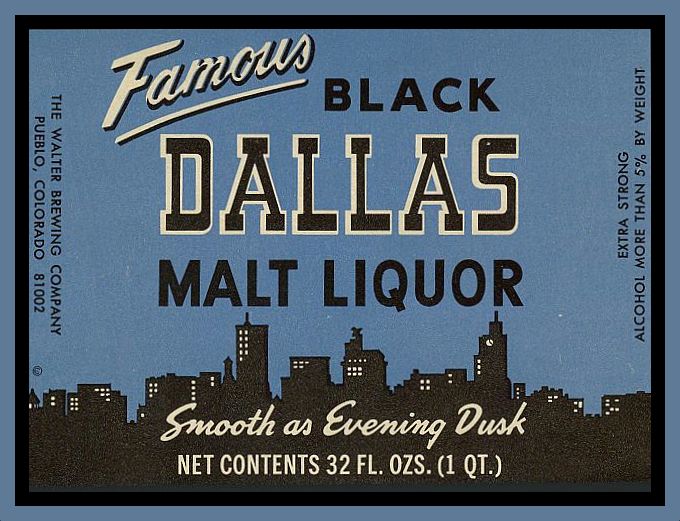
A “Famous Black Dallas Malt Liquor” popped up a few decades later — at that point, there was no connection to Dallas, except for the name and the fantastic label boasting the Dallas skyline. “Smooth as Evening Dusk.”

fbd_beer_black-dallas-malt-liquor_ebayeBay

***

Sources & Notes

The top Dallas Public Library photo — “[African American men walking and sitting along North Central Avenue in downtown Dallas in the early 1930’s]” — is from the Saxon Collection, Texas/Dallas History & Archives Division of the Dallas Public Library; its call number is PA85-16/4.

The second photo — “Gypsy Tea Room Cafe located in Deep Ellum” — is from the WPA Dallas Guide & History Collection of the Dallas Public Library — its call number is PA85-16/22.

The third photo — “[African American men seated on benches and standing outside of the Roosevelt Cafe in downtown Dallas in the 1930’s]” — is from the Saxon Collection, Texas/Dallas History & Archives Division of the Dallas Public Library; its call number is PA85-16/5.

Much more info on this Deep Ellum block can be found in the previously linked post from 2015, “The Gypsy Tea Room, Central Avenue, and The Darensbourg Brothers.”

See my other Flashback Dallas posts on Deep Ellum here.

*

Copyright © 2024 Paula Bosse. All Rights Reserved.

The South End “Reservation” Red-Light District — ca. 1907

south-end_hobson-electric_southeast-from-courthouse_ca-1907_cook-collection_degolyer_SMUThere’s a lot going on here that you can’t see… (DeGolyer Library, SMU)

by Paula Bosse

I am reminded how much fun it is to just dive into something with no idea where you’re heading and end up learning interesting things you might have been unaware of had you not wondered, “What am I looking at?”

Yesterday I was working on a future post that involves the Hobson Electric Co., and I was looking for photos. The one above popped up in one of my favorite collections of historical Dallas photos, the George W. Cook Collection at SMU’s DeGolyer Library. I was looking for a post-1910 West End photo — this photo is identified as just that [the title has now been updated by the SMU Libraries], but the presence of the Schoellkopf Saddlery Co. building (center left, with the Coca-Cola ad on it) puts this location on the other side of the central business district — Schoellkopf was at S. Lamar and Jackson. Even knowing that, this scene didn’t look familiar at all.

I checked a 1907 city directory to find out the address of the Hobson Electric Co. before it moved to the West End in 1910 — it was located at 172-74 Commerce Street (in what is now the 700 block), between S. Market and S. Austin. The view here is to the southeast, probably taken from the courthouse.

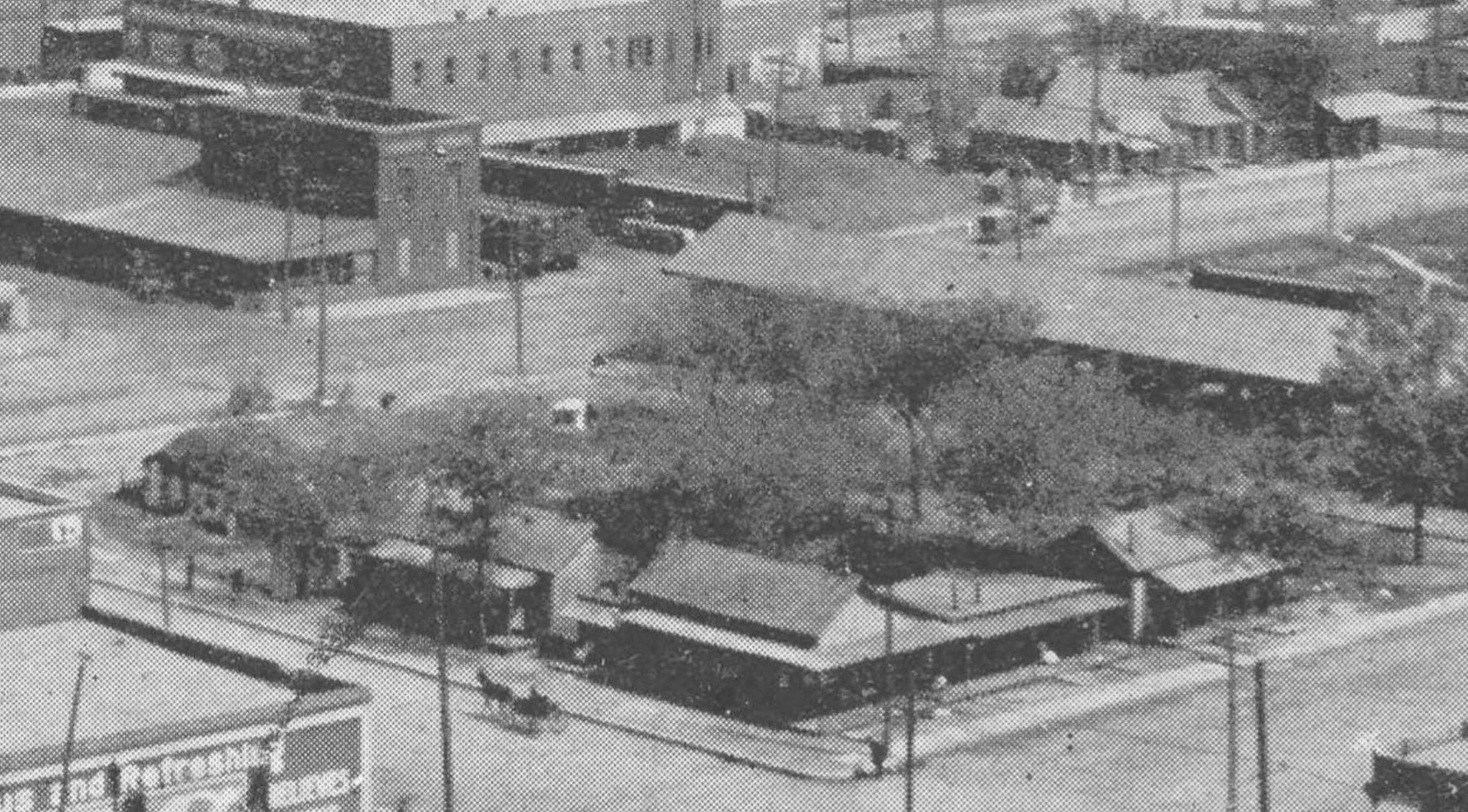
I don’t think I’ve seen this particular view before — it shows hardly any of the downtown area but shows instead the area to the south. I was really intrigued by the block of houses facing Jackson (between Market and Austin) — the block the horse-and-buggy is moving past, at the center right. The trees. The low buildings. That block really stood out. It was kind of quaint. Did people live there? While I had the 1907 directory open, I checked to see who the occupants were. (I just picked 1907 because the Hobson Co. changed its name from “Duncan-Hobson” around 1906, and it had moved away from Commerce by mid 1910.) Here were the occupants of those houses in 1907:
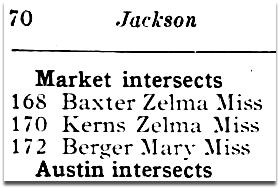
jackson-between-market-and-austin_1907-directory1907 Dallas directory

That seemed odd. Three single women occupying three separate houses, all next door to one other. There weren’t a lot of single women living in houses alone in 1907. Hmm. I checked all the directories between 1905 and 1910 to see who was living in that block. Every year, each of those houses showed a new occupant, and, with one exception, all were single woman (the exception was a man who owned a saloon across the street and who had faced charges at one point for “keeping a disorderly house”). …Okay. I got the picture.

I checked the Sanborn map from 1905 for this block and saw something I’d never seen before: the designation of a building with the letters “F.B.” What did that mean? Turns out, it means “Female Boarding House.” Or, less euphemistically… a brothel. Look at the map here (more maps are linked at the bottom of this post) to see the frankly ASTRONOMICAL number of “F.B.” buildings in this one small area. (There weren’t as many saloons — designated with “Sal.” — as I expected, but I’m pretty sure a lot of saloons in this area were operating illegally.)

You might have noticed that all of those F.B.s are south of Jackson. Not one of them is north of Jackson. This area — the southwestern part of downtown — was referred to at the time as the “South End” or “The Reservation” (some called this general area “Boggy Bayou,” but I think that was technically farther south). Its boundaries were, basically, S. Jefferson Street (now Record Street) on the west, Jackson on the north, S. Lamar(-ish) on the east, and beyond Young Street on the south. If you wanted to avail yourself of illicit things and engage in naughty behavior, this was the place for you: Ground Zero for a sort of wide-open, lawless Wild West. There were other red-light districts in Dallas (most notably “Frogtown,” which was north of downtown in the general area formerly known as Little Mexico) (does anyone still call this now-over-developed area “Little Mexico”?), but if you wanted the primo experience of one-stop-shopping for drinking, gambling, drugging, and “consorting with fallen women,” you were probably familiar with the South End, where all of these activities were tolerated and, for the most part, ignored by the police (they might mosey by if there were an especially egregious shooting or stabbing or robbery). In fact, this vice-filled area had been created by a helpful city ordinance in the 1890s. So, enjoy!

Prostitutes were allowed to ply their trade in this specified chunk of blocks because the city fathers felt that it would be best to keep all that sort of thing in one somewhat controllable area, away from the more reputable neighborhoods. But once a prostitute stepped outside the Reservation to sell something she shouldn’t have been selling… laws suddenly applied, and she’d be thrown in jail and/or fined. Do not step north of Jackson, Zelma!

So, at one time, Dallas had legal brothels. Depending on whose account you read, these houses of ill repute ranged from godawful “White Slavery” operations and bubbling cauldrons of sin and sleaze to, as Ted Dealey remembers in his book Diaper Days of Dallas (p. 74), “ultra-fashionable houses of prostitution” which attracted Big D’s moneyed movers and shakers. Something for everyone.

Eventually, people started to get really bent out of shape about this, and there was a big push to get these houses shut down — or at least moved out of the area. The Chief of Police reported to the City Council in 1906 that, among the many Reservation-related problems, the area was getting cramped because the railroads were buying up real estate in the area and kicking people out. The city-sanctioned no-man’s land was getting too small, so city officials needed to find a bigger place to move the red-light district to. The Chief thought that North Dallas (i.e. Frogtown) was “the most logical place” — except that residents of nearby swanky neighborhoods there were not at all keen on this. But that idea seemed to stick. It took several years to actually happen, but a relocation of sorts occurred, and the South End brothel-hotspot was pretty much scrubbed of all offending “disorderly houses” by 1910. (Frogtown bit the dust around 1913, after those unhappy well-to-do North Dallas neighbors complained bitterly, loudly, and effectively.)

So, anyway, I never expected to find such an exciting photograph! I wonder if the photographer took this photo as a way of documenting the very controversial, in-the-news, not-long-for-this-world Reservation, or whether it was just a nice scenic view. I have to think it was the former, because the Reservation was well-known to everyone, near and far, and this shot would have been an unusual vista to, say, reproduce for postcards (or at least postcards sold to the general public!). Whatever the case, I’ve never seen this view, and it’s really great — and it comes with an interesting slice of Dallas history. I had heard of the Frogtown reservation to the north, but I’d never heard of the South End reservation. And now I have. And here’s a photo of it!

Let’s bring back the neighborhood designation of “South End.” It was good enough for 1900, it’s good enough for today.

*

Here are a few zoomed-in details of the photo. Unless I’m imagining things, I think I can see women sitting on their porches, advertising their wares, as was the custom. (All images are larger when clicked.)
south-end_cook-collection_degolyer_SMU_det-1

*

south-end_cook-collection_degolyer_SMU_det-2

*

south-end_cook-collection_degolyer_SMU_det-3

*

Below is an excerpt from a blistering directive to city lawmakers by W. W. Nelms, Judge of the Criminal District Court (from an article with the endless headline “Calls For Action; Judge Nelms Charges Police Chief, Sheriff and Grand Jurors; Warfare on Crime; Says Lawbreakers Shall Not Construe Statutes of State to Suit Themselves; Stop Murder and Robbery; Declares Harboring Places for Thugs, Thieves and the Like Must Be Destroyed,” Dallas Morning News, Oct. 15, 1907).
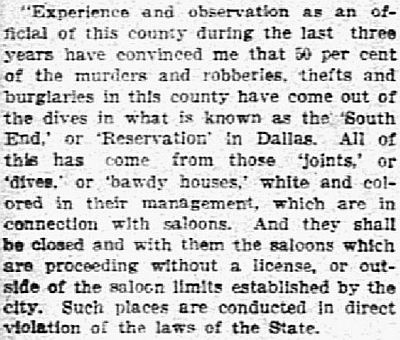
reservation_judge-w-w-nelms_DMN_101507DMN, Oct. 15, 1907

*

Below, the general area of the South End Reservation around 1907 (this map is from about 1898). The blue star is the Old Red Courthouse; the Reservation is bordered in red. In 1893, the original area was loosely designated as the area bounded by Jackson Street, Mill Creek, the Trinity River, and the Santa Fe railroad tracks, in which “women of doubtful character […] were not to be molested by police” (from “Passing of Reservation,” DMN, Dec. 11, 1904). As noted above, the area shrank over time, and the red lines show the general Reservation area about 1907, the time of the photo at the top.
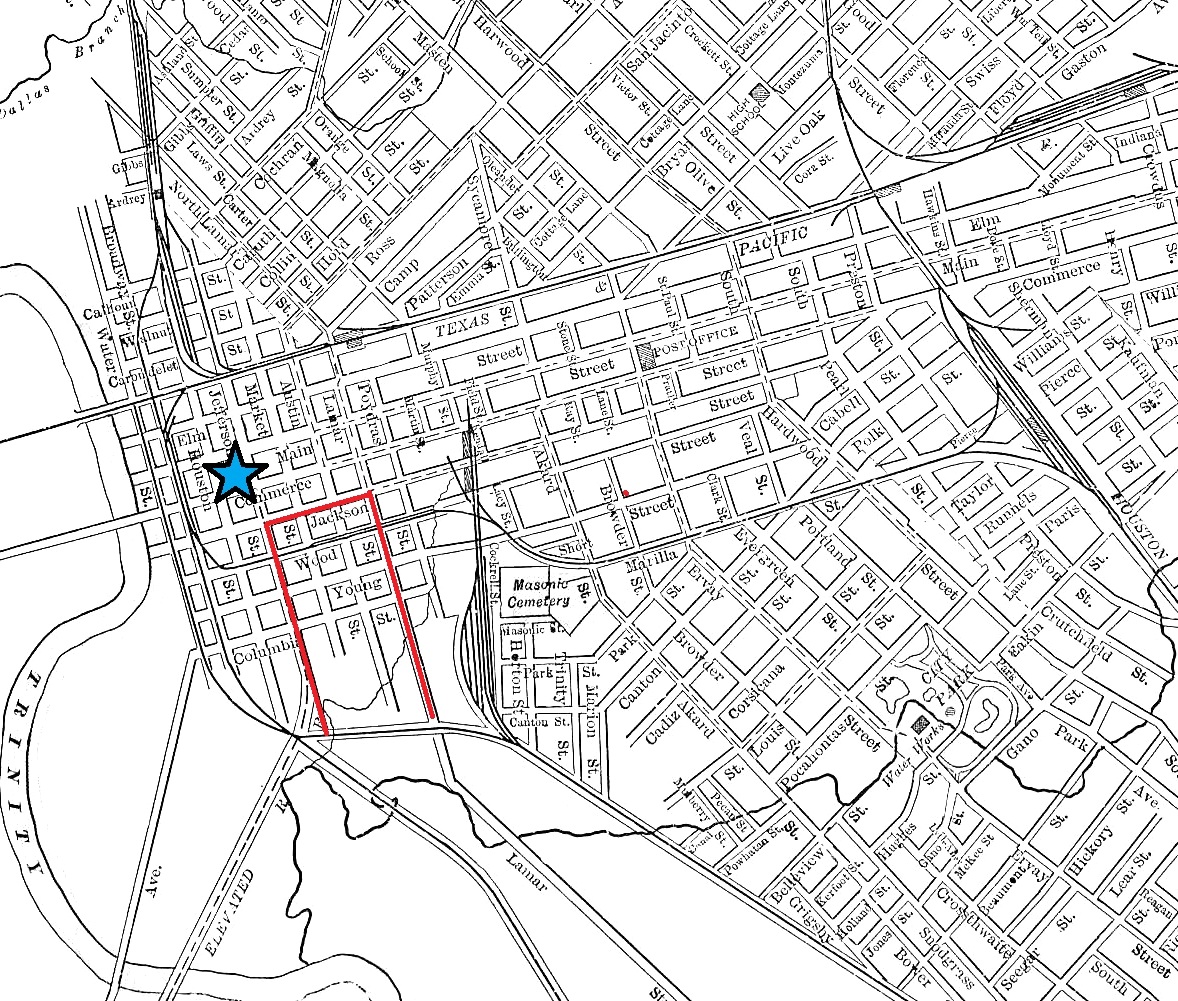
south-end_reservation_1898-map_portalDallas map, ca. 1898 (det), via Portal to Texas History

***

Sources & Notes

Top photo — “[Jackson Street, Looking Southeast from the Courthouse, Including a Partial View of the South End ‘Reservation’]” (previously incorrectly titled “[Dallas West End District with View of Railroad Yards]”) — is from the George W. Cook Dallas/Texas Collection, DeGolyer Library, SMU Libraries and can be accessed here. (I appreciate SMU for responding to my request to re-title and re-date this photograph — it’s always worth notifying archival collections with corrections!) (And, as always, I WELCOME corrections. I make mistakes all the time!)

The 1905 Sanborn map I linked to above (Sheet 104) is here and seems to be the epicenter of the booming brothel trade; more evidence of this can be seen just south of that in Sheet 102; and it continues just east of that in Sheet 105 (it’s interesting to note the specially designated “Negro F.B.” bawdy houses). (Sanborn maps do not open well on cell phones — or at least on my cell phone. You may have to access these from a desktop to see the full maps. …It’s worth it.)

Read more about this whole “Reservation” thing in the lengthy and informative article “Not in My Backyard: ‘Legalizing’ Prostitution in Dallas from 1910-1913” by Gwinnetta Malone Crowell (Legacies, Fall 2010).

Also, there’s a good section on this (“Fallen Women”) in the essential book Big D by Darwin Payne (pp. 48-56 in the revised edition).

If you enjoy these posts, perhaps you would be interested in supporting me on Patreon for as little as $5 a month — in return, you have access to (mostly!) exclusive daily Dallas history posts. More info is here.

south-end_hobson-electric_southeast-from-courthouse_ca-1907_cook-collection_degolyer_SMU_sm

*

Copyright © 2024 Paula Bosse. All Rights Reserved.

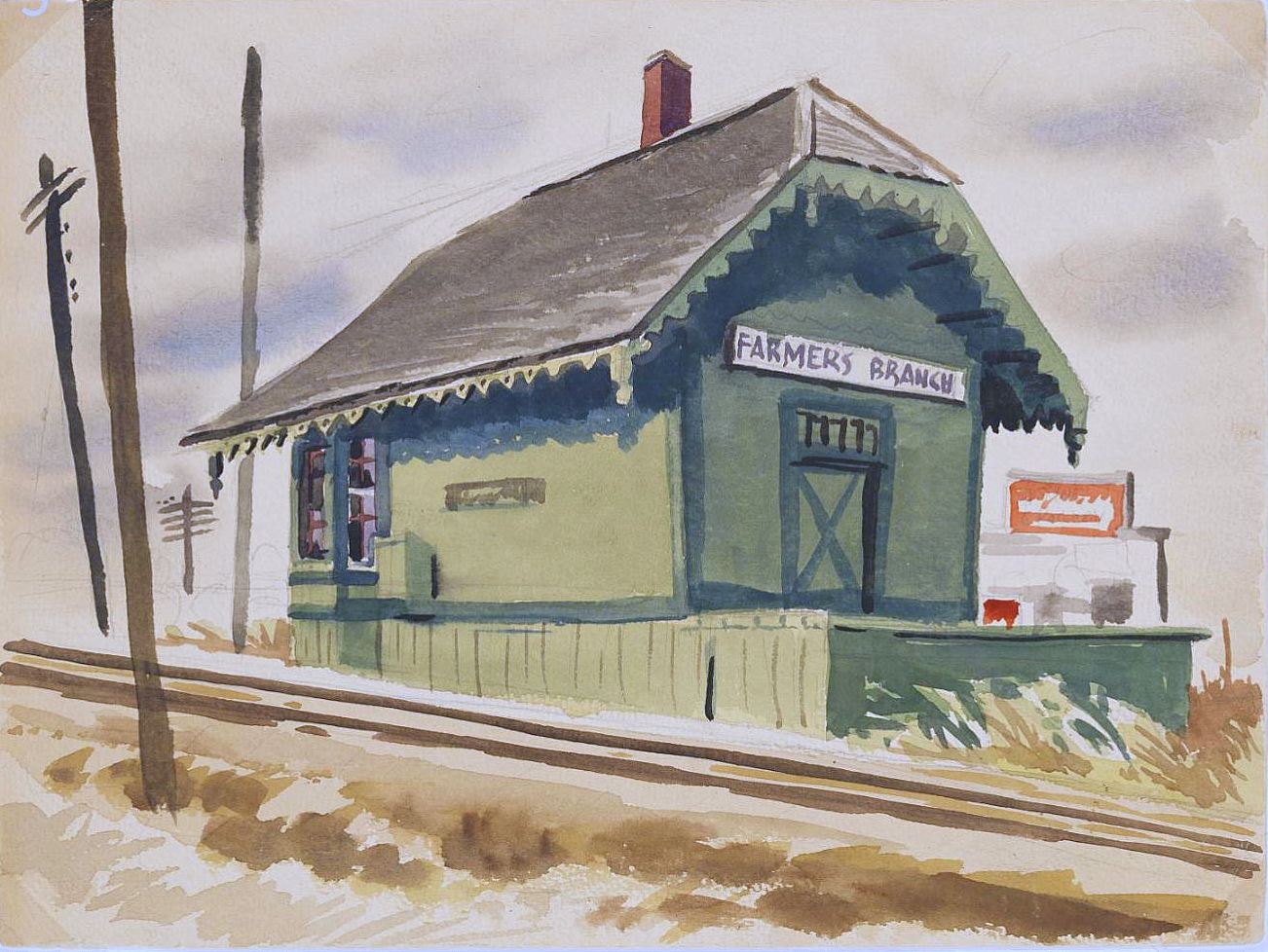
Jerry Bywaters: A Quick Trip to Farmers Branch

bywaters-jerry_untitled_farmers-branch-depot_bywaters-collection_smu_ndBywaters Special Collections, Hamon Arts Library, SMU

by Paula Bosse

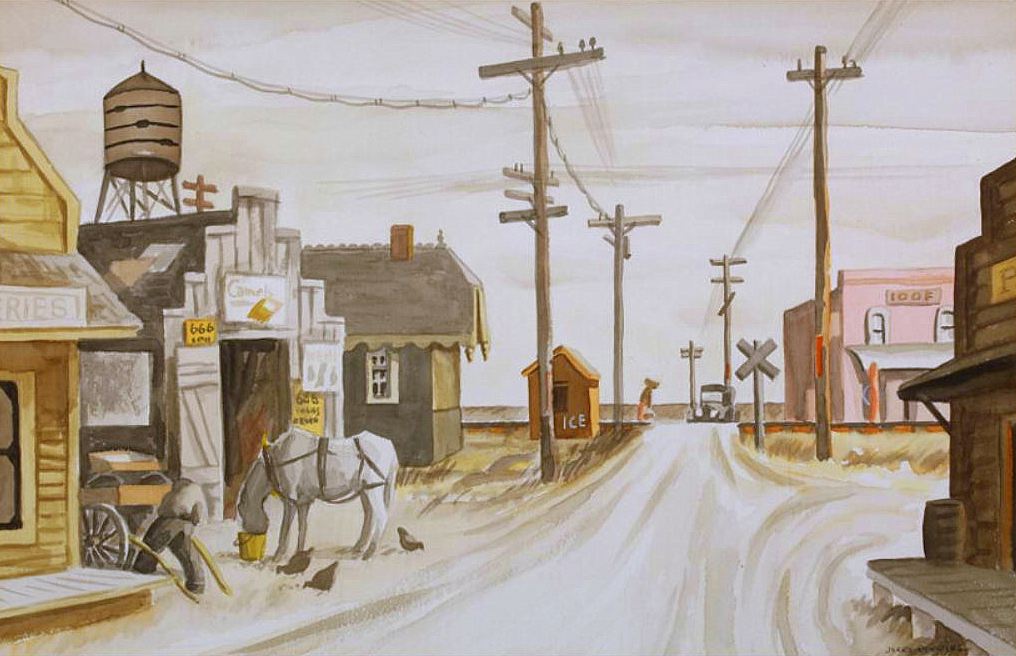
One of the joys of being a fan of an artist is discovering works you’ve never seen before. And here are two, both by a favorite of mine, Dallas artist Jerry Bywaters — and both are watercolors of the very nearby Farmers Branch. Bywaters must have been quite taken with the picturesque little depot there, because it snuck into at least two of his paintings. The one above is untitled, and the one below is “Farmers Branch In the Early Days.”

bywaters-jerry_farmers-branch-in-the-early-days_watercolor_ha-dot-com_sold-2010

I can’t find dates for either of these, but the top work appears to have debuted at an exhibition at the Lawrence Art Galleries in November 1937 (it is mentioned in a review of the show by Frances Folsom in The Dallas Morning News — “Exhibition of Art Works by Jerry Bywaters Opening,” DMN, Oct. 31, 1937).

The depot is still standing — it was restored and relocated to the Farmers Branch Historical Park in 1985. Read a great history of the depot here.

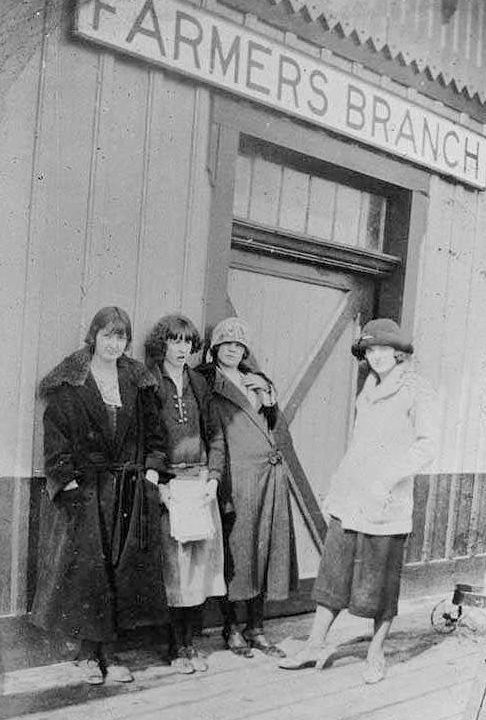
The photo below is from the City of Farmers Branch site. Who wouldn’t want to spend a day with those girls?

farmers-branch-depot_photo_fb-city-website

I think I need to explore Farmers Branch.

***

Sources & Notes

Top painting (“Untitled [Farmers Branch Train Depot]”) is an undated watercolor by Jerry Bywaters, from the Bywaters Special Collections, Hamon Arts Library, SMU Libraries — more info on this can be found at the SMU site here.

The second painting, “Farmers Branch In the Early Days,” is an undated watercolor by Jerry Bywaters; it was sold by Heritage Auctions in 2010. (A notation on the back of this framed piece indicates that it once belonged to the legendary Judge Sarah T. Hughes, or it was purchased by her to give to a very lucky friend.)

The photo of bobbed flappers loitering around the depot is from the City of Farmers Branch website, here.

Other Flashback Dallas posts with (very different) examples of Jerry Bywaters’ art:

A version of this post originally appeared on my Patreon page.

bywaters-jerry_untitled_farmers-branch-depot_bywaters-collection_smu_nd_sm

*

Copyright © 2023 Paula Bosse. All Rights Reserved.

Colony Club Billboard in Beautiful Kodachrome — Early 1960s

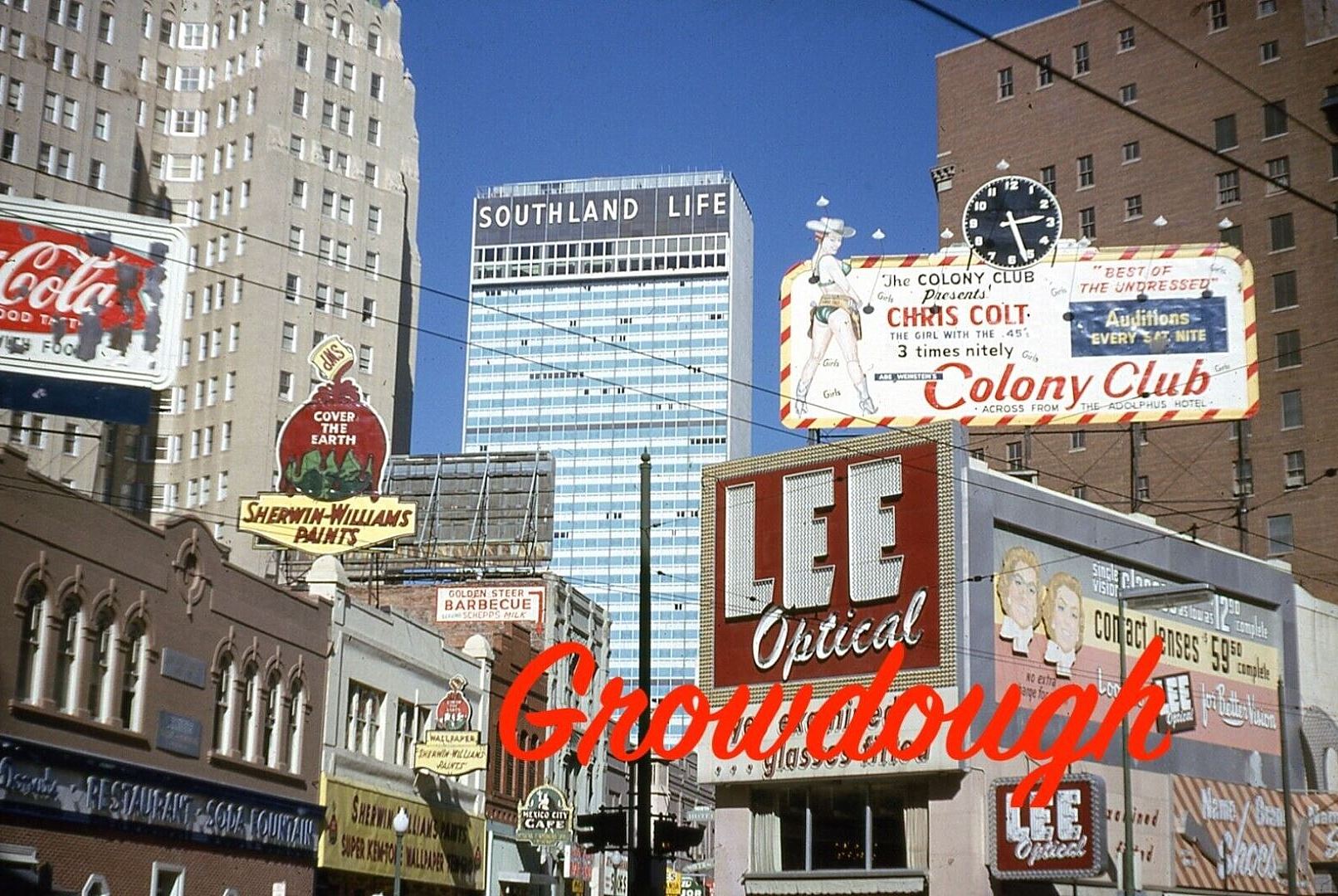
kodachrome_elm-ervay-live-oak_chris-colt_colony-club-billboard_ebay_WATERMARKDowntown Dallas has it all…

by Paula Bosse

This. Is. A. Fantastic. Photo.

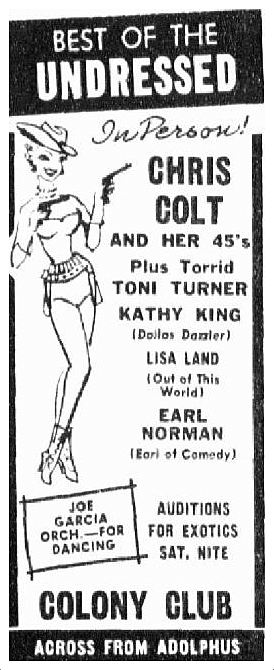
If only for the great, great, great Colony Club (“the best of the undressed”) billboard featuring Chris Colt (“the girl with the 45s”).

See this same view of the (one-time) intersection of Elm, Ervay, and Live Oak here and here. (The dazzling animated neon Coca-Cola sign was once where Chris Colt is showing off her 45s.)

I almost never post images with watermarks, but this photo is pretty spectacular. Look around the watermark!

I don’t know the seller of this color slide. I have no affiliation with the person. I get no cut in any sale. But I want someone reading this to BUY IT! Let’s keep this with someone who loves Dallas history! (And if you DO buy it and would like to send me a digital copy… well, I wouldn’t say no!) See this slide currently on eBay HERE. (HURRY!)

To see a naughty photo of Chris Colt, you can click on an antique collectors’ website here.

colony-club_ad_chris-colt_112262Colony Club ad, Nov. 22, 1962

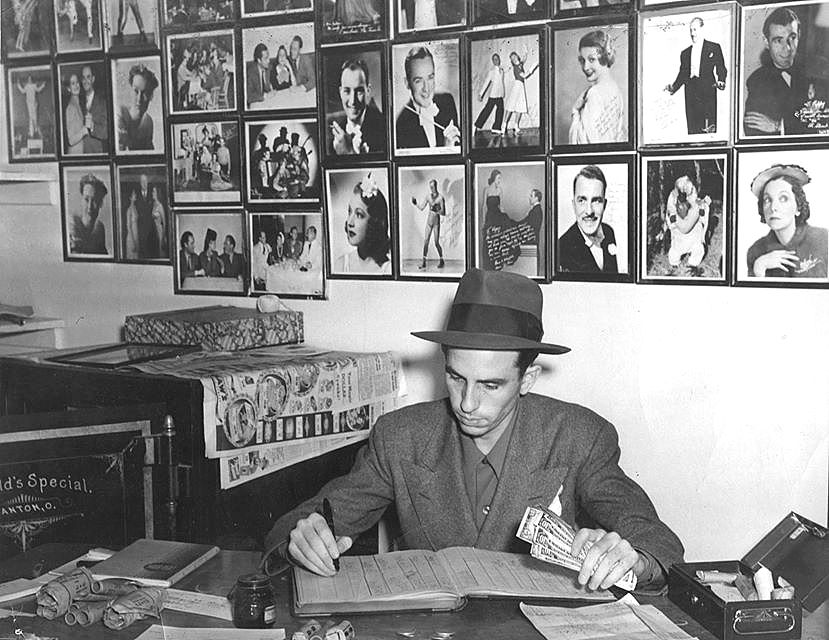
And below is a photo of Colony Club owner Abe Weinstein in his younger years counting his moolah.

abe-weinstein_abe-and-pappys_djhs-facebookphoto: Dallas Jewish Historical Society

***

Sources & Notes

Top image is from a color slide in a current eBay listing here. (Seller’s title: “Original Slide Dallas St Scene Colony Club Coca Cola Billboards Southland Life.”) There is no date, but Golden Steer Barbecue opened at 1713 Live Oak sometime in 1961.

Abe Weinstein photo — from his days as the co-owner of Abe’s and Pappy’s — is from the Facebook page of the Dallas Jewish Historical Society.

kodachrome_elm-ervay-live-oak_chris-colt_colony-club-billboard_ebay_WATERMARK_sm

*

Copyright © 2023 Paula Bosse. All Rights Reserved.