Flashback : Dallas

A Miscellany: History, Ads, Pop Culture

Category: HOF

Ferris Plaza Waiting Station — 1925-1950
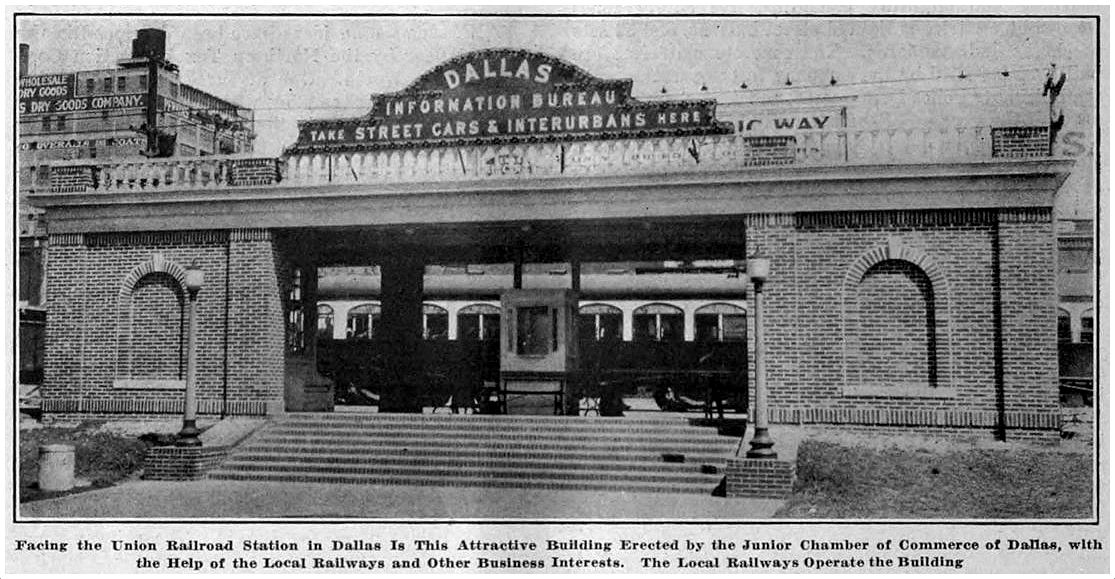
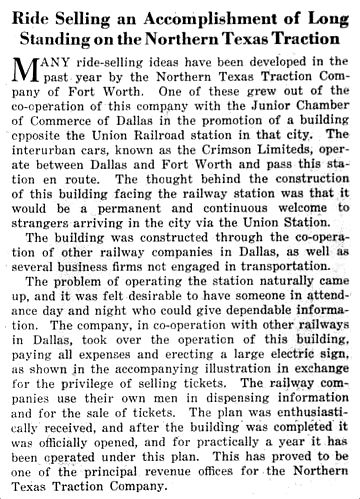
railway-info-bldg_1926From The Electric Railway Journal, 1926

by Paula Bosse

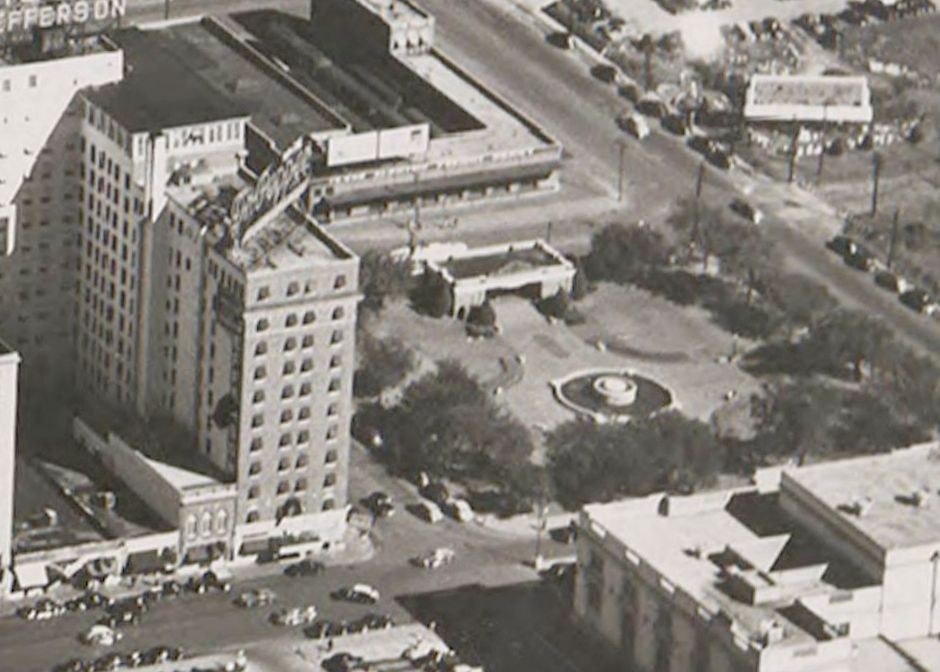
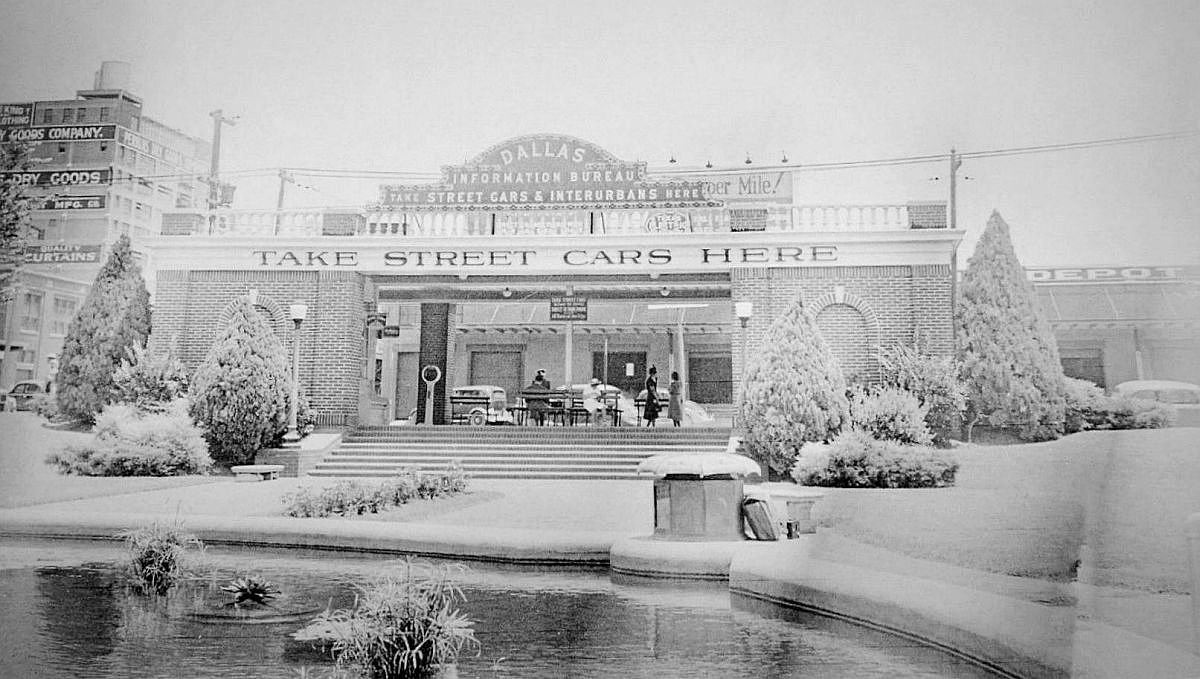
I came across the odd image above whilst digitally thumbing through a 1926 issue of The Electric Railway Journal (as one does…) and wondered what it was. It was definitely something I’d never seen downtown. Turns out it was a combination information bureau, covered stop in which to buy tickets for and await the arrival of interurbans and streetcars, a place to purchase a snack, and a location of public toilets (or, more euphemistically, “comfort stations”). It was located at the eastern edge of Ferris Park along Jefferson Street (which is now Record Street), with the view above facing Union Station. It was intended to be a helpful, welcoming place where visitors who had just arrived by train could obtain information about the city, and it was also a pleasant place to wait for the mass transit cars to spirit them away to points beyond. With the lovely Ferris Plaza (designed by George Dahl in 1925) between it and the front of the Union Terminal, this was considered The Gateway to the City long before Dealey’s Triple Underpass was constructed. (Click photos and articles to see larger images.)
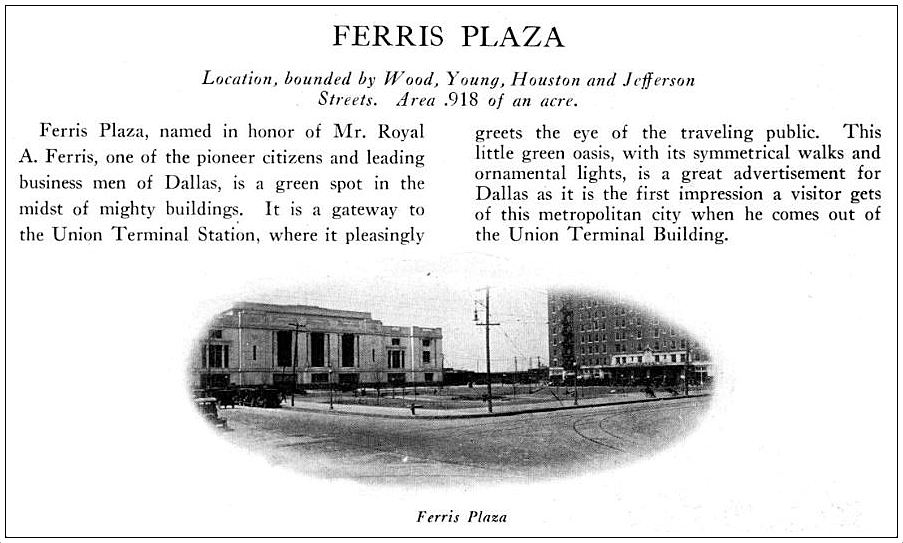
ferris-plaza_park-and-playground-system_pubn_1921-23_portal

The “waiting station” was the brainchild of the Dallas Junior Chamber of Commerce which proposed the idea to the City of Dallas and, as it was to be built at the edge of a city park, the Park Board. The small (50 x 30) brick building — designed by Dallas architect J. A. Pitzinger — would cost $5,000 and would be paid for by funding from local businesses, including various transportation concerns (namely, the Northern Texas Traction Company). The “traction” companies would staff the information booth and sell tickets. The plans were accepted and permission was granted. Construction began in July, 1925, and the building was opened for waiting by October.

This improvement is the most recent of a number which have made of Ferris Plaza a beauty spot at the gateway of the city. Designed for a sunken garden, fringed with trees, the plaza is now adorned with a great fountain, illuminated with colored lighting at night, the gift of Royal A. Ferris. The new waiting station is in harmony with the general scheme of the plaza development, and combines beauty with utility. (Dallas Morning News, Sept. 20, 1925)

The little waiting station proved to be quite popular, and by the end of its first year the Northern Texas Traction Company (who operated interurban service between Dallas and Fort Worth) was very pleased, as interurban ticket sales at the station had become a solid source of company revenue. The Ferris Plaza station lasted a rather surprising 25 years. It was torn down in 1950, mainly because the interurbans had been taken out of service and there was no longer a need for it. Also, the park department was eager to get their park back and make it more “symmetrical.”

People would just have to wait somewhere else.

*
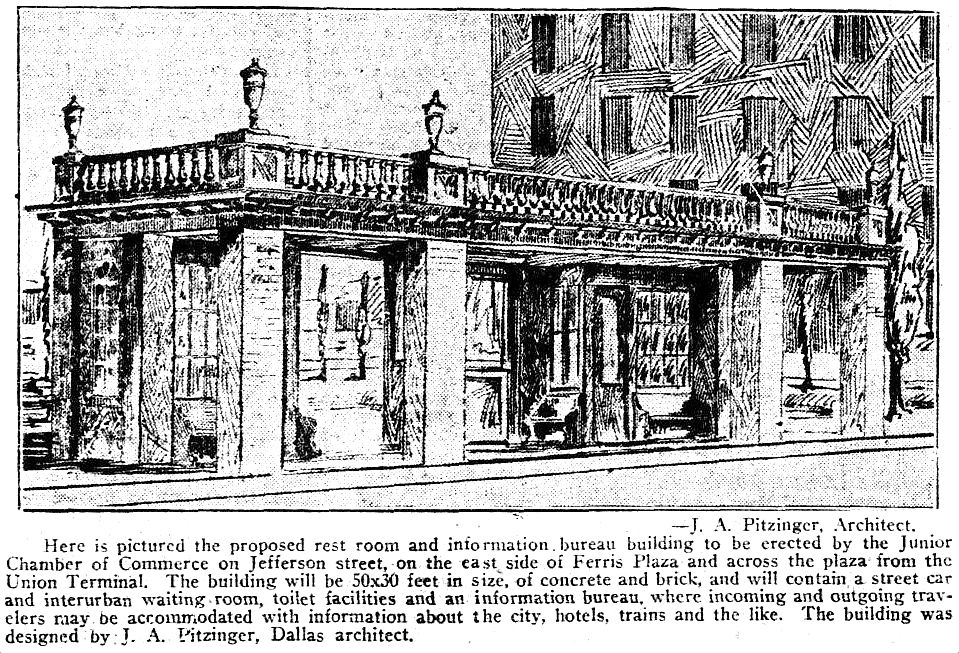
ferris-plaza-info-bureau_rendering_pitzinger_dmn_031625Architectural rendering by J. A. Pitzinger (DMN, March 16, 1925)
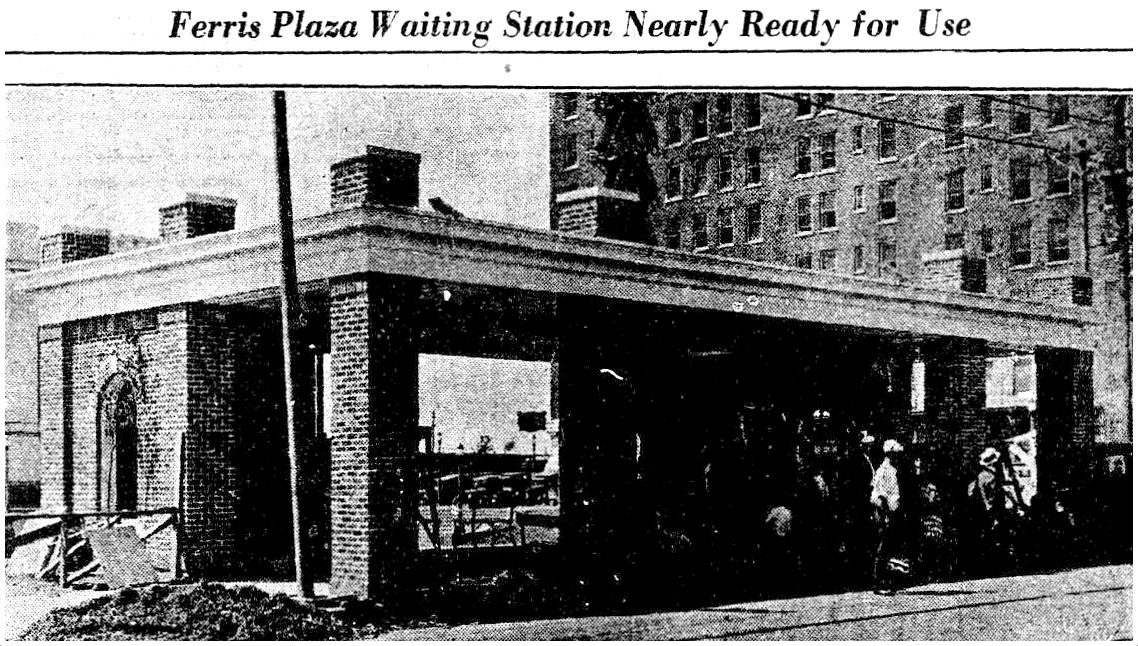
ferris-plaza-waiting-stn_dmn_092025Nearing completion (DMN, Sept. 20, 1925)
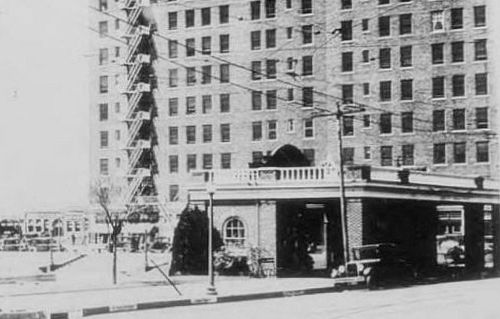
waiting-station_jefferson-hotel_degolyer-lib_SMU_croppedDeGolyer Library, SMU (cropped)

railway-info-bldg_1926_text_smThe Electric Railway Journal (Nov. 6, 1926)
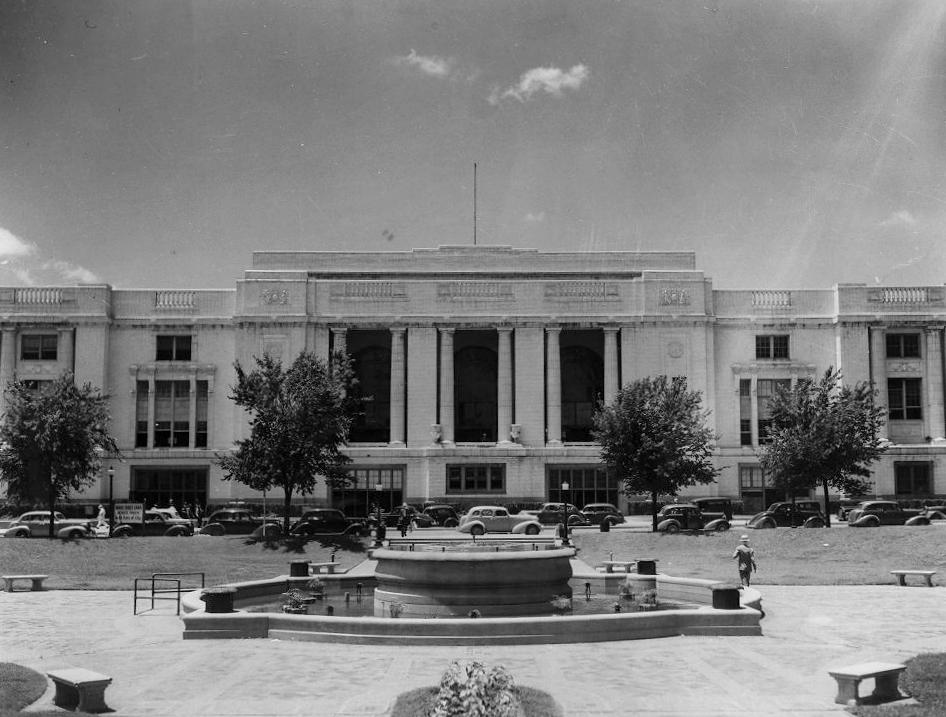
ferris-plaza_union-station_dpl_1936Union Station, 1936 — view from the “waiting station” (Dallas Public Library)
waiting-station_ebay

ferris-plaza_aerial_smu_c1949-det1949 aerial view, showing “waiting station” just above plaza’s circular fountain

***

Sources & Notes

Top photo from The Electric Railway Journal, Nov. 6, 1926.

Very early photo and description of Ferris Plaza is from Park and Playground System: Report of the Park Board of the City of Dallas, 1921-1923, via the Portal to Texas History, here.

Cropped image showing the waiting station with the Jefferson Hotel in the background is from the DeGolyer Library, SMU — more info is here.

Photograph of Union Station from the Texas/Dallas History and Archives Division of the Dallas Public Library.

Aerial photo showing Ferris Plaza is from a larger view of downtown by Lloyd M. Long (the original of which is in the Edwin J. Foscue Map Library collection of the Central University Libraries, Southern Methodist University, and which can be viewed here).

To read about the Ferris Park restoration project, see here.

For a few interesting and weird tidbits about the block that eventually became Ferris Plaza (including the fact that it was thought to be haunted and that it was once the site of a brothel), check out this page on Jim Wheat’s fantastic site.

*

Copyright © 2014 Paula Bosse. All Rights Reserved.

The First Texas-OU Game in Dallas — 1912

tx-players_dmn_101912bWatch out, Oklahoma: giant Texas linemen await…

 by Paula Bosse

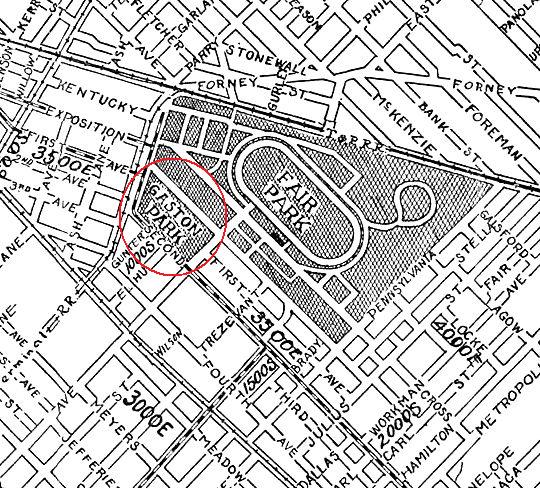
The Texas-OU game is a football tradition, held annually in the Cotton Bowl during the State Fair of Texas. The first game of the so-called “Red River Rivalry/Showdown/Shootout” was held in Dallas (aka “neutral ground”) in 1912. As the Cotton Bowl hadn’t been built yet, the game was held at Gaston Park, a sporting field with a large grandstand where Dallas teams played baseball, football, and, yes, even soccer. It was located at Parry & Exposition, in the spot where the State Fair Auditorium (now known as the Music Hall) was built in the 1920s.

Since my grasp of sports is tentative, I’m not going to go into any particulars of the actual game (which — spoiler! — Oklahoma won, 21-6); instead, I thought I’d mention a few of the incidental things leading up to the game that I found interesting. (For those who are interested in the particulars of the game, fret not — there is a link at the bottom of the post.)

So here are a few of the things that I found amusing or entertaining:

  • The 1912 football season began with new rules: downs were increased from 3 to 4; touchdowns were now 6 points instead of 5; the playing field was reduced from 110 yards to 100; the onside kick was abolished; a touchdown was permitted when caught over the goal line; the ball was kicked off from the 40-yard line instead of midfield; the intermission between quarters was reduced from 2 minutes to 1.
  • Fort Worth felt slighted that they had missed out on hosting the game (“it might just as well have been played in Fort Worth,” the Fort Worth Star-Telegram groused). Local Fort Worth-friendly UT alumni swore to try “strenuously” to get the game for Cowtown the following year, because, damn it, “next year is Fort Worth’s turn” (FWST, Oct. 15, 1912). (Sorry ’bout that, FW….)
  • The Sooners’ coach, 37-year old Bennie Owen (whom I gather is something of an OU legend), had only one arm, the result of a hunting accident. The Dallas Morning News wrote that Owen was “one of the most able [coaches] in the country. He is disabled to some extent by having but one arm, but evidenced by his success during the past season, this does not trouble him to any great extent” (DMN, Oct. 6, 1912).
  • The Longhorns’ coach, Dave Allerdice, was only 25 years old. He had been hired to fill the spot left vacant in the wake of the death of UT’s previous coach who had died rather exotically as the result of “a fall out of the window of his bedroom” (DMN, Oct. 10, 1912).
  • Both Allerdice and Owen had been coached as students by the same man, Coach Yost, at Michigan.
  • The Gaston Park crowd was estimated at over 6,000. The crowds going to the game and to the fair were so great that the streetcars and Interurbans were jam-packed. In fact, both teams had difficulty making it to the game on time because they couldn’t find transportation to get there, and the game had to be started late to allow for the players to arrive and warm up.
  • Oklahoma dominated the game, and the Sooners won, 21-6.

And so began the annual Texas-OU tradition in Dallas.

*

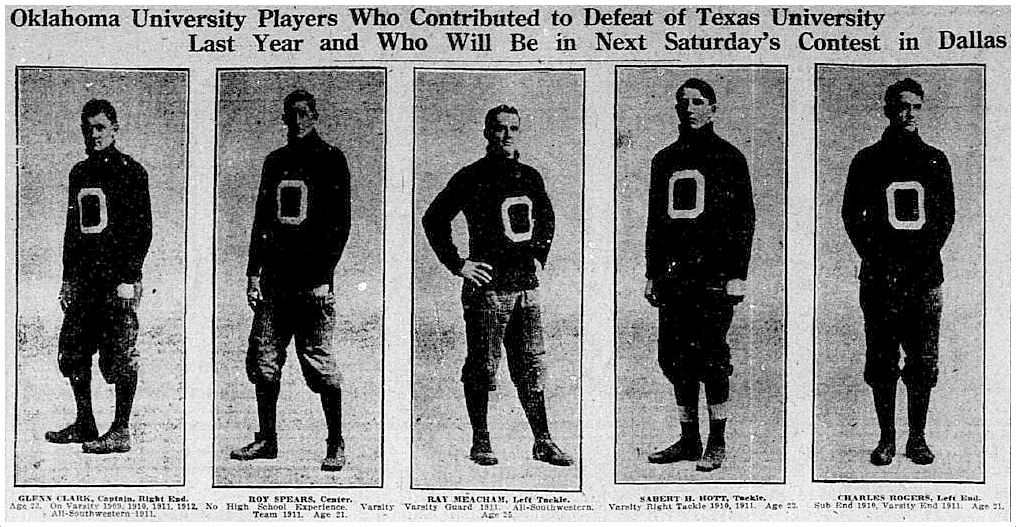
Below, Sooner boys: 0-0-0-0-0.

sooners_1912_dmn_101812DMN, Oct. 18, 1912

*

Grainy, off-kilter image of the crowd-frilled grandstand at Gaston Park.

tx-ou_crowd_dmn_102012DMN, Oct. 20, 1912

*

It’s a bit hard to see anything in these 100-plus-year-old photos, but here are a couple of “action photographs” of the game.

tx-ou_game-photos_dmn-102012DMN, Oct. 20, 1912

*

Gaston Park? Here’s where it was (a lot of street-renaming has gone on since this map was drawn in 1919).

gaston-park_fair-park_ca-1919

***

Sources & Notes

All photos from The Dallas Morning News.

1919 map (detail) from the Portal to Texas History, here.

For slightly better photos of Gaston Park (in 1908), see a previous post, here.

Wikipedia roundup:

  • Gaston Park, here.
  • Bennie Owen, here.
  • Dave Allerdice, here.
  • “Red River Showdown” (which I’ve never actually heard anyone other than TV commentators and promoters say to describe what everyone I know calls the “Texas-OU game”), here.
  • Defenestration, here.

The Dallas Morning News and The Fort Worth Star-Telegram are filled with numerous contemporaneous articles about this game. If you have a handy-dandy Dallas Public Library card (free!), you can pore over these articles to your heart’s content. To read what was printed the day of the game (Oct. 19, 1912), click  here. To read about the results and the game coverage, click here.

Click pictures for larger images. They will still be muddy and grainy, but, by God, they’ll be bigger.

*

Copyright © 2014 Paula Bosse. All Rights Reserved.
Whither Water? — 1956

drought_caterpillar-ad_1962_det“Dallas — The City That Decided Not To Die of Thirst”

by Paula Bosse

Between 1950 and 1957, Texas suffered the worst drought on record. By 1957, 244 of Texas’ 254 counties had been declared disaster areas. In 1952, Lubbock recorded not even a trace of rain. Elmer Kelton captured the period perfectly in his classic novel, The Time It Never Rained. It might not have achieved the epic catastrophic proportions of the Dust Bowl days, but that doesn’t mean it wasn’t devastating.

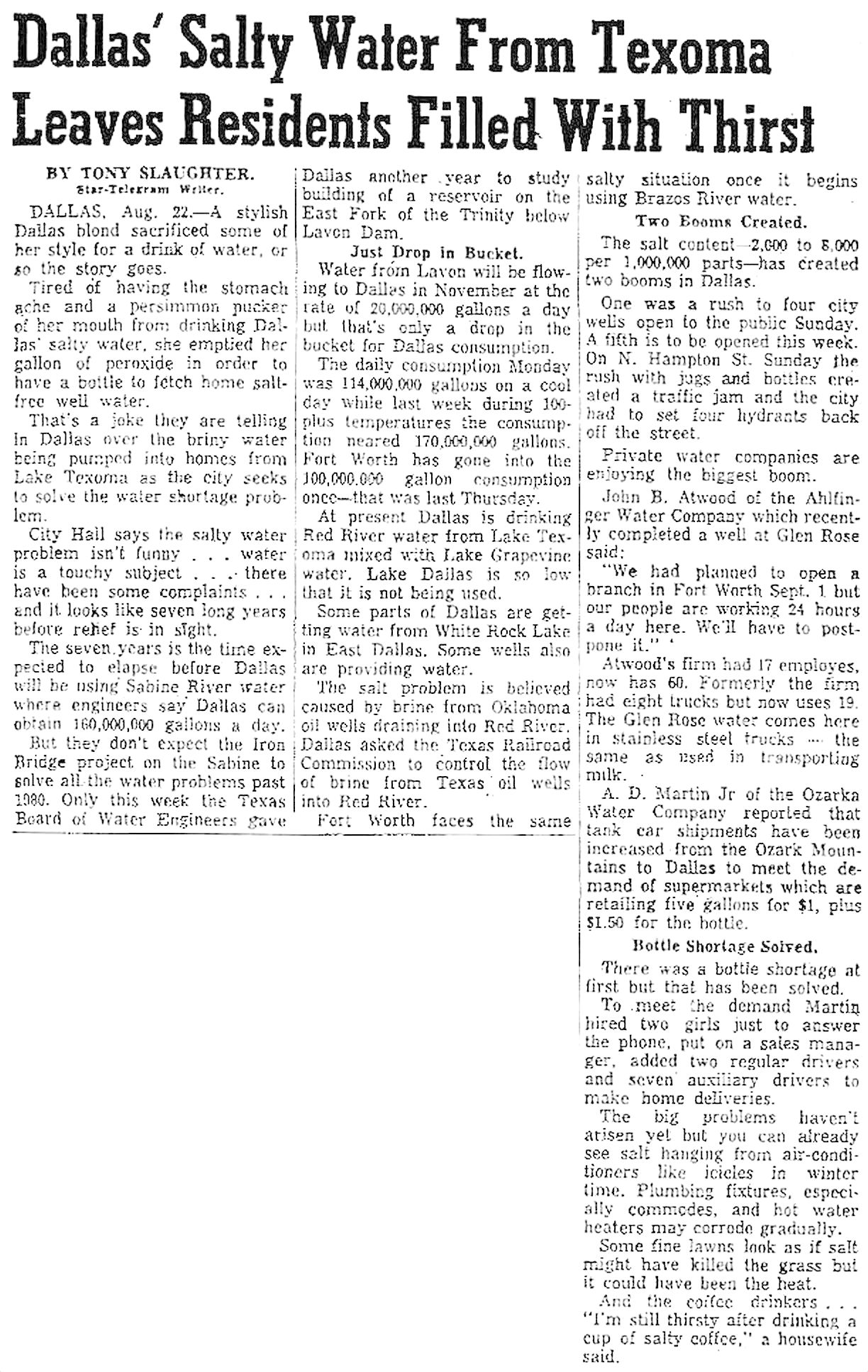
In Dallas, the lakes and reservoirs were hit hard. White Rock Lake dried up — one was able to walk across the parched lake bed without a drop of water in sight. Lake Dallas (now Lake Lewisville) fell to 11% of capacity. Dallas was desperate for water, and in 1956, it began “importing” water from Oklahoma. Red River water was appreciated, but it was considered by many far too salty to drink. In addition to the unpleasant taste, residents were concerned that there would be permanent damage to pipes and plumbing, and, to a lesser extent (since watering restrictions were being strictly enforced) to their lawns.

According to one report, salt content in the water supply had gone from the normal 39 parts per million gallons to over 800 parts (at the height of the problem, some news outlets reported it to be well over 2,000 parts per million). While the water was generally considered perfectly safe for the average person to drink, many looked for cleaner, more palatable drinking water.

drought_FWST_082356Fort Worth Star-Telegram, Aug. 23, 1956 (click for larger image)

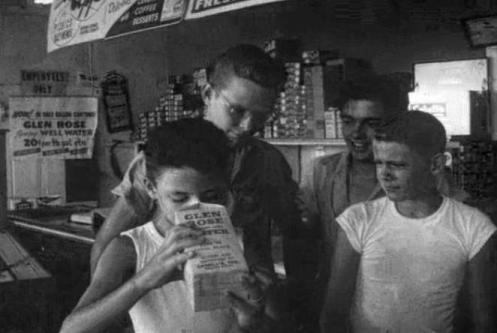
Suddenly bottled water became a boom business. Spring water was being trucked to Dallas from Glen Rose and Arkansas. Water was being sold in bottles and cartons — from 20 cents per half-gallon cartons to $2.50 for five-gallon bottles ($1.50 of which was for a deposit on the glass bottle). WBAP-TV news even sent a cameraman out to a Cabell’s convenience store to capture some boys testing out the Glen Rose water (watch it here, without sound).

water_portal_screencap

The other source of acceptable drinking water that summer was from city wells dotted around Dallas. Long dormant, the city opened the wells and offered free water to residents. From The Dallas Morning News:

If you don’t like that hard, salty water coming from your taps, you can get soft, unsalty water at four city wells beginning Sunday. City manager Elgin E. Crull Saturday said that the city has installed faucets at the four wells where people may take their buckets or bottles and obtain drinking water. No trucks will be permitted to fill up. (DMN, Aug. 19, 1956)

The four wells mentioned above — and two more opened within a few weeks — were located at the following locations:

  • 1325 Holcomb, near Lake June Road
  • Opera and 13th, near the Marsalis Zoo
  • 875 North Hampton, near Lauraette Street
  • 2825 Bethurum, in South Dallas, near the public housing project
  • Northwest Highway and Buckner
  • Matilda and Anita, on the grounds of Stonewall Jackson Elementary School, in East Dallas

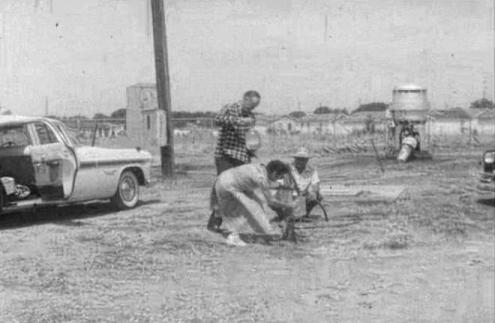
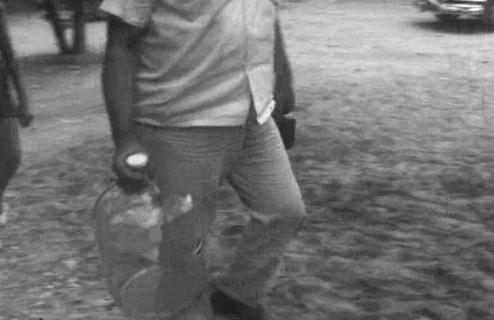
These wells were hugely popular, with thousands of people showing up with jugs, jars, kettles, canteens, and bottles of every conceivable size. (More WBAP news footage of people filling up at these wells can be seen here, without sound; details below).

well-1

well-2

The popularity of the city wells led to private citizens having wells dug on their own property. Not only were bottled water suppliers making a killing during the summer of ’56, so were the owners of drilling businesses. From The Dallas Morning News:

As salty water from city mains reportedly discourages shrubbery and affronts the taste, drillers of shallow residential water wells ride the crest of a boom. […] Luckiest of the water-seekers are residents of the southern section of the city in the Fruitdale, Pleasant Grove and Home Gardens area, and in the neighborhoods that border Loop 12. That is where drillers are finding pay dirt — water-bearing gravel — at shallow depths. (DMN, Oct. 7, 1956)

It wasn’t just professional drillers who were busy — it wasn’t uncommon for the DIY-ers to be out in the backyard on weekends, digging away, hoping for their own personal source of fresh water. And there were probably even some dowsers out and about, water witching their little hearts out.

The drought ended the next year, and personal wells were a thing of the past, but that mania for bottled water really dug its heels in.

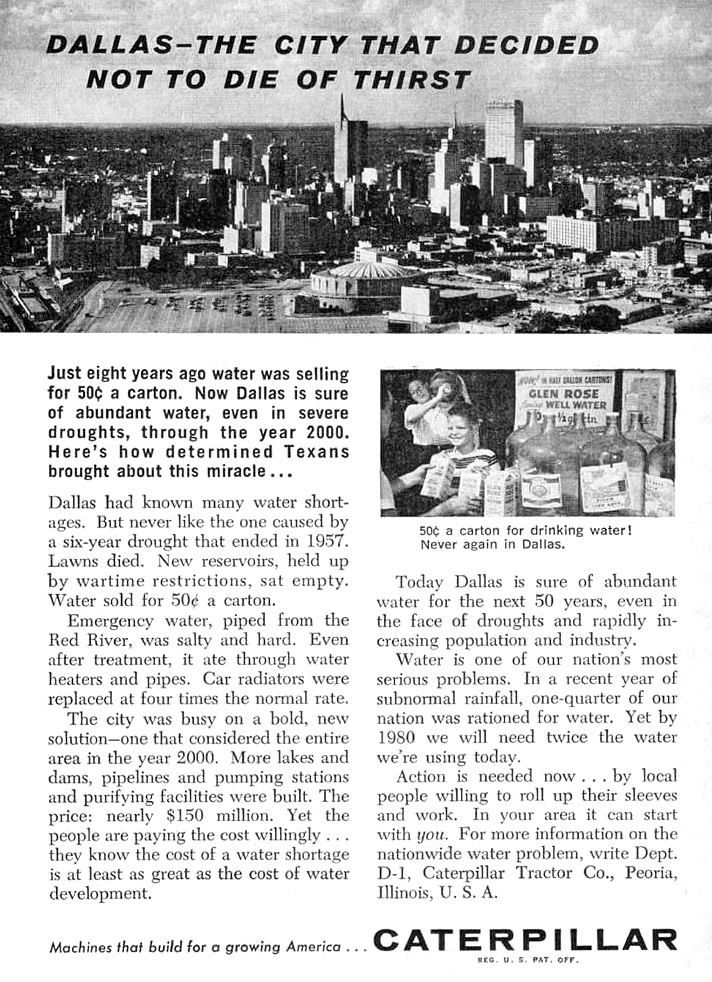
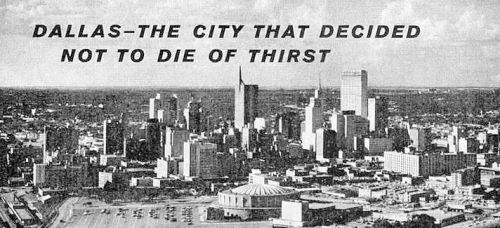
Texas developed the Water Planning Act of 1957, and in 1962, this new mandate and what had happened in Dallas during the drought was used as the basis for a Caterpillar ad which had a bit of a hyperbolic headline, “Dallas — The City That Decided Not To Die Of Thirst”:

drought_caterpillar-ad_19621962 ad (click for larger image)

***

Sources & Notes

Picture of the four boys tasting the Glen Rose water is taken from the WBAP-TV news story that aired on Aug. 12, 1956. The silent, edited footage was shown as the news anchor read the script, seen here. Film footage (linked above) and script from the Portal to Texas History.

The two pictures of people availing themselves of water from the city’s wells are taken from the WBAP-TV news story that aired on  Aug. 19, 1956. The silent footage ran as the anchor read the script seen here and here. Film footage (linked above) and script from the Portal to Texas History.

1962 Caterpillar ad from eBay.

More on affect of the drought on Dallas can be found in these Dallas Morning News articles:

  • “Sparked by Salt: Business Booming For Bottled Water” (DMN, Aug. 5, 1956)
  • “Citizens Stock Up On Saltless Water” by Sue Connally (DMN, Aug. 20, 1956)
  • “Thirsty City Witnesses Revival of Well Drilling” by William K. Stuckey (DMN, Oct. 7, 1956)
  • “Resourceful Citizens Tap City Water Well” (DMN, Oct. 16, 1956)
  • “Continuing Drouth Produces Top Local News Story in ’56” by Patsy Jo Faught (DMN, Dec. 30, 1956)

Read about how the drought affected Texas water management here; read about the Texas Water Rights Commission here.

Read “The City of Dallas Water Utilities Drought Management Update” in a PDF, here.

Finally, I encourage everyone to grab a tall glass of ice water and settle down to read Elmer Kelton’s classic Texas novel, The Time It Never Rained. Or if you’re pressed for time, read Mike Cox’s article about the book in Texas Parks & Wildlife magazine, here.

*

Copyright © 2014 Paula Bosse. All Rights Reserved.


“Life” at the State Fair of Texas — 1951

fair-park-midway_life_1951On top of the world, 1951

by Paula Bosse

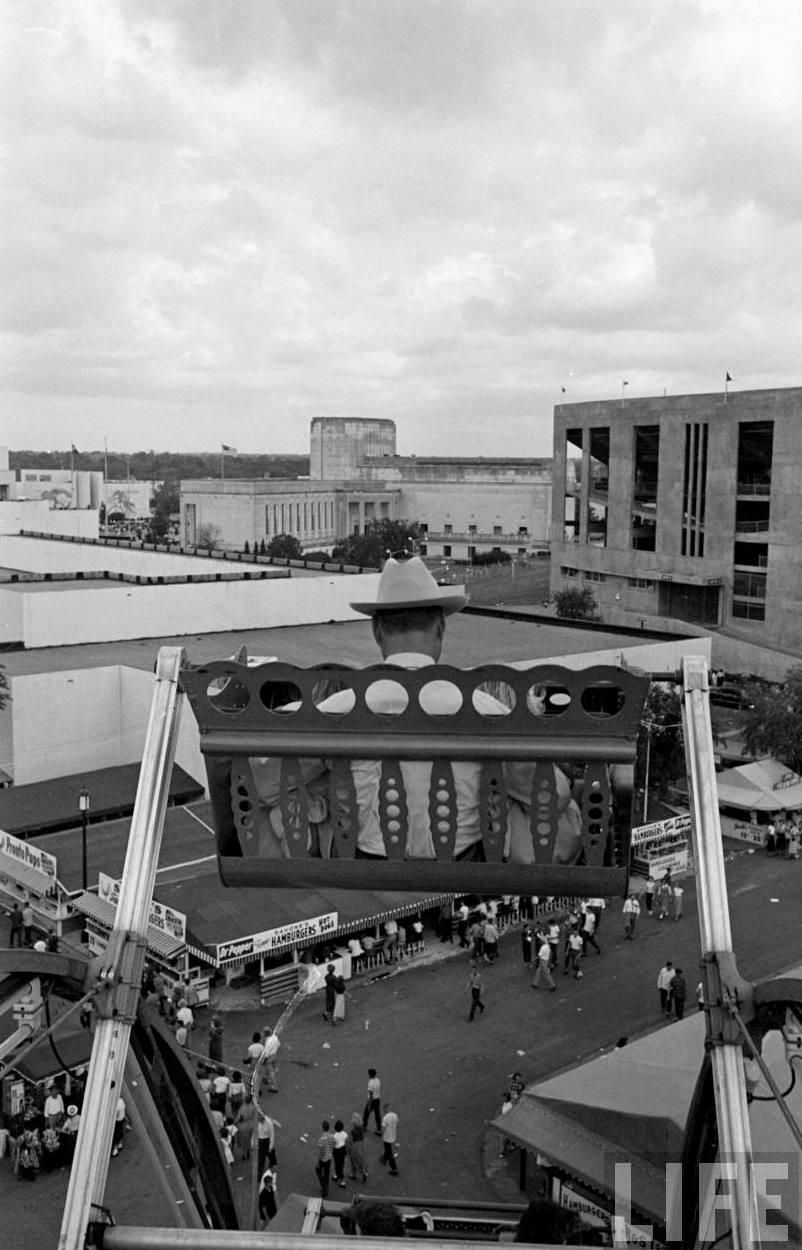
A Life magazine photographer moseyed down to Dallas in 1951 and captured a couple of cool shots of the State Fair. The photo above (so sweet, and one of my favorite Midway shots ever) was captioned:

In Dallas a rancher takes the kids for a ride in a 92-foot-high double Ferris wheel.

The photo below shows a tractor-pulled tram (fare: 15 cents) as it wheels past the Hall of State, full of well-dressed men and women. (That kid in the boots, cowboy hat, and letterman jacket … had I been around in 1951, I would have had a big ol’ crush on him.)

Click both of these wonderful photos to see larger images. You can practically smell the Brylcreem and cotton candy.

fair-park_tour_life_1951Life magazine, 1951

***

Sources & Notes

Both photos taken at the 1951 State Fair of Texas for Life magazine by an uncredited photographer. The top photo (cropped differently) ran in the Oct. 22, 1951 issue of Life as part of a feature titled “It’s a Bumper Year For Fairs” — it was the only photo that appeared in the magazine shot at the Texas fair. The bottom photo did not run in the magazine.

*

Copyright © 2014 Paula Bosse. All Rights Reserved.

When the Spanish Influenza Hit Dallas — 1918

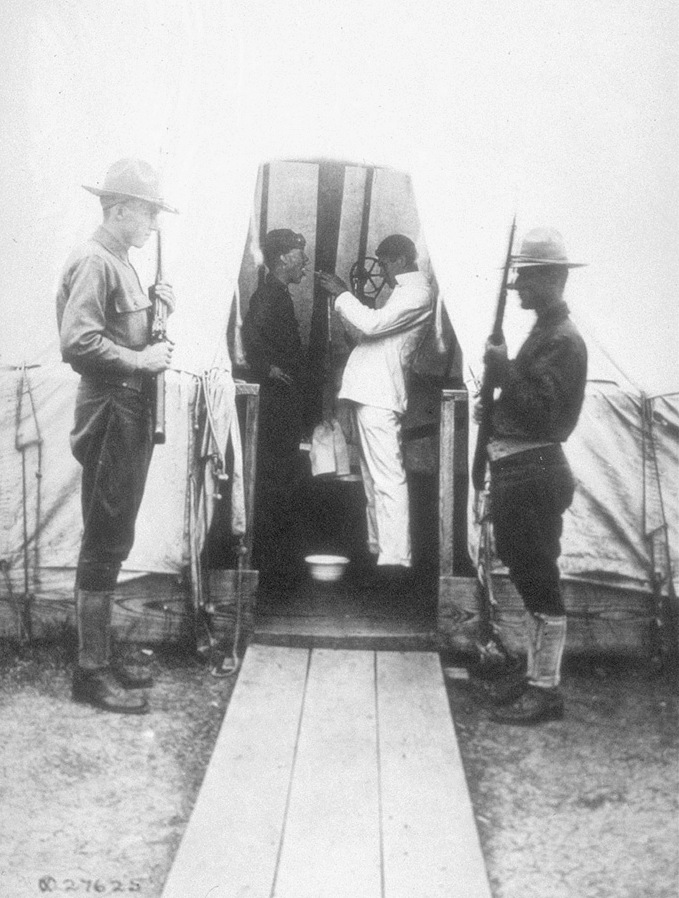
spanish-influenza_love-field_otis-historical-archives_nmhm_110618
American Red Cross at Love Field, spraying soldiers’ throats, Nov. 6, 1918

by Paula Bosse

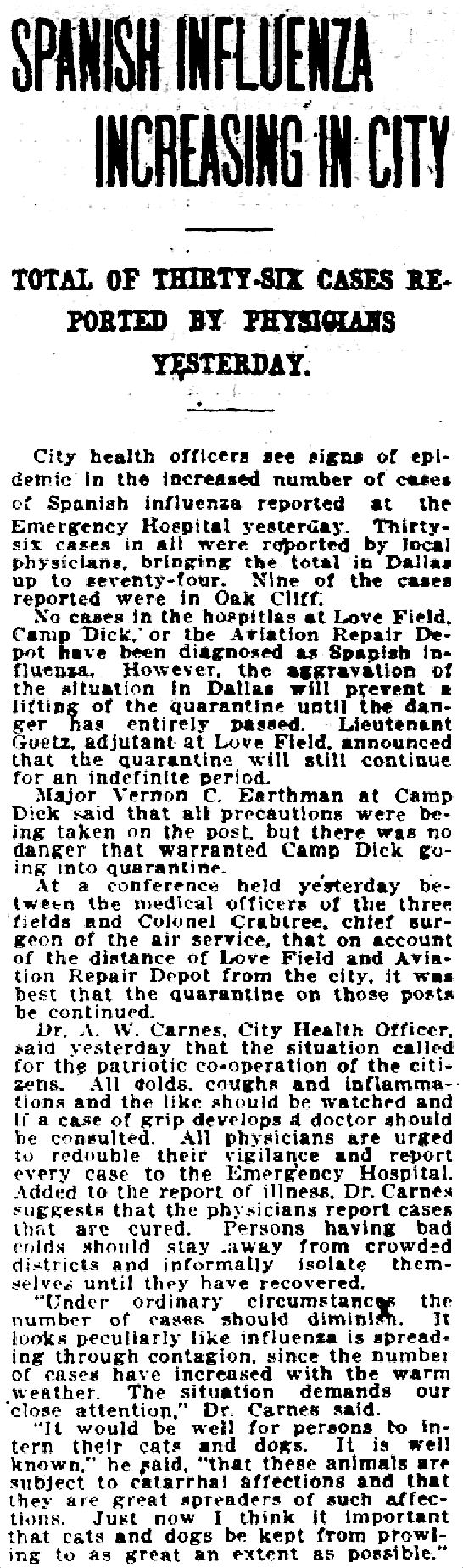
The Spanish Influenza pandemic of 1918-1919 caused as many as 50 million deaths worldwide — about 600,000 of which were in the United States (11 times greater than the number of American casualties during World War I). Locally, the influenza first hit the soldiers at Camp Bowie in Fort Worth in September, 1918. The flu spread quickly, and on Sept. 27, it was reported that there were 81 cases in the camp. Well aware of the devastation the flu had wrought in other U.S. cities, most notably at military camps, Fort Worth was, understandably, taking the situation seriously. Dallas leaders, on the other hand, were all-but pooh-poohing the need for concern. On Sept. 29, The Dallas Morning News had a report titled “Influenza Scare is Rapidly Subsiding” — the upshot was that, yeah, 44 reported cases of “bad colds” had been reported in the city, but there’s nothing to worry about, people.

In the opinion of the military and civil doctors, the Spanish Influenza scare is unwarranted by local conditions. The few cases of grip, it is claimed, are to be expected as the result of the recent rainy weather.

Just two days later, though, officials were jolted out of their complacency when the (reported) cases jumped to 74 (click for larger image):

spanish-influenza-dmn-100218DMN, Oct. 2, 1918 (click for larger image)

The months of October and November were just a blur: the city was plunged into an official epidemic. There was no known cure for the flu, so a somewhat ill-prepared health department preached prevention. People were encouraged to make sure their mouths were covered when they coughed or sneezed, and they were directed to not spit in the street, on streetcars (!), in movie theaters (!!), or, well, anywhere. (Handkerchief sales must have soared and spittoon sales must have plummeted.)

At one point or another, places where people gathered in large numbers — such as schools, churches, and theaters — were closed. Trains and streetcars were required to have a seat for every passenger (no standing, no crowding) (…no spitting). The number of mourners at funerals (of which there were many) was limited. And there was a major push for citizens to clean, clean, clean their surroundings in an attempt to make the city as sanitary as possible. Instructions appeared often in the newspapers.

spanish-influenza_dmn_101218_tipsDMN, Oct. 12, 1918

It was estimated that there were 9,000 cases of Spanish Influenza in Dallas in the first six weeks. By the middle of December, when the worst of the outbreak was over, it was reported that there had been over 400 deaths attributed to the Spanish Influenza and pneumonia in just two and a half months.

spanish-influenza_FWST_121118Fort Worth Star-Telegram, Dec. 11, 1918

As high as these numbers were, Dallas fared much, much better than many other parts of the United States.

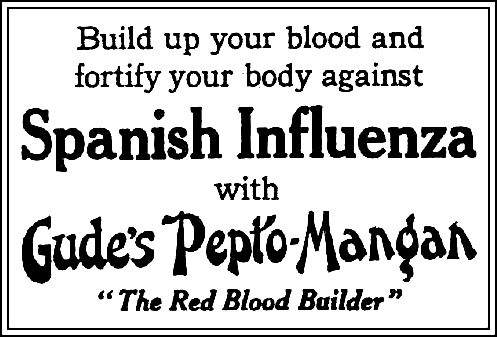
spanish-influenza_ad_dmn_101818_pepto-manganAd, DMN, Oct. 18, 1918

***

Sources & Notes

Photo at top was taken on November 6, 1918 and shows American Red Cross Workers spraying throats of military personnel based at Love Field in hopes of preventing the spread of the influenza. The photo is from the Otis Historical Archives, National Museum of Health and Medicine; I found it on the NMHM site, here. (Click photo for larger image.)

Ad for Pepto-Mangan (“The Red Blood Builder”) was one of a flood of medicines and tonics claiming to be effective in the fight against Spanish Influenza (none were).

For a detailed and remarkably well-researched, comprehensive history of the Spanish Influenza in Dallas, see the article prepared by the University of Michigan Center for the History of Medicine, here. It’s pretty amazing.

To read about the history of pandemics (including several good links regarding the Spanish flu), see the Flu.Gov site, here.

And, NO, Ebola is not transmitted like the flu. But it’s still good practice to cover your mouth when you cough or sneeze,wash your hands frequently, and never EVER spit in the street, because that’s just disgusting. ((This post was originally written in 2014 while Dallas was the center of the Ebola universe.))

More on the Spanish Influenza pandemic can be found in the Flashback Dallas post “Influenza Pandemic Arrives in Dallas — 1918.”

*

Copyright © 2014 Paula Bosse. All Rights Reserved.
 

The Runyonesque Pearl Street Market, Full of Colorful Characters and an Army of Rats

bob-taylors-cafe_ebayProduce seller, Pearl Street Market

by Paula Bosse

Last week I wrote about the produce market area in the neighborhood where the Farmers Market was eventually built, mainly because I had come across the above undated and unidentified photograph. I really wanted to know more about this photo, and the more I read about the area known in the ‘teens through the ’50s as the Pearl Street Market, the more I became fascinated by it.

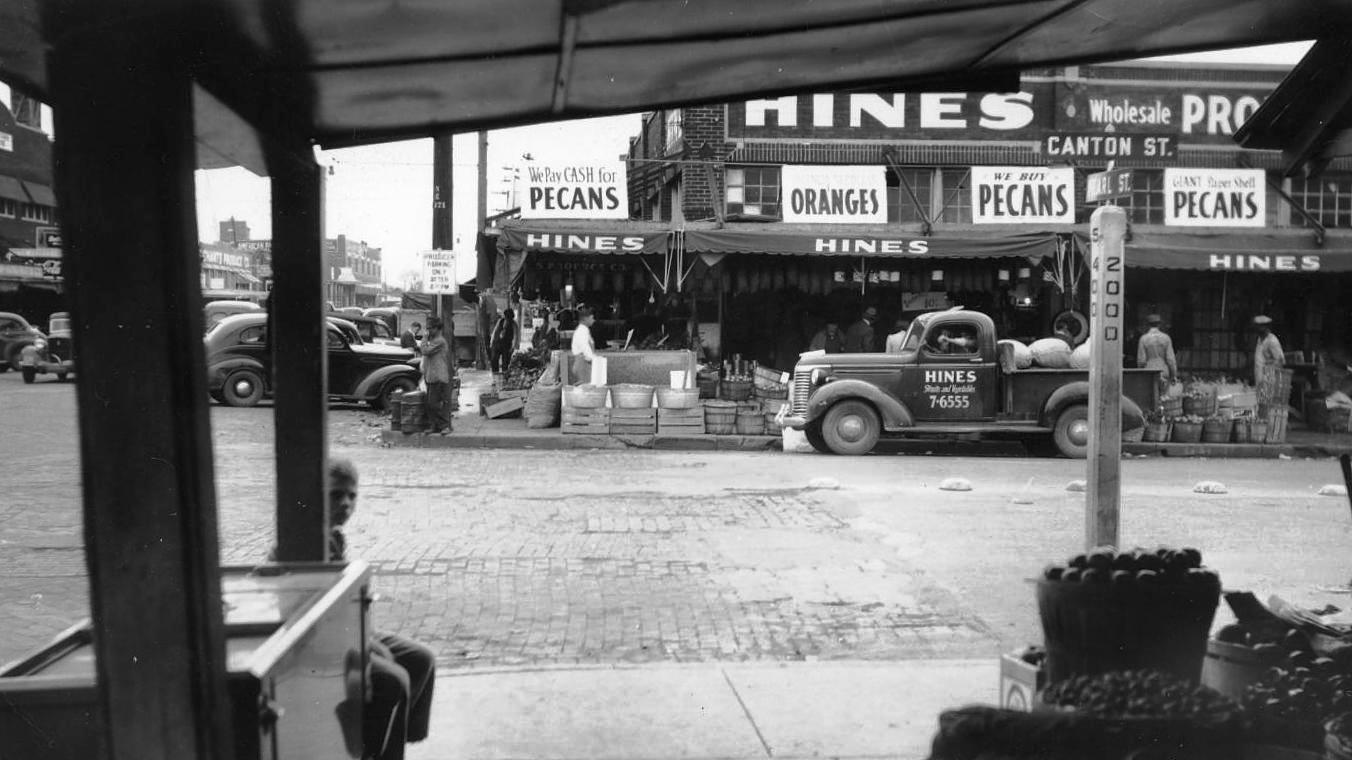
I love this photo, but, sadly, I never found out who cafe-namesake Bob Taylor was, and I never discovered the identity of the man sitting on the sidewalk with his produce. BUT, I did realize that this produce seller was right across the street from one of the biggest wholesale produce sellers in Dallas, the Hines Produce Company. In fact, the photo below might show my mystery man’s view across the street. Both photos show the intersection of the 2000 block of Canton and the 400 block of South Pearl, the heart of the Pearl Street Market.

hines_canton-pearlHines Wholesale Produce Company, Canton & S. Pearl

These two scenes look so wholesome — produce peddlers selling their fresh fruits and vegetables, quaint old cars and trucks parked along streets that are still vaguely familiar-looking, and the overall old-fashioned-ness of everything — all presented in nice, sharp, black-and-white photographs that always make me feel a little nostalgic, even though I wasn’t actually around back then and have nothing, really, to be nostalgic about.

But “wholesome” is not a word that would have been associated with the Pearl Street Market. In fact, this was a part of town your mother would probably strongly suggest you not visit. Here are a few of the illicit activities that went on here on a fairly regular basis:

  • Brawls in cafes, often involving weaponized broken beer bottles
  • Shootings
  • Stabbings
  • Pickpocketing
  • Burglary
  • Robberies (of victims both asleep and awake)
  • Gambling
  • Muggings
  • Drug dealing
  • Arson
  • Hit-and-runs
  • Vehicular homicides
  • Regular homicides
  • Prostitution (I’m just guessing…)
  • Shoplifting
  • Vagrancy
  • Selling another man’s melons and fleeing with the money
  • The occasional being “severed” by a train
  • Etc.

A typical police blotter story went something like this:

[Miss Esther Lee Bean] told physicians she was attacked by another woman who broke a beer bottle on her head and then used the jagged neck of the bottle as a weapon, cutting her several times on the right arm…. The affray occurred in a cafe in the 400 block of South Pearl. (Dallas Morning News, Dec. 17, 1938)

So … yes, very nostalgic.

Crime was a big problem, but what seems to have been even more upsetting to the people of Dallas was the general squalor of the place. Sanitary conditions were appalling. Rotting fruit and vegetables were thrown in the street, and live chickens were kept in cages, doing things that chickens do (which probably shouldn’t be done that close to things people might eat). And there were NO public toilets in the area — visiting farmers (who often bypassed the flea-bag hotels and slept in their trucks — or even on the sidewalks) routinely used the alleys as “comfort stations.” And then there were the rats. LOTS of rats. A staggering number of rats. Rats absolutely everywhere. Typhus? Not just a rumor. City sanitation crews would come by daily to hose the place down, but there was so much solid matter going down the drains that sewers were frequently clogged. It was, in a word, disgusting.

hotel_pearl_1959_portalA typical hotel near Pearl & Canton, a bit cleaner by the ’50s

For years this part of Dallas, just south of the central business district, had been a place where farmers (and produce brokers) had been selling their fruits, vegetables, poultry, eggs, pecans, and whatever else they could haul into town. It was all very informal, and for much of that time it was completely unregulated. This part of town had been the base of the “truck farmers” since at least 1912. Before that, the market was at Pearl and Main, and in the earliest days it was at Ervay and Elm.

In 1914 a city-sanctioned (and presumably regulated) municipal retail market where vendors would sell directly to consumers was proposed, but eventually consumers became irritated that the produce they bought at the municipal market was significantly more expensive than that which could be purchased from the “hucksters” who parked along Pearl Street and roamed residential neighborhoods. The Pearl Street vendors sold primarily to wholesale customers, but over time, they opened up their stalls to the public and did a bustling business with housewives. The wholesale market was hit pretty hard by the 1930s as the number of independent grocers — once the major buyers on Pearl Street — diminished as chain stores took over. Those housewives became more and more important as time went on.

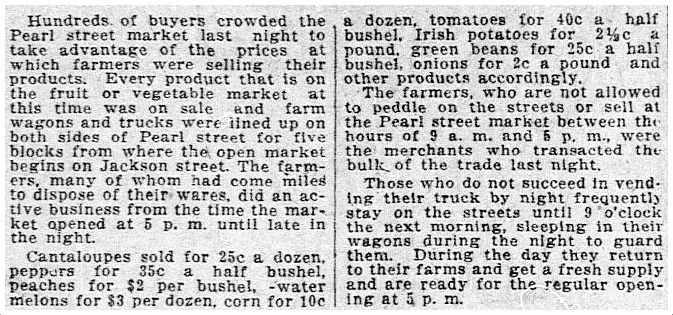
farmers_dmn_071721DMN, July 17, 1921 (click to enlarge)

farmers_dmn_071721afarmers_dmn_071721c

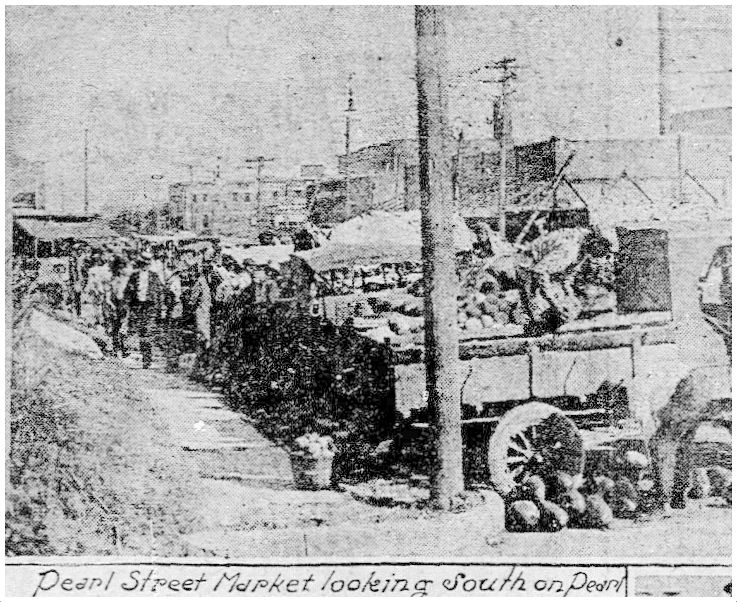
farmers_dmn_071721bDMN, July 17, 1921

By the 1920s, the Pearl Street Market was well-established, and it was where one went to buy fresh (and “fresh”) fruits and vegetables. And according to this real estate ad, business was booming:

produce-mkt-dist_dmn_110423DMN, Nov. 4, 1923

In 1933, The Dallas Morning News printed a fantastic, full-page, Runyonesque article about the “Pearl Streeters,” written by Eddie Anderson, who interviewed the colorful characters of the area and described the buzzing street life. With tongue only partially in cheek, he wrote: “Chicago has its Water Street. In New York you will find it on Washington. And if you go abroad there is the famous Smithfield Market of London and the vaulted bazars of Constantinople. In Dallas, it is Pearl Street.” Below, a photo that accompanied the story (click for larger image).

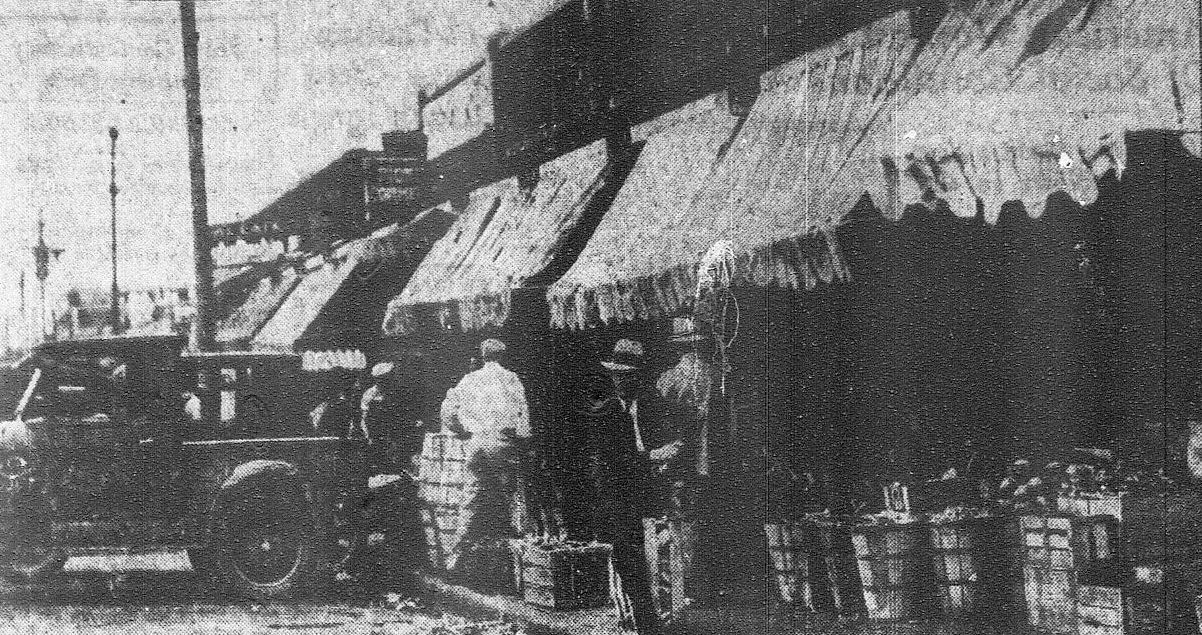
pearl-st-mkt_dmn_051433a

Anderson’s story was certainly entertaining, but it mostly glossed over the area’s more unsavory aspects. By 1938, there were louder and louder demands to clean up the neighborhood. Housewives organized and protested the deplorable conditions of the area, echoing points covered in a scathing Morning News editorial in which it was described as “a hazard to the health of the city because of the number of persons who visit it and because 75 per cent of the vegetables and poultry consumed in Dallas pass through that market” (DMN, Aug. 17, 1938).

In the early 1940s, the city finally stepped in and built the forerunner to the Farmers Market that we know today. By the 1950s, things in the squalor department had settled down a bit, and photos featuring pretty suburban housewives examining the produce and smiling children sampling fresh strawberries.

Nary a rat to be seen.

*

A street map of the Canton & Pearl area in about 1920, back when Canton Street was still part of an uninterrupted grid. (Note that many of the street names have changed over the years.)

1919-map

***

Sources & Notes

Top photo (with Bob Taylor’s Cafe in the background) is from the author’s collection.

Photos of the Hines Produce Co. and the Prestwood (?) Hotel are from the Dallas Municipal Archives’ Dallas Farmers Market / Henry Forschmidt Collection, via the Portal to Texas History. You can browse this great collection here.

Map detail is from the very large “1919 Map and Guide of Dallas & Suburbs” (C. Weichsel Co.), via the Portal to Texas History, here.

The following DMN articles on the Pearl Street Market/Farmers Market are worth a read:

  • “Pearl Street Market in Morning, Dallas’ Most Picturesque and Busiest Place in City” (July 19, 1925)
  • “$1,500 Dope Cache Found Under Pile of Pineapples” (July 15, 1936), a story about a heroin bust with a headline that seems right out of The Weekly World News
  • “Let’s Keep Our Pantry Clean,” editorial by Harry C. Withers (DMN, Aug. 17, 1938)
  • “Dallas: The Old Public Market” by Tom Milligan (Aug. 15, 1966)

And even though I linked to it above, it’s so good and such a fun read that I’m going to mention it again: I highly recommend Eddie Anderson’s “Pearl Street Market As It Sees Itself” (May 14, 1933), here. Edward Anderson was an interesting guy: read about him at the Handbook of Texas here; read about his novels and see photos, here. All these years I’ve had his novel Thieves Like Us on my bookshelf, but I had never gotten around to reading it. Now I have a reason to!

I’ve gathered a pretty entertaining collection of crime reports from the Pearl & Canton neighborhood into one handy document, which can be read in all its seedy glory, hereSERIOUSLY. THIS IS FANTASTIC STUFF!

*

Copyright © 2014 Paula Bosse. All Rights Reserved.
Jim Conner, Not-So-Mild-Mannered RFD Mail Carrier

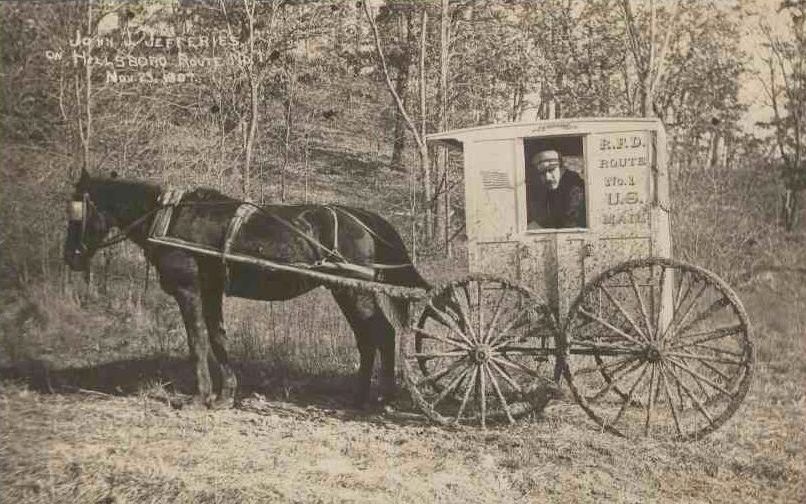
rfd_real-photo_1907-ebayAn RFD mail carrier… (click for larger image)

by Paula Bosse

The man in the photo below looks like every character actor working in Hollywood in the 1930s and ’40s.

conner-james-norton_mail-carrier_1940s

But he wasn’t an actor — he was a retired Dallas postal worker who began his career in 1901 as a rural mail carrier when the Rural Free Delivery (RFD) system was implemented in Dallas. (Before this, those who lived beyond the city limits — generally farmers — had to trek to a sometimes distant outpost — such as a general store — to pick up their mail.) RFD service began locally on October 1, 1901, and an 18-year old Jim Conner was one of six men hired to work the new mail routes beyond the city.

conner_FWregister_090101Fort Worth Register, Sept. 1, 1901

When Rural Free Delivery service began in Dallas, four rural post offices were closed: Lisbon, Wheatland, Five Mile, and Rawlins (the office at Bachman’s Branch, which Jim Conner’s route replaced).

In a 1940 interview with The Dallas Morning News, Conner talked about his early postal route (Route 5), which was 32 miles long; before the arrival of automobiles, he traveled on horseback, by horse cart, by buggy and cart, or by bicycle. The photo at the top shows what early RFD mail wagons looked like.

Jim’s route took him well beyond the city limits: out Cedar Springs to Cochran’s Chapel, to within a mile of Farmers Branch, and over to Webb’s Chapel by way of the “famous” Midway Church and School corner (which became Glad Acres Farm); he returned on Lemmon Avenue. It took him 8 hours if the weather was nice; if the weather was particularly bad, it could take 12 to 15 hours to complete his appointed rounds. He was paid $500 a year and was required to keep two horses, a cart, a buggy, and saddles. He retired in 1935.

**

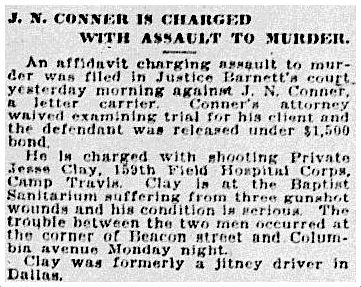
So. A delightfully nostalgic walk down memory lane with an avuncular-looking guy we all kind of feel we know. I thought I’d do a quick search to see if there was an obituary for Jim — there was: he died in 1956 at the age of 73, survived by his wife, 11 children (!), 22 grandchildren, and 3 great-grandchildren. But in addition to the obit, I found something else: a report of a shooting, an arrest, and a charge with “assault to murder.”

conner-charged_dmn_010218DMN, Jan. 2, 1918

What?!!

Though the account of the incident is described as being “somewhat vague,” on New Year’s Eve, 1918, Jim Conner shot a soldier named Jesse Clay after “words” were exchanged at the corner of Beacon and Columbia in Old East Dallas. There had been bad blood between the two in the past, and the New Year’s Eve situation apparently escalated quickly. Clay had been walking down the street with a lady-friend when Conner’s car came to a stop next to them. Clay (described as being drunk at the time) forced his way into the car, and Conner, fearful of being attacked, reached for a gun in the back seat. The two tussled and, after they were both out of the car, Conner saw that Clay also had a gun. This was when Conner shot him three times, intending, he said, to merely wound him. Clay shot back but missed. (The entire account, as it appeared in The Dallas Morning News on Jan. 1, 1918 can be read in a PDF here.)

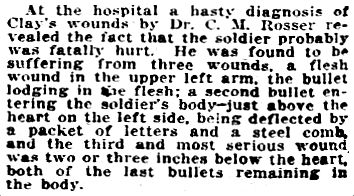
The soldier was badly injured, with two of the three shots hitting his chest. He was not expected to live. Conner had surrendered to police at the scene and was charged with “assault to murder.” The last report on this incident that I could find was on Jan. 3, in which Clay was described as being in “very critical condition.”

So what happened? As Conner spent a full career as a postal employee, it seems unlikely he was tried for murder. I used every possible combination of search words I could think of but found nothing more on this case. The story just disappeared. I did find a 1943 obituary for a Jesse P. Clay (killed while working on an Army Air Force Instructors School runway when he was struck by the wing of an airplane coming in for a landing), and it seems likely that it was the same guy — he was about the right age, he was a career military man, he lived in Dallas most of his life, and he was born in Kentucky. I assume the soldier in question (who would have been 37 at the time of the shooting) survived his gunshot wounds and that charges against Conner were either dismissed (with Conner pleading self-defense?) or settled (perhaps the military intervened to keep the story out of the press — this was during the height of WWI). Whatever actually happened, it seems that both men were able to move on from that really, really bad New Year’s Eve, a night I’m sure neither forgot.

My favorite little detail in the story of this sordid shooting was the line in the initial newspaper report in which it was revealed that one of the (potentially deadly) bullets was “deflected by a packet of letters and a steel comb.” How appropriate that the thing that probably saved mailman Jim Conner from a murder rap was “a packet of letters.” (…And a steel comb, but that doesn’t fit in with my narrative quite so well. Although Mr. Conner does look quite well-groomed.)

packet-of-letters_dmn_010118DMN, Jan. 1, 1918

***

Sources & Notes

Real-photo postcard of Hillsboro, Wisconsin RFD mail wagon is from eBay.

The full DMN account of the bizarre 1918 shooting can be read in a PDF, here.

An informative site on history of Rural Free Delivery — with lots of photos — can be found here.

“RFD”? Wiki’s on it, here.

*

Copyright © 2014 Paula Bosse. All Rights Reserved.


Gusher at Old Red! — 1890

artesian_bywaters-hogue_color-smu“Artesian Well Gushes on the Courthouse Grounds”
Partial view of the mural by Jerry Bywaters & Alexandre Hogue (1934)

by Paula Bosse

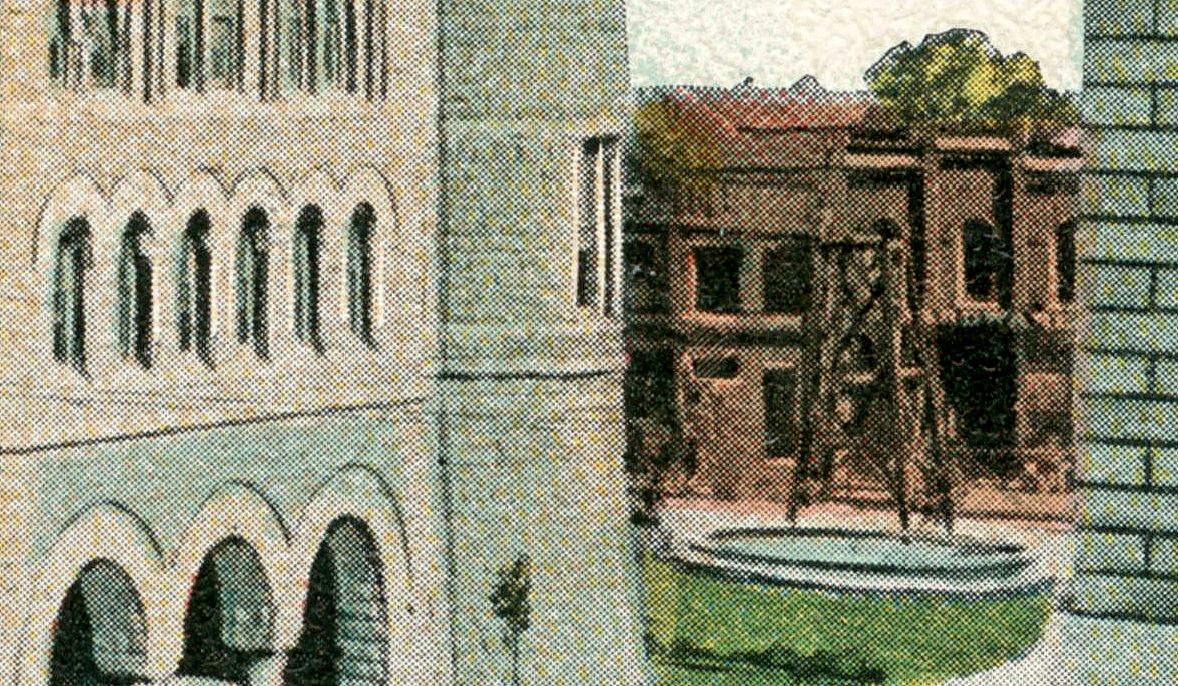
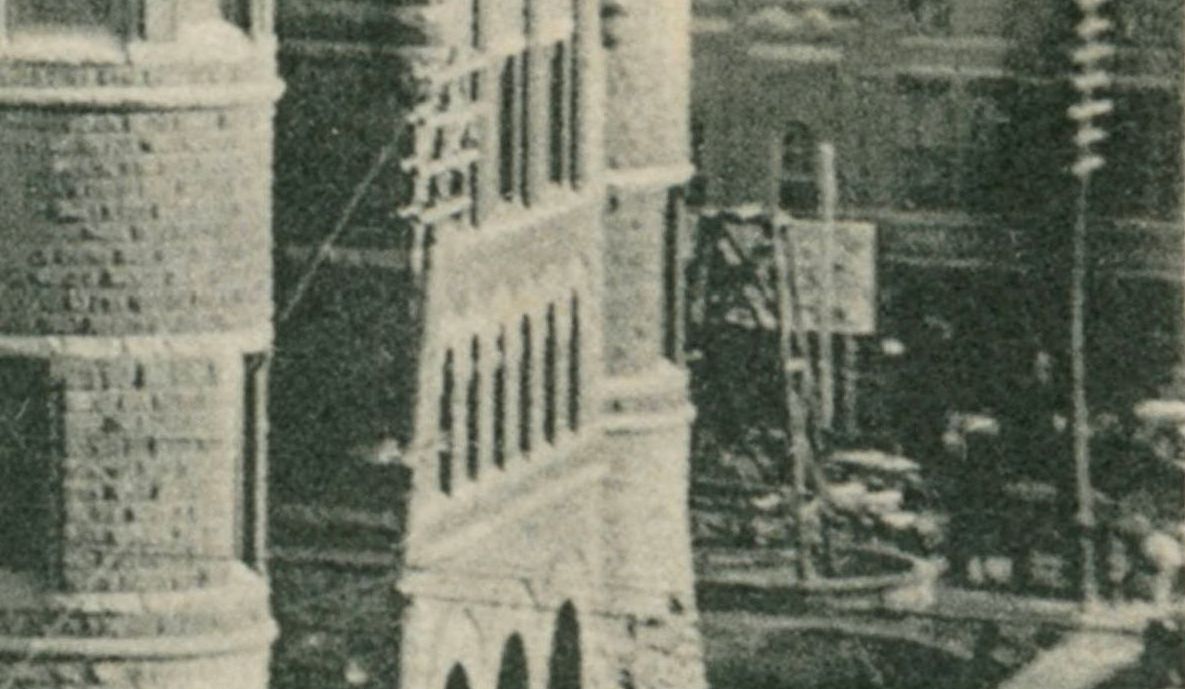
Several months ago, I was looking at the postcard of the Old Red Courthouse shown below. I thought it was interesting because I hadn’t seen that view before. And then I noticed what looked like a derrick just to the right of the courthouse. What was that? It  looked like it was standing over a tank of water, kind of like a windmill. And then I got distracted and didn’t come back to it until I read of an (unrelated) old well having been uncovered in present-day Dealey Plaza a year or two ago, and I remembered this postcard. Was that a well? On the courthouse property? And now I know: it was, in fact, an artesian well that had been sunk on the courthouse lawn in the fall of 1890, and its success was an INCREDIBLY important factor in Dallas’ growth as a city.

artesian_old-red_postcard-color_degolyer

artesian_old-red_postcard-color_degolyer-det

artesian_old-red_postcard-bw_degolyer

artesian_old-red_postcard-bw_degolyer-det

In 1890, Dallas was growing at a remarkable rate, and like any large city, it needed a reliable source of water. In Dallas, that was a problem. Wells were dotted around town — many on private property — but a large supply of water for the ever-increasing community was needed, and needed fast. I gather things were reaching a critical point when The Dallas Morning News printed a letter from a reader named S. T. Stratton in January of 1890. Stratton, a long-time resident of Dallas, suggested digging an artesian well on courthouse property. (And while they were down there, they could check for the possibility of oil and gas.)

artesian-old-red_STRATTON-dmn_010890DMN, Jan. 8, 1890

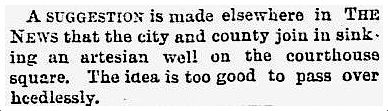
It seems that this might not have been an idea many people would have taken seriously at the time, because several pages away in the same issue of the paper was this little tidbit encouraging readers to seriously consider this as a viable option. (This was unsigned, but it seems likely it was written by DMN publisher G. B. Dealey.)

artesian-old-red_dmn_010890DMN, Jan. 8, 1890

The idea gained popularity, and a “special committee on artesian water” convened in February, deciding to go forward with the plan; the city and the county would divide the cost.

artesian-old-red_dmn_020690DMN, Feb. 6, 1890

Later in the year, drilling began, and on Oct. 9, 1890, water was hit. The flow at first was slow, but then, just like in the movies … a gusher! A Dallas News reporter had been writing a story on the initial success when, before he was able to file his report, the well suddenly became the biggest story in the city, in the state, and even around the country. When the drill hit 1,000 feet, the water began to shoot up with such force that it was estimated the well would produce in excess of one million gallons a day. There must have been incredible excitement in the wee hours of that morning, and the reporter’s story of the gusher is pretty thrilling to read — that last sentence is wonderful: “The water at 1 o’clock this morning was clear and it sparkled beautifully in the rays of electric lights.”

gusher_dmn_101090_updateDMN, Oct. 10, 1990

Below is the headline of the in-depth coverage of the successful well (full story linked at bottom of this page). Throngs of people crowded around the well, jubilant politicians patted themselves on the back, and men from the surrounding area wanted one for their towns (Marsalis declared he would get one for Oak Cliff, post haste!). What a scene it must have been. Finally, with that massive reservoir of water underneath the city, Dallas was assured of its continued growth.

gusher_dmn_101190-headlineDMN, Oct. 11, 1890

A story that ran in the national business journal Manufacturer’s Record underlines the importance of the well’s discovery to business investors around the country:

This successful experiment effectively settles the water supply problem of Dallas, and it removes the last obstacle possible to be urged against the rapid building up of Dallas. It insures an unlimited supply of the finest water not only for domestic use, but for manufacturing purposes, which, taken in connection with cheap fuel and ample distributing facilities in a land where various lines of raw material abound, leaves no question as to the success of manufactures. (Quoted in the DMN, Oct. 21, 1890)

Not only was the well’s success being discussed in the national press, but it was also popping up in local ads, like this one from a real estate company which appeared in the pages of the DMN on Oct. 12, 1890:

THE ARTESIAN WELL
Is ‘a Thing of Beauty and a Joy Forever.’
And the hour the drill pierced the water-bearing strata and the precious fluid gushed forth at the rate of 1,000,000 gallons a day forms a new era in the history of the metropolis of the southwest. Every foot of ground in Dallas has increased in value by no inconsiderable amount, but the few lots left on the market in Hall’s second addition will still be sold at $100 each, easy terms.

So I’ve learned something new. I probably should have known about this, at least in connection with the series of PWAP murals produced in 1934 by Jerry Bywaters and Alexandre Hogue, two of my favorite Dallas artists. They painted ten murals throughout the old City Hall (later known as the Municipal Building), each illustrating a high point in the city’s history. The decade 1890-1900 was commemorated by a depiction of the artesian well and all that water discovered flowing beneath the grounds of the then-under-construction Dallas County Courthouse. Unbelievably, the murals were destroyed (!) when the building underwent renovation in 1956. Had they still  been around, I probably would have seen them, and I would have learned about this whole artesian well thing many, many years ago!

artesian_bywaters-hogue_bw-smuWho is the sinister-looking man in the dark coat?

*

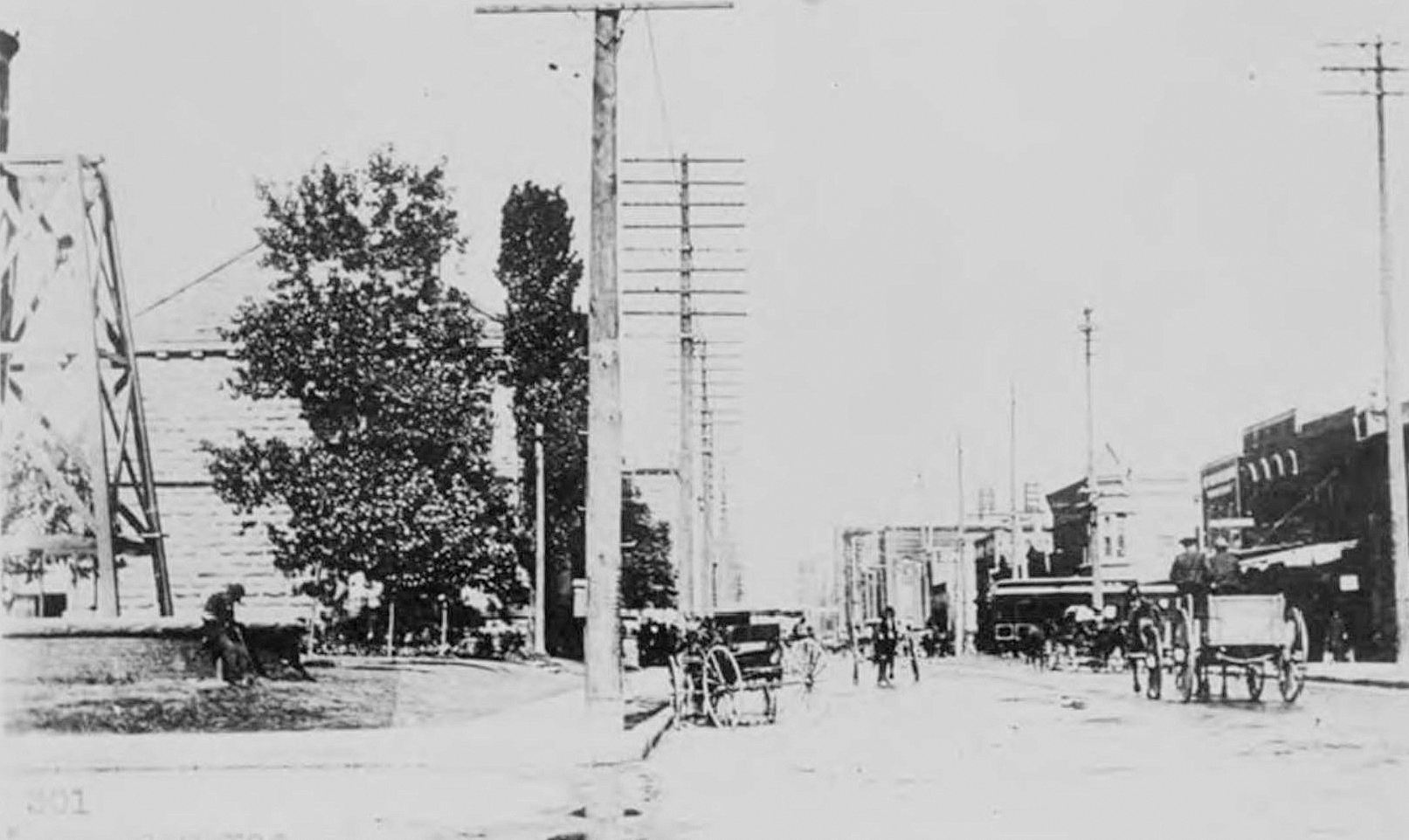
A street-level view from about 1900, showing Commerce Street east from Houston Street showing the artesian well at the left — I believe this served as a public watering trough for horses.

gusher_east-on-commerce-from-houston_degolyer-lib_SMU_1900via DeGolyer Library, SMU

*

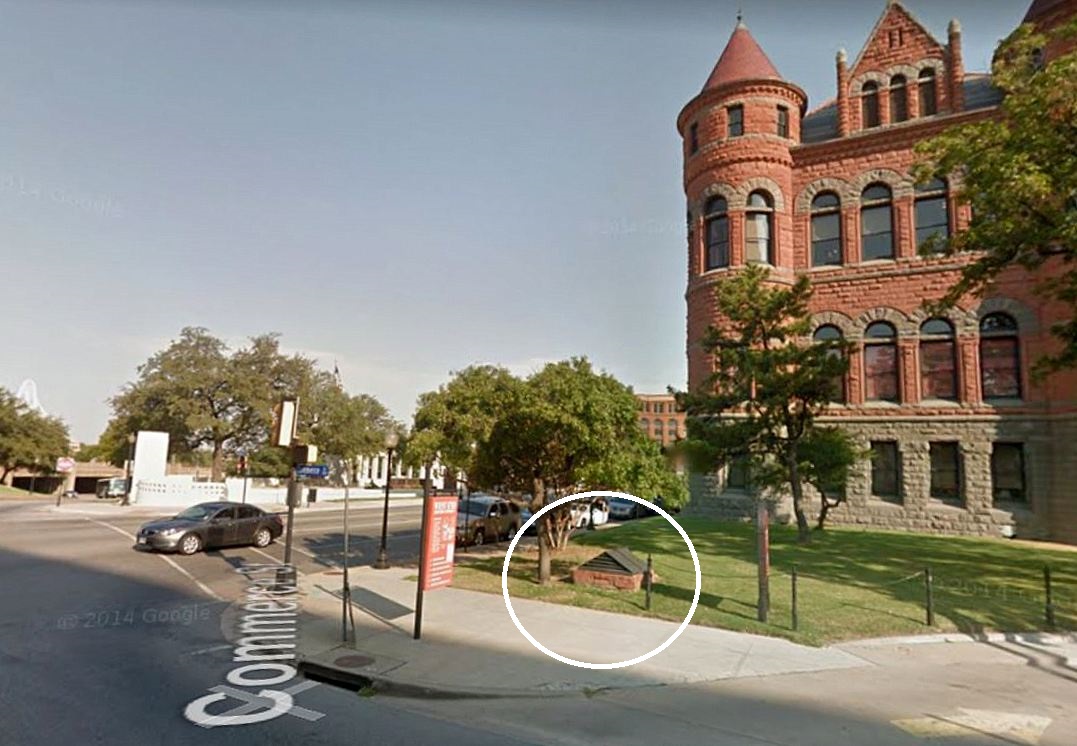
UPDATE: I went to see the capped well today (July 20, 2014). It’s under a shady tree at the southwest corner of the Old Red Courthouse, at Commerce & Houston streets. It isn’t marked at all and is fairly inconspicuous. Even though I’ve known about the existence of this well for only a couple of days, I was so happy to see it — still there, where it’s been for almost 125 years. It was like seeing an old friend.

Photo by Paula Bosse

The view below (looking across Houston Street toward Dealey Plaza from Commerce) shows where this capped well is.

gusher_commerce-and-houston_google-street-view_2011Google Street View (2011)

*

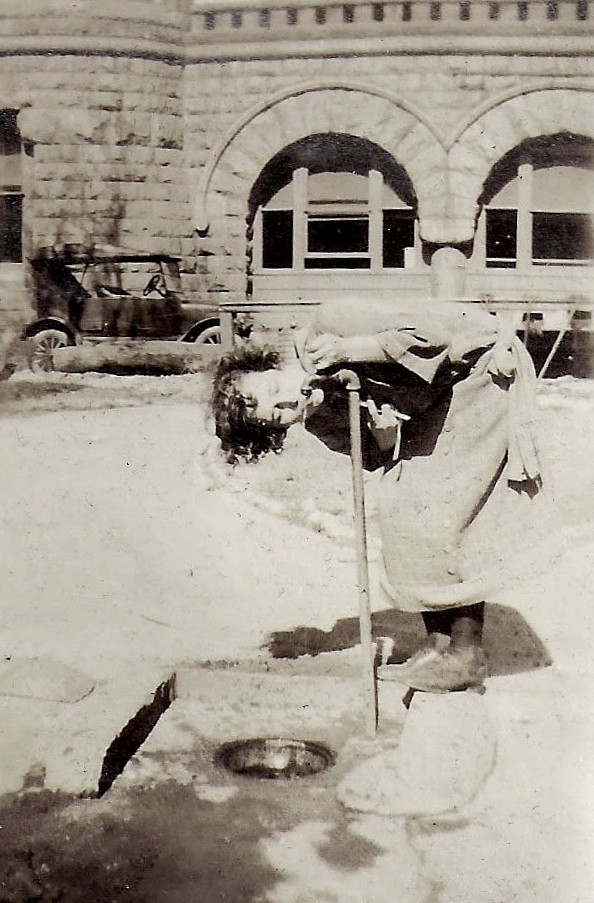
The wonderful photo below is from the 1920s and shows a young woman stopping for a drink on the courthouse lawn.

gusher_old red_ann-hoffman-collection_1920sFrom the collection of Ann Hoffman

***

Sources & Notes

The color image of the Bywaters and Hogue mural is a photograph taken by Jerry Bywaters in 1956 before the murals were destroyed; the black and white photo is by Harry Bennett. Both are from The Bywaters Special Collections, Hamon Arts Library, Central University Libraries, Southern Methodist University. See more information on the color image here, and the black and white image here.

Both postcards are from the DeGolyer Library at SMU: the color postcard can be accessed here; the black and white one here. The black and white image has been cropped — missing is the amusing note on the front of the card, dated 1-4-07: “Dear Faye, can you imagine me a long-haired Texan, brandishing a bowie knife? Ross.”

The circa-1900 photograph showing the well at the left side of the photo is titled “East on Commerce, Commerce and Houston streets, 1900” and is from the Collection of Dallas Morning News negatives and copy photographs, DeGolyer Library, SMU — more info is here.

The photo of the young woman on the courthouse lawn is from the collection of Ann Hoffman and is used with permission; taken in the 1920s, it shows a friend of her Great Aunt Nora stopping for a drink of water. Thank you for sharing, Ann!

All news clippings from The Dallas Morning News.

To read the report of the initial, somewhat tentative early-in-the-day well success, the DMN article from Oct. 10, 1890 is in a PDF here. For the crazy, jubilant, people-beside-themselves-with-joy report of the gusher, the entire article from Oct. 11, 1890 is here.

Not exactly sure what an artesian well is? Wikipedia to the rescue, here.

*

Copyright © 2014 Paula Bosse. All Rights Reserved.

Loitering In Front of The Dallas Morning News Building — ca. 1900

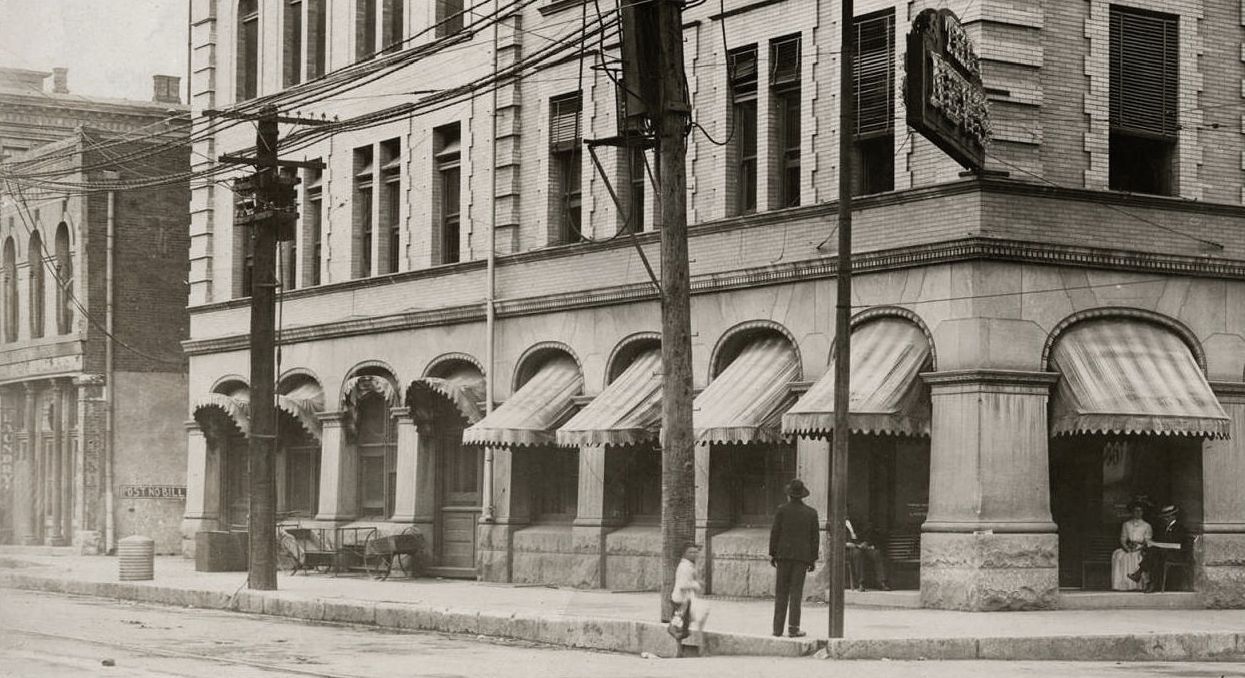
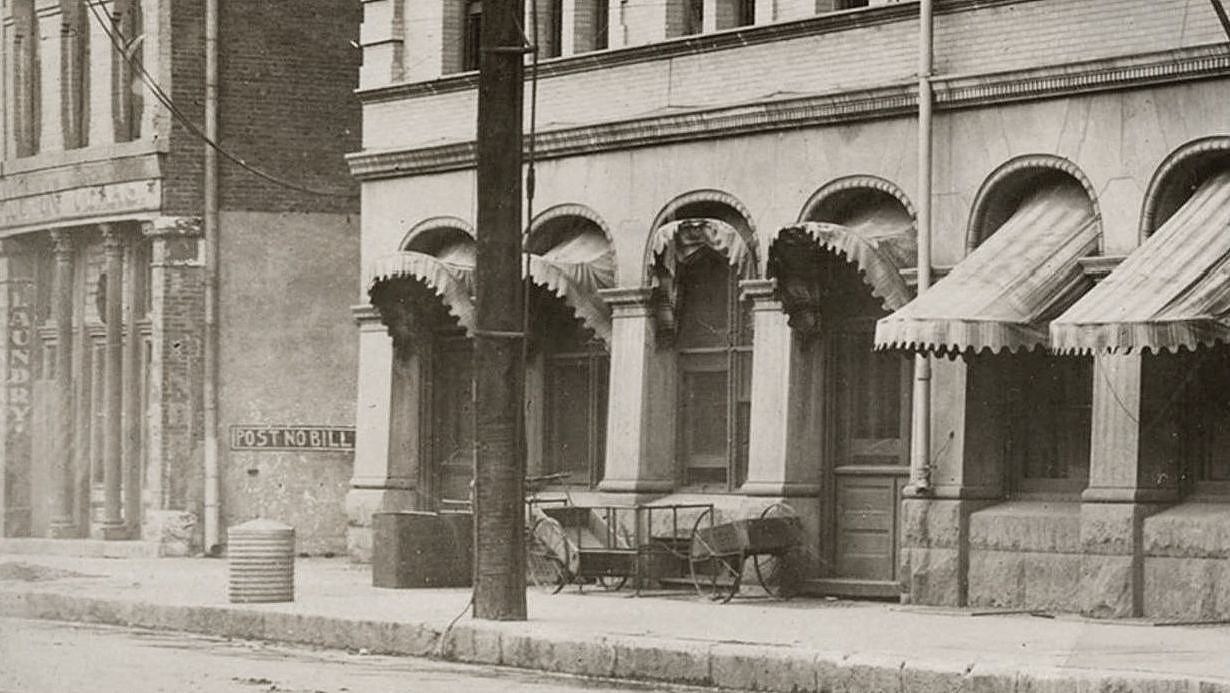
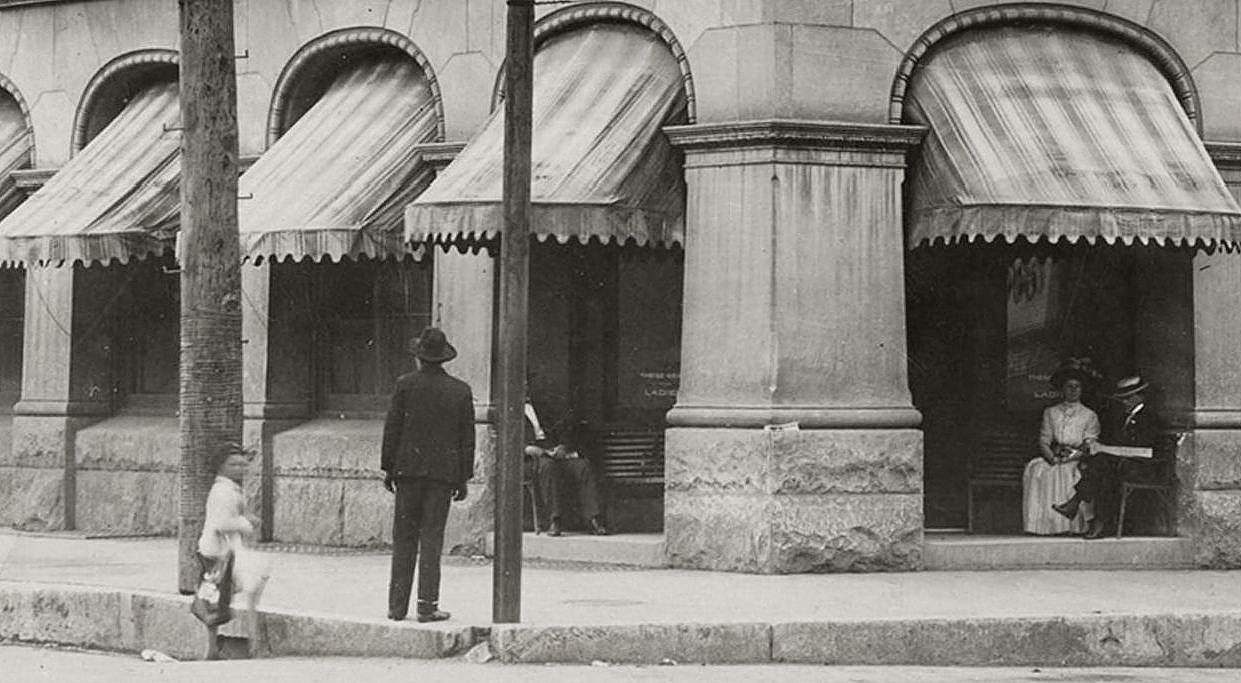
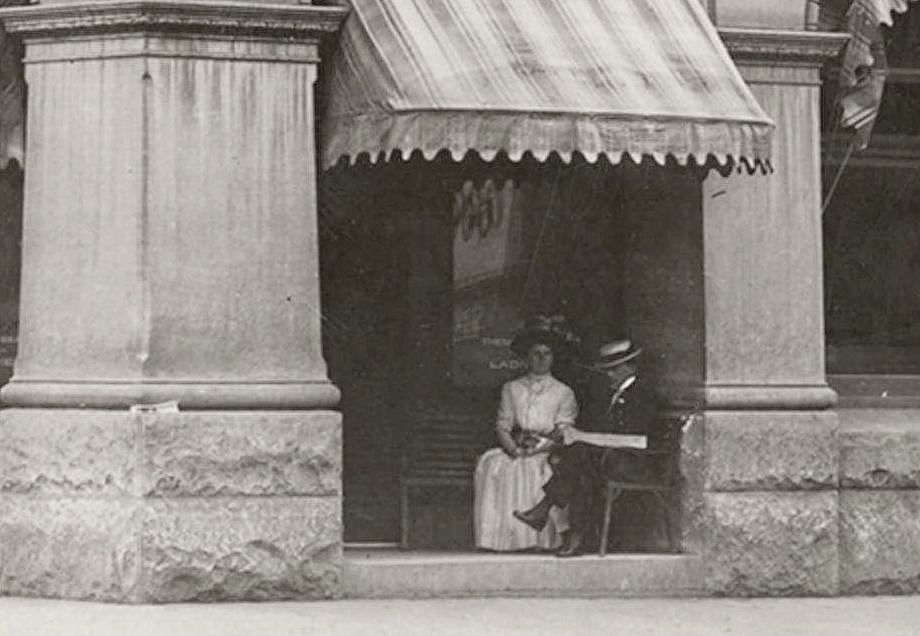
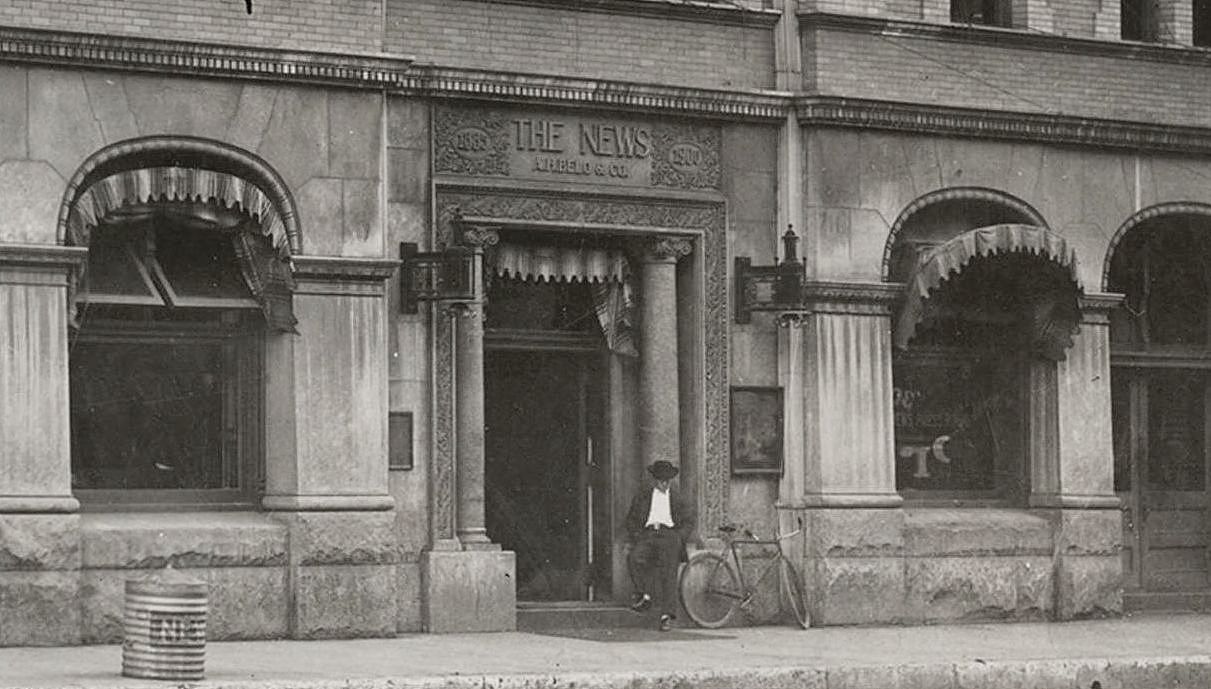
dmn-bldg_c1900_degolyer_smuCommerce & Lamar

by Paula Bosse

Here is another great photo from the DeGolyer Library at SMU, this one showing the then-new Dallas Morning News building anchoring the northwest corner of Commerce and Lamar. For me, it’s another case of the individual quiet vignettes that comprise the photograph being more interesting than the larger picture taken as a whole. (All pictures are much larger when clicked.)

dmn-bldg_c1900_degolyer-1

dmn-bldg_c1900_degolyer-2

dmn-bldg_c1900_degolyer-3

dmn-bldg_c1900_degolyer-4

dmn-bldg_c1900_degolyer-5

***

Sources & Notes

Photograph from the Belo Records collection at the DeGolyer Library, Central University Libraries, Southern Methodist University, seen here.

For another view of the same building, see these posts:

  • “The Dallas Morning News Building, Inside and Out — ca. 1900,” here
  • “Lively Street Life Outside the Dallas Morning News Building — 1900,” here

For other photographs I’ve zoomed in on, see here.

*

Copyright © 2014 Paula Bosse. All Rights Reserved.

Dallas in 1879 — Not a Good Time to Be Mayor

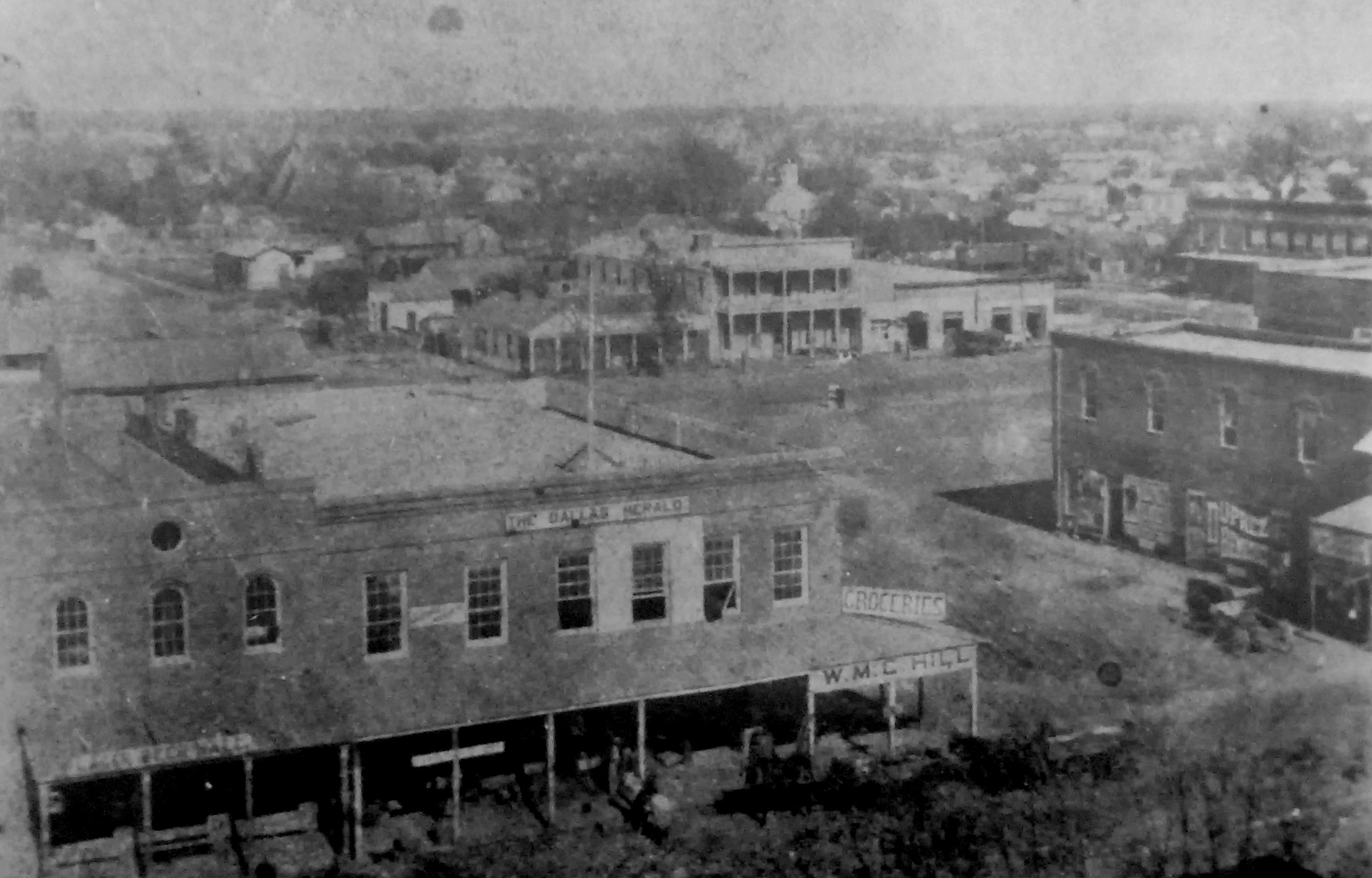
main-jefferson_1879_greeneA view from the courthouse, looking north (click for larger image)

by Paula Bosse

Above, a view of Dallas in 1879, looking north from the courthouse (one of many in the city’s past that eventually burned down); the intersection in the right foreground is Main and Jefferson (now Record Street).

This is such a cool photo that, on a whim, I checked to see what exciting things might have happened in Dallas in 1879. I found that the city’s voters had just elected a new mayor, James M. Thurmond, who had run on an “independent reform and morality ticket.” Yawn. On the surface, that hardly seemed very interesting — a  historical fact, yes, but not all that exciting. But, wait, there’s more to the story.

Thurmond’s post-election honeymoon was short-lived because, even though he had won a second (one-year) term, he had made some serious enemies in his first term. He was removed from office in 1880 by the city council in a lack-of-confidence vote, the result of a nasty trial and probably slanderous accusations by lawyer Robert E. Cowart.

The feud between Thurmond and Cowart grew more and more bitter as time passed, and on March 14, 1882 — moments after the two men had exchanged angry words in Judge Thurmond’s courtroom — Cowart shot and killed Thurmond. Witnesses described the shooting as an act of self-defense. They said that Cowart shot when the judge reached for his pistol. (For an incredibly gruesome account of this incident, the contemporary newspaper report is linked below.)

The photograph above was taken from the courthouse where this shooting took place. When the photograph was taken in 1879, the animosity between the new mayor and an unhappy lawyer had already begun to percolate. I suppose men with “Esq.” after their names in the 1880s were predisposed to shoot-outs indoors in well-appointed courtrooms rather than out in the dusty streets at high noon. It’s classier.

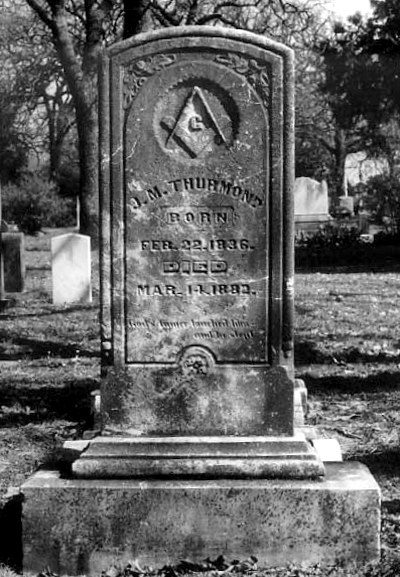
thurmond_headstone_greenwood-cemetery_findagraveGreenwood Cemetery, Dallas (photo: David N. Lotz)

***

Top photo is from Dallas, The Deciding Years — A Historical Portrait by A. C. Greene. (Austin: The Encino Press for Sanger-Harris, 1973); photo is from the collection of the Dallas Public Library.

Photo of J. M. Thurmond’s headstone in Greenwood Cemetery is from Find A Grave, here. Cowart — who died in 1924 — is buried in a nearby plot in the same cemetery. (Incidentally, Cowart’s claim to fame — other than shooting a judge in his own courtroom — appears to be that he was the person who inadvertently came up with Fort Worth’s nickname, “Panther City” when he wrote a tongue-in-cheek newspaper article about Fort Worth in 1875. Read a great history of this amusing kerfuffle in Hometown by Handlebar’s post, here — scroll to the second story.)

For an interesting contemporary report of the shooting — including gruesome eyewitness accounts — check out the article from the March 15, 1882 edition of The Dallas Herald (under the headline “The Deadly Pistol”), here, via the Portal to Texas History.

A short background on the Thurmond-Cowart feud, from the WPA Dallas Guide and History (which includes the verdicts of Cowart’s two trials for murder), can be read here.

Click top photograph for HUGE image.

*

Copyright © 2014 Paula Bosse. All Rights Reserved.