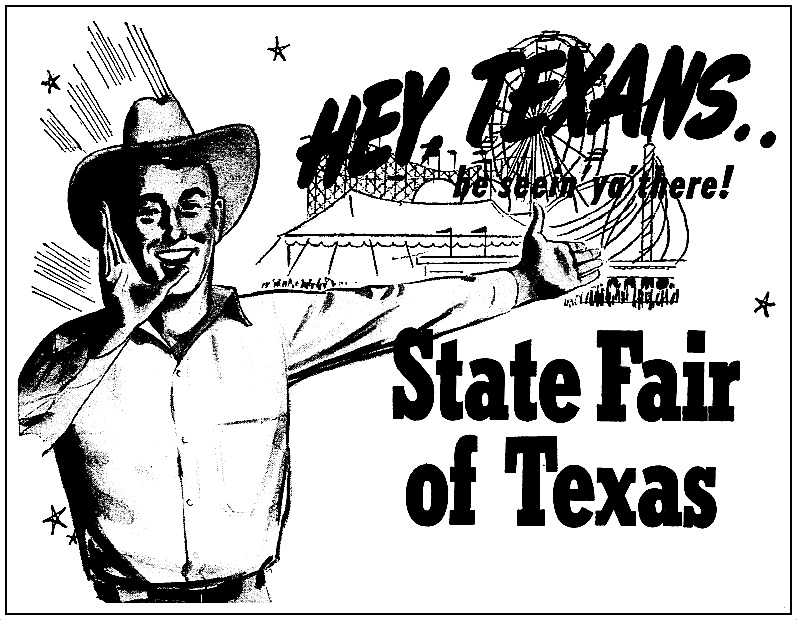
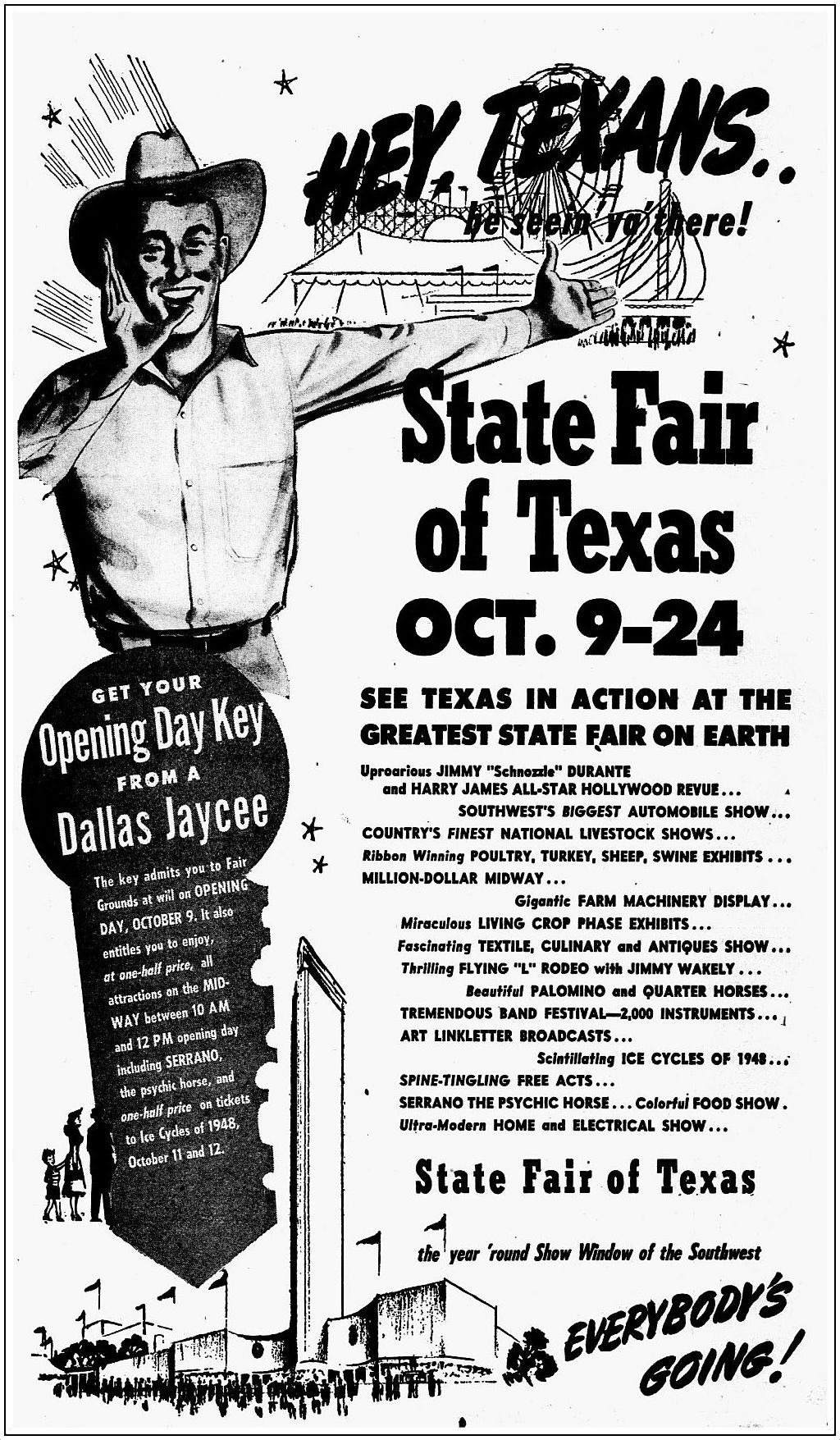
In honor of opening day of the 2016 State Fair of Texas, a poster from the 1951 fair. Proto-Big Tex imagery was being used well before the giant cowboy’s debut the following year (see, that hand thing is going on even back then…).
I stumbled across a State Fair of Texas ad a couple of days ago — a detail of which is above — and it made me wonder if it contained the precursor to our beloved Big Tex (whose annual hoisting-up occurred today). The ad is from 1948, four years before Big Tex’s debut at the 1952 State Fair. When I saw it I was immediately reminded of Big Tex and exclaimed to myself, “THAT’S what he should have been doing with his hands!”
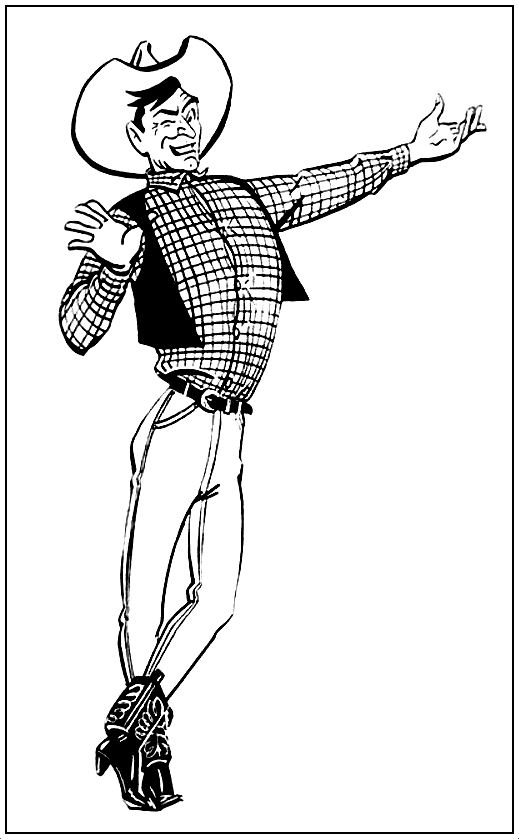
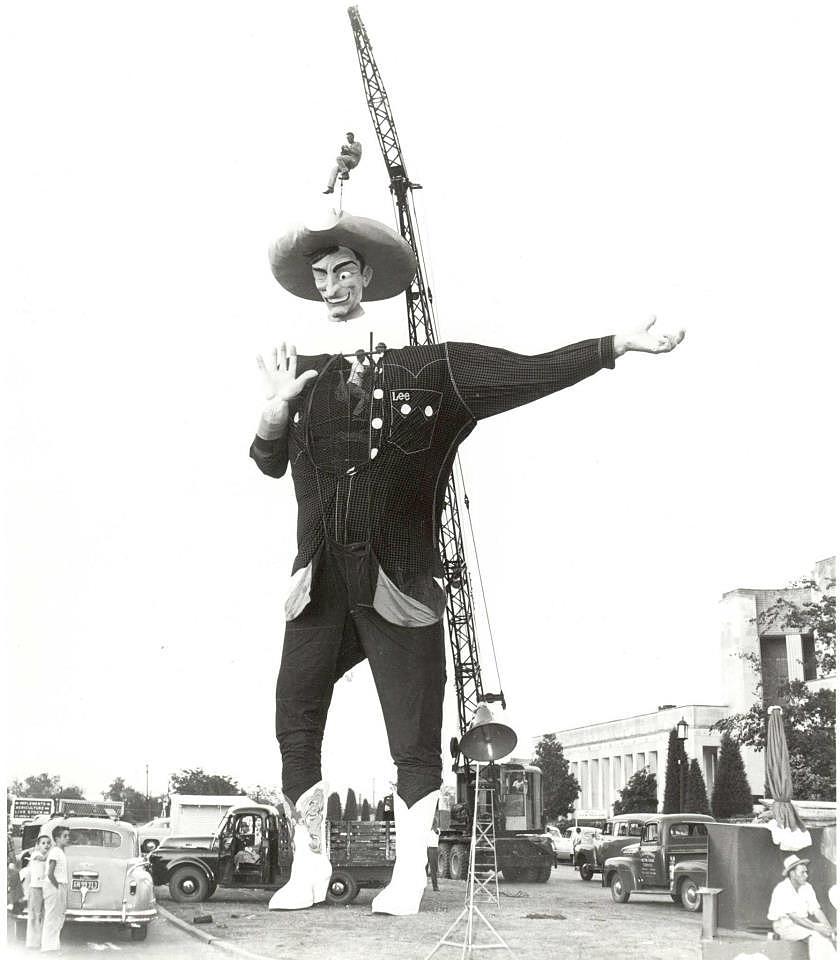
I’ve always wondered exactly what Big Tex is supposed to be doing with his hands. It’s a sort of vague “welcoming” gesture, I guess, but I can remember when I had to draw Big Tex in school that I was confused by that right hand. Was he waving? Was it an Indian “How!” greeting sign? It didn’t really look like either of those, and it really irked me (I was an easily-irked child). And, actually, it has continued to bother me all these years! (I am an easily-irked adult.)
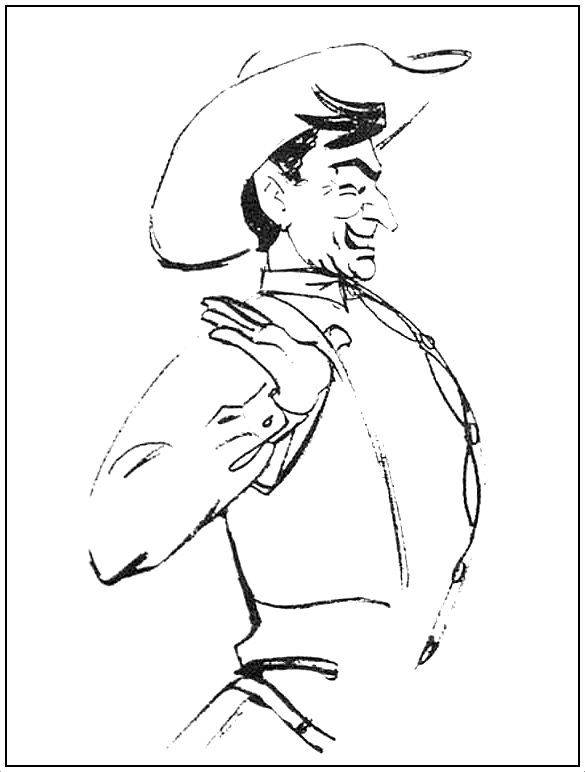
From early sketches, it seems that the right hand was intended to have the thumb hooked through a vest. Jack Bridges, Big Tex’s creator, wanted Tex to symbolize the larger-than-life Texan who wasn’t above indulging in good-humored bragging and tall-tale-telling, and that personality comes through in the sketch and the Big Tex illustration used in the 1952 ads, below.
By the time Tex debuted, however, the vest seemed to have been discarded (as best I can tell from old photos), but the position of the right hand remained in that weird position (probably just to torment me as a child having to draw him in school).
Speaking of that very first version of Big Tex, in 1952 he had one eye shut, in the middle of a wink. He also had a long nose and wore a huge hat referred to in newspaper articles as a “sombrero.” In a 1983 interview, Jack Bridges said that in later years SFOT officials “made us open his eyes to make a ‘pretty boy’ outta him.” The wink was gone, the brim of the hat was made smaller, and his ears were moved forward. Even though Tex began to “talk” the next year, Bridges said, “I liked him better myself like he was — rugged and more or less caricature.”
The drawing of the man in the ad at the top probably has nothing to do with Big Tex, but dang if it ain’t pretty close! And the position of both hands makes sense!
Here’s the full 1948 ad from the top:
1948
***
Sources & Notes
You can listen to a short (13-minute) interview done with Jack Bridges in 1983 as part of a Dallas Public Library oral history project, here. One of my favorite tidbits is Bridges remembering that vandals once painted a “big brown moustache” on the resting, disembodied head of Tex one year. He said that the head and the hat were kept in the Centennial Building when the fair wasn’t in progress, and the rest of Tex was kept in storage in various places around Fair Park. He said it was like making sure the president and vice-president never traveled together — if something happened to part of Big Tex, at least the whole of Big Tex wasn’t affected. (91-year-old Jack Bridges died in 2001; thankfully he didn’t have to witness the fiery … “incident” … of 2012.)
Seven years after opening, in 1954… (click for larger image)
by Paula Bosse
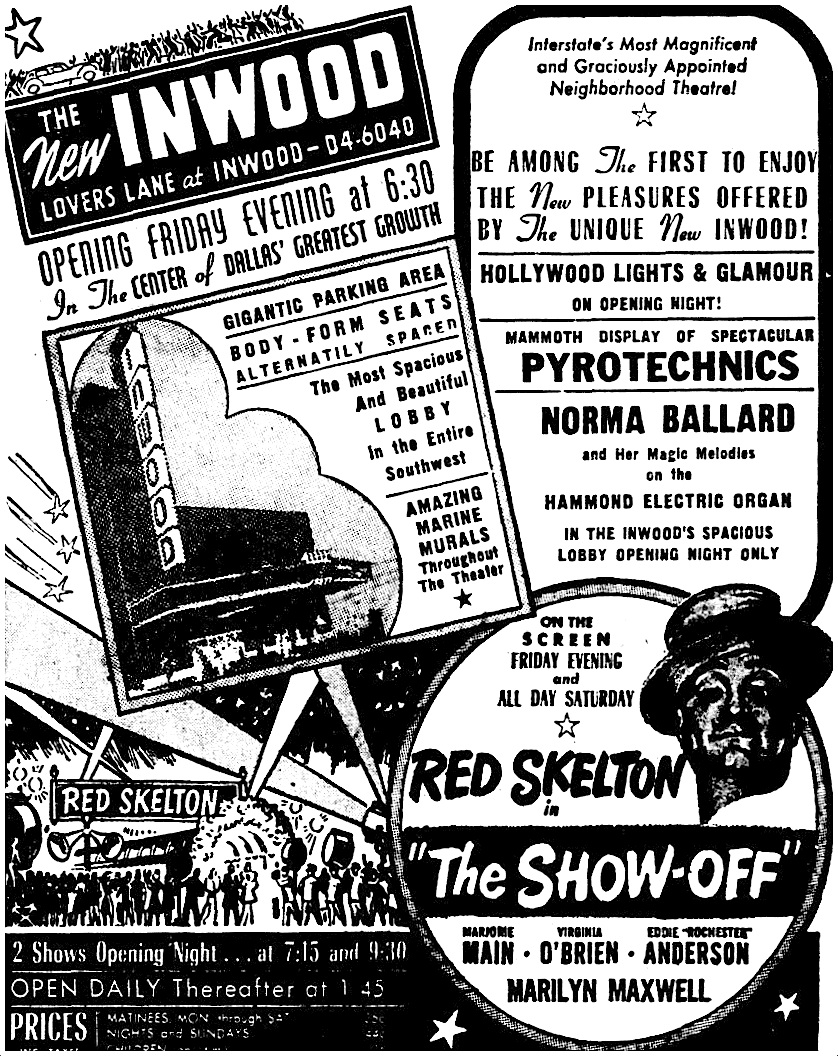
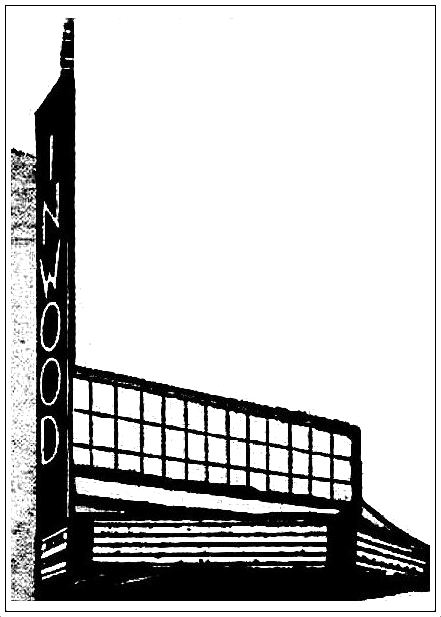
The Inwood Theatre opened at Lovers Lane and Inwood Road on May 16, 1947. Even though the surrounding neighborhood has changed pretty dramatically over the years, the exterior of the H. F. Pettigrew-designed building looks pretty much the same today. Happily, the 69-year old movie theater is still in business.
The Grand Opening — May 16, 1947 (click to see larger image)
Top photo from D Magazine,here; from the Texas/Dallas History and Archives Division, Dallas Public Library. If you zoom in, there seems to be some drama going on inside one of those parked cars:
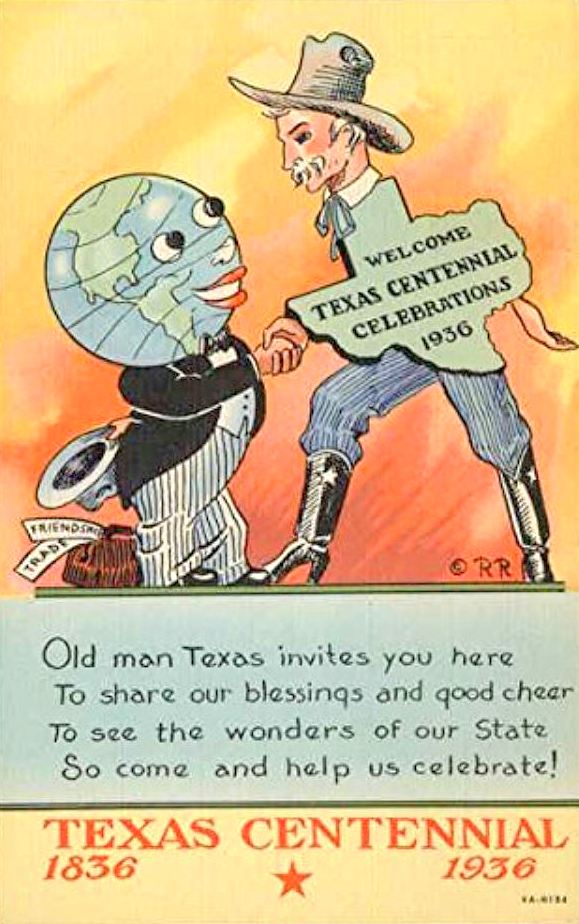
The Texas Centennial Exposition opened in Dallas at Fair Park in June, 1936 — 80 years ago this week. It was described in newsreels as “A New City, A Great City, A City of a Thousand Sights and a Thousand Wonders.” Which I guess it kind of was. I’ve written about the Centennial before, but I don’t think I’ve mentioned that my favorite part of the Centennial’s taking place in Dallas is that it seriously rubbed “Mr. Fort Worth,” Amon Carter, the wrong way. Carter’s distaste of Dallas was well-known, so it was no surprise, really, that this caused him to blow his top and, damn it, he created his OWN competing celebration: the Fort Worth Frontier Centennial Exposition. The Dallas-Fort Worth rivalry had already been going strong for years, but the Centennial pushed it into Hatfield-and-McCoy feud territory (although one gets the feeling that most of it was an act that generated a lot of great publicity for both sides).
Watch film footage of ol’ Amon’s blood pressure spike into the danger zone here, in a moment from a March of Time newsreel as he proclaims that Fort Worth will teach “those dudes over there” (in Dallas) a thing or two by outdoing Big D in sheer gigantic spectacle. …And sex. Or, “whoopee.” Nudity was on display absolutely everywhere at both Centennial expositions. Dallas had always planned on having the titillation before Amon Carter got into the act, but the involvement of Billy Rose on the Fort Worth side probably encouraged Dallas to, um … augment the fleshy offerings on display in Fair Park.
Broadway impresario Billy Rose was hired by Amon Carter to sex-up the Fort Worth expo and to do everything he could to draw more visitors to Fort Worth than to Dallas. Rose went so far as to have a HUGE electric sign (supposedly the second largest electric sign in the world) placed on top of a building on Parry directly opposite the entrance to Fair Park which read:
(See a giant image of this photo in the UTA digital collection, here.)
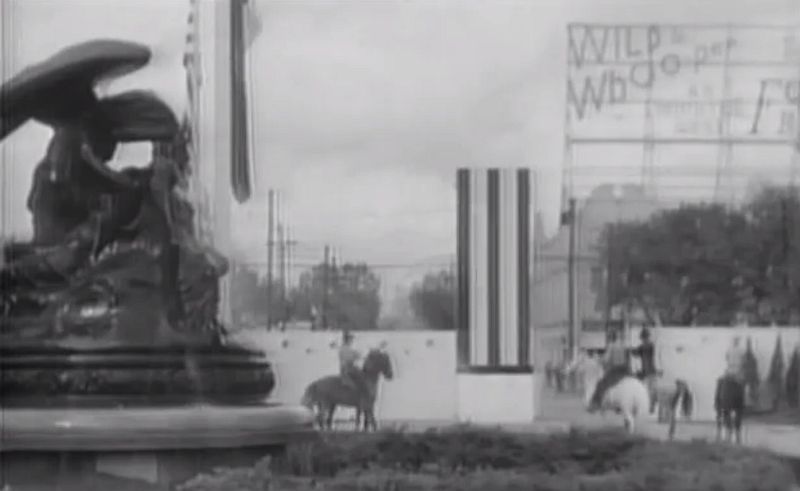
I’m not sure whether the Dallas Centennial organizers were miffed or amused, but one can only imagine that Amon Carter was thrilled to bits when he saw his sign appear (fleetingly) in the Gene Autry movie The Big Show which had been shot in Fair Park during the Centennial.
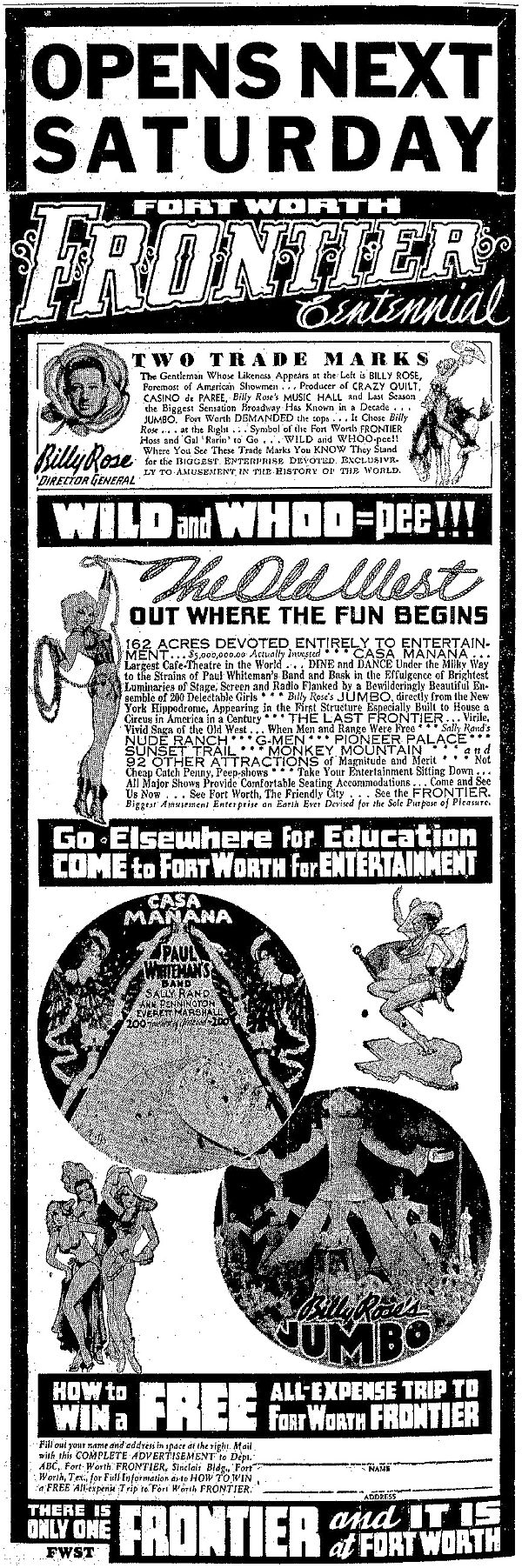
Fort Worth was all about the “whoo-pee,” and the tag-line to their show was “Come to Fort Worth for Entertainment, Go Elsewhere for Education.”
Fort Worth Star-Telegram, July 14, 1936
The “feud” (i.e. the publicity machine) really cranked up when the producers of theMarch of Time newsreel sent their people to film in Dallas and Fort Worth. The result — a splashy look at the inter-city rivalry titled “Battle of a Centennial” — was shown in DFW-area theaters, and boisterous audiences either applauded for Dallas and hissed at Fort Worth (or vice-versa), depending on their allegiance. (Click ad below for larger image.)
June, 1936
In the end, the celebrations in both Dallas and Fort Worth were successful (although Dallas was the clear winner!), but the rivalry and competitive showmanship from the two cities probably made the shows much more entertaining than they might otherwise have been. So, thanks, Amon!
Photo of the “whoo-pee” billboard is from the book Billy Rose Presents … Casa Mañana (Fort Worth: TCU Press, 1999) by Jan Jones. Jones writes that the billboard was on top of the building at Parry and First.
The shot of the billboard hovering over cowboys is a screengrab from the interesting-but-dull Gene Autry movie, The Big Show, shot mostly on the grounds of Fair Park during the Centennial. You can watch the full movie here.
The clip of Amon Carter shaking his fist at “those dudes” in Dallas is from the 1936 March of Times newsreel, “Battle of a Centennial.” I have been unable to find the entire film streaming online, but you can watch a whole bunch of clips (about 13) from Getty Images, here. The full thing appears to be available for purchase here, but only if you are affiliated with a school or institution. (If anyone has access to the full newsreel, let me know!)
Watch a different newsreel/film on the Centennial Exposition — the 11-minute Texas Centennial Highlights, shot and produced by Dallas’ Jamieson Film Co. — at the Texas Archive of the Moving Image site, here.
For more on Fort Worth’s horning-in-on Dallas’ Centennial, read the entertaining article “Makin’ Whoopee — Amon Carter Couldn’t Make Either the Depression or Dallas Go Away, But He Sure Tried” by Jerry Flemmons (D Magazine, April, 1978), here.
Unfortunately, I’m unable to embed the video I linked to above of Amon Carter sputtering about Dallas hosting the state’s Centennial, but I encourage everyone who’s ever been amused by the Dallas-Fort Worth “feud” to watch it here — it’s well worth 17 seconds of your time! As John Rosenfield wrote in the Dallas Morning News review of this March of Time newsreel, “The best actor from across the river is Amon Carter, long a leading man among Texas political Thespians” (DMN, “Centennial Fight in ‘Time’ Release,” June 21, 1936). Newspaperman Carter knew how to parlay outrageous remarks about exaggerated competition into sweet, sweet publicity for himself and his newspaper. Check out the photo of a smiling Carter with his arm around “bitter rival,” G. B. Dealey of The Dallas Morning News, here. Amon knew a thing or two about a thing or two….
“Action!” (click for BIG image) Photo: Dallas Police Museum
by Paula Bosse
Need to hire a bunch of movie extras who look comfortable toting rifles? When Hollywood came to Dallas and environs in the fall of 1966 to shoot the movie “Bonnie and Clyde,” they found plenty of law enforcement officers happy to don a pair of overalls and add some local color to their production.
I came across this photo on the Dallas Police Department Museum Facebook page. One of the comments under the photo: “I remember when all the overtime slots were allowed (paid by the film company)…. I recognize Chief Curry and the other officers.” Another person commented that an ex-DPD cop told him that he was in the movie, dressed as a farmer, chasing a car across an open field.
Did you have an Uncle Earl who was on the DPD force in 1966? There’s a chance he might be in the movie. Hell, he might be in this photo!
***
Sources & Notes
Photo from the Dallas Police Department Museum Facebook page.
Read the Preston Hollow Advocate article “A Criminal Record: Dallas Police Department Museum,” here.
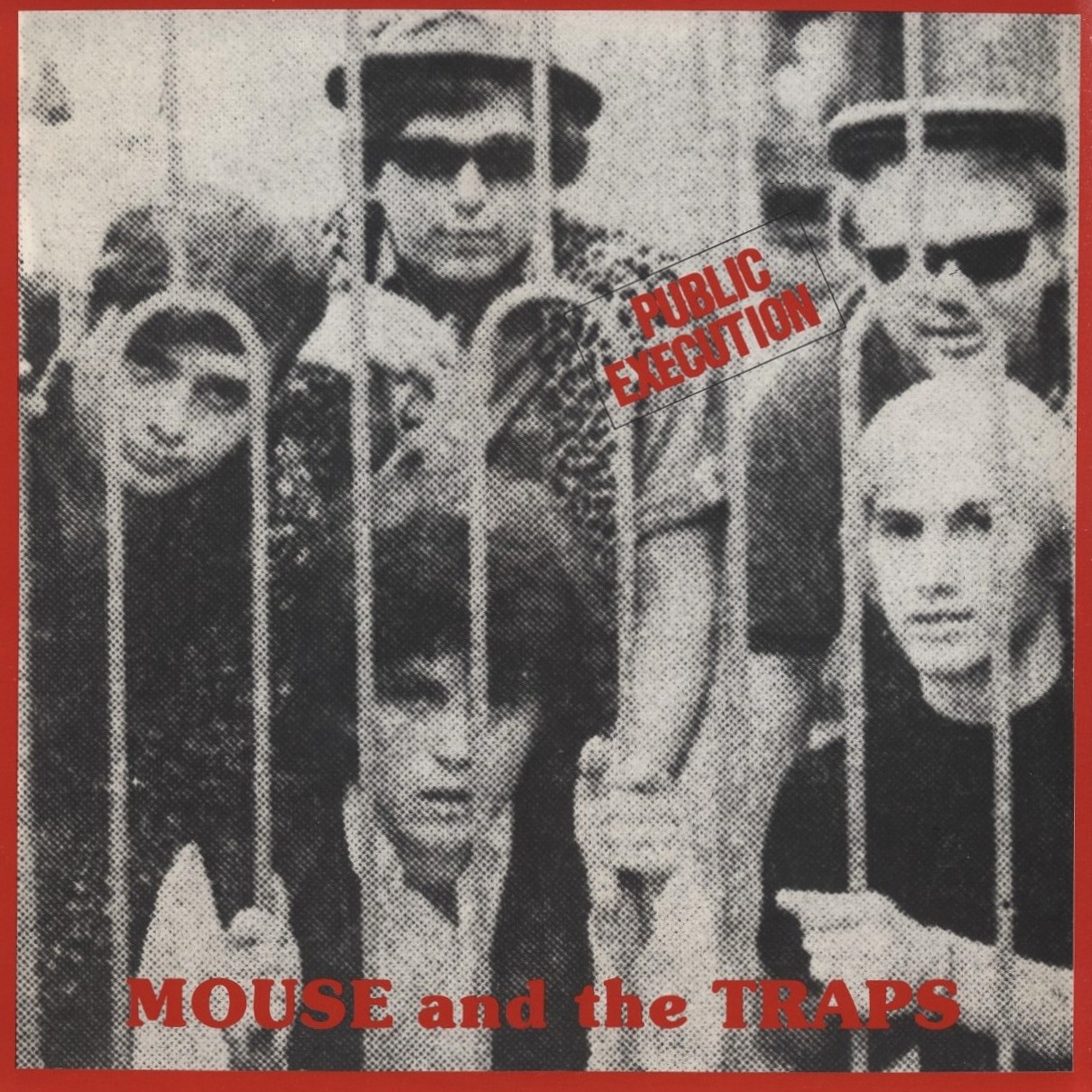
Last Tuesday, my friend Carlos Guajardo and I were each asked to present a favorite vinyl album at the Tuesday Night Record Club, a monthly event organized by Brian McKay and held at the historic Texas Theatre. My choice was a French import called Public Execution by Mouse and the Traps, a collection of the Texas band’s singles issued during their fairly short career (roughly 1965 to 1970). I bought this at a time when all of my disposable income was going to alternative record stores Metamorphosis and VVV, and I feel fairly certain that I bought this album at Metamorphosis. ’60s garage rock may be my favorite genre of music, and Texas garage rock is, for whatever reason, usually the best.
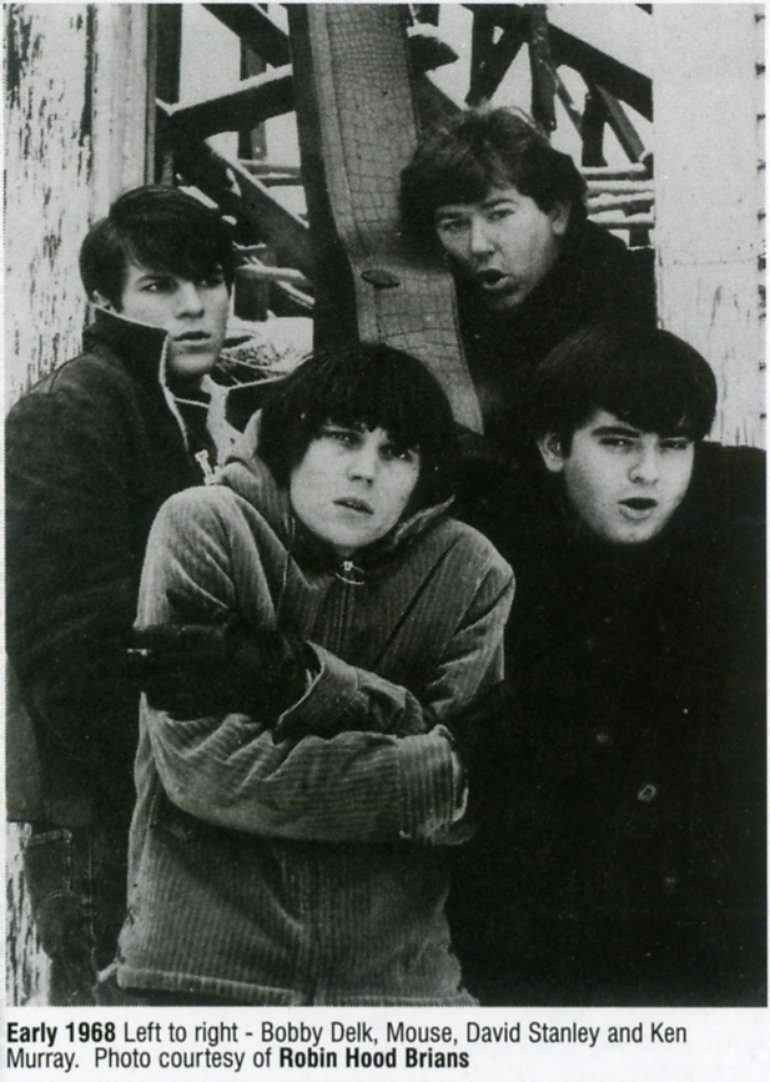
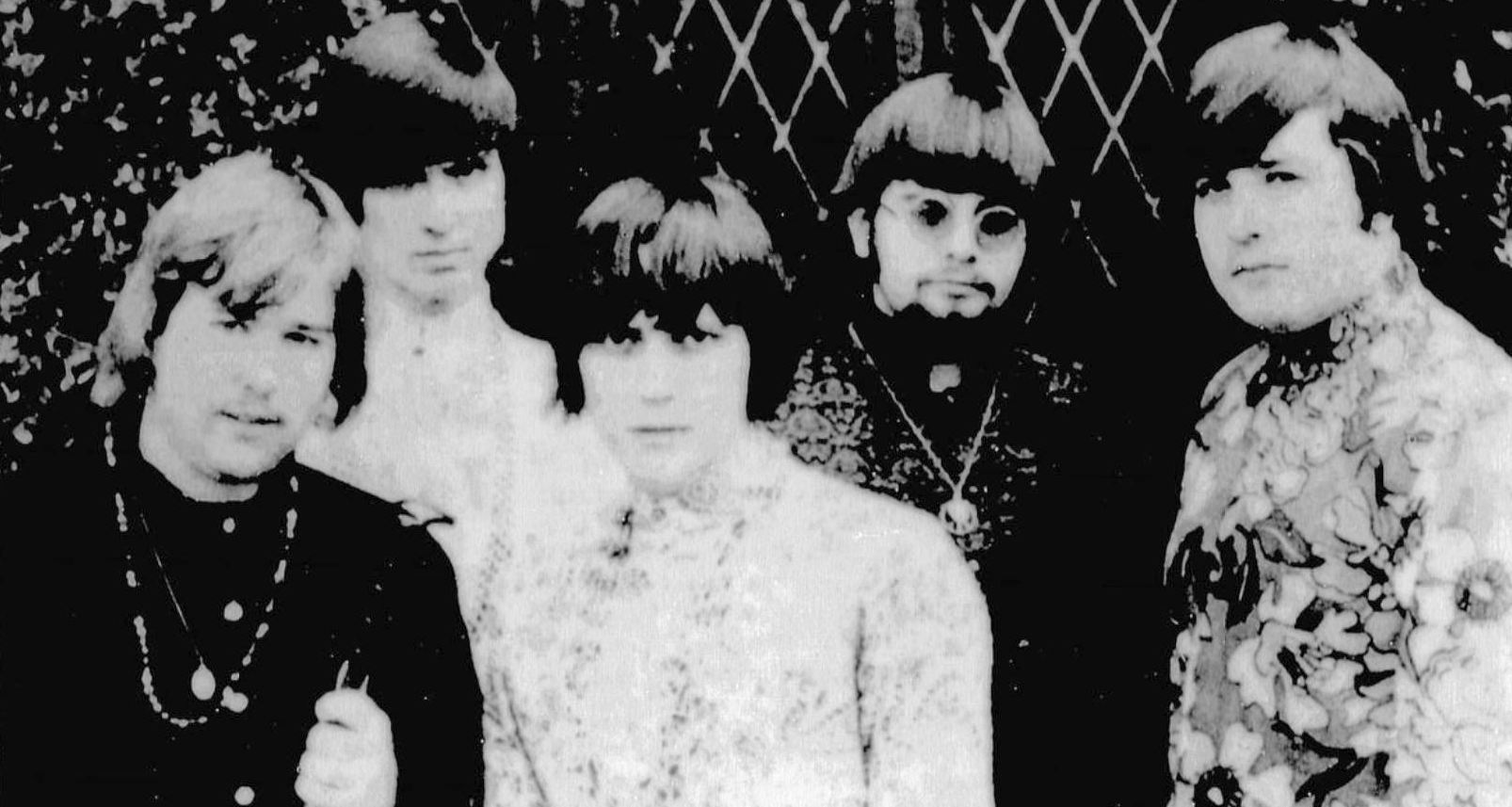
Mouse and the Traps was a band formed in Tyler, Texas in 1965, with Ronnie Weiss (whose nickname was “Mouse”) on vocals and guitar, Bugs Henderson on lead guitar, David Stanley on bass, Ken “Nardo” Murray on drums, and Jerry Howell on keyboards. Even though most of the band members grew up in Tyler and almost all of their singles were recorded there (recordings produced by the great Robin Hood Brians, who was only a couple of years older than the band), the band pretty much moved to Dallas when they began to get a lot of airplay on local stations, notably KLIF. I actually always thought they were a Dallas band, and, damn it, I’m still considering them a Dallas band.
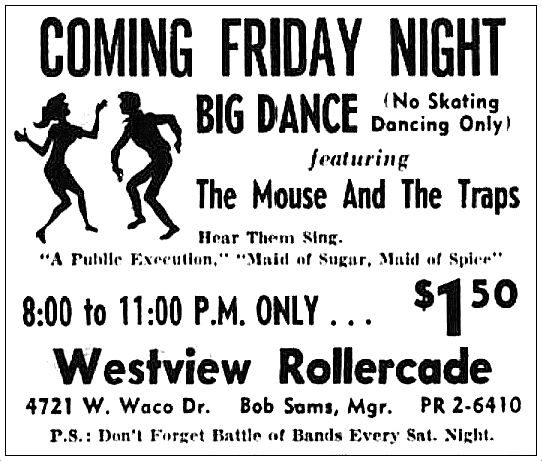
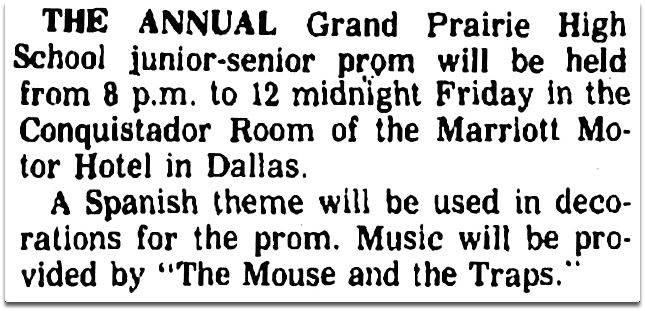
Mouse and the Traps toured around the state feverishly, playing clubs, colleges, parties, and even proms. There were occasional forays beyond Texas, but, for the most part, they remained a (very popular) regional band. Their first single — the unapologetically Dylan-esque “A Public Execution,” was released at the end of 1965 on the Fraternity label; it was their only record to show up on the Billboard charts, as a “bubbling under” track, not quite reaching the Top 100. After a couple of years, Bugs Henderson (who later became “guitar legend Bugs Henderson”) left the band and was replaced by Bobby Delk. Their personnel history is a little fuzzy, but I think Bugs re-joined the band briefly before the group finally disbanded sometime in 1970, after releasing a series of well-regarded singles and after almost five years of endless live dates. For most bands that had found little commercial success, that would have been the last most people would have heard of them. But most bands weren’t “Nugget” bands.
In 1972, Lenny Kaye included Mouse and the Traps on his revered (and influential) “Nuggets” compilation, propelling the band from “slowly fading memory” to “newly appreciated cult band” and introducing them to a whole new international audience. The band is now regarded as “proto-punk” and an important Texas garage band.
Their garage recordings are probably the most admired, but they dabbled in every ’60s style imaginable, including psychedelia, folk rock, breezy pop, and West Coast country, with hints of Dylan, The Beatles, The Yardbirds, Them, Donovan, and the Sir Douglas Quintet. There’s even a “Get Smart”-inspired novelty song in there. My favorite song of theirs, “Maid of Sugar, Maid of Spice,” is generally considered their finest single, assuring them a place in the pantheon of great garage songs. The stinging, electrifying guitar of Bugs Henderson is fantastic.
The band re-formed for several reunion shows over the years, but, sadly, Bugs Henderson died in 2012. No more reunion shows featuring the original line-up.
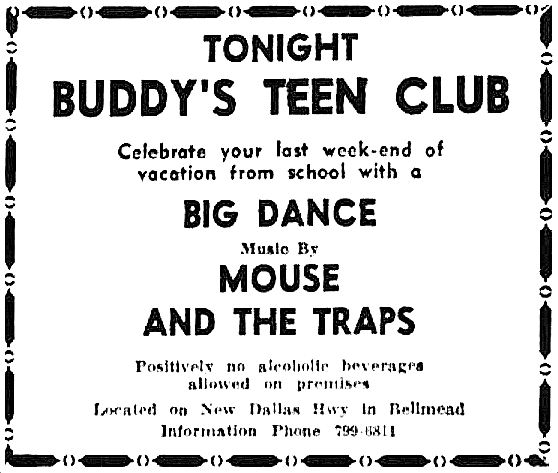
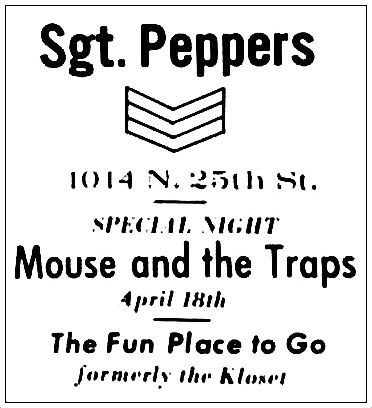
As far as the Dallas connection during the height of their career, there is precious little I’ve been able to find, as far as contemporary local photos, ads, or newspaper mentions. Despite the cultural revolution which began with the explosive arrival of the Beatles to the U.S. in 1964, “teenage” music in the ’60s was not taken seriously enough at the time to warrant much coverage in the major newspapers.
One of the few mentions of the band I found was as a support act on a Sonny and Cher show at the Fair Park Music Hall in early 1966. Also on the bill: The Outcasts from San Antonio, and Scotty McKay from Dallas (who can be seen performing two pretty good songs in a clip from one of Dallas director Larry Buchanan’s “schlock” movies, “Creature of Destruction,” here).
Feb., 1966
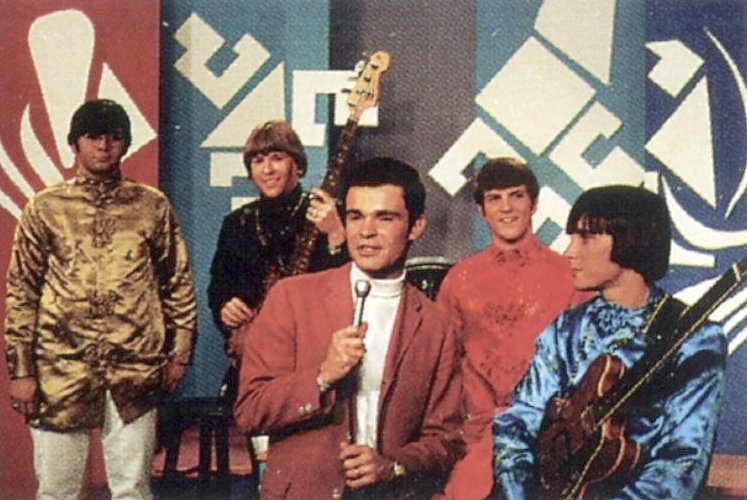
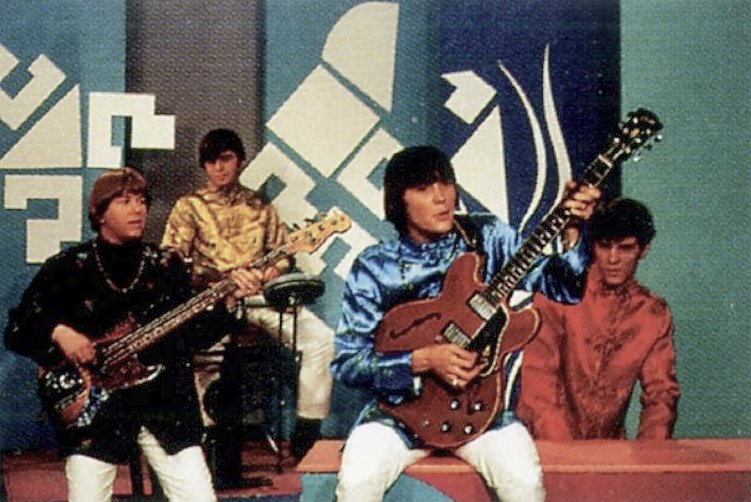
They also appeared on the TV music show “Sump’n Else” “Upbeat” (in 1968, post-Bugs). (Thanks to Jim for pointing out in the comments that these two color photos actually show the band on the Cleveland-based syndicated teen show “Upbeat,” hosted by Don Webster. TV listings show that the band appeared on the show in April 1968, along with the Boxtops and several other performers.)
Photos: Robin Hood Brians
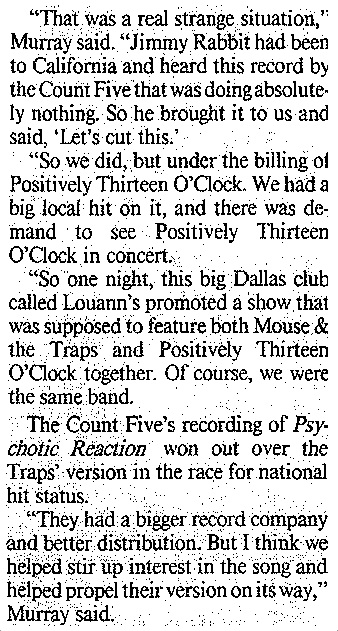
They also played a memorable show at Louanns in 1966 where they appeared on a double-bill as two separate bands. In 1966 Jimmy Rabbit, a popular DJ on KLIF who was a big supporter of the band, asked them to perform as his backing band on a (great!) recording of “Psychotic Reaction” — a very early cover (perhaps the first) of the song by the Count Five. The song was recorded in Tyler by Robin Hood Brians with Rabbit on vocals and was released under the name Positively Thirteen O’clock. Unsurprisingly, with Rabbit being a DJ on the top station in town, it became a huge local hit. Ken “Nardo” Murray talked about it in a 1988 interview (read the full interview here). Click for larger image.
Fort Worth Star-Telegram, May 17, 1988
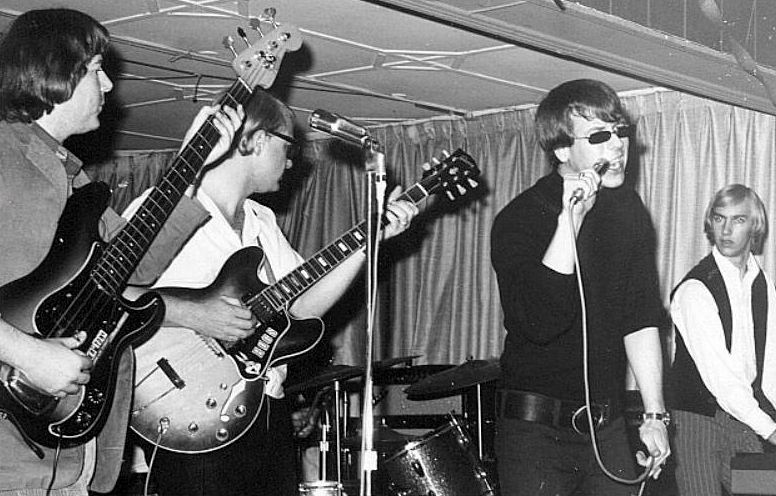
And here they are at Louanns, with Rabbit at the mic, backed up by Dave Stanley, Bugs Henderson (he has “Bugs” and a picture of Bugs Bunny on his guitar!), and Jerry Howell:
If anyone has any Dallas-related photos or memorabilia of Mouse and the Traps, I’d love to see them! I’d also love to hear from people who saw them perform in the ’60s.
*
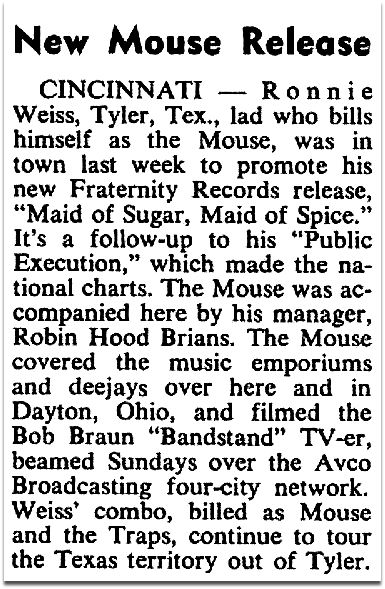
Billboard, May 21, 1966
Waco Tribune Herald, Aug. 11, 1966
Grand Prairie Daily News, May 9, 1968
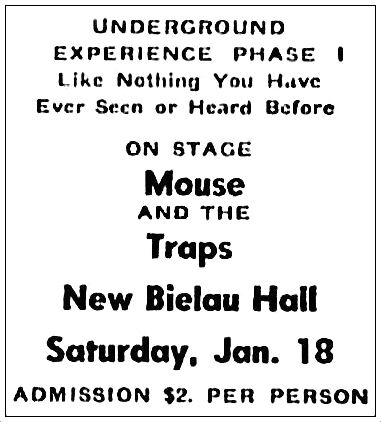
Weimar Mercury, Jan. 16, 1969
North Texas State University newspaper, Feb. 7, 1969
Waco Tribune Herald, Aug. 30, 1969
Waco Citizen, April 13, 1970
***
Sources & Notes
A few Mouse and the Traps tidbits:
The band was originally called “Mouse.” “The Traps” was added when the second single, “Maid of Sugar, Maid of Spice” came out in 1966.
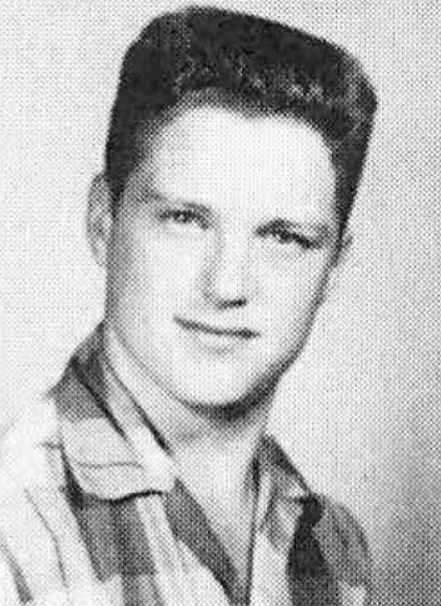
The “Henderson” listed as co-writer with Ronnie Weiss of a few of the early Mouse and the Traps songs (including the first two singles) was not Bugs Henderson (who was born Harry Fisher Henderson but was known as “Buddy” in the pre-“Bugs” days) — it was Knox Henderson, a high school pal from Tyler, seen below from a 1955 John Tyler High School (Tyler, TX) yearbook.
More on the band — including photos and newspaper articles — can be found here. Also included is additional information on Robin Hood Brians who has produced artists as diverse as ZZ Top, the Five Americans, James Brown, David Houston, and John Fred and His Playboy Band (whose “Judy In Disguise” knocked the Beatles out of the #1 spot on the national charts).
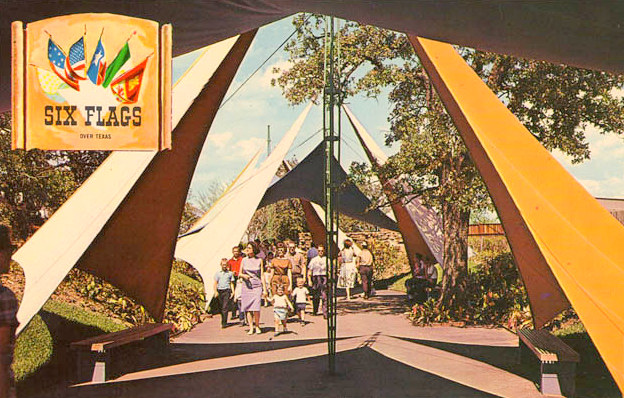
The image above is from a Six Flags Over Texas postcard. The description on the back reads:
Geometric Patterns — Mexican Section Multi-colored lighting effects reveal a fascinating and beautiful picture of the Canopied Garden Walkway leading into the Mexican Section at this new 105-acre $10,000,000 family entertainment center.
Here it is in the daytime, still kind of attention-grabbing, but nowhere near as cool-looking:
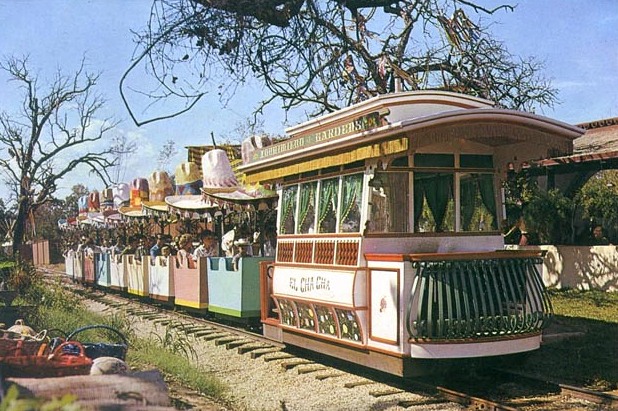
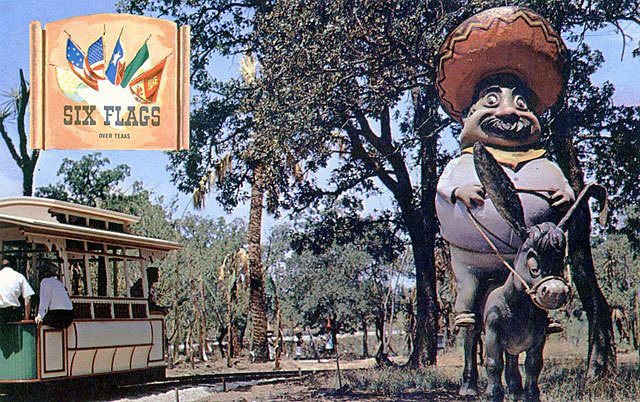
I just wanted to post this Six Flags picture I’d never seen and move along, but why not add a few more postcards showing attractions in this part of the theme park: the “Mexican Section.”
There was the Fiesta Train (which I was surprised to see was originally called Ferrocarril Fiesta), which was topped with colorful sombreros and chugged by all sorts of “festive” scenes which might seem a little culturally eyebrow-raising today.
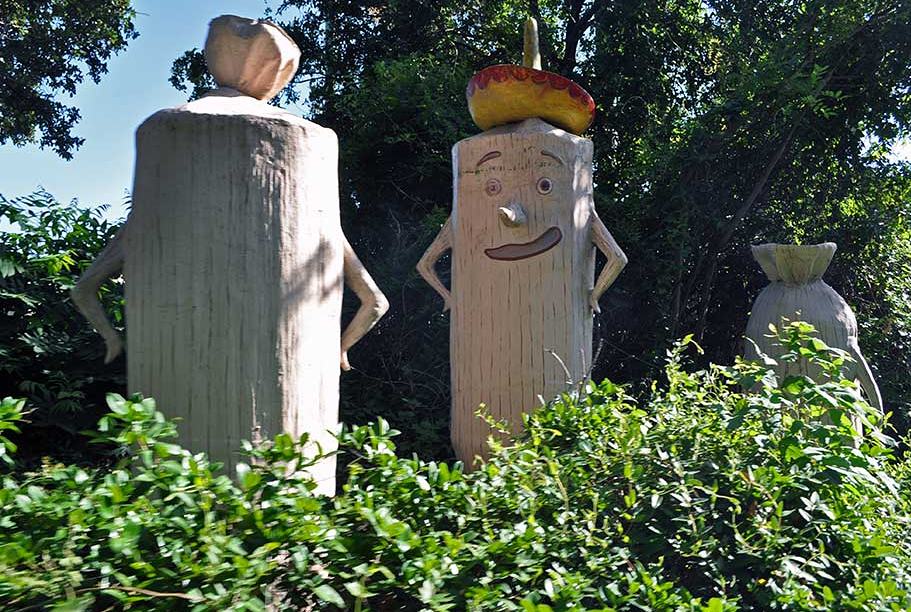
There were … dancing tamales. DANCING TAMALES! (Designed by Peter Wolf.)
Dancing Tamales — Mexican Section One of the most popular of the many colorful and comical animations on the Fiesta Train ride, this group of Dancing Tamales perform to the gay strains of Mexican music that fills the air.
Here is an interesting article about what visitors to the brand new amusement park could expect to encounter on their visit to the Mexican Section, written by the Six Flags promotion department (click for larger image).
Six Flags Gazette, Aug. 6, 1961
And, no, I couldn’t find a 1961 photo of the sombrero ride!
UPDATE: Found one (from 1965)!
***
Sources & Notes
Sombrero ride photo is from the Fort Worth Star-Telegram Collection, University of Texas at Arlington Libraries, Special Collections — more on this photo is here.
Info about the Six Flags Railroad is here; more about the Ferrocarril Fiesta Train is here.
Apparently those tamales (with a face lift) are still around? I LOVE THESE GUYS!
The great Merle Haggard died today, on his 79th birthday. My earliest music memories are hearing his songs on the radio. Even people who don’t listen to country music know who Merle Haggard is (and are probably fans).
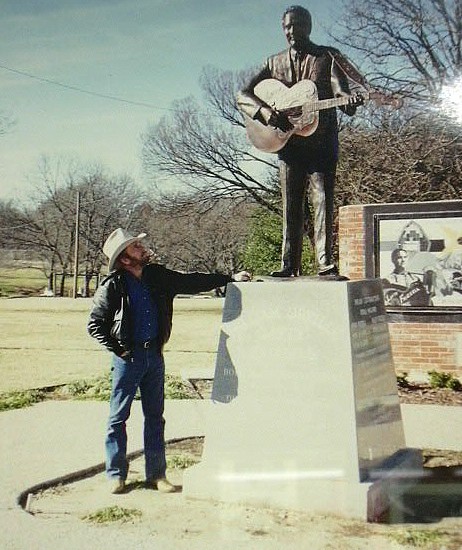
One of his idols was Lefty Frizzell, the Corsicana-born legend whose first hits were recorded in Dallas. Merle helped raise the funds in the late ’80s and early ’90s for the wonderful statue of Lefty which now stands in Jester Park in Corsicana. The picture above shows Merle visiting the statue. (Whenever I’m in Corsicana, I always drop by Jester Park to spend some time with Lefty.)
As far as Merle and Dallas, the earliest mention I could find was from January, 1965. Country music was covered only sporadically in the pages of The Dallas Morning News back then, but his early-’65 stop at the Sportatorium may have been Merle’s first appearance in Dallas — appropriately enough, it was at the Big D Jamboree. “California country music team” Merle and Bonnie Owens were guest performers, along with Billy Grammer and James O’Gwynn of the Grand Ole Opry, and the regular Jamboree cast of thirty, for the Jan. 30, 1965 Saturday-night Big D Jamboree show.
RIP, Merle. Thanks for everything.
***
The top picture is a photo I took of an original photograph which is hanging in the Lefty Frizzell Museum, which is also in Corsicana’s Jester Park (as part of the Pioneer Village).
Merle’s obituary in Variety — which includes entertaining salty quotes from the man himself — is here.
Today is Tennessee Williams’ birthday — he was born March 26, 1911. Thanks to his personal friendship and professional relationship with energetic Dallas theater pioneer Margo Jones (to whom he gave the nickname “The Texas Tornado”), playwright Tennessee Williams was a fairly frequent visitor to Dallas in the 1940s in the early years of his celebrity. Margo was a very early supporter of Williams, and their friendship led to her co-directing The Glass Menagerie on Broadway and her directing and producing the world premiere of his play Summer and Smoke at her Theater ’47 in Fair Park (a production which she took to Broadway the following year).
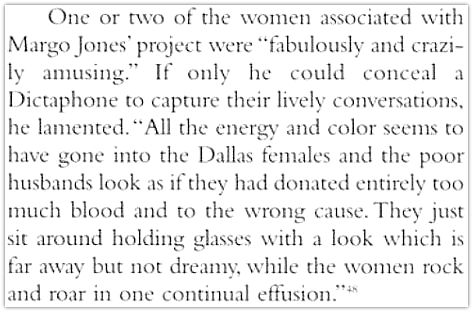
Dallas historian Darwin Payne wrote an interesting profile of Williams’ time in Dallas in the Spring 2007 issue of Legacies (read it here — it begins at the bottom of the page). My favorite quote in the article is about Dallas women, from a letter Tennessee wrote to New York theater director and producer Guthrie McClintic on June 1, 1945:
***
Sources & Notes
A comprehensive chronology of the friendship and professional partnership of Tennessee Williams and Margo Jones can be found in the article “An Alignment of Stars: Tennessee Williams, William Inge, and Margo Jones’s ‘Theatre ’47′” by Ralph F. Voss, here.
My previous post concerning Margo Jones’ early demise — “Margo Jones & Jim Beck: Both Legends in Their Fields, Both Victims of Carbon Tetrachloride” — is here.
Frank Lloyd Wright’s Dallas Theater Center is seen here nestled amongst the woody landscape of Turtle Creek. There’s a lot of varied architecture going on in this photo!
***
Sources & Notes
Photograph is from the Dallas Park and Recreation Department Collection, Dallas Municipal Archives; it is accessible via the Portal to Texas History, here.
The text on the back:
Opened in 1959, this Center provides pleasure for thousands of Dallasites and visitors yearly through a repertory of plays presented in its Kalita Humphreys Theater. This $1,000,000 Center, the last completed building and only theater designed by Frank Lloyd Wright, also incorporates a children’s and teen theater and a private school of drama.


















 Merle and Lefty, in Corsicana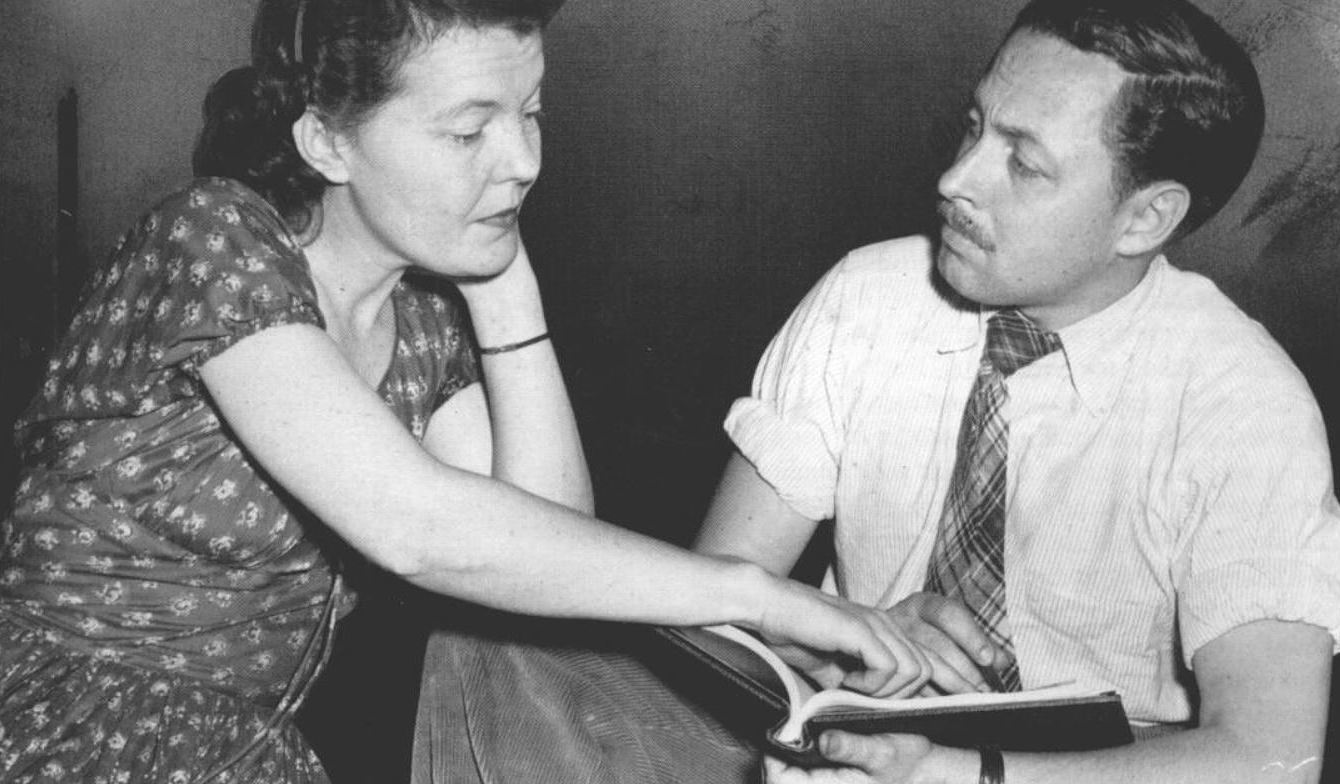

 Flashback : Dallas