Flashback : Dallas

A Miscellany: History, Ads, Pop Culture

Category: Leisure

Labor Day Weekend, 1952 (Redux)

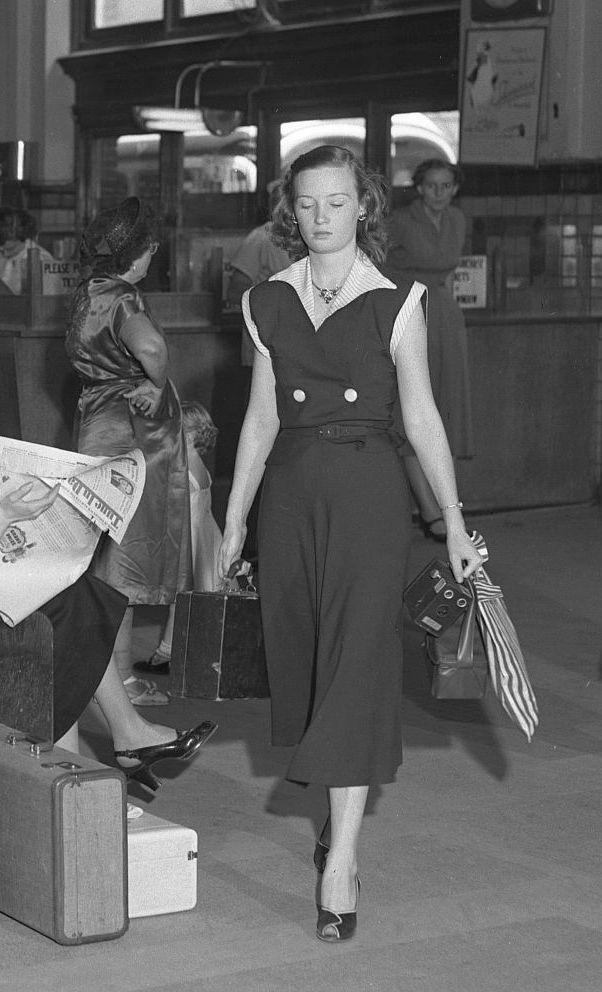
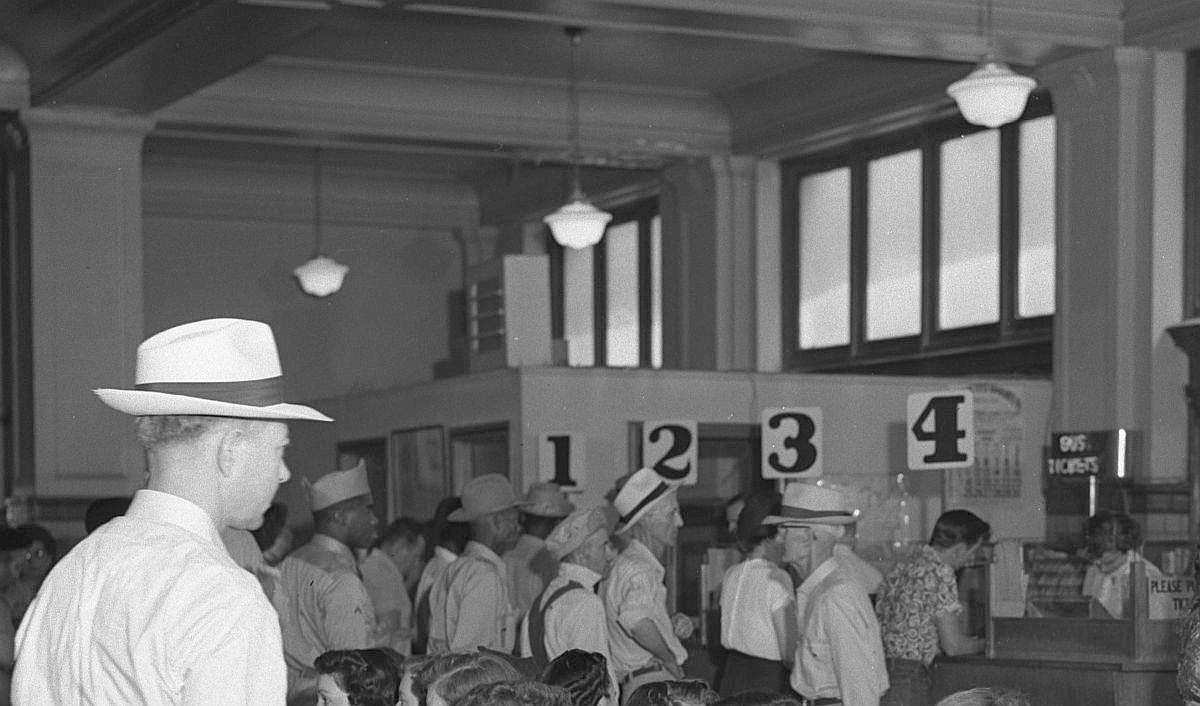
labor-day_083152_denny-hayes_PA76-1-11420-002_webWaiting for the fun to start… (photo: Dallas Public Library)

by Paula Bosse

Happy Labor Day! Back in 2020 I wrote a post called “Labor Day Weekend, Union Bus Depot — 1952.” I really enjoyed writing that one, and I loved the main photo in it. It turns out that the photo I’m using in this post was taken only a couple of minutes before the one I used four years ago. I discovered this photo a few weeks ago and have been waiting for Labor Day to roll around. Which it has now done.

On August 31, 1952, Dallas photographer Denny Hayes took several photos of travelers waiting to be whisked away to someplace else. (With luck, someplace cooler.) These photos were taken at the Union Bus Depot in the Interurban Building. Let’s zoom in on this great people-packed photo.

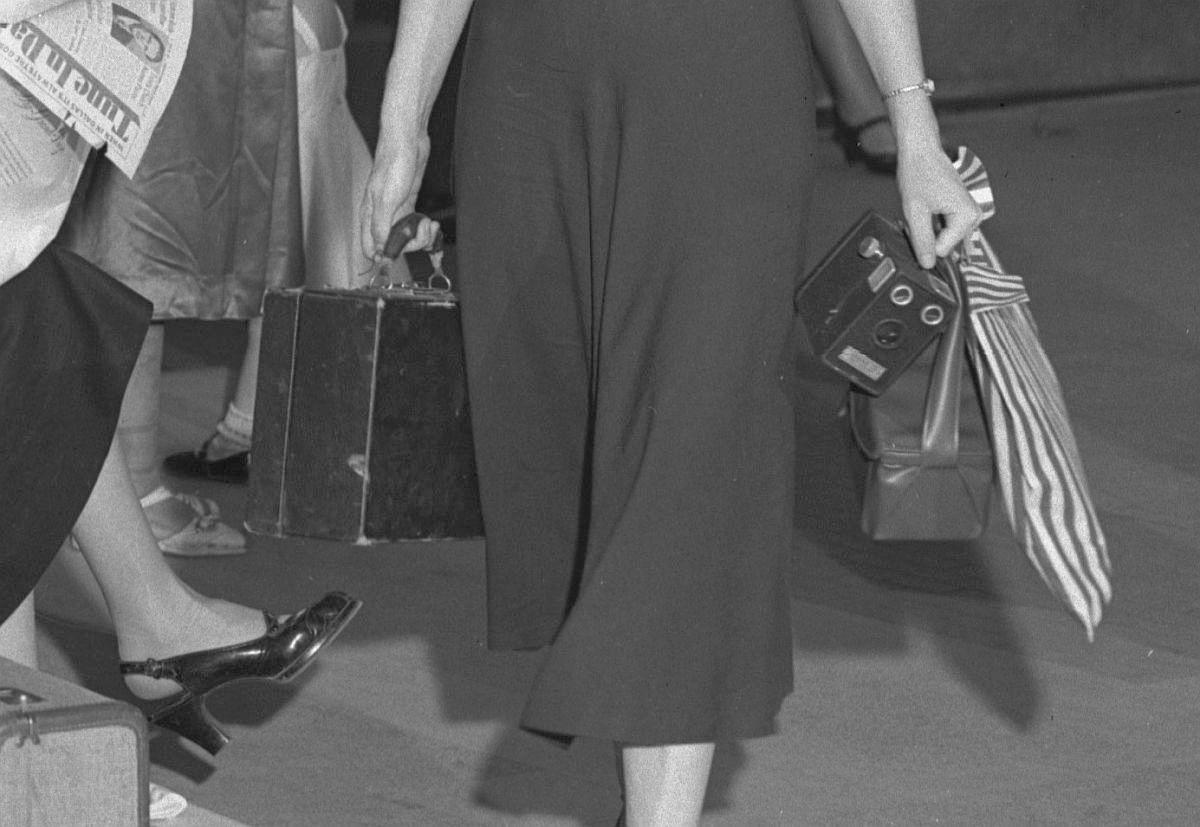
Everyone and everything pales in comparison to the young woman walking toward the camera. In her left hand she holds a box camera. She’s ready to take fun photos, if she ever gets out of that station.

labor-day_083152_denny-hayes_PA76-1-11420-002_woman

labor-day_083152_denny-hayes_PA76-1-11420-002_woman_camera

labor-day_083152_denny-hayes_PA76-1-11420-002_modern-screen

labor-day_083152_denny-hayes_PA76-1-11420-002_waiting

labor-day_083152_denny-hayes_PA76-1-11420-002_queue

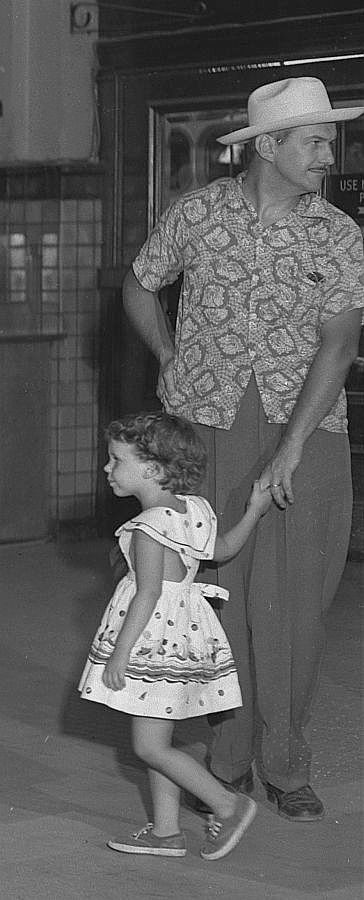
labor-day_083152_denny-hayes_PA76-1-11420-002_father-daughter

(If the man above looked any more like Harvey Korman, he’d be Harvey Korman.)

*

If you have the day off, I hope you enjoy it. And if you’re traveling somewhere, I hope you get there quickly!

***

Sources & Notes

Photo by Denny Hayes, from the Hayes Collection, Dallas Public Library, Dallas History and Archives; Call Number: PA76-1/11420-002.

See the companion post, “Labor Day Weekend, Union Bus Depot — 1952,” and see how many people made it into both photos.

labor-day_083152_denny-hayes_PA76-1-11420-002_web

*

Copyright © 2024 Paula Bosse. All Rights Reserved.

KVIL: The “VIL” Stands for Village

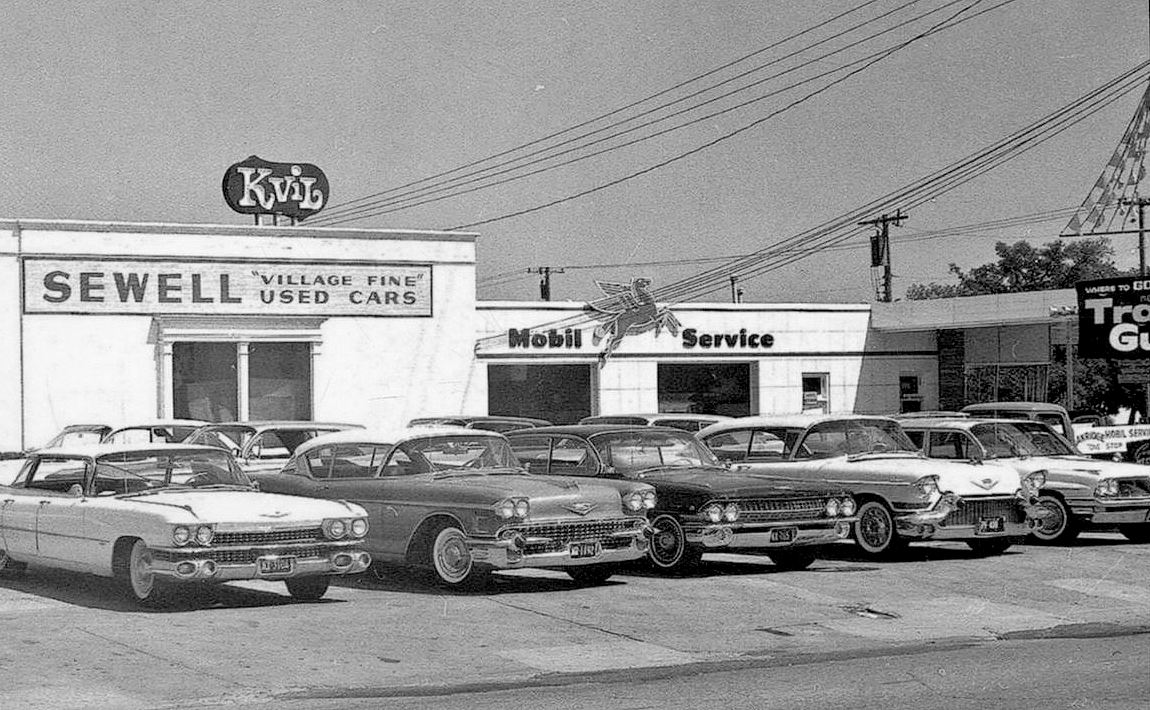
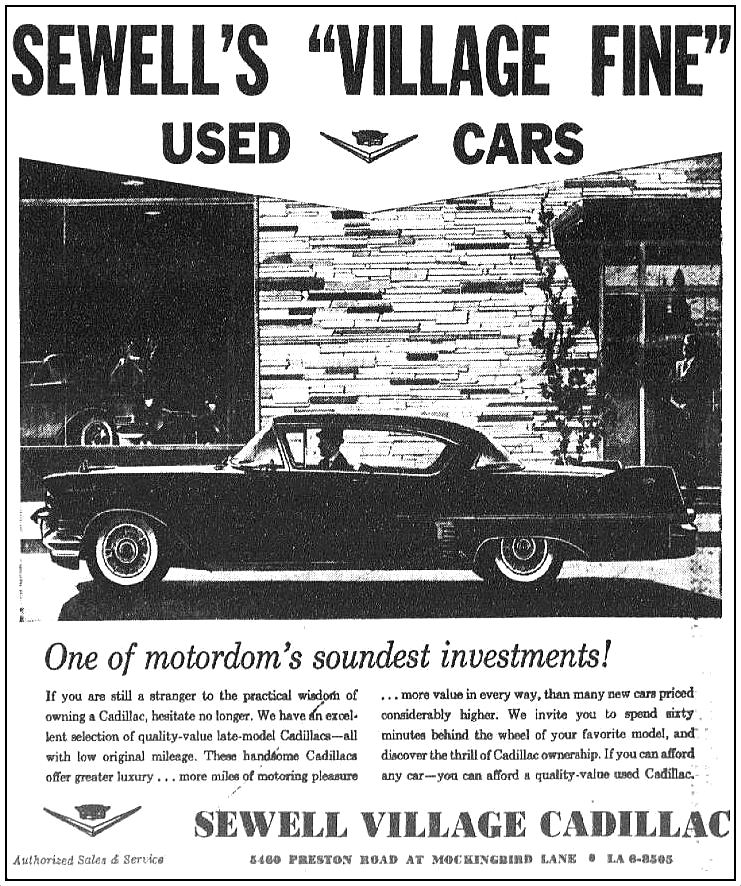
sewell-auto_KVIL_ebayNortheast corner of Preston & Mockingbird…

by Paula Bosse

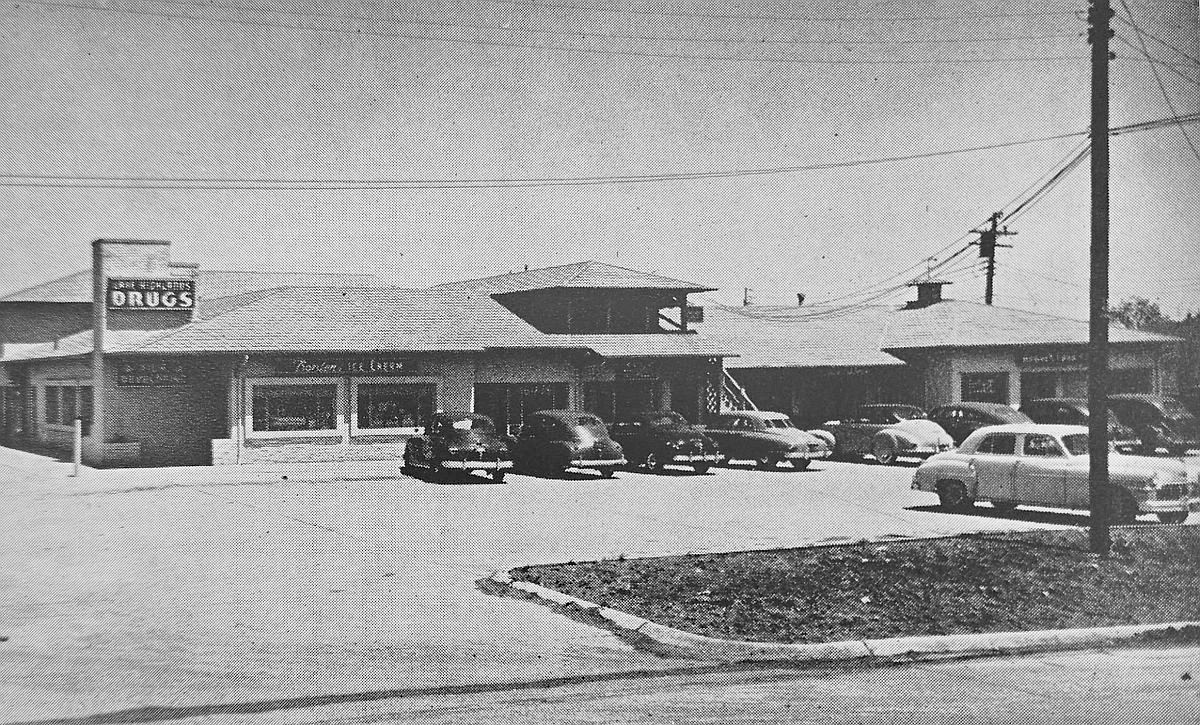
Sewell Village Used Cars and a Mobil station were at the northeast corner of Preston and Mockingbird (Sewell was at 5460 Preston Road), catty-corner from Highland Park Village. The KVIL studios were right around the corner, at 4152 Mockingbird Lane, across the street from the Dallas Country Club — you can see the jauntily-lettered sign in the background of this undated.photo. I am really bad at determining car-model years, but let’s say this is about 1960. What does this corner look like these days? It looks like this.

I just learned (from the KVIL Wikipedia page) that the “VIL” in the station’s call letters stood for “Village,” as in Highland Park Village. Who knew? The AM station began broadcasting on March 1, 1960, and the FM station hit the airwaves on Aug. 25, 1961. I believe both stations had a strict “no-rock-and-roll” policy. In the early days, a block of programming was aimed directly at housewives:

The program policy followed by the station is designed to fit the various hours of the day. For the driving hours when listeners drive to work (5:45 to 9 a.m.) and return (4:30 to 6:55 p.m.) the music is livelier. “Sing Along” is the order of the day from 9 a.m. to noon for the housewife’s work hours. (“KVIL Mark’s First Birthday Wednesday,” Dallas Morning News, March 1, 1961)

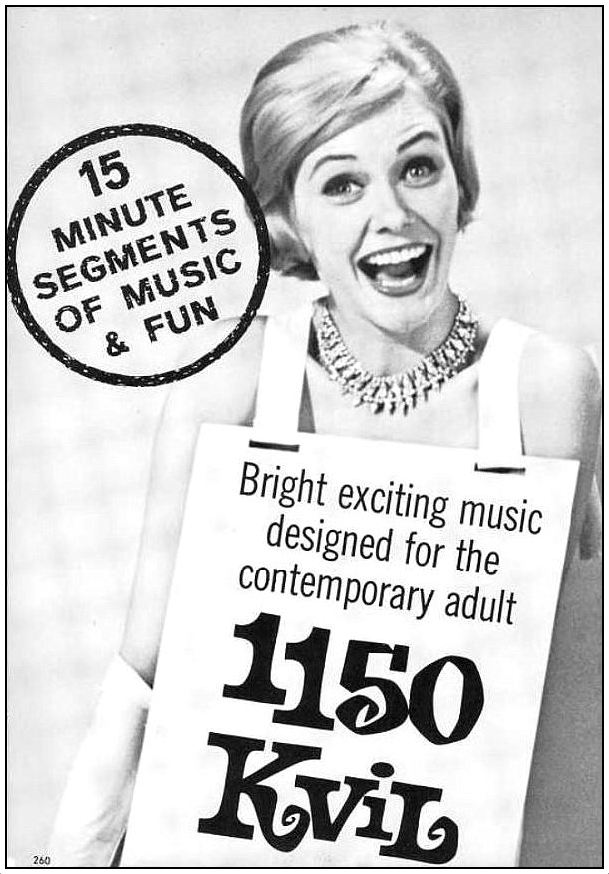
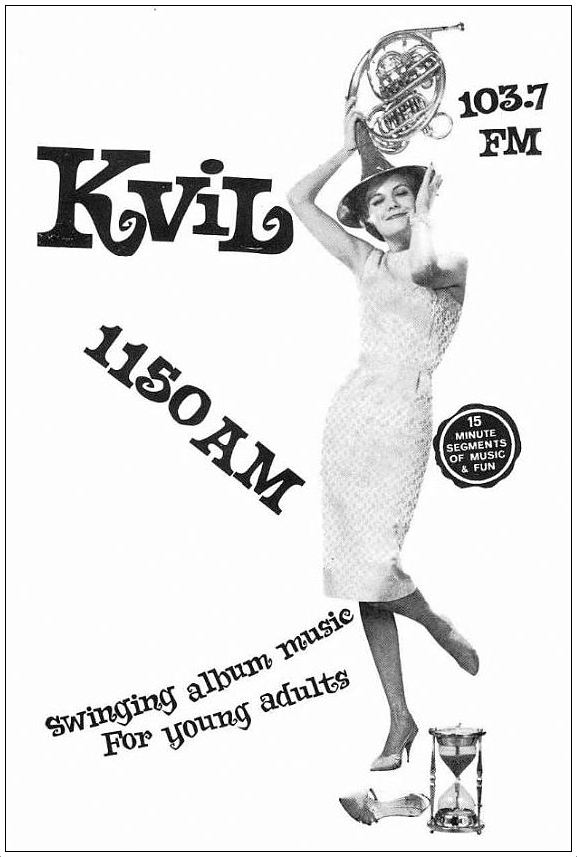
Here are a couple of hep, caffeinated KVIL ads from those early days:

patreon_KVIL_HPHS_1961-yrbk1961 ad

patreon_KVIL_HPHS_1962-yrbk1962 ad

kvil-logo_broadcasting-mag_122462_ad-det1962 logo

Most of my sort of generally vague awareness of KVIL was in the 1980s, when it was an absolute powerhouse in the ratings. But even its most stalwart fans would probably not describe its playlist as “bright,” “exciting,” or “swinging.” But look how much fun the promotions department imagined the effect on “young adults” was!

*

And what about Sewell Village Cadillac and its selection of “Village Fine” used cars? If circa-1960 Highland Park is going to have a used car lot, you better believe it’s going to be populated with Cadillacs. (UPDATE: Thanks to Peter K’s link in the comments, check out what appears to be the original photo by Squire Haskins, with a wider view, at the UTA Libraries website, here.)

sewell-village-cadillac_032158March 1958

***

Sources & Notes

Photo from eBay.

KVIL ads from the 1961 and 1962 Highland Park High School yearbooks.

KVIL logo is a detail from an ad that appeared in the Dec. 24, 1962 issue of Broadcasting magazine.

This post appeared in an abbreviated form on the Flashback Dallas Patreon page.

sewell-auto_KVIL_ebay

*

Copyright © 2024 Paula Bosse. All Rights Reserved.

Rudolph Gunner: Dallas Bookseller and Emperor Maximilian’s “Best Friend”

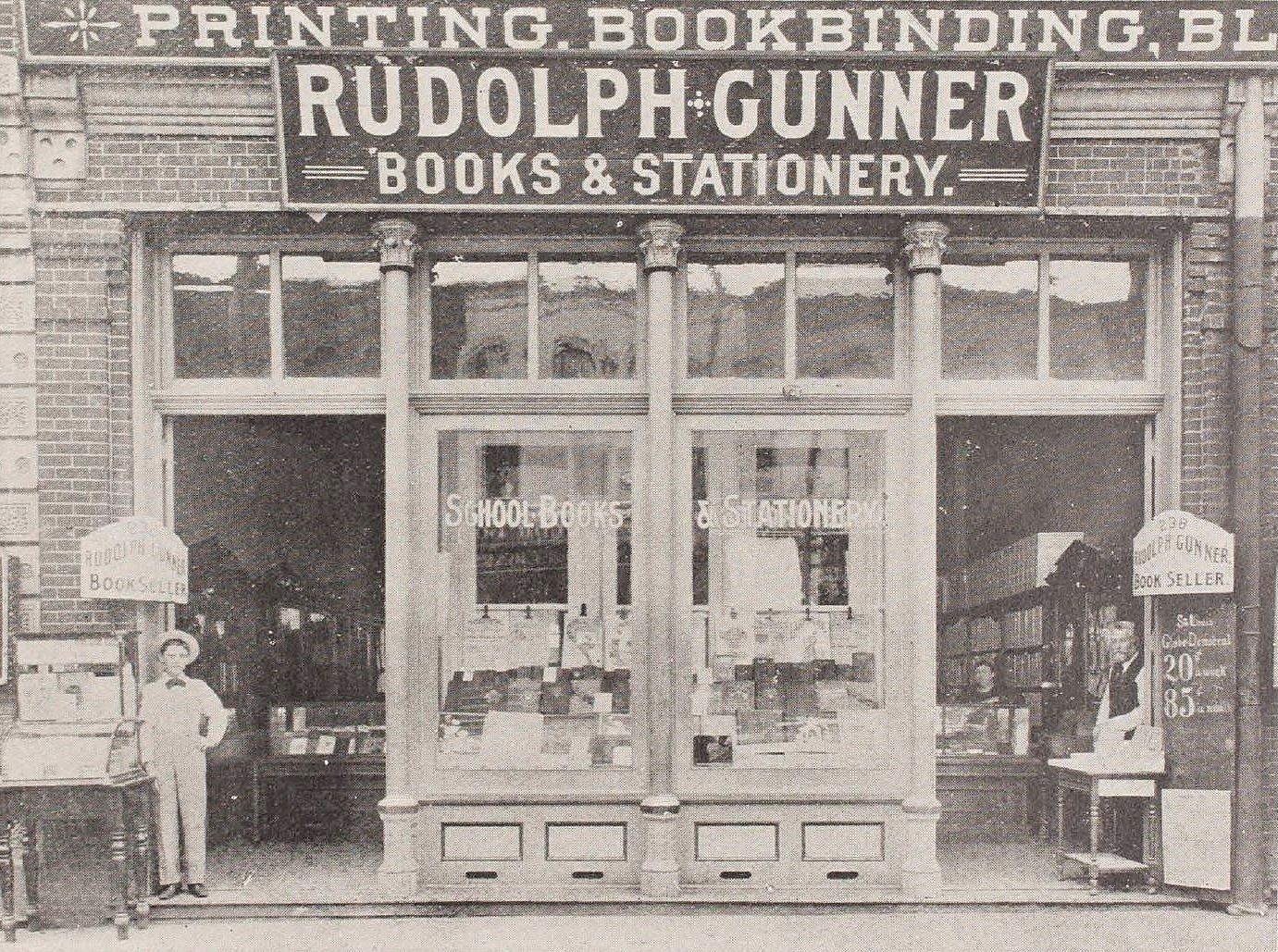
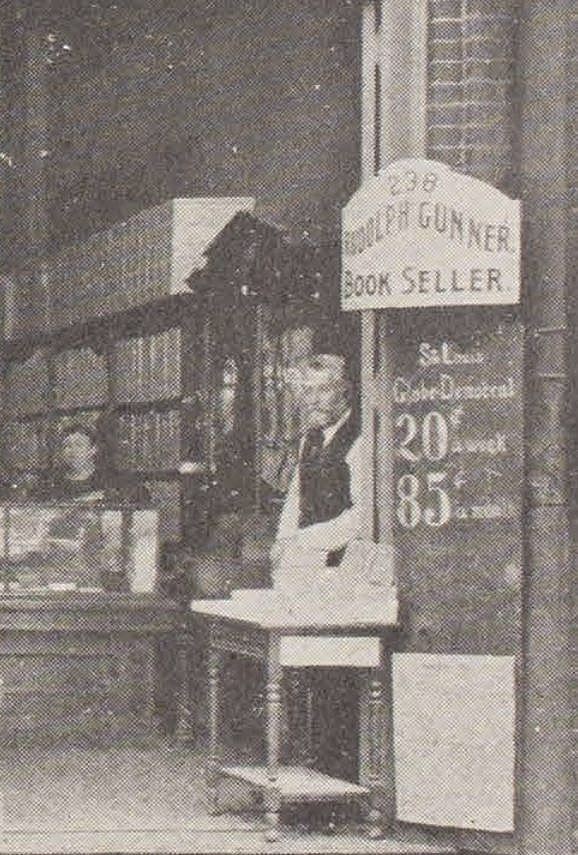
books_rudolph-gunner_dallas-through-a-camera_1894_degolyer-lib_SMU238 Main, circa 1894

by Paula Bosse

For the past several years, I’ve been posting bookstore-related posts on the birthday of my late father, Dick Bosse, an antiquarian bookseller who began his career straight out of SMU at The Aldredge Book Store, a literary landmark to many, which he eventually ended up owning. This year’s offering goes back to 19th-century Dallas.

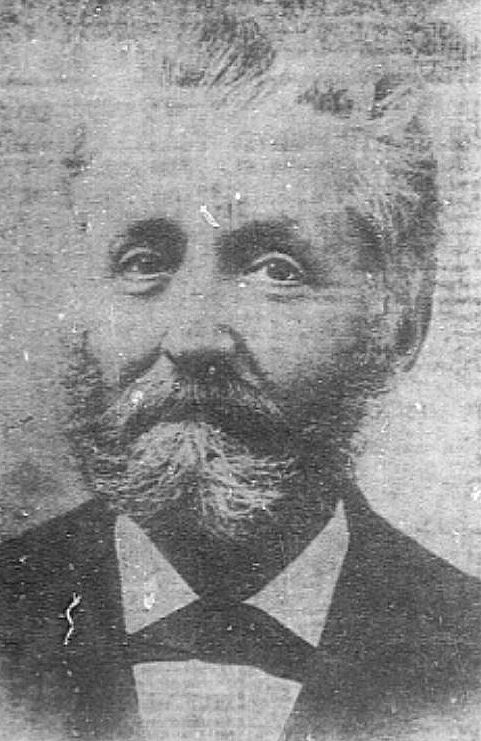
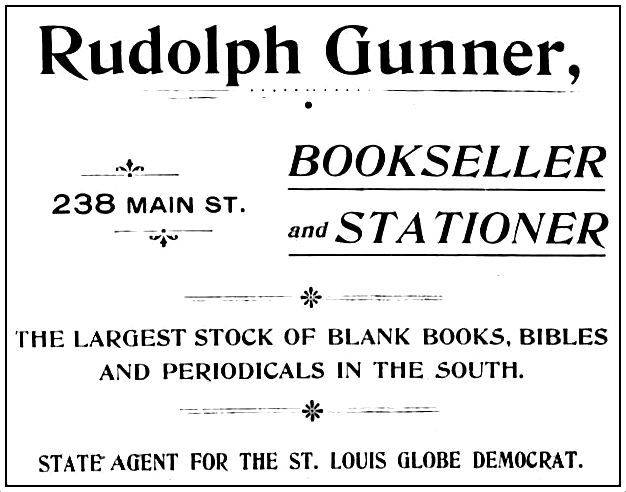
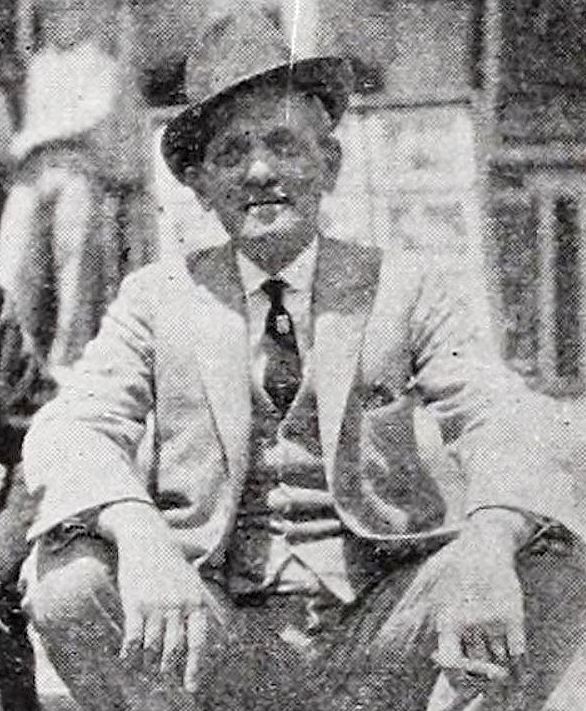
Above is a photo of the bookstore owned by Austrian immigrant Rudolph Gunner, located at 238 Main (later 1006 Main), between Poydras and Martin. Gunner (1833-1911) had, perhaps, one of the most impressive and colorful historical pedigrees of any Dallas resident. He served in the Austrian navy all over the world, but his most important service was as confidante and aide-de-camp to Emperor Maximilian and Empress Carlota of Mexico in the 1860s. That story is too big to tell here (Wikipedia is here to help), but it’s interesting that a man who was often referred to as “Maximilian’s best friend” eventually wound up in Dallas in 1885 and opened a bookstore, first on Elm Street, later on Main.

My father had a fascination with Mexico and used to talk about Maximilian quite a bit. I wonder if he knew Maximilian’s right-hand man lived out his days in Dallas, having spent several years as a bookseller?

books_rudolph-gunner_dallas-through-a-camera_1894_degolyer-lib_SMU_det_gunner

gunner-rudolph_photo

rudolph-gunner_1896-directory_adDallas city directory, 1896

*

In a sidenote, Gunner mentioned in several interviews that he had a LOT of historical documents and souvenirs from his military career serving in the Crimea, Egypt, Africa, and, especially, Mexico. I winced when I read this passage from an article by A. C. Greene in The Dallas Morning News (“Bookstore Owner Once Was Colorful General — He Headed Maximilian’s Mexico Palace Guard.” DMN, Apr. 18, 1993):

[A]t the time of his death in 1911 [his] home was at 1506 Fitzhugh. [His wife] was still living there, with a considerable collection of historic memorabilia, books, medals and military items, when the home burned, destroying everything but Gen. Gunner’s sword with the emperor’s crest.

Wow. All of that, gone. (And to answer my question above, I’m pretty sure my father would have known this, if only because he read A. C. Greene’s columns and probably even discussed this with him on a visit to the store.)

***

Sources & Notes

Top photo by Clifton Church, from his book Dallas, Texas, through a camera: a collection of half-tone engravings from original photographs (1894) — from the DeGolyer Library, SMU, here.

Read a first-hand account of Gunner’s time in Mexico in a Dallas Morning News article from Jan. 14, 1886 here; his DMN obituary (Aug. 25, 1911) is here.

Read previous Flashback Dallas articles on Dallas bookstores here.

I would love you to join me over on Patreon, where I upload Dallas history posts daily for subscribing members (as little as $5 a month!). If you would like to support what I do, check out Flashback Dallas on Patreon.

books_rudolph-gunner_dallas-through-a-camera_1894_degolyer-lib_SMU

*

Copyright © 2024 Paula Bosse. All Rights Reserved.

Jimi Hendrix in Dallas, 4/20/69

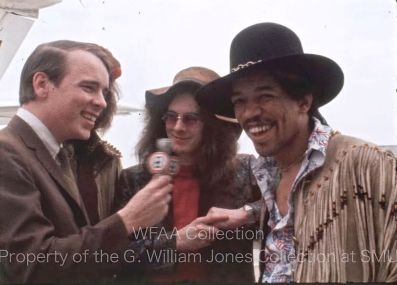
jimi_WFAA_042069_SMU_aDoug, Mitch, Noel, and Jimi

by Paula Bosse

Today is 4/20 Day. An alternate (or parallel) way to celebrate the already alternative “holiday” is to mark the anniversary of one of Jimi Hendrix’s best interviews, on the Love Field tarmac on April 20, 1969, given to Dallas reporter Doug Terry (still a college student when he was at WFAA-Channel 8). The band was in Dallas for a show at Memorial Auditorium. It’s just a fantastic, laid-back, cool interview.

I had tried contacting Doug several years ago to let him know this clip was racking up the hits on YouTube, in case he wasn’t aware it was there, but I didn’t hear back from him until this week! He had seen the post I had written about this interview and wrote a bit about that momentous occasion in the email. He also adds some interesting behind-the-scenes tidbits I always find interesting (the following is used with Doug’s permission):

I was still a college student most of the time I worked at WFAA. I handed in my resignation after covering the north Texas pop festival in that same year. [Watch one of Doug’s reports from the Texas International Pop Festival here.] Your comment about being in a large city and its advantages was something that I did not fully grasp until years later. The access was wonderful, I saw Hendrix at least three times, on one occasion being in the dressing room with a camera when he warmed up for a show (that footage is nowhere to be found).

There are two aspects to mention about that interview. First, I was a weekend reporter and late night news anchor at Ch. 8 and I assigned myself to go interview him. In those days, one could call up the airlines when a notable person was coming in and they would give the flight number and arrival time. Amazing. Most of the people at the station at that time probably had no idea who Jimi was and wouldn’t have cared if they did know.

The other interesting point is the work of the photographer. Ordinarily, we did over the shoulder interviews, the camera to the back and side of the reporter. The fact that this was shot from the side made all the difference. As a shooter, he was not otherwise outstanding but this interview would be much less interesting if it had been shot in the traditional line-up sort of way. The two bandmates goofing around was distracting but great.

Thank you so much for getting in touch, Doug!

My original 2017 post about this interview (with the film clip of Jimi, Mitch Mitchell, and Noel Redding at Love Field) — which includes additional info about Jimi’s other performances in Dallas — is here: “Jimi Hendrix, Glen Campbell, Tiny Tim — In Dallas (…Separately), 1969.”

jimi_WFAA_042069_SMU_b

***

Sources & Notes

Screenshots from the WFAA Collection, G. WIlliam Jones Film and Video Collection, Hamon Arts Library, SMU.

Excerpt from Doug Terry’s email to me (April 16, 2024), used with permission.

jimi_WFAA_042069_SMU_a

*

Copyright © 2024 Paula Bosse. All Rights Reserved.

The Forest Theater You’ve Never Heard Of — ca. 1912-1914

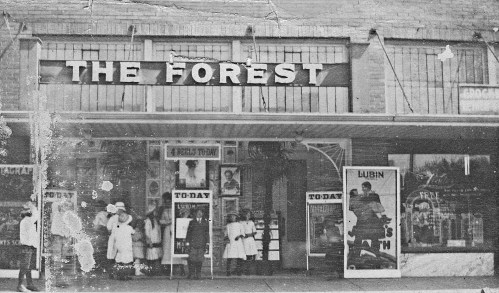
forest-avenue-theater_1638-forest_mike-cochranForest & Colonial in 1914 (courtesy Mike Cochran)

by Paula Bosse

There are so many posts I’ve begun but, for whatever reason, never finished. This is one of them. I started this one in 2015! I was sidetracked by a family member’s lengthy health setback, and I just never got back to it. But I’ve thought about it every time I’ve written about something in South Dallas.

This great photo — from about 1914 — was sent to me by Mike Cochran (he has a site on Denton history here). It shows a theater with a tie to his great-grandfather, Oscar F. Gould, who became something of a legend in the running of Interstate theaters in Dallas and Fort Worth (most notably the Majestic Theatres in both cities).

I think the reason I never finished the post was because it was hard to research. The theater lasted only a couple of years, and its name was incredibly confusing!

The Forest Avenue Theatre/Theater was in operation in, for sure, 1913 and 1914 — and possibly part of 1912 and part of 1915. It was located at 1638 Forest Avenue (now MLK Blvd.), at Colonial. The owner appears to have been Mike’s great-grandfather, O. F. Gould — as he was busy with the Dallas Majestic at the time, the Forest was managed by his son, Harry Gould.

Family lore suggests that the Forest was the first suburban theater in Dallas. There might have been a couple that pre-dated it in South Dallas and Oak Cliff, but it definitely is a very early moving-picture house outside of the downtown area.

The main Forest Avenue theater confusion has to do with its name. Oscar Gould’s theater was at 1638 Forest Avenue from… let’s just say 1913-1914. It was on the southwest corner of Forest and Colonial, in the heart of the lively South Dallas business district. About the time the Forest closed, the Colonial Theater popped up across the street, at 1702 Forest Avenue, on the southeast corner of Forest and Colonial. (I don’t think there was any relation, but there had been a previous Colonial Theater downtown about 6 years earlier — it can be seen in the foreground of the right side of this photo, at what would now be 1520 Main.) At some point, the Colonial changed its name to… guess what? The Forest Theater! THEN… in 1949, decades later, it changed its name back to “Colonial.” Why? Because there was a NEW Forest Theater (my head…), several blocks away, at 1914 Forest Avenue (which is still standing and is perpetually being re-envisioned). I don’t know how much arm-twisting was done, but in order to, I guess, prevent confusion between the modest neighborhood theater and the much larger and more sophisticated showplace down the street, the (second) Forest reverted back to “Colonial.” And that didn’t last long, because, in the blink of an eye, the “Colonial” at 1702 Forest disappeared and was replaced in 1949 by the Theater Lounge, which started out (I think) as a club presenting Black entertainment, before it eventually became Barney Weinstein’s famed South Dallas stripper mecca. So, there were (at the very least) three different Forest theaters, two (or, really, three) Colonial theaters, and two Theater Lounges.

That paragraph is why it’s taken me 9 years to write this post.

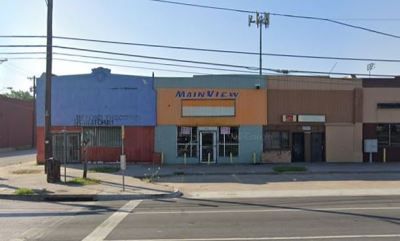
These buildings are still standing. Below is what the original Forest Avenue Theater looked like in 2019, before renovation work began on the block. (The numbering is different these days. See a 1922 Sanborn map here. The theater would have been in the “MainView” building.)
forest-ave-theater-block_google-street-view_may-2019_detGoogle Street View, May 2019

See the most recent Street View, here (the “original” Forest Avenue Theater building is on the right, the Colonial/Forest/Colonial/Theater Lounge is on the left).

**

Oscar F. Gould was an interesting person, and I hope his great-grandson Mike Cochran has written about him (and will direct me to a link I can add here). He protested the state law that made it illegal for theaters to open on Sundays, going so far as to be fined multiple times and to sue the state.
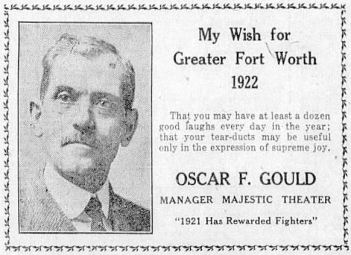
gould-oscar_FW-record_010122Fort Worth Record, Jan. 1, 1922

gould-oscar_exhibitors-herald_010926O. F. Gould, Exhibitors’ Herald, Jan. 9, 1926

*

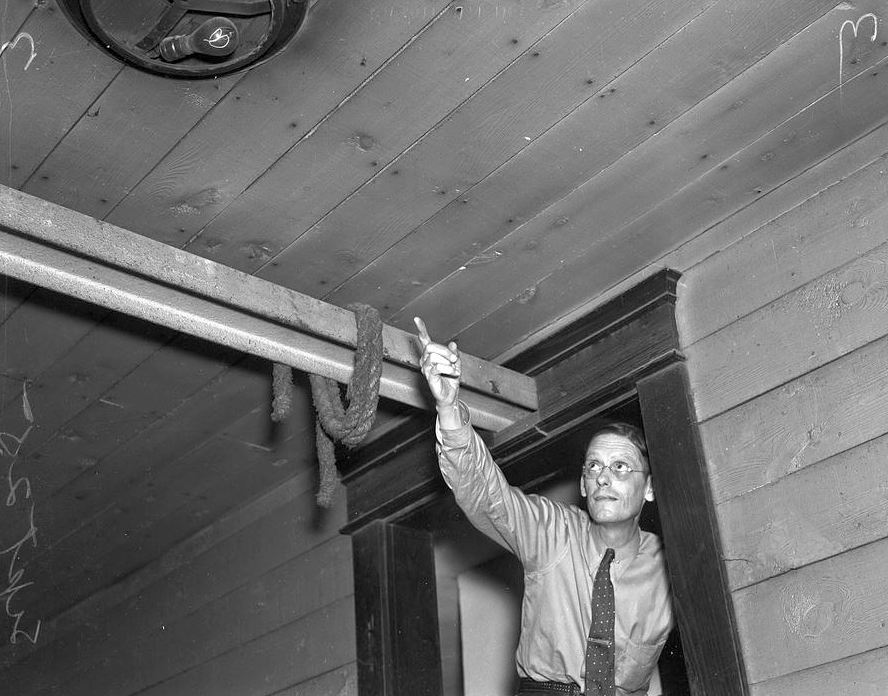
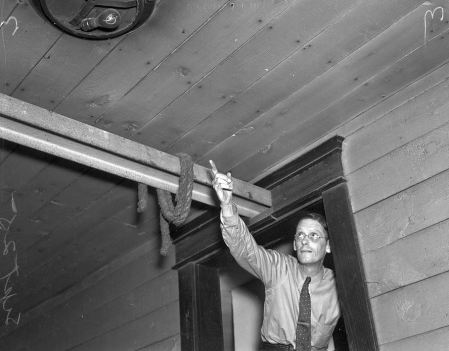
I like this related tidbit. The man who ran the Forest Avenue Theater was Oscar Gould’s son, Harry Gould, who, like his father, had a long and respected career running theaters. When the Forest closed, he operated theaters in Waco, Houston, and eventually Fort Worth. After several years, he ended up at the Palace in Fort Worth. This is a photo from his days at the Palace — the 1936 photo ran with this caption in the Fort Worth Star-Telegram:

Harry Gould, manager of the Palace Theater, points out the electric light which has burned continuously for the last 28 years, except when the current was shut off at the electric company’s power plant. Gould and other showmen who have been connected with the palace are superstitious about the light, believing it will bring good luck as long as it remains lighted.
gould-harry_palace-theatre-fort-worth_UTA_090536_FWST_longest-burning-bulb

I think the bulb is still burning, into what must be its 116th year. That’s a pretty good bulb. It was moved — still burning — when the theater was demolished and, last I saw, was in the Stockyards Museum in Fort Worth. (The lightbulb was profiled by Channel 8 in 1973, in a short, filmed report here.)

**

Thank you, MIke Cochran, for sharing your family photo! I’m sorry it took me NINE YEARS to write this!

***

Sources & Notes

The top photo is from the collection of Mike Cochran, used with permission. (Thank you, Mike!) On the left of the photo was Chapman’s Pharmacy, and at the right was Leader Grocery,

The movie showing is “A Man’s Faith,” produced by Siegmund Lubin and released in 1914.

Photo of Harry Gould and the lightbulb (Sept. 25, 1936) is from the Fort Worth Star-Telegram Collection, University of Texas at Arlington Libraries, here.

Need a daily dose of Dallas history? Please consider supporting me on Patreon!

forest-avenue-theater_1638-forest_mike-cochran_detail

*

Copyright © 2024 Paula Bosse. All Rights Reserved.

Oak Lawn Ave. — Keep on Truckin’ (1971)

iconoclast_oak-lawn-avenue_iconoclast_aug-1971

by Paula Bosse

This is a great little ad, which includes a bunch of notable Oak Lawn landmarks in the neighborhood’s hippie-fabulous days. I love this artwork — it’s almost as good as a photograph!

The 3500 block of Oak Lawn — between Lemmon and Bowser — is depicted in super-groovy, early-’70s, patchouli-scented artwork (inspired by R. Crumb). Starting at the left, here’s what we see:

  • A tiny portion of the sorely missed diner mainstay, LUCAS B & B, 3520 Oak Lawn
  • Next, NAME BRAND SHOES (men’s shoes), 3516 Oak Lawn
  • Next, R.F.D. No. 1 COUNTRY STORE (clothing), 3514 Oak Lawn, subject of the ad (formerly El Chico, which you can see in the second and third photos here)
  • Next, THE FOG (rock club), 3508 Oak Lawn
  • Next, SUPERIOR BAKERY, 3502 Oak Lawn
  • Next, NATIONAL AUTO SOUND OF DALLAS (car stereos), 3500 Oak Lawn (at Lemmon)

iconoclast_oak-lawn-avenue_aug-1971_1972-directory1972 city directory

*

Watch silent home movie footage shot in this block around this same time at the Portal to Texas History, here (unfortunately, there are only glancing images of The Fog, which I would have liked to have seen more of). The Oak Lawn footage begins at 10:34 and continues until the end, with scenes shot at Lee Park. (There’s a guy who looks like he should be someone important — he looks a bit like Harry Nilsson — at 10:59.)

*

The illustration is by Steve Brooks, a 1967 graduate of Sunset High School who has had quite the career in illustration, commercial art, and rock posters. He’s worked extensively with Willie Nelson and Buddy magazine, and… yes, if you saw that drawing above and thought “head shop,” he’s the guy (THE guy) behind all the artwork connected to The Gas Pipe (which deserves a post of its own as a truly iconic Dallas success story!). Read an interesting biography about Brooks here. See some of his work in the collection of his alma mater, UNT, here.

***

Sources & Notes

Ad from the August 1971 issue of the underground newspaper, The Iconoclast.

iconoclast_oak-lawn-avenue_iconoclast_aug-1971

*

Copyright © 2024 Paula Bosse. All Rights Reserved.
The Girls of St. Mary’s

st-marys-college_girl-athletes_frank-rogers_post-1911_ebay“Juxta Dallas Texas”

by Paula Bosse

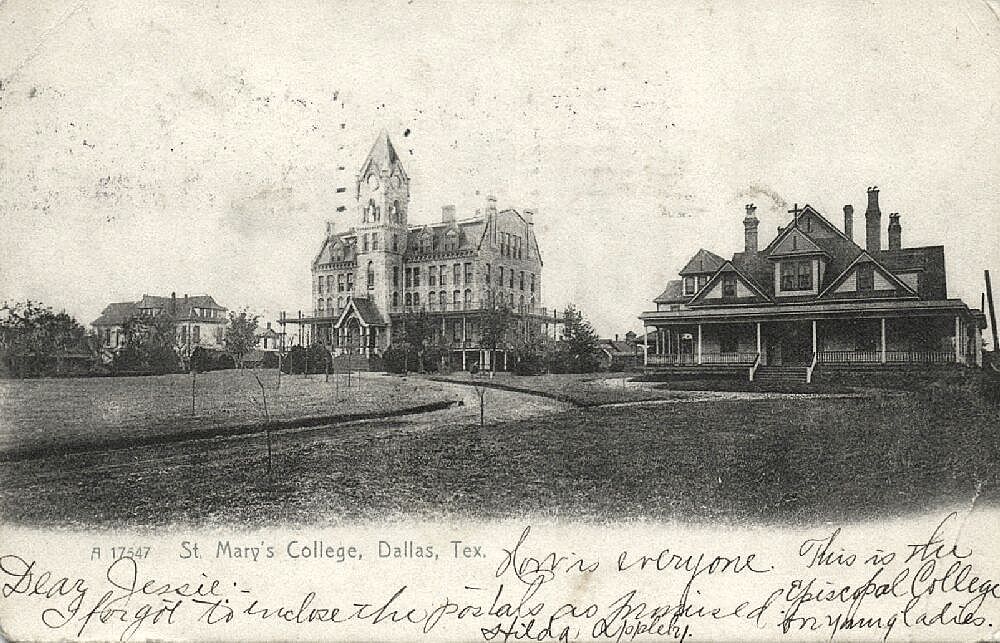
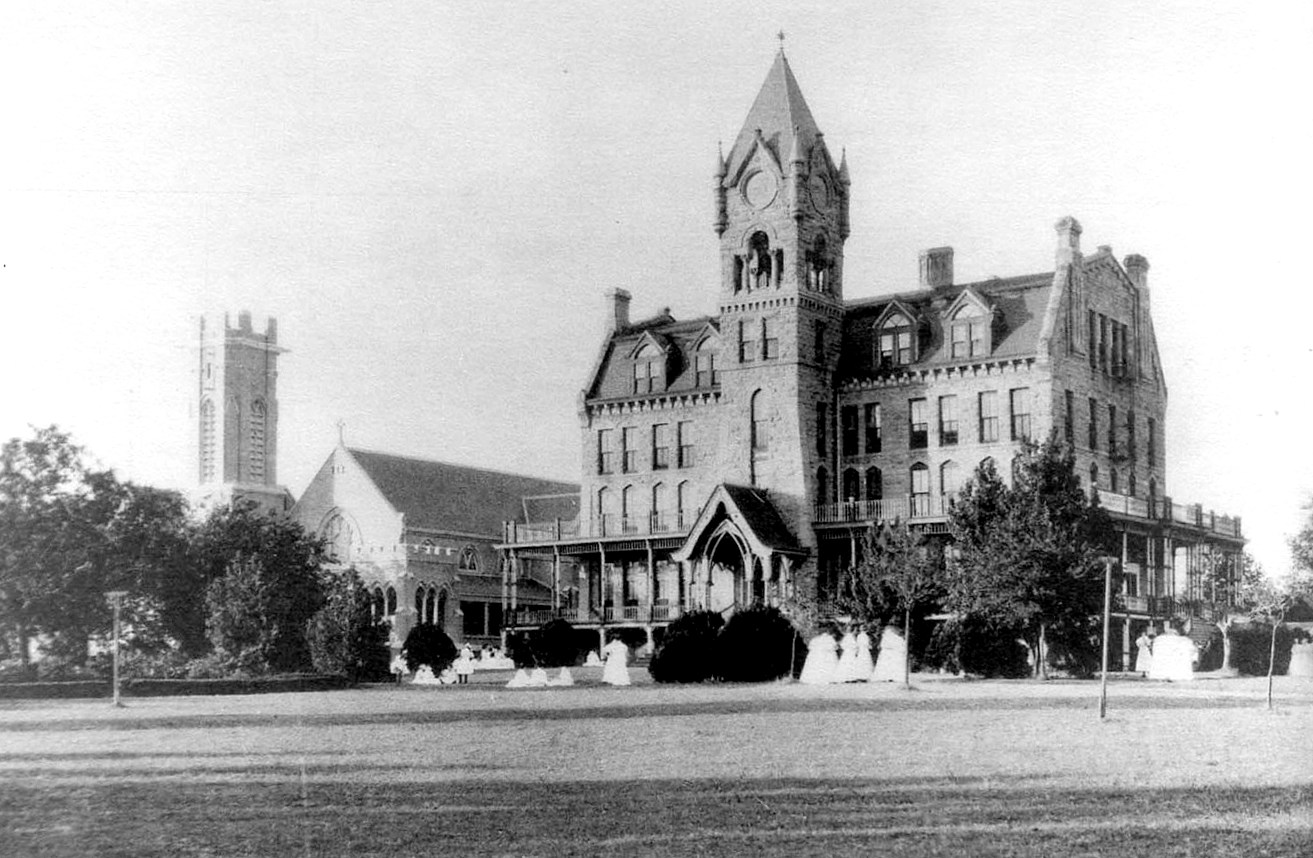
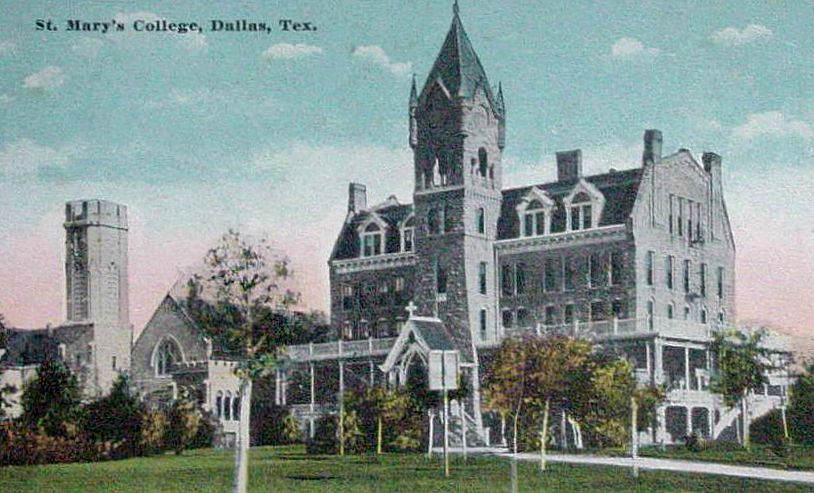
St. Mary’s College, founded in 1889 in East Dallas (at Ross and Garrett avenues), was a prestigious school for girls, affiliated with the Episcopal Church. It had a statewide reputation, and many girls attended as boarding students — Lady Bird Johnson was a proud alumna. Around 1930 it became home to a relocated Terrill School for Boys.

The once sprawling “College Hill” campus covered 20 acres (see it on a 1922 Sanborn map here). I can find no news reports of its demolition, but one source says 1948. Read more about the school’s history in the Handbook of Texas entry here. and see other photos and a short history in the Flashback Dallas post “Private Education in Dallas — 1916.”

The site of the former school has recently been filled with apartments. The old chapel tower still stands, but the large, open school campus is long gone. See the most recent Google Street View of St. Matthew’s Cathedral here. — the main school building would have been directly to the right.

*

As far as the photo at the top of this post, I really love this image of smiling girl athletes (the basketball team?) posing in their gym togs in front of the school.

“Juxta Dallas Texas” (“near Dallas Texas”).

st-marys-college_girl-athletes_frank-rogers_post-1911_ebay_det

*

The ad below touts the school’s offerings in 1911 (including a school dairy):

ST. MARY’S COLLEGE AND SCHOOL OF MUSIC

Founded by the Right Rev. A. C. Garrett [Alexander Garrett], D.D., LL. D.
Twenty-third Year Opens Sept. 13, 1911

A College for Christian education of women — college, scientific and literary courses. Bishop A. C. Garrett, instructor in mental science and logic. Advanced classes in charge of graduates of universities of recognized standing. European instructors of modern languages. School of Music under direction of instructors trained in Germany, Paris, France and New England Conservatory of Music. Pianoforte pupils examined annually. Art and China Painting taught according to the best methods. Health, diet and physical culture in charge of two trained nurses and teachers of physical culture. 

The group of buildings comprise:
1. St. Mary’s Hall (stone).
2. Graff Hall, which is devoted to the Schools of Music and Art.
3. Hartshorne Memorial Recitation Hall.
4. The Mary Adams Bulkley Memorial Dormitory.
5. Sarah Nielson Memorial for the care of the sick.

Houses heated by steam and lighted by electricity. A very attractive College Chapel and large Gymnasium built last year. A very attractive home. Artesian well. Milk supplied from college dairy. Homemade bread and sweetmeats. Night watchman. School opens Sept. 13. For catalogue address:

Bishop Garrett, President St. Mary’s College, Dallas, Texas

st-marys_standard-blue-bk_1912-1914

*

st-marys-college_postcard

*

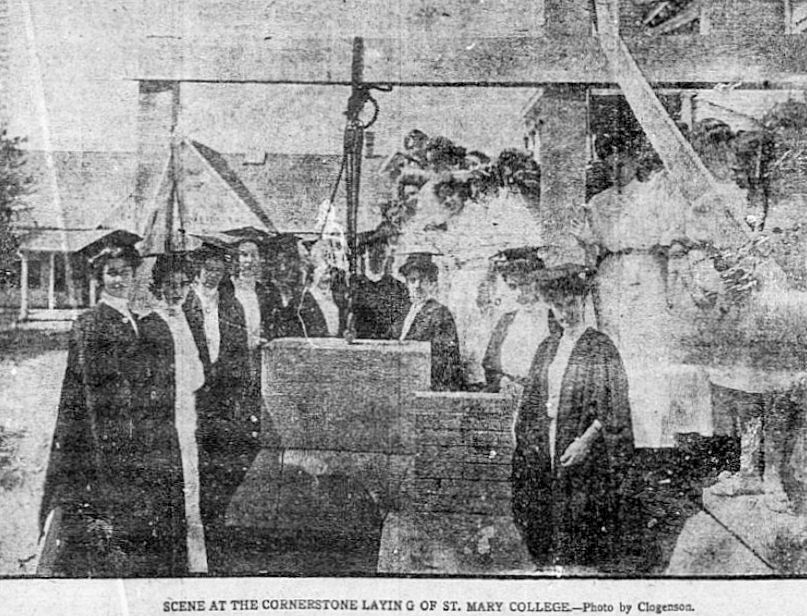
st-marys_cornerstone_dmn_092907-clogensonLaying the cornerstone for the chapel, Dallas Morning News, Sept. 29, 1907

*

st-marys-college_ebay

*

st-marys-college_postmarked-1909

*

Below, the chapel tower can be seen at the left. It still stands, as part of St. Matthew’s Cathedral (5100 Ross Avenue).

patreon_st-marys-college_c1908

*

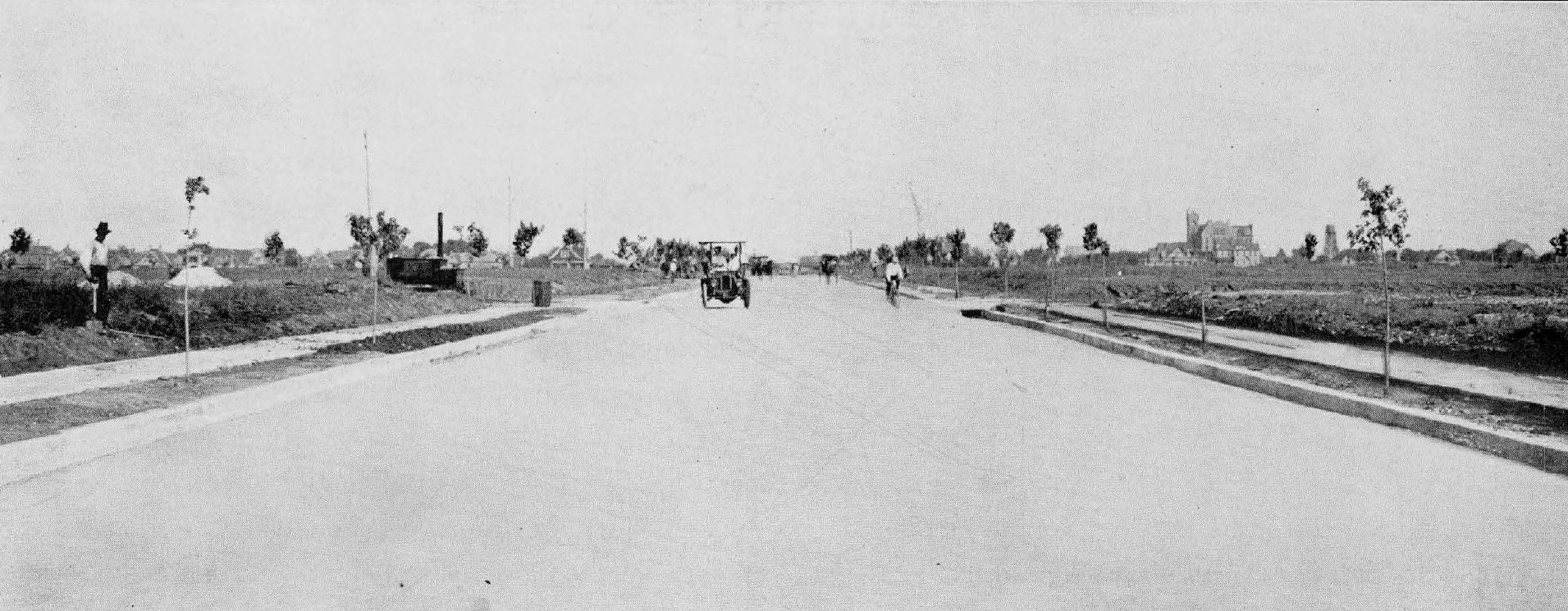
As seen from a distance — on the right, from Collett and Junius (more info on this photo from the Flashback Dallas post it originally appeared in, “Munger Place, The Early Days: 1905-1909”):

munger-place-bk_ca-1905_degolyer-lib_SMU_collett-and-junius_2

*

st-marys-college-ebay

*

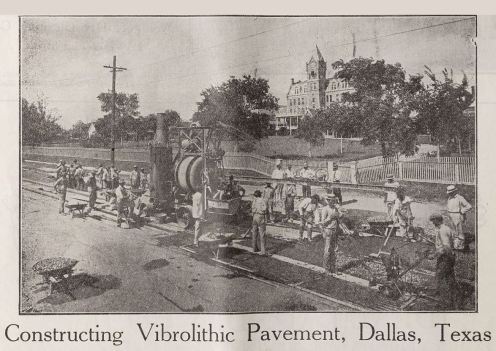
St. Mary’s appeared in an ad for a street-paving company in 1916 (from the original post here):

street-construction_vibrolithic-pavement_SFOT-booklet_1916_SMU_st-marys

*

st-marys-college_dallas-rediscovered_DHSDallas Historical Society

***

Sources & Notes

Top photo by Frank Rogers, taken some time after 1911. Found on eBay. Originally used in a Patreon post, “The Girls of St. Mary’s.”

Last photo from the Dallas Historical Society, found in the book Dallas Rediscovered by William L. McDonald.

Unless otherwise noted, most other images/postcards found on eBay.

Please consider supporting me on Patreon, where for as little as $5 a month, you can get daily Flashback Dallas posts! (You can follow for free, but only a small handful of posts are “public.”)

st-marys-college_girl-athletes_frank-rogers_post-1911_ebay_det

*

Copyright © 2024 Paula Bosse. All Rights Reserved.

Salih’s, Preston Center: 1953-1977

patreon_salihs_w-t-white_1968-yrbk_ext1968, Preston Center (W. T. White yearbook)

by Paula Bosse

If you’re reading this, chances are pretty good that you have fond memories of Salih’s Barbecue in Preston Center (or its later incarnation in Addison as “Solly’s”). I have to admit, I had never heard of Salih’s until I started this blog in 2014 (I completely forgot to note the landmark of 10 full years of Flashback Dallas a couple of weeks ago!). But, from what I’ve read, this was an incredibly popular place, and people still rhapsodize about the BBQ, the po’ boys, the fries, the cole slaw, and the potato salad.

So, I’ve read all these memories… but I can find no good photos of the place! There’s the cropped shot of the exterior above and a lot of not-very-helpful shots which appeared in high school yearbooks over the years, taken inside — but they don’t actually show the restaurant! And I understand there was quite a mural in there. I’d love to see a photo of that! Do YOU have any photos of Salih’s in Preston Center? Exterior? Interior? Mural? Please send me whatever images you have. I really want to see them!

UPDATE: Thanks to Mark Salih, son of co-owner Jack Salih, I have a photo of the interior, with parts of the mural visible. George Salih is on the far right, and his brother Jack is next to him. (Thank you, Mark!)

salihs_mark-salihMark Salih photo, used with permission

*

Salih’s Barbecue was opened by George and Jack Salih on March 20, 1953. The brothers had previously owned a small drive-in and later worked in or managed locations of Lobello’s in Lakewood (2005 Abrams) and Casa Linda (328 Casa Linda Plaza) — either before, during, or after these locations became “Fred’s” BBQ stands (owned by Fred Bell, founder of Kip’s).

That first business, Salih’s Drive-In, was located across from Fair Park at 912 S. Haskell — it opened around 1945. Read George Salih’s memories of serving the “circus people” there in a Feb. 11, 1987 article from the Farmers Branch Times here.

salihs-drive-in_haskell_DMN_081849Aug. 18, 1949

After a few years of working for the Lobello family, George and Jack opened their own place at 8309 Westchester, in Preston Center, not far from the original Lobello’s on Northwest Highway. Eventually, Jack moved to East Texas and opened another barbecue place (the Angus Inn in Longview), and George ran the Dallas restaurant. (Click ad to see a larger image.)

salihs_opening_032053_adMarch 20, 1953 — opening day

An article in the Dallas Morning News describes the new Dallas restaurant thusly:

The restaurant features unique styling in both interior and exterior design. Relief murals decorate the walls inside, while small wooden shutters afford a rustic flavor. The exterior incorporates Roman brick construction, with tall red columns decorated with glass paneling added as a decorative feature. (DMN, March 20, 1953)

It also notes that the Salih brothers were the restaurant’s chefs.

I mentioned this Park Cities landmark in a recent Patreon post, and a kind member described the mural (designed, I believe, by artist Frank J. Boerder):

It was a 3-dimensional cut-out depiction of a cowboy scene, back-lit by a set of red-orange lamps. It ran the length of the south wall of the interior. When you looked at it the scene was in black, back-lit by the lamps. Very striking for a BBQ place. (Plus, the food was very, very good.)

Salih’s is described in the ad above as “a dining area which provides an inviting atmosphere with ultramodern ranch-style design.” I would really like to see this!

Salih’s left Preston Center around 1977, leaving for the then-sparsely populated wilderness of Addison. The restaurant’s name was changed to “Solly’s” (which was either a new name for a new location, a guide for new customers on how to pronounce the Lebanese name, or a sad concession to deal with possible Middle Eastern biases). Solly’s closed in 2004.

*

Below are a lot of ads that appeared in the yearbooks of Highland Park High School and W. T. White High School. I was hoping to see more of the interior but, instead, got lots of photos of kids in paper hats (which I still enjoy!). So here they are!

salihs_smu-campus_081656SMU Daily Campus, 1956
*

salihs_HPHS_1960-yrbkHPHS, 1960
*

salihs_HPHS_1961-yrbkHPHS, 1961
*

salihs_HPHS_1962-yrbkHPHS, 1962
*

salihs_HPHS_1963-yrbkHPHS, 1963
*

salihs_HPHS_1964-yearbookHPHS, 1964
*

salihs_w-t-white_1966-yearbookWTW, 1966
*

salihs_HPHS_1967-yrbkHPHS, 1967
*

Part of the mural over their heads?

salihs_w-t-white_1967-yrbkWTW, 1967
*

salihs_HPHS_1968-yearbookHPHS, 1968
*

salihs_HPHS_1969-yrbkHPHS, 1969
*

More of the carved mural?

salihs_w-t-white_1969-yrbkWTW, 1969
*

salihs_HPHS_1970-yrbkHPHS, 1970
*

salihs_HPHS_1971-yrbkHPHS, 1971
*

salihs_HPHS_1972-yrbkHPHS, 1972
*

salihs_HPHS_1973-yrbkHPHS, 1973
*

salihs_HPHS_1974-yrbkHPHS, 1974
*

salihs_HPHS_1975-yrbkHPHS, 1975
*

salihs_HPHS_1976-yrbkHPHS, 1976
*

And, the last one, from 1977 — could that be a another very, very dark part of the mural at the right?

salihs_HPHS_1977-yrbkHPHS, 1977

***

Sources and Notes

All sources as noted.

Read the obituary of George Salih here. Read a longer, more colorful obituary in the Dallas Morning News archives (“George Salih — Operated Barbecue Restaurant in Dallas” by Joe Simnacher, DMN, Aug. 14, 2009).

Jack Salih died in Gilmer in Jan. 1991.

patreon_salihs_w-t-white_1968-yrbk_ext_sm

*

Copyright © 2024 Paula Bosse. All Rights Reserved.

The South End “Reservation” Red-Light District — ca. 1907

south-end_hobson-electric_southeast-from-courthouse_ca-1907_cook-collection_degolyer_SMUThere’s a lot going on here that you can’t see… (DeGolyer Library, SMU)

by Paula Bosse

I am reminded how much fun it is to just dive into something with no idea where you’re heading and end up learning interesting things you might have been unaware of had you not wondered, “What am I looking at?”

Yesterday I was working on a future post that involves the Hobson Electric Co., and I was looking for photos. The one above popped up in one of my favorite collections of historical Dallas photos, the George W. Cook Collection at SMU’s DeGolyer Library. I was looking for a post-1910 West End photo — this photo is identified as just that [the title has now been updated by the SMU Libraries], but the presence of the Schoellkopf Saddlery Co. building (center left, with the Coca-Cola ad on it) puts this location on the other side of the central business district — Schoellkopf was at S. Lamar and Jackson. Even knowing that, this scene didn’t look familiar at all.

I checked a 1907 city directory to find out the address of the Hobson Electric Co. before it moved to the West End in 1910 — it was located at 172-74 Commerce Street (in what is now the 700 block), between S. Market and S. Austin. The view here is to the southeast, probably taken from the courthouse.

I don’t think I’ve seen this particular view before — it shows hardly any of the downtown area but shows instead the area to the south. I was really intrigued by the block of houses facing Jackson (between Market and Austin) — the block the horse-and-buggy is moving past, at the center right. The trees. The low buildings. That block really stood out. It was kind of quaint. Did people live there? While I had the 1907 directory open, I checked to see who the occupants were. (I just picked 1907 because the Hobson Co. changed its name from “Duncan-Hobson” around 1906, and it had moved away from Commerce by mid 1910.) Here were the occupants of those houses in 1907:

jackson-between-market-and-austin_1907-directory1907 Dallas directory

That seemed odd. Three single women occupying three separate houses, all next door to one other. There weren’t a lot of single women living in houses alone in 1907. Hmm. I checked all the directories between 1905 and 1910 to see who was living in that block. Every year, each of those houses showed a new occupant, and, with one exception, all were single woman (the exception was a man who owned a saloon across the street and who had faced charges at one point for “keeping a disorderly house”). …Okay. I got the picture.

I checked the Sanborn map from 1905 for this block and saw something I’d never seen before: the designation of a building with the letters “F.B.” What did that mean? Turns out, it means “Female Boarding House.” Or, less euphemistically… a brothel. Look at the map here (more maps are linked at the bottom of this post) to see the frankly ASTRONOMICAL number of “F.B.” buildings in this one small area. (There weren’t as many saloons — designated with “Sal.” — as I expected, but I’m pretty sure a lot of saloons in this area were operating illegally.)

You might have noticed that all of those F.B.s are south of Jackson. Not one of them is north of Jackson. This area — the southwestern part of downtown — was referred to at the time as the “South End” or “The Reservation” (some called this general area “Boggy Bayou,” but I think that was technically farther south). Its boundaries were, basically, S. Jefferson Street (now Record Street) on the west, Jackson on the north, S. Lamar(-ish) on the east, and beyond Young Street on the south. If you wanted to avail yourself of illicit things and engage in naughty behavior, this was the place for you: Ground Zero for a sort of wide-open, lawless Wild West. There were other red-light districts in Dallas (most notably “Frogtown,” which was north of downtown in the general area formerly known as Little Mexico) (does anyone still call this now-over-developed area “Little Mexico”?), but if you wanted the primo experience of one-stop-shopping for drinking, gambling, drugging, and “consorting with fallen women,” you were probably familiar with the South End, where all of these activities were tolerated and, for the most part, ignored by the police (they might mosey by if there were an especially egregious shooting or stabbing or robbery). In fact, this vice-filled area had been created by a helpful city ordinance in the 1890s. So, enjoy!

Prostitutes were allowed to ply their trade in this specified chunk of blocks because the city fathers felt that it would be best to keep all that sort of thing in one somewhat controllable area, away from the more reputable neighborhoods. But once a prostitute stepped outside the Reservation to sell something she shouldn’t have been selling… laws suddenly applied, and she’d be thrown in jail and/or fined. Do not step north of Jackson, Zelma!

So, at one time, Dallas had legal brothels. Depending on whose account you read, these houses of ill repute ranged from godawful “White Slavery” operations and bubbling cauldrons of sin and sleaze to, as Ted Dealey remembers in his book Diaper Days of Dallas (p. 74), “ultra-fashionable houses of prostitution” which attracted Big D’s moneyed movers and shakers. Something for everyone.

Eventually, people started to get really bent out of shape about this, and there was a big push to get these houses shut down — or at least moved out of the area. The Chief of Police reported to the City Council in 1906 that, among the many Reservation-related problems, the area was getting cramped because the railroads were buying up real estate in the area and kicking people out. The city-sanctioned no-man’s land was getting too small, so city officials needed to find a bigger place to move the red-light district to. The Chief thought that North Dallas (i.e. Frogtown) was “the most logical place” — except that residents of nearby swanky neighborhoods there were not at all keen on this. But that idea seemed to stick. It took several years to actually happen, but a relocation of sorts occurred, and the South End brothel-hotspot was pretty much scrubbed of all offending “disorderly houses” by 1910. (Frogtown bit the dust around 1913, after those unhappy well-to-do North Dallas neighbors complained bitterly, loudly, and effectively.)

So, anyway, I never expected to find such an exciting photograph! I wonder if the photographer took this photo as a way of documenting the very controversial, in-the-news, not-long-for-this-world Reservation, or whether it was just a nice scenic view. I have to think it was the former, because the Reservation was well-known to everyone, near and far, and this shot would have been an unusual vista to, say, reproduce for postcards (or at least postcards sold to the general public!). Whatever the case, I’ve never seen this view, and it’s really great — and it comes with an interesting slice of Dallas history. I had heard of the Frogtown reservation to the north, but I’d never heard of the South End reservation. And now I have. And here’s a photo of it!

Let’s bring back the neighborhood designation of “South End.” It was good enough for 1900, it’s good enough for today.

*

Here are a few zoomed-in details of the photo. Unless I’m imagining things, I think I can see women sitting on their porches, advertising their wares, as was the custom. (All images are larger when clicked.)

south-end_cook-collection_degolyer_SMU_det-1

*

south-end_cook-collection_degolyer_SMU_det-2

*

south-end_cook-collection_degolyer_SMU_det-3

*

Below is an excerpt from a blistering directive to city lawmakers by W. W. Nelms, Judge of the Criminal District Court (from an article with the endless headline “Calls For Action; Judge Nelms Charges Police Chief, Sheriff and Grand Jurors; Warfare on Crime; Says Lawbreakers Shall Not Construe Statutes of State to Suit Themselves; Stop Murder and Robbery; Declares Harboring Places for Thugs, Thieves and the Like Must Be Destroyed,” Dallas Morning News, Oct. 15, 1907).

reservation_judge-w-w-nelms_DMN_101507DMN, Oct. 15, 1907

*

Below, the general area of the South End Reservation around 1907 (this map is from about 1898). The blue star is the Old Red Courthouse; the Reservation is bordered in red. In 1893, the original area was loosely designated as the area bounded by Jackson Street, Mill Creek, the Trinity River, and the Santa Fe railroad tracks, in which “women of doubtful character […] were not to be molested by police” (from “Passing of Reservation,” DMN, Dec. 11, 1904). As noted above, the area shrank over time, and the red lines show the general Reservation area about 1907, the time of the photo at the top.

south-end_reservation_1898-map_portalDallas map, ca. 1898 (det), via Portal to Texas History

***

Sources & Notes

Top photo — “[Jackson Street, Looking Southeast from the Courthouse, Including a Partial View of the South End ‘Reservation’]” (previously incorrectly titled “[Dallas West End District with View of Railroad Yards]”) — is from the George W. Cook Dallas/Texas Collection, DeGolyer Library, SMU Libraries and can be accessed here. (I appreciate SMU for responding to my request to re-title and re-date this photograph — it’s always worth notifying archival collections with corrections!) (And, as always, I WELCOME corrections. I make mistakes all the time!)

The 1905 Sanborn map I linked to above (Sheet 104) is here and seems to be the epicenter of the booming brothel trade; more evidence of this can be seen just south of that in Sheet 102; and it continues just east of that in Sheet 105 (it’s interesting to note the specially designated “Negro F.B.” bawdy houses). (Sanborn maps do not open well on cell phones — or at least on my cell phone. You may have to access these from a desktop to see the full maps. …It’s worth it.)

Read more about this whole “Reservation” thing in the lengthy and informative article “Not in My Backyard: ‘Legalizing’ Prostitution in Dallas from 1910-1913” by Gwinnetta Malone Crowell (Legacies, Fall 2010).

Also, there’s a good section on this (“Fallen Women”) in the essential book Big D by Darwin Payne (pp. 48-56 in the revised edition).

If you enjoy these posts, perhaps you would be interested in supporting me on Patreon for as little as $5 a month — in return, you have access to (mostly!) exclusive daily Dallas history posts. More info is here.

south-end_hobson-electric_southeast-from-courthouse_ca-1907_cook-collection_degolyer_SMU_sm

*

Copyright © 2024 Paula Bosse. All Rights Reserved.

Some-Context Channel 8 Screenshots: 1971

lady mailman june 1971 WFAAWFAA Collection/Jones Film Collection/SMU

by Paula Bosse

I have been working as part of a 3-person team (led by Jeremy Spracklen and Scott Martin) on the WFAA archive of news film, housed in the G. William Jones Film and Video Collection at the Hamon Arts Library at SMU. I have been working on 1970 and 1971, going through daily footage shot for Channel 8 News. I get a bit bogged down by all the sports and car crashes, but at this point, I am so all-consumed by these two specific years that I feel I would do well on Jeopardy if the categories were things like “Minor League DFW Hockey Teams of the Early ’70s,” “Internecine Squabbles of the Dallas City Council, the Dallas School Board, and the Dallas County Commissioners Court,” and “So What’s the Deal with the Sharpstown Scandal?” My 2023 has been spent immersed in 1971, where the chaos of the implementation of court-ordered school busing, the huge securities fraud scandal that involved some very powerful Texas politicians (Sharpstown), and the battle between Craig Morton and Roger Staubach to become the Cowboys’ #1 quarterback were some of the stories that dominated the headlines. And, lordy, there were some pretty exotic hairstyles, fashions, and interior design trends hammering away relentlessly throughout this post-hippie (it might really still have been current-hippie), pre-disco period.

Here are a few of my favorite moments from this 1971 DFW-centric news footage from the WFAA archives. Links to the pertinent clips on YouTube are included at the end of the descriptions. These clips are rarely the full reports that would have been seen on the nightly news — they are often just silent footage or B-roll, without any identification of people or clues as to where they were filmed or even why they were newsworthy. It’s (mostly) a lot of fun to dig through and watch the unfolding of history from more than 50 years in the future.

**

Above, from JUNE 1971

One of my favorite human-interest stories from the past year (meaning 1971!) was the profile of one of the few “lady mailmen” in Dallas at the time. She’s utterly, utterly charming, has a supportive and interesting husband and family, and loves her job. The Channel 8 cameraman shows her as she sorts her mail in the Beverly Hills Station post office in Oak Cliff and follows her as she walks along her route on West Davis. The only problem with this 7 minutes of interesting footage is that the woman is never identified. I dove in, really wanting to identify her. I thought I had cracked the mystery of her identity, only to find myself at a dead end again. If only her children could see this wonderful profile of their mother. If you know who this woman is, please let me know, and we’ll add her name to the YouTube description and try to track down any family members. I would LOVE her children to be able to see this.

The “lady mailman” is interviewed here (this first bit is in three short segments, totaling 4 minutes); a later clip shows her on her route, here (about 3 minutes). The old post office building still stands at 509 N. Barnett.

lady mailman june 1971 WFAA_beverly hills post office

*

JANUARY 1971

So, yeah, fashion and interior design trends were pretty… in-your-face in 1971. In the three screenshots below, you’ll see some retina-abusing images of with-it decor. The first features the always beautiful Phyllis George, the Denton native who was in the midst of her Miss America reign. In this clip, she has come back home to DFW for an appearance at an event in which a room designed with her in mind is unveiled (by decorators C. John Megna and William Farrington). She is wearing a dress designed by Carlo Bitetto specifically for her to wear IN THAT ROOM (!). You don’t often see sparkles and plaid cheek-by-jowl.

The clip with the super-color-saturated room and its battling patterns is here.

phyllis-george-room_jan-1971_c

phyllis-george-room_jan-1971_b

phyllis-george-room_jan-1971_a

*

FEBRUARY 25, 1971

Before Lion Country Safari, Mesquite had World of Animals, a drive-thru safari park. World of Animals had a wild-animal veterinarian who visited regularly from California: Dr. Martin Dinnes. Below, Dinnes is seen providing dental care to popular attraction Harold the Chimp. This is not really something I expected to see, but there you are. (Dinnes was later engaged to actress and wildlife preservation activist Tippi Hedren for several years.)

The clips of Dinnes being interviewed and preparing Harold for a tooth extraction (and I grimaced a bit, because the camera keeps rolling during the procedure, so be warned!) are here and here. (The last clip has a shot of Harold’s hand, which, understandably, appears to be gripping the chair.) That is one well-behaved, chill chimp!

dinnes-martin_harold-chimp_022571_WFAA

*

MAY 18, 1971

In 1971, there was an ongoing battle between old quarterback Craig Morton and NKOTB Roger Staubach over who would be named the team’s official starting QB. Coach Tom Landry worked for months with a two-quarterback system, alternating them from game to game — he was fine with this, but everyone else hated it. Below are screenshots of Morton and Staubach at the Cowboys practice field. I know virtually nothing about sports training, but this, um, extremely low-tech gadget struck me as weird. And funny. I mean, okay, it was 1971, but surely there was something more technologically advanced than this? It’s a football on a string, tied to a post. And maybe there’s a spring or something in there. This must have been effective. Rog looks like he’s straining. I don’t know. But I love it.

See Craig in an interview with Verne Lundquist from May 18, 1971 about his elbow and shoulder injuries here, and then using the football-on-a-string thing (and then training with Staubach) here; and see Roger interviewed on the same day about really, really wanting to be the starting QB here, and then he hits the string thing here before working out with Morton in what must have been a fairly tense period of both of their careers.

morton-string_WFAA_may-18-1971

staubach-string_WFAA_may-1971

*

JUNE 1971

Medical examiners used to be on the news a lot. One who popped up frequently was Tarrant County M.E. Dr. Feliks Gwozdz. I was amused more than I should have been when I saw the skull-and-crossbones coffee mug on his desk. I hope it said “World’s Greatest Coroner!” on the back.

The silent footage of Dr. Gwozdz at his desk is here.

skull-crossbones_feliks-gwozdz_june-1971

*

JULY 14, 1971

Back in 1971 there was what seemed like the threat of a union strike every 10 minutes. I enjoyed the footage of a bunch of Southwestern Bell employees who look like they were probably a lot of fun to hang out with. Their t-shirts read “Ma Bell Is a Cheap Mother,” which is just great.

Strike footage is here (about 2½ minutes) and here.

SWB-strike_july-14-1971_big potatoes

SWB-strike_july-14-1971_ma bell is a cheap mother

SWB-strike_july-14-1971_WFAA

*

JULY 1971

One of the top stories of 1971 was the endless furor set off by court-mandated school busing in attempts to desegregate schools. It was a mess. The man seen below is attorney Bill Brice, a leader of one of the many anti-busing groups. …Surely the cameraman noticed the monkey.

Man with monkey can be seen here.

anti-busing_bill-brice_monkey_WFAA_july-8-9-1971

*

AUGUST 29, 1971

When the Dallas School Board and Supt. Nolan Estes weren’t pulling their hair out over desegregation, they tackled other issues. One of which was so overshadowed by anti-busing demonstrations that it barely got any play, but I find it really interesting. It concerned Crozier Tech High School downtown. At the end of the 1970-71 school year, the landmark school was closed, and there was lots of discussion on what the DISD should do with the building/land, which they owned (2218 Bryan). This press conference was supposed to be about Estes’ vision of a 40-story school-office complex, which he suggested be built on the land — the first 10 floors would be for school use, and the top 30 floors would be leased to businesses as office space, with leases, theoretically, paying for construction and maintenance of the building. The building was never built (and thankfully, old Tech still stands). School board president John Plath Green and Supt. Estes sit in front of an architectural drawing of the envisioned DISD skyscraper. Too bad no one wanted to talk about it.

Footage from the press conference where reporters only want to ask about busing, is here.

super-school_DISD_crozier-tech_DMN_082971_WFAA_SMU

*

SEPTEMBER 23, 1971

The Sharpstown Scandal was a bigger story than busing, but, even though political scandals are juicy, it just didn’t get everyday people mobilizing, marching in the streets, and shouting each other down in public forums the way busing did. But it was a massive story, and several political careers bit the dust because of it. The sprawling and confusing securities-fraud scandal mostly involved drab politicians and business executives. But one part of it involved, bizarrely, six celebrated — if not beloved — NASA astronauts and an insurance company pension fund.

In this Channel 8 footage, you can see something you don’t see every day: five NASA astronauts walking together down the street (a sixth one was nearby, on his own). James Lovell, Pete Conrad, Fred Haise, Ken Mattingly, Richard Gordon, and Alan Bean were in Dallas on Sept. 23, 1971 to testify as witnesses before a federal grand jury that was investigating the activities surrounding the Sharpstown Scandal. These are screenshots of the five (minus Lovell), carrying briefcases through grubby downtown Dallas, and of Lovell on his own, exiting the Federal Court House. When I first watched this footage, it just seemed really odd: five internationally (galactically!) famous astronauts — heroes! — walking together down the street, without any kind of security or entourage. If you were a NASA freak (and there were a lot back then, at the height of the Apollo-Gemini programs) and you just happened to have walked past this group, your head would have exploded.

See Lovell exiting the sterile- and dystopian-looking courthouse on his own (that woman he holds the door open for has no idea who he is), and the others walking somewhat playfully down the street here (I love this footage!); a confusing wrap-up of the day’s events is here.

astronauts_WFAA_SMU_sept-23-1971

astronauts_WFAA_SMU_sept-23-1971_1

astronauts_WFAA_SMU_sept-23-1971_2

astronauts_WFAA_SMU_sept-23-1971_c

*

OCTOBER 14, 1971

In footage from the State Fair of Texas, I was really taken by this building, which I swore I had never seen. It was the home of the “lost children” center during the fair, in the Dallas police HQ in Fair Park. It looks different to me now, but it’s still there, near the Aquarium. It looked better in 1971!

Lots of footage of crying children and harried parents, here and here.

fair-park_sfot_lost-kids_101471_WFAA_SMU

*

OCTOBER 1971

This young dandy is named John Ott (I’m not 100% sure about the spelling). He was a real estate developer in Euless. He couldn’t have been more on top of the 1971 fashion wave. Represent, Euless!

It’s a story about replanting trees (with, admittedly, interesting footage of trees being uprooted and replanted). Here and here.

developer_john-ott_euless_oct-29-30-1971_WFAA_SMU

*

OCTOBER 31, 1971

In the screenshots below, Channel 8 reporter Judi Hanna (who had recently debuted an unfortunate hairdo) interviews Dallas City Councilman Garry Weber about City Council things. I don’t know where this was filmed, but I only hope it wasn’t his home. It’s hard to focus on what anyone is saying, because of the tidal wave of stuff coming at you. (Ironically, he was being interviewed about sponsoring a change to the city charter in order to crack down on the “visual pollution” of unenforced sign ordinances.) I was so overwhelmed by this vista, that I somehow assumed I was seeing cupid-studded wallpaper. But no. Check out the second screenshot, which also includes a peek at the room’s drapes. I can’t tell where the wallpaper ends and the drapes begin.

Appropriately shown on Halloween night, clips from this report are here (followed by footage of signs-galore along Lemmon Avenue) and here.

weber-garry_WFAA_SMU_oct-31-1971_wide

weber-garry_WFAA_SMU_oct-31-1971_drapes

*

OCTOBER 1971

Lastly, a shot of Mingus, Texas, a small West Texas town near Thurber. I just love this image. I think I found the location — here’s what it looks like now.

Why was the tiny town of MIngus being featured on a Dallas news report? The Greater Mingus-Thurber Metropolitan Area was in the news because it was the location of a commune of the controversial Children of God (i.e. “cult”). Actually, the “Children” were in the process of being evicted by the landowner, who, interestingly, was a TV preacher in Los Angeles (I guess even TV evangelists have a breaking point). Members of this group splintered, and a few moved to Big D for a while, where they continued to be newsworthy until they moved elsewhere.

The shot of Mingus is from one of the many clips contained in this Oct. 7 package, here (it is specifically at the 1:08 mark). Below that is a shot from a week later, after some of the self-described “Jesus Freaks” had landed in Dallas — a group member is seen walking through Exposition Park to their new HQ, at 639½ Exposition — it and other CoG footage from Oct. 14, 1971 is here (this specific shot is seen at the 17:18 mark). (If you are considering a documentary on the Children of God, there’s lots of footage for you in the WFAA archives at SMU.)

mingus_WFAA_SMU_100771

children-of-god_expo-park_WFAA_SMU_oct-14-1971

*

AUGUST 1971

This is a bonus.

As I worked my way through 1971, there was one truly amazing story. It involved the kidnapping of a toddler in Fort Worth. On Aug. 25, 1971, 21-month-old Melissa Suzanne Highsmith disappeared. Her 22-year-old mother, Alta, had hired a new babysitter, who was supposed to watch her for the day while Alta was at work. The babysitter picked Melissa up in the morning as planned, but she never returned the child. The babysitter and Melissa disappeared without a trace. There were no leads in the case for years. …And YEARS.

In 2022, the Highsmith family learned of an online DNA match, which would indicate they had found Melissa. Eventually, it was determined that a 50-something-year-old woman named “Melanie” was actually the long-missing Melissa. The woman who kidnapped her raised her as her own daughter, and Melissa never suspected she wasn’t the woman’s child (although she says she never felt really “connected” to her).

Melissa (she now uses “Melissa” again) was reunited with her family at the end of 2022. One report I read said that she grew up only 10 minutes from the Fort Worth apartment her mother lived in. Despite the Highsmith family’s 51 years of loss, grief, worry, and suffering, there has ultimately been a happy ending!

In the screenshot below from an Aug. 26, 1971 Channel 8 story, Alta Highsmith shows a photo of her missing daughter to the camera. The report is here.

kidnapping_highsmith_WFAA_SMU_aug-26-1971

**

If you managed to get all the way through this, you deserve an award! This might be the longest thing I’ve written all year! I’m more than ready for my 1971 Jeopardy challenge (Dallas edition)!

***

Sources & Notes

All screenshots are from news film in the WFAA Collection, held by the G. William Jones Film & Video Collection, Hamon Arts Library, SMU. Clips are posted regularly from this Channel 8 collection on YouTube, here.

My previous collection of WFAA screenshots can be found in the post “No-Context Channel 8 Screenshots: 1970-1971.”

lady mailman june 1971 WFAA_sm

*

Copyright © 2023 Paula Bosse. All Rights Reserved.