Flashback : Dallas

A Miscellany: History, Ads, Pop Culture

Category: Leisure

“Life” at the State Fair of Texas — 1951

fair-park-midway_life_1951On top of the world, 1951

by Paula Bosse

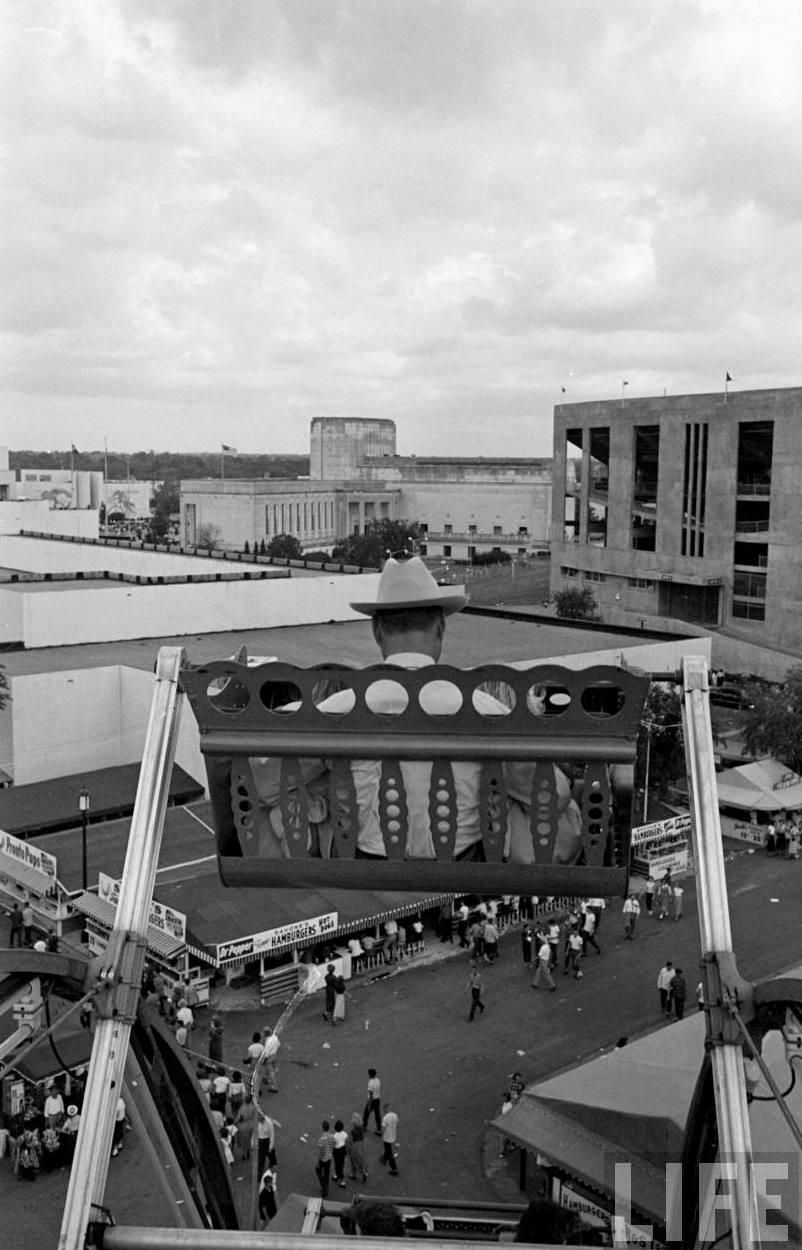
A Life magazine photographer moseyed down to Dallas in 1951 and captured a couple of cool shots of the State Fair. The photo above (so sweet, and one of my favorite Midway shots ever) was captioned:

In Dallas a rancher takes the kids for a ride in a 92-foot-high double Ferris wheel.

The photo below shows a tractor-pulled tram (fare: 15 cents) as it wheels past the Hall of State, full of well-dressed men and women. (That kid in the boots, cowboy hat, and letterman jacket … had I been around in 1951, I would have had a big ol’ crush on him.)

Click both of these wonderful photos to see larger images. You can practically smell the Brylcreem and cotton candy.

fair-park_tour_life_1951Life magazine, 1951

***

Sources & Notes

Both photos taken at the 1951 State Fair of Texas for Life magazine by an uncredited photographer. The top photo (cropped differently) ran in the Oct. 22, 1951 issue of Life as part of a feature titled “It’s a Bumper Year For Fairs” — it was the only photo that appeared in the magazine shot at the Texas fair. The bottom photo did not run in the magazine.

*

Copyright © 2014 Paula Bosse. All Rights Reserved.

“A Cavalcade of Texas” — Dallas, Filmed in Technicolor, 1938

“A Cavalcade of Texas”

by Paula Bosse

(SCROLL DOWN TO WATCH THE FILM CLIPS.)

Brought to my attention last night in a Dallas history group was the heretofore unknown-to-me full-length, Hollywood-slick travelogue called “A Cavalcade of Texas,” shot around the state in 1938 under the auspices of Karl Hoblitzelle in his capacity as chairman of the Texas World’s Fair Commission. (Hoblitzelle also built the Majestic Theater and founded the Interstate Theatre chain.)

“A Cavalcade of Texas” — a 49-minute full-color travelogue touting the beauty, history, natural resources, and industries of the state — was made to be shown at the New York World’s Fair, but because of a variety of production and logistical problems, the film was, instead released theatrically. John Rosenfield, the legendary “amusements” critic for The Dallas Morning News, was suitably impressed. After an early preview of the film, he wrote:

The picture should be a revelation to the outlanders who still think of Texas as the backwoods with a hillbilly civilization. (DMN, June 27, 1939)

Ha.

The film opened in Dallas in October of 1939 at, unsurprisingly, The Majestic, second on a bill with a Ginger Rogers film (which was fitting, as Ginger had begun her professional career at The Majestic as a teenager). The pertinent paragraph from Rosenfield’s official review is amusingly snippy:

“Cavalcade” shoots the Houston skyline as a bristling metropolitan acreage but hides the Dallas buildings behind the towering Magnolia Building. Maybe we are sensitive about it but we don’t feel that architectural justice has been done. The Fort Worth aspect is glorified more than it deserves. (DMN, Oct. 15, 1939)

(Sorry, Fort Worth!)

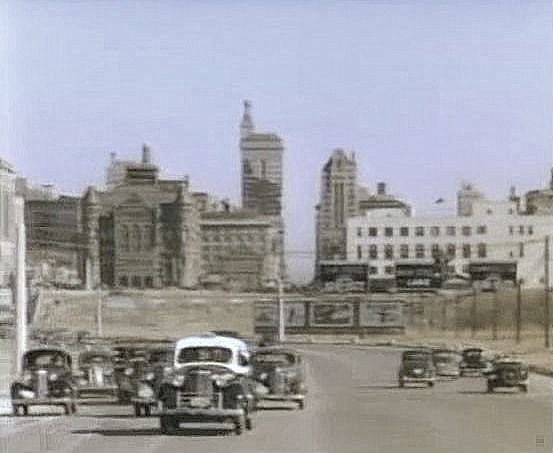
The Dallas scenes are only about 4 minutes’ worth of the whole film, but to see Dallas at this time in color — and moving — is kind of thrilling. The entire film is on YouTube, but I’ve bookmarked the two Dallas bits. First, after an interminable sequence on how fantastic things will be when we finally make that darn Trinity navigable, is a Dealey Plaza-less Triple Underpass, shots of Main Street (including the now partially obliterated 1600 block at the 17:52 mark, on the right), Fair Park (including a description of the Hall of State as “the Westminster Abbey of the New World” (!)), and a neon-lit Elm Street at night. (If you let it keep going, you’ll see “the Fort Worth aspect.”)

(I am having problems embedding this clip to begin at the 17:30 mark. If the above does not begin at the Dallas sequence, see it at YouTube, here.)

*

Twenty minutes later, the viewer is, for some reason, shown the Dallas Country Club with what I’m guessing are Neiman-Marcus models pretending to play golf.

(If the above does not begin at the Dallas Country Club sequence at 40:09, see it at YouTube, here.)

*

Those are just the Dallas bits — the whole film is an impressive undertaking, and it’s great to see documentary footage of this period in rich color, presented with incredibly high production values, in full Hollywood style.

cavalcade_101439_ad
Ad, Oct. 14, 1939 (click to see larger image)

***

Sources & Notes

“A Cavalcade of Texas” was directed, edited, and narrated by James A. Fitzpatrick and can be seen in full on YouTube, here.

Background on Karl Hoblitzelle can be read in information provided by the Handbook of Texas, here, and by the Dallas Public Library, here.

The wonderful and vibrant 1939 footage of downtown Dallas that was discovered on eBay a few months ago and “saved” by a group of preservation-minded Dallasites, which included Robert Wilonsky and Mark Doty, is one of my favorite Dallas-history-related stories of 2014. Watch that footage here.

*

Copyright © 2014 Paula Bosse. All Rights Reserved.

Panoramic View of the Entrance to the State Fair of Texas — 1908

state-fair_clogenson_1908_LOC“Texas State Fair, Main Entrance” by Clogenson, 1908 (click for larger image)

by Paula Bosse

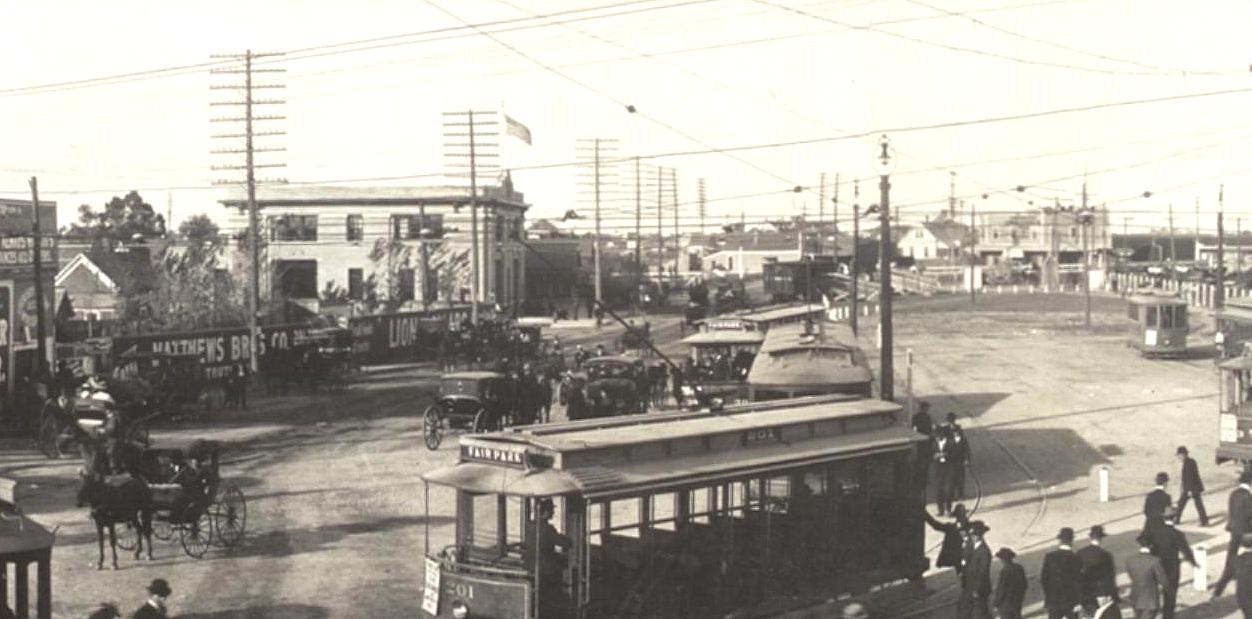
Today is opening day of the State Fair of Texas. Always an anticipated annual event, this is what the crowded entrance to Fair Park looked like over a century ago — still pretty recognizable, especially the firehouse at the top left. Below is a detail of the first third or so of this amazing panoramic photo. For a gigantic image of the top photo, click here (and then keep clicking until it’s gotten as big as it’s going to get — and don’t forget to use that horizontal scroll bar!).

Below is the detail I’ve cropped from the larger photo, showing the Parry Avenue portion, with the still-standing firehouse at the top left.

Have fun at the fair, y’all!

state-fair_1908-detDetail showing Parry Avenue, looking north (click for larger image)

***

Sources & Notes

Original image titled “Texas State Fair, Main Entrance” by Clogenson, 1908, from the Library of Congress. Photo and details can be viewed at the LOC website here.

In case you missed the link above — and because it’s so fantastic and filled with such incredible detail — you really must see the really big image of that really big panoramic photo, HERE.

For other Flashback Dallas posts on the State Fair of Texas, click here.

For Flashback Dallas posts on the Texas Centennial, click here.

*

Copyright © 2014 Paula Bosse. All Rights Reserved.

Parade Day — 1909

parade-day_1909_clogenson_degolyerMain Street looking west from Ervay, 1909

by Paula Bosse

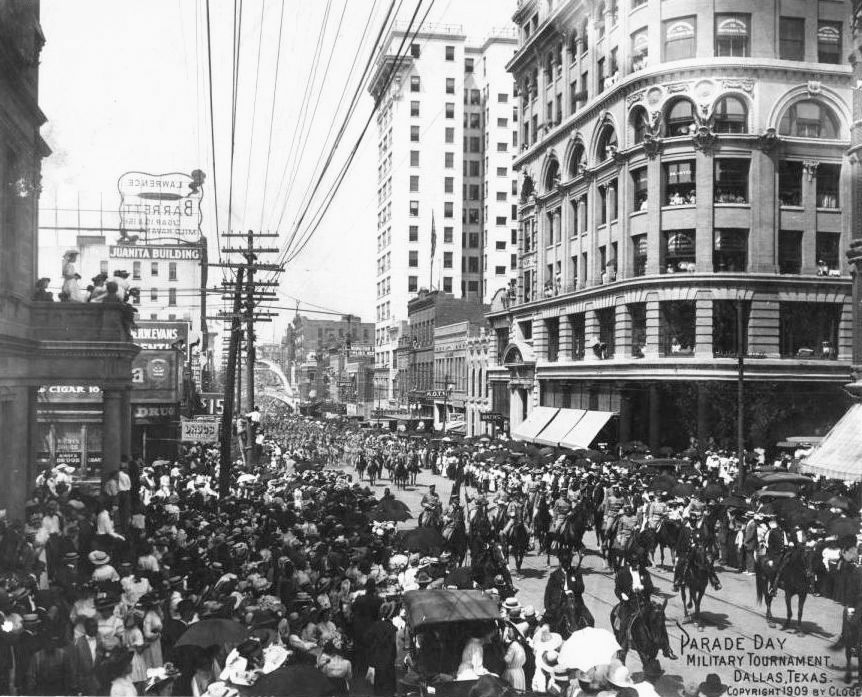
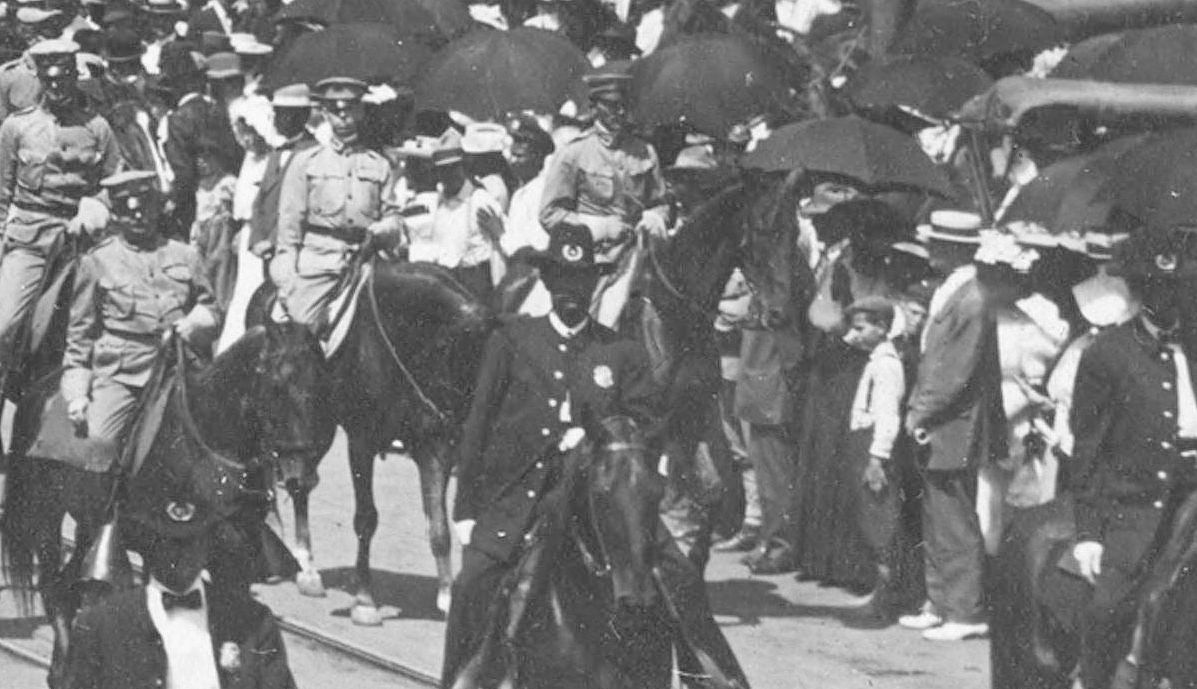
Sun-bronzed, khaki-clad soldiers representing the three important branches of the army, paraded through the city evoking the admiration of 60,000 persons who lined the streets all the way from Fair Park to the end of the downtown business district. (Fort Worth Star-Telegram, Aug. 24, 1909)

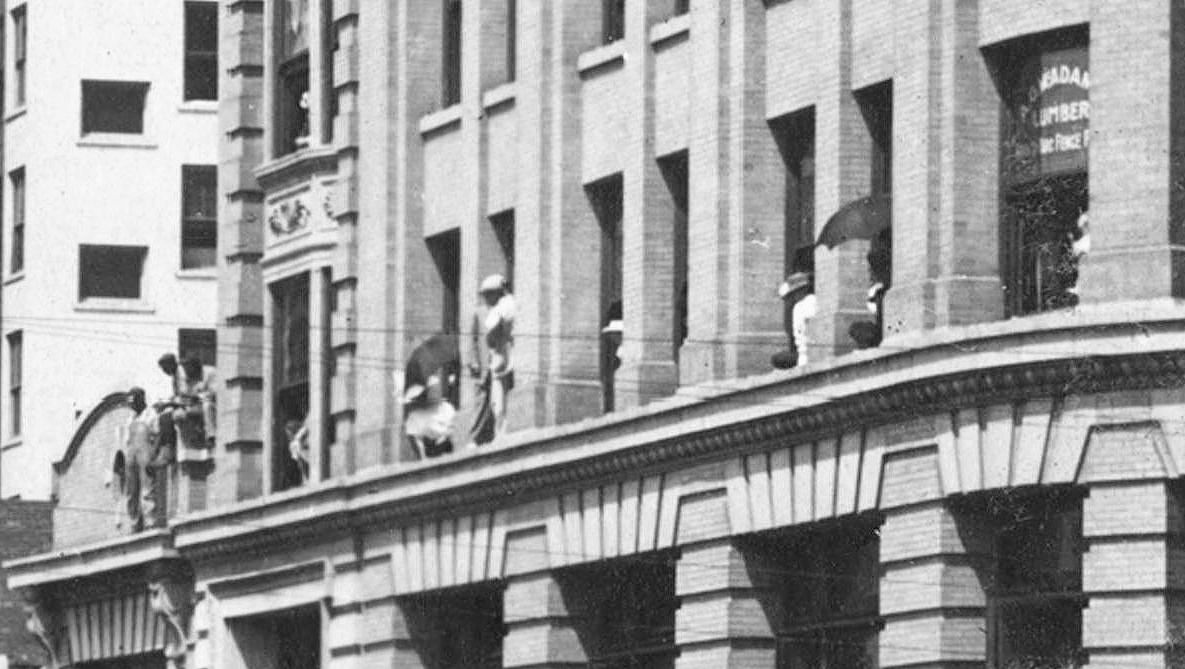
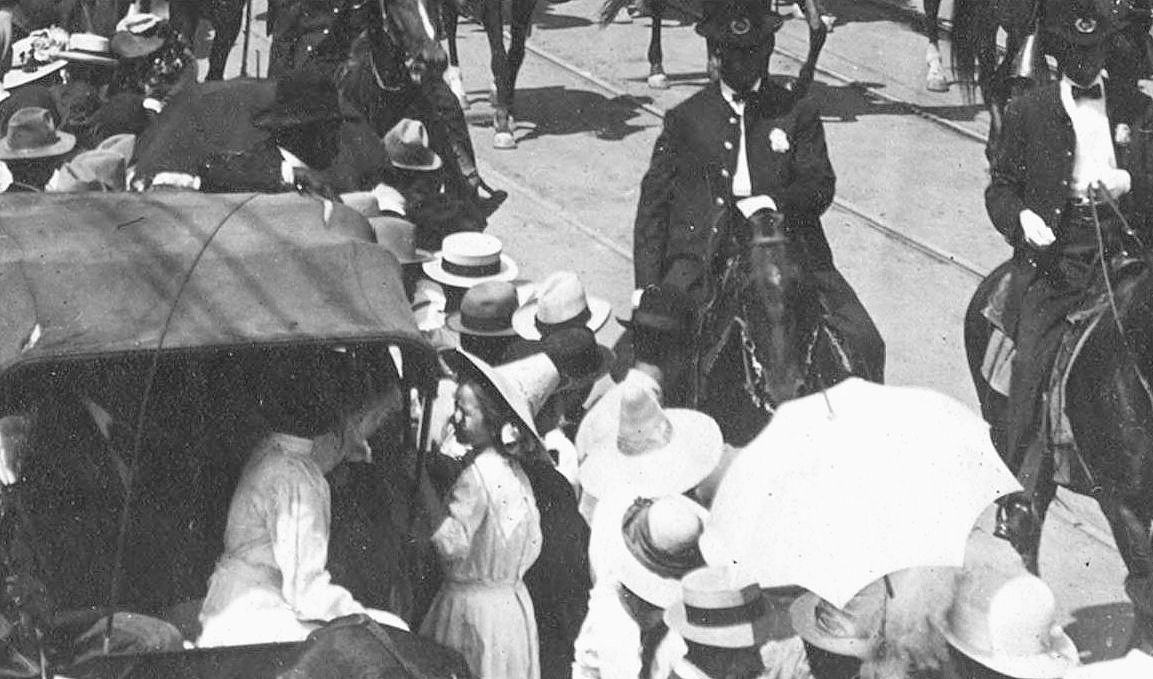
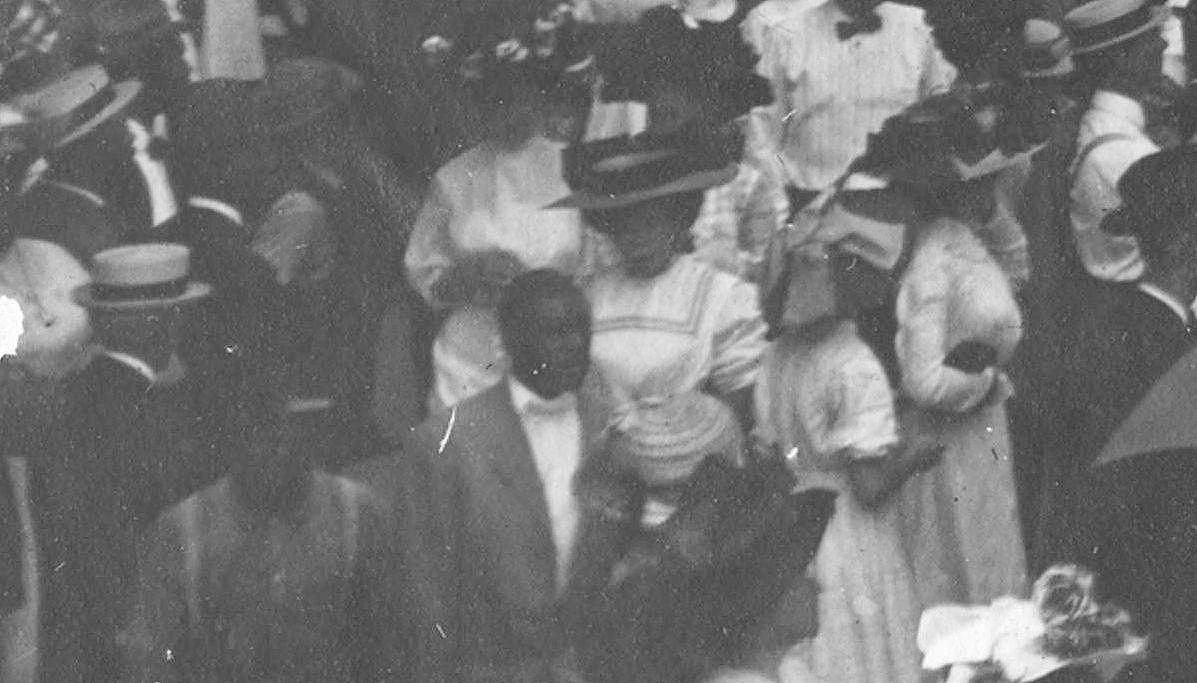
This is a GREAT photograph, looking west on Main Street from Ervay, with the Wilson Building in the foreground at the right, and, a few doors down, the tall white Praetorian Building at Stone Street. With so much going on in this photo, it’s a great opportunity to zoom in on the crowd and look a little more closely at the details. (All photos are much larger when clicked.)

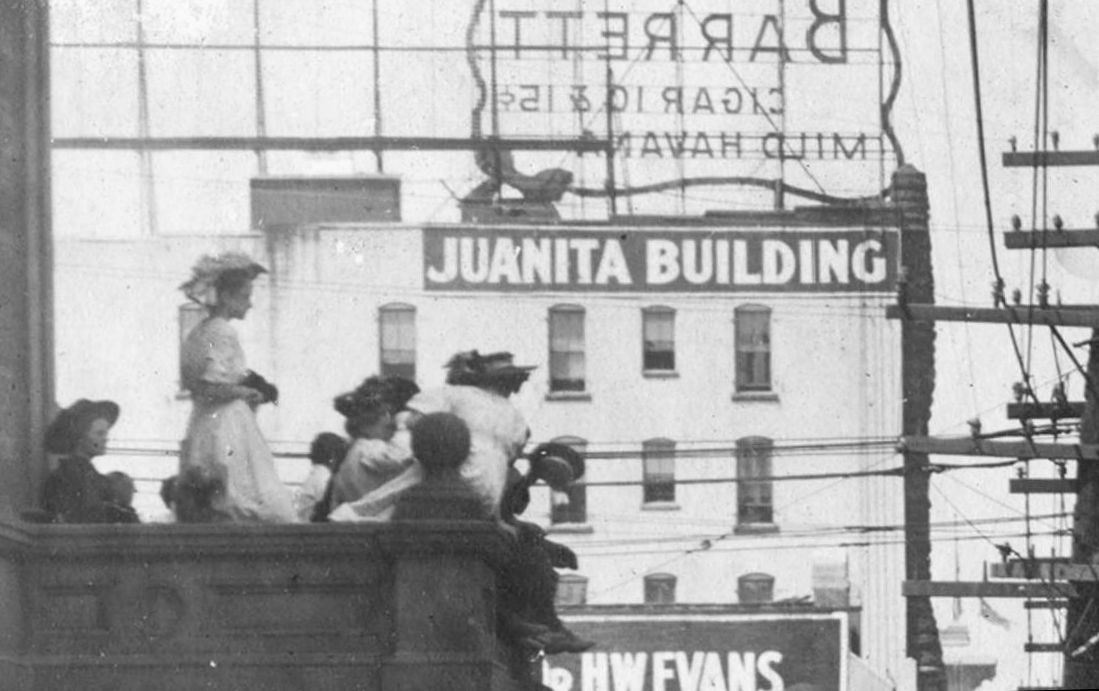
parade-day_1909_det1My favorite “vignette” from this photograph, with the Juanita Building in the background.

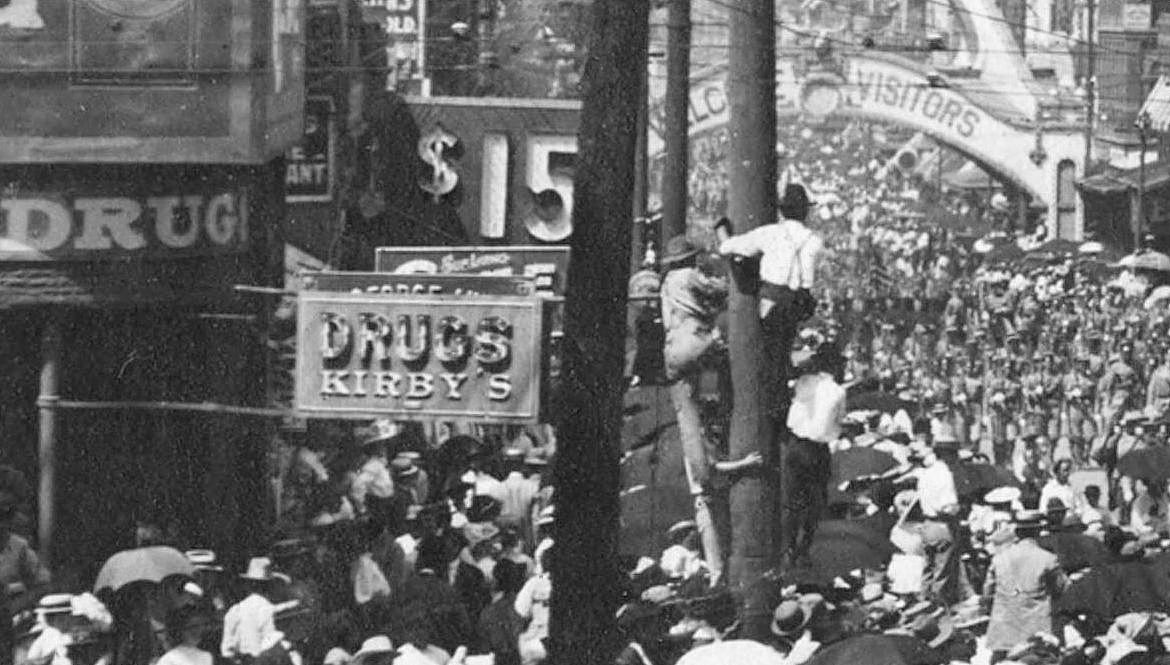
parade-day_1909_det2Dedicated parade-watchers. The Elk’s Arch welcoming visitors spans Main Street, a holdover from the 1908 Elk’s convention.

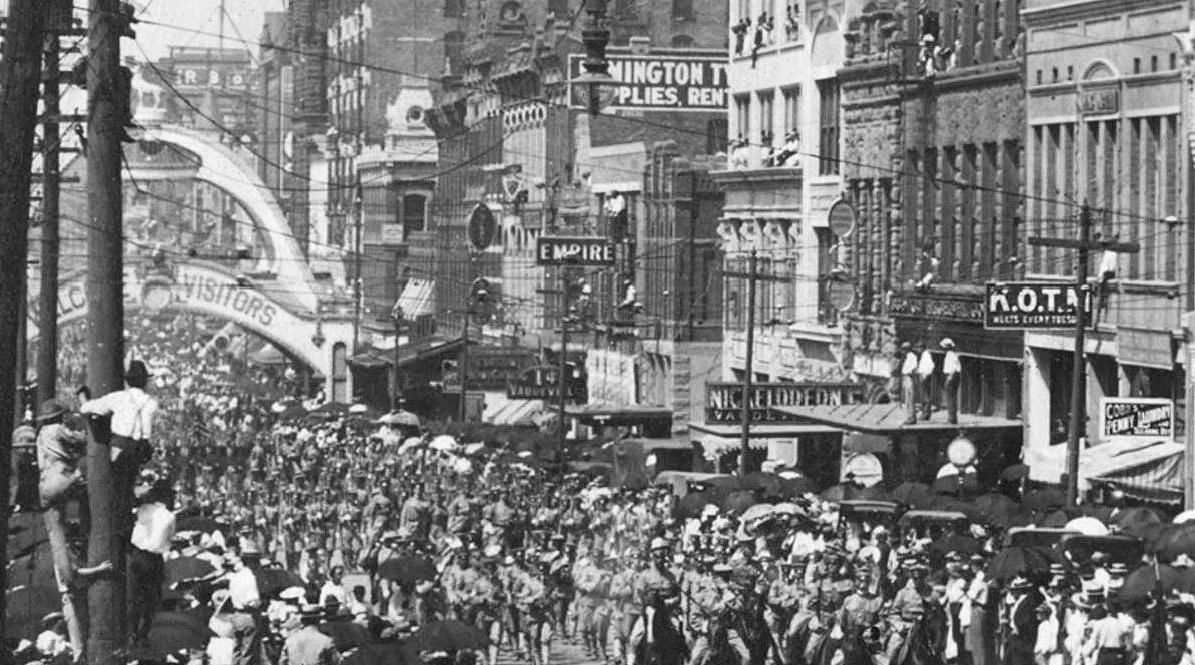
parade-day_1909_det3The dark-colored three-story building behind the three men in white shirts standing above the crowd (1611 Main) was demolished yesterday, Sept. 21, 2014. (A better view of the full building can be seen in the post “1611 Main Street — Another One Bites the Dust,” here.)

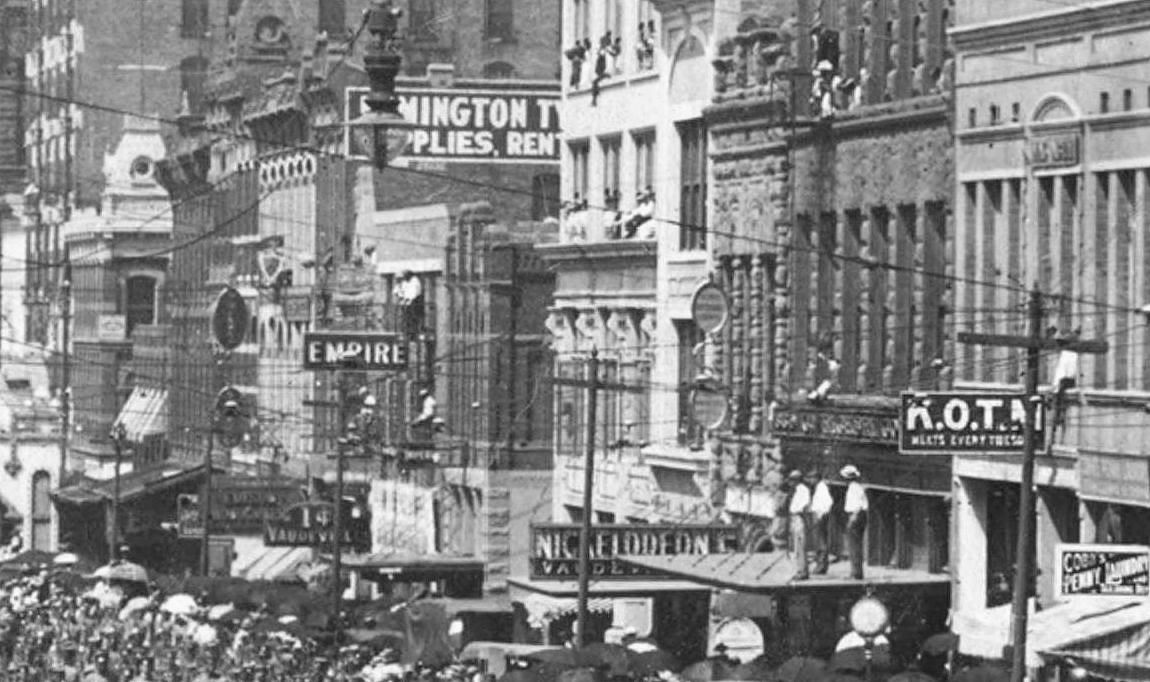
parade-day_1909_det4Note the vaudeville theaters.

parade-day_1909_det4aWorkers in the Wilson Building with a pretty great, unobstructed view.

parade-day_1909_det5When this photo was taken, Labor Day was fast approaching — that guy had two more weeks to wear those shoes.

parade-day_1909_det6Watching from shaded splendor.

parade-day_1909_det7Big hats, cinched waists, and African American bystanders.

***

Sources & Notes

Original photo by Clogenson, titled “Parade Day, Military Tournament, Dallas, Texas,” taken August 24, 1909; in the collection of the DeGolyer Library, Central University Libraries, Southern Methodist University. The photo can be viewed here.

Newspaper articles describing exactly who was involved in the parade and why it was happening can be read in the easily digestible report from the Fort Worth Star-Telegram, here, and the drier, more comprehensive report from The Dallas Morning News, here (each opens as a PDF). (This photo accompanied the DMN article.)

See other photos I’ve zoomed in on, here.

*

Copyright © 2014 Paula Bosse. All Rights Reserved.

“Go Away! Can’t You See I’m Listening to WFAA?” — 1947

wfaa-ad_dmn_090147

by Paula Bosse

Priorities.

*

Copyright © 2014 Paula Bosse. All Rights Reserved

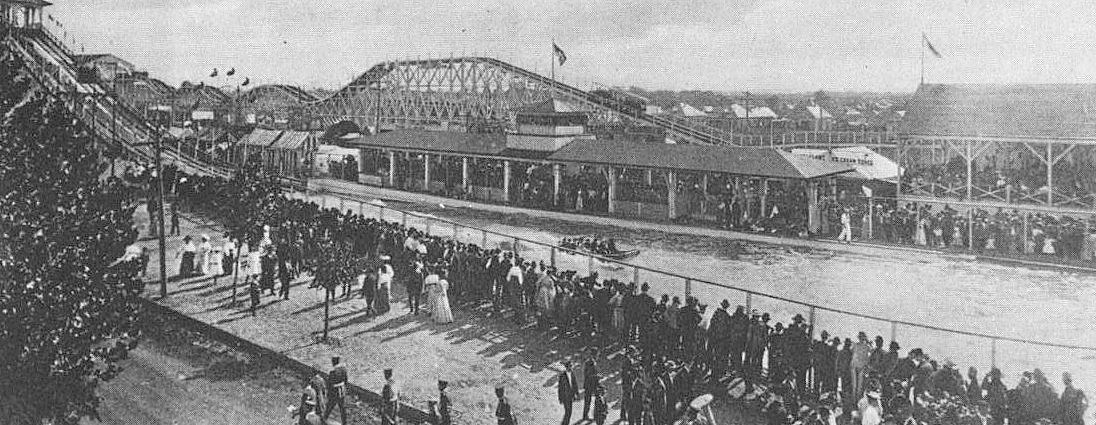
“The Chute”

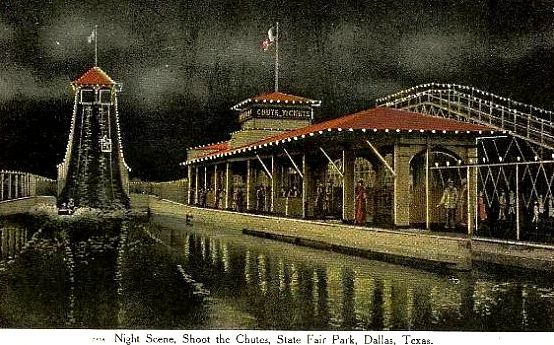
chute-roller-coaster_c1908_tsha_2The Chute and The Tickler, Texas State Fair, 1908

by Paula Bosse

Construction began in 1906 on a new entertainment area at Fair Park called The Pike.

“What is known as ‘Smokey Row’ has been set back against the fence on the south side of the grounds, and the space between it and the race track, all the way to the grandstand, will be occupied by exhibits. Two streets through this part of the grounds lead to the grandstand and the Pike. The Pike will be located beyond the grandstand, occupying a space 250×1125 feet. Here are being constructed the scenic railway and the shoot the chute, which will represent an investment of $75,000. The State Fair has agents in the East booking the remaining attractions for this department. These agents have instructions to pay the money and get the newest and best things to be had.” (Dallas Times Herald, June 24, 1906)

The new Pike meant that visitors to the State Fair of Texas would be able to ride “The Chute,” an amusement park attraction that had been popular in other parts of the country (and which automatically brings to mind the log ride at Six Flags Over Texas). In 1908, a roller coaster with the delightful name of “The Tickler” joined the rides in the area that was referred to as the “Pleasure Plaza” in at least one newspaper account. The Chute/Shoot the Chute/Chute the Chutes lasted a relatively short time — only until 1914 when it was torn down to “make room for the new shows known as the ‘World at Home,’ to be open to the public at the State Fair next fall” (DTH, Aug. 18, 1914).

Rides such as The Chute and The Tickler were enormously popular, and one wonders how all those hats managed to stay on all those heads of all those pleasure-seekers.

*

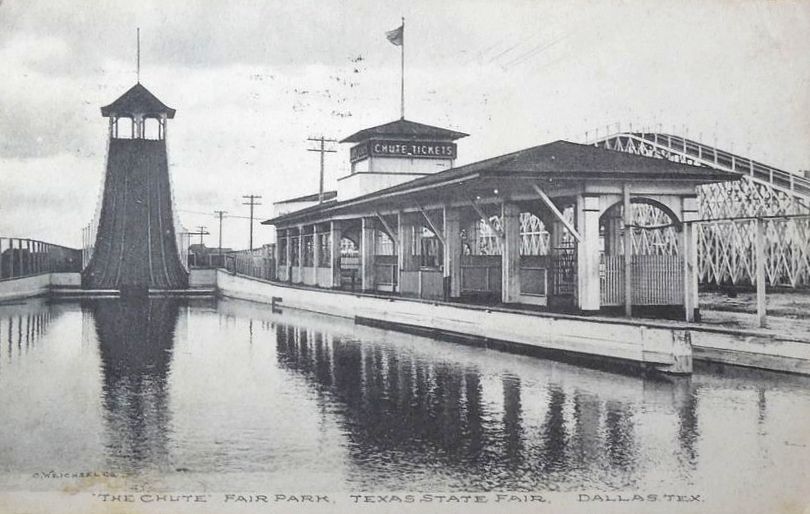
The Chute, head-on:

chute_postcard_1908

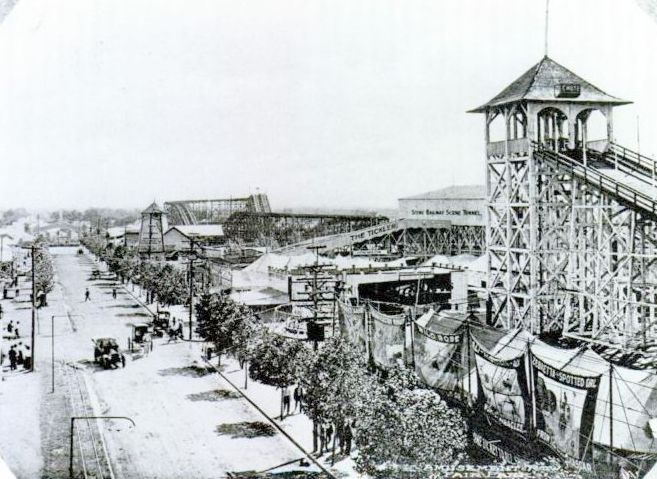
A view of The Pike, with The Chute to the right, above the sideshow banners.

chute_willis_dpl

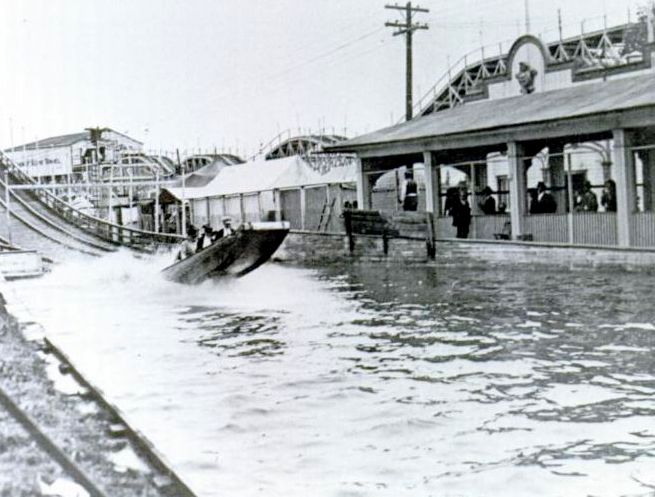
In action:

chute_willis_sfot

At “night” (the second photo above, glamorized, with postcard magic applied):

chute-night_observer

***

Sources & Notes

Top photo from the collection of the Texas State Historical Association.

Second photo, a 1908 postcard, from eBay.

Third and fourth photos from the book Fair Park by Willis Cecil Winters (Charleston: Arcadia Publishing, 2010). Photo of The Pike from the Dallas Public Library; photo of the boat from the State Fair of Texas Archives.

Night scene from a story by Robert Wilonsky on Winters’ book in the Dallas Observer, here.

Dallas Times Herald quotes from the indispensable Dallas County Archives pages compiled by Jim Wheat; these two articles can be found here.

Yes, Wikipedia does have an entry on the history of Shoot the Chute rides, here.

 As always, most pictures are larger when clicked.

*

Copyright © 2014 Paula Bosse. All Rights Reserved.

The Fab Four in Big D — 1964

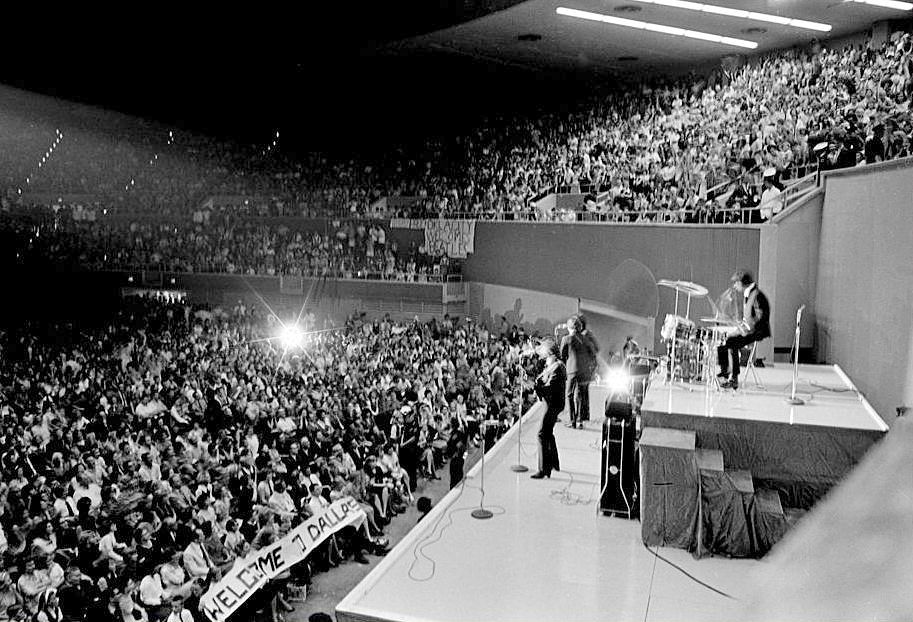
beatles_memorial-auditorium_091864_ferd-kaufmanThe Beatles at Memorial Auditorium, Sept. 18, 1964

by Paula Bosse

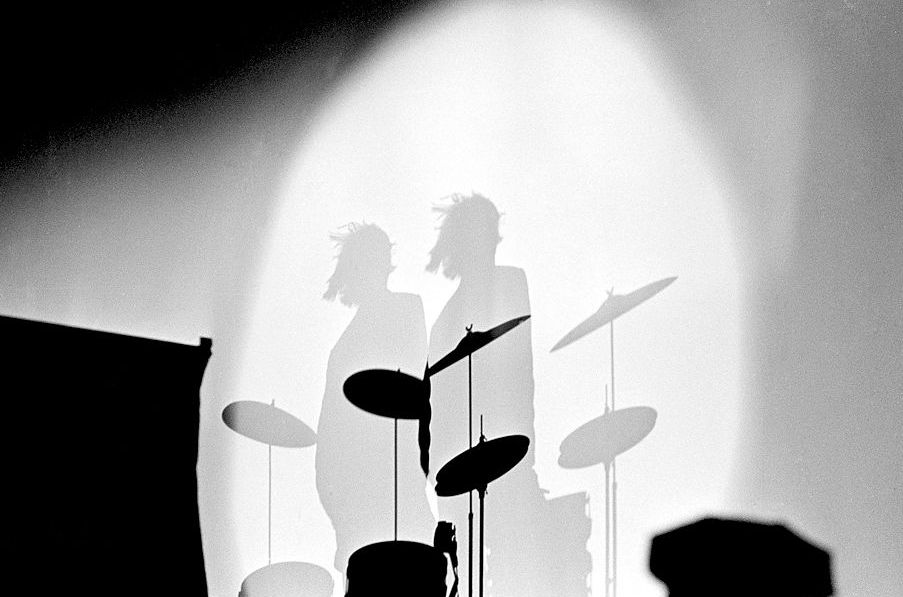
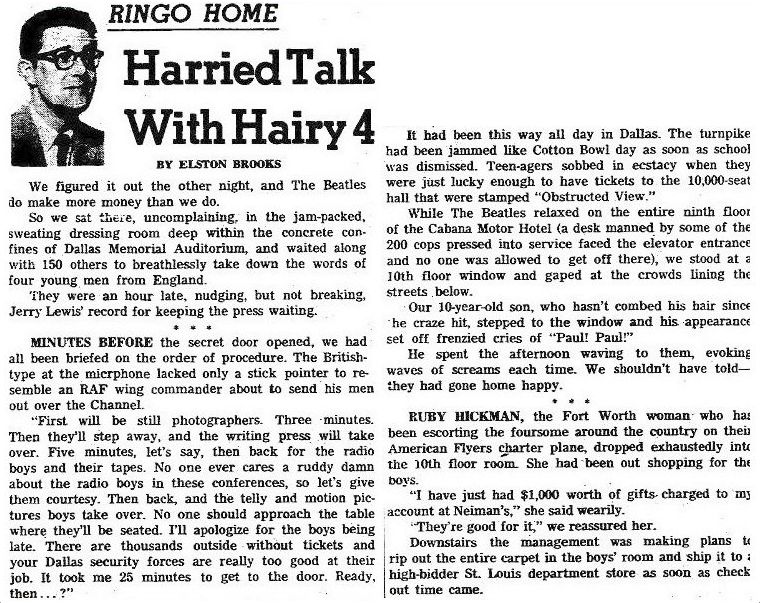
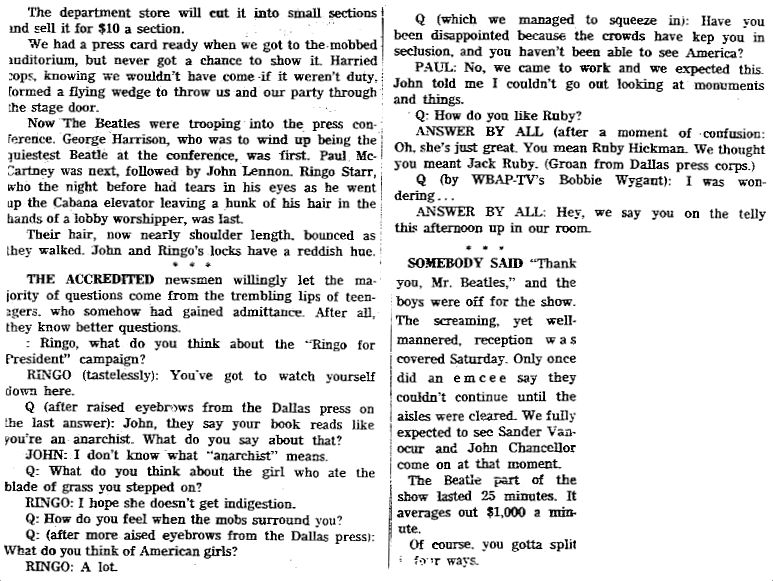
The Beatles came to Dallas fifty years ago this week. There was pandemonium at Love Field when they arrived. There was pandemonium at the Cabaña Hotel when they got there. There was pandemonium at the press conference. And there was pandemonium at the concert at Memorial Auditorium on September 18, 1964, the last date of their American tour. This event has been pretty well covered over the years, but here are a couple of cool photos of the Fabs’ time in Dallas, and a couple of droll columns from DFW entertainment reporters who seem to be vaguely amused, vaguely annoyed, and vaguely impressed — all at the same time.

beatles_memorial-aud_091964_ferd-kaufman

beatles_dallas_1964_john-mazziotta_dth

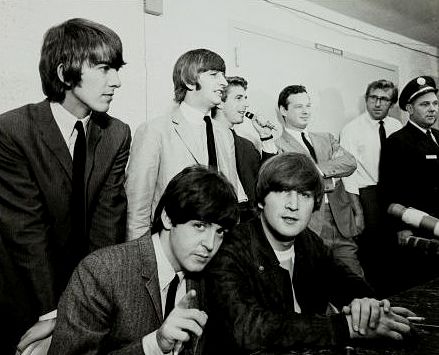
Above, the Dallas press conference, with Beatles press agent Derek Taylor (holding microphone), manager Brian Epstein (who, still in Dallas, would turn 30 the following day), and road manager Mal Evans (with glasses). And a Dallas cop (who, over the years, must have told a thousand people about this momentous day).

*

Below, the always-entertaining Elston Brooks of the Fort Worth Star-Telegram writes about his “Harried Talk With Hairy 4” (click article for larger image).

beatles_FWST_092064a

beatles_FWST_092064bFWST, Sept. 20, 1964

*

The Dallas Morning News’ man-about-town, Tony Zoppi, enlisted the aid of a teenager to explain to him the nuances of Beatlemania. His opening paragraph is pretty good:

It was Mardi Gras, V-E Day, the Texas-Oklahoma excitement and The Alamo all rolled into one — only louder. It was the Beatles, winding up their American tour deep in the heart of Texas. It was Dallas playing the role of uninhibited host to the hilt. (“The Beatles Do It, Yeah! Yeah! Yeah!” by Tony Zoppi, DMN, Sept. 19, 1964)

*

And lastly, the short scattershot interview by Bert Shipp of Channel 8:

*

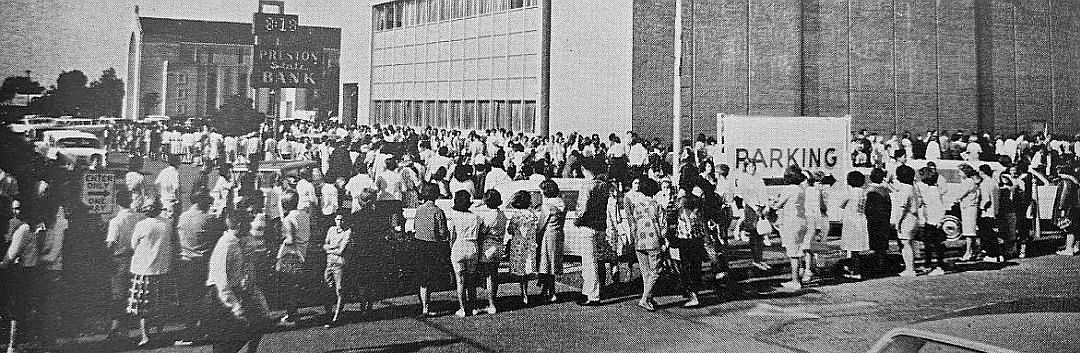
And here’s a photo I’ve never seen: kids lining up to buy tickets. The caption: “The Preston Ticket Agency, a service of the Preston State Bank of Dallas, recently attracted this crowd when the agency was named to handle the exclusive sale of tickets for a September performance in Dallas of the Beatles quartet. Some youngsters stood in line 24 hours before the ticket office opened for business. The Preston Ticket Agency has been in operation since 1963, and last year served over 40,000 customers with tickets to major Dallas entertainment attractions.” (“Dallas” magazine, July 1963)

beatles_preston-tickets_dallas-mag_july-1964-DPL

***

Sources & Notes

Top two performance photos of The Beatles at Memorial Auditorium by Ferd Kaufman (the one of Ringo is GREAT).

Photo of the press conference by John Mazziotta.

Photo of the ticket line is from Dallas magazine — a publication of the Dallas Chamber of Commerce — July 1963, Periodicals Collection, Dallas Public Library.

More photos of the Dallas visit can be seen here.

And a nostalgic look back at the Beatles’ visit can be read in Bonnie Lovell’s entertaining Dallas Morning News essay, “50 Years Ago the Beatles Played Their Only Dallas Concert” (DMN, Sept. 19, 2014) (no longer available online apparently) — Bonnie was there in the thick of it as a Beatle-crazed 13-year-old and was one of the lucky few who had a ticket to the show and got to see the boys shake their mop-tops in person.

*

Copyright © 2014 Paula Bosse. All Rights Reserved.

“Howdy, Y’all!”

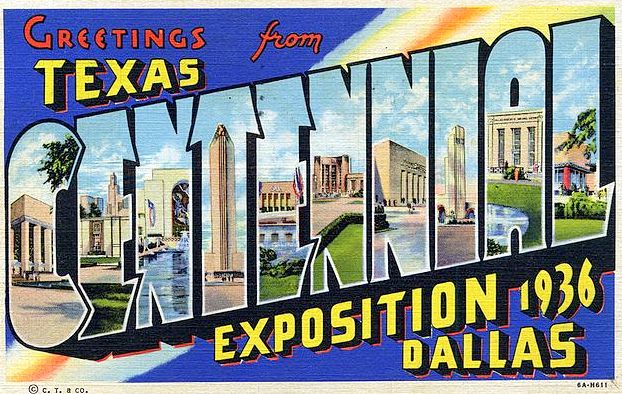
tx-centennial_postcard_1936

by Paula Bosse

Thanks so much to the fine folks at The State Fair of Texas for the Throwback Thursday social media love today! They graciously shared our Texas Centennial posts. Welcome, new visitors!

And don’t forget, Big Tex is counting down those days….

***

State Fair of Texas website is here. Get ready, y’all!

*

Copyright © 2014 Paula Bosse. All Rights Reserved.

The Runyonesque Pearl Street Market, Full of Colorful Characters and an Army of Rats

bob-taylors-cafe_ebayProduce seller, Pearl Street Market

by Paula Bosse

Last week I wrote about the produce market area in the neighborhood where the Farmers Market was eventually built, mainly because I had come across the above undated and unidentified photograph. I really wanted to know more about this photo, and the more I read about the area known in the ‘teens through the ’50s as the Pearl Street Market, the more I became fascinated by it.

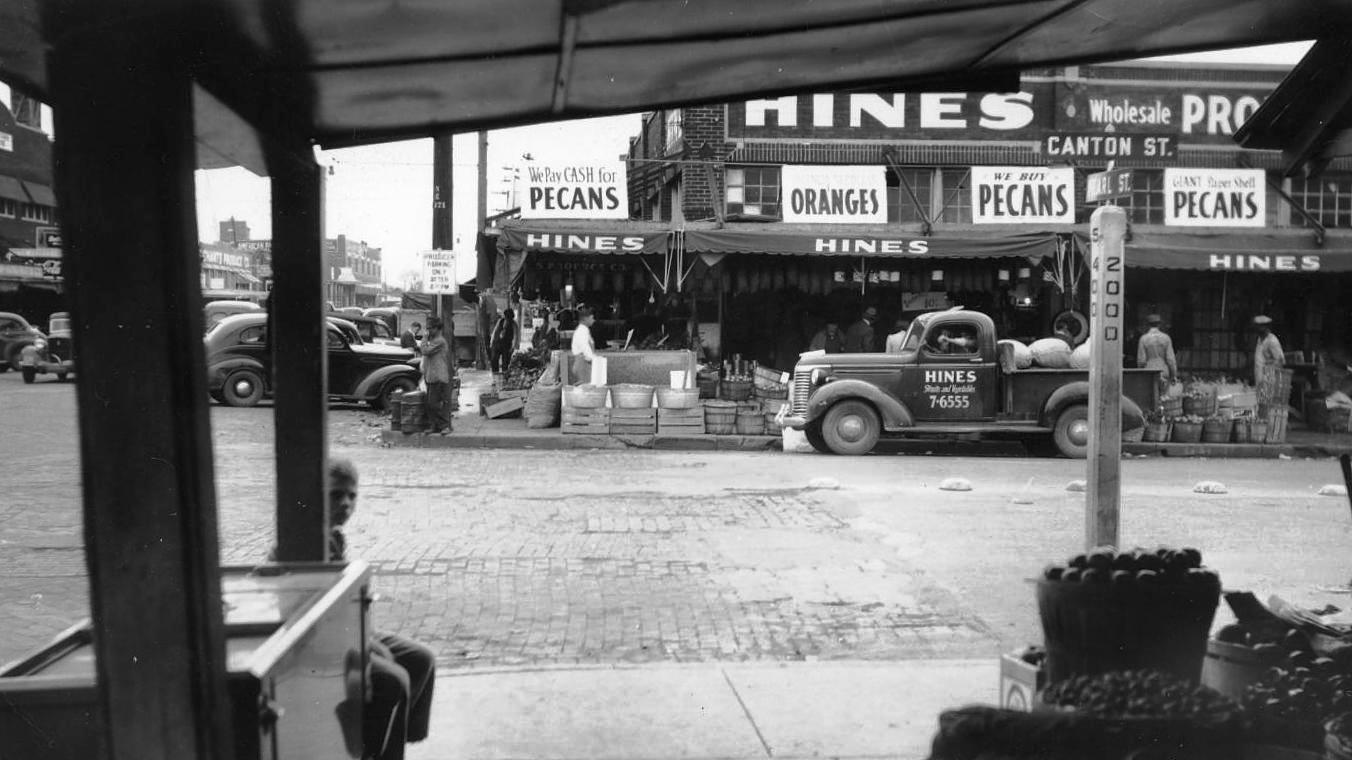
I love this photo, but, sadly, I never found out who cafe-namesake Bob Taylor was, and I never discovered the identity of the man sitting on the sidewalk with his produce. BUT, I did realize that this produce seller was right across the street from one of the biggest wholesale produce sellers in Dallas, the Hines Produce Company. In fact, the photo below might show my mystery man’s view across the street. Both photos show the intersection of the 2000 block of Canton and the 400 block of South Pearl, the heart of the Pearl Street Market.
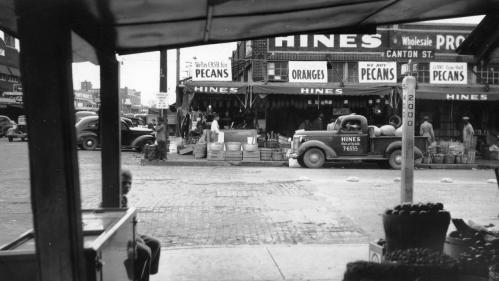
hines_canton-pearlHines Wholesale Produce Company, Canton & S. Pearl

These two scenes look so wholesome — produce peddlers selling their fresh fruits and vegetables, quaint old cars and trucks parked along streets that are still vaguely familiar-looking, and the overall old-fashioned-ness of everything — all presented in nice, sharp, black-and-white photographs that always make me feel a little nostalgic, even though I wasn’t actually around back then and have nothing, really, to be nostalgic about.

But “wholesome” is not a word that would have been associated with the Pearl Street Market. In fact, this was a part of town your mother would probably strongly suggest you not visit. Here are a few of the illicit activities that went on here on a fairly regular basis:

  • Brawls in cafes, often involving weaponized broken beer bottles
  • Shootings
  • Stabbings
  • Pickpocketing
  • Burglary
  • Robberies (of victims both asleep and awake)
  • Gambling
  • Muggings
  • Drug dealing
  • Arson
  • Hit-and-runs
  • Vehicular homicides
  • Regular homicides
  • Prostitution (I’m just guessing…)
  • Shoplifting
  • Vagrancy
  • Selling another man’s melons and fleeing with the money
  • The occasional being “severed” by a train
  • Etc.

A typical police blotter story went something like this:

[Miss Esther Lee Bean] told physicians she was attacked by another woman who broke a beer bottle on her head and then used the jagged neck of the bottle as a weapon, cutting her several times on the right arm…. The affray occurred in a cafe in the 400 block of South Pearl. (Dallas Morning News, Dec. 17, 1938)

So … yes, very nostalgic.

Crime was a big problem, but what seems to have been even more upsetting to the people of Dallas was the general squalor of the place. Sanitary conditions were appalling. Rotting fruit and vegetables were thrown in the street, and live chickens were kept in cages, doing things that chickens do (which probably shouldn’t be done that close to things people might eat). And there were NO public toilets in the area — visiting farmers (who often bypassed the flea-bag hotels and slept in their trucks — or even on the sidewalks) routinely used the alleys as “comfort stations.” And then there were the rats. LOTS of rats. A staggering number of rats. Rats absolutely everywhere. Typhus? Not just a rumor. City sanitation crews would come by daily to hose the place down, but there was so much solid matter going down the drains that sewers were frequently clogged. It was, in a word, disgusting.
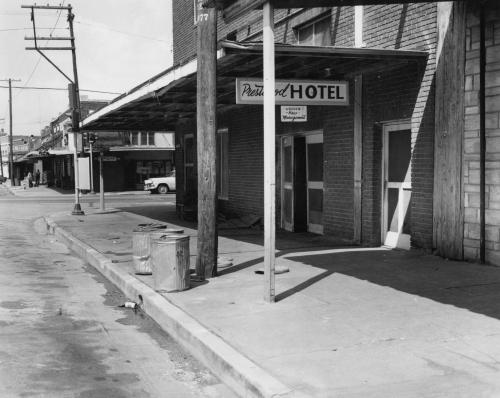
hotel_pearl_1959_portalA typical hotel near Pearl & Canton, a bit cleaner by the ’50s

For years this part of Dallas, just south of the central business district, had been a place where farmers (and produce brokers) had been selling their fruits, vegetables, poultry, eggs, pecans, and whatever else they could haul into town. It was all very informal, and for much of that time it was completely unregulated. This part of town had been the base of the “truck farmers” since at least 1912. Before that, the market was at Pearl and Main, and in the earliest days it was at Ervay and Elm.

In 1914 a city-sanctioned (and presumably regulated) municipal retail market where vendors would sell directly to consumers was proposed, but eventually consumers became irritated that the produce they bought at the municipal market was significantly more expensive than that which could be purchased from the “hucksters” who parked along Pearl Street and roamed residential neighborhoods. The Pearl Street vendors sold primarily to wholesale customers, but over time, they opened up their stalls to the public and did a bustling business with housewives. The wholesale market was hit pretty hard by the 1930s as the number of independent grocers — once the major buyers on Pearl Street — diminished as chain stores took over. Those housewives became more and more important as time went on.

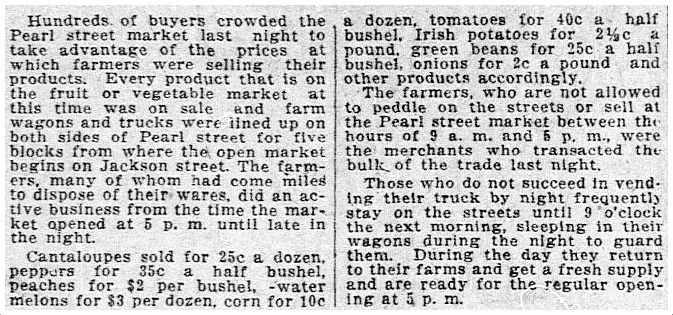
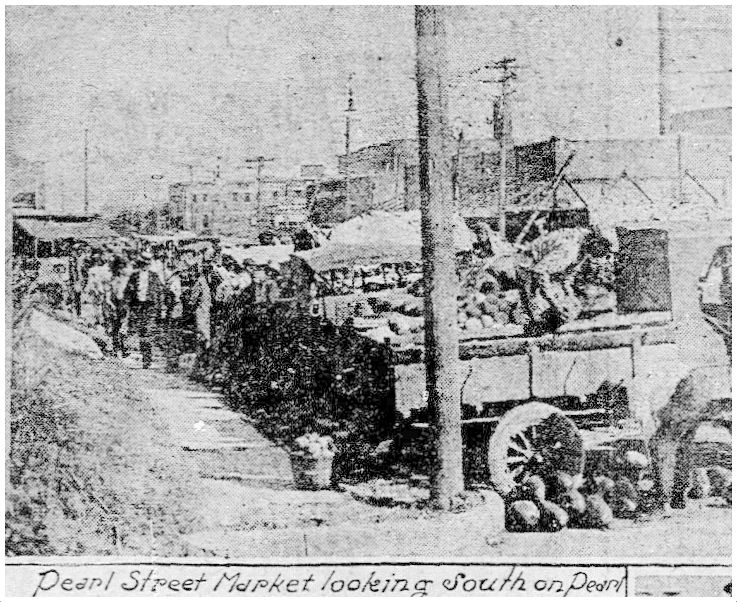
farmers_dmn_071721DMN, July 17, 1921 (click to enlarge)

farmers_dmn_071721afarmers_dmn_071721c

farmers_dmn_071721bDMN, July 17, 1921

By the 1920s, the Pearl Street Market was well-established, and it was where one went to buy fresh (and “fresh”) fruits and vegetables. And according to this real estate ad, business was booming:

produce-mkt-dist_dmn_110423DMN, Nov. 4, 1923

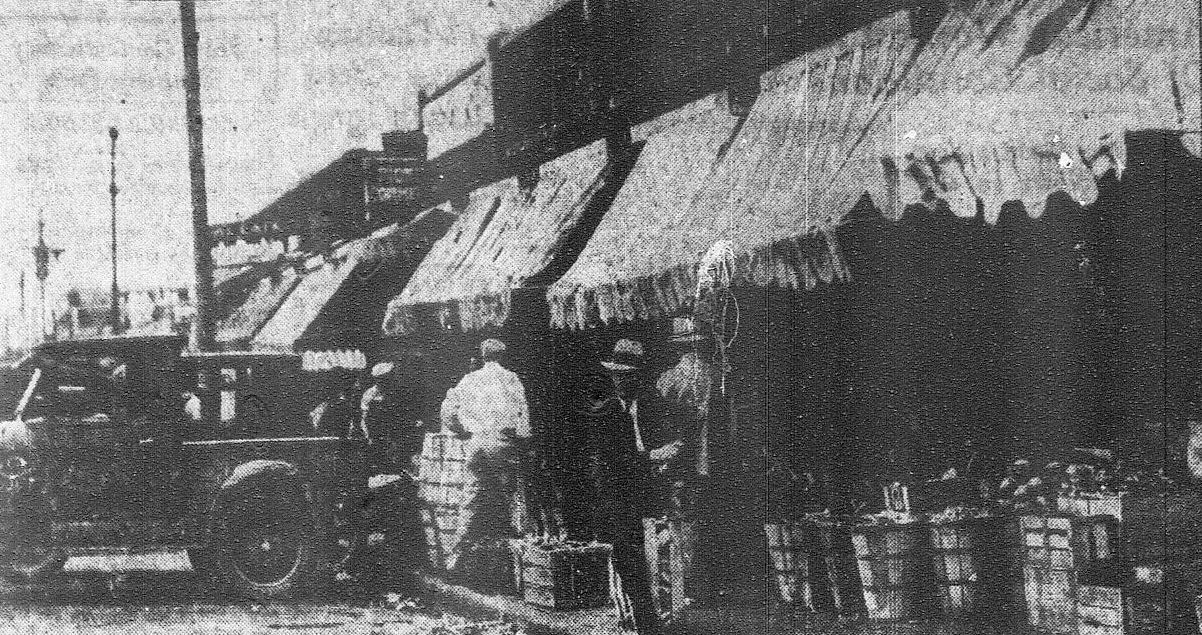
In 1933, The Dallas Morning News printed a fantastic, full-page, Runyonesque article about the “Pearl Streeters,” written by Eddie Anderson, who interviewed the colorful characters of the area and described the buzzing street life. With tongue only partially in cheek, he wrote: “Chicago has its Water Street. In New York you will find it on Washington. And if you go abroad there is the famous Smithfield Market of London and the vaulted bazars of Constantinople. In Dallas, it is Pearl Street.” Below, a photo that accompanied the story (click for larger image).
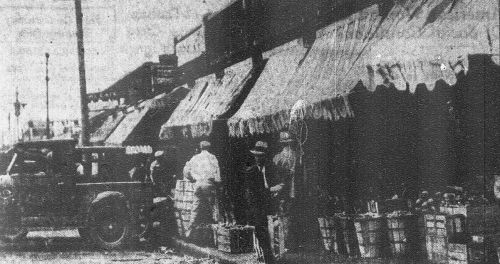
pearl-st-mkt_dmn_051433a

Anderson’s story was certainly entertaining, but it mostly glossed over the area’s more unsavory aspects. By 1938, there were louder and louder demands to clean up the neighborhood. Housewives organized and protested the deplorable conditions of the area, echoing points covered in a scathing Morning News editorial in which it was described as “a hazard to the health of the city because of the number of persons who visit it and because 75 per cent of the vegetables and poultry consumed in Dallas pass through that market” (DMN, Aug. 17, 1938).

In the early 1940s, the city finally stepped in and built the forerunner to the Farmers Market that we know today. By the 1950s, things in the squalor department had settled down a bit, and photos featuring pretty suburban housewives examining the produce and smiling children sampling fresh strawberries.

Nary a rat to be seen.

*

A street map of the Canton & Pearl area in about 1920, back when Canton Street was still part of an uninterrupted grid. (Note that many of the street names have changed over the years.)

1919-map

***

Sources & Notes

Top photo (with Bob Taylor’s Cafe in the background) is from the author’s collection.

Photos of the Hines Produce Co. and the Prestwood (?) Hotel are from the Dallas Municipal Archives’ Dallas Farmers Market / Henry Forschmidt Collection, via the Portal to Texas History. You can browse this great collection here.

Map detail is from the very large “1919 Map and Guide of Dallas & Suburbs” (C. Weichsel Co.), via the Portal to Texas History, here.

The following DMN articles on the Pearl Street Market/Farmers Market are worth a read:

  • “Pearl Street Market in Morning, Dallas’ Most Picturesque and Busiest Place in City” (July 19, 1925)
  • “$1,500 Dope Cache Found Under Pile of Pineapples” (July 15, 1936), a story about a heroin bust with a headline that seems right out of The Weekly World News
  • “Let’s Keep Our Pantry Clean,” editorial by Harry C. Withers (DMN, Aug. 17, 1938)
  • “Dallas: The Old Public Market” by Tom Milligan (Aug. 15, 1966)

And even though I linked to it above, it’s so good and such a fun read that I’m going to mention it again: I highly recommend Eddie Anderson’s “Pearl Street Market As It Sees Itself” (May 14, 1933), here. Edward Anderson was an interesting guy: read about him at the Handbook of Texas here; read about his novels and see photos, here. All these years I’ve had his novel Thieves Like Us on my bookshelf, but I had never gotten around to reading it. Now I have a reason to!

I’ve gathered a pretty entertaining collection of crime reports from the Pearl & Canton neighborhood into one handy document, which can be read in all its seedy glory, hereSERIOUSLY. THIS IS FANTASTIC STUFF!

*

Copyright © 2014 Paula Bosse. All Rights Reserved.

Society Ladies and Their Great Big Hats

shakespeare-club_c1895The Dallas Shakespeare Club

by Paula Bosse

Had The Graduate been set near the beginning of the twentieth century rather than the middle of it, that famous scene out by the pool (er…near the horse trough) might have gone something like this:

Mr. McGuire: I just want to say one word to you. Just one word.

Benjamin: Yes, sir?

Mr. McGuire: Are you listening?

Benjamin: Yes, sir, I am.

Mr. McGuire: …”Millinery.”

Benjamin: …Exactly how do you mean?

Mr. McGuire: There’s a great future in millinery. Think about it. Will you think about it?

Benjamin: Yes, I will.

Mr. McGuire: Enough said. That’s a deal.

***

Sources & Notes

Photograph of the Dallas Shakespeare Club is from the Dallas Historical Society; it appears in the book Women and the Creation of Urban Life in Dallas, Texas, 1843-1920 by Elizabeth York Enstam (College Station: Texas A & M University Press, 1998). Enstam’s caption of this photograph identifies two women in the front row, on the right as Sallie Griffis Meyer (1863-1932), future president of the Dallas Art Association, and May Dickson Exall (1859-1936), president of the Dallas Shakespeare Club from 1886 until her death. Ms. Enstam has labeled this photo as “about 1895.” 

*

Dialogue (all but one word) from the film version of The Graduate, screenplay by Buck Henry, based on the novel by Charles Webb. “Millinery adaptation” by Paula Bosse, based on the screenplay by Buck Henry which was based on the novel by Charles Webb.

*

Copyright © 2014 Paula Bosse. All Rights Reserved.