Flashback : Dallas

A Miscellany: History, Ads, Pop Culture

Category: Leisure

Liquor Doctors Prescribe “Beer by the Case — All You Want”

liquor-doctors_neon-sign_dmn-video_1939

by Paula Bosse

If you have an interest in the Dallas of yesterday, you’ve probably seen the great color film footage shot in downtown in 1939, presented to us by Robert Wilonsky of The Dallas Morning News (link below). One of my favorite things from that wonderful footage is a neon sign for a business called Liquor Doctors, with “Good & Bad Liquors” below it. That would be good enough on its own, but it’s even better as seen in the film, because the “Good” and the “Bad” flash back and forth. Great.

Liquor Doctors (what a great name) seems to have started in late 1937 and eventually had at least three locations: 509 Jackson St., Commerce & Houston, and Cedar Springs & Harwood. Info is limited on these stores — I found a classified ad looking for “salesladies” for the Jackson St. store (“must be over 21”) and a report of a hold-up at the Commerce St. location (the manager was forced, at gun point, to turn over $41.86 from the cash register). Not that interesting. Until I found this tidbit from the great-granddaughter of the owner, describing the utterly ridiculous (and thoroughly entertaining) operating procedure of the Cedar Springs location in the June 2010 issue of Texas Monthly (see link at bottom of post):

Later he opened another Liquor Doctors on Cedar Springs that offered curbside service. The employees, dressed as doctors and nurses, would stroll out to the cars and dispense “medicine” six days a week.

Depending on your threshold for silliness, this is either clever or hokey. (I vote “clever.”)

For some reason the owner changed the name of the business (but why?!), and the next incarnation was simply his name, “Bob Ablin” (where, thankfully, you could still get “good and bad liquors”). I think he might have sold the liquor businesses and opened a soda fountain on Cedar Springs, a venture that lasted until January of 1948.

Below is an ad placed during a WWII whiskey shortage. There was a strict limit of one bottle per person. But beer? Until the cows came home. Bob sounds like a fun guy.

liquor-doctors_dmn_011244

***

Sources & Notes

Screen capture of the Liquor Doctors flashing neon sign from the really wonderful 1939 film footage purchased from Ebay by Robert Wilonsky (of The Dallas Morning News) and several others who joined together to share a cool slice of the city’s history with us. Watch the video and read Wilonsky’s Dallas Morning News article from April 23, 2014, here.

Quote about the Cedar Springs costumed curb service from the essay “Old Testament” — about growing up Jewish in Dallas — by Megan Giller-Dupe, Bob’s great-granddaughter. You can find the essay in Texas Monthly (June 2010), here. It includes a nice photo of Bob.

*

Copyright © 2014 Paula Bosse. All Rights Reserved.
Lazy Weekends, Cruising White Rock Lake — 1972

white-rock_city-folk_1972_EPACruisin’ ’70s-style…

by Paula Bosse

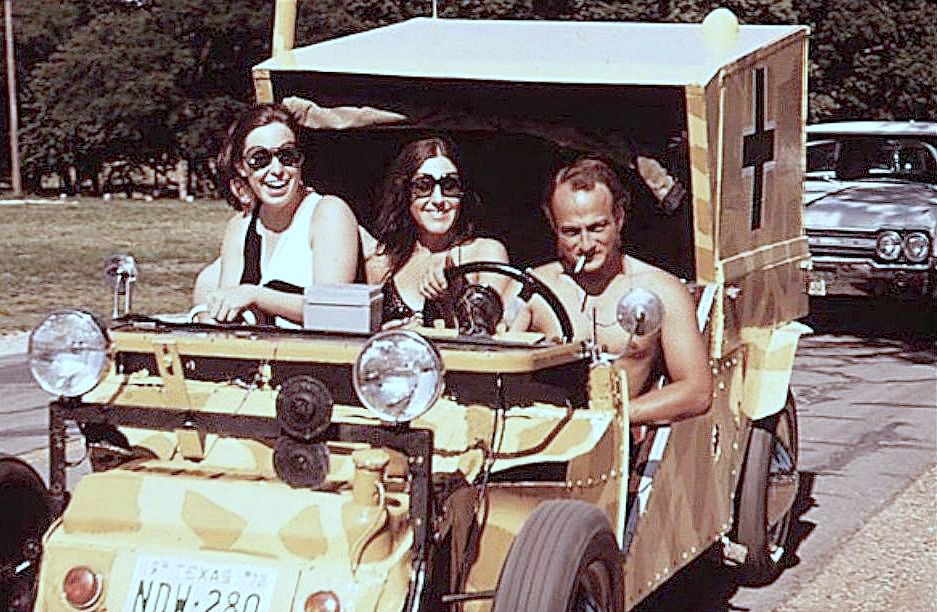
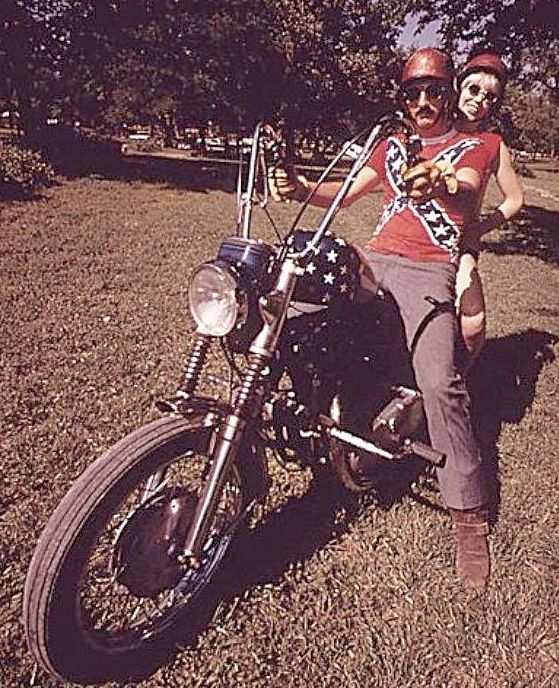
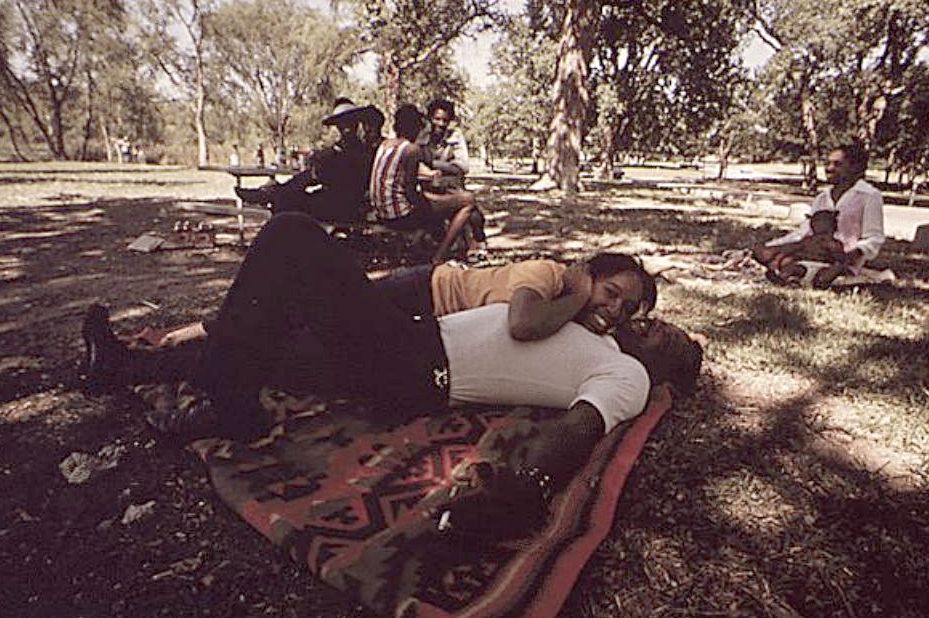
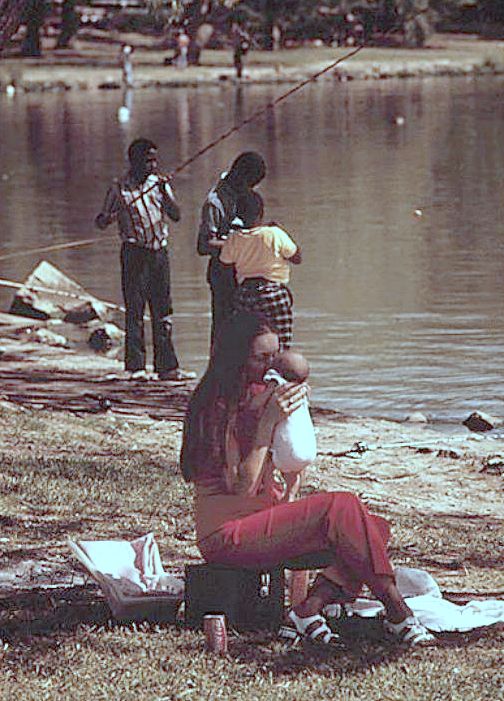
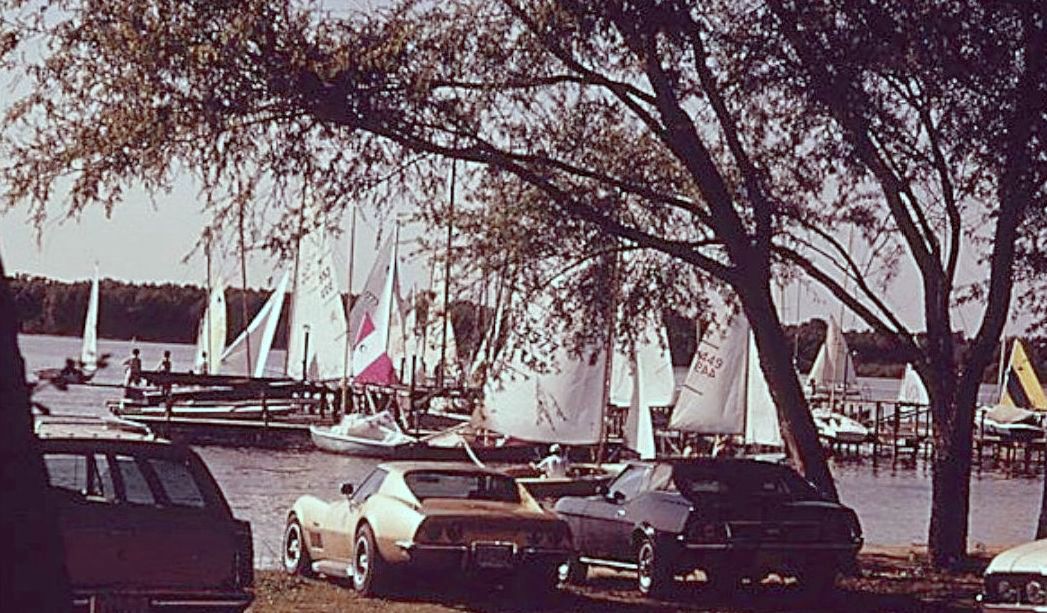
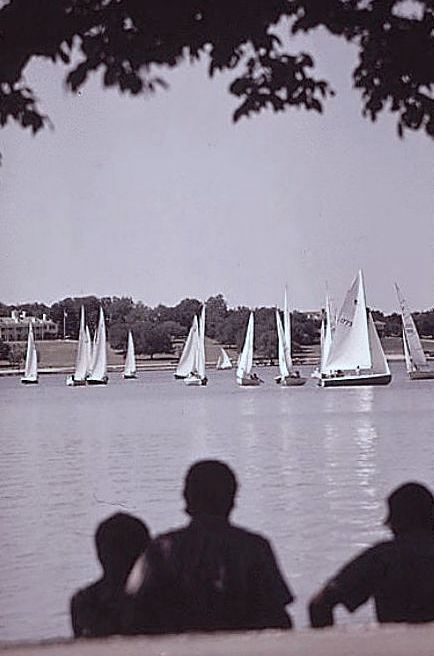
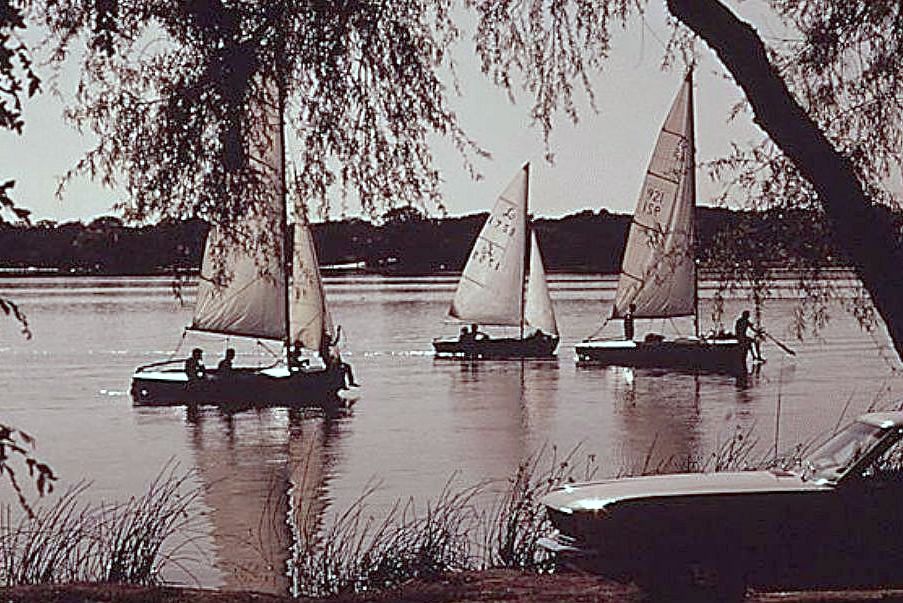
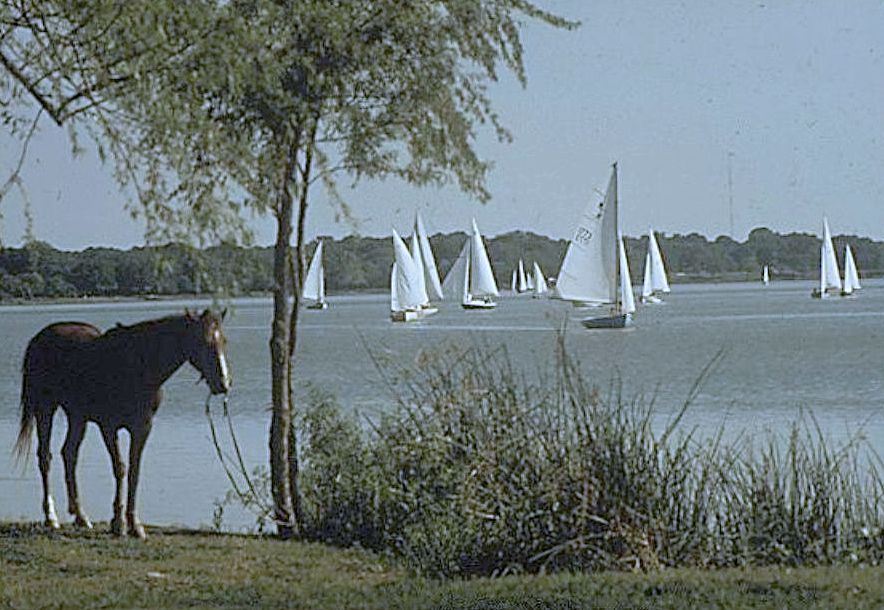
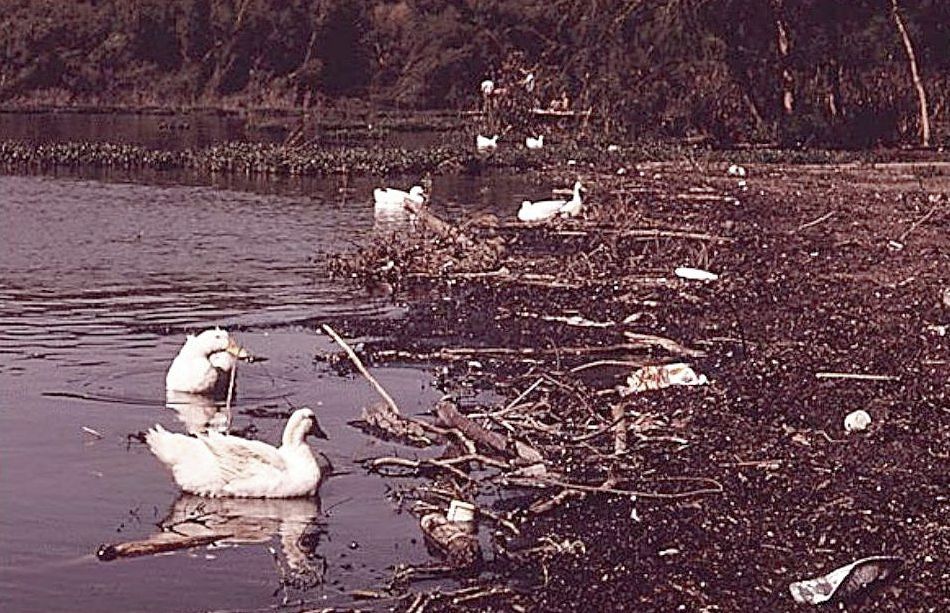
Back before the days of joggers and bikers, one used to be able to drive around White Rock Lake. All the way around. No dead ends, no detours. People used to cruise it on the weekends — the road would be packed solid. I assume the homeowners grew weary of this and put an end to things by having the road chopped up to prevent continuous cruising. Figures. Here’s a look at one weekend in April of 1972, from a series of photos taken by the Environmental Protection Agency as part of their Documerica project which documented areas of environmental concern. Things all look pretty good here, except for the final photo showing ducks paddling alongside trash at the water’s edge — a scene that might make the Keep America Beautiful Indian shed another tear.

A description of these photos (provided, I think, by the EPA):

City folk come in droves each weekend to once-isolated White Rock Lake. Some come to picnic, sail or fish. Some just want to be where the action is [man].

Another caption:

Once-unspoiled and rather isolated, White Rock has become a city dweller’s weekend mecca, attracting people looking for ‘action’ as much as those seeking relief from urban pressures.

*

white-rock_motorcycle_1972_EPA

white-rock_sunday_1972_EPA

white-rock_weekend_1972_EPA

white-rock_boats-cars_epa_1972

white-rock_sailing_1_1972_EPA

white-rock_sailing_2-1972_EPA

white-rock-lake_1972_EPA

white-rock_ducks_1972_EPA

***

Sources & Notes

These photos — from the EPA’s Documerica project (“to photographically document subjects of environmental concern”) — can be found at the National Archives site, here.

Like outtakes from Dazed and Confused, man…. You can practically hear “Brandy, You’re a Fine Girl” wafting through the air.

Copyright © 2014 Paula Bosse. All Rights Reserved.
Linz Bros. and “The Vogue of Bracelets” — 1923

ad-linz-bros_dmn_031123

by Paula Bosse

What a beautiful art nouveau-inspired ad, echoing Beardsley’s pen and ink drawings and Whistler’s Peacock Room. This is wonderful. And it’s unsigned! Ah, the lot of the commercial artist.

***

Ad from The Dallas Morning News, March 11, 1923.

More on Linz Brothers, premier Dallas jewelers, here.

*

Copyright © 2014 Paula Bosse. All Rights Reserved.
Back When Preston Royal Was “Exotic” and Had Its Very Own Elephant

safari-preston-royal

safari-preston-royal-back

by Paula Bosse

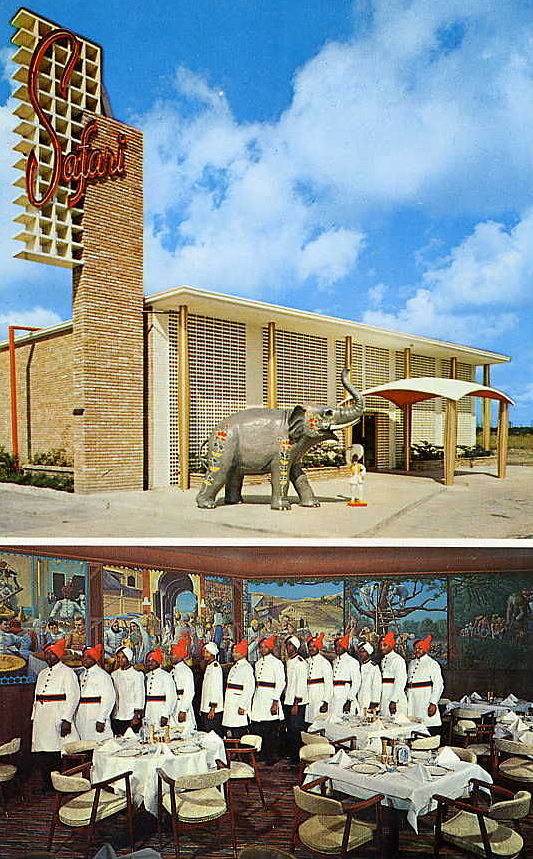
Dallas had a restaurant like this?! Yes, it did. (EDIT: It has been brought to my attention in the comments that the image above shows the *Houston* location. But I have been assured that the Dallas location had its very own elephant standing guard outside — so I will not have to ignominiously change the title of this post!)

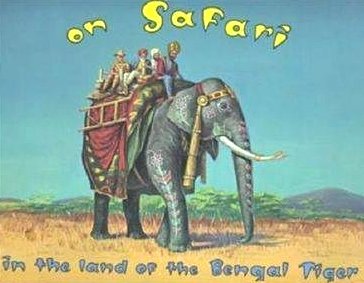
The Safari Steak House was in the Preston Royal Shopping Center at the northeast corner of Preston & Royal (in the space now occupied by the venerable Royal China restaurant). The decor shown in the postcard above is something else — someone put their whole heart and soul into that, from the elephant and, um, elephant wrangler (“mahout“?) out front, to the ornate wood carving and the somewhat… busy murals inside. And the uniformed staff is pretty impressive, too.

Here are photos of the DALLAS Safari, taken in 1961 by Squire Haskins (photos from the UTA Libraries, Special Collections — click the links below the photos for full descriptions and large images). (Thanks, Tom Bowen, for sharing these links in the comments.)

safari_squire-haskins_1961_UTA_1via UTA Libraries, Special Collections

safari_squire-haskins_1961_UTA_2via UTA Libraries, Special Collections

Guy T. Jones opened the Safari in mid 1956 (I think the Houston location was opened later — it was open by at least 1959). I could find almost no early advertising for the place — perhaps Jones blew his advertising budget on elephants and murals. At this point, the shopping center was basically still under construction — the eastern-edge building (home of the Safari) opened about a year after the larger northern-edge building. There used to be a gap between the two buildings, which can be seen in the photo immediately above and can (sort of) be seen in the 1955 ad below, which shows a model of what the finished shopping center would look like.

preston-royal-shopping-center_032755-adAd detail, March 1955

In 1974, Royal China (which is a fantastic place, by the way) took over the space.

I really wish I’d seen that elephant, which — according to the comment below — “was highly visible and well lit at night.” I certainly hope so!

*

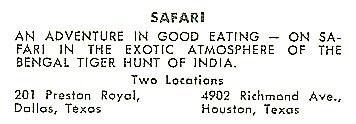
From the cover of the menu:

safari-matchbook-a

safari-matchbook

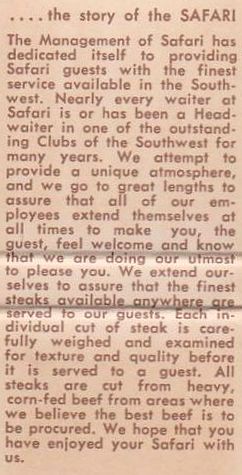
safari-matchbook_story

safari-preston-royal_menu-1969

*

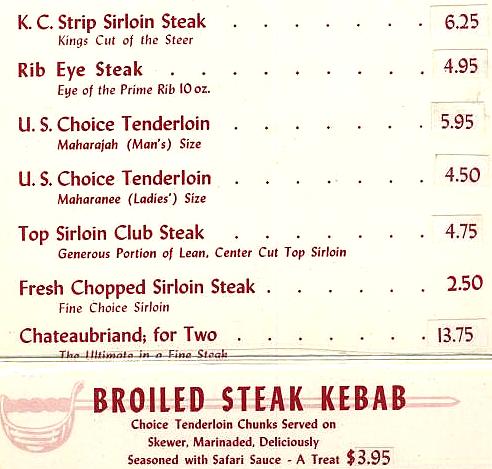
Below, the steak menu. One could choose between the “Maharajah (Man’s) Size” and the “Maharanee (Ladies’) Size.” Or get the kebabs of skewered beef “deliciously seasoned with Safari Sauce — A Treat.”

safari-menu

*

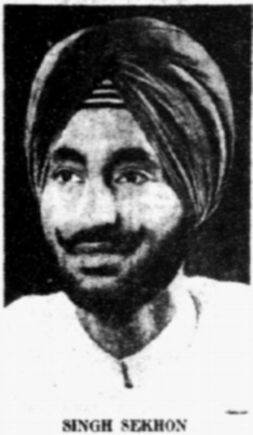
One of the stars of the restaurant was Iqbal “Ike” Singh Sekhon, who started working as the restaurant’s host while studying for his Master’s degree at SMU. He left a few years later to run the fabulous La Tunisia.

safari_dmn_062756-photo

safari-menu-logo

***

Sources & Notes

Edit (Sept. 2022): Wow. This post had a bunch of problems! All I can say is that this was one of my very earliest posts. I was so enamored of that elephant that I made a couple of very glaring errors.

First off, the original title of this post was “Back When Preston Royal Village Was ‘Exotic’ and Had Its Very Own Elephant.” The Safari Steak House was in the Preston Royal Shopping Center, located on the northeast corner of Preston and Royal; the Preston Royal Village shopping center, is on the northwest corner. I’ve (ignominiously) changed the title, but… yikes.

And, as mentioned in the first paragraph, the postcard at the top shows the Houston location, not the Dallas location. Incidentally, the Houston building is still there — it can be seen in a 2011 Google Street View capture here.

The two photos by Squire Haskins (linked below the images) are from the Squire Haskins Photography Inc. Collection, University of Texas at Arlington Libraries, Special Collections (thanks, Tom!). They are dated 1961, one year before a major fire at the restaurant. They reopened the following month, with what sounds like quite an update in decor. I’m not sure when the “gap” between the two shopping center buildings was filled in, but that would have been a good time to expand.

*

Copyright © 2014 Paula Bosse. All Rights Reserved.
Early Dallas Radio & “Verified Reception Stamps”

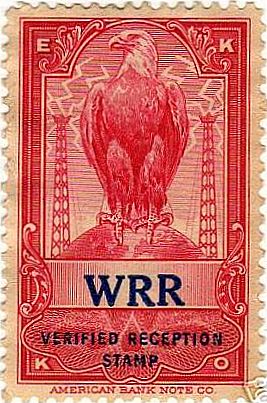
ekko_wrr

by Paula Bosse

Chances are you’ve never heard of “Verified Reception Stamps” which were issued in the 1920s by a company in Chicago called EKKO. I certainly hadn’t. The stamps (referred to by collectors as “Cinderellas”) were enthusiastically and obsessively collected in the mid-’20s — people were really into it. Basically, it seems to have been a clever form of advertising which banked on both the public’s fascination with early radio and the then-very-popular hobby of stamp collecting.

How did it work? Briefly, the EKKO company printed these stamps for subscriber radio stations around the country (and later for stations in Canada, Mexico, and Cuba). Once the radio stations received them, they issued them to listeners who wrote in to affirm that they had, in fact, picked up their station on the wireless. The listener had to prove it by stating the time he or she had tuned in and then give a short synopsis of the program they had heard. Oh, and they had to enclose a dime. (The dime was probably the most important part of this whole fad — at least for the broadcasters.) In return, the station would check their logs and “verify” that the dime-sender probably DID hear the station, and one of these little stamps would be sent out post haste. The EKKO company also conveniently printed up albums for collectors to paste the stamps into. I’m not sure how one was expected to fill up the book (with pages devoted to each state), since there’s no way you’d be able to pick up the signals of all those stations, but I guess that’s what gets collectors’ blood racing. It’s the thrill of the chase. The verified reception stamp-collecting fad died out as the Depression set in, and it became hard to justify spending one’s precious hard-earned dimes on a frivolous hobby.

*

Verified reception stamps were issued by the five main stations in the Dallas-Fort Worth area in the 1920s. WRR, at the top, was the first radio station in Dallas and one of the earliest stations in the country. It began broadcasting as a sort of early police radio in 1920 and received its official broadcasting license in 1922. It remains an oddity in the radio world as it is a commercial radio station that is owned and operated by the City of Dallas.

*

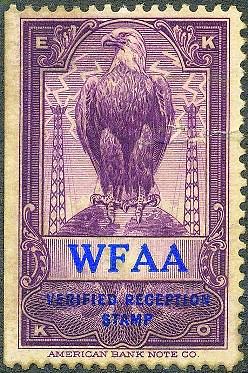
ekko_wfaa

WFAA signed on in 1922 and was part of the nascent Dallas Morning News media empire.

*

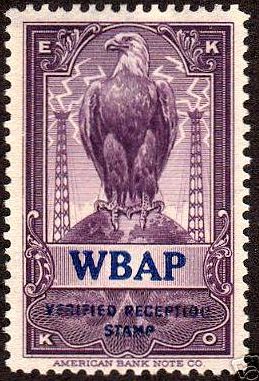
ekko_wbap

WBAP, a Fort Worth station, also signed on in 1922. Someone thought it might be cute if “WBAP” stood for “We’ll Be At the Party.” More serious-minded station people went with “We Bring a Program” which, really, isn’t much better.

*

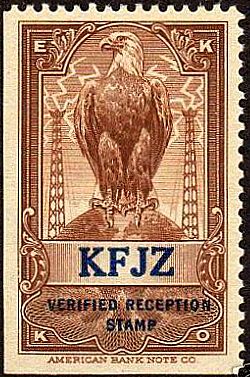
ekko-kfjz

KFJZ (another Fort Worth station) came along in 1923. Its founder sold the station five years later for a good chunk of change and then went to work for WBAP.

*

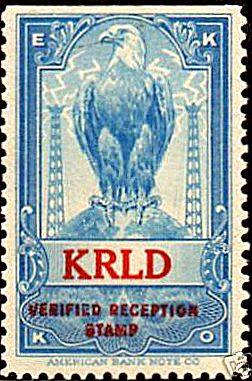
ekko-krld

KRLD began broadcasting in 1926 and was acquired by The Dallas Times Herald a year later.

*

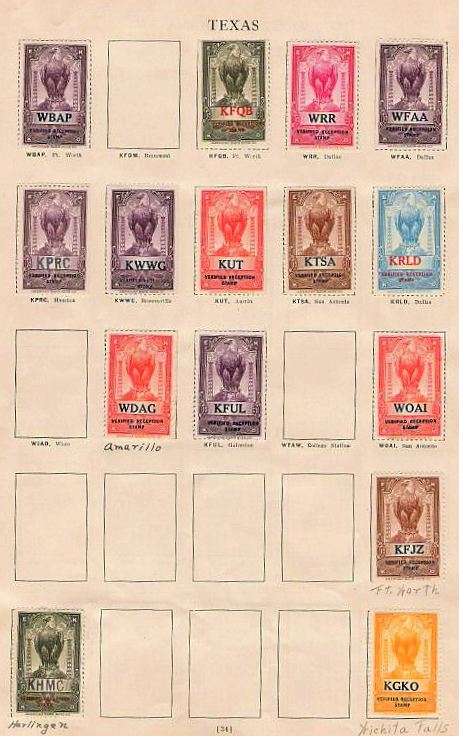
ekko-texas-stations

A sample page of the “Texas” portion of the official EKKO stamp album.

*

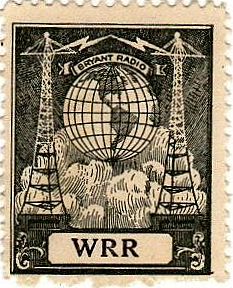
ekko_wrr-globe

The EKKO company had some competition in the PM Bryant Co. Bryant stamps required no “verification” — you just sent them your dime and got a stamp. Their stamps had no eagle, but they DID have transmitter towers and the essential lightning bolts.

*

And now you (and I) know!

***

Sources & Notes

An incredibly comprehensive history of Dallas radio is the DFW Radio Archives site — its main page is here. The pages dealing with the stations broadcasting in DFW in the 1920s are here and here. I highly recommend reading the very interesting account about how WRR evolved from an experimental police communication transmission tool to a full-fledged entertainment station.

*

Copyright © 2014 Paula Bosse. All Rights Reserved.
The Stretch of “Theater Row” They Never Talk About

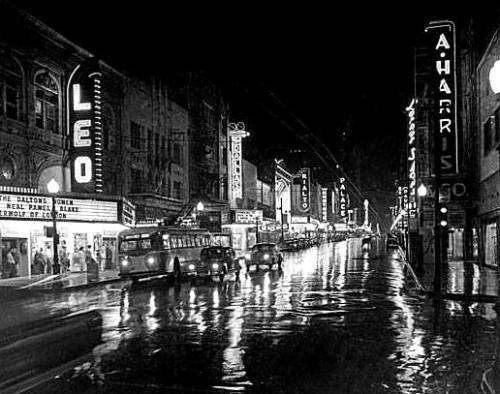
leo-theater
The “other end” of Film Row

by Paula Bosse

It’s April, 1952, and you’ve got a hot date Friday. Movies are good for date night. What to see? Why not catch a bold, frank, and true “adult” double-bill at the Leo? In the early-’50s, the Leo Theater, at 1501 Elm Street, was at the other end of “Theater Row” — on the metaphorical “other side of the tracks” from the classy Majestic and Palace — and it was one of those places that your mother probably wouldn’t approve of.

leo-theater_dmn-0405521952

The ad above shows a typical Leo double-feature: “Pin-Down Girl” (aka “Racket Girls”) from 1951, a searing look at lady wrestlers and prostitution (the trailer below has a moment that’s actually pretty shocking, and you’ll laugh at yourself immediately afterward for having been shocked), and “Honky Tonk Girl” (aka “Hitchhike to Hell”) from 1941 about teenagers and, well, prostitution. There were at least two exploitation movies titled “Honky Tonk Girl,” so I’m not sure which is the correct poster for the particular cinematic treasure on the Leo bill, but I really love the artwork of this one, so in it goes.

honky-tonk-girl_poster

Here’s the trailer for “Pin-Down Girl” (which is handy, because it gives you about all you really need to satisfy a piqued curiosity without wasting a lot of your time):

**∙*

***

Sources & Notes

I don’t have a source for the top photo, but I believe I have seen it attributed to the Dallas Public Library. If this is incorrect, please let me know.

A little background on the Leo Theater (1948-1953), originally the Queen (1913-1948), can be found in the comments section here.

But if you want to know just what was going on in these not-quite-but-fast-approaching seedy Dallas theaters, you owe it to yourself to read a great passage from Troy Sherrod’s Historic Dallas Theatres (Arcadia Press, 2014), here (scroll down to the caption).

*

Copyright © 2014 Paula Bosse. All Rights Reserved.
George Dahl’s Titche-Goettinger Building

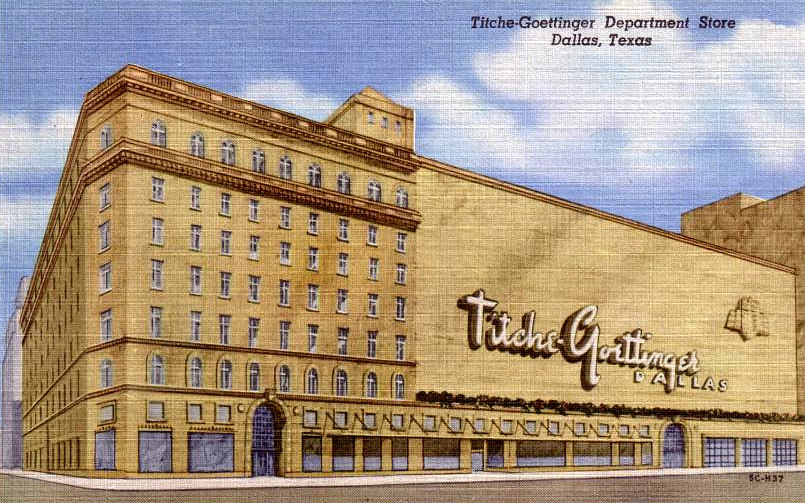
titches

by Paula Bosse

Such a beautiful building! Such a beautiful font!

George Dahl designed the original building (on the left) in the late-1920s, and Thomas, Jameson & Merrill designed the expansion (on the right) in the early ’50s.

titches_new-store_sunset-high-school-yrbk_1929
Ad from the 1929 yearbook of Sunset High School

***

Read about the building here.

Everything you could want to know about Titche-Goettinger/Titche’s is here.

UNT owns the building at 1900 Elm now, and it’s installed windows in that cool solid wall where the store’s name used to be. Check out photos of key renovations and read why they were made here.

More on the Titche’s building (including news on its expansion in 1952 and an architect’s drawing) can be found in the Flashback Dallas post “Main Street — ca. 1942,” here. See the expanded building here.

Click for larger image!

*

Copyright © 2014 Paula Bosse. All Rights Reserved.
Need a Handgun? Head Over to Titche’s! — 1963

titches_gunstitches_guns_dmn_110563c

by Paula Bosse

Titche’s was a nice department store. In 1963 it was a good place to buy a well-tailored suit, shop for fine crystal, and, apparently, get a gun.

***

Sources & Notes

Ad from Nov. 5, 1963.

*

Copyright © 2014 Paula Bosse. All Rights Reserved.
 

Hoisting a Few in the Basement Speakeasy

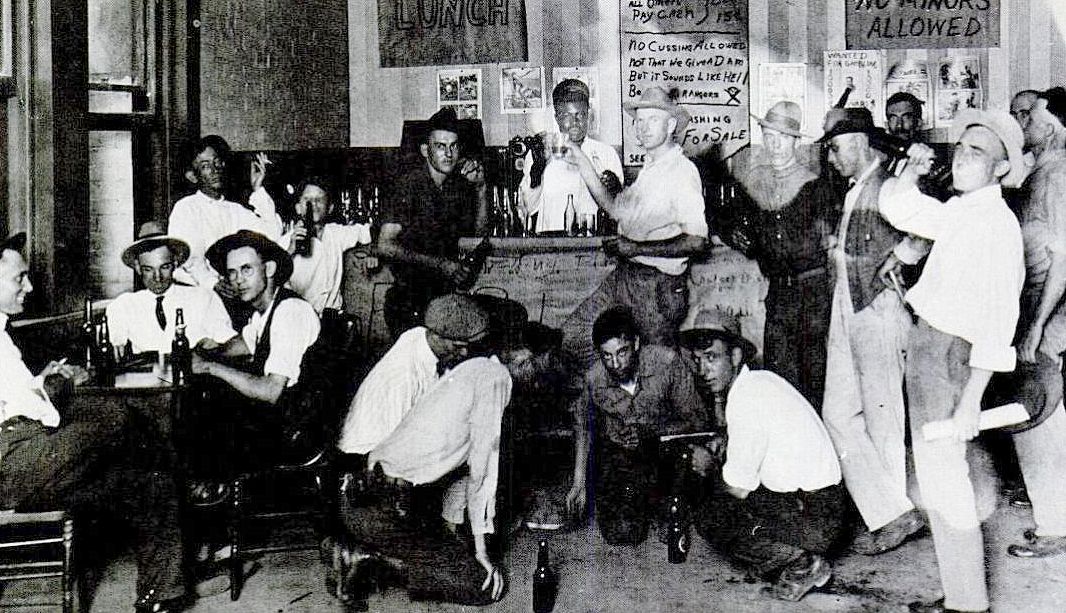
speakeasy_greene

by Paula Bosse

It’s tax day. Here’s a photo of men drinking illegally and gambling. Cheers!

“Dallas voted for Prohibition October 1917 — but it didn’t go dry, as this workingman’s speakeasy (a word not developed then) shows. One sign assures drinkers ‘No Neer Beer Served.’ This is a basement of some downtown building, address unknown.”

***

Photo and caption from Dallas, The Deciding Years by A. C. Greene (Austin: Encino Press, 1973).

Click picture for larger image.

*

Copyright © 2014 Paula Bosse. All Rights Reserved.
The Texas Theatre — 1932

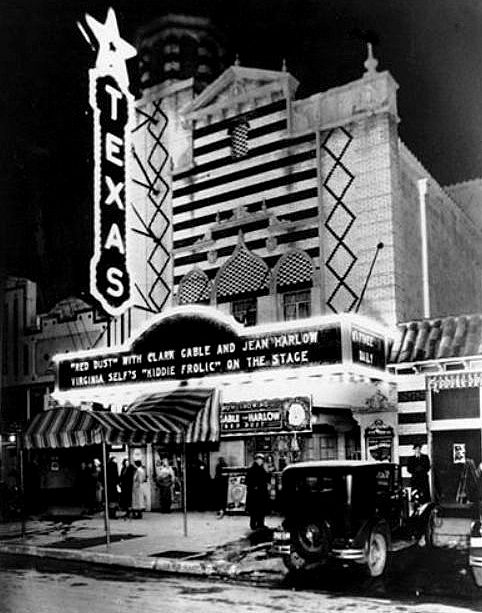
texas-theater_1932The “Texas”

by Paula Bosse

West Jefferson Blvd, 1932. All that’s missing from this photo is Edward G. Robinson and an arsenal of tommy-guns. This is the only theater in the world whose marquee showing the 1963 double feature of “Cry of Battle”/”War Is Hell” has become a part of history (the Texas Theatre, is of course, where Lee Harvey Oswald was captured on the afternoon of November 22,  1963). When the movie theater opened in 1931 — in the time of Prohibition and running boards —  it was a much more elegant-looking picture palace. Had he not been in the Big House at the time, John Dillinger might have seen this very same Gable and Harlow movie at the Biograph (or what I call “Chicago’s Texas Theatre”). He probably wouldn’t have been sitting through something called “Kiddie Frolics,” featuring Oak Cliff’s own Virginia Self, a teenage dancer … frolicking.

***

After several changes in ownership and a few awkward renovations, the Texas Theatre seems to be back on track these days. The history page of their website is here (with interesting factoids such as: it opened on San Jacinto Day, it was the first theater in Dallas with air-conditioning, and it was briefly owned by Howard Hughes).

For photos of the theater’s interior, published in 1932 in the trade journal Motion Picture Herald, see my post “The Texas Theatre and Its Venetian-Inspired Decor,” here.

*

Copyright © 2014 Paula Bosse. All Rights Reserved.