Flashback : Dallas

A Miscellany: History, Ads, Pop Culture

Category: Travel

Fly United to Chicago in Only Eight Hours!
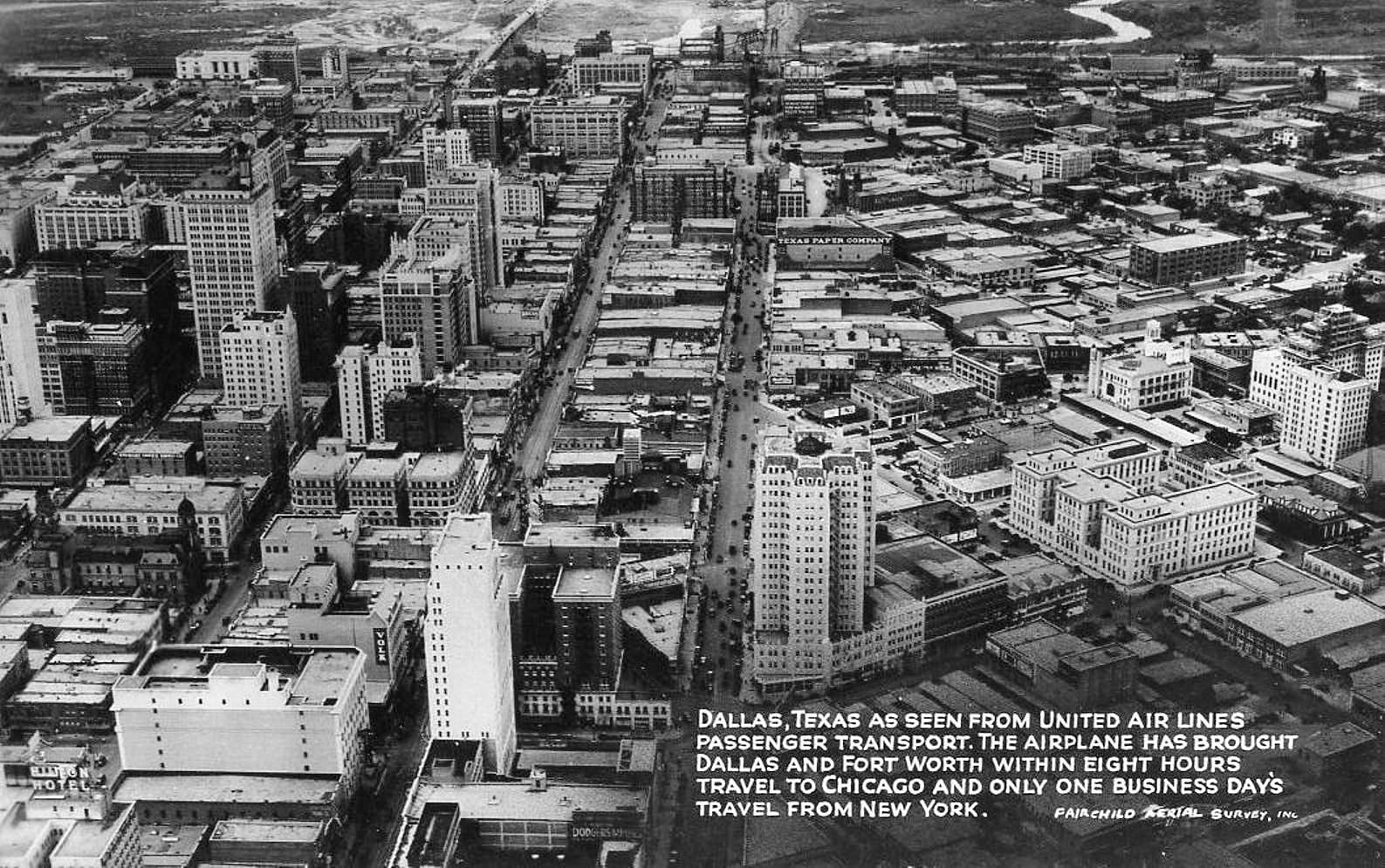
aeiral_united-air-lines_fairchild_ebay_rppcHow many buildings can you identify? (click for larger image)

by Paula Bosse

Dallas, Texas as seen from United Air Lines passenger transport. The airplane has brought Dallas and Forth Worth within eight hours travel to Chicago and only one business day’s travel from New York.

Back when it took all day to fly to New York from Dallas.

This is another great aerial photo by the Fairchild Aerial Survey company, probably taken by Lloyd M. Long. Date-wise? Late-1920s? Before the Trinity was straightened (beginning in 1928), with land being cleared in the area that would become Dealey Plaza? 1928-ish? Or could it have been the very early 1930s? The United Air Lines promotional postcard was issued around 1932 or 1933.

It wasn’t until 1933 that United introduced its new Boeing “twin motor airline transports” and boasted that they would finally “bring the city within eleven and a half hours of New York City” (Dallas Morning News, Aug, 16, 1933).

Below is a photo from a Dallas newspaper ad showing one of United’s planes from the earlier, more carefree days of 1932, when passengers were still trudging through the skies at a more leisurely pace.
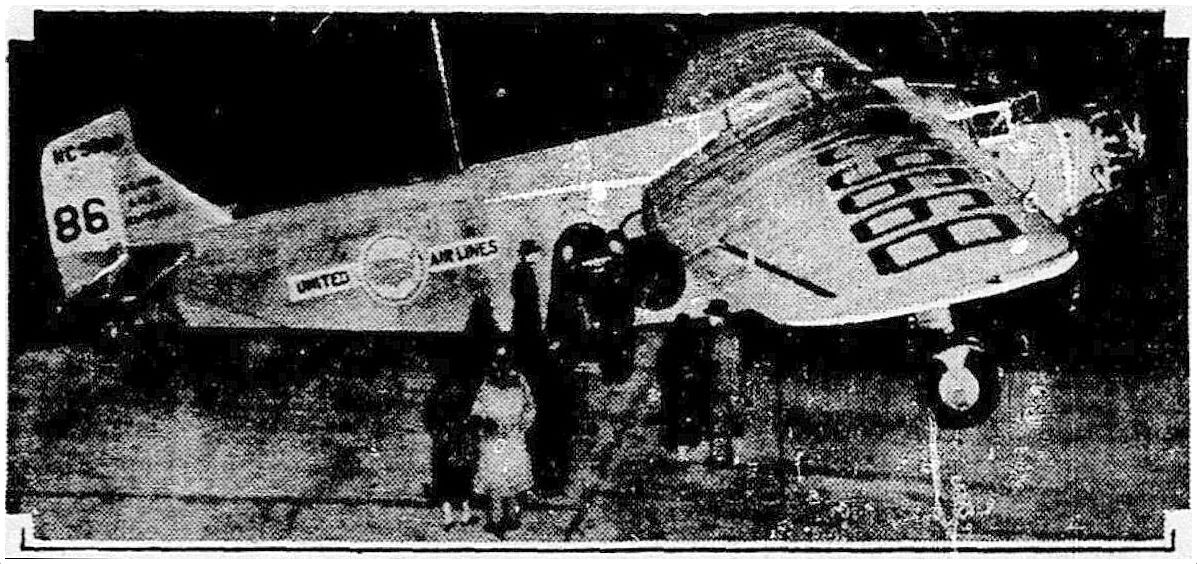
united-air-lines_ad-det_dmn_110432United Air Lines ad, detail, 1932

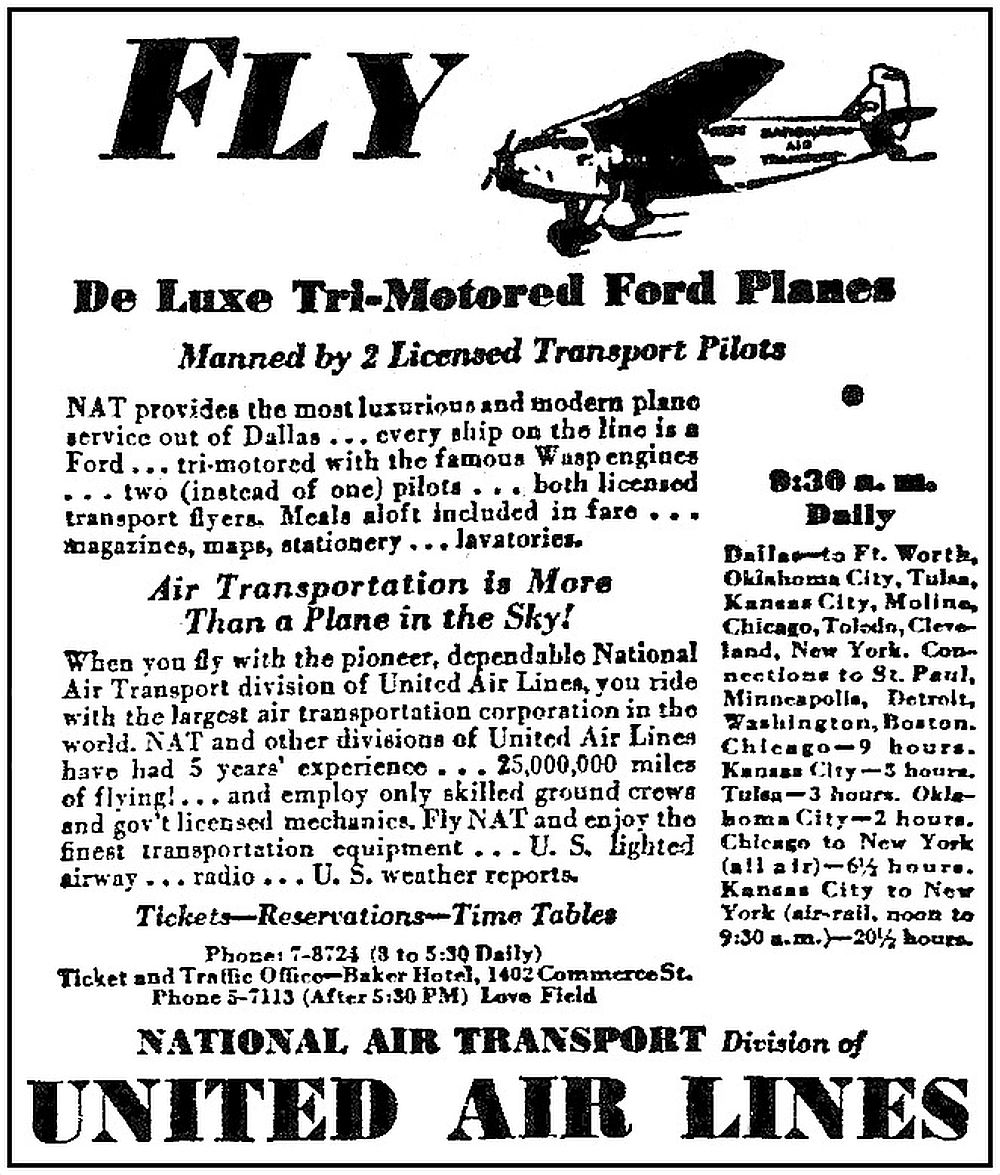
And an even earlier ad, from 1931, when a flight from Love Field to Chicago was nine hours long (today a direct flight from Love Field to Chicago takes about two hours and fifteen minutes). And if you wanted to continue to NYC, you had to board another plane and fly from Chicago to New York, adding another six and a half hours!
united-air-lines_dallas-to-nyc_1931
1931 ad

FLY

De Luxe Tri-Motored Ford Planes Manned by 2 Licensed Transport Pilots
 
NAT provides the most luxurious and modern plane service out of Dallas … every ship on the line is a Ford … tri-motored with the famous Wasp engines … two (instead of one) pilots … both licensed transport flyers. Meals aloft included in fare … magazines, maps, stationery … lavatories. 

Air Transportation is More Than a Plane in the Sky! 

When you fly with the pioneer, dependable National Air Transport division of United Air Lines, you ride with the largest air transportation corporation in the world. NAT and other divisions of United Air Lines have had 5 years’ experience … 25,000,000 miles of flying! … and employ only skilled ground crews and gov’t licensed mechanics. Fly NAT and enjoy the finest transportation equipment … U.S. lighted airway … radio … U.S. weather reports.

*

In an interesting side-note, the first pilot to fly a mail plane between Kansas City and Dallas (on May 12, 1926) was Richard Dobie, brother of Texas literary legend, J. Frank Dobie. In 1926 he flew a Curtiss Carrier Pigeon; in 1933, he’d worked his way up to the speedy and powerful Boeing. He flew for United for several years.

***

Sources & Notes

Top image is a promotional postcard, found on eBay.

Read more about the tri-motor airplane (manufactured by the Ford Motor Company and affectionately known as the “Tin Goose”) in the article “Ford’s Tri-Motor” by Edward J. Vinarcik (Advanced Materials and Processes, Oct. 2003) here.

All images larger when clicked.

*

Copyright © 2015 Paula Bosse. All Rights Reserved.


The Interurban Parlor Car: Perusing the News in Comfy Chairs

interurban-interior_tx-historian_jan81(Click for larger image)

by Paula Bosse

The height of comfort!

You know this photo was taken for promotional purposes, because none of the men has a reeking cigar clenched between his teeth.

***

Texas Electric Railway Interurban ad reprinted in Texas Historian, Jan. 1981.

Interurbans were great. I wish we still had them. Read about what they were, here.

*

Copyright © 2015 Paula Bosse. All Rights Reserved.

Views From a Passing Train — 1902

edmunds_pacific-bryan_free-lib-phil_1902Pacific, looking west toward Bryan, 1902 (click for larger image)

by Paula Bosse

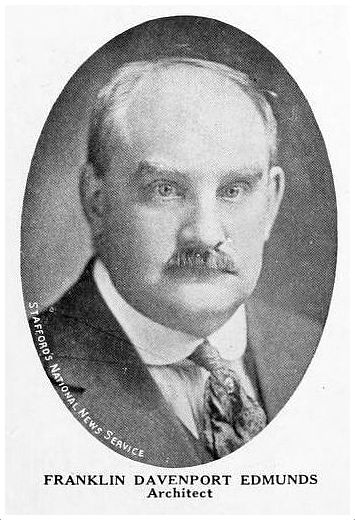
Franklin Davenport Edmunds (1874-1948) was a Philadelphia architect whose hobbies were travel and photography. A 1902 train trip to Mexico took him through Texas, during which there as a blink-and-you’ll-miss-it stop in Dallas.

edmunds_whos-who-philadelphia_1920Who’s Who in Philadelphia, 1920

On the way to Mexico, he stopped in St. Louis for a while (where he took several photos on Feb. 12), passed through Arkansas (on Feb. 13), apparently saw very little of Dallas as he rolled through, and then took a lot of photos when he reached San Antonio (by Feb. 14). He then continued on to a vacation of at least two or three weeks in Mexico, where his camera was never far from his side.

The two photos that were taken as he passed through Dallas (which I’m assuming were snapped from the train) were probably taken on Feb. 13 or 14, 1902.

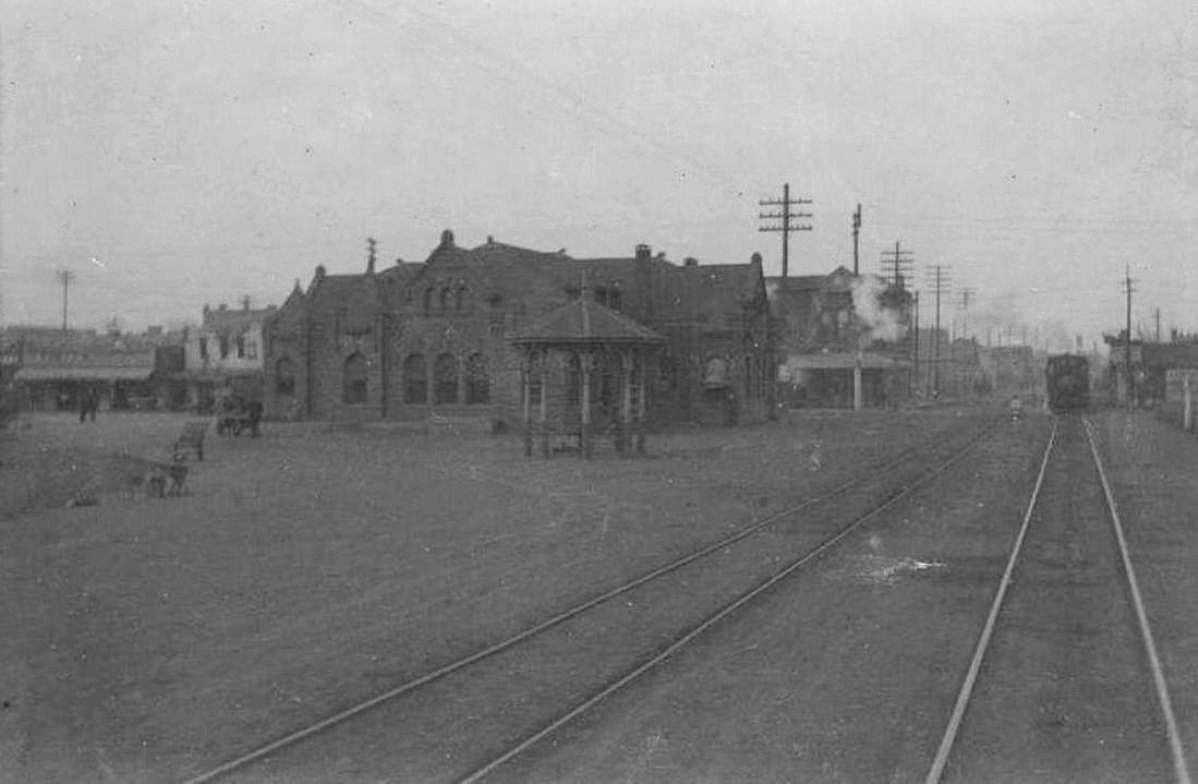
The location of the photo above is not noted, but it appears to be Pacific Avenue looking west. Peter S. Borich’s sign-painting business was on the northeast “corner” of Bryan and Pacific (at the point of the diagonal intersection). The photo shows the back and side of his building. It’s hard to see them, but there is a wagon with a team of horses at the Bryan St. intersection. Behind Borich’s is a blacksmith shop, and across the street, there are several furniture stores. Straight ahead is an almost mirage-like smoke-spewing locomotive heading toward the camera. (Unless Edmunds was standing in the middle of Pacific, I’m guessing he was taking the photo from the rear of the train.)

Seconds later, the train would have pulled into the old Union Depot (located about where Pacific would cross present-day Central Expressway).

edmunds_old-union-stn_free-lib-phil_1902(click for larger image)

Even though not identified in the photo description, the distinctive old Union Depot is instantly recognizable (an unrelated photo taken from about the same spot can be seen in this one from the George W. Cook collection at SMU’s DeGolyer Library). Again, the photo appears to have been taken from the train.

Edmunds took a ton of photos on this trip, but, sadly, he seems to have merely passed through Dallas without wandering around to explore its streets (which I would think would be interesting — if not downright exotic — to a Philadelphia architect) — I’m not sure he even got off the train to stretch his legs! But I’ve never seen these two photos, and they’re pretty cool. So, thanks, Frank — you should have hung around a little longer.

***

Both photos by Franklin Davenport Edmunds are from the Free Library of Philadelphia. The Pacific Avenue photo can be accessed here; the Union Depot photo, here. Other photos he took in Texas during the 1902 trip (and a few from a previous 1899 trip) can be viewed here.

A biography of Edmunds can be read at PhiladelphiaBuildings.org here.

A detail from the 1905 Sanborn map showing the businesses located at Pacific and Bryan, with Borich’s business circled in red and the camera’s vantage point in blue, can be seen here.

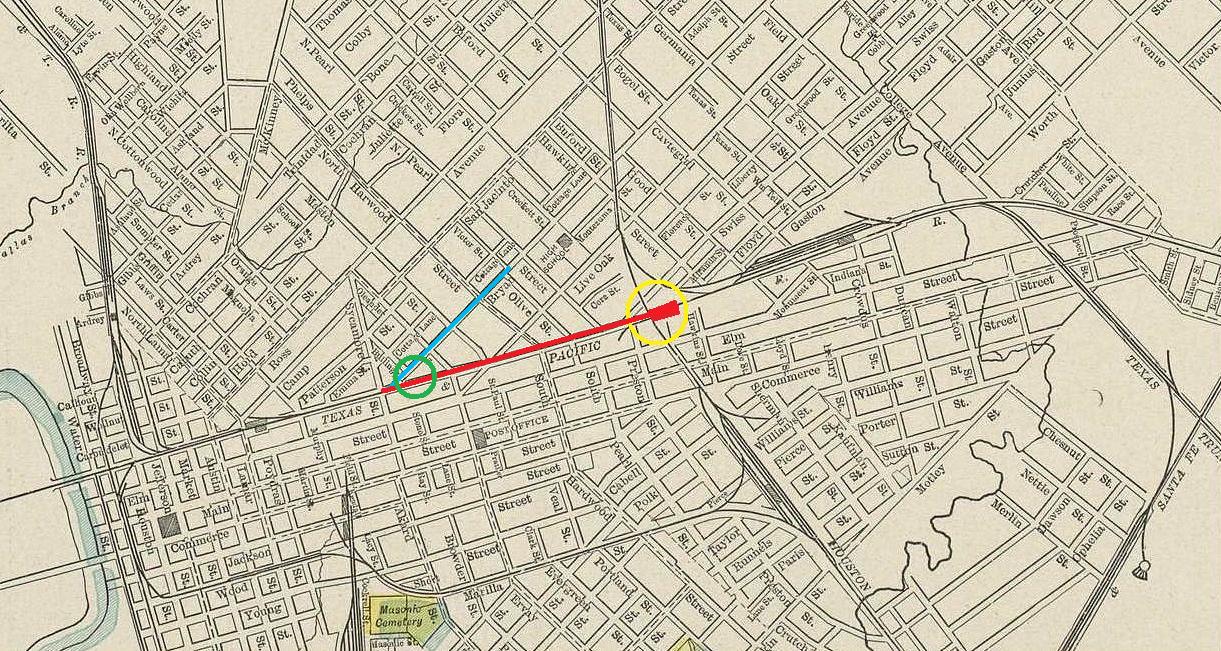
Below, a detail from a map (circa 1890-1900), showing the locations of the two photos, with the Pacific Ave. location circled in green and the Union Depot location in yellow.

dallas-map_ca1900(click for larger image)

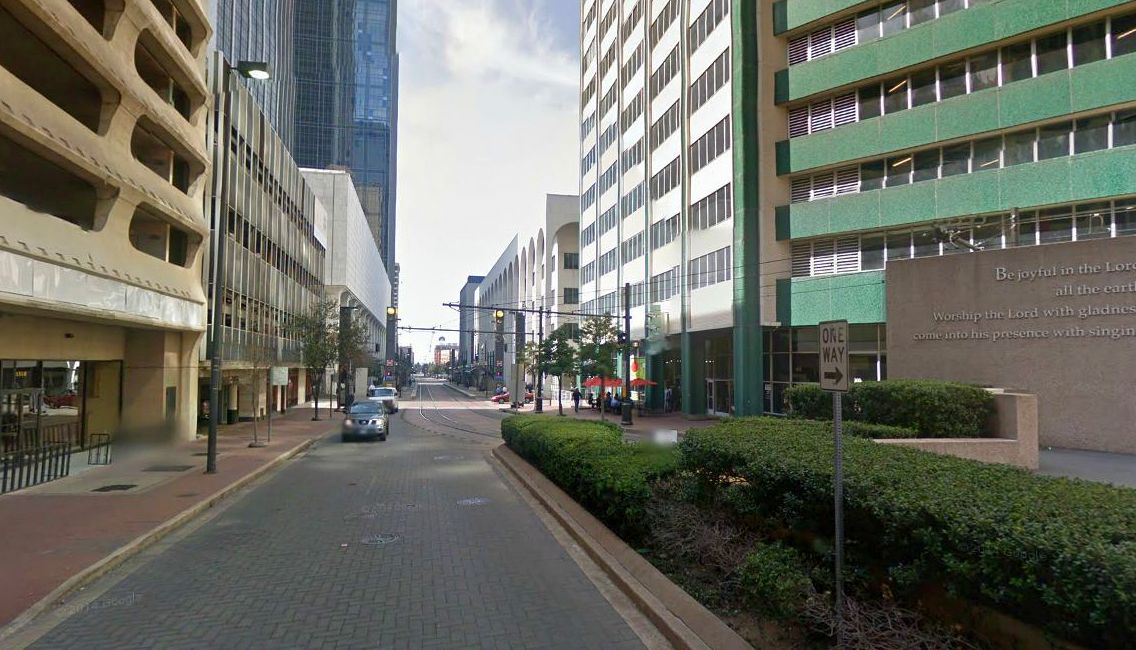
And, lastly, a present-day image showing the same view as the top photo (from Google Street View).

pacific-bryan_google

My previous post, “The Old Union Depot in East Dallas: 1897-1935” — a history of the station with several photos — can be found here.

Images larger when clicked.

*

Copyright © 2015 Paula Bosse. All Rights Reserved.
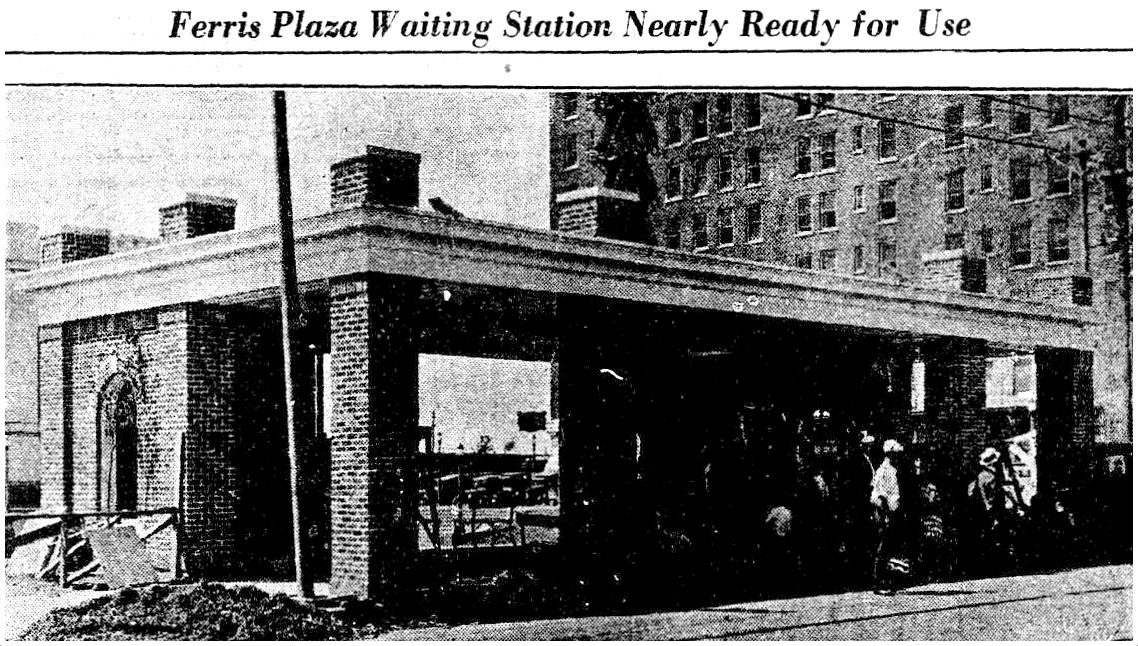
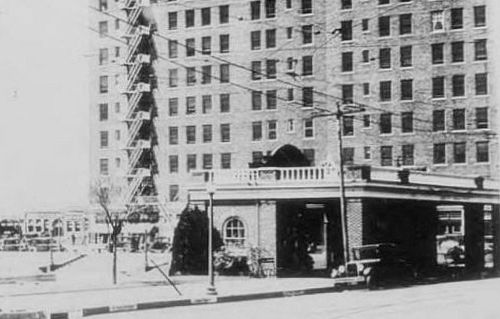
Ferris Plaza Waiting Station — 1925-1950

railway-info-bldg_1926From The Electric Railway Journal, 1926

by Paula Bosse

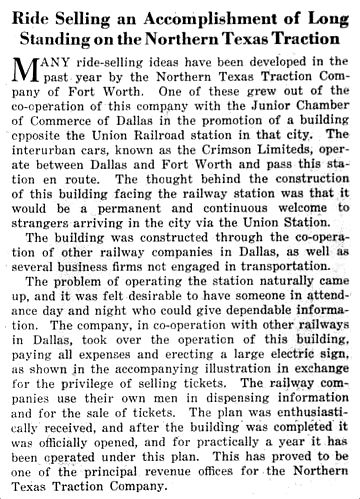
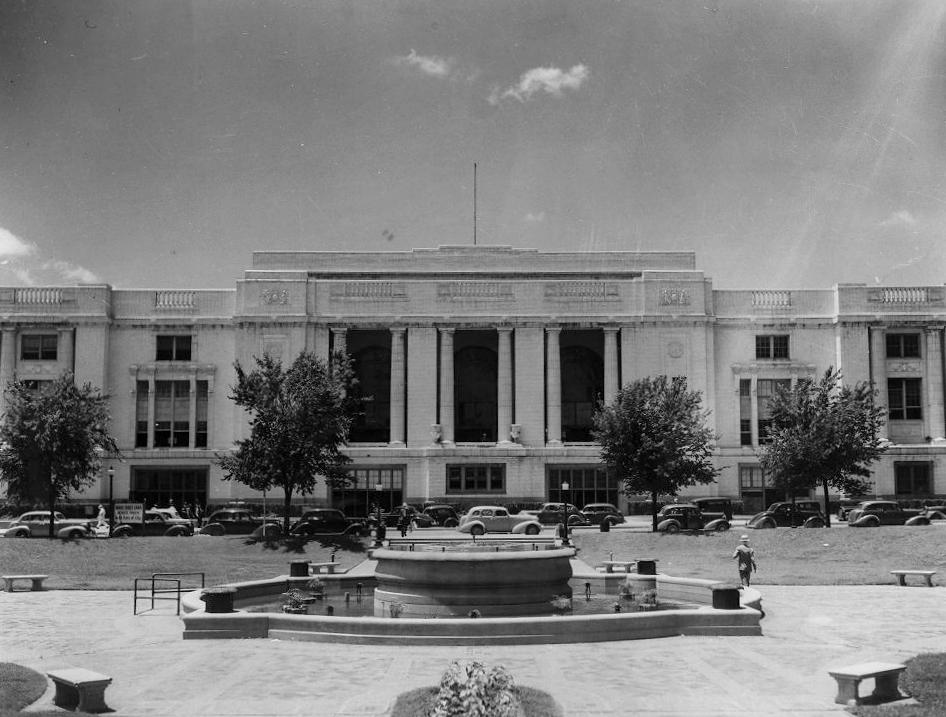
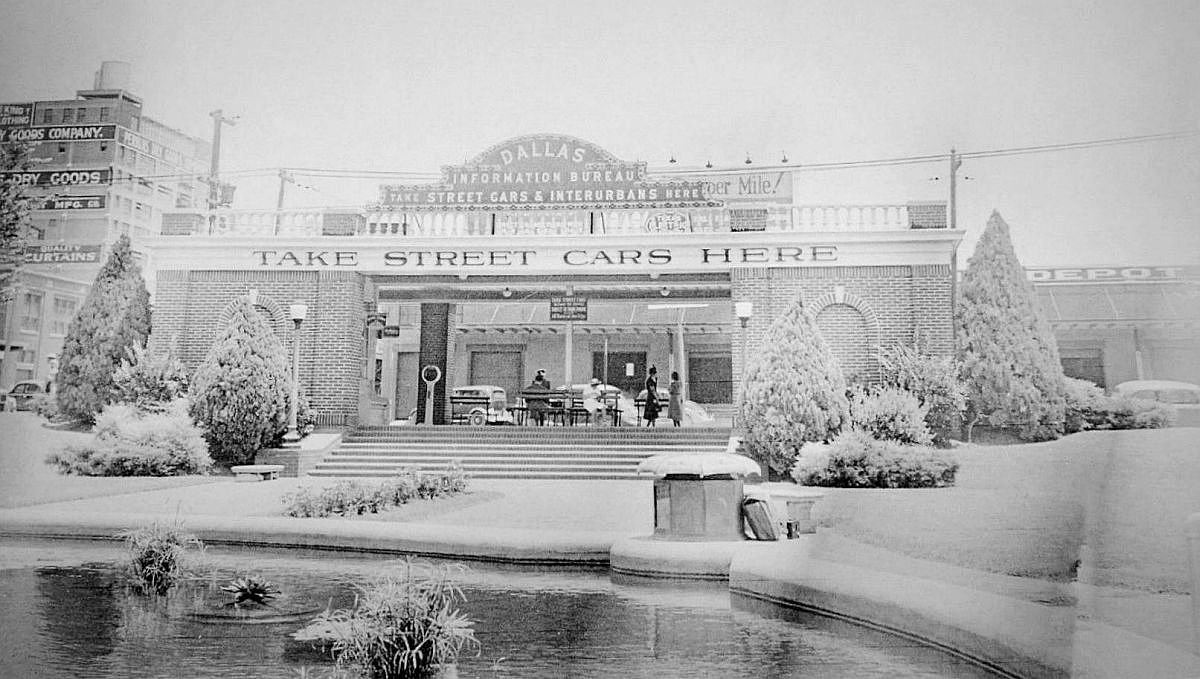
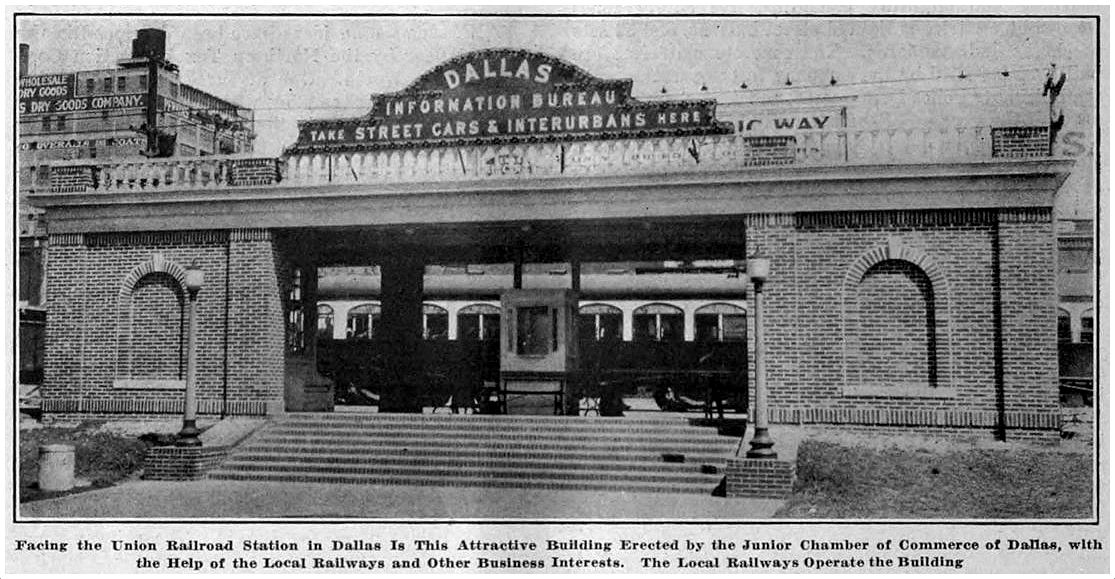
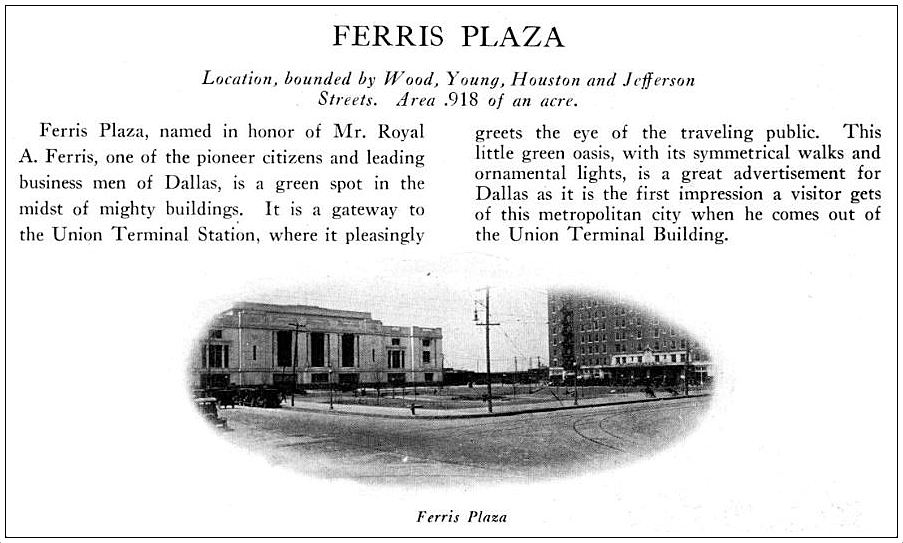
I came across the odd image above whilst digitally thumbing through a 1926 issue of The Electric Railway Journal (as one does…) and wondered what it was. It was definitely something I’d never seen downtown. Turns out it was a combination information bureau, covered stop in which to buy tickets for and await the arrival of interurbans and streetcars, a place to purchase a snack, and a location of public toilets (or, more euphemistically, “comfort stations”). It was located at the eastern edge of Ferris Park along Jefferson Street (which is now Record Street), with the view above facing Union Station. It was intended to be a helpful, welcoming place where visitors who had just arrived by train could obtain information about the city, and it was also a pleasant place to wait for the mass transit cars to spirit them away to points beyond. With the lovely Ferris Plaza (designed by George Dahl in 1925) between it and the front of the Union Terminal, this was considered The Gateway to the City long before Dealey’s Triple Underpass was constructed. (Click photos and articles to see larger images.)

ferris-plaza_park-and-playground-system_pubn_1921-23_portal

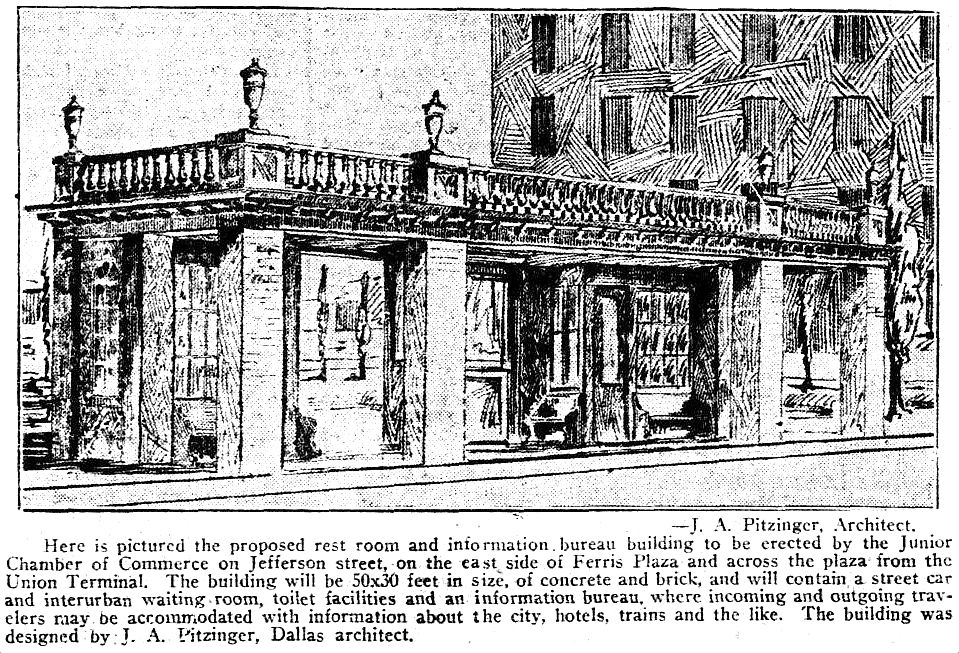
The “waiting station” was the brainchild of the Dallas Junior Chamber of Commerce which proposed the idea to the City of Dallas and, as it was to be built at the edge of a city park, the Park Board. The small (50 x 30) brick building — designed by Dallas architect J. A. Pitzinger — would cost $5,000 and would be paid for by funding from local businesses, including various transportation concerns (namely, the Northern Texas Traction Company). The “traction” companies would staff the information booth and sell tickets. The plans were accepted and permission was granted. Construction began in July, 1925, and the building was opened for waiting by October.

This improvement is the most recent of a number which have made of Ferris Plaza a beauty spot at the gateway of the city. Designed for a sunken garden, fringed with trees, the plaza is now adorned with a great fountain, illuminated with colored lighting at night, the gift of Royal A. Ferris. The new waiting station is in harmony with the general scheme of the plaza development, and combines beauty with utility. (Dallas Morning News, Sept. 20, 1925)

The little waiting station proved to be quite popular, and by the end of its first year the Northern Texas Traction Company (who operated interurban service between Dallas and Fort Worth) was very pleased, as interurban ticket sales at the station had become a solid source of company revenue. The Ferris Plaza station lasted a rather surprising 25 years. It was torn down in 1950, mainly because the interurbans had been taken out of service and there was no longer a need for it. Also, the park department was eager to get their park back and make it more “symmetrical.”

People would just have to wait somewhere else.

*

ferris-plaza-info-bureau_rendering_pitzinger_dmn_031625Architectural rendering by J. A. Pitzinger (DMN, March 16, 1925)

ferris-plaza-waiting-stn_dmn_092025Nearing completion (DMN, Sept. 20, 1925)

waiting-station_jefferson-hotel_degolyer-lib_SMU_croppedDeGolyer Library, SMU (cropped)

railway-info-bldg_1926_text_smThe Electric Railway Journal (Nov. 6, 1926)

ferris-plaza_union-station_dpl_1936Union Station, 1936 — view from the “waiting station” (Dallas Public Library)

waiting-station_ebay

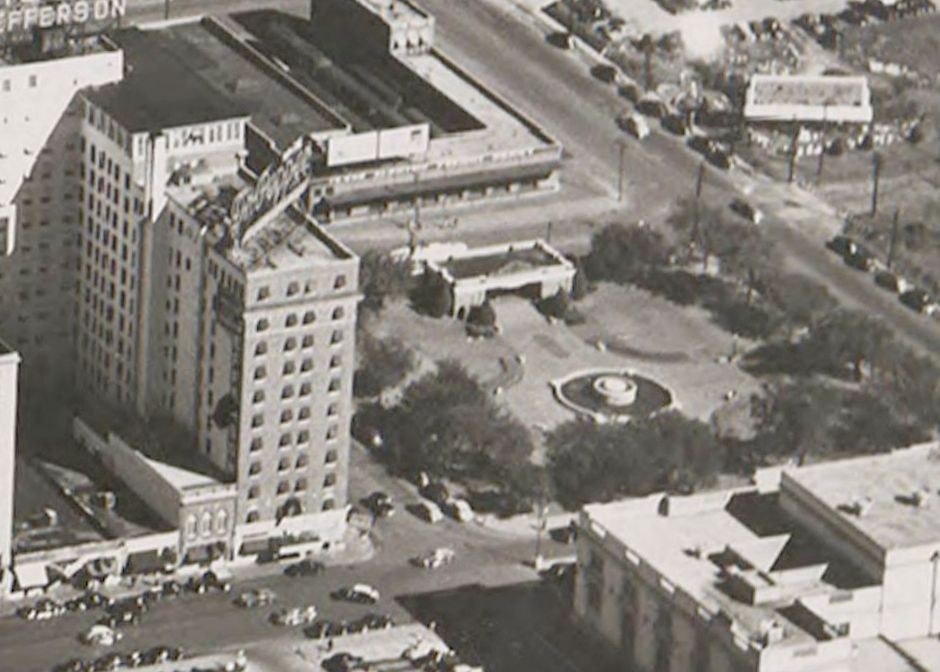
ferris-plaza_aerial_smu_c1949-det1949 aerial view, showing “waiting station” just above plaza’s circular fountain

***

Sources & Notes

Top photo from The Electric Railway Journal, Nov. 6, 1926.

Very early photo and description of Ferris Plaza is from Park and Playground System: Report of the Park Board of the City of Dallas, 1921-1923, via the Portal to Texas History, here.

Cropped image showing the waiting station with the Jefferson Hotel in the background is from the DeGolyer Library, SMU — more info is here.

Photograph of Union Station from the Texas/Dallas History and Archives Division of the Dallas Public Library.

Aerial photo showing Ferris Plaza is from a larger view of downtown by Lloyd M. Long (the original of which is in the Edwin J. Foscue Map Library collection of the Central University Libraries, Southern Methodist University, and which can be viewed here).

To read about the Ferris Park restoration project, see here.

For a few interesting and weird tidbits about the block that eventually became Ferris Plaza (including the fact that it was thought to be haunted and that it was once the site of a brothel), check out this page on Jim Wheat’s fantastic site.

*

Copyright © 2014 Paula Bosse. All Rights Reserved.
“The Riviera of the South” — On Harry Hines!

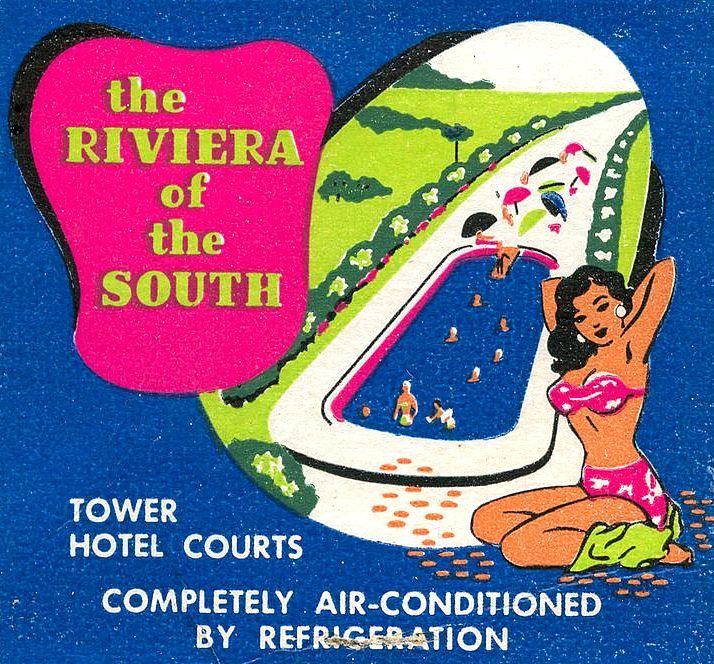
tower-hotel-courts_pool-match_flickr-smThe paradise of Harry Hines awaits…

by Paula Bosse

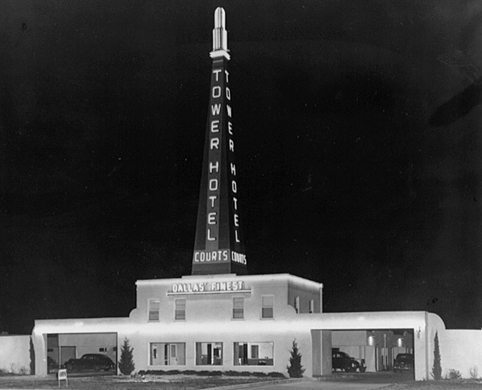
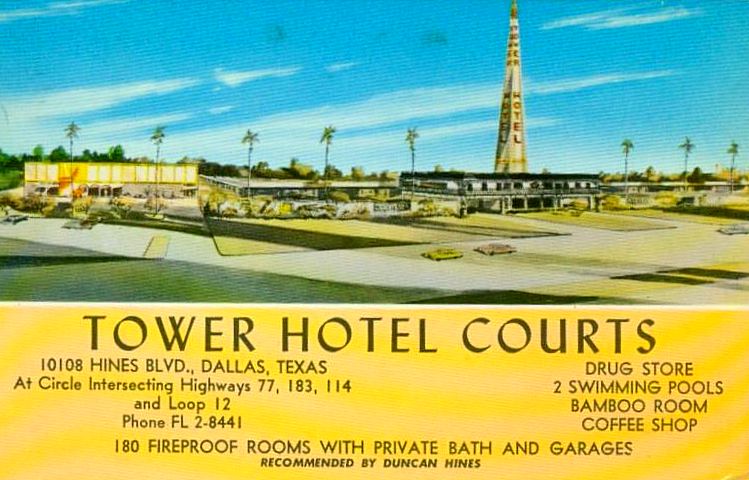
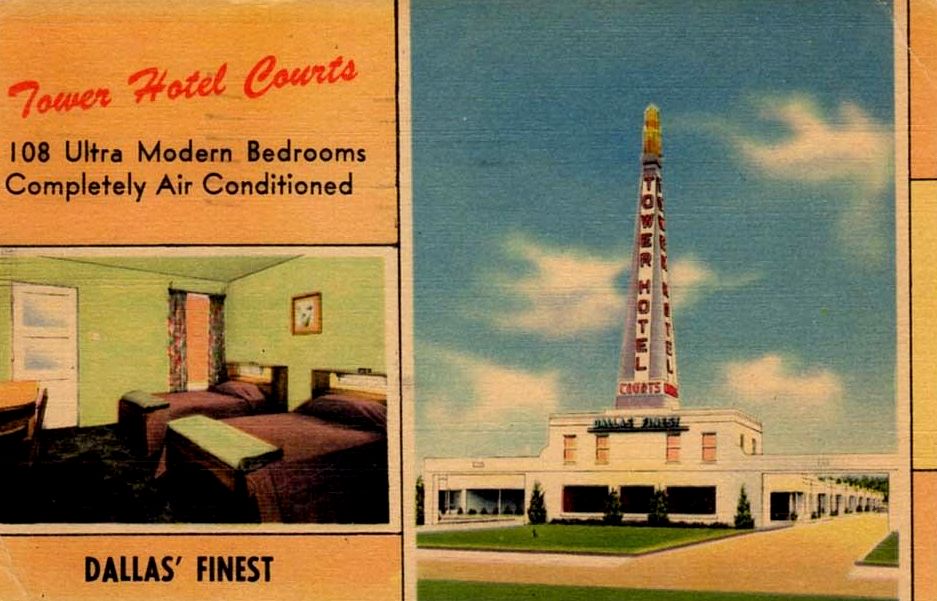
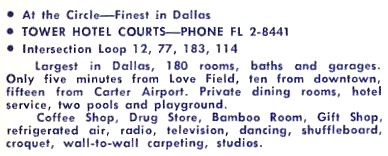
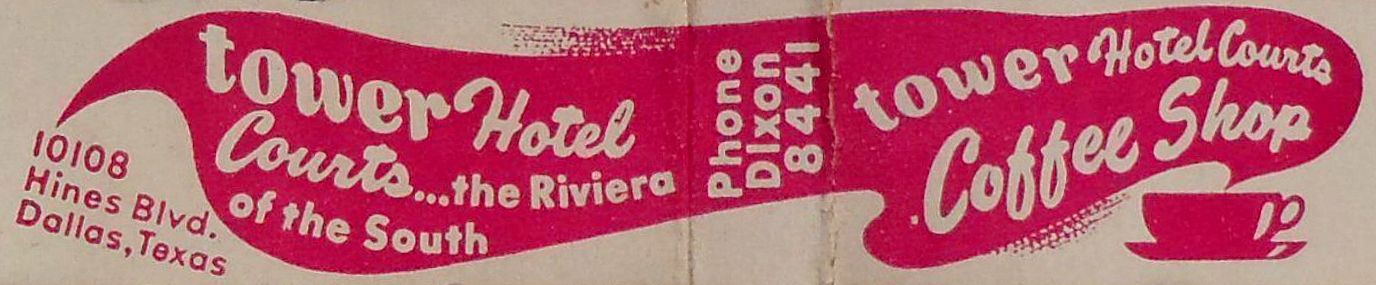
The Tower Hotel Courts opened in the fall of 1946. Their address makes my had spin: at “The Circle” where highways 77, 183, 114, and Loop 12 intersect. “10108 Harry Hines” would have been easier to fit on the stationery, but mention of all those highways just made everything more exciting. (It also gave some indication to prospective guests of what would be awaiting them, such as constant traffic noise and the ever-present whiff of exhaust in the air. “You can’t say we didn’t warn you, madam.”)

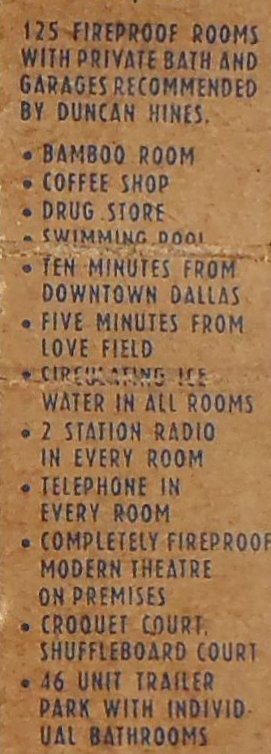
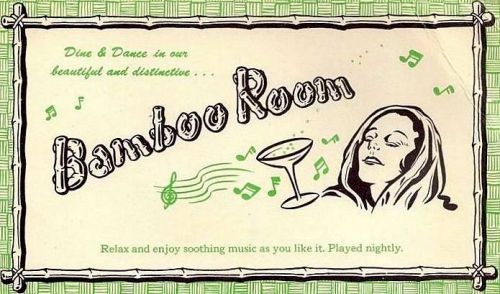
The fancy motel was five speedy minutes away from Love Field, which seems handy, because if you had an hour or seven to kill before your flight, wouldn’t you want to spend it there in the fabulous-looking Bamboo Room? I would! (Even though I’m pretty sure that matchbook cover is a little more glamorous than the actual Bamboo Room.)

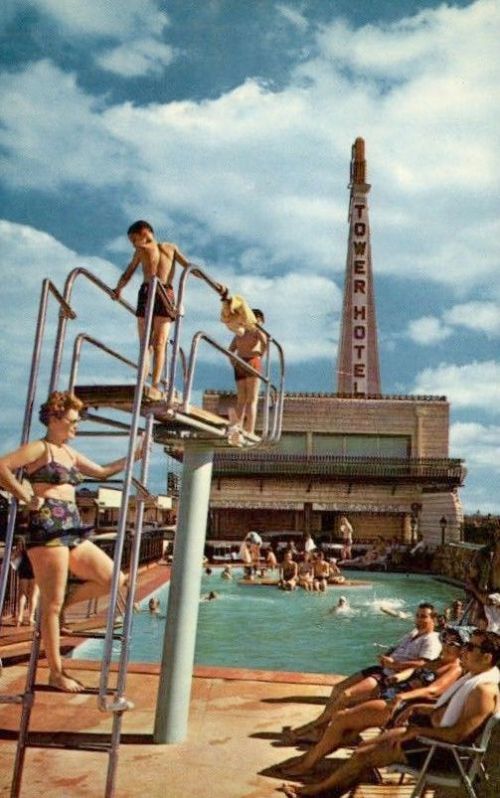
If you were going to stay for a day or two and not just a few drinks, there were all sorts of things waiting for you: two pools (one a very large children’s wading pool), a theater, a croquet court AND a shuffleboard court, “circulating ice water,” and … stand back … a 2-station radio in every room. Somewhere in amongst all of this was a 46-unit trailer park (“with individual bathrooms”).

It’s not hard to see why they called the Tower Hotel Courts The Riviera of the South.”

tower-hotel_bw

tower-hotel-courts_postcard2

tower-hotel-courts_postcardUltra Modern!

tower-hotel-courts_pool-smOwner’s wife and kids?

tower-hotel-courts_pool_back

tower-hotel-courts_riviera

tower-hotel-courts_riviera_inside

tower-court-hotel_bamboo-room_flickr

tower-hotel-courts_pool-match_flickr-sm

***

First and last images from Flickr; Bamboo Room image also from Flickr.

Several of these pictures are larger when clicked.

*

Copyright © 2014 Paula Bosse. All Rights Reserved.
Swooning Over Love Field — 1940

love-field_1940Art Deco Love Field!

by Paula Bosse

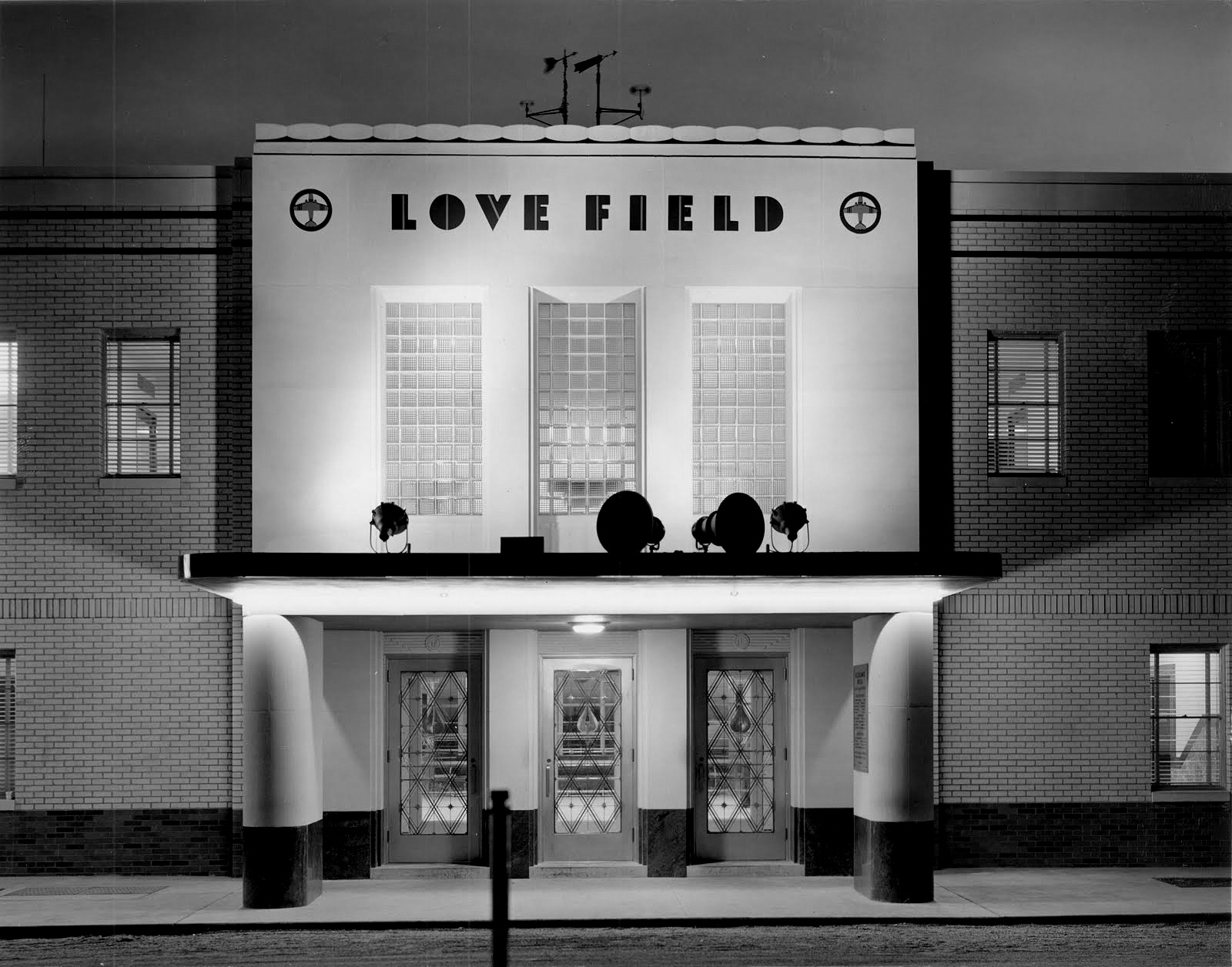
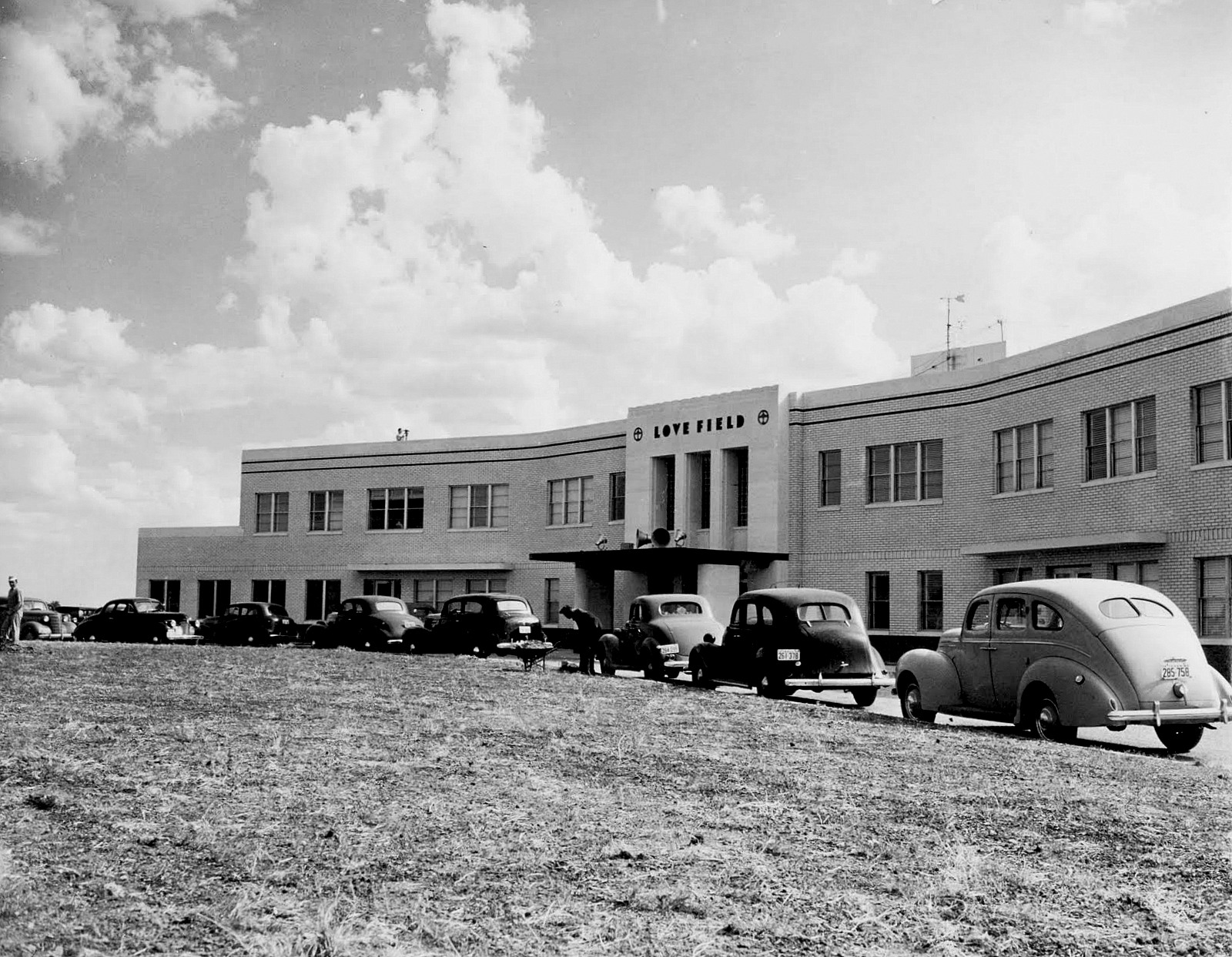
I’m a huge-fan of the modern 1950s-era Love Field (the one with the Mockingbird Lane entrance), but even that can’t trump this fantastic building! Designed by architect Thomas D. Broad, the new Love Field administration building and terminal — which faced Lemmon Avenue — was unveiled on October 6, 1940, to rapturous acclaim. The night view above is pretty breathtaking. Forget the airfield. For me, it’s all about this entrance. Those windows. And those doors. And that font! And those little airplane pictographs!

love-field_terminal_1940It wasn’t bad in the daytime, either — just nowhere near as dramatic. And in dire need of landscaping.

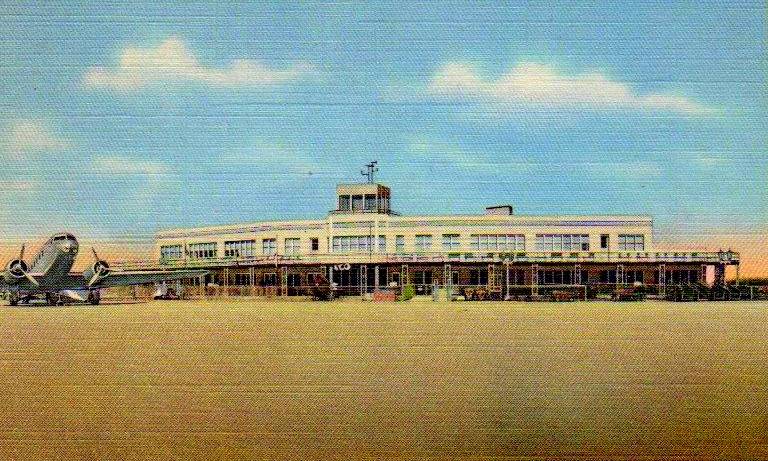
love-field_ca1940_frontAnd here it is from the field side. Still swoon-worthy. The back of this postcard reads:

LOVE FIELD — NEW $225,000 ADMINISTRATION BUILDING
One of America’s finest air terminals which takes care of more airline passengers, more air mail and more air express in ratio to population than any other airport in the country.

**

What happened to this beautiful building? I searched through the Dallas Morning News archives until I felt I had to throw in the towel, never finding a definitive answer. But here’s what I did find. When the brand-spanking-new terminal (the one we know today) opened in 1958, the 1940 terminal was vacated. A better word might be “abandoned.” Most assumed the building would be razed very soon after. But I got as far as September of 1964, and the old terminal was still standing. And it wasn’t pretty. This excerpt from a Dallas Morning News article is painful to read:

…The old terminal building cowers in desolation…. Virtually every window has been smashed, carpeting the deserted terminal with a dangerous floor of broken glass. Loose wires stick out here and there, and blinds hang in twisted postures from broken cords. The building’s big sign DALLLAS is missing its D. (DMN, July 2, 1961)

(And even more thoroughly painful is the article in the Dallas News archives by Kent Biffle, “Ghosts Wait by Runway” — DMN, Feb. 2, 1961.)

Apparently, the old building had to remain standing until a new “much-debated” new multi-million-dollar runway was agreed upon.

The point at which I threw in the towel in my quest to discover when the old terminal building had been demolished was a DMN photo from September 25, 1964, with the caption “$4,000,000-Plus Runway Progress. The 8,800-foot parallel runway at Dallas Love Field, left center, is two-thirds completed and should be ready for use next spring.” I am assured the photo has a hard-to-see old terminal still decaying in it. I assume they razed that sucker pretty soon afterward. …Possibly.

***

Sources & Notes

Top two photos are from the Love Field Collection, Dallas History and Archives, Dallas Public Library; accession numbers are PA83-13-8 for the swoony one at the top, and PA83-13-4 for the daylight exterior photo. I originally found these in the post “The New Love Field” by Jacob Haynes, here.

Click pictures for larger images — the first two are HUGE!

*

Copyright © 2014 Paula Bosse. All Rights Reserved.
The Statler Hilton: Dallas Has It All … Again

statler-hotel

by Paula Bosse

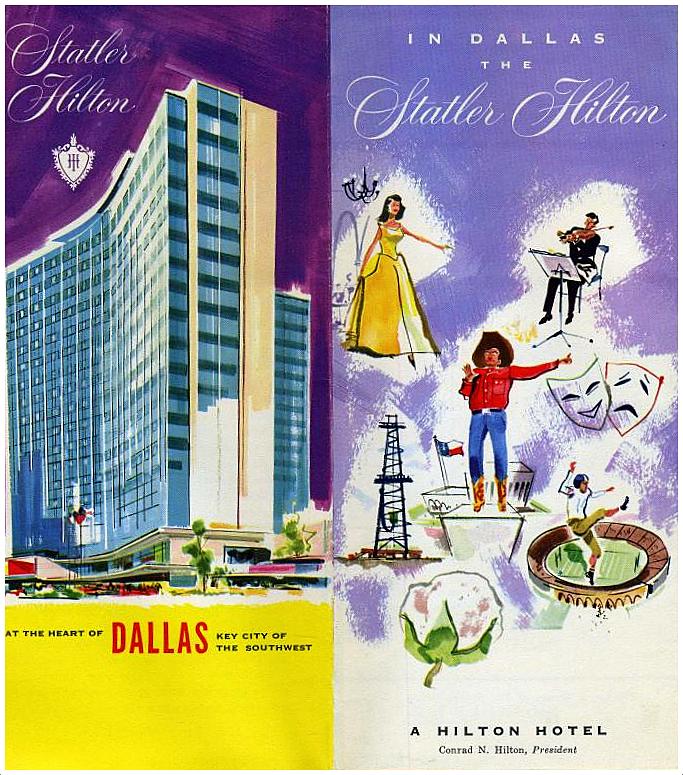
It’s alive!

The old Statler Hilton looks like it might finally be renovated! Read about the exciting plans here.

Click picture for larger image.

*

Copyright © 2014 Paula Bosse. All Rights Reserved.
Dallas to Austin by Stagecoach: Only Three Days! (1854)

by Paula Bosse

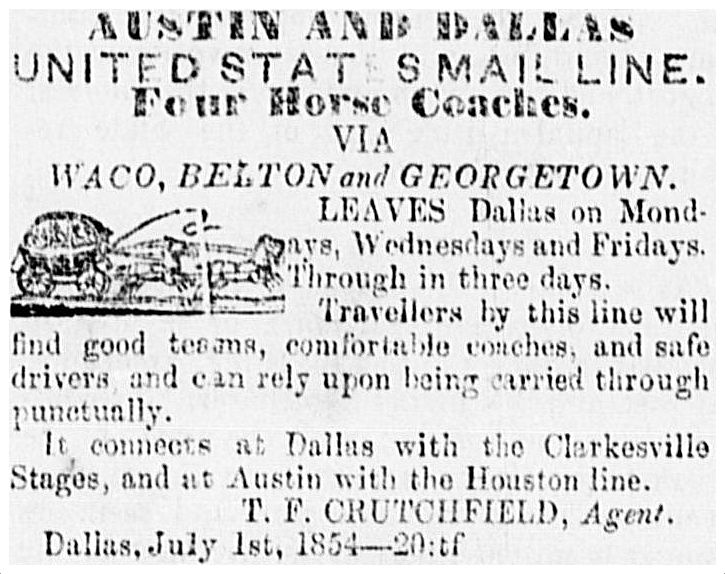
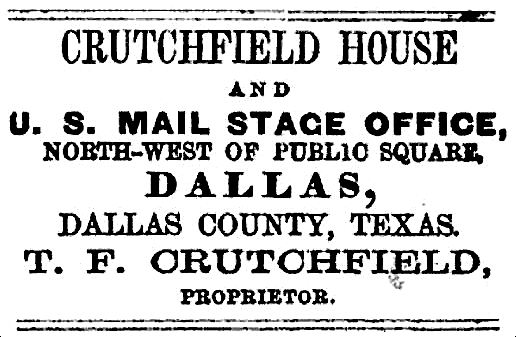
T. F. Crutchfield was a busy man who had his hands in a lot of pies in the very early days of Dallas. I’ll have to get back to him one day. Above, an ad of his, dated 1854, from an 1855 issue of the Dallas Herald. Below, an ad from the 1858 Texas Almanac.

crutchfield_tx-almanac_1858

***

Sources & Notes

An interesting article by Mike Cox on stagecoaching in Texas, from the Texas Almanac, is here.

*

Copyright © 2014 Paula Bosse. All Rights Reserved.
Cattle King C. C. Slaughter Really Knew How to Customize His Ride — 1912

ne

slaughter_car_1912_caption_greene

by Paula Bosse

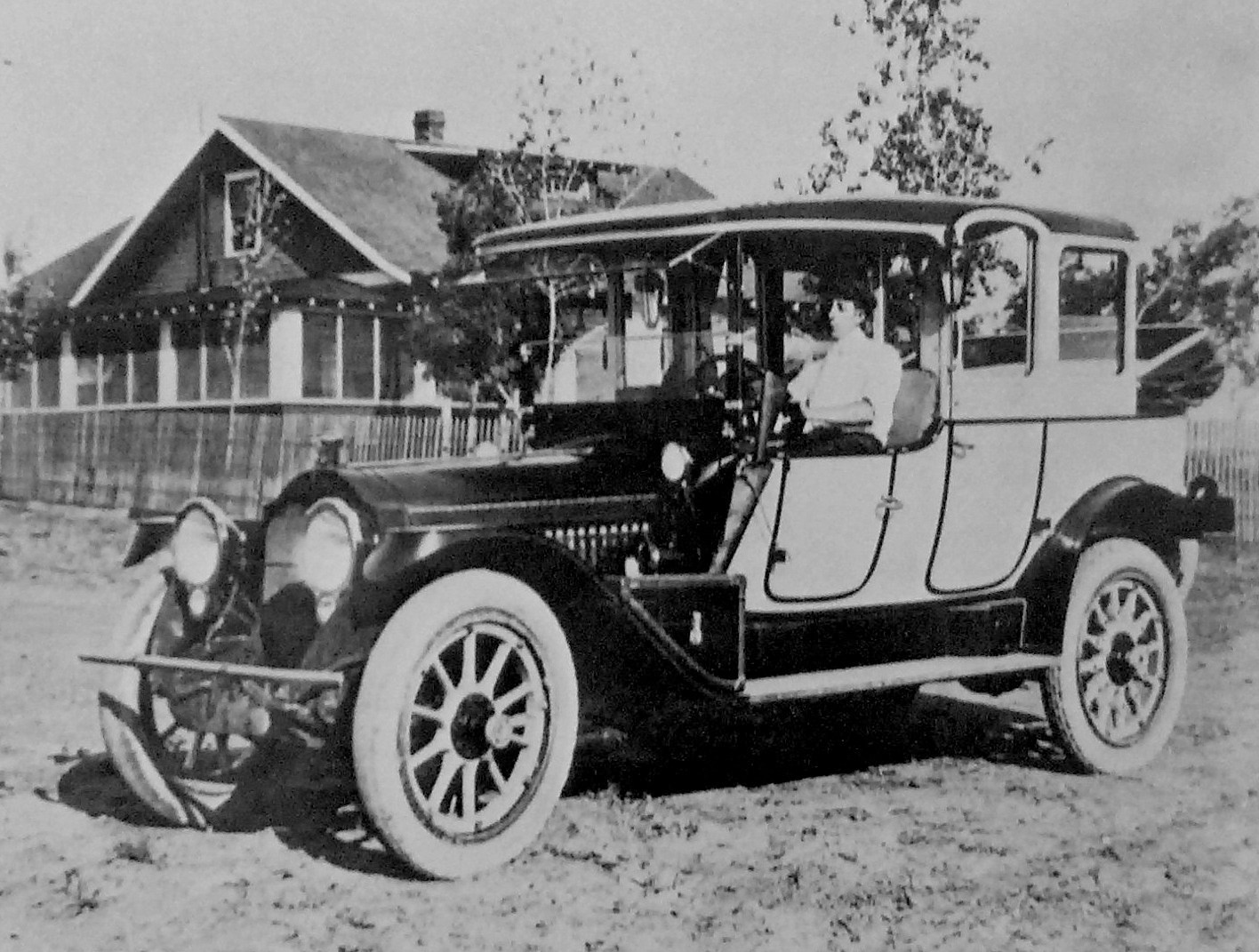
C. C. Slaughter (1837-1919) was known for being a rich cattleman, a rich Baptist, and one of Dallas’ richest pioneer businessmen. He was also pretty rich. He owned over a million acres of ranchland and more than 40,000 head of cattle. After health problems necessitated that he turn over management of his cattle interests to others, Slaughter moved his family to Dallas in 1873 and eased into the sweet life of a wealthy banker. Much of his money went to Baptist causes, including a contribution covering two-thirds of the cost of the construction of the First Baptist Church of Dallas. He was also a major investor in what became Baylor Hospital.

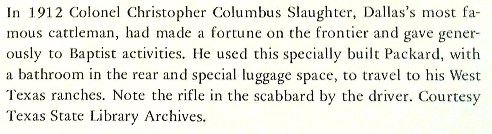
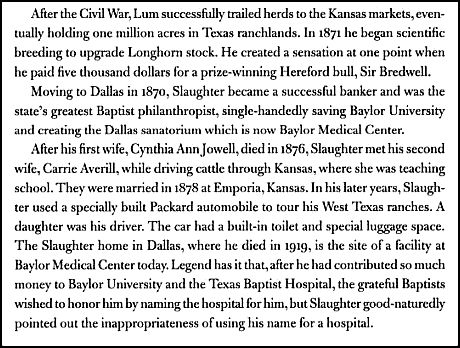
All of that accomplishment, and my favorite thing about Slaughter (“Lum” to his friends) is the tricked-out Packard with a built-in toilet. A. C. Greene — who wrote the caption to the photograph above — seems to have been fascinated by this as well, as he mentions it yet again, 25 years later in another book (with an added amusing tidbit about Slaughter’s response to the Baylor people on their wanting to name the hospital after him):

slaughter_portrait

***

Sources & Notes

Top photo and caption from Dallas, The Deciding Years by A. C. Greene (Austin: Encino Press, 1973).

Passage of text on Slaughter from Sketches from the Five States of Texas by A. C. Greene (College Stateion: Texas A&M University Press, 1998).

 The Handbook of Texas entry detailing the impressive life of Slaughter can be found here.

*

Copyright © 2014 Paula Bosse. All Rights Reserved.
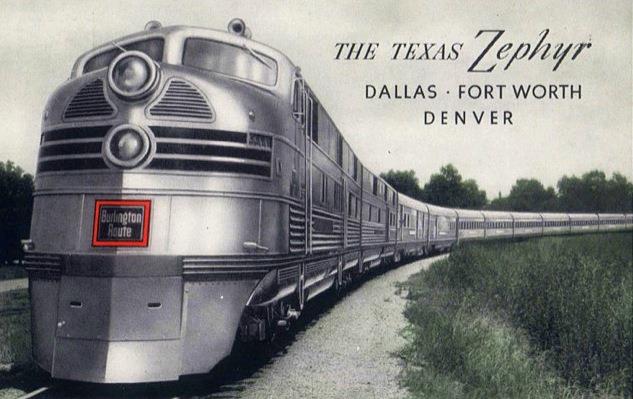
The Texas Zephyr — Streamlined Luxury Train Travel

Dallas — Fort Worth — Denver

by Paula Bosse

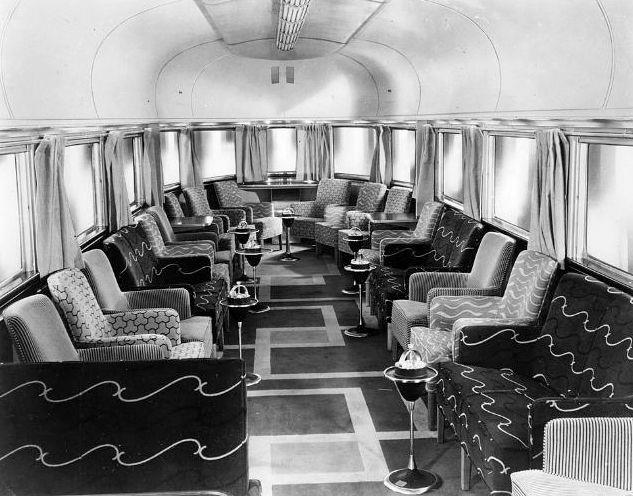
From the golden age of train travel. …I was born in the wrong era.

***

Sources & Notes

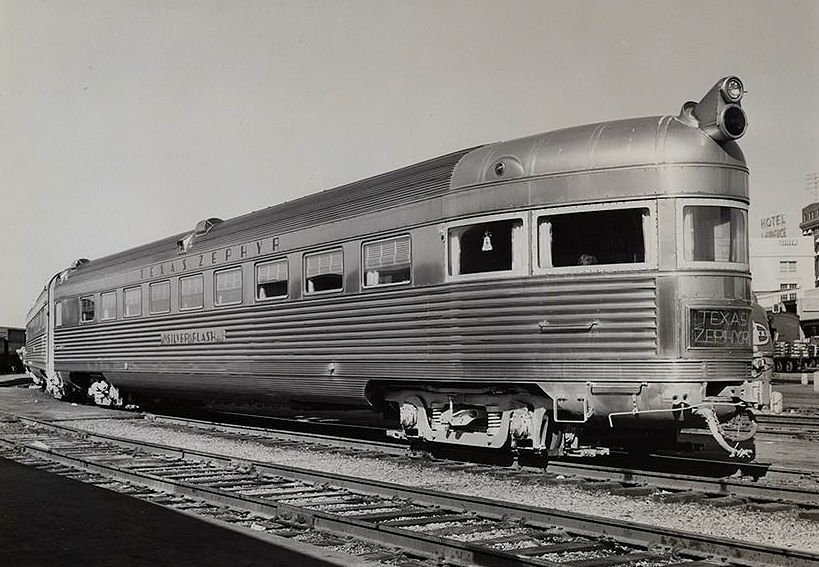
Second photo showing the exterior of the “Silver Flash” passenger car on the tracks at Union Station in Dallas is from the DeGolyer Library, Central University Libraries, Southern Methodist University; it was taken by Everett L. DeGolyer Jr. in 1960; more information on this photo is here.

Top and bottom images are from the wilds of the internet.

More on the Texas Zephyr here.

*

Copyright © 2014 Paula Bosse. All Rights Reserved.