Flashback : Dallas

A Miscellany: History, Ads, Pop Culture

Category: Local Personalities

Dallas City Hall

by Paula Bosse

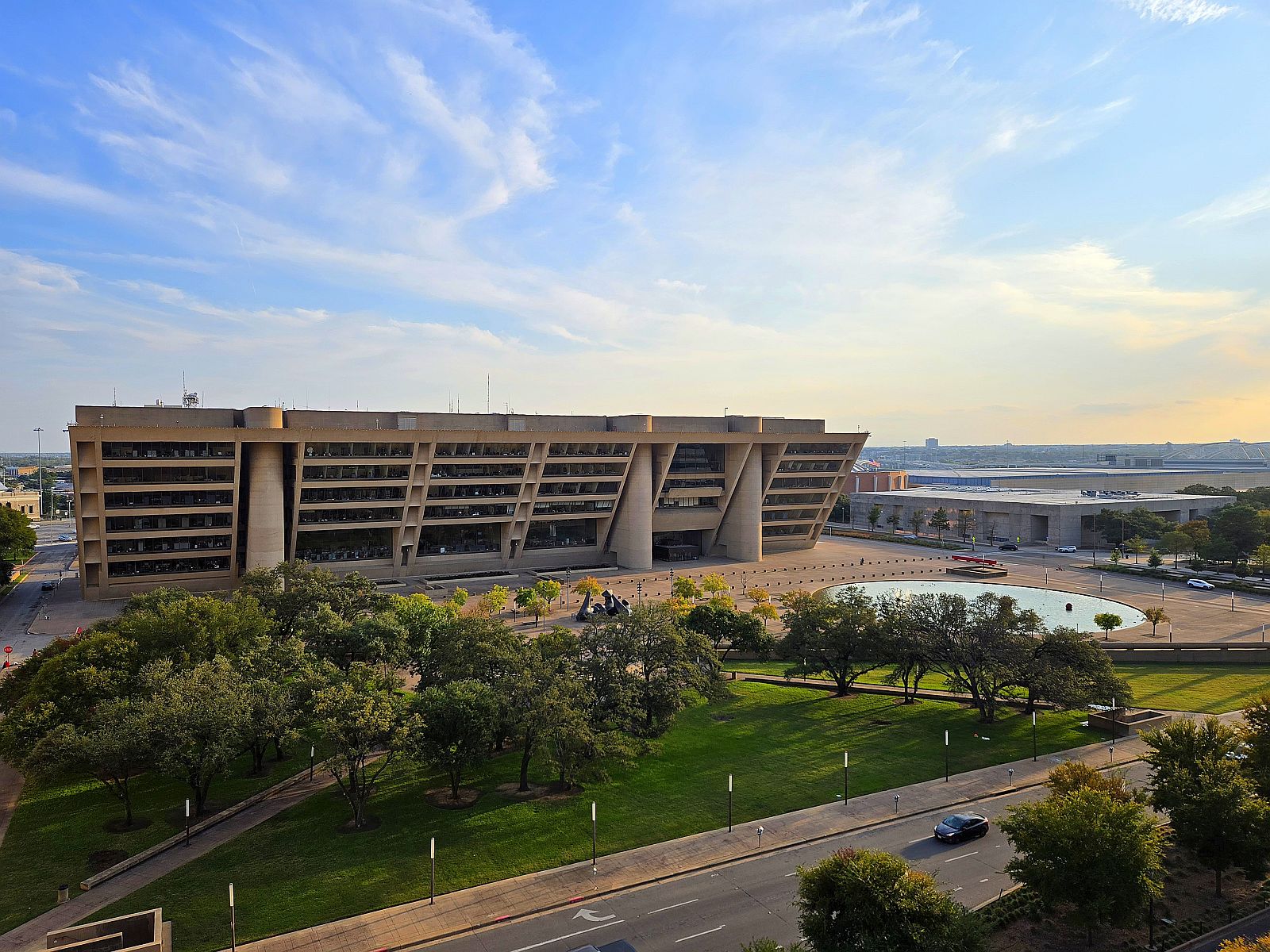
Our city hall has suddenly — and improbably — found itself in the headlines in recent weeks. As of this writing, its immediate fate is unknown. I don’t think I’ve written about this landmark building in the 12 years I’ve been writing about Dallas history. I guess I assumed I’d always have time.

Dallas City Hall is the work of architect I. M. Pei (1917-2019), who, in 1966, was commissioned to design a new city hall by then-mayor J. Erik Jonsson. The very modern design was both acclaimed and derided, and its bumpy road to completion was long and arduous — it was dedicated on March 12, 1978, 12 years after Pei accepted the commission. It is an instantly recognizable building by an internationally respected architect, and it has quietly held the fort on the southern edge of downtown for almost 48 years.

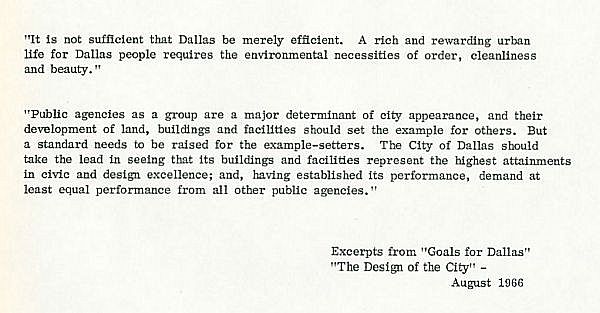
In the project plans presented to the City, I. M. Pei & Partners included these quotes from “Goals for Dallas,” the blueprint that Dallas leaders created for the city’s future:

In an oral history conducted by the Dallas Public Library in 2002, Pei discussed his City Hall project and was asked if he had visited the building in recent years:

I’ve been back quite a few times. I always went up to the second floor to look at that public space. That public space — some people ask, “Why do you make that space so extravagant? People only come here and pay taxes or pay water bills.” I said, “Precisely. This is a People’s City Hall. You don’t build it for the mayor; you don’t build it for the Council; you build it for the people. They’re the ones who should enjoy it.” I remember that. I always go up to the second floor to look at that space. I think the public that comes to pay taxes should know that this is why. […] That was the original thought, and I still think it’s right — that this City Hall is designed for the people of Dallas. (I. M. Pei oral history, Aug. 1, 2002)

Below are a whole bunch of photos of I. M. Pei in Dallas, aerial views of the city before and during construction of the city hall, and two deceptively calm and quiet photos taken by me from the Central Library across the street only a couple of weeks ago, back when life seemed a little less precarious and before I thought it necessary to look up the dictionary definition of “beleaguered” to make sure I was using it appropriately. I was.

*

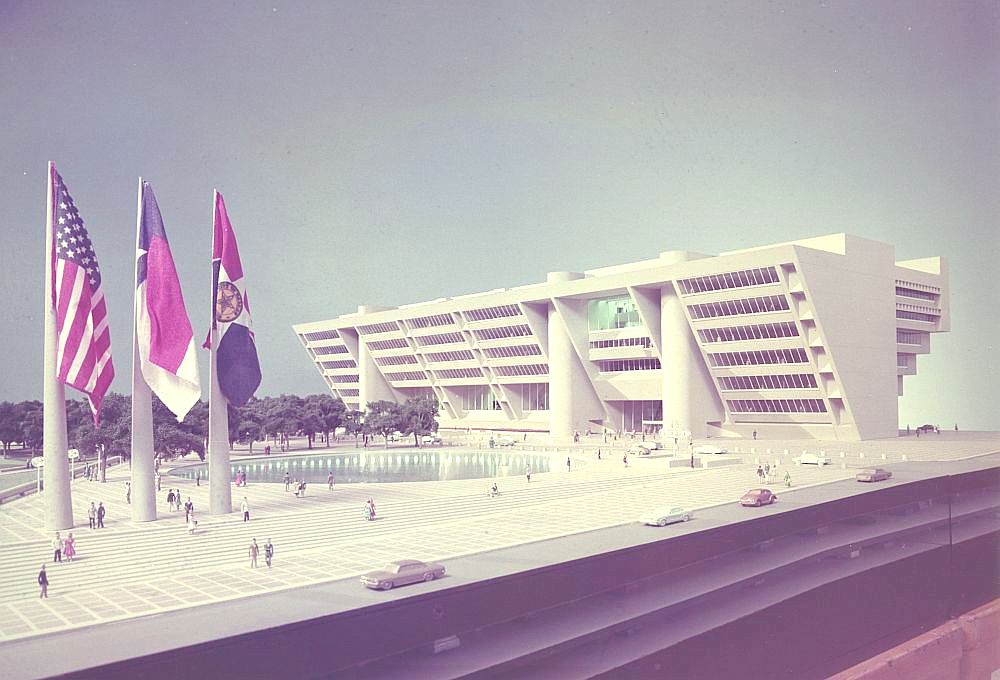
The model:

*

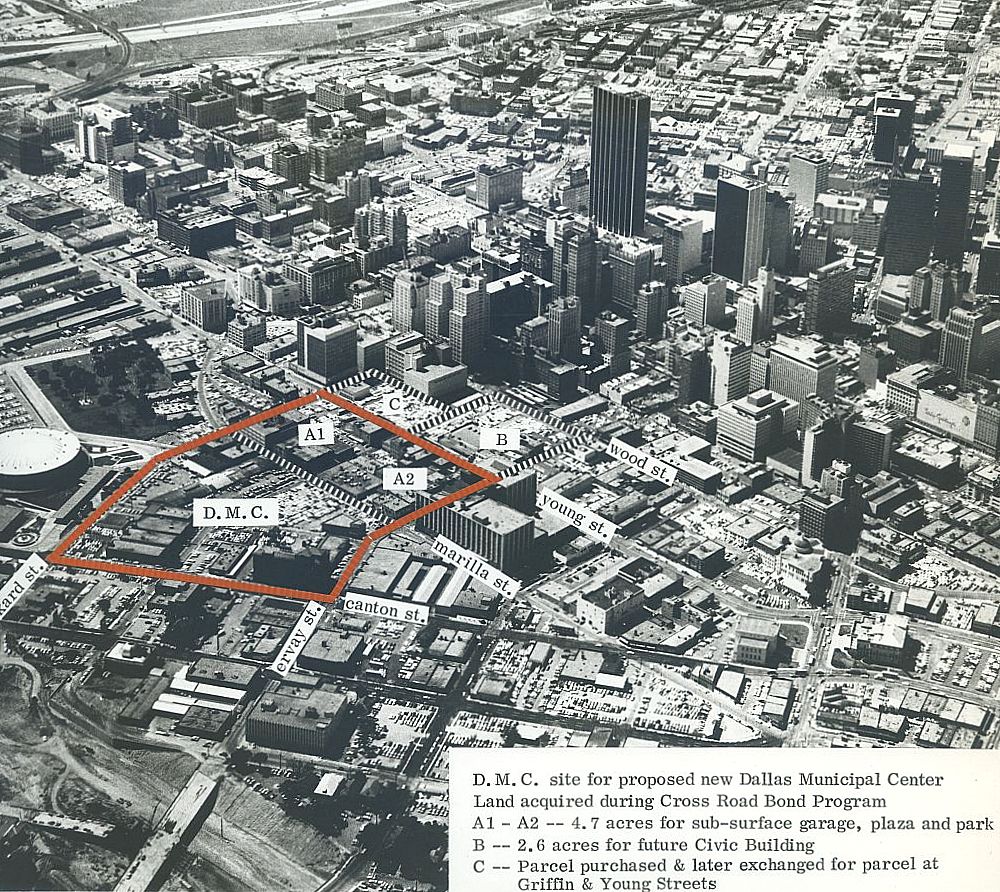
Aerial from 1967 (the original name of the project was the Dallas Municipal Center):

*

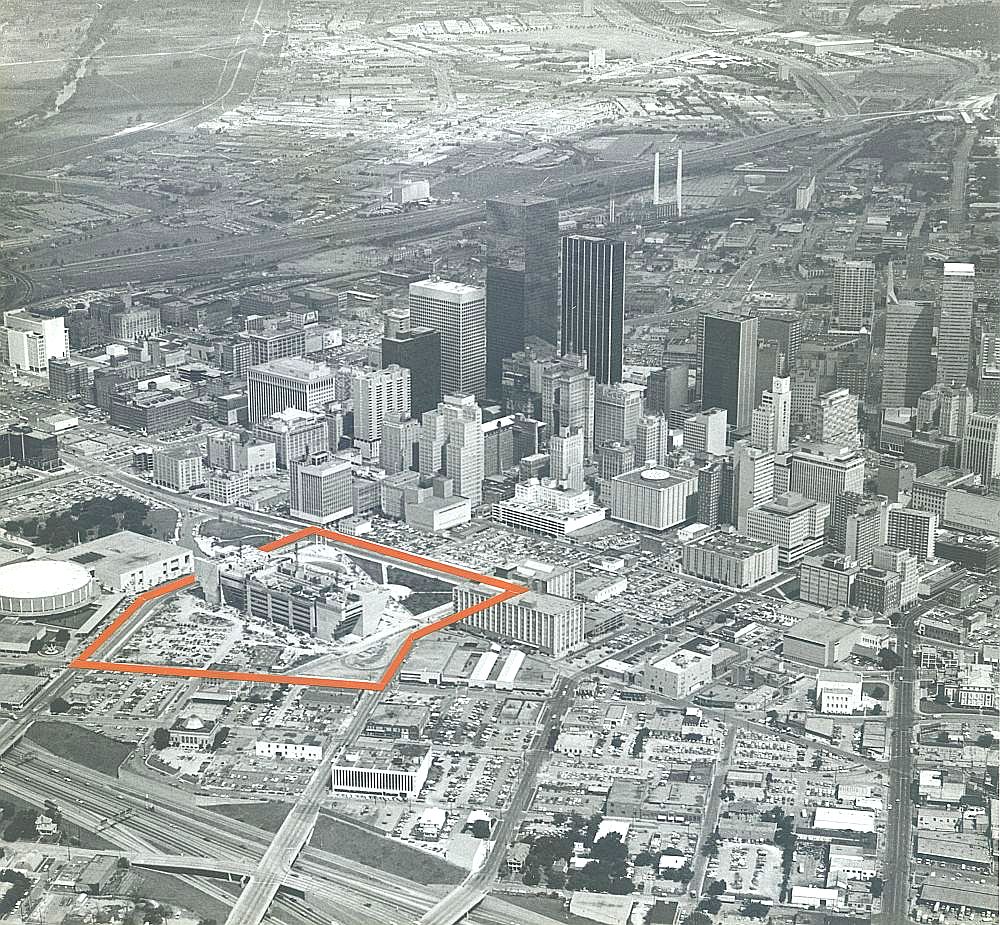
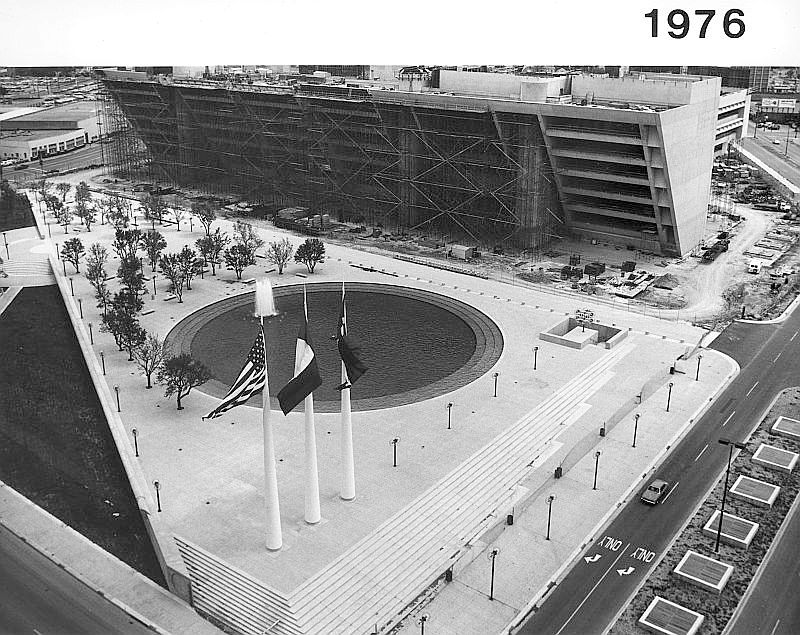
Aerial from 1976:

*

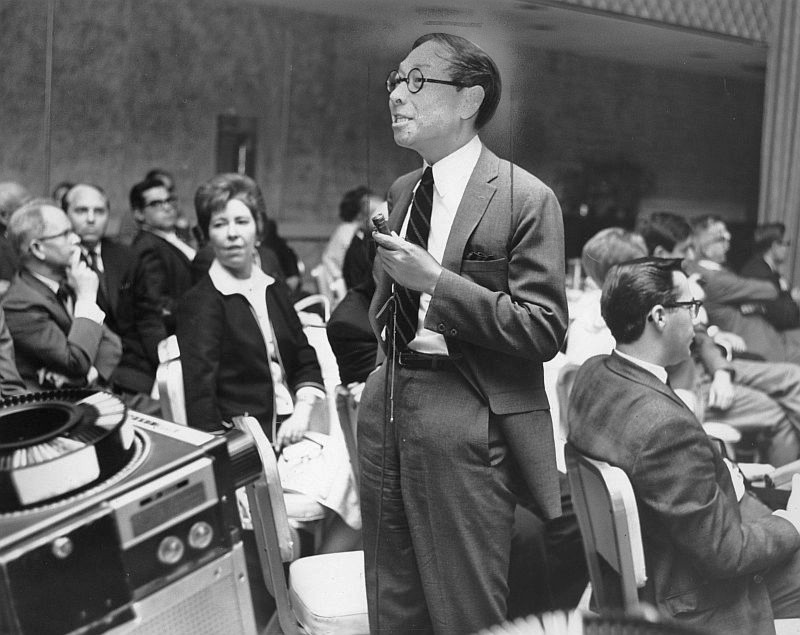
I. M. Pei giving a presentation in Dallas, in which he unveiled his vision for the new city hall (April 28, 1967, Dallas Times Herald photo by Ken Hardin):

*

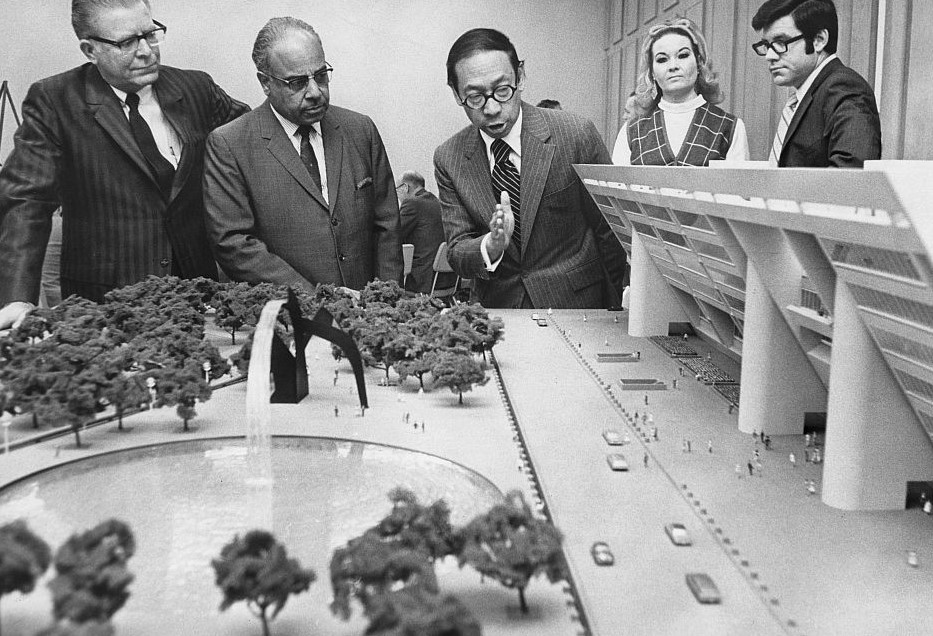
Showing off the futuristic-looking model to no doubt startled members of the Dallas City Council and city administration workers (October 5, 1970, DTH photo by Joe Gordon).

*

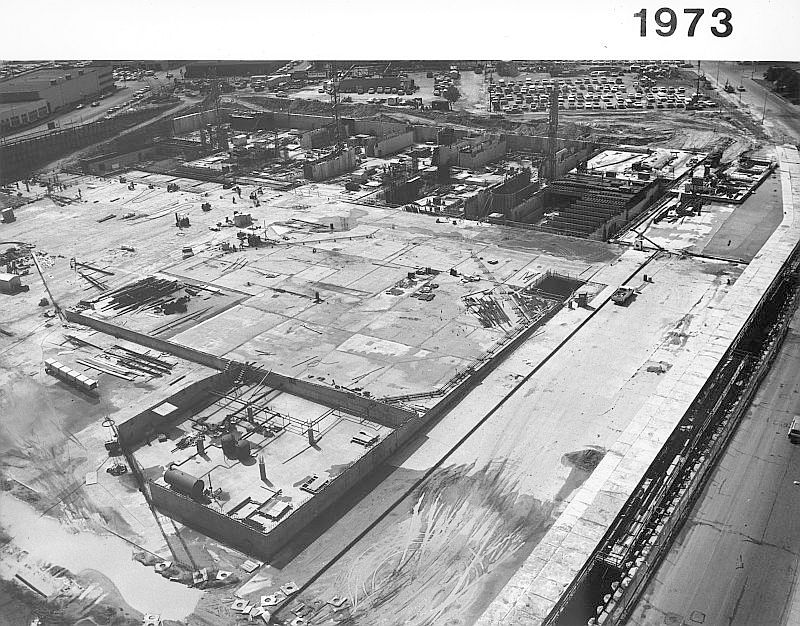
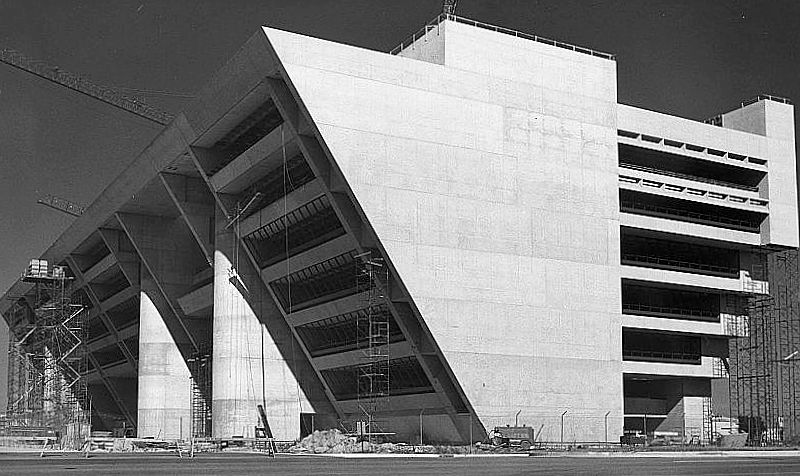
Construction, 1973:

*

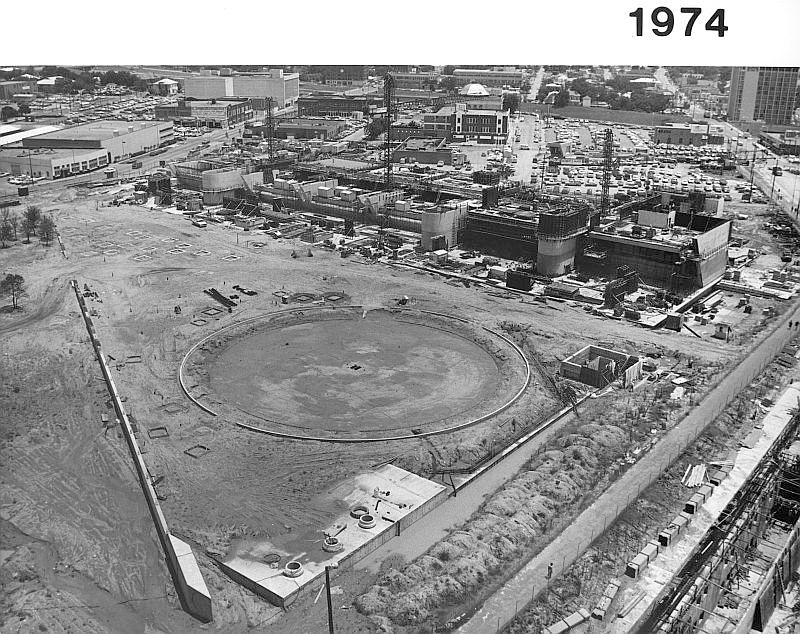
Construction, 1974:

*

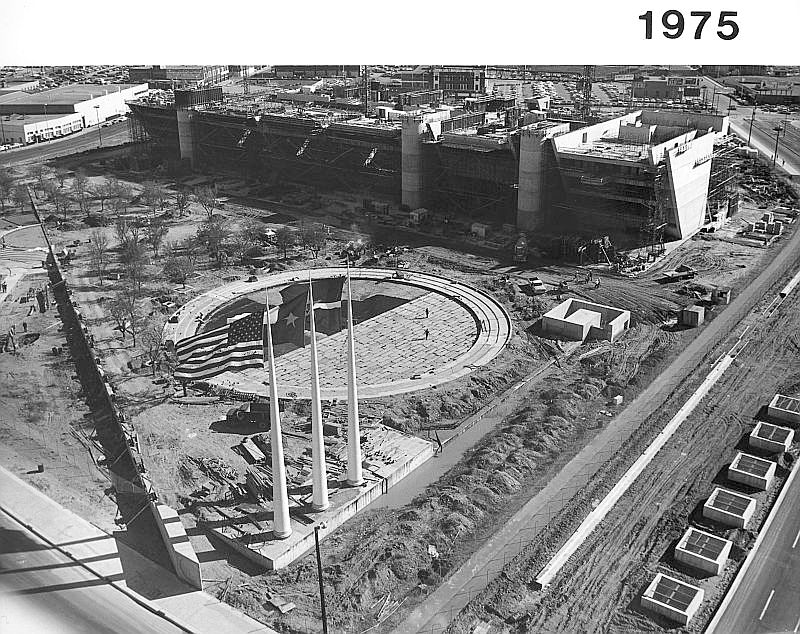
Construction, 1975:

*

Construction, 1976:

*

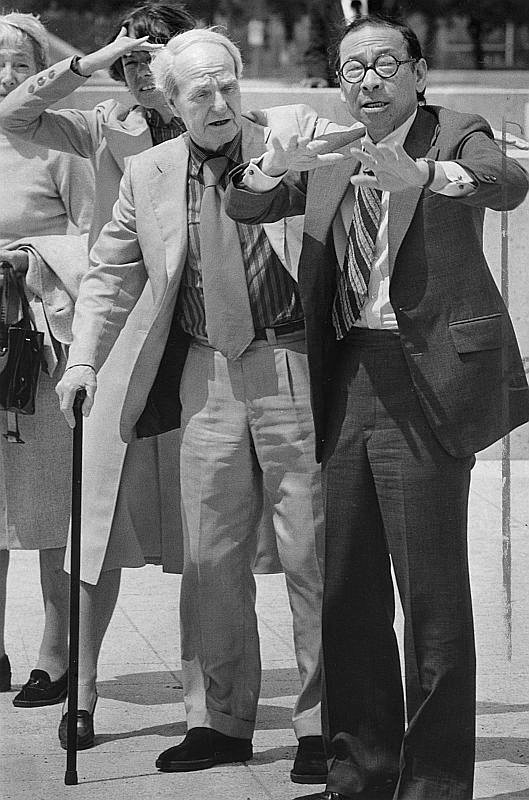
Pei shows British sculptor Henry Moore the site where his sculptural work The Dallas Piece will be placed on the City Hall plaza (April 14, 1976, DTH photo by Paul Iverson):

*

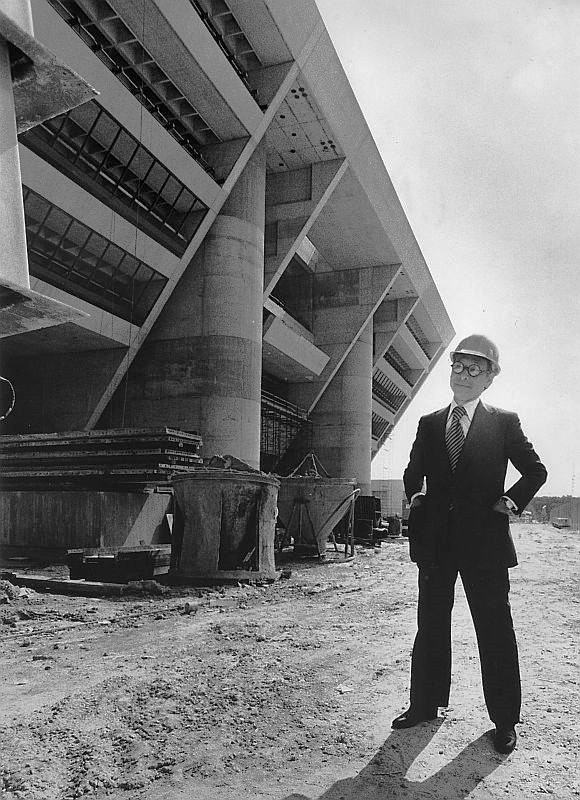
Pei in a hardhat, looking pleased (July 7, 1976, DTH photo by Jay Dickman):

*

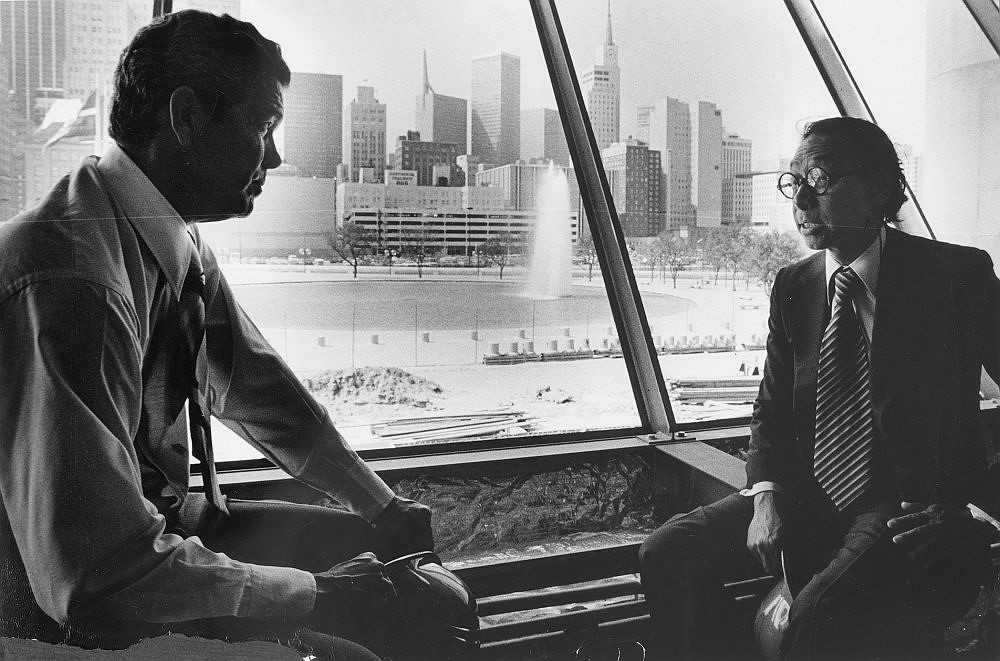
Pei with new mayor Robert Folsom, with a killer view of the Dallas skyline behind them (July 7, 1976, DTH photo by Jay Dickman):

*

Side view, from Marilla:

*

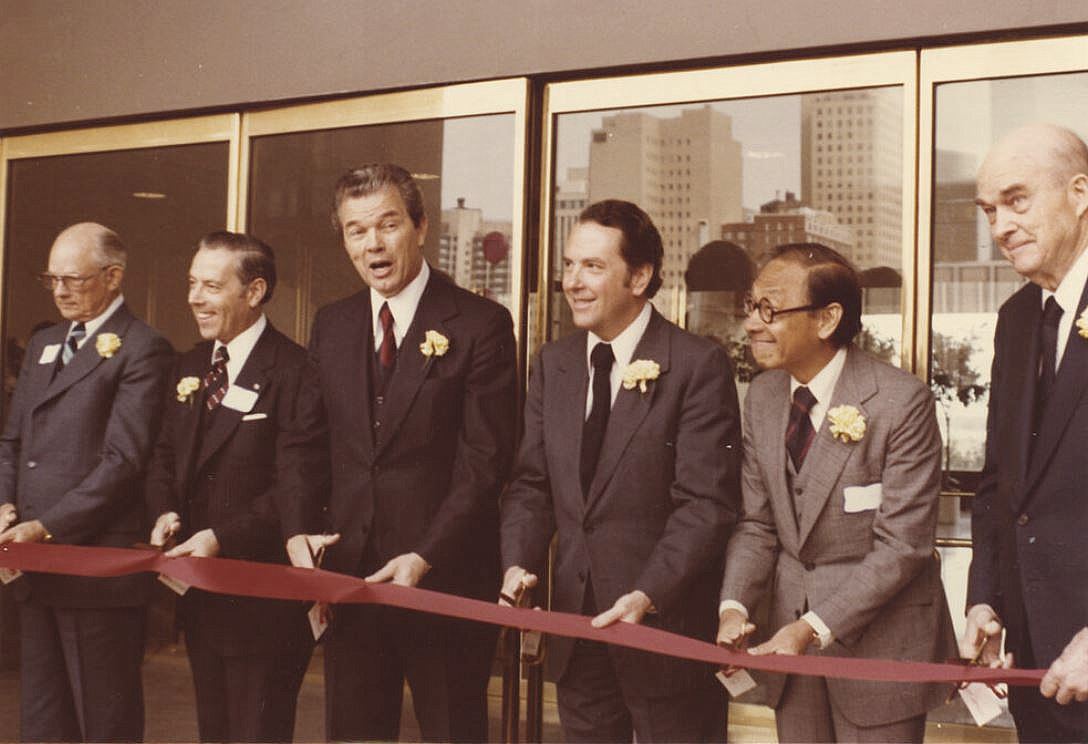
Finally, Dedication Day, March 12, 1978 — Pei is seen cutting the ribbon with (left to right) former City Manager Scott McDonald, current City Manager George Schrader, Mayor Robert Folsom, former mayor Wes Wise, and the man who started the whole thing rolling, former mayor J. Erik Jonsson (Pei said that his two greatest allies in the long slog to get the City Hall finished — and to continue with other projects in Dallas — were Schrader and Jonsson, both of whom he was quite fond of and considered friends):

*

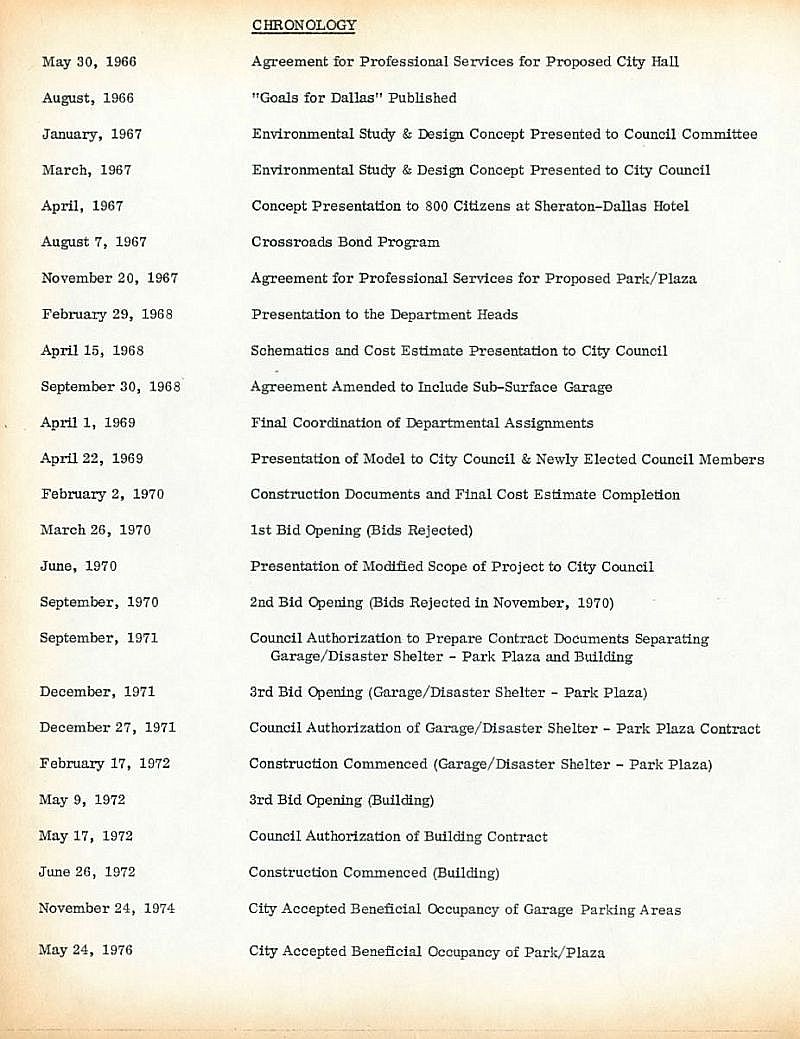
A chronology of the long, long trek to completion (at least up to 1976), prepared for the City by I. M. Pei & Partners:

*

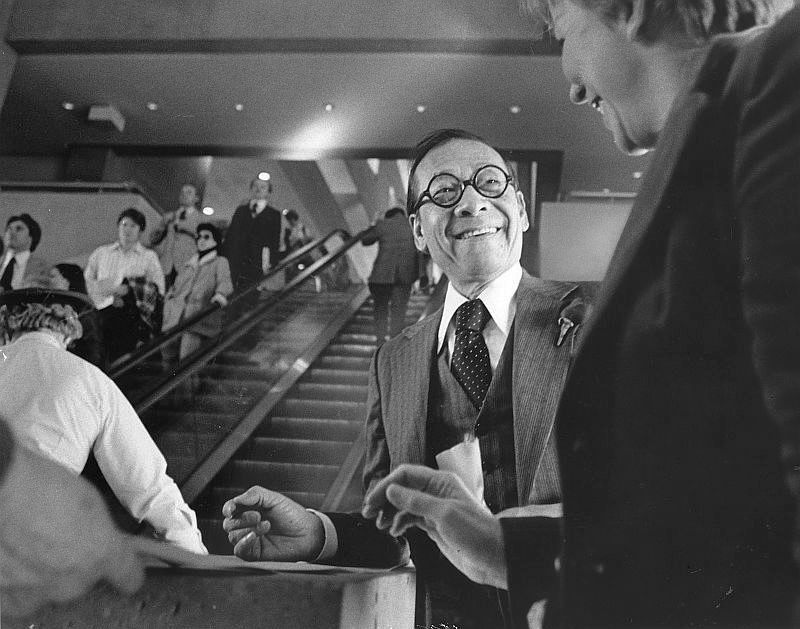
I. M. Pei in 1978, happy in Dallas (DTH photo by Phil Huber):

*

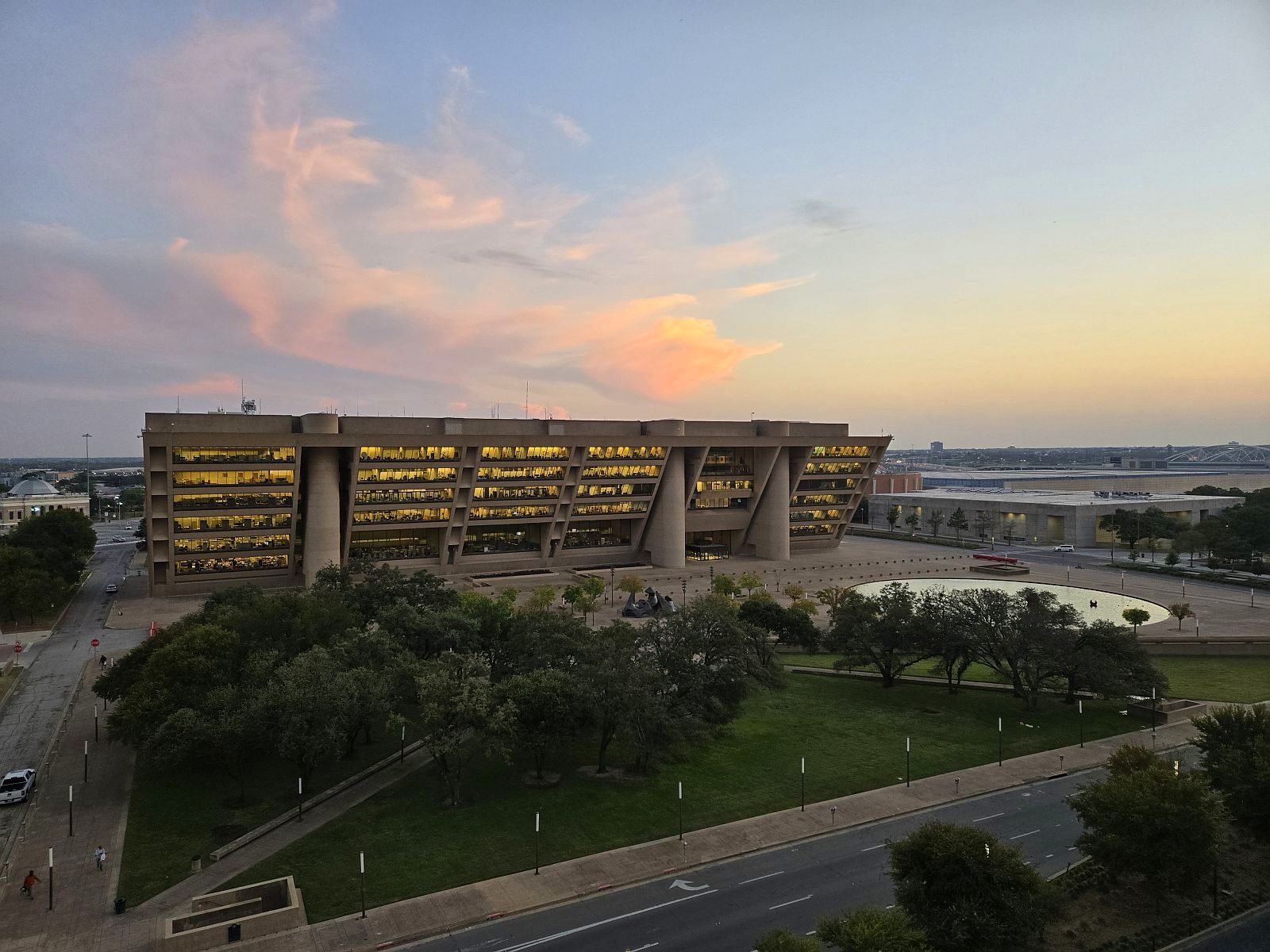
And in October 2025, our solemn City Hall at the end of another day, holding steady as downtown Dallas’ southern anchor.

***

Sources & Notes

Top and bottom color photos of City Hall taken by Paula Bosse on October 23, 2025 from the Central Library.

All other images are from various collections of the Dallas History & Archives division of the Dallas Public Library (including the Dallas Times Herald Collection and the Juanita Craft Collection). All images are used with permission.

Construction photos, “Goals for Dallas” quote, color model photo, and chronology are all from the presentation binder Dallas Municipal Center by associated architects I. M. Pei & Partners and Harper & Kemp (July 5, 1976) (Dallas History & Archives/Dallas Public Library call number R690.513 D145).

The 2002 quote from Pei about City Hall is from I. M. Pei: An Oral History Interview, conducted in New York City on August 1, 2002 by Bonnie A. Lovell for the Dallas Public Library. Ostensibly about Pei’s involvement in commissioning the Henry Moore sculpture, this is an entertaining read/listen, as Pei discusses the larger City Hall project and his affinity and admiration for the city of Dallas and its citizens (audio recording and 48-page transcript with index, Dallas History & Archives/Dallas Public Library call number 730.92 M822YP 2003).

*

Copyright © 2025 Paula Bosse. All Rights Reserved.

Roger Staubach, HVAC Spokesman — 1970s

Rog and Fran, comparing their Carrier systems

by Paula Bosse

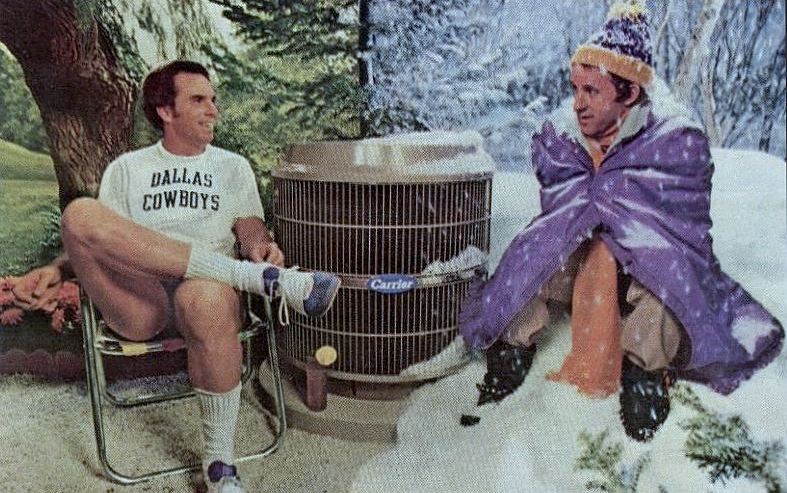
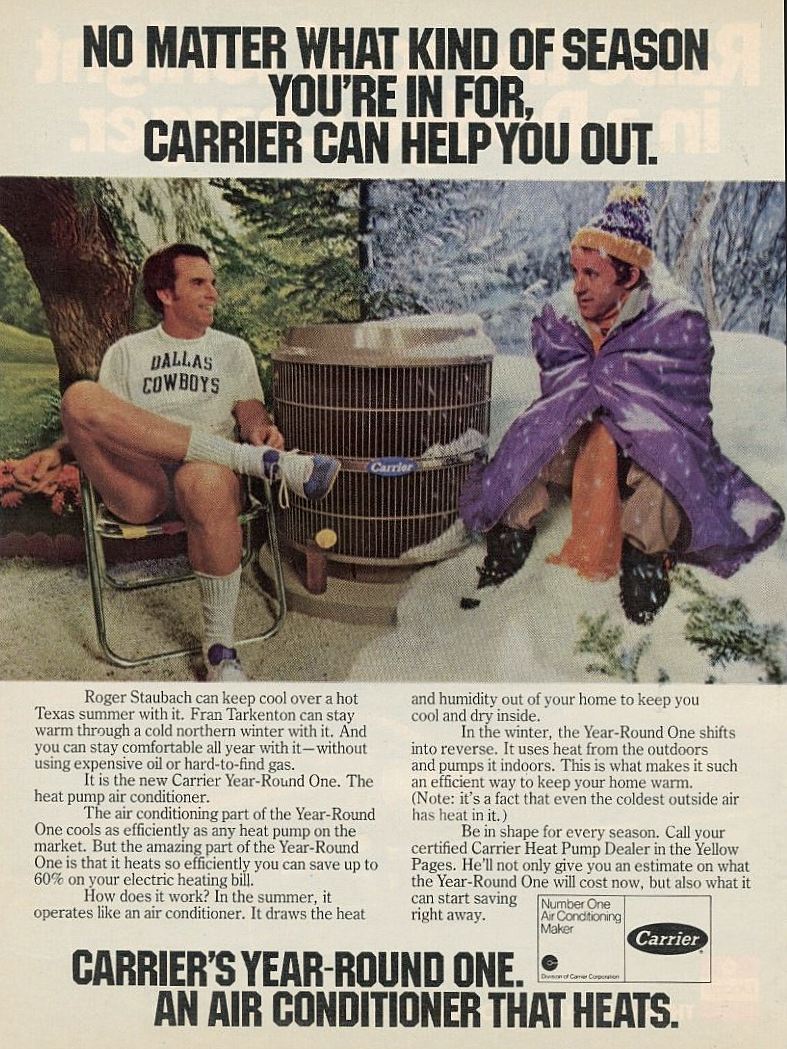
Dallas Cowboys star quarterback Roger Staubach appeared in a series of ads — and did personal appearances around the country — for the Carrier air conditioning company. Many of the ads featured Staubach’s family — and what a stroke of luck, because, as the ad below proclaims, “Everyone in my family loves air conditioning.” Sing it, Roger!

1979

I came across an interesting piece of trivia about Roger Staubach’s time as a Carrier spokesman: if he was unable to appear in person, he could still be at your local trade show, in his Cowboys uniform, telling you how much his family loved air conditioning. In January 1978, the Cowboys were fresh off a Super Bowl win, and it would have been expected that world champions might have other things to do, but a week or two after the Cowboys defeated the Broncos in Super Bowl XII, Roger was at the National Association of Home Builders convention in Dallas hawking A/C. …Sort of.

The Carrier Air Conditioning exhibit featured a “telequin” of Roger Staubach, a mannequin with Staubach’s face projected onto the face, giving the general effect that the Cowboy quarterback was standing there in uniform, giving the Carrier sales pitch. Staubach is Carrier’s national spokesman. Steve Millheiser, a Carrier salesman, said response to the exhibit had been excellent. “The Roger thing has been great,” he added. (Dallas Morning News, Jan. 26, 1978)

I couldn’t find much about “telequins,” except that there were apparently other celebrities who had a model of themselves made by Telequin-A.V.M., Inc., a company that specialized in “animated, talking mannequins.” I’m sure it was odd watching a mannequin with Roger Staubach’s animated face professing its love for A/C. …The ’70s, man. Weird times.

*

1979

1978

Roger Staubach and Fran Tarkenton, 1977

***

Sources & Notes

All ads from eBay.

Roger Staubach did a ton of TV commercials — a lot are on YouTube. He declined to do ads for underwear, beer or sugary cereals

*

Copyright © 2025 Paula Bosse. All Rights Reserved.

When Big D Had No Love for Bruce — 1974

Imagine what coulda been… (click for larger image)

by Paula Bosse

First off, apologies for the image quality of this advertisement. It’s from eBay (“He’s from Barcelona…”).

I thought it was an interesting ad, because I never knew that Bruce Springsteen played the Sportatorium, Dallas’ legendary wrestling mecca and off-and-on home to the Big D Jamboree. How had I never heard about this? (This was a show put together by local promoter Gene McCoslin, who had a long history with Willie Nelson.)

1974 was pretty early for Bruce to play in Dallas. He was starting to gain notice nationally, but he wasn’t a star yet. The tickets to the Sportatorium show were $4.50 in advance/$6.00 at the door (roughly $30 and $40 in today’s inflation-adjusted money). As it turns out, the show was canceled, because — hold onto yourselves — only 28 advance tickets had sold. …TWENTY-EIGHT.

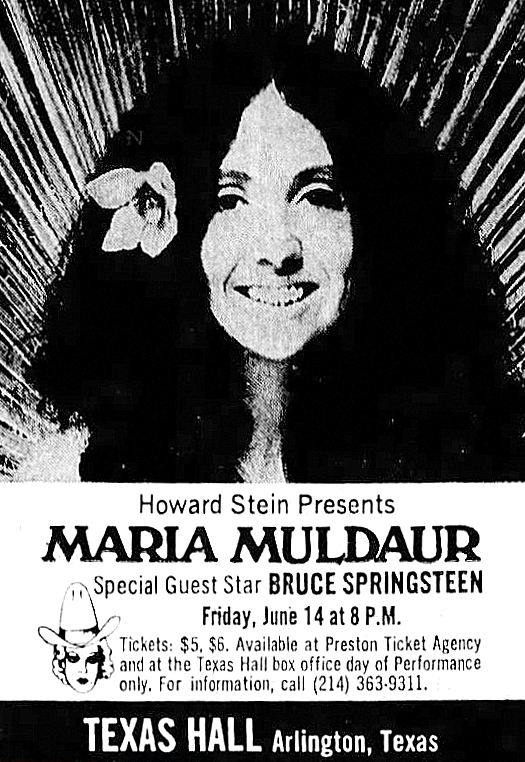
That show was scheduled for November 10, 1974. A few months earlier — in June 1974 — Bruce was, for some inexplicable reason, booked as the opening act for… Maria Muldaur (“Midnight at the Oasis”). That show was scheduled at the UTA campus in Arlington. The Dallas Morning News reported that Bruce was a last-minute no-show, claiming a bout with the flu, but, apparently, he was unhappy with the small turnout and just didn’t go on. (Trouper Maria, having lost her opening act, performed for nearly 2 hours, and got rave reviews.)

Fort Worth Star-Telegram, June 9, 1974

Springsteen’s first actual performance on a Dallas stage appears to have been sometime in the same year as those two ill-fated non-gigs: 1974. Freelance rock critic Kim Martin-Pierce remembered it: “He always had a troubled history here. [He was booked to play at the old Mother Blues nightclub, but] he sold so poorly at Mother Blues that they moved him over to Gertie’s on Lemmon Avenue. He didn’t draw well at all there either, but he gave the greatest performance I’ve ever heard in a small club.” (DMN, “Springsteen Finally Shows Big D Who’s Boss” by John Anders, Nov. 30, 1984, after Bruce’s two sold-out shows at Reunion Arena)

Sorry, Bruce, for the cold shoulder! I think Dallas eventually came around. But you missed out. Playing the Sportatorium would have been really, really cool. And those 28 people would still be talking about the most amazing show they had ever seen.

***

Sources & Notes

Top ad from the Dallas underground newspaper Iconoclast, Nov.8-15, 1974; found on eBay in April 2024.

This post appeared previously in a slightly different form on the Flashback Dallas Patreon page.

*

Copyright © 2025 Paula Bosse. All Rights Reserved.

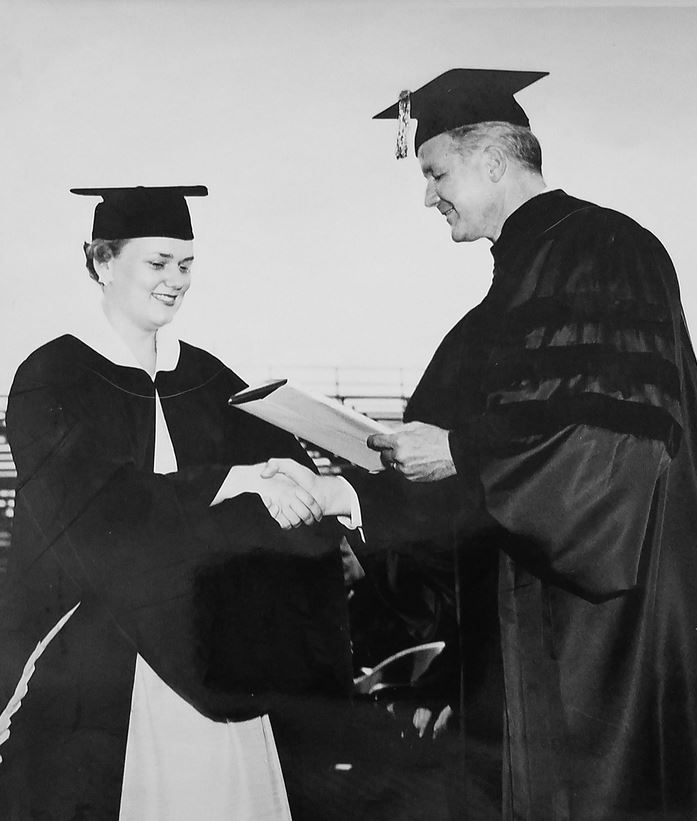
Margaret Werry (Bosse): 1936-2025

by Paula Bosse

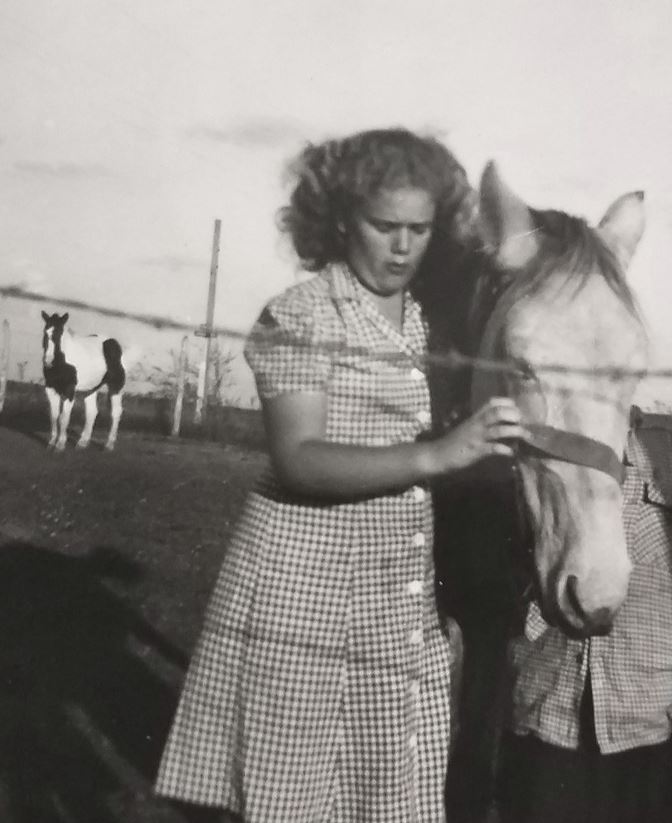
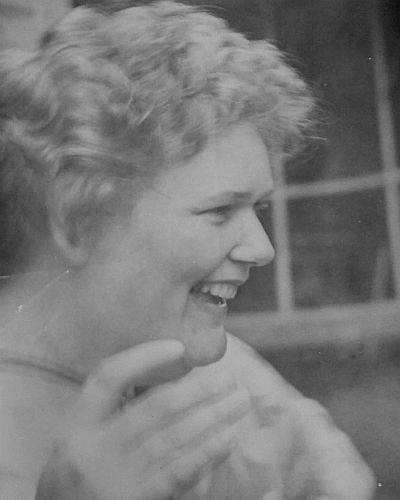
My mother, Margaret Werry (who was known as Margaret Bosse during much of her time as a political activist), died on May 16, 2025, in hospice care at Baylor Hospital in Dallas. She was 89.

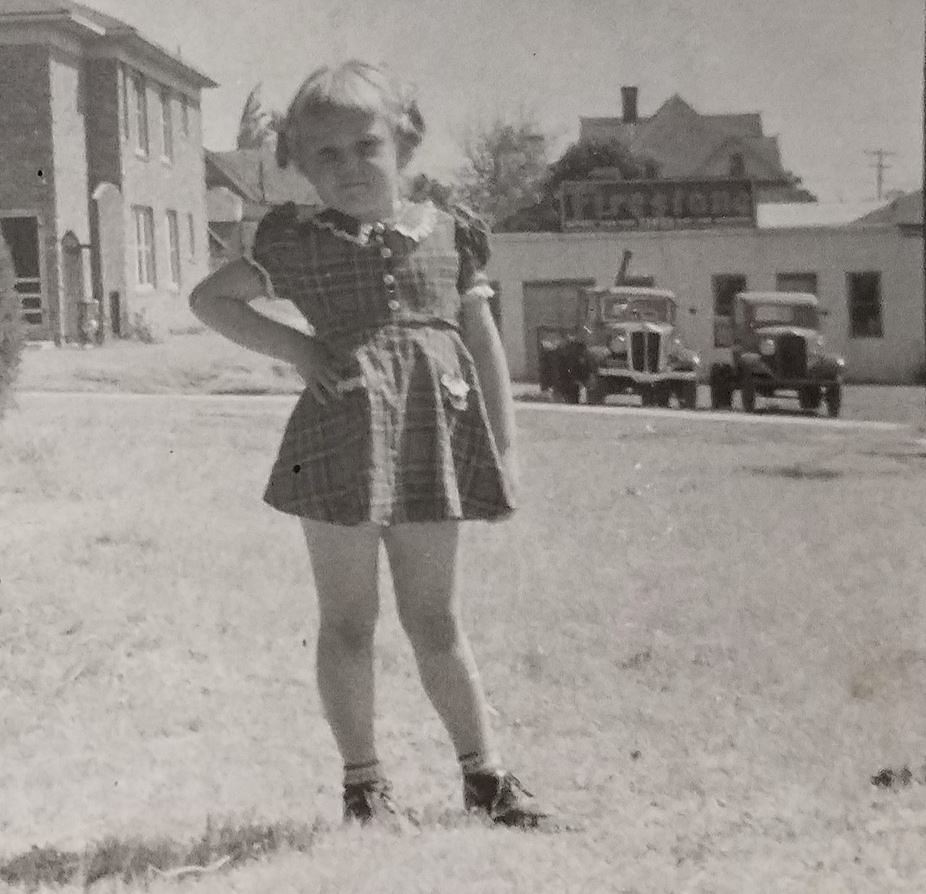
She was born in Dallas, grew up in Oak Lawn on Hartford Street, between Douglas and Wycliff, a couple of blocks from her grade school, Sam Houston Elementary. Instead of attending North Dallas High School, she chose to go to Crozier Tech downtown so she could focus on advanced science courses (she had dreams of going to medical school). She graduated at 16 and attended SMU, majoring in Comparative Literature. (See photos of both of my parents from SMU yearbooks here.)

My mother with SMU president, Willis Tate

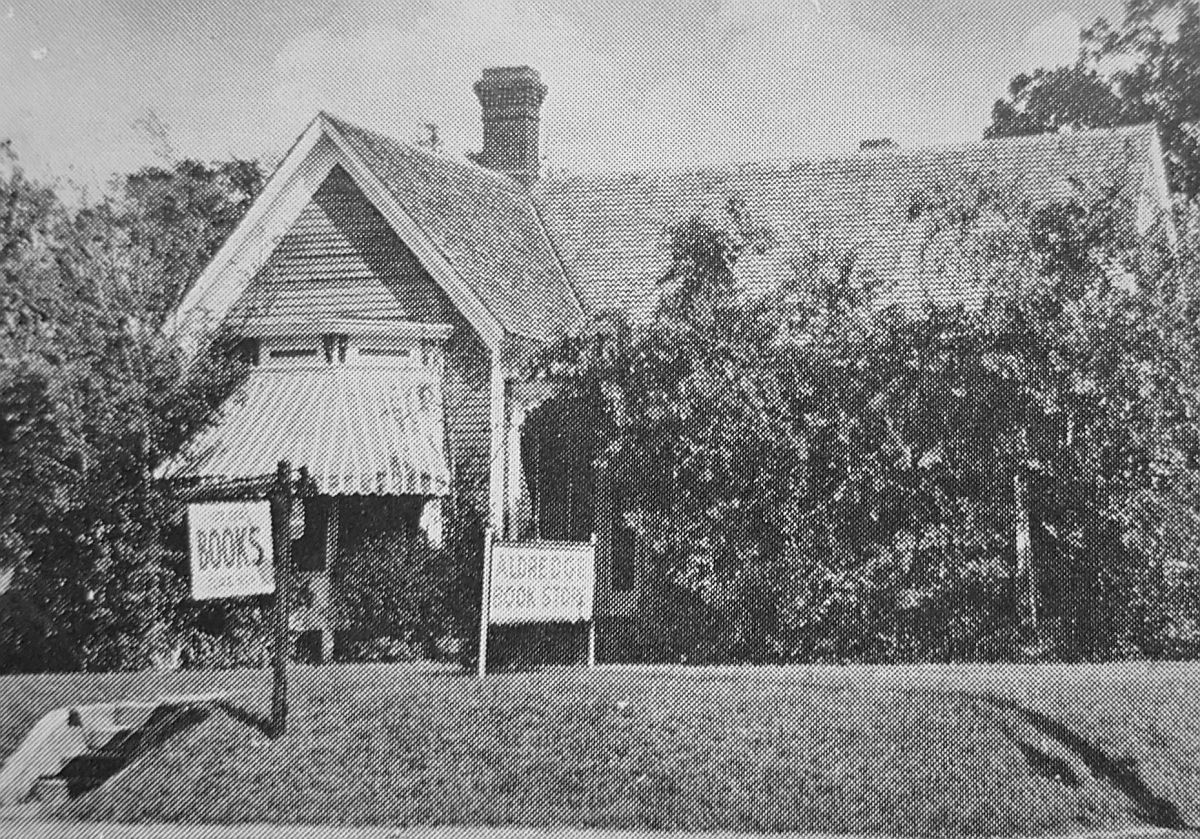
She spent a short time at UT medical school in Galveston, but her mother’s unexpected death brought her back home. She soon began working at an antiquarian bookstore on McKinney Avenue, located in an old Victorian house — The Aldredge Book Store, where she met my father, Dick Bosse, another former Comparative Literature major at SMU. They married a few years later. That bookstore was a home-away-from-home for my parents, for me, and for my brother. Every kid should be lucky enough to grow up in a used bookstore. (My parents divorced amicably in the ’80s and remained friends until his death in 2000. The obituary of my father written by my brother, Erik Bosse, is here.)

2800 McKinney Avenue, ca. 1960

My mother’s passions in life were working for progressive political causes and for advancing and promoting women’s issues. The 1970s and ’80s were a time of non-stop political activity for her. She was one of the small group of women who were connected in various ways to the First Unitarian Church on Preston Road who helped and supported attorney Linda Coffee in developing the case that became known as Roe v. Wade. She tirelessly worked for women’s rights, even helping to establish the Women’s Southwest Federal Credit Union here in Dallas at a time when mainstream banks and credit unions did not generally grant loans to women without their husband’s consent (!). She always described the ’70s as the most exciting time of her life. A lot was changing then, and she was right in the middle of it.

She was also a passionate animal-lover — our house was never without several cats. Some of her fondest childhood memories were her visits to the farm of her aunt and uncle, which she always described with idyllic nostalgia.

She also loved classic movies, Orson Welles, William Faulkner, and bookbinding, to name just four random things.

I remember her reading books to me and my brother. My favorite was The World is Round by Gertrude Stein, which I love to this day, and which I am convinced led to the love of writing and language my brother and I share.

My mother was the kindest person I knew (next to my father). She was smart, funny, and ethical, and, somehow, she never lost her patience when trying to help me with my math homework (sadly, I did not inherit her love of numbers and mathematics). She was a wonderful baker, and I will miss her amazing Christmas cookies and cakes.

And I’ll just miss her. I’ll miss her every day. Her health had been in decline for several years, and the last few months were difficult for her and for my brother and me. I am relieved she is no longer suffering, but it breaks my heart to lose her.

I received a lovely note from Charles Drum, who used to work with my parents at The Aldredge Book Store during those early days. Here is what he wrote:

I read about your mom’s passing. My thoughts are with you. Your mom could always make me laugh. It was a gift. Like your dad, she had a treasury of arcane knowledge to share. I wish I’d been able to talk to her in recent years. We had a lot of memories of ancient times.

Those days at the Aldredge Book Store, working with your dad, Sawnie [Aldredge, the original owner], Mimi [Sawnie’s wife and ABS fixture], and even Thelma [the somewhat irascible maid] were formative years for me and set standards of care, wit, camaraderie, and just plain fun that I was rarely able to match in following years. Your folks’ interests. stories, and above all their humor are a vivid part of me to this day.
 
Happy I sat down to write you.

Thank you, Charlie. (See Charlie in a photo with my father, here.)

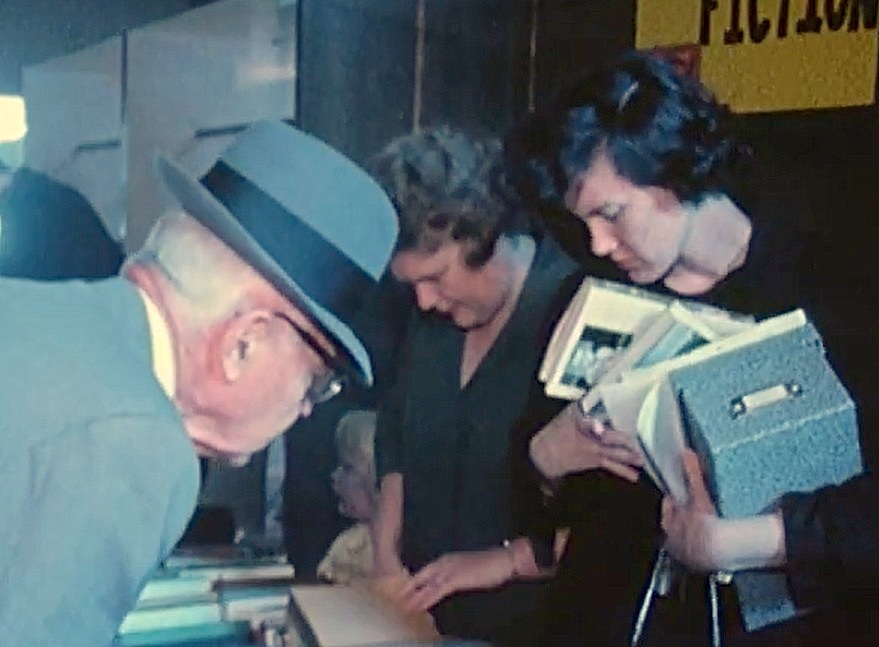
I recently came across this image of my mother and me at one of the hundreds of book sales and book events I found myself at during my childhood. (It’s hard to see me, but I’m in there, next to my mother, dwarfed by people and books and people with books.)

I’ll miss you, Mama. Thank you for all your memories of Dallas.

Thank you for everything.

***

Sources & Notes

Flashback Dallas posts about The Aldredge Book Store are here.

I understand friends of hers may be preparing a get-together to remember my mother. If you were a friend of hers and are interested in attending, please send me an email at the contact info at the top of this page.

*

Copyright © 2025 Paula Bosse. All Rights Reserved.

Lulu Roman, 1946-2025

In a Dallas courtroom, 1971

by Paula Bosse

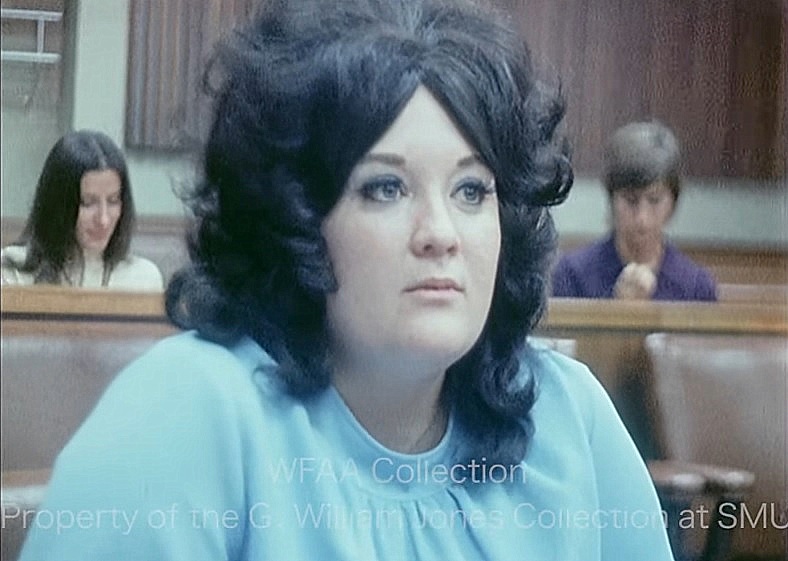
Lulu Roman — known for her appearances on the TV show Hee Haw and her numerous gospel recordings — died last week (on April 23, 2025). She was a Dallas native and a graduate of Samuell High School. A summary of her life and career can be found in the Hollywood Reporter obituary and her Wikipedia entry.

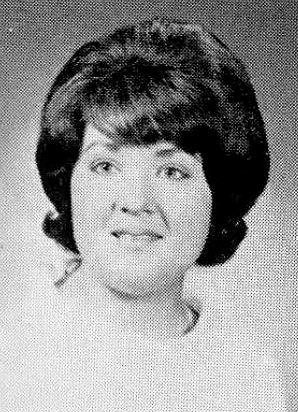
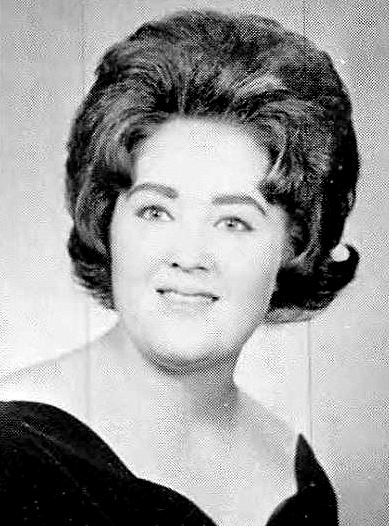
She graduated from W. W. Samuell High School in 1964 (her name back then was Louise Hable), and five years later, she became an original member of the cast of Hee Haw. In 1971, her Oak Lawn apartment (2627 Douglas) was raided by seven narcotics agents, who seized 5.5 pounds of marijuana and small amounts of LSD and hashish. She was booked for drug possession, and this effectively ended her connection with Hee Haw (she later found religion, gave up drugs, and was welcomed back to the show when she was clean — you can see her talk about her new-found “high” to a Channel 8 reporter in 1973 on YouTube here). (The photo at the top is from one of Lulu’s appearances in court in 1971.)

She then went on to a successful career as a gospel singer. RIP, Lulu.

1963 Samuell yearbook, Junior class photo

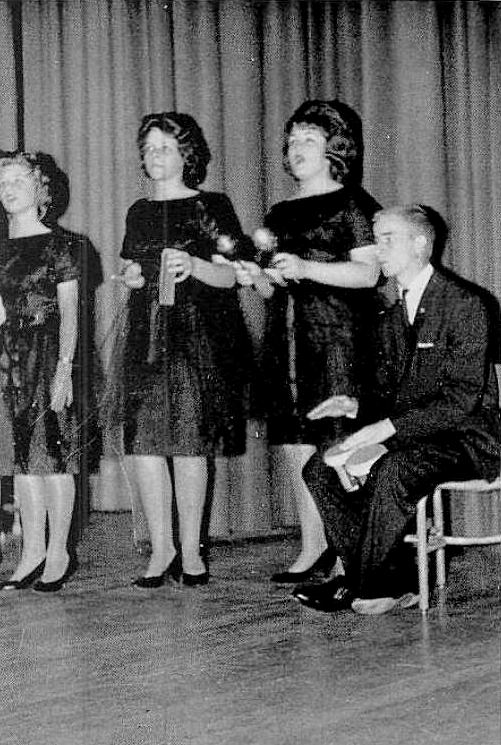
Performing a “Calypso Christmas carol”:

1963 Samuell yearbook

1964 Samuell yearbook, Senior class photo

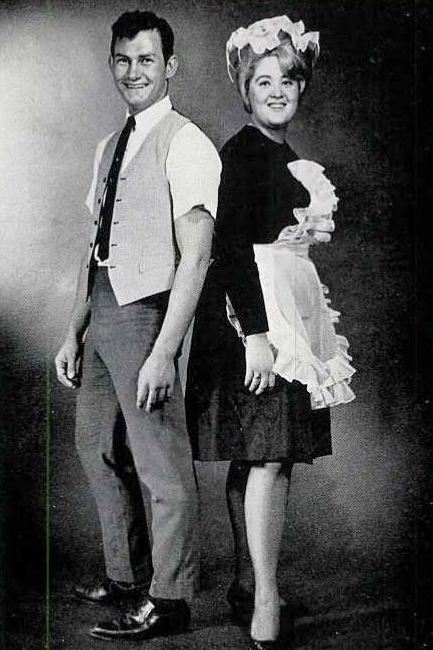
With classmate David Henderson, in costume for a theatrical production.

1964 Samuell yearbook

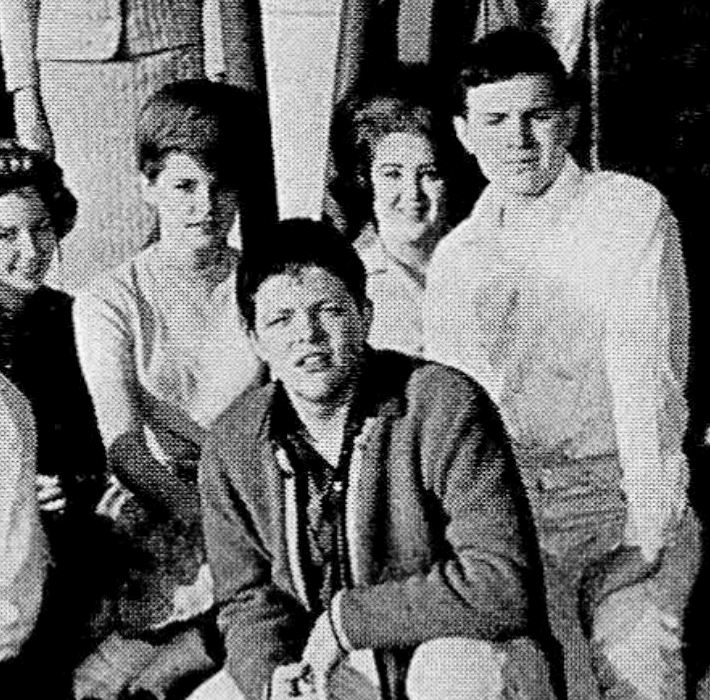
Detail of a photo of members of the Thespians Club:

1964 Samuell yearbook

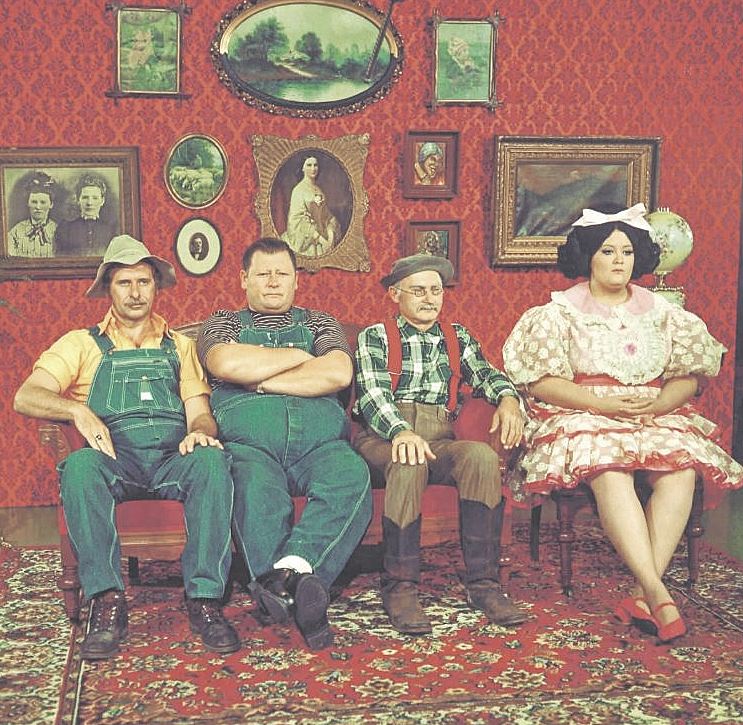
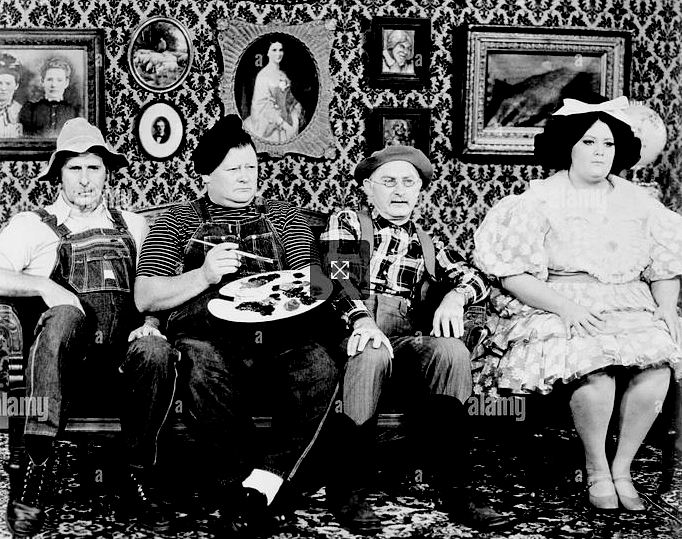
Hitting the big-time, on Hee Haw:

***

Sources & Notes

Top image is a screenshot from Channel 8 news footage of Lulu’s drug possession trial in Dallas on Sept. 3, 1971, from the WFAA Collection, G. William Jones Collection, Hamon Arts Library, Southern Methodist University.

School photos from the 1963 and 1964 Samuell High School yearbooks.

Color photo of some of the Hee Haw cast members (Gordie Tapp, Junior Samples, Grandpa Jones, and Lulu Roman), from The Tennessean; black-and-white photo from Alamy.

*

Copyright © 2025 Paula Bosse. All Rights Reserved.

An Artist’s Conception of a Future Dallas

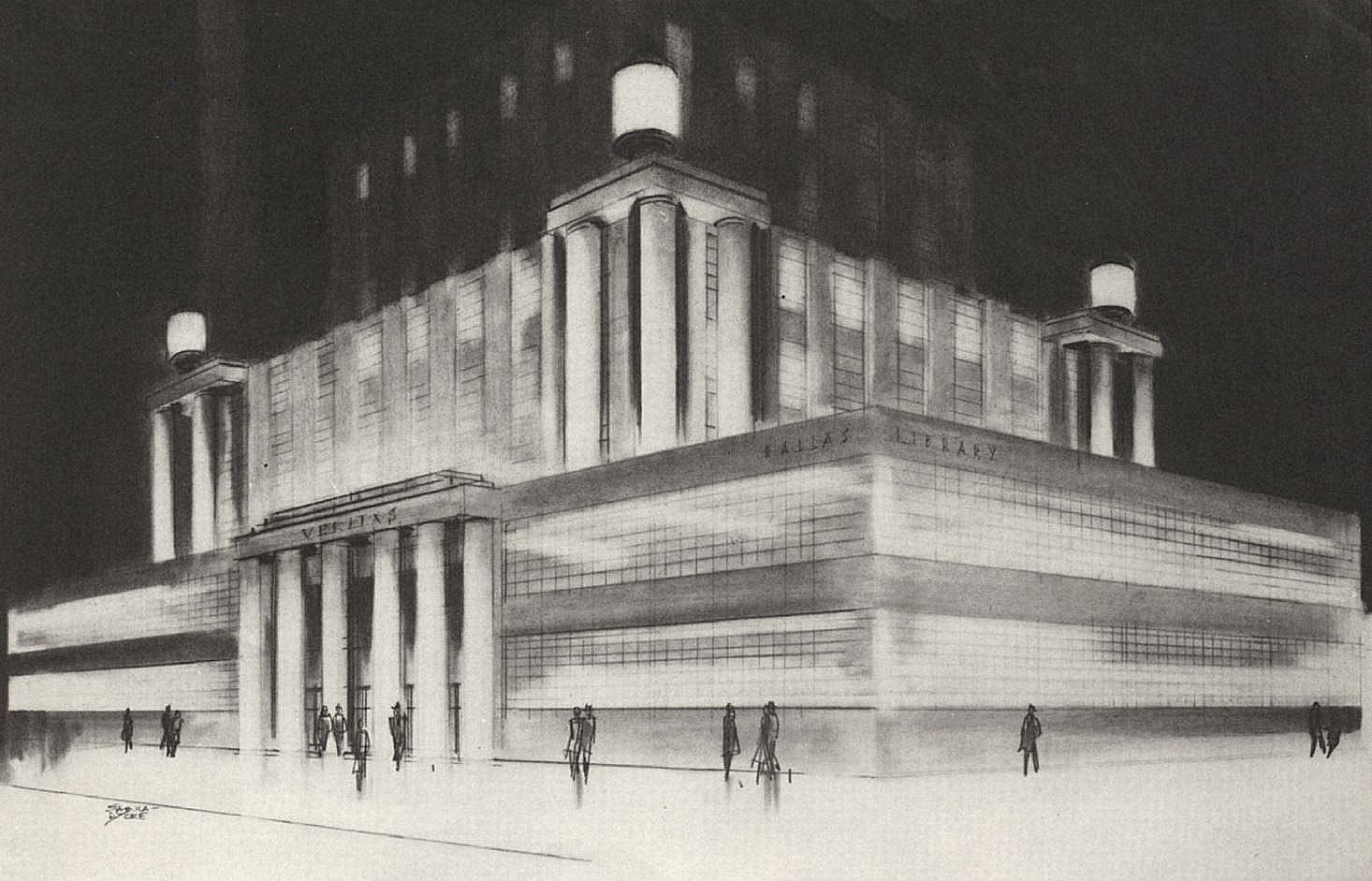
Vision of a new downtown library…

by Paula Bosse

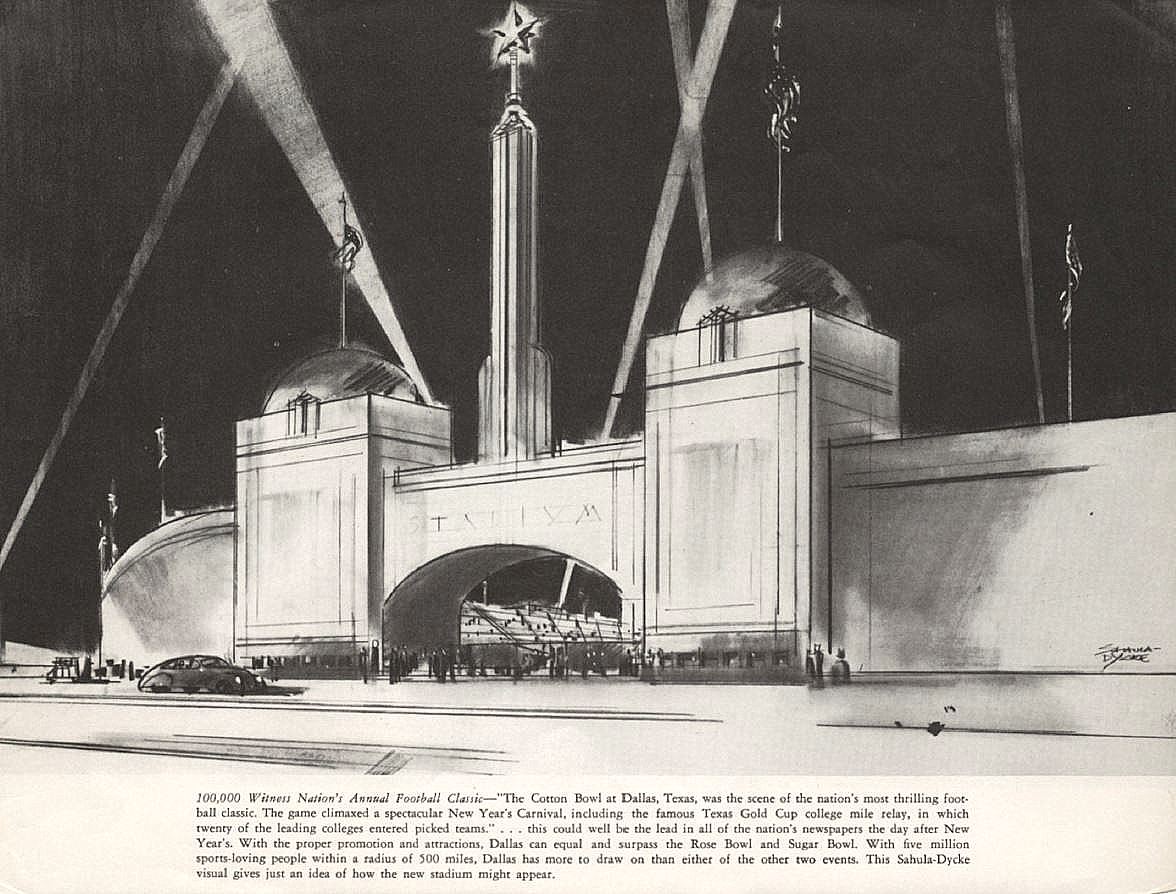
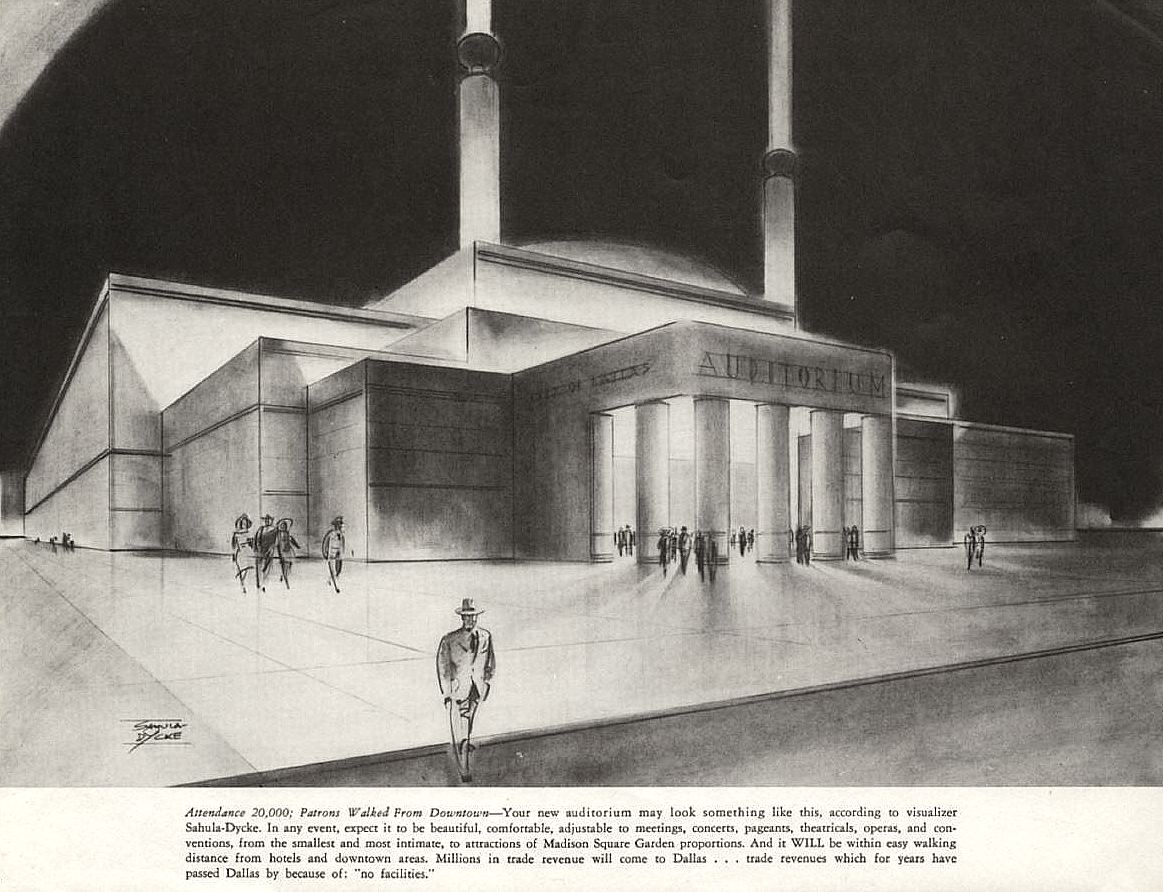
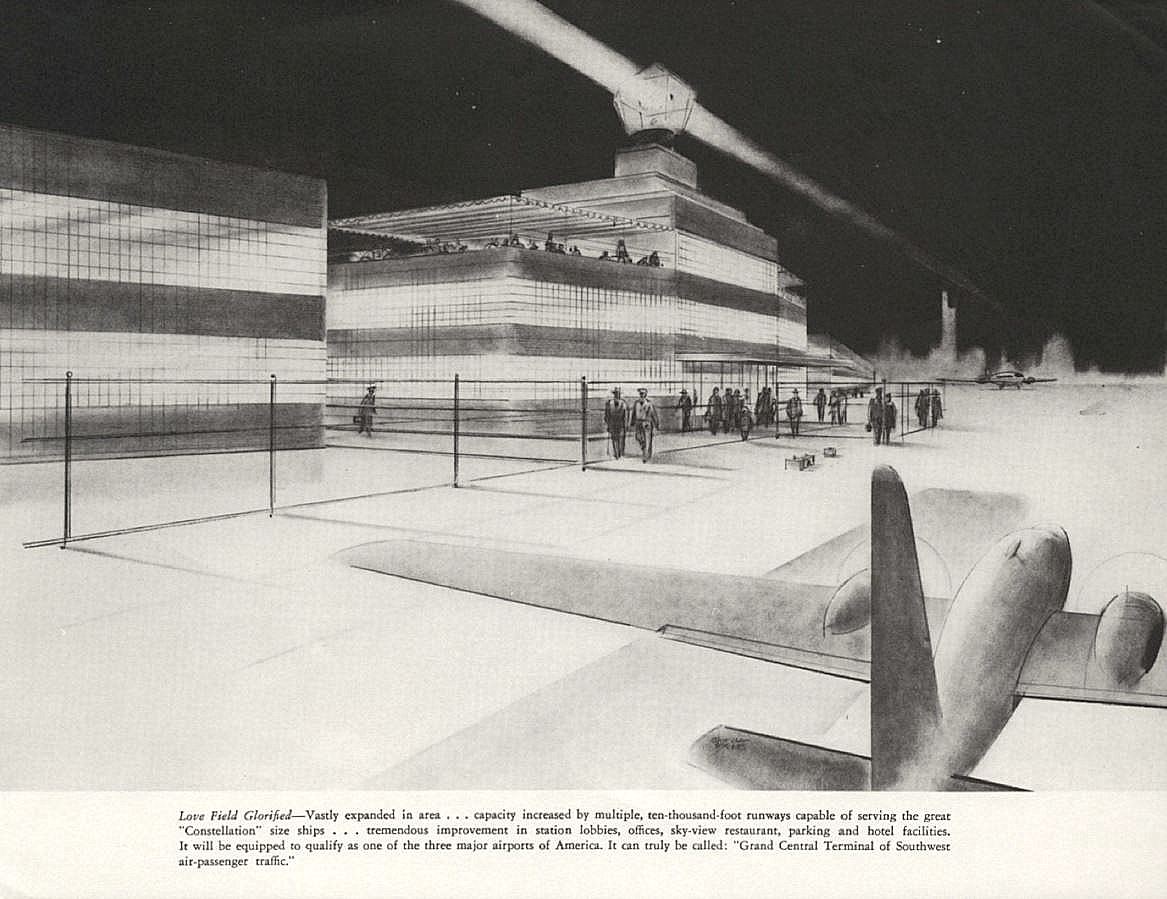
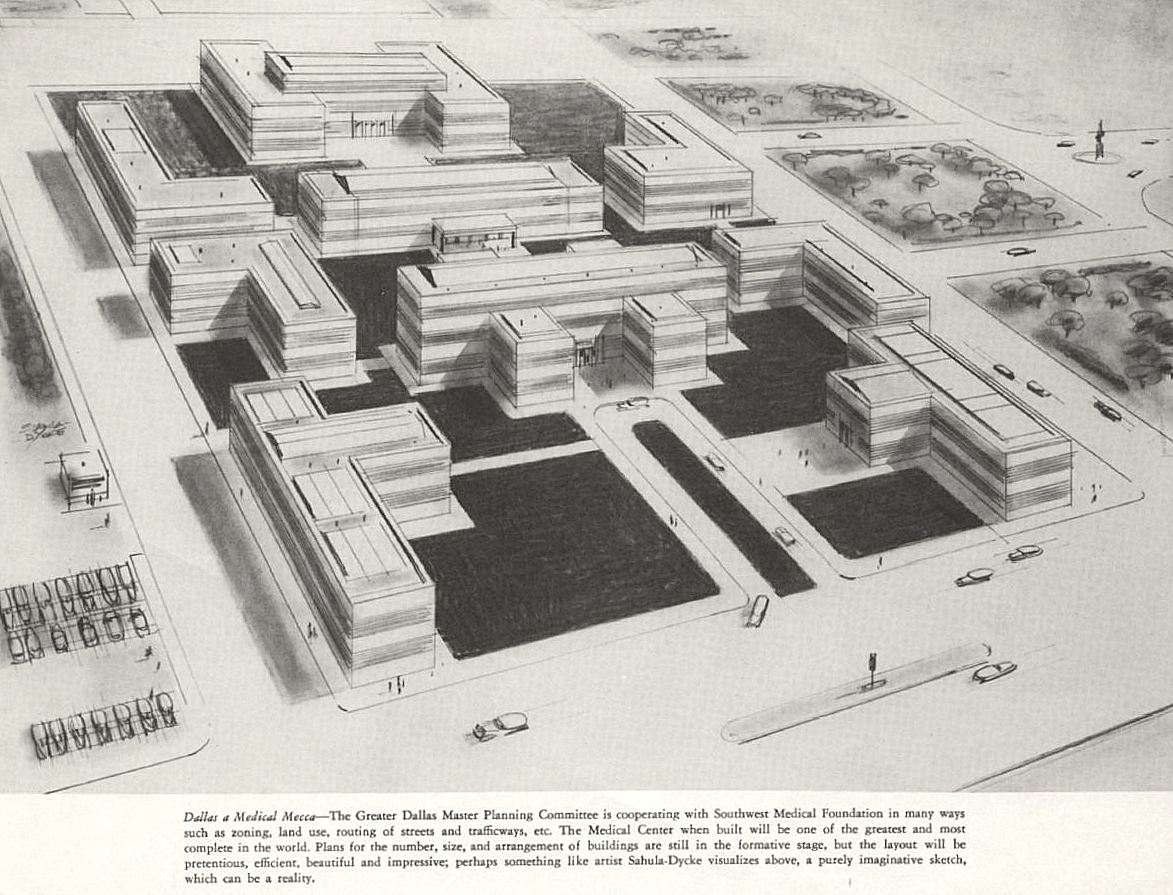
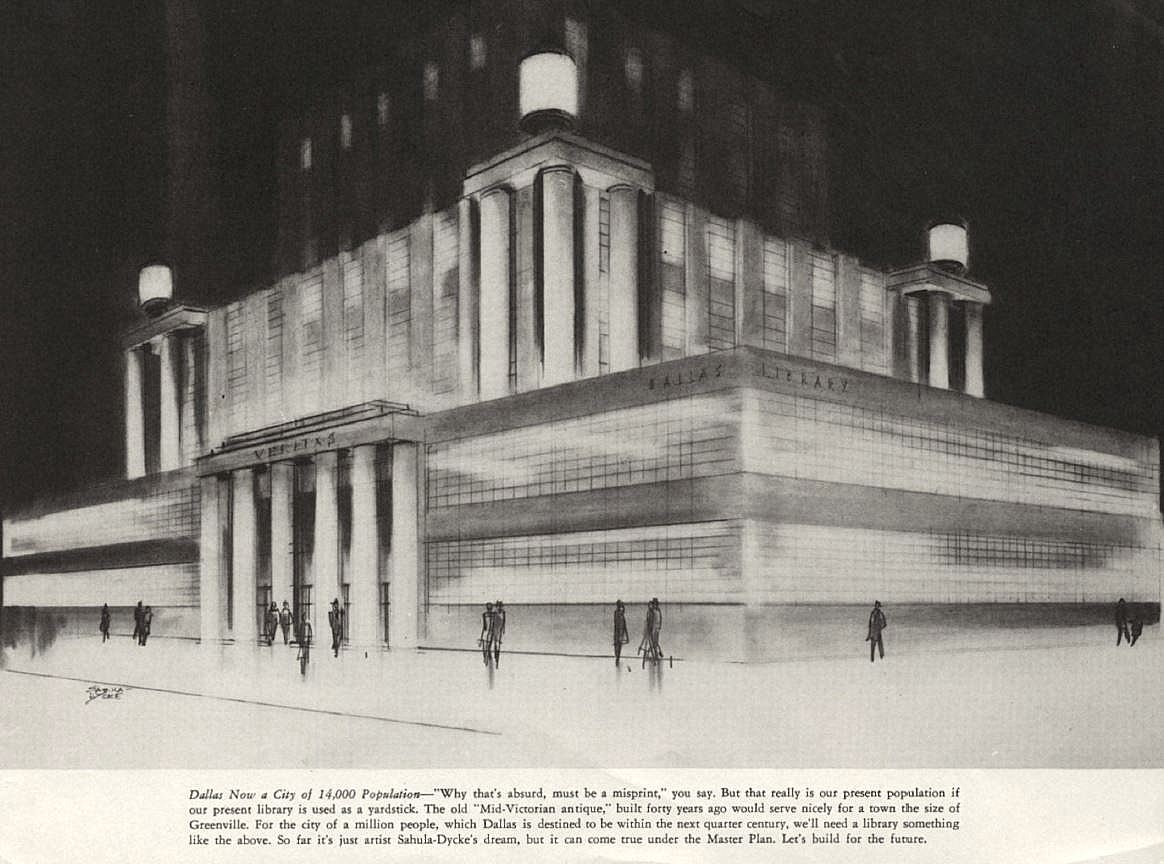
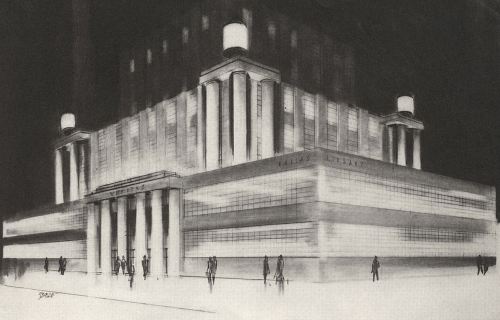
I came across a collection of drawings recently that I think are just fantastic. They show what Dallas could be if we all just want it enough. The captions are giddy and exuberant, with the exhortation “Let’s build for the future.” It’s the sort of Chamber of Commerce boosterism which is a Dallas mainstay. Dallas dreams big and bold.

It’s not the ideas that I find so intriguing (although, they’re interesting), it’s the artwork. These drawings are great. The monumental, Deco-ish buildings exude a quiet power. Most of them are set against a dark sky, which adds extra awe-inspiring heft. I really, really love these drawings. It’s a shame most of these conceptions remained just that. I would have loved that library (above)! The artist is Ignatz Sahula-Dycke — more about him at the end of this post.

The drawings are not dated, but my guess is late 1930s or very early 1940s. Promotional captions accompany each picture. Click to see full-screen images. Enjoy!

**

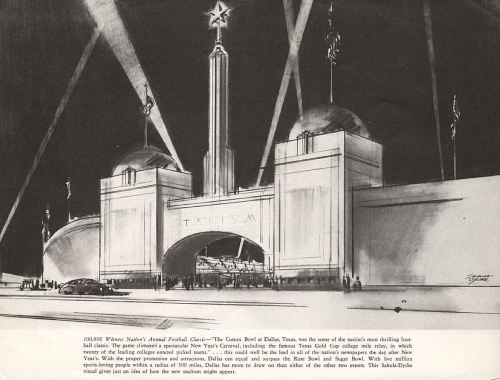
A NEW SPORTS STADIUM AT FAIR PARK

100,000 Witness Nation’s Annual Football Classic — “The Cotton Bowl at Dallas, Texas, was the scene of the nation’s most thrilling football classic. The game climaxed a spectacular New Year’s Carnival, including the famous Texas Gold Cup college mile relay, in which twenty of the leading colleges entered picked teams.” … This could well be the lead in all of the nation’s newspapers the day after New Year’s. With the proper promotion and attractions, Dallas can equal and surpass the Rose Bowl and Sugar Bowl. With five million sports-loving people within a radius of 500 miles, Dallas has more to draw on than either of the other two events. This Sahula-Dycke visual gives just an idea of how the new stadium might appear.
*

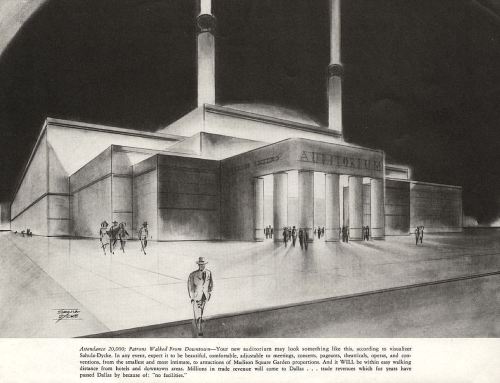
A CITY AUDITORIUM / CONVENTION CENTER

Attendance 20,000; Patrons Walked From Downton – Your new auditorium may look something like this, according to visualizer Sahula-Dycke. In any event, it’s expected to be beautiful, comfortable, adjustable to meetings, concerts, pageants, theatricals, operas, and conventions, from the smallest and most intimate, to attractions of Madison Square Garden proportions. And it WILL be within easy walking distance from hotels in downtown areas. Millions in trade revenue will come to Dallas… trade revenues which for years have passed Dallas by because of: “no facilities.”
*

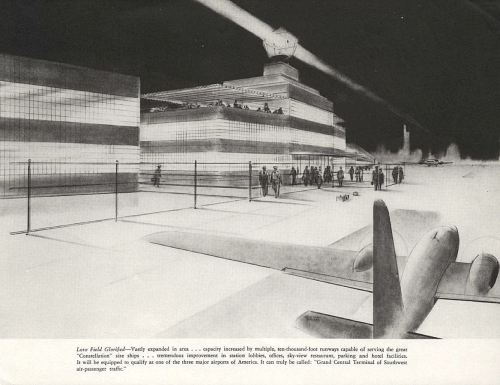
AN EXPANDED LOVE FIELD

Love Field Glorified — Vastly expanded in area… capacity increased by multiple, ten-thousand-foot runways capable of serving the great “Constellation” size ships… tremendous improvement in station lobbies, offices, sky-view restaurant, parking and hotel facilities. It will be equipped to qualify as one of the three major airports of America. It can truly be called: “Grand Central Terminal of Southwest air-passenger traffic.”
*

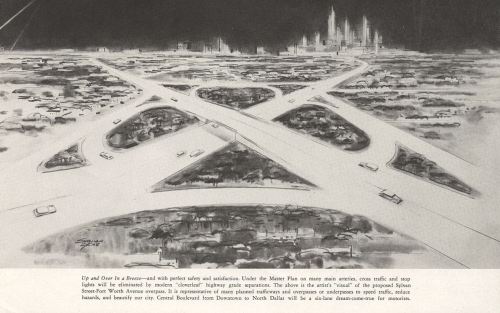
HIGHWAYS

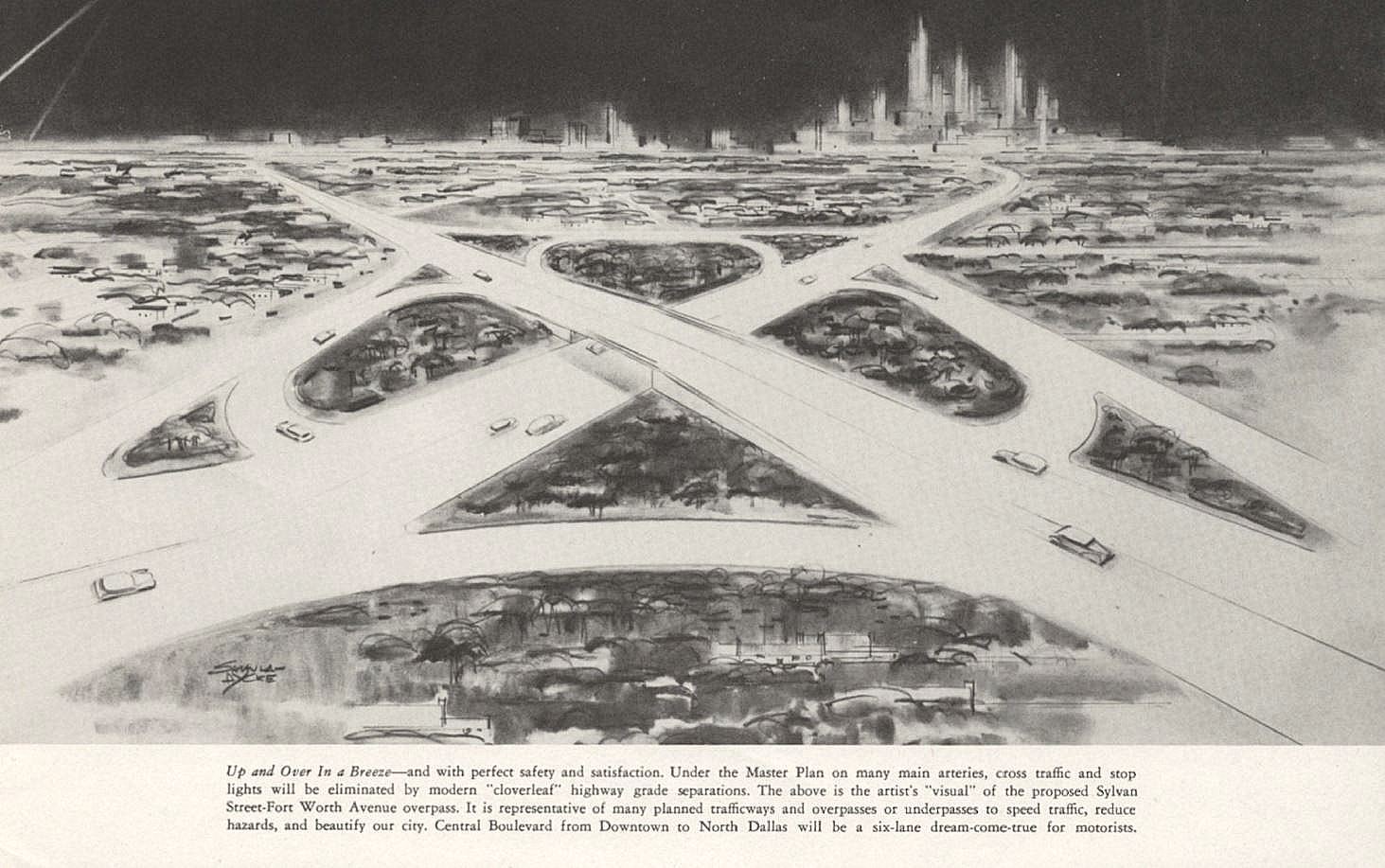
Up and Over In a Breeze — and with perfect safety and satisfaction. Under the Master Plan on many main arteries, cross traffic and stop lights will be eliminated by modern “cloverleaf” highway grade separations. The above is the artist’s “visual” of the proposed Sylvan Street-Fort Worth Avenue overpass. It is representative of many planned trafficways and overpasses or underpasses to speed traffic, reduce hazards, and beautify our city. Central Boulevard from Downtown to North Dallas will be a six-lane dream-come-true for motorists.
*

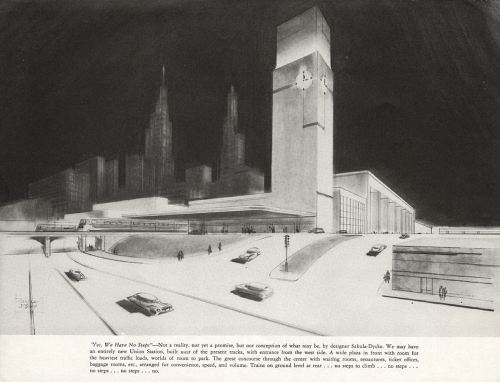
A NEW UNION STATION (…no steps!!!)

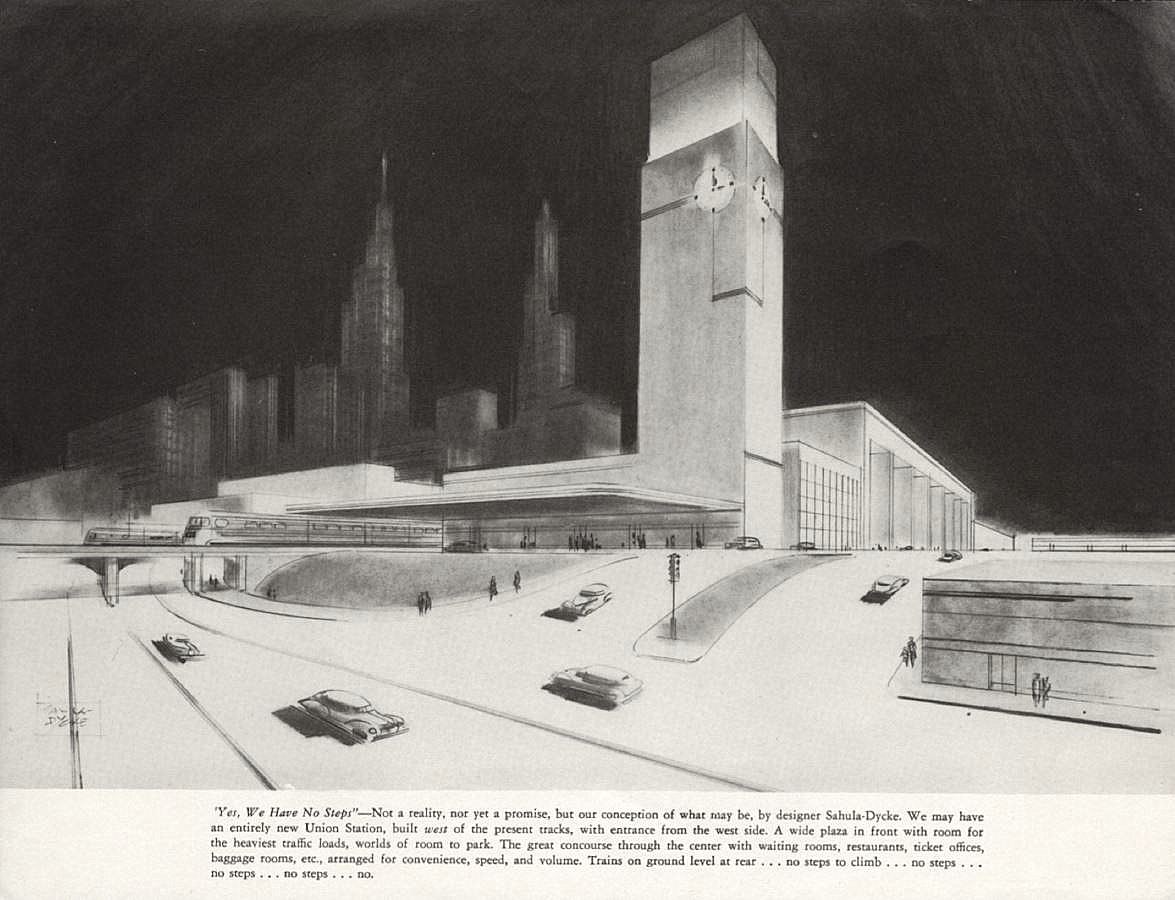
“Yes, We Have No Steps” — Not a reality, not yet a promise, but our conception of what may be, by designer Sahula-Dycke. We may have an entirely new Union Station, built WEST of the present tracks, with entrance from the west side. A wide plaza in front with room for the heaviest traffic loads, worlds of room to park. The great concourse through the center with waiting rooms, restaurants, ticket offices, baggage rooms, etc, arranged for convenience, speed, and volume. Trains on ground level at rear… No steps to climb… no steps… no steps… no steps… no.
*

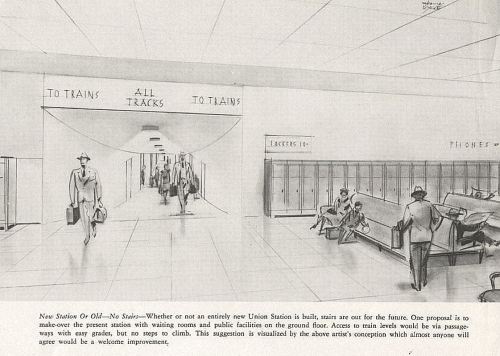
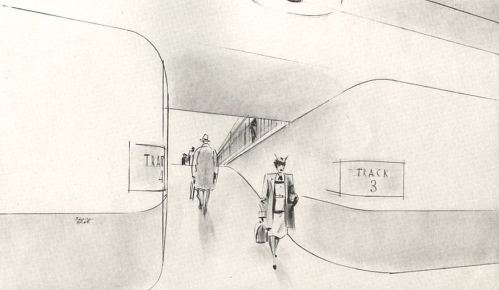
UNION STATION INTERIOR (…seriously, we mean it: NO STEPS!)

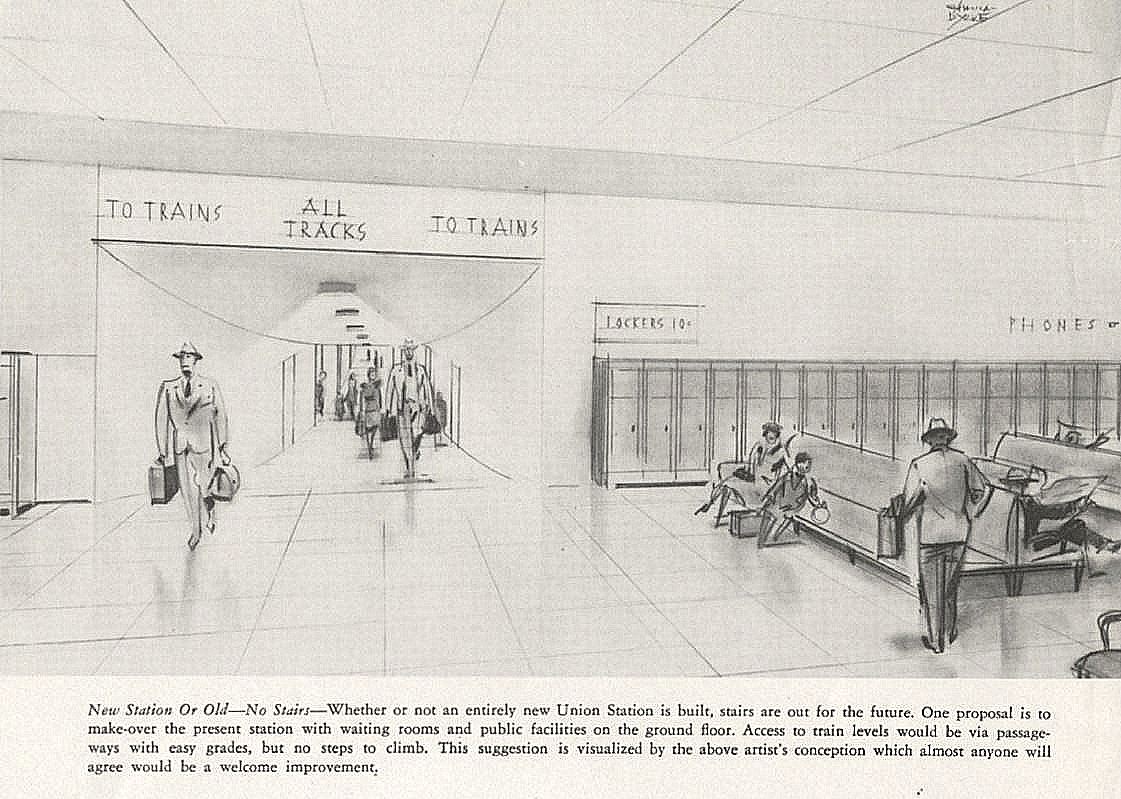
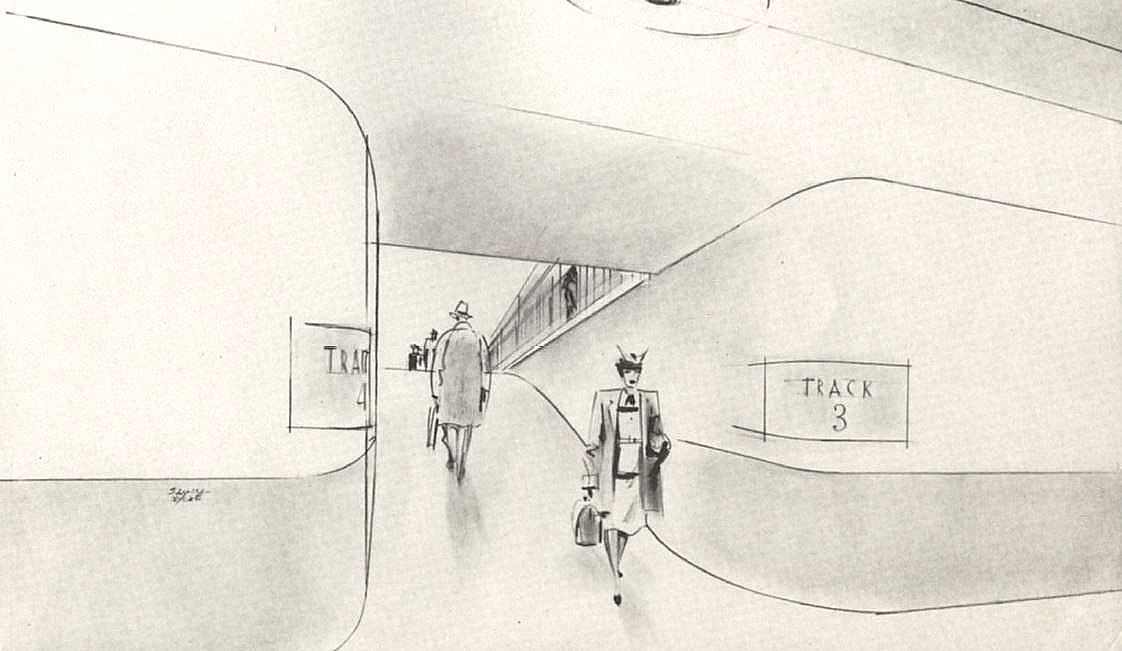
New Station Or Old — No Stairs — Whether or not an entirely new Union Station is built, stairs are out for the future. One proposal is to make over the present station with waiting rooms and public facilities on the ground floor. Access to train levels would be via passageways with easy grades, but no steps to climb. This suggestion is visualized by the above artist’s conception which almost anyone will agree would be a welcome improvement.
*

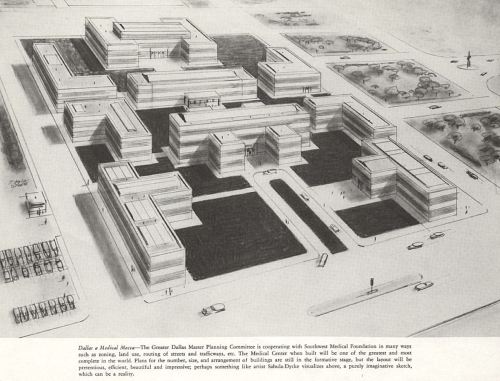
MEDICAL CENTER

Dallas a Medical Mecca — The Greater Dallas Master Planning Committee is cooperating with Southwest Medical Foundation in many ways such as zoning, land use, routing of streets and trafficways, etc. The Medical Center when built will be one of the greatest and most complete in the world. Plans for the number, size, and arrangement of buildings are still in the formative stage, but the layout will be pretentious, efficient, beautiful and impressive; perhaps something like artist Sahula-Dycke visualizes above, a purely imaginative sketch, which can be a reality.
*

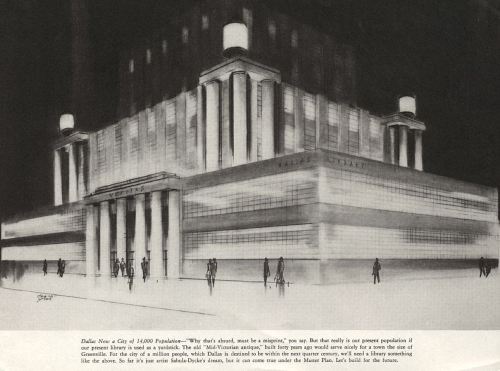
CENTRAL LIBRARY

Dallas Now a City of 14,000 Population — “Why that’s absurd, must be a misprint,” you say. But that really is our present population if our present library is used as a yardstick. The old “Mid-Victorian antique,” built 40 years ago would serve nicely for a town the size of Greenville. For the city of a million people, which Dallas is destined to be within the next quarter century, we’ll need a library something like the above. So far it’s just artist Sahula-Dycke’s dream, but it can come true under the Master Plan. Let’s build for the future.
**

I don’t know the date of these drawings. My guess would be the late ’30s or very early ’40s. (The Union Station drawing shows a building that looks like the Mercantile Bank Building. Plans for the Mercantile were announced to the public in 1940.) In a Dallas Morning News article (“‘Greater Dallas’ Appeals Stir Chamber to Renewed Action,” DMN, Dec. 8, 1937), many of the things covered in the captions above were hot topics at the annual meeting of the Dallas Chamber of Commerce. A “Master Plan” was later developed by Harland Bartholomew in the early ’40s. After a break for the war, the plan was finally put before the voters in April 1945.

The plans changed some between 1937 and 1945, but the visions touted in the drawings above were similar to the plans accepted favorably by Dallas voters. (The one part of this Master Plan that failed — and which is not mentioned in the drawings — is the vote on whether to “unify” the City of Dallas by annexing the Park Cities and Preston Hollow. Everyone was all for it… except for Highland Park and University Park, who chose to remain unannexed.) See an ad that appeared in March 1945, a week before the election, listing all the things Big D was hoping to build and develop here

**

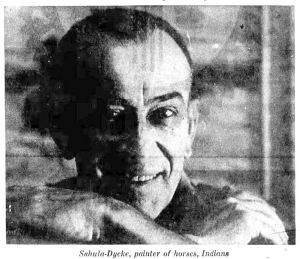
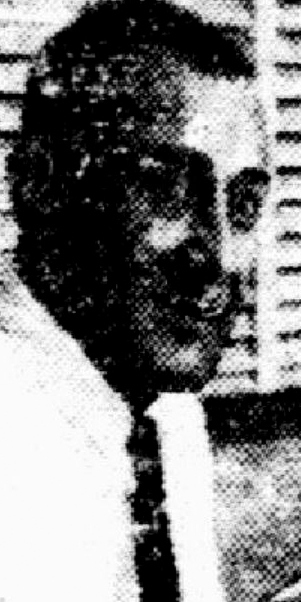
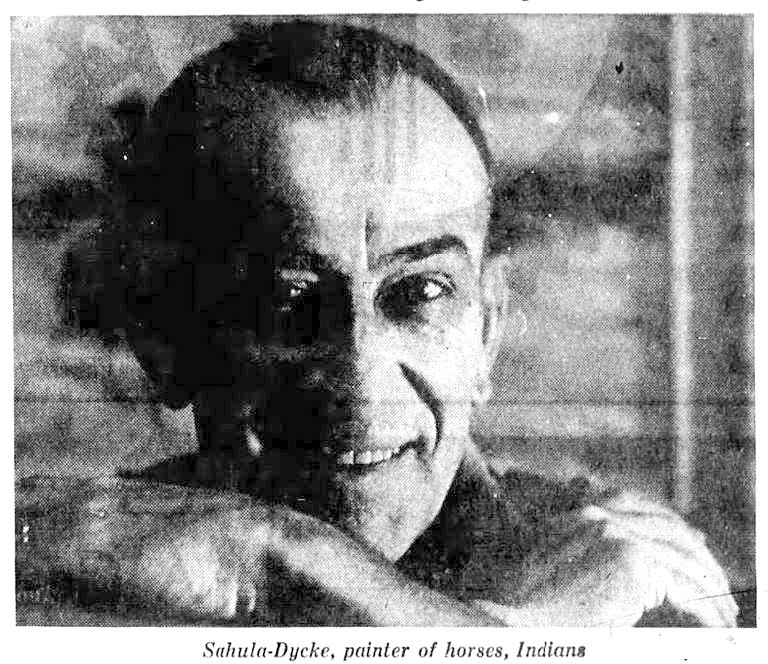
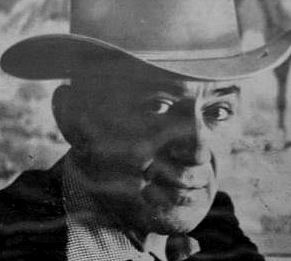
The artist of these conceptions was Ignatz Sahula-Dycke (1900-1982). Ignatz Sahula (known as “Iggie” to his friends) was born in Bohemia (Austria), near Prague, and immigrated with his family to the United States when he was a child. At some point he added his mother’s maiden name “Dycke” to his name — his mother was an artist and a descendant of 17th-century Flemish painter Anthony van Dyck. He studied art in Chicago and, after a stint in the U.S. Navy during World War I, worked for a variety of businesses as a commercial artist. He came to Dallas around 1937 and worked for many years at the Tracy-Locke advertising agency, eventually becoming Creative Art Director of the Dallas office. He actually left Dallas for a while to focus on his art but came back to Dallas a few years later and ended up working for Tracy-Locke for 14 years. His paintings and illustrations center around horses and Southwestern subjects such as desert landscapes and western themes. A good biography and photo of him can be found here, in an article from Western Art & Architecture.
Sahula-Dycke, 1950s

Santa Fe New Mexican, July 28, 1968

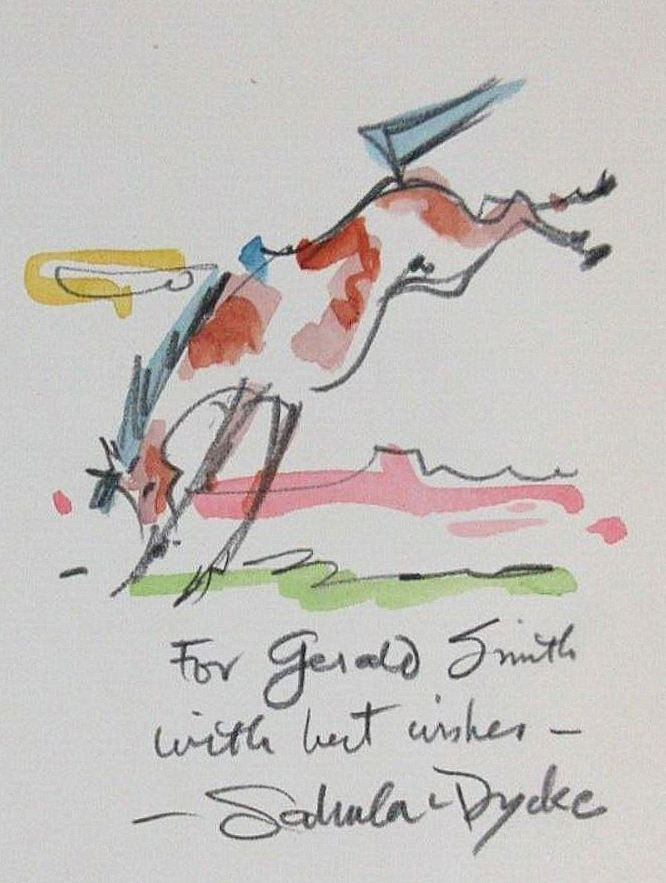
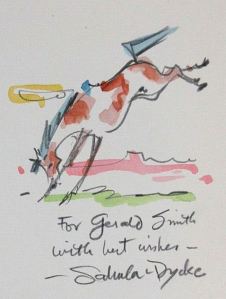
Iggie’s favorite subject was horses. Below is a little sketch he did when inscribing Alias Kinson, or The Ghost of Billy the Kid, a 1963 novel he wrote and illustrated, along with his author’s photo. (The back cover is here, complete with what may be a self-penned biography for this self-published book.)
***

Sources & Notes

All Dallas Master Plan images drawn by Ignatz Sahula-Dycke are from the Master Plan Vertical Files of the Dallas History and Archives, Dallas Public Library.

Inscription with watercolor-highlighted sketch and author photo are from an inscribed copy of Sahula-Dycke’s novel, Alias Kinson, currently listed on eBay.

A related Flashback Dallas post regarding Bartholomew’s Master Plan: “‘Your Dallas of Tomorrow’ — 1943.”

*

Copyright © 2025 Paula Bosse. All Rights Reserved.

Rudolph Gunner: Dallas Bookseller and Emperor Maximilian’s “Best Friend”

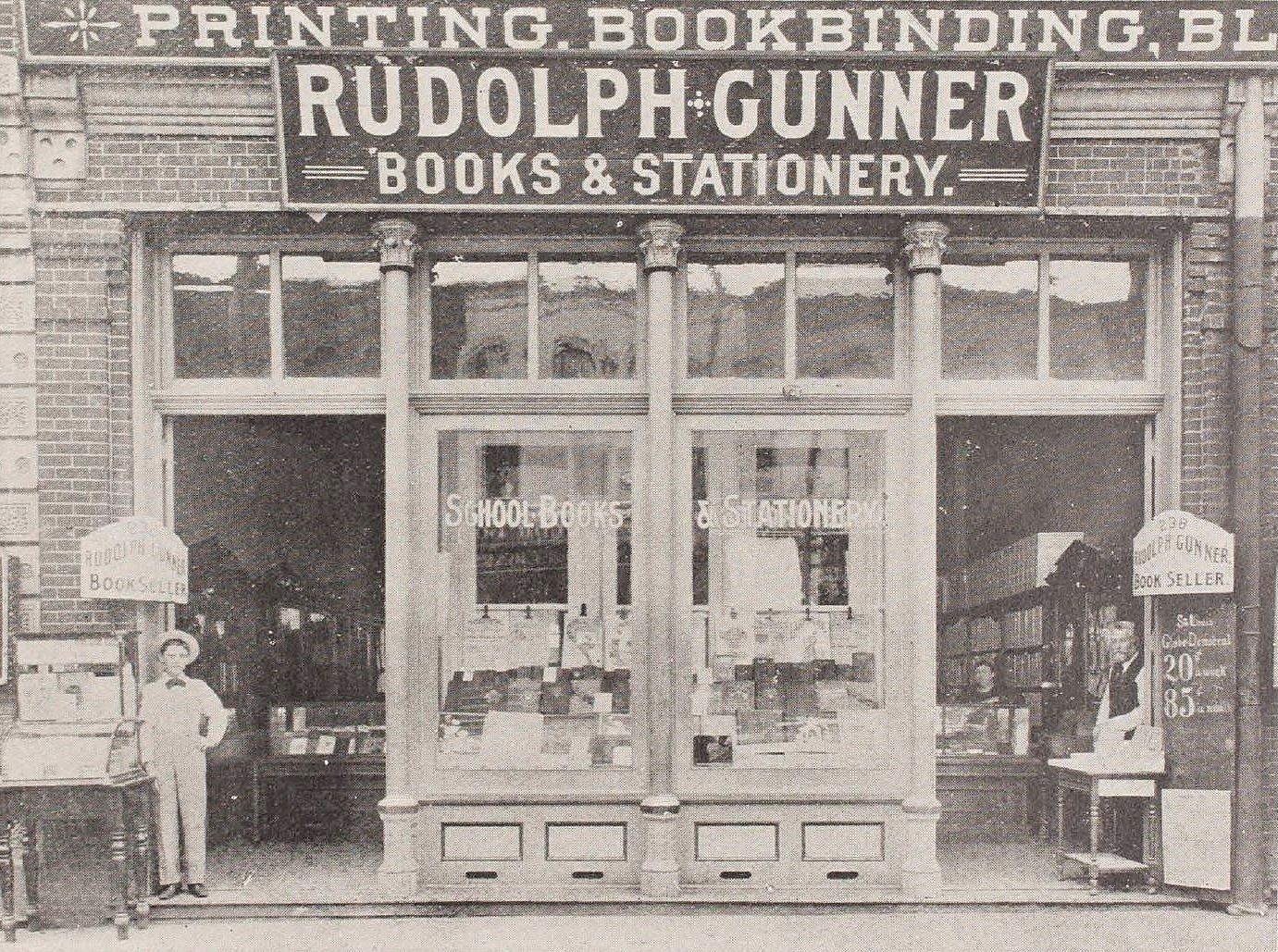
books_rudolph-gunner_dallas-through-a-camera_1894_degolyer-lib_SMU238 Main, circa 1894

by Paula Bosse

For the past several years, I’ve been posting bookstore-related posts on the birthday of my late father, Dick Bosse, an antiquarian bookseller who began his career straight out of SMU at The Aldredge Book Store, a literary landmark to many, which he eventually ended up owning. This year’s offering goes back to 19th-century Dallas.

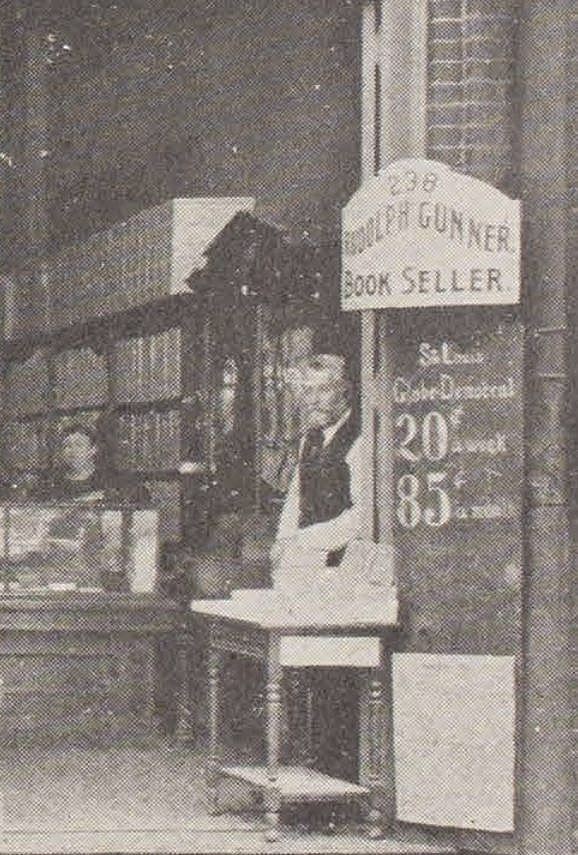
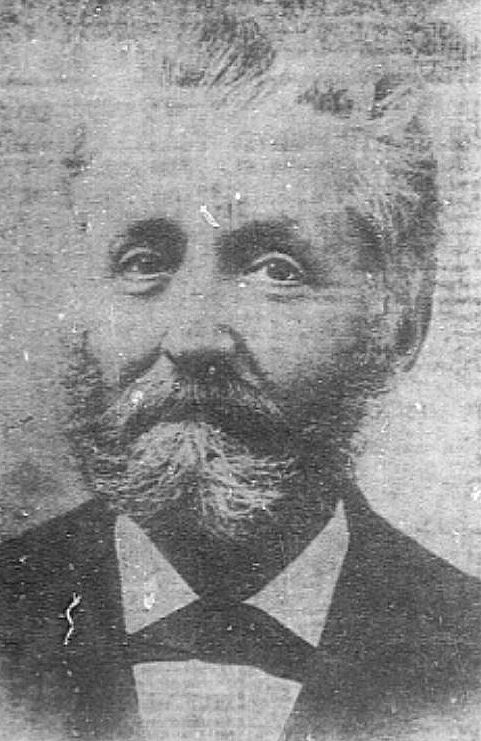
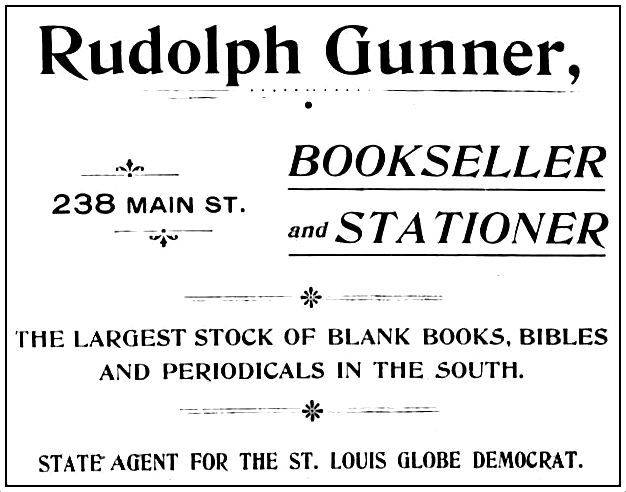
Above is a photo of the bookstore owned by Austrian immigrant Rudolph Gunner, located at 238 Main (later 1006 Main), between Poydras and Martin. Gunner (1833-1911) had, perhaps, one of the most impressive and colorful historical pedigrees of any Dallas resident. He served in the Austrian navy all over the world, but his most important service was as confidante and aide-de-camp to Emperor Maximilian and Empress Carlota of Mexico in the 1860s. That story is too big to tell here (Wikipedia is here to help), but it’s interesting that a man who was often referred to as “Maximilian’s best friend” eventually wound up in Dallas in 1885 and opened a bookstore, first on Elm Street, later on Main.

My father had a fascination with Mexico and used to talk about Maximilian quite a bit. I wonder if he knew Maximilian’s right-hand man lived out his days in Dallas, having spent several years as a bookseller?

books_rudolph-gunner_dallas-through-a-camera_1894_degolyer-lib_SMU_det_gunner

gunner-rudolph_photo

rudolph-gunner_1896-directory_adDallas city directory, 1896

*

In a sidenote, Gunner mentioned in several interviews that he had a LOT of historical documents and souvenirs from his military career serving in the Crimea, Egypt, Africa, and, especially, Mexico. I winced when I read this passage from an article by A. C. Greene in The Dallas Morning News (“Bookstore Owner Once Was Colorful General — He Headed Maximilian’s Mexico Palace Guard.” DMN, Apr. 18, 1993):

[A]t the time of his death in 1911 [his] home was at 1506 Fitzhugh. [His wife] was still living there, with a considerable collection of historic memorabilia, books, medals and military items, when the home burned, destroying everything but Gen. Gunner’s sword with the emperor’s crest.

Wow. All of that, gone. (And to answer my question above, I’m pretty sure my father would have known this, if only because he read A. C. Greene’s columns and probably even discussed this with him on a visit to the store.)

***

Sources & Notes

Top photo by Clifton Church, from his book Dallas, Texas, through a camera: a collection of half-tone engravings from original photographs (1894) — from the DeGolyer Library, SMU, here.

Read a first-hand account of Gunner’s time in Mexico in a Dallas Morning News article from Jan. 14, 1886 here; his DMN obituary (Aug. 25, 1911) is here.

Read previous Flashback Dallas articles on Dallas bookstores here.

I would love you to join me over on Patreon, where I upload Dallas history posts daily for subscribing members (as little as $5 a month!). If you would like to support what I do, check out Flashback Dallas on Patreon.

books_rudolph-gunner_dallas-through-a-camera_1894_degolyer-lib_SMU

*

Copyright © 2024 Paula Bosse. All Rights Reserved.

Col. McCoy’s Residence, Commerce & Lamar — 1879

mccoy-col-john-c_home_1879_southwest-business_june-1940_DHSMcCoy homestead… (photo: Dallas Historical Society)

by Paula Bosse

Imagine the “village” of Dallas in its very, very early days. 1852. That’s when pioneer Col. John C. McCoy (1819-1897) built the very pretty frame house seen in the photograph above. It had the honor of being the first frame house built in Dallas (and, in other firsts, McCoy had the distinction of being the first practicing lawyer in Dallas).
Commerce and Lamar streets, 1879. Col. John C. McCoy, one of Dallas’ first “leading citizens,” built this house at the corner of Commerce and Lamar in 1852, and it immediately became a landmark in the village — the one frame house in a colony of log cabins. The photograph, made in 1879, shows Mr. and Mrs. W. H. Taggart, Col. John C. McCoy and Miss Eliza McCoy on the porch. Standing at the gate are Capt. John M. McCoy (nephew of Col. McCoy and brother of Mrs. Taggart) and Cora and Laura Taggart, his nieces. (Southwest Business magazine, June 1940)
See what this view looks like now, here. Sadly, the Colonel’s white fence and grove of trees are gone.

When I was looking at this photo, I thought I should check to see what it looked like on the hand-drawn map of Herman Brosius from 1872. His maps were celebrated for their incredible attention to detail. I wrote about this map in a previous post (here), and… yes! The house seen in the photo has been realistically captured in Brosius’ map. As seen below — in the center of a detail from the map — it’s right there, at the southeast corner of Commerce and Lamar (facing Lamar), just south of the Methodist church. McCoy owned the entire block, and he did not skimp on the trees.

mccoy-house_brosius-map_1872_det

Read about the life of Col. John C. McCoy in Sixty Years in Texas by George Jackson at the Portal to Texas History, here, and in the Handbook of Texas entry on the Texas State Historical Society site, here. He is almost as important to the history of Dallas as his business partner, John Neely Bryan.

mccoy-col-john-c_portrait_find-a-graveCol. John C. McCoy

***

Sources & Notes

Photo from the Dallas Historical Society — it and the caption appeared in Southwest Business magazine, June 1940.

Detail of “A Bird’s Eye View of the City of Dallas, Texas” (1872) by H. Brosius is from the Dallas Historical Society and can be seen in a very, very high-resolution scan on Wikimedia Commons here (click map to really zoom in on the very precise details). I wrote about this map in the 2018 post “The Bird’s-Eye View of Dallas by Herman Brosius — 1872.”

Portrait of Col. John C. McCoy from Find-a-Grave. (McCoy and his family are buried in Oakland Cemetery. More on the family can be found in a video recorded at the grave site and posted on the Facebook group Friends of Oakland Cemetery Dallas, here.)

mccoy-col-john-c_home_1879_southwest-business_june-1940_DHS

*

Copyright © 2024 Paula Bosse. All Rights Reserved.

Jimi Hendrix in Dallas, 4/20/69

jimi_WFAA_042069_SMU_aDoug, Mitch, Noel, and Jimi

by Paula Bosse

Today is 4/20 Day. An alternate (or parallel) way to celebrate the already alternative “holiday” is to mark the anniversary of one of Jimi Hendrix’s best interviews, on the Love Field tarmac on April 20, 1969, given to Dallas reporter Doug Terry (still a college student when he was at WFAA-Channel 8). The band was in Dallas for a show at Memorial Auditorium. It’s just a fantastic, laid-back, cool interview.

I had tried contacting Doug several years ago to let him know this clip was racking up the hits on YouTube, in case he wasn’t aware it was there, but I didn’t hear back from him until this week! He had seen the post I had written about this interview and wrote a bit about that momentous occasion in the email. He also adds some interesting behind-the-scenes tidbits I always find interesting (the following is used with Doug’s permission):

I was still a college student most of the time I worked at WFAA. I handed in my resignation after covering the north Texas pop festival in that same year. [Watch one of Doug’s reports from the Texas International Pop Festival here.] Your comment about being in a large city and its advantages was something that I did not fully grasp until years later. The access was wonderful, I saw Hendrix at least three times, on one occasion being in the dressing room with a camera when he warmed up for a show (that footage is nowhere to be found).

There are two aspects to mention about that interview. First, I was a weekend reporter and late night news anchor at Ch. 8 and I assigned myself to go interview him. In those days, one could call up the airlines when a notable person was coming in and they would give the flight number and arrival time. Amazing. Most of the people at the station at that time probably had no idea who Jimi was and wouldn’t have cared if they did know.

The other interesting point is the work of the photographer. Ordinarily, we did over the shoulder interviews, the camera to the back and side of the reporter. The fact that this was shot from the side made all the difference. As a shooter, he was not otherwise outstanding but this interview would be much less interesting if it had been shot in the traditional line-up sort of way. The two bandmates goofing around was distracting but great.

Thank you so much for getting in touch, Doug!

My original 2017 post about this interview (with the film clip of Jimi, Mitch Mitchell, and Noel Redding at Love Field) — which includes additional info about Jimi’s other performances in Dallas — is here: “Jimi Hendrix, Glen Campbell, Tiny Tim — In Dallas (…Separately), 1969.”

jimi_WFAA_042069_SMU_b

***

Sources & Notes

Screenshots from the WFAA Collection, G. WIlliam Jones Film and Video Collection, Hamon Arts Library, SMU.

Excerpt from Doug Terry’s email to me (April 16, 2024), used with permission.

jimi_WFAA_042069_SMU_a

*

Copyright © 2024 Paula Bosse. All Rights Reserved.

Some-Context Channel 8 Screenshots: 1971

lady mailman june 1971 WFAAWFAA Collection/Jones Film Collection/SMU

by Paula Bosse

I have been working as part of a 3-person team (led by Jeremy Spracklen and Scott Martin) on the WFAA archive of news film, housed in the G. William Jones Film and Video Collection at the Hamon Arts Library at SMU. I have been working on 1970 and 1971, going through daily footage shot for Channel 8 News. I get a bit bogged down by all the sports and car crashes, but at this point, I am so all-consumed by these two specific years that I feel I would do well on Jeopardy if the categories were things like “Minor League DFW Hockey Teams of the Early ’70s,” “Internecine Squabbles of the Dallas City Council, the Dallas School Board, and the Dallas County Commissioners Court,” and “So What’s the Deal with the Sharpstown Scandal?” My 2023 has been spent immersed in 1971, where the chaos of the implementation of court-ordered school busing, the huge securities fraud scandal that involved some very powerful Texas politicians (Sharpstown), and the battle between Craig Morton and Roger Staubach to become the Cowboys’ #1 quarterback were some of the stories that dominated the headlines. And, lordy, there were some pretty exotic hairstyles, fashions, and interior design trends hammering away relentlessly throughout this post-hippie (it might really still have been current-hippie), pre-disco period.

Here are a few of my favorite moments from this 1971 DFW-centric news footage from the WFAA archives. Links to the pertinent clips on YouTube are included at the end of the descriptions. These clips are rarely the full reports that would have been seen on the nightly news — they are often just silent footage or B-roll, without any identification of people or clues as to where they were filmed or even why they were newsworthy. It’s (mostly) a lot of fun to dig through and watch the unfolding of history from more than 50 years in the future.

**

Above, from JUNE 1971

One of my favorite human-interest stories from the past year (meaning 1971!) was the profile of one of the few “lady mailmen” in Dallas at the time. She’s utterly, utterly charming, has a supportive and interesting husband and family, and loves her job. The Channel 8 cameraman shows her as she sorts her mail in the Beverly Hills Station post office in Oak Cliff and follows her as she walks along her route on West Davis. The only problem with this 7 minutes of interesting footage is that the woman is never identified. I dove in, really wanting to identify her. I thought I had cracked the mystery of her identity, only to find myself at a dead end again. If only her children could see this wonderful profile of their mother. If you know who this woman is, please let me know, and we’ll add her name to the YouTube description and try to track down any family members. I would LOVE her children to be able to see this.

The “lady mailman” is interviewed here (this first bit is in three short segments, totaling 4 minutes); a later clip shows her on her route, here (about 3 minutes). The old post office building still stands at 509 N. Barnett.

lady mailman june 1971 WFAA_beverly hills post office

*

JANUARY 1971

So, yeah, fashion and interior design trends were pretty… in-your-face in 1971. In the three screenshots below, you’ll see some retina-abusing images of with-it decor. The first features the always beautiful Phyllis George, the Denton native who was in the midst of her Miss America reign. In this clip, she has come back home to DFW for an appearance at an event in which a room designed with her in mind is unveiled (by decorators C. John Megna and William Farrington). She is wearing a dress designed by Carlo Bitetto specifically for her to wear IN THAT ROOM (!). You don’t often see sparkles and plaid cheek-by-jowl.

The clip with the super-color-saturated room and its battling patterns is here.

phyllis-george-room_jan-1971_c

phyllis-george-room_jan-1971_b

phyllis-george-room_jan-1971_a

*

FEBRUARY 25, 1971

Before Lion Country Safari, Mesquite had World of Animals, a drive-thru safari park. World of Animals had a wild-animal veterinarian who visited regularly from California: Dr. Martin Dinnes. Below, Dinnes is seen providing dental care to popular attraction Harold the Chimp. This is not really something I expected to see, but there you are. (Dinnes was later engaged to actress and wildlife preservation activist Tippi Hedren for several years.)

The clips of Dinnes being interviewed and preparing Harold for a tooth extraction (and I grimaced a bit, because the camera keeps rolling during the procedure, so be warned!) are here and here. (The last clip has a shot of Harold’s hand, which, understandably, appears to be gripping the chair.) That is one well-behaved, chill chimp!

dinnes-martin_harold-chimp_022571_WFAA

*

MAY 18, 1971

In 1971, there was an ongoing battle between old quarterback Craig Morton and NKOTB Roger Staubach over who would be named the team’s official starting QB. Coach Tom Landry worked for months with a two-quarterback system, alternating them from game to game — he was fine with this, but everyone else hated it. Below are screenshots of Morton and Staubach at the Cowboys practice field. I know virtually nothing about sports training, but this, um, extremely low-tech gadget struck me as weird. And funny. I mean, okay, it was 1971, but surely there was something more technologically advanced than this? It’s a football on a string, tied to a post. And maybe there’s a spring or something in there. This must have been effective. Rog looks like he’s straining. I don’t know. But I love it.

See Craig in an interview with Verne Lundquist from May 18, 1971 about his elbow and shoulder injuries here, and then using the football-on-a-string thing (and then training with Staubach) here; and see Roger interviewed on the same day about really, really wanting to be the starting QB here, and then he hits the string thing here before working out with Morton in what must have been a fairly tense period of both of their careers.

morton-string_WFAA_may-18-1971

staubach-string_WFAA_may-1971

*

JUNE 1971

Medical examiners used to be on the news a lot. One who popped up frequently was Tarrant County M.E. Dr. Feliks Gwozdz. I was amused more than I should have been when I saw the skull-and-crossbones coffee mug on his desk. I hope it said “World’s Greatest Coroner!” on the back.

The silent footage of Dr. Gwozdz at his desk is here.

skull-crossbones_feliks-gwozdz_june-1971

*

JULY 14, 1971

Back in 1971 there was what seemed like the threat of a union strike every 10 minutes. I enjoyed the footage of a bunch of Southwestern Bell employees who look like they were probably a lot of fun to hang out with. Their t-shirts read “Ma Bell Is a Cheap Mother,” which is just great.

Strike footage is here (about 2½ minutes) and here.

SWB-strike_july-14-1971_big potatoes

SWB-strike_july-14-1971_ma bell is a cheap mother

SWB-strike_july-14-1971_WFAA

*

JULY 1971

One of the top stories of 1971 was the endless furor set off by court-mandated school busing in attempts to desegregate schools. It was a mess. The man seen below is attorney Bill Brice, a leader of one of the many anti-busing groups. …Surely the cameraman noticed the monkey.

Man with monkey can be seen here.

anti-busing_bill-brice_monkey_WFAA_july-8-9-1971

*

AUGUST 29, 1971

When the Dallas School Board and Supt. Nolan Estes weren’t pulling their hair out over desegregation, they tackled other issues. One of which was so overshadowed by anti-busing demonstrations that it barely got any play, but I find it really interesting. It concerned Crozier Tech High School downtown. At the end of the 1970-71 school year, the landmark school was closed, and there was lots of discussion on what the DISD should do with the building/land, which they owned (2218 Bryan). This press conference was supposed to be about Estes’ vision of a 40-story school-office complex, which he suggested be built on the land — the first 10 floors would be for school use, and the top 30 floors would be leased to businesses as office space, with leases, theoretically, paying for construction and maintenance of the building. The building was never built (and thankfully, old Tech still stands). School board president John Plath Green and Supt. Estes sit in front of an architectural drawing of the envisioned DISD skyscraper. Too bad no one wanted to talk about it.

Footage from the press conference where reporters only want to ask about busing, is here.

super-school_DISD_crozier-tech_DMN_082971_WFAA_SMU

*

SEPTEMBER 23, 1971

The Sharpstown Scandal was a bigger story than busing, but, even though political scandals are juicy, it just didn’t get everyday people mobilizing, marching in the streets, and shouting each other down in public forums the way busing did. But it was a massive story, and several political careers bit the dust because of it. The sprawling and confusing securities-fraud scandal mostly involved drab politicians and business executives. But one part of it involved, bizarrely, six celebrated — if not beloved — NASA astronauts and an insurance company pension fund.

In this Channel 8 footage, you can see something you don’t see every day: five NASA astronauts walking together down the street (a sixth one was nearby, on his own). James Lovell, Pete Conrad, Fred Haise, Ken Mattingly, Richard Gordon, and Alan Bean were in Dallas on Sept. 23, 1971 to testify as witnesses before a federal grand jury that was investigating the activities surrounding the Sharpstown Scandal. These are screenshots of the five (minus Lovell), carrying briefcases through grubby downtown Dallas, and of Lovell on his own, exiting the Federal Court House. When I first watched this footage, it just seemed really odd: five internationally (galactically!) famous astronauts — heroes! — walking together down the street, without any kind of security or entourage. If you were a NASA freak (and there were a lot back then, at the height of the Apollo-Gemini programs) and you just happened to have walked past this group, your head would have exploded.

See Lovell exiting the sterile- and dystopian-looking courthouse on his own (that woman he holds the door open for has no idea who he is), and the others walking somewhat playfully down the street here (I love this footage!); a confusing wrap-up of the day’s events is here.

astronauts_WFAA_SMU_sept-23-1971

astronauts_WFAA_SMU_sept-23-1971_1

astronauts_WFAA_SMU_sept-23-1971_2

astronauts_WFAA_SMU_sept-23-1971_c

*

OCTOBER 14, 1971

In footage from the State Fair of Texas, I was really taken by this building, which I swore I had never seen. It was the home of the “lost children” center during the fair, in the Dallas police HQ in Fair Park. It looks different to me now, but it’s still there, near the Aquarium. It looked better in 1971!

Lots of footage of crying children and harried parents, here and here.

fair-park_sfot_lost-kids_101471_WFAA_SMU

*

OCTOBER 1971

This young dandy is named John Ott (I’m not 100% sure about the spelling). He was a real estate developer in Euless. He couldn’t have been more on top of the 1971 fashion wave. Represent, Euless!

It’s a story about replanting trees (with, admittedly, interesting footage of trees being uprooted and replanted). Here and here.

developer_john-ott_euless_oct-29-30-1971_WFAA_SMU

*

OCTOBER 31, 1971

In the screenshots below, Channel 8 reporter Judi Hanna (who had recently debuted an unfortunate hairdo) interviews Dallas City Councilman Garry Weber about City Council things. I don’t know where this was filmed, but I only hope it wasn’t his home. It’s hard to focus on what anyone is saying, because of the tidal wave of stuff coming at you. (Ironically, he was being interviewed about sponsoring a change to the city charter in order to crack down on the “visual pollution” of unenforced sign ordinances.) I was so overwhelmed by this vista, that I somehow assumed I was seeing cupid-studded wallpaper. But no. Check out the second screenshot, which also includes a peek at the room’s drapes. I can’t tell where the wallpaper ends and the drapes begin.

Appropriately shown on Halloween night, clips from this report are here (followed by footage of signs-galore along Lemmon Avenue) and here.

weber-garry_WFAA_SMU_oct-31-1971_wide

weber-garry_WFAA_SMU_oct-31-1971_drapes

*

OCTOBER 1971

Lastly, a shot of Mingus, Texas, a small West Texas town near Thurber. I just love this image. I think I found the location — here’s what it looks like now.

Why was the tiny town of MIngus being featured on a Dallas news report? The Greater Mingus-Thurber Metropolitan Area was in the news because it was the location of a commune of the controversial Children of God (i.e. “cult”). Actually, the “Children” were in the process of being evicted by the landowner, who, interestingly, was a TV preacher in Los Angeles (I guess even TV evangelists have a breaking point). Members of this group splintered, and a few moved to Big D for a while, where they continued to be newsworthy until they moved elsewhere.

The shot of Mingus is from one of the many clips contained in this Oct. 7 package, here (it is specifically at the 1:08 mark). Below that is a shot from a week later, after some of the self-described “Jesus Freaks” had landed in Dallas — a group member is seen walking through Exposition Park to their new HQ, at 639½ Exposition — it and other CoG footage from Oct. 14, 1971 is here (this specific shot is seen at the 17:18 mark). (If you are considering a documentary on the Children of God, there’s lots of footage for you in the WFAA archives at SMU.)

mingus_WFAA_SMU_100771

children-of-god_expo-park_WFAA_SMU_oct-14-1971

*

AUGUST 1971

This is a bonus.

As I worked my way through 1971, there was one truly amazing story. It involved the kidnapping of a toddler in Fort Worth. On Aug. 25, 1971, 21-month-old Melissa Suzanne Highsmith disappeared. Her 22-year-old mother, Alta, had hired a new babysitter, who was supposed to watch her for the day while Alta was at work. The babysitter picked Melissa up in the morning as planned, but she never returned the child. The babysitter and Melissa disappeared without a trace. There were no leads in the case for years. …And YEARS.

In 2022, the Highsmith family learned of an online DNA match, which would indicate they had found Melissa. Eventually, it was determined that a 50-something-year-old woman named “Melanie” was actually the long-missing Melissa. The woman who kidnapped her raised her as her own daughter, and Melissa never suspected she wasn’t the woman’s child (although she says she never felt really “connected” to her).

Melissa (she now uses “Melissa” again) was reunited with her family at the end of 2022. One report I read said that she grew up only 10 minutes from the Fort Worth apartment her mother lived in. Despite the Highsmith family’s 51 years of loss, grief, worry, and suffering, there has ultimately been a happy ending!

In the screenshot below from an Aug. 26, 1971 Channel 8 story, Alta Highsmith shows a photo of her missing daughter to the camera. The report is here.

kidnapping_highsmith_WFAA_SMU_aug-26-1971

**

If you managed to get all the way through this, you deserve an award! This might be the longest thing I’ve written all year! I’m more than ready for my 1971 Jeopardy challenge (Dallas edition)!

***

Sources & Notes

All screenshots are from news film in the WFAA Collection, held by the G. William Jones Film & Video Collection, Hamon Arts Library, SMU. Clips are posted regularly from this Channel 8 collection on YouTube, here.

My previous collection of WFAA screenshots can be found in the post “No-Context Channel 8 Screenshots: 1970-1971.”

lady mailman june 1971 WFAA_sm

*

Copyright © 2023 Paula Bosse. All Rights Reserved.