Flashback : Dallas

A Miscellany: History, Ads, Pop Culture

Category: Music

The Gypsy Tea Room, Central Avenue, and The Darensbourg Brothers
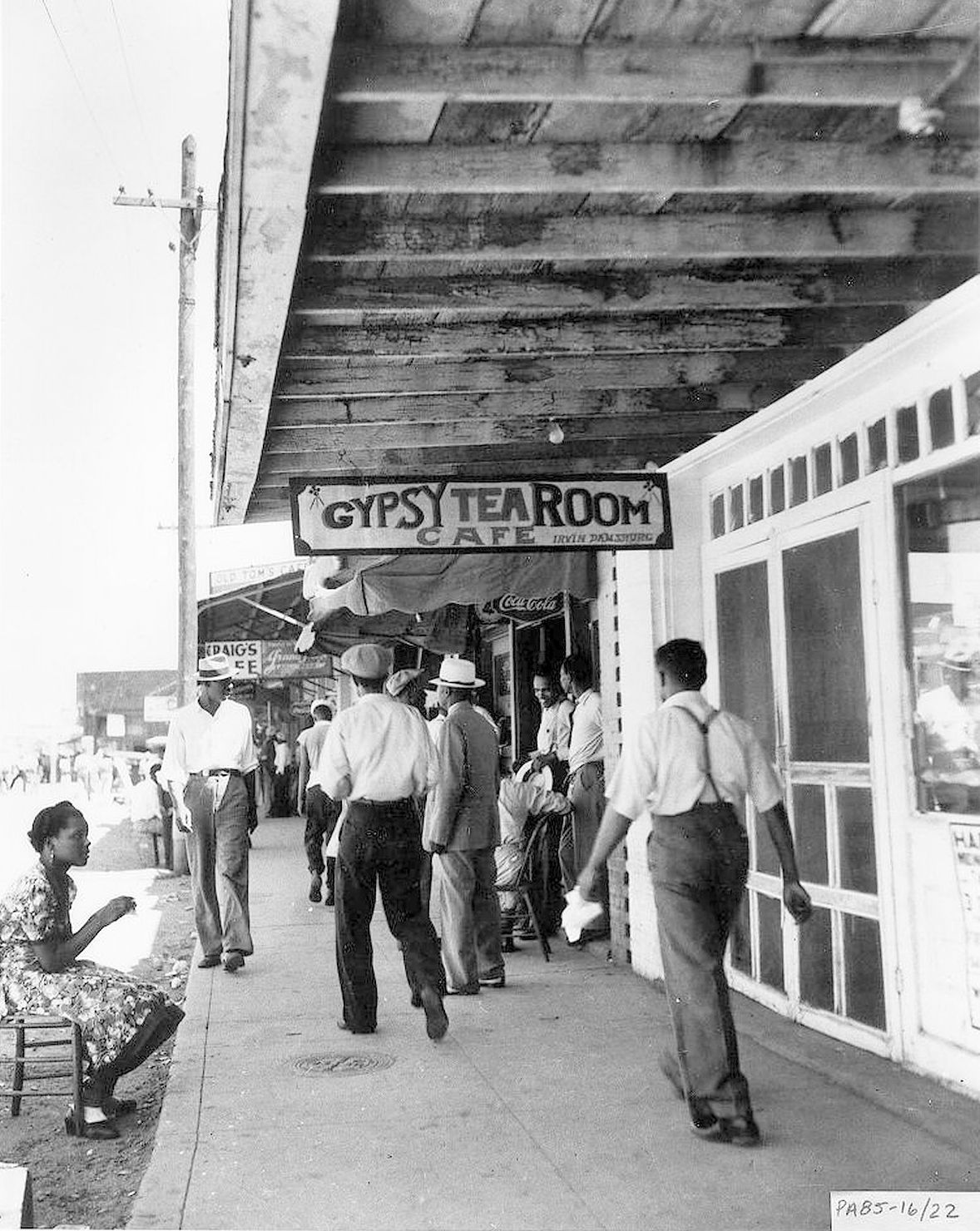
gypsy-tea-room_dallas-public-libraryThe 200 block of Central Ave., about 1937…  (Dallas Public Library photo)

by Paula Bosse

I’ve seen this photograph of Deep Ellum for years, and I’ve always loved it. But for some reason, I always thought this showed Elm Street — across from the Knights of Pythias Temple, just west of Good-Latimer (probably because that’s where a recent club with the same name was located). In fact, this scene was captured a couple of blocks west, just north of Elm, on Central Avenue, sometimes referred to as Central Track, along the Houston & Texas Central railroad tracks — a part of Deep Ellum that’s been gone for more than 60 years.
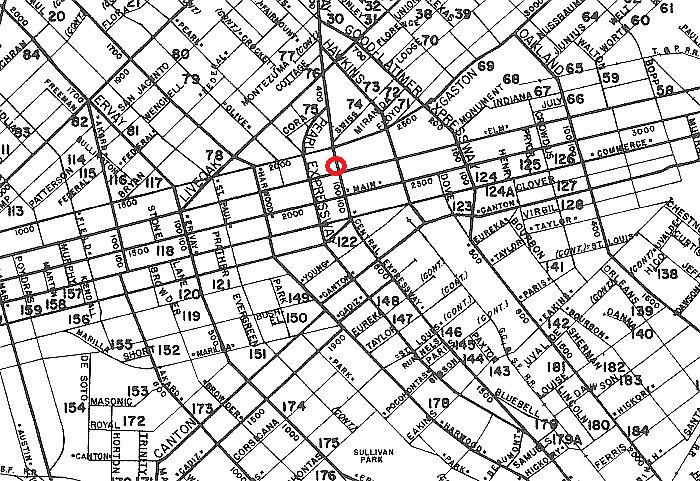
gypsy-tea-room-location_1952-map.jpgAfter Central Expwy. replaced Central Ave. (1952 Mapsco)

This area — which many have described as being the very heart of Deep Ellum in the 1920s through the 1940s (and which was somewhat ironically referred to as “the gay white way of the Negro in Dallas” by an uncredited WPA writer) — was demolished to make way for the construction of North Central Expressway (which closely followed the H&TC Railway tracks). This photo was taken in the 200 block of North Central Avenue, looking south toward Elm (the building farthest in the background, jutting out to the left, is across Elm, on the south side of the street). To the immediate left of this photo (out of frame) was the old union depot (read about it here).

You can see that the Sanborn map from 1921 shows that same building jutting out. (See the full Sanborn map here; it might be more helpful to see this detail rotated to show the same view as the photo, here.)
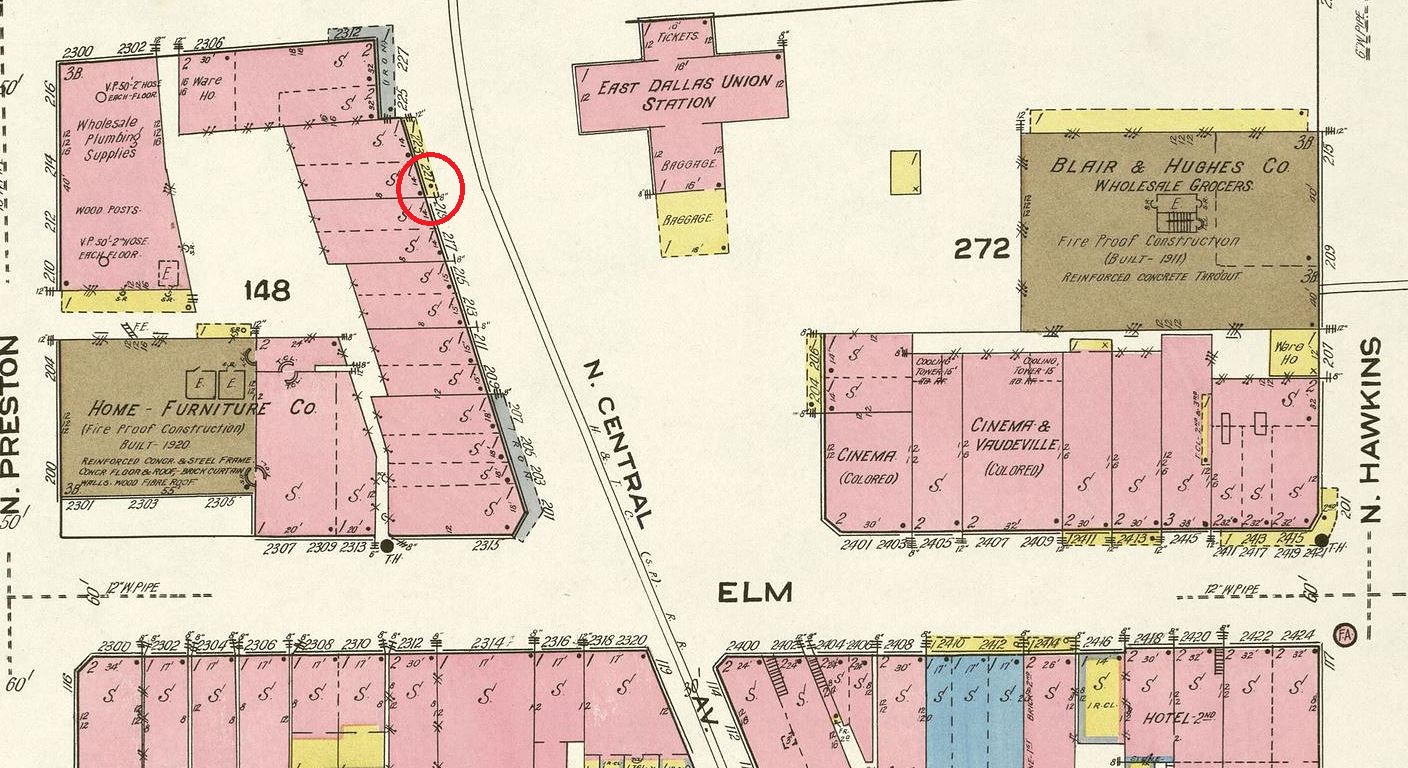
sanborn-map_1921_sheet-17-det1921 Sanborn map, detail (click for larger image)

Information about The Gypsy Tea Room is scant. The proprietor was a man named Irvin Darensbourg, whose family was from the black community of Killona, Louisiana in St. Charles Parish; they appear to have been of French Creole extraction, and the family’s last name was probably correctly spelled as D’Arensbourg.

The Darensbourgs were an interesting family (and not just because their mother’s maiden name was Louise Jupiter!). There were several children, and at least two of them were professional musicians: Percy Darensbourg (1899-1950) and Caffery (often spelled “Caffrey”) Darensbourg (1901-1940). Both played with several jazz bands, and Percy even made a few recordings, playing banjo. Below are a couple of promotional photos showing them at work in the 1920s, when they were still based in New Orleans, before they settled in Dallas. (These are cropped details — click pictures to see the full photos.)

Percy Darensbourg, with Lee Collins‘ band, 1925 or 1926:

percy-darensbourg_duke_det

Listen to Percy on banjo, here:


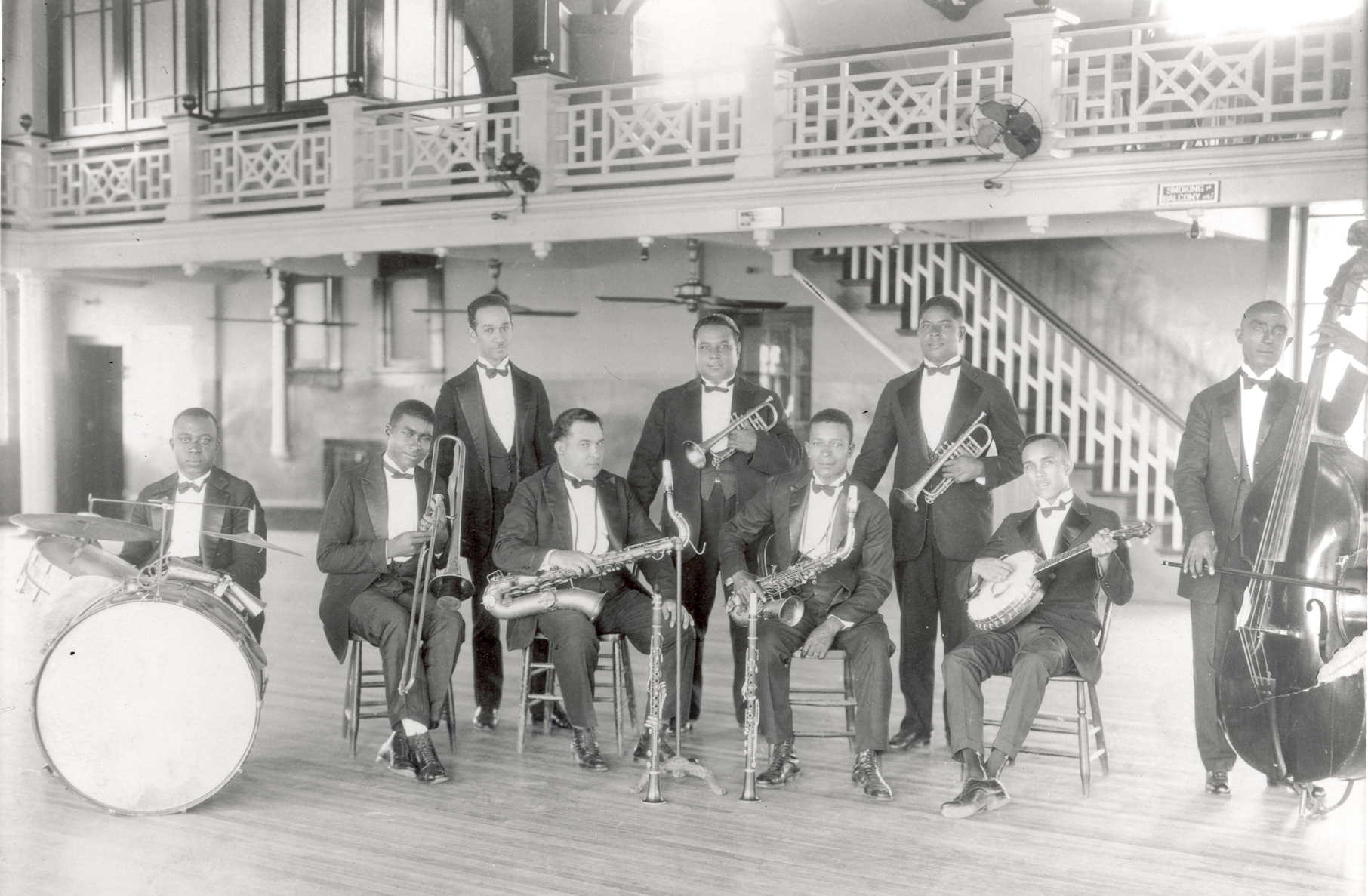
And, below, Caffery Darensbourg, with Manuel Perez’s Garden of Joy Orchestra (click photo to see full band — the other band members are identified here):
caffery-darensbourg_tulane-library

The first of the brothers to arrive in Dallas from New Orleans was Percy, in about 1929, and for the next few years he continued to make his living as a professional musician. Caffery followed in 1932 and opened the short-lived Frenchie’s Creole Inn on Boll Street. Their non-musician brother Irvin was here by 1935 and promptly opened the Green Tavern at 217 Central Avenue, just a few doors down from Percy’s drinking establishment, the Central Tavern Inn, at 223 Central. At about this same time, Percy was also running a club at 3120 Thomas called The Gay Paree — which The Dallas Morning News described as a “swanky negro night club” (April 12, 1938) in a short mention of Percy’s being fined for selling alcohol to an already-inebriated customer.

But back to that 200 block of Central Avenue — the one pictured in the photo at the top. Between 1937 and 1939, Irvin also owned/ran a small restaurant or cafe — and later a pool hall — out of 219½ Central. The Darensbourgs had that block locked up.

*

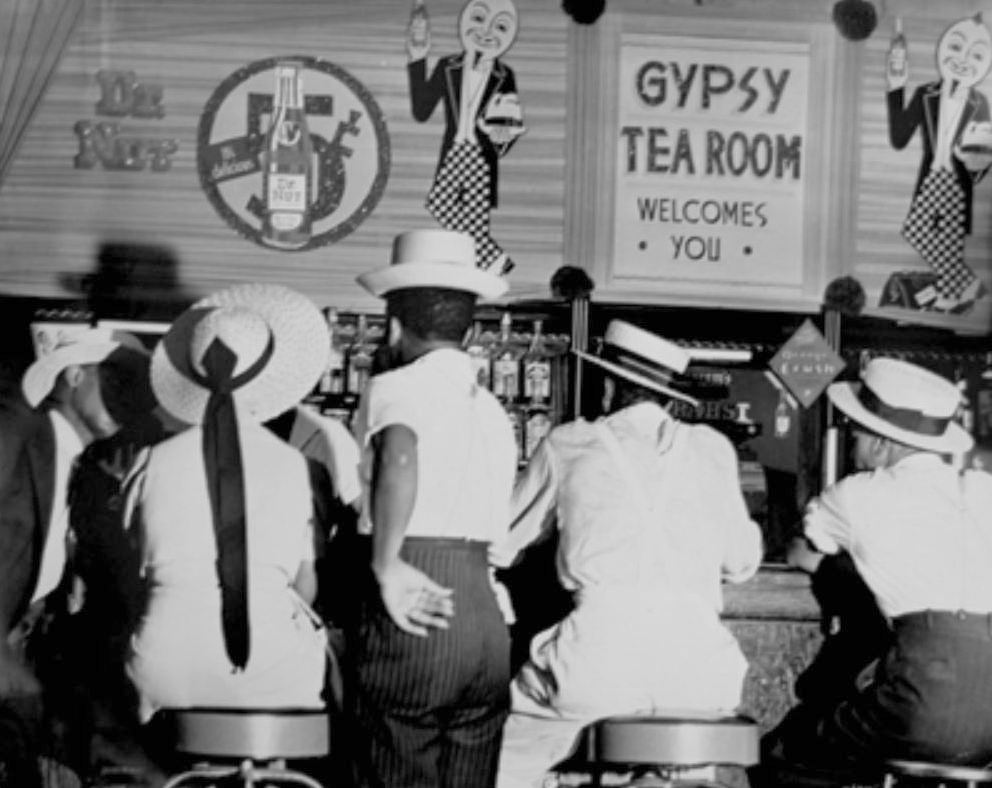
In 1935, a song called “In a Little Gypsy Tea Room” by Bob Crosby swept the country. It was a huge hit. Suddenly there were scads of places popping up all over calling themselves The Gypsy Tea Room or The Little Gypsy Tea Room. Some might have been actual tearooms, but there were also a lot of clubs and bars with the “tea room” name — the most famous of these was The Gypsy Tea Room in the Tremé district of New Orleans, at Villere & St. Ann, which opened the same year the song was being played incessantly by every dance band in the nation. This famous New Orleans nightclub booked the biggest jazz bands around and was a legendary musician’s hangout.

gypsy-tea-room_new-orleans_1942_tulane-libNew Orleans’ Gypsy Tea Room, 1942 (via Tulane University)
gypsy-tea-room_NOLA_myneworleansNew Orleans’ Gypsy Tea Room, 1930s (via MyNewOrleans.com)

The Darensbourgs most likely knew the club, its owner, its patrons, and the musicians who played there. Perhaps Irvin Darensbourg decided to name his own little Gypsy Tea Room in Dallas in honor of the New Orleans landmark. Whatever the case, Deep Ellum’s Gypsy Tea Room appears to have come and gone fairly quickly (and one assumes there was more than tea being sipped inside).

*

The life of a tavern and club operator could be a hard one, especially in those days, especially in the black neighborhoods of Deep Ellum and North Dallas. Irvin seemed to be forever sleeping on a relative’s couch and had a different address every few months. By 1940 he had moved to Fort Worth to open another bar, and after that … I’m not sure what became of him — but one hopes that he met a less violent end than his brothers did here in Dallas. According to Caffery’s death certificate, he died in 1940 after having been shot in the abdomen while “in a public place.” His death was ruled a homicide. Percy, who by all indications was the most stable and successful of the brothers, was also killed — in 1950 he was stabbed in the neck (!) while out on the street at 4:20 AM.

**

As for the original photograph, I’ve pored over it and looked through directories, but I can’t pinpoint the exact year this photo was taken or determine what the actual address of the Gypsy Tea Room was. Since it was mentioned in the WPA Dallas Guide and History, which was written and compiled between 1936 and 1940 and contains the only contemporary mention of the Tea Room, my guess is that this photograph was taken about 1937, as this was the last year that Old Tom’s Tavern (209 ½ Central) seems to have been in business (although the bar that replaced it was owned by the same person, and the sign seen in this photograph could well have remained up for a while).

Craig’s Cafe, at 213 Central, was in business between 1929 and at least 1946 when property began to be demolished in order to begin construction on the expressway. The Gypsy Tea Room looks to be either two or three doors down from Craig’s place. My guess is that it’s 219 Central. The 1937 street directory has Irvin Darensbourg (whose name is constantly mangled and misspelled everywhere) listed as being the proprietor of both the Green Tavern (at 217 Central) as well as an unnamed restaurant at 219-A (sometimes written as 219 ½) Central. The 1938 and 1939 directories specify Darensbourg’s business at this address in those years is a pool hall, not a restaurant. So I’m going to venture that Irvin Darensbourg ran the Gypsy Tea Room at 219 Central Avenue in 1937. 

1937_gypsy-tea-room_central_1937-directory
1937 Dallas directory

That was exhausting!

***

Sources & Notes

Photo of the Gypsy Tea Room at the top of this post is from the Texas/Dallas History & Archives Division of the Dallas Public Library: “Gypsy Tea Room Cafe located in Deep Ellum” is from the WPA Dallas Guide & History Collection of the Dallas Public Library — its call number is PA85-16/22.

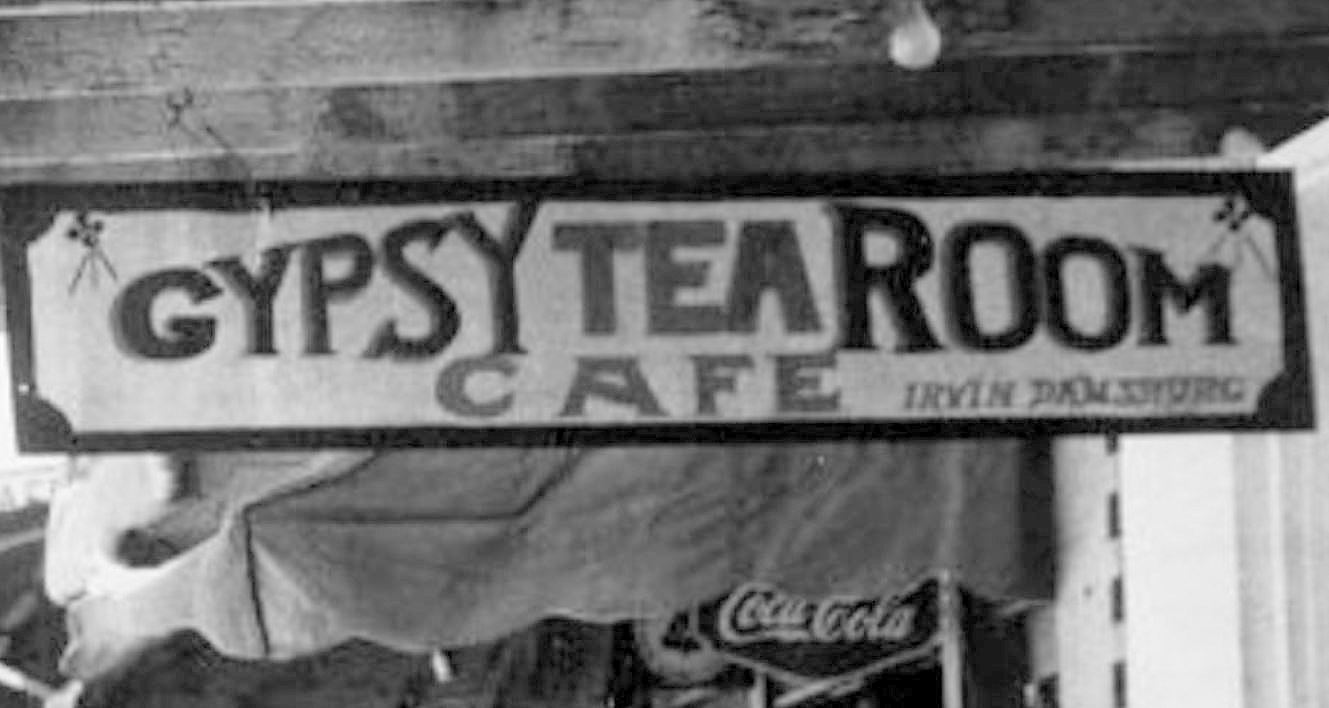
Thanks to Bob Dunn of the Lone Star Library Annex for deciphering “Darensbourg” from this badly garbled printed name on the Gypsy Tea Room sign.
gypsy-tea-room-sign

Here are a few of the numerous ways this Darensbourg’s family’s name is misspelled across the internet:

D’Arensbourg
Darensbourg
Darensburg
Darenbourg
Darenburg
Darnburg
Darnsberg
Dansberg

Darensborough

And I’m still not actually sure whether it’s “Irvin” or “Irving,” or “Caffery” or “Caffrey.”

When clicked, the photo of Percy Darensbourg above opens up to show the full band — the personnel is identified in a caption from the book Oh, Didn’t He Ramble: The Life Story of Lee Collins: “Lee’s band in Dallas, 1925 or 1926. From the left: Coke Eye Bob (Arthur Joseph?), Mary Brown, Freddie ‘Boo-Boo’ Miller, Octave Crosby, Henry Julien, ‘Professor’ Sherman Cook, Lee, and Percy Darensburg [sic].”

A couple of other versions of “In a Little Gypsy Tea Room,” if you must:

  • The version by The Light Crust Doughboys (no strangers to Deep Ellum), recorded in 1935 in Dallas at 508 Park, is here.
  • The at-least-peppier version by Louis Prima and His New Orleans Gang, also recorded in 1935, is here.

See what the area once occupied by the vibrant street life of Central Track looks like now, here. The expressway overpass is now planted about where the photo was taken. It’s a shame this important part of town — in a way it was Dallas’ second downtown — was bulldozed into oblivion.

*

Copyright © 2015 Paula Bosse. All Rights Reserved.

The “Dallas” Theme Song You’ve Never Heard — En Français

paris-texas_eiffel-towerNo, not Paris, TEXAS…. (via anatravels.org)

by Paula Bosse

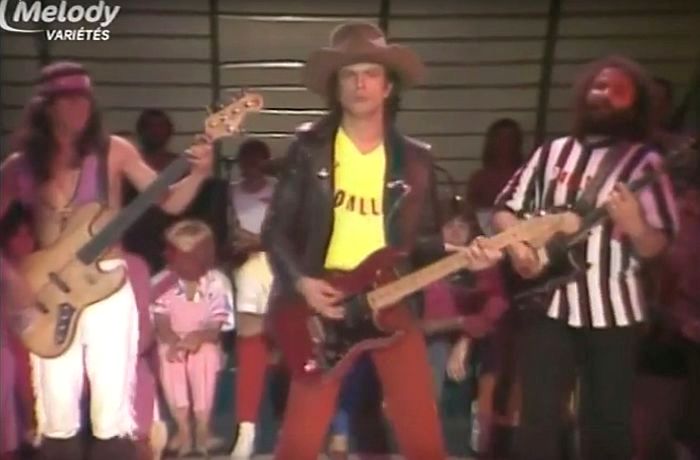
You know that theme music for the TV show Dallas? Actually, that should just be a statement of fact: you KNOW that theme music for the TV show Dallas. We all do. But you know what you DON’T know? You don’t know what the French did to “improve” the J.R.-watching experience. For reasons which I don’t exactly understand, they had someone (Jean Renard) write a theme song for the show. A song. Une chanson. With lyrics. To all-new music. Sounds crazy and unnecessary, but it was a big hit on the French pop charts. And it’s so gloriously awful and fabulously weird that it must be shared. This is not a joke. This is the actual music that accompanied Dallas when it was shown on French television.

I give you a rough approximation of the lyrics (the French lyrics are here).

Dallas, your ruthless world,
Dallas, where might is right,
Dallas, and under your relentless sun,
Dallas, only death is feared.

Dallas, home of the oil dollar,
Dallas, you do not know pity;
Dallas, the revolver is your idol,
Dallas, you cling to the past.

Dallas, woe to him who does not understand,
Dallas, one day he will lose his life.
Dallas, your ruthless world,
Dallas, where might is right.

And here it is. Sing along!

*

Catchy, huh? What could be better than hearing it sung? Watching it being sung! I’m not sure who the singer is, but he’s attacking this song with a rock attitude that totally isn’t warranted.

*

Nice hat!

This was a big, big hit in France. I’ve even seen the word “beloved” used to describe it. Remember this the next time you might feel a lack of confidence or a twinge of inadequacy in the presence of a chic and sophisticated Parisian. Stand tall, my fellow Texans, and remember OUR Dallas theme.

*

Silly Frenchmen.

 dallas-french_youtube

*

UPDATE: Julia Barton has hipped me to her segment about “Dallas” which aired on public radio’s “Studio 360” in 2011, focusing on the sometimes surprising global and sociopolitical impact of this pop-culture juggernaut. I went to college in the UK, and there wasn’t a day that passed without several people gleefully asking me about J.R. Ewing. It was weird. Had the TV show never existed, I’m sure I would have been queried endlessly (and possibly angrily) about JFK, and I might well have been shunned — yes, shunned! (I remember when people embarking on international trips pre-Southfork were advised to respond to the question “Where are you from?” with the somewhat vague answer “Texas” rather than the explosively specific “Dallas,” because, post-assassination, we were “the city of hate” around the planet.) I’d much rather have had people ask me about a soap opera character than blaming my hometown for killing an American president. So, um, thanks, Lorimar!

Listen to Julia Barton’s 15-minute “Studio 360” segment here (audio plays above J.R.’s silhouette).

***

Read about this odd practice the French have of concocting whole new TV theme songs for American television shows, here.

I can’t believe I’ve never heard of this. All thanks to my friend Carlos Guajardo for passing along this very entertaining nugget of Dallas kitsch! Thanks, Carlos!

*

Copyright © 2015 Paula Bosse. All Rights Reserved.

Red’s Turnpike Open-Air Dance: An East Pike/Samuell Blvd. Joint — 1946

reds-turnpike_texas-week-mag_121446-portalThey’re playing your ditty….

by Paula Bosse

I always wonder about those old, decaying buildings — sometimes they’re little more than shacks — which are somehow still standing, in areas that will probably never be gentrified. Like Samuell Boulevard, just south of Tenison Golf Course, two or three miles south of White Rock Lake. The north side of Samuell is a lovely, manicured golf course. The south side? Rough, man.

Before Samuell Blvd. was Samuell Blvd., it was known as East Pike, and it served as the highway to Terrell. This explains the large number of tourist courts and motels which dotted the road. Also, the Tenison golf course was right about at the very edge of the city limits — which explains the large number of bars, taverns, liquor stores, and other assorted dens of iniquity all clustered together at the wet/dry line (wet in Big D, dry beyond).

The local papers were full of a veritable pu pu platter of crimes and offenses committed along the East Pike, almost all of which were generally traced back to alcohol consumption. Police and city inspectors spent a lot of time in the area, called to various of these joints to handle reports of public intoxication, selling alcohol to minors, selling alcohol to those already drunk, general rowdiness, unsanitary conditions, noise, brawls, “suggestive dancing,” gambling, hold-ups, shootings, suicides, and murder.

One of those rural drinking establishments was Red’s Turnpike Open-Air Dance, which appears to have opened in 1946 in the 3700 block of Samuell (even though it didn’t have an actual street address in city directories), between the Belt railway and White Rock Creek. In 1948, the tavern burned down in an early morning fire (a not-uncommon fate for these types of businesses). The Dallas Morning News reported that “firemen were hampered by a lack of fire hydrants in the vicinity and pumped water from White Rock Creek to fight the blaze” (DMN, May 3, 1948). …Wasn’t enough.

From its ashes sprang Keller’s drive-in, in 1950, in the same general spot. In a 2015 Lakewood Advocate interview, Jack Keller described the location of his first drive-in as being “the last wet spot going into East Texas, right across from hole number two” of the golf course. “We had a lot of fun down there.”

Who doesn’t love hamburgers? Keller’s probably helped the area’s reputation, as its arrival eventually ushered in a less seedy clientele than the old East Pike of the ’30s and ’40s was known for. Less riff-raff, better food.

***

Sources & Notes

Photo of Red’s Turnpike from the Dec. 14, 1946 issue of Texas Week magazine.

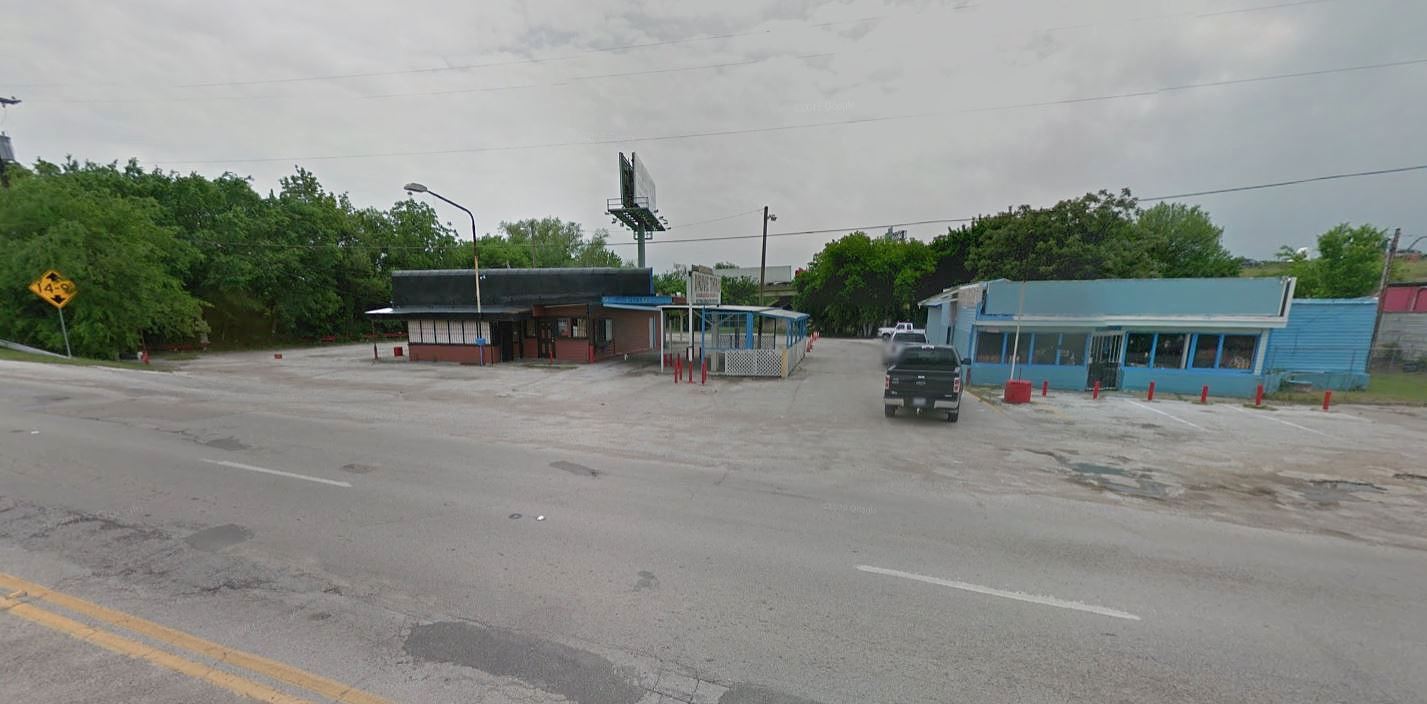
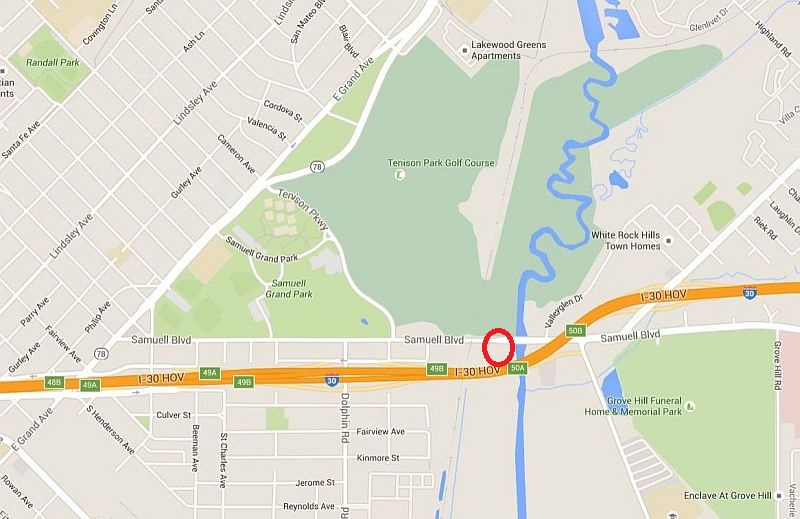
Here’s what the spot where Red’s once stood looks like now (the Keller’s location here closed in 2000):

samuell_google-street-viewGoogle Street View, 2015

reds_map_2015Google Maps

Take a virtual look at the area on Google Street View, here.

*

Copyright © 2015 Paula Bosse. All Rights Reserved.

“Fifteen Miles From Dallas” by Jimmie Davis — 1951

jimmie-davisThe former (and future) governor of Louisiana…

by Paula Bosse

Let’s listen to Jimmie Davis — erstwhile country singer and two-time governor of Louisiana — sing a ditty about his gal named Alice (…rhymes with “Dallas”) who lives on Akard Street.

***
Too bad the Decca promotion people misspelled his name in this 1951 ad!

jimmie-davis_15-miles-from-dallas_1951_ebay

***

Jimmie Davis is most famous for his hit song “You Are My Sunshine.” His New York Times obituary is here.

The Singing Governor’s Wikipedia entry is here.

Ad from eBay (click for larger image).

*

Copyright © 2015 Paula Bosse. All Rights Reserved.

“The Last Time I Saw Texas” — 1953/58

neiman-marcus_texas-mapThat “X” is in the wrong spot, y’all…. (click for larger image)

by Paula Bosse

Before I begin, I offer apologies in advance to Oscar Hammerstein II (original lyricist of “The Last Time I Saw Paris”), NeimanMarcus (with or without the hyphen), haters of Texas stereotypes, and, especially, Fort Worth.

In a Dallas item connected with “Independence Day” in only the most tangential way possible, I thought I’d share a little cabaret song I stumbled across today whilst rummaging through the internet. It’s a humorously re-written version of the Academy Award-winning hit song “The Last Time I Saw Paris,” (…um, the one in FRANCE….), written in 1940 by Oscar Hammerstein II (lyrics) and Jerome Kern (music).

Partial lyrics were reported by Earl Wilson in his syndicated gossip/entertainment column, “Broadway Last Night,” twice — first in 1953, after he’d seen Juliana Larson sing it at the Sherry Netherland Hotel, then later, in 1958, after he’d heard Connie Moore sing it at the St. Regis Maisonette. Both women had Texas ties (Constance Moore actually grew up in Dallas), so I’m sure both enjoyed singing the ditty (in what one hopes was in an ever-so-amusing sophisticated style, à la Noël Coward).

At the Neiman-Marcus store
They sell the usual furs
And the cutest children’s Cadillacs
And yachts marked “His” and “Hers.”

The last time I saw Texas
And the oil was in her hills,
The kiddies bought their lunch at school
With hundred-dollar bills.

The last time I saw Texas,
All Dallas was so gay,
We’d burned Fort Worth to the ground
On Independence Day.

Happy Independence Day, Fort Worth!

***

Listen to Noël Coward sing “The Last Time I Saw Paris” (before FW was being burned to the ground), here.

Juliana Larson (aka Juliana Bernhardt) was a former John Powers model who married wealthy Houston oilman Walter Bedford Sharp, Jr. (whose father was a business partner with Howard Hughes’ father). She started in light opera in Texas and moved on to New York nightclubs. She seems to be known mostly as the wife of a Texas oilman and a permanent fixture on Best Dressed lists. She horrified everyone when she showed up to a Metropolitan Opera opening night wearing trousers — see her delighting in the publicity she received from that, in Life magazine (Nov. 24, 1952), here.

Constance Moore was born in Iowa but grew up and began her career in Dallas. More about her here and here; glamour photos here.

The “Texas” lyrics were reported by Earl Wilson to have been written by David Roger (for Juliana Larson, in 1953) and by Earl Brent (for Connie Moore, in 1958). The partial lyrics Wilson quoted in 1953 and 1958 were the same. …So there you go. (I changed the order of one line, because it seems that Wilson got the lines of the first verse in the wrong order.)

I’m not sure where I found that Neiman’s map, but it’s cool. (Why IS the “X “is the hinterlands, anyway?)

Enjoy your 4th of July weekend! And don’t burn anything down!

*

Copyright © 2015 Paula Bosse. All Rights Reserved.

(Obscure) Country Music Radio Stations — 1969

KYAL-1600“Home of the Tall Texans” (click for larger image)

by Paula Bosse

Okay, maybe they’re not obscure to people who listened to country stations in Dallas in the 1960s, but to someone who grew up in the ’70s in a household in which country stalwarts KBOX and WBAP were always on, these three stations are unknown to me.

Of these, my favorite call letters are KYAL, as seen in the ad above — that’s right, “K-y’all.” Disc jockey “Johnny Dallas” was none other than local rockabilly fave, Groovey Joe Poovey.

KYAL_johnny-dallas_groovey-joe-poovey_ca1969

KBUY was out of Fort Worth and had quite the daytime signal.

KBUY-1540

There was also KCWM (for “Country & Western Music”). This one was an FM station. Legendary DJ Bill Mack was hired by the station to get its country format going, and he even suggested the call letters.

KCWM-99.5

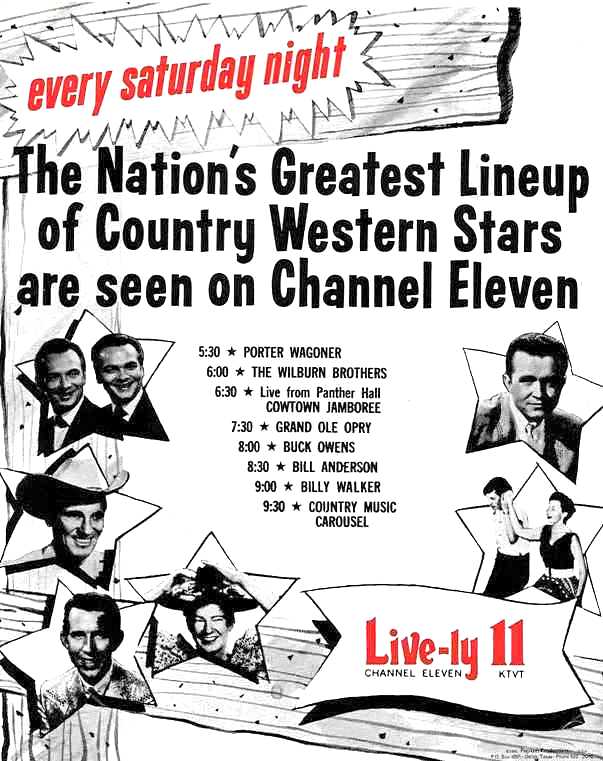
I came across these ads in some sort of local country music publication called “Country and Western — The Sound That Goes Around the World” (1969). Sprinkled amongst bios and photos of country stars are lots of local ads. One of the (non-radio) ads that caught my attention was one for the Saturday night lineup of country music television shows on KTVT Channel 11. Some of these shows were still on in the ’70s when I used to watch them with my father. (I’m not sure I knew there was ever a live television broadcast from Panther Hall in Fort Worth — “Cowtown Jamboree” — that would have been cool to see.)

country-music-saturday-night_ch-11-1969(click for larger image)

***

The best source for the history of Dallas-Fort Worth radio is, without question, Mike Shannon’s DFWRetroplex.com site.

KBOX was the station that really started it all for country music radio in Dallas; read about its history here.

Info on KYAL 1600 AM is on this page.

Info on KBUY 1540 AM and KCWM 99.5 FM is on this page.

Read about Groovey Joe Poovey here and here and here. See a slideshow of photos of him while listening to his GREAT version of “Deep Ellum Blues,” here.

Click pictures for larger images.

*

Copyright © 2015 Paula Bosse. All Rights Reserved.


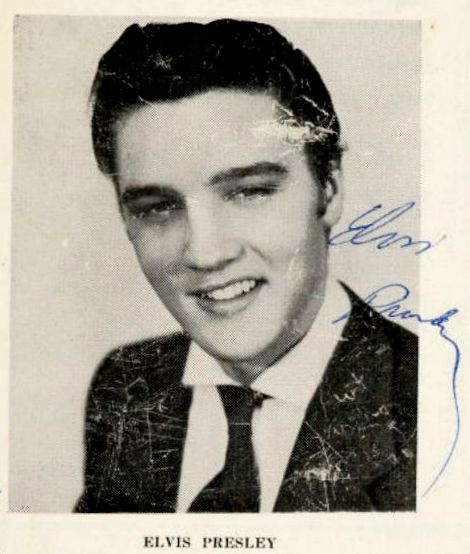
Elvis at the Big D Jamboree — 1955

elvis_big-d-jamboree_program_090355-photo

by Paula Bosse

Today is Elvis Presley’s birthday — a perfect time to present a nostalgic look back at the early days of his fame, before he broke nationally and when it was still pretty easy to get a ticket to see him. Here are a few tidbits from his appearance on Sept. 3, 1955 at the legendary Big D Jamboree (held at the equally legendary Sportatorium). Happy Birthday, E!

*

elvis_big-d-jamboree-program-090355Big D Jamboree program, Sept. 3, 1955

*

elvis_big-d-jamboree_090355That night’s schedule — E’s all over it

*

elvis_big-d-jamboree-ad_dmn_090355Typos like this wouldn’t be a problem soon

***

Sources & Notes

Photo of Elvis and the two clippings from the Big D Jamboree program to that night’s show, Sept. 3, 1955 (which the ad is promoting).

*

Copyright © 2015 Paula Bosse. All Rights Reserved.

“Wonderful K-BOX” at 1480 On Your AM Dial

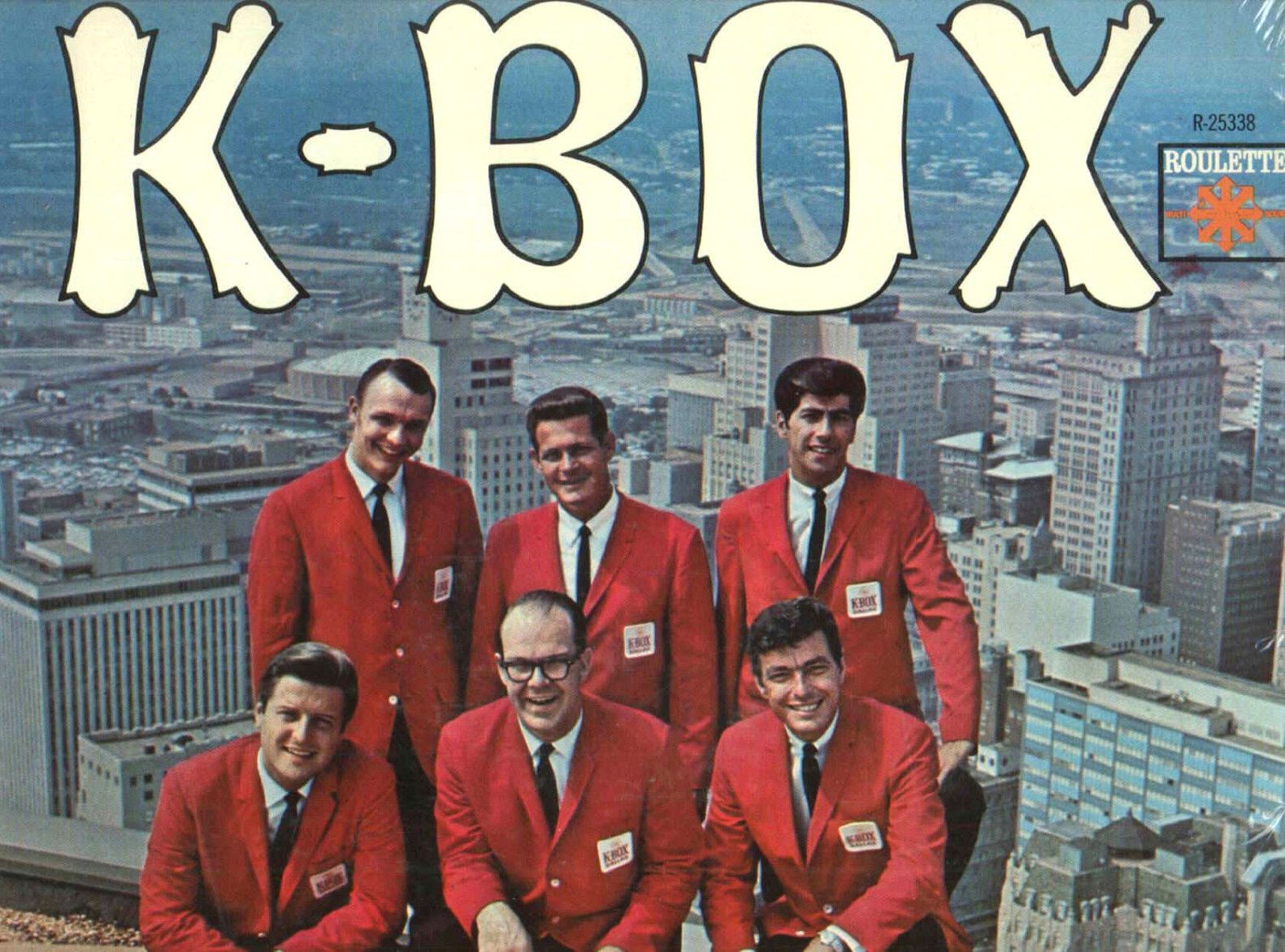
kbox-djs“Wonderful K-BOX” jocks atop the Southland Life Bldg.

by Paula Bosse

When I was a kid, it seems like KBOX was always on in the background. Always. My father was a huge country music fan, and it was one of the (if not THE) top country stations in town. This was in the ’70s. So it’s a bit of a shock to learn that KBOX had been a Top 40 station in the ’50s and ’60s — in fact, it was the major competitor of top-dog KLIF.

The photo above was shot atop the Southland Life Building in 1966 and appeared on an LP called “Dusty Discs.” On-air personalities shown are (top row) Terry Byrd, Ron Rice, Frank Jolle/Jolley, (bottom row) Dan Patrick, Bill Ward, and Bill Holley.

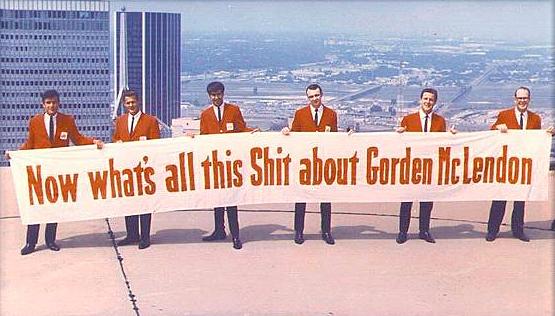
The competition between KBOX (owned by John Box — the “Box” in KBOX) and KLIF (owned by the legendary Gordon McLendon) was fierce. This explains the photo below in which John Box had his DJs hold a special banner during the same photo shoot. Box had this photo printed up and gleefully sent to McLendon as a Christmas card that year (during which KBOX had trounced KLIF in one of the crucial ratings periods). (I’m sure McLendon enjoyed seeing his name misspelled.) AM radio ain’t for the meek.

kbox-mclendon-banner

***

Sources & Notes

Top photo/album cover from eBay.

Second photo from a Frank Jolley site, here. (Jolley’s name is spelled “Jolley” and “Jolle” almost interchangeably all over the internet, so I’m not sure which is correct.)

Absolutely everything you’d ever want to know about KBOX can be found here (and this is just part two of the history!).

BEST OF ALL is this aircheck from 1959, featuring Dan Ingram. It’s crazy. The energy level is exhausting to listen to. They were really pulling out all the stops. (And, hey, you could go see Johnny Cash at the Sportatorium for ONE DOLLAR!) This is great:

 *

Copyright © 2014 Paula Bosse. All Rights Reserved.

“Go Away! Can’t You See I’m Listening to WFAA?” — 1947

wfaa-ad_dmn_090147

by Paula Bosse

Priorities.

*

Copyright © 2014 Paula Bosse. All Rights Reserved

The Fab Four in Big D — 1964

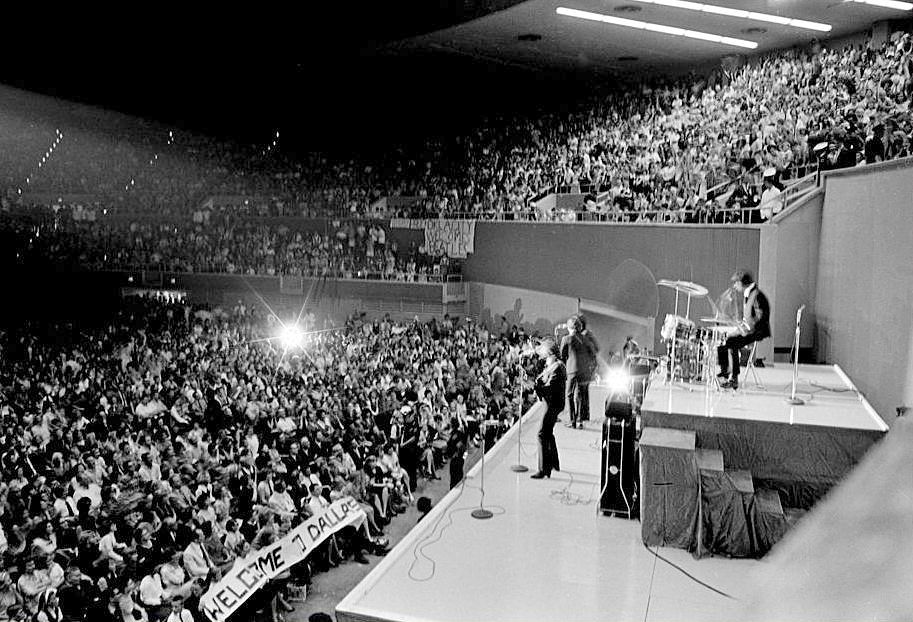
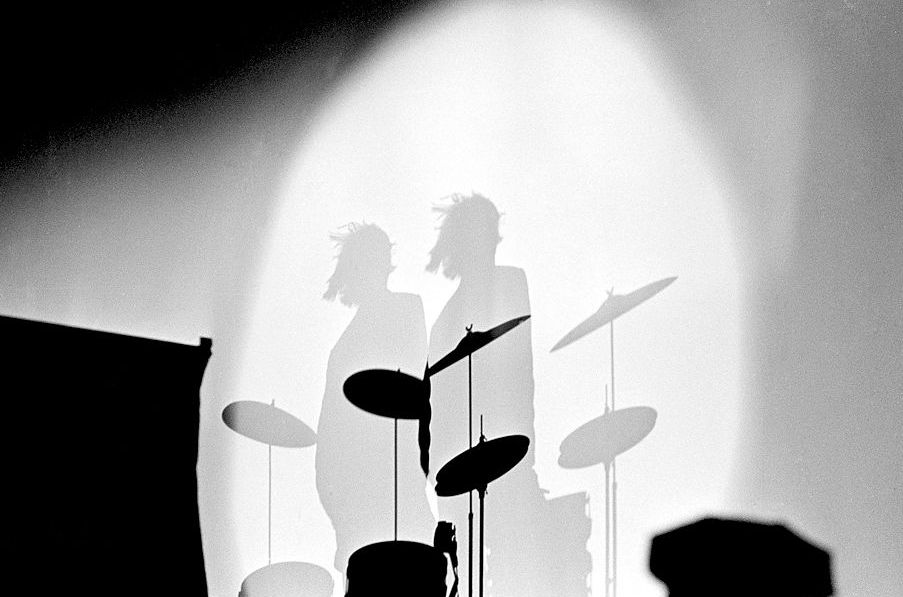
beatles_memorial-auditorium_091864_ferd-kaufmanThe Beatles at Memorial Auditorium, Sept. 18, 1964

by Paula Bosse

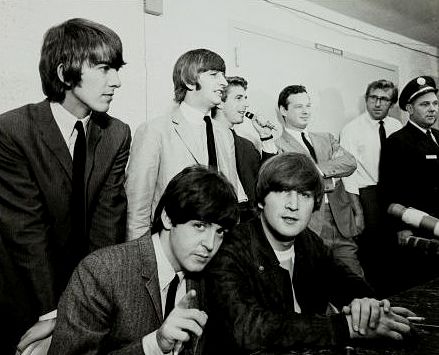
The Beatles came to Dallas fifty years ago this week. There was pandemonium at Love Field when they arrived. There was pandemonium at the Cabaña Hotel when they got there. There was pandemonium at the press conference. And there was pandemonium at the concert at Memorial Auditorium on September 18, 1964, the last date of their American tour. This event has been pretty well covered over the years, but here are a couple of cool photos of the Fabs’ time in Dallas, and a couple of droll columns from DFW entertainment reporters who seem to be vaguely amused, vaguely annoyed, and vaguely impressed — all at the same time.

beatles_memorial-aud_091964_ferd-kaufman

beatles_dallas_1964_john-mazziotta_dth

Above, the Dallas press conference, with Beatles press agent Derek Taylor (holding microphone), manager Brian Epstein (who, still in Dallas, would turn 30 the following day), and road manager Mal Evans (with glasses). And a Dallas cop (who, over the years, must have told a thousand people about this momentous day).

*

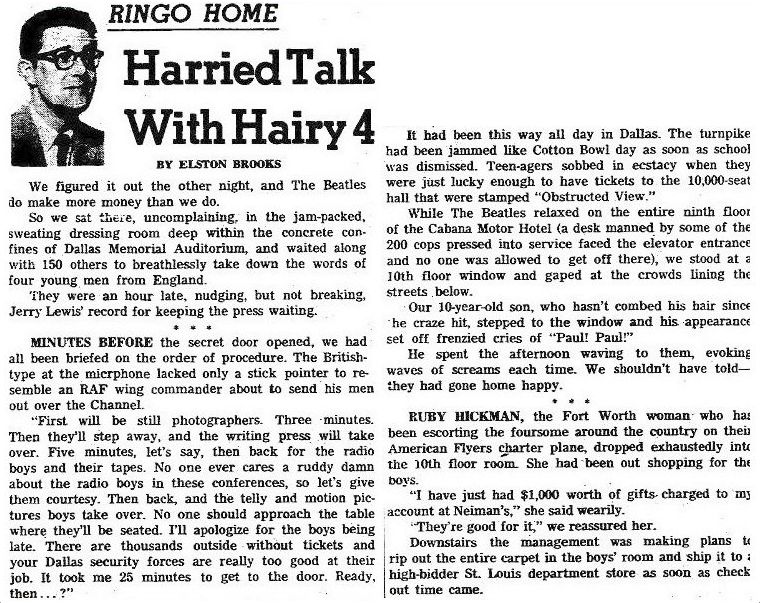
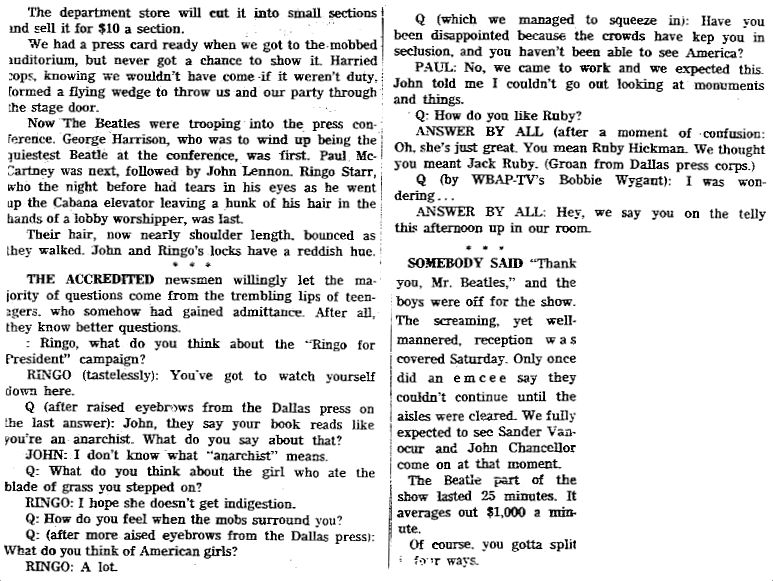
Below, the always-entertaining Elston Brooks of the Fort Worth Star-Telegram writes about his “Harried Talk With Hairy 4” (click article for larger image).

beatles_FWST_092064a

beatles_FWST_092064bFWST, Sept. 20, 1964

*

The Dallas Morning News’ man-about-town, Tony Zoppi, enlisted the aid of a teenager to explain to him the nuances of Beatlemania. His opening paragraph is pretty good:

It was Mardi Gras, V-E Day, the Texas-Oklahoma excitement and The Alamo all rolled into one — only louder. It was the Beatles, winding up their American tour deep in the heart of Texas. It was Dallas playing the role of uninhibited host to the hilt. (“The Beatles Do It, Yeah! Yeah! Yeah!” by Tony Zoppi, DMN, Sept. 19, 1964)

*

And lastly, the short scattershot interview by Bert Shipp of Channel 8:

*

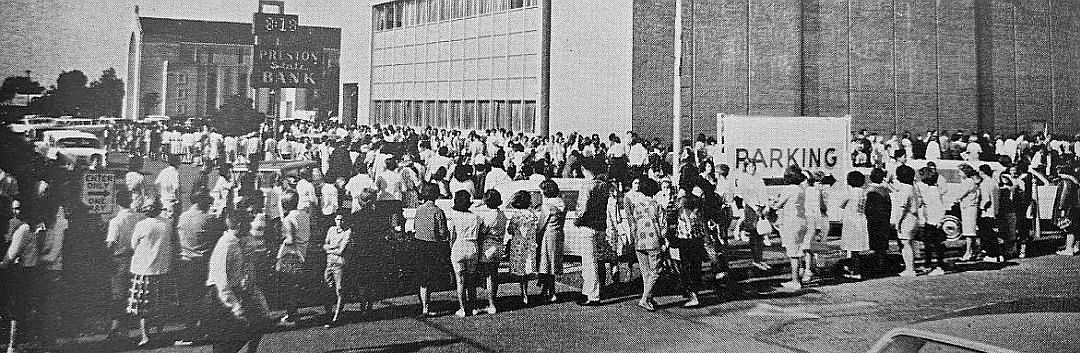
And here’s a photo I’ve never seen: kids lining up to buy tickets. The caption: “The Preston Ticket Agency, a service of the Preston State Bank of Dallas, recently attracted this crowd when the agency was named to handle the exclusive sale of tickets for a September performance in Dallas of the Beatles quartet. Some youngsters stood in line 24 hours before the ticket office opened for business. The Preston Ticket Agency has been in operation since 1963, and last year served over 40,000 customers with tickets to major Dallas entertainment attractions.” (“Dallas” magazine, July 1963)

beatles_preston-tickets_dallas-mag_july-1964-DPL

***

Sources & Notes

Top two performance photos of The Beatles at Memorial Auditorium by Ferd Kaufman (the one of Ringo is GREAT).

Photo of the press conference by John Mazziotta.

Photo of the ticket line is from Dallas magazine — a publication of the Dallas Chamber of Commerce — July 1963, Periodicals Collection, Dallas Public Library.

More photos of the Dallas visit can be seen here.

And a nostalgic look back at the Beatles’ visit can be read in Bonnie Lovell’s entertaining Dallas Morning News essay, “50 Years Ago the Beatles Played Their Only Dallas Concert” (DMN, Sept. 19, 2014) (no longer available online apparently) — Bonnie was there in the thick of it as a Beatle-crazed 13-year-old and was one of the lucky few who had a ticket to the show and got to see the boys shake their mop-tops in person.

*

Copyright © 2014 Paula Bosse. All Rights Reserved.