Flashback : Dallas

A Miscellany: History, Ads, Pop Culture

Category: Downtown

HR Meeting at the Carousel Club

ruby-girls_carousel-club“Where do you see yourself in five years?”

by Paula Bosse

Jack and the girls. …Before.

***

Sources & Notes

I think this is the Carousel Club. It might not be. The source of this photo is a bad, bad, bad, spammy site with loud commercials. They get no credit from me. “No soup for you!”

*

Copyright © 2015 Paula Bosse. All Rights Reserved.

Downtown Parking Innovations

ad-nichols-bros-parking-garage_1945-directory-detSplendiforous parking garage, 1945

by Paula Bosse

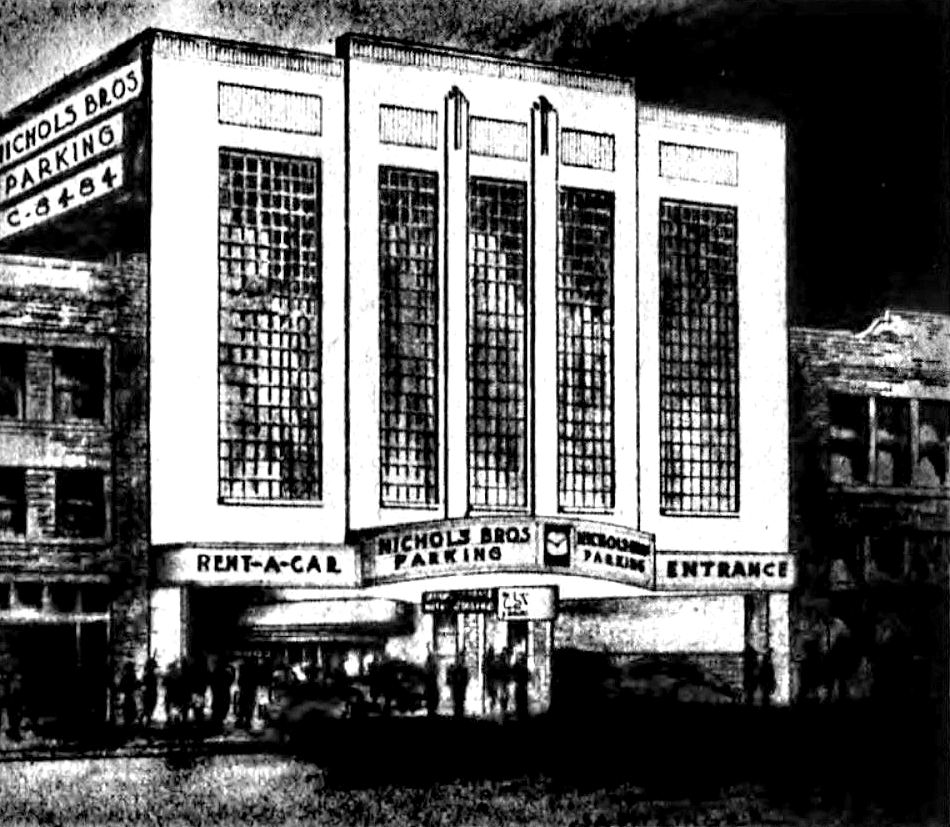
Here are a couple of ways developers have attempted to cope with the parking needs of downtown Dallas. I’m not sure how long either of these parking garages lasted, but I give them both A’s for effort.

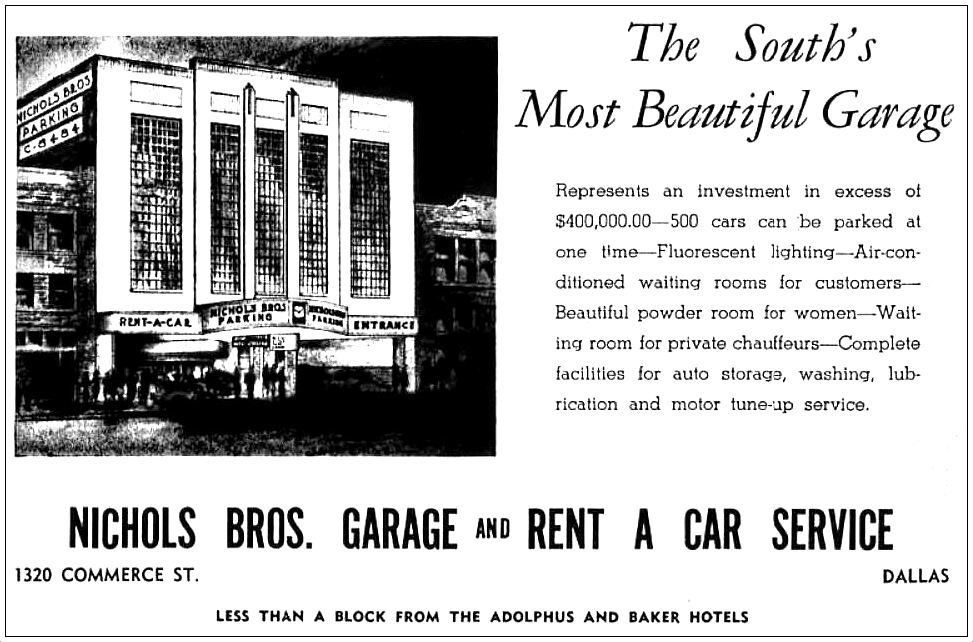
First, 1945: Nichols Bros. Garage & Rent-a-Car Service at 1320 Commerce (just east of Field). Just look at all these amenities — women and chauffeurs are not forgotten.

…Fluorescent lighting — Air-conditioned waiting room for customers — Beautiful powder room for women — Waiting rooms for chauffeurs — Complete facilities for auto storage, washing, lubrication and motor tune-up service.

ad-nichols-bros-parking-garage_1945-directory1945 Dallas directory

I don’t know how long this lasted, but if you’re going to have a garage downtown, it might as well look like that one!

*

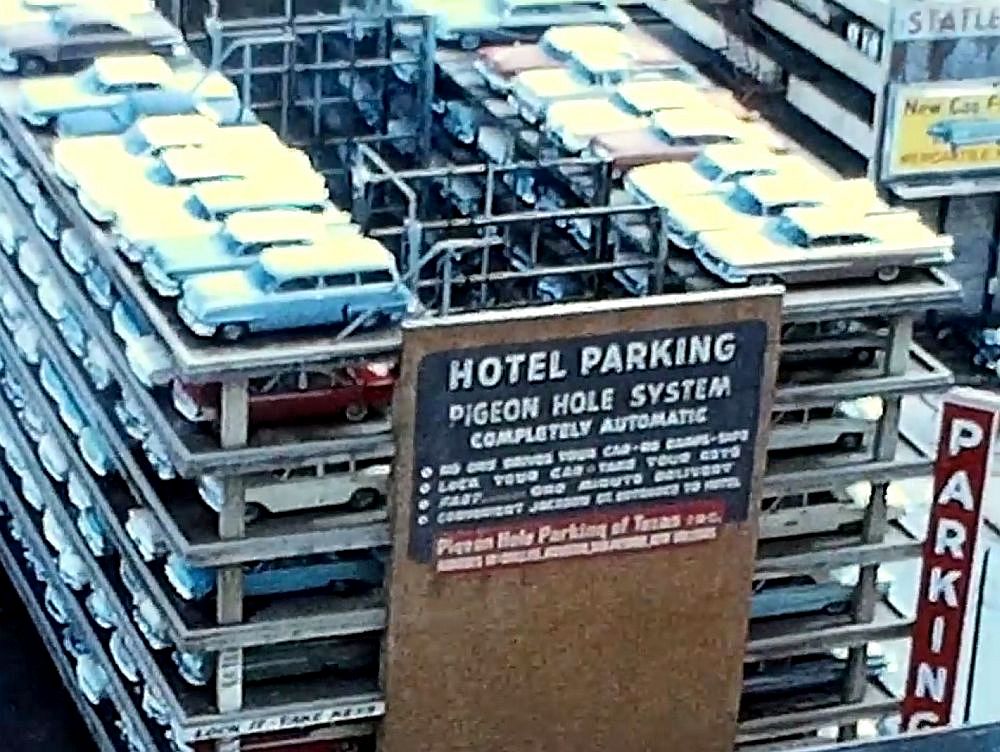
pigeon-hole-parking_dallas_1962_sign

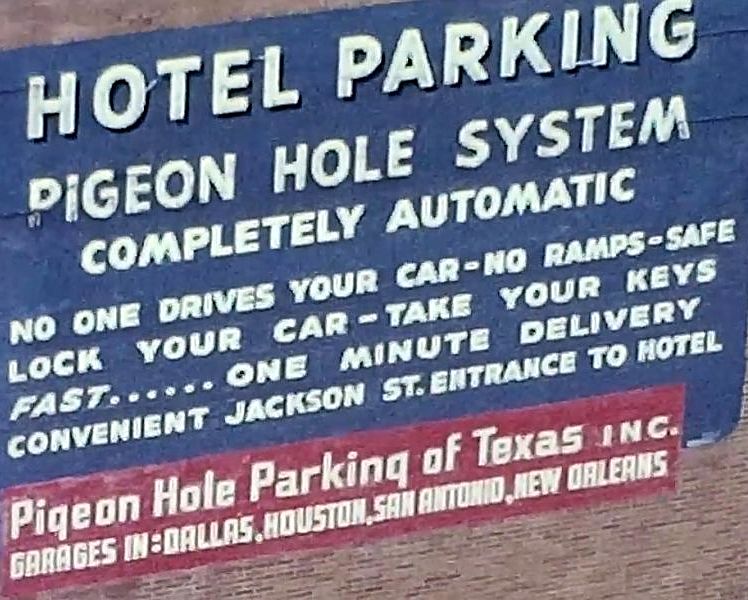
Then in 1954, the 8-story Dallas Carpark at Jackson and St. Paul arrived (a second one at Jackson and Lane was under construction that same year). It was a franchise of the Pigeonhole Parking System of Spokane, utilizing “car-parking machines” invented by Leo Sanders of Spokane, Washington. I’m not exactly sure how these worked, but cars were hoisted and lowered on elevators, and the whole parking process, from start to finish, was conducted without an attendant ever actually touching the cars. Again, I don’t know how long this endeavor was in business (at least through the early 1960s), but — parking-garage-history neophyte that I am — I’ve never heard of such a thing. (There’s a video showing how it worked — thanks, “Not Bob” for posting this in the comments)!

*
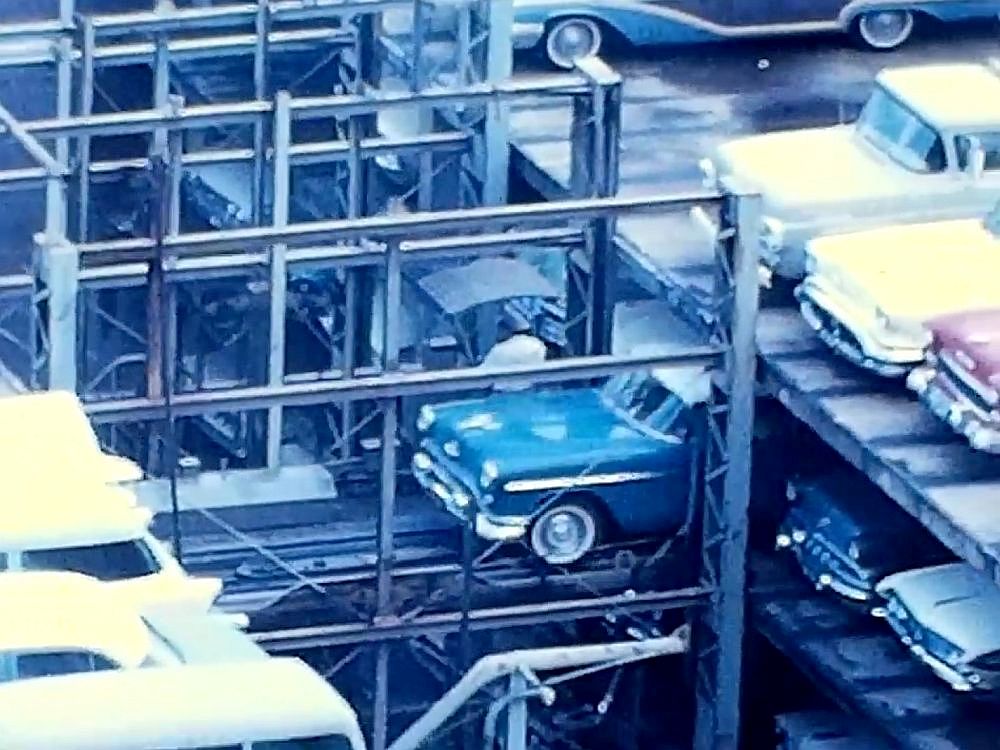
UPDATE: “Found” film footage of a family’s trip to Dallas in 1962 actually shows this pigeon-hole system in action. The whole short video is interesting, but the pigeon-hole footage is what got me really excited — it begins at the 1:32 mark.

*
A couple of screenshots:

pigeon-hole-parking_dallas-1962

pigeon-hole-parking_dallas-1962_b

***

Sources & Notes

Nichols Bros. ad from the 1945 city directory.

The 1951 Universal Newsreel segment can be found on Vimeo here (thanks to “Not Bob”).

1962 YouTube video of found footage can be seen here (thanks to Robert Wilonsky of The Dallas Morning News for posting this link!).

See photos and read about the elevator-centric Dallas Carpark at Jackson and St. Paul in these Dallas Morning News articles:

  • “Parking Gets Lift in Downtown Area” by Robert F. Alexander (DMN, Sept. 26, 1954) (with photos)
  • “Pigeonhole Parking Now in Operation” (DMN, Oct. 10, 1954)

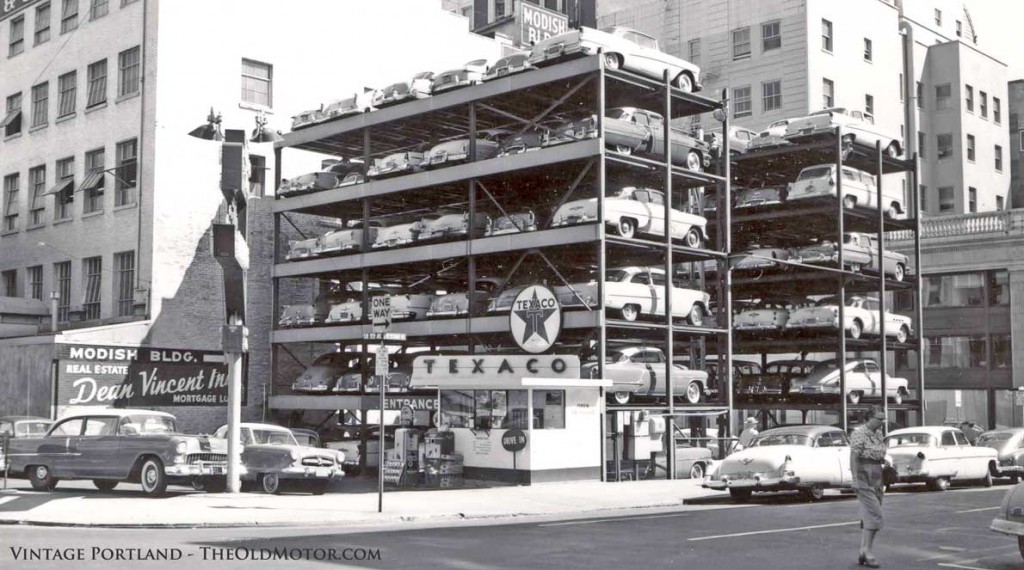
See several photos of the “pigeon-hole” parking system in other parts of the country in the article “Pigeon Hole Parking — An Amusement Park Ride for Your Car,” here. Here’s one in Portland, Oregon (the Dallas Carpark was 8 levels high):

pigeon-hole-parking_portland-oregon_oldmotorblog

*

Copyright © 2015 Paula Bosse. All Rights Reserved.

Pacific Avenue — 1925

pacific_bryan_looking-east_lost-dallas_dotyThe back side of Elm, looking east…

by Paula Bosse

Elm Street gets all the glory as Theater Row, but what about Pacific? It had those very same theaters. …Sort of. Pacific gets overlooked a lot. When I see photos like this one — which shows Pacific Avenue looking east from Bryan — I always think of it as a photo showing the back side of Elm rather than as a photo showing Pacific. Always a bridesmaid, never the bride.

This photo was taken only a few short years after the Texas & Pacific railroad tracks were removed from Pacific, making it into an automobile and pedestrian thoroughfare only — no more frightening, smoke-belching trains rumbling right down the middle of the street. The city was hoping that Pacific would become a heavily commercial area like Elm, Main, and Commerce, but it never really reached those lofty heights.

I’ve always wondered if the theaters that lined Elm ever considered having entrances/box offices on both Elm and Pacific. I think that they were really only willing to slap a few posters and paint their names on their back, Pacific-facing walls. Elm Street was glitzy and glamorous. Pacific was not. Back in those early days when people were still trying to get used to Pacific Avenue being newly liberated from its railroad tracks, it might have been seen as something of an afterthought — as more of a very wide alley with traffic than as a contender for one of Dallas’ major streets.

But back to the theaters. In the photo above, we see the Old Mill at 1525-27 Elm (where “The Snob” was playing, featuring John Gilbert and Norma Shearer), the Capitol at 1521-23 Elm (which had Alla Nazimova in “The Redeeming Sin”), and the Jefferson Theater at 1517 Elm (featuring Harley Sadler’s repertory company appearing in “Honest Hypocrites and Saintly Sinners” between vaudeville acts). All of these were playing in May, 1925.

It’s interesting that the only business seen here on the south side of Pacific that had an address on both Elm and Pacific was Van Winkle’s Book Store (before it moved a couple of doors up Elm, it was at 1603 Elm/1614 Pacific). Note the sign advising “Free Passage to Elm Street” — several businesses allowed people to cut through their stores to get to the next street over because the blocks were incredibly long and would sometimes have necessitated pedestrians going three blocks out of their way just to get to their destination.

Other notable landmarks in the photo above: the Medical Arts Building (on the left) and the Dallas Athletic Club.

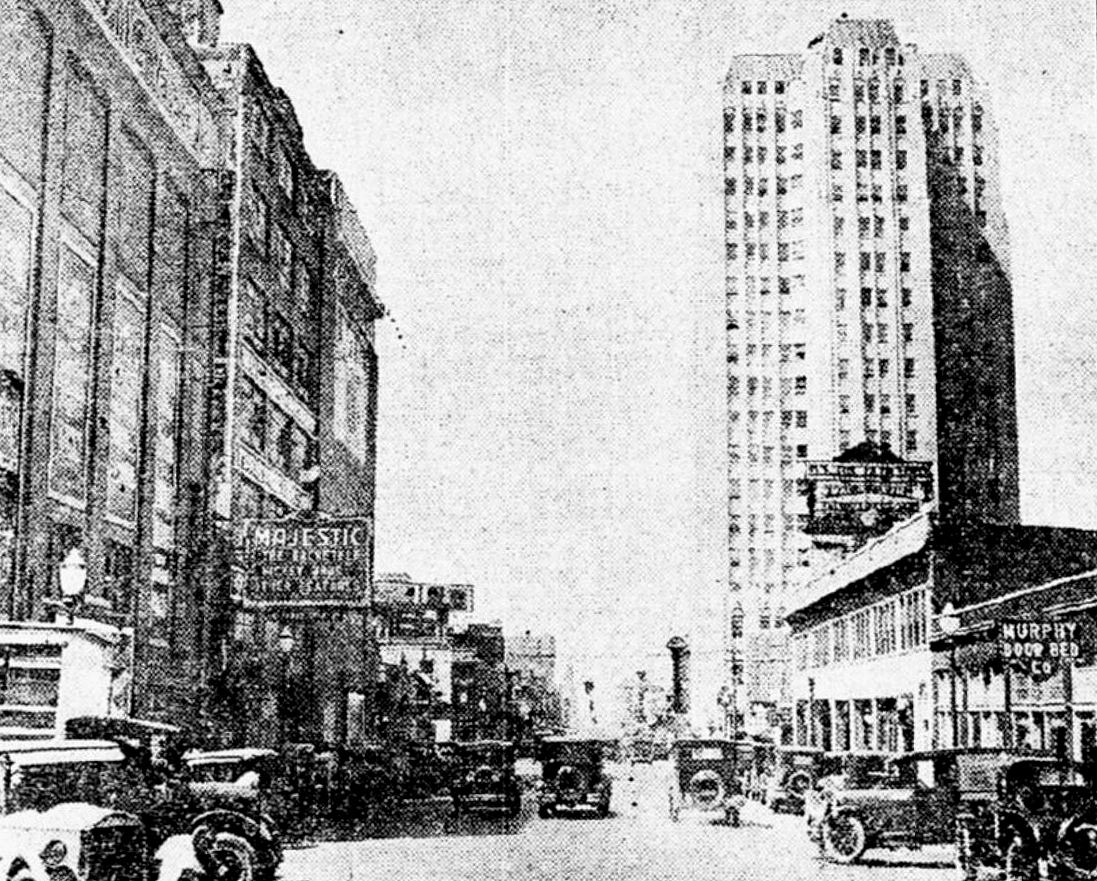
Here’s a view of Pacific from around the same time, looking west, from about Harwood.

pacific-looking-west_dmn_041430
1930

Most interesting detail in this photo? That Murphy Door Bed Co. sign!

***

Sources & Notes

Top photo from Lost Dallas by Mark Doty (Charleston: Arcadia Publishing, 2012).

*

Copyright © 2015 Paula Bosse. All Rights Reserved.

Dealey Plaza and The Triple Underpass Under Construction — 1935

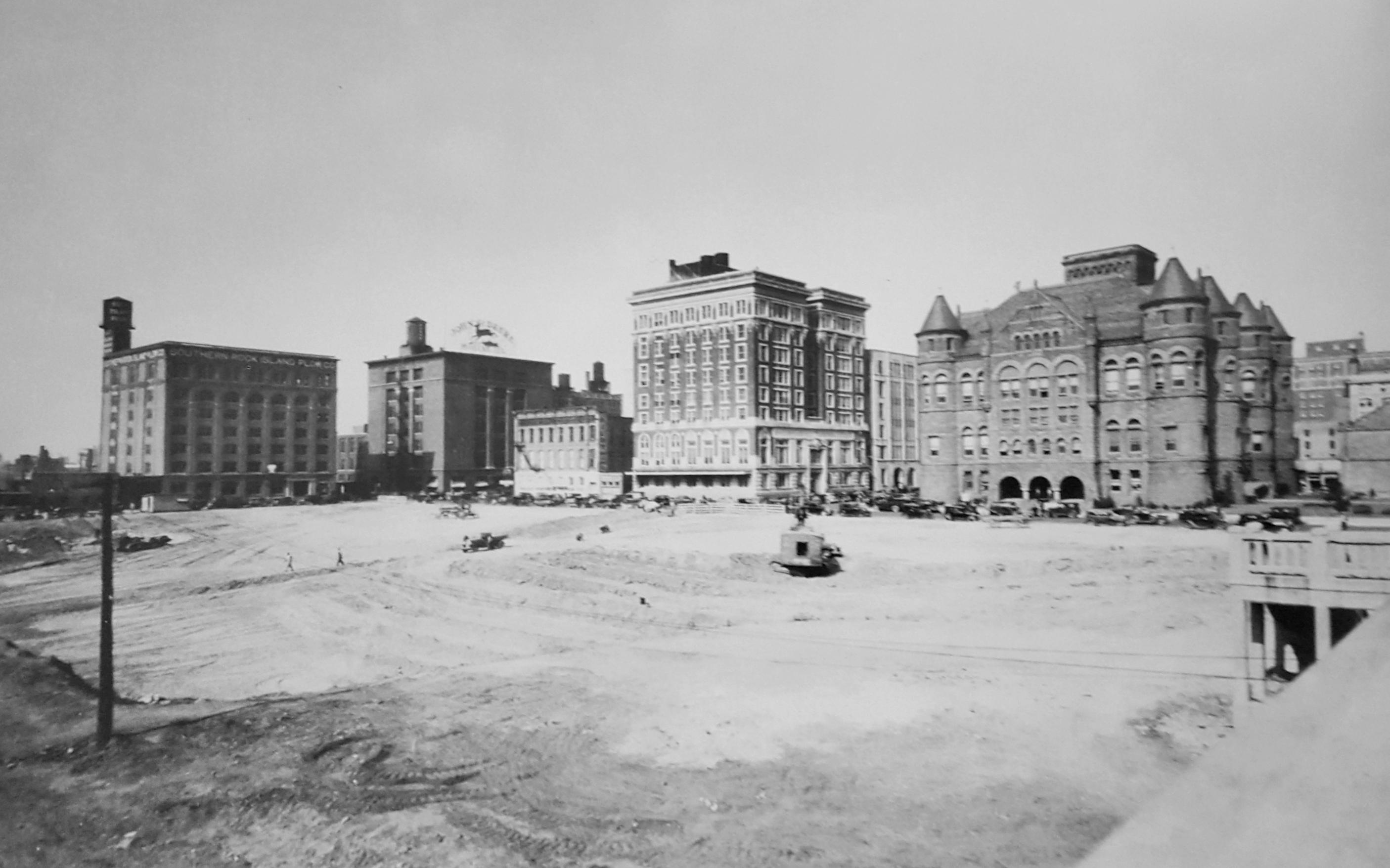
dealey-plaza_triple-underpass-construction_1935_fitzgeraldCleared for construction…

by Paula Bosse

Dealey Plaza and the triple underpass were envisioned as an impressive “Gateway to Dallas” — for visitors arriving from the west, this attractive and welcoming sight would be their first impression of the city. Construction was completed in 1936 as the city was preparing for its mammoth Texas Centennial celebration. Little did anyone know back when these photos were taken in 1935 that “Dealey Plaza” and “Triple Underpass” would one day be place names known around the world and that the not-at-all remarkable Southern Rock Island Plow Co. building seen in both of these photos would become a must-see site for almost every out-of-town visitor to the city.

triple-underpass-under-construction_1935_m-c-toyerTriple Underpass and pedestrian tunnel under construction

***

Sources & Notes

The top photo, showing the cleared land that will become Dealey Plaza is from The Hayes Collection, Dallas Public Library Texas/Dallas History and Archive Division; I found it in the book Dallas Then and Now by Ken Fitzgerald (San Diego: Thunder Bay Press, 2001).

Bottom photo showing the “triple underpass and south pedestrian tunnel under construction” was posted by M. C. Toyer in a very interesting Phorum discussion on this area (with a lot of great photos), here.

Below are related Flashback Dallas posts:

  • More on Dealey Plaza can be found here.
  • More on the Triple Underpass can be found here.
  • More on the John F. Kennedy assassination can be found here.

*

Copyright © 2015 Paula Bosse. All Rights Reserved.

The Beginning of the End for Ross Avenue’s Downtown Mansions — 1925

construction_jan-1925Mansions across from First United Methodist Church, Jan. 1925

by Paula Bosse

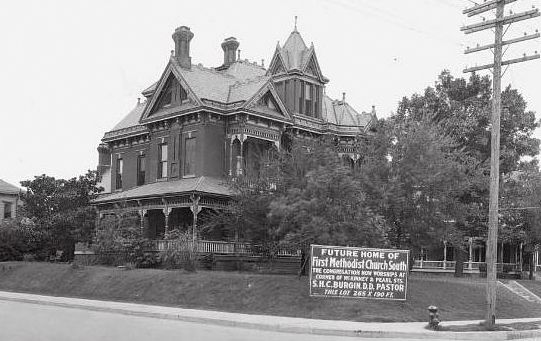
The First Methodist Episcopal Church, South (now First United Methodist Church of Dallas) was built in 1924 and 1925 at Ross and North Harwood. It was a large undertaking, and its construction meant that three of the four very large houses in the 1900 block of Ross Avenue, between North St. Paul and North Harwood, had to be demolished, including the house built by Mrs. Miranda Morrill in 1886 at the southwest corner of Ross and Harwood.

morrill-house_lost-dallas_doty_dmn

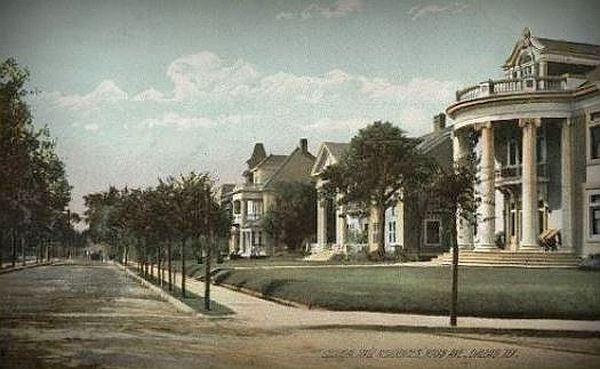
For many years, large houses like this — owned by the city’s wealthiest bankers, industrialists, and real estate men — lined Ross Avenue, just to the north of the central business district. But by the 1920s, more and more non-residential development began to encroach into this part of town.

The photograph at the top is pretty amazing, because it shows some of those grand houses in their last days. The north side of the 1900 block of Ross (the block now occupied by the Dallas Museum of Art) contained four lots. In the 1925 construction photo above, there are three houses and a business.

ross-houses_1925

In the detail above, at the far left we see the home of land baron William Caruth (in the book Dallas Rediscovered, William L. McDonald called this little pied-à-terre his “townhouse”) — for decades it sat at the northeast corner of Ross and St. Paul (which had previously been named Masten). Next to it is something that looks like scaffolding or a tower (what is that? — is it a photographer’s perch to document the construction?). Next to it is another grand house, home of several wealthy occupants over the years. And then … a car dealership and garage. How this happened is a mystery, but this 1921 building — which replaced a beautiful house and which sticks out like a sore thumb — belonged to the Flippen Auto Co., complete with showroom on the ground floor and garage and repair facilities on the second floor — it may have had one of the first car elevators in town.

Next to the Flippen Auto Co. was the grandiose Conway House, with its columns and portico; it was built around 1900 at the northwest corner of Ross and Harwood and was the childhood home of pioneer female fashion illustrator Gordon Conway. In 1921 — after a few years as a music conservatory — it became the home of the Knights of Columbus.

conway-house_ross-harwood_ca1902_mcdonaldConway House, about 1902

And here’s a photo showing both the Flippen Auto Co. and part of the former Conway House.

flippen-auto_park-cities-photohistory_galloway

On the northeast corner of Ross and Harwood, we can see a large house facing Harwood. Forget the house — on that corner was a tiny little gas station. And glory be, I stumbled across a great photo of the Acme Oil & Supply Co. complete with Texaco pump — probably from around 1919 or 1920.

ross-harwood_gas-station_greene

But back to the construction of what is now the First United Methodist Church of Dallas — a lovely building which still stands and faces the Dallas Museum of Art. Here’s a photograph of the construction from May, 1925.
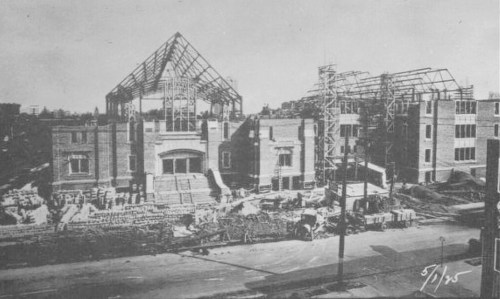
construction_may-1925

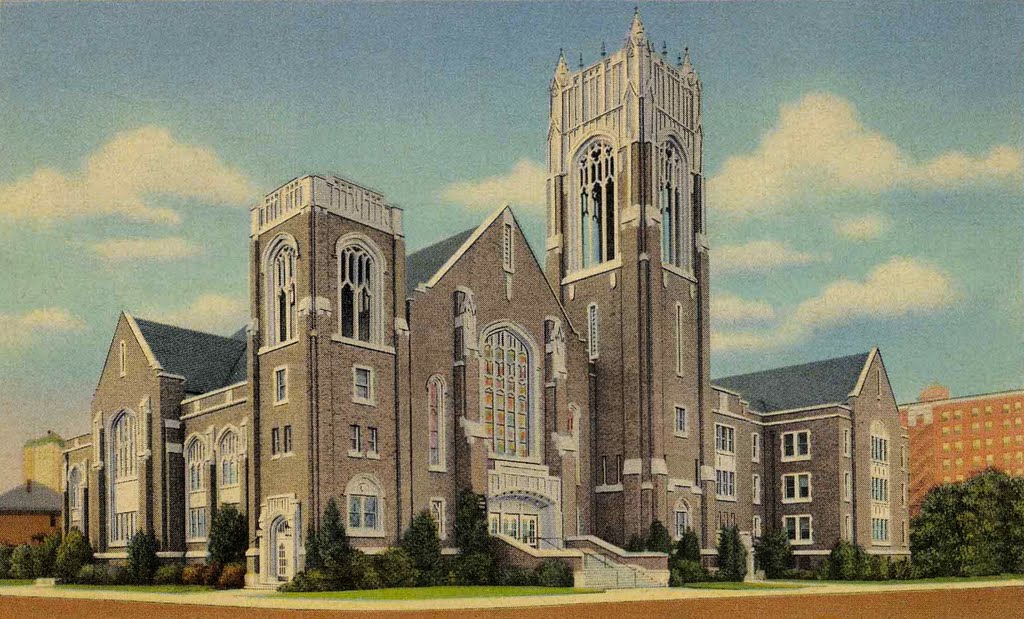
And here is the postcard filled with an artist’s conception of people to-ing and fro-ing.

methodist-episcopal-church_ebay

methodist_postcard

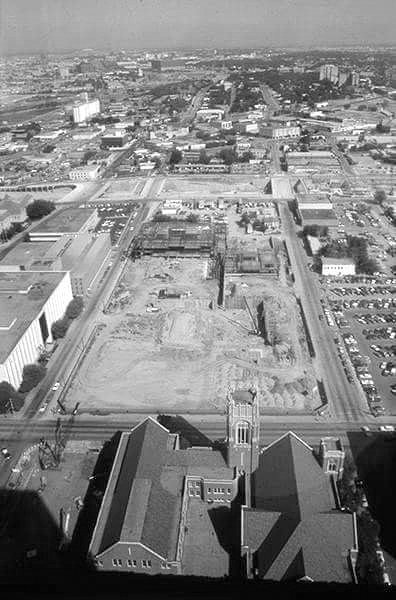
And, finally, an aerial view taken above the church in the early 1980s, looking north, showing the same block once bookended by the Caruth and Conway mansions, now leveled to make way for the Dallas Museum of Art.

dma-under-construction_1984

I think I prefer the view from 75 years earlier.

ross-avenue_ca1910

***

Sources & Notes

The two photos taken in 1925 during the construction of the church are from the book Church at the Crossroads, A History of First United Methodist Church, Dallas (Dallas: UMR Communications, 1997); the entire book has been scanned and may be viewed at Archive.org, here (all the photos are at the end).

The photo of the Morrill house is from Mark Doty’s book Lost Dallas (Charleston: Arcadia Publishing, 2012).

Photo of the Conway House is from Dallas Rediscovered by William L. McDonald (Dallas: Dallas Historical Society, 1978).

Photo showing the Flippen Auto Co. and the Conway house from Diane Galloway’s book The Park Cities, A Photohistory.

Photo of the Acme gas station is from Dallas: The Deciding Years by A. C. Greene (Austin: Encino Press, 1973).

The construction of the First Methodist Episcopal Church, South was announced in a Dallas Morning News article on Oct. 5, 1924.

methodist_dmn_100524

All that’s left of those grand homes is the Belo Mansion. It’s something!

Click pictures to see larger images.

*

Copyright © 2015 Paula Bosse. All Rights Reserved.


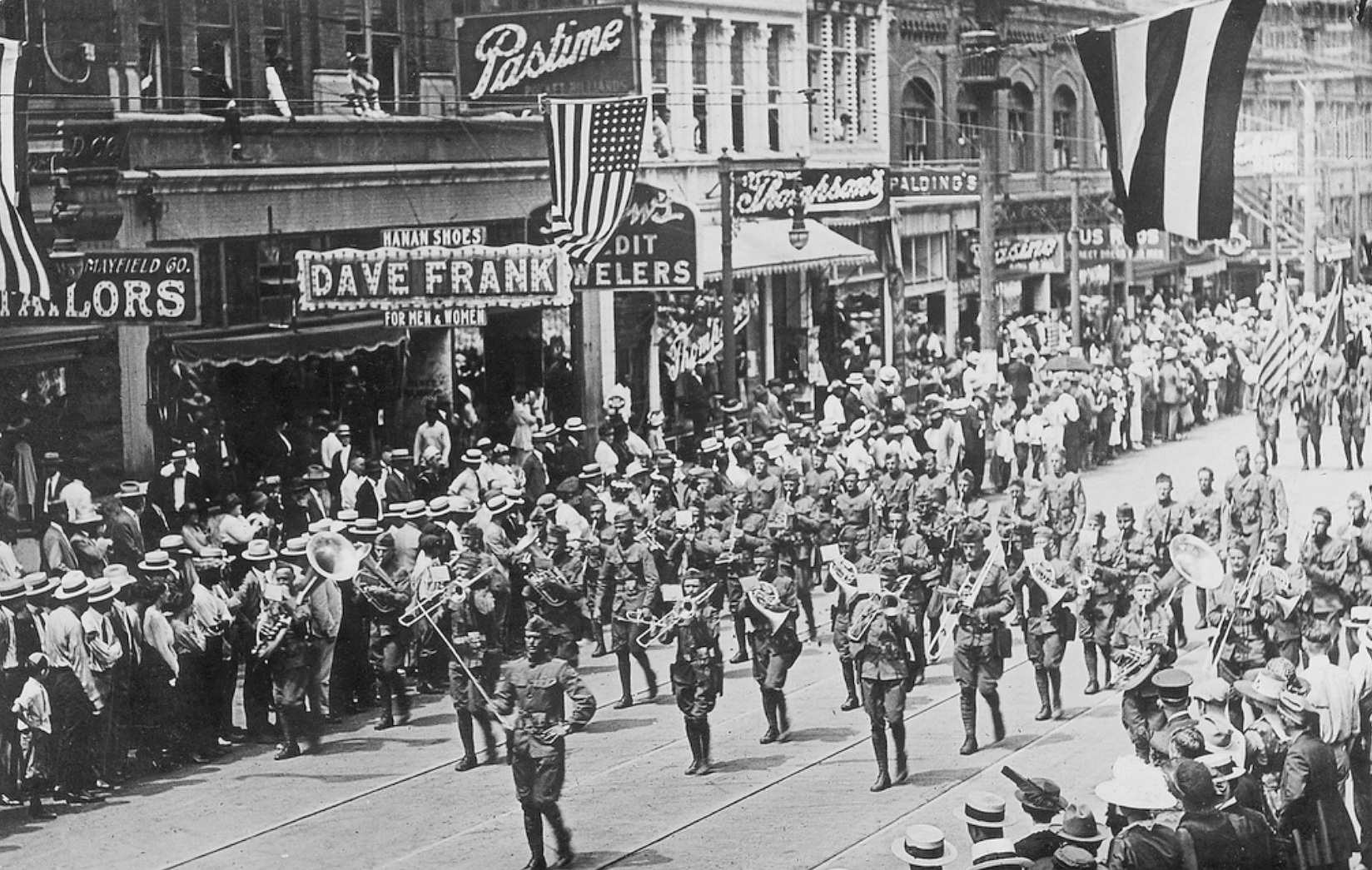
“Tough ‘Ombres on Main Street” — WWI Victory Parade, 1919

tough-ombres_flickr90th Infantry Division, 1500 block of Main Street (click for larger image)

by Paula Bosse

In my previous post “From the Vault: Armistice Day! — 1918” (seen here), commenter “Not Bob” linked to the above photo which was taken from almost the exact same vantage point as the photo I had posted previously. This one is much better! It shows the U.S. Army’s 90th Infantry Division (known as the “Tough ‘Ombres”), just back from Europe, marching past the 1500 block of Main Street, heading east. The white building in the center (“Thompson’s”) appears to be the same building currently occupied by Iron Cactus, at 1520 Main.

Great picture — thanks, Not Bob!

***

Sources & Notes

This photo was posted by Bob Swanson on Flickr, here. The comments are very interesting and explain why this infantry division was marching in various Texas cities.

More on the 90th Division here and here.

My post “Armistice! — 1918” contains another parade photo taken at the same spot, here.

*

Copyright © 2015 Paula Bosse. All Rights Reserved.


Horses, Carriages, Horseless Carriages: Commerce Street — 1913

new-skyline_c1912_degolyer_smuWest on Commerce, from about St. Paul (click for larger image) / SMU

by Paula Bosse

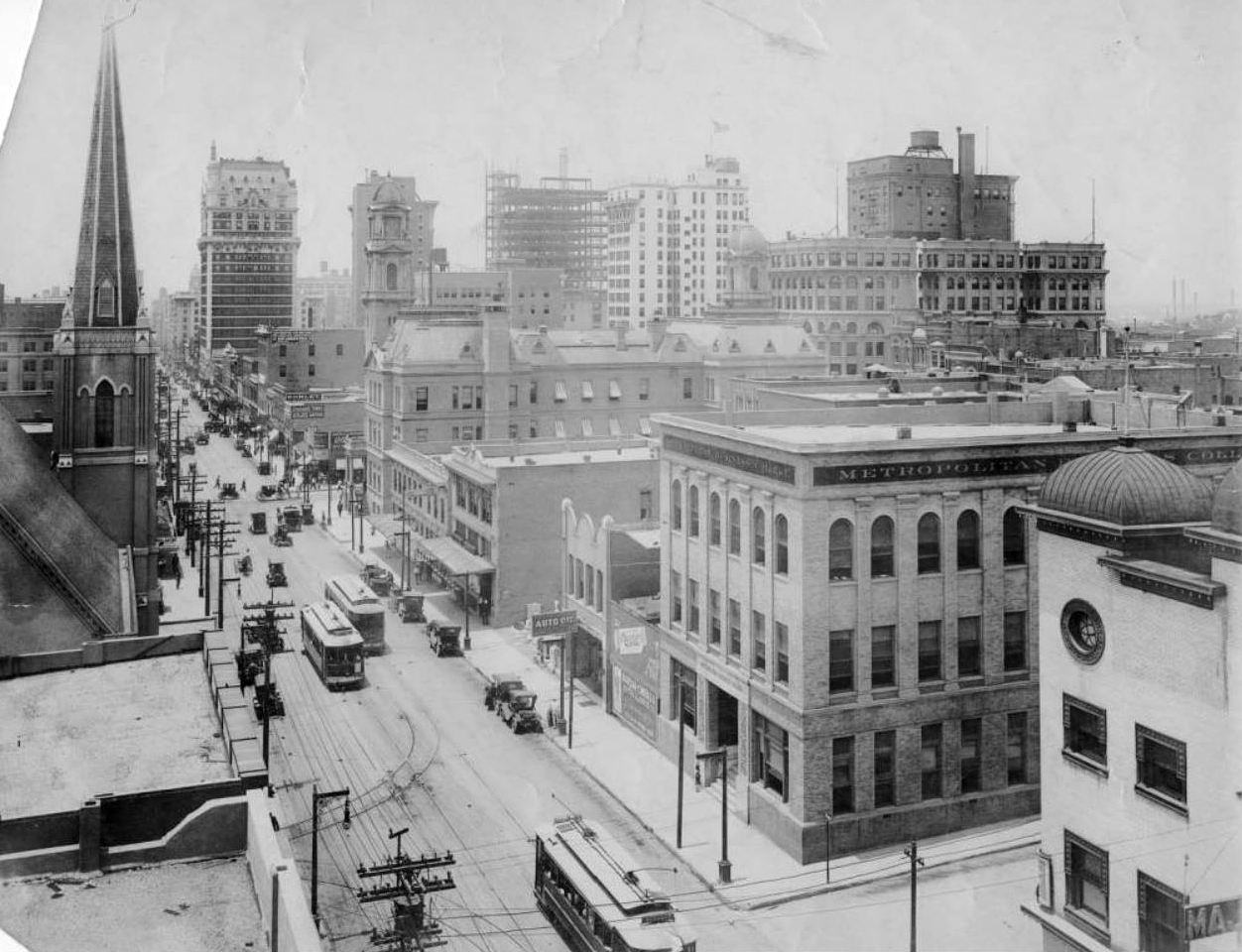
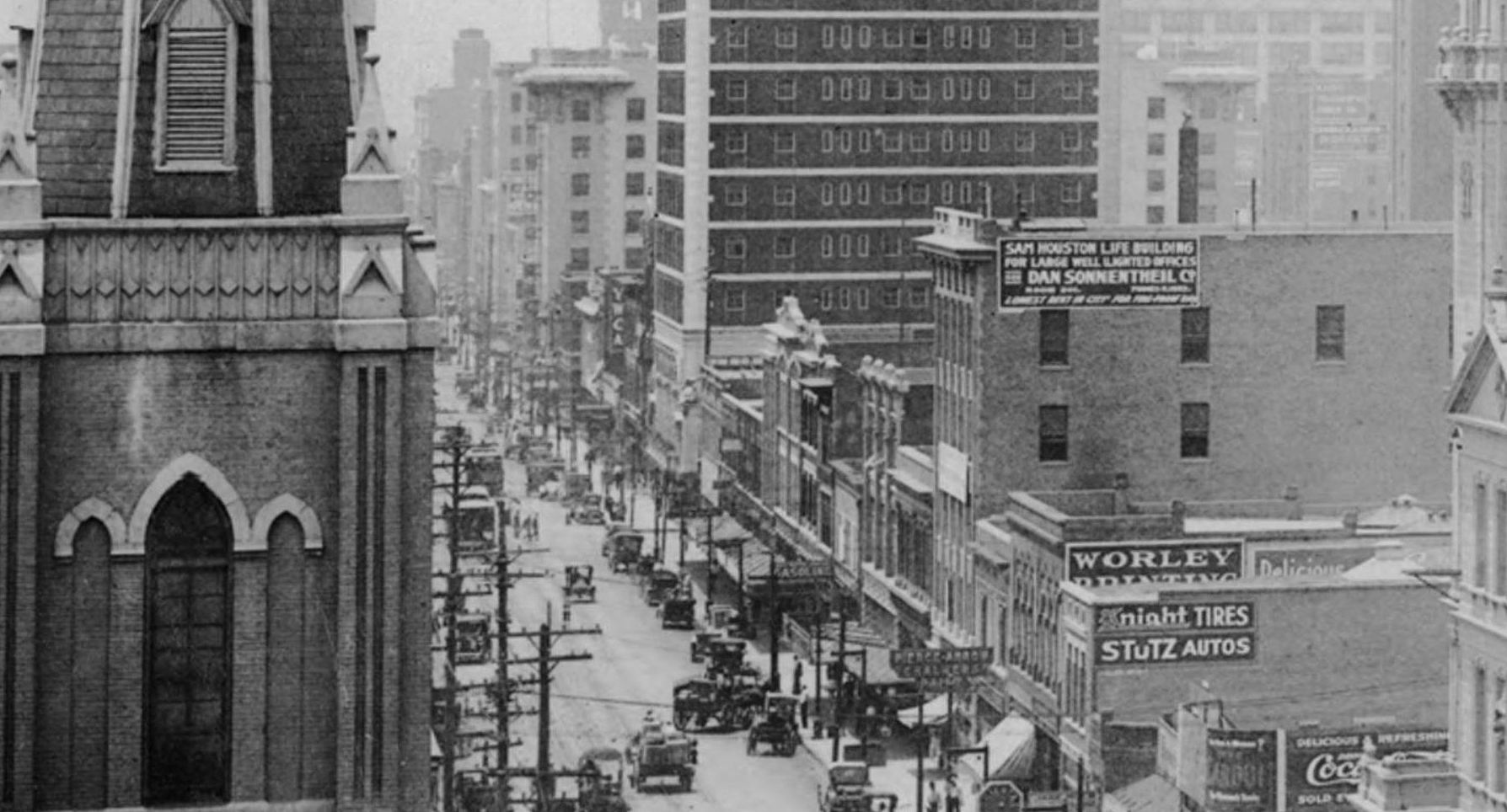
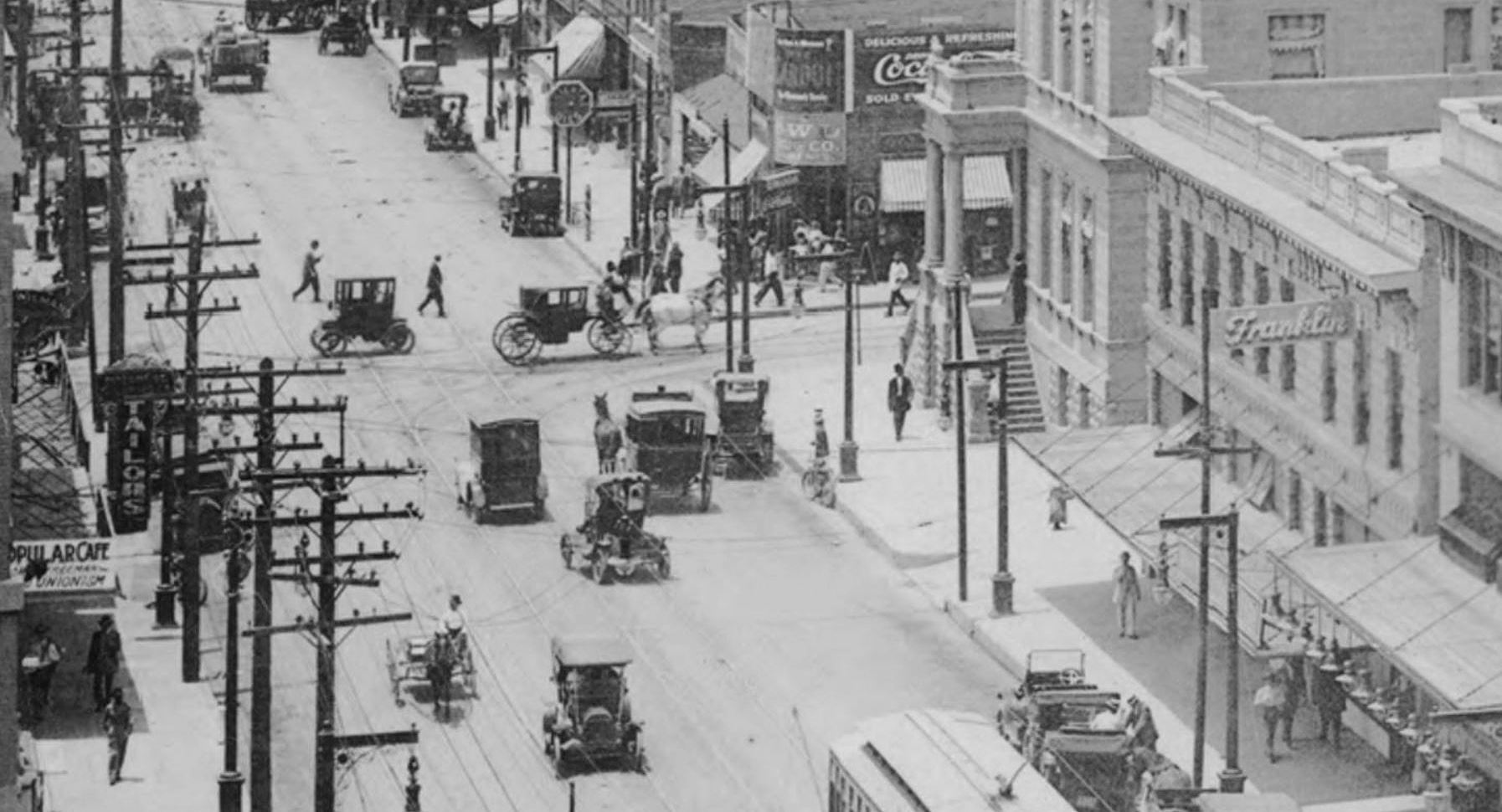
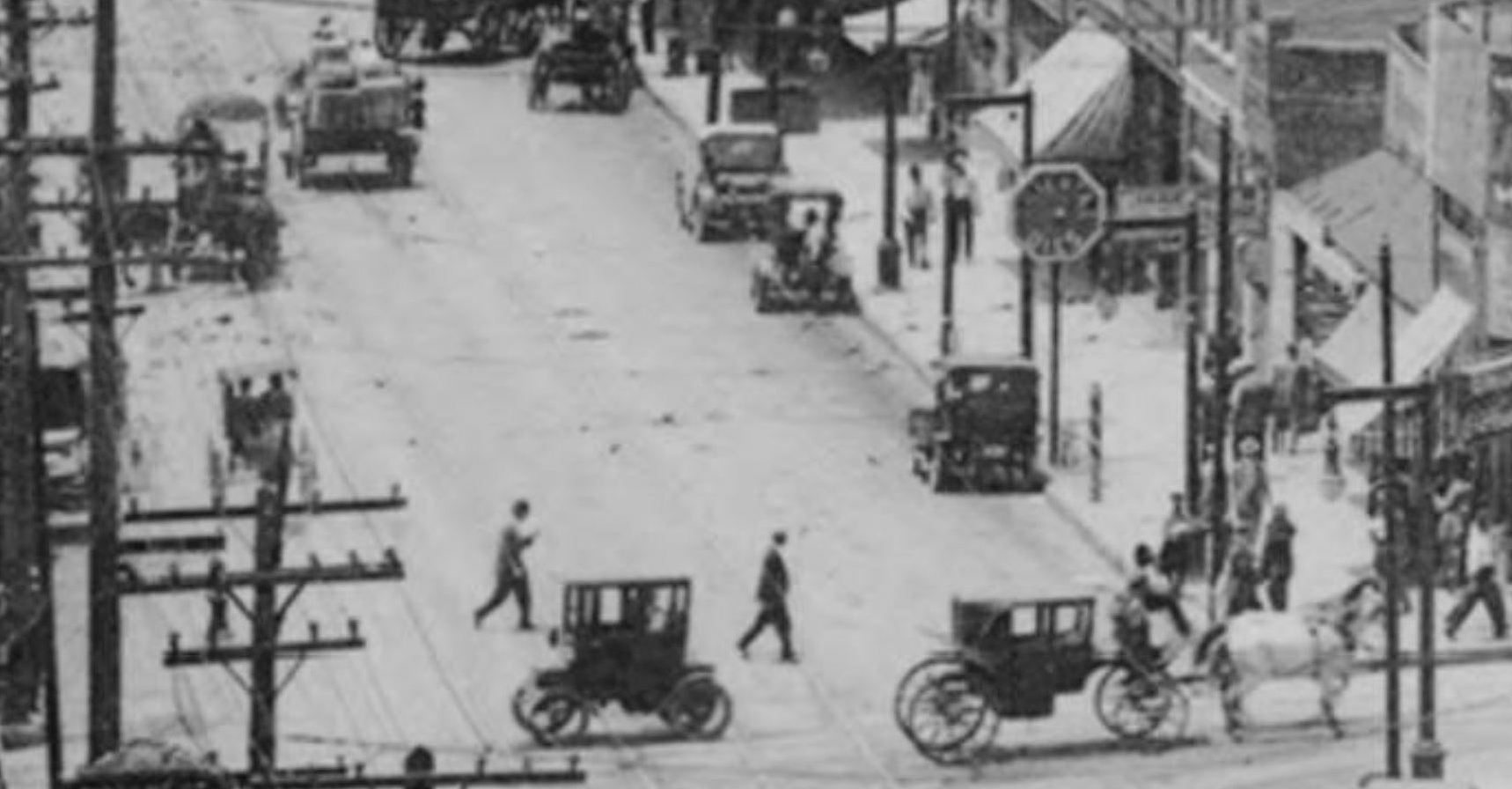
The photo above is from the indispensable collection at SMU’s DeGolyer Library. It shows a very busy Commerce Street in 1913, taken from the top of the YMCA building at St. Paul, looking west. The two landmarks at either end of Commerce are the first location of the Majestic Theatre at 1901 Commerce (northeast corner of Commerce and St. Paul), seen in the bottom right corner, and the Adolphus Hotel at the top left. I love this photo, mostly because it shows horse-drawn conveyances and automobiles sharing the streets in an already car-crazy Dallas, something that might not be that noticeable at first glance until you start zooming in to see magnified details. Let’s zoom in. Way in. (All images much larger when clicked.)

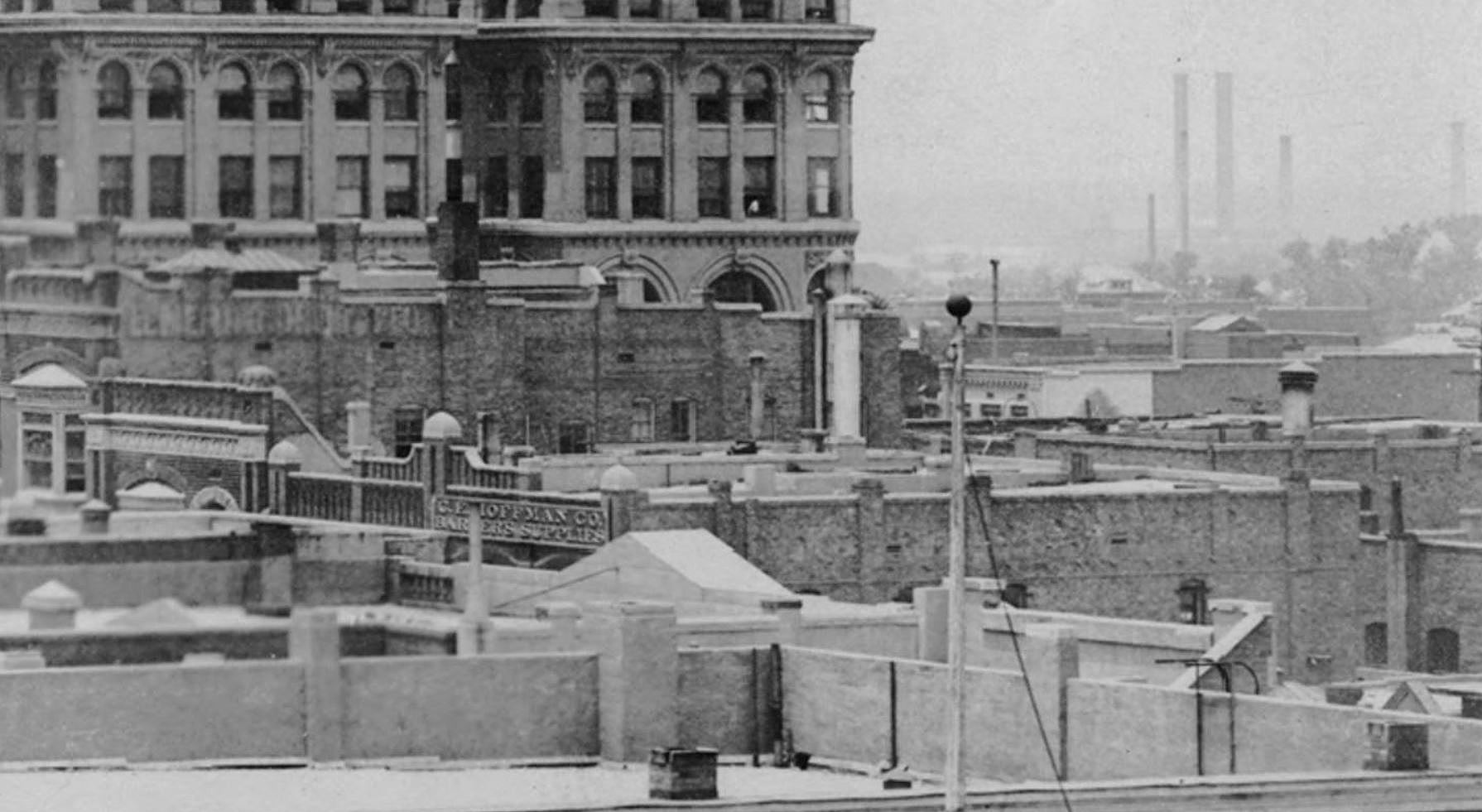
1-rooftops-skyline

2-traffic-skyline-1

Dallas has begun to look like a big city.

3-traffic-skyline-2

Below, the building on the right with the steep steps is the old Post Office/Federal Building at Ervay. The Mercantile Bank Building was built on that site in 1942.

4-traffic-skyline-3

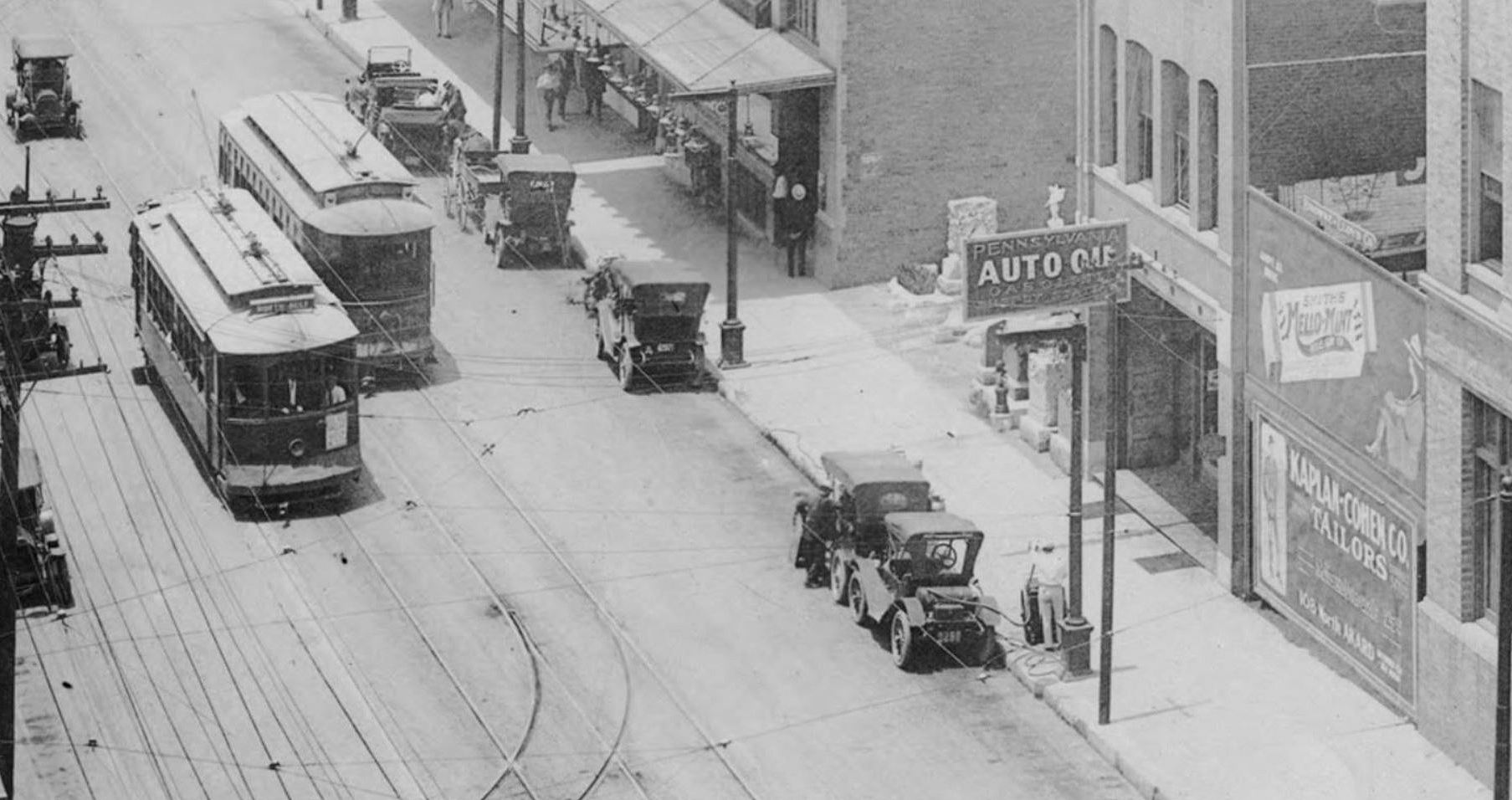
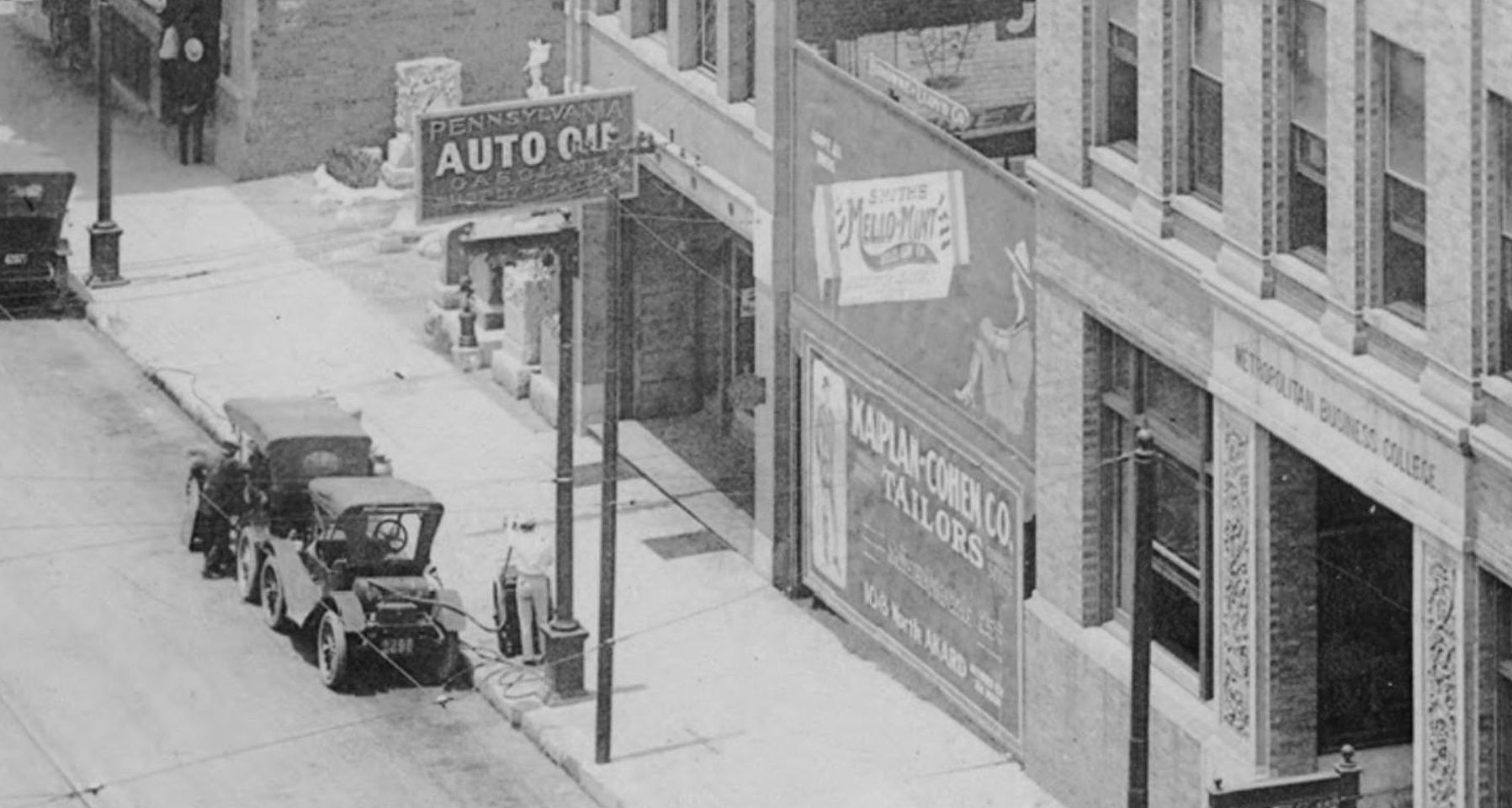
I love the detail below for a couple of reasons: first, the car at the curb at the lower right is parked next to what is purported to be the first gas pump in Dallas (the sign next to it that looks like a stop sign says “Oriental Oils” — more below); secondly, the ratio of cars to horses is pretty even.
5-traffic-skyline-4

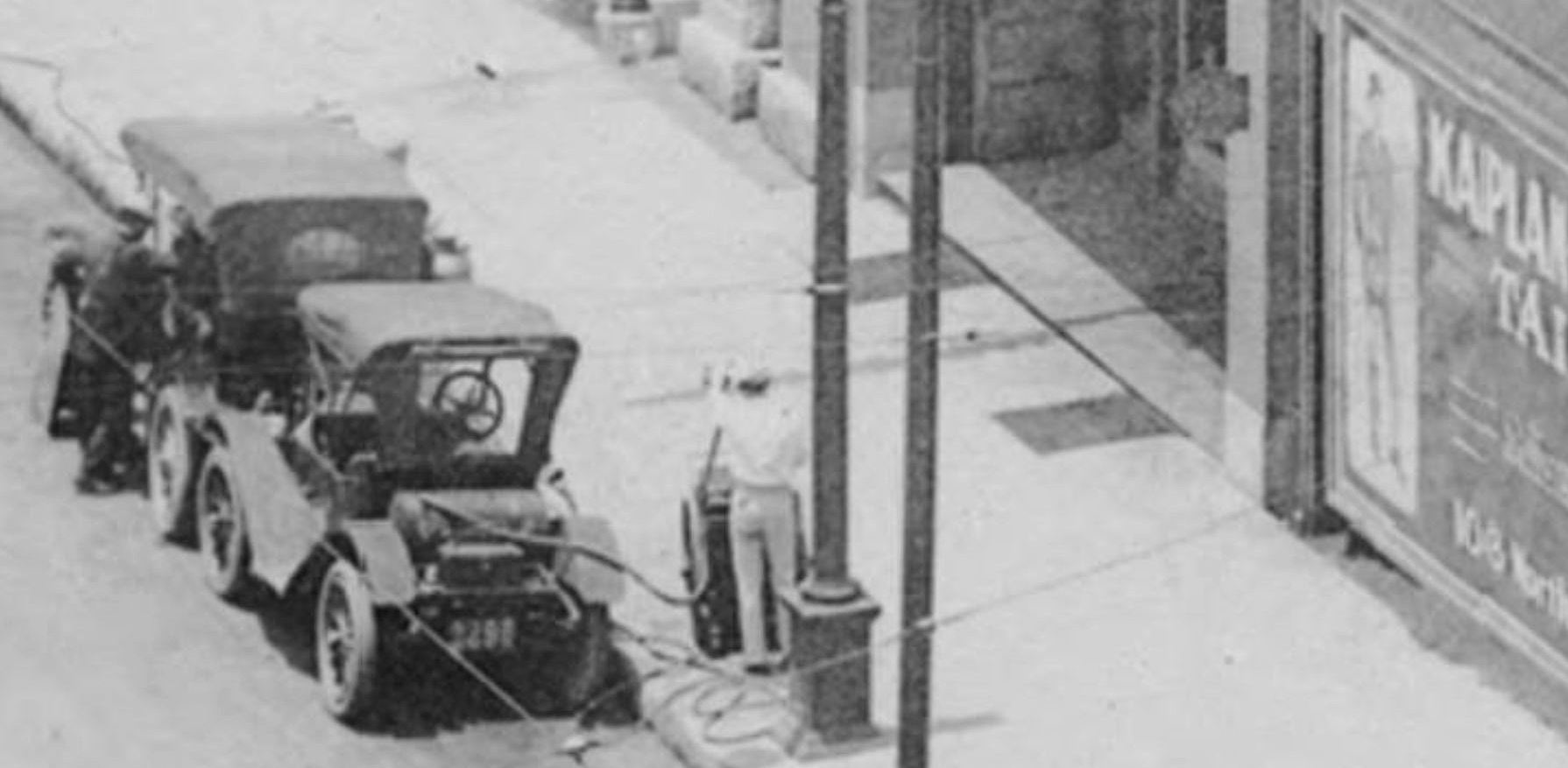
A block east of the Oriental Oil gasoline feuling station is the Pennsylvania Oil Company feuling station, at 1805 Commerce. When I first saw this last year, I was so excited to discover this seemingly mundane little detail that I wrote an entire post about these early curbside gas pumps (read “Oriental Oil Company: Fill ‘er Up, Right There at the Curb” here).

7-gas-skyline-1

And a couple more close-ups of this exotic thing which I still find inexplicably fascinating.

8-gas-skyline-2

9-gas-skyline-3

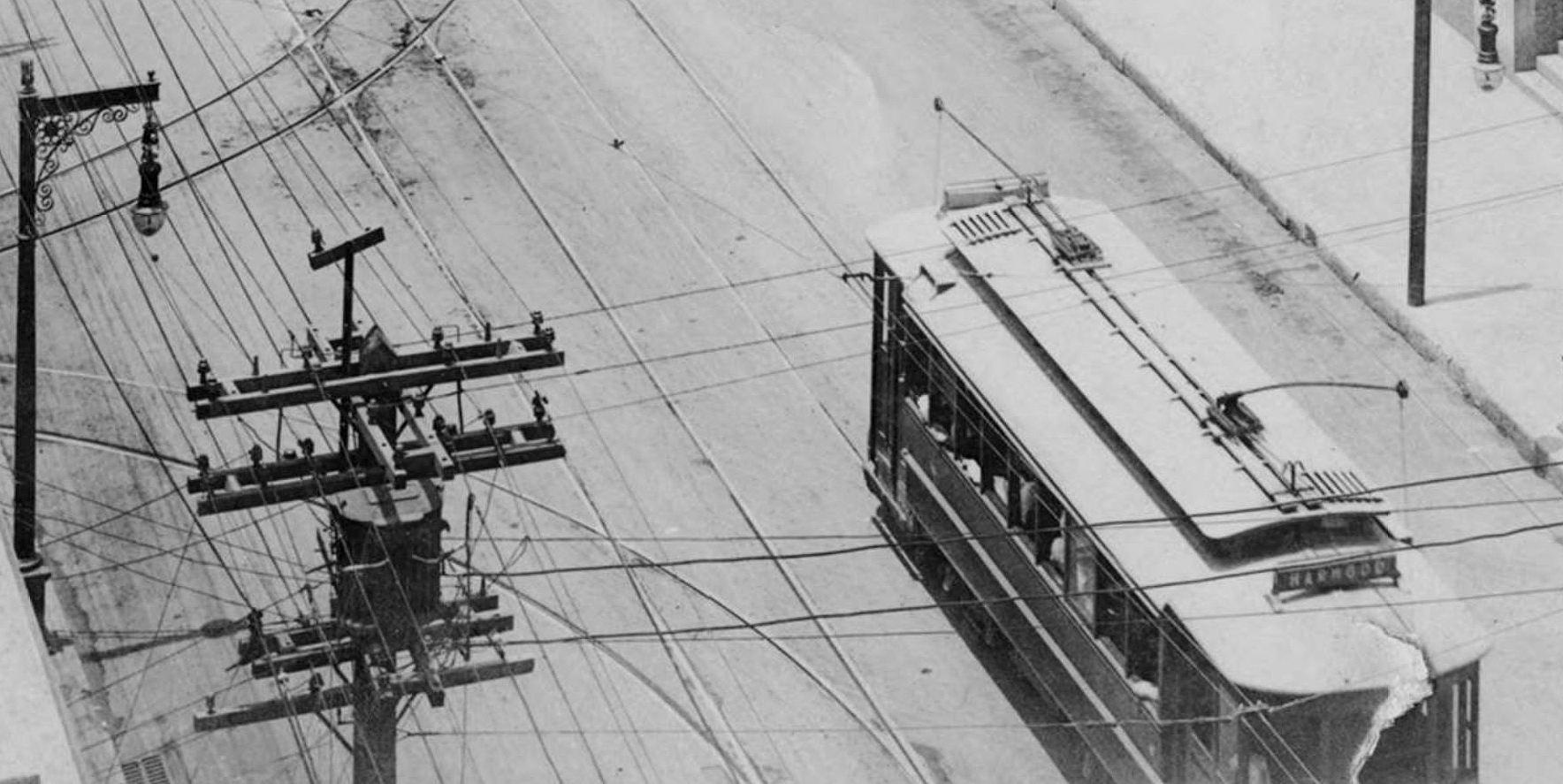
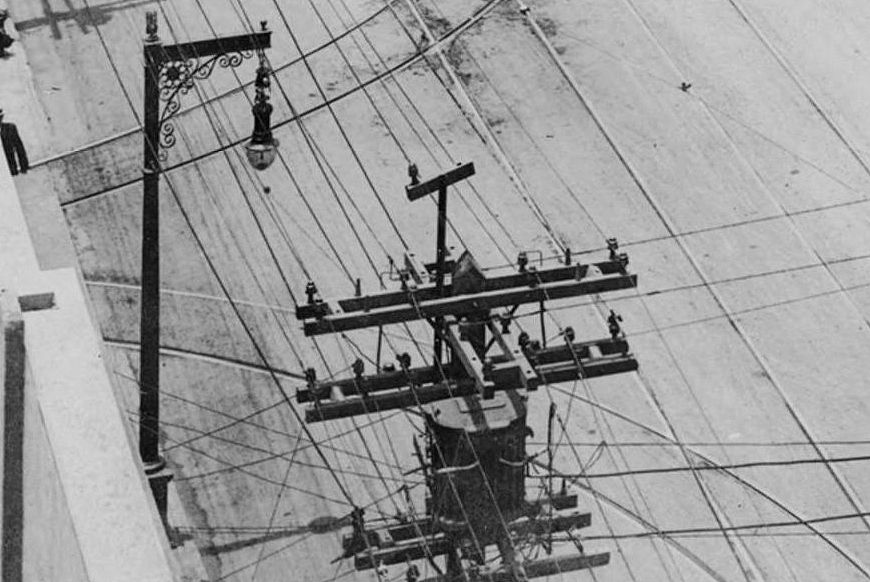
So many wires, and tracks. The Harwood streetcar is cool, but that streetlight is cooler.

10-lamp-skyline-1

11-lamp-skyline-2

Below, a listing of most of the businesses seen along this stretch of Commerce, from the 1913 Dallas directory.

commerce-street_1913-directory***

Original photo is titled “New Skyline from Y.M.C.A., 1912 & 1913,” taken by Jno. J. Johnson, from the DeGolyer Library, Central University Libraries, Southern Methodist University; it can be viewed here. I have corrected the color.

The current Google Street View of Commerce looking west from St. Paul can be seen here. Very different.

UPDATE: This photograph is from 1913. The Busch Building (later the Kirby Building) began construction on the steel superstructure of the building at the end of December, 1912. The building had reached 13 stories by May, 1913 and was completed in November or December, 1913. I have updated the title from “ca. 1912” to “1913.”

All of these images are really big. Click them!

*

Copyright © 2015 Paula Bosse. All Rights Reserved.

The Republic Bank Building and Spain’s “Casa de Los Picos”

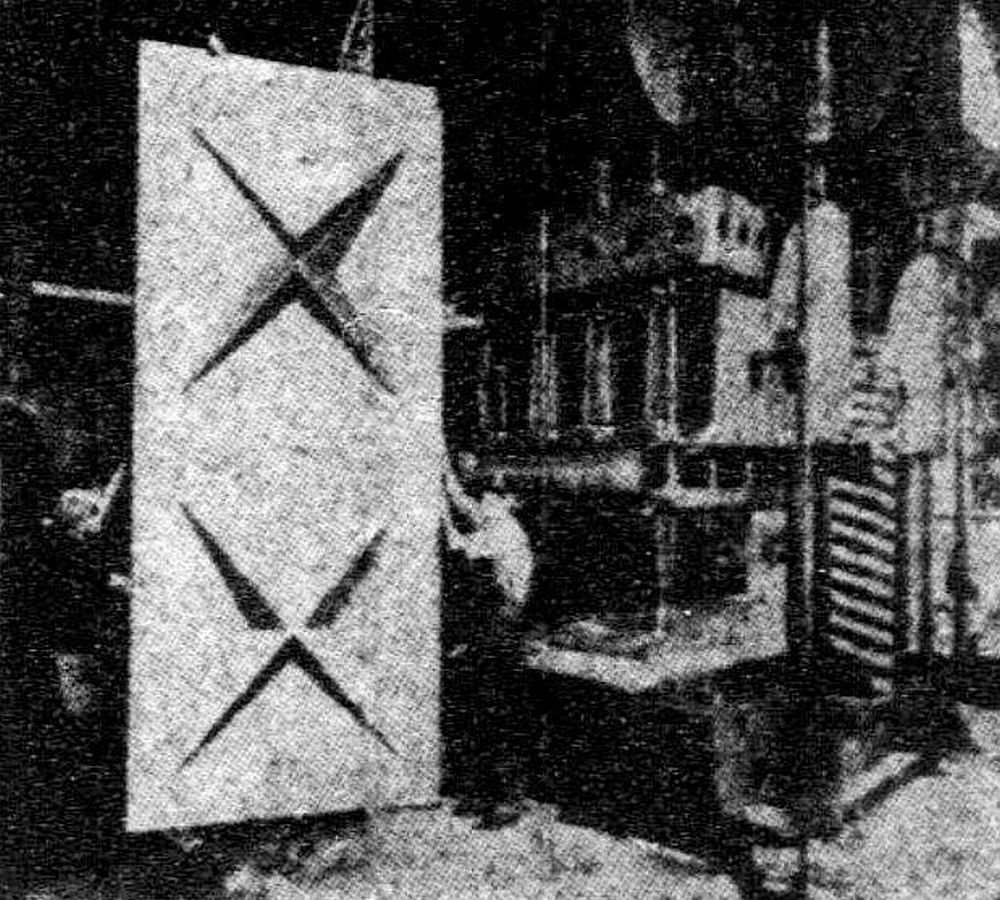
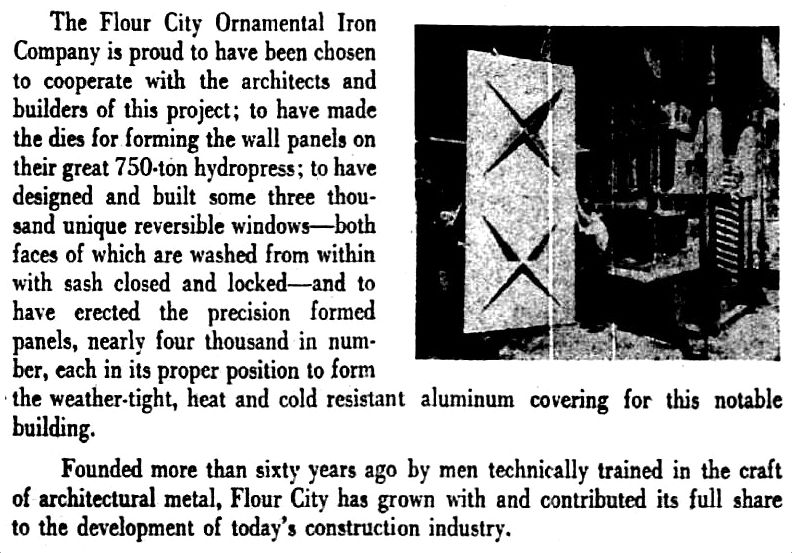
flour-city-ad_dmn_120154-panelFlour City Ornamental Iron Co. employees hard at work (click for larger image)

by Paula Bosse

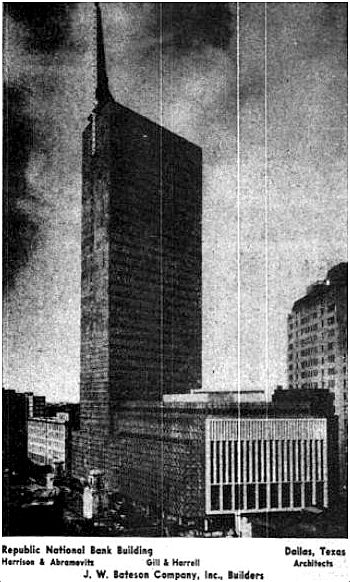
Did a 15th-century building in Spain inspire one of Dallas’ most distinctive and recognizable skyscrapers?

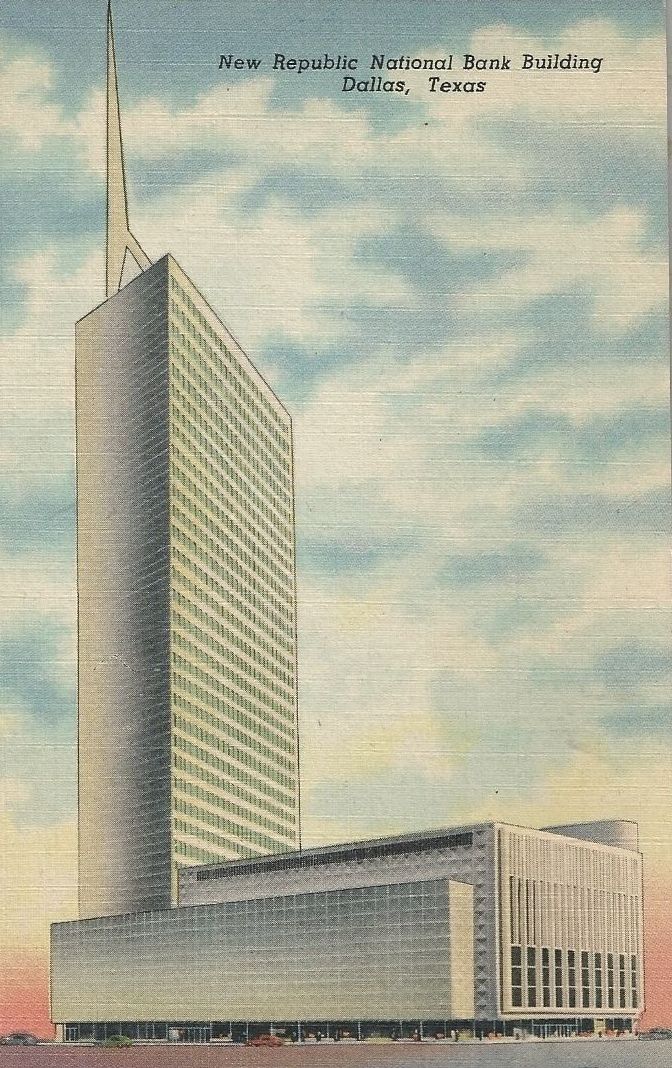
While reading about the construction of the Republic Bank Building, I came across the great, GREAT photo above which was part of an ad which ran about the time of the grand opening of the just-completed big, splashy Republic Bank Building in December, 1954. The ad this photo appeared in was for the Flour City Ornamental Iron Co. in Minnesota — the company that manufactured the thousands of pressed and embossed aluminum panels that covered the building’s exterior. These star-embossed panels — along with the distinctive and forever-cool “rocket” on the top of the building — gave the Dallas skyline a new super-modern look and an instantly recognizable landmark.

But back to that photo. It’s pretty cool. I had never really thought about those panels, but now I know that these iconic architectural adornments were manufactured in Minneapolis (…”New York CITY?!”) at the Flour City Ornamental Iron Co. Almost four thousand of these aluminum panels, a mere 1/8th of an inch thick (!), along with three thousand windows (which were reversible, so that the exterior sides could be washed from inside the building) were made in Flour City’s Minneapolis factory and transported to Dallas. From the ad:

The Flour City Ornamental Iron Company is proud to have been chosen to cooperate with the architects and builders of this project; to have made the dies for forming the wall panels on their great 750-ton hydropress; to have designed and built some three thousand unique reversible windows — both faces of which are washed from within with sash closed and locked — and to have erected the precision-formed panels, nearly four thousand in number, each in its proper position to form the weather-tight, heat and cold resistant aluminum covering for this notable building.

So, discovering that was interesting. But maybe even more interesting was this paragraph:

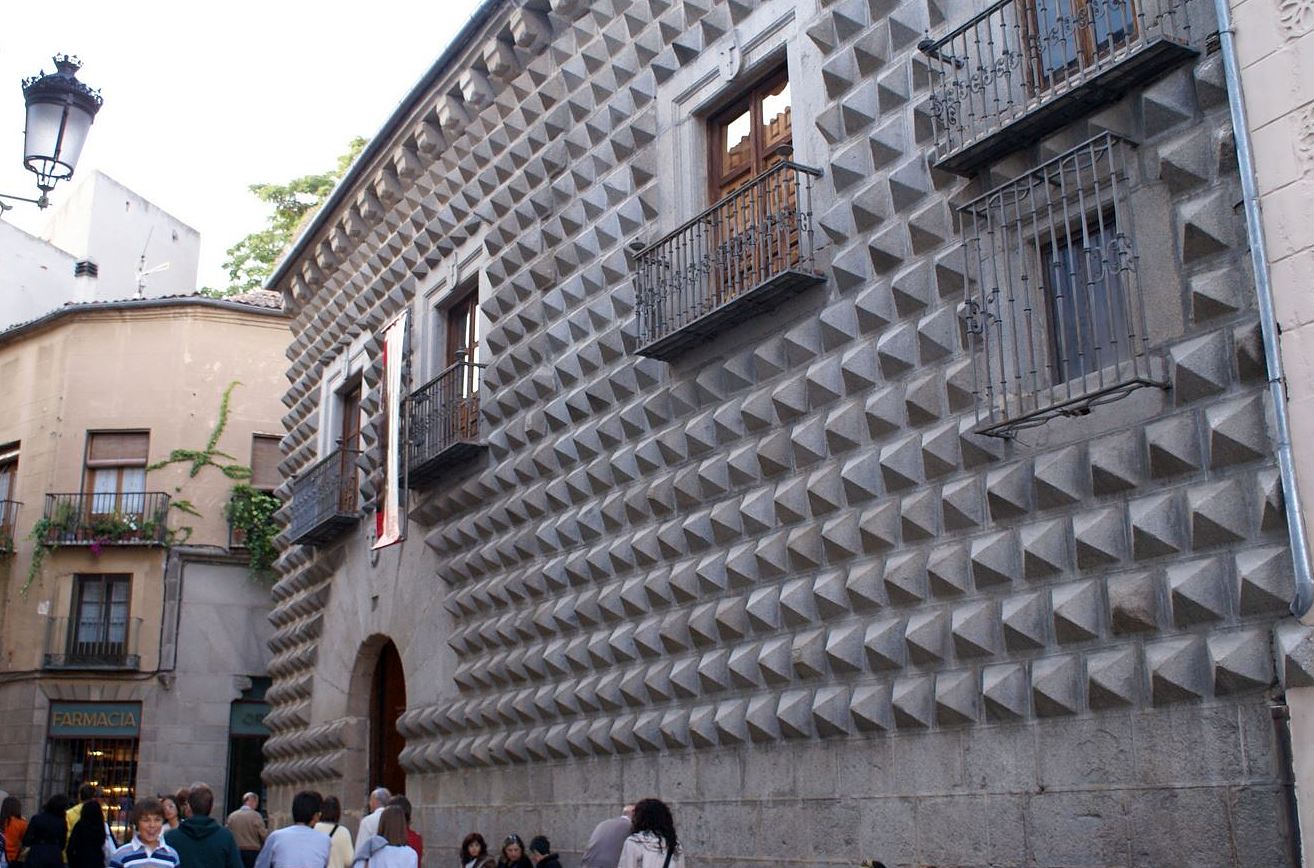
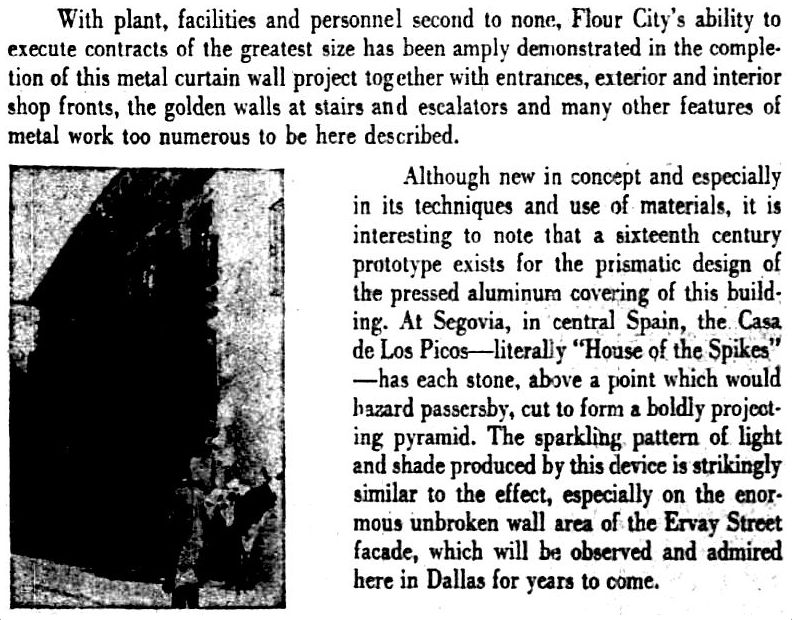
Although new in concept and especially in its techniques and use of materials, it is interesting to note that a sixteenth century [sic — it’s actually fifteenth century] prototype exists for this prismatic design of the pressed aluminum covering of this building. At Segovia, in central Spain, the Casa de Los Picos — literally ‘House of the Spikes’ — has each stone, above a point which would hazard passersby, cut to form a boldly projecting pyramid. The sparkling pattern of light and shade produced by this device is strikingly similar to the effect, especially on the enormous unbroken wall area of the Ervay Street side, which will be observed and admired here in Dallas for years to come.

I looked up Casa de Los Picos. It’s fantastic.

casa-de-los-picos_trover-websiteCasa de Los Picos, Segovia, Spain / via Trover.com

Was this design an homage of sorts to the Spanish building, conceived by the building’s main architects, Wallace K. Harrison and Max Abramovitz of the New York firm Harrison & Abramovitz? Or was it just Flour City exaggerating their work’s architectural significance? Whichever — I’m excited to have discovered Casa de Los Picos … because of an advertisement! I love this building — here it is again.

casa-de-los-picos_wikimediaWikimedia (click for gigantic image here)

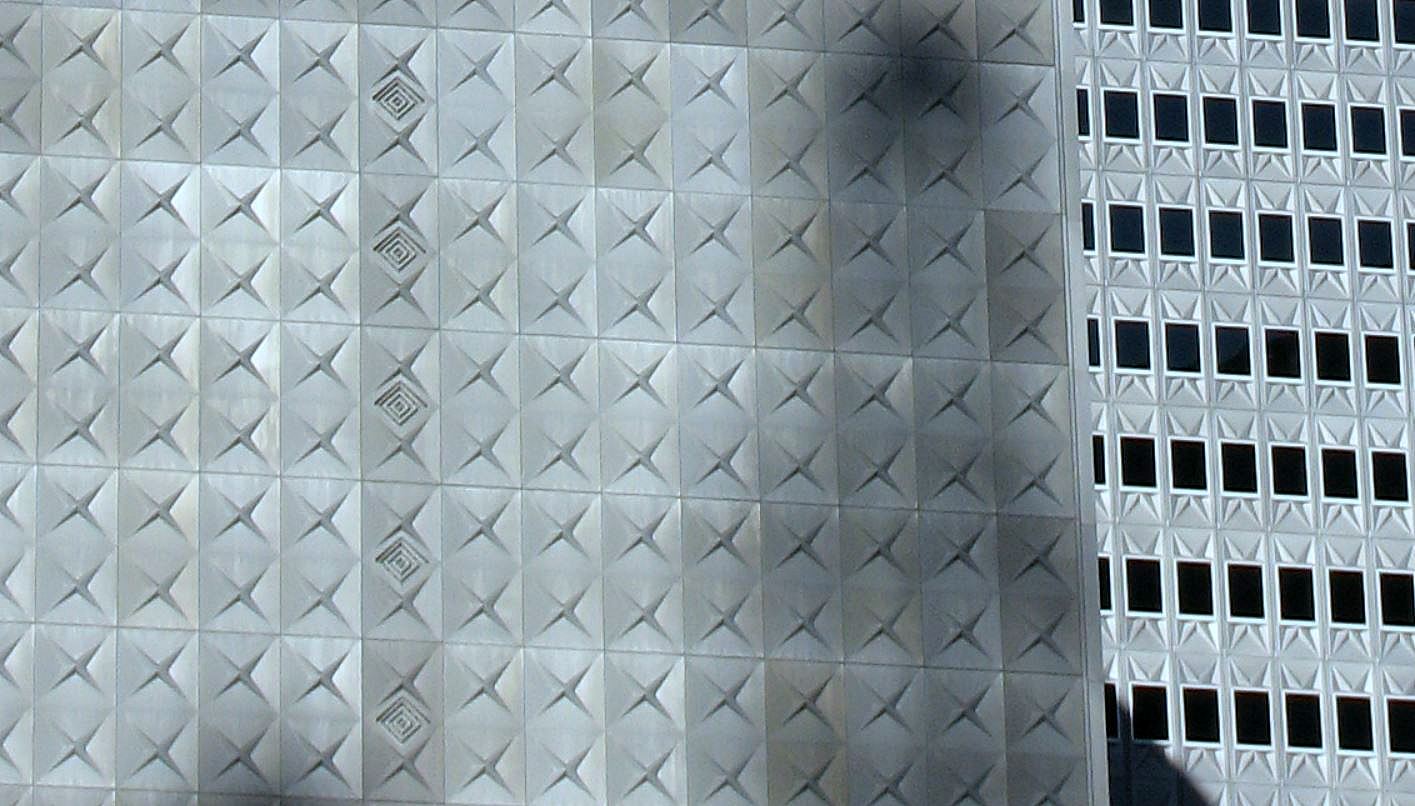
And here’s an extreme close-up of the hometown favorite.

panels_wikimedia-detWikimedia (see a fuller image image here)

You learn something new every day.

Here’s the original 1954 Flour City advertisement, broken into readable sections (click for larger images).

ad-flour-city_dmn_120154a

ad-flour-city_dmn_120154b

ad-flour-city_dmn_120154c

ad-flour-city_dmn_120154d

ad-flour-city_dmn_120154e

republic-national-bank

***

Sources & Notes

Wikipedia round-up:

  • Flour City Ornamental Iron Works Company, here
  • Casa de Los Picos (en Español), aqui
  • Harrison & Abramovitz, architects, here
  • Republic Bank Building, here

See a whole passel of photos of the exterior of Case de Los Picos, here.

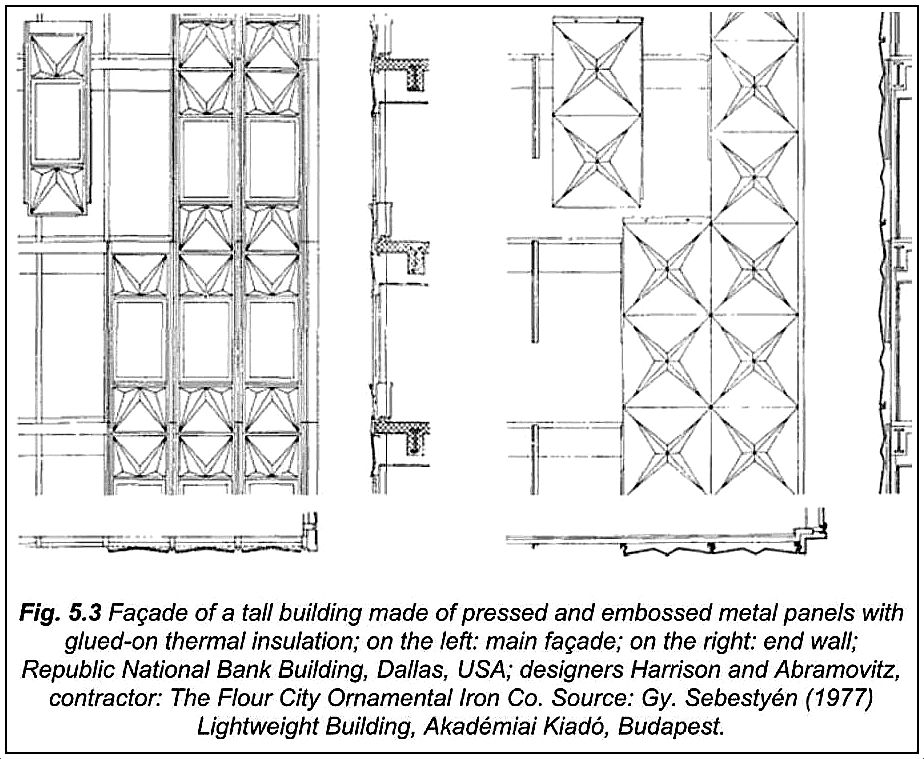
Here’s something I stumbled across in the middle of stumbling across other things — a schematic of the aluminum panels — I don’t know if they are original architectural drawings or not. They are contained in the book Construction, Craft to Industry by Gyula Sebestyen (London: E & FN Spon, 1998); you can find it here.

panel-details_construction-craft-to-industry_

I found surprisingly little information on Flour City’s contribution to the Republic Bank Building on the internet. Anyway, thanks, Minnesota, for playing such an important role in the construction of — and look of — one of my favorite Dallas buildings!

My previous post on this great building — “The Republic National Bank Building: Miles of Aluminum, Gold Leaf, and a Rocket” — is here.

When in doubt, click pictures for larger images.

*

Copyright © 2015 Paula Bosse. All Rights Reserved.


Elm Street at Night, Coming & Going — 1950s

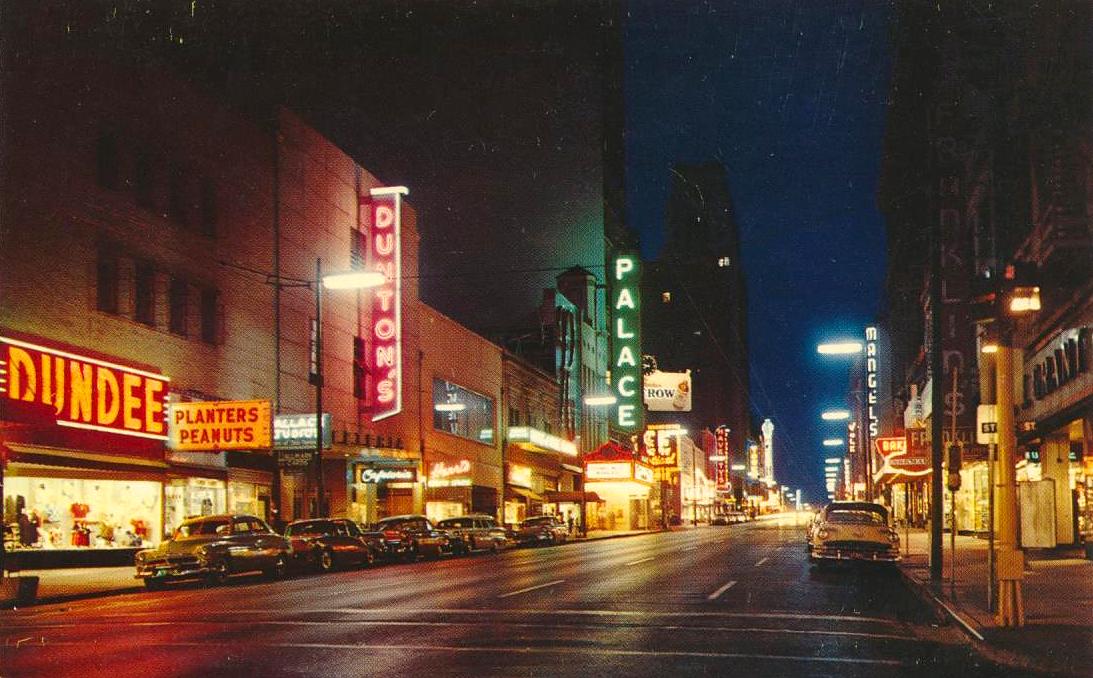
elm-st-night_ebayHave a sudden hankering for a fistful of roasted peanuts?

by Paula Bosse

Two postcards from the Fabulous Fifties showing Dallas’ Theater Row, lit up at night — one looking east (above), and one looking west (below).

The top view — taken from about Stone — was probably taken in the early- to mid-’50s. (See the same view today, here.) The following Elm Street businesses — all of which can be seen in this postcard — were listed in the 1953 city directory:

1602 Elm — W. T. Grant (dept. store)
1605 — Dundee Smart Clothes
1607 — Planters Peanuts (This place fascinates me!)
1607a — Wallace Studios (photography studio)
1609 — Dunton’s Cafeteria
1610 — Franklin’s (women’s clothing)
1613 — Henri’s Hollywood Beauty Studio
1614 — Baker’s Shoes
1623 — Palace Theatre

ERVAY crosses
1700 — Mangel’s (women’s clothing)
1705 — Lee Optical
1713 — Haverty’s (furniture)
1806 — Volk Bros. (dept. store)

ST. PAUL crosses
1907 — Tower Theatre
1911 — Melba Theatre (barely visible)
1921 — Majestic Theatre

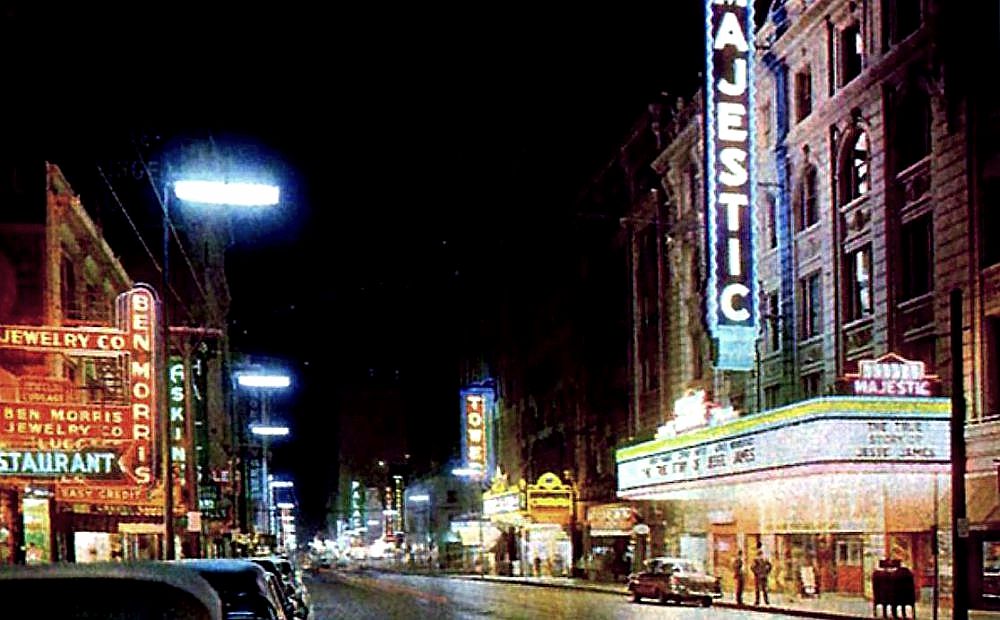
Here’s Elm looking west, taken at about North Harwood. (See the same view today, here.) The movie playing at the Majestic, “The True Story of Jesse James,” was released in February, 1957.

elm-street-night_ca1957

The businesses seen here, on the south side of the street:

1918 Elm — Hall’s Credit Clothiers
1922 — Askin’s Credit Clothing Store
1924 — Ben Morris Jewelry
1926 — Majestic Cafe (*possibly* — I’m not sure if it was there in 1958)

In all my wanderings through photos of old Dallas, my biggest regret is that I never experienced downtown-Dallas movie-going in the 1930s, 1940s, and 1950s. Mr. Peanut, we hardly knew ye (or in my case, I never knew ye).

***

Sources & Notes

Top postcard from eBay.

Second postcard from the Billy Holcomb Collection, found on Cinema Treasures here. (If anyone has a better image of this, let me know!)

The thought of buying warm, just-roasted nuts on the sidewalk of a busy downtown street makes me feel all nostalgic for something I’ve never actually experienced. It looks like the Planters Peanut shop was in a couple of different locations before it moved to the one seen above at 1607 Elm — first at 1519 Main (in about 1929), and then the 1500 block of Elm, next to Cullum & Boren (from 1931). Read a few memories of this Elm Street shop here; and see photos of a shop still operating in Memphis, here.

*

Copyright © 2015 Paula Bosse. All Rights Reserved.

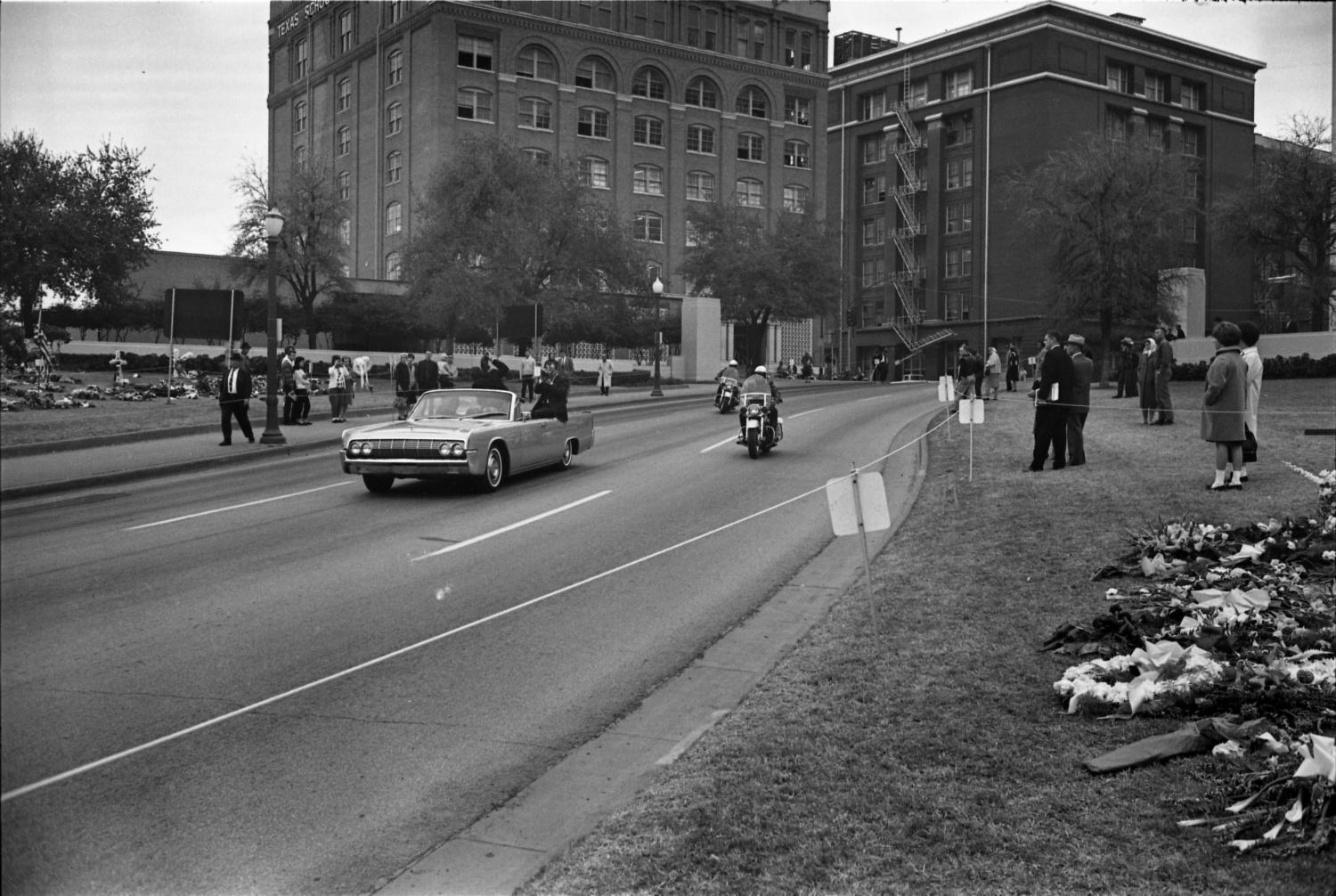
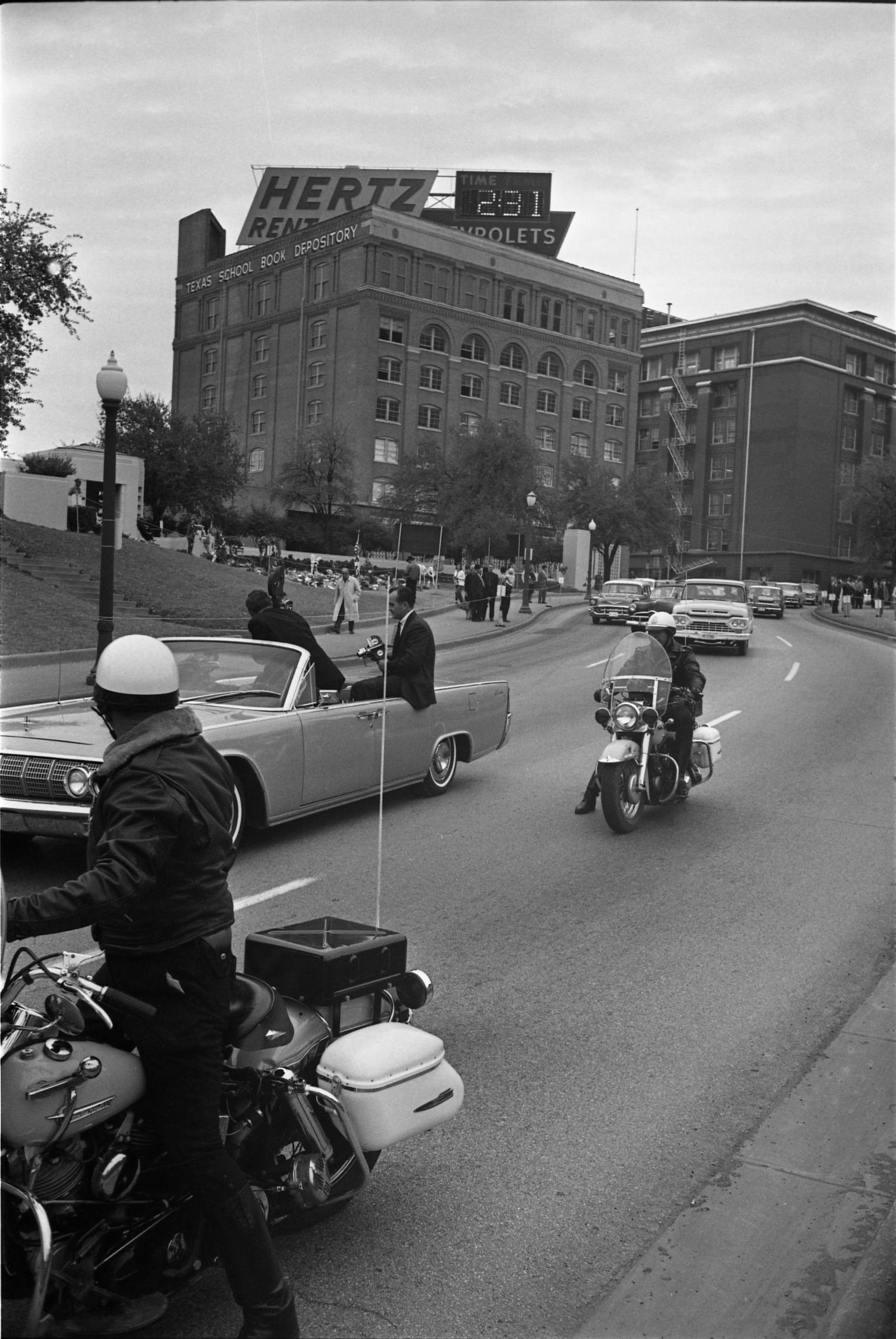
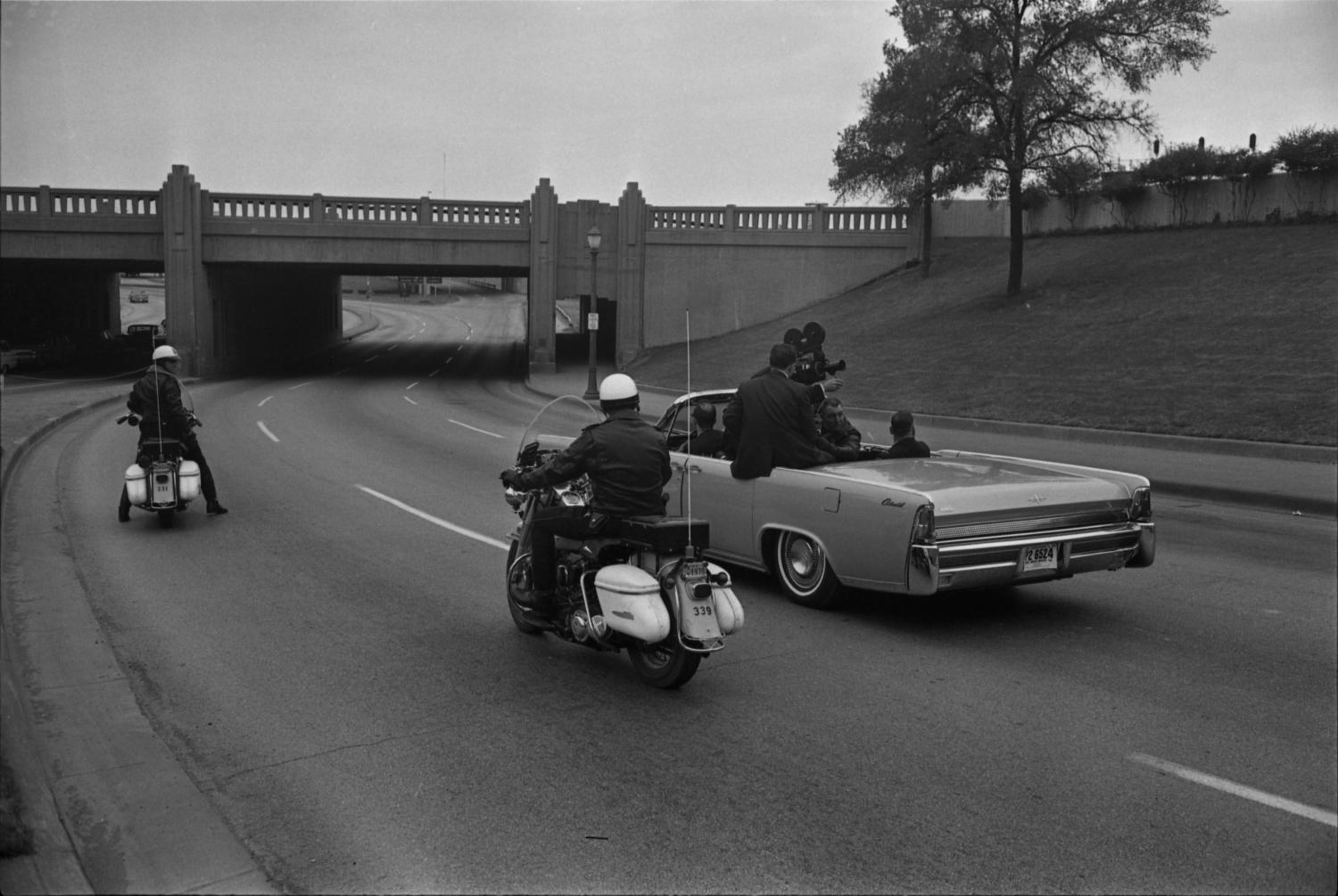
The First JFK Assassination Reenactment — 1963

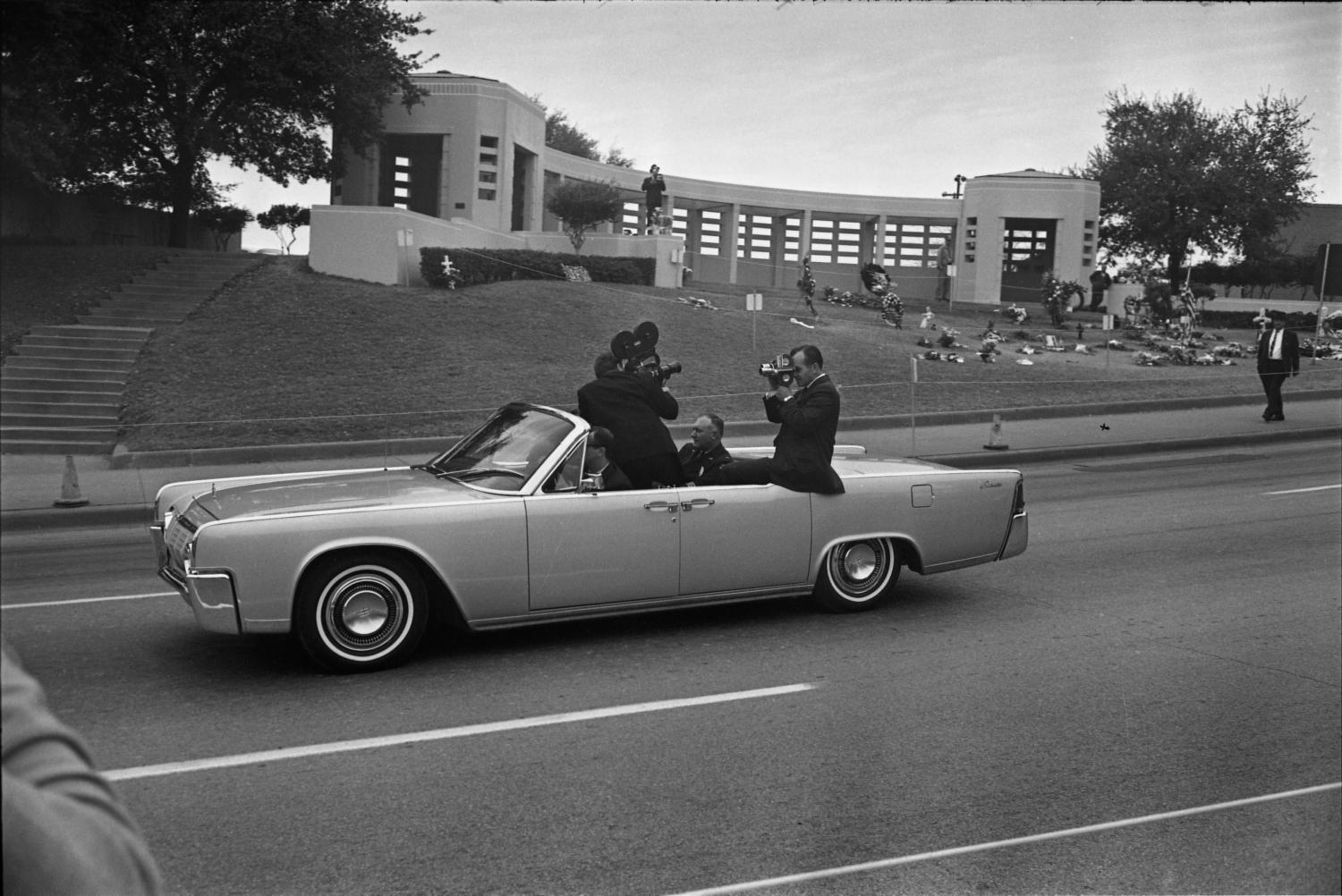
jfk_secret-service-reenactment_dth_112763Secret Service film crew, 11-27-63

by Paula Bosse

There is yet another JFK assassination-related film being shot in and around Dealey Plaza, causing all sorts of traffic woes, but spotlighting some great period cars, trucks, and fashions. The first reenactment? It took place on November 27, 1963 as part of the Secret Service investigation. A newspaper account suggested that Jack Ruby may have been watching from his jail cell, mere steps away. The photos below, showing some of that filming, were taken by a Dallas Times Herald staff photographer. (All photos from the Sixth Floor Museum at Dealey Plaza/UNT’s Portal to Texas History.)

jfk_secret-service-reenactment_dth_112763c

jfk_secret-service-reenactment_dth_112763b

jfk_secret-service-reenactment_dth_112763d-triple-underpass

Another photo — this one of somber onlookers — taken the same day. Ruby’s home-away-from-home — the jailhouse — is in the background at the left.

jfk_secret-service-reenactment_same-afternoon_dth_112763

***

Sources & Notes

Photos from the incredible Dallas Times Herald collection of Kennedy assassination photographs from the Sixth Floor Museum at Dealey Plaza, viewable online via UNT’s invaluable Portal to Texas History; the reenactment photos are here (the first photo is here).

The reenactment received only a few paragraphs in The Dallas Morning News the next day: “Crime Re-enacted by Secret Service” by Carl Freund (DMN, Nov. 28, 1963).

Currently filming in Dallas: the television adaptation of Stephen King’s novel “11-22-63.” Read the updates on the filming from Robert Wilonsky of The Dallas Morning News, here.

UPDATE: Watch the footage shot this day in my post “The Official Government Reenactment of the Kennedy Assassination — Nov. 27, 1963,” here.

*

Copyright © 2015 Paula Bosse. All Rights Reserved.