Flashback : Dallas

A Miscellany: History, Ads, Pop Culture

Category: East Dallas/Lakewood

Hunting Pecans in the Park
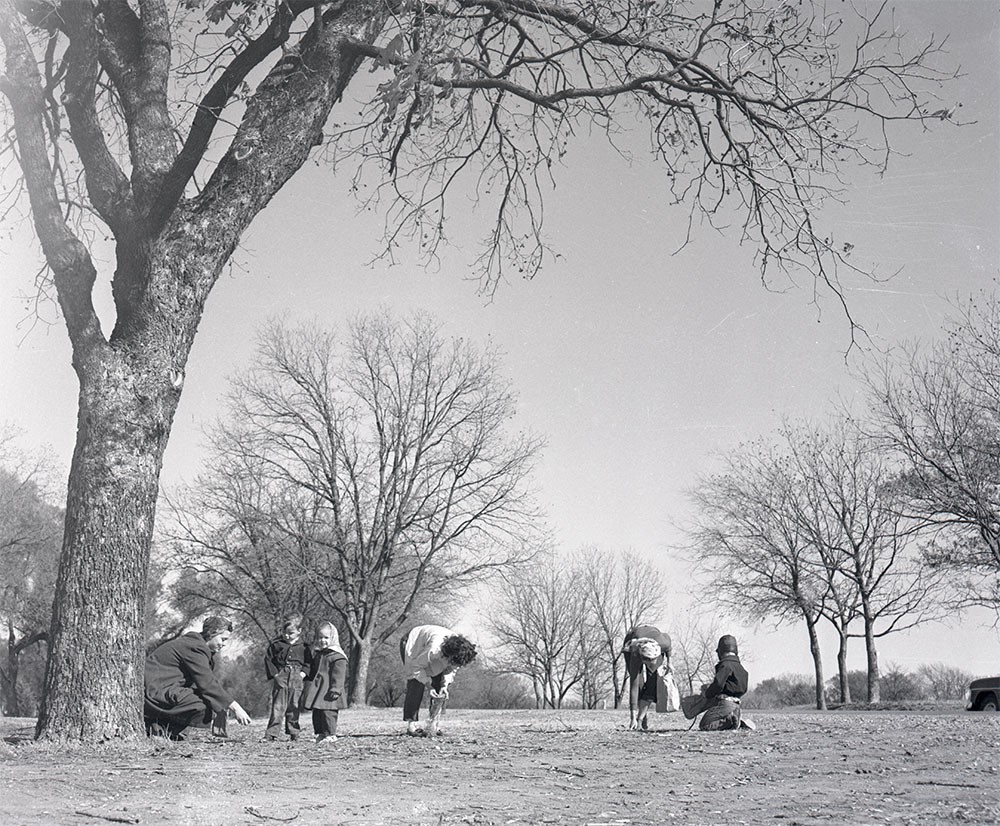
On a nut-meat mission, White Rock Lake Park, 1952

by Paula Bosse

A few days ago, the Dallas Public Library posted a version of the mural below on its social media accounts. The title of the mural is “Gathering Pecans” by Dallas artist Otis Dozier. It was painted in 1941 as a New Deal federally commissioned work to hang in the Arlington Post Office (it now hangs in the Amon Carter Museum in Fort Worth). I love this mural — not only because I’m a fan of Dozier’s work, but also because it captures something that was once a common practice for families: going to a public place like a park (or as seen in the mural, somewhere along the side of the road) and picking up pecans.

Amon Carter Museum of American Art

When I was a child, my mother used to take me and my brother to White Rock Lake Park (or occasionally to Reverchon Park) to gather pecans. It was fun. Like a really easy Easter egg hunt with really small eggs. The 1952 photo at the top predates my own time hunting for fallen pecans, but I swear, that could be me, bundled up in a coat and scarf, having fun with my family on a crisp, sunny day.

We’d pick up the nuts (so. many. pecans…) and drop them into a paper sack. Then we’d take them home and lay sheets of newspaper on the dining room table, and the whole family — including my father and aunt — would spend an afternoon cracking pecans and picking out the “meat” with special nutcracking instruments. Next stop: a delicious dessert. I absolutely loved all of this.

I asked my (much younger) co-workers if they ever did this — went to a park to gather pecans. There were a couple of vague “…maybe?…” responses, but most had never heard of such a thing. How sad!

If your family doesn’t do this, consider it. It’s one of my favorite fall memories. And you’ll get an almost-free pecan pie out of it!

Just remember: picking up fallen pecans from the ground in a public park is okay (I think), but shaking branches or disturbing trees to make pecans fall is NOT allowed (and might also lead to a fine). Here are some boys sitting next to a sign that says “Please! Threshing Prohibited.” See those long sticks they’ve got? When that photographer leaves, they’re going to be “threshing.”
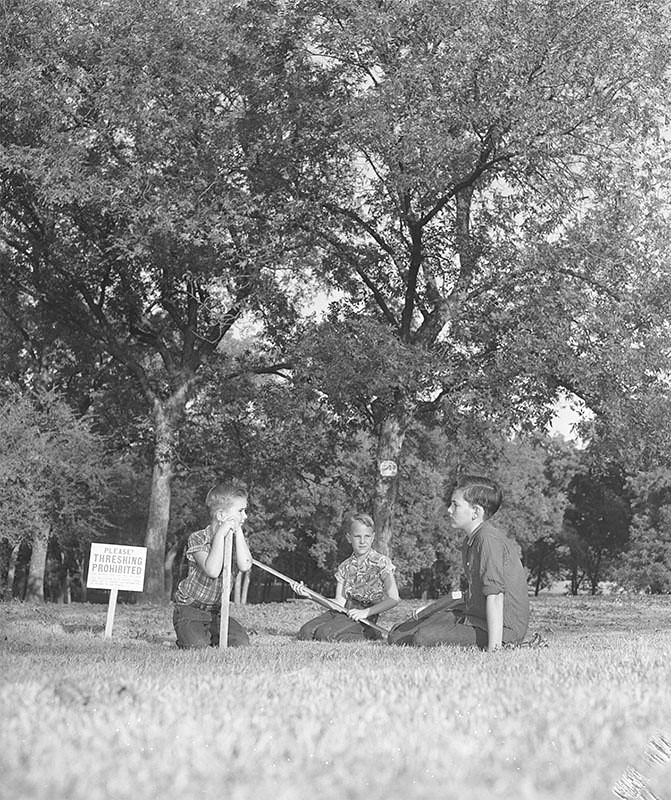
Don’t do it! Please! Hunt on the ground.
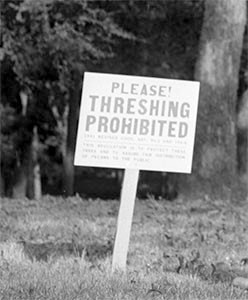
And don’t wander onto private property unless you have permission. Don’t be like Dinks McClain! He might have been acquitted, but he had to go through a lot of nut-based hassle to be a free man again!
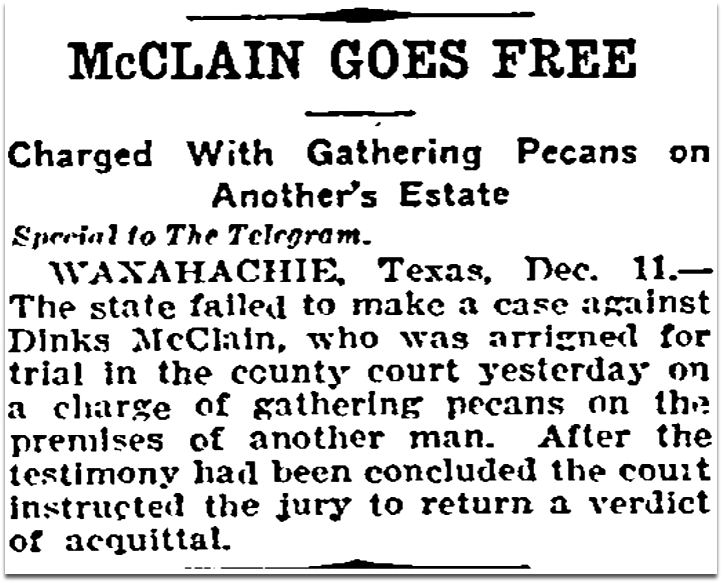
Fort Worth Star-Telegram, Dec. 11, 1907

*

Poaching nuts from private property is not the only thing to beware of. If you browse through the Dallas Morning News and Fort Worth Star-Telegram online archives using the search term “pecan gatherers” or “gathering pecans” or “hunting pecans,” etc., you will see an absolutely eye-popping number of articles about severe injuries and death (!) suffered by people just innocently out looking for some pecans. Lots of people fell out of trees (STAY ON THE GROUND!!), lots of people were shot (in a variety of scenarios), someone drowned, I think (…interesting), and snakes were everywhere. Avoid all these things. And don’t trespass. Don’t be a Dinks McClain. Stay on the ground, stay on public land, and stay away from errant bullets and snakes.

**

Lastly, here’s a 1926 newspaper article (all sub-headlines included!) all about this vanishing tradition:

GYPSY CALL OF THE FALL WOODS HEARD BY DALLAS MOTORISTS 

Autumn Leaves and Pecans on Dallas Roads Are Popular 

Autumn Tang Brings Forth Many Drivers 

Roads Near Dallas Are Crowded on Week-End Afternoons

Seek Fall Leaves 

Decorations and Pecans Are Gathered to Take Home 

Autumn has failed to chill the ardor of Dallas motorists. On the contrary, they are attracted by the briskness of a fall afternoon drive and by the flaming beauty of autumn leaves or the promise of pecans on and under wayside trees. 

Now that the early nights prevent the after-dinner twilight rides of the late summer, Dallasites are saving their drives for week-end and holiday afternoons. On Saturday and especially on Sunday afternoons thousands of local motorists are driving on country roads near Dallas or through the more woodsy of the parks and city addresses to view the beauty of the changing autumn. Others go with the practical motive of finding pecans, and many of these are rewarded.

Roads Are Near

On Saturday afternoon the more popular roads leading from Dallas are crowded with automobiles. No matter in what part of Dallas the motorist lives, he can find a thoroughfare near his home, leading to woods colored by the approach of winter. White Rock Lake, South Beckley avenue, the Holmes street road, Stevens Park, Reverchon Park, Oak Lawn Park, Turtle Creek Boulevard, the Maple avenue road and the Lemmon avenue road are some of the favored drives. On them the motorist will find autumn beauty in profusion.

Many Dallas hostesses are using the gorgeously colored fall leaves as decorations. Even when the motorists are not planning to entertain at home, many take back bunches of the leaves to bring some of the fall color into living and dining-rooms.

Perhaps the most popular fall tree is the sumac, whose scarlet stands out against the darker red and the brown of other leaves. Seen from the roadside, the brilliant leaves have provided an irresistible attraction to stop and gather some to many automobilists. Ash, oak and darker leaves also make their gypsy calls from the woods.

Find Pecans 

Pecans as well as decorative leaves are found in many directions from Dallas. Those motorists fortunate enough to have friends with a farm or estate along a water course are making the most of their friendships, while others are forced to rely upon finding trees on unposted land or by the roadside. Most of the pecan hunters are rewarded with enough of the nuts to crack and pick out on the ride back, though fee are able to get a supply sufficient to last through the late fall evenings by the fire.

The brisk coolness of the autumn week-end afternoon, made golden by a pleasant ineffectual sun, not only has not discouraged Dallas automobilists, but the tang of the fall has brought out many who took only short drives during the summer. (Dallas Morning News, Nov. 7, 1926)

***

Sources & Notes

The top photo was taken in November 1952 and is from the Hayes Collection, Dallas History & Archives, Dallas Public Library (PA76-1/11502.2). The description accompanying the photograph: “Hunting pecans at the north end of White Rock Lake are B. B. Rakestraw of Tyler, left, and J. T. White of 7322 Benning. The crisp Fall weather was bringing pecan meat lovers out throughout the city. High winds helped solve the problem of getting nuts.”

The second photograph was taken October 16, 1953 and is also from the Hayes Collection (PA76-1/16051.1). The description of this photo: “Tommy and Danny Wheeler waiting for pecans to fall.”

“Gathering Pecans” is a post-office mural by Otis Dozier (1941); the image reproduced here is from the collection of the Amon Carter Museum of American Art, Fort Worth, Texas — more info is here.

Watch this short film from the Amon Carter Museum on the mural’s relocation and restoration:

*

Pecan tree trivia: in an Oct. 15, 1950 DMN article (“Plenty of Pecans Await Searchers at Dallas Parks”), it is noted that, in 1950, there were approximately 20,000 pecan trees in Dallas parks — half of them were in White Rock Lake Park.

*

Copyright © 2025 Paula Bosse. All Rights Reserved.
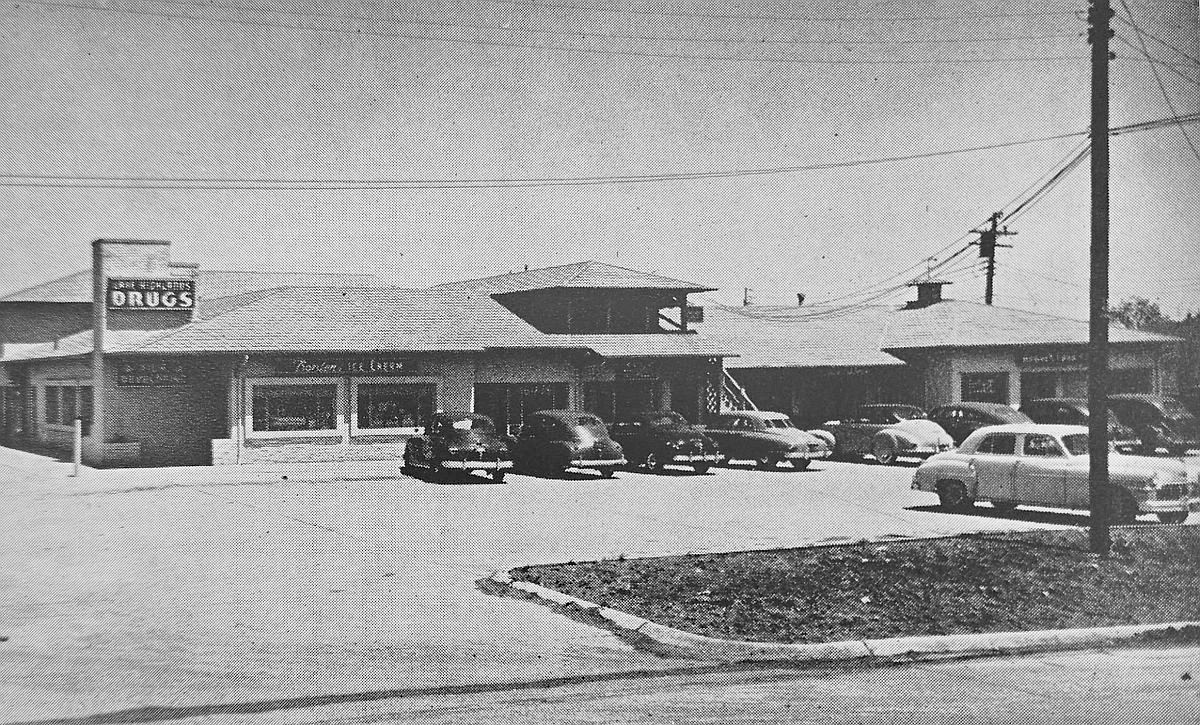
Lake Highlands Village — 1951

Buckner and Northcliff, 1951

by Paula Bosse

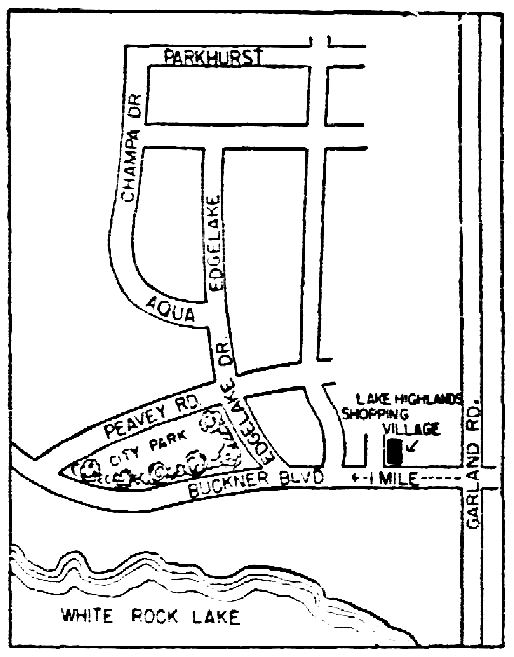
This is an interesting photo from an ad for J. M. Tuttle Jr. Real Estate/Tuttle Development Company. Jack Tuttle was one of the most prominent developers of Lake Highlands, near White Rock Lake, east of Buckner Blvd. Tuttle began buying land in this far-flung, undeveloped area around 1939 and eventually owned pretty much everything in the area, including Lake Highlands Village, a shopping area a mere stone’s throw from White Rock Lake and not far from Casa Linda. The map below (from another Tuttle ad) shows where much of Tuttle’s property was at the time, including LHV, which was (and still is) at 720 N. Buckner Blvd. It looks a lot different now, but it’s interesting to see how it started out.

Here is the text that accompanied the photo in the ad from 1951:

Lake Highlands Village 

Distinctively individual design plus surrounding natural beauty makes the Lake Highlands Estates an ideal homesite for the discriminating home-owner. And you will like the convenience of your own shopping center in the Lake Highlands Village, just minutes from downtown Dallas and seconds from cool White Rock Lake. 

1952

***

Sources & Notes

Photo and map are from ads that appeared in Dallas magazine in Feb. 1951 and Feb. 1952.

More on Lake Highlands from Flashback Dallas in “Old Lake Highlands.”

This post appeared previously on the Flashback Dallas Patreon page.

*

Copyright © 2025 Paula Bosse. All Rights Reserved.
Tooling Around Munger Place — ca. 1913

Snazzy motor car parked in front of 5109 Swiss Avenue

by Paula Bosse

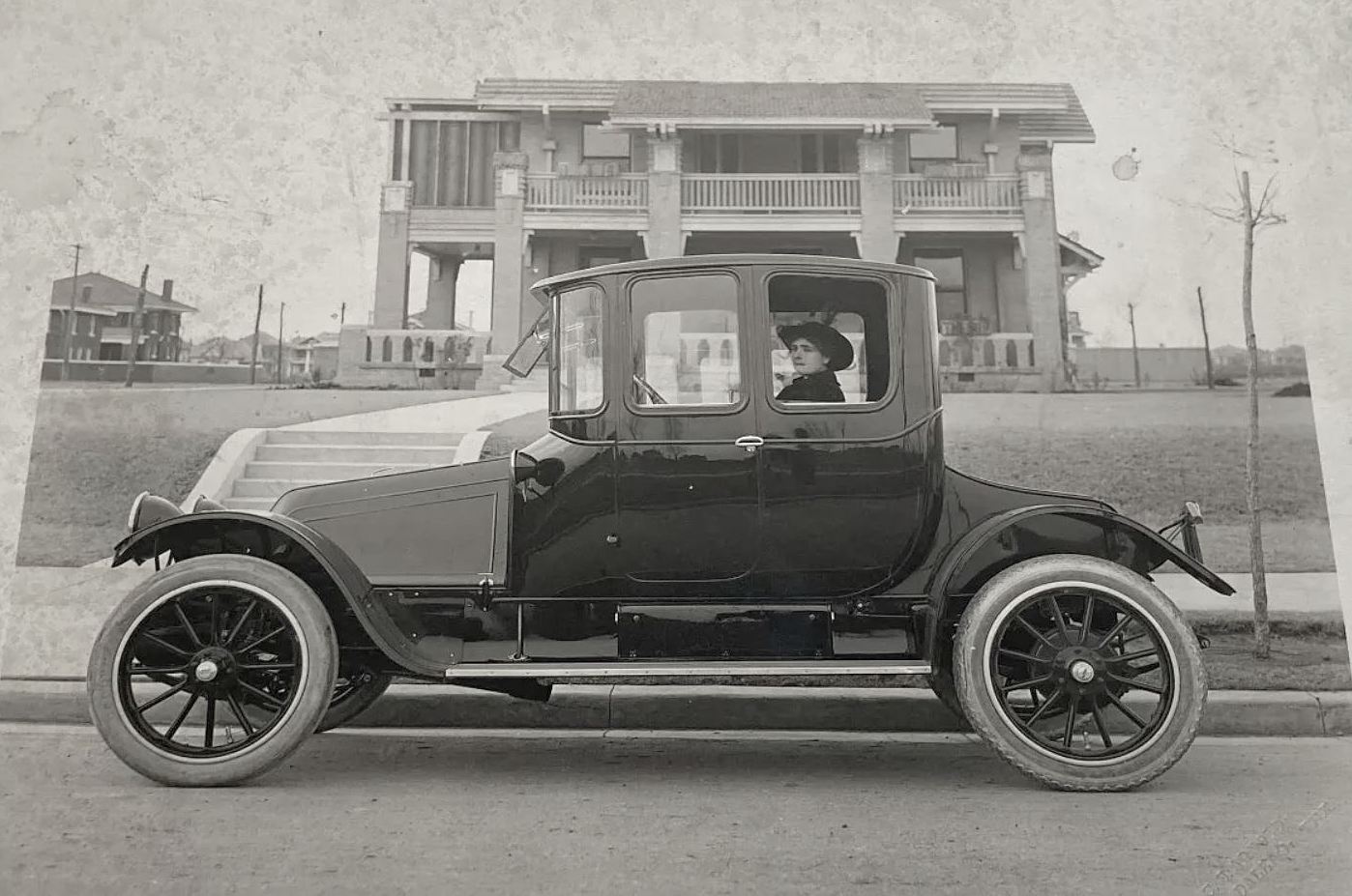
This arresting photo shows a woman in the driver’s seat of what appears to be a “ladies'” electric car (possibly a Detroit Electric, although I can find no models that look like this one…), parked in front of an unusual-looking Swiss Avenue home, complete with a second-story sleeping porch and virtually no landscaping. The photo — taken by notable Dallas photographer Charles Erwin Arnold — is currently offered on eBay.

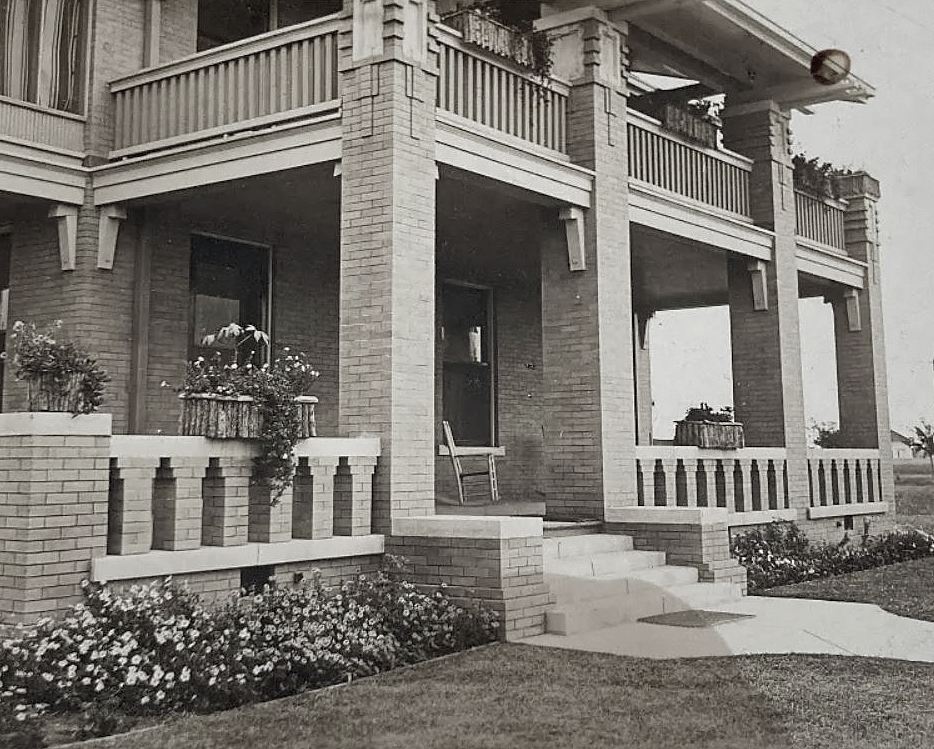
Here’s a view of the entrance to the house which, as noted on the reverse, is at 5109 Swiss Avenue.

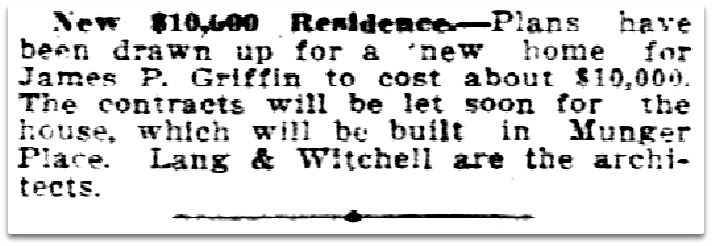
The house was built in 1911/12 and was designed by Lang & Witchell (architects to the rich and richer), who were busy drawing up house plans for people up and down Swiss (they were so prolific that it seems like most of the buildings built in Dallas at the time came from their drafting tables!). This house was commissioned by James P. Griffin (president of the Texas Electric Railway Co.) and his new wife, May Burford Griffin (daughter of Dallas pioneer Judge Nat Burford).

Dallas Morning News, Sept. 13, 1911

The house is still standing but has been remodeled, as is mentioned in various real estate ads over the years. (At one point, there was a reference to a kitchen with marble floors, which… I’m not sure I’ve ever seen marble floors in a kitchen. I don’t know if they were original to the house — or are still there — but, whatever the case, that is très élégant.)

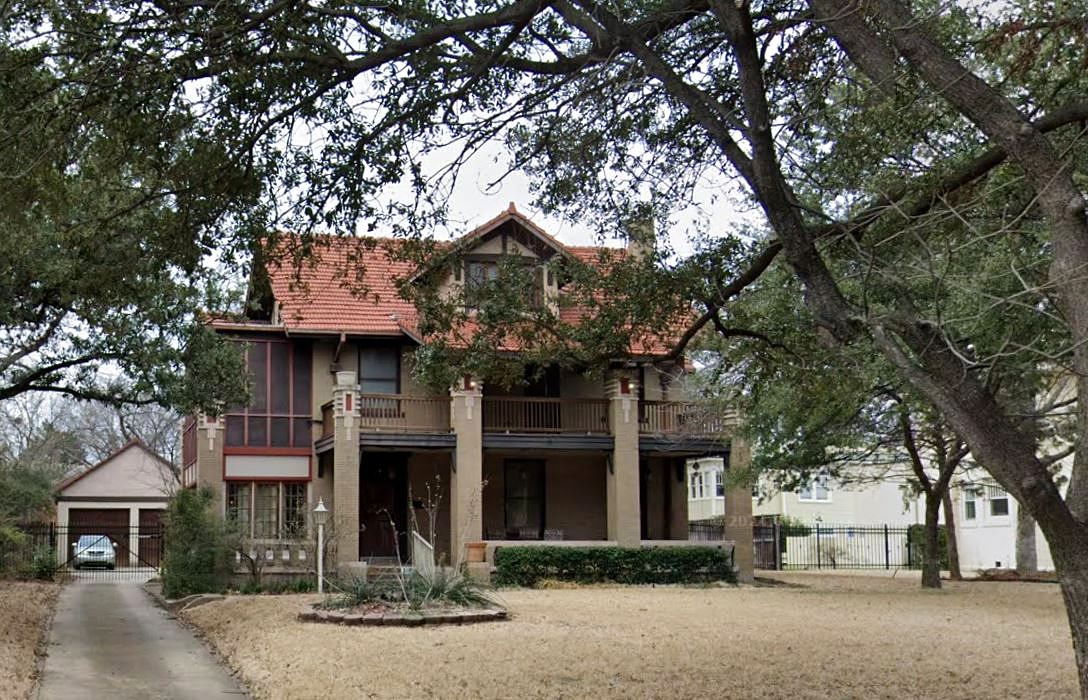
The house can be seen in recent years in an Ebby Halliday listing from 1982, in an undated photo on Douglas Newby’s Architecturally Significant Homes website, and on the Swiss Avenue Historic District website. The image below is a Google Street View from Feb. 2023.

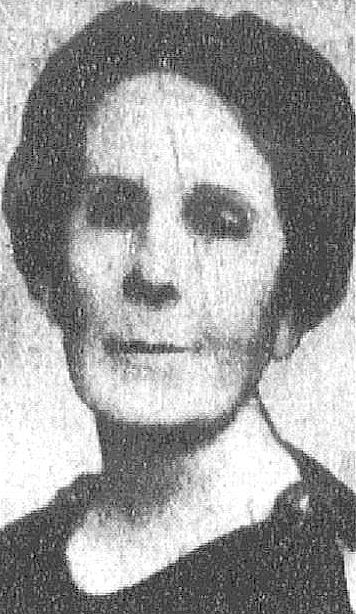
I assume that the woman in the car is Mrs. Griffin, seen below in later years. In the photo, she would have been about 32.

I love that car. And I love that house, which looked very modern 112 years ago!

***

Sources & Notes

The circa-1913 photos are from a current listing on eBay. I posted the top photo on my Patreon page less than a week ago, and reader Tom R. identified the house. I think the second photo has been added in the past couple of days, because I’m pretty sure it wasn’t there when I wrote that post! Someone might have contacted the seller to ask if it might be a house on Swiss Avenue, and they realized they had another photo of the house, which they added to the listing. …And increased the price significantly! These are such cool photos. If I were the current owners of this Swiss Ave. house, I would be all over this!

Thanks to Tom and William for their helpful comments on my original Patreon post (“Super-Cool Car, Super-Cool House”).

*

Copyright © 2024 Paula Bosse. All Rights Reserved.
The Grading of Junius — 1903

junius-street_wilson-home_1903_ebay_front_bwLet the scraping begin!

by Paula Bosse

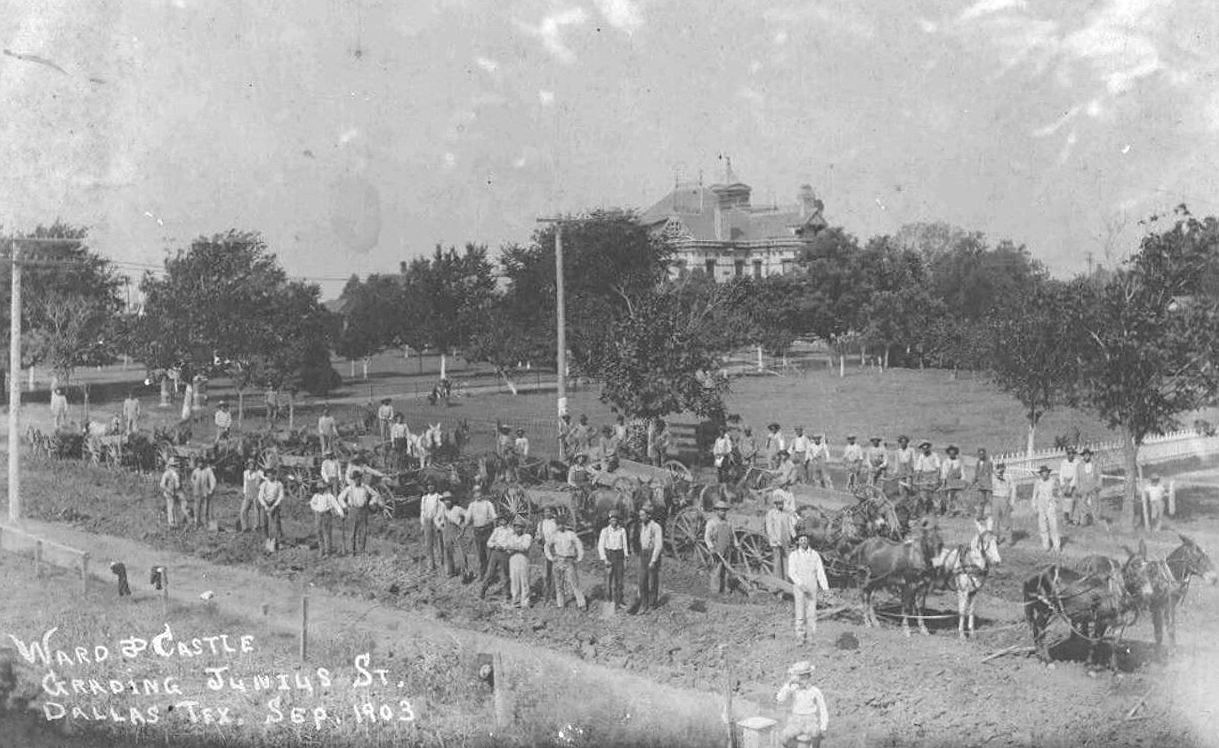
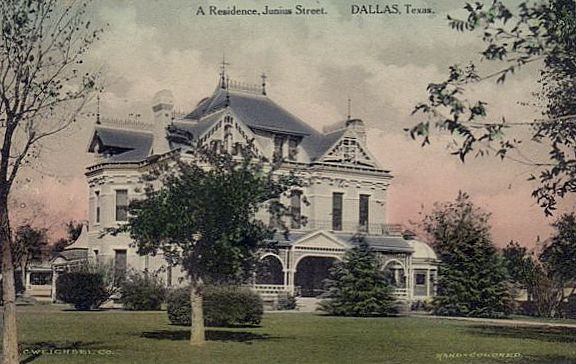
Here’s an interesting photograph I stumbled across on eBay. It shows Junius Street in East Dallas, between Peak and Carroll, taken in September 1903, as workers were grading the street as part of the paving process. The mammoth house seen on what looks like a hill, belonged to John B. Wilson (namesake of the Wilson Building downtown), who had purchased the grand home from Thomas Field in the 1890s. (This beautiful house — built in 1884 — was demolished in 1922 in order to free up land for apartments, etc. Read more about this in the 2014 post “Junius Heights … Adjacent!”) Here’s Wilson’s home, up close:

junius-st

The house was built in 1884 at the northeast corner of Junius and Peak — it sat on a lot of land. By 1903, after other houses had been built around it, it occupied almost half a block, bounded by Junius, Peak, and Gaston. (See this area on Sanborn maps from 1905 and 1922 — it’s pretty easy to spot the house!)

But back to the 1903 photo. It shows road work on Junius, which, up until that point, had been a dirt/gravel road.

In March 1903, residents of Junius Street asked the City Council to pave their street between Haskell and Fitzhugh. I’m sure their main goal was to live on a nice, paved street instead of one that became a nasty, muddy nightmare when it rained — but, perhaps to make it seem more egalitarian, they zhuzhed up their request by saying that Junius street is the principal outlet to Garland, Reinhardt and the country surrounding those towns.” They noted that the county had kept the continuation of the road outside the city in good condition and that this stretch of paved road would provide “a connecting link between the city and the country.” (I don’t know how important this “connecting link” was, but the stretch of road they wanted paved was only half a mile long. It seems pretty ballsy to request that the city pave this very short bit of road, which would have resumed being unpaved east of Fitzhugh…. and on to Garland and Reinhardt. I think there’s no question that Moneyed Resident Wilson — who, let’s not forget, was building the very large Wilson Building downtown at this time — had a lot of sway amongst the city leaders.)

The group approached the city with a proposition in which they, the homeowners, would pay for half the cost of the construction, with each of them paying 50¢ for every foot of their property which fronted the street. (Surprisingly, only two property owners had an issue with this — one of them was Dr. Buckner of the Buckner Orphans’ Home (before it relocated to the ‘burbs, it was at 4120 Junius), who said the home did not have the funds for this, but he personally ponied up a $50 contribution, the equivalent of about $1,700 in today’s money.) The city seemed happy with this and agreed to match the $2,500 collected by the group. (Mr. Wilson’s share must have been substantial.) I don’t know what the tax situation was back then, but it’s odd that people once had to do this. I would guess that very few streets were paved beyond the Central Business District in this era — who could afford that? I guess that’s why so many real estate ads from the past stressed that the streets of their new developments were all paved.

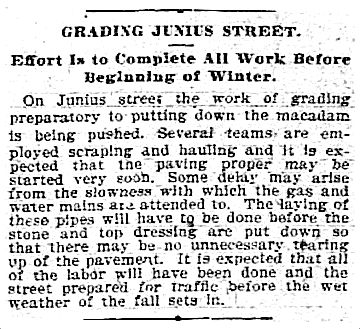
The Junius improvements included the laying/installing of cement sidewalks, a macadamized roadway, and bois-d’arc-block gutters. The grading work (shown in the photo at the top) began in August 1903.

junius_grading_DMN_082503Dallas Morning News, Aug. 25, 1903

There were, of course, delays, caused by a lack of materials, weather, the necessity of having to wait while gas and water mains were laid, and having to either rebuild a bridge over the road or build a culvert under the road (the city went with the cheaper culvert). Work was still going on in December, but I gather the job was completed early in 1904.

*

Leadership of the neighborhood group was comprised of two people from each block (one from each side of the street). The leaders for what is now the 4700 block of Junius were John C. Ward and C. J. Castle (their names are on the photo showing this work in progress). The notation below is written on the back of the photo: “J. B. Wilson home in background (built Wilson Building downtown). J. C. Ward my grandfather. Mary Musick.”

junius-street_wilson-home_1903_ebay_back_det

J. C. Ward (1851-1937) came to Dallas in 1874, traveling in a covered wagon, witnessing buffalo stampedes and white-knuckling it through Indian territories. He was pals with an elderly John Neely Bryan. He worked as a contractor and must have done well, as he owned houses on several lots in the 4700 block of Junius, most of which were occupied by family members (including his daughter, Ella Ward Arnold, and his granddaughter, Mary Arnold Musick) — his own home was in the 6100 block of Junius, which appears to be the current location of the Lakewood Library. At one point he owned 72 acres of farmland on the eastern edge of Dallas, but it was condemned by the city in order to build White Rock Lake. He didn’t seem to hold too much of a grudge, because his major pastime was fishing, and he frequently walked the 2 miles to the lake from his home to fish, well into his 80s.

He seems to have had a real affinity for Junius Street. I love the fact that he and his across-the-street neighbor, C. J. Castle, memorialized the paving of their street with a specially commissioned photograph and managed to get all the workers to pose for it. The paving of Junius must have been a particularly gratifying achievement.

***

Sources & Notes

Top photo is from eBay — it is currently for sale, here.

If you enjoy this sort of thing, check me out on Patreon, where, for a subscription costing mere pennies a day, you can receive daily, bite-size Dallas-history posts directly in your inbox.

junius-street_wilson-home_1903_ebay_front_bw

*

Copyright © 2024 Paula Bosse. All Rights Reserved.
The Girls of St. Mary’s

st-marys-college_girl-athletes_frank-rogers_post-1911_ebay“Juxta Dallas Texas”

by Paula Bosse

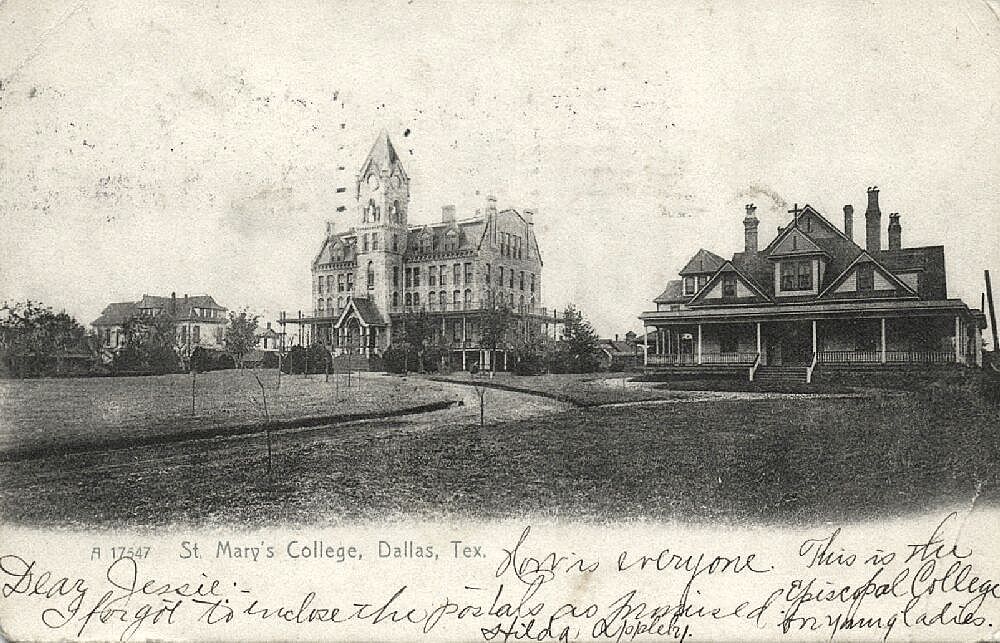
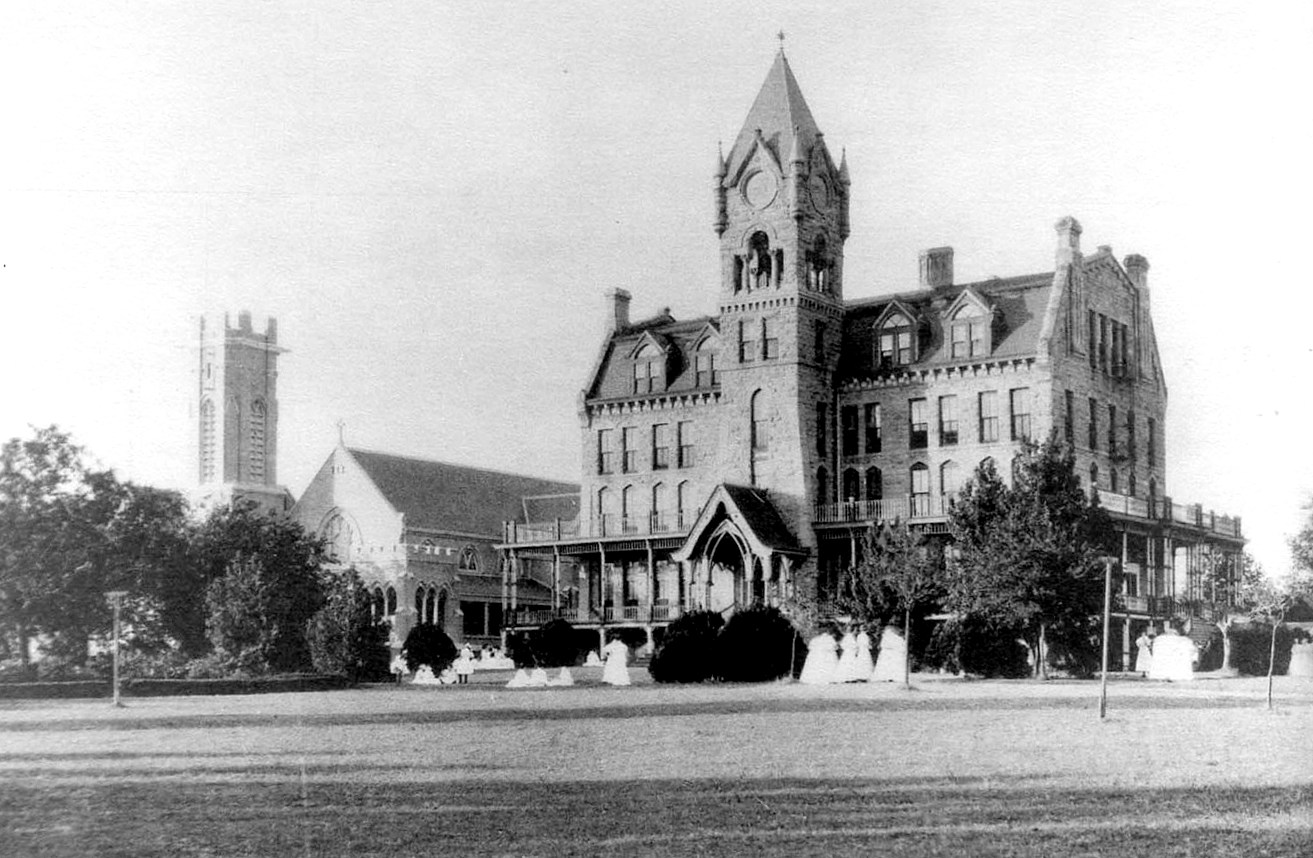
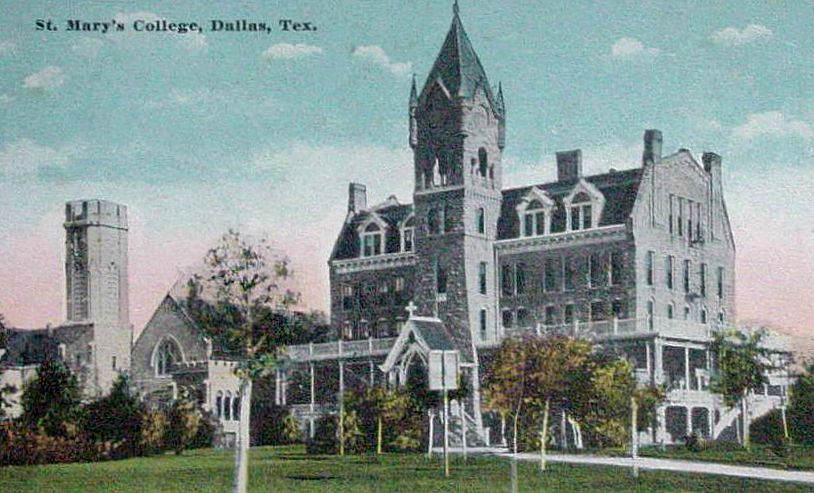
St. Mary’s College, founded in 1889 in East Dallas (at Ross and Garrett avenues), was a prestigious school for girls, affiliated with the Episcopal Church. It had a statewide reputation, and many girls attended as boarding students — Lady Bird Johnson was a proud alumna. Around 1930 it became home to a relocated Terrill School for Boys.

The once sprawling “College Hill” campus covered 20 acres (see it on a 1922 Sanborn map here). I can find no news reports of its demolition, but one source says 1948. Read more about the school’s history in the Handbook of Texas entry here. and see other photos and a short history in the Flashback Dallas post “Private Education in Dallas — 1916.”

The site of the former school has recently been filled with apartments. The old chapel tower still stands, but the large, open school campus is long gone. See the most recent Google Street View of St. Matthew’s Cathedral here. — the main school building would have been directly to the right.

*

As far as the photo at the top of this post, I really love this image of smiling girl athletes (the basketball team?) posing in their gym togs in front of the school.

“Juxta Dallas Texas” (“near Dallas Texas”).

st-marys-college_girl-athletes_frank-rogers_post-1911_ebay_det

*

The ad below touts the school’s offerings in 1911 (including a school dairy):

ST. MARY’S COLLEGE AND SCHOOL OF MUSIC

Founded by the Right Rev. A. C. Garrett [Alexander Garrett], D.D., LL. D.
Twenty-third Year Opens Sept. 13, 1911

A College for Christian education of women — college, scientific and literary courses. Bishop A. C. Garrett, instructor in mental science and logic. Advanced classes in charge of graduates of universities of recognized standing. European instructors of modern languages. School of Music under direction of instructors trained in Germany, Paris, France and New England Conservatory of Music. Pianoforte pupils examined annually. Art and China Painting taught according to the best methods. Health, diet and physical culture in charge of two trained nurses and teachers of physical culture. 

The group of buildings comprise:
1. St. Mary’s Hall (stone).
2. Graff Hall, which is devoted to the Schools of Music and Art.
3. Hartshorne Memorial Recitation Hall.
4. The Mary Adams Bulkley Memorial Dormitory.
5. Sarah Nielson Memorial for the care of the sick.

Houses heated by steam and lighted by electricity. A very attractive College Chapel and large Gymnasium built last year. A very attractive home. Artesian well. Milk supplied from college dairy. Homemade bread and sweetmeats. Night watchman. School opens Sept. 13. For catalogue address:

Bishop Garrett, President St. Mary’s College, Dallas, Texas

st-marys_standard-blue-bk_1912-1914

*

st-marys-college_postcard

*

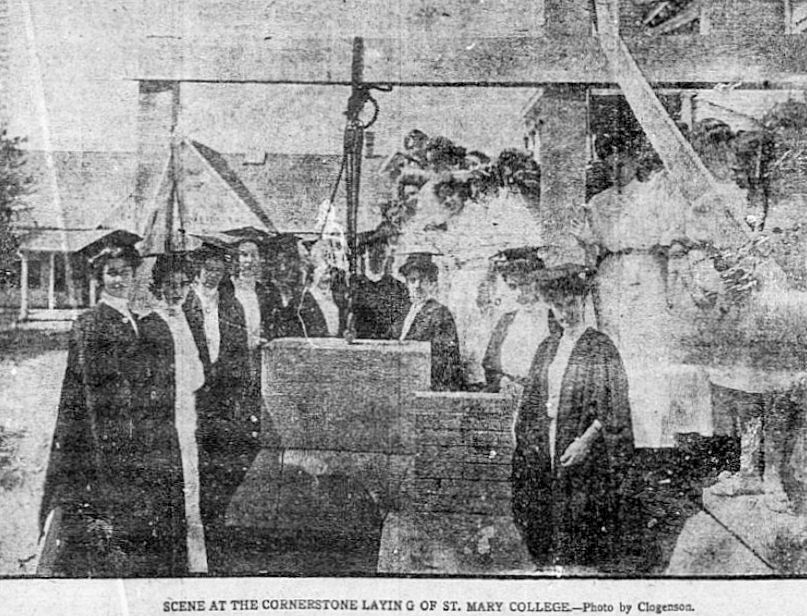
st-marys_cornerstone_dmn_092907-clogensonLaying the cornerstone for the chapel, Dallas Morning News, Sept. 29, 1907

*

st-marys-college_ebay

*

st-marys-college_postmarked-1909

*

Below, the chapel tower can be seen at the left. It still stands, as part of St. Matthew’s Cathedral (5100 Ross Avenue).

patreon_st-marys-college_c1908

*

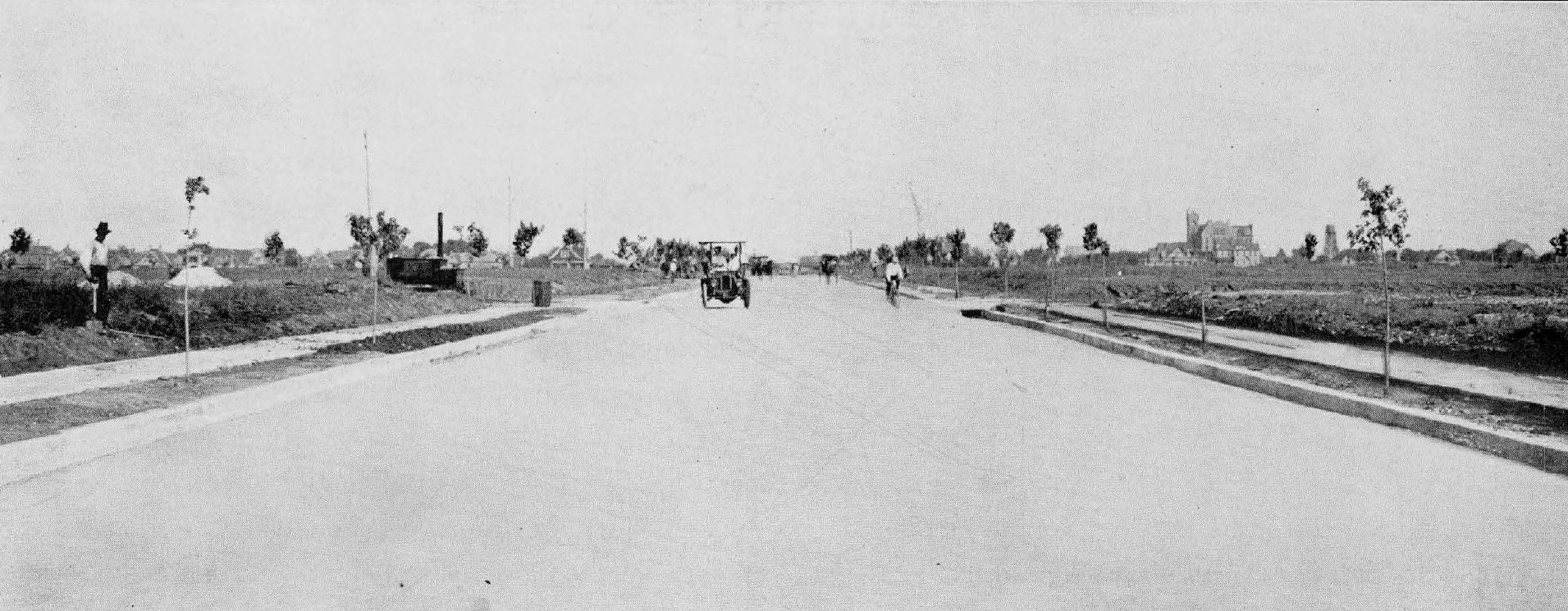
As seen from a distance — on the right, from Collett and Junius (more info on this photo from the Flashback Dallas post it originally appeared in, “Munger Place, The Early Days: 1905-1909”):

munger-place-bk_ca-1905_degolyer-lib_SMU_collett-and-junius_2

*

st-marys-college-ebay

*

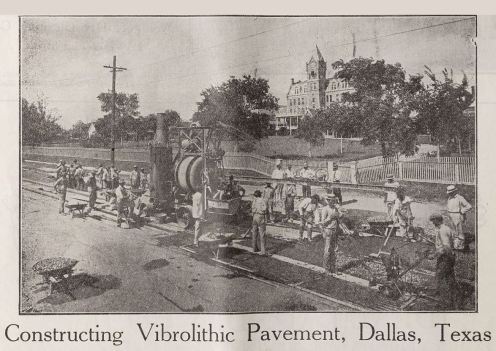
St. Mary’s appeared in an ad for a street-paving company in 1916 (from the original post here):

street-construction_vibrolithic-pavement_SFOT-booklet_1916_SMU_st-marys

*

st-marys-college_dallas-rediscovered_DHSDallas Historical Society

***

Sources & Notes

Top photo by Frank Rogers, taken some time after 1911. Found on eBay. Originally used in a Patreon post, “The Girls of St. Mary’s.”

Last photo from the Dallas Historical Society, found in the book Dallas Rediscovered by William L. McDonald.

Unless otherwise noted, most other images/postcards found on eBay.

Please consider supporting me on Patreon, where for as little as $5 a month, you can get daily Flashback Dallas posts! (You can follow for free, but only a small handful of posts are “public.”)

st-marys-college_girl-athletes_frank-rogers_post-1911_ebay_det

*

Copyright © 2024 Paula Bosse. All Rights Reserved.
Woodrow Teens Hang Around — 1948

woodrow-yrbk-1948_soda

by Paula Bosse

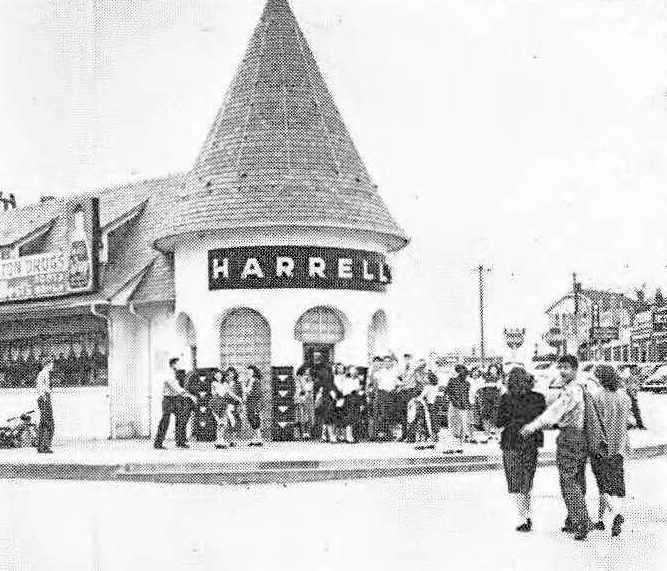
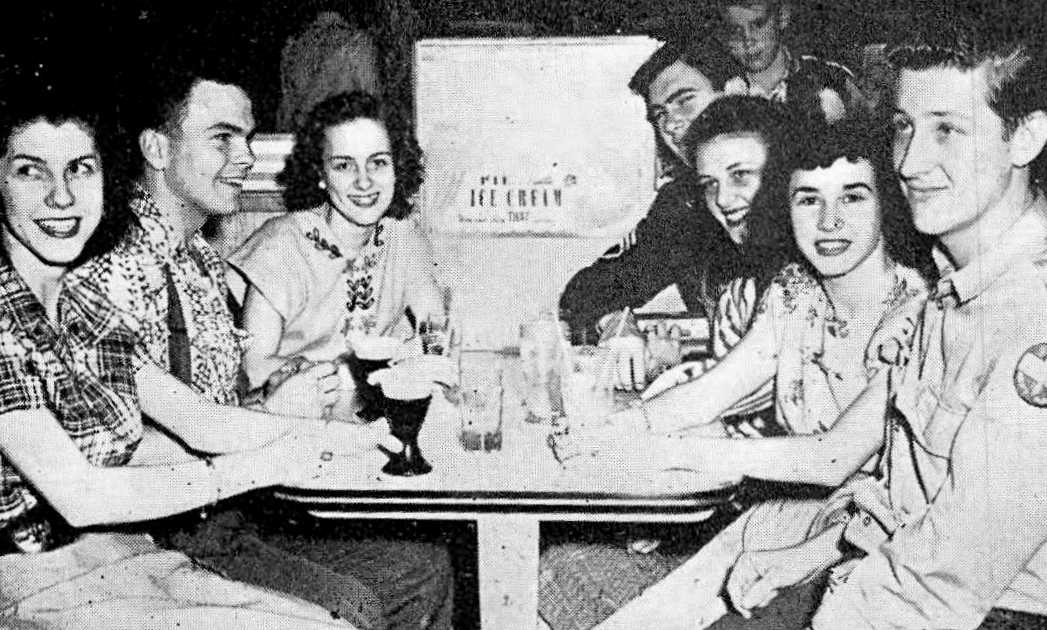
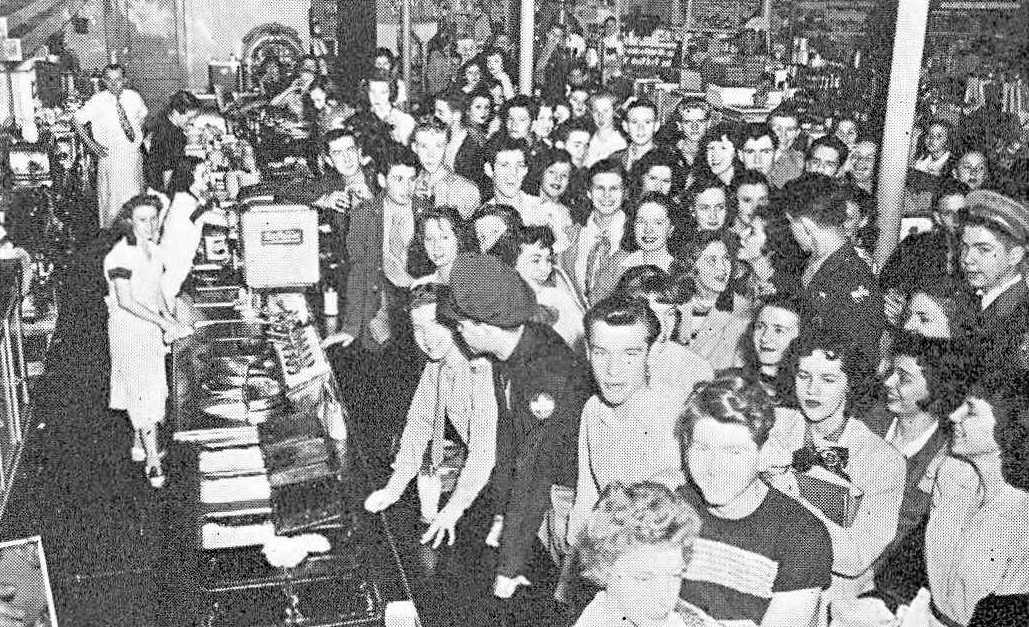
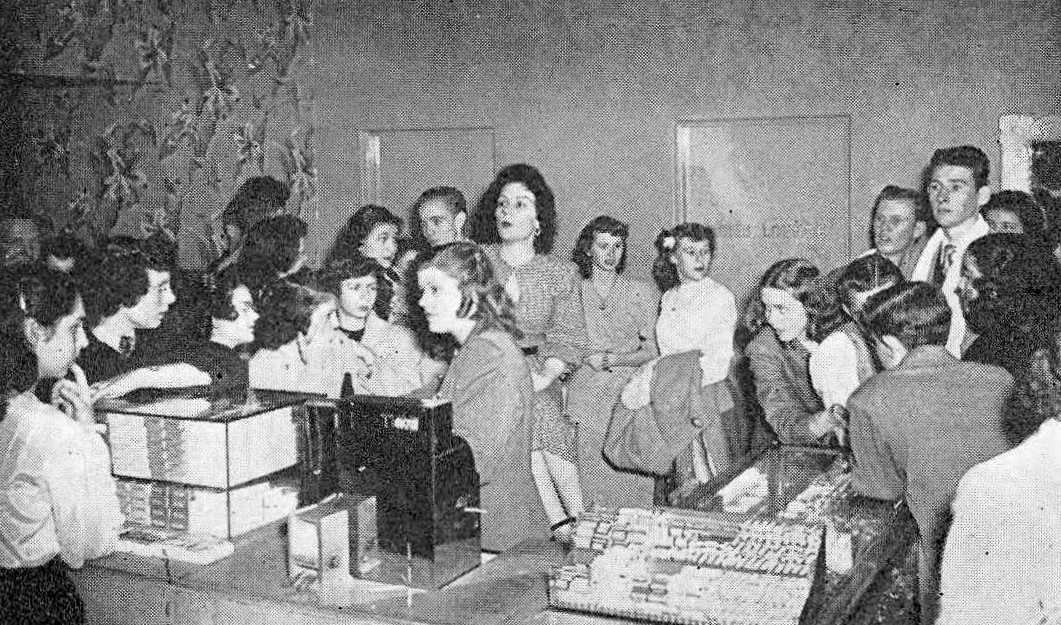
Photos from the 1948 Woodrow Wilson High School yearbook show how kids hung out in post-war Lakewood and Lower Greenville. I don’t know where some of these photos were taken — if you do, please let me know!

Above, there were lots of soda shops/pharmacy fountains to patronize. Including Harrell’s, in the familiar-to-anyone-who-has-spent-any-time-in-Lakewood turreted still-there building, below.

woodrow-yrbk-1948_harrells

And here:

woodrow-yrbk-1948_table

And here:

woodrow-yrbk-1948_crowd

And here, where dressed-up teens are waiting for a table:

woodrow-yrbk-1948_waiting

And here, the “fancy” Sammy’s on Greenville Avenue (right across the street from the less fancy Sammy’s):

woodrow-yrbk-1948_sammys

I have been obsessed with this building (just south of the intersection of Greenville and Ross) my whole life. Was there open-air dining upstairs? Dancing?

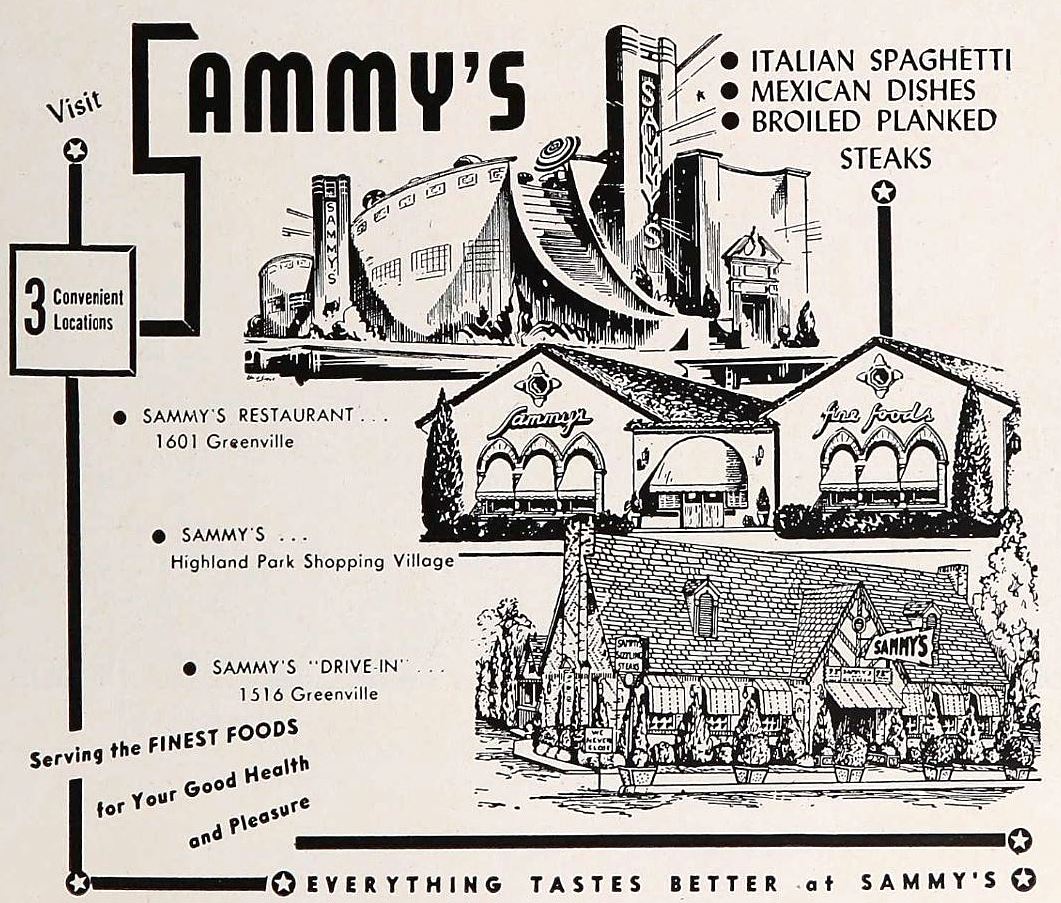
Since I mentioned it, these were the three Sammy’s which were in operation in 1945 — the two on Greenville and one in Highland Park Village:

sammys_HPHS_1945_yrbk

So, yeah, there was lots of hanging around for Woodrow kids back in 1948.

woodrow-yrbk-1948_page

***

Sources & Notes

All images (except the ad for Sammy’s) are from the 1948 Crusader, the yearbook of Woodrow Wilson High School.

Sammy’s ad is from the 1945 Highland Park High School yearbook.

woodrow-yrbk-1948_page_sm

*

Copyright © 2023 Paula Bosse. All Rights Reserved.
Old Lake Highlands

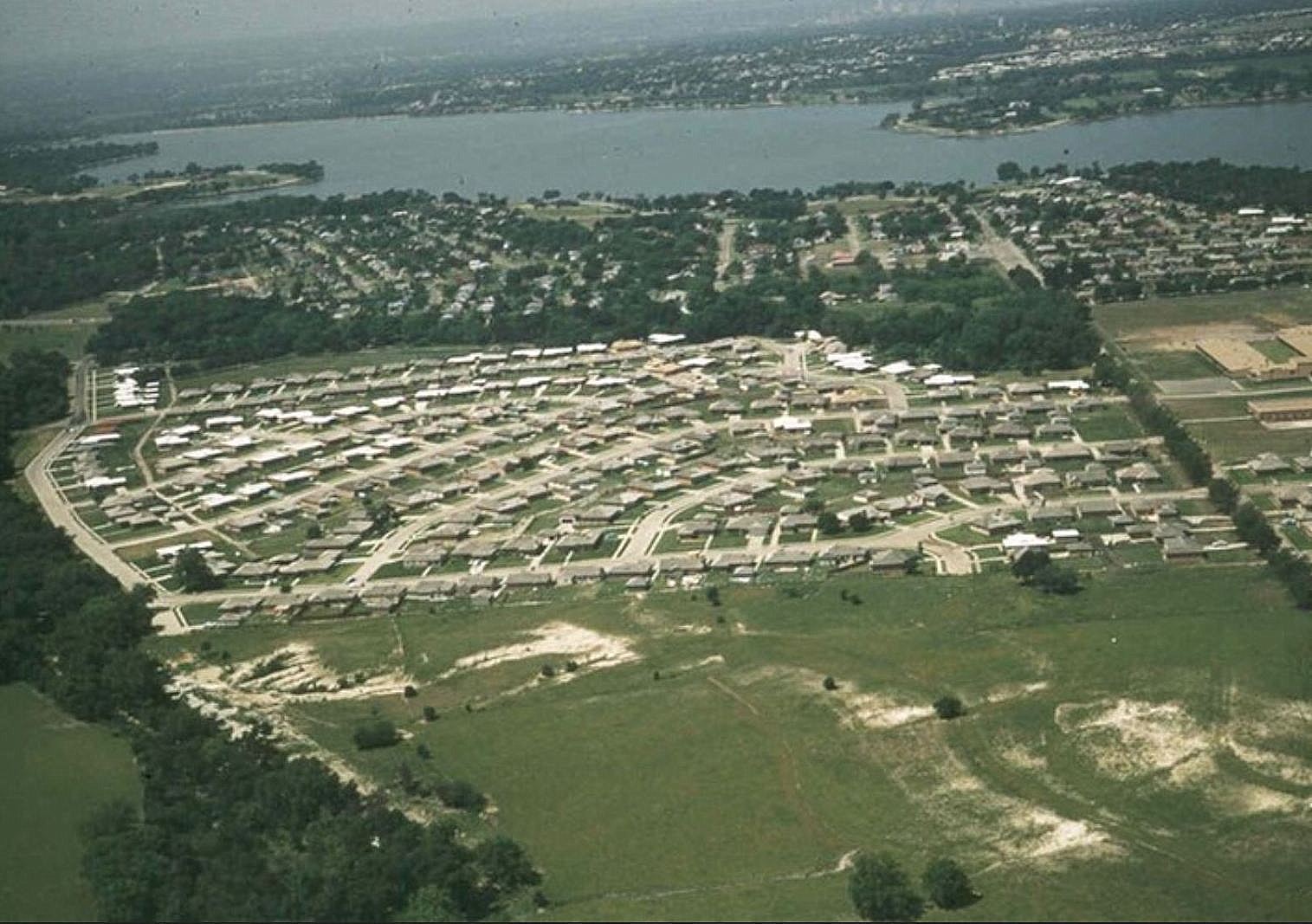
white-rock-lake_old-lake-highlands_1956_don-jones1956, Room to spread out…

by Paula Bosse

The photo above — taken in 1956 — shows an aerial view of Old Lake Highlands, looking southwesterly toward White Rock Lake. The street in the foreground is Kirkwood Drive.

But for even older Old Lake Highlands, we need to cast our minds back to 1927, when W. H. Brouse began to advertise for one of his many East Dallas developments. One of the ads from the Lake Highlands Co. (W. McCarty Moore, President and H. W. Brouse, Director of Sales) read:

IN THE MAKING — LAKE HIGHLANDS, “THE INCOMPARABLE”

Another High-Class Residence  Section For Dallas on White Rock Lake

Believing in Dallas — believing in the continued rapid absorption of territory to the north and east for homes — and especially that beautiful terrain surrounding White Rock Lake, Lake Highlands was conceived and made possible by the owning company.

The tract — some 117 acres — is especially advantageously located in that it is right on the lake itself — just a short drive from the dam, and is bounded by water on three sides. A peninsular piece of ground, in fact.

The ad also noted that “lots will be large — prices low”: $1,100 and $1,200 (about $18,000-$19,500 in today’s money).

lake-highlands-co_dmn_100927_det1927

*

And, in a Dallas Morning News real estate advertorial were these additional deets:

Lake Highlands is situated just beyond Dixon’s Branch, on the east shore of the lake, and is accessible directly from the downtown section by Swiss and Gaston avenues and the old Garland road, leading into the lake road. This, in turn, gives access to the 100-foot boulevard, which will circle the whole development, and from which lead streets seventy feet in width, reaching every lot in the development. Roadways and streets will be surfaced with white gravel, while curbs and sidewalks will be installed in advance of building development, as will all utilities, lights, water, gas and sewer facilities….

Construction will be restricted to homes to cost $5,500 to $7,500 minimums [$90,000-$122,000 today], depending on the location of the lots on which they are built. Materials will be limited to brick, hollow tile and stucco, so as automatically to eliminate the fire hazard and also to assure permanence.

I’m sure life on the lake in 1927 was worth every penny.

kirkwood_white-rock-lake_googleGoogle Maps

***

Sources & Notes

I came across the photo at the top of this post several years ago in a photo blog hosted by The Dallas Morning News, but the blog doesn’t seem to exist any longer. The caption noted that the photo had been shared by Lynn Jones who had come across it when going through a collection of color slides inherited by her husband when Don Jones died in 2010.

Quotes from the real estate advertorial, “Plan Homes at White Rock” (Dallas Morning News, Oct. 9, 1927).

white-rock-lake_old-lake-highlands_1956_don-jones_sm

*

Copyright © 2022 Paula Bosse. All Rights Reserved.
Dusty Hill, 1949-2021

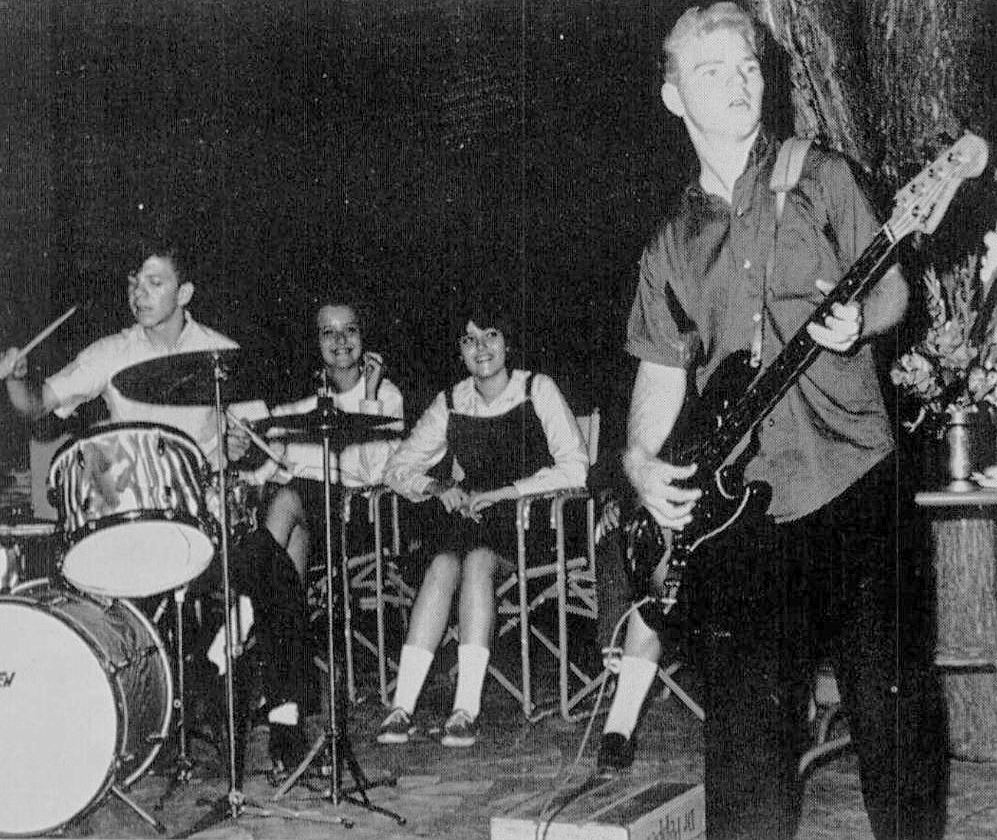
zz-top_dusty-hill_woodrow-wilson_1965-yrbkDusty Hill on bass, Richard Harris on drums, 1965

by Paula Bosse

Dusty Hill, the legendary bassist of the legendary ZZ Top, died today. Born Joe Michael Hill in Dallas, Dusty lived in East Dallas and attended Woodrow Wilson High School. He dropped out before graduating and pursued a career as a musician, a decision which seems to have worked out pretty well for him. 

Above is a photo from the 1965 Woodrow yearbook when Dusty would have been 15 years old. The caption reads “The disappointment of the Bryan Adams loss was lessened by the lively music of Richard Harris and Dusty Hill.”

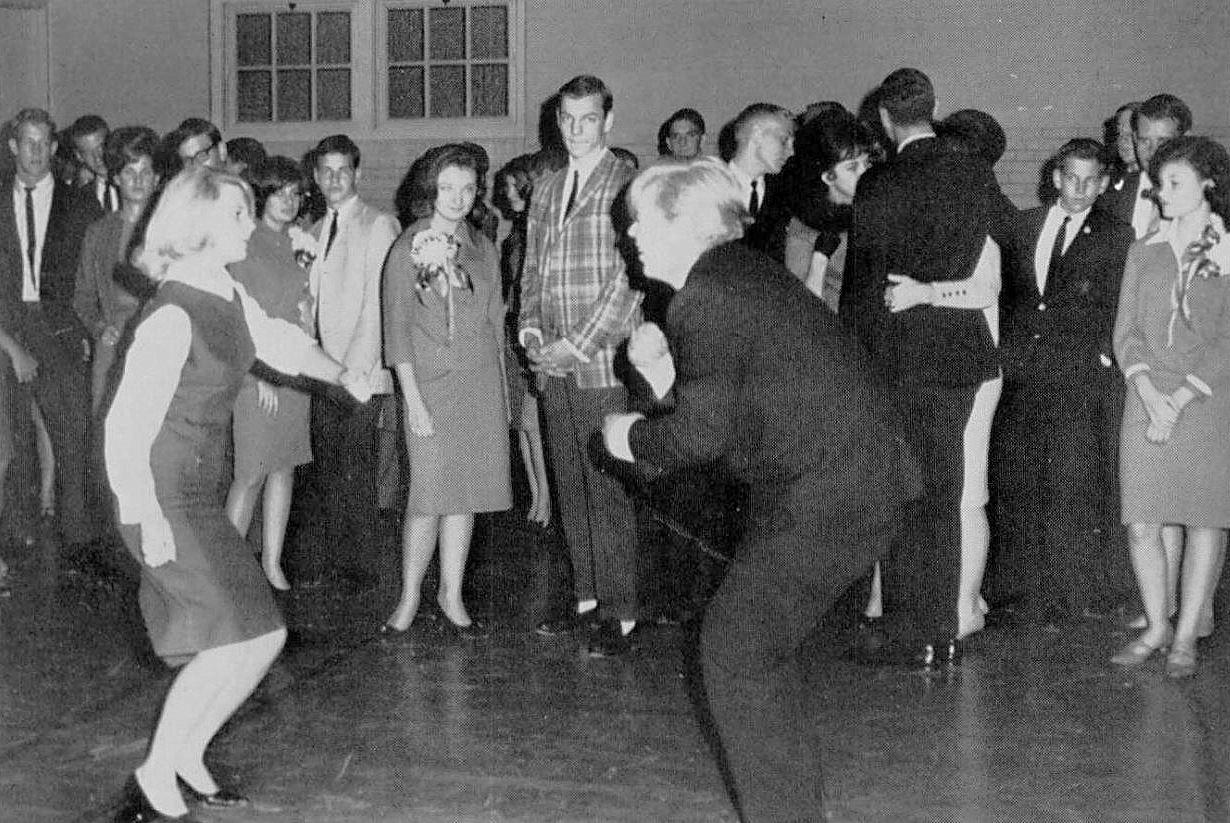
At the time of these photos, Dusty and Richard were playing around town in a band called The Dead Beats, a trio which also included Dusty’s older brother, Rocky Hill, who is seen below in a photo from the same yearbook, with the caption “At the homecoming dance, Rocky Hill and his date prove their skill at a modern dance called ‘The Dog.” Dusty, Rocky, and Richard would go on to form the band American Blues.

rocky-hill_woodrow-wilson_1965-yrbkRocky Hill, 1965

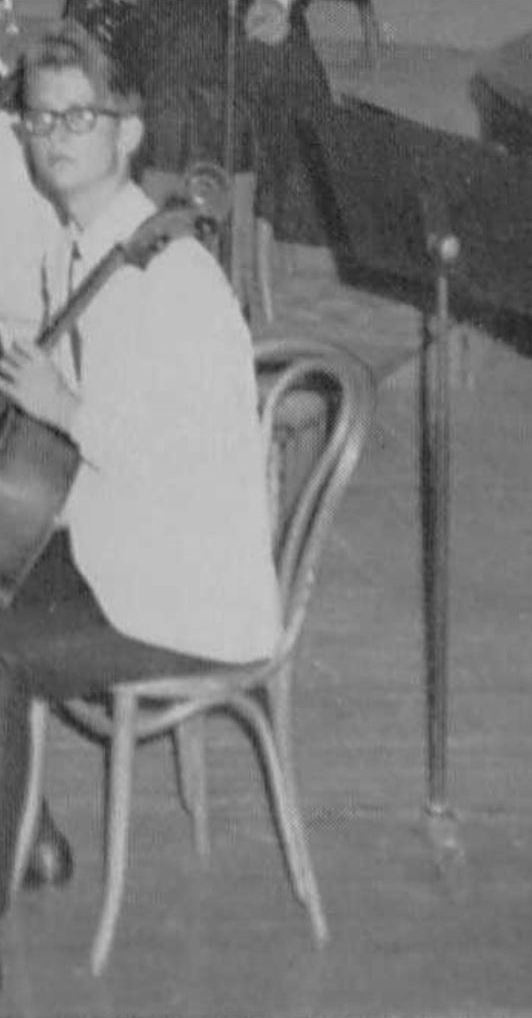
Dusty played cello in the Woodrow orchestra, so I went looking through the yearbook to see if I could find him. I think I might have — could this be him in an awkwardly cropped photo?

zz-top_dusty-hill_woodrow-wilson_1965-yrbk-celloYoung man with cello, 1965

*

RIP, Dusty. Thanks for the great music.

**

UPDATE: Thanks to reader Steve Roe who sent me an Oct. 29, 1964 clipping of “Dallas After Dark” (the Tony Zoppi column in The Dallas Morning News devoted to the city’s nightclub scene) which mentioned all three of the Woodrow boys seen above in photos which were taken at the time they were playing around town with their band The Dead Beats:

There’s a swinging new group in town billed as The Dead Beats, and they’ll be appearing through Sunday at the Jungle Dream on North Henderson. Rocky Hill plays lead guitar and Dusty Hill is the bassist. Little Richard Harris is a torrid drummer. The trio recently returned from Nashville and appeared at Louanns. The youngsters say they are America’s answer to The Beatles. How about that?  (Dallas Morning News, Oct. 29, 1964)

How about that?! Talented and apparently aggressively confident teenagers! (Jungle Dream was located at 1823 N. Henderson, just north of Ross — a couple of doors from the old Louie’s — managed by Pat Carpenter.) 

***

Sources & Notes

Photos from the 1965 edition of The Crusader, the yearbook of Woodrow Wilson High School.

Obit from The Dallas Morning News is here.

Obit from Rolling Stone is here.

zz-top_dusty-hill_woodrow-wilson_1965-yrbk_sm

*

Copyright © 2021 Paula Bosse. All Rights Reserved.

Snow at White Rock Lake: The Bath House and Winfrey Point

snow_white-rock-lake_bath-house_squire-haskins_UTA_ndA snowy Bath House at WRL… (photo: Squire Haskins/UTA)

by Paula Bosse

I’m racing to post this — like many in the Dallas area (or, really, in the ENTIRE STATE OF TEXAS!), power availability has been spotty. Mine has been out more than it’s been on over the past few days. I have a brief window here to post a couple of wonderful aerial photos showing a snow-dusted White Rock Lake, taken by ace Dallas photographer Squire Haskins. Both are undated.

Above, a shot of the eastern edge of the lake, with the Bath House seen in the center. (Take a look at a larger image at the University of Texas at Arlington website here — click the thumbnail image on that page  to see the larger image — then click one more time to magnify.)

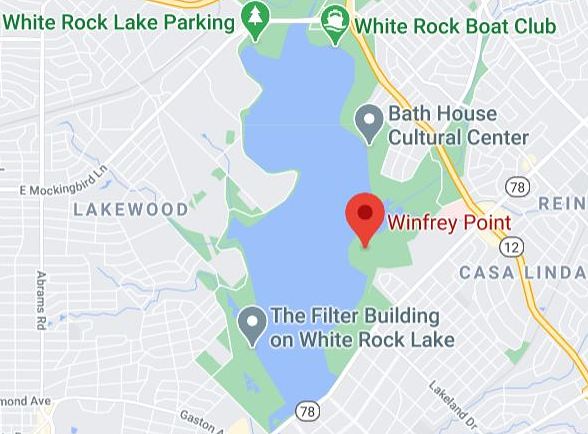
Below, a shot of Winfrey Point, also on the eastern edge of the lake, a little farther south. (See the larger image at the UTA site here.)

snow_white-rock-lake_winfrey-point_squire-haskins_UTA_nd

Here’s a map of WRL showing the locations, via Google:

wrl-map_google

*

Funny, I used to love snow. It was always such a thrill on those rare occasions when it snowed. …Back when we all had heat and electricity. Ah, those were the days….

Stay warm, y’all. If you need information on “warming stations,” the City is directing people to call 211.

***

Sources & Notes

Both photos are by Squire Haskins, from the Squire Haskins Photography Inc. Collection, University of Texas at Arlington Libraries, Special Collections. More information on these photographs is at the links above.

snow_white-rock-lake_bath-house_squire-haskins_UTA_nd_sm

*

Copyright © 2021 Paula Bosse. All Rights Reserved.

Private Education in Dallas — 1916

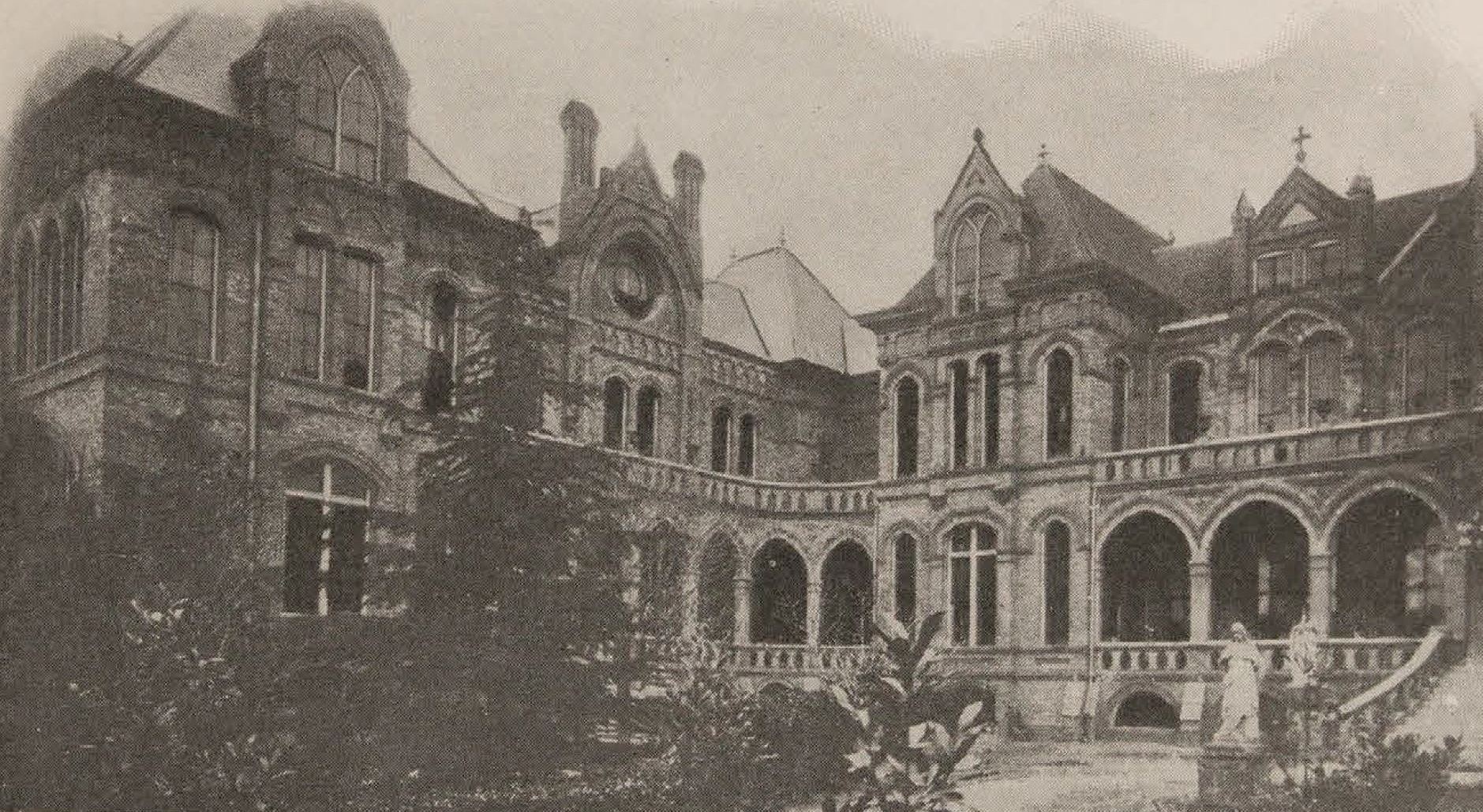
dallas-educational-center_ursuline_ca-1916_degolyer-library_smu_photoThe looming Ursuline Academy in Old East Dallas

by Paula Bosse

Here is a collection of photos and mini-histories of several of the top private schools that Dallas parents were ponying up their hard-earned cash for in 1916. Some were boarding schools, some were affiliated with churches, some were rooted in military discipline, some were medical schools, and some were places to go to receive instruction on the finer things in life, such as music and art. Sadly, only one of these buildings still stands. But two of the schools in this collection have been operating continuously for over 100 years (Ursuline and Hockaday), and two more are still around, having had a few name changes over the years (St. Mark’s and Jesuit). Here’s where the more well-to-do girls and boys of Dallas (…and Texas — and many other states) were sent to become young ladies and gentlemen. 
**

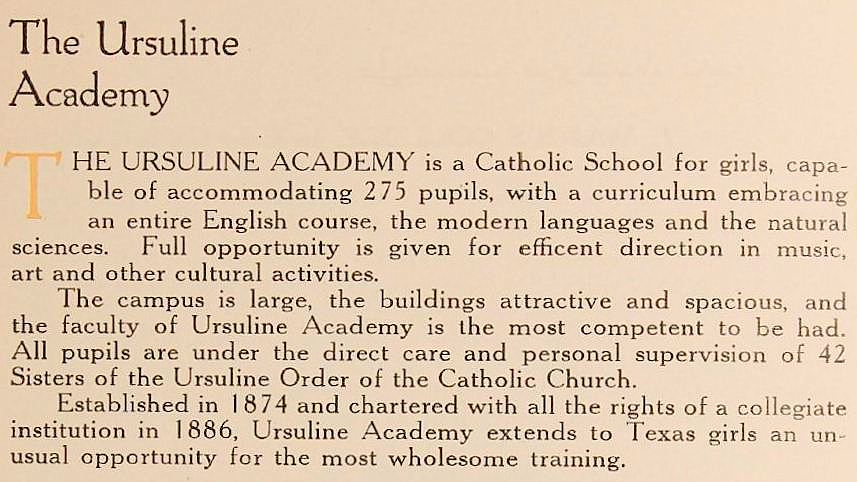
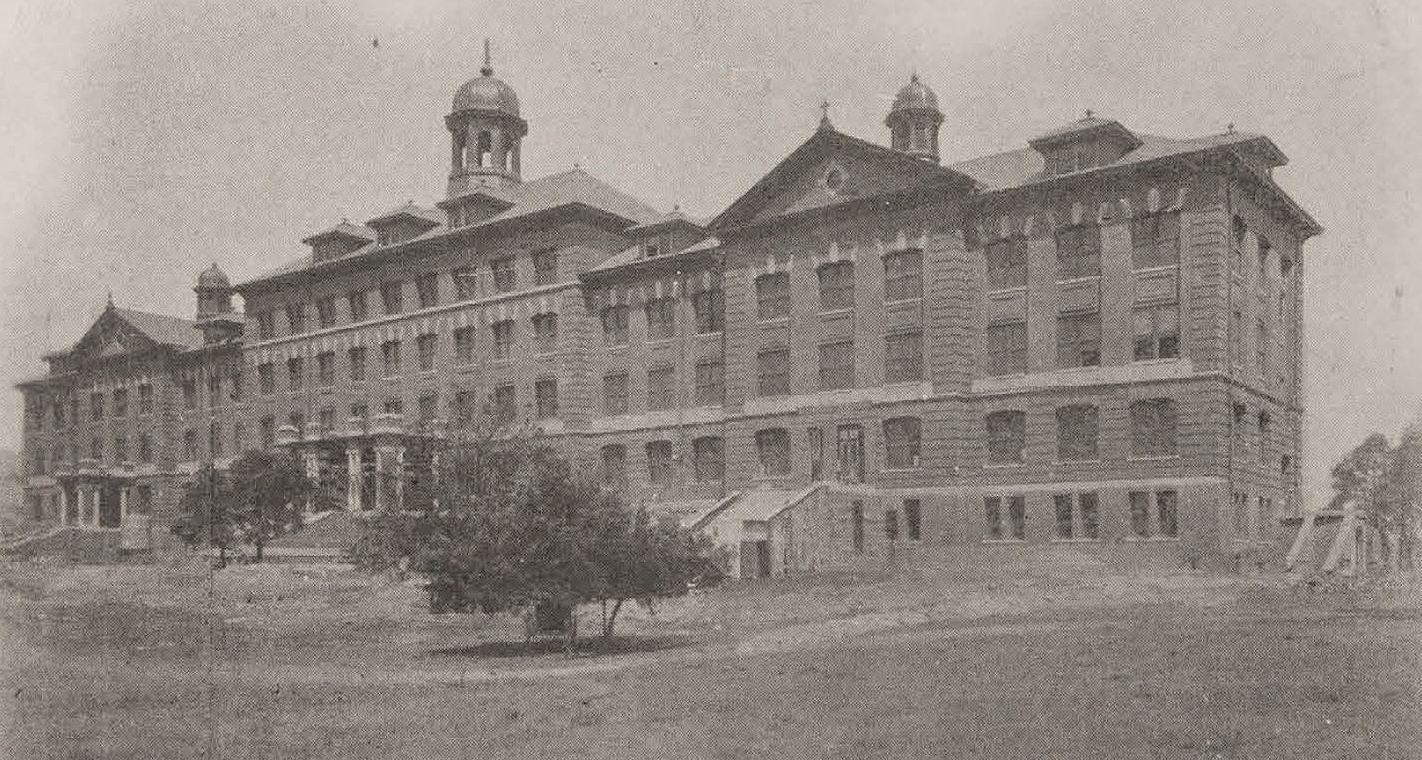
THE URSULINE ACADEMY (above) — Mother Mary Teresa, superioress — the block bounded by Live Oak, Haskell, Bryan, and St. Joseph. This school for girls and young women was established in Dallas by the Ursuline Sisters in about 1874 — and it continues today as one of the city’s finest institutions. The incredible gothic building was… incredible. So of course it was demolished (in 1949, when the school moved its campus to its present-day North Dallas location). See what it looked like at its Gothic, grandiose height in a previous Flashback Dallas post here.

dallas-educational-center_ursuline_ca-1916_degolyer-library_smu

*

MISS HOCKADAY’S SCHOOL FOR GIRLS — Miss Ela Hockaday, principal — 1206 N. Haskell. Hockaday was (and is) the premier girl’s school of Dallas society — like Ursuline, it is still going strong (and, like Ursuline, it moved away from East Dallas and is now located in North Dallas). In 1919, three years after these photos were taken, Miss Hockaday would buy the former home of Walter Caruth, Bosque Bonita, set in a full block at Belmont and Greenville in the Vickery Place neighborhood — there she built a large campus and cemented her place as one of the legendary educators in Dallas history. (In 1920, Hockaday’s annual tuition for boarding students eclipsed even the hefty tuition of The Terrill School for Boys: Miss Hockaday had parents lined up to pay her $1,000 a year — now the equivalent of about $13,000 — to educate and refine their daughters at her prestigious institution.)

dallas-educational-center_hockaday_ca-1916_degolyer-library_smu

dallas-educational-center_hockaday_tennis_ca-1916_degolyer-library_smu

dallas-educational-center_hockaday_ca-1916_degolyer-library_smu_text

*

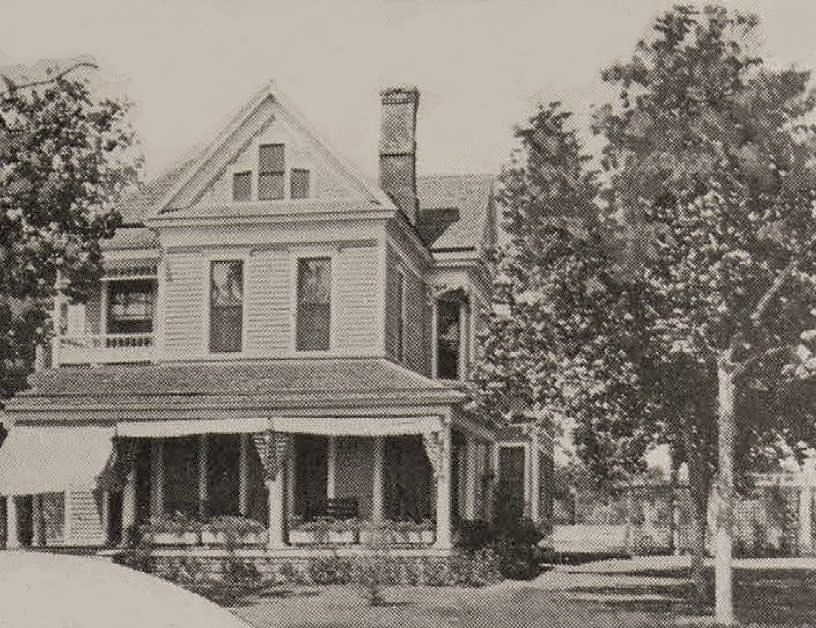
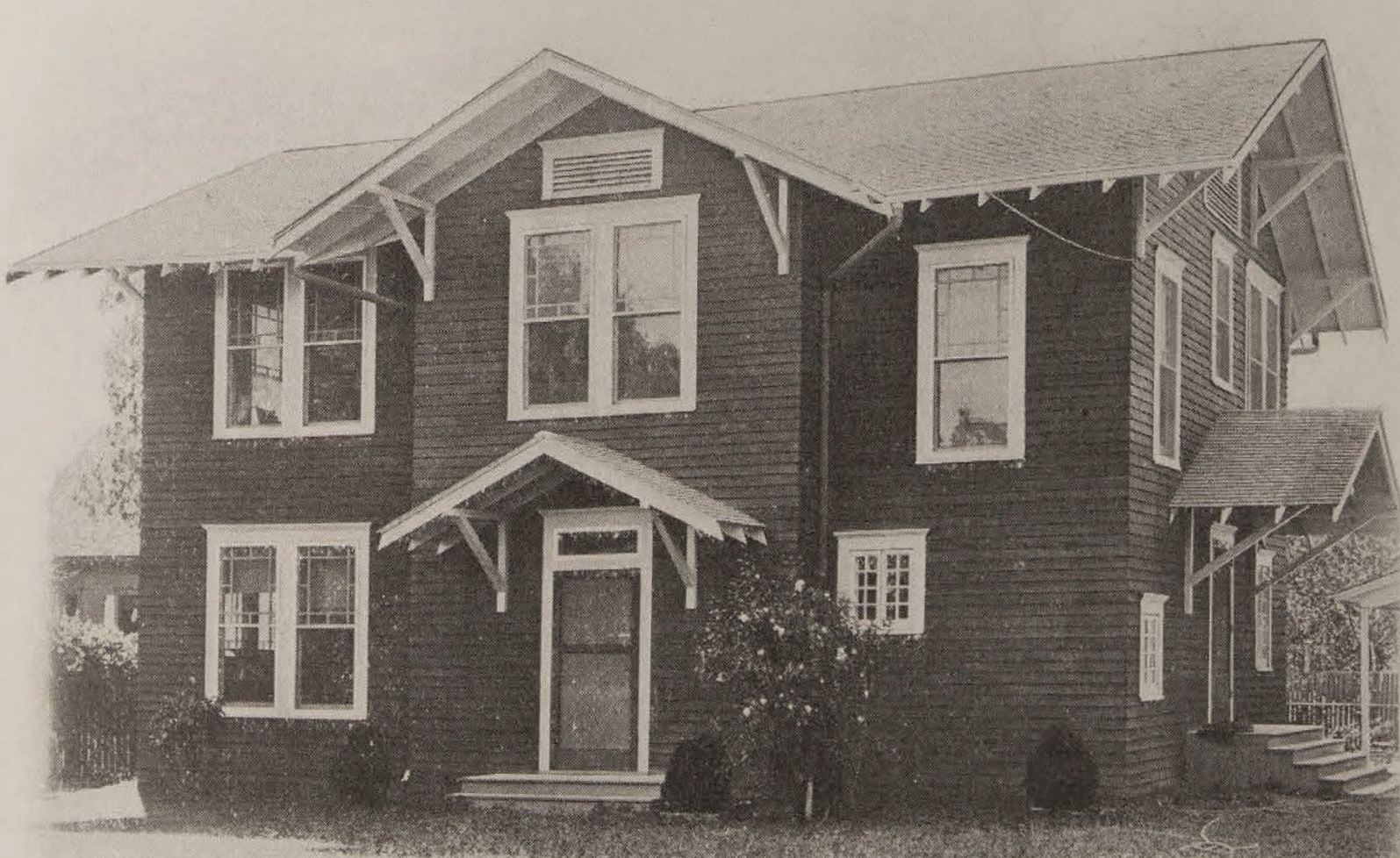
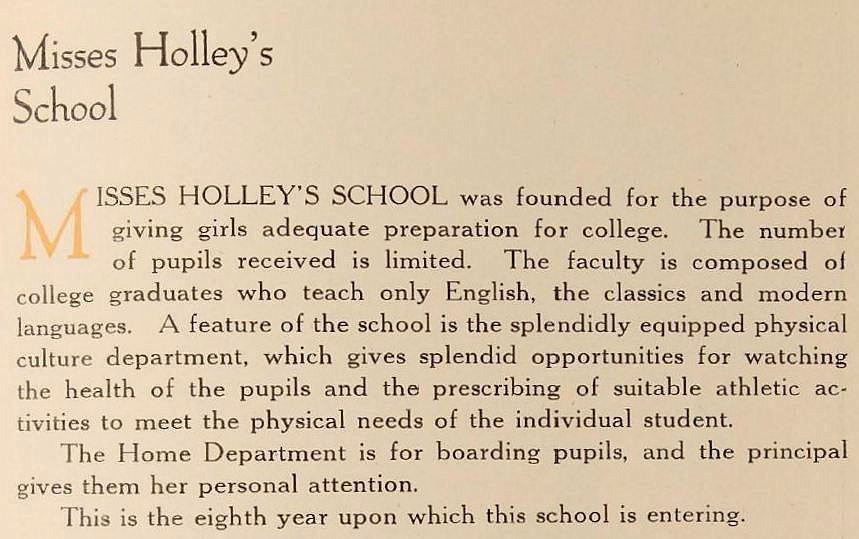
MISSES HOLLEY’S SCHOOL FOR GIRLS — Miss Frances Holley and Miss Josephine Holley, principals — 4528 Ross Avenue (at Annex). Another somewhat exclusive school that catered to young society ladies was the Holley school, established in 1908 by the two Holley sisters, who limited their student body to only 35 girls. The school (which is sometimes referred to as “Miss Holley’s School” and “Holley Hall” — and which was located behind the sisters’ residence) closed in 1926.

dallas-educational-center_holleys-school_ca-1916_degolyer-library_smu

dallas-educational-center_holleys-school_ca-1916_degolyer-library_smu_text

*

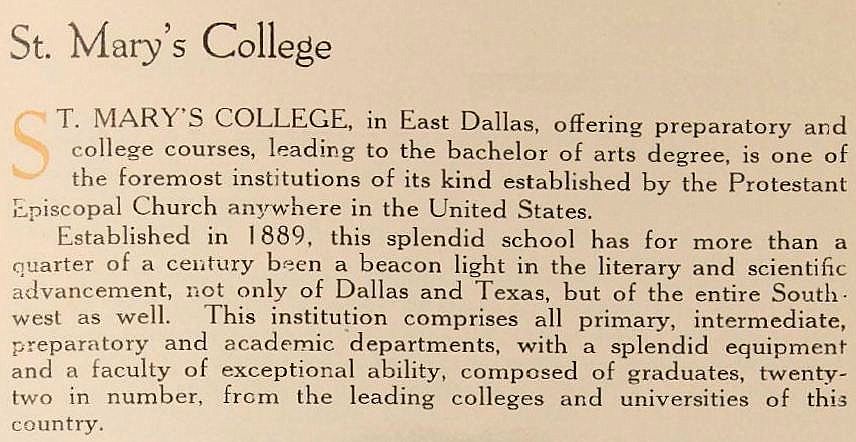
ST. MARY’S COLLEGE — Miss Ethel Middleton, principal — Garrett and Ross Avenue.  This Episcopal-Church-associated boarding and day school for girls and young ladies was one of the Southwest’s leading institutions of learning for young women. When established in 1889, it was built outside the city limits on a “hill” — back then the area around the school was often referred to as “College Hill.”

dallas-educational-center_st-marys_b_ca-1916_degolyer-library_smu

dallas-educational-center_st-marys_ca-1916_degolyer-library_smu

dallas-educational-center_st-marys_ca-1916_degolyer-library_smu_text

*

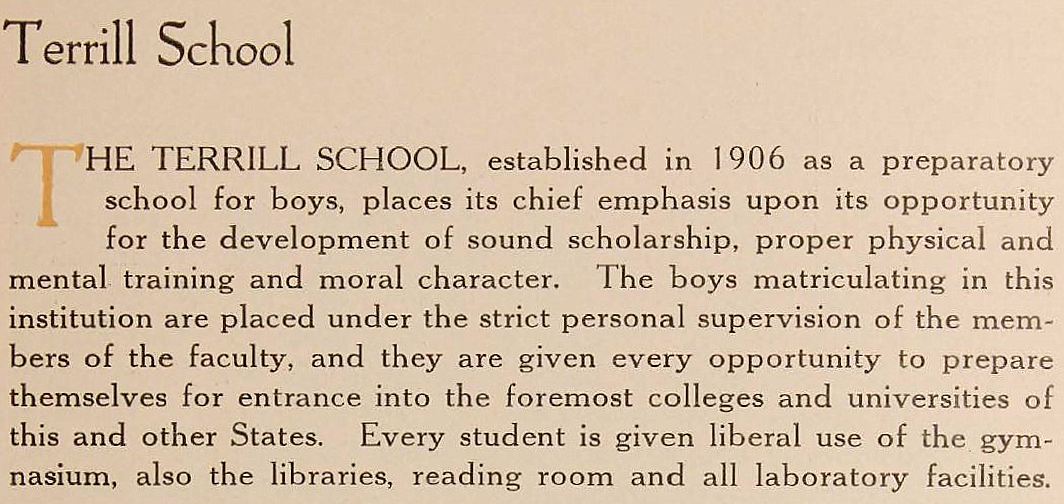
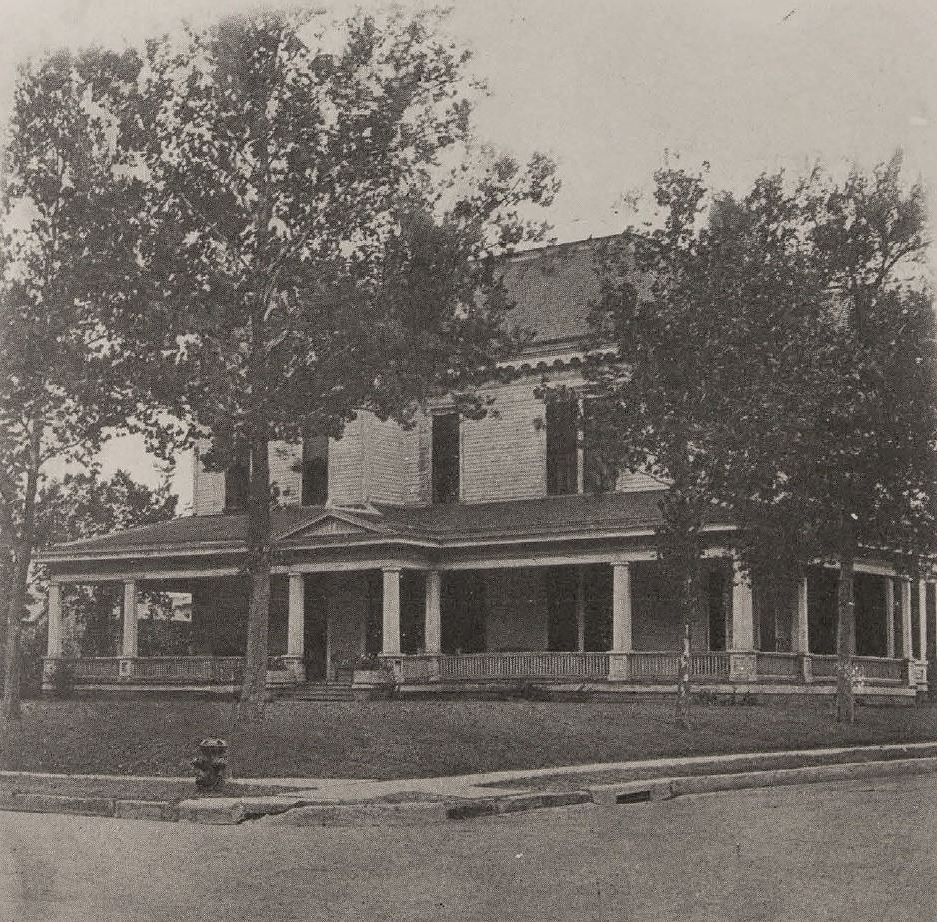
THE TERRILL SCHOOL FOR BOYS — M. B. Bogarte, head master — 4217 Swiss Avenue (at Peak). The exclusive boys school in Dallas (which, after several mergers, continues today as St. Mark’s); the cost of a year’s tuition for boarding students in 1920 was $850 — the equivalent of about $11,000 — a very pricey school back then. More on the Terrill School can be found in previous Flashback Dallas posts here and here.

dallas-educational-center_terrill-school_ca-1916_degolyer-library_smu

dallas-educational-center_terrill-school_ca-1916_degolyer-library_smu_info

*

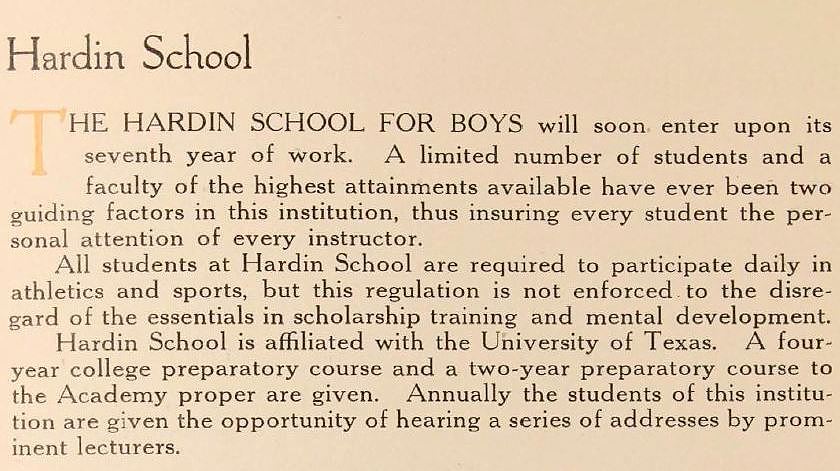
THE HARDIN SCHOOL FOR BOYS — J. A. Hardin, principal — 4021 Swiss Avenue. This prep school was affiliated with the University of Texas. It was located for a while in downtown Dallas and for a time at the location seen below in Old East Dallas, but in 1917 it either bought out and merged with the Dallas Military Academy or that school went out of business, because the Hardin School settled into the military academy’s location, which had been Walter Caruth’s old home, Bosque Bonita, at Belmont and Greenville, where boys were marching around doing drills until Miss Hockaday moved in two years later in 1919.

dallas-educational-center_hardin-school_ca-1916_degolyer-library_smu_photo

dallas-educational-center_hardin-school_ca-1916_degolyer-library_smu

*

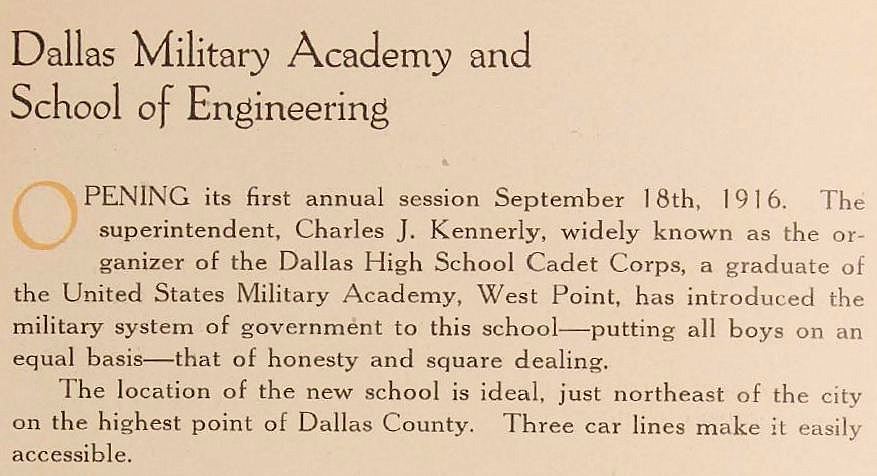
DALLAS MILITARY ACADEMY AND SCHOOL OF ENGINEERING — C. J. Kennerly, superintendent — Belmont & Greenville Ave. This “practical school for manly boys” opened up in 1916 in a large house which had been built by Walter Caruth in the area now known as Lower Greenville. The Dallas Military Academy lasted for only one year until the large house became home to the Hardin School for Boys in 1917 (and, two years later in 1919, it became the longtime home of the Hockaday School). If you didn’t click on the link for it above, now’s your chance to read more about the history of Caruth’s grand house, Bosque Bonita, here.

dallas-educational-center_pre-hockaday_dallas-military-academy_ca-1916_degolyer-library_smu

dallas-educational-center_pre-hockaday_dallas-military-academy_ca-1916_degolyer-library_smu_text

*

UNIVERSITY OF DALLAS — Very Rev. P. A. Finney, president — Oak Lawn Ave. & Gilbert. When it opened in 1906, this school was known as Holy Trinity College; its name was changed to the University of Dallas in 1910. The University of Dallas closed in 1928 because of lack of money; it was later known as Jesuit High School until Jesuit moved to North Dallas — the grand building was demolished in 1963. (See an aerial view of this huge building here.)

dallas-educational-center_univ-of-dallas_trinity_jesuit_ca-1916_degolyer-library_smu_photo

dallas-educational-center_univ-of-dallas_trinity_jesuit_ca-1916_degolyer-library_smu

*

THE MORGAN SCHOOL (formerly the Highland Park Academy) — Mrs. Joseph Morgan, principal — 4608 Abbott. A co-ed school.

dallas-educational-center_morgan-school_b_ca-1916_degolyer-library_smu

dallas-educational-center_morgan-school_ca-1916_degolyer-library_smu

dallas-educational-center_morgan-school_ca-1916_degolyer-library_smu_text

*

POWELL TRAINING SCHOOL — Nathan Powell, president — Binkley & Atkins (now Hillcrest) in University Park. I believe this is the only building in this post still standing — more can be read in the earlier post “Send Your Kids to Prep School ‘Under the Shadow of SMU’ — 1915,” here. (That is, in fact, a bit of the very, very young SMU campus seen in the distance at the bottom right.)

dallas-educational-center_powell-school_ca-1916

dallas-educational-center_powell-school_ca-1916_info

*

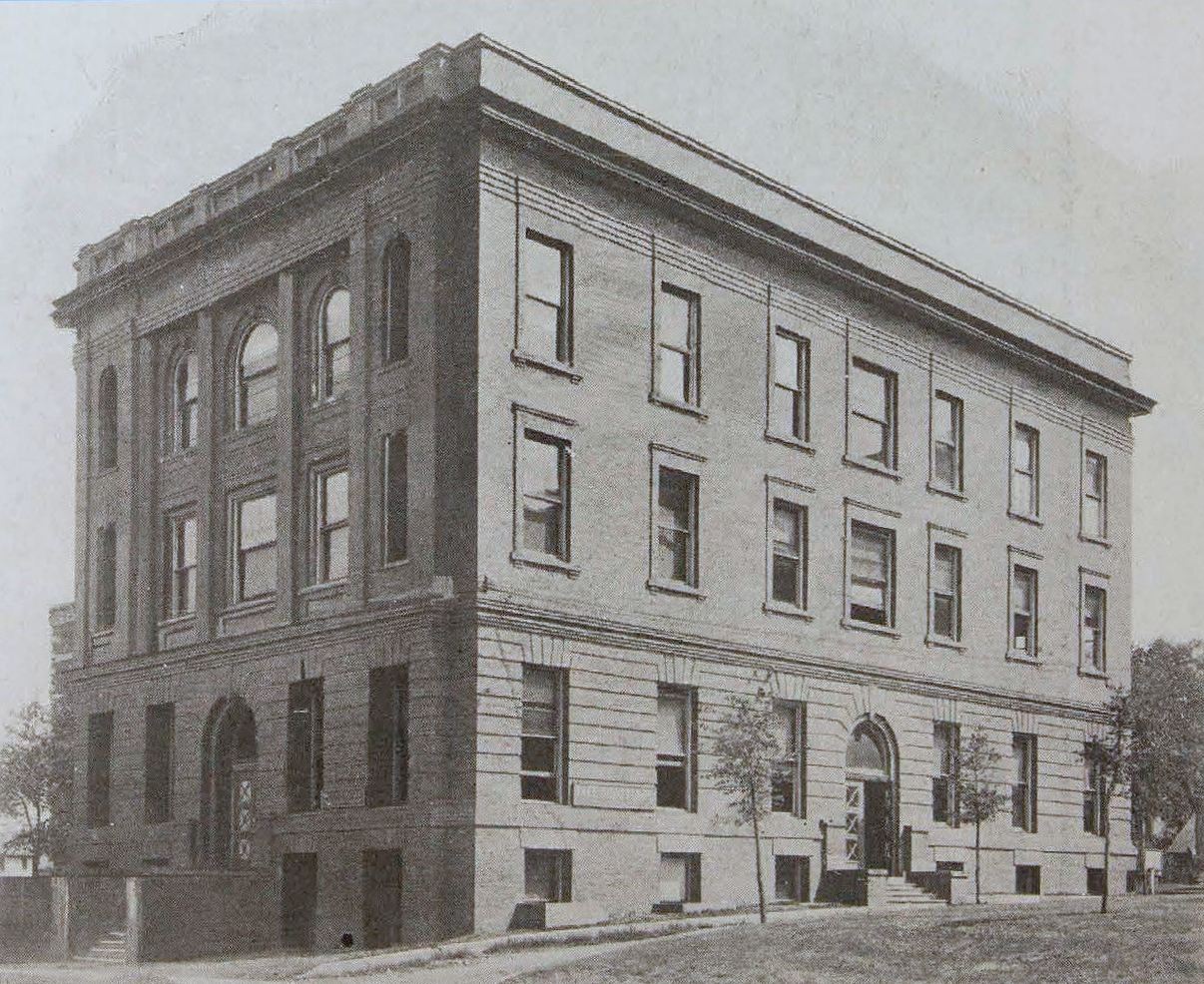
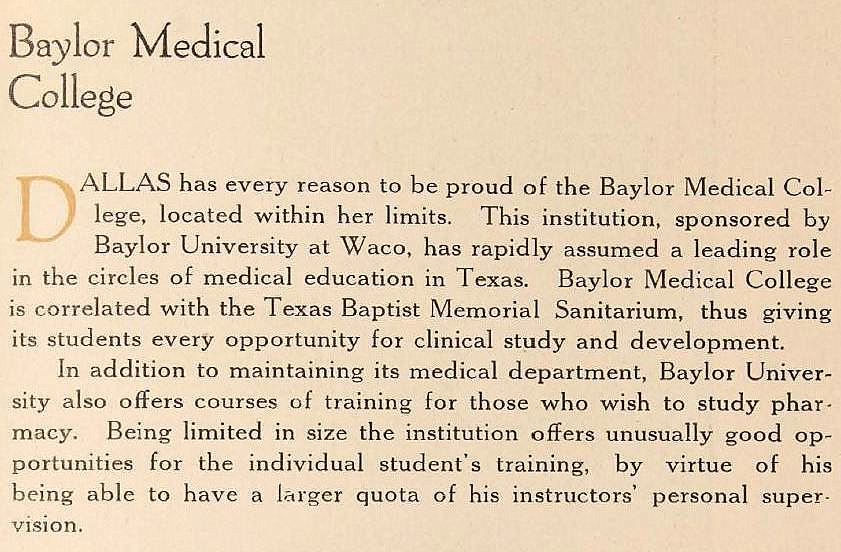
BAYLOR MEDICAL COLLEGE — E. H. Cary, dean — 720 College Ave. (now Hall Street).

dallas-educational-center_baylor-medical-college_ca-1916_degolyer-library_smu_photo

DALLAS POLYCLINIC/POST-GRADUATE MEDICAL SCHOOL — John S. Turner, president — S. Ervay & Marilla (affiliated with Baylor Medical College).

dallas-educational-center_dallas-polyclinic_ca-1916

dallas-educational-center_baylor-medical-college_ca-1916_degolyer-library_smu

*

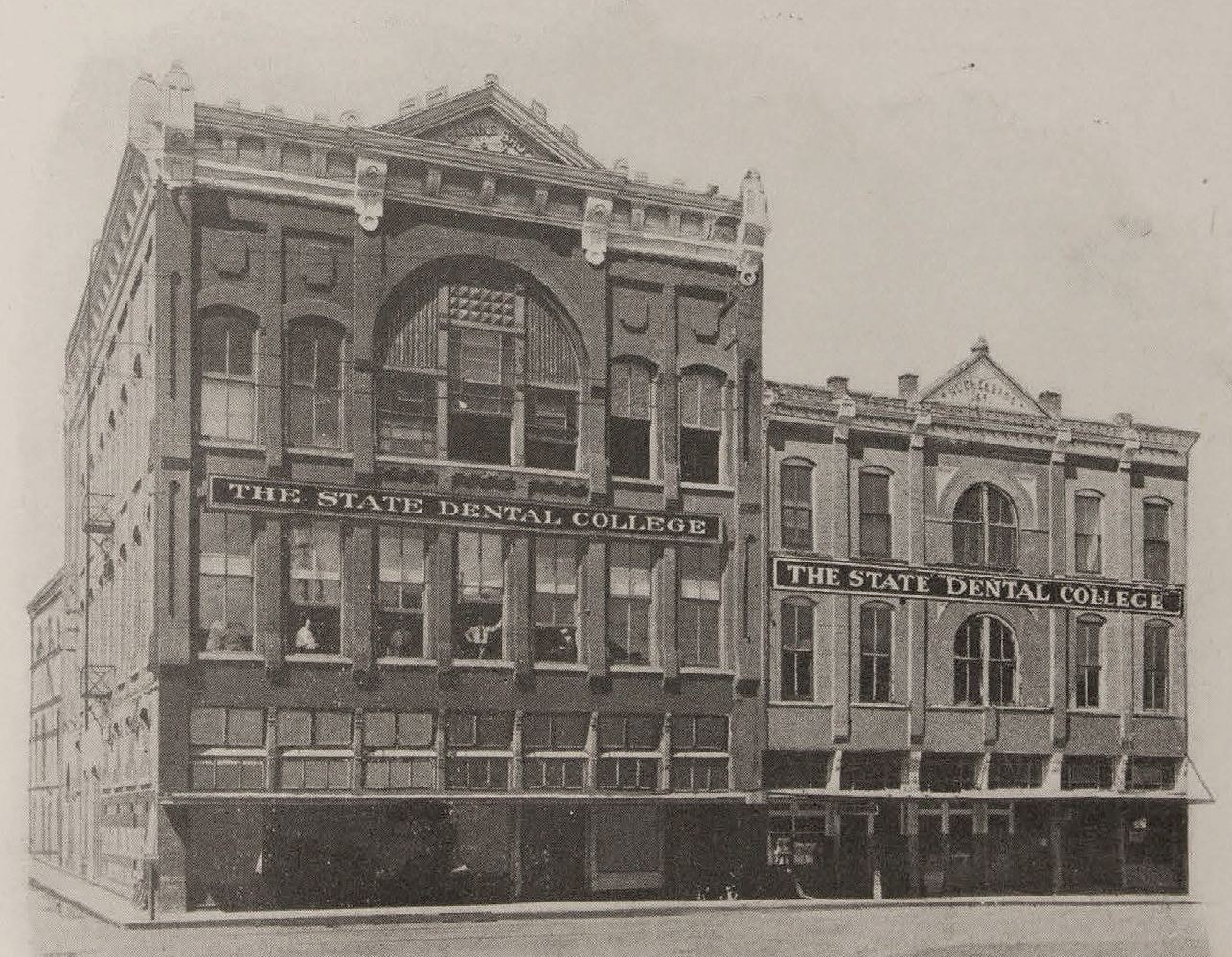
STATE DENTAL COLLEGE — 1409 ½ South Ervay, across from the Park Hotel (more recently known as the Ambassador Hotel).

dallas-educational-center_state-dental-college_ca-1916_degolyer-library_smu_photo

dallas-educational-center_state-dental-college_ca-1916_degolyer-library_smu

*

HAHN MUSIC SCHOOL — Charles D. Hahn, director — 3419 Junius. 

dallas-educational-center_hahn-music-school_ca-1916_photo

dallas-educational-center_hahn-music-school_ca-1916

*

AUNSPAUGH ART SCHOOL — VIvian Aunspaugh, director — 3409 Bryan. A well-established Dallas art school for 60 years. Miss Aunspaugh died in 1960 at the age of 90 and was said to have been giving lessons until shortly before her death. (The photo below of the exterior is the only one here not from about 1916 — that photo is from 1944.)

dallas-educational-center_aunspaugh_interior_ca-1916_degolyer-library_smu

aunspaugh-art-school_james-bell_1944_DHSvia Dallas Historical Society

dallas-educational-center_aunspaugh_ca-1916_degolyer-library_smu

*

dallas-educational-center_ca-1916_degolyer-library_smu

dallas-educational-center_front-cover_ca-1916_degolyer-library_smu

***

Sources & Notes

All images (but one) from the booklet “Dallas, The Educational Center of the Southwest” (published by the Educational Committee, Dallas Chamber of Commerce, and Manufacturers Association, Dallas, ca. 1916), from the collection of the DeGolyer Library, SMU Libraries, Southern Methodist University; more information on this publication — and a full digital scan of it — can be found at the SMU site, here.

The exterior photo of the Aunspaugh Art School is from the Dallas Historical Society, taken in 1944 by Dallas resident James H. Bell; more information on this photo is at the DHS site, here.

dallas-educational-center_aunspaugh_interior_ca-1916_degolyer-library_smu_sm

*

Copyright © 2019 Paula Bosse. All Rights Reserved.