Flashback : Dallas

A Miscellany: History, Ads, Pop Culture

Category: Neighborhoods

Snider Plaza & The Varsity Theater — 1920s

varsity-theater_1929_galloway_1600The Varsity Theater, Snider Plaza, 1929

by Paula Bosse

Snider Plaza, the University Park shopping center near the SMU campus, was formally opened on June 2, 1927 when its centerpiece fountain was switched on as a crowd of thousands watched. The buildings weren’t completed yet, but it was a sure sign to everyone that a large project was underway in an area of town which was not yet fully developed.

It was announced in December 1926 that a 30-acre tract at the northwest corner of Hillcrest and Daniel had been purchased by Wichita Falls businessman Charles W. Snider (he had recently funded Snider Hall, the women’s dormitory at SMU) and University Park mayor J. Fred Smith from Miss Fannie B. Daniel, whose family had owned the land since 1851. The purchase price was $82,500 (which would be the equivalent of about $1.25 million in today’s money) (…let that sink in for a moment…). Snider Plaza, along with SMU, was both the heart of University Park and an impetus for real estate development around it.

Here’s an ad from October 1927 from the University Park Development Co. (click to see larger images) — lots were going for $1,890 ($30.000 today):

university-park-develpment-co_ad_100927_a

university-park-develpment-co_ad_100927_bOct. 1929 — Hurry!

*

Below are a couple of VERY early photos of Snider Plaza.

First off, the fountain. It was illuminated at night with rotating colored lights. The view is to the northwest.

snider-plaza-fountain_1927_galloway_dpl_1200

And that was about it. A fountain, paved streets and sidewalks, and lots of streetlights. In the photo below you can see the fountain in the distance. And the office of Ralph Porter, the man who was the driving force behind Snider Plaza (see his photo in the ad above). There is still a Ralph Porter Co. real estate business — and, appropriately, it’s still located in Snider Plaza.

snider-plaza_galloway_dpl_1200

*

The Varsity Theater wasn’t built until 1929, even though a movie theater was always in the plans. I’m not sure what happened, but in 1928 it was announced that a new theater was going to be built as part of a 7-story building. The theater and retail shops were to occupy the first floor, offices would occupy the second floor, and furnished apartments would fill the top five floors (there would also be a parking garage in the basement). That’s all so weird to imagine. First off, apartments?! Secondly, that would have been the tallest building in the Park Cities! Buildings weren’t that tall in most of “suburban” Dallas in the 1920s. Also, the architecture is pretty bland, and very unlike the rest of the shopping area.
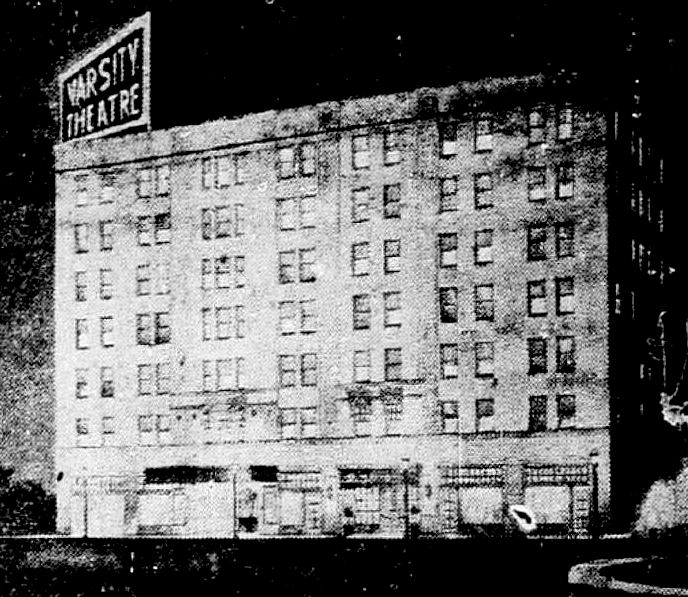
snider-plaza_varsity-apartments_1928Architect’s conception, 1928

The stripped-down plans ended up doing away with the basement and everything but the ground floor for the theater and retail shops. And I’m so glad! I love the photo at the top, from 1929. What a beautiful, beautiful building! The architect of the building was Wyatt C. Hedrick of Fort Worth. The buildings of Snider Plaza were meant to be of uniform design. Like this. (If only they all still looked like that!) (Another photo I posted recently showing that uniform style is here.)

*

A photo from 1940 showing a partial image of the marquee:
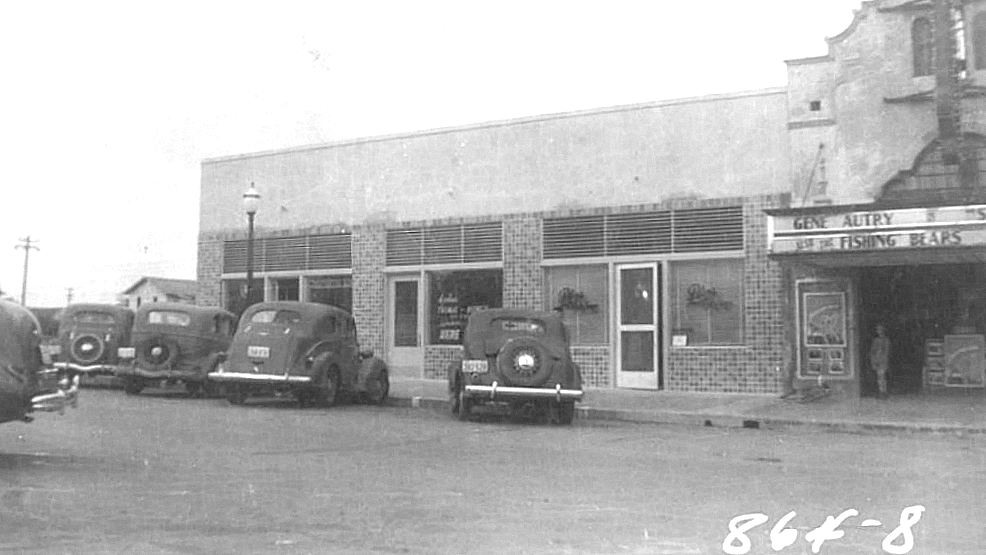
snider-plaza_brown-bks_university-park_varsity-theater_19401940, University Park Brown Books

*

The Varsity opened on Oct. 3, 1929 with “In Old Arizona” (the first talkie to be filmed outdoors). It became the Fine Arts in January 1957. A reader, Malcom Thomson — who was a very youthful theater manager during the early days of the Fine Arts (I think he was an SMU student at the time) — sent me the great photo below from February 1960.
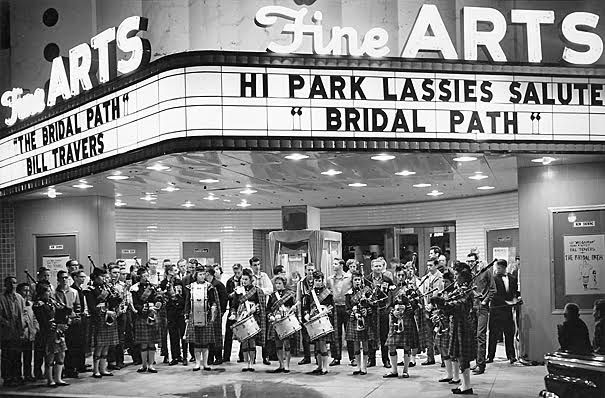
fine-arts-theater_snider-plaza_malcolm-thomson_feb-3-1960Feb. 3, 1960 (courtesy Malcolm Thomson)

At some point — it’s so incredibly hard to believe that it seems like an urban legend — the Fine Arts Theater became an “adult” theater. Yes, Virginia, X-rated movies were screened regularly in the Park Cities. Oh dear.

*

The theater is long-gone, as is almost all of Snider Plaza’s original “look.” But it’s still a cool, quirky place, and it’s always interesting to explore (never quite as interesting as M. E. Moses was to me as a child, but so few places are). And as long as Kuby’s is still around to fulfill my Reuben and warm-potato-salad needs, I’m pretty happy.

**

A couple of quirky tidbits about the very early years:

  • SMU students were responsible in large part for operating the theater, because, of course, it offered them the opportunity to “obtain practical experience in show business.”
  • Also, the streets of the plaza were cleaned by “an automatic street-washing machine.” I’m not sure what that would have entailed, but I would guess that SMU students were glad to be let off the street-cleaning life-experience hook on that one.

And, on a personal note, several decades later, my father owned the very short-lived Plaza Book Store, which was located in the retail space just to the right of the theater (where, just a few short years earlier, he had worked as an usher — i.e. “obtained practical experience in show business” — while attending SMU).

***

Sources & Notes

The two photos of Snider Plaza from 1927 and the top photo of the Varsity Theater from 1929 were found in the absolutely fantastic book The Park Cities: A Photohistory by Diane Galloway. The first two are from the collection of the Dallas Public Library. Ms. Galloway’s credit for the photo of the theater reads, “Photo by Frank Rogers/Courtesy of Jerrry Washam/Ralph Porter Company.” I believe all three photos are by Frank Rogers.

1960 photo of the Fine Arts Theater is used courtesy of Malcolm J. Thomson (thanks, Malcolm!).

varsity-theater_1929_galloway_sm

*

Copyright © 2021 Paula Bosse. All Rights Reserved.

Eiffel Tower on Main Street — 1966

n-m_french-fortnight_1966_eiffel-tower_colt-collection_degolyer-library_SMUAlvin Colt Collection, DeGolyer Library, SMU

by Paula Bosse

In 1966, the Neiman-Marcus Fortnight honored France and all-things-French. And that included constructing an Eiffel Tower to grace the building’s exterior and an Arc de Triomphe built inside to welcome shoppers and gawkers. Bonjour, y’all!

n-m_french-fortnight_1966_arc-de-triomphe_colt-collection_degolyer-library_SMUAlvin Colt Collection, DeGolyer Library, SMU

***

Sources & Notes

Both photos are from the fabulous Alvin Colt Design Drawings and Photographs for Neiman Marcus Fortnights collection, held by the DeGolyer Library, Southern Methodist University; more info on the Eiffel Tower photo here; more info on the Arc de Triomphe photo here. Read about designer Alvin Colt and his legendary contributions to the Neiman-Marcus fortnights here

More photos from the 1966 French Fortnight from the Alvin Colt Collection can be found here.

Browse the larger Colt Collection — which contains photos, sketches, and ads from other Fortnights — at the DeGolyer Library/SMU site here.

Read about the first N-M Fortnight celebration honoring France in 1957 in these Flashback Dallas posts:

n-m_french-fortnight_1966_eiffel-tower_colt-collection_degolyer-library_SMU_sm

*

Copyright © 2021 Paula Bosse. All Rights Reserved.

DFW Airport, Phase I — 1973

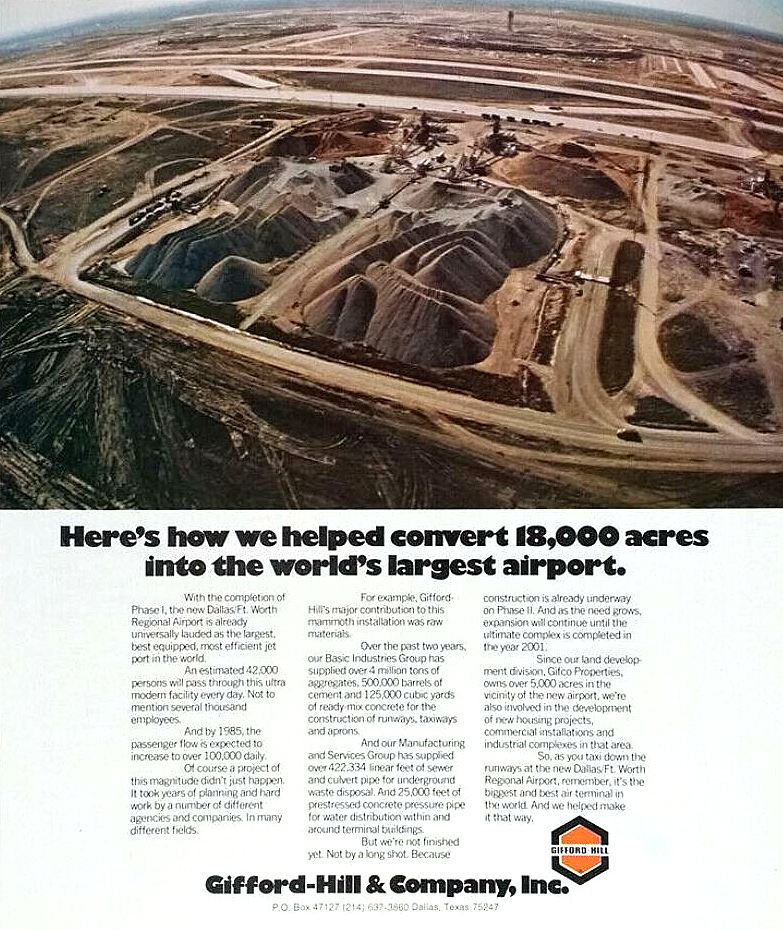
dfw-airport_construction_gifford-hill-ad_1973_ebay_photoAlien landscape, or DFW airport?

by Paula Bosse

A couple of ads letting the nation know that construction of the new Dallas-Fort Worth International Airport was progressing and would soon be the biggest, bestest… um, BIGGEST airport ever! “Phase I” was completed by the end of 1973, and DFW opened for business in January, 1974.

The first ad, from Gifford-Hill (click to see larger image — transcription below):

dfw-airport_construction_gifford-hill-ad_1973_ebay

Here’s how we helped convert 18,000 acres into the world’s largest airport. 

With the completion of Phase I, the new Dallas/Ft. Worth Regional Airport is already universally lauded as the biggest, best equipped, most efficient jet port in the world. 

An estimated 42,000 persons will pass through this ultra modern facility every day. Not to mention several thousand employees. 

And by 1985, the passenger flow is expected to increase to over 100,000 daily. 

Of course a project of this magnitude didn’t just happen. It took years of planning and hard work by a number of different agencies and companies. In many different fields. 

For example, Gifford-Hill’s major contribution to this mammoth installation was raw materials. 

Over the past two years, our Basic Industries Group has supplied over 4 million tons of aggregates, 500,000 barrels of cement and 125,000 cubic yards of ready-mix concrete for the construction of runways, taxiways and aprons. 

And our Manufacturing and Services Group has supplied over 422,334 linear feet of sewer and culvert pipe for underground waste disposal. And 25,000 feet of prestressed concrete pressure pipe for water distribution within and around terminal buildings. 

But we’re not finished yet. Not by a long shot. Because construction is already underway on Phase II. And as the need grows, expansion will continue until the ultimate complex is completed in the year 2001. 

Since our land development division, Gifco Properties, owns over 5,000 acres in the vicinity of the new airport, we’re also involved in the development of new housing projects, commercial installations and industrial complexes in that area.

So, as you taxi down the runways at the new Dallas/Ft. Worth Regional Airport, remember, it’s the biggest and best air terminal in the world. And we helped make it that way. 

Gifford-Hill & Company, Inc. 
Dallas, Texas

dfw-airport_construction_gifford-hill-ad_HPHS-yrbk_19691969, Highland Park High School yearbook

*

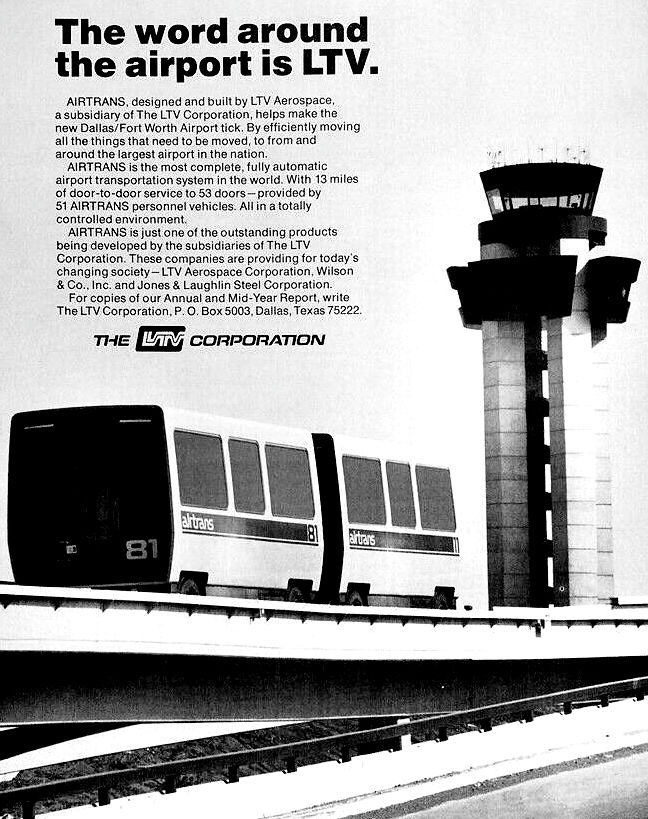
The second ad, from LTV, touting their automated AIRTRANS all-electric transportation system which carried people and cargo around the airport.

dfw-airport_airtrans_LTV_1973-ad_ebay

The word around the airport is LTV. 

AIRTRANS, designed and built by LTV Aerospace, a subsidiary of The LTV Corporation, helps make the new Dallas/Fort Worth Airport tick. By efficiently moving all the things that need to be moved, to from and around the largest airport in the nation. 

AIRTRANS is the most complete, fully automatic airport transportation system in the world. With 13 miles of door-to-door service to 53 doors – provided by 51 AIRTRANS personnel vehicles. All in a totally controlled environment. 

AIRTRANS is just one of the outstanding products being developed by the subsidiaries of The LTV Corporation. These companies are providing for today’s changing society – LTV Aerospace Corporation, Wilson & Co., Inc. and Jones & Laughlin Steel Corporation. 

*

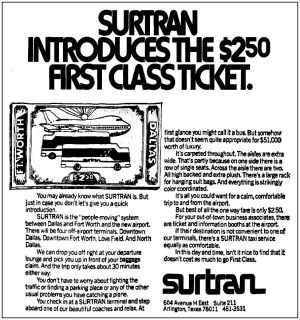
And because AIRTRANS is getting its day in the sun, here’s a local ad for its troubled “surface” counterpart (I just learned that “SURTRAN” stands for “surface transportation”) — the bus/taxi/limo system designed to get people to the airport from Dallas or Fort Worth. As this ad says, a one-way bus ticket was $2.50 (about $15.00 in today’s money). SURTRAN seems to have been financially troubled from the beginning — SURTRAN service ended at the end of October, 1984.

surtran_sept-1973Sept., 1973

*

End of Phase I:

dfw_19731973

***

Sources & Notes

Gifford-Hill ad with color photo and LTV ad found on eBay.

dfw-airport_construction_gifford-hill-ad_1973_ebay_photo_sm

*

Copyright © 2021 Paula Bosse. All Rights Reserved.

Snider Plaza Safeway: Hillcrest & Lovers — 1930s

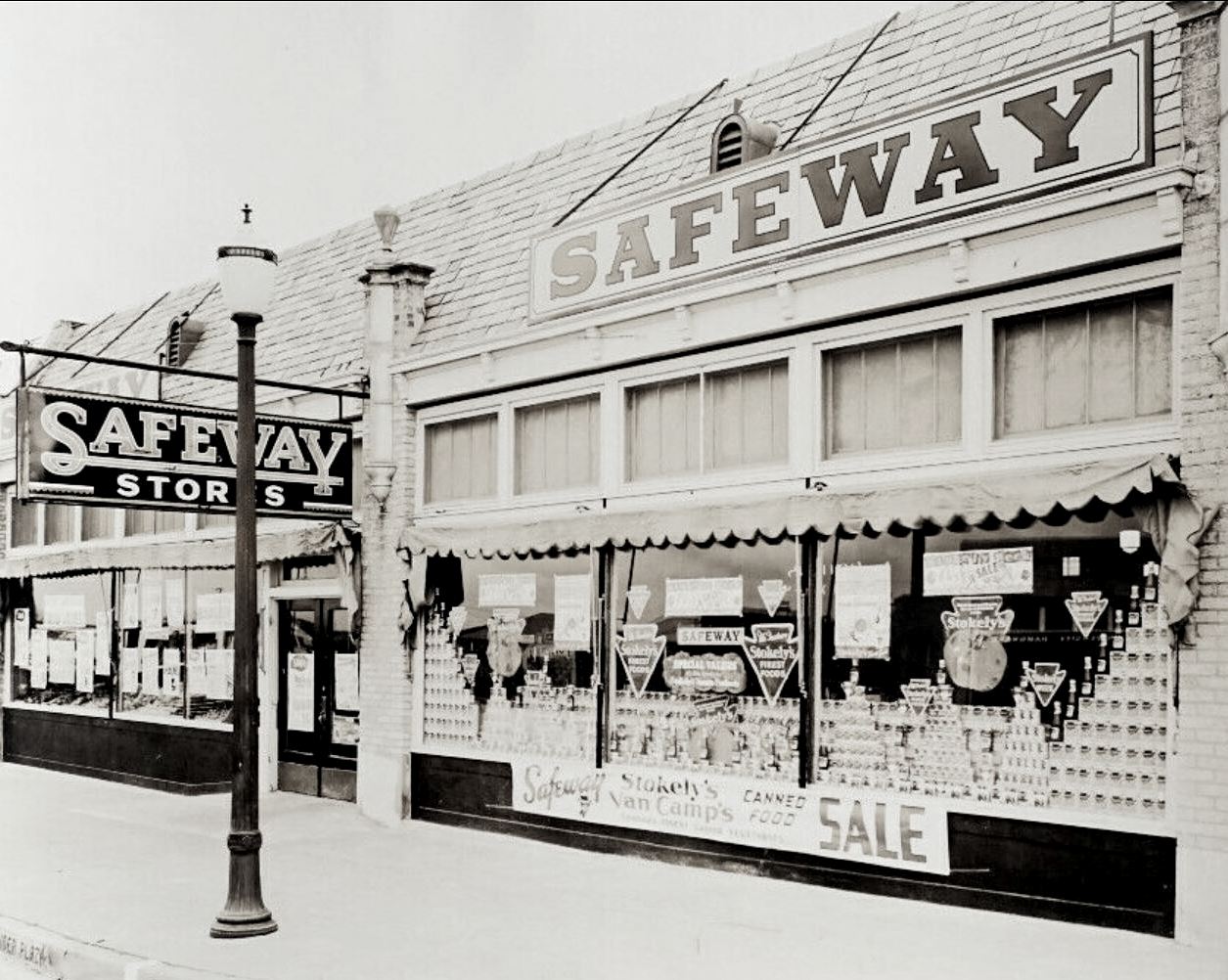
snider-plaza_safeway_ebay_1Safeway, Hillcrest & Lovers Lane

by Paula Bosse

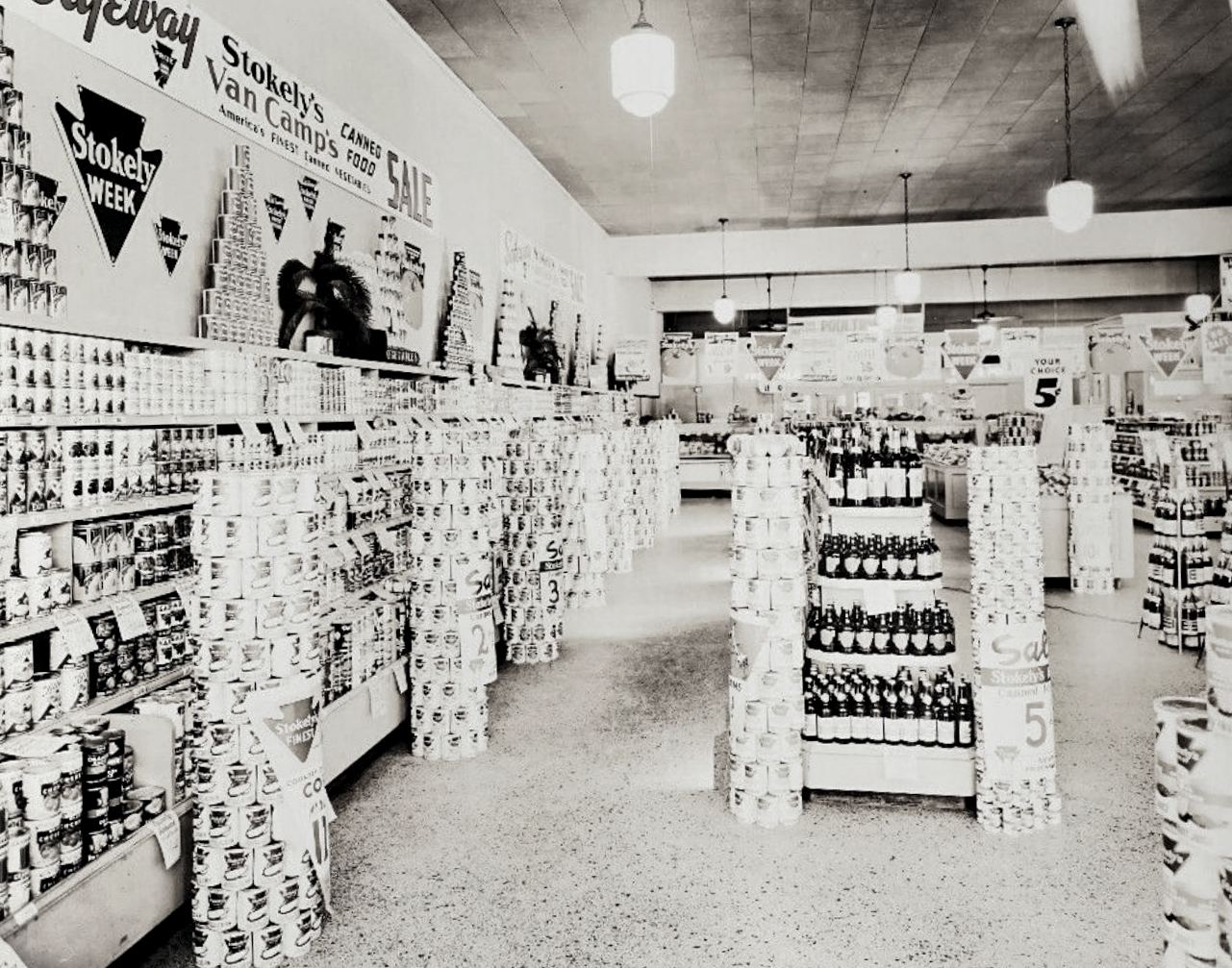
The Snider Plaza shopping area opened in University Park in June, 1927, and an early grocery tenant was Killingsworth Self-Serving Food Store, which opened in 1930 or ’31. In 1934 the small Killingsworth chain of 12 Dallas stores was purchased by the Safeway/Piggly Wiggly company, and in March, 1935 the remodeled store was opened as a Safeway — it was newer, bigger, better, and more crammed-full of Stokely’s canned foods than any grocery store University Park had ever known. But in August, 1941 — before shoppers had gotten too complacent — it moved around the corner into another Snider Plaza location (3412 Westminster) — this one even newer! Even bigger! Even better! (And only half a mile from another Safeway which was just a hop, skip, and a jump away at 6207 Hillcrest.) (You can’t have too many Safeways.)

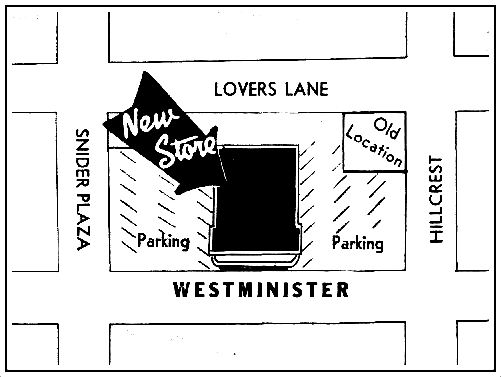
I haven’t seen many photos of the original architecture of Snider Plaza shops, so the photo above is pretty cool. (I really like that “Snider Plaza” was stamped on the curb.) I’m going only by the little map below, which appeared in ads when the bigger 1941 store opened, but I assume that the store seen in the photo above was at the corner of Hillcrest and Lovers Lane. 

snider-plaza_safeway_ad_082941_det_mapAug. 1941, Safeway ad detail

And now I have a sudden craving for canned hominy….

snider-plaza_safeway_ebay_2

snider-plaza_safeway_ebay_3

***

Sources & Notes

Photos found on eBay in 2020.

UPDATE: As mentioned in the comments below, Dallas historian Teresa Musgrove Judd ended up as the winning eBay bidder of these photographs and plans to donate them to the Dallas Public Library.

snider-plaza_safeway_ebay_1_sm

*

Copyright © 2021 Paula Bosse. All Rights Reserved.

Miscellaneous Dallas #2

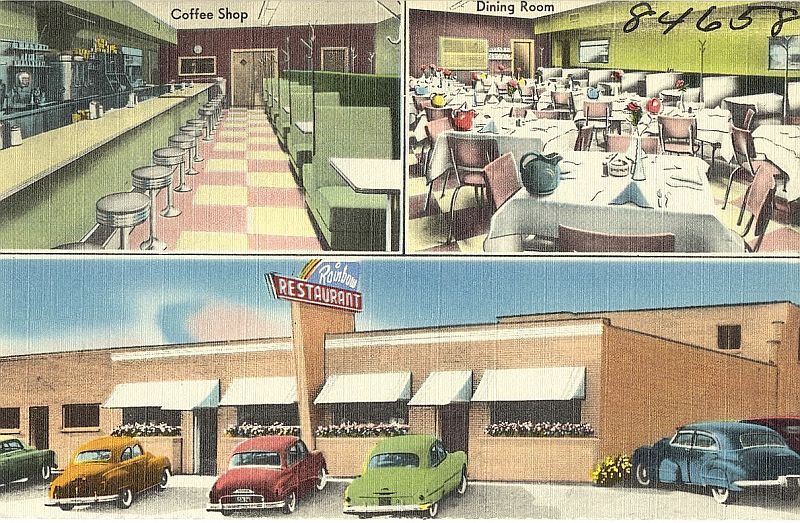
rainbow-restaurant_tichnor-bros-collection_boston-public-libraryOpen 24 hours, plenty of free parking…

by Paula Bosse

And now, a bunch of homeless, random images (all are larger when clicked).

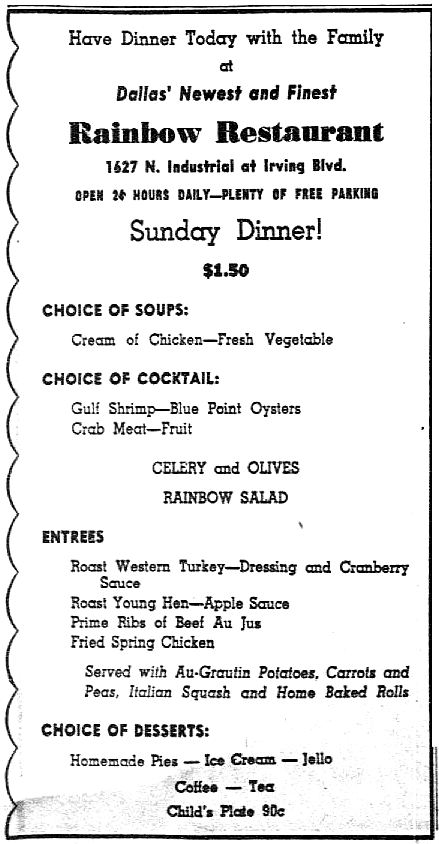
Above, the 24-hour Rainbow Restaurant, 1627 N. Industrial at Irving Blvd. Below, its menu.

rainbow-restaurant_ad_dec-19511951

*

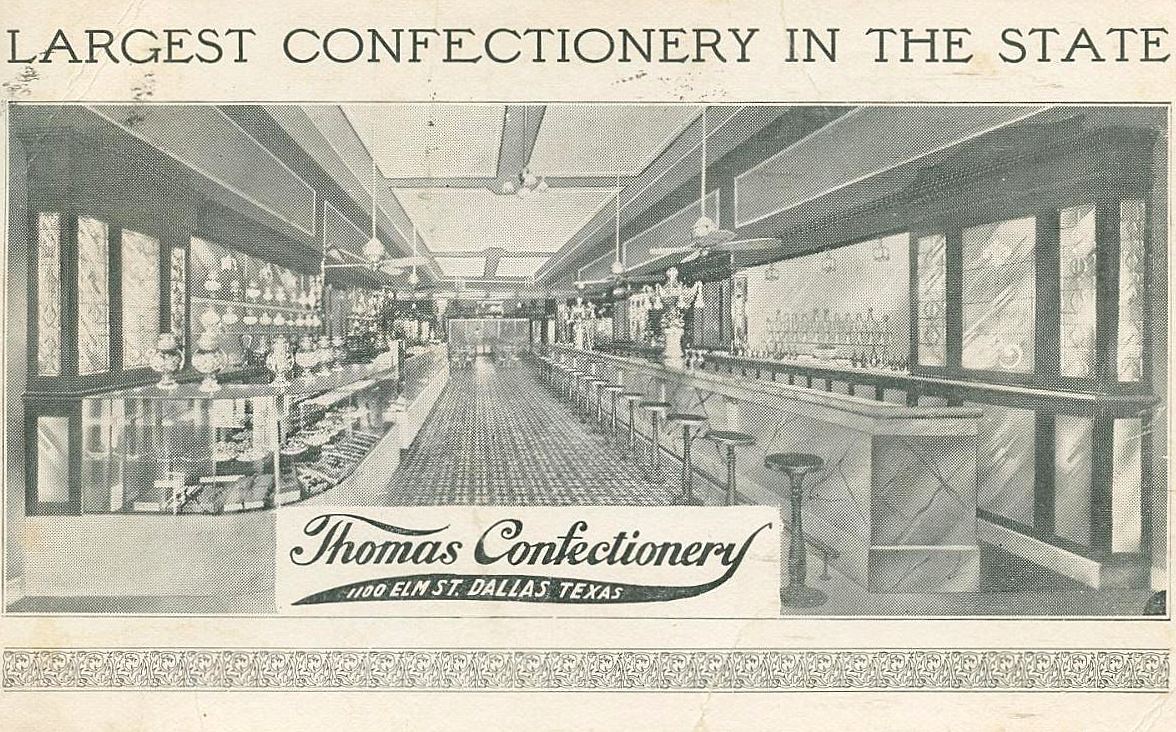
Thomas Confectionery, 1100 Elm Street. “Largest Confectionery In the State.” Popular date spot with the pre-flapper generation.

thomas-confectionary_postcard_1911_sam-rayburn-house-museum-via-portal1911 (via Portal to Texas History)

thomas-confectionery_0915121912. Dallas Morning News want-ad

*

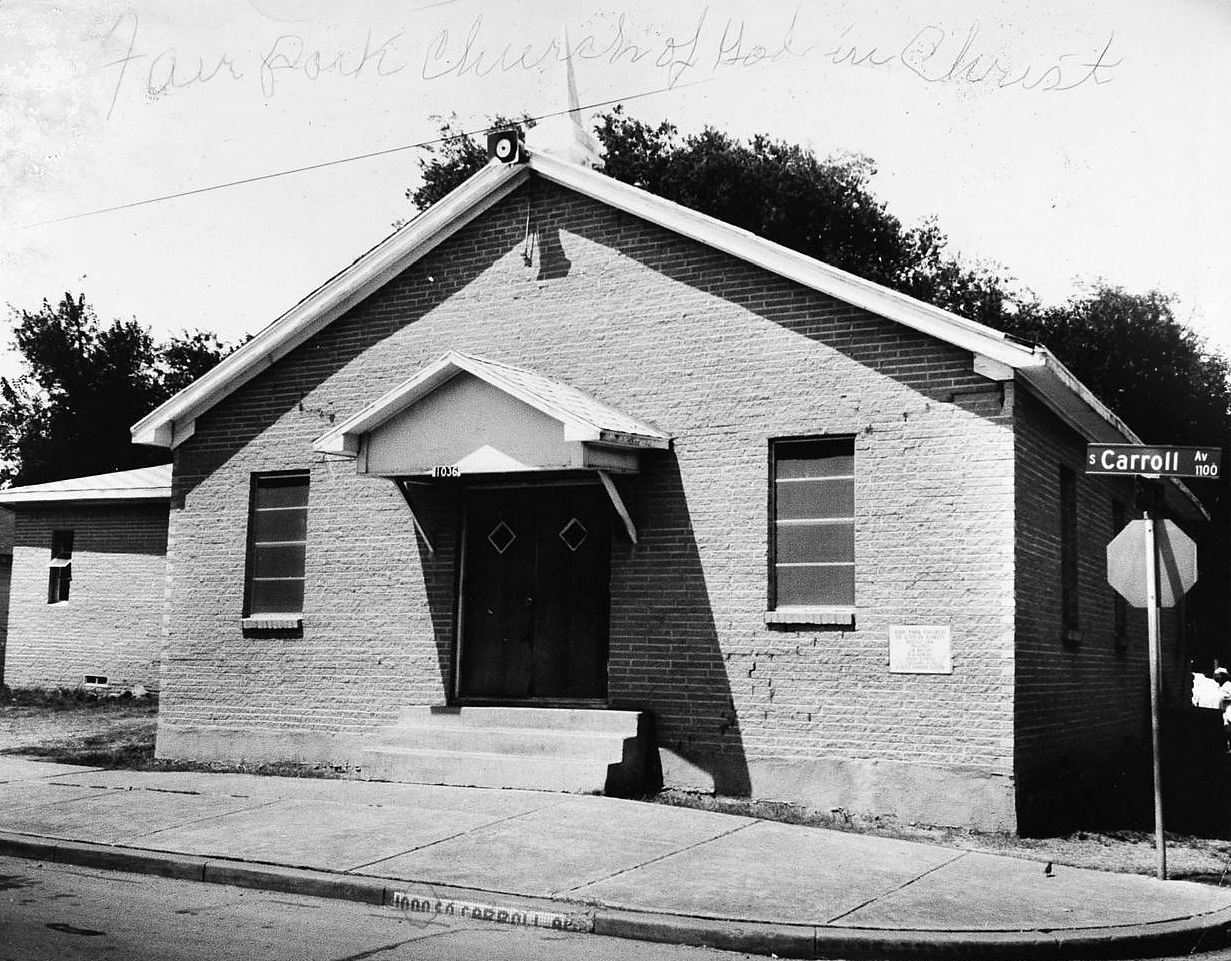
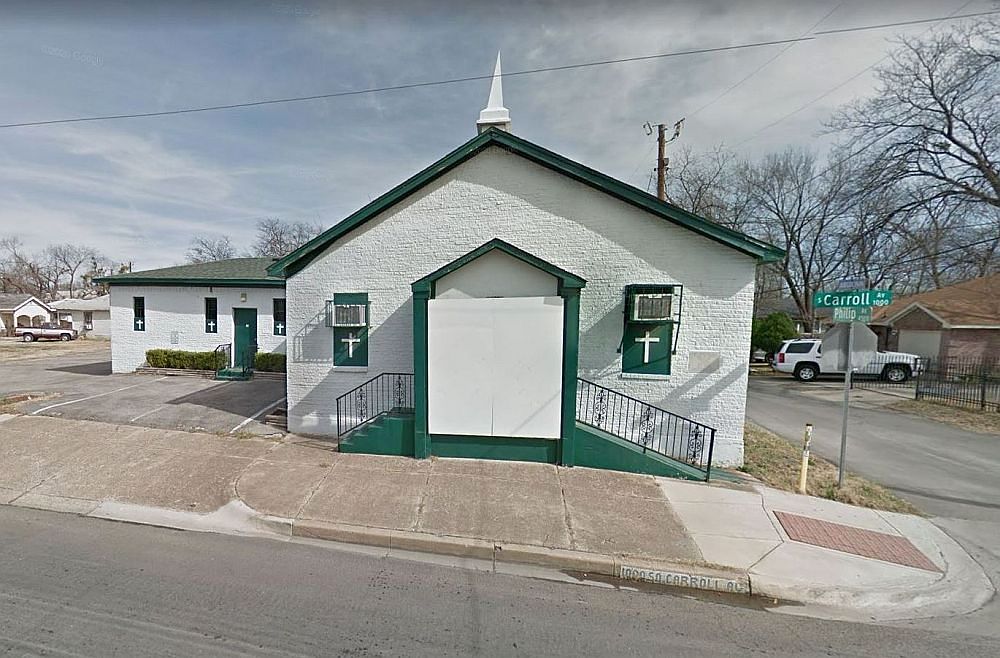
Fair Park Church of God in Christ, 1036 S. Carroll Ave.

fair-park-church-of-god-in-christ_1974_USC-libraries 1974 (via USC Libraries)

And it’s still standing! (I love that the curb tiles are still there.)

fair-park-church-of-god-in-christ_google-street-view-20172017 (via Google Street View)

*

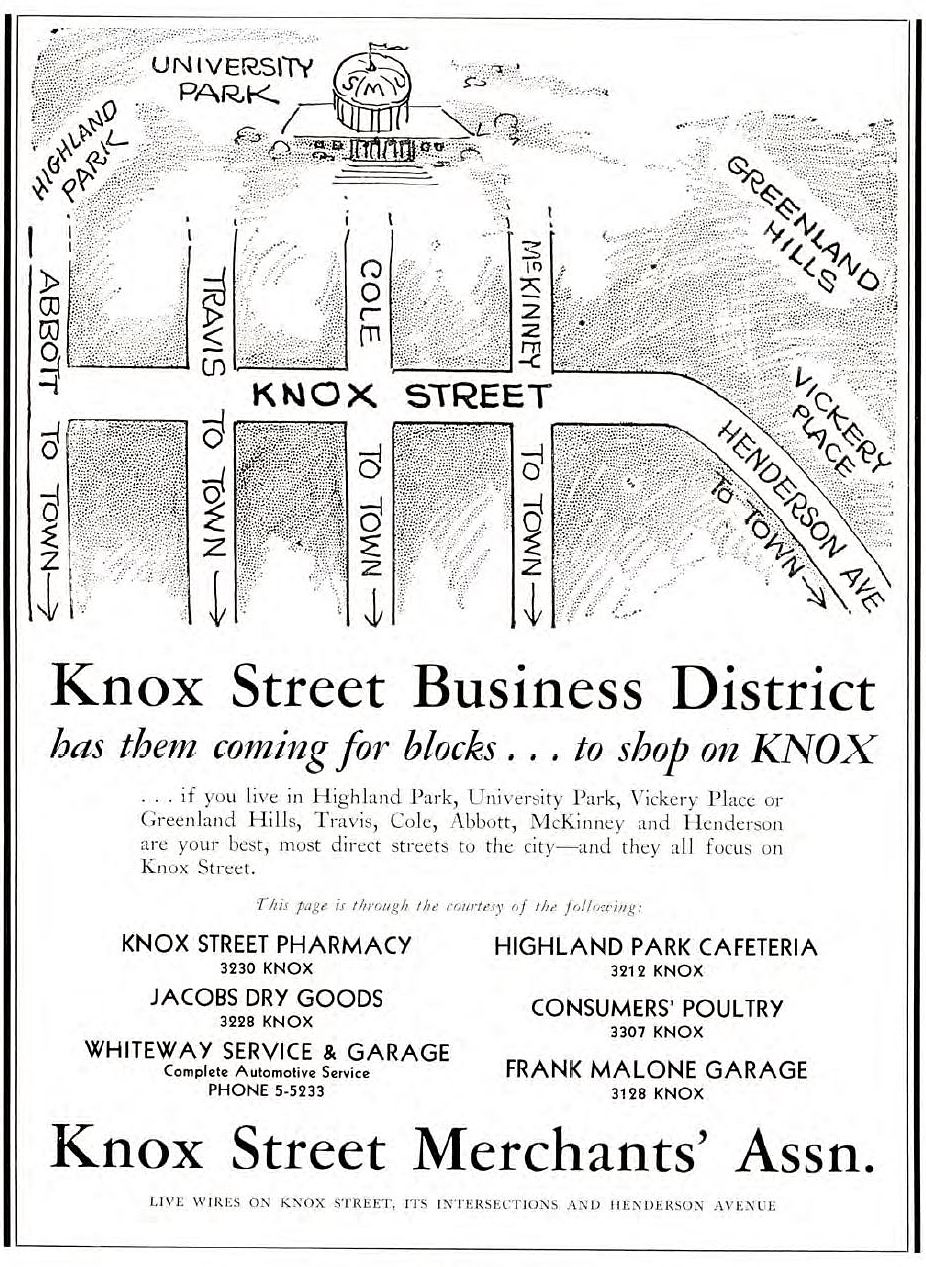
The Knox Street Business District, pre-Central Expressway. …Way pre.

knox-street-business-district_1932-smu-rotunda1932 (via SMU Rotunda)

*

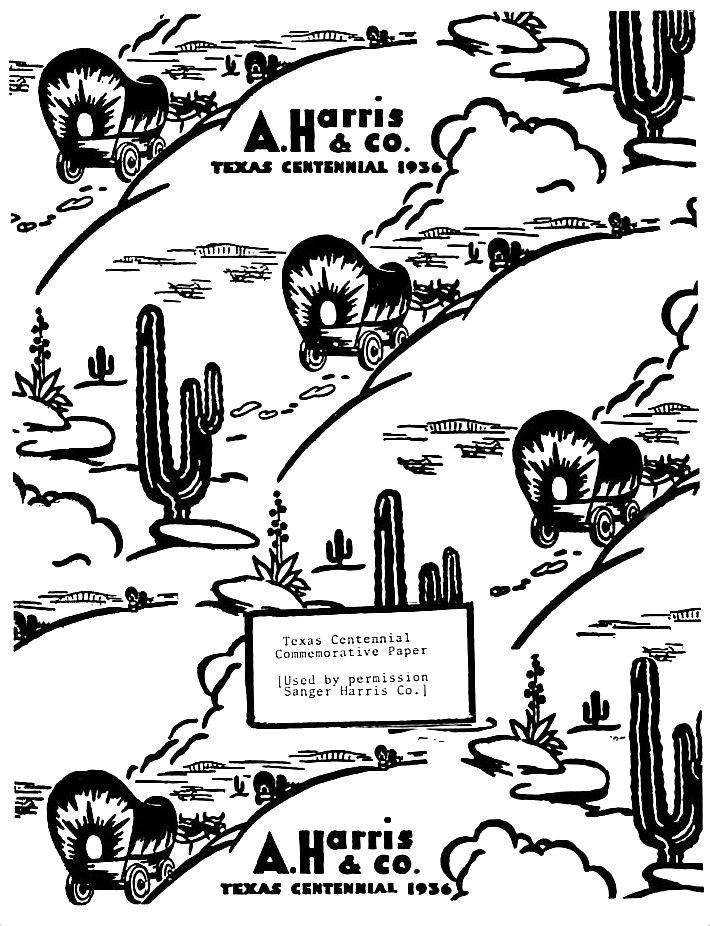
A. Harris & Co. — Texas Centennial Commemorative Paper (gift wrap?).

tx-centennial_a-harris_gift-paper_elm-fork-echoes_april-1986_portal-tx-hist1936 (via Portal to Texas History)

*

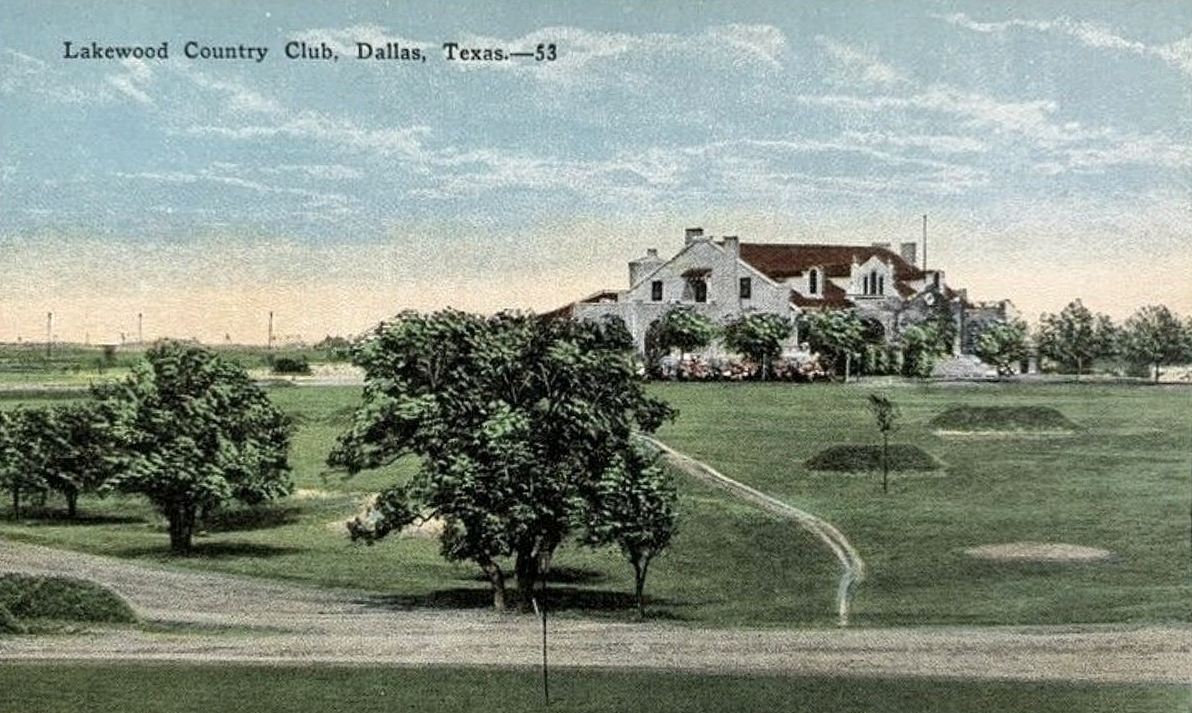
The Lakewood Country Club (see it before the landscaping in this photo from this post).

lakewood-country-club_postcard_ebay(via eBay)

*

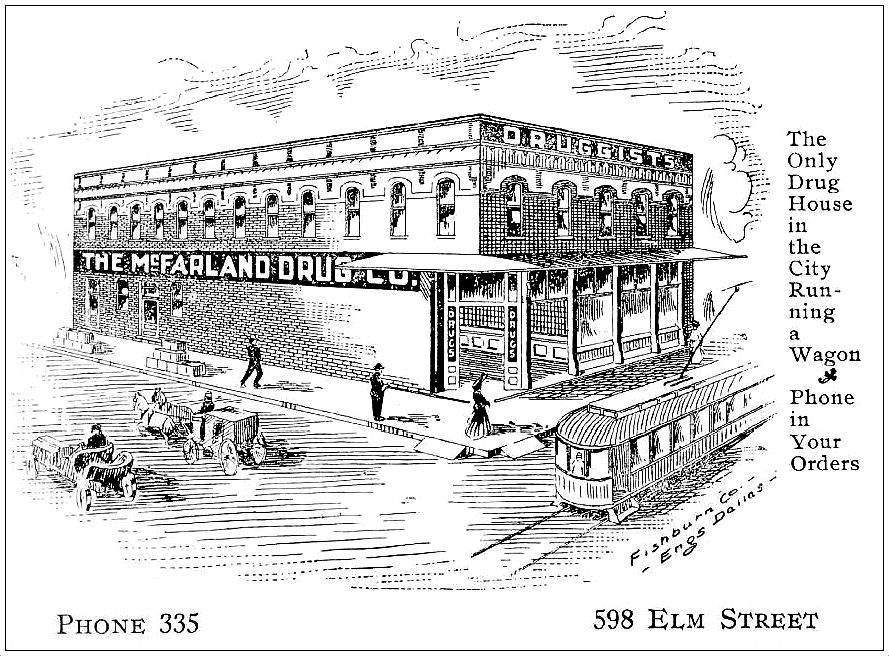
The McFarland Drug Co., 598 Elm, at Hawkins, in Deep Ellum (later became 2424 Elm).

mcfarland-drug-co_hints-to-housekeepers_degolyer_SMU_19051905 (via DeGolyer Library, SMU)

*

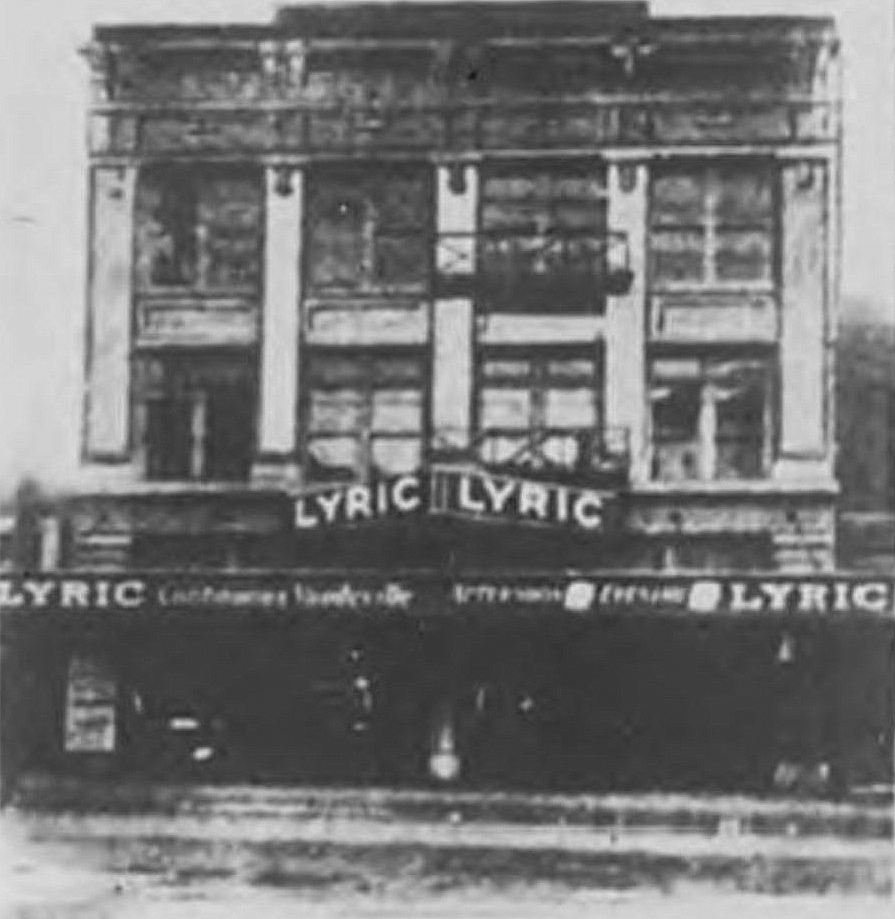
The Lyric Theatre, 364 Elm, near Stone (later 1602 Elm).

lyric-theater_degolyer-lib_SMU_dallas-theaters_nd1907-ish (via DeGolyer Library, SMU)

*

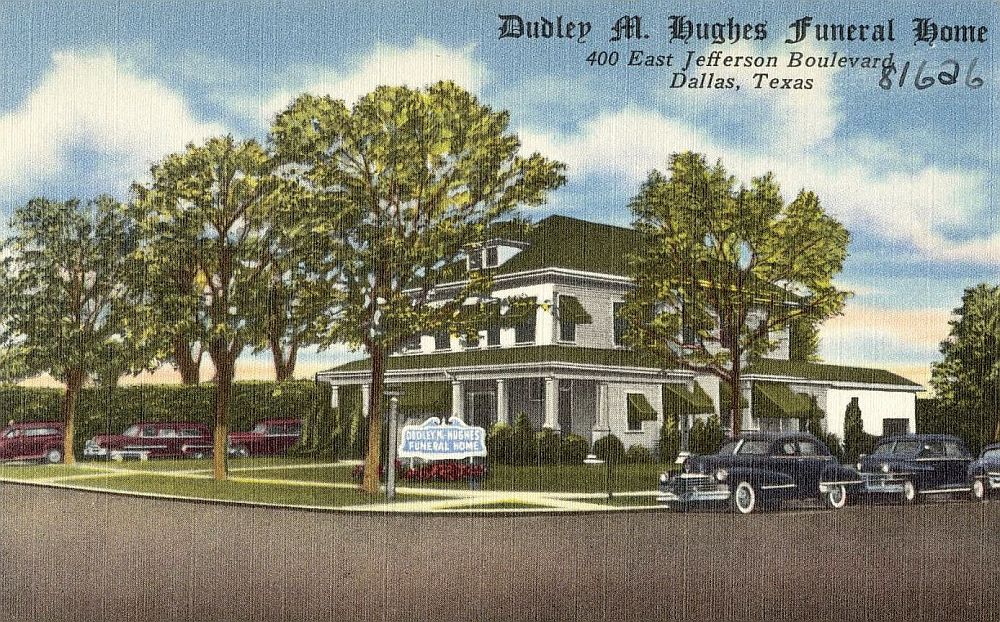
Dudley M. Hughes Funeral Home, 400 E. Jefferson Blvd, Oak Cliff.

dudley-hughes-funeral-home_tichnor-bros_boston-public-library(via Tichnor Bros. Collection, Boston Public Library)

*

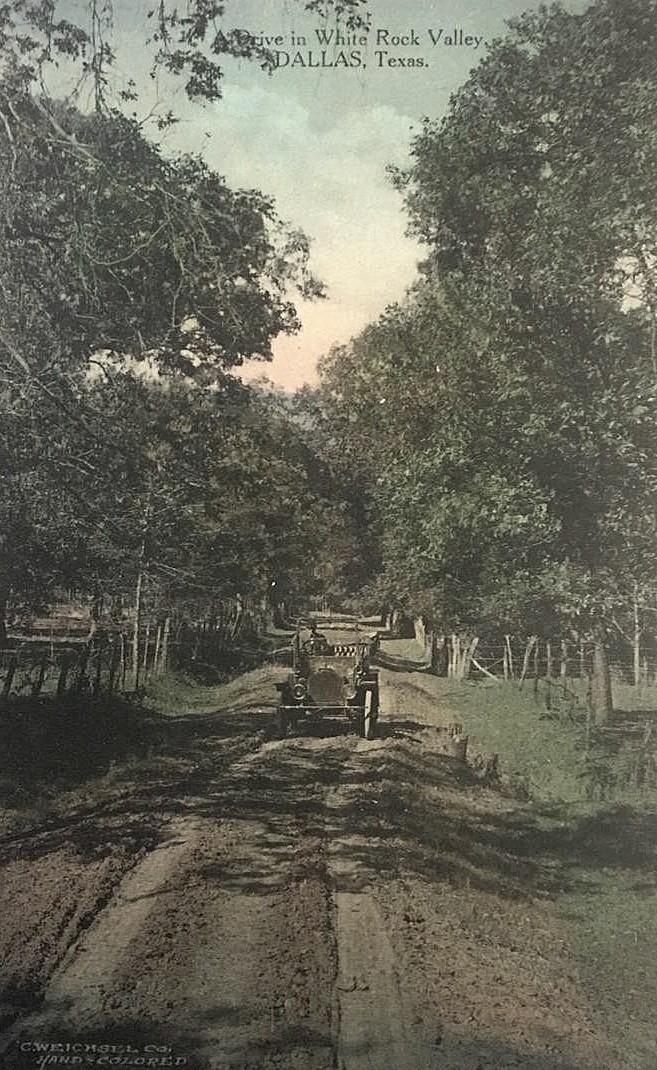
“A Drive in White Rock Valley.” Before the lake.

white-rock-valley_postcard_1912_ebay(via eBay)

***

Sources & Notes

Rainbow Restaurant postcard is from the Tichnor Bros. Postcard Collection, Boston Public Library.

See the first installment of “Miscellaneous Dallas” here.

rainbow-restaurant_tichnor-bros-collection_boston-public-library_sm

*

Copyright © 2021 Paula Bosse. All Rights Reserved.
Dallas Book Scene — 1940s

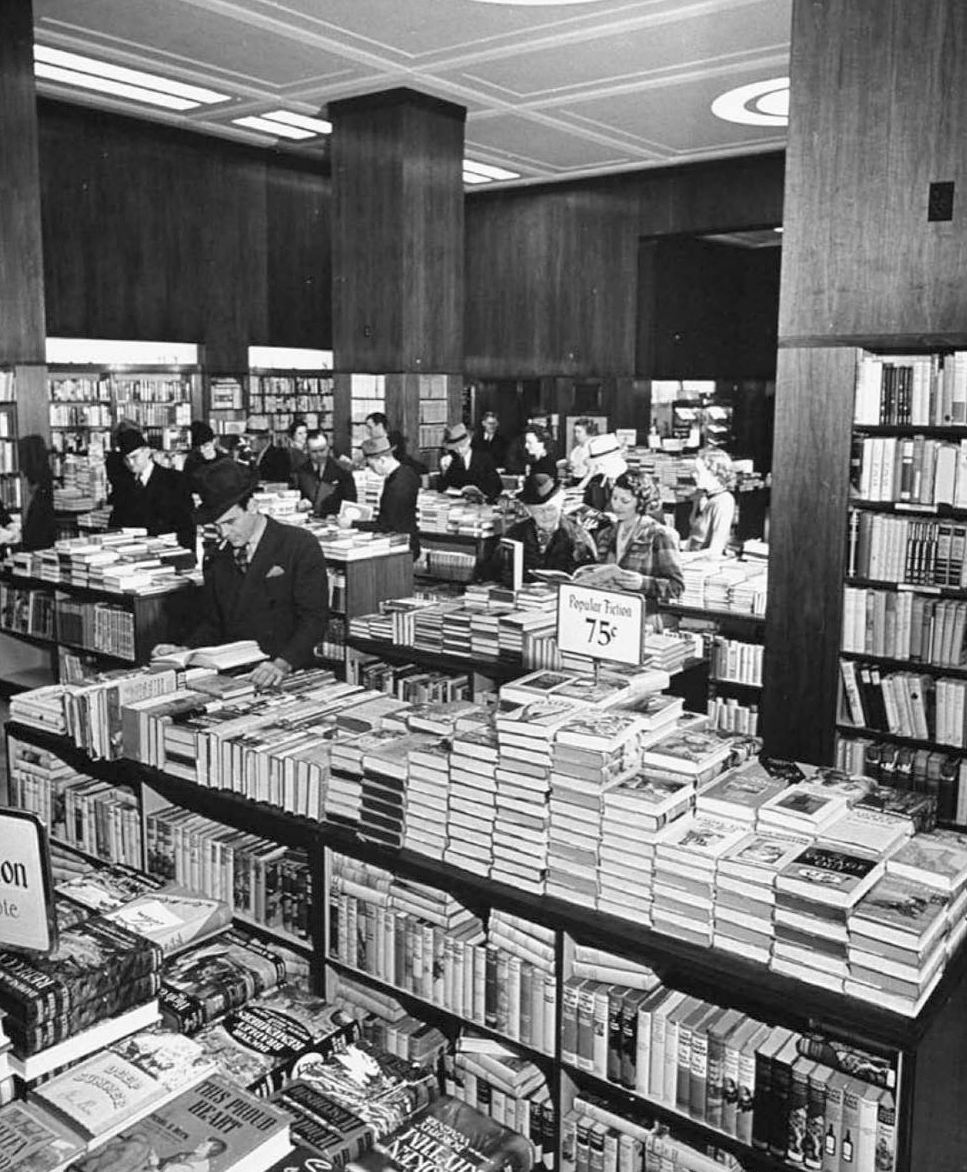
cokesbury_legaciesBrowsing at Cokesbury’s

by Paula Bosse

Today is the birthday of my late father, and as a little tribute to his profession, I usually try to post something bookstore-related on his birthday.

A few weeks ago historian Rusty Williams (check out his books) sent me a great article from 1947 by publisher and bon vivant Bennett Cerf who wrote giddily about the Dallas book scene (and about Dallas in general). It’s a little over-the-top, enthusiasm-wise (Cerf was a master publicist and promoter), but he writes with genuine affection about notable bookstores and book people, including Cokesbury and its legendary manager Bliss Albright, McMurray’s Book Store and its legendary owner Elizabeth Ann McMurray, and big-time book collectors Everette Lee DeGolyer and Stanley Marcus. The article was published in the April 26, 1947 issue of Saturday Review, and it can be read here.

Cokesbury was described as being the largest bookstore in the world at one time. After a sizable expansion, it covered six floors and had 18,000 square feet of room for books. The building, designed by Mark Lemmon, was at 1910 Main Street, at St. Paul, with entrances on both Main and Commerce. (And those rounded bookcases are cool.)

cokesbury_int

cokesbury_ext_postcard_ebay

cokesbury_1966

cokesbury_bliss-albright_1953_detManager J. F. “Bliss” Albright, 1953

The other bookstore mentioned in the article is McMurray’s, a bookstore which is generally written about with impassioned reverence and awe — it may well be Dallas’ most highly regarded bookstore ever. Wish I could have seen it. Where Cokesbury was a massively large bookstore carrying a wide variety of new books, McMurray’s was definitely more of a “curated” small shop, which, from what I gather, served almost as much of a place for literary elites to gather for informal salons as it did as a retail bookstore. If you were a writer of any heft visiting Dallas, you made the pilgrimage to Commerce Street to check out McMurray’s.

mcmurray-elizabeth-ann_1951Owner Elizabeth Ann McMurray, 1951

mcmurrays_dobie_et-al_1949Texas literary titans J. Frank Dobie & Tom Lea (in hats), McMurray’s, 1949

mcmurrays_logo

Read about the history of both Cokesbury and McMurray’s (and other Dallas bookstores) (except, oddly, the Aldredge Book Store, the store my father was associated with for decades!) in the article “The Personal Touch: Bookselling in Dallas, 1920-1955” by David Farmer, which appeared in the Fall 1993 issue of Legacies. There are some great photos.

Another informative article (with even more great photos!) is “Cokesbury Book Store: The Premiere Book Store in the Southwest” by Jane Lenz Elder, which appeared in the Fall 2012 issue of Legacies.

***

Sources & Notes

Top photo is from the Jane Lenz Elder Legacies article.

The Cokesbury postcards were found randomly on the internet.

The photos are from David Farmer’s book Stanley Marcus: A Life with Books (TCU Press).

Thanks again to Rusty Williams for sharing the Bennett Cerf article. Rusty’s newest book, Deadly Dallas: A History of Unfortunate Incidents and Grisly Fatalities, will be published in June, 2021.

More on Dallas bookstores can be found in a bunch of Flashback Dallas posts here.

cokesbury_legacies_sm

*

Copyright © 2021 Paula Bosse. All Rights Reserved.

Showtime on Elm Street

theater-row_night_majestic-melba-tower-palace_portalLit up like Broadway…

by Paula Bosse

Who doesn’t love nighttime photos of Dallas’ Theater Row, generating enough electricity to be seen from space. The Majestic, the Melba, the Palace. And a buck a night at the Majestic Hotel across the street, the window shades of which could not possibly have been enough to block out the blinding, strobing neon. This is a similar view to the fabulous photo from 1942 by Arthur Rothstein seen here. This is absolutely the period of Dallas’ history I wish I could have experienced first-hand.

***

Sources & Notes

Photo titled “[Businesses on theatre row at night]” is from the Spotlight on North Texas Collection, UNT Media Library, UNT Libraries — more information can be found on the Portal to Texas History site here.

theater-row_night_majestic-melba-tower-palace_portal_sm

*

Copyright © 2021 Paula Bosse. All Rights Reserved.
Ross Graves’ Cafe: 1800 Jackson — 1947

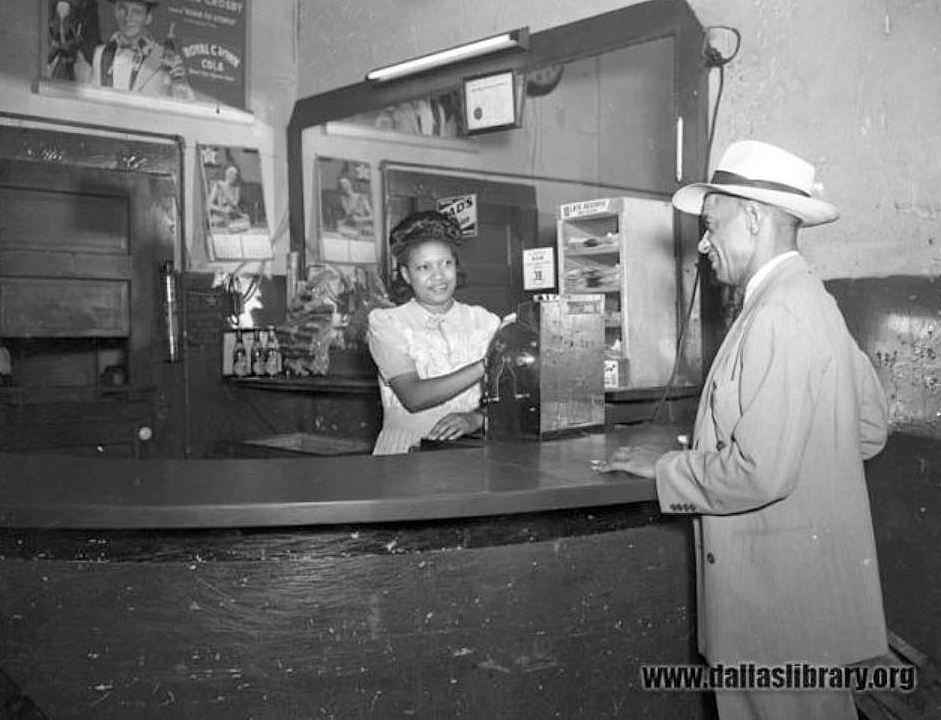
graves-cafe_marion-butts_dpl_1947_cashierGraves Cafe… (photo by Marion Butts/Dallas Public Library)

by Paula Bosse

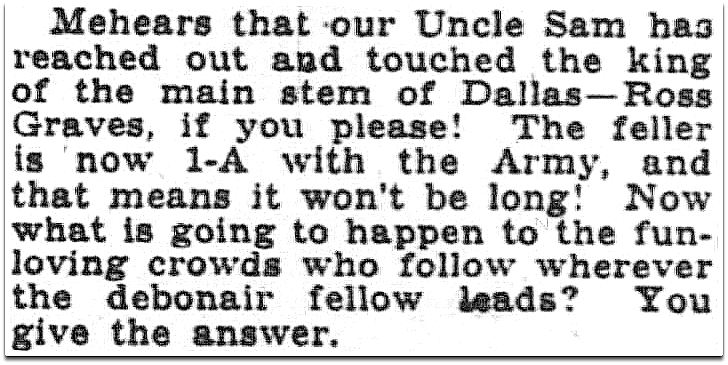
Ross Graves (1903-1973) seems to have been something of a successful bon vivant who dipped his toe into a variety of businesses catering to Dallas’ African-American community: he was the proprietor of, variously (and often simultaneously), a night club, a liquor store, a gas station, a barber shop, and, most successfully, a restaurant, which was in business for almost 20 years (sometimes referred to as Ross Cafe or Graves Place). Below is a photo from 1947 showing the Ross Graves Cafe at 1800 Jackson Street (at Prather) in downtown Dallas (we see the south side of Jackson, with the view to the west).

graves-cafe_1800-jackson_negro-directory_1947

This photo accompanied an ad with the following text:

graves-cafe_negro-directory_1947-48-text

He opened the cafe around 1937 and kept it going until 1955 when he “retired” (he also dabbled in dice-game-hosting at the cafe and was busted in 1954 on gaming charges — he was given a 2-year probated sentence the next year). (Also, the building was part of a large donation to the city in 1955 — more about that below.)

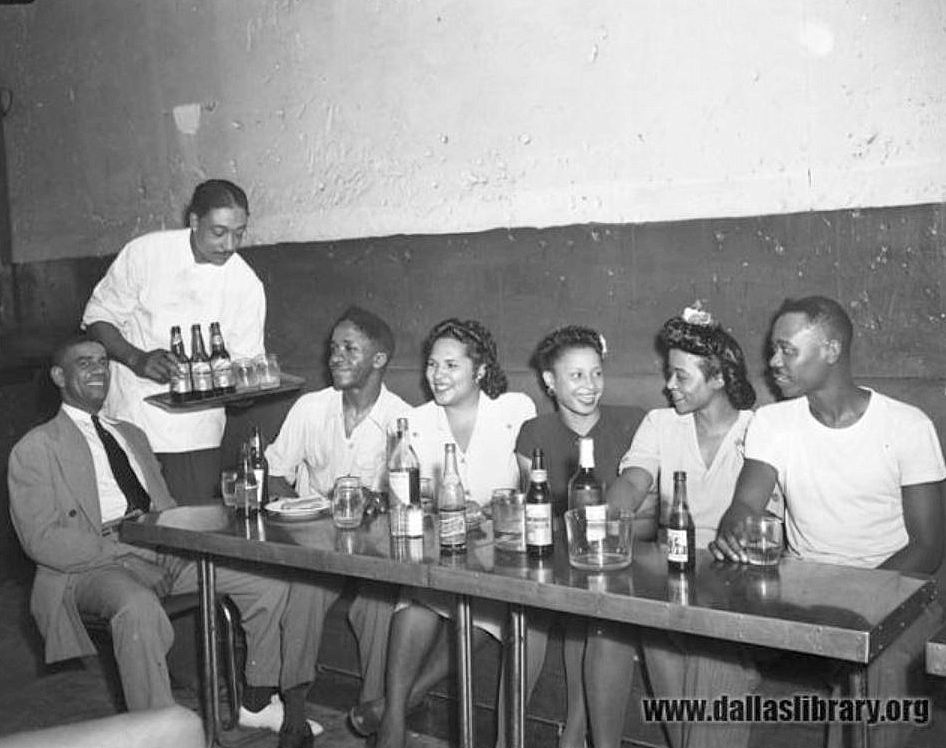
The photo at the top shows, I’m guessing, Mr. Graves standing at the cafe’s cash register with an employee in 1947. He’s also seen in the photo below.

graves-cafe_marion-butts_dpl_1947(photo by Marion Butts/Dallas Public Library)

**

I was originally intrigued by the photo of the exterior of the cafe — I couldn’t picture where it had been. But in trying to find out more about the building, I learned about the life of Ross Graves and came across some interesting little tidbits which paint a a picture of a fun-loving man with an active social life, lots of friends, and a healthy bank account. Below are a few clippings from the Pittsburgh Courier, a newspaper published in Pennsylvania which served as something of a national newspaper for Black America, with political, sports, and entertainment news from around the country. There was always news from Dallas in it — in fact, they had a local office here (3306 Roseland). There was even a Dallas-based society/gossip columnist named Mrs. O. J. Cansler (whose column had the rather unfortunate name of “Kolumn Komments”). She was quite frothy and wrote with the breathless excitement one expects in a society columnist. (I highly encourage anyone with a subscription to Newspapers.com to check out her “kolumn” — it’s a breath of fresh air to read about Dallas’ Black community presented in such a lively and fun manner (or in ANY manner, really — you weren’t going to find any of what she was writing about in the Dallas Morning News or the Dallas Times Herald). Especially interesting are mentions of long-forgotten clubs and nightspots where bands and performers from Dallas’ vibrant musical scene played. Here are a few appearances of Ross (and his wife, Ruby) from the pages of the Pittsburgh Courier.

*

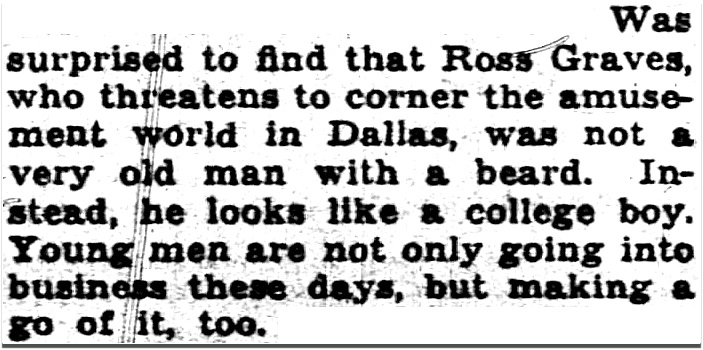
1939_graves_pittsburgh-PA-courier_111139_kolumn-komments_o-j-cansler
Pittsburgh Courier, Nov. 13, 1939

Graves was 36 years old at the time.

*

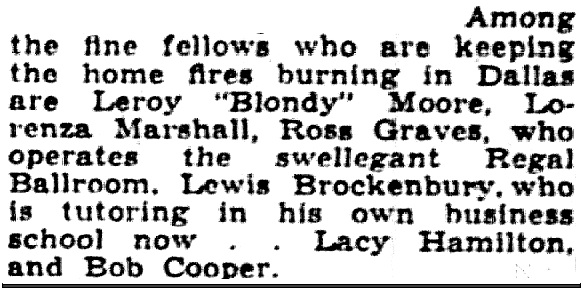
1942_graves_pittsburgh-PA-courier_080842_toppin-the-town_columnPittsburgh Courier, Aug. 8, 1942

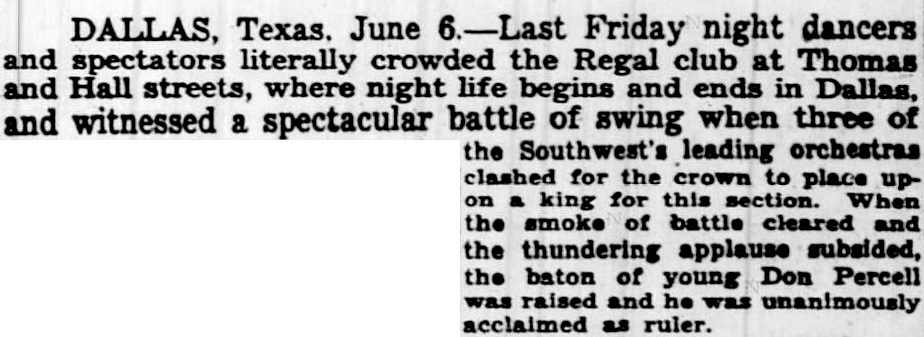
The Regal Ballroom (listed as the Regal Nite Club in city directories) was at 3216 Thomas, at Hall. It didn’t last very long, but while it did, it was, apparently, “swellegant”! Here’s a mention of it as the location of a swing band contest in 1940 (won by Don Percell):

graves_regal-club_pittsburgh-courier_060840Pittsburgh Courier, June 8, 1940

*

1942_graves_pittsburgh-PA-courier_101742_kolumn-komments_mrs-o-j-canslerPittsburgh Courier, Oct. 17, 1942

*

Graves’ second wife, Ruby Graves, was known for her “smart toggery.”

1944_graves_pittsburgh-PA-courier_101444_ruby-gravesPittsburgh Courier, Oct. 14, 1944

*

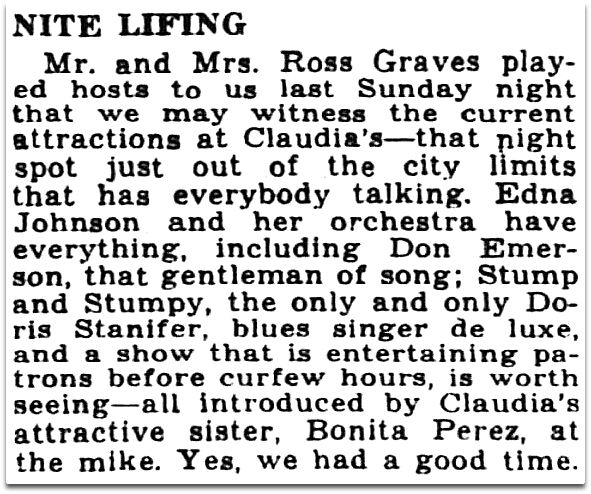
Ross and Ruby were quite the hosts:

1945_graves_pittsburgh-PA-courier_040745_kolumn-komments_mrs-o-j-canslerPittsburgh Courier, Apr. 7, 1945

I love this. This is the sort of thing you would never have read in the Morning News or the Times Herald. I want to know more about Claudia’s — “that night spot just out of the city limits that has everybody talking.”

*

graves-cafe_ad_pittsburgh-courier-051245Pittsburgh Courier, May 12, 1945

*

1946_graves_pittsburgh-PA-courier_062246_kolumn-komments_mrs-o-j-cansler
Pittsburgh Courier, June 22, 1946

Just popping up to NYC in their new Fleetwood to take in a boxing match. As one does.

**

Ross and Ruby eventually ended up living in a house on “swellegant” South Boulevard (2500 South Blvd.). At least one of their daughters was an Idlewild debutante, who made her debut in 1967 (read about the world of Black debutantes in 1937 Dallas here). Milam County native Ross Graves died on Dec. 4, 1973 at the age of 70. He had lived in Dallas for 50 years. And I bet he had a good time.

**

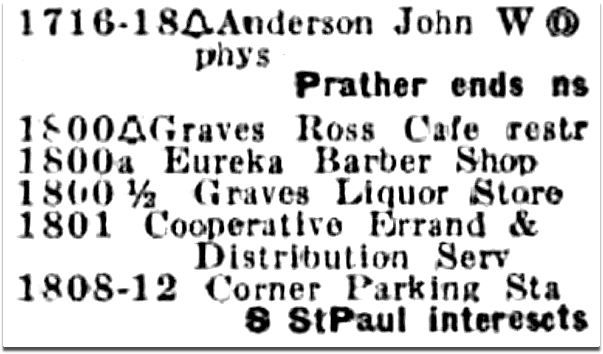
The location of Ross Graves’ Cafe was at 1800 Jackson Street, between Ervay and St. Paul, in a weird stretch of Jackson where two blocks were connected without a  break, in a row of buildings without an intersecting street. (The buildings are long gone, but the location can be seen on Google Maps here.) An interesting detail about these two blocks — the 1700 and 1800 blocks of Jackson Street — is that this property was owned by Dr. John W. Anderson, a prominent Black physician. After his death, his widow, Pearl C. Anderson, deeded the land to the Dallas Community Chest, the proceeds of which would be used to help needy Dallasites. (The donation was conservatively estimated at $200,000 at the time — about $2 million in today’s money). She donated the property in 1955, the same year Graves retired.

graves-cafe_dallas-directory-1947Jackson Street, 1947 Dallas city directory

***

Sources & Notes

Photos of the interior of Ross Graves’ Cafe are from the Marion Butts Collection, Dallas Public Library. Call Number for the top photo is PA2005-4/380.1; Call Number for the second is PA2005-4/380.2 (both are incorrectly identified as being in Deep Ellum).

The photo of the exterior of the cafe is from the Dallas, Texas Negro City Directory, 1947-1948 (many thanks to Pat Lawrence).

graves-cafe_marion-butts_dpl_1947_cashier_sm

*

Copyright © 2021 Paula Bosse. All Rights Reserved.
SMU Campus, An Aerial View from the North — 1940s

smu-campus_from-the-north_squire-haskins_UTA_nd(Squire Haskins Collection, UTA Libraries)

by Paula Bosse

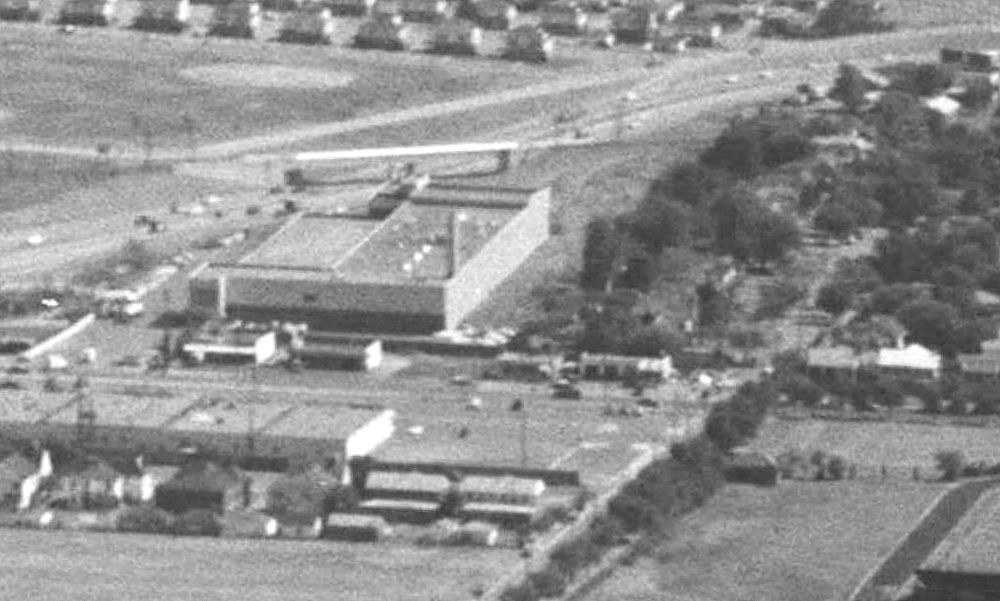
When you see aerial views of the SMU campus, they’re usually looking to the north, toward Dallas Hall. Which is one reason this photo by ace photographer Squire Haskins is interesting. It’s also noteworthy because it shows “Trailerville,” the trailer camp set up on the campus from 1946 to 1953 for married war-vet students, and it also shows the pre-fab men’s dormitories, which look like army barracks. Housing in post-WWII Dallas was was very, very tight, and people had to make do and were crammed into all sorts of spaces. (See a very large image of this photo on the UTA website here.)
For reference, Mockingbird Lane is running horizontally at the top (I was wondering if that might have been the Mrs. Baird’s bakery (built in 1953) at the top left, but it’s not far enough east), Bishop Blvd. is in the center, and Hillcrest Avenue is at the right. And there’s also a whole lot of empty land — a startling sight if you’ve seen the present-day bursting-at-the-seams campus.

Here are a few blurry close-ups. First, Trailerville (which I’ve been meaning to write about for years!) — just northeast of Ownby Stadium:

smu-campus_from-the-north_squire-haskins_UTA_nd_det-2

Men’s dorms in temporary buildings which were removed in 1952/53:

smu-campus_from-the-north_squire-haskins_UTA_nd_det-1

And something that isn’t the Mrs. Baird’s Bread factory (scroll down to see what it was):

smu-campus_from-the-north_squire-haskins_UTA_nd_det-3

*

Thanks to the comments below by reader “Not Bob,” it appears that the photo of the long building at the top left corner — on the site later occupied by Mrs. Baird’s Bread — was once an armory for the 112th Cavalry (Troop A) of the Texas National Guard. The building was originally built in 1921 as the headquarters of the Wharton Motor Company, a short-lived automobile and tractor manufacturer. It appears to have closed by 1922 and the company was bankrupt by 1924. The 112th Cavalry (with about 40 horses) moved in at the end of 1927 — they were forced to move out by the end of 1930 because of neighbor complaints (and a lawsuit) about the horses being in such close proximity to residences. By the time of the photo above, it was the Town and Country food business which rented freezer-locker space to the public. Mrs. Baird’s Bread decided to build on the site in 1949 (with the intention, presumably, to raze the existing building) — construction began in 1952 and the factory opened in 1953 (incidentally, the factory was designed by legendary Dallas architect George Dahl). (I should write about the Wharton building sometime — it has an interesting history.) 

The commenter (“Not Bob”) also linked to a similar view of the campus in 1955, post-Trailerville:

smu_from-the-north_1955_degolyer-library_SMU_cropped(DeGolyer Library, SMU)

By then, Central Expressway had been built and Mrs. Baird’s was cranking out that delicious aroma that filled the neighborhood for decades:

smu_from-the-north_1955_degolyer-library_SMU_det-mrs-bairds

***

Sources & Notes

“Aerial view of the campus of Southern Methodist University, Dallas, Texas” is by Squire Haskins, from the Squire Haskins Photography Inc. Collection, University of Texas at Arlington Libraries; more information on this photo can be found here (click thumbnail photo to see larger image).

“1955 aerial view of campus from the north” — by William J. Davis — is from the collection of the DeGolyer Library, Southern Methodist University; more information on this photo is here.

smu-campus_from-the-north_squire-haskins_UTA_nd_sm

*

Copyright © 2021 Paula Bosse. All Rights Reserved.

SMU Cartoon Timeline — 1935

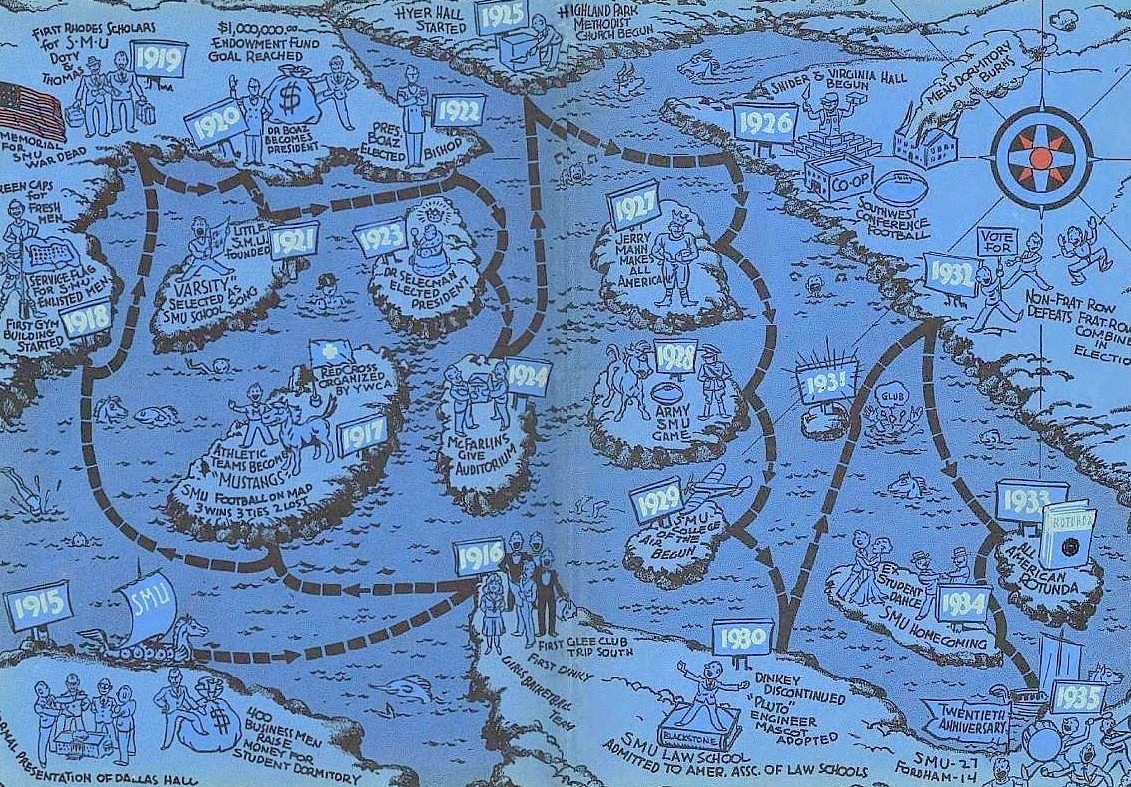
smu-timeline_1935-rotundaJust the highlights…

by Paula Bosse

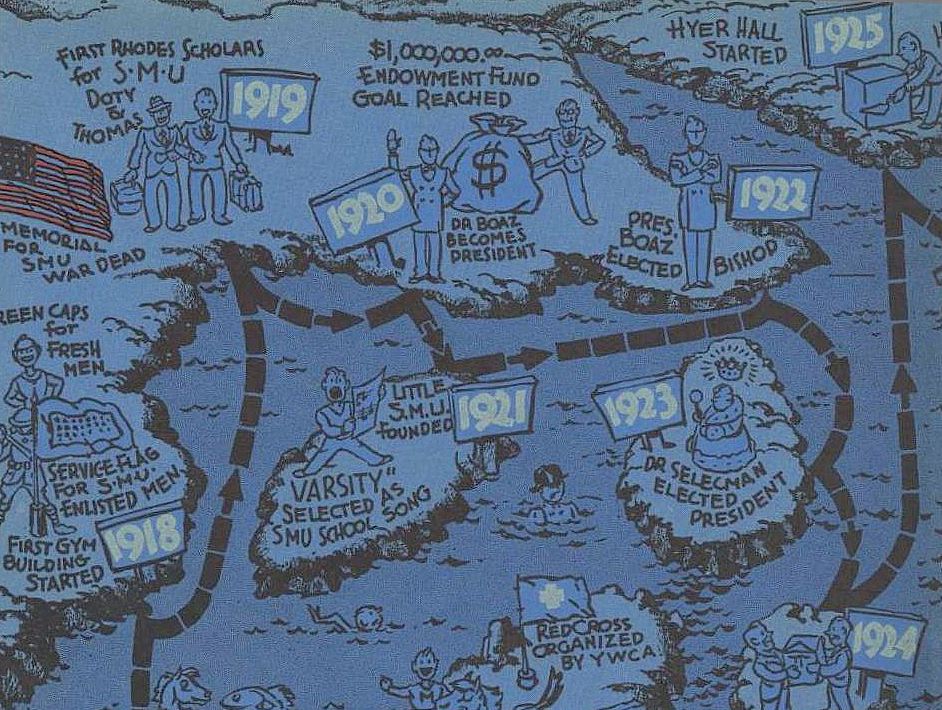
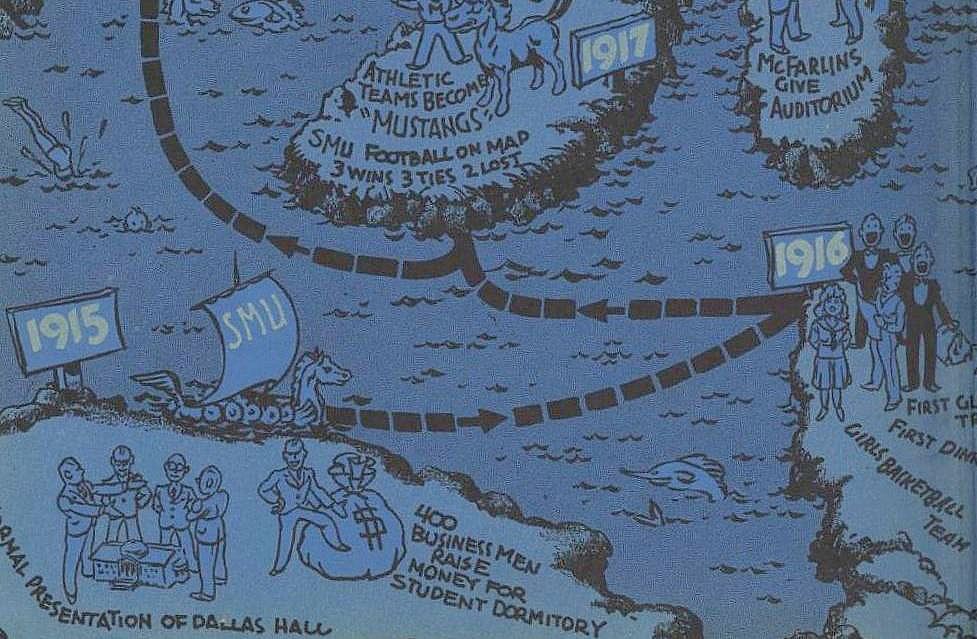
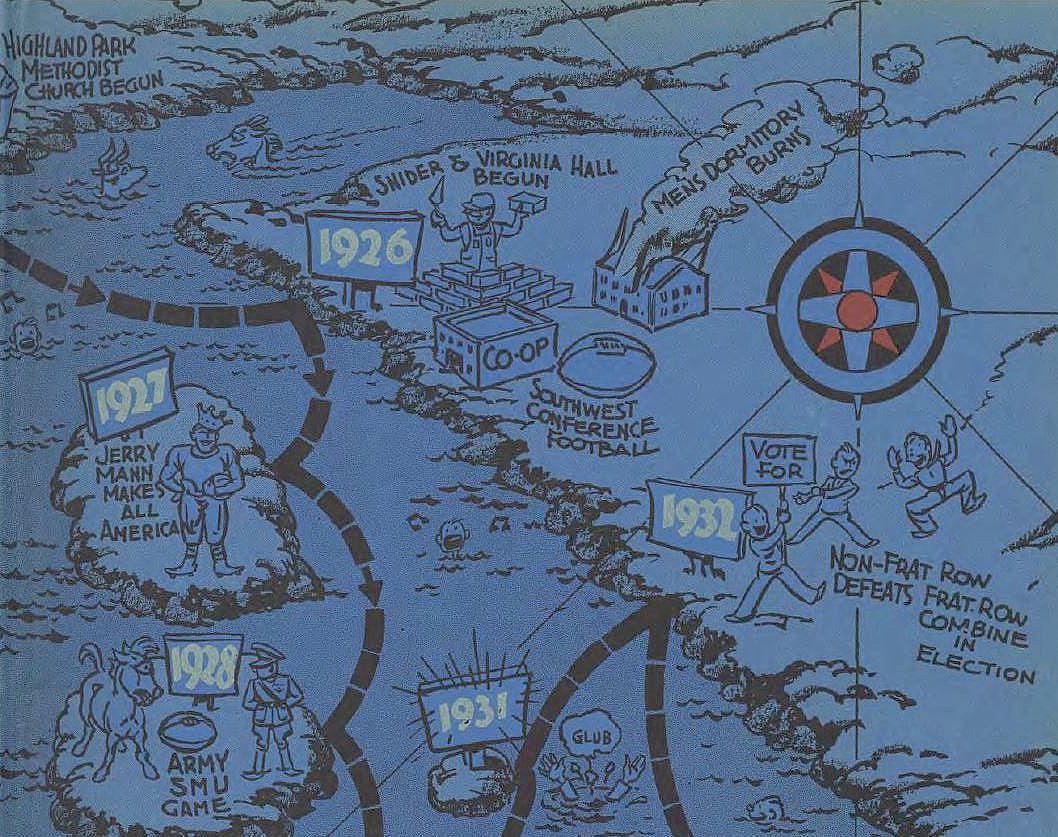
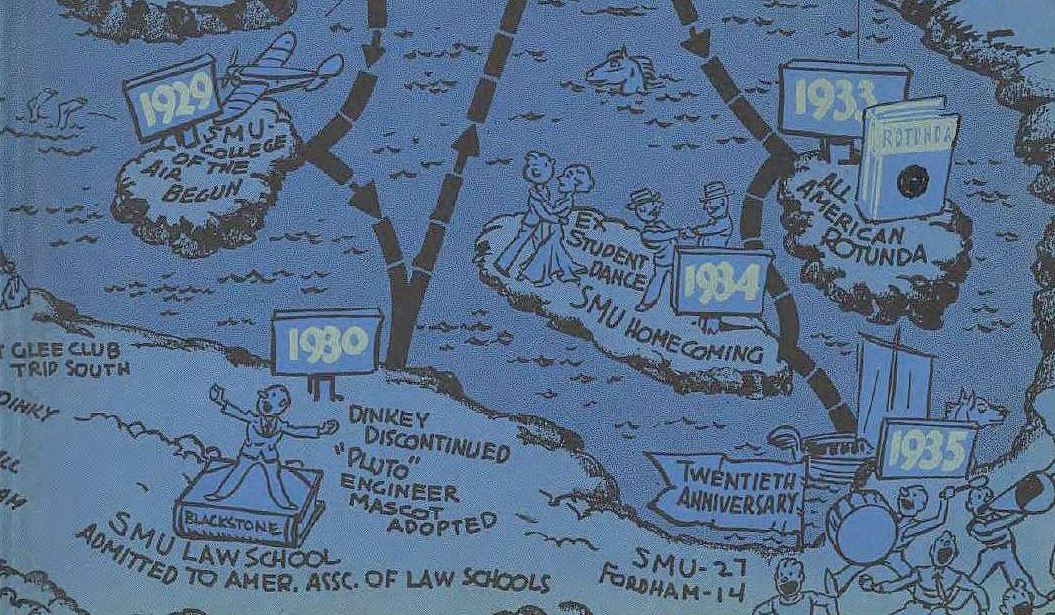
Here’s a handy little chronology of the first 20 years of Southern Methodist University’s history, found on the endpapers of the 1935 SMU yearbook, the Rotunda

Click to explore (“glub”):

smu-timeline_1935-rotunda_crop-1a

smu-timeline_1935-rotunda_crop-1b

smu-timeline_1935-rotunda_crop-2a

smu-timeline_1935-rotunda_crop-2b

***

Sources & Notes

Images from the 1935 Rotunda, yearbook of Southern Methodist University.

For more on SMU’s first year, 1915-1916, see these Flashback Dallas posts:

smu-timeline_1935-rotunda_sm

*

Copyright © 2021 Paula Bosse. All Rights Reserved.