Flashback : Dallas

A Miscellany: History, Ads, Pop Culture

Category: Neighborhoods

What’s Playing at the Palace? — 1950s

elm-street_ten-commandments_1957_flickr_coltera.JPGFilm Row: Elm & Ervay, looking west… (click for large image)

by Paula Bosse

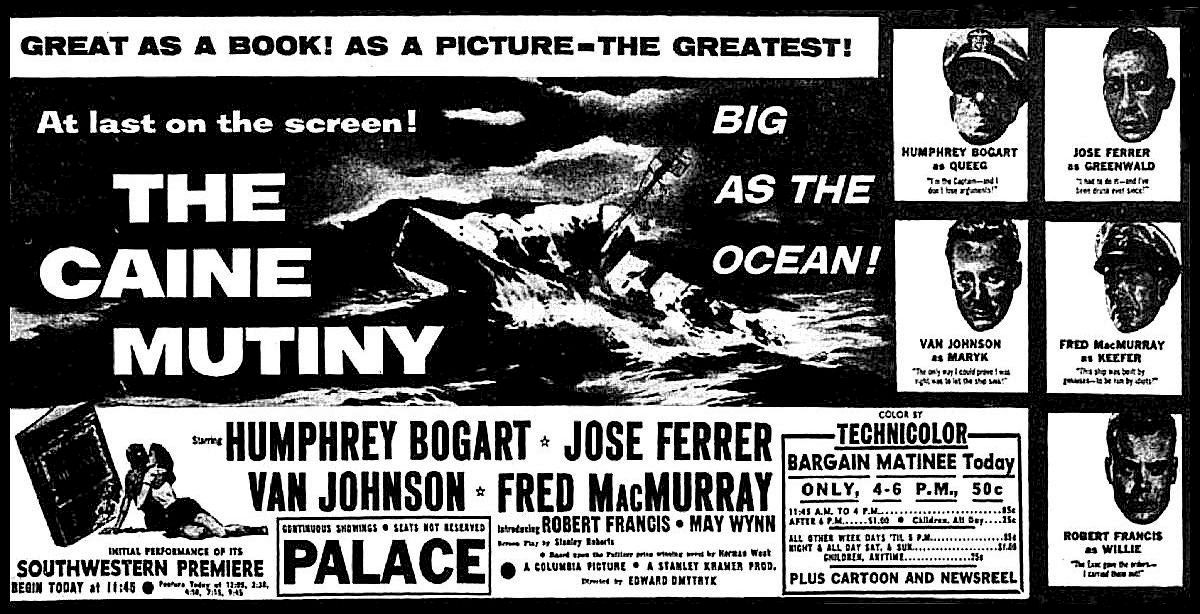
In the 1950s, the two prestige movie theaters in Dallas were the Majestic and the Palace, mainstays of “Theater Row” and just a few blocks apart on Elm Street. The Palace Theater (at Elm and Ervay, across from the Wilson Building) is seen in the two postcards featured here. The one above shows Elm Street looking west. “The Ten Commandments” is playing, placing the date that photo was taken sometime between February and May, 1957. The postcard below shows an eastward-looking view with “The Caine Mutiny” on the marquee, dating that photo to the latter half of July, 1954.

elm-street_looking_east_palace_night_flickr_coltera

“The Ten Commandments” was a huge, huge hit and ran for 11 weeks — no movie had ever run that long in the history of Dallas theaters (it had beat out the then-champ, “Sergeant York,” which had had a seven-week run at the Majestic in 1941).

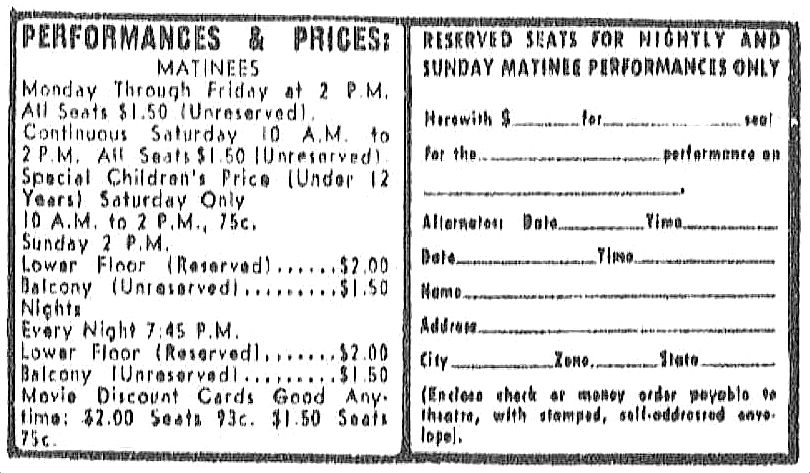
It was also one of the longest movies to ever play in Dallas. We’re talking a running time of almost 4 hours (with an intermission), something which not only tested the endurance of audiences but also severely limited the number of showings per day. It was an “event” picture, and, accordingly, prices were higher and reserved seats were offered.

ten-commandments_palace_dmn_021457_ad_det_reserved-seatsFeb., 1957

The number of people in Dallas who saw that movie at the Palace is staggering: over 100,000! Even after its run at the Palace ended, it continued to draw crowds when it moved down the street to the Tower.

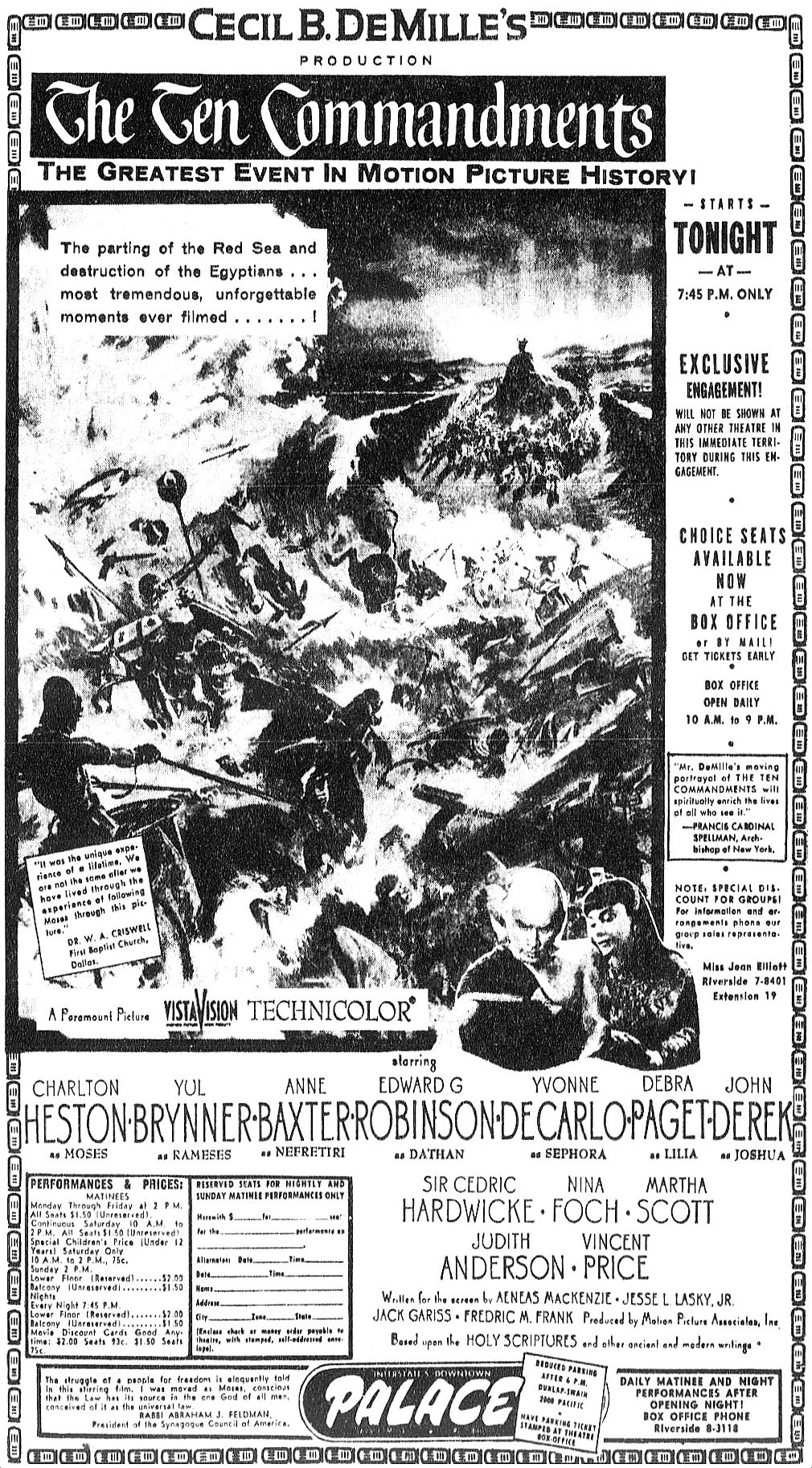
The opening-day ad for the movie:

ten-commandments_palace_dmn_021457_ad
Feb. 14, 1957

There were a couple of things I found interesting about this ad. One was that it had a blurb by First Baptist Church of Dallas’ chief Baptist,  W. A. Criswell.

ten-commandments_palace_dmn_021457_ad_det_criswell

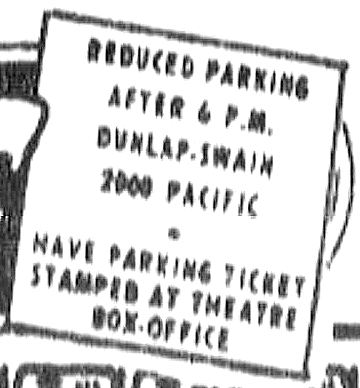
The second was that patrons could park behind the theater — on Pacific — at the Dunlap-Swain station. (Parking downtown for large crowds in those days must have been challenging —  not everyone took streetcars or, later, buses.)

ten-commandments_palace_dmn_021457_ad_det_parking

*

caine-mutiny_palace_dmn_071654_opening-nightJuly, 1954

***

Sources & Notes

Both postcards found on Flickr, posted by the unstoppable Coltera: the top one here, the bottom one here.

“The Ten Commandments” ran at the Palace Theater from Feb. 14, 1957 to May 2, 1957. The film that followed was “Boy On a Dolphin,” which featured the debut of super-sexy Sophia Loren in a U.S. movie. …Which is an interesting counterpoint.

“The Caine Mutiny” ran from July 16, 1954 to July 29, 1954.

A previous post about the Palace — “Next-Door Neighbors: The Palace Theater and Lone Star Seed & Floral — 1926” — can be found here.

Click pictures and clippings to see larger images.

*

Copyright © 2016 Paula Bosse. All Rights Reserved.


A Rainy Day at Main and Akard — 1932

main-akard_frank-rogers_011632_legacies_fall-2013Fedoras, cloches, umbrellas…

by Paula Bosse

A nice photo of a rainy day downtown, almost 85 years ago. The photo — taken on January 16, 1932 by Dallas photographer Frank Rogers — shows the intersection of Main and Akard (the people with umbrellas are crossing Akard Street, heading east). Marvin’s Drug Store (which occupied the ground floor of what was later known as the Gulf States Building) was on the northwest corner, and the A. Harris department store occupied the first five floors of the Kirby Building (originally the Busch Building) on the northeast corner — both buildings are still standing. See the view today, via Bing, here.

***

Sources & Notes

Photo from the Fall, 2013 issue of Legacies, viewable at the Portal to Texas History, here.

*

Copyright © 2016 Paula Bosse. All Rights Reserved.

The Sam Houston Zephyr Leaving Union Station, Crossing Over the Triple Underpass — 1950

zephyr_triple-underpass_1950_portalThe SHZ heading out of Dallas… (click for larger image)

by Paula Bosse

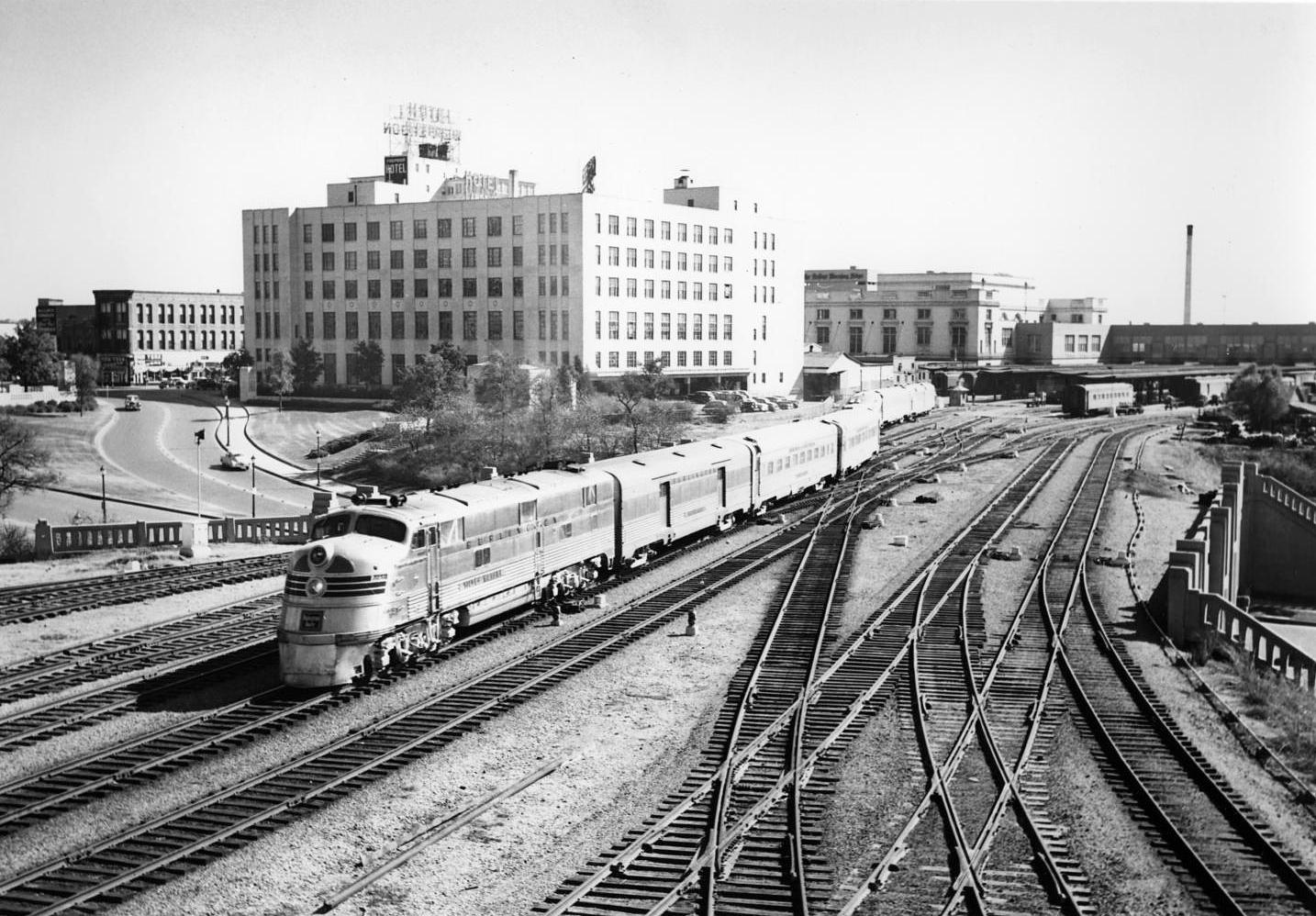
The title pretty much says it all. The Sam Houston Zephyr passenger train is seen crossing over the Triple Underpass, heading out of Dallas. Next stop: Fort Worth. The Post Office Terminal Annex is the tall white building, the Jefferson Hotel is behind it (with the sign on its roof), and Union Station is in the background, just right of center, with the Dallas Morning News building peeking over its roofline. The Old Red Courthouse would be out of frame to the left.

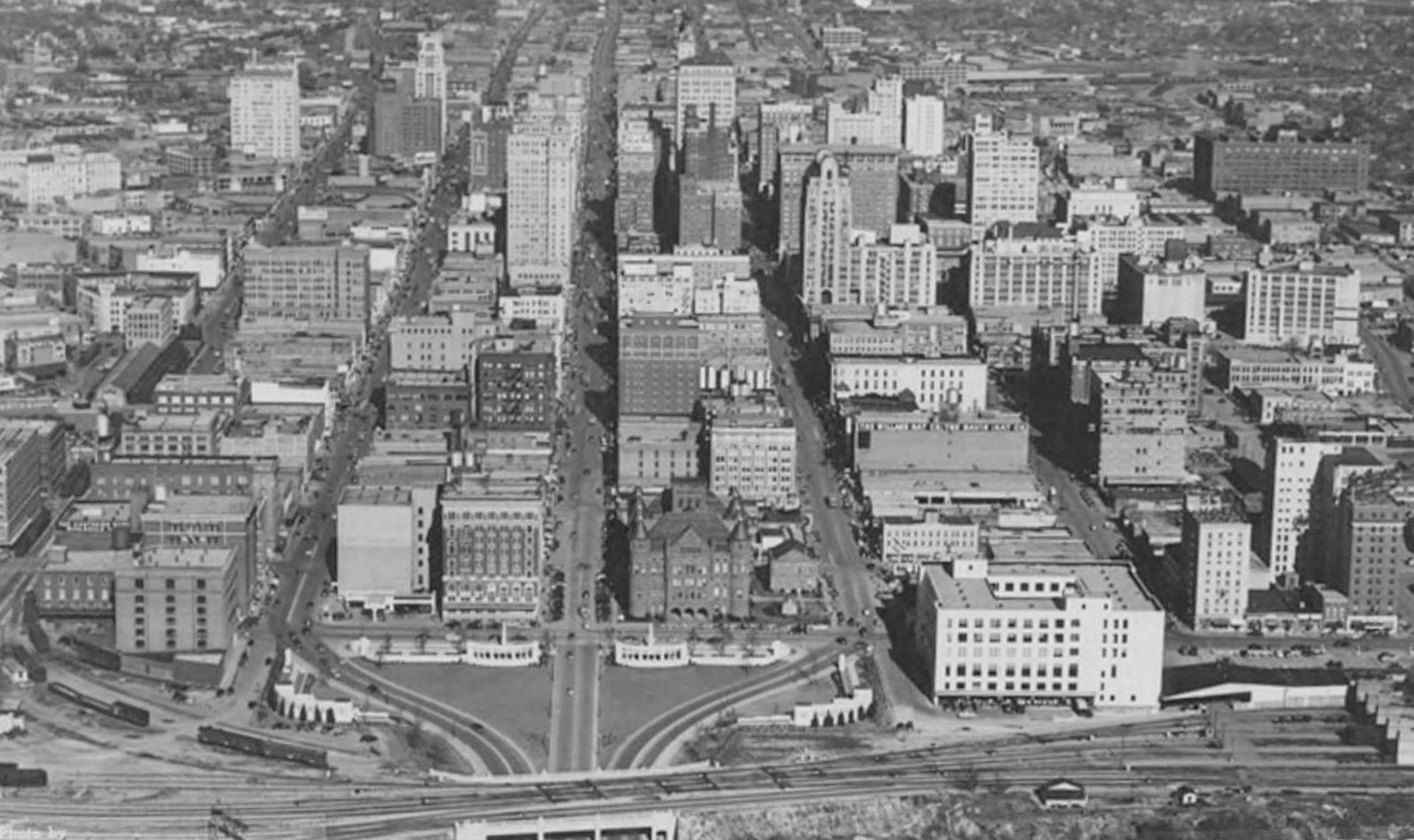
Below, a view of downtown from the west, with the Triple Underpass partially cut off at the very bottom, and Union Station just out of frame at the right.

downtown_aerial-photo-service_postcard_cook-collection_smu_cropped

In asking members of Facebook’s Texas Railroad History group about the top photo, Gerald Preas, one of the members, made this comment, full of interesting little tidbits (slightly edited by me):

The large building in the center is the USPO Terminal Annex. I started working there in August 1963. The buildings between TA and Union Station were part of Railway Express, used for sorting mail to and from RPO cars. That stack in back was the power station for Union Station — it had its own electric and water system, maybe sewage, too. I drank many times that cool sweet well-water. Notice cars around TA loading dock. I supervised that dock 1968/69 — we had to keep the area open. Now look where train is bending, people would park off ballast, but cars turning would swing out further and hit parked cars. That tree on the upper right led down grade to vacant parting lot. I was coming up that path when the President was shot.

***

Sources & Notes

Top photo shows the Fort Worth and Denver’s Sam Houston Zephyr train No. 4, northbound from Houston, leaving the Dallas Union Terminal Station, heading to Fort Worth. The photo was taken by Roger S. Plummer in 1950; photo from the Museum of the American Railroad, via UNT’s Portal to Texas History, here.

(Other photos of the Sam Houston Zephyr taken in Dallas — and one in Fort Worth — by Roger S. Plummer between 1949 and 1955 can be found on the Portal to Texas History site, here.)

Bottom image titled simply “Dallas, Texas” is an Aerial Photo Service postcard, from the George W. Cook Dallas/Texas Image Collection, DeGolyer Library, Central University Libraries, Southern Methodist University. I’ve edited the image a bit — see the original image and description here.

An aerial view of the same area today can be seen here, via Google.

A previous Flashback Dallas post on the stunningly beautiful Texas Zephyr can be found here.

Thanks to the members of the Texas Railroad History group on Facebook for their comments and help.

Both photos are larger when clicked.

*

Copyright © 2016 Paula Bosse. All Rights Reserved.


The 1957 Tornado, Seen From Old East Dallas

tornado_live-oak_040257_rusty-williams_dplThe view from Liberty & Live Oak… (click for larger image)

by Paula Bosse

Great shot of the historic Dallas tornado (which killed 10, injured at least 200, and left about 500 people homeless) as it was plowing through Oak Cliff and West Dallas on April 2, 1957, seen from the 2800 block of Live Oak.

Aside from the tornado, this is an interesting view looking toward downtown, the Medical Arts Building, and the Republic Bank Building (that rocket must have been Dallas’ tallest lightning rod at the time!). The building containing the strip of businesses at the right still stands (I love these buildings — there are a lot of them in the older parts of town) — a present-day view can be seen on Google, here. What stood out to me was a Burger House — I didn’t know of any other than the one on Hillcrest, but this one stood at 2811 Live Oak from 1950 or ’51 until about 1976.

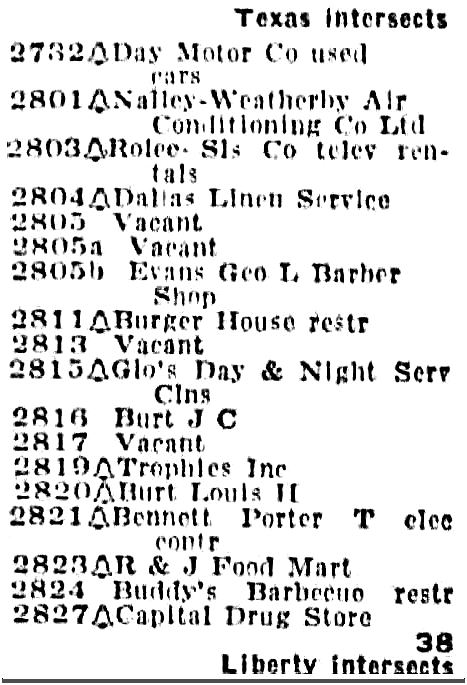
Below, the businesses in the 2800  block of Live Oak — between Texas and Liberty — from the 1956 city directory (click for larger image):

live-oak_1956directory

***

Sources & Notes

Top photo from the book Historic Photos of Dallas in the ’50s, ’60s, and ’70s by Rusty Williams (Nashville: Turner Publishing Company, 2010); from the collection of the Dallas Public Library.

Film footage of the tornado can be found in several videos on YouTube, here.

One of the newspaper reports on the tornado which captures the terror felt by those in the twister’s path and is well worth reading in the Dallas Morning News archives is “‘Roar of Thousand Trains’ Precedes the Killer Funnel” by James Ewell (DMN, April 3, 1957). Of particular interest is the story of T. M. Davisson who hid with a customer in a large empty steel tank on his property.

A previous Flashback Dallas post — “Tornado As Learning Tool — 1957” — is here.

Photo and clippings are larger when clicked.

*

Copyright © 2016 Paula Bosse. All Rights Reserved.


November 22, 1963: Will Fritz and the JFK Investigation

jfk_dpd_post-assassination_ebayThe men of the Homicide & Robbery Bureau at work (click for larger image)

by Paula Bosse

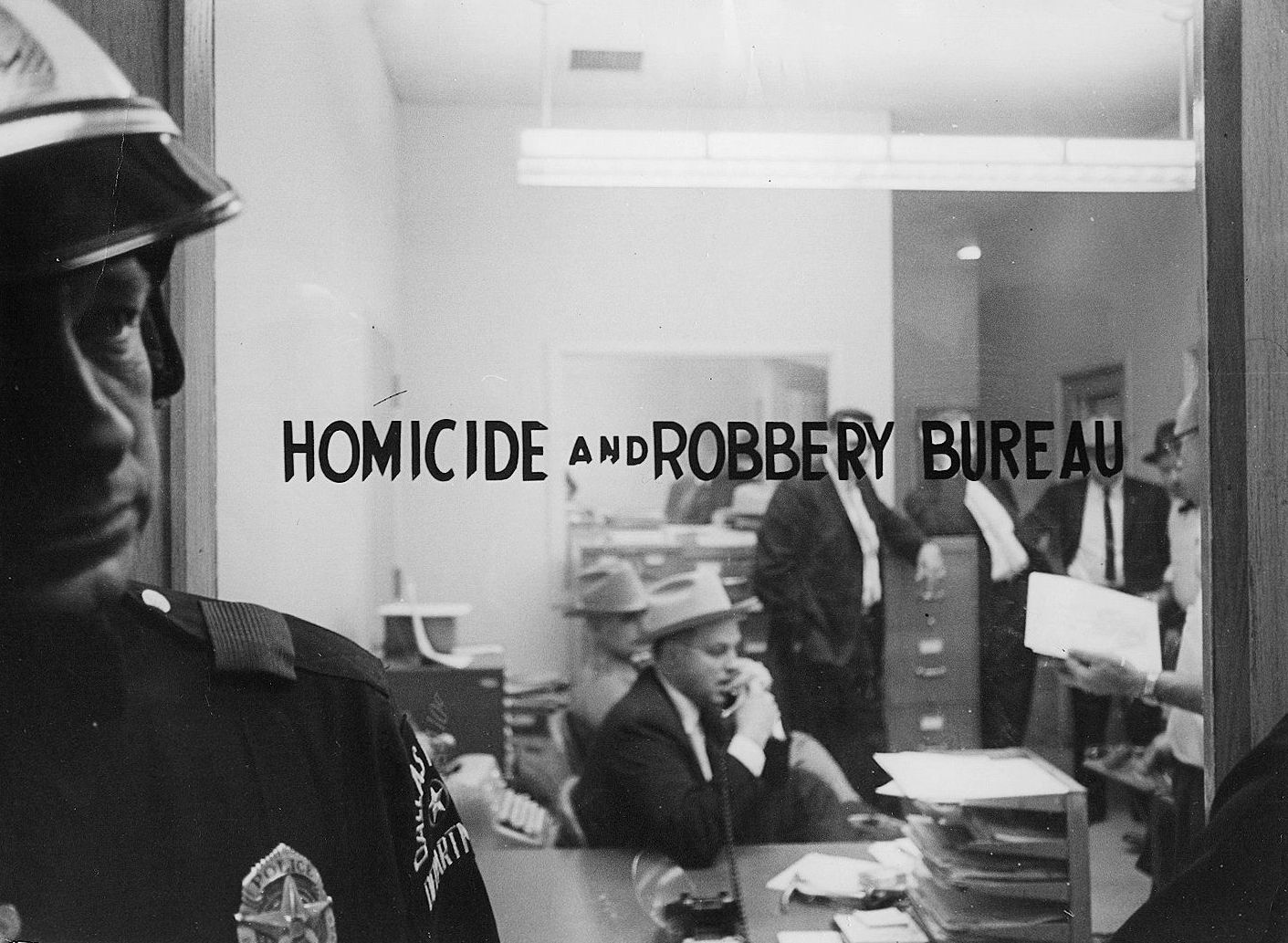
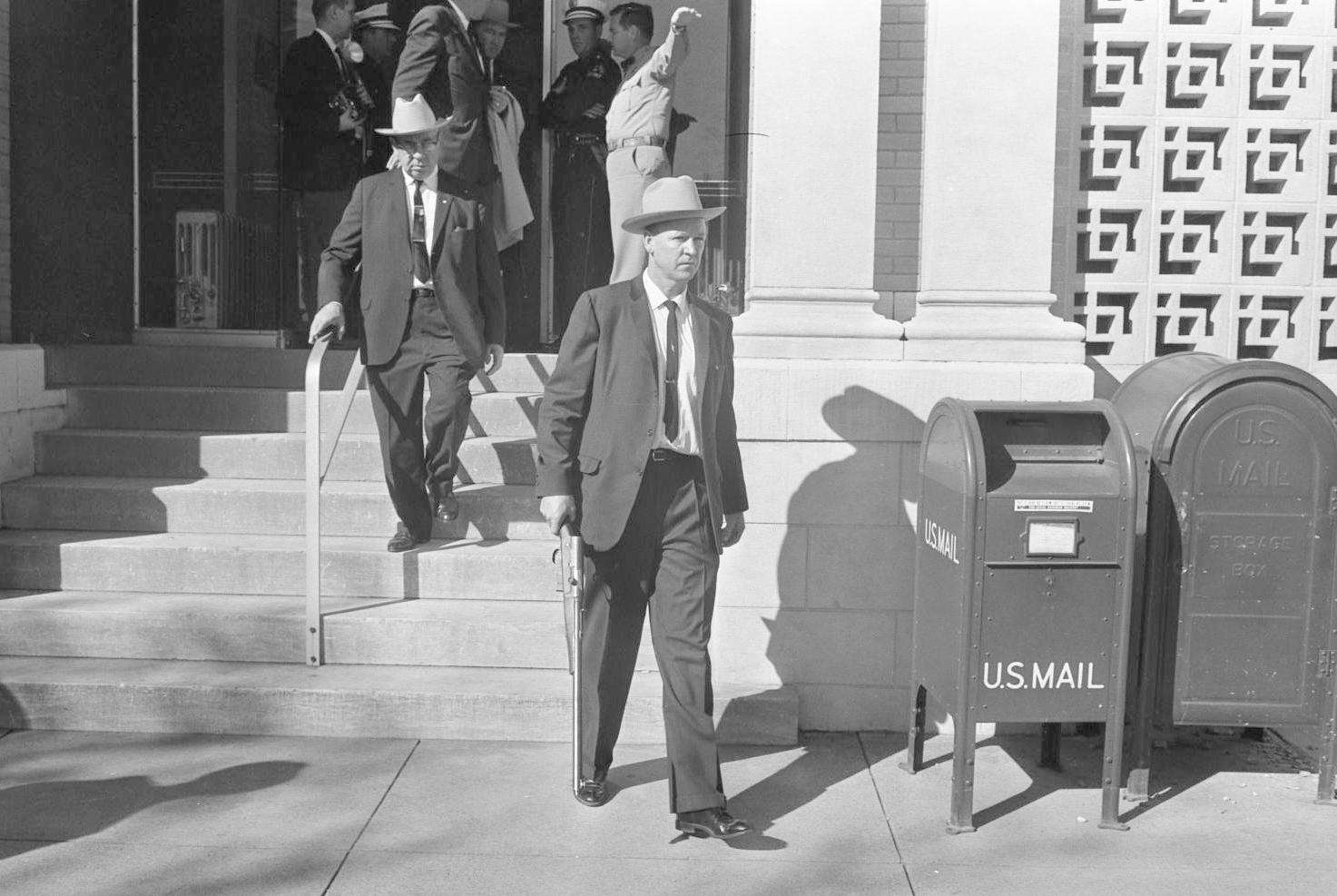
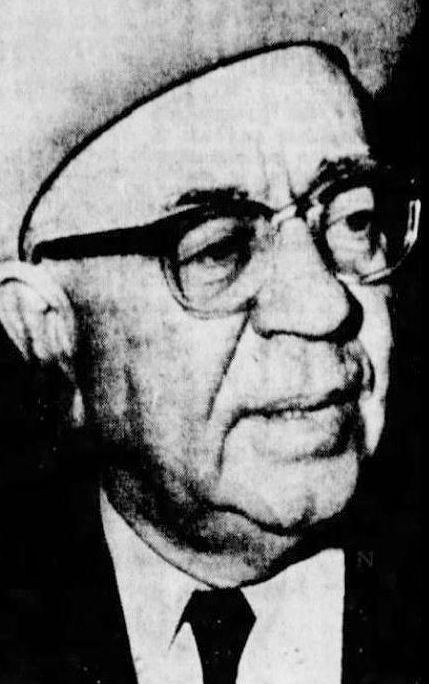
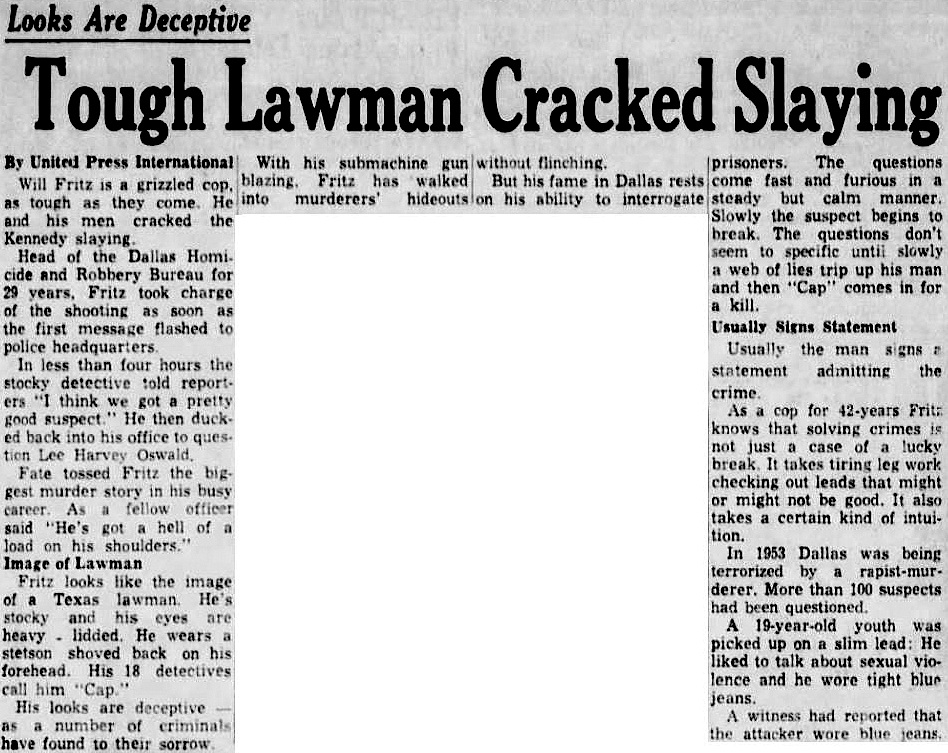
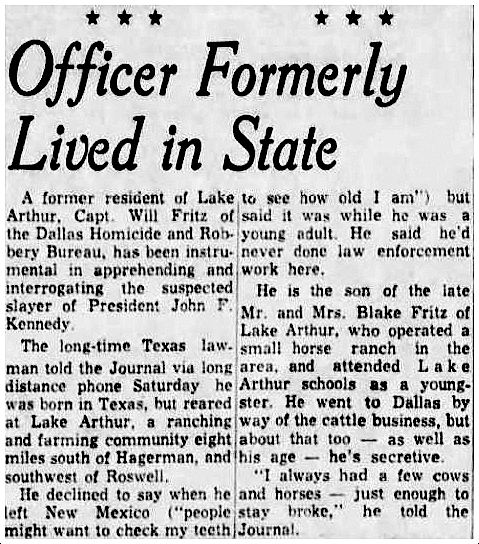
After the unthinkable had happened on the streets of Dallas — the assassination of a U.S. president — the Homicide and Robbery Bureau of the Dallas Police Department, led by Will Fritz, Captain of Detectives, sprang into action and quickly apprehended Lee Harvey Oswald as a suspect in the shooting of President John F. Kennedy. The FBI, the Secret Service, the Texas Rangers, and the whole of the Dallas Police Department worked together, but Fritz was the face of the investigation.

Will Fritz (1895-1984) was born in Dublin, Texas and grew up in New Mexico. He joined the Dallas Police Department in 1921 and remained on the force for 49 years, retiring in 1970 at the age of 74. He was considered one of the top police interrogators in the state and was a dedicated lawman — so dedicated he lived just steps away from police headquarters in the White Plaza Hotel (originally the Hilton Hotel, now the Indigo).

The success rate of Fritz’s detectives was impressive:

The record of Fritz and the Police Department’s Homicide and Robbery Bureau — which he has led since its formation — is a nationally enviable one. Over the past quarter century, he and his aides have solved roughly 98 per cent of the 54 to 98 homicides committed each year. (Dallas Morning News, March 1, 1959)

Fritz served for almost half a century with the DPD, involved in all sorts of colorful cases, but he’ll always be most remembered for the events surrounding the JFK assassination. The photo above shows his detectives at work in the Homicide office in the aftermath of the Kennedy assassination; the photo below shows him exiting the Texas School Book Depository with DPD detective Elmer Boyd (carrying rifle).

jfk_fritz_school-book-depository_112263_portal

*

*

jfk_fritz_albuquerque-journal_112463-photo

jfk_fritz_albuquerque-journal_112463a

jfk_fritz_albuquerque-journal_112463b

jfk_fritz_albuquerque-journal_112463_sidebar
Above photo and clippings from the Albuquerque Journal, Nov. 24, 1963

***

Sources & Notes

Top photo showing a Dallas police officer standing outside the Homicide and Robbery Bureau is from a 2015 eBay listing. The reverse of the photo is stamped “Paris Match/Marie Claire.”

Photo showing Fritz walking down the steps of the Texas School Book Depository, taken on November 22, 1963 by Dallas Times Herald staff photographer William Allen. It is from the Sixth Floor Museum’s Dallas Times Herald Collection, which is hosted online by the University of North Texas Libraries, via the Portal to Texas History, here (with additional information here).

More about Capt. Will Fritz from the Handbook of Texas History, here.

A really interesting profile of Fritz can be found in the 1959 Dallas Morning News article “Captain Fritz: Stays With the Case” by Don Freeman (DMN, March 1, 1959).

Other Flashback Dallas posts related to the assassination of President John F. Kennedy can be found here.

Click on photos and clippings to see larger images.

*

Copyright © 2016 Paula Bosse. All Rights Reserved.


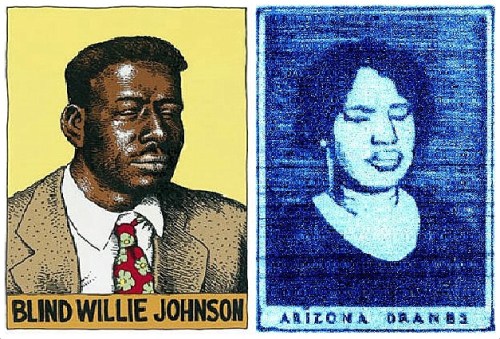
Holy Blues: Blind Willie Johnson and Arizona Dranes — 1920s

johnson-dranes

by Paula Bosse

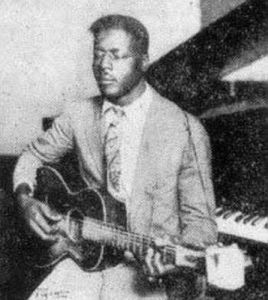
Today a little Sunday-go-to-meetin’ music, courtesy of two powerful singers who recorded at about the same time — late 1920s — and who both spent time in Dallas. Blind Willie Johnson was from Marlin, Texas, but he recorded much of his music in Dallas and regularly played street corners in Deep Ellum. Arizona Dranes, also a native Texan, lived in Dallas for several years and was, like Johnson, blind. Listening to both of them, you can hear their influence in the gospel and blues music that came after them. Read about the short life and career of Blind Willie Johnson here. Read about the life and career of Arizona Dranes from Michael Corcoran, here and here. And listen to their music below. It’s fantastic. (All of the tracks by Johnson were recorded in Dallas.)

blind-willie-johnson
Blind Willie Johnson, 1927-ish?

That guitar!

*

*

Here he is with his wife singing behind him.

*

Johnson’s song “Dark Was the Night, Cold Was the Ground” was included on the Voyager Gold Record, a collection of music chosen to represent Earth’s culture and diversity, carried into space aboard the Voyager.

*

*

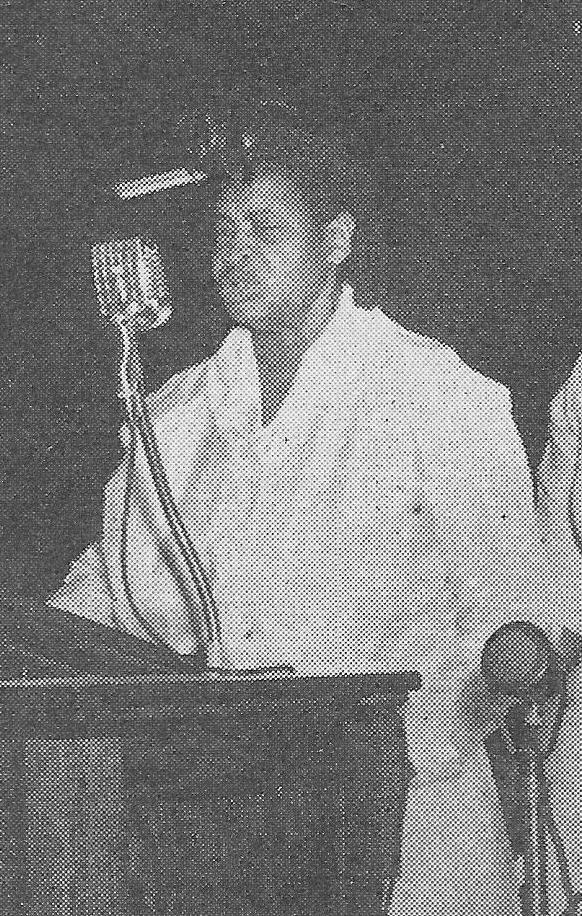
arizona-dranes_1953_corcoran
Arizona Dranes in 1953

That voice!

*

The song below starts off deceptively “plinky” but picks up considerably when Arizona starts to sing.

*

Want to know more about Arizona Dranes? Michael Corcoran can tell you what you need to know.

*

Copyright © 2016 Paula Bosse. All Rights Reserved.

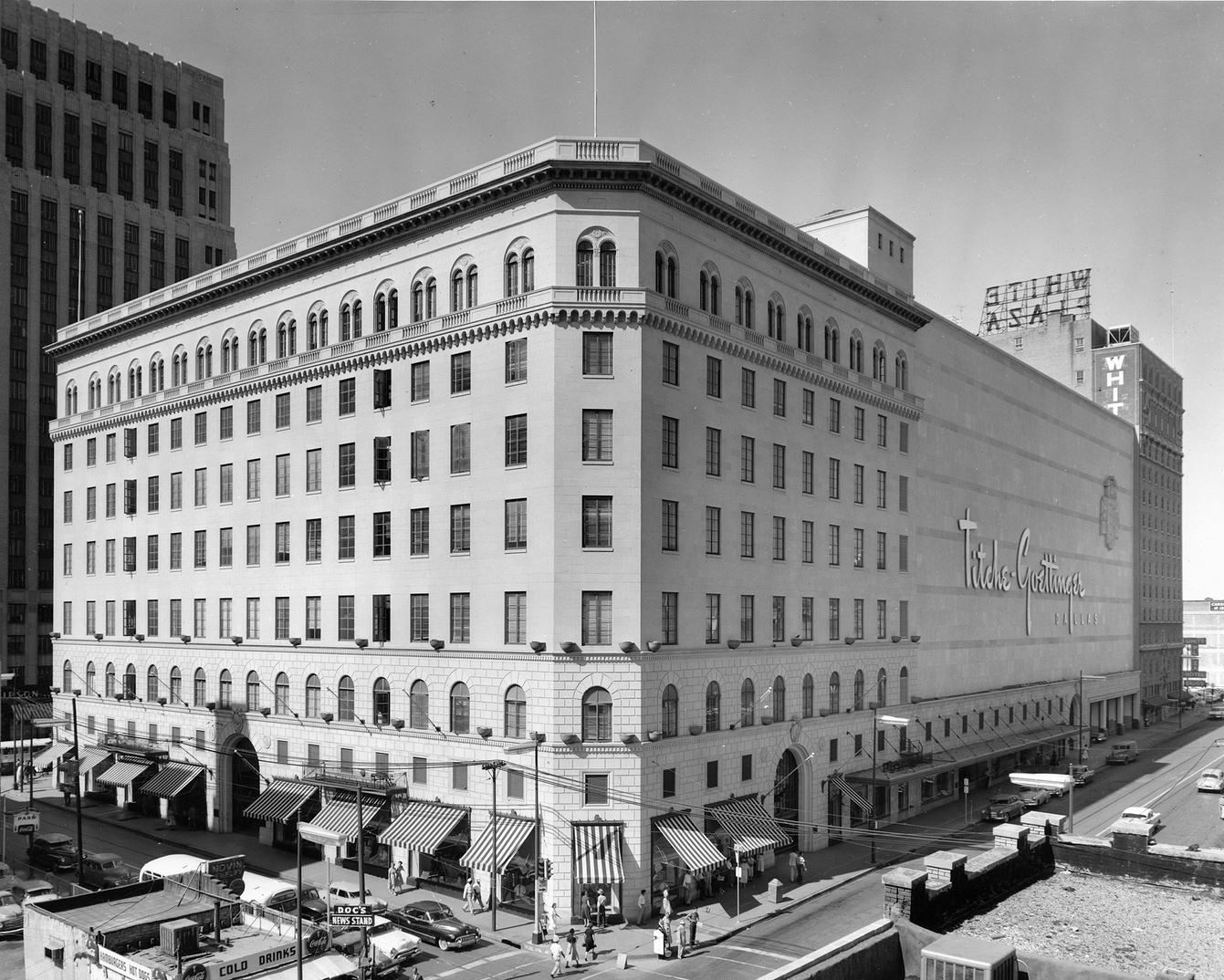
The Expanded “Texas Size” Titche’s Building: Twelve Glamorous Acres of Department Store — 1955

titches_utaDallas’ largest department store, ca. 1955…

by Paula Bosse

This photo of the Titche-Goettinger department store (Main and St. Paul) was taken soon after the store’s expansion which increased its size from 250,000 square feet to a whopping 504,000 square feet. When the greatly enlarged store introduced itself to the Dallas public at an open house in March 1955, one of the most notable things about it (for me, anyway) was the fact that 93-year-old Max Goettinger — founder of the department store in 1902, along with Edward Titche — attended the festivities.

The beautiful original building — designed by George Dahl — was built in the late 1920s and was a commanding presence at only half its later size. (Click pictures to see larger images.)

titches_night

The postcard view above has handily erased most of the other buildings in that block which one would have seen in a photograph, including the Pollock Trunk Co. and the old Hilton Hotel (later the White Plaza, currently the Indigo). A 1942 view of the block, looking west from Harwood, looked like this:

main-street-canyon_ebay

When construction of the new part of the store was completed in 1955, this new 12-acre “Texas Size” Titche’s was the largest store in Dallas, a head-spinning prospect for a city that loves to shop.

**

If you want a much more comprehensive overview of the Titche’s building — and want to see wonderful photos of the building, inside and out — I highly recommend Noah Jeppson’s Unvisited Dallas post, “Titche-Goettinger Building,” here. My favorite part? Its innovative system of pneumatic tubes!

***

Sources & Notes

Top photo by Squire Haskins, from the Squire Haskins Photography, Inc. Collection, UTA Libraries, Special Collections — more info here) (click on the thumbnail image on the page to see this photo BIG).

Read more on the expansion at the Dallas Morning News archives:

  • “Titche’s Reports Plans to Double Present Size” by Edd Rout (DMN, Sept. 7, 1952)
  • “Visitors Jam Opening of Texas-Sized Titche’s” by James A. Cockrell (DMN, March 15, 1955)

This wonderful building is still standing, modified to accommodate its current owners, the University of North Texas. Here’s how the building looks these days, via Google Street View, here.

More on the Titche-Goettinger Building on Wikipedia, here.

*

Copyright © 2016 Paula Bosse. All Rights Reserved.

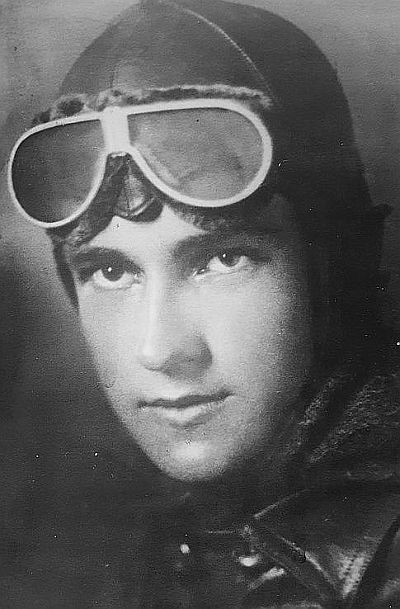
Preston Sturges: Camp Dick’s Most Famous Former Cadet? — 1918

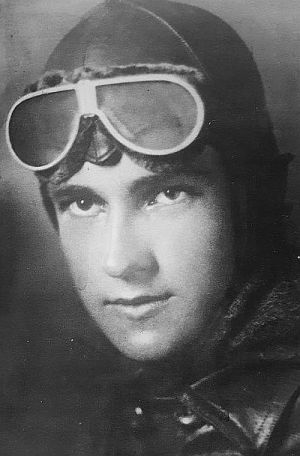
preston-sturges_camp-dick_dallas_1918
Preston Sturges playing dress-up, Camp Dick, Dallas, 1918

by Paula Bosse

While researching my Veteran’s Day post on Camp Dick cadets, I came across a 1941 Dallas Morning News article about Hollywood screenwriter and director Preston Sturges, whose latest movie The Lady Eve was about to open at the Palace. The article mentioned that Sturges had been stationed at Camp Dick, the WWI aviation boot camp for the U.S. Signal Corps, located in the old racetrack at Fair Park. Preston Sturges — a master of the screwball comedy — is one of my favorite writer-directors (in addition to The Lady Eve, everyone should watch Sullivan’s Travels), so I was interested to find out more about his time in Dallas. I didn’t think I’d find anything but a passing mention of it anywhere, but, surprisingly, it turns out Sturges himself wrote about his Camp Dick days — in a book I actually own and had started but had never finished!

Sturges was sent to Dallas in March, 1918. He was 19 years old. Born in Chicago, he had spent much of his childhood in France, tagging along with his eccentric four-times married bohemian mother who seems to have known every intellectual and artiste of the day (not only was she a close friend of dancer Isadora Duncan and Marcel Duchamp, she had also been romantically involved with Aleister Crowley — you can’t get much more bohemian than that!).

Sturges’ account of his time at Camp Dick (which appeared in Chapter 28 of the posthumously-published Preston Sturges by Preston Sturges) is amusing, describing such things as the heat (“the midday temperature of a Texas summer wasn’t really intended for human beings”), the latrines, and the food. He also remembered the nightmare of the Spanish Influenza pandemic, which was particularly deadly in the close quarters of military camps. (You can read the entirety of Sturges’ memories of his days at Camp Dick here.)

The heat was a real problem for the cadets. One of my favorite images conjured by Sturges’ chapter on the camp is this one:

Out on the parade ground, boys fell over from [the intense heat] all the time and had to be revived with cold water and a sponge. Nights we would climb up the shaky apex of the large roller coaster in the corner of the fairgrounds to try to find a breeze.

One of his memories stumped me a bit, though. He wrote the following about the buildings that stood around Fair Park:

In Dallas, we were sent to a place called Camp Dick, then known as a concentration camp. In a later war, such a facility was called a boot camp. Camp Dick was actually the Dallas fairgrounds with a fence thrown around them. Most of the buildings on the fairgrounds were huge reproductions of the products for sale within them in the prewar days when the fair was open. There was a building in the shape of a gigantic Mazola bottle; another like a huge Gulden’s mustard pot; an enormous Log Cabin Syrup edifice; a massive chili bowl; buildings representing almost anything edible or potable that one could think of….

My last memory of Camp Dick is of standing retreat against the hot sunset, the cadets at attention against the silhouetted background of the massively enlarged Sanka coffee pot, Bromo Quinine bottle and Coca-Cola bottle buildings, and in front of us Lieutenant Pennypacker, more or less at ease on the back of the fiery steed presented to him by the grateful citizens of Dallas.

I’ve never heard of any Fair Park buildings shaped like these things. (There was that giant cash register at the Texas Centennial….) Perhaps Mr. Sturges misremembered? Or indulged in a little fanciful poetic license? Or maybe these buildings DID exist? (And if they did, I’d love some corroboration, ’cause that would be cool.)

Sturges was at Camp Dick only a few months. From there he was sent to the School of Military Aeronautics in Austin and then to Park Field in Millington, Tennessee. He was in the middle of flight training there when, anti-climactically, the war ended. After several years of working in a family business, he became a successful Broadway playwright and was soon whisked off to Hollywood, where, in 1940, he won the first Oscar ever awarded for screenwriting (The Great McGinty). He was considered then — and is considered now — to be one of Hollywood’s greatest comedic screenwriters.

If you’d like to read Preston Sturges’ memories of training at Camp Dick, mosey on over here. Among other tidbits, you’ll read the amusing story behind the be-goggled photo of Cadet Sturges at the top of this post.

***

Sources & Notes

The romanticized photo at the top (the one Sturges wrote about in the book) was taken at Camp Dick in 1918. The quoted passage is also from the book, Preston Sturges by Preston Sturges, His Life In His Own Words, adapted and edited by Sandy Sturges (New York: Touchstone/Simon & Schuster, 1991). I highly recommend getting this book if you’re a fan of classic Hollywood. You can browse through it on Google Books, here, and purchase it here.

More on Sturges at Wikipedia, here.

Dive deeper: another photo of Sturges taken in Dallas in 1918 appeared in The Dallas Morning News on March 27, 1941, titled “At Camp Dick” — it shows a smiling Sturges sitting in a “dummy pilot seat.” If the photo was taken at Camp Dick, the unnamed photographer must have taken “action shots” as well as portraits of the camp’s cadets which Sturges wrote about in his autobiography. (Sturges writes in his amusing story that none of the cadets had ever been near a plane at that point, but they all wanted to be seen as dashing goggle-and-scarf-wearing flying aces.)

*

Copyright © 2016 Paula Bosse. All Rights Reserved.

Children and Cadets: Junior Red Cross Parade — 1918

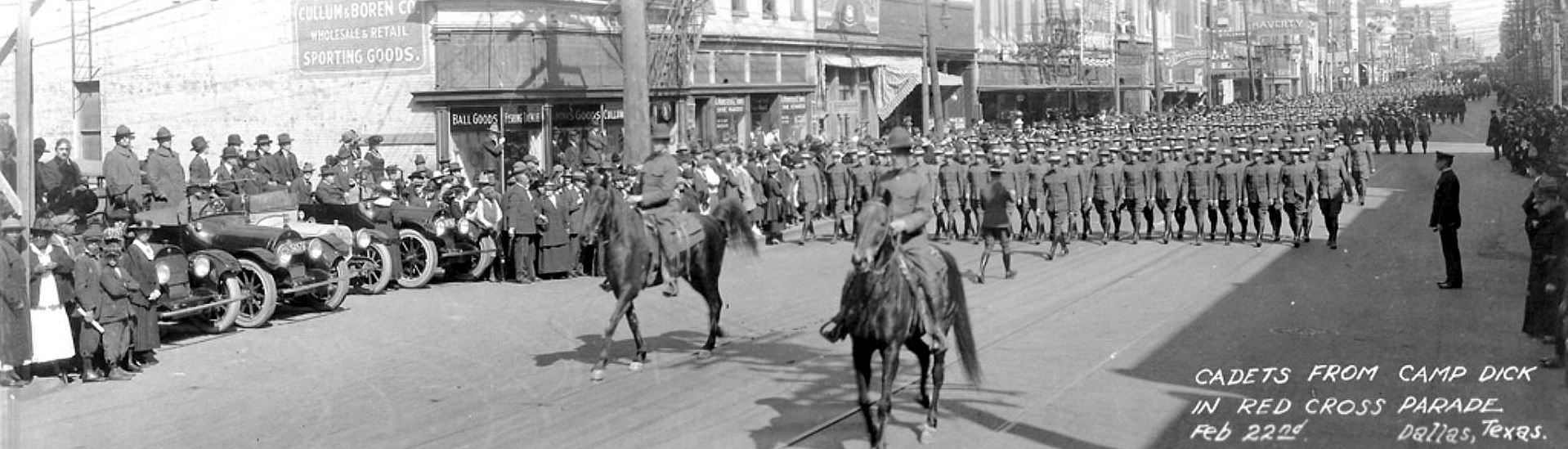
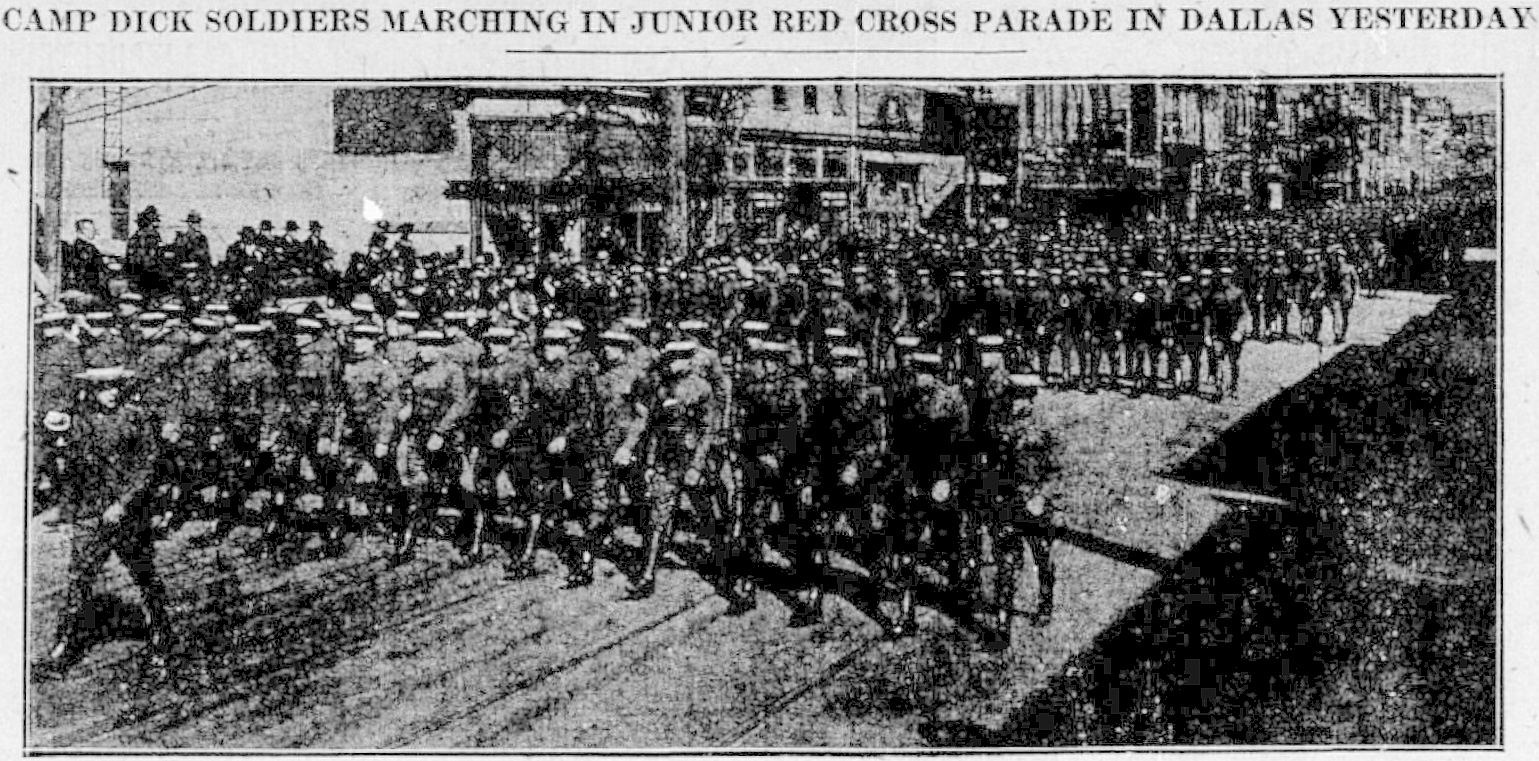
wwi_jr-red-cross-parade_022218_camp-dick-soldiers_waruntold-siteCadets from Camp Dick march down Elm… (click for larger image)

by Paula Bosse

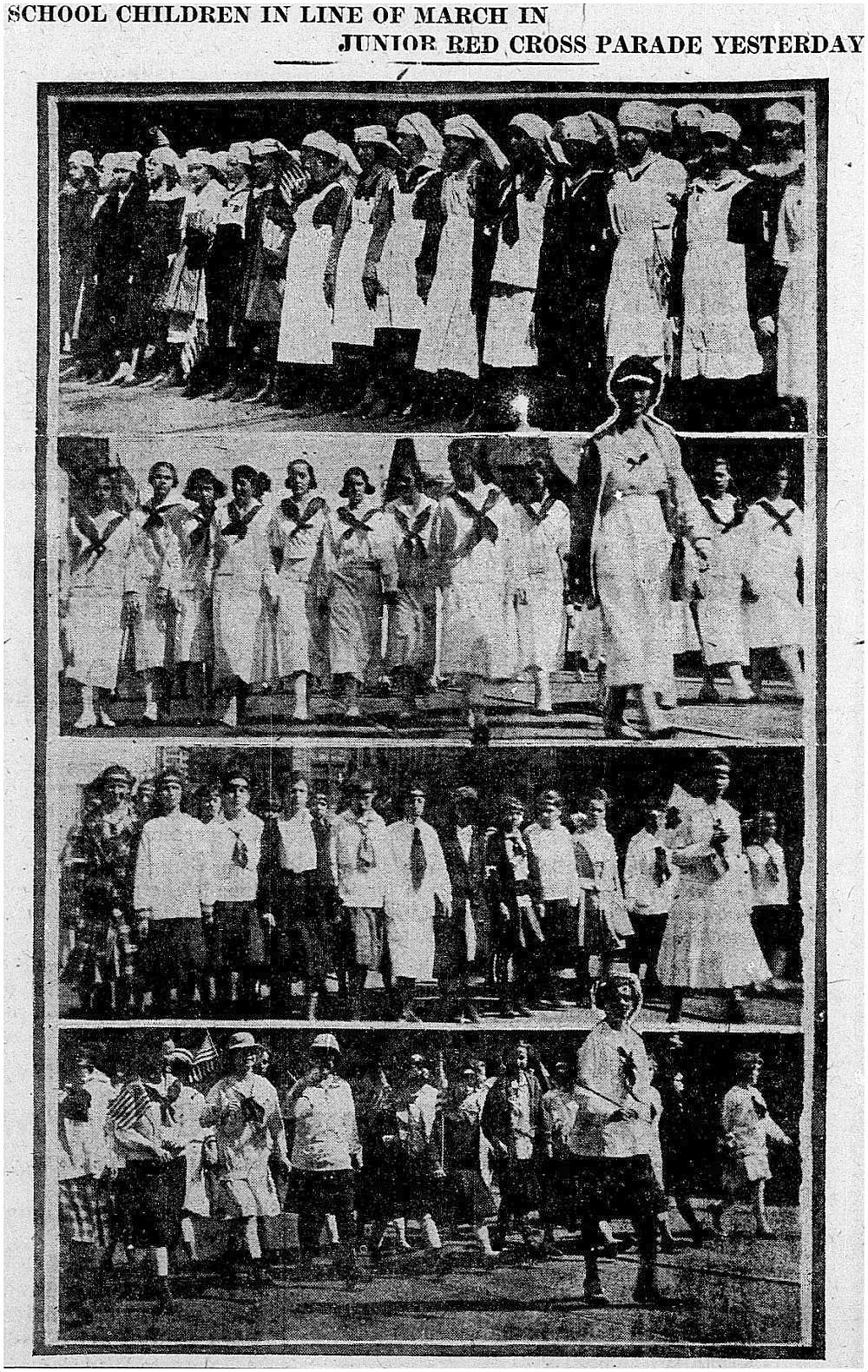
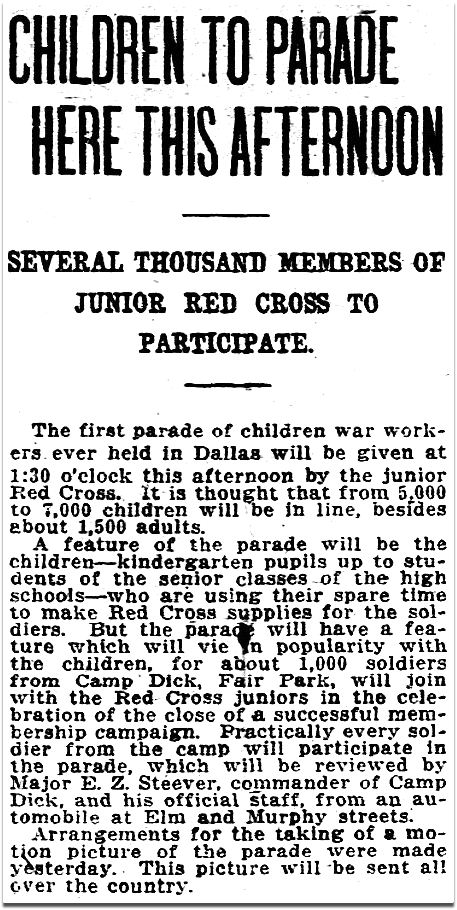
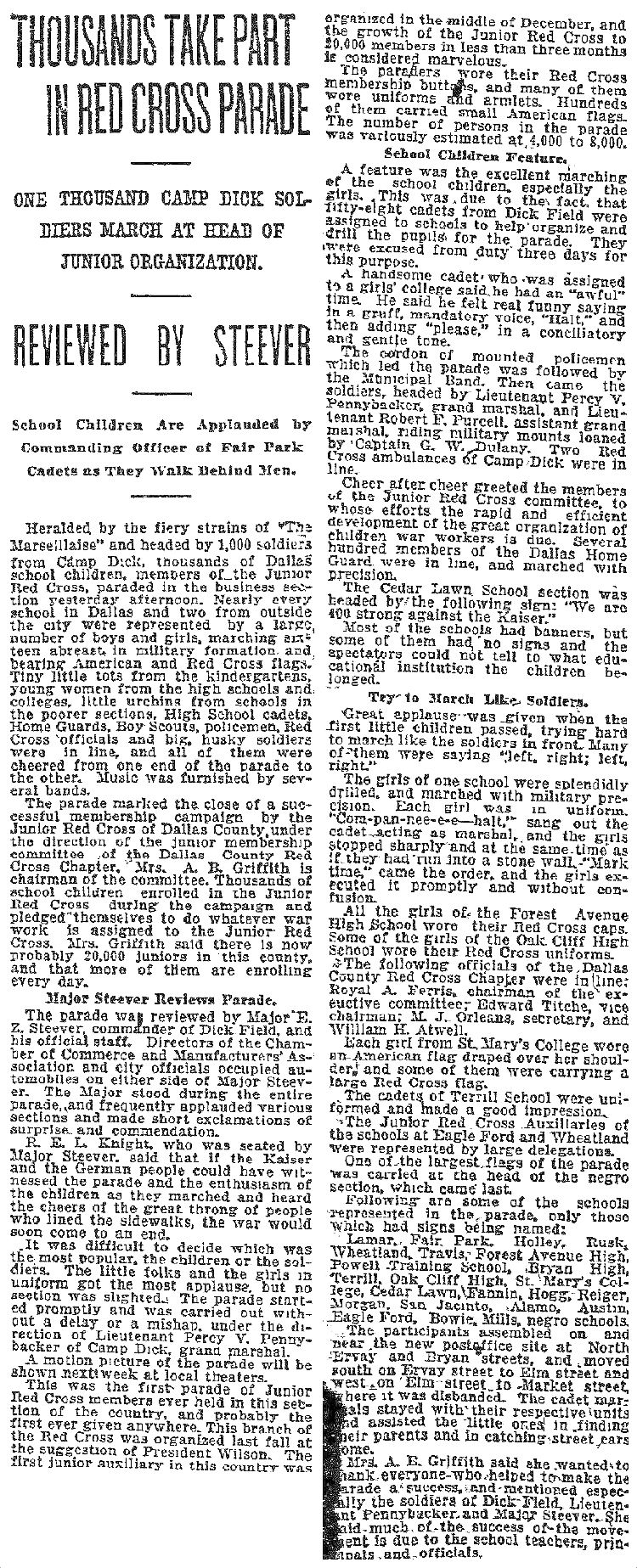
Today is Veteran’s Day, a national day of observance which originally began as Armistice Day in 1919 to mark the end of hostilities in World War I. I was thinking of posting something non-WWI-related, but I stumbled across this wonderful photo showing a WWI-era parade down Elm Street and couldn’t pass up the opportunity to share it. The parade was comprised almost entirely of children who had contributed to the war effort through the Junior Red Cross. The parade was described as “the first parade of children war workers ever held in Dallas.” The number of children (said to represent every school in Dallas) was estimated at up to 8,000 marchers, from kindergarteners to high school seniors.

The parade — which took place on February 22, 1918 — also featured 1,000 or so men based at Camp John Dick, the Air Service training camp at Fair Park. Seeing this parade must have been quite a novelty for Dallasites, as cadets had begun to arrive at Camp Dick only 16 days previously (airmen had been stationed at Love Field a little longer, but only by a couple of months).

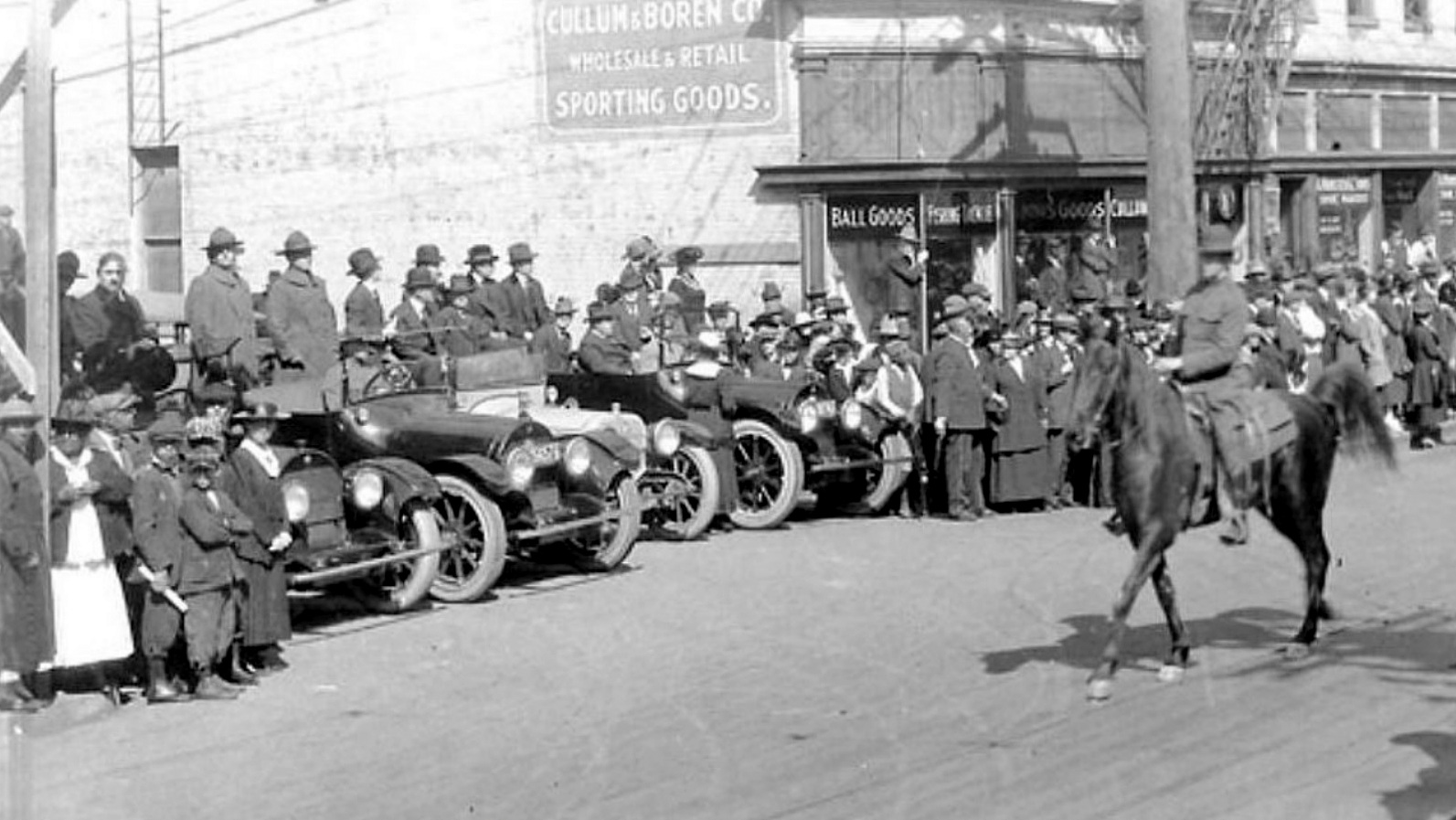
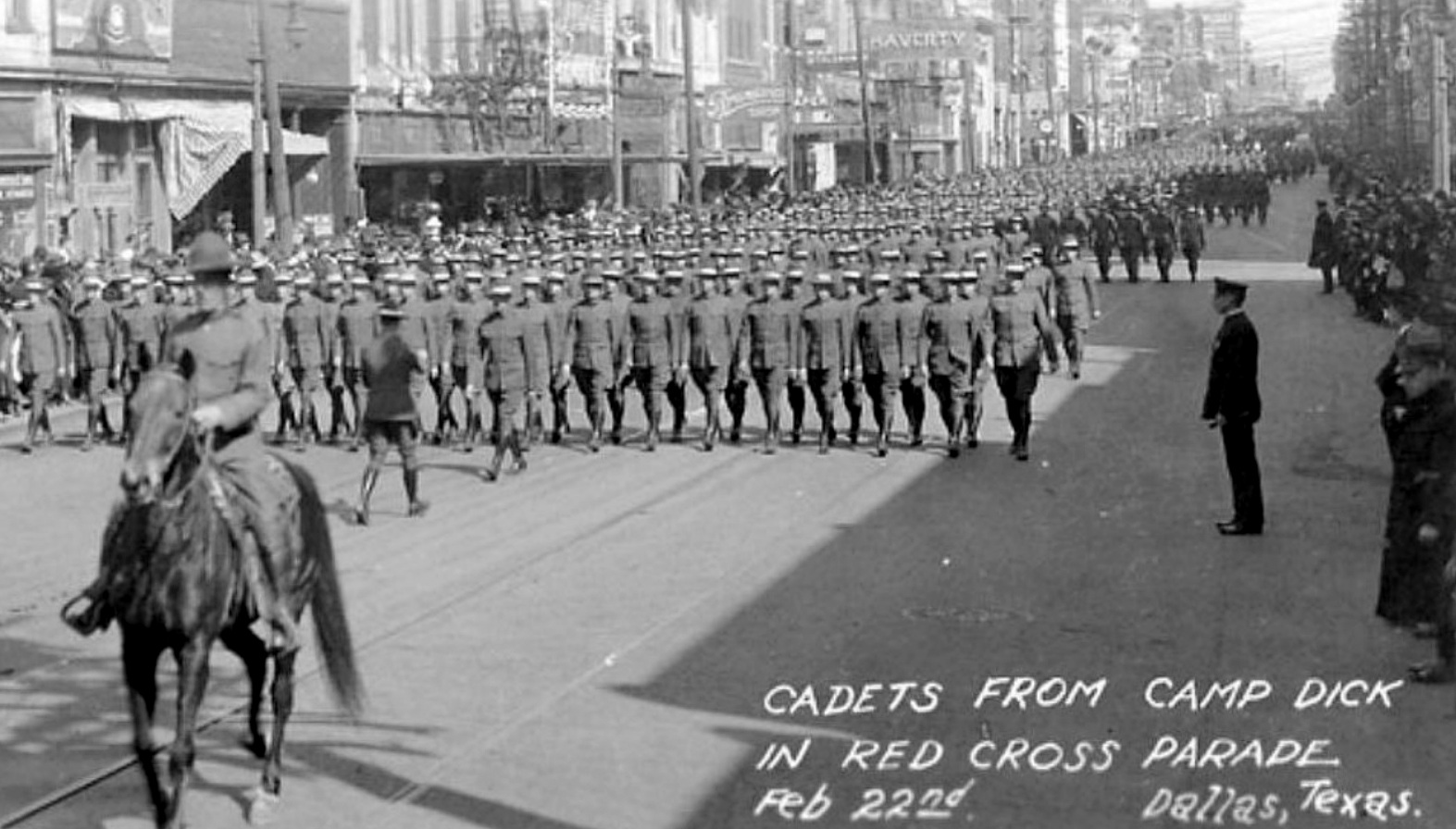
Below, I’ve taken the photo from the top and broken it into two halves and then magnified them. The parade was heading west on Elm Street and can be seen here passing Cullum & Boren (1509-1511 Elm), a downtown sporting goods mainstay just a few doors east of Akard. (See a similar view of Elm Street from later that year — in September — from a Dallas Times Herald photo, here.)

wwi_jr-red-cross-parade_022218_det1

wwi_jr-red-cross-parade_022218_det2

And the children.

wwi_jr-red-cross-parade_dmn_022318Dallas Morning News, Feb. 23, 1918

wwi_jr-red-cross-parade_dmn_022218
DMN, Feb. 22, 1918

wwi_jr-red-cross-parade_dmn_022218_camp-dick-soldiers

wwi_jr-red-cross-parade_dmn_022318
DMN, Feb. 23, 1918, photo and article

***

Sources & Notes

Top photo titled “Cadets From Camp Dick in Red Cross Parade, Feb. 22nd, Dallas, Texas” found on the site War Untold, The Collection of Andrew Pouncey, here (click “continue reading” at  bottom of post).

More on the Camp John Dick Aviation Concentration Camp from The Atlantic in the article “What America Looked Like: Bayonet Practice During WWI” (with a great photo), here.

Other Flashback Dallas WWI-related posts here:

Armistice Day Wikipedia page is here.

All pictures and clippings are larger when clicked.

*

Copyright © 2016 Paula Bosse. All Rights Reserved.


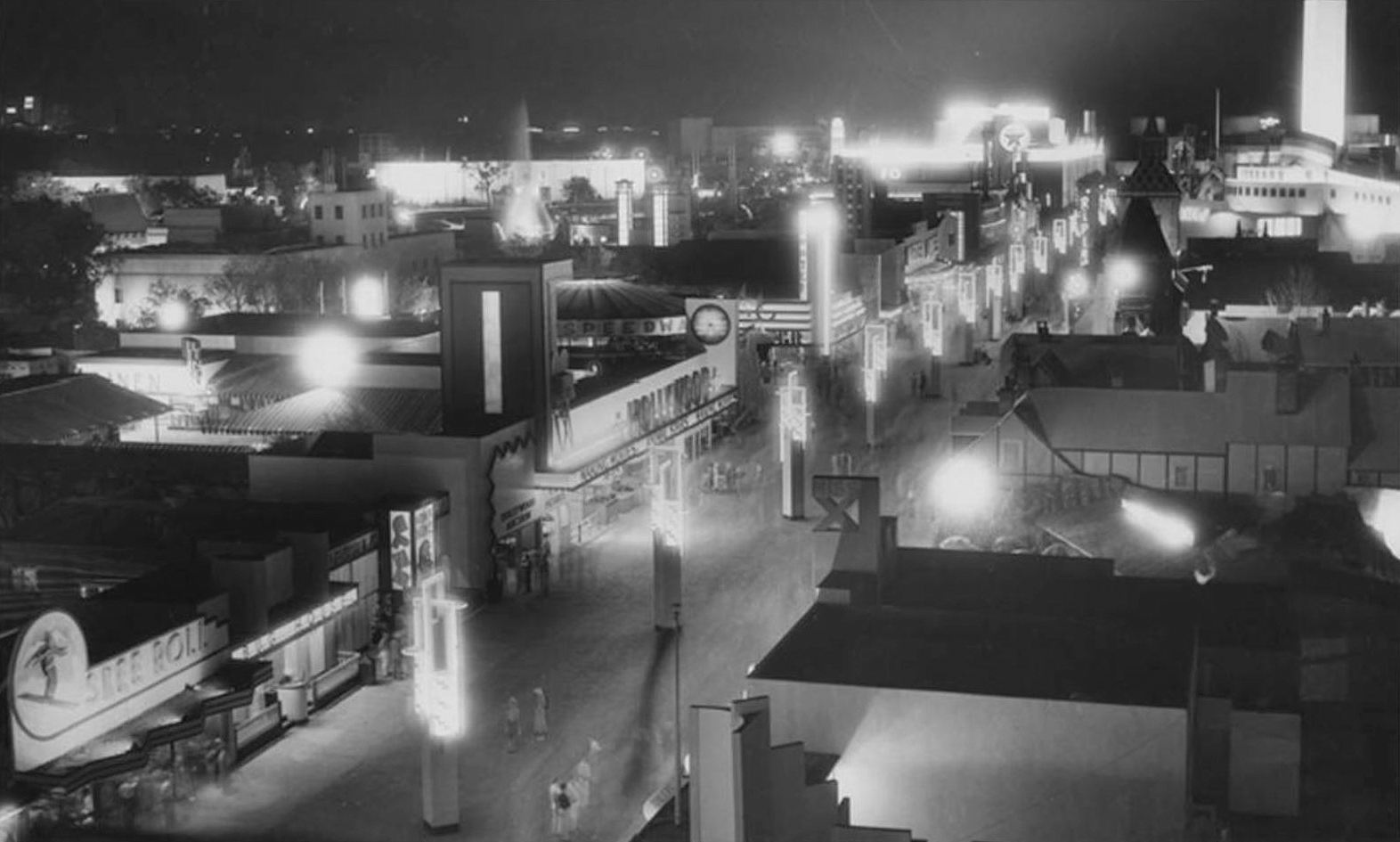
“Dallas Midway, Night Illumination” — 1936

tx-centennial_midway_night_cook-coll_smuAll calm in Fair Park along the Centennial Midway (click for larger image)

by Paula Bosse

Above, a nighttime shot of an almost empty Midway during the Texas Centennial. All this scene needs in order to boost the moody atmosphere is a little fog. Go a little further and add some zither music, Joseph Cotten, and Orson Welles running past the Texaco Building and you’d have a pretty cool setting for a Texas version of The Third Man.

***

Photo titled “Dallas Midway, Night Illumination, Centennial Exposition, State Fair of Texas” (taken by an unknown photographer on Oct. 16, 1936) is from the George W. Cook Dallas/Texas Image Collection, DeGolyer Library, Central University Libraries, Southern Methodist University; more info here.

*

Copyright © 2016 Paula Bosse. All Rights Reserved.