Flashback : Dallas

A Miscellany: History, Ads, Pop Culture

Category: Neighborhoods

The Filling Station on Greenville Avenue: From Bonnie & Clyde to Legendary Burger Place
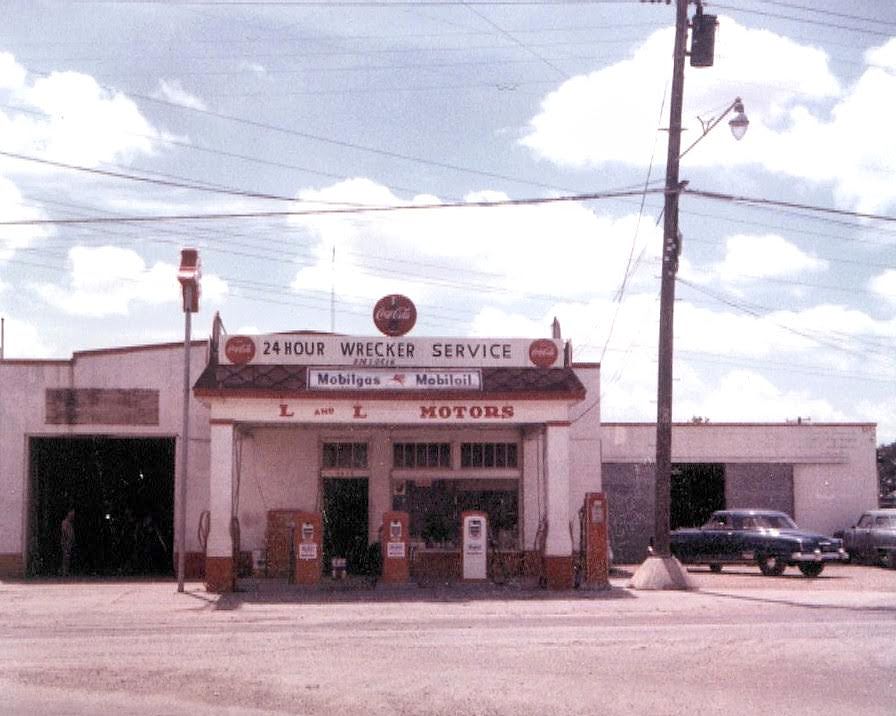
loveless-station_extThe Loveless filling station, Vickery, TX… (click for larger image)

by Paula Bosse

Perhaps you’ve driven past the site of the much-loved former burger place The Filling Station at Greenville Avenue and Park Lane recently and saw that the old building was undergoing renovation. Construction has ended, and a new Schlotzsky’s (the sandwich shop founded in Austin in 1971) has opened at 6862 Greenville Avenue. And it’s pretty cool that they’ve preserved this old 1930s building, a landmark to many Dallasites.

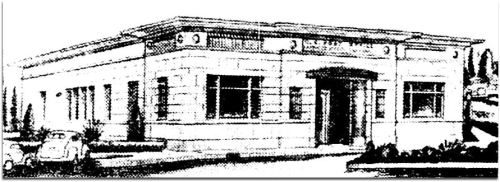
The original filling station and garage was built, according to family members, about 1931 — it was one of the first brick  buildings in the small community of Vickery (which was annexed by Dallas in 1945). The construction even made the columns of the Richardson Echo (Dec. 11, 1931):
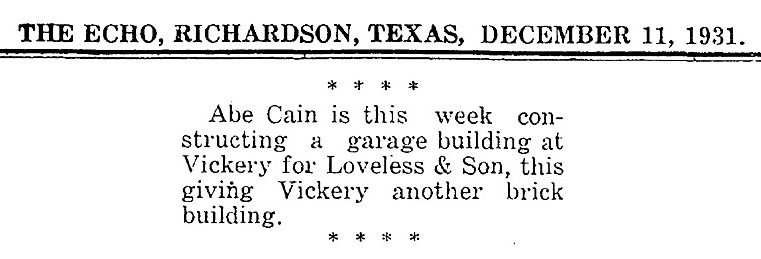
loveless-garage_richardson-echo_121131

The business had begun in the early ’20s in another building across the street, but things were definitely looking up for the garage and its owners, William Homer Loveless and his son J. W. Loveless, when the new building went up. L & L Motors lasted 50 or so years until the early 1970s, when the once-sleepy Vickery area had exploded into part of “Upper Greenville,” an entertainment mecca lined with bars, restaurants, discos, and strip joints.

The Filling Station, a theme restaurant and bar decorated with gas station memorabilia, opened in 1975 and lasted a remarkable 29 years, closing in 2004. Filling Station super-fans still have fond memories of both the building and its menu of “theme” foods and drinks with names like “sedanwiches,” the Ethyl burger, the Tail Pipe, and the Ring Job.

Beyond being a nostalgic favorite from the go-go days of Upper Greenville, the real reason this place has always had historic appeal to Dallasites is because it is one of the still-standing Dallas-area locations with a tie to Bonnie and Clyde. According to Loveless family lore, the pair bought gas at the station at least once, sometime back in the ’30s. According to Sonya Muncy, whose father, J. W. Loveless, took over the station after her grandfather passed away:

“That was my daddy’s station and his dad’s before. When he got hurt in an auto accident and couldn’t work anymore, he sold it, and it became the first Filling Station restaurant. I think my mom still has pics of Daddy in front of it when he came out of the Army. Gas was 9 cents a gallon with 3 cents tax, for a total of 11 cents a gallon. He had the coldest Cokes around! Across the street where Park and Ride is was my grandmother’s house. I remember playing at the station as a kid and helping Daddy work on cars. When I got my first car, he made me change the oil and rotate the tires! Lol. It was called L & L Motors with Mobil gas. […] Bonnie & Clyde also got gas there and Daddy said they were always nice to him.”

Kevin Wood remembered when his grandparents happened to be at the station when Bonnie and Clyde stopped in:

“The day Bonnie and Clyde came in to fuel, Clyde shook my Pops’ hand.”

And in a later comment:

“My grandmother and grandfather were in the store the day B & C came in … always said they were very nice.”

*

FUN FACT: Jack Ruby apparently ran a short-lived tavern called Hernando’s Hideaway right next door, at 6854 Greenville in the early or mid ’50s (he seems to have owned it and later sold it). It appears the building was torn down at some point. So … Bonnie and Clyde and Jack Ruby, together at last, cheek by jowl.
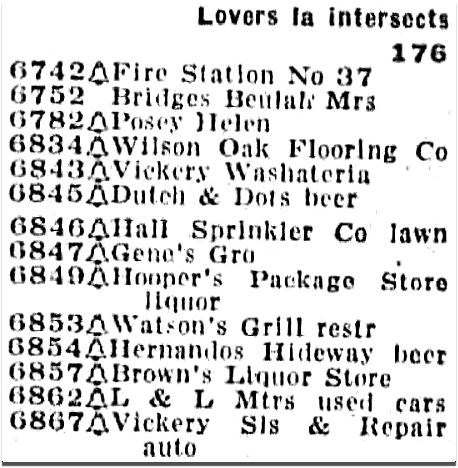
hernandos-hideaway_jack-ruby_1956-directory
Greenville Ave., 1956 directory

*

For as long as I can remember, I’ve checked out this old building every time I drive by it, marveling that it has managed to remain standing all these years, and always afraid it won’t be there the next time I pass it. So thank you, Steve Cole, owner of this Schlotzsky’s, for bringing it back to life and appreciating it as much as a lot of the rest of us do.

**

The photos in this post were kindly sent to me by Jeb Loveless, grandson of Homer Loveless, the original owner. Below, perhaps the oldest photo of the building, in the Bonnie and Clyde era.
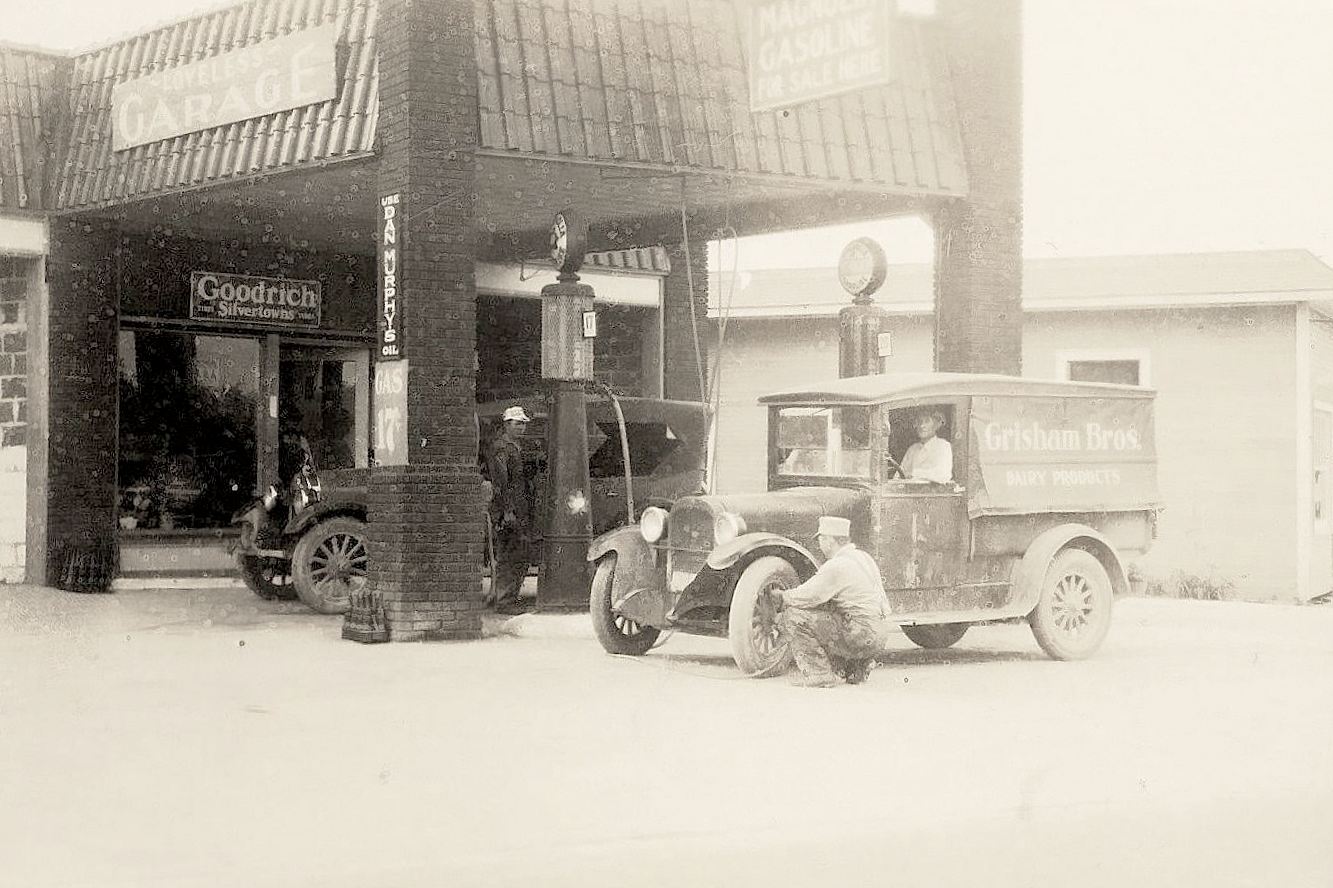
loveless-station_collection-of-jeb-lovelessphoto: collection of Jeb Loveless

Below, Homer Loveless and his wife Jewel in 1956.
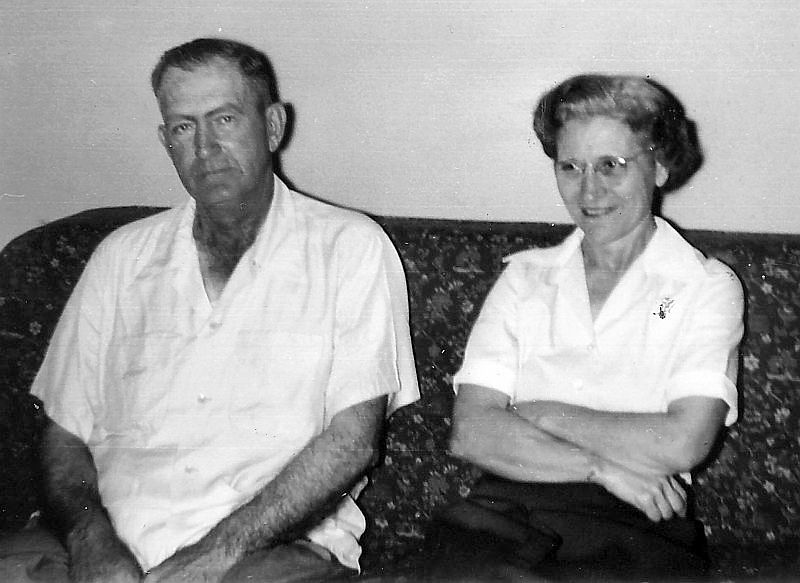
loveless_homer-and-jewel_april-1956

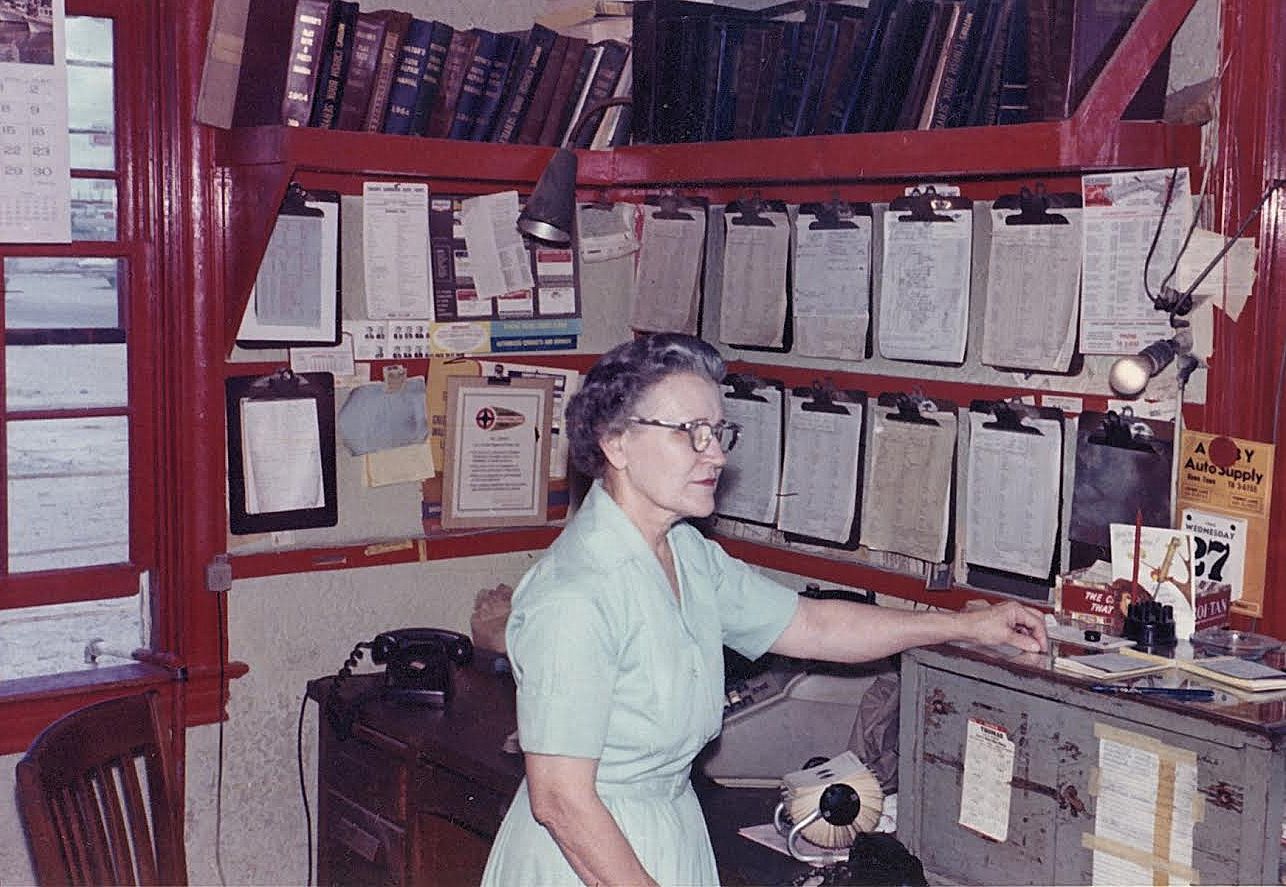
Jewel at work.

loveless-station_jewel-loveless

Homer and Jewel’s son (and co-owner) J. W., at the pumps.
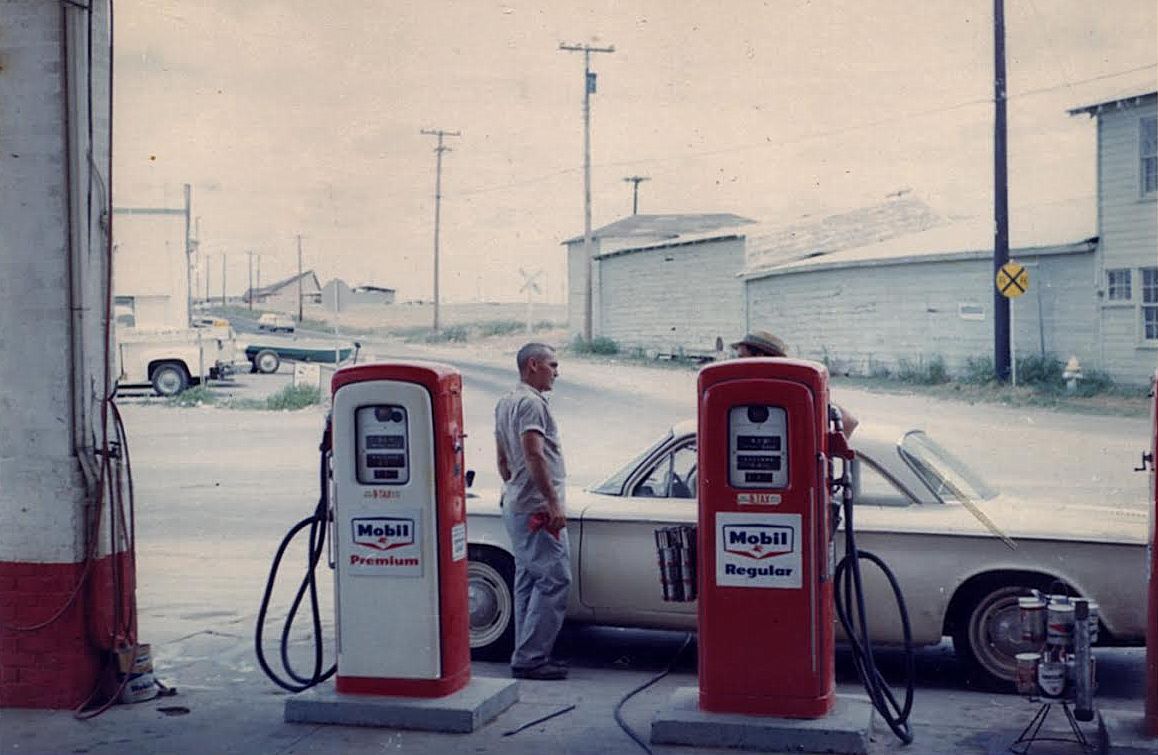
loveless-station_jw-loveless

UPDATE: I couldn’t for the life of me figure out what roads I was looking at here. Thanks to Danny Linn, I now know that the road straight ahead is what shows on 1962 maps as being the tail end/very beginning of Fair Oaks (this little bit still exists between Greenville and Central but is restricted to buses) — the view is looking west toward Central Expressway; the Corvair at the pumps is headed south on Greenville. A detail of this area from a 1962 map is below  — note that Park Lane did not yet exist. (The full 1962 Enco map is here.)
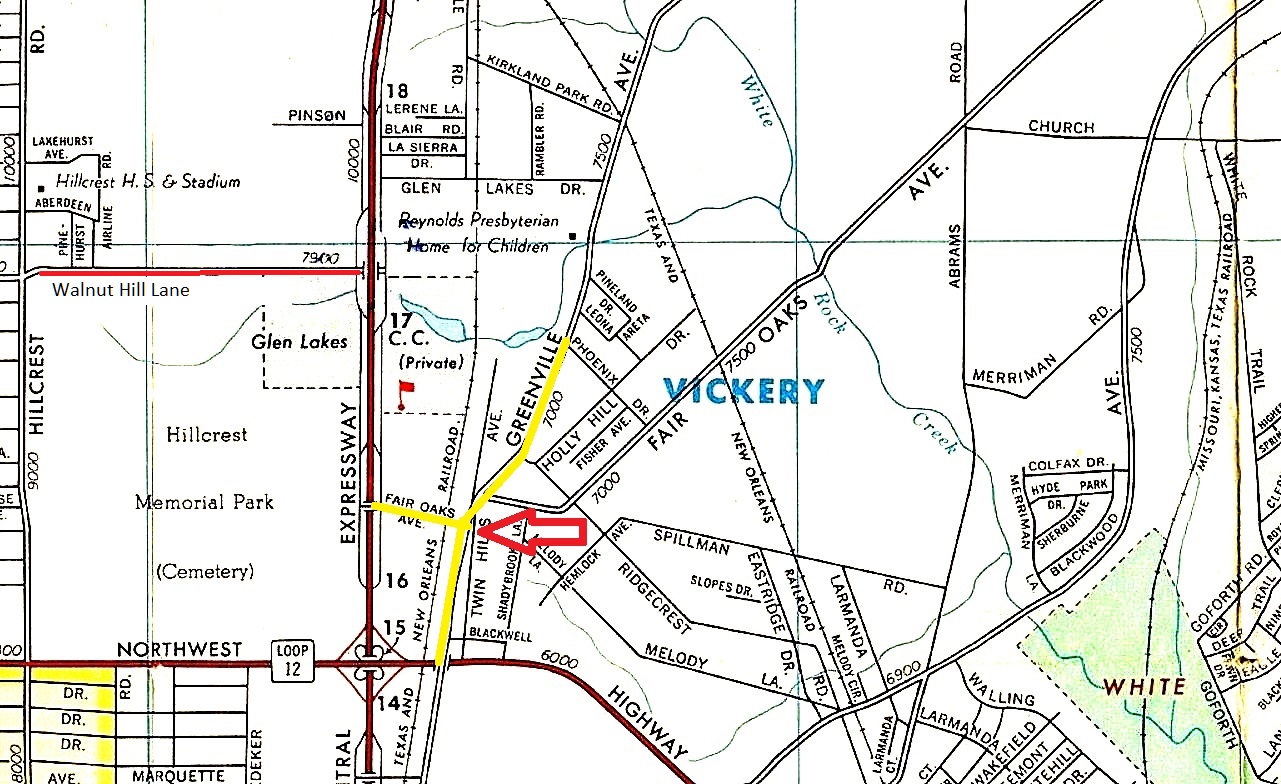
filling-station_vickery_1962-map(click me!)

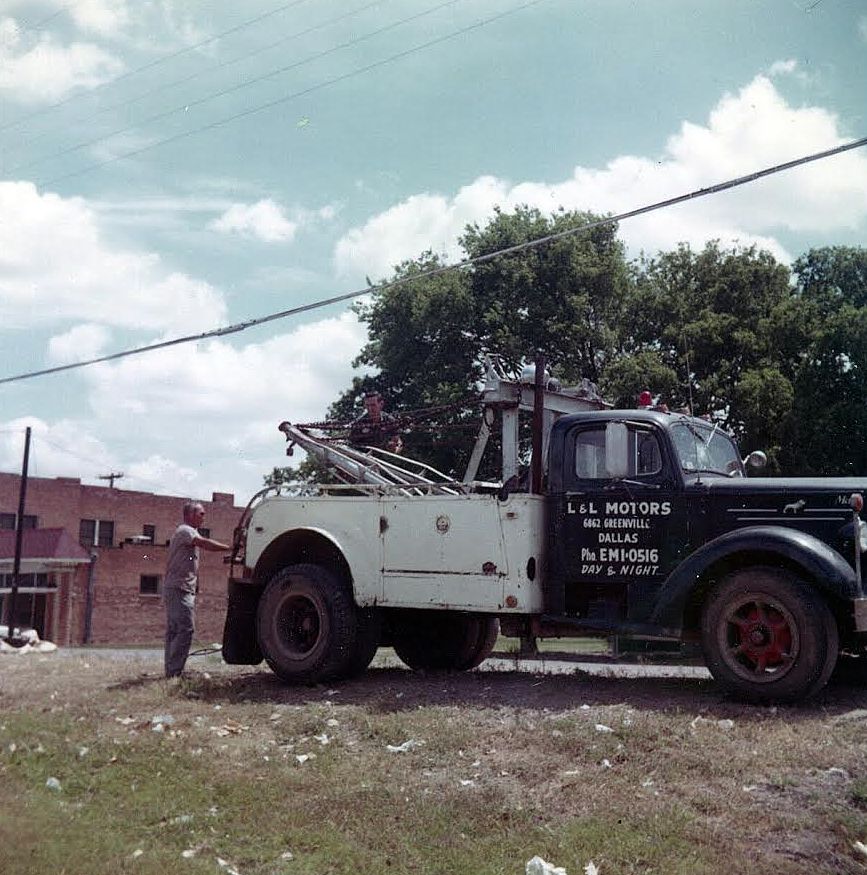
J. W. with the tow truck.

loveless-station_towtruck_1964

And here is what the old Loveless garage looks like today, as a Schlotzsky’s, decorated with the original neon sign from its days as The Filling Station restaurant as well as with several of the photos reproduced in this post.
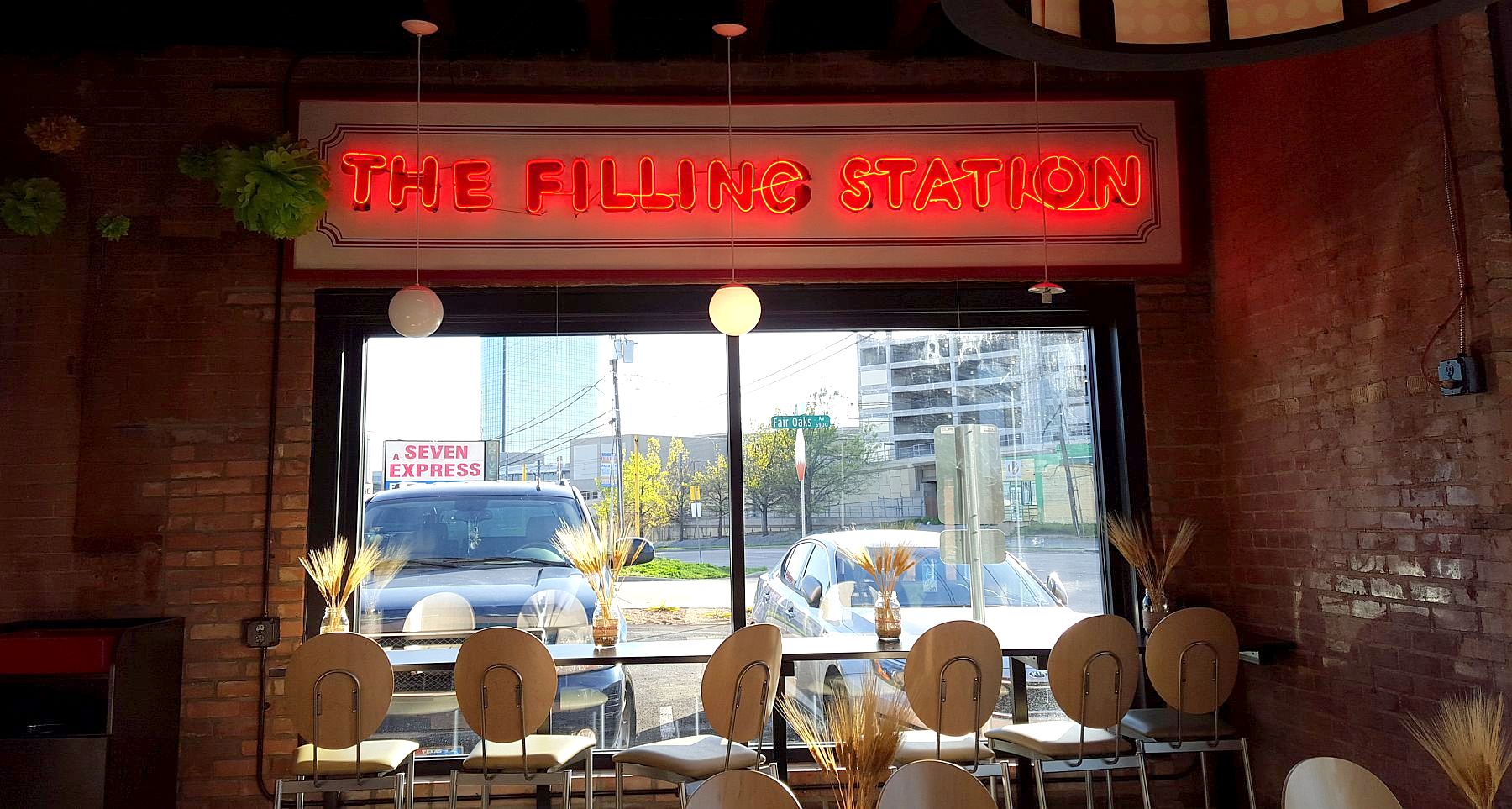
filling-station_neon-sign_2016photo: Paula Bosse

**

Aside from the Bonnie and Clyde connection, this little building (which has managed to stay standing for over 80 years — a feat in Dallas!) is known by most as the home of still-missed Filling Station restaurant.
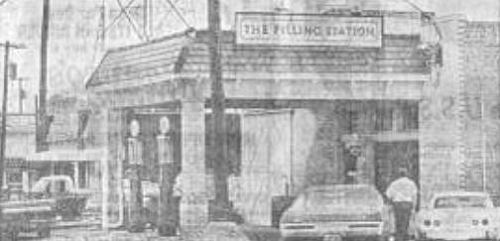
filling-station_dth

Below, an interesting 1976 quote from Filling Station co-owner Bob Joplin about the “cutthroat” competition between ’70s-era Upper Greenville bars and restaurants (numbering at the time more than 50), wondering how long his place might stay alive:

“The average life of a new place on Greenville is probably about 18 months. If that. Hell, around the corner here — the Yellow Rose of Texas — how long was it open? Three months? Maybe less? […] We’re going great right now, but we’ve only been open a little more than a year. Check back with me later — we may be here, we may not.” (DMN, Nov. 14, 1976)

The surprising longevity of The Filling Station — 29 years in business! — is why the strangely unceremonious and surprisingly brief announcement of the Filling Station’s demise (which appeared in the pages of The Dallas Morning News on July 2, 2004) is so odd — its closure merited only ten words: “The Filling Station on Upper Greenville Avenue has also closed.” 29 years! That’s an eternity in the Dallas restaurant world.
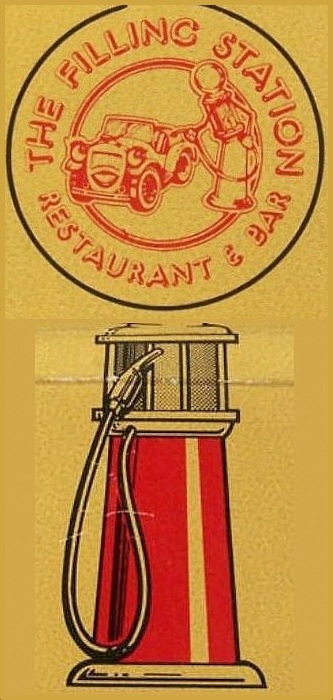
filling-station_matchbook_ebay
eBay

A few other businesses occupied the building, but none managed to stay open very  long. The building was vacant for several years, and it was definitely looking bedraggled when the Schlotzsky’s people came knocking.
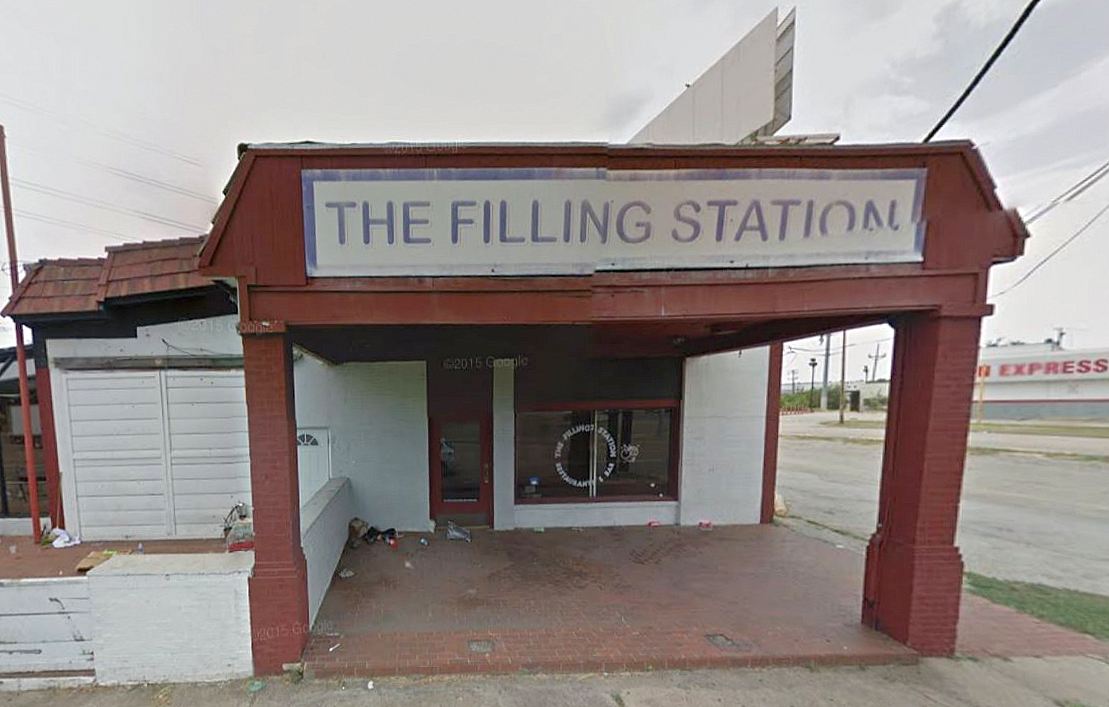
filling-station_google_aug-2015Long-vacant — Google Street View, Aug. 2015

And here it is, after renovation, preparing for its opening day as a Schlotzsky’s — the building now actually looks more like its original design, seen in the photo at the top of this post.
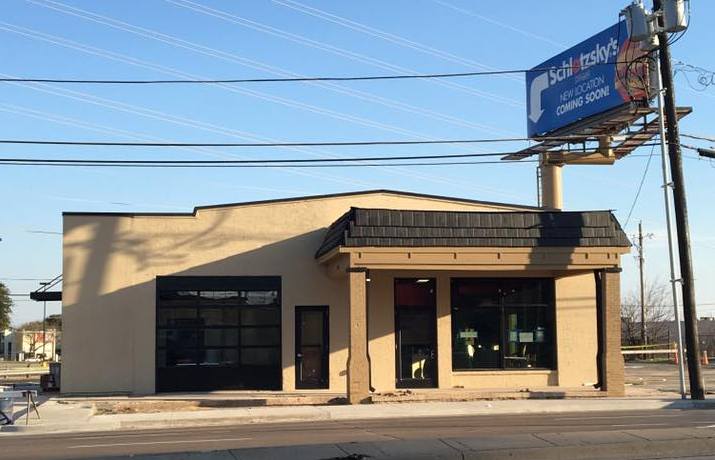
schlotzskys_facebook-pageSchlotzsky’s Facebook page

***

Sources & Notes

The photos of the L & L Motors garage and filling station in Vickery — and the Richardson Echo clipping — were sent to my by Jeb Loveless, grandson of Homer and Jewel Loveless and nephew of J. W. Loveless. He has graciously allowed me to use the photographs in this post. Thanks, Jeb! (Several of these photos were given to the owner of the new Schlotzsky’s and can be seen on the walls inside.)

Quotes from family members whose relatives met Bonnie and Clyde when they stopped in at the gas station are from comments on the Dallas History and Retro Dallas Facebook pages (used with permission).

A Lakewood Advocate interview with the owner of this Schlotzsky’s, Steve Cole, is here. He talks about his dedication to saving as much of the structure as possible, keeping the original brick walls and the wood floors.

To take a photographic tour through what remained of the old Filling Station, see the real estate listing on Zillow here (click on the first picture and a slideshow of large photos will open).

Here’s a then-and-now look at the building over the years:
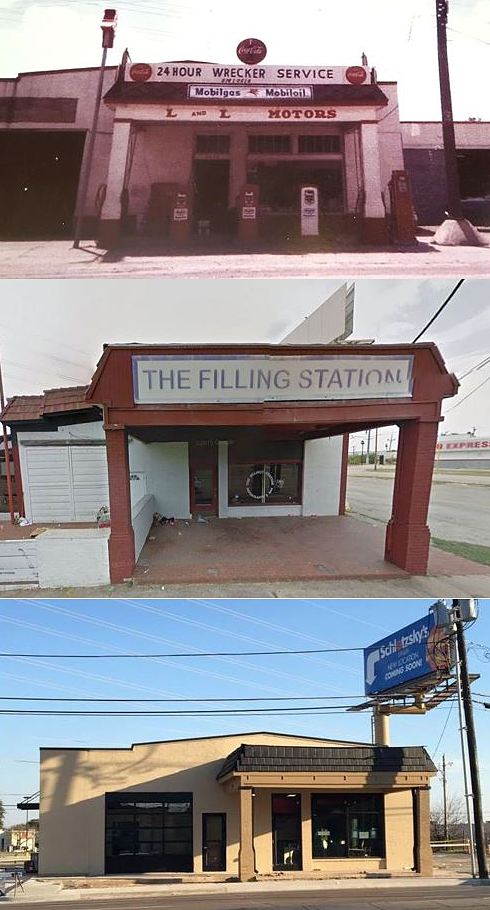
filling-station_then-now

Related articles in The Dallas Morning News:

  • “William Loveless Dies After Illness” (DMN, June 12, 1960), obituary of the original owner, W. H. Loveless
  • “A Filling Station Which Pumps Beer” by Patty Moore (DMN, Aug. 8, 1975), the first review of the new restaurant, The Filling Station

Click photos and clippings for larger images.

*

Copyright © 2016 Paula Bosse. All Rights Reserved.
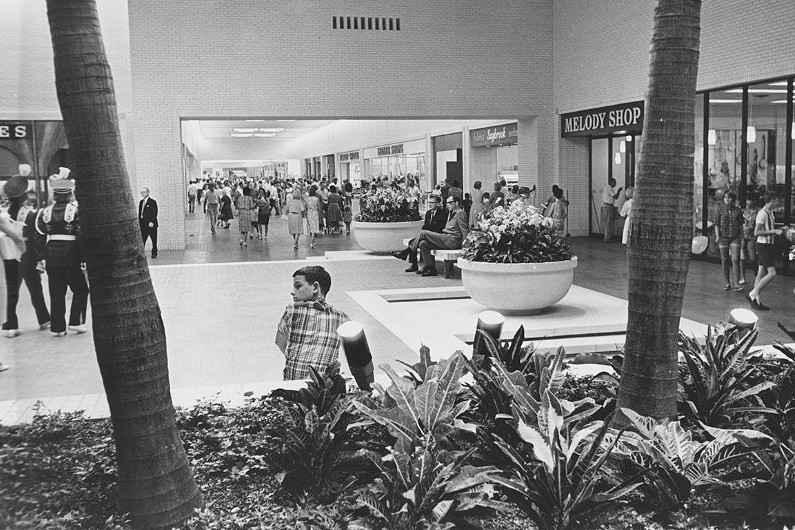
 

NorthPark — 1965

northpark_melody-shop_1965_northpark-websiteMarching band members, foliage, Melody Shop

by Paula Bosse

NorthPark Center — the only mall I’ve ever enjoyed being in — turned 50 last year. Developed by the legendary Raymond Nasher, it opened in August of 1965 on 90-something acres of old Caruth farmland. Sleek, cool, uncluttered. There was art! There were ducks! There were naughty playing cards and black light posters in Spencer’s! There was even a dime store! I spent a lot of time there as a kid in the ’70s, which is probably why I feel completely lost in the expanded, ultra-upscale version of today. I used to know where EVERYTHING was. Now? Since its recent “augmentation,” it doesn’t feel like “my” mall anymore. Now, for me, it’s just another upscale Dallas mall (albeit in an unusually appealing building and in still-sleek, aesthetically pleasing surroundings). But then I’m a person who is generally not a fan of shopping and feels anxious in shopping malls, so I’m clearly in the minority amongst Dallas women. Today’s NorthPark is still going strong and is as popular as ever (if not moreso), but I will always prefer the NorthPark of my childhood — it’s the only shopping mall I’ve ever felt completely at home in.

*

At the top, the Melody Shop — where I bought my first records. People were always in there playing the organs.

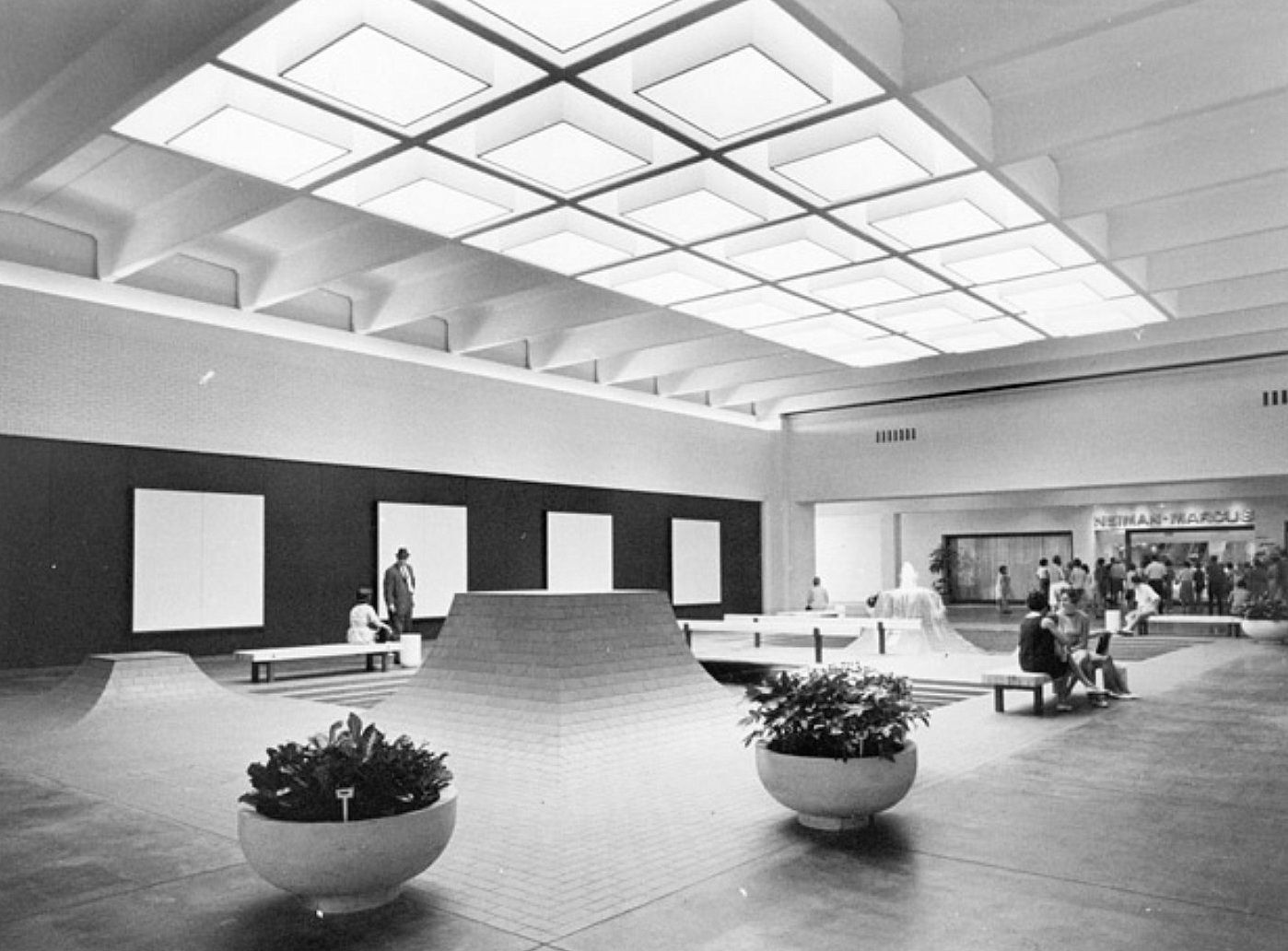
Neiman’s was there, too, of course — at the swankier end of the mall. N-M was intimidating. There weren’t a lot of black light posters and Keds in there.

northpark_neimans-northpark-center-colln

Which is why I spent most of my time in the stretch between the Melody Shop and Penney’s.

northpark_penneys_northpark-website_1965

This was the part of the mall I might have liked the best, if only because of … Orange Julius!! (See recipe below.)

northpark_orange-julius_northpark-website_1965

(Am I crazy, or hadn’t Orange Julius moved to the space next to where it is in this 1965 photo? I swear in the ’70s it was facing Penney’s.)

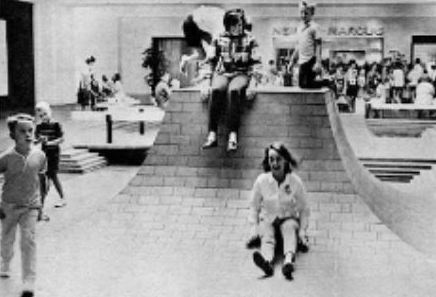
But the one thing that absolutely everyone who ever spent any time there as a kid remembers most?

northpark_slides_dth_np-websiteDallas Times Herald photo

Come to think of it, what I remember most about the NorthPark of my very early childhood is how smooth and cool-to-the-touch everything was — especially for children like me who were climbing all over everything: the tiles of those “slides,” the concrete of the fountains and planters, the floors, and those white bricks, inside and out. Everything was so smooooth. Happy belated birthday, NorthPark!

***

Sources & Notes

Most of these photos are from 1965, and most are from the history page of the NorthPark Center website, here. Their entertaining NorthPark50 blog is here.

More on the history of NorthPark at Wikipedia, here.

A 15-minute 50th anniversary video by The Dallas Morning News is on YouTube, here.

One of the first mentions of the future super-mall (and its 99-year lease) was in the March 5, 1961 edition of The Dallas Morning News in the article “Big Shop Center Slated in Dallas” by Rudy Rochelle.

See a cool color photo of the brand new mall here.

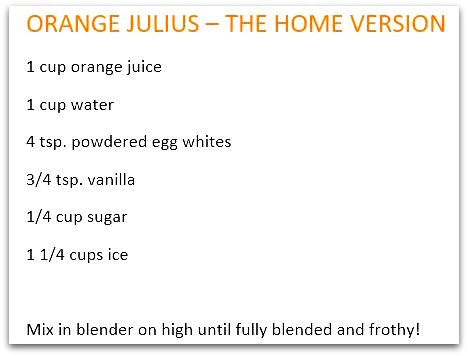
Want to make your own Orange Julius? Here’s a good recipe. The secret ingredient is powdered egg whites, available at Whole Foods and most larger grocery stores. The added sugar is important, but you might not want to use a whole quarter-cup.

UPDATE: The powdered egg whites I used to buy at my local Tom Thumb — “Just Whites” by Deb El — is no longer available. I tried several grocery stores today and couldn’t find powdered egg whites anywhere. They may be available in health food or vitamin/supplement stores. I just ordered some online. If you don’t mind using egg whites out of the shell, substitute 2 egg whites for the powdered in the recipe below.

orange-julius-recipe

Enjoy!

*

Copyright © 2016 Paula Bosse. All Rights Reserved.
Dallas Theater Center

dtc-downtown_dallas-park-dept_portalFLW’s DTC

by Paula Bosse

Frank Lloyd Wright’s Dallas Theater Center is seen here nestled amongst the woody landscape of Turtle Creek. There’s a lot of varied architecture going on in this photo!

***

Sources & Notes

Photograph is from the Dallas Park and Recreation Department Collection, Dallas Municipal Archives; it is accessible via the Portal to Texas History, here.

The text on the back:

Opened in 1959, this Center provides pleasure for thousands of Dallasites and visitors yearly through a repertory of plays presented in its Kalita Humphreys Theater. This $1,000,000 Center, the last completed building and only theater designed by Frank Lloyd Wright, also incorporates a children’s and teen theater and a private school of drama.

*

Copyright © 2016 Paula Bosse. All Rights Reserved.

Woodall Rodgers Freeway Under Construction — 1966

woodall-rodgers_squire-haskins_uta_052466
Land cleared, May 1966 (click for gigantic image) (UTA Libraries)

by Paula Bosse

The photo above shows land partially cleared for the construction of Woodall Rodgers Freeway. The view is to the east, with Central Expressway at the top left and Stemmons Freeway at the bottom left. The land cleared was once part of what used to be called “North Dallas,” and before it was bulldozed away, it was a predominantly black residential neighborhood served by several African-American- and Hispanic-owned businesses. The photo above was taken on May 24, 1966. The photo below was taken on December 8, 1966. The freeway was already years behind schedule when these photos were taken, but nobody would ever have believed it would take until 1983 (!!) for Woodall Rodgers Freeway — a “cute” little highway, less than two miles long — to be completed. Oh, but it did.

woodall-rogers-squire-haskins-uta-120866Dec. 8, 1966 (photo by Squire Haskins; UTA Libraries)

In a Dallas Morning News article published on the May 27, 1983 opening of the freeway, Henry Tatum wrote the following:

Dwight Eisenhower was starting his second term as president of the United States. Elvis Presley had passed his physical examination and was headed for a stint in the Army. And Doris Day was singing up a storm on the screen in “Pajama Game.” The year was 1957 and Dallas city fathers decided it was time to build a downtown connection between Central Expressway and Stemmons Freeway. (“Freeway From the Past” by Henry Tatum, DMN, May 27, 1983)

1957!

When it was completed 26 years later — in 1983 — Ronald Reagan was president, Sally Ride was about to become the first woman to go into space, and Madonna was singing up a storm as her first album was being readied for release. That’s a looong time.

***

Sources & Notes

Both aerial photos by Squire Haskins, from the Squire Haskins Photography, Inc. Collection, UTA Libraries, University of Texas at Arlington. The photo from May can be accessed here, the one from December, here.

“Woodall Rodgers”? James Woodall Rodgers was mayor of Dallas from 1939 to 1947. It was announced that what would become a never-ending headache-of-a-highway-project bedeviled by funding squabbles and right-of-way issues would be named in his honor in 1960.

Those two photos are really, really big when you click them. …REALLY big.

*

Copyright © 2016 Paula Bosse. All Rights Reserved.


When Every Skyscraper Was a Distinctive Landmark

skyline_akard-royalSoak it in…

by Paula Bosse

I love this photo, taken from the southern edge of downtown, at S. Akard (running from left to right in the photo) and Royal, a street which once ran one block north of Canton (map below). Today, the convention center would be behind the photographer, and the I. M. Pei-designed City Hall would be pretty much straight ahead. I’m always going to prefer the grittier-looking downtown Dallas of days gone by to today’s shinier, glitzier version. I couldn’t get the exact angle, but today’s view from more or less the same vantage point looks like this, and it just isn’t as interesting. (I’ve never actually heard anyone broach the topic, but am I the only one who thinks that Pei’s City Hall now looks weirdly and hopelessly dated? Kind of tired and stuck in the ’70s? If nothing else, those yucky white flagpoles out front need to go!)

When this photo was taken, you could actually still see all those famous buildings — before they were dwarfed and engulfed by all those over-eager underclassmen!

***

Sources & Notes

Photo from a site managed by Andrew K. Dart, full of photos from negatives he rescued when they were thrown out by KDFW-TV, many from the archives of KRLD. This photo is from a page of Dallas skyline photos, here.

Here’s a map that shows S. Akard and Royal streets, which Mr. Dart identified as being the intersection seen in this photo by zooming in on the street sign (click for larger image):

map_akard-royal_1952-mapsco1952 Mapsco

*

Copyright © 2016 Paula Bosse. All Rights Reserved.
When a Ten-Spot Could Get a Family of Four Into Six Flags — 1962

ad-six-flags_dmn_042362

by Paula Bosse

Six Flags Over Texas is about to open up again. In 1962 — the theme park’s second year — the admission price for one adult was $2.75 (approximately $22.00 in today’s money), and the price for children under 12 was $2.25 (approximately $18.00 in today’s money). A family of two adults and two children would pay $10.00 for admission — that would be a little under $80.00 in 2016 money, which was still a lot back then, until you compare it to today’s Six Flags ticket prices: $250 for a family of four (as long as both of those children are under 48″ tall). (Pink Things not included.) And you probably won’t even see a dad wearing a suit and tie and a porkpie hat. And you certainly won’t get to see ANY of this! I think you got a lot more bang for your buck 50 years ago.

***

Never leave home without the Inflation Calculator.

*

Copyright © 2016 Paula Bosse. All Rights Reserved.


Lakewood Post Office — 1946-1976

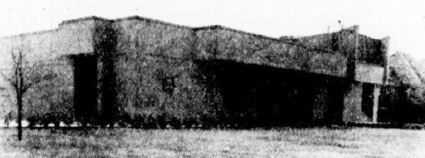
lakewood_post-office_dmn-123045Lakewood Post Office, 6324 Prospect
by Paula Bosse

I’m often surprised to discover things about the part of Dallas I grew up in which I somehow never knew — in this case: Lakewood’s first post office, which was apparently in operation when I was a living, breathing, sentient human being but which I’d never known about until today. (I actually grew up in the nearby Lower Greenville neighborhood, but even though I went to Long and Woodrow, I don’t remember being all that aware of Lakewood proper until I was able to drive myself around it as a teenager.) Somehow I had never known that there was a post office in Lakewood before the one at Swiss and La Vista. Or, rather, I’d never even thought about it. Until I saw this ad earlier today:

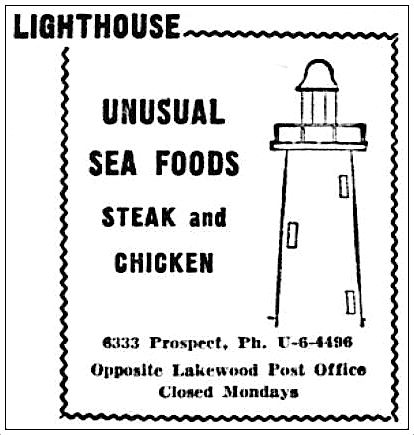
lakewood_lighthouse_dmn_0425471947

“The Lighthouse — Unusual Sea Foods, Steak and Chicken — Opposite Lakewood Post Office.”

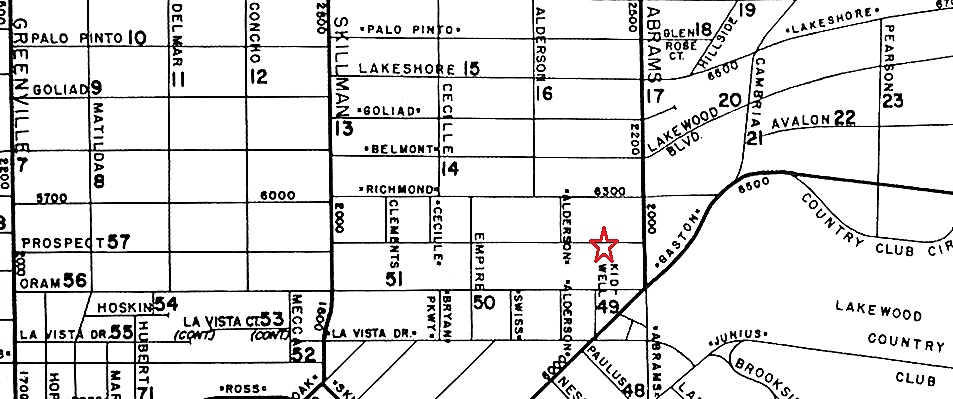
Post office? New to me. I looked it up. It was just west of Abrams, on Prospect at Kidwell, positioned diagonally across the lot. It was the 13th post office substation in Dallas, and it opened on December 2, 1946, over two years after its approval had been announced, during the war, in August, 1944.

A 1945 Dallas Morning News article had this interesting bit of information:

The contractor is Bascomb E. McClesky [sic]. The building will have 4,000 square feet of floor space. Parking space will be provided on the lot. [McCleskey] will retain title to the property and will lease it to the government, Payne said. (“Lakewood To Get Branch Post Office,” DMN, Nov. 18, 1945)

(I’m not sure I was aware developers leased property to the federal government. B. E.  McCleskey lived in the Pasadena area of Lakewood and seems to have spent his 30-year career as a general contractor who also bought, sold, and developed both commercial and residential properties in and around this part of East Dallas. When he began his career, he had an office on Gaston in the new Lakewood Shopping Center; at the time of his death in 1956, his office was right next door to the post office on land which, presumably, he still owned.)

This post office lasted for 30 years until the newer, hulkier, and far less aesthetically appealing station opened at Swiss and La Vista on May 10, 1976.

lakewood-post-office_dmn_112576_swiss.-photo
1976

Some factoids which will come in handy should you ever find yourself in a U.S. Post Office Trivial Pursuit (Lakewood Edition) competition:

  • When the first Lakewood post office opened in 1946, it employed 3 clerks, 1 supervisor, and 16 carriers.
  • When the second post office opened 30 years later, it employed 13 clerks, 2 supervisors, and 47 carriers.

*

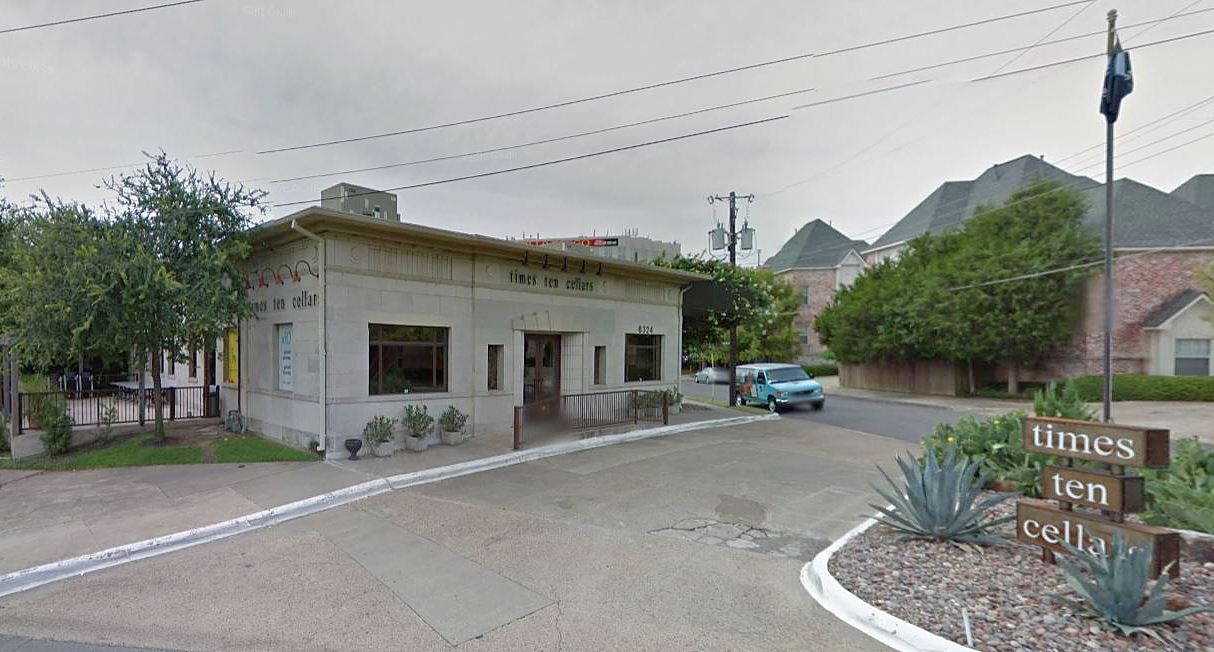
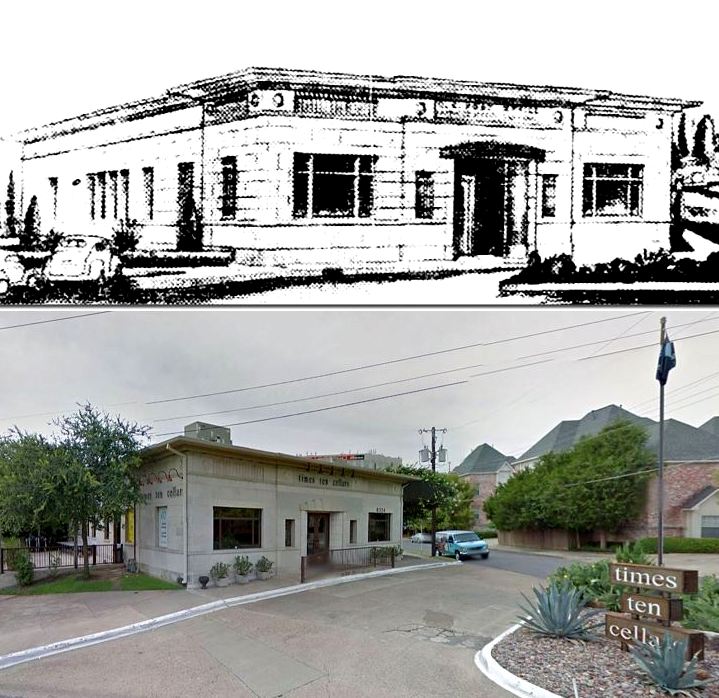
But back to the first post office — the building is still standing and houses the Times Ten Cellars wine bar! I’ve passed that building a lot over the years, but I guess I never paid much attention to it. I don’t know why, because it’s a great little  building. It would never occur to me that it might ever have been a post office. I wish more businesses in Dallas would consider repurposing older buildings rather than building characterless boxes that look like every other characterless box. Thank you, Times Ten Cellars!

times-ten-cellar_google_2015Google Street View (2015)

*

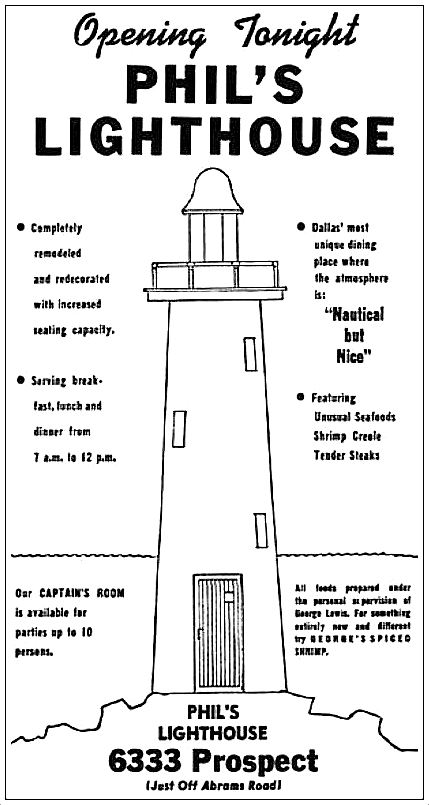
That Lighthouse “unusual sea foods” restaurant? It doesn’t seem to have lasted very long. It changed hands a few times before closing as the Lighthouse Cafe at the end of 1950. At one point it was known as Phil’s Lighthouse — “Dallas’ most unique dining place where the atmosphere is: ‘Nautical But Nice.'”

phils-lighthouse_dmn_121649DMN, Dec. 16, 1949

That’s right … “NAUTICAL BUT NICE”!

***

Sources & Notes

If anyone remembers the Lighthouse restaurant: was it actually shaped like a lighthouse?

Detail of a page from the 1952 Mapsco showing the location of the old post office (click for larger image):

lakewood-post office_1952-mapsco

lakewood-post-office_then-now

Click pictures for larger images.

*

Copyright © 2016 Paula Bosse. All Rights Reserved.


Life in The Grove: Pleasant Grove — 1954-1956

pghs_1956-dairy-queenDairy Queen, 1238 S. Buckner — 1956 (click for larger image)

by Paula Bosse

The community of Pleasant Grove was first settled in the 1840s but didn’t officially become part of Dallas until it was annexed in 1954 after a huge postwar surge in population. Upon annexation, the schools that made up the Pleasant Grove Independent School District became part of the DISD, including Pleasant Grove High School, which was located on Lake June Road, between Conner and Pleasant Drive. PGHS closed when the brand new W. W. Samuell High School opened on January 28, 1957, halfway through the 1956-1957 school year. The photos here are from the yearbooks of the last three years that Pleasant Grove High School was open — most of the ads feature students inside or in front of the business establishments. And they’re great! (Click photos for larger images.)

*

Photos of overcrowded Pleasant Grove High School and its numerous out-buildings, 1955.

pghs_1955a

pghs_1955b

Pleasant Grove Pharmacy, Grady’s Clover Farm Grocery, and Grove Shoe Store:

pghs_1954-yrbk_a1954

Worthington Service Station:

pghs_1954-yrbk-worthington1954

Schepps Dairy:

pghs_1954-yrbk-schepps1954

The Eatmore Hamburger System (greatest name EVER!!):

pghs_1954-yrbk-eatmore1954

Dasch Cleaners:

pghs_1955-yrbk-dasch1955

Harvey Hayes, “The Insurance Man”:

pghs_1955-yrbk_a1955

Cassidy’s Conoco Station, Tee-Pee Drive-In Grocery, and Gay and Jones Motor Co.:

pghs_1956-yrbk_b1956

Worthington’s Magnolia Service Station (again) and Barrett’s Used Cars:

pghs_1956-yrbk_a1956

W. W. Hughes Magnolia Service Station, E & L Service Shop (bicycle and lawnmower service), and, again, Pleasant Grove Pharmacy:

pghs_1956-yrbk_d1956

Billie Price Real Estate and Maridell’s:

pghs_1956-yrbk_c1956

Martin’s Sinclair Service Station (with a DQ photobomb):

pghs_1956-martins1956

The Kaufman Pike Drive-In, “The Theater With a Heart”:

pghs_1956-yrbk-kaufman-pike-drive-in1956

And lastly, a very dark photo of Pleasant Grove High School from the 1948 yearbook:

pleasant-grove-high-school_1948-yrbk1948

***

Sources & Notes

All photos and ads are from the 1954, 1955, and 1956 editions of The Bobcat, the Pleasant Grove High School yearbook.

More on the history of Pleasant Grove in southeast Dallas, here. More on the history of Pleasant Grove High School here and here. The confusing school changes revolving around the the PGISD/DISD switchover were a bit like musical chairs and affected attendance of numerous high schools (including Forest High School, Crozier Tech, and Woodrow Wilson), junior high schools, and elementary schools. Read about the details in the Dallas Morning News article “Mid-Term Switch Set for Students” (DMN, Jan. 6, 1957).

Google map showing Pleasant Grove and approximate location of PGHS, here.

As always, click pictures for larger images.

*

Copyright © 2016 Paula Bosse. All Rights Reserved.

Meet Me In Front of The Rialto — 1945

rialto_MPH_072845“A great big howl of a hit!” (click for larger image)

by Paula Bosse

This photo shows the front of the Rialto theater, once located at Elm and Stone. I love the unavoidable promotion for the Jack Benny movie “The Horn Blows at Midnight,” but I love all that street life even more. And by the way, “Help Keep Dallas Clean”!

***

Photo from the July 28, 1945 issue of Motion Picture Herald.

My favorite young movie-crazy Dallas diarist, Muriel Windham, would absolutely have walked past this (she probably didn’t see it, though, because she wasn’t a big fan of Jack Benny). (For the record, I LOVE Jack Benny!)

Click photo for gigantic image.

*

Copyright © 2016 Paula Bosse. All Rights Reserved.

The Lakewood Theater — 1944

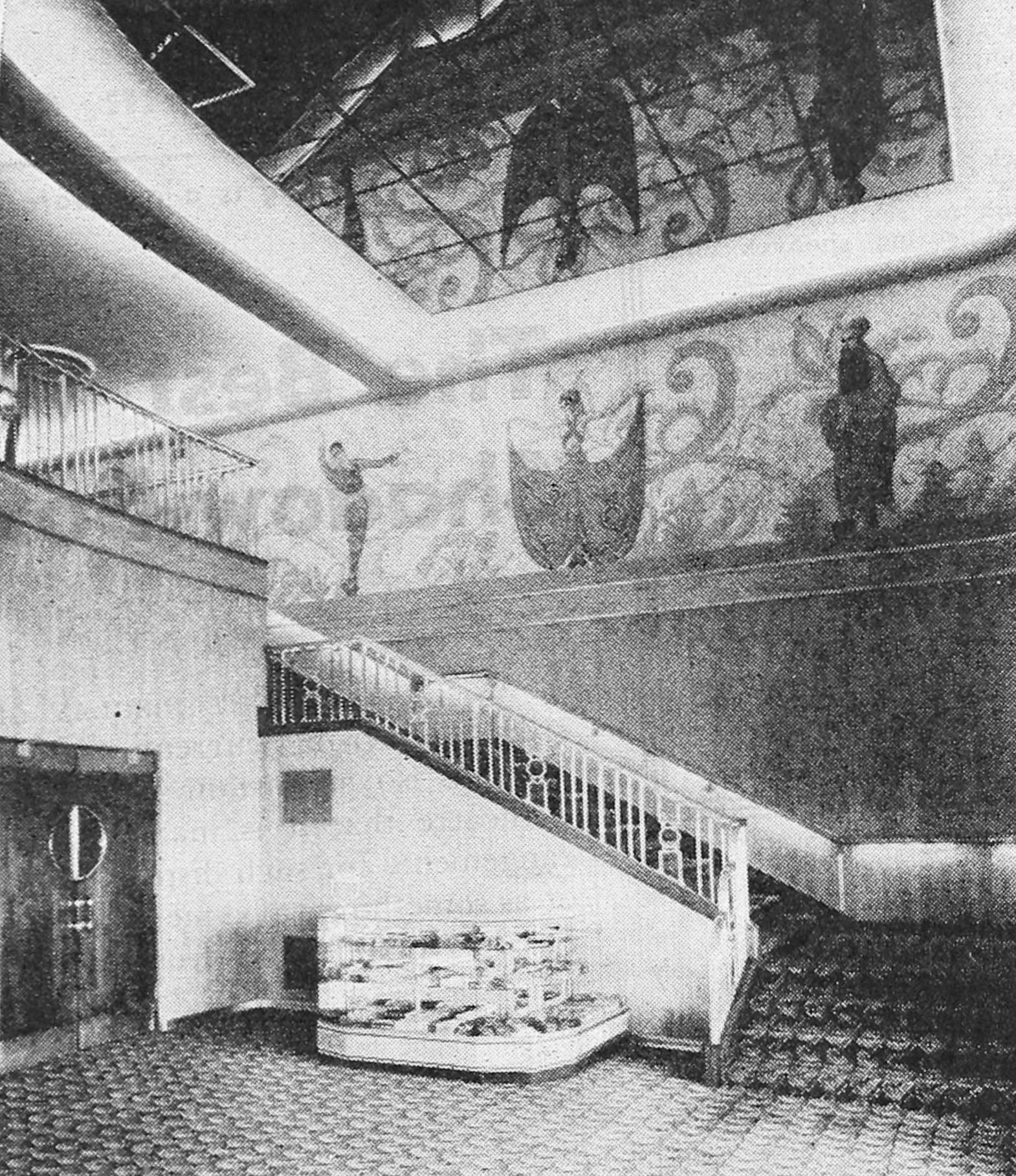
lakewood-theater_ad_inset_1944A well-lit staircase to the balcony (click for giant image)

by Paula Bosse

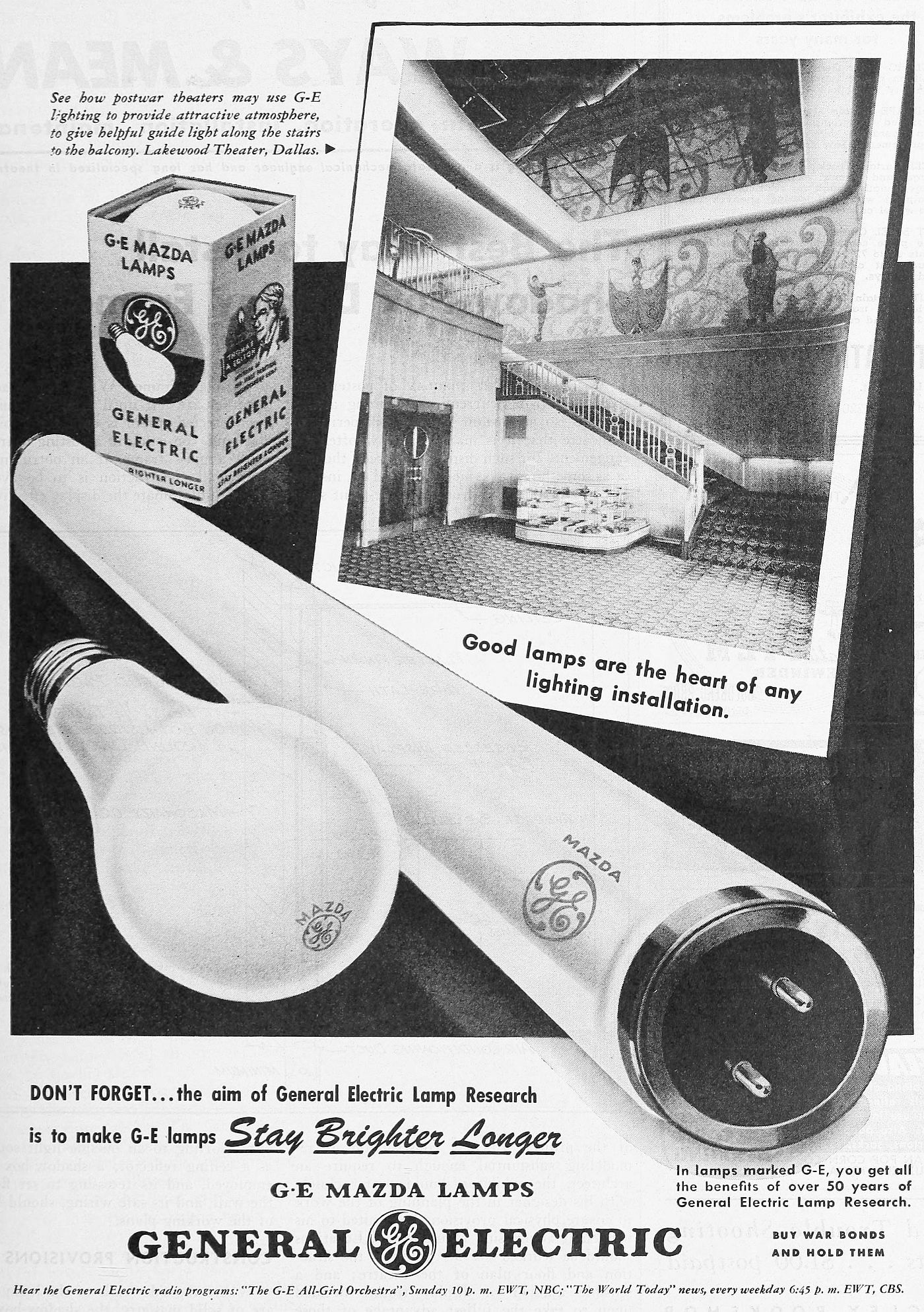
Occasionally one stumbles across a national advertisement featuring someone or something familiar to local audiences which elicits an involuntary exclamation like, “Hey! I know that guy!” I had a response kind of like that when I saw this General Electric light bulb ad featuring a photograph of the interior of the Lakewood Theater (showing a few figures from the mural by Woodrow boy Perry Nichols).

“See how postwar theaters may use G-E lighting to provide attractive atmosphere, to give helpful guide light along the stairs to the balcony.”

lakewood-theater_ad_MPH_072244_med

Yes, the Lakewood certainly did have an “attractive atmosphere.”

***

Sources & Notes

Ad for G-E Mazda lamps appeared in the July 22, 1944 issue of Motion Picture Herald. Click the above ad to see it much larger. To see it REALLY big, click here. (Apologies for the bleed-through of the ad on the other side of the page. If you’re a Photoshop wizard who can remove the offending ghost letters plastered across Nichols’ whimsical mural, I’d love a cleaned-up version.)

I have no idea what’s going on with the beleaguered Lakewood Theater these days, but if you’d like to see those murals in color, see the photos in the Lakewood Advocate, here.

*

Copyright © 2016 Paula Bosse. All Rights Reserved.