Flashback : Dallas

A Miscellany: History, Ads, Pop Culture

Category: Neighborhoods

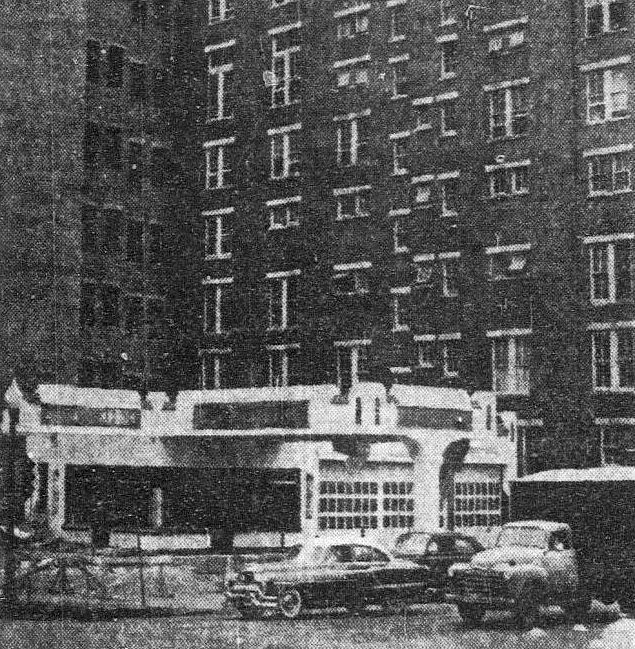
A Downtown Gas Station! — 1949

tyler-service-stn_degolyer_1949-det1Gas station at Elm & Houston! (click for larger image) (SMU Libraries)

by Paula Bosse

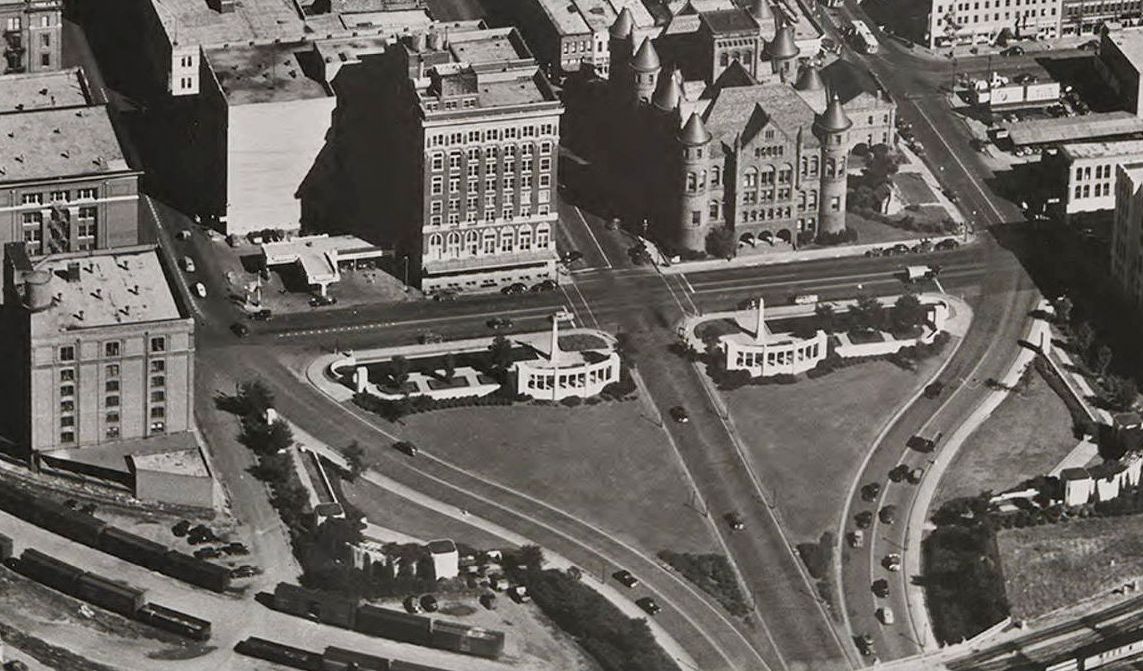
There was a time when gas stations populated the central business district in downtown Dallas. But now? I’m not sure I’ve ever seen a gas station in the heart of downtown. Which is probably why the station seen above (from a detail of a larger aerial view of downtown) stood out so much when I was looking at the photo. And it wasn’t located just anywhere downtown, but it was in the primo location opposite Dealey Plaza at the “gateway” to the city. It doesn’t fit in that space very well — it’s a corner crying out for a more substantial structure — but … wouldn’t it be nice to have an actual full-service gas station downtown again?

The Tyler Service Station (and before that the Longhorn Service Station) held down the corner at Elm and Houston streets in the 1940s but was demolished in 1953 to make way for the construction of the Records Building/Criminal Courts Building annex. And, hallelujah, I found a photo of the service station from ground-level — and it was pretty cool-looking!

gas-station_elm-and-houston_1950s

tyler-service-stn_dmn_100948Oct. 9, 1948

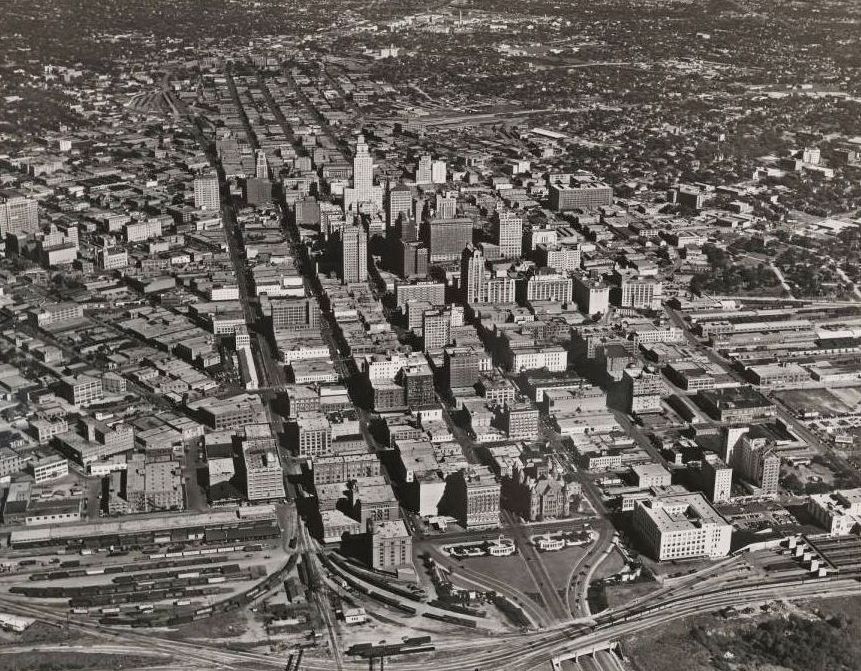
And, finally, here’s the original photo I saw in which that long-gone gas station jumped out at me, another wonderful photo by Lloyd M. Long, taken in May, 1949. You never know what odd things you’ll discover if you just take the time to explore.

downtown_degolyer_1949Aerial photo by Lloyd M. Long, 1949 (Foscue Map Library, SMU)

***

Sources & Notes

Lloyd M. Long photo (“Downtown Dallas, looking east”), from the Edwin J. Foscue Map Library, Central University Libraries, Southern Methodist University; it can be viewed here.

Click pictures for larger images.

*

Copyright © 2014 Paula Bosse. All Rights Reserved.


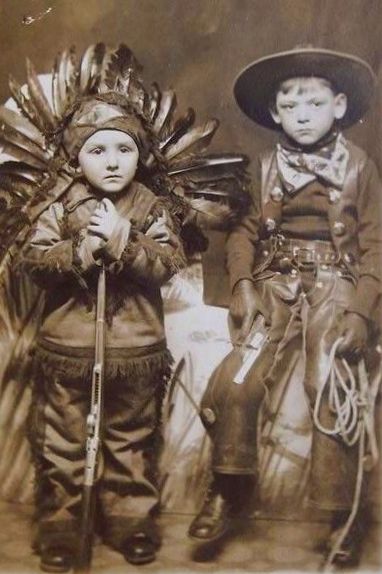
Cowboys and Indians on Elm Street — 1915

lawrence_kiddie-photoPhoto by Joe Lawrence, circa 1915

by Paula Bosse

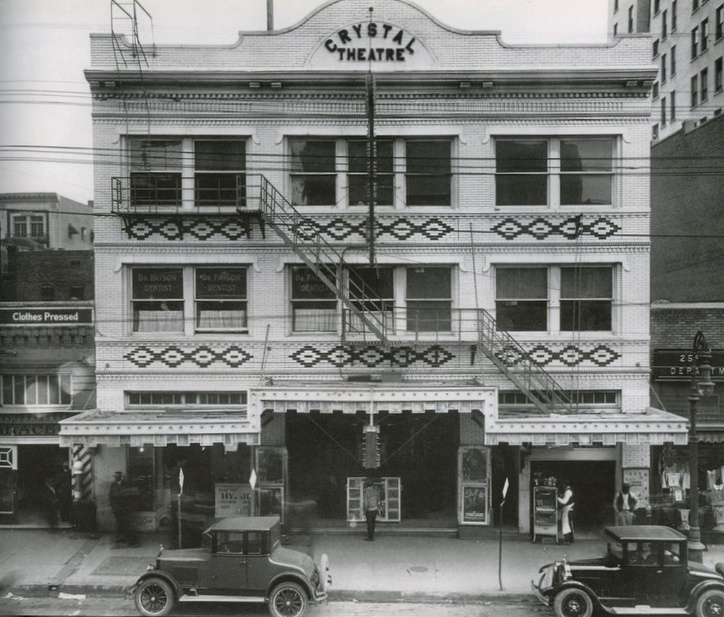
The photo above, showing two not-terribly-thrilled children dressed up in Old West costumes, was taken by Joe Lawrence in his “Crystal Electric Studio” at 1608 Elm Street, one of many small businesses located above the Crystal Theater.

crystal-theaterThe Crystal Theatre — with office space above (click for larger image)

Joseph Z. Lawrence (1884-1943) was born in Romania and settled in Dallas in 1909. In 1915 he was doing business as a photographer at 1608 Elm Street. Lawrence later owned the Lawrence Art Galleries on Pacific Avenue, and, along with his son Harry, was an early supporter of the Dallas Nine artists.

***

Sources & Notes

Top studio photo by Joe Lawrence, found on eBay.

Photo of the Crystal Theater found on Pinterest, here. A photo of the 101-year old building taken during the recent spate of downtown demolition — with the wrecking ball literally INCHES away from it — is here. The Dallas Morning News article it comes from is here.

At some point the address of the building (originally 1608-10) became 1610 Elm, perhaps when it was extensively remodeled in the late 1920s and became a retail store.

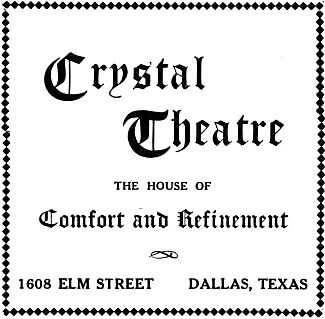
crystal-theater_building-code-bk_19141914 — “Comfort & Refinement”!

*

Copyright © 2014 Paula Bosse. All Rights Reserved.

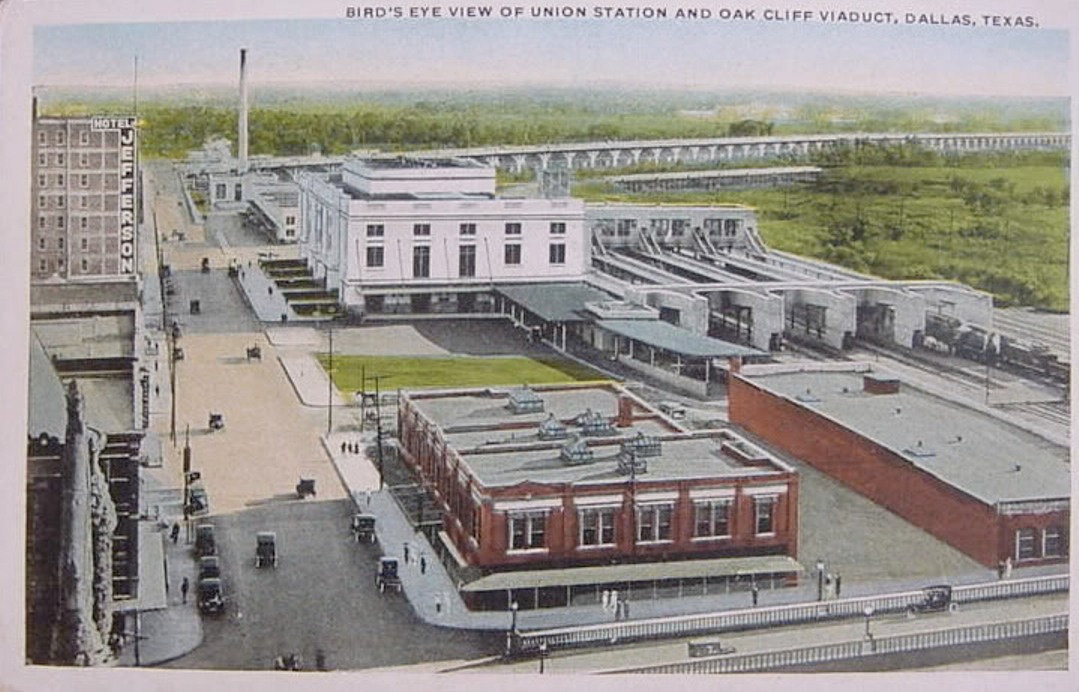
Union Station’s Empty Backyard — ca. 1920

union-stn_ca1920The western edge of downtown, looking south (click for larger image)

by Paula Bosse

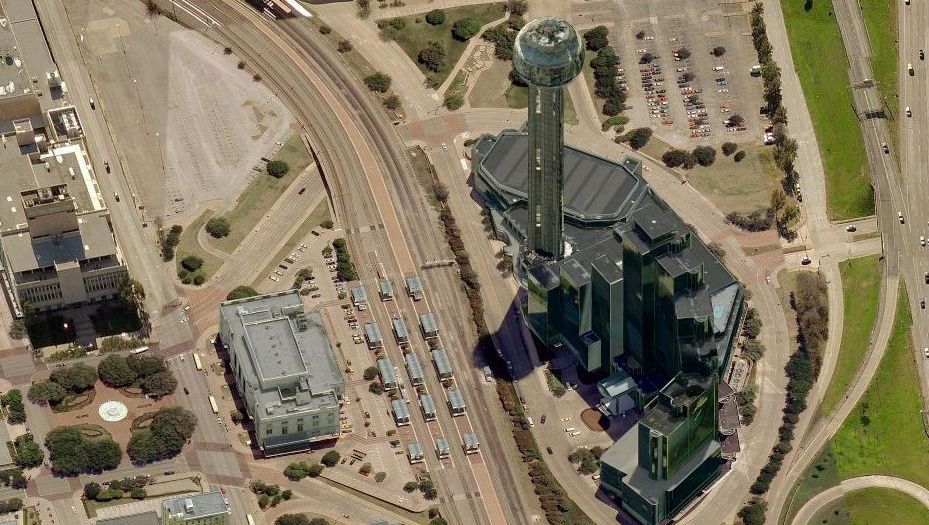
Here’s a postcard view you don’t see that often, Houston Street, looking south, with the Old Red Courthouse at the lower left, the gleaming white Union Station in the upper middle, and the fantastic Houston Street viaduct at the top. It’s a little hard to imagine that sixty-or-so years later, Reunion Tower would be plunked down at the far right of this picture, in that grassy field behind the tracks at Union Station.

union-stn_bing_20014

***

Postcard from the DallasMetropolis.com forum, here (see comment for the very interesting description of what’s what in this image).

Present-day bird’s-eye view from Bing (click for larger image).

*

Copyright © 2014 Paula Bosse. All Rights Reserved.


David Wade: Overcoming Childhood Trauma

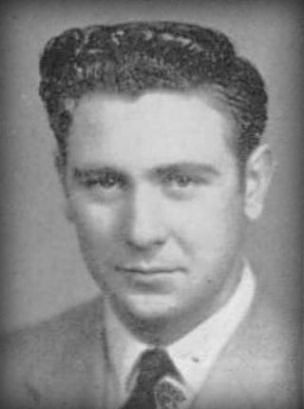
david-wade_waco-high-school-194117-year-old David Wade, Waco High School, 1941

by Paula Bosse

For many Texans, the name David Wade brings to mind a gentle and convivial, deep-voiced TV cooking show host who, for decades, shared his love of food with a legion of faithful fans. Dallas was Wade’s home base — it was where he lived, where he established his business empire, and, for the most part, where he recorded his television programs. He seemed like the kind of guy who had it all. But many of his fans would be shocked to learn that David Wade’s most searing childhood memory was the impossible-to-forget day his father killed his mother.

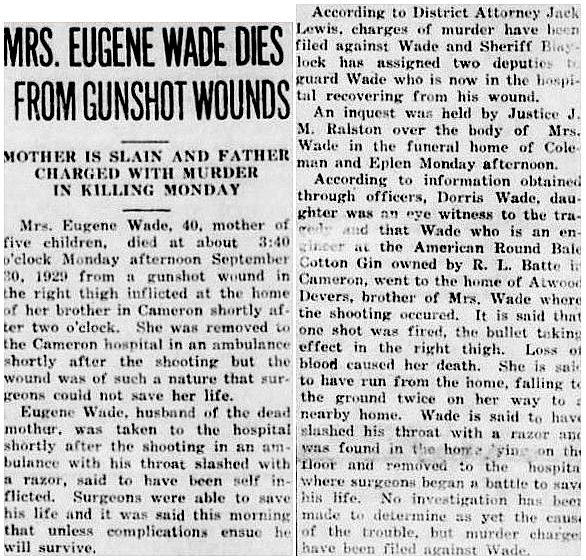
In 1929 Eugene and Ora Lee Wade lived in Cameron, Texas, about 50 miles south of Waco. They had four daughters, ranging in age from twelve to twenty-one, and one son, five-year old David. Eugene worked as an engineer at the local cotton gin, and Ora Lee raised the children and was a popular and active member of her church.

On the afternoon of Sept. 30, 1929, Eugene came home drunk. Very drunk. He began to argue with Ora Lee, and, as things escalated, she ran to the nearby house of her brother. An angry Eugene lurched after her. A gun was drawn, and Eugene drunkenly threatened his wife with it. In an ensuing physical altercation, the gun went off. Mrs. Wade had been shot in the thigh. She attempted to run away but collapsed after only a few steps. She died soon after being rushed to the hospital — her femoral artery had been severed, and she bled to death. Before the police arrived, Eugene Wade had slashed his throat with a razor, and though not initially expected to live, he survived and was charged with the murder of his wife. The horrible, violent, bloody scene had been witnessed by at least one daughter (and, in all likelihood, probably by five-year old David as well).
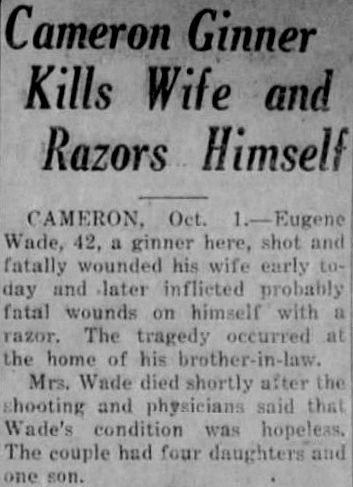
wade_bryan-eagle_100129The Bryan Eagle, Oct. 1, 1929

wade_cameron-herald-100329The Cameron Herald, Oct. 3, 1929 (click for slightly larger image)

A distraught Eugene Wade pleaded guilty, was sentenced to life in prison, and by the end of the year, he was on his way to Huntsville. Before he left Cameron, he gave a lengthy, sincere, and heartbreaking interview to The Cameron Herald. In it, he expressed his sorrow, his regret, and his love for his wife and children.

“Whiskey was the cause of it all. I am to blame for what has happened to my family and to myself. I can lay it all to drink. I loved my wife as well as any man ever loved his wife and I love my children. My home is destroyed and my wife is dead. My children will suffer the humiliation of this terrible thing. Time may heal their wounds but mine will bleed for all time. I can never escape the horror of it though I should live a thousand years. Nothing but sorrow is left for me, still I might come out of the trouble some day, maybe an old man and broken but maybe I can still do some good in the world.” (Cameron Herald, Dec. 19, 1929)

Five-year old David had been left, basically, an orphan. He spent some time at the Juliette Fowler home for orphans in Dallas and was later moved around between family members and foster families. He went to Waco High School where he was a popular student (the yearbook photo above was accompanied by the motto supplied by the Senior Band, of which he was a member: “And he is oft the wisest man”), and he received arts degrees from Baylor and the University of Texas (he studied music and had a short career as a singer). He seems to have done well in school, despite the terrible incident in his past.

But after college he spent time in California as a “test pilot,” a nerve-wracking job that apparently stressed him out so much that he sought medical treatment (an amateur psychologist might assume that his anxiety was triggered by post-traumatic stress). According to later newspaper profiles, instead of sedatives, the doctors suggested he focus on an enjoyable hobby to settle his nerves. A hobby like cooking. …And the rest is history.

As far as I’ve been able to determine, he rarely — if ever — talked about the tragedy he experienced in his youth. When one knows the details of his past, some of his quotes from interviews carry more weight:

“Any time you have a problem and you overcome it, you have a muscle. You never build a personality unless you have a lot of troubles.” (David Wade in the Fort Worth Star-Telegram, April 25, 1976)

When I was growing up and would frequently come across one of David Wade’s shows on TV, I usually clicked on past it unless there was absolutely nothing else to watch. He and the show felt a little corny and were a little too laid back for my taste. Now, though, having learned about his past — and having always felt that Mr. Wade seemed to be a genuinely nice person — I definitely have a more positive and respectful opinion of the man. Ascot, crest-emblazoned blazer, and all.
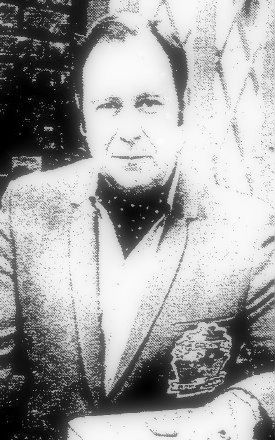
david-wade_FWST_042576-photoBon Appétit!

***

Sources & Notes

Top photo of a 17-year-old David Lloyd Wade from the 1941 Waco High School yearbook.

The coverage of Ora Lee Wade’s funeral in the Cameron Herald (Oct. 3, 1929) — which includes quite a bit of genealogical information — can be found here (click for larger image).

The full “jailhouse interview” with Eugene Wade in the Cameron Herald (Dec. 19, 1929) is available in a PDF, here.

Incidentally, Eugene Wade’s “life sentence” lasted four years. He was the recipient of one of Governor Ma Ferguson’s notorious “conditional pardons.” He appears to have lived around the Cameron area until his death in 1967. I don’t know whether he ever re-established relationships with his children.

A nice overview of David Wade’s very successful career can be found in an article from the April 25, 1976 issue of the Fort Worth Star-Telegram, in a PDF, here.

My previous post, “David Wade, Gourmet: Have Ascot, Will Travel” — about his happier days as a successful TV personality — can be read here.

*

Copyright © 2014 Paula Bosse. All Rights Reserved.

JFK’s “Last Hour In Dallas” — 1963

JFK_poster

by Paula Bosse

How is a city supposed to respond when it is suddenly plunged into the international spotlight? Does it grieve and try to forget, or does it grieve and capitalize? Dallas has had over 50 years to deal with/come to terms with the assassination of President Kennedy, but sometimes it seems as if the City of Dallas is still shell-shocked and isn’t quite sure how to acknowledge it on an official level. Let’s face it, Dallas is known to the rest of the world for one thing: the Kennedy assassination (and perhaps the TV show, and maybe the Cowboys). Yes, we have the justly-renowned Sixth Floor Museum, but it took 26 years to open it!

The cottage industry that sprang up in the wake of the Kennedy assassination has been big business for decades, some of it generated by people who live in Dallas, but most of it by people who have probably never even been to Texas. Since 1963, the “assassination literature” (…and, yes, it’s called that) has mushroomed, with local contributions coming from Dallasites whose brush with the President before, during, or after the events of November 22, 1963 have probably been pored over by numerous people either trying to understand why what happened happened or by people searching for hidden conspiracy clues to explain what really happened.

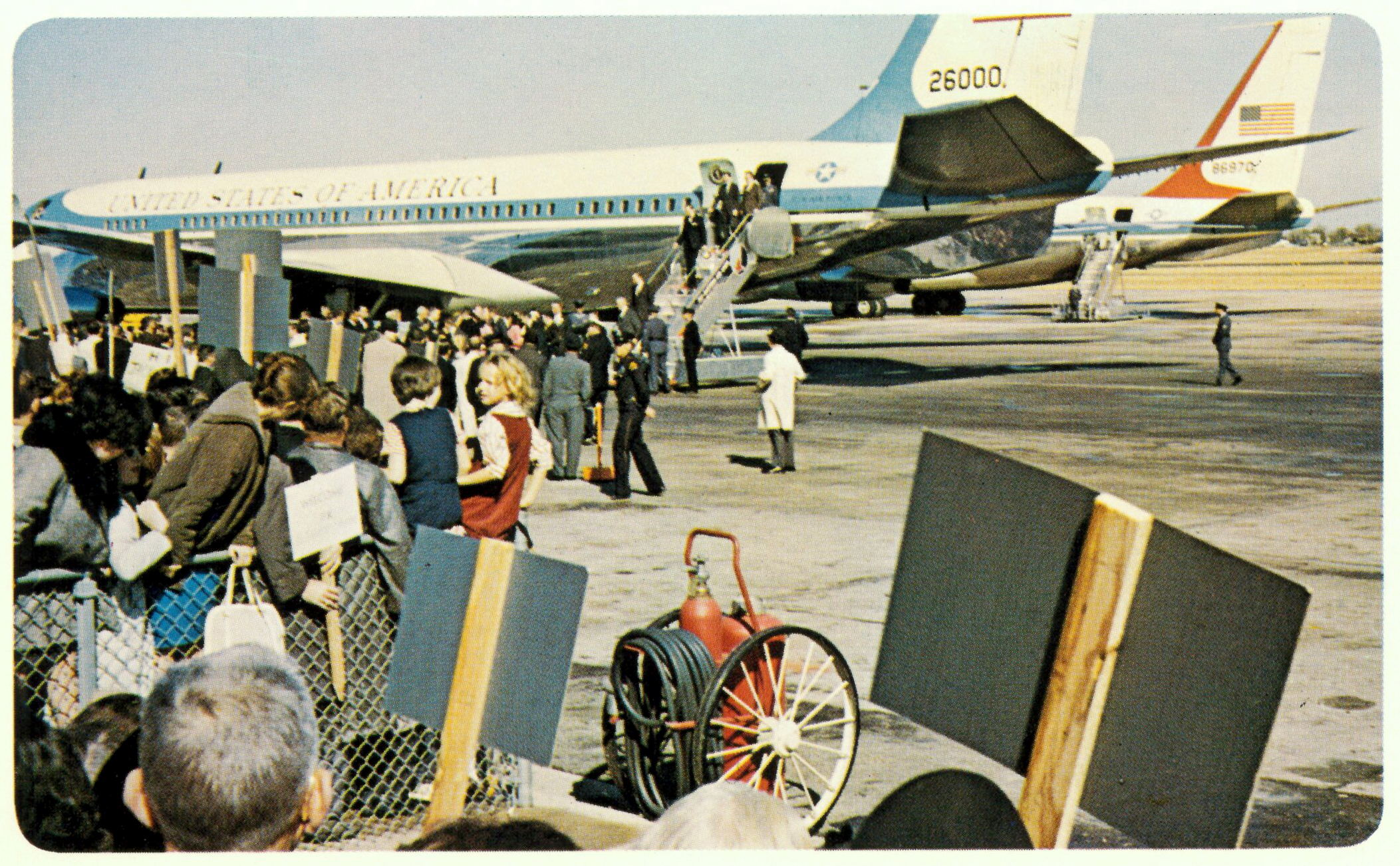
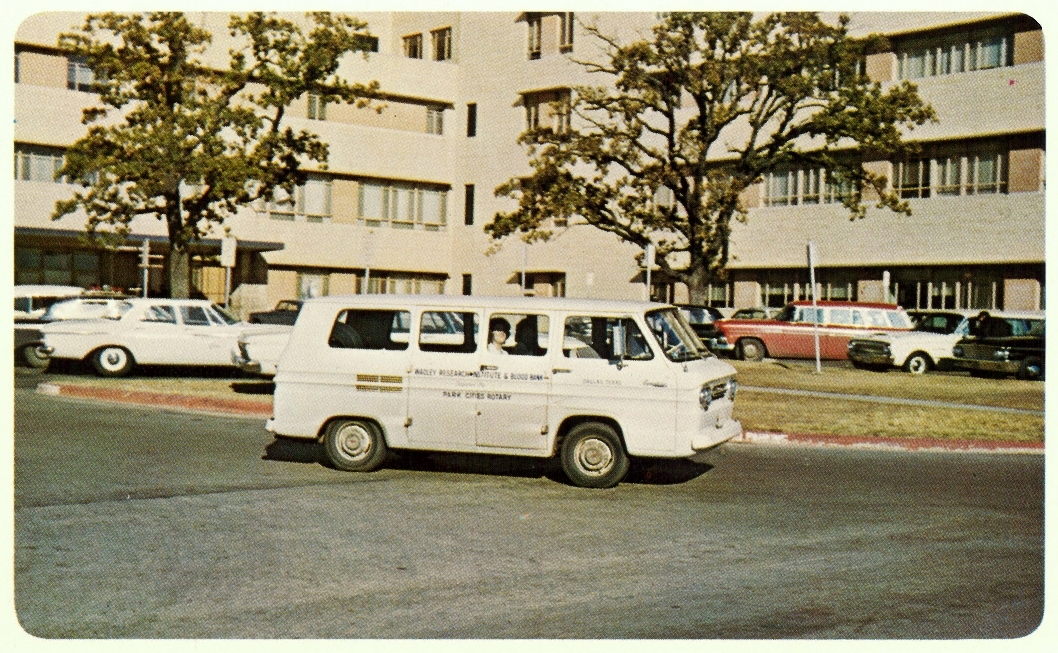
One local resident who added to the assassination literature was John E. Miller who took photos of the arrival of President and Mrs. Kennedy at Love Field and then apparently hot-footed it over to Parkland when the news of the shooting broke. These photos were issued as postcards in 1964 in a packet of 12. (Click pictures for larger images.)

JFK_envelope_frontAbove, the front of the envelope containing the cards; on the back: “A Real Picture Treat For Years To Come.”

JFK_card_01From the back of the card: “No. 1, Arrival of President’s Escort Plane at Love Field, Dallas, Texas.”

JFK_card_02“No. 2, Presidential and Escort Planes at Dallas’ Love Field landed shortly after this picture was taken.”

JFK_card_03“No. 3, President John F. Kennedy and party leaving airplane at Love Field. (Mrs. Kennedy — pink hat.)”

(UPDATE: The two little girls in the photos above and below are most likely Carolyn Jacquess, in blue, and Debby Massie, in red. Their little group arrived at the airport before the president’s plane arrived, walked through the terminal and out onto the tarmac, right to where the plane taxied up to the small crowd of about 100 people. Just like that. There was no special invitation, and, other than the chain-link fence, no real security.)

JFK_card_04“No. 4, President John F. Kennedy and Party in foreground at Dallas’ Love Field.”

JFK_card_05“No. 5, Vice-President Johnson, Governor Connally, Mrs. Kennedy (pink hat), other members of party at Dallas Love Field.”

JFK_card_06“No. 6, Vice-President Johnson, Governor Connally, Presidential Party and Newspaper Men, Love Field, Dallas.”

JFK_card_07“No. 7, Forming of Presidential Parade, Love Field, Dallas.”

JFK_card_08“No. 8, After Assassination, TV Unit arrives at Parkland Hospital in Dallas.”

JFK_card_09“No. 9, Blood Bank Unit at Parkland Hospital on fatal day. Dallas, Texas.”

JFK_card_10“No. 10, Hearse carrying President John F. Kennedy’s body and Mrs. Kennedy from Parkland Hospital back to airplane at Love Field, Dallas.”

JFK_card_11“No. 11, Presidential plane awaiting President Kennedy’s body, Vice-President Johnson and Mrs. Kennedy, for return to Washington, D.C. (Note Presidential seal.)”

JFK_card_12“No. 12, Texas School Book Depository building from which authorities believe fatal shots were fired. (Note second window down on right corner of building.)”

***

Photos and captions © John E. Miller 1964, 3500 W. Davis, Dallas, Texas 75211. (Mr. Miller was a Dallas businessman who sold motor homes and trailers in Oak Cliff between 1945 and 1976. A photo of Mr. Miller is here).

Many thanks to “amyfromdallas” for scanning and contributing the images in this post. Thanks, Amy!

For other Flashback Dallas JFK-related posts, see here.

Click pictures for larger images.

*

Copyright © 2014 Paula Bosse. All Rights Reserved.
Dallas News Hustler — 1908

newsboy-horse_dmn_012608_lgErnest d’Ablemont, 13, newspaper carrier aboard his trusty steed, 1908

by Paula Bosse

The photo above appeared in the pages of The Dallas Morning News on Jan. 26, 1908 under the headline “One of the Dallas News Hustlers.” The caption:

Ernest A. d’Ablemont is one of the hustlers selling The Dallas News. He began selling the paper in March, 1905, on Sundays at the age of 11 years. He is now 14, or will reach that age on his birthday, March 16, 1908. Since he began, he has never missed a Sunday, rain or shine, hot or cold. Since his business career began he has clothed himself and has accumulated sufficient money to enable him to make a loan of $150 at 10 per cent.

Quite the business-minded newsboy — the Inflation Calculator estimates that $150 in 1908 would be equivalent to almost $4,000 today! In 1909 — just a year later — he had his own entry in the Worley’s city directory, but he had jumped ship from the News and was working for The Dallas Dispatch.

dablemont_worleys_1909

Ernest d’Ablemont was born in Dallas in 1894 to immigrant parents — his father, Felix, was French, and his mother, Inga, was Norwegian. One wonders what could possibly have enticed a Parisian to come to Dallas, but Felix had been in the city since about 1883, working first in a meat market, then spending most of his life as a produce man. Felix was a “truck farmer” (he grew vegetables to sell locally), and he had a small piece of land off 2nd Avenue in the old Lagow Settlement area, south of Fair Park, about where S. 2nd Ave. intersects with Hatcher. Felix placed this ad in 1903:

dablemont_dmn_110103

“German, Swede, Norwegian or French preferred.”

Ernest followed in the footsteps of his farmer father. After his early entrepreneurial foray into the world of newspaper delivery and a couple of years of service in World War I (which took him overseas where he was assigned to a field hospital and a “sanitary train”), he returned to Dallas and worked the family’s truck farm until he retired. He died in 1954 at the age of 60.

***

Sources & Notes

Top image of young Ernest on horseback from The Dallas Morning News, Jan. 26, 1908; photo by Clogenson.

Want-ad from the DMN, Nov. 1, 1903.

WWI “sanitary trains”? I’d never heard the term. Find out what they were and see what one looked like in this GREAT photo from Shorpy, here.

*

Copyright © 2014 Paula Bosse. All Rights Reserved.

Theater Row Block Party! — 1948

theater-row-block-party_082648_preservation-dallasDallas premiere, “Red River” — Aug. 26, 1948 (click for larger image)

by Paula Bosse

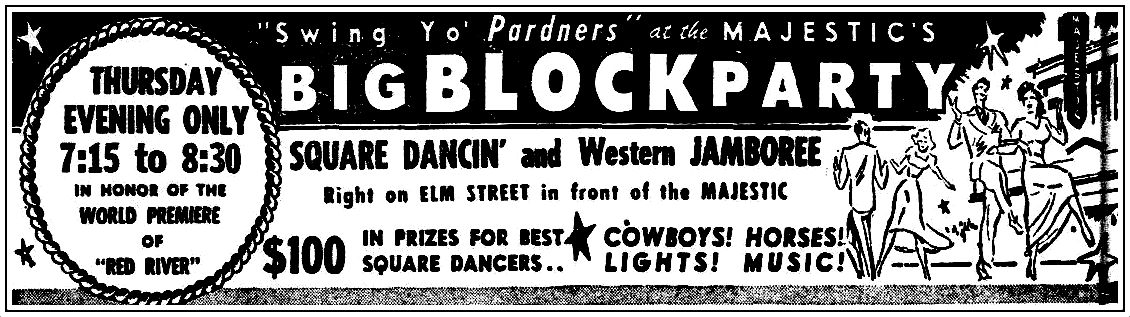
On a rainy night in August, 1948, United Artists premiered the movie “Red River” in Dallas at the Majestic Theatre. The now-classic Western about a Chisholm Trail cattle drive, directed by Howard Hawks and starring John Wayne and newcomer Montgomery Clift, was actually “premiered” simultaneously on August 26, 1948 in 250 theaters in Texas, Oklahoma, Kansas, and New Mexico, the four southwestern states most closely associated with the Chisholm Trail.

red-river_ad_dmn_082648(Aug. 26, 1948)

In Dallas, the publicity machine was seriously cranked up. The main attraction was a free-to-the-public street party in which the 1900 block of Elm Street was closed to traffic for a slate of western-themed festivities. The “jamboree” included square dancing, a musical set by cowboy singer Jim Boyd and his band, “cowboys and cowgirls from the Pleasant Mound Rodeo,” the Dallas Mounted Quadrille, and the Sheriff’s Posse. Or, as the ad said more succinctly, “Cowboys! Horses! Lights! Music!”

red-river_block-party_dmn_082648Great ad! Click to see it bigger! (Aug. 26, 1948)

No Hollywood celebrities were there, but the big Western Jamboree was apparently well-attended, even in the rain and despite rain, people gathered for square dancing.

(Wow. Square dancing in the rain. That’s dedication.)

The movie was a huge hit, so much so that the Majestic added showings, including one at 9:30 in the morning (!). It had a record week in Dallas, and, nationally, by the end of that first week it was reported to be the biggest-grossing picture in the history of United Artists.

The “world premiere” is interesting and all, but that photo of a brightly lit-up Theater Row is even better!

***

Sources & Notes

The original source of the photograph is not known, but I stumbled across it on a Preservation Dallas page, here.

“Red River” is a great movie. If you haven’t seen it, you need to. Even if you think you don’t like Westerns. Roger Ebert’s review/analysis is here.

*

Copyright © 2014 Paula Bosse. All Rights Reserved.


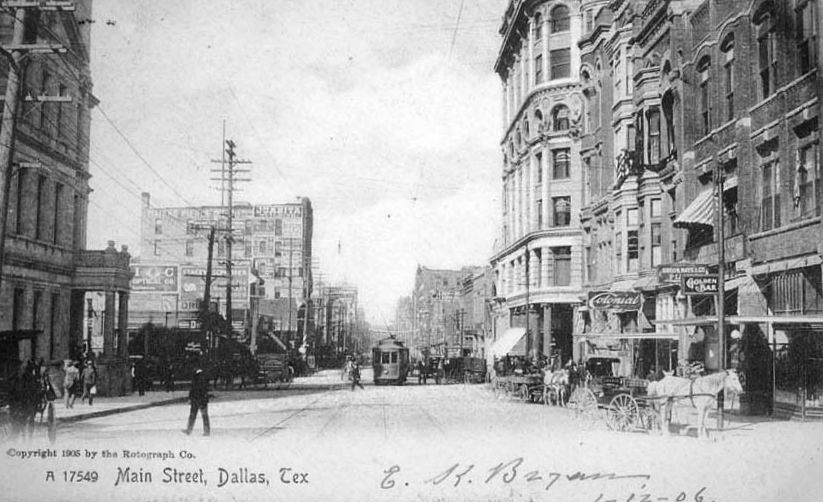
Main Street — 1905

main-st_1905A wide Main Street (click for larger image)

by Paula Bosse

Just another day on Main, here looking west from the middle of the block between Ervay and St. Paul. The Wilson Building is on the right, the Juanita Building is at the top left.

***

Postcard from eBay.

*

Copyright © 2014 Paula Bosse. All Rights Reserved.

Preston Royal Fire Station — 1958

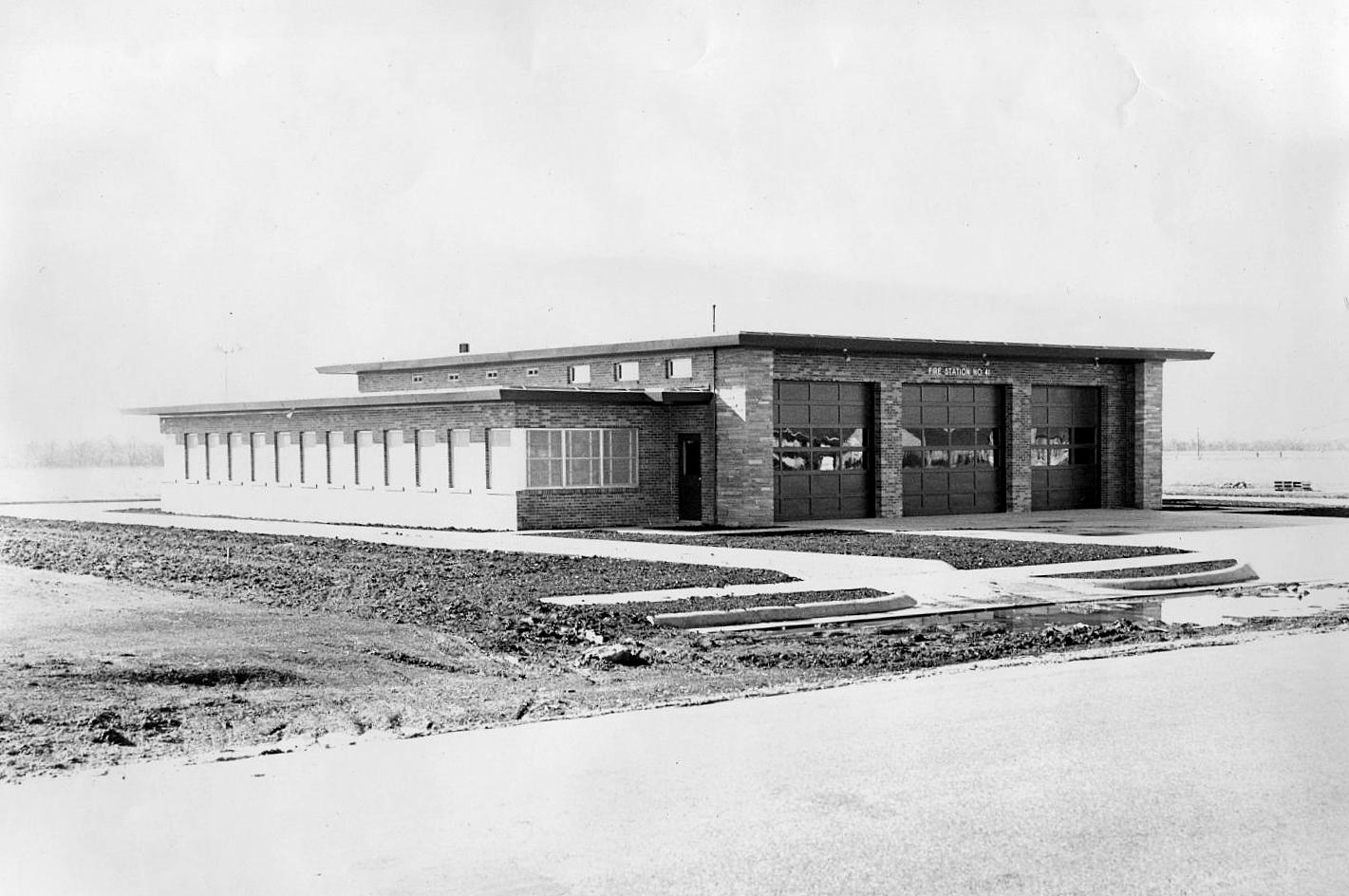
fire-station-41_royal-laneStation No. 41, 5920 Royal Lane (click for larger image)

by Paula Bosse

Above, Dallas Fire Station 41 on Royal Lane, just west of Preston Road, about the time it opened (the back of the photo says service at the station began Jan. 16, 1958). It looks as if it’s been set down upon a bleak and barren piece of land in the middle of nowhere, but, actually, commercial development in this Preston Hollow-area neighborhood was … um … on fire in 1958. The large shopping centers at Preston and Royal were under construction at this time, and even though it was very far north, it was most certainly a desirable area in which to live (as, of course, it still is).

The station was designed by architect Raymond F. Smith who had previously designed a couple of other fire stations in town, but who was known mainly for his work designing movie theaters, such as the Casa Linda (1945), the Delman (1947), and — hey! — the (long-gone) Preston Royal Theatre, which opened in 1959 right across the street from this fire station (both of which were, rather conveniently, a mere four blocks away from Smith’s Royal Lane residence).

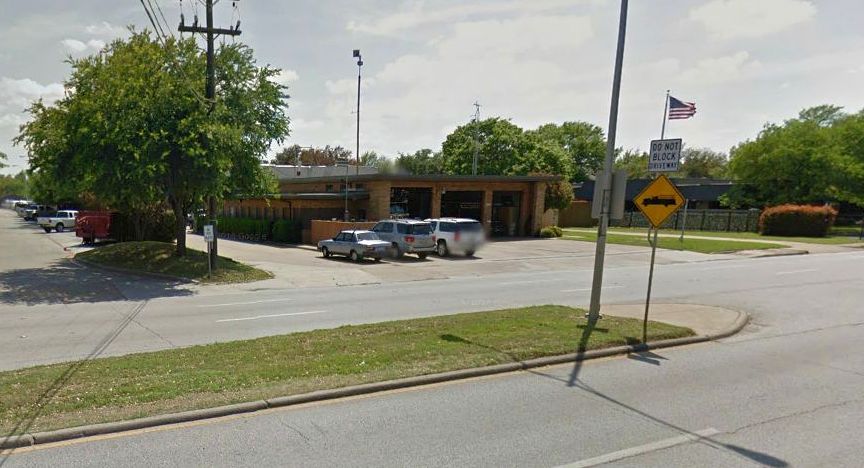
The station is still in operation, working to keep North Dallas flame-free — it just has a few more neighbors (and trees!) now than it did in 1958.

fire-station_royal_google

**

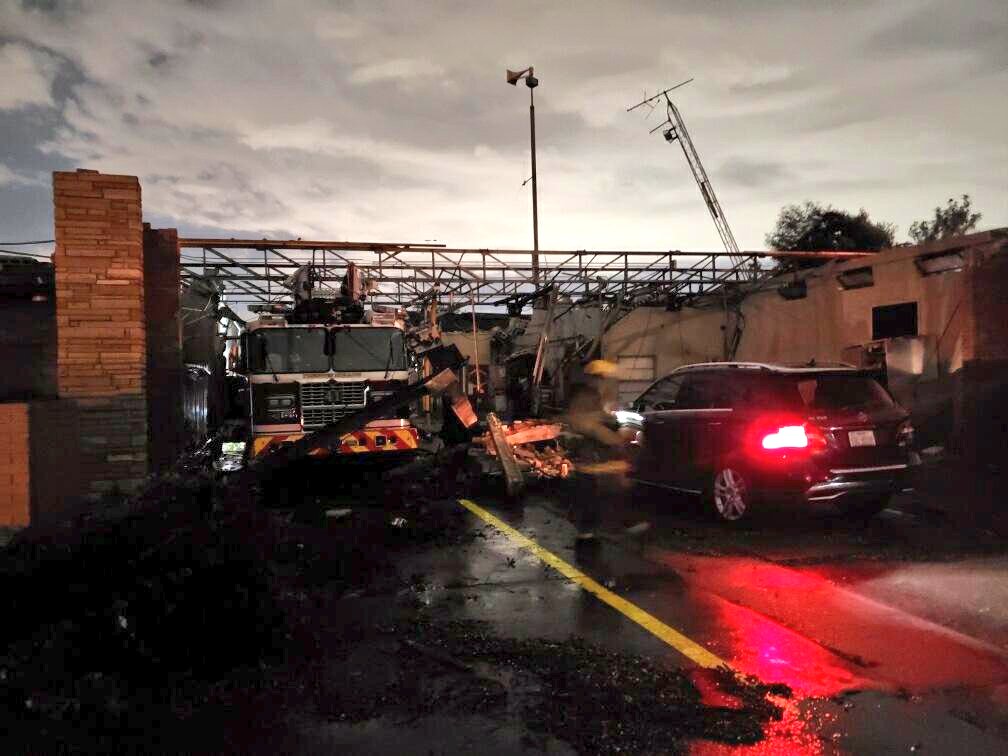
UPDATED Oct. 22, 2019: A powerful tornado hit northwest Dallas on Oct. 20, 2019 and devastated much of the Preston Hollow area. This fire station was hit hard, and it is currently out of commission. Below are photos from DFR’s Twitter feed.

preston-royal-fire-station_dfr-twitter_102119_int

preston-royal-fire-station_dfr-twitter_102119_ext

***

Sources & Notes

Photo from the Dallas Firefighters Museum, via the Portal to Texas History. It can be viewed here.

Second image of the firehouse from Google Street View.

Bottom two photos of the station post-tornado are from the Twitter feed of @DallasFireRes_q.

*

Copyright © 2014 Paula Bosse. All Rights Reserved.


The Texas Bookbindery, Arcadia Park

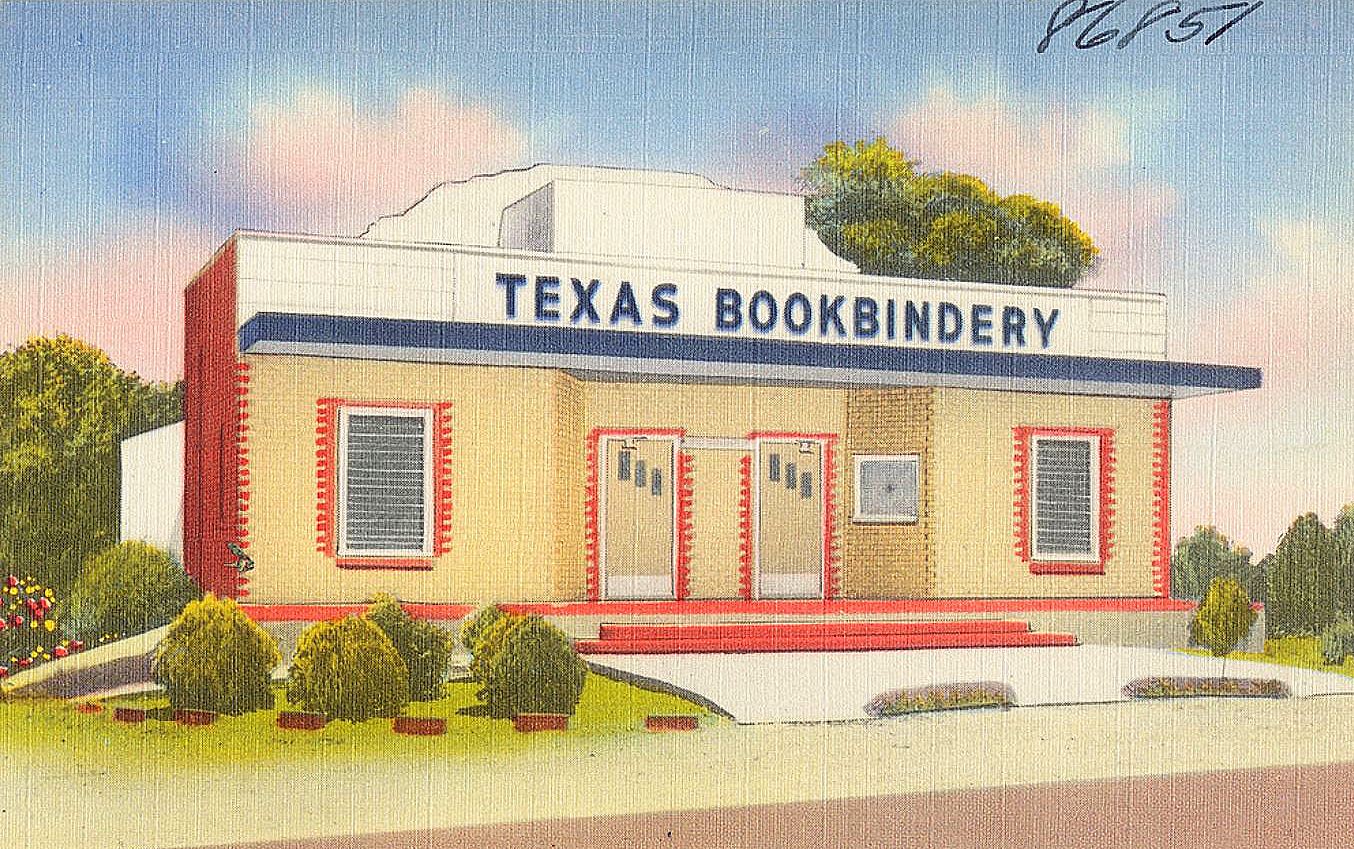
texas-bookbindery_oak-cliff_tichnorThe Texas Bookbindery, be-shrubbed and gleaming in Oak Cliff’s Arcadia Park

by Paula Bosse

Old postcards, such as the one above, are perfect little fictional jewels. One knows instinctively when looking at them that they show a highly idealized version of reality. I almost didn’t want to find out too much about the Texas Bookbindery, because I love this image so much, and I was pretty sure that if the simple-but-charming building still stood, it wouldn’t really look like a happy little place atop a slight hill, with lovely landscaping, where butterflies flitted among the flowers and bluebirds sang in the nearby trees.

I didn’t find out much about the Texas Bookbindery, except that it seems to have been in business from at least the late 1940s until the late ’60s or early ’70s. It was managed by a man named T. Bernard White, who was featured in a 1948 Dallas Morning News article about the horrible things people do to library books (the Dallas Public Library sent the bindery what sounds like an unending stream of not-quite-destroyed books which were still repairable).

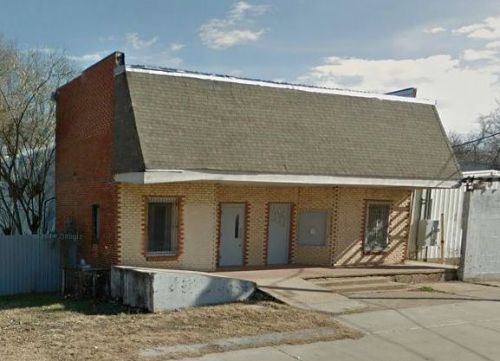
Apparently bookbinderies keep a pretty low profile, because the only other mention I found in the newspaper about this one was in 1962 when a large number of the 37 employees (“mostly women”) were overcome by fumes from poorly-vented gas heaters in the “one-story sheet-metal plant” (yes, a large sheet-metal structure extends behind the deceptively cheery street view). That story listed the address as 714 N. Justin, in the Arcadia Park area of Oak Cliff. I was almost afraid to plug that address into Google. As well I should have been. Here’s what that sweet little building looks like now (but …the shrubs! …the flowers! …the BLUEBIRDS!!):

tx-bookbindery-nowToday, via Google Street View

Poor little bookbindery.

UPDATE: A month after I wrote this post in November, 2014 the Google car drove down N. Justin and snapped a new Google Street View of the poor little bindery — it looked even sadder: it had a big hole in its roof. In March of 2017, that hole-in-the-roof image from December, 2014 has yet to be updated. See it here.

***

Sources & Notes

Postcard from the fantastic Boston Public Library Tichnor Brothers Postcard Collection on Flickr, here.

Click top pictures for larger image.

*

Copyright © 2014 Paula Bosse. All Rights Reserved.