Flashback : Dallas

A Miscellany: History, Ads, Pop Culture

Category: Neighborhoods

Reverchon Park, Site of a Hovel Town Once Known as “Woodchuck Hill”

reverchon_park_baseballAnyone for a little sport? Or a spell-checker?

by Paula Bosse

Before it became one of Dallas’ nicest parks, Reverchon (named for the French botanist Julien Reverchon who arrived in Dallas to join the La Réunion settlement) began life as a 36-acre plot of land called “Turtle Creek Park.” But before that, it was an open-air slum known as “Woodchuck Hill” — an eyesore of an area filled with tents and hovels where families lived in deplorable conditions. It was a pretty dangerous place — the only thing the violent “Squattertown” had going for it was that it was practically next door to Parkland Hospital at Maple and Oak Lawn. The injured and dying didn’t have far to go for medical attention. Or to breathe their last breaths. News reports such as the one below — from 1911 — were, sadly, fairly common (click for larger image):

woodchuck-hill_dmn_081711
Dallas Morning News, Aug. 17, 1911

In October, 1914 it was announced that the city had purchased this tract of land from the heirs of the pioneer Cole family in order to establish what would become Reverchon Park.

reverchon-park_dmn_101914
DMN, Oct. 19, 1914

A few months after the purchase of the land, the squatters were told to vacate the city’s new park property, and what had been a miserable slum was cleared away and transformed into one of the city’s prettiest “pleasure grounds.”

woodchuck-hill_dmn_031215
DMN, March 12, 1915

*

The following is from the Dallas Park Board’s 1915 report:

Pending suggestions for a more suitable one, Turtle Creek Park has been temporarily adopted as the name for this property. At the time of its purchase it corresponded in a measure to the slum districts of the great cities. It was known as “Woodchuck Hill,” and its inhabitants constituted a novel settlement for the city. They resided in make-shift houses and hovels built by the occupants who paid a small stipend each month in the shape of ground rent. The moral conditions of these people was bad, and they caused much concern to the Social Welfare Workers in particular.

In addition to an athletic field, this park is adaptable for an elaborate botanical garden. Being situated at the western base of the Turtle Creek Boulevard, which extends the entire length of the property, it will one day constitute one of the chief attractions of the city for visitors. It adjoins the water works property, comprising a total of 103 acres of city property, a large portion of which has already been beautified. The grounds surrounding the pumping station and the water purification plant have been laid out in lawns and flower beds. Near the center of this park and at the base of the hills on its northern boundaries is located Raccoon Springs. The springs flow a large volume of water to year round, and provide shady nooks with delightful surroundings.

*

Hovels below, in the “before” picture.

reverchon-park_before-1915

reverchon-park-1915

Turtle Creek Park
Located on Maple Avenue.
Area, 36 acres.
Acquired, 1915.
Cost of land, $40,000.

reverchon-plat_kessler_1915

***

Sources & Notes

Top postcard (with “Reverchon” misspelled — understandably so…), from somewhere in the wilds of the internet.

Quoted text and other images from Report for the Year 1914-1915 of the Park Board of the City of Dallas, With a Sketch of the Park System (Dallas: Park Board, 1915), which can be accessed as part of the Dallas Municipal Archives, here.

For more on the Dallas Parks System, the definitive source may well be Historic Dallas Parks by John Slate (Charleston: Arcadia Publishing, 2010); more info here.

Friends of Reverchon Park website here.

*

Copyright © 2014 Paula Bosse. All Rights Reserved.

“It’s 10 Degrees Cooler in Highland Park” — 1916

highland-park-ad_smu-rotunda-1916

And don’t you forget it!

***

Flippen and Prather developed Highland Park, and this great ad may well have swayed more than a few people to consider HP as their future home. From the 1915-16 edition of SMU’s “Rotunda” yearbook.

*

Copyright © 2014 Paula Bosse. All Rights Reserved.
Theatre Row — A Stunning Elm Street at Night

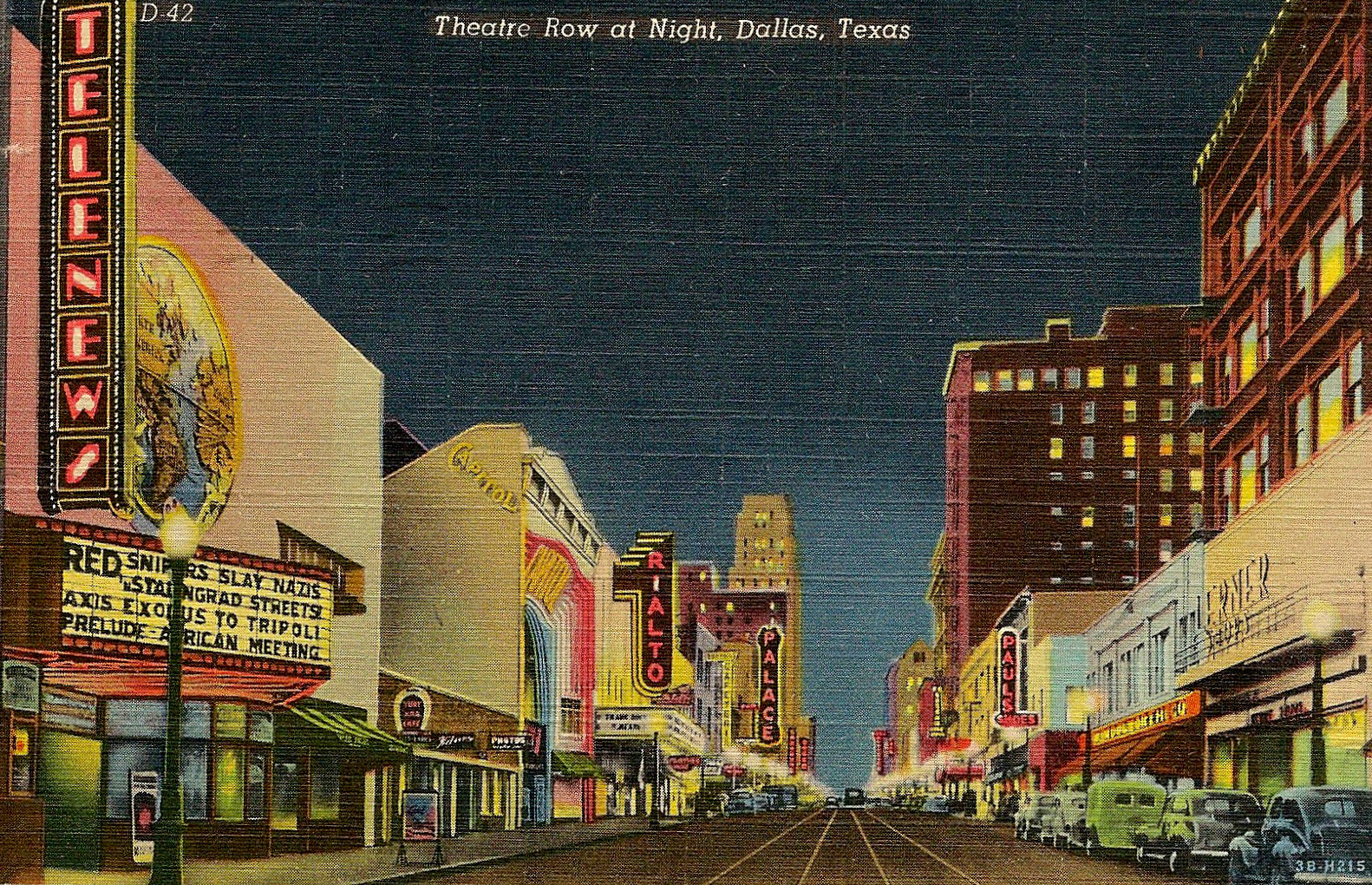
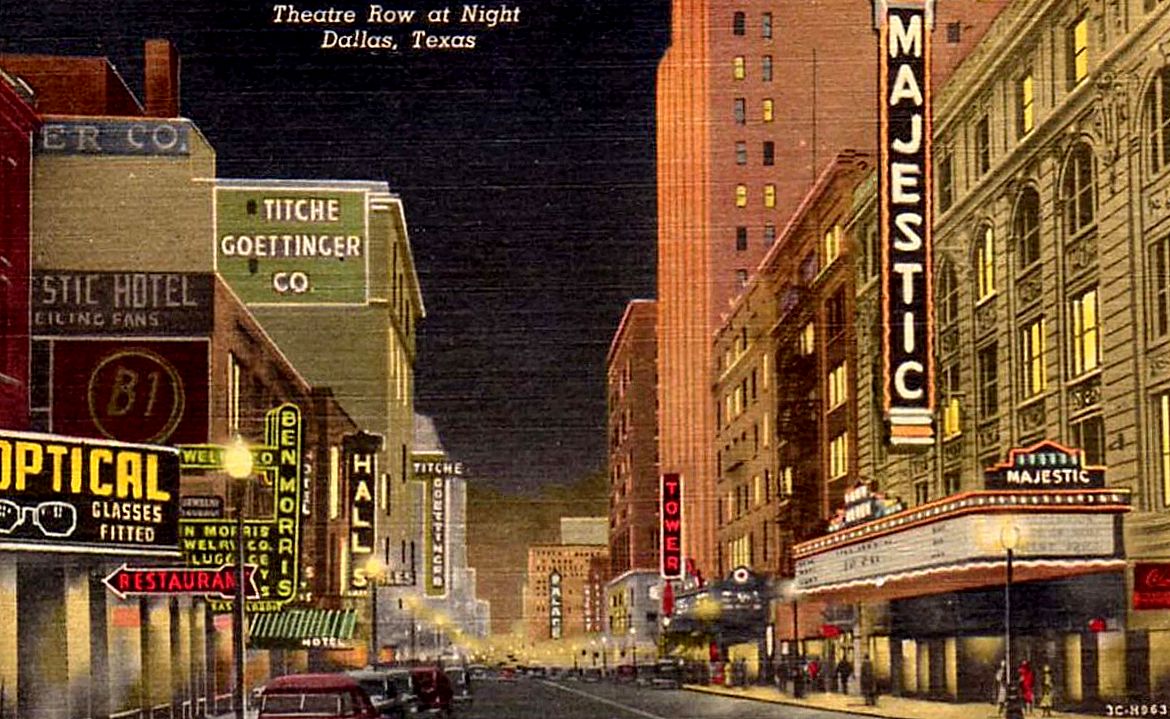
theater-row_night_telenewsElm Street, looking east… (click for larger image)

by Paula Bosse

Damn you, suburban theaters and television, for killing this! (Hang in there, Majestic!)

Favorite thing gleaned from the postcard above? That Dallas had a newsreel-only theater — the Telenews. (See the original, somewhat pedestrian, daytime photograph which was transformed by all sorts of dazzling magic in order to turn it into that striking postcard, here.)

theater_row_night_BIG

theater-row-night_c1935

theater-row_night_majestic

***

All images are larger when clicked — some MUCH larger!

*

Copyright © 2014 Paula Bosse. All Rights Reserved.


Chas. Ott: One-Stop Shopping for Bicycles and Dynamite

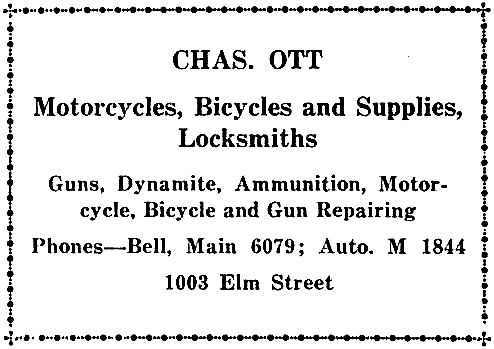
ad-charles-ott-dynamite_smu-19161916 ad

by Paula Bosse

Aside from maybe an ad for a popular off-campus soda shop or one of those bland, dutiful business card ads for an insurance company, I’m not sure that there’s necessarily a specific type of advertisement I expect to see in the pages of a college yearbook. But if I were quizzed on types of ads I wouldn’t expect to see in the pages of a college yearbook, it would probably include an ad for dynamite and ammo. But in 1916, SMU’s inaugural yearbook committee was proudly testing the limits of advertising propriety!

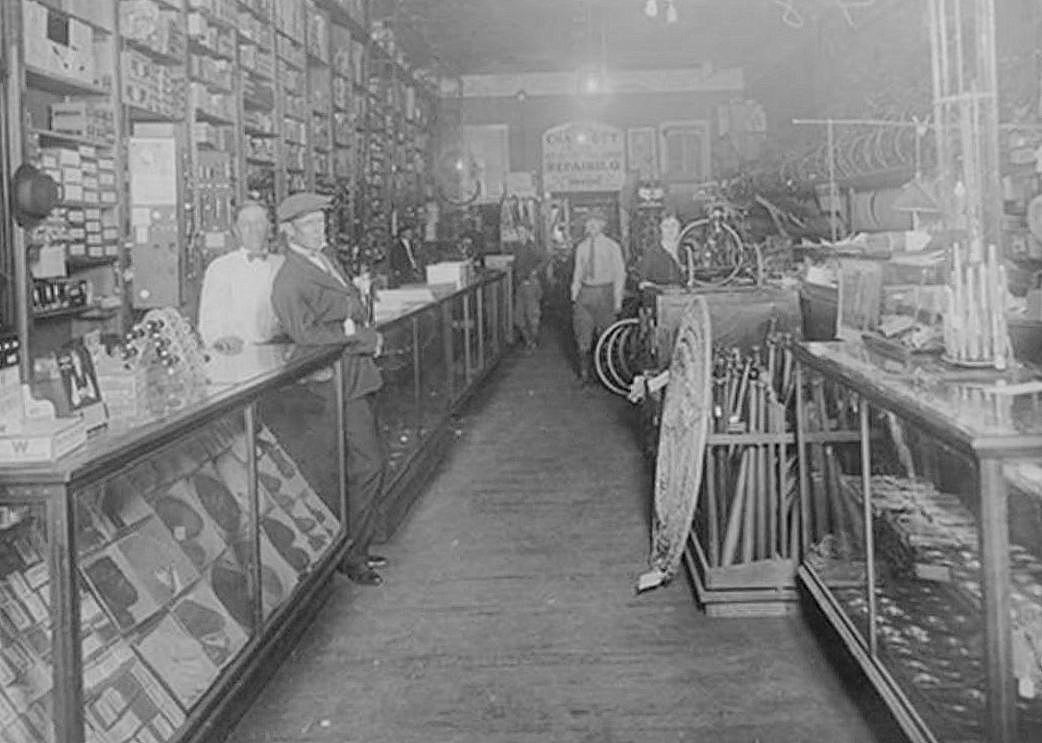
Charles Ott was kind of a big deal in the world of, first, gunsmithing, and second, locksmithing. Born in Germany, he came to Dallas in 1873 and opened a gun shop on Elm Street in 1876. According to The Encyclopedia of Texas, at the time of his death (c. 1921?), he was “the oldest gunsmith in the State of Texas.” That’s an impressive accomplishment. As seen from the ad above, a successful businessman not only knows his craft, but he knows how to diversify. (A nice bio of Mr. Ott can be found here.) Below, a photo of the interior of his shop, sometime in the early 20th century:

chas-ott_interior_cook-coll_degolyer_smu

*

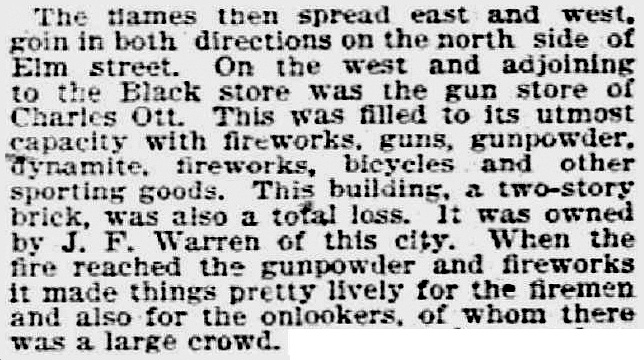
If you’re in business selling ammunition and gunpowder and fireworks and dynamite, you probably need to secure them in a place safe from the reach of the fires that seemed to hit Dallas constantly in the 19th century. ‘Cause if you don’t, you run the risk of something like this happening (north side of Elm, between Griffin and Akard):

ott-fire_dmn_052696Dallas Morning News, May 26, 1896

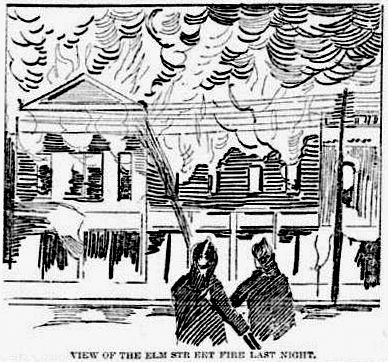
My favorite part of the story, though, was this on-the-spot artist’s depiction of the “conflagration.” You can practically feel the smoke burning your eyes.

ott-fire_pic_dmn_052696

***

Sources & Notes

Top ad from, yes, the 1915-16 SMU Rotunda.

Bio of Charles Ott linked above from Davis & Grobe’s Encyclopedia of Texas (Dallas: Texas Development Bureau, 1922). If you sped-read past it above, you can find it here.

Excerpt and drawing of the explosive Elm St. fire from The Dallas Morning News, May 26, 1896.

Photo of the interior of the Ott store from the George W. Cook Dallas/Texas Image Collection, DeGolyer Libraries, SMU Libraries, Southern Methodist University; more info on this photo is here.

*

Copyright © 2014 Paula Bosse. All Rights Reserved.
 

A Painterly View of Commerce Street

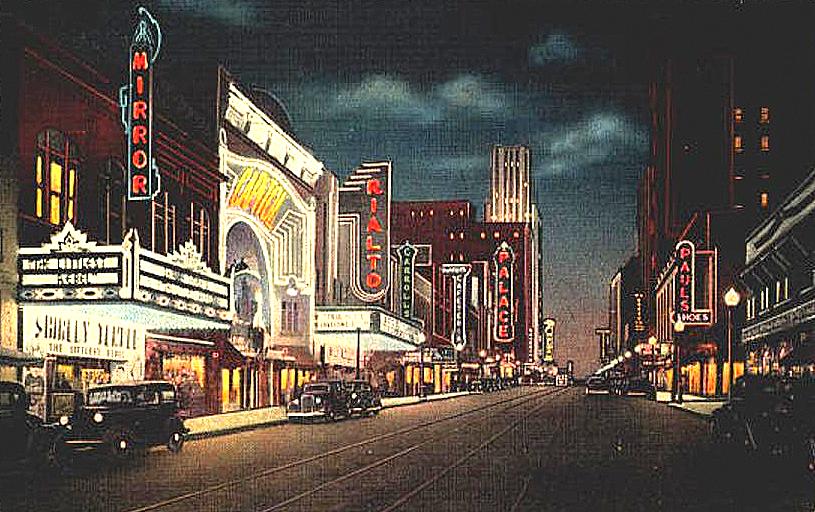
commerce-st_postcard

by Paula Bosse

I could be WAY off, but this MIGHT be approximately Commerce and Poydras, looking … east? For present-day reference, it’s about where the McDonald’s is on Commerce. Possibly. Click it to make it larger. Misinformation is likely.

*

Copyright © 2014 Paula Bosse. All Rights Reserved.
What Do You Get When You Convert an Old Oak Cliff Firehouse Into a Restaurant?

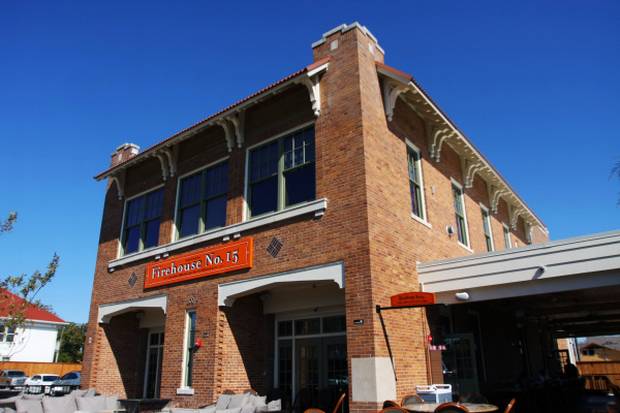
firehouse-15_glorias

by Paula Bosse

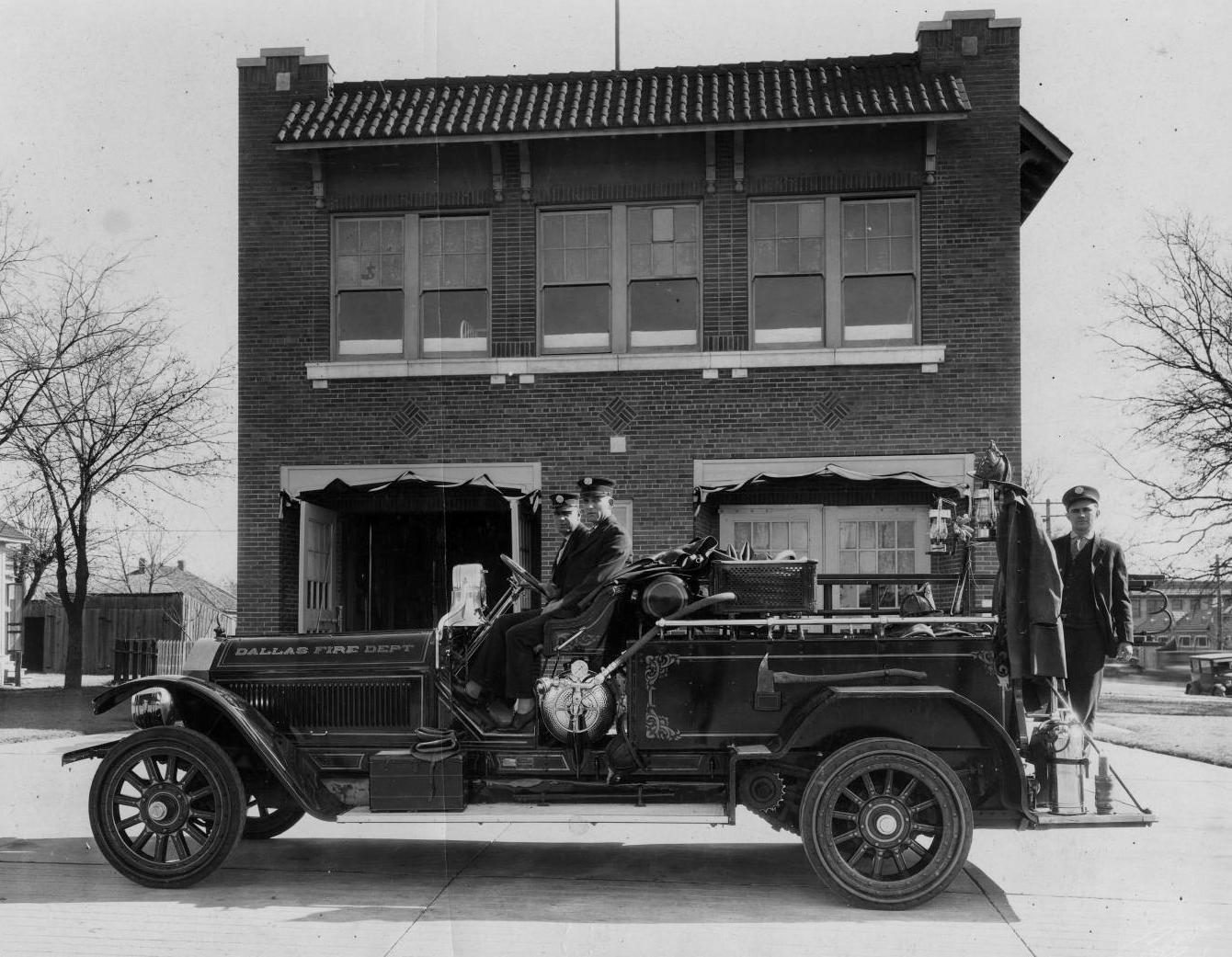
Station 15 — at Davis and Bishop — was a working firehouse decades before it was converted into Gloria’s restaurant in the Bishop Arts District. Here are the “before” photos.

station-15_oak-cliff

fire-station-15_oak-cliff

While you’re enjoying that incredible black rice (among other things…), take the time to enjoy your surroundings — it’s not every day you’re able to dine inside an old firehouse (don’t miss the brass fireman’s pole). Here’s the firehouse today:

firehouse-15_glorias_dmn

***

Sources & Notes

First and third photo from Dallas Firefighters Museum collection on the Portal to Texas History site here.

Second photo (circa 1931) is available for purchase here.

Photo of Gloria’s from The Dallas Morning News.

More info on Station 15 here.

Gloria’s website here.

*

Copyright © 2014 Paula Bosse. All Rights Reserved.
Pike Park, Fiesta Central — 1926

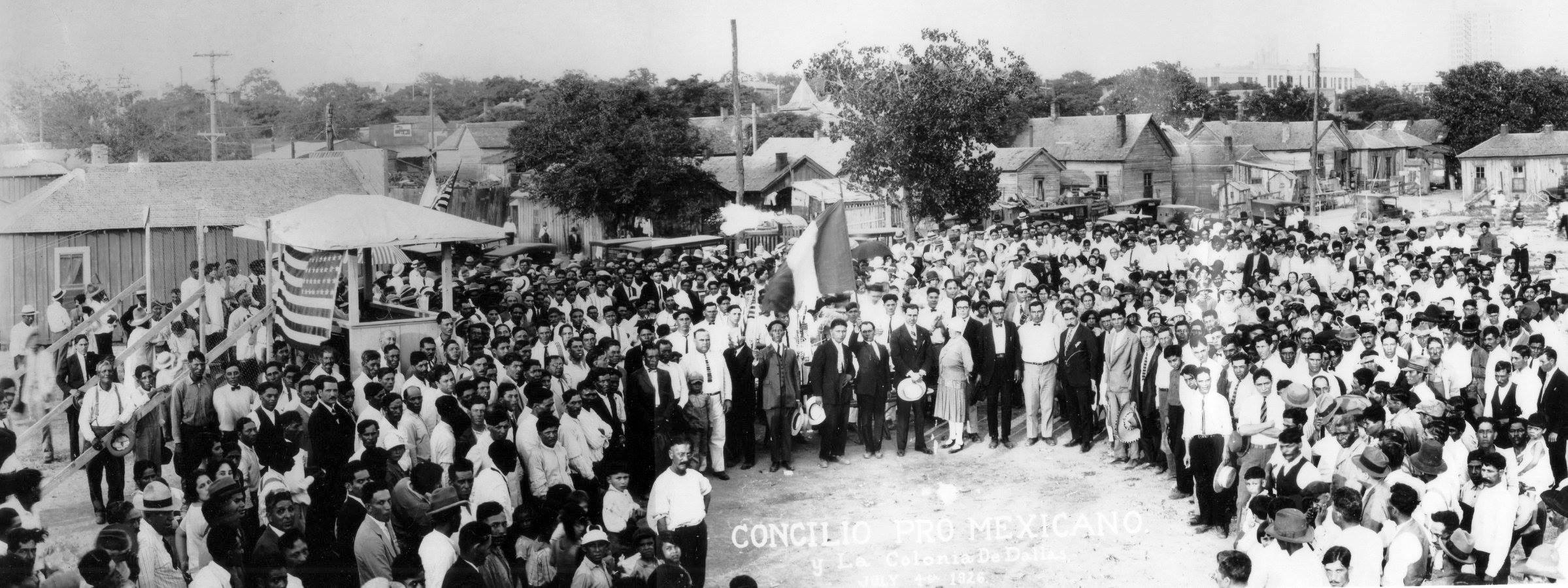
little-mexico_1926_dmahl-facebook-pagePike Park (click for MUCH larger image)

by Paula Bosse

Fantastic photo of a 4th of July celebration in Little Mexico’s Pike Park in 1926, with the caption reading “Concilio Pro Mexicano y La Colonia de Dallas.”

Today is Cinco de Mayo, which, before it was co-opted by the gringo, was primarily a big party in communities populated by Mexican-Americans and Mexican immigrants. In Dallas, that meant a fiesta of music and food at Pike Park. I remember going to a few of these when I was a child, and my unmistakably Anglo family stood out in the crowd, but we were always welcomed and we had a great time. I loved it. Not to be a killjoy, but I’m not a fan of what Cinco de Mayo has become — just another excuse to drink to excess (St. Patrick’s Day with margaritas). But, if you’ve pulled out that novelty sombrero from the back of your closet and you’re celebrating today, well … olé. But pace yourself, amigos.

***

Photo from the Dallas Mexican American Historical League; it accompanied a great Dallas Morning News blog post by Dianne Solís regarding Pike Park, here.

A CNN interview with the always-entertaining Gustavo Arellano — the man behind the very funny “Ask a Mexican” column — on why he believes the Cinco de Mayo holiday is “pointless” is here.

And Arellano’s article “Gringo de Mayo”  is here.

That photo is gigantic. Click for larger image.

*

Copyright © 2014 Paula Bosse. All Rights Reserved.

Industrial Blvd. Congestion — 1952

industrial-blvd_kimball-1954

by Paula Bosse

This photo of Industrial Boulevard is from Our City — Dallas by Justin F. Kimball. Below, a few of his paragraphs on Leslie Stemmons’ vision of what we now know as Industrial Boulevard. (Mr. Stemmons most likely did not foresee the tackiness and bail bonds emporia which now line this “boulevard.”)

Starting at the south end of the levee district, running north the whole length of the district with branches opening to Irving, to Wichita Falls, and to Denton and Gainesville, Industrial Boulevard, 130 feet wide, was dedicated for future traffic use at a time when there was no traffic at all.

One of those present at this stage of the district tells this story: “While the levees were being built and plans being made for the development of the properties, Mr. Stemmons took a group of railroad officials, including Mr. Upthegrove of St. Louis — a Dallas boy, then president of the Cotton Belt Lines — on an inspection tour through the area. There was then no such thing as Industrial Boulevard; Commerce Street west of the river was a narrow road which overflowed whenever the river reached flood stage. The surrounding land was covered with cockleburs, blood weeds and willows. On reaching the site of the present intersection of the Triple Underpass and Industrial Boulevard, Mr. Stemmons remarked, ‘Gentlemen, in twenty years this will be the busiest intersection in Dallas.’ Mr. Upthegrove, an old friend, looked up and said, “Les, you don’t mean that?’ ‘I was never more serious in my life,’ was the reply. Mr. Upthegrove looked around him and shook his head, ‘Gosh,’ he remarked, ‘from cockleburs to congestion.'”

Such is progress! In less than twenty years this intersection was reported to be the busiest intersection of vehicle traffic in the state. Planning, hard work, and faith bring wonders to pass.

***

Sources & Notes

Photo and text from Justin A. Kimball’s Our City –Dallas; Yesterday and Tomorrow (Dallas: Dallas Independent School District, 1954 — 2nd edition).

More on Leslie A. Stemmons here.

And an article from the months preceding the name-change from Industrial to Riverfront, here.

And if you, like I, wondered if “Mr. Upthegrove” was some sort of contrived Pythonesque name a la “Mr. Smoketoomuch,” it is, apparently, an actual surname. Good to know.

Liquor Doctors Prescribe “Beer by the Case — All You Want”

liquor-doctors_neon-sign_dmn-video_1939

by Paula Bosse

If you have an interest in the Dallas of yesterday, you’ve probably seen the great color film footage shot in downtown in 1939, presented to us by Robert Wilonsky of The Dallas Morning News (link below). One of my favorite things from that wonderful footage is a neon sign for a business called Liquor Doctors, with “Good & Bad Liquors” below it. That would be good enough on its own, but it’s even better as seen in the film, because the “Good” and the “Bad” flash back and forth. Great.

Liquor Doctors (what a great name) seems to have started in late 1937 and eventually had at least three locations: 509 Jackson St., Commerce & Houston, and Cedar Springs & Harwood. Info is limited on these stores — I found a classified ad looking for “salesladies” for the Jackson St. store (“must be over 21”) and a report of a hold-up at the Commerce St. location (the manager was forced, at gun point, to turn over $41.86 from the cash register). Not that interesting. Until I found this tidbit from the great-granddaughter of the owner, describing the utterly ridiculous (and thoroughly entertaining) operating procedure of the Cedar Springs location in the June 2010 issue of Texas Monthly (see link at bottom of post):

Later he opened another Liquor Doctors on Cedar Springs that offered curbside service. The employees, dressed as doctors and nurses, would stroll out to the cars and dispense “medicine” six days a week.

Depending on your threshold for silliness, this is either clever or hokey. (I vote “clever.”)

For some reason the owner changed the name of the business (but why?!), and the next incarnation was simply his name, “Bob Ablin” (where, thankfully, you could still get “good and bad liquors”). I think he might have sold the liquor businesses and opened a soda fountain on Cedar Springs, a venture that lasted until January of 1948.

Below is an ad placed during a WWII whiskey shortage. There was a strict limit of one bottle per person. But beer? Until the cows came home. Bob sounds like a fun guy.

liquor-doctors_dmn_011244

***

Sources & Notes

Screen capture of the Liquor Doctors flashing neon sign from the really wonderful 1939 film footage purchased from Ebay by Robert Wilonsky (of The Dallas Morning News) and several others who joined together to share a cool slice of the city’s history with us. Watch the video and read Wilonsky’s Dallas Morning News article from April 23, 2014, here.

Quote about the Cedar Springs costumed curb service from the essay “Old Testament” — about growing up Jewish in Dallas — by Megan Giller-Dupe, Bob’s great-granddaughter. You can find the essay in Texas Monthly (June 2010), here. It includes a nice photo of Bob.

*

Copyright © 2014 Paula Bosse. All Rights Reserved.

Lazy Weekends, Cruising White Rock Lake — 1972

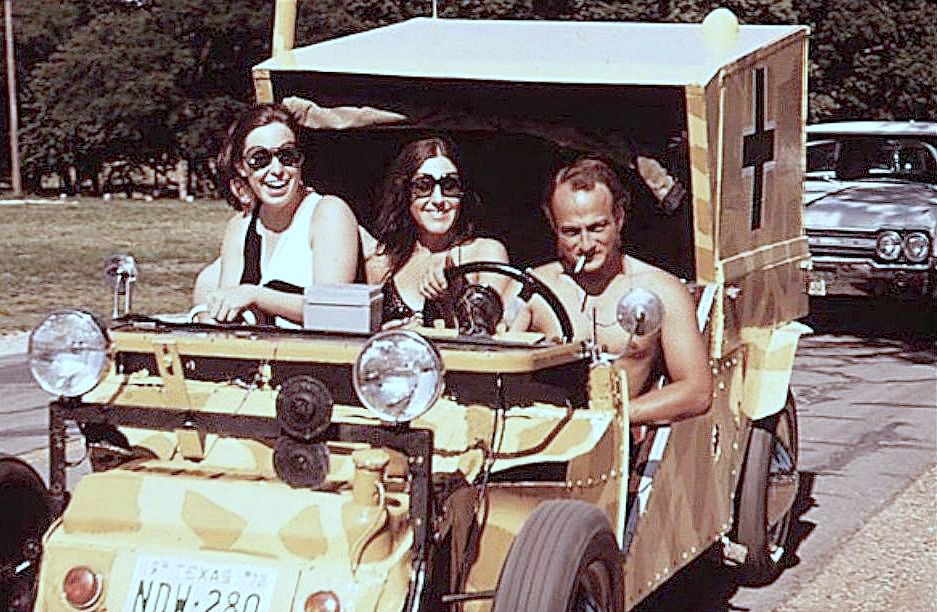
white-rock_city-folk_1972_EPACruisin’ ’70s-style…

by Paula Bosse

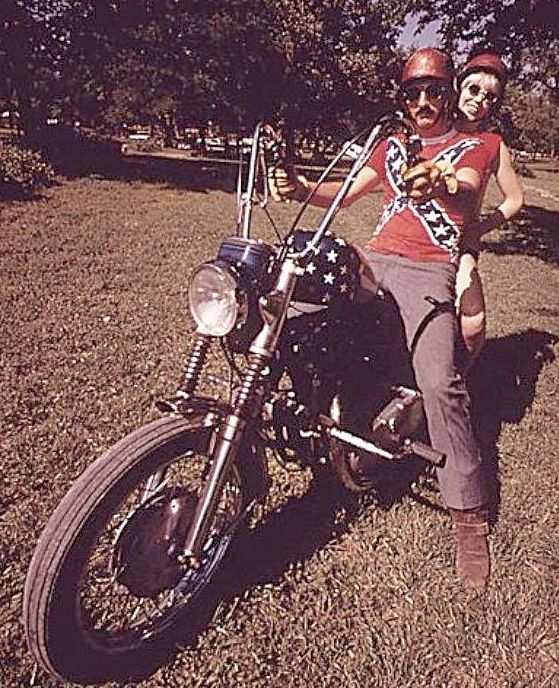
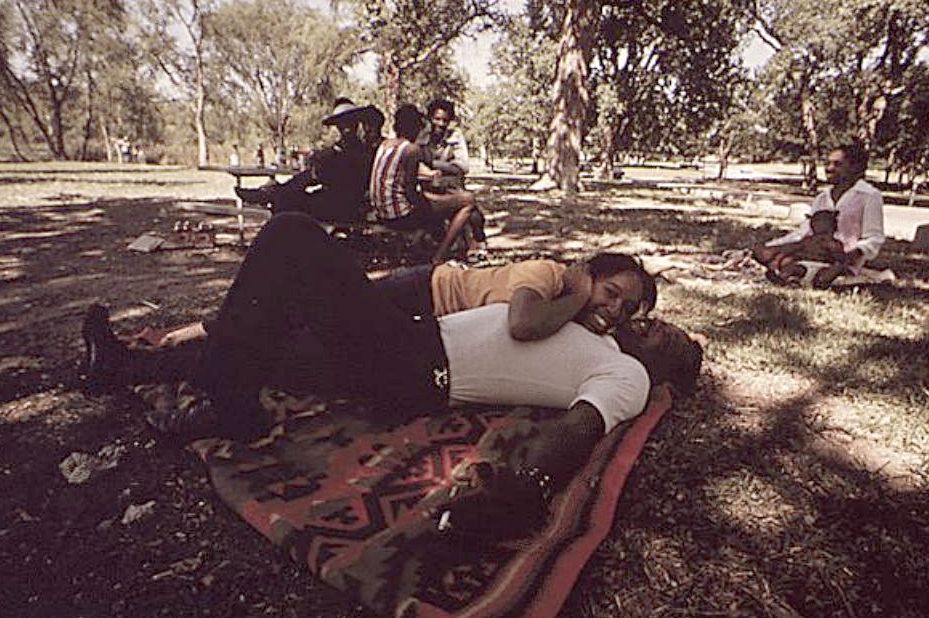
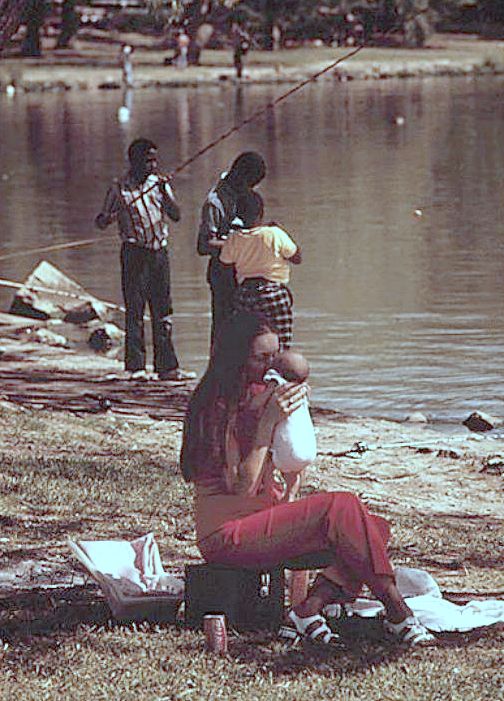
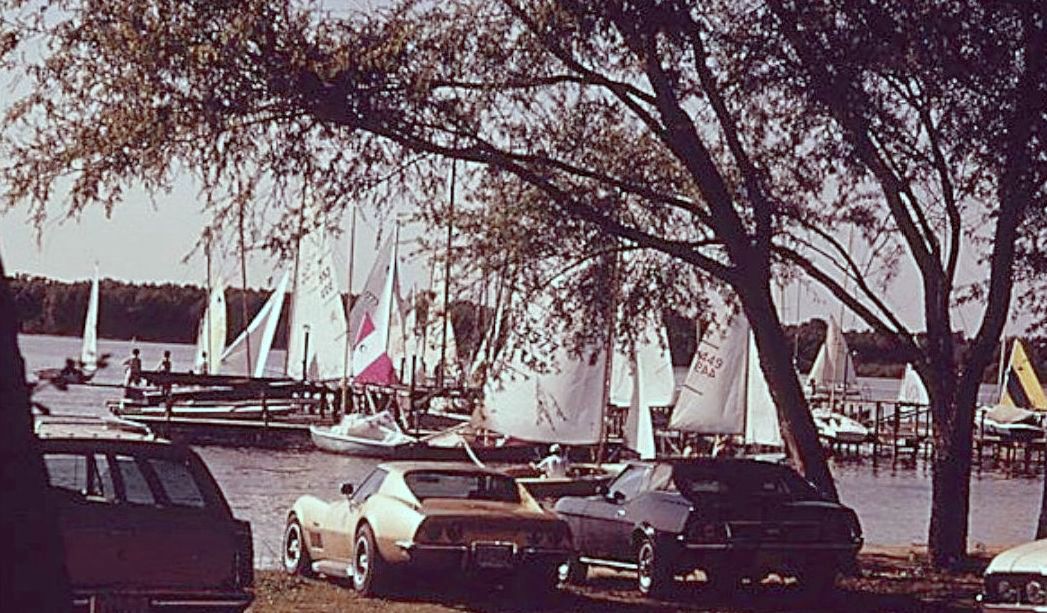
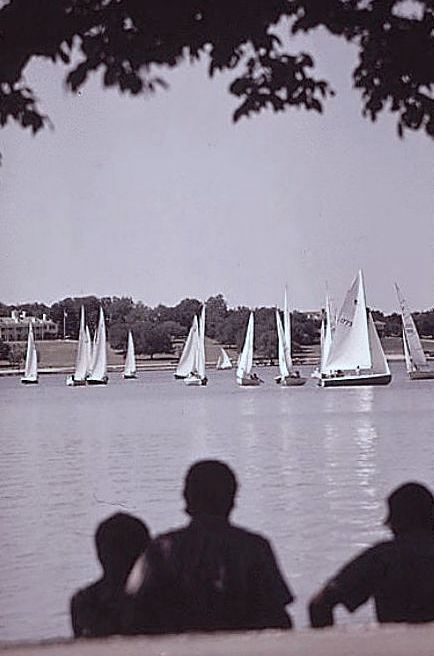
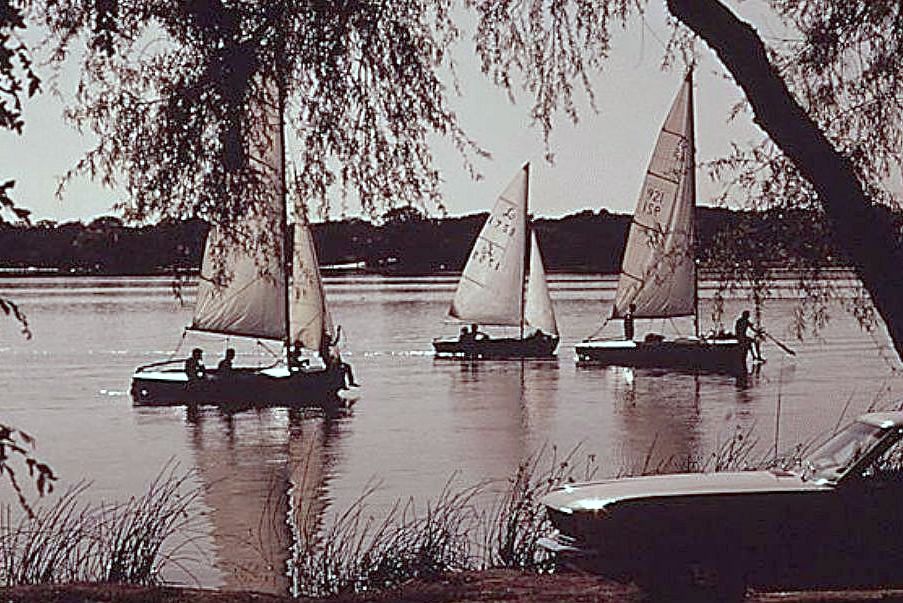
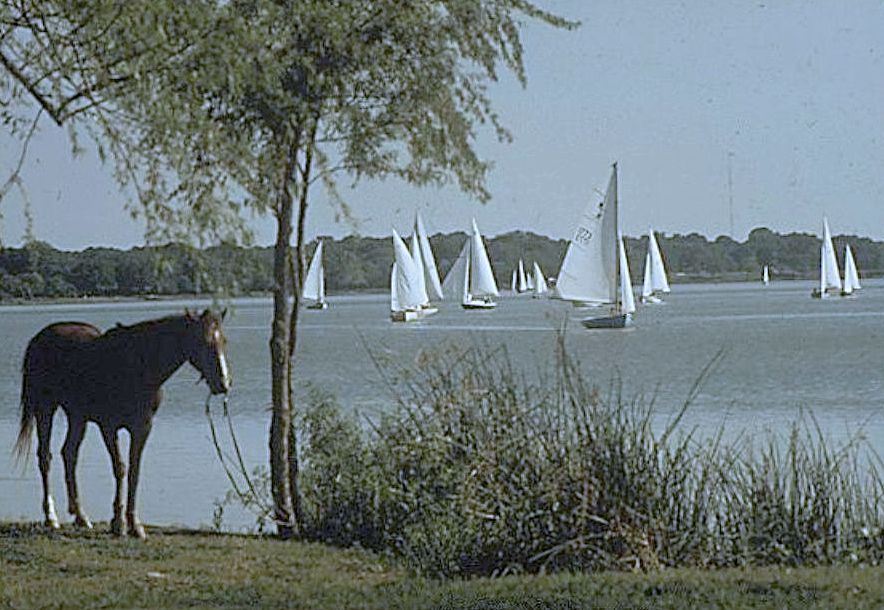
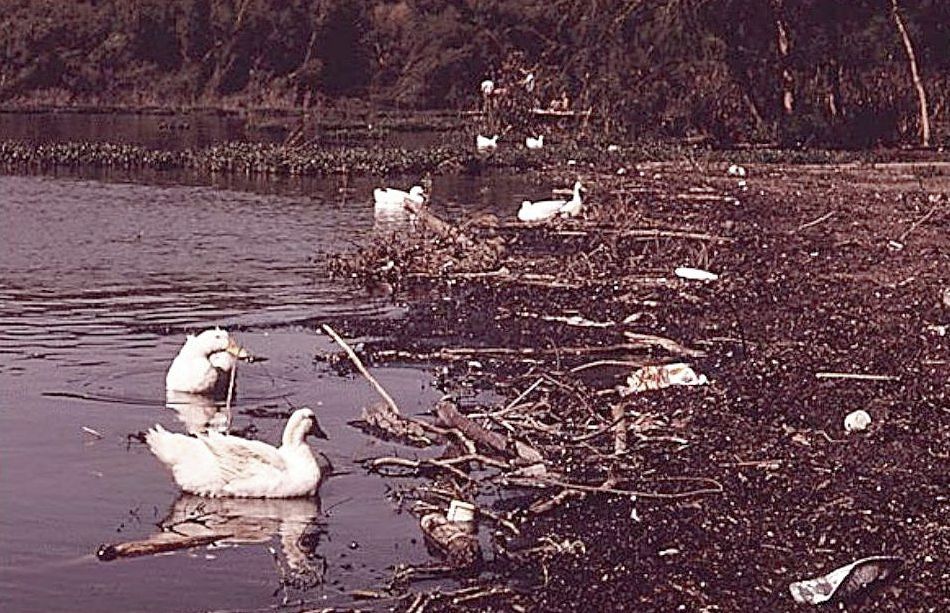
Back before the days of joggers and bikers, one used to be able to drive around White Rock Lake. All the way around. No dead ends, no detours. People used to cruise it on the weekends — the road would be packed solid. I assume the homeowners grew weary of this and put an end to things by having the road chopped up to prevent continuous cruising. Figures. Here’s a look at one weekend in April of 1972, from a series of photos taken by the Environmental Protection Agency as part of their Documerica project which documented areas of environmental concern. Things all look pretty good here, except for the final photo showing ducks paddling alongside trash at the water’s edge — a scene that might make the Keep America Beautiful Indian shed another tear.

A description of these photos (provided, I think, by the EPA):

City folk come in droves each weekend to once-isolated White Rock Lake. Some come to picnic, sail or fish. Some just want to be where the action is [man].

Another caption:

Once-unspoiled and rather isolated, White Rock has become a city dweller’s weekend mecca, attracting people looking for ‘action’ as much as those seeking relief from urban pressures.

*

white-rock_motorcycle_1972_EPA

white-rock_sunday_1972_EPA

white-rock_weekend_1972_EPA

white-rock_boats-cars_epa_1972

white-rock_sailing_1_1972_EPA

white-rock_sailing_2-1972_EPA

white-rock-lake_1972_EPA

white-rock_ducks_1972_EPA

***

Sources & Notes

These photos — from the EPA’s Documerica project (“to photographically document subjects of environmental concern”) — can be found at the National Archives site, here.

Like outtakes from Dazed and Confused, man…. You can practically hear “Brandy, You’re a Fine Girl” wafting through the air.

Copyright © 2014 Paula Bosse. All Rights Reserved.