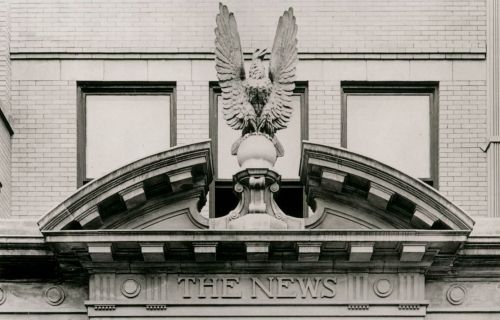
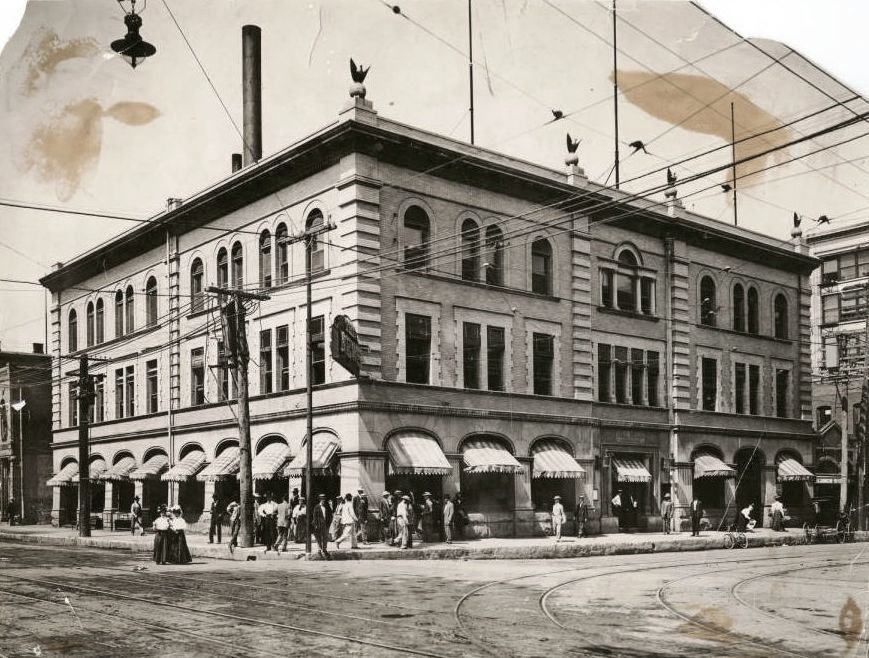
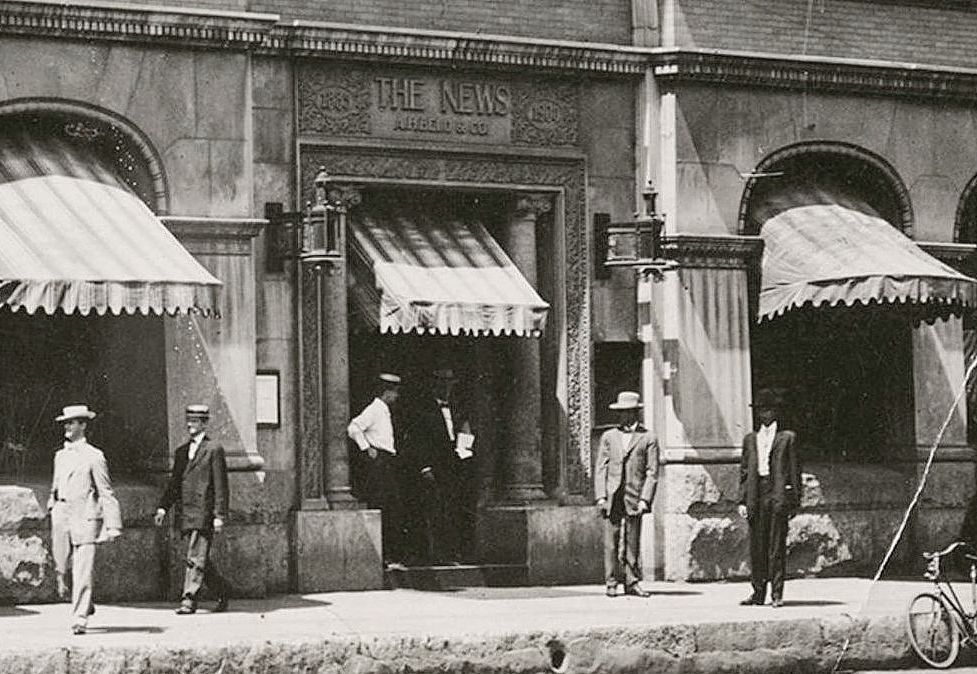
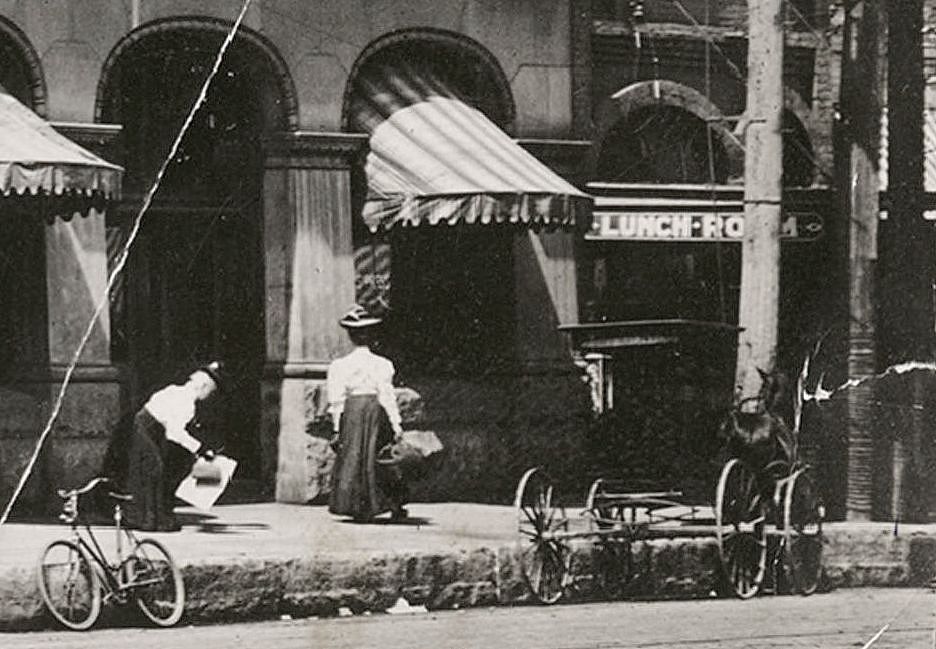
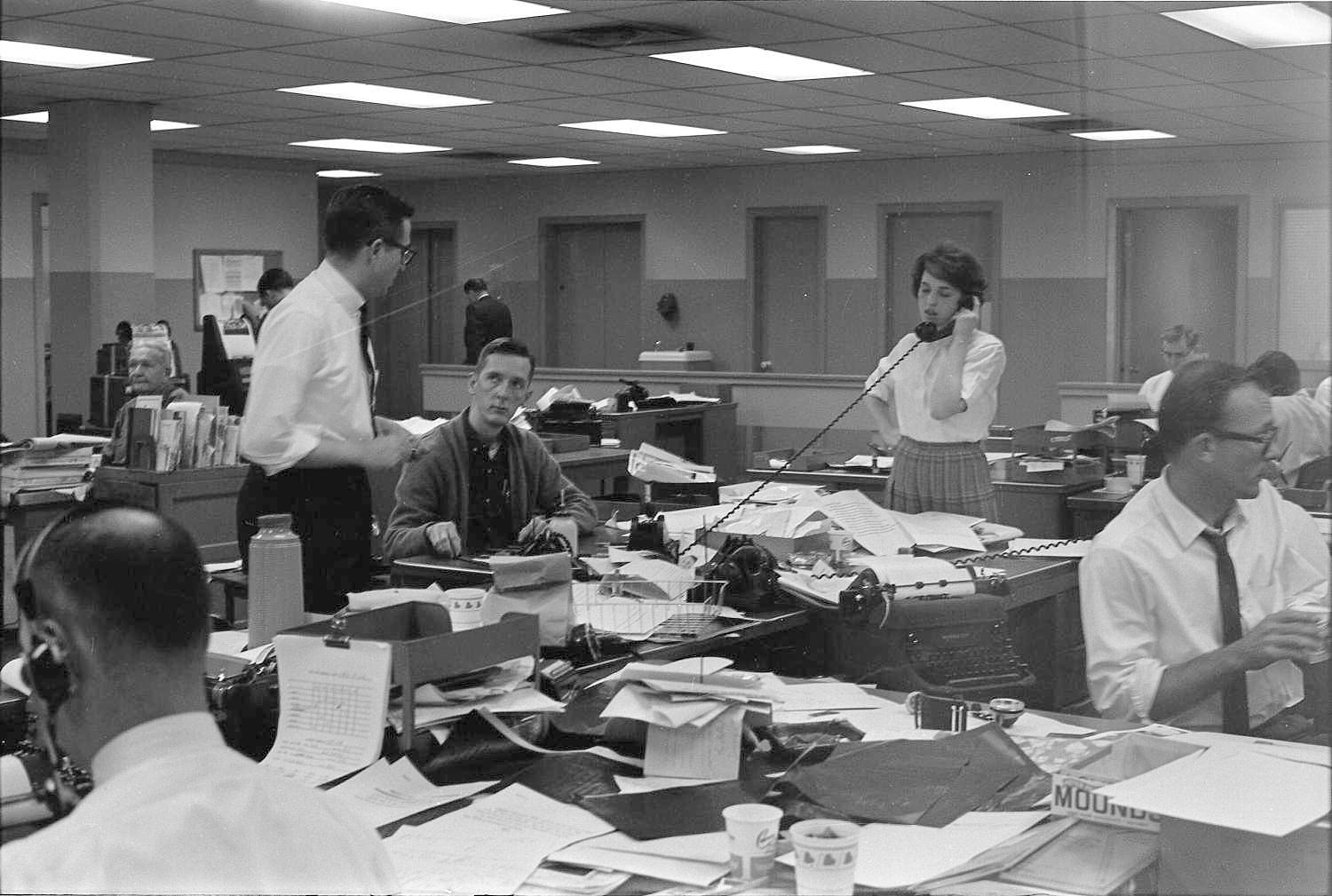
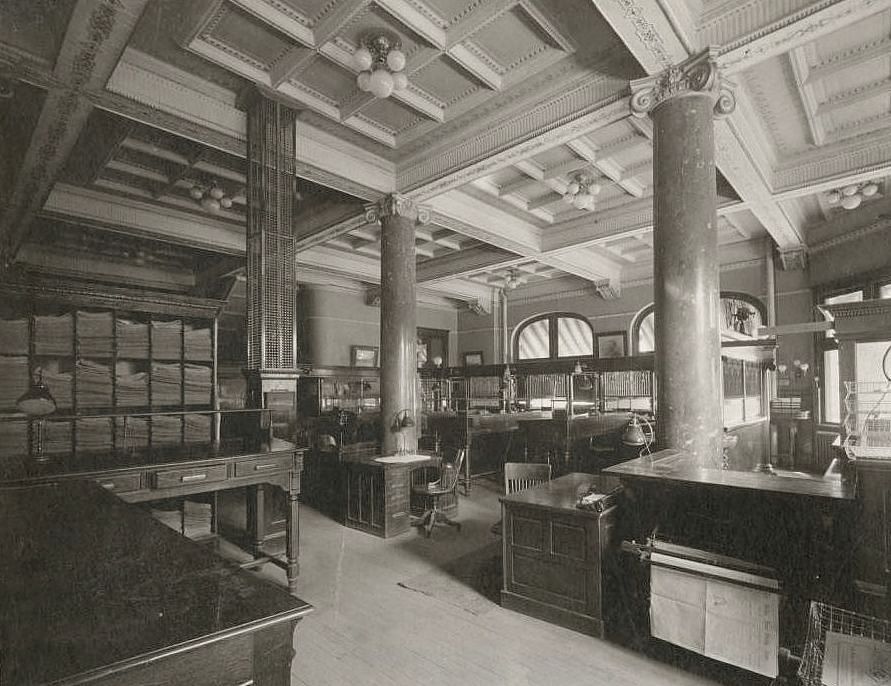
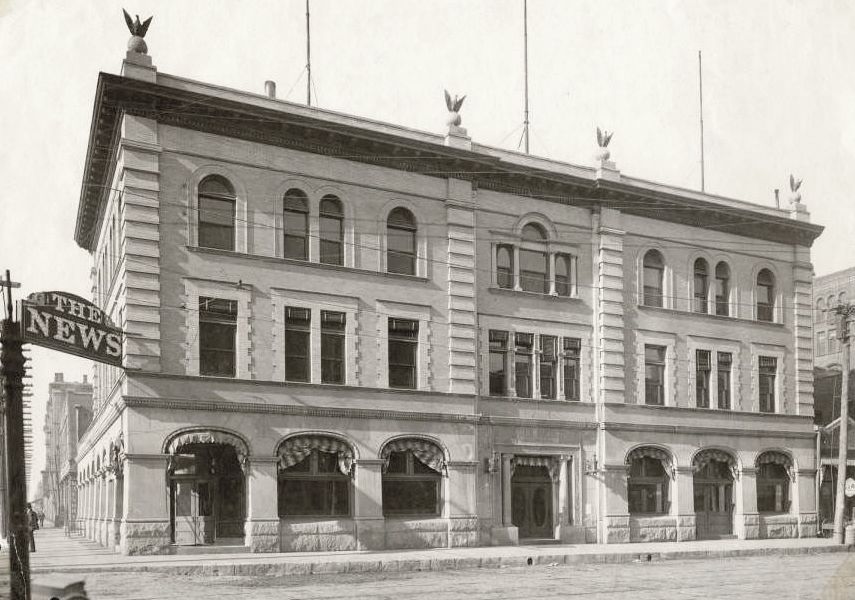
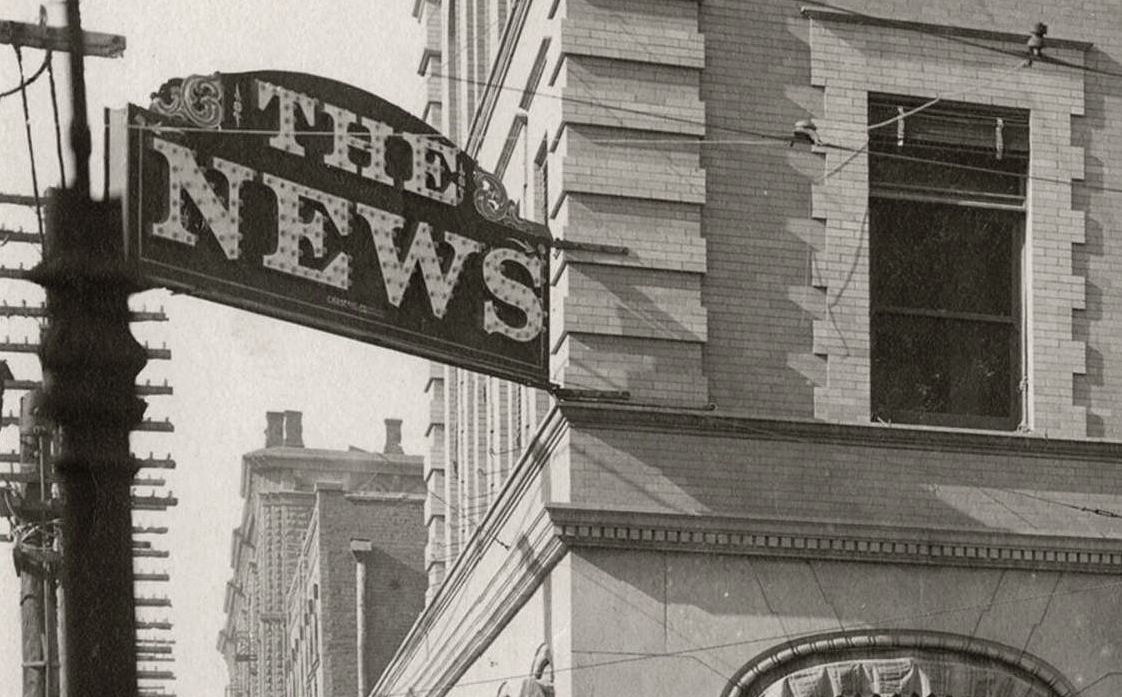
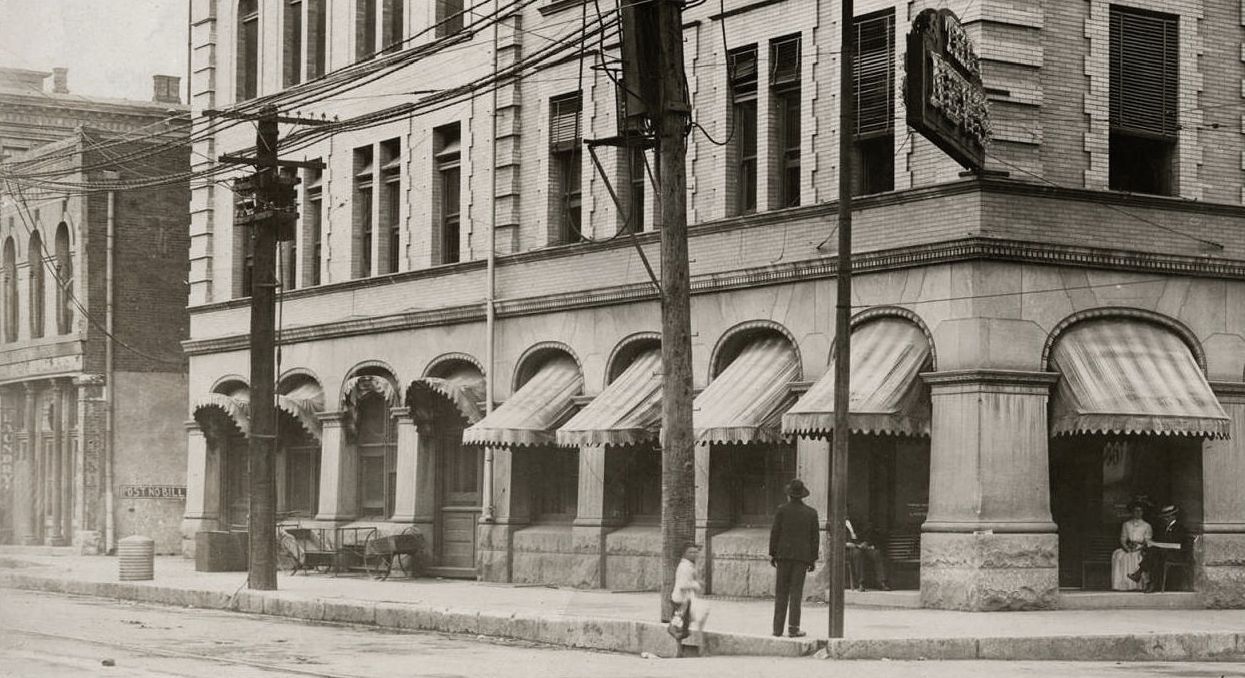
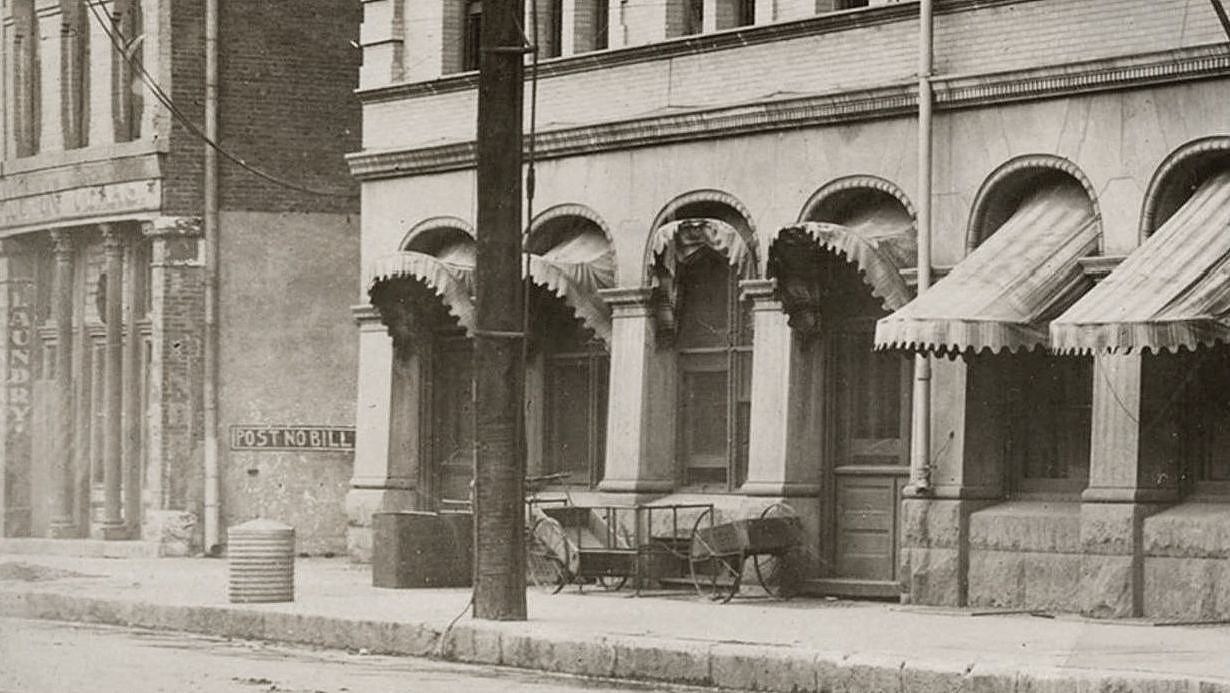
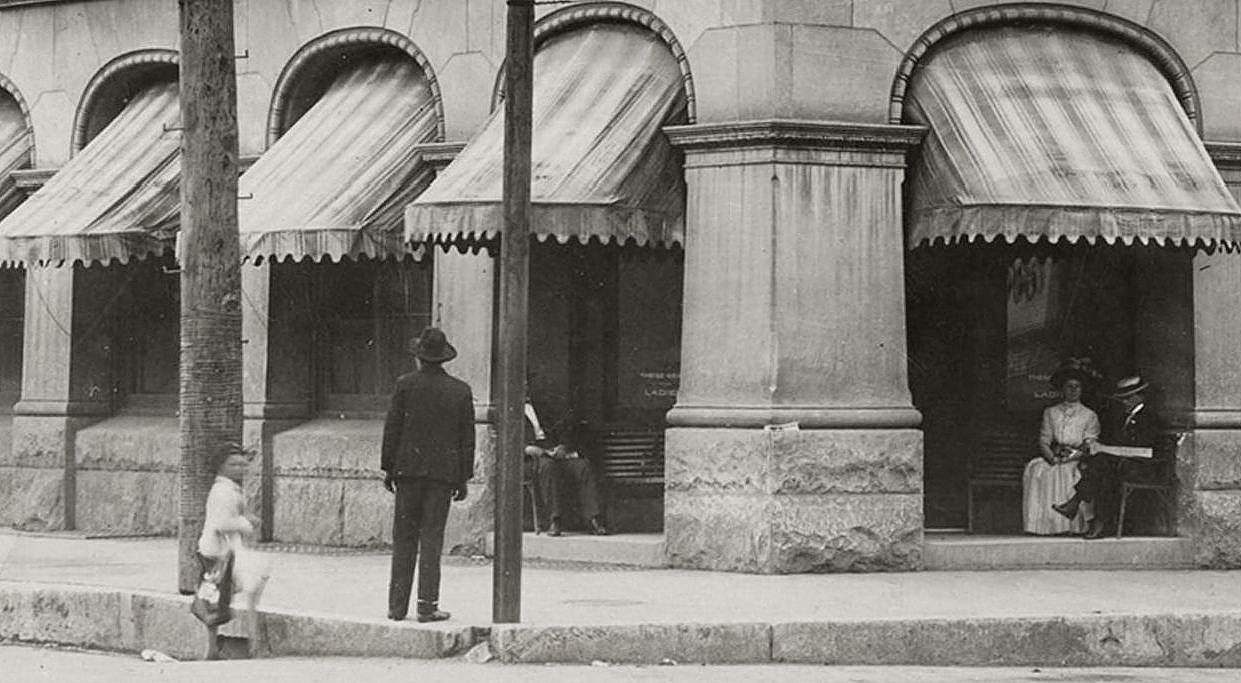
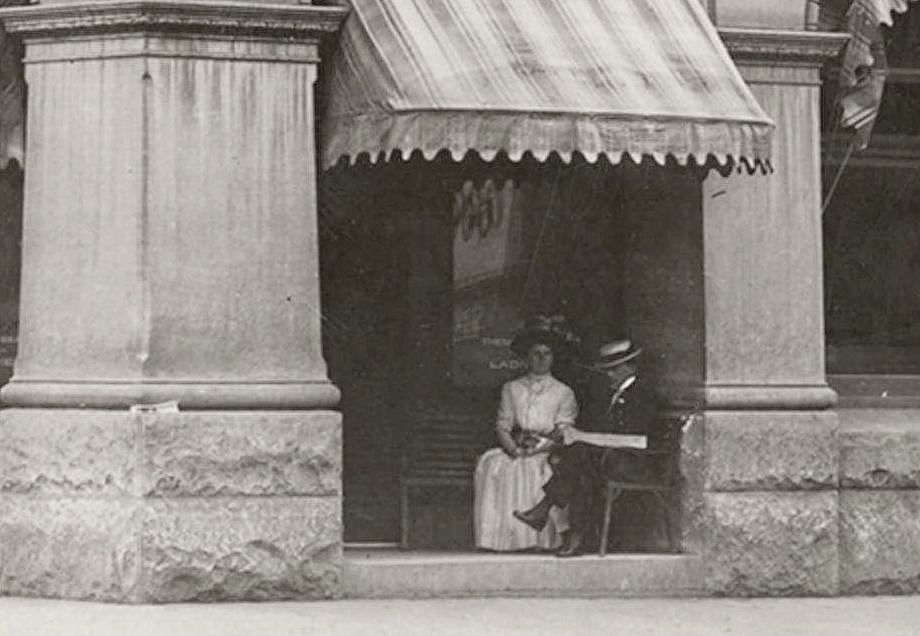
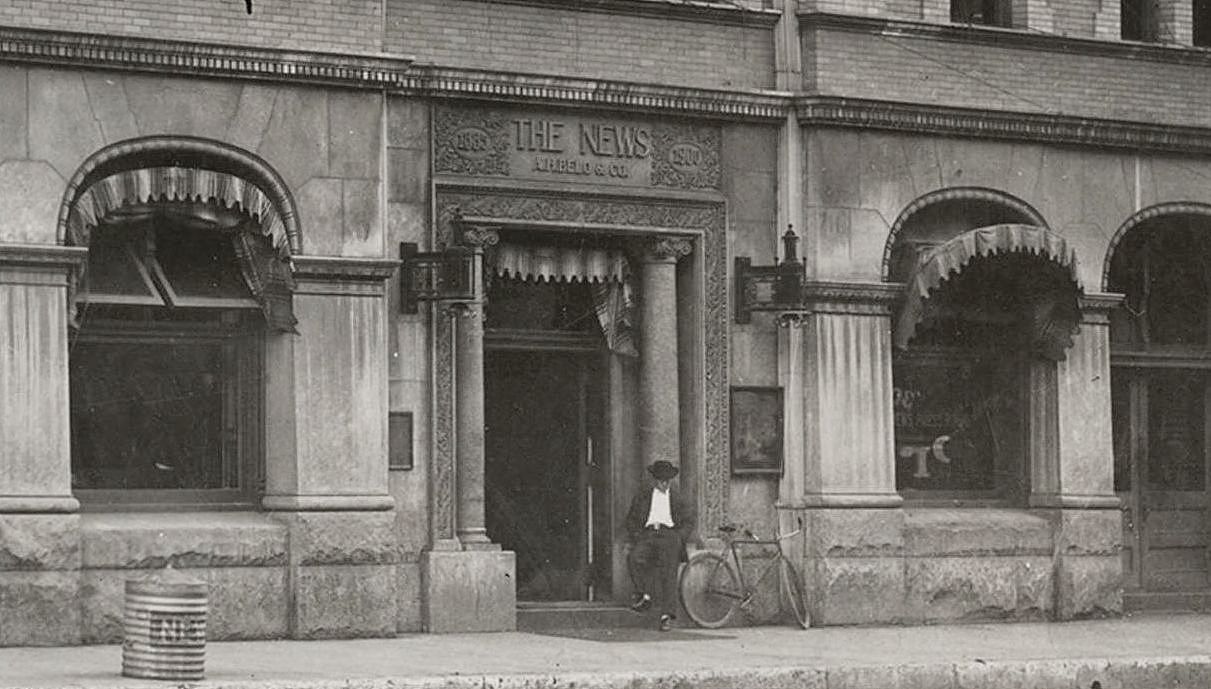
 The old Dallas Morning News building
by Paula Bosse
(UPDATED August 1, 2025 — I have not updated this post, but, instead, I’ve written a whole new one. It’s shorter and — as of today! — it’s up to date. Find that post, which reflects the new Dallas Public Library website, here. The post on this page below still has some good tips, but as far as being able to use it to figure out how to actually get anywhere on the DPL website, check out the link above instead. I will update this post, if I ever have the time to do it!)
*
Yesterday I wrote about how I tracked down the location of a photograph with very little information to go on. I hesitated to include the step-by-step process I used to discover the location, because I was afraid that it would be a little too tediously arcane for most people. But, apparently I was wrong. I’ve been surprised by how popular the post has become. It’s gotten many more hits than most Flashback Dallas posts usually do. I’ve seen it shared all over Facebook, and it’s generated more comments and emails than I expected. It’s gratifying that people seem to be interested in the actual process of historical research. Even though I don’t necessarily consider myself a historian (I studied Art History in college, and my background is in bookselling), I’m happy to be able to share historical events and forgotten local tidbits with an audience that finds them as interesting as I do. I consider myself a writer and researcher, and sometimes all the fun is in the researching.
Since I began this blog in February of 2014, I’ve been asked several times how I access the Dallas Morning News archive. Without question, the DMN is the single most valuable resource in the study of Dallas history. Years ago, one would have had to trudge to a library and crank up a microfilm or microfiche reader. Luckily, we are in the digital age, and every edition of the DMN from 1885 to the end of 1984 has been scanned and digitized and can be viewed from the comfort of one’s own home. (Also available in this database are various Fort Worth newspapers — from The Fort Worth Register to The Fort Worth Star-Telegram — from at least 1897 to 1990, which is, of course, very handy!) You can view the paper page by page, article by article, photo by photo, comic strip by comic strip, ad by ad. It’s incredible. You’ll get lost in it for hours. Want to know what was going on 100 years ago today? Easy! Here’s the front page of the DMN from July 30, 1915:
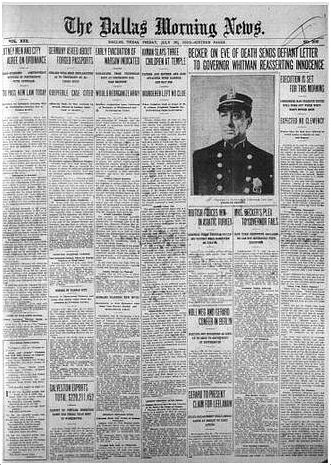 DMN, July 30, 1915
So how do you do it? First off, you have to live in the city of Dallas — bad news for those of you living outside the city limits, I’m afraid. (UPDATE: THERE IS A WAY FOR NON-RESIDENTS TO ACCESS THE ARCHIVE — FOR A MONTHLY FEE. SEE UPDATE AT BOTTOM OF THIS POST.) For those of us who do live inside the city limits, not only can we access the database whenever we want, but it’s also FREE. All you need is a Dallas Public Library card (information on how to get a free card is here; the DPL’s FAQ is here). UPDATE Nov. 9, 2021: The Dallas Public Library will now offer free library cards (and with it access to their website, including the newspaper archives) to STUDENTS AND TEACHERS AT DALLAS PUBLIC AND PRIVATE SCHOOLS, CHARTER SCHOOLS, COMMUNITY COLLEGES, AND UNIVERSITIES, regardless of whether they actually live in the city of Dallas — see the DPL’s FAQ on that here, and read a news story about it on the KERA site here.
So your first step is to get a library card. Once you have a card, go to the Dallas Public Library site’s “My Account” page, here, to sign up for the free account. You’re now ready to plunge in.
*
HOW TO ACCESS THE “DALLAS MORNING NEWS ARCHIVES”
Use this to search for content published ONLY in The Dallas Morning News, between 1885 and 2016 (articles post-2016 are available on DallasNews.com). (Scroll down for instructions to access Fort Worth papers.) This BY FAR the easiest option for most people and should give you more than you need!
- Log in to your Dallas Public Library account
- Click on “DATABASES”
- Scroll down, click on “MAGAZINES, NEWSPAPERS & JOURNALS”
- Scroll down, click on “DALLAS MORNING NEWS ARCHIVE”
- This gets you to a default page with 4 DMN-related sources: 1) the “historical” edition, for the years 1885-1984 (results will show scanned images/articles as they appeared in the newspaper when originally published), 2) the “modern” edition, for the years 1984-2016 (these results will be text-only — no images), 3) DMN Blogs (2006-2016), and 4) the DMN old free paper Quick (2003-2011). Enter your search terms in the search box, and wave goodbye to big chunks of time as you sit in front of your computer searching and reading and searching and reading.
I use the ADVANCED SEARCH option — click “Advanced Search” underneath the main keyword search box. A new page opens and you can filter what you’re searching for by choosing any specific fields you want to use. Click the down-arrows next to the search boxes to show a drop-down menu of options.
*
ACCESS FORT WORTH PAPERS ONLY:
- Follow the instructions above to log in — the main page opens — click through as above to “DALLAS MORNING NEWS ARCHIVE”
- At the very top of the page, click the down arrow next to “Change Databases” — click on “ALL DATABASES” — a new page will load
- Under “Access World News — Historical and Current” click on “Fort Worth Star Collection with Historical Archive” (they’ve left out the “Telegram” in several places with the recent update) — this brings up archives of the Fort Worth Star-Telegram (“historical” editions published 1902-1990 and “modern” editions published 1990-present day) as well as an archive of The Fort Worth Register (1897-1902) — and other stuff. Full scans are available for the editions published between 1897 and 1990; after that, it’s text-only.
*
ACCESS THE FULLY SCANNED “HISTORICAL” DALLAS AND FORT WORTH PAPERS *SIMULTANEOUSLY*:
This is the option I find most useful in doing daily historical research — I exclude “modern” editions, because I get too many extraneous results. If I do need more recent info, it’s easy to add modern editions, but I find excluding papers published after 1984 is best for my work.
There are two ways to do this — this way is fastest (you won’t see results published after 1984 for the DMN or after 1990 for FWST):
- Log in — follow all the steps listed above — the main page opens
- Hover over “Change Databases” at the very top of the page – a dropdown menu appears — click on “All Databases” — a new window opens
- Scroll down and click on “America’s Historical Newspapers” a new page opens — this will search the “historical” databases of the Dallas Morning News and Fort Worth Star-Telegram as well as the Fort Worth Register (Jan. 2023 update: even though you don’t see them until you look at search results, there are now several other fully scanned “historical” newspapers which will show up from other cities and states — up to 1922, which I gather is when copyright kicks in — you can filter these out and just stick with the DMN and FWST, but they are very interesting to peruse)
- Filter your search options by date, specific newspaper, etc., on the left side of the page or — my preference — use the “Advanced Search” option by clicking that link below the main search box and add however many rows you need to refine your search (I always add a “Date” row and leave it for the duration of my research period)
This is a way to add and exclude various newspapers (don’t confine yourself to Dallas and Fort Worth!), and it also allows you to see search results from historical and modern papers at the same time:
- Follow the steps above to log in — the main search page opens
- Near the top of the page (to the right of the “NewsBank” logo) click on “A-Z Source List” — a new page opens
- In the search box next to “All Keywords” type in “Dallas” — as of this writing, a LOT of options pop up, mostly modern rather than “historical” — click the checkboxes of all sources you wish to access
- After you’ve selected all the sources you want, click on the blue box at the bottom of the page reading “Search Within These Selections” — a new page will open — begin your searches from the newspapers you’ve selected.
*
ACCESS ALL AVAILABLE METROPLEX-AREA NEWSPAPERS SIMULTANEOUSLY:
There are tons of DFW metropolitan-area papers and neighborhood publications to search through on the Newsbank/DPL website — from Alvarado to Weatherford; only the pre-1984 Dallas Morning News and pre-1990 Fort Worth papers are “historical” and fully scanned) — all other papers are text-only and, generally, don’t have content available from before the early 2000s. But those papers have lots of great info. I know this is getting tedious (!), but here’s how to search those non-historical DFW papers simultaneously:
- Log in — main page opens
- Click on “Access World News Historical and Current” at the very top of the page — a new page opens
- Click on the blue box on the right side of the page reading “Dallas Metropolitan Collection” — this brings up archives for (as of this writing) 90 area publications (Jan. 2023 update: I see issues of The Dallas Herald (1855-1887) are, weirdly, kind of hidden in this list — they appear to be the exact same scans available on the Portal to Texas History, where navigation is a lot easier!)
*
Note: At the risk of beating a dead horse, one more time: the difference between the “historical” and “modern” post-1984 Dallas Morning News archives is that the “historical” (1885-1984) search results include images of fully scanned editions of the newspaper — you see everything the way it looked in the actual newspaper: you can see entire pages as well as individual articles, photos, illustrations, comic strips, ads, classifieds, etc. You do not see any of this in the post-1984 results — the information is still useful, but it’s not as interesting and, maddeningly, not as comprehensive. I tend to use one or the other, otherwise, too many non-applicable results are returned.
**
It takes a good bit of time to figure out how to use the search engine quickly and effectively — it has a lot of weird little idiosyncrasies that can cause you to miss out on lots of things you’re searching for (apostrophes, initials, and numbers can be extremely problematic) — but once you start to wander around, you’ll be amazed at what an incredible treasure trove is at your fingertips. It’s always confusing after a major re-do of a site, so you just have to play around with it until you figure out how everything works. …Then have everything change again when you finally get comfortable with it.
This is such a wonderful resource — thank you, Dallas Public Library and thank you, Dallas Morning News!
***
Sources & Notes
Photo at top: “Lintel and pediment above doorway, Commerce St. entrance,” ca. 1930s, from the Belo Records collection, DeGolyer Library, Central University Libraries, Southern Methodist University; photo and details are here.
The best newspaper database for those interested in Texas history is UNT’s Portal to Texas History Texas Digital Newspaper database, here. They have tons of scanned and digitized historical Texas newspapers (excluding The Dallas News), AND it’s free and available to everyone. Below are a few of their offerings of particular interest to Dallasites:
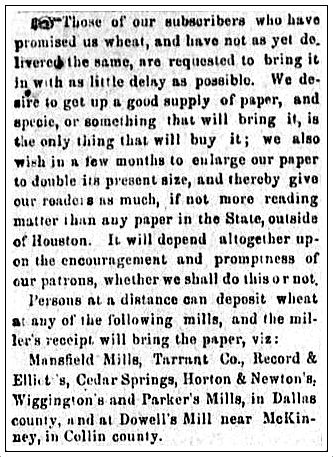
- The Dallas Herald — absolutely ESSENTIAL for Dallas goings-on between 1855 and 1887, here
- The Southern Mercury, the agricultural-leaning paper published in Dallas, 1888-1907, here
- The Dallas Express — a newspaper printed by and for the city’s African American community — ALSO essential — sadly, only the years 1919-1924 have been scanned, here
- The Jewish Monitor — published in Fort Worth, serving the DFW (and Texas) Jewish community, 1919-1921, here
- The Texas Jewish Post, 1950-2011, here
Check out all the Texas newspapers UNT has scanned: go to the Advanced Search page and scroll down the “Collections” menu bar to see the full list.
And, of course, there are the subscription sites Newspapers.com (which I use) and NewpaperArchive.com. I’m not familiar with the offerings of the latter, but Newspapers.com has a lot of DFW papers, all of which are fully scanned (and many of which are available for free at the Portal to Texas History). My favorite DFW newspaper on Newspapers.com is a fairly recent addition — the evening edition of the Fort Worth Star-Telegram, which is often very different from the morning edition (morning editions are the ones found on the Newsbank/Dallas Public Library database — Newspapers.com has both morning and evening FWST editions).
**If you need some research done, I might be able to help. I have access to several resources and am pretty thorough. Let me know what you’re looking for and inquire on hourly rates by clicking the “Contact” tab at the top of the page.**
Enjoy!
*
7/31/15 — UPDATE: GENEALOGYBANK.COM — HOW TO ACCESS THE HISTORICAL DALLAS MORNING NEWS ARCHIVE IF YOU ARE NOT A DALLAS RESIDENT: While looking for something completely unrelated, I came across a comment by someone who said he accessed the Dallas Morning News archives — historical and modern — through a site called GenealogyBank.com. It sounds like something similar to Ancestry.com where you are given access to several different types of resources used in genealogical research. The website indicates the cost is $19.95/month or $69.95/year. There is a free 30-day trial (but if you don’t cancel it and explicitly tell them you are canceling, they will automatically charge you and you will NOT get your money back). This is the first I’ve ever heard of this site, so I have no idea whether it’s good or bad. (The parent company of GenealogyBank is NewsBank, the company that manages the DMN archive accessible through the Dallas Public Library.) I did ask on a Dallas history group tonight, and a trusted member said that he uses it all the time. He posted a few screenshots, and it’s very similar to the archive accessed through the library’s website. For those interested, you might want to try the free trial to see if it’s something you’d be interested in subscribing to. This is pretty cool, because it offers people who live outside the city limits the ability to access the DMN archives for a relatively small fee each month. I am not promoting or endorsing this site because I had never even heard of it until an hour or two ago. I’d love to hear feedback from people who try it out. The Genealogy Bank website is here. A review of the site from About.com is here. I encourage you to check other consumer sites for pros and cons. I hope this is helpful for those of you who, for some reason, choose to live away from Dallas!
*
Copyright © 2015-2023 Paula Bosse. All Rights Reserved.

 Etaoin Shrdlu not pictured (click for larger image) SMU photo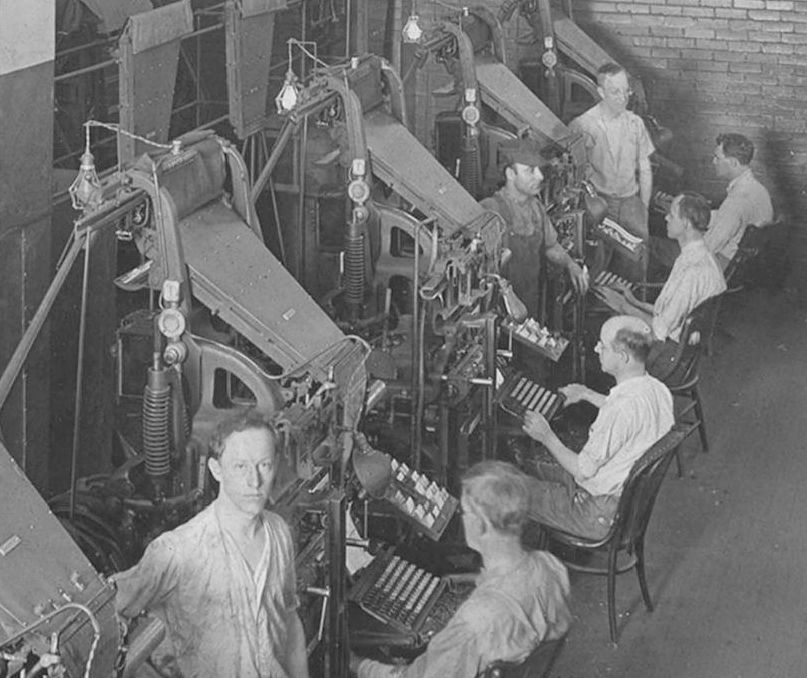







 Dallas Herald, Nov. 26, 1864
 Dallas Herald, Feb. 9, 1865
 Dallas Herald, May 4, 1865
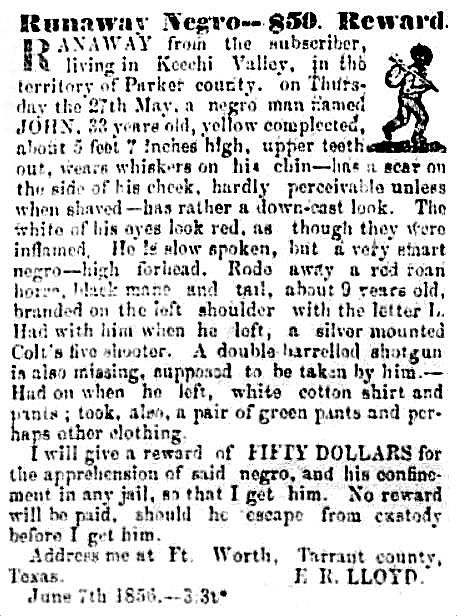 Dallas Herald, June 7, 1856
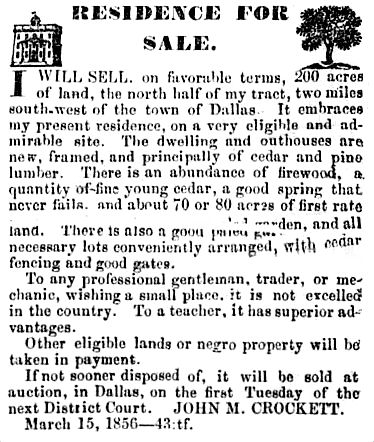 March 15, 1856
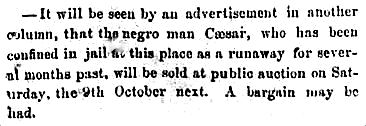 Sept. 15, 1858
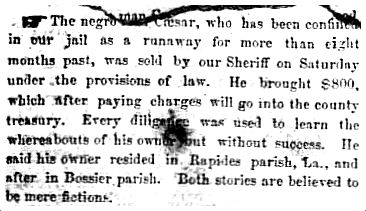 Oct. 20, 1858
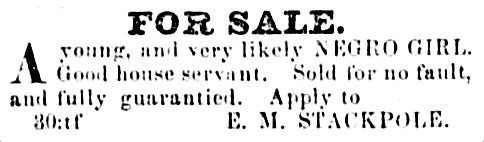 1861
1861 Flashback : Dallas