Flashback : Dallas

A Miscellany: History, Ads, Pop Culture

Category: Postcards

From Dull to Spectacular — How a Picture Postcard Evolves

theater-row_before_tsha

by Paula Bosse

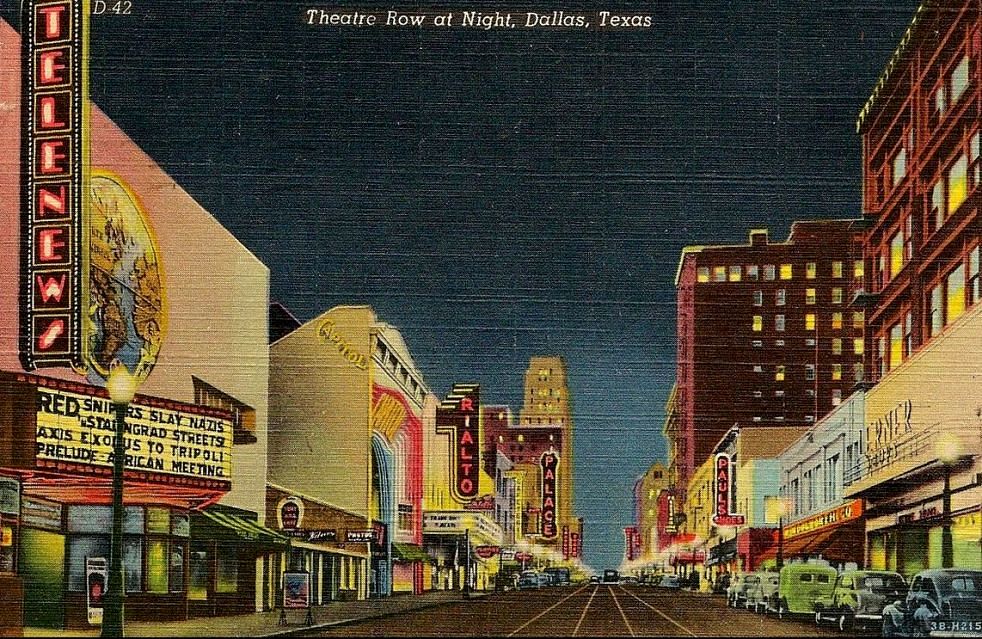
You know how you look at some of those fantastic postcards from the ’40s that don’t look real and you wonder, “Is that from a photograph, or is that just an artistic interpretation?” Well, it’s both.

In the above “before” and the below “after,” it’s interesting to note what’s been kept in and what’s been taken out. And how a fairly ho-hum daytime view becomes a dazzling night-time scene. Either way, it’s an Elm Street I’ll — sadly — never experience.

theater-row_after

***

Sources & Notes

Black-and-white photograph of Elm Street’s “Theater Row” from the Texas State Historical Association.

Click pictures for larger images.

*

Copyright © 2014 Paula Bosse. All Rights Reserved.


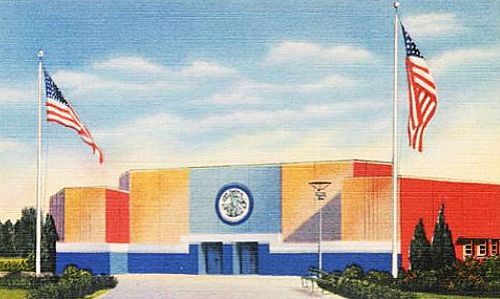
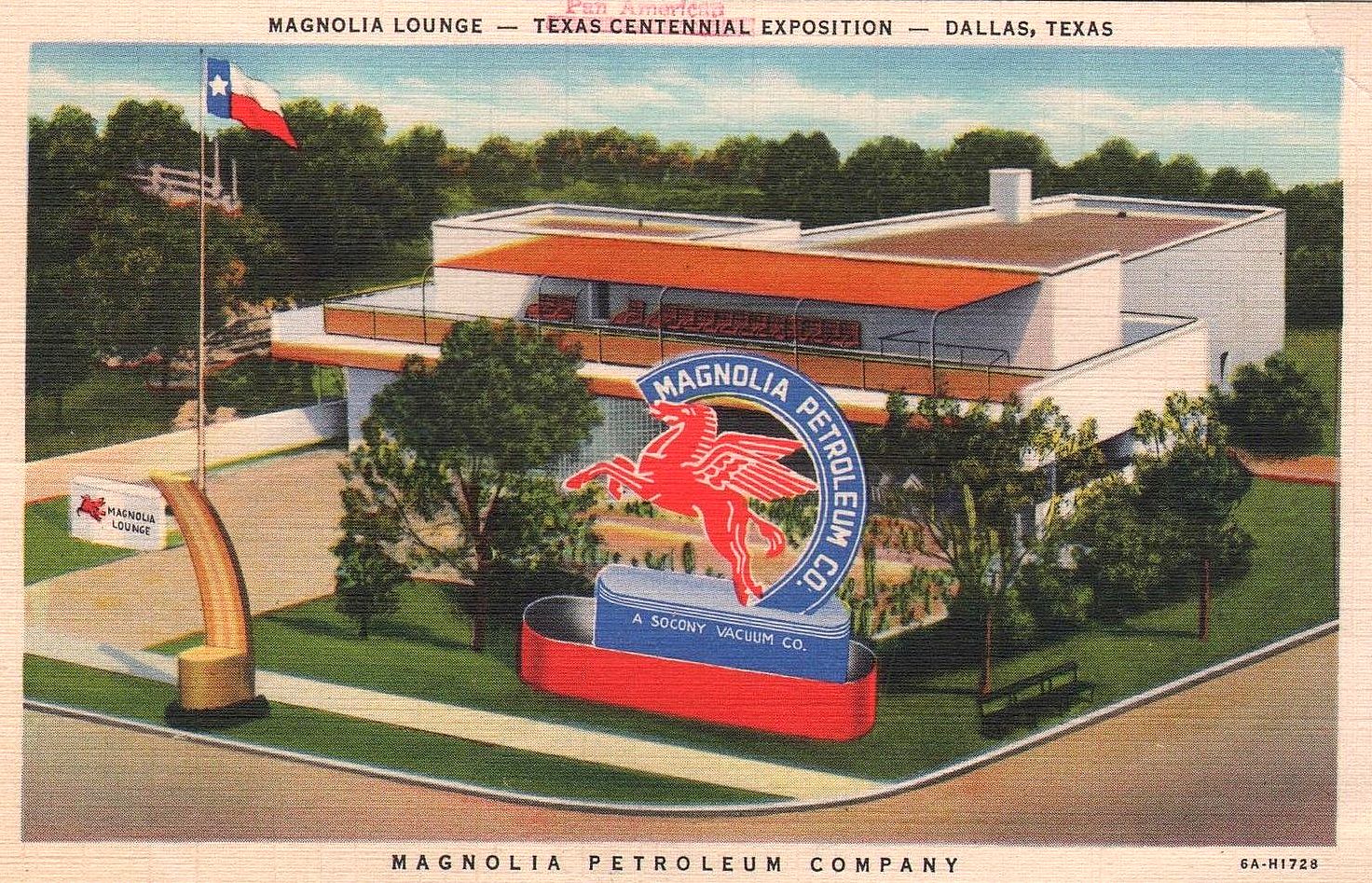
William Lescaze’s Ultramodern Magnolia Lounge — 1936

magnolia-lounge_tx-centennial

by Paula Bosse

The sleekly cool Magnolia Lounge, designed by Swiss-born American architect William Lescaze for the Texas Centennial, is considered the first International-style building built in Texas, and though it feels perfectly at home in Art Deco Fair Park, it looks completely different and much more modern that the buildings around it. It was built by the Magnolia Petroleum Company as a place for visitors to the Centennial Exposition to relax and cool off (it boasted a 20-ton refrigeration plant). The Magnolia Company’s slogan for their building was “Be Our Guest and Rest at the Magnolia Lounge.” In other words, this was the most insistently fabulous rest stop ever built!

How did we GET this cool building? Two words: Stanley Marcus.

“Young retailer Stanley Marcus was dispatched to New York City by Dallas-based Magnolia Petroleum to find the most up-to-date architect of the United States for their Centennial pavilion. Marcus chose William Lescaze, who had just designed the first International-style skyscraper in the United States [the PSFS Building in Philadelphia, which opened in 1932].” (– Virginia Savage McAlester)

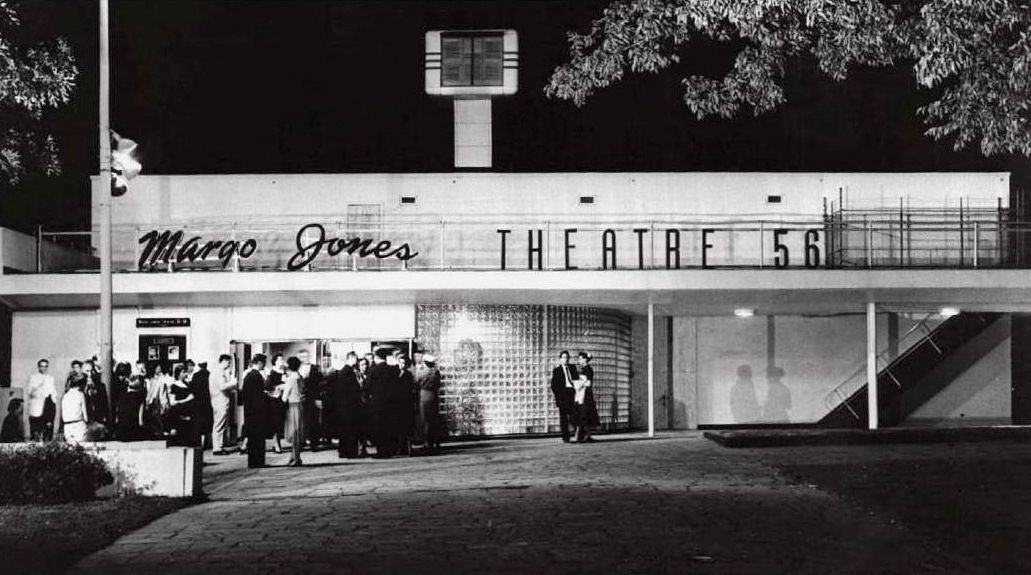
It was a popular oil company-branded “comfort station” for fair visitors until 1942 when the Magnolia Petroleum Co. (who had owned the building), gave title of the Magnolia Lounge to the State Fair, which used it for many years to house its general offices. In 1947, the space became Theatre ’47, Margo Jones’ legendary regional theater where, among other achievements, she produced plays of a young Tennessee Williams and introduced the innovation of theater-in-the-round. After Jones’ death in 1955, the theater carried on for a few years but eventually closed in 1959. After some difficult lean years for the building (during which demolition was considered!), it has been home to organizations such as the Friends of Fair Park, and it is now an active performance space again. And all is well with the world.

margo-jones_theatre-56_dpl

***

Sources & Notes

Postcard of the Magnolia Lounge from the vast wilds of the internet. Click it. It’s huge.

The Virginia McAlester quote is from a Friends of Fair Park advertising section in the Oct. 1989 issue of Texas Monthly.

Photograph of Theatre ’56 from Historic Dallas Theatres by D. Troy Sherrod, from the collection of the Dallas Public Library. (The theater struggled to continue after the sudden death of Margo Jones in 1955, which I wrote about here.)

For more on the history of the Magnolia Lounge, see the official Fair Park home page here; also, check out the the City of Dallas page devoted to this building, here.

And for more on this cool building, particularly in connection with Margo Jones, see the page on the always informative Watermelon Kid site, here.

A lengthy description of the building can be found in the article “Daylight Movies of Texas Scenes To Reward Visitors to Magnolia’s Cool Lounge” (The Dallas Morning News, April 26, 1936).

The Wikipedia page on architect William Lescaze is here.

*

Copyright © 2014 Paula Bosse. All Rights Reserved.


Skate Date!

skate-date_ebay-smSkating at Fair Park…

by Paula Bosse

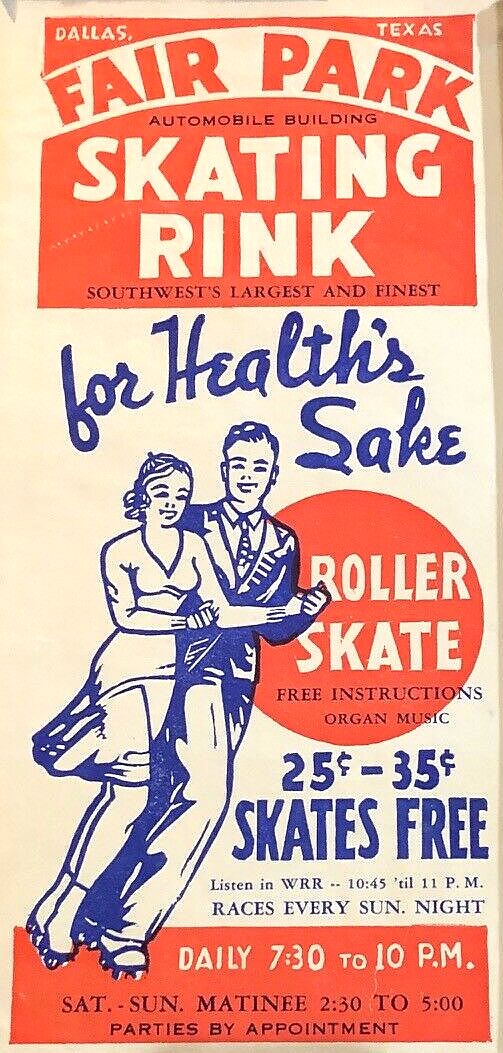
The Fair Grounds Skating Rink opened in the old Machinery Hall in 1906 at the height of the roller skating fad that was sweeping the nation. Over 1,000 people were “on the floor” on opening night, and the rink was an immediate hit with the city’s “roller-maniacs.” Though apparently very popular, it closed rather suddenly in 1907 when it was discovered that the concessionaires were selling more than cold drinks to patrons — they had also been operating a prostitution business right there on the (city-owned) premises.

It wasn’t until 1921 that the rink re-opened (managed by a man who may well have been one of the guys who operated the lucrative illicit side-business back in the aughts). It seems to have closed again for a while and then re-re-opened sometime in the ’30s, a time when business was steady and booming. But, sadly, the building burned down in 1942. BUT, a new, flashier rink was built right away, near (…next to? …in?) the Cotton Bowl (the ad below mentions the Automobile Building), and this one lasted a good long time, until at least 1957.

So, 1906-1957, give or take a few years — not a bad run for roller skating in Fair Park (…unless you count the bleacher bordello and the fiery conflagration). All skate!

fair-park_skating_watermelonkid

fair-park-skating-rink_matchbook_ebay

***

Sources & Notes

Top photo (of an attractive but unidentified couple) from eBay. Click it for a MUCH larger image (and check out the cool Fair Park Skating Rink logo to the right of the man’s head).

Postcard from the Watermelon Kid’s site, here. (It is also larger when clicked!)

Bottom image from eBay.

*

Copyright © 2014 Paula Bosse. All Rights Reserved.

“The Riviera of the South” — On Harry Hines!

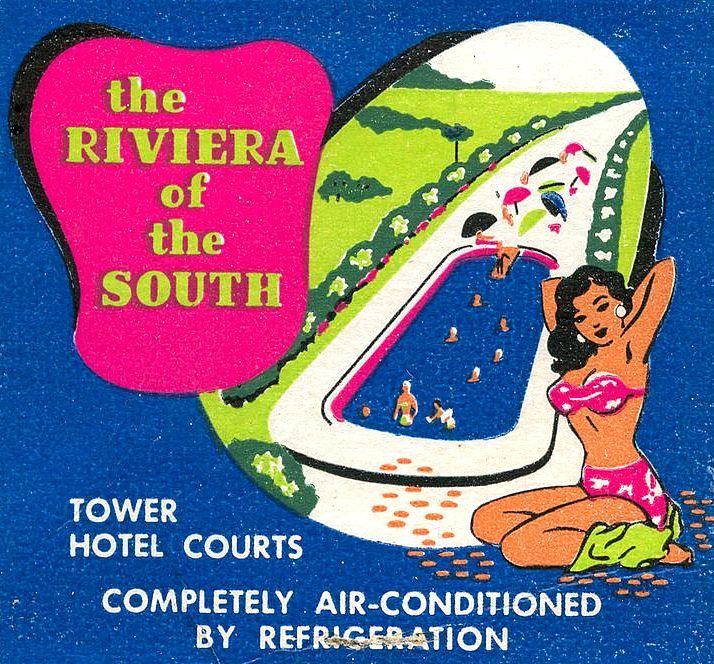
tower-hotel-courts_pool-match_flickr-smThe paradise of Harry Hines awaits…

by Paula Bosse

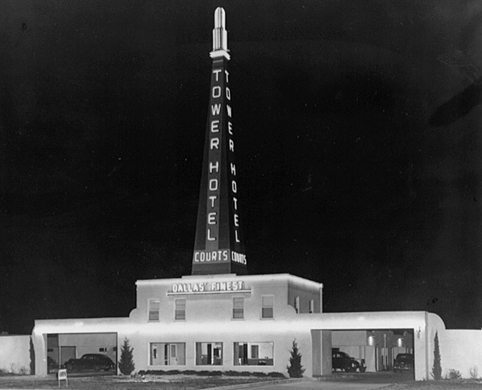
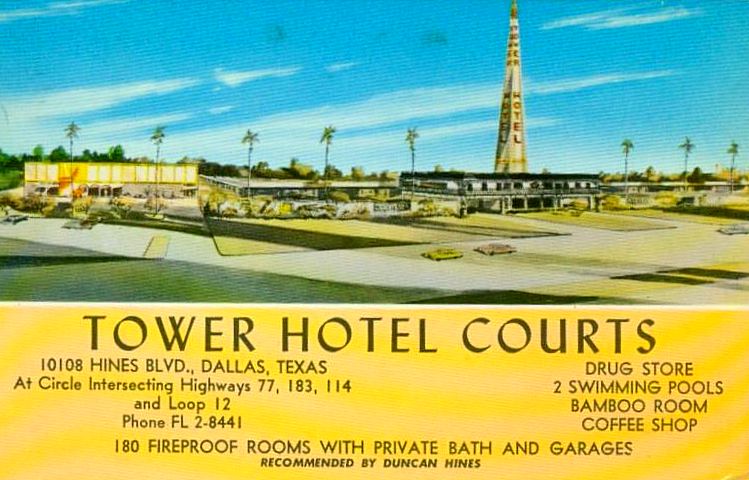
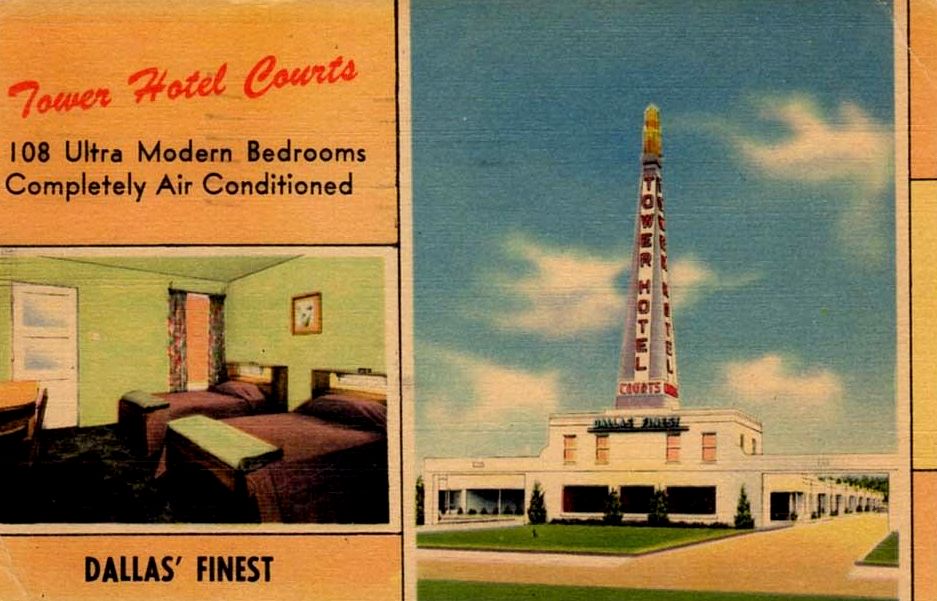
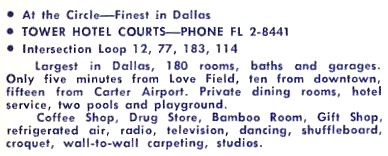
The Tower Hotel Courts opened in the fall of 1946. Their address makes my had spin: at “The Circle” where highways 77, 183, 114, and Loop 12 intersect. “10108 Harry Hines” would have been easier to fit on the stationery, but mention of all those highways just made everything more exciting. (It also gave some indication to prospective guests of what would be awaiting them, such as constant traffic noise and the ever-present whiff of exhaust in the air. “You can’t say we didn’t warn you, madam.”)

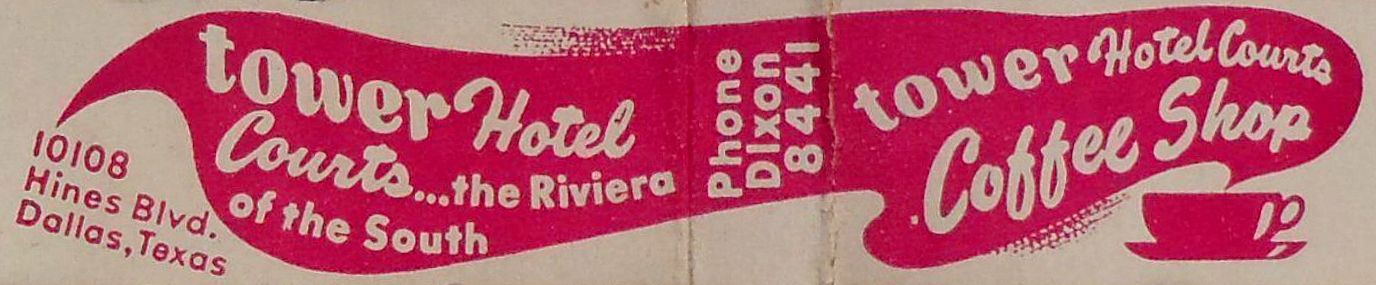
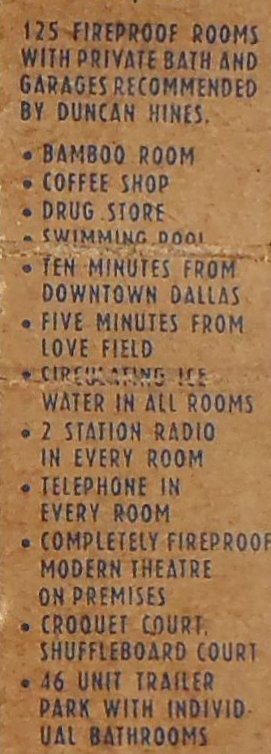
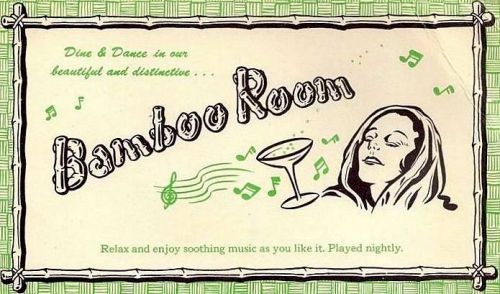
The fancy motel was five speedy minutes away from Love Field, which seems handy, because if you had an hour or seven to kill before your flight, wouldn’t you want to spend it there in the fabulous-looking Bamboo Room? I would! (Even though I’m pretty sure that matchbook cover is a little more glamorous than the actual Bamboo Room.)

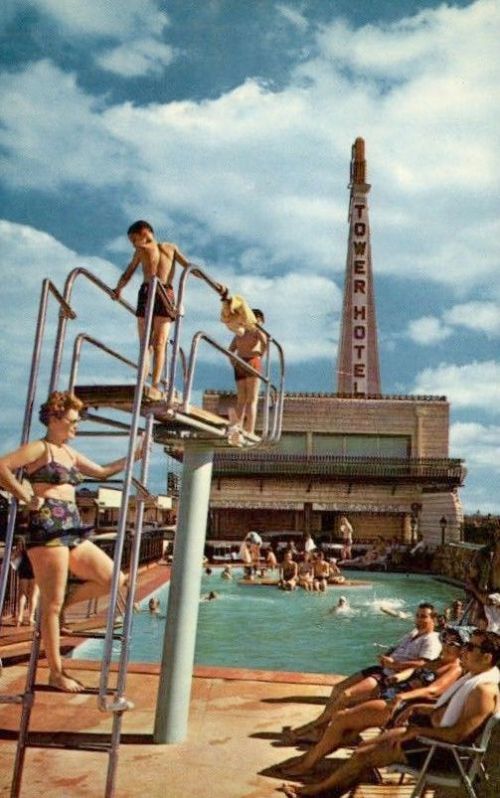
If you were going to stay for a day or two and not just a few drinks, there were all sorts of things waiting for you: two pools (one a very large children’s wading pool), a theater, a croquet court AND a shuffleboard court, “circulating ice water,” and … stand back … a 2-station radio in every room. Somewhere in amongst all of this was a 46-unit trailer park (“with individual bathrooms”).

It’s not hard to see why they called the Tower Hotel Courts The Riviera of the South.”

tower-hotel_bw

tower-hotel-courts_postcard2

tower-hotel-courts_postcardUltra Modern!

tower-hotel-courts_pool-smOwner’s wife and kids?

tower-hotel-courts_pool_back

tower-hotel-courts_riviera

tower-hotel-courts_riviera_inside

tower-court-hotel_bamboo-room_flickr

tower-hotel-courts_pool-match_flickr-sm

***

First and last images from Flickr; Bamboo Room image also from Flickr.

Several of these pictures are larger when clicked.

*

Copyright © 2014 Paula Bosse. All Rights Reserved.

Gusher at Old Red! — 1890

artesian_bywaters-hogue_color-smu“Artesian Well Gushes on the Courthouse Grounds”
Partial view of the mural by Jerry Bywaters & Alexandre Hogue (1934)

by Paula Bosse

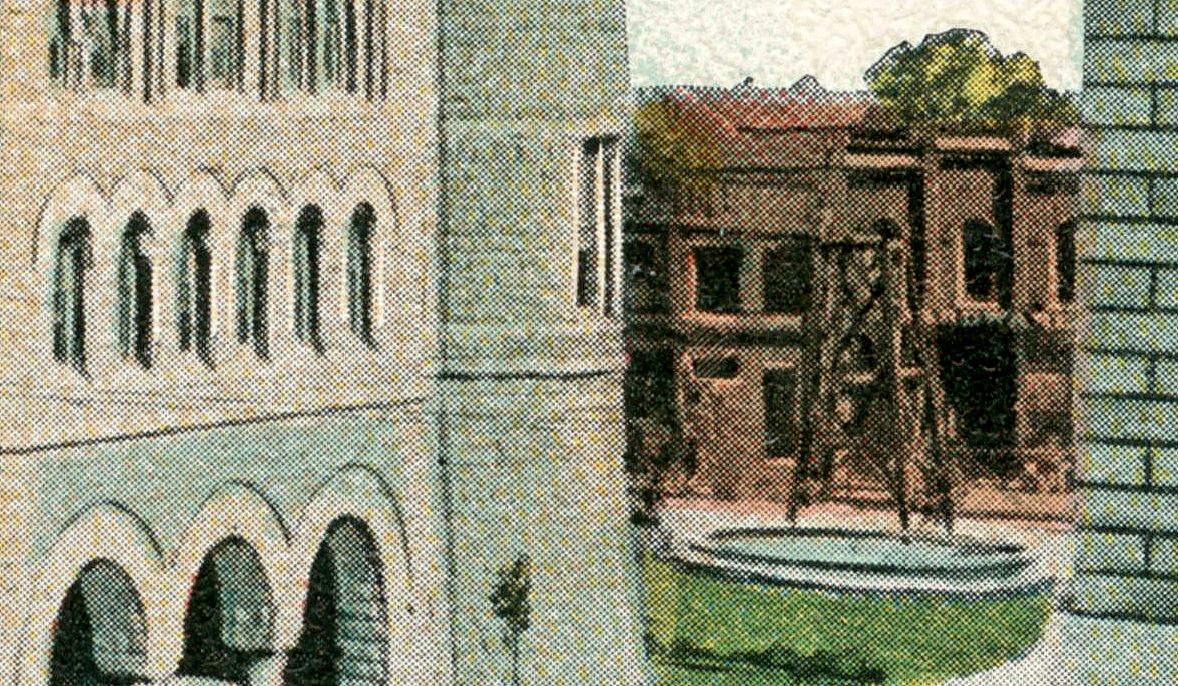
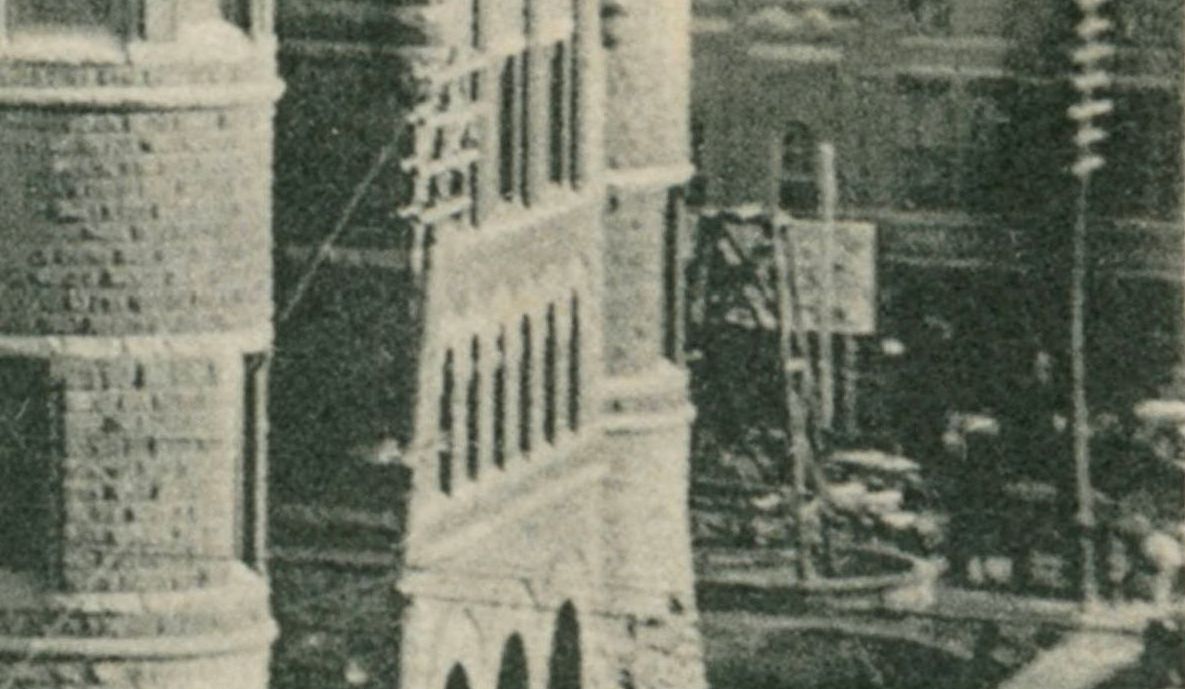
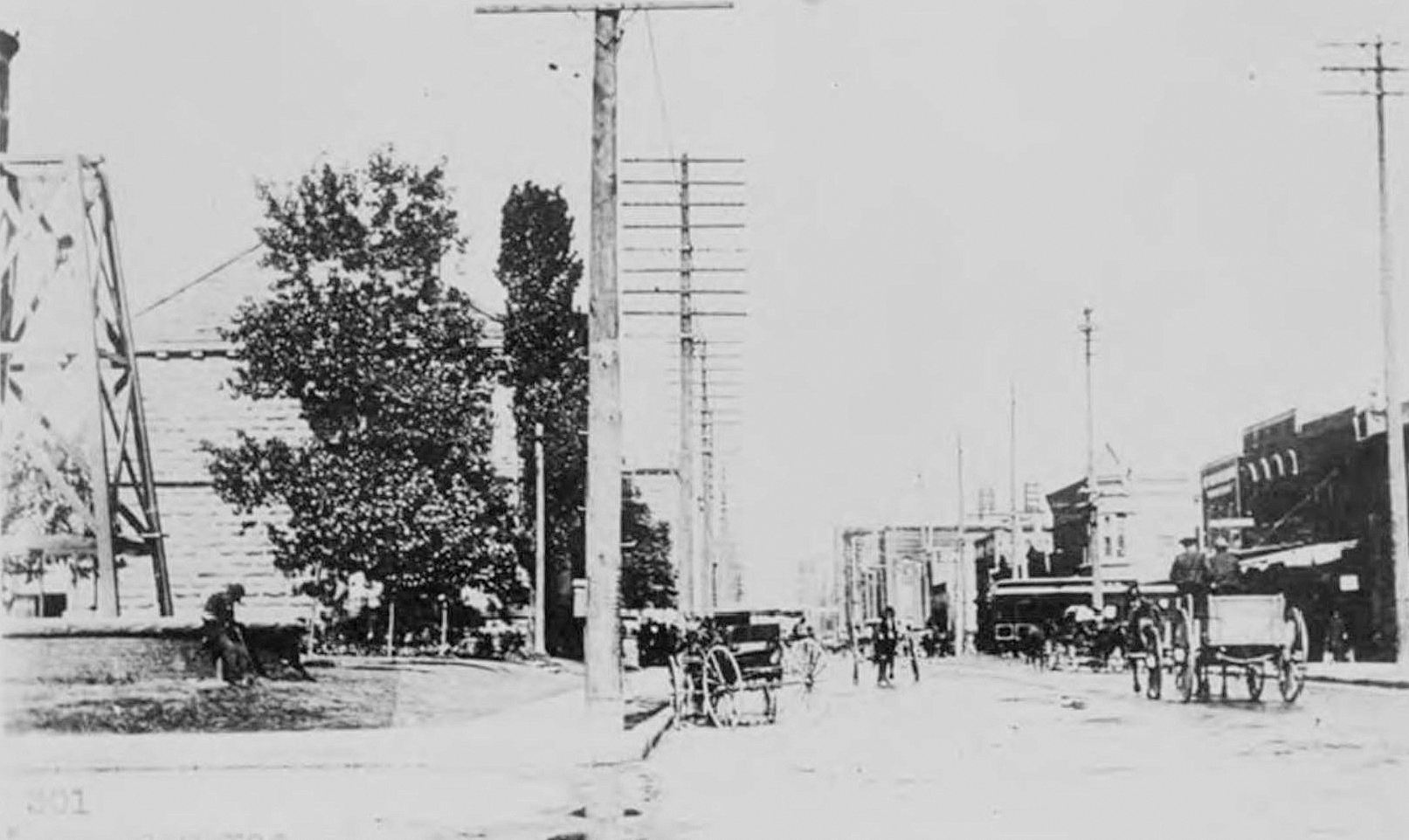
Several months ago, I was looking at the postcard of the Old Red Courthouse shown below. I thought it was interesting because I hadn’t seen that view before. And then I noticed what looked like a derrick just to the right of the courthouse. What was that? It  looked like it was standing over a tank of water, kind of like a windmill. And then I got distracted and didn’t come back to it until I read of an (unrelated) old well having been uncovered in present-day Dealey Plaza a year or two ago, and I remembered this postcard. Was that a well? On the courthouse property? And now I know: it was, in fact, an artesian well that had been sunk on the courthouse lawn in the fall of 1890, and its success was an INCREDIBLY important factor in Dallas’ growth as a city.

artesian_old-red_postcard-color_degolyer

artesian_old-red_postcard-color_degolyer-det

artesian_old-red_postcard-bw_degolyer

artesian_old-red_postcard-bw_degolyer-det

In 1890, Dallas was growing at a remarkable rate, and like any large city, it needed a reliable source of water. In Dallas, that was a problem. Wells were dotted around town — many on private property — but a large supply of water for the ever-increasing community was needed, and needed fast. I gather things were reaching a critical point when The Dallas Morning News printed a letter from a reader named S. T. Stratton in January of 1890. Stratton, a long-time resident of Dallas, suggested digging an artesian well on courthouse property. (And while they were down there, they could check for the possibility of oil and gas.)

artesian-old-red_STRATTON-dmn_010890DMN, Jan. 8, 1890

It seems that this might not have been an idea many people would have taken seriously at the time, because several pages away in the same issue of the paper was this little tidbit encouraging readers to seriously consider this as a viable option. (This was unsigned, but it seems likely it was written by DMN publisher G. B. Dealey.)
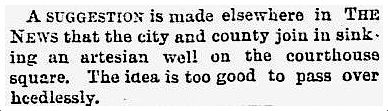
artesian-old-red_dmn_010890DMN, Jan. 8, 1890

The idea gained popularity, and a “special committee on artesian water” convened in February, deciding to go forward with the plan; the city and the county would divide the cost.

artesian-old-red_dmn_020690DMN, Feb. 6, 1890

Later in the year, drilling began, and on Oct. 9, 1890, water was hit. The flow at first was slow, but then, just like in the movies … a gusher! A Dallas News reporter had been writing a story on the initial success when, before he was able to file his report, the well suddenly became the biggest story in the city, in the state, and even around the country. When the drill hit 1,000 feet, the water began to shoot up with such force that it was estimated the well would produce in excess of one million gallons a day. There must have been incredible excitement in the wee hours of that morning, and the reporter’s story of the gusher is pretty thrilling to read — that last sentence is wonderful: “The water at 1 o’clock this morning was clear and it sparkled beautifully in the rays of electric lights.”

gusher_dmn_101090_updateDMN, Oct. 10, 1990

Below is the headline of the in-depth coverage of the successful well (full story linked at bottom of this page). Throngs of people crowded around the well, jubilant politicians patted themselves on the back, and men from the surrounding area wanted one for their towns (Marsalis declared he would get one for Oak Cliff, post haste!). What a scene it must have been. Finally, with that massive reservoir of water underneath the city, Dallas was assured of its continued growth.

gusher_dmn_101190-headlineDMN, Oct. 11, 1890

A story that ran in the national business journal Manufacturer’s Record underlines the importance of the well’s discovery to business investors around the country:

This successful experiment effectively settles the water supply problem of Dallas, and it removes the last obstacle possible to be urged against the rapid building up of Dallas. It insures an unlimited supply of the finest water not only for domestic use, but for manufacturing purposes, which, taken in connection with cheap fuel and ample distributing facilities in a land where various lines of raw material abound, leaves no question as to the success of manufactures. (Quoted in the DMN, Oct. 21, 1890)

Not only was the well’s success being discussed in the national press, but it was also popping up in local ads, like this one from a real estate company which appeared in the pages of the DMN on Oct. 12, 1890:

THE ARTESIAN WELL
Is ‘a Thing of Beauty and a Joy Forever.’
And the hour the drill pierced the water-bearing strata and the precious fluid gushed forth at the rate of 1,000,000 gallons a day forms a new era in the history of the metropolis of the southwest. Every foot of ground in Dallas has increased in value by no inconsiderable amount, but the few lots left on the market in Hall’s second addition will still be sold at $100 each, easy terms.

So I’ve learned something new. I probably should have known about this, at least in connection with the series of PWAP murals produced in 1934 by Jerry Bywaters and Alexandre Hogue, two of my favorite Dallas artists. They painted ten murals throughout the old City Hall (later known as the Municipal Building), each illustrating a high point in the city’s history. The decade 1890-1900 was commemorated by a depiction of the artesian well and all that water discovered flowing beneath the grounds of the then-under-construction Dallas County Courthouse. Unbelievably, the murals were destroyed (!) when the building underwent renovation in 1956. Had they still  been around, I probably would have seen them, and I would have learned about this whole artesian well thing many, many years ago!

artesian_bywaters-hogue_bw-smuWho is the sinister-looking man in the dark coat?

*

A street-level view from about 1900, showing Commerce Street east from Houston Street showing the artesian well at the left — I believe this served as a public watering trough for horses.

gusher_east-on-commerce-from-houston_degolyer-lib_SMU_1900via DeGolyer Library, SMU

*

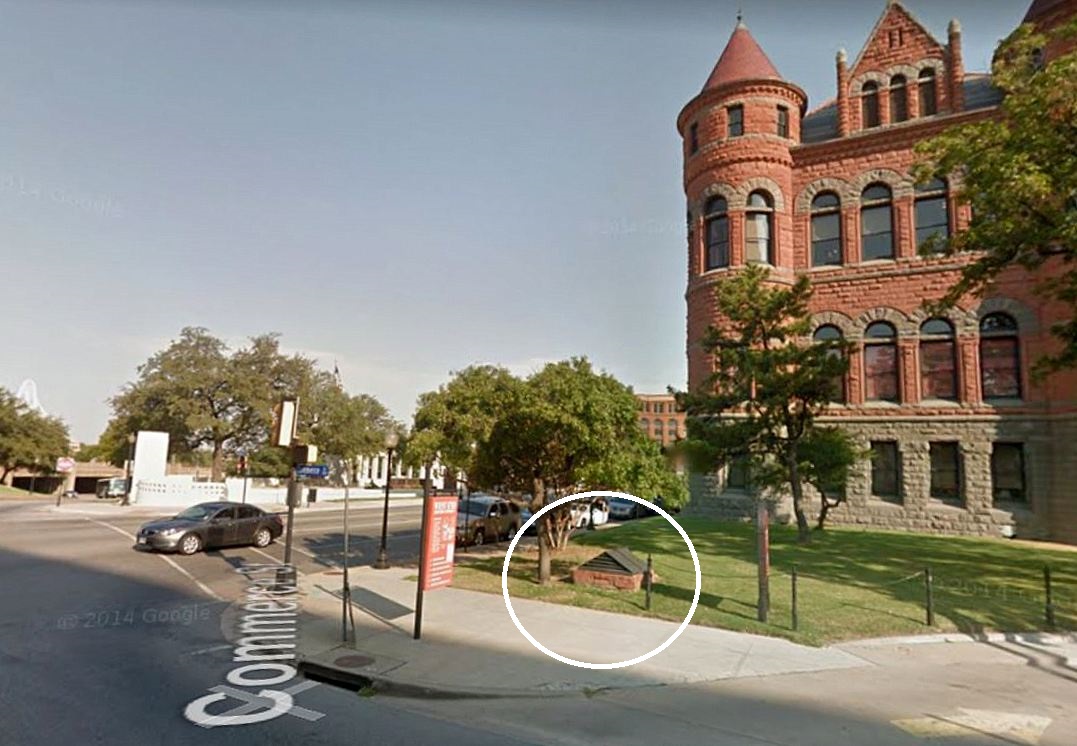
UPDATE: I went to see the capped well today (July 20, 2014). It’s under a shady tree at the southwest corner of the Old Red Courthouse, at Commerce & Houston streets. It isn’t marked at all and is fairly inconspicuous. Even though I’ve known about the existence of this well for only a couple of days, I was so happy to see it — still there, where it’s been for almost 125 years. It was like seeing an old friend.

Photo by Paula Bosse

The view below (looking across Houston Street toward Dealey Plaza from Commerce) shows where this capped well is.

gusher_commerce-and-houston_google-street-view_2011Google Street View (2011)

*

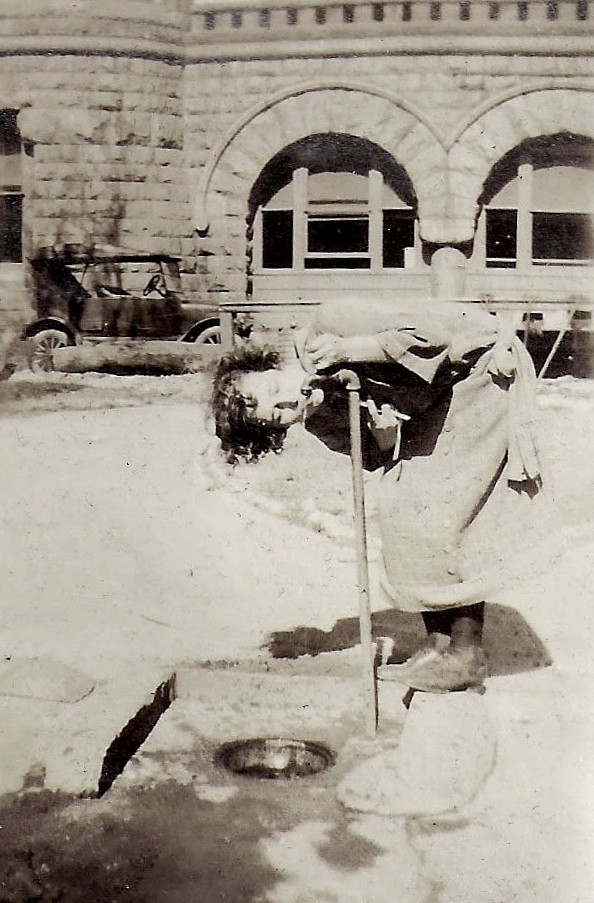
The wonderful photo below is from the 1920s and shows a young woman stopping for a drink on the courthouse lawn.

gusher_old red_ann-hoffman-collection_1920sFrom the collection of Ann Hoffman

***

Sources & Notes

The color image of the Bywaters and Hogue mural is a photograph taken by Jerry Bywaters in 1956 before the murals were destroyed; the black and white photo is by Harry Bennett. Both are from The Bywaters Special Collections, Hamon Arts Library, Central University Libraries, Southern Methodist University. See more information on the color image here, and the black and white image here.

Both postcards are from the DeGolyer Library at SMU: the color postcard can be accessed here; the black and white one here. The black and white image has been cropped — missing is the amusing note on the front of the card, dated 1-4-07: “Dear Faye, can you imagine me a long-haired Texan, brandishing a bowie knife? Ross.”

The circa-1900 photograph showing the well at the left side of the photo is titled “East on Commerce, Commerce and Houston streets, 1900” and is from the Collection of Dallas Morning News negatives and copy photographs, DeGolyer Library, SMU — more info is here.

The photo of the young woman on the courthouse lawn is from the collection of Ann Hoffman and is used with permission; taken in the 1920s, it shows a friend of her Great Aunt Nora stopping for a drink of water. Thank you for sharing, Ann!

All news clippings from The Dallas Morning News.

To read the report of the initial, somewhat tentative early-in-the-day well success, the DMN article from Oct. 10, 1890 is in a PDF here. For the crazy, jubilant, people-beside-themselves-with-joy report of the gusher, the entire article from Oct. 11, 1890 is here.

Not exactly sure what an artesian well is? Wikipedia to the rescue, here.

*

Copyright © 2014 Paula Bosse. All Rights Reserved.

Dallas County Criminal Courts Building and Jail — 1915

Dallas County Criminal Courts and Jail Building, TX

by Paula Bosse

Admit it — that picture above is probably the most attractive jailhouse you’ve ever seen. The first couple of floors were devoted to the courtrooms and administration offices of Dallas’ criminal courts system, but this was primarily the county jail, designed by Dallas architect H.A. Overbeck. Still standing, it faces the Old Red Courthouse (Main St. is in the foreground of the picture above, Houston St. is at the left) — it was even built with a tunnel connecting the two buildings. I’ve always liked this building, but for some reason it’s weird to think of it as a jailhouse. It’s hosted celebrity outlaws like Clyde Barrow and Raymond Hamilton, Benny Binion, and Billie Sol Estes, but  its main claim to fame is its connection to the Kennedy assassination: not only was Jack Ruby tried in one of the downstairs courtrooms for the murder of Lee Harvey Oswald (whom he shot while Oswald was in the process of being transferred to the county jail), but, as a reader notes in the comments, Ruby also spent considerable time there upstairs, as a prisoner, incarcerated in a cell overlooking Dealey Plaza.

When this building opened in 1915, it was a veritable showplace — one of the country’s most modern (and attractive) jails. Here’s what it offered:

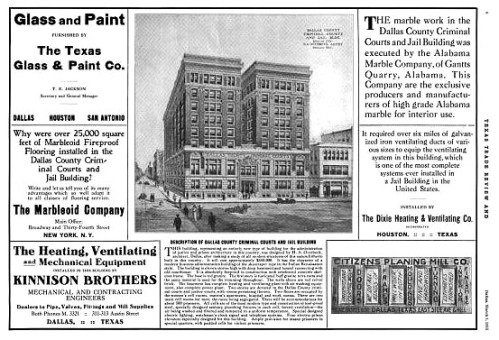
This building, representing an entirely new type of building for the administration of justice in prison architecture in this country, was designed by H.A. Overbeck, architect, Dallas, after making a study of all modern architecture of this nature hitherto built in this country. It will cost approximately $550,000. It has the character of a modern business administration building of the skyscraper type in the Italian Renaissance style. The building is eleven stories high with deep basement and tunnel connecting with old courthouse. It is absolutely fireproof in construction with reinforced concrete skeleton frame. The base is red granite. The first story is rusticated buff granite terra cotta and the same material is used for the trimming throughout. The walls above are red velvet brick. The basement has complete heating and ventilating plant with air washing equipment, also complete power plant. Two stories are devoted to the Dallas County criminal courts and justice courts, with rooms pertaining thereto. Two floors are occupied by the women’s cell rooms, matron’s apartments, hospital and work rooms. There are two main cell rooms for men: the races being segregated. There will be accommodations for about 500 prisoners. All cells are of the most modern type and construction of tool-proof steel, specially designed sanitary plumbing fixtures in each cell, forced ventilation – the air being washed and filtered and tempered to a uniform temperature. Special designed electric lighting, Watchman’s clock signal and telephone systems. Four electric prison elevators especially designed for this building. Ample provision for insane prisoners in special quarters, with padded cells for violent prisoners. (Texas Trade Review and Industrial Record, March1, 1915)

(When you go to architecture school you probably don’t envision designing a building with padded cells and “ample provision for insane prisoners.”)

The building will celebrate its 100th anniversary next year. With any luck, by then work will have begun on its much-needed restoration.

criminal-courts-jail_tx-trade-review_march-1915-full-page

***

Sources & Notes

For a perhaps easier-to-read view of the ad from The Texas Trade Review and Industrial Record, see it here.

For an interesting article on a push for the building’s restoration — and to see tons of photographs taken inside the deteriorating jail and courtrooms — check out “Old Courthouse, Jail a Fading Bit of Dallas Lore” by Tom Benning (Dallas Morning News, May 13, 2014), here.

UPDATE — June 30, 2016: Well, it looks like big changes are coming for the (interior) of the old jail — read about them here.

*

Copyright © 2014 Paula Bosse. All Rights Reserved.

Summers and Lagoons — 1940s

dmfa_color

by Paula Bosse

The old Dallas Museum of Fine Arts at Fair Park. Just across the lagoon.

And a streamlined rendering which could be found on DMFA letterhead and publications for many years:

dmfa_logo_1944

*

Copyright © 2014 Paula Bosse. All Rights Reserved.
“Something Like N.Y.” — ca. 1904

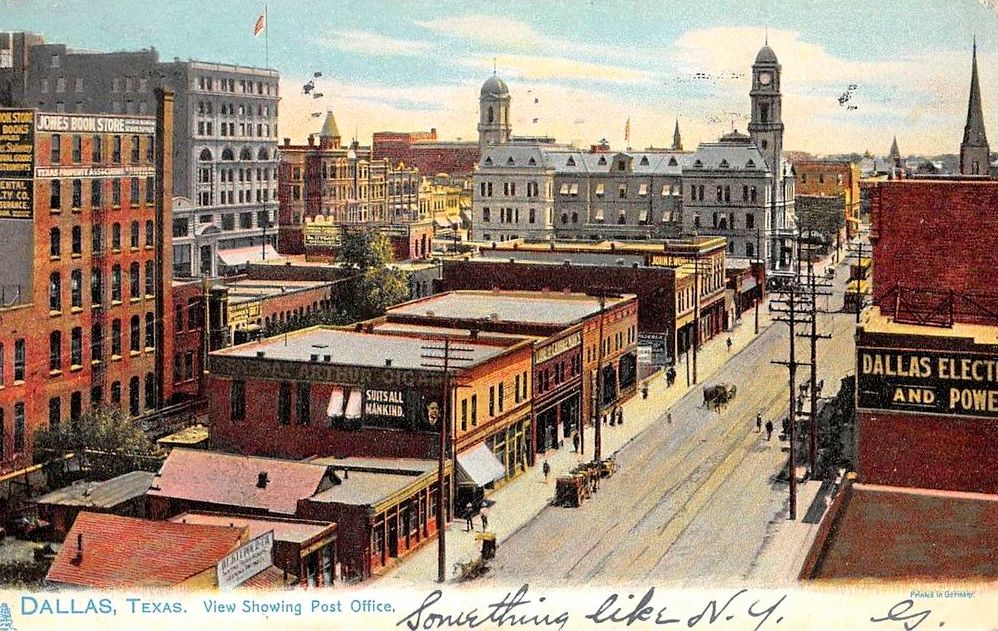
dallas-something-like-NY

by Paula Bosse

Eat your heart out, NYC!

***

Sources & Notes

Postcard from “the internet.”

*

Copyright © 2014 Paula Bosse. All Rights Reserved.
Juneteenth at the Texas Centennial — 1936

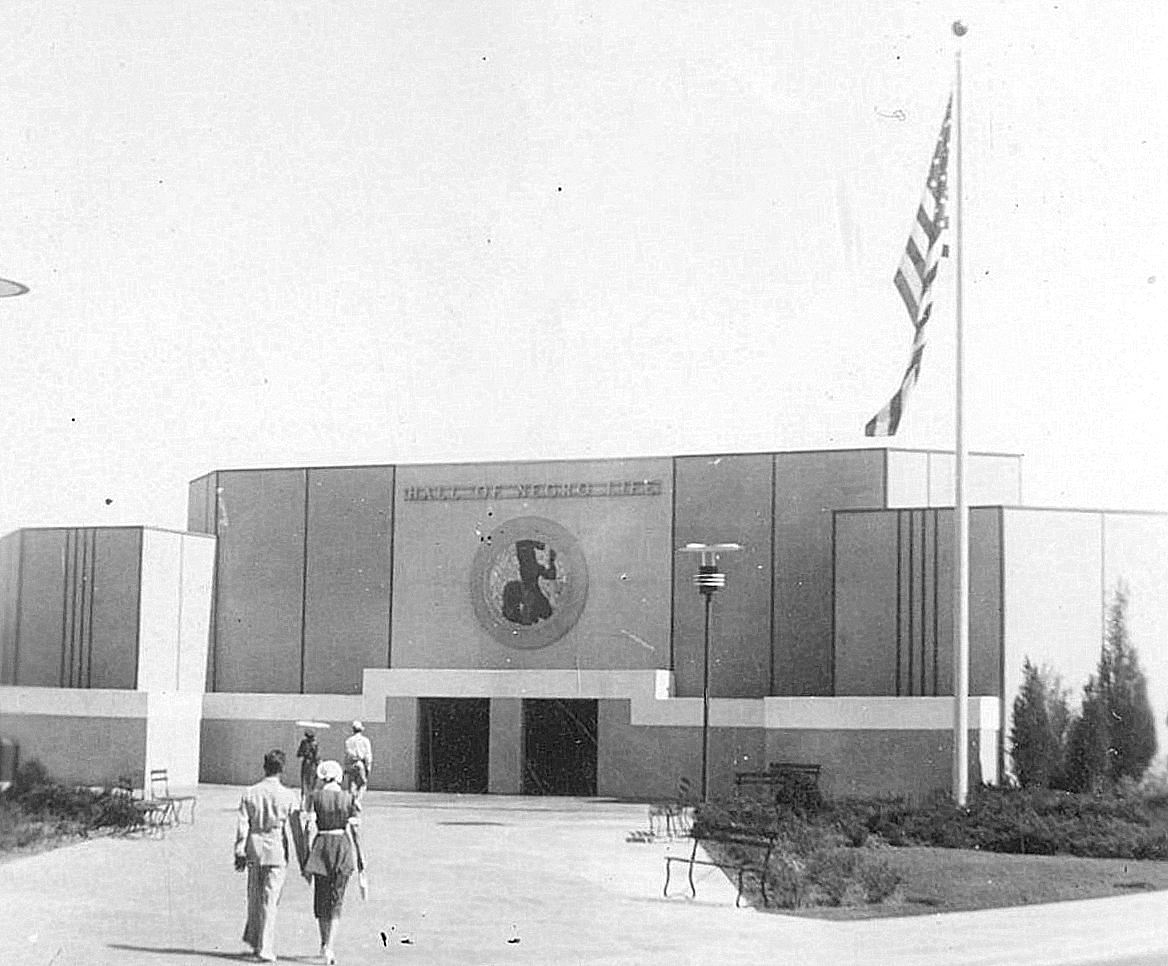
hall-of-negro-life_centennialThe Hall of Negro Life at the Texas Centennial Exposition, Fair Park

by Paula Bosse

Juneteenth, the anniversary of the date that African American Texans learned they were freed from slavery, was celebrated at the Texas Centennial Exposition with a day of entertainment and exhibits. It was also the day that the Hall of Negro Life — a federally funded exhibition hall acknowledging and honoring the history and accomplishments of African Americans in the United States — was officially dedicated.

tx-centennial_hall-of-negro-life_portal

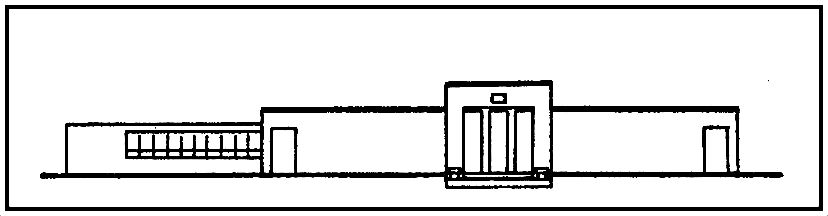
One of the more interesting things I’ve stumbled across is a drawing of the proposed building (published in J. Mason Brewer’s The Negro In Texas History in 1935). I don’t believe I’ve seen this before. It’s interesting to note the changes from original proposal to finished product.

hall-of-negro-life_proposed_the-negro-in-texas-history_1935

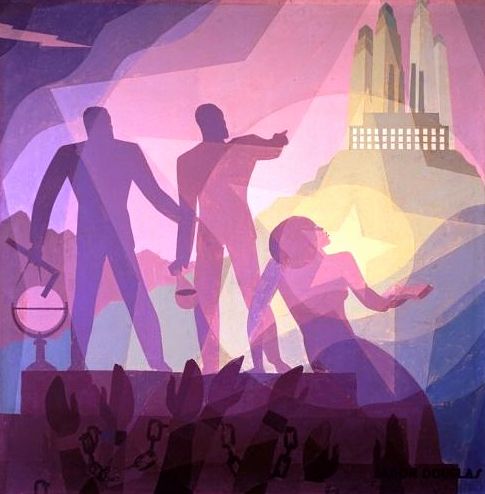
Among the large collection of art by black artists displayed in the Hall of Negro Life were four murals by the artist Aaron Douglas, depicting black history in Texas. Below are the two murals that survive, “Into Bondage” and “Aspiration.” These are incredible murals, and it must have been an emotional experience for those Juneteenth visitors in 1936 to be surrounded by all four powerful pieces in the lobby of a government-backed project that formally recognized the contributions of fellow African Americans.

aaron-douglas_into-bondage_1936_corcoran“Into Bondage” by Aaron Douglas, 1936 (Corcoran Gallery of Art)

aaron-douglas_aspiration_1936“Aspiration” by Aaron Douglas, 1936 (Fine Arts Museum of San Francisco)

***

Sources & Notes

Black-and-white photograph of the Hall of Negro Life from the Private Collection of Mary Newton Maxwell, Portal to Texas History, here.

Photo of proposed Hall of Negro Life from An Historical and Pictorial Souvenir of the Negro In Texas History, written by J. Mason Brewer (Dallas: Mathis Publishing Co., 1935).

“Into Bondage” by Aaron Douglas (1936) is from the collection of The Corcoran Gallery of Art.

“Aspiration” by Aaron Douglas (1936) is from the collection of The Fine Arts Museum of San Francisco. (There is an amazing interactive look at this painting here.)

More on the Hall of Negro Life, from the Handbook of Texas, here.

More on the Hall of Negro Life from The Crisis, the magazine of the NAACP, in the July, 1936 article “Negroes and the Texas Centennial” by Jesse O. Thomas, here.

How was this important Juneteenth celebration at the Texas Centennial covered by The Dallas Morning News? Well, the paper actually devoted a lot of space to the day’s events in a fairly lengthy article which appeared on June 20, 1936. I think the DMN editorial board probably thought they were being magnanimous in the amount of coverage given, but, really, the article — though brimming with a certain amount of probably well-intentioned jubilation — is so unremittingly racist that it’s actually shocking to see this sort of thing in print in a major newspaper. I encourage you to check out the article published on June 20, 1936 which carries the laboriously headlined and sub-headlined “Negroes Stage Big Juneteenth at Centennial; Dallas Eats Cold Supper and Cotton Patches Emptied as Thousands Inspect Magic City; Hall Is Dedicated; Dusky Beauties Prance; Cab Calloway Does His Stuff For Truckers.”

*

Copyright © 2014 Paula Bosse. All Rights Reserved.
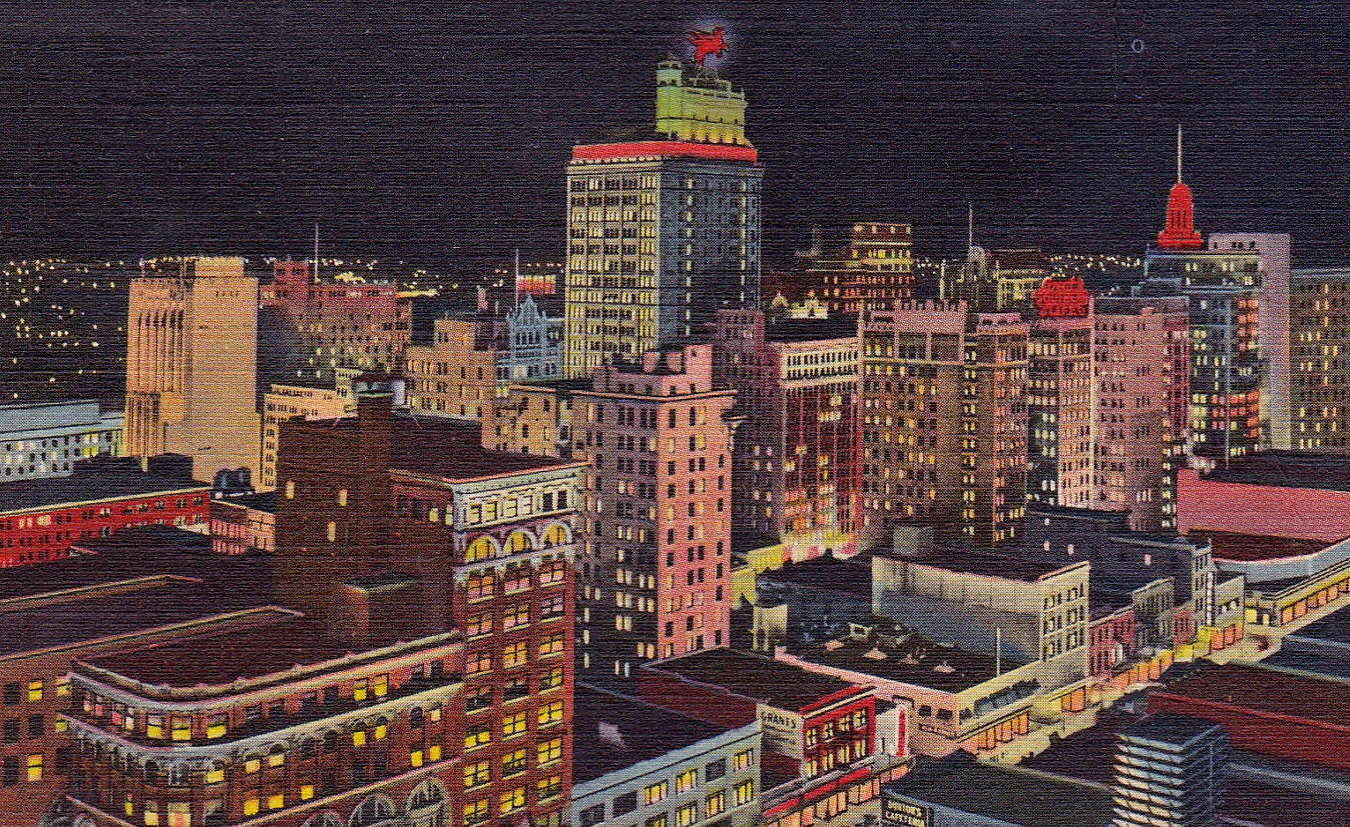
When the Flying Red Horse Could Be Seen From Miles Away

birdseye_night_early1940sThe symbol of Dallas…

by Paula Bosse

One of my favorite views of the skyline — back when Pegasus had no competition.

***

Sources & Notes

Original photograph by Lloyd M. Long, from postcard “Night Scene, Heart of Dallas, Texas” (D-43).

*

Copyright © 2014 Paula Bosse. All Rights Reserved.